menu

Is It Okay to Spend Your Stimulus Check on Magic Cards?

Are you a Quiet Speculation member?

If not, now is a perfect time to join up! Our powerful tools, breaking-news analysis, and exclusive Discord channel will make sure you stay up to date and ahead of the curve.

I was recently witness to a rather wild Discord conversation discussing the topic of whether or not it was okay to spend your stimulus check on Magic cards - which, until it was brought to my attention that there was a conversation on the way to getting out of hand, was a topic that hadn't even crossed my mind. It got me thinking, and so, naturally, that's what this week's article is going to cover.

First, I want to apologize to our international audience - I know that the stimulus check topic is largely just USA-based at the moment, so a lot of this article is going to exclude you. Hopefully, some of it will still be of some interest. Second, I want to mention that I'm going to try really hard to not get "too political" here - I don't want to fight with anyone - but by its very nature, this topic is political so that will be hard to avoid. I should state that this is all just my opinion and does not reflect the opinions of my employer.

So, is it okay to spend your stimulus check on Magic: The Gathering cards? Short answer - yes. 

I would never consider telling someone what to do with their money - that's not my place, and honestly, I don't think that's anyone's place. This is just investment advice from a guy who writes about trading cards on the internet. What we're looking at in this article today is whether or not you're in a place to be investing that money and what kind of Magic cards you should be picking up if you feel like you're in a good place to be doing so.

Cover The Basics First

The Pandemic has been an absolute disaster for just about everyone. The world has changed - plain and simple. People are dying, losing their jobs, and facing all kinds of economic uncertainty. For a lot of families, this stimulus check is going to be completely used for food, lodging, and crucial expenses. There is a common adage when it comes to investing (and gambling), "never risk more than you can lose", and this is something you should think about any time you're looking at investing in Magic finance, not just when something like a stimulus check happens.

Take a look at your budget, think about what happens if this disaster doesn't get better as quickly as we hope, and make sure that you and your family are as secure as possible, and then if you feel secure enough - it's time to stimulate the economy with some Magic purchases!

There was an error retrieving a chart for Back to Basics

The Best Pick-Ups

If you're looking to spend some of that stimulus money on Magic product, I highly encourage you to start with your LGS or members of your community who run online sales through something like TCGPlayer or Twitter. I know at the start of the Pandemic I was in a super tight spot and the sales from my small TCGPlayer store went a long way to ensuring rent was paid and food made it to the table. In my opinion, spending your extra stimulus money with small business owners is one of the absolute best things you could do with it. So, for those looking to invest that money into singles - what are the best things you could be picking up?

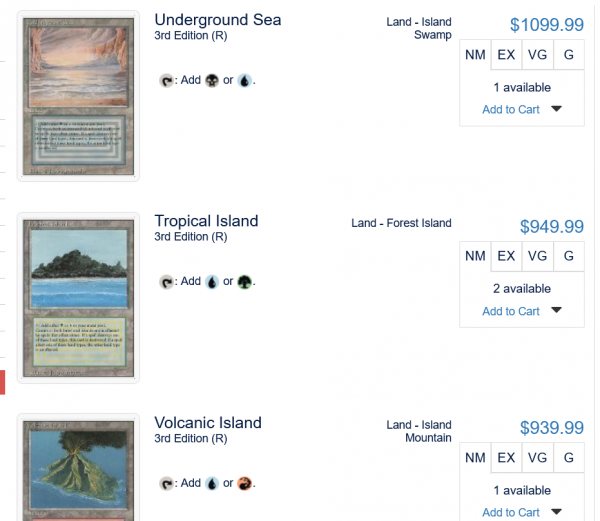
  • Reserved List Staples - this is the biggest and most obvious one. If you can find good deals on them, this is the perfect time to work on finishing your collection of duals. Prioritizing ones with blue in them has historically been a good call - so keep an eye out for Tropical Islands, Underground Seas, Volcanic Islands, and Tundras. If you're looking for great advice when it comes to reserved list action, I'd highly recommend reading over some of Sigmund's latest articles - he's my go-to resource for Old School knowledge and I always look forward to his weekly article here.
  • Non-foil Eternal Bling - I write about this fairly often, but I think picking up alternate/full art versions of cards that see a good amount of play in eternal formats before paper play resumes in the United States is a smart call. Competitive Magic players will be rushing to pick up cards for their paper decks once large paper events come back and will largely be avoiding foils due to the curling issues. The new trend of awesome non-foil alternate and full art versions of these cards being printed is one of the best ways for these players to add "bling" to their decks without having to worry about being disqualified, and I think they'll see decent price increases once paper play comes back in a big way.
  • Missing Pieces - speaking of paper play coming back, if you're missing any key pieces of your paper decks - now is a great time to pick those up. Plus, the feeling of completing your decks and looking forward to paper play coming back could be a nice little serotonin boost in these dark times.
There was an error retrieving a chart for Tropical Island

Treat Yourself - You Deserve It

Look - the world has been going through some incredibly dark, incredibly stressful times. People have been stuck in quarantine or distancing for over a year now. Combine that with all of the incredible losses we have been suffering and it makes sense that your mental health has taken quite the beating lately. If you are really struggling and have the option, I'm a huge proponent of seeking out a professional to speak with about what you're going through.

I know that's not an option for everyone and either way I think it's important for us as human beings to fight for every little sliver of joy we can find in dark times like these. So if you can, I think setting aside even a little bit of the stimulus for a treat for yourself or your family is a great decision. Even if that's just a booster pack or two, a fresh pair of kicks, or a couple of affordable singles for your favorite Commander deck, setting aside a little bit of stimulus money to treat yourself is okay and you shouldn't feel guilty for it.

No matter what you do with your stimulus, I want you to know that it's okay to be feeling bad right now. The Pandemic isn't over for everyone and there's a lot of work to be done still before we (especially in the USA) can get back to normal. Many of us are feeling like we've lost a year of our lives, feeling bad is natural. Just remember that you're amazing, you're doing a good job, and if hold on it'll get better soon.

Take care out there friends, I'll catch you next week! Feel free to hit me up on Twitter, Twitch, YouTube, or in the QS Discord if you'd like to chat Magic!

Is Time Spiral Remastered Too Good to Be True?

Are you a Quiet Speculation member?

If not, now is a perfect time to join up! Our powerful tools, breaking-news analysis, and exclusive Discord channel will make sure you stay up to date and ahead of the curve.

With the release of Time Spiral Remastered almost upon us, possibly already out by the time you may read this, the looming question has yet to be definitively answered: will TSR hold its value, go up, or go down? If you read my original article on TSR, you may see that the expected value is incredibly high. Even with accounting for inflated prices ahead of release, the value is incredible. Someone made a Booster Box opening simulator, using officially stated pull rates, and the average EV was off the charts.

I spun the wheel a couple of hundred times, and it just seems too good to be true. The singles value at preorder is insane, with 11 non-foil cards worth more than $20 dollars, 6 of those being timeshifted, and 24 cards above $10, and 14 of those being timeshifted. Foil prices are even more insane, with prices ranging from $6 to over $300. With the normal value of the set being already a home run and the timeshifted foils, generally, at a rate of 1-2 per box being the hit or miss added value that they are, it's safe to assume that prices have to adjust.

Sealed Product

Over the course of the past week or two, prices that were considered by some to already be too expensive at the early prices, have risen drastically. Boxes ranged from $150 (rarely) to $190 in the first day or two, they quickly jumped to $200 to $210 a box, and are currently sitting at $235 on TCGplayer, almost $250 on Amazon, $225 at Card Kingdom (limit of 5 per customer) and Star City Games at $225 (26 boxes left at the time of writing).

The main question regarding value consisted of a couple of possible outcomes. The price of the box would fall, and so would the singles, the price of the box would rise, and the singles would hold, or the boxes would stay the same, and the singles would go as the market willed them to. With more time bringing further clarity, the prices of the sealed product have risen, likely solidifying the prices of singles to a certain degree. There is a likelihood that singles will drop and bring the price of sealed down with it, but that is something we will have to take a look at.

Singles

The preorder prices for singles tend to be higher than the actual value, this is something that is not a new idea. What is a new revelation is that preorder prices may be closer to the actual value than preorders may historically suggest. The prices also usually start to shift significantly lower as stores start to open boxes and the real-world rarity of the cards in the set is discovered and prices are adjusted, but the prices don't seem to be shifting downwards too drastically.

There was an error retrieving a chart for Tarmogoyf

This could suggest that as stores are opening boxes, the discovery is being made that these cards are valued at an appropriate price relative to rarity. My hypothesis is that the single values right now are not too far off from the actual value, and I do not see the sealed prices being too bad either. This could easily be the most valuable set for singles we have seen in a long while, or it could all crash and burn, to wait and see is the path to that answer.

Possible Crash

I have heard conflicting information on the supply of Time Spiral Remastered. Some people saying the supply is record-setting with how little they are receiving, while others noting nothing out of the ordinary about supply. The one statement that is few and far between is an oversupply of sealed products. I have seen supply compared to that of Modern Horizons, with people expecting supply to be flooded, and when the extra supply never came, and the true scarcity of the remaining boxes revealed, the rapid devaluation never occurred. Of course, we have no unified data on the print run other than the limited print run of the set, so all we can do is speculate with both ears to the ground, and hope for the best. Personally, based on my own experiences and perception of the information that we do have, I believe that the supply will be clinched.

There was an error retrieving a chart for Force of Negation

The possibility of the supply being held up by Amazon sellers is unlikely at this point, with the prices of Amazon boxes being some of, if not the highest price point for any sealed boxes of TSR. I believe while a crash is unlikely, a large-scale panic over the possibility of such would be the largest reason for such a possibility.  A calm and responsible market is responsible for the growth we have seen over the past couple of weeks, and a calm and responsible market will likely be responsible for the continued stability of the product in the future. If people get scared and try to liquidate any remaining product, we could see a short-term devaluation of the sealed product of TSR likely following by a longer-term price correction leading to a return to at least 3/4 of the original price for the sealed product.

I predict a lot larger of an impact on singles in the event of a possible crash, with prices across the board dropping a lot more substantially, and recovering a lot slower. This should be no cause for concern, however, as the likely hood of a high supply preventing a long-term regrowth is unlikely, considering all signs seem to point to an overall lower or sub-par supply, if not a large shortage(unlikely in my personal opinion).

The Takeaway

With the release of TSR almost upon us, this is a critical time for the value of this product. The make or break decisions made by the cogs of this machine, no matter how minute, are made in the critical first week or two. Being responsible with your own position, and encouraging others to do the same might just allow TSR to be a massive home-run for investors and players alike. Be vigilant of the market, and be patient. Making an impulsive choice right now could not just influence your immediate profits, but others as well, and not to mention your and other's profits in the future. In the end, make the decision that feels right, and be confident.

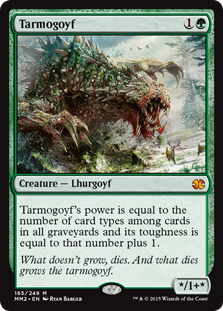
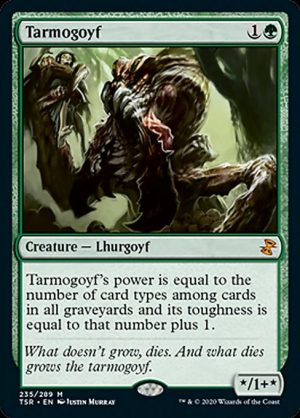
What doesn't grow, dies, and what dies grows the smart investors sell binder. Have a great day, relax, maybe draft TSR if that fits your fancy, and as always don't forget to invest in carboard.


Remember Me: Forgotten Lessons

Are you a Quiet Speculation member?

If not, now is a perfect time to join up! Our powerful tools, breaking-news analysis, and exclusive Discord channel will make sure you stay up to date and ahead of the curve.

The time after a set release or a major ban is always exciting. The format is in flux, the metagame undefined, and everything seems playable. This is even more true right now, thanks to the ban taking away a metagame pillar. This has in turn renewed interest in Modern, bringing an influx of players and content creators. Which is a good thing: more interest and more players in Modern leads to more attention from Wizards, more competitive play, and also more deckbuilding and innovation. Otherwise, it all goes stale.

However, it can also be infuriating. Watching an inexperienced player make a mistake will always annoy seasoned veterans, no matter what we'd actually admit. Such anger can still be leveraged productively, specifically by channeling it into helping said new players learn and improve. What is far harder to deal with is experienced players making mistakes when they definitely know better. Especially if they've previously lectured others about said mistake. And it gets downright galling when this is a well-known mistake that has been discussed and dissected extensively by the community for years.

And yet, here I've been watching streamers, general content creators, and even competitors in high-level events acting like they've forgotten basic format knowledge. Which is certainly possible, given how distorted Modern's been since Modern Horizons. So today I'll be venting reminding everyone about the most common mistakes and how to avoid them.

What Isn't a Mistake

I feel I need to define what I'm discussing. A decision or line of play that doesn't work out is not inherently a mistake. A lapse in judgement or missed interaction is a mistake, but forgivable. Magic is a game of imperfect information and great complexity. Everyone makes mistakes and I'm not calling anyone out for being human. Sometimes a calculated risk is the only route to victory and you did the math wrong. Mistakes happen; they're nothing to get angry about. All we can do is try to do better next time.

What grinds my gears is lapses in knowledge. This is when a player discusses and/or makes a really dumb play having previously demonstrated that they know better or that they really should know better. There are two scenarios for this, and encountering either triggers me. The first is the equivalent of studying a specific question, writing the correct answer down on a study guide, checking that guide before the test, and walking out of class and commenting on that right answer. And yet when the test comes back you still answered that exact question wrong. There's no explanation or excuse; just brain stop no think good me make oops.
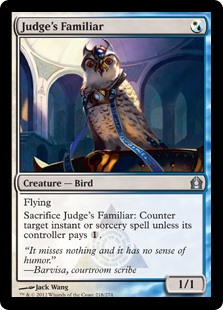
The second, which I find more offensive in many respects, is ignorance. They should know better; they've seen it before, there were resources available from which to learn, and/or they were told to be wary and they just. Didn't. Bother. It's the equivalent of walking into a test completely unprepared and just staring at the questions and guessing. Did you just blow off studying or did you incorrectly think you wouldn't need it? It was all there for the taking, and you punted it away.
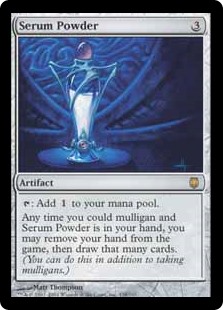
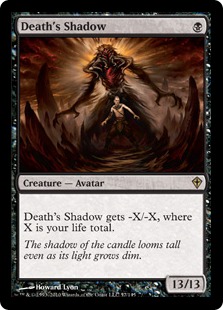
These are the situations I'm focusing on. Things that Modern players really should know, but seem to have forgotten. What should be common knowledge because they're all over the internet for the finding. So it falls to me to remind everyone.

Mulligan Correctly

Jordan seems to go over this constantly (he's not the only one, but he specifically asked me to include this one), but most Modern players don't mulligan enough. Admittedly, mulliganing is a very tricky part of the game. Even with the best heuristics, practice, and strategy it's easy to get into grey areas. But that's no excuse. The London Mulligan has reduced the mulligan penalty enough that there's no excuse for keeping a borderline seven when there's a perfectly good six a-waiting. Between general power creep and deck refinement, the difference between most deck's average hands and their best has skyrocketed. As a result, the reward for mulliganing has increased independently of the London Mulligan's benefits. Don't be afraid to go for the big payout.

Unless you are the Jundfather and every card in your deck is as good as every other card in your deck, of course. Then you can (and Reid does) afford to mulligan less game 1. In that specific circumstance, the difference between the best hand (in a vacuum, anyway) and the second best one is small. In turn, that makes an extra card more valuable than the chance for a marginally better one. However, most decks aren't straight Jund or even Jund-like anymore. They're closer in composition and spirit to Grixis Death's Shadow or Izzet Prowess. They're generally powerful, but have certain openers that are far better than others. As a result, a random extra is less valuable than getting the right card early. And so they should try more often to get that better seven.

The problem most players have is their attachment to card advantage. More cards better than fewer is a fundamental lesson and usually the first piece of theory players learn. It's hard to overcome the attachment. But that's no excuse. Modern has never been the place to obsess over card advantage, and the format is getting faster and more powerful. Playing mediocre at best hands is increasingly likely to cost games. It's better to take a shot on a great hand than trudge along with a poor hand. I've struggled with this too, though playing decks that need to mulligan aggressively helped.

The Tron Mistake

What there is no excuse for is not mulliganing enough with a specific-card deck. While this applies to combo decks in general, it is particularly unforgiveable when it comes to Tron. This is the deck that everyone knew benefitted most from the London Mulligan when it was implemented, and yet I still encounter Tron players who don't mulligan for that turn 3 Tron. What makes it so frustrating is that anyone who's played Modern for a decent length of time has lost to Tron after they mulliganed to three. Maybe more than once. And yet plenty of Tron players still settle for hands that can't hit Tron on turn three. Even Jim Davis, who pretty much wrote the book on Tron mulligans, doesn't always follow his own advice (though he does admit his failings).
Now, in fairness, Tron hasn't been consistently popular these past two years. With the influx of players and Tron's relatively low price online, it is possible that many of the Tron players I've hit in Leagues or seen streamers play have been rookies. However, this is too pervasive a problem to shrug off so easily. The internet exists, and a simple search will produce a ton of Tron guides, every one of which will stress how important aggressive mulligans are. This is an easily correctable mistake, but it's one that players refuse to learn. It's time for players to overcome the fear, do their homework, and get to mulliganing correctly. Especially the Tron players.

Correctly Removing Infect

With that Tron bit off my chest, here's the mistake that actually got me on this thread: players have forgotten their removal sequencing against Infect. I realize that it's been five years since Infect was at its height, but it's never left the metagame. Players therefore already have the incentive to keep up their knowledge and skill playing against it. And yet I've seen a number of streamers punt badly against Infect. (No, I can't link a specific one because I can't remember who it was and I've already spent an embarrassing amount of time looking for the vods.) The problem seems to be complacency. Infect doesn't show up as a top tier deck on MTGGoldfish or MTGTop8 and is buried in Tier 3 in our rankings. Thus, players think that Infect isn't a threat and have allowed themselves to forget. This is a terrible mistake.
Players forget that Infect was only top tier in late 2016, not the entire year. It was hit as hard as everyone else by Eldrazi Winter, but up until Blossoming Defense was printed, it was highly volatile. Prior to 2016, and even after Gitaxian Probe was banned, Infect was a metagame call. I recall Todd Anderson winning SCG Cincinnati with Infect and saying after the fact that the only reason he did was that the metagame was primed for an Infect run thanks to players being overly focused on Twin. It was never supposed to be a highly played deck. Instead, it's something you pull out when the moment is ripe. And I've seen it happening.

Correct Counterplay

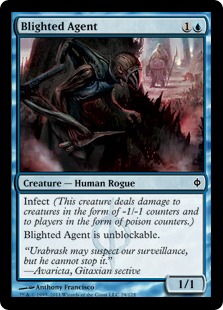
So here's your reminder: given a choice, don't try and remove an Infect creature on the opponent's turn prior to combat damage. Sometimes all you have is Condemn and sometimes Infect presents lethal, forcing interaction. It happens, and trying not to die is not a mistake. However, if the plan is to Bolt Infect during combat, that plan will only succeed if Infect is in dire straights. Remember, this is a deck that works by pumping up its creatures, and Bolting during combat lets Infect gain extra value from its pump spells. As letting Infect getting value from pump spells quickly translates into a dead you, it is something to strenuously avoid!

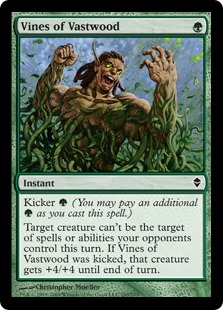
And the coast isn't clear for unequivocal removal either. Players forget that Infect runs 6-8 of Vines of Vastwood and Blossoming Defense with a few Snakeskin Veils for good measure. Playing any removal during combat is an invitation to let the opponent not only counter your spell but get in extra, potentially lethal damage. And players complain about Veil of Summer.
The correct time to remove an Infect creature is from the End of Combat step until your End of Turn. Doing so puts the ball in Infect's court to play a pump spell first, limiting their ability to use hexproofing to protect their creatures during combat. Plus, if they do Vines their creature, doing it outside combat means it's just a counterspell, and not a pump spell too. The best thing that players can do is force Infect to use its limited pump when the pump doesn't translate into damage. Also, never wait to remove an Infect creature.  Unlike normal damage, there is no "healing" poison, so you can't get the damage back. Just kill it on your own turn.

Thoughtseize Threat Misevaluation

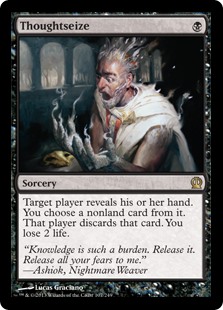
The final topic for today is a reminder about Thoughtseize and Inquisition of Kozilek: these cards answer everything. Choose their targets accordingly. I realize that this seems obvious, but the number of streamers I've seen talk themselves out of taking the threat they can't otherwise answer for fear of something worse is very large. I'm going to specifically call out Cooper the Red because he is the most recent I saw, but I promise you, look at any Youtube of a Thoughtseize deck and it will happen. In the linked clip, Cooper is Inquisitioning Death and Taxes and sees a nearly ideal hand. Rather than taking either protection creature, he takes Stoneforge Mystic and loses, never casting Scourge of the Skyclaves. Now, he is in a very bad spot in a bad matchup, but his mistake still cost dearly.
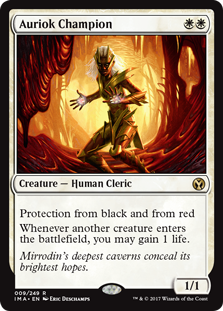
The mistake Cooper and all the other streamers have made is a conflation mistake. It's a known correct play to only take a duplicate copy if you can Inquisition again for the other one. Taking a unique card is always the best play, given the choice. When Cooper saw Auriok Champion and Mirran Crusader, he immediately lumped them together as unanswerable protection creatures. Since he couldn't take both, he took the next best card. What he forgot is that he had far more answers to Crusader and Stoneforge than Champion. Crusader dies to Bolt, Seal of Fire, and Kozilek's Return, and he has Assassin's Trophy and Kolaghan's Command for Mystic. Once it lands, only Tarmogoyf and Return answer Champion. Plus, Champion's life gain keeps Scourge from being cast. He needed to take Champion to have a chance, but didn't make the play.

Answer What Kills You

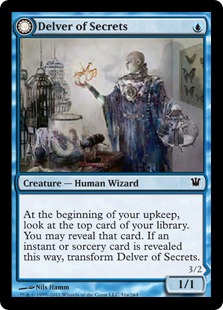
In general, it is better to answer something that will kill you rather than something that might kill you. I frequently see players worry about late-game cards rather than the short and it costs them. Jace, the Mind Sculptor is far more flashy and obviously powerful than Delver of Secrets, but an unanswered Delver kills before Jace matters. I see too many discard players lose to threats they could and should have discarded because they thought they'd draw an answer before it was too late. But they didn't, and so all the card advantage they removed wouldn't have mattered anyway. It's always tempting to hit the card that's strongest in a vacuum, but the correct play is to identify the chief threat given the flow or pattern of the current game.

Learn and Improve

Ok, I'm feeling better. There are definitely more things I could lecture on, but there's only so much time in a day. The main takeaway I want to emphasize is that none of us are ever above study. Getting better is as much learning new lessons as holding on to old ones. The information is out there for the taking. Take it.

Will History Repeat Itself This Time?

Are you a Quiet Speculation member?

If not, now is a perfect time to join up! Our powerful tools, breaking-news analysis, and exclusive Discord channel will make sure you stay up to date and ahead of the curve.

Here we are: the Reserved List cards all rallied as buyouts ensued, TCGplayer and vendors across the internet sold out of Magic’s earliest cards, and buylist increases had to follow for these stores to restock. Now those buylist increases are starting to bear fruit, and cards are entered into vendor inventory at record high retail prices.

I’ve seen this show before.

When this happened in 2017-2018, the sky-high prices didn’t hold. Vendors had a tough time moving unplayable or fringe playable Reserved List and Old School cards. Even some of the bigger cards, such as Library of Alexandria, had a price tag that could not be justified. Inventory sat, vendors couldn’t move everything at the “new price”, and eventually there was a retracement.

There was an error retrieving a chart for Library of Alexandria

Will the buyout craze of late 2020 / early 2021 follow the same pattern? Doesn’t history repeat itself? It’s not nearly so simple this time around. This week, Sig will explore the similarities and differences this time versus the last, and shares his thoughts on how best to position no matter the outcome.

The Ways This Is Just Like Last Time

I’ve been following Card Kingdom’s buylist even more than normal throughout this buyout season. However their algorithms work, they tend to have dynamic, reactionary changes to their buy prices as the market fluctuates. Some of the cards on their buylist have followed a very similar pattern as during the 2017-2018 buyout event.

For example, consider Revised Dual Lands. If you follow me on Twitter, you’ll know that I’ve been watching buy prices on these particularly closely. They were climbing day in and day out, and some where hypothesizing their buy prices would peak when they were parity to offers seen from Japanese vendors.

There was an error retrieving a chart for Underground Sea

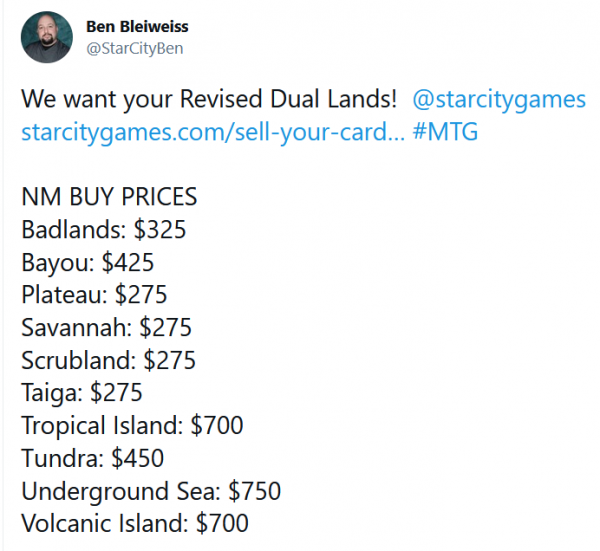
In reality, this has not played out (yet, at least). At one point, top buy price on a Revised Underground Sea peaked at $780. Now, the top buy price is down to $577.50 according to Trader Tools. Card Kingdom’s buy price isn’t even best in class anymore. Their offer: $550. Star City Games has been aggressively playing in the Dual Land market as well—remember when SCG buyer Ben Bleiweiss tweeted out their buy prices on Duals back on February 1st?

Since tweeting this a month and a half ago, Star City’s buy price on Underground Sea dropped to $700. Volcanic Island dropped to $650 from $700. Similarly, Tropical Island dropped $50. A couple others dropped as well, though it’s worth noting their buy price on Taiga and Bayou actually increased $25 since.

Why have buy prices, particularly at Card Kingdom, dropped so much? Look no further than their inventory (and their sell prices)…

Do not be deceived by their near mint inventory. While they may not get many near mint Duals in stock, they have a bunch of played ones. For example, Card Kingdom has eight EX, VG, and G copies of Underground Sea listed. Though oftentimes I see them cap their quantity restocked at eight per condition—if I had to bet, I’d guess they had more waiting in the wing.

At these prices, are you really surprised to see that they have so many in stock? They’re not exactly going to fly off the shelf at these prices. Card Kingdom managed to up their prices so much to ensure they maintain some inventory. But even with trade credit, I cannot advocate buying an HP Underground Sea for $769.99 when there are MP copies on TCGplayer for 5% less.

Beyond Dual Lands, I’ve also observed vendors slowly restocking other high-end cards as well. Card Kingdom has finally started restocking Collectors’ Edition Power at new, higher prices. They have over a dozen copies of Bazaar of Baghdad restocked ($3009.99 for HP!), a few Library of Alexandrias ($2449.99 for HP) and even two The Tabernacle at Pendrell Vales ($4549.99 for HP).

Star City Games and ABUGames have also been adjusting buy and sell prices in kind, though a little more slowly. At one point Star City Games literally had zero Arabian Nights cards in stock. Now they have two: a heavily played Drop of Honey for $599.99 and a near mint Erhnam Djinn for $699.99.

There was an error retrieving a chart for Drop of Honey

It’s not much, but it’s only the beginning. We saw the same restocking and price adjustment patterns in 2018, and ultimately it led to a retracement and two-year stabilization of market prices.

The Ways This Looks Different From Last Time

These are fairly compelling observations that lead me to believe prices may be peaking, and we could be in for another 1-2 year period of consolidation as prices correct. After all, are players really eager to hand over a thousand bucks for a nice Underground Sea? Can nice Library of Alexandrias really sell quickly at $4000? Can heavily played Black Lotuses really sell north of $10,000?

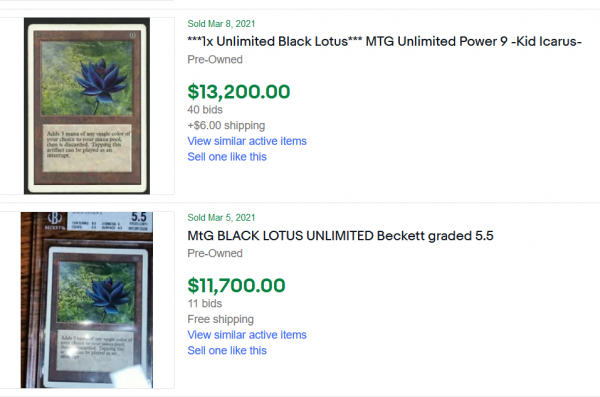
Well, at least in some cases, the answer is “yes”. Just check out eBay’s completed listings on Black Lotus, for example:

Some cards are still moving even at their new price points. Browsing Card Kingdom’s Unlimited inventory, I see that they have adequately restocked many cards in the $100-$500 range, usually with much higher prices than a couple months ago. But as of the morning of Sunday, March 14th, they have exactly one piece of Unlimited Power in stock: an EX Black Lotus listed at $20799.99.

I remember seeing Card Kingdom restock a few other pieces of Power at new prices just last week, but every other one sold. They also have thin stock on blue Unlimited Dual Lands, and prices may have to adjust even higher to generate inventory for the vendor.

Despite aggressively higher buy prices, Card Kingdom still struggles to keep many high-end cards in stock, especially the more desirable / playable cards from Legends and Arabian Nights. While I have observed some buy prices cooling off in recent weeks, this hasn’t been universal across the board, and there are plenty of cards Card Kingdom still offers all-time high numbers to buy. This includes cards like Moat, Eureka, and Guardian Beast.

This tells me that, while some prices may be stabilizing, other cards may be breaking rank and will continue to climb.

The Wild Card: Stimulus and the Collectibles Boom

On the one hand, I’m tempted to look past the smattering of cards that continue to sell at higher prices, call them anomalies, and claim that all prices will be cooling off in the coming months. But there are too many external factors at play that could prevent this outcome.

First and foremost, congress just passed another stimulus package bill. Now many Americans will be receiving yet another stimulus check in the amount of $1400, on top of additional unemployment benefits and child tax credits. This is going to pump yet even more cash into the economy; some Magic players who don’t need that cash infusion to buy food and shelter could very well spend it on cardboard, even at higher prices. Don’t forget we’re also in the middle of tax refund season!

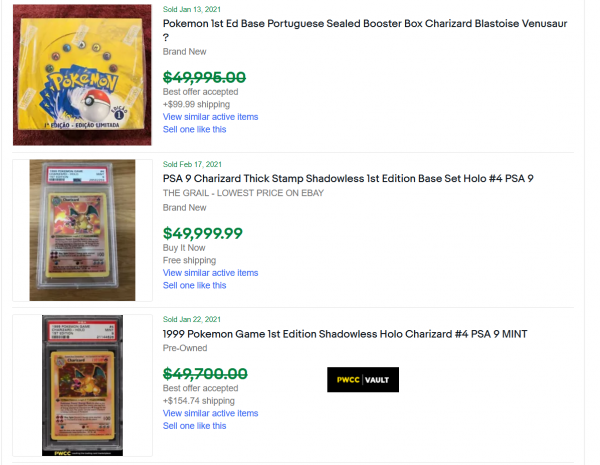
Then there’s cryptocurrency hype, and the fact that Bitcoin is accelerating higher as it crashes through previous all-time highs. Last weekend, Bitcoin broke through $60,000…I have to imagine at least some crypto profits will filter into the already-hot collectibles market. Pokemon cards are also soaring, and this could draw more attention towards the lesser-known Magic market.

And of course, I can’t discuss the importance of collectibles and nostalgia without mentioning COVID-19. People are stuck at home (for over a year now), largely unable to travel and spend their money on experiential things. But with excess cash from the government, what better thing to do than to enjoy some of the nostalgic collectibles we remember as a child? It’s the same reason why some classic video games are also climbing in price lately.

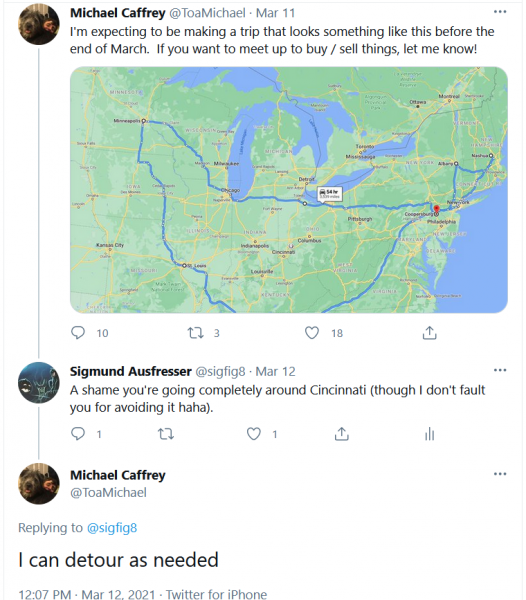
The pandemic continues to shut down large organized events, such as MagicFests, and that continues to hamper exchange of cards. Some vendors are literally resorting to driving / flying around the country to purchase collections in person in order to restock their inventory. Michael Caffrey of Tails of Adventure has been vocal about this on Twitter.

As long as large events remain shut down, vendors will continue to struggle to restock some cards. As long as that remains the case, prices could be sticky at their new levels.

Wrapping It Up

If there was no COVID-19, I would readily say that Magic prices are peaking and it’s time to sell if you intend to cash out because we are due for a one- or two-year consolidation period. That outcome is still on the table, but there are some external factors really getting in the way.

COVID-19 shut down large events, making it difficult for vendors to restock. A quick glance at inventory on a card from Arabian Nights, such as Elephant Graveyard, is all you need to understand just how few copies are flowing in this market.

While supply remains constrained, demand stays strong, in part thanks to the government’s willingness to give many Americans handouts in the form of $1400 checks. This will certainly pump more cash into the Magic market, keeping prices inflated. After all, what else is there to do during a pandemic?

These external factors give me pause, and cause me to question which direction the market is going to turn this Spring. On the one hand, some buy prices have tapered off as vendors have been able to restock key cards, such as Dual Lands. If the new inventory doesn’t move at higher prices, we’ll see a softening in the market.

On the other hand, perhaps the new round of stimulus, combined with tax refunds, will infuse enough cash to overcome the restocked inventory and create a fresh new wave of demand.

Either way, I am going to watch this market extremely closely, monitoring pricing trends on Card Kingdom’s site as a surrogate for the overall market. I have been strategically buying cards here and there, particularly Alpha rares sub-$200 (there won’t be such a thing eventually) and playable Beta rares at decent prices (there pretty much aren’t any left). I’m holding anything Old School that has little or no inventory on TCGplayer in case vendors sell out and prices tick higher yet again.

At the end of the day, agility is going to be key here. If you are the buy-and-hold type, you’re likely fine to just throw your Old School cards in a box for another five years. But with my end goal of funding two college tuitions for my children, I’m going to be actively looking for chances to trim the collection when I see prices hit local maxima. If your goal is to raise cash from Magic to fund other things in life, you may consider doing the same.

Time Spiral Speculations: Sealed and Singles

Are you a Quiet Speculation member?

If not, now is a perfect time to join up! Our powerful tools, breaking-news analysis, and exclusive Discord channel will make sure you stay up to date and ahead of the curve.

With the new Time Spiral Remastered coming out later this month, it begs the question, what will the sets value be like? That question even further complicates with the distinction between singles and sealed product. Thankfully, Time Spiral Remastered only has one option for sealed products, that being a simple draft booster box, making it considerably easier to make estimates. No "Double-Triple Collector VIP Set Boosters" for this one. Without further ado, let's check out the information we have, and evaluate what this might mean for this poorly timed draft experience.

Sealed Product

The only available sealed product for this set is the draft booster box. The box contains 36 booster packs of 15 cards each(16 if you count the marketing card). Currently, the boxes are sitting on Amazon for around $199. If you look on TCGPlayer you'll find similar prices at $196 per box. If you look at a whole case, TCG is $1196.97 for a case of six boxes. If you look at eBay, the cheapest sold listing is $170 plus shipping. Newer listings with boxes left are sitting at the low end around $185 to $210.

I've heard some chatter around the internet about possible early shortages, some suggesting an extremely limited supply, while others state that the bulk of the boxes are being reallocated to Amazon and other big box stores, in an increase to previous standards. It's impossible to 100% predict how the supply is going to pan out, but I would guess that it is going to be similar to a Mystery Booster-style situation. For Mystery Booster there are currently, there are 13 listings on TCGPlayer, with the lowest price being $225. It has been out for around a year, and if we all remember the WOTC initiative to help stores through the pandemic by offering free boxes totaling $10,000,000, the supply might be slightly more than we might be getting now for TSR. This could mean that TSR boxes could see higher short-term value than Mystery Booster, and even very likely a higher long-term value.

There was an error retrieving a chart for Lotus Bloom

One important aspect to consider is the demand for this for Drafting. This is being released in a period of time where most LGS aren't offering any in-store play, it would be reasonable to assume that a majority of the orders and purchases early on are not going to be for the purpose of drafting or sealed play. I would reason that in a couple of months when in-store play and other in-person events and gatherings start to open up, we will see a lot more demand for TSR sealed. With the majority of purchases likely not coming from players for the purpose of playing, the bulk of the product might be held in the hands of speculators and investors.

We could see one of two things happening with that situation. If people hold onto the majority of their boxes within the first few months, depending on how the product is introduced to the market after demand rises, we could see a relatively flooded market at first with low prices, and a possible retrace to very high prices long-term as supply dwindles, or we could see people slowly introducing their product into the market, allowing for consistently high prices across sellers, and an eventual rise in value. The core differences in these situations are the rate at which the product is being dispersed, and subsequently held or removed from the market permanently.

A faster early on dispersal rate could bring higher prices earlier, at the cost of the profits for sales during that period of high supply, while a lower dispersal rate would allow for higher profit margins during the initial period of high demand while lengthening that period by controlling the rate at which the product is being sold. Knowing that the likely case might just be a faster dispersal to promote higher liquidity would suggest that holding on to the bulk of your product early on may be a smart decision but at the end of the day that will be up to you to decide.

Singles

With Time Spiral Remastered being a reprint set, it makes it a lot easier to try to predict the prices of singles, and perhaps the boxes estimate value. Let's get into the data. In the main set, we have 289 total cards, all reprints from the original Time Spiral block. This includes 121 commons, 100 uncommon, 53 rares, 15 mythic rares. There is an additional sheet of timeshifted cards that will appear at a rate of one card per pack. There are also foil timeshifted cards that will be included, but otherwise, all timeshifted cards have an equal rarity. The only way to get singles from TSR is through the draft booster boxes, reducing the chance that certain cards will be devalued by higher pull rates in contrasting products.

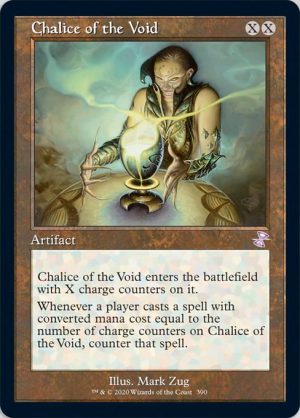
The selection of normal singles is very promising, with notable reprints including Pact of Negation at $31.95, Sliver Legion at $60, and Urborg, Tomb of Yawgmoth at $25. It's no surprise that some of the timeshifted cards are among the highest preorder prices for these cards, despite the value of the original card. The current highest preorder price is for the timeshifted Thoughtseize at $68, with Chalice of the Void sitting at around $55. If we compare the effect on reprints to these cards in the past, we can get a picture of what this reprint may look like. I figured a good example to look at might be the card Thoughtseize, as it has several previous reprints, and sees a good amount of play in formats that it is legal in.

With this information, you can gather generally that with each reprint, the price tended to drop, however with the number of cards on the market increasing beyond a point of simple healthy availability, the price trended lower and lower over time. This appears to be congruent with other modern playable reprints in this set with the notable exception of Pact of Negation, but this may not be true with the other cards being reprinted, so let us take a look at Sliver Legion, which has seen one reprint, however only as a judge promo. This lower quantity card may benefit from a reprint, with more interest arising, it could draw attention to the modern-frame printing as an alternative to the Core Set 2015 frame.

Sliver Legion only being reprinted once is a very important thing to consider. Especially considering the reprint was a very limited Judge Promo, which, as the name suggests, is only given out to current Magic Judges. Another important thing to consider is the estimated value of the box. While we are still in the preorder period, something to consider is that there are 3 major sources of possible big hits. Timeshifted cards are standing out to me considerably. About 60% are preordering for above $3, around 50% above $5, and about 10% above $10.

Normal Rares are also looking not too bad, with around 1/3 being worth more than $5, and 10% worth more than $10. Especially withPact of Negation being in the rare slot, and a total of 53 rares in the set, double rares should occur not too rarely, as you could theoretically receive 2/3's of the set in one box. Mythic pull rates were recently changed from 1/8 to 1/7.4, and while this may not seem like a very large change, it actually changes things a lot. A majority of boxes will now lean towards 5 mythic boxes, which when we go to look at the mythic sheet, adds a large amount of additional value. A little under half of the Mythic's in the set are currently priced at over $15 at preorder, with another 25% of the sheet consisting of cards $5 or more. If we account for foils we now have added value.

In every box, we should see generally between 1 and 2 foil timeshifted cards. We don't have much information on pricing for foil timeshifted cards, however, we have a few cards priced out for preorder. Chalice of the Void is seeing foil prices at $300, while Ponder is seeing $125. Now at this point, you should be a little concerned that I mention the preorder prices so frequently, as preorder prices are very often overvalued and not accurate depictions of the price.

There was an error retrieving a chart for Chalice of the Void

Taking this into with the recent preorder price comparisons, a good rule of thumb is to mark everything down a little under half. Sometimes a bit over, but not by enough to make too much of a difference. If you were to pull a box with about 25% of the cards in each category being the middle range, and cutting the prices in half, you should still be left with about $190-200 in value. If you pull a big hitter foil, you could kiss the price tag goodbye. Of course, the chances of that are well under what would be considered reasonable.

With the boxes themselves being only $200 right now, something has to go. With the supply possibly being possibly partially distributed in large retailers and online, we could see both. It could go down in either or both, depending on the supply. It's all about the supply. I will be going more in-depth in an article coming out later this week, so if you are interested keep an eye out.

The Takeaway

With more information likely coming closer to release, we can continue to evaluate as time goes on. I would be keeping a very close eye on this product. Hindsight is 20/20, and Future Sight is coincidently part of the Time Spiral block. Have a great day, be smart, and invest in cardboard.

Testing Hypergenesis: Qualitative Data and Conclusion

Are you a Quiet Speculation member?

If not, now is a perfect time to join up! Our powerful tools, breaking-news analysis, and exclusive Discord channel will make sure you stay up to date and ahead of the curve.

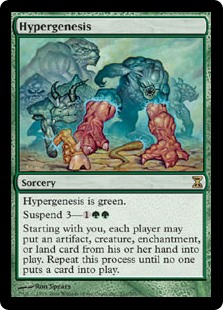
And now, to wrap things up. I've talked about the setup and the hard data, but that doesn't tell the whole story. It's usually the intangible or at least unquantifiable observations that most inform decisions. I made a number of observations and ancillary impacts during my testing that changed how I see Hypergenesis. Today, I'll be sharing those insights and my conclusions. The data is fairly clear about what to expect from Hypergenesis, but it didn't capture the really troubling aspect.

On Power

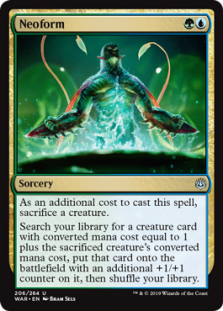
So the most obvious question is the power. Is Hypergenesis too strong for Modern? On the one hand, the data clearly showed that Hypergenesis wins more than Neoform. Which isn't saying much; Neoform's been around for years with no real metagame impact, so a better version sounds harmless. Such a conclusion is reinforced by Hypergenesis lacking a truly favorable matchup in my sample. It has a very powerful and fast combo, but gets disrupted left and right. And even against the noninteractive decks, the matchup was even at best.
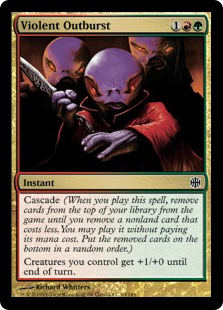
However, I feel the data is misleading. Not that the data is wrong or untrue, but the experience I gained during the test tells me I misbuilt the deck enough to affect the results. I got a pretty good number of turn 1 kills, but it should have been higher. I frequently had hands where I had everything for an actual turn 1 win except Violent Outburst. Demonic Dread requires a creature to target, which will only happen turn 1 on the play with Forbidden Orchard. The odds aren't great, but it's not the worst problem. The worst is that Ardent Plea cannot kill turn 1 on the play, as there's no way to make 1WU in the deck before turn 2 because cascade prevents it from running Manamorphose or Wild Cantor.
Subsequently, I had to rage at many hands that would have killed with Outburst, and a few with Dread but couldn't thanks to Plea. I've done some testing with the same deck since, and replacing Plea with Bloodbraid Elf appears the right call. Which tells me that I hamstrung Hypergenesis. Consequently, I think the actual win percentage in the test was lower than what it would be if unbanned. There's more power in the shell than I harnessed.

An Important Lesson

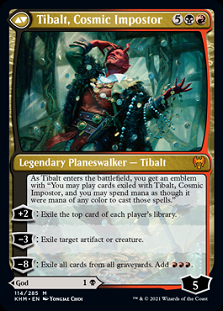
And then there's the issue of Tibalt's Trickery. That deck played similarly to Hypergenesis, but only dropped one creature. Subsequently, it was more explosive, but not necessarily more powerful. It wasn't really doing anything in Modern, but it is not and may never be clear if it could have. Tibalt, Cosmic Imposter was so dominant that it may have covered up Trickery's real power. Wizards feared that, anyway, which is why Trickery was banned. However, that debacle does suggest that a similar deck would be too good.
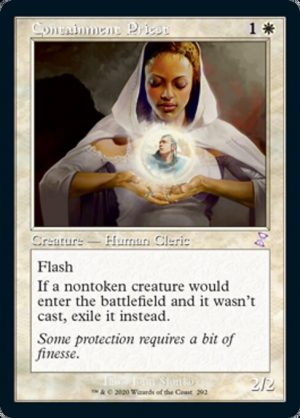
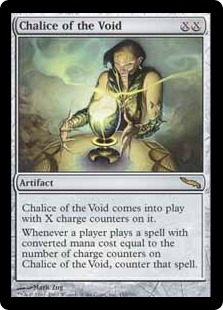
Admittedly, there are more ways to stop Hypergenesis than Trickery. Chalice of the Void for 0 and Containment Priest spring to mind, but a resolved Hypergenesis also lets Ensnaring Bridge hit play and stop the shenanigans. I'm not sure that makes up for the gameplay problems, but it also isn't nothing. I think that Wizards has made its position very clear, but that doesn't mean either Trickery or Hypergenesis are too strong in a vacuum.

The Unexpected Key

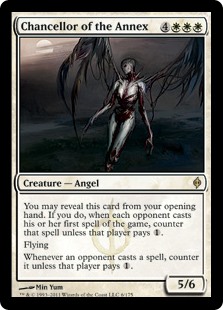
That said, Hypergenesis's win rate would unequivocally have been lower if I wasn't running Chancellor of the Annex. From Legacy experience I knew the card would be very good. There's nothing better at defending against a Force of Negation turn 1 than a revealed Chancellor. However, that was only relevant against 4-Color Omnath, and only occasionally. It also protects against turn 1 discard, but that similarly was a niche use in the test. The real benefit is the general disruption. A revealed Annex Mana Tithes everyone's first play, which puts every deck off their curve. While there are work-arounds, including just throwing away a spell, it was a huge benefit and bought significant time against every deck.
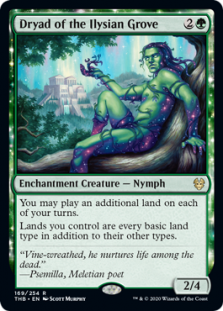
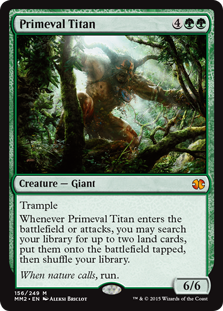
What I didn't expect was how devastating Annex was against Amulet Titan specifically. The test list was just over half land, which meant that a typical hand had less than three spells. Additionally, over half the lands in Amulet come into play tapped. As a result, Annex was often unchallenged until turn 3, which meant that Amulet couldn't deploy a Dryad of the Ilysian Grove or Azuza, Lost but Seeking on curve, which then bought Hypergenesis at least one more turn, and usually two, before Valakut came online. This threw Amulet's game off enough that we discussed at length the value of throwing an otherwise essential Summoner's Pact away just so Amulet could actually play. We even considered boarding in another Engineered Explosives just to throw it at the Tithe.
An interesting note is that Scourge Shadow was the second-most impacted deck, but in an unexpected way. It had the best way to dodge thanks to Mishra's Bauble, but that didn't always line up nicely. Squandering the cantrip hurt. However, the real problem was that Scourge is so mana-tight that it usually had no choice but to throw away a meaningful card. If it didn't, it would be perpetually locked out of the game. And that hurt even more.

Time on My Side

While it doesn't really factor in terms of power, I would like to state for the record that this test was by far the easiest one I've done. Most of this was the deck. As mentioned, it was wrong to try to be fancy with Hypergenesis. I just mulliganed for land, cascade spell, and payoff, then jammed it at the first opportunity. I didn't have to think or stress, which was a huge relief considering how tricky Neoform is, both in terms of piloting and the actual combo. Jamming Violent Outburst was a welcome relief compared to trying to assemble all the bits and pieces of Neoform's combo, and attacking with fatties is much easier than keeping track of all the cards you've drawn and trying to assemble them in exactly the right order to win.
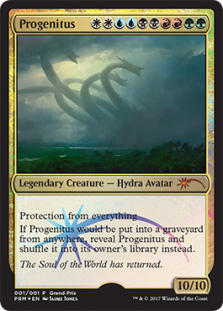
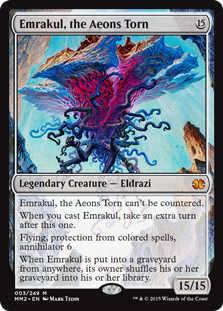
Consequently, this test went faster than the others. I started actually recording data in mid-November and was done by early January. The others took four months at minimum. The entire DnT test took two days. While ease of play was a major factor, the nature of the decks also meant that matches were quickly resolved. Either the glass-cannons went off or they were disrupted into defeat. No back-and-forth; no scraping out a win. The only exceptions were a few games against 4-C Omnath and DnT. In those cases, Hypergenesis went off without dropping Emrakul, the Aeons Torn or Progenitus; without the untargetable creatures, Path to Exile was devastating, and bought both decks the time and space they needed to contain whatever was left. However, the vast majority of games only lasted four turns.

A Curious Observation

All that said, I must admit that the most revelatory observation wasn't actually mine. About 60% of the way through testing, the Amulet Titan player observed that Hypergenesis seemed to be winning more on the draw than the play. I hadn't thought about it at all up to that point, but I had noticed that games felt better on the draw than play. Not something quantifiable or even identifiable, I just felt more comfortable on the draw. I checked with the other players, and they confirmed feeling similarly. DnT said they found being on the draw terrifying, and not just because Demonic Dread was more likely to be live. They'd already boarded out Giver of Runes just to make Dread less useful.
With that consensus opinion, I did keep track of subsequent games, and I did win more on the draw than play. Not by a lot, and maybe not enough to statistically evaluate (small overall n of observations). But the bump was definitely present. And felt more decisive than wins on the play. It was late enough in the process that the data doesn't really mean anything, but what data I have and the impressions from the other players does lead me to think that it plausible that Hypergenesis should choose to draw. This is not only completely counterintuitive but also contrary to Neoform's games.

Uncertain Causation

I don't know why drawing appeared to be better for Hypergenesis. I've goldfished a number of times and jammed some test games looking for a reason. It goes against expectations because it's giving up a tempo advantage and giving opponents the opportunity to interact turn 1. However, the impression holds, and I think it's more drastic than expected. The effect is too hard to pin down without significant testing, so I'm not certain that it's statistically provable, but I can't dismiss it either. Current theories include:

A) More Cascade Options

As I've mentioned above, Ardent Plea and Demonic Dread were the weak links in the deck. Plea's mana was wrong for the deck, Dread needs a target and I didn't often open Dread and Forbidden Orchard. Being on the draw helped both problems, the latter most of all. I got more chances to topdeck the Orchard for Dread, plus it gave my opponent the opportunity to play a creature. The latter was helped with mana smoothing and the rare chance when I had the singleton Gemstone Caverns to actually go off turn 1.

B) The Extra Card Is Critical

As much as I praised Annex, the main point of this deck is dropping Emrakul or Progenitus early. There's a reason that having a cascade card, either legend, and mana was a keep regardless of matchup. With no card draw or library manipulation, the extra topdeck is the only way to improve the chances of finding the critical creatures. Barring that, simply having an extra fatty to overwhelm the opponent is pretty good.

C) A Way Around Disruption

Finally, there is something to be said for drawing a card against disruption spells. There's a lot of redundancy in playing 12 cascade spells, and drawing a replacement is huge, particularly against discard.

What About the Ban?

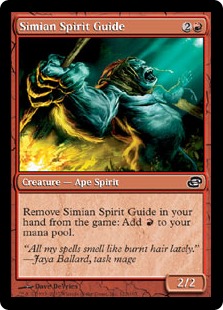
The final thing to discuss is the loss of Simian Spirit Guide. It's a key component because it's half the deck's fast mana. The loss necessarily slows Hypergenesis down, which would make it a far less threatening combo.
Except, what if SSG was just a crutch? What if Hypergenesis isn't actually slowed down? It might have sped up thanks to the ban. Counterintuitive, but it makes sense to me given what I've learned in this test. With a few adjustments, I think that Hypergenesis would be just fine, or maybe better than before.

First, the deck wasn't able to kill as often as it theoretically could because Ardent Plea doesn't mesh with Guide and Chancellor of the Tangle. It was an unsolvable mana conflict. Secondly, the Trickery decks were more explosive but less overwhelming versions of Hypergenesis. However, their cousin, Tibalt Cascade, was the better deck. Thirdly, it appears that Hypergenesis wants to be on the draw.

Putting it Together

The lesson from Tibalt Cascade is what really got me thinking. Toward the end of their reign, the number of Gemstone Caverns were ticking up. The decks needed to go off turn 1 as often as possible, and suddenly it got easier to pull off on the draw. Hypergenesis wants to draw. That should mean that, theoretically, I can replace SSG with a full set of Caverns, plan to draw, and have at least as good odds of going off turn 1 with Cavern, another land, and Tangle. Or maybe better odds because Caverns would be a rainbow land, making it possible to combo off with Ardent Plea turn 1. Exiling a Chancellor you've already revealed mitigates Cavern's card disadvantage, as does the extra topdeck from drawing. There's more risk since Cavern is legendary and useless unless in the opening hand, but maybe the upside is worth it.
My Assessment

I have no problem with Hypergenesis as a fast combo. Modern needs fast and unfair combos to keep slow multicolored sludge decks in check. Unfair combo prevents decks from infinitely durdling and requires decks play interaction, if not maindeck then sideboard, to not just lose to a nontraditional attack. Hypergenesis is better Neoform, and I think Modern can handle better Neoform. Given history, better Neoform is not a high bar.

However, that is true if and only if unfair combo can't win on turn 1 too often. Winning then occasionally is fine, but even Legacy doesn't like consistent turn 1 combos. My data showed that Hypergenesis would win turn 1 more often than Neoform could. I have reason to believe that Hypergenesis' real turn 1 rate should have been higher. And may have increased since the test. My testing also showed that sideboard cards were usually too slow to make or break the matchup. Thus, I believe that unbanning Hypergenesis brings a huge risk to Modern's health. I would recommend keeping it banned out of concern of early wins rather than power level.


Risk Management

Unbans are all about risk vs. reward. Given what I found, I think that the risk posed by Hypergenesis's theoretical speed outweighs the benefit of getting a better Neoform deck. Unless Wizards decides to completely kill off all fast mana in Modern, Hypergenesis is too dangerous to be released.

Triomes, Temples, and Pathways (Oh My!)

Are you a Quiet Speculation member?

If not, now is a perfect time to join up! Our powerful tools, breaking-news analysis, and exclusive Discord channel will make sure you stay up to date and ahead of the curve.

This week I want to take a brief reprieve from the weekly buyout discussion. Old School cards, random Reserved List cards, and uncommons from Magic’s earliest sets are still hot. I do see some calming down in certain pockets of the market, but we haven’t seen significant retracement yet. I’m sure I’ll be returning to this subject again soon, especially with another direct payment from the government in the works.

In the meantime, I wanted to talk about three groups of newer cards: the mana-fixing lands of Standard.

We’ve seen a wide range of these printed by Wizards in the past, and I have to give Wizards credit: the current mana base consisting of Temples, Triomes, and Pathways (along with Fabled Passage) are well-designed and balanced. All three serve their purpose in the right deck.

But what does this mean from a financial standpoint? This week I’m going to look at the most played lands in a couple formats and try to see where money could potentially be parked for a year for modest, less-volatile returns (relative to all the crazy Reserved List noise).

Triomes

I’ve been a fan of the tri-colored Triomes ever since they came out. In fact, I even speculated on a few copies of the non-foil, Showcase versions myself. (That may seem inconsequential, but realize it takes a lot for me to buy into any newer cards these days). So far, this investment has yielded lukewarm results, but I am still optimistic.

There was an error retrieving a chart for Zagoth Triome

In terms of playability, I see demand coming from three buckets of players. First, there’s Standard. Granted, there are very few paper events nowadays, but as game shops gradually open there should be an increase in Friday Night Magic Standard tournaments. According to MTG Stocks’ Most Played Cards page, only Zagoth Triome cracks the top 50 (number 27). Despite the modest showing, Zagoth Triome is the most expensive of the group.

Second, there’s Pioneer. This is a format I’ve largely ignored throughout its young history in Magic; it simply does not interest me. But MTG Stocks does track the most played cards from the format, and I see a few Triomes on the list. Ketria Triome is number 20, Raugrin Triome is number 44, and Zagoth Triome is number 49. Modest numbers, again, but this will fuel demand for the cards as well.

Lastly, there’s Commander. This is what gives me the highest hopes for Triomes over a longer time horizon. According to EDH REC, the least played Triome is Raugrin Triome, still shows up in over 9,000 lists. The most played, Zagoth Triome, appears in over 11,000. Any three, four, or five-color deck is going to run these and it’s hard to beat a fetchable land that yields three colors. The cycling is a nice touch for long games where top-decking a land isn’t so useful.

All in all, the Triomes offer a unique set of abilities that will keep these relevant in Commander, and to a lesser extent Pioneer, for the foreseeable future. If you’re looking to buy, you already missed the bottom and optimal entry point. These could climb a bit throughout the rest of their life in Standard, and I like their long-term prospects to an extent. But there will be some pressure on price when their time to rotate out of Standard arrives. I also wouldn’t be surprised to see reprints in future Commander decks. For this reason, I prefer holding the Showcase variants (foil or non-foil).

Core Set 2021 Temples

I know these see at least some play in Standard and Historic; at least they do on Arena. But none crack the top 50 lists on MTG Stocks. That, combined with all their printings, explains their dirt cheap nature. That said, I grabbed a playset of all five Core Set 2021 Temples when the set first came out for $0.35 a copy. Just like with the Triomes, getting in near the bottom paid off.

Now Card Kingdom prices regular, non-foil Temples between $0.49 (Temple of Triumph) and $1.29 (Temple of Silence). Sadly, I’m not sure if there’s much more upside left. At the time of my purchase, $0.35 a Temple seemed like a bottom, especially when considering I was able to buy all 20 from a single vendor to take advantage of free shipping. But will these see much more appreciation throughout their life in Standard given their limited play profile? I’m not so sure.

There was an error retrieving a chart for Temple of Silence

The one positive is that these Temples show up in many EDH REC decklists. For example, Temple of Silence appears in 23,824 decks on the site! I know this number doesn’t accurately reflect actual play, but seeing a staggering number like this at least indicates that many players are using these. If Wizards ever stopped reprinting Temples, they would probably gradually climb over time as a result.

Unfortunately, there’s no way of guaranteeing we won’t see Temple reprints in the near future; they seem to have become favorites of Wizards in the Standard environment. Therefore, I have little interest in holding them over the long term. Given how cheap they are, there’s little reason to rush out and sell; but if I can flip these for store credit and a bit of profit, I am inclined to do so. There are just too many other areas appreciating far faster I’d rather park the money. If I played newer formats in paper, I’d likely just hold onto my set of 20, however, so keep this in mind.

Pathways

Last but not least, I want to have a look at the cycle of Pathways across Zendikar Rising and Kaldheim. These seem to be the lands of choice in Standard. Cragcrown Pathway is currently the number 5 most played card in Standard!

There was an error retrieving a chart for Cragcrown Pathway / Timbercrown Pathway

Needleverge Pathway is the 12th most played card in Standard, Clearwater Pathway is 15th, Branchloft Pathway is 19th, Darkbore Pathway is 20th, Barkchannel Pathway is 23rd, RIverglide Pathway is 25th, and Blightstep Pathway is 43rd! That’s a lot of Pathways seeing a ton of play in Standard!

In addition to their play in Standard, some of these have even cracked into Pioneer. Currently, Blightstep Pathway is the 4th most played card in Pioneer and Cragcrown Pathway is 25th. This demand is probably small relative to Standard, but gives these particular Pathways an extra bit of demand, which should facilitate a stronger price over the next year.

There was an error retrieving a chart for Blightstep Pathway / Searstep Pathway

Despite the high play numbers, these Pathways are still very inexpensive, especially when compared to the Triomes. Branchloft Pathway is the cheapest, which makes sense as it’s the least played of the bunch, and retails on Card Kingdom’s site for $3.49. Market price on TCGplayer is even lower, at around $2.70. Interestingly, the borderless variant is even cheaper, with a market price of $2.49. Regular and borderless copies of Cragcrown Pathway are in the same price range, as is Needleverge Pathway.

Prices climb from there, but cap out in the $5 range. At one point, I remember when the Showcase Triomes were hovering in this same price range (perhaps a buck or two higher). For a speculative play, this could be a solid buying point as these are hitting peak supply. If I had to guess, I would predict these would, on average, be more expensive one year from now. The borderless variants may be the most attractive to grab, though I don’t know if they merit a huge premium over their regular printing. Borderless is cool, but it’s not the same as the Showcase printings seen on the Triomes.

The one strike against these is their sub-par performance in Commander. The advantage the Pathways give is their ability to enter play untapped while also giving the player early game flexibility on manabase. Commander often progresses a little more slowly (though not always), so there’s less urgency to having lands enter untapped. Color flexibility is more valuable, and having these lands only tap for one color of mana is a bit of a drawback. As such, I’m not as confident in their long-term Commander demand profile.

While this will cap gains over the long-term, the short term is still bright for the set of Pathways given how ubiquitous they’ll be in Standard. Demand should especially pick up as more FNM’s resume with in-person paper events in the coming months.

Wrapping It Up

I must admit I haven’t paid much attention to recent Magic developments in a while—there’s been too much going on in the Old School market, where I focus most my attention, that I haven’t had time to monitor trends in newer cards.

These lands are still on my radar, however, and I wanted to provide a brief update on how I view each group: Temples, Triomes, and Pathways. If forced to choose between the three, I’d put my money into Triomes for a long-term play and Pathways for a short-term (less than a year) play. I haven’t bought any Pathways yet, but I may look to do so soon. I already have a small pile of Temples and Triomes—I’ll be monitoring pricing trends closely in the coming months to see if I’m presented with an attractive exit point.

Even if these do appreciate modestly, I still think they’ll carry with them an unattractive opportunity cost. It feels awkward holding a Triome and waiting a couple years for its price to go from $7 to $12 when we have stuff like Singing Tree going from $100 to $300 in the same timeframe.

There was an error retrieving a chart for Singing Tree

But now that many Reserved List cards already jumped, perhaps one viable strategy is to cash out of the overpriced, less-useful older cards and move store credit into Triomes and Pathways. When I receive store credit, and I find that all the cool old cards I want are way overpriced, this will be my backup plan. For me to even consider acquiring more of these new cards should say a lot to my readers, however, and I hope they consider these seriously when looking for smart areas to put money to work in an era where prices are already lofty.

Misprint Buyouts: Shivan Dragon and Charlie Brown Medallions

Are you a Quiet Speculation member?

If not, now is a perfect time to join up! Our powerful tools, breaking-news analysis, and exclusive Discord channel will make sure you stay up to date and ahead of the curve.

For anyone who's been watching the market recently may have noticed that sometime in the last couple of weeks there was a major anomaly in prices for a number of cards. Shivan Dragon and certain Tempest Medallions being the cards affected, it raises the question, why?

These cards jumped astronomically in price, for seemingly no reason. Some may suggest that it may be a push on simply "old-school" cards, but I'd beg to differ. I'd like to propose a hypothesis, that these cards were not bought out because of nostalgia or supply issues, but because of misprints.

Fifth Edition Copyright Misprints

In Fifth Edition there was an issue with the copyright text on five red cards. There was Portuguese text, where the words "All Rights Reserved" were supposed to appear in English. While there are five total cards that this misprint occurs on, the only one to receive a spike was Shivan Dragon. This is likely because of the appeal of a more iconic card, making offloading these cards easier. More people know about the dragons of Shiv than the Game Of Chaos.

I was told by a source within the misprint collecting community that the misprint itself is a semi-standard misprint that affected five red cards on the rare sheet of Fifth Edition. This essentially just means for us that while the misprint is being sought after, it is relatively common. It is likely that these collectors are trying to sort out the wheat from the chaff, and then likely dump the rest back onto the market. Because of this, I believe that the prices will not hold. There has already been considerable volatility in the market, and drops to pre-buyout prices have happened at least once.

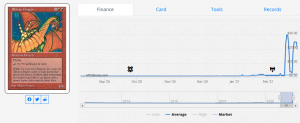
Shivan Dragon prices over the last six months

Charlie Brown Medallions

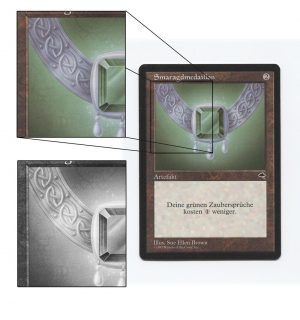
The Medallion cycle from Tempest has always been very interesting in the misprint community. A portion of Tempest Medallions had a remnant of a Charlie Brown comic panel printed lighted over the card's art. Similar to the Fifth Edition misprints, this is often not noticed by sellers and not categorized separately from the normal printings. The price before the buyouts was already hanging around $20. In turn, these cards went up a LOT for all medallions except for Emerald Medallion and Pearl Medallion, which are the cheapest cards in the cycle.

This appears to be a deliberate attempt to sort the misprints out from their counterparts. This may explain why the cheaper Medallions weren't targeted, as buying out the already high versions, stands to bring higher gains. With Jet Medallion and Ruby Medallion rising to $40 each, and Sapphire Medallion holding at almost $90. These might have a chance at staying well above pre-buyout prices, as they already held significant value. This disruption might turn to be a little more than just that.

Charlie Brown misprint as shown on Emerald Medallion

Price history for Ruby Medallion

Price history for Sapphire Medallion

Price history for Jet Medallion

What does this mean for you?

As older cards are fetching higher premiums, and even the smallest corners of the Magic community are showing increased buying power and higher and higher amounts of control over already limited quantities of cards, It just goes to show that we can't ever be sure that a card won't see significant interest. Shivan Dragon, while being an iconic card, has not seen major price adjustment for even its Fourth Edition printings (at least until the people noticed Fifth Edition prices, but who knows how long that might last), and most would be risking it to suggest that prices for a Fifth Edition card would rise this drastically. Even for the Medallions, it would take an incredible amount of foresight to foresee the changes we have seen.

It's very unlikely that these are the correct prices for these cards, but it may influence a higher price trend in the future. Overall, the takeaway is that while bubbles like this may be very profitable for those who are able to participate in them, they might just lead to higher long-term gains.

At the end of the day...

We can all look back and reflect on the market and see how and why these anomalies occur, it is only through experience and practice that we may truly begin to understand and perhaps predict them. This definitely isn't the last we'll see of a misprint-focused buyout, and it could be a good idea to keep an ear to the ground on that front.  I wish all of you a good day, and remember, be careful, be smart, and invest in cardboard.

Friendly Fire: The New Banlist’s Splash Damage

Are you a Quiet Speculation member?

If not, now is a perfect time to join up! Our powerful tools, breaking-news analysis, and exclusive Discord channel will make sure you stay up to date and ahead of the curve.

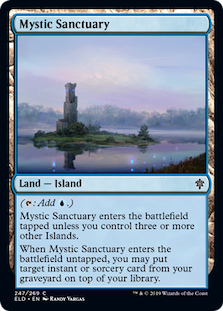
The latest banlist announcement did a number on Modern's top decks, decimating the Uro piles which week and again would claim top of the heap as well as the new bullies on the block, cascade-powered decks abusing the latest Tibalt cards. In order to solve for these displays of power, though, Wizards took an unconventional route in extending their ban hammer the likes of which we've never seen. The nuke included hits to Simian Spirit Guide, Field of the Dead, and Mystic Sanctuary, all key players in the aforementioned powerhouses. And all ones employed by far tamer tamer decks.

Guide's demise spells doom for Colorless Eldrazi Stompy, the deck I've championed for the last five years. Today, we'll examine more splash damage from the recent ban, and mourn other low-tier decks rolled by the announcement.

Simian Spirit Guide

According to many pundits, Simian Spirit Guide has been on the chopping block more or less since Modern's inception, simply by virtue of providing generic free mana. It does seem like Wizards has finally agreed with this crowd and decided to axe the monkey out of principle; as noted last month, it's not like Guide was fueling anything particularly devastating beyond the already-broken-enough-for-a-ban Tibalt cascade decks. But as much as I personally loved the dimension Guide brought to the format, of say a turn one Chandra being at least possible, others hated it, and are happy to see the monkey go. Balance fans are probably not among them.

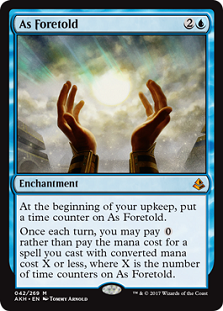
As Foretold, HUGOFREITAS1 (5-0)

Creatures

3 Greater Gargadon
1 Brazen Borrower
4 Simian Spirit Guide

Sorceries

3 Ancestral Vision
4 Crashing Footfalls
1 Finale of Promise
4 Restore Balance
4 Serum Visions

Instants

1 Abrade
4 Electrodominance
2 Force of Negation
3 Lightning Bolt
3 Opt
2 Spell Pierce

Enchantments

4 As Foretold

Lands

3 Fiery Islet
1 Mountain
4 Scalding Tarn
1 Snow-Covered Island
4 Spirebluff Canal
3 Steam Vents
1 Stomping Ground

Sideboard

1 Abrade
1 Spell Pierce
2 Anger of the Gods
2 Blood Moon
1 Flusterstorm
4 Leyline of Sanctity
2 Mystical Dispute
2 Threads of Disloyalty

Guide often gets a rap as a combo enabler that lets decks win a turn early. But while lower-tier decks like Neoform and Ad Nauseam do indeed wield it that way, I'd argue that most of its uses are decidedly more fair.
As Foretold's goal is to drop its namesake enchantment as early as possible and then immediately start resolving costless sorceries like Restore Balance, Ancestral Vision, or Crashing Footfalls. None of these spells wins the game; they're just significantly discounted with no time investment, letting AF play the game on another level once its engine comes online.

It's also got Electrodominance as a way to cast these for free. Both avenues were heavily reliant on Guide to generate the board wipes or 4/4s in a timely enough manner that opponents might struggle to overcome such effects. Without that possibility in the mix, I don't see this deck hanging on in its current incarnation as anything more than a nostalgic fallback.

Since it doesn't use cascade, As Foretold could conceivably splash green for mana dorks. Some problems with this strategy include the failure to produce 4/4s on turn one, and dorks being incompatible with Restore Balance, which checks for creatures controlled. Rather, I expect whatever new version of this deck that resurfaces to go back, way back, and include Borderposts to maximize the mana denial aspect of Restore Balance.

Mono-Red Stompy, OTAKKUN (3-1, Preliminary #12247547)

Creatures

4 Goblin Rabblemaster
3 Bonecrusher Giant
4 Magus of the Moon
3 Seasoned Pyromancer
4 Simian Spirit Guide

Planeswalkers

3 Chandra, Torch of Defiance
3 Karn, the Great Creator

Instants

4 Desperate Ritual
1 Pyretic Ritual

Artifacts

4 Chalice of the Void
3 Ensnaring Bridge

Enchantments

4 Blood Moon

Lands

4 Gemstone Caverns
3 Ramunap Ruins
11 Snow-Covered Mountain
2 Zhalfirin Void

Sideboard

1 Ensnaring Bridge
2 Abrade
2 Dismember
1 Gaea's Blessing
4 Legion Warboss
1 Liquimetal Coating
1 Sorcerous Spyglass
1 Tormod's Crypt
1 Trinisphere
1 Walking Ballista

Another fair deck slinging guides is Mono-Red Stompy, which powers out a Chalice or Blood Moon before closing the door with Goblin Rabblemaster. This deck is unpopular enough that I had to pull from a January event to get the list. Without Guide, I doubt staying Mono-Red retains much of its appeal; the deck is likelier to branch out into other colors, such as white, and adopt a more controlling role to compensate for the loss of speed. Planeswalkers like Nahiri, the Harbinger will mesh will with this gameplan, while Stoneforge Mystic seems especially attractive as a turn-two play.

A major decision point for the deck will be whether or not to continue running Chalice. I've found in Colorless Eldrazi Stompy that the card just isn't worth mainboard inclusion without Guide, being dead against some portion of the field no matter how fast it hits the field on one; coming down too late to matter a larger portion of the time makes it too much of a liability. And in red, players have Lightning Bolt to consider. Naturally, we're now talking about a very different 60!

Field of the Dead

Another target of the ban announcement was Field of the Dead, a card banned for "decreasing diversity of gameplay patterns." I'll grant that a swarm of 2/2 Zombies was never too excited to watch assemble, and also that Field seemed suspiciously low-effort for the decks splashing it. But I do wonder whether the card would have continued to leave a bad taste in so many players' mouths without Uro propping it up. Still, Field did make its way into some non-Uro decks:

Lands, FJ_RODMAN (5-0)

Creatures

4 Elvish Reclaimer
4 Dryad of the Ilysian Grove
4 Primeval Titan
1 Skyclave Apparition
1 Springbloom Druid
1 Tangled Florahedron

Sorceries

4 Explore

Instants

4 Eladamri's Call
4 Path to Exile

Lands

1 Blast Zone
1 Bojuka Bog
3 Castle Garenbrig
1 Cavern of Souls
2 Field of the Dead
4 Flagstones of Trokair
2 Forest
1 Ghost Quarter
1 Plains
1 Radiant Fountain
1 Sacred Foundry
1 Selesnya Sanctuary
2 Snow-Covered Forest
1 Snow-Covered Plains
2 Temple Garden
2 Valakut, the Molten Pinnacle
1 Vesuva
4 Windswept Heath
2 Wooded Foothills

Sideboard

1 Aven Mindcensor
3 Boil
4 Celestial Purge
2 Dismember
1 Eidolon of Rhetoric
2 Force of Vigor
1 Knight of Autumn
1 Linvala, Keeper of Silence

I'd call Field a core component of the Elvish Reclaimer-powered Lands deck, which counted on the card as a tutorable win condition. Minus Field, the deck becomes much more reliant on resolving Primeval Titan, which lowers the stock of Reclaimer itself, which used to be both enabler and payoff in this shell.
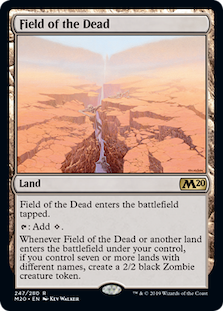
It also loses much of its long game potential without Dryad in play to ensure those Valakut triggers go off; keep Dryad off the table, and Titan isn't scary at all any more. Heck, a lot of Goyfs just wall it, not to mention Scourge of the Skyclaves. In other words, Field was this deck's lifeblood, and without it, I don't think the core can sustain itself.

Amulet Titan, IDAVEW (3-1, Preliminary #12258786)

Planeswalkers

4 Karn, the Great Creator

Creatures

4 Arboreal Grazer
4 Primeval Titan
3 Dryad of the Ilysian Grove
1 Azusa, Lost but Seeking

Artifacts

4 Amulet of Vigor

Sorceries

3 Ancient Stirrings
4 Explore

Instants

4 Summoner's Pact

Lands

1 Boros Garrison
1 Breeding Pool
2 Castle Garenbrig
2 Cavern of Souls
1 Crumbling Vestige
1 Field of the Dead
2 Forest
1 Golgari Rot Farm
1 Gruul Turf
1 Radiant Fountain
2 Selesnya Sanctuary
4 Simic Growth Chamber
1 Slayers' Stronghold
2 Snow-Covered Forest
1 Sunhome, Fortress of the Legion
2 Tolaria West
1 Valakut, the Molten Pinnacle
1 Vesuva
1 Windswept Heath
1 Wooded Foothills

Sideboard

1 Bojuka Bog
2 Dismember
1 Engineered Explosives
1 Ensnaring Bridge
1 Force of Vigor
1 Ghost Quarter
1 Liquimetal Coating
1 Reclamation Sage
1 Relic of Progenitus
1 Tireless Tracker
1 Tormod's Crypt
1 Uro, Titan of Nature's Wrath
1 Walking Ballista
1 Wurmcoil Engine

Amulet Titan, on the other hand, should hang on. After all, it was a thing before Field of the Dead came to Modern. If anything, I would say Field made the deck even a little too powerful, giving it an alternate win condition that was easy to find and assemble; we didn't get to appreciate its full power because of all the Uro decks playing Field better, although the deck did make our metagame charts last month. Dryad remains an upgrade for the deck, and I'd bet it hovers around the lower-Tier 2 mark without Field and with a neutered Tier 1.

Mystic Sanctuary

Yet another land banned for "decreasing diversity of gameplay patterns," I feel that Mystic Sanctuary may not be the culprit we think. That repetitive pattern we're all thinking of is to loop Cryptic Command, which indeed the Uro decks toting Sanctuary were notorious for. But which other decks ran the card?

UW Miracles, ASPIRINGSPIKE (5-0)

Planeswalkers

3 Jace, the Mind Sculptor
3 Teferi, Time Raveler

Sorceries

1 Entreat the Angels
4 Terminus

Instants

3 Archmage's Charm
2 Cryptic Command
4 Force of Negation
4 Opt
2 Path to Exile
2 Remand
1 Spell Snare

Enchantments

4 Counterbalance
4 Omen of the Sea

Lands

4 Flooded Strand
2 Hallowed Fountain
6 Island
4 Mystic Sanctuary
1 Plains
4 Polluted Delta
1 Prairie Stream
1 Scalding Tarn

Sideboard

1 Teferi, Time Raveler
3 Aether Gust
2 Commandeer
4 Condemn
2 Deafening Silence
1 Pithing Needle
1 Timely Reinforcements
1 Torpor Orb

It turns out precious few, although whether that's because Uro ate all their shares may now never bee seen. UW Miracles, one such deck, could be found running a full four copies of Sanctuary as an all-purpose utility tool with applications throughout the game. Running the full suite like this makes a high count of fetchlands even more advantageous. And notice: this deck only plays 2 Cryptic Command! Archmage's Charm and even Path to Exile are common loop targets for this build.

Mill, MZBLAZER (3-1, Preliminary #12261149)

Creatures

4 Hedron Crab
4 Ruin Crab

Sorceries

4 Glimpse the Unthinkable
4 Maddening Cacophony

Instants

4 Archive Trap
4 Drown in the Loch
4 Fatal Push
4 Surgical Extraction
4 Visions of Beyond

Artifacts

4 Mesmeric Orb

Land (20)

1 Darkslick Shores
4 Field of Ruin
2 Flooded Strand
3 Island
1 Mystic Sanctuary
1 Oboro, Palace in the Clouds
4 Polluted Delta
2 Swamp
2 Watery Grave

Sideboard

2 Aether Gust
2 Bloodchief's Thirst
2 Crypt Incursion
1 Echoing Truth
1 Extirpate
4 Force of Negation
1 Lurrus of the Dream-Den
2 Soul-Guide Lantern

Then there's Mill, which doesn't run Cryptic Command at all! This deck would much rather draw yet another Archive Trap. To Wizards's credit, Mill did fetch for Sanctuary as soon as it became live in most games, which was generally turn 4. And while it's looping different cards, it gives the deck a more linear trajectory.

I still would have liked to see Sanctuary in a non-Uro metagame to witness which other decks, like Mill, found themselves emboldening their gameplan or, like UW Miracles, could repurpose the card as more of a Swiss Army knife.

Settling the Wreckage

My plans for a brew report were dashed in January when the announcement dropped, as the metagame looked absolutely nothing like it was certain to in the very near future. This month, we'll examine that future in detail, and see what innovation grows from the concrete. Until then!

Time Spiral Remastered: Highlights

Are you a Quiet Speculation member?

If not, now is a perfect time to join up! Our powerful tools, breaking-news analysis, and exclusive Discord channel will make sure you stay up to date and ahead of the curve.

Time Spiral Remastered, Magic's first remastered set to appear in paper, is scheduled to be released on March 19th, 2021. It is going to be a draft experience comprised of favorites from the three sets that made up Time Spiral block: Time Spiral, Planar Chaos, and Future Sight. Every pack from the set will include a timeshifted card featuring a modern card on a pre-Modern card frame. The set will include 289 cards from the Time Spiral block sets and will be sold only as Draft Booster packs and boxes.

These spoilers came out so fast that we decided that instead of my normal spoiler article, this time I'm going to do a highlight article instead and talk about the cards from this set I'm most hyped for. I'm going to break it down in WUBRG order, picking out the cards I'm most stoked on or that I think will make the biggest splash in the finance scene, and I'll be adding to my picks up until the set is officially released - so be sure to keep checking out!

White

If you've read any of my articles before, you've probably realized that I'm a huge Death and Taxes fan, so naturally, I'm pretty pumped to be getting some awesome Taxes pieces in Timeshifted style.

I have always been a fan of playing Containment Priest in the sideboard of both Legacy Death and Taxes and Legacy Goblins (when I was splashing white for mainboard Thalia, Guardian of Thraben) and I think this art looks super rad in the Timeshifted style. Containment Priest hasn't had a big price tag in quite a long time, but I imagine that foils of this version will continue to cost a pretty penny.

Flickerwisp is one of my favorite cards to play off of an Aether Vial, and I think the Timeshifted version looks super classy. All those wild legs look even more menacing on this version!

Palace Jailer is regularly at least a one-of in my Legacy deck, and I'm stoked to get a chance to exile my opponent's creatures with this new version once paper play resumes locally. Path to Exile is a standby removal spell for me in every format it's legal in, and I think Todd Lockwood's art looks fantastic with the Timeshifted treatment. This is another one I think will cost a pretty penny in foil.

I know Lingering Souls isn't a Taxes piece, but it has been a favorite card of mine for a long time (my favorite LGS owner once gifted me with a copy of Lingering Souls but the Souls was crossed out and replaced with my name...) and I'm excited to get my hands on a playset of the Timeshifted version. I think the screaming souls in this version of the art really feel at home in the Timeshifted form.

Blue

It is pretty well known that I'm not much of a Blue player - but Time Spiral Remastered definitely still has some Blue cards that even I'm pumped for (especially the Timeshifted ones).

Mulldrifter looks GORGEOUS with the Timeshifted treatment, and I'm stoked to Evoke these in some Pauper games after TSR releases. I'm even more stoked to Ninjutsu some of these awesome Ninja of the Deep Hours onto the battlefield in my Delver builds - they just feel even more sneaky with the Timeshifted treatment, you know?

Both True-Name Nemesis and Ponder fall into the categories of Blue cards that I really enjoy playing and cards that look absolutely amazing with the Timeshifted treatment, and I know I'm going to be replacing my normal playsets with these!

Black

I think black cards lend themselves particularly well to the Timeshifted style aesthetically, and I'm really crossing my fingers hoping to pull some of these in my box.

I definitely shouted a little bit in the office at my new day job when Chroberry sent me the spoiler for the Timeshifted Thoughtseize. I've always been a huge fan of Aleksi Briclot's gnarly Thoughtseize art, and I think it looks absolutely spectacular Timeshifted like this. It'll likely cost me a pretty penny, but upgrading my Thoughtseizes to the Timeshifted version is high on my to-do list when TSR drops.

Speaking of art that looks spectacular when Timeshifted, I think Jason Felix's Dismember really lends itself to the style. It's been awhile since I've cast a Dismember, but next time I do I definitely want it to be this version.

I never knew that seeing good ol' Gary with the Timeshifted treatment was something I needed until I saw the Gray Merchant of Asphodel spoiler - and wow, who knew a Theros card was going to look so good like this? After getting foil copies of the classic Leyline of the Void for when I'm feeling fancy and a playset of the new version, I didn't think I'd ever need any more of the black Leyline. This Timeshifted version proves me wrong.

Red

After not getting any goblins in Kaldheim, I was blessed by Time Spiral Remastered! There's a bunch of cool goblins in this set that I'm looking forward to trying to force in a draft someday.

Kiki-Jiki, Mirror Breaker is one of the all-time great goblins and one that looks super fantastic with a little Timeshifted action. I have a lot of Kikis in my goblin collection, and I guarantee that the Timeshifted one is going to be joining them!

I'm not actually sure if I'm feeling the Goblin Engineer art with the Timeshifted treatment as much as all of the other cards that have gotten it, but it's a goblin so I still love it - and I think it's an interesting inclusion in the set.

I know Monastery Swiftspear and Young Pyromancer aren't goblins, but they're two of my favorite red cards and I think they both look awesome with the Timeshifted treatment. I just bought a playset of the new Valentine's Secret Lair Swiftspears, and I didn't think I was going to be needing any more after that but I think TSR just changed my mind.

Green

Green! The color of big monsters and crazy ramp spells, this looks like one of the most fun colors to be drafting when Time Spiral Remastered comes out.

As a die-hard Modern Infect player, I was stoked to see two of my favorite pump spells getting printed in TSR. Become Immense is one of those cards I didn't think was going to look good when Time Shifted when I was told it was spoiled in the set, but holy cow I think it looks neat and will be going into my foiled out Modern deck. Might of Old Krosa isn't all that special of a reprint, but I love it and will definitely be drafting copies if I get a chance to draft this set.

I wasn't expecting another Tarmogoyf reprint so soon, but it makes sense that it would appear in this set. I'm glad they used the old art for it, but this once sought-after card isn't going to be making many waves this time since it's been reprinted so many times in recent memory. Thragtusk isn't one of those cards I would have personally picked to Timeshift, but now that I see it I think it looks super cool!

Multi-Colored

The general of my favorite Commander deck is getting Timeshifted! I'm a huge fan of Grenzo, Dungeon Warden and will definitely be replacing my current copy of my general with a foil of this version!

Colorless

Stuffy Doll was one of the first cards I ever made a deck around when I started playing Magic right around M13, and I always thought the old art was super rad. It's not the fanciest inclusion in TSR, but I'm excited to see my favorite construct again! Chalice of the Void is one of my favorite lock pieces of all time and another card that just looks absolutely stellar when Timeshifted.


Testing Hypergenesis: Quantitative Data

Are you a Quiet Speculation member?

If not, now is a perfect time to join up! Our powerful tools, breaking-news analysis, and exclusive Discord channel will make sure you stay up to date and ahead of the curve.

Having finished the appetizer, it's time for the main course: the data from my Hypergenesis test. This is the hard, quantitative data, and I've done statistics on them to determine the validity of the test. For the stats people out there, I do a multiple significance test, but will report the z-test here. There's never been disagreement between tests, and I believe that more people will remember the z-test from high school than any others. Also, the Excel readout is cleaner.

Boilerplate Disclaimers

Contained are the results from my experiment. It is entirely possible that repetition will yield different results. This project models the effect that the banned card would have on the metagame as it stood when the experiment began. My result does not seek to be definitive, but rather provide a starting point for discussions on whether the card should be unbanned.

Meaning of Significance

When I refer to statistical significance, I really mean probability; specifically, the probability that the differences between a set of results are the result of the trial, and not of normal variance. Statistical tests are used to evaluate whether normal variance is behind the result, or if the experiment caused a noticeable change in result. This is expressed in confidence intervals determined by the p-value from the statistical test. In other words, statistical testing determines how confident researchers are that their results came from the test and not from chance. The assumption is typically "no change," or a null hypothesis of H=0.

If a test yields p > .10, the test is not significant, as we are less than 90% certain that the result isn't variance. If p < .10, then the result is significant at the 90% level. This is considered weakly significant and insufficiently conclusive by most academic standards; however, it can be acceptable when the n-value of the data set is low. While significant results are possible as few as 30 entries, it takes huge disparities to produce significant results, so sometimes 90% confidence is all that is achievable.

p < .05 is the 95% confidence interval, which is considered a significant result. It means that we are 95% certain that any variation in the data is the result of the experiment. Therefore, this is the threshold for accepting that the experiment is valid and models the real effect of the treatment on reality. Should p < .01, the result is significant at the 99% interval, which is as close to certainty as possible. When looking at the results, check the p-value to see if the data is significant.

Significance is highly dependent on the n-value of the data: in this case, how many matches were recorded. The lower the n, the less likely it is that the result will be significant irrespective of the magnitude of the change. With an n of 30, a 10% change will be much less significant than that same change with n=1000. This is why the individual results frequently aren't significant, even when the overall result is very significant.

Overall Matchup Data

As a reminder and for those who’ve never seen one of these tests before, I played 500 total matches: 50 matches with each experiment deck against each gauntlet deck. I switched decks each match to level out any effect skill gains had on the data. Familiarity and matchup knowledge naturally increase with games played, and since I would be better with both decks by the end, the data could end up skewed. Alternating decks ensures that the increase happens at the same time for both decks. Play/draw alternated each match, so both decks spent the same time on the draw and play. The deck lists for both the gauntlet and test decks can be found here.

  • Total Neoform Match Wins: 77 (30.8%)
  • Total Hypergenesis Match Wins: 122 (48.8%)

The data shows that Hypergenesis won a statistically significant percentage more than Neoform. P is so tiny that it is functionally certain that any variation is the result of the test and not natural variance. In other words, Hypergenesis did better than Neoform by a large enough degree that I can be certain the result is valid.

Honestly, I absolutely expected that Hypergenesis would do better than Neoform. It's been a pretty consistent refrain of mine for years at this point, but Neoform is not and has never been a good deck. It's pretty busted if it works, but very easily disrupted. The test (as far as I was concerned) was not to see if Hypergenesis is a better deck, but by how much. Players tend to grumble about this style of gameplay, but so long as it's inconsistent, it's no problem. Given the fact that Hypergenesis did 18% better than Neoform and in light of the cascade debacle, I think it's safe to conclude that Hypergenesis's data is instructive.

Additional Data

The hard data that a test seeks isn't always the total story. Often it's the surprises along the way that make a test. Sometimes I know what I want to look for, some only appear in exploratory testing. This time, I intended to watch for turn 1 wins. Those are obviously the most problematic aspects of broken combo decks, and since both decks have turn 1 kills, knowing which is more likely to win on turn 1 is instructive for their place in the metagame. I intended to count both actual wins and opponent concessions as wins. The latter was more relevant for Hypergenesis than Neoform, as the former's wins were often unsolvable boards rather than kills.

Actually following through and recording that data was a problem. Because I... *cough*... (mumbles) didn't. No excuses, I straight up forgot to record all the turn 1 wins. There were a number of sessions where it just slipped my mind. In fact, the only data that I'm sure that my numbers are accurate comes from the DnT testing. Which is less than ideal, but better than nothing.

DeckTurn 1 Game Wins vs DnT% of Game Wins vs DnTAverage Win Turn
Neoform1537.52.00
Hypergenesis2030.01.7

Hypergenesis won more games on turn 1, but they represent a lower percentage of the total game wins. This makes sense as Neoform is easily disrupted and relies on that fast kill. And always has. Plus, Hypergenesis won more games, so it would have more turn 1 kills.

However, I was surprised that Hypergenesis's average win turn is higher than Neoform's. It's very clear from the data, but I wasn't expecting that result, which challenges some of my assumptions about both decks. Hypergenesis's win distribution is bowl-shaped: Turn 1 had the highest number of wins, turn 3 was lowest, and there was a spike to turn 4 just below turn 1. Meanwhile, half of Neoform's game wins came on turn 2, there were no turn 3 wins, and a few turn 4's. Neither deck won after turn 4. It suggests that Neoform is more glass-cannon than expected, but perhaps not as broken.

Finding Fizzles

The other thing I watched for was fizzling. It's known that Neoform has a fizzle rate, but I've never seen it quantified. It's also important to define fizzling, and for me it was any time that the decks successfully started comboing, but failed to compile a winning sequence with no input from the opponent. Getting something countered or removed mid-combo and failing is not a "fizzle;" that's just getting disrupted. Failing to finish the combo because of poor draws is. And this never happened to Hypergenesis. If it played a cascade spell, it cast Hypergenesis. That didn't always translate into a win, but that was thanks to opponent's action, not deck failure.

The same could not be said of Neoform. I recorded a fizzle rate of about 3%. These mostly happened due to drawing too few Nourishing Shoals to draw the whole deck or even get more than two Griselbrand activations.

Frequently, Neoform subsequently lost, though not always. Every so often, this was a loss because it took Summoner's Pact to get going. The most memorable fizzle was once I got down to 7 cards in library and 8 life, but couldn't win because I had no blue mana floating and all my Simian Spirit Guides and my last two Manamorphoses were in those 7 cards. I'd used the Wild Cantor to get going, so there was no way to get the mana and turn it blue for Laboratory Maniac without decking. My opponent untapped, Pathed Griselbrand, and won the game.

Deck By Deck

Given that the overall data is statistically significant, the deck-by-deck results may be surprising. Regardless of the overall results, historically, the individual decks haven't always yielded significant results. This is because of the lower number of data points. I only have 50 matches to work with per deck rather than 250 for the overall results, so the threshold for significance increases. So if you see something odd in the data, blame the low n.

The other thing to note is that, unlike other tests, my play didn't change based on my opponent's deck. I always had to mulligan aggressively because there's little opportunity for sculpting either deck. I also always just went for the combo at first opportunity, particularly game 1. They're glass cannon combos without much or any interaction game 1, so there's nothing to gain by waiting. In games 2-3, I would only hold off on comboing if I had Ricochet Trap or Veil of Summer in hand against 4-Color, so that I could protect against counters. This meant that this test went a lot faster than any previous one. And was easier on me because I didn't have to think much.

In the order I finished the matches:

Death and Taxes

Death and Taxes does not interact turn 1 except via Path to Exile. However, each subsequent turn, the number of disruptive spells increases. Thalia is obviously rough for both test decks, but Archon of Emeria was game against Hypergenesis game 1. Both decks could subsequently be Strip Mined into submission. As a result, games didn't go very long and neither combo deck won after turn 4.

  • Total Neoform Match Wins: 12 (24%)
  • Total Hypergenesis Match Wins: 21 (42%)

This result is statistically significant at p<.05. The likelihood that Hypergenesis doesn't outperform Neoform is less than 5%, so we can be confidant in the result.

A big part of this result was that Leonin Arbiter was relevant disruption against Neoform and not Hypergenesis. My opponent planned ahead with the Burrenton Forge-Tenders against my Anger of the Gods. We discussed at length whether against Neoform it was better to Path the Griselbrand immediately or wait for Laboratory Maniac. I wasn't running Pact of Negation maindeck, but my opponent didn't know that but did know that it wasn't always played maindeck anymore. Taking the latter course 100% wins the game against my deck, but is risky otherwise.

4-Color Omnath

Something I didn't realize until this test is that Hypergenesis's text is different than Eureka's. The latter says all permanents, but Hypergenesis excludes planeswalkers. This actually takes it back to Eureka's original functionality, but it's still intriguing that Wizards deliberately made that change right before planeswalker's came out.

  • Total Neoform Match Wins: 17 (34%)
  • Total Hypergenesis Match Wins: 23 (46%)

These results are not significant at p>.10. Thus, we can conclude that Hypergenesis is not statistically better than Neoform in this matchup.

This was the only deck where either deck won later in the game, and the reason is that they could afford to. 4-Color Omnath wins rapidly, but not quickly. Once it actually produces threats, it puts the game away in short order, but that may take awhile. Thus, a single failure didn't spell the end for either deck. Fighting counter walls was hard, but not impossible, post-board. Hypergenesis could, and I sometimes did, overwhelm counter walls even late-game thanks to Trap. Occasionally, planeswalkers spared Omnath immediate death by bouncing a non-hasty Emrakul, but it was rarely enough.

However, longer games also gave Neoform more time to draw both Griselbrands, which could be lethal unless they managed to discard and then Noxious Revival one back and immediately combo off. Teferi, Time Raveler was game over for Hypergenesis, but there only being two copies meant it didn't happen too much. 4-Color getting to Supreme Verdict after sideboard helped a lot, but with only one, it didn't much tip the scale in its favor.

Scourge Shadow

As testing got going, my Scourge pilot got increasingly annoyed. Neoform does very poorly against discard, but Hypergenesis can overcome it thanks to cascade redundancy. Plus, both decks ran sets of Leyline of Sanctity in the sideboard. He frequently wished he was still on Grixis Death's Shadow to have counters as a backup. We tried running Blood Moon, and it was better than the cards we cut, but still wasn't very effective against either deck.

  • Total Neoform Match Wins: 16 (32%)
  • Total Hypergenesis Match Wins: 25 (50%)

This result is statistically significant at p<.05. Thus, we can conclude with confidence that Hypergenesis is statistically better than Neoform in this matchup.

The difference here is Neoform's game 1 weakness to Thoughtseize. Both deck's improve a lot after board while Scourge's options are limited. However, both need to cheese game 1 to beat hate games 2 and 3, and that being so much easier for Hypergenesis was decisive. Take my Violent Outburst? I've got 11 more ways to cascade. Take my fatty? Tons more, and you can't kill any of them. Also, Chancellor of the Annex was especially good here thanks to Scourge's low land count. Mishra's Bauble is a work-around, but doesn't always line up correctly.

Amulet Titan

Amulet's game 1 against combo is a straight race. And unfortunately, it's slower than most combo. There was some hope after board because this deck ran 3 Mystical Dispute, but that's narrow against Neoform and pretty poor against Hypergenesis. The biggest hope against Hypergenesis was to keep Primeval Titan, Dryad of the Illysian Grove, and five lands so that Hypergenesis immediately turned on Valakut, the Molten Pinnacle.

  • Total Neoform Match Wins: 14 (28%)
  • Total Hypergenesis Match Wins: 27 (54%)

This result is strongly significant, p<.01. This is in fact the most strongly significant individual result.

Dispute did a lot of work against the fast Neoforms, bumping up Amulet's win percentage. However, I also recorded more fizzles here than in other matchups. I think that this result is actually more attributable to variance than it appears. Not enough that it would have pushed it out of significance or change the overall conclusion, but enough to alter the stats.

Oops, All Spells

Oops was a lot like Amulet in that game 1, it was a straight-up race. The difference is that, under very rare circumstances, Oops can kill on turn 1 too. Thus it could keep pace with the combos. Casting Hypergenesis against a single-creature combo deck may seem like a liability, but the creatures in Oops lose to the Hypergenesis ones, so it couldn't usually attack for the win. And that's not counting the times that Urabrask the Hidden was disruptive.

  • Total Neoform Match Wins: 18 (30%)
  • Total Hypergenesis Match Wins: 26 (52%)

This result is weakly significant at p<.10. It just missed the 95% interval, likely one positive result away. If this were an academic paper, this is what I'd be writing my Further Research section about.

My combo decks didn't sideboard against Oops. Neither had any graveyard hate, and even then, why bother if we're racing? Oops removed the useless maindeck Leylines for Thoughtseizes, but those are only effective against Neoform, so the general tone of the matchup never changed. I've since wondered how things would have been different if Oops was also running the Belcher option like many do now, but that just wasn't a thing in November.

Half the Story

And that's the hard data. However, it's not the full story of what I found during the test. And it also doesn't address the effect of banning Simian Spirit Guide. For all that and my conclusions, tune in next week.

Three Mantras to Taking Profits

Are you a Quiet Speculation member?

If not, now is a perfect time to join up! Our powerful tools, breaking-news analysis, and exclusive Discord channel will make sure you stay up to date and ahead of the curve.

Many high-flying stocks saw a significant pullback last week. Tesla ended the week down 13.54%, PayPal ended down 9.43%, and COVID darling Zoom ended down 10.46%. These are all a healthy bit off their all-time highs as the market internalizes the implications of rising treasury yields and balances against the next round of fiscal stimulus.

This pullback is likely healthy and long overdue, but it still hurts if you’re in any of these names (I have a position in PayPal). But I am not kicking myself because I implemented certain strategies to help me better handle the emotional roller coaster of the volatile stock market.

These strategies can be reapplied to Magic, and that’s what I intend to cover this week. Even though Magic cards tend to operate on a slower, less efficient scale, I believe the same three mantras can be applied to Magic. As card prices relentlessly climb, we can apply these strategies to avoid FOMO, the pain of the volatility, and the emotional turmoil associated.

Mantra 1: Bulls make money, Bears make money, and hogs get slaughtered.

This is a quote from CNBC’s Jim Cramer, and it’s one that resonates particularly well. In short, it means that people can make money when the market goes up (bulls) and when it goes down (bears)—both are perfectly fine ways to earn some profits. But if you become too greedy and hold relentlessly, you could eventually get burned.

There was an error retrieving a chart for Raging Bull

With any investible assets, prices cannot climb monotonically (i.e. without occasional drops) forever. The result would be a mathematical impossibility, and there are realistic (though possibly high) ceilings for valuations. Could an Unlimited Black Lotus climb to $30,000? $40,000? Possibly. Will it hit $1,000,000? Certainly not in my lifetime, unless we go through a period of hyperinflation and the US Dollar’s value depreciates like the Venezuelan Bolivar.

Throughout this period of price explosion, it’s important to not become too greedy and to sell some cards into the spike. This is nothing new, but it’s a very important reminder now because Magic prices are going through some unprecedented growth. At one point prices will overshoot to the upside, sellers will come out of the woodwork, and vendors will restock. When this happens, prices will cool off a bit.

One example I’ve noticed is Tawnos's Coffin, a fringe playable Old School card from Antiquities.

There was an error retrieving a chart for Tawnos's Coffin

The card is unique, and I love the artwork. But its utility is limited. A couple weeks ago, Card Kingdom was paying as much as $185 on their buylist for near mint copies. I believed this was too aggressive, and I decided to sell the card (note my copy was heavily played, so I sold it to a player instead of to Card Kingdom).

Now, just two weeks later, Card Kingdom is only offering $110 for the card. You may still be able to sell for a higher amount on TCGplayer / eBay, but the easy sale is gone. That was a perfect time to cash out of any copies you had of this card at a very fair price, to a vendor, which avoids all sorts of hassle. But if you held fast in the hopes of seeing the price climb even higher, you’re stuck waiting.

Mantra 2: Nobody ever went broke taking a profit.

This is another saying I tell myself every time I decide to sell something, realizing profits. This expression is meant to address emotions we may feel when we sell an asset for profit, recognizing we are no longer “in the game.” When you sell an asset, you no longer have access to future gains that particular asset may experience, and this can generate FOMO and a resistance to sell.

This FOMO can be dangerous, though (see above). In order to recognize gains, we must sell eventually. It’s perfectly fine to hold onto an asset for further gains as long as there’s a sound hypothesis driving this decision. Emotions—the fear of missing out on future gains—is not a sound reason to hold.

How do I reconcile the emotional cost of selling an asset with the desire to make money? I remind myself of this quote time and again.

One great example here is my decision to sell my Collectors’ Edition Mox Pearl. The MTG Stocks chart makes the card’s price look higher than it truly is, but the general trend is accurate.

This was a $400-$500 card for years. YEARS! And then, over the course of a few weeks, the card’s price more than doubled. Recognizing this explosive growth, and the fact that I was not actively using the card in a deck, I decided that I would be content to cash out at the new price.

I didn’t take this decision lightly, mind you. My mind was racing through scenarios of further growth, another doubling in price, and missed gains totaling four figures! It was intimidating to sell such an iconic card. But my hypothesis that the card would climb to $1000 played out exactly as I had foreseen—the journey from $500 to $1000 felt far more realistic than the journey from $1000 to $2000. With this in mind, I listed the card on eBay and sold it for $1100.

I’ll still monitor the Collectors’ Edition Power 9 market because I want to remain informed. But I’ve promised myself I would not look back with regret. I can turn my profits into investments in other areas (including my college fund), and I’m content just to see my portfolio’s value climb. As long as I continue to have successes like these, the dream of funding two kids’ college educations remains alive.

Mantra 3: Don’t look at missed gains as a loss.

I’m not sure where I heard this one, but I’m fairly certain it’s not my novel idea. It goes hand in hand with the other two mantras, but remains a critical corollary to help further with navigating the emotions of selling.

In short, the saying helps me remember that not owning an asset—or, more importantly, cashing out of an asset early—and watching its price climb higher does not mean I’m losing money. It can be emotionally difficult to watch the missed opportunity. But there are opportunities all the time and they are everywhere. So even if I miss out on some gains, I still have plenty of areas I can put resources to work to make money.

This mindset can be muddled by the fact that Magic is also a game, and these “investments” I’m referring to are also game pieces. Let me explain what I mean.

I am in the market for a Beta Mind Twist. I would like a copy to play in my Old School deck, on my journey to black-border more of the deck’s components. As I follow the market for this card, I’m noticing its price climb. Now it will cost me more money to obtain this card for a deck—this is a bummer! I’m disappointed because it just became more expensive to complete my deck.

There was an error retrieving a chart for Mind Twist

Mantra 3 doesn’t really apply in this case.

Now here’s a slightly different example: I would love to own a Bazaar of Baghdad. I love the art, the card is iconic, and I expect it will continue to appreciate in value. Unfortunately, I didn’t pull the trigger in time and now the card is far more expensive. If I had bought the card a couple months ago, I could be sitting on a few hundred dollars’ worth of gains.

There was an error retrieving a chart for Bazaar of Baghdad

Instead, I missed out on these potential profits and I’m stuck watching the card’s price climb on the sidelines. This is disappointing. It is a shame that I saw a profitable opportunity and I didn’t embrace it in time. The emotions associated can really be painful! It hurts to see the card’s buylist price climb week to week as I continue kicking myself.

But I need to keep things in perspective. I’m reacting emotionally to the missed profits almost as if I had lost money. Losing money hurts too, but it’s very different (and arguably much worse) than missing out on gains. So why am I beating myself up as if I had lost money? I put my resources to work elsewhere. It’s not like I bought a losing asset instead of a winning one. The rising tide is lifting all ships here, so there’s no reason to look at the “one that got away” and beat myself up about it. Most of us are dealing with limited budgets; we simply cannot afford to buy into every opportunity we see.

Because of this, it’s important to remind ourselves that missing out on gains isn’t the same as a loss, so we shouldn’t treat ourselves as though we did lose money. We’re doing the best we can with the resources we have available—that should be enough!

Wrapping It Up

We are seeing explosive growth in Magic prices during this unprecedented time. While I’ve seen some prices stabilize, and some restocking of cards on major vendor websites (finally!), there are still catalysts on the horizon that could drive another round of buying. Tax refunds are being issued and the government is actively working on another round of stimulus payments. The infusion of cash will inflate asset prices even further.

As this is happening, I encourage you to keep these three mantras in mind. They will help you remain disciplined as a seller, and hopefully overcome some of the fretful emotions associated with selling an asset. We tend to become enamored with our winners—that’s not a terrible thing, but any time emotions become too strong, it can lead to suboptimal choices.

By remembering these three mantras, we can avoid some of the negative feelings associated with selling for a profit.

I’ll conclude with one of my other favorite Jim Cramer sayings: “There’s always a bull market somewhere.” Just because you sell a card for profit doesn’t mean you’re out of the game. You can always use those proceeds to buy other cards with similar (or preferably, even better) prospects. When the name of the game is making money from Magic or trying to play Magic on the cheap, taking profits and applying them elsewhere is a natural strategy. When that strategy works, we shouldn’t look back with regret at what could have been. We should be celebrating our victories.

Universes Beyond – Magic Set to Cross Over with Properties Like Warhammer 40,000 and The Lord of the Rings

Are you a Quiet Speculation member?

If not, now is a perfect time to join up! Our powerful tools, breaking-news analysis, and exclusive Discord channel will make sure you stay up to date and ahead of the curve.

There's Big news in the Magic: The Gathering world today: Wizards of the Coast is set to become a whole new division of Hasbro, they have a brand new logo and snazzy site update, and they are expanding the Magic world with a new series known as Universes Beyond - which includes upcoming crossovers with properties such as Warhammer 40,000 and The Lord of the Rings.

There isn't a lot known about Universes Beyond yet besides what is contained in this article from the Mothership that was released after today's Hasbro Investor Event (where it was revealed that Wizards had an incredible record-setting year in 2020 - their most profitable ever.) The following quote, pulled from the article, seems to capture the creative impetus behind the upcoming projects:

Universes Beyond came about thanks to a simple thought—if we can expand our story beyond the game system to things like comics, novels, and other games, then surely we can expand the game system to let players explore worlds outside of the worlds of Magic.

We are all fans of these other universes. Many of us imagined what it might be like to play a game of Magic with Gandalf the Grey, sketched out how we might translate the One Ring to Magic, or wanted to build a deck around the mighty Space Marines. In many ways, Universes Beyond is us living out those dreams of our own.

Here are the big takeaways thus far:

  • Universes Beyond will be branded slightly differently, with cards having distinct frames and sporting the holofoil stamps that debuted with Secret Lair X The Walking Dead
  • Secret Lair X The Walking Dead is being grandfathered into Universes Beyond
  • These will not only be Secret Lair products, Universes Beyond will generally be sold in all Magic channels
  • There are going to be Warhammer 40,000 Commander decks sold everywhere Commander decks are currently offered
  • Universes Beyond cards will not be Standard legal
  • The upcoming Magic set Adventures in Forgotten Realms is not a part of Universes Beyond
  • Wizards intends to release cards similar to the Ikoria Godzilla cards as well as stand-alone cards like the Secret Lair X The Walking Dead cards, but will often default to standalone cards such as the ones released in the Secret Lair X The Walking Dead

The Hasbro Investor Event also showed the world that Wizards will be aggressively expanding their IPs into more digital games of all kinds, expanding into a "robust new IP pipeline", and "and expanding underdeveloped retail channels like direct-to-consumer, e-commerce, and mass-market on a global scale."

Magic fans are going to be experiencing an expansion of their favorite game on a scale that has never been seen before - it is clear that Hasbro and Wizards have huge plans for the Magic IP - and no matter what ends up happening, our favorite game isn't going away any time soon.

Want Prices?

Browse thousands of prices with the first and most comprehensive MTG Finance tool around.


Trader Tools lists both buylist and retail prices for every MTG card, going back a decade.

Quiet Speculation