
menu

Budget-Focused: Is Alseid of Life’s Bounty the new Mother of Runes?

Are you a Quiet Speculation member?

If not, now is a perfect time to join up! Our powerful tools, breaking-news analysis, and exclusive Discord channel will make sure you stay up to date and ahead of the curve.

What's going on everyone? Eric here with another article, where we're going to discuss a card I feel deserves more attention than it is currently receiving, Alseid of Life's Bounty. I am sure some if not most that are reading this are thinking “Why is he wasting time talking about this uncommon card?” Mother of Runes is a card that is remarkably like Alseid, but I honestly feel Alseid offers a bit more versatility than one might see at first glance. We will dive into the comparisons and where we can use Alseid going forward.

Price Comparison And Versatility

There was an error retrieving a chart for Alseid of Life's Bounty
There was an error retrieving a chart for Mother Of Runes

To start with, we'll look at the current prices are at on both cards. Alseid of Life's Bounty the non-foils are currently at $0.39 average and $0.50 for the foils. I feel the most growth opportunity lies is in the promo version. This copy is currently at $0.61 for the non-foils and $1.34 for the foils. Keep in mind there are only four total printings for this card. Looking into Mother of Runes, it has a total of nine printings, one of which is an FNM promo. The lowest price for the non-foil version is $2.14 from the Mystery Booster set. The lowest foil version is coming in at $17.00 from the Eternal Masters set.

Looking further at how both are being used and it is simple, protection. The negative to Alseid of Life's Bounty is the fact we need to pay one colorless to activate the ability, and we must also sacrifice it, whereas Mother of Runes just taps to activate the ability. Although we must pay one colorless, we can activate the ability the turn it comes out. Unless Mother of Runes has haste, we must wait until our next turn to activate the ability.

There was an error retrieving a chart for Idyllic Tutor

What is this versatility we speak of here? It can be thrown into an enchantment deck, as it is an enchantment in addition to a creature. Another thing to consider is that we can use this in reanimator builds. Anything where sac triggers, when a creature dies, or when a creature entering the battlefield are a thing, this is gold. As long as it doesn’t get exiled, we can use the ability to give not only creatures, but enchantments protection with its ability.

This will produce great upside if we are able to recycle it. Another factor here is that we can tutor for it easier than Mother of Runes if we so choose to. Since it is an enchantment, we can use Idyllic Tutor to pull this if need be. We can also use it to gain life as it has lifelink. In most scenarios, we need to make sure it will survive combat, but it's still a solid dinger to have on hand.

Where Can We Use It?

Looking at formats, Alseid is currently being used in Standard, Pioneer, and Commander. Mother of Runes is being used in Legacy, Vintage, and Commander currently. Regarding Commander, Alseid is being used in only 757 decks, and Mother of Runes is used in 13,654(EDHRec.com). Alseid should be getting used in just as many decks if not more than Mother of Runes regarding Commander. As previously stated, versatility is where the value lies.

There are plenty of decks we can throw this in for both protection and recursion. Here are some commanders that Mother of Runes is in and Alseid of Life's Bounty could fit into.

  1. Thalia, Guardian of Thraben
  2. Ravos, Soultender / Tymna the Weaver
  3.  Eight-and-a-half-tails
  4. Gaddock Teeg
  5. Heliod, Sun Crowned
  6. Sigarda, Heron's Grace

Next we have a list of commanders that could benefit from plugging this into.

  1. Varina, Lich Queen
  2. Edgar Markov
  3. Karlov of the Ghost Council
  4. Kambal, Consul of Allocation
  5. Oloro, Ageless Ascetic
  6.  Syr Gwyn, Hero of Ashvale

Going into Pioneer, let's discuss where this can find a home. We can fit this in any white weenie build, Sram, Senior Edificer build, Boros aggro, Spirit aggro, and Abzan aggro. Those decks make up 25% of the meta. Here is an Abzan Rally build that could easily plugin Alseid of Life's Bounty. Using both Rally the Ancestors and Return to the Ranks to be able to recycle Alseid is the intriguing thing here.

Abzan Rally by Wowska

Creatures

3 Blisterpod
3 Cartel Aristocrat
2 Cruel Celebrant
1 Drannith Magistrate
4 Fiend Artisan
4 Hunted Witness
4 Priest of Forgotten Gods
4 Satyr Wayfinder
4 Stitcher's Supplier
4 Zulaport Cutthroat

Instants and Sorceries

2 Rally the Ancestors
4 Return to the Ranks

Lands

4 Blooming Marsh
4 Concealed Courtyard
4 Godless Shrine
3 Overgrown Tomb
1 Plains
1 Sunpetal Grove
4 Temple Garden

Sideboard

1 Lurrus of the Dream-Den
1 Assassin's Trophy
1 Brain Maggot
1 Caustic Caterpillar
2 Damping Sphere
2 Dead Weight
1 Drannith Magistrate
1 Fatal Push
2 Mythos of Nethroi
3 Thoughtseize

There was a Selesnya build that I built to use this in, and for a budget brew it worked rather well. There was plenty of room for improvement with it, and you can find the link here to watch the video! Pioneer this thing has plenty of room to grow long-term and should be in consideration for that kind of speculation.

Conclusion And Long-Term Price

Wrapping this up, at the very least we can sub this in for a budget-friendly version to Mother of Runes. If you really wanted to you could certainly run both for just more protection, especially in commander! I honestly can see this becoming like blood artist in price around the $3.00 range for the non-foil. The foil on the other hand I am not sure where the ceiling could be for this, as I think it needs to see support outside of just commander to render a price over $5.00 - $6.00. That is the reason I feel if it gets the looks it should down the road. I hope you all enjoyed this week’s article and be sure to come back for the next one!

Errant Errata: June B&R Reaction

Are you a Quiet Speculation member?

If not, now is a perfect time to join up! Our powerful tools, breaking-news analysis, and exclusive Discord channel will make sure you stay up to date and ahead of the curve.

Here we are again: another set, another set of problems, and another banning... oh wait, nothing's getting banned in Modern. Awkward. And more to the point, a waste of a perfectly good rant setup. Why am I even bothering... oh right, something else happened this time around. And it is consequential. Though not in the way that I was expecting.

I said in last week's article that I was done talking about companions. It was getting boring for everyone, and I had run out of new insight anyway. That was completely thrown out the window a few hours later when Wizards announced another Banned and Restricted update. There would be no actual changes to Modern, just Standard and Historic. Because Arena is the new, expensive, and special child, and must be protected.

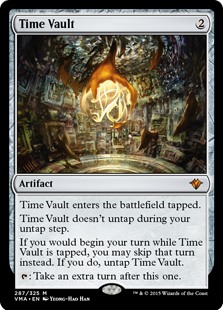
Instead, Wizards issued functional errata as a nerf to companion as a whole. Wizards often changes cards to either fix oversights or update cards as the rules change. However, fixing power level via rules changes is something Wizards avoids these days, largely because of the ridiculous saga of Time Vault. That it had to happen this time speaks to the fundamentally different nature of the problem.
The Decision

Everyone knew that something had to happen about companion. The data had become unequivocal. The problem (in Modern anyway) wasn't that one deck was dominating or that a particular card was obviously broken; it was saturation. Despite the deck and archetype diversity remaining high, companions were omnipresent. The same principle justified banning Once Upon a Time. Companion saturation had reached 76% of MTGO results, with the uptick being spread out amongst many different companions. Therefore, the only way to deal with the problem by normal means would be ineffective, as Wizards acknowledged:

This trend represents a long-term problem for the health and diversity of all formats. Rather than go down the path of making several individual adjustments to the banned list for each format, we feel the better solution is to reduce the advantage gained from using a companion across the board.

While the move to rework an entire mechanic after release is unprecedented, it wasn't completely out of left-field. As early as May 11, Mark Rosewater had signaled unhappiness with companion. And in the May 18 banning, Wizards mentioned:
If we see signs of long-term health issues resulting from high metagame share of companion decks, we're willing to take steps up to or including changing how the companion mechanic works.

Rosewater confirmed that extraordinary action may be incoming later that same day. There were plenty of suggestions from players about a mechanical fix, but Wizards went their own way.

The Calculus

The other thing to note is how the decision was reached. Lurrus of the Dream-Den was banned in Legacy and Vintage for being demonstrably too powerful. Wizards justified not taking action on the other formats because:

Currently, these formats are shifting too quickly for data to indicate what, if any, card or archetype poses a problem.

...we're not currently seeing problematic win rates in Standard, Pioneer, or Modern from decks using companions...

The data I collected at that time didn't back up the latter quote, but the former, yes. Modern had greatly shifted and changed over the three weeks I surveyed. It started settling the following week, and became clear last week. Apparently, things were worse than I knew:

As a group, decks using companions have too high of win rates and metagame share in Standard, Pioneer, and Modern, and have already necessitated bans in Legacy and Vintage. This trend represents a long-term problem for the health and diversity of all formats. Rather than go down the path of making several individual adjustments to the banned list for each format, we feel the better solution is to reduce the advantage gained from using a companion across the board.

This section reaffirms that Wizards prioritizes win rates. More importantly, the line appears to have crystalized. In previous announcements, a 55% win rate in non-mirror matches was the cited red-line. Here, it continues to be so, constituting our best indication of typical banning criteria:

Over the course of the last several weeks, Fires of Invention decks have risen to have a dominant win rate and metagame presence in Standard, achieving a 55% win rate and having even or favorable matchups against each of the other top ten archetypes. This indicates that metagame forces alone aren't sufficient to keep the deck in check.

The Change

Which brings us to the actual change. And it's a surprisingly simple one.

Once per game, any time you could cast a sorcery (during your main phase when the stack is empty), you can pay 3 generic mana to put your companion from your sideboard into your hand. This is a special action, not an activated ability.

Companion is now a tutoring mechanic. Rather than directly cast a companion from exile, players must tutor it for three mana. Therefore, it's no longer a complete freeroll, and significantly impacts playability.
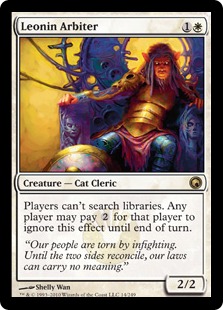
A note on special actions: these are abilities like turning face-up a morphed creature or paying for Leonin Arbiter. Special actions don't use the stack. Just pay the cost and do the thing; there's no way to respond and a player can do it whenever they have priority. Once priority changes, then opponents may respond. Therefore, I can't respond to my opponent tutoring for Lurrus and immediately casting it. Similarly, special actions aren't triggered abilities, so Pithing Needle and the like don't affect them.

Paradigm Shift

There are two immediate impacts of this rule change. The first is counterplay. The companion must be tutored into hand as a sorcery, making it vulnerable to discard spells. This is huge, because prior to now, the only way to answer a companion was to counter it or kill it after it had hit board and probably gained value. Killing a companion is often necessary, but feels bad, and not many decks can run counterspells. This change affords counterplay options to more decks and makes companions more like normal cards.

The second is playability. The big draw, and the big problem, to companions was how easily they slotted into decks and provided power boosts: give up a sideboard slot; pay the mana-cost; get a decent creature with a strong ability. Now there's a tempo cost. Three mana is a high price for drawing a single card. Having to do so at sorcery speed means sacrificing the ability to do anything else while telegraphing next turn's play. Doing all of that in one turn requires at least six mana, which few Modern decks want or expect to have.

As a result, the opportunity cost of companions is much higher. However, not so high as to make them all unplayable. Those decks that were maximizing the utility of the companions beforehand will be doing a lot of soul-searching. That tempo hole will be hard to climb out of, and the payoff is definitely lower than that of being a normal, companion-less deck. Whether the guaranteed card is worthwhile remains unclear.

The Outliers

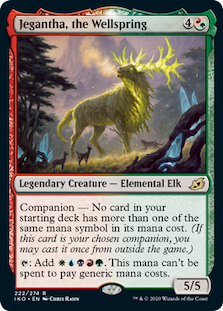
Interestingly, it's the incidental companions that are least affected. Burn ran Lurrus because there was no deckbuilding cost, and there still isn't. It wasn't very good, but it was generally better than not having Lurrus. The only thing Lurrus did for Burn was mitigate flooding out. Lurrus is less efficient now, but it does still give Burn something to do when it has no burn. Therefore, I'd expect Burn decks to soldier on as if nothing's changed. Storm and Humans may keep running Jegantha, the Wellspring for similar reasons. However, Jegantha being so much more expensive than Lurrus makes that outcome less likely, as these decks were casting the 5/5 far less often than Burn would Lurrus.
I can't imagine UW Control sticking with Kaheera, the Orphanguard. Snapcaster Mage has never been that good in straight UW, so it was an easy cut. In exchange, UW got more room for control spells and a three mana win condition that didn't take up deckspace. That basic calculus hasn't changed. However, now they have to pay six mana for a 3/3. For that price they could have Elspeth, Sun's Champion, not to mention the option of 1-2 Snaps in the main and a sideboard slot, something more precious for slow, interactive decks like control. Kaheera is getting harder to justify.

Lurrus is Nerfed

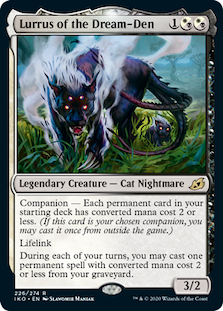
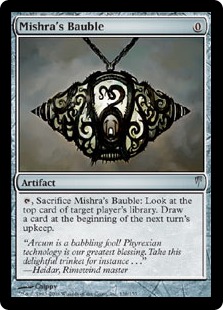
In terms of affected cards, Lurrus is the most affected. It was the most widely played, and arguably the most efficient companion. On turn 3, Lurrus was a 3/2 lifelinker that drew a card with Mishra's Bauble. Assuming Lurrus survived, it started snowballing card advantage every turn thereafter. That cannot happen anymore. For the typical low-land Prowess or GBx decks (Lurrus's primary homes), this means that Lurrus has been delayed by a turn. They can tutor on turn three and play Lurrus on four. Of course, spending turn three tutoring is far from the gameplan of either deck.
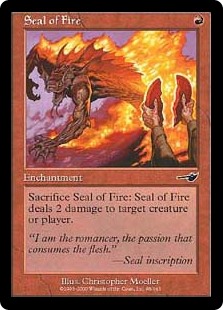
Even if they decide to hold off playing Lurrus until later, options are still severely constrained. "Waiting until the time is ripe" is well within GBx's wheelhouse, but still presents a problem. Jund in particular turned Lurrus into a Swiss Army Knife using Seal of Fire and Kroxa, Titan of Death's Hunger in addition to Bauble. That was easy when Lurrus only cost three. Now that it costs six, those late-game option will be more restricted. As a result, the Lurrus-dependent decks have to be reevaluated.

Prowess Must Change

Red-based Prowess was screaming to the top of the metagame on Lurrus' back. Some of that is definitely due to Prowess being a cheap deck online, but in this context, Prowess also got the most out of Lurrus compared to other decks. Recycling Bauble meant not just card advantage but also prowess triggers, which translated into wins. Cracking Bauble, playing Lurrus, then replaying the Bauble was two cards and a threat for most decks. Prowess got all that plus 1-2 extra damage per prowess creature. That's a special level of efficiency, in a deck that's all about maximizing efficiency.

Which is a huge problem now. In order to get any use out of Lurrus, Prowess must spend an entire turn doing nothing but tutoring. Without a single trigger. That's anathema to its gameplan. If Prowess isn't churning through spells and attacking, it's losing, and considering how velocity-dependent it is, that lost turn can be fatal.

So, what are the pros and cons of keeping Lurrus for Prowess?

Pros

  • Guaranteed prowess triggers every turn Lurrus is in play with upsides
  • Long-game threat recursion
  • Additional threat
  • Flood insurance
  • Requires no mainboard concessions (Bedlam Reveler doesn't fit into Lurrus builds anyway)

Cons

  • Requires multiple turns of mana to cast
  • Delays lethal attack
  • Tutoring generates no prowess trigger
  • Reduced damage-per-turn output

What About Jund?

Jund specifically and GBx in general is a much harder call. Before, Lurrus Jund had proven itself to be unequivocally better than normal Jund. Despite having an objectively worse maindeck, Lurrus' power, efficiency, and utility more than made up for dropping Bloodbraid Elf and Liliana of the Veil. Lurrus's power hasn't been diminished, but its efficiency has significantly, and with that its utility also falls. Thus, the upside of giving up Bloodbraid and Liliana is lower. The decision isn't clear to me, but I'm certain that the pros and cons are much closer than before.

Pros

  • Guaranteed threat which plays well in attrition strategy
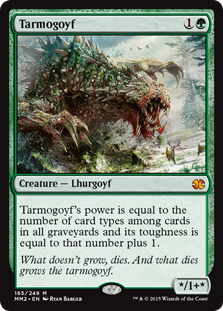
  • Additional utility from card types for Tarmogoyf
  • Deckbuilding constraint rewards preexisting mana utilization strategy
  • Extra information from Bauble can be utilized in midrange decks

Cons

  • Individual card power is lower (no Liliana or Bloodbraid)
  • More vulnerable to graveyard hate
  • Additional mana reduces recursion utility
  • Engine card now more vulnerable to disruption

Obosh is Unaffected

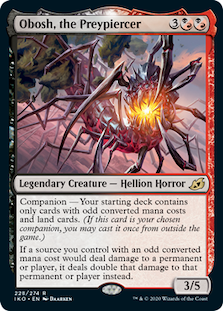
On the opposite side, I don't think Ponza will really notice Obosh, the Preypiercer getting worse. Obosh wasn't excatly integral but neither was it an incidental companion. It was more of a combo piece, being cast to ensure lethal and/or awaken Klothys, God of Destiny. This is harder to make happen than before, but the catch is that Ponza can make it work. Between mana dorks, Utopia Sprawl, and Klothys, Ponza often ends up with lots of extra mana and nothing to do. Obosh's additional cost will therefore be less burdensome in context than Lurrus.

Yorion is Ambiguous

The final widely played companion is the most difficult to evaluate. Most commentary says that Yorion will be unaffected by the errata. Yorion is a late-game card already, and being played slightly later won't really affect its utility to control decks. After all, control deck hate win conditions taking up room that could be used for answers, and Yorion is still a win condition that doesn't take up maindeck slots. Therefore, there's little reason for Yorion to fall off.

At least as long as analysis is limited to Standard. in Modern, Yorion was frequently not a late-game win condition, but a mid-game stabilization tool. Yorion decks would spend their first few turns playing cantrip permanents and using leftover mana to interact. On turn 4-5 they'd play Yorion, draw cards and/or gain life and have a big blocker against aggressive decks.

Now, they'll have to take a turn off of buildup/interaction to tutor up the Yorion. This means they're much more vulnerable to being overrun by aggro than before. In turn, the statistical weakness from playing more than 60 cards will become more pronounced. The advantages against non-aggro are still intact, so I think that Yorion's value will be decided by the metagame rather than its own merits.

Pros

  • Deck's late-game remains intact

Cons

  • Increased vulnerability to aggro
  • Mid-game power diminished

Where Does Modern Go?

Companions are still around, much to the chagrin of their most vocal critics. However, now there are actual decisions to be made about their inclusion. How this will shake out will take time to determine. The rule change doesn't go into effect until tomorrow, so I won't have data to work with for several weeks. Then the impact will become clear.

The Impact of No MagicFests in 2020

Are you a Quiet Speculation member?

If not, now is a perfect time to join up! Our powerful tools, breaking-news analysis, and exclusive Discord channel will make sure you stay up to date and ahead of the curve.

The date: March 2nd, 2020.
The time: Early morning

It was precisely then when my first COVID-19 article about its impact on Magic was published on Quiet Speculation’s site. At the time, I was exploring the topic merely as a thought exercise, hypothesizing what would happen if this virus’ spread worsened. Looking back just 3 months later, my predictions are staggeringly clairvoyant.

In that early March article, I mentioned the possibility of COVID-19’s community spread throughout the United States and the possibility of MagicFest cancellations. Last week that possibility became reality: all major Magic paper events, including MagicFests, have been cancelled for 2020.

This is a tragic blow to paper Magic. But it doesn’t spell doom and gloom for paper prices. Many cards are hitting all-time highs even as we speak, according to MTGStocks.

This week Sig dives deeper into his prediction, why it became reality, and what may be next for card prices.

The Called Shot

Here’s the perceptive prediction I made before the U.S. effectively shut down:

“Lastly, I wonder what would happen if more MagicFests were canceled. If the situation gets worse before it gets better, this is not so far-fetched. I’ve begun to wonder—some vendors rely heavily on restocking their inventory by posting aggressive buylists at MagicFests. Tales of Adventure and 95 Games come to mind.

As long as the economy can recover in a reasonable amount of time (within a year, let’s say), I could envision a scenario where major vendors have a difficult time keeping stock of tournament and casual staples. Without as many MagicFests, these vendors may be forced to restock in other ways. They may have to buy more aggressively at the MagicFests they do attend. Or maybe they’re forced to purchase cards online from other sources. The limited liquidity could actually lead to a temporary spike in prices.

This scenario requires a perfect storm of events to occur, but I do wonder if it’s possible.”

A perfect storm of events needed to occur for supply to dry up and prices to spike, and this is precisely what occurred. COVID-19 spread, all major Magic events have shut down, and vendors are struggling to keep stock of cards. This has led to many significant increases in card prices—especially in the cEDH category.

There was an error retrieving a chart for Mox Diamond
There was an error retrieving a chart for Vampiric Tutor

In the meantime, Wizards of the Coast isn’t stopping the hits! Their latest Commander product is sure to be a success, catalyzing even greater interest in the format. As always, any new Commander deck built by a player has a near-zero percent chance of being disassembled, removing its contents from the market for years.

Double Masters Will Deliver a 1-2 Punch

Commander 2020 is a hit, and that will catalyze newfound demand for certain cards. Then, there’s Double Masters…

We recently saw the announcement that a new reprint set—Double Masters—is scheduled to launch on August 7th this year. This is likely going to be one of the most exciting masters sets ever released. Every booster pack will contain two rares and two foils! They can slap an MSRP of $6.99 on there, but I anticipate these will be selling for much higher on the secondary market, unless the reprints Wizards chooses are horrendous.

So far, booster boxes are pre-ordering for $390 on TCGplayer, or roughly $16.25 per booster pack. That’s a 130%+ premium to MSRP! Players expect this set to be packed with value, meaning the cost of the product on the secondary market will be much higher. With this unfolding, I wonder if the set will be too expensive to be opened en masse, failing to drop singles prices as intended.

Oh, and there’s also a VIP version that will sell for who-knows-how-much.

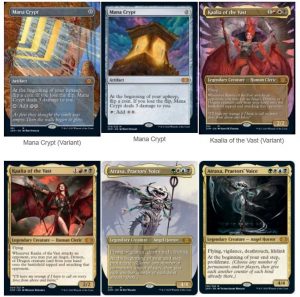
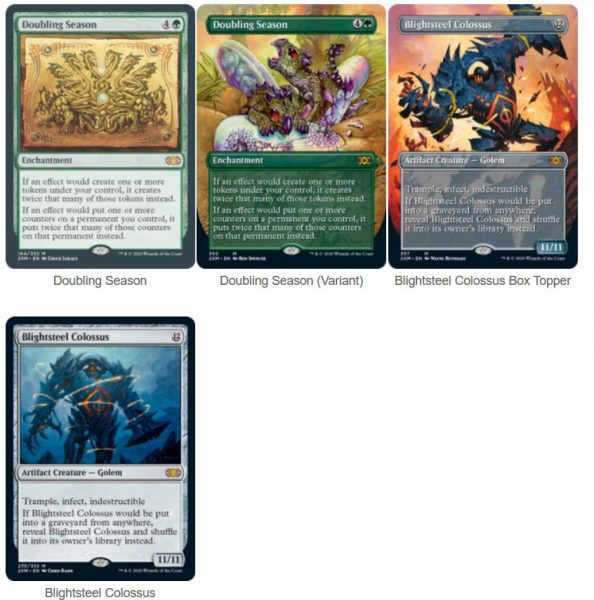
I’m also thinking this new set will deliver many much-needed Commander reprints. Look at the cards we’ve had spoiled so far from the set:

Which of these reprints are popular in Commander? Nearly all of them! Doubling Season is one of the most popular Commander staples. Mana Crypt is as expensive as it is strictly because of Commander—it’s banned in every format and restricted in Vintage! Kaalia of the Vast is a popular Commander general (ranked #36 on EDH REC). Atraxa, Praetors' Voice is even more popular in Commander (ranked #2 on EDH REC). Even Blightsteel Colossus sees some play in Commander, appearing in 6233 lists on EDH REC (I know this value can be misleading, but it’s safe to say the card gets some attention from Commander players).

Do you see the trend I see? It’s like Wizards of the Coast knows that kitchen table and small-group Magic is going to be the norm for paper throughout the rest of 2020. Whether they were even more clairvoyant than I, or if they are just trying to strike the Commander iron while it’s hot, they are definitely serving the portion of the community most likely to want to purchase this product.

This will mean even more Commander being played, more decks being built, and price increases galore. Reprinted cards will see a temporary hit of course, but they could rebound quickly (especially the mythic rares). Cards not reprinted could climb even further. With no MagicFests for vendors to restock inventory, prices will climb even higher.

Cards to Watch

Anything older, that hasn’t been reprinted in a while, and screams “Commander” are the cards you’re going to want to keep an eye on. So many cards have already increased in price, so it’s hard to find sleepers with the potential to pop. Rather than try to make definitive recommendations, my strategy here will be to mention a handful of options in rapid-fire fashion and recommend potential speculators do some research of their own before jumping in. Keep in mind any cards not on the Reserved List could be reprinted in Double Masters, so proceed with caution and make sure you diversify.

1) City of Brass and Mana Confluence

There was an error retrieving a chart for Mana Confluence

Color fixing is a mainstay of Commander, as players push into 3-, 4-, and even 5-colored decks. Recently City of Brass from Chronicles spiked on MTG Stocks. Other printings could follow suit. Mana Confluence was already more expensive, but its singular printing could give it real potential to pop.

2) Demonic Tutor

There was an error retrieving a chart for Demonic Tutor

We’ve seen just about every popular tutor jump in price lately: Vampiric Tutor, Worldly Tutor, and Enlightened Tutor are a few to name. But how about the OG tutor, Demonic Tutor? Sure, it’s been reprinted a bunch, but have you seen the available stock on TCGplayer? I am seeing around 200 listings across all tournament-legal printings (keep in mind, this includes high-dollar versions like the judge promo and Beta printings). The “cheapest” printings of this card could rise as high as $50 in the right environment—Commander players are always looking to tutor their favorite cards in that giant 99 card deck!

3) Volrath's Stronghold

There was an error retrieving a chart for Volrath's Stronghold

What do you do in Commander if your key creatures are killed? Recur them, of course! Volrath's Stronghold is a valuable, uncounterable way of retrieving creatures to recast. The card is pigeonholed a little bit due to its black activation cost, but there’s still plenty of demand out there. Oh yeah, it’s also on the Reserved List.

4) Any Trending Card on EDH REC

There was an error retrieving a chart for Cryptolith Rite

I’ve never studied the “Trending Cards” on EDH REC before, but it could be a valuable resource when tracking movers and shakers in the world of Commander. The top 10 list currently includes:

  1. Jeskai Barricade
  2. Cryptolith Rite
  3. Swarm Intelligence
  4. Parallel Lives
  5. Rolling Earthquake
  6. Wall of Denial
  7. Anafenza, Kin-Tree Spirit
  8. Drift of Phantasms
  9. Muddle the Mixture
  10. Good-Fortune Unicorn

These could all be worth a closer look, with foils being a primary focus.

5) Sliver Queen

There was an error retrieving a chart for Sliver Queen

The popularity of slivers ebbs and flows with product releases. Could slivers have a theme in Double Masters? Maybe. But it really doesn’t matter. In the long run, Wizards knows they can bring slivers back in a set to help sell product. Every time this happens, Sliver Queen spikes. After bottoming at $100, it’s on the climb again and I think a $200 price point is in its (not-too-distant) future.

Wrapping It Up

When I wrote my first article about COVID-19, I wasn’t even sure if the pandemic would spread throughout the United States. In the back of my mind, I hoped cases would be confined to New York and Washington states. Clearly, our country’s destiny lied elsewhere.

Now the unthinkable has become reality: all major Magic paper events are cancelled for 2020. This is unfortunate when it comes to demand for cards popular in 60-card formats. But clearly Commander play isn’t slowing down, and many vendors are having trouble stocking up on staples. As supply dries up, prices have been on a rapid climb. Throw in things like government checks and a gradual re-opening of the economy, and you have a recipe for further price increases.

Wizards is also adding fuel to the fire by releasing popular Commander-themed sets. Commander 2020 is obvious, but Double Masters also appears to have a Commander spin to it (at least so far). Both these products will motivate more Commander deck building, leading to further pressure on market supply.

Many cards have already jumped significantly in price—perhaps many of the ships have sailed. But I’m convinced there’s more upside if you know where to look. This week I tried highlighting some of my favorites.

Full disclaimer: I have not purchased any of the cards I listed except for a single Sliver Queen. For me personally, I’ve been focusing on picking up cheap Alpha and Beta cards from ABUGames on eBay, while also scoping out key Ikoria cards I want to buy while no one is playing paper Standard. Perhaps this is what I’ll cover next week, after we see the banning announcement from Wizards.

May ’20 Brew Report, Pt. 2: Comp-letely Nuts

Are you a Quiet Speculation member?

If not, now is a perfect time to join up! Our powerful tools, breaking-news analysis, and exclusive Discord channel will make sure you stay up to date and ahead of the curve.

"Comp-letely Nuts," or the apparent consensus surrounding Ikoria's flagship mechanic. Two weeks back, we looked at the interesting new decks popping up using companion, because why wouldn't they? Today, we'll explore the rest of May's entrants in a final goodbye to companion in Modern as we know it.

Mo' Mana, Mo' Problems

You of anyone should know that, Modern! Regardless, the next two decks found new, companion-centric ways to produce and enjoy heaps of mana.

Jund Field, XAKX47X (5-0)

Creatures

4 Dark Confidant
2 Gilded Goose

Planeswalkers

4 Wrenn and Six

Artifacts

4 Mishra's Bauble
1 Nihil Spellbomb

Enchantments

1 Seal of Fire

Instants

4 Assassin's Trophy
4 Fatal Push
1 Kolaghan's Command

Sorceries

4 Hour of Promise
4 Inquisition of Kozilek
2 Thoughtseize

Lands

1 Blood Crypt
2 Bloodstained Mire
1 Bojuka Bog
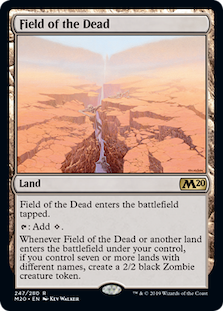
3 Field of the Dead
1 Forest
1 Ghost Quarter
2 Nurturing Peatland
2 Overgrown Tomb
1 Snow-Covered Forest
1 Snow-Covered Mountain
1 Snow-Covered Swamp
1 Stomping Ground
1 Swamp
4 Verdant Catacombs
1 Westvale Abbey
2 Wooded Foothills

Sideboard

1 Lurrus of the Dream Den
2 Nihil Spellbomb
1 Seal of Fire
2 Boil
4 Collective Brutality
2 Damping Sphere
1 Engineered Explosives
2 Veil of Summer

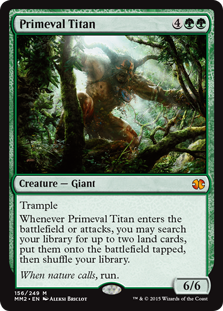
"If you print it, they will built it," or however that old adage goes from Field of Dream-Den. Nowhere does it ring truer than in Jund Field, a deck built around the too-good-for-Pioneer Field of the Dead, albeit in an unconventional way: no Primeval Titan shenanigans here. Instead, the cheaper, one-time Hour of Promise gets the nod, with caution thrown to the wind re: Confidant flips, a move enabling everyone's favorite companion.
As for Confidant itself, the creature serves to immediately pressure (via card advantage) the counterspell-packing interactive decks, namely UGx, that would otherwise have a field day against someone looking to resolves five-mana sorceries. So does Wrenn and Six, another two-drop that plusses every turn upon resolution and guarantees the land drops needed to hit Hour on-curve.

In the meantime, the more surgical Fatal Push and Inquisition of Kozilek, as well as the more general Assassin's Trophy and Thoughtseize, are all included in high numbers to give the deck a fighting chance against whatever faster thing opponents happen to be doing.

Zirda Abundance, PP8_ (5-0)

Creatures

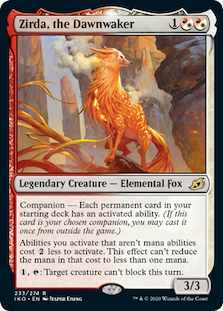
3 Zirda, the Dawnwaker
4 Devoted Druid
4 Birds of Paradise
4 Elvish Mystic
4 Llanowar Elves
4 Noble Hierarch
4 Stoneforge Mystic

Artifacts

4 Umbral Mantle
1 Batterskull
1 Sword of Fire and Ice

Enchantments

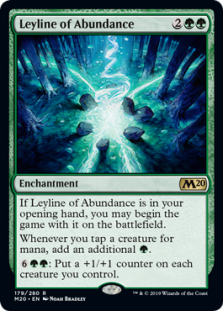
4 Leyline of Abundance

Instants

4 Collected Company

Lands

1 Forest
4 Horizon Canopy
4 Razorverge Thicket
4 Temple Garden
4 Windswept Heath
2 Wooded Foothills

Sideboard

1 Zirda, the Dawnwaker
2 Life Goes On
4 Path to Exile
4 Ranger-Captain of Eos
4 Veil of Summer

Zirda Abundance employs a simple philosophy: run 4 of everything and get to the combo as quickly as possible. The combo? Zirda, the Dawnwaker and Umbral Mantle, a no-frills package that turns any number of un-sick mana creatures into lumbering death machines. Lending that artificer's touch is Stoneforge Mystic, which not only tutors half the combo (the other half, of course, awaits patiently in the sideboard if it can't just be found by Collected Company) but provides an alternate gameplan with Batterskull.

In a deck full of mana dorks, why not run Leyline of Abundance? Provided it starts in the opener, the enchantment turns every dork into two, yet another interaction that was deemed a little crazy for Pioneer and only recently caught on in Modern.

The sideboard is also full of four-ofs; Path to Exile disrupts other creature decks, Ranger of Eos adds grinding potential and a more reasonable combat plan, and Veil of Summer stops anyone from messing with the Plan A.

Just Swingin' Thru

Don't be fooled by all that big-mana bombasticism---Moden's still plenty friendly to attackers. After all, Mono-Red Prowess sits stubbornly on top of the metagame. But of course, not even the top dawg is immune to the spirit innovation.

Grixis Prowess, BLUEDRAGON123 (5-0)

Creatures

4 Sprite Dragon
3 Abbot of Keral Keep
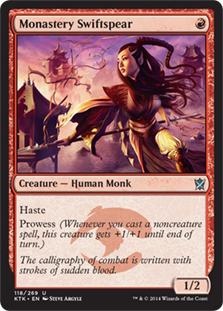
4 Monastery Swiftspear
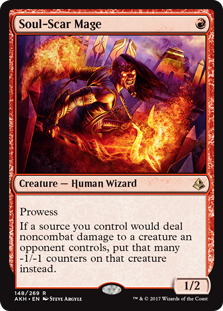
4 Soul-Scar Mage

Artifacts

4 Mishra's Bauble

Enchantments

4 Seal of Fire

Instants

2 Cling to Dust
1 Kolaghan's Command
4 Lava Dart
4 Lightning Bolt
2 Manamorphose
2 Mutagenic Growth

Sorceries

1 Crash Through
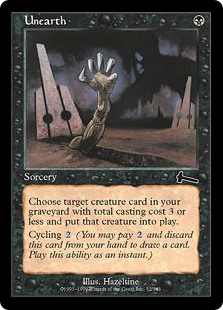
2 Unearth

Lands

4 Blackcleave Cliffs
2 Blood Crypt
4 Bloodstained Mire
2 Mountain
4 Scalding Tarn
3 Steam Vents

Sideboard

1 Lurrus of the Dream Den
2 Abrade
2 Collective Brutality
2 Fatal Push
2 Nihil Spellbomb
1 Surgical Extraction
4 Thoughtseize
1 Tormod's Crypt

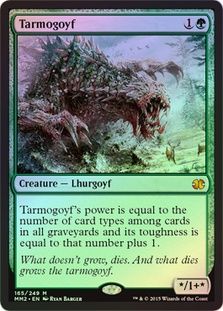
Prowess is accommodating Lurrus at any price; usually, that means splashing black, as seen in BR and Jund versions. Grixis Prowess continues the trend, with black for Lurrus (and, it supposes, Unearth/Fatal Push) and now blue for Sprite Dragon. No other blue stuff here. But if we're comfortable stretching into green for just Tarmogoyf, why not stretch into another color for a different beater?
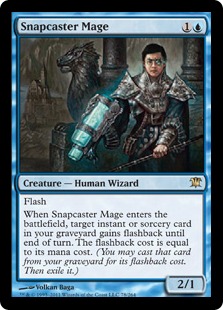
Sprite offers a few perks over Goyf---the haste; the evasion. And it doesn't use the graveyard. Not that people are bringing in grave hate just to combat Lurrus, but the companion's presence has certainly exacerbated the amount of incidental hate floating around, not to mention that Lurrus itself boasts palpable synergy with Nihil Spellbomb. It's at least nice that Sprite is a threat that can't be incidentally shrunken mid-combat by a mainboard Spellbomb.

Jeskai Prowess, PONCHONATER55 (6th, Modern Challenge #12152345)

Creatures

4 Seeker of the Way
4 Abbot of Keral Keep
4 Monastery Swiftspear
4 Soul-Scar Mage

Artifacts

4 Mishra's Bauble
1 Pyrite Spellbomb

Enchantments

4 Seal of Fire

Sorceries

4 Light Up the Stage

Instants

4 Lava Dart
4 Lightning Bolt
4 Path to Exile

Lands

2 Bloodstained Mire
4 Inspiring Vantage
3 Mountain
4 Sacred Foundry
4 Sunbaked Canyon
2 Wooded Foothills

Sideboard

1 Lurrus of the Dream Den
4 Angel's Grace
4 Kor Firewalker
2 Soul-Guide Lantern
4 Wear // Tear

Splashing black into Prowess isn’t the only way to run Lurrus. The card’s hybrid mana symbols also allow white to be chosen as the splash of choice, a move that comes with Seeker of the Way for a lifelinking edge in the aggro mirror and Path to Exile for Modern’s notoriously chunky creatures.

UB Slitherwisp, WOTC_COVERAGE_DAMONA (5-0)

Creatures

4 Slitherwisp
2 Brazen Borrower
4 Brineborn Cutthroat
3 Snapcaster Mage
2 Spectral Sailor

Sorceries

4 Thoughtseize

Instants

1 Deprive
1 Drown in the Loch
4 Fatal Push
3 Force of Negation
1 Logic Knot
1 Neutralize
1 Opt
3 Spell Pierce
1 Spell Snare

Artifacts

1 Nihil Spellbomb

Enchantments

1 Omen of the Dead
2 Omen of the Sea

Lands

1 Creeping Tar Pit
3 Flooded Strand
5 Island
1 Mystic Sanctuary
4 Polluted Delta
2 Sunken Ruins
1 Swamp
4 Watery Grave
60 Cards

Sideboard

3 Nihil Spellbomb
3 Aether Gust
1 Ceremonious Rejection
2 Collective Brutality
2 Disdainful Stroke
1 Flusterstorm
2 Mystical Dispute
1 Shadow of Doubt

Here to diversify the aggro section is UB Slitherwisp, a deck built around the mostly shrugged-at creature from Ikoria. So long as players deploy a flash spell each turn, Slither does a fine Dark Confidant impression. While it's practically as fragile and a full mana more expensive than Bob, Slither also dangles the possibility of more cards in front of pilots, and this deck is built to draw 2-3 off the Nightmare per turn cycle. Of course, more draws means more flash cards, which keeps the wheels turning. Most impressively, UB Slitherwisp doesn't feature any companions!
(Full disclosure: this deck is not as good as Prowess.)

Companion-scade

Companions are strong. What if they also had cascade? Well, one of them does, and it's starting to make a name for itself in Modern.

Gyruda Combo, MASHMALOVSKY (5-0)

Creatures

3 Gyruda, Doom of Depths
2 Ashen Rider
1 Obstinate Baloth
1 Phyrexian Metamorph
4 Primeval Titan
4 Restoration Angel
4 Sakura-Tribe Elder
4 Sylvan Caryatid
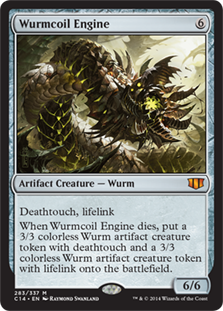
1 Wurmcoil Engine

Sorceries

4 Farseek
4 Mwonvuli Acid-Moss

Lands

1 Blast Zone
1 Castle Garenbrig
4 Cavern of Souls
2 Field of the Dead
2 Forest
4 Gemstone Caverns
1 Ghost Quarter
1 Godless Shrine
3 Overgrown Tomb
1 Plains
1 Snow-Covered Forest
1 Snow-Covered Swamp
1 Swamp
1 Temple Garden
3 Verdant Catacombs
1 Windswept Heath

Sideboard

1 Gyruda, Doom of Depths
1 Bojuka Bog
1 Broken Bond
3 Chalice of the Void
1 Collective Brutality
2 Damping Sphere
2 Engineered Explosives
3 Gaddock Teeg
1 Winds of Abandon

The standard Gyruda Combo attempts to cast the Demon Kraken from the sideboard or otherwise by reaching six mana on turn four through even-mana'd means including Sakura-Tribe Elder and Sylvan Caryatid. Then, the deck starts cascading, with Restoration Angel and Phyrexian Metamorph copying Gyruda for additional triggers. It eventually hits a fatty such as Ashen Rider, which breaks the chain once the deck has hopefully generated a huge board.

Primeval Titan is one such fatty, and can be cheated out early via Castle Garenbrig. The Modern stalwart allows for a Plan B featuring Field of the Dead.

Madcap Gyruda, DANNY_BAMBINO (5-0)

Creatures

2 Platinum Emperion
3 Gyruda, Doom of Depths
1 Dragonlord Kolaghan
1 Inferno Titan
4 Kozilek, Butcher of Truth
4 Primeval Titan
1 Ruric Thar, the Unbowed
4 Sakura-Tribe Elder
4 Sylvan Caryatid

Enchantments

2 Khalni Heart Expedition

Sorceries

4 Farseek
2 Madcap Experiment

Lands

1 Blast Zone
1 Bojuka Bog
1 Castle Garenbrig
3 Cavern of Souls
2 Field of the Dead
2 Forest
3 Gemstone Caverns
1 Mountain
1 Nurturing Peatland
1 Overgrown Tomb
1 Radiant Fountain
2 Snow-Covered Forest
1 Snow-Covered Mountain
1 Snow-Covered Swamp
1 Stomping Ground
1 Swamp
4 Verdant Catacombs
1 Wooded Foothills

Sideboard

1 Gyruda, Doom of Depths
1 Cavern of Souls
1 Radiant Fountain
1 Abrupt Decay
2 Boil
2 Collective Brutality
1 Damnation
2 Damping Sphere
1 Massacre Wurm
1 Obstinate Baloth
2 Slaughter Games

Madcap Gyruda follows a similar principle, but dips into Madcap Experiment to attack opponents from yet another angle. Khalni Heart Expedition is also employed here to help with ramping, while Dragonlord Kolaghan aids in ending games on the combo turn.

Big Green Gyruda, YPRINCIPE (5-0)

Creatures

3 Terastodon
3 Gyruda, Doom of Depths
4 Primeval Titan
4 Sakura-Tribe Elder
4 Sylvan Caryatid
2 Ulamog, the Ceaseless Hunger
4 Wurmcoil Engine

Artifacts

4 Chalice of the Void

Sorceries

4 Farseek

Lands

1 Blast Zone
1 Bojuka Bog
4 Castle Garenbrig
4 Cavern of Souls
2 Field of the Dead
2 Forest
4 Gemstone Caverns
2 Overgrown Tomb
1 Snow-Covered Forest
1 Snow-Covered Swamp
2 Stomping Ground
2 Swamp
2 Verdant Catacombs

Sideboard

1 Gyruda, Doom of Depths
3 Boil
2 Chandra, Awakened Inferno
3 Damping Sphere
3 Slaughter Games
3 Ugin, the Spirit Dragon

Big Green Gyruda takes the Primeval package featured in the previous two decks and makes it a central focus of the strategy, maxing on Castle Garenbrig and supplementing Titan with other big green dudes like Terrastrodon. Wurmcoil Engine becomes especially attractive given Castle, which builds cleanly into six mana. The artifact is great at stabilizing an aggressive board before going for the combo.

Take It All In

Love 'em or hate 'em, companions are probably not going to stick around in this capacity for much longer. Wizards' announcement in a couple days should put an end to their reign of terror in Modern. As always, we'll have the scoop on that once the news drops. So stay tuned, and in the meantime, cast as many Dream-Den-dwellers as you can this weekend!

Budget-Focused: How Extra Printings Affect the Secondary Market

Are you a Quiet Speculation member?

If not, now is a perfect time to join up! Our powerful tools, breaking-news analysis, and exclusive Discord channel will make sure you stay up to date and ahead of the curve.

For those that might have missed my last article, I discussed briefly on how “extras” are going to have an impact on the secondary market. What I am referring to as "extras" are the showcase/extended art cards in new sets, debuted in Throne of Eldraine. Previously, I did not mention the positive impact they have on players. We will discuss both sides of the coin here today, and I hope that this brings you a little more insight into this topic.

Negatives of Extras for Speculating

There was an error retrieving a chart for Idyllic Tutor

To start off, we are going to go over the potential negatives of extras. As we know, any time a card is reprinted, the original printing will typically not be worth as much as it once was. Put simply: the more copies of a card that come into existence, the less valuable that card becomes. This is a basic illustration of how an increase in supply affects the price of any given card.

Take Idyllic Tutor for example. The original Morningtide version tanked after the reprint. But, if we look at the originals price, it is currently $12.99 on average for the non-foil and $58.47 average for the foil copies. Fast forward to the Theros Beyond Death printing, and we see a vast difference in price. The current non-foils are averaging $3.81, and the foils are sitting at $5.04. Then we address the extended arts coming in at $6.95 for non-foils and $19.35 for the foils.

In just this one card, we have seven different printings. From a speculation standpoint (to me) this makes it a nightmare to determine what basket to put your eggs in.

Now, getting back on the pricing of the several printings of Idyllic Tutor you may be asking yourself, “what’s the issue here?” Well, I see the problem is this: those who look to spend bigger money on premium cards will likely not view the regular foil as the most desirable printing. They will look to the extended art foil instead, as it is far rarer and offers a unique aesthetic. This also overshadows demand for the non-foil extended art, making it less attractive to speculate on, in my opinion.

Why would a player spend extra for a non-foil extended art if it's just a non-foil? Personally, I would spend the extra for the foil version, and buy the regular non-foil art as my budget-friendly play option. Normal foils are just not the thing to put your money into when there is a more premium alternative. Stores will give more for prerelease copies or the extended art foil if you are looking to buy-list, leaving other printings in an uncertain middle ground.

Look back to the price difference between the originals and the new copies of Idyllic Tutor. Again, one might look at this as a non-issue. There's roughly a $6.00 gap from the non-foil extended (“more rare”) art and the original printings non-foil. One could argue that it is because the Morningtide copies are older and have lower supply. Yes, that is obviously part of it, but that is not the whole picture. It has to do with the overall amount of new copies. The new non-foil is a fraction of the old copy, which is a red flag for speculation.

A Card Without Extras

There was an error retrieving a chart for Splinter Twin

Splinter Twin has four total printings across two sets. The Rise of the Eldrazi is averaging $10.96 for non-foils and $33.91 for foils. Modern Masters 2015 copies come in at $10.31 for non-foils and $19.09 for foils. Does anyone notice the difference in pricing here? It is nowhere near the difference that Idyllic Tutor has with only the foil having a significant bump in price for its original printing. While this card's price is mostly propped up by speculation of its potential unbanning in Modern, it is curious that the most premium version has such a small foil multiplier compared to non-foil copies.

If you are looking to flip on the secondary market, the non-foil regular art is your “safest” option. Reason being is that budget players will always go to the cheapest option available. These copies will always be in high demand across the board. If a card pops in interest, the non-foil will go up in price to some degree. Some stores will even give a little more if they see a trend about to happen and want to be ahead of potential buyouts. These overall have great low risk, high reward outlook long-term.

Positives from Extras

Now, let's talk about the upside of all these extras being around! As a budget brewer, this is fantastic news as I can get the normal printings at a cheaper rate. Players like myself do not care about shiny cardboard and just want one thing, accessibility! Many players have lamented that Magic is progressively becoming too expensive. Fret not friends, as these extras are just what the doctor ordered! If Wizards keeps putting extras in sets, you will continue to get your non-foils at a great rate! As players open packs chasing Showcase variants of these cards, we reap the benefits, resulting in an overall non-foil.

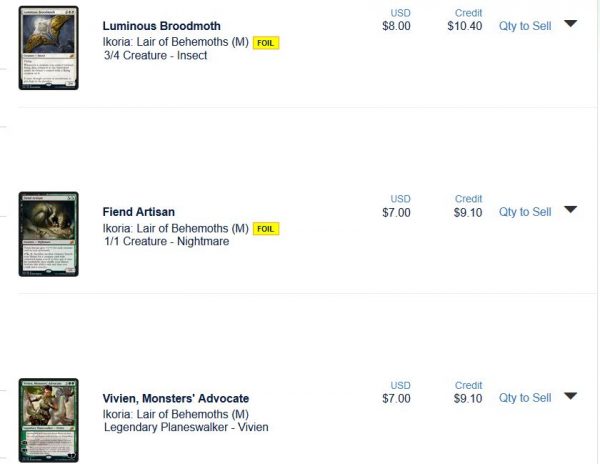
Let us go down the rabbit hole a bit further and look at the latest set, Ikoria: Lair of Behemoths. Fiend Artisan demands the highest non-foil price of any card in the set at a $17.99 average. If this card did not have all the extra printings it would be worth a whole lot more! This is great for players trying to acquire great cards at a reasonable price. The lowest monetary mythic in the set is Snapdax, Apex of the Hunt with its non-foil printing averaging $2.15, which is extremely cheap for a mythic in a brand new set. The card is somewhat narrow, but is a potentially solid addition to a Mardu deck. Without the extras, it would certainly be worth more than its current price.

Final Thoughts

It is notable that we are experiencing an overall dip in the value of Standard cards in the absence of paper tournaments. Right now, we have an interesting opportunity to capitalize on lower demand for cards that have extra printings.

Most that are reading this follow things closely, but it is worth noting all evidence discussed above even if you do not agree with my argument. Imagine how prices will be affected if these new cards get reprints with another round of extras. From a budget player standpoint, I hope that Wizards will continue to print the extras to deflate non-foil value. From a speculation standpoint, I am going to play on non-foil and prerelease foils from here on with new sets. I hope this brought some insight to some of you, and I hope you enjoyed this week’s article!

Companion Modern: Consistency vs. Certainty

Are you a Quiet Speculation member?

If not, now is a perfect time to join up! Our powerful tools, breaking-news analysis, and exclusive Discord channel will make sure you stay up to date and ahead of the curve.

Another week of data, another update to the Ikoria metagame. The trends had been moving towards companion stabilizing in Modern. Last week, the individual companion cards seemed volatile in terms of usage, but the mechanic itself appeared to have achieved saturation. We observed some signs suggesting that companions might be been fading in Modern, which would award success to targeted solutions---by which I mean just banning Lurrus and Yorion.

This week was the make-or-break week for companion's future. In the last banning announcement, Wizards made it clear they were watching trends in the data. Companion was having an unprecedented cross-format impact on Magic and all options were on the table, including a complete rules reworking. The obvious implication was that Wizards saw the same volatility I did, though more completely since their data is better, and were hoping to avoid taking drastic action. This week's data needs to show a reduction in companion saturation for there to be hope for an easy solution.

Week 5: 5/17-5/23

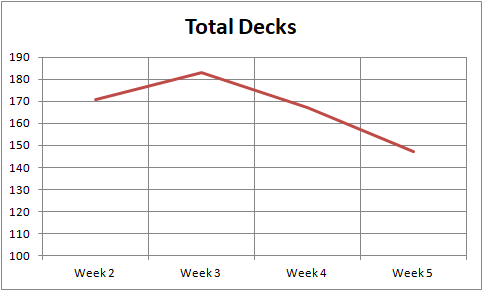
The first thing to note about last week is the population. I only recorded 147 decks in week 5, down from 167 in week 4. I don't know of any outside factors to explain this drop.

Deck NameTotal #Total %
Prowess2718.37
Other1711.56
GBx Midrange1610.88
Eldrazi Tron106.80
Burn85.44
Toolbox85.44
UGx Shift74.76
Ponza74.76
Gx Tron74.76
UW Control64.08
Niv to Light64.08
Bogles64.08
Amulet Titan64.08
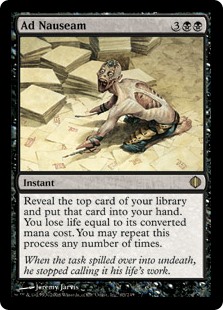
Ad Nauseam42.72
UGx Reclamation32.04
Jund Shadow32.04
As Foretold32.04
Hardened Scales32.04

The other noteworthy development is that Eldrazi Tron has spiked. And massively. In week 4 it had a 4.2% metagame share, but jumped 6.6% week 5. I suspect that's linked to Prowess's continuous sitting on top of the metagame. Chalice of the Void is very strong in that matchup, and it's reasonable to think that E-Tron is preying on Prowess.

A Caveat

Prowess has a very high metagame share this week. Astute readers will note its rise both in absolute and relative numbers from the previous week; 26 decks and 15.6% to 27 and 18.4% respectively. The increase suggests that it is starting to dominate, and may be a uniquely dangerous deck in the current metagame; Prowess gets more utility from Lurrus of the Dream Den returning Mishra's Bauble than any other deck. However, the numbers are deceptive: Prowess jumped 8% in week 4, from 7.6% to 15.6%. The 2.8% jump this week is small potatoes in comparison and doesn't necessarily indicate much.

Secondly, the category is somewhat deceptive. The Prowess deck is showing considerable variation, some of which are close to entirely different decks. I've been categorizing decks based on their strategic characteristics and not stressing deck composition variance as long as decks share a recognizable gameplan. This is why Jund and Rock are lumped together as GBx Midrange while Temur Urza and Temur Reclamation are separated. The Prowess decks had been mono-red and distinguished from Burn by Soul-Scar Mage, and I've kept that definition going. The end of week 4 saw divergence as some Prowess decks started running black for discard spells. This week, there was a more even mix of BR and Mono Red, but they're still too strategically similar to separate.
However, a new Jund Prowess deck has started showing up. It is more midrange than aggro, and could be a new deck. The distinction isn't quite clear enough to actually make that call, but it's getting close. Depending on how things shake out I may need to separate it from the other Prowess decks in future updates. Thus, that Prowess category isn't as monolithic or dominant as it appears.

Companion Stats

And now the big one. Companion had been stable between Weeks 3 and 4. The drop in population Week 5 appears to have affected companion saturation levels.

CompanionTotal #Total Metagame %
Lurrus7349.66
Yorion2013.60
Jegantha85.44
Obosh74.76
Kaheera21.36
Zirda21.36

Lurrus is trending back up. However, that is as much a function of Prowess being up as anything else. Companion has overall increased to 76% of the metagame, though again this could be an outlier effect from a smaller sample size. Still, it shows that the metagame is adapting to companion not by answering them and keeping them in check but by adopting them. I think the only discussion about them happening at Wizards now is how severe the solution needs to be.

What's the Problem?

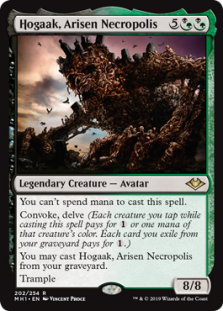
The numbers are fairly clear. There remains not only deck diversity but strategic diversity. Unlike in previous banning situations, I cannot easily point to a clear problem. One deck is not utterly dominating events, winning too much, and/or winning too quickly as Hogaak, Arisen Necropolis did. And archetypes aren't homogenizing in the way inspired by Oko, Thief of Crowns.
Oko rewarded and in some ways required players to run a common core of artifacts to get the most value from him, which gradually pushed all interactive decks into a samey, artifact-heavy midrange soup even before they'd leaned combo or aggro. Lurrus decks running Bauble is not the same thing, so long as the rest of the deck is strategically different.

The problem is simple saturation. Companions are everywhere, and players are getting tired of it. The closest analogue to companions is Once Upon a Time. The effect proved too good, but the final straw was universality. Once colorless Eldrazi Tron started adopting Once, the trigger got pulled. We're getting to that point with companions. They're hanging around 70% of the metagame.

This is the chart for total decks in my sample each week. I'm not including the first week because it was shorter and the population was necessarily smaller. There have been three Premier events and four Preliminaries each week, and each Premier reports exactly 32 decks. Thus, the variation in population is directly down to the preliminary attendance. Prelims report every deck that goes 3-2 or better, and so the more in the initial tournament, the more decks should hit that mark. And over the past two weeks, the population in my samples has fallen. This suggests that overall Modern attendance has fallen, and Modern has been the most popular format until recently (looking at MTGTop8's format population data). It's reasonable to conclude that online tournament attendance is overall down as a result.

Accounting for Data Sources

It's possible, too, that my data is the problem. Wizards is pushing Arena like crazy, which may also be drawing away players from MTGO and Modern. However, given the wider community reaction to companions, I think that's unlikely to be the cause of the falloff. There's a sense of weariness and ennui everywhere. Players have soured on constructed Magic because it has become unfun.

Fun is admittedly very subjective, and the only way to quantify this is with starting tournament population data that I don't have. However, given that most larger voices are saying the same thing, and even Mark Rosewater appears to have soured on companions, I think there's clear evidence that Modern's players and developers alike are not feeling the new mechanic.

Given that Commander is the most popular form of Magic and companions are fairly obviously bringing commanders to constructed, how did this happen? I chalk it up to the difference between consistency and certainty.

Consistency

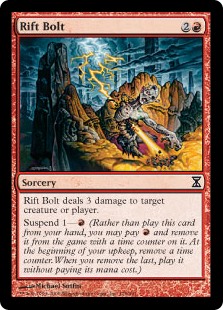
For Magic purposes, consistency this refers to a deck's ability to play out its gameplan reliably. Burn is a very consistent deck because it has many cards that do similar things. It can't play the exact same way every game, but it is able to play one out that is very similar, recognizable, or predictable. Lightning Bolt and Rift Bolt are very different cards, but do close enough to the same job in context that they let Burn players effectively play more than four copies of a card. This gives their gameplan far more consistency than something like the singleton-filled Niv to Light.
Certainty

Dictionary.com defines certainty as "an assured fact." In other words, if something is certain, it will happen. Few things are ever truly certain in constructed Magic. The best players loses to newbs, Ad Nauseam sometimes beats Infect, and variance plays a huge role. There is no guarantee of seeing any four-of in a deck in a given game. It may never be drawn, and even if tutoring is available, it may be incorrect to choose that card. Thus, certainty has never had a place in constructed, only consistency.
At least, that was true until the companions came along. There is certainty that they will appear, since they must be revealed at the start of the game. Should the game make it to the point they could be played, there is certainty that they will at some point. And that threshold (reaching a certain turn) is extremely low in a turn four format; far easier to meet than that of drawing a four-of and having a good reason to cast it. After all, companions are frequently the best option on-hand for players who are ready to cast them. This is a very Commander mechanic, and the community seems to agree that it is unwelcome in constructed.

The Commander Problem

This makes perfect sense if the nature of Commander is considered (and makes me think that Wizards doesn't get why Commander is popular). There is no consistency in Commander. The deck is 100 cards, and every nonbasic land is a singleton. Games can be, and usually are, wildly different from each other for that reason. This is a large part of the appeal. However, this also means that the risk of non-games are higher. Low consistency means high variance and high variance means more risk of non-games. Commander is, more than any other format, about fun, and so there are allowances made (e.g. free mulligans).
This is where the commanders themselves come in. They provide certainty in an inconsistent world, and thus improve gameplay. There's no way of knowing if your deck will do what it's supposed to in a game of Commander, and that's no even talking about the other players. However, the fact that the commander is always available (mana willing) means that there is always a chance for it to come together. The uncertainty and inconsistency of the maindeck is made more fun thanks to the certainty of the commander.

A Misunderstanding

By porting commanders to constructed via companion, Wizards shows they didn't really appreciate the consistency issue. Constructed decks are necessarily more consistent than Commander decks because the restriction is four of a card, not one (see again: Burn). Adding certainty to consistency means that games play out far more similarly than before, which a lot of players find monotonous.

This was a lot of the problem with Cawblade nine years ago. There was very little variance between games, and from personal experience, the better player always won. The games took on the appearance of predestined outcomes, and while that's fine for a game like chess, it has proven to be very bad for Magic.

In hindsight, perhaps Wizards should have known that adding Commander elements to more competitive formats wouldn't work. Some of their reference points include the problems they've had with Brawl, but a survey of the Commander community would have also been instructive. At the last Magicfest I went to (remember when that was a thing? Good times) the Command Zone was divided by how competitive the decks were. There was a spectrum from wonky, weird, and wild decks that didn't really work all the way to singleton Vintage. From what I saw, the players were concentrated on the more casual side. I saw that at my LGS all the time pre-lockdown (good times). There were many Commander groups, but the more casual the group, the more regularly it met, and the larger it was.

Refinement Is Necessary

Wizards doesn't seem to have understood what made Commander so popular. They latched on to the most obvious superficial aspect with no understanding of the role it actually played. It's no wonder a direct port of its marquee mechanic to constructed has proven aggressively unpopular, and will have to either be banned or changed in the not-so-distant future.

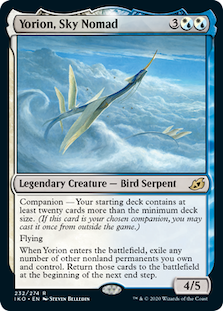
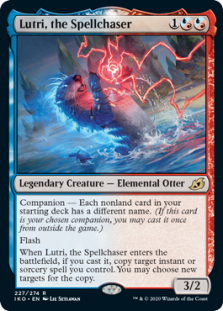
However, it doesn't have to be that way. Players like self-expression, which is a large part of what makes Commander great. Had the companions been made with that in mind, it may have been a success. Compare Lutri, the Spell Chaser to Yorion, Sky Nomad. The former requires considerable sacrifice, turning a consistent constructed deck into an inconsistent Commander deck. In return, there's a certainty boost. This makes Lutri a fun reward for outside-the-box deckbuilding and adds spice and variety to formats.
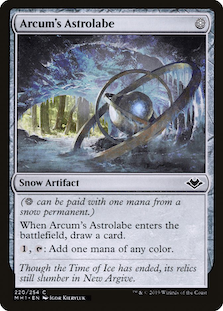
Yorion's requirement is too low, and so it boosts decks linearly. All the Arcum's Astrolabe decks have had to do is add more cantrip permanents and lands to their deck and convert their many 3-ofs to 4-ofs. In exchange, they get the certainty of not only a 4/5 flyer, but a mass flicker for more card advantage to make up for the slight consistency hit they took by playing 80 cards. That increased deck size has been found to be fun by some, but the power of Yorion has been too high. Had Wizards made more Lutris and fewer Yorions or Lurruses, I think companion may have been well received.

What to Expect

I'm with Jordan: talking about companion constantly is as boring as running into them every game. Next week, tune in for something unrelated I've been meaning to do for some time.

A Banlist Visitation: Scraping the Barrel

Are you a Quiet Speculation member?

If not, now is a perfect time to join up! Our powerful tools, breaking-news analysis, and exclusive Discord channel will make sure you stay up to date and ahead of the curve.

Discussing the Modern banlist has always been a favorite pastime of the format's aficionados. In times like these (and I don't mean COVID-19, but that other c-word), player attention is turned towards what needs to be banned; pundits have suggested all the companions eat the bullet, or that Wizards implement sweeping errata. But personally, I've grown a bit tired of every article (here and elsewhere) being a Lurrus Luncheon. So today, we'll look at some of the interesting cards Modern still has locked away and consider the implications of releasing them into the format.

For what felt like an eternity, a few select cards were mentioned again and again when it came to unbanning chatter. Those cards, Bloodbraid Elf, Jace, the Mind Sculptor, and Stoneforge Mystic, have all been made available to Modern, and the format handles them just fine. The remaining cards might be less obvious, but I wonder if they don't also deserve a spot in the conversation.

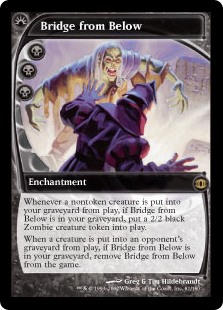
Bridge from Below

The older the format, the more broken Bridge from Below seems to become. Moden has been unseated as the freshest non-rotating format by now, but I still think its graveyard enablers and payoffs are sparse enough to warrant a return for this enchantment.
Why It Was Banned

Bridge was banned to combat Hogaak, Arisen Necropolis. At the time, Hogaak Bridgevine boasted a commanding 60% Game-1 win-rate and had grown to utterly dominate competitive Modern. Of course, post-ban, Hogaak itself continued on its tear and was banned a month later.

Hogaak Dredge, pepeisra (2nd, MTGO Modern MCQ)

Creatures

4 Hogaak, Arisen Necropolis
3 Bloodghast
4 Carrion Feeder
2 Cryptbreaker
4 Gravecrawler
4 Insolent Neonate
4 Stitcher's Supplier
4 Vengevine

Artifacts

4 Altar of Dementia

Enchantments

4 Bridge from Below

Sorceries

4 Faithless Looting

Lands

4 Blackcleave Cliffs
3 Blood Crypt
2 Bloodstained Mire
2 Marsh Flats
2 Overgrown Tomb
4 Polluted Delta
1 Swamp
1 Verdant Catacombs

Sideboard

2 Assassin's Trophy
2 Cryptbreaker
4 Fatal Push
4 Leyline of the Void
3 Nature's Claim

With Hogaak gone, though, Bridge remained on the banlist, even though it was banned to weaken the now-demolished Hogaak deck. Some justification from Wizards does hold up: Bridge was selected over other options because of its standing as the card "most likely to cause metagame imbalance again in the future." However, as a believer in cards being freed if their current threat potential is low, I'd rather see a guilty-until-proven-innocent approach employed. After all, we don't see Wizards banning cards because they might one day ruin the format. Take their justification for not touching Ancient Stirrings or Mox Opal back in January 2019:
Bear in mind that this is based on the current state of the metagame, and that Ancient Stirrings and Mox Opal are not being given a free pass in perpetuity. While we have no current plans to take action against these two cards, we'll continue to monitor the health of the environment and the strength of decks that use them. If the metagame reaches a point where we determine these cards are doing more to suppress archetype diversity than enable it, we will certainly revisit this discussion.

What It Would Do Now

I do think Bridge would see play if unbanned, specifically in Dredge. But I also don't think Dredge would suddenly become broken. The deck was fine pre-Hogaak, and would certainly be fine now; the deck has all but vanished from the current metagame anyway, even with supposed upgrade Ox of Agonas in the mix.
Potential Risks

It seems to me that graveyard cards need to be pretty busted to actually make Bridge from Below good. Wizards isn't exactly in the habit of printing Bazaar of Baghdad-level cards anymore, which is why the enchantment spent much of Modern's lifespan on the sidelines. I think unbanning Bridge is significantly low-risk, and if another superb enabler is printed that appears to break it, that card may warrant a closer look.

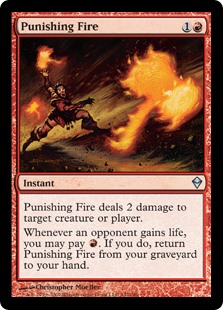
Punishing Fire

In conjunction with Grove of the Burnwillows, Punishing Fire essentially gives players the ability to pay 2R each turn to point 2 damage at something. The combination remains potent in Legacy decks light on battlefield interaction, such as Lands.

Why It Was Banned

According to Wizards:

This pair of cards is commonly used, and is devastating to creature decks relying on creatures with less than 2 toughness. It also is a very slow and reliable win condition, netting 1 life for 3 mana. Tribal decks relying on 2 toughness "lords" see very little play, and this is a major barrier to their success.

Wizards wanted more Lord decks, or really, more aggro decks of any variety besides Zoo. What they got was a format whose aggro niche was mostly occupied by Affinity, a deck that stayed a powerful aggro option in Modern until the months leading up to a Mox Opal ban.

Punishing Zoo, Jamie Hannah (2nd, Worlds)

Creatures

4 Wild Nacatl
2 Kird Ape
4 Knight of the Reliquary
4 Noble Hierarch
2 Qasali Pridemage
4 Tarmogoyf

Planeswalkers

3 Elspeth, Knight-Errant
1 Gideon Jura

Instants

3 Bant Charm
4 Lightning Bolt
3 Path to Exile
3 Punishing Fire

Lands

4 Arid Mesa
1 Forest
3 Grove of the Burnwillows
1 Hallowed Fountain
1 Horizon Canopy
1 Marsh Flats
4 Misty Rainforest
1 Mountain
1 Plains
2 Sacred Foundry
1 Steam Vents
1 Stomping Ground
1 Tectonic Edge
1 Temple Garden

Sideboard

1 Ancient Grudge
1 Combust
1 Gideon Jura
2 Kitchen Finks
2 Mana Leak
1 Mindbreak Trap
1 Nature's Claim
1 Path to Exile
1 Rule of Law
2 Spell Pierce
2 Sun Titan

As part of the campaign to diversify aggro, Fire was banned alongside Wild Nacatl, which has since been unbanned.

What It Would Do Now

Fire was axed to lend a helping hand to tribal aggro decks featuring stat-buffing lords. In today's Modern world, Humans is the closest analogue, but that deck's main purpose is not to increase board presence using lords; it's to disrupt opponents with powerful enters and static effects.
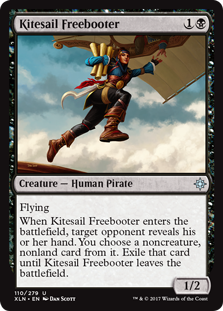
Tearing Fire away with Kitesail Freebooter, or crippling the engine with taxing effects the likes of Thalia, Guardian of Thraben or Unsettled Mariner, are some of the options the deck has already built-in to its mainboard to weather that kind of attack from opponents. Those cards have long been integral to stopping more streamlined versions of such an attack from Push, Bolt, and other efficient removal spells, and are what competitively sets Humans apart from other Modern fish decks.

Most other decks with x/1s and x/2s are fast enough to overwhelm the engine, but I can see Fire becoming something of a common tech for midrange mirrors; it keeps Bloodbraid Elf, Dark Confidant, and Lurrus off the table, I supposed. Even then, I expect its applications to prove slim, or far from polarizing.
Krark-Clan Ironworks

Next up is an artifact that slumbered in Modern's annals for most of the format's history, only to be broken wide-open late 2018.

Why It Was Banned

Ironworks was banned for a few reasons, chief among them placing in too many GP Top 8s.

Krark-Clan Ironworks decks have risen to prominence at the Grand Prix level of play, posting more individual-play Modern Grand Prix Top 8 finishes than any other archetype, despite being only a modest portion of the field. [...] With no signs of the Ironworks deck's dominance at the GP level slowing down, we've decided to take action by banning the card Krark-Clan Ironworks.

Wizards believed the deck's standing as Modern's top deck would only solidify as more players learned the strategy's ins-and-outs, concluding that "Ironworks [posed] a long-term threat to the health of competitive Modern play."

Ironworks Combo, Abe Corrigan (1st, SCG Team Open Columbus)

Creatures

4 Scrap Trawler
1 Myr Retriever
1 Sai, Master Thopterist

Artifacts

3 Chromatic Sphere
4 Chromatic Star
3 Engineered Explosives
4 Ichor Wellspring
4 Krark-Clan Ironworks
4 Mind Stone
4 Mox Opal
1 Pyrite Spellbomb
1 Spine of Ish Sah
4 Terrarion

Sorceries

4 Ancient Stirrings

Lands

2 Buried Ruin
4 Darksteel Citadel
2 Forest
4 Grove of the Burnwillows
2 Inventors' Fair
1 Island
3 Yavimaya Coast

Sideboard

1 Firespout
2 Galvanic Blast
2 Lightning Bolt
4 Nature's Claim
2 Negate
2 Sai, Master Thopterist
1 Swan Song
1 Tormod's Crypt

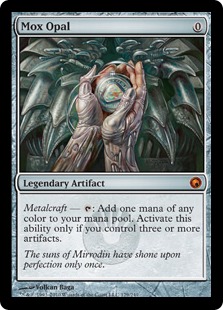
Critically, other cards Wizards considered for the ban were Ancient Stirrings and Mox Opal, the latter of which was the most important to Ironworks Combo---it accelerated the deck by an extra turn, giving it the speed needed to compete in Modern.
While Stirrings still exists and could help players string together a gameplan, Opal is gone, making the deck significantly less threatening. Unlike with Bridge from Below, the question of whether banning Opal would render Ironworks manageable was never really asked by Wizards. Rather, they elected to axe Ironworks for fear of badly damaging other strategies.

What It Would Do Now

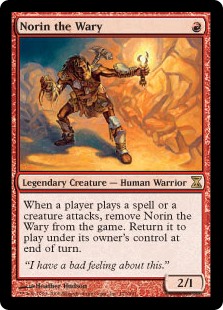
Ironworks would again spearhead its own deck, but that deck would prove extremely fringe; to give a reference point, I think it would wind up in the competitive bracket occupied by Norin Soul Sisters, Doran Rock, and other outdated Modern decks from the format's earlier years. That's just what Ironworks is now, an outdated deck---without Opal giving it the speed it got by on, the strat would be DOA in Modern.
I will concede that David's take on the deck while it was legal was quite different from mine. In his view, that extra turn of speed was not what made Ironworks so potent; that honor went to Engineered Explosives. He went on to argue that banning Opal would not do much to stop the Ironworks deck.

Potential Risks

Which brings us to the risk: what if Ironworks did prove problematic? That's the worst-case scenario, but my solution here is simple: just re-ban it.
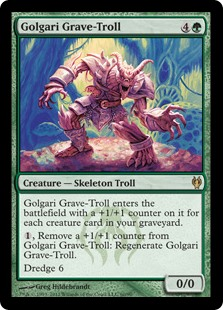
Re-ban it?! You mean create another Golgari Grave-Troll fiasco? Yes, that's exactly what I mean! Modern may be non-rotating, but it's far from unchanging, as the last two years have beaten us over the head with. Reintroducing Ironworks and then removing it doesn't sound bad to me at all. I appreciate when Wizards gets hands-on with Modern and displays an appetite for experimentation.

And the ensuing "fallout" wouldn't be unprecedented by any means---in my eyes, the situation is quite similar to Once Upon a Time's, or Oko's, or soon, Lurrus's (let's just be real Dej Loaf voice). In other words, we get that "fiasco" all the time, but Modern remains a player favorite.

A Conclusion... For Now

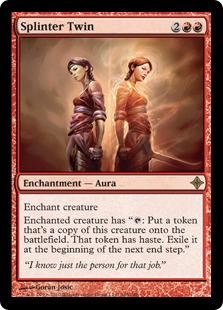
There are other cards on the banlist I think could maybe come back to Modern, or are worth thinking about returning even as a thought experiment. And yes, those cards include Splinter Twin!

Which cards do you think are safe? Or is it even responsible to entertain such a pursuit with Lurrus tearing up the metagame? As always, and perhaps more than ever in this era of isolation, I'd love to hear your thoughts in the comments!

Soft Ikoria Prices Could Mean Opportunity

Are you a Quiet Speculation member?

If not, now is a perfect time to join up! Our powerful tools, breaking-news analysis, and exclusive Discord channel will make sure you stay up to date and ahead of the curve.

I’m usually focusing my MTG resources on Old School and Reserved List cards, but every once in a while, a new set is interesting enough to give me the itch. I crave the experience of opening sealed product, wondering what lies within. When the set is brand new, I’m guaranteed to open cards I’ve never owned before. New sets also tend to have inflated EV because enough supply hasn’t hit the market yet.

With this backdrop, I recently opened a couple prerelease packs and one bundle of Ikoria—the product netted me around 20 booster packs. As I tore through all the boosters, I marveled at the alternate arts, the cool companions, and the exciting new mythic rares.

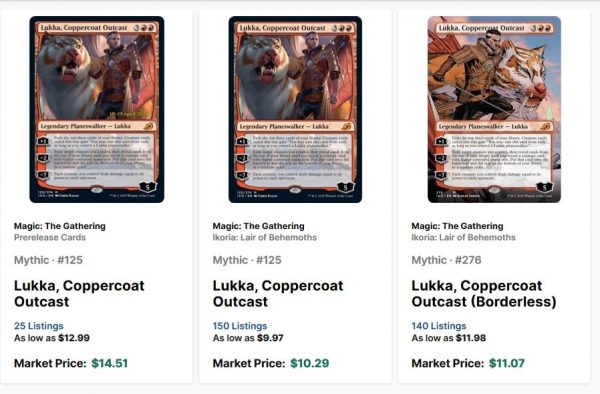
The highlight was definitely the alternate art Lukka, Coppercoat Outcast I opened. I’ve seen that card plague Standard now on Arena, in combination with Yorion, Sky Nomad and Agent of Treachery. Clearly I hit big, right?

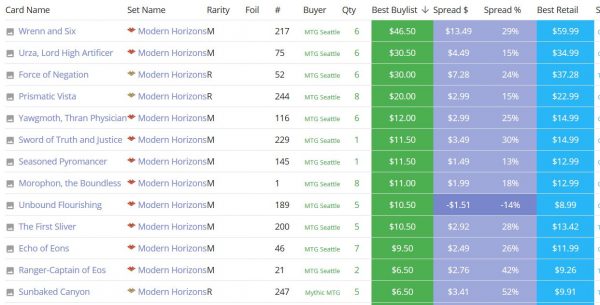
These Cards Are Worth How Much?

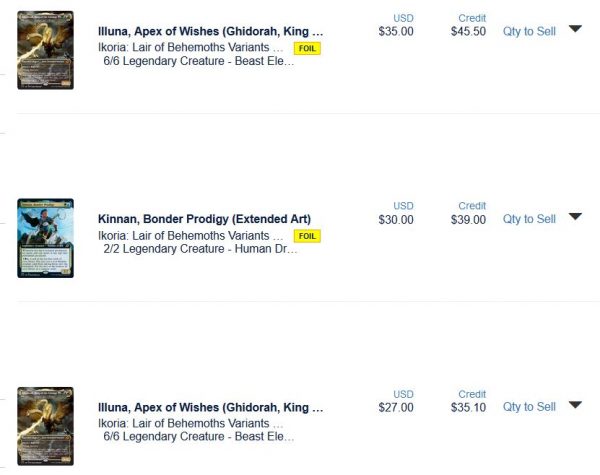
Card Kingdom is known for paying aggressively on their buylist for hot cards. I opened a 4-of, in alternate art, of a new mythic rare, in the best tier 1 deck in Standard. This thing should have paid for my bundle, right?

I rush to their website and search for the card, only to find that Card Kingdom is paying a measly $6.50 for this card. So much for hot new Planeswalkers selling for $30!

At first, I wondered if this reflected softness at Card Kingdom (they had been dropping their buy prices on many cards due to COVID-19, after all). So I checked TCGplayer and Trader Tools. Nope, this card really is only worth about $11 despite the alternate art.

There was an error retrieving a chart for Lukka, Coppercoat Outcast

Disappointed, I checked another awesome card I opened: a foil Umori, the Collector. While not a four-of in any deck, this companion does see Standard play in some tier 2 decks. It has a lot of potential.

A quick search on Card Kingdom’s website and…wait a second. They don’t buy this card? Did they open a bunch or something, what’s going on?

I rush over to Trader Tools and find out it is actually a bulk foil rare—the top buy price is literally $0.10.

There was an error retrieving a chart for Umori, the Collector

Ok, clearly I didn’t do as well as I thought with my pack opening. If these cards are worth so little, what cards are worth opening in this set?!

I revisited Card Kingdom’s buylist for Ikoria cards (focusing on only standard printings for the moment) and sorted by buy price, high to low. Anyone have a guess at the top card as of yesterday morning (May 24th, 2020)?

Eight bucks. Eight bucks for the top foil mythic rare in the set! The top nonfoil is just $7.

Now, if I switch over to the alternate art cards, I see Card Kingdom does pay more for some of these rarities. But given just how rare these cards actually are, these prices still seem extremely deflated.

I can’t remember the last time a Standard set had so few cards worth opening from a money standpoint.

Possible Reasons for Ikoria’s Awful EV

Usually when a new set is released, its EV (the estimated value of opening a booster box) is inflated—supply hasn’t adequately emanated throughout the player base yet. Therefore, we see the newest set have a higher EV than previous Standard sets, which have been out long enough to equilibrate.

This trend has inverted with Ikoria. According to Dawnglare, the EV of Ikoria is $68.64.

Compare that to the EV of the other Standard-legal sets:

Theros: Beyond Death: $74.33
Throne of Eldraine: $71.33
War of the Spark: $81.66
Ravnica Allegiance: $91.11
Guilds of Ravnica: $84.48
Core Set 2020: $87.62

The newest set is also the worst one to open from a value standpoint, in some cases by a large margin! What gives?

I believe the explanation lies in COVID-19 and the current stay-at-home restrictions in place across the country (and globe). Think about it: the newest set usually shakes up the Standard metagame, and players need to scramble to obtain the newest cards for their next FNM, SCG Open, or MagicFest they want to play. With constrained supply, prices inflate.

But what happens if there is no MagicFest, SCG Open, or weekly Standard event for players to compete? Then there’s no real rush in acquiring the newest cards.

I doubt Hasbro will release precise numbers, but if I had to guess I’d say the number of active Magic Arena players has skyrocketed, just as it has for other online platforms like Zoom, Slack, and Microsoft Teams. Paper Magic, on the other hand, is likely at decade-lows. People can play through webcam, or in very small groups at kitchen tables. But large Standard events, often the bread and butter for Magic tournaments, are practically nonexistent.

This means Ikoria prices may be depressed for some time.

Opportunity Knocking?

When was the last time I wrote an article strictly focused on Standard speculation? I’m sure it has been a long time ago! But with prices so depressed on this very powerful set, I can’t help but see opportunities abound.

First, the disclaimer: I haven’t purchased many Ikoria singles as of the writing of this article. But I have my eye on certain cards—since I play Standard on Arena regularly, I have observed some of the more powerful, in-demand Ikoria singles. This, I feel, gives me enough data to make reasonable recommendations for paper speculation.

First and foremost, there are the Triomes.

These are absolute staples in the new Standard. I love that they offer three colors, can cycle late in the game, and are fetchable with three land types! They are the first of their kind, and I suspect they’ll be popular in other formats where having lands come into play tapped is acceptable (Pioneer, maybe Modern?). They should also be very popular in Commander.

These are all worth between $5 and $9 currently, making them some of the most valuable non-showcase cards in the set. But what really interests me are the showcase version of these cards. Obviously their supply is much less than their regular counterparts, yet the showcase prices are not that much higher. I bought 1 copy of each so far, with eyes on their prices in case they drop further.

Next on my watch list are the companions—specifically, Umori, the Collector, Obosh, the Preypiercer, Kaheera, the Orphanguard, and Yorion, Sky Nomad. I like these in particular because they see plenty of Standard play, yet are only worth about a buck! Yes yes, it’s true they’re often played as a 1-of. I get that. But Lurrus of the Dream-Den, the most powerful companion in older formats, is worth $6 (extended art is near $10). If Standard play resumes post-COVID, I believe some of these companions could move closer to the $5 range.

If you want more upside, you could pursue the foils (which are also super cheap) or the extended art versions. These are so cheap that it seems like there’s little to lose. Trust me when I saw that Yorion, Sky Nomad is everywhere on Arena’s mythic ladder. Adding 20 cards to a deck is not a huge constraint, so I expect this card to be played throughout its life in standard and into Pioneer and Modern.

The last group of cards I like from Ikoria are the Planeswalkers: Narset of the Ancient Way, Lukka, Coppercoat Outcast, and Vivien, Monsters' Advocate.

There was an error retrieving a chart for Vivien, Monsters' Advocate

I have seen the first two in Standard play many times on Arena. I haven’t seen Vivien as much, but it must see some play because it’s the most valuable of the three! Typically, the best Planeswalkers of a new set retail for $20-$30, yet these are all under $10. What is this, War of the Spark, with its sub-$10 Planeswalkers? These could pop once Standard events begin again and normal demand for paper Magic resumes.

Wrapping It Up

I can’t remember the last time a set’s EV was so poor just a week after its launch. Ikoria does not deserve to be so inexpensive—it’s power level is extremely high! So high, in fact, that one of its cards had to be banned from Vintage for its power level. It’s the first card banned for this reason since the mid 90’s (Mind Twist was the last one). Lurrus of the Dream-Den is on par with Mind Twist…think about that!

Despite its power and its profound impact to Standard, these cards just don’t fetch a lot of money. If you open one of the showcase foils, then you’re in business. But outside of those, you will really struggle to make money cracking boxes of this set. And if stores don’t make money cracking boxes, they won’t crack boxes. And if players aren’t playing paper Magic, prices will continue to soften.

Until they don’t.

I predict that sometime before Ikoria leaves Standard, there will be a vaccine for COVID-19 and large Magic events will return. At this point, though, we’ll already be onto the next sets. Ikoria may be severely underopened as a result, meaning these can have some real growth potential down the line. You don’t even have to look ahead to 5+ years out, either. Even one year could be just long enough for these to suddenly rise in demand without the supply to keep pace.

This is precisely what I’m betting on, and it’s why I’m speculating on Standard cards for the first time in many years.

Insider: Speculating on Kalamax, the Stormsire

Are you a Quiet Speculation member?

If not, now is a perfect time to join up! Our powerful tools, breaking-news analysis, and exclusive Discord channel will make sure you stay up to date and ahead of the curve.

Today we look at Kalamax, the Stormsire so again if you don't like spoilers;

Warning Commander 2020 Spoilers ahead!

....................................................................

....................................................................

....................................................................

....................................................................

....................................................................

....................................................................

....................................................................

I'll be the first to admit that I sort of skipped over this new Commander when spoilers came out. I was much more focused on Zaxara, the Exemplary and Gavi, Nest Warden which you can read about here and here. However, as I've had some more time to digest Kalamax, the Stormsire, I've grown to appreciate the abilities more. The ability to copy spells has existed since the days of Alpha with Fork

There was an error retrieving a chart for Fork

One of the biggest downsides to instants that copy spells are that you either have to play another spell worth copying or your opponent does. When both players have no cards in hand, topdecking a Fork doesn't help your board state at all. That being said, copying spells is still a fun mechanic in Magic and a lot of casual players love these types of cards. After all, Reverberate is still worth $1.50 despite 3 mass printings and no play in any competitive format. While we've already had commanders that copy spells, they have previously been limited to Izzet decks.

There was an error retrieving a chart for Melek, Izzet Paragon

Kalamax, the Stormsire provides a third color, which also happens to be the best color in Commander. It does have a caveat that it must be tapped in order to do so, there are plenty of ways to tap Kalamax outside of attacking, as this is a commander that I would imagine is better kept safe than forced to attack simply to tap. As this is required for the triggered ability, we need to find good ways to tap him, ideally providing mana.

There was an error retrieving a chart for Earthcraft

Earthcraft has already exploded in price, making it far less desirable as a speculation target. It's much younger and much cheaper sibling hasn't shown marginal gains in the past 5 months.

There was an error retrieving a chart for Crypolith Rite

The biggest downside of Cryptolith Rite is that creatures that are summoning sick can't be used to provide mana. The upside is that they tap for any color of mana. Many people forget that Earthcraft only untaps a basic land, and many 3/4/or 5 color Commander decks run very few basic lands. Even more interesting, foil copies of this card aren't much higher than the non-foil versions despite the fact that Shadows Over Innistrad did NOT have any collector packs pumping additional foils into the market.

There was an error retrieving a chart for Citanul Hierophants

Citanul Hierophants has the same drawback as Crytolith Rite in that creatures that are summoning sick can't use the ability and it only allows you to tap them for green mana, but in Commander, you want multiple options and this one isn't bad. It has a single printing from Urza's Saga as a rare so a lot less copies are out there than you might think.

There was an error retrieving a chart for Paradise Mantle

Paradise Mantle gives us the ability to tap Kalamax for any color mana, but again has the downside of requiring your creature to not be summoning sick. That being said, the Kalamax, the Stormsire decks are likely to care less about the ability to tap for mana being for all creatures like the Citanul Hierophant and more for tapping for any color simply because they are far more likely to be very spell-based decks rather than creature-based ones. Paradise Mantle has only two printings at uncommon, Fifth Dawn and Modern Masters so a lot of copies aren't likely to be floating around.

There was an error retrieving a chart for Opposition

While Opposition doesn't provide us mana, it does hinder our opponents and you can tap Kalamax, the Stormsire immediately without concern for summoning sickness. It was only printed as a rare in Urza's Destiny and 7th Edition as well as an invocation from Amonkhet. Current buy-in for the regular copy is around $4, so the risk is somewhat minimal.

Now for the second part of Kalamax, the Stormsire. It is important to note that Kalamax, the Stormsire's his first ability ONLY applies to instants. This is very important because adding green to the typical U/R copy spells decks would have allowed some insane mana ramping, it appears that WoTC kept this in mind as most land fetching ramp spells are sorcery speed. I also imagine the fact that almost every "take an extra turn" spell is also sorcery speed.

Still there are plenty of good instants we can play with Kalamax, the Stormsire.

Interestingly many of the top 100 instants (according to EDHrec) aren't actually all that great when doubled.

There was an error retrieving a chart for Dig Through Time

While there are a lot of instant speed tutors that see Commander play, many of the top ones put the card on top after a shuffle so duplicating it means you only actually get the second card you search for as the first gets shuffled in. Dig Through Time, however, is more like a restricted tutor that gets the 2 best cards out of your top 7, so doing it twice IS extremely powerful. It is important to note that this card's current price is heavily propped up by the Pioneer format, having sat at under $2 prior to the announcement of the format, but its current price of a little under $5 isn't too bad, given it's a staple in another format. That being said, a ban to the Inverter of Truth deck in Pioneer would almost assuredly drop this cards value so there is some risk.

There was an error retrieving a chart for Mystic Confluence

While many of the more cost-efficient counterspells are listed above Mystic Confluence, doubling a Standard counterspell doesn't do nearly as much unless you're in a counter war. Doubling up Mystic Confluence allows you to choose the card draw as one or more of the modes and thus doubling it can provide significant card advantage. The current price has flatlined for the last few months and with the only major printing being from Battlebond it definitely has potential.

There was an error retrieving a chart for Stroke of Genius

One of my all-time favorite cards, I am honestly perplexed that Stroke of Genius is a $3 card. While it has been reprinted in 2 Commander products; Commander 2014 and Designed, engineered, machined, and assembled in the USA; it's only non-supplemental printing is the original from Urza's Saga. I realize there are similar cards out there, but most like Pull from Tomorrow are from much more recent printings that would have had much larger print runs.

Budget-Focused: How “Extras” Have A Role In The Secondary Market

Are you a Quiet Speculation member?

If not, now is a perfect time to join up! Our powerful tools, breaking-news analysis, and exclusive Discord channel will make sure you stay up to date and ahead of the curve.

Welcome, everyone to another week and some more specs! Today we are looking at a creature that I feel should be worth more than their current price tags are suggesting. The focus of today will be a big body with great upside, Lovestruck Beast! I hope by the end of this article you may have a different feel on this gem.

Price Comparison and Format Usage

There was an error retrieving a chart for Lovestruck Beast

Let’s talk about Lovestruck Beast and why this one is up for discussion. To start with this thing is only going for $0.59 avg. (TCGplayer mid), the foil is at $1.22, and the prerelease is at $1.50. The tricky thing about this and newer sets going forward is the “extras” in these things. The showcase version is $1.50, and the foil is at $3.41.

This sparks up a topic we will touch on after we discuss Lovestruck Beast. Now you may be asking yourself “with all of these prints, which one do I target?” This isn’t as easy of an answer as one would think, and we will investigate this further. For now, targeting the non-foil is the safest bet out of all. If you are looking into the foils, I would go with the prerelease and the alternate art foils to spec.

The reason being is that Commander drives a lot of foils trends. We also know Commander players typically want to sleeve up what will be rarer or flashier to have on hand. With that, I feel they would target the alternate foils first, and then the original foils last if at all. As for the reason for non-foils, that will be primarily where our budget minded players will go to acquire this. They will look at all the copies and think to themselves, “why pay more for fancy art when all I want to do is play the card?” This will essentially drive the cost for the non-foil if this pops up the way it should.

There was an error retrieving a chart for Rotting Regisaur

Now, we are going to investigate further as to why this should go up in price. The first thing we will do is compare it to a card with similar upside and CMC. The card we are talking about is Rotting Regisaur. Rotting Regisaur is coming in at $3.19 avg for non-foils, $5.00 for the foils, and $5.33 for the promo. The first thing you may say to this is, “well that’s because there’s only three prints for this, and the beast has five.” That is a solid argument, but the counterargument here is tournament play.

Looking at top eight decks alone(Pioneer), Rotting Regisaur is sitting at twenty-two decks(mtgtop8). Lovestruck Beast on the other hand is at one hundred and two. In Standard, the Regisaur is at eighty-five, and the beast is at one hundred ninety-three. The driving force here for Regisaur might be in Commander, where it sees play in seven hundred twenty-nine(EDHREC). Whereas Lovestruck Beast is sitting in at one hundred ninety-one. Overall the competitive meta should be the biggest driving force for a card, and the beast is in a lot of meta decks.

Other Factors to Consider

Another thing to look at is the number of copies used. Lovestruck Beast is almost a four-of in every deck it is in. With a drive like this, it leaves one scratching their head thinking “why is the price so low then?” I don’t have a complete answer, but the number of printings has an impact for sure. The other thing to note with the beast is versatility, as it has the Adventure component to make a 1/1 beater.

This helps not only to help it to be able to attack, but also use for any ETB effects, cards that get/give buffs for creatures on the battlefield, and cards that get triggered for every sorcery/instant you play. The last thing we will note here is the fact it’s a 5/5. Yes, it is a vanilla 5/5, but it’s a 5/5 for 3-cmc! It does have the restriction, but we are not dumb players, and this means very little to us in the right situation.

In closing on this there is no reason the non-foils shouldn’t be least a dollar more than Rotting Regisaur based on the facts provided. We will see what happens with it in the future, but this looks to have found a home in Pioneer. That in of itself should put minds at ease wondering if it will be used post rotation. Grabbing non-foils for just over a quarter on Card Kingdom right now doesn’t seem like to bad of an idea.

Wrapping Up

Let’s talk about the elephant in the room which is the “extras” Wizards keeps throwing at us now. This topic deserves its own article, but I'll give a brief opinion here. Personally, I hate it from a speculation standpoint, as it most certainly has a negative impact on original art foils in the secondary market. As stated above,  why would a player buy an original art foil, when they can buy an alternate art or alternate art foil? At this point, in newer sets, plain foils are not really the go-to spec and have far lower demand. Reason being is that stores won’t give you as much to buy-list, and players (Commander players, anyway) will look for a different version to drop cash on.

Prerelease promos will be the safest foil spec, as it should have the lower print run in comparison to its original foil counterpart. The biggest reason as to why is buy-listing. This was mentioned in a previous article, but it is worth noting here.

Overall, when it comes to the extra versions Wizards is putting out, it hurts the secondary market. It is not up to them to protect the market, it was just a shot in its foot. It was a smart move for them to draw intrigue for potential buyers of sealed product. They have seen the success of artists alters and extended art cards, and ran with it. The problem is now any one card will have too many printings. It will take some time to truly see what to target going forward and keep a watchful eye. I hope you all enjoyed this week’s article, and I hope you come back for the next one!

Companion of the Week: Metagame Breakdown

Are you a Quiet Speculation member?

If not, now is a perfect time to join up! Our powerful tools, breaking-news analysis, and exclusive Discord channel will make sure you stay up to date and ahead of the curve.

When working with data, scale is everything. Just as an area looks very different when using Google Streetview versus Google Maps, the context, meaning, trends, and ultimately the conclusions reached from the data will depend heavily on the scale it's examined on. This is the reason that economics is split between micro and macro level analysis: the former is a zoomed-in study of individual behavior, while the latter is a zoomed-out study of aggregate behavior. We have explored the macro-level analysis of companions in Modern. This week, we'll dive into the micro story.

At the conclusion of last week's article, I mentioned that I saw possible trends developing, and that I wanted to keep monitoring them. As shown in that data, the metagame has been substantially changed by the addition of companions. However, the nature of that change is continuing to evolve.

Early indications and assumptions were that Lurrus of the Dream-Den would be the companion for Modern. This has largely proven true, but the picture is growing complicated. Looking at the data on a micro level asks a lot of questions about the effect the companions are having on Modern. And the impact is less clear than before.

The Big Picture

Companions hit Modern in a very big way. The old metagame was focused on midrange decks, particularly those built around Uro, Titan of Nature's Wrath. After Ikoria hit MTGO, the non-black midrange decks fell away and were replaced by Lurrus decks. Specifically, Burn, GBx midrange, Prowess, and Toolbox decks were the top four individual decks by a decent margin. All of them ran Lurrus, though Toolbox sometimes had Zirda instead. Burn and GBx had been tier 1 decks prior to Ikoria, while Prowess was low-Tier 2 and Toolbox was effectively untiered. They create a strong argument that Lurrus is affecting deck viability, and the fact that 66% of decks in the sample used a companion indicated that it was better to have companions than to not. Only Amulet Titan never ran a companion and still placed highly.

If one was to just look at that picture, it would be easy to conclude that Lurrus has taken over Modern and is too powerful. However, there's a big caveat to that conclusion: the decks that are doing well with Lurrus now are primarily decks that were already good. Therefore, a more detailed examination is required to see what, if anything, is the actual problem.

Week 1: 4/20-4/25

To do this, I'm going to examine the week-by-week metagame data. My source is the official Wizards MTGO decklist posts. I'm using all the non-League data, since Wizards doesn't curate the event lists. Wizards also doesn't reliably post all of the events, so I'm definitely missing a few datapoints. However, there's no guarantee that other sources, namely MTGGoldfish, will have those missing lists, either. The total completeness of the data being slightly less important than source consistency, I'm sticking with Wizards.

Also, as with last week, I have grouped some of the results into Other. There are too many decklists to effectively work with otherwise, and the Other category is a good indicator of rogue deck populations. Because I'm working with smaller individual data sets, the Other bar was moved down. With the hundreds of entries in the macro data, five was a good cutoff. Now that each week has less than 200, the line falls down to three. A deck will be listed individually if it has three or more entries in a week and below that it's an Other.

I'll also remind everyone to focus on the metagame percentages rather than the raw numbers. Each week had different populations so the total numbers aren't comparable. Relative populations are comparable, and so that's what I'll be discussing. Also note that the percentages aren't perfect in all cases due to rounding.

Deck NameTotal #Total %
Other2923.2
Burn2217.6
GBx Midrange1713.6
Toolbox97.2
Grixis Delver86.4
Prowess75.6
Humans75.6
Hardened Scales64.8
Amulet Titan54
Temur Urza32.4
Dredge32.4
Neoform32.4
Bant Snow32.4
UW Control32.4

Week 1 is the starting position. By itself it doesn't really mean much, other than to show where players' heads were at the start of the metagame. And clearly, players were thinking fiery thoughts. Burn is the most-played individual deck by a fairly wide margin. GBx, which is primarily Jund with some Rock, is in second, with Toolbox a distant third. This is notable particularly because Toolbox wasn't a deck before this week. The Other category is very large, indicating a large amount of experimentation.

Companion Stats

However, it's the companions that we're all actually here for. I recorded every companion that was actually played as a companion (Lurrus saw some maindeck play) as I went through the decklists. I'm also including each companion's metagame share, measured by dividing its total population by the total decks in the weekly sample.

CompanionTotal #Total Metagame %
Lurrus6451.2
Jegantha75.6
Yorion32.4
Umori10.8
Zirda10.8

Roughly 60% of decks had a companion, and for most of them, that companion was Lurrus. When one card is present in half the decks in a sample, there's arguably a problem. On the other hand, this was the first week and Lurrus was the obvious card; it's unclear if this saturation is indicative of actual power, or popularity. I'd expect new cards to see heavy play the first week. It's the trends over the subsequent weeks that actually determine power.

Week 2: 4/26-5/2

Which is an excellent segue into Week 2. With more time to refine and experiment, players had a more accurate picture of Ikoria's actual power and began to adapt accordingly. A note on the data: the Other category dropped significantly in Week 2 and stayed down. However, this isn't an indication of metagame narrowing. Rather, more decks started to cross my threshold, likely due to fluctuations in the weekly populations. The metagame was at least as open as Week 1, and possibly more.

Deck NameTotal #Total %
Other2212.9
Burn1810.5
GBx Midrange137.6
Prowess137.6
Bant Snow116.4
Toolbox116.4
Amulet Titan105.8
Ponza105.8
Temur Urza84.7
Humans84.7
Hardened Scales84.7
Ad Nauseam84.7
Eldrazi Tron52.9
Neoform52.9
4C Snow42.3
Niv 2 Light42.3
Gx Valakut42.3
Infect42.3
UB Control31.7
Dredge31.7
Grixis Death's Shadow31.7

While Burn is still the most played deck, its margin has fallen significantly. As the ~7% drop is far greater than Prowess' 2% gain, this change cannot be a function of players switching decks. I conclude that it instead represents an actual change in deck viability. This is further suggested in GBx losing 6% while still holding second place. The metagame was broadening in Week 2.

Companion Stats

This is reinforced by the companion data. In Week 1, Lurrus was the top cat-like thing and it wasn't close. In Week 2, Lurrus was still the big cat, but not quite so big.

Deck NameTotal #Total Metagame %
Lurrus7443.3
Yorion2112.3
Obosh105.8
Zirda42.3
Jegantha31.7
Gyruda21.2

While companions as an overall share of the metagame have increased to ~66.7%, Lurrus' share has fallen by ~8%. The broadening of the metagame on a deck level is reflected in a diversification of companions. It took a week, but the UGx players figured out that they could run Yorion, Sky Nomad just by adding more cantrips, which helps their math problem. Meanwhile, Obosh, Preypiercer was leading a Ponza revival.

Week 3: 5/3-5/9

Week 3 is where trends can actually start to be established. And the general pattern from Week 2 does hold. The metagame continued to broaden relative to Week 1. Other was up by ~3%, though there is one fewer listed deck.

Deck NameTotal #Total %
Other2915.8
Toolbox189.8
GBx168.7
Prowess147.6
Amulet Titan126.1
Bant Snow126.1
Temur Urza126.1
Burn126.1
Ponza84.4
4C Snow73.8
Gx Valakut52.7
Humans52.7
Grixis Death's Shadow52.7
Ad Nauseam52.7
Eldrazi Tron42.2
Hardened Scales42.2
Mono Green Tron42.2
UB Control42.2
Infect42.2
Hammer Time31.6

Burn's descent continues. It's no longer top deck, instead tied for 4th place with resurgent UGx decks and Amulet Titan. In its place, Toolbox shot up 3.4%, the largest increase by any deck. GBx has also stabilized and recovered some ground from Week 2. Prowess too held its ground, both relatively and absolutely. It was third with 7.6% in Week 2, and still third with 7.6% in Week 3.

Companion Stats

As seen in Week 2, the companion picture continued to broaden. Lurrus had lost favor relative to the other companions and continued to do so while the overall companion saturation grew. But only slightly.

Deck NameTotal #Total Metagame %
Lurrus7641.5
Yorion3318.0
Obosh73.8
Jegantha73.8
Zirda21.1
Umori10.5
Lutri10.5

Companions now represent 69.2% of the metagame, with Lurrus in a mere 41.5% of all decks. However, the rate of change has decreased to ~2% in both cases. This indicates that an equilibrium is being reached and confirming that trend was a primary reason I didn't do the micro analysis before. I wanted to see if the trends continued into Week 4.

Week 4: 5/10-5/16

And then everything got weird. Some trends continued as expected, while a number of others went haywire. Far from indicating that the metagame had started to settle, the Week 4 data suggested greater volatility.

Deck NameTotal #Total %
Prowess2615.6
Other2012.0
GBx1911.4
Ponza127.2
Amulet Titan106.0
Burn84.8
Mono G Tron84.8
UW Control74.2
Gx Valakut74.2
Eldrazi Tron74.2
Bogles63.6
UGx Reclamation53.0
4C Snow53.0
Storm53.0
Temur Shfit53.0
Ad Nauseam53.0
Bant Snow42.4
Hardened Scales42.4
Toolbox31.8

While Burn has continued its steady decline, Prowess has shot up to the top of the metagame, gaining 8% in a week. At the same time, Toolbox has crashed, losing 8%. While I have no proof, I can't help feeling that the two are linked. Many Prowess decks run Gut Shot, and Toolbox is full of X/1 creatures it needs to get the ball rolling. Prowess was able to effectively disrupt the top deck and race it. It's a logical conclusion, but I have no evidence to prove it.

Meanwhile, the UGx decks that were looking to recover from their week-one pounding have crashed again, with Temur Urza failing to appear. Some of this may be changing decks. There were a number of Temur Scapeshift decks using Urza to fill out their lists to run Yorion. These lists are strategically distinct from Temur Urza lists, and even if I did count them, their numbers are still far below the previous week's. Some of this could be linked to the rise of Ponza, which had been preying on UGx in the old meta and has gained ~3% in a week.

Companion Stats

The companion picture, meanwhile, is getting more complex.

Companion Total #Total Metagame %
Lurrus7243.1
Yorion1810.8
Obosh127.2
Jegantha84.8
Kaheera21.2
Gyruda10.6
Zirda10.6

The trend appears to have reversed. Lurrus is up 1.6% from the previous week, but companions overall are down by ~1%. This is a very small fluctuation and may represent normal variance rather than a genuine change, but it does still suggest that companions have achieved their maximum saturation. Yorion fell off by ~7% while Obosh surged by ~3%, which suggests that players are continuing to experiment with their decks and the metagame.

The number of represented companions remains seven, but the composition has changed. Kaheera, the Orphanguard makes its debut, but not as a lord; instead, several UW decks decided to go creatureless so that they always have Kaheera as a threat. I question whether this will be a sustained trend or just a flavor of the week.

Trending Now

It can be daunting to try and deduce anything meaningful from tables of data. To that end, here's the visuals on companion in the Modern meta.

Companion started out with a very high metagame percentage, as Lurrus was expected to be very strong. The set was just out, but only one copy of Lurrus was needed per deck. Thus, once the supply issues were overcome, Lurrus was and has been readily available.

What's significant is that its overall gain has been muted. Companions have gained ~8% metagame share over the sample time, which would be very significant had it started out low. However, when ~51% of the field was running Lurrus from the get go, the increase is less impressive. This is complicated when looking at the individual companions.

Who's My Best Buddy?

Again, Lurrus was billed and expected to be the premier companion. And it has been. However, what that means has changed dramatically. Initially, Lurrus was the companion in Modern, and it looked like it was necessary to have Lurrus specifically to win in Modern. That narrative has weakened, and now it looks like Lurrus is merely the best companion rather than the paragon.

It's no exaggeration to say Lurrus has fallen off. It's down 8.1% from Week 1 despite a small rebound in Week 4. Some of the fall off must be linked to the rise in other companion decks. Part may be that Lurrus isn't quite as impressive as billed for many players. And then there's metagame adaptation.

Lurrus being a Modern card was fairly obvious, but the other companions weren't so clear-cut, and now they're rising. The only companion that hasn't shown up in the data so far is Keruga, the Macrosage. This isn't a format where decks can just not play anything for the first few turns. The only way around this restriction is cycling decks, and Living End isn't exactly tearing it up. However, of the other non-Lurrus companions, only some are having a real impact. And the picture that emerges when considering only those decks that consistently show up week-by-week and have appreciable metagame impacts is very cloudy.

All of the non-Lurrus companions  have gained metagame share since 4/20. However, the only one that isn't down from its peak is Obosh, the Preypiercer. And Zirda is just above its starting position. Yorion fell off significantly last week while Obosh was rising. Again, this may a predator/prey relationship if the old metagame dynamics are to be believed. In any case, it seems that outside Lurrus, players are still figuring out the companions and it isn't clear what, if any, place they have.

Top Tier Evolution

Meanwhile, the actual tier list isn't any clearer. I identified Burn, GBx, Prowess, UGx, Amulet Titan and Ponza as the big decks previously. That picture is obvious when taken all together, but when looked at on an individual level, there's far more happening that I'd anticipated.

Burn has been on a steep decline since 4/20. GBx has shown a steady recovery since 4/26, while Prowess has skyrocketed into top tier. In other words, there is no consistency in results for the Lurrus decks. Having the companion isn't a predictor of success, and the old metagame forces are still active. This is further demonstrated when considering the non-Lurrus decks.

The only companionless deck is Amulet Titan, and it just keeps chugging along. All the other decks show high volatility. Temur Urza has crashed out, Bant Snow is back where it started, and Ponza had a great week. There is little to indicate that the companions themselves are affecting viability. Given the high variance in the high-placing decks (including the Lurrus decks) the question of correlation or causation remains murky.

Companion Viability

To examine that question, I looked at the decks I consider companion-dependent. These are decks with either actually none or no appreciable (>1%) impact on the pre-Ikoria metagame, but did show up in the post-Ikoria data. The argument they make is for correlation, not causation.

Every single deck is down from its peak. Last week, Toolbox fell precipitously, while Grixis Death's Shadow disappeared. Grixis Delver failed to place Week 3 and just snuck into Week 4. Hardened Scales is sticking around, but the evidence does not support it being a serious contender in the overall metagame.

None of these decks held any sort of metagame share before companions. Adopting companions did make them considerations, but they haven't remained as such. My takeaway from this result is that companion does not change deck viability. A power or consistency boost doesn't necessarily improve a fundamentally weak strategy enough to compete with the proven decks.

A Complicated World

Companions are saturating the Modern metagame. There's early indication that the saturation has peaked. There is evidence that companions are best used in otherwise strong and highly-tiered decks and that they aren't affecting overall metagame diversity. However, the metagame remains highly volatile, and is therefore still developing.

I think this last point is why Wizards hasn't taken action on companions in Modern yet. With all the volatility, I can't point to any one deck, or even conclusively point to Lurrus, as being an actual problem. It's the overall environment that looks unhealthy. By the traditional metrics, Modern is perfectly fine. There's no one deck that is overpowering or warping the format. Diversity is similarly unaffected. The saturation of the companion mechanic is the concern.

Given what was said in the banning announcement, I believe that Wizards is hoping that companion can be salvaged. A lot of effort went into the cards, and as a flagship mechanic, they don't want to simply throw it away. They're looking at the data and seeing the format volatility, and they also have actual win rates, waiting for stronger trends to emerge. The hope is that the data justifies a targeted ban on a single companion or card. I'm growing increasingly skeptical of the possibility in light of my data showing that companion representation is diversifying. I think we're looking at either a sweeping ban or a complete rules reworking in the next month.

Misprints, Signatures, and Crimps

Are you a Quiet Speculation member?

If not, now is a perfect time to join up! Our powerful tools, breaking-news analysis, and exclusive Discord channel will make sure you stay up to date and ahead of the curve.

It’s been a while since I purchased an assortment of cards with the intent of selling them individually and grind a profit. It’s also been a while since I dealt in foreign cards. And I’ve never dealt in printing errors and crimps before.

Yet in a world where everyone is staying home most of the time, I saw a recent eBay listing from Card Kingdom that tempted me to roll the dice.

I tweeted this link to the masses, half expecting someone else to jump on the deal. It was Michael Caffrey’s tweet that finally convinced me to pull the trigger.

I had the time to piece this lot out. Being stuck at home, even a modest profit would still be worthwhile. Besides, the Old School player in me noticed that crimped Flying Men. Card Kingdom’s asking price was $275; I offered $252.52 and they accepted minutes before the offer expired. After tax, my cost was $270.20, not accounting for eBay bucks.

The Contents

A few days later the cards arrived. Within this lot was an assortment of crimped, misprint, signed, foreign, and damaged cards—some were even foil! It was a really cool collection and for just a brief moment, I considered keeping the lot for use in Commander. But I reminded myself that this was a quest for profit, so I started sorting out the cards.

The eBay listing contains photos of all the cards in this lot. Here are a few highlights:

Now I was faced with a couple key questions. First, where could I sell such an interesting assortment of cards? And second, how much should I ask for? It was time for some education!

What Exactly is a Crimped Card Worth?

When I started posting these cards for sale, fellow Quiet Speculation contributor Malcolm Moss (TPBlaster in Discord) told me about the misprint Facebook groups where I could post these. There are groups for minor and major misprints, as well as a group for signed cards. I clicked to join all three and was quickly granted access.

I posted pictures of my wares and started getting PMs within minutes. The crimps were especially popular, and I was surprised that even cards with only modest playability still had demand! The other thing that surprised me was the nearly-zero overlap in what buyers wanted. It may have been luck or just plain coincidence. But it seemed like every new PM inquired about a different card, enabling me to sell more than I anticipated.

This makes it sound like selling crimps and misprints is easy, and that’s only partially true. Finding interested buyers in quality crimps and misprints is easy. Providing prices without leaving a ton of money on the table is a whole different ballgame. This is where I required the most education because I had never dealt in these cards before. You can’t just search for “crimped Rattlechains” on eBay and browse completed listings for pricing. These are often one-in-a-million cards, and pricing really depends on what someone is willing to pay.

There was an error retrieving a chart for Rattlechains

Luckily, one of the interested parties on Facebook provided me with some coaching. He instructed me that any playable (the term is used loosely here) misprint or crimped card should go for at least a few bucks, and as much as $10. If anyone offered less, they were looking for a steal. I applied this rule of thumb, but I didn’t receive many offers that were blatantly poor. In the one or two cases where offers were low, I provided a counter-offer and we found a middle ground.

Selling the Signed Cards

Similar to the crimped and misprint cards, selling the signed cards wasn’t very difficult but pricing was a challenge. Again, I was amazed at the diversity in what folks were inquiring about; it seemed like every PM I received was about a new card, enabling me to sell through this lot fairly quickly.

Pricing, however, was once again a challenge. I could readily look up what a Ertai, Wizard Adept sells for. But does a signed copy merit any premium? I know a couple artists’ signatures fetch a premium, but what about some of these modern-day Magic artists? Are their signatures worth any premium? How about the “shadow signatures” on a couple of these cards?

These were all questions I set out to answer.

In the end, I came up with a simple rule of thumb. Assuming the signature wasn’t particularly rare (more on this in a moment), I took the base value of the card and added a couple bucks for the signature. I figured a small premium was merited here—otherwise, someone wouldn’t be messaging me to make a purchase. This approach held up well, and most interested parties were reasonable in their offers.

In fact, in most cases I didn’t even provide specific pricing. If someone messaged me expressing interest in a card and asking for my price, I would reply with the card’s price on TCGplayer, and ask them to make an offer that made it worth shipping. Usually, this resulted in a $2-$3 premium, and I happily accepted. I had many cards to move, and negotiating over every dollar was not something that interested me.

The last thing I want to touch on here is the gold gem of Card Kingdom’s lot: the Christopher Rush signed Stronghold Mana Leaks.

There was an error retrieving a chart for Mana Leak

There were completed listings on eBay for these: a complete set sold not long ago for $84.99. I hoped to get close to $75 for the set, discounting the eBay fee. Unfortunately, one of the cards had some ink on the back; it likely rubbed off from some other signed card while the ink was still wet. This hurts the value of that one copy significantly.

I received a great deal of interest in this playset, but most prospective buyers balked at either the price or the inking on the back of the one copy. Finally, I found an interested buyer who didn’t fret about the inking and knew these had significant value. We ultimately agreed on a price of $68.50 for the playset—a little lower than I had hoped, but enough to help me recoup a good chunk of my costs.

The Foreign and Damaged Lot

I won’t dwell too long here, as others have written about foreign cards already and damaged cards aren’t particularly exciting. My strategy here was to look up the corresponding English printings on eBay or TCGplayer and applied a 10-20% discount. This helped me sell a few of the foreign cards on Twitter (including a foil Portuguese Copy Enchantment to a collector of Portuguese cards). For others, I tapped into eBay and made a sale or two there.

I was pleasantly surprised to get $18 on eBay for the damaged Pact of Negation—the corner crease was extremely small, and I’ll admit I didn’t even realize the card was still worth so much. The same for the foreign Sakashmia's Student…this card needs a reprint badly!

There was an error retrieving a chart for Sakashima's Student

As for the smaller cards not worth the $0.70 stamp, I decided to keep them for personal use. You can’t have too many Brainstorms and Frantic Searches, after all. And the foil, signed Kami of the Crescent Moon looks great in my blue Commander deck.

Wrapping It Up

I’m sure by now readers are eager to hear whether or not I successfully turned a profit from this collection. I’ll be posting the breakdown of my sales in the Insider Discord. But boiling it all down, sales totaled $323.95 after subtracting eBay and PayPal fees. When I remove shipping costs (mostly a bunch of $0.70 stamps), I end up with $303.49, netting me $33.29 in profit.

That said, I still have auctions posted for the remaining misprints and crimps that didn’t sell individually. There are a few Islands that had ink smudged that I posted, and it already has a $5 bid. I posted the misprint lot and crimped lot with starting bids of $5 and $9 respectively—these have watchers, but no bids yet.

I also still have posted the Japanese Phyrexian Metamorph and Spanish Thorn of Amethyst, which I hope will eventually sell. Assuming they do and the auctions also all receive bids, I’d probably net another $20 or so, bringing total profit up to around $50.

Lastly, there were a few other damaged cards I decided to keep for myself, and these have nonzero values. My Commander deck now contains a damaged (sleeve playable) Kira, Great Glass-Spinner, Vendilion Clique, Leyline of Anticipation, and promo textless Negate.

There was an error retrieving a chart for Leyline of Anticipation

All in all, this was an amazing, educational experience. I learned about crimps and misprints, signed cards, and foreign oddities. The rules of thumb I picked up from this exercise will be valuable should I encounter these in future collections—I hope these tidbits will also help readers if they run into similar cards in a collection.

And if anyone was completely inspired by this article and wants to try this for themselves, Card Kingdom currently has two other lots listed on eBay with a similar assortment: one listing with black cards and one with white cards. Only I advise caution with these—they aren’t priced as attractively. If you do consider making a purchase, I’d recommend offering 20% lower than their listed price in order to try and grind the profit. They may not accept the offer, but I don’t see an easy path to profitability if you pay more.

Arena Article Follow-Up

I wanted to provide a quick update to the Arena article I posted a few weeks ago. After making some additional upgrades to my Mono White list, I actually managed to achieve Mythic rank! For a while I was frustrated by the apparent ceiling my deck had, but the recent metagame shift (and a little luck) seems to open up the opportunity to take Mono White Devotion to the next level.

For those interested, here’s a recent iteration of my list.

May ’20 Brew Report, Pt. 1: Comp-repared

Are you a Quiet Speculation member?

If not, now is a perfect time to join up! Our powerful tools, breaking-news analysis, and exclusive Discord channel will make sure you stay up to date and ahead of the curve.

Okay, so companions are everywhere. But looking past that acknowledged reality, I see a Modern bursting with possibilities, and even applying the different companions in brilliant, unpredictable ways. Let’s take a look at what May’s first half has had to offer us in terms of Modern ingenuity!

One Tribe... Or Two

One unexpected (at least, on my end) result of companions being printed is the resurgence of long-forgotten tribal aggro decks. Take this Faeries build pumped up by Yorion, Sky Nomad:

Yorion Faeries, MOMSBASEMENTSTREAMS (5-0)

Creatures

4 Faerie Seer
4 Spellstutter Sprite
4 Stoneforge Mystic
3 Snapcaster Mage
2 Spell Queller
1 Brazen Borrower

Planeswalkers

4 Teferi, Time Raveler

Artifacts

4 Arcum's Astrolabe
2 Batterskull
1 Sword of Feast and Famine

Enchantments

4 Bitterblossom

Instants

4 Cryptic Command
4 Drown in the Loch
2 Fatal Push
3 Force of Negation
3 Path to Exile
3 Thought Scour

Lands

1 Creeping Tar Pit
4 Flooded Strand
1 Godless Shrine
2 Hallowed Fountain
1 Misty Rainforest
1 Mutavault
3 Mystic Sanctuary
4 Polluted Delta
2 Scalding Tarn
5 Snow-Covered Island
1 Snow-Covered Plains
1 Snow-Covered Swamp
2 Watery Grave

Sideboard

1 Fatal Push
1 Path to Exile
3 Aether Gust
2 Collective Brutality
2 Rest in Peace
2 Supreme Verdict
1 Sword of Fire and Ice
2 Timely Reinforcements
1 Yorion, Sky Nomad

Yorion's companion condition raised eyebrows upon spoiling: it requires pilots to actively make their mainboards worse via dilution. Yorion Faeries taps into an elegant way out of the creature's requirement by splashing an extra color. Here, white joins the traditionally blue-black Faerie core. Path to Exile provides extra redundancy and flexibility when it comes to one-mana removal spells, while Stoneforge Mystic gives the deck an offensive edge it had previously lacked.

Then there's Spell Queller, which plays nicely with the Faeries gameplan of instant-speed disruption on bodies, and Teferi, Time Raveler. Teferi pairs well with Queller and Spellstutter by limiting opposing actions on the stack, and with Stoneforge by affording unmolested equip-swings. Critically, Teferi also provides a cantrip upon resolution; packing a deck full of cantrips greatly reduces its redundancy, as evinced by the ubiquity of Arcum's Astrolabe.

BW Zombies, RCMERRIAM (5-0)

Creatures

4 Carrion Feeder
4 Gravecrawler
4 Stitcher's Supplier
4 Bloodghast
2 Tidehollow Sculler

Artifacts

1 Nihil Spellbomb
4 Smuggler's Copter

Instants

4 Fatal Push

Sorceries

2 Collective Brutality
3 Inquisition of Kozilek
3 Lingering Souls
2 Thoughtseize
1 Unearth

Lands

1 Bloodstained Mire
4 Concealed Courtyard
2 Godless Shrine
4 Marsh Flats
2 Mutavault
1 Plains
1 Polluted Delta
2 Silent Clearing
3 Swamp
2 Urborg, Tomb of Yawgmoth
60 Cards

Sideboard

1 Collective Brutality
2 Nihil Spellbomb
1 Anguished Unmaking
1 Bitterblossom
2 Burrenton Forge-Tender
3 Damping Sphere
1 Disenchant
1 Lurrus of the Dream Den
3 Path to Exile

Then there's BW Zombies, a strategy that claimed fringe success in Modern on the shoulders of Smuggler's Copter. Recurring Zombies keep a stream of pilots entering the vehicle, which diversifies its attacking plans by soaring over the battlefield and providing pseudo-haste, all while keeping the grave stocked with fresh meat. But the deck proved too low-power to keep up with format shake-ups. Until now, that is; the on-theme Lurrus of the Dream-Den brings even Smuggler's Copter back from the dead, breathing new life into any board state opponents manage to deal with.

This build belongs to Ross Merriam, who went on to place 17th in a Challenge with Zombies shortly after his 5-0 was posted. Whether Zombies proves to be another flash in the pan in the hands of a die-hard or the real deal remains to be seen.

More Disruption, Please!

Tribal aggro decks aren't exactly known for their disruptive capabilities, but decks more firmly walking the aggro-control line are also doing well this month.

Obosh Beatdown, SIGNBLINDMAN (12th, Modern Challenge #12148176)

Creatures

4 Arbor Elf
3 Bonecrusher Giant
2 Burning-Tree Shaman
1 Emrakul, the Aeons Torn
2 Hexdrinker
3 Kitchen Finks
3 Klothys, God of Destiny
4 Magus of the Moon
4 Seasoned Pyromancer

Planeswalkers

4 Lukka, Coppercoat Outcast

Instants

4 Lightning Bolt

Enchantments

2 Seal of Fire
4 Utopia Sprawl

Lands

5 Forest
1 Mountain
4 Stomping Ground
3 Verdant Catacombs
3 Windswept Heath
4 Wooded Foothills

Sideboard

1 Obosh, the Preypiercer
1 Anger of the Gods
3 Choke
2 Life Goes On
2 Nature's Claim
3 Pillage
3 Relic of Progenitus

Obosh Beatdown sees the Naya Beatdown decks featured last month are cutting white ,splashed for the two-drop Stoneforge Mystic, in favor of a Gruul constuction and the companion Obosh, the Preypiercer.

A problem these decks can have is that of running out of steam—they can produce plenty of mana when Arbor Elf and Utopia Sprawl line up just right, but without a five-drop to cast, they’ve got nothing to show for it. Enter Obosh, a companion tailor-made for the strategy. Bloodbraid Elf, something the Naya decks were previously using to keep the beats coming, understandably gets the cut with Stoneforge to accomodate Obosh’s companion condition.

This transition became a trend among GRx beatdown decks. SIGNBLINDMAN also took 22nd in a Qualifier, and a similar deck won a Modern Premier. The strategy’s newest strains are maxing out on Lukka, Coppercoat Outcast and running Emrakul, the Aeons Torn; minusing on Obosh or another five-drop drops the Eldrazi right onto the battlefield. With enough mana available, the plan is only as out of reach as Lukka itself, yielding a one-card combo akin to the now-banned Karn, the Great Creator and Mycosynth Lattice.

Abzan Rock, LILIANAOFTHEVESS (5-0)

Creatures

4 Dark Confidant
4 Tarmogoyf

Artifacts

4 Arcum's Astrolabe
4 Mishra's Bauble
1 Nihil Spellbomb
1 Sunbeam Spellbomb

Enchantments

2 Dead Weight

Instants

3 Abrupt Decay
2 Fatal Push

Sorceries

1 Collective Brutality
4 Inquisition of Kozilek
4 Lingering Souls
2 Thoughtseize
2 Unearth

Lands

2 Godless Shrine
4 Marsh Flats
2 Overgrown Tomb
1 Snow-Covered Forest
1 Snow-Covered Plains
5 Snow-Covered Swamp
1 Urborg, Tomb of Yawgmoth
4 Verdant Catacombs
2 Witch's Cottage

Sideboard

2 Collective Brutality
2 Nihil Spellbomb
1 Sunbeam Spellbomb
2 Assassin's Trophy
2 Damping Sphere
2 Dead of Winter
2 Empty the Pits
1 Lurrus of the Dream Den
1 Maelstrom Pulse

Who remembers Abzan Rock? Between Wrenn and Six, Kroxa, Titan of Death's Hunger, and Bloodbraid Elf all super-powering Jund, the deck can feel more like a childhood nightmare than a Modern contender. But Lurrus has revitalized this archetype, too.

Dead Weight’s appearance as a recurrable, Goyf-growing removal spell isn’t even the hottest tech here—that honor goes to Witch's Cottage, a fetchable way to get Lurrus back for more value plays once the Cat’s been shot down. Nine lives, indeed!

+1/+1 Until End of Turn

It turns out Prowess was due for an update, and these new twists suggest some very alluring directions.

Jund Prowess, GIOVANIMF (5-0)

Creatures

4 Tarmogoyf
4 Monastery Swiftspear
4 Soul-Scar Mage
3 Abbot of Keral Keep

Artifacts

4 Mishra's Bauble

Enchantments

4 Seal of Fire

Sorceries

4 Light Up the Stage
2 Unearth

Instants

4 Lava Dart
4 Lightning Bolt
3 Fatal Push

Lands

1 Arid Mesa
4 Blackcleave Cliffs
2 Blood Crypt
4 Bloodstained Mire
2 Mountain
3 Stomping Ground
4 Wooded Foothills

Sideboard

1 Lurrus of the Dream Den
4 Thoughtseize
2 Collective Brutality
2 Pyrite Spellbomb
2 Seal of Primordium
3 Soul-Guide Lantern
1 Weather the Storm

Last week, I tried my hand at splashing Lurrus into the up-and-coming GR Prowess shell, to not-great results. One of my biggest plaints was how hard it was to cast Lurrus in, you know, a Gruul deck. One now-obvious solution: bite the bullet in the mana department and just splash a color to fit the companion.

That’s the traction-gaining idea behind Jund Prowess, which not only recruits Tarmogoyf to fill Arclight and Bedlam’s shoes, but Abbot of Keral Keep. In a world full of black midrange decks, stapling cantrips to bodies seems like a good idea, so much so that Mono-Red builds are also picking it up. And that holds double when said bodies can be Lurrus’d back from the grave… or just Unearthed! Black’s benefits don’t stop at those two cards: there’s also Fatal Push, the most graceful solution to Gruul’s Goyf problem Modern has ever seen.

BR Prowess, HEYNONGMAN (19th, Modern Challenge #12148176)

Creatures

3 Kroxa, Titan of Death's Hunger
4 Dark Confidant
4 Monastery Swiftspear
4 Abbot of Keral Keep

Artifacts

4 Mishra's Bauble
2 Nihil Spellbomb

Enchantments

1 Seal of Fire

Instants

3 Fatal Push
2 Kolaghan's Command
4 Lightning Bolt

Sorceries

2 Dreadbore
3 Inquisition of Kozilek
2 Thoughtseize
2 Unearth

Lands

2 Arid Mesa
4 Blackcleave Cliffs
2 Blood Crypt
4 Bloodstained Mire
3 Marsh Flats
2 Mountain
3 Swamp

Sideboard

1 Fatal Push
2 Bitterblossom
3 Collective Brutality
2 Damping Sphere
2 Engineered Explosives
1 Lurrus of the Dream Den
3 Pillage
1 Tormod's Crypt

BR Prowess looks more like a midrange deck than an aggro one, but it still keeps a lot of the elements that make up the Prowess shell. There’s plenty of overlap, of course; Mishra's Bauble and Seal of Fire are cards common to both Prowess and Lurrus-packing midrange strategies. Then there’s the midrange suite of Kroxa, Confidant, removal, and discard against the Prowess one of Monastery, Abbot, and Bolt.

This build is more proactive than your average Thoughtseize deck, giving it extra strength against the current crop combo. But it can just as well board into a straight-up midrange strategy, and even runs Pillage in the side for when blowing up lands (or artifacts) has a place in the gameplan.

Lutri Control

David mentioned it, so of course we had to delve a bit deeper: oh yes, that's Lutri, the Spellchaser in Modern! But by my count, there are two distinct control shells packing the Otter.

Jeskai Lutri, WOTC_COVERAGE_DAMONA (5-0)

Creatures

1 Yidaro, Wandering Monster
1 Bonecrusher Giant
1 Brazen Borrower
1 Crackling Drake
1 Snapcaster Mage

Planeswalkers

1 Jace, the Mind Sculptor
1 Narset, Parter of Veils
1 Ral, Izzet Viceroy

Artifacts

1 Soul-Guide Lantern

Enchantments

1 Blood Moon

Instants

1 Abrade
1 Archmage's Charm
1 Burst Lightning
1 Censor
1 Condescend
1 Cryptic Command
1 Deprive
1 Electrolyze
1 Fire Prophecy
1 Force of Negation
1 Hieroglyphic Illumination
1 Izzet Charm
1 Lightning Bolt
1 Logic Knot
1 Magma Jet
1 Magmatic Sinkhole
1 Mana Leak
1 Neutralize
1 Opt
1 Remand
1 Sinister Sabotage
1 Spell Pierce
1 Spell Snare

Sorceries

1 Ancestral Vision
1 Forked Bolt
1 Serum Visions
1 Sleight of Hand

Sideboard (15)

1 Aether Gust
1 Anger of the Gods
1 Ashiok, Dream Render
1 Ceremonious Rejection
1 Chandra, Awakened Inferno
1 Dragon's Claw
1 Fry
1 Grafdigger's Cage
1 Kozilek's Return
1 Lutri, the Spellchaser
1 Magus of the Moon
1 Mystical Dispute
1 Relic of Progenitus
1 Teferi, Mage of Zhalfir
1 Tormod's Crypt

Lands

4 Flooded Strand
7 Island
1 Mountain
3 Mystic Sanctuary
4 Scalding Tarn
4 Steam Vents

Feast your eyes on Izzet Lutri, which certainly does "look like an Izzet Commander deck." Does such a highlander pile speak to the power of companion as an ability? Or to this particular pilot's great draws and savvy deckbuilding?

Grixis Lutri, CHERRYXMAN (5-0)

Creatures

1 Kess, Dissident Mage
1 Bonecrusher Giant
1 Brazen Borrower
1 Snapcaster Mage

Planeswalkers

1 Ashiok, Nightmare Muse
1 Jace, the Mind Sculptor
1 Narset, Parter of Veils
1 Ral, Izzet Viceroy
1 The Royal Scions

Artifacts

1 Arcum's Astrolabe

Enchantments

1 Search for Azcanta

Instants

1 Abrade
1 Archmage's Charm
1 Cryptic Command
1 Deprive
1 Drown in the Loch
1 Fact or Fiction
1 Fatal Push
1 Force of Negation
1 Into the Story
1 Kolaghan's Command
1 Lightning Bolt
1 Magma Spray
1 Mana Leak
1 Opt
1 Remand
1 Spell Snare
1 Terminate
1 Thought Scour

Sorceries

1 Angrath's Rampage
1 Damnation
1 Dreadbore
1 Inquisition of Kozilek
1 Serum Visions
1 Sleight of Hand
1 Thoughtseize

Lands

1 Blood Crypt
1 Creeping Tar Pit
3 Mystic Sanctuary
4 Polluted Delta
4 Scalding Tarn
4 Snow-Covered Island
1 Snow-Covered Mountain
1 Snow-Covered Swamp
2 Steam Vents
3 Watery Grave

Sideboard

1 Aether Gust
1 Anger of the Gods
1 Ashiok, Dream Render
1 Cling to Dust
1 Collective Brutality
1 Disdainful Stroke
1 Dragon's Claw
1 Engineered Explosives
1 Fulminator Mage
1 Grafdigger's Cage
1 Kalitas, Traitor of Ghet
1 Lutri, the Spellchaser
1 Mystical Dispute
1 Pillage
1 Plague Engineer

Maybe Grixis Lutri can help us answer that question. Thinking about it, I’d actually like to see Teferi, Time Raveler in this deck. And with it, Path to Exile, Spell Queller, Stoneforge Mystic and a single Batterskull… why not?

For interactive decks, there are plenty of options available, and the “wow” factor of Lutri makes me think we’ll be seeing different builds featuring the Otter pop up here and there for a very long time.

Comp(anion) REL?

The success of these rogue strategies gives some insight into Wizards' potential though process when it comes to companion and Modern. I don't think it's far-fetched to believe the company had some notion of older, power-crept decks benefiting from the different companion restrictions in unforeseen ways. And, indeed, Modern appears extremely diverse when it comes to archetype balance and deck composition. The only homogenizing factor is the sustained presence of the companions, and especially the strongest ones.

If, as with planeswalkers, Wizards plans to continuously introduce companions in their future expansions, it will certainly change competitive Magic, just as planeswalkers did. But I'm not sure that change is for the worse. If, however, companions are more a one-off in Ikoria and won't be revisited in the near future, I feel as though the play patterns generated by its standout entrants introduce too many identical play patterns across too many decks. The more viable companions enter the card pool, the less stale games featuring the card type will feel.

Want Prices?

Browse thousands of prices with the first and most comprehensive MTG Finance tool around.


Trader Tools lists both buylist and retail prices for every MTG card, going back a decade.

Quiet Speculation