menu

Unlocked: Four Pockets of Strength

Are you a Quiet Speculation member?

If not, now is a perfect time to join up! Our powerful tools, breaking-news analysis, and exclusive Discord channel will make sure you stay up to date and ahead of the curve.

Now that we’re heading towards mid-July, I am fairly confident the Magic market is finally calming down. Most buylists on Reserved List staples like dual lands, Lion's Eye Diamond, and the like have flattened, or in some cases tapered a bit. After feeling pressured to acquire my favorite cards before seeing them disappear from the market, I’ve taken this opportunity to become a net seller.

There was an error retrieving a chart for Underground Sea

Even some of the chase Reserved List cards, which were once all anyone wanted to get their hands on, have finally calmed down. Card Kingdom’s buylist pricing fluctuates daily and I’ve taken note of the drop in prices on cards like Nether Void, Jihad, and City of Brass. With few exceptions, we’re finally seeing the buying slow down.

But just because the trend of 2018 is on pause doesn’t mean the entire market is soft. In fact, there are still some real pockets of strength. I talked about one of them last week when I covered Collectors’ Edition and Alpha/Beta/Unlimited. But the reality is the strength goes beyond just Magic’s first few sets. This week I’ll highlight some other recent trends, and more importantly, which ones are worth pursuing.

Reserved List Bottom Feeding

I talk on this subject often, so I won’t dwell on it long here. But the reality is, people are still targeting anything and everything on the Reserved List no matter how little play the cards see. Lately we’ve seen Energy Vortex, Polar Kraken, and Dominating Licid all take off in price. They aren’t going to make anyone millions, but finding a couple copies in a bulk box and randomly making a few bucks is a pleasant surprise.

There was an error retrieving a chart for Dominating Licid

Not long ago I had picked up a smattering of cheaper copies of cards that fit this category. As buylists on them move up over a buck, I set these aside to ship with my next order. They’re not worth selling on their own because I don’t own enough copies to justify shipping only these. But in combination with other stuff I have enjoyed modest gains from these otherwise useless cards.

My advice would be to follow suit. If you’re in this for the long haul and believe every Reserved List card will one day be worth more than five bucks, you’re welcome to hold. But if a card like Energy Vortex is going to hit $5 on buylists, then that likely means more useful cards will be worth far more.

Wouldn’t you rather own the more useful cards in this situation? That’s why I’m selling these as they spike—to get cards I actually want, which have just as much upside.

Legacy Speculation

The most recent banned and restricted announcement impacted only one format: Legacy. Some people claim Wizards doesn’t care about Legacy. I think this is a fallacy. If they didn’t care about Legacy, they wouldn’t host team Grands Prix with Legacy as one of the formats, they wouldn’t showcase Legacy at a Pro Tour as they are this year, and they certainly wouldn’t monitor the format metrics enough to make justified bannings.

With the removal of Deathrite Shaman and Gitaxian Probe from the format, people are once again excited about how the metagame will evolve. And as players test, speculators buy. We’re seeing this speculative buying in a couple places.

Most recently, Goblin Lackey spiked on speculation that Goblins will return to Legacy’s forefront. The deck had a very tough time getting through so many turn-one Deathrite Shamans, but now with that out of the picture Lackey may once again prove its utility. Council's Judgment is up 11% on the week—perhaps this is also due to Legacy speculation.

Arjen of MTGStocks recently highlighted a decklist that used Council's Judgment in its sideboard. That same list also played two Brightling, which could be why that card has shot up lately. He mentioned a couple other noteworthy price changes based on Legacy speculation. Namely, Karakas and Tropical Island (the latter is bucking the flattening trend of duals).

In terms of how I feel about these moves, I generally base my sentiment on how fast these cards are moving. When I see buyouts (e.g. Goblin Lackey) I’d be inclined to sell into the hype. But as the metagame gradually shifts there will be some cards that benefit. When I see slow movement, such as with Karakas or Council's Judgment, I’d be tempted to buy/hold.

Just be careful because the forces that are driving the market’s summer slowdown will be competing with upward pressure from Legacy metagame shifts. And the reality is things move more slowly in Legacy, so you may have to wait a while for your purchases to appreciate. The only major catalyst on the horizon is the upcoming Pro Tour where Legacy will be played. If you can predict which cards will shine there, you should be able to make some money quickly. Otherwise you may have to wait a while.

Original Elder Dragon Legends

I suspect the revamped Elder Dragon Legends could be catalyzing interest in the originals. As a result, these have moved modestly in price over the past week. It’s interesting to note that while the average listing on TCGplayer isn’t moving as much, the “market price” reveals that people are buying at higher prices. Here are the market price shifts since June 1st:

  • Chromium: $25 to $28
  • Arcades Sabboth: $22 to $25
  • Nicol Bolas: $78 to $86
  • Vaevictis Asmadi: $17 (no change)
  • Palladia-Mors: $19 to $21

In general these had already been rising throughout the year, but I do wonder if their reappearance is driving newfound interest. Will Commander players build decks with the new versions and add the originals? The originals aren’t exactly great to play with, but perhaps the flavor is strong enough that casual players will go for it.

In the end it probably doesn’t matter much. All the multi-color Legends creatures are on the rise and they haven’t cooled off yet like the rest of the market. In fact I’m noticing the most desirable creatures like Angus Mackenzie and Rasputin Dreamweaver are buylisting for record highs recently.

There was an error retrieving a chart for Angus Mackenzie

I know some people are expressing interest in Old School Commander as a format, but I can’t imagine the demand profile from this population is all that robust. Still, it only takes a few people to get onboard to influence market prices. I’m not going to sell any of my Legends creatures at this time but I’m not going out of my way to buy more either.

Battlebond Foils

Word on the street is, not a lot of Battlebond is getting opened going forward. Therefore, we shouldn’t expect an influx in supply of rare and mythic rare foils. This could mean opportunity to speculate, but the problem is everyone already knows this. The hype started with Najeela, the Blade-Blossom foils, but since then it seems like any playable Battlebond foil could be a viable target.

MTG finance writers and podcasters are recommending Battlebond cards left and right, and this is going to drive upward price adjustments more quickly. My advice here may leave some folks wanting, but I have to be honest with everyone—I’m not an expert on newer cards. I’m confident there will be more Battlebond foil buyouts, but I can’t even pretend to know the best candidates.

I’d suggest following the market on these closely, using TCGplayer to locate the foils with the lowest stock. Spread out your purchases to increase the odds you get into a card before a buyout occurs—especially if there are cards you actually want for your collection. From there, listen to finance podcasts and read articles on this subject, because the foils that get the most attention will likely jump first.

You can also use EDH REC numbers to determine the cards that see the most play. For now Najeela is very popular, but that could always evolve over time. Stunning Reversal’s effect seems pretty cool, perhaps it gains some traction. Or how about Bramble Sovereign, which has the makings of a popular EDH card due to its synergy with Doubling Season.

There was an error retrieving a chart for Bramble Sovereign

I don’t know what people will target next, but I can guarantee that other Battlebond foils will be targeted. Net, I’d recommend dabbling strategically based on market movement, popular opinion, and EDH REC data over time. However going deep on a single card may be reckless because finding buyers of these foils after they’ve spiked may be tricky in the short term.

Wrapping It Up

As I mentioned last week, the MTG market has softened a bit as we’ve entered summer. This has manifested itself in numerous ways. Most notably, buylists have finally tapered off even on the most desirable cards. Dual lands were sold out everywhere for a while, but now vendors are restocked and they will compete to move inventory.

Despite these inevitable pullbacks, some pockets of the market remain hot. Last week I touched on the area I have been watching most closely: Collectors’ Edition, Alpha, Beta, and Unlimited. However there are other sectors that may interest you even more.

Battlebond foils are in short supply and are certainly worth paying attention to; especially if there are certain cards you are interested in acquiring. The original Elder Dragon Legends could get a boost thanks to the attention they’re getting from being reintroduced in a new form. Legacy was recently shaken up, and speculators are attempting to predict how the metagame will shift. And, as always, random Reserved List cards continue to get bought out.

Some of these trends are worth trying to get in front of with some speculation. However, if prices move too quickly, I become skeptical of a buyout’s sustainability. For example, I would much rather buy Karakas to speculate on Legacy rather than chase the recent spike in Goblin Lackey.

Just be careful—if your target doesn’t get the attention of the hive mind that is MTG finance, then you may be sitting on these cards for a while. And given the summer slowdown is in full force, it could be a few months before you have a chance to turn some profit.

…

Sigbits

  • This week I want to cover some buylist drops on Card Kingdom’s site to highlight recent downward trends. First, there’s Underground Sea. At one point this dual land came off Card Kingdom’s hotlist altogether, though it has since returned. Despite its return, the buylist on Underground Sea is all the way down to $480 after being near $600 at its peak. Some duals are following suit, such as Plateau. However Badlands and Tropical Island buy prices remain robust.
  • Lion's Eye Diamond’s buy price at Card Kingdom was $170 for quite some time. It would occasionally jump to $200, but only briefly. Now it has ticked down to $160. Is this a reflection of more selling due to the Legacy bannings? Unlikely. Perhaps the demand for this Reserved List staple has finally cooled off.
  • Many Arabian Nights cards remain high on Card Kingdom’s buylist. It appears the summer slowdown hasn’t hit these quite so hard. That said, all the Pauper hype around Oubliette has died down. Buylist on this one approached $30 at one point, but is now back down to $20. Perhaps it’ll bounce again in the future, but for now the card appears to be dead money.

Insider: QS Cast #101: SDCC 2018, Questions, and More!

Are you a Quiet Speculation member?

If not, now is a perfect time to join up! Our powerful tools, breaking-news analysis, and exclusive Discord channel will make sure you stay up to date and ahead of the curve.

Play

The QS Cast returns! Chaz, and Tarkan come together as the new panel – and in this episode they discuss the following:

  • SDCC Promos
  • Insider Questions
  • Interests - Cast Picks
Avatar photo

Chaz V

Started playing during Invasion block at the age of 13. Always a competitive person by nature, he continues playing to this day. Got into the financial aspect of the game as a method to pay for the hobby and now writes, Podcasts, and covers all aspects of the game, always trying to contribute to the community and create great content for readers and listeners.

View More By Chaz V

Posted in Free Insider, QS CastLeave a Comment on Insider: QS Cast #101: SDCC 2018, Questions, and More!

Have you joined the Quiet Speculation Discord?

If you haven't, you're leaving value on the table! Join our community of experts, enthusiasts, entertainers, and educators and enjoy exclusive podcasts, questions asked and answered, trades, sales, and everything else Discord has to offer.

Want to create content with Quiet Speculation?

All you need to succeed is a passion for Magic: The Gathering, and the ability to write coherently. Share your knowledge of MTG and how you leverage it to win games, get value from your cards – or even turn a profit.

Unlocked: Speculating on the Legacy Bans

Are you a Quiet Speculation member?

If not, now is a perfect time to join up! Our powerful tools, breaking-news analysis, and exclusive Discord channel will make sure you stay up to date and ahead of the curve.

The banning of Deathrite Shaman and Gitaxian Probe in Legacy is the biggest change to the format since the banning of Sensei's Divining Top. By nerfing the top decks in the metagame, Grixis Delver and Four-Color Leovold, which together made up nearly a quarter of the field, there is now a ton of room for other decks to rise. Decks that were formerly tier-two or below have the opportunity to become top decks, and that has massive implications for the market, which will see increased demand for cards that were previously stagnant.

There is endless conjecture to be read online about where Legacy is headed, and plenty of opinions on what benefits and loses from the changes, but I think a more clear picture of its impact can be seen by looking at the market directly, specifically the one for Magic Online cards, which move much more quickly than paper cards.

Major price increases for a swath of MTGO Legacy cards show significant bets have been made. If these online increases are an indication of the realities of the near future, then they should predict some future demand increases for the paper versions of these cards and some potential for profit if we buy in now. More importantly, they can be used to extrapolate bigger trends and reveal opportunities in other cards, like accompanying cards in their archetypes, or even hosers against them. Online movements are often due to peculiarities in its market regarding the supply of specific online cards, so don't expect online spikes to carry over perfectly to paper, but rather as indications of wider trends.

There was an error retrieving a chart for Stifle

Deathrite Shaman getting the axe destroys Grixis Delver as we know it, but a Delver of Secrets deck of some sort is going to fill in its place in the metagame. The best candidate for this is likely to be Temur Delver, which didn’t play Deathrite Shaman and only loses Gitaxian Probe. It’s one of Legacy’s old staple archetypes and one much beloved, which has played into the hype of the bans and influenced the prices of its staples.

Stifle has seen big gains online since the news broke, quintupling in price, making it the biggest percentage gaining card. Regardless of how good it ultimately ends up being, Temur Delver is going to see a lot of play, so this demand is real and will definitely carry over to paper cards.

The demand for Temur Delver cards has also spilled over to its sideboard, and has made Submerge one of the biggest gainers online, more than quadrupling in price since Monday.

There was an error retrieving a chart for Recruiter of the Guard

Another big winner online since the announcement has been Recruiter of the Guard, which points to the Death and Taxes archetype being a big winner from the bannings. Deathrite Shaman was a big problem for the mana-denial deck, and its banning also destroys Four-Color Leovold and its Kolaghan's Commands.

There was an error retrieving a chart for Sanctum Prelate

Another staple of the archetype is Sanctum Prelate, which will be especially important with the likely rise in Storm and Miracles decks.

I see all of the Death and Taxes staples growing, especially because since the reprinting of Rishadan Port, it has become Legacy’s most budget-friendly competitive deck and could incentivize new players to enter the format.

There was an error retrieving a chart for Predict

In the past day, Predict has gained 40 percent online, which along with Back to Basics gaining 20 percent in the past week points to increased demand for White-Blue Miracles cards. The deck has quietly been one of the best deck in the metagame, but has been much less popular than the Deathrite Shaman-wielding Four-Color Leovold control deck.

Four-Color players will need to find a new deck, and I expect many of them will gravitate to the best existing control deck: White-Blue. I imagine that it will draw the attention of plenty of pros, so it will be popular at the Pro Tour, and over time will prove itself to be one of if not the best decks in the metagame. I’m confident in its staples, including one of its key sideboard cards, Containment Priest.

There was an error retrieving a chart for Containment Priest

Containment Priest will be more important now than ever as a sideboard card for a wide variety of decks, like Death and Taxes, against the surge of Reanimator decks sure to enter the metagame in the absence of the graveyard-hosing Deathrite Shaman, and against the rise in Sneak and Show decks with Delver’s decline.

There was an error retrieving a chart for Entomb

The biggest graveyard-enabling gainer so far has been Entomb, which points to new Reanimator players. Reanimator is incredibly strong and very friendly to new Legacy players, so I expect it to be big at the Pro Tour and at future events.

There was an error retrieving a chart for Scourge of Nel Toth

Going from a metagame where a huge portion of the field had a maindeck graveyard hoser to one without Deathrite Shaman presents an enormous opportunity to graveyard decks like Dredge, which will be incredibly hard for most decks to beat without sideboard hosers. A curious consequence of this has been the price increase of Scourge of Nel Toth, which I admit hasn’t been on my radar, but might be quite powerful in a Legacy Dredge deck.

There was an error retrieving a chart for Goblin Bombardment

Another type of graveyard deck, one we haven’t seen at all since the arrival of Deathrite Shaman, are more midrange style decks with Carrion Feeder and value creatures like Bloodghast and Gravecrawler. Goblin Bombardment was a key tool for this deck, which explains why it tripled in price online over the past week, so keep the deck on your radar.

There was an error retrieving a chart for Veteran Explorer

Losing Deathrite Shaman means green decks will have to look elsewhere for acceleration, and one such option is Veteran Explorer, which has been a staple of a Legacy deck for a while, and as a deck that doesn’t use Deathrite Shaman, remains intact after the banning and looks better than ever. The most popular version of the deck uses Academy Rector, so I’d also look at that as a potential spec target as well.

There was an error retrieving a chart for Flame Rift

Deathrite Shaman was not just a graveyard hoser, but a burn hoser as a source of lifegain players had in the maindeck. Its banning is actually a tremendous benefit to Burn, which was actually a legitimate strategy before the card was reprinted, and now has a chance to return. Flame Rift has more than doubled in price online since the news, so I expect the Burn deck will be popular.

What are you looking at in the wake of the Legacy bannings? Sound off below.

Brew Report: The Never-Ending Format

Are you a Quiet Speculation member?

If not, now is a perfect time to join up! Our powerful tools, breaking-news analysis, and exclusive Discord channel will make sure you stay up to date and ahead of the curve.

Modern experienced a relative lull in new blood a little after Dominaria's release. But the format appears to be bouncing back, as the last couple weeks have yielded some great decklists. In this article, we'll take a look at some of the more intriguing candidates.

Culling the 5-0s

Brews often pop up in the 5-0 decklists Wizards publishes from their Magic Online leagues, and things are no different this time around.

A Modern RUG

Temur Delver, by Chaughey (5-0)

Creatures

4 Delver of Secrets
4 Tarmogoyf
2 Young Pyromancer
1 Snapcaster Mage
4 Hooting Mandrills

Instants

4 Lightning Bolt
4 Vapor Snag
2 Thought Scour
3 Spell Pierce
1 Stubborn Denial
3 Mana Leak

Sorceries

4 Serum Visions
4 Faithless Looting
2 Forked Bolt

Lands

4 Misty Rainforest
4 Scalding Tarn
3 Wooded Foothills
2 Steam Vents
1 Stomping Ground
1 Breeding Pool
2 Island
1 Forest

Sideboard

2 Stubborn Denial
2 Ancient Grudge
4 Damping Sphere
2 Destructive Revelry
3 Feed the Clan
2 Firespout

Chaughey's success with Temur Delver appears to be no fluke: this marks his second consecutive finish with the deck, which has changed very little between events. While the man himself has graced us with a detailed writeup elsewhere on the internet, I'll do my best to summarize his thoughts here for those less invested in the archetype.

  • Vapor Snag always does what it's supposed to do, and is brutally efficient at clearing out blockers. Forked Bolt's ability to gun down multiple creatures trumps the card type from Tarfire.
  • Young Pyromancer is a worse, but crucial, additional threat in the Boltfield that is Modern. So is Snapcaster Mage, Chaughey's least-favorite card here thanks to its high mana cost. Snap may soon become another Pyromancer, which itself is a placeholder for a better, as-of-yet unprinted creature.
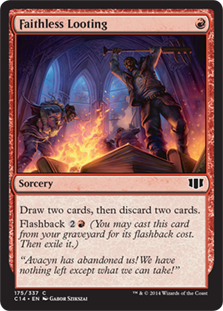
  • Faithless Looting cycles through extra threats in the removal-light matchups, as well as just provides a huge chunk of velocity across the board. Chaughey wasn't impressed with Modern's other cantrips.
  • As for the sideboard, the Spheres and Feeds are concessions to Tron and Burn's respective popularity online.

On to my take: I feel that Faithless Looting essentially replaces Disrupting Shoal in this deck as a way to take advantage of card advantage not mattering so much in Modern. Looting is less narrow than Shoal, and far better when playing from behind; I like the switch in this metagame, which is chock-full of random mana costs (Krark-Clan Ironworks; Hollow One; Bedlam Reveler; Lingering Souls; etc.).
Looting also allows for decisions like maxing out on Vapor Snag, a dead card in some matchups, which greatly improves our percentage against the troublesome creature decks. This idea translates to the counter suite, where Spell Pierce reigns supreme. With only 4 Delver as one-drop creatures, though, I wonder if the deck can consistently apply enough early pressure to maximize Spell Pierce, as Counter-Cat does. I also feel Wild Nacatl answers Chaughey's expressed need for additional threats, and am looking forward to the pilot's thoughts on Temur over that deck.

Prison Gets Friendly

WR Planeswalkers, by Nicksnack (5-0)

Creatures

1 Emrakul, the Aeons Torn
4 Simian Spirit Guide

Planeswalkers

3 Gideon of the Trials
2 Gideon Jura
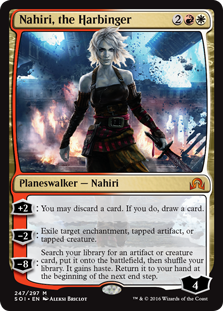
4 Nahiri, the Harbinger
2 Chandra, Torch of Defiance

Enchantments

4 Blood Moon
2 Cast Out

Instants

4 Lightning Helix
3 Blessed Alliance
1 Glorious End

Sorceries

3 Anger of the Gods
3 Wrath of God
1 Urza's Ruinous Blast

Lands

1 Wooded Foothills
4 Sacred Foundry
4 Clifftop Retreat
4 Temple of Triumph
2 Field of Ruin
8 Plains
60 Cards

Sideboard

1 Anger of the Gods
1 Hazoret the Fervent
1 Jaya Ballard
4 Lightning Bolt
1 Lyra Dawnbringer
4 Path to Exile
2 Rest in Peace
1 Squee, the Immortal

A novel take on WR Prison, Nicksnack's WR Planeswalkers focuses more intently on the deck's planeswalker aspect. Chalice of the Void is notably absent from the deck, despite the continued omission of one-drops. Big additions here include Cast Out, a flexible removal option; Urza's Ruinous Blast, a one-sided exiling Oblivion Stone; and Glorious End, the deck's most intriguing card.
End's clearest use is with Nahiri, the Harbinger, where it gives pilots a surprise extra turn to cheat out Emrakul and win the game. But I suppose an extra draw and attack with Gideon can also seal the deal.

Lightning Bolt and Path to Exile are simple-brilliant solutions to creature decks, but I do wonder why Bolt doesn't make the mainboard cut over some number of damage-based sweepers rather than the other way around. Path is easier to explain: Blood Moon.

Modular Modern

Modular, by Lexor19 (5-0)

Creatures

4 Arcbound Worker
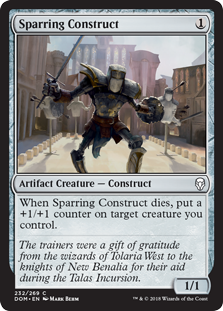
2 Sparring Construct
4 Arcbound Ravager
4 Steel Overseer
4 Hangarback Walker
4 Walking Ballista

Artifacts

4 Mox Opal
3 Throne of Geth
2 Welding Jar

Enchantments

1 Evolutionary Leap
4 Hardened Scales

Sorceries

4 Ancient Stirrings

Lands

4 Darksteel Citadel
2 Blinkmoth Nexus
2 Horizon Canopy
4 Inkmoth Nexus
1 Pendelhaven
7 Snow-Covered Forest

Sideboard

1 Evolutionary Leap
4 Damping Sphere
2 Dismember
2 Gut Shot
4 Nature's Claim
2 Relic of Progenitus

Murmurs of a more counters-based Affinity deck made their rounds when BG Snake was a driving force in Standard. But this recent take drops Winding Constrictor altogether, preferring more functional Arcbound Workers and the thematic Throne of Geth, which in this build is practically an unkillable Steel Overseer.
Evolutionary Leap is also showing up in this deck as a way to dig into the deck's more powerful enablers. Sacrificing a modular creature is relatively free damage-wise. I'm excited to see how this deck evolves.

Challengers Approaching

A couple interesting lists also came out of latest Modern Challenge.

Morphling-Knot Seer

Cryptic Command Eldrazi, by Betalain (17th, Modern Challenge)

Creatures

4 Eldrazi Skyspawner
2 Vendilion Clique
4 Thought-Knot Seer
4 Reality Smasher
3 Walking Ballista

Artifacts

1 Engineered Explosives
2 Talisman of Progress

Enchantments

4 Spreading Seas

Instants

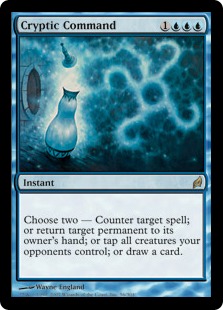
3 Cryptic Command
2 Dismember
3 Opt
2 Remand
1 Unsubstantiate

Sorceries

3 Serum Visions

Lands

4 Adarkar Wastes
1 Cavern of Souls
4 Eldrazi Temple
1 Field of Ruin
7 Island
2 Mystic Gate
2 Scavenger Grounds
1 Wastes

Sideboard

1 Cryptic Command
1 Engineered Explosives
2 Blessed Alliance
2 Ceremonious Rejection
2 Dispel
1 Entrancing Melody
2 Rest in Peace
2 Stony Silence
2 Timely Reinforcements

This deck feels more like a joke than anything else, but 5-0's a real result, and there's some savvy deckbuilding to admire here. The baby white splash for sideboard hosers is my favorite. As someone who's always wanted to play Serum Visions in a Thought-Knot Seer deck, I hope Cryptic Command Eldrazi is more than just a fluke.

Right away, I like Eldrazi Skyspawner's adoption as a threat that attacks from different dimensions than the beefy lone bodies of Seer and Smasher. But that's about as much as I can manage to understand about this deck. Can it consistently assemble Cryptic Command mana with both Scavenger Grounds and Eldrazi Temple in the deck? Is Tron into Karn not a superior late-game plan? Does Unsubstantiate do something, let alone anything? If you have any insights, please share them with me in the comments.

Goblin Stompy, by Notsoweird (28th, Modern Challenge)

Creatures

1 Goblin Chainwhirler
4 Goblin Rabblemaster
1 Hazoret the Fervent
2 Siege-Gang Commander
4 Simian Spirit Guide

Planeswalkers

4 Chandra, Torch of Defiance

Instants

4 Desperate Ritual
2 Abrade
2 Dangerous Wager

Sorceries

4 Bonfire of the Damned

Artifacts

4 Chalice of the Void
3 Ensnaring Bridge

Enchantments

4 Blood Moon

Lands

4 Ramunap Ruins
3 Gemstone Caverns
1 Scavenger Grounds
13 Mountain

Sideboard

3 Anger of the Gods
1 Damping Matrix
1 Dire Fleet Daredevil
4 Eidolon of the Great Revel
3 Scab-Clan Berserker
1 Sorcerous Spyglass
1 Stormbreath Dragon
1 Torpor Orb

Last but not least, here's an old Legacy favorite making its official debut in Modern. Goblin Stompy rushes out lock pieces with ritual effects and then closes out the game with Goblins.

Also making its Modern debut is Standard scourge Goblin Chainwhirler, which shines at dealing with enemy creatures that can slide under a Bridge, but without killing its controller's own small creatures. Those are pumped out by Goblin Rabblemaster and even Siege-Gang Commander, a late-game bomb that joins Hazoret in providing repeated reach under Bridge.
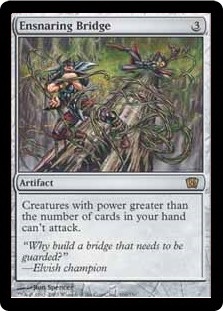
Ensnaring Bridge is the cleverest lock piece here. While usually featured in decks that don't attack opponents at all, Bridge is right at home in a deck looking to turn 1/1 tokens sideways; adding a second card to the hand even lets Rabblemaster attack and then grow. Chalice and Moon are givens, and eight rituals help power them all out.

Dangerous Wager fills the Looting gap I once tried to solve with Cathartic Reunion in a Chalice-featuring Blood Moon deck. A potential plus, Wager is still likely to discard a card or two; discarding those cards doesn't matter so much, though, when they were functionally dead anyway, as with redundant lock pieces.

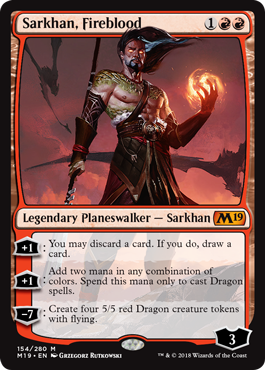
I wonder if this deck will try to adopt Sarkhan, Fireblood. I've been loving the card in GRx Moon, where it admittedly also fills the 'yard for Tarmogoyf; still, there are plenty of great discards in this build, including the rituals that power out those redundant lock pieces in the first place.

Never Too Fresh

Any sweet brews I missed? How about details on the above decks? Drop me a line. If there's one thing I love close to as much as this dynamic jewel of a format, it's dissecting the very brews that make it tick!

Daily Stock Watch – The Chain Veil

Are you a Quiet Speculation member?

If not, now is a perfect time to join up! Our powerful tools, breaking-news analysis, and exclusive Discord channel will make sure you stay up to date and ahead of the curve.

Hello, everyone and welcome to this week's last edition of the Daily Stock Watch! Freaky Fridays are usually reserved for cards that aren't really popular in Standard and Modern, and for those that are surprisingly rising in value despite of its casual appeal in Commander and kitchen tables. Today, the spotlight will be on one of those cards that was barely playable back in its prime, but is one of the primary beneficiaries of the new planeswalker ruling that was implemented upon the arrival of Dominaria.

There was an error retrieving a chart for The Chain Veil

Back in the day, this was card was barely playable, and was one of the bulk mythics from M15. It was deemed to be too slow and didn't impact the game much, let alone the horrible drawback that it will sap two life from you if you're staring at your battlefield without a walker in it. Four years later, more planeswalkers have been printed, and the ruling that prevents some direct damage spells and abilities from deducting loyalty counters from them have helped the cause of the financial rise of The Chain Veil.

One deck that's popular among Commander peeps loves these drastic improvement made to the rules, and it as some very nice toys from the upcoming Core 2019.

Atraxa Walkers

Commander

Creatures

1 Archangel of Tithes
1 Captain Sisay
1 Clever Impersonator
1 Deepglow Skate
1 Eternal Witness
1 Ichor Rats
1 Seedborn Muse

Instants and Sorceries

1 All Suns' Dawn
1 Call the Gatewatch
1 Demonic Tutor
1 Deploy the Gatewatch
1 Diabolic Tutor
1 Temporal Mastery
1 Tempt with Discovery
1 Cyclonic Rift
1 Enlightened Tutor

Other Spells

1 Ajani, Adversary of Tyrants
1 Ajani Steadfast
1 Ashiok, Nightmare Weaver
1 Dovin Baan
1 Elspeth, Knight-Errant
1 Elspeth, Sun's Champion
1 Freyalise, Llanowar's Fury
1 Garruk, Apex Predator
1 Gideon, Champion of Justice
1 Jace, the Mind Sculptor
1 Jace, Unraveler of Secrets
1 Karn Liberated
1 Kaya, Ghost Assassin
1 Kiora, the Crashing Wave
1 Liliana of the Veil
1 Narset Transcendent
1 Nissa, Voice of Zendikar
1 Sorin Markov
1 Tamiyo, Field Researcher
1 Tamiyo, the Moon Sage
1 Teferi, Temporal Archmage
1 Tezzeret, Artifice Master
1 Tezzeret the Seeker
1 Ugin, the Spirit Dragon
1 Venser, the Sojourner
1 Vraska the Unseen
1 Amulet of Vigor
1 Chromatic Lantern
1 Ensnaring Bridge
1 Gilded Lotus
1 Mana Crypt
1 Mana Vault
1 Norn's Annex
1 Rings of Brighthearth
1 Sensei's Divining Top
1 Sol Ring
1 The Chain Veil
1 Vedalken Orrery
1 Bitterblossom
1 Doubling Season
1 Exploration
1 Mana Reflection
1 Oath of Gideon
1 Oath of Nissa
1 Phyrexian Arena
1 Prismatic Omen
1 Rhystic Study

Lands

1 Academy Ruins
1 Arcane Lighthouse
1 Bayou
1 Breeding Pool
1 City of Brass
1 Command Tower
1 Exotic Orchard
1 Flooded Strand
1 Forest
1 Godless Shrine
1 Hallowed Fountain
1 Homeward Path
1 Inkmoth Nexus
1 Island
1 Mana Confluence
1 Marsh Flats
1 Maze of Ith
1 Misty Rainforest
1 Opulent Palace
1 Overgrown Tomb
1 Plains
1 Polluted Delta
1 Reliquary Tower
1 Sandsteppe Citadel
1 Savannah
1 Scrubland
1 Seaside Citadel
1 Swamp
1 Temple Garden
1 Temple of the False God
1 Tropical Island
1 Tundra
1 Underground Sea
1 Verdant Catacombs
1 Watery Grave
1 Windswept Heath

The deck owner's battlefield becomes a haven of dices and tokens once it starts hitting four mana, as various walkers start flooding the battlefield and threaten to end the game. Of the new ones from M19, I think only Ajani and Tezzeret are the good additions to this Atraxa, Praetors' Voice deck. It also doesn't help that Atraxa only has one printing as of date, so the appeal of this deck is very strong to all aspiring Commander players.

The Best Walkers

These are arguably eight of the best planeswalkers ever printed in Magic, and it's very much possible that more will come in the years ahead of us. This only means one thing for The Chain Veil -- it's only bound to get higher (barring a reprint, of course!) so now might be the best time to get your hands on it, even though you wish you got it during its bulk days. After all, its all-time high of $12.58 was achieved just today.

At the moment, you could get copies of The Chain Veil from Card Kingdom, TCGPlayer, and ChannelFireball for anywhere between $5.99 up to $10.99, while StarCityGames is out of stock at $14.99. The variance on the price range is noticeable, as some stores are considering the spike as legit, while others are seeing it as a "heat of the moment" rise. I don't mind buying in at $5.99 that's still abundant via ChannelFireball, and probably with some people who are willing to let go at that price range via trades. Foil copies are absurdly priced at north of $30, and I don't like to buy in on that market for the lack of possible buyers. I still think that this is a good buy if you're able to ride the hype train early -- hard to be wrong on this one in the long run.

And that’s it for this week's edition of the Daily Stock Watch! See you again next time, as we check out a new card that should be on the go, or good enough for speculating. As always, feel free to share your opinion in the comments section below. And if you want to keep up with all the market movement, be sure to check in with the QS Discord Channel for real time market information, and stay ahead of the hottest specs!

Unlocked: MTGO Market Report for July 5th, 2018

Are you a Quiet Speculation member?

If not, now is a perfect time to join up! Our powerful tools, breaking-news analysis, and exclusive Discord channel will make sure you stay up to date and ahead of the curve.

Welcome to the MTGO Market Report as compiled by Matthew Lewis. The report will cover a range of topics, including a summary of set prices and price changes for redeemable sets, a look at the major trends in various Constructed formats, and a "Trade of the Week" section that highlights a particular speculative strategy with an example and accompanying explanation.

As always, speculators should take into account their own budgets, risk tolerances and current portfolios before buying or selling any digital objects. Please send questions via private message or post below in the article comments.

Redemption

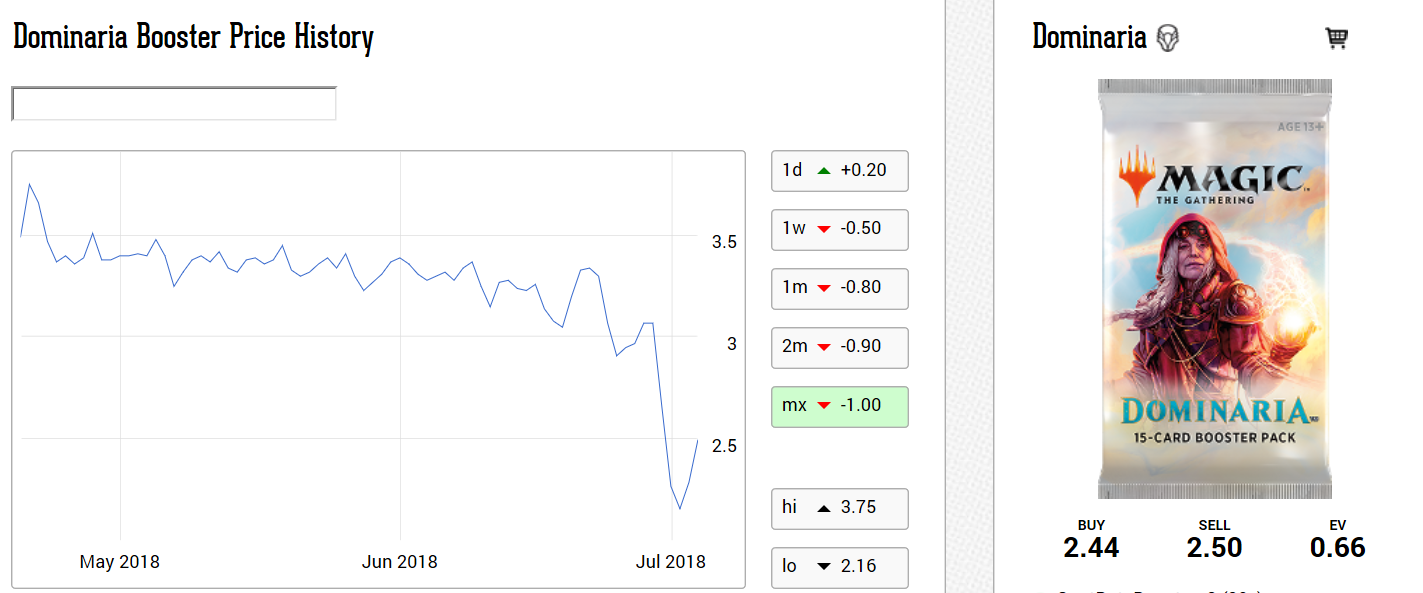
Below are the total set prices for all redeemable sets on MTGO. All prices are current as of July 3, 2018. The TCGplayer market and TCGplayer mid prices are the sum of each set's individual card prices on TCGplayer, either the market price or mid price respectively. Redeemable sets are highlighted in green and sets not available for redemption are highlighted in red.

All MTGO set prices this week are taken from GoatBot's website, and all weekly changes are now calculated relative to GoatBot's "full set" prices from the previous week. All monthly changes are also relative to the previous month's prices, taken from GoatBot's website at that time. Occasionally, full set prices are not available, and so estimated set prices are used instead. Although Hour of Devastation (HOU), Amonkhet (AKH), Aether Revolt (AER), and Kaladesh (KLD) are no longer available for redemption, their prices will continue to be tracked while they are in Standard.

Standard

Prices are starting to stabilize on the rotating sets; there's only so far they can fall since they are still useful in Standard. Kaladesh (KLD) and Aether Revolt (AER) even rebounded a little this week. Look for further strength as Core Set 2019 (M19) releases this week and shakes up the Standard metagame.

On the other hand, the sets that are sticking around in Standard were all in the red this week, although Market prices posted gains. In the short term, Ixalan (XLN) and Rivals of Ixalan (RIX) both have upside, in particular since they are both being reprinted for redemption and will be available in the store at some point over the next month.

There was an error retrieving a chart for Jace, Cunning Castaway

Dominaria (DAR) is just at the end of its drafting window. This is the perfect time for players to be rounding out their sets and for speculators to start accumulating full sets. DAR will be available for redemption into September so there will always be a price floor supporting the full set. Pursuing full set speculations relies on prices adjusting to a reduced amount of fresh supply as drafting switches to the next set. Look for gains in the five to fifteen percent range and don't hold on too long.

Legacy

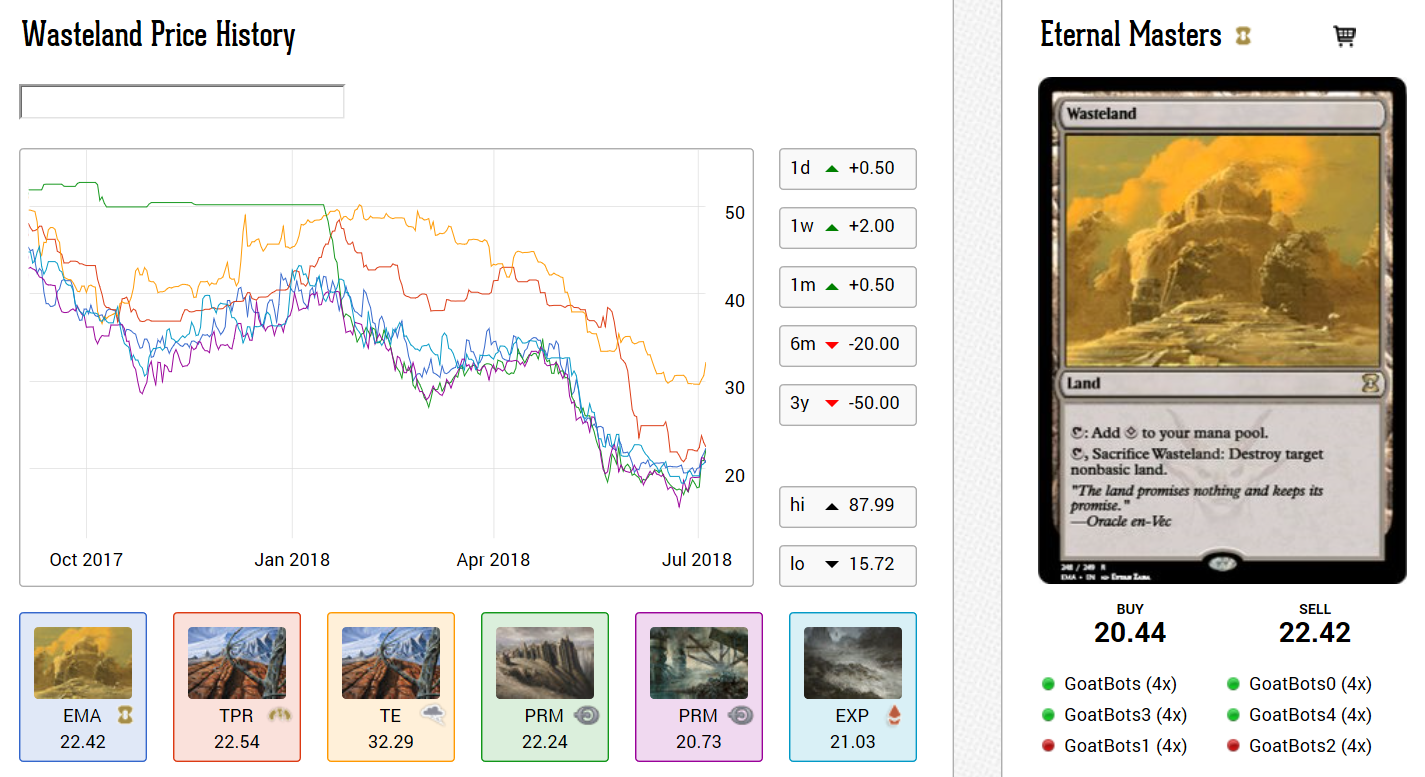
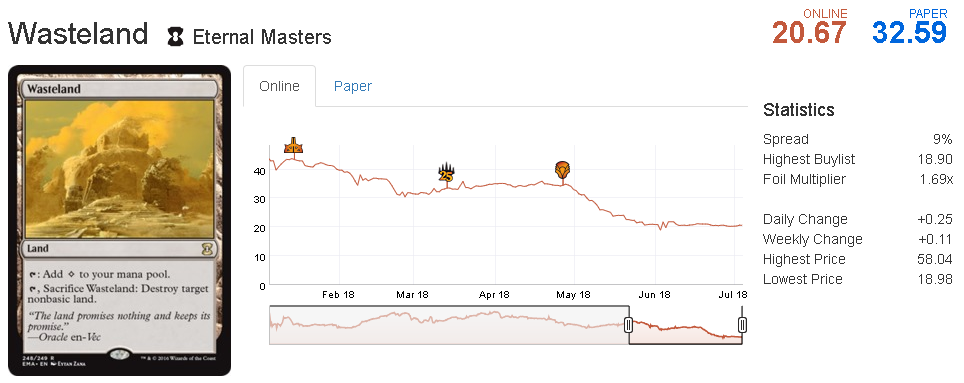
The big news this week were the bans of Gitaxian Probe and Deathrite Shaman announced in Legacy. For some excellent analysis, look to Adrian Tan's article this week. In particular, Wasteland has really suffered under the combination of the dominant one drop and steady reprints in Treasure Chests. Have a look at the chart below of the various versions of Wasteland, courtesy of Goatbots.

You can see that the original printing from Tempest (TMP) commands a premium over the other versions, but every version has risen in price over the last week. I think this is a good signal that further gains are anticipated in the short term as Legacy players adjust to the new format. Players who have been considering adding Wastelands into their collection should feel safe in doing so and speculators can also consider buying in. Watch out for taking a large position though as prices can adjust very quickly in a thinner market like Legacy and buy sell spreads are often larger.
Standard Boosters

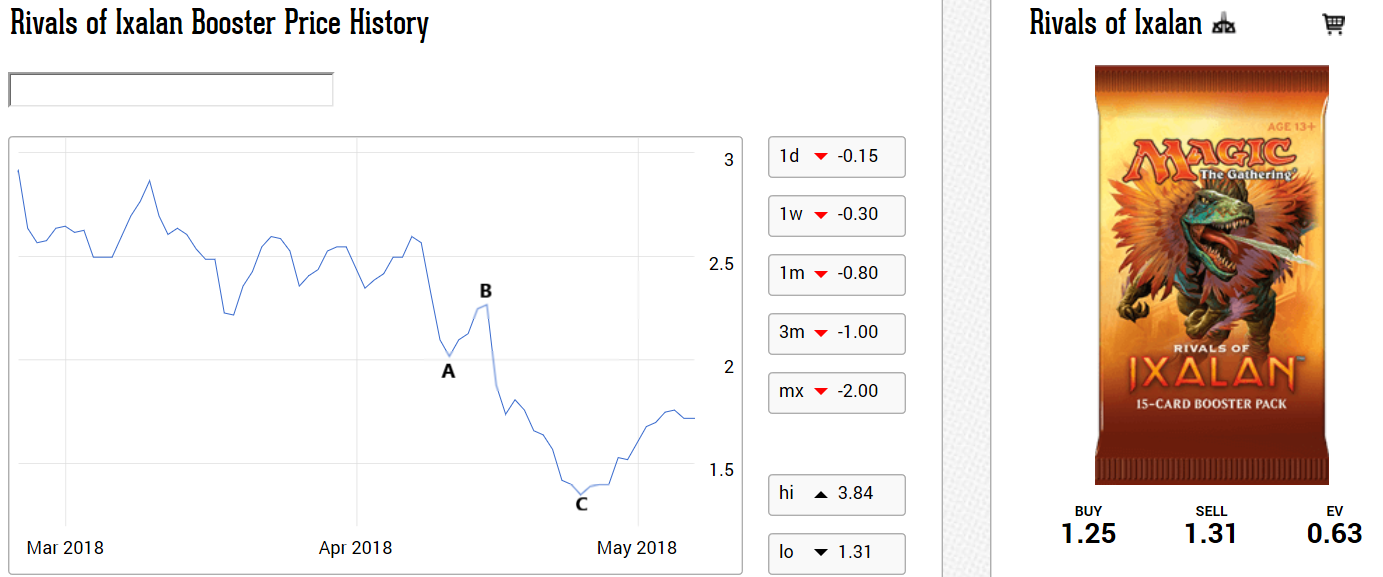
Players and bots sold their extra DAR boosters this week, dropping their price from 3 tix all the way down to 2.2 tix before rebounding to 2.5 tix as of today. You can see the action in the chart below, courtesy of Goatbots.

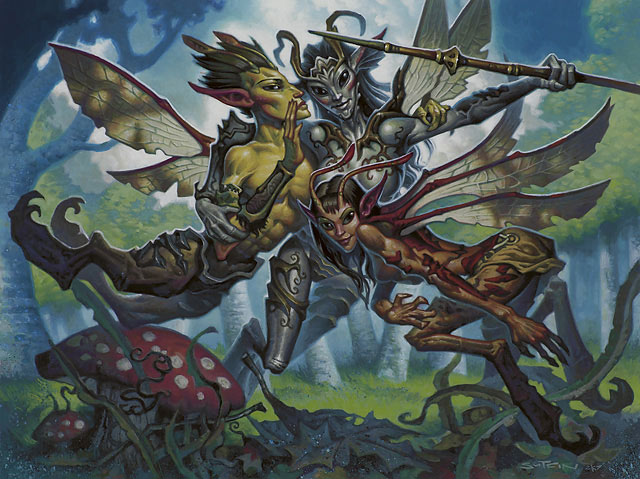
This type of action is not unusual and it's not time to be a buyer yet. The bump in price is temporary as drafters get in a few last trips through the queues with cheap boosters. Once Core Set 2019 hits this week, demand for DAR boosters will disappear and the price will continue to fall. Have a look at how the price of RIX boosters evolved just prior to the release of DAR in April.

Here I've labeled three points, A, B and C. We are at point B currently with DAR boosters and we don't want to be buyers until they get closer to point C. It's difficult to judge exactly when we hit the bottom or point C, but DAR boosters will end up in the 1.5 to 1.8 tix range some time over the next ten days. That will be the time to be a buyer. For players, they can get their fill of cheap draft sets to use over the summer, and speculators can take advantage of a temporary dip in prices with an to reselling in August at a profit.

When speculating on boosters, I like to think in terms of how much a draft set costs to judge when it's time to buy and sell. For XLN block draft sets, that meant two RIX boosters and one XLN booster. I was a heavy buyer when draft sets were 5 to 6 tix, although prices got below 5 tix as well. In the first half of June these got to about 6 tix before coming down to under 5 tix by the end of June. Overall, the trade was marginal, but the reason for this was buying too soon, generating an average buy price that was too high. This is why for DAR draft sets, I will be looking to buy under 6 tix and once M19 is released on the weekend, with a prime selling window in late August into early September.

Trade of the Week

For a complete look at my recent trades, please check out the portfolio. This week I took a bet on the unbanning of Stoneforge Mystic in Modern. There was a substantial amount of price action in both digital and paper as Stoneforge Mystic hit all-time highs in advance of the banned and restricted announcement.

I interpreted this, incorrectly, as a signal that insider information was circulating. What I should have done was to poke holes in the idea before pursuing any speculations. Although Batterskull had been moving up, it would have been easy to look at the non-movement in other pieces of equipment. Sword of Fire and Ice had no corresponding movement and if there had been some insider information, this would have moved up in price as well.

Nevertheless, what I did was to purchase Batterskull and various other pieces of equipment. Long term, I think the chances of a Stoneforge Mystic unban in Modern are almost certain. With that in mind, though, holding a long-term position on MTGO is not tenable for most cards. There's just too much opportunity in other strategies, so I'll be looking to sell off the Batterskull and deploy the tix into full sets of DAR and M19 foil mythic rares. The various swords I've got on the books have high spreads, so the case for holding these for a longer term is a little better. I will sell some of these, but hold onto the rest and wait for the inevitable unbanning of Stoneforge Mystic in Modern.

Daily Stock Watch – Vendilion Clique

Are you a Quiet Speculation member?

If not, now is a perfect time to join up! Our powerful tools, breaking-news analysis, and exclusive Discord channel will make sure you stay up to date and ahead of the curve.

Hello, readers and welcome to a new edition of the Daily Stock Watch! The Core Set pre-release is just around the corner, and I'm quite sure that there will be lots of new brews for Standard players to look out for. This leaves us with some time to focus on the other format gainers, and there's one that I'd like to talk about today. This legendary creature has been on the prowl in Modern, with at least six copies showing up in the top eight of the recently concluded GP Barcelona, making it somewhat relevant again as a prized mythic despite of its numerous reprints in recent years.

There was an error retrieving a chart for Vendilion Clique

What might have been easily forgotten as once a $75 card is now back in the mix in the arguably most diverse format of Magic. It was lost in transition as Humans, Bloodghasts, and some Eldrazi lords starting dominating the big tournaments for the past year or so. Control was once deemed dead in this era of tempo, card advantage and attrition but thanks to these four UW-based decks in the final eight, it might be safe to say that Control is back. At the forefront of these strategies are the usual suspects such as Snapcaster Mage, Jace, the Mind Sculptor, and the new UW kingpin Teferi, Hero of Dominaria. Along with these powerhouses, Vendilion Clique gets to sneak in perfectly by trying to get the blue player some handy information on what to expect from the opposing side before planting its beloved planeswalkers.

UW Control

Creatures

2 Snapcaster Mage
2 Vendilion Clique

Instants and Sorceries

3 Cryptic Command
1 Logic Knot
2 Negate
4 Opt
4 Path to Exile
2 Serum Visions
1 Supreme Verdict
3 Terminus
1 Timely Reinforcements
1 Wrath of God

Other Spells

2 Detention Sphere
3 Jace, the Mind Sculptor
1 Runed Halo
2 Search for Azcanta
1 Teferi, Hero of Dominaria

Lands

4 Celestial Colonnade
4 Field of Ruin
4 Flooded Strand
2 Glacial Fortress
2 Hallowed Fountain
6 Island
3 Plains

Sideboard

1 Baneslayer Angel
1 Celestial Purge
2 Dispel
1 Negate
3 Rest in Peace
2 Spell Queller
3 Stony Silence
2 Timely Reinforcements

This list had a split of Snap and Clique on the main list without clocking in extra copies on the side. One would have ideally built a full set of Snaps with probably one Clique as its sidekick, but this one focused more on getting the much needed information gathering before moving on to the bigger bombs of the deck. An unchecked copy of the card in the battlefield also helps in chipping your opponent's life with the help of some timely counter spells, especially in a format where you could blow up games wide open as soon as you clear the board with a timely Wrath of God or Terminus. Now must be the best time to play with this idea and concept until the meta has shifted to something else.

Most Played Modern Creatures

Based on the Utility Tracker, these creatures are the most played ones in Modern (and to no one's surprise, half of this list are components of the Humans deck) while Clique is nowhere to be seen in the top 20. It might be bound to change soon, as there is a tendency for players to start using successful decks more and more until something drastic (just like Hollow One) comes along. This should help the case of Clique financially, and help it ease back to at least $30 territory.

At the moment, you could get copies of Vendilion Clique from StarCityGames, Card Kingdom, ChannelFireball, and TCGPlayer from anywhere between $16.08 up to $25.99, with the copies from Masters 25 being the cheapest, and that from Morningtide as the more expensive ones. I still have hopes that it could very well reach $30 once more by the year end if it consistently makes it to the top eight of Modern events (or maybe some Legacy lists in the wake of the Deathrite Shaman banning) so I like the chances of this one getting that financial boost. It should take a while before WotC decides to reprint it again, so now must be the best time to get in for some copies in the $15 range. They should be worth more sooner than later.

And that’s it for today’s edition of the Daily Stock Watch! See you again next time, as we check out a new card that should be on the go, or good enough for speculating. As always, feel free to share your opinion in the comments section below. And if you want to keep up with all the market movement, be sure to check in with the QS Discord Channel for real time market information, and stay ahead of the hottest specs!

Unlocked: Major Changes in Legacy

Are you a Quiet Speculation member?

If not, now is a perfect time to join up! Our powerful tools, breaking-news analysis, and exclusive Discord channel will make sure you stay up to date and ahead of the curve.

Hello guys.

This will be my first ever article here in QS that is related to Legacy. I'm writing this as there was a big change to the Banned & Restricted list on Monday: Deathrite Shaman and Gitaxian Probe are banned in Legacy. It has been a while since the last change in Legacy, so this is a great opportunity for investments.

Ever since Sensei's Divining Top was banned, Deathrite Shaman decks quickly became the tier-one decks while Gitaxian Probe was also pushing Ad Nauseam Tendrils and Delver variants to the top of the format.

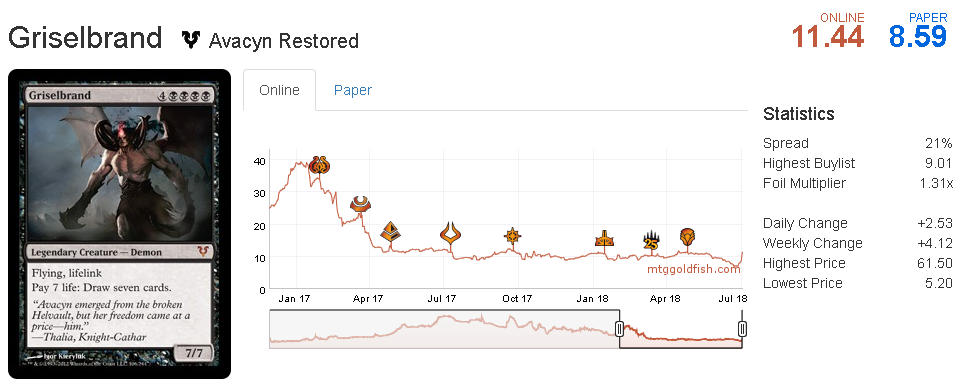
After the Shaman ban, the clear winners are of course graveyard based decks like Reanimator. Griselbrand increased by at least four tickets over night. And it seems like the card will still continue to go up in price going forward. If you are holding copies of the legendary Demon, get ready to sell them off at good prices.

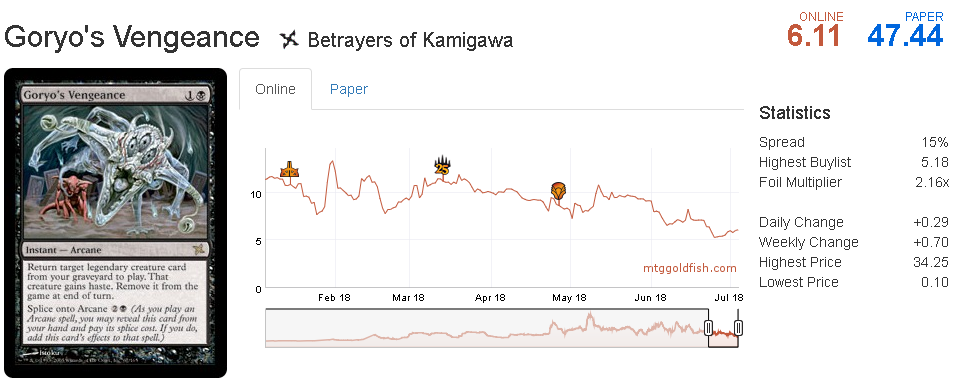
At the current price Griselbrand might still increase in price by a bunch, as the banning could be the chance for Reanimator decks to re-emerge as one of the best decks in Legacy. Meanwhile, if you've been playing Modern online, you might have met some players jamming a Griselbrand and Goryo's Vengeance package into their Hollow One decks.

So if you are looking for some good profit in the next few weeks, Griselbrand might be your best pick right now! Also, since I've talked about the Goryo's Vengeance tech in Hollow One, I would also recommend checking on the two-mana reanimation spell, although it's not a Legacy card.

While graveyard decks return to be better in Legacy after the banning of Deathrite Shaman, the midrange decks of the format are also going to change.

While Deathrite was legal, a turn-two True-Name Nemesis or Leovold, Emissary of Trest definitely outperformed the so-called strongest creature ever printed, Tarmogoyf. Without Deathrite, players can no longer shrink Tarmogoyf so easily, and the three-drops become worse since they can't come down on turn two unless players start messing around with other mana dorks like Noble Hierarch.

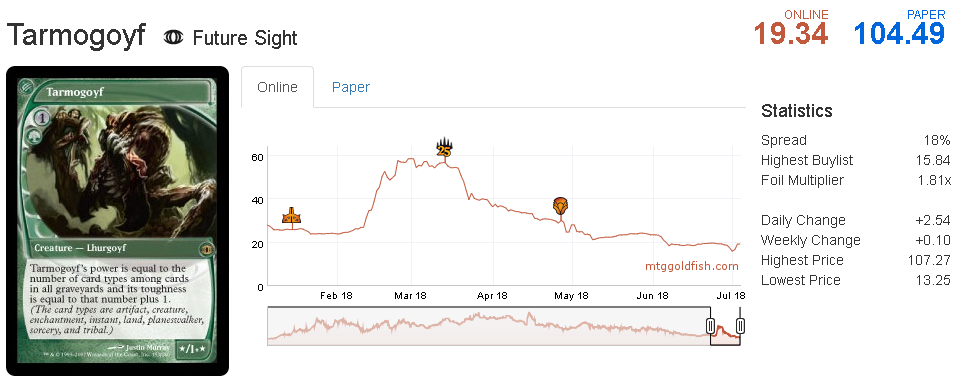
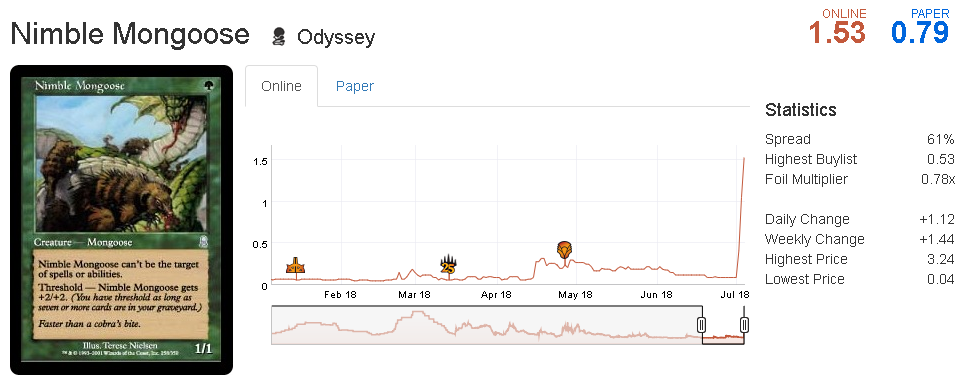
Tarmogoyf's price is at its all-time low right now, near 20 tickets each. The last time Goyf spiked by at least 30 tickets was when Bloodbraid Elf got off the Modern banlist. I think with Deathrite and Probe banned in Legacy, Grixis Delver will quickly be replaced by Temur Delver which is stronger based on cards in graveyard. Aside from Tarmogoyf, Nimble Mongoose, which is also a core component of Temur Delver has already increased by at least 1 ticket.

Here I strongly recommend picking up some Goyfs for investment as I think its time in Legacy has come back. The delve creatures will no longer be as good because the main fuel that makes them easier to cast—Gitaxian Probe—will be gone from the format.

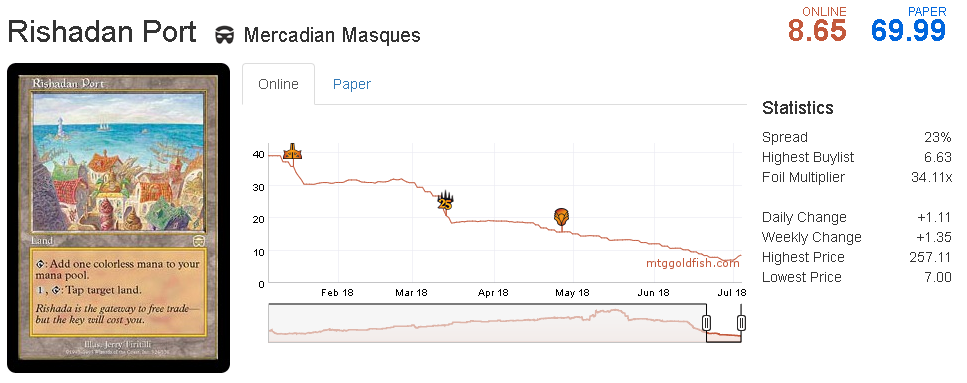
Next up, I want to talk about land disruption like Wasteland and Rishadan Port. When somebody resolves a Deathrite on turn one, they are pretty much immune a mana denial strategy, and decks like Death and Taxes are already so far behind if they are playing second.

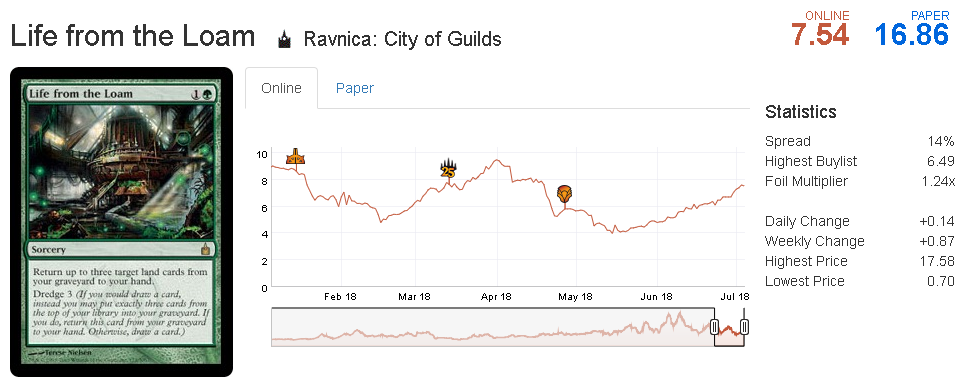
I expect Death and Taxes, together with Life from the Loam decks, to regain popularity shortly. I think this is an opportunity to invest in these cards while they are still low. Even if you are not considering buying these cards for investment, do also consider getting your own playsets if you haven't, because there's a big chance they will be expensive later on!

Life from the Loam is not only a great card in Legacy but its also very popular in Modern Dredge. Recently Dredge just won a Grand Prix, which should be proof that Dredge is still good in the new Modern metagame full of control decks.

In Legacy, Life from the Loam is more of a midrange card, often played together with Knight of the Reliquary—another graveyard-dependent card that was kept in check by Deathrite. Knight increased in price during the last few days, so I think the next card to increase in price will very likely be Life from the Loam.

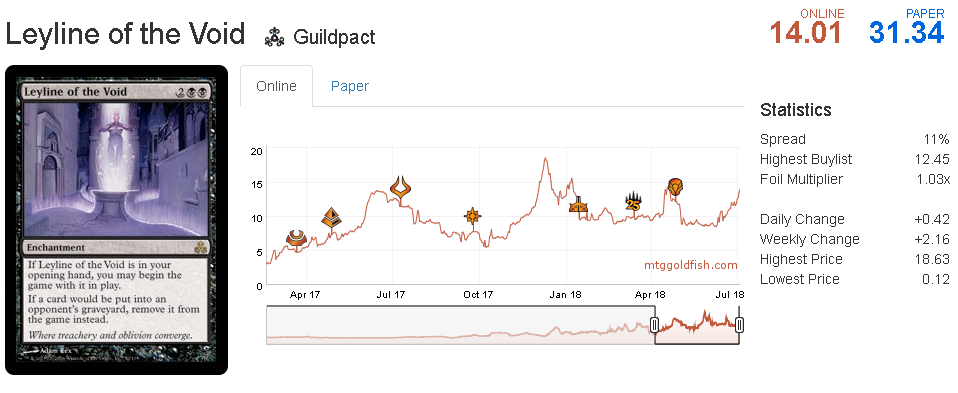
Besides the cards that were held down by Deathrite Shaman, there are some hate cards that also become better after the banning. Graveyard hate is definitely one of the most important types of card to pay attention to. Leyline of the Void has already hit a high point because it was one of the main graveyard hate cards even before the banning, and can shut down decks before the game even starts.

Lets look at some of the good anti-graveyard sideboard cards available in Legacy:

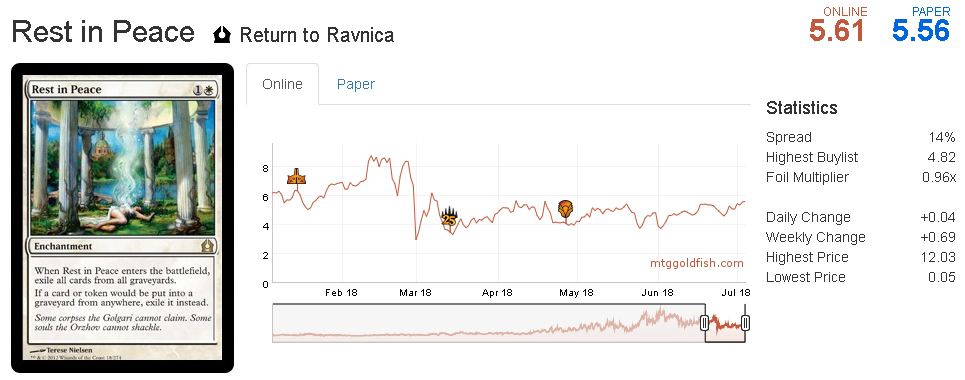
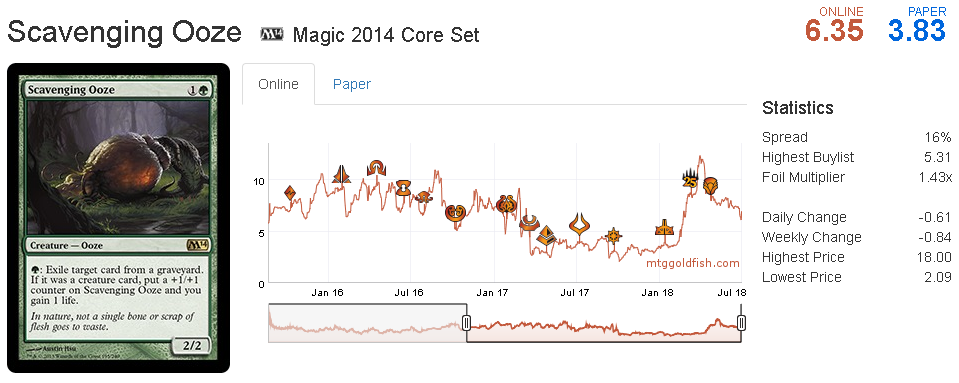
As I said earlier, I expect green decks and D&T to become better after this, so Rest in Peace and Scavenging Ooze are my picks for graveyard hate. These cards are also widely played in Modern, so if green or white decks become good with these cards in Legacy as well, they will likely increase in price. I definitely suggest getting some Ooze and Rest in Peace for investment here—they are going to stay in both Modern and Legacy for quite some time, so these picks are pretty safe.

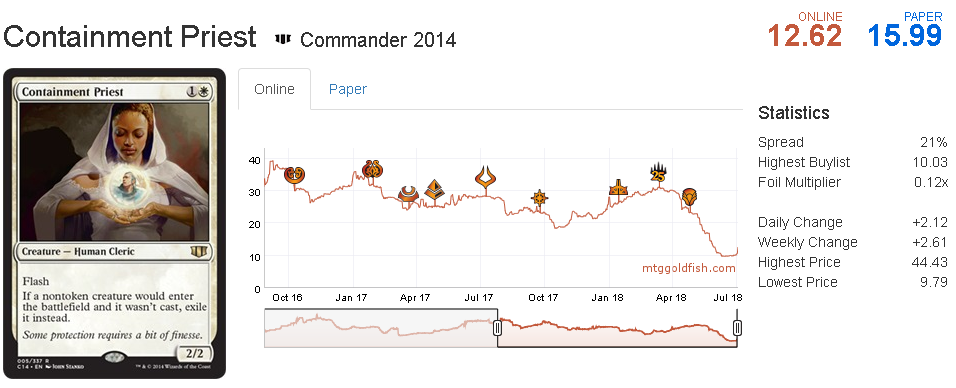
Another card I want to suggest looking at is Containment Priest. With decks that plays reanimation effects and Green Sun's Zenith likely to become popular again, Containment Priest is looking great as a speculation, especially when the price is at its low point, as you can see in the graph above. Do consider buying a couple of playsets just in case!


Alright guys, that’s all for the week. Thanks for reading, and I’ll see you again next week.

Adrian, signing off.

Daily Stock Watch – Teferi, Hero of Dominaria

Are you a Quiet Speculation member?

If not, now is a perfect time to join up! Our powerful tools, breaking-news analysis, and exclusive Discord channel will make sure you stay up to date and ahead of the curve.

Hello, readers and welcome to a new edition of the Daily Stock Watch! Goblin Chainwhirler survived the banhammer, so the red madness continues in Standard. It was well explained as to how diverse the meta is despite of Chainwhirler's presence, and this was enough reason for the R&D team to nix the banning of the card (even though they did it on Rampaging Ferocidon which I think is a lesser evil than Chainwhirler). Standard should be the same world until the Core Set is released a few weeks from now, so let's turn our attention to some Modern action once more. Grand Prix Barcelona was host to 1,547 Modern mages, and after all the spellslinging and fighting was over, Matti Kuisma's Dredge deck wins the whole thing. Our card for today doesn't belong to this list, but it is actually one of the more popular (if not the most, already) cards from Dominaria.

There was an error retrieving a chart for Teferi, Hero of Dominaria

Although its price has dropped a bit since it peaked at $40, I don't expect this trend to last as soon as people start opening M19 packs and forget about DOM. With eight copies of Teferi, Hero of Dominaria making it to the top eight of the GP, it's hard to ignore the power level of the card and this UW archetypes going forward. For a change, we don't see a single Humans deck making it to the final stage because of its well-documented susceptibility to losing against UW. This will encourage a lot of players to shift to this strategy, and this will definitely increase the demand for Teferi as the meta tries to respond to these sudden emergence by Jeskai and UW.

Javier Dominguez was at 13-0 at one point in time during the event and was riding the hot hands of Teferi. For reference, take a look at how his list looks like:

Jeskai Control

Creatures

4 Snapcaster Mage

Instants and Sorceries

4 Cryptic Command
2 Electrolyze
4 Lightning Bolt
2 Lightning Helix
3 Logic Knot
1 Negate
4 Opt
4 Path to Exile
1 Secure the Wastes
1 Supreme Verdict
1 Wrath of God

Other Spells

2 Search for Azcanta
2 Teferi, Hero of Dominaria

Lands

3 Celestial Colonnade
2 Field of Ruin
4 Flooded Strand
1 Glacial Fortress
2 Hallowed Fountain
3 Island
1 Mountain
1 Plains
4 Scalding Tarn
1 Spirebluff Canal
2 Steam Vents
1 Sulfur Falls

Sideboard

2 Ancestral Vision
1 Baneslayer Angel
2 Celestial Purge
2 Damping Sphere
2 Dispel
1 Lyra Dawnbringer
1 Negate
1 Settle the Wreckage
1 Surgical Extraction
1 Vendilion Clique
1 Wear / Tear

This deck is well-balanced to cater to any matchup, and you know you're in trouble the moment that it deploys Teferi on the battlefield. With an arsenal full of cheap counter magic, burn spells and removal, it's only a matter of turns before you become victim to its ultimate ability especially if you don't have the capability to demolish a planeswalker in one fell swoop. I think that Teferi, HoD is at a bargain price right now based on its power level, and the only thing that's still hindering its financial explosion is the abundant supply of DOM cards that are still being opened everywhere.

The Rest of the Team

The list had a lot of one-ofs that were very much accessible because of the platoon of draw spells that the deck has. Teferi's card-drawing prowess makes this possible and seamless to the point that not a single Jace, the Mind Sculptor was needed to be on the deck's 75. We're not even talking about the possibility of an Esper variant coming to play yet, so I really believe that there's so much room to grow for Teferi in the near future (and by future, I mean months from now). I'll start getting my extra copies now before that window to shop closes.

At the moment, StarCityGames, ChannelFireball, TCGPlayer and CardKingdom still have lots of stocks of Teferi, HoD for anywhere between $32 up to $44.99. Foil copies are in the $66-$79.99 range and this also includes the Pre-release version of the card. I'm not sure if you could get them for $30 or less via trades or direct purchases from those who still open packs, but I won't hesitate to get them at that price range. If Karn, Scion of Urza was able to skyrocket to almost $80 at some point in time, I don't see any reason as to why Teferi can't make it to $60 territory if Jeskai or UW continues to deliver strong performances (and the opening of DOM packs start to slow down). It's also worth noting that this guy will be around in Standard for a long while, and it has already proven its worth in that accord as well.

And that’s it for today’s edition of the Daily Stock Watch! See you again next time, as we check out a new card that should be on the go, or good enough for speculating. As always, feel free to share your opinion in the comments section below. And if you want to keep up with all the market movement, be sure to check in with the QS Discord Channel for real time market information, and stay ahead of the hottest specs!

Unlocked: The Unsung Value of Generically Good Cards

Are you a Quiet Speculation member?

If not, now is a perfect time to join up! Our powerful tools, breaking-news analysis, and exclusive Discord channel will make sure you stay up to date and ahead of the curve.

Today's article is a little bit conceptual. It's not filled with hot picks or a super defined finance strategy, but what it does have is a unique perspective for thinking about cards in the abstract that has accidentally been extremely profitable for me over the past several years. Today, I'd like to explain how I stumbled upon this accidental strategy and how I think it could be further refined to be even more focused and repeatable.

The strategy focuses on cards that have a certain "generically good" quality. These are cards that don't have a particular home in an established Constructed format, but have the potential to eventually find a home. The devil is in the details, so let's talk about some contexts that will tie this idea together in a way that makes sense.

Battle Box, Battle Box, on the Wall – Pick Me Winners, One and All...

As you may or may not be aware, several years ago I created a niche casual format called The Battle Box/Danger Room. The premise of this format is fairly simple: it's kind of like Cube, in that it requires a preselected pool of cards that players will play with. The difference is that in Battle Box, each player gets 10 lands that start in exile and can be played once per turn.

The upside is that two players can simply sit down and play interesting games of Magic together without needing to draft or have decks. It's kind of like a Magic: The Board Game experience.

Obviously, the owner of the Battle Box gets to make lots of interesting decisions about which cards he or she will include in the stack. The same way that cube owners labor over each new card added or subtracted from the mix, it's the same feeling to own a Battle Box.

There was an error retrieving a chart for Basilisk Collar

My personal Battle Box is about 700 cards, and I really labor to make sure I make every single one of those cards counts and adds to the overall feel of the games. I like cards that are "generically good," without being too overpowering or obnoxious.

What does that mean? I want every card to feel like a great first pick in Draft, but without crossing a line into Umezawa's Jitte or Inferno Titan territory, where if you can't immediately answer the card the game is just over on the spot. I like flexible cards, fun cards, interesting cards, and flavorful cards.

As it turns out, a lot of other people also tend to enjoy these types of cards, which makes them really, really nice investments – especially when you get in early on them.

Here is what I've observed over the years: every time a new set is released, the first thing I do is look through the spoiler and figure out which new cards I'm excited to add to my Battle Box. There are usually six or seven cards that look like they'd be really fun to play with among the random mish-mash of sweet cards in my box. These also tend to be the types of cards that cube builders might be interested in playing with. Two-for-one creatures, multi-mode charms, and other sorts of "generic good cards."

There was an error retrieving a chart for Day of Judgment

These tend to be the types of cards that people want to play with in Constructed because they are sweet, but oftentimes are not powerful enough to find a home in Standard. I love playing with cool cards in casual formats that I often don't have an opportunity to play in Constructed formats.

The next thing I do is to buy a foil copy of every card that I'm planning to add. I've done this for going on seven years now. When I started buying these foils for my Battle Box, I considered it an unfortunate sunk cost of having a hobby. Here's my $50 bucks, give me that stack of weird, unplayable fun stuff.

I was never doing this as an investment to make money. The acquisition of these cards was simply that I wanted these cards to play with for fun.

To Build a Battle Box Is to Plant a Money Tree

What I discovered over the years was that the $50 I was "throwing away on fun cards," was consistently among the best possible $50 I could have invested. And without even trying!

There was an error retrieving a chart for Siege Rhino

Over and over again, random cards that I had paid a few bucks for were spiking and going crazy. Pauper picks up in popularity and I just have like 200 sweet old card face foils that went from a buck or two to $25.00. Oh, it turns out this random card found a home in Modern and now the foil is $40.00. And so forth.

Here's my theory for why exactly this pattern is so predictable:

Constructed Magic is context driven. You need 75 focused cards that work together in a synergistic way to win the game and defend against other focused decks winning the game. There is an accepted vernacular that describes archetypes as having "shells" that can be refined and adapted in various ways.

Think about the Legacy metagame: there's a blue shell (not Mario Kart) built around Brainstorm and Force of Will, there's a green shell built around Life from the Loam and Mox Diamond, there's an Ancient Tomb shell built around Chalice of the Void and Eldrazi, etc.

In order for a deck to compete in Constructed, there needs to be a powerful grouping of synergistic cards that can be fused together to do something powerful. It's not about cards being specifically individually "generically good," but rather it's about having five or six really focused pieces that all work together to make each other better in context.

There was an error retrieving a chart for Lodestone Golem

Here's an example of what I'm talking about. Lodestone Golem was one of the most oppressive printings in the history of Vintage and ultimately needed to be restricted in that format in order to restore parity in the metagame. The card is basically unplayable in every other format ever. Context is everything: other formats don't have Mishra's Workshop; therefore, Lodestone Golem doesn't really matter.

Lodestone Golem is sort of the exact opposite of the kind of "generic good card" that I look to play in a Battle Box. It's laser focused. You look at the card and immediately think, "This is the kind of card that goes into an all-artifact deck that has Sol Ring lands so it can be deployed quickly and create a one-sided Sphere effect against non-artifact decks."

It's the kind of card that isn't particularly difficult to figure out where it belongs in Constructed.

Here are some Danger Room cards that I preordered for super cheap that ultimately found a strong place to exist in Constructed formats:


The list goes on and on. The common thread of this list is that every card on it skyrocketed to between five and ten times what I preordered it for at some point in the card's history.

The disconnect was that I was buying these cards as preorders because I thought they were "generically good cards" that would be good in the context of Battle Box or Cube at a time when the price tag was completely speculative and wasn't based on a Constructed context. For all of these cards, the Constructed context came later, when the cards proved they could find a home in a competitive archetype.

The cool thing about betting on cards in the abstract is that they can often find homes later on down the road. Perhaps a new card gets printed and suddenly there is the makings of a shell with another generically good card that already exists.

At first this wasn't an investment strategy for me. I bought these cards to play with for my Battle Box and not to sell, so it always felt like, "Cool, my card is worth $40, but I'm never going to sell it,  so whatever..." I actually found that these cards were so consistently spiking for me that I've begun to buy two copies of each card instead of just one – purely so I can cash in on the second copy! So far, so good.

I think the important takeaway from this article is that there is something to be said for really quality Magic cards. The kinds of cards that people like, enjoy and want to play with. A lot of times, these are actually great cards that are just waiting for the context to emerge so that they can shine, become desirable, and shine in Constructed.

It's also the case that these cards (especially foils) will always be sought out by people who play fun, casual decks at the kitchen table or build Cubes, Battle Boxes, and Type 4 Stacks. Pay attention to the types of cards these players like from new sets and you may be rewarded down the road.

Choosing Sideboard Cards: A Beginner’s Guide

Are you a Quiet Speculation member?

If not, now is a perfect time to join up! Our powerful tools, breaking-news analysis, and exclusive Discord channel will make sure you stay up to date and ahead of the curve.

Happy (almost) Independence Day America! For Fireworks Day Eve, I have been inspired to go back to the Beginner's Guide. Recent spoiler discussions and in-game observations made me realize that I have a lot more Modern basics to cover. I've danced around this a few times, but never actually discussed building a Modern sideboard. I'm not talking about the strategy or process this time. This article is about picking the right cards.

Disenchant, Negate, and Duress are examples of cards seemingly tailor-made for the sideboard, and too narrow for the main. Identifying a clear sideboard card is foundational knowledge. Knowing which cards belong in a particular sideboard, however, is less obvious.

I have been surprised by the number of players, including very good ones, whose tournament winning sideboards have cards they didn't need. Not cards that they didn't bring in ever because the right matchup never came up, but cards that even in the right matchup weren't going to be relevant. Especially in a format as diverse as Modern, every sideboard slot is precious. Therefore, it is imperative that every slot is as impactful as possible. Players must be certain that the cards they play in the sideboard perform as intended and have a relevant impact in a match.

Beyond the Basics

The basic rule of sideboarding is to remove irrelevant cards for relevant ones. That's not particularly helpful or clear, so most players remember that rule as "take out dead cards, bring in answers." In many ways that is true, but it's not the actual point of sideboarding. The goal is to readjust your deck's gameplan based on your opponent's to ensure your victory. There are many ways of accomplishing this goal, but the key is ensuring the card brought in to accomplish that job actually does that job. It's not enough to have cards that are theoretically good in a matchup. Sideboard cards need to actually, and substantially, disrupt the opposing gameplan or protect/advance your own gameplan given the opposing strategy.
For example, it is certainly true that discard spells are disruptive against Storm. The deck needs a critical mass of spells to combo off and discard denies this to Storm. However, given enough time, discard becomes irrelevant, as Storm can simply build up a critical mass in the graveyard and win via Past in Flames.

The key is using discard as a tool to buy time to find a clock. A common mistake players make is to pack more discard spells for the matchup and expect that to be enough. Additional discard is a linear addition in that it reinforces Plan A from game one, but a good Storm player will anticipate and adapt to that strategy, making it less effective.

Mistaking Impactful and Effective

Another common mistake is simply using the wrong cards in a matchup. Sideboard cards need to be as impactful as possible. Ideally, each card will win the game if unanswered, but even when that isn't possible, cards should be as impactful as possible. Resolving a sideboard spell should have a noticeable effect on the game. This is fairly obvious. What isn't obvious is that just because a card is impactful doesn't also make it effective. The sideboard card should have a significant impact on the game, but it also has to accomplish something in the matchup.

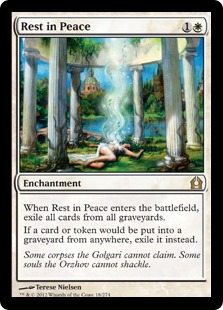
Consider Rest in Peace, a classic sideboard card. When it hits the board, Rest takes away both players' graveyard. This is a fundamental change to the game and ensures an impactful play. But does it mean anything? That is entirely contextual. Obviously this is backbreaking against Dredge and meaningless against Humans, but it gets murky in between those extremes.
Mardu Pyromancer relies on its graveyard to cast Bedlam Reveler and sometimes Gurmag Angler and uses it as a value engine with Faithless Looting, Kolaghan's Command, and Lingering Souls. Therefore it is a very graveyard-centered deck, and Rest is an effective sideboard card. Meanwhile, Jeskai Control has Snapcaster Mage and Search for Azcanta as graveyard cards, and that's all. RiP reduces those cards' value, but doesn't remove their impacts completely, rendering such dedicated graveyard hate ineffective.

How to Evaluate Sideboard Cards

Sideboard cards must substantially and relevantly disrupt the opposing gameplan or advance your own plan in the matchup. There will be exceptions and corner cases, but this is the general principle. To actually determine whether this is what my sideboard is doing, I have some rules:

  1. Does this card actually cripple my opponent's deck? i.e. Stony Silence against Affinity.
  2. Does this card significantly hamper my opponent's gameplan? i.e. Kor Firewalker against Burn.
  3. Does this card directly answer my opponent's gameplan? i.e. Anger of the Gods against Humans.
  4. Does this card protect me from part of their gameplan that I need to care about? i.e. Leyline of Sanctity in Bogles against Jund.
  5. Do I need this card to not lose to their sideboard cards? i.e. Nature's Claim against Stony Silence in Ironworks.
  6. Do I need this card for my own gameplan? i.e. Dispel and Geist of Saint Traft in my Jeskai Tempo deck against control.
  7. Does this card play well with my own gameplan? i.e. Not Grafdigger's Cage against Dredge out of a Collected Company deck.
  8. By playing this card, do I eliminate the need for other cards? i.e. Engineered Explosives instead of dedicated creature removal.

I want each card to answer yes to as many of these rules as possible, but it isn't necessary to have more than two if that yes is strong enough. This is because the only one that is immovable is #7. Sideboard cards need to harm the opponent more than you, and preferably only your opponent. If I'm getting hit by my own card, it had better be because I really need that effect and there aren't other options, or because I can mitigate the impact. I've run Blood Moon in Jeskai before because I couldn't beat Valakut, the Molten Pinnacle decks otherwise. I did get hurt, and sometimes severely, but by planning ahead and compulsively fetching basics, I made it work. It wasn't optimal, but nothing else worked and sometimes that's as good as it gets.
#4 is most commonly-broken rule. When talking about decks and sideboard strategies, I frequently hear players mention that this card is in their sideboard "just in case," or "because I need something." The exchange goes something like this:

Me: Just in case what?

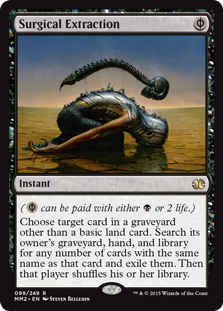
Them: If I hit Storm I need graveyard removal, so I have Surgical Extraction.

Me: I just saw you Extract Storm three times and you still lost handily.

Them: Yeah, Storm is a terrible matchup.

Me: Functionally unwinnable or unfavorable?

Them: Haven't won a match in weeks.

Me: Why are you using sideboard slots to try if it's unwinnable in the best case scenario?

Them: I need something against Storm.

The player from this story eventually gave in to my line of thinking and stopped running Surgical and switched to the more versatileNihil Spellbomb. Storm's still terrible, but his Mardu Pyromancer matchup improved.

Frequently, players worry about parts of opposing strategies that aren't relevant to their deck; Burn doesn't really need to answer Ensnaring Bridge and Merfolk doesn't care how fast it gets Blood Mooned. Having answers for these cards is fine as long as they weren't boarded in specifically because of them. Burn may bring in Smash to Smithereens against a Bridge deck because of other targets, but Bridge itself doesn't stop Burn from winning. Don't try and answer parts of a strategy that don't impact your own gameplan or just win your opponent the game. Focus only on what matters.

It Takes Two

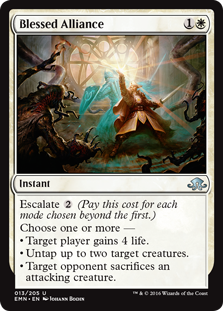
One complication is that Magic is a game between two players. I am thinking about how my deck interacts with my opponent and how to sideboard against them, and so are they. Sometimes this can be used against them, but it's not always possible. Instead, sideboard with the opponent's plan in mind. Playing Merfolk against UW Control, I know that the game will be about sweepers and lifegain. Spot removal is thin, and counters may not be relevant thanks to Aether Vial and Cavern of Souls. I can't do much against Supreme Verdict, but will fight Blessed Alliance and Wrath of God. My opponent will make the game about those cards, so I need to prepare accordingly. Tournament Magic is different from testing. The strategy that works well in testing may not survive an opponent with different matchup vision and perspective, so be flexible.
Cases in Point

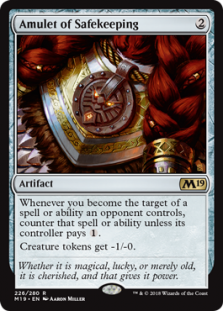
Core 2019 is on the horizon, and that set has a number of interesting potential sideboard cards. Whether they're actually good isn't immediately obvious, so I will use them to demonstrate how I see sideboard cards.

  • Amulet of Safekeeping - Probably the most talked about card, Amulet of Safekeeping is clearly designed to answer Storm. The first ability Mana Tithes anything that targets you (meaning Grapeshot) and the second blanks 1/1 tokens (meaning Empty the Warrens).On paper that is fine, but Amulet only protects against Storm's win conditions. Storm is still free to combo off, during which it can tutor for an answer with Gifts Ungiven and win anyway. Thus, the card doesn't actually disrupt Storm's gameplan nor protect you from Storm. As an answer to Mardu Pyromancer, Amulet may seem more promising, but Mardu can easily pay the tax or use Kolaghan's Command. Because it doesn't actually accomplish its stated goal, Amulet is not a good sideboard card.
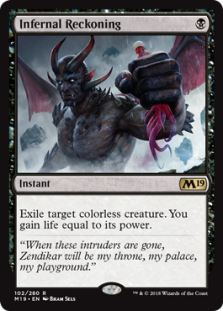
  • Infernal Reckoning - While I would have appreciated this card two years ago, these days Infernal Reckoning is not a good sideboard card. It answers any Eldrazi at a very good rate, but that's all. It doesn't really cripple or disrupt the strategy, and one-for-one trades aren't exciting as sideboard cards. There's a reason control decks side in sweepers instead of Terminate against creature decks. Swords to Plowshares is a very good card, but there's no reason to only have it in the sideboard. If Eldrazi Tron was more prevalent, I could see an argument for Reckoning. As is, it's too narrow and low impact to be justified.
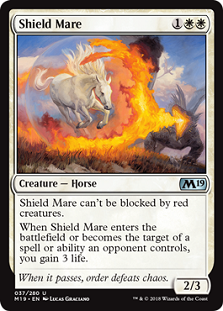
  • Shield Mare - On the other hand, I could see myself boarding in Shield Mare against Burn in the right deck. While not the most potent hate card, Mare does substantially disrupt the opponent and/or protect against Burn's gameplan, depending on how you evaluate lifegain. Mare also trades for an entire burn spell when it enters and happily blocks all Burn's creatures. Atarka's Command sees no play anymore, so the only way to kill Mare without triggering her is via prowess triggers on Monastery Swiftspear. Kor Firewalker may do that more cheaply, but it has the weakness of Path to Exile killing it for no value, whereas Mare still gains life when targeted. I'd certainly try Mare in Death & Taxes.
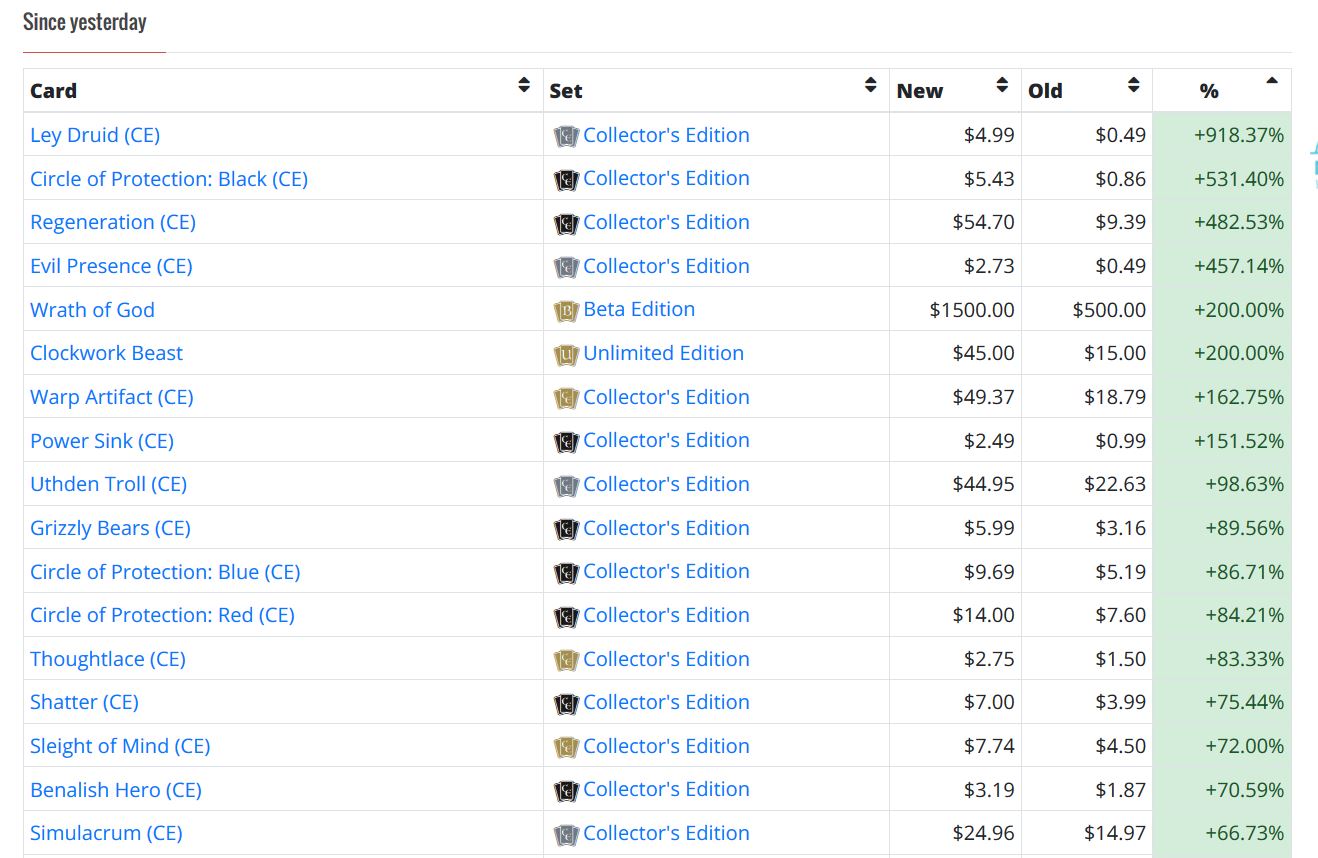
Just the Beginning

This is intended to provide a general guideline for less experienced players. There are a lot of exceptions and nuance that more experienced players understand, but this is not the place to discuss them. There is always more to learn and things can always be more complicated. The key for beginners is to take it slow and not get overwhelmed.

Daily Stock Watch – Twilight Prophet

Are you a Quiet Speculation member?

If not, now is a perfect time to join up! Our powerful tools, breaking-news analysis, and exclusive Discord channel will make sure you stay up to date and ahead of the curve.

Hello, everyone and welcome to a new week of the Daily Stock Watch! After two Standard Grand Prix (Singapore and Pittsburgh) a weekend ago, there won't be much Standard action as we all await the impending Banned and Restricted announcement later today, besides that of the Nationals of some countries in the coming weeks before the Core Set's release. This gives us some room to speculate on what could be the next big thing if a Goblin Chainwhirler banning does happen, and I'd like to hedge my pick on mythics that were barely used from previous sets. Our card for today is one of those cards that I've always kept an eye on, and one that has maintained a respectable price tag despite of its inability to see even some competitive fringe play.

There was an error retrieving a chart for Twilight Prophet

I've been playing all season with an Esper Knight/Good Stuff variant that has brought me some success in PPTQs (and almost made the top eight of GP Singapore's PTQ side event) but it has never really brought me all the way to the top. Somewhere along the road are funky decks just like mine that makes it hard for my anti-meta approach to go over the top, and I've been in constant search of a card that might just do the trick. Twilight Prophet came to mind. Games have been dragging, unless you're up against BR or Mono Red Chainwhirler decks, and the midrange/long game power of this card, albeit untested, is definitely strong if you have the city's blessing. I'm still on the fence if this is should go to my main deck, but I'm liking the thought of how powerful this card is going to be if things go according to "plan" later today.

Orzhov Vampires

Creatures

2 Adanto Vanguard
2 Mavren Fein, Dusk Apostle
3 Champion of Dusk
4 Legion Lieutenant
4 Dusk Legion Zealot
4 Gifted Aetherborn

Instants and Sorceries

2 Fatal Push
4 Vraska's Contempt
4 Call to the Feast

Other Spells

1 Legion's Landing
4 Radiant Destiny
2 Heart of Kiran

Lands

1 Scavenger Grounds
1 Field of Ruin
2 Plains
2 Shefet Dunes
4 Concealed Courtyard
4 Isolated Chapel
4 Unclaimed Territory
6 Swamp

Sideboard

2 Cast Down
2 The Immortal Sun
2 Twilight Prophet
4 Duress
1 Profane Procession
2 Arguel's Blood Fast
2 Forsake the Worldly

This vampire tribal deck never made it to standard, but there's a good chance that we could see something of this caliber if that banning to Chainwhirler does happen. Every token-based idea was just basically killed by that goblin, so the saproling army and these vampires will come rushing out of the gates in a hurry in the event that they become playable. Twilight Prophet should be at the center of this strategy in the event that it happens, and every beloved mythic to which a deck is built around, automatically commands a spike in its value. We'd love to be aboard that ship by the time it happens.

Possible Gainers if a Ban Happens

People can start building around these planeswalkers once more, and these one toughness wonders could be integral parts of main decks once more (although Champion of Wits is part of GPG decks, while Glint-Sleeve Siphoner still sees some main board action in UB decks). I'm more excited about the financial gains that we would see from a lot of cards once we're in a world free of red madness (but brace yourself for a possible Rampaging Ferocidon unbanning as well).

At the moment, you could get copies of Twilight Prophet from StarCityGames, Card Kingdom, TCGPlayer and ChannelFireball for anywhere between $7.49 up to $8.49. Foil copies are floating around in the $15 range, but I'm not really looking at this as a long term spec so I'd suggest that we stay away from that. I'd gladly pay $7 for this mythic as this will still go a long way as a Standard player, with more room for growth as the meta continues to shift to one that allows players to reach enough permanent to reach the city's blessing. Proceed with caution, and don't go all in.

And that’s it for today’s edition of the Daily Stock Watch! See you again next time, as we check out a new card that should be on the go, or good enough for speculating. As always, feel free to share your opinion in the comments section below. And if you want to keep up with all the market movement, be sure to check in with the QS Discord Channel for real time market information, and stay ahead of the hottest specs!

Unlocked: What’s Hot During This Summer’s Slowdown

Are you a Quiet Speculation member?

If not, now is a perfect time to join up! Our powerful tools, breaking-news analysis, and exclusive Discord channel will make sure you stay up to date and ahead of the curve.

It would appear we entering the summer doldrums of MTG finance. There are fewer crazy moves on MTG Stocks lately as the buyout craze settles a bit. Things aren’t all bad though, and prices have remained fairly robust despite the annual cool-off in buying that usually takes place around this time. All in all, I think the market will remain relatively strong compared to summers in the past.

But I don’t think the rampant buyouts have disappeared altogether. In fact, I have some data to suggest they’re still going strong, but in a subtle way that may be escaping some people’s radar.

For example, if I filter MTG Stocks to show the Interests for today (Sunday) that moved by at least 4% and $1, I get a fairly short list of some uninspiring movement. But when I login to my MTG Stocks account and I activate some additional sets, I see a completely different picture.

(Click to expand.)

This is very reminiscent of the Reserved List buyouts we saw over the past few months. Huge chunks of some of Magic’s oldest sets were spiking in lockstep.

But is this movement real? What are the implications? Are there other trends underneath the surface? This week I will investigate the latest round of buyouts that nobody’s talking about.

The Collectors' Edition Hype

There’s a good reason MTG Stocks doesn’t show movement in CE and IE cards by default. Their volume is so low and their stock so unreliable that it can create some artificial price movement. I guarantee most of the increases above don’t reflect a true increase in demand.

That said, these are extremely hot right now among certain communities. And while I highly doubt a CE Regeneration is now a $55 card, some of the more playable Collectors’ Edition cards have increased significantly. For example, check out the Market Price curve for CE Fastbond.

The data only goes back to December of 2017, but you don’t need more than that to see the movement from $7 to $40. You can see that sometime in May there was a surge in demand as more expensive copies continued selling on TCGplayer.

Beyond just TCGplayer, there’s evidence of strong CE demand at major online retailers. I swear just six months ago you could buy a CE Mox for around $100-$150. Now they are three to four times more expensive, and buylists on Moxes range from $300-$560. Black Lotus buylist is $1400 at Card Kingdom! Some CE dual lands even buylist to Card Kingdom for more than Revised!

Then there’s the little stuff. The Collectors’ Edition cards that used to have no demand at under a buck are suddenly worth a decent amount of money. For example, check out this order I placed back in December 2015. If I still owned these cards, it would be a major humble-brag. But alas, all of these are gone and I didn’t get anywhere near what their market value is today.

I spent a total of $28.54 on this order. If I were to buylist all of these cards back to Card Kingdom exactly as they came to me, they would fetch a total of $733.63 in cash. That’s a 2,470% increase!

Of course, my actual profit was probably around 1/100 of that, but the fact of the matter is that CE stuff has exploded lately. Prices are much higher, matched by a stronger demand profile. MTG Stocks may not get the numbers exactly right, but I urge you to pay closer attention to these explosive, highly desirable cards. Even if they’re only fancy proxies.

Speaking of Quiet Movement

When I run a search on market price movement with MTG Stocks and include a wider basket of sets, I see two Alpha cards take the top spots on the list. Crystal Rod's market price went from $5.88 to $39.99 over the weekend. This means a copy had sold for under $6 and then the next copy sold for $40. What’s up with that?

Next on the list is Throne of Bone from Alpha, which went from $12.95 to $50. Another crazy move for a virtually unplayable card, even in Old School. Why is Alpha selling at significantly higher prices all of a sudden?

The answer is simple: retailers have finally caught up with the crazy move in prices that I’ve been talking about for the past six months. And while it’s awesome to see some of the chase Alpha cards finally get the pricing they deserve, what baffles me most is the aggressive buy prices vendors have on the bulkiest of the bulk. Browsing ABUGames for their lowest Alpha buy price, I see that outside of HP basic lands, the lowest number they have listed is $7.25. That’s what they’re offering, in cash, for HP Fear and Firebreathing. From there it increases.

And ABUGames’ definition of “HP” is fairly liberal. Take a look at this HP Beta Mox Sapphire they have in stock.

If this is acceptable at HP, then I’m fairly confident nearly every HP card you purchase from TCGplayer labeled as such would be acceptable. Probably some Damaged copies would also meet the criteria.

When you look towards nicer-condition Alpha cards, the buylist floor is even crazier. Fear is one of the two cards that ABUGames pays least on. But their Near Mint buy price is still $18.25 cash. Buy prices on uncommons are even more aggressive. For example, remember that Crystal Rod spike? Well ABUGames pays $43.20 for Near Mint copies. So whoever bought that $39.99 copy actually did fine because they can flip for a quick $3.21 profit!

Card Kingdom has also increased their pricing on Alpha lately, though they are lagging behind. It used to be they had plenty of low-end Alpha commons on their buylist for as low as a few bucks. Now the cheapest buy price on their list is $10 for a Circle of Protection: Blue and a Samite Healer. Their lowest buy price on an uncommon is $21. So clearly they are nowhere near as aggressive as ABUGames, but they are starting to give Magic’s first set some respect.

Despite a potential cool-down in MTG finance this summer, I see little reason why Alpha cards can drop in price with such aggressive vendor action. Maybe if someone buylisted a ton of Alpha cards to ABUGames all at once they’d adjust some pricing. But with so few copies out there, that seems unlikely to happen.

Ratios Out of Whack?

So now we have some bizarre scenarios afoot. Collectors’ Edition cards are buylisting for more than Revised counterparts—even with dual lands. Alpha cards are blowing up in price, yet Alpha Power hasn’t really moved as much. We’re starting to see Revised cards spike, such as Royal Assassin and Contract from Below. And where does that leave Beta and Unlimited?

It seems like ratios we used to rely upon between Revised, Unlimited, Beta, and Alpha prices are somewhat out of whack. These should all be moving in step, but because the market was jolted so suddenly, I think there may be some room for moving in and out of certain cards based on their relative movement.

For example, Card Kingdom pays $33 for Collectors’ Edition Icy Manipulator, $35 for International Edition, $36 for Unlimited, $150 for Beta, and $330 for Alpha. So the ratio of A:B:U:CE is 10: 4.5 : 1.1 : 1. I think the Unlimited and Beta numbers may be too low here, with emphasis on Unlimited.

Let’s compare that with Sedge Troll. Card Kingdom pays $23 for CE, $60 for UNL, $210 for LEB, and $360 for LEA. That gives us an A:B:U:CE ratio of 15.7 : 9.1 : 2.6 : 1. The Alpha and Beta prices are closer together and the Unlimited price has a wider berth when compared to CE. The Beta copies also demand a stronger premium to Unlimited than Beta Icys are getting.

To me, these mismatches in ratios have some opportunity weaved within. Because there are so many cards to look at, it’s hard to pinpoint the single best targets. I would encourage you to investigate further if this is an area that interests you. As a general rule of thumb, I suspect the recent surge in Alpha and Collectors’ Edition pricing means Beta and Unlimited aren’t getting the love they deserve.

Wrapping It Up

With just a quick glance at MTG Stocks, you may conclude the market has cooled off a little bit. But if you look one layer deeper on MTG Stocks, you’ll find there is still a very hot market out there in the form of A/B/U and CE/IE cards. While some of the numbers aren’t exactly real, the trend is very significant.

I know my eBay sales have fallen off a cliff, but this is a misleading data point. Rather than try to ship some extra Alpha and Unlimited cards on eBay, I’ve just been shipping them to ABUGames’s buylist. Their buy prices are so aggressive that it’s worth the instantaneous sale even if I am sacrificing a tiny bit of value.

There’s also a new wave of arbitrage opportunities thanks to the newfound respect Magic’s oldest core sets are now getting from vendors. This is resulting in some major market price movement on TCGplayer—these are actual sales that are happening because of the sudden gap between TCG low pricing and vendor buylists.

And with this sudden shock to the market, I believe ratios have become a little out of whack. I can’t pinpoint a single strategy, but I suspect Beta and Unlimited cards are undervalued relative to Alpha and Collectors’ Edition, respectively. Because I have a personal preference for Alpha I probably won’t make any moves based on this observation. But if you’ve been waiting for a good time to downgrade (or upgrade, depending on your point of view) from Alpha to Beta, now may be the best time to do so. The gap between the two seems fairly large right now, and it should be closing over time.

When the gap does close, I can almost guarantee it won’t be Alpha cards getting cheaper. I’m fairly certain the Beta cards will have to rise to catch up. But time will tell.

…

Sigbits

  • Revised cards are starting to get some love on buylists too. ABUGames pays $2.75 for Near Mint Revised Rock Hydra, for example. According to MTG Stocks, this was a $0.50 card up until about two months ago. Then its price surged as players started reaching down to Revised for their Old School decks. This trend will not reverse.
  • I feel like ABUGames may have their ratios in a better spot, so maybe Card Kingdom is really the vendor that requires the most repricing. For example, ABUGames’s buy prices on Icy Manipulator are $540 for LEA, $252 for LEB, $90 for UNL, and $22 for CE. That equates to a A:B:U:CE ratio of 24.5 : 11.5 : 4.1 : 1. This feels about right. The Alpha copy is more than twice the Beta copy and the Unlimited copy is much higher than CE.
  • The buy prices on very playable, near-mint copies of Alpha cards has really skyrocketed. For example, did you know that a NM Alpha Braingeyser can be sold to ABUGames for $1080 in cash or $1605 in trade? That’s crazy! While the buy prices drop dramatically for played copies, an HP/Poor Alpha copy can still be sold to ABUGames for $504, which is nothing to slouch at.

Want Prices?

Browse thousands of prices with the first and most comprehensive MTG Finance tool around.


Trader Tools lists both buylist and retail prices for every MTG card, going back a decade.

Quiet Speculation