Are you a Quiet Speculation member?
If not, now is a perfect time to join up! Our powerful tools, breaking-news analysis, and exclusive Discord channel will make sure you stay up to date and ahead of the curve.
Modern decks may fade away or rotate, but they never really die. They linger on in the hearts of adherents and their competitive records. Every time a card that might make the old deck return to glory is printed, you can bet the resurrection machine will be rolled out again. This time it's Goblins's turn, and it might actually work.
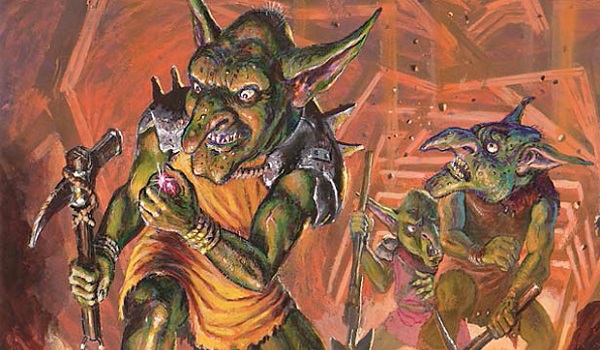
Goblins: A History
Goblins have been a part of Magic since the beginning, but they only really became respected during Onslaught block. Before then, they primarily served as staple early drops in Sligh and descendant red decks. Those decks played a lot of goblins, but lacked the tribal synergies of decks like Rebels. Once the first true tribal block was finished, however, Goblins became the best tribe in Magic. It had everything: fast mana, powerful threats, an amazing lategame, card advantage, removal, and a combo kill. Nothing else came close, and it would take the coming of Affinity to challenge the red menace.
Starting with Standard
In Standard, the general plan of blitzing opponents with cheap creatures was usurped by Patriarch's Bidding. The sorcery was used either as simple card advantage or to re-flood the board, and combined with Goblin Warchief to produce a surprise alpha strike. The real power came when players combined Bidding with Goblin Sharpshooter and a sacrifice outlet. Sacrificing goblins produced untap triggers for Sharpshooter, and Bidding ensured the deck always had enough to kill opponents outright. This powerful clock combined with a combo kill meant that Goblin Bidding remained a force in Standard until Kamigawa forced it out. Olivier Ruel even won French Nationals in 2004 with the deck despite Ravager Affinity's emergence.
Into Extended
Unsurprisingly, Goblins was also very good with a wider cardpool. The first banning I remember hearing about as a competitive player was Goblin Lackey's in Extended. Apparently, a turn two Siege-Gang Commander is unhealthy. Despite the nerf, Goblins continued to be a threat thanks to non-Onslaught goblin all-stars Goblin Ringleader and Goblin Matron. Matron found whatever the deck needed, and Ringleader obviated the need for Bidding while contributing to the overall theme. This more streamlined aggro deck proved a force until Ringleader rotated.
However, the deck's greatest success came when it stopped being a dedicated aggro deck and embraced the combo aspect. It turns out that drawing cards is great for combos, and it was only a matter of time before someone figured out that Fecundity was a natural fit for Sharpshooter combo. Named because the 2006 Worlds coverage team couldn't describe what they were seeing normally and instead compared it to a monkey washing a cat, Dirty Kitty was a mashup of Goblins and Storm that looks a lot more disjoined than it actually is.
Dirty Kitty, Worlds 2006
Dirty Kitty could play out like a normal aggro deck. It could Storm off like a normal Storm deck. What it wanted to do was partially Storm off with Empty the Warrens so it could turn the tokens into more cards and mana with Fecundity and Skirk Prospector until it found Grapeshot, or Sharpshooter and Warchief, and just won. It was weird, but I loved watching this crazy pile just work.
The Legacy
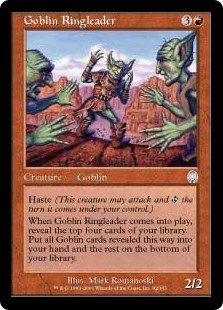
Combo Goblins were never really a thing in Legacy as far as I know. Instead, it's been a midrange beatdown deck, wielding the card advantage of Goblin Ringleader and Goblin Matron to buff an assault, or as the means to an end for another combo. There was a brief time when Goblin Lackey was the most fearsome card in Legacy. Then, Goblin Recruiter was banned, and the Food Chain combo it enabled stopped being busted. Food Chain still exists as a deck but now it uses Misthollow Griffin instead of chaining goblins.
Next, Cavern of Souls was printed, and Goblins was briefly good again before seemingly fading away. I found this odd because it was impossible for Miracles to outgrind Goblins. Terminus is just a speed bump to Goblins, since Goblin Matron just finds the Ringleader and shuffles all the other goblins back into circulation. Against Grenzo, Dungeon Warden, Terminus was actively bad. The problem wasn't Miracles, then, but everything else; Deathrite Shaman sneers at Goblin Lackey, and Goblins struggles to beat fast combo decks.
The Modern Era
Despite this impressive pedigree, Goblins have never really been a factor in Modern. Not for lack of interest or trying, but the parts weren't there. Onslaught is not Modern-legal, nor are Matron and Ringleader. Goblin Guide is a Modern staple, but the tribe has little else. Since Onslaught, Wizards was far more frugal with their gifts, and there just hasn't been much to recommend Goblins over Merfolk or Elves. Tribal merfolk has cheaper lords, while Elves has fast mana for explosive kills.
Goblins has tried to carve out a niche for itself through fast kills with Goblin Bushwhacker, Reckless Bushwhacker, and Goblin Grenade. The problem there is that the deck is inconsistent and the payoff is weak. I've been on the receiving end of some overwhelming 8-Whack victories, but a lot more of them are resounding 8-Whack defeats as the deck is mainly 1/1's for one. There's never been a good enough payoff to justify playing 8-Whack over Affinity.
Dominaria Arrives
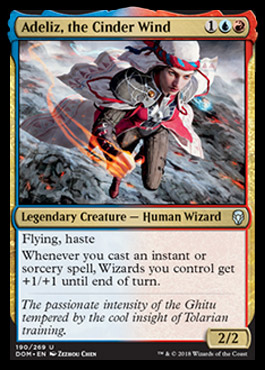
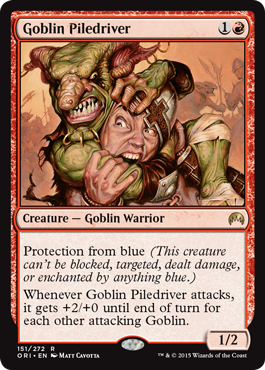
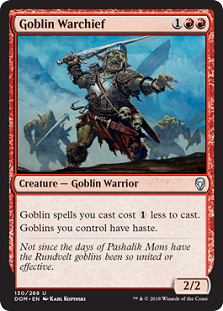
Dominaria threatens to upend Goblins. Goblin Warchief and Skirk Prospector, two keys to the old decks, are back. They follow the return of Goblin Piledriver, which despite some hype failed, to return Goblins to prominence. That said, it's still not clear that anything has changed. Sharpshooter, Matron, and Ringleader are still illegal, and were the main reason to play the deck in Extended and Legacy. The lack of Matron and Ringleader does really hurt, but there is one advantage: the old combo kill was clunky and complicated, while Modern has a far more straightforward one.
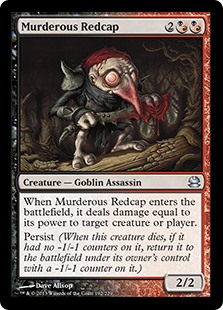
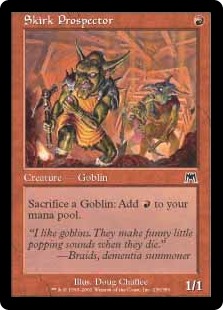
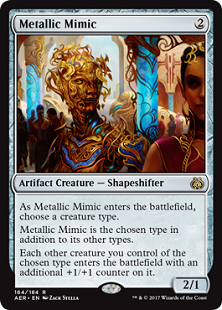
Three cards, arbitrarily large amounts of mana, and damage. As a bonus, it's harder to mess up this combo than it is the old iteration. All you have to do is demonstrate the loop; the old versions forced pilots to go through all the motions and check for a fizzle. Ask a KCI Combo player; the greatest enemy of that sort of combo is inattention.
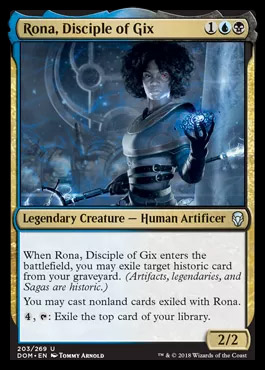
The other positive is that this combo slots in nicely with the rest of this hypothetical new Goblins deck. Mimic is the two mana lord goblins never had, Redcap is reach, and Prospector can turn Mogg War Marshal into Pyretic Ritual. None of these are bad default modes.
New Goblins
Goblin Chieftain makes Warchief unnecessary. The deck is mainly one drops, so the cost reduction is wasted, while +1/+1 is very good. The deck is capable of blistering starts, especially with Prospector, though it's not as fast as 8-Whack's best.
Filthy Resurrection
The reprints also make a new Dirty Kitty deck plausible. The lack of Matron hurts a lot more here, but far worse is the loss of the good fast mana of previous incarnations. It's almost like Wizards has learned that rituals are dangerous. Warchief is better than the other three-drops in this combo-oriented deck, where saving on mana is more important.
Dirty Kitty 2.0
With the right draw, this deck kills on turn three. With an insane draw, turn two is possible. The fact that the new combo synergizes naturally with the backup agro plan, and Mimic has huge value with Empty the Warrens, is a huge bonus.
Reality Check
As I walked into Black Gold for FNM last week I overheard Paul, the local Goblins expert, discussing the reprints. You've met Paul before—he's the 8-Whack player from the greatest bad-beat story ever and a Goblins player to the bone. When asked about Goblin Warchief, his exact response was, "Why? It's a three-drop. That slot is set and it's not
changing." Goblins already plays Goblin King and Goblin Chieftain, so why play another three-drop that doesn't boost your team?
I then asked him if Skirk Prospector changed his mind, and he was confused. Again, why would he need to turn his goblins into mana? They all cost one and his deck is about critical mass. I then explained the combo with Mimic and Redcap, to which he said "Oh!" Then his face lit up and he wandered off.
I was worried that I'd created a monster until a round later when he came back said that it wasn't good enough. His argument is that Goblins doesn't have Collected Company or any other tool to actually find the combo, so it will never be consistent enough. He'd tried to fit Company into Goblins once before and it didn't work without mana dorks. Current versions of Goblins are built to blitz the opponent, so planning for the late game just isn't smart. Also, a turn three kill is already possible for Goblins, and is no more consistent than the Fecundity kill I mentioned. To him, combo Goblins isn't worthwhile.
Trying it Out
While I'm not willing to be so dismissive, Paul does have a point. I've been goldfishing both decks and comparing it to a mainstream 8-Whack deck, and the kill speed is comparable. It will reliably kill more often, but not any faster. The first version doesn't combo very often; it has no way to draw extra cards or tutor for the combo. Additionally, Metalic Mimic makes a turn four kill more likely, especially into three one drops followed by Goblin King. That makes the combo unnecessary most games, but not unwelcome. Normally, these deck have to pray for Goblin Grenade to close out stalled games. The combo provides an alternative way to win out of nowhere.
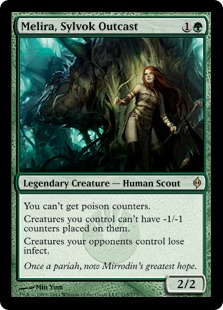 To its credit, ours is the sort of combo that makes opponents paranoid. Much like Melira combos, with a piece or two on the field, opponents will never really feel safe. In test games against Jund, my opponent felt compelled to use real cards against Prospector to make sure he wasn't just dead. My opponent admitted that he may have done it anyway to make sure he didn't get swamped the following turn, but the fear of the combo pushed him. This dread may be enough to make the combo worthwhile in aggressive decks.
The Fecundity deck is very extreme. In 20 combo attempts out of ~50 goldfishes I've only fizzled once, but without Fecundity and Prospector, the deck flounders. While it is possible to combo off on turn two, I've only done it once. Also, the average combo turn has been five, which is really slow. It kills on six or later without the combo. And that's just goldfishing. Given how discard is defining Modern right now, it will realistically be very hard to plan for a combo turn with this deck. It will have to play out its hand and hope to draw the missing piece. In other words, the deck is likely not very good.
Little Red Men
 Considering Wizards' dislike of tutoring effects and concerns over card advantage, it is very unlikely that Goblins will get anything close to Goblin Ringleader or Goblin Matron in Modern. So, the glory days of combo Goblins are past. However, I said the same thing about Bloodbraid Elf and Jace, the Mind Sculptor being unbanned, so anything is possible.
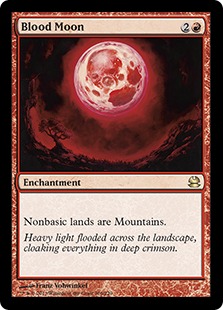
Either way, having a combo in an otherwise decent aggro deck can strengthen the deck. There is also another option on my testing list. Paul uses maindeck Blood Moon both as disruption and to give his goblins mountainwalk. With Skirk Prospector, that can happen on turn two or while tapped out. As anyone who has faced Ponza recently knows, early Moons are excellent in Modern.



 We'll start with the card I personally am most excited about. Unlike Sorcerous Spyglass, the last newcomer that
  Sphere's artifact typing does make it vulnerable to hate. Both Tron and Storm pack artifact removal in the sideboard, but I like Sphere better against the former deck; Nature's Claim already dealt with Blood Moon, and the two-mana Sphere is a smaller mana investment. Against Storm, though, Sphere pales in comparison to more surgical options like Eidolon of Rhetoric, Rest in Peace, or Rule of Law; it's a lot harder for the UR deck to remove enchantments than artifacts. That said, Sphere has so much coverage against Modern's linear decks that I expect it to win out over narrower alternatives in most sideboards.
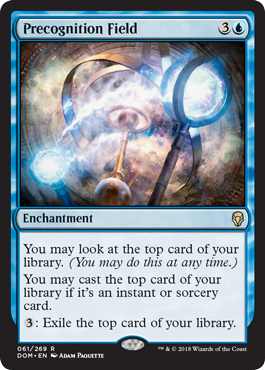 Another new toy that has my attention is Precognition Field, which
 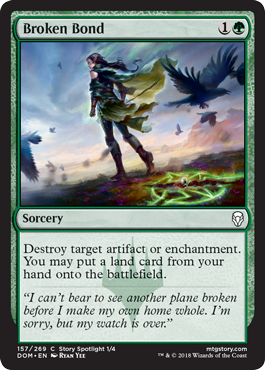 I bet Broken Bond finds a home in a specific type of big mana deck that runs a lot of lands and relies on putting them into play quickly. That excludes the land-light, cantrip-heavy Tron, as well as the creature-centric Eldrazi decks. Rather, Bond seems tailor-made for RG Valakut and maybe Amulet Titan.
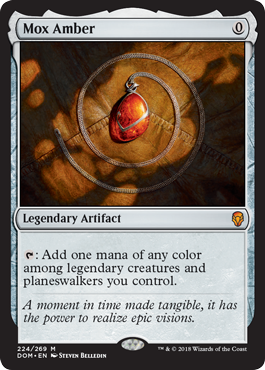 Mox Amber
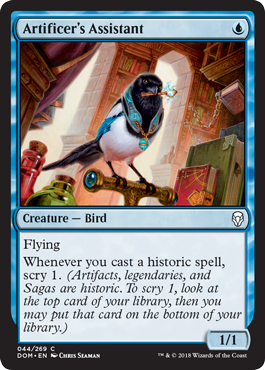 of 15 scrys in Ironworks Combo helps the likes of Chromatic Sphere draw into critical pieces more often, but the bird doesn't directly contribute to any synergies there, so I don't know if it belongs. Even more tenuous is the idea of Assistant in a deck like Lantern Control or Affinity, which quickly dump their hands, don't need scry effects, and have access to Glint-Nest Crane as a superior option.
 Counterspell and Lightning Bolt are some of the most iconic Magic cards of all time, and in some ways, Modern cards—players have clamored for a straight reprint of the former for years, while analogs Logic Knot and Deprive have seen intermittent play over the format's lifespan. In Dominaria, the pair are reborn as the tribe-specific Wizard's Retort and Wizard's Lightning.
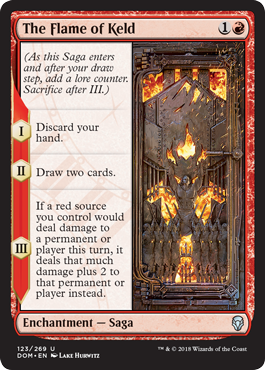 The final card in our maybes is The Flame of Keld, which on its surface looks like it could do something in Burn. I think its conditions are too hard to meet in that deck, though. Sure, there are plenty of instances where Burn will wish it could topdeck Flame, but also plenty where Flames actually in the deck will cost it the game. Burn needs a critical mass of spells that do the exact same thing, and Flame does something different.
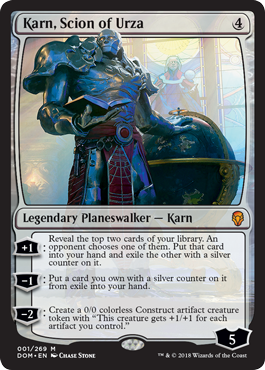 As of Dominaria, any deck in the format can spend four mana for a heap of loyalty. But loyalty's not worth much in Modern, and
 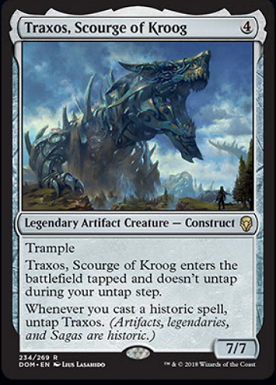 Four mana for a 7/7 trample is a pretty good rate, so naturally Traxos comes with a drawback. And in Modern, that drawback isn't even so significant—players can easily build decks that cast heroic spells each turn should an adequate payoff demand it. But in this Construct's case, the payoff simply isn't big enough to warrant that kind of deckbuilding.
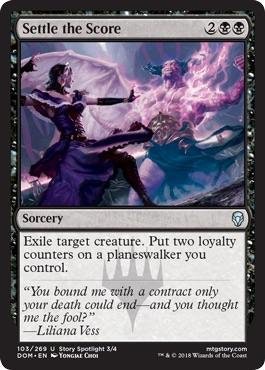 I've heard murmurings about this card in Jund as a way to fire off Liliana of the Veil's ultimate the turn after she comes down, but nah. Jund is not a combo deck, and has little interest in firing off Lili ultimates as fast as possible. It's an aggressive attrition deck that takes its time chewing through opposing resources so that it can take over the game with Tarmogoyf or a manland.
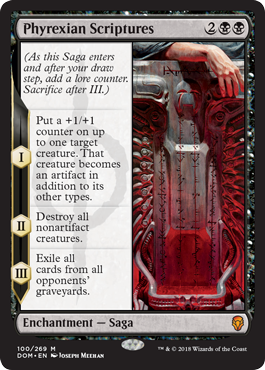 As is the case with many fair-looking cards entering Modern from Standard, the exciting aspect of Scriptures lies in its abuse potential. Since its big mode is on II and not III, removing a counter from the enchantment somehow gives players access to repeated Wrath effects, all while their newly christened artifact beats down.
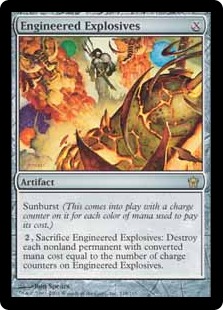
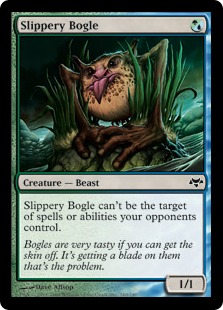 Bogles has also begun to make more regular appearances at the top tables, and Engineered Explosives is among Shadow's best answers to the aura-based menace when Leyline of Sanctity prohibits them from picking their opponent's hand apart. The Grixis wedge has enough tools to adapt to most metagames, but that adaption takes a little time. Now, Grixis Shadow looks to be alive and well.