

Are you a Quiet Speculation member?
If not, now is a perfect time to join up! Our powerful tools, breaking-news analysis, and exclusive Discord channel will make sure you stay up to date and ahead of the curve.
Welcome to the MTGO Market Report as compiled by Matthew Lewis. The report will cover a range of topics, including a summary of set prices and price changes for redeemable sets, a look at the major trends in various Constructed formats and a "Trade of the Week" section that highlights a particular speculative strategy with an example and accompanying explanation.
As always, speculators should take into account their own budgets, risk tolerances and current portfolios before buying or selling any digital objects. Please send questions via private message or post below in the article comments.
Redemption
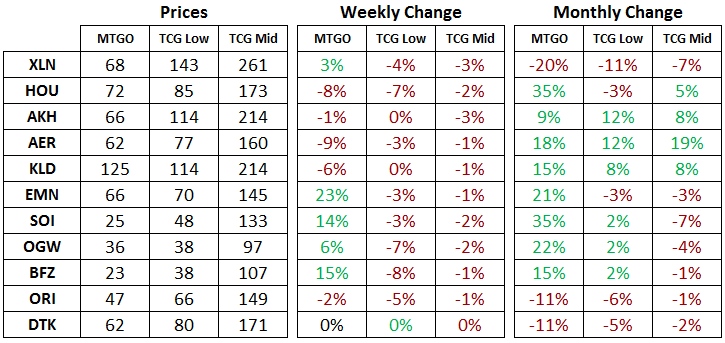
Below are the total set prices for all redeemable sets on MTGO. All prices are current as of October 31, 2017. The TCGplayer low and TCGplayer mid prices are the sum of each set's individual card prices on TCGplayer, either the low price or the mid price respectively.
All MTGO set prices this week are taken from GoatBot's website, and all weekly changes are now calculated relative to GoatBot's "full set" prices from the previous week. All monthly changes are also relative to the previous month's prices, taken from GoatBot's website at that time. Occasionally, full set prices are not available, and so estimated set prices are used instead. Although both Aether Revolt (AER) and Kaladesh (KLD) are no longer available for redemption, their prices will continue to be tracked while they are in Standard.
Standard
All eyes will be on the Pro Tour this weekend, looking for signs of a new direction in Standard. My bet is that established strategies, fine tuned for the expected pro metagame, will carry the day. This will be an excellent opportunity to sell cards into any coverage driven hype, so don't be afraid to lighten up on Standard staples this weekend.
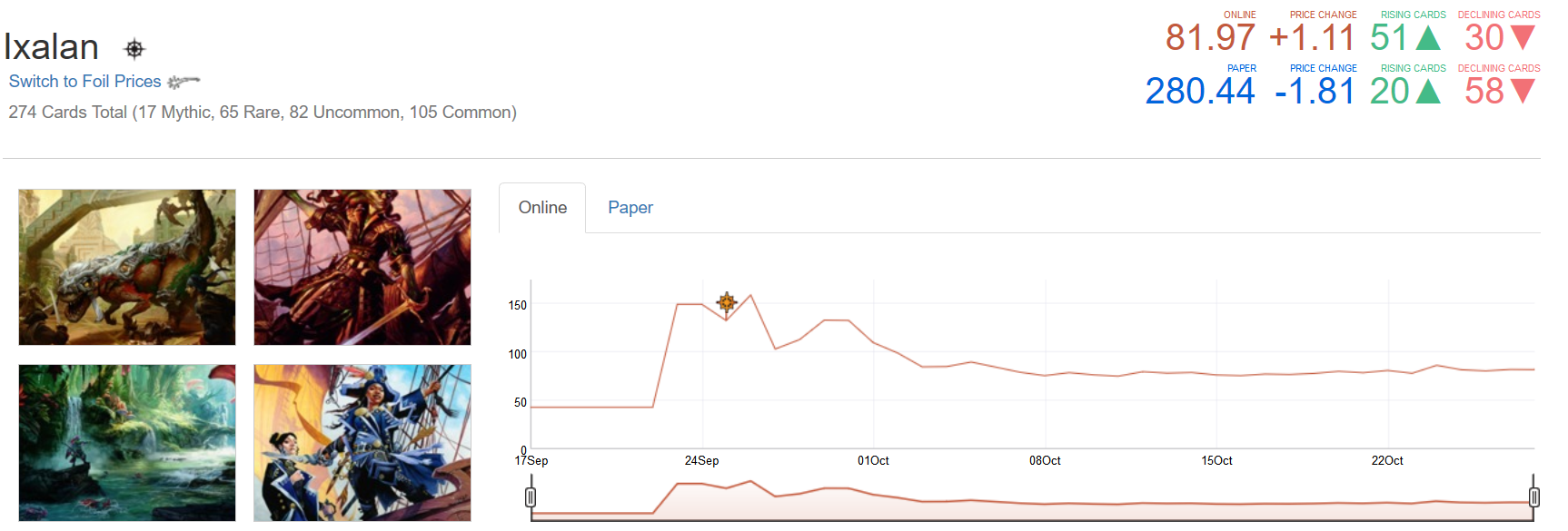
Otherwise, the next big buying opportunity in Standard won't come until the release of Rivals of Ixalan (RIX) in January. With at least two months of triple Ixalan (XLN) draft ahead of us, I am not considering speculating on any cards from the newest set at this time. The supply of cards from draft will be a constant drag on prices, which keeps me uninterested in speculating on XLN at the time. There will be plenty of time (and lower prices) to be a buyer of XLN in early 2018.
Modern
It certainly feels like there's a ground swell of interest in the Modern format at the moment. Confirming this are the gains posted by the recently rotated sets this week. Eldritch Moon (EMN) was the biggest gainer with a 23-percent jump, while Oath of the Gatewatch (OGW) advanced the least at 6 percent. Interestingly enough, the paper prices continue to fall for all of these sets, confounding my prediction of an imminent price bottom. It will be interesting to see if this divergence can continue, where digital prices are pushing higher while paper prices drift lower.
Elsewhere, both Magic Origins (ORI) and Dragons of Tarkir (DTK) are nearing the end of redemption. This means that junk mythic rares will most certainly start to drop in price as the market churns through these soon-to-be-worthless cards. The impact on Modern playable cards is less clear, but fringe playable cards could also see price declines.
Hopefully readers looking to round out their playsets of cards from Innistrad (ISD) were able to pick up what they needed this week. Liliana of the Veil was one I was watching closely, and it ultimately found a price bottom at around 53 tix. There are still good prices for this card, though I expect it to get back into the 65- to 80-tix range over the next six months.
On the metagame front, Humans prevailed again at a Star City Games event over the weekend, taking down the Modern Classic in Washington. This certainly looks like a deck to be taken seriously this Modern season, and Cavern of Souls and Noble Hierarch are seeing the benefit. Dark Confidant also made an appearance in the sideboard this time around, and this is a card that has some value at current prices.
Trade of the Week
For a complete look at my recent trades, please check out the portfolio.
When I think about how I want to be speculating on MTGO, I try to keep it simple these days. I want to be buying items that are accruing value and I want to be selling items that are losing value. The trick is in identifying which items are which.
Applying economic principles has helped identify speculative opportunities where the odds of accruing value are overwhelmingly positive. One of those is buying a basket of foil mythic rares from the latest set. This strategy has yielded positive speculative returns for Aether Revolt (AER), Amonkhet (AKH) and Hour of Devastation (HOU), and I anticipate positive results for XLN as well. However, it's never too late to develop an idea further.
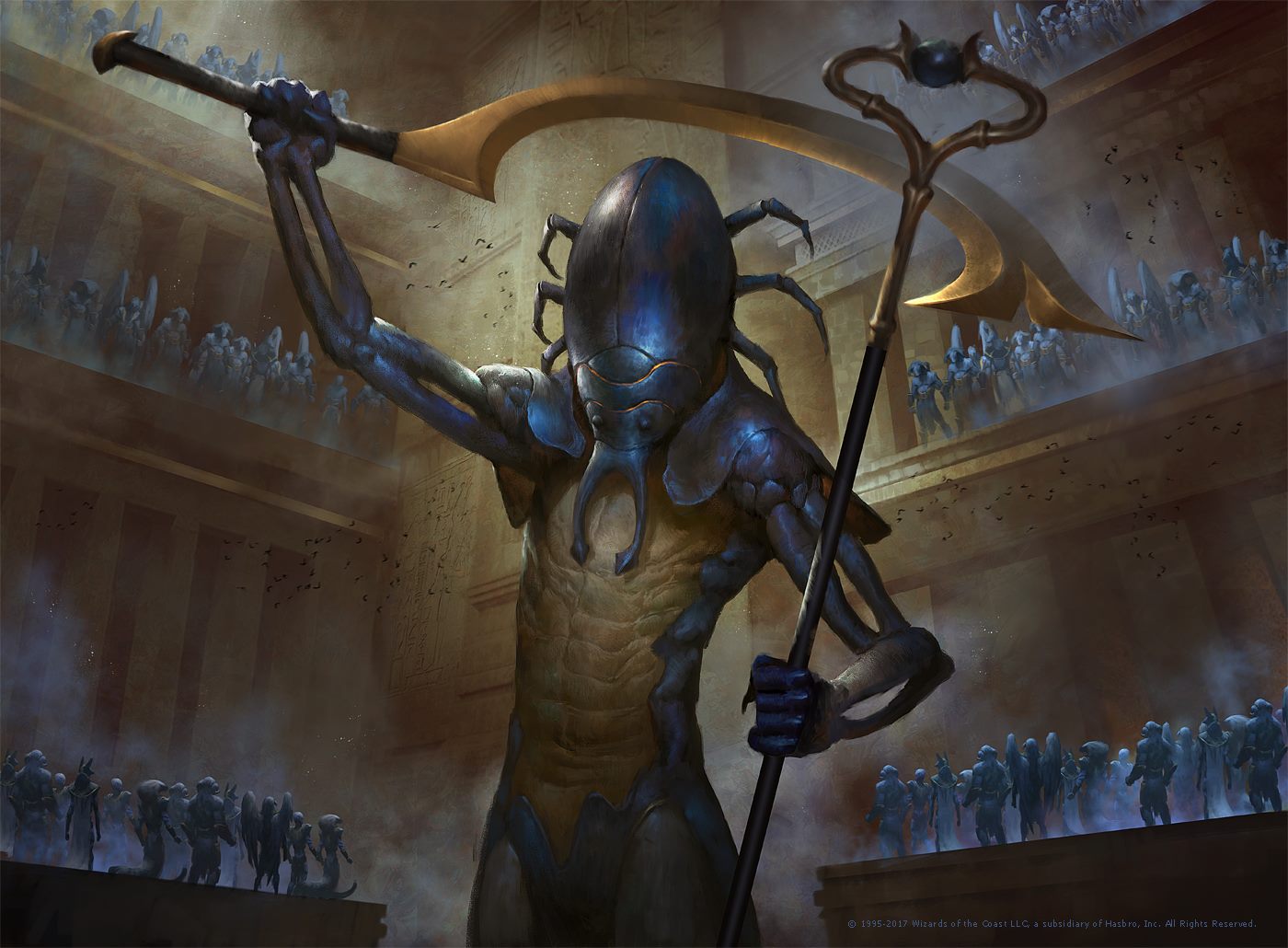
A reader asked me over the summer whether or not they had to own Nicol Bolas, God-Pharoah out of HOU in order for the strategy to work. At the time, foil Nicol Bolas was the most expensive card in the set at over 20 tix. In the weeks after the release of HOU, Standard results had started trickling in revealing that Nicol Bolas was not going to be a format staple. Considering the price tag on the card at the time and the weak showing in Standard, I told them they could safely ignore this one card, as long as they owned all the other mythic rares. This has worked out spectacularly as the foil version of the The Scarab God went on to touch 50 tix, and three other cards have risen higher than Nicol Bolas at the moment.
Ignoring Nicol Bolas helped this reader to add extra returns to the foil mythic rare strategy. If it was possible to do this systematically for each new set, then it would pump up the tix a speculator could make in pursuing this strategy. The trick will be not to ignore a card like Heart of Kiran from AER. The foil version of this card started out as the most expensive card in the set, but it would go on to double in price before the end of redemption. Avoiding buying foil versions of Heat of Kiran would have worsened the returns to the foil mythic rare strategy.
In considering XLN, I have started to experiment with this extension of the strategy. I bought ten of each of the foil mythic rares, except for Carnage Tyrant. This was the most expensive card in the set right out of the gate, and with Nicol Bolas on my mind, I just couldn't justify dropping over 25 tix on a six casting-cost creature. I did manage to scrounge up a few copies at under 25 tix, just to be safe, but I was grumbling about it to myself when I did.
This week's trade is an experiment where I traded out a couple of copies of foil Carnage Tyrant for a couple of copies of Vraska, Relic Seeker. Carnage Tyrant had been bleeding value over the weeks since XLN was released, much like Nicol Bolas had done in the summer. To me, it looked like Carnage Tyrant would slowly bleed out value, while Vraska would continue to accrue value.
This trade between foil mythic rares is an experiment, but like my favourite trades, it has started working immediately. Carnage Tyrant now has a price below Vraska, and I think this trend will continue.
I think the key thing to consider when attempting to modify the foil mythic rare strategy in this way is the nature of the most expensive foils. Are they powerful cards that are going to dominate Standard or are they high mana-cost cards that are destined to be only niche? If there's a clear answer to these questions, then the strategy should be modified to match. I'll be on the lookout in the coming months for how to apply this new development to the foil mythic rare strategy for Rivals of Ixalan.


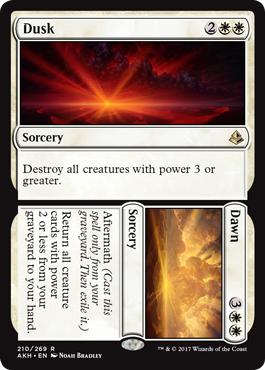

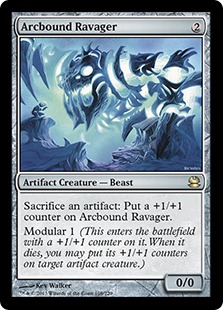 have risen and fallen around them. This speaks strongly to their potency, but the true test comes next week. If this trend is sustained by Regionals, then we must conclude the omens were true, and Tier One will be established.
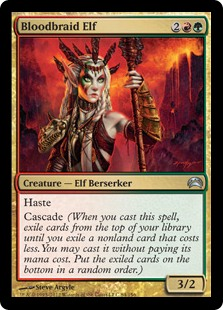 For the uninitiated, in their
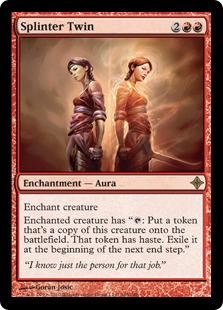 Much of the discussion about the also-rans is the continued lamentation of Twin's demise coupled with distaste over the circumstances of other bannings. In many cases, it comes down to unprecedented swap bannings, wherein the offender is released in exchange for something taking its place. I believe a better name is in order, but maintaining this Lovecraftian-Gothic tone is draining my creativity. Something that invokes A Tale of Two Cities would be appropriate. This is not how Wizards behaves, nor does it make sense in the rational world, so I will not address it here.


 Not every decision is so small, however—dependent on the metagame you could make broad shifts in the decklist to attack in a different way.



 Gwixis Delver makes little secret of its identity as a midrange deck. It borrows many elements from
 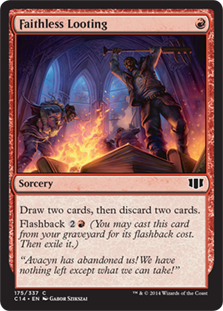 After emptying our hand traditionally, then casting Bedlam Reveler, we can start flashing back Souls from the graveyard and not worry about making the Devil more expensive.
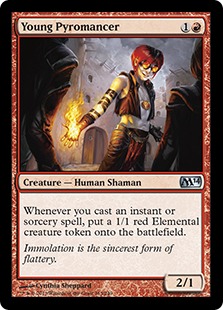
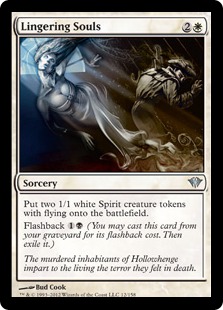 Onto the deck's pitfalls. Some decks reward us for extending our phase one aggro plan, especially combo decks. Storm is the big one here---if they Bolt our Delver, or if we fail to open Delver, it can prove very difficult for us to assemble enough pressure to kill them before they go off. Tapping out for Young Pyromancer is pretty bad when our big counterspell costs two mana, and Swiftspear doesn't impress when we're holding up mana, either. Perhaps obviously, Lingering Souls and Bedlam Reveler are not highly reliable threats against decks uninterested in interacting. And hold-over Grapeshots gun down our squad with ease.
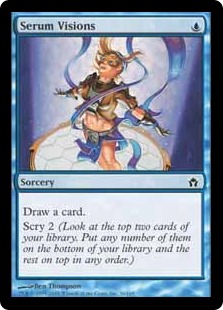 To make room for Serum, I removed some of the clunkier gold spells and one Thought Scour. I like cheap spells in my Delver decks, and figured the additional one-mana cantrips would pull Scour's velocity weight.
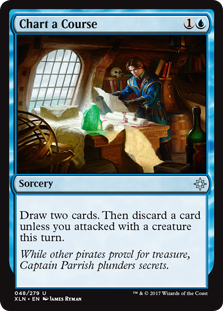 It's way too early to tell if Gwixis Delver has legs in Modern, but I think the testing I have done has at least revealed its shorcomings. And I have Counter-Cat to fall back on should I grow tired of getting smushed by damage-based sweepers, so I'm not particularly attached to this deck either way.