menu

My Ship Now: Taking Hostages in Modern

Are you a Quiet Speculation member?

If not, now is a perfect time to join up! Our powerful tools, breaking-news analysis, and exclusive Discord channel will make sure you stay up to date and ahead of the curve.

If you're like me, most of the excitement surrounding Standard revolves around which of its cards break into Modern. The worlds-apart nature of both formats guarantees that many Standard all-stars don't make it over this way, and some Standard duds boast impressive utility in Modern. Every so often, though, a card makes a big splash in both formats. Inspired by the Standard hype for Hostage Taker last weekend, I took it upon myself to see if I couldn't get the Pirate thieving in this format.

Today, we'll look at the findings from my week of testing Hostage Taker, and my own take on where she might belong.

Finding a Shell

This first step is the most obvious of the process, but also one of the more challenging: where can Hostage Taker shine? I knew I wanted to play her in an interactive deck featuring Fatal Push and targeted discard, and that I'm too restless a brewer not to splash a third color. To get started, I thought about what each one offered.

Core Components
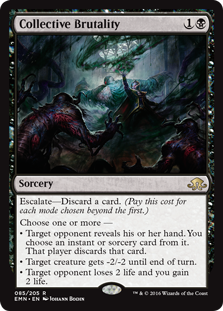
Targeted discard: Discard spells are uniquely terrifying in Modern, as no other form of proactive interaction can be used offensively and defensively with such grace; Collective Brutality is especially flexible. In our deck, they strip a removal spell to make way for Taker, or slow opponents down long enough for us to cast her.

Permission: Unlike discard spells, counterspells are quite weak in this format. But we're already in blue, so they're at least worth a look for the sideboard.

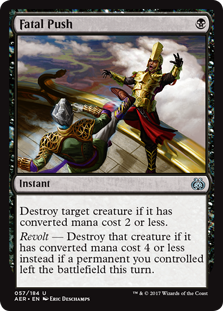
Fatal Push: Handily gets us into the late-game Taker requires and beats up on most creature decks. The juiciest Taker targets are higher on the mana curve, leaving Push to clean up the rest.

Serum Visions: Nothing fancy here; just the bar for library manipulation in Modern.

Nameless Inversion + March of the Drowned: The Johnny in me messed around with this combo—usually alongside Thought Scour—a little too much for comfort before finally dumping it. The floor on March isn't so bad with Scours, though, since it can also return non-Pirate threats like Snapcaster Mage. If we get another Pirate on Hostage Taker's level in the next set, tribal-March might be worth revisiting.

Draws to Green

Mana dorks: Taker costs four mana, which is quite a bit in Modern—it doesn't make her uncastable, but it does limit the types of decks that can play her. Dorks mitigate this issue by accelerating into Taker a turn early, as well as helping cast the creature she exiles.

Tarmogoyf: Taker doesn't apply much pressure on its own, so some form of compact proaction is necessary to deal with big mana and linear combo strategies. Tarmogoyf ain't what it used to be, but man if it doesn't still apply a buttload of pressure and induce headaches for opponents without Fatal Push. Since we're already in dorks and discard with a green splash, Goyf is likelier to live past the villainous instant.

Build-around options: Traverse the Ulvenwald

Draws to Red
Damage-based sweepers: Red sweepers have been awesome in Modern for as long as I can remember, and that's still the case today. Pyroclasm remains my personal favorite, and it doesn't even knock out Taker.

Lightning Bolt: This blue-chip-staple cum utility-figurehead performs swimmingly in the aggro-control shells Hostage Taker demands.

Kolaghan's Command: With Taker in the picture, Command promises plenty of value in addition to its standard disruptive applications.

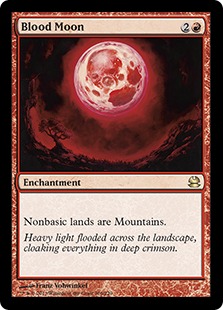
Blood Moon: There's nowhere to play it, but Blood Moon kicks butt right now. Eldrazi Tron, Valakut, and Grixis Shadow play a gross game of rock-paper-scissors atop the format, and Moon significantly disrupts all three. Removing Taker without fetches for revolt can also prove burdensome for opponents on black.

Build-around options: Rowdy Crew (with mana rocks and March)

Draws to White

Path to Exile: Best removal spell in the format. Given the options available to us today, and Taker's own coverage, Path is less a reason to go into white than an obvious include if we do.

Build-around options: Spell Queller, processor effects, Crib Swap (with March)

Early Testing Conclusions
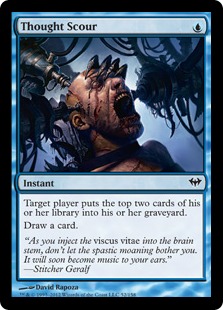
Messing around with Sultai decks taught me that running Taker alongside mana dorks was a winning combination. Taker dies to Bolt and to a revolted Push, and both spells are likely to gun down Noble Hierarch as soon as the Druid rears her head. Plus, dorks speed up Taker's deployment. The Sultai builds I liked best ran six Lilianas (4 Veil/2 Hope), Thought Scour, Snapcaster Mage, Goyf/Scooze, and delve threats alongside targeted discard and pushes. They ate up creature decks that didn't go insanely wide and couldn't for the life of them beat big mana.

I also fiddled with some Grixis shells and found Blood Moon to work well with Hostage Taker. In terms of metagame coverage, it's nice that Moon plugs some holes in the Tron matchup. My problem with Grixis was that I lacked the utility of Sultai's cards—it had no Tarmogoyf to apply pressure with, Liliana, the Last Hope outperformed Kolaghan's Command, and incidental hosers like the walkers and Scavenging Ooze eluded the shard outside of Moon itself.

After a while, I remembered that I'd already built a deck running dorks, Moons, and off-color four-drops. Here's what grew out of that idle thought:

Turbogoyf '17 (1.0), by Jordan Boisvert

Creatures

4 Hostage Taker
4 Birds of Paradise
2 Magus of the Moon
4 Tarmogoyf
2 Tasigur, the Golden Fang
4 Huntmaster of the Fells

Artifacts

2 Dimir Signet

Enchantments

4 Blood Moon
4 Utopia Sprawl

Instants

3 Fatal Push
2 Lightning Bolt

Sorceries

4 Faithless Looting
3 Collective Brutality

Lands

4 Verdant Catacombs
4 Wooded Foothills
2 Bloodstained Mire
1 Stomping Ground
1 Blood Crypt
1 Steam Vents
3 Forest
1 Mountain
1 Swamp

Sideboard

3 Goblin Rabblemaster
2 Kolaghan's Command
2 Dismember
2 Kozilek's Return
2 Stone Rain
2 Thoughtseize
2 Slaughter Games

I'm certain this isn't the "optimal" shell for Hostage Taker, just as the default Bant Spirits isn't the optimal home for Spell Queller—the versatility of these creatures suggests they'll find homes across multiple archetypes, and the most successful host for either depends on how the metagame shapes up. That said, I figured it was as fine a place to start as any, so I stuck with Sultai Moon all week. Staying within a framework is crucial to my exploration process: I wanted to see what Hostage Taker could do in a deck finely tuned to both the metagame and my own preferences.

Breaking Down Sultai Moon

First of all, what is this mess of a deck? It's not all that foreign—for my first build, I just took the "Turbogoyf" Abzan Moon blueprint I introduced nearly two years ago (definitely follow that link if you don't remember) and made some key swaps:

-4 Siege Rhino
-4 Abrupt Decay
-4 Lightning Bolt
-2 lands

+4 Hostage Taker
+4 Fatal Push
+4 Collective Brutality
+2 Tasigur, the Golden Fang

The shell of course evolved from there, as evidenced by the above decklist.

What's New
Brutality replaced Bolt as reach/toughness-based removal, and man is it great in this deck. We've always wanted more discard outlets than just Faithless Looting; since we stop making land drops at four mana, those Lootings were in high demand for Abzan Moon, and frequently just better Harmonizes with a Moon on board. Targeted discard helps Goyf survive in Fatal Push Modern and otherwise clears the path for our haymakers to resolve and wreak havoc. It also gives us a source of lifegain now that Rhino's leaving.

Fatal Push is a more obvious upgrade to Abrupt Decay, which I started running in my Turbogoyf decks with the primary function of executing my opponent's Tarmogoyfs. Against any deck with cheap creatures, Push is the best card in Modern when it comes to surviving into big-play territory, and a blessing for this archetype.

I also found there to be too many lands and shaved a pair for 2 Tasigur, the Golden Fang. I've discussed the banana man in this deck before, but negatively; he's much better in this build. Brutality helps power him out early while making use of the crappy cards we net off his ability, and Tasigur conveniently walls Thought-Knot Seer. Critically, six-drops are very annoying to kill in Modern right now.

Later Adjustments

I somehow still felt too mana-heavy in testing, and cut a couple lands for Dimir Signet. Having Signet in the deck lets us rush out turn-two Moons without any of our secondary colors and reliably Loot into them, which let me cut the couple blue fetches and the basic Island I ported over from Abzan Moon. Signet also provides a new card type for Tarmogoyf, and we've got plenty of ways to discard it. Lastly, Signet gives us another strong two-mana play should our dork die or we lead with a removal spell, as it immediately ramps us into a four-drop. Shaving lands for Signets meant going up in number of mulligans, but I watched for this drawback closely and wasn't bothered by it. The hands we end up keeping are just stronger now, and we flood less; our good hands beat opponents even if we're way down on cards, since Moon can end games on its own.
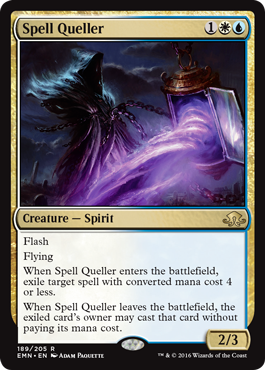
After getting bodied by Spell Queller at a locals, the other change I made was to re-adopt Lightning Bolt. I found room by trimming a Brutality and a Push, since Bolt covers similar ground. Its utility really is unparalleled and I'm happy to have it back.

I started with Negate in the sideboard and then went over to Thoughtseize, a more reliable piece of disruption here with more synergy with our gameplan. The Rabblemasters there come in for Taker or dead interaction against linear decks, where they join Goyf in applying lots of pressure very quickly. Kolaghan's Command gives us a grind plan for slug-fests.

Assessing the Taker

One problem I've encountered with Moon decks is the tempo loss incurred by spending three mana on an enchantment; if opponents already have creatures in play, they can sometimes make short work of us before we can recover. That's why Tarmogoyf pairs so well with Moon: it comes down first, offsetting our do-nothing next turn.

Another important role to fill in Moon decks is what comes down after. Huntmaster of the Fells is fine on the back foot so long as we have a turn or two to flip him; Siege Rhino addresses only specific kinds of game states, doing nothing against wider boards or ones populated by fliers. Similarly, no four-mana planeswalker ever gave me the coverage I desired in such situations. When we're under pressure, though, Hostage Taker is a fine follow-up to Blood Moon, and one that combines especially well with our other cards—casting a spell with Taker helps transform Ravager of the Fells, lets us stockpile cards in hand for big Looting turns without leaving our mana unspent, and mitigates flooding by giving us something to do with the extra mana (resolve Taker, immediately cast its hostage).

Taker's Downfall
While I did commandeer a Wurmcoil Engine and an Oblivion Ring in testing, Taker's best matchups are obviously not the linear ones. Against decks without creatures, we just want to back our Moons up with a lot of pressure, essentially rendering Taker dead in hand.

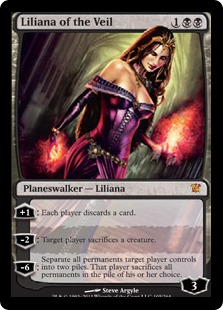
Additionally, my testing with the Sultai deck revealed to me that Taker's role in creature mirrors was vastly similar to Liliana of the Veil's: to create a big tempo swing and force opponents to expend more resources answering this one card. The dream scenario of Taker resolving and stealing a Goyf we can then cast indeed turns the tide in those matchups. But often, so does just slamming a Liliana, and while Lili doesn't put us as far ahead as Taker can in certain situations, or address stuff like Cranial Plating, she has far wider applications. Taker is quite weak against decks like Valakut or Ad Nauseam, for example, whereas an early Lili puts away games in those matchups.

For Sultai Moon at least, I found the correct step forward was to abandon blue entirely and just run Liliana. I don't think such a direction was ideal two years ago, when we desperately wanted more powerful threats in that slot; with Brutality and Push in Modern, though, I think Turbogoyf gains enough tools to function without a fourth color splash.

Here's the updated deck:

Turbogoyf '17 (2.0), by Jordan Boisvert

Creatures

1 Goblin Rabblemaster
4 Birds of Paradise
2 Magus of the Moon
4 Tarmogoyf
2 Tasigur, the Golden Fang
4 Huntmaster of the Fells

Enchantments

4 Blood Moon
4 Utopia Sprawl

Planeswalkers

4 Liliana of the Veil

Instants

3 Fatal Push
2 Lightning Bolt

Sorceries

4 Faithless Looting
3 Collective Brutality

Lands

4 Verdant Catacombs
4 Wooded Foothills
2 Bloodstained Mire
2 Stomping Ground
1 Blood Crypt
4 Forest
1 Mountain
1 Swamp

Sideboard

2 Goblin Rabblemaster
2 Kolaghan's Command
2 Dismember
2 Kozilek's Return
1 Ancient Grudge
2 Stone Rain
2 Thoughtseize
2 Slaughter Games

Taker's Future

This analysis revealed Taker to be a narrower, weaker Liliana of the Veil. But that doesn't mean it's doomed not to see Modern play. Taker still has some unique applications, like removing artifacts pre-board (Grixis has Kolaghan's Command, but Esper and Sultai don't) and exiling any creature (something straight UB, without Terminate or Path to Exile, lacks). As such, I expect it to become a consideration for BGx Rock decks looking to splash a third color.

These kinds of decks might actually benefit to some degree from running more than four Liliana of the Veil-style effects, and Taker definitely gives an edge in the midrange mirror. The Pirate's applications with Chord of Calling, Traverse the Ulvenwald, and other creatures-matter cards also give me hope it will be picked up as a bullet in other strategies.
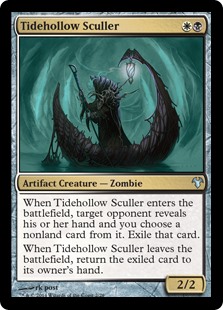
Lastly, I think Taker may have something to offer the creature-heavy white decks we've seen around Modern. While Death & Taxes represents the shell's most simple incarnation, many versions splash black for Wasteland Strangler or blue for Spell Queller. If these decks can run Eldrazi Temple, there's got to be a way to make an Esper build work. Tidehollow Sculler, Thalia, Guardian of Thraben, Eldrazi Displacer, Spell Queller, and Hostage Taker all compliment each other quite well in terms of effects, and Taker handily replaces Thought-Knot Seer on the curve. Just imagine flashing her in with Aether Vial—shiver me timbers!

Knave-r Give Up

It's always been fun for me to try out Standard powerhouses in Modern—among the most recent, Heart of Kiran, Smuggler's Copter, and Emrakul, the Promised End. Sometimes, as with Spell Queller and Reflector Mage, Standard hits become Modern hits; others, as with Aetherworks Marvel, they fall flat. I expect Hostage Taker to mostly do the latter, although I'd be surprised if she didn't find a niche somewhere. But believe you me, matey: a niche.

Insider: Top 10 Ixalan Standard Specs

Are you a Quiet Speculation member?

If not, now is a perfect time to join up! Our powerful tools, breaking-news analysis, and exclusive Discord channel will make sure you stay up to date and ahead of the curve.

You read the title. Once in a while, we could all could all use a little less fluff. So let’s jump right into what you clicked here for: the specs!

10. Captain Lannery Storm

There was an error retrieving a chart for Captain Lannery Storm

I know Captain Lannery Storm has seen some play in Ramunap Red, but I still think she’s underappreciated and undervalued. The ability to cast your spell while all of your lands are tapped is not something that should go unnoticed. It’s extremely powerful when your opponent thinks you’re tapped out and you use your Treasures to kill their guy as well as pump Lannery. She also let’s you skimp on lands a bit, because her Treasures will help you cast all your spells quicker.

Finally, at barely over a buck, I think she has some room to grow if she finds a home in Standard. Personally I’ve been loving her in a red-blue Pirates deck I’ve been working on. Maybe I’ll share some competitive info next week regarding my testing of the format as well.

9. Metallic Mimic

There was an error retrieving a chart for Metallic Mimic

Okay, okay, I know this isn’t a super hot spec or anything and it’s one of the cards that’s popped up a bit lately, but it’s a super important one in Standard right now. This one of the best cards to have in your trade binder. Mimic is great for casual players but it’s still great for competitive players as well.

We’ve seen Mimic be relevant in Standard in Zombies pre-rotation. I think Mimic is about to break out in Standard again. I’ve been testing it in the previously mentioned UR Pirates and it has performed well over my expectations. Mimic is the lord that every tribe is looking for. Granted it would be great to have an additional lord as good as Lord of the Accursed, but we’ll use what we have.

If Mimic breaks out in Standard again, with its already rising trajectory, it could jump up towards $20. There is definitely room in Aether Revolt for some expensive cards. As it is right now, Mimic is the second most expensive card in the set. There aren’t even any mythics over $10 in the whole set! If a mythic broke out from Aether Revolt, it would most likely skyrocket in price. More on that with our next spot in this Top 10.

8. Tezzeret the Schemer

There was an error retrieving a chart for Tezzeret the Schemer

Originally I was going to put Aethersphere Harvester on this list, but it pairs well with my number-eight choice, Tezzeret the Schemer. Like I was saying with Metallic Mimic, Aether Revolt has a ton of room for financial growth. Tezzeret the Schemer is a great example because, just on the rumor that he might be good in an artifact deck, Tezz increased a couple dollars.

If a real deck emerges with actual tournament results, he will seriously jump though. Right now he’s a little over $7 but with the build-around-me design, I guarantee he would double right away with any good finish. The strength of UB Control leads me to believe a synergy-based deck like this would be drastically overwhelmed, but hopefully I’m wrong because the archetype sounds like so much fun.

There are tons of ways to make Treasures from Ixalan. I wonder whether combining treasures with Tezzeret could be one way to build your deck. Could we even see a deck win with Revel in Riches!?

7. Prowling Serpopard

There was an error retrieving a chart for Prowling Serpopard

The best kept secret from Amonkhet and Egyptian mythology has got to be Prowling Serpopard. Initially I hated the design of this ridiculous monstrosity. A cat and lizard hybrid!? Come on, really? Then I found out the this was an actual creature in the Egyptian mythos and my perspective changed. Weird how that happens sometimes.

Serpopard has been an all star for me in green decks pre- and post-rotation. I put together RG Gods (plus Dinosaurs) for fun, and it turned out to be pretty good. I’ve been testing it versus control decks and Temur Energy with good results. Serpopard maindeck gets around all of the blue counters regardless of which ones they’re playing. This card completely throws off control because they never expect it maindeck.

I think even Temur Energy could play this uncounterable creature, but maybe in the sideboard due to deck constraints. Even if that doesn’t happen, I think it pairs extremely well with Dinosaurs and should easily increase above the minuscule $2 price point it currently holds. I’ve found this card to bring me some critical wins and be difficult for an opponent to deal with. They must remove it or they can’t counter any of your other creatures.

6. Tocatli Honor Guard

There was an error retrieving a chart for Tocatli Honor Guard

Next up is a card you most likely didn’t see coming. Tocatli Honor Guard, aka Torpor Orb with legs. We all know Torpor Orb is great in Modern as a sweet sideboard card, so why is it not great in Standard as a creature? Well, it actually is great. Think about all the creatures with abilities that this 1/3 will shut down. Earthshaker Khenra, Regisaur Alpha, and Hostage Taker are some great examples of cards that Honor Guard will preemptively neuter.

The catch is that you can’t be playing any of those sweet cards yourself. I think that’s a fine price to pay and I’m working on a deck utilizing this hoser as well, but it may be too high a price for some players. Personally, I love cards like this that force the opponent to play the game in a different way than they were planning. That’s why I love Legacy Eldrazi so much.

Even as a Modern or Legacy card, I think Honor Guard has a ton of potential. You can’t really go wrong with this bulk rare because it can’t get any lower. Your potential payoff is decent with this card too, so grab a play set or two at the bottomed-out price.

5. Combat Celebrant

There was an error retrieving a chart for Combat Celebrant

One toughness but four power, all for three mana, wouldn’t be enough to make this guy playable, but the additional combat step that Combat Celebrant offers you is crazy good. Some of the time you will just be playing a three-mana 4/1, but other times you’ll be wrecking your opponent with multiple combat steps.

I think Combat Celebrant could be good in multiple strategies. Ramunap Red could use multiple combat steps for sure. I’ve been playing it alongside Dinosaurs for some giant attack phases.

This is another barely above-bulk pick but this one is a mythic too! Cards like this that are low investment are great targets because when they blow up, your margin is super high but if they never do, your investment is quite low.

4. Samut, the Tested

There was an error retrieving a chart for Samut, the Tested

Planeswalkers used to run by the rule of a minimum sell price of $5 and a minimum buy price of $3. I loved those days. In this era of Magic, we are well below those standards. Samut, the Tested has gained a little value and is almost back up to the 5-3 marks but was below that pre-rotation.

In all my testing of this sweet Standard format—not the current "best" decks but the ones I think look fun—I’ve tried out Samut. After playing with her, I was pleasantly surprised. I added her into Dinosaurs as a cute card-drawing engine with Ripjaw Raptor. I’ve still never had them in play at the same time to ping Ripjaw and my opponent, but even so, she’s performed well above expectations.

Basically, here’s how it goes: you don’t want too many copies of Samut in your deck because you’d like a stable board to play her on. Once the board is stable, she makes your opponent’s life miserable. You can just attack with your underpowered guys into theirs because if they block, the -2 for two damage can finish off any remaining damage. Also, you can activate the +1 to force your opponent into chump-blocking mode. I also run Key to the City (which probably could have made this list as well), which allows you to kill your opponent from nowhere in combination with Samut.

$5 isn’t as low as Samut can go because we’ve seen her below that number, but it’s close. I think there’s a lot of opportunity for her to be good during her time in Standard though.

3. Blooming Marsh & Concealed Courtyard

There was an error retrieving a chart for Blooming Marsh
There was an error retrieving a chart for Concealed Courtyard

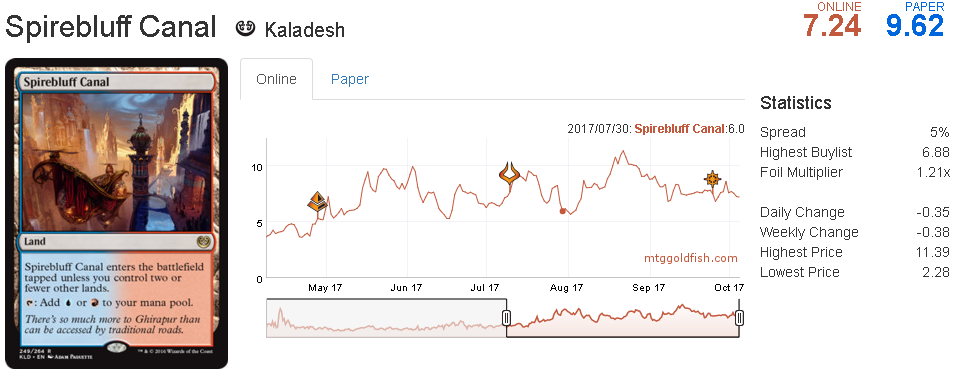
Botanical Sanctum has recently increased in value, though not up to the heights of Spirebluff Canal. Remember, though, that this cycle of lands are Modern-playable and a great investment for the long term. Lands in general have not advanced in price as we in the finance community imagined they would, but they will always still be desirable.

I chose Blooming Marsh and Concealed Courtyard for this list because I think they are likely to make headway in Standard now or around the release of the next set. They could easily jump to the $6 mark of Botanical Sanctum or even the $8+ of Spirebluff Canal with enough tournament results behind them. Either way, lands from Kaladesh are a great investment and I regret selling the few I did.

2. Scrapheap Scrounger

There was an error retrieving a chart for Scrapheap Scrounger

Scrapheap Scrounger, where have you been in Standard!? Did we forget about the most annoying recursive threat the format has to offer? In the last format, I played Magma Spray or another exile spell specifically to deal with this card that never went away. What happened to Scrapheap in this new format?

Once we figure out where Scrapheap Scrounger belongs, there should be some growth there. Honestly I don’t know what deck to play this card in either. But it’s too good to sit on the sidelines forever, especially with so many control decks floating around the format.

1. Ashes of the Abhorrent

There was an error retrieving a chart for Ashes of the Abhorrent

At number one on the list is a new graveyard-hate card, Ashes of the Abhorrent. I understand that this card does a specific thing and most of the time should be a sideboard card. However, the best card in Standard, The Scarab God, is a graveyard-based card! We all have access to this bulk rare as a direct counter with little to no way to remove it once it’s in play. If you take away Scarab’s graveyard ability, you’re left with a five-mana 5/5 that’s not scary at all. This has to be one of the best kept secrets in the format. Again, it’s a bulk rare, so low investment but high reward ceiling.

Additional benefits include being able to make your Horse army larger on your opponent’s turn once you have a Crested Sunmare in play. Also, you can hose opponents playing God-Pharaoh's Gift or Liliana, Death's Majesty.

I hoped you liked this list of Standard specs. I don’t think a lot of people in the finance community are on most of these cards, so hopefully I brought up some great ideas for you guys. Let me know what you think in the comments.

Until next time,
Unleash the Force!

Mike Lanigan
MtgJedi on Twitter
MtgJedi on YouTube

Two Forks: Embarking on a Video Journey

Are you a Quiet Speculation member?

If not, now is a perfect time to join up! Our powerful tools, breaking-news analysis, and exclusive Discord channel will make sure you stay up to date and ahead of the curve.

I’ve been toying around with the idea of getting back into video content, in part because I’ve found myself wanting to do similar things for other games I’ve been playing lately, like Star Wars: Destiny and, most recently, Legend of the Five Rings: The Card Game. Video content is a unique animal in requiring much more work on the front end (recording, voice work, editing, publishing) than written pieces, and the target audience tends to be more focused. With written work, anyone can read if they choose, and what they take from the writing is up to them. Some skim articles for decklists or interesting tech; others settle in for the experience, as the author takes them for a ride. I’ve always considered written content simultaneously more welcoming and more strategic, while video content has always seemed to be more about entertainment and visuals.

It might seem weird to do a written article on the various ways to approach video content, but the more I’ve looked around, the more surprised I’ve been to find basically no information on the subject. With a wealth of content creators out there, and a ton of different outlets for video content (YouTube creators, Twitch casts, website-driven), the avenues and particulars for consuming catered content can be daunting, and it’s something I want to dive into and analyze if I can.

This article won’t be a survey of the different content creators out there, but a deeper look into the types of Magic content that is already being created (and potentially into unexplored areas). It's a collaborative effort, so take notes and let me know your thoughts at the end. If you’ve ever wanted to have your voice heard and potentially shape a final product, "get in on the ground floor," so to speak; this week, you’ll get your chance!

A Brief Overview

I’ll spend a little bit of time going over the various styles of video content I’ve found so far, but the meat of this article focuses on you, me, and what readers want out of future video content in my column. I know Ryland has been doing some traditional video content recently, in a similar vein to the "Trevor Holmes Plays MTGO" series I did a while back, and that stuff has been great to watch. It’s my intention to branch out a little bit, in an attempt to offer something unique while also making sure not to step on Ryland’s toes and take away from the great work he’s been doing. So, let’s get into it!

The "Let’s Play"

The tried-and-true method for video content in Magic, "let’s play" content aims to put the viewer in the driver's seat (or at least provide a third-person view) as they watch the content creator play games, either online or over-the-table. This type of content accounts for the majority of the video offerings out there, as it's easy to watch, entertaining, and offers something for everyone. Players looking for a strategic edge can watch a deck being played to gain matchup insight, and glean info on both how to play or how to beat a specific archetype. Twitch content most often falls in this vein, but with a more casual "live atmosphere" effect thrown in.
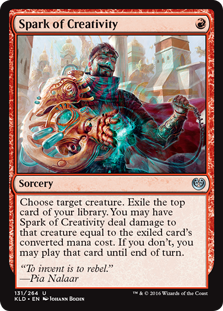
If there is a downside to this type of work, it’s the natural effect of oversaturation, as just about everyone is doing it. Dozens of streamers and just about every major Magic site has let's play content of one sort or another, which isn’t a bad thing, but it does make it difficult to bring something new to the table. Let’s play therefore ends up in this weird space where it's on the content creator to bring something unique in terms of commentary to the table, but only viewers "in the know" are aware of it; most that haven’t watched tend to continue not watching, as they stick to their preferred video series that they know.

The Commentary

We all know this one, as "the commentary" is the most recognizable and wide-reaching of all the types of Magic content out there. SCGLive is the big dog here, and the Wizards’ Pro Tour coverage of course, and the options drop off a cliff from there. The commentary is defined by individuals giving match/tournament analysis from a top-down level, playing neither side but offering insight and entertainment at a macro scale. This type of content has a ton going for it, so take your pick. The best players, high profile events, ‘something for everyone’ in regards to archetype, commentator personality, etc.

The downside to this type of content is it isn’t quick, and the market is basically cornered. While you can jump into a SCGLive stream for 30 minutes, you’ll be pretty lost as far as the whole event is concerned, but that’s not too big of a deal. I remember fondly Saturday’s of old as I did various things around the house and let the stream run in the background. For the simple man, there really isn’t a market for this type of content on the individual level, as its almost impossible to bring the same level of intrigue and entertainment value the Pro Tour offers to a weekly FNM stream, complete with commentary from Joe Schmoe.

The Spoiler Hype

I’ll be honest and say I tend to avoid this type of content like the plague, but I appreciate it for what it is and know this type of work is a big hit with the casual crowd. We all love spoilers, and I don’t fault anyone for how they choose to consume it. Personally, I like to look at new cards in a vacuum, on my own in silence, preferably with a skeptical eye and a ton of sighing and grunting. Still, this type of content is instantly recognizable for what it is, and has a perfect home on YouTube. Quick, flashy, meant to generate excitement—for the most part, this work skimps on analysis and caters to hype. That's not to sound disparaging, as spoiler content does what it does well.
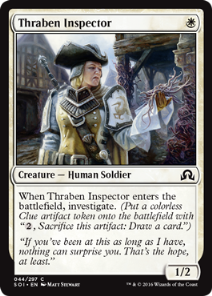
If there’s a downside here, it's that this type of content comes and goes with the season, like business at Party City. If you plan on staying open, you’re going to have to offer up something more. (I have to end the Party City analogy here, because I truly don’t know what they do outside of the window of October 29 to October 30, which is when I’m usually there.)

The Weekend Update

Here’s where I start to branch out and come up with things that I haven’t seen done that much (but then again, I haven’t been looking). I assume some content creator out there has explored this stuff in some capacity, but in my own echo chamber of strategic high level content I haven’t come across it yet. That being said, a sort of news parody-type content for Magic happenings could be very interesting, as the anchors discuss what’s been happening recently, talk about events coming up, throw in jokes, and wrap everything up in a package of agenda loosely labeled as comedy. I went off a bit there, but I think the idea has legs, though I wonder how it holds up when there isn’t much actual news to report on. Nexus would have to stick to Modern, and include relevant goings-on in the community while straying away from Standard talk.

If there’s a downside, its that this type of content will probably rely heavily on writing and production value, and on the skill of the anchor to land the jokes. The line between weekend update content and video podcast is blurry, and in my mind this type of content works best when each offering spins a specific narrative, or tells a story. Jay-Z could musical guest and Ryan Gosling could host, I guess. That might help it be successful.

The "20/20 Investigates"

Another option could be a video offering of something similar to the old metagame updates, using visuals, decklists, and bullet points to work through metagame shifts and trends in a visual manner. This type of content would align most closely with a run-of-the-mill written article, and the script for the voice work would probably stand alone as just that—but it's better, because video!

I kid, but only slightly, as most video content that isn’t commentary or let's-plays works just fine as text content anyways. Let’s not fool ourselves here. Video work, when done well, involves written work applied to visual aids, so it can stand alone as a written piece if we break it down. The value here would come from a clear dissemination of valuable information in an entertaining manner. And big words.

The downside here is that this type of content would probably involve a lot of work on the backend, as I’m basically doing all the research that would normally go into a written article on metagame analysis and trends, but then adding on top of that a swath of graphics, decklists, transitions and the like. Still, if done well, the end result could be pretty sweet.

Real Talk

If there are others let me know, but from a quick look around, and prior experience, I found three primary styles of video content, and came up with two ideas of my own. My thoughts tend to lean more towards something long-form, unique, and geared towards a more invested crowd that is searching for high-level content. The goal is to be just as informational as entertaining, because if we aren’t offering strong analysis, wouldn’t we be better off just streaming? Again, nothing wrong with any of that, just thinking out loud about potential opportunities to plant a stake in some unclaimed land and fly the Nexus flag high.

The options, of course, are endless. Am I in front of the camera or talking over full-screen graphics? Is there a co-host? Should the video content be weekly? I have other commitments as well, so while I’d love to do a full-scale production every week, finding the proper balance between backend work and the quality of the final product is essential.

So here is where you come in. Let me know first what type of video content, if any, you enjoy consuming, and what type of content you would like to see on Nexus that would make you excited to come to the site. The whole purpose here, of course, is to provide something that you want to see. I could go through a primer of every deck in Modern, good and bad, but what’s a primer without seeing the deck in action, and does that mean we’re just doing a more involved let’s play? That’s fine if so, but I want to know what you think before I dive in and start working on something unique. I’m me, which means I’ll leverage my insatiable need to try and do something at least a little different to keep myself interested, which is both a good thing and a bad thing. Rein me in and set me free, so to speak. I’m interested to hear what you have to offer, and excited to see what roads might lie ahead.

Thanks for reading, and you better type something before clicking away!

Trevor Holmes

Kelly Reid’s Review of Card Kingdom’s New Battle Deck!

Are you a Quiet Speculation member?

If not, now is a perfect time to join up! Our powerful tools, breaking-news analysis, and exclusive Discord channel will make sure you stay up to date and ahead of the curve.

Video Series with Ryland: UR Breach

Are you a Quiet Speculation member?

If not, now is a perfect time to join up! Our powerful tools, breaking-news analysis, and exclusive Discord channel will make sure you stay up to date and ahead of the curve.

Hello, everyone! This week I'll be exploring a relatively new archetype, UR Breach. It started appearing more frequently on Magic Online approximately two months ago when a 5-0 list by Gsy was posted. Since then, there have been intermittent 5-0s with some additional success in larger events. User CharLy was able to go 9-0 in the Modern MTGO PTQ in early September, and about a month later Phillip Nelson got 15th in the SCG Dallas Modern Classic. While many improvements have already been made to the lists, I think the archetype is still largely unexplored; it seems a long way away from being fully optimized, which makes it a great choice for testing!

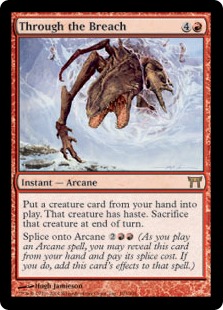
UR Breach is an "A+B Combo" deck trying to cast Through the Breach while holding an Emrakul, the Aeons Torn. Then, with a hasty 15/15 annihilator 6 creature in play, you are able to attack for what is usually good enough. It is important to keep in mind that while Emrakul has protection from colored spells, it can be blocked. Fortunately, within Emrakul's brick of text you will also find "Flying," so some evasion is still present. Even if your opponent can block after annihilator, losing seven permanents (six from the sacrifice and one from the block) will usually be good enough to win you the game eventually—but not always, so it is important to be wary of that possible situation.

In addition, a five-mana spell can often be a tad bit slow in the current Modern environment. As such, the rest of the deck is built to support a "slower" combo. First thing you will notice when you look at the decklist is a complete lack of mana acceleration. Many slower combo decks in Modern will often look to mana acceleration to alleviate their speed issues. For example, in any Ad Nauseam decklist you will find both Pentad Prism, and Lotus Bloom. Ad Nauseam is a particularly good example because it is also an "A+B Combo" deck trying to cast a five-mana spell to win the game. UR Breach, however, looks instead to play a control game on its early turns.
There are three big themes in the decklist that allow us to pursue this angle of attack:

  1. Denial in the form of counterspells.
  2. Mana denial via Blood Moon.
  3. Creature removal via burn spells.

The two big counterspells present are Remand and Cryptic Command. These are incredibly important because they both are so excellent at buying you additional time, while simultaneously digging deeper into your deck. Maybe you tap your opponent's team, draw a card. Maybe you bounce a problematic permanent, draw a card. Maybe you counter an irksome spell, draw a card. Whatever you are doing with these cards will likely give you the time you need, hopefully while drawing you the other half of your combo.

On top of that, Blood Moon can sometimes win you games on its own. This won't often be the case, but by and large, it will be irritating for most opponents. It may cause them to sequence their lands in a strange way or fetch basics they otherwise wouldn't want in order to play around it. Perhaps it will simply stop them from ever being able to double-spell in a single turn. Regardless, Blood Moon is present here to buy you some additional time to try and get you to a point in the game where you can reliably cast Breach.

After considering those two big elements we're left with the removal. The important thing to note about the burn is that is really serves triple duty here. Yes, it removes small creatures, which is incredibly important against aggro decks. However, it also often serves as the final five points against decks that aren't damaging themselves with their mana base. In addition to that, like any good Modern deck we have a plan B. Our plan B is very reminiscent of the Splinter Twin deck of old. (Although true, I hesitate to mention this fact considering the huge discrepancy in power level between these two decks.) Bolt, Snap Bolt, is still a reasonable way to win games, especially when backed up by Vendilion Clique and Electrolyze. This plan is usually more likely to work out when your opponent is hampered by Blood Moon, but it is worth noting that it is always available.

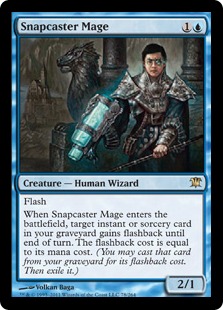
I've actually enjoyed this deck quite a bit so far, and it has been better than I expected. My win rate has not been spectacular, hovering around 60-65%, but as I said, I think there are still improvements to be made to the list. The sideboard is probably the roughest element of the list, but I'm not quite sure how to fix that—it is definitely something I will continue to think about moving forward. Bottom line, I think there is definitely something here, but I'm not sure it's better than the Grishoalbrand deck, the other Breach deck that springs to mind. Certainly these two decks have different approaches to the archetype, but at their core they are both trying to do powerful things with Breach, and both support Blood Moon. I think the extra explosiveness and additional combo present in Grishoalbrand may be better than the tempo/control elements found in UR Breach.

I hope you enjoy the matches as much as I always do! As usual, I'm interested to hear what kind of content you'd like to see moving forward, so I can continue to evolve and improve my videos. Please let me know your thoughts, and any improvements you would like to see concerning formatting, presentation, or whatever else strikes your fancy. If you'd like to see similar content, check out my Twitch channel for some more live Modern!

[youtube https://www.youtube.com/playlist?list=PL261kJ_cAQC_HJJ93ko5Ylp2XckUuDs-K]

UR Breach, by Ryland Taliaferro

Creatures

4 Emrakul, the Aeons Torn
4 Snapcaster Mage
2 Vendilion Clique

Enchantments

2 Blood Moon

Instants

3 Cryptic Command
2 Electrolyze
4 Lightning Bolt
3 Opt
4 Remand
1 Spell Snare
4 Through the Breach

Sorceries

4 Serum Visions

Lands

2 Desolate Lighthouse
4 Flooded Strand
8 Island
1 Misty Rainforest
1 Mountain
4 Scalding Tarn
2 Steam Vents
1 Sulfur Falls

Sideboard

2 Anger of the Gods
1 By Force
2 Ceremonious Rejection
3 Dispel
2 Engineered Explosives
1 Izzet Staticaster
1 Jace, Architect of Thought
2 Roast
1 Spell Snare

Insider: MTGO Market Report for October 11th, 2017

Are you a Quiet Speculation member?

If not, now is a perfect time to join up! Our powerful tools, breaking-news analysis, and exclusive Discord channel will make sure you stay up to date and ahead of the curve.

Welcome to the MTGO Market Report as compiled by Matthew Lewis. The report will cover a range of topics, including a summary of set prices and price changes for redeemable sets, a look at the major trends in various Constructed formats and a "Trade of the Week" section that highlights a particular speculative strategy with an example and accompanying explanation.

As always, speculators should take into account their own budgets, risk tolerances and current portfolios before buying or selling any digital objects. Please send questions via private message or post below in the article comments.

Redemption

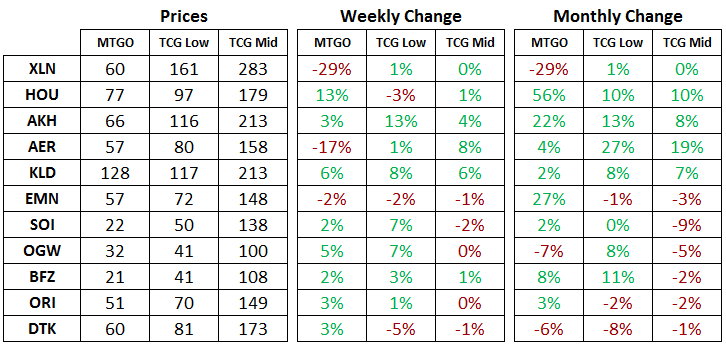
Below are the total set prices for all redeemable sets on MTGO. All prices are current as of October 10, 2017. The TCGplayer low and TCGplayer mid prices are the sum of each set's individual card prices on TCGplayer, either the low price or the mid price respectively.

All MTGO set prices this week are taken from GoatBot's website, and all weekly changes are now calculated relative to GoatBot's "full set" prices from the previous week. All monthly changes are also relative to the previous month's prices, taken from GoatBot's website at that time. Occasionally, full set prices are not available, and so estimated set prices are used instead. Although both Aether Revolt (AER) and Kaladesh (KLD) are no longer available for redemption, their prices will continue to be tracked while they are in Standard.

Standard

Standard prices flucutuated this week, with Amonkhet (AKH) and KLD slightly positive and Hour of Devastation (HOU) up the most on the back of The Scarab God. AER saw a large decline as Heart of Kiran continues to suffer due to the rotation and drop in power of the Mardu Vehicles archetype. Walking Ballista is also back down to about 11 tix after getting as high as 17 tix.

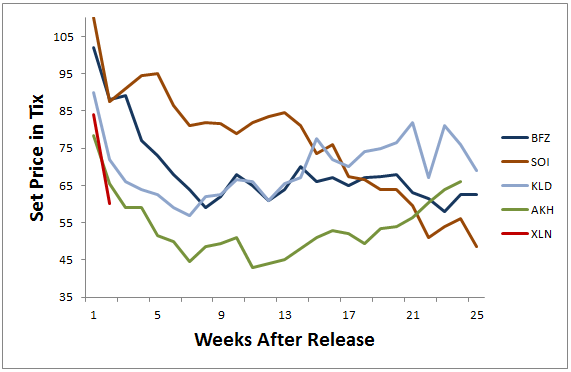
For Ixalan (XLN), the drop is substantial, although the set should be finding price support soon, despite the lack of Standard playables in it. Relative to the last four large sets, XLN is the fastest to hit 60 tix after its release. The best buying window for full sets of XLN will be in January, just prior to the release of Rivals of Ixalan (RIX). If you look at the chart below, you can see how prices tend to evolve for large sets. There's no need to be thinking about speculating on XLN at the moment.

On the singles front, Concealed Courtyard from KLD has seen a substantial price jump in the last week, going from 4 to 8 tix. The Abzan Token archetype has a lot of novelty, and players are buying this key land in order to test out the deck. Botanical Sanctum is in a similar boat, but it's anchoring the Temur Energy mana base. It looks like a great time to be a seller on both of these lands.

Modern

Modern is on sale on MTGO at the moment, with many staples coming down in price from their summer highs. I've started buying up cards for the Market Report Portfolio, including format staples like Scalding Tarn, Karn Liberated and Mox Opal. There are plenty of opportunities for deploying tix right now, although it's still best to shop around and build up a diversified basket. Be sure to avoid cards that will be reprinted in Iconic Masters (IMA).

There was an error retrieving a chart for Mox Opal

The sets that have just rotated out of Standard continue to firm up this week, with Oath of the Gatewatch (OGW) leading the way. Eldritch Moon (EMN) is off a little this week, but is still up 27 percent in the past month. Battle for Zendikar (BFZ) and Shadows Over Innistrad (SOI) are both holding the 20-tix level.

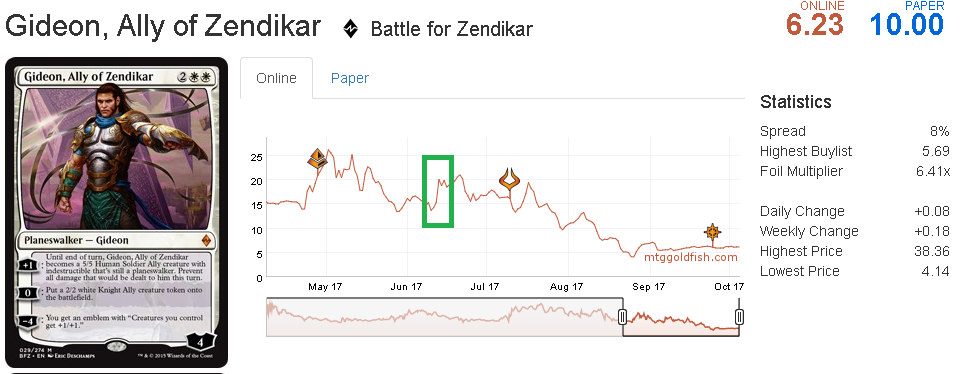
There was an error retrieving a chart for Gideon, Ally of Zendikar

On the paper front, the volatile TCGplayer low prices all flashed green this week for these four sets. This isn't a great indicator that the bottom is in on paper, since TCGplayer low prices are not a reliable indicator as they don't include shipping costs. Nevertheless, it looks like BFZ has turned the corner as its TCGplayer mid price did flash green this week. EMN and OGW both look close to bottoming out, and I anticipate they will go positive in the next two weeks. SOI looks to be the laggard, and I think it will bottom in late October or early November.

Standard Boosters

The combined price of two HOU boosters and one AKH booster crested 7 tix this past week, with HOU current at 2.9 tix while AKH sits at 1.2 tix. At this price, I will not continue to buy boosters for speculative purposes, although the price is still reasonable relative to the expected price in the long term. Unless MTG Arena significantly disrupts drafting on MTGO, I anticipate the price of an AKH block draft set will approach 9 tix by the end of February.

Interestingly enough, the trend on the individual boosters has diverged significantly. While both HOU and AKH were around 2 tix at the time of XLN's release, since then, their prices have gone in opposite directions. This is a great lesson in diversification in the face of uncertainty. If I had chosen to buy one over the other, my short-term return would have been magnified in absolute terms, but it also could be a large negative return.

Without any good reason to pick one over the other, I stuck to buying them in draft set ratios, which is the easiest way to buy and sell boosters to the bots. It will be worth keeping in mind for April, when Dominaria (DOM) is scheduled to be released. At that time, I will be scooping up cheap XLN block draft sets, but if the same pattern emerges, I'll start targeting Rivals of Ixalan (RIX) boosters more aggressively.

Trade of the Week

For a complete look at my recent trades, please check out the portfolio. This week I took the unusual step of selling a component of my complete HOU sets, that being the very popular The Scarab God. At close to 50 tix, this single card is two-thirds the value of the whole set, which is an unusual, though not unprecedented situation. Checking the historical data for a similar situation is a time-honored tradition of MTGO speculation, and in doing so I learned that Jace, Vryn's Prodigy experienced a similar trend as it captured huge gains in the BFZ and Khans of Tarkir (KTK) blocks Standard format. Jace ultimately crested at just under 100 tix, but it eventually came back down to earth, staying mostly in the 20- to 30-tix range after the release of OGW.

There was an error retrieving a chart for Jace, Telepath Unbound

Although it's possible The Scarab God follows a similar track, there are lots of reasons to believe it won't. First of all, with one flagship card supporting the value of the set, there's not much incentive to crack boxes in paper. But if the metagame shifts and all of a sudden there's two or three valuable cards to open, cracking sealed product will start to look a lot more appealing.

Instead of shelling out cards for singles, players will start playing the lottery by cracking boosters. Dealers who need stock will also start cracking boxes. For the moment, there's no economic incentive to do this, so The Scarab God is riding high as the only source of value in the set. And MTGO prices are following suit, as long as redemption is available. However, HOU's redemption window will close in November, and when redemption ends, the price of The Scarab God will be driven solely by its utility in Standard.  A continued supply crunch in paper will not see any relief from redemption after November.

Next, metagame shifts will eventually occur. It might take until the release of the next set, but The Scarab God's relative play value in HOU will have to come down. Right now, this one card is the best card in the set and the most widely played. It's also been subject to heavy buying interest as players acquire their copies. This is not likely to last. Inevitably, the format will speed up as more cards are introduced.

There was an error retrieving a chart for The Scarab God

Lastly, if a card like Jace, Vryn's Prodigy was in Standard during the era of Treasure Chests, you can bet your last tix that it would show up on the curated list at some point. There's no doubt in my mind that Lee Sharpe will add The Scarab God onto the curated list in order to capture its value for awarded prizes.The days of seeing a 100-tix card like Jace in Standard are gone – whenever a card's price gets truly out of whack, there will be a strong incentive to put that card into chests in order to help level things out.

With the sale of this one card, I have almost recouped the cost of my full set HOU position. I'll think about selling the rest in the next few weeks to capture the full gains, but it's possible the best course of action is to just hold for the moment and see how the Standard metagame develops.

UG Merfolk: You Got Ixalan in My Fishbowl!

Are you a Quiet Speculation member?

If not, now is a perfect time to join up! Our powerful tools, breaking-news analysis, and exclusive Discord channel will make sure you stay up to date and ahead of the curve.

The past month has been odd for me. I have been advocating UW Merfolk forever, but almost every other Fish player is mono-blue. It made sense. Perfect, painless mana all the time is really appealing. Then Ixalan happened and everyone is experimenting with other colors. I'm not complaining but it feels weird.

The fact that they're still not talking about UW is a little frustrating. Instead, it's UG that's getting attention. And fair enough, that's what Wizards, weirdly, decided for Ixalan's Merfolk. I guess they all became druids while I wasn't looking. And that's fine. Lots of people go through that phase in college, why would fish-people be any different?

That said, after the initial excitement faded so did interest in altering Merfolk. Players are still experimenting, but the widespread interest seems to be gone. I think that the lackluster early results put a lot of players off. Things that are merely good rather than amazing tend to fade from view. The thing is, I think UG is perfectly fine. You have to adjust your expectations somewhat, but it does work. It just depends on what you want from the deck.

Fresh Fish

While there are a good number of Merfolk in Ixalan, most aren't Modern-playable. This is not surprising, really—Modern is far more demanding than Standard, and that's what Wizards designs for. There are just three Merfolk worth considering.

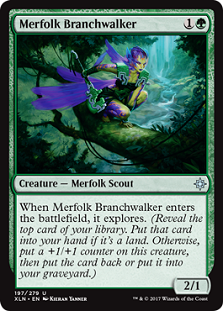
Merfolk Branchwalker - The main draw. Silvergill Adept is the best card in Merfolk, and Branchwalker is most of an extra copy. Not quite, but close. As a result, most of the speculation has revolved around this card.

I've been testing Branchwalker extensively and my conclusion is that explore is about 60% of a cantrip. Scry 1, give this creature a +1/+1 counter is okay, but not really a card. But you do get to draw lands, which is fine. It's just a fine card.

Kumena's Speaker - The aggressive one-drop that Merfolk didn't have. A lot of criticism of Merfolk has focused on its curve being so two-drop-heavy. Speaker promises to change that, though I don't know if...he?...can keep that promise. One-mana 2/2's aren't that impressive anymore (thanks, power creep) and the two-drops are all pretty important. That said, smoothing out the curve to be more aggro than tempo is nothing to dismiss.

Kopala, Warden of Waves - Finally, the card that is of most interest to players who don't understand Merfolk. Or Modern. I believe the speculation that she will replace Kira, Great Glass-Spinner is wrong—Kopala is much worse.

Most removal in Modern costs one mana, which means her ability is annoying, but not burdensome. And irrelevant in the late game. You are much better off maindecking Kira. However, as a sideboard card Kopala has promise, as she's very effective alongside Kira. Requiring two spells and four extra mana to kill a creature is very good. I've run an extra Kira in my sideboard forever, and against decks like Jeskai control I would happily take Kopala instead of Kira the third.
So two possible maindeck inclusions and a sideboard card. Not much, but enough to get players talking. And then not actually doing much with the cards.

Fishbones

Part of the problem is that it's hard to brew with Merfolk. There isn't much you can change because Fish has a very large core. By this I mean that there are a lot of cards that you have to play in every deck. Without them, the deck's identity begins to erode and the strategy weakens. It can be done, but you need a very good reason to do so. Let's consider a typical mono-blue Merfolk deck based on what I've recently seen being played.

Average Modern Merfolk

Creatures

4 Cursecatcher
4 Silvergill Adept
4 Lord of Atlantis
4 Master of the Pearl Trident
4 Harbinger of the Tides
4 Merrow Reejerey
2 Kira, Great Glass-Spinner
4 Master of Waves

Artifacts

4 Aether Vial

Enchantments

4 Spreading Seas

Instants

2 Dismember

Lands

4 Mutavault
4 Cavern of Souls
12 Island

Most Merfolk decks look extremely similar because they have to. Otherwise they wouldn't be a tribal aggro deck. This is a large core at work. It's best to think of this like Earth's crust. I could have sworn we've covered this before, but I can't find the article, so I'll explain here.

The Core

These are the cards that define the deck. If you don't play these, usually as full sets (though you can get away with shaving), you're not playing the deck. In Merfolk, they are:

  • Cursecatcher
  • Silvergill Adept
  • Lord of Atlantis
  • Master of the Pearl Trident
  • Aether Vial
  • Spreading Seas

These 24 cards make Merfolk Merfolk. If you want to get technical, there is an inner and outer core, which are the creatures and non-creature spells respectively. It's a distinction between the key cards and their key support. The creatures represent the two best individual Merfolk and the two best lords. Vial is the mana engine/tempo booster that makes the deck viable, and Seas is a disruptive card that facilitates evasion. They're what makes any Merfolk deck good.

And it's over a third of the deck—60% of the non-land cards. That doesn't leave much room for other things, and there are plenty of cards that you still need in Merfolk for the deck to function.

The Mantle

Mantle cards are important cards that make the rest of the deck better. They synergize with the core, amplify its effects, and/or compliment the strategy in an intrinsic way. In other words, they're cards that you almost always play in the deck, but they're not critical or always four-ofs.
  • Harbinger of the Tides
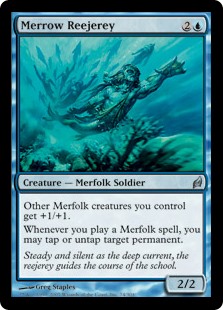
  • Merrow Reejerey
  • Kira, Great Glass-Spinner

Reejerey is the other good lord, and it can become a mana engine when the stars align. It's expensive so it sees less play than other lords. Harbinger is the other best two-drop. It's a fine tempo card, but its main job is curve filler with upside. It can be a big upside, but that's just gravy compared to being a two-mana Merfolk. Kira is the best removal protection around and is critical for a deck that absolutely requires lords in play to function. You need these cards to make the core work, but you don't need the cards to play the deck.

Crust

Crust cards are the hangers-on and flex-spots. They're not intrinsically valuable or even that powerful, but you get value by having them in you deck, either through power boosts or hole-filling. Your deck gets better because you have them, but if you don't, the core strategy isn't harmed.

  • Master of Waves
  • Dismember
  • Mutavault

Dismember is my stand-in for the flex-spot, and I don't think it's controversial to say that any instants you play are crust cards. They exist to fill holes in your linear tribal-aggro deck. Mutavault is a creature-land, and not one you'd play normally except that it benefits from tribal synergies. The deck works just fine without it, but is unequivocally better for its inclusion.
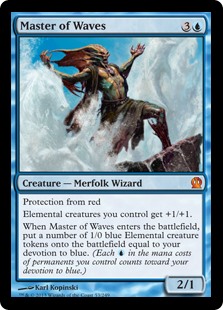
Master of Waves is a parasite, and as I'll discuss later, I don't think it's a necessary one. Master's only connection to the rest of the tribe is his creature type. He only cares about the blue pips in the upper right corner of the card. Put him in another blue deck with lots of permanents, he'd be just as good.

Therefore, the Merfolk crust is ten cards, four of which are lands. That's not much to work with. Even if you stretch into the mantle, you don't gain many slots to mess with. Look back at my history with Merfolk—I never shave more than four cards from the mantle. That's not much room for a brewer to maneuver. For many, this kills the interest. It doesn't matter how much work you put in, you're just not going to leave much of a mark. I see this as a challenge. Given our limited space and the requirements of the deck, the key isn't to massively change the deck. It's about adjusting how you approach the cards and how they reposition the deck.

The Company Conundrum

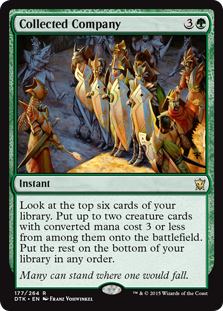
Another barrier to acceptance is that the new cards push you into green. I don't know if you know, but there's this really busted card in green called Collected Company. Company works really well in creature decks, and Merfolk is a creature deck. Therefore it would stand to reason that Company would be good in Merfolk. It hasn't been. Up until now Company has never done enough to warrant inclusion. See, Company is at its best when you're cheating in more than four mana's worth of creatures, preferably ones with enters-the-battlefield triggers. That isn't going to happen in Merfolk. Also, to stretch into green you'd have to play Breeding Pool and weaken your matchups against other aggro decks. Therefore, the community consensus is that Company is unplayable in Merfolk.
I've never been one to accept conventional wisdom at face value, and in this case I believe that I'm right to do so. As I mentioned above, Company is a broken card (Wizards admitted it wasn't really tested). This has led to it being the lynchpin of broken decks in both Standard and Modern. And yeah, it will be better in broken decks because they're broken decks. Whether it's a Bant value deck or Counters Company, if you're already doing something powerful, doing it instant speed at a discount is better.

However, what if you're just looking for a way to find and play more creatures? It's not as good. But it's not bad to use the card as it was (supposedly) designed.

In the Company of Fish

If you're going to try and play Collected Company in Merfolk, you need to make some changes. First of all, the Master of Waves needs to go. It's not a hit for Company, and they're both four-drops in a deck with 20 lands. There's no room. Also, I don't think Master is that good anymore. Going wide has not been working out for me like it used to. If you have a good devotion count against most decks these days, you're probably winning anyway. Also, most of the removal is white and black instead of red, making Master far more fragile. The ability is less relevant and less likely to matter anyway. I gladly cut the card so we can run Branchwalker.

Some have said that you should cut Vial for Noble Hierarch as well, but this seems poor. Hierarch is mana acceleration. Vial is a tempo booster. Tempo is far more valuable to Merfolk than acceleration. The old school Abzan Company ran around 12 non-creature spells anyway, so we should be fine. Remember, we're not trying to maximize Company, we just need the value.

UG Company Merfolk

Creatures

4 Cursecatcher
4 Silvergill Adept
4 Merfolk Branchwalker
4 Lord of Atlantis
4 Master of the Pearl Trident
3 Harbinger of the Tides
3 Merrow Reejerey
2 Kira, Great Glass-Spinner

Artifacts

4 Aether Vial

Enchantments

4 Spreading Seas

Instants

4 Collected Company

Lands

4 Island
4 Misty Rainforest
4 Breeding Pool
4 Botanical Sanctum
4 Mutavault

This deck was fine. It wasn't great in my testing but it wasn't bad either. Company was a perfectly fine replacement for Master, and I didn't miss him in any games. Branchwalker was also a fine card. Not a standout, but fine.

The thing is, that result is deceptive. In a different metagame, this style is the Merfolk deck to play. It just doesn't run out of gas. Ever. You have twelve cantrips and Collected Company to make sure the creatures never stop flowing. As long as you demonstrate basic discipline and don't overextend, you will wear down any attrition deck. You just have too many two-for-ones built into the deck. And with some tuning you could add more. If midrange Jund and true Jeskai control make comebacks, this is what I'd throw at them. They just won't wear me down. Go over me, maybe. But not outgrind me.

Of course, that's not the metagame we face right now. Card advantage is far worse than tempo and velocity. Company doesn't really help with those here. You're not gaining mana, really, and you aren't accelerating. Grixis Death's Shadow and Eldrazi Tron won't care about your cards while they overpower you, while Counters will use Company like it's actually meant to be used to just break you. But if that ever changes, take another look.

...Or Not

With that in mind, you're better off not going for Company and instead going more aggro. I've had far more success switching out Company for Kumena's Speaker and just going full creature rush. This also lets you naturally go wide without relying on a 2/1 and improves your goldfish by a fraction of a turn. It's noticeable, but hard to quantify. The problem is the mana. You're much more vulnerable to Burn and getting raced than before. This is just the price of fetch/shock mana bases. We're gaining stability, thinning, and a flatter curve in exchange for vulnerability to Burn and the severely underplayed Blood Moon.


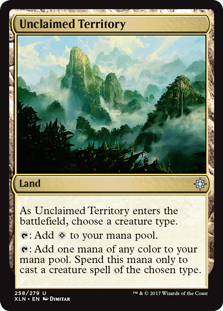
As an alternative, you can go pseudo-colorless by using Cavern of Souls and the strictly-worse Unclaimed Territory instead of Misty Rainforest and Breeding Pool. You don't take damage, can effortlessly cast all your Merfolk, and you sometimes get value when Jeskai players mistake your announcing Territory mana as Cavern mana. The problem is that you severely limit your access to actual colored mana which limits your sidebording options. You can't board in green cards, you don't have enough mana sources. Blue is plausible but still risky (only 8 sources). Colorless is fine but there aren't many options Merfolk actually wants. It may not be worthwhile, but it presents interesting problems that I will certainly enjoy tackling.

School's Not Out

Despite the difficulties, I strongly believe that UG Merfolk does have a place in Modern. What that place is will depend on solving the mana question and on the continued nature of the metagame. Considering that Wizards seems really excited about mono-green Merfolk, I suspect that color will get the power in the next set too. So if you want to update your list, now's the time to get working.

Have you had a different experience? I'm eager to hear it in the comments.

Insider: Standard at The World Championship

Are you a Quiet Speculation member?

If not, now is a perfect time to join up! Our powerful tools, breaking-news analysis, and exclusive Discord channel will make sure you stay up to date and ahead of the curve.

It was a big weekend for Magic. The World Championships were a huge success as far as generating interest in the game.

I was super excited to see Huey take the event down to become the World Champion. Huey is one of the nicest and kindest people I've met playing the game. He has always struck me as somebody who is extremely humble for how talented he is. He always answers questions and makes conversation with the players who want to talk to him or pick his brain. He's a great guy and a very deserving Champion.

I think that Huey taking down the event was good for Magic. It makes people want to play the game. It was a great story.

With that being said, let's talk about what the tournament tells us about Standard and finance. Standard basically broke down into a three-deck format. At least, so far:

  • UB Control
  • Temur Energy
  • Mono-Red Aggro

Not a bad starting place for a format. Rock, scissors, paper: Control, midrange, and aggro. Let's look at each of these archetypes in turn and see what picks they can point us to.

UB Control, by Josh Utter-Leyton

Creatures

2 The Scarab God
3 Torrential Gearhulk

Instants

4 Fatal Push
4 Censor
4 Essence Scatter
4 Disallow
2 Essence Extraction
3 Vraska's Contempt
4 Hieroglyphic Illumination
1 Glimmer of Genius

Enchantments

3 Search for Azcanta

Lands

4 Fetid Pools
4 Drowned Catacomb
4 Evolving Wilds
6 Island
5 Swamp
3 Field of Ruin

Sideboard

1 Essence Extraction
1 Field of Ruin
4 Duress
2 Negate
1 Arguel's Blood Fast
1 Treasure Map
3 Contraband Kingpin
2 Vizier of Many Faces

The flashiest story from the tournament was the emergence of UB Control as a contender. The archetype put two copies into the Top Four. The deck is a pretty typically control deck in most ways. Tons of cheap and efficient one-for-one answers, headlined by the newest staple removal spell, Fatal Push.

There was an error retrieving a chart for Fatal Push

Fatal Push is the reason to play black in Standard. The card is incredibly flexible and always trades up. I think we may be on the verge of a $20 uncommon here. It's just so good. Not only in Standard, but in basically every format where it is legal.

Magic doesn't usually give us cards that are this efficient. It's an oddity to have such a powerful reactive spell in print. There is a reason Wizards has moved away from printing insane removal. It's too good. Push will define Standard and Modern for years to come.


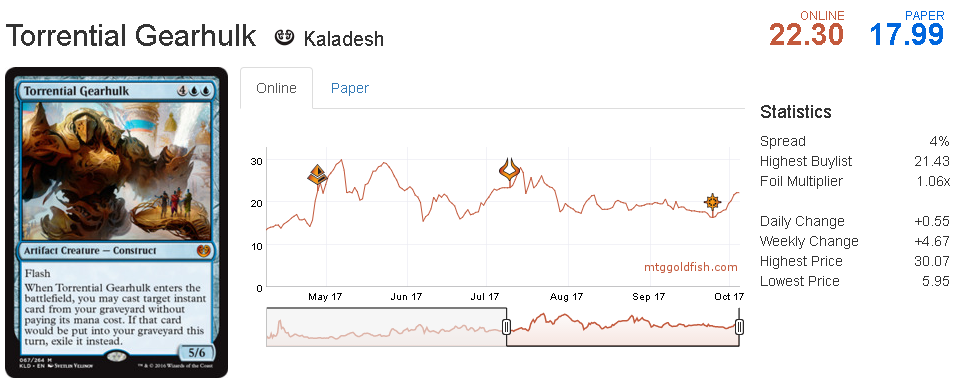
There was an error retrieving a chart for Torrential Gearhulk
There was an error retrieving a chart for The Scarab God

The finishers are also really important. These are cards that have already risen to the top of the Standard display case price range. Flashy blue finishers have always had a way of being super desirable.

I don't know if buying in now is smart (seeing as they are already on top) but these are great cards for trade bait.

There was an error retrieving a chart for Search for Azcanta

The most interesting card from the deck, Search for Azcanta was one of the reasons UB Control was able to thrive. The deck aims to trade one-for-one long enough to flip a Search at some point in the game. Once the Search flips, the deck gains access to a card-advantage engine that can submission-kill the opponent via removal and counterspells.

Search for Azcanta is an interesting speculation target. I feel like it doesn't have a ton of space to gain now that it has spiked. It might be a good time to trade these off as it feels like more of a Standard card than a Modern or Legacy tool.

With that being said, if you see potential for the card outside of Standard, make a move. I just worry that Ghost Quarter and Wasteland make it difficult to ever gain too much advantage in the older formats.

Ramunap Red, by Javier Dominguez

Planeswalkers

1 Chandra, Torch of Defiance

Creatures

4 Soul-Scar Mage
4 Bomat Courier
3 Kari Zev, Skyship Raider
4 Earthshaker Khenra
4 Ahn-Crop Crasher
4 Hazoret the Fervent

Instants

4 Shock
4 Abrade
4 Lightning Strike

Lands

15 Mountain
1 Scavenger Grounds
4 Ramunap Ruins
4 Sunscorched Desert

Sideboard

3 Chandra, Torch of Defiance
2 Chandra's Defeat
4 Rampaging Ferocidon
3 Pia Nalaar
2 Glorybringer
1 Aethersphere Harvester

Red deck still wins. Well, maybe not the whole tournament but enough that you should be afraid of it. Unsurprisingly, not much has really changed outside of slotting in Lightning Strike.

I think it says a lot that people knew this deck was format-defining coming into the event and yet little changed to make it a bad choice. That is typically the sign of a format-defining deck. When you know it's out there but nothing beats it well enough to make it a poor choice.

There was an error retrieving a chart for Earthshaker Khenra

Of all the cards in the deck, Earthshaker Khenra probably has the most room to grow. I could see this being a card that sees play outside of Standard at some point. It just has a lot of stats and abilities for the cost.

Unfortunately, it may also have the most room to fall as well. With a price this high, caution is advised.

There was an error retrieving a chart for Bomat Courier

Bomat Courier is another card that may have legs outside of Standard. It has ticked up a little bit in price on the speculation that red is great. Now that we know red is still great, is the card fixed in place or does it have room to grow?

I think that in order for this card to make the next step, somebody will need to find a place for it in Legacy or Modern. Is this card Affinity material? Red Deck Wins in Modern?

I feel like it has potential to make the jump. It can go up if that is the case. However, if it doesn't it'll slip. Hold or sell accordingly.

Temur Energy, by William Jensen

Creatures

4 Longtusk Cub
4 Servant of the Conduit
4 Rogue Refiner
4 Whirler Virtuoso
3 Bristling Hydra
4 Glorybringer

Sorceries

4 Attune with Aether
1 Confiscation Coup

Instants

4 Harnessed Lightning
1 Abrade
2 Essence Scatter
2 Magma Spray
1 Commit // Memory

Lands

4 Aether Hub
4 Botanical Sanctum
3 Spirebluff Canal
4 Rootbound Crag
4 Forest
2 Mountain
1 Island

Sideboard

1 Abrade
1 Confiscation Coup
2 Torrential Gearhulk
4 Negate
1 Chandra, Torch of Defiance
2 Appetite for the Unnatural
1 Glimmer of Genius
1 Aethersphere Harvester
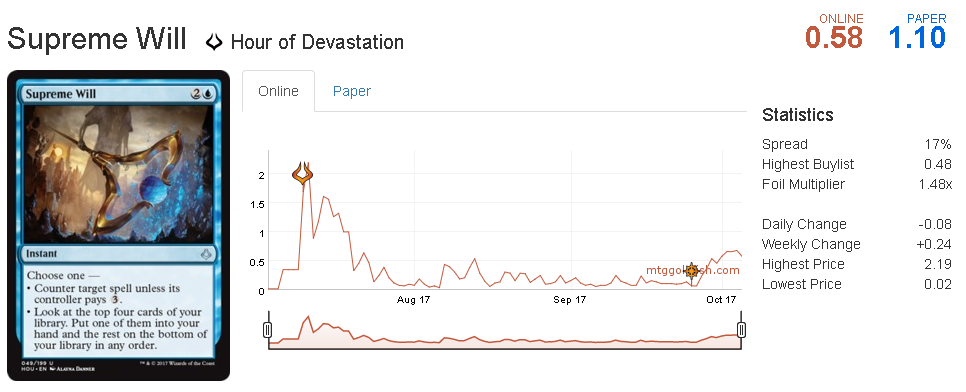
1 Supreme Will
1 Chandra's Defeat

If I had to make a prediction, I'd say this will be the most popular deck in Standard. First of all, it's a good deck. Second of all, it's probably the most "fun" to play, according to the common definition.

Personally, I don't believe that "fun to play" is even a real thing. I like to win. If my cards enable that, I enjoy playing them. However, not everyone is so competitively minded.

People like to play decks that "do a bunch of stuff." Temur Energy certainly does a bunch of stuff. All of the cards draw cards, generate energy, and have abilities. There are a lot of decisions to be made and a lot of lines of play that can be adopted.

I think this is the deck that the most people will gravitate toward. So how can we exploit that in terms of investing?

There was an error retrieving a chart for Glorybringer

Glorybringer seems like a good place to start. It's a great card and very powerful. It's one of the few chase rares that are present in any of these top-tier decks, which is strange.

It is interesting that most of the top decks right now are a collection of commons and uncommons rather than a bunch of insane mythics. Personally, I think this is a good thing for the majority of players. I've certainly played formats where the decks are all a bunch of mythics, and it's nice not to have to spend a fortune to play Standard.

There was an error retrieving a chart for Longtusk Cub

There is a possibility for making some walking-around money by betting on some of the commons and uncommons. Longtusk Cub, Abrade, Whirler Virtuoso, Harnessed Lightning, and Rogue Refiner are all cards that could be in high demand for the next year. I mean, just look at Fatal Push! Investment all-star!

There was an error retrieving a chart for Bristling Hydra

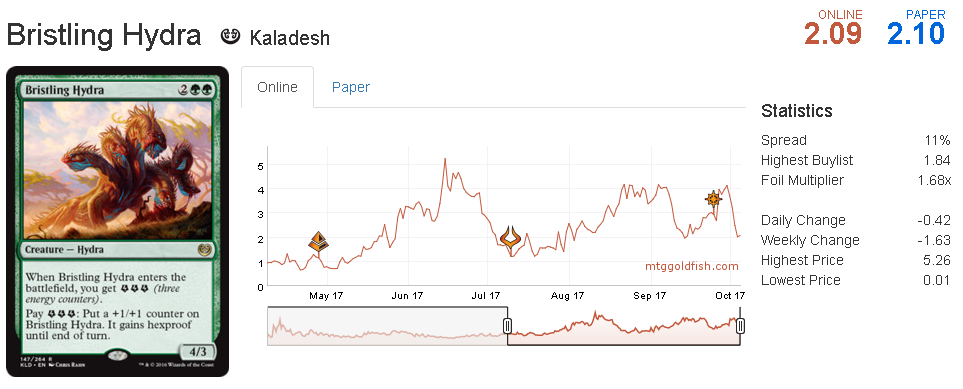
I've been on the Bristling Hydra train for a while now. I've probably mentioned investing in this card at least six times over the past three months. It has ticked up significantly over the weekend. I'd recommend trying to find cheap copies now, while they still potentially exist on TCGplayer or eBay, or at the LGS. Hydra is a format-defining card.

There was an error retrieving a chart for Botanical Sanctum

Last but not least, it may be a good time to make a move on the Kaladesh block enemy fast lands. They've dropped off a little bit but are fantastic cards that will have applications throughout this Standard season and on into other formats in the future. You only get so many opportunities to pick these up for a few bucks before they go crazy.

Conclusion

I don't think Worlds taught us a ton about Standard that we didn't already anticipate over the past few weeks. Temur Energy and Red Deck Wins are the best decks in the format. It was cool to see a control deck come out of the shadows and leave a mark on the format.

Search for Azcanta was the main breakout card. The big question is whether the deck is real or just had shock value in a format where players didn't prepare for it. I'm curious to find out. Also, if you can find a home for Search for Azcanta outside of Standard it could be a real breakout financial card. I have my reservations, but I'm going to be trying it out in Legacy and Modern in the coming week.

Stick to the good cards and it'll make that consistent coin. Really liking the fast lands right now, as well as the rares from Temur Energy. These feel like the Standard cards that will have the highest overall demand in the coming month. I don't anticipate the Pro Tour will destabilize the current metagame dynamic.

Welcome to Standard!

Insider: (Lack of) Masterpieces and Ixalan

Are you a Quiet Speculation member?

If not, now is a perfect time to join up! Our powerful tools, breaking-news analysis, and exclusive Discord channel will make sure you stay up to date and ahead of the curve.

As many of you know, Ixalan is the first set since Shadows over Innistrad and Eldritch Moon to not have Masterpieces. What is also the case is that Ixalan will be the first set on MTGO without Masterpieces that also has the cost reduction involved in opening product that was put into place with Kaladesh. Being aware of this will be critical for making smart investment decisions in the coming months, and I'm here to break that down for your today!

There was an error retrieving a chart for Breaker of Armies

If you recall, Kaladesh was the first set to implement a league structure for Limited. Kaladesh ushered in the variety of offerings we still see today: Competitive Draft League, Intermediate Swiss Draft League, Competitive Sealed League, and Friendly Sealed League.

A critical change accompanied these new offerings: regular Draft events that had cost $14 now cost $12, and Sealed tournaments that had cost $28 now cost $24. This placed a hard cap on the cost of a booster at $3.33 instead of $4.00 if you opened the booster pack in a Limited event.

The rationale given for this cost reduction was that the digital booster packs on MTGO would not contain Masterpieces. I think the hope was that this would prevent Limited leagues from having a noticeably worse EV due to Masterpieces taking up a lot of the set's value in the paper world. It also felt "fair", and perhaps the MTGO team thought that if they didn't want to put the masterpieces in the boosters, then they needed to lower the booster price to avoid making people very angry.

There was an error retrieving a chart for Angry Mob

Anyway, the point is that the booster price was lowered specifically in response to Masterpieces and MTGO's decision not to put Masterpieces inside of boosters. What is interesting about the subsequent sets is that Lee Sharpe decided (thankfully) to keep the digital pack price at $3.33, even though the value of the paper equivalent of digital Ixalan cards would not be depressed by Masterpieces. This is very significant – and yet I've not seen anyone talk about it!

Redemption should provide a higher floor on digital Ixalan prices than it did for Amonkhet block or Kaladesh block. We need only look at the average set prices one month after release to see what impact Masterpieces have had on digital set prices. Let's stick to large sets for the sake of consistency in comparison. Also remember: Goldfish's data is off because they insist on including all the Planeswalker deck cards in a set's financial value. I've manually extricated them so we get an accurate picture of the value of the sets you can redeem and the cards you can open in booster packs.

While it is a well-known fact that the prices of paper cards are substantially lowered if they are in a set with Masterpieces, what is less-often discussed is that this lower paper price forces a set's digital price lower as well (redemption guarantees a link between paper and digital prices, although that link can be and has been manipulated from time to time by Wizards).

As the above chart shows, sets with Masterpieces have had an average value of $69.27 after release and an average Standard low of $55.43. Sets without Masterpieces, however, have usually maintained a higher overall value. One month after release, non-Masterpiece sets have averaged $113.60, with a Standard low of $85.02. In the digital realm, then, sets without Masterpieces tend to have an extra $20 to $50 in them depending on their location in the Standard life cycle. That's a lot of extra value!

There was an error retrieving a chart for Conjured Currency

The burning question I have is whether Ixalan will have price floors and ceilings more similar to Shadows over Innistrad or more similar to Kaladesh. There are a whole host of factors that affect a set's financial value, power level and aesthetic appeal prime among them. Yet redemption ensures a correlation between digital and paper prices, and if the paper price is higher, then we can expect the digital price to be higher as well.

Thus far, however, Ixalan is following a price trajectory more akin to the sets with Masterpieces. Already, the set's value has dipped into the upper seventies, and we're only two weeks into its digital release. Historically, sets without Masterpieces did not dip below $100 on MTGO until at least four to six weeks after their digital release.

I think a variety of factors may be to blame – Leagues ensure that product floods the marketplace faster than it did in the past (I have already played in 52 Ixalan drafts, and there's no way I could have done that in the old queue structure). As I and many others expected, Ixalan is quite a weak set, one that will have a hard time thriving under the shadow of energy-laden Kaladesh. But I think too that once redemption kicks in in a couple of weeks, we will see a floor significantly higher than Amonkhet, the last large set that also did not have a major impact on Standard.

If digital prices fall too low, and it appears they might, I think more sets will be redeemed, thereby bolstering Ixalan card prices on MTGO. Ixalan is the test case, and we'll have to monitor it closely once redemption kicks in. Despite the likelihood of having a similar impact on Standard as Amonkhet, I don't expect Ixalan to reach as low of a floor. I think something in the range of $50 to $60 is reasonable.

Importantly, I think it may bottom out earlier than usual, and it may experience a swifter and stronger rebound than usual. Typically, fall sets bottom out about two months before the release of the January set and slowly inch up. This year this will be easy to remember, because Iconic Masters will be released at roughly the same time that this bottoming out occurs. The mere existence of Iconic Masters bodes well for the future financial value of Ixalan.

There was an error retrieving a chart for Mana Drain

We may therefore have to readjust to some of the old rules of investing before the Masterpiece era. Cards are going to have higher ceilings and higher floors. Cards that for the past year might have bottomed out at 0.50 tix might now bottom out closer to 0.75 tix. The next mythic rare like Chandra, Torch of Defiance or The Scarab God might spend far less time below 10.00 tix than they have over the past year. This is especially true for mythics, because redemption eats up a greater percentage of copies of mythics than copies of any other type. Foil mythics should receive a greater premium than they have for the past year, and mythics in general should receive a substantial boost.

I rarely make large investments before a set bottoms out in price, but I do want to mention that I am keeping a close eye on Jace, Cunning Castaway. Jace, Cunning Castaway is better than he looks, and better than he looks, so 5.00 tix is definitely a price he should beat in the long haul. I'm not buying yet, but I will definitely start buying if his price dips below 4.00 tix.

Signing Off

I want to put in a word about Ixalan draft.

First of all, the EV of drafting is better than it was during Aether Revolt, Hours of Devastation, or Amonkhet, so we are getting a reprieve from needing a 65- to 66-percent match win-rate to break even. The break-even point for Ixalan, 63%, is still higher than it was historically, but it makes a significant difference for players who tend to win about 60% of their matches.

Kaladesh Draft was the last time we had a break-even point this "low." I think the key to the Ixalan format is understanding which cards are super important for making different archetypes work, and making sure that you don't commit to a certain archetype until you acquire some of these important cards. You shouldn't go RW Aggro unless you pick up multiple Imperial Aerosaurs and Territorial Hammerskulls (and did those two Pteredon Knights wheel?). Successful midrange to durdly GW or RG decks will have multiple Grazing Whiptails. Only commit yourself to blue aggression once you've gotten a few Storm Fleet Aerialists or Shaper Apprentices, and don't take three Siren Lookouts and expect to get the requisite two-drops later.

In a nutshell, look at cards like Siren Lookout and Merfolk Branchwalker and recognize that they can fit into a wide array of archetypes – don't let your mind force those cards down cookie-cutter paths and color pairs (e.g. I've 3-0'd with an aggressive GW deck with a lot of merfolk synergy).

Leave any questions and comments below and I'll get back to you! Until next time, have fun drafting!

Insider: Investigating Opportunities in Modern

Are you a Quiet Speculation member?

If not, now is a perfect time to join up! Our powerful tools, breaking-news analysis, and exclusive Discord channel will make sure you stay up to date and ahead of the curve.

As Eternal Weekend approaches, I anticipate much of the Old School card hype will reach a climax. After the event is over, there will be a subtle decline in the format as players disperse. This may create some slight downward pressure on card prices, although I fully expect most of the movement to stick on any playable card in the format.

Meanwhile, Standard hype is peaking—you may not have noticed because it still feels like Ramunap Red and Temur Energy continue to dominate the playing field despite the rotation that occurred. While I haven’t seen too many novel, inspiring builds, the shift in the format has generated sufficient opportunity to profit on cards like Deathgorge Scavenger and Hostage Taker. And of course the Pro Tour will highlight any new innovations from the pros.

There was an error retrieving a chart for Hostage Taker

At the same time, Commander has recently become one of the most popular formats. Wizards has hit home runs with their recent Commander product offerings and it has been a bedrock for profit. Speculators have enjoyed buying up foils that were once considered bulk but now have a reason to be owned thanks to the rise in Commander’s popularity. This will continue to be a mainstay going forward.

But do you know what format has been largely irrelevant in the world of MTG finance lately? Modern. It seems that the format has gotten rather stale in terms of financial opportunity. And while many still swear by the merits of the format, one cannot argue with recent price stagnation as seen on many of its key staples like Snapcaster Mage.

There was an error retrieving a chart for Snapcaster Mage

What’s going on with Modern? Could this be the investment opportunity of winter 2017? Or will Modern cards continue to decay in value as the format ages? Let’s investigate!

Recent Price Trends

As I mentioned, many critical Modern staples have seen their prices flatline. Take a look at one of the most played rares in the format: Wooded Foothills.

There was an error retrieving a chart for Wooded Foothills

The card has been rangebound between $16 and $17 for over a year and there’s no indication this will change in the immediate term. What’s more, there are 319 vendors as of Sunday morning for the Khans of Tarkir printing of this card. Without some major speculative buying, there may not be sufficient natural format growth to absorb so many copies of this card—even if purchased two or three at a time.

This will likely be the case for other fetch lands, as well as Thoughtseize, another format staple. The reprinting of Thoughtseize in particular will present yet another headwind for one of the format’s defining cards.

Browsing through Modern’s other top played cards, it’s difficult to find something that hasn’t recently been reprinted. All the fetches, Snapcaster Mage, Stony Silence, Inquisition of Kozilek, Liliana of the Veil, etc. have all been reprinted in some capacity. This applies continuous pressure on prices and prevents them from breaking to new highs without significant rise in demand.

There was an error retrieving a chart for Inquisition of Kozilek

Then as you reach even deeper into the Modern pool, you do start to uncover cards that haven’t been reprinted in a while. But these cards carry with them additional risk of being reprinted again in a subsequent Masters product.

Chalice of the Void hasn’t been printed since the first Modern Masters set, but it is worth around $80 so can there really be additional upside? Likely any upside potential is far outweighed by downside risk at another reprint. Celestial Colonnade cracks the top 50 cards in Modern and it has never been reprinted. But do you really want to take the risk on this near-$40 card when you know it has to be on Wizards’s radar? Again, the upside doesn’t seem worth the downside risk.

Modern’s Near-Term Catalysts

It’s not all doom and gloom for Modern, however. Pro Tour Rivals of Ixalan is coming up in less than four months and will be the first Modern Pro Tour in quite some time. If there is any room to innovate in the format, professional players will surely find it.

Perhaps the major event coverage will remind some Modern fans of why they enjoy the format so much. More importantly, any players who recently got into competitive Magic may see what Modern has to offer on a grander scale and start to build up a Modern collection of their own. This would be the required outcome to catalyze Modern prices.

We also know that Masters 25, which releases in March 2018, will have a different theme than the traditional Modern Masters sets. Perhaps this will put more focus on reprints of Commander, Legacy and Vintage staples and less on Modern cards. Cards that dodge reprint in this set should have smoother sailing for at least half a year and this could buoy prices a bit.

Lastly, if Standard does go stale quickly as it has in recent history, this could also drive more interest in other formats. Modern being more accessible than Legacy and Vintage makes it a natural choice for players who are tired of seeing their decks rotate. Again, the only way Modern prices will rise from here is if new players enter the format. Otherwise prices will stagnate on anything that doesn’t have supplemental demand from other formats.

Looking Ahead: My Take

There enters my strategy. For all of 2017 I have basically ignored Modern speculation altogether. I missed a few spikes when the Death's Shadow strategy broke out, but all in all I find there has been more opportunity to profit elsewhere.

This has been the year of the Reserved List and Old School cards, and I have been riding this wave as much as possible. When looking at a chart for, say, Polluted Delta, and comparing it to the chart of Guardian Beast, it’s clear why I have chosen to invest in the latter and not the former.

There was an error retrieving a chart for Polluted Delta
There was an error retrieving a chart for Guardian Beast

But as I mentioned at the top, I think some of this Old School interest could finally settle down once Eternal Weekend passes. I do believe there will be a shifted focus towards Modern as the Modern Pro Tour approaches. Therefore, I wouldn’t be opposed to acquiring some key Modern staples that are unlikely to show up in Masters 25. Ideally, you find the cards that have overlap in other formats as well, as that gives you the most robust demand profile.

As for specific ideas, I have a few. But they all carry the giant caveat that these need to dodge Masters 25 to be worth pursuing.

What do you all think about The Dark printings of Blood Moon?

There was an error retrieving a chart for Blood Moon

Blood Moon is the 42nd most played card in Modern according to MTG Stocks, and it was just reprinted not long ago in Modern Masters 2017. This suggests to me the card isn’t likely to be reprinted again so quickly. Since being reprinted the Modern Masters 2017 copy has dropped from $30 to $20, however, The Dark’s printing has remained largely flat.

There might be just enough demand from Old School to keep this card afloat regardless of reprinting anyway, which is why I particularly like this target. The only downside is that there are a ton of copies in stock at TCGplayer, so it may be a while before this card sees another pop. Still, LP and NM copies are a bit more sparse, and Channel Fireball has thrown a floor in the market by offering a $40 buy price. This should help make this investment very low risk with plenty of upside.

Another target I like for similar reasons are the Antiquities printings of the Tron lands.

There was an error retrieving a chart for Urza's Tower

These lands are 33-35 in rank of most played Modern cards. Just like with Blood Moon, no amount of reprinting will take away from the original cards’ value. While Tron isn’t a major Old School strategy, the nostalgia and appeal of original printings should help keep the classic lands afloat and give you gradual upside over time.

Lastly, I’m going to go out on a limb and say that shock lands—particularly popular ones like Stomping Ground—may finally have their day in the sun.

There was an error retrieving a chart for Stomping Ground

Despite the massive printing of Return to Ravnica block, we’re getting to a point now where these lands are approaching five years in age. I don’t think they make any sense as Masters 25 reprints, so I could definitely see upward movement come the Modern Pro Tour. These lands define the format in many ways, and so many decks rely on them for their mana bases.

The desirable shock lands had been bottoming for a year or two, but they have finally shown movement over the past two years. In early 2016 Stomping Ground was $10 and now it is approaching $15. While hardly worth the return, the right catalyst could certainly send these higher if the Pro Tour causes enough movement.

Wrapping It Up

After writing this article and researching the data, I honestly have a tough time getting excited about any Modern specs. The format has been rather stagnant in its player base, and this has really stunted any financial growth. The booming years of Modern’s profitability are behind us now, which means we need to be very strategic in our investing.

I tried to present a few options for those who insist on having Modern exposure as we head into the Pro Tour. But in the end, I think if you want to invest in a non-rotating format you have two options. You can either buy into fringe Modern cards you think will break out in the Pro Tour, or you can put your money into formats that are experiencing actual growth.

Commander and Old School are the two thriving formats that come to mind. As new players get in (or build more decks), the available cards on the market dwindles—this gives you that pop in price. Without a growing player base, a non-rotating format will really have a tough time generating profits for speculators.

This is a major reason why I’ve focused so much on Old School in my writings. It’s the format I am most familiar with at this point, and I recognized the growth combined with limited card pools that can generate massive price movements. That used to be Modern, but those days are long gone.

If you ask me, Modern speculation should be accidental (via speculation on Old School or Commander) rather than deliberate, except for niche cards that aren’t on people’s radars yet. Anything more is a bet on further Modern growth. This is possible with the upcoming Modern Pro Tour, but I find it unlikely. Thus, I’ll stick with what I know.

Sigbits

  • I’m a bit confused by this one: I have now sold a handful of Varchild's War-Riders on eBay for around $3.50 a copy. This is below TCGplayer, so the sales make sense, right? Except Star City Games has 32 copies in stock between NM and PL conditions with a price tag of $1.19 to $1.49. This is less than half the price I’ve been moving copies at and it’s in line with Card Kingdom’s buy price. This is a rare store-to-store bit of arbitrage that someone can jump on if they’re so inclined.
  • It’s no surprise that Erhnam Djinn spiked as it’s a major Old School staple. The price won’t stick this high, but I can see a $200 price tag quite easily going forward. For now Star City Games is sold out at $149.99, but I am fairly confident their price will be higher when they restock.
  • Now that we’ve seen Serendib Efreet and Erhnam Djinn pop, I think Arabian Nights City of Brass could be next. I have gone out of my way to pick up a couple copies I want for Old School, but these have gotten fairly sparse and expensive. I do see Star City Games has three NM copies in stock, but their $199.99 price tag is a bit staggering at this point in time. Still, I am confident these will sell eventually—it’s a matter of when, not if!

Insider: Studying Trends for Better Speculation

Are you a Quiet Speculation member?

If not, now is a perfect time to join up! Our powerful tools, breaking-news analysis, and exclusive Discord channel will make sure you stay up to date and ahead of the curve.

Hello, everyone.

This week, I'm going to write about something on studying trends and metagame shift to make your speculations more accurate. As you all know, the prices of singles on MTGO fluctuate very rapidly. It's hard to buy into hype cards that spike after certain announcements or events unless you are literally in front of your PC when those things happen. Another thing is that if you follow picks from weekly articles like this one, you might miss out some opportunities during the week – a weekly article isn't frequent enough for the rapid fluctuations we see on MTGO! So, we are going to study some criteria to predict cards that are likely going to be increasing in price.

Cyclical Movements

Cyclical movements in trends means the price of specific singles are moving very consistently up and down. Usually, if you can identify these cards at a low point, it will be easy money for you. Last season, some of the creature lands like Shambling Vents and Hissing Quagmire were very good picks under this category. Some graphs might not be as consistent as the diagram above, but they are actually cyclical if you take a look at at least six months of data. As of now, below are some examples:

Spirebluff Canal is the  land in Standard that blue-red decks want. Occasionally, decks like Standard Blue-Red Control and Modern Blue-Red Gifts Storm or any other decks that plays this fast land will become popular and its price will go up with the demand. This land might not be as profitable as the two creature lands last season mentioned above, but it has some room for us to gain profit.

Bristling Hydra, meanwhile, is one of the best cards in energy-themed decks. For the past four months, the price of this card has reached multiple points above 4 tickets, which makes it pretty convincing that it has a very good potential to go up in price again in the future.

Metagame Shift

The metagame is changing from week to week. This week, the best Standard deck might be Sultai Energy, but it might not look so great after the tournaments next week. A general guide on how to predict metagame changes is by deck types, as in control/aggro/midrange. The Standard and Modern metagames are like a rock-paper-scissors scenario, where control decks have advantage against midrange, midrange are stronger against aggro, and aggro will easily beat control before it stabilizes. This is pretty straightforward. So if Sultai Energy is the best deck during the current week and it's a midrange deck, you might want to speculate on some control-deck components such as lands, control finishers, and frequently used spells for the upcoming weeks.

Torrential Gearhulk and Supreme Will have already increased in price last week after the release. I didn't get to pick up these cards before then, but its good to learn from these trends for better speculations in the future.

Two weeks ago, I talked about a few sweepers in the Standard format like Fumigate, Bontu's Last Reckoning and Hour of Revelation. Fumigate did go up in price to near 8 tickets after Ixalan's release, which is way above my prediction, while Last Reckoning also went up to my predicted price. I hope you guys made a good profit from these ones! The following screenshot is the initial targets that I set two weeks ago, and then the price trends as of this week:


Foreseeable Bannings

Ever since Smuggler's Copter was banned in Standard, WotC has been quite aggressive in banning cards that make formats unhealthy. Sometimes, bannings are predictable, like Splinter Twin and Aetherworks Marvel. When a deck is so good that everyone is playing it (meaning the format is unhealthy), then you need to be alert that part of the deck might be banned in the next B&R announcement.

The considerations to make here are: 1) get rid of cards that are related to the targeted card, 2) think of a deck that will be good post B&R. Let's take the Marvel ban as an example: the card that is related to Marvel was Ulamog, the Ceaseless Hunger, so it was important to get rid of Ulamog as well when you were selling your Marvels.

In addition, you might have been able to predict that green-black decks (Verdurous Gearhulk) and Mardu Vehicles (Gideon, Ally of Zendikar) would become the next decks to beat after bannings. In this case, you would have wanted to pick up cards from those decks when they were still cheap. Lets take a look at the graphs of the mentioned cards:

From the graph, I've highlighted the part when the banning happened. As you can see, the price drops rapidly downhill. Thus, you know why its important to predict these changes before its too late.

At the same time, certain cards that were not in the Marvel deck increased in price at the same time that Marvel pieces were decreasing, as shown above. I personally did not pick up these cards, but by studying trends like this, perhaps we can all be more on top of these types of shifts the next an opportunity comes up.

Reprints

When cards are confirmed to be seeing reprints in a new Masters set, they will usually drop in price, and then slowly increase again once the draft events are over. In the meantime, when the spoiler is completed, cards that are in the same format but not getting reprinted will increase in price – players and speculators alike know these cards are unlikely to get reprinted until the next Masters set.

Let's look at some of the cards that are reprinted in Modern Masters 2017. Liliana of the Veil and the Zendikar fetchlands like Scalding Tarn dropped a lot in price when they were revealed in spoilers (as shown in the graphs above, the obvious drop before MM3 release). However, the drop was only temporary, and after a few weeks, their prices slowly went back up. This kind of trend will make us a lot of tickets if captured correctly.

Fulminator Mage and Horizon Canopy are cards that were not reprinted in MM3. As shown in the graphs above, there's an obvious rise in the price. Do take note that the correct time to buy these cards is when you are very sure that they will not get a reprint. The number-one rule with this type of pick is always sell into the hype (20- to 25-percent profit), because you won't know when the price reach its peak and it's risky to keep them for too long a time.


Alright guys, that's all for this week. I want to thank you all for reading, and I'll see you all again next week!

–Adrian, signing out.


Insider: Lessons from Selling on TCGplayer

Are you a Quiet Speculation member?

If not, now is a perfect time to join up! Our powerful tools, breaking-news analysis, and exclusive Discord channel will make sure you stay up to date and ahead of the curve.

Welcome back, readers!

Back in January I mentioned that I had started a TCGplayer store. Since then I've been tracking all my Magic expenses throughout the year (both buys and sells). While I'm certainly no power seller, I've got over 100 total sales so far. I decided to dig down into the data I've been collecting and see if there was any information worth sharing.

For reference, my initial article about starting my store can be found here. I'll admit that I recently ignored my own advice in that article and put up cards under the $5 mark since the buylist value was so low (and I hoped to sell multiple copies which can help recoup the loss). Here is my list of sales for the month of September.

TCG Sales (September 17) Qty Sold Total Sale Value Buylist Price Buylist Value Difference
1x Foil Hull Breach 1 $5.36 1.58 1.58 $3.78
1x Exsanguinate 1 $1.75 1 1 $0.75
4x Opt 4 $7.33 0.5 2 $5.33
23x Opt 23 $36.67 0.5 11.5 $25.17
2x Watery Grave 2 $24.44 11 22 $2.44
4x Opt 4 $7.86 0.5 2 $5.86
4x Illusionist's Bracers 4 $8.01 0.9 3.6 $4.41
1x Paradox Haze 1 $1.22 1.5 1.5 -$0.28
3x Opt 3 $5.30 0.5 1.5 $3.80
1x Darksteel Plate 1 $6.56 7 7 -$0.44
1x Exsanguinate 1 $0.89 1 1 -$0.11
2x Tectonic Edge 2 $1.77 0.75 1.5 $0.27
4x Hedron Crab 4 $8.75 2 8 $0.75
1x Sage of Fables 1 $2.45 0.8 0.8 $1.65
3x Mwonvuli Acid-Moss 3 $4.12 0.5 1.5 $2.62
1x Sage of Fables 1 $2.45 0.8 0.8 $1.65
4x Spirit Link 4 $3.51 0.62 2.48 $1.03
1x Sage of Fables 1 $2.45 0.8 0.8 $1.65
1x Stony Silence 1 $3.51 3.5 3.5 $0.01
2x Stony Silence 2 $7.87 3.5 7 $0.87
1x Stony Silence 1 $3.51 3.5 3.5 $0.01
2x Soothsaying 2 $5.69 1.5 3 $2.69
1x Sulfur Falls 1 $4.17 4.34 4.34 -$0.17
1x Opt 1 $1.03 0.5 0.5 $0.53
1x Steam Vents 1 $8.97 8.5 8.5 $0.47
3x Expedition Map 3 $5.69 1.25 3.75 $1.94
1x Paradox Haze 1 $1.22 1.5 1.5 -$0.28
1x Purphoros, God of the Forge 1 $12.19 11.5 11.5 $0.69
2x Steam Vents 2 $18.78 8.5 17 $1.78
1x Karador, Ghost Chieftain 1 $5.25 5 5 $0.25
1x Purphoros, God of the Forge 1 $12.19 11.5 11.5 $0.69
1x Sulfur Falls 1 $4.17 4.34 4.34 -$0.17
4x Mwonvuli Acid-Moss 4 $5.78 0.5 2 $3.78
1x Carpet of Flowers 1 $3.95 4 4
1x Sedge Sliver 1 $6.78 6 6 $0.78
4x Paradox Haze 4 $7.87 1.5 6 $1.87
1x Purphoros, God of the Forge 1 $12.19 11.5 11.5 $0.69
2x Paradox Haze 2 $3.51 1.5 3 $0.51
3x Rishadan Brigand 3 $27.29 4.25 12.75 $14.54
1x Rishadan Brigand 1 $8.53 4.25 4.25 $4.28
3x Rishadan Footpad 3 $8.05 0.16 0.48 $7.57
3x Opt 3 $5.56 0.5 1.5 $4.06
16x Shadowborn Apostle 16 $19.63 0.54 8.64 $10.99
Total   $342.80   $219.86 $122.94 

The farthest-right column is the difference between what I sold each item for and what a buylist would have paid. As we'll get into below, I should have put more effort into comparing these options before putting cards up.

This data has shown me a lot about selling on TCGplayer. Here are my main takeaways.

The Pitfalls of Cheap Cards

Cheap cards can actually be a source of great profit, but they carry a lot of risk. Once Opt was spoiled in Ixalan, the old Invasion copies went from bulk to almost $2 each. As the buylist price hadn't really budged yet, there was definitely a lot of profit to be made by listing them asap.

The profit margin would have been good regardless (because it jumped so much higher than buylist prices). However, the important fact was that players were far more inclined to buy more than one (typically I sold 3+ at a time, with only one exception). The biggest hit on the little stuff is usually the flat $0.5 PayPal fee per transaction, so this helped push the profit margin up further.

Another important point to note here is that I switched over to free shipping mid-month. This encouraged a lot of buyers to buy one copy of a cheap Commander card (like Exsanguinate), which obliterated my profit margins. Unfortunately you have to have a TCGplayer Pro account to set a minimum purchase order on free shipping. I have since pulled everything under $3 off of my inventory.

There was an error retrieving a chart for Exsanguinate

Don't put up cheaper Commander cards (any under $4). These tend to be purchased one at a time. Unless you luck out and have a buyer purchasing multiple singles, you're more likely to come out ahead by buylisting these types of cards. You can counteract this by not offering free shipping, but I did notice a dramatic increase in total number of sales after I switched over to free shipping.

Comparing to Buylist Prices

In a few other instances I lost money even on cards greater than $3 simply because the buylist price was more aggressive than I had thought. Had I checked the buylist for Sulfur Falls and Darksteel Plate, I likely would have simply shipped them off to the buylist and made more money (though granted not a lot more).

There was an error retrieving a chart for Darksteel Plate

I didn't do this because it's easier (and less time consuming) to just put up the cards all at once and not worry about a few cents here and there, but if you're doing this full time the pennies can add up over time.

Using the Price Differential Report

I got a lot of sales after I switched over to free shipping. Part of the reason for that is when I originally priced my cards I factored in the shipping cost (somewhat). Before switching to free shipping, I took my inventory offline and did a Price Differential Report.

This is a very valuable tool that allows you to quickly compare your prices versus the lowest offer on TCGplayer. Sometimes you don't want to match it, but sometimes cards have fallen in value and your price is much to high to be competitive. You can also catch when your price is too low (before purchasers find it out for you). If you're going on vacation it's a good idea to turn your inventory off, and to run this report before turning it back on.

My report showed that I was competitively priced on most things when I dropped the cost of shipping. However, as I stated earlier I failed to account for how that would affect all the one-of small-dollar purchases. Just because you're competitively priced doesn't mean you want to sell at that price.

Selling into Hype

As you can see, near the end of the month I managed to make a good $52.40 selling into the hype of the new Pirate Stompy Legacy deck that's floating around. I pulled all those cards out of bulk I had purchased, so the profit margin is through the roof. Unfortunately, I sold all of them before they re-spiked (the Rishadan Brigands are now sitting at $20 and I sold at $10.75). But I don't honestly think the deck will last.

There was an error retrieving a chart for Rishadan Brigand

Before listing my copies I checked MTGTop8 to see if Pirate Stompy had had any success on MTGO dailies. It hasn't shown up in any of the top spots on any Legacy tournament listings on the site. I sold the Rishadan Footpads after I noticed that the deck played four copies of those. Given it's a single-print Mercadian Masques uncommon (which likely makes it about as rare as a modern-day rare now, if not more so) it seemed like I could easily set a new price. They sold within 30 minutes at $3.40 a piece.

There's definitely a good opportunity for strong profits if you see a card spike dramatically and there is a similar card that hasn't budged yet. I feel the same way with all those Opts I sold. Every single one was pulled from Invasion bulk commons I purchased at the going rate, which means they too had a massive profit margin.

There was an error retrieving a chart for Opt

I'm honestly surprised their price has remained so high now that one can get Ixalan versions for less than half. I imagine as more Ixalan gets drafted we will see the price on both drop significantly, so I urge anyone sitting on a bunch of copies to move now. The buylist price on the card has had plenty of time to correct itself and it's still sitting at only $0.5. This says that stores do not think their current price will stick either.

Card Condition

One major thing to consider is that buylist prices are almost always for Near Mint (NM) copies of cards. So the comparison I did above is only accurate for NM copies. I am a pretty harsh grader so a lot of the cards I sold were actually listed as Lightly Played (LP), or Moderately Played (MP) in some cases.

Buylists that do buy played cards usually offer a percentage of the NM price. Typical numbers are 70-80% for LP and 50-60% for MP, with Heavily Played (HP) often being more like 30-40%.

Thus it can still be more profitable to sell a lower-priced LP card on TCGplayer (you can often charge close to 90% of the NM price) than to buylist that card, even if the NM buylist price is above what you make (after fees and shipping).

Conclusion

I learned some valuable lessons selling on TCGplayer so far. I outlined some of the pitfalls and mistakes I've made and hopefully emphasized some ways for you to make extra money. TCGplayer is one of many platforms you can use to make money through Magic, and as with anything the better acquainted you are with the details the more you can make.

QS Cast #79.5: Insider Only: Final Worlds 2017 Preparations

Are you a Quiet Speculation member?

If not, now is a perfect time to join up! Our powerful tools, breaking-news analysis, and exclusive Discord channel will make sure you stay up to date and ahead of the curve.

The QS Cast returns! Chaz Volpe, and Tarkan Dospil come together as the new panel – and in this episode they discuss the following:

  • Insider Only Cast - Worlds pre-event preperation.
  • Final Considerations, extracting choices from trends leading into the event.

Cards discussed:

Also, it's wise to continue to hold mythic's like Herald of Anguish through the event. We will provide coverage as it comes, and will be on the look-out for cards like these to give Insiders a chance to sell-out or continue to hold based on performance.

Enjoy!

Find us on Twitter: @ChazVMTG @the_tark

Want Prices?

Browse thousands of prices with the first and most comprehensive MTG Finance tool around.


Trader Tools lists both buylist and retail prices for every MTG card, going back a decade.

Quiet Speculation