Are you a Quiet Speculation member?
If not, now is a perfect time to join up! Our powerful tools, breaking-news analysis, and exclusive Discord channel will make sure you stay up to date and ahead of the curve.
My Ixalan spoiler review covered cards leaked back in June, and was published well before Wizards revealed the full expansion. As such, it didn't discuss Chart a Course, a spell spoiled during the Magic: Arena unveiling that has me giddier than anything else in the set.
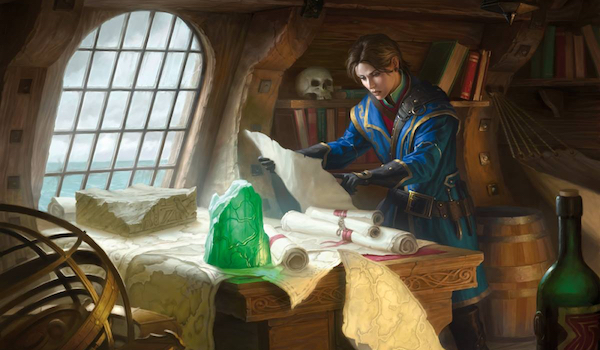
Chart a Course has shown promise in my go-to Delver deck, Counter-Cat. This article closely analyzes the card there, primarily in relation to its main foil, Snapcaster Mage.
Plundering Secrets
I've written about drawing extra cards in threshold decks before. In short: it rules. Thresh is loaded with cards so efficient it can afford to make tempo-negative plays (like cast cantrips) and yet play to establishing and maintaining a board advantage, so drawing into more of them at a discounted rate is hugely powerful. While Chart a Course is no Gush or Treasure Cruise, it does offer thresh players more cards on the cheap.
Chart a Course: Face Value
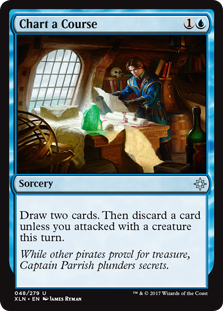
Chart has something special over equally costed selection cantrips like Anticipate and Strategic Planning: it fixes our hand. Cantrips that interact with the hand are among the best (see: Brainstorm), as they give casters more options. The benefit of hand-fixing on a cantrip is so high that I've included Faithless Looting in decks with little to no graveyard synergy.
Obviously, though, Chart excels in a deck that attacks throughout the game. Its ensuing Divination mode vividly evokes Night's Whisper. Whisper is seldom played in Modern outside of critical-mass combo decks like Grishoalbrand, for a couple reasons: first, Modern has always been tempo-centric, deterring players from casting two-mana sorceries that don't impact the board; second, Whisper's life loss adds up over multiple copies, further compounding the tempo issue. Modern decks skip out on Dismember for similar reasons, despite the card being one of the most efficient and reliable kill spells in the format—they're already built to push their life totals to the limit relative to their aggro matchups.
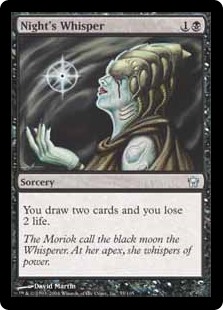 Whisper sees play as a one- or two-of in Czech Pile, the new poster-boy for fair Legacy decks. That deck is a literal "pile" of the 60 best cards in the format. Whisper isn't even blue for Force of Will, testifying to the potential of a two-mana "draw two" and reminding us that pure card advantage at this price point is scarce and exciting.
Chart is significantly better than Whisper in shells that can support it, as noted by Jarvis Yu in an article that has him singing its praises for eternal formats. And Modern has become less tempo-centric with the arrival of Grixis Shadow, which also bodes well for the card.
Whether Chart a Course succeeds here depends on if it finds a home. Of course, Pile-style rock decks can't assimilate Chart themselves; such decks spend early turns disrupting, not attacking. Neither can linear aggro, which favors blitzing opponents to out-grinding them. That leaves spell-based tempo, or threshold decks.
Chart in Counter-Cat
When it comes to thresh decks in Modern, I feel Counter-Cat is the strongest option. And at a glance, it seems Chart fits perfectly into that deck. Chart gets us ahead on cards in grindy games without compromising our core gameplan, a previously impossible feat (Modern's other card advantage tools are tough for Delver decks to adopt). In doing so, the spell addresses one of Counter-Cat's longstanding weaknesses.
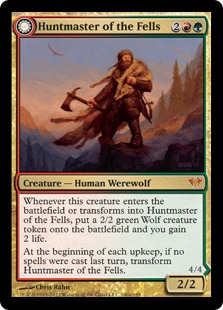 Counter-Cat occasionally chokes on mana and struggles to play out its cards optimally; in these scenarios, clunky midrange spells like Snapcaster or Huntmaster can clog. But Chart plows through the deck and into land drops. Besides netting us mana over longer games, Chart does work in a flood, launching us into mini-combo turns wherein we string a bunch of cantrips together and refill on business. As Treasure Cruise taught us, cards beget cards.
The discard clause on Chart is barely a drawback here. With eight functional Delvers and seven functional Goyfs, Counter-Cat is built to apply pressure quickly, allowing us to skirt it altogether. And in lieu of an attacker, Counter-Cat is bound to stockpile dead fetches in longer games, which Chart chews past admirably.
Accommodating Chart
Our most recent build of Counter-Cat, which features Disrupting Shoal, has performed well for Kelsey and I in the current metagame. I wanted to keep its core constant when incorporating Chart. Doing so involved establishing the build's essential pieces, so that I could tweak the uncovered flex spots freely in testing to identify the right number for the Ixalan uncommon.
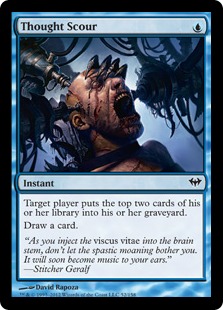 At first, I excluded Mandrills #3 and the Scours from this list. I knew I needed two instant-speed cantrips, and figured I could trim the Ape and run Opt instead if a build called for it. Mandrills naturally proved too exceptional to only include at two copies, and in my preliminary testing with Opt, I ended up missing the velocity from Scour even on zero Snapcasters. After tinkering with several configurations, I realized running two Scours to support a third Mandrills was indeed optimal, and included that package in the core.
Since Sleight of Hand and Chart a Course are both sorcery-speed cantrips, I also excluded Sleight from the core's first draft, at one point testing a list with 4 Serum, 4 Chart, and 0 Sleight. I soon realized running a pair was integral to repairing precarious openers, despite paling in early-game effectiveness compared with Serum Visions. Sleight offers the next-best-thing in terms of hitting that crucial second land drop, and of course wows as a topdeck.
Counter-Cat w/ Shoal: Core
With our standard 18 lands, the core leaves 4 spots for other cards—all of them blue to surpass Disrupting Shoal's magic number, 22. I wanted 2 Chart a Course at minimum, but since it's a novel addition, I didn't include it in the core. Realistically, then, we have two slots remaining. I messed around with these options in varying combinations all week.
- 1 Snapcaster Mage: Ideal for metagames teeming with aggro-control and aggro-combo. We can't play more than one of this expensive creature main.
- Disrupting Shoal #4: Ideal for linear aggro and combo metagames. Chart ups our ability to Shoal for two, the ultimate number (we have Leak/Pierce up for three-drops and generate the most tempo from countering a two-drop for no mana). It also helps negate Shoal's card disadvantage, and Shoal lets us continue interacting while tapping out for Chart on turn two. Chart even draws us into the lands that make hard-casting Shoal attractive later.
- 1-2 Spell Snare: Post-Fatal Push, Snare's stock dipped as its prey was squeezed out of the format. Decks like Eldrazi, Company, and even Shadow make a mockery of the card. Snare has served Counter-Cat well over the years, but I was relieved to cut it from this new build.
- Sleight of Hand #3: 4 Sleight was always too many in testing, as it's never phenomenal early. Still, it does repair lacking hands better than Chart at only one mana. Chart is predominantly the better topdeck.
- Chart a Course #3-4: For more on this card, keep on reading.
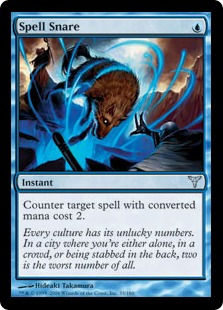 Spell Snare wasn't missed in testing. Our costed permission exists to trade one-for-one with spells we can't cleanly answer with removal, like Primeval Titan, Collected Company, and planeswalkers. All Snare tackles in this category is Snapcaster Mage. I tried the fourth Shoal to compensate for the lack of Snare; it ended up being superfluous.
The battle between Snapcaster Mage and Chart a Course is a bit more complicated, so we'll explore that in detail.
Snapcaster vs. Chart
Snapcaster Mage and Chart a Course fulfill alike purposes in Counter-Cat: they trade our mana for cards. They do so in dissimilar ways, and are each suited to disparate game states. This section illustrates their conflict.
We'll center this debate around the mana factor. Gone are the days of slamming Snapcaster Mage on turn two and flashing back Gitaxian Probe for zero; now, plussing off the Wizard costs at minimum three mana (two for Snap himself and more for the flashed-back spell). Chart a Course offers a more conditional plus (we need to have attacked), and costs just two mana. Both spells put us up by one card. So what does Snapcaster offer us that Chart doesn't to justify its steeper mana cost?
Draws to Snap
The two cards we "draw" with Snapcaster Mage are set in stone. One is an instant or sorcery in our graveyard, which we must cast this turn. The other is a 2/1 body with flash. Comparatively, Chart a Course always offers us mystery cards, barring a scry—the two on top of our deck. This divergence forms the backbone of Snap's pros and cons over Chart.
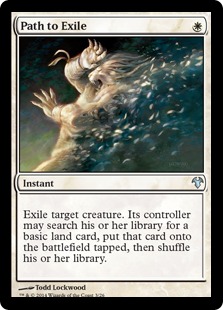 Chart is unparalleled in straight attrition matchups, since we just need cards there; Snap wins out in games that become more answer-focused. He's great in matchups where we want more copies of a key spell such as Path to Exile, since he lets us run a functional five—Chart amasses our existing resources; Snapcaster creates more.
In terms of matchups, Snapcaster appears better suited for two types of opponents: removal-heavy aggro-control and linear aggro-combo.
Snap affects the board, either by establishing or enhancing a clock, or by flashing in to block an opponent's creature. That gives him the edge against decks preventing us from ever establishing a clock, perhaps more so now that attacking soups up our cantrips. Overloading enemy removal is our goal in these matchups, and we'd frequently prefer one of the cards we net off our plussing spell be a 2/1 on the field than a blind pull.
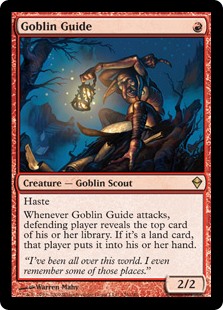 Snap triumphs during races, too: where tempo matters, so does a body. That includes aggro-combo. Take Burn, where flashing back Bolt or Pierce while turning sideways or trading with Goblin Guide is infinitely more appealing than tapping down lands in the main phase to draw cards.
Unlike Chart, which can theoretically become two fetchlands, Snap cannot "miss." He also plusses every time, whereas Chart sometimes asks us to discard. This fidelity is Snap's chief boon: he always represents a 2/1 and a binned instant or sorcery. His other main perk: Snap's interactivity buys us time, so he amends threatless hands and combats targeted discard. No card in the deck plays better from behind.
Draws to Chart
There are times when a 2/1, or the cards in our graveyard, don't matter. Chart offers hope regardless of the situation.
For example, Snap does very little in the early game. If we don't have instants or sorceries we want to flash back in our graveyard, he's nearly uncastable. But Chart a Course joins Goyf as a sweet follow-up to a one-drop. We rarely need to hold up countermagic as of turn two in this deck, so Chart a Course gives us a second-turn play that proactively advances our gameplan without overcommitting resources to the board. Chart can also be resolved early to sculpt our hand, attack or no.
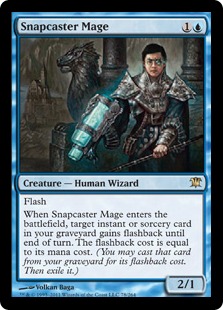
So Chart's got the advantage early on. What about later? I originally thought Snapcaster Mage was strictly better late-game than Chart a Course. After all, we'll have a juicy graveyard by then, not to mention enough mana to invalidate Snap's most immediate pitfall. Chart has pulled me deeply ahead in enough late-games that I've come to reconsider this position.
At the end of the day, drawing two in a cantrip-heavy, bomb-heavy, 18-land deck is ridiculous, especially in the mid- to late-game when five or six of our lands have been fetched out. I've found the raw harvest of Chart's rips to rival the utility of Snap's precision in many games, although sometimes we really do want a particular card, and happen to have a copy sitting in the graveyard.
Chart also ignores grave hate. When opponents land Rest in Peace, Snapcaster's simply a sad body. Sans Chart, we'd be locked out of card advantage avenues until our fourth land drop.
Following that thread a bit, Chart beats out Snap at locating undrawn cards. That boosts its value post-board, when we badly want to see Tamiyo, Field Researcher, Ancient Grudge, Pyroclasm, or other win-buttons. With Charts in the deck, I have found and cast my hate more consistently than ever, as well as resolved better Needles and Explosives—cards with high ceilings and narrow optimal windows gain the most from extra digging.
Finally, Chart harmonizes with our threat suite. An unraided Chart makes us discard a card, which stuffs our graveyard for Tarmogoyf and Hooting Mandrills. And Chart's decisive typing reinforces Delver of Secrets.
Making Peace
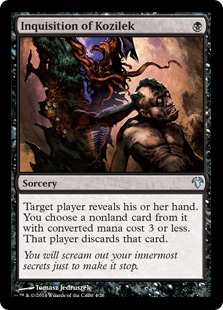
There's a limit to the amount of Snaps Counter-Cat can run, both because of his mana cost and because he cuts into our instant/sorcery count. Subsequently, the deck can struggle against grindy midrange strategies. But since our new card advantage spell doesn't have these problems, we can run as many as we choose, increasing our odds against anyone casting Inquisition of Kozilek without sacrificing the integrity of our other components.
That's not to say we should totally abandon Snapcaster Mage. When played together, Chart and Snapcaster gel into a formidable card advantage engine. Snap flashes Chart back to draw more cards, or comes down on the opponent's turn to then attack, enabling raid. He makes for a dynamic pickup with the draw spell.
So, is Snapcaster "better enough" to be worth the third mana? I'm not comfortable dipping below 26 instants and sorceries, and would certainly rather a third Mandrills than a second Snap. But as a singleton, the Wizard earns his spot. I'm even following Kelsey's lead in adding a second to the side—post-board, we have more key spells to rebuy, as well as enough mana to support Snapcaster.
Pawing It All Together
For reference, here's what we ran in the four spare slots pre-Ixalan:
- 1 Snapcaster Mage
- 1 Sleight of Hand
- 2 Spell Snare
Now, I'm on these:
- 1 Snapcaster Mage
- 3 Chart a Course
Kelsey runs another Sleight over the third Chart, and we're watching to determine which is best. Sleight's preferable in mana-light game states, which the deck often encounters pre-side.
Counter-Cat, by Jordan Boisvert
Charting Elsewhere
A few players have sought my opinion on Chart a Course in other Delver decks, specifically regarding UR shells. Given the low number of quality threats available to UR, though, that deck already maxes out on Snapcaster Mage, and as such has plenty of card advantage built into its framework. Chart should improve the deck without solving its problems, which makes me less interested in its applications there.
Chart does solve problems for Counter-Cat, though, which already possesses the tools UR lacks: robust threats; heavy-duty removal; sideboard haymakers. An economical, mechanically synergistic way to access more of those tools is just what the veterinarian ordered, and I'm eager to discover exactly how much wind Chart a Course blows into our sails.




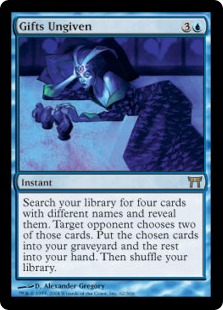 player, played. A few times a poor sequence hurt me, but for the most part the actual combo played itself. I know I wasn't playing it perfectly, but Gifts Ungiven provided enough forgiveness that I didn't need to. If that card resolves, you should always win. My losses were either caused by me mulliganing to death or my opponent's disruption preventing me from comboing in the first place.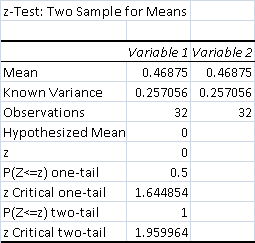
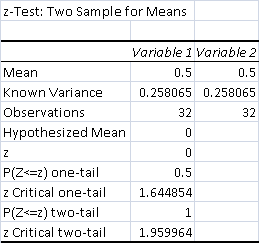
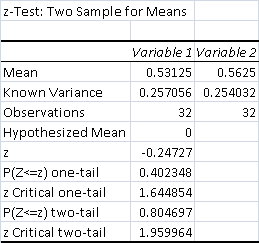
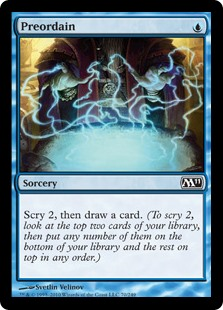 Preordain did not excel in Storm. It was simply too like Sleight of Hand, which it replaced, to have any significant effect. Where it was better was post-sideboard when you were digging for pieces and seeing only junk, but that didn't happen too often. Most games I cantripped a few times then attempted to go off. Even against Jeskai the games didn't tend to go very long. The opponent's disruption and clock mattered more than the power of my cantrips. Therefore, I have no evidence here that Preordain would change anything for Storm.
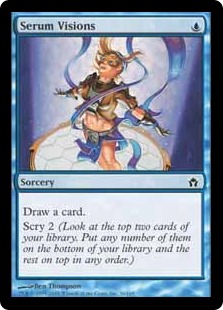 Visions gets you deeper, but you get a random card. This is great in the early game where you want to hit land drops and set up your turns. When games end quickly, Preordain doesn't get the chance to shine.
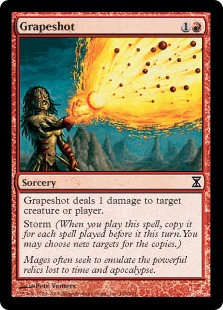 In Storm, I'm certain this was fine. I've played heavy cantrip Storm in Modern before, and the Gifts version feels better. Having a way to search for mana and Past in Flames was very good, and I can't fathom cutting that package. Players have argued that I should just cut the utility spells for extra cantrips, but I'm skeptical. As noted, Chalice and Eidolon win the game against you, and having a few ways to answer them is necessary. The cantrips are still weaker than Legacy's; a single Echoing Truth is not going to cut it.
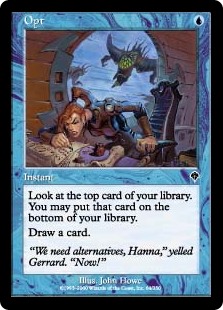 This feeds into the other problem. Wizards has previously said that too many cantrips is a problem. They're worried both about consistent combo and overly consistent control (à la Caw Blade). They're fine with a few weaker cantrips, but add some more power and things get risky. As a result, I think Opt is a definitive statement to the Modern crowd that the cantrips won't be unbanned. Wizards will not risk cantrips killing variance again.