
menu

Insider: See Beyond – A Look Ahead at Fall Rotation

Are you a Quiet Speculation member?

If not, now is a perfect time to join up! Our powerful tools, breaking-news analysis, and exclusive Discord channel will make sure you stay up to date and ahead of the curve.

Praise be to Hazoret! Following Pro Tour Hour of Devastation, Standard took a hard turn red: no less than six of the PT Top 8 competitors were running the Ramunap Red archetype, with Paulo Vitor Damo da Rosa taking it all the way to a win that gave him the Player of the Year title.

The successful decklists from this event have provided the framework for the Standard metagame as it has evolved since. The next big shakeup to the metagame will be when Ixalan hits the shelves on September 29, and both Battle for Zendikar and Shadows over Innistrad block rotate out.

One thing is certain already—Ixalan will have big shoes to fill. This is the first time since Lorwyn/Shadowmoor block that four non-Core sets will be rotating out of Standard. This means 920 cards (not counting basic lands) will be replaced with only 264 (assuming 15 basic lands in the new set). Just looking at the numbers, it feels like a massive change. But how much of the BFZ and SOI blocks actually contribute to the current Standard metagame?

Creatures

On the creature front, Battle for Zendikar will not be missed much—Ulamog, the Ceaseless Hunger is the only creature that saw consistent play throughout the set's legality; Dragonmaster Outcast managed to sneak into a few lists but rarely as more than a one-of.

Oath of the Gatewatch introduced us to colorless mana with the often overpowered Eldrazi monsters: Matter Reshaper, Thought-Knot Seer, and Reality Smasher had an immediate impact on both Standard and eternal formats—whether in dedicated lists or as support to single-colored aggressive strategies like the recent Mono-Red builds.

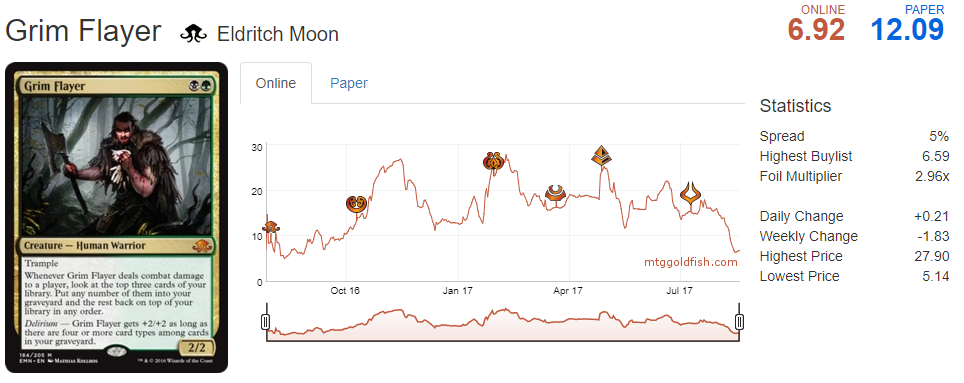
That trend of multi-format impact continued with Shadows over Innistrad block, giving us more all-stars like Tireless Tracker, Thing in the Ice, Prized Amalgam, Spell Queller, Selfless Spirit, and Grim Flayer.

But among all the creatures leaving Standard this fall, there is one that definitely holds a special place in this list: the Little Common That Could, Thraben Inspector. Our favorite sleuth has been featured in many different archetypes, from UW Monument, to Death & Taxes, to Mardu Vehicles. It will be tough to replace everyone's favorite one-drop.

Spells

In the spells department, a significant number of board wipes will have to be replaced: Radiant Flames, Kozilek's Return, Flaying Tendrils, and to some extent Declaration in Stone (vs. any token army) are leaving the job to Sweltering Suns, Yahenni's Expertise, Bontu's Last Reckoning, Fumigate, and Hour of Devastation. The common denominator? All of these require double-colored mana, taking away the flexibility provided by the other current tools.

Targeted control is also losing major pieces in Stasis Snare, Grasp of Darkness, and Anguished Unmaking. Of note, Cut // Ribbons and Harnessed Lightning will become the weapons of choice in the two-cmc-or-less category once Lightning Axe and Incendiary Flow rotate out. Chandra's Defeat claims the highest damage count (at five) but is limited to red creatures or planeswalkers.

Speaking of which, the Superfriends archetype will be losing a huge element in Oath of Nissa, a real swiss army knife that could both find a planeswalker and provide the fixing to play it. Some Temur Energy builds have tried to stretch the manabase to include Nicol Bolas, God-Pharaoh (see Reid Duke's Pro Tour list), and the departure of Oath of Nissa means that Aether Hub and Servant of the Conduit will have to work extra hard.

Planeswalkers

For a long while, Gideon, Ally of Zendikar was not only the marquee card of Battle for Zendikar, but also one of the only nonland card from that set played in Standard (along with Transgress the Mind). The advent of Heart of Kiran gave it a second life via Mardu Vehicles, and the Gatewatch's general has since landed in a few Modern and Legacy lists.

As far as the Vehicles archetype is concerned, even though prominent pros like Raphael Levy and Frank Karsten still hold the Zendikar version dear, recent lists seem to have already shifted to Gideon of the Trials to ease into the rotation transition.

Most of the other planeswalkers leaving Standard have been prominently featured in multiple archetypes, whether it is Liliana, the Last Hope (Delirium, Zombies), Nissa, Voice of Zendikar (GW Tokens, BG Counters), Chandra, Flamecaller (Ramp, Burn, Marvel), or even Nahiri, the Harbinger (Vehicles, Jeskai Control).

It will be interesting to see how the events of the Hour of Devastation storyline and the fate of the Gatewatch members will shape Ixalan Standard—we already know from Maro's June 12 article on the Mothership (Metamorphosis 2.0) that we will see fewer versions of Jace & co. in future releases.

Lands

The biggest shakeup in my opinion will be the Standard landscape—literally. Both sets of allied-colored dual lands are rotating out, although they should be replaced by known entities if we are to believe recent Ixalan rumors. The long-awaited enemy-colored creature lands have all enjoyed their time in the spotlight at various time during their Standard life, but are now handing the baton to the lone Hostile Desert.

Westvale Abbey is another solid finisher that benefits the Mono-Black Zombies and UW Monument strategies—especially the latter—but the transforming Demon will only be haunting playmats for just a few more weeks.

Deck Archetypes

For anyone looking to jump into Standard now, there are a few decks to pick from within the same price range, so I wanted to take a look at the current top lists and see which of these archetypes have the best chance to survive the fall rotation. The deck lists and prices in the data below are taken as of August 23rd.

Archetype Rotation Loss Price
% of Deck Maindeck Sideboard Lands
Ramunap Red (GP Denver, 3rd) 5.3%  4  0  0 $267
Temur Energy (GP Denver, 1st) 10.7%  2  6  2 $216
Mono-Black Zombies (SCG Richmond, 3rd) 40.0%  21  9  1 $200
Mardu Vehicles (SCG Richmond, 7th) 16.0%  10  2  2 $328
UW Approach (Standard PTQ 7-1) 24.0%  10  8  6 $108
BG Constrictor (SCG Richmond Classic, 1st) 34.7%  23  3  4 $209
UR Control (SCG Richmond Classic, 13th) 13.3%  5  5  5 $238
RG Ramp (Standard RPTQ, 6-2) 44.0%  25  8  8 $220
WU God-Pharaoh's Gift (GP Denver, 9th) 20.0%  10  5  6 $162
GR Pummeler (MTGO League, 5-0) 8.0%  5  1  3 $141

Winners - Temur, Red, and Pummeler

The table above summarizes what the current top-tier decks in Standard will be losing come rotation. The biggest takeaway is that the top two decks of the format, Ramunap Red and Temur Energy, will pretty much emerge unscathed from rotation.

One could argue that the Temur Energy list that won GP Denver is in the best position. From the maindeck it's only losing two lands (one copy each of Game Trail and Lumbering Falls), one of which we expect to be functionally replaced in Ixalan by the rumored Rootbound Crag. Meanwhile, its biggest board-control piece from the sideboard already has an above-average substitute (Sweltering Suns for Radiant Flames).

The Ramunap Red version that Paulo Vitor Damo da Rosa piloted to win Pro Tour Hour of Devastation featured Falkenrath Gorger. It appears that Soul-Scar Mage has already taken this spot in many lists, if we go by the list that finished 3rd at GP Denver. The maindeck of this more control-ish build is, ironically, more affected by rotation however, with the departure of Incendiary Flow and Collective Defiance. The sideboard is completely untouched.

But picture this: for about half the price of Ramunap Red (Hazoret the Fervent and Chandra, Torch of Defiance run up the count quite fast), there's a deck that's arguably just as competitive and survives rotation just as well: GR Pummeler.

The only cards rotating out of the maindeck are Game Trail and Tireless Tracker. I already pointed out that another RG dual land with similar restrictions is on its way; as for the Tracker, one thing I am eager to test is Resilient Khenra, which plays well with the Pummeler pump strategy.

Losers - Zombies, Ramp, and Constrictor

Two decks will be losing 40% or more of their builds: Mono-Black Zombies and RG Ramp.

Despite winning Pro Tour Amonkhet, the Zombies deck is more than likely doomed if Ixalan does not provide solid replacements: Cryptbreaker, Diregraf Colossus, Relentless Dead, Dark Salvation, and Grasp of Darkness are all leaving. There doesn't seem to be more Zombies support coming up, since Vampires is the announced supported tribe for Ixalan. Metallic Mimic and Plague Belcher are decent options but don't provide the explosiveness and resiliency featured by the current lists.

The case of Ramp is even more serious: all Eldrazi creatures—both small (Matter Reshaper, Thought-Knot Seer) and large (World Breaker, Ulamog, the Ceaseless Hunger)—being accelerated into via Hour of Promise and the new Deserts from Hour of Devastation will be coaxed back into the Blind Eternities. However there is little doubt that Ixalan will bring its lot of gigantic dinosaurs to amuse the aficionados of Ponza strategies (spoiler alert: it does).

BG Constrictor is another strategy that gets hit hard. Instinctively, one would think that all the pieces are still there: Blooming Marsh, Winding Constrictor, Rishkar, Peema Renegade, Verdurous Gearhulk, even Fatal Push! But most of the efficient support of this midrange build is also rotating: Grim Flayer, Tireless Tracker, Kalitas, Traitor of Ghet, along with the two planeswalkers Liliana, the Last Hope and Nissa, Voice of Zendikar (plus Ob Nixilis Reignited in some sideboards), are all major losses.

Thankfully, there is a potential backup plan in the BG Energy build. This deck only loses Nissa and Hissing Quagmire in the maindeck, and could benefit from the inclusion of Rhonas the Indomitable.

Shifting Builds - Vehicles and Control

The known quantities that are Mardu Vehicles and UR Control have very different days ahead of them, but it looks mostly based on the type of build rather than the archetype itself. Take Mardu Vehicles for example: the creature package can vary drastically, as showcased by this list that finished 7-3 at Pro Tour Hour of Devastation featuring Thalia, Heretic Cathar and Archangel Avacyn, and this list that finished 7th at an SCG Classic that relies on Veteran Motorist and Glorybringer.

Even the issue of which Gideon to run is raised! One common denominator though, as mentioned before: the loss of Thraben Inspector and its clue, which has powered the likes of Toolcraft Exemplar and Unlicensed Disintegration for so long now.

The problems faced by UR Control are different. It loses manabase stability with Wandering Fumarole leaving Standard, while the sideboard options are shrinking with the loss of Dragonmaster Outcast and Thing in the Ice. As replacement for the creatures, I could see Kefnet the Mindful making an appearance, along with Pia Nalaar, which was already present in Tomoharu Saito's Pro Tour build.

Another noticeable control piece that's rotating is Dispel, but as with the many recent reprints of Negate, I would not be surprised at all to see it show up at some point in Ixalan block.

The New Kids - Approach and God-Pharaoh's Gift

Finally, I cannot wrap this article up without mentioning the recent innovations since Pro Tour Hour of Devastation: UW Approach and God-Pharaoh's Gift.

The most budget-friendly list of the new Standard, UW Approach relies on the good old draw-go strategy, waiting until it hits seven lands to play Approach of the Second Sun. Then it filters through the top of the deck quickly with cheap cyclers (Cast Out, Censor, Hieroglyphic Illumination) and the scry of Glimmer of Genius to hit Approach again. From the list I used to compile the data above, there are even cheaper versions that completely forgo Gideon, Ally of Zendikar in favor of Kefnet the Mindful.

Come rotation, the manabase will be the most affected part of this build, with Prairie Stream and Blighted Cataract departing. But it should recover quite well, since I hear Glacial Fortress is on the horizon. As for the sideboard, there is no clear replacement for what Spell Queller usually offers, however Gideon of the Trials could easily tag in for its Gideon, Ally of Zendikar counterpart.

As for the God-Pharaoh's Gift lists, there are two distinct strategies being developed: the UW list analyzed above (finishing just outside of the Top 8 at GP Denver) and a Jeskai list, mostly blue-red splashing white for Angel of Invention and Cataclysmic Gearhulk. They share a similar goal: to dump as many creatures as possible into the graveyard to be brought back with God-Pharaoh's Gift, the latter itself being played on the cheap via Refurbish or Gate to the Afterlife.

Both versions will only be losing one nonland card in their maindeck at rotation: Thraben Inspector for UW, Insolent Neonate for Jeskai, the latter being a solid discard enabler for reanimation purposes. These decks are another competitive, budget choice for the coming rotation. If not for the inclusion of Chandra in the sideboard of the Jeskai build, both versions would be comparable in price—around the same price as the GR Pummeler list at the time of this writing.

Wrapping Up

The coming rotation will bring massive changes to the Standard card pool for sure, however some of the current top-tier archetypes are in a great position to carry their success over to the fall. Ramunap Red, Temur Energy, UR Control, and Mardu Vehicles are the established strategies that should suffer the least.

While BG Constrictor and Mono-Black Zombies look attractive with their history of successful results, these archetypes will get all but decimated in the fall. For friendlier budgets, one can make the switch to either GR Pummeler, UW Approach or UW God-Pharaoh's Gift, all of which will remain very competitive and pretty much intact through rotation.

Diving In: Content, Stability, and Motivation

Are you a Quiet Speculation member?

If not, now is a perfect time to join up! Our powerful tools, breaking-news analysis, and exclusive Discord channel will make sure you stay up to date and ahead of the curve.

Yesterday, our own Trevor Holmes published "Getting Disillusioned—What Magic Is Missing." That piece describes the allure of other games while exploring motivation and writer's block. I don't agree with everything he wrote—opinion pieces are like that—but I think Trevor raised some interesting points, and his article got me thinking about my own motivations and the things I love about Magic and other games.

In this article, I'll share my thoughts as coherently as possible. I'd also like to explicitly open up the comments section for readers to share their relationships to Modern Nexus, and to let me know about the sort of content they'd like to see from me in the future.

The Quest for Content

By now, over two years into Nexus's lifespan, some of our writers (and readers) have raised the issue of running out of material. Writers I've spoken to from other sites have also expressed to me a similar problem: it's sometimes difficult to come up with a brand-new topic every week. What about weeks where we don't play much Magic, or have time to follow the tournament scene? Or weeks where there aren't any major tournaments and we haven't done much experimenting?

I'm fortunate that this isn't a problem I encounter often. I play in multiple Modern events each week, practice matchups in cafés with Kelsey for fun, and put in reps on Cockatrice while Boston slumbers. All that time in the game fills my head with ideas, and I turn those ideas into articles, even if certain ideas prove less interesting to readers than others. Sure, some weeks I don't play as much, but in those cases I can usually flesh out an article I've had steeping in my head for some time and put it to paper, like my entries in the Modern Top 5 series or my thoughts on player etiquette and toxicity.

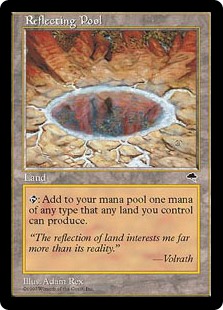
Tapping the Reflecting Pool

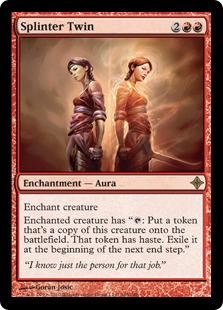
I can remember a time at Modern Nexus when readers voiced a frustration with our writers focusing too much on their respective pet decks, a time when readers voiced a frustration with our extensive coverage of the Splinter Twin ban, and a time when readers would have given anything not to hear about Eldrazi for the umpteenth week in a row. For starters, I think I speak for everyone at Modern Nexus when I say we appreciate these comments and use them to better meet reader expectations in the future. But if our writers tackle issues they have no interest in, the content they produce is likely to betray some of that disinterest. It's a fine line to walk.

Luckily, our interest in Magic (and specifically, in Modern) all but ensures we often have something interesting to discuss that readers will also appreciate. After all, Modern is a format known for shifting wildly between events, affording room to breakout brews, and breathing in new life with most expansions. To a degree, the more hard-to-pin-down the topic at hand, the more articles on it write themselves; Modern is quite dynamic, and so yields engrossing content.

The format's currently in a weird place, as it has been in the past—when Twin was banned, nobody knew how Modern would shake up, and Nexus could do little other than speculate on that future and meditate on the ban's meaning; when Eldrazi ran rampant, there simply wasn't much to Modern outside of the spaghetti monsters, and our articles reflected that reality. Modern is still chock-full of decks; in fact, it seems more decks are viable now than have ever been at a single time. But the decks don't vie for position these days so much as occupy set-in-stone metagame shares and topple each other haphazardly, as lemmings, according to those shares in event standings. In other words, despite its diversity, Modern is experiencing a period of stability. And for Modern, that's weird.

Stability²: The Gift & the Curse

Previously, our content reflected negative instances of "weirdness." Modern Nexus is now reflecting something positive: the format's newfound stability. The arrival of Death's Shadow midrange decks has deeply altered the format in a way that incidentally cleaned up almost all of its problems. No white? Fixed. No blue? Fixed. No control or tempo? Fixed. No variety among Company decks, fish decks, combo decks, and the like? Fixed! When I asked last month whether Death's Shadow was friend or foe to Modern, I sided with the former; now, I feel my choice has been vindicated. Not only has Shadow dropped in metagame representation, the benefits of having it around have become more apparent, and the cons alleviated. Loss of diversity among aggro-combo decks? Meet Vengevine; and remember Death's Shadow Zoo? Loss of diversity among midrange decks? Welcome back, BG Rock and Abzan!

On Trevor's article, David Ekstam half-jokingly commented, "Perhaps people read and comment less now because they are occupied playing Modern matches?" I think there's something to this thought—when players get most of what they need out of playing Modern, they're probably less likely to look for it elsewhere, in this case via online content or engagement. The format is healthier than it's ever been, and truly boasts something for everyone. Besides, the Modern Pro Tour again looms in the distance, this time with the promise of no shake-up bans. The jokes I used to make at FNM after a fast match, like "that's why we play Modern!", aren't as funny anymore, because they don't ring as true. The players I meet are thrilled about where the format is at, and so am I.

All this to say I think fewer players are angry at one aspect of Modern or another. When they are, they'll consume plenty of online content, post comments, and otherwise look to validate their disgruntlement. During "broken" metagames centered around Eye of Ugin or Golgari Grave-Troll, the e-sphere was filled with deafening calls for adjustments, primarily to the banned list but always with the extreme voice or two suggesting the removal of the Modern format. Today, that doomsaying is long-gone, and the Modern events are more packed than ever.

Solving the Millennium Puzzle

So stability is great for Modern, and perhaps not so great for content writers. But that doesn't mean good content isn't makeable. Take Ari Lax's recent SCG article, "How to Exploit Modern;" here, Ari proposes a theory about Modern metagame shifts and tacks on a discussion on interactive cards. It's a little jumbled, sure, but for the reason that Ari has so much to say that it was obviously tough to fit it all into one article. It seems the writer has recently learned a lot about the format, probably by playing it, and is bursting with valuable new ideas. In the context of Trevor's article from this week, Modern is Ari Lax's Destiny. So, what's mine?

Banished to the Actual Shadow Realm

As someone excited by change and stimulated by obstacles, I somewhat share Trevor's disillusionment with Modern, although I think to a smaller degree. I need look no further than my spare time for the proof: for the last few weeks, I've been obsessively building Traditional Yu-Gi-Oh! decks. Here's a game that represents everything Magic actively tries to avoid.

Allow me to indulge in a brief comparison of the fundamental differences between Magic and Yu-Gi-Oh! If you doubt this section will be of interest to you, feel free to skip it, but I personally find the discrepancies remarkable.

  • There is no mana in Yu-Gi-Oh! Some Magic cards exist in Yu-Gi-Oh! at no cost: Wrath of God; Plague Wind; Thoughtseize; Divination; Gifts Ungiven; Ponder. You can guess what that means for gameplay: games are blisteringly fast, highly roll-and-draw-dependent, incredibly swingy, and almost exclusively combo-centric.
  • Successful Yu-Gi-Oh! decks are synergy machines packed with on-theme cards, and with little room for off-theme cards—think of Affinity, which has never wanted Modern staples like Bolt or Goyf.
  • As with Galvanic Blast in Affinity, only the strongest disruptive cards (Counterspell and Force of Will analogs, mostly) are splashed into these decks. Without mana, there is no color pie, and every deck with space for them runs the same disruptive staples.
  • Yu-Gi-Oh! is hugely complicated. Rather than actively simplify the game, as Wizards of the Coast R&D has done with New World Order, Yu-Gi-Oh!'s designers purposefully make the game more complicated as time passes by changing its rules. Contemporary cards have multiple, wordy effects with tiny text. Yu-Gi-Oh! allegedly encourages complexity creep to stimulate its playerbase, advertising itself as an ever-evolving game.
  • Yu-Gi-Oh! only has two formats: Advanced (which everyone plays) and Traditional (where banned cards are restricted to 1 copy each; nobody plays this format, it seems, except me).
  • Rather than utilize a rotation system to move new product, Konami shamelessly power-creeps its better cards. New expansions routinely carry cards more powerful than any the game has seen before, which cleanly leaves out-of-print strategies obsolete.
  • Yu-Gi-Oh! has a banlist almost entirely motivated by short-term profits. Konami bans and limits cards that form the backbone of winning archetypes when they want to sell something new, like another expansion... but not before reprinting those expensive cards in deluxe tins, and waiting until that product has moved. In terms of metagame, such a banlist ensures multiple Tier 0 formats each year.

Greed, For Lack of a Better Spell, Is Good

To a Magic player, many points on this list are completely unheard of. But it works for Yu-Gi-Oh!, which despite the heresy, touts itself as the #1 TCG in the world (a record confirmed by Guinness in 2011, although I can't find anything more recent). One thing to learn from this statistic is that Wizards has more options when it comes to game management than it may care to admit, and can stand to significantly improve its overall strategy, although these are topics for another article. More on-topic is the question, why am I, a Modern die-hard, playing this game that violates so many Magic tenets?

Commenters on Trevor's article noted the potential benefit of spending time with another game. Indeed, playing Yu-Gi-Oh! again over the last year or two has given me what I consider some unique insights into Modern, as well as the away-time needed to generate perspective. I also think Trevor was on to something when he mentioned that Destiny decks all play differently from one another, while Magic decks all feel the same; I don't entirely agree (playing with or against Affinity feels totally different from playing with or against Burn, and each has a clear identity), but the thought merits exploration. What kinds of deck identities are present in Modern? Which does the format lack? Yu-Gi-Oh!, like Destiny I presume, does a great job of giving each deck (or, shoved-down-your-throat-via-a-bunch-of-synergistic-cards "archetype") its own identity and playstyle.
But that's not what I love about the game. I've watched high-level tournaments and seen 8-0 players make ridiculous mistakes or fail to know every effect of their opponent's cards. So why are they winning? Because Yu-Gi-Oh! is a deckbuilder's game through-and-through. There are general metagame shifts, of course, but the players that win big events often do so with unique tech choices and plays. For example, at WCQ Chicago last month, Esala Wathathantrige—playing the established best deck in the format—dumbfounded announcers with combos they had never seen before, that he no doubt had slaved over while preparing; combos, mind you, that utilized all the same cards routinely found in the Zoodiac deck. I find this emphasis the game has on innovation, as well as its speed and excess, very appealing. Modern of course possesses these dimensions as well, albeit in varying quantities. But hey, lately I've been playing Affinity on weekends, so there you go.

My Grandpa's Website Has No Pathetic Articles

Perhaps the perceived standstill in Modern writing has to do with the format becoming stable. It's also possible it has to do with motivation. In any case, I firmly believe Magic is the greatest game, and while others may captivate me more right now, I still play a good amount and am sure I'll return to it in full force in the near future. Along the way, I think it can be beneficial to our understanding of what we love so much about Magic to figure out what we love about our distractions from it. What do these games have that Magic is missing?

Most of my Magic writing involves theorizing, metagame analysis, and brews. It's rare that I publish articles such as this one, heavy with introspection and, well, ramblings. But I thought Trevor raised some interesting points in his article, and opened the way for a productive conversation with our readership. Hopefully the discussion can continue here.

Insider: Standard Rotation Winners and Losers

Are you a Quiet Speculation member?

If not, now is a perfect time to join up! Our powerful tools, breaking-news analysis, and exclusive Discord channel will make sure you stay up to date and ahead of the curve.

The release of Ixalan is now just a month away, and it’s going to bring about major change in Standard. More important than the new cards are the old cards that will be rotating out of the format on September 28: the entirety of both the Battle for Zendikar and Shadows over Innistrad blocks. The Standard card pool will shrink, and that makes the remainder of old cards that remain in Standard, the Kaladesh and Amonkhet blocks, even more important. It’s these cards that will define the metagame, and increasing demand for their staples matched with a decrease in supply as drafting the formats ceases will serve to increase their prices. Today, I’ll review the strategies and cards in Standard that stand to gain the most from rotation, and identify what strategies and cards are the biggest losers.

Since it first arrived in Standard, energy has been a dominant player in the competitive scene, and that’s going to continue through the rotation. Energy enabled a great variety of different decks, starting with Aetherworks Marvel and continuing into Four-Color Saheeli and now Temur Energy, and the cards enabling these decks are demonstrably some of the very best in the format.

There was an error retrieving a chart for Aether Hub

The mana core of Aether Hub, Attune with Aether, and Servant of the Conduit combined with the efficient removal of Harnessed Lighting and the card advantage of Rogue Refiner and Whirler Virtuoso has served as the base of all of these format-defining decks. The entirety of this core cast of cards – along with the rest of their support and payoffs like Longtusk Cub and Bristling Hydra, and even cards in other colors like Glint-Sleeve Siphoner – survives the rotation, so it’s very likely that they will form the core of at least one format-defining deck post rotation. In fact, essentially the entire Temur Energy deck survives rotation, so it’s hard to imagine a future metagame where it’s not going to be a major factor.

There was an error retrieving a chart for Harnessed Lightning

A couple cards, Aether Hub and Harnessed Lightning, are staples for multiple decks now and will be after rotation, so they look like especially good spec targets in terms of their relative demand.

There was an error retrieving a chart for Chandra, Torch of Defiance

I think one of the best bets moving through rotation is Chandra, Torch of Defiance. It’s currently seeing crossover demand as a staple in two of the very top decks in the metagame, Temur Energy and Mono-Red Aggro, both of which will mostly survive rotation and persist as major players this fall. Chandra, Torch of Defiance has also been seeing steady gains since the release of Hour of Devastation, where it sat at $24 before growing to $35 within two weeks. This price has been maintained since, and I don’t see any reason for it to fall anytime soon. In fact, I think Chandra, Torch of Defiance has the potential to not fall again and only continue to appreciate as a multi-format staple, like Jace, the Mind Sculptor or Liliana of the Veil. It’s far in the lead as the best red planeswalker ever, and already sees some fringe Modern and Legacy play, and is a Commander and casual staple.

There was an error retrieving a chart for Glorybringer

Glorybringer is another staple of Temur Energy and Mono-Red Aggro, and it sees play in all sorts of other red decks, like as a sideboard card in control, so I think it looks great going into rotation, especially with Grasp of Darkness out of the picture. The price has been stable at around $5 since spring, but I expect it’s going to start appreciating back towards the $10-plus price point where it once sat.

There was an error retrieving a chart for Walking Ballista

Traverse the Ulvenwald and delirium leave Standard with rotation, but Winding Constrictor survives, so I expect Green-Black to move firmly towards a +1/+1 counter theme. Nissa, Voice of Zendikar is out, so that makes Rishkar, Peema Renegade and Verdurous Gearhulk more important. A big winner here is Walking Ballista, which is a key part of this top-tier deck and a potential staple for a variety of other decks.

There was an error retrieving a chart for Fatal Push

Fatal Push is another winner from rotation, especially as Grasp of Darkness rotates away, and there’s a ton of demand from Modern and Legacy players, so I see the card holding its price and eventually surpassing $10.

There was an error retrieving a chart for Skysovereign, Consul Flagship

Skysovereign, Consul Flagship is being used as a maindeck two-of in Temur Energy, the current top deck in Standard, so it seems very underpriced at just over $2. It has wider applications in all sort of midrange decks, and it’s a relatively powerful card that presents new five-mana plays in Ixalan a high bar to cross, so it’s something I expect to see more of after rotation.

There was an error retrieving a chart for God-Pharaoh's Gift

All of the key staples of the God-Pharaoh's Gift decks survive, and they will be able to replace what little they do lose with other cards and potentially utilize new ones, so its namesake and other key cards like Angel of Invention could stand to gain from rotation, especially because the deck is purported to have a good matchup against Temur Energy.

There was an error retrieving a chart for New Perspectives

Another deck to keep an eye on is the New Perspectives cycling deck, which remains intact and could become more powerful relatively as some great decks leave the metagame and may not be replaced by better ones.

The Losers

Speaking of the losers, there are some decks that die from the rotation. What really stands out is Zombies, which loses the majority of its competitive staples, so it’s unlikely to survive the rotation as a legitimate competitive option.

Another loser is Mardu, which sees Gideon, Ally of Zendikar and Thraben Inspector leave the format, which hurts that deck's ability to enable Heart of Kiran and Toolcraft Exemplar, as well as its ability to play as a midrange deck, and essentially destroys the deck in its current form.

Oketra's Monument decks lose essentially all of the white creatures that they are currently playing, so it’s hard to imagine the deck surviving rotation in any way.

Ramp decks lose their biggest payoffs in Ulamog, the Ceaseless Hunger and World Breaker, along with their sweeper Kozilek's Return, and without suitable replacements available, I can’t see the deck existing through rotation.


What do you see as the winners and losers of the upcoming Standard rotation?

–Adam

Insider: Navigating Current Standard for Specs

Are you a Quiet Speculation member?

If not, now is a perfect time to join up! Our powerful tools, breaking-news analysis, and exclusive Discord channel will make sure you stay up to date and ahead of the curve.

Standard is flowing in a bunch of different directions right now. All three basic archetypes, aggro, control, and combo, are possibilities in Standard. I still have a hard time believing that God-Pharaoh's Gift is a real card, but that deck keeps putting up results. The normal culprits like Ramunap Red and Zombies are still stampeding the meta, but Temur Energy and UW Monument are picking up steam as well.

The interesting part, however, is that new strategies keep emerging. Anyway, let’s check and see what’s happening because Grand Prix DC is coming up and new strategies bring new financial opportunities as well.

BR Control, by Nathan Lothamer (8th place, GP Minneapolis)

Creatures

4 Gifted Aetherborn
3 Kalitas, Traitor of Ghet
1 Glorybringer
1 The Scorpion God
3 Goblin Dark-Dwellers

Spells

1 Fatal Push
2 Magma Spray
3 Abrade
4 Grasp of Darkness
1 Cut // Ribbons
3 Doomfall
4 Liliana, the Last Hope
1 Ruinous Path
3 Chandra, Torch of Defiance

Lands

4 Canyon Slough
4 Foreboding Ruins
4 Smoldering Marsh
8 Swamp
6 Mountain

Sideboard

2 Chandra's Defeat
2 Dispossess
3 Dreamstealer
1 Glorybringer
2 Gonti, Lord of Luxury
1 Ob Nixilis Reignited
2 Transgress the Mind
2 Yahenni's Expertise

If aggro, control, and combo were all options in Standard, we needed a little midrange action, and BR Control is just the deck to fill that role. This deck is less a control deck and more a Rock-style deck where you are playing some removal spells alongside hand disruption and then solid, tough-to-deal-with finishers.

There was an error retrieving a chart for Chandra, Torch of Defiance

Chandra, the Mindsculptor is solidifying her foothold as a constructed powerhouse even more with her inclusion in this strategy. I’ve spoken a ton about her in my articles because I’ve loved her ever since she was just a dream on the spoiler. Don’t expect her to ever leave the meta for her duration being legal. Players will build many types of strategies around her because she is just that good.

The best Chandra is pushing above $30 now and I think that could continue to grow. Her foil is $50 and the SDCC promo that was just released is $75! Players are willing to pay those amounts because they believe in her longevity.

Now, what will push her over the edge is if she finally breaks through in Modern. I think some pieces would need to fall into place, like a Death's Shadow ban, before she can start seeing tier-one play in Modern, but I don’t think that’s too far off.

There was an error retrieving a chart for Liliana, the Last Hope

Honestly, if we had a couple better creatures to go with Chandra and Liliana, we might have a decent Modern strategy. Okay, maybe that’s going too far because the removal spells would get a huge upgrade, but we’ve already seen players choosing Liliana, the Last Hope over Liliana of the Veil. That was crazy to me at first, but both are strong choices and differ in strength according to the direction of the meta.

Lily is a great candidate for long-term price growth. She is one of the cards I’d hold onto post-rotation for sure. She’s already seen Modern play, so you know she has a high enough caliber, and depending on the format, she could find an even bigger home.

There was an error retrieving a chart for Canyon Slough

It blows my mind every time when I look at the prices of the cycling duals. They have both basic land types and cycle, people! What is everyone thinking!? This land cycle is criminally underpriced and they have nowhere to go but up. If you don’t have your play sets, now is as good a time as ever.

There was an error retrieving a chart for The Scorpion God

On paper, we read "God" and get turned off to the potential the card might have. We’ve seen tons of Gods come through Standard at this point and most of them have been drastically unplayable. I think the Hour of Devastation gods are going to break that mold.

Players have been hesitant to trade these three gods in at the high buy prices I’ve been offering and that tells me they believe in the future value of the cards. I think we might see the Amonkhet gods continue to find homes too, just like Hazoret the Fervent in Ramunap Red.

The best part about the Hour Gods is that they pop back to the owner's hand if they are destroyed. That’s a huge ability that has been undervalued thus far and I think it makes all three really playable. Their prices are pretty stable right now but they’re not very high. Hour still has plenty of room for price increases in its low overall value calculations. I think The Scorpion God and The Locust God should be able to bump up to at least as much as The Scarab God at around $13 or so.

There was an error retrieving a chart for Gifted Aetherborn

Gifted Aetherborn is one heck of a card, but Vampires isn’t an archetype—or is it? Next up is a deck not named Vampires, but containing a bunch of them. Gifted Aetherborn may not have seen much play up until this point in Standard, but now it’s featured in both of these strategies I’m mentioning today.

There might be a couple copies left online under a buck, but that won’t last for long. This Aetherborn is destined for more and more competitive play in its still long life in Standard. The more play it sees the higher it will climb, but either way it’s worth pulling from bulk right now.

It should hold value even after it rotates out of the format as well. Casual players come in all the time asking me for Vampire Nighthawk and guess what I recommend right after they ask for that card. This uncommon has a lot going for it so hold onto some copies for sure.

Mono-Black Eldrazi, by Yugo Sato (8th place, SCG Richmond)

Creatures

4 Gifted Aetherborn
4 Glint-Sleeve Siphoner
2 Drana, Liberator of Malakir
4 Matter Reshaper
2 Kalitas, Traitor of Ghet
4 Thought-Knot Seer
3 Reality Smasher
1 Skysovereign, Consul Flagship

Spells

4 Fatal Push
3 Grasp of Darkness
2 Murder
3 Liliana, the Last Hope

Lands

4 Aether Hub
2 Desert of the Glorified
1 Hostile Desert
4 Ifnir Deadlands
1 Mirrorpool
2 Scavenger Grounds
10 Swamp

Sideboard

2 Aethersphere Harvester
2 Bontu's Last Reckoning
1 Dispossess
1 Doomfall
1 Flaying Tendrils
2 Gonti, Lord of Luxury
1 Liliana, Death's Majesty
1 Ob Nixilis Reignited
2 Transgress the Mind
2 Yahenni's Expertise

If Drana weren’t rotating out of Standard in a month or so, I’d be all about that hype train. The same goes for the Eldrazi and this whole deck really. If you have these cards, I’d say this looks like a great option in the meta right now though. I think many of us have not processed yet that rotation is back with a vengeance.

Here in a little over a month we are losing four sets from Standard! We haven’t seen a rotation like this since before the two-block set rotation was installed. I for one couldn’t be more excited. I think the size of the format changing makes it more fun and interesting, so the huge shake up that’s about to occur is really a welcome breath of fresh air.

Because the format is kicking out so many cards though, I don’t plan on picking up anything from Battle for Zendikar, Oath of the Gatewatch, Shadows over Innistrad, or Eldritch Moon until after they leave the format. Even Liliana, the Last Hope, which is a great investment, should wait until after rotation for you to acquire them. The same goes for the Eldrazi from this deck too.

There was an error retrieving a chart for Glint-Sleeve Siphoner

One financial takeaway from this strategy has to be Glint-Sleeve Siphoner. This former bulk rare keeps jumping around the price market. I think with black creatures we need to keep in mind their creature type for increased playability, but Human is not the Vampire or Zombie we’re looking for. Maybe Humans will be more prominent in Ixalan though, and his ability definitely makes us want to play him for sure.

I’d wait until the hype calms down on Siphoner to snap them up. TCGplayer is still showing wacky market prices though, due to the super high shipping rates not affecting the pricing. Keep this fact in mind when pricing cards.

There was an error retrieving a chart for Hostile Desert

Lastly, I want to mention Deserts, but specifically Hostile Desert. This rare Desert could be key to stopping graveyard strategies in the upcoming new format. I know right now it’s quite useful against God-Pharaoh's Gift decks too, but its future potential is what I’m mainly concerned about.

Taking into consideration the crazy shipping prices, the actual cost of this land is $3-4. I think I need to reevaluate the prices in my store and that may be true of other stores in your area as well. This could make for some great opportunities, so keep your eyes open. Mispriced cards are always out there.

What are you guys most excited about for the new rotation schedule? Are you upset your deck is rotating out sooner than expected? Or are you looking forward to some actual new strategies and a new format? What cards do you think will suddenly become playable in the new format? Let me know in the comments and I’ll be back next week with hopefully some sweet spoiler info from the new set.

Until next time,
Unleash the Force!

Mike Lanigan
MtgJedi on Twitter
MtgJedi on YouTube

Getting Disillusioned – What Magic Is Missing

Are you a Quiet Speculation member?

If not, now is a perfect time to join up! Our powerful tools, breaking-news analysis, and exclusive Discord channel will make sure you stay up to date and ahead of the curve.

This one will be a little off the rails. A couple weeks ago, I highlighted an opportunity I saw for Wizards to do something risky but with the potential to change Modern forever. The feedback I received was… voluminous, and well appreciated, even though most everyone disagreed with me. Regardless, I learned something through the process, or at least I think I did, which brings us to my article today. I’ve noticed, as you probably have too, a general level of stagnation when it comes to the Modern discourse, on this site and others. I remember fondly a time around a year ago when Eldrazi played two Sol Rings, every article I wrote generated comments galore, and anonymous individuals from across the globe could shout whatever they pleased at me with no fear of repercussions. It truly was the wild west.

Times have changed. I’m over two years into my position as content writer here at Nexus, and while I love having a platform to talk about whatever I want week after week, I’ve found myself growing tired. Sunday nights, scrolling through tournament results, wondering what I’m going to write about this week. I’ve grown… less interested, and judging by your engagement, less interesting. I still love writing, and I enjoy the feedback I do receive, but I can’t help but reminisce on the glory days, when my words had more impact, generated emotion, stirred controversy. It’s this memory that led me to branch out a few weeks ago, in search of a topic that could be called fresh. It’s this memory that leads me to my topic today.

Part 1: Another Lover

I have a confession to make. I’ve been seeing someone on the side. It’s not you, it’s me. When I said I had been testing Grixis Death’s Shadow, what I was really doing was playing some Star Wars: Destiny on the side. I can explain. Grixis is great, but things have just gotten so routine between us. Matches are predictable; the fire is gone. I just don’t feel the energy anymore, you know? Star Wars: Destiny, on the other hand, it's dangerous. I feel like I get it, and it gets me. There’s violence in it, it’s real. I can’t explain it; when I play it, I just feel so alive. And I think I can fly.
Magic players are notorious for playing one game. Magic: The Gathering is a jealous lover—it requires all of your time, doesn’t like it when you talk to others, watches you when you think it isn’t looking. I know; I’ve been there, and it wasn’t healthy. It’s because I know this that I can feel you getting uncomfortable as I’m sitting here, talking about another option. But there is life outside of Magic, whether you want to admit it or not.

Star Wars: Destiny, like any individual on the side, has its flaws. It’s goldfishy and non-interactive at times, and downright broken at others. For all of that, though, the game has identity. Every deck feels unique, as every deck is unique, thanks to character pairings that change how each archetype plays and feels. Playing Poe Dameron and Maz Kanata feels like your playing a different game compared to Darth Vader and Royal Guard. Emperor Palpatine and Bala-Tik/Tie Pilot/Stormtrooper/Stormtrooper are both villain decks, but they couldn’t be less alike. Each deck is 30 cards, and you see all 30 cards just about every game. Players are allowed up to two copies of any card, and the tuning… it's incredible. I know it hurts to hear me say this to you, but I’m telling you. It’s like nothing you’ve ever experienced.

I know Star Wars: Destiny is bad for me. Fantasy Flight Games’s Organized Play is, for the most part, nonexistent, and the title of World Champion means nothing, and is worth even less. High-level tournament prizes reward players with trophies and playmats. "Cash" is a dirty word, not even whispered in secret. But the games, man. 48 different characters after two sets, with more on the way. Infinite possibilities; creativity to satisfy all desires. It’s bad for me, but I just can’t stop. I’ve considered drastic changes. Quitting Magic. Devoting myself to a non-existent, unreliable tournament circuit. Writing strategy articles (wait, I actually am doing that one). It has me in its clutches, and I don’t know why.

Part 2: What She Has That You Don’t

Actually, I do know why. I’m telling you all of this, confessing my sins to you, because I’ve looked deep down inside myself, found something that scared me, and am baring it all. Magic: The Gathering has lost my interest recently, and Star Wars: Destiny has enticed me, because while deep down I know that Magic: The Gathering is right for me, I just can’t help but imagine life differently. See, Magic: The Gathering is reliable. I know what I’m getting when I lock myself down; I know what time she’ll be home at night. The games are fun, but I’m imagining our future and it feels the same. I’ve been playing for six years, but it feels like sixty.

Part of this comes from best-of-three matches. I’m not advocating for Magic to remove this feature, as the game probably wouldn’t survive. It’s just… winning doesn’t really feel like winning. Take down game one, and you don’t feel "happiness" or "victory." I feel relief most of the time—relief as I dodged the game-one loss and avoided the feeling of dread that comes with having to claw back two victories to take the match. Games of Magic often feel like work, but the work I’m doing is minesweeping explosives out of a desert of cancer. Every step is a wince as my life flashes before my eyes. Phew, avoided the mull to five. Phew, avoided the nut draw. Phew, avoided the mana screw. Phew, avoided the unwinnable matchup. Phew, actually saw my sideboard card! Magic is addicting, because it delivers its drug in continuous drips. The constant drip of relief as disaster is dodged.

See, I bought into a lie. Red decks feel different then green decks! Black decks feel evil, while white decks feel heroic! This might be true in Limited, to an extent, but we don’t really experience Magic this way ever, especially in Modern. Affinity decks are fast, Jund decks are grindy, Living End is crazy. That’s true on a macro level, but in-game things feel similar. Hope you get a good mix of lands and spells, hope the top of your deck delivers, hope your opponent doesn’t run you over. Decisions are fairly straightforward, and there are maybe a handful of things you can do to influence a match one way or another.

It’s hard to communicate this to you without you actually playing the game, but Star Wars: Destiny just feels different. It’s powerful, in a way that Magic aspires to be. You draw five cards a turn if you want. The decisions are literally endless. There is no tether to lands to play things; you gain set resources each turn, and can gain extras through cards and dice rolls. The dice rolls, which made me skeptical at first, provide that variance that Magic does, without the crazy highs and lows that accompany it. Even though the game in its current state is actually kind of broken, you can still win with anything. That’s something that is hard to explain, even though I’ve been in the middle of it for weeks now.

Part 3: The Point

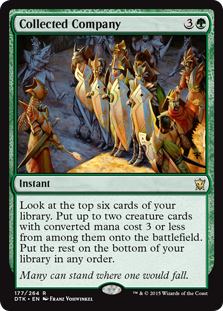
This isn’t an article about getting you to dump Magic and play Destiny. This article, these 1250 words I’ve written up to this point, are my way of voicing what I’ve been feeling for a long time; Magic, for all its charms, isn’t perfect, and it's missing things. Infect, that old archetype that once existed, had a palpable identity. Splinter Twin brought fear to the table. Dredge carried with it a certain feeling of doom. Magic’s game design is perfect, I know that now. But the cost of perfection is soul. Given enough time, Modern has turned from a format that could claim unique experiences to a grind-fest of value and percentages. Elves used to feel so on the edge. They knew they were playing garbage cards, and you knew it too. The goal for them was to be as fast as possible, and for us to stop them at all costs. Now, there’s the primary game, and the Collected Company value subgame. Eldrazi used to feel broken (well, it was broken, but it felt broken too). Now it’s just gigantic things packed with game text after another until you collapse. Control used to feel unique; ugly and slow and plodding and hopeless, but nevertheless, unique. Now it feels like Jund with a different skin on it. The well has been poisoned.

I’m not sure what can be done. The rules shouldn’t change, but Magic is missing that pull, that allure of a unique experience that keeps me coming back. The system is perfect, as it always was. But I need something more than perfection. This is what draws me to shake-up bans. This is what has me smiling at the thought of broken things like Treasure Cruise getting printed. I feel, deep down, that at this point it's difficult to create something unique and fresh from the vast number of cards already printed without breaking the game wide open. I know I’m in the minority, and Magic is growing, but I find myself growing away from it. I still love it, I know we are right for each other, but my eye is wandering. I don’t plan on leaving, but I feel guilty for thinking about it.

Thanks for reading,

Trevor Holmes

Insider: Beating the Commander Rush

Are you a Quiet Speculation member?

If not, now is a perfect time to join up! Our powerful tools, breaking-news analysis, and exclusive Discord channel will make sure you stay up to date and ahead of the curve.

Commander players generally operate very differently compared to what you would expect from a player that plays competitively. These players may not go to their local game store every Friday FNM or even attend a Grand Prix in their lifetime. They're players that typically have a large amount of money to spend on cards but are still cost-conscious.

Commander 2017, the newest set geared towards this crowd, is sure to have its own financial impacts. If you're planning to speculate around this product, or just want to understand what may be affected, it's important to understand how these players' buying habits differ from competitive players.

Today I'll cover the basics of Commander demand—when players are buying in, what they're excited about, and why Commander cards change in price. Let's go.

The When

If you play Standard, you know the big spikes happen right after a Pro Tour, right? Deck finishes well, people spend money to buy the cards, shops raise prices. It's a common cycle. Rotation is the same way. When you're six months from a fall set you know cards that will rotate are going to start to dip. It's like clockwork—it just happens every year the same way. What you don't know is which cards will do well, and that's the trick to buying in early.

There was an error retrieving a chart for Gideon, Ally of Zendikar

Commander doesn't work on that same cycle. First of all, Commander players don't sell their cards. They're kind of a black hole for staples. That's the main reason that Sol Ring is still $3 despite them reprinting it every year for the past four years. There is no real time to buy in when it "rotates" like you would with Standard cards.

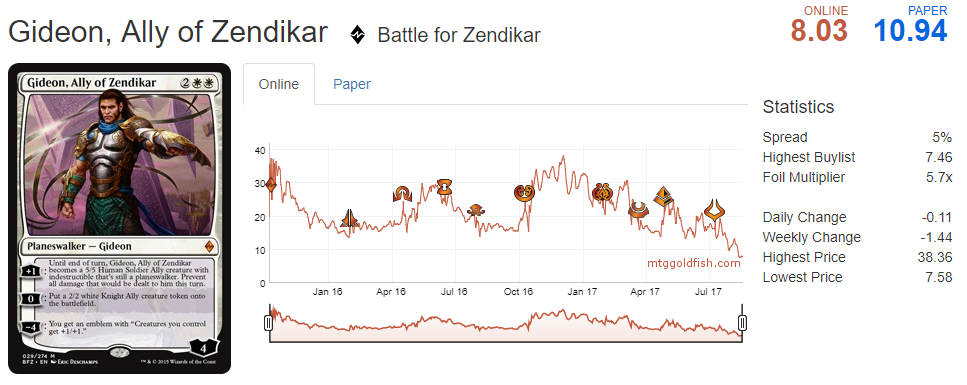
That being said, Commander players also generally shy away from things that are already propped up by Standard play. Maybe they wanted a Gideon, Ally of Zendikar for their Trostani, Selesnya's Voice tokens deck but won't buy him when he's $20, and will when he's $8. With these cards you can wait until they rotate from Standard and then pick them up, and they'll slowly climb as Commander players gradually buy them for their decks.

The biggest difference from a lot of other format staples is that Commander staples don't typically spike during the pre-order period. These types of players are more methodical and will wait for the new cards to arrive (in the case of Commander decks) before going out and purchasing new cards. When a new, unique commander everyone's excited to build around comes out, you won't see the staples for that deck start to climb naturally for a few weeks after the card is released. As we can see right now, not many cards have moved that much since the entire Commander spoiler has been released.

The What

Standard players are known for their reluctance to buy foils. The most premium copies of cards aren't in as much demand as they should be due to their rarity. It's not uncommon for foil multipliers on strictly Standard cards to be 1.1x or worse. Commander doesn't really work the same way. We can see this very clearly on a recent card, The Scarab God.

There was an error retrieving a chart for The Scarab God

The Scarab God non-foil versions average about $15 but it's basically impossible to find Masterpiece versions for less than $85. Comparing this to a similar Standard-legal mythic, Torrential Gearhulk is about $18 for a non-foil version but the Masterpiece is only $60.

Generally speaking the Masterpieces that are also in the set are the worst value-wise, but The Scarab God bucks that trend. In fact, all of the Masterpiece legendary gods from Hour of Devastation are quite high compared to their non-foil (The Locust God is $10/$55, The Scorpion God is $5/35).

Outside of this, you can also see the recent foil spikes where there is a clear intersection. The most expensive and most abrupt Reserved List spikes have been in foil cards that are very popular in Commander and also cube. Metalworker, Palinchron, Grim Monolith, and Treachery, for example, are cards that appeal immensely to cube and Commander players who are much more likely to purchase a foil version.

There was an error retrieving a chart for Palinchron

This is significantly different from Standard powerhouses where the foils look criminally underpriced but the reality is there is no real demand for them.

The Why

The most important reason that Commander cards change in price is because a new card was printed. A lot of times these players like the newest things and we will see cards go up in response to new legendary creatures but also see old legendary creatures go up when new synergies are discovered with new cards.

If you take a look at the most popular Commanders in the most recent month on EDHREC you will see that almost all of the commanders are either new, have a new card that shows up in a large percentage of the decks, or were recently reprinted (in Commander Anthology). If you take a look at the page for Hour of Devastation, you can see that a lot of the cards I outlined in my HOU set review are some of the most played ones in the set.

While it's not always the case, the biggest spikes come with the release of new cards. Other times, cards will just creep up over time as they dodge reprint after reprint.

There was an error retrieving a chart for Doubling Season

Doubling Season is a card that Commander players absolutely love and which continues not to get reprinted. For years it climbed slowly and silently and then had a huge spike when Atraxa, Praetors' Voice got released.

Those are basically the two sides of the coin. It can happen slowly over time if the card is popular and stock disappears, or it can happen very quickly as there is a rush to get it. It's hard to predict which one most specs will end up being but it's easy to cash out almost all of the time when you're successful.

Final Thoughts

This year's Commander product looks to be very popular and there are bound to be cards coming out of it that will be good long-term holds. I would keep an eye on the EDHREC weekly pages to see what has players excited. If you look into the best sellers page on TCGplayer you can already see that "Draconic Dominance" is the most popular deck despite having some of the worst value out of the four.

I'm going to keep an especially close eye on the contents of these decks, because Ixalan has already been shown to have more tribal cards to get players excited for more Commander in the future!

Insider: MTGO Market Report for August 23rd, 2017

Are you a Quiet Speculation member?

If not, now is a perfect time to join up! Our powerful tools, breaking-news analysis, and exclusive Discord channel will make sure you stay up to date and ahead of the curve.

Welcome to the MTGO Market Report as compiled by Matthew Lewis. The report will cover a range of topics, including a summary of set prices and price changes for redeemable sets, a look at the major trends in various Constructed formats and a "Trade of the Week" section that highlights a particular speculative strategy with an example and accompanying explanation.

As always, speculators should take into account their own budgets, risk tolerances and current portfolios before buying or selling any digital objects. Please send questions via private message or post below in the article comments.

Redemption

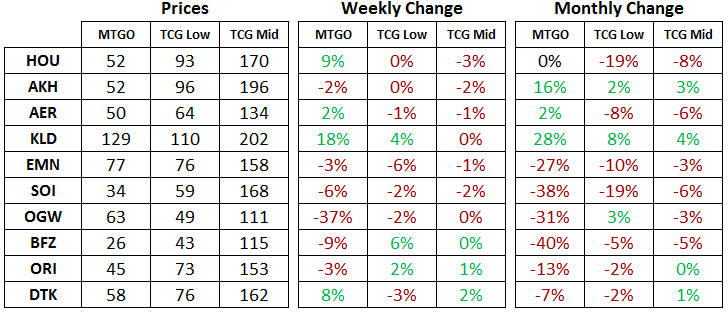
Below are the total set prices for all redeemable sets on MTGO. All prices are current as of August 21, 2017. The TCGplayer low and TCGplayer mid prices are the sum of each set's individual card prices on TCGplayer, either the low price or the mid price respectively.

All MTGO set prices this week are taken from GoatBot's website, and all weekly changes are now calculated relative to GoatBot's "full set" prices from the previous week. All monthly changes are also relative to the previous month's prices, taken from GoatBot's website at that time. Occasionally, full set prices are not available, and so estimated set prices are used instead. Although both Aether Revolt (AER) and Kaladesh (KLD) are no longer available for redemption, their prices will continue to be tracked while they are in Standard.


Standard

The other shoe dropped this week as Oath of the Gatewatch (OGW) put up a massive red number, down 37 percent. Although this set has powerful Eldrazi creatures that are staples in Modern, the reality is that there were many cards priced at a high level due to their Standard play. Nissa, Voice of Zendikar was 15 tix but is now down to 7 tix, and Kozilek's Return went from 17 tix down to 6 tix. There will be a buying opportunity on cards from OGW, but at the moment, there's room for further declines.

There was an error retrieving a chart for Kozilek's Return

In general, it's a little early to be bottom fishing on cards rotating out of Standard, but Archangel Avacyn at 1.2 tix is very tempting. This card has had a rough go of it in Standard since she ruled the skies in the U/W flash archetype and was priced at 20 tix. That deck never completely recovered from the banning of Reflector Mage, and the Standard metagame moved on. I wouldn't be afraid to start nibbling on this card in the 1.0 tix to 1.2 tix range, but if the price drops into the 0.5 to 0.6 tix range, then I would buy multiple play sets.

Avacyn ticks many boxes in terms of having value. It's a large-set mythic rare, so redeemers will eventually want some of these to complete their Shadows over Innistrad (SOI) sets. It's an Angel, so there is some casual appeal, and there's an outside shot at showing up in Modern. Taken all together, Avacyn is looking good from a speculative standpoint, we just need to see signs of a price bottom.

There was an error retrieving a chart for Archangel Avacyn

Another white mythic rare that has piqued my interest this week is the flagship card from Battle for Zendikar (BFZ), namely Gideon, Ally of Zendikar. It's got many similar attributes to Avacyn, but Gideon actually gets played in multiple archetypes in Modern. Again, it's a little early to be bottom fishing, but Gideon at 5 tix is a very tempting price.

For a card that is not rotating out of Standard, Abrade looks like a staple uncommon and it will stick around as long as the artifact themed sets of KLD block do. The best prior example of speculating on small-set uncommons is Fatal Push, which dipped below 2 tix back when AER was still being drafted. Although Abrade is not  on the same level as a Modern staple like Fatal Push, it's also found a price range just above 1.0 tix which is commensurate to its use in Standard. We are in the final phases of Amonkhet (AKH) block draft which means that the supply of this card is very nearly at its peak. As long as Abrade continues to see play, I would look for it to reach a price of 2 tix at some point during the fall and winter as the Standard metagame evolves.

Modern

Flashback drafts return this week with triple Ravnica: City of Guilds (RAV). This is an unbalanced draft format as the original Ravnica block featured the innovative guild structure, with four of the ten guilds being featured in the first set. The value is not great on these boosters, so be sure to brush up on draft strategies before entering the queues, as you are unlikely to get bailed out with a pricey rare. Players should target the Modern playables from this set on the weekend, with cards like Dark Confidant, Life from the Loam and Birds of Paradise among others.

There was an error retrieving a chart for Scapeshift

There was a Modern Challenge on MTGO this past weekend and the top decks are here. TitanShift piloted by long time MTGO grinder _Batutinha_ took the top spot, with the deck featuring three copies of Hour of Promise. Scapeshift has made a push to 40 tix, but it's a little stretched at this point and has fallen back to 36 tix. Look for it to stabilize in the low 30s over the coming weeks. A dip back down to 25 tix or lower after Ixalan (XLN) is released would be a good buying opportunity.

Standard Boosters

A draft set of KLD block hit 9.5 tix this week, which is not far off the price of the most current draft format of AKH block. At this point, I've completely sold down my stock of KLD and AER boosters. This means I didn't catch the peak, but I am still happy with the way this speculative strategy played out

I bought one hundred draft sets for the portfolio back in the spring. It turned out that KLD boosters have been the more profitable booster on a percentage basis, returning 43 percent, or 54 tix on 125 tix invested, while AER returned 21 percent, or  117 tix on 560 tix invested.

Based on my experience with KLD and AER, I don't think it's correct focus on one booster over the other. I think there's an advantage in buying them in draft set ratios as you get to buy more boosters in one go and you get to manage your risk by adding both into your portfolio. Finally, when it comes time to sell them it's difficult to sell a bunch of boosters at once as most competitively priced bot chains will usually only take a draft set or two of non current draft formats. Thus it took a lot of transactions to get through my stock of boosters, but as a safe and grindy spec, it ended up being worthwhile.

As we go forward, this strategy will be applicable to AKH and Hour of Devastation (HOU) boosters at the end of September. When XLN is released, I'll be targeting AKH block draft sets at a price of 7 tix or less. The price target for exiting the trade will be 9 tix by February or March of 2018.

Trade of the Week

For a complete look at my recent trades, please check out the portfolio. Two weeks ago I bought into Chameleon Colossus as it rode a steady uptrend on account of being included in Modern sideboards to fight Grixis Death's Shadow decks. That deck has adapted by upping its Liliana of the Veil count, so the effectiveness of Chameleon Colossus as a sideboard answer is diminished.

With this in mind, I found the market to be well supplied in the 20- to 21-tix range, so it was prudent to exit this trade. Once supply catches up to the current price, then the trend is at risk of ending. In this case, the supply was signalling to me that the trend was over, and this lined up neatly with the metagame chatter related to this card. As a result, I liquidated my copies at current prices and the trade returned 27 percent, or 98 tix on 460 tix invested.

The original thesis was to hold this position for four to six weeks, but that was contingent on the trend continuing. Although it's possible I have not read the market correctly, I feel the trend is over and that exiting the position was  the correct move. Getting liquid over the next month is a big priority for me as I prepare for the release of XLN and fall rotation.

Insider: New Metagame Modern Picks

Are you a Quiet Speculation member?

If not, now is a perfect time to join up! Our powerful tools, breaking-news analysis, and exclusive Discord channel will make sure you stay up to date and ahead of the curve.

Modern may not technically be considered an eternal format but it shares a lot of common elements with Legacy and Vintage. In particular, Modern is a "big" format with a ton of sets that are legal at any given time. Secondly, Modern is a non-rotating format where the sets that are legal stay legal forever. Wait...? Why isn't Modern considered an eternal format again?

Well, I suppose the answer to the question is that everything isn't technically legal dating all the way back to the olden-day sets.

Another factor that Modern shares with the eternal formats is that it often takes long periods of time in order for the metagame to really settle in and become established. There are a number of factors that help this to be the case. The largest of which is that Modern hasn't had Pro Tour play in years. Nonetheless, Modern is a format where, when bannings or new printings occur, it takes an extended period of time for the effects of those changes to be fully understood.

Modern has seen a steady stream of bannings over the past few years that culminated in Gitaxian Probe and Golgari Grave-Troll being shown to the door. In addition to these major changes from the banning side of the coin, Modern has also been dramatically affected by new printings in the past year—in particular, the printing of my first pick, Fatal Push.

There was an error retrieving a chart for Fatal Push

Fatal Push is a card that just keeps picking up steam when it comes to value. The reason is obvious: the card is absurdly versatile and among the best removal spells ever printed by every metric imaginable. The card is a staple in every Standard deck playing black and will remain so until it rotates. In addition to being a staple of every deck playing black, the fact that the card is so absurdly good ensures that black will remain one of the best colors for its entire stay in Standard.

Let's talk about Fatal Push in Modern. I don't think it's any surprise that the printing of a one-CMC removal spell that's as close to non-conditional as possible is a huge deal in Modern, where mana constraints are so important. The difference between one and two mana in Modern is similar to the difference between two and four in Standard. It's a big deal.

While there are other one-mana removal spells available, notably Path to Exile and Lightning Bolt, Fatal Push is just more efficient, effective, and a cleaner answer to more cards that routinely see play in the format. For this reason, I believe the demand for Fatal Push will remain high and the demand will only grow as the weeks continue to go by.

Now, there is certainly the potential for Fatal Push to see reprints in subsequent Modern Masters and/or precon-style decks, so the ceiling isn't infinite like it might have been in the olden days. However, with that being said I suggest that people who pick up this card will see gains before we ever see potential for a price drop.

There was an error retrieving a chart for Tasigur, the Golden Fang

Tasigur is another card that has been seeing more and more play in Modern these days. Being legendary makes the card less played than the omnipresent Gurmag Angler (which I also think is a great common spec) but its stock is still on the rise.

Tasigur benefits greatly from the printing of Fatal Push. Firstly, black became a much better color now that it has a great one-mana removal spell. Secondly, Death's Shadow decks that abuse delve and are hyper-efficient in their own right have risen to the top tier of Modern.

Lastly, and perhaps most importantly, because of its six-mana cost Tasigur is 100% immune to being pushed. I would argue that Modern-playable creatures that resist Fatal Push are among the best positioned cards in Modern, and a great place to look for investment opportunities.

Speaking of un-pushable...

There was an error retrieving a chart for Reality Smasher

Death's Shadow is the format-defining deck of Modern at the moment. The deck is so good that I believe its presence will continue to refine the metagame in the coming months. Death's Shadow is the kind of "best deck" that makes players serious reconsider playing other decks in Modern because it is so predatory against such a large chuck of the field.

What does this have to do with Reality Smasher?

Well, the answer is that decks like Bant Eldrazi and Eldrazi Tron are among the few Modern options that tend to have an actively good matchup against Grixis Shadow because the axis they fight on is inherently strong against what Shadow is trying to accomplish.

With that in mind, while I think that Death's Shadow cards are going to be a good investment, the natural foil to Shadow—Eldrazi—will also consist of worthwhile pickups.

There was an error retrieving a chart for Eldrazi Temple

Eldrazi Temple is such a unique card that I feel it is almost risky to add to a speculation list. With that being said, it is a very important card in the Modern metagame.

I know that I'm venturing into the land of "hot takes" here, but if you asked me what the single most important card in Modern was right now, I'd be hard-pressed to find one more impactful than Eldrazi Temple.

None of these Eldrazi decks are playable without Temple. Drawing it is the difference between quietly losing and easily smashing your opponent. Eldrazi Temple is a land that casts Rampant Growth when you put it onto the battlefield, but puts the land into play untapped. It is worth two cards, and virtually casts the second spell for free!

Right now Temple is over $10 but as the new metagame continues to unfold I could easily see it being much higher. The inclusion of Eldrazi Temple in Modern Masters 2015 certainly hurt the value of the card by creating more availability and access. However, the lull caused by MM2 might also be a boon to the savvy collector by creating lower buy-in prices and greater opportunity for gains down the road.

If Eldrazi Tron and/or other Eldrazi options continue to be one of the premier options in Modern, it stands to reason the card will gain in value. And if you want my honest opinion, I believe this is 100% true. I haven't played a non-Eldrazi-based deck in Modern in six months since I gave up on Collected Company decks.

There was an error retrieving a chart for Endbringer

One last Eldrazi pick: Endbringer. The biggest upside of betting on Endbringer is that the opportunity cost is nearly zero. It's essentially a bulk rare that sees play in a Tier 1 Modern, Legacy, and even Vintage strategies.

The card does have an awful foil promo version with terrible artwork that dilutes the value somewhat. With that being said, I think that buying and holding onto some regular non-promo copies will likely yield rewards down the road. The card is gas.

There was an error retrieving a chart for Anger of the Gods

Forget Lightning Bolt, the actual reason to play red is Anger of the Gods!

The card has already seen some significant gains but I believe there is further opportunity for growth, especially if the card isn't reprinted in the near future (isn't that the truth with most good picks?).

Anger of the Gods may not be directly good against Eldrazi or Death's Shadow but it is an important piece of the metagame puzzle nonetheless, because it deals a devastating blow to all of the decks that try and "go wide" against the Tier 1 strategies.

I was making a joke the other day about a Modern Top 8 where I said that every deck in the Top 8 either played Anger of the Gods or folded to it! The obvious exception being Eldrazi.

One of the reasons I predict that Modern is condensing into a Shadow vs. Eldrazi metagame is actually that Anger of the Gods is so effective at putting down "go wide" decks.

For the amount of play that Anger actually sees I think it could easily continue to see more gains in the coming weeks.

It is also significant that Anger of the Gods can be slotted into any deck playing red that wants to punish "go wide" decks. Control decks like Jeskai. Ramp decks like Valakut. Shadow. I've even been angered by Burn decks! It's just a great answer to a large chunk of the metagame.

My last pick is a card that I believe is well postioned against the two best decks in Modern, Eldrazi and Death's Shadow:

There was an error retrieving a chart for Supreme Verdict

Verdict is an extremly unique and powerful Magic card and a good one to boot!

The UW Control decks also tend to be a decent choice in the current metagame. These decks may not be as inherently powerful as Shadow or Eldrazi---but what they lack in overall power level they make up for by virtue of having inherently strong matchups against a large percentage of the winner's metagame.

I don't know if Azorius Control or Jeskai Control has enough gas to keep up pace with the ebbs and flows of Modern, but it is certainly an archetype that people like, and one that can spike some events.

Popularity and potential for finishes are a combination that can really drive prices up: Cryptic Command, Snapcaster Mage, and Vendilion Clique aren't perennial stock winners for no good reason. These are cards that people play and that can perform in nearly any Modern metagame. These are "long-term holds" that tend to rise over time but have high starting price tags, which makes me wary of investing in them.

I like to invest in cards with smaller starting price points so I can make more investments that have high potential to make gains over time.

Modern is taking shape as a pretty interesting format that I'm becoming more and more interested in exploring. As I learn more about the post-Fatal Push metagame I'll make my thoughts known, but for now understanding the first level is still a pretty good place to be!

Testing Preordain: Qualitative Results

Are you a Quiet Speculation member?

If not, now is a perfect time to join up! Our powerful tools, breaking-news analysis, and exclusive Discord channel will make sure you stay up to date and ahead of the curve.

Once again, it is time to start rolling out my results from the latest Banlist Test. As usual, I will start with the experimental setup and the unquantifiable results. I know that what most readers care about are the hard numbers, but I'm not done gathering the data yet. That will be coming sometime in September—probably. I'm done with Storm and about halfway through the UW testing. Completion date will depend on how the PPTQ season goes, as I'm splitting my testing time between that and Preordain.

For those who are new to the series, I take a card from the Modern Banned List, put it back into the deck that got it banned (or as close as possible), and see how it fares in the current metagame. My goal is to bring hard data and scientific inquiry into the discussion instead of more opinion and baseless speculation. Therefore, I play a lot of matches with the deck (normally 250 with the banned card, 250 without it) to build a sufficient data set for analysis. I take the test data, compare it to the control data, and from that I hypothesize about the safety of the test card. I laid all this out in more detail in a previous piece. The card that readers voted for me to test this time was Preordain.

This test was very different from the last several. With both Stoneforge Mystic and Jace, the Mind Sculptor, I just tested a single deck against the gauntlet. While this often took a while, the testing was fairly straightforward. I took the deck, learned the deck enough to be passable, ran the gauntlet. The decks I was using certainly helped. Yes, they were midrange decks, but their gameplan was clear and the decision trees relatively clear and comprehensible.

This time, for reasons explained here, I tested Gifts Storm and UW Control. This complicated things. To get a decent data set for both I'd have to play a lot more games. Doing the usual 500 matches would yield half the data. I made this harder for myself by playing hard decks against hard matchups. These decks require a lot of experience to navigate and Storm is very vulnerable to itself in the face of pressure. I'm not claiming to have played these decks perfectly, but I was at least average with Storm and good enough with UW that I took an updated version to a PPTQ. Thus if you see issues with the results or my data, consider that I am just one man with a few volunteers—in an enormous undertaking like this, exhaustion and deck difficulty are bound to play a part.

Experimental Setup

As always, I would be piloting the test decks against (semi-) willing opponents wielding decks that they are reasonably good with. We'd play match after match at a stretch, with me alternating between the test and control deck to even out the experience and skills I was developing during the tests. Prior to data collection, we always played at least a few practice games to get a feel for things and determine the correct sideboard plans. Previously, my team has used a variety of methods to actually play the games, including MTGO. We did not use MTGO at all this time. This prevented us from losing matches to misclicks and ruining the data set. It was also significantly cheaper. I don't own most of the digital pieces for Storm, couldn't get them, and already dislike MTGO. Playing paper in person or over Skype was much easier. And free. I like free.
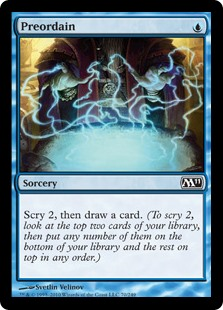
As I mentioned above, my data set is normally 500 matches. That is too small a set for two decks, but it was logistically implausible to just double it. It takes months to get all the data together as is—doubling would push completion into October at the earliest. I'm just not going to put that kind of time in to this project. Therefore, this data set is 640 total matches (160 per deck, and 32 per matchup). Why 640? I didn't have a set target when I started, but I knew that 150 was the bare minimum. Of course, I was testing both decks simultaneously to save time and I was burning out. I decided I'd had enough at 27 matches, but that was an ugly looking number and felt like too big a cop-out so I kept going to 30. And then did two more so we'd get nicer aggregate numbers.

The Test Decks

All of the decks were chosen in mid-May. They are as close to "average" lists as my team could find. Several members were irritated, as they wanted to try out their personal tech during testing, but the whole point is to see how these cards work against a representative metagame. Thus we used the most average build of every deck possible.

Choosing the test decks was harder than actually fitting in Preordain. In previous tests, I actually had to build decks around the test card. Stoneforge Mystic requires six slots minimum, Jace, the Mind Sculptor benefits from and rewards decks that play lots of very cheap spells. This required actual deckbuilding. This time I'm testing a cantrip in decks that already play cantrips. I just replaced the weaker one for Preordain. There is some consideration of adding more, like a Legacy deck would do, but we couldn't agree on how to do that and the clock was ticking. I went with the quick and easy option.

Gifts Storm (Test deck)

Creatures

4 Baral, Chief of Compliance
4 Goblin Electromancer

Instants

4 Pyretic Ritual
4 Desperate Ritual
4 Manamorphose
3 Remand
2 Peer Through Depths
4 Gifts Ungiven

Sorceries

4 Serum Visions
4 Sleight of Hand / Preordain
2 Grapeshot
2 Past in Flames
1 Empty the Warrens

Lands

4 Scalding Tarn
4 Steam Vents
4 Spirebluff Canal
3 Flooded Strand
2 Island
1 Mountain

Sideboard

3 Lightning Bolt
2 Dispel
1 Swan Song
1 Echoing Truth
1 Hurkyl's Recall
1 Negate
1 Pyroclasm
1 Anger of the Gods
1 Empty the Warrens
1 Mindbreak Trap
2 Shatterstorm

The core combo of the deck is very well established, and it's just as powerful and fragile now as it was in 2013. Swapping Pyromancer Ascension for Baral and the banned Gitaxian Probe for Gifts Ungiven is the only new innovation. I saw some lists running Merchant Scroll, but that was very much a fringe choice and didn't make the cut.

The most common sideboards at the time were Gifts packages. I'm not sure they're actually better than more focused boards, particularly because there are no Blood Moons, but this was what saw the most play at the time. I don't know that it made much of a difference. My experience showed that sideboarding was a very delicate thing and I did it at the barest minimum possible to preserve the combo. I doubt that the exact composition of my sideboard would have changed that plan. There was some consideration for the transformative Madcap Experiment/Platinum Emperion combo, but everyone I asked said it was worse than extra Empty the Warrens.

There's a lot more variation in UW Control, and it took awhile to put together a "stock" list. Sphinx's Revelation and Ancestral Vision didn't make the cut in favor of Spreading Seas and Condemn, by a very small margin.

UW Control (Test Deck)

Creatures

3 Snapcaster Mage
1 Vendilion Clique

Enchantments

4 Spreading Seas
1 Detention Sphere

Planeswalkers

1 Elspeth, Sun's Champion
2 Gideon Jura
2 Jace, Architect of Thought

Sorceries

4 Serum Visions / Preordain
3 Supreme Verdict

Instants

4 Path to Exile
2 Condemn
1 Spell Snare
2 Mana Leak
1 Logic Knot
1 Negate
1 Blessed Alliance
3 Cryptic Command

Lands

4 Flooded Strand
4 Hallowed Fountain
4 Celestial Colonnade
2 Glacial Fortress
2 Ghost Quarter
2 Tectonic Edge
4 Island
2 Plains

Sideboard

4 Spell Queller
3 Rest in Peace
2 Stony Silence
2 Dispel
2 Timely Reinforcements
1 Supreme Verdict
1 Negate

The Spell Queller plan was popular at the time, though it has gone away recently. I didn't really like it, but it also didn't have much opportunity to shine.

The Gauntlet

As usual, I chose five decks from all corners of the metagame, giving preference to Tier 1 decks. Again, the point is to test the power of these boosted decks; it makes the most sense to test against the best. This was both easier and harder than before. Every type of deck was represented in Tier 1 in May, but the control deck was UW Control. Which I was already testing by virtue of it being the... erm, control deck.

I needed to use the same gauntlet for both decks so the results were comparable. As such I fudged it to use a Jeskai list. This is not unusual now, with Jeskai ticking up in popularity, but it was unheard of at the time. I'm also fudging a bit by using Counters Company as my combo deck. It's far more combo than Abzan Company was, but it's still not a true combo deck.

#1 - Grixis Shadow (Test Deck)

Creatures

4 Death's Shadow
4 Snapcaster Mage
4 Street Wraith
2 Tasigur, the Golden Fang
2 Gurmag Angler

Instants

4 Thought Scour
3 Fatal Push
2 Lightning Bolt
2 Stubborn Denial
2 Terminate
2 Kolaghan's Command

Sorceries

4 Serum Visions
4 Thoughtseize
2 Inquisition of Kozilek

Lands

4 Bloodstained Mire
4 Flooded Strand
4 Polluted Delta
2 Watery Grave
2 Blood Crypt
1 Steam Vents
1 Swamp
1 Island

Sideboard

1 Engineered Explosives
1 Grafdigger's Cage
1 Nihil Spellbomb
1 Izzet Staticaster
3 Ceremonious Rejection
2 Stubborn Denial
2 Surgical Extraction
1 Liliana, the Last Hope
1 Anger of the Gods
2 Collective Brutality

#2 - Eldrazi Tron (Test Deck)

Creatures

4 Walking Ballista
4 Matter Reshaper
4 Thought-Knot Seer
4 Reality Smasher
2 Endbringer

Artifacts

4 Chalice of the Void
4 Expedition Map
2 Relic of Progenitus
2 Mind Stone

Instants

2 Dismember

Planeswalkers

2 Karn Liberated

Sorceries

2 All is Dust

Lands

4 Urza's Mine
4 Urza's Tower
4 Urza's Power Plant
4 Eldrazi Temple
3 Ghost Quarter
2 Cavern of Souls
2 Wastes
1 Sea Gate Wreckage

Sideboard

2 Hangarback Walker
1 Basilisk Collar
2 Grafdigger's Cage
1 Pithing Needle
2 Relic of Progenitus
2 Surgical Extraction
2 Warping Wail
1 Wurmcoil Engine

#3 - Counters Company (Test Deck)

Creatures

4 Birds of Paradise
3 Noble Hierarch
1 Viscera Seer
1 Walking Ballista
4 Devoted Druid
4 Vizier of Remedies
2 Duskwatch Recruiter
2 Scavenging Ooze
1 Qasali Pridemage
4 Eternal Witness
4 Kitchen Finks
1 Fiend Hunter

Instants

4 Chord of Calling
4 Collected Company

Lands

4 Verdant Catacombs
4 Windswept Heath
2 Temple Garden
2 Razorverge Thicket
2 Forest
2 Gavony Township
1 Godless Shrine
1 Overgrown Tomb
1 Horizon Canopy
1 Plains
1 Swamp

Sideboard

3 Voice of Resurgence
2 Abrupt Decay
2 Path to Exile
1 Anafenza, the Foremost
1 Aven Mindcensor
1 Eidolon of Rhetoric
1 Kataki, War's Wage
1 Linvala, Keeper of Silence
1 Orzhov Pontiff
1 Reclamation Sage
1 Selfless Spirit

#4 - Boros Burn* (Test Deck)

Creatures

4 Goblin Guide
4 Monastery Swiftspear
4 Eidolon of Rhetoric
1 Grim Lavamancer

Instants

4 Lightning Bolt
4 Searing Blaze
4 Skullcrack
4 Lightning Helix
4 Boros Charm

Sorceries

4 Lava Spike
4 Rift Bolt

Lands

4 Arid Mesa
4 Bloodstained Mire
2 Wooded Foothills
3 Sacred Foundry
3 Inspiring Vantage
3 Mountain

Sideboard

3 Ensnaring Bridge
4 Relic of Progenitus
4 Smash to Smithereens
2 Path to Exile
2 Kor Firewalker

[su_spoiler title="* Note on Burn" style="fancy"]Naya Burn appeared to have been pushed out of the mainstream, so we used a Boros list.[/su_spoiler]

#5 - Jeskai Control (Test Deck)

Creatures

4 Snapcaster Mage
4 Spell Queller
2 Vendilion Clique

Instants

4 Lightning Bolt
4 Path to Exile
4 Lightning Helix
3 Mana Leak
2 Remand
2 Electrolyze
3 Cryptic Command

Sorceries

4 Serum Visions

Lands

4 Celestial Colonnade
4 Flooded Strand
4 Scalding Tarn
2 Steam Vents
2 Hallowed Fountain
2 Island
1 Arid Mesa
1 Glacial Fortress
1 Mountain
1 Plains
1 Sacred Foundry
1 Sulfur Falls

Sideboard

3 Ceremonious Rejection
2 Negate
3 Rest in Peace
3 Supreme Verdict
2 Timely Reinforcements
2 Celestial Purge

Preordain, Qualitatively

The initial results are actually very disappointing. At this point I've played over 500 matches (~140 to go!) and I don't have a strong opinion on Preordain. This shouldn't be surprising: it's a cantrip. Cantrips don't have that much impact on a game (unless you play a lot of them), hence the name (it's a D&D reference). They're like the oil in an engine. You notice when they're not there, but otherwise you just don't see the impact. Upgrading your cantrip is like buying higher quality oil. Yes, your engine will run smoother and your mechanic may see some improvement, but you are unlikely to actually notice any difference in normal operation.
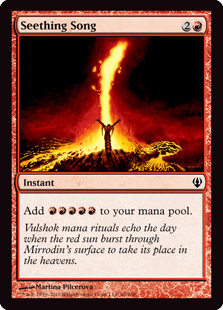
In a way, that is my answer. It didn't really feel special to play with Preordain. It was a definite improvement over the replaced cantrip, but not enough for me to feel strongly about the card. Its value swung wildly based on the situation and stage of the game, but so does that of any cantrip. Part of that may be how I played it, and it is very possible that decks would be built very differently with Preordain in the format. But players may also find that the lengths you have to go to just aren't worthwhile, like putting high-octane gas and racing lubricant in a Civic.

In Storm

I barely noticed any difference between Preordain and Sleight of Hand. This is probably because most of the time Preordain was Sleight of Hand. I will include the actual numbers when I circle back to this, but most of the time I kept one card and bottomed the other. You do get extra value from having options, but I didn't utilize them very often. It is entirely possible that I was wrong about that, but it certainly didn't seem that way to me or my team.
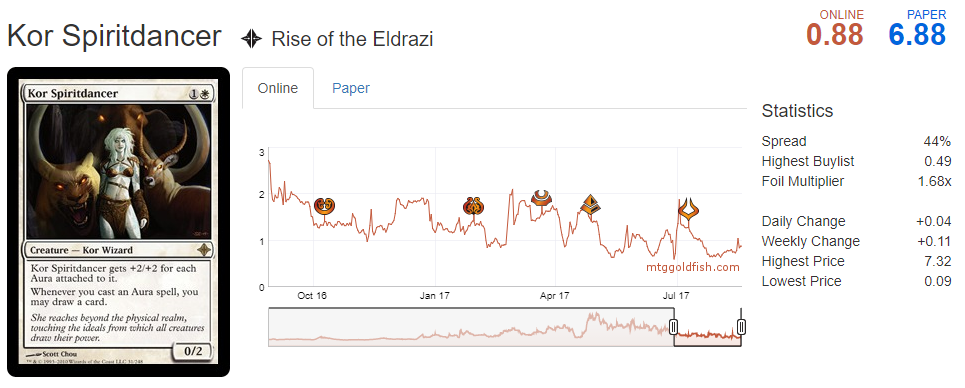
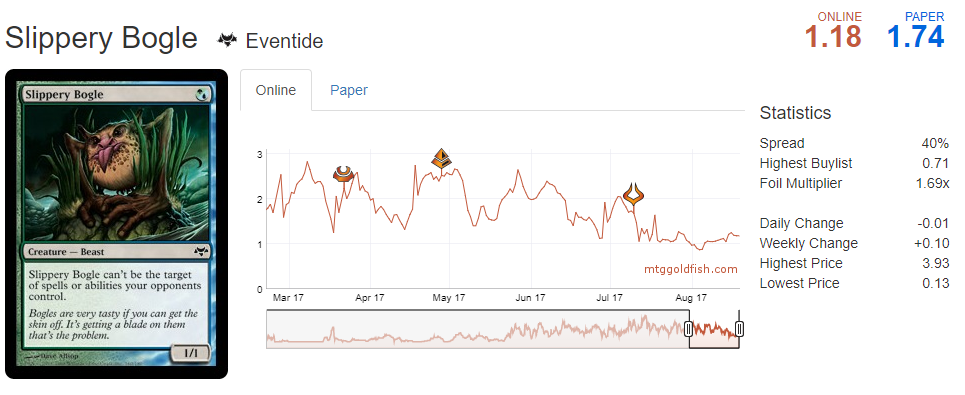
Preordain was swept up in the post-Pro Tour Philadelphia 2011 crackdown on combo. At the time it made sense—not all the combo decks used fast mana but they all used cantrips. Subsequent bannings have further weakened combo. Based on what I experienced, those later bannings made cantrips worse in combo. Games when I had a cost-reducer into Gifts Ungiven were far better than stringing cantrips together. It just didn't feel important to Storm.

In Control

Of course, it really doesn't feel special in UW either. It is unequivocally better than Serum Visions after turn four, but on turns 1-2, it's worse. In the mid- to late-game, you're looking for specific answers and Preordain delivers them right away instead of setting you up for next turn. However, early on you're just looking to get deeper into your deck, and Visions will always show you three cards. You get a random card that you won't play anyway and then set up for the next two turns. It's normally correct to Visions at the first opportunity as a result. Preordain cannot do that, so you don't play it early, saving it to find specific cards when you need them. I suspect that I should have played both, but hindsight is 20/20. I believe that I'm doing better as the game goes long but losing to mana screw early more often. We'll see what happens when the data comes in.

Coming Soon

So that's it for now, I'll be back with the data sometime relatively soon. Next week, we'll be seeing if anything interesting happens to the banlist on Monday.

Insider: Speculating on Forgotten Modern Cards on MTGO

Are you a Quiet Speculation member?

If not, now is a perfect time to join up! Our powerful tools, breaking-news analysis, and exclusive Discord channel will make sure you stay up to date and ahead of the curve.

Hello, everyone.

Last week, we went through a few Modern- and Standard-legal lands. This week, let's discuss a number of cards that have been good in the Modern metagame in the past but are currently underplayed – I call them "forgotten" cards.

Modern Hexproof Auras

These are the main creatures in Modern Green-White Hexproof Auras, and both are currently at their respective low points. These cards tend to go up in price when G/W Auras is good in the metagame, and occasionally, the Bogles will increase in price due to the Pauper format. This deck will be good when there are a bunch of midrange decks running around in the field, as spot removal is totally useless against it. I think Kor Spiritdancer will take a longer time than Bogles to grow in value, but both of them will definitely earn us some tickets one day.

  • Kor Spiritdancer: Current Buy Price: 0.9; Target Sell Price: 2; Profit per Copy: 1.1
  • Slippery Bogle: Current Buy Price: 1.2; Target Sell Price 2.5; Profit per Copy: 1.3

Modern Jund

Jund is my personal favorite. It's always playable and has a pretty even matchup against everything else in the format. Ever since WotC reduced the number of 5-0 decks posted online everyday, we barely see any Jund lists appear. However, there are a lot of great players like Reid Duke and Willy Edel that will occasionally bring out this deck again and top eight or 5-0 some events. When that happens, some of the pieces in Jund will spike. Here's the most likely candidates:

Last week, I discussed some Standard legal fast-lands. If you played along at home with my picks, I hope you've already sold off your Botanical Sanctums for about 1.2 tickets profit each, as they stopped growing somewhere around 3.8 tickets in the last few days.

The main thing I want to illustrate here is that lands are some of the best investments on MTGO. Blackcleave Cliffs and Raging Ravine are staples in Modern Jund and have been for a long time. Currently the demand for these two cards is extremely low, so I suggest you get a couple playsets of each to be prepared for Jund's inevitable resurfacing in the format.

  • Blackcleave Cliffs: Current Buy Price: 3.2; Target Sell Price: 5; Profit per Copy: 1.8
  • Raging Ravine: Current Buy Price: 1.65; Target Sell Price: 4; Profit per Copy: 2.35

This is one of the best two-for-one card ever printed for Jund or Grixis decks. Since January this year, K-Command has reached 15 tix multiple times, with at least two to three points among them at above 20 tickets. With the current price at 12.5 tickets, I think this card has the potential to go up to at least 15 to 17 tickets again soon.

  • Kolaghan's Command: Current Buy Price: 12.5; Target Sell Price: 17; Profit per Copy: 4.5

Modern Blue Control Decks

There are a few different blue control builds that performed well recently on MTGO. Obviously, all of them play Snapcaster Mages and Cryptic Commands in their 75. This week, I'm looking at two blue cards that I might want to add to my long-term specs binder.

Sower of Temptation is a great sideboard card for many blue-based control lists, especially when the metagame is full of decks that plays Tarmogoyfs and Siege Rhinos. Sower has reached multiple low points this year, but it somehow always go back up above 1 ticket. I understand that if we buy them now and resell at 1 ticket, we pretty much earned nothing, but I have a different strategy in mind: a long-term investment where we aim for 5 tix per copy. If this card becomes popular in Modern again, it could easily reach this price point.

  • Sower of Temptation: Current Buy Price: 0.6; Target Sell Price: 5; Profit per Copy: 4.4

Spell Snare became less popular since mid-June of this year, probably because Death's Shadow took over Tarmogoyf's place as the best creature in the format. However, I think this is not permanent, as Modern is a very huge format where any card can be good. When the metagame is full of two-drops again, it will be the time for Spell Snare to shine.

  • Spell Snare: Current Buy Price: 1.1; Target Sell Price: 3; Profit per Copy: 1.9

GriShoalBrand

Last week, Belgium's Jérôme Bastogne finished 9-0 at Grand Prix Birmingham with a similar GriShoalbrand list that he piloted to a second-place finish at the World Magic Cup 2016. I believe the live stream alone made the prices of Through the Breach and Nourishing Shoal increase on MTGO:

I'm not sure what's going to happen with Nourishing Shoal, but the price of Through the Breach has been increasing steadily for the past week. The card is not only seen in GriShoalBrand but many other decks that wants to cheat some hasty Primeval Titans and Emrakuls into play. I think its safe to buy in two to three playsets of Through the Breach while its below 15 tickets.

  • Through the Breach: Current Buy Price: 13; Target Sell Price: 18; Profit per Copy: 5

The last time we saw Goryo's Vengeance spike was during the Esper Gifts deck hype. Here's the decklist if you haven't seen it:

Reanimation is one of the best ways to cheat in big, unstoppable creatures in Magic. Players are actively brewing and testing new builds online, so it's very likely for an improved version of GriShoalBrand or another Goryo's Vengeance deck to hit the metagame again in the near future. At 14 tickets, I think this is a safe investment.

  • Goryo's Vengeance: Current Buy Price: 14; Target Sell Price: 20; Profit per Copy

What to Do with Past Standard Specs That Didn't Work Out

It's normal when some of our speculations do not work out. This usually happens when a Standard rotation is about to take place. In this case, we have two general choices:

  • Sell the card at a loss, liquidating some amount of resources for new specs.
  • Keep the cards and wait, offering less liquidity but giving the chance the cards will pay off in the long-run.

Usually, the reason we sell our failed specs is to stop the bleed immediately, and mostly because we believe that the card no longer has any potential to go up in price. This week, I want to share with you all a third option when our specs don't work out. First let's look at the two cards below:

If these are still in your binder, this segment of the article is for you. Here's how the third option going to work:

Let me set a scene for you.

Gideon bought four copies of Grim Flayer at 12 tickets each, but the current price is only 7 tickets. If Gideon sells the Flayers, he is going to lose 5 tickets per copy. Gideon believes that Grim Flayer is not going to go above 12 tickets again, but he does believe it's possible it will see 10 tickets at some point based on its Modern playability.

So he bought another eight copies of Flayers at 7 tickets each (the current price), making the average price per copy becomes 8.67 tix.  [ (12 x 4 + 7 x 8)/12 = 8.67 ] 

When Grim Flayer does increase to 10 tickets per piece, Gideon will earn 1.33 tickets per copy instead of losing 5 tickets per copy. (If Gideon kept the four Flayers  until they increased to 10 tickets each without buying additional copies, ne would still be losing 2 tickets per copy.

Now, I'm not sure if this method is new, or if many of you have been using it, but if you think what I said made sense, you can give it a try! Technically, this can potentially turn "minimize loses" into "small profit".

That's all for this week. Thanks for reading, and I'll see you next week!

Adrian, signing out

Insider: MTGO Ixalan Rotation Finance, Part I

Are you a Quiet Speculation member?

If not, now is a perfect time to join up! Our powerful tools, breaking-news analysis, and exclusive Discord channel will make sure you stay up to date and ahead of the curve.

A major Standard rotation is just around the corner. In six weeks, Battle for Zendikar, Oath of the Gatewatch, Shadows over Innistrad, and Eldritch Moon will rotate out of Standard. Undoubtedly, rotation will affect the financial landscape on MTGO just as much as the Standard format itself. Anticipating how rotation will affect Standard can help you make sound speculations in the coming weeks.

A good starting point for understanding how rotation will change Standard is looking at what commonly-played cards we will be losing at rotation and how the loss of those cards will affect tier-one archetypes. The most obvious way in which the Standard metagame will change is that Zombies will no longer be a competitive deck. Beyond that, though, we have to do a bit of research. Skipping over Zombie cards, here are the most commonly played cards that are rotating, ranked in order according to MTGGoldfish's metagame data:

  • 3rd: Grasp of Darkness
  • 4th: Transgress the Mind
  • 13th: Falkenrath Gorger
  • 22nd: Incendiary Flow
  • 25th: Thraben Inspector
  • 27th: Liliana, the Last Hope
  • 31st: Kalitas, Traitor of Ghet
  • 34th: Traverse the Ulvenwald
  • 40th: Tireless Tracker
  • 42nd: Nissa, Voice of Zendikar
  • 44th: Thought-Knot Seer
  • 28th in Spells: Gideon, Ally of Zendikar
  • 29th in Spells: Kozilek's Return
  • 32nd in Spells: Collective Defiance
  • 33rd in Creatures: Matter Reshaper
  • 35th in Creatures: Archangel Avacyn
  • 36th in Creatures: Sylvan Advocate
  • 36th in Spells: Blessed Alliance
  • 37th in Creatures: Grim Flayer
  • 38th in Creatures: Village Messenger
  • 39th in Spells: Ob Nixilis Reignited
  • 40th in Creatures: Reality Smasher
  • 40th in Spells: Declaration in Stone
  • 42nd in Creatures: Spell Queller
  • 42nd in Spells: Weirding Wood
  • 43rd in Creatures: World Breaker
  • 44th in Creatuers: Catacomb Sifter
  • 45th in Spells: Stasis Snare
  • 49th in Creatures: Linvala, the Preserver
  • 50th in Creatures: Ulamog, the Ceaseless Hunger

Plus the dual lands leaving the format:

  • Allied Shadows over Innistrad lands ("Reveal lands")
  • Enemy Battle for Zendikar lands ("Manlands")
  • Allied Battle for Zendikar lands ("Battle lands")

There's a lot to unpack from the above data, and a lot of different angles from which to examine it. This week, I'll focus on what rotation is doing to some major competitive archetypes and the major financial implications surrounding these changes.

1) The competitive archetype losing the most at rotation is R/G Ramp.

The Eldrazi package of Kozilek's Return, World Breaker and Ulamog, the Ceaseless Hunger is one that is almost impossible to replace. These three cards provided the deck with defensive protection in the form of an instant-speed wrath and a really powerful late game worth ramping into, and each card helps catch you up from behind. In addition to Kozilek's Return, the deck is losing Chandra, Flamecaller, a card that also helps you catch up from behind very well. In fact, the only win condition of the archetype that isn't rotating is Walking Ballista. What could replace Ulamog and World Breaker?

One of these is a joke, and to a lesser extent all the others are as well. In a Ramp strategy, it is essential for your big payoff cards both to catch you up from behind and serve as a sticky win condition, and of these, only Sandwurm Convergence, Demon of Dark Schemes, Noxious Gearhulk, and Cataclysmic Gearhulk could (loosely) be said to meet that criteria. These four constitute a clear drop in power from what we have now, so much so that I doubt Ramp will be a worthwhile competitive strategy. The Ixalan leaks reinforce my lack of faith in Ramp's future prospects.

Financial Implications

Hour of Promise is an intrinsically powerful card with prospects I like long-term, but its price should crash hard if Ramp is no longer competitive. Hour of Promise is hovering around 1.00 tix now, but after rotation I'd expect it to drop below 0.20 tix. Hour of Devastation and Sheltered Thicket are cards that should also take a hit from Ramp's demise, since Ramp is the strategy that utilizes the most copies of these cards. According to MTGGoldfish, Ramp decks run four Sheltered Thickets 100 percent of the time and three Hour of Devastation 90 percent of the time. As with Hour of Promise, I like both of these cards long-term, but I recommend patience.  I think Hour of Devastation will likely fall to around 2.00 tix, and I think Sheltered Thicket will land between 0.80 tix and 1.25 tix at some point during the next six to eight weeks.

2) Ramunap Red Aggro is losing its one drops and direct burn spells.

While the core of Ramunap Red will stay intact, some of Ramunap Red's important pieces are rotating. One-drops Falkenrath Gorger and Village Messenger are bidding their farewells. Additionally, the only burn spell that can go to the face in Ramunap Red that remains in Standard is Shock – Incendiary Flow and Collective Defiance are rotating.

Financial Implications

I think the Ramunap Red Aggro shell is a very powerful one, and much of it remains intact. The two copies of Soul-Scar Mage in 79 percent of Ramunap Red decks will likely become four copies in 100 percent of Ramunap Red decks unless Ixalan gives Red a premium one-drop. I thus think that Soul-Scar Mage will make for a juicy speculation target, especially if its price dips down below 0.33 tix.

What concerns me the most about Ramunap Red's future is the loss of Incendiary Flow and Collective Defiance, since those are quintessential reach spells. It is the combination of these more traditional reach spells with the more novel reach provided by Ramnunap Ruins that has kept Red Aggro relevant throughout the life cycle of Hour of Devastation Standard. I am not be too worried about the financial value of some of Ramunap Red's core pieces – Earthshaker Khenra, Glorybringer, Chandra, Torch of Defiance. Hazoret the Fervent is the core piece that stands to lose the most from a shift in the shell's core game plan, but I think that the fact that deserts push the Red Aggro decks to go bigger will mean that Hazoret will command a 5.00- to 10.00-tix price at multiple points during her time in Standard.

3) Standard is losing many of its most significant midrange threats.

Grindy midrange strategies always need resilient threats and threats that generate card advantage, either maindeck or in the sideboard. In addition to the planeswalkers I'll be discussing next week, Standard really is losing a good chunk of its midrange power, particularly in green and black. Interestingly, the entirety of the Temur Energy deck, including midrange value cards Whirler Virtuoso and Rogue Refiner, will remain in Standard, all but guaranteeing that Temur Energy will continue onward as a competitive midrange archetype in Ixalan Standard.

Financial Implications

Green-Black Midrange has developed into three different forms during Hours of Devastation Standard – G/B Energy, G/B Constrictor and G/B Delirium. The slower Delirium shell is dying, both because the namesake mechanic is rotating and because we're losing the grindier cards like Tireless Tracker and Liliana, the Last Hope. We thus can expect green-black decks to shift more toward the aggressive-leaning Constrictor and Energy variants going forward. The biggest winners of this shift should be cards like Rishkar, Peema Renegade, Gifted Aetherborn and Glint-Sleeve Siphoner. Winding Constrictor would make for an interesting tiny uncommon stock speculation if it bottoms out to 0.01 tix, with some things in its favor (small set) and some things against (multicolor).

Beyond that, I think it is worth looking at which midrange value threats have been overshadowed by the likes of Tireless Tracker, since those cards can now breathe. Angel of Sanctions has been caught beneath the shadow of Archangel Avacyn, although I'd like the card to drop closer to 2.00 tix or below before investing. Gonti, Lord of Luxury is a card that has already proved its worth, so I like that as another tiny stock speculation. Skysovereign, Consul Flagship will probably see increased play, and I'm mad at myself for not investing in it a few weeks ago. If it's price drops back down to 2.00-3.00 tix, I'll likely invest in it.

Recap

That was probably a lot to take in, but get ready for more next week! Please leave any questions and comments below, and I'll be sure to get back to you. In case you got lost in the thicket of my analysis, here are the cards I mentioned as speculation targets in this article, along with price points at which I'd be happy investing. I'd be looking to invest in these cards from now until the the first week of Ixalan.

  • Angel of Sanctions: 1.85 tix
  • Gifted Aetherborn: 0.01 tix
  • Glint-Sleeve Siphoner: 0.70 tix
  • Gonti, Lord of Luxury: 0.02 tix
  • Hour of Promise: 0.15 tix
  • Rishkar, Peema Renegade: 0.70 tix
  • Sheltered Thicket: 0.90 tix
  • Skysoverign, Consul Flagship: 2.25 tix
  • Soul-Scar Mage: 0.25 tix

Several weeks ago I shared my favorite card in a cycle of charms I created – Abbatial Charm. Below is the first of the cycle I created.

Insider: The Reality of the Reserved List Buyouts

Are you a Quiet Speculation member?

If not, now is a perfect time to join up! Our powerful tools, breaking-news analysis, and exclusive Discord channel will make sure you stay up to date and ahead of the curve.

Well, this has surely been one unprecedented week. In all of my experiences within MTG finance (and that spans over six years), I don’t think I’ve ever seen such an organized movement on the Reserved List. All it takes is one glance at the weekly movers on MTG Stocks to see the carnage. (Somehow Junún Efreet poked its head into the top 18 movers).

In all I count 62 Reserved List cards (not counting Alpha, Beta, or Unlimited movers) that increased by at least 5% over the past week. That doesn’t include all the Arabian Nights and Legends stuff that jumped despite not being on the Reserved List.

There was an error retrieving a chart for JunĂşn Efreet

As my readers know, I have been following these trends for a long time now thanks to my deep appreciation for the Old School format. Many folks have been vocal on Twitter, sharing their opinions on the validity of these price spikes (or lack thereof). This week I want to document my perspective as to why this is happening, how “sticky” I think these moves are, and how you should rebalance your portfolio accordingly. You will find I’m not nearly as pessimistic about all of this!

Part 1: The What

Nearly every Reserved List card that is spiking comes from one of the four earliest Magic expansions: Arabian Nights, Antiquities, Legends, and The Dark. These sets house some of the rarest expansion cards in the game’s history. Below is a comprehensive ranking of how many rares were printed according to Crystal Keep’s website. I highlighted the most interesting rows.

I was actually under the impression that Legends rares and Arabian Nights U2s existed in far fewer quantities. In a recent video from Alpha Investments, Rudy suggested the rarest Arabian Nights cards were fewer in quantity than Beta rares, but this doesn’t seem to be the case.

Still, we can see just how sparse they are: just 19,500 Legends rares and 20,500 Arabian Nights “rares” (U2s). Antiquities “rares” (U1s) are also fairly sparse, with 62,000 printed. Over time many of these cards were likely torn, damaged, thrown out, and flat-out lost to society, making the actual available quantities on the market far less.

While I question some of Rudy’s numbers in an absolute sense, he was certainly right about one thing: The Dark “rares” (U1s) are significantly more prevalent. There are over six The Dark U1s for each Legends rare or Arabian Nights U2. That is going to make it much harder for The Dark Reserved List cards to jump nearly as high as the Legends and Arabian Nights moves we’ve seen.

Part 2: The Who and Why

If I had a nickel for every time a naysayer on Twitter declared how terrible it was to speculate on unplayable Reserved List cards, I’d be able to buy a bunch more of them! This sentiment reflects a lack of understanding of the market dynamics on these extremely rare and collectible cards. To drive a better understanding, we have to examine who is buying up these cards and why.

First off, I’m not going to sit here and pretend speculators aren’t manipulating this market. Of course there are plenty of hands in the pot stirring it up by buying up copies and listing others at exorbitant prices, to create that patented pop on MTG Stocks we are so used to seeing. I won’t deny this is a key factor. But it’s not the only factor and it’s not the reason why prices on these cards will stick far higher than your run-of-the-mill buyout.

Unlike common buyouts, the available quantities on these Reserved List cards for sale on the open market is very thin. A purchase of 20-30 copies is often sufficient to move the needle on MTG Stocks; mopping up about a dozen or two other copies from the rest of the American market is likely all it would take to incite panic-buying. That’s where things get interesting.

You see, “panic-buying” is not from speculators hoping to sell to greater fools. They’re not the ones scrounging the more obscure sites or international retailers to find the remaining copies at the “old price.” These are the collectors or Old School players who have “always wanted” one of these cards, but “haven’t gotten around” to buying it yet.

I’ve seen this sentiment expressed many times over the past couple weeks, and I have even experienced it myself just this past weekend. I’ve been wanting a Guardian Beast for a while now, and I was waiting for that steal-of-a-price to pick up a copy for Old School play.

There was an error retrieving a chart for Guardian Beast

Then the unthinkable happened: the copies I had been watching on eBay—the ones I use to track the market—started selling. Suddenly my price point went from $140 to $160 with a very steep trajectory to $200. With just a few copies left on the market, I had to make a move. I found a Near Mint copy for around $195 and made the purchase without looking back.

The underlying motive for making this purchase was my desire for a copy. The buyout merely catalyzed a purchase I had been planning all along. This is very common for collectors and Old School players. They don’t rush their purchases because the desirable cards are often expensive. Historically, prices haven’t moved all that quickly in this market because copies were purchased only rarely. But now with all eyes on these Reserved List cards, all the latent buyers are coming out of the woodwork en masse.

I have seen people jump in similar fashion on Argivian Archaeologist, Singing Tree, and King Suleiman. These are all presumably unplayable cards, yet it only takes a few people who shift from procrastination mode to buy mode to help the card’s new price stick. If it was all speculators buying these cards, then you’d see people undercutting themselves like mad after a spike.

While this is bound to happen to some degree, a large enough portion of these Reserved List cards are going into the hands of collectors and players. It only takes a few copies of Shahrazad to end their circulation by entering the hands of collectors, and you have a $100 card become a $200 or even a $300 card overnight.

There was an error retrieving a chart for Shahrazad

Part 3: Looking Ahead

Before we go further, yes, there are people with latent demand for the “less playable” cards like Stone Calendar. The fact that Star City Games upped their buy price on that card to $12.50 is proof enough to me that there is legitimate demand.

There was an error retrieving a chart for Stone Calendar

Granted, some price spikes will be stickier than others, and natural market forces will help things re-equilibrate. I urge you not to write these movements off, however. When dealing with such rare cards, the supply curve becomes extremely steep. This means that after only a handful of copies sell due to a bump in demand, the price someone is willing to sell at suddenly becomes much higher. The chart below depicts this concept.

The horizontal movement from Demand 1 to Demand 2 is relatively small, but because the supply curve is so steep, the price increases significantly. In extreme cases, just a couple copies disappearing from the  market would drive price increases well in excess of 100%. This is another reason I bought the Guardian Beast when I did, and it’s why I don’t expect to see cheaper copies show up on the market.

Again, I have to acknowledge that speculators are out there manipulating prices. There’s also real demand and this is having a more permanent impact. But that pales in comparison to what I suspect is truly going on: market cornering. I will not disclose names, but I will say that as I sell a few of these Reserved List cards for profit, I have seen a few repeat buyers. Rumors in the Quiet Speculation Discord channel suggest a few major players are accumulating copies. It’s not so far-fetched, is it?

If this is the case, it could be “game over” for the casual, procrastinating collector. If hardcore investors are putting significant capital into stuff like Singing Tree, these could remain higher for a long time. Sure, a few copies will trickle onto the market—I purchased a Damaged Singing Tree from TCGplayer for $15 Saturday night. These anomalies will surface.

There was an error retrieving a chart for Singing Tree

But if there are people out there making consistent purchases of the market to enforce an artificial price floor, it’s highly likely these new price points stick. Perhaps not 100% of the price increase, but a significant portion of them. Think about it… with how rare these cards are—especially the Legends rares and Arabian Nights U2s—it doesn’t take more than a few thousand dollars to buoy a market. With speculators and procrastinating collectors out there to help buyout the rest, we’re looking at higher prices for a long time to come.

With this backdrop, I’d encourage you to buy what you need (that hasn’t already disappeared from the market). But that’s been my message track for months now on this site and I’ve never shifted away from it. Don’t buy out lots of copies of anything, but if you want something for a collection or for play just buy it now. Stop waiting. It may be too late before you know it.

This isn’t meant to be a scare tactic. It’s just a reflection of how I genuinely feel about this market and how easily it can be permanently manipulated. Once a card from Arabian Nights shoots up, it will be a long time (if ever) for that card to drop back down in price significantly. Drop of Honey still buylists for over $300 weeks after its buyout. There just aren’t enough copies out there to soak up the lingering demand!

There was an error retrieving a chart for Drop of Honey

Wrapping It Up

I know there are many different opinions out there about the legitimacy of these Reserved List spikes. Some feel this phenomenon is a tragedy reflecting Wizards’ poor decision to continue enforcing the Reserved List in the first place. Others blame reckless speculation on “unplayable cards” from the MTG finance community. Both of these factors are of course at play here.

But I think there’s something unique to this market that sets it apart from the rest. These cards are:
a) extremely rare,
b) nostalgic and collectible,
c) in demand from procrastinating collectors/players.

All three of these factors combine for a backdrop that suggests the higher prices are here to stay. Add in the possibility that heavy hitters in the MTG investing world may be making a dent on supply, and you have the recipe for higher prices. These are the reasons I’m taking the buyouts seriously, actively participating by attempting to purchase a few copies near old prices where possible. I keep one for myself and sell the other couple I manage to acquire. (I am a collector too, after all). I never go deep on this stuff because it’s slow and difficult to move.

That’s how I’ve approached this environment and it’s been fairly successful. I’ve made some profits on these spikes while also expanding my Old School collection for personal enjoyment. My goal is to make this hobby cheaper while I save for my son’s college education, and these buyouts have helped me accelerate that goal nicely.

To eschew these moves is to ignore one of the most fascinating portions of the MTG market, and to me that is reckless. But I recognize everyone has their strengths and weaknesses; I’m just thrilled to see the market move where I have the most knowledge and interest!

…

Sigbits

  • Are there any Reserved List cards left that can still jump? Of course! Ring of Ma'rĂ»f is a U2 card from Arabian Nights that hasn’t quite popped yet. This surprises me because as far as interesting cards go, this one has to be one of the most intriguing from the set. Its ability is fairly unique, although its casting cost makes it unplayable in all but the most casual of Old School decks. Of course SCG is sold out, with a $49.99 price tag, but if you want a copy for play I’d encourage you to grab it ASAP.
  • Did you see Star City’s new price on Drop of Honey? $599.99! That’s right, a Drop of Honey can now be traded for a Bazaar of Baghdad or a Library of Alexandria straight across. I can’t believe how high that card stuck with just sideboard Legacy demand as a one-of! The power of these super-rare cards!
  • I have a single copy of Singing Tree that I acquired a while back. Now it spiked. Naysayers can discredit the new price all they want. The fact of the matter is my copy, listed at $105, is very likely to sell. Star City Games is also approaching triple digits on their price, with a current price tag of $99.99. I think it goes even higher!

Insider: QS Cast #74: Albatross

Are you a Quiet Speculation member?

If not, now is a perfect time to join up! Our powerful tools, breaking-news analysis, and exclusive Discord channel will make sure you stay up to date and ahead of the curve.

The QS Cast returns! Chaz Volpe, Morgan Wentworth, and Tarkan Dospil come together as the new panel - and in this episode they discuss the following:

  • Solo cast! Went Giant Albatross mode.
  • Interests
  • Live Phone-in questions via Insiders! Thanks to Insider @hurlman81 for this awesome request.

Cards I discussed: (Judge foil Deranged Hermit)


Enjoy!

Find us on Twitter: @ChazVMTG @MTGValkyrie @the_tark

Want Prices?

Browse thousands of prices with the first and most comprehensive MTG Finance tool around.


Trader Tools lists both buylist and retail prices for every MTG card, going back a decade.

Quiet Speculation