Are you a Quiet Speculation member?
If not, now is a perfect time to join up! Our powerful tools, breaking-news analysis, and exclusive Discord channel will make sure you stay up to date and ahead of the curve.
Modern Magic’s history under the lights has been… complicated. As a format, it was born into fire in 2011 with Pro Tour Philadelphia, and since then, the format has bounced from darling to redheaded stepchild to orphan and back, faster than strobe lights at a Skrillex show. Bannings, Pro Tours, more bannings (as a result of Pro Tours) and droughts of high-profile events have plagued the format for six years and counting, but through it all, Modern has thrived. The prevailing wisdom regarding Magic Organized Play (consistency, interactivity, and reliability), has not necessarily applied to Modern, cementing its status as an enigma in the minds of players and R&D alike. We stand today on the precipice, as Wizards of the Coast descends once more into the fray. Modern Magic will return to the Pro Tour on February 2, 2018. Bilbao is the setting. What will be the story?

Today, we will be diving into the Organized Play announcement, detailing the changes that are coming to Modern, and discussing what the potential effects of these changes to our format can be. We’ve got a lot to get through, so let’s get started.
Part 1: The Bilbao Effect
It’s curious, or perhaps fortuitous, that the first Modern Pro Tour in two years would be held in Bilbao. If you haven’t heard of Bilbao before, don’t worry. It’s only the tenth largest city in Spain, and relatively unimpressive compared to the likes of Madrid, Seville, Granada, Valencia, and Barcelona (of course). In the 80’s, Bilbao was plagued by numerous problems, primary among them an economic crisis tied to deindustrialization. Bilbao probably wouldn’t even exist today, if not for one event: the design and construction of the Guggenheim Museum, by Frank Gehry.
 The Bilbao Effect is a reference to this event—a singular building, constructed by a quirky architect, became singlehandedly responsible not only for revitalizing a city on the brink, but also for reimagining its identity as a city and for the profession of architecture itself. In that sense, an interesting parallel can be drawn between Gehry’s bold work of art in 1997 and Wizards of the Coast’s bold choice to re-introduce Modern to the Pro Tour spotlight. Gehry’s design was originally condemned in the architecture community, and reviled by the locals it "intruded upon." While Gehry is almost universally despised by his peers, his contributions to the profession can't be ignored. In the same way, Modern has had its own successes, but not without similar struggles with community acceptance.
Pro players have gone on record stating their dislike for the format. Restrictive secondary market prices for format staples have choked playerbase growth. The overall power level of the format makes it all but impossible to prevent blowouts and "unfair" strategies from cropping up. Archetypes are linear, games are non-interactive, and silver bullets dominate matchups. Strategies are complex, and a steep learning curve prevents newcomers from understanding coverage, much less playing it themselves. In the end, the Guggenheim literally shocked the world, transforming Bilbao from a smog-ridden, dying post-industrial shell into a thriving, cultured tourist destination, and a stagnant architectural discourse into a modern, fresh profession. Could Modern Magic experience something similar?
Part 2: Pros and Cons
For those of us who play Modern, our desires are simple but tend to fall within two camps. One camp approves of plentiful Modern Grand Prix events, but doesn’t want to see Modern Pro Tours. This camp points to the numerous bannings that have come about, in part, to create an interesting, dynamic viewing experience on Pro Tour weekend. 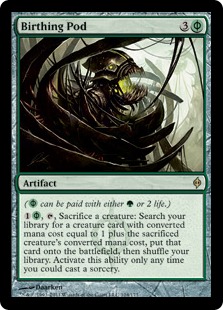 This camp subscribes to the prevailing "banning = bad" theory. They don't want to see decks/collections partially invalidated due to bannings, and place blame for said bannings at least in part on the spotlight that comes from Pro Tours. The other camp just enjoys Modern and wants to see it spread. This camp feels that Modern Pro Tours do more good than harm by bringing attention to the format and drawing in new players from Standard, and possibly even outside of Magic.
This division seems clear, but it doesn’t take into account multiple factors—the large portion of Magic players who don’t play or aren’t interested in Modern, the non-players looking at Pro Tours from an outside perspective, and the content creators, who place their feet firmly in both camps. In addition, these two arguments hold at their core a few assumptions that have yet to be proven entirely true. For one, it isn’t clear that Modern Pro Tours bring about more bannings, as there exists evidence to support both sides. In addition, it is difficult to gauge outside perspective on Modern Pro Tours, and whether they bring players to the game or push them away. This is where discussion of high-level Modern play tends to get bogged down, so I’ll do my best to clear the air.
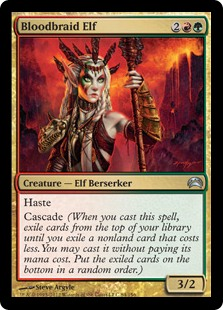
First, the prevailing thought about bannings. Most proponents point to a few statements WoTC has made in the past that suggest an incentive to shake up "solved" Modern formats, in order to coax a more exciting viewing/playing experience for spectators and competitors. The argument here is that without Modern Pro Tours, bannings would be more infrequent, and players on the fence about buying in would feel more secure doing so with greater confidence that their deck of choice will remain legal. 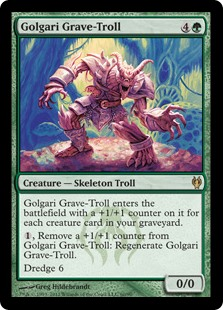 The argument against points to a seemingly continuously broken Modern format that requires bannings regardless of Pro Tour consideration. Ponder and Preordain. Birthing Pod. Bloodbraid Elf. Deathrite Shaman. Dig Through Time. Splinter Twin. Summer Bloom. Eye of Ugin. Gitaxian Probe. Golgari Grave-Troll. Even with no Pro Tour last year, Modern still saw a banning as if it had one anyways, lending credence to the argument that Modern and bannings are synonymous, like peanut butter and jelly, or Lebron and diva.
Second, the "bannings are bad" argument. I’ll admit that I’ve been oblivious about Standard for a while now, since shortly after Pro Tour Magic Origins to be exact. That’s a long time to be out of the loop, but my time on the outside has given me a perspective pretty unique among non-Commander content writers. Not sure I should boast about that, but there it is. My time away from Standard Magic has let me observe from the outside, and I’ve been surprised by what I’ve seen. The common belief has always been that bannings are the tremor before the earthquake, a portent of doom that will signal the end of Magic and the rise of D&D as the game of choice. Ominous whispers from the shadows tell of Affinity and the Dark Ages of 2004. Well here’s a hot take for you… I’m starting to believe that bannings aren’t that bad anymore.
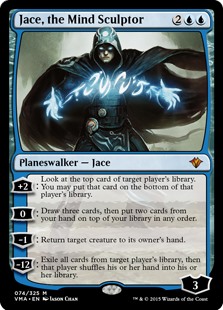 I remember when I started playing Magic, shortly after M10 was released in July 2009. It wasn’t until the beginning of 2011 that I graduated from the kitchen table (even though I was a regular contributor at FNM in my innocent youth). Nevertheless, I remember the Jace, the Mind Sculptor and Stoneforge Mystic bannings clearly, as they came right at the time when my competitiveness, experience, and income level were at odds with each other. I couldn’t afford Jaces, so I was happy to see them go. I loved Magic, so I was terrified to hear rhetoric that the game might be over. Bannings were bad, because Magic is broken, and never forget that Vault Disciple.
Since Modern was conceived in May of 2011, the format has experienced a major banning at least once every calendar year besides 2012 (and we saw a banning December of 2011 and January of 2013, so in my eyes 2012 got lucky). That sounds normal because we lived through it, but think about it. Before Stoneforge Mystic and Jace, the Mind Sculptor were banned in June of 2011, Magic hadn’t experienced a banning in Standard for six years. Modern hadn’t existed as a format back then, so it’s not entirely fair to compare, but think about that. For six years, no banning to a major competitive format, and then, starting with Jace and Stoneforge, at least one a year, every year. Remember when people thought Magic was in trouble in June of 2011? Ten separate Modern bannings (events, not cards) and three Standard banning events have occurred over the past six years. Magic might not be growing at Innistrad and Return to Ravnica levels, but it certainly isn’t going away. The prevailing wisdom regarding bannings in Magic is false.
Part 3: The Truth
I don’t know what’s happening with Standard right now. We’re 60% of the way through the year, and Standard has seen three bannings so far. Three. One in January, one in April, one in June. I’m playing Star Wars: Destiny a ton now, but I still see players packing in to the LGS on Friday Night, and the Pro Tour is still drawing large crowds. Most people I talk to give some variation of, “Yeah, that $*#( cray, yo,” but they are all still playing. In June of 2011, if I told you that after they banned Jace and Stoneforge, they’d make two more bannings within seven months, would you have bought WoTC stock? Doubtful.
 So, I think it’s clear that we need to come around to the facts. Bannings assuredly have some impact on Magic’s playerbase, but neither their frequency nor their size will ever be the death of the game. Players will play, because deep down we are all addicted, and while we may not welcome bannings, we shouldn’t be scared of them.
But, what if we did welcome bannings? Hopefully you’re still with me to this point, because it’s important that I have you convinced that bannings aren’t a harbinger of doomsday to get you to buy in to this idea. If Magic is still going strong throughout numerous bannings (13 in six years, remember) is it too alien to accept them as "part of the game?" Could bannings actually be seen as a positive, rather than a negative?
In Standard, I think the answer will always be no. A large portion of that field will always remain casual, and telling a player they cannot play is never a good thing. I’m not ten anymore, but I remember showing up to a Lord of the Rings CCG event with banned cards in my deck, not even knowing what errata meant or how to use the Internet to find information (it was 2001, before you judge). For Modern, I’m starting to come around to the idea, however. We’re all adults here, and at the end of the day, a fun, interesting format is our main goal. Bannings as a tool to shake things up, rather than a disaster to avoid at all costs, could bring us the regular shake-ups that we crave, but never receive, with set releases. The playerbase has shown that, just as they might threaten moving to Canada after a political election, players rarely quit after a banning rocks their world.
 I know my bias as an online player and content creator is influencing my opinion. Monthly articles about banning speculation and the myriad of strategic consequences that could have on the format is a Magic writer’s wet dream. The risks for me are negligible; I don’t have a paper collection and I borrow my online cards for free. I’m the quintessential outsider, no skin in the game, yet I judge from the sidelines. I feel you there, hating me. I understand what I am, but my position lets me imagine a possible future, one where banning discussion in the chat of WoTC’s Twitch stream isn’t toxic, and doesn’t push new players away. It’s a utopian dream, of course, but one that, like all utopias, has a seed in reality.
Wizards of the Coast has a problem on their hands, but it isn’t what you think. Three bannings in seven months for Standard is embarrassing, and they need to get their act together. Ten bannings in six years for Modern is an opportunity, one that they should fully embrace. This coming February, we will see Modern return to the stage in Bilbao, Spain. A quirky, daring gaming company has the opportunity to shock the world, and change the discourse around Magic forever. The locals might revolt, the worldwide community might snicker, but with a little courage and a lot of heart, Wizards of the Coast could change how we play, discuss, and view card gaming forever. It could just be poetic. It might just be fate.
Thanks for reading,
Trevor Holmes



 I haven't had good results with Merfolk in more than a month, and this PPTQ was up north again, so I expected lots of Affinity. That left me with UW Control. Not that this is a bad thing—UW was the first deck I built in Modern, back when recurring Kitchen Finks with Sun Titan was the best way to grind through Bloodbraid Elf. It has been a while since I actually sleeved the deck up for a tournament, however, so I put a lot of extra work into knocking off the rust and tuning the deck. Taking this deck to local weeklies really shocked other players; I've played various aggro decks for so long that's all anyone thinks I can play anymore. It was oddly satisfying watching them be shocked and confused by Celestial Colonnade.
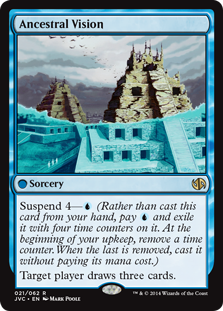 It was never unwinnable, even in Standard, but trying to grind them out is daunting at best. It's worse for me—he runs Sword of Light and Shadow maindeck and Ancestral Vision sideboard. I also never test against Faeries so I'm at a huge disadvantage. I get crushed.
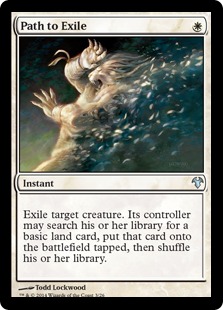 In my defense, it was the kind of one-lander you keep on the draw, with a white source, three Path to Exile, Condemn, and Blessed Alliance. But it takes four turns to draw another land and another two to draw the third. I never saw the cards that I swapped for the lands so this wasn't a deck-building problem but pure variance. The worst part is that if I got to five mana a turn earlier I still would have turned the corner but it wasn't to be. I still just barely failed to stabilize and win. Game three is another grindfest that goes to time just as I play Elspeth and start the process of winning. The draw gets both of us prizes and my best result so far this season.
 Spreading Seas is generally very bad against Merfolk so I took out three but I really needed them against all of the Mutavaults. This requires reevaluation.

 Homes
Homes