menu

Converge in Modern: Bring to Light Decklists!

Are you a Quiet Speculation member?

If not, now is a perfect time to join up! Our powerful tools, breaking-news analysis, and exclusive Discord channel will make sure you stay up to date and ahead of the curve.

Since Modern’s inception, converge decks have periodically been attempted, modified, dropped, and eventually forgotten. While the mechanic has just recently been named, we all know converge is basically a rehash of domain/sunburst, and Modern is no stranger to strategies looking to take advantage of excellent fixing to support powerful spells in multiple colors.

Bring to Light art

With Battle for Zendikar introducing more potential love for multi-colored strategies in the form of Battle Lands and converge, will these greed monsters finally be able to jump out of the shadows and into the spotlight? Let’s find out!

[wp_ad_camp_1]


The Case for Multi-Color

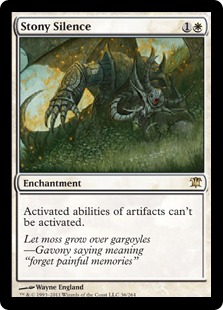
The Modern environment is often defined by complex strategies that require specific answers. Affinity is best answered by Stony Silence, combo is best answered by discard, on and on.Stony Silence Sure, other answers exist (on-color artifact hate, narrow combo-specific answers) that don’t require splashing, but often the power gained by the splash is “worth it” when compared to the opportunity cost. Opportunity cost, for those wondering, is a classic economics principle that basically means “what you give up in exchange for something else”. Rarely is anything in life totally free (except this free philosophy lesson!) so looking at opportunity cost gives us a more complete picture of the value/worth/trade-offs of a certain set of decisions. With this in mind, let’s briefly go over the opportunity costs of splashing in Modern.

On one hand, easy and consistent mana is made possible through shocklands and fetchlands, which combine to support everything from three color decks with splashes to full-on four/five color monstrosities like Loam and Tribal Zoo. The infrastructure to support splashing has always been there (fetches and shocks), and the payoffs have historically been worth it as well. Jund splashing Lingering Souls, Twin splashing Ancient Grudge/Tarmogoyf, Burn splashing anything; if you want it, in Modern you can probably get it. This lets you just play the most powerful cards available without the need for internal synergy or a combo kill, a benefit I will talk about more shortly. Why focus on protecting a Deceiver Exarch when every single card you play is just more powerful than your opponent?

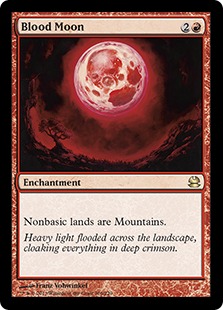
On the other hand, there have been a few factors keeping wild mana in check, primarily Burn, discard, Spreading Seas, Blood Moon, and Tectonic Edge. Cards like this, coupled with Modern's speed severely punish clunky mana. Blood MoonWhile it may be “easy” to stretch to that fourth or fifth color, Modern as a format is largely defined by mana-efficiency and tempo. This means that the life loss from fetching and shocking dual lands and the mana inefficiency resulting from clunky draws can also be a liability. In a format as fast and punishing as Modern, the ability to just cast spells on time is often better than playing a wide array of powerful cards across multiple colors. All of these negatives are just the inherent nature of playing spells that require multiple colors of mana to cast. Once you factor in all of the ways available in Modern to actively punish greedy manabases (Blood Moon, Spreading Seas, Burn taking advantage of incidental fetch/shock damage) you can see why, historically, decks that “could” splash have chosen not to.

All of this background discussion is here to give context to what we have seen, and what we can expect moving forward. For those that have been reading my column for the past few months, you might have heard me mention “context” a few times. I’ve become thoroughly convinced that context is the single most important factor that goes into determining everything we see, from decklists to sideboards to tournament winning lists to archetype tier changes and everything in between. What I naively used to just refer to as “the metagame” has, in my mind, evolved into an understanding of an ever-changing amalgamation of variables, manipulating factors and relationships that all combine to form this notion of “context”, which in turn manipulates and guides the results we see every weekend. I could probably write a whole article on this topic (and maybe I will), but for now, what I’m trying to say is read my words, because I think they are important!

Living the Dream

There have been many multi- and even five color lists in Magic's history but in my mind this is the definitive list and the dream that any other five-color list is trying to achieve.

Five Color Control, Gabriel Nassif (1st - Pro Tour Kyoto 2009)

Creatures

3 Broodmate Dragon
3 Wall of Reverence
3 Plumeveil
4 Mulldrifter

Instants

4 Broken Ambitions
4 Volcanic Fallout
4 Cryptic Command
1 Terror
1 Celestial Purge
4 Esper Charm

Sorceries

2 Cruel Ultimatum

Artifacts

1 Pithing Needle

Lands

2 Exotic Orchard
2 Cascade Bluffs
4 Sunken Ruins
1 Mystic Gate
2 Vivid Meadow
2 Vivid Crag
4 Vivid Creek
3 Vivid Marsh
3 Island
4 Reflecting Pool

Sideboard

1 Celestial Purge
4 Scepter of Fugue
2 Negate
1 Wispmare
2 Wydwen, the Biting Gale
2 Infest
1 Remove Soul
2 Wrath of God

The epitome of greed, value, #yolo, and everything that is cool about Magic, Pro Tour Kyoto 2009 demonstrated that good things come to those that refuse to settle. Or, you know, play Reflecting Pool alongside Vivid Marsh. It is an absurd pile of all the best cards available streamlined and tuned by a master. It simply played the best answers, the best card drawing, and the best win conditions and crushed the opponent under its raw power, never seeming to stumble from awkward draws or poor mana. Gabriel Nassif took this monstrosity of a deck to victory against Luis-Scott Vargas and his BW Tokens, demonstrating the power of color pie domination and the benefits of playing ALL the good cards. Wizards definitely took notice, and we haven’t seen much love for 4+ color strategies since, but Battle for Zendikar could change all of that.

Bring to Light

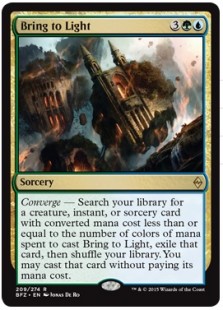
bring-to-lightI bring this up because one Battle for Zendikar card has been on my mind since it was first spoiled. Even though I was not too impressed by Battle for Zendikar in general, I have been impressed by a few cards and am willing to try them out. Are they good? I don't know, but we'll never find out unless we try them, and Bring to Light has the potential to be a powerful new addition to multi-color strategies in Modern. A cursory look suggests that it will have a home in many decks, be they value-oriented Gifts Ungiven decks or combo-focused strategies like Scapeshift. A five-mana tutor for any spell in our deck (assuming it costs 5 or less and we don’t mind casting it sorcery speed and you paid all the colors of the rainbow for it), the potential uses for Bring to Light are endless. Since we talked about LSV’s heartbreaking loss earlier, it’s only fair that we let him redeem himself, and luckily for us he’s already brewed up a sweet Bring to Light list we can use as a starting point.

Bring the Gifts, Luis Scott Vargas

Creatures

4 Sylvan Caryatid
2 Birds of Paradise
1 Snapcaster Mage
1 Glen Elendra Archmage
1 Eternal Witness
1 Thragtusk
1 Baneslayer Angel
1 Iona, Shield of Emeria
1 Elesh Norn, Grand Cenobite

Sorceries

3 Bring to Light
1 Unburial Rites
1 Damnation
1 Maelstrom Pulse
4 Inquisition of Kozilek
1 Thoughtseize
1 Raven's Crime
1 Life from the Loam
1 Lingering Souls

Instants

4 Gifts Ungiven
1 Abrupt Decay
1 Murderous Cut
1 Path to Exile
1 Sultai Charm

Artifacts

1 Engineered Explosives

Lands

4 Verdant Catacombs
4 Misty Rainforest
1 Watery Grave
2 Breeding Pool
1 Overgrown Tomb
1 Temple Garden
1 Stomping Ground
1 Hallowed Fountain
1 Ghost Quarter
1 Tectonic Edge
1 Creeping Tar Pit
1 Urborg, Tomb of Yawgmoth
2 Forest
1 Swamp
1 Plains
1 Island

Sideboard

2 Lingering Souls
1 Agent of Erebos
1 Eidolon of Rhetoric
1 Creeping Corrosion
1 Cranial Extraction
1 Aven Mindcensor
1 Sigarda, Host of Herons
1 Spellskite
1 Dispel
1 Ancient Grudge
1 Celestial Purge
1 Negate
2 Timely Reinforcements

Normally I find issue with some small element of any list I find, and my own deckbuilding style is often slightly quirky or slanted enough that I end up just playing my own lists, but I have to admit that I wouldn’t change a single card here, at least for Day 1 (it’s an LSV list, so this is probably correct). In this deck, Bring to Light functions as combo-tutor, value card, silver bullet, and even red herring. Against countermagic, Bring to Light functions as extra copies of whatever bullet we’re looking to search up, which can soak up counterspells until we can force through an Unburial Rites on Iona, Shield of Emeria or some other such awesome play. Four Color Gifts decks have often been hindered by inconsistency once they have to dilute their gameplan to fight hate/interact with opponents, and Bring to Light seems like it will be an excellent fit for strategies like this. I can’t wait to stream this deck! Or my own version!

Bring to Light Scapeshift, Trevor Holmes

Creatures

1 Jace, Vryn's Prodigy
4 Sakura-Tribe Elder
1 Snapcaster Mage
1 Thragtusk

Sorceries

1 Roast
4 Bring to Light
2 Scapeshift
4 Search for Tomorrow
1 Anger of the Gods

Instants

3 Peer Through Depts
3 Cryptic Command
1 Electrolyze
1 Thoughtseize
3 Lightning Bolt
4 Remand
1 Repeal

Lands

2 Breeding Pool
1 Flooded Grove
3 Forest
2 Island
2 Misty Rainforest
1 Scalding Tarn
2 Mountain
3 Steam Vents
4 Stomping Ground
2 Valakut, the Molten Pinnacle
1 Sunken Hollow
1 Blood Crypt
1 Overgrown Tomb

Sideboard

2 Ancient Grudge
1 Anger of the Gods
2 Inquisition of Kozilek
1 Engineered Explosives
2 Nature's Claim
1 Negate
1 Nourish
4 Obstinate Baloth
1 Swan Song

This list is almost assuredly wrong, but it serves to illustrate my main point (well, two of my points): (1) Don’t be afraid to make horrible decks, and (2) Be willing to explore all options. This list also raises a bunch of questions. Do we want to have access to five cards to search up Thragtusk? Should we just be playing an Obstinate Baloth maindeck? Do we want to stick to three colors and just splash one off-color dual to search up Scapeshift? Should we splash black or white? Should Bring to Light even go in Scapeshift?

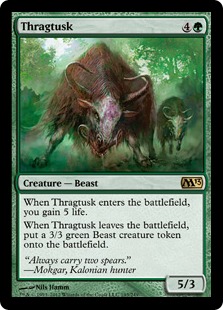
ThragtuskI feel like the answer to that last one is yes, as we can pretty much cut down to one Scapeshift if we wanted (though two seems to be a safer number). Removing those awkward copies of Scapeshift that used to kill us (as we were clobbered to death with a do-nothing combo piece in hand) in exchange for Bring to Light that could get a potential Thragtusk or sweeper seems like an excellent upgrade, and I’m excited for all the possibilities that Bring to Light can bring to the archetype. It also fixes the traditional weakness of Scapeshift where it just died unless it found its namesake. While we need to stick to at least 9 Mountains (preferably 10+) it’s possible that the archetype no longer wants to be base blue, instead moving to base black (with discard and removal) and just enough blue for Bring to Light. This type of list could beat down with Tarmogoyf and look very “Jund” but with a combo-kill at the top end. I’m definitely looking forward to experimenting with this deck too!

Conclusion

Scapeshift and Four-Color Gifts are just the first two places to start with Bring to Light in Modern. Five-Color control (Cruel Ultimatum anybody?) and many more wacky combo decks exist out in the shadows (Quicken and Day's Undoing to go along with Bring to Light at instant speed?), just waiting to be discovered. Alongside the Battle Lands, it’s quite possible that converge strategies in Modern are on the cusp of a breakout, and as long as these decks come prepared for Burn and hate, we could see some new players on the field this weekend. Thanks for reading, and let me know if the comments if you’ve got a sweet Bring to Light brew!

Trevor Holmes
The_Architect on MTGO
Twitch.tv/Architect_Gaming
Twitter.com/7he4rchitect

Stock Watch- Oblivion Sower

Are you a Quiet Speculation member?

If not, now is a perfect time to join up! Our powerful tools, breaking-news analysis, and exclusive Discord channel will make sure you stay up to date and ahead of the curve.

There are a lot of bizarre cards in Battle for Zendikar. The obviously good cards like Gideon, Ally of Zendikar and Bring to Light have already seen significant price increases leading up to the sets release, but I have to imagine that a set with so many strange cards will have some sleepers.

There was an error retrieving a chart for Bring to Light

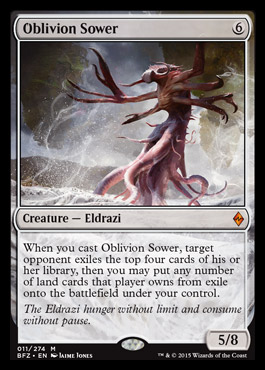
A card that is generating some buzz despite being initially scoffed at is Oblivion Sower. The early disappointment was rooted in the idea what we were used to a six mana spell that won the game on its own in Elspeth, Sun's Champion. Now we know that we don't really have options like that, and Oblivion Sower does a great job at bridging the gap between doing kind of big things and drawing cards off of Hedron Archive and casting Ulamog.

There was an error retrieving a chart for Oblivion Sower

Oblivion Sower could have been pre-ordered in the three dollar range, and it now slightly over five. This is indicative of an increase in demand, and some early success could lead to a $10+ price tag. Being in the duel deck will keep the price down long term, but this could be a great card to acquire for a quick flip before most players can get their hands on them.

Insider: Brewing Aggro in Battle for Zendikar Standard

Are you a Quiet Speculation member?

If not, now is a perfect time to join up! Our powerful tools, breaking-news analysis, and exclusive Discord channel will make sure you stay up to date and ahead of the curve.

It all started with one man and his Grand Prix deck.

Hardened Scales by Ken Yukihiro

Creatures

4 Honored Hierarch
2 Servant of the Scale
4 Avatar of the Resolute
4 Hangarback Walker
4 Managorger Hydra
4 Abzan Falconer

Spells

4 Hardened Scales
2 Gods Willing
4 Dromoka's Command
3 Citadel Siege
2 Ajani, Mentor of Heroes

Lands

4 Temple of Plenty
4 Windswept Heath
3 Mana Confluence
7 Forest
5 Plains

Sideboard

1 Ajani, Mentor of Heroes
3 Valorous Stance
1 Ajani Steadfast
2 Elspeth, Sun's Champion
3 Hornet Nest
3 Nissa, Vastwood Seer
2 Hallowed Moonlight

Hardened Scales may have broke out before rotation but it’s definitely not going away. This casual player's dream enchantment is $5 and trending upward. This isn't news to you if you're a regular reader on the site, but if you’re like me you were expecting the price to drop back down once the hype had passed. That hasn’t happened yet and the card shows no sign of slowing down anytime soon.

There was an error retrieving a chart for Hardened Scales

Hardened Scales may have started out as a bulk rare, but I doubt it will ever have that status again. Leading Hardened Scales into Hangarback Walker is obviously strong, but that's just the beginning of the powerful synergies this deck can present.

Take Avatar of the Resolute for example. This seemingly innocent upgrade to Swordwise Centaur fits perfectly into this archetype. A 3/2 for two is a fine investment and casting it on curve is definitely acceptable. But later in the game he becomes truly dangerous, growing larger for every other creature you control. Two-drops that scale so well into the lategame are a rare commodity, and this deck certainly exploits Avatar to the fullest.

I paused writing this article to go order five playsets of this guy, so you can say I believe in him too. Avatar forms the centerpiece of a Standard strategy that's sure to see plenty of play, and it's unlikely to stay under a dollar for long.

Post-Rotation Hardened Scales

To build a Scales deck in the new Standard, our first order of business is to replace the rotating cards. We may want to change the deck's makeup more substantially, but let's start by looking at the most direct port possible.

G/W Hardened Scales

Creatures

4 Honored Hierarch
4 Avatar of the Resolute
4 Hangarback Walker
4 Managorger Hydra
4 Undergrowth Champion
3 Abzan Falconer

Spells

4 Hardened Scales
3 Silkwrap
4 Dromoka's Command
3 Citadel Siege

Lands

4 Canopy Vista
4 Windswept Heath
4 Wooded Foothills
4 Flooded Strand
5 Forest
2 Plains

As you can see, the core of the deck remains unchanged. The obvious inclusion from the new set is Undergrowth Champion, which brought along with it some adjustments to the mana base. We want as many fetches for Champion as possible and having Canopy Vista as a fetch target also does wonders for our consistency.

The other change I made was to make room for Silkwrap. Every deck needs an answer to Hangarback Walker and Silkwrap will always exile the overpowered threat no matter how many counters it has amassed.

Other options are available as well. Battle for Zendikar gives us three new cards worth considering. Earthen Arms, Woodland Wanderer, and Skyrider Elf all seem specifically created for this strategy.

Woodland Wanderer and Earthen Arms probably don't make the cut since we have so many better cards available, but I think Skyrider Elf is the real deal. Whether you have two or three colors of mana to spend, each mode seems great. A two-mana 2/2 or three-mana 3/3 flier is a potent threat. We saw that with Mantis Rider and it’s still true with this new aggressive threat.

U/G Scales

My first thought was to swap out the white mana for blue, because I love the U/G Devotion deck I’ve been playing, and I wanted to continue to battle with it even after rotation. Here’s what that thought process yielded:

U/G Scales

Creatures

4 Skyrider Elf
4 Avatar of the Resolute
4 Harbinger of the Tides
2 Bounding Krasis
4 Undergrowth Champion
4 Managorger Hydra

Spells

4 Hardened Scales
2 Clash of Wills
2 Scatter to the Winds
4 Collected Company
2 Kiora, Master of the Depths

Lands

4 Lumbering Falls
4 Yavimaya Coast
4 Thornwood Falls
6 Island
6 Forest

One of the best aspects of U/G Devotion was its ability to fight on the opponent's turn. In addition to Collected Company, the deck could play Harbinger of the Tides or Bounding Krasis while keeping up mana for a Counterspell.

I’m not certain that concept will work with the currently legal cards. This version doesn’t really have enough creatures for Collected Company and it seems like Hangarback Walker might just be better than Company anyway.

Another problem here is the blue-green manabase is much more strained. Running both double green and double blue means you'll have cards stranded in hand too often for an aggressive deck that needs to curve out. I like the concept, but I don’t think it will work in conjunction with the +1/+1 counter theme.

Bant Scales

What I’ve liked best so far is adding blue mana to the green-white deck. We even have great mana to support this strategy. Let’s take a look at what it might look like.

Bant Hardened Scales

Creatures

4 Skyrider Elf
4 Avatar of the Resolute
4 Hangarback Walker
4 Managorger Hydra
4 Undergrowth Champion
3 Abzan Falconer

Spells

4 Hardened Scales
3 Silkwrap
3 Dromoka's Command
2 Citadel Siege
2 Kiora, Master of the Depths

Lands

3 Canopy Vista
1 Prairie Stream
4 Windswept Heath
4 Wooded Foothills
4 Flooded Strand
4 Forest
2 Plains
1 Island

While I’ve only added two blue cards here, the deck looks more powerful overall, with a more threatening late game and better sideboard options. Even though we’re adding a single Prairie Stream and Island, we still have ten sources of blue mana, which should be enough.

My initial impression is the addition of blue mana is well worth the hassle. With Skyrider Elf we have at worst a two-mana 2/2 flyer and at best a three-mana 4/4 flyer. Now that’s what I’m talking about!

Additionally, we have an actual replacement for Ajani, Mentor of Heroes in Kiora, Master of the Depths. Kiora doesn’t synergize quite as well as Ajani did, but she does provide card advantage, pseudo-vigilance, and an extra mana if necessary.

I’m eager to try out this version. Not only does this deck provide hard-to-deal-with threats, but the synergy pushes the power level of everything higher. Considering how situational the removal in Standard is, this deck seems well positioned to take advantage of its initial position in the meta.

B/W Warriors

Up next we have last season’s event deck turned competitive staple. Here’s my first version.

B/W Warriors

Creatures

4 Bloodsoaked Champion
4 Dragon Hunter
3 Anafenza, Kin-tree Spirit
3 Blood-Chin Rager
4 Chief of the Edge
3 Drana, Liberator of Malakir
3 Blood-Chin Fanatic
2 Wingmate Roc

Spells

3 Ruinous Path
3 Silkwrap
2 Gideon, Ally of Zendikar
1 Sorin, Solemn Visitor
1 Ob Nixilis Reignited

Lands

4 Shambling Vent
4 Caves of Koilos
4 Scoured Barrens
6 Plains
6 Swamp

The future of aggressive red decks is uncertain. From my perspective, we have lost too many cards for the archetype to survive. Warriors, on the other hand, has gained tools that make it much better. Courser of Kruphix distorted the metagame for the past two years away from non-red aggro. That time has come to an end and I think this deck will lead the way.

There are enough aggressive one-cost creatures in Standard to play a lot more than this, but I’m not sure the payoff is there. Still, starting the game with a one-mana 2/1 is back to being good again.

Three cards give us an incentive to play a bunch of warriors.

The first is Chief of the Edge. Pumping power is the job of typical a Gray Ogre lord, but this one packs a wallop on its own as a two-cost 3/2. He doesn’t get a second ability like many lords do, but shaving a mana off his cost is well worth the loss.

Next up we have Blood-Chin Rager. Granting menace to all your creatures is great against midrange and aggro alike. The midrange decks don’t have enough creatures to double up on everyone, whereas aggro has to choose between an all-out race and leaving all their creatures back to block. The ability obviously doesn’t shine against control, but even there it can be useful to sneak past a dragon.

Finally, we have one of my favorite cards that hasn't seen much play yet. Blood-Chin Fanatic allows you to end games you couldn't win any other way. After your opponent finally deals with your Blood-Chin Rager so they can block normally, you draw this creature and start draining them. It works particularly well with Bloodsoaked Champion, but even with non-recurring creatures you won't have to sacrifice too many to finish off an unsuspecting opponent.

Hangarback Warriors

I followed my own advice and found room for the three copies of Silkwrap to deal with my opponents’ Hangarback Walkers and clear the way for my guys to get through. I’m not sure the five-costs are necessary and I definitely need to test some things out. For example, what about Arashin Foremost? Is that guy good enough to make the cut?

My main question, however, is about Hangarback Walker. Basically it seems like every deck is better with that card. It has nothing to do with the strategy (and in fact detracts from it by decreasing the warrior count), but I’m forced to admit it might improve the deck.

So, not only is removal for this creature absolutely essential in every deck, but most will just play it as well. To me that says the card is too good.

Are we at the point where we should be rattling Wizards for a ban? It certainly doesn't read like an overpowered card, but when you look at its impact on the metagame you see an alarming pattern. A card that warps the format this much at least demands consideration of a ban.

In any case, let’s get to the deck list.

Hangarback Warriors

Creatures

4 Bloodsoaked Champion
4 Dragon Hunter
4 Hangarback Walker
3 Anafenza, Kin-tree Spirit
3 Blood-Chin Rager
4 Chief of the Edge
3 Drana, Liberator of Malakir
3 Blood-Chin Fanatic

Spells

3 Ruinous Path
3 Silkwrap
2 Gideon, Ally of Zendikar
1 Sorin, Solemn Visitor

Lands

4 Shambling Vent
4 Caves of Koilos
4 Scoured Barrens
6 Plains
5 Swamp

Cut the five-drops and shave a land to make room for the not-so-secretly impressive creature. I’ll admit, this deck looks much better than the previous version.

Only extensive testing will show us whether or not Hangarback belongs in every deck, but my initial impression is that it does. What if we get to a point where every piece of removal removes Hangarback and we’re playing multiple cards that function that way? Will then be the time to discuss a banning?

~

I’m excited about both these decks in the upcoming metagame. Both Hardened Scales and Warriors seem like great decks that are fast, resilient, and capable of winning games that break into the midgame.

Which version of each deck do you like? Was there a card that should have been included in one or both decks? What are your thoughts about a possible banning? Let me know in the comments.

Until next time,
Unleash the Force!

Mike Lanigan
MtgJedi on Twitter
Jedicouncilman23@gmail.com

Insider: Lessons in Card Evaluation from the BFZ Pre-Release (and how they’ll apply to Standard)

Are you a Quiet Speculation member?

If not, now is a perfect time to join up! Our powerful tools, breaking-news analysis, and exclusive Discord channel will make sure you stay up to date and ahead of the curve.

Although I didn't open an Expedition, my pre-release went about as well as it could've. I opened a challenging but incredibly strong sealed pool, featuring Undergrowth Champion, Beastcaller Savant, Brutal Expulsion (as my foil promo), Guardian of Tazeem, Ruinous Path and a suite of incredible commons and uncommons.

The pool was a difficult build because the truly top-tier cards were split amongst all the colors.

The Building Choices

Blue was an obvious first choice; I opened an insane 3x Benthic Infiltrator, Guardian of Tazeem, and a slew of other great, evasive creatures. I was certain from the go that my deck was base blue. I had some difficult choices to make for my second color. I flirted with the idea of a third, but I ultimately decided that my goal was consistency, nothing else.

My white was strong, but shallow and lacked true tier 1 cards beyond Stasis Snare, which is a first-pick caliber card. Even the extremely good Awaken cards in white weren't enough to make me want to play it.Limited is all about creature combat, so I decided to focus my efforts on building the most consistent aggressive deck possible. White's creatures just didn't support this focus.

There was an error retrieving a chart for Stasis Snare
There was an error retrieving a chart for Guardian of Tazeem

Green was very tempting, for obvious reasons, but the cards didn't run that deep. Champ isn't the same card without fetch lands, and Beastcaller Savant is not a build-around-me card. As sad as I was to discard my two awesome green cards, it just wasn't the best deck available to me.

Red was also highly tempting, because my removal package was absolutely amazing. The creatures were nothing special, however, and I recall PVDDR's advice not to overload on mediocre removal spells. I heeded this warning, despite the allure of brutally expelling things with my fun Izzet-colored Brutal Expulsion.

Ultimately, black proved to be the winner.  When comparing red and black, it was clear that black gave me the best creatures and, although it didn't give me the most removal, it gave me the best.  When looking at creatures, Dominator Drone x2 was a huge draw. They would prove to be incredible, aggressive cards that were 'live' about 80-90% of the time. Twice, the extra damage was game-ending. I had multiple ways to recur the Drones, and I also had an Eldrazi processor that let me re-cast Ruinous Path.  The ability to re-cast my best cards was the final deciding factor.

There was an error retrieving a chart for Dominator Drone
There was an error retrieving a chart for Benthic Infiltrator


Ruinous Path was the best card in my deck. I can't say enough great things about this card (I am hardly alone in this sentiment). This card is obviously among the top tier of cards in the format, and although I am worried about the glut of rares on the market, and the buy-a-box promo, I still believe it will hold significant value. It's a cut above most rares in the set.

So, I built a UB control deck around cheap, evasive Ingesters, premium removal, a bunch of Awaken cards, and some midrange Eldrazi.   So, how'd it go?  Well, other than the fact that in 4 rounds (mulligans and all), I literally never drew Guardian of Tazeem, pretty darn well.

Playing Some Magic, and a Controversy

My first round opponent was inexperienced, and played a 60 card deck.  He also missed a few opportunities to ping me with the Lobber Crew colorless clone, which may have cost him a game.  We discussed the follies of a 60 card deck in Sealed (he was loathe to take my advice, but cut a few cards), I explained how and when to use his pinger (on my end step and/or in response to casting another colorless spell), and wished him well.

Record: 1-0 (2-0)

My round 2 opponent had me sweating a few times, and didn't seem to make any bad play mistakes.  The games were close, and at least once I was sure I was dead.  My deck did it's thing, drawing removal and slowly grinding its way back into tough games, and I didn't make any giant misplays.   The theme of the day  definitely revolved around the fact that I played mediocre Magic and my deck bailed me out time and time again.

Record: 2-0 (4-0)

My round 3 opponent was an experienced player with a strong deck.   This was a strange match for me, because I had the unshakable urge that I was being cheated.  I am not a baseline suspicious person, but I could have sworn he was looking at my deck while shuffling.  In game 1, he seemed to 'accidentally' see a Swamp.  I asked him to please be more careful and not look at my deck.  He protested, saying he hadn't seen anything.  I was hard-pressed to believe him, as I always watch my opponents while they shuffle my deck.

I remembered the video I watched about the "lands" cheat shuffle, whereupon an opponent of loose morals will 'accidentally' see some cards and then manage to send your lands to the bottom of the deck, increasing the chance that you'll mulligan.   When I drew my opening hand, I was greeted with my first mulligan of the game.  Hardly damning evidence, but it surely arose my suspicions.  I locked eyes with him as he shuffled after my first mulligan, and he did not do anything suspicious.   Regrettably, I didn't remember the Vancouver Scry rule (nor was my opponent sporting enough to remind me) and simply proceeded with my 6 card hand.

I managed to pull out of the mulligan on the draw because my deck once again took care of business on my behalf.  The games mostly played out the same.  I took a beating, stabilized, ground it out, and eventually took over with cards like Ruinous Path.

Game 2, however, was where things got interesting.  He was shuffling my deck again, and I once again maintained eye contact all the while.  This time he actually dropped 2 cards (one of which was an Island, the other I did not see), and then actually turned his head down to look at them.  I was visibly upset and said, "that's the second time you've dropped and seen cards from my deck.  You need to be much more careful with my cards."  He protested, claiming it was an accident (again?) , gave my deck a few shuffles, and presented it back to me.  This is when things got strange.

"Shuffle it more",  I requested.

"I don't want to", he shrugged.

"Please shuffle my deck more", I insisted.

"I don't have to", he protested.

"Shuffle my deck more.  You dropped two cards, you saw two cards, and you didn't shuffle enough after doing so.  That's the second time you've seen cards in my deck.  I have never had this problem with another opponent.  Shuffle. My. Deck. Again."

He got very angry and raised his voice, accusing me of accusing him of cheating, saying I should call a judge and that he didn't need to shuffle the deck if he didn't want to.  I told him, "I am not accusing you of cheating.  I am saying that you have been extremely careless with my deck and have seen cards that you shouldn't have seen.  You need to reshuffle my deck thoroughly."

He must have gotten the point that I wasn't going to start the game without quite a few more shuffles, so he finally acquiesced and told me to "just drop it", and further reiterated that he didn't appreciate being accused of cheating.  I never accused him of cheating, interestingly, just carelessness.  So, his reaction was rather surprising.  Regardless, he gave the deck some honest shuffles and presented it back to me.

I legitimately do not know if I was being paranoid here, but my spider sense was tingling like a madman and I really didn't care for the way he was dropping my cards left and right.  I think I did the right thing by calmly insisting he shuffle it more, and his reaction made me even more suspicious.

There was an error retrieving a chart for Peek

Game 2 was extremely close, and the life gain from one of my giant Eldrazi processors was the only thing that stood between me and my first game loss of the day.  But yet again, my deck bailed me out of trouble.  Blighted Cataract put me back into a game I was slowly losing.   Chain-casting Awaken spells to make a land a 6/6 got me the board advantage.  Firing off a full-power Ruinous Path ended it.    It was a tense, difficult game and I was definitely a little on edge after the shuffling altercation, but I managed to rein in my focus and get there.

Record: 3-0 (6-0)

Since this was a small pre-release, I was able to intentionally draw with the other 3-0 to secure my sweet sweet prizes.  We agreed to the ID and an even split of the prizes, and played out our match to determine who got the extra pack if there was indeed one to split.   At this point I was undefeated in games and matches, so I was eager to see if I could close out the day without a single loss.

This is when Transgress the Mind decided to prove its worth.  Since pre-releases permit constant tuning of your deck between games and matches, I had discovered how much I wanted to play this card in my second round.  My opponent was clearly on the "hope I hit 8 mana" plan during that match, so I  brought in Transgress in game 2, removing my second Mist Intruder (I had 3 in my pool, ultimately ended up only playing 1).  It was an immediate hit, keeping me from getting mashed by a Desolation Twin that would have taken over the game.

I drew Transgress in my opening hand both games, and in both games I had the difficult choice of playing it, or a 2-drop creature, on turn 2.  On the play, I was confident I could wait another turn, but I didn't want to miss out on playing a strong 3-drop.  In game 2, I was on the draw and knew that I could easily get rid of a key 3-drop if I cast it instead of a 1/2 flier.  Both times I hit Ob Nixilis, which felt like winning the secret leprechaun double-lottery.  My opponent's entire game plan in both hands was crippled as a result, and the match was much easier to take down.

I should also note that the information provided by Transgress proved to be invaluable.  One hand contained nothing but  removal spells, so I was able to sequence my plays to work around their assorted limitations.  One only killed tapped creatures, one only killed 3 power or less, etc.  I love cards like Transgress because, to borrow a phrase from chess prodigy Joshua Waitzkin, they allow you to "control your opponent's intent".  I was able to induce my opponent into using his removal spells on sub-par targets so that I could eventually steal the game with something he could have killed if he had waited on removal.  By presenting a juicy target, I pulled the removal out of his hand and took control of the game with superior threats.

There was an error retrieving a chart for Transgress the mind
There was an error retrieving a chart for Thoughtseize


I obviously cannot say enough good stuff about Transgress the Mind.  It's not Thoughtseize, but it's not that far away.  The fact that you don't lose 2 life is worth bearing in mind, and exiling the card means you're not powering up their Jace, Vryn's Prodigy or Tasigur, the Golden Fang.  I suspect this will be one of those dollar commons in the months to come, if not more.  Its inclusion in the event deck won't hurt the price much, as event decks tend to be expensive and not widely opened.

So, thanks to this new Duress effect, I managed to not only 4-0 the pre-release, but 8-0 my games.  I'm not the most talented or competitive player, so this was a huge thrill for me!   My prizes were a Jace "Champion of Zendkiar" trophy, 6 packs of BFZ, and a buy-a-box Ruinous Path promo.  Not bad!  My prize packs weren't that exciting, though I did open a Shambling Vent that'll go into my Teysa Commander deck and some useful uncommons.

A Note About Expeditions

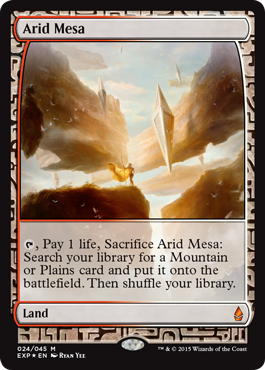
My real prize was the Misty Rainforest that the gentleman to my right opened.  Seeing these Expeditions preveiewed at PAX Prime was one thing; seeing one in person was another.  They are spectacular.  The foil finish is flawless and does not have the cheap appearance like the FTV foils do.

I couldn't help my self.  I needed to own it.

The player who opened it was very casual, and had no desire to keep it.  We all showed him the TCGPlayer listings of $300 or more, which excited him, but he was pretty set on the idea that he wanted to trade it for a booster box of BFZ.  He was a full-time traveler like myself, but he was backpacking, not RVing.  Thus, the idea of keeping such an expensive card was absurd to him and he wanted to divest himself of it immediately.

There was an error retrieving a chart for Misty Rainforest

I have no idea why he didn't at least set his sights on two, if not 3 booster boxes, by the way.  I explained to him that he couldn't buy BFZ boxes today, but I'd be glad to give him enough cash to buy one when they come out next week.  I then strongly encouraged him to sell it for the best cash offer he could get, rather than just barter it for a booster box.  I told him my offer was "enough cash to buy a box", and that he should ask everyone else to get better bids.  He knew the value of what he had, and I wanted to make sure he got his money's worth.

At the end of the day, I asked him what the highest cash bid was.  Amazingly, it was only $120.  True to my word, I offered $130 and he accepted.  I almost felt bad, but I knew he was intent on selling it, for cash, that day.  I knew he knew the value of it.  I knew that no one else in the room was offering more cash.  So, with a bit of remorse, I handed over the cash and quadruple-sleeved my new treasure, which is now hidden deep in the bowels of my MTG closet.

This just proves what we all know by now.  Cash is king.  Always was, always will be.  I tried to trade KTK fetches, Aether Vials, and such to this gentleman, but he was only interested in cash.  Every day that goes by, I become increasingly more confident that the best trade binder is a wallet full of 20 dollar bills.  You'll never go wrong that way.

So I got my expedition, though not the way I had hoped. I initially thought about flipping it for a double-up, but I think I'm just going to put this one in the proverbial vault and wait a few years.  I cannot imagine these won't be massively desirable for a long time to come.

Some Take-aways:

All the Awaken spells were amazing.  Even the ones that look junky, like Ondu Rising, are surprisingly good. Of specific note was the new Unsummon clone, which was a 2-of in my sealed deck.  It steals back tempo like no other.  The less powerful ones won't see constructed play, but the powerful ones like Planar Outburst are going to define a format.

There was an error retrieving a chart for

Ob-Nix is horrifying. All of his abilities are relevant, and I was terrified to face decks with him.  Watching a Planeswalker come down, nuke my best creature, and threaten to take over the game is not fun.  As I said before, I suspect he will see Standard play.  He's among the best things a control deck can do on 5 mana; kill anything or draw cards.

I faced 2 decks with Ob Nixilis Reignited, and saw him 3 times. Twice, Transgress the Mind stopped any trouble before it started, and the third time, I had the Ruinous Path to clear blockers to kill him outright. Even still, I respect the power level of the card and am certain it will see at least some Standard play.

There was an error retrieving a chart for Ob Nixilis Reignited

Transgress the Mind won me 3 games outright. In a format where players aim to ramp, this breaks a game plan in half.  Once, an opponent kept a hand based solely around his Planeswalker, and I stripped it away on turn 2.  The game ended then and there, despite the fact that I still had to deal 20 damage.  If Standard decks start looking like they're going to be greedy, long-game decks, Transgress will be a superstar.  If the format looks aggressive, Transgress might not get there (although it's a nice way to deal with Undergrowth Champion before he shows up).

The new discard spell was amazing, without a doubt. It's not Thoughtseize, but it's a great tool for controlling the pace of the game. Exiling the card was great for many reasons, but I don't think it'll be relevant in Standard until the next set is released.  Ingest isn't that scary yet, but I suspect it may eventually be.  I'd love to see an Eldrazi Titan that acts like a processor, for sure.

There was an error retrieving a chart for Transgress the Mind

Blighted Cataract is bonkers.  Turning a land into 2 cards felt like winning the lottery, and I am pretty sure that this card also won me a game or two.   Yes, it costs net 7 mana to cash in, but consider that to be a "safety" mechanism so you don't crack it too early and hamper your game plan.  I'm not sure that Standard will be slow enough to warrant this, nor am I certain that decks will be able to support colorless lands at this juncture.  If they can, then it's got a shot at being constructed playable.  I want foils ASAP.  The others are similarly good (perhaps even the much-maligned white one).

There was an error retrieving a chart for Blighted Cataract
There was an error retrieving a chart for Blighted Gorge


Bone Splinters  is premium removal and an important reprint.  This card just looks like Limited fodder, but I assure you it is constructed-playable.  In fact I think it's going to play an important role in the metagame.  Why?  Well, let me explain;  I have a Teysa, Orzhov Scion Commander deck.  This card shines in that context.

I also have a Pauper cube, where black is built around sacrificing creatures, and pairs with white and red's token generation.  Bone Splinters is an all-star there, too.   Possibly first-pick-worthy in fact.  So, what about Standard?  Well, Hangarback Walker.  One of the best things about Bone Splinters is that you can turn your Walkers into fliers and obliterate their best creature.  It costs a SINGLE mana, so you can ostensibly cast it alongside Walker on the same turn if you really must.  I've seen some Abzan Token lists using Bone Splinters, and it truly does act like premium removal in the format.

There was an error retrieving a chart for Hangarback Walker
There was an error retrieving a chart for Bone Splinters


Casting giant monsters does not equal a game win.  It can, but it's not automatic.  In Limited, there is still so much great removal that a random 7/7 does not just auto-win.  In Constructed, even casting Ulamog isn't 100% game over.  He can be countered, he can be exiled, and although you get his Exile triggers when cast, he's still not necessarily going to end the game.   Remember this when you're building ramp decks for your Pro Tour projection gauntlets; there's still a lot to be said for curving out one-two-three with strong, aggressive creatures.

There was an error retrieving a chart for Ulamog, the Ceaseless Hunger


Obligatory Deck List Time!

Speaking of Ramp decks, I put one together and took it for a spin the other day.  My thesis was that casting Ulamog is the best thing you can do with a ton of mana, so getting to 10 is what's important.  To that end, I decided that most of my decks need to be mana dorks.  I love that we cannot play with Llanowar Elves style cards anymore.  We're forced to use Rattleclaw Mystic and Shaman of Forgotten Ways, which are competent attackers as well as accelerators.  This makes a huge difference in the way games play out, because you're not 100% all-in on your monster guys.

The deck list below is my second evolution of the list.  My first list was base green with a splash of red, but after re-evaluating the way the deck plays, I decided it could afford to run a third color.  The rewards have been very tangible.

Temur Ramp

spells

2 Beastcaller Savant
4 Whisperer of the Wilds
4 Rattleclaw Mystic
4 Shaman of Forgotten Ways
3 Kozilek's Channeler
4 Oblivion Sower
3 Frontier Siege
3 Surrak Dragonclaw
3 Dragonlord Atarka
3 Ulamog, the Ceaseless Hunger
4 Crumble to Dust

lands

4 Cinder Glade
4 Frontier Bivouac
2 Windswept Heath
4 Wooded Foothills
8 Forest
1 Mountain

The sideboard is a fluid thing, but right now it contains some combination of Roast, Wild Slash, Sarkhan Unbroken, Kiora, Master of the Depths, and the 3rd and 4th copies of stuff in the main deck. I have not tested much with the Planeswalkers, as the anti-synergy with Shaman of Forgotten Ways and Beastcaller Savant is frustrating.

Let's call a spade a spade here:  this is an Oblivion Sower deck.  Oblivion Sower is the real deal, as is the combo with Crumble To Dust.  When you're using mana dorks, casting a 4-mana landkill spell on turn 3 is almost a given.  Setting the opponent back a turn while you're ahead on mana is a great way to compound their misery.  I wish that there were another landkill spell I could play, but nothing really appeals to me at this juncture.

There was an error retrieving a chart for Oblivion Sower

The deck needs to run so many mana producers because it's basically a combo deck.  Almost every mana producer in the deck produces TWO mana at some point in the game.  That's crucial when you are trying to cast 10-drops.  You want to get to 5 as fast as possible to turn on Whisperer of the Wilds with Surrak Dragonclaw and Kozilek's Channeler.  You want to hit Oblivion Sower on turn 4 if possible (doable with 4 lands and either Shaman or a morphed rattleclaw).  You'd love to hit Atarka early enough to dominate the board, and of course you want to get Ulamog out as fast as possible.

You need so many mana creatures because they'll Languish'ed away, follow a ruinous path to their demise, or get caught in a Planar Outburst.  Eventually they'll run out of removal, and when that happens, your Oblivion Sowers and other fatties take over the game.  You'll eventually draw enough lands to cast Oblivion Sower unassisted, and he's very good at getting you over the hump to your truly insane cards. Frontier Siege is amazing, and it's worth remembering that it triggers on each main phase, so casting it pre-combat will let you fire off another mana dork after you beat down.

This deck is a total dog against Grixis Control, and I found that all my mana dorks died, my big guys got countered, and my best creatures got stolen by Dragonlord Silumgar.  That card, by the way, is not to be underestimated!  It makes me respect the UB control decks far more than I had in the past, and might be enough to deter me from taking this particular deck much further down the development pipeline.

There was an error retrieving a chart for Dragonlord Silumgar

I still think that the deck I presented last week would be a better choice for the Pro Tour (remember what I said above about curving out being the most reliable way to take games?)  but a more talented deck builder might be able to make this kind of build work.  For me, it's a bit too all-in, too fragile.  When it works, however, it's a blast to play.

I still stand by everything I outlined last week as the criteria for the format.  After the pre-release, I am even more certain that we want to be looking for ways to punish decks that rely on slow mana and expensive spells.   The best defense is indeed a good offense. Controlling the opponent's intent by forcing them to make combat decisions early and often is the way to implement that principle. Having a game plan that's robust and redundant, instead of one that revolves around firing off one or two big bombs, is the way to victory.

I have no doubt that control decks are viable in Standard.  They may even end up being dominant.  But in these first few tenuous weeks, I suspect aggro will reign supreme as it always does.  There are other ways to build aggo, like around Monastery Swiftspear and Abbot of Keral Keep, but I will leave it to our other authors to cover that build.

Lastly, don't forget that the Star City Games Open is this saturday.  It's the first major Standard tournament of the season, and it will be crucial to pay attention here.  What we see at the SCG Open will serve to define the metagame going into the Pro Tour.  Keep your eyes on your inbox this weekend; we'll let you know if there's anything worth caring about!


 

Trevor Holmes Plays MTGO: UW Blink!

Are you a Quiet Speculation member?

If not, now is a perfect time to join up! Our powerful tools, breaking-news analysis, and exclusive Discord channel will make sure you stay up to date and ahead of the curve.

Hey guys! Welcome to Episode 2 of our Modern Nexus Video Series, where we pick a sweet list and run it through some matches on Magic Online. This week we have Phil Silberman’s 1st Place  UW Blink deck from the SCG Premier IQ in Milwaukee.

Series_Thumbnail

For those viewers that offered suggestions on article format last week, expect those changes to go into effect in next week’s series. Also, let me know if you prefer live commentary or Play By Play analysis of recorded games (using MTGO’s replay tool). This week I chose to keep with the live commentary format we introduced last week (as I feel it provides more fluid, in the moment analysis) but I have heard interest regarding the alternative. Let me know!

[wp_ad_camp_1]

"U/W Blink, Phil Silberman, 1st - Milwaukee Premier IQ"

Creatures

2 Pilgrim's Eye
3 Court Hussar
3 Lone Missionary
4 Sun Titan
4 Wall of Omens

Artifacts

2 Aether Spellbomb
2 Mortarpod

Enchantments

2 Detention Sphere

Instants

1 Dispel
1 Gifts Ungiven
2 Mana Leak
2 Negate
2 Ojutai's Command
4 Path to Exile

Sorceries

2 Supreme Verdict

Land

2 Island
7 Plains
3 Emeria, the Sky Ruin
4 Flooded Strand
4 Ghost Quarter
4 Hallowed Fountain

Sideboard

1 Lone Missionary
2 Meddling Mage
1 Stonecloaker
2 Spreading Seas
2 Stony Silence
1 Celestial Purge
1 Disenchant
1 Dispel
1 Negate
1 Surgical Extraction
1 Supreme Verdict
1 Wrath of God

Deck Tech

[youtube http://www.youtube.com/watch?v=-NO7r3-pXOw&w=560&h=315]

Round 1 - Living End

So obviously, countering the Violent Outburst was wrong. I make mistakes, and the evidence is available for the world to see. I have failed you all. This is proof that I (1) have no shame, and (2) don’t cherrypick my videos. Hopefully next round will be better!

Round 2 - Burn

[youtube http://www.youtube.com/watch?v=WvEVMqZtpXE&w=560&h=315]

That’s more like it! Burn seems like a great matchup, and getting to cast Meddling Mage and then return it with Ojutai's Command felt pretty sweet. I definitely feel like this matchup can swing in Burn’s advantage if we end up cutting Dispels, so I would highly suggest keeping them no matter what. It’s been this way for a few weeks now, but in my opinion Dispelis currently the best Blue card in Modern. Play four if you can!

Round 2.5

AsleepKeyboard

My opponent was unresponsive, which had me worried, but I hacked into his webcam to make sure he was alright. I think we’ll let him rest. I love free wins, but so you guys don’t feel cheated we’ll throw in another video at the end.

Round 3 - Grixis Control

[youtube http://www.youtube.com/watch?v=p1mz2rQ_HPU&w=560&h=315]

It’s fitting that we make the finals with a deck that keeps surprising me when it makes the finals of real life events. Maybe Phil’s opponents all fell asleep across the table from him as well? If there was ever a deck that would put someone to sleep, I guess it would be this, so the pieces are starting to come together…

Bonus Round - Merfolk

[youtube http://www.youtube.com/watch?v=BAojcedc4k8&w=560&h=315]

Merfolk seems like a rough matchup, and U/W seems like a deck that has difficulty recovering from stumbling. While the overall record for this series wasn't very exciting, I still think the gameplay was worth watching, as this deck plays differently than many other decks in the format and I'm starting to believe that a lot of its' success is due to people playing wrong against it.

Conclusion

Thanks for watching! As we discussed in the videos, UW Blink has some issues and weak spots in the format, but is capable of fun, powerful things. Disregard it at your own risk, this deck keeps putting up results! How many Top 8’s will it take to put it on the map in your mind? Let me know what you think in the comments, and feel free to shoot me some suggestions for next week’s videos!

Trevor Holmes
The_Architect on MTGO
Twitch.tv/Architect_Gaming
Twitter.com/7he4rchitect

How Rare is an Expedition?

Are you a Quiet Speculation member?

If not, now is a perfect time to join up! Our powerful tools, breaking-news analysis, and exclusive Discord channel will make sure you stay up to date and ahead of the curve.

In the weeks leading up to the BFZ prerelease, I heard some conflicting reports about how rare an expedition would be. Even given the metric of being comparably rare to a foil mythic wasn't very helpful, as there are apparently a lot of wrong ways to do the math and a lot of personal bias on the matter. I talked to two vendors who have opened a ton of sealed product and one seemed to think he generally got a foil mythic every two cases and another thought he got two per case. Those statistics are extremely different!

While working the prerelease, we kept in contact with other stores to get figures on how many expeditions were being opened. From our local numbers it looked to be approximately one in every four boxes of product. From crowdsourced data gathered on Reddit, the number they reached was 1/112 packs, r one in every 3.12 boxes. Much closer to two per case.

Expeditions

Given this rarity, the pre-order prices for most of the lands look rather farcical. The idea of a case of an in-print set having approximately two shots at a $2-400 individual card is unsustainable. They are absolutely rare and will be valuable, but expect prices to drop quickly after the set launches.

Avatar photo

Ryan Overturf

Ryan has been playing Magic since Legions and playing competitively since Lorwyn. While he fancies himself a Legacy specialist, you'll always find him with strong opinions on every constructed format.

View More By Ryan Overturf

Posted in Free6 Comments on How Rare is an Expedition?

Have you joined the Quiet Speculation Discord?

If you haven't, you're leaving value on the table! Join our community of experts, enthusiasts, entertainers, and educators and enjoy exclusive podcasts, questions asked and answered, trades, sales, and everything else Discord has to offer.

Want to create content with Quiet Speculation?

All you need to succeed is a passion for Magic: The Gathering, and the ability to write coherently. Share your knowledge of MTG and how you leverage it to win games, get value from your cards – or even turn a profit.

Insider: MTGO Market Report for September 30th, 2015

Are you a Quiet Speculation member?

If not, now is a perfect time to join up! Our powerful tools, breaking-news analysis, and exclusive Discord channel will make sure you stay up to date and ahead of the curve.

Welcome to the MTGO Market Report as compiled by Sylvain Lehoux and Matthew Lewis. The report is loosely broken down into two perspectives. A broader perspective will be written by Matthew and will focus on recent trends in set prices, taking into account how paper prices and MTGO prices interact. Sylvain will take a closer look at particular opportunities based on various factors such as (but not limited to) set releases, flashback drafts and banned/restricted announcements.

There will be some overlap between the two sections. As always, speculators should take into account their own budget, risk tolerance and current portfolio before taking on any recommended positions.

Redemption

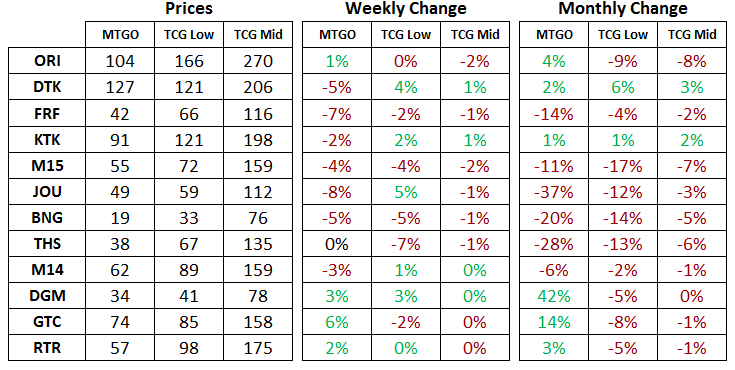
Below are the total set prices for all redeemable sets on MTGO. All prices are current as of September 28th, 2015. The TCG Low and TCG Mid prices are the sum of each set’s individual card prices on TCG Player, either the low price or the mid-price respectively.

All MTGO set prices this week are taken from Goatbot’s website, and all weekly changes are now calculated relative to Goatbot’s ‘Full Set’ prices from the previous week. All monthly changes are also relative to the previous month prices, taken from Goatbot’s website at that time. Occasionally ‘Full Set’ prices are not available, and so estimated set prices are used instead.

sep28

Targeted Recommendations Summary

In today’s report we take a look back at the last six months of the MTGO Market Report to perform an analysis of the buy and sell recommendations.

Each closed call (i.e. the card was bought and sold) can be evaluated and judged a success or failure by looking at percentage gains or losses. We’ll also construct a mock portfolio to estimate what the net gains or losses could be for a speculator following the recommendations. Lastly, we’ll make comments on any outstanding buy calls and discuss their future.

Evaluation Method

There is no absolute and exhaustive method to evaluate the performance of our recommendations, but we’ve come up with what we think is an objective approach to estimate gains and losses. Gains and losses presented here may be different from a given person’s portfolio, even if they strictly followed our recommendations.

Buy Prices

For every recommendation, the buy price we used is the price as recorded by Mtggoldfish.com on the day of the recommendation. The bias here is that it’s possible to buy cards at a lower price than the listed Mtggoldfish price. Mtggoldfish uses Mtgotraders prices which are frequently not the cheapest (they focus on stocking every card, not the lowest price). Also, acting on the recommendation on a different day might yield different results if prices fluctuated in the interim period.

Sell Prices

The sell price we used is the price as recorded by Mtggoldfish.com on the day of recommendation, with the following adjustments. For every card price below 2 Tix, 80% of the recorded sell price was assumed to be retained. This accounts for the buy and sell spread of most bots on low-priced cards, which tend to have higher margins.

The only exception made to this rule was for our booster positions. As the spread for boosters is extremely low, we considered 90% of the recorded selling price even when boosters sold for less than 2 Tix. For cards above 2 tix, 90% of the recorded sell price was assumed to be retained.

Again, the exact price which a given speculator gets will probably not correspond perfectly to the sell price either. The purpose is to illustrate what is possible, given a reasonable set of assumptions and the actual buy and sell recommendations given in the report.

Prices used for recommendations still open are current as of Sunday, the 27th of September. The same 80% and 90% price adjustments have been taken into consideration for cards less than 2 tix and cards greater than 2 tix, respectively.

The Mock Portfolio

A mock portfolio based on these recommendations was built in order to put the recommendations into a different, more tangible context. The rules of this simulated portfolio are as follows. A maximum of 50 Tix was dedicated to each recommendation, and an upper limit on the number of copies was set to 40. Based on our experience, buying or selling up to 40 copies of a given card without significantly affecting prices is possible if a number of different bot chains are used.

Similarly to our summary at the end of June we also took into account the fact that Tix generated by selling positions can be re-invested into new positions. Basically, we added the dimension of compound interest to our mock portfolio.

Evaluating the Recommendations

The table below presents the percentage change in each recommendation as per the above assumptions.

Table1

* Indicates the maximum buying price we recommended for this card, although the price on Mtggoldfish was higher on the day we recommended the position.

Considering all recommendations, both closed and open, the average gain is +30.2%. If only closed positions are considered, the average gain is +49.9%. These percentages are barely lower than those reviewed at the end of June (+34.6% and +50.4%, respectively).

Currently, a lot of our open positions are down. The average percentage gain of our open positions is +5.3%. However this is a flattering and somewhat biased way to look at our current open positions, since this number doesn't account for the value of each position--cheap positions that don't reach the 50 Tix limit and expensive positions that are maxed out to 50 Tix are weighed the same.

This is a biased perspective since cheap positions, such as Herald of the Pantheon and Eye of Ugin, can have a high percentage variation with fluctuations of just a few cents, whereas their effective gain in Tix is low.

A more accurate and objective way to look at our open positions is using the table below:

Table2

The mock portfolio shows you how much of each position it would have. After nine months now, this mock portfolio would have bought and sold 114 positions, while 90 still remain open.

The total buying value of the 90 open positions was 3555.5 Tix. The current value of these same 90 positions is now of 3278.4 Tix, a loss of 8.8% seen from this angle.

The positions currently held in our mock portfolio are mainly divided into Modern and Standard positions. On the one hand, after having just sold the most profitable among our Modern positions, we are by default left with the losing ones or those we expect to grow further in the future. On the other hand, the Standard positions we have recommended, and particularly the ORI ones, aimed to perform best later this fall in the new Standard environment after rotation takes place on MTGO.

It is therefore unsurprising that so few of them are profitable at the moment. In addition, the effect of the BFZ release is being felt as prices have started to decline in both Modern and Standard.

With the profit of 114 closed positions that would have been re-invested (as any speculator would proceed with his/her own portfolio) it would not make sense to compare the total buying price of all the positions to the total selling price to estimate the overall profit generated.

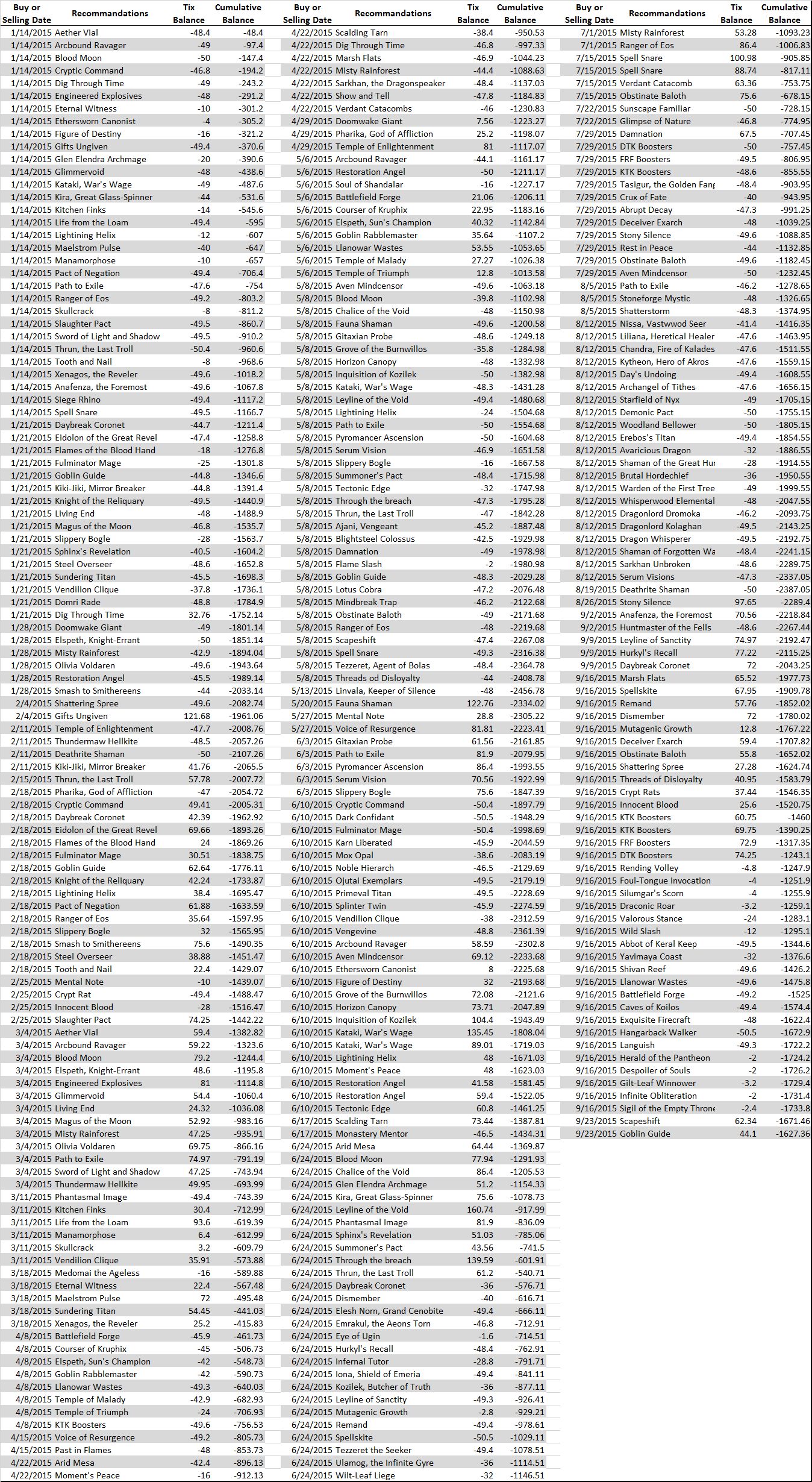
Instead, and in order to more accurately reflect the accumulated value of a real portfolio, we built a cumulative table to account for the Tix balance of the mock portfolio at any time during these first six months. Every time a card is bought, an amount of Tix (corresponding to the number of copies times buying price) is debited; every time a card is sold, an amount of Tix (corresponding to the number of copies times selling price) is credited.

Here is the cumulative table (click to expand):

Table3

A starting mock portfolio of 2500 Tix was used to cover all of the MTGO Market Report buying recommendations, according to the above buying assumptions.

With this, the mock portfolio would currently be valued at 4151.0 Tix. The current open positions account for a total value of 3278.4 Tix and the mock portfolio would also have 872.6 free Tix (2500 - 1627.4). 4151 Tix represents a 66% increase in bankroll value since January.

Our mock portfolio hardly moved compared to three months ago. At the end of June our mock porftolio was already up by 65.1% compared to January.

Outlook for Currently Open Recommendations

Standard Positions

Cards from Khans of Tarkir and Fate Reforged have the unusual privilege of being the first sets to rotate under the new system. This means they will rotate out of Standard with the release of Tears, the as-of-yet unknown large set expansion due in April 2016. With that in mind, the potential sales window for any spec from these two sets will be small. February is a rough cutoff date.

Monastery Mentor has been holding value and sees play in both Legacy and Vintage. The announced change to Legacy and Vintage Daily Events is a positive step towards encouraging more play of these formats. On top of that, the format of the November MOCS is Legacy Constructed, which will be a short-term driver of prices for Legacy-playable cards. If Monastery Mentor doesn't show any significant uptake in Fall Standard, look to November for a good sales window.

Cards from Magic Origins are all solid holds heading into a rotating Standard format. Any cards that get a significant boost in playability in Fall Standard should quickly reflect it in their price, and speculators should look to sell in response to any demand-driven price spikes. Otherwise, cards from ORI will see steady gains into the winter, following the typical cycle of set prices through the year. Speculators should be looking to sell down any remaining ORI positions from December to March.

Junk mythic rares from THS are attracting buying activity in recent weeks. Medomai the Ageless has bumped up to a higher level and will receive further buying interest after the BFZ release events die down. This one will be a long-term hold as long as an online set of THS is priced at a discount to the paper version.

Modern

The progression of Modern prices has clearly come to a halt at this time of the year, when Standard is about to rotate and a new Fall set will be released in few days. Several weeks ago we decided to sell most of our profitable positions which, by default, left us with losing positions or ones that haven’t increased enough according to our expectations.

Our current Modern positions break down into two categories: Modern Masters 2015 positions and the rest. Several of the “other” Modern positions, such as Ajani Vengeant, Tezzeret, Agent of Bolas and Lotus Cobra, were bought when the full list of MM2 was announced. They haven't seen much play in the current Modern metagame and their trajectory has been flat. However, with more frequent appearance in Modern decklists, their prices could still increase significantly.

Domri Rade hasn't worked out as a speculative call. Although it has held value as a redeemable mythic rare, the hope was that Modern play would drive the price at some point. On that front, it went from fringe Modern playable to not being played at all in the past year. This card should be sold to free up tix, either this week in advance of BFZ release events or at the end of October just prior to the redemption cutoff date.

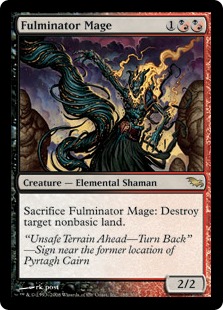
After potential price weakness due to the release of BFZ, MM2 positions are expected to increase in price again later this Fall. MM2 rares should be the most sensitive to seasonal price drops, while mythics will be more stable and possibly avoid a dip entirely. For example, Fulminator Mage is down from almost 14 Tix earlier this month to what appears to be a floor around 10 Tix.

It was probably preferable to sell Fulminator Mage two weeks ago, but we are confident that another opportunity will occur in the near future, as with other MM2 rares. Following widely predictable cycles, prices are likely to be back up again in two months or less. Finally, the introduction today of Modern Leagues might also boost demand for Modern and thus benefit prices earlier than previously anticipated.

Vintage and Legacy

The outlook for these two formats is not getting better for speculators. For Legacy, the MOCS in November has been a longtime target for any positions in this format. Even with this upcoming event it is uncertain if any substantial benefit will come of our Legacy recommendations. Holding onto the Legacy positions to sell as the event approaches is the only move available at the moment.

As announced last Monday, the introduction of eight-player queues may momentarily sustain or increase prices. At this time, and without a real change in the trend, we still recommend selling any Legacy speculations in the lead-up to the Legacy MOCS.

Vintage should be considered a no-fly zone for speculators. Prices have been drifting down for months with nothing to indicate a reversal anytime soon. Vintage staples keep hitting record low after record low.

Pauper

Pauper is subject to frequent fluctuations, which makes it tricky to make recommendations on the platform of the weekly Market Report. However, the format is popular enough for profitable speculations if you can keep abreast of the shifts.

Eight-players queues will be introduced starting October 7th, and Pauper leagues are the next in line after Modern. Flame Slash and Sunscape Familiar are our current Pauper positions, and they may benefit from these upcoming changes. We will be paying close attention to the evolution of Pauper staples and prices, as they might become even more attractive for players and speculators in the near future.

Targeted Speculative Buying Opportunities

None

Targeted Speculative Selling Opportunities

Modern

Domri Rade

It's time to cut this one loose in advance of the redemption cutoff date for Gatecrash. Look for this card to start bleeding value in November and for its price to start a slow and inexorable trend downward.

Although this spec didn't work out, it's possible this card makes a resurgence in Modern at some point. Remember it as a long-shot spec as it bottoms over the winter.

Rocking Out: Innovations in GBx

Are you a Quiet Speculation member?

If not, now is a perfect time to join up! Our powerful tools, breaking-news analysis, and exclusive Discord channel will make sure you stay up to date and ahead of the curve.

I have always loved the GBx archetype since it uses discard, removal, and efficient creatures to battle the entire format. Through tuning and experience nearly any matchup is winnable, a rarity in the rock-paper-scissors style of Modern. Within GBx, there are two popular variations that attack from different angles: Jund and Abzan. Abzan tends to be more creature focused while Jund is traditionally more removal heavy. Being proficient with both Abzan and Jund allows you to effortlessly switch between the decks when the metagame demands. Traditionally, Jund has been the more powerful deck, requiring two recent bans to keep it in check, while Abzan rode its Lingering Souls' in GBx mirrors to considerable success. Today both Jund and Abzan are tier 1 decks that, when piloted well, can take down any Modern event you attend.

Voice of Resurgence Art

There are no “correct” Jund/Abzan lists as every version should be tailored to beat a different meta. This is one of the selling points of GBx: changing certain maindeck and sideboard numbers can drastically change the deck’s matchups and play. This is a true tuner’s deck thanks to its deep cardpool and inherent card power. A generic GBx deck will do well thanks to the power of Inquisition of Kozilek and Tarmogoyf, but a tuned list will dominate by having the correct answers in the correct numbers with the optimal threats for the field.

[wp_ad_camp_1]

Monitoring the metagame and understanding what cards help against tiered decks (without taking up other valuable cards’ slots) provides major advantages for open tournaments. For example, if you are worried about Merfolk, adding Dromoka's Command or Golgari Charm to the main can help fight their best card in the matchup: Spreading Seas. If Burn is especially prevalent then additional Kitchen Finks or Huntmaster of the Fells instead of removal may be right. Small tweaks like this can make or break certain matchups if you predict the field correctly, but can have terrible consequences if you overtune or misjudge the meta. Be careful. With that said I will be looking in-depth at one list each for Jund and Abzan to analyze what makes them so good against an open field.

The Ever Present Jund

At Grand Prix Oklahoma City, perennial Standard master Brad Nelson took an innovative look at the format staple to continue his Jund streak.

Jund, Brad “Jundguy” Nelson (10th, GP Oklahoma City 2015)

Creatures

4 Dark Confidant
4 Tarmogoyf
3 Scavenging Ooze
1 Tasigur, the Golden Fang
1 Olivia Voldaren

Instants

4 Lightning Bolt
3 Terminate
2 Abrupt Decay
2 Kolaghan's Command

Sorceries

4 Inquisition of Kozilek
2 Thoughtseize
2 Maelstrom Pulse

Planeswalkers

4 Liliana of the Veil

Lands

4 Verdant Catacombs
3 Bloodstained Mire
2 Wooded Foothills
4 Raging Ravine
4 Blackcleave Cliffs
1 Blood Crypt
1 Stomping Ground
1 Overgrown Tomb
2 Forest
2 Swamp

Sideboard

1 Abrupt Decay
1 Duress
1 Thoughtseize
2 Kitchen Finks
2 Huntmaster of the Fells
2 Night of Souls' Betrayal
2 Nihil Spellbomb
1 Sword of Light and Shadow
2 Shatterstorm
1 Slaughter Pact

Fantastic looking on paper, this deck addresses many of the major matchups in its choices. In response to the aggressive nature of Modern, Brad does a 4-2 split between Inquisition of Kozilek and Thoughtseize. This reflects the increased popularity of Grixis, Affinity and Burn, matchups where Thoughtseize loses value while Inquisition of Kozilek hits almost every relevant spell without burning through too much life. Maelstrom Pulse goes way up in value with the rise of Merfolk and UW Control by hitting Spreading Seas, sets of Merfolk lords, and Planeswalkers GBx has trouble dealing with one-for-one. The deck cuts high end threats like Olivia and Tasigur to one copy each, using Kolaghan's Command’s graveyard mode to return copies of whichever creature is best for a given situation. This opens up more slots in the main deck for Maelstrom Pulse and the fourth Liliana of the Veil, which is great against Grixis, UW Control, and Bogles.

Sideboarding Succinctly

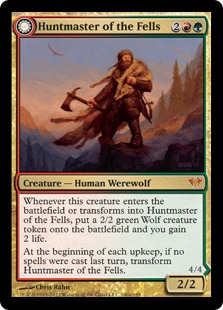
Huntmaster of the FellsBrad’s maindeck is strong on its own against the expected Grand Prix meta, but the his sideboard is the real standout element of this build. Moving Huntmaster of the Fells and Kitchen Finks to the board allowed him to run more generally useful cards like Maelstrom Pulse while keeping them as life-gaining clocks against decks like Naya Zoo, Affinity, and Burn which are unfavorable game one. Nihil Spellbomb acts as a more flexible Leyline of the Void replacement: it's strong in multiples and usually replaces itself. With Living End starting to see steadier play, along with the ever-increasing popularity of Grixis, Spellbomb is a great tool to pair with Scavenging Ooze to control the graveyard. Brad doubled up on Night of Souls' Betrayal, phenomenal against Affinity, Infect, and Jund’s nemesis Lingering Souls.
I really like Night of Souls' Betrayal in the current meta since it takes away one of Abzan’s best tools to win the GBx mirror (Souls) while also shoring up other poor matchups and having incidental impact against random decks. As awesome as the Enchantment is, the spiciest piece of technology in Brad’s sideboard for Abzan is actually Sword of Light and Shadow, which invalidates Abzan’s plan to one-for-one and pull ahead with Lingering Souls. If there is one card that I think should become a staple in Jund sideboards against Abzan, it’s the Sword.

Unfortunately, Brad’s edits are not without consequences. Fulminator MageThere are no Fulminator Mages, Sowing Salts, or other ways to interact with lands in Brad’s deck. This is as good as a concession to Tron and Amulet Bloom. Though these decks make up a lesser percentages in the current metagame, running into them is a death sentence. Big mana decks that can ignore Jund’s one-for-one strategy are always tough match-ups, but without any sort of answer to Karn Liberated or Ugin, the Spirit Dragon besides Maelstrom Pulse, it becomes an even worse matchup than before. Even with all of the technology in Brad’s sideboard, Abzan is still a tough matchup. While he certainly improved the BGx duel, it is still not a deck you want to play against often. That said, I think Brad has constructed a great version to play in an open tournament like a StarCityGames Open or a Grand Prix.
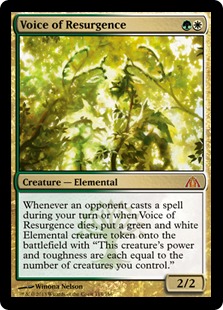
Junk in the Trunk

Having dissected Brad’s Jund list, it is now time to look at my current deck: Abzan. At the World Championship, Thiago Saporito played an innovative version of Abzan that included Noble Hierarchs, Siege Rhinos, and an aggressive sideboard. Looking at his list, we can see he took inspiration from Wilted Abzan, along with the classic Abzan list, to create an accelerated midrange deck that has phenomenal late game grind potential.

Abzan, Thiago Saporito (Worlds 2015)

Creatures

4 Tarmogoyf
3 Noble Hierarch
3 Siege Rhino
2 Scavenging Ooze
2 Voice of Resurgence
2 Tasigur, the Golden Fang

Instants

3 Path to Exile
3 Abrupt Decay
1 Dismember

Sorceries

3 Thoughtseize
3 Inquisition of Kozilek
3 Lingering Souls

Planeswalkers

4 Liliana of the Veil

Lands

4 Verdant Catacombs
3 Marsh Flats
2 Swamp
2 Windswept heath
2 Overgrown Tomb
2 Stirring Wildwood
2 Godless Shrine
2 Gavony Township
1 Woodland Cemetery
1 Temple Garden
1 Urborg, Tomb of Yawgmoth
1 Plains
1 Forest

Sideboard

1 Thoughtseize
1 Abrupt Decay
1 Lingering Souls
1 Maelstrom Pulse
3 Leyline of the Void
1 Leyline of Sanctity
1 Engineered Explosives
1 Dromoka's Command
1 Damnation
2 Sigarda, Host of Herons
2 Pithing Needle

Voice of ResurgenceThis deck is spectacular. Relevant tools from Wilted Abzan such as Noble Hierarch and Voice of Resurgence really help against decks like Jund and Grixis. They put these decks on the defense and might even cost them two spells to deal with your one creature. Saporito's deck tends to win through grinding one-for-one and two-for-one exchanges until it can pull ahead through in the mid to late game with Lingering Souls or Tarmogoyf. Voice complements this perfectly. One of the biggest shocks for me is the lack of four Lingering Souls in the maindeck, a staple of Abzan since its creation. That said, Saporitio correctly recognized while Lingering Souls are good, fitting in the fourth Liliana of the Veil against Grixis decks and other controls decks is better. With that in mind, I recommend bringing the fourth Lingering Souls back into the main deck and moving the fourth Liliana back to the sideboard in a more aggressive matchup.
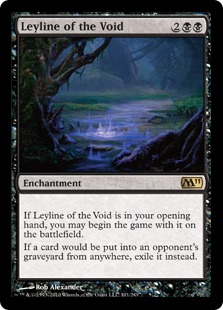
Calling in the Hate

Leyline of the VoidWhile Saporito’s maindeck innovations are less explicitly powerful than Brad's, he creates a targeted sideboard that shuts down several matchups. Back breaking against Grixis and Living End, the three Leyline of the Void punish these decks that look to abuse their graveyards to cheat out expensive threats. While Grixis has always been a good match-up, Living End is one of the worse outside of big mana decks like Tron for Abzan. In addition, running two Sigarda, Host of Herons is a great response to the growing strength of Jund. There are zero answers to this card in Brad’s entire 75 if it hits play. Sigarda is an absolute GBx mirror breaker that can render a solid hand of removal inert, simultaneously closing the game in a few turns. Many Abzan decks play one Sigarda depending on the strength of Jund, but committing a second slot to the card acts as a further tool to beat Jund’s latest innovations. Another card I really like right now is Dromoka's Command, an utter blowout against Merfolk and Burn due to its two-for-one potential. It's even possible for Command to be a board wipe. Against Merfolk, having your opponent sacrifice their Spreading Seas at instant speed while also picking off a Lord can end the game on the spot. Similarly, in the Burn match-up, preventing damage from a major burn spell while also eating a Swiftspear or Goblin Guide can turn a close game into a cakewalk.
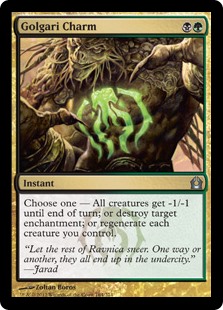
Golgari CharmBrad’s list is meant for an open tournament, but Thiago's is very tuned for an expected meta. For an open meta, I recommend cutting one Leyline of the Void, one Leyline of Sanctity, and the Thoughtseize from the board in favor of two Stony Silence and a Golgari Charm. While Leyline of the Void is very good against Living End, the deck was over-represented at Worlds compared to most open fields. Grixis is a very good matchup even before the Leyline of the Void. Leyline of Sanctity is solid, especially against Burn, but the deck does not have an inherently bad Burn matchup and the slot is better used have an extra hate card against Affinity and Lantern Control. Finally, I really like Golgari Charm right now. Its -1/-1 mode does a lot of work against Infect, Affinity, and opposing Lingering Souls decks while its other two modes have blowout potential against other big Modern players. Against UW Control, having an additional answer to Detention Sphere or Supreme Verdict can end the game. In addition, Golgari Charm gives another piece of instant speed enchantment removal to blowout a Merfolk opponent attacking in with the assumption of Spreading Seas’ islandwalk.

Stony SilenceThis deck also suffers versus big mana decks such as Tron and Bloom Titan. With the addition of Stony Silence, however, you can slow down Tron and try to win a fair fight. While the matchup is still bad, there are many angles to attack from and if they stumble at all, you can steal a game one victory before boarding in Pithing Needle as a hard answer to Karn, Ugin, or Eye of Ugin. Other than those two match-ups, Lingering Souls really helps against many creature based match-ups, since it’s difficult to one-for-one against.

One of the biggest reasons to play Abzan, is the phenomenal matchup against Grixis (in all its iterations), Affinity, and creature based midrange decks. Having the ability to consistently one-for-one your opponent while deploying hard to kill threats like Siege Rhino and Lingering Souls puts a lot of pressure on the opponent. While neither GBx deck punishes slow starts to the degree that Burn or Zoo can, they can bury the opponent by picking apart their hand and resolving quick clocks that makes it very difficult to fight when behind. Another advantage of these decks is that they are designed with late game top deck wars in mind as almost every creature or removal spell is live in the late game with the exception of hand disruption and Noble Hierarch for Abzan. This allows the deck to continually one-for-one with opponents without running out of gas later in the game, an advantage that their creature-lands support.

After looking at both of the major GBx decks and their latest innovations, going into an open tournament I would still play Abzan. Its superior match-up in the Jund-Abzan mirror is just too good. That said, Brad’s innovations have greatly improved the deck in my eyes, and I would be keeping an eye on Jund for the future. Tell me what you think of these two decks in the comments and what you would play right now if there was a Grand Prix near you!

Insider: Modern Off-Season Investment Targets

Are you a Quiet Speculation member?

If not, now is a perfect time to join up! Our powerful tools, breaking-news analysis, and exclusive Discord channel will make sure you stay up to date and ahead of the curve.

There was a time in Modern's history when the "off-season" didn't just mean fewer tournaments and less format coverage. It meant zero events period, along with a complete shift to Standard and Limited content.

That was back in 2012 when Jacob Maynard had just won Grand Prix Columbus and we had to wait almost five months for the next North American Modern action at Grand Prix Chicago. We had a Scapeshift unban in between, along with Shouta Yasooka's innovative Eternal Command deck, but the average player felt stuck at kitchen table Modern while waiting for the next big event.

Lantern of isnightThat's no longer the case today. With multiple StarCityGames IQs every weekend, on top of SCG Opens, PPTQs, and events like the World Magic Cup Qualifier series, there are constant opportunities for Modern players to play their favorite format. We even have some big events a mere 2-3 months away: the SCG Open in Dallas on October 31 and Grand Prix Pittsburgh on November 20. Plus Lantern Control just won a GP!
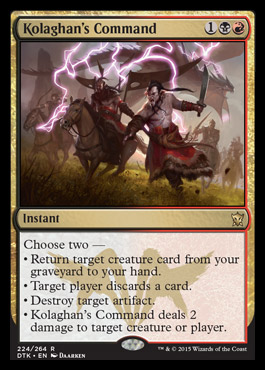
That's right. It's a great time to be a Modern player.

Even though the off-season isn't as pronounced as it once was, the months between Modern events still see a small reduction in format interest and articles. That's no longer a big deal for tournament players (you'll still have a lot of events to choose from), but it's huge for the Modern newcomer who wants to buy into an old deck.

It's also an important time both for veteran Moderners who want to switch to another list, and for savvy investors who want to sneak in when format hype is low.

In today's article, I want to identify two areas of Modern worth buying into during an off-season. I'll talk about these areas both generally, so you can apply the buy-in principles to any Modern metagame, and with some specific examples, so you know what cards to go after right now. This will get our minds off the disappointing Battle for Zendikar release and back to the hot Modern cards we should be paying more attention to.

Investing in "Boring" Tier 1 Decks

In any Modern metagame, you'll find a few Tier 1 decks getting all the attention. Since early summer, those two decks have been Grixis Control and Affinity, both of which enjoyed considerable success since June and going into September. I wrote a number of articles on Affinity's recent rise on the Modern Nexus site, recently one on Worlds and one on Grand Prix Oklahoma City, emphasizing Affinity's renewed strengths in a metagame that doesn't currently respect it.

Kolaghan's CommandAs for Grixis Control, this deck has been the talk of Modern since Kolaghan's Command hit the scene. Although Grixis Control didn't see significant success at Worlds, the recent SCG Opens in Charlotte and Cincinnati, or even GP Oklahoma City, this is not because the deck is bad. Rather, it's because Grixis is so prominently on everyone's radar that the format is hyper-prepared for all those Gurmag Anglers and Snapcaster Mages.
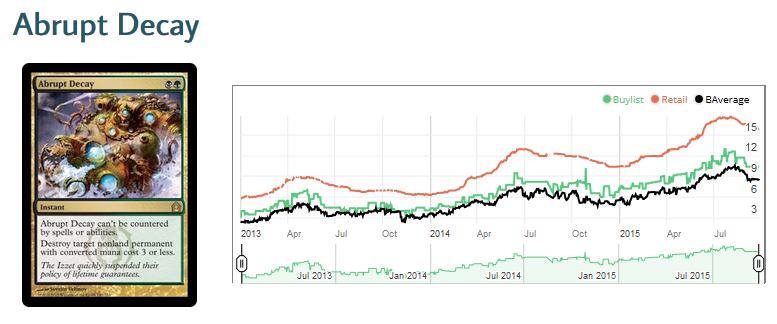
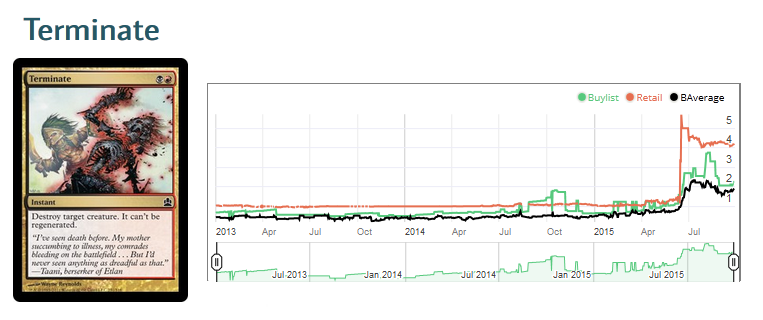
Decks like Grixis Control and Affinity may be strong in the metagame, but that also makes them bad investments in an off-season.

Even though many players have turned their attention away from Modern as a whole, these big-name decks are too present in players' minds to be cost-effective. This is particularly true with Affinity: players are overvaluing the deck's cards in light of its recent successes and all the attention it's receiving. Just look at Arcbound Ravager to see that effect in action.

There was an error retrieving a chart for Arcbound Ravager

You'll see similar upward trends for other Affinity and Grixis Control staples, including Kolaghan's Command, Inkmoth Nexus (particularly following Infect's win at SCG Cincinnati), and Glimmervoid (also a victim of Lantern Control's success). You can still get into these cards if you want to play the decks, but you'll probably be spending more than the card would be worth absent all the surrounding hype.

So which Tier 1 decks should you spend money on? The reliable, time-tested, and oftentimes downright boring decks that aren't currently on center stage.

Decks like U/R Twin, BGx Midrange (Jund or Abzan), and Burn are easy to forget about when all eyes are on shiny Lantern of Insight finishes or all that Cranial Plating-powered damage. That's good news for the proactive Modern investor. These decks are often just as powerful and reliable as they were earlier in the year, which makes them great buy-ins no matter what else is happening in the format. They will also, all things being equal, continue to be powerful and reliable if new cards or strategies get introduced to the format.

When players focus too much on decks like Affinity and Grixis Control, or flavor-of-the-month decks like Lantern Control, Amulet Bloom, Grishoalbrand, etc., other Tier 1 prices can drop. BGx is a great example of this today.

Back in June, Jund was getting a lot of attention as the deck to beat, with many writers and players narrating a format-wide shift from the Abzan highs of February to a Jund reign in June. You can see this in Liliana of the Veil's price uptick in late May (which had undergone a massive price spike earlier in April when it became clear she wouldn't be in Modern Masters 2015). Once the buzz dies down, however, the cost of those decks' staples tend to die down with it.

Take a look at Abrupt Decay's price dip in the middle of the 2015 summer as fair-weathered players shifted their focus to Grixis and other decks.

Abrupt Decay price drop

The dip at the end of the graph isn't big, but it signals a sustained decline that is likely to continue well into November and December. You can capitalize on that as either a buyer or a player who simply wants to get in on BGx when prices are more reasonable.

When investing in the "boring" Tier 1 decks, look for iconic deck staples like Abrupt Decay and then look to buy in when the spotlight has moved on to something shinier. In Decay's case, this drop is likely to continue well into November as players forget how important BGx Midrange is as a metagame pillar and instead keep thinking about Grixis, Affinity, Lantern, the Knight of the Reliquary plus Retreat to Coralhelm combo, etc.

Of course, there are always confounding variables at play to consider: Decay is a mainstay removal spell in the Lantern deck itself, which will surely affect its price too.

Following this model and paying attention to Jund and Abzan (especially Abzan, which has largely fallen out of favor relative to Jund over the summer), here are some BGx cards worth looking at as the off-season progresses:

B/G Midrange Staples

You can apply a similar method when looking at staples from Twin or Burn. The key is to identify mandatory cards that are also not widely played in other decks, especially the flavor-of-the-month decks. Inquisition of Kozilek and Kolaghan's Command would not make these lists because they are seeing a lot of attention elsewhere (Lantern Control and Grixis respectively).

A Burn card like Goblin Guide, however, is a better example. Guide's price has retreated from its post-Modern Masters 2015 spike to a steep but more reasonable $25-$30. A Battle for Zendikar block or Commander/Duel Deck reprint would torpedo the price, but as cards like Guide continue to drop and attention continues to stay away from the "boring" Burn deck, these staples become much more attractive.

Investing in Generic Format Staples

Tier 1 mainstays aren't the only cards that make good off-season pickups. You'll also find everyday Modern staples like Bolt and Path hold value from metagame to metagame. These cards are typically removal, cantrips, countermagic, or other Modern generics that you'll see in decklists and not think twice about. This makes them mandatory for decks at every level of Modern gameplay, and makes them good off-season investments for both players and re-sellers alike.

The Usual Suspects in Modern

Why buy these cards in the off-season as opposed to any other time in the Modern calendar? The answer is because demand is much more predictable when you don't have big tournaments on the horizon.

These so-called Modern generics spike in the leadup to a Grand Prix or SCG Open when people realize, often at the last minute, they can't play the awesome new Grixis Twin deck without some random Terminates and Lightning Bolts. Players are so busy buying into the hyped hallmarks like Kolaghan's Command that they forget you can't play Kolaghan's without the support cards.

Speaking of the Grixis staple, let's look at Terminate's summer trajectory to see this principle in action.

Terminate price drop - CopyGrixis Control saw a massive metagame share increase in early June, following Patrick Chapin's 9th place finish at GP Charlotte. Chapin had been vouching for Gurmag Angler and Tasigur, the Golden Fang ever since a disastrous performance at PT Valencia with an Esper Delve list. With Grixis Control, the strategy entered a new level. Grixis decks had already been pushing the cusp of viability for months, chiefly on the back of Grixis Delver's MTGO successes, and Chapin proved there was a new direction the deck could pursue.

Terminate's stock soared as players jumped over to the deck. Jund's parallel rise didn't help matters much, as players like Reid Duke and Brad Nelson continued to advocate for its relevance even in a Tron-, Amulet Bloom-, and now Grixis-packed format. These complementary forces pushed Terminate from a sub-$1.00 common to a $5.00+ dollar Modern staple.

Fast forward to today: Terminate has stabilized at a more reasonable price and is likely to continue to drop.

There was an error retrieving a chart for Terminate

June 2015 would have been a terrible time to buy into Terminate. Everyone was trying to climb on either the Jund or Grixis hype-train, even though no one initially realized that a Grixis or Jund uptick would also lead to that parallel Terminate price rise. Today, you'll still have to shell out $3.50-$4.00 for the card, but I expect that to drop to at most $3.00 by the time the November and December events return Modern to the spotlight.

Price memory is very real in Modern, and once a card carves out a niche as a format mainstay it establishes a floor under which it never drops. This often happens no matter how many times a card gets reprinted: Lightning Bolt is never going to get under that $2.00 mark. That said, these cards return to their floor during the off-season, which is exactly when you want to buy them.

There was an error retrieving a chart for Lightning Bolt

As the format's popularity continues to grow, demand for Modern generics will grow with it. Off seasons are the only time these prices will slip back down, which is the perfect moment to make cost-effective buys.

Other Modern Off-season Investments?

There are plenty of other opportunities for enterprising Moderners to make smart buys during the off-season. Tier 2 decks alone offer a wealth of possibilities. Strategies like Merfolk (admittedly a fringe Tier 1 deck in certain metagames) tend to be strong value-holders no matter what else is happening in Modern.

You can also try and get ahead of metagame trends by sneaking into Tier 3 or untiered decks before they hit the content sphere. I'm looking at known entities such as Death and Taxes and Living End, but also lesser-known options like Nykthos Green or Skred Red.

What other Modern prospects interest you during the off-season? Any decks or cards you have your eyes on? I'll be checking the comments to get your feedback. In the meantime, keep up the brewing and deck development as we get through the off season and into the main Modern action in November!

Insider: Setting Up an Inventory Management System for Your Store

Are you a Quiet Speculation member?

If not, now is a perfect time to join up! Our powerful tools, breaking-news analysis, and exclusive Discord channel will make sure you stay up to date and ahead of the curve.

Welcome back, readers and fellow speculators!

Today's article will focus on inventory management, and in a future article I'll discuss inventory control. I'll explain what they are and how they relate to Magic finance. So let's get to it!

Inventory Management

I'm a mechanical engineer by trade, which means I often get to spend my time designing new things. However a good portion of my time is spent keeping my factory running smoothly. As you might guess, this aspect of the job isn't nearly as enjoyable, but it's absolutely critical to the company.

I am in charge of creating and maintaining Bills of Materials (BOM). At the manufacturing plant where I work we get large customer orders to deliver over a period of time (a typical order is something like make X widgets each week for Y weeks). The BOMs tell our purchasing team what they need to buy and our Enterprise Resource Planning (ERP) software breaks down the known customer orders into groups. This lets the purchasing team order the necessary parts and have them arrive on time.

As I explained last week, a cash flow analysis ensures we don't tie up too much on inventory that won't be used for several months. Our purchasing department also has additional challenges regarding the pricing of components due to batch size (the quantity manufactured by our sub-suppliers).

Now, what on earth does that have to do with Magic: the Gathering finance? Great question, anonymous online reader.

Tracking Magic Inventory

If you sell cards on TCG Player or another store website, you likely get orders for multiple cards. When you're a two- to four-person shop with a small inventory, it may not be absolutely necessary for each individual to know exactly where every card is located, but it is critical that every person know the general location.

Every order will take some amount of time to "pick" (or locate each individual card and gather them together). Good inventory management will not only catalog all your cards, but also where each is located, to minimize the pick time. In the end this helps you ship out more packages per day, leads to happier customers, and in some cases allows you to get paid faster (on sites like Pucatrade that only apply credit after the transaction is completed).

Another challenge that can be faced on the MTG sales side is when you are trying to maximize visibility in the marketplace with a presence on multiple selling platforms. Strong inventory management will keep your inventory correct to prevent overselling and upsetting customers.

Ideally you'd want each venue to pull from a common database, thus eliminating any double orders and the need to maintain multiple databases. Unfortunately at this time, most Magic selling platforms have their own proprietary systems which make this impossible. This just makes a good internal inventory management system all the more important.

Another aspect of inventory management is the actual physical location of one's inventory. Obviously you want to keep your inventory readily available (i.e. don't rent out a storage locker across town to store all your cards), but we can go a bit deeper than that.

If you keep your inventory in a backroom with a lot of shelves you need to choose where and how to store everything. You could just put everything on the shelves and be done with it, or you could take a smarter approach to organization. If a lot of your sales are for Standard cards, for example, then it makes the most sense to keep those cards closest to the door, to eliminate extra time spent wandering about and picking. You'd also do well to take a page from grocery store stockers and place the items that move most at your picker's eye level.

Stock takes up space. We're lucky that individual Magic cards are small enough to store large quantities in a relatively small space (unlike, say, bulldozers) which means we don't need large warehouses to store inventory. On the flip side, because they are so small they're a lot easier to lose track of. It can be very time consuming to find one card in a giant box (or even worse, a whole backroom) of cards.

Hunting down individual cards you know you have but can't locate is a huge waste of time. This is time you don't have to sell, organize, package, etc. Remember the old adage that "time is money"--if you are paying an employee to pick cards for you then every minute they spend picking costs you money.

For example, let's say you pay someone minimum wage to help fill online orders. In most of the US, minimum wage is $7.25 an hour, which equates to $0.12 per minute. When your orders are for $10- to $20-cards then a three-minute pick time might not seem too bad. But if your order includes 30x random cards that sold for $0.25 each, then any time spent picking above 2.08 minutes per card is actually losing you money. Let that sink in for a minute.

Wasted time compounds quickly. So what can we do to eliminate this waste? The easiest and smartest thing to do is organize your inventory in an efficient manner.

Designing a System

My favorite LGS has a giant wall of cardboard hotels like the one shown below (minus the kittens).

cardboard-box-cat-maze

In each section they have a longbox with the name of the set written on it. The downside to this strategy is that if you have a lot of one set it takes up multiple boxes and your ability to find a card still requires you to search through each box. This organizational strategy is rudimentary and sub-optimal. It still allows for a lot of wasted time.

The key to a good organizational strategy is balancing the level of detail and the amount of time required to maintain it. The other extreme would be to put every card in a sleeve, assign said sleeve a number, and then organize the sleeves in some fashion (likely numerically) so that you can find the exact card you're looking for. The problem with this method is it's hugely labor intensive and every time you sell a card your numbering will get thrown off.

At work we assign a bin location to our components, which is a numerical "smart number" (a number in which the digits are not randomly assigned, but instead each digit represents a characteristic that defines either the component or its location). For example, Widget A's smart number might be 3-2-54, which would stand for shelf 3, row 2, item 54. This type of numbering aids our pickers tremendously and virtually eliminates time wasted searching for something.

Since Magic cards are small and typically stacked together to ease space requirements, we may not want to organize to the exact card level. However, if you happen to use large 5000-count boxes for storage, you could do something like this:

inventory management organzation

While I don't have rows upon rows of inventory myself (or really more than two shelves), this would likely look something like the image below (focus on row five as I haven't had a chance to do the first four yet).

box

In this case it would be smart to break the Row Subsection (the last digit) into small, easily searchable quantities (maybe 50 cards or so). This would mean a picker only has to search through 50 cards for any given card (assuming your inventory remains properly managed), which can be done in a matter of seconds.

The next question you might have is, where would this smart number appear? The answer is in whatever inventory management software you use. (I suggest looking here for some free options, though they will likely be limited in power.)

Set up a field for the smart number, and make sure it appears on the "pick list" you print out to hand to your picker. Note that while most inventory management software has a unique ID number for each item, you'll have to use a different field for the smart number, since multiple cards may share the same one. The order sheet should then have everything your pickers need to find the cards and verify the order--you may also want to include it in the packaging for your customer.

~

Hopefully this article will help you manage your inventory better. Setting up a proper inventory management system, along with the software to track it, is certainly a huge endeavor. But while it may take time and include a lot of headaches, it will prove its value over the long run.

September 28 B&R Announcement

Are you a Quiet Speculation member?

If not, now is a perfect time to join up! Our powerful tools, breaking-news analysis, and exclusive Discord channel will make sure you stay up to date and ahead of the curve.

I would imagine that many of us are still expecting something to change in Modern, but we didn't get that with today's update. We did see what I feel are some great changes though.

Legacy:

Dig Through Time is banned.
Black Vise is unbanned.

Vintage:

Chalice of the Void is restricted.
Dig Through Time is restricted.
Thirst for Knowledge is unrestricted.

I'm a big fan of any update that is bad for Mishra's Workshop, and the impact of Dig Through Time on Legacy was a very negative one for me.

There was an error retrieving a chart for Mishra's Workshop

Black Vise is a card that many have suggested be removed from the Legacy ban list for a long time, but WotC was playing it safe and keeping it banned. They finally pulled the trigger, which I imagine will have minimal impact on the format, though it's nice to see cards that don't need to be banned removed from the ban list.

Not only do I think that Black Vise just isn't good in Legacy, but at this point it's not very actionable even if it does matter. Beta and From the Vault copies have disappeared from TCGPlayer, and there are plenty of white-bordered copies on the market. If anything, I would sell any black-bordered copies that I have now while there's some demand.

There was an error retrieving a chart for Black Vise
Avatar photo

Ryan Overturf

Ryan has been playing Magic since Legions and playing competitively since Lorwyn. While he fancies himself a Legacy specialist, you'll always find him with strong opinions on every constructed format.

View More By Ryan Overturf

Posted in FreeTagged , , Leave a Comment on September 28 B&R Announcement

Have you joined the Quiet Speculation Discord?

If you haven't, you're leaving value on the table! Join our community of experts, enthusiasts, entertainers, and educators and enjoy exclusive podcasts, questions asked and answered, trades, sales, and everything else Discord has to offer.

Want to create content with Quiet Speculation?

All you need to succeed is a passion for Magic: The Gathering, and the ability to write coherently. Share your knowledge of MTG and how you leverage it to win games, get value from your cards – or even turn a profit.

Modern Banlist Update (9/28): No Changes

Are you a Quiet Speculation member?

If not, now is a perfect time to join up! Our powerful tools, breaking-news analysis, and exclusive Discord channel will make sure you stay up to date and ahead of the curve.

Praise be to Wizards! The 9/28 B&R Announcement went live this morning, yet again demonstrating Wizards is a competent and conservative manager for our beloved format. As in the July 2015 announcement, this is easily one of the best "No Changes" updates we could have asked for. Hopefully Wizards keeps these updates coming because I have dozens of these calm and peaceful Plains arts left in the gallery!

Plains Art MTG

Trevor is off today and his video series is going to go up later in the week, so for now we're going to take a quick look at the announcement and its implications for Modern. Of course, the Plains art above is a bit misleading: Legacy and Vintage had some big changes that are sure to reverberate throughout their metagames (hope you bought those Black Vises because the buyout is in full force). For us Modern players, however, it's business as usual as we enjoy a diverse metagame that doesn't currently need bans or unbans.

[wp_ad_camp_1]

Nothing to Ban...

I didn't even bother making a Modern Nexus banlist prediction last week because it seemed like such an obvious "No Changes" update. For the sake of posterity, here's the prediction I made on the MTG Salvation forums over the weekend: "There will be no changes on Monday." This prediction, and the resulting announcement, should come as no surprise to anyone who has been paying attention to Modern since July. The format is extremely healthy, there are dozens of viable decks across the archetype spectrum, and tournament attendance is very strong.

Despite these conditions, I know there will be critics of Wizards' 9/28 announcement, both for the lack of bannings and also the lack of unbannings. To understand why these criticisms are misplaced and misguided, we need to step back and look at what cards people tend to want banned, and how those cards actually exist in Modern.

Whenever players start talking about Modern, even not related to the banlist, I expect the usual banlist suspects to show up about as regularly as I count on Donald Trump to talk about his beautiful and inexpensive wall. Everyone has seen these cards in action and seen them discussed online. Everyone also has an opinion on them, often a strongly worded one and often one with zero evidential backing:

bloomAmulet of Vigor / Summer Bloom
Griselbrand / Goryo's Vengeance
Simian Spirit Guide
Fetchlands
All of 8th and 9th Edition
Ensnaring Bridge (a newby but a goodie)
Splinter Twin

Quite honestly, this list is actually much longer and wackier than even these cards suggest. We recently conducted a poll on MTG Salvation to see what cards the community wanted banned. I don't know what's more upsetting: the fact that all those cards needed to be on the list, or the fact that almost every card got some votes. If you know those four people who wanted Thoughtseize banned, give them a big hug from me and tell them it's going to be okay.

Most ban advocates rely too heavily on personal opinions of the format, downplaying (or flatly ignoring) the metagame context. They also often ignore the historical ban precedents and the rules articulated by Wizards around those precedents. Once you consider all these factors, a "No Changes" announcement during a month like September is not just obvious, it's actually the only reasonable and expected outcome for the format.

Ensnaring BridgeJust take a look at our 7/1-7/31 and 8/1-8/31 metagame updates. Do those even remotely look like metagames that need a banning? Spoiler alert: the upcoming 9/1-9/30 update is just as diverse. The same goes for all the recent tournaments and their own Day 2 metagames and T8s/T16s. GP Oklahoma City and SCG Cincinnati were both incredibly open and also incredibly interesting. Even ignoring the high-profile (and, perhaps, anomalous) Lantern Control finish, we saw a wide field of tier 1 staples (Affinity, Jund, Twin) along with lower-tier contenders (Merfolk, Infect, Scapeshift, Zoo, etc.). We also saw considerable variation within strategies, including BGx, Twin, and the Company decks.

As for the individual cards in these decks, there is simply no reason to consider any of them for banning. Turn four violators only matter insofar as their decks are top-tier. With Amulet Bloom and Grishoalbrand hovering under 4% and 1%-1.5% metagame shares respectively, you simply can't justify banning anything from those decks. Modern players love to forget this "top-tier" stipulation, which is why I'll keep on repeating it until it sticks. The same goes for so-called "unfun" cards like Blood Moon and Ensnaring Bridge, which either perform an important policing role in the metagame (Moon) or aren't in enough decks to be a problem (Bridge).

Moving past the turn four rule, we have the format-dominance cards like Twin, Goyf, Eidolon of the Great Revel, or whatever other suggestion the ban maniacs fixate on for the week. Although these cards could become problems one day, it is not this day. These decks would need to occupy Pod or Delver-level shares to become a problem, and we have a long way to go before any current deck in Modern sustains 15%+ metagame prevalence.

If you, or those you are reading, aren't considering both the metagame context and the banlist rules, then banlist discussion will be meaningless. Today's announcement is an excellent example of those principles in action and I hope we keep them in mind for future B&R updates.

...and Nothing to Unban

Unbanning cards is a much trickier process than banning them. A ban is almost always about the metagame and historical facts (Dig Through Time was an exception to this, although today's announcement vindicated it). This includes some combination of T8/T16 prevalence, overall format share, and the effect of a particular deck on other decks around it. There's also a semi-mythical cutoff for decks that win "too frequently" before turn four, and even though we don't know it, we have previous decks to draw on for evidence (UR Storm, Shoal Infect, etc.). None of these approaches are guaranteed to produce a good banning, or a good ban prediction, but they are at least grounded in existing evidence about actual metagames.

BbeUnbannings, however, are far less certain than bans. With an unbanning, you are necessarily proposing a counterfactual to the existing metagame. Barring extensive gauntlet-style testing (which we have no reason to assume Wizards does and can also be inaccurate), you can't know how any unban will affect the metagame. Can you make guesses based on precedent? Sure: a Bloodbraid Elf unban would probably benefit Jund and Naya decks more than anything else. Then again, can you know how those guesses will play out in the format or alongside new decks and cards that didn't exist in the past? Not with confidence. Sometimes you have a scenario where Bitterblossom doesn't do anything despite dominating old Extended seasons for years. Other times, you can end up with Legacy-style situations where a Entomb unban leads to a Mystical Tutor ban only a few months later.
Ancestral VisionThe July and September announcements both show Wizards is taking a "if it ain't broke, don't fix it" approach to Modern. It also shows they respect the uncertainty around unbans and want to proceed cautiously. Even seemingly inconspicuous cards like Sword of the Meek could have a major effect on undoing the (perhaps tenuous) gains aggro decks have made in the last year. Ancestral Vision might not break the format, but with both Treasure Cruise and Dig Through Time banned/restricted in every nonrotating or eternal format, I understand Wizards' hesitance to pull that trigger. As for Bloodbraid, just look at those Naya and Jund shares. Do these decks really need help? Does Jund, of all the decks in Modern, honestly need better cards?
I know many players and authors believe Wizards only unbans cards around the Modern Pro Tour in January. As with many things in life, I think that's a little bit of column A and a little bit of column B. On the one hand, Wizards has real incentive to focus major bans/unbans around a high-profile event like the Pro Tour. On the other hand, Wizards legitimately needs time to see how a format shapes out, and an annual cycle makes a lot of sense for that. If Wizards is just amassing datapoints, the Pro Tour timing is just incidental to their primary goal. Either way, the end result is the same: no unbans before January. This, coupled with all the other factors mentioned above, should have made today's update unsurprising "No Changes" in the unbanning department.

January's Banlist Update

swordI have no idea what we are going to see in that January 18 update. If I had to guess right now, it would be no bans whatsoever and either a Sword unban and/or a Vision unban. With respect to bannings, I don't envision metagame diversity declining in the leadup to January. Even Affinity, which is currently just over 11% of the format, is likely to drop by then. The "broken" decks are also likely to stay underplayed as Modern players keep gaining experience in beating them. As for unbans, it will depend how entrenched certain archetypes remain. If we still see a metagame at 25% aggro (Burn, Affinity, Naya Company, etc.), then Sword seems like a safe and reasonable unban. Vision is trickier: I only expect Vision to come back if BGx returns to a 12%+ share and Grixis/Twin decks are lagging under 8% each.



What did you think of today's announcement? Are there any cards you wanted to see unbanned or, dare I ask, banned in Modern? What expectations do you have looking ahead to January? You can bet I'll be checking the comments to continue the conversation. Until then, let's enjoy our diverse format and the exciting Modern events on the year-end horizon!

Insider: Early Testing Results For New Standard

Are you a Quiet Speculation member?

If not, now is a perfect time to join up! Our powerful tools, breaking-news analysis, and exclusive Discord channel will make sure you stay up to date and ahead of the curve.

I've gotten a bit of time in to test Standard in the past week. While I am no pro, no brewer, and no serious tournament competitor, my testing group quickly spotted a few trends for the coming Standard. This week, I'll be sharing the most financially relevant findings with you.

Everything is better with Hangarback Walker.

Start every list with 4x Hangarback Walker. You're welcome.

Seriously, the card is particularly good in this environment. Let me count the ways. Beside the fact that kill spells and blocking don't stop it, there are few ways to sweep away tokens. We don't have a Goblin Sharpshooter around, after all.  It's colorless, so even Ultimate Price doesn't pick it off. Abzan Charm ended up being pretty good against a large one, but a Hangarback with two counters on it that just hangs around can still be a big pain.

Whether we were playing red aggro, Bring to Light, Abzan, Jeskai, Esper Planeswalkers or any other strange brews, they were always improved with four Hangarback Walkers somewhere in the 75. Luckily, the fact that this is in the event deck means that you can pick up copies at a slightly cheaper price soon. Get your set if you lack them for Standard play.

Abzan is still very strong, but not in the way you think.

Abzan remains a powerhouse color combination, but Sultai Aristocrats is a new and very dangerous home for the color combination. Imagine that your opponent starts like this:

T1: Blisterpod
T2: Sultai Emissary
T3: Nantuko Husk
T4: Abzan Ascendancy, Bone Splinters your Siege Rhino, sacrificing Blisterpod.

And that's about where you'll die in short order. One of the striking things for us was that the removal in this block is so bad right now. Everything is sorcery-speed or it's small Shock-power burn spells. This is not an era of Dismember or Path to Exile. In fact, I'd even wish for Last Breath!

In a format with weak removal, going all-in on a Nantuko Husk is a lot less risky. You don't even have to run discard spells main, not that you have many good ones to choose from. Husk is like another Bone Splinters; it transforms a small creature into a kill spell, even leaving the Husk around for more action. With Zulaport Cutthroat, games can end very quickly. I had one testing game where I had back-to-back Siege Rhinos on turns four and five and lost at the end of my fifth turn.

Actions: Abzan Ascendancy was reprinted, so it has a low threshold for a climb. It's not a bad pickup, though--the card is a year old at this point. Llanowar Wastes has also been reprinted a bunch, but black-green has few good mana fixing options. It cannot rely on fetches or BFZ duals. We don't even have the enemy manland for it yet! Aristocrats cannot wait for tapped lands, so it needs four Wastes. Good to get these now.

Managorger Hydra gets big very quickly.

We found that Managorger Hydra would get to be a 5/5 or larger by turn 5. I thought this thing was terrible but I was quickly disabused of this notion. Aside from Hangarback tapping down each turn, there's nothing that can outrace the size of a Hydra. This performed well in Sultai and Abzan shells.

One factor for why it did better than we thought was that many Standard decks are trying to string together a few cheap spells at once, or especially, to set up a big play. If you had to point an Abzan Charm at a Siege Rhino, the Hydra would grow right alongside it.

Actions: If there's a breakout card from Origins, this is it for me. Sitting at $2.50, it's attractively priced for pickups. I'm targeting them in trades.

Bring to Light is great (when it works).

The Bring to Light deck is sort of an endless Siege Rhino engine. It uses the namesake spell to summon a dumb rhino or to get a Languish. When it works, the deck is great. You're playing five colors, so you can crack off a Radiant Flames, use an Abzan Charm and then Bring to Light a Siege Rhino. It's great fun when it works. You even have Jace, Vryn's Prodigy to fix draws and recycle Bring to Light.

It takes tremendous work to get the deck to work correctly. For example, sequencing the mana is a big pain. It was often a group discussion about what the right play would have to be. This is going to be a hard learning curve and I doubt people will have practice by the first SCG event. When it works, you fire off a Languish into a Rhino and it's amazing.

On the other hand, there are decks that just don't care about Rhinos. Red aggro is one of them. I had games where I'd have the Bring to Light to kill a token army, only to fall to Lightning Berserkers dashing out afterward. I'd get a Siege Rhino down and then Atarka would command her goblin rabble to kill me the next turn. Since Standard right now looks like a lot of either playing Siege Rhino or playing cards that beat/ignore it, you'll have to be prepared for people who can pick off your threats like that.

Actions: BTL is $7 right now and that's simply too much. It's an expensive deck to put together, which will limit the demand of a newly-printed rare. This deck is interesting, and it certainly makes Jace worth more, but it's too raw right now to say whether we've seen the best lists yet.

Ingest is not a deck.

I tried it. Ulamog's Nullifier isn't enough of a payoff to deal with running low-powered ingesters. There's very little else worth processing after you've ingested it.

Eldrazi Ramp is probably a deck, but we don't know what it looks like yet.

First off, Nissa's Renewal is a positively huge spell to resolve. It opens the gates to any Eldrazi you'd like. It's nasty to flash back off of Jace. We couldn't strike a balance in the ramp decks of how you'd get to ten mana, or what to do with it when you got there, for that matter. Desolation Twin is a quick kill against a bunch of decks, but Ulamog was better at milling out the token decks we'd made that could just push a From Beyond token into rampaging Eldrazi.

The tools to build this deck are all there, but there is just nothing in Standard that makes it easy to build. Maybe it has Leaf Gilder in it. Maybe it ramps with From Beyond. It's possible that it could be a monogreen deck jamming Nissa's Pilgrimage.

Actions: When you see this deck do well, look at the architecture around it and not the ramp targets. The most important part is how to ramp up to Eldrazi mana (and what happens when you can't get that mana or can't get a monster). I believe that From Beyond is a critical part of it, but past that, it's very hard to peg what else this deck contains.

Quick Hits

  • Landfall Aggro (in Jund flavors) can kill blisteringly quickly, but it is easy to stall. Hangarback Walkers can run them out of landfall triggers. Rarely, you'll use the "extra land" mode of Atarka's Command, too.
  • We tried Jeskai Ascendancy with the awaken creatures and it works as a proof-of-concept, but most of the awaken spells are just rotten. You can trigger Ascendancy quite a few times in a turn, though, since it untaps all of your animated lands.
  • Red aggro will still kill you.
  • U/W Control really lost a lot of power because its best removal is now in the form of enchantments like Silkwrap--a card that Jace can't touch.
  • This is a frustrating format to brew in because everything we tried seemed to be 2-4 cards short of being a good deck; the engines that exist in Standard are clunky.
  • Because the format is so wide open, it means that cards will shoot up in price when a good strategy finally emerges.
  • I really miss the temples.

Next week is the release and we'll see these cards in the wild for the first time! Plenty to talk about then.

-Doug

(P.S. I skipped decklists because they were either nothing special or nothing you can't find without a little looking)

Want Prices?

Browse thousands of prices with the first and most comprehensive MTG Finance tool around.


Trader Tools lists both buylist and retail prices for every MTG card, going back a decade.

Quiet Speculation