menu

Insider: Same Plane, Same Happy Landings

Are you a Quiet Speculation member?

If not, now is a perfect time to join up! Our powerful tools, breaking-news analysis, and exclusive Discord channel will make sure you stay up to date and ahead of the curve.

The first burst of Battle for Zendikar (BFZ) spoilers have gone viral and by far the most exciting aspect of this set so far are the new lands. Specifically, there is a new land cycle that will be Standard-legal as well as some pretty impressive premium land cycles.

Full Art Fetches and Shocks?

The premium cycle is by far the most interesting (and admittedly shocking) aspect of this fall's upcoming release. Basically, premium, foil, full art fetchlands, shocklands, and the new dual lands will be included in booster packs of BFZ. The rarity of these premium cards will be about the same as cracking a foil mythic rare from a booster pack, which translates to about one of these premium lands per case.

Altogether, there are 25 different premium lands that one can possibly get and the fetchlands will be the most expensive because, well, they are fetchlands and they are awesome in every format. I wouldn't be surprised to see the good fetchlands come out of the gate around $150-200 each.

Whatever the starting price that we see on this premium cycle, I like the idea of trying to trade for any of them out of the gate. Obviously, the fetches are going to be the hot ticket right away but there will be plenty of demand for the shocks and the new lands as time goes on. The shocks may well end up being the best bang for your buck depending on how the initial price points work out. People will surely want full art shocks for their Modern decks!

The reason that I say I like aggressively trading for these out the gate is that when a new set comes out tons of product gets opened. Many of these desirable high-end cards end up in the hands of people who don't really want them and are looking to either sell them off or trade them for other cards they need. Out of the gate, the price tends to be suppressed on "will be" high-end foils of Eternal and Modern staples because the supply is actually equal to the demand.

I see these cards as consistent slow gainer type cards over time. People will want these forever--or until they print a better cycle of Modern-legal fetches or duals!

I don't think these cards existing changes very much in the finance world besides the fact that they will be yet another high-end item that exists. If anything, I see the premium lands hindering the growth of other premium copies of these lands, at least in the short term.

It is important to note that the existence of these cards will not affect the prices of regular fetches or shocks in the long or short term. They are too rare a commodity to affect supply and demand.

A New Land Cycle for Standard

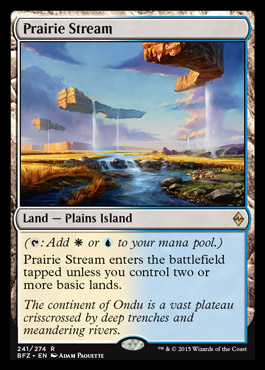
The more interesting subject for savvy MTG financiers is that it is confirmed there will be a new rare land cycle printed in BFZ:

prairiestream

There will be one of these lands for each of the allied color combinations: U/W, U/B, B/R, R/B, and G/W.

These lands are already good. They are essentially duals that enter the battlefield tapped that conditionally enter the battlefield untapped if you control two or more basic lands. It is also extremely relevant that these lands also count as having "land types," which makes them legal targets to be searched for with fetchlands or other land search effects.

So, fetchlands and dual lands legal in Standard at the same time! Yikes...

A lot of the chatter I've heard on social media so far is along the lines of:

"DUALZ AND FETCHZ OMG GUYZ BRING ON THE FIVE COLOR MANA BASEZ LOL!!!"

Yes, you could theoretically build a deck where any fetchland can get you any color of mana but the cost is high. Every land is going to come into play tapped! It is also awkward that the Khans of Tarkir trilands don't play nicely with these new duals.

One key thing to remember is that you need to have two basic lands in play in order to make these duals better than a Coastal Tower. Putting two basic lands into play is actually a very real cost to making these lands amazing.

The soonest these lands can ever enter the battlefield untapped is turn three, and only if you have already played basic lands on turn one and two. I'm not sure this sounds like a crazy five color mana base to me...

One thing that I think is for certain is that fetchlands are going to be the best and most important cards in the format because they are mana fixing that also afford players the best chance of getting two basics in play ASAP.

It is interesting that these duals are much better in allied shards (Bant, Jund, etc.) with access to two cycles of fetches than in enemy wedges (Jeskai, Temur) with only one fetchland.

Honestly, it doesn't matter too much because these lands are basically the only mana fixing in Standard so anybody playing more than one color will be playing with these cards. Basically, think of these lands as the scry lands of new Standard: they fix your mana in Standard but probably won't see any play outside of that.

A Boon to Beatdown

I think these new duals are easily at their best in two-color decks where the upside is high to play every land untapped. In particular, G/W Aggro, R/G Aggro, and B/R aggro decks will get a pretty nice boost with regard to how friendly their mana bases are. We'll have to wait until the full spoiler goes live in order to see which of these decks will actually be good post-rotation.

However, knowing that these lands will be at their best in beatdown decks does give us an opportunity to speculate on some of the premier beatdown cards post-rotation. In particular, I'd bet on the one-drops and the Dragons of Tarkir commands in the beatdown colors:

There was an error retrieving a chart for Bloodsoaked Champion
There was an error retrieving a chart for Kolaghan's Command

Champion could go into a heavy black-based R/B beats deck alongside Kolaghan's Command. Both of these cards are already fantastic. I could see both being bigger players post-rotation. The black-red Command is already a huge Modern card so the risk in picking it up now is pretty low.

There was an error retrieving a chart for Kytheon, Hero of Akros
There was an error retrieving a chart for Dromoka's Command

I really like Kytheon a lot as a spec target. The card has fantastic stats already and will be the heart and soul of any white weenie or green-white deck. Dromoka's Command is already too low in price at the moment. I've been on these as pickups the past few weeks. I'm stocking up for new Standard.

There was an error retrieving a chart for Monastery Swiftspear
There was an error retrieving a chart for Atarka's Command

Swiftspear is already a Legacy card and quite valuable but I could see the card seeing a lot of Standard play post-rotation. The Red deck still looks very strong post-rotation with lots of nice burn spells and powerful creatures sticking around to light the world on fire.

~

I don't know about you guys but I'm ready for October to roll around so that I can get my hands on some of these new cards! There are going to be a lot of things to keep up on between then and now, but if you take each piece of new information as it comes along and use it to make good investing decisions it is pretty easy to stay above the curve. If you play your cards right you should have a desirable surplus of hot ticket cards for trade and/or sale when the BFZ prerelease rolls around.

Fair Thee Well: Modern Archetypes, Part 3

Are you a Quiet Speculation member?

If not, now is a perfect time to join up! Our powerful tools, breaking-news analysis, and exclusive Discord channel will make sure you stay up to date and ahead of the curve.

Since I opened the Nexus discussion on Modern archetypes a couple weeks ago, community members have congregated in the comments section to share their opinions. The biggest argument against the theories I've proposed comes in the form of varying definitions of "fair" and "unfair." Today, I'll address those concerns more closely.

Supreme Verdict art

(This article is the third in a series on Modern archetypes and deck categorization. If you haven't read parts one and two, check them out first!)

[wp_ad_camp_1]

Fair is in the Eye of the Beholder

In my last article, I updated my definition of "unfair." For reference, here's that redraft:

How are Affinity and Infect unfair if they win by attacking opponents with creatures over the course of the game? To address this issue, I’ve added another framework. For me to consider a deck unfair, it must meet one or both of the following criteria:

  • Has a reliable, nontraditional win condition
  • Can go from “zero to hero”

The problem with this definition is the vagueness of "reliable." If a deck mostly attacks with creatures to win, but sometimes wins with a planeswalker, categorizing it as fair or unfair becomes a matter of deciding how often the planeswalker wins occur - or, how heavily the deck relies on them occurring.

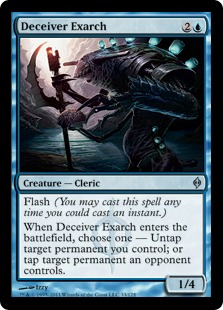
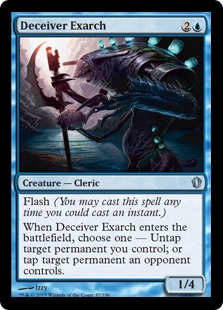
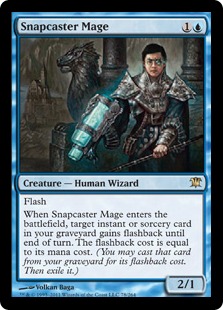
Deceiver ExarchIn Temur Twin, Tarmogoyf and Snapcaster Mage close out many of the games. The deck still differs from Temur Midrange since it has Splinter Twin. Running the combo package gives the deck help against strategies that invalidate the attacking strategy (Soul Sisters, Ensnaring Bridge), but it also buys tempo for the Twin player. Since opponents need to respect the Splinter Twin combo, they leave mana up that normally would have been spent on board presence, making even Deceiver Exarch a lot scarier in the red zone. In a perfect game, Temur Twin doesn't even need to combo off; it wins by Roasting threats, tapping down teams with Cryptic Command, and flipping Huntmaster of the Fells back and forth. Still, we can call Temur Twin's combo win condition reliable because the deck always leans on its existence. Its tempo game would be much worse than that of a Temur Delver deck if it weren't for the constant threat of an instant victory. Last week's system categorizes Temur Twin as an unfair deck, even though it plays lots of games fairly. But as described in part one, Temur Twin and other Aggro-Control-Combo decks usually play either fair or unfair games depending on the matchup, the game state, and their opening hands.

How much does Temur Twin rely on its combo finish? This question sounds a little confusing, because it is. "Reliable" is uncomfortably subjective, so we'll eliminate that qualifier from the definition, leaving us with this:

  • Can go from “zero to hero"

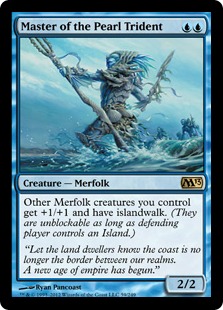
Nobody disagreed with "zero to hero" indicating a deck's unfairness, but some pointed to decks like Merfolk that could set up a big board during a stall and then topdeck a Lord of Atlantis to swing in for an unblockable 20 points of damage. I still wouldn't call Merfolk a "zero to hero" deck; after a thousand games, the ones in which damage piles up over the course of multiple attacks should greatly outnumber those where it all happens in one turn.

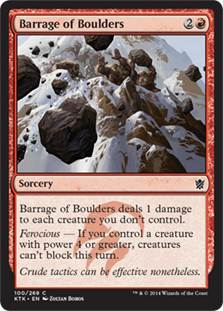
Barrage of BouldersWe can also apply the Merfolk example to other quintessentially fair decks. Consider a (very bad) Jund deck with Barrage of Boulders. It gets paired with an Abzan deck, and the two pile up Tarmogoyfs and Tasigurs and Siege Rhinos and Scavenging Oozes without ever attacking each other. If Jund draws Barrage of Boulders and crashes in for 20 damage, it didn't win in an "unfair way." By extension, the Jund deck doesn't become "unfair" when it starts running Barrage of Boulders. Granted, Merfolk achieves the "Barrage effect" pretty consistently with all those Spreading Seas, but the consistency of that kind of effect isn't what makes it unfair. It's still rare that the deck brings unharmed opponents to zero life in one turn.

We're again caught up in the world of "reliable" here; if the deck goes zero to hero sometimes, where's the cutoff? I'm okay with this small hole in the theory. No theory is ever perfect, and I think it's pretty intuitive to look at Merfolk and Ad Nauseam and decide which of the two is unfair.

Out of Control!

Another concern with my definition of unfair was that it included Control decks. According to my definition, a "nontraditional" win condition was one that didn't involve or rely on creature combat. Since Jeskai Control often wins with reach (defined here as "noncombat damage") or planeswalkers, I figured it embodied the unfair spirit.

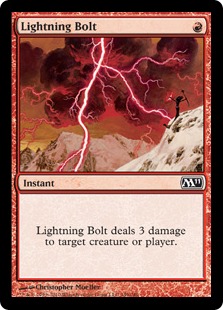
But I may have been quick to omit reach from "traditional." Tempo decks like Zoo and Delver play Lightning Bolt, and to an extent, "rely" on having that reach in-deck for the late-game. Jund, too, likes its Bolts to become kill spells for opponents once it has dealt with the board. I would never consider these decks unfair, so I'll consider reach traditional going forward.

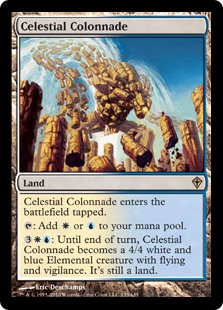
Celestial ColonnadeAs for Jeskai Control, it's hard to call such an interactive deck unfair, especially when it plays out so similarly to other Midrange decks. The difference between Control and Midrange is that Control plans to disrupts opponents a prolonged amount of time before getting aggressive. While Midrange decks might wall Aggro decks with Tarmogoyf, Control decks prefer to one-for-one creatures with burn spells or wipe the board with Supreme Verdict. The Midrange deck can start attacking whenever it sees fit, as it already has Tarmogoyf on board. Jeskai might have a Celestial Colonnade on board, but animating the land not only takes longer, it requires a huge mana investment. Turning on Colonnade opens Jeskai Control players up to anything opponents have in store for them next turn. In practical terms, this means that Jeskai needs to wait until opponents are totally out of options, or until it reaches something like 10 mana, before attacking with the Colonnade safely.

Still, the two play out similarly enough to blur the line between them. The difference is one of time: how long does the deck wait before it starts pursuing a victory directly? Since it's impossible to draw a clear line that isn't entirely arbitrary (i.e. "eight turns!"), I've finally given in and consider these decks fair.

Weissman vs. Prison

Up until now, we've only discussed Control decks of the Weissman variety. Michael Flores' "Finding the Tinker Deck," a 2003 article on historical archetypes that's as fun to read as it is tremendously dated, describes these decks as such:

"The Weissman deck (affectionately called The Deck) concentrated solely on defense; while most other players divided their resources between both offense and defense, this philosophy chose to concentrate almost exclusively on one side of the game only... effectively doubling their prowess in that regard."

Jeskai Control, with its range of answers and go-long plan, clearly falls into the Weissman Control archetype. The deck's interactive nature pushes it into fair territory. But some Control decks resist the fair label more than others. Here's Flores on the Prison archetype:

"Originally the Armageddon-packing Icy Manipulator + Icy Manipulator + Winter Orb lock foil of 1996, the Prison has grown into the archetype that epitomizes board control over true control. The Prison hates creature decks and tends to play way after way to answer attack-based threats. At the same time, it tends to be completely unable to defeat well-prepared Weissman-flavored control decks because so very many card slots are devoted to creature sanction. [...] In their focus on board control, from Chris Cade's original design forward, the Prison archetype has often boasted heavy mana control elements as well as creature defense."

I've left out Prison Control because it doesn't see much play in Modern. The closest we have are certain UBx Tezzeret, Agent of Bolas variants, WR Lockdown, and Lantern Control. These decks want to slam an early lock piece, like Chalice of the Void, Blood Moon, or Ensnaring Bridge, with the help of accelerants such as Mox Opal and Simian Spirit Guide. Many turns later, or less if they draw one sooner, these decks resolve a win condition and go to town on their devastated opponents.

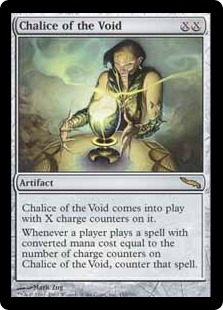
Chalice of the VoidPrison has limited Modern exposure for a few reasons. For one, Modern-legal lock pieces don't always do much to tie up a game. Chalice on one crushes certain decks, like Infect and Delver, but fails to make a serious impact against any kind of Midrange strategy. Trinisphere suffers the same problem, but it also lets opponents draw out of the lock given enough turns. Blood Moon might hose Amulet Bloom and greedier opponents, but it's best used as a tempo tool in a format full of wary players fetching their basics. Modern opponents will eventually draw their basics, or their mana dorks, or their bounce spell, so Blood Moon doesn't usually end the game on its own; it requires pilots to back up its effect with pressure to end the game before opponents find an answer. In Legacy, where most spells cost a single mana and players stuff their manabases full of nonbasic lands, these lock pieces are far more effective.

Secondly, accelerants like Chrome Mox and City of Traitors ensure the locks resolve early enough to do their work. Without relevant lock pieces like Tangle Wire and Winter Orb, or the bursts of speed afforded by Ancient Tomb and company, Modern Prison decks lack the tools to see widespread play. But however underrepresented, the archetype still exists, and I'd classify it as a proactive, linear, unfair breed of Control (compared with Weissman, a reactive, interactive, fair breed).

The format's highest-profile Prison deck is Lantern Control. Quickly looking over a sample list  reveals both the deck's hardcore Control tendencies and its dissimilarity to any Weissman-style list. It hardly shares any cards with Modern's Snapcaster Mage-powered Control strategies, and though its gameplan is the same, its playstyle couldn't be any more unrelated. Like Weissman decks, Lantern Control wants to lock opponents out of a game and eventually kill them. It secures victories by milling opponents out while denying their relevant draws, and like most linear, unfair decks, folds to certain hate cards.

Even though Modern isn't home to many Prison strategies, I still think it's risky to call Control decks as a whole "fair," since some of them aren't.

Fairing it Out

As always, when we talk theory, it's important to reflect on our motivations. Since Tempo decks beat up on Control, I figured Control must be unfair - after all, my gorgeous diagram from last week explains that Tempo decks beat unfair decks, and Midrange decks take care of fair ones. Such an elegant model! In practice, though, it doesn't really work to attribute an unfair label to Control, or at least not to interactive subsections like Weissman.

I speak for myself and for many Magic personalities I've read over the last few years when I say ego sometimes plays a dangerous part in theory writing. My thanks goes out to this community in particular for helping me refine my outlook on the format. Hopefully, the discoveries we've made together will help others seeking guidance when navigating the vast world of deck archetypes.

Jordan Boisvert

Jordan is Assistant Director of Content at Quiet Speculation and a longtime contributor to Modern Nexus. Best known for his innovations in Temur Delver and Colorless Eldrazi, Jordan favors highly reversible aggro-control decks and is always striving to embrace his biases when playing or brewing.

View More By Jordan Boisvert

Posted in Modern, Opinion, StrategyTagged , , 19 Comments on Fair Thee Well: Modern Archetypes, Part 3

Have you joined the Quiet Speculation Discord?

If you haven't, you're leaving value on the table! Join our community of experts, enthusiasts, entertainers, and educators and enjoy exclusive podcasts, questions asked and answered, trades, sales, and everything else Discord has to offer.

Want to create content with Quiet Speculation?

All you need to succeed is a passion for Magic: The Gathering, and the ability to write coherently. Share your knowledge of MTG and how you leverage it to win games, get value from your cards – or even turn a profit.

Foil Hangarback and Jace Buyout

Are you a Quiet Speculation member?

If not, now is a perfect time to join up! Our powerful tools, breaking-news analysis, and exclusive Discord channel will make sure you stay up to date and ahead of the curve.

This is a weird one. This week, all foil copies of Hangarback Walker and Jace, Vryn's Prodigy were bought out from TCGPlayer. These cards were already on the expensive side, and Origins is still the current draft set. While that won't be true for long, this buyout is still peculiar.

There was an error retrieving a chart for Jace, Vryn's Prodigy
There was an error retrieving a chart for Hangarback Walker

Both cards have been showing promise in non-Standard formats, which is likely the motivation for our buyer. At any rate, I would expect to see more foil copies entering the market soon, at which point we'll find out how committed our buyer is to artificially inflating the price of these cards. It's a very curious move to target an in-print, recently-printed even, foil. The motivation is, again, clearly tied to other formats, but that's not where most of the demand for these cards comes from. If I had foils, I'd see if I couldn't sell them. Odds are they'll be coming down soon enough.

Insider: Using MTGO to Predict Paper Price Movements

Are you a Quiet Speculation member?

If not, now is a perfect time to join up! Our powerful tools, breaking-news analysis, and exclusive Discord channel will make sure you stay up to date and ahead of the curve.

Modern offers great opportunity for speculation. The vast cardpool offers a cornucopia of options to choose from, and history shows that cards have the potential for extreme price spikes and enormous gains. The sheer size and depth of the format and the market, however, leads to information overload, and selecting specs can feel like throwing darts at a wall.

I like to look towards the Magic Online Modern market to gain insight on what might occur in the paper Modern market. Magic Online players are quick to identify trends and assimilate new information, so if anything is happening in the Modern world, it’s sure to make a blip on the MTGO Modern radar.

I look for cards with prices on the rise, especially cards that have spiked sharply in price over a short time frame. Some price spikes happen online before in paper, and this early warning signal could allow for acquiring paper copies before a spike takes hold. I also like to look for cards that have steadily gained over a longer period of time. If a card has been rising online, but has been holding steady in paper, perhaps a price increase is overdo.

The price movement of a card does not exist in a vacuum. I compare price changes to those of other cards. If I can draw correlations between the movements of various cards, I can identify trends. It’s also important not to make decisions on price information alone. When I take notice of a card, I’ll investigate further into why it may have increased in price, by studying the metagame, tournament results, Magic articles, and even social media.

It’s important to realize that a card rising in online price doesn’t necessarily precede a rise in paper price, and in some cases it could be the opposite, with a lagged MTGO card catching up to a paper spike.

Today, I’ll discuss recent Magic Online Modern price trends that might tip off paper growth for specific cards in the near-future.

Azorius Rising

U/W Control has been on the rise as a competitive Modern archetype. It boasts a strong matchup against grindy midrange decks like Grixis, Abzan, and Jund, an extensive removal suite to combat aggressive decks, and a powerful sideboard with some of the best hate cards in the format.

Some U/W Control staples have seen impressive growth in the past week:

There was an error retrieving a chart for Supreme Verdict

The MTGO price of Supreme Verdict has nearly quadrupled in the past two weeks, but the paper price has remained steady.

There was an error retrieving a chart for Stony Silence

The price of Stony Silence spiked two weeks ago, and has continued to slowly grow higher since. The paper price has remained steady all summer long.

Among the U/W Control staples are a few creatures which are seeing extra upward price pressure from the recent success of a new Modern archetype, U/W Blink:

There was an error retrieving a chart for Wall of Omens

The price of Wall of Omens has increased ten-fold in the past two weeks, but the paper price has been steady for months.

There was an error retrieving a chart for Sun Titan

The price of Sun Titan has doubled in the past two weeks, but the paper price has steadily fallen for years; there are many copies in print, but it’s likely due for a bump.

An integral part of the U/W Blink strategy is Emeria, the Sky Ruin.

There was an error retrieving a chart for Emeria, the Sky Ruin

The online price has increased more than fourfold in the past two weeks. The paper price had been on slow and steady decline, but in the last month steadied out, and now show signs of growth. If the U/W Blink deck takes off, then so will its price. With Battle for Zendikar bringing landfall back into the equation, there is additional potential upside.

Merfolk in the Major Leagues

Merfolk had been a fringe player for the entirety of its lifespan in the format, but in the last couple of months has proven itself as a real contender and potential tier-one archetype. Its staples have been big winners on MTGO in the past week.

There was an error retrieving a chart for Mutavault

Mutavault is a must for Merfolk, and the card has seen around 50% growth in the past two weeks. The paper price saw a 50% increase in price at the beginning of summer, so perhaps MTGO is simply catching up, but the MTGO price under 7 tix still seems like a bargain compared to the paper price of $15 and the all-time MTGO high of over 30 tix.

There was an error retrieving a chart for Cursecatcher

Cursecatcher has tripled in price in the past two weeks. The paper price spiked by 33% in June, and has slowly grown since. I expect the price of both to slowly grow indefinitely, barring a reprint.

There was an error retrieving a chart for Kira, Great Glass-Spinner

Kira, Great Glass-Spinner bottomed out below 1 tix before nearly doubling, but the MMA printing is still half the price of its all-time high over 3 tix. The paper price has slowly gained since it was printed, and at $10 I expect it will gradually move towards the $20 pricetag the BOK version commanded before reprints.

Modern Masters Staples

Some of the nuts-and-bolts Modern staples that hold the format together have seen impressive gains as of late, and I noticed that cards from Modern Masters 2015 and even the original Modern Masters are on the rise:

There was an error retrieving a chart for Dismember

Dismember is highly splashable and thus played in a wide variety of archetypes. The online price grew by over in the past week, but the paper price has been stagnant at $1 for months. The paper price of the NPH version was once $1.50, and I expect to see similar 50% paper growth to that price in the coming months.

There was an error retrieving a chart for Spell Snare

The price of Spell Snare nearly doubled in the past two weeks, but the paper price has been stable for two months. The card will continue to grow upwards until another reprint.

There was an error retrieving a chart for Remand

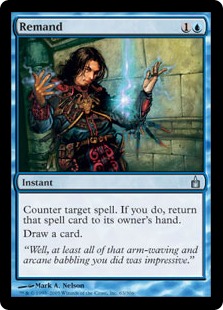
MTGO MMA2015 Remand has nearly doubled in price in the past week, but the paper price has been in slow and steady decline all summer. It’s overdue for upward movement.

Takeaways

No card is an island, meaning no card exists by itself in a vacuum. Card price movements have to be taken in context, and my analysis this week reveals that cards often move together in groups.

It’s interesting that cards may share similarities but not necessarily move in price at the same time, so if you can identify a trend among a group of cards, it’s possible to get ahead of the market before a card rises. For example, Darkslick Shores gained 47% on Monday, which is unsurprising given the rise of Razorverge Thicket and Blackcleave Cliffs that began over a week earlier.

-Adam

Insider: Rotate Now, Not in October

Are you a Quiet Speculation member?

If not, now is a perfect time to join up! Our powerful tools, breaking-news analysis, and exclusive Discord channel will make sure you stay up to date and ahead of the curve.

Hello readers!

In previous articles here at QS I said I would eventually touch on October rotation, and I've also mentioned a few “Quick Hits” as something to document and watch as we continued into the summer. Well, the summer came and went and here we are very close to September, which will bring the “summer lull” to a grinding halt. We’re in for an extremely wild ride in the coming year.

Instead of purchasing cards when everyone else is, you should be constructing (or have completed by now) your October rotation portfolio. Many of these cards have hit all-time lows and have already begun a slight increase in price. I will also be sharing with all you Insiders my relatively small but efficient group of cards I have stashed for rotation.

Fate Reforged
Fate Reforged prices

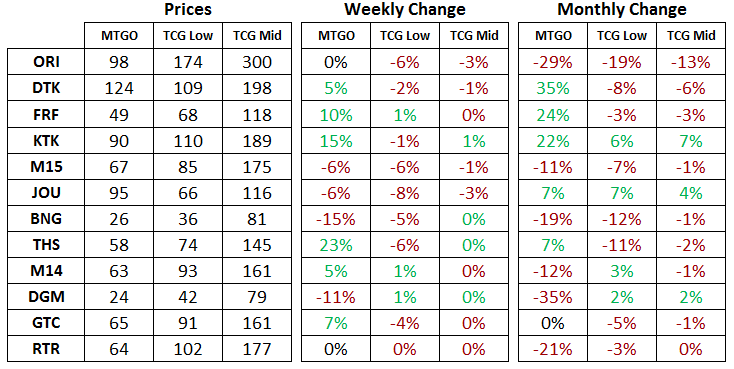
I have said over various media that I greatly prioritized Dragons of Tarkir and Fate Reforged cards over Khans of Tarkir. Fate Reforged especially. If we pull up each set's overall value, you can see that Fate Reforged is drastically lower than the other two. It was kind of alarming to see how this set, loaded with Constructed playables, falls behind a set like Khans of Tarkir. It’s understandable that Khans fetches have attributed much to the set maintaining such a lucrative overall value, but it was vastly more opened than the other sets in the block.

I’m not saying there’s no chance some of the Khans cards seeing play currently won’t be good post-rotation. I’m actually convinced most of them will be, I just question that any of them will see more modest gains than any of the fetchlands currently. With the current increasing percentage gains on fetchlands I just fear that once they increase to a certain point, we will see sealed product become such a value play that a mass exodus will go to crack them once again.

In addition, Khans rotates a little earlier, which leads me to believe that there will only be a small window for any of the Khans cards to increase at all. Given the increased supply.

If you’re that confident in Khans of Tarkir and the cards being played currently or post-rotation, there is a lucrative card that most likely has been on fellow financiers' radar for quite some time. Trust me when I say that it really took a lot for me to look at this specific card in particular and I only based the purchase off the fact that it does see some fringe Modern play. I will be highlighting this later in the article.

Without further adieu:

The October Portfolio

12x Narset Transcendent @ $6.79 ($81.48)
12x Sorin, Solemn Visitor @ $6.56 ($78.72)
20x Soulfire Grand Master @ $7.00 ($140)
16x Whisperwood Elemental @ $4.50 ($72)
16x Warden of the First Tree @ $2.00 ($32)

Late round fliers (sorry, Fantasy Football is on my mind!):

20x Ojutai's Command @ $.85c ($17)
30x Silumgar's Command @ $.24c ($7.2)
30x Citadel Siege @ $.25c ($7.50)
32x Frontier Siege @ $.30c ($9.60)
40x Outpost Siege @ $.48c ($19.20)

(Blue fetchlands via RL trade and Pucatrade: not purchased with cash - 16x Flooded Strand, 12x Polluted Delta)

Total spending: $484.70

Phew, well there you all have it. Most of these cards are fairly obvious, and they were quite honestly staring us in the face for quite some time. The best thing about Trader Tools is you can click on “Editions” and literally monitor the spread of notable cards above 1$ quickly and efficiently. Which truthfully brought me to many of these purchases (other than the “late round” stuff).

There was an error retrieving a chart for Narset Transcendent

I couldn’t help myself. The SCG Summer Sale had these below buylist and it really enticed me to grab a few playsets. It could end up an idiotic move, but I’m confident in any blue planeswalker that’s halfway decent. This card is far from bad, and I draw a parallel to a similar planeswalker in the previous block, Kiora, the Crashing Wave, which saw a modest increase after hitting its floor.

I think Narset could start climbing back from a paltry $6.50. Remember the price memory is huge on this card, and most of the set has declined since we saw Dragonlord Ojutai soak up a ton of the value.

There was an error retrieving a chart for Kiora, the Crashing Wave

I have to say from evaluating the two cards, I actually think Narset is a fair bit better comparatively. It’s in a better color combination for one, and only really needs a few really good spells to warrant its inclusion into decklists. If nothing else, like I said--I got them under buylist, and that makes the losses a little more bearable should it not pan out as I hope. It has been used in a Constructed setting briefly; hopefully that will repeat in October.

There was an error retrieving a chart for Soulfire Grand Master

I honestly can’t stop talking about Fate Reforged, and more notably Soulfire Grand Master. I think Doug and Kelly might get tired of it at one point when I rave about this set (and card) on the podcast. I've been consistent letting people know I’ve acquired this card when asked on various social media.

I mean, do you see that spread? Fate Reforged in general has been sporting a ton of good stuff at a lucrative spread for a while now. Coupled with a drastically low overall set price, I think I’m happy putting much more of my rotation investment in the two later sets than Khans.

If you have noticed the recent tournaments and MTGO dailies, Soulfire Grand Master has slowly worked itself into the Jeskai list as a four-of a while ago. I’ve monitored this card like a hawk, and until very recently Card Kingdom had a buylist increase which had this at 1% spread. It’s a little more modest now, but the spread is narrowing quickly again.

Untitled Deck

Creatures

3 Goblin Rabblemaster
4 Jace, Vryn's Prodigy
4 Mantis Rider
4 Soulfire Grand Master
2 Stormbreath Dragon

Spells

2 Roast
2 Dig Through Time
3 Lightning Strike
3 Magma Spray
3 Ojutai's Command
2 Stoke the Flames
3 Valorous Stance

Lands

3 Battlefield Forge
4 Flooded Strand
2 Island
1 Mountain
4 Mystic Monastery
2 Plains
3 Shivan Reef
3 Temple of Epiphany
3 Temple of Triumph

Sideboard

1 Stormbreath Dragon
2 Anger of the Gods
2 Arashin Cleric
3 Disdainful Stroke
2 Elspeth, Sun's Champion
1 Glare of Heresy
2 Negate
2 Tragic Arrogance

We’ve seen the decklist change since Kevin Jones won that Star City Games open when Khans came out, and when you look at a lot of the core cards the decklist remains largely unchanged going forward. If you re-configure the mana base and add a few new spells it seems like a safe and viable option once the metagame initially changes with Battle for Zendikar.

We also have to remember MM2015 wedged itself after Fate Reforged and Dragons of Tarkir, with Magic Origins soon thereafter. There’s just so many things going right for both of these sets. To top it off Dragons of Tarkir rotates after Khans. So I’m going to keep harping on the fact that given similar spreads I would still favor the two later sets as there just was less overall opened and there weren’t fetchlands soaking up all the value and leading the sets to be opened for them specifically.

There was an error retrieving a chart for Sorin, Solemn Visitor

Given my preference for FRF and DTK, you're probably wondering why I have Sorin, Solemn Visitor in my October Rotation list. Well, the answer is simply I made an exception for this one card. Solely because we’re looking at a fairly dominant planeswalker, since we’ve seen the success of this card in Standard. It also has forced its way into some fringe play in Modern.

These factors alone really should be jumping out at everyone else as well. I know many of you out there, as well as other writers, are generating quite the buzz and attention towards Sarkhan, the Dragonspeaker. While I don’t necessarily think the card is without merit, I just can’t bring myself to go with the herd on this one. I just think Sorin is much more lucrative and viable in more categories than Sarkhan.

I understand both of these cards have an attractive spread and quite the large price memory. I just think the future of both these cards has to come into question. Fellow QS writers have done a great job in rotation articles, and Sarkhan replaces a card like Stormbreath Dragon. The question is, “Does that even matter?” I just tend to lean to the card that is going to be paired with highly viable cards going forward.

Notably Hangarback Walker, which seems like an insane amount of value. We’ve already had coverage by Ryan Overturf about Hangarback Walker being included into Abzan, and when you put these two cards together it gets me a tad bit more excited than guessing the future of Sarkhan, the Dragonspeaker. The powerful and potent synergy is already right there in front of our eyes. So, I think that’s where I’m going to be investing... (Wait, I already did that.)

Late Round Fliers

I understand many of you may question the “late round fliers” but the more I had them sitting around the more I ultimately didn’t think they were a huge waste given the cost.

There was an error retrieving a chart for Silumgar's Command

The most questionable one might be Silumgar's Command but, with Hero's Downfall rotating I figured this could be a viable card to deal with planeswalkers in blue-black. Obviously a printing of a more viable card in either of those colors removing planeswalkers obliterates any potential gains on it; I was willing to take the risk on that one particular card.

In any event, I’m really only out .15c each card which is why I was more inclined to take the chance. Hopefully with a metashift into ramping into Eldrazi, each mode of this becomes better. You could even have the luxury of killing a planeswalker and countering a key spell that would have ramped into potentially more dangerous cards.

Of the other small penny stocks card I felt Citadel Siege was a great one to hold. There has been plenty of hype around Hardened Scales and this could be a part of that strategy. We saw the deck tech highlighted here on the website, and it looked like a “+1/+1 counter” themed event deck. What’s better is most of the decklist sticks around, and it can become quite scary with cards like Hangarback Walker and Managorger Hydra becoming very big, very quickly.

Frontier Siege and Outpost Siege I just felt were a great purchase at these prices. I understand Outpost Siege was inserted into a supplemental product, but for such a powerful effect it feels like this was its floor. I mentioned this purchase on the Starcity Games Summer Sale thread, and other QS Insiders seemed to agree. Which I figured, because you’re smart people and know that these have actually seen the light of day in a Constructed environment.

Final Considerations

I’m excited to say the least for the coming rotation in October. I love this time of year, and I think Battle for Zendikar and Khans of Tarkir blocks will be an exciting time in Standard. I’m happy to divulge the cards I’m personally investing in for the Insiders and hopefully it opens some opportunities to shore up last minute purchasing for the coming months. I try to sit down and monitor spreads very closely, and really take the time to put together an effective amount of cards in my inventory.

I’m happy with the amount of money I spent on these particular cards--I wouldn't have wanted to go above $500. The goal was to keep it relatively small while spreading out the investment enough to minimize losses. You'll also notice I kept a majority of the expenditure in proven cards that are played as multiples in the viable archetypes of Abzan and Jeskai--two of the clan colors I think will flourish the most.

Of course when it came to the “penny stocks” I couldn't resist grabbing potentially powerful cards when they’re basically thrown at me. With a floor of .10c it’s hard not to stash some of these away.

Overall I’m happy to have put this together ahead of time instead of rushing when everyone else plans to buy into these cards. I’m sticking to these and will prosper or go down with the ship. Either way, when you target mythic staples in underopened sets with a low spread, I think you’re always going to end up hitting your mark.

~

One last card before I go. I know I've been avoiding KTK like the plague--but this card looks too good to pass up. I'll reserve judgment and open the floor to you all:

There was an error retrieving a chart for Mantis Rider

I’m eager to hear what you all think. On a scale of 1-10 how would you grade this portfolio? How would you grade your own? What are your rotation portfolio’s looking like? Why did you settle on them?

Looking forward to discussing anything in the comments or via social media as well.

Until next time!

- Chaz

Insider: Origins and Dragons

Are you a Quiet Speculation member?

If not, now is a perfect time to join up! Our powerful tools, breaking-news analysis, and exclusive Discord channel will make sure you stay up to date and ahead of the curve.

As I'm sure we're all aware of by now, the new Standard rotation will force us to rethink the way we invest in new sets. An interesting element of this rotation is that Dragons of Tarkir will be in Standard longer than Khans and Fate Reforged, with Magic Origins being considered the other set in Dragons' "block." Battle for Zendikar will rotate Theros out of Standard, but Dragons and Origins will survive three more set releases.

The cards in these sets will be given many opportunities to prove themselves, and now is a great time to move in. I have identified the following cards as great, undervalued positions.

There was an error retrieving a chart for Anafenza, Kin-Tree Spirit

Anafenza is a card that immediately started showing up in Modern Melira combo decks and has a lot of potential in Standard. Unless she's answered immediately, Anafenza will usually have generated three power for you on turn three, which is a great rate for only committing you to one color.

Anafenza also plays great with Hangarback Walker--a card that will surely be heavily played for as long as it's in Standard. While she won't trigger off the tokens, she will bolster when you cast the Walker itself in addition to having the option to bolster it further if both creatures survive.

Anafenza is less than a buck right now, which is certainly too low. Being in the "Armed and Dangerous" pre-con hurts her for sure, but she has longevity.

There was an error retrieving a chart for Avatar of the Resolute

This is a pretty great penny stock. This card has quite a lot of MTGO Daily 4-0s under its belt, and is a powerful element of the green-white Hardened Scales deck that Yuuya Watanabe designed for PT Origins. Once again, this card plays ball with Hangarback Walker, which is a huge boon. This is another card from the "Armed and Dangerous" deck, but I'd still anticipate it hitting $3-4 while it's Standard-legal.

There was an error retrieving a chart for Demonic Pact

I've written on this card before, and a reader challenged me in the comments section last time, so allow me to expound. If you remove the text of losing the game from this card, getting to do all of the other three things is an extremely good rate for four mana. If you disagree with this premise, then I'm not really sure what game you're playing. Yes, it is slow, but gaining four life will generally properly compensate for this slowness.

Once we agree that this is powerful though, we have to find a way to remove the "lose the game" text. We currently have Dromoka's Command, Sultai Charm, and Ugin, the Spirit Dragon as premium ways to accomplish this, but more importantly there are a wide range of potential cards that could be printed to make this card great.

The text "sacrifice a permanent," some creative deck-building with Tragic Arrogance, or even a deck simply capable of killing the opponent before it has to choose the fourth option, are all potential options for breaking Pact.

We've also seen decks with Woodland Bellower and Invasive Species to both gain more value and not lose to Pact. While we're losing Species and Reclamation Sage, it's not hard to imagine another maindeckable one- to three-drop coming along that helps us answer our own Pact.

I will say again that Pact will likely drop a dollar or two more in price before it takes off, but more importantly I stand by my position that this card will see relevant Standard play. It also has the makings of a very popular casual card for a long-term hold.

There was an error retrieving a chart for Despoiler of Souls

Standard is very powerful right now, so it's not surprising to see a card with a drawback sitting on the sidelines. That said, if you want a tool for a hyper-aggressive deck with resilience against controlling opponents, this is kind of a slam-dunk.

Notably, Anafenza, the Foremost and Hangarback Walker pose substantial obstacles to this card's success. For this reason, I'm somewhat skeptical of this card, but it's basically bulk and has a lot of potential.

There was an error retrieving a chart for Dragonlord Ojutai

Remember when this was a $30 card? Ojutai is quite possibly at the lowest point that it will ever be during its time in Standard. A couple copies have dropped below $10 on TCGplayer over the last two weeks, but these copies have disappeared quickly. This card is still extremely powerful, and when we see the format shrink with rotation it won't be surprising to see a card of this caliber bring a control deck to the forefront of Standard.

There was an error retrieving a chart for Shaman of Forgotten Ways

Whether we get a Constructed-playable eldrazi or not (we probably will), we still have Whisperwood Elemental and Dragonlord Atarka. It's hard to imagine this and Rattleclaw Mystic not teaming up in a powerful Standard deck post-rotation. At $2, this is a stellar pickup right now. Something has to take Courser and Caryatid's place, and the upside on this card is massive.

There was an error retrieving a chart for Stratus Dancer

This card is one of those obviously powerful cards that is seeing a low amount of play in a very powerful Standard. As cards rotate and Standard gets smaller, expect Stratus Dancer to see more play and increase in value.

Den Protector was clearly the best card in the cycle, but don't discount the Dancer. It's a good rate just as a two-drop and the morph ability gives you a 3/2 flier that's a two-for-one. If you think Mantis Rider will see play post-rotation, expect it to be alongside this card.

There was an error retrieving a chart for Surrak, the Hunt Caller

This is another pre-con card, but again, the power here is too high for a fifty cent rare. Siege Rhino certainly occupies the same space as Surrak, but not only will Siege Rhino rotate while Surrak is still in Standard, but it's also just possible that we get tools for an aggressive green-red deck or some other flavor of aggression that can't support Rhinos.

~

There's still a good window to invest in Khans and Fate Reforged positions, but these Dragons and Origins cards are worth highlighting for their longevity. I feel very strongly that Abzan positions and Dragonlord Ojutai will do very well when Theros rotates, though we are also likely in the window of the floor for all the cards discussed in this article.

As we see more of Battle for Zendikar it will become clear which of these specs will hit sooner rather than later, but for now I like them all as medium-term specs.

Thanks for reading.

-Ryan Overturf
@RyanOverdrive on Twitter

Analyzing My Game: Day 2 at SCG Charlotte with Grixis Control

Are you a Quiet Speculation member?

If not, now is a perfect time to join up! Our powerful tools, breaking-news analysis, and exclusive Discord channel will make sure you stay up to date and ahead of the curve.

Going into Day 2 of Grand Prix Charlotte, I was 7-1-1, playing at the top of my game and in a solid position for a high finish. Five rounds later, I was checking the drop box after going 1-4 and wondering where it all went wrong. SCG Charlotte was in many ways a challenge of redemption for me; while I had been working on Grixis Control for a while, had written multiple articles and shared numerous opinions and advice both on my Twitch stream and on this very site, I really had nothing to prove to anyone but myself.

Leyline of the Void Art

At my best, I’m confident, playing tight, crafting the game to a point in the future of my own divine choosing. I’ve qualified for a Pro Tour, decimated an rPTQ field with probably the best deck I’ve ever constructed, and played the pants off of opponents while doves rained from the heavens. At my worst, I’ve punted away innumerable matches, I’ve doubted my abilities and my successes, and wondered if I should even continue devoting time, money, and energy to this incredible but demanding game. To most people, SCG Charlotte was just a tournament, but to me, it was an opportunity for validation. This is my tournament report.

[wp_ad_camp_1]

Preparation

Leading up to the event, I expected a relatively diverse field with no clear direction. Grand Prix Charlotte and the Modern Festival series results were relatively dated, and I expected many players to just play their favorite deck. My own preparation for the event consisted primarily of streaming and tuning my pet deck, Grixis Control, while keeping an eye out for trends and new tech from MTGO Daily results. While there was some interesting developments (primarily Wild Nacatl in Burn lists) it’s telling that most event results from days before SCG Charlotte looked relatively the same compared to results from Grand Prix Charlotte a few months ago. If I had to pick a Public Enemy #1, it would probably be Grixis Control, as the deck had received a lot of attention from major writers and I had seen it a bunch both online and at some local events. Maybe this should have scared me off the deck, but I knew that Grixis had the chops to compete in a relatively hateful field, and I planned on doing some things that people wouldn’t necessarily be prepared for.

"Grixis Control, Trevor Holmes - SCG Charlotte 2015"

Creatures

2 Gurmag Angler
2 Tasigur, the Golden Fang
4 Snapcaster Mage
2 Jace, Vryn's Prodigy

Instants

3 Kolaghan's Command
4 Thought Scour
1 Remand
4 Terminate
2 Cryptic Command
2 Spell Snare
2 Mana Leak
1 Deprive
4 Lightning Bolt
1 Electrolyze

Sorceries

4 Serum Visions

Lands

2 Creeping Tar Pit
3 Scalding Tarn
2 Steam Vents
2 Watery Grave
1 Bloodstained Mire
4 Polluted Delta
3 Island
1 Mountain
1 Swamp
1 Island
1 Sulfur Falls
1 Ghost Quarter

Sideboard

3 Dispel
1 Izzet Staticaster
1 Bitterblossom
1 Damnation
1 Vandalblast
4 Fulminator Mage
1 Anger of the Gods
1 Leyline of the Void
1 Duress
1 Engineered Explosives

These “things” were, of course, Jace, Vryn's Prodigy in the main and some sideboard trumps in the form of Bitterblossomand Leyline of the Void. Minor changes, for sure, but I knew my deck was solid and lean and I had built up a lot of value in just grinding out matches and knowing my role in every matchup. Grixis Control is one of those decks that one player can pilot to an X-2 finish while another player with a different playstyle might go 0-2 with the same list. Knowing when to turn the corner, when to aggressively cast Lightning Bolt to drop Snapcaster Mage quickly for value, when to fight over protecting Gurmag Angler/letting it die are all complex interactions that aren’t immediately clear to new players picking up the deck.

Michael Majors debuted an interesting take on Grixis Control that dropped most of the counterspells, upped the land count, and played a full four copies of Jace, Vryn's Prodigy and two Liliana of the Veils. While interesting, I wasn’t swayed to play that version, as it’s basically built like Jund, but with Jace instead of Tarmogoyf, and Serum Visions instead of discard spells (more on this later).

Day 1

Day 1 of SCG Charlotte played out very similarly to Day 1 of GP Charlotte. Every round I faced a deck whose matchup I would describe as somewhere between “even” and “poor”, but tight play and the strength of my strategy tipped the match in my favor. I rattled off a quick 3-0, beating Burn, Affinity, and Elves, before dropping two matches against UR Twin and Affinity to put me at 3-2. For the wins, there’s not much I can say other than my deck performed and executed its gameplan well; Dispels did work against Burn, Anglers gave me a solid clock to race Affinity, and Jace decimated Elves board over and over until they scooped. My Affinity loss to Phillip Lorren (a very strong Atlanta player) was unfortunate, as I failed to find my third land game one, or my fourth land in game two with Damnation in hand. I’m ok with losing one match a day to bad luck, as I’d be ecstatic to go into Day 2 X-1 with perfect play.
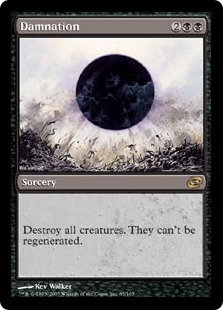
DamnationThe UR Twin matchup, on the other hand, was winnable, but I threw it away. Delving a Gurmag Angler in game two, I tapped an extra mana to leave a spell in my graveyard for Snapcaster Mage with my opponent on six lands and two cards in hand, letting him Deceiver Exarch, tapping down one of my two mana sources and letting him untap and cast Splinter Twin while I had a Mana Leak in hand. If he hit his seventh land drop the game wouldn’t have even been close, but I definitely gave my opponent the opportunity to win immediately by playing loose for no reason. Game three was unfortunate, as I died to Blood Moon and Keranos, God of Storms (which I continue to argue are bad against me), slammed on turn three and five into open mana when I had neither counterspells nor fetchlands to fetch basics. Shrug. My own fault for allowing a third game to happen in the first place, I guess.

While 6-3 could Day 2, I had something to prove, and won my next four matches against Scapeshift, Elves, Jeskai Control, and Temur Twin to advance to Day 2 with a record of 7-2. My draws weren’t insane, and my opponents played well, but my deck did its thing. Grixis Control rewards planning ahead and playing towards a line more than any other deck I’ve played recently, and I love the cohesiveness that comes from dropping a quick Snapcaster to get some hits in, only to return it with a Kolaghan's Command after baiting removal to gain more value later and cobble together scraps of damage to turn Gurmag Angler into a blistering two turn clock. Decision trees with Grixis Control can be long and complex, and seeing a line through to the end is both very satisfying and skill intensive.

Day 2

After starting Day 1 3-0, I quipped to a passing Ken Crocker that we should make a deal: “I keep winning, and he gives me a feature match.” He replied with “I’ll make you a deal. IF you keep winning, EVENTUALLY you will get a feature match!” 7-2 seemed to be good enough, as I got a small table feature match to start Day 2 against U/W Control. Thanks Ken!

His deck was interesting, eschewing the Sun Titan/Pilgrim's Eye/draft deck shambles for Restoration Angel, Snapcaster Mage, and maindeck Celestial Purge. Weird. Game 1 saw me fall to an (avalanche??) of Faerie Conclaves and Snapcaster Mages while I floundered.

Game 2 began with draw-go for the first few turns until my opponent flashed in a Restoration Angel. With a hand full of lands, Gurmag Angler, and not much else, I had to let it resolve, only to draw Cryptic Command for my turn. What follows is an interesting line:
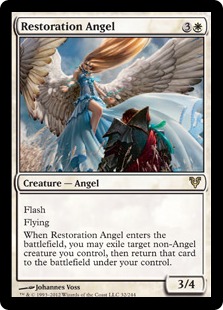
Restoration AngelI pass back, with seven mana available. My opponent swings, I take it, he plays a land and passes (none of us have tapped mana at this point). I go to draw a card, touch it, it doesn’t touch my hand, I say “hold on” and put it back on top of my deck (opponent nods). I cast Cryptic for bounce/draw, and my opponent thinks for a second and casts Mana Leak (which I pay for). He nods and picks up Restoration Angel, I draw, and then go to untap, at which point my opponent calls a judge. The Head Judge answers our call, and my opponent argues that he thought we were in my upkeep. While, as the judge put it, it makes no “tactical sense” to tap all my lands in my upkeep, my action to draw a card shows intent that we are not still on my opponent’s turn, and it’s entirely reasonable for my opponent to believe that we are instead in my upkeep. The conclusion is that all of my lands are tapped, and I pass and die to my opponent’s Rest in Peace + Snapcaster Mage + Restoration Angel windmills. RIP.

While I guess it’s normal for players to get tilted after something like this, I don’t normally get that upset. Sure, I should wreck U/W Control, but whatever. My deck is great, I’m 7-3 and still in good position for Top 8 if I win out and get good breaks. What followed was a whirlwind of losses that I still can’t explain.
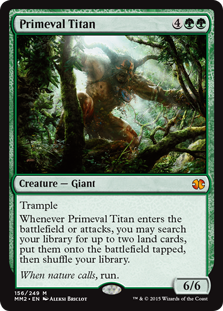
Primeval titanI faced Chris Yarbrough (another local NC player) in Round 11, playing Amulet Bloom. The ONLY Amulet player to Day 2. He crushes me, as my draw of Deprive/Spell Snare with Gurmag Angler and lands does nothing against his double Cavern of Souls/cast Primeval Titan on Turn 6 the fair way draw. Round 12 I die to Burn unspectacularly, and Round 13 I take a heartbreaker of a loss to Devon Teague (Charlotte represent!) playing Abzan. With him topdecking and me stabilizing at around 7, his board is Plains/Forest/Godless Shrine with Tasigur, the Golden Fang and Scavenging Ooze to my Tasigur/Snapcaster Mage with four land and another Snapcaster in hand. For his turn, he draws Lingering Souls, which he plays and passes. I draw Damnation, at which point I tank and eventually pass, electing to activate Tasigur and cast Damnationnext turn once he flashes back Lingering Souls. At that point, he has few relevant draws, as any removal spell/Liliana/ground creature/land does nothing, and he’s heavily incentivized to flashback Souls as Tasigur can grant me removal spells to grind down his Spirits. Instead, he draws Thoughtseize, nabs my Damnation, flashes back Souls, and I die to his flyers a couple turns later. Shrug.

Retrospective

It’s hard to explain why things don’t work out sometimes. My deck executed on Day 1, and things just didn’t break my way Day 2. That would make sense in a hateful field, and while I rarely faced any cakewalk matchups, I didn’t really see a lot of hate either. Naya Zoo and Jund packing Chokes were nowhere to be found around me, instead, all I saw was a bunch of Twin and Grixis mirrors that I wished I was playing myself. One of the losses on Day 1 was absolutely my fault, and I blame the other on variance, but Day 2 just seemed to fall apart for me, and it was definitely not because of tilt. I consider myself to be pretty self-critical when it comes to my game lately, and besides communicating clearly in the UW match I don’t see much I could have done differently. It’s slightly frustrating, as my takeaway from the event is strangely “I still think my deck is awesome, but it didn’t pan out” but I specifically remember thinking the same thing after Grand Prix Charlotte, where I went 7-1-1 on Day 1 and 1-4 on Day 2. Some stats for the history books: my Day 1 record between both events is 14-3-1, while my combined Day 2 record is 1-8. Those numbers are hard to ignore, and something definitely needs to change, I’m just not sure what it is.
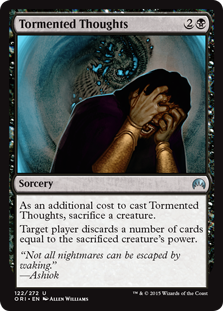
Tormented ThoughtsThe dark corner of my mind says that I can’t hang with the Day 2 crowd, and while Day 2’s are tougher I’m not sure that’s entirely true. I can confidently say that since Grand Prix Charlotte I have played more Modern and practiced more with my deck than any of the 509 players that showed up to play (between streaming and just jamming games, I’ve played at least 40 matches a week since GP Charlotte, almost all with Grixis). While by no means FNM, the SCG Open series isn’t the Pro Tour either, and I did OK there. Some players struggle with the drop off after making Day 2; they feel that they’ve “made it” so they let off and start coasting. I’ve never really had that problem, as I rarely find difficulty with staying focused during events, or losing sight of my goal (which is always to win the event, not just Top 8). I don’t look ahead either, instead taking things one match at a time, even to the point that I often don’t know what record Day 2’s or Top 8’s until somebody tells me sometime during the day. Part of me wants to say that it’s just variance, I could have just as easily went 0-2 and spent the weekend with my pants off on my couch eating Cheetos, and instead I went into Day 2 X-2 and tied for 13th basically. I guess it’s all about perception and what I choose to take away from the event.
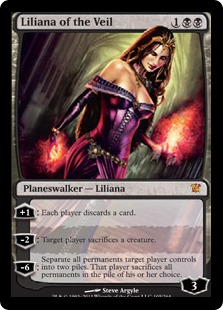
Liliana of the VeilMichael Majors’ take on Grixis looks fun to play, but as mentioned by Patrick Sullivan, is probably worse in the Jund matchup. This isn’t necessarily a knock against the deck, just something to keep in mind as Majors DID lose to Joe in the quarters and Joe went on to win the Open. While this probably won’t make many Merfolk players rush out and purchase playsets of Tarmogoyfand Liliana of the Veil, his win probably translates into a slightly larger representation of Jund online as people try out his list. Again, not a reason to not play Majors' deck, just be aware that more lands and less counterspells will not line up well against the attrition based tap-out deck. As for which list I think is better, it’s hard to argue with Majors’ Top 8 versus my drop, but I would be lying if I said I wasn’t a little biased towards my deck. I would be doing everyone that values my opinion a disservice if I snapped off an uninformed opinion without playing the deck myself, so I plan on doing that before making any uninformed statements. Exercise in restraint accomplished!

I hope my writing doesn’t come across as dejected or negative. While I am my own worst critic, I also am very self-aware, and I know that I owe much of my recent success in Magic and streaming to my ability to step back, analyze what I could be doing better, and then do whatever I can to fix it. This article is that mental conversation is physical form, and I hope you were able to take something from it. As always, I’ll be back at it immediately, constantly looking to improve and anxious to play some more paper Magic!

Big congrats to Joseph Herrera for winning his third SCG Open trophy; I’ve watched him put that sweet foil Jund list together over the years and it was awesome seeing it crush on stream. GOT’EM! For all of you, thanks for reading my thoughts this week! I plan on bouncing around, trying a few new decks in Modern, but I’m not abandoning Grixis Control or Jace, Vryn's Prodigy.

If you have any comments/opinions, feel free to let me know in the comments or stop by my stream at www.twitch.tv/Architect_Gaming! Hope to see you there!

Trevor Holmes
The_Architect on MTGO
Twitch.tv/Architect_Gaming
Twitter.com/7he4rchitect

The Fate of Re-Sellers in Germany

Are you a Quiet Speculation member?

If not, now is a perfect time to join up! Our powerful tools, breaking-news analysis, and exclusive Discord channel will make sure you stay up to date and ahead of the curve.

Two months ago Tobias Graefensteiner posted a story on Reddit regarding how attempting to sell Chromanticores for more than they purchased them for landed him in court. A couple updates came down the pipeline as things progressed, illustrating the shady allegations that TCGDiscount made.

There was an error retrieving a chart for Chromanticore

In the most recent update, Tobias informed the community that the judge offered him a deal after assuring him that while TCGDiscount's actions were dubious, they were in accordance with German law. This doesn't serve as a legal precedent in an official capacity, but it's something to be aware of. Here in the U.S. reselling is legal, but this case will hopefully serve as a good warning to those looking to resell cards in other countries. You just might need special licensing.

Laws are complex and often arbitrary. Even when things are perfectly logical, that doesn't necessitate their legality. Be careful out there- it's a crazy world.

Avatar photo

Ryan Overturf

Ryan has been playing Magic since Legions and playing competitively since Lorwyn. While he fancies himself a Legacy specialist, you'll always find him with strong opinions on every constructed format.

View More By Ryan Overturf

Posted in FreeTagged 2 Comments on The Fate of Re-Sellers in Germany

Have you joined the Quiet Speculation Discord?

If you haven't, you're leaving value on the table! Join our community of experts, enthusiasts, entertainers, and educators and enjoy exclusive podcasts, questions asked and answered, trades, sales, and everything else Discord has to offer.

Want to create content with Quiet Speculation?

All you need to succeed is a passion for Magic: The Gathering, and the ability to write coherently. Share your knowledge of MTG and how you leverage it to win games, get value from your cards – or even turn a profit.

Insider: The Wonderful World of Modern

Are you a Quiet Speculation member?

If not, now is a perfect time to join up! Our powerful tools, breaking-news analysis, and exclusive Discord channel will make sure you stay up to date and ahead of the curve.

Back in June, I wrote The Story of a Lovely Format, which is a tournament report about my experience playing Modern. This tournament was at Origins, so it was a bit different than most tournaments that you might attend. One of the main takeaways from that event was that Modern, while diverse, was being dominated by the heavily popular Burn deck. The more burn spells are printed, the more we’re going to have to watch out for that event.

Playing Modern since its inception, I’ve seen that concept in action a number of times. When cards like Boros Charm and Monastery Swiftspear are printed, they not only bring more depth to an already solid archetype, but also make the deck more desirable to play. Burn has been a favored deck for many players for close to two decades and the winds of change won’t faze the fire enthusiasts.

As the format has grown and adapted, more and more decks are finding success. This past weekend at SCG Charlotte, we saw Chris VanMeter in the spotlight with his new take on Combo Elves. Ryan wrote a great free side article about the downsides of media and technology in our competitive environment. You can check that out here if you didn’t get a chance to read his write-up of what happened.

Although that may have been the highlight on social media, something else caught my eye as even more groundbreaking: Jace, Vryn's Prodigy as a major player in Modern.

When I heard that legendary Jace was seeing play in Modern, my first thought was that it was a one- or two-of in a random deck. Then I heard that he actually got the full four slot in the best control deck the format has to offer, Grixis Control.

Since we traveled the multiverse to Khans of Tarkir, Grixis Control has been gaining ground. Players realized they could cast a cantrip Dark Ritual by playing Thought Scour and utilize that resource to consistently cast Tasigur, the Golden Fang on turn two. Without the restriction of playing green mana for Tarmogoyf, they could streamline their deck much better and present many controlling elements their opponents had to fight through. This is one of the leading strategies in the format currently and it put the most players into Day 2 of the event.

Another large factor of this deck's success is the ridiculous synergy and card advantage offered by Kolaghan's Command. Rebuying Snapcaster Mage as well as activating any of the other modes provides an endless source of plays to disrupt any opponent. To add to that, we now have Jace, Vryn's Prodigy to flash back more spells while also presenting a hard-to-deal-with permanent.

The combination of these cards makes this deck a tough one to win against. Here it is in all its glory.

Grixis Control by Michael Majors (5th place SCG Charlotte)

Creatures

4 Snapcaster Mage
4 Jace, Vryn's Prodigy
2 Tasigur, the Golden Fang

Spells

3 Kolaghan's Command
4 Lightning Bolt
3 Remand
2 Spell Snare
3 Terminate
2 Thought Scour
4 Inquisition of Kozilek
4 Serum Visions
2 Liliana of the Veil

Lands

2 Island
1 Mountain
2 Swamp
3 Blackcleave Cliffs
1 Blood Crypt
2 Bloodstained Mire
2 Creeping Tar Pit
1 Darkslick Shores
4 Polluted Delta
3 Scalding Tarn
1 Steam Vents
1 Watery Grave

Sideboard

2 Dragon's Claw
2 Nihil Spellbomb
2 Spellskite
3 Dispel
3 Molten Rain
2 Pyroclasm
1 Thoughtseize

One of the big perks of playing this deck is Terminate. Previously, blue-red decks had to suffer with poor removal choices. The addition of black mana solves problem handily. This deck stems from the Twin archetype. Players realized that they could cut the combo entirely and just play a tempo control deck and they never looked back.

Never fear though, Modern has a little sweetness no matter your fancy. There are ramp strategies, linear aggressive strategies, and intricate combo decks and that’s just scratching the surface. Modern is as diverse as it can be. The players that I hear saying they don’t like the format are likely just having a hard time acquiring a deck because whatever you like to play, there’s something similar out there for you.

This site can help you develop the skills you need to obtain even the most expensive deck in the format, so take advantage of these resources. Most of us had to develop our skills through tragic trial and error, but with everything available to players today, it’s much easier to accomplish any goal. To illustrate my point, let’s take a look at the Day 2 metagame from SCG Charlotte.

Grixis Control: 9
Burn: 8
Jund: 8
Grixis Twin: 7
Naya Company: 6
Affinity: 6
Merfolk: 6
Infect: 6
Temur Twin: 5
Abzan Company: 5
Grixis Delver: 5
Abzan: 5
Bogles: 3
G/R Tron: 3
Elves: 3
Ad Nauseam: 3
Scapeshift: 3
Jeskai Control: 3
R/G Aggro: 2
U/W Control: 2
Mono-White Hatebears: 2
Jeskai Twin: 3
Goryo's Vengeance: 1
U/W Tron: 1
Lantern Control: 1
Evolutionary Elves: 1
U/R Twin: 1
Esper Mentor: 1
Twinning End: 1
Esper Control: 1
Kiki Chord: 1
Storm: 1
Ninja Bear Delver: 1
Jesaki Aggro: 1
DredgeVine: 1
G/W Hatebears: 1
Jeskai Delver: 1
Amulet Bloom: 1

Statistics can be misleading though. The real archetype leader is hiding in plain sight by breaking itself into smaller splinter groups. These factions for Splinter Twin differ but should still be classified together. If we combine Grixis Twin, Temur Twin, and U/R Twin we see the largest part of the metagame is Twin with 16 pilots! I did not include Twinning End because that is truly a different deck altogether. Surprising or not, unless you are preparing to face the formats most consistent combo deck, you will find yourself out of luck and backed into a closet filled with losses.

This may be the hidden story of the tournament but there are visible winners that need their spotlight. Take this gem as a bright and shiny example:

Naya Company by Albert Ake (4th Place SCG Charlotte)

Creatures

1 Birds of Paradise
4 Knight of the Reliquary
4 Loxodon Smiter
4 Noble Hierarch
3 Qasali Pridemage
2 Scavenging Ooze
3 Tarmogoyf
2 Voice of Resurgence
4 Wild Nacatl

Spells

3 Collected Company
1 Dromoka's Command
4 Lightning Bolt
4 Path to Exile

Lands

2 Forest
1 Mountain
1 Plains
1 Bloodstained Mire
1 Ghost Quarter
1 Kessig Wolf Run
1 Sacred Foundry
2 Stomping Ground
2 Temple Garden
1 Verdant Catacombs
4 Windswept Heath
4 Wooded Foothills

Sideboard

1 Ethersworn Canonist
1 Magus of the Moon
1 Scavenging Ooze
1 Blood Moon
2 Choke
2 Stony Silence
4 Feed the Clan
1 Kataki, War's Wage
2 Thalia, Guardian of Thraben

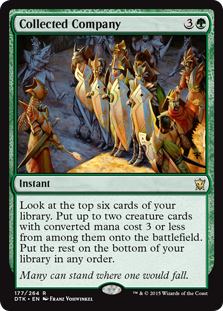
Six players did well enough to keep playing this strategy on Day 2 and Albert even made Top 8 with his version. The great part about Collected Company is cheating on mana. Ideally you will get six mana worth of cards in play for only four mana. The problem with most versions of this deck is that they try to make their ideal draw better by maximizing their three-cost spot. The problem they run into is clogging up at that three mana choke point.

With this version, we are just running the eight best options so that you can still pull off two three-drops from Company, but don’t lose too many games to your awkward hands. Generally I dislike Tarmogoyf in decks without cheap cantrips so I question how good it will be in this deck, but relying on your opponent for those types of cards may be reasonable. Either way, this deck looks like a ton of fun if you enjoy aggressive decks that have interesting lines of play.

Jund by Joseph Herrera (1st Place SCG Charlotte)

Creatures

1 Abbot of Keral Keep
4 Dark Confidant
3 Scavenging Ooze
4 Tarmogoyf
1 Tasigur, the Golden Fang

Spells

2 Abrupt Decay
1 Kolaghan's Command
4 Lightning Bolt
4 Terminate
3 Inquisition of Kozilek
2 Maelstrom Pulse
3 Thoughtseize
4 Liliana of the Veil

Lands

1 Forest
2 Swamp
4 Blackcleave Cliffs
1 Blood Crypt
3 Bloodstained Mire
1 Ghost Quarter
1 Overgrown Tomb
4 Raging Ravine
1 Stomping Ground
1 Twilight Mire
4 Verdant Catacombs
1 Wooded Foothills

Sideboard

1 Nihil Spellbomb
3 Fulminator Mage
3 Kitchen Finks
1 Abrupt Decay
1 Ancient Grudge
1 Olivia Voldaren
2 Anger of the Gods
2 Damnation
1 Shatterstorm

More Standard cards are appearing all across Modern. In this case, a single card stands out in the crowd. When I heard that Abbot of Keral Keep was seeing Modern play I thought that sounded amazing and potent. I wouldn’t be surprised to see this card grow in popularity as well. It seems great in Jund but also insane in Burn.

The only reason Burn isn’t taking over the metagame is because there are more and more potent ways to gain life. Take a look back at the Naya Company deck above and note the full playset of Feed the Clan to prevent any Burn player from ever having a chance to win the game. Every deck has access to efficient life gain spells. The key is how many sideboard resource slots they are willing to dedicate to the matchup.

Just looking at this article alone, Grixis Control has a couple copies of Dragon's Claw, Jund and Abzan play Kitchen Finks and Scavenging Ooze, and even burn plays Lightning Helix for the mirror. Let’s check in on Burn and see why every deck is making room for sideboard spots specifically for the matchup.

Naya Burn by Arya Roohi (22nd Place SCG Charlotte)

Creatures

4 Goblin Guide
1 Grim Lavamancer
4 Monastery Swiftspear
4 Wild Nacatl
4 Eidolon of the Great Revel

Spells

4 Atarka's Command
4 Boros Charm
4 Lightning Bolt
2 Searing Blaze
2 Exquisite Firecraft
4 Lava Spike
4 Rift Bolt

Lands

2 Mountain
3 Arid Mesa
3 Bloodstained Mire
1 Copperline Gorge
2 Sacred Foundry
3 Scalding Tarn
2 Stomping Ground
3 Wooded Foothills

Sideboard

1 Relic of Progenitus
3 Destructive Revelry
3 Lightning Helix
2 Path to Exile
1 Rending Volley
1 Searing Blaze
3 Skullcrack
1 Exquisite Firecraft

Wild Nacatl being added into this deck is pure brilliance. This change in retrospect seems obvious yet no one else figured it out. Now Burn has thirteen intense one drops to start the game off with a bang. Adding additional consistency to this deck terrifies me because it is already capable of burning you out early and often.

Let’s not forget yet another Standard card, Exquisite Firecraft, being played to finish off players regardless of their amount of countermagic. This version is a slick and tuned weapon. The numbers look great and it’s no surprise to see this version was successful at the event.

Abzan Company by Logan Mize (6th Place SCG Charlotte)

Creatures

2 Spellskite
4 Birds of Paradise
4 Eternal Witness
1 Fiend Hunter
4 Kitchen Finks
1 Murderous Redcap
3 Noble Hierarch
1 Qasali Pridemage
3 Viscera Seer
2 Wall of Roots
2 Anafenza, Kin-Tree Spirit
2 Melira, Sylvok Outcast

Spells

4 Chord of Calling
4 Collected Company

Lands

2 Forest
1 Plains
1 Swamp
3 Gavony Township
1 Godless Shrine
3 Horizon Canopy
1 Overgrown Tomb
1 Razorverge Thicket
2 Temple Garden
4 Verdant Catacombs
4 Windswept Heath

Sideboard

1 Aven Mindcensor
1 Burrenton Forge-Tender
1 Orzhov Pontiff
1 Scavenging Ooze
4 Voice of Resurgence
1 Eidolon of Rhetoric
4 Path to Exile
1 Linvala, Keeper of Silence
1 Tasigur, the Golden Fang

Up next we have the latest in a long line of versions for this archetype. After Melira Pod, the deck forged a new path by incorporating Collected Company. Unlike the other decks in the format that are solely playing it for value, this deck is utilizing it to locate combo pieces.

This deck may look similar to its previous versions, but upon closer inspection, it is now truly its own deck. When it was Melira Pod, the deck played tons of singletons because they were easily searchable with Birthing Pod. That also allowed the deck to play lots of value creatures and present a formidable aggressive plan to go along with the combo back up plan.

Collected Company has pushed the deck back towards winning with the combo. If you notice, this version has things like three Viscera Seer and four total enablers with Anafenza, Kin-Tree Spirit and Melira, Sylvok Outcast. It even went back to Wall of Roots. Certainly the deck can win by attacking but when you’re going up against this strategy, you need to be more concerned about controlling the combo now more than ever.

Merfolk by Hunter Nance (2nd Place SCG Charlotte)

Creatures

4 Cursecatcher
4 Harbinger of the Tides
4 Lord of Atlantis
4 Master of the Pearl Trident
4 Master of Waves
3 Merrow Reejerey
4 Silvergill Adept
2 Kira, Great Glass-Spinner

Spells

4 Aether Vial
4 Spreading Seas
2 Dismember
2 Spell Pierce

Lands

11 Island
2 Cavern of Souls
4 Mutavault
1 Minamo, School at Water's Edge
1 Oboro, Palace in the Clouds

Sideboard

2 Relic of Progenitus
3 Spellskite
3 Tidebinder Mage
1 Dismember
2 Dispel
1 Hibernation
1 Spell Pierce
2 Unified Will

Lastly, we have every financier’s fantasy come true. Long have we waited for Merfolk’s time to shine and that time is now. Many of us have stacks of Merfolk awaiting the time when this deck becomes a true contender and all of them double in value. That time is upon us.

The key to this version is another new card, Harbinger of the Tides. Magic Origins has brought the spice to Standard and Modern. All of these cards that have shown up at Modern events are great cards to start getting a hold of and they are great long-term holds. Harbinger, specifically, is tons better in older formats because in combination with Aether Vial, you are getting the four mana cost ability for the investment of your mana cheat. I imagine many opponents were shocked at the end of turn Harbinger bouncing any of their creatures. The great thing is that even when players know about it, they can rarely play around it.

Cards may get to expensive levels after time passes but Modern-playable cards like this that are printed in Standard always start out inexpensive and easily accessible. So, even if you aren’t into Modern yet, a good way to start that journey is by acquiring the cards in Standard that see play. That way, when rotation happens and everything tanks in price, you are left in a much better position with your eternal staples that won’t drop so low.

In addition, these cards can much more easily be traded for other older cards because they are all playable in the same format. Modern is great and the diversity is part of the appeal for many players.

I’m Mike Lanigan and this has been your Modern Metagame update.

Until next time,
Unleash the Force!

Mike Lanigan
MtgJedi on Twitter
Jedicouncilman23@gmail.com

Insider: Artful Maneuvers – How we Speak

Are you a Quiet Speculation member?

If not, now is a perfect time to join up! Our powerful tools, breaking-news analysis, and exclusive Discord channel will make sure you stay up to date and ahead of the curve.

Today I have a couple of small topics to cover. First I want to dive into they way we speak to one another. There have been a large amount of articles written on personal conduct at tournaments and treating each other with respect. These are important articles that remind us how to remain a good tight-knit community.

I highly enjoy, and encourage, reading these from time to time, but this is not an article like those. Instead, I'd like to focus on speaking in a manner that encourages our customers to buy from us.

I once long ago read "How to Win Friends and Influence People" by Dale Carnegie. I highly recommend anyone who runs their own business or works in customer service read this book.

Among all of the Imageamazing advice in this book is one point that stands out given our goals in the finance community. Mr. Carnegie writes about bringing up ideas and suggestions to people as if the idea were their own. He asserts that any suggestion or idea is much easier to swallow or even like if one believes that they were the one who thought it up in the first place.

Think about it, we all like to think that our ideas are better than other people's ideas. This deck is better because I thought of a combo that you didn't. This card should be of higher value, but nobody else seems to have figured out its true power. We can use that view point to our advantage and play to it.

Let's say your trade partner is looking to fill out his Merfolk deck. Some of his card choices are less than optimal, but he has some amount of budget to spend (be it in high value cards or cash). Instead of pointing out bluntly that Merrow Reejerey is a much better choice than Merfolk Looter, you could say something like "Am I correct in thinking these Looters are placeholders for Merrow Reejerey? I think I have a playset to trade..."

The delivery of the verbal assumption here is key. This is not a sarcastic statement, but one that is a matter of fact. We do not want to offend our trade partner. Remember that this deck was their idea and anything said about it (good or bad) will be taken personally. Some would consider this a small difference, after all both statements make the same point. The difference is an important one though. Rephrasing the original suggestion allows them the opportunity to continue the conversation, or turn you down with an explanation on their own terms. In short, you have not put your customer on the defensive.

I cannot stress how useful this can be. The way we speak to our customers and trade partners is the single most important part of our business. If you are pleasant to deal with, and encouraging to those around you then repeat business will beat a path to your door. People who enjoy doing business with you are also more likely to allow those throw-ins and small price differences to go in your favor. They will refer you to their friends.

Most importantly though, if we treat each other pleasantly and with respect we won't have to have so many articles written on how to make the Magic community a better place. It will already be one.

Closing the Deal

47473
Not a bad name for a column, but I have to imagine it is taken...

There is one other part of dealing with customers that I must address. When I look around trade tables and even in my own trades there is one piece of education that seems most lacking. Nobody seems to know how to close a deal properly.

This ignorance causes some of us to waffle unnecessarily about insignificant price differences. I've seen some people come off too strong, sounding as though they must make the trade or Wizards of the Coast will send their assassins to kill us all. Both of these behaviors make me think that some people are afraid to close the deal. I think it may come from the fear of being labeled a "shark" and all of the negative that comes with that label.

As we all know, time is the only assest that we have that cannot be acquired. So why are we wasting it haggling over the price of a gumball? When you are ready to make a deal at the trading tables just follow these steps.

1. Repeat the terms. Name all of the cards you are trading away and all of the cards you are trading for.

2. Ask for the sale. "I'm happy with this if you are," or "Do we have a deal?", or "Sound good to you?" are all acceptable.

If the answer is yes then you are all set; if not...

3. Alter the deal in a way that is favorable to both parties, then go back to step 1. If your partner is unwilling to, or nervous about trading one of the cards in the proposed deal, remove it (and the corresponding cards in your pile) and offer the smaller deal.

If the answer is still no...

4. Politely remove yourself from the trade. There is no harm or shame in walking away from a trade. Time is money, and there are too many other people to trade with to waste time with just one person. Additionally, the key to any bargaining strategy is the willingness to walk away. It is your best chip, and if they want your cards they won't let you do it.

A lot of sales training will tell you to ask for three "no" answers. I think in our case this crosses over from, "I really want that card," closer to, "I will have that card if I have to follow you to the parking lot." Well, maybe not that strong but this is where I feel people are labeled as sharks. Despite our best manners, many people will feel pushed if asked about a specific card too many times. So be mindful of how you propose your trade. You only have a couple of chances.

The ability to walk away without any of their cards gives you great leverage. Even the idea of a trade partner packing up and trading nothing creates the fear of loss in traders. I'm sure we all know this feeling well. For those unfamiliar with the thought process it goes like this: "That guy has a Misty Rainforest that I need. If I he walks away it's possible that I wont see another one today. Maybe if I throw in that foil he has been talking about..." Avoiding acting on that feeling puts you in the driver's seat of any trade.

That's it for this week. Next week I will turn back to altered cards before covering more business strategy with you. I would like to know if you like the new business oriented track, so let me know in the comments.

Primers: UR Twin

Are you a Quiet Speculation member?

If not, now is a perfect time to join up! Our powerful tools, breaking-news analysis, and exclusive Discord channel will make sure you stay up to date and ahead of the curve.

Splinter Twin is a deck that needs very little introduction. One of the premier combo deck’s since the formats infancy, it has continued to put up results over the entire history of the format. Bannings and unbannings have occurred, but Splinter Twin always rears its ugly head as soon as you tap out on turn three. It has won two of the Modern Pro Tours, and outside of an outright banning of Splinter Twin, will continue its dominance of Modern for years to come.

Pestermite Art

Cast a Pestermite or Deceiver Exarch, untap, attach Splinter Twin, make a million copies and swing for a million damage - pretty straightforward, no? Well, while in theory it is, the deck has so much more going for it, you may not need to win with the combo every time. This primer breaks down what you need to know to succeed with UR Twin.

[wp_ad_camp_1]

Examining the List

Let's start with a look at the list:

UR Twin, by Will Archer

Enchantments

4 Splinter Twin

Creatures

4 Deceiver Exarch
4 Snapcaster Mage
2 Pestermite
2 Vendilion Clique
1 Grim Lavamancer

Instants

4 Remand
4 Lightning Bolt
2 Electrolyze
2 Cryptic Command
1 Peek
1 Dispel
1 Roast
1 Spell Snare

Sorcery

4 Serum Visions

Lands

5 Island
4 Scalding Tarn
3 Misty Rainforest
3 Sulfur Falls
3 Steam Vents
1 Mountain
1 Desolate Lighthouse
1 Stomping Ground
1 Wooded Foothills
1 Ghost Quarter

Sideboard

1 Dispel
1 Shatterstorm
1 Engineered Explosives
1 Spellskite
2 Blood Moon
2 Negate
2 Ancient Grudge
1 Anger of the Gods
1 Teferi, Mage of Zhalfir
1 Vedalken Shackles
1 Counterflux
1 Keranos, God of Storms

A brief aside – this is my list and as metas vary you may find specific cards better or worse. As the format changes, we could see quite a few cards added or dropped, but for now this is what I’m going with.

Deceiver ExarchThe deck is innately hard to deal with and puts up constant results due to how off-kilter you make your opponent. Turn three forward they can no longer tap out safely, or put themselves at risk of instantly losing. Furthermore, they have to leave up even more mana then the removal cost due to the tapping ability on Exarch and Pestermite. Once we get to this point, the combo is almost unnecessary. The threat of the combo puts you so far ahead once you start “Snapping” back spells, you overwhelm your opponent with card advantage, combined with how poorly they had to use and spend mana the throughout game.
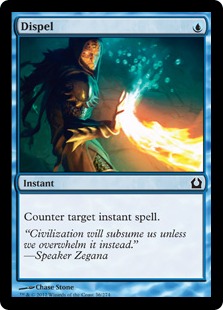
So what allows the deck able to win outside of the combo? The fact that we are playing some of the best cards in Modern (Snapcaster Mage, Lightning Bolt, Cryptic Command). Also, the fact that we run evasive creatures that can slowly chip away at an antsy opponent who needs to be prepared to defend them self from an instant “I win” combo.

With this in mind, we can create a list that takes advantage of all of these factors, as well as including the “oops, I win” combo potential. This leads to a deck that is one of the hardest to play against correctly and enables you to easily take advantage of most of the format.

Card Choices: The Maindeck

The core of the deck has been established for some time now. Deceiver Exarch, Pestermite, and Splinter Twin form the namesake combo of Twin. I prefer the 4-2 split due to the removal resistance Exarch’s four toughness provides, but that could easily be a 3-3 split if you believe you will be winning outside of the combo more often. Snapcaster Mage as a four-of needs little description – it is easily the best card in Modern and turns your one-ofs into twos when needed. He also provides a body for the beatdown plan. Vendilion Clique is also a great card for said plan with its three power, flying evasiveness, and ability that provides an extremely powerful function in a combo deck (you can read about its plethora of uses in a Brainstorm Brewery article of mine). Being able to both put a clock on the board and obtain perfect information is exactly what the deck wants. Knowing when you can simply combo off and win, or what you need to play around, is an oft overlooked piece of the puzzle that people are too quick to cut.Vendilion Clique

Grim Lavamancer gives you further game and card advantage against any sort of creature decks, and is another card that demands an answer, clearing the way for the combo pieces to safely resolve. Cryptic Command and Remand provide answers to most of the format's problems and card drawing to dig for the missing piece, as well as the best removal and reach in the format in Lightning Bolt. Peek, Roast, Dispeland Spell Snare are one-ofs that round out the deck and are cheap solutions to problem cards. They can also effectively become two copies with Snapcaster Mage.

The land base is fairly typical – 23 lands is acceptable with our high amount of card draw and selection. Sticking to just blue and red keeps the manabase more streamlined and less susceptible to mana issues (as well as allowing the deck to run Blood Moon in the sideboard). The utility lands are also stock – Desolate Lighthouse provides card selection in top-deck wars, and Ghost Quarter provides an easy answer to the problem-lands in the format.

Card Choices: The Sideboard

With the previous mentioned ability of Snapcaster's “doublecounting” spells, we are able to run a multitude of highly effective one-ofs that can be a huge blow in certain matchups.

DispelDispel is a very effective card for its mana cost and can provide a large tempo boost when used to counter a Cryptic Command or other high-costed, high-impact instant (such as Sphinx's Revelation or Gifts Ungiven). It shines in many different places, from Burn to the mirror to any other sort of high removal deck. Adding a second on top of the maindecked copy lets you see it reliably in games two and three when needed. Negate and Counterflux provide more of the same – cheap answers to cards that give the deck trouble and the ability to win counter-wars or hard counter early threats like Liliana of the Veil that Remand doesn’t effectively answer.
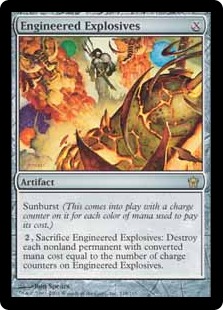
Shatterstorm and Ancient Grudge form an effective combination to bail you out against the hyper aggressive Affinity deck. Affinity can sometimes cause Twin players problems with the habitual “puke hand on turn one” play. Ancient Grudge provides selective removal that is easily flashed back off the Stomping Ground in the main, giving you lots of time to draw into the combo.

Engineered ExplosivesEngineered Explosives does much of the same – cheap, effective, sometimes board-wiping removal. At one or two (or even three with said Stomping Ground), Explosives can easily wipe a board and provide huge card advantage as well as the turns you need to win the game. It's great against Zoo, Merfolk, Elves, and many of the tribal, hyper-aggro style decks. Anger of the Gods provides another sweeping answer, adding on the often needed “exile” clause.
Spellskite is a nod to the large amounts of removal some decks play, providing a secondary card that your opponent may have to deal with before they can deal with the combo. Spellskite also protects the more essential hate cards out of the board. Because Spellskite is often a poor top deck in the late game, we only run one in the board.

The ability to run Blood Moon is what keeps me on the blue/red version and not splashing the popular black or green. A very high impact card in a format full of shaky (at best) manabases that are extremely reliant on fetchlands, a slammed Moon on turn three can just win you the game. Having the same impact against Tron as well as Amulet enables this card to be highly valuable, and it should be resolved as carefully as one would resolve Splinter Twin.

Vedalken ShacklesVedalken Shackles and Teferi, Mage of Zhalfir are somewhat niche cards that can often provide huge swings in your favor. Shackles are great in the non-Grixis mirror (due to Kolaghan's Command) that can sit and demand an answer before the opponent can go off. Outside of that, Shackles also enables you to force your opponent’s creatures to run into each other while you craft a winning hand. Teferi is very niche but a game changer. If resolved, he forces your opponent to play at sorcery speed for the rest of the game, at least until they have the answer, effectively putting them a turn behind at everything or forcing out “scared” removal onto your combo piece. Finally, Keranos, God of Storms provides an unanswerable threat against Jund and Abzan, two of the more difficult matches due to their large amounts of removal.
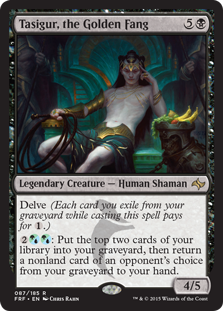
Cards That Didn't Make the Cut

  • TasigurSplashing a third color
    Green or black are very common additions to the deck, providing highly cheap and effective cards (such as Tasigur, the Golden Fang and Tarmogoyf) to create further "must-answer threats" that attack on many different fronts. These versions are not necessarily better or worse than UR Twin, but they are functionally different. I would consider them a separate deck and require further, deeper explanation.
  • Gitaxian Probe
    Paying two life as an alternate cost is handy, but being (somewhat) greedy in such an aggressive format, as well as sorcery speed, inclines me to go with the instant speed Peek for the ability to see an extra (and sometimes game changing) card.
  • Tectonic Edge
    Edge is in a bad spot right now. The "land-combo" decks in the format often are going off before they have four lands on the board (Tron is assembled at three lands and Amulet can go off with as little as two). As such, Ghost Quarter is a strict upgrade as the basic land is either not in the deck or very low impact.
  • Jace, Architect of ThoughtJace, Architect of Thought
    Often a one-of in the board, Jace is mostly a relic of the Abzan dominance and not otherwise having a good solution to Lingering Souls. With Abzan no longer part of tier 1 and Jace aligning very poorly against the more grindy style of decks as of late, the planeswalker is low impact and easily dropped.
  • Blood Moon in the maindeck
    Moon occasionaly shows up in the maindeck of UR Twin, but I would caution against this. Not only does it do nothing against a large part of the field, drawing the second copy is painful. While against some decks it is a slam dunk, having two slots that can be almost no impact against half of the metagame is a tough call to make, and one I personally am not comfortable with in the current field.

Next Level Playing Tips

General Deck Tips

  • Don’t get cocky, Kid
    The potential to win the game on turn four is quite tempting, and sometimes they just don’t have an answer. Even so, don’t risk it all for no reason. Just as we can instantly win the game, getting two-for-oned that early can instantly lose us the game or, if not instantly, over the span of a few turns. An advantage we always have is the threat of the combo. Don’t assume we always have to go for it.
  • Lightning BoltBait removal/Create tempo
    We can easily get an idea of what they have going on by flashing in an Exarch or Pestermite. If you can use it to create tempo advantages by tapping a land in the upkeep or merely preventing an attack, sometimes this gains you more than waiting for the combo potential even if it instantly dies. At the heart of it we are a deck that creates large tempo gains and rewards pilots who can see past the combo and into the strict tempo and card advantage.
  • Know your role
    I stated this in my previous primers, but the idea continues here (and in most decks). Know when you are the beatdown or when you are the control deck. Twin can shift gears into aggro, control, and combo as needed and encompasses elements from all three archetypes, so use this to your advantage and quickly identify which you are in a matchup. This versatility (elaborated much further in two Nexus articles by Jordan Boisvert) is what makes the deck so powerful.
  • Watch out for punishing effects
    As the most visible combo deck in Modern, quite a few cards can punish the inexperienced player. Watch out for the common hate cards and don’t run into them. It can be fun to hit your opponent for a million damage, until they cast a Rakdos Charm and make you take a million when just 15 would have done and kept you alive.

Single Card Tips

  • PestermiteDeceiver Exarch and Pestermite
    Exarch's and Pestermite's tap abilities have so many uses I couldn’t list them all if I tried. They reward players who know the format and using them is often more than merely tapping a land at the end of turn. Of note include tapping Tron lands on upkeep to stop turn three Karn Liberated/Wurmcoil Engine, providing more turns to draw the missing puzzle piece by effectively fogging attacks, and even untapping your own permanents for surprise blockers.
  • Vedalken Shackles
    Shackles can be used even more efficiently with the untap abilities. Untapping it with Exarch/Pestermite enables you to “steal” another creature when needed, and can surprise your opponent as they usually concentrate on the “only on upkeep” clause.
  • Grim Lavamancer
    If needed, you can get double Lavamancer activations with the untap ability from Pestermite and Exarch to kill an x/3 or x/4 creature.
  • RemandRemand
    Remand is sometimes more useful on your own spell! If they try to Dispel your Cryptic Command, for example, Remanding the Command keeps your Command, draws you the card, and fizzles the Dispel.
  • Serum Visions
    Watch your sequencing with Visions. It is agonizing to watch players cast a Visions, scry to the top, and then realize they needed to crack a fetch and shuffle them away.
  • Splinter Twin
    You don’t have to always save them for combo creatures! Sometimes casting Twin on a Snapcaster Mage for constant flashbacks, or on Clique to have continuous card selection, is enough to win the game.
  • Snapcaster Mage
    Know what is in your graveyard so you don't have to pick it up and look when you draw into a Snapcaster Mage – this is one of the most easily telegraphed cards. Don't give your opponent any free insight into your hand or draws.
  • Cryptic Command
    Command's last ability is so often overlooked it is frightening. Bouncing a permanent (even a land!) can create huge tempo swings when combined with the other modes. Don't default to counter/draw. Take a good look at the board state and see what combination is most useful.

Sideboard Guide

Jund/Abzan

Liliana of the VeilOUT
-2 Deceiver Exarch
-3 Splinter Twin

IN
+1 Keranos, God of Storms
+1 Spellskite
+2 Blood Moon
+1 Vedalken Shackles


Easily the deck's worst matchup. Tons of removal, plus discard, plus Liliana of the Veil put us in a bad position right out the gate. Thankfully, sideboarding plans are easily predicted and usually only consist of them bringing in more removal. We side into our heavy hitters – all these cards are high impact and all of them can be protected from removal by Spellskite. A quick Blood Moon can seal the game, and if you can keep Keranos away from discard, his resolution is usually the nail in the coffin.

Affinity

Cranial PlatingOUT
-4 Remand
-1 Vendilion Clique

IN
+1 Shatterstorm
+2 Ancient Grudge
+1 Anger of the Gods
+1 Engineered Explosives


A favorable matchup. Out of the board, we have tons of removal, coupled with the low amount of interaction they have (apart from Galvanic Blast), makes the combo (mostly) safe to resolve. Exarch and Pestermite can fog big swings too, so if you can survive the first few turns you are usually winning.

Burn

Lightning BoltOUT
-4 Remand
-1 Cryptic Command

IN
+1 Engineered Explosives
+1 Dispel
+2 Negate
+1 Anger of the Gods


Burn is mostly a race. Burn's relevant interaction is usually three damage, so killing Deceiver Exarch usually requires two spells. Due to Burn's low land count, if you can keep them to only one or two mana, you can often safely resolve the combo. Anger of the Gods can come in against the creature heavy versions running Wild Nacatl.

RG Tron/Amulet Bloom

Ancient StirringsOUT
-1 Lightning Bolt
-1 Roast
-2 Electrolyze
-1 Grim Lavamancer
-1 Dispel

IN
+2 Negate
+2 Blood Moon
+2 Ancient Grudge


I lump these together as the sideboarding plan is very similar. We bring in Moon and Negate, as well as Grudge, to deal with the problem artifacts. Outside of landing Blood Moon, Remand is effectively a Time Walk. Tapping abilities are at a premium for keeping both decks off high volumes of mana. These decks' low interaction counts before board usually allow you to safely combo them out at your leisure.

Infect

Glistener ElfOUT
-4 Remand

IN
+1 Anger of the Gods
+1 Engineered Explosives
+1 Vedalken Shackles
+1 Spellskite


Infect is another favorable matchup where we side out Remand and bring in the removal package, as well as Spellskite to redirect pump spells. This is another deck where tap-downs before attacks become an effective Time Walk. Outside of Dismember, the deck is mostly light on removal and assembling the combo is usually a safe affair.

Grixis Control/Twin mirror match/UWx Control

Snapcaster MageOUT
-4 Remand
-2 Electrolyze
-2 Splinter Twin

IN
+1 Vedalken Shackles
+1 Keranos, God of Storms
+1 Counterflux
+1 Dispel
+2 Negate
+1 Teferi, Mage of Zhalfir
+1 Blood Moon


In these matchups, our post-board plan is to transform into a blue/red control deck. With the high amount of counterspells and interaction these decks have, resolving the combo is rarely successful. Post-board, we become the far better deck, able to run huge trumps the other decks cannot, such as Blood Moon and Teferi. Vedalken Shackles should be left at home against the Grixis versions (Kolaghan's Command), but is an all-star against the non-black splashing variants.

Company Variants (Elves, Abzan Company, Naya Company, etc.)

collected companyOut
-4 Remand

IN
+1 Anger of the Gods
+1 Vedalken Shackles
+1 Engineered Explosives
+1 Dispel


What to side out in these games is a very case-by-case basis depending on the deck's contents. More removal is usually brought in as they tend to litter the board early with mana dorks. Depending on the list the removal they bring is only 3-4 cards, so the combo can bail you out against a very aggressive board. Remand is pretty poor as they can just untap and main phase Collected Company, so Dispel can be a cheap hard counter.

Merfolk

Master of the Pearl TridentOUT
-4 Remand

IN
+1 Anger of the Gods
+1 Engineered Explosives
+1 Spellskite
+1 Vedalken Shackles


Merfolk is a tough matchup due too a very quick, usually unblockable clock, and cheap interaction. An early stumble allows them to overwhelm the board and swing for huge chunks at a time. Between Aether Vial and Cavern of Souls, our counterspells are near useless so they come out easily in games two and three. We add more removal, as blocking is not usually happening due to islandwalk. If you see an opening take it, but be prepared for lots of cheap interaction. Coupled with the new Harbinger of the Tides, that can be flashed or Vialed in, going for the combo can be dangerous.

Conclusion

Splinter Twin isn't going anywhere, and is easily the best deck in the format at any given time. It rewards the pilot who knows the format, interaction, and meta with easy wins out of nowhere as well as games where you run them over with overwhelming tempo generation and card advantage. With only a few unfavorable matchups, and a mirror match that easily rewards the higher skilled pilot, this a deck is an easy choice for the advanced player looking to make a mark in the Modern format.

As always I hope this primer was helpful and let me know in the comments if you think I missed something!

Insider: MTGO Market Report for August 26th, 2015

Are you a Quiet Speculation member?

If not, now is a perfect time to join up! Our powerful tools, breaking-news analysis, and exclusive Discord channel will make sure you stay up to date and ahead of the curve.

Welcome to the MTGO Market Report as compiled by Sylvain Lehoux and Matthew Lewis. The report is loosely broken down into two perspectives. A broader perspective will be written by Matthew and will focus on recent trends in set prices, taking into account how paper prices and MTGO prices interact. Sylvain will take a closer look at particular opportunities based on various factors such as (but not limited to) set releases, flashback drafts and banned/restricted announcements.

There will be some overlap between the two sections. As always, speculators should take into account their own budget, risk tolerance and current portfolio before taking on any recommended positions.

Redemption

Below are the total set prices for all redeemable sets on MTGO. All prices are current as of August 24th, 2015. The TCG Low and TCG Mid prices are the sum of each set’s individual card prices on TCG Player, either the low price or the mid-price respectively.

All MTGO set prices this week are taken from Goatbot’s website, and all weekly changes are now calculated relative to Goatbot’s ‘Full Set’ prices from the previous week. All monthly changes are also relative to the previous month prices, taken from Goatbot’s website at that time. Occasionally ‘Full Set’ prices are not available, and so estimated set prices are used instead.

Aug24

With the release of Battle for Zendikar on the horizon, it's time to get liquid by selling cards and boosters over the next couple of weeks. Selling now means that you won't be trying to sell during release events, which is when the MTGO economy experiences a liquidity crunch.

It's at that time that everyone needs tix, dealers in order to buy the new cards and players to enter release events. For speculators, trying to sell cards at that time means that you are doing the same thing everyone else is doing, and a good speculator should be doing the opposite of everyone else. Make sure to whip your portfolio into shape in advance of BFZ release events by selling down your positions and raising tix.

Return to Ravnica Block & M14

The attractive prices on the many Modern-playable rares in RTR have finally arrested the descent of this set. For example, Hallowed Fountain got down to 2 tix during ORI release events and it now sits at 3 tix. Abrupt Decay made a similar move, jumping 50% in the last week to land at 4.5 tix. The levels these cards bottomed at are worth noting for future buying opportunities.

The only card worth paying attention to in DGM continues to drift down as Voice of Resurgence is now available at 18.5 tix. Although a very tempting price for speculator, the window between now and the release of Battle for Zendikar is short enough that the potential upside relative to the potential downside is not favorable.

With a longer time frame the current price is attractive so buying now is suitable for players looking to get a playset. Speculators should wait until the BFZ release events get under way on MTGO.

Theros Block & M15

Prices on cards from these sets continue to fluctuate with changes in the Standard metagame. Enjoy the last gasp of Theros block and M15 as they get set to rotate into being Modern-playable only. Once they do rotate, prices will start to come down rapidly and that's when speculators should have their tix ready to scoop up mythic rares (from M15 and THS) and other Modern playables from each of the sets.

Cards will bottom at different times, but sometime between October and November is a good rule of thumb to look for a buying window for cards from these sets.

Tarkir Block & Magic Origins

ORI has held firm this past week at 98 tix for a complete set. Jace, Vryn's Prodigy at 29 tix continues to account for the largest portion of the set price. Set redemption for ORI opens this week, so the gap between the MTGO price and the paper prices will continue to narrow. After redemption opened last year for M15, it advanced from 91 tix in the last week of August to over 120 tix by the third week of September. M15 went on to average 116 tix between September 15th and October 31st of 2014. This suggests that ORI represents good value at current prices.

There will be a certain amount of speculative buying from all four of these sets as the official spoiler season for BFZ rolls out over the next few weeks. Players and speculators alike will do their best to analyze the power level of the new cards and they'll try to connect them to already in-print cards for new synergies and dynamics.

The reality of all this impending speculative activity is that it's impossible to predict how the new Standard metagame will unfold in October. After spoilers get going, most people will simply imagine the current format plus the new cards from BFZ. This type of additive prediction has its uses but the fact that Theros block and M15 are leaving Standard is more important to the future of the format than what BFZ is adding.

Sell into any hype generated by spoilers, particularly for non-staple rares from KTK, FRF and DTK. Cards from ORI should be excepted from this broad recommendation though. ORI is new enough that a substantial amount of supply is not yet present in the MTGO economy. If an ORI card turns out to be a Standard staple, the price bump it gets in October will only be the start of a long ascent into the winter. Selling too soon is a mistake that is easily made on cards from the core set.

Modern

The results posted this past weekend at SCG's Modern Open showcased ten different decks in the top ten spots of this event, further proof of the stability and diversity of Modern. This is good news for speculators as it multiplies speculative opportunities with many different cards, a shifting metagame and the constant resurrection of old archetypes.

Exhibit A is the deck that took the the tournament down, a forgotten Modern powerhouse--Jund. This result cannot be really called a come back as this was the only Jund list among the Top 32 finishers. Nonetheless it reminded everyone that Bob and Liliana are still a powerhouse deck foundation to consider in Modern and all of the Modern staples in the Jund deck are likely to see a little boost in the following weeks.

Despite a mediocre finish, Chris VanMeter’s Evolutionary Elves revisited the Elves archetype by packing Cloudstone Curio and Evolutionary Leap in the mix and omitting Collected Company. Consequently Cloudstone Curio jumped from ~1.2 Tix to more than 7 Tix earlier this week, an impressive gain it is unlikely to sustain.

As featured on the weekly winners list from Mtggoldfish.com, a lot of Modern staples have recorded a double-digit percentage gain this past week and some are reaching, or even breaking, previous record highs. It is always advisable to sell after strong gains, especially if those gains bring a card into uncharted price territory.

Tomorrow afternoon will feature Modern Constructed as part of the World Championship, and it might well be the perfect storm for some Modern specs. This special 24-man tournament may reveal a unique opportunity to showcase new deck strategies and could trigger crazy spikes, even if they last for just three days. Modern speculators should be ready to sell into any resulting spike in prices.

Legacy & Vintage

This past weekend also held the Eternal Weekend, featuring both the Vintage and Legacy Championships. Although paper results with these two eternal formats have a much weaker impact on MTGO than Modern, it is always worth noticing trends and deck variants.

In the Legacy Championship Bob Huang’s Grixis Delver took the trophy home with a full playset of Deathrite Shaman in his U/R Delver deck. Alongside a few copies of Gurmag Angler, four copies of the one-drop shaman appeared in several U/R Delver decklists this weekend; this seems to be the newest variant of URx Delver decklists.

Delver was clearly the dominant deck among the Top 32 finishers. Although posting several decklists among the Top 32, Miracles didn’t finish as strong as it did during the last two Legacy GPs. OmniTell and, more surprisingly, Lands were the two other archetypes well represented in the top 32.

In a field packed with Workshop decks, Brian Kelly’s Oath hybrid won the Vintage Championship. Hangarback Walker has already made a splash in Vintage as all the Workshop decks ran two or three copies of the ORI rare. Monastery Mentor confirmed its potential in Vintage as it was seen in several builds among the Top 32 finishers.

Another card to appear in many decklists during this event was Dack Fayden. Recently down to 7 Tix before ORI release events, the U/R planeswalker bounced back to 8 Tix earlier this week. Vintage is not a very good place to invest given its lack of support on MTGO, but Dack may be one of the very few VMA cards that have a chance to retain and gain value in the long run.

Pauper

The Pauper outlook is very much unchanged from last week. Prices are still fairly stable and, on average, in an upward trend. Continuing its ascension, Stompy has became the most popular Pauper deck this week. In contrast, Familiar represents a smaller share of the Pauper metagame than a couple of weeks ago, though Sunscape Familiar is still on a steady rise and has passed the 3 Tix price tag.

Benefiting from the burst in popularity of Mono-Black Control, Chittering Rats, Oubliette, Cuombajj Witches and Unearth also increased in price over the past week.

Flirting with the 2 Tix mark a month ago, Mental Note is back around 1 Tix as Angler Delver has lost some appeal. For the same reason Ghastly Demise is also dropping from 1.5 Tix to 0.3 Tix now. Both represent a decent speculative opportunity at this price for Pauper speculators.

Targeted Speculative Buying Opportunities

None

Targeted Speculative Selling Opportunities

Modern

Stony Silence

Stony Silence has fully met our expectations and is now cruising around 3.5 Tix, having broken its previous record high of 3 Tix. This enchantment also has a low chance of being impacted by the Modern part of tomorrow's World Championship. Given its current price and a +100% increase since we recommended it a month ago we think it's a good time to close this position.

My First Venture Into Collection Buying

Are you a Quiet Speculation member?

If not, now is a perfect time to join up! Our powerful tools, breaking-news analysis, and exclusive Discord channel will make sure you stay up to date and ahead of the curve.

Hello, QS readers!

I’m back from my relocation and ready to contribute finance content again. Seems so long ago we were all hyped up on the Pro Tour and the fallout thereafter. Seems like eons ago that Magic Origins made a splash in the constructed scene. We are now in that final lull before the impending release of Battle of Zendikar. We’ve seen some extremely enticing spoilers that were outlined by my fellow QS writers here.

I’m here to talk about something different today. Something that until recently I was a total novice at (and still am largely). With my relocation, I thought it was a good time to survey the land and try my hand at collection buying.

It’s no secret that New York is fairly cutthroat and finding worthwhile collections on a local Craigslist ad or even locally is hard to come by. I’m sure it’s getting harder in a lot of states, but I found myself really unable to find a collection, and never felt my time was worth the ones I did end up finding.

It seems well known across the community that I am indeed a novice, and I never really was enticed to “grinding” collections. I’d like to thank fellow podcast host Seth (Saffron Olive) and Kelly Reid in sharing their experiences with me and I'm glad I patiently listened to their stories and ideology behind this “craft”. I also have to thank everyone out there who has written good literature about the subject; it really came in handy. You all know who you are.

The Purchase

Let’s start from the beginning. I’m going to lay out the actual numbers behind this small endeavor for all of you to draw your own conclusions. No one collection is the same, and while I may be regurgitating some of what you know already, you’re getting the benefit of someone who hasn't actually done it before.

For a while I actually stayed away from this aspect of “real” mtgfinance. I never felt it was worth my time, and luckily this was a good start to stick my toe into the proverbial collection grinding pool.

I saw a local ad in Craigslist. The original posting has been deleted by now, but I took a similar picture of what the ad showcased:

Finalpictureretake

Luckily the collection was only about 30-35 minutes away. When I figured out this collection was less than 1000 cards, and basically a “binder” collection, I felt that was a good distance for me to travel. If the drive was pushing the hour-plus threshold I would have probably turned it down. The owner of the collection was asking for 500$ originally. This was not a number I was willing to pay without seeing the entire collection and the contents of the binder.

Turns out after some discussion that the owner was a decent person who I didn’t think was being shady about anything. After the owner sent me pictures of the contents of the binder and told me what else there was, I felt more comfortable about the transaction.

The haggling commenced and I was fairly forward with my negotiations. Even after looking at all the contents, I had a price in mind to make it worth my time--I didn’t want to budge from $200. Eventually the owner took my offer after unsuccessfully trying to make me come up from my price point. Again, I was very forthcoming, and was committed to walking away if I had to pay more than what I was comfortable with.

So let’s recap:

  • A local Craigslist ad asking for $500 for a “binder collection.”
  • Took about 35min to get to the destination--around 1 hour and some change driving.
  • Haggled the original price down to $200.
  • Under 1000 cards.

Once we agreed to the new price I went the next day to pick it up. We met at a public place (Starbucks), exchanged a few words and payment and that was the end of it really. A smooth transaction, I would have to say. Luckily it was during the day and I didn’t run into any major traffic going to or from the destination.

When I got back to my apartment I immediately had to sort through the cards. Call it excitement for my first collection purchase. I also wanted to handle the entire endeavor as fast as I could, take my profits and move on.

Finalpictureretake2

After sorting I was left with this:

  • Notables: Snapcaster Mage x2, Blood Crypt, Temple Garden, Ancient Tomb (FTV: 20), Urborg, Tomb of Yawgmoth (FTV: Realms), Promo Inferno Titan/Grave Titan/Frost Titan
  • Large stack of buylistable rares/commons/mythics
  • 98 bulk rares, 6 bulk mythic rares, 12 bulk foil rares, 8 bulk foil mythic rares
  • Uncommons/commons from Khans block that will be kept to bulk later. (less than 1000)
  • Random supplies: Silver Monster binder, Ultra Pro binder, Guul Draz Assassin playmat, ultra pro deckboxes, and some dice.
  • Small stack of cards to keep.

I was fairly happy with what I saw and knew immediately I'd make enough profit to make it worth it. I knew it wasn't going to be a slam dunk collection or anything like the amazing stories that come from doing this kind of stuff. If you were reading this to get that story then you’re out of luck! This was not one of those great super value collections or anything, but what can you expect?

Verdict and Calculations

The following section you may not get in other collection buying literature, but I consider it pretty important to understand the process. I pride myself on being a transparent MTGFinance writer and this instance is no different. I like to give my readers the value of knowing what I'm actually buying, and what I’m selling it back for. Even if the numbers are abysmal and the profit margins are lacking.

It’s been there on various platforms, and many people can attest to the straight answers I give them. This will be no different:

First Collection Purchase Numbers:

  • 4.25 hours total time spent (driving/sorting/buylisting/shipping)
  • Bulk earnings: $25
  • Buylist stack (including the FTV and promos) - $110 dollars via Trader Tools
  • Snapcaster Mage x2 / Blood Crypt / Temple Garden - $105 (buylist)
  • Supplies - $30

Total: $270

Rate per hour = $70/4.25 = $16.47 per hour

I may be new to all this, but my time has to matter and is honestly the most valuable resource in these situations. It’s a complete 180 to clicking a few buttons and shipping out a purchased card over the internet. You have to sit down and take into account all the little nuances that come with every collection. In this instance luckily there weren’t thousands of cards to sort, hence the overall time invested is going to be a lot less.

When we sit down and look at these numbers, they’re not stellar but far from bad. If anything the old adage, “it was a learning experience,” applies here. It certainly was for me, and when you look at the numbers in context I made a little more than double the minimum wage in America and it took me half the time of a full work day to do it. I was mostly happy that I didn’t actually lose money, all things considered. It was really a good step into something that many financiers out there have gotten down to an art form.

The takeaway here is that for my first time working with a completely different side of the market I’m not used to, it was a decent success.

If more opportunities like this come up, I really have to get better at setting the tone for an asking price. I felt my offer was good, and not low-balled, but that also came with a less-than-stellar profit. Obviously this endeavor would have been much more lucrative at $150-180. I’ll be sure to know that for next time.

In the end, it was fun and I got experience (and an article) to share out of it. Which is honestly what's most important to me--sharing and contributing to the community.

I hope this was insightful and shed some light onto collection buying from someone who didn’t really care for it prior to this experience.

-Chaz (@Boltsnapbolt)

Want Prices?

Browse thousands of prices with the first and most comprehensive MTG Finance tool around.


Trader Tools lists both buylist and retail prices for every MTG card, going back a decade.

Quiet Speculation