Are you a Quiet Speculation member?
If not, now is a perfect time to join up! Our powerful tools, breaking-news analysis, and exclusive Discord channel will make sure you stay up to date and ahead of the curve.
You don't need a Grand Prix to make it a Modern month. The SCG Charlotte Modern Open came to a close this weekend, with just over 500 players battling for the prize. Even though the Open was significantly smaller than the GPs we saw earlier in June (and smaller than the last SCG Modern Open in Columbus), SCG Charlotte was still an exciting midpoint between the June circuit and the upcoming GP Oklahoma City. We're in one of the most diverse Modern metagames of all time and SCG Charlotte pulled no punches, fins, tentacles, and whatever the heck is dangling in front of Gurmag Angler's mouth in showing the dynamic format. It was also the first major Modern event with Magic Origins cards, and at least one of the new staples made his prodigal debut on the main stage.
With a Day 2 metagame breakdown and a full Top 32 list of decks, we have plenty of exciting data to analyze and a lot of decks to check in on. Our own metagame update for August is coming out in the next week or two and SCG Charlotte will undoubtedly be a big factor in our deck tierings. Today, I want to look at the four biggest takeaways you should keep in mind when factoring SCG Charlotte into your Modern preparations. Because SCG Charlotte was a somewhat smaller event, we need to temper some of our conclusions to reflect the number of players and the more modest (relative to a GP, at least) stakes. These takeaways respect the event size and focus on the biggest conclusions that should translate to larger events in September. Whether you're testing decks for GP Oklahoma City, grinding out MTGO Dailies, or just excited to rock your Comic Con Jaces, this breakdown has something for you.
[wp_ad_camp_1]
Hits: Grixis Control (and Jace)
Grixis Control? Grixis Midrange? Grixis Whatever? I don't care what you call it but Modern's newest top-tier deck continues to cement its place as a big format player. Michael Majors piloted his Grixis Control list to a fifth place finish at the event, packing a playset of Jace, Vryn's Prodigy instead of the 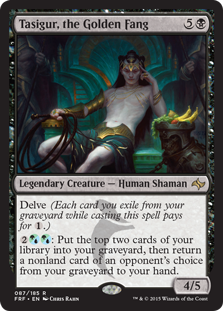 customary Gurmag Angler duo or trio. Tasigur, the Golden Fang was still out in force, seeing maindeck play in not only every Grixis Control list in the Top 32, but also every Grixis list except one (an incorrectly classified Grixis, not UR, Twin by Robert Chase) in those top decks. Of course, Grixis Control was the big winner here. Of the nine players making Day 2 with Grixis Control, four converted into a Top 32 finish. This conversion rate, 44%, was one of the best rates of the most-played decks in the entire Open. Looking only at decks with 6+ appearances on Day 2, Grixis Control had the second-highest conversion rate to the Top 32 (the highest, Abzan, gets its own section below). When you factor in the prevalence of Grixis Delver and Grixis Twin in both the Top 32 and on Day 2, it becomes clear that Grixis is handily the most popular color pairing in present-day Modern. This is critical for anyone serious about winning big events in the future. Whether you're playing against Control, Twin, or Delver, be prepared for the synergies of Snapcaster Mage, Kolaghan's Command, Terminate, and the delve creatures.
Tasigur isn't the only legendary creature to join the Grixis ranks and propel the deck to the top. Jace, Vryn's Prodigy/jace, Telepath Unbound saw almost as 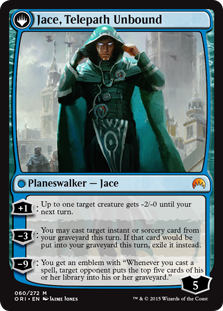 much press this weekend as those ridiculously fake Commander fetchlands, and although he wasn't a staple in every Grixis deck, Michael Majors' Jace playset was the talk of the tournament. In my own Origins review earlier this summer, I gave Jace a lukewarm reception on the weaknesses of his +1 ability, which felt irrelevant in too many unfair matchups. I also said "Jace is the likeliest walker to break out of the unplayable category and rise into a tiered control deck", and SCG Charlotte was the perfect scene for this to happen. A big contributor to this was the relative lack of unfair decks at the Open. Neither Amulet Bloom nor Grishoalbrand had more than a single representative on Day 2. Twin saw a lot of play, but if the Top 32 lists are any indication, many of the lists were running Splinter Twin Plan Bs with Tempo or Control Plan As. This is the kind of environment where Jace thrives. Our very own Trevor Holmes has been singing Jace's praises for weeks now, and he went to the event with his own Grixis Control list to finish with 21 points on Day 2. You can expect more Jace in the weeks to come, which is bad news if you are trying to outgrind or outvalue Grixis Control but good news if you are trying to do unfair things.
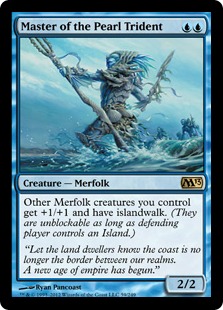
Even if you don't think Grixis Control is as good as many are saying, it's hard to doubt that other players will buy into the hype and pile on the Grixis train. We are entering an era where Grixis Control will always be a top five most-played deck, and the metagame will need to shift accordingly. I expect to see more Merfolk in the coming weeks as players adapt to the Grixis menace. Merfolk was well-positioned even before the Open, and now it's looking better and better by the day.
Hits: UW Emeria Control
Enough Grixis: let's talk Emeria, the Sky Ruin. Michael Segal piloted a team of Emeria, Sun Titan, Court Hussar, and a bunch of other 2011 Standard expatriots to a 13th place finish at the Open. As the commentators reminded us all 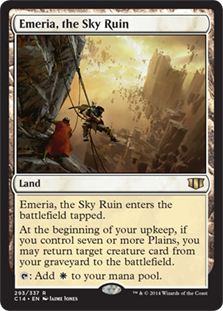 weekend, this is a list that doesn't even look like a Modern deck at all, let alone a deck that could make Top 16 at a major event. Segal's list is a who's who of offbeat, fringe, and (let's be honest) mediocre-looking cards that somehow clawed their way through a high-powered gauntlet of Twin, Burn, Affinity, and Jund en route to his finish. Once you get past the disbelief at seeing Mortarpod, Detention Sphere, and Ojutai's Command in a high-placing list, you can start to notice just where this kind of deck excels. Lone Missionary and Wall of Omens give the deck a surprisingly robust early game, particularly in tandem with the Path playset and the random disruption in Aether Spellbomb and Mortarpod. Both Supreme Verdict and Ojutai's Command give the deck stabilization power past turn four, which is all UW Emeria Control needs to get into the mid-to-late game where its Emeria and Titan engines can really shine. This gameplan is particularly strong against decks built for grinding small advantages, such as Jund and Grixis Control.
UW Control's success over the weekend is a big gain for Modern. For one, this kind of deck is the very definition of a control deck: deliberately interactive at every stage of the game and with a slow, incremental win condition. I personally think there are other spaces control can occupy in Modern, but 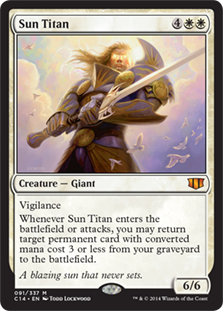 it's good to have more representatives in this oftentimes underrepresented area of "traditional control". Another reason for UW Control's significance is its price tag. With no Snapcaster Mages, Cryptic Commands, and only a single playset of fetchlands, this is by far one of the cheapest decks with competitive potential: a mere $215 with TCG Mid prices (and not a single card under lightly-played condition!). Snapcaster's exclusion seems suboptimal to me, especially because lategame Emeria-recurred Snapcasters feel very unfair. Then again, Snapcaster's targets are more limited here than in other control decks. Notably absent are the cantrips like Thought Scour and Serum Visions, along with the burn spell Plan B you see so often in red-based Snapcaster decks. Perhaps Snapcaster has a home here, in which case the pricetag increases significantly. If not, however, this is a strong, cheap choice for future events. A final reason for UW Control's importance is its representation of format diversity. If a Sun Titan playset can make its way to the Top 16 of a 15 round event (indeed, the deck made its way to the T16 based largely on Titan himself), it forces us to reevaluate a lot of other cards previously dismissed as unplayable or subpar.
I can't decide if Segal is just the luckiest budget player of the summer, or if his deck was really onto something. I'm leaning towards the latter based on the internal synergies within the deck, as well as UW Control's broader metagame profile even before the event. Looking only at MTGO, UW Control decks make up about 2.8% of the metagame, with roughly 1% of that falling in the Pilgrim's Eye/Emeria/Lone Missionary category. This suggests broader viability before Segal even sleeved up the deck, so perhaps his finish will push that further. I'm excited to see what the deck does in the coming months.
Hits: Abzan's Return?
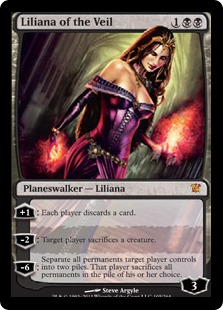
Back in early June, I predicted that Jund would surpass Abzan as the BGx deck of choice. By the end of the month, it was clear that Jund's Dark Confidants and  Terminates had triumphed over Abzan's Siege Rhinos and Path to Exiles. Abzan plummeted into tier 2 with a sub 4% metagame share, Jund rocketed to the top of the charts, and there was much rejoicing by anyone not named Willy Edel. As anyone who has played Modern for more than a few months knows, however, BGx is a versatile creature and neither Tarmogoyf nor his mistress Liliana of the Veil are particularly loyal to one pairing over the other. If the metagame shifts, so too can BGx. SCG Charlotte saw a small but noteworthy shift back to Abzan, and although it's too early to know if this signals a more permanent change, it's something we need to keep an eye out for. Five players made Day 2 with Abzan and three of them converted into a Top 32 finish. On top of this 60% conversion rate, Charles Stephens brought his own traditional Abzan list to the Top 8 before falling to Tom Ross's Infect, a historic Abzan predator, in the quarterfinals.
I can't stress enough that it's not yet clear if Abzan is on the rise or if this was just a one-time anomaly. We'll need to review the full August metagame data to see if other trends suggest movement in one 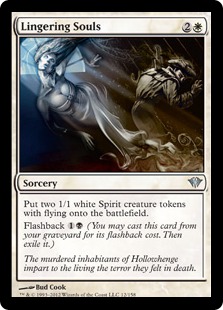 direction or the other. In the meantime, we can speculate on some reasons for Abzan's possible success over Jund. One big explanation is the same reason for Jace's success in Grixis Control: the format is increasingly fair, grindy, and midrangey these days. Abzan thrives in this kind of metagame, where Lingering Souls clogs up Angler, Tasigur, and Goyf-heavy boards for multiple turns and where Path to Exile kills these cards much better than Lightning Bolt. Incidentally, Jace is a great card in the inevitable Abzan vs. Grixis matchup because Abzan can't remove him as efficiently as Jund, but that's a topic for another time. Rhino is also a big factor here, providing incremental damage against lifeloss-reliant Grixis decks and putting up a giant Bolt-proof and Kolaghan's Command-proof body.
If the Abzan shift is real, we are likely to see a return to the Pro Tour Fate Reforged metagame where increasingly linear decks (Tom Ross had the right idea with his SCG Charlotte Infect list) emerge to battle removal-inefficient Abzan grinders. I'm not yet convinced Abzan is the real deal if for no other reason than Joseph Herrera's tournament win with his own Jund list. Still, it's hard to ignore Jund's abysmal conversion rate (only one of the eight Day 2 players made it to the Top 32) and Abzan's relative success.
Misses: Burnt Out
Speaking of abysmal conversion rate, no single decktype did worse at the Open than Burn. Ten players made Day 2 with the deck. One of them made it to the Top 32. That lone Burn champion, Arya Roohi, 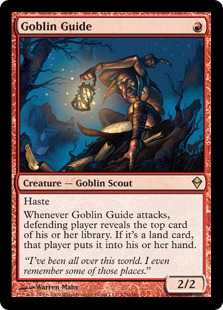 didn't even crack the Top 16, settling at 22nd with Modern's most linear aggro deck. This is definitely not to diminish Roohi's finish (congratulations!), but it is very much to highlight some glaring shortcomings in the most-played deck at the Open. To some extent, no one should be too surprised with Burn's lackluster showing. There are few decks hurt more by sideboarding and over-preparation than Burn (Affinity is another one in this category). The more lifegain and countermagic you bring, the better the Burn matchup becomes, and the Top 8 alone was packed with Dispel, Kitchen Finks, Feed the Clan, Spell Pierce, and other ways to beat the Burn game. Players have also shifted away from Destructive Revelry and Wear // Tear bait like Leyline of Sanctity and Dragon's Claw, which makes Games 2 and 3 even more an uphill battle than they were before.
To be clear, Burn isn't without its strengths. Eidolon of the Great Revel remains a format powerhouse, either giving Burn a quick edge in an aggressive mirror or taking over fair games 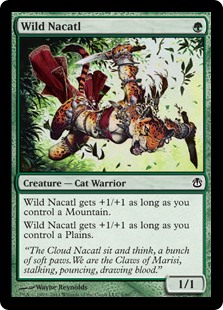 with nonstop pressure. The Atarka's Command/Skullcrack pairing is also still a strong way to fight lifegain, although even Roohi's seven total copies of the cards wasn't enough to get him into the Top 16. Roohi's shift to maindecked Wild Nacatl was one way to address the classic Burn problem of running out of steam. In many ways, Nacatl acts as a second set of Goblin Guides, giving you a recurring damage source that can keep swinging under Negates and Dispels. Nacatl also struggles with the omnipresent Tasigurs and Anglers, so it's not as if Nacatl is necessarily the solution to Burn's woes. That said, Nacatl has seen a lot of play in recent MTGO Dailies, which might signal a larger shift towards Nacatl-based Naya Burn lists. This will probably be a necessary shift in the longrun, especially with the uptick in Grixis decks and their increased arsenal of countermagic (indeed, Roohi brought Exquisite Firecraft to combat this).
Misses: "Broken" Decks
July was a rough month for banning discussion. It seemed like everyone, pros and major content providers included, had plain forgotten the banlist criteria and were crying for a host of strange and 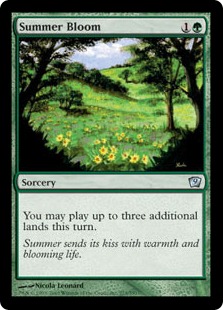 unsupportable changes. This included arguments for an Amulet Bloom and Grishoalbrand ban, whether Amulet of Vigor/Summer Bloom or Griselbrand/Nourishing Shoal. Or both. Or all four, just to be safe! Thankfully, level heads prevailed at Wizards and it was the "No Changes" announcement heard across the world. As I discussed in both my banlist prediction article and my announcement review, this shouldn't have been a surprise to anyone paying attention. Neither Bloom nor Grishoalbrand were turn four rule violators because neither deck was top-tier. This made them ban-proof in July and should have insulated them from all the torches and pitchforks aimed their way throughout the summer. In case you needed any further evidence about the decks' safety in Modern, head on over to the Day 2 breakdown for SCG Charlotte. With a single player on each deck, and only the Grishoalbrand player cracking the Top 32 at 24th place, the event showed that both decks were far safer than many gave credit. Or, perhaps more accurately, it showcased the format's ability to self-regulate potentially broken decks.
Have we seen the last of either Amulet Bloom or Grishoalbrand? Absolutely not. These are still strong combo decks which will absolutely rise again, especially when the metagame least expects it. As the past 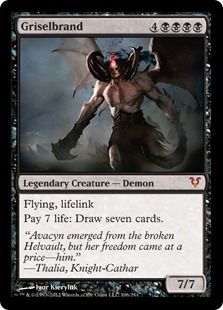 months have shown, however, our format is well-prepared to check their rise. SCG Charlotte was a major datapoint in this narrative because it happened after the banlist announcement. There was considerable buzz around the decks before July and it was entirely possible that Modern players were actively avoiding decks which could be banned. The July announcement should have eliminated any lingering doubts and fears in this regard and any skeptical players should have invested in the decks. If this happened it didn't affect the top tables at the SCG Open, and if the rest of the metagame is any indication, these decks are still solidly tier 2 and exist in a very fair and balanced place right now. You would be foolish to totally forget about these decks and come unprepared to face them, but the hate cards (Blood Moon, Relic of Progenitus, [mtg_card]Dispel[/mtg_card, etc.) are relatively accessible and highly relevant across matchups. Come prepared and show the format why these decks are not monsters to be feared but rather diverse combo representatives to be embraced.
Post-SCG Charlotte Modern
Just because a deck didn't make the hits and misses list today, doesn't mean it didn't have a good (or bad) weekend at Charlotte. Affinity was quite solid, as were Merfolk and Infect. Abzan Company saw a slight comeback after weeks of mediocre performance, but Elves crashed and burned.
Also, Lantern Control. Give me more Lantern Control please.
Hopefully we'll see more of these decks in the coming weeks, especially as we gear up for GP Oklahoma City. I'm particularly excited to see more Grixis Control as a mainstay in Modern's top-tiers: our format needs more interactive policing decks, and Grixis (plus Captain Jace) fits that bill nicely.
What decks did you see succeed at the Open? Did you go yourself and bring any awesome tech we should know about (or encounter it over the weekend)? Are there any other takeaways you think I missed? Let me know in the comments and get excited for an upcoming metagame breakdown to hopefully be released next week!
Editor's note: An earlier version of the article incorrectly classified Robert Chase's Grixis Twin list as a UR Twin list. The article has been corrected to reflect this inaccuracy.


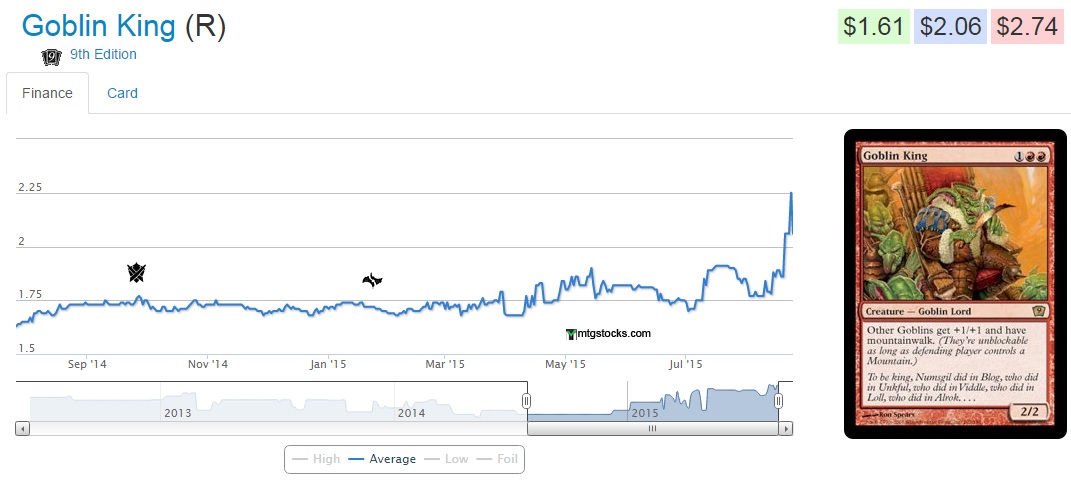
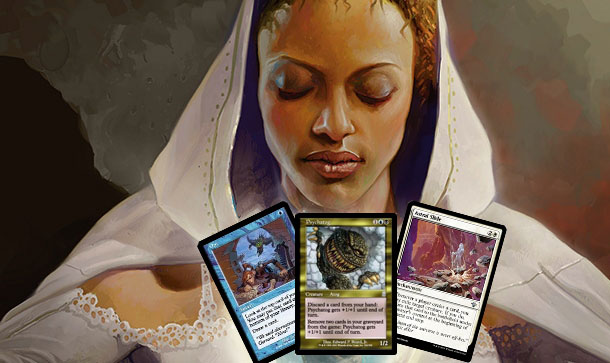
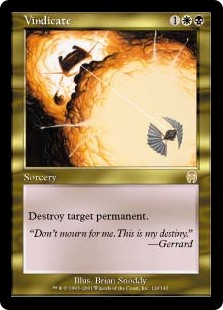 Following last week's theme, I only want to propose reprints that meet two parameters. First, a reprint should benefit a lower-tier deck without pushing a top-tier deck too far. This means a card like Vindicate should probably be kept off the list. For every Deadguy Ale and Esper Control list you'd see Vindicate in, you'd see a half dozen Vindicate-powered Abzan lists clogging up the Top 8s/16s of every event. It's true that Vindicate might be, well, "vindicated" in testing as safe for the format, but the card is strong enough abstractly that we don't really need to test it to prove its power in Abzan. Back to Basics would be risky here too. Do we really need to give Merfolk its own Blood Moon, even if some tier 3 Mono Blue Devotion deck gets a new toy? These are the kinds of cards we want to avoid. A much better reprint idea would be something similar to Gempalm Incinerator, which would only serve to improve the low-tier Goblins without remotely benefiting Modern's top-tier decks.
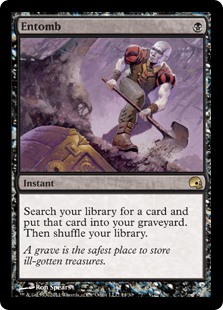 We also don't want cards that violate format guidelines, particularly the turn four rule. Rituals almost always fit into this category, including otherwise fun cards like Land Grant and Elvish Spirit Guide. We also find archetype staples like Entomb and Exhume here: these cards would definitely help an underplayed Modern archetype (Reanimator), but do we really need another way to get turn two Griselbrand? It's possible these so-called turn four rule violators wouldn't actually make a big Modern impact. The SCG Charlotte Open saw only a single Amulet Bloom and Grishoalbrand deck on
 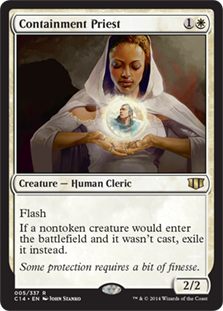 Terminate, but your white cardpool gets pretty weak after that. White gives you sideboard cards and little else. Most colors in Modern are fairly deep in both the maindeck and sideboard, with lots of applications across the format's top-tier decks. White? Playing white often feels like swimming in those public park district pools, where your "deep" end is about five feet and everything else is waist-level. My Mother of Runes reprint suggestion last week aimed to fix this, and today I'm adding another leading lady to Mom's team. Containment Priest gives white decks more catchall hatred against some of Modern's least fair decks, especially Goryo's Vengeance and Through the Breach-based strategies. Priest is also strong in a variety of random matchups including Merfolk (shutting down Aether Vial), Elves/Abzan Company/Naya Company (no more Collected Company/Chord of Calling), 4C Gifts, UW Tron, Death and Taxes, Dredgevine, any decks packing Restoration Angel, etc. That's a big boost to creature-based white decks trying to break into Modern.
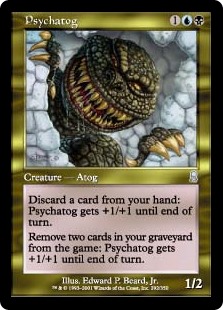 Psychatog's absence. The Atog will always be synonymous with a certain style of control, pairing with oldschool staples such as Upheaval, Cunning Wish, and Counterspell to dominate events like
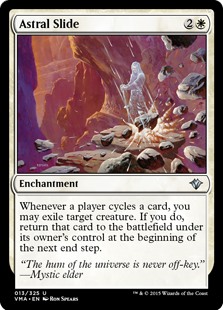 Cadaverous Bloom/Prosperity good old days. I'm talking about the early 2000s days when Astral Slide and Lightning Rift showed the world that cycling was a viable build-around mechanic outside of silly Fluctuator shenanigans. A Slide reprint serves a few functions in Modern. For one, it's the rare card that enables a totally new strategy without touching any existing top-tier decks. Many build-around cards like Slide don't have what it takes to succeed in a high-powered format like Modern (and maybe Slide doesn't either!), but if anything can make it it's the interactive and highly relevant Astral Slide effect. Removal is perhaps the most important interaction point in Modern and Slide gives a virtually unconditional and repeatable source for it. Abrupt Decay presents Slide with similar problems to those it gives Psychatog, but this doesn't diminish Slide's play against most of Modern's best decks: Twin, Grixis Control, Jund/Abzan, etc. I'd struggle with running Slide in Burn/Affinity-heavy metagames (we don't have Renewed Faith to shore up the matchups), but you could still get a lot of mileage from flickering cards like Wall of Omens and Lone Missionary.
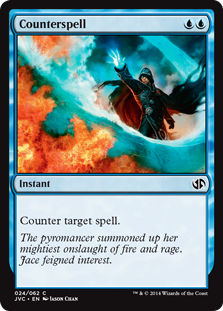 around one of the most controversial reprints of them all: Counterspell. This is the kind of potentially high-impact reprint we can't just talk about in a vacuum. We need to test the card and see how it performs in a few different contexts. For now, the plan is to test Counterspell in UR Twin and some combination of Scapeshift, Grixis Control, and/or Temur/Grixis Delver. I'm definitely testing the Jund vs. UR Twin matchup because that's such an iconic one in Modern and we need to see how Counterspell affects it. We would be worried if the roughly 50-50 matchup tipped 60-40 in favor of Twin due to Counterspell. Or maybe it doesn't tip at all. Test results will show and we'll revisit this topic in the near future.
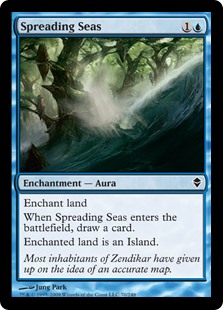 and "how preventative?" Say your Merfolk opponent hits his land drops on time, resolves Spreading Seas on your Stomping Ground, Vapor Snags your Grim Lavamancer, and curves out perfectly with an Aether Vial, killing you with an unblockable team on turn five. These kinds of draws are very difficult for many decks to interact with, and the Seas + islandwalk combination prevents blockers from walling the onslaught (or even leaving your hand!). Still, very few players would call Merfolk "unfair." Doing so leads to the unfortunate scenario of the word losing all meaning, as in
  How are Affinity and Infect unfair if they win by attacking opponents with creatures over the course of the game? To address this issue, I've added another framework. For me to consider a deck unfair, it must meet one or both of the following criteria:
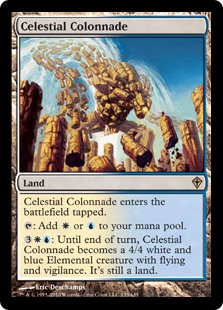 The presence of fair win conditions doesn't make a deck fair. In fact, most unfair decks in Modern also have fair plans. But if a deck sometimes wins in a nontraditional way, or by going "zero to hero," I classify it as unfair. In Jeskai Control, Celestial Colonnade can close out games by itself. Still, that the deck wins with cards like Jace, Architect of Thought categorizes the strategy as unfair. Twin has a fair plan, too, happily killing you with 2/1s. Elves performs just fine grinding you out with Scavenging Ooze or out-valuing you with Collected Company. Regardless of the fair games they can play, these unfair decks regularly defeat opponents without attacking a single time, or by going "zero to hero."
 gamestate where they can begin to resolve haymakers (such as Siege Rhino or Keranos, God of Storms), Ramp decks trade Rock's interaction for mana acceleration, allowing them to access the "haymaker stage" much earlier than the opponent. The two decks aren't far removed from each other in terms of finishers, since they both employ some method - either disruption or acceleration - to propel themselves into a stellar late-game. Since Ramp decks generally go so light on interaction, I'm hesitant to classify them as Aggro-Control. That leaves us with one of two options: we can stop calling Ramp a Midrange deck, or we can refute the claim that all Midrange decks are Aggro-Control decks. The first option seems more elegant to me, but how do we then classify Ramp decks? Chingsung Chang calls ramp decks "
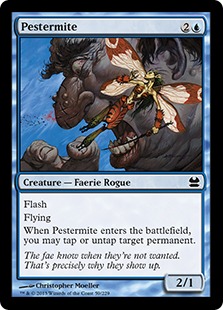 and aggression if it doesn't find a window to go off. Temur Twin represents Twin as a Tempo deck, often winning on the back of Tarmogoyf, Snapcaster Mage, and Pestermite before opponents can stabilize. Both Midrange and Tempo operate in similar ways, supplementing cost-efficient creatures with disruption to win games. As such, they both qualify as Aggro-Control, an interactive hybrid. As seen in Splinter Twin, or the now extinct Birthing Pod decks of Modern past, adding reliable infinite combos to a Midrange or Tempo deck creates Aggro-Control-Combo. Since Aggro-Control decks use tempo, the in-game mechanic, more than other Magic archetypes, they reap extra benefits from adding an infinite combo; just the threat of going off forces opponents to, say, hold up Path to Exile instead of impacting the board. When opponents "play safe" in this way, they give up tempo to the Aggro-Control-Combo player, who may not have a Splinter Twin in his hand - or even in his post-board 60!
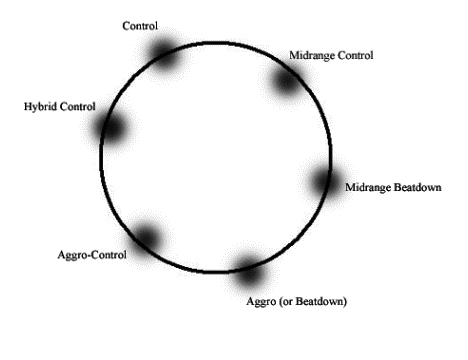 While Sullvan's archetype names don't exactly fit the ones we're working with, we can still follow along the line between "Aggro" and "Control" to measure how "close" a deck is to either strategy. Just based on the visual, we can deduce that a deck located in the "Hybrid Control" category is more controlling than one located on the "Aggro Control" dot. Every non-Combo deck falls somewhere on the circular line between Control and Aggro.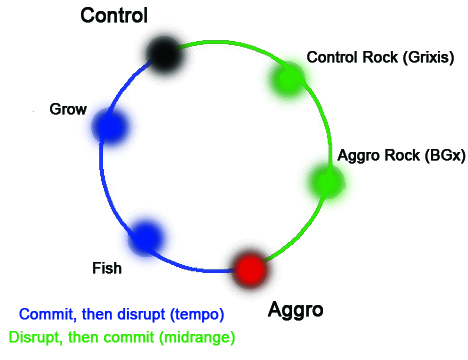
 I stand by my claim that, in the abstract, Midrange decks lose to Control decks, as Control takes advantage of the late-game better than Midrange. One way to beat Jeskai Control is for Grixis Control to reverse its disrupt-then-commit plan, essentially becoming a slower Tempo deck. "Slower," but not as slow as Jeskai by a long shot - with all those post-board Dispels, Grixis can reliably land a Tasigur and protect it long enough to win.
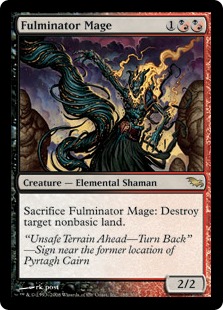 Another tempo element Grixis decks have access to is mana denial. Today, most Grixis decks phase out Blood Moon for Fulminator Mage, which synergizes better with Tasigur, the Golden Fang and Kolaghan's Command. Either way, these cheap sources of mana denial have always devastated control strategies, and rear their heads most often in Tempo decks. Legacy's
 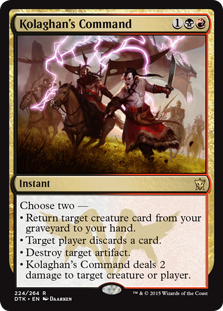 of creatures to throw at its opponent. Grow decks, for example, play 12-16 creatures; Fish decks often play more than 20. This sheer volume of threats overload a Control player's removal when combined with disruption. In the Jeskai vs. Grixis matchup, if a pair of Bolts do manage to take out a Gurmag Angler, Kolaghan's Command doubles as an extra copy of that threat (tearing apart Jeskai's hand, or blowing up a Batterskull, is just icing). Take a look at
  For one, the archetype advantages and disadvantages associated with aggro and control apply to the hybrid decks residing on the blue or green lines. The Grixis Control player can tweak a few cards in his deck and end up with a set of Delvers, helping him play a tempo game pre-board and improving his percentages against Control decks. But since Grow decks generally lose to Midrange, he gives up points against BGx in the process.
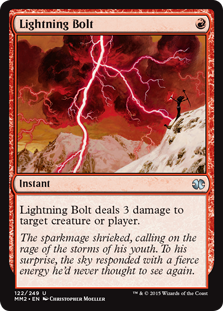 Four Snapcaster Mage, four Lightning Bolt
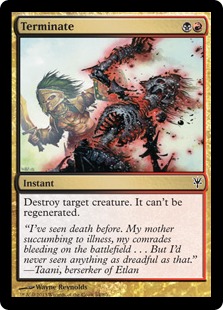 Terminate exists as a solid unconditional two drop removal spell that kills everything, unlike Lightning Bolt. One-drops, Tarmogoyf, artifact creatures, and Deceiver Exarch all fall victim to Terminate, and while the no-regen clause rarely comes up, it is relevant against Welding Jar in the Affinity matchup. Combo prevalent metagames could cause us to want to play only three, as it is poor against Living End, Amulet Bloom, Grishoalbrand, Scapeshift and Tron, but it does good enough work against Affinity, Twin, Jund, Merfolk, Infect, Burn and every other deck that plays fair creatures that is has earned it’s 3-4 slots. Most Grixis lists have room for 4-5 slots for value three drops, usually three Kolaghan's Command and an Electrolyze. Kolaghan's Command, along with Snapcaster Mage and delve creatures is the reason to play Grixis in Modern, giving us an excellent way to compete with discard while also going late against control, disrupting combo opponent’s hands, two-for-oneing small creature decks, and shoring up the Burn and Affinity matchups. Electrolyze exists to fight Lingering Souls, which is this deck’s weakness, but it also does solid work against creatures and is never dead.
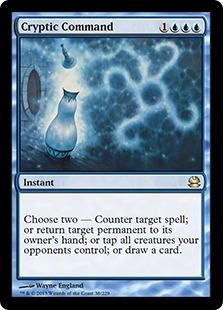 Kolaghan's Command asks us to push our curve up a little higher, as we often want to Snapcaster Mage/Kolaghan's Command in the midgame, which requires five or six land on the field. This makes us play a slightly larger land count than the Delver decks (22 land vs. 18/19), which in turn lets us afford to play Cryptic Command and reliably get to the mana required to cast it (with Spell Snare or Dispel protection, hopefully). The king of Modern counterspells, Cryptic Command is clunky, but if we can successfully cast it the payoff is big. I’ve played around with the numbers and feel like two is the right number for my playstyle, as I usually like to cast one in a game, but two in hand can be very clunky, especially alongside our Delve creatures. The other counterspells can be a mix of Spell Snare, Mana Leak, Remand, and Deprive, with Dispel tagging in occasionally, or Vendilion Clique as a pseudo-counterspell that forms
 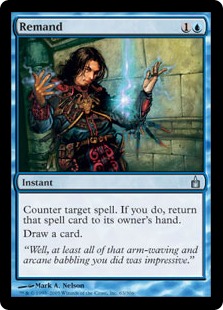 the bridge between Mana Leak and Cryptic Command.
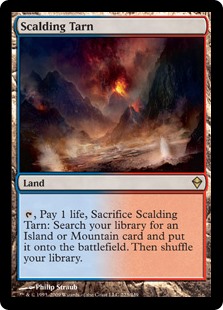 Most Grixis Control lists play 22 lands, with some controlling versions that play more Cryptic adding a 23rd, while some leaner builds occasionally play 21. Normally Grixis plays eight fetchlands, (three Scalding Tarn, four Polluted Delta, one Bloodstained Mire) with Delta getting the 4th copy as our optimal land sequencing against aggressive decks is Steam Vents into Swamp. The prevalence of Blood Moon in the format means we are much more likely to fetch basic Swamp over basic Mountain as well. While Moon isn’t necessarily good against us (and we can play it ourselves if we wish) it is still important to not lose to it, so always keep that in mind. Most lists play two copies each of Vents and Grave, with Sulfur Falls as another dual that can untap under Choke along with Creeping Tar Pit.
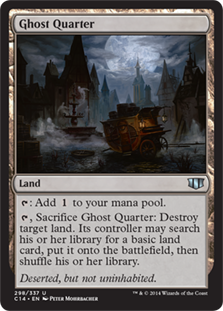 Blood Crypt is present in lots of lists, but I have long since cut it from mine, as it’s a dual that we rarely want to fetch and is horrible in opening hands alongside Serum Visions and Thought Scour. Two-land hands like Island/fetchland are the only hands where Blood Crypt helps us, but we can just fetch Vents and look for a third land that is either a fetchland or Creeping Tar Pit later on. More than “we don’t really want to fetch it”, cutting Blood Crypt means we can afford to play another non-blue land, with the best two options being either Desolate Lighthouse or Ghost Quarter. Currently I’ve been playing Quarter, as it is excellent against Amulet Bloom and Tron, does good work against Affinity lands, and can even fix our mana in a pinch.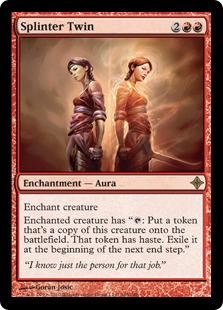
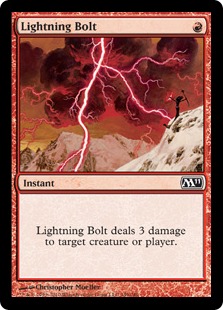
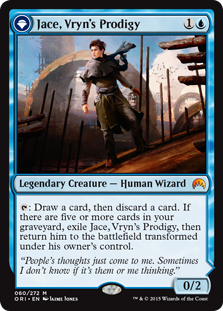 Grixis Control is, as always, a fun, adaptable strategy that has game against every deck in the format (except perhaps Bogles). It can be adapted to beat anything, and lots of sweet tech for the deck exists for those willing to look. Don’t be afraid to try out Deprive, Rise // Fall, Desperate Ravings, Mulldrifter, Grave Titan, Vampiric Link, Bitterblossom, Glen Elendra Archmage, Jace, Vryn's Prodigy, or any of the other cool angles of attack that people have tried. Grixis Control has room in the maindeck for a few flex spots, and is well suited to both find and cast spicy spells, so get to exploring!