

Are you a Quiet Speculation member?
If not, now is a perfect time to join up! Our powerful tools, breaking-news analysis, and exclusive Discord channel will make sure you stay up to date and ahead of the curve.
It’s been a while, but it’s good to be back! Last August I decided to take a year-long break from Magic. This year I won’t be writing a regular series but will make some occasional contributions. My focus? How you can go infinite on MTGO without putting in a lot of time, allowing you to focus on what you came for: playing Magic.
Regular and powerful cycles exist within the MTGO economy that can provide strong returns without micromanaging your account. My goal will be to leverage these cycles, moving from a model of picking stocks to one of buying index funds. Unfortunately there’s no effective long-term “buy and hold” strategy for MTGO because of reprints, but it is possible to employ a three-to-six-month cycle to grow your portfolio with little risk and a modest time investment.
But before we can get started, we will need to generate a stash of tickets. This article is about how to get bids on a large stack of Magic cards, a technique that can be used to either cash out or build a war chest.
A Bit of Backstory
Last summer, shortly after the client switch over, I took a hiatus from Magic. Life was too busy, and the new client featured a suite of features that made quitting Magic Online easy and seamless.
I sold much of my collection and uninstalled Magic Online.
But, to paraphrase W.C. Fields, “quitting Magic is easy…I’ve done it a hundred times.” This summer I realized I can now fit a few hours of Magic a week into my life, and they improved the client to the point that it’s actually worth my time.
That said, I knew I didn’t want to spend a lot of time managing my account. I got into this with a desire to play Magic for free. I succeeded, but last year my portfolio got pretty unwieldy and I spent more time speculating, tracking, and reading QS than I was playing. I knew I needed to simplify.
Getting Liquid
Before leaving, I sold most cards that were at or near their peak. I kept my playsets of eternal formats, cashed out a lot of my specs, and stashed the rest.
I then didn’t log into my Magic account for eleven months. It was a time to focus on career and family, and there's no greater return on investment than that. The upside was that when I returned I had relatively few tix in my account and a large portfolio of random cards, unperforming specs, and extra playsets. I needed to get liquid.
This is a position many Magic Online players find themselves in if they've been playing for a few years. Unless you are constantly culling your collection things tend to sprawl out. Some cards they are gaming with. Others are failed specs or detritus. Then you've got a bunch of boosters that are not being drafted or are too low to sell.
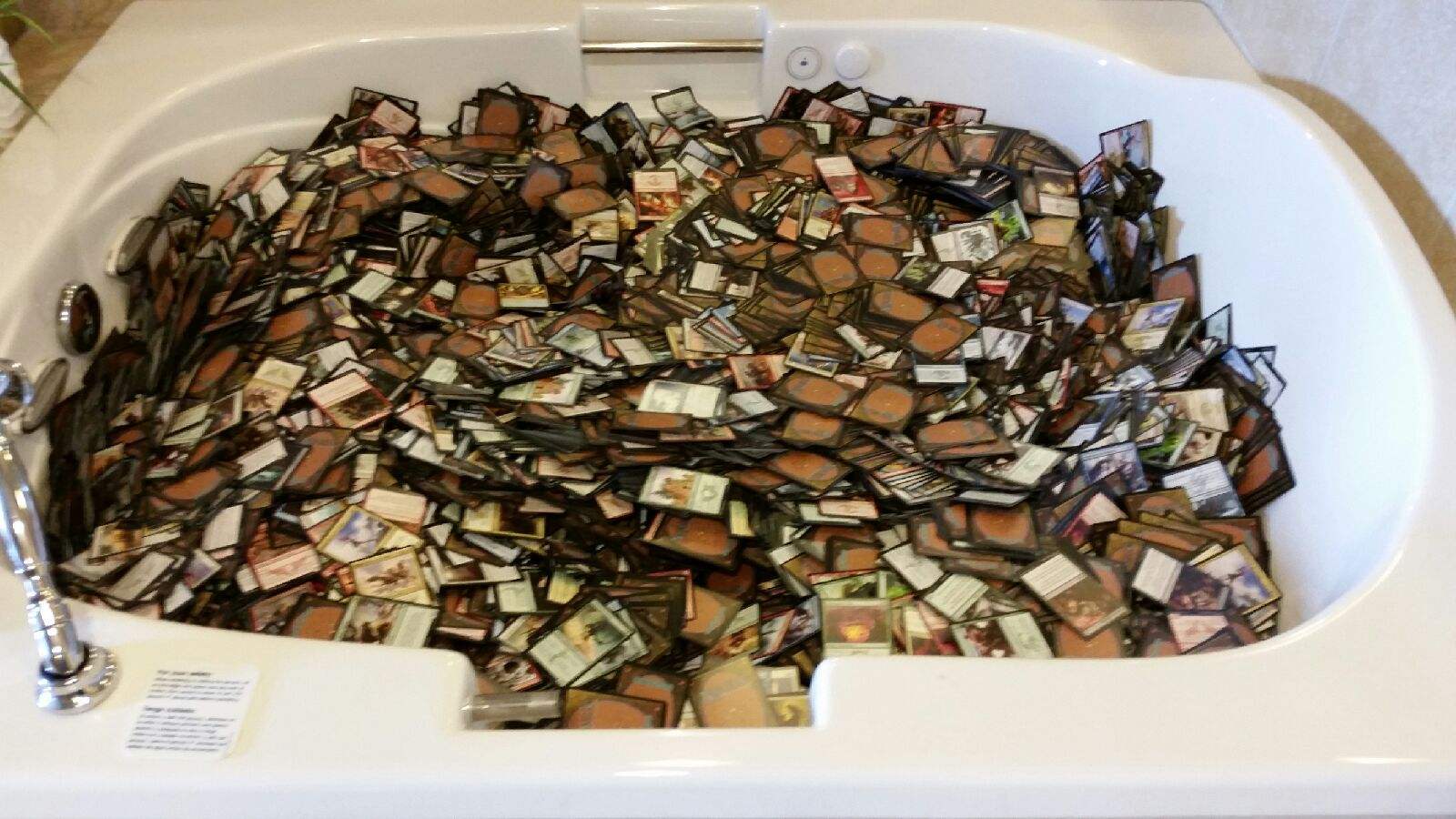
All these positions are what we might call “inadvertent specs”—they are dead capital waiting to be deployed. They are going sideways when there are plenty of opportunities to go up. Leaving junk in your binder has a lot of opportunity costs.
Putting Velocity to Work
What’s great about MTGO is that you can get strong returns during one release cycle and then reinvest those returns during the next cycle. The cyclical economy allows you to make 20-30% on that portfolio and then multiply those gains three months later for another 20-30%. The ability to gain velocity allows for fast growth. But with these rates of return you want to minimize dead capital.
Dead capital in your account could be unproductive or minimally productive specs. It could be playsets you are not playing with. It could be random cards you left in your extra account and forgot about. And, as I had learned in the past, it can really add up.
In order to get back in the saddle, I needed to turn that detritus into gold. And I didn’t have the time to micromanage the process by seeking out the best buy price on hundreds of different cards. Luckily there was a great tool at my disposal: the collection buyout.
Selling out of an account is the quickest way to liquidate your collection—and you don’t lose much value in the process. In fact, I think that some botters are so keen to buy in quantity to stock their bots that they may even reduce their margins to attain collections.
Of course it’s not the only way to get liquid--Sylvain Lehoux has already written about a few others in his excellent article on cashing out but his focus is on how to get cash from tix. I figured I would describe the “account sellout” option, since it should be another tool in your kit.
Before I hit the marketplace, I opened a trade with my second account and stashed everything I wanted to keep. I was pretty ruthless and tried to remain emotionally disconnected from the cards I was selling. Sure, I once had high hopes for you Young Pyromancer and Rageblood Shaman but it’s time to move on. Anything I wasn’t likely to play with or which I didn’t believe was sure to go up in value I put in my “selling” account.
I also made sure that I wasn’t timing the market wrong. I sold at the beginning of July, when I knew a lot of Modern cards would be at their local peak and before the selloffs and liquidity crunch that would come with the Origins release.
I wanted the best price without putting in a lot of time, so I got bids from a bunch of bot rings. This doesn’t take any extra time and can provide assurance that no one is lowballing you.
Getting Bids
How do you get a bid on your collection? First you’ve got to convert your collection to a .csv. Here some simple steps, courtesy of Marlon MTG:
- Log on to your account and open the collection tab.
- Switch to list view by clicking on the square graph button at the top right hand side of the card binder.
- You are now seeing your collection as a list of items, just right click on any item.
- Choose "Select All" and then right click again and choose "Export Selected Cards to .Csv"
- You will be asked for a name and a place to put the .csv file, name it as your account name and choose desktop.
You then take that .csv file, mail it around to the addresses below, and wait for the bids to roll in.
Another important tool to know about is the Cardhoarder "Collection Appraisal Tool" which "is intended to give you an idea of the value of your collection to help you decide whether you'd like to proceed with a firm quote." You simply upload your CSV and within seconds you get an estimate of the value of your collection. These are great tools for tracking how your portfolio is doing.
My Cardhoarder link put the value of my collection at $1,751.36. That's a good starting point but it wasn't a real bid. Would the bids come in higher or lower?
It Pays to Shop Around
Given how efficient the MTGO market seems, you might think that the difference between offers would be small. The first time I sold a collection, I wasn’t sure what to expect. I figured some bots would have better buy prices on certain cards, but in the end it would even out.
I was dead wrong. I found dramatic differences in the prices that bots offered for my collection.
That was true this time as well. Within a few days I had received the following bids:
- MTGO Clanteam mtgoclanteam@gmail.com: 2200 tickets (no cash/PayPal)
- MTGO Academy: collection@mtgoacademy.com $1285 (no quote on tix)
- DojoTrade Bots dojotrade@gmail.com: 2250 tickets or $2025 PayPal ($0.90 per ticket, minus paypal fees)
- CardBot: frankbb@sympatico.ca: 1958 tix or $1865.00 ($0.95 per ticket, minus PayPal fees)
- MTGO Traders: collection@mtgotraders.com $1955 Paypal. No tix. 2130 credits for MTGO bots. A MTGO Traders offer has some unique characteristics. They don’t pay tickets, but they will give you a 9% bonus if you take payment in the form of store credit. They also offer a 20% credit at their brick and mortar store, CapeFearGames, which is well stocked with singles and sealed product if you want to trade digital for paper. Finally, they offer a check in the mail rather than PayPal, which cuts down on transaction fees.
Note that both CardBot and MTGO Traders, along with Marlon and ABU, apparently use the same pricing software (and have been sometimes referred to as “the cartel” because they controlled so much of the MTGO market) so you might expect an identical buy price offer. However, there are discrepancies in their pricing algorithms--in this case resulting in about a 5% difference.
I also emailed ABU Games (mtgo@abugames.com) and Marlon (alpovutmen@gmail.com) who have made bids on my collection in the past but neither of them responded. Must have been a busy week...
Here’s a summary of my options. I knew I wanted tickets, but I also wanted to highlight that you’d have choices if you were looking for another form of payment.
| Buyer | Cash price | Cash minus fees (3% paypal of flat fee with check) | Tix | Store credit |
| Clan Team | N/A | N/A | 2200 | N/A |
| Dojo Trade Bots | $2025 PayPal | $1964 | 2250 | N/A |
| MTGO Academy | $1285 PayPal? | $1246 | ? | N/A |
| CardBot | $1865.00 PayPal | $1809 | 1958 | N/A |
| MTGO Traders | $1955 via check | $1925 | N/A | 2130 tix credit for Traders bots, $2346 store credit at Cape Fear Games |
I weighed my choices. MTGO Academy offer was a lowball but the others were pretty close. MTGO Traders was the best choice if I wanted to trade up my MTGO collection into a paper collection. Depending on your residency, trading digital for paper may avoid creating taxable income. That said, you are getting a nice bonus but they won’t always have the best prices on the Legacy staples you are looking for.
For both cash and tix, Dojo had the best price. What’s more, I noticed their conversion rate was not competitive. They were offering 0.90 per ticket, plus paypal fees—MTGO Traders and GoatBots often buy these at 0.94 or 0.95.
I decided I would go with Dojo and take my payment in tickets. After all, I was looking to put them to work—and had a key opportunity ahead: the Origins set release.
Show Me the Money
I’ve sold my collection a handful of times, and there are a couple different ways it works. They will either ask for your MTGO password—change it to something generic before sending it over—or will ask you to manually execute the trade. These guys are pros and the whole process will take about ten minutes. They will usually take your whole collection before offering you any tix in return, so be sure to work with reputable bot chains that have a history of successful transactions and a reputation to uphold.
In the end I went with Dojo since I was looking to maximize my ticket stock. In the next couple weeks I plan to put those tix to work on a portfolio of Origins and Khans block cards. Stay tuned...
I hope this article was helpful, and that you’ll take a look at your accounts and see if there is any dead wood you can put to work for you!

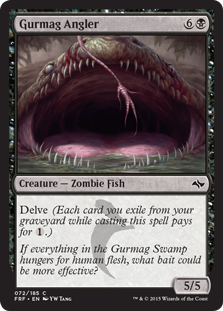 Gurmag Angler is the biggest boy on the block. Lingering Souls and friends are at an all-time low, which means Gurmag Angler is a problem for every non-Vault Skirge creature looking to attack. Even decks not looking to fight fair have to worry about the (usually) three turn clock that Gurmag Angler represents. Normally, the onus is on control decks to worry about opposing threats, but Grixis Control is blessed with this incredible gift of a 5/5 for B that every deck has to worry about and prepare for. This unique position lets Grixis Control turn the corner like no other; we are often able to force opposing strategies off their gameplan as early as turn three or four, for only one mana.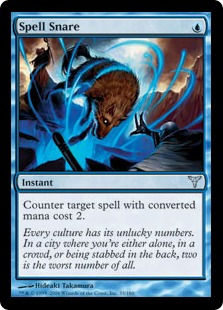
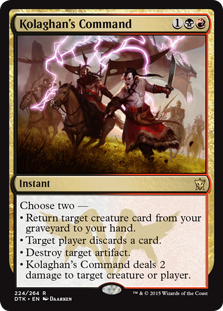
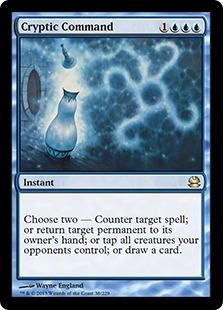
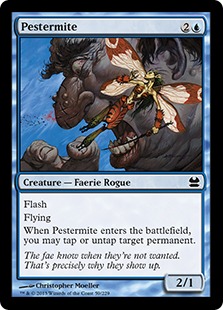 After board, they can choose to either board out the combo and try and kill us with haymakers like Keranos, God of Storms or Teferi, Mage of Zhalfir, or they can attempt to keep in the combo and power through with access to more counterspells.
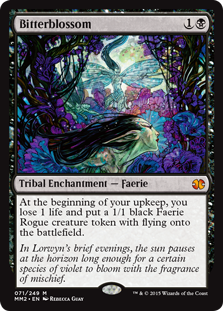 Recently, Grixis Control has experienced a surge in popularity both in paper events and online, due to many factors, but primarily because it’s just plain awesome and a blast to play (in my unbiased opinion). My sideboard plan of Bitterblossom and Leyline of the Void do great work in multiple matchups, but both are lights-out bombs in the mirror. While I didn’t find the Leyline during this match, dropping a quick Bitterblossom on turn three with Spell Snare/Dispel protection is relatively easy to do, and everything after turn three is just cleanup.
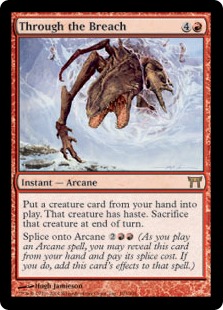 A quick Gurmag Angler backed up by counterspells is essential for victory, yet a fine line has to be walked to craft the game to that point without losing with counterspells stuck in hand. After boarding, Leyline of the Void can stop the quick Goryo's Vengeance plan of attack, though we still have to worry about Through the Breach. Dispel is a great tool to fight with, though after board we also have to worry about Pact of Negation. Their deck has a lot of moving parts, and while it’s a difficult matchup, some tight play can clinch it for us.
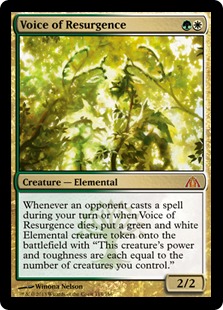 While Grixis Control doesn’t necessarily care whether it is on the play or draw, most other decks in Modern do, which meant being on the play throughout the Top 8 would be very good for me. It was especially useful in my quarters match against Naya Zoo, as getting out ahead of his powerful threats is necessary to save some damage and let us use our life total as a resource later on in the game. Jace, Vryn's Prodigy did work here, letting me power through some horrible flood, flip, flashback a Terminate, and then start locking down a Qasali Pridemage. Not bad for two mana! Eventually my flood caught up to me and I died to a huge Scavenging Ooze.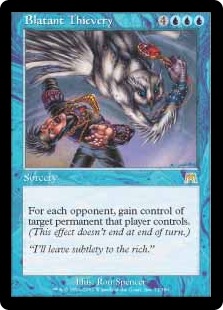


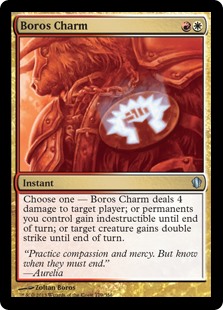
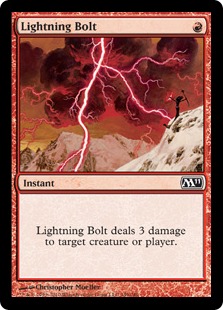 Lava Spike, Rift Bolt and Lightning Bolt are an automatic four-of. Lightning Bolt is the best burn spell printed, and its two friends are the closest we have come to replicating this in Modern. The same goes for Boros Charm and Skullcrack: Boros Charm being a rare two mana for four damage, and Skullcrack having the extremely helpful life gain prevention clause while maintaining a reasonable CMC-to-damage ratio. Searing Blaze is an absurd card when it is relevant. You will have some games where it is merely a two-mana/three-damage spell, but the risk/reward ratio is far too great to drop these down to less than three copies. As for the two flex spots, I usually lean towards Lightning Helix, but other options are available.
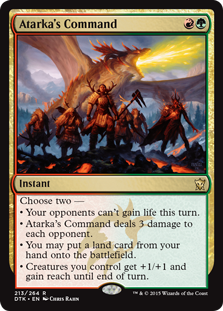 I have tested the Atarka's Command version extensively and have come to the conclusion that the upside of the card is not worth the mana issues it can cause. With such a low land count, Burn needs to be able to operate on two lands. Having to always fetch a Stomping Ground + Sacred Foundry immediately, while shocking yourself, opens you up to the same problem the rest of the format has: the amount of damage taken to fix your mana. While you gain percentage against many decks in the format, plus being Skullcrack five through eight, you open yourself up to losing to the other aggressive decks, and the mirror match becomes far worse. I feel the consistency of R/W outweighs the power level of this card.
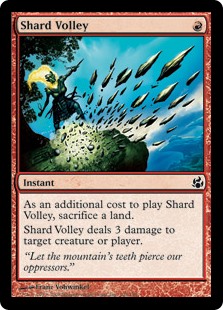 Shard Volley can easily be run in the flex spot, but I would caution against more than one. You want this to be the last spell you cast, outside of flooding scenarios.
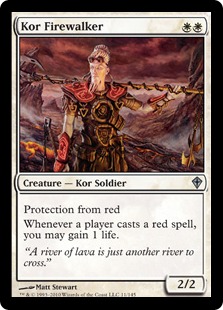
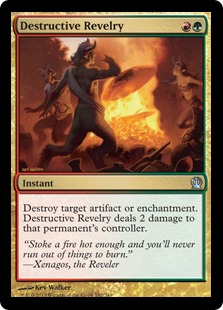 The cards in your board need to either continue your game plan (do damage to the opponent), fix a problem that is near impossible to beat (Leyline of Sanctity, Kor Firewalker), or give you the time you need to get enough draw steps to win. With that being said, outside of an extremely large metagame shift (or one where everyone plays Soul Sisters) , I would recommend the sideboard listed above.
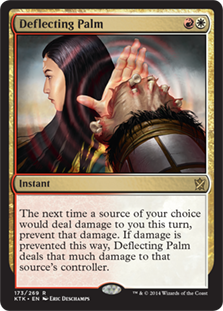 Deflecting Palm is my favorite “Oops, gotcha!” card. Amazing against Tron (targeting a desperate Wurmcoil attack is wonderful), Affinity, Infect, double-striking Primeval Titan, there are too many uses to list them all!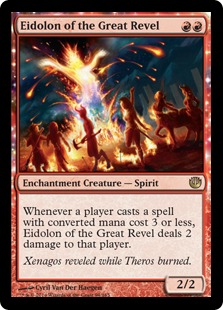
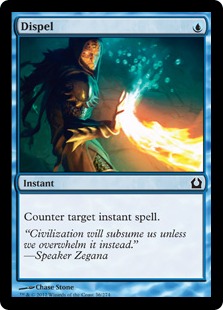 Play around Snapcaster: Against any Snapcaster decks, respond to a counterspell with additional burn spells while the counter is still on the stack instead of waiting for the counter to resolve. This avoids having the same counterspell "snapped back" at another of your spells. Dispel only costs one mana, so "four mana" could counter two spells if you walk into it.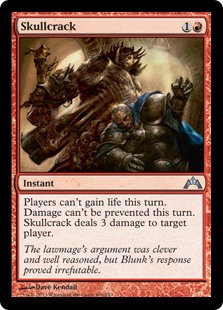
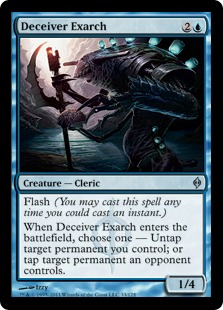 Always prepare for Dispel and try to hold up your cheapest spells that can target a creature in case they go for it.
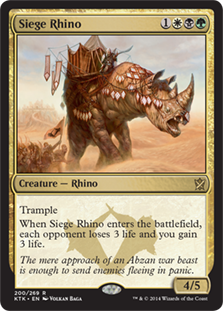 Early Tarmogoyf into Siege Rhinos are how you lose this matchup. Keep up Skullcrack whenever possible, and watch how you play Eidolon of the Great Revel. Eventually you can get locked out of playing anything when they start chaining Rhinos and swinging with manlands.
 Whoever draws better will usually win this awful mirror match. On the bright side, you'll have time to get lunch.
 OUT
OUT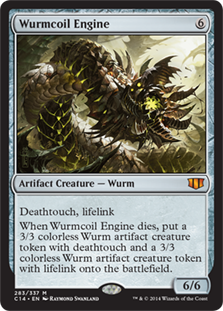





![[MTGO] 1 Year, 100 Tix July Report](https://www.quietspeculation.com/wp-content/uploads/2014/08/100T1Y-calendar.jpg)



 The first quantitative concept is the idea of a margin of error. You've probably heard this term before in reference to surveys and polls (and we'll hear much more of it as the American presidential campaigns kick into higher gear), and it's a great tool for understanding metagame data. Margins of error are useful when you have a sample of results from a population and not the population results themselves. If we knew what every single Magic player brought to every single event, we wouldn't be taking a sample of the data: that would be the population itself. Because we are taking data from reported events and Top 8s/16s, however, we are necessarily dealing with a sample of the overall population. Margin of error gives us an idea about the variation between our observed results in the sample (e.g. Jund being 9% of the observed 7/1-8/1 metagame) and the "true" results in the population (e.g. the actual number of Jund players between 7/1 and 8/1). There are lots of ways to estimate margin of error, based on the size of your sample, the distribution of results, how representative you think the sample is, etc. In all those cases, you are using margin of error to say that the "true" prevalence of a deck isn't just the 9% reported in a breakdown, but the spread around that percentage.
 Our second quantitative concept is that of relative magnitudes. That's more or less a fancy way of saying "seeing if one deck's share is bigger/smaller than another's". Metagame numbers do not exist in a vacuum. When you read a breakdown, you should not fixate on Jund being 8.9% of a metagame or UR Twin being 5.3%. Instead, you should look at the relative magnitudes of decks in the metagame: UR Twin sees a little more than half as much play as Jund. Or, to take the Affinity (8.4%) and Burn (8.1%) example, we might conclude these two aggro decks are about equally likely to appear at an event. In these cases and all the others we might construct, we aren't focusing on the specific numbers but rather on the relationship between those numbers. This is hugely important in a diverse format like Modern. It's going to be hard to prepare for every possible deck, so you need to make maindeck and sideboard choices to prepare for some decks more than others. The idea of relative magnitudes helps you do that, pointing you to prepare more heavily against one deck (e.g. Burn) over another (e.g. Merfolk).
 popularity, and a host of other factors. Prevalence metrics might be theoretically more useful but, in practice, can be very arbitrary. There isn't enough good data to track this and even the best data sources (MTGO match win percentages) can be complicated by all of the other factors described above. Because we focus on prevalence-based tiering, a deck's tier needs to give it additional weight when comparing it to other decks. You could probably treat a tier 2 deck's prevalence as half of what it actually is when comparing it to a tier 1 deck.
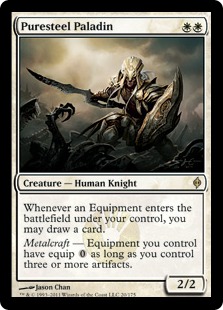 certainly not the case at a random PPTQ or SCG IQ. True, metagame numbers account for budget in some capacity (indeed, that's one reason we see so much Burn and Affinity), but they don't account for different effects budgets can have on different events. Going to a Modern FNM in an area known for Standard events? Expect more players trying to get into the format with budget decks. Going to an established Premier IQ in a major metropolitan area? You'll see a lot more decks like Jund and Twin. Generally speaking, the higher the stakes, the less budget becomes a serious consideration. Of course, this assumes players go to high-stakes events with high-stakes expectations. Maybe players take their Puresteel Paladin/Retract combo deck (go go Cheeri0s!) to a GP without any serious intention of winning: they just want to try their chances in a competitive setting. The more you expect budget to be a factor at events, the more you should expect to see the cheaper decks (particularly the cheap tier 1 decks).