If not, now is a perfect time to join up! Our powerful tools, breaking-news analysis, and exclusive Discord channel will make sure you stay up to date and ahead of the curve.
Zendikar was one of the most popular sets of all time, and the Zendikar block was equally well-received, causing a massive increase in the player base. Brian DeMars wrote a nice retrospective article on the first Zendikar set that you can read here. The block featured a number of powerful cards that have had lasting impacts on constructed formats including Jace, the Mind Sculptor, Emrakul, the Aeons Torn, Kozilek, Butcher of Truth, Ulamog, the Infinite Gyre, Stoneforge Mystic, and the first printing of the enemy fetch lands. In additon to these powerful rares and mythics, It also has a number of uncommons worth noting.
Zendikar
There was an error retrieving a chart for Hedron Crab
We got an upgraded version of Hedron Crab in Battle for Zendikar with Ruin Crab, but the original crab still commands almost $8. I have previously mentioned how Mill players are a devoted group, and this price is one of the best pieces of evidence. On a side note, I definitely expect Ruin Crab to be the most valuable uncommon from BFZ, though I imagine the print run is much higher now so the price ceiling is lower.
Trailblazer's Boots essentially makes commanders unblockable thanks to the plethora of non-basics played in Commander.
Watchlist - Zendikar
There was an error retrieving a chart for Punishing Fire
While Punishing Fire has been reprinted twice, those reprints were the original Commander product in 2013 and Duel Decks: Knights vs Dragons. This card spiked hard a few years ago when people figured out the combo with Grove of the Burnwillows. This combo was so oppressive against creature-based decks that Punishing Fire was banned in Modern, where it remains. Should it ever get unbanned, this is easily a $5+ uncommon.
There was an error retrieving a chart for Ravenous Trap
Ravenous Trap Is one of the few cards upgraded to rare when reprinted. after Zendikar, it appeared in Double Masters and Mystery Booster, and those reprints likely didn't add much to the supply. The current price is low mostly due to the greatly reduced power level of the Modern Izzet Phoenix decks following the banning of Faithless Looting, of which Ravenous Trap was a premium hate card. While we may not see Faithless Looting ever get unbanned in Modern, it is only a matter of time for another graveyard-centric deck to rise to power and dominate the format and when it does this will be an obvious sideboard inclusion. Get your copies now, while they are basically bulk.
Seedborn Muse is a must kill target in Commander, so it isn't surprising that this uncommon with a similar effect is valuable. Quest for Renewal is the only uncommon from the set that reaches our greater than $1.49 criteria. It is also important to remember that the draft format at the time was Zendikar, Zendikar, Worldwake. When Rise of the Eldrazi came out it was drafted as a single set, thus a lot less Worldwake was opened than either Zendikar or Rise of the Eldrazi.
Watchlist - Worldwake
There was an error retrieving a chart for Tectonic Edge
While good ol' Tec Edge has taken a back seat to Field of Ruin or Ghost Quarter as the preferred land that destroys lands in Modern, it is important to note that unlike the other two, Tectonic Edge does NOT give your opponent a basic land, which most decks now run.
Inquisition of Kozilek is one of the premier hand disruption spells in Modern. While it does have some restrictions, the fact that the majority of cards in modern have a Mana Value of three or less means that it hits almost everything that is relevant. While inferior to Thoughtseize in terms of selection, in a format where the best dual lands can cost you two life to come into play untapped, the two life lost casting Thoughtseize matters.
There was an error retrieving a chart for Pawn of Ulamog
Pawn of Ulamog jumped into the valuable uncommon slot relatively recently thanks to Yawgmoth, Thran Physician. Prior to Modern Horizons it was a bulk uncommon.
This is one of the few good level up cards, as getting Joraga Treespeaker to the first level is essentially free. The level up mechanic overall was a pretty big miss from a practical standpoint, falling so flat it is unlikely to be brought back in a premiere product. This means Joraga Treespeaker is unlikely to be reprinted.
Annihilator proved to be an incredibly powerful mechanic and when stapled onto creatures made them far more competitive. In addition to its first printing, Pathrazer of Ulamog has only a WPN promo and a Mystery Booster printing. Demand for this is likely heavily influenced by those who don't want to spend the money on the original big Eldrazi but still want creatures with Annihilator. Given its size and the requirement of three blockers, it tends to be a six-for-one when attacking: three sacrificed from the annihilator triggers and three creatures to block it.
This is one of my friend's pet cards. He was the first person I saw actually include it in a Commander deck years ago. Not of this World is a free counterspell to protect a commander with high power, or to protect any permanent if you are willing to pay the seven mana. It is a tribal spell, which can be relevant at times. It was recently reprinted in the Mystery Booster product, which is likely an insignificant print run to affect the price.
There was an error retrieving a chart for Wall of Omens
Wall of Omens is another modern staple that has been printed into oblivion, crushing its price the past few years.
Watchlist - Rise of the Eldrazi
There was an error retrieving a chart for Rapacious One
This is definitely a hidden gem from Rise of the Eldrazi. While it has been reprinted once in the original Commander product, this is a card that both ramps you and can create large numbers of tokens repeatedly. Foils are still relatively cheap at under $3.
There was an error retrieving a chart for Pennon Blade
I would have had a lot more hope for this card breaking out if it hadn't been included in Commander Legends. Interest in that set has seemed to wane in the past few months though, so depending on if a lot more of that product gets opened or not, Pennon Blade is still a card to watch. You can pick up foils of the Rise of the Eldrazi version for around $1, which seems like the better option to take if you are going to speculate on this card.
If not, now is a perfect time to join up! Our powerful tools, breaking-news analysis, and exclusive Discord channel will make sure you stay up to date and ahead of the curve.
I hit the lottery once. Of course, I’m not talking about the Mega Millions or Powerball lotteries. Instead, I’m referring to that roll of the dice that is the “damaged” TCGplayer lottery, a concept I wrote about back in December 2020. You can read through it here.
I purchased a card as damaged from TCGplayer and not only did I find the “damage” as perfectly acceptable, I also believe the damage in question actually increases the value of the card tremendously—as in 80,000% more than what I paid. I shared this experience briefly in Twitter and Discord, but I never wrote about it here at Quiet Speculation…until now.
But first, some background.
The Damaged Lottery
The concept is simple. Often times, sellers will list a card on TCGplayer as “damaged” for an array of widely variable reasons. Without images, you never know what makes a card “damaged” in the eyes of the seller—it could be major inking around the edges, a significant shuffle crease, warping caused by water damage, a light tear, etc. The list of possibilities truly goes on and on.
Why would anyone want to purchase such cards? Well, some people don’t mind certain kinds of damage on their cards. I did a poll around the time of my article’s publishing, and it really highlights the fact that there are varying opinions on what is acceptable when it comes to damage.
Personally, I detest inking and water damage. The former makes re-selling the card more challenging (though not impossible, as you can see by the poll above). The later can hurt the integrity of the card, possibly even making it unplayable in a sleeve. However, extreme surface and edge wear doesn’t bother me nearly as much, along with the majority of my poll respondents.
A non-artist signature could be cool if someone iconic signed the card, such as Richard Garfield or Luis Scott-Vargas. However, one option I did not include in this poll was an artist’s signature on the card. While technically this does qualify the card as “damaged” on TCGplayer, nowadays I feel like a seller could list the card with pictures and possibly even command a premium depending on the artist. In some cases, the premium can be significant!
My Lottery Ticket
I don’t normally purchase damaged cards from TCGplayer. I don’t mind heavily played cards, because these I expect to be sleeve playable 99.99% of the time. When it comes to damaged cards, the issue with condition can be anything.
Back in February of this year, I made an innocuous purchase from TCGplayer.
Basically, I wanted a Legends Sylvan Paradise because the card’s artwork is, shall we say, risqué. To me, this meant the card was fairly interesting—one worth having in the Old School collection.
While I was browsing the seller’s wares, I noticed they had a fair price on a Legends Fallen Angel as well. So I grabbed that one. Then, while browsing their other Four Horsemen (Arabian Nights, Antiquities, Legends, The Dark) Magic cards, I noticed they had an Arabian Nights card listed for just $0.49. Short of being ripped in half, I figured it was worth a gamble—you really can’t find Arabian Nights cards for under a buck anymore, no matter what card it is or how heavily played it is.
The seller actually contacted me and told me there was an issue with the order—the Sylvan Paradise they had in stock was actually Italian Legends, not English. They issued a partial refund but sent me the Italian copy anyway, as an apology. Little did they know, they sent me something far more compensatory than a free Italian Sylvan Paradise.
The damaged War Elephant wasn’t heavily played at all. There was no creasing or water damage. Even better, the War Elephant version they sent me was the rarer light version (as compared to the dark version…the difference is in the casting cost’s vibrancy). But I realized I had something special when I noticed the signature on the bottom of the card.
It looks like the artist’s signature. You can make out a “K” at the beginning, a capital “B” for the last name and an ending “p”. Either this was the artist’s signature or it was a forgery. I took to Discord and Facebook to ask for the community’s help. I was thankful for their assistance, but I never would have expected what happened next.
Once I posted my picture, people started joking that I should use this card to start collecting a signed set of Arabian Nights. They quipped that I was off to a great start because I had the hardest artist signature to obtain from the set. After posting this card to the signed card Facebook group, I started getting PM’s asking if the card was for sale, even though I couldn’t confirm the signature’s authenticity.
It didn’t matter. There was enough evidence to believe the signature could be real, and that suddenly made the card special. How special? It turns out, the artist Kristen Bishop doesn’t sign this card all that often. I ran a Google search and came across a couple posts in various forums discussing the difficulty people are having with tracking down this signature.
For example, one MTG Salvation poster from 2011 stated, “The only person I’m sour on never locating is Kristen Bishop, because I adore the one single card she illustrated.”
Another person replied with a somewhat creepy solution. “I do have a signed War Elephant…But it’s from Chronicles…But I think I tracked Kristen down (that was REALLY hard). I am waiting for some US-Stamps to arrive and then I’ll try the address.”
A Magic Librarities poster from 2015 was browsing signed Arabian Nights cards and found someone selling a complete, signed set. They weren’t interested in the set, but they were “quite surprised as I never saw the War Elephant card signed by K. Bishop before…What’s strange to me is that he has answered me that he could get others War Elephant [SIC] signed, both versions, as he got them from a friend of K.B.”
With enough digging through old forum posts on the internet, you’ll find this common trend. This artist clearly chooses not to sign cards much, making her signature incredibly rare. And valuable.
How valuable? I was quoted a fairly wide range since this card doesn’t go up for sale on the market all that often. But the best I could deduce is that this card would sell for somewhere between $200 and $400. That’s a far cry from the $0.49 I paid for the “damaged” War Elephant!
There was an error retrieving a chart for War Elephant
My Follow Up
When I discovered how rare a signed War Elephant truly was, I reached out to the seller to let them know that they had unintentionally sent me a valuable card. But the seller actually had no interest. They replied that the card was signed, so they sold it as damaged. They couldn’t confirm the signature’s authenticity—maybe it’s a fake?
I’ve compared this signature to other collectors’ signed War Elephants. Some of the signatures look very different, but a few have striking similarities. It could be that mine is a counterfeit. Or it could be that my signature is simply older. Either way, I have chosen to believe the signature is genuine—I don’t plan on selling the card anyways, so it doesn’t particularly matter. In my heart the signature is real, and that’s what counts.
In addition to messaging the seller, I also went back to that seller’s store and purchased a bunch more of their older, “damaged” cards. Since they listed signed cards as “damaged”, perhaps I could score another cool piece for my collection. I ran back the damaged lottery once more, making the following purchase:
The cards arrived and I eagerly tore open the envelope hoping for a bunch more Old School signatures. Unfortunately, I came up completely empty. Not a single card from the order was signed. This time, all the damaged cards had actual damage—bends, creases, dents, and the like. I basically used the cards as freebies for folks who purchased from me in the following weeks.
I won the damaged lottery once, but I have to expect that it’s a once-in-a-lifetime kind of occurrence. I don’t think I’ll get so lucky ever again.
Wrapping It Up
I’m not a major collector of signed cards. Of course, I know some of the iconic signatures are rare and valuable: Quinton Hoover and Christopher Rush both come to mind. But I never would have guessed that Kristen Bishop, someone who illustrated a single card back in the early 1990s, would have one of the rarest and most valuable signatures out there.
Someone actually sent me a private message on Discord with contact information for her. They said I could try emailing her to ask her if the signature is legitimate.
Something tells me this is a bad idea. Her signature is rare for a reason: she probably doesn’t want to be bothered by random collectors asking for her autograph. To be honest, that would creep me out—someone sending me a letter (meaning they had to research my address) asking for me to sign something. Since she’s not involved in Magic anymore, I can see why Kristen Bishop would ignore such requests.
Instead, I’ll just rest ignorantly content with my rarity. Most Magic cards are completely fungible. That is, they are easily interchanged and replaced. Even if I were to sell my Black Lotus, I could always purchase another one down the line. It may have different wear and play patterns, but it would effectively serve the same purpose in my collection.
This signed War Elephant is not so easily replaced. It truly stands out as a special part of my collection. It belongs alongside my signed artist proof Jaya Ballard, Task Mage and my double signed Shahrazad (signed by the artist Kaja Foglio and Richard Garfield, the inventory of Magic). These are cards that will remain in my collection for as long as I am into the game.
If not, now is a perfect time to join up! Our powerful tools, breaking-news analysis, and exclusive Discord channel will make sure you stay up to date and ahead of the curve.
Prerelease is one of the most exciting times for Magic, both from a player standpoint, and a financial standpoint. For the player, it means a fresh Limited format to dive into, new and exciting cards for constructed formats, and in the case of fall sets like Innistrad: Midnight Hunt, Standard rotation giving us an entirely new metagame to explore. From a financial standpoint, prerelease is a time to identify what are going to be hot cards and what are going to be potential sleepers, and preparing ourselves to buy and trade accordingly. With both those perspectives in mind, let's dive in and explore how to get the most from our prerelease experience.
Study The Set
The gradual reveal of spoiler season is exciting, but it can be tough to follow along with all the previews and keep up with the hype. Even if you do manage to keep up, some cards can slip through the cracks until the full set reveal the week prior to prerelease. It's certainly fun to gawk, speculate, and debate on what cards revealed by Wizards and other content creators will be powerful or interesting in given formats, but the real work to understanding a set's potential doesn't happen until we sit down and look at the complete set preview. I generally use Scryfall when looking at spoilers, or looking up cards in general. It's a great resource for finding just the card you're looking for and has lots of features for sorting, perfect for exploring a new Magic set.
Read The Rules/Mechanics Article
With the release of almost every paper Magic set, Matt Tabak, the Principal Magic Editor and former Rules Manager, writes an article for the mothership detailing the rules and mechanics relevant to the new set. His article for Innistrad: Midnight Hunt can be found here. Tabak does a great job of breaking down how each mechanic works and bringing up possible interactions or non-interactions that can occur with existing Magic cards. Magic is a complicated game, and Tabak does a fantastic job explaining the new rules and mechanics in terms any player can understand.
By reading his piece, you'll have an understanding of the mechanics of the set, making you better prepared to examine the full preview and understand how all the cards function. You'll quickly recognize what makes individual cards potentially powerful, and why. This can give you an edge not only in terms of gameplay but also financially. If you can anticipate what cards will be hot in the set, you can purchase and trade for them accordingly.
Listen To/Read Set Reviews
A new Magic set means a plethora of new content to enjoy. Content creators everywhere dig into the new set and present to their audiences the strategies, ideas, and key cards they think players will need to know. Going into prerelease, which is sealed, and as primarily a Limited player myself, I focus on consuming as much Limited content as I can. Here are a few creators to check out before you sit down to build your sealed deck:
The original podcast for all things Limited, longtime host Marshall Sutcliffe and current co-host Luis Scott-Vargas do a great job breaking down every new set in their hours-long set reviews. Their in-depth, card-by-card analysis, uses a letter grade system of A-F to grade every card in the set. They also provide a sideboard grade, for powerful but narrow sideboard options. These grading systems let you see the power level of cards in relation to the other cards in the set. Following their thought processes is a great way to learn and practice card evaluation skills along with the experts.
Rather than go card by card, The Lords of Limited, Ethan Saks aka @lordtupperware, and Ben @mistermetronome, provide what they call a "Crash Course" to every new Limited format. This big picture approach looks at the value/size of creatures in the set in relation to the removal, the possible archetypes represented, and their relative powers in relation to each other. They also address more narrow concerns like the prevalence of incidental life gain and evasion abilities of creatures. They then present a breakdown of the top commons and uncommons in each color, taking into account all the considerations they've laid out.
The best part of the Lords of Limited crash courses is they do a great job of highlighting big picture themes and considerations of each set, and the key cards to look out for in each color, without bogging the listener down. It's great when you want to quickly get a grasp on a new Limited format, but don't have five hours to dedicate to listening to a review with a card-by-card breakdown.
Have Your Gear Ready
It's a terrible feeling to arrive at any Magic event and realize you're unprepared. You've forgotten your sleeves, your tokens, or worse —your deck! While forgetting a deck isn't an issue for prerelease, it's still a bummer to not be prepared. Here's a checklist of everything you should have with you to make the most of your prerelease:
Deckbox/Sleeves
While your prerelease kit will include a deck box, I generally bring my own for all my limited events. My deck box is like a mini toolkit for playing Limited. It's big enough to fit an entire sealed pool, and always stocked with sleeves, tokens relevant to the current format, and generic tokens to be used as anything I don't have. More on tokens in a bit.
I always have sleeves packed in my Limited deck box. For prerelease, I try to have enough sleeves to build two forty-card decks. Why do you ask? Because sometimes my prerelease pool is deep enough to potentially support two decks, and I'm torn between which to play. The first is usually a slower deck with more raw power, including all of my bombs and my best removal. My secondary deck is usually the option with the most consistent mana base or the better curve but lacks the raw power of the first deck. It's rare that I'll have a pool capable of building one deck that does both, but it's fantastic when it all comes together.
Having enough sleeves to easily build two decks means that for sideboarding I can have the option to sideboard into a completely different deck if it makes sense to do so in the matchup. Prerelease is also a continuous construction event, meaning I can change up my deck at any time between games and rounds. Did I decide my first deck was too inconsistent? If I have a second deck, I can just play that one instead and not have to worry about desleeving and resleeving the first.
Playmat
Playmats not only protect my cards and help define the battlefield, but they also add a touch of class to the play experience which I appreciate. It always surprises me when longtime players show up without a playmat.
Dice/Tokens
Dice are not only useful to determine who goes first but in sets that have counter themes or for representing Planeswalker loyalty they're almost a necessity. To minimize confusion, I like to always have a stack of the most common tokens in the current Limited format ready to go in my deck box. This can sometimes be difficult to do during prerelease with so many new tokens appearing, which is why I also have several generic tokens I also keep in my box as needed. My generic tokens are the old Pro Player cards that came in Tournament Packs back in the early-mid '00s. Sadly my Craig Jones card has never helped me top deck Lightning Helix.
Craig Jones 2006 Pro Player Card
Life Pad
There are all sorts of ways to keep track of life totals. I prefer pen and paper, and always have a notebook or life pad with me. While it's only the required form of tracking life totals at more competitive events, I find using paper and pen also allows me to take notes during my games, and it reinforces good habits for when I do play competitively.
Snacks/Drinks
Depending on your local game store (LGS)'s rules, food and drinks might be a tricky thing in the middle of the pandemic. I'd check with your LGS first about bringing in food or beverages for their policy. Having fuel to get you through a long event though can be crucial, and I try to always have water and snacks of some kind packed with me.
Trade Binder
While most of the rest of our gear list is oriented towards playing, for the financially minded among us, we can't forget to bring our trade binder if we're looking to pick up some new cards and make some deals. More on trade binders coming up.
While there may be other things you want to bring with you, this list has always helped make my event experiences better. I try to pack all of my stuff the night before the event if I have time, and I run through a mental checklist of these items before zipping my bag up and leaving it by the door.
Prepare Your Trade Binder
There is a myriad of ways to organize a trade binder. It's up to personal preference what works for you. Whatever your method, it's important to make sure your binder is stocked and sorted with a decent selection of stuff you're looking to move. Will it be everything? More likely not, but it should be a good mix of high-value, middle, and low-value cards. Depending on your collection, a mix of top-tier constructed playables and casual favorites is ideal. Try to get this organizing done several days prior to the event. It will save you the stress of scrambling to do so at the last minute.
Know What You Want To Trade For
You've studied the new set. You've prepared your trade binder. Now, what are you looking to acquire? Knowing what you're looking for before you start any trade is a great way to make every interaction quicker and smoother, saving you time and allowing you more chances to make deals. With the new set, knowing exactly what cards you're looking to pick up is helpful both because the supply will be low on prerelease weekend, and because people might be more willing to let go of potential sleeper cards on which you have your eyes set. By letting potential trade partners know upfront what you're looking for, you also save someone from having to pull out a trade binder when there is little chance of you making a deal if they don't want to.
Keep in mind that what you're looking for doesn't necessarily need to be cards from the new set. I'm currently on a mission to acquire all the Mystery Booster Playtest Cards for my Silver-Border Shenanigans Cube, so that's usually the first ask I have from any potential trading partners.
Preregister For Your Events If Possible
With the advent of the Magic Companion App, it's easier than ever to preregister for events and hold your place. Some local game stores are even set up to take payments in advance, so you only need to check-in when you arrive. This not only assures you a spot, but it also saves time and frustration on the part of the store event staff. This allows events to fire on time and run more smoothly, making for a better experience for all.
Good Luck, Have Fun
With a bit of advanced preparation prerelease can be one of the most relaxing and fun Magic playing experiences. How do you prepare for events? What are you most excited to open in your sealed pools? Let me know in the comments or on Twitter.
If not, now is a perfect time to join up! Our powerful tools, breaking-news analysis, and exclusive Discord channel will make sure you stay up to date and ahead of the curve.
Quiet Speculation is proud to welcome Daniel to the team. Look for weekly strategy articles from him on a variety of topics to help improve your game. —QS Staff
Hello, my name is Daniel Goetschel and I will be writing strategy articles for Quiet Speculation. I started playing Magic while in middle school and quickly became interested in competing in events. I have participated in numerous tournaments over the last decade, with top finishes including second place in the 2021 Magic Online Championship Showcase (MOCS), and winning Grand Prix Niagra Falls, a Legacy GP, in 2019.
Since the beginning, I've been on a journey of continuous improvement. Today I will go over some of the things I have learned over the years that shape how I approach the game.
F*** Heuristics
One of the worst things you can do in MTG is rush through your turns without thinking through your options, and one of the easiest ways to do that is using heuristics to justify your choices.
Heuristics can be helpful, those rules of thumb such as be mana efficient, control decks don’t care about damage, just survive vs aggro decks, and so on. But I think the great danger of heuristics is that it stops people from thinking intricately. Rather than analyzing the situation an individual finds themselves in, they just slot the heuristic into the decision, for example, if you have the opportunity to take an aggressive line with a controlling deck, you might think well control decks don’t care about damage, I’ll find another way to win, and then not think through the pros and cons of the aggressive line. In other words, instead of probing the problem that lies in front of you, you apply the heuristic and move on to the next choice.
Heuristics make lines seem reasonable without thinking them through.
A good way to counteract this is to slow down. When you begin your turn, think through the pros and cons of various lines, try to be conscious of your thought process. When a game is finished you can ask yourself why you made all the decisions you made. Things might be a bit more clear in retrospect and one might be surprised by how many choices they made "automatically." Heuristics make lines seem reasonable without thinking them through.
The same also applies to deckbuilding. People are often afraid to try things, to stray away from group heuristics for how decks should look. I will discuss this more in the deckbuilding section.
Technical Play
Some videos illustrate what I am about to discuss quite nicely. I recommend going on YouTube and searching Channel Huey and looking for Pro Tour Hall of Famer Huey Jensen drafting Born of the Gods, Khans of Tarkir, Vintage Masters, and playing Theros Standard. There are also videos of Reid Duke doing the same.
Paulo Vitor Damo da Rosa also made a good video in a similar vein here:
What you can take away here is how they play turn by turn. From the moment each turn starts they think through the pros and cons of various lines. It doesn’t seem that difficult, but wow does it help them avoid taking bad lines. Usually, they take reasonable to good lines. This process takes patience and diligence, not abstract raw intelligence or skill.
These can guide people on how one should compose oneself during a match. The general attitude. Sitting back and surveying the scene rather than rushing in and jamming through turns as quickly as possible.
It isn’t as easy as it looks. if it was, everyone could win as much as Paulo. Having the mental fortitude to be able to play an entire event, turn by turn, patiently thinking through many of your options can be tiring. Separating good from bad lines can also be difficult due to the abstract nature of Magic theory.
I recall Paulo saying he thinks if he just avoids bad lines it can make it seem easier than trying to hunt down the “best” line, since the value of a good line is still high, and the difference between the best and second-best play isn’t that much. It's much higher than a bad line in comparison.
Here's an example of me playing through a game: I was playing Sultai vs Winota last night in the Standard Challenge. My god this is painful, I remember feeling sickly after losing this game. Seeing now that they mulled to five this game made me feel such a mixture of shame and pain I almost wanted to stop writing this article.
It is turn one. I have the option of which land to play, either Ketria Triome, or Fabled Passage. Fabled Passage allows us to cast Heartless Act on turn two, but we have four lands already, so we could also save Fabled Passage for turn four and have it then enter untapped. Further surveying the options, we have three two-drops we could potentially cast on turn two, [/card]Wolfwillow Haven[/card] or the two blue instants which are reasonable plays, meaning we won’t have a dead turn two if we don’t cast Heartless Act. Additionally casting the Act on turn two will cause us to play our one untapped land, setting us up for potentially three turns of playing tapped lands. Though the combination of Wolfwillow Haven plus two-drop can make it not too awful and there is a reasonable chance we cast Jwari Disruption at an Esika's Chariot .
When I saw Lair of the Hydra, I thought my opponent might be playing an adventures deck. They were reasonably more popular than Winota, I thought off the top of my head. I was kind of scared of an early Edgewall Innkeeper or Magda, Brazen Outlaw. Looking back though, if they had an Innkeeper they would have cast it turn one. Edgewall Innkeeper drawing cards also isn’t the end of the world, as the opponent drawing extra cards isn’t that threatening. I just want to comfortably hit my land drops, and save my removal spells for creatures like Lovestruck Beast that they need to dedicate full turns to casting. Killing threats which actually pressure me is more appealing than hitting Innkeeper or Magda. Additionally, casting a potential Heartless Act on turn two can trip up all my mana, Anyways, obviously, I went for the awful play and played Fabled Passage.
Turn two, I remember I was tilting around here,. I didn’t realize they only had three cards somehow, because of their mulligan to five. I chose to pass with Jwari Disruption up so they couldn't resolve Esika's Chariot. It would take a while to cast Wolfwillow Haven, but them resolving a Chariot seemed bad. Despite this, there was a big chance they won’t use their treasure yet, and I still have the option to cast Heartless Act or Omen of the Sea. If I tapped out, and they resolved Chariot that would be pretty bad for me.
Instead of Esika's Chariot though, the opponent cast Elite Spellbinder. Now I had the option to Jwari Disruption it, but that seems awful because they could just pay for it, so I dismissed that idea quickly. My other options became to Heartless Act the Edgewall Innkeeper or the Spellbinder with the trigger on the stack, or to cast Omen of the Sea. Looking back, I think I should have just killed the Innkeeper so they couldn't Winota, Joiner of Forces me next turn by taking Act. In the moment though, I waited. The opponent took Omen of the Sea, and I cast nothing, figuring to wait for Winota. Next turn they cast Chariot into another Spellbinder into Winota and I lost.
I don’t think I played awfully. I thought through my options, I just came to bad conclusions. Those poor decisions snowballed and made me lose a game where I had tons of spells to cast, but barely cast any. Maybe it was a case of tricking myself by playing around everything but I ended up playing around nothing. Thinking through the pros and cons of the various lines cogently should help alleviate this.
Play Poorly, Lose, Feel Bad: Coping with Infinite Losses
Playing poorly, losing, and then feeling bad, is my typical Magic event routine. Zoom out for a moment though, and it couldn’t be any other way. Failure is programmed in.
Allow me to explain what I mean. If you define playing well as playing in the way Paulo or Huey play, as I described earlier, you won’t reach those standards until you win literally as much as them over the long run. If that's the case, you will never be satisfied unless you are literally the best player in the world.
Let me elaborate further, I don’t see many people holding themselves accountable for their shortcomings. Many blame mulligans, bad matchups, and so on for their losses. Here’s the thing though, do you think they played perfectly every turn? No, I know they didn’t because if they did they would be the best player in the world. So what are people complaining about? They don't play optimally but want to win?
In the play optimally mindset, every event you go to, you will play, make mistakes, lose, and feel bad after. It can feel crushing to prepare for an event, make what seems like boneheaded errors, and scrub out. A total blow to your ego. Now, I am aware of why feeling like a failure is programmed into competition. This isn’t because I suck, but because making infinite mistakes is programmed in. Again, if you didn’t make mistakes you’d be the best player in the world. Even though each mistake seems so obvious in retrospect, it isn’t in the moment. Try to live never making any mistakes, it’s just hindsight.
Deck Selection
Deck selection is incredibly overrated. There are so many things to pay attention to in Magic, mulligans, sequencing, sideboarding, and more. I think mastering all of those things is what leads to the highest win rates overall. You can see it in action with players like Shouta Yasooka, playing what many deem suboptimal decks but still crushing. There are other examples as well, like Guillaume Wafo-Tapa, or Logan Nettles (aka Jaberwocki) with Jund (2nd place at the Omnath MOCS!?). Generally, any good player will have a high win rate with whatever deck you throw at them.
To me, it seems if you play well, you will win a lot, so you should focus on that and not deck selection. After playing an event I've never said "man I wish I could get that last sideboard card down." I usually regretted playing suboptimally. That said, I recently realized why deck selection can be quite relevant still.
I was watching some old modern coverage, from around the time Splinter Twin was legal. Watching people play Merfolk, Zoo, Affinity, BGx, wacky combo, and control decks, and then facing off vs Twin, it didn’t even seem close to close. The Twin strategy was just miles better than every other deck. Not playing Twin seemed like SUCH a massive disadvantage. It opened my eyes to why deck selection is actually relevant. There is a huge amount of asymmetry in the metagame at times. Giving yourself the short end of the stick by not playing the obviously best deck can really screw you. So I try to be aware of my process for deck selection. I don’t want to be that guy not playing the Twin deck when Twin is legal.
Trying to be scrupulous on deck selection is quite an interesting process. It isn’t always as easy as just play Twin. It can be difficult to know which decks are the good ones, and which are not. It’s an ongoing, adaptive, evolving process. The Twin example helps to frame this.
Recently, I’ve been playing Pioneer, where I can really practice my deck selection. At first, I thought I wanted to cast Treasure Cruise because I think if you cast Treasure Cruise you are likely to win, and it’s easy to cast. I also thought it was asymmetrically powerful compared to the other cards in the format. I liked Izzet Phoenix, but couldn’t solve the Burn matchup, and Burn is just way too popular in the format. I was also sometimes losing to combo decks, though with more time could have maybe found better fixes. I could have kept improving the deck but got bored.
Jeskai Ascendancy is another Cruise deck, which I found a bit clunky, though I would put it down as maybe a tier-one deck in the format now. I tried to brew Cruise decks but failed and got lazy. I then moved on to trying the Jund Sac decks after the deck did well in the showcase. I didn’t like the Bolas's Citadel deck as I felt like you couldn’t win unless you cast Citadel, and your opponent could interact with it. Again, I think the deck is quite good. I experimented with food versions, and they were pretty good. I might work on them more but I found getting the last few slots down really difficult (I even brewed a Fires of Invention wish version at one point). I thought of a delirium one too that could fetch [cardCauldron Familiar[/card] or Korvold, Fae-Cursed King but turning on delirium seems kinda difficult.
When I play Pioneer again, I will probably try Vampires. I think it has a reasonable plan in every matchup and going Thoughtseize into Sorin, Imperious Bloodlord is quite nice, though it has lower power than some of the crazy multicolor decks I feel a lot of decks line up very poorly vs other decks in the format, which Vampires could help fix in theory I could also see trying Jeskai. Though that deck looks kinda awful, it's also kinda cool. If you're interested in Pioneer, stay tuned for my article introducing the format.
Last thought with deck selection, don’t be afraid to try stuff. This goes back to heuristics. Usually, when I prepare for an event, I play my games and try to pay attention to why I’m winning or losing, and try to solve my issues. This means I am down to try whatever card or strategy if I feel it can solve my issues. A lot of times this will involve playing cards or plans people will think are really bad, but it doesn’t matter. I just ignore it. Not that these people are wrong per se, but that is useless for us. We can’t approach magic just mimicking others' opinions especially since almost everyone else's opinions are also awful. Remember again, everyone is basically worse at winning than Paulo, and Paulo isn’t even that good, he’s just the best.
Imagine, for example, being a new player going to a local game store, and hearing everyone’s opinions on Magic, and taking it to heart. This will likely make you a worse player than if you stayed at home just playing Magic Online, and coming to your own conclusions. It’s unfocused out-of-context language you are encountering. The same is true even when hearing opinions from more experienced players. You must learn how to extract useful information from what they say, not just mimic it and turn off your brain heuristic-style.
Extracurricular Activities: Journaling, Watching Your Own Games, & Watching Coverage.
Here are a few more ideas to help you improve:
Journaling
When playing events, try keeping a diary/journal, and writing down mistakes you made. This way, after playing a few events you can see recurring mistakes you make, so you can isolate them and try to work on them. For example, one of my biggest mistakes currently is not sleeping enough. I tend to go to sleep around 12-1 am, and many Magic Online events start at 7 am I always say I’m going to go to sleep early, but it’s hard to go to sleep early on the weekends. I always end up feeling tired in the morning, this mistake is pretty obvious so I am aware of it, but you never know which subtle ones you might catch and then try and squash out.
Watching Coverage
I have found watching coverage to be tremendously useful, and I'm not alone. Allen Wu wrote an excellent article on watching coverage. In the article, he goes turn-by-turn through the games of the first Modern Pro Tour Quarterfinals between Sam Black and Josh Utter-Leyton, discussing the various options the players had, and sharing his own thought processes as if he were in their places.
Watching both players play, seeing both hands at once, opened my eyes. They say when you watch coverage it seems so easy to play well, that all the mistakes seem so obvious. Over the years, I’ve even received advice to "play as if you aren’t playing" or "play like you are watching yourself play." When I feel burned out on Magic, like I can’t make any good decisions, and I'm too stressed and tired to play my own games, watching coverage lets me practice the problem-solving part of my brain in a nice environment and also makes me feel smart (to recover the badly bruised post-event ego) without having any skin in the matches.
Watching Your Own Games
Much like watching coverage, watching your own matches can be incredibly useful. Honestly, this is something I’ve avoided for a long time, as it feels incredibly incestuous and painful to watch my own games. Bringing up that Winota game from last night actually made me feel nauseous. But bringing yourself to watch your own games the way you watch coverage is something good to try and work through to try and improve. It seems like an incredibly fruitful zone to extract value from if you so desire.
If not, now is a perfect time to join up! Our powerful tools, breaking-news analysis, and exclusive Discord channel will make sure you stay up to date and ahead of the curve.
This article was originally planned to go up back in April of 2020. While some of the information may be a bit out of date, many of the points are still valid; especially given the varying degrees of "lockdown" between different states in the US and different countries around the world. - QS Staff
The world of Magic finance is undergoing a lot of volatility right now along with the rest of the world. While we hope and pray this virus dies down quickly, we have very little control over its lifespan, so we are forced to adapt. Wizards appear to be throwing a lifeline to local game stores (LGSs) in the form of a free undefined amount of Mystery Boosters which will provide much-needed cash for them in a time where many are forced to shut their doors and some of the large operations have even closed down their online businesses. Today I want to break down the options for various types of Magic financiers.
There was an error retrieving a chart for Gamekeeper
Game Store Owner
If you happen to be a small business owner who owns a game store, you most likely have had to make major adjustments to your play area. This severely limits foot traffic into your business which in turn reduces in-person sales. Depending on your country of origin your government may be offering small business loans to help keep you afloat. I suggest you contact your local/state/federal government to find your options. It would also be wise to contact your landlord if you currently lease your business' building. Times are difficult for almost every business so landlords know that "business as usual" is not something most of their tenants can handle. Some of your options could be:
See if you can get a reduction in rent during this crisis. Most smart landlords know that the value of their property right now is greatly reduced and that evicting a tenant means they will have no income coming in rather than some income.
See if you can parlay rent during this crisis. If you have a greatly reduced income currently, but expect it will rebound once the crisis is over then it seems fair to see if you parlay some or all of your rent and pay more rent at a later time to make up for it. For example; if your rent is currently $2000 a month, offer to pay $1200 a month during the crisis with a promise to pay $2800 a month each month following the crisis for a number of months equal to the number of months with the rent parlayed. You can obviously play with the numbers some to find an option you both find reasonable.
Close up shop with the intent to reopen elsewhere once the crisis is over. Unfortunately, many LGS run on some pretty thin margins and it may be nearly impossible to dig yourself out of any financial hole if you're forced to be closed down for several months. Desperate times call for desperate measures and if you are paying month to month it may be wisest to move your inventory out of the store and close up shop. This option is obviously more of a last resort and also requires you to know if there is any sort of penalty for breaking your lease, which also would need to be accounted for in this decision.
Look to see if you can quality for a small business loan from a local bank. Interest rates are at all-time lows right now so banks have a strong incentive to lend money.
If you don't have a physical presence but your online sales are your main source of income you may have fewer options than someone who owns a physical storefront, but if you are registered as an actual business it would be worth contacting your local/state/federal governments to see what options are available to you. The good news is you likely don't have that high of an overhead cost to keeping your business up and running so that should hopefully prevent the need to close up shop.
Backpack Online Store Owner
This is the category I fall into and I imagine many other readers do as well. If you run an online store on TCGPlayer but it isn't your main source of income and you aren't a registered small business then you have little to no hope of getting assistance from any government programs.
There was an error retrieving a chart for Game Plan
Cash Flow Options
We are currently in a buyer's market. Those who have cash can choose the best deals as many sellers need to cover overhead costs. While I don't suggest fire selling everything in order to maximize your liquidity, now is definitely a good time to review your pricing structure and adjust things downwards. After all, It doesn't help to have a massive inventory but no money to pay rent. Many of us do gain the benefit that the selling marketplace is currently reduced greatly with many of the major stores not shipping out cards which is effectively "closing up shop" for now. So while we have a reduction in overall buyers in the marketplace as people adjust their expenditures, we also have a reduction in sellers which while unlikely to balance things out will help keep the floor from falling out.
Daily specials- Now is a great time to try and sell inventory that has remained stagnant. There are always cards that one picks up in buys that you know might sell for a good price to the right buyer, but that buyer never comes along.
Increase trade-in credit/reduce cash payouts- We have already seen many major online retailers, prior to shutting down, do this. Buylist prices started to drop significantly for many cards and many stores balanced it out by offering higher trade-in credit. This is a way to reduce cash outflow but still maintain inventory inflow.
Branch out to new marketplaces- For stores that haven't done any sales through other marketplaces like Facebook or Craigslist, finding a marketplace with very low transactional costs could be a great way to keep money coming in and maximize profits per transaction.
Curbside Pickup- I've seen some LGS's offer curbside pickup so that you can still buy cards from them locally, and they will bring your order out to your car. This is a great way to keep your local players engaged with the store.
Online FNM- Wizards has recently introduced an online FNM option and local stores are given codes for special prize sleeves. Given it costs the store nothing and keeps players engaged with their LGS it seems like a no brainer to sign up for this if you own an LGS.
Sell store credit. This is something we are seeing some big retailers like CFB do, however, keep in mind this will cost future cash flow.
If not, now is a perfect time to join up! Our powerful tools, breaking-news analysis, and exclusive Discord channel will make sure you stay up to date and ahead of the curve.
The paper Prerelease and the digital release of Innistrad: Midnight Hunt is this weekend. Subsequently, the entire set has been spoiled. In turn, this means that I can evaluate the remaining cards with better context. And there's... mixed news. IMH has some gems for Modern, but it's mostly misses. Which isn't a bad thing after MH2. And even among those potential Modern playables, there are a lot of questions to answer.
As anticipated, the set is quite powered down. It's not just in Modern terms, but Standard too. Given the past few years, I'd argue that's a good thing. However, I don't play Standard much and actual Standard experts may disagree. What is inarguable is that the most Modern-playable card was among the first spoiled. Nothing has come close to Consider's potential for widespread adoption. There isn't much that rivals it in power terms, for that matter. However, a few cards have obvious homes but fulfil a specialized role. They have a specific job to do, do it well, but it may not need to be done often. In many other cases the stars and moon will need to align for the card to be useful despite innate playability.
Sideboard Smorgasbord
After Consider, the cards that are most likely to see Modern play are the sideboard cards spoiled between my previous article and now. They're not inherently more powerful, unique, or needed than any of the other cards in IMH. Rather, sideboard cards can be fairly niche and see play in small numbers in more decks than a maindeck card. And the IMH prospects are particularly flexible which suggests that many decks can play them. The question isn't whether they're good enough for sideboard play, it's whether they solve an actual problem in the metagame. And some definitely do.
Helping Humans
Specifically, Cathar Commando and Outland Liberator fill well-known holes for several decks and will be adopted by at least some sideboards. See, the biggest hole in Humans has always been its weakness against Torpor Orb. The deck is built around creatures with enters-the-battlefield triggers, and Champion of the Parish is unplayably bad under the Orb. This weakness is compounded by Humans lacking Qasali Pridemage in-tribe. Humans can go outside the tribe for some answers, but Pridemage's cost was prohibitive due to its creature types. All the other options were similarly answered by Orb. Humans finally has two options to defeat the Orb or any other prison piece it needs to.
Liberator's front face is worse than Commando's mainly because flash is so powerful (an extra point of power never hurts, though). However, the potential of flipping Liberator into Frenzied Trapbreaker makes up for that weakness to the point that I'd expect Humans to adopt Liberator over Commando. True, Trapbreaker doesn't synergize with Humans, but it doesn't need to itself. Liberator has that covered and any +1/+1 counters will carry over when flipped. It's one thing to Pridemage away a threat; it's another to be able to swing into Urza's Saga constructs with confidence. Also worth noting: Saga itself is a target. Liberator even makes Gavony Dawnguard more playable by getting Day/Night tracking started.
Commando probably won't make the cut for Humans, but that doesn't mean it won't at all. Death and Taxes has a similar hole that I've pointed out before and Commando fills it nicely. Stoneblade may also spring for Commando mostly because it's a two mana flash threat. That deck needs to establish a clock against slow decks, and Commando does that cheaply with upside.
The Hermit's Grudge
The next two are far more speculative, but I can definitely see their niche. Typically, control mirrors devolve into staring competitions followed by a frenzy of activity as one deck goes for it. Malevolent Hermit offers a pretty solid way to reposition and possibly steal games 2 and 3. A 2/1 beater isn't anything special, but Hermit's front face does provide a better Spell Pierce which stays active under Teferi, Time Raveler. And also can't be countered by Force of Negation. That's a pretty great way to pressure opponents/planeswalkers and keep up the shields.
However, it's the back side that can run away with games. Having a creature that can return from the graveyard is solid as it's card advantage. A flying creature that moots opposing counterspells is better. The only problem with Benevolent Geist is actually getting it into play. Casting it is no different than going for Teferi, but Geist can only be cast from the graveyard. This means that Hermit has to be cashed in first, which is no bad thing, or killed. The problem with the later option: most control removal exiles. However, that does leave the door open for looting effects if rushing to Geist is a thing. In either case, control players should be aware of the Hermit's power.
Fighting Combo
On a similar thread, Curse of Silence is quite the card. Adding cost onto the key card in an opponent's deck is potentially devastating. And as a benefit, should the opponent manage to overcome the tax and cast the card, the Curse can be cashed in to try for an answer. That's a lot of value for 1 mana, and virtually ensures that Curse will see play. Especially because it's a one-sided effect, with its being a Curse.
This has led a lot of players to point to Curse as the answer to Crashing Footfalls and Living End. And they're not wrong; delaying either deck's main gameplan until turn 5 is quite strong. However, the catch is that both decks have ways to answer the enchantment and still go off turn 3, with Brazen Borrower being the most common. This does not disqualify Curse as a sideboard card, but it does mean that it needs support to be effective. I'd argue that since Curse only delays the named card, it's not a general answer, but a taxing card, and that would limit play to tempo and aggro decks that actually put the delay to good use.
However, I think that pigeonholing Curse as an anti-combo card is shortsighted. Curse can hit any card type, and so control can use it turns 1-2 to slow down creature rushes. Aggro can use it to keep sweepers at bay. And combo can also use it to protect against answers. Curse is so flexible that I can see any deck with white using it, and maybe even maindecking it. Don't sleep on this card.
The Tricky One
The final card is tricky to evaluate. It has one clear home, but that home is already occupied. Sunset Revelry is a cheaper Timely Reinforcements with a bonus. For one less mana it makes one less token and gains two less life. There's also a third clause that's unlikely to be relevant for a control deck against Burn, which is where Timely sees play. Being cheaper is usually the best way to see play and that's led to speculation that Revelry has made Timely obsolete. I'd be more cautious.
Timely is more costly, but it's worth it. For three mana, Timely trades with Goblin Guide and two Lightning Bolts and blocks another creature. Or trades with two attacks from a 3/3 and kills that 3/3. That's an enormous swing for one card. Revelry still trades with Guide, but it only trades for one and a third Bolts and can't kill an X/3. That's actually a considerable step down from Timely. And if the third clause (which would make up for everything else) triggers, then something's going very wrong in that game and control is either doomed anyway or in no real danger.
However, that cantrip potential might open up more space for Revelry. Timely never sees play outside of control vs aggro, but I could see Revelry being played by aggro against aggro. Being on the draw is quite hard for any creature deck, and getting on the back foot early can be fatal. Revelry can help a stalling aggro deck get back in against a better board. 4 life and 2 humans isn't going to do that, but those things plus a cantrip might. The latter is the most important part since it digs for more threats and may actually be valuable against midrange for that reason. That Tarmogoyf will hold off the humans perfectly fine, but I'm getting another chance to hit a real threat and you'll have to keep the 'Goyf back a turn or two. I'll certainly be testing it.
Maindeck Cards Looking for a Home
There are also card that could make it in maindecks. However, there are a lot more questions there. In most cases the question is the same: "Why play this over an existing option?" However, there are two cards that would be perfect for a deck which doesn't currently exist. And I'm not sure that deck could exist in Modern.
Solid Cards with Stiff Competition
Just like Portable Hole, Fateful Absence would be a playable card were it not for Prismatic Ending. White has been hurting for this effect for a long time and turning Wrenn and Six or Teferi (any of him) into a clue is a very good deal. Destroying creatures is a bonus compared to killing 'walkers. However, the only reason to play Absence is that Ending isn't an option. That means mono-white, and this isn't an effect that DnT is looking for. However, in the right metagame, I could see it happening. Also worth noting you can hit your own creatures if they're about to die to removal or get stolen.
Similarly, Memory Deluge is a good card that I don't think is good enough. Picking the best two cards from the top four is decent and such digging and selection is especially important for control and combo decks. Four mana is a steep enough price that I think Deluge would be limited to control. The problem is that for less colored mana, Fact or Fiction digs five cards deep. Anyone who's played with or against Fact knows that the caster always gets what they want, so that's not a knock compared to Deluge. The big attraction is the flashback which makes Deluge Dig Through Time with minor discount and no delve. Of course, paying full price for Dig limits it to the late game, and considering that Fact isn't really seeing play, I don't think Deluge has a chance.
The Build-Arounds
I want to acknowledge Willow Geist as a great build-around card. It can grow impressively large alongside Wrenn and Six, Lurrus of the Dream-Den, and to a lesser extent Murktide Regent. However, I have no idea if that's something viable in practice or what such a deck might look like, so I'm leaving Geist to Jordan if he wants it.
More Phoenix Enablers?
Meanwhile, there are a couple more enablers being suggested for graveyard decks. Phoenix primarily, again. Otherworldly Gaze is the main one, as filtering the top three cards and filling the graveyard on turn one is a decent way to set up Phoenix. However, everything I said about Faithful Mending applies here. On top of all that, Gaze isn't a cantrip, and that means it contributes to Phoenix's engine slowing down. That's not ideal. It's also been suggested that Millvine or Dredge could make use of Gaze, but those decks already have Stitcher's Supplier and Gaze isn't enough better than Supplier to make the stretch.
Cathartic Pyre also sees discussion. The flexibility of a removal or rummage spell in Phoenix or Dredge is certainly attractive. However, again, why would either bother? Phoenix has lots of more efficient removal already and Dredge doesn't need any. At two mana, Cathartic Reunion is far more powerful. It could be an Abrade situation, but then the question becomes, is there chaff to cut?
Perfect for a Non-Existent Deck
Finally, there are two cards that would be very playable in a deck that does not and maybe cannot exist in Modern. The zombie tokens in IMH have decayed, which makes the fairly useless except as bad Shocks. As a trade-off, they can be made more efficiently than normal, reusable Zombies. Maro confirmed that Wizards wants them either to be stockpiled for one massive attack or used a fodder for sacrifice effects. The former is way too slow for Modern, but the latter might be viable. Aristocrats decks have been tried plenty in the past so maybe there's something out there which requires a constant stream of zombies.
In that specific circumstance, Jadar, Ghoulcaller of Nephalia becomes a keystone card. Making a decayed zombie every end step is great when said Zombie is going to be fed to something every turn. In such a deck it would be trivial to trigger Jadar every endstep. He's as fragile as they come, but that also makes him something to feed to the engine and replace. However, the real standout in that deck would be Startle. Sacrifice engine decks tend to be a bit slow and vulnerable to aggro. Startle buys time and makes more fodder for the engine without costing a card. It's priced right for Modern, but again, without a hungry sacrifice engine the effect is too weak. If one exists, then we're talking.
Now, Breathe
Alight, that's the end of Midnight Hunt. Everyone breathe out. Relax a minute. But only one. We only have a few weeks to brew around with these cards before Crimson Vow starts up. This year has just been a whirlwind, hasn't it?
If not, now is a perfect time to join up! Our powerful tools, breaking-news analysis, and exclusive Discord channel will make sure you stay up to date and ahead of the curve.
I found myself with excess downtime this past weekend—a true rarity for someone with two young children. I caught up on some reading, practiced my chess (I seem to be stuck in a rating range now and it’s requiring tremendous concentration to try and break out of it), and pondered one of my favorite time-killing activities of all: buylisting.
How can a simple buylist eat up so much time? Well, it’s not the primary cards I’m selling—those that are worth real dollars—that take up the time. My collection isn’t that large these days, and the value is highly concentrated in my Old School collection. Instead, the therapeutic activity I like to implement while buylisting is the process of picking my bulk for nickels and dimes.
Most of my buylists contain a few hero cards alongside a small pile (5-50) of $0.05 commons and uncommons. I figure if I’m paying for shipping already, and I have the time, why not? If over time I could buylist the majority of my bulk for a nickel, that would equate to $50/1000, far in excess of the typical $2 or $3/1000 you’d get from “bulking out” your collection to a vendor.
This week I’ll share the process I follow, in case there are some tidbits of useful tricks that will help you make your buylist process that much easier.
Prework: Organization & Sorting
When I started playing Magic many years ago, my collection was relatively small and it was inconsequential whether my collection was organized or not. As time went on, new sets came out, and I started having a difficult time tracking what I owned. I suspect this is even more a challenge for newer players as the number of new products being released has dramatically increased between 1997 (when I started) and 2021.
Over time, I came up with a pseudo-natural process for organizing. For a time, most of the new product I obtained was via drafts and the occasional bundle, so it was easy to at least keep my cards separated by set. One of the advantages of purchasing bundles is the lovely set-themed box you receive along with the packs. Whenever I purchased one, I’d organize all cards from that set within the box. If you’re in the habit of purchasing booster boxes or bundles, you could follow a similar practice. This eliminates confusion and the need to label the box since the box itself is already labeled with the set for you!
Set sorting is a huge step in organizing one’s collection, but it’s not the final step. As I open new packs/product and my bulk accumulates, I make sure to keep cards sorted by color in addition to set. I find this natural delineation is the perfect balance between time/effort and utility.
You could go one step further and sort by commons and uncommons. You could go another step and sort alphabetically. The former is probably worthwhile (I have done this before), but the latter is a major time commitment. Unless you’re extremely particular and you plan on picking through bulk on a regular basis (i.e. weekly or more often), the color/set sorting is generally sufficient to implement my buylist strategy.
Finding the Needles in the Haystack
Once your cards are sorted in this manner, the process of finding your nickels and dimes becomes more manageable. To proceed, navigate to your prospective buyer’s buylist page and filter to a single set, common and uncommon rarity, and non-foil. Below is an image of how to perform this filtering on Card Kingdom’s site, my usual go-to store.
Here you can see I’ve filtered down to Throne of Eldraine non-foil commons and uncommons. There are currently only 22 on their buylist, and some won’t apply because they are particular to the Brawl decks…since I didn’t purchase Brawl Decks, I know I don’t have any of those cards.
From here, you can scroll down and identify a couple of cards of the same color on buylist. With those couple in mind, grab the corresponding bulk cards you own and start picking. It doesn’t take too long (unless you have 1000’s of bulk cards of each color…I do not).
After you finish looking through Throne of Eldraine, you can move on to other sets in your collection. One by one, you can cycle through and find any bulk you may have that can be buylisted for at least a nickel.
This may sound like a daunting process at first, but there are two factors with this approach that work in your favor over time. First, many of the obvious picks from your bulk will be easiest to remember and find—you only need to dig through your bulk and find Drown in the Lochs once. After that, you know you’ve already picked this card and you can skip it. The same likely goes for most of the top few cards in the set.
It’s highly infrequent for a bulk card to go from being worth three cents to worth a dollar, especially from newer sets. Therefore when I follow this picking process, I often skip over the top few cards if I’ve picked the set at least once already. There’s no point in going back over the same ground.
In tandem with this, the second factor is that, over time, you’ll begin to remember the cards you picked. This makes browsing one set to the next a faster and faster process. Card Kingdom is constantly cycling through different $0.05 cards on their buylist, so it’s always worth checking. But you don’t have to check for cards you remember already picking. The more you practice this process, the faster it becomes!
The Wildcard Bin
I don’t submit new buylists all that often nowadays. A chunk of time may pass in between, where I may still be acquiring new bulk or finding the occasional nickel and dime while sorting through cards. When that happens, I have a special box where I place any cards I anticipate will be worth shipping for non-bulk at a given time in the future.
Not just anything goes into this box, mind you. This is for stalwart commons like Unsummon, Mana Leak, and Faithless Looting. These are the kinds of cards you know are playable in one format or another, and should be worth something more than bulk. This process is particularly helpful when picking out cards that don’t go in one of my pre-organized boxes. After all, I don’t have a box set aside for every single set and I don’t have enough bulk in most sets to justify following the process I outlined above.
There was an error retrieving a chart for Unsummon
This catch-all “Wildcard Bin” is where I store those cards I come across that I think should be above bulk. Then after I browse through some sets with my method above, I pull out some of these individual cards and run a search for them on the buylist I’m shopping. Inevitably, a few show up on the list and I’m able to ship them out.
I’ll admit this portion of the process can be a little more time consuming than the others, but it’s the best way I’ve come up with to keep a watch on key cards that could be worth something, but don’t fit into one of my pre-organized sets. The procedure is effective, however, and I find the process calming in its own right. Perhaps if I found the task obnoxious or tedious, I wouldn’t bother with this step—sometimes I am in a rush and this is the step I will skip (after all, the same cards have the same likelihood of being relevant the next time). But with a mission of shipping out as many cards for a nickel as possible, this is a necessary step because I’m not going to set sort my entire bulk collection when many sets would have just a couple cards in their respective pile.
Wrapping It Up
Since I find the process of picking bulk relaxing—even rewarding at times—you can see why I spend so much time optimizing the process. For full transparency, last weekend I spent about 60-90 minutes going through an extensive combing of my bulk. In that time, I probably found about $6.50 worth of cards to ship to Card Kingdom.
On a dollar per hour basis, this is horrendous at best. Surely, there are more productive activities one could do with their time. The key here is that I enjoyed the activity. If the task looks daunting and unenjoyable to you, by all means skip it and move on to bigger and better things. For me, it feels like I’m being paid to a) relax, b) organize my collection, and c) cull back my collection to streamline it. The concept of exchanging 70 cards for one I’ll actually use is something I appreciate. As a minimalist and one who likes to consolidate, this is a big motivator.
If you’re like me and also appreciate trading a bunch of nickels for something of actual value and use, I’d try organizing your collection in the minimal way I proposed above. It works fairly well, and also doesn’t demand excessive amounts of time alphabetizing. You never know what you’ll find. This last time around, my big find was an Impact Tremors, which I had no idea was worth as much as it is. That alone made the activity worth it.
There was an error retrieving a chart for Impact Tremors
If not, now is a perfect time to join up! Our powerful tools, breaking-news analysis, and exclusive Discord channel will make sure you stay up to date and ahead of the curve.
The Modern format is one of the most interesting and accessible of the non-rotating formats. There are a diversity of decks, with something to suit any playstyle, and it does not require a sizeable investment in high-dollar reserve list cards to enter the format, meaning the cost of entry is lower compared to formats like Legacy and Vintage. You can learn more about diving into the format in the article Buying Into Modern.
For those that are already into Modern, and looking to dig a little deeper into the format beyond their first deck or two, the following is a guide to Modern format staples. Note that this list is not just high dollar cards like Ragavan, Nimble Pilferer, though cards like that do appear on the list. Instead, this will serve as a starting point for players looking to diversify their Modern collection with the long-term intent of having more decks in their arsenal or being able to construct whatever list they want as the metagame shifts.
Breaking Down Modern
The Modern format has over 15,000 cards in it as of the printing of Adventures In The Forgotten Realms. Any list culled from a format this expansive is going to be largely subjective, but the goal here is to use this as a starting point, or frame of reference for newer or lapsed players looking to get deeper into the format and increase the tools at their disposal.
The list is separated by color, with colorless/artifacts sharing a category, non-basic lands, and multi-colored cards rounding out the list. Only a few of the most staple multi-colored cards will be listed, and not each of the ten color pairs will be represented. If there's interest, a full guide to multi-color Modern staples could be a future article by itself.
To make this list, I started by looking at MTGTop8's list of the top cards played in Modern. I then organized top picks in each color, and broke them down into three categories, with one card of each color representing a given category. The categories provide context for understanding why cards are staples in the Modern format, and what other considerations you may have to take into account when planning to use them in future decks. They're broken down as follows:
Evergreen
Evergreen cards are cards that are played in nearly every deck which supports their color(s). These are the most staple of the cards on this list, as they see play in the widest variety of decks. An example of an evergreen card is Thoughtseize
There was an error retrieving a chart for Thoughtseize
Deck Lynchpin
A deck lynchpin is one of the key cards around which an entire archetype functions, so much so, that it's usually the namesake upon which the deck is named. An example of a deck lynchpin is Death's Shadow.
There was an error retrieving a chart for Death's Shadow
Powerful Uncommon
These are uncommon cards that are powerful enough to see play in Modern constructed. An example of a powerful uncommon would be Fatal Push.
There was an error retrieving a chart for Fatal Push
White
White has historically been the most underpowered color in Modern, with Thalia, Guardian of Traben, and Path to Exile being two of the few exceptions. Modern Horizons breathed new life into the color, introducing powerful new options like Giver of Runes, and Ranger-Captain of Eos to the format. Modern Horizons 2 has continued that trend, bringing more powerful cards to bolster the color in relation to its peers.
Evergreen - Solitude
I must admit to being quite torn on this pick. Originally I had Esper Sentinel in this slot because I feel it has great long-term potential as the format progresses, but there's really no ignoring a free Swords to Plowshares that occasionally comes with a 3/2 Lifelinking body attached. Whether you're Evoking this card or paying full value for the body attached, Solitude is a powerhouse card in Modern and the most-played of the Elemental Incarnation cycle from Modern Horizons 2.
There was an error retrieving a chart for Solitude
Deck Lynchpin - Puresteel Paladin
As one of the key pieces making the Hammertime deck work, Puresteel Paladin is a defining example of a deck lynchpin. If attacking with Voltroned-up creatures appeals to you, then this card and the Hammertime deck should both be on your radar for smashing into the red zone in Modern.
Path to Exile occupied the top uncommon spot for white in Modern since the establishment of the format. The recent printing of Prismatic Ending though has knocked Path from its throne and supplanted it as the pinnacle of white removal. Prismatic Ending's versatility against a variety of permanents, and not having the drawback of ramping the opponent, makes it the removal of choice for any white deck capable of producing multiple colors.
Blue has always hovered near the top of the power order of colors in Modern, thanks to cards like Snapcaster Mage and Cryptic Command. The addition of Jace, the Mind Sculptor, and recent Modern Horizons and Modern Horizons 2 cards like Murktide Regeant have continued to push blue towards the top of the list.
Evergreen - Brazen Borrower
This pick could have gone to one of several cards, including Snapcaster Mage, which is one of the tentpoles of the format. Brazen Borrower is a versatile roleplayer though, showing up in decks more and more frequently, both as a maindeck catch-all, and as an answer out of the sideboard that also doubles as a clock on the opponent's life total. The two are neck and neck on the list of most played cards currently, but it feels like Borrower is rising in popularity while Snapcaster is falling by the wayside.
Archmage's Charm is fast approaching evergreen status, appearing in Izzet aggro lists, control, and other archetypes. It's as a three- or four-of in control lists where Archmage's Charm particularly shines. A cheaper but equally versatile alternative to Cryptic Command, Archmage's Charms' ability to counter, provide card advantage, or deal with an opponent's cheap threats or utility creatures make this one of the key cards in any control list.
It doesn't get more elegant than two mana to counter a target spell. The OG of countermagic, it would be almost silly to not give Counterspell the powerful uncommon designation for blue on this list. The card is so good that it could almost be seen as a more important lynchpin in control archetypes than Archmage's Charm. It is so above and beyond any other blue uncommon in the format that it felt more appropriate to make it the undisputed choice for this category.
There was an error retrieving a chart for Counterspell
Black
Black has long been the dominant color in Modern on the back of a combination of cheap disruption, threats, and removal. In explaining the category breakdowns I came up with, it was no coincidence that I chose all black cards. There are just that many to choose from. While Thoughtseize, Death's Shadow, and Fatal Push may be the defining cards of their respective categories, there are plenty of black cards trying to give them a run for their money in Modern.
Evergreen - Grief
Though the least popular of the Elemental Incarnations, Grief is a potent piece of free disruption reminiscent of Unmask from Mercadian Masques, with the option of having a {3B} body attached. Great in a combo deck looking to disrupt the opponent before going off, or an aggro deck looking to have a top-end creature that can also provide disruption, the inherent card disadvantage of evoking Grief is usually negated by just winning the game.
When we talk about cards that come to define the deck they are played in, Living End is certainly one of the cards under discussion. The ability to cascade into this for free with Violent Outburst is the primary method of winning with this deck, after filling the graveyard with cycling creatures and others that were discarded for value. If you're looking for a fun and explosive combo deck, Living End is certainly one of the more exciting ones you can play.
There was an error retrieving a chart for Living End
Powerful Uncommon - Inquisition of Kozilek
Inquisition of Kozilek is currently the most played black card in Modern, and for good reason. It trades the life-loss drawback of Thoughtseize for only being able to hit non-land cards of mana value three or less. This is often a trade-up in Modern, a format where the average mana values of cards are low, to begin with. While currently the top dog, the utility of Inquisition ebbs and flows as the metagame shifts, and its value can be very deck dependant. There are also a number of black uncommons competing for the top uncommon slot including Fatal Push and Dismemeber. While all three are cards players should have on their radar, Inquisition is likely to be the most played option in the near future.
As the color of aggression and direct damage, the power of red in Modern tends to rise and fall with how viable aggressive decks are in the format. Currently, aggressive decks are at the top of the heap, and perhaps the best they've ever been in Modern, thanks to all three of the cards on our list.
Evergreen - Ragavan, Nimble Pilferer
The current poster-card of expensive tier-one mythics, Ragavan, Nimble Pilferer's power level is almost of a higher tier than any other red one-drop we've ever had in Magic.
While it doesn't get the kind of credit its cohorts Goblin Guide and Monastery Swiftspear get for the success of Burn/Red Deck Wins, Eidolon of the Great Revel is responsible for a good number of wins in its own right. The ability of the card to single-handedly shut the door on the opponent's chances of coming back into the game after Guide and Swiftspear have done their work in the red zone can't be understated. It's the kind of card that makes opponents groan at whatever stage of the game it is played, even if they immediately answer it after it hits the battlefield.
Perhaps the most talked-about card in Modern Horizons 2 after Ragavan, Dragon's Rage Channeler is an aggressive one-drop threat that also provides value in the form of card selection whenever you cast a non-creature spell.
Green is perhaps the most difficult color to assess because the power and utility of so many of its cards are extremely deck-dependent. Added to this is the difficulties in choosing a powerful uncommon to list when there are five common cards more played and arguably more powerful than the top-played green uncommon. Altogether, this makes green the most subjective of all the colors we've explored so far.
Evergreen - Noble/Ignoble Hierarch
Ramp and color fixing have long been green's specialties, and Noble Hierarch has been the go-to creature for that role in Modern for quite some time. For those looking for non-Bant colors, Hierarch's new cousin Ignoble Hierarch is a Jund-color producing creature that is virtually identical to its otherwise nobler cousin. I'm still waiting for someone to brew up a five-color deck using both of these cards, but with the power of many of the other archetypes in the format, the days of Domain Zoo, and decks of a similar nature might be in the past.
There was an error retrieving a chart for Noble Hierarch
A key component in any land-centric strategy, Primeval Titan is most well-known at the moment for being a key player in the big mana Amulet Titan combo decks. Being a 6/6 Trampling monster can sometimes be good enough to close out games on its own, but where Prime Time really gets scary is in its ability to fetch lands out of its controller's deck when it enters the battlefield or attacks. Combined with its friend Dryad of the Ilysian Grove and Valakut, the Molten Pinnacle, every land it fetches can quickly turn into a lightning bolt to the opponent's dome.
There was an error retrieving a chart for Primeval Titan
Powerful Uncommon - Sylvan Scrying
As I mentioned in the introduction to green cards, Sylvan Scrying is the top played green uncommon in Modern, largely only due to mono-green Tron lists. While tutoring for any land for two mana is certainly powerful, it's difficult to want to give Sylvan Scrying any mention when it sees so little play compared to the fantastic list of green commons Utopia Sprawl, Ancient Stirrings, Arbor Elf, Mutagenic Growth, and Explore, which all see considerable more play. Originally a common, Ancient Stirrings was printed at uncommon in a Masters set, so the argument could be made for it to take the top slot, but I'll leave that for the reader to decide.
There was an error retrieving a chart for Sylvan Scrying
There was an error retrieving a chart for Utopia Sprawl
Multi-colored cards vary in power and ability widely depending on their mana costs, and the colors involved. If you're interested in a deep dive into all ten color pairs, and the three, four, and five color possibilities in Modern, let me know via email or on Twitter. Without delving into each of the color pairs, here are three multi-color cards to have on your radar.
Evergreen - Kolaghan's Command
It's hard to match the power of Kolaghan's Command in terms of sheer versatility. The card is very good at what it does, and it has so many possible options! Of particular note is this being one of the few, if not the only instant-speed discard spells in the format. It's a great way to shut the door on an opponent when you're both in topdecking mode, and with another mode to choose, it has plenty of added value as well.
The epicenter of any -based control deck, Teferi, Hero of Dominaria is a card advantage engine doubling as a soft win condition if it can go ultimate. Though usually only a two-of in the decks in which it appears, it's an almost mandatory inclusion in those decks in terms of its sheer power and ability to take over a game if protected.
A recent addition to Modern, Expressive Iteration is a Standard-legal card so powerful that it's making waves in every format in which it's legal. It's so good at card selection, and virtual card advantage, that I would not be surprised if it ends up being banned in an eternal format before its time in Standard is up.
When thinking about colorless cards in Modern, the first things that usually come to mind are powerful but narrow sideboard cards like Pithing Needle, or deck-specific haymakers like Ugin, the Spirit Dragon. I explored sideboard cards in depth in my article on Understanding Metagames.
Evergreen - Walking Ballista
A win condition and a piece of removal rolled into one, Walking Ballista is a powerful tool in every deck looking to play a lot of artifacts or take advantage of +1/+1 counter synergies. Regardless of which direction your deck goes, Walking Ballista is sure to be one of the more potent cards in your list.
The centerpiece of many of the Urzatron decks, Karn Liberated is usually the card the Tron player is racing to cast immediately upon assembling the Tron trifecta of Urza's Mine, Urza's Power Plant, and Urza's Tower. The seven mana planeswalker absolutely dominates a game when it resolves, making assembling the Tron pieces the hardest obstacle Urzatron decks need to overcome on their path to victory. If this sounds like something you're interested in, Karn Liberated should be one of the first big pieces you acquire on the way to pummeling your opponents with overpowered colorless cards.
There was an error retrieving a chart for Karn Liberated
Powerful Uncommon - Mishra's Bauble
A free cantrip that also powers up Delerium, Mishra's Bauble is an auto-include in any deck that is looking to fill its graveyard and quickly churn through the cards in its library. Plenty of the top decks in Modern right now are taking advantage of this free cantrip. It's a necessary piece of these decks, so if you're going to be playing Dragon's Rage Channeler or anything similar I would pick these up when you can. It's another card to be mindful of though, as I would not be surprised that if Wizards decides to nerf any of these tier-one decks that Mishra's Bauble will be in their sights for a potential ban.
I wrote an entire article about non-basic lands in the article Investing In Your Mana Base. Pretty much everything I said there applies here, with fetch lands and shock lands being the primary acquisitions on which anyone looking to get deeper into Modern should set their sights. The ability to quickly craft a mana base for any deck you desire cannot be understated, and there is little chance of either fetch or shock lands ever being obsolete in Modern.
Honorable Mentions
What did you think of this guide to staple Modern cards? What cards would you have changed on this list? What else would you have added? Would you like to read a deep-dive into multi-colored cards, covering all ten color pairs? Leave a comment or shoot me a message via email or Twitter.
If not, now is a perfect time to join up! Our powerful tools, breaking-news analysis, and exclusive Discord channel will make sure you stay up to date and ahead of the curve.
Shards of Alara block is one that is near and dear to me. I took a hiatus from Magic: The Gathering from my senior year of high school through my college years, so I missed out on quite a few sets. The last set I really played was Judgement. When fresh out of school I moved to Baltimore and started my new job, I was far away from my parents, and had only one friend from college who lived in the city. My solution to make new friends was to dip my toe back into the realm of Magic.
I looked up stores in the area and found one called Games and Stuff (which is a fantastic store if you happen to be in the Glen Burnie, MD area). I hadn't done much limited before, but the night I showed up happened to be a Shards of Alara draft. My first pack had a Tezzeret the Seeker and I built a mediocre Esper artifact deck, partly thanks to another player in the same draft having pulled a Sharuum the Hegemon. Even with a poor record, I had fun and made the store my go to place to enjoy Magic for the year and a half I lived in the area. The experience also made me fall back in love with Magic all over again and here I am 13 years later writing about it.
The other reason I'm excited to write about Shards of Alara, is that it was the last block before Zendikar and the explosion of Commander or Elder Dragon Highlander (EDH). The success of both Zendikar and the Commander format caused the Magic playerbase to grow immensely. Zendikar block and Magic as a whole began to have much larger print runs, making Shards of Alara block the last block with a smaller print run. This means cards Shards block are much rarer than newer cards with the same rarity. Shards was also the block which introduced the Mythic rarity, which is a subject for another article.
Throughout much of Magic's history we never had a name for tri-color combinations. Shards of Alara solved half the problem, defining the shards of Esper, Grixis, Naya, Bant, and Jund. It would be another six years before the release of Khans of Tarkir completed the cycle. While, I enjoy strolling down memory lane from time to time I know that members of Quiet Speculation want to know about financial ramifications, so without further ado:
Shards of Alara
There was an error retrieving a chart for Fatestitcher
Fatestitcher's value is heavily tied to the viability of the Jeskai Ascendency combo deck in modern. The cheap Unearth cost on this card and the fact that Unearth also grants haste, means this has the ability to quickly untap a land, and with Jeskai Ascendency out allows the deck to "go off" out of nowhere. Fatestitcher is a four-of in the deck. With no reprints, there are likely fewer of these in supply than many newer bulk rares. This card is currently sitting in the $3 range and an all time high of $4.50, however, if something gets printed that makes the Jeskai Ascendency combo deck more consistent and/or allows it to drop green, it could easily be a $5+ card again. The biggest issue the deck has is that it has to run 4 colors because green's mana dorks are so critical and there isn't another creature like Fatestitcher to provide redundancy in the mana production department.
There was an error retrieving a chart for Savage Lands
There was an error retrieving a chart for Arcane Sanctum
Of the five tri-lands, these three have a market price above $1.49, even after numerous reprints in various Commander products. Prior to their first reprinting, all the tri-lands in the set were $2+ cards. I always pull them out when sorting through bulk, but I don't think there is much that can cause these to ever regain a foothold in the $2+ range again.
Watchlist -Shards of Alara
There was an error retrieving a chart for Filigree Sages
Filigree Sages briefly spiked in price when people realized it combo's with Chromatic Orrery to make infinite mana and infinite card draw. It has since dropped back down in price, but the ability to untap artifacts without tapping itself is ripe for breaking, and I could easily see this card spike again the next time some broken mana producing artifact is spoiled.
We have a lot more cards with this effect now, but there are plenty of players who love turning an opponents big play against them and with only a single printing I could see Swerve breaking out of bulk at some point.
Conflux
There was an error retrieving a chart for Path to Exile
I don't need to delve into why this is a valuable uncommon. it is still the best removal spell in modern, and that is reflected in its price despite numerous reprints.
This land's value is heavily tied to the playability of the Modern Humans deck, as that deck has arguably the greediest mana base in Modern, often running two or fewer basic lands. Ancient Ziggurat has also found a home in the Modern Elementals deck, but that deck is less proven.
Reliquary Tower is arguably the second most obvious auto-include in Commander decks. It has been reprinted into oblivion, 14 times to be exact, yet is still worth over $1.49.
Watchlist- Conflux
There was an error retrieving a chart for Cumber Stone
While Cumber Stone seems pretty unassuming, the fact that it effects all opponents' creatures and not your own, is a blue artifact, and is only four mana, seems like it could find its way into a deck at some point. I wouldn't suggest going out and buying a bunch, but it is a card I pull out of bulk when picking.
Alara Reborn
There was an error retrieving a chart for Mage Slayer
Mage Slayer is a unique and powerful equipment that finds a home in aggressive Commander decks that can play it. With only a single reprint as a one of in the Elemental Thunder Planechase deck, it's not one you find in bulk all that often.
There was an error retrieving a chart for Bloodbraid Elf
Bloodbraid Elf was a house when it was in Standard, and was so good it was banned in Modern for five years (2013-2018). Now legal in Modern, it is still a powerful card that sees play in multiple decks.
There was an error retrieving a chart for Ardent Plea
Cascade has proven to be a broken mechanic, so all the cheaper cascade cards have tended to be worth money, especially ones that can be cast on an empty board, and Ardent Plea is no exception.
There was an error retrieving a chart for Wall of Denial
There are plenty of people who like Walls and love to build Wall decks. This is a must include in any Arcades, the Strategist Commander builds, but I'm honestly surprised it has maintained it's non-bulk price as interest in that deck has waned considerably since Core Set 2019 debuted.
There was an error retrieving a chart for Mind Funeral
Good mill cards will always have some value thanks to the multitude of people who love that archetype. Mind Funeral is sitting above $2 even with reprints in Modern Masters and Mystery Booster.
This is a a pet card of mine, but the fact that this card is under $0.5 when at one point it hit almost $9 seems absurd. While no one has managed to actually break Thopter Foundry/Sword of the Meek in Modern it's a solid finisher option in a control style deck. The recent reprinting of this card in both Double Masters and Mystery Booster has definitely lowered the price ceiling, but one good showing and it's a $3 card again.
There was an error retrieving a chart for Tainted Sigil
B/W lifegain decks are popular at Commander tables, as lifegain has always been a favorite of many casual players. Tainted Sigil has only the one printing, and with multiple cards now that drain opponents when you gain life, it seems like it could easily serve as a good finisher in those decks. The fact that you can activate it the turn you cast it means it can kill the whole table out of nowhere.
While good ol' Behemoth Sledge has been reprinted four times, three of those were Commander decks and one was a Duel Deck. While its color restrictions make it less playable in many Commander decks, I remember when Loxodon Warhammer was a $3 card solely due to Commander demand. Lifegain and trample are powerful abilities and the increased strength and toughness of Behemoth Sledge often allows your creatures to trade up.
If not, now is a perfect time to join up! Our powerful tools, breaking-news analysis, and exclusive Discord channel will make sure you stay up to date and ahead of the curve.
And here we are again. Another spoiler season. One that will barely be over before the next one begins, because for some reason, Wizards is doing a dual set this fall. Innistrad is such a popular setting that I imagine they'll do well, but it feels like Wizards is pushing our wallets to the breaking point. Something has to give eventually.
Innistrad: Midnight Hunt spoilers have only just begun, but it looks like the power trend set by Adventures in the Forgotten Realms is continuing. There's nothing obviously broken, though the overall themes feed into things that are very powerful in Modern. Subsequently, there haven't been any jump-out Uro, Titan of Nature's Wrath-level omnipresent threats or even an Arclight Phoenix to define a new deck. Instead (and I have to stress that this is only true so far), there's one card that is extremely powerful thanks to Modern's context and a few others that might be playable in the right deck. Which is far from destabilizing, as I feared.
Consideration is Better Than Options
The best Modern card revealed from Midnight Hunt is also one of the most innocuous. I've already mentioned it, but Consider will be a very potent card in Modern. Opt has seen a lot of play since it was introduced and Consider is better because surveil 1 is more powerful than scry 1. Moving a card from library to graveyard is stronger than from the top to the bottom because a card in the graveyard is worth more than a card in a library. How much more is entirely contextual, but Murktide Regent and Dragon's Rage Channeler clearly demonstrate the principle. The only time I can think of where that isn't the case is casting Consider looking for land and seeing your only win condition, or looking for a non-land and seeing a singleton shock. Scrying it away early is much better than binning it. However, in all other cases, surveiling is better. Thus I think Opt is no longer a Modern playable card.
What Does It Mean?
Once Consider is in Modern, expect to see more attempts to revive Arclight Phoenix. Previous attempts were unable to overcome the lack of a turn 1 way to get cards into the graveyard. Thought Scour is quite efficient and was important to the old Phoenix decks but can't do the job alone. The only other option, Haggle, didn't work out because rummaging rather than looting was crippling. Getting an opening Phoenix into the graveyard was excellent, but the rummage was quite bad drawing towards Phoenix. Consider does the latter job better than the existing options at 1 mana
Outside of Phoenix, most if not all the decks that currently run Opt will switch to Consider. However, it's also very likely that a lot of decks that would never run Opt will at least... erm, think about trying Consider. Telling Time never really made waves, but Expressive Iteration is a multiformat all-star because it draws up to two cards. The same will be true of Consider for many decks. Dredge and Reanimator would never stretch into blue for Opt. But they both might for Consider, though Reanimator is far more likely.
It's also worth remembering that Storm exists, runs Opt, and utilizes the graveyard. Setting up Past in Flames is a fairly strong use for Consider. It reminds me of using Magma Jet to set the bottom of the library for Arc Slogger back in Mirrodin Block Constructed. That almost certainly doesn't much impact Storm's playability, but it does make me wonder if Consider will be less a cantrip and more an enabler.
A Return to Form?
More importantly, Consider's existence signals that a brief era is coming to an end. The banning of Faithless Looting led to a huge downswing in graveyard decks after years of graveyard dominance. While Consider and other IMH graveyard cards (that I currently know about) may not bring back the Looting era, it is a signal that Wizards is in a necromantic mood again. As such, I'd prepare for something like a return to the old ways. I don't think it will be as dedicated as before, but there will definitely be an upswing so start packing hate again.
Rewarding Faith
So as I was saying, Wizards is printing more graveyard enablers in IMH, and consequently there will be an upswing in graveyard decks soon. And they won't be in the expected colors, so stop relying on Sanctifier en-Vec. Specifically, it's a new Faithless Looting. Which is multicolor, an instant, and has lifegain tacked on so it can be white. Meaning that it's actually not very much like Looting at all beyond sharing some text. But it does explain why Careful Study wasn't in MH2, disappointing plenty of Phoenix hopefuls. And showing again why Looting won't be unbanned.
Just like Consider, the new Faithful Mending doesn't simply replace Faithless Looting. Being two mana is a huge burden, even with the lifegain, and especially so when it's two differently colored mana. Additionally, its colors are wrong. Looting was primarily playing in non-blue decks that don't normally get card velocity. A two mana UW velocity card is competing with far more than Looting did, which will limit playability.
However, there are enough upsides that I think it likely Mending will see some play. Just like Consider, Mending is likely to surface in decks that wouldn't necessarily play Looting. Colors aside, Hollow One, Mardu Pyromancer, and related decks didn't just switch to Cathartic Reunion after the ban because two mana is a deal breaker. Mending's home will have to be in a slower deck. And not a control-oriented Jeskai Phoenix deck, which would defeat the point of Arclight Phoenix in the first place. Rather, this looks like a card for Esper Reanimator, a deck that currently doesn't exist but might with Mending. It's also important to note that Mending is an instant. I don't know how that affects it's playability, but I'm sure it does. After all, consider Opt vs. Serum Visions.
...How Rewarding?
Of course, I have no idea how that would work out. I've seen mono-black and WB Reanimator decks over the past few months, and they're not good. Their central strategy is very powerful, it's just hard to make it happen quickly. And even when that does happen, it's not necessarily lights out. A turn 3 Archon of Cruelty can be devastating, or it just gets Path to Exiled and Reanimator has nothing left. Those decks are also heavy with air, so that one reanimation may be their chance to win. Mending offers the deck a way to burn through the air and set up for another attempt. However, it doesn't make the deck faster. The lifegain makes being slow less problematic against aggro decks, but I don't know if that's enough.
Which is the overall problem with Mending. I think that Wizards specifically meant for this card to be unusable by the current crop of Dredge decks and to keep any of the old Looting decks from coming back. Between Mending and Consider, it's obvious that Wizards is okay with graveyard decks again and is willing to make them playable. But they don't want a return to the old era. They want new and apparently slower decks. There are a number of reanimation spells already spoiled in IMH, and while they're nothing on Persist's level, it does point to Wizards wanting to make that deck exist but not Dredgevine or Hollow One. And I don't know if that will be successful in Modern.
Making it Rite
And now for something completely different. Glimpse of Nature has been banned since Modern was invented because in 2008, LSV won the Extended Pro Tour with a Glimpse-powered Elves combo deck, and that deck became a house in Legacy. Modern lacks several key cards from both decks (namely Wirewood Symbiote and Birchlore Rangers), but is still too close for comfort. I've seen attempts to match the old deck with Beck // Call but it hasn't worked out. Again, one mana makes a huge difference. However, IMH brings an option that might finally make it.
Like Beck, Rite of Harmony costs two mana and triggers on creatures entering the battlefield rather than on cast. That would seem to disqualify it out of hand, but there are considerable upsides. The first is that Rite is an instant. I have no idea how that would help Elves or any other creature combo deck, but it might be something to build around with flash and Collected Company. It also has flashback, but that costs enough that it's a late-game desperation move. Rite also triggers off enchantments, only lightly broadening the scope of which decks can play it. Enchantress already draws all the cards, it doesn't need a temporary boost. So, again, what's the big deal? Simple. Rite is white rather than blue.
That's a fairly small thing, but it significantly changes how Rite is played. There are very few UG creature combo decks in Modern. There are a number of WG combo decks, though. Heliod Company has been big this year, but the older Counters Company deck with Vizier of Remedies and Devoted Druid could use Rite since it makes tons of mana easily but often runs out of gas. Similarly, there have been WG Elves in the past which can use Rite as either a value play or combo piece. And I'm not the onlyone thinking that.
Which May Still be Wrong
Genuinely, I don't know why the existing WG combo lists would bother with Rite. None of them are Storm-type combos, so churning through their deck is unnecessary. They're correct-card combos and accordingly run tutors. Rite doesn't really fit into their gameplans. And I'm also not certain that Storm- or Elves-style combo is viable in Modern, and if it is, that it's better than existing Company decks.
This leaves Rite as a possible value play in a more traditional creature deck. Spending a card to turn a creature into a cantrip isn't very good, but getting several cantripping creatures definitely is. Aether Vial would help to maximize a Rite turn and GW Hatebears-type decks could really use the help. However, Hatebears is about creatures which cost 2 or more and you're not getting many draws a turn in that deck. It points more to some Humans-style aggro deck. Which doesn't currently exist, and would need some serious punch to be better than Humans. Thinking laterally, tokens also trigger Rite and there are plenty of good token makers in Modern. The trick is that token decks themselves aren't very good. But maybe Rite's card advantage can fix that. It's certainly worth testing.
Keeping Watch
Speaking of Humans, there are a number of Humans cards with potential in IMH. Which makes sense. This is the plane that spawned Champion of the Parish, Thalia, Guardian of Thraben, and Thalia's Lieutenant, after all. The catch is that, so far, most have catches to their playability. The biggest problem is that almost all are three mana or more. They're very good three mana cards, but cost is a huge factor in playability.
The most playable cheap Human so far is Sungold Sentinel. A 2-mana 3/2 is solid, and hating graveyard is about to get very relevant. The problem is that Sanctifier en-Vec does that on a larger scale, and red is so widely played that Sentinel's hate is just pathetic. In a less red- or black-heavy meta Sentinel could definitely beat Sanctifier but that's not the case right now. The coven ability is quite good and I know from experience that it will be easy to make live. The problem is that I doubt it will ever save Sentinel from removal. Smart players will just kill the other creatures first. Or sweep the board. It would be very good at breaking board stalls, but those are very rare. In other words, it's a good card for a different metagame.
Chaplain of Alms is another one that might be playable in the right metagame and the right deck. A 1/1 with first strike and ward 1 isn't much, but disturb makes me want to get down with that sickness. Getting a dead creature back transformed is decent value, and protecting every creature with ward 1 is pretty good. It's very fragile and costly, but in a very grindy meta it might work out.
On Guard
The most playable human for Humans right now is Gavony Dawnguard. It compares favorably to the once-playable Militia Bugler. Stats-wise, +1/+0 and ward 1 is much more useful than vigilance, and in Humans, 1WW is no harder to achieve than 2W. Sounds good. The catch is that the card advantage is both better and worse than Bugler. Dawnguard looks at the creature's mana value rather than its power, so it can actually pick Mantis Rider, which is a huge plus over Bugler. The catch is that Dawnguard doesn't trigger on entry. Instead, the trigger is tied to the Day/Night werewolf mechanic and only triggers when night becomes day or day becomes night. Which means that Dawnguard can trigger multiple times, but unless it was already night when she entered, it will be down the line.
And that's the big problem. Dawnguard can get far more cards than Bugler or Imperial Recruiter can, but can't do it by herself. She needs some setup. If your opponent has already triggered tracking Day/Night and wants it to be night, then Dawnguard is not only potentially disruptive, but better than Bugler. But if Dawnguard is the only card seeing play that cares about the time, Recruiter is much better. Thus Dawnguard is playable stats wise but maybe or maybe not actually usable for in the card advantage slot. Vialing her in main phase and then casting nothing seems the best way to get immediate value, but that's not good enough.
With Some Help
However, it's not too far from possible. There are a number of new Day/Nightbound werewolves that would get the ball rolling for Dawnguard. Tovolar, Dire Overlord is the most playable creature so far, but it is quite early. And there are a few non-creatures that reference day and night, so there may be enough cards to get the ball rolling for Dawnguard. In an actual werewolf deck she'd be quite strong, but such a deck is likely a bad Domain Zoo and more for Standard than Modern.
Moonrise
Midnight Hunt looks to be fairly low-power, but quite interesting. It will certainly be a set that has to be heavily tested since so many cards are very contextual power-wise. I'm hopeful there's enough support to make Dawnguard viable, but not optimistic.
If not, now is a perfect time to join up! Our powerful tools, breaking-news analysis, and exclusive Discord channel will make sure you stay up to date and ahead of the curve.
Something is brewing in the MTG finance world. After a steady pullback from highs, many Reserved List cards are bouncing, and bouncing decisively. Card Kingdom is acting on this movement, increasing their buy prices across the board. For example, Gaea's Cradle is posted now with a $715 buy price, more than $100 higher than it was just a couple weeks ago.
There was an error retrieving a chart for Gaea's Cradle
I’m going to monitor this trend closely, and I’ll report back if I see anything noteworthy. But in the meantime, I want to go off-script a little bit this week and dust off part of an article I wrote nearly five years ago. The article was published on October 10, 2016, and was titled “Alternate Investments Worth Consideration.” At the time of its publishing, the article was locked for Quiet Speculation Insiders only.
In 2016, I discussed the massive augmented reality gaming trend that took over the world for a couple weeks: PokémonGO. I remember when this game first deployed, and every park and public placed was filled with players eager to “catch ‘em all.” After it’s initial release in July 2016, popularity of the game rapidly dropped off to a steady state.
Since then, the game’s following has remained robust. I may have abandoned the game altogether, but I’m shocked to see how popular it remains amongst the gaming community. In fact, my son and spouse still play the game religiously, despite not being your traditional “gamers”. In October 2016 I predicted growth in Pokémon cards because of PokémonGO’s popularity. I shared the below chart in the article, depicting the growing price of Base Set Charizard:
I couldn’t find the comparable price chart to above, but I did track down a different pricing website. This site plotted the value of graded copies of the Charizard card, but I didn’t want high-grade cards to warp the values. So I hid all the highly graded copies so we can see value trends of “player’s copies”, if you will.
It looks like the card’s value may have gradually and subtly increased over a couple years after my article’s initial publishing. Then in 2020 these card prices took off (along with most collectibles markets). Even a graded 5 copy can fetch nearly $1,000. This may not be the perfect apples-to-apples comparison with the previous chart, but the fact of the matter is Pokémon card prices have skyrocketed since 2016.
Bucket 2: Older Video Games
The real inspiration for my article this week stems from this second bucket: the vintage video game market has been exploding! I track my collection’s value on a weekly basis using the GAMEYE app—if you don’t have this app and you collect older video games, I highly recommend this one. It pulls data directly from pricecharting.com, a valuable video game pricing website.
Back in 2016 I talked about my two favorite gaming consoles: Sega Genesis and Sega Saturn. For each, I shared a price chart showing the “index” of video games for each system. Let’s see how those have fared since. First, let’s compare the before and after charts for the Sega Saturn.
Once again, I can’t easily find the same exact chart, but the Sega Saturn index below does a very nice job capturing the general trend.
The first plot only covers parts of 2015-2016, whereas the second plot above dates back to 2010. Interestingly, at the time of publishing my alternate investment article, Sega Saturn prices were booming. It looks like they actually peaked just a couple months after, in early 2017, before pulling back significantly. If you had bought video games after reading my article, you may have been disappointed in your returns over the following four years.
However 2020 and 2021 have been redeeming for me. Since bottoming in 2019, the average value of a Sega Saturn game skyrocketed from about $23 to $35, a roughly 50% gain!
Next, let’s have a look at the Sega Genesis. Here’s the plot I shared back in 2016:
Now for comparison, let’s see what the average Sega Genesis game’s value has done over the years:
This chart is even more compelling that that of the Sega Saturn index. Since 2016, the average Sega Genesis game’s value has steadily risen, reaching an inflection point in 2020 and suddenly jumping even higher!
Lastly, I mentioned one specific game in my 2016 article: Magic Knight Rayearth. At the time, complete copies of this game sold for a little north of $300. Loose copies sold for a little more than $100. What are these games worth now, five years later? Here’s the five year chart:
Currently, complete copies of this anime-inspired Sega Saturn game sells for about $850 and loose copies sell for $350. These are tremendous returns! You’re talking about more than double the value in complete copies and more than triple the value for loose copies of the game!
One last chart: if Sega isn’t your thing, rest assured that the entire vintage video game market is following in step. The Video Game Price Charting website has a graph that indexes the entire video game market. Check out the tremendous run that began in 2020:
There’s no doubt that the video game market remained strong after I mentioned it in 2016. While I could never have predicted the effects of COVID-19 on the collectibles market, the fact of the matter remains: video games purchased in 2016 should, on average, be worth significantly more in 2021.
One Caution on Video Games
The chart above is inspiring—it gives me the confidence that if I purchase a collectible video game now, it’ll be worth more five years from now. It’s easy to get caught up in the hype of the exponential part of the curve above, and fear of missing out could start to kick in.
Before diving in and buying your childhood favorites at these inflated prices, however, I need to highlight one word of caution that fellow Quiet Speculation writer Paul Comeau called out recently.
The author of this video alleges that the recent move in video game values could be an artifact of an artificial pump and dump scheme, of sorts. Rather than delve into the intimate details of this video’s claims, I’d encourage you to check it out—it’s lengthy, but interesting and well-produced if nothing else.
The title gives you the TL;DR: “Exposing FRAUD And DECEPTION In The Retro Video Game Market.” This isn’t a lunatic conspiracy theorist with nothing better to do, mind you. The video has over 1 million views, and some of the points he makes are compelling.
Could the video game market be experiencing an artificial source of growth due to market manipulation? It’s possible. I’m certainly not about to purchase costly, graded copies of video games. I’m a firm believer that vintage video games are meant to be played, not graded and placed in hermetically sealed cases. I suppose there could be a halo effect—graded copies skyrocket in value, bringing up the average value of played, loose copies.
I’ll keep an eye on trends in this space for sure, but I still believe a lot of the growth since 2020 was driven by COVID-19 and the fact that there as a lengthy period of time where there was nothing to do but stay at home. Nostalgic video games were (and still are) a perfectly safe and enjoyable activity during a pandemic. Add in the fact that the government keeps pumping out money and sending support checks to the majority of the country, and you have record levels of disposable income people have to spend on collectibles.
Now one big moment of reconciliation for this market could come when the world finally does resemble something more “normal”. If everything re-opens and people migrate back towards their previous spending habits, shelling out cash for things like cruises, travel, vacations, concerts, and sporting events, we’ll have to see what happens to the video game market. Will the new nostalgic video game collectors sell their games to fund other activities? Or will they hold onto the games for occasional play?
If I had to guess, I’d predict the latter. I think nostalgia is a powerful motivator, and even if people stop spending money on video games, they will be inclined to keep those they had already purchased. This will keep game inventories at a steady state—if there’s no surge in inventory returning to the market, prices should remain stable. I don’t expect 2022 to follow the current trend of 2021, and there could be a healthy pullback, but prices in this space won’t suddenly collapse.
I can’t say the same for the market on highly graded copies of games—those are really out of scope for me. I’m perfectly content playing my old games with the option to sell for more money a few years later. I’m not in this to make millions. Just like with Magic, my aim is to enjoy some classic video games while also making a little money, helping my hobby stay just a little cheaper.
Wrapping It Up
When I wrote about investing in older video games back in 2016, I could never have predicted the impacts of COVID-19 and the 2020-2021 explosion in game values. But here we are. Many of the games I purchased 2016-2019 have jumped up significantly in value since. If any of my readers followed suit after reading my article, and they hung onto their investments for at least a few years, they should also be sitting on some healthy gains.
If you asked me to project out the next five years, and to make a recommendation of whether or not one should buy, hold, or sell, I’d say my answer would depend. If you’re already sitting on healthy gains and you have no interest in actually playing these older games, I wouldn’t fault you for looking to sell in this overheating market. You’re likely to fetch a very attractive price given the exponential growth of 2021.
However if you still enjoy these games and the nostalgia they bring, I’d hold. Prices may pull back some, but they’ll likely return to growth again at some point. To draw an analogy to Magic, many of the games I collect are effectively on the Reserved List—no one is printing copies of Magic Knights Rayearth anymore. Even if something akin to a “Sega Saturn Classic” were to be released, I don’t think this would damage values of the original games. As long as no one goes out and makes more identical copies of the original game, these will only get rarer and harder to find as they age. For this reason, I’m holding my games for the time being.
Of course, one of my favorite lines is, “Everybody has a price.” These games could theoretically get to a price point that’s so attractive that I will feel compelled to cash out. Let’s just say that, for now, we aren’t close to those values and I don’t anticipate we’ll get there anytime soon. But if we somehow do, and Magic Knights Rayearth suddenly starts selling for north of $2000, rest assured I’ll be sure to write a follow-up article on the trend and its implications. Let’s cross that bridge if we get to it.
If not, now is a perfect time to join up! Our powerful tools, breaking-news analysis, and exclusive Discord channel will make sure you stay up to date and ahead of the curve.
Art has been an essential part of Magic: The Gathering as far back as the game's initial concept. That concept came to be through a chance conversation between Wizards of the Coast founder Peter Adkison and game designer Richard Garfield at their first meeting in 1991.
Garfield had flown out to demonstrate a boardgame design for Adkison, who described that fateful meeting in a 1995 article "How Magic Was Born," for The Duelist Magazine number six. Disappointed that Adkison's start-up gaming company was not in a position to publish the board game idea he'd presented, Garfield, eager to demonstrate his game design chops, told Adkison to "describe a game concept—any concept—and I'll design a game around it for you."
Impressed by Garfield's keen mind and exuberant love of games, Adkison presented him with a design challenge for a game that could be picked up and played with a minimal amount of equipment and in a minimal amount of time. "I figured a card game would work," Adkison wrote in The Duelist, "since the game would need to be highly portable. I also wanted something with a fantasy or science-fiction theme that would be a nice vehicle for showing off artwork." Garfield took that germ of an idea and returned to Adkison a week later with the idea for what would become Magic: The Gathering, and an entire new genre of gaming: Trading Card Games (TCGs).
Where Adkison initially envisioned licensing and using existing fantasy art, newly appointed Art Director Jesper Myrfors had other ideas. Licensing existing artwork was expensive, and did nothing to make Magic visually unique. Knowing Wizards was on a shoestring budget, and wanting Magic to have its own visual identity, Myrfors, still an art student at Cornish College of Art, tapped his growing circle of artist contacts.
"Originally, I was working on the Talislanta books and Primal Order," Myrfors said in a 2019 interview with BigAR, speaking of Wizards' early forays into RPGs, "and those were the projects I started to gather the base of artists that I wanted to work with." As work on Magic picked up steam, RPG books fell to the wayside as the company poured all its resources into this new game concept. The problem facing them was largely financial. "We were all working for stock at that point because there just was no cash. It was a gamble everyone was taking," Myrfors said in the interview.
But Myrfors and the rest of the staff at Wizards believed in Magic, and their zealous devotion to the game was contagious. " I had almost an evangelical fervor about the game, I believed in it that much," Myrfors said. "And I've heard from other artists that it was my excitement of the project that got them involved because they didn't really understand what the game was."
Working like most at Wizards, primarily in exchange for stock in the company, Myrfors recruited a number of artists who would go on to become major names in science fiction, fantasy, and gaming artwork including Christopher Rush, Quinton Hoover, Amy Weber, Anson Maddocks, Melissa Benson, and others.
We know Magic went on to be a resounding success, and the art created for the game over the years has gone on to become some of the most iconic art in fantasy and gaming. People outside Magic might not know what a Black Lotus card does in game terms, but there's a good chance they'll know the name and recognize the iconic Christopher Rush artwork. But that hasn't always been the case.
A Guide To The Original Magic Art Market
Like the Magic secondary market, the market for original Magic artwork has evolved considerably as the game has grown. To best understand the current state of the Magic art market, I reached out to Mike Linnemann, aka @VorthosMike to bring me up to speed. For those in tune with the Magic art scene, Linnemann perhaps needs no introduction, having written extensively on the art and flavor of Magic: The Gathering for years at Mana Nation/Gathering Magic/Cool Stuff Inc. He even did a brief stint writing flavor text for Wizards, which you can see on cards like Remember the Fallen, which he also named.
Like many of us, Linnemann got started in Magic early, playing with his Boy Scout troop. While his fellow scouts were playing Grizzly Bears, Linnemann was playing Dark Ritual into Hypnotic Specter. "Bringing that kind of violence into the camp tents kind of escalated things quickly from there," he joked during our Zoom conversation.
Even before Magic: The Gathering, a love of art was a huge part of Linnemann's life. In a 2015 interview with Bruce Richard on DailyMTG.com, Linnemann said visiting a medieval armory museum at the age of two sparked his lifelong passion for art. Spending his early childhood growing up in Germany also helped fuel his artistic appreciation. "Basically, I grew up in Innistrad's Kessig, complete with werewolves and the subsequent art traditions—fairy tales and illuminated manuscripts were just precursors to Magic's art. All those tropes and familiar things you see come from somewhere, after all," Linnemann said in the interview.
Earning a BA and MA in art history and arts management at the University of Minnesota, Linnemann turned his passion for art into a career. He worked for two years in the registrar's office at the Frederick R. Weisman Art Museum, where he experienced hands-on navigating the ins and outs of art copyright, and parlayed his skills and knowledge into a role as an Associate Art Director at Fantasy Flight Games, working on Star Wars: The Card Game.
More recently, Linnemann has moved into the non-profit world, though he still runs a small art brokerage business on the side, and works on several Magic-related passion projects which we'll discuss later. Having worked on pretty much every aspect of trading card art short of picking up a brush, I was excited to pick his brain on a topic I know little about.
How Big Is The Magic Original Art Market
I'll admit upfront having some assumptions about the Magic original art market. One of them was the size and scale of the market. It's much larger than I realized. When you stop and think about it for a moment though, there are a lot of Magic cards made every year and each of those cards needs art. "Nothing commissions as much art as Magic," Linnemann told me via Zoom, "compared to anything. Compared to the Vatican. No exaggeration. Think of how many unique illustrations by one hand are made in a year...there is nothing that rivals it." So with thousands of pieces of art coming out every year, not to mention sketches and color studies, who is buying all this art?
Who Is Collecting Magic Art?
My unscientific thinking about the art market was that it would be confined mostly to the top 1-3% of the Magic-collecting market. People with multiple graded sets of Power Nine, or other deep investments in Reserve List cards. "You'd think [that was the case]," Linnemann said. "Obviously art costs more than a card, on average, and there's only so many Chains of Mephistopheles [you can buy]." But the reality is a bit different. "Mind you," Linnemann said, "Magic is 30 years old, so if you were 15 [back then], you're now 45. You have way more disposable income now vs. then."
There is then, what Linnemann calls an "onboarding process" into collecting Magic art which happens as people age out of playing the game regularly. "They want to stay current," he says. "They're playing once a week, or playing on Arena, [but their cards] are still in a box. For these people who have graded stuff, unless they have a display, it's in a box. They don't see and they don't interact with Magic."
"Whereas you have a painting on the wall," he says, pointing to one of his own paintings off-screen, "you interact with it every day and it keeps you feeling current whether or not you're listening to Mark Rosewater's podcast every week."
The demographics driving most Magic art sales then are not exclusively high-end graded collectors or even the people who buy artist proofs Linnemann says. "It's people that played heavily and want that feeling of nostalgia. 'I had this in my deck, here are my 15 creatures, I want to have one of those and I want to see it every day.'" It's a similar demographic to the people who are buying prints from artists at Grand Prix events. "People who buy prints at a GP and people who buy graded cards are really different people," Linnemann says.
What Drives The Interest In Original Magic Art?
While today nostalgia among Magic players appears to be one of the key factors getting people into the Magic art market, it's not the only driving force. One of the other major factors is visibility to the art world in general, outside of the Magic community. This hasn't always been the case.
Back in the early 2010s, the Magic community had yet to catch on to the art, and the art world outside Magic wasn't interested. This meant prices of Magic art were still relatively cheap. At the time, "paintings could be bought for $100-300 dollars," Linnemann says.
But the Magic community wasn't interested in spending the money, and the people outside of Magic, "they just didn't get the art," Linnemann says. When you consider the prices of Magic cards at the time as context, Revised dual lands at $100 or less, it makes sense why Magic players might not have been interested in a $300 dollar painting. It's still shocking though to think about the missed opportunities many who now collect Magic art were sleeping on back then. "You could have bought [the art for] Mox Pearl for $2000," Linnemann says.
There was an error retrieving a chart for Mox Pearl
As interest in Magic art has grown within the Magic community since then, and as prices of Magic art have steadily increased over the years, the public, and the outside art world has begun to take note. Today, "every time there's a major sale, Kotaku or whoever picks up on it, and it brings more eyeballs and it brings more major collectors who really have the funds to go deep," Linneman says. "When there are bidding wars, it's real. Two people that are like 'I don't care how much it is.' This is ego now involved."
Linnemann acknowledges that as major collectors with deeper pockets get involved, it does become more difficult for some of the longtime Magic art collectors, many of who specialized in niche themes like elves, birds, etc., to compete in some cases. "You can't really [specialize like that] anymore," Linnemann says, "because you have to go deep."
The effect this has had on the art market overall has created waves. Increasing prices cause long-time collectors to sell their holdings back into the market, putting more eyes on Magic art, bringing more people into the Magic art market, pushing up prices further, and repeating every few years. This has been good not only for legitimizing Magic art but also for supporting Magic artists financially, both of which Linnemann sees as good and necessary. "We're working to raise visibility and to raise all boats," he says.
At this point you might be asking yourself: should I invest in Magic art? What should I buy?
Should I Invest In Magic Art?
This is a complex question that can best be thought of by exploring the ideas discussed in my articles on why or why not to invest in Magic cards themselves. If you read through and apply the thought processes behind those articles to Magic art, you will be able to determine whether or not investing in Magic art is a good fit for you.
If you do decide that investing in Magic art is something you want to pursue, Linnemann has some suggestions to get you the best return on investment. Especially when looking at new pieces of Magic art, he has a checklist of questions to keep in mind: "is this card hard to reprint, is it going to be played, is it going to be useful, is it something people will want, and is it done by an artist synonymous with quality?" If you can say yes to all of those things about the card, then the art for that card has investment value. What if you're not interested in Magic art as an investment?
I Just Want To Buy Some Cool Art. What Should I Buy?
While investment in Magic art is certainly possible, and can potentially be lucrative to speculate on, I'm inclined to think that buying Magic art primarily for its esthetic value is a better bang for your buck. What to buy though is largely subjective. The short answer is to buy whatever you want! The long answer is to look for Magic art pieces you like, and that hold some kind of meaning to you, whether it's a piece of art by your favorite Magic artist or art of a particular card you enjoy. Whatever the reason, it should be the kind of piece of art that you will want to hang on the wall and look at every day.
Where Can I Buy Magic Art?
If you're interested in diving in and exploring, I'd recommend checking out the MTG Art Market on Facebook, or the Original Magic Art Store website, which sells original art, prints, and official merchandise including playmats and artist tokens. All of the major auction websites including eBay and Heritage Auctions also frequently sell Magic art, including iconic pieces going all the way back to Limited Edition Alpha.
What If The Piece Of Art I'm Interested In Doesn't Exist Physically?
Many Magic artists work exclusively digitally, or the final versions of their pieces exist only digitally. This means for those of us interested in collecting original art, the options for acquiring those pieces are limited or non-existent. In cases like these, it sometimes doesn't hurt to contact the artist and see if they have any preliminary sketches or color studies available for purchase. Sure they won't be as pristine and polished as the final digital piece, but they will be the closest you can come to have that final piece.
Another option Linnemann suggests is mono-prints. This is where an artist who works digitally makes a print of their work, but they change something about it when they print it, making each print unique to its customer – hence, mono-print. This maintains scarcity, and thus value, for a physical object that didn't otherwise exist.
What If I Just Want To See The Art In Person, And Not Necessarily Buy?
If seeing Magic original art in all its glory is something that appeals to you, then do yourself a favor: log on to Twitter and find out the next city where the Magic Art Show will be stopping. Curated by Mike Linnemann and with the support and cooperation of Josh Krause of the Original Magic Art Store, Rico Evangelho of Cardamajigs, and Brian Scott Walters, the Magic Art Show is the only traveling exhibit of Magic original art in the world. The show debuted at Grand Prix Las Vegas in 2017 and was instrumental in facilitating the art exhibition of MTG Japan's 25th Anniversary Celebration in Tokyo in 2018. With art spanning across Magic's history and diverse settings, there's something for Magic players and non-Magic players alike to appreciate.
Finishing Touches
I hope you enjoyed this foray into the world of Magic art. I want to give a big thanks to Mike Linnemann for patiently answering all of my questions. Please check him out on Twitter at @VorthosMike.
Also, don't forget to follow the Magic Art Show for updates on their event schedule and when they may be in a city near you.
Has this made you want to buy some Magic art? What is your favorite piece of Magic art? Your favorite artist? Leave a comment or let me know via email or Twitter.
If not, now is a perfect time to join up! Our powerful tools, breaking-news analysis, and exclusive Discord channel will make sure you stay up to date and ahead of the curve.
It seems only fitting with an upcoming return to the plane of Innistrad that I look at the original Innistrad block for uncommons to keep an eye on. I have already covered Return to Ravnica block and Kaladesh block with my first two articles in this series. For those who didn't playback in 2011, Innistrad was a block that players absolutely loved and was the game's first foray into a top-down heavy gothic horror theme. At the time, Commander as a format was still referred to as EDH (Elder Dragon Highlander) and it was still a semi-niche format.
Innistrad
Sadly, there are no uncommons in Innistrad that have a TCGMarket value above $1.49, which is my cutoff. This set actually did have a lot of casual favorites, but many have been reprinted enough times to suppress any real value.
Inquisitor's Flail is a powerful piece of equipment with enough of a downside that it often just misses the cut in many equipment-based Commander decks. One important distinction to make with this card is that it doubles damage but isn't providing double strike. This is critical because instances of double strike don't stack; however, damage doubling instances do. This card would also fit well in any type of deck which wants damage done to a creature à la Stuffy Doll or Boros Reckoner.
Dark Ascension
Yet again, we have no cards from Dark Ascension that have a TCGMarket value above $1.49, so I am forced to skip straight to my watch list.
Drogskol Captain is a card that has actually met the greater-than-$1.49 requirement in the past. This card is a great speculative opportunity because its value is so heavily dependent on how good Modern Spirits is as a deck. This card is a crucial part of that deck and a four-of in every version. Being a lord that provides hexproof to all other spirits is integral to the deck's strategy. Phantasmal Image is also in the list mainly to copy Drogskol Captain – once a player has two on board, they give each other hexproof and the whole team is safe from opposing spells.
There was an error retrieving a chart for Immerwolf
Immerwolf is another of the lord cycle from this set that hasn't been reprinted. It too once sat in the $2+ range, back when Shadows over Innistrad released and casual players were finally given a Werewolf legend to make a Commander deck around. Sadly, Ulrich of the Krallenhorde turned out to be a dud of a Commander, and poor Immerwolfhas fallen back by the wayside. Still, if we have learned anything, it's that casual players really want a good werewolf Commander, and should we see one in the upcoming Innistrad: Midnight Hunt or Innistrad: Crimson Vow,then this card will likely spike above $2 again.
If you hadn't noticed a pattern yet, I really like the uncommon lords from this set, and Stromkirk Captain is no exception. We can be very confident that Innistrad: Crimson Vow is a Vampire-themed set, and it's highly unlikely that Wizards doesn't print at least one decent legendary Vampire creature in the set. The only hiccup in this one being a home run is that it was reprinted in Commander 2017. That being said, that's still a relatively minor reprint and this card can very easily double up with the release of the Innistrad: Crimson Vow.
Diregraf Captain finishes off our uncommon lords from the set and his static ability is extremely powerful in a Zombie-themed deck. The biggest challenge for this one is that it was printed in Duel Deck: Blessed vs Cursed as a two-of and is also included on The List. Still, duel decks tend to not be big sellers overall, and so I still think there is potential upside for this card.
Chalice of Life is the one card on this list that isn't a creature. It's a relatively innocuous card on its front half, being relatively unimpressive, but its back half can end games rather quickly, especially in decks that can untap it repeatedly.
Avacyn Restored
There was an error retrieving a chart for Blood Artist
The only card that meets our $1.49 or greater TCGMarket Price requirements is Blood Artist, which is a $5+ uncommon even with six printings. While it's important to know the value of Blood Artist, the rest of the uncommons in this set are rather unimpressive. However, there are a few that have some potential if the fates align.
Vigilante Justice would have had a lot more potential had it not been reprinted in Commander 20. This does seem like a very good card for any human deck that can generate a lot of human tokens or if there ever develops a deck that can recast any human infinite times.
While mono green has gotten more options for card draw as of recently, a cheap repeatable card draw enchantment like Triumph of Ferocity, is one that mono-green decks can really use. There is a bit of controversy regarding the artwork of this card, but for now, it seems like a good one to set aside when picking bulk, as it has some decent long-term potential having dodged any reprints so far.



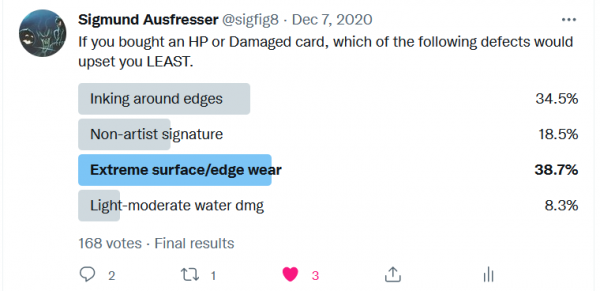
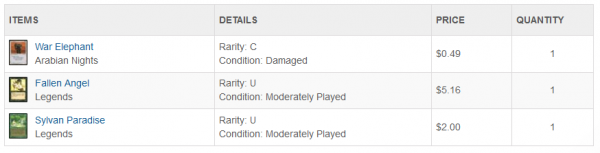
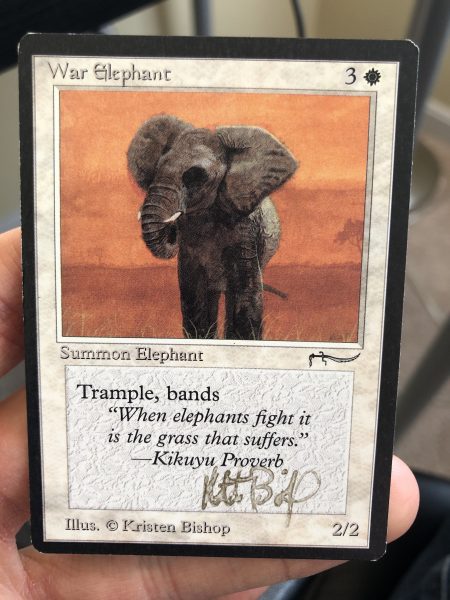
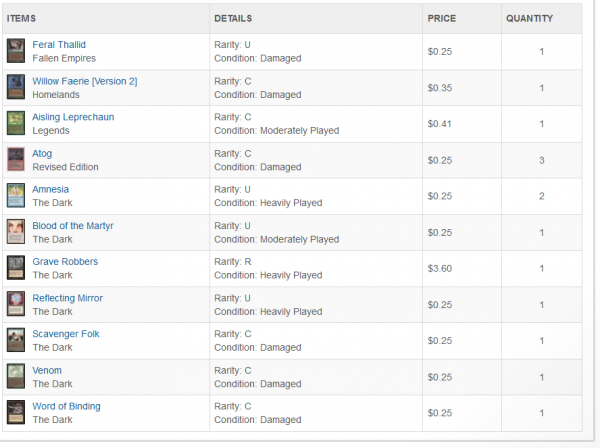

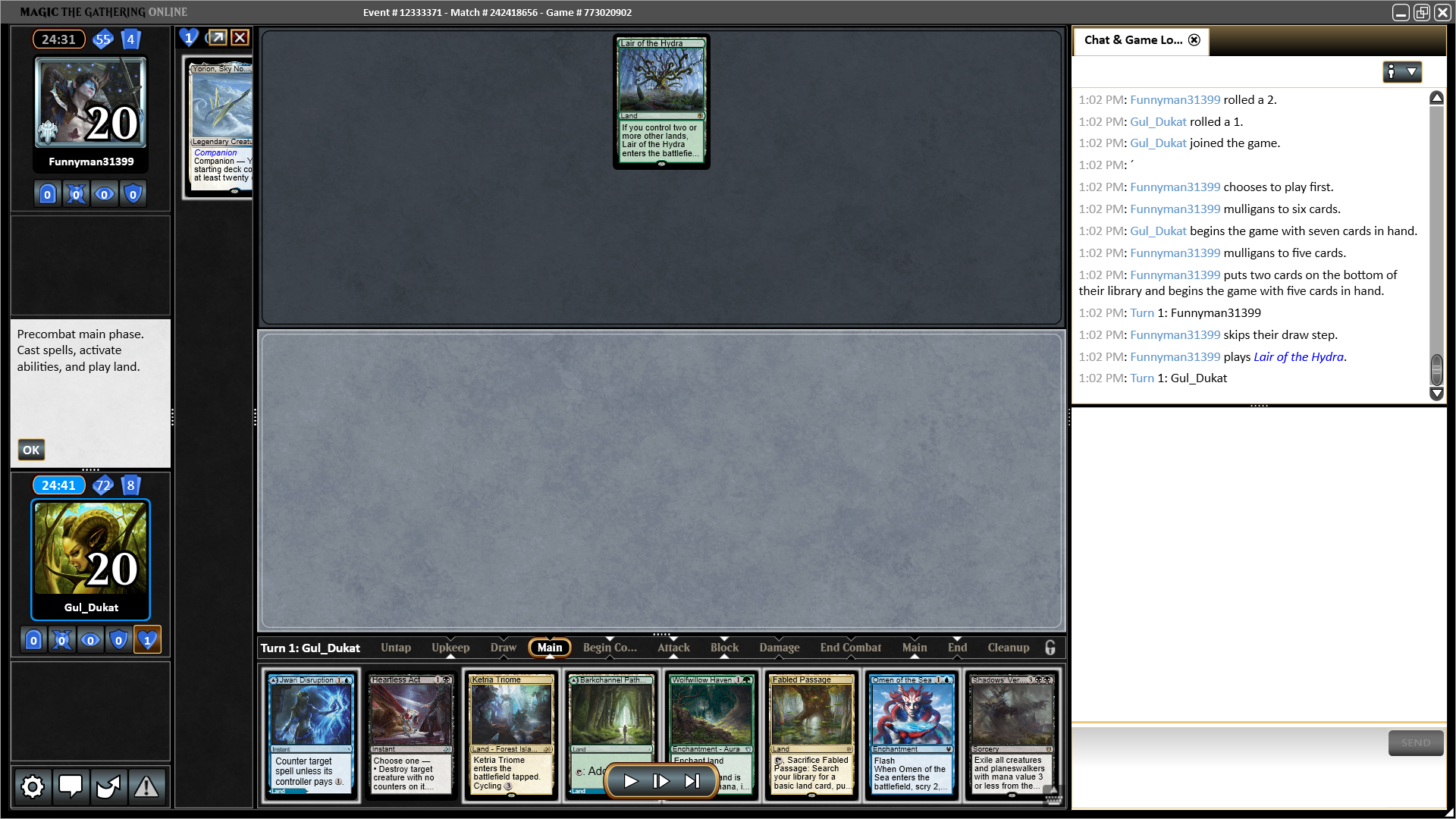
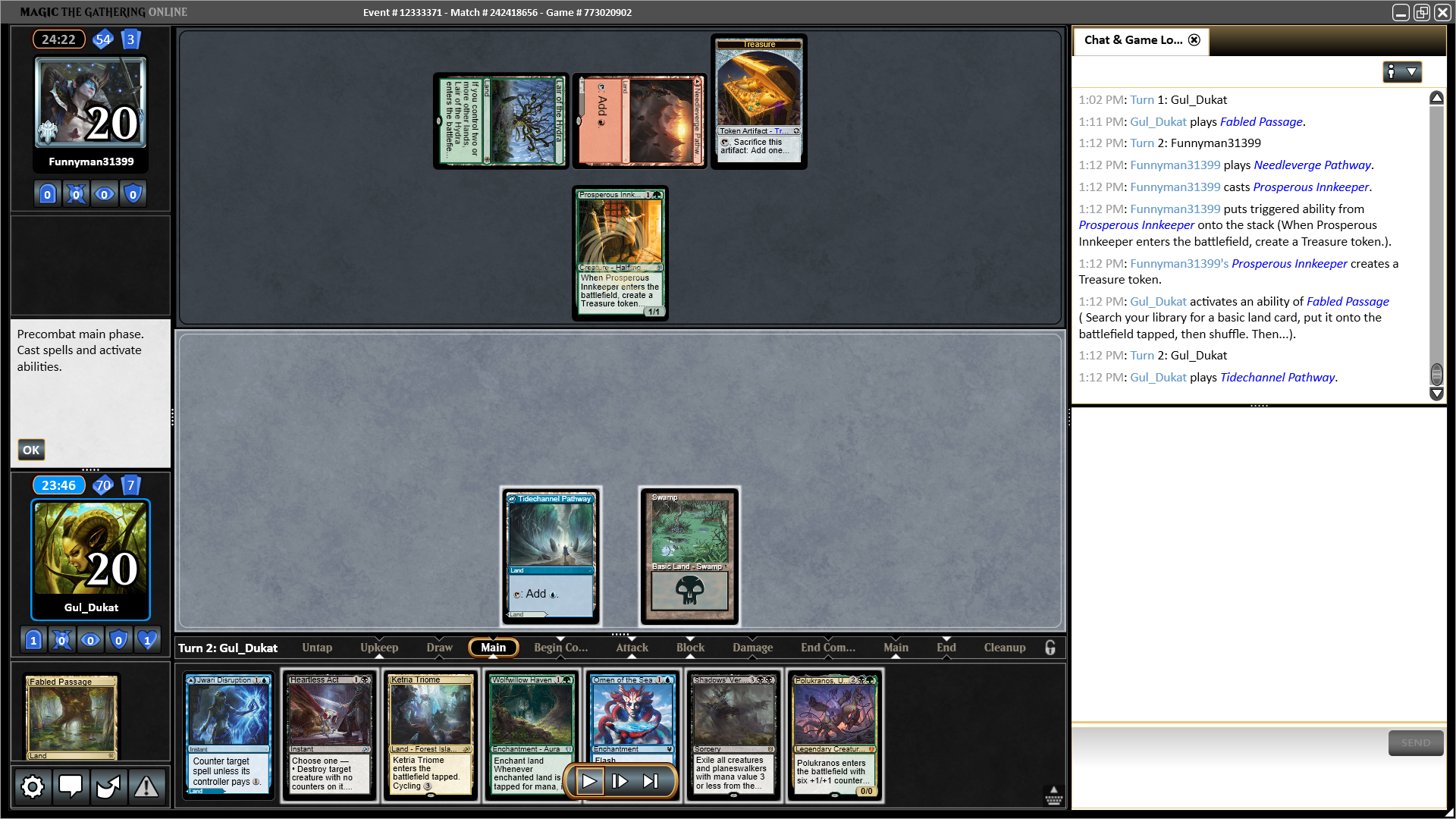
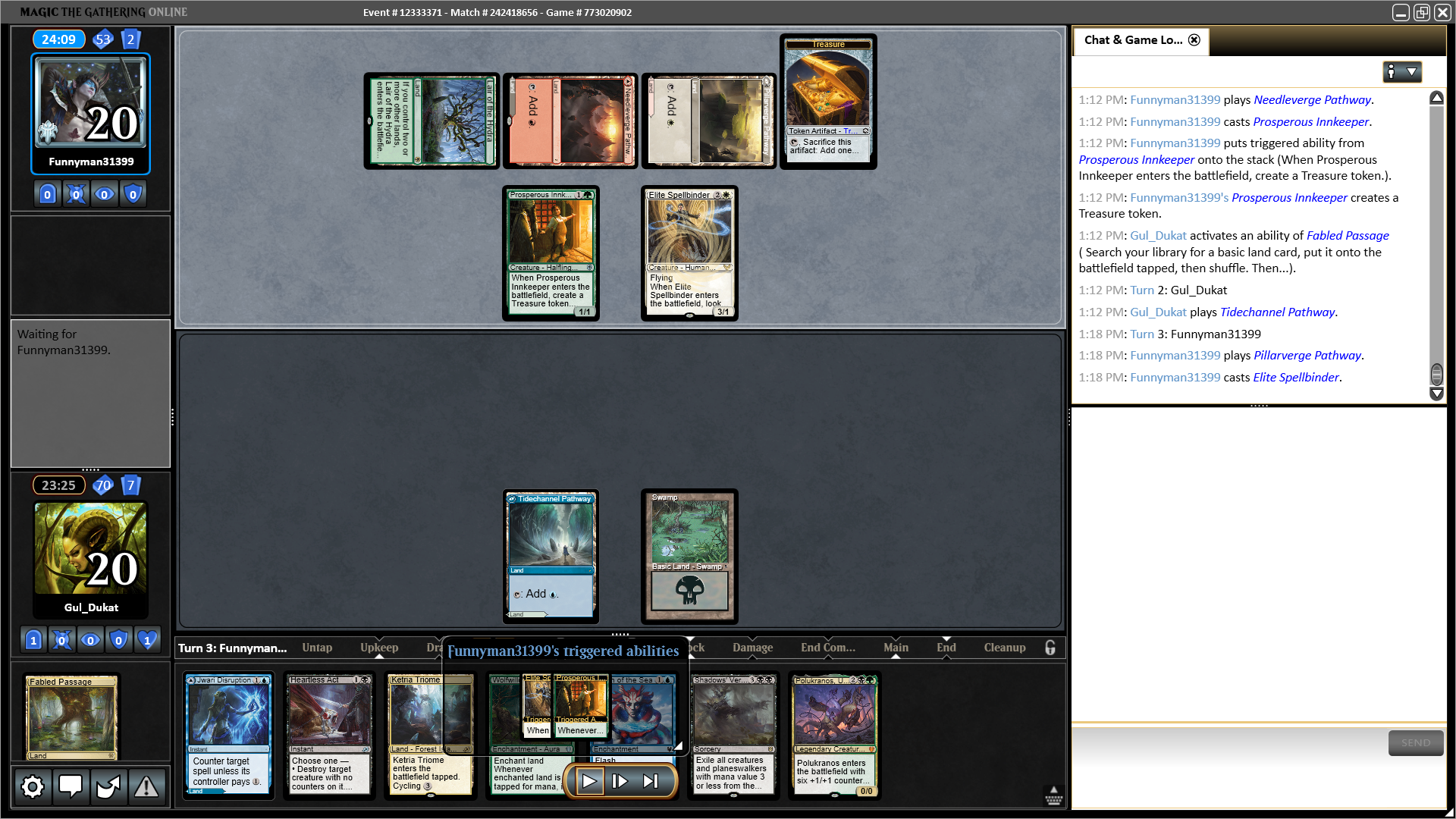

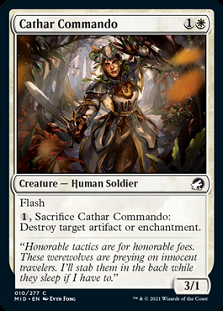 Specifically, Cathar Commando and Outland Liberator fill well-known holes for several decks and will be adopted by at least some sideboards. See, the biggest hole in Humans has always been its weakness against Torpor Orb. The deck is built around creatures with enters-the-battlefield triggers, and Champion of the Parish is unplayably bad under the Orb. This weakness is compounded by Humans lacking Qasali Pridemage in-tribe. Humans can go outside the tribe for some answers, but Pridemage's cost was prohibitive due to its creature types. All the other options were similarly answered by Orb. Humans finally has two options to defeat the Orb or any other prison piece it needs to.
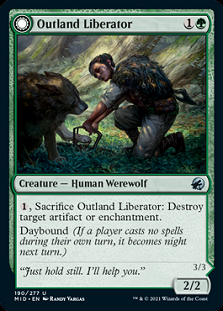 Liberator's front face is worse than Commando's mainly because flash is so powerful (an extra point of power never hurts, though). However, the potential of flipping Liberator into Frenzied Trapbreaker makes up for that weakness to the point that I'd expect Humans to adopt Liberator over Commando. True, Trapbreaker doesn't synergize with Humans, but it doesn't need to itself. Liberator has that covered and any +1/+1 counters will carry over when flipped. It's one thing to Pridemage
 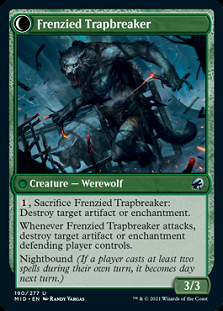 away a threat; it's another to be able to swing into Urza's Saga constructs with confidence. Also worth noting: Saga itself is a target. Liberator even makes Gavony Dawnguard more playable by getting Day/Night tracking started.
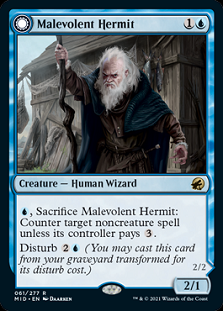 The next two are far more speculative, but I can definitely see their niche. Typically, control mirrors devolve into staring competitions followed by a frenzy of activity as one deck goes for it. Malevolent Hermit offers a pretty solid way to reposition and possibly steal games 2 and 3. A 2/1 beater isn't anything special, but Hermit's front face does provide a better Spell Pierce which stays active under Teferi, Time Raveler. And also can't be countered by Force of Negation. That's a pretty great way to pressure opponents/planeswalkers and keep up the shields.
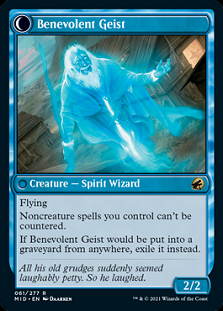 However, it's the back side that can run away with games. Having a creature that can return from the graveyard is solid as it's card advantage. A flying creature that moots opposing counterspells is better. The only problem with Benevolent Geist is actually getting it into play. Casting it is no different than going for Teferi, but Geist can only be cast from the graveyard. This means that Hermit has to be cashed in first, which is no bad thing, or killed. The problem with the later option: most control removal exiles. However, that does leave the door open for looting effects if rushing to Geist is a thing. In either case, control players should be aware of the Hermit's power.
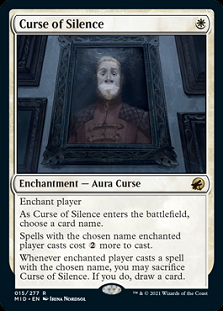 This has led a lot of players to point to Curse as the answer to Crashing Footfalls and Living End. And they're not wrong; delaying either deck's main gameplan until turn 5 is quite strong. However, the catch is that both decks have ways to answer the enchantment and still go off turn 3, with Brazen Borrower being the most common. This does not disqualify Curse as a sideboard card, but it does mean that it needs support to be effective. I'd argue that since Curse only delays the named card, it's not a general answer, but a taxing card, and that would limit play to tempo and aggro decks that actually put the delay to good use.
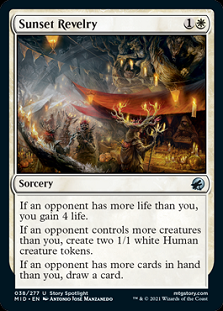 The final card is tricky to evaluate. It has one clear home, but that home is already occupied. Sunset Revelry is a cheaper Timely Reinforcements with a bonus. For one less mana it makes one less token and gains two less life. There's also a third clause that's unlikely to be relevant for a control deck against Burn, which is where Timely sees play. Being cheaper is usually the best way to see play and that's led to speculation that Revelry has made Timely obsolete. I'd be more cautious.
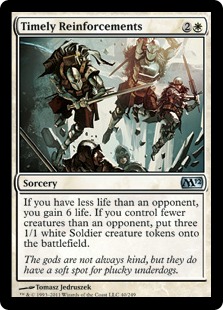 However, that cantrip potential might open up more space for Revelry. Timely never sees play outside of control vs aggro, but I could see Revelry being played by aggro against aggro. Being on the draw is quite hard for any creature deck, and getting on the back foot early can be fatal. Revelry can help a stalling aggro deck get back in against a better board. 4 life and 2 humans isn't going to do that, but those things plus a cantrip might. The latter is the most important part since it digs for more threats and may actually be valuable against midrange for that reason. That Tarmogoyf will hold off the humans perfectly fine, but I'm getting another chance to hit a real threat and you'll have to keep the 'Goyf back a turn or two. I'll certainly be testing it.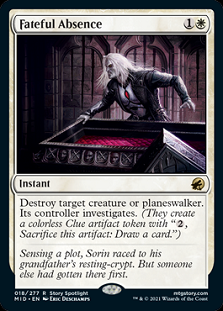
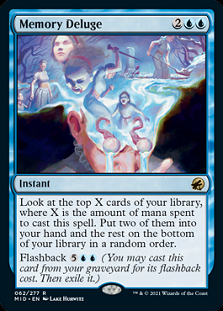 Similarly, Memory Deluge is a good card that I don't think is good enough. Picking the best two cards from the top four is decent and such digging and selection is especially important for control and combo decks. Four mana is a steep enough price that I think Deluge would be limited to control. The problem is that for less colored mana, Fact or Fiction digs five cards deep. Anyone who's played with or against Fact knows that the caster always gets what they want, so that's not a knock compared to Deluge. The big attraction is the flashback which makes Deluge Dig Through Time with minor discount and no delve. Of course, paying full price for Dig limits it to the late game, and considering that Fact isn't really seeing play, I don't think Deluge has a chance.
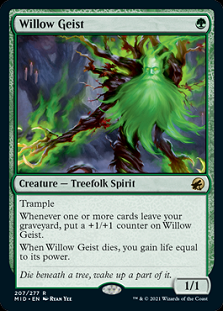 I want to acknowledge Willow Geist as a great build-around card. It can grow impressively large alongside Wrenn and Six, Lurrus of the Dream-Den, and to a lesser extent Murktide Regent. However, I have no idea if that's something viable in practice or what such a deck might look like, so I'm leaving Geist to Jordan if he wants it.
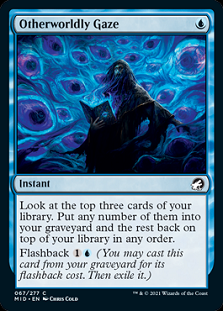 Meanwhile, there are a couple more enablers being suggested for graveyard decks. Phoenix primarily, again. Otherworldly Gaze is the main one, as filtering the top three cards and filling the graveyard on turn one is a decent way to set up Phoenix. However,
 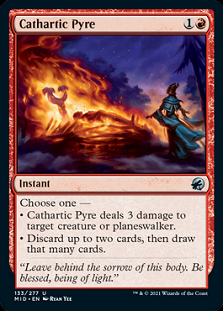 Cathartic Pyre also sees
 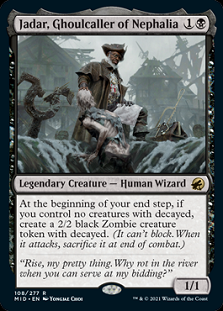 Finally, there are two cards that would be very playable in a deck that does not and maybe cannot exist in Modern. The zombie tokens in IMH have decayed, which makes the fairly useless except as bad Shocks. As a trade-off, they can be made more efficiently than normal, reusable Zombies. Maro confirmed that Wizards wants them either to be
 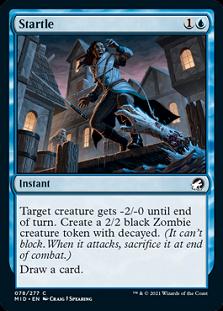 In that specific circumstance, Jadar, Ghoulcaller of Nephalia becomes a keystone card. Making a decayed zombie every end step is great when said Zombie is going to be fed to something every turn. In such a deck it would be trivial to trigger Jadar every endstep. He's as fragile as they come, but that also makes him something to feed to the engine and replace. However, the real standout in that deck would be Startle. Sacrifice engine decks tend to be a bit slow and vulnerable to aggro. Startle buys time and makes more fodder for the engine without costing a card. It's priced right for Modern, but again, without a hungry sacrifice engine the effect is too weak. If one exists, then we're talking.
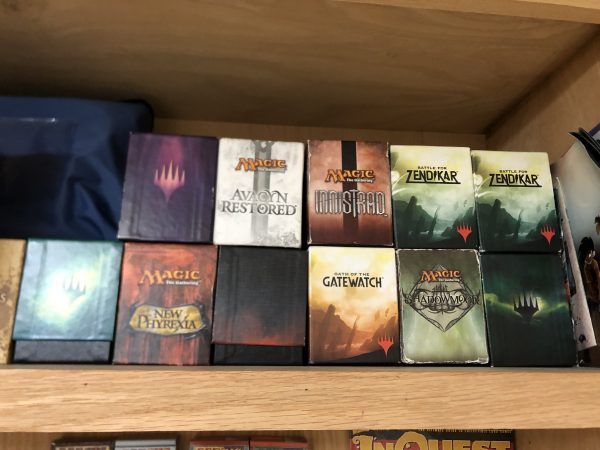
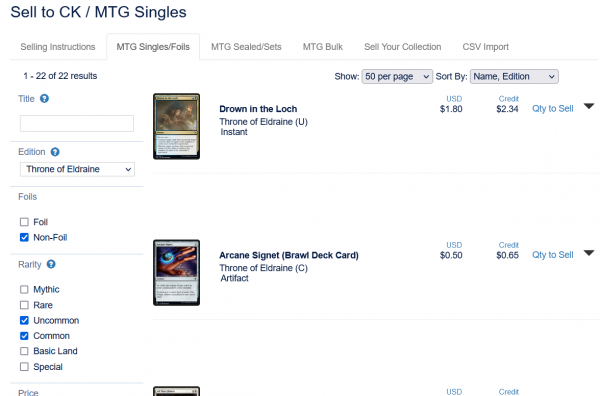



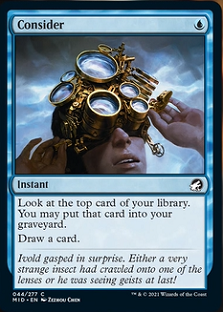 The best Modern card revealed from Midnight Hunt is also one of the most innocuous. I've already
 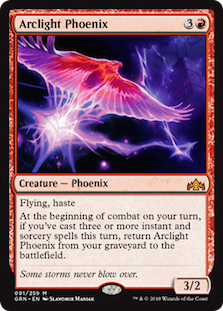 Once Consider is in Modern, expect to see more attempts to revive Arclight Phoenix.
 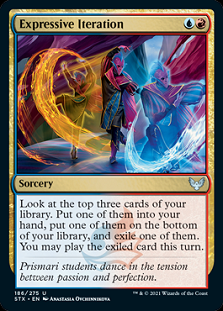 multiformat all-star because it draws up to two cards. The same will be true of Consider for many decks. Dredge and Reanimator would never stretch into blue for Opt. But they both might for Consider, though Reanimator is far more likely.
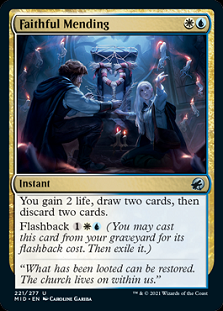 So as I was saying, Wizards is printing more graveyard enablers in IMH, and consequently there will be an upswing in graveyard decks soon. And they won't be in the expected colors, so stop relying on Sanctifier en-Vec. Specifically, it's a new Faithless Looting. Which is multicolor, an instant, and has lifegain tacked on so it can be white. Meaning that it's actually not very much like Looting at all beyond sharing some text. But it does explain why Careful Study wasn't in MH2, disappointing plenty of Phoenix hopefuls. And s
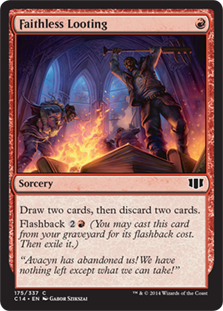 decks that don't normally get card velocity. A two mana UW velocity card is competing with far more than Looting did, which will limit playability.
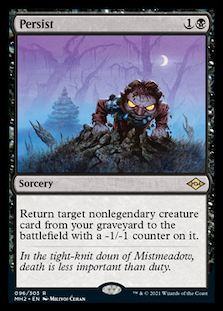 reanimation may be their chance to win. Mending offers the deck a way to burn through the air and set up for another attempt. However, it doesn't make the deck faster. The lifegain makes being slow less problematic against aggro decks, but I don't know if that's enough.
 And now for something completely different. Glimpse of Nature has been banned since
  other creature combo deck, but it might be something to build around with flash and Collected Company. It also has flashback, but that costs enough that it's a late-game desperation move. Rite also triggers off enchantments, only lightly broadening the scope of which decks can play it. Enchantress already draws all the cards, it doesn't need a temporary boost. So, again, what's the big deal? Simple. Rite is white rather than blue.
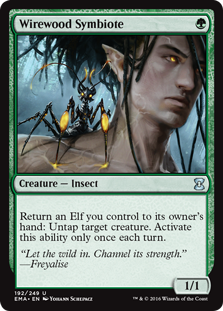 gameplans. And I'm also not certain that Storm- or Elves-style combo is viable in Modern, and if it is, that it's better than existing Company decks.
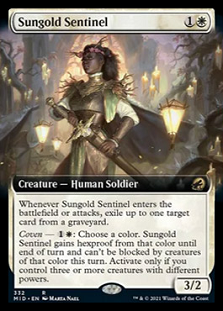 Speaking of Humans, there are a number of Humans cards with potential in IMH. Which makes sense. This is the plane that spawned Champion of the Parish, Thalia, Guardian of Thraben, and Thalia's Lieutenant, after all. The catch is that, so far, most have catches to their playability. The biggest problem is that almost all are three mana or more. They're very good three mana cards, but cost is a huge factor in playability.
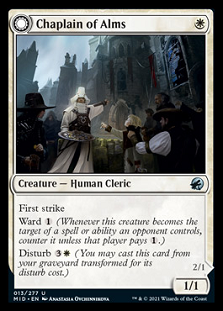 quite good and I know from experience that it will be easy to make live. The problem is that I doubt it will ever save Sentinel from removal. Smart players will just kill the other creatures first. Or sweep the board. It would be very good at breaking board stalls, but those are very rare. In other words, it's a good card for a different metagame.
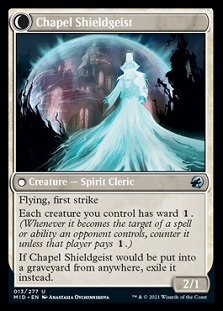 Chaplain of Alms is another one that might be playable in the right metagame and the right deck. A 1/1 with first strike and ward 1 isn't much, but disturb makes me want to get down with that sickness. Getting a dead creature back transformed is decent value, and protecting every creature with ward 1 is pretty good. It's very fragile and costly, but in a very grindy meta it might work out.
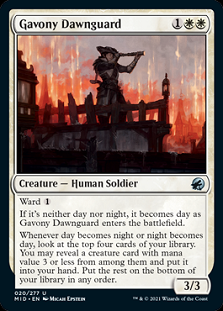 catch is that Dawnguard doesn't trigger on entry. Instead, the trigger is tied to the Day/Night werewolf mechanic and only triggers when night becomes day or day becomes night. Which means that Dawnguard can trigger multiple times, but unless it was already night when she entered, it will be down the line.
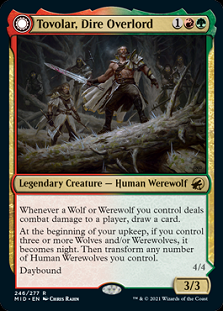 However, it's not too far from possible. There are a number of new Day/Nightbound werewolves that would get the ball rolling for Dawnguard. Tovolar, Dire Overlord is the most playable creature so far, but it is quite early. And there are a few non-creatures that reference day and night, so there may be enough cards to get the ball rolling for Dawnguard. In an actual werewolf deck she'd be quite strong, but such a deck is likely a bad Domain Zoo and more for Standard than Modern.