

Are you a Quiet Speculation member?
If not, now is a perfect time to join up! Our powerful tools, breaking-news analysis, and exclusive Discord channel will make sure you stay up to date and ahead of the curve.
Last week, we made a forecast about Modern in 2020. And with a starting point established, we can now begin tracking developments!
I previously concluded that the SCG circuit was overplaying Amulet Titan, and that Modern players were forgetting to pack their graveyard hate. This week, I will be adding to the data with additional events. There's another SCG Classic to tackle, and an unexpected new source of data. The meta is still in its early stages, but it appears that the lessons from last week were at least heard. Whether they're actually going to be internalized for the long run remains to be seen.
SCG Philadelphia
SCG Philadelphia was another team event, so everything I said last week about the problems of such events analytically still applies. However, Philly's data is more useful than Richmond's was because it was a follow-up event. Richmond was the first major Modern tournament since the bannings (even if it was only partially Modern), and so it happened in a vacuum: there was no other data to draw on, so Richmond reflected player assumptions rather than reality. Amulet Titan's absurd population demonstrated this succinctly. The teams in Philly appear to have learned from Richmond, and the Day 2 metagame has adjusted.
| Deck Name | Total # |
|---|---|
| Amulet Titan | 7 |
| Heliod Company | 5 |
| Dimir Whirza | 2 |
| Gifts Storm | 2 |
| Azorius Control | 2 |
| Golgari Yagmoth | 1 |
| Grixis Death's Shadow | 1 |
| Mono-Red Prowess | 1 |
| Infect | 1 |
| Azorius Stoneblade | 1 |
 Amulet Titan is down to half its Richmond total, and Mono-Red Prowess has also dropped. Heliod Company sees a slight increase over last week, while Gifts Storm holds steady. This suggests that players shied away from the big two.
Of course, the overall field is much narrower than Richmond's, so the starting population may be a factor. However, I've been told before that larger SCG events often yield smaller Day 2's due to cleaner tiebreakers. If the former scenario is true, the results aren't necessarily indicative of much. This is possibly true regardless, given how team events work, but I would still expect Day 2 data to reflect the relative population from Day 1, thus indicating not necessarily deck strength but at least player choices.
If the latter is true, then this is a watershed moment. It would indicate that players abandoned Titan, which had been their mainstay, in droves from one event to the next. As I noted last week, Titan had an outsized presence in Day 2, but that didn't translate into better results. The same is true here. If players picked up on this fact, they may have switched to something they think is better-positioned. Or at least less overhyped, in hopes of dodging sideboard hate.
The Classic
The real data is as always from individual open events, and so the real test of my hypothesis is the Modern Classic's Top 16. It's not as large a starting population as an Open or GP, so it's not as random (and thus valid) as I'd like. However, it is an individual event, and large enough to be instructive. I'll be using the Philly Classic to study changes from Richmond. Philly should provide a more refined take on the new Modern and is more likely to be accurate to the hypothetical real metagame.
| Deck Name | Total # |
|---|---|
| Mono-Red Prowess | 4 |
| Ad Nauseam | 1 |
| Mardu Pyromancer | 1 |
| Heliod Company | 1 |
| Dimir Whirza | 1 |
| Mono-Green Tron | 1 |
| Azorius Stoneblade | 1 |
| Neobrand | 1 |
| Dimir Mill | 1 |
| Infect | 1 |
| Mono-Green Devotion | 1 |
| Amulet Titan | 1 |
| Dredge | 1 |
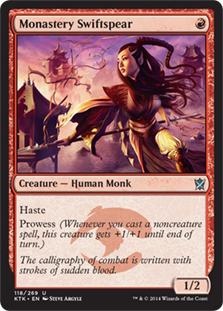
 Prowess continues to be the most popular deck, even putting up the same numbers as in Richmond. However, no other deck managed more than one copy.
Prowess also won again, though it's far more surprising this time. Traditionally, Ad Nauseam laughs at red decks. Besides its own goldfish speed, Phyrexian Unlife is 10+ life, and like many combo decks Ad Nauseam always packs Leyline of Sanctity. William Moody's deck doesn't look atypical, and Lucas Molho isn't playing any anti-combo cards, so Ad Nauseam losing is a bit of a mystery to me; that said, no deck is 100% favored against anything. The best guess I have is Moody got very unlucky, while Molho curved perfectly.
If Titan was the menace that it's made out to be, it should have at least put more decks into the Top 16. It didn't, and was instead just another member of the pack. This is consistent with what non-SCG data I've had suggests. Titan didn't appear in last week's PTQ data, and while it's a top deck in the online data, it isn't The Deck in absolute or relative terms. Outside of the most blitzy aggro deck doing well, the data is indicating a wide-open and non-polarized metagame that is trying to figure itself out. The Philly classic runs the gamut from old standby Tron to fringe players Dimir Mill and Neobrand. It's an open metagame, and players should be ready for anything.
SCG's Tail Chasing
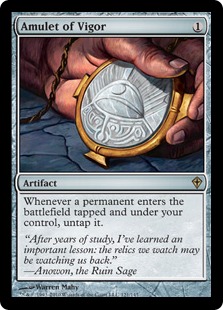 If the data consistently fails to back the hype, why does the hype persist? Star City is so convinced that Amulet Titan is the best deck in Modern they asked the Philly Top 4 how to beat it. The responses indicated that, despite not all of them playing Titan, they did all agree that Titan as the best deck and that beating it is a struggle.
Again, there's no evidence that Amulet is any better than any other deck, and diving both the Open and Classic deckists failed to produce an inordinate amount of anti-Titan hate. Titan just isn't living up to the hype that the SCG Tour keeps building, which indicates that SCG is chasing its own tail. They think Amulet Titan is best because of their own Amulet Titan hype, regardless of whether that hype checks out.
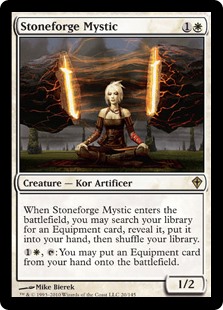
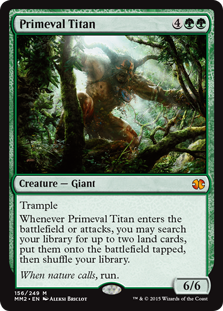 I can't definitively say how this happened, but I believe two scenarios are plausible. The first, I call The Wannabe. Titan has never been an especially popular deck, but it has remained a solid one since 2015. Thus, it has a very dedicated fanbase and a long list of players that have been impressed by the deck, even if they don't actually play it. That core of admirers has been boosted by recent developments, specifically the adoption of Castle Garenbrig, Field of the Dead, and Dryad of the Ilysian Grove. It makes sense that a very solid deck that receives a boost would be better. Given that Amulet did well before Oko was banned, folks are loudly proclaiming it to be best; in lieu of convincing arguments in the face of Amulet Titan appearing more powerful, everyone is going along with the narrative.
The second is The Self-Defeating Prophecy. Again, Amulet was a good deck even under Oko's reign. It was boosted, and so the prophets declared it the New Best Deck. It had been good before, and a major threat had been eliminated, so what could be left to stop it? However, by proclaiming it the New Best Deck, pundits reminded players of the threat. Either through better playtesting and strategic play or changing their sideboarding strategy, players adapted to a more powerful Amulet Titan. The deck now finds itself in a prepared metagame, which means it no longer has any special advantage, and so never actually becomes the New Best Deck.
Cardmarket Paris Series
I thought that Star City was unique in having its own Magic tour, completely ignorant that Cardmarket was doing exactly that but for Europe until I saw a reddit post about the Top 8. They get no coverage in the States, so I only knew Cardmarket as a PT team. Another source of Open events for the data set is a godsend with the advantage of wider geography for more diverse data. And that data paints a very different picture of Modern than SCG's.
| Deck Name | Total # |
|---|---|
| Azorius Stoneblade | 2 |
| Amulet Titan | 1 |
| Eldrazi & Taxes | 1 |
| Bant Stoneblade | 1 |
| Abzan Ephemerate | 1 |
| Jund | 1 |
| Humans | 1 |
 Where SCG is overrun by Prowess and Titan, MKM appears to be all about Stoneblade, both UW and Bant. This is shocking to me, as Stoneblade hasn't done anything notable stateside. I've played almost the exactly same list as winner Arnaud Hocquemiller many times, and mostly been frustrated. I have no idea if it's a case of a very different, and ostensibly more favorable, metagame in Europe than America, or if Arnaud simply knows the deck better, but at minimum it means I'll be reexamining the deck again soon.
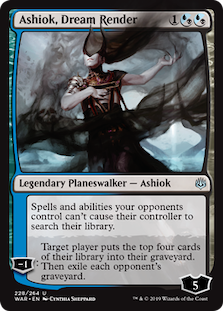 Again, Amulet Titan is just another deck in this Top 8, but everyone is aware of the deck. Ashiok, Dream Render is in most sideboards, and while Ashiok does remove graveyards, its main draw nowadays is stopping deck searches. Primeval Titan isn't a Modern card when reduced to just a 6/6 with trample.
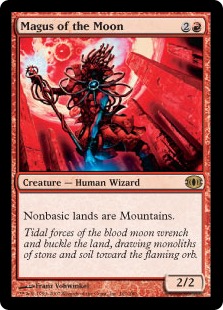
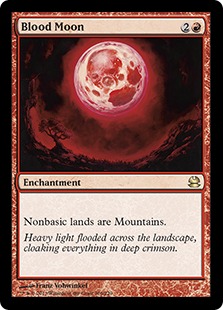
A more interesting adoption is Magus of the Moon in Humans. Initially, Blood Moon was game-ending against Amulet Bloom, but over the years players adapted and ran more basics to compensate. Dryad of the Ilysian Grove gives Amulet an out, but it isn't perfect. The main draw of new Amulet is the value from Field of the Dead and Valakut, the Molten Pinnacle. Even if Moon effects can't lock Amulet out anymore, Moon still guts Amulet's gameplan. Dropping Magus hurts Humans too, but Aether Vial and Noble Hierarch help a lot, and Magus only needs to buy a turn or two for Humans to win.
A Counterpoint
 By itself, the MKM Paris Top 8 provides a strong counterpoint to everything from the SCG Tours. Midrange decks are the power in Europe while Prowess is ruling in America. I don't have enough information about either metagame to guess as to why, but the discrepancy does further support that the SCG Tour is not the definitive word on the Modern metagame.
More interesting to me are the views of Amulet Titan. It's obvious that SCG simply accepts that Amulet is best and will happily live in that reality, but MKM is actively fighting Titan, and apparently winning. To listen to SCG players and commentary is to believe that it's "play Amulet or be wrong." MKM seems to argue that while Amulet is a rising deck, it's just something else to prepare for. They're more concerned with the red decks, specifically Prowess; but again, not in terms of it being The Best Deck, but as something to be wary of and prepare for. Frankly, I find the latter a more healthy and productive attitude.
Alternative Metagame
Another advantage of looking at the MKM data is that they released the metagame data for their Modern event. It appears that this is the overall starting metagame. Either way, this is the first look at true open event data we have, and further reinforces the metagame I've been building with the Classic and PTQ data.
| Deck Name | Total % |
|---|---|
| Other | 29.4 |
| Mono-Red Prowess | 6.6 |
| Burn | 6.1 |
| WUx Control | 6.1 |
| Tron | 6.1 |
| Stoneblade | 5.6 |
| Dredge | 5.1 |
| Death's Shadow | 4.6 |
| Amulet Titan | 4.6 |
| Valakut | 4.1 |
| Jund | 4.1 |
| Humans | 4.1 |
| Devoted Company | 4.1 |
| Eldrazi | 4.1 |
| Urza | 3.0 |
| Infect | 2.5 |
Red decks are the top decks here, with Prowess continuing to beat out Burn, though not by much. Amulet Titan continues to be in the middle of the pack, beaten very handily by Stoneblade variants. This fact makes me wonder just how badly wrong I've been playing Stoneblade, as again I'd never have put it as that strong a contender. The Other category continues to be the highest by quite a margin, which I've long considered a sign of overall health in Modern. Given the usual trends for post-ban metagames, my conclusion is that Modern is still settling and the format is wide open.
Titan's Fall?
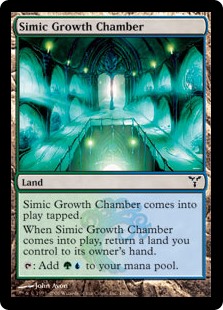 It is tempting at this point to say that Titan has fallen from grace. However, I think that a bit premature. The deck hasn't fallen from anything; it hadn't risen in the first place! Amulet Titan was assumed to be the best deck in Modern. That the assumption hasn't been demonstrated true says more about the assumptions themselves than the deck.
The metagame is still young, and there is time for Titan to rise as high as the hype machine claims it will (or has). However, the data from open individual events argues that being prepared is sufficient to beat Amulet. The data indicates that Amulet Titan is a strong deck and may be highly tiered. But, it's much too early to be proclaiming metagame winners. More data is still necessary.

 Going forward, we'll no longer be making a commitment in advance to when the next B&R update will be. While we still expect changes to come in a similar pace, and will always announce changes on a Monday, we'll be allowing some flexibility in the exact week of changes.
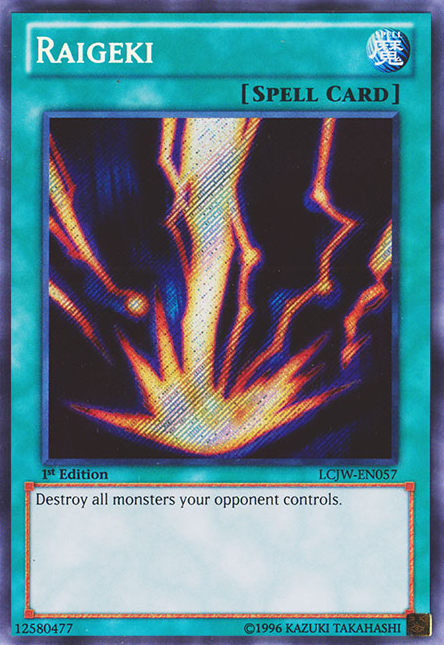 Which brings us to Yu-Gi-Oh!, a game that's had sporadic banlists for over five years. Indeed, the online community is constantly raging at the structure in place: Konami willfully allows Tier 0 decks to dominate for months on end, mass-reprints the broken product, and then issues bans once players have their hands on the cheaper versions, only to usher in a new Tier 0 format fueled by whatever new expansion has just released.
 There's also the fact to consider that Konami maintains their banlist policy despite online vitriol. At the end of the day, they're not going to want to implement a structure that players hate enough to stop playing; they have the numbers, and are probably happy with the way things are going financially. By that same token, Wizards has the numbers on its side, and I'm confident whatever change they make to Magic will be done so with the aims of drawing new players and keeping old ones. I for one am grateful that a vocal internet minority does not dictate the way they do things at corporate.
 The Rise of Pioneer
 Besides the allure of something new, Pioneer is also buoyed by content creators hungry for new material. I'll even admit that it can be tough to come up with Modern-related articles week after week when so much of the Magic community has its attention focused on where the action is!
 The pivotal factor distinguishing Modern and Pioneer from Legacy and Vintage is the
  While
While  Another draw to Modern is one shared by most constructed formats: the idea that once a deck is purchased, players can use it forever. Conversely, getting into limited formats instead means coughing up $15 every tournament for a few booster packs. Not so on Arena, which lets players draft for free; plus, the "my deck is safe" mentality has all but evaporated in the wake of Modern shake-ups and bannings.


 SCG Richmond
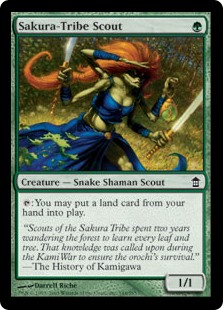 Frankly, that is an absurd amount of Amulet Titan. I suppose this should come as no surprise, as SCG
 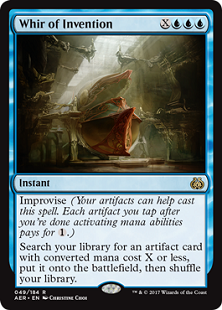 Mono-Red Prowess was the most successful deck in the Classic by population and result. It had four placings to Amulet's three, and Prowess closed out the finals. The best-placing Amulet deck took 6th, and another sneaked in at 16th. This indicates that Titan isn't any better than Prowess. Amulet may not be better than the 3rd-place
 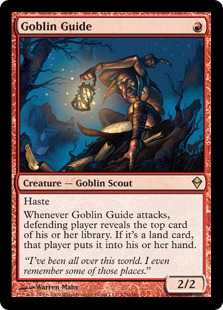 Prowess just piped Burn as the most played red-deck, but
 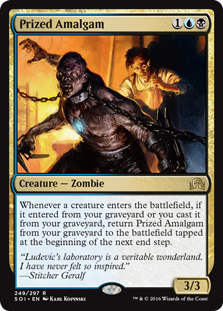 Graveyard decks are back in force.
 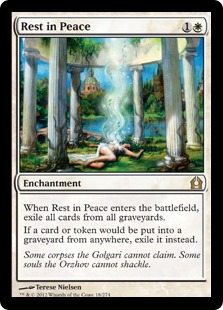 going away, and pilots now have an excuse to pick it back up. Furthermore, there are plenty of other decks using graveyard synergies. Faithless Looting's

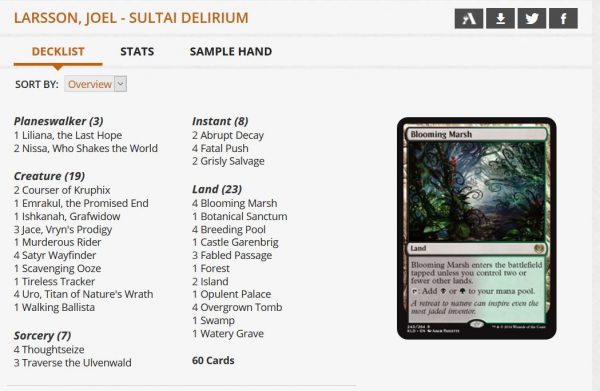

 Then we have
 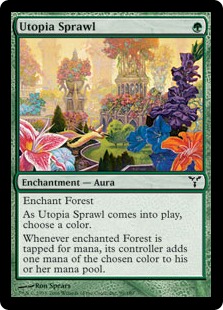 This build of
 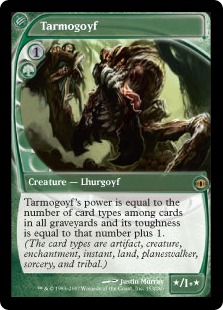 This build of

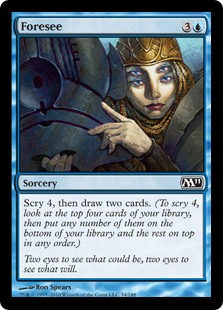 The only place where there are enough Modern events going on to develop a good data set is online. The problem with MTGO is that the data isn't entirely accurate. Wizards doesn't report the totality of League results,
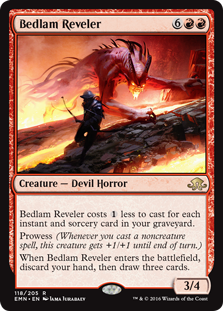
 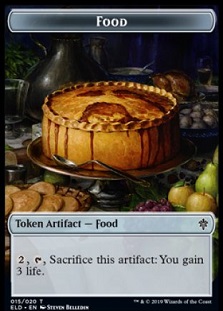 functionally the same as countering a Lava Spike, and Oko, Thief of Crowns prevented Burn from progressing its gameplan. Meanwhile, Prowess kills with big chunky turns of damage, a strategy that pushes through streams of food. Coupled with Light Up the Stage and Bedlam Reveler, Prowess had the gas it needed to stomach the feast, and was more successful.
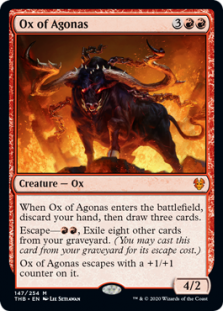 I'll admit that I could be missing something, but every line I've seen involving early Ox has been worse than just getting the dredge engine online. Every Ox turn in the mid-game has ended up in the same place as if it had been Cathartic instead. Ox hasn't shown me anything that makes Dredge actually better: it still loses to the same cards, wins the same way, and generally plays identically to how it always has, if slower now that Looting is gone.
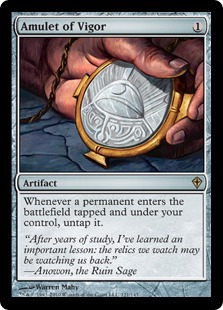 During the
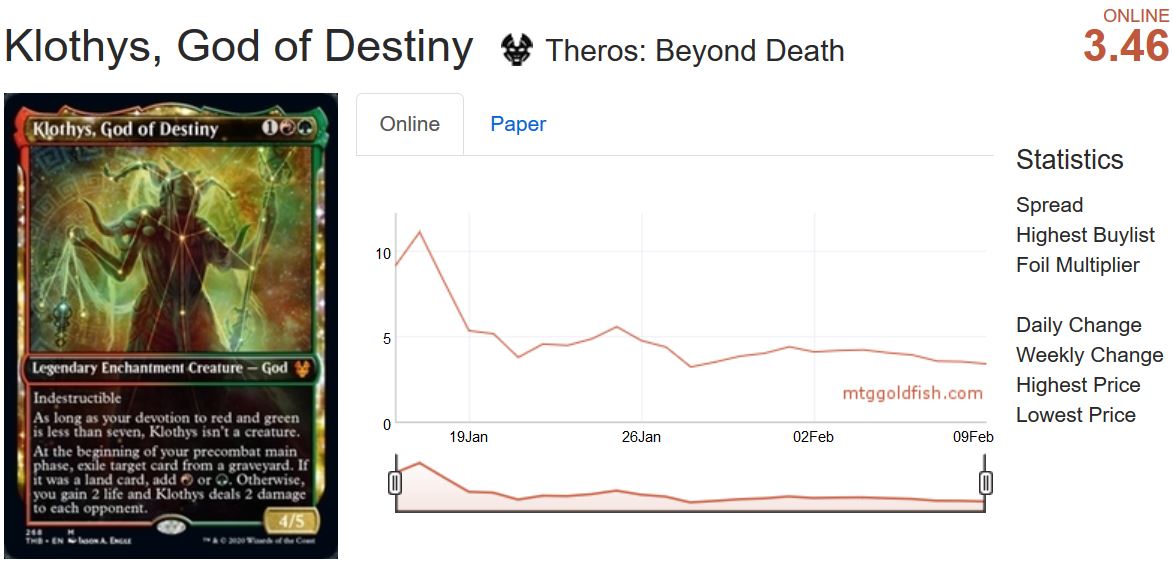
 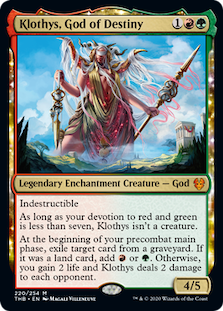 Some are also trying Klothys, God of Destiny as a mirror breaker and anti-control card,

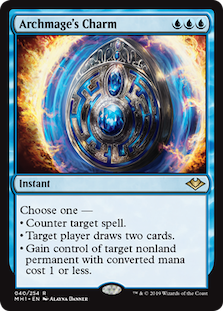 With
With 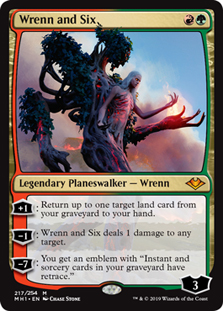 Rather than run Hooting Mandrills, the deck fills out its top-end with planeswalkers, a strategy I tried (and briefly enjoyed) in
 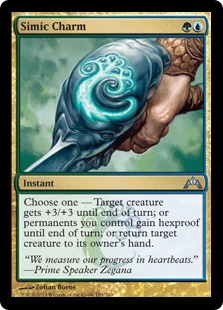 Without Oko, the deck gets a makeover, immediately trading Noble Hierarch for Brazen Borrower. Delver decks of Modern's past have traditionally appreciated Vendilion Clique primarily for its status as a pre-flipped Insectile Aberration with flash, no joke in a permission-based thresh deck. While the additional effect was icing on the cake, it pales in comparison to Borrower's benefits: the flashy new Faerie doubles as a critical mode of Simic Charm, bouncing not just creatures but any opposing nonland permanent to disrupt a myriad of possible combos. What's more, its adventure typeline negates the card disadvantage of running bounce effects and gives the deck a reliable late-game mana sink: Once finding Borrower being cast as an adventure and then again from exile taxes pilots a whopping 7 mana! All that late-game energy makes it justifiable to skip out on running dedicated midrange cards in the sideboard, further playing to the deck's bottom line.
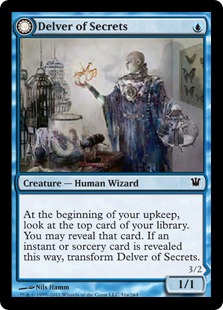 Flipping the Script