menu

March 9th 2020 Banned and Restricted Announcement

Are you a Quiet Speculation member?

If not, now is a perfect time to join up! Our powerful tools, breaking-news analysis, and exclusive Discord channel will make sure you stay up to date and ahead of the curve.

It’s not often I feel as though I’ve been blind-sided by a ban announcement. Not since… well, okay, Mox Opal. But usually, I’m pretty good at predicting this stuff!

Not this time #RIPSamLowe #NeverLucky #RIPMoxOpal #RIPOUAT

Surprise!

Let me explain my thoughts regarding these calls, since in hindsight they may seem unwise. A lot of people were not enjoying the new Modern, but I figured that Wizards focus would be centered more on the non-Modern formats, especially because a vocal part of the community was really enjoying Modern. We have had no major Modern tournaments since the banning of Mox Opal,
Oko, Thief of Crowns and Microsoft Lettuce. So really, what gives? Amulet Titan was most likely the best deck, but have you seen how Shaheen Soorani won North Carolina Regionals?

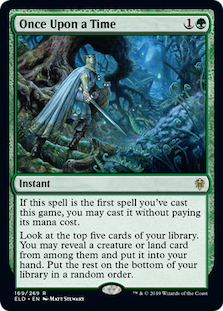
There’s tons of crazy nonsense going on in Modern right now, and lots of it doesn’t involve Once Upon a Time at all. The card is certainly too good, but right back to what I was saying on the QS Cast post-Opal ban, is it even close to the only card that is considerably better than the rest of the format? I think it would take a pretty narrow perspective of the Modern format to view OUAT as a singularly problematic piece, when it isn’t clear if it’s that much better than a lot of the other broken stuff going on there. Why Wizards did not err on the side of letting people play with their cards is beyond me.

Grinding Breach

Creatures

1 Thassa's Oracle
4 Emry, Lurker of the Loch
2 Urza, Lord High Artificer

Planeswalkers

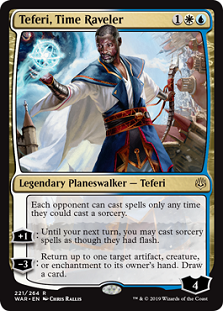
4 Teferi, Time Raveler

Spells

3 Engineered Explosives
4 Grinding Station
4 Mishra's Bauble
4 Underworld Breach
1 Archmage's Charm
2 Cryptic Command
1 Fatal Push
2 Mox Amber
4 Arcum's Astrolabe
3 Thoughtseize

Lands

4 Snow-Covered Island
1 Snow-Covered Swamp
1 Flooded Strand
1 Hallowed Fountain
2 Mystic Sanctuary
4 Polluted Delta
1 Sacred Foundry
4 Scalding Tarn
1 Steam Vents
1 Watery Grave
1 Hall of Heliod's Generosity

Sideboard

2 Blood Moon
1 Detention Sphere
2 Aether Gust
1 Ceremonious Rejection
3 Mystical Dispute
1 Surgical Extraction
1 Wear
1 Urza, Lord High Artificer
2 Ashiok, Dream Render
1 Timely Reinforcements

As for Pioneer, I genuinely think the winrate they cited for UB Inverter must be skewed somehow. I’ve thought of the deck as being the best for a hot minute now, and I was shocked to see the low winrate. Looking over at Mox Insight’s math, it’s clear that this winrate is reflected in paper Magic as well. I think this is a two-part result of the format being grossly over-prepared for the boogymen in Inverter and Lotus Breach (while underprepared against Spirits, Control, and Mono White), and in pilot error. In the last week I saw a player miss a very clear line to lethal at a WNPQ. I’ll have to play more of it to find out; as I was hesitant to switch off of Lotus Breach before the ban announcement. I’m buying the entirety of Inverter from scratch today.

Honestly, I don’t think the Pioneer metagame is that bad, but I think snagging Dig Through Time really could have given the format some breathing room against these powerful blue strategies. I respect that Wizards is taking their time and handling Pioneer gently though, and we may still see Dig or other cards from the top of this format cut away relatively soon.

Not much to say about Legacy. Sure it’s a little early to be banning something, but I think a lot of people agree that the deck was making the format worse, and at the very least was kicking a few beloved mainstays out to the curb. Not sure if people still play Brawl or Historic, but I sure don’t!

Moving Forward From Here

I’ve already stated how I feel about Pioneer, what with me buying a deck tonight and all, but where do we go with Modern? Well, I basically own the entirety of Shaheen’s deck minus Grinding Station, so I suppose I’ll drop $40 there and sleeve it up. I haven’t started testing Modern yet, so I really don’t know where it’s going to go from here, but I think the financial feeling across both Modern and Pioneer from the community standpoint is one of fear.

Fear was holding the price on Inverter of Truth back at the $4 mark, and I honestly don’t see a reason that this won’t remain the same. It will likely start trending up if it continues to dominate the format, but I'm not expecting a crazy spike or anything. I think with the massive volume of bans over the last few years, coupled with relative economic unrest in the United States, fear is the name of the game in the Magic market these days. Most of my invested money in Magic is in Reserved List stuff and sealed product, and honestly, I want to get out of the reserved list anyway and get into something more stable, like Bitc- oh. Well, then, the stock- huh. The uh… I’ll invest in… uh…

There was an error retrieving a chart for Grinding Station

Wrapping Up

Okay, I don’t have a good investment right now. Even WoW Classic gold has been inflating rapidly! Gold selling sites are slashing prices by about 5% every week or so! The U.S. economy is kind of a mess right now and this is above my paygrade… Maybe Ben Friedman knows the move? I'm not sure that this is a good time to be one of the middlemen of Magic finance; such as a speculator or investor. I'm going to buy cards to play with, and continue to build Joslyn's store up.

I could certainly be wrong though. I'm sure someone's making money here, I just don't see the line. Drop me a line with the latest hotness over on Twitter or hit me up if you need someone to tell you to sell! See ya next time gamers!

One Time at Banned Camp: The March ’20 Ban

Are you a Quiet Speculation member?

If not, now is a perfect time to join up! Our powerful tools, breaking-news analysis, and exclusive Discord channel will make sure you stay up to date and ahead of the curve.

Well that was fast. It's only been two months since Oko, Thief of Crowns was banned. It's pretty rare for Wizards to issue Modern bans in consecutive announcements, except for during emergencies like Hogaak, Arisen Necropolis's reign of terror. So I wasn't actually expecting anything to happen in Modern. However, last Thursday, that changed; I learned that the guy who always finished decks right before they get banned had just finished Simic Urza with a full set of Once Upon a Time, all but guaranteeing that something would be axed this time around..

When Wizards announced the coming announcement, everyone assumed it was for Pioneer. It turned out to be everyone but Pioneer. I'm guessing that not being instant-speed makes Inverter of Truth combo weaker enough than Splinter Twin to be acceptable there. Of course, an unfortunate result may be Modern's Twin die-hards upping the voracity of their calls for unbanning the enchantment.

The Announcement

As of today, Once Upon a Time is banned in Modern. One could look at this outcome as an inevitability, since Once had already been axed in Standard and Pioneer. While I considered this fact when making my watchlist a few months back, it wasn't my primary concern. I thought that Once would boost high-variance decks enough to become a problem. Those decks already didn't mind playing high-ceiling, high-floor games, and Once is very much a high-ceiling, high-floor card. The odds of opening with Once are only ~40%, and when that happens, Once is an amazing cantrip. When that doesn't happen, it's not a Modern-playable effect. I only thought it would appeal to decks that were already high variance.

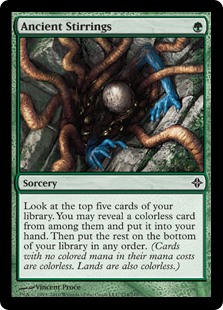
I did call that Once would be banned, so that's two down with one to go for this year's watchlist. However, what I failed to predict was that Once would gradually be adopted everywhere. Back in December, Once was really only replacing Ancient Stirrings in Amulet Titan, and had made some moves in Infect. Since then, Simic decks have gained ample traction, and Once has come to permeate the metagame. Ubiquity isn't enough to get a card banned (see also: Opt; Thoughtseize; Lightning Bolt), but being free is, so Wizards has decided to pull the trigger before the Modern GPs get going.

The Logic

Wizards was fairly brief with their reasoning this time, penning barely a paragraph of explanation. The passage still proves illuminating, especially its mid-section:

The consistency provided by Once Upon a Time allows these decks to much more reliably enact their early-game plan compared to other archetypes in the metagame, leading to less divergent gameplay paths.

Wizards is clearly aware of the effects cantrips have on game homogenization, or the reason they banned Preordain and Ponder in Modern. However, I don't think that they've ever spelled out the reasoning quite so clearly before. Wizards isn't worried about how the overall game is playing out; it's the early turns that matter: "leading to less divergent gameplay paths." Wizards apparently doesn't mind games playing out similarly, so long as they feature convergences during gameplay. But all that same-ness so early was too much.

Casting Once reduced the variety of opening turns to the point that games were looking too similar to each other. Again, Wizards has mentioned this as a reason to ban Preordain and Ponder, but those hits also came about due to other problems relating to Storm decks. All Once did was reduce variance, which apparently made games unacceptably stale.

As usual, Wizards cites data that we're unable to see. My data indicated that Once decks, particularly Amulet Titan, were very popular, but they weren't really performing that well; Amulet consistently put high numbers into Day 2 of SCG events, but such showings never translated to event wins or even top-heavy result distributions. Golgari Yawgmoth had some good results too, but nothing to indicate it was anything special (Except for it winning in Modern with Young Wolf). However, Wizards saw something different.

Over the past months, Once Upon a Time has become one of the most played cards in Modern, contributing to several of the most popular and highest winning decks.

The online meta data, which only Wizards has, must show that Amulet is both very popular and wins out of proportion to that popularity. I can only verify Amulet's popularity because again, my data shows the opposite as true. It is possible that Wizards is looking at the results across the board, but the deck data that I have access to doesn't back up that narrative. Simic decks were doing well, but not all of them ran Once. The overall League data must have been troubling.

Was Now the Time?

That being said, I do approve of this ban. Wizards has always known they got the card wrong, it's nice to see them acknowledging that fact. The data doesn't explicitly call for banning Once right now, but there are strong indicators that it was eventually going to be necessary. While you can reach that conclusion going through the hard data and watching Once's ubiquity tick up (34% on MTGGoldfish as of today, and 33% on MTGTop8), I think this deck is far clearer evidence:

Eldrazi Tron, Just_Roll (2nd Place, MTGO Modern Showcase 2/29)

Creatures

4 Matter Reshaper
4 Thought-Knot Seer
4 Reality Smasher
3 Walking Ballista

Planeswalkers

4 Karn, the Great Creator
2 Karn Liberated
1 Ugin, the Ineffable

Artifacts

4 Chalice of the Void
4 Expedition Map

Instants

4 Once Upon a Time
2 Dismember

Lands

4 Eldrazi Temple
4 Urza's Mine
4 Urza's Powerplant
4 Urza's Tower
2 Blast Zone
1 Cavern of Souls
1 Field of Ruin
1 Scavenger Grounds
1 Tectonic Edge
1 Waste
1 Forest

Sideboard

3 Grafdigger's Cage
2 Spatial Contortion
1 Ensnaring Bridge
1 Liquidmetal Coating
1 Mystic Forge
1 Skysoverign, Consul Flagship
1 Sorcerous Spyglass
1 Sundering Titan
1 Tormod's Crypt
1 Torpor Orb
1 Walking Ballista
1 Wurmcoil Engine

When an otherwise entirely colorless deck like Eldrazi Tron is splashing a single Forest so it can actually pay for Once Upon a Time, the card's benefits are made plain compared to its opportunity cost. In my preview article, I was skeptical of Once since that the upside (of a free cantrip) was pretty low-odds. Seek the Wilds has almost the same effect as a cast Once, and it wasn't playable.

Apparently, Seek was closer to playable than I knew, because all it's taken is a low-odds upside for Once to trend towards universal, and then get banned. Consistency is powerful, and getting a boost for free, sometimes, is fantastic on a card that's already almost good enough.

Impact of the Ban

Without Once, the consistency of land- and creature-based green decks will fall. I'm specifically looking at Collected Company and Primeval Titan decks, but the principle applies across the board. The next-best green cantrip is Ancient Stirrings, and it's not as universally useful as Once (although the card should now recover from its slump). The decks that were running Once but never ran Stirrings could run Seek the Wilds instead, but that seems unlikely; if they weren't doing so before, I can't imagine they'd do so now. Always costing two mana and seeing one fewer card are significant power reductions.

The overall impact on the metagame is hard to say. Once was a widely played spell, but it wasn't necessarily a lynchpin card. The overall composition of the metagame is unlikely to change. However, the specifics of that metagame almost certainly will. Decks may not have needed Once in the strictest sense, but they were relying on it to be what they were.

Before Once, Titan decks were built around the Tolaria West/Summoner's Pact engine. Post-Once, they were more heavily creature-based. Tron decks, too, were more about non-creatures last year; recently, they've adopted Once in addition to Stirrings and subsequently play more creatures. Then there's the notion of Once reducing how many lands should be played in a deck to ensure competent openers. So while no decks should be outright killed by the ban, some major retoolings will be in order.

What Now?

I would expect the metagame to continue its general trajectory. I don't expect any decks to be outright killed, and Once hasn't been around long enough to leave a gaping hole in its wake. The trend towards midrange decks evident in recent results should continue.

For that reason, I predict that Jund and Ux Stoneblade will be the big winners of this banning. How big that win shall be is a different question. They're not directly affected by the ban, and have actually won events. Meanwhile, their ostensible big-mana predators did run Once, so will be somewhat nerfed, and haven't been winning events. Amulet stands at a crossroads, while Tron should recover nicely; it had access to tons of cantrips already, and had just shaved some numbers to run Once.

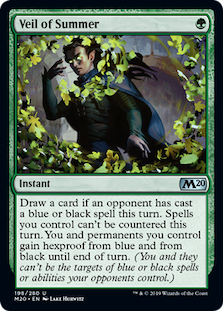
This trend towards midrange may facilitate a trend towards more traditional combo, too. Rock decks tend to stave off Humans and similar combo killers via removal and card advantage. However, they tend to struggle against combo, since most of their answers are proactive and board-based while their clock is slower compared with aggro. Combo then has time to claw back into the game after eating a string of Thoughtseizes. I've already heard some murmuring about Ad Nauseam's return, and it's worth remembering that Veil of Summer, another high-power cantrip of recent times, is still legal.

Titan's Fall?

Which brings us to the fate of Amulet Titan. It would be one-dimensional to dismiss the ban's impact and say that Titan will just return to Stirrings. Adopting Once allowed Titan to build in a very different direction from previous incarnations, and the new decks cannot easily switch over. Consider this list from last year:

Amulet Titan, Andyscwilson (MTGO MOCS 5/13/19, 1st Place)

Creatures

4 Sakura-Tribe Scout
4 Azusa, Lost but Seeking
4 Primeval Titan
1 Hornet Queen

Artifacts

1 Engineered Explosives
4 Amulet of Vigor
2 Coalition Relic

Planeswalkers

3 Karn, the Great Creator

Sorceries

4 Ancient Stirrings

Instants

4 Summoner's Pact
1 Pact of Negation

Lands

4 Simic Growth Chamber
4 Selesnya Sacnctuary
4 Gemstone Mine
3 Tolaria West
3 Forest
2 Cavern of Souls
1 Bojuka Bog
1 Boros Garrison
1 Ghost Quarter
1 Kabira Crossroads
1 Khalni Garden
1 Slayer's Stronghold
1 Sunhome, Fortress of the Legion
1 Vesuva

Sideboard

3 Path to Exile
2 Spell Pierce
2 Engineered Explosives
1 Emrakul, the Promised End
1 Mycosynth Lattice
1 Negate
1 Reclamation Sage
1 Thragtusk
1 Tormod's Crypt
1 Walking Ballista
1 Wurmcoil Engine

...compared to this more contemporary list:

Amulet Titan, John Hack (SCG Indianapolis Classic, 3rd Place)

Creatures

4 Primeval Titan
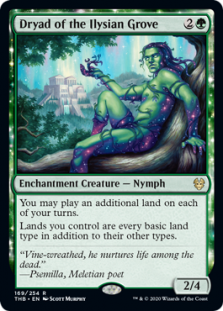
4 Dryad of the Ilysan Grove
4 Sakura-Tribe Scout
3 Azusa, Lost but Seeking

Artifact

4 Amulet of Vigor
1 Engineered Explosives

Instants

4 Summoner's Pact
1 Pact of Negation
4 Once Upon a Time

Lands

4 Simic Growth Chamber
4 Castle Garenburg
2 Breeding Pool
2 Forest
2 Tolaria West
1 Bojuka Bog
2 Cavern of Souls
1 Crumbling Vestige
1 Field of the Dead
1 Hanweir Battlements
1 Ghost Quarter
1 Golgari Rot Farm
2 Gruul Turf
1 Radiant Fountain
2 Snow-Covered Forest
2 Valakut, the Molten Pinnacle
1 Vesuva
1 Verdant Catacombs

Sideboard

3 Aether Gust
3 Dismember
3 Mystical Dispute
1 Beast Within
1 Field of the Dead
1 Force of Vigor
1 Radiant Fountain
1 Reclamation Sage
1 Tireless Tracker

Dryad of the Ilysian Grove turned Amulet from a land combo deck into a land toolbox deck. Losing the bouncelands made space for more utility lands, and Dryad lets Valakut kill much easier than Slayer's Stronghold and Sunhome, Fortress of the Legion. Once Upon a Time dug for Dryad, which had become the lynchpin of new Titan decks, making this new strategy faster and more consistent than the older version.

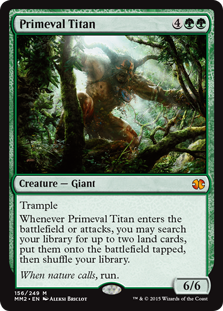
Stirrings is no replacement for Once. The latter finds creatures and lands, while Stirrings only finds lands and Amulet of Vigor. The one way Stirrings can help make the combo happen is by finding Tolaria West, which finds Summoner's Pact, when then finds the needed Dryad or Primeval Titan. To continue entirely unchanged, these decks will have to replace Once with Seek the Wilds, which again is far worse.

If Seek isn't good enough, then I'm not certain what kind of lot Amulet will make out with. It could easily revert to its classical style, but I don't think it wants to. The land-value/Valakut plan is far harder to pull off with the older version, but is likely more powerful on its own merits, as evinced by the archetype's gradual transition. Amulet Titan has been part of Modern since 2015, but it's always been pretty niche. The barrier to entry was fairly high, since the tutoring lines made going off complicated. The enthusiasts will be fine, but I don't know if the players that have come to Amulet Titan recently will be willing to put in the time to learn the more complicated deck and keep its metagame presence high.

Keep Moving Forward

Overall, I think that banning Once Upon a Time sooner rather than later was a good decision. It may have been fine at the moment, but there were signs that it would eventually have taken over to a dangerous degree. Modern will chug on largely intact, though the question of how to replace Once will redefine decks. It also means that the Regionals data is for a dead format, so I'll have to start over with the data collection.

Banned and Restricted List Update – March 9, 2020

Are you a Quiet Speculation member?

If not, now is a perfect time to join up! Our powerful tools, breaking-news analysis, and exclusive Discord channel will make sure you stay up to date and ahead of the curve.

The March 9, 2020 Banned and Restricted announcement is live! Here's the full list of cards in every format.

Brawl:

Golos, Tireless Pilgrim is banned

Historic:

The following cards are moved from suspended to banned:

Oko, Thief of Crowns

Once Upon a Time

Veil of Summer

The following cards are moved from suspended to legal:

Field of the Dead

Legacy:

Underworld Breach is banned

There was an error retrieving a chart for Underworld Breach

Modern:

Once Upon a Time is banned

There was an error retrieving a chart for Once Upon a Time

We should expect a significant metagame shakeup due to these changes, as well as significant drops on Underworld Breach and Once Upon a Time. It is notable that Heliod, Sun-Crowned and Walking Ballista were mentioned by name in the section regarding Pioneer's lack of changes, but it's not yet clear if we will see these banned in the future.

There was an error retrieving a chart for Heliod, Sun-Crowned
There was an error retrieving a chart for Walking Ballista

The bans take effect as follows:

Tabletop Effective Date: March 10, 2020

Magic Online Effective Date: March 10, 2020

MTG Arena Effective Date: March 12, 2020

Link to the full article by Ian Duke on the mothership.

To Goyf or Not To Goyf: UGx Midrange in 2020

Are you a Quiet Speculation member?

If not, now is a perfect time to join up! Our powerful tools, breaking-news analysis, and exclusive Discord channel will make sure you stay up to date and ahead of the curve.

While putting together brew reports since the Oko ban, I picked up on an interesting trend: UGx midrange seems to be catching on. And by UGx midrange, I don't mean a single deck, Ă  la Jund Rock. I mean the archetype at large, which has opened itself up to a myriad of different plans, packages, and peculiarities.

Before we start, I've got a little bit of housekeeping to do! Due to some schedule shifts, I'll be publishing my articles on Mondays from now on, instead of on Fridays.

The Players
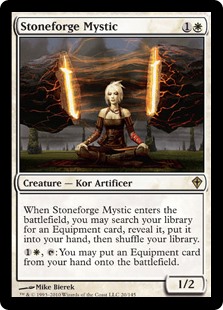
Bant decks have mostly coalesced around Stoneforge Mystic at this point, which significantly limits their wiggle-room in terms of deck composition; mana dorks and other fliers like Spell Queller are prized highly by Stoneblade decks, rendering these piles more or less indiscernible from one another. Nonetheless, some Bant players are dropping Stoneforge and going the route we'll discuss at length in this piece.

The bigger nuance lies with Sultai and Temur, both combinations that long struggled to find footing in Modern on account of their shaky removal options; once Fatal Push arrived to remedy the issue for Sultai, the deck still proved outclassed by Jund or more controlling blue shells such as UW. And while Temur has always boasted access to Lightning Bolt, its inability to deal with larger threats than its own limited the wedge to niche tempo builds and worse-version Blue Moon spinoffs.

A Titan Walks Among Us
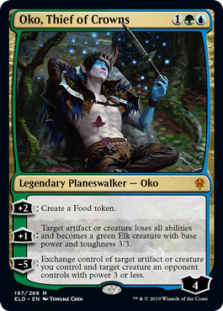
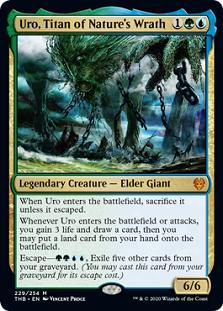
All of which begs the question, why now? And the answer: Uro! Uro, Titan of Nature's Wrath is a lot like Oko, Thief of Crowns; the cards share a mana cost, and both slot effortlessly into most decks running UG. Strategically, each provides a standalone win condition while threatening to snowball value.

A key difference is that while Oko forced decks outside of UG to adopt it, and also upheld one single deck as a clear "best home," Uro is finding its use limited to Simic-based strategies. Still, becaue the card provides so much inevitability, it's enabling a new breed of midrange and control decks happy to trade off resources with opponents in the early game, knowing they'll have the upper hand down the road.

The Decks

With the stage set, let's dive into some recent decklists. We'll start with Sultai builds, transition to Temur builds, and then see what these UGx midrange decks have in common.

Sultai

The first deck on our list wears the "control" moniker well, looking to disrupt opponents, drown them in value, and win with a bang once they've lost hope. The plan sounds straightforward until we see the deck packs 4 Gifts Ungiven, a card we haven't seen in Modern midrange since the days of Solar Flare!

Sultai Gifts, Monochrome09 (5-0)

Creatures

1 Eternal Witness
1 Snapcaster Mage
3 Uro, Titan of Nature's Wrath
4 Ice-Fang Coatl

Artifacts

4 Arcum's Astrolabe

Instants

1 Abrupt Decay
1 Assassin's Trophy
1 Cryptic Command
2 Drown in the Loch
3 Fatal Push
4 Gifts Ungiven
2 Mana Leak
2 Remand
1 Sultai Charm

Sorceries

1 Dead of Winter
3 Inquisition of Kozilek
1 Maelstrom Pulse
2 Thoughtseize

Lands

1 Breeding Pool
2 Creeping Tar Pit
2 Misty Rainforest
1 Mystic Sanctuary
1 Overgrown Tomb
3 Polluted Delta
4 Prismatic Vista
2 Snow-Covered Forest
4 Snow-Covered Island
2 Snow-Covered Swamp
1 Watery Grave

Sideboard

2 Ashiok, Dream Render
2 Collector Ouphe
2 Damping Sphere
2 Mystical Dispute
1 Nihil Spellbomb
2 Unmoored Ego
2 Veil of Summer
1 Vendilion Clique
1 Weather the Storm
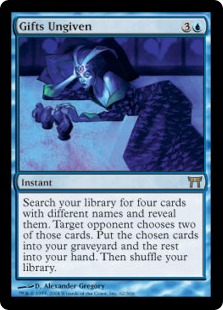
Sultai Gifts is creature-light enough to make great use of Dead of Winter, and Gifts lets it run a plethora of package enhancers in the sideboard. It does strike me as ambitious for this deck to reach the Gifts-for-Sultai-Charm stage of the game against the likes of Amulet Titan, but I suppose that's what good ol' Mana Leak and Remand are here for.

Gifts is notable as a value-generator because that role is generally filled much more elegantly in midrange decks by cheap planeswalkers, such as Wrenn and Six or Teferi, Time Raveler. Sultai, though, has access to none of these cards; its other option is to abandon the control route and become a more creature-centric midrange deck. The deck could just as well jam a set of Goyfs, as we'll soon see. To the instant's credit, choosing Uro puts opponents into a tough position, since pilots are guaranteed a heap of value either way, mana allowing.

Which brings us to the Sultai midrange decks, of which we'll examine two varieties.

Sultai Cloud, yamakiller (5-0)

Creatures

1 Scavenging Ooze
4 Tarmogoyf
4 Ice-Fang Coatl
3 Uro, Titan of Nature's Wrath
1 Tireless Tracker

Planeswalkers

4 Liliana of the Veil

Artifacts

4 Arcum's Astrolabe

Instants

2 Assassin's Trophy
3 Fatal Push
4 Once Upon a Time

Sorceries

2 Death Cloud
3 Inquisition of Kozilek
2 Thoughtseize

Lands

1 Breeding Pool
4 Misty Rainforest
1 Nurturing Peatland
1 Overgrown Tomb
4 Snow-Covered Forest
3 Snow-Covered Island
3 Snow-Covered Swamp
1 Urborg, Tomb of Yawgmoth
4 Verdant Catacombs
1 Watery Grave

Sideboard

2 Collective Brutality
2 Damping Sphere
2 Dead of Winter
2 Kalitas, Traitor of Ghet
2 Kitchen Finks
3 Leyline of the Void
2 Liliana, the Last Hope
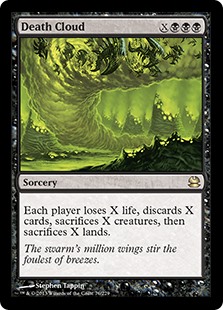
First up is Sultai Cloud, which looks like a cookie-cutter Jund deck (minus the red) but for its namesake sorcery, itself showing up in otherwise standard midrange builds exactly never.

Sultai Cloud is creature-light enough, boasting just a set of Goyfs and the grave-dwelling Uro for beatdown, while Ice-Fang pops up to trade with attackers. So Death Cloud shouldn't cause it to sacrifice creatures too often. Rather, the card aims to abuse Uro's additional land drop dimension. Having more lands not only ramps into bigger Clouds, but ensures opponents are more stunted on mana post-resolution. Besides, discarding your hand matters little with Uro ready to escape using the stocked grave.

Next-Level BUG, clockzombie (5-0)

Creatures

4 Ice-Fang Coatl
4 Tarmogoyf
3 Uro, Titan of Nature's Wrath

Artifacts

4 Arcum's Astrolabe

Instants

1 Abrupt Decay
2 Archmage's Charm
2 Assassin's Trophy
3 Cryptic Command
2 Drown in the Loch
4 Fatal Push
4 Thought Scour

Sorceries

1 Inquisition of Kozilek
2 Thoughtseize

Lands

2 Breeding Pool
1 Field of Ruin
4 Misty Rainforest
3 Mystic Sanctuary
1 Overgrown Tomb
4 Polluted Delta
1 Snow-Covered Forest
6 Snow-Covered Island
1 Snow-Covered Swamp
1 Watery Grave

Sideboard

2 Aether Gust
2 Ashiok, Dream Render
1 Dead of Winter
1 Disdainful Stroke
1 Mystical Dispute
1 Plague Engineer
2 Surgical Extraction
1 Thoughtseize
2 Veil of Summer
2 Weather the Storm
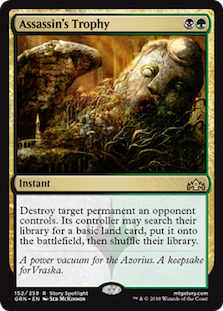
Recalling the Next-Level Blue decks of old, Next-Level BUG flies high the flag of reactive disruption backed by mid-game Goyfs. Drown in the Loch proves versatile as the stack-oriented Assassin's Trophy, answering just about anything, but in Dimir colors. Of course, this Sultai deck gets to run both cards, and fits Mystic Sanctuary as a way to recur the most appropriate piece for a given time. The Simic cards, as ever, ensure the cards keep flowing.

Temur

We've got even more Temur decks to look at than Sultai ones, marking a promising shift for one of Modern's most snubbed color combinations. First up is Temur Control, which prominently features a notable Temur staple in Blood Moon.

Temur Control, wisnudel (5-0)

Creatures

3 Snapcaster Mage
4 Ice-Fang Coatl
2 Uro, Titan of Nature's Wrath

Planeswalkers

2 Jace, the Mind Sculptor

Artifacts

3 Arcum's Astrolabe

Enchantments

2 Blood Moon
3 Omen of the Sea

Instants

3 Cryptic Command
4 Lightning Bolt
1 Magmatic Sinkhole
2 Mana Leak
4 Opt
1 Spell Snare
2 Thirst for Meaning

Lands

2 Breeding Pool
1 Field of Ruin
4 Misty Rainforest
2 Mystic Sanctuary
3 Scalding Tarn
1 Snow-Covered Forest
6 Snow-Covered Island
1 Snow-Covered Mountain
2 Steam Vents
1 Stomping Ground
1 Sulfur Falls

Sideboard

2 Anger of the Gods
3 Damping Sphere
1 Disdainful Stroke
1 Magmatic Sinkhole
2 Mystical Dispute
1 Pulse of Murasa
2 Relic of Progenitus
2 Veil of Summer
1 Weather the Storm
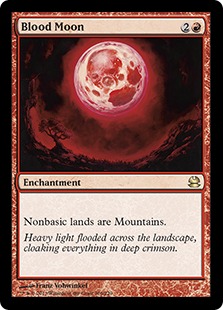
Temur Control is highly reactive, boasting just Uro, Moon, and the game-winning Jace, the Mind Sculptor as tap-out plays. Moon is now a potent proactive tool used to shut out opponents on the even more proactive side, especially those on decks like Amulet Titan; as we've seen, the card does little to other midrange decks these days, as those tend to run Arcum's Astrolabe or even splash Moon themselves.

Something I find intriguing about this deck is its volume of expensive library manipulation. Omen of the Sea, a two-mana Preordain, clocks in at three copies; Thirst for Meaning, which loots away Omens or spare Moons at its best, takes two. It would have been unthinkable even a year ago for three-color reactive decks with attacking plans to fit this kind of cantrip, showing us just how much the format has slowed down. Ice-Fang and Moon, too, stunt the game enough that pilots have time to resolve these cards and look for ways to create an insurmountable advantage.

Temur Control, pbarrrgh (4-1, Modern Preliminary #12098122)

Creatures

3 Uro, Titan of Nature's Wrath
4 Ice-Fang Coatl

Planeswalkers

3 Wrenn and Six

Artifacts

4 Arcum's Astrolabe

Instants

4 Archmage's Charm
4 Cryptic Command
4 Growth Spiral
4 Lightning Bolt
1 Magmatic Sinkhole
4 Thought Scour

Lands

2 Breeding Pool
1 Ghost Quarter
1 Lonely Sandbar
4 Misty Rainforest
3 Mystic Sanctuary
2 Polluted Delta
4 Scalding Tarn
1 Snow-Covered Forest
5 Snow-Covered Island
2 Steam Vents

Sideboard

4 Aether Gust
1 Ashiok, Dream Render
1 Blood Moon
2 Mystical Dispute
2 Surgical Extraction
2 Tireless Tracker
2 Veil of Summer
1 Weather the Storm
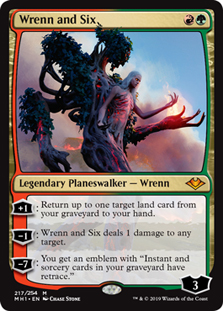
Then there's the even more reactive side of things. This build of Temur Control has no shame in its game, registering 4 Cryptic Command and 4 Archmage's Charm. Wrenn and Six appears as an additional way to generate value and pressure opponents, and Growth Spiral makes a surprising splash as a one-time Uro effect. This land-heavy deck is already quite interested in making extra land drops while digging through its cards, and it's so likely to hold up mana for the opponent's turn that Spiral is often free. Opponents will want to swing to race the inevitability generated by Spiral and Uro, not to mention the triple-blue instants, but acting too hastily so opens them up to Ice-Fang blocks.

Temur has classically been a midrange wedge in Modern, and the format's latest developments make it easy for the combination to reclaim that title.

Temur Midrange, Jake Flaczinski (5th, SCG Modern IQ Williamsport)

Creatures

1 Brazen Borrower
4 Ice-Fang Coatl
1 Klothys, God of Destiny
2 Snapcaster Mage
4 Tarmogoyf
2 Uro, Titan of Nature's Wrath

Planeswalkers

3 Wrenn and Six

Artifacts

4 Arcum's Astrolabe

Enchantments

3 Blood Moon

Instants

2 Force of Negation
4 Lightning Bolt
2 Mana Leak
2 Skred
1 Spell Pierce
2 Thought Scour

Sorceries

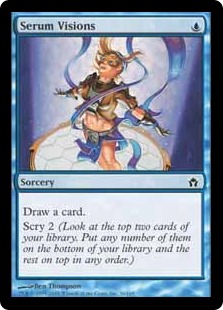
2 Serum Visions

Lands

1 Breeding Pool
1 Fiery Islet
1 Lonely Sandbar
4 Misty Rainforest
2 Scalding Tarn
2 Snow-Covered Forest
5 Snow-Covered Island
1 Snow-Covered Mountain
1 Steam Vents
1 Stomping Ground
2 Wooded Foothills

Sideboard

1 Abrade
1 Ancient Grudge
2 Anger of the Gods
2 Ashiok, Dream Render
1 Damping Sphere
2 Disdainful Stroke
1 Grafdigger's Cage
1 Huntmaster of the Fells
1 Mystical Dispute
2 Veil of Summer
1 Weather the Storm

Midrange, you say? Bring out the Goyfs! Temur Midrange ditches Magmatic Sinkhole, which cannibalizes Uro, and invests in Skred as heavy-duty removal. Between Coatl, Astrolabe, and its many basics, the deck has little problem keeping up with opposing threats as the game unfolds. Moon is perfect for this kind of deck, which likes tapping out and applying pressure, and has plenty of basics at its disposal.

Temur Snow, Cherryxman (5-0)

Creatures

2 Bloodbraid Elf
4 Ice-Fang Coatl
2 Snapcaster Mage
4 Tarmogoyf
3 Uro, Titan of Nature's Wrath

Planeswalkers

1 Garruk Relentless
3 Wrenn and Six

Enchantments

3 Blood Moon

Artifacts

4 Arcum's Astrolabe

Instants

4 Lightning Bolt
4 Once Upon a Time
2 Remand
4 Skred

Lands

4 Misty Rainforest
4 Prismatic Vista
1 Scalding Tarn
3 Snow-Covered Forest
2 Snow-Covered Island
2 Snow-Covered Mountain
1 Steam Vents
1 Stomping Ground
2 Wooded Foothills

Sideboard

1 Blood Moon
1 Ceremonious Rejection
4 Grafdigger's Cage
1 Spell Snare
3 Tireless Tracker
3 Veil of Summer
2 Weather the Storm

After Spark Double Skred and Control Polymorph, Cherryxman returns with Temur Snow, painting the brewer as one of the format's premier innovators this season. This deck features such faux-pas as running cheap counterspells along side Bloodbraid Elf, not to mention the risk of cascading into uh, Once Upon a Time! Except hitting Once isn't even bad; just unexciting. These cascades are offset by the blowout potential of finding Wrenn, Moon, Goyf, or Oko with the Elf, or Tireless Tracker post-board.

Temur Snow, EngulfingSlagwurm (5-0)

Creatures

2 Tireless Tracker
4 Bloodbraid Elf
4 Ice-Fang Coatl
3 Uro, Titan of Nature's Wrath

Planeswalkers

1 The Royal Scions
3 Wrenn and Six

Artifacts

4 Arcum's Astrolabe

Enchantments

2 Blood Moon

Instants

3 Cryptic Command
2 Electrolyze
4 Lightning Bolt
2 Pulse of Murasa
2 Skred

Lands

1 Breeding Pool
1 Cinder Glade
2 Lonely Sandbar
4 Misty Rainforest
2 Mystic Sanctuary
2 Prismatic Vista
4 Scalding Tarn
2 Snow-Covered Forest
4 Snow-Covered Island
1 Snow-Covered Mountain
1 Steam Vents

Sideboard

2 Aether Gust
2 Alpine Moon
2 Anger of the Gods
1 Ashiok, Dream Render
1 Disdainful Stroke
1 Flusterstorm
1 Grafdigger's Cage
1 Negate
2 Veil of Summer
2 Weather the Storm
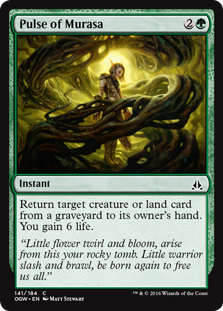
This build of Temur Snow goes even more all-in on the Bloodbraid plan, ramping up to four copies and featuring Tireless Tracker and Pulse of Murasa as potential hits. While these cards cost three mana, I'm not sure how valuable they are in a deck with Uro, which seems to me like a better value-producing mana-sink. Tracker has its uses out of the sideboard, as it plusses through graveyard hate, but I'm not a huge fan for Game 1.

Sultemurai

A major benefit of Arcum's Astrolabe is how insanely good it makes your mana. Some pilots are riding that wave all the way, combining Temur and Sultai into best-of-both-worlds shells jam-packed with heavy-duty action.

Snow Control, TBagTom (5-0)

Creatures

1 Abominable Treefolk
4 Ice-Fang Coatl
2 Snapcaster Mage
2 Uro, Titan of Nature's Wrath

Planeswalkers

2 Jace, the Mind Sculptor
1 The Royal Scions
4 Wrenn and Six

Artifacts

4 Arcum's Astrolabe

Instants

4 Assassin's Trophy
1 Cryptic Command
3 Drown in the Loch
3 Force of Negation
1 Kolaghan's Command

Sorceries

4 Dead of Winter
1 Raven's Crime

Lands

4 Fabled Passage
4 Field of Ruin
1 Lonely Sandbar
4 Prismatic Vista
3 Snow-Covered Forest
4 Snow-Covered Island
1 Snow-Covered Mountain
2 Snow-Covered Swamp

Sideboard

2 Abrupt Decay
2 Ashiok, Dream Render
3 Fatal Push
1 Force of Negation
4 Leyline of the Void
1 Maelstrom Pulse
2 Weather the Storm

With all those great black and red cards to run, you'd think Snow Control would have options at its disposal trumping the humble Abominable Treefolk. Here, though, the creature plays the role of fatty finisher, all while disrupting opponents looking to get down with their own Tarmogoyf or even Primeval Titan. Raven's Crime cameos as a one-card package alongside Wrenn and Six to dismantle control decks, while a full set of Assassin's Trophy keep enemies from setting up any kind of shenanigans on-board.

4-Color Uro, JRDC14 (5-0)

Creatures

4 Tarmogoyf
2 Tireless Tracker
3 Bloodbraid Elf
3 Snapcaster Mage
4 Uro, Titan of Nature's Wrath

Planeswalkers

3 Wrenn and Six

Artifacts

4 Arcum's Astrolabe

Instants

2 Assassin's Trophy
2 Fatal Push
2 Kolaghan's Command
2 Lightning Bolt
1 Terminate

Sorceries

3 Inquisition of Kozilek
2 Thoughtseize

Lands

1 Blood Crypt
1 Breeding Pool
2 Misty Rainforest
2 Overgrown Tomb
3 Prismatic Vista
2 Snow-Covered Forest
1 Snow-Covered Island
1 Snow-Covered Mountain
2 Snow-Covered Swamp
1 Steam Vents
1 Stomping Ground
3 Verdant Catacombs
1 Watery Grave
2 Wooded Foothills

Sideboard

2 Alpine Moon
2 Anger of the Gods
3 Ashiok, Dream Render
2 Collector Ouphe
1 Kalitas, Traitor of Ghet
3 Nihil Spellbomb
2 Plague Engineer

On the aggressive end of things, 4-Color Uro maxes the Titan and asks itself which cards best support it. We end up with a mish-mash of the Temur decks covered here and Jund, with Kolaghan's Command and targeted discard taking up a respectable share of the deck's composition. The sideboard has a whopping three copies of Ashiok to cascade into, as well as Anger of the Gods and Plague Engineer, all haymakers against the right deck.

This deck is the only one covered today that omits Ice-Fang Coatl. It's simply too aggressive and proactive to accommodate such a reactive card, and is strapped for space with its four colors.

A New Midrange Core: Astro, Ice, and Uro
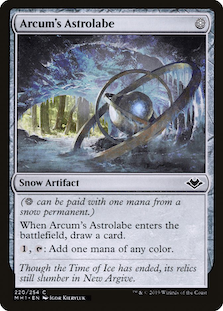
Nonblack midrange decks, without Thoughtseize and Inquisition of Kozilek, have always lacked effective turn-one plays. Using mana dorks exposes them in the removal-spell mirror; using filtering cantrips like Serum Visions still requires good guessing about an opponent's gameplan. Neither play disrupts opponents, which is what midrange decks need to do early in the game; as such, Temur for instance has always been dependent on opponents laying a one-drop they could Bolt. Arcum's Astrolabe flips the script as an extremely appealing turn-one play—it all but guarantees perfect mana for the rest of the game! It also jump-starts Ice-Fang Coatl, the next card present in all the above decks.

Ice-Fang Coatl bridges the gap into the mid-game, fixing midrange's turns 2-5. Reactive decks can struggle if they run out of removal for their opponent's creatures before their game-winners come online, but Coatl acts as a removal spell while digging them into more gas. It also trades with literally anything, giving a wedge like Temur that could never deal with huge creatures in the past a way to trade up.
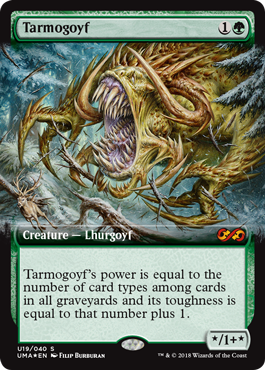
In the late-game, Uro has us covered. The Titan is a card-advantage engine while also being the most imposing body on the battlefield, making it perfect as a win-con—Uro is even useful along the way, drawing and developing the manabase from the hand.

Unlike Once Upon a Time, which inhabits just two of them, this three-card core is present in every deck covered today (barring the last one), and I think it sets the standard for non-Jund midrange decks going forward. Jund itself is managing to keep up with Kroxa for the time being, but as I see things, Astro-Ice-Uro is where reactive attacking decks want to be in 2020. As for whether to Goyf, the question depends on how much attacking vs. countering players feel like doing—and it seems like any amount of either can be viable!


The Commonality of All Investments

Are you a Quiet Speculation member?

If not, now is a perfect time to join up! Our powerful tools, breaking-news analysis, and exclusive Discord channel will make sure you stay up to date and ahead of the curve.

Last month, I began an article series detailing the profound differences between the stock market and the Magic market. There are numerous reasons why the parallel between the two only runs so deep; underneath the surface, differences in regulation and trading complexities make the two assets like night and day.

Now, amidst the coronavirus panic, I’ve observed one commonality between the two assets: emotions. It seems, whenever money is involved, emotions play a major role in investor’s decisions. This is unfortunate, because emotions tend to lead to suboptimal choices. This week I’ll explore how these emotions are manifesting in the stock market, drawing a parallel to the Magic market with a word of caution.

Stock Market Fear & Hype

We’ve seen this show hundreds of times. A new card is spoiled, or a breakout occurs in the Modern metagame, or a new Commander product is released, and suddenly demand for a specific card spikes. Speculators swarm, and the buyout ensues, leading to significant price gouging for the particular card. This happened recently with Flash and Orim's Chant.

There was an error retrieving a chart for Orim's Chant

What did surprise me last week, however, is observing this same trend occur in the stock market. As the coronavirus spreads, nearly all stocks are taking a nosedive. Volatility has taken hold of the market, leading to gigantic swings upward and downward on a daily basis.

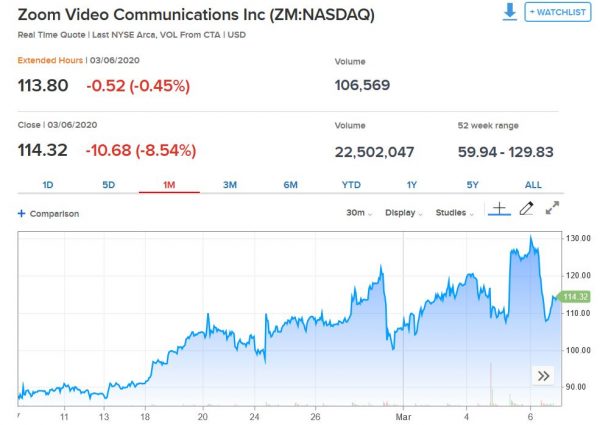
Meanwhile, a tiny basket of stocks have seen their prices suddenly spike. I’m referring to stocks that enable work-from-home environments for corporations. This includes stocks like Zoom (ZM) and Slack (WORK).

Does this look familiar? Zoom’s stock had gone from $90 to $130 in just a couple weeks as the virus began to spread. Don’t forget, the stock market is down over 10% in that same time frame! Over the last couple days, the stock sold off sharply, giving back some of its gains. This volatility is being driven by hype (articles written about the stock) and speculators grasping at a singular thesis.

I’m not here to comment on the stock’s investment prospects (Disclaimer: I own a small position in WORK but not Zoom). This is not investment advice and you should consult your financial advisor before making investing decisions.

Now that the disclaimer is out of the way, doesn’t that stock chart look familiar? There’s a thesis that forms around a given stock, speculators buy in, the price spikes, and then there’s a quick sell-off afterward. Someone could have told me the chart above was for Orim's Chant and I would have believed them.

This is the emotional trap that investors can fall into when dealing in stocks. I, myself, fell prone to emotions when I purchased Slack’s stock—I bought into the hype, and am now looking at red ink in my portfolio. If I had exercised patience and eschewed emotional influence, I could have recognized the stock was spiking due to short-term speculation and made a more informed, better-timed purchasing decision.

The Magic Parallel

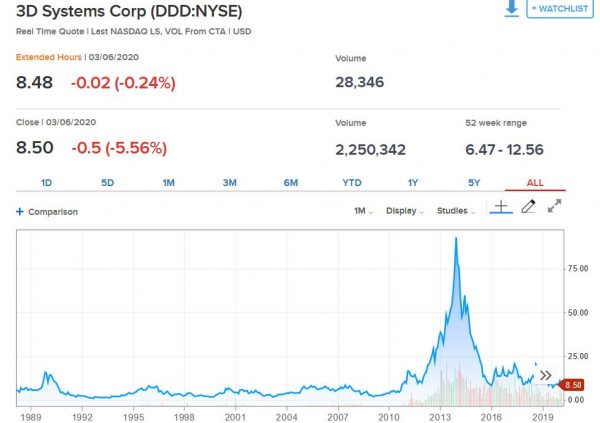
Stock market speculation happens more often than you’d think. I’ve seen the same hype-train take off with various trends: solar energy, marijuana, and 3D printers. Check out the price chart on 3D Systems (DDD). Talk about hype!

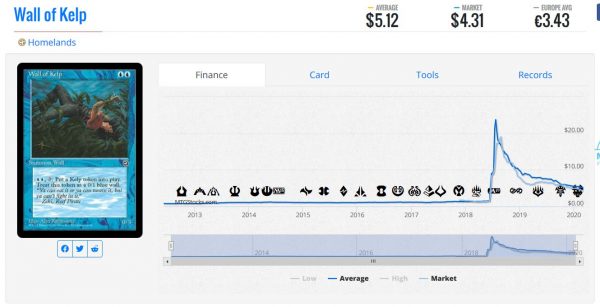
This chart parallels perfectly with many Magic cards over the years. One example I’m particularly fond of is Wall of Kelp, simply because I have a soft spot in my heart for Homelands.

When Arcades, the Strategist was spoiled in Magic 2019, speculators flocked to any wall that looked semi-playable. Wall of Kelp had a lot going for it: it’s a wall itself, it’s on the Reserved List, and it has a special ability to make additional walls every turn. It was the little value engine that could, and this drove its price (temporarily) up towards $20.

But, just like with 3D Printing, people quickly learned Wall of Kelp was not the second coming of Rhystic Study, and the card plummeted back down to a reasonable $5 (it’s still arguably the most valuable card in Homelands, next to Didgeridoo and Koskun Falls).

There was an error retrieving a chart for Koskun Falls

These buyouts are very one-dimensional. In other words, there’s a single catalyst that generates the hype. In order for a higher price to stick, the thesis that drove the card’s price up needs to become a permanent fixture. Speculators realized the 3D printer wasn’t going to proliferate into every household like the television, and 3D printer stocks sold off aggressively. In the same way, Wall of Kelp didn’t evolve into the most popular inclusion in Arcades decks (it’s not even a top card on EDHREC). Once the hype died down and emotions were drained, prices returned to where they should be.

The Lesson

What we can glean from this parallel can be articulated succinctly with a single heuristic: before conceding to emotions and buying into hype, ask yourself first if your investment thesis involves a singular catalyst. Is there only one reason this stock or card is spiking or can spike?

If the answer is yes, then you need to be confident that one thesis will play out completely. Were you and your friends and neighbors rushing out to buy 3D printers (no offense to those who did, I love the 3D-printed knickknacks my friend made me)? This could have been a warning bell to investors in 3D printing stocks.

Likewise, do you really think Wall of Kelp will become extremely popular in Commander? I don’t know about you, but if I asked myself that question when Arcades was spoiled, I would have quick concluded that a deck built around walls a) would not be one of the most popular Commander strategies and b) would not be so desperate as to play Wall of Kelp. After all, blue has far superior card-drawing engines that Wall of Kelp plus Arcades is merely “cute”.

There was an error retrieving a chart for Arcades, the Strategist

This should have triggered a loud enough warning bell to dissuade speculation. Of course, this doesn’t mean you shouldn’t have went to your secret online store or favorite LGS to buy up their $0.50 copies—clearly, the card was going to be more in-demand than ever before. But anyone who paid more than a few bucks for the Homelands card is sure to be left scratching their head.

Now, if you have a speculative idea and there are multiple potential catalysts then it merits deeper thought. A card that can see play in both Commander and Pioneer offers a more attractive demand profile, which could be bought into with higher confidence. Alternatively, if a one-dimensional card does show tremendous promise, then it may be smart to buy in. For example, when Felidar Guardian was printed, it didn’t take a Ph.D. to realize Saheeli Rai was going to break Standard. These are clear “buy” situations.

There was an error retrieving a chart for Saheeli Rai

The key to avoiding the pitfalls of the duds and to focus more on the hits is to remove emotions. By asking yourself questions like the examples I presented above, you may be able to take your emotions out of the equation.

Wrapping It Up

Whether it’s Magic cards or stocks, emotions can interfere with logical investment choices. This is one consistent facet of both asset classes.

It can be difficult to combat emotions in situations where hype is extreme—whether it is when a new Commander is spoiled or if a worldwide coronavirus is necessitating alternate working arrangements. The best thing we can do in such situations is to take a step back and ask ourselves two questions. First, is the buying (or selling) thesis one-dimensional? Second, is the thesis likely to become a dominant force for the long-run?

In the case of Slack Technologies, I believe in the company’s long-term disruption to how corporations operate. I’ve used the product myself when interacting with this website’s content team, and I have heard others sing its praises. The coronavirus will catalyze a shift that I believe was already happening.

In the case of cards like Wall of Kelp, the thesis doesn’t hold enough water (no pun intended). There aren’t enough Commander players who want to attack with walls and want the cute synergy offered by a mediocre card-drawing engine. This is what made cards like Wall of Kelp and stocks like 3D Systems poor investment choices.

Hopefully, with this lens on, we can make better speculative investments no matter what asset we’re researching. With any luck, we’ll discover the next Amazon stock or Roil Elemental while avoiding the 3D Systems or Wall of Kelp!

There was an error retrieving a chart for Roil Elemental

…

Sigbits

  • After last week’s buylist increases at Card Kingdom, a few cards I track have tapered off a bit. The Dual Lands, Mana Crypt ($150), Gaea's Cradle ($215), and Grim Monolith ($85) have all decreased. I’ll continue to watch these closely to see if this is a trend or simply an adjustment that reflects weekly variation in CK’s inventory.

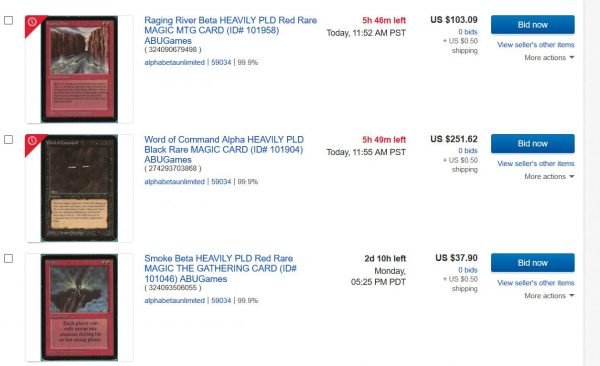
Rather than share new buylist prices on Card Kingdom’s site, I want to flag an ongoing phenomenon I’ve noticed with ABUGames. They continue to sell Old School cards on eBay via auction. They start the bidding high and if the card doesn’t sell, they re-list for approximately 10% less. They do this every few days until the card does sell. This is essentially a Dutch auction style, and it can lead to some attractive prices on less-than-playable cards.

Here are a few example auctions I’m watching, just to give you an idea.

Beyond Hindsight: Theros Spoilers Re-Examined

Are you a Quiet Speculation member?

If not, now is a perfect time to join up! Our powerful tools, breaking-news analysis, and exclusive Discord channel will make sure you stay up to date and ahead of the curve.

As a new sets come out, the entire Magic writing world speculates on the spoilers. Why wouldn't we? There's not always much else going on during spoiler season, and brewing with new cards and ideas is a significant part of the game's appeal. Plus, if Wizards is going to hand us easy content, it would be rude not to jump at the opportunity. That said, writers don't often look back on their speculations after the set has fully incorporated into their meta. Today, I'm going to revisit my Theros: Beyond Death preview articles, checking on what I got right, where I over- or under-estimated cards, and a notable oversight.

Made It After All

Theros: Beyond Death has been legal for a little over a month. This is enough time for most of the plausible new cards to have been tested, and they should have at least been putting up results. In my two preview articles, I identified eight cards that seemed like reasonable Modern cards. Five have found homes, one is fringe, and the other two haven't got there yet. The five that have made it did so by warping decks around themselves rather than just slotting in.

Dryad of the Ilysian Grove

I've already (fairly extensively) covered Dryad of the Ilysian Grove, so I'm not going into much detail today. I predicted that Dryad would find a home in Valakut decks, though it would be a little awkward. Dryad has actually worked out in an unexpected way. I never expected those Valakut decks to be re-built versions of Amulet Titan. I'm forgiving my oversight with the very plausible excuse that Lands Toolbox had never really been a Modern deck before. It's possible to predict which cards will see play, but I never know how deep players will actually go. And Titan players went very deep on Dryad.

Thassa's Oracle

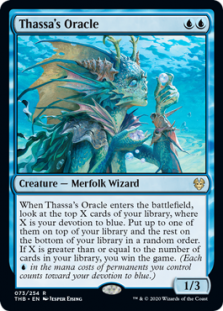
As for Oracle's utility, I hit the nail on the head. It's a combo win condition, and it is being adopted by the very deck I thought it would, Ad Nauseam. What I didn't appreciate was how good it actually was. I definitely never expected Thassa's Oracle to be a four-of in Ad Nauseam. In retrospect, it seems obvious, since it provides another avenue to combo. With a resolved Angel's Grace or Phyrexian Unlife, Ad Naus can cast Spoils of the Vault for a card not in their deck, then cast Oracle for the win. This was never possible with Laboratory Maniac. Part of this was due to costing more up front, but it was mostly because Maniac could be killed in response to the victorious card draw; if Oracle resolves, it wins on the spot.
The other thing I missed was Oracle's wider appeal. Oracle is seeing play in far more decks than I anticipated. Some of this interest is spillover from Pioneer, where the combo with Inverter of Truth is incredibly powerful (even crossing over into Modern). However, I think it fair to say I underestimated Oracle. The question remains if Oracle will usher in a new combo era, or remain a minor role player. So far, the evidence is lacking, but Oracle's future may be heavily linked to the next card.

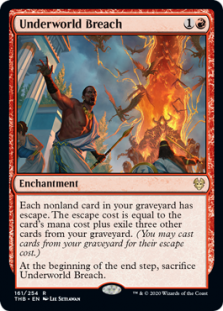
Underworld Breach

Underworld Breach is another obvious combo card, and it even had a very obvious home waiting. Then Mox Opal was banned, and said combo never came to be. As I predicted, this left Breach out in the cold (in Modern, anyway) because it doesn't fit into Storm or other combo decks better than existing options. To be better than Past in Flames, Breach necessitated a very specific deck composition, and it looked like that wasn't possible anymore.

So I was very surprised last week when that the supposedly dead Breach/Grinding Station combo showed up to SCG Indy, followed by Pascal Maynard hyping a very similar deck on twitter. The combo is functionally the same as the banned version would have been, even using the expected win condition of Thassa's Oracle. It isn't as fast without Opal, but the combo is consistent enough that some players are acting like it's the return of Krark-Clan Ironworks. I wouldn't go that far, but given that Breach is seeing the play I expected in the way I anticipated, I'd say I got it right.

Heliod, Sun-Crowned

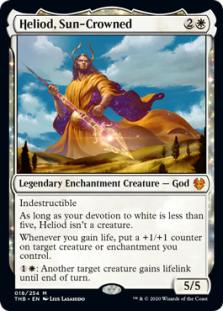
I knew that Heliod, Sun-Crowned would see play. It's a combo piece that can be found with Collected Company; why wouldn't that creature combo pile run it? Heliod joins Walking Ballista as an on-plan win condition. Company can even add in Spike Feeder in place of a Kitchen Finks for another combo. It's Company; the more combos, the merrier.
However, I thought that Heliod would be a one-of supplementary combo to the main Devoted Druid plan. I definitely didn't see him as a four-of, nor to be seeing widespread success. But the Company decks are completely rebuilding themselves around Heliod, even de-prioritizing Druid combo. Heliod does boast more applications in fair matchups, as lifelinking beaters is a great way to win a race.

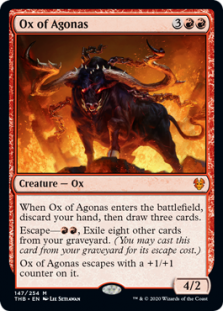
Ox of Agonas

Similarly, Ox of Agonas is seeing the play I thought it would, but in far greater quantity. My analysis was that Ox was a payoff card masquerading as Cathartic Reunion. The set up required to escape Ox meant that it would only ever be a midgame card. Thus, it could only help Dredge once the engine would either be established or the game was already lost, making it redundant there.
However, Dredge players have all but universally adopted the Ox. I have seen older lists occasionally, but for the most part all Dredge decks are running Ox. However, Ox is at most a two-of. This indicates that while Ox is actually worthwhile, it is mostly so as a payoff card. According to testimony from a local Dredge player, Ox is the best way to restart a stalled engine, especially with an empty hand. It's quite easy for Dredge to struggle to cast topdecked Cathartic Reunion, where Ox doesn't require discarded cards to cast. Also, just being a big red threat that can be cast is huge.

The Wannabes

Next up are those cards that I speculated could be played if things came together for them. They had power and utility if it proved worthwhile, but I was skeptical that the stars would align. One card is slotting into a fringe deck, one has turned out to not work in Modern, and the last is a victim of its archetype.

The Other Gods

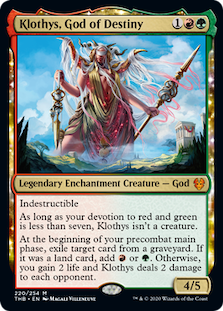
Klothys, God of Destiny got a look because graveyard hate is good in Modern, and hard-to-kill clocks are great against slower decks. I thought that it would be a decent card against Jund in decks that need sticky threats, and that the triggered ability would be the only draw.
It turns out that a lot of Klothys' utility so far has been attacking. She's not seeing play in Jund, nor as a sideboard card. Instead, she's been a two-of in Utopia Sprawl decks. There, Klothys is intended to be a creature most of the time. She's not the most impressive threat, but continuously attacking graveyards while threatening a big, devotion-fueled swing isn't terrible.

Meanwhile, Purphoros, Bronze-Blooded is going nowhere. Purphoros is too inefficient compared to Through the Breach to be worthwhile, even if he could sneak in Emrakul. Through the Breach isn't really doing much in the first place, so why would a more mana-intensive version be better? Repeatability is rarely a draw in the kind of deck that runs Breach.

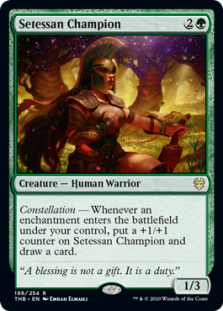
Setessan Champion

I thought that Setessan Champion would shake up Bogles by challenging Kor Spiritdancer. That hasn't happened. This is not for a lack of power, because I'm not the only one who thinks Setessan Champion is Modern playable; it has caught on in Legacy Enchantress. What I failed to account for is that Bogles is a very metagame-specific deck, and we are not seeing the type of metagame where Bogles can survive. I don't know of anyone trying to make Bogles work, and the most recent result for Bogles comes from January. The door is closed for Bogles right now, let alone for innovation or tweaking within that shell.

A Titanic Miss

The gaping hole in my predictions was the Titans: Kroxa, Titan of Death's Hunger and Uro, Titan of Nature's Wrath. I didn't mention them at all in my preview articles, because I had dismissed them outright. The discussion at the time surrounding the two cards centered on using Hushbringer to get around the drawback. The whole plan was to get a 6/6 in play for cheap and start attacking, a gameplan unworthy of Modern. As a sideboard bonus in particular matchups it's fine, but if playing under-costed fatties with no ETB trigger was good enough, Mono-Green Stompy would be competitive. Then there was the issue of graveyard hate defeating both cards. They just didn't look good enough.
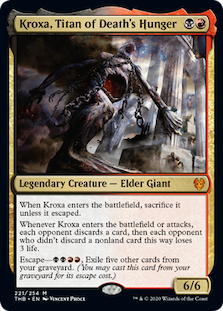
In fact, they are more than good enough. Reid Duke declared that Kroxa belonged in Jund, and then Jund won SCG Indianapolis' Modern Classic with Kroxa: as the Jundfather speaks, so it shall be. Meanwhile, every UGx deck appears to be forcing Uro like it's Oko, Thief of Crowns. Players like value, and tapping the graveyard as a resource has impressive precedent in Modern. Uro and Kroxa combine both, and trigger on attacks, evoking Primeval Titan. Snowballing value while attacking with a 6/6 is a great way to win a game, and that appears to be exactly what both Titans are doing.
However...

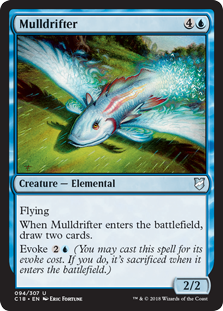
All that being said, I still don't think either Titan is as good as their hype suggests. The fundamental problem with Uro and Kroxa is that for them to actually be creatures, they have to escape. There's no work-around. Evoke is clearly the genesis of the Titans, and they're meant to work in a similar fashion. However, Mulldrifter can be rescued from being sacrificed with flicker effects; flickering a Titan kills it. Spell Queller an evoked creature, and the creature lives if recast. Quell an escaped Uro, and it dies with the Spirit.
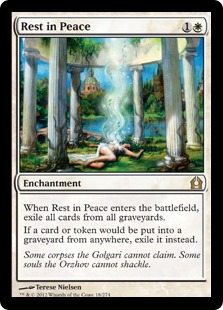
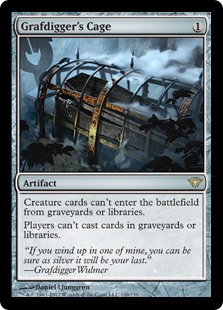
I also have to bang the drum of graveyard hate completely nerfing both Titans. Against Rest in Peace, Uro and Kroxa are more expensive Growth Spiral and Raven's Crime, respectively. Even Scavenging Ooze wrecks their value. Going through decklists, particularly the Uro lists, indicates that these are decks that should have graveyard hate brought in anyway.

Finally, I suspect that a lot of value for both cards comes from players not understanding how they work. I had a Legacy player gush to me about Uro winning him an otherwise lost match thanks to multiple escapes. Upon further questioning, it came out that the opponent had been destroying Uro with Pyroblast. They'd forgotten or simply didn't know that escaping Uro isn't like unearthing Hellspark Elemental. The former casts the card while the latter puts in directly into play. Had the opponent understood that and countered Uro rather than destroying it, they might have won the game rather than being grinded out.
Case In Point

Last week at a weekly Modern event at my LGS, Mythic Games, there were several UGx Uro decks. The Temur Uro deck and Sultai Uro deck hit each other Round 2 and went to time, with the Temur deck winning. At various points in every game, one deck would be poised to win before the other started escaping Uro to gradually grind their way back in. The life cushion was very valuable, but more importantly, a 6/6 traded with everything on either side of the board. The final game came down to the Temur deck having slightly more threats than the Sultai deck. As far as I could tell, neither deck ran any graveyard hate.



This was relevant because neither deck won when graveyard hate was cast. While Temur won our event, it did so because the Jund deck it faced the next round misplayed into terrible draws to lose Game 3. In Game 2, Temur lost hard to Inquisition of Kozilek into turn three Scavenging Ooze to eat Uro. With the only way to break parity with Jund eliminated, Temur stood no chance. I hit the Sultai deck round four, playing Humans, and I won Game 3 thanks to Grafdigger's Cage nuking both Uro and Snapcaster Mage. I'd lost Game 1 to a wall of removal, and Game 2 I Reflector Maged my way through multiple Uros. When the Titans get rolling, they're avalanches. But getting them going is surprisingly hard, and nigh impossible through the right kind of hate.

You Never Know

Overall, the only card that I'd say I got exactly right was Underworld Breach; I was in the ballpark for the rest. As for the Titans, there are so many asterisks over their future that I'm still skeptical they'll stick around in Modern. But hey, I was wrong the first time!

Wizards has announced that there will be a Banned and Restricted Announcement next Monday. All the schtick about announcing an announcement aside, it is nice to receive a head's-up. I'd be very surprised if anything happened in Modern given the huge shakeup a few months ago, but anything is possible. If something were to go, I suspect it would be the ubiquitous Once Upon a Time, given its present share of 33% across all decks according to MTGGoldfish. Again, I think it's too soon, but we'll all find out next week.

The Potential Impact of the Coronavirus on MTG Finance

Are you a Quiet Speculation member?

If not, now is a perfect time to join up! Our powerful tools, breaking-news analysis, and exclusive Discord channel will make sure you stay up to date and ahead of the curve.

Editor's note: In the interest of sharing information and facts about COVID-19 (Novel Coronavirus), here is a fact sheet from the Center for Disease Control, a news resource from the World Health Organization, and a guide to preventing the spread of the flu. If you haven't already, please take a few minutes to read them before continuing on.  

I recognize the coronavirus is a hot topic for debates, with folks in Washington, D.C., politicizing it and making it a point to further divide the country. This article will do it’s very best to eschew the politics and focus strictly on Magic.

Thousands have died. The Dow Jones Industrial Average has plunged 4,000 points in a week, including a one-day drop of 1,191 points, the highest one-day loss in history. Headlines are unavoidable.

COVID-19 (the coronavirus) is on everyone’s minds these days, and while you should be focusing on your physical and financial health in consideration of the crisis, you might also be wondering about the health of Magic in the face of a potential pandemic. That’s not to say I’m intending to downplay the seriousness of the disease—but this is a Magic website, and someone should explore the potential impact on the hobby we all have come to love.

What Has Happened Thus Far

Italy has been one of the hardest-hit countries by the coronavirus thus far. Large gatherings—especially in regions where cases of the virus are most prevalent—are being canceled or modified. For example, certain soccer matches in Italy are now being played without any fans to spectate. Allowing fans to gather in such a mass would put Italy at risk of a massive breakout for the disease.

Most people are familiar enough with soccer to understand the risk and the decision to play without spectators. Outside of Magic players, however, no one could have anticipated full-blown cancellation of MagicFest Turin.

Those who were looking forward to the Modern event are surely disappointed, especially since there probably aren’t many such events in Italy each year.

Looking ahead, what would happen should the coronavirus become an official pandemic and the disease spreads over more of the globe? Could we see more MagicFests canceled? We know the stock market is suffering, but how does all of this impact the Magic market?

All I can do is speculate…

The Pessimist

The coronavirus gives pessimists plenty of scenarios to worry about. A spreading virus, especially throughout the United States, would lead to additional cancellations of MagicFest events. If the gathering in Turin was going to be too large to be safe, then even larger events throughout the U.S. would also be problematic.

Fewer events mean less demand for cards because players won’t be acquiring the cards they need to participate. Smaller events could be impacted too, with players unwilling to travel far given the current environment. Public transportation, particularly air travel, is negatively impacted by the spread of this disease. Magic players might not be so willing to hop on a plane or train to participate in a game.

Then there’s the economic impact: a pandemic would likely send shares of stocks down further, hurting retirement funds across the globe. Companies would also be hurt by slowing sales and disrupted supply chains, and this could lead to lay-offs and a full-blown recession. When recessions happen, luxury goods (such as Magic cards) tend to be more significantly impacted versus, say, consumer packaged goods.

Demand for Magic cards—especially high-end cards such as foils and rarer printings (Alpha and Beta vs. Revised, for example)—could easily drop. Who needs a $6000 Black Lotus when you’re looking for a job or you’re preparing for a state-wide quarantine? In fact, if put in a tight spot, Magic collectors may be forced to sell such cards to make ends meet. Increasing supply and decreasing demand would make for lower prices.

There was an error retrieving a chart for Black Lotus

Even worse, players may give up their paper collections in favor of playing online, where there’s no risk of catching the sickness from fellow attendees. Arena play could increase—to the detriment of paper. This would most negatively impact the prices of newer cards because most popular older formats are not currently available on Arena. But a lowering tide could drop all ships.

It doesn’t take too much imagination to see a significant weakening in Magic prices should this virus start spreading throughout the U.S. without containment or reasonable countermeasures.

The Optimist

Doom and gloom is not a foregone conclusion. While the coronavirus is wreaking havoc currently, there are a couple of things to keep in mind that may give the optimist hope.

First and foremost, the nationwide spread of the disease throughout the United States is no guarantee. While things are starting to move in the wrong direction (community spread of the disease), so far the cases have been limited mainly to the West Coast, with one newly reported in New York at the time of writing. Should local governments succeed in quarantining the right people, the disease’s spread could be slowed or halted. This is the best outcome for everybody—it would lead to a quicker rebound in the stock market and perhaps no more MagicFests would be canceled. Life would still proceed as normal.

Even if the disease does spread throughout the United States, it may not trigger an immediate imperative to sell on Magic cards. Of course, if you need to choose between paying rent and buying food or your set of forty dual lands, you may choose to cash out. I wouldn’t blame you for such a choice, of course.

There was an error retrieving a chart for Underground Sea

If you can hold onto your cards, though, there may be long-term benefits to doing so. First of all, I’ve mentioned in the past how Magic isn’t as liquid as stocks. In this scenario, this may work to your benefit—the stock market dropped 12 percent in a week, but Magic card prices can’t possibly react so quickly. It’s highly unlikely that high-end values are suddenly 12 percent lower. In fact, I noticed Card Kingdom actually increased their prices on some desirable Unlimited cards recently (e.g., Gauntlet of Might, Underground Sea, and Scrubland).

There was an error retrieving a chart for Gauntlet Of Might

An economic slowdown would likely have to take effect for multiple quarters to see any impact on Magic prices.

Going one level deeper, one could make the argument that Magic cards and other collectibles are safer than stocks. The stock market is very fragile right now, with money managers and hedge funds performing an enormous number of transactions to try and get in front of the current sell-off.

Collectibles tend to be stickier assets because of the attachments that people form with them. Stocks are easy to cut in order to reduce risk and raise cash. Parting ways with a beloved painting (or favorite Magic deck) is much harder. In a world where volatility is through the roof on Wall Street, Magic cards could offer stability in your portfolio.

Lastly, I wonder what would happen if more MagicFests were canceled. If the situation gets worse before it gets better, this is not so far-fetched. I’ve begun to wonder—some vendors rely heavily on restocking their inventory by posting aggressive buylists at MagicFests. Tales of Adventure and 95 Games come to mind.

As long as the economy can recover in a reasonable amount of time (within a year, let’s say), I could envision a scenario where major vendors have a difficult time keeping stock of tournament and casual staples. Without as many MagicFests, these vendors may be forced to restock in other ways. They may have to buy more aggressively at the MagicFests they do attend. Or maybe they’re forced to purchase cards online from other sources. The limited liquidity could actually lead to a temporary spike in prices.

This scenario requires a perfect storm of events to occur, but I do wonder if it’s possible.

Wrapping It Up: Sig’s Outlook

I could see the Magic market responding both positively and negatively to the current coronavirus outbreak. The pessimist in me believes an economic slow-down would disproportionately hurt luxury goods (of which I consider Magic to be one). But the optimist in me believes collectibles could outperform the stock market during this tumultuous time.

All possible outcomes considered, my inclination is to hold for now. Because I’m fortunate enough to have a stable full-time job, I don’t anticipate having to sell cards to make ends meet. Therefore, I’m inclined to hold my collection through any potential downswing in prices. In fact, if prices do drop significantly (remember, many Old School cards have already shed most of their gains from 2017-2018), it could make for an attractive buying opportunity.

It would take a fairly dire situation to motivate me to sell out of Magic completely before my son begins college. If prices drop from here, I’d be even less inclined to sell. On the other hand, if people start flocking to Magic as a safe haven while stock performance remains dismal, I could see myself selling cards into any strength. If prices rebound for any reason, I’ll start looking for opportunities to cash out. I wouldn’t sell out completely, but cutting the collection back is something I’ve been considering anyway. Higher prices are just what I’m waiting for to make such a move.

There was an error retrieving a chart for Bazaar of Baghdad

I will sell eventually, but I’m hoping the spread of a coronavirus isn’t the catalyst that forces my hand. I’d much rather make the decision on my own terms. One thing we can all agree upon: let’s hope things don’t get so much worse that all of our hands are forced one way or another!

Practice healthy hygiene habits and stay safe, everyone!

…

Sigbits

  • Dual lands have started popping up on Card Kingdom’s hotlist. Right now I see a few: Underground Sea ($300), Volcanic Island ($290), Tropical Island ($230), Bayou ($180), Badlands ($160), Savannah ($100), Taiga ($90), and even Plateau ($75) are all on the hotlist. Cross-referencing these numbers to 95 Games’ recent hotlist, it appears dual lands are fairly strong right now.
  • Keep an eye on Gaea's Cradle—last Friday, Card Kingdom’s buylist on the card was up near $270. They must have taken in a few copies at that price because they dropped the number all the way back down to $230. But it remains on their hotlist, and I consider this card in the same basket of stable, long-term holds as duals.
  • Book Promo copies of Mana Crypt are back near their highs on Card Kingdom’s hotlist. They are currently offering $190 for the popular artifact. I remember these peaking in the $200 range when they last got this high, so if you’re looking to exit this card then keep an eye on Card Kingdom’s buylist. You may catch a temporary jump, netting you close to the same amount you’d get if you just sold on TCGplayer. Don’t forget, this card isn’t on the Reserved List and could see another reprint someday.

Feb ’20 Brew Report, Pt. 2: Combo Cannoli

Are you a Quiet Speculation member?

If not, now is a perfect time to join up! Our powerful tools, breaking-news analysis, and exclusive Discord channel will make sure you stay up to date and ahead of the curve.

Nothing screams "Modern" like a bunch of crazy combos. And that's exactly what February's second half had in store for us. Turns out there are some decks that don't run Arcum's Astrolabe, after all: the ones that kill out of nowhere!

"I Was Inverted"

A the "Top" of our list is an inside-out version of Ad Nauseam.

Inverter Oracle, MINT_ (5-0)

Creatures

4 Inverter of Truth
4 Thassa's Oracle

Planeswalkers

4 Jace, Wielder of Mysteries

Artifacts

4 Pentad Prism
3 Talisman of Dominance
3 Wishclaw Talisman

Enchantments

4 Phyrexian Unlife

Instants

4 Angel's Grace
3 Pact of Negation
4 Spoils of the Vault

Sorceries

4 Serum Visions

Lands

4 City of Brass
2 Darkslick Shores
4 Gemstone Mine
3 Seachrome Coast
4 Shelldock Isle
1 Snow-Covered Swamp
1 Temple of Enlightenment

Sideboard

1 Echoing Truth
1 Hurkyl's Recall
4 Leyline of Sanctity
2 Path to Exile
1 Slaughter Pact
3 Thoughtseize
3 Veil of Summer

Already a breakout deck in Pioneer, Modern's take on Inverter Oracle plays many of the same cards as Ad Nauseam: Serum Visions and Spoils of the Vault to find its combo; Angel's Grace and Phyrexian Unlife to keep from outright losing to its own devices; Pact of Negation to force through a win.

And how does it win? By emptying its library with Inverter to trigger Thassa's Oracle! Jace, Wielder of Mysteries also wins with an empty library. But both sources require players to get rid of their "new" library, the graveyard repurposed by Inverter; something like Spoils of the Vault, which can name "Faithless Looting" to empty what's left without necessarily dealing pilots 40 damage.

At a glance, the combo struck me as much more difficult to pull off than Ad Nauseam's. But it does have a bit more to it. With Unlife or Grace online, Inverter is no longer necessary; Spoils can empty the library by itself. And Shelldock Isle casts an Oracle straight from the library (or, The Artist Previously Known as the Graveyard) post-Inversion. Besides, Jace, Grace, and Unlife are okay disruptive cards on their own merits. Finally, while I doubt it happens very often, Inverter's 6/6 body can put the game away by itself in a pinch.

Best of all, Inverter Oracle is exceedingly difficult to disrupt. Its components are creatures, which can't be stopped by Force of Negation or Stubborn Denial; they have enters-the-battlefield effects, which care little about efficient removal. Graveyard hate in fact bolsters the deck's strategy, and Extraction effects are no match for the deck's multiple interchangeable combo pieces or Talisman's ability to yank one out of exile. So the deck needs to just stay alive long enough to actually cast its cards, which I imagine is around five turns; in other words, many slower decks may struggle to actually beat it.
Jolly Green Giants

Into the forest we go, where Once Upon a Time is as enabling of degeneracy as ever.

Turbo Heliod, B1GDAN (5-0)

Creatures

4 Heliod, Sun-Crowned
4 Spike Feeder
1 Eternal Witness
3 Gilded Goose
3 Giver of Runes
4 Ice-Fang Coatl
4 Noble Hierarch
4 Ranger-Captain of Eos
1 Walking Ballista

Planeswalkers

4 Teferi, Time Raveler

Instants

4 Collected Company
4 Once Upon a Time

Lands

1 Breeding Pool
4 Flooded Strand
1 Hallowed Fountain
4 Misty Rainforest
1 Prismatic Vista
3 Snow-Covered Forest
2 Snow-Covered Island
3 Snow-Covered Plains
1 Temple Garden

Sideboard

2 Ashiok, Dream Render
2 Damping Sphere
2 Mystical Dispute
2 Path to Exile
2 Rest in Peace
3 Veil of Summer
2 Weather the Storm

David covered Company decks merely splashing the Heliod-Feeder combo, but Turbo Heliod takes the strategy to its logical extreme. Being able to Collected Company into both combo pieces and instantly gain infinite life at instant speed is big game against a lot of Modern decks (incidentally, not Inverter Oracle). This deck is set up to achieve that goal as fast as possible, after which it should have plenty of time to find Walking Ballista and win from there. Teferi, Time Raveler prevents opponets from interacting on the turns that count. So far, the 4 Heliod / 4 Feeder core has surfaced in additional Company decks.

Green Devotion, RPANGRIFF (5-0)

Creatures

4 Gilded Goose
4 Arbor Elf
4 Burning-Tree Emissary
2 Eternal Witness
3 Genesis Hydra

Planeswalkers

4 Garruk Wildspeaker
4 Karn, the Great Creator

Artifacts

2 Trinisphere

Enchantments

3 Oath of Nissa
4 Utopia Sprawl

Sorceries

4 Mwonvuli Acid-Moss

Instants

4 Once Upon a Time

Lands

4 Nykthos, Shrine to Nyx
9 Snow-Covered Forest
1 Stomping Ground
4 Windswept Heath

Sideboard

1 Trinisphere
3 Blood Moon
1 Damping Sphere
1 Engineered Explosives
1 Ensnaring Bridge
1 Grafdigger's Cage
1 Liquimetal Coating
1 Pithing Needle
1 Tormod's Crypt
3 Veil of Summer
1 Walking Ballista

Green Devotion is not a new Modern deck, its history dating back to the format's creation. But RPANGRIFF's latest build, which now has multiple 5-0 trophies to its name, features plenty of brand-new tech. Here's Karn, a big mana favorite; Gilded Goose, the freshest mana dork on the block; and Once Upon a Time, cornerstone of any... uh... Modern deck.

What strikes me most about this build compared to the deck's earlier iterations is how streamlined it is. There's no fussing around with random fatties, Craterhoof Behemoth, Genesis Wave, or—God forbid—Wistful Selkie. Genesis Hydra compliments Karn as a sleek mana sink, while Eternal Witness and the efficient Burning-Tree Emissary hold down the fort as devotion hubs. Between the main and the sideboard, Devotion also packs plenty of three-mana hosers to shut out opponents who fail to answer the mana dork.

Pollywannacracka

The breakout combo card of the month, though, was Polymorph—another age-old Modern reject. Like Green Devotion, this strategy has also received some major boosts lately.

Farseek Polymorph, ORIM67 (8th, Modern Challenge #12081604)

Creatures

2 Emrakul, the Aeons Torn

Planeswalkers

4 Teferi, Time Raveler

Instants

4 Abrade
4 Lightning Bolt
4 Manamorphose
4 Remand
4 Silence

Sorceries

4 Farseek
4 Indomitable Creativity
4 Polymorph

Lands

4 Arid Mesa
3 Bloodstained Mire
4 Dwarven Mine
1 Mountain
2 Sacred Foundry
4 Scalding Tarn
2 Steam Vents
2 Stomping Ground

Sideboard

2 Emrakul, the Aeons Torn
1 Ancient Grudge
4 Leyline of Sanctity
4 Rest in Peace
4 Through the Breach

First up is Farseek Polymorph, the apparent originator of the new build, which went on to enjoy multiple 5-0 finishes in February alone. Farseek ramps players into four mana by turn three, which is enough for the deck's namesake card to cheat in an Emrakul. In the meantime, Silence and Lightning Bolt can keep proactive opponents off their critical early plays, and should pilots fail to open the Farseek, Teferi, Time Raveler can come down on-curve for extra disruption and combo protection all in one (Polymorph is notoriously easy to kneecap; just shoot the targeted creature and the whole spell fizzles). Silence can also be used on the combo turn as a one-shot Teferi effect.  Remand occupies the same spot on the curve as Farseek, pushing the game back a turn while digging for combo pieces.

As far as those go, Polymorph finds itself joined by relative newcomer Indomitable Creativity. The sorcery costs a whopping triple red, but does come with some benefits, most notably the ability to pop opposing artifacts that hold back the combo (such as Grafdigger's Cage, a card David identified as exceptional against the format's top decks).
While older Polymorph decks had to run token generators or manlands, the former of which cost mana and a card and the latter of which ran the risk of extreme blowouts, Farseek Polymorph makes great use of a new land, Dwarven Mine. Mine can be fetched, as could Arbor, but it can't be shot by Lightning Bolt before players get a chance to untap with it. Even Farseek can grab it, making having a creature in play for the sorceries even more reliable.

Control Polymorph, CHERRYXMAN (3-2, Modern Preliminary #12086251)

Planeswalkers

4 Teferi, Time Raveler

Creatures

2 Emrakul, the Aeons Torn

Instants

2 Abrade
4 Lightning Bolt
3 Mana Leak
2 Path to Exile
4 Remand
4 Silence
2 Thrill of Possibility

Sorceries

4 Indomitable Creativity
4 Polymorph

Lands

4 Arid Mesa
3 Bloodstained Mire
4 Dwarven Mine
2 Mountain
3 Sacred Foundry
4 Scalding Tarn
3 Steam Vents
2 Wooded Foothills

Sideboard

2 Emrakul, the Aeons Torn
1 Aether Gust
4 Leyline of Sanctity
4 Rest in Peace
4 Through the Breach

CHERRYXMAN whipped up this control build of Polymorph in a league posted after the ORIM67 list's, then continued to post results with it throughout the month. It's less all-in than the Farseek build, as there's no ramping. CHERRYXMAN therefore expects to survive a full turn longer than ORIM67 does in many games. To compensate, the control build drops Silence and ramps up on board interaction, including the flexible Abrade and all-purpose Path to Exile.

A plan both builds share is Through the Breach from the sideboard, which gets around Grafdigger's Cage and the like and effectively attacks opponents from a new angle while using the same huge monster. Additional Emrakuls come in to increase the reliability of this plan. Rest in Peace and Leyline of Sanctity, both low-investment, high-reward hosers, are also maxed out by both decks.

1+1=20

As ever, combo is alive and well in Modern. And the format seems to be positively bursting with possibilities! Join me next week for an exposé what I consider to be a midrange renaissance. Until then, may you open the right pair of cards... or just Once Upon a Time!

Theros Beyond Death Defines the Metagame and the Market

Are you a Quiet Speculation member?

If not, now is a perfect time to join up! Our powerful tools, breaking-news analysis, and exclusive Discord channel will make sure you stay up to date and ahead of the curve.

Theros Beyond Death has continued into 2020 the trend of Throne of Eldraine and the other overpowered sets of last year. Many of its cards, like Underworld Breach and Thassa's Oracle, are not only seeing play, but redefining entire metagames. As a result, they’ve shaken up the market and driven up demand for a whole new class of cards. While these cards have been thoroughly explored in Pioneer and have led to dramatic spikes in cards like Inverter of Truth, for older formats the exploratory process has really just begun. Neither the metagame nor market has fully adjusted to the presence of these cards, and there is still plenty of room to grow. 


Take Modern for example, which just saw a massive spike in the price Grinding Station on the back of a new breakout Underworld Breach deck. 


There was an error retrieving a chart for Grinding Station

At this point, I’d be selling my copies into the hype, but there’s still gains to be had on other cards in the deck. One target is Hall of Heliod's Generosity, which is used as a one-of in the deck because it’s great for returning Underworld Breach.


There was an error retrieving a chart for Hall of Heliod's Generosity

A spike this week on Magic Online and a paper price graph that has been slowly and steadily heading higher tells me this is going to keep growing, especially when you consider it’s long-term potential in a variety of formats as a very unique and powerful card. 

Thassa's Oracle is making waves in Modern in a variety of shells and driven up demand for a whole swath of cards. It’s an easy upgrade to the singleton Laboratory Maniac in Ad Nauseam combo, but a new variation of the deck has embraced multiple copies of the card along with a build-your-own Demonic Consultation with Spoils of the Vault and Angel's Grace or Phyrexian Unlife. 

There was an error retrieving a chart for Ad Nauseam


This has clearly driven demand for Ad Nauseam, which is up a few dollars in the past week, while Angel's Graceis also trending upwards. Spoils of the Vault still hasn’t moved, but major gains online lead me to believe some paper growth is inevitable.

There was an error retrieving a chart for Spoils of the Vault

I’m especially interested in a further evolution of this new combo element, including a new build that ditches Ad Nauseam in favor of completely embracing Thassa's Oracle by adding Inverter of Truth and Jace, Wielder of Mysteries. This Modern take on the Pioneer deck would become the next best place to play it after a ban, and it has access to a uniquely powerful tool in Shelldock Isle.

There was an error retrieving a chart for Shelldock Isle

Massive online growth in its price has been driven on not hype and speculation, but some real results with a couple of 5-0 finishes posted. With some added utility from the Dimir Mill deck, and added potential in the emerging Legacy takes on the Thassa's Oracle strategy, I have high hopes for the card that has already gained nearly a dollar in the past week.

Legacy, where Underworld Breach decks have risen to define the metagame but are still very much under development, holds its own opportunities. It recently drove a spike in Silence, which white versions of the deck use to protect its combo, but even bigger staple Orim's Chant has been slower to move. 


There was an error retrieving a chart for Orim's Chant


While the online price has exploded, the paper price has only budged up about a dollar over the past few weeks and should continue to grow as the deck gains more converts. 


There was an error retrieving a chart for Abeyance


Another candidate in the same class is Abeyance, which is a more mana-intensive option but one with a major payoff of drawing a card. It has been showing up in sideboards, and its online price has spiked accordingly, so I’m a buyer of this reserved list card that can still be had for just a few dollars. 


There was an error retrieving a chart for Sevinne's Reclamation

Another target from the Jeskai Underworld Breach deck is Sevinne's Reclamation, which has seen steady growth on MTGO for months, from under half a ticket last fall to around 6 tickets, before truly spiking this week to over 10. The paper price bottomed out in December around $2.5, and is now up to nearly $4, and now see it growing indefinitely, in the short-term from this deck and in the long-term due to its widespread applicability. 

There was an error retrieving a chart for Intuition

In the Jeskai Breach deck Sevinne's Reclamation works particularly well with Intuition, and the deck gives a great home to a card I’ve been watching for a while now. As a powerful, unique, and iconic reserved list card, it has seemed underpriced to me for a while. After spiking to around $75 in spring 2018, it slowly fell to the $45 level where it sat before the spike. Now up a few dollars over the past few weeks, it looks as though the bottom has passed and there’s growth in its future.

While Thassa's Oracle and Underworld Breach continue to define Pioneer without a ban yet, players are working on finding their own solution. One surprising development has been the rise of green decks, including a new Green Devotion build that was popularized on social media before breaking out in last weekend’s MTGO Modern Challenge. Followed by a 5-0 Preliminary finish by MPL Pro Piotr "kanister" Glogowski on stream, the deck continues to grow in popularity and has spiked the price of its staples on MTGO.


There was an error retrieving a chart for Vivien, Arkbow Ranger

The deck is novel because it goes beyond the Vivien, Arkbow Ranger wish package by adding a set of Karn, the Great Creator and a suite of artifacts, for a full 15 card wish board.

There was an error retrieving a chart for Karn, the Great Creator

After falling out of favor completely and seeing their prices plummet, Vivien and Karn have approximately tripled in price on MTGO in the past week. What’s interesting is that both of their paper price continue to fall to all-time lows. With Vivien as a Pioneer staple that’s also used in a breakout Simic Eldrazi deck that won the Pioneer Challenge last weekend, and Karn as a cross-format staple, their descent has to turn around sometime, and this could be the catalyst. 


Adaptation and Acclimation: Metagame Adjustments

Are you a Quiet Speculation member?

If not, now is a perfect time to join up! Our powerful tools, breaking-news analysis, and exclusive Discord channel will make sure you stay up to date and ahead of the curve.

Another event, another set of data, another reexamination of the Modern metagame. As the time of actual Modern Opens and Grand Prix approaches, Modern players are increasingly seeking to find the new rules for the format and whatever edge they can. I'll be tracking those changes as the data comes in, looking for developments and indications of where the metagame is heading.

SCG Indy Classic

The first thing is to update the metagame data. So long as Star City continues to have events, there will be Modern Classics to examine. I'm reasonably certain that SCG events aren't great indications of the overall metagame since their population is fairly insular. That said, SCG is the most prolific creator of reliable paper results. Thus, I intend to use the latest Classic to examine how the SCG meta has changed since the bannings. I'll be looking at how generally applicable they are later on.

Deck NameTotal #
Amulet Titan2
Mono-Red Prowess2
Jund1
Jund Death's Shadow1
Grixis Whirza Breach1
Heliod Company1
Selesnya Titan1
Titanshift1
Burn1
Devoted Devastation1
Bant Snowblade1
The Rock1
Simic Titan1
Dimir Whirza1

The first thing I want to do is ask if anyone knows Michael Bischoff so they can ask about his deck. Right now SCG is listing Lightning Elemental in his decklist, and I can't believe that's correct. Lightning Skelemental I'd believe, but the question remains why he's running it in the first place (assuming that's the correct card). Skelemental isn't a bad card by itself, and coupled with Unearth, can be a plan. However, three mana is a lot for a gameplan that emphasizes peak efficiency via mana maximization and card power. Even if I look at Skelemental as fodder for Kroxa, Titan of Death's Hunger, it's still not particularly efficient. It obviously worked, but I'd like to know why.
Secondly, it should be noted that a fairly standard Jund list actually won the Open. Never underestimate the power of power. I say "fairly standard" because the Kroxas are a recent addition. I'm skeptical, since graveyard hate was already effective against Jund, and unless Kroxa escapes it's just a worse Raven's Crime. However, Reid Duke thinks otherwise, and I'd never recommend my word over his on a question of Jund.

The final deck I want to highlight is the third-place Grixis Urza Breach deck. As we've seen in previous data sets, Urza decks are returning as a force now that pilots have stopped mourning Mox Opal. I knew the ban wouldn't kill Urza. However, I did expect it to kill the Underworld Breach/Grinding Station, combo since there was no reliable mana generator anymore. Ryan Bennett found work arounds.

With an Urza or Emry in play, Mox Amber works just as well during the combo, letting Ryan mill his deck out and win with Thassa's Oracle. Alternatively, he can use Sly Requisitioner to generate the tokens he needs to feed the station to mill out his opponents instead. It looks a little clunky and I suspect Ryan got a lot of value from opponents being confused, but this is a deck to watch.

Titan Rising?

There are a lot of Primeval Titan decks in this data: two Amulet Titan decks, two Amulet-less Titan decks, and then Titan Shift. Given the previously established hype surrounding Titan as the best deck in Modern and its relative lack of showing in previous Classics, this development could be seen as a prophecy at last fulfilled.

I wouldn't go so far. This is the first data point with lots of Titan results. It could easily be a fluke. Indeed, Titan Shift has randomly appeared in results regardless of positioning for as long as we've been tracking event data. That it made top 16 here doesn't mean anything in light of that history. It's just That Deck that sometimes does well, and is not a reflection on the other Titan decks.

Furthermore, there are confounding factors with this data. With only 8 rounds, the Classic was more like a large PTQ, so there's more chance for local distortions to happen. Additionally, the SCG team events have all been overrun by Titan players, despite their mediocre overall performance. Since Indy was a Pioneer Open, it wouldn't surprise me if a lot of Amulet players attended just for the Modern Classic, so the starting population could have been higher. If Classics continue to have high amounts of Titan decks, that could be indicative. As of right now, don't get excited.

There's also a lot of variation between the Titan decks, possibly explaining how they maneuvered through the tournament. While all five decks are running the same general core of Primeval Titan, Dryad of the Ilysian Grove, Sakura-Tribe Elder, Once Upon a Time, and Summoner's Pact, they're positioning themselves very differently. The Amulet decks are sideboarding more like combo decks, with lots of defensive measures and anti-hate cards. The Amulet-Less decks have more cards against the mirror and become land-value decks. Titan Shift packs more sweepers and hate cards, indicating that it's trending towards midrange. The varying approaches indicate that the pilots were prepared for metagame attacks and were able to correctly respond rather than smash through. Successful adaptation is not a sign of being overpowered.
Metagame Adjustments

The other notable change is an absence: Mono-Red Prowess is down by half compared to the previous two Classics. Amulet Titan is also down compared to the Richmond Classic, but it's up relative to Philadelphia.

I'm not surprised that Prowess fell off. Right after the bannings, I noted that red decks are always strong at the start of a new metagame, but they also always peter out. They're solid choices regardless of the metagame, but after a major shakeup, are particularly well-positioned.

When the metagame is being redefined, red decks are particularly strong thanks to their simplistic, concentrated approach. Everyone else is trying to figure out what they're doing and what they care about, and red decks just go for the face. As the metagame settles, the inefficiencies in other decks diminish, and the relative advantage of red's simple plan erodes. It's not that their power or positioning has weakened in absolute terms, but rather that other decks are catching up. Given its cheap price, I'd expect Prowess to remain a factor in Modern, but it will move out of the limelight and become one of the pack.
Speaking of which, the metagame underneath Prowess and Titan has shown no sign of settling. The composition of the many singleton decks in each SCG Classic is constantly shifting, indicating a very open metagame. The only consistent presences are Dimir Whirza and Heliod Company. The former is down from its initial position, but keeps making Top 16. I'm not surprised, I knew that deck would adapt and thrive despite the ban. Whether Urza's wall of text alone is enough to keep the deck top-tier remains to be seen, but it's making a compelling argument. Company's position also makes sense. It's a deck of many combos that plays a lot of tutors. In a linear format, it can find the right combo for the right situation. With players focused on Titan and Prowess, the spot removal that tears the deck apart isn't seeing enough play.
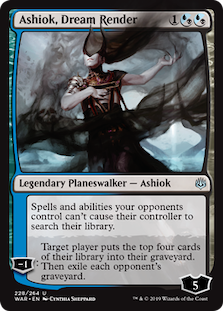
The fact that Prowess and Titan continue to headline Classic results makes a strong case for them being top-tier decks. The consistency of Company and Whirza is suggestive of promise, but not really indicative. We need more data. As for the rest of the format, the only thing I can conclude is that it remains wide open. There are a lot of strong decks in Modern, but for the most part, they're not that much stronger than any other. Knowing your deck and having a good sideboard remain the deciding factors.

Metagame Adaptation

In a more general sense, what the Indianapolis SCG Classic results indicate is that the metagame has absorbed the recent shockwaves from the bannings and is adapting to the presumptive best decks. Much like the MCM Paris results, the Indy Classic's decklists reveal that players are more than aware of Amulet Titan's reputation, but they're ready. Ashiok, Dream Render is in most sideboards, and Aether Gust is also a frequent include. The former is solid against Titan itself, though not the best since can still win through Ashiok if it draws the payoff lands. The later is useful not only in buying a turn before Titan hits, but in removing Dryad in response to Valakut triggers. Interestingly, the Titan decks are running the most anti-Titan cards, clearly anticipating a Titan-heavy metagame. Based on the data I have, it looks like overkill, but again SCG has been unnaturally Titan-heavy so far. At least Gust isn't terrible against red decks, so the space isn't completely wasted.
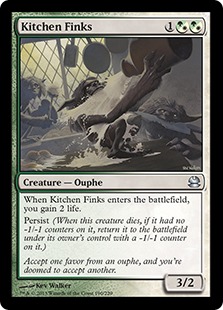
After Titan, the next target is Prowess. There are a lot of Kitchen Finks and Collective Brutalitys in this Classic. Neither are the best anti-Prowess cards, but they do work, and are helping keep Prowess's numbers down. In fact, the presence of all the hate and depressed numbers of the targeted decks suggests that the hate is working, providing a strong argument that the metagame is simply acclimating to its new equilibrium state. The metagame is too broad for specialized hate, so players are sticking to broader cards. To me, this can only mean that the metagame is healthy, and once the adjustment period is through Titan and Prowess will just be part of the scenery. They'll be more prominent decks, certainly, but not necessarily oppressive.
Alternative View

Of course, that may only apply to the SCG Tour. I need more varied data to actually predict the metagame. Unfortunately, I couldn't find any big Modern events from this past weekend to compare, but I can use the online meta again. As with my first investigation, I'm drawing on the data from MTGGoldfish and MTGTop8, since they're doing all the work aggregating all the MTGO events.

I did encounter an issue with the timescale. MTGTop8's more reliable data is their two-month horizon, which at this time includes pre-banning results. They haven't updated the Decks to Beat for February, so I'm going with the data for the past two weeks, as it's free of Oko. It's also worth noting that Top8 likes to amalgamate similar decks under one banner. Goldfish's data doesn't appear to include Oko, though I'm not certain how far back it actually goes. In any case, I'm using them together as a comparison against the observed SCG metagame rather than looking at them in a vacuum.

Since both sites list too many decks to do a full ranking, I set cutoff points for their top decks. Due to the nature of their data, Top8's was 6% and Goldfish's was 3%.

MTGTop8 Top DecksMetagame %MTGGoldfish Top DecksMetagame %
Death's Shadow13Amulet Titan7.39
Amulet Titan12Mono-Red Prowess6.37
Creature's Toolbox7%Jund4.75
Red Deck Wins7Eldrazi Tron3.82
Jund7Dimir Whirza3.57
Humans6Bant Snowblade3.48
Urza6

What all three sources agree on is that Amulet Titan is a popular deck. However, it's relative positioning is not clear. SCG and Goldfish give it a narrow lead over other decks, where Top8 has it well ahead of its rivals but behind Death's Shadow variants. Prowess is middle of the pack in Top8 (and would be lower without Burn's help) where it's second elsewhere. Part of this is definitely Top8's aggregations, but more generally, it backs up the narrative that has emerged from the actual data I've worked with. Prowess and Amulet Titan are the presumptive best decks, but if they are at all it's not by that much. Modern is well on its way to adapting and normalizing both, and there's no indication of an unhealthy metagame.
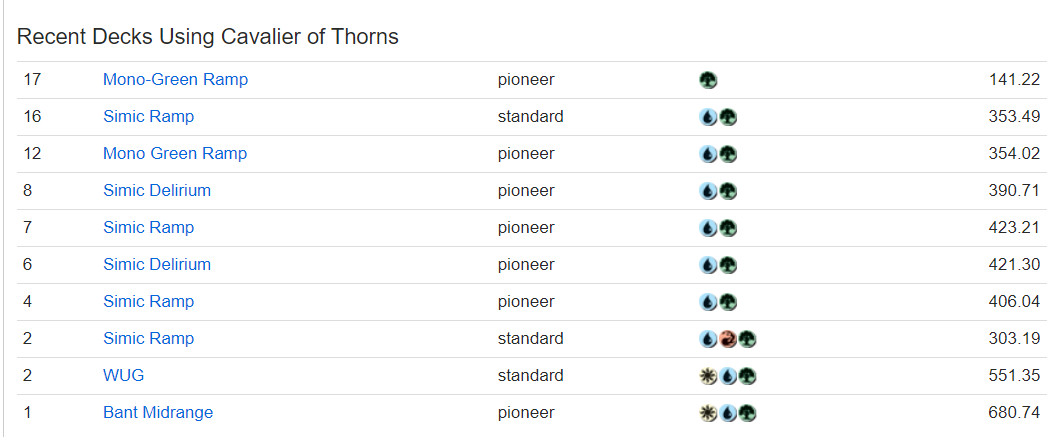
The only caveat is the consistent Titan core I mentioned above. It's present throughout the online data too, and the same core being used in multiple decks and in different metagame positions is a potential problem. There's no justification in the data for doing so, but Wizards has made bans in the past for diversity's sake. I suspect that if they do, Once will be the target, as free spells are more bannable than the alternatives. However, again, I wouldn't expect that to happen for some time if at all.

Metagame Maturity

The increasing adoption of common cards within maindeck strategies typically indicates a metagame maturing. The wild brewing period is over, and the technological chaff is being separated from the wheat. Further, the early front-runners are beginning to fall off as everyone else catches up and adapts. That the overall format looks quite healthy bodes well for the an enjoyable GP and Open season. Though, of course, more data may change my conclusions.

Insider: The Best Time To Buy

Are you a Quiet Speculation member?

If not, now is a perfect time to join up! Our powerful tools, breaking-news analysis, and exclusive Discord channel will make sure you stay up to date and ahead of the curve.

We are all well versed in the concept of supply and demand. Items in short supply with high demand are expensive and items in large supply with limited demand are cheap.

Supply

One aspect of MTG finance that I like is that the supply side is relatively steady when it comes to cards. If the print run of a set is over then the supply of any particular card in that set is relatively static. Sadly, this has become less and less true as WoTC continues to pump out additional products full of reprints. Arguably, this is a major reason why speculating on non-Standard legal cards has become far riskier than it used to be. Still, for the sake of our argument today, we will be looking from the macro level and thus we will assume a relatively static supply of any given card. Obviously the supply for in print cards is not static and one can fairly assume grows with each passing day, however, the rate of growth is likely highest for the newest product and much lower for older products.

Demand

I like to consider the demand of any given Magic card as a sort of segmented bar, with each source of demand making up some amount of the overall demand.
Each segment is some percent of the overall demand, which unfortunately is never going to be known. However, we can substitute price for demand; in a free market system, the price is determined heavily by demand. We already use this same logic when calculating the EV (Estimated Value) of a box of any given set, as the contents of the box are unknown until opening; but averages of the possibilities can be used to get a decent expectation of what one could expect to get from opening said box. While we don't know how much of a percentage each segment accounts for in a given card's price, we can make educated guesses about which segments account for the most value.
For example, let's look at:
There was an error retrieving a chart for Cavalier of Thorns
If we check out mtggoldfish and lookup Cavalier of Thorns, we can see that it's currently finding a home in Standard and Pioneer decks. However, we aren't seeing it much in Modern, Legacy, or Vintage. We can therefore assume those segments are very small or nonexistent. We can then check EDHRec to see how often it shows up in Commander decks.
806 decks is a very small number of the overall green decks listed on EDHRec, so we can surmise that very little of Cavalier's overall price is Commander driven. Why does this matter? Well, if you are looking to buy copies of this card, then its best possible price would emerge when these conditions are met: it's seeing little play in Standard (or no longer Standard-legal) AND it's down in the Pioneer metagame. That's the "best case" scenario for when to buy, that doesn't mean you shouldn't buy any copies if either of those things happens but the other doesn't; just simply that it's ideal lowest price would be if/when both instances occur. So it's current demand bar would look something like this:
Now let's look at a card that has demand from quite a few more formats.
There was an error retrieving a chart for Brazen Borrower
And here is a snapshot of decks referencing the card on MTGGoldfish.
So here we have a card that sees play in standard and all major eternal formats, but very little Commander play. So it's bar would look more like this;
You can see that this bar would be larger due to the fact that it sees play in multiple formats. While the actual segment size would vary based on how much demand per format it sees, this implies that the price should, in fact, be significantly higher than that of Cavalier of Thorns despite both cards being Standard-legal mythic rares. Unfortunately, we don't have enough information readily available to really define the size of each segment, and the fact that metagames shift all the time would honestly make it a fool's errand to even try.
The big take away is that while we can't tie price perfectly to the demand bar, we can make a fair argument that cards with larger demand bars SHOULD be more valuable than cards with smaller demand bars. This means that when we examine a card that sees a lot of play in multiple formats AND the price is low, it then makes logical sense that the card's price should rise by some amount. If we can compare it to other similar cards with higher prices and lower demand bars, then its price should rise to above the price of those similar cards.

What Effects Demand?

So we know what affects supply, but what affects demand?
  1. A new card is printed that the old card interacts well with.
  2. Format and/or metagame shifts to make the card good.
  3. A card gets banned in a format (or formats).
  4. A Card gets unbanned in a format (or formats).
  5. Someone with a lot of followers highlights a card.
  6. A new format is created.

The first reason for demand increase on our list is often the reason we see some of the biggest price spikes, with item 4 being the other reason. We can see this with a card like Inverter of Truth.

There was an error retrieving a chart for Inverter of Truth

There was no demand for this card prior to someone realizing its ability was broken with Thassa's Oracle, hence its price curve mirrors the demand.

Knowing what factors affect demand allows us to get ahead of price movement caused by an increase in demand or an expected increase in demand. This is the reason that many speculators used to go to major retailer websites, fill up a shopping cart ahead of a B&R announcement, and then adjusting said cart quickly and check out, thus allowing almost instantaneous action based on new demand information.


Stocks vs. Magic Card Investing (Part 3: Short Selling)

Are you a Quiet Speculation member?

If not, now is a perfect time to join up! Our powerful tools, breaking-news analysis, and exclusive Discord channel will make sure you stay up to date and ahead of the curve.

Editor's note: This article contains a brief analysis of Mage Market's short-lived service for financing MTG purchases through their financing partner Klarna. Shortly after time of writing, this service was removed from their site, and Mage Market have released a comprehensive statement regarding the situation. 

Over the past two weeks, I’ve been exploring the differences between the stock market and the Magic card market. The two are often compared (I’ve done my own comparisons in the past), but less frequently are they contrasted. It turns out Magic has a profoundly different risk/reward balance due to a lack of information and regulation.

Yet another difference between the two markets ties in quite nicely with something that happened in Magic news last week. Bear with me on this one—before tying everything together I need to establish some definitions.

Short Selling

With stocks, one can engage in the market whether they are bullish (anticipate higher stock prices in the near term) or bearish (anticipate lower stock prices in the near term). If they want to profit from growing stock prices, they can purchase stocks or call options to gain long exposure to the asset of interest. If a trader wants to place a bearish bet, they can sell short or buy put options.

According to Investopedia, short selling is defined as opening “a position…by borrowing shares of a stock or other asset that the investor believes will decrease in value by a set future date—the expiration date. The investor then sells those borrowed shares to buyers willing to pay the market price. Before the borrowed shares must be returned, the trader is betting the price will continue to decline and they can purchase them at a lower cost.”

This is generally an incredibly risky proposition because there is no ceiling on how much a short seller can lose. When someone buys a stock, the most they can lose is the amount they paid for that stock. When short selling, a stock could climb indefinitely (in theory), causing the short seller’s loss to climb with no end in sight. There’s also an interest component; short sellers often have to pay interest on the stock they’re “borrowing.” Gains from the short sale would have to outpace the interest rate to be worthwhile.

In Magic, there’s no structured way to accomplish a similar short-selling transaction. On a micro-scale, I suppose someone could borrow cards from their friend, sell those cards, and promise to return the cards to the friend within an allotted time. But this relies on the trust between the two friends and could never scale. There’s no institutional way to complete a short selling transaction.

Or is there?

Mage Market’s Announcement

On December 10th, 2019 the magemarket.com Twitter account tweeted a cryptic poll:

With over 1,000 votes, the result is clear: people are interested in financing a deck.

Then on Wednesday, the other shoe dropped. Mage Market announced a partnership with Swedish banking company Klarna, enabling shoppers to finance their Magic purchases over a period of time.

My first reaction was “What is Klarna and how is this legit?” But a quick Google search reveals Klarna is a real company.

It’s a Swedish bank that provides online financial services, it has over 2,500 employees, and it handled over $20 billion in online sales in 2017. I also found the member FDIC fine print:

“Monthly financing through Klarna is issued by WebBank, member FDIC. Copyright © 2005-2020 Klarna Inc. NMLS #1353190, 629 N. High Street, Third Floor, Columbus, OH 43215. Other CA resident loans made or arranged pursuant to a California Finance Lenders Law license.”

Net, it’s a pretty big deal in Sweden and is slowly gaining business partners in the U.S.

Fine, it’s a legitimate company. My second question was, “What are the terms for using this service?” This question has been far more elusive than my first one. I searched a good 15 minutes on Mage Market’s site and couldn’t find the specifics. I guess I’d have to create an account and attempt to make a purchase in order to test it out—I’ll take a hard pass on that.

I checked Klarna’s site for details too, but it seems they’re partner dependent. There are many options with Klarna: pay later, pay later in 30 days, and pay later in four installments. Some of these plans involve fees and interest, while others don’t. In their legal terms, I found only one reference to interest.

“The Services are free of charge. Please note that interest and fees may apply to the use of a specific payment method. So make sure you check the specific information for the payment method that you use.”

So it’s free except for fees and interest that may apply? And just how much are those fees and interests? I tried looking at the terms and conditions for each of the service options, and there are no numbers listed. No standard “21.99% APR” or the like, as I’m used to with traditional credit card fine print. It must really be partner and service-dependent.

Without knowing the details, all I can do is express caution if you’re going to consider purchasing Magic cards with this approach. It looks like the option is legitimate; but do we as a country need to be accruing more debt? Are we so desperate to obtain pieces to a card game that we’re willing to mortgage future pay to acquire things now? How much more are you going to be paying for your cards by leveraging Klarna? Think before you leap.

Put the Two Together…

Editor's note: the following is meant to be for discussion purposes only. Sigmund Ausfresser, Quiet Speculation, and the Insider Community do not condone the practice of selling cards you do not own or have in-hand. 

I’ve established the definition of short selling and then I introduced an option to finance Magic purchases through Klarna. Do you see where I’m going here?

Before I receive a ton of backlash, please keep in mind this section is purely meant to be a thought exercise. This is theoretical speculation, and not meant as instruction.

What if…you could purchase cards from Mage Market using Klarna, select an option that lets you defer payment for 30 days, sell the cards into a spike, buy them back a few days later when the price retraces, and return the cards so you wouldn’t need to pay for them? It’s convoluted and ill-advised, but I believe this is one way of actually “selling short” Magic cards. Given the perfect circumstances, it's not impossible.


However, one thing to keep in mind: This is hugely risky, and I would never advocate such a plan. In fact, I even caution against posting cards for sale that you just purchased and don’t yet have in your possession—that alone can introduce unnecessary risk. What's more, with any associated fees, the margins would be razor-thin on most transactions. Doing so would be hardly worth the time, effort, and risk. But this makes for an interesting thought experiment as I further contemplate the discrepancies between stocks and Magic cards.

Wrapping It Up

In some ways, navigating the stock market can be vastly more complex than dealing with the Wild West that is the Magic market. One thing that is more simplified in Magic is the limited number of transactions one can perform with these assets. In stocks, you can make simple buy/sell transactions too, but you can also sell short and buy/sell put and call options. Each transaction can serve some strategic purpose in one’s portfolio.

In Magic, there is really only one way to invest: buy cards now and sell them later, hopefully for profit. To perform any more complex transaction requires knowing and trusting an individual willing to partake in such a transaction, such as the covered call I once sold on some Shock Lands. Remember that one, from July 2014? If you enjoyed this article series on the stock market, I strongly encourage you to check out this flashback from 6 years ago.

Now I’ve found another way of engaging in Magic finance that could work, at least in theory. You could hypothetically short-sell by leveraging a pay-later strategy with Klarna and Mage Market. Acquire cards that just spiked, sell them immediately, wait two weeks for the price to settle back down again (this happens all the time, after all), purchase the cards back, and return them before the 30 day period is over.

You must bear in mind that it is highly unlikely that this would work in practice, and I advise against attempting this, or anything like it. For one, shipping time alone could really eat into those 30 days, and you’d be at risk of incurring fees/interest if you took longer to return the cards. More importantly, it wouldn’t surprise me if these two companies would declare such practice is against their policy. This is a case of 'just because you can, doesn't mean you should.' Failing to execute this strategy (which is likely, given the speed of the market) could result in severe losses.

If we accept the fact that this is a fun thought exercise but nothing more, it further underscores how different Magic and stocks are. The liquidity of the stock market is further reinforced via these alternate investment approaches. If there’s a way to engage in a stock transaction, someone’s already thought of it. Such sophisticated instruments remain elusive to Magic investors, however, as we’re left with only the traditional buy-low, sell-high strategy. I suppose it’s good enough, but oh wouldn’t it be interesting if Magic could be traded via more creative financial instruments?

Maybe one day?

…

Sigbits

  • A couple heavy-hitting Legends Reserved List cards are reappearing on Card Kingdom’s hotlist. This week I see Chains of Mephistopheles and Nether Void on the list, with buy prices of $330 and $315, respectively. I believe the number on the former is a bit low, but their buy price on the latter isn’t half bad relative to TCG low.
  • After mentioning it in a recent Sigbits section, Masterpiece Mana Crypt has returned to Card Kingdom’s hotlist with a $310 buy price. This has got to be one of the most desirable (if not the most desirable) Masterpiece to open.
  • Another older card that has returned to Card Kingdom’s hotlist is Diamond Valley. For now, their buy price is $160, but I can see a push towards $200 if Card Kingdom is slow to get copies back in stock. While at first glance this looks like an Old School card with limited demand profile, I actually wonder if this land sees legitimate (though modest) demand from Commander players.

2020 Visions: Modern Cantrips, Part 2

Are you a Quiet Speculation member?

If not, now is a perfect time to join up! Our powerful tools, breaking-news analysis, and exclusive Discord channel will make sure you stay up to date and ahead of the curve.

Back when Opt was spoiled, I wrote "Opting In: Modern Cantrips," a piece dissecting the intricacies of and nuances between Serum Visions, Sleight of Hand, and other Modern draw-a-cards. Two years and some change later, Modern is all but crawling with cantrips, albeit not even the ones we had access to in 2017. Today, we'll look at all the most popular cantrips in Modern, draw some conclusions, and ask some questions.

As of today, here are the cantripping cards listed as the most-played according to MTGGoldfish:

  1. Once Upon a Time
  2. Veil of Summer
  3. Arcum's Astrolabe
  4. Manamorphose
  5. Mishra's Bauble
  6. Opt
  7. Cryptic Command
  8. Serum Visions
  9. Light Up the Stage
  10. Remand
  11. Crash Through
  12. Archmage's Charm
  13. Teferi, Time Raveler
  14. Explore
  15. Jace, the Mind Sculptor

I've bolded the cantrips printed in the last couple years, starting with Opt. Over half the list consists of these new cantrips, including the three most-played cantrips in Modern. 8/15 is a significant number; in Modern, where the card pool is vast and stretches back many years, it should be harder for new cards to break in.

Does the strong presence of newer cards indicate that cantrips are experiencing a power creep, and getting stronger over time? Or that Modern decks ask different things of their cantrips than they used to, and that this transition is reflected by the current era of card design? I think we're looking at a combination of both factors, and will split up the list to discuss the types of cantrips we're dealing with, the decks they're featured in, and how they relate to one another.
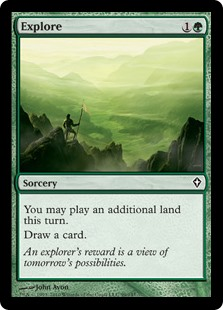
Built-In or Tacked-On?

As I see things, there are two overarching types of cantrips in Magic. In this section, we'll compare the two types and see how many of each make the Top 15.

Cantrips, Type A: Added Effect

The first are added effects: "draw a card" stapled to another spell to make it more powerful.

From our list, this type of cantrip includes:

2. Veil of Summer
3. Arcum's Astrolabe
7. Cryptic Command
10. Remand
11. Crash Through
12. Archmage's Charm
13. Teferi, Time Raveler
14. Explore
15. Jace, the Mind Sculptor

Nine cards, or a little more than half the list. So both types of cantrip are prevalent in Modern.

All of these cards are played for their primary effects. Their "cantrip" dimension merely buffs the card, as a decrease in mana cost would, or as an evergreen keyword like trample or haste does on a creature. I think it can be helpful to think of these cards not as being cantrips, but as featuring them. Of note, almost all of these cards were released post-Opt, revealing that Wizards is more interested than ever in pushing cards this way.

Cantrips, Type B: Filtering/Thinning

Most of the time, when we think of cantrips, we think of spells played primarily for the consistency or velocity they lend a strategy. Here, consistency refers to the ability of a given strategy to find the right cards at the right time and properly execute its gameplan; velocity describes the speed at which decks move cards from one zone to the next, such as from the deck to the graveyard or from the graveyard to the hand. Thought Scour, for example, is a card that provides tons of velocity, while Ancient Stirrings represents a consistency ideal. But neither card made the cut this time around.

1. Once Upon a Time
4. Manamorphose
5. Mishra's Bauble
6. Opt
8. Serum Visions
9. Light Up the Stage

Of our six entrants, only two arrived post-Opt, including Opt itself. In other words, this is the type of cantrip Wizards has been wary of printing too many of. Their fear is, at least, precedented—some of the most ubiquitous cards in constructed Magic are consistency cantrips, from Legacy's darling Brainstorm to Modern's now-axed Faithless Looting to Ponder and Preordain, the latter two having been on the banlist for as long as most players remember.

The Making of a Modern Cantrip

Based on what made the lists above, I get the impression that Modern is asking different things of its cantrips than it used to.

Turbo Xerox, Rescinded

The Turbo Xerox rule essentially states that for every two 0-1 mana cantrips in a deck, players can shave a land without having to worry too much about mana-screw. The principle assumes that players are comfortable spending their early turns paying for cantrips to ensure they find their lands; down the road, then, these cantrips can be used to increase the volume of "gas," or nonland cards, as mana-producers are scried to the bottom in favor of spells.

As such, I think Turbo Xerox is relatively outdated when it comes to Modern. Many decks in this blazing-fast format simply do not have mana to spend on Serum Visions and its ilk in the early-game; that precious resource needs to impact the board right away, be it through removal spells (e.g. Fatal Push), creatures (e.g. Monastery Swiftspear), or other permanents such as artifacts (e.g. Aether Vial); it must disrupt opponents aiming to rapidly assemble some bone-crushing combination, via again, removal spells, or perhaps through targeted discard or permission (e.g. Thoughtseize; Stubborn Denial). Turbo Xerox doesn't apply so gracefully to Modern because it's predicated on the faulty idea of players having the luxury of early-game mana to spend hitting their land drops.

By the same token, spells that have developing/disrupting effects but don't tax players mana are of extreme value in Modern. Force of Negation and Mox Opal immediately spring to mind, as does the format's most played, polarizing, and powerful cantrip: Once Upon a Time.

More, More, More

Looking at the first group of cantrips, only Veil of Summer and Arcum's Astrolabe made the overall Top 5, with the next-most-played added-effect cantrip being Cryptic Command in 7th. I think that's because Veil and Astrolabe are dirt-cheap: they offer unique, relevant effects at an already affordable rate, and then throw a cantrip on top of that.
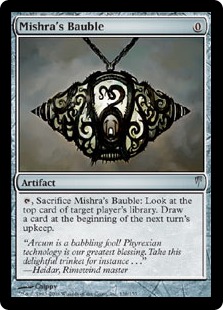
Compare with Cryptic, which adds "draw a card" to its versatile suite of other effects but costs a whopping 4 mana. Counter-draw is probably Cryptic's most-chosen mode, and it's one that Veil of Summer imitates convincingly for 25% of the cost.

As for Astrolabe, the artifact does something no card in Modern ever has: it cures all color woes. Our readers last week had a laugh about how Astrolabe enables decks to run GGUU-, 1UUU-, and 1WWU-costed spells and nonetheless count on Blood Moon as a go-to plan after sideboarding. The level of fixing Astrolabe provides is unprecedented, but it carries a slew of other benefits, too: bolstering artifact synergies, which led to Mox Opal's recent banning, and growing Tarmogoyf, a quirk reflective of the has-been's recent surge in popularity.

Added-effect cantrips have to do more than ever to make big waves in Modern. Veil and Astrolabe happen to be the heaviest lifters available. Having these cards in the format also puts pressure on other cards to do a lot for their mana costs; for instance, it's way riskier to cast Cryptic Command now that opponents can Cryptic you back for a single green mana.

Less, Less, Less

Which brings us to Type B, or filtering and deck-thinning cantrips. How crazy is it that Ancient Stirrings is nowhere to be seen? The card placed 1st in "Modern Top 5: Enablers," an article which permitted all enablers, not just cantrips; it's been the target of banlist discussion the web over for years. But Stirrings just doesn't meet the bar anymore.
Three different Type B cantrips made the Top 5, and they all share one commonality: they are free. Manamorphose gives players an instant-rebate, and Bauble costs a literal 0 mana. But while those two cantrips ensure velocity, they offer little in the way of deck manipulation, if a smidgeon when paired with scry effects or fetchlands. Once Upon a Time breaks the mold, offering players a costless, Ancient Stirrings-deep dig with fewer selection restrictions, but a major time barrier: it needs to be the first spell cast in a game to drop its price tag.

Recent dumps and higher-level results have made abundantly clear how minor Once's drawback actually is next to its two major benefits: its spashability (one mustn't necessarily be playing a colorless deck to benefit from Once, although such decks still do) and the fact that it doesn't cannibalize other turn-one plays. For decks like Gx Tron, this latter benefit means playing turn-one Map and cracking it to reach turn-three Tron, but still getting that Ancient Stirrings effect. And for pretty much everyone else, it means also having this zero-mana Stirrings in their deck, but without warping it around colorless cards.

It's true that Serum Visions, Opt, and other costed consistency cantrips made the cut, but they all show up after 5th place. High-tier cantrips of this group, in this day and age, need to be free to keep up with the format's speed.

As with the first group, the presence of free Type B cantrips puts added pressure on other such cantrips, as well as on the format as a whole. These draw spells used to increase consistency, but slow down the game in terms of personal board development; casting Serum on turn one takes the entire turn, meaning one less creature on the battlefield or removal spell interacting with opponents. When almost everyone can access a free Ancient Stirrings, the game speeds up in pace, but with no loss to consistency—on the contrary, Once provides far more consistency than Serum!

A Question of Faith

One card we haven't touched on yet is Faithless Looting, whose power level is certainly on par with that of the newcomers. Sure, it costs mana. But Looting is miles ahead of Serum or Opt because it allows players to proactively piece together a gameplan all while generating consistency. In other words, it's got Type A and Type B features working together: Dredge and related graveyard decks are actively searching for cards that let them put their engine cards into the graveyard from their hand, and everyone can benefit from a little added consistency. I have no doubt that if this card were still legal, it would rank within the Top 5 somewhere.

Once and Forever

The "big 3" new cantrips discussed in this article—Once Upon a Time, Arcum's Astrolabe, and Veil of Summer—boast a power level so far above what Modern has seen for cantrips that they aren't just here to stay, but are carving out niches as must-respect (if not must-run) deckbuilding components. What's the next step? Should these cards be banned? Or maybe it's finally time for Preordain to show its face and reintroduce the concept of taking time off from board development to set up the library? Let me know your thoughts in the comments!

Want Prices?

Browse thousands of prices with the first and most comprehensive MTG Finance tool around.


Trader Tools lists both buylist and retail prices for every MTG card, going back a decade.

Quiet Speculation