menu

Metagame’s End: GP Columbus Analysis

Are you a Quiet Speculation member?

If not, now is a perfect time to join up! Our powerful tools, breaking-news analysis, and exclusive Discord channel will make sure you stay up to date and ahead of the curve.

The end of the year is approaching, and with it a slowdown in competitive Magic. In fact, GP Columbus was the last Modern event of the year. As such, it is the final opportunity to look at the metagame before 2020's SCG Columbus, so GP Columbus provides extremely important data. It not only defines the metagame for more than a month, but could influence Wizards' December 16 banning announcement.
Still, even if the data shows that there really is a problem in Modern, I wouldn't expect Wizards to take action anytime soon. Wizards prefers to wait and see with Modern (see also: Hogaak), and without major events in December, I doubt there's any reason for them to change things up. If something is getting axed, I'd expect it to happen in February at the earliest.

Conversion Conversation

This analysis is going to be different from previous ones. ChannelFireball's given us both more and less data than StarCity's usual. There's more in that I have some Day 1 data to work with, allowing me to more accurately judge how well each deck did over the course of the tournament. However, only 10 decks were reported for Day 1, which limits how much I can do. The Day 2 data was also that limited initially, though more was provided later.

Deck NameDay 1 TotalDay 1 %Day 2 TotalDay 2 %Day 1-2 % DifferenceConversion Rate %
Eldrazi Tron385.701210.084.3831.58
Sultai Whirza6710.101613.443.3423.88
Mono-Green Tron385.7097.561.8623.68
Humans274.0065.041.0422.22
Grixis Death's Shadow487.20108.401.2020.83
Sultai Death's Shadow253.754.20.5020.00
UW Control263.9054.20.3019.23
Jund406.0075.88-.1217.5
Burn548.1075.88-2.2212.96
Amulet Titan284.2032.52-1.6810.71

Since I haven't dealt with conversion rates before, I will explain the table. All the reported Day 1 and Day 2 populations and percentages are the first four columns. I then took the Day 2 percentage and subtracted the Day 1 to get the fifth data column. This column may be seen as the change in proportionate representation. Dividing each deck's total Day 2 population by their Day 1 share yields the conversion rate.

Conversion rate doesn't really mean anything in a vacuum. There are many ways to look at the data, and the conclusions reached depend on how it is done. The table shows that Jund had a conversion rate of 17.5%. That number offers a starting point for assessment purposes, but necessitates context. For instance, If Jund's expected conversion rate was only 5%, then Jund overperformed; if instead 20% was expected, Jund slightly underperformed.
I can't directly compare the observed conversion rates to previous events, but ChannelFireball has provided a workaround. The overall conversion rate for GP Columbus was reported as 18.9%, with an expected conversion rate for any deck being 15%. We can therefore use these as benchmarks for performance.

I've provided the fifth column as an alternate viewpoint. Rather than rely on outside information, it measures each deck against itself. If every deck is equal, then each deck should have an equal chance to appear in the actual sample in proportion to its population, per statistical sampling. Thus, if a deck started out at 5% of the overall metagame, the expectation is that 5% of that population would make Day 2. I'll measure the scale of deviation from that expectation.

Significance: A Win for Eldrazi Tron

By any metric, Eldrazi Tron overperformed. It had a very high percentage deviation and conversion rate, and is well above either expected conversion rate. Using the overall conversion rate, Eldrazi Tron was 12.68% over. If using the expected rate, it's 16.58% over expectation. That Eldrazi Tron did well makes sense, given Death's Shadow's return and Chalice of the Void's impact on Urza decks. It appears to have been the best choice to make Day 2 given the field, which indicates that it is well positioned in the metagame.
Sultai Whirza has a much lower conversion rate than Eldrazi Tron (just 4.98% above tournament average and 8.88% over baseline), but there's no statistical difference between Sultai's rate and Gx Tron's rate. Whirza did better in the proportionate ranking, but that's not surprising. It's the supposed best deck in Modern, if previous results are any indication, and I expect that many of the best players were on the deck. Just like in Atlanta, win rates are boosted by pilot quality. Given the hype around Urza decks, the fact that Urza statistically overperformed isn't really news. The fact that it didn't by much is, however.

Sultai Death's Shadow, UW Control variants, and Jund all have proportional scores small enough that I'd call it even. Their Day 2 population was in line with their Day 1. If you look at their conversion rates, the picture darkens. Sultai and UW are just above the line for me to say they overperformed, but it's narrow enough that I wouldn't say that with confidence. Jund underperforms compared to tournament average and over compared to baseline. I'd explain these results as middle-of-the-road decks having middle-of-the-road results. They're winning proportionate to their merits, and not any particular positioning advantage.

All that being said, there's no way to see Amulet Titan's result as anything but poor. It was not the most popular starting deck, but it nonetheless limped into Day 2. Considering how popular it has been in the SCG Day 2's, this is a very significant result. I had speculated that Amulet was just a popular deck on the SCG circuit, not a good one, and this poor showing at a non-SCG event backs up that speculation. The volume of Damping Spheres may be to blame, but Whirza decks had been tutoring for those previously, and Amulet did well. (Burn also did poorly, but that's a very typical result, so I wouldn't read too much into it.)

Limitations

Now it's time to doubt the data. The first source should be the population size. GP Columbus only had about 650 players, which is about half of what GP Dallas saw earlier in the year. While I can't definitively explain this drop, I suspect timing is to blame. It was set on the weekend before Thanksgiving, and I can't imagine many Americans wanted to travel for a GP only to travel for the holiday immediately afterwards. There was also snow that weekend, which could have kept players home.
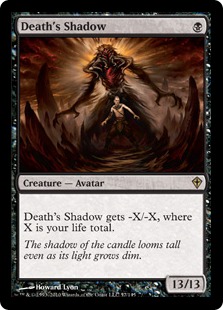
The other problem is with conversion rates themselves. I've never cared for conversion rates before, because they don't always tell the full story. The rates are just successful outcomes over total population, and in Magic, those successes are subject to factors outside the control of those involved. Skill level, in-game variance, and matchup pairings all factor into win rates. When evenly distributed, they don't affect the outcome, which is presumably true for variance and pairings. However, skill is definitely not evenly or randomly distributed throughout the sample, with the higher-skill players gravitating towards the presumed best decks. Luis Scott-Vargas is far more likely to sleeve up Simic Urza than mono-Green Stompy, a choice that in turn boosts Urza's win rate and skews the data.

The final problem is that of context-light conversion rates. I've pointed to Eldrazi Tron's rate being 12.68% over the event average and 16.58% over the baseline, but what that means in the wider context is unknown. All these rates could be identical to Atlanta's or wildly divergent, but there's no way to know. If the former, there's nothing to see here. If the later, then these are very significant results. Since there's no data to compare, the results should be treated with skepticism, and the conversion rates shouldn't be taken as necessarily indicative of the whole metagame.

Top 32

Only the Top 8 is listed on the official coverage page, and it included two copies each of Sultai Whirza, Burn, Humans, and Tron. That's a rounded and symmetrical Top 8, but there's nothing analytical to be done with only eight results. Channelfireball did eventually post more decks so that I can do some analysis. On their Twitter. In picture form. Which is great for those looking to copy decks, but made it a little harder for me to classify them.

Deck NameTotal #
Sultai Whirza6
Burn4
Humans3
Eldrazi Tron3
Mono Green Tron2
Bant Control2
Bant Snowblade1
Devoted Devastation1
Crabvine1
Landfall Zoo1
UW Control1
Dredge1
Jund Death's Shadow1
4-Color Death's Shadow1
Grixis Death's Shadow1
Merfolk1
Infect1
TitanShift1

For the first time since becoming a deck, Urza actually won the GP. However, I'm not sure that's accurate anymore. The new wave of Sultai Urza decks behave nothing like the original Whirza decks. Where Whirza is a hybrid midrange/prison/combo deck, the Sultai Urza decks of Columbus are midrange-leaning value-engine decks. Brian Coval and his compatriots don't bother with the Thopter-Sword combo or any maindeck prison pieces. They don't even have Whir of Invention (which makes ChannelFireball's decision to classify them as Whirza decks slightly baffling).
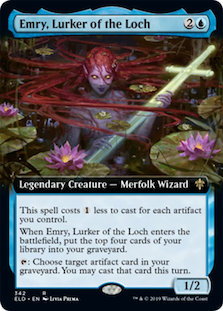
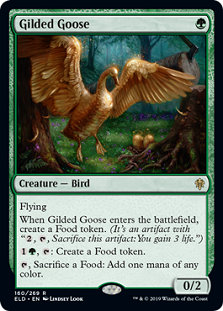
Instead, the deck has the same core of cheap artifacts and multiple engines built around them. Brian can win by infinite card advantage via looping Mishra's Bauble with Emry, Lurker of the Loch, locking opponents down with Mycosynth Lattice and Karn, the Great Creator, or going full Standard Food with Oko and Gilded Goose. Urza's the least efficient card advantage source in all that, useful mostly for his construct token.

Therefore, I'm inclined to rename these decks to Simic Oko. Oko, Thief of Crowns is the main reason that there were so many Sultai decks running around. The Bant control decks are Bant primarily for Oko. Ice-Fang Coatl is just a bonus. Death's Shadow decks are stretching primarily for Oko with Once Upon a Time a near second. The appeal of such a flexible +1 ability seems to be enough to justify the stretched mana in decks that otherwise don't need to.

How it All Stands

Despite having the best conversion rate, Eldrazi Tron is nothing special in this Top 32. Calculating Top 32 conversion, it has a 25% rate compared to Humans's 50%. And Humans had two decks Top 8. Burn, meanwhile, did shockingly well compared to its poor Day 2 conversion (57.1%) and put two decks into the quarterfinals. Meanwhile, Sultai Whriza, the most popular deck on both days, also has the most decks in Top 32 for a conversion rate of 37.5%. Better than E-Tron; worse than Humans and Burn. That's another reason to be leery of conversion rates: they don't predict the final results.
With Sultai Whirza being the apparent deck to beat from previous events, the fact that it isn't doing that much better than the other decks is significant. While I'd previously heard talk of Urza having Hogaak's level power, these results expose such reactions as wild exaggerations. The more general results that Urza is putting up (high Day 2 populations and Top 8s, but sparse wins) are reminiscent of Izzet Phoenix this time last year. So the deck may be good and very competitive in the metagame, but it's not oppressive or warping. There's no evidence yet that anything needs to be done, as the metagame is changing to accommodate the new cards and establish a new equilibrium.

PTQ Complications

Modern being fine is further reinforced by the other events from GP Columbus. For SCG events I normally also look at the Classic results. For GP Columbus, I also have three Modern PTQ's. If this keeps up, I will keep using them in the future.

Deck NameTotal #
Sultai Whirza5
Jund3
Dredge 3
Burn3
Grixis Death's Shadow2
Affinity1
Sultai Death's Shadow1
Infect1
Storm1
Temur Midrange1
Elves1
Humans1
Green Devotion1

Sultai Whriza may be the most popular deck in this sample, just like in the main event, but it wasn't so successful. The three PTQs were won, in chronological order, by Jund, Burn, and Dredge, and being runner-up for a PTQ is a failure in my eyes. Other than Whirza's popularity, this data bears little resemblance to the main event. Burn remains popular, but Jund had the success that I thought it should and Dredge came out of nowhere. The metagame seems to remain wide open despite the attention on Urza decks.

Bottom Line

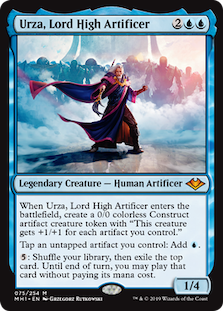
While Urza, Lord High Artificer has previously been their focus, I think that the card is becoming increasingly unnecessary in its namesake decks. By moving away from Thopter Foundry and Sword of the Meek, Urza decks have lost their ability to go infinite and to turn mana into threats. Instead, they've moved to a more resilient value-grinding plan. The presumed best deck is evolving to counter the hate being thrown its way, which means that the rest of the metagame will have to evolve as well.
I consider this development is a positive sign. If the Whirza decks from two months ago were still the default deck and largely unchanged, that would signify that Whirza intrinsically preempts attempts to counter it, which is oppressive and dangerous. If the trend continues, then there is no problem, and a ban is unlikely. However, once successful decklists start calcifying for months, that's a clear sign that the metagame is failing to adapt, which is ultimately why Faithless Looting had to go.

That Oko is starting to appear in more and more decks is cause for concern. If he becomes too prevalent, we'll be in a situation similar to Standard's. Modern has the tools to contain cheap planeswalkers or outright ignore them, which will hopefully be enough.

What the Future Holds

And that's it for the metagame for this year. It's been a wild one. I hope that 2020 will be less volatile, and less prone to bans. But we won't know until we get there.

QS Vendor Series – Damon Morris of Card Kingdom, Part 2

Are you a Quiet Speculation member?

If not, now is a perfect time to join up! Our powerful tools, breaking-news analysis, and exclusive Discord channel will make sure you stay up to date and ahead of the curve.

The QS Vendor Series returns! Tarkan sits down with Damon Morris of Card Kingdom – and in this episode they discuss the following:

  • QS Vendor Series – Card Kingdom returns!
  • Retail Expansion
  • Card Conditions and Buylisting
  • The Future of Legacy
  • Insider Questions

Thanks so much to Damon for an awesome show!

*If you want live recording sessions and up to date postings before anywhere check out the QS Insider Discord!

Six Cards to Buy Now, and Where to Buy Them

Are you a Quiet Speculation member?

If not, now is a perfect time to join up! Our powerful tools, breaking-news analysis, and exclusive Discord channel will make sure you stay up to date and ahead of the curve.

Let’s talk briefly about Wall Street finance—specifically, U.S. Treasuries. Normally, a longer-term treasury offers a higher yield than a shorter-term treasury. Once in a while, this isn’t the case. Back in August of this year, the two-year yield and the ten-year yield inverted. When this happens, it means a higher rate is earned on a two-year treasury than on a ten-year treasury.

Historically, this inversion is a warning sign to stock market investors. A negative 10-2 spread has predicted every recession since 1955. Granted, it is a far-leading indicator, meaning the recessions have taken 6-24 months to occur after the yield curve initially inverts. In the meantime, returns have actually been solid.

That same trend may be unfolding right now. Since the yield curve inversion in August, the market has proceeded to notch all-time highs! Despite the strength in stocks, it seems some Magic cards have not be as fortunate. In Magic, there has been a recession, at least in certain pockets of the market. Often times a weaker market offers great opportunities to be a buyer.

What should be acquired? Here’s my list of six cards that have dropped significantly from their highs, and could be great to buy imminently. I’ll also include some creative ideas on how to acquire them on the cheap!

1. Thunder Spirit

There was an error retrieving a chart for Thunder Spirit

This Old School staple from Legends peaked up around $240 at online retailers. According to the chart, the card has pulled back to around $150 over the past few months, where it has stabilized. That’s a 38% pullback. Given the card’s utility in Old School, there’s always some level of demand for this flying creature. It could be a good pick-up.

But TCGPlayer’s pricing is completely out-of-sync with the pricing at major vendors. The cheapest near mint copy on TCGPlayer is $190 shipped. Meanwhile, Card Kingdom has near mint copies at $89.99! Even ABUGames—notorious for inflated prices—has near mint copies listed at $109.99. My advice: pick up a few Thunder Spirits from these two vendors using store credit. Obviously TCGPlayer pricing is out of whack, but there is robust demand for this card at lower prices. This is the cheapest this card has been since 2017, and I think it reflects a strong opportunity to acquire once-overpriced copies of the card from major vendors.

2. Power Artifact

There was an error retrieving a chart for Power Artifact

At its high in 2018, Power Artifact sold for nearly $200. Since then the price has dropped down to around $120, a 40% pullback from highs. In addition to potential Old School play, this card has utility in Commander and Cubes. It combines well with Grim Monolith to generate infinite mana, which players can leverage in countless ways.

If you’ve been waiting for this card to get cheaper, now is your time to buy. Played copies start at $80 on TCGPlayer. Card Kingdom’s pricing is somewhat consistent. However, ABUGames is the place to go if you want to acquire copies of this card cheaply. If you can catch a restock, ABUGames lists played copies at $107.55. With store credit running so cheaply, you could probably acquire this credit for around $75. As long as you don’t mind the extra effort, this is a great way to grab an inexpensive copy of this card.

3. Sliver Queen

There was an error retrieving a chart for Sliver Queen

Every time new slivers are spoiled, speculators acquire older slivers at an alarming rate. This creates a sudden spike in price, and an opportunity to cash out. Sliver Queen is perhaps the most iconic of all slivers; its presence on the Reserved List ensures it remains the rarest sliver ever printed. This combination explains why copies spiked to around $175 earlier this year when slivers were spoiled in Modern Horizons.

Since that high, these have pulled back dramatically, now retailing for around $100—a 42% pullback. Suddenly, these copies are affordable again, but you never know when new slivers will be printed and cause another buyout. That’s why I’d consider getting copies now if you’ve been waiting. I wouldn’t buy these from TCGPlayer, Card Kingdom, or ABUGames. Instead, these should be acquired from Japan, where demand is particularly soft. Hareruya has 34 English copies and 23 Japanese copies in stock. Their English copies range from $52 to $74 and their Japanese copies range from $39 to $55. This is well below U.S. prices, and could even represent arbitrage opportunity right now.

4. Unlimited Underground Sea (and Other Duals)

There was an error retrieving a chart for Underground Sea

It’s been a while since Dual Lands were a topic worth discussing. These have felt like dead money for quite some time now. The recent pullback makes for a great opportunity to acquire these ubiquitous lands. Whether for Cube, Commander, Legacy, or Old School, these are always useful to own in any collection.

I’m particularly attracted to the Unlimited printings of these lands. The Unlimited version is nice and dark, making the card more attractive. Unlimited copies are far less likely to be counterfeited, and these versions are far rarer than their Revised counterparts. Underground Sea spiked to around $1800 at retail earlier this year, but now sells for $950—a nearly 50% drop! Card Kingdom is the place to go to acquire these—they recently dropped their pricing on Unlimited duals, making for attractive entry points. For example, they have VG copies at $569.99 while ABUGames offers $950 in trade credit for played copies. Can anyone say “credit arbitrage?”

5. Revised Tropical Island (and Other Duals)

There was an error retrieving a chart for Tropical Island

Unlimited Dual Lands not your thing? Not to worry, I think Revised copies are also smart to acquire now. As an example, consider Tropical Island, which spiked to $400 retail last year. Now copies are about 25% cheaper, hovering around $300, with played copies going for around $200.

My favorite place to acquire Revised Dual Lands is ABUGames, using trade credit and targeting played and HP copies. With the discounted trade credit, these are attractive pick-ups. If you don’t have ABU trade credit, your best bet is to watch social media. That’s where these are posted below TCG Low, making for an attractive entry point.

6. Alpha Air Elemental (and Other Alpha Cards)

There was an error retrieving a chart for Air Elemental

At one point, any Alpha uncommon would buylist for at least $20, with many questionably playable cards going for north of $30. I remember flipping cards like Green Ward and Burrowing from TCGPlayer to ABUGames and Card Kingdom because their buylists were so aggressive.

Now those prices have dropped back significantly. I wouldn’t go near the unplayable stuff, but playable Alpha cards make for an attractive target. For example, Air Elemental is one of the more popular Alpha uncommons. At its peak, it retailed for around $120, but these can now be acquired for half that amount. Card Kingdom has been particularly aggressive in their price reductions on Alpha cards. If you can catch a restock, those $45 VG copies and $30 G copies look particularly attractive.

Honorable Mention: Discounted Bundles

As Black Friday approaches, I’ll be keeping my eye out for profitable deals. I’ll be watching particularly closely for heavy discounts on sealed product. Recently, Troll and Toad marked down bundles of Rivals of Ixalan to $18 plus shipping. They also had Core 2020 bundles at $23.

Sure, these sets aren’t the most inspiring. But I’m pretty sure any bundle that cheap would garner some demand, at least locally. Rivals of Ixalan bundles sell for $24 on eBay, so if you could out these locally at $20 you may be able to make a few bucks. You could also sit on them for a year or two to see if demand gains traction. If nothing else, they’d make for good Chaos Draft fodder. These sets didn’t thrill me, but if I see a deep discount on War of the Spark or Thrones of Eldraine bundles, I may sock away a few for a rainy day.

Wrapping It Up

There’s no sign of a recession on Wall Street, but we’ve been living through a deep recession in the Magic market. You just have to know where to look. If you believe in the health of the game, you may consider putting some money to work in some of the hardest-hit Magic cards.

If Old School is your format, then you have a prime opportunity to acquire cards at significantly cheaper prices than they were last year. Alpha cards are particularly soft right now. If Old School isn’t your thing, you may still want to pick up some older cards for Commander or Cube play.

And if none of those cards interest you, do not despair. Black Friday is around the corner, and it’ll definitely bring significant mark-downs across the board as stores look to spurn sales and generate liquidity as they plan for 2020. I’ll be watching for deeply discounted sealed product. It’s definitely a buyers’ market, and if history is any indicator, prices will rebound all over again at some point in the future. The key is to be well-positioned to sell when that inevitably happens.

…

Sigbits

  • After marking down their Library of Alexandrias, Card Kingdom recently increased their price again. They also have the land on their hotlist with a $720 price tag. While I wouldn’t get too excited about the modest price change, I do gain confidence that the Old School market is bottoming. Every time Card Kingdom drops prices on cards like these, buyers swoop in and Card Kingdom is forced to readjust.
  • I mentioned Revised and Unlimited Dual Lands, but there’s also Collectors’ Edition duals that may make for attractive pick-ups as prices pull back. Card Kingdom has Savannah and Plateau on their hotlist with prices of $62 and $59, respectively.
  • Sliver Queen demand may be soft, but Card Kingdom seems to be interested in acquiring more copies of Sliver Legion. They currently have the card on their hotlist with a $48 buy price. Considering LP copies are available on TCGPlayer in the $51 range, this buy price seems quite strong.

The Cycle’s Sick: Introducing Six Shadow

Are you a Quiet Speculation member?

If not, now is a perfect time to join up! Our powerful tools, breaking-news analysis, and exclusive Discord channel will make sure you stay up to date and ahead of the curve.

The concept of personal preference heavily influences how I see the world, and subsequently, Magic. So I'm no stranger to writing about playing what you love. Nonetheless, I have felt a bit lost in Modern for the last few months: my colored pet decks lost a key card in Faithless Looting, and the second coming of Eldrazi Tron threatens my colorless one. I've wanted to brew with powerful new engines such as Oko, but for a time, everything I landed on struck me as worse than Urza decks.

After creating multiple lists from scratch, running them into the ground online, and starting over once I'd realized they weren't doing what I felt like doing in the first place, I finally figured out a 75 that ticks my boxes.

The Requirements

#1: Bolt and Goyf

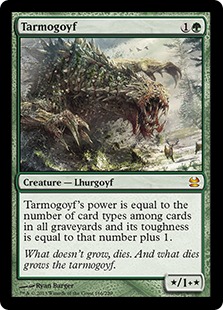
In "Eat My Dust: Blowing Smoke With BUG Faeries," I posited that interactive Modern decks simply couldn't compete if they lacked Lightning Bolt or Tarmogoyf. That article is now four years old, and I'm not entirely sure how true the argument even was at the time. What's for certain is that my love for those two cards knows no bounds. When deciding what to run in a deck of favorites, they were no-brainers.

With cheap planeswalkers running amok, Bolt is particularly versatile, and this metagame is relatively light on copies. That's why decks that normally struggle against the red instant are cropping up in spades, making it all the better to have on-hand.

As for Goyf, it's certainly fallen far from its previous position at Modern's helm. But it still packs a punch, and punches enough of my preference buttons that I won't leave home packing less than four myself.

#2: Wrenn and Oko

Experimenting with Wrenn and Six in TURBOGOYF and Counter-Cat has drastically altered the way I play Modern. Most of the changes take place at the very start of the game: during mulligans. Later builds of TURBOGOYF had me trimming the land count to as low as 16 and riding on finding Wrenn and a mana source; once the walker's in play, I'd rather not draw another land for the rest of the game. Faithless Looting helped that plan a lot, and without the sorcery, the land count will need to climb above 16. But still, I was married to Wrenn before deciding what else I wanted to play.

The "what else" ended up being Oko, Thief of Crowns. I'd been hearing about this card endlessly from other players, on discussion boards, and in my newsfeed by the time it was finally banned from Standard. As the allure of playing freshly-made-Modern-exclusives once spurred me to build around Smuggler's Copter for a couple weeks, so too I couldn't wait to wield Oko in the format.

On its surface, the card solves some problems I've run into with Temur over the years: its lack of hard removal and lack of effective go-wide strategies. But getting the most out of Oko put additional pressures on the deck. For one, I'd require access to creatures large enough to invalidate 3/3s; Tarmogoyf was a good start, but I wanted a second fatty. Additionally, the presence of cheap, self-replacing artifacts like Arcum's Astrolabe is part of what makes Oko such a competent plan out of the Urza decks, so I sought to run some Astrolabes myself. As a bonus, the artifact feeds Goyf once opponents answer it.

Rounding Out the Core

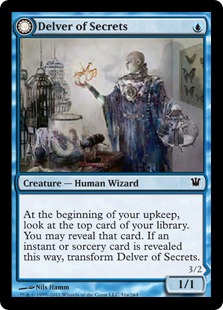
I tried the above cards in a multitude of shells, spending the most time with Blood Moon and Delver of Secrets variants. The former proved too clunky without acceleration, which I was committed to not running; otherwise, I'd just be building TURBOGOYF again, and I wanted more of a spell-based aggro-control deck this time around. As for Delver, it was simply never flipping with all the noncreature permanents in the deck.
While Temur colors support themselves well enough to frequently house Blood Moon, adding a fourth color to the mix can make a Modern deck's manabase especially squishy. Not so with Astrolabe in the picture. The natural choice for a fourth color was black, which offered some very juicy possibilities:

  • Thoughtseize/Inquisition of Kozilek: Some of Modern's best interaction, and a swell pairing with Tarmogoyf. Wrenn and Six, as well as other planeswalkers, benefit from early hand stripping for a similar reason.
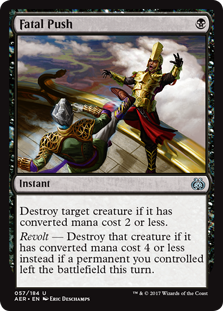
  • Fatal Push: The gold standard for early-to-mid-game battlefield cleanup.
  • Collective Brutality; Plague Engineer: High-impact sideboard cards.

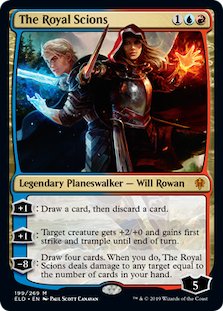
Best of all, though, was the black card that named the deck: Death's Shadow. Shadow, too, shines alongside targeted discard, giving my threat suite cohesion; it also attacks players from a non-nongraveyard angle. Shadow helps provide the density of ferocious bodies necessary for Stubborn Denial, and it also opens up room for another planeswalker: The Royal Scions.

The aforementioned late-stage TURBOGOYF builds ended up splashing blue for Scions alone, a card that supplemented Faithless Looting while pressuring opponents significantly as of the second or third turn. The walker's at its best when working with Wrenn and Six, the latter providing ample raw materials to loot away, and large creatures like Tarmogoyf. Those not only block to protect Scions, but can turn sideways, making full use of the walker's pseudo-Temur Battle Rage +1. Shadow benefits similarly from the pairing, as we've already seen in some online finishes.
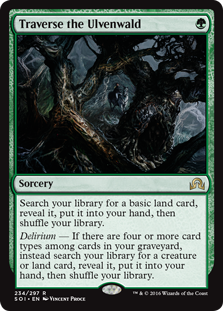
From there, I added a few copies of Snapcaster Mage for extra utility and began testing. The numbers were eventually adjusted (Snapcaster went down to two copies; some interaction was trimmed for Sleight of Hand), and I landed here:

Six Shadow, Jordan Boisvert

Creatures

4 Death's Shadow
4 Tarmogoyf
2 Snapcaster Mage

Planeswalkers

4 Wrenn and Six
3 Oko, Thief of Crowns
3 The Royal Scions

Artifacts

4 Arcum's Astrolabe

Instants

2 Fatal Push
3 Lightning Bolt
3 Stubborn Denial

Sorceries

4 Thoughtseize
3 Inquisition of Kozilek
3 Sleight of Hand

Lands

4 Verdant Catacombs
3 Misty Rainforest
3 Bloodstained Mire
1 Overgrown Tomb
1 Blood Crypt
1 Breeding Pool
1 Steam Vents
1 Stomping Ground
1 Watery Grave
1 Snow-Covered Forest
1 Snow-Covered Swamp

Sideboard

3 Damping Sphere
2 Plague Engineer
2 Dismember
2 Surgical Extraction
2 Collective Brutality
1 Veil of Summer
1 Stubborn Denial
1 Disdainful Stroke
1 Ancient Grudge

The Sideboard, Explained

While it's a bit early to propose an optimized sideboard, I can explain my current picks.

  • Damping Sphere: Among Modern's most flexible enablers, Sphere handles big mana, spell-based velocity decks, and various strands of combo all by itself (well, with the help of a clock).
  • Plague Engineer: Acard I've found invaluable against small creature decks, Engineer's at its best when it comes down and immediately kills something. It's not bad in the Shadow mirror, either, where it demands an answer in a board stall.
  • Dismember: Significantly buffs Shadow while interacting on the cheap. But it's a bit narrow for the main considering the removal suite we already have.
  • Surgical Extraction: Grave hate (or not). Great with Snapcaster.
  • Collective Brutality: Mostly here for Burn, but comes in against combo and creatures, too. Extremely versatile, but pricey in Game 1.
  • Veil of Summer: Not necessarily needed for the interactive matchups, since the walkers give us lots of play there. But man is it fun to resolve.
  • Stubborn Denial: In some matchups, there's no such thing as too much permission.
  • Disdainful Stroke: Counters Tron payoffs, Titan payoffs, and... Urza!
  • Ancient Grudge: Hard to build a deck in these colors and forget about this guy.

Sizing Up

Of course, combining Goyf, Shadow, and discard is nothing new to Modern: the card first made waves in that very core, supported by Traverse the Ulvenwald. So how does Six Shadow measure up against similar decks?
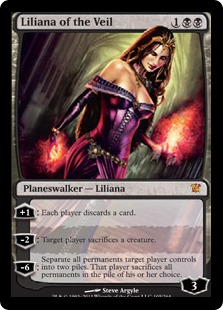
Six drops Traverse for regular cantrips, a trick I employed in my first BURG-colored Shadow deck two years ago. Sleight of Hand is obviously less consistent than Traverse the Ulvenwald, but it resists Rest in Peace and can find instants, sorceries, or planeswalkers.

Those planeswalkers also make up for the threat density lost to abandoning Traverse. Any of our three wins the game unchecked, and are significantly tougher to remove than creatures. Grixis Shadow aims to beat removal via the Push-resisting Gurmag Angler and Stubborn Denial, but I think leaning on walkers, while less explosive, is more robust, especially considering our creature-based Plan A.

Forgot About Rock

Dipping so hungrily into the card type makes us resemble not only Traverse and Grixis Shadow, but good ol' Jund Rock, Modern's reigning Wrenn and Six pile. My problem with Jund right now is its softness to Urza and Tron. Not that it's dead in the water against either deck, but Jund lacks Shadow's reversibility, making it harder to transition to an aggressive role when it needs to. Conversely, Shadow decks can dome themselves for a bunch and then one- or two-shot their disrupted opponents, Infect-style, if enemy answers are unlikely, making them the favorite against combo.
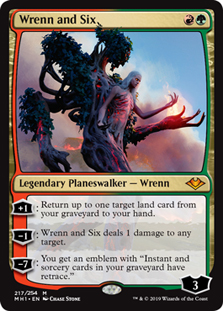
As for Jund's benefits, it's superior at shredding small creature decks; still, Snapcaster and the one-mana removal helps on that front. It's also historically harder to disrupt than Shadow, although I think the planeswalkers go a long way on that front. With its many threats, I suspect Jund has the upper hand against us in a head-to-head, though I haven't been able to confirm this yet for lack of running into it.
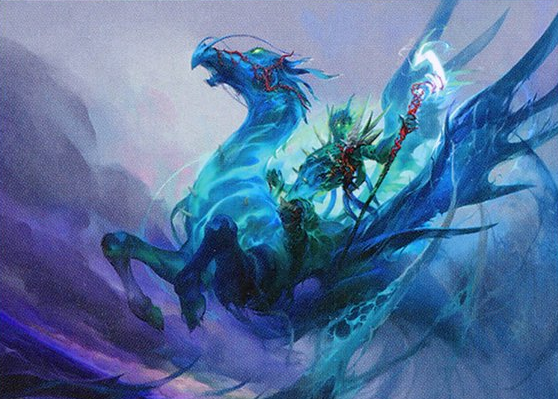
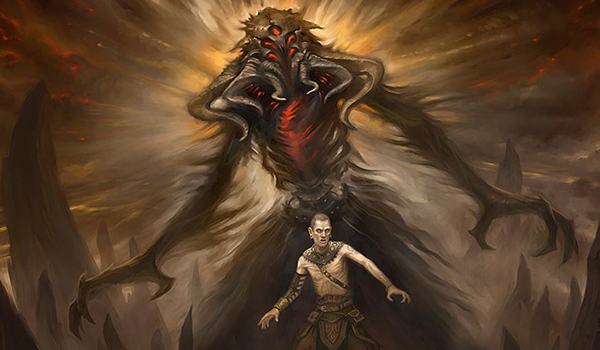
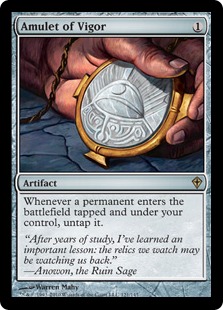
Six's Company

After a couple months of looking around, it feels great to have a deck to settle into. With its "Goyfish" superiority as a turn-two play, Wrenn and Six has categorically become my favorite card from Modern Horizons, and I don't doubt it finds its way into my next brew. But maybe I'm counting my eggs before the Toxicitry lays them—here's hoping Six Shadow lasts me awhile! What have you been playing in this high-powered Modern?

Insider: Post-Ban Standard Winners to Watch

Are you a Quiet Speculation member?

If not, now is a perfect time to join up! Our powerful tools, breaking-news analysis, and exclusive Discord channel will make sure you stay up to date and ahead of the curve.

A ban announcement as monumental as Monday’s, which removed Oko, Thief of Crowns and Once Upon a Time from Standard and left the metagame eviscerated, is an incredible financial opportunity. The change opened up vast swaths of the card pool that were previously suppressed, and that brings the potential for new decks to emerge and breakout cards to grow in price and potentially spike. One card, Korvold, Fae-Cursed King, already did, and doubled in price within a day of the announcement on speculation that a Jund Sacrifice deck would be one of the best in the field.

Normally we’d have to wait until the weekend for some major events to see what the metagame has been doing, but this week there was a special Twitch Rivals tournament that invited streamers - including the MPL pros, to what boiled down to a Magic Arena Standard Grand Prix, and the results have set the stage for the post-ban metagame. Jund Sacrifice and its Korvold did perform well, making it all the way to the finals, so the hype has been warranted, but I’m more interested in cards that performed well but are still flying under the financial radar, and could offer the potential for large gains when they gain more attention. 

There was an error retrieving a chart for Korvold, Fae-Cursed King

I didn’t have to look too hard, because I found not just a card, but an entire cycle of them doing serious work in the tournament, and at a bargain price point. The Core Set 2020 Cavalier creatures are quite powerful, and they saw some play before rotation, but a world with Oko, which could turn off much of their value, was not a great environment for their success. Now they stand out as some of the more appealing cards in the format, and all but Cavalier of Dawn saw starring roles in high-finishing decks in the Twitch Rivals tournament.  One deck, in particular, Jeskai Fires of Invention, finishing in fourth place, uses a full set of Cavalier of Flame and three Cavalier of Gales.

Consequently, these were the two largest price percentage gainers in Standard on Magic Online in the day after, growing around 22% and 36% respectively. As Mythic Rares from M20, which has demonstrated time and time again to be in short supply and are capable of large price increases, I have to imagine these hold potential, especially at their current low prices. Cavalier of Flame at around $5.50 is certainly a reasonable price, but the current price of around $3.50 Cavalier of Gales seems like a real steal to me. 

There was an error retrieving a chart for Cavalier of Gales

The sacrifice theme headlined by Korvold also comes in every combination without it, including Rakdos, Golgari, and even Mono-Black, and Cavalier of Night fits right into the theme. Its paper price is strongest in the cycle, now over $7 after a few months of steady growth from $4. Its price point is a potential target to shoot for the others in the cycle, but I see no reason this one shouldn’t continue the trend and grow higher.

There was an error retrieving a chart for Cavalier of Night

Green took a major hit from the bannings, but it won’t destroy what was and still very likely is the strongest color in Standard. A ramp deck with a full set of Cavalier of Thorns reached the top 8 of the tournament, and could serve to change the trajectory of the card that has been falling steadily the entire time it has been in existence, now below $5. 

There was an error retrieving a chart for Cavalier of Thorns

Cavalier of Dawn hasn’t shown up yet, and it doesn’t have the best prospects, but there is some precedent of it being played in the sideboard of the Dance of the Manse deck, so it’s something to watch for it that deck does re-appear in the metagame. 

There was an error retrieving a chart for God-Eternal Bontu

Another cycle I have my eye on is the God-Eternals from War of the Spark. Specifically God-Eternal Bontu reached top 8 of the tournament, playing a key role as a two-of in the Rakdos Sacrifice deck. It’s particularly appealing for this and any non-Jund versions without access to Korvold in the five-drop slot, so it has a lot of potential, so I like it at just $3. 

There was an error retrieving a chart for Massacre Girl

Another five-drop, this one more of an anti-sacrifice strategy card because of its sweeping power, is Massacre Girl. It was a sideboard two-of in the tournament-winning Golgari Adventures deck played by Mike Sigrist and in the top-four finishing list,  and both will surely be heavily copied. Three maindeck copies in Jund Sacrifice shows it has applications in the deck, not just against it, and that it’s becoming a true staple of the format. The paper price already shows some signs of growing, now at $0.60 from $0.50 a couple weeks ago. 

There was an error retrieving a chart for Midnight Reaper

One card riding the sacrifice wave that I have my eye on is Midnight Reaper. It was a staple for a brief period, but its price sagged down to $2 before rotation brought it new attention and moved its price to $3, where it has sat all month. Now the price looks to be on the move again, heading towards $3.25 and higher as it becomes better than ever before.

There was an error retrieving a chart for Legion's End

The rise of black decks has also brought about a shift in sideboard cards, which explains why besides the Cavaliers, Legion's End has been the highest-growing card since the tournament. It’s included in the sideboard of Golgari Adventures, along with the sideboards of various sacrifice builds, where it’s a great way to fight back against all variety of creature decks. Now nearly 5 tickets, it has shown tremendous growth from just $1.50, where it sat before interest as a sideboard card in Pioneer’s popular Mono-Black deck started the price moving upwards, which has only accelerated. At $3 it’s not the bargain it was before rotation spiked it from just $1, but as a cross-format staple, it has a bright future. 

Inviting Change: SCG Invitational Analysis

Are you a Quiet Speculation member?

If not, now is a perfect time to join up! Our powerful tools, breaking-news analysis, and exclusive Discord channel will make sure you stay up to date and ahead of the curve.

An analysist goes to work with the data he's given. With Modern on the competitive backburner for the past few weeks, I've lacked the means to properly dig into the metagame ahead of GP Columbus this weekend. As a result, I am looking a bit further afield into events that I normally wouldn't analyze. Fortunately, the results are consistent enough with previous events that I feel confident using them.

First thing's first: there was another Banned and Restricted Announcement this week. Despite the Standard bloodbath, there were no changes to Modern, as I'd expected. While there are always lots of MTGO data for Wizards to peruse, paper events have been sparse. They will continue to be sparse into next year, so it makes sense to wait and see how things play out. Even if Wizards was inclined to look at Modern, it's not clear that they needed to; despite huge turnouts, Urza decks haven't done that well compared to the overall metagame. The meta may be well on its way to absorbing Urza into the ecosystem, which is suggested by the results from the SCG Invitational.

Invitational Day 2

As always, we'll start with the broadest data and move inward. The Invitational had 488 players with 168 making into Day 2. This is a much smaller starting population than the typical Open or Grand Prix, but on par for Day 2 populations, which helps the data's validity.

Deck NameTotal #
Simic Urza24
Amulet Titan18
Grixis Death's Shadow18
Other 14
Mono-Green Tron12
Burn11
Eldrazi Tron11
Humans6
Devoted Devastation5
Four-Color Whirza4
Infect4
Jund Death's Shadow4
Simic Eldrazi3
Urza Outcome3
UW Control2
Crabvine2
Four-Color Death's Shadow2
Gifts Storm2
Jund2
Mono-Green Devotion2
Mono-Red Prowess2

For the sake of a smaller table, I lumped all the singleton decks together under "Other". It is interesting, though unsurprising, that it's not the largest category like at most Grand Prix. Since they had to qualify, Invitational players tend to be sharky Spikes and will gravitate toward known decks. This is particularly true when one deck is perceived as the best deck at the moment.

Just like in Atlanta, Simic Urza (meaning Urza, Lord High Artificer with Oko, Thief of Crowns) was the most popular deck, followed by Amulet Titan. However, this time Titan tied with Grixis Death's Shadow. It makes sense for GDS to be popular in the wake of its win in Atlanta and its winning history. Its performance was further boosted by Simic Urza being the type of deck GDS traditionally preys on. Simic Urza has very few cards that actually win the game, they being primarily the aforementioned Urza and Oko. GDS is packed with hand destruction to rip out all the real cards, leaving only the air, counters for topdecks, and a very rapid clock. They've even worked to speed it up by readopting Temur Battle Rage, which is also great for breaking through Thopters.

However, a bigger story is the relative lack of Urza in this Day 2. I realize that sounds weird given Simic Urza being the most popular deck, but the overall representation is down because there is a huge drop-off from Simic's 24 pilots to 4-Color Whirza's mere four, marking a huge reversal from Atlanta: there, they were very close together, with additional versions lower down the standings. There are only three Urza variants this time, which is a proportional decrease. Whether this development is a function of Simic's breakout popularity or indicative of a general move away from the other versions is impossible to say at this point.

The Big Asterisk

There are two problems with this data. The first is that this is an Invitational. It is therefore a curated data set rather than a random one. Randomness is critical for validity, since it ensures that every member of the population had a chance to be counted. Qualifying required winning a separate tournament, generating a random sample, but from a very small population. The qualifiers were also relatively small and represent smaller areas, which allows outliers and biases to more strongly influence the data.

Adding further complication, the Invitational is an SCG event. I'm informed that these are very team-orientated, and the metagames prove somewhat inbred as a result. I can't confirm this is true, but the impact of Simic Urza being a team deck in Atlanta was very strongly felt. As a result, I'm inclined to be skeptical of the overall applicability to the metagame, despite the similarities to previous events.

Top 16

While previous events reported a Top 32, the smaller overall size of the tournament led to only the Top 16 being reported.

Deck NameTotal #
Grixis Death's Shadow5
Eldrazi Tron2
Simic Urza2
Humans1
Mono-Green Tron1
Amulet Titan1
CrabVine1
Infect1
Burn1
Devoted Devastation1

Death's Shadow dominated this Top 16 like it was 2017. That Simic Urza managed to get in two copies also makes sense given the starting population. Despite all the predation, a high starting population ensures that some will evade and thrive.

More interesting is the huge falloff in Amulet Titan. Titan's consistently been one of the most popular decks at the SCG events, but that popularity doesn't appear to translate into success. This may be down to GDS' return, as the only card that really matters in Titan is Primeval Titan and again, GDS is very good at dismantling strategies that rely on small numbers of cards.
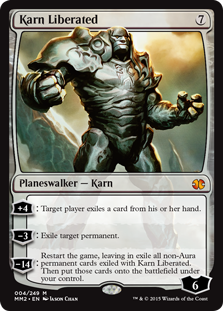
However, Big Mana was also a sound strategy against GDS in 2017, which may explain why Eldrazi Tron put as many copies in Top 16 as Simic Urza. E-Tron is great in particular thanks to Chalice of the Void. GDS is primarily made up of one-mana spells, and Urza relies on zero-mana spells, making Chalice very effective in this metagame.

A Bigger Asterisk

Despite this result falling within expectations, I wouldn't read too much into the Top 16. While everything I've already said about the tournament as a whole applies here, that's not the only reason to be skeptical. The Invitational is a multi-format event, split between Pioneer and Modern. Thus, the standings don't accurately reflect Modern successes. I'm inclined to regard them as the decks the most successful individual players played rather than the actual best decks.

7-1 Decks

Therefore, to see which decks were actually the best, we need to know which ones had the best Modern record. Fortunately, Star City is aware of this, and provides access to the 7-1 or better decklists. What follows is not a particularly long list, but it is instructive.

Deck NameTotal #
Simic Urza2
4 Color Death's Shadow1
Mono-Red Prowess1
Infect 1
Grixis Death's Shadow1
Devoted Devastation1
Mono-Green Tron1

This result reinforces that which the Top 16 suggests. Russell Lee, playing 4-Color Death's Shadow, had one of the better Modern records, but did not appear in the Top 16. Similarly, Invitational winner Chris Barone isn't on this list, having done much better in Pioneer than in Modern.

Simic Urza performed proportionately better here than it did in the overall standings. Whether this is down to the starting population or actual metagame power and positioning is a tough call to make, though it is worth mentioning that if Oko slips through the net, he's very good against Death's Shadow.

On that note, GDS was nothing special here, but Death's Shadow strategies nonetheless tied with Simic Urza. Back in 2017, GDS pushed every other version out with its superior consistency. The introduction of Once Upon a Time has reignited the discussion. For a deck built around velocity and mana efficiency, a potentially free cantrip is incredibly exciting. Traverse the Ulvenwald does a better job finding creatures or lands, but only with delirium. However, from experience, the 4-color Shadow decks have always suffered from being much less forgiving than GDS, so I'm curious whether the potential power of extra colors is actually worthwhile this time.

Reading the Tea Leaves

That players should be prepared for Urza, especially Simic Urza, is a given. This trend toward Urza has been building for some time now and should continue considering its recent visibility.

Beyond that, the picture gets murky. I've only been analyzing SCG events recently, so I can't say with certainty that what I've observed is accurate picture of the entire metagame. Nor can I confirm allegations of metagame insularity or teamthink affecting the metagame, SCG Atlanta notwithstanding. Even within the SCG world, the picture is very complicated. However, everyone else is in the same boat, so conjectures based on the SCG data will at least inform player decisions for the coming Modern season.

Metagame Predictions

Looking past Urza decks, Shadow should be the next deck on everyone's mind. The perception that it's an Urza-killer, which may be correct, is one factor, but I think a stronger one is emotional attachment. GDS was very popular for over a year, and a lot of competitive players own the deck. It went away thanks first to metagame shifts, and then Izzet Phoenix. With the graveyard decks out of the picture and the pressure off, plenty of old adherents may be returning to their old deck anyway. That it may be well positioned is a bonus.

The other big deck is the category of Big Mana. Tron and Amulet Titan have consistently been popular in these analyses since Hogaak was banned. But Eldrazi Tron may be creeping back in now that its old frenemy GDS is back, too. Still, it isn't clear that any of these decks are actually good. Titan and Tron haven't been doing that well despite the numbers they bring to Day 2. Titan came second in Indianapolis, and had okay-but-not-spectacular results in Atlanta. Tron hasn't done anything remarkable other than be popular, which it always is and is likely to always be. Tron just does its Tron thing and sees if you can cope. Eldrazi Tron's only had the Invitational Top 16 result to put it above other options. Thus, I expect Big Mana to be popular, but not necessarily successful.
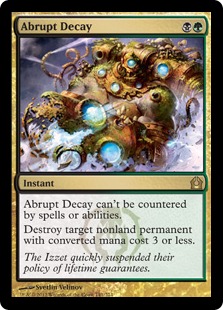
As for the rest of the metagame, the other successful decks in the 7-1 data were Gotcha!-style. Infect is the classic example, but Mono-Red Prowess is in the same boat, and I will argue that so is Devoted Druid combo. They're taking advantage of a lull in Lightning Bolts and cheap interaction in general caused by the Big Mana and Urza upswing.

What I'd Play

For those who don't want to play the presumptive best decks, the choice is hard. You can never be strong everywhere, and there are factors pulling in multiple directions. I think that straight Jund would be my choice. It's generally weak to Big Mana, but the other metagame forces make me think that may not be as much of a problem.

Jund has solid matchups against Urza and Death's Shadow thanks to removal density. In particular, Jund has the same amount of discard as GDS, but a wider array of removal spells to deal with everything the two decks can throw at it. It also has access to excellent sideboard cards against both decks: Abrupt Decay and Plague Engineer are notable standouts.
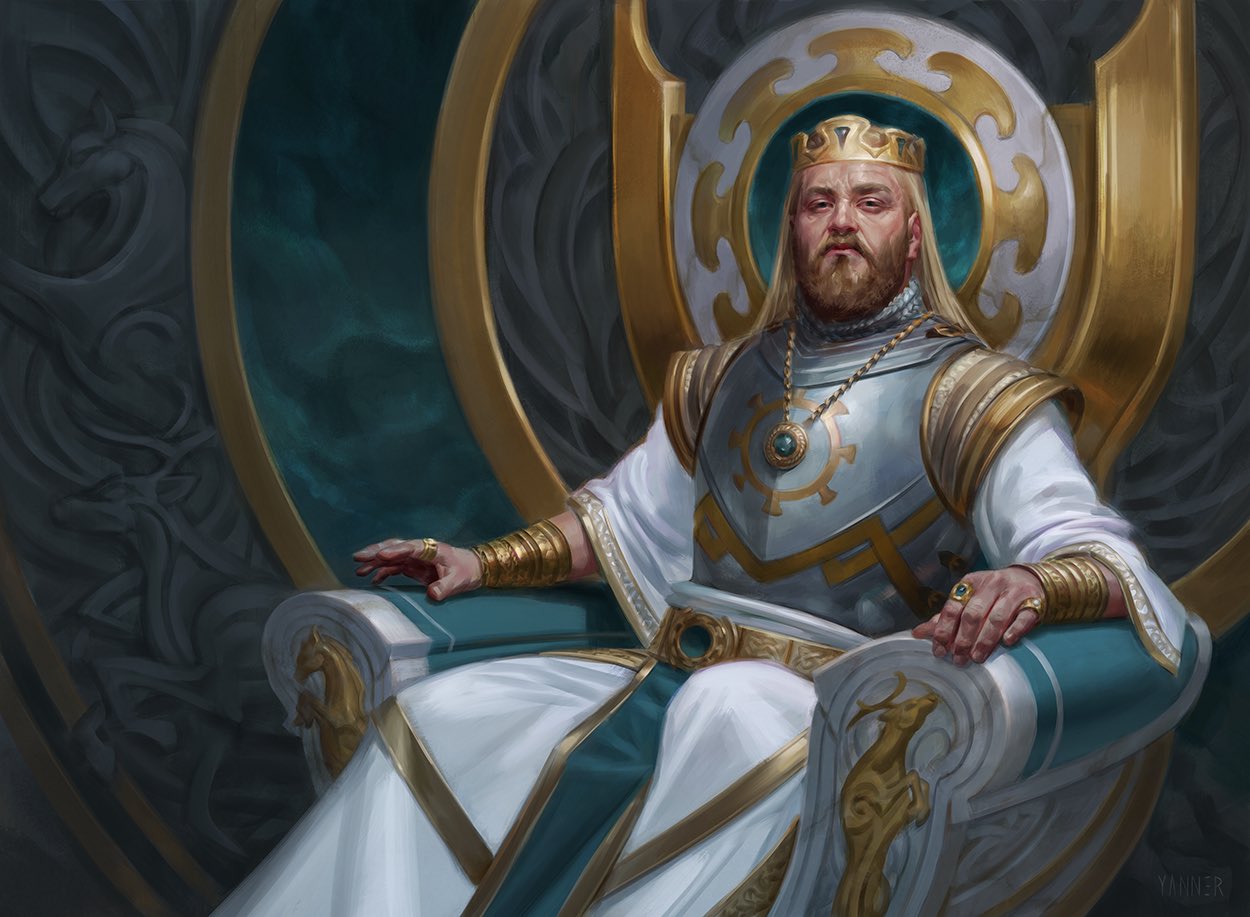
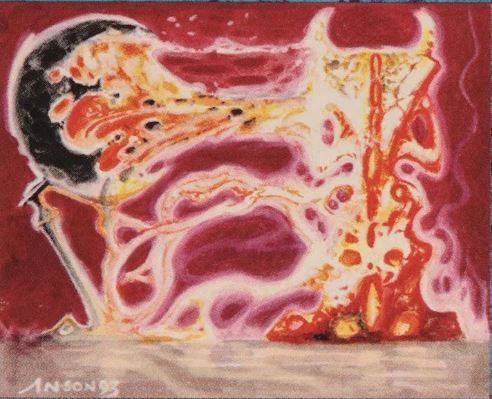

Big Mana isn't unwinnable, but it is a struggle. However, going by the 7-1 data, Infect is coming back to prey on them, which will keep those bad matchups down. Such cheap creature decks are good matchups for Jund, especially with Wrenn and Six in the mix, which should be a net positive.

On the Horizon

The Modern GPs around the corner should finally provide some truly random data to work with, yielding a more accurate picture of the metagame. Hopefully, that picture sees Modern adapting to Urza with no intervention necessary. However, the guy at my LGS who always seems to pick up decks that get banned just finished building Simic Urza, so I'm feeling skeptical.

QS Vendor Series – Damon Morris of Card Kingdom, Part 1

Are you a Quiet Speculation member?

If not, now is a perfect time to join up! Our powerful tools, breaking-news analysis, and exclusive Discord channel will make sure you stay up to date and ahead of the curve.

The QS Vendor Series returns! Tarkan sits down with Damon Morris of Card Kingdom – and in this episode they discuss the following:

  • QS Vendor Series – Card Kingdom returns!
  • State of the Game
  • Mystery Boosters
  • The Future of Legacy
  • Insider Questions

Thanks so much to Damon for an awesome show!

*If you want live recording sessions and up to date postings before anywhere check out the QS Insider Discord!

Three Significant Changes at ABUGames

Are you a Quiet Speculation member?

If not, now is a perfect time to join up! Our powerful tools, breaking-news analysis, and exclusive Discord channel will make sure you stay up to date and ahead of the curve.

By now, I’ve thoroughly documented my store credit arbitrage process using ABUGames. For over a year, ABUGames had offered elevated multipliers when receiving trade credit for buylists. The numbers were especially attractive when shipping them Old School cards ranging from Alpha to Arabian Nights.

I wrote about how one could purchase cards from other sites such as TCGPlayer and eBay (sometimes even from ABUGames’ eBay store) and ship them to ABUGames’ buylist for double the store credit. This credit could then be spent on their least overpriced cards, netting a modest, yet reliable profit.

Now it looks like ABUGames has taken measures to severely limit these opportunities. Because of their recent, drastic moves, I want to spend this week sharing my impression of their changes and how I’m still trying my best to leverage this strategy to make a little more money.

Update 1: ABUGames’ Grading System

Their website makes the grading system update sound like the best idea since sliced bread.

In short, ABUGames has modified their grading system as follows:

Near Mint -> Mint or Near Mint
Slightly Played -> Near Mint or Played
Played -> Played or Heavily Played
Heavily Played -> Heavily Played

So there are still four levels of condition (especially on the older cards) but now cards will either be mint, near mint, played, or heavily played. This grading system is reminiscent of Hareruya, who I’ve also seen use a system with Mint, NM+, NM-, etc. on their high-end cards.

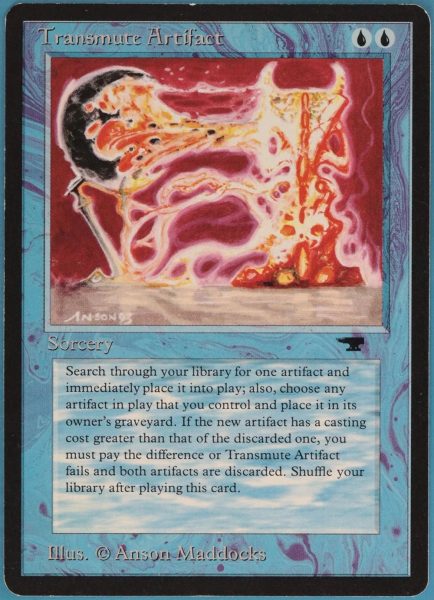
At face value, this sounds like a long-overdue change. I’m tired of acquiring “near mint” cards from ABUGames, only to receive slightly played copies that wouldn’t be graded as “near mint” by any other vendor. Now if I want to be assured my copy will be “near mint”, I can purchase their “mint” copies. Collectors will be especially pleased with this update. After all, does this "near mint" Transmute Artifact look near mint to you? No thanks.

Unfortunately, there are also financial implications to this change. It used to be that a near mint card would get you the high premium offered by ABUGames. Often times the near mint grade would net you the most profits. Now that value is relegated to the “mint” grading.

Because the drop-off from mint to near mint can be sizable, I am no longer motivated to purchase near mint cards to flip for trade credit. The risk of downgrade to near mint is too great, and profits can immediately be erased if I planned on receiving $300 in trade credit for a card, only to instead receive 80% of that.

In addition, I’m nervous about shipping SP cards as near mint out of fear for downgrade to played condition. It used to be that I was fairly confident when shipping a slightly played card for trade credit. Now, if there’s a little bit too much wear, the card could be downgraded to played with no in-between. And looking at ABU’s grading guide, a scratch and a couple edge nicks relegate the card to “played”. This is a very fine line ABUGames is going to walk.

Update 2: Cratering Buy Prices

The party is over. The dream is nearly dead. While ABUGames offered inflated trade credit on even the most unplayable Old School cards, profiting from credit arbitrage was like shooting fish in a barrel. The price declines are pretty much all-inclusive and across the board, but here are a couple examples.

Two months ago I submitted a trade-in to ABUGames and received $285 in singles credit for a heavily played Alpha Juggernaut. Today that same card would net me $237.50 in credit.

There was an error retrieving a chart for Juggernaut

Back in May I traded a heavily played Jihad to ABUGames for $160 in-store credit. Today, that card would net me $84 in-store credit! In that same buylist I also shipped a near mint Unlimited Earthquake for $108.75 in trade credit. Today, ABUGames offers $48.75 for that same card—that’s a 55% decrease!

There was an error retrieving a chart for Earthquake

These decreases do not indicate that ABUGames has suddenly become greedier, or that they are necessarily having liquidity issues. I wouldn’t read that deeply into this trend. Instead, I believe this is simply an adjustment to reflect the softness in the Old School market. At one point these cards were overheated, and players and speculators alike were buying aggressively. Now the market has cooled significantly, and these cards are now rotting in vendors’ inventories.

Then again, I just checked and I see ABUGames has only 5 Unlimited Earthquakes in stock (3 HP and 2 Mint). And they’re not likely to take many new copies in offering such a low buy price on the card. So maybe these price drops do reflect something deeper? One can only speculate!

Update 3: Prices Are Dropping!

As I said before, ABUGames isn’t a greedy corporation aiming to suck all value out of the market. They’ve been dropping their buy prices significantly on Old School cards, but they’ve also been dropping their sell prices in kind!

Remember their 55% drop in Unlimited Earthquake? Well, that drop is also reflected in their sell prices! In fact, you can acquire a heavily played copy for $23.09 from ABUGames. Is that a good price? Well, Card Kingdom has 0 Good copies in stock, but if they did their price would be $17.20. So while obviously $23.09 is a premium, it’s a modest one.

ABUGames has near mint copies of Jihad in stock with a price tag of $139.99. Card Kingdom’s near mint price is $109.99. But remember, “near mint” could mean “slightly played”—this is a good demonstration of why the new grading system can be tricky. Still, this used to be a card that ABUGames would charge 2x the price for vs. the rest of the market. Now their pricing is much closer to reasonable.

There was an error retrieving a chart for Jihad

Back when it was easy to acquire trade credit at a 50% discount by buying cards from other sites and flipping to ABUGames, cards like Jihad were so overpriced that even a 50% discount made for an unattractive entry point. Today, if a 50% discount of trade credit would be attainable, it would mean a $70 cash price for a near mint Jihad. That would be an incredible price!

That brings me to the ultimate question: can ABU trade credit still be had at 50-60%? If so, there’s a great deal of profit to be had. In fact, the options for cashing out trade credit used to be thin and difficult to find. Now there are many ways to cash out trade credit for profit…if you can still acquire any at the deep discount that used to be readily available.

Because ABUGames has dropped their trade numbers so much, the opportunities to grind out credit at a steep discount are far reduced. It’s like the challenge to ABUGames arbitrage has been reversed. It used to be easy to acquire credit and difficult to spend it profitably. Now it’s easy to spend credit but difficult to acquire it profitably.

In the long run, this adjustment will greatly reduce the trade credit inflation problem that has been plaguing ABUGames for the past couple years. Suddenly, $100 in ABUGames store credit is worth more than $50 or $55. Even $60 may be an attractive price for $100 in-store credit. Could we actually be seeing the value of the ABU buck appreciate? It’s a real possibility, and something worth monitoring going forward.

Wrapping It Up

I want to wrap up this week by touching briefly on the newest challenge: acquiring ABU credit. If you’re convinced (as I am) that the ABU buck stretches farther than it did before, you may be interested in trying to find some discounted ABU trade credit. Fortunately, I have a couple ideas to share.

First, you could try to purchase the credit directly from others. Back when ABU credit was easily acquired on the cheap, it seemed like no one wanted the inflated currency. Even though things have been changing, there may be a lingering effect whereby ABU credit can still be acquired at a steep discount. If you find folks selling their ABUGames trade credit on social media at a 50-60% rate, you may consider jumping on the opportunity.

If that doesn’t work, do not despair. There is still one other way to acquire cheap credit, although it’s more time consuming: you can browse TCGPlayer, Card Kingdom, and Cool Stuff Inc for cards to flip for 2x the trade credit. I’d recommend sticking to played and heavily played stuff to avoid disagreements on what is “mint” versus what is “near mint”. The opportunities are greatly reduced, but they’re still out there.

Recently I made a $100 purchase from Cool Stuff Inc’s website—I grabbed a couple Old School cards that could be flipped to ABUGames for roughly 2x in trade credit. Included was a heavily played Unlimited Fork for $19.99. ABUGames offers $40 in trade credit for HP copies of the card.

There was an error retrieving a chart for Fork

The opportunities are out there, if you’re willing to put in the work. This kind of grind isn’t for everyone; some people shiver at the thought of browsing sites endlessly, comparing prices with ABUGames’ trade credit numbers. Personally, I find the practice relaxing in some ways. Even when I fail to find a deal, I still feel encouraged knowing the possibilities to profit are out there, for the taking, if I’m willing to put some time into it.

…

Sigbits

  • Topping Card Kingdom’s hotlist today is Unlimited Tundra, which is somewhat surprising since it encompasses two arguably weak facets of the Magic market: Old School and Legacy. That said, they’re still offering $390 for near mint copies of the Dual Land. Then again, ABUGames offers $507 cash for “mint” copies…if you can actually find one.
  • Card Kingdom also added a couple other high-end Old School cards to their hotlist recently: Candelabra of Tawnos ($340) and Moat ($330). These numbers are of course far from their highs, but it’s encouraging to see Card Kingdom expressing at least some interest in these left-for-dead staples. ABU’s “mint” numbers for these two cards are $390 and $307.12, respectively. It’s interesting to see CK go after Moat more aggressively than ABUGames.
  • A few weeks ago I mentioned the oddly low number that Card Kingdom offered on Judge Foil Mana Crypt. Since then, they've upped their buy price from $95 to $120. It seems like at least one printing of Mana Crypt is perpetually on Card Kingdom’s hotlist. They pay better than ABUGames now ($99.90).

Should the London Mulligan Be Banned?

Are you a Quiet Speculation member?

If not, now is a perfect time to join up! Our powerful tools, breaking-news analysis, and exclusive Discord channel will make sure you stay up to date and ahead of the curve.

The London mulligan has been with us now for four months, and players are speaking up on what they think of it. As a lover of the London mulligan and of mulligans in general, I've followed this topic with particular interest. One piece that recently caught my attention was Zvi Mowshowitz's article "Ban the London Mulligan" from earlier this week (guess how he feels about the rules change!). Zvi's sentiments reflect different arguments I've heard from players since the rule was first suggested by Wizards.

While Zvi's article was written chiefly with Standard in mind, he mentions that his arguments hold for constructed play generally. Today, I'll address his concerns one-by-one and reveal the degree to which I think they do or don't apply to Modern.

The Theory of Messed-Up Relativity

Early on in his piece, Zvi establishes the power dynamic at work between cards of differing quality.
You are not going to succeed in Standard, for a long time, no matter what is banned, without building around at least one messed up [sic] Magic card from Throne of Eldraine. If design does not make large adjustments, and likely even if they do, every good Standard deck for a long time is going to have a key messed up Magic card.

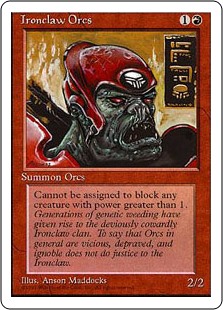
"Messed-up" is a stand-in for "broken," "busted," "warping," or any preferred buzzword. I find that such terminology can be useful so long as it's clearly defined; otherwise, it remains a buzzword. One aspect these words all share: they cannot exist without context (or, to use another buzzy phrase, "in a vacuum"). Even "good" and "bad" cards are only so because of their power relative to the other options. For instance, if every creature was a two-mana 1/1, the first-ever one-mana 1/1 would indeed be broken. There was indeed a time in Magic's history when Ironclaw Orcs was to Sligh decks what Goblin Guide is now.

"Messed-Up" as Goodstuff

In this case, the adjective "messed-up" is applied to the noun "cards." So we're not only talking about powerful things happening, but powerful things happening by virtue of a single card resolving or being drawn. In Magic lingo, we can summarize this concept as "goodstuff," the alternative being "synergy" (or when multiple cards come together to yield a powerful effect).
Modern used to be more goodstuff-oriented than it is currently. For a time, players were sleeving up Tarmogoyf or Lightning Bolt or just losing; the cards were better than everything else by a degree that invalidated most strategies trying to string together some other gameplan. Now, things have changed. In one sense, the arrival of Fatal Push both drastically decreased Goyf's relative strength and diversified playable removal options. But more pertinently, Modern's rich card pool has benefited from recent printings; the format's available synergies are now far stronger than the individual power level of its most "messed-up" cards.

"Messed-Up" as Synergy

Another interpretation of the term does away with the notion of cards holding their own independently. When it comes to synergy, we're working with enablers and payoffs. A "messed-up" card could very well be an extremely efficient enabler (in Modern's case, something like Faithless Looting), or payoff (think Urza, Lord High Artificer).
Zvi seems to grasp this concept:

Even more than a single messed up Magic card, these decks have central play patterns.

A goodstuff deck, like Jund, is content to slam whatever individually powerful cards it draws and hope they're good enough. But the more a deck trends towards the synergy end of the spectrum, the more it becomes reliant on central play patterns. Such patterns can be as explicit as assembling a two-card combo (e.g. Sword of the Meek and Thopter Foundry) or as mundane as curving out properly (e.g. Gilded Goose into Oko, Thief of Crowns).

One Game? I'll Show You One Game!

Put another way, I detect a tension between Zvi's railing against "messed-up cards" and his identification of powerful synergies as driving players to mulligan so much. It seems that goodstuff cards are the fall guy here; it's the allure of synergy that keeps players going back for new hands. And his thesis is that the London mulligan makes those powerful synergies too consistent.

Every game looks the same. Both players do their thing, or else one player fails to do it, is likely also down cards, and never has a chance. Lots of time is spent shuffling, and going through the same motions over and over again.

"Looks the same" is—you guessed it!—relative. But in any case, the more consistent the game gets, the more alike games come to look. This particular complaint is one often leveraged against Yu-Gi-Oh!, a manaless game I've written about before that's leaps and bounds more consistent than Magic. There, extremely lenient combo requirements (or in brickier decks, one-card starters) all but ensure that players successfully "do their thing" on turn one, leaving it up to opponents to "break the board." And since that board-breaking card may well be sitting on top of the deck, pilots can't really concede to their opponents, since they technically have a chance to win. They're forced to sit through 5-10 minutes of enemy combos before checking to see if they can clear the field of what are basically walking counterspells and do their own thing.
That description may sound horrible to you, in which case I'd advise against ever playing Yu-Gi-Oh! But it's fine with the game's many players, including myself. And Magic, even with the London mulligan, is much, much less consistent than Yu-Gi-Oh!

My experience playing that game has taught me that such happenings are due to not individually powerful cards, but synergy. Whenever Yu-Gi-Oh! bans a combo starter, other, slightly-less-efficient ones take its place; if payoffs are banned, other, slightly-less-impactful ones rear their heads.

Death of the (Planned) Plan B

When a deck fails to assemble its core components in the right way, and therefore to execute its key play pattern, it falls back on a secondary path to victory, or "Plan B." That plan can be as cohesive as going wide with 3/3 Elks or as strung-together as beating down with an exalted Birds of Paradise. Zvi seems to be lamenting the loss of the former, more deliberate Plan B that occurs when a game becomes more consistent; as he notes, there's little reason to invest precious deckbuilding space in a Plan B when the Plan A comes together so reliably, which then makes the deck more anemic in the rare instances that it doesn't.

Magic is great because it continuously presents unique situations to its players. Decks and players are forced to be flexible and roll with the punches, to plan for not having access to their key cards. When instead decks and players are rewarded for relying on their central repetitive play patterns, because fallback sequences would lose anyway, Magic loses much of its appeal.

Although I can't speak for Standard, I'd argue that Plan Bs are actually alive and well in Modern. That's one reason Oko has enjoyed so much popularity here, even in decks where he just barely contributes to the Plan A—he offers players novel angles of attack, an attractive option in a world with hate cards so efficient that Modern players expect to be disrupted. Here, leaning too heavily on one gameplan is asking for trouble, as opponents are well-versed in how to disrupt linear strategies. "So Wrong It's Right: Accepting Tension" covers this idea in depth, suggesting that Modern players have much to gain from diversifying their strategy.
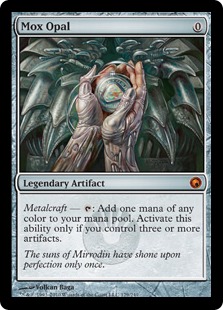
If anything, the London mulligan contributes to that line of defense. Players can run fewer copies of each hoser, and therefore a more diverse array of bullets, with the understanding that they can better find those cards at the beginning of a game. Granted, if the hoser in question doesn't exist in a certain format (as in Standard), all that falls apart.

Living in the Past

The "theory of messed-up relativity" fleshed out above also applies to synergy, the now-established culprit behind excessive mulliganing.

Thus, the first player is forced to mulligan hands that look perfectly good, but which cannot pull off their key play pattern.

If everyone is pulling off their key plays with greater consistency, a hand that cannot do so is, relative to most other hands, bad. So why does this bad hand "look perfectly good?" Perhaps because it contains a payoff or an enabler, and either of those may be perceived as "messed-up" based on how efficient they are in that role relative to other cards legal in the format. But as we've touched on, opening one of those cards doesn't guarantee victory; decks must combine both payoffs and enablers to successfully assemble synergy.
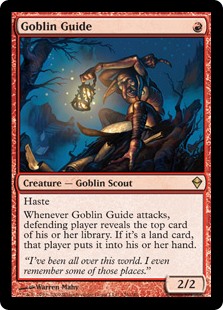
While it's theoretically possible that Zvi wants to keep every awful hand featuring Oko and feels bitter about shipping them back, I think a more realistic assessment is that the hands he's describing fulfill now-outdated requirements of playability, i.e. they contain "lands and spells." In contemporary Magic, though, those hands aren't good enough. If they "look perfectly good," maybe we just need more practice; losing with those hands enough times should teach us, brute-force style, that our perception is skewed. Identifying when a "good-looking hand" will actually win us the game has been a cornerstone of mulligan decisions since the system was invented, and while the London changes the parameters of what constitutes a good hand, it doesn't change the fact that mulligans are about doing that kind of assessment.

A Question of Taste

Which brings us to the agenda on the table. Why should a hand that may be fine by antiquated standards, but unplayable by current standards, need to work now? As I see it, Zvi's argument is akin to expecting Modern Red Deck Wins decks to run Ironclaw Orcs. Naturally, they can't, as there are much stronger options. But does that mean Wizards has mismanaged the game, or simply drive home that outdated standards don't necessarily apply past their expiration date? That question is for every player to answer for themselves, the reason being that as power cannot exist in a vacuum, taste cannot be universalized. It's personal.
Let's review the points laid out and dissected with Modern in mind.

  • London increases reliance on messed-up cards: FICTION. It increases the reliability of synergy-based deckbuilding, which leads more players to build and play with those synergies in mind.
  • Every game looks the same: FACT, in that games look more similar to each other now than they did pre-London, since everyone is doing their respective thing more often.
  • Plan Bs are dead: FICTION, at least in Modern. The hate cards are just too strong and prevalent for decks to go all-in on one strategy unless they're broken in their own rite (think Hogaak). This issue has less to do with the London mulligan and more to do with which disruptive cards are legal in a different format.
  • We have to mulligan hands that we shouldn't have to mulligan: FICTION. We have to learn to mulligan effectively under the new system, and refine our impressions of what constitutes a keepable hand, as players have done since the mulligan's introduction to Magic.

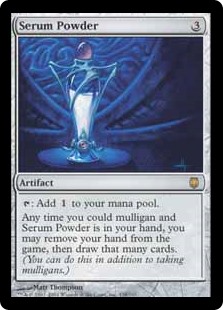
With the logic parsed, Zvi's only Modern-relevant argument for banning the London Mulligan is the same as the one for keeping Preordain out of the format: it adds too much consistency to the game for his tastes. As a lover of consistency in Magic (to the extent that I ran Serum Powder in my GP Detroit Eldrazi deck) and longtime advocate for freeing Preordain, I feel the opposite way, and quite like what the London has done for Modern deckbuilding. As I understand it, whether you are for or against the London at this point depends on your preferences in Magic, which I'm all about players developing.
So how consistent do you like your games? Which effects of the mulligan do you most relish or resent? Let me know in the comments!

Insider: Mining Pioneer for Future Gains

Are you a Quiet Speculation member?

If not, now is a perfect time to join up! Our powerful tools, breaking-news analysis, and exclusive Discord channel will make sure you stay up to date and ahead of the curve.

Pioneer is the new hot format.

We have seen tons of cards spike in price thanks to the massive new influx of demand created with a new format. The biggest risk right now is going deep on something powerful and then having WoTC ban a card or multiple key cards in the deck.

Whereas the recent addition of Pauper as a playable format caused some price spikes but has all but died off completely, Pioneer seems to be the gift that keeps on giving. I've recently had a lot of success selling previously bulk uncommons like these

There was an error retrieving a chart for Lightning Axe
There was an error retrieving a chart for Izzet Charm
There was an error retrieving a chart for Wild Slash

When these cards are acquired in piles of bulk they have massive profit margins, especially when sold in playsets. The purpose of this article is to try and pluck the cards you might often find in bulk that are currently seeing play in Pioneer that have significant potential to grow. Without further ado, let's begin.

There was an error retrieving a chart for Searing Blood

As we can see by the graph, this card actually jumped up way back in 2018 from its all-time low but hasn't moved much since Pioneer was announced as a format. We always seem to have a good red aggro deck in most formats; it may not always be tier 1, but it's rarely completely unplayable and it's often a budget-friendly option for players with limited expendable income. Currently, it only has a single major printing back in Born of the Gods, which for those who recall was a set with very little money cards so little reason for stores or players to crack packs and frankly not the most fun draft environment.

When it comes to Pioneer specs all the sets will have had large print runs, but there were still sets like Born of the Gods which were opened a lot less than other sets. This is the perfect storm for a potentially high value uncommon. It's double red mana cost means it's not as splashable as other burn options like Wild Slash, but decks that often want this card are likely mostly red to begin with.

There was an error retrieving a chart for Dovin's Veto

While copies of this card are likely still being opened at LGS's across the country, we have now had two sets printed after War of the Spark and new supply is likely to begin drying up. This card does have an FNM promo which may be the better option from a speculative standpoint, but supply is still high on both versions currently. However, this is one of the premier counterspells in the format and is good enough to see play in other eternal formats.

Pioneer has a UW Flash deck as one of the better decks in the current format and players who enjoy playing control will be sleeving up some number of Dovin's Veto's when they play Pioneer.

There was an error retrieving a chart for Aether Hub

There are still plenty of people who expect an Aetherworks marvel ban, it's important to keep in mind that Aether Hub plays perfectly well in a non-energy shell as a one-shot, pain-free mana fixing option on turn 1 that still adds colorless later on. This works especially well with Eldrazi that often require specifically colorless mana be spent on them or their abilities. There was an FNM promo available whose market price has doubled since Pioneer was announced.

There was an error retrieving a chart for Reflector Mage

Reflector Mage has a slightly higher buy-in compared to other cards on this list, but it's important to note that the price on Reflector Mage has gone up since Pioneer was announced it had stabilized around $1 for months prior to this announcement. It sees play in Modern Humans builds and is a fantastic hit off of Collected Company against most decks.

There was an error retrieving a chart for Stoke the Flames

This M15 uncommon was almost $5 at its heyday and maintained that price for several months. Core sets often tend to be opened a lot less than block sets as they often have more reprints and tend to be less desirable to draft. This card also has an FNM promo which is currently going for only about double the regular version and neither have seen any price growth since Pioneer was announced.

It is especially good when decks running Goblin Rabblemaster and Legion Warboss are good, because of the ability to remove the "must attack" clause on the tokens by tapping them pre-combat makes the previously mentioned cards even more powerful.

There was an error retrieving a chart for Unclaimed Territory

While there are a lot of copies of this card floating around, again we see no discernible price increase after the Pioneer announcement. This is a pain-free multi-color mana fixing land that is usable on turn 1. Obviously, the fact that it only helps with one specific creature type means it doesn't fit in any 3+ color deck that isn't heavily focused on a specific creature type, however, similar to the previously mentioned Reflector Mage, Unclaimed Territory has a home in multiple eternal archetypes and naturally fits into any non-mono colored creature type-specific archetype.

There are a significant number of powerful creature archetypal deck options that exist and as is usually the case, it often only takes one or new additions before one becomes playable.

There was an error retrieving a chart for Reckless Bushwhacker

Last but not least is another card destined to be an auto-include in any aggressive red creature-based deck. It's price breached the $1 mark long before Pioneer was announced as a key card in the 8-Whack decks of Modern. While Pioneer doesn't have the other 4 whacks (Goblin Bushwhacker) it does still have the powerful sidekick of Burning-Tree Emissary and unlike many other cards I mentioned there is no promo or other version, just the Oath of the Gatewatch option.

Conclusion

These appear to be some of the top uncommons in the Pioneer format that haven't really moved much in price and thus have the most potential upside. It's important to keep in mind that WoTC's desire to cull the format almost weekly via bans does mean there is inherently a lot more risk in any Pioneer speculation at this time, but there is likely high reward potential with these types of specs.

Profile of a Thief: Oko in Modern

Are you a Quiet Speculation member?

If not, now is a perfect time to join up! Our powerful tools, breaking-news analysis, and exclusive Discord channel will make sure you stay up to date and ahead of the curve.

It's been an odd year for Magic. Modern struggled through a series of bans while Standard was doing well. Once things started looking up for Modern, Standard began its collapse under the weight of Throne of Eldraine. Some of those effects are now leaking into Modern, with uncertain implications.

Urza may be the talk of the town in this format, but Oko, Thief of Crowns is the talk of Magic. He's been ruling Standard since Eldraine was sanctioned, and dominated the last Mythic Championship to such an extent he'll almost certainly be banned next week. Thus far, his impact on Modern has been negligible, but that may not continue. A number of decks are attempting to make Oko work either as a primary plan or a backup. The results so far are intriguing, but it's not clear that any will actually work out. Today, I'll be examining Oko and the decks trying to wield him in closer detail.

The Thief in Detail

Cheap planeswalkers are always worth considering for Modern, but Oko doesn't look like much on face. Food really doesn't do anything Modern-worthy, 3/3's aren't so impressive here, and stealing creatures isn't a thing in Modern. There are plenty of options that have seen play like Threads of Disloyalty and Vedalken Shackles, but they've been too inefficient or easily answered to see more than fringe play. However, Oko is far more than the sum of his parts, and in the right context he's an incredibly powerful planeswalker. The only catch: this sort of power isn't very common in Magic, and definitely not in Modern. Oko's abilities take on unique properties depending on whether players are playing as the beatdown or the control in a given game.

Oko on Offense

While Oko has high loyalty and a +2 ability, they're not what makes him playable. In Standard the main way to kill planeswalkers is to attack them, but Modern has Abrupt Decay and similar removal. Making food is okay against Burn, but a bit slow. This ability should be regarded as the backup plan for when there aren't targets for the +1.

The primary purpose of Oko is to make 3/3 Elks. We've seen many ways to make noncreature artifacts into creatures, with Tezzert the Seeker, Karn, the Great Creator, and March of the Machines being the most prominent. However, they're either much slower or only make the creatures as strong as their CMC. That's not great for a deck built around 0-1-cost artifacts. Since Oko comes out fast, permanently alters the target, and can just keep going, he is an army in a can. The fact that the ability is a +1 is key here: there's no limit to Oko's Elk-making, which is means there's never a trade-off or a risk of running out of activations.

I've only seen Oko's -5 used to steal mana dorks, and even then only twice. Modern just doesn't have many cheap, weak creatures that a deck would want to steal. Those that do often have ways to pump them. In a pinch, this ability could certainly be used to clear a path for attackers, but that is niche at best. The times I've observed it in action, the Oko deck was mana starved and slightly desperate, so I consider it a minor bonus rather than a primary consideration.

Thief in Retreat

However, I'll argue that Oko's real power is turning opposing creatures and artifacts into Elk. There have been many ways to shrink creatures and/or make them lose their abilities, with Humility being the most famous and Lignify being Modern accessible. However, these methods tend to be temporary, and I couldn't find an instance of artifacts being affected. Again, Oko's transformation persists if he's removed, which is unprecedented. This means that Oko is a near-universal answer to an opposing board, a fact Wizards apparently didn't notice.

Turning Wurmcoil Engine or Death's Shadow into 3/3 vanilla Elk is incredibly powerful. So is "Elking" Drokskol Captain or Devoted Druid. Decks with creatures bigger than 3/3 don't tend to have many of them, so transforming them ends up being quite similar to outright removing them. Meanwhile, those with smaller creatures play ones with tribal synergies or abilities where removing their creature types and/or abilities is worth the stat upgrade.
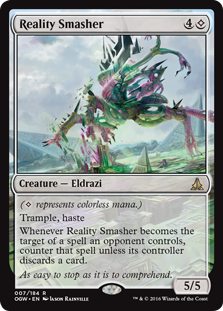
However, the real power is hitting opposing artifacts. Specifically, Oko wrecks prison cards by stripping away their abilities. Ensnaring Bridge can't stop creatures when its an Elk; Mind Stone won't make mana; Amulet of Vigor doesn't untap lands. Thus, Oko becomes not only disruptive to opposing plans, but a counter to opposing answers.

One Gameplan

With a strong offensive plan and the option to switch seamlessly to defense and back, Oko has the same entire-deck-in-one-card power as Urza, Lord High Artificer. But Oko isn't on the same power level as Urza, since he's not a combo piece. Instead, Oko is a disruptive planeswalker that can actually win the game as well. Liliana of the Veil is far more obviously disruptive and can shut out opponents, but she can't actually turn the corner. Oko sniping critical creatures or artifacts and then re-growing a board can be tremendously potent.

A Primary Plan

The problem with adopting Oko as a primary plan is that there's really only one way to go, and it's been done. In Standard he's everywhere because Standard's gameplay is about snowballing advantage until it overwhelms the opponent. Oko naturally fits in by generating several types of advantage for its controller and taking some away from opponents. That style of gameplay hasn't worked so well in Modern, as the answers and threats are better; take Tron, for instance. There isn't the time or space for decks to quietly build up and crash down like a tsunami. However, there does exist one deck that was already blitzing out raw material, featured acceleration, and really needed something else to do with it all.

Oko Urza, Jeremy Bertarioni (3rd Place, SCG Atlanta)

Creatures

4 Gilded Goose
4 Emry, Lurker of the Loch
4 Urza, Lord High Artificer

Instants

2 Metallic Rebuke
2 Whir of Invention
3 Cryptic Command

Planeswalkers

4 Oko, Thief of Crowns

Artifacts

4 Mishra's Bauble
4 Mox Opal
3 Engineered Explosives
4 Arcum's Astrolabe
1 Aether Spellbomb
1 Sword of the Meek
1 Thopter Foundry

Lands

4 Misty Rainforest
2 Polluted Delta
2 Scalding Tarn
2 Mystic Sanctuary
1 Breeding Pool
1 Watery Grave
4 Snow-Covered Island
1 Snow-Covered Forest

Sideboard

3 Damping Sphere
2 Fatal Push
2 Thoughtseize
2 Nihil Spellbomb
1 Assassin's Trophy
1 Collective Brutality
1 Drown in the Loch
1 Ensnaring Bridge
1 Pithing Needle
1 Plague Engineer

Oko Urza is not the only version of this deck that could exist. However, I can't imagine that any deck with Oko as a primary plan would do much differently. Urza already floods the board with do-nothing artifacts, hoping to turn them into a win with Urza. It's also very likely to have prison cards played against it, which gives Oko's defensive utility a chance to shine. The walker also dodges graveyard and artifact hate. Oko is slower, but nonetheless synergizes with the main plan perfectly, all while not being dead to otherwise relevant hate.

An interesting case is Eldrazi decks running maindeck Oko. Sure, Reality Smasher is much better than a 3/3 Elk. However, Smasher isn't better than Ensnaring Bridge or Wurmcoil. From what I can tell, Oko makes up most of the interaction and disruption present in these decks, while the rest of the deck commits to beatdown. Anything that can potentially stop the Eldrazi attack gets shrunken out of the way (it's not like a 3/3 can stand up to Eldrazi creatures). Oko can also turn mana dorks and Scion tokens into Wild Nacatls.

This Oko plan performed admirably in its debut, but whether that was due to the deck or the pilots is up in the air. I haven't seen it do especially well online or in paper since then, but most of Magic's focus has been on Standard recently. Oko's viability as a primary strategy is therefore unlikely to be decided until next year.

The Fallback Plan

I'm skeptical that Oko will prove to be a true keystone of Modern like Primeval Titan or Liliana of the Veil. The sacrifices needed to make him a deck's lynchpin seem steep, and the decks that would make them are of the type that attract bans. There's also the issue of the non-Oko and Urza components not doing anything. Mishra's Bauble and Moxen are great and creating a critical mass of artifacts, but they don't do anything to actually win the game. Without Urza or Oko to give them meaning, all the artifacts in the deck are just air.

Instead, I think that Oko will endure as a backup plan. The most common non-Urza home appears to be Bant creature decks. These decks, from Ephemerate-based builds to Counters Company, are filled with extremely anemic creatures and mana dorks. If the primary value/combo plan is disrupted, the creatures do nothing. Oko offers an alternative, turning those useless dorks or defunct combo pieces into more useful Elks.

Some decks employing this strategy have Oko maindeck, and others sided. The former are acknowledging their inherent weakness and assuming something will go wrong, while the latter plan to only use Oko against control and Jund. I favor maindecking Oko if going this route. The flaws in these decks are well-known, and it's not like Value-Creatures.dec is tearing up Modern. So why not plan to get the enters-the-battlefield value and then make those spell-carriers into reasonable threats? As a particular bonus for Bant Ephemerate, there's no need to keep the Elk. Coiling Oracle is a pathetic creature in combat. So, turn it into an elk for an attack step. Afterward, flicker it with Soulherder and get value again.

Counter-Counter-Tribal

The most intriguing application of Oko as a secondary plan has been in tribal decks. I've seen Merfolk running Oko maindeck, and while I don't agree, I understand. I've played a lot of tribal decks and I know as well as anyone how weak the creatures are individually or in the face of removal. Thus, the idea is to use Oko to turn the remaining 2/2 dorks into superior 3/3 dorks and keep up the pressure.
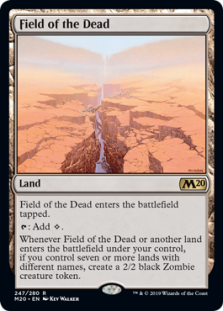
The route isn't a bad idea against removal-heavy decks when lords are unlikely to survive. The problem I have is that Oko is counterproductive to the main point of the deck once he gets going. Yes, a 3/3 is better than a 2/2. However, taking away the tribe from the 2/2 means that when you those synergy cards are drawn, the new creatures are also just 2/2's. This creates a downward spiral of the deck not working as intended. Making food into elk is again a fine backup plan, but if all that's missing is token generation, there are lots of ways to do that on-theme like Deeproot Waters for Merfolk or Moorland Haunt for Spirits.

Oko's a useful way to answer Plague Engineer, but I don't think he'll catch on in tribal decks; he's just too medium as an offensive option.

Changing the Battlefield

The other option is to use Oko to shift gears altogether. I've mostly seen this happen out of the sideboard for decks that have strong Game 1s, but are very vulnerable to sideboard cards. Oko provides a completely different angle of attack for these decks and negates the opponent's plan. Consider Infect: there are few things more terrifying than Glistener Elf on the play. However, it's still a 1/1 that dies to everything, especially once all the removal is brought in game two. Instead of fighting this, Infect is leaning in, letting opponents board for the Infect fight and then playing the go-wide game with Oko.

If All Else Fails, Audible to Standard

Amulet Titan appears to be increasingly embracing this use, and going somewhat beyond. Titan has always had a very solid Game 1, but could struggle post-sideboard as opponents shifted to fight big creatures. A common answer was to sideboard out of the pure combo version into more creatures and go wide. Increasingly, decks are adopting Oko as part of that strategy. The change adds a value engine and option to turn dead artifacts and Sakura-Tribe Scouts, as well as food into an army, trumping the anti-Primeval Titan hate.

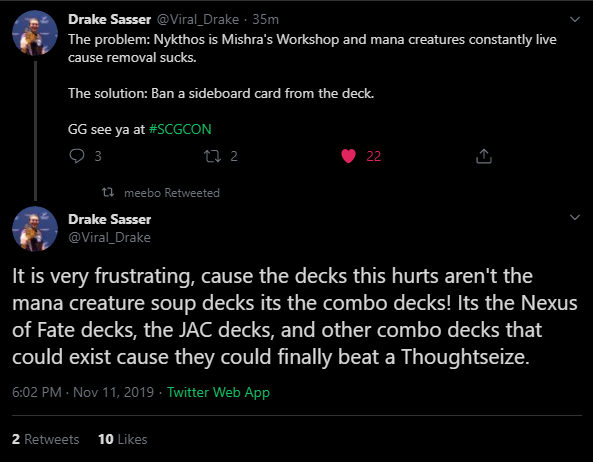
However, that's a surface-level change. I'm increasingly seeing Amulet decks go deep with Oko. In a sense, they're starting to change formats: Field of the Dead alongside Oko dominated Mythic Championship 5, and Titan decks are starting to resemble those Standard decks. Plenty of Modern players are well-prepared to fight a Titan. They're not necessarily ready for an endless stream of Zombie tokens, and especially for them to be 3/3s. It's a brilliant example of repositioning.

The Fae's Place

There's a lot of utility and power attached to Oko. The question is whether Modern can wield it effectively. I'm certain that Oko has a place as a sideboard card and as a way to circumvent hate. Time will tell whether he can carry an archetype or maintain his current momentum.

Gearing Up for SCG Con Winter

Are you a Quiet Speculation member?

If not, now is a perfect time to join up! Our powerful tools, breaking-news analysis, and exclusive Discord channel will make sure you stay up to date and ahead of the curve.

SCG Con Winter is right around the corner (This weekend, in fact), which can only mean one thing: snow.

It’s been snowing heavily for the last 12 hours as I write this, and it’s supposed to continue for another 12. For those of you that aren’t in the know, the last SCG Con Winter yielded an epic snowpocalypse the likes of which lands as far south as Virginia seldom see. All events outside of the main event top 8 on Sunday were canceled for safety reasons, which allowed me to make it back to work in time for my shift the next day. The drive home took an extra 5 hours longer than normal, thanks to the Corolla I purchased when I lived 700 miles south of where I live now.

My favorite memory was having to scale a massive hill that was littered with cars and semi-trailer trucks that had failed the test. On our first attempt, we got halfway up the hill and eventually had to stop due to one of the trucks being trapped in the middle of the lane. We hadn’t maintained enough speed to handbrake hero our way around him. So we did the sensible thing and reversed all the way back down this half-mile hill, and made another attempt. On the second try, a helpful cop got out of his cruiser to push us after we slowed down to pass the truck. We made it, which means we got to continue the joy of driving 5-10 MPH for the next couple hours, stopping every 30 minutes to chop snow off my tires, until we hit a state that had salt trucks.

Despite the snow nonsense, the weekend was awesome. I got top 64 in the main event, which was a big accomplishment for me as I’d never day 2’d an Invitational before. I’m trying to brand inclement weather as my good luck charm, and I’ve been preparing like crazy to back it up. Modern is an easy lock; I’m just going to play Amulet Titan and pray. People will be prepared for it, but the deck is good enough that I should be able to salvage wins against the field and maybe get a little lucky to beat the better-prepared players. Pioneer… well if any of us already have this format figured out, then we have the tools to make a lot of money!

That’s the beauty of mixing tournament preparation with MTG Finance. Those who are paying close attention to the metagame and noticed that Wild Slash is one of the premier removal spells of the format were able to pick up tons of copies for pennies and flip them for $4+ per. I write this article before the Pioneer ban announcement on 11/11/19, so hopefully Aaron doesn’t make me out to be a fool, but I’m hoping for no bans. The StarCityGames Invitational is just a few scant days away, and I can’t wait until 6PM EST to start writing an article!

What Does Pioneer Look Like Now?

So, as of today, the most recent spikes were visible from a mile away, and we’re nowhere near done with this phenomenon. Nissa, Voice of Zendikar and Hardened Scales were cheap, low-risk, high-reward plays. What’s next though? Well, as always, the PTQ Decklists are very useful. Todd Anderson has somehow top 8’d the only two pioneer PTQs to have occurred to date, so that’s nuts. We also have the Pioneer Challenge decklists for information.

Green devotion strategies are very clearly too powerful, taking 5 of the top 8 slots in the Challenge. Guess it was unreasonable for me to hope for no bans earlier. I guess some combination of Once Upon a Time and Nykthos, Shrine to Nyx will be gone by the publication of this article. If I’m lucky, it’ll just be those two, and I can continue to prepare against a relatively-known metagame. Other decks performing well, and some obvious future gainers respectively:

UR Emerge

UW Flash

Mono Black Aggro

Ghalta Gang!

There are a lot of other good strategies seeing play right now, but these are the ones I want to touch on for now. Smuggler's Copter feels a little too good and is basically an auto-include in any aggressive creature strategy. It’s a great pick if you want to play the format, but it is very likely to get banned at some point over the next month. As someone who has been attacked on Turn 3 by a Ghalta, Primal Hunger with haste, I can say that the card is very scary.

Bloodsoaked Champion, Ghalta, Primal Hunger, and Hour of Promise are certainly under-priced currently, along with all the staples mentioned from UR Emerge and UW Flash. I imagine that you'll be pretty satisfied if you just buy all of these cards in the next couple days for current retail.

Goodbye, Veil

As I write this paragraph, the Pioneer bannings have gone live. Veil of Summer has been slain, which seems like a pretty egregious call. The ever-eloquent Drake Sasser put it best:

These green devotion ramp decks do not lose to Thoughtseize or a single counterspell. Veil of Summer is not the source of their power. It's probably the 4th most important card in the deck, behind Nykthos, Shrine to Nyx, Once Upon a Time, and Nissa, Who Shakes the World. This may very well mean that Mono-Green Devotion will dominate SCG Con Winter's Pioneer portion, but without Veil, it is possible that the deck's weaknesses are more exploitable. Thoughtseize/Counterspell for the planeswalker/threat, sweep away the dorks, and maybe we're playing some Magic.

It will likely be several days before we know just how lopsided the metagame will be. That said, the close proximity of the event, coupled with card availability issues from this brand-new format, will likely prevent Mono-Green Devotion from being too greatly represented, even if it's the best deck in the room by far. I paid top dollar for expedited shipping for a playset of Vivien, Arkbow Ranger today, and I'm hoping they make it in time. I expect these bad boys to move steadily at $20-25 at the Con if this deck is the best, although I don't recommend buying your own for fear of a ban.

What I'm On

If the Invitational started tomorrow, I'd play Dylan Hovey's UW Flash:

UW Flash

Planeswalkers

4 Gideon, Ally of Zendikar
4 Teferi, Time Raveler

Creatures

3 Archangel Avacyn
4 Brazen Borrower
4 Reflector Mage
3 Selfless Spirit
4 Spell Queller
4 Thraben Inspector

Artifacts

4 Smuggler's Copter

Lands

2 Castle Ardenvale
4 Glacial Fortress
4 Hallowed Fountain
2 Irrigated Farmland
4 Island
7 Plains
3 Port Town

Sideboard

2 Deputy of Detention
2 Disdainful Stroke
2 Mystical Dispute
2 Rest in Peace
4 Supreme Verdict
3 Surge of Righteousness

The Invitational Awaits

Wish me luck; I have a lot of Pioneer testing ahead before I brave the snow to do battle this weekend. My findings over the next few days will be posted to my Twitter, as I'll likely already have plenty to cover in my post-Invitational article without bogging it down with more testing and pre-Invi thoughts. Keep paying attention to Pioneer, as it's going to continue to drive MTGFinance in a big way for the foreseeable future.

Many of my peers have mentioned that the window to sell may be smaller for Pioneer than other formats due to deep pockets of supply for RTR and beyond sets. I'm inclined to agree with them, so be sure to sell fast into those spikes unless you're holding out for a deeper one!

MTGO: Speculating in the Wake of Pioneer

Are you a Quiet Speculation member?

If not, now is a perfect time to join up! Our powerful tools, breaking-news analysis, and exclusive Discord channel will make sure you stay up to date and ahead of the curve.

Last week I discussed how Pioneer would be an overall boon to Magic Online and to Magic Online finance. Today I'd like to look at the fun stuff - how investors and speculators can take advantage of Pioneer's introduction to MTGO.

Before we begin, I should say that if you want to get into MTGO to play Pioneer, or if you are already on MTGO and are wondering whether now is a good time to jump in and play Pioneer, I would encourage you to go ahead and jump in and get a deck. Pioneer is going to be a supported and popular format. It fills a very real need in the Magic community and provides gameplay more reminiscent of Standard than of Modern or Legacy, so it will carve out a nice niche for itself. While prices will settle eventually as hype dies down, you should not expect a crash, so the investment you make now will be worth it.

I. Avoid Investing in Pioneer Staples

Within a few hours of Wizards' Pioneer announcement, many of the most powerful cards from Return to Ravnica forward experienced a major price spike that has been sustained by high demand. While these cards would have been good investments, they no longer are. Most Pioneer sets' values have more than doubled since the format's announcement, and most are still trending up as more and more people try out the format.

When investing, you never want to buy high, and this graph shows that that's what you'd be doing by investing into Pioneer staples. I think that these prices will hold or dip slightly (so it's okay to buy now if you want to play), but investors should steer clear.

Basically, avoid speculating on cards whose price graphs look like this; there are a lot of them:

That Khans of Tarkir is the only set legal in Pioneer to see a dip in value is itself telling. Because of the fetchlands, Khans of Tarkir's set value is more closely aligned to Modern than to Pioneer. The dip in value we see with Khans of Tarkir is happening to most Modern sets pre-Return to Ravnica. To capitalize on Pioneer's introduction to MTGO, then, we probably need to look to invest in Modern cards.

II. Why Invest in Modern Cards?

Fall is the Best Time to Buy Modern Cards

Modern is most popular as a format between March and August, when many grow tired of Standard and they want to play a different format. This is reflected in league participation numbers and card prices on MTGO, where Modern staples tend to be low during the fall and winter months and then rebound in the spring.

Prices on Modern cards already started dipping in September, especially once Throne of Eldraine was released. Even before Pioneer was announced, Modern prices were down about 10%. We might have seen a larger dip in Modern prices, but the historic terribleness of Standard has likely kept Modern demand higher than usual.

Players should look to buy their preferred Modern deck between now and Christmas. Investors should know that between now and Christmas is the ideal time to make your Modern specs. Investors will have to sit on these cards for several months, but these are relatively safe specs. As longtime QS readers know, I prefer investing in singles only if the underlying fundamentals will naturally push cards like it up in price; this is a great way to mitigate risk when investing in singles.

People are Selling Modern Cards to Buy Into Pioneer

All of the price charts for Modern sets make one thing clear. While prices were already declining thanks to seasonal renewed interest in Standard, it was the Pioneer announcement that really sent Modern prices plummeting. As the Goldfish price graphs show, Modern set values generally declined by an average of 15% to 20% after the Pioneer announcement. Here's a summary snapshot, which shows how the set values of various large Modern sets today compare to what they were the day before Pioneer was announced.

This significant dip across the board presents us with an opportunity, but also a risk. Will Modern not be as popular as it once was? Will Pioneer become the new Modern? Will we be seeing less Modern on Twitch than we have in the past?

This is a legitimate fear, but there are three big reasons to accept the risk and invest. (i) First is that Modern has always been an immensely popular format, and remains so to this day. It is still the #1 format on MTGO, it still garners the most twitch views at Pro Tours and other major tournaments. It was always more popular than Legacy. (ii) Perhaps even more importantly, all Modern cards can be reprinted, so Wizards can still make money off of the format.

As we saw in the SCG letter about why SCG is no longer supporting Legacy as a major format, one of the problems with Legacy is that the Legacy community couldn't really grow or expand because Reserved List cards got too expensive. Modern will not have that problem. (iii) Third is that Modern is a unique format that feels different both from Pioneer and from Legacy. Folks worried that Pioneer would feel like Modern can rest easy. Modern is fast and powerful. Pioneer is a grindy, powered-up version of Standard. And as we've seen from the first wave of bans, Wizards wants to keep it that way.

The reason for the Modern price drop, then, is likely more superficial and innocent. People were excited about playing Pioneer, and they needed to sell their Modern cards so that they could afford to play Pioneer. These people will buy back into Modern, as will many of the people who have returned to the MTGO platform over the past few months. Still others will buy in to test for major Modern tournaments.

III. Good Modern Speculation Targets

To be frank, there are too many to count. I've been investing broadly into various Pauper and Modern cards, and I will share a few of them here today. In general, I've been looking for cards that took a big dip alongside the Pioneer announcement, and those that have not been declining for years and suffering under the weight of treasure chests and reprints. If you want to see everything I've been investing in, hit me up on Discord.


Y'all are dead to me

1. Primeval Titan

Primetime is exactly the type of card I want to invest in. It is a tier-one staple with applications in lesser archetypes as well. It is a card that sometimes experiences spikes upwards to $10 and is currently sitting at $3. And it is a card that the price graph makes clear was obviously being sold to buy Pioneer cards.

2. Past in Flames

Past in Flames is one of many cards that lost 75% of its value in one day. This is a powerful card integral for a popular archetype (Storm). Expect Past in Flames to be at least $5 come Spring, with the potential to spike into the $8 to $10 range should Storm find itself atop the metagame pyramid for a time.

3. Dovin's Veto

This is one of the rare cards legal in both Pioneer and Modern that is currently a good investment opportunity. Dovin's Veto is just a superior Negate and sees play in Standard, Pioneer, and Modern. Its supply is low for an uncommon because War of the Spark was released during Arena's honeymoon period, and it already has experienced frequent spikes up to $0.40 or $0.50. I plan on buying at least 100 of them.

4. Ancient Ziggurat

Perhaps saving the best for last. Ancient Ziggurat is an ideal spec. It has shown the ability to maintain a price between $0.50 and $1.50 ever since Humans emerged as a tier one deck, yet right now its price is significantly lower than that. When scouring through Modern specs, the more it shares in common with Ancient Ziggurat's price history, the better a spec it will be. I'm a buyer.

IV. Signing Off

Thanks for reading! If you have any questions, leave a comment or hit me up on Discord. Consider these four speculation targets as examples of what to look for when looking at Modern cards; these are but four of many that would make smart investment choices. Next week I believe I'll be looking at Standard speculation opportunities in the future wake of an expected Oko ban. Stay tuned!

Want Prices?

Browse thousands of prices with the first and most comprehensive MTG Finance tool around.


Trader Tools lists both buylist and retail prices for every MTG card, going back a decade.

Quiet Speculation