menu

Something’s Missing: Modern Death and Taxes

Are you a Quiet Speculation member?

If not, now is a perfect time to join up! Our powerful tools, breaking-news analysis, and exclusive Discord channel will make sure you stay up to date and ahead of the curve.

I'll be honest, this is not the article I was planning on for this week. I had planned to start rolling out my Jace, the Mind Sculptor results but I've run into a problem. Last time, a lot of you asked for more in-depth statistical analysis of the results and I decided to oblige. The problem is that traditional tests yielded unusual results. I had significant data that was outside the margin of error or just flat out errors in my returns. The problem was that my data are a binary series that I'm not used to working with. Most stats questions are multiple choice but this was a yes or no question, and that means a different series of tests that I never learned in school. I could have done part one today, but I don't want to leave a gap between the first and second articles. It's taking time for me to learn the proper test procedures, so instead here is another brewing article.
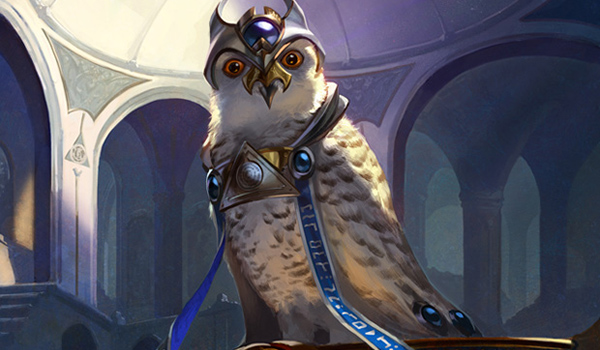
I've been working on making Death and Taxes a thing in Modern for more than a year. I've tried a lot of different brews and versions and while I think the deck is good, it isn't quite good enough. As the cardpool stands right now, I think this style of deck can take you quite far into a tournament on its own merits, but you need to hit the right metagame to actually win the tournament. This is a deck that will consistently win 3.5 games in a MTGO league, but you have to get lucky to actually win the league. The problem is a combination of unpredictability, ineffective mana denial, and a relative lack of power. The tools are all there for the deck to be great, but the Modern metagame is too large for DnT to really tax its opponents. It has to make up the difference with power which isn't quite there.

The Taxman Cometh

I think it important to start off with praise for the deck because there are a lot of positives to Modern Death and Taxes. Yes, I am trying to soften the blow that is coming—why do you ask? Death and Taxes is infinitely customizable, deceptively disruptive, and surprisingly resilient. If you enjoy tuning or metagaming, this is definitely the deck for you. My list is tuned to my current local metagame, but has enough forgiveness built in that I could take it to a more open tournament.

DnT, by David Ernenwein

Creatures

3 Thraben Inspector
2 Judge's Familiar
4 Thalia, Guardian of Thraben
4 Leonin Arbiter
3 Selfless Spirit
4 Flickerwisp
2 Kitchen Finks
3 Blade Splicer
4 Restoration Angel

Artifacts

4 Aether Vial

Instants

4 Path to Exile

Lands

11 Plains
4 Ghost Quarter
4 Tectonic Edge
2 Flagstones of Trokair
2 Horizon Canopy

Sideboard

2 Stony Silence
3 Rest in Peace
2 Mana Tithe
2 Leonin Relic-Warder
2 Pithing Needle
2 Eidolon of Rhetoric
2 Wrath of God

There is a lot of combo, control, and Tron in my LGS, with Burn and Affinity hanging around the edges. As a result, my deck is a mixture of grindy card advantage and anti-combo cards. It performs well and I've won a lot of packs with the deck. Had I been able to make GP Vancouver I definitely would have played a version of this deck. I would not have played this exact list because it isn't quite where you want to be in an open field, but it would have been very close. The sideboard would have been very different and the maindeck would have had an additional Inspector and Kitchen Finks in place of the Familiars. Interestingly, Jason Simard made Top 8 with a similar list, though he was on an Eldrazi plan. I'd have liked to see his deck in the coverage more, because I found that more than eight colorless lands made for very disappointing mulligans due to lack of white. It obviously worked, but I would have liked to see how.

Tune Your Cards
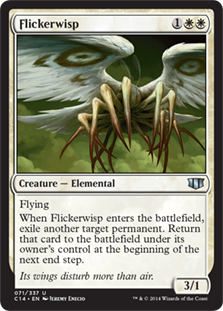
What my development of this deck has shown is that you can tune it to beat anything. Seriously. Modern white has an incredible depth of targeted hate which will crush its target. Death and Taxes and all its derivatives are infinitely adaptable because their core is extremely flexible. Most decks have an immutable core group of cards that define the deck, but for DnT that's really just Flickerwisp and Ghost Quarter. You don't even need a full set of either. This allows you to build and tune to your heart's content around interactive creatures and mana denial. This is the ultimate tuner's deck. Do you want to be White Skies? Add in Vryn Wingmare, Serra Avenger, and Kor Skyfisher. Lots of faster aggro? Wall of Omens and Archangel of Tithes. Combo a problem? Aegis of the Gods, True Believer and Eidolon of Rhetoric. Anything is possible.

Those are just the core threats and disruption. The utility creatures and spells can really amplify your gameplan. If you are really dedicated to the archetype, you can absolutely play every week with an entirely new configuration and do well, both because of your opponent's confusion and the inherent power of correctly aligned, specialized disruption. As an example, here are a few utility cards I've run in my mono-white deck:

  • Aven Mindcensor: The original library tax, I have run the Aven to really punish Chord decks. The dream is always to make them whiff with tutors or fetchlands, but in my experience they find something often enough that you should content yourself just making it worse rather than non-functional. Leonin Arbiter is generally better both in terms of disruption and your curve, but if you want to run a tutoring package of any kind yourself, you want to swap it for Aven.
  • Mutavault: The best creature-land since Mishra's Factory is still excellent against control. I was also running this as an additional way to turn on Eldrazi Displacer. It does exactly what you want, but I'm off it now because without Eldrazi Temple the Displacer package is woeful, and I was having trouble getting enough colored sources to cast my spells.
  • Phyrexian Revoker: During a time when Affinity and Ad Nauseam were rampant this card was an all-star. Pithing Needle is more powerful and often unkillable, but shutting down mana abilities is very big game. In general this is too vulnerable to see play, but in a combo-heavy meta it is crushingly potent.
  • Samurai of the Pale Curtain: Run as maindeck Dredge hate pre-banning, Samurai is not exactly backbreaking but it is exactly what you want. The problem with Dredge is its recursive creatures will power through yours eventually. Samurai ensures that when they die, they stay dead. It's also randomly good against Life from the Loam.
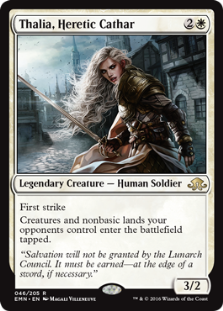
  • Thalia, Heretic Cathar: While not bad against hasty creatures, it is slow. I ran this card as additional Tron disruption. You often just need an extra turn or two to get there and new Thalia is excellent at the job. She just doesn't do enough elsewhere, and sits in a very crowded spot on the curve, so she was cut.
  • Warping Wail: Often a sideboard card, when control was very heavy it was moved to the mainboard. The sheer versatility of this spell is shocking and you can make excellent use of every mode. My favorite is countering sweepers and Ancestral Vision. However, it isn't quite powerful enough to see consistent play, especially around instant-based combo decks.
  • Weathered Wayfarer: A few months ago I mentioned this card, and it is actually very good in the right circumstances. During particularly Tron-heavy weeks this card was an absolute beating, enabling me to completely cripple their mana for the entire game. The main problem with the card, and why it is currently cut, is that it was easy to cripple your own development as well. Searching every turn costs mana and using your land as a spell stunts your mana development too. Games with Wayfarer and no Vial are surprisingly hard to win. Still, when things go your way this card very nearly wins the game on its own against big-mana decks. It was also a nonbo with Leonin Arbiter, so it is best to cut him for Aven Mindcensor. I also confess to going way too deep with this card—Mouth of Ronom deep. It was not pretty.

This is just a small sample of cards I've tried. Like I said, the cards are there for you to find the configuration that works for the metagame you expect.

Tune Your Deck

All of that is just what you can do with mono-white. Once you start adding in colors the customization never stops, and matchups change dramatically. I consider mono-white DnT to be the "average" deck in the family. Its good matchups are rarely better than 60% and its bad ones are around 45%. I consider Affinity, Burn, and the many iterations of Tron and Valakut to be good matchups, Fair decks like BGx and combo decks to be even, and creature decks like Merfolk to be bad matchups. I'll be using this as a baseline to talk about the variations.

  • GW Hatebears: The most common version, GW adds some acceleration from Noble Hierarch to much harder-to-answer threats like Loxodon Smiter and Voice of Resurgence. As a result this deck is far more powerful against the fair decks than the other versions, with Renegade Rallier supercharging the grind plan. Versions with Kitchen Finks and Gavony Township are also significantly better against creature decks. However, GW usually runs less mana disruption than mono-white and so is worse against big-mana and combo decks.
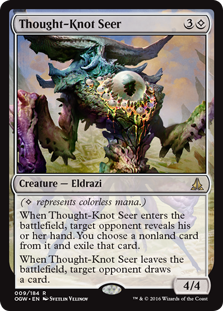
  • BW Hatebears/Eldrazi and Taxes: These days the main distinction is whether they run the Eldrazi or not, the manabase is almost the same and they run most of the same cards. These decks have more hand disruption like Tidehollow Sculler, Thought-Knot Seer, and Sin Collector, which really boosts them over control and combo decks. Eldrazi is also better against creatures thanks to Wasteland Strangler. However, their painful mana makes them more vulnerable to Burn and Affinity. They also feel more clunky than other versions because the decks have more reliance on internal synergies, like Sculler and Strangler, than other versions. When things come together the deck will crush your soul. When it doesn't the decks clunks like an unbalanced washing machine. They are also very vulnerable to Blood Moon.
  • UW Spirits and Taxes: Using the best creatures from both Spirit decks and DnT, this deck plays additional disruptive creatures and counterspells, making it a nightmare for Tron, combo, and control. DnT can lose to Tron when they draw well, but UW needs to fall apart to lose. Seriously, it is a fantastic matchup. The problem is that your creatures are far less impressive than in DnT, so your creature and GBx matchups are much worse. Even Reflector Mage only does so much.
  • Boros Taxes: I have been told this deck built, around Blood Moon and Magus of the Moon, exists, though I've never actually seen it in person. This deck is phenomenal against decks where Blood Moon is good and really subpar against everything else.

The Diversity Problem

Of course, the ability to customize your deck comes at a price. The individual taxes and lock pieces aren't that powerful on their own, and if you miss your target you'll be very behind. Modern is not Legacy and this means that DnT will need to sit in the lower tiers for the time being. Eldrazi and Taxes has done better than other versions thanks to the power of the Eldrazi, but it still sits in the middle of Tier 2. The problem is that Modern is in many ways more healthy than Legacy in terms of diversity and when you couple that with weaker disruption there is a problem.
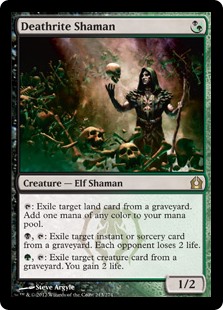
When you walk into a Legacy tournament you know that no less than half the room will be playing Brainstorm and/or Deathrite Shaman. These cards create predictable restrictions on deckbuilding. As a result, Legacy DnT can be built with these two cards in mind. The narrowed focus allows you to play more targeted disruption and more effectively function as a Prison/Aggro deck. Add to that the greater power of Wasteland and Rishadan Port and you have a top-tier deck.

That really isn't possible in Modern. The only constant among decks are fetchlands, and there is only so much you can do to target those. Thalia is just less powerful when everyone isn't relying on one-mana cantrips. As a result Modern decks have far greater diversity in their composition than Legacy's. This makes it easier to insulate yourself from hate splash damage. To make up for this weaker disruption, you need to be more powerful. This either means better threats or a faster clock, but that isn't really possible for Modern white. We have good, cheap creatures and good Angels, but they're weak in the Modern context. This can leave the deck underpowered and struggling when you miss your metagame projection.

What It Needs
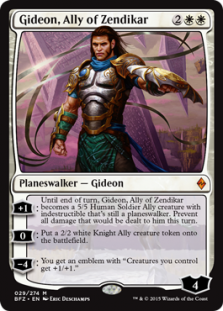
To really move up the tiers, DnT either needs the format to be more restrictive, so it can target decks more easily, or it needs better win conditions. The former is undesirable and unlikely to occur, so that leaves us hoping for a new creature. Gideon, Ally of Zendikar has sometimes been that threat, but he's poor in enough matchups that I'd keep him in the sideboard. My experience suggests that we need a more resilient disruptive three-drop that flies. Mindcensor and Wingmare's stats are too low, but another three-power flier like Flickerwisp would likely do the trick. There are some three-drop 3/xs already, but they don't really do anything other than beat. We need something disruptive. Alternatively, seeing protection return could also work.

There is belief that Stoneforge Mystic is what the deck really wants, and I can see why people think that. It is a cornerstone of the Legacy version and it is cheap and powerful. I'm not convinced that it is an acceptable Modern card, and I also don't think that current DnT wants it. It competes in the same slot as Arbiter and the two don't play well together. Lacking access to Wasteland, a lot of the appeal of DnT lies in Arbiter. Stoneforge may well be fine in the deck, but I don't think it automatically makes the deck better. You have to readjust and rebuild around the card.

It Is Inevitable

So there you have it, my definitive take on Death and Taxes. It is a good deck, I like it, and if you enjoy customizing and tuning your deck so will you. You just have to understand that while you will often go deep with the deck, you may not be able to close the event. Time and new cards will tell.

Hopefully I will have the preliminary analysis done and off for confirmation and review next week, so that I can start sharing my Jace results. Regardless of what you think about the card, you will be surprised by my results.

Insider: MTGO Market Report for March 22nd, 2017

Are you a Quiet Speculation member?

If not, now is a perfect time to join up! Our powerful tools, breaking-news analysis, and exclusive Discord channel will make sure you stay up to date and ahead of the curve.

Welcome to the MTGO Market Report as compiled by Matthew Lewis. The report will cover a range of topics, including a summary of set prices and price changes for redeemable sets, a look at the major trends in various Constructed formats and a "Trade of the Week" section that highlights a particular speculative strategy with an example and accompanying explanation.

As always, speculators should take into account their own budgets, risk tolerance and current portfolios before buying or selling any digital objects. Please send questions via private message or post below in the article comments.

Redemption

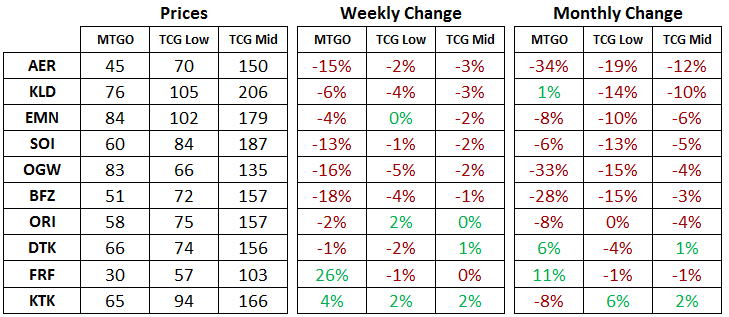
Below are the total set prices for all redeemable sets on MTGO. All prices are current as of March 21, 2017. The TCGplayer low and TCGplayer mid prices are the sum of each set's individual card prices on TCGplayer, either the low price or the mid price respectively.

All MTGO set prices this week are taken from GoatBot's website, and all weekly changes are now calculated relative to GoatBot's "full set" prices from the previous week. All monthly changes are also relative to the previous month's prices, taken from GoatBot's website at that time. Occasionally, full set prices are not available, and so estimated set prices are used instead.

mar21

Standard

In a previous MTGO Market Report I outlined the reasons that foil mythic rares from Aether Revolt (AER) would be a good purchase for players looking to get their hands on the new cards. Two weeks later I took my own advice and bought foil playsets of most of the mythic rares from this set. I managed to dodge buying Heart of Kiran at a good price, but eventually I completed my playsets of these cards. I'm happy to report that the trade is working out as expected in that the foil versions of the mythic rares from AER are holding their value.

There was an error retrieving a chart for Heart of Kiran

Since Pro Tour Aether Revolt, prices have been largely stable with some small upside. I expect the final returns on this strategy to be in the 10- to 25-percent range. Aetherwind Basker is the only sub-6-tix card out of the whole lot at the moment, and Exquisite Archangel has inexplicably doubled in price. This disparity in outcome for individual cards highlights the importance of diversification. In order to capture the unpredictable windfall gains from one or two particular cards, one has to buy each and every foil mythic rare from a given set.

Going forward, I expect this to be a repeatable strategy for players looking to stretch their budget. The upfront cost is substantial, but with no anticipated loss of value, players should understand committing the extra funds up front will serve them very well in the long term. If you had been buying non foil play sets of these cards, you would be looking at a loss of value since the release of AER.

There was an error retrieving a chart for Exquisite Archangel

For speculators, this strategy will be a useful though limited tool. The Standard foil market has low liquidity relative to regular cards, so it's difficult to move a large number of any specific card. Prices adjust quickly in reaction to buying or selling, making it difficult to get consistent prices. Throw in the higher margins that bots collect on foils, and a marginal strategy can quickly turn into a bust.

Modern

Modern Masters 2017 (MM3) will be released online this week and will be available up until April 12. It will be available for sale in the store and you will be able to draft the new cards, although there will be no Sealed Deck option.

There was an error retrieving a chart for Liliana of the Veil

Over the next couple of weeks, the influx of supply will apply downward pressure on the prices of reprinted cards. Cube Draft is often a very popular option for play on MTGO, and this will be like that, except there will be non-phantom events where you get to keep the cards you open. I would expect a substantial amount of drafting over the next ten days, so players and speculators alike should be holding off on buying cards from this set until the second weekend of drafting.

Trade of the Week

For a complete look at my recent purchases, please check out the portfolio. This past week saw the first unofficial spoiler out of Amonkhet (AKH) with the leak of Dusk // Dawn, a new type of split card. Although not using the flashback keyword, the new keyword aftermath functions in a similar way. The leak of this card had a direct impact on my purchases this week.

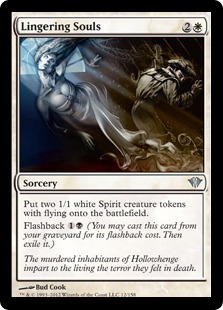
There was an error retrieving a chart for Lingering Souls

Any card that can put cards in the graveyard will have bigger potential with the printing of cards similar to Dusk // Dawn. At the top of the list is Grim Flayer from Eldritch Moon (EMN). Although black/green-based decks are out of favor at the moment in Standard, this card is seeing play in Modern where it can throw Lingering Souls into the graveyard. The synergy between Grim Flayer and cards with the aftermath keyword will be similar. The only questions will be if the new cards are worth playing and whether black/green-based decks will be viable.

If Grim Flayer was 20 to 22 tix at the moment, then I would say that buying this card is too risky. Since its printing, this card has twice gotten over 25 tix, but it's usually in the 12 to 18 tix range. It's current price of 16 tix is not cheap, but there's upside at this price in my estimation, especially with the spoiling of the aftermath mechanic. We are also heading into the MM3 release window, which can trigger interest in Modern Constructed. All of these factors lined up to encourage me to purchase a number of playsets for speculative purposes.

There was an error retrieving a chart for Grim Flayer

I'll be holding these cards into the release of AKH in April. By that time, we'll have a better idea if any of the new cards with aftermath are powerful or not. I don't think Dusk // Dawn is quite good enough, and it's not in the right colours to benefit my trade, but the existence of this card gives a strong signal that graveyard strategies are going to be getting a boost.

There's also the chance that Standard gets a big shakeup with another round of bans. If Mardu Vehicles and Saheeli Rai-based decks get knocked down a peg or two via Standard card bans, then "fair" cards like Grim Flayer will see the benefit.

Insider: Amonkhet Leaked!

Are you a Quiet Speculation member?

If not, now is a perfect time to join up! Our powerful tools, breaking-news analysis, and exclusive Discord channel will make sure you stay up to date and ahead of the curve.

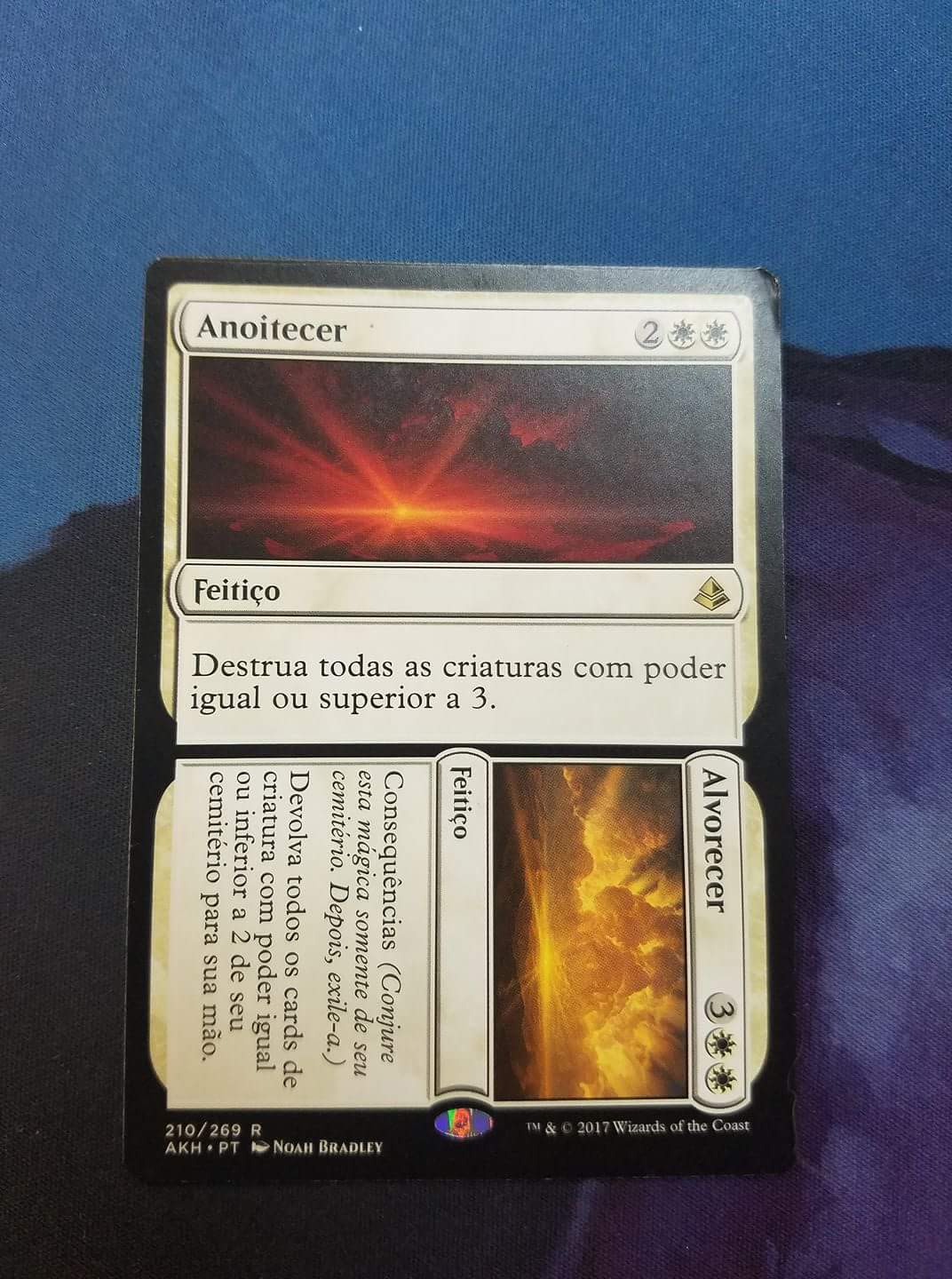
At approximately 8:00 p.m. EST on Friday, a potential Amonkhet spoiler was posted on Imgur and shared to Reddit.

DuskDawn
Translated from Portuguese, the text is as approximately as follows:

Dusk (Dawn)

Dusk 2WW
Sorcery
Destroy all creatures with power 3 or greater.
//
Dawn 3WW
Aftermath (cast this spell only from your graveyard, then exile it)

Return all creature cards with power 2 or less from your graveyard to your hand.

As far as the source, the poster “nerdyfanboy1” claimed:

Ok so a friend of mine posted this on his Facebook. Said he pulled it from one of his modern masters 3 boxes. So that's my source

And later followed up with:

Aparently it's someone at my shop who opened this, Im going to confirm it's real but there's another photo of it with a different background, and he's not the kind of guy to photoshop this for Karma, so this is as close to confirmed being in Amonkhet as I can give right now.

It sounds plausible enough that a mistake at the printer could have slipped an Amonkhet card into a Modern Masters 2017 pack. Regardless of where the card came from, the consensus online seems to be that the card is genuine, and that means Amonkhet has arrived.

The card introduces a new mechanic, approximately titled “Aftermath”, which is functionally a return of flashback, but with the twist of providing an alternate effect when cast from the graveyard. Aftermath is also similar to split cards, but because it doesn’t actually offer the added utility of two options when in hand, a more apt comparison is the Champions of Kamigawa-era flip cards, which combined two cards in one with special conditions for accessing the second half – in this case, the special condition is it being in the graveyard. Looked at pragmatically, it’s one spell when cast from hand and a second when cast from the graveyard, and because it's like flashback cards and can be cast twice, it’s a form of card advantage.

This leaked card also has apparent synergy with itself, so it’s a powerful card with the potential to be built around. With the first half removing large creatures and the second half acting to recycle smaller creatures, it’s a great fit into the sideboard of an aggressive white deck filled with smaller creatures as a way to combat large creatures. In Standard, it would be a great fit into an aggressive deck like Mardu, or the even more aggressive and creature-filled Red-White Humans, as a way to defeat a deck like Black-Green Snakes and its Verdurous Gearhulk-powered creatures. It’s a boon to white decks as an alternative sweeper cheaper than Fumigate and with more upside, and it’s certainly bad news for Black-Green Snakes, which is already down on its luck without a real seat at the table in the Mardu and Four-Color CopyCat metagame. It even seems effective against control decks, where it would destroy Torrential Gearhulk and return creatures for value. There’s certainly a ton of casual appeal for the card, and there’s theoretically applications in Eternal formats, where white aggressive creature decks continue to thrive.

What’s exciting about the spoiler is that it implies there are more cards with the mechanic to come, and likely a cycle of rares in all colors. The floodgates for speculation on the remaining four parts of the cycle have been opened, and while it’s impossible to predict exactly what they will be – if they'll be – what is certain is, at heart, they are flashback cards, and that means they are a payoff for the graveyard and will play well with any sort of self-mill effects. They could be a big boon for Black-Green Delirium, for example, if quality cards in the cycle are printed in those colors. The red and blue offerings could be right at home in the Blue-Red Zombies decks with Cathartic Reunion and Tormenting Voice to get them in the graveyard. All of the cards will offer card advantage, and the blue offering might be especially attractive to a control deck.

Amonkhet will be released on April 28, 2017, with the prerelease on the 22nd of April, so the spoilers weren't slated to start for a few more weeks. WotC doesn't take leaks lightly, and it will be interesting to see if there is any response from them.

What do you think of the new card and its implications? What are your thoughts on leaks like this? Share your thoughts in the comments.

-Adam

Insider: How the Emergent Meta Is Shaping Modern Prices

Are you a Quiet Speculation member?

If not, now is a perfect time to join up! Our powerful tools, breaking-news analysis, and exclusive Discord channel will make sure you stay up to date and ahead of the curve.

We talk finance here on QS, but sometimes we talk a little bit of game theory too. Obviously, there is a lot to take in when it comes to Modern prices right now.

Clearly, Modern Masters 2017 has had a profound effect on shaping the new financial landscape of Modern prices. The short and quick of it is that if it was in Modern Masters 2017, chances are the card lost some value. On the other side of the coin, if the card wasn't in Modern Masters 2017, chances are the price has already ticked up some amount and will likely continue to do so for the foreseeable future.

However, it is such a cheap and lazy tactic to assume that everything going in with Modern finance revolves around MM17. Yes, the set has serious gravity when it comes to changing the market—however, MM17 isn't the only game in town.

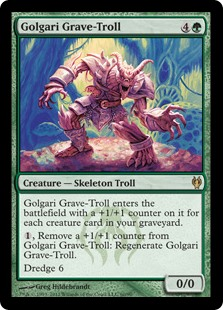
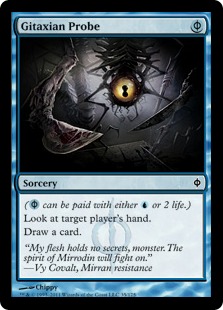
You may or may not be aware, but the Modern metagame has shifted considerably over the past month and a half. The bannings of Gitaxian Probe and Golgari Grave-Troll have apparently opened up new space for other decks to thrive.

It makes a lot of sense; the two decks most notably impacted by the last B&R announcement were Dredge and Infect, which were two of the most popular decks in the format and tended to have very polarizing matchups. If you know Dredge and Infect are the best decks in the format, it makes a lot of sense that people wouldn't want to play strategies that were soft to them. It also makes a lot of sense that decks that were actively good against Infect or Dredge became notably worse without those popular decks to prey upon.

Change is constant. Decks are popular... Cards get banned... Everything changes.

So, let's think about what we know about the new metagame and see if we can't find a couple of really nice picks.

All Hail King Shadow

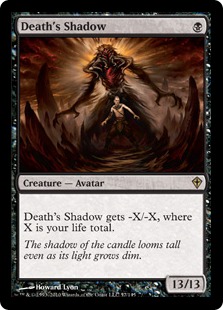
We can have a nuanced debate about the ins and outs of what is "actually" good in Modern right now, but the consensus opinion seems to be that Death's Shadow of various shapes and sizes is the premier Tier 1 Modern strategy. We're even seeing a revival of Delver of Secrets in concert with Shadow in Sultai.

There was an error retrieving a chart for Fatal Push

The printing of Fatal Push has really gone a long way to further this archetype. Fatal Push is a format-defining Modern card. New decks will come, old decks will fail, but Fatal Push is going to be with us as a staple until the end.

There is a great chance that we don't see a Fatal Push reprint for a long time, since it was just printed in Aether Revolt. I really like picking up Fatal Pushes now because it is likely (sans a fast reprint) that the card is near its bottom-basement price.

It is also worth noting that Fatal Push isn't a particularly good Commander card. Since Commander is about killing giant monsters and not turn one-to-three interactions. That makes me think there's less of a chance of seeing it in a Commander deck, which could easily mean years before it makes it into a Masters product.

I mentioned Delver of Secrets earlier and that could also be a spicy pickup card:

There was an error retrieving a chart for Delver of Secrets

Delver is a straight-up great card. It kind of got pushed out of Modern for a while because of the Dredge and Infect environment, but with Fatal Push by its side—well, the sky could be the limit. It also doesn't hurt matters that Delver has yet to see a reprint.

There was an error retrieving a chart for Tarfire
There was an error retrieving a chart for Street Wraith

We've already seen some tremendous spikes in Death's Shadow staple commons that did not appear in MM17. While Sultai and Grixis Delver versions of the Shadow deck are not currently the most popular, there is certainly a chance that the archetype moves up in the world in the coming months. The blue versions are much better against the fast combo decks like Storm and Ad Nauseam since they can interact on the stack and don't auto-lose to Leyline of Sanctity.

They are not terribly expensive right now, which makes them a perfect "throw-in" option. I love taking chances on cards like these when they look well positioned because its hard to lose, even if you don't spike it.

There was an error retrieving a chart for Traverse the Ulvenwald

Traverse is a card I've already mentioned before that I think a lot of people are sleeping on. Now it officially has a Modern home: Jund Shadow. It is an exceptionally efficient and powerful spell that does something Wizards has typically tried to avoid: tutoring. I would be shocked if in the long term Traverse the Ulvenwald didn't end up being one of the higher-ticket cards from Shadows over Innistrad block.

It also has tons of other applications outside of Modern. For one in Commander, and I even see it as having a high enough power level that it isn't out of consideration for Legacy or Vintage.

I've been stocking up on these. I think it is a wise, wise pick.

Mucho Gusto Bant Eldrazis

I've really taken up the mantle of the Bant Eldrazi. I had to learn it for GP San Antonio for the Modern Unified event and I've been really impressed. I would feel comfortable saying it is one of the best decks in Modern. Eldrazi Temple is nothing to joke about...

There was an error retrieving a chart for Eldrazi Temple

Eldrazi Temple is easily one of the most busted cards legal in Modern. I've said it a hundred times: an Ancient Tomb land is unfair in Legacy, more so in Modern. It simply facilitates all kinds of downhill things happening to an unsuspecting opponent way before they are ready for it.

The deck is also pretty good against the various Shadow decks because it can attack and block and deal a giant chunk of damage at once. I anticipate that Eldrazi are going to become more popular just because of how good the deck is right now.

Eldrazi may also see an uptick in Modern play because it's a great choice for the Team GP format. Outside of Path to Exile, it doesn't have a lot of overlap with cards from other decks.

I wouldn't be surprised if a very high percentage of Unified Teams take a Bant Eldrazi along for the ride! I wouldn't blame them; I'm doing the same thing, after all, and think it is a great decision.

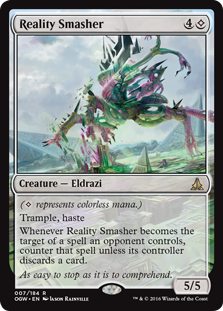
There was an error retrieving a chart for Reality Smasher

Reality Smasher is another puzzling card to me. It is basically approaching junk rare but the card is a Vintage, Legacy, and Modern four-of staple. What gives? I'm inclined to believe that people are just being a little short-sighted on properly assessing the card in the long run.

I'm very happy to be picking these puppies up every chance that I get. It isn't like I won't be able to get out of them at a couple of bucks a pop somewhere down the line if the stars don't align.

Honestly, I have a good feeling that Reality Smasher has already hit bottom and will continue to creep up. I'm actually thinking that the my assumption of the deck as a popular pick and strong performer at GP San Antonio could be the first step of the card making some nice gains.

There was an error retrieving a chart for Ancient Stirrings

It is also worth pointing out that Stirrings spiked really hard last week. I see it as a realization that it is one of the more busted cards in the format and fits into a wide range of decks: Tron, Eldrazi, and Lantern. It could also find a home in other new brews, like Affinity or 8-Rack.

I think the Stirrings surge is a good reason to be looking at other unreprinted commons like Delver. Just something to note and keep in mind.

Collecting Collected Companys

The other major archetype that has been on the upward swing in the emergent metagame are various Collected Company decks. There are a lot of flavors but the lynch pin is CoCo itself.

There was an error retrieving a chart for Collected Company

Collected Company is probably a good place to start. It is an absurdly powerful Magic card and I cannot foresee a set of circumstances where it isn't a great deck in the format. Probably a card worth looking into.

I also think that the various CoCo decks have other opportunities worth exploring. In particular, the Bant Spirits and Bant Knightfall versions of the deck. Knight itself is an intriguing pick:

There was an error retrieving a chart for Knight of the Reliquary

It's a really good card and hasn't seen a reprint in a while. The overall value of the card has tanked over time because of reprints and less constructed play. Nonetheless, it is a powerful card. It could also find its way into a Naya Boom // Bust style LD deck somewhere down the road. I like picking up great cards while they are cheap.

Conclusion

So, those are the three decks that have made the biggest meta leaps so far in the wake of the Gitaxian Probe and Golgari Grave-Troll bans. I think they are a great place to start looking for some good value. Everybody is fumbling around still trying to make predictions about MM17-related changes. They might be, perhaps, ignoring the obvious about which decks are making a bid to dominate Modern.

Modern Metagame Breakdown: 2/6/17 – 3/12/17

Are you a Quiet Speculation member?

If not, now is a perfect time to join up! Our powerful tools, breaking-news analysis, and exclusive Discord channel will make sure you stay up to date and ahead of the curve.

Welcome back for another metagame update. I'm calling today's the "February update," even though it encompasses a week-and-a-half of March data as well. As we had extended last month's data, it made sense to do so this month too in order to avoid a three-week metagame with scant data. The astute reader will notice that March 12th is a Sunday, which seems a natural cutoff point as most Magic tournaments occur on weekends. In January we saw the beginning shockwaves from the Gitaxian Probe and Golgari Grave-Troll bannings—in some ways that month was a hard one to evaluate, since the data spanned the date the bans went into effect, but we could still see clear indications that we were facing a new Modern. In February these trends become even more marked, and take on some new directions as well.

Overall, the large-scale image is of a format more diverse, more fair, more interactive—in short, a healthier one by most players' standards. Today we'll look at the February/early-March data taken as a unit, but I'll also be comparing pre- and post-banning pictures of the metagame at large. Over the last few months I've made some updates to the metagame spreadsheet which make manipulating the data easier—today I get to roll out a first test of how this flexibility can be used to augment our analysis.

Data Collection Methods

In our data set for this month there were no major events on MTGO, which means the online data consists entirely of League finishes. At one per day, we have 35 events for a total of 345 decks. The paper data spans 782 individual decks over 117 tournaments.

Two new sources have been added to the paper events. The first are tournaments from Magic-League, a tournament series that's organized online where participants play out full matches on third-party software like Cockatrice. For the moment these tournaments are relatively rare and don't attract large numbers of players, but who knows—maybe it's the future of competitive Magic! You can read more about Magic-League here.

The other source I'm adding in (and this is a work in progress) hails from Brazil. Right now our data set heavily favors Europe and North America. While it's true most tournaments occur in those regions, there's no reason to limit ourselves if other data is available. LigaMagic has been running a tournament series in Brazil with qualifier tournaments and corresponding "seasons," and they've recently begun to post decklists. This series spans the entire country, so we're looking at tons of extra data points. In this month's date range, for example, there were 22 qualifier tournaments with reported decklists. For most of these tournaments, unfortunately, only the winning decklist is reported, but this still represents a much better view of the Latin-American Modern scene than we've had up until now. I'm looking to expand these efforts too—so if you live in the region and know of any regular tournament series that aren't being incorporated in our data, let us know in the comments where any results may be found.

Major paper Top 8s for this period were numerous, with a Star City Games Classic and Open each in Dallas and Indianapolis, the SCG Baltimore Classic, and Grands Prix in Brisbane and Vancouver. Note that the Open in Baltimore was a split-format team event, so top-finishing Modern decks were reported as regular paper events, down to 16th place. TCGPlayer States also appears in the paper data this month.

For the two Grand Prix, Wizards didn't publish any Day 2 metagame data this time (past coverage has included a breakdown of archetypes appearing in the Top 100). To simulate this as best as possible, I compiled these data from the posted Top 32 finishes, together with the trial-winning decks from each GP. SCG, for their part, published the Day 2 metagame breakdown as normal, so that remains the same.

Tier 1

Tier 1 decks are the ones you should expect to face at every Modern tournament. Make sure you show up to your local events and Grand Prix alike with a well thought-out plan to beat these decks—you’re going to face them often, and each one is resilient enough to fight through a lackluster counterplan. Of course another avenue is to pick one of these up yourself, which I generally suggest for anyone not well-versed in a lower-tier deck. Whether you know one of these archetypes inside-out and can tune a killer sideboard for the field, or you want to pick up something new and wing it, these decks certainly have the chops to get the job done.

Tier 1: 2/6/17 - 3/12/17

DeckOverall
Metagame %
Paper %MTGO %
Death's Shadow Jund7.7%5.6%9.6%
Burn6.7%6.3%5.2%
Bant Eldrazi6.6%6.3%3.2%
Affinity5.2%6.4%5.5%
Eldrazi Tron5.2%3.6%9.6%
Abzan4.9%4.1%6.4%
RG Valakut4.7%4.1%5.2%
Gx Tron4.5%5.9%2.9%

Many pros have made no bones about their opinion that Death's Shadow is the strongest deck right now, and that's clearly borne out in the February metagame. I have my suspicions about its ability to stay on top for months on end or warp the format around it, but in the early post-banning meta Death's Shadow is indisputably on top. By now you're almost certainly familiar with the new Probeless version, which amalgamates elements of the Death's Shadow Zoo deck with traditional Jund Midrange. As a result this deck has shifted to a different spot on the metagame wheel, downplaying its gotcha! and combo dimensions in favor of a grindier, more late-game-focused approach. If you haven't had the joy of playing with or against this strategy yet, consider that mandatory homework for any upcoming major tournament. This deck is resilient and more than capable of winning through disruption, but it can also generate explosive kills from out of nowhere, akin to Splinter Twin and Birthing Pod decks of yore.
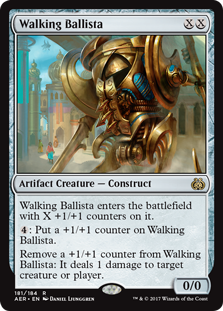
The rest of Tier 1 shouldn't come as much of a surprise, with the lone exception of Eldrazi Tron. That deck has been bolstered by the printing of Walking Ballista, which provides another mana sink for excess Urzatron pieces and fits like a glove into a deck trying to present a steady stream of threats with disruptive capabilities. Bant Eldrazi has long been a Tier 1 mainstay, ever since its demotion from Tier 0 status effected by the Eye of Ugin banning. Eldrazi Tron shares many cards in common, of course, so it's not crazy to see how it might be similarly positioned.

As I said, everything else appearing in Tier 1 is pretty standard, but there are some, shall we say, rather notable omissions: Infect, Dredge, and Jund. The first two are obviously a result of Wizards' targeted bannings, which aimed to reduce non-interactive strategies and turn-three kills (more on that below). What's more interesting is Jund's fall from grace, which is unprecedented enough to merit closer consideration.

I see several ways to understand the longtime titan's foray into Tier 2 territory. It's tempting to conclude that the demotion of Infect or the rise of Tron have removed some of the incentive to sleeve up Jund. But in reality there are other decks occupying the same metagame space—thus both Death's Shadow and Abzan have likely cannibalized some of Jund Midrange's metagame share. BGx decks have always competed among each other for superior standing, and the printing of Fatal Push has given the proponents of Lingering Souls and Siege Rhino yet another mechanism to compensate for a lack of access to Lightning Bolt. This may be accentuated by additional pressure in the form of Grixis and Esper control strategies—all in all, Fatal Push means Jund is no longer unique in its ability to reliably and efficiently kill creatures as early as turn one with no downside.
As for the Death's Shadow decks, in many cases they can do a great Jund impression, but they have the upside of sometimes just outright killing opponents from nowhere. Free wins shore up matchups like Gx Tron and RG Valakut, which Jund Midrange has struggled with immensely in the past. All of these factors beg the question: why play the midrange grindy strategy that can't boast free wins like Death's Shadow, nor trump the pseudo-mirror like Abzan? My guess is that many traditional BGx adherents have switched to one of these two decks.

Unpacking the Effect of the Bannings

Last month we began to delineate the contours of the post-banning meta, but in a period straddling the bans (and the release of Aether Revolt), the data were hard to make sense of. With the February data we have a much clearer picture and can draw more firm conclusions about the effect of the bans on Modern as a whole.

In order to examine this, I decided to put together a snapshot of the format both before and after the bannings. Some choice updates to the metagame spreadsheet have made this possible—before, fiddling around with dates, archetype names, and other input criteria was cumbersome, to say the least. I hope to expand this customizability in the future, but for now let's look at how the Gitaxian Probe and Golgari Grave-Troll bans have changed Modern.
The bans went into effect in the middle of January. I've extended the time frame back to December 1 for the pre-banning meta, and out to February 28 for the post-banning meta. Note that the numbers we've looked at thus far are for the period extending to March 12, so there won't be direct correspondence between the metagame shares reported. Also note that the numbers here represent a different cutoff date for MTGO and paper events, as the bans went into effect on different days. Thus the pre-banning meta is comprised of all decks in our data from the period Dec 1 - Jan 19, except in the case of MTGO decks, which stop at Jan 10th. The post-banning meta comprises all decks from Jan 20 - Feb 28, together with the MTGO decks from the 11th to the 19th.

If we calculate each of these data sets as separate metagames, we end up with the following metagame shares. The decks appearing below comprise every archetype that appears in Tier 1 in either of the two periods. Under the column marked "Tier Shift," you can see which archetypes moved up or down in standing across the banning divide.

Pre- and Post-Ban Metagame Share

Archetype% ChangePost-Banning Meta %
(Bannings - 2/28)
Pre-Banning Meta %
(12/1 - Bannings)
Tier Shift
Death's Shadow Zoo/Jund*+2.6%6.3%3.7%↑ Up
Bant Eldrazi+2.9%6.1%3.2%↑ Up
Burn-0.4%5.9%6.3%-
Abzan+1.1%5.9%4.8%-
RG Valakut+1.2%5.6%4.4%-
Affinity+0.7%5.2%4.5%-
Gx Tron+0.2%5.0%4.8%-
Jund-3.7%4.5%8.2%-
Eldrazi Tron+2.9%4.5%1.6%↑ Up
Infect-5.1%2.4%7.5%↓ Down
Dredge-4.5%2.4%6.7%↓ Down

[su_spoiler title="Naming convention for Death's Shadow strategies" style="fancy"]Prior to the Gitaxian Probe banning, we reported Death's Shadow decks under the name "Death's Shadow Zoo." As the post-banning deck took form and underwent several compositional shifts, we began to use "Death's Shadow Jund" to designate the new archetype. In order to effect a comparison this month, both decks are being treated as one—so some of the January share comes from the pre-banning Zoo-type deck featuring Become Immense. Note that both before and after the bans, we've kept Grixis Death's Shadow as a separate archetype.[/su_spoiler]

The first thing to notice is holy crap did Infect and Dredge get nerfed. Between the two they've shed 9.6% share, almost a full tenth of the entire metagame. To look at it another way, both archetypes lost about two-thirds of their pre-banning representation, dropping from uncontested Tier 1 to solidly Tier 2. If the goal was to downgrade the prior scourges of the format, Wizards' choice in bans was clearly well suited to the task. I've speculated elsewhere about these decks' positioning in the post-ban environment—regardless of the reason, I predict that Infect and Dredge are likely to stay Tier 2 for the foreseeable future. If we consider that some people may be holding onto these decks out of stubbornness or due to card availability, it seems safe to say they're not good choices at the moment.
Second, we see the drop in Jund's position pretty clearly as well. Its 3.7% loss after the bannings happens to perfectly match the combined rise in Abzan and Death's Shadow. The fact that the numbers correspond exactly is a coincidence, to be sure, but it lends further credence to the claim I made above about BGx pilots shifting gears. Note that in the period from the bannings to February 28, Jund still qualifies as Tier 1—it's downward slide wasn't completed yet (and may not be still).

Third, there's the question of the spaghetti monsters. Eldrazi strategies combined gained 5.8% metagame share across the banning divide (ignoring the lower-tier stuff like Colorless Eldrazi Stompy or Eldrazi and Taxes). If we understand both Bant Eldrazi and Eldrazi Tron as similar decks that aim to execute a midrange fair strategy with disruptive creatures, it makes sense to see them gain in an environment freed from the clutches of non-interactive nonsense. It's not just that Infect and Dredge are down. Other lower-tier stuff is down too (looking at you, UR Prowess). And while, nominally, Death's Shadow is still kicking it at the top tables, the new deck isn't as explosive or punishing. All of this gives durdlier decks an opening. Finally, it should be noted that a reasonable answer to the rise in presence of Fatal Push is to just cast five- and six-drops. Outside of Primeval Titan and Wurmcoil Engine, there are precious few playable creatures at this spot on the curve—and due to their unique mechanics, Eldrazi can be accelerated out more easily than most.
The rest of the changes are less pronounced, with some typical-looking 0-1% shifts. While fair is on the upswing and hyper-fast aggro is down, this Modern is still eminently recognizable. Burn, Valakut, Affinity, Tron—the other usual suspects aren't going anywhere.

Changes: February to March

Deck% Change
January to February
Overall Meta %
2/6 - 3/12
Overall Meta %
1/1 - 2/5
Death's Shadow Jund*+4.8%7.7%2.9%
Burn+1.3%6.7%5.4%
Bant Eldrazi+1.8%6.6%4.8%
Affinity-1.4%5.2%6.6%
Eldrazi Tron+3.1%5.2%2.1%
Abzan-0.1%4.9%5.0%
RG Valakut-0.9%4.7%5.6%
Gx Tron-0.9%4.5%5.4%

Returning to the central period of focus, let's look at the changes to Tier 1 that took place between January and February/early March. Most of the changes in this chart follow naturally from the proceeding one. In the case of Jund and Death's Shadow, the respective trends have accelerated. By now Jund has fallen further and dropped to Tier 2 (at 3.1%), while Death's Shadow continues to grow. Eldrazi Tron shows about the same rate of growth as reported in the chart above, suggesting much of this happened in the later part of February. This gels with the idea that Walking Ballista is specifically responsible. The growth of Bant Eldrazi, on the other hand, has slowed a little.
Of course, we're a full month and a half after the bannings, and the metagame is starting to react and shift into secondary (or tertiary) iterations. RG Valakut seemed to benefit from the bans initially, but has since lost most of its gains. Gx Tron is in a similar boat. Finally, for some reason Burn is gaining (+1.3%) while Affinity is suffering (-1.4%). This represents a reversal of last month's trend. The only reason I can think of for this would be Death's Shadow Jund making ample use of Ancient Grudge to keep the robots in check—let me know in the comments if there's something else I've missed.

Tier 2

Tier 2 decks are not as omnipresent as the Tier 1 crop, but they still show up in hearty numbers at the typical tournament. In many ways this tier is the lifeblood of Modern, whence its diversity and “play anything” reputation stems. If these decks aren’t dominating at the moment, they’re still capable of crushing a tournament on any given day—and many of them have been Tier 1 at some point in the past or will in the future. The better acquainted you are with any one of these archetypes, the better choice it represents, and if one of them is your specialty there’s a strong argument to stay the course and keep sleeving it up.

As for preparing to beat Tier 2 decks, you don’t need to dedicate specific sideboard space or do backflips to make your matchups favorable, but at minimum have a plan. You won’t face all of these decks in a tournament, but you’re all but certain to face at least some of them. Welcome to Modern!

Tier 2: 2/6/17 - 3/12/17

DeckOverall
Metagame %
Paper %MTGO %
Jund3.1%2.8%5.2%
Merfolk2.8%2.7%2.6%
Grixis Delver2.5%2.7%2.9%
Abzan Company/Evolution2.5%2.7%0.9%
Grixis Control2.4%3.3%1.7%
Infect2.2%2.4%0.3%
Ad Nauseam2.1%2.3%1.7%
Jeskai Control2.1%2.6%1.4%
Dredge1.9%1.3%2.3%
Bushwhacker Zoo1.8%1.3%2.0%
Elves1.7%1.9%1.2%
RW Prison1.6%1.4%0.9%
Gifts Storm1.5%1.5%3.8%
Eldrazi and Taxes1.4%0.9%2.0%
Lantern Control1.4%1.3%1.7%
Living End1.3%1.9%0.3%
Griselbrand1.2%1.3%1.2%

Both the Tier 2 and Tier 3 rosters have ballooned this month, indicating a rise in diversity and further cementing the evidence of a healthier Modern. The only major drop in metagame share here this month (besides to the prior Tier 1 darlings Infect, Dredge, and Jund) was Merfolk, which fell 1.2%. Beyond that, we see the return of Living End, Storm, and Bushwhacker Zoo, and the supplanting of UW Midrange/Control by Jeskai versions. Let's look at the major changes in turn.

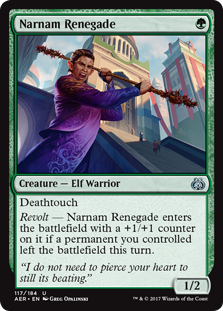
Bushwhacker Zoo makes a triumphant return on the back of revolt. Bushwhacker Zoo is back to Tier 2 after several months wavering between no ranking and Tier 3, and it's received a little bit of a face lift. Some outlets have called this deck "Revolt Zoo," for the prominent use it makes of the new mechanic out of Aether Revolt. Burning-Tree Emissary was always a central component of this deck's plan, and Hidden Herbalists just ensures it's that much more likely to spew its hand out in the early game. The archetype also gained access to the newest Kird Ape impersonator, Narnam Renegade. While it will be harder to turn on to full power than the Monkey, Renegade gets to attack into anything, Goyfs and Thought-Knot Seers included. It also offers a deck like Bushwhacker Zoo a rare defensive tool against the likes of Death's Shadow when it falls behind. Builds are still pretty non-standard (some have even included copies of Greenwheel Liberator), so it's anyone's guess where this archetype goes from here.
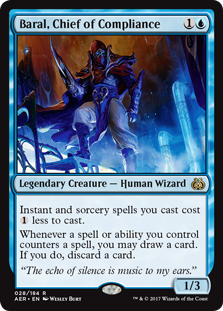
Gifts Storm arrives in full glory. Just when you thought the most broken mechanic of all time was dead, it's...well, not. When Gitaxian Probe was banned, Storm aficionados were understandably upset at the way their beloved deck was getting hit with splash damage as a result of Infect's and Death's Shadow's crimes. Wizards, of course, is hyper-vigilant about ensuring decks like Storm can't ascend to the higher tiers, and for good reason. All it took was the printing of an innocuous card like Baral, Chief of Compliance to bring the deck back on the radar. When your fundamental mechanic says, "cast a large number of spells for free," you've got a deadly combination of broken card advantage plus free mana. Nothing, mind you, suggests that this version of Storm is a problem—but it does sort of validate Wizards' cautious approach to the truly unfair strategies in Modern.
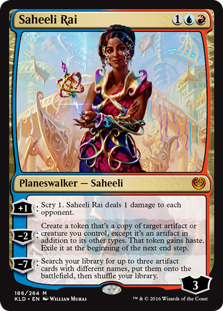
It also highlights the value of brewing—the players who imagined Baral's place in Pyromancer Ascension decks and predicted (correctly) that it would be mediocre were outperformed by the more creative types who thought to explore the use of Gifts Ungiven. As we've seen many times before, this innovation was spearheaded on MTGO. In January the deck's online share (1.2%) was more than twice that on paper (0.6%). February continues the trend, both in terms of overall archetype growth and in the disparate representation on MTGO.

Jeskai Control supplants UW Control. The only archetype to drop entirely off of Tier 2 this month was UW Control/Midrange. I think it's unlikely a coincidence that Jeskai Control came back in the same month, claiming about the same amount of metagame share as UW last month (2.1% to 1.9%, respectively). I don't see a compelling reason why these would have switched suddenly, and I'm inclined to chalk it up to what's en vogue. Jeskai Control this month encompasses three different builds that found more or less equal representation: Jeskai Nahiri, Jeskai Saheeli, and more traditional spell-based Jeskai Control. A fourth type, Kiki-Jiki decks, appeared here and there. More people are certainly trying out the Saheeli Rai/Felidar Guardian combo in Modern these days, but that only accounts for one part of the deck's gains, and doesn't really explain why UW would be down.
Tier 3

Tier 3 in Modern houses the decks with fringe potential, or those which are simply in a poor position in the current metagame. These decks range from relatively strong decks with scant adoption in the player base, to fragile decks that crumble to variance while mainstays like Burn or Jund draw consistently round after round. That said, Modern draws from an absurd well of card power, and each of these decks can give you a run for your money. You don’t need perfect knowledge of everything they’re doing, but the difference between familiarity and complete ignorance can definitely determine the outcome of a match.

Playing these decks isn’t advised, unless you know them inside-out or have some specific reason why you think they’re underrepresented. Of course, they are also worth a look as fun decks to battle if you’re less concerned about winning and want to delve into the deeper end of the Modern pool.

Tier 3: 2/6/17 - 3/12/17

DeckOverall
Metagame %
Paper %MTGO %
RG Ponza1.2%1.3%0.3%
Scapeshift1.2%0.9%0.3%
Esper Control1.0%1.2%0.6%
Bogles0.9%0.6%0.6%
Nykthos Green0.8%0.6%1.4%
Death and Taxes0.8%1.0%2.0%
Jeskai Midrange0.8%1.0%0.0%
8Rack0.7%0.5%0.6%
Blue Moon0.7%0.8%0.3%
Knightfall0.7%0.5%1.4%
Amulet Titan0.7%0.3%1.2%
Cheeri0s0.6%0.8%0.6%
Skred Red0.6%0.9%0.0%
Taking Turns0.6%0.6%0.3%
UW Control/Midrange0.6%0.8%0.3%
Kiki Chord0.6%0.9%0.6%
Bant Spirits0.6%0.9%0.6%
Faeries0.5%0.9%0.3%
Naya Company0.5%0.9%0.0%
Grixis Death's Shadow0.4%0.3%0.9%
Mardu Control/Midrange0.3%0.4%0.3%

If the Tier 2 standings indicate a diversification of viable strategies in Modern this month, the proliferation of Tier 3 decks represents a veritable explosion. We classified 16 decks as Tier 3 in January. That number has risen to 21 this month, and I could have extended them further down if I was inclined to. As always, the numbers near the bottom of the metagame standings are always based on a relatively small n, but the shakeups here are pretty extensive nonetheless.
There are a lot of new arrivals: 8Rack, Bant Spirits, Cheeri0s, Naya Company, Nykthos Green, RG Ponza, and Taking Turns. None of these decks appear regularly in Tier 3, and several are here for their first tiered appearance. In the case of Cheeri0s, its newfound success can be attributed to a recent printing, but in every other case we're just seeing old strategies fare better than before. On the other hand, the only deck to disappear from Tier 3 this month was UR Prowess—one of the uninteractive decks that had been contributing to the strangling of lower-tier strategies before the banning.

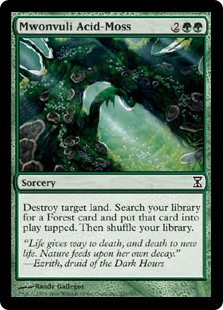
The biggest individual story here appears to be RG Ponza, an odd deck to say the least. Wizards long ago pronounced the competitive death of designated "unfun" strategies like land destruction and prison, but Moderners know their format has become the last repository for these types of archetypes. Ponza is an honest-to-god, full-on land destruction deck that complements Blood Moon with targeted spells like Mwonvuli Acid-Moss and actual Stone Rain to attack a player's mana base directly. This deck has benefited from the printing of Chandra, Torch of Defiance, which provides another sticky threat to ramp into and mitigate flood. But I'm not gonna lie—I don't see this deck putting up these numbers in the kind of environment dominated by Infect, Dredge, Death's Shadow Zoo, and the other explosive linear decks that characterized the pre-banning Modern.

Another deck that has similarly benefited from the more interactive and fair environment is Nykthos Green, which here includes Tooth and Nail variants. These decks durdle a little too hard to face off against a slew of aggro-combo decks and turn-four kills, but they can give value-based decks like Abzan or Eldrazi a run for their money. If the game goes long enough, rest assured that a Genesis Wave, Tooth and Nail, or good old Primeval Titan will serve as a reliable enough trump to the more midrangey threats out of BGx and Eldrazi. These decks might be taking a chunk out of Amulet Titan's share, which itself has fallen to Tier 3 after a brief sojourn up the ranks last month.

Conclusion

It's refreshing to see such diversity in the lower two tiers of the Modern metagame, and there's a certain poetry to watching Dredge and Infect take their medicine. Modern is in a great place right now, and if we appear to have a best deck in Death's Shadow Jund, it's great to hear pros and grinders proclaim it a skill-intensive, interesting deck to play both with and against. We haven't seen the end of the metagame shifts either, and I'm confident people will figure out how to combat the Death's Shadow decks.

So for now it appears we've returned to a golden age for the Modern format. Let's hope I don't have to put my foot in my mouth on this one any time soon—god knows Standard isn't offering the same kind of interest and variety. Now please excuse me while I spend the next four weeks drafting Modern Masters 2017 like a degenerate lunatic…


Insider: The Merits of “Window Shopping”

Are you a Quiet Speculation member?

If not, now is a perfect time to join up! Our powerful tools, breaking-news analysis, and exclusive Discord channel will make sure you stay up to date and ahead of the curve.

Well, I missed my chance. If there were any Modern cards I wanted to pick up in reaction to their absence from Modern Masters 2017, I probably had about two hours to purchase them. The only thing I managed to grab was a set of Eidolon of the Great Revel—a solid pickup, for sure, but less impressive than something like Mishra's Bauble.

There was an error retrieving a chart for Mishra's Bauble

I had no idea this uncommon could rise so high in price. But with a print run as tiny as Coldsnap's, I’m not surprised. Now we’re at the point where Coldnsap booster boxes cost more than original Ice Age. It’s amazing what a $50 uncommon can do for a set’s value.

But I digress…

With the internet enabling communication of information instantaneously, the time frame to pick up cards in reaction to news has shrunk drastically in recent years. There used to be ample time to make your moves. Now instead of having weeks or days, you have hours and minutes. It has become fiercely competitive.

But it doesn’t have to be. It turns out there are still some pockets of opportunity sitting out there. There’s no urgency, and it’s possible to take advantage of said opportunities at your leisure—a luxury for the MTG moms and dads out there who have less time for speculation than they once did.

A Meandering “Window Shop”

I’m not a huge fan of TCG Player’s “Advanced Search” functionality. It seems clumsy, and when I try sorting by price or narrowing a search to cards in a certain price range, I never know what price the algorithm is using. Is it TCG Low? Mid? Market price? Lowest NM price?

That’s okay, the inconvenience is still worth it. I navigate to the site and run a search for all Unlimited rares. Then I start window shopping. What cards am I looking for? Nothing in particular. In fact, I have no preconceived list in my head of cards I wish to pick up. I literally browse all the rares in the set—minus the obviously expensive ones like dual lands and Power—and I look for any card with stock under 20 copies. Sometimes I eliminate HP and Damaged cards from the search, but this isn’t mandatory.

From there I look to see if there are any good prices on the cards that are low in stock. If there are any disconnects, such as an LP card priced lower than the cheapest MP or HP card, then I cross-reference the card with other stores. If the price still holds up, I add the card to my cart. Rinse and repeat.

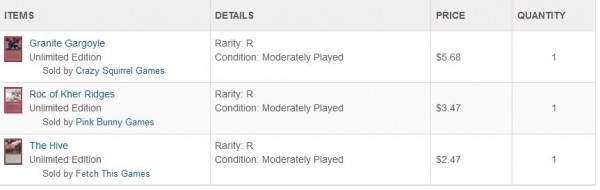
Here’s my most recent purchase (yes, I’ve done this multiple times):

UNL Purchase

The Granite Gargoyle was a little more expensive than I’d like to pay, but it’s a solid three-drop in Old School. Roc of Kher Ridges is a solid flying creature in red. And this copy of The Hive was about $10 less than what I sold my previous copy for on eBay.

There was an error retrieving a chart for The Hive

Each of these are low in stock and will likely move higher. It may take a while for them to appreciate in price, but it will happen. This slow time horizon is perfect for me—I get the cards to play with and enjoy in the short term, and they have long-term potential to rise in price. No mad dash to buy out the market. No disappointment from joining the hype train two hours too late. Just slow, unnoticed growth with a potential to pop.

How Is This MTG Finance?

I share this story for two reasons. First, it’s a great way to find underpriced cards on the open market. This strategy has helped me acquire important Old School staples in the past, such as Unlimited Birds of Paradise, Savannah Lions, and Sedge Troll (a card that recently spiked). But there’s a second benefit.

By browsing an entire set like this, you have an edge over the rest of the internet because you know what cards are very low in stock. For example, did you know that Unlimited Smoke is completely sold out on TCG Player? Did you know Unlimited Warp Artifact is extremely low in stock? I didn’t until I did this window shopping. Not only do I know what’s low in stock, but I also know what cards to scour the internet for to pick up. Because no one notices these cards selling out, no one rushes to list their copies at 3x the previous price. So if there are any copies at online stores or at your LGS, you can still grab them for cheap.

They may not double overnight, but I’ve found that cards with low stock on TCG Player inevitably move higher over time. This is a fundamental supply and demand concept. Even if the demand for a card like Unlimited Smoke is small, if the supply is low enough the price will move. Perhaps not overnight, but eventually it will move.

There was an error retrieving a chart for Smoke

The beauty of this strategy is that you can reapply it anywhere and anytime. I browse Card Shark’s dwindling Old School sets for underpriced cards once in a while. If I was in Europe, I’d do the same thing with MKM. And at any given time, there are always a handful of cards with very low stock. With a little luck, you may even find something underpriced as I have in the past. Don’t have time to shop this week? Don’t worry, dealers will restock cards very gradually so it’s worth checking from week to week or month to month.

Added Bonus: Buylist Comparisons

Sometimes when I have a little extra time, I pull up some buylists to compare with TCG Player pricing. For example, I noticed that ABU Games pays over $10 for a played copy of nearly every Beta rare. Why not try filtering out all HP and Damaged Beta rares to see if there’s anything under $10? I did this recently with a vendor (Cool Stuff Inc.) and I found a few $9.99 Beta rares. Which rares were they? It doesn’t really matter, since I know ABU will pay more for them. (But if you’re curious, I purchased a couple Timber Wolves and a Reverse Damage.)

Sometimes Card Kingdom pays surprisingly high prices for obscure Old School cards if they are completely out of stock. These prices can fluctuate significantly, meaning there may be a few arbitrage opportunities at any given time. Recently I browsed through TCG Player’s Alpha commons and uncommons and I discovered a few opportunities. The practice also educated me on some surprising trends.

Did you know that Alpha Evil Presence buylists for $6.25? I didn’t until I went through this procedure. That’s when I discovered how valuable the uncommon truly was.

There was an error retrieving a chart for Evil Presence

Perhaps even more surprising is Alpha Twiddle, which buylists for $5.15 despite being a common! This card is nearly gone from TCG Player, and there aren’t many Beta copies left either. Sometimes it can be difficult to out these Old School cards, but with buylists being this aggressive it offers a very nice “safety net.” The downside risk becomes so minimal, and the upside potential is huge.

How huge? Alpha Black Knight huge!

There was an error retrieving a chart for Black Knight

Wrapping It Up

You don’t have to be an Old School metagame expert to make a little money. You also don’t need the agility of a bloodthirsty Bogardan Lancer to buy into a spiking market as information reaches speculators in one simultaneous moment. I’ve never had anyone snipe an Unlimited The Hive from my shopping card when buying on TCG Player. In fact, I can often leave cards in my cart for days without worry.

But a slow-moving market doesn’t mean an unhealthy market. In fact, the slow and steady price appreciation of random Unlimited rares and Alpha commons is arguably healthier than the rampant Modern buyouts that occur. There’s no risk of paying too much and chasing a spiking price. As long as the game remains healthy and the collector’s market is alive, these older cards offer significant upside and minimal downside.

I often tell folks that the time to buy any Old School or Reserved List cards they want or need is right now. It’s not wise to buy out the market, but it makes money sense to pick things up now before copies disappear from the market and prices rise further. By eliminating scrutiny and browsing these classic cards, you guarantee yourself a good price and a card with low stock. This is indeed the perfect combination to make money in the long term.

I’ve done this kind of window shopping many times, and I plan on doing so again. There is inevitably a new deal every time I check. Whether it be an Unlimited rare, an Alpha common, or (more recently) a desirable Collectors’ Edition card, I’ll buy it if stock is low and the price is competitive. It’s virtually guaranteed that the last few copies slowly dry up and prices increase. It takes time, of course, but isn’t that the best part? The fact that you can take your time and do this at your leisure?

Why not try it yourself and see what you can find? Happy window shopping everybody!

Sigbits

  • You think I’m kidding about Sedge Troll? Check Star City Games for their stock of the card. They have exactly zero copies in stock. That’s right, they’re completely sold out of all copies from Alpha through Revised. I personally wouldn’t waste your time with the Revised printing, but if you can find other versions of the card at the “old price” you’ll likely be able to flip for easy profits.
  • Arabian Nights City of Brass is way too expensive thanks to its utility in Old School. Recently I decided to go the budget route by playing the Chronicles version. I was amazed to learn that these are worth a bit now too! TCG Player has very few in stock and Star City Games has one copy at $5.99. That’s actually a great price, and I don’t expect that one copy to remain in stock for long.
  • I was watching some Old School coverage on Twitch this past weekend (yes, that’s a thing). One strategy that leaped out at me was a deck that combined Library of Leng, Land Tax, and Land's Edge. The player got a fistful of lands in his hand using Land Tax and then pitched them all to Land's Edge for 18 damage in one shot. It looked like a ton of fun. I noticed Land's Edge stock is pretty thin, but there are a good couple dozen copies or so. Star City Games has a few in stock as well, with SP copies going for $12.99 and MP going for $9.99. I’d keep an eye on this one.

Having Our Cake: Introducing Temur Shadow

Are you a Quiet Speculation member?

If not, now is a perfect time to join up! Our powerful tools, breaking-news analysis, and exclusive Discord channel will make sure you stay up to date and ahead of the curve.

Goyf, Smasher, you name it—efficient beaters are really my thing. It shouldn't surprise that I've put in a lot of reps with Death's Shadow Jund, and the deck's namesake Avatar definitely rules. Since even before the Probe ban, I've wondered about Shadow's potential in fair blue shells, and my thoughts always come back to Delver. A threat of Shadow's size and cost looks perfect for the Temur-colored grow strategies I'm so fond of. Of course, there's one problem: Death's Shadow is black.

Wait a minute... this is Modern! Since when has splashing colors been an issue for anyone, anywhere? It took me a week of nonstop tweaking to arrive at a functional manabase, but I think my pipe dream of Death's Shadow in Temur Delver has become a reality. This article unveils Temur Shadow, explaining the roles its cards play, its meticulous manabase, and the creation process behind the deck.

[wp_ad_camp_1]

Brewing Temur Shadow

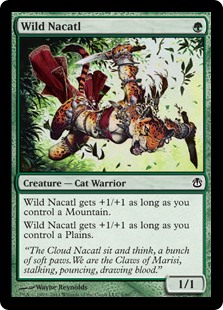
Last week, I identified the strength of leading on an aggressive one-drop in an article comparing Death's Shadow variants. Unfortunately, adding Wild Nacatl to Death's Shadow Jund didn't give me the early-game oomph I was looking for. Nacatl could be chumped just like Goyf and Shadow, and was even outclassed on the board fairly quickly. I needed Delver of Secrets. Delver's flying ability allows players to attack from a unique angle and combines well with Lightning Bolt and Snapcaster Mage.

I pondered the pros and cons of Death's Shadow Jund and Grixis Delver, wondering if there wasn't a way to meld the two into a four-color, has-it-all grow deck à la Counter-Cat. If I found a perfect suite of creatures and spells, I could see if the mana proved problematic enough to convince me not to have my cake and eat it too.

Death's Shadow Jund: Pros and Cons

The biggest draw to Death's Shadow Jund is the deck's incredible consistency. Death's Shadow Jund is the sleekest, most efficient deck in Modern right now. The built-in "conditions" of its spells—being at a low life total and having many card types in the graveyard—don't require tangible deckbuilding concessions (besides Tarfire over Lightning Bolt), and cost pilots zero mana to fulfill during games (as Wraith and Bauble cycle for free).

Jund also achieves impressive creature consistency with Traverse the Ulvenwald, a card that even grants the deck an easy toolbox element. The deck gains an aggro-combo dimension with Temur Battle Rage, which it can run effortlessly thanks to packing 8 creatures (with Traverse, a functional 12) that exceed five power.

An oft-cited pro of Death's Shadow Jund is that it achieves delirium and a low life total faster than Grixis with Street Wraith, Mishra's Bauble, and Tarfire. I'd argue that it only does so because it has to; if Jund had access to an efficient turn-one threat like Delver, which helps with delirium once killed and promptly puts the game away if unanswered, it wouldn't need to work so hard on delirium, and it would be happy taking hits from opposing creatures while Delver clocked in the air instead of cycling Wraith to enable earlier Shadows.
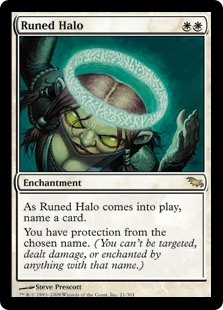
Death's Shadow Jund's biggest strength—its razor-sharp focus—is also its downfall. Hosers like Runed Halo, Rest in Peace, and Leyline of Sanctity turn off multiple crucial cards in the deck. Surgical Extraction can even win games against Death's Shadow Jund by exiling all copies of either Death's Shadow or Tarmogoyf, leaving the deck with only four ways to actually win. Decks looking specifically to beat Death's Shadow Jund will be able to, and usually with cards that have utility in other matchups.

Due to its lack of permission, Jund can't answer the top of its opponent's deck, making it softer in topdeck wars.

Grixis Delver: Pros and Cons

The pros of Grixis Delver are fairly obvious. It can apply early pressure and enjoy free wins with turn-one Delver, and achieves spell consistency with Serum Visions and Snapcaster Mage. Grixis also uses these blue cards to gain an edge in topdeck wars over Jund. Such benefits add up to give Grixis the upper hand in Death's Shadow mirrors.

Another supposed pro of Grixis is that it produces threats resistant to Fatal Push, but I don't think it really counts. The only reason Grixis runs Tasigur and Gurmag is that Goyf and Traverse are off-color, or we'd see Death's Shadow Jund employ delve threats as well.

One big issue with Grixis is that some of its threats require mana to set up. Tasigur, the Golden Fang and Gurmag Angler simply don't work without Thought Scour. Besides, Tasigur and Gurmag are almost always smaller than Goyf.

Grixis also lacks toolbox aspect of Traverse the Ulvenwald, meaning it has to max out on Snapcaster Mage to see the Wizard throughout the game. More Snaps means more lands. This concession makes it a far clunkier protect-the-queen deck than I'm interested in.

Finally, Grixis has trouble dealing with certain types of permanents, namely enchantments.

Bridging the Gap

Temur Shadow is built to preserve the pros and eliminate the cons of both Death's Shadow Jund and Grixis Delver. It succeeds at the cost of adopting a new con: a shakier manabase.

Temur Shadow, by Jordan Boisvert

Creatures

4 Delver of Secrets
4 Death's Shadow
4 Tarmogoyf
2 Snapcaster Mage

Artifacts

2 Mishra's Bauble

Instants

4 Lightning Bolt
2 Tarfire
2 Fatal Push
2 Mana Leak
2 Stubborn Denial
1 Temur Battle Rage
1 Kolaghan's Command

Sorceries

4 Serum Visions
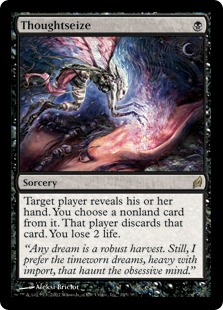
4 Thoughtseize
4 Traverse the Ulvenwald

Lands

4 Wooded Foothills
4 Misty Rainforest
3 Bloodstained Mire
1 Steam Vents
1 Overgrown Tomb
1 Breeding Pool
1 Blood Crypt
1 Stomping Ground
1 Island
1 Swamp

Sideboard

1 Bedlam Reveler
1 Fulminator Mage
1 Izzet Staticaster
1 Threads of Disloyalty
2 Terminate
2 Destructive Revelry
1 Ancient Grudge
2 Collective Brutality
2 Anger of the Gods
1 Maelstrom Pulse
1 Forest

Temur Shadow: Spells

Threats

There's little to say about the creatures in this deck that wasn't covered in the above discussion on Jund vs. Grixis. I will say that Temur Shadow has an identical creature base to Monkey Grow's (and is otherwise very close in composition), except Hooting Mandrills has been replaced with Death's Shadow.

I also want to touch on the two Snaps. Snapcaster Mage can be clunky in an 18-land deck, but having multiples for Traverse chains and late-game utility has been stellar. Snapcaster provides insurance against both grindy decks (Grixis, Abzan) and creature decks (Revolt Zoo, CoCo). I could only see going down to just one copy in metagames infested with linear combo and ramp.

Disruption

Lightning Bolt is still the best card in Modern by a huge margin, and we get to max out on it in this deck. Two copies each of Tarfire and Fatal Push fill out Temur Shadow's removal suite, giving it 8 high-impact, one-mana kill spells.
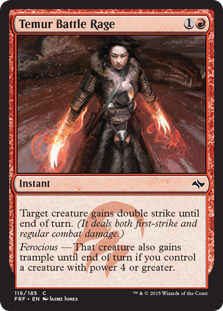
Thoughtseize, Mana Leak, and Stubborn Denial handle cards we can't easily one-for-one with removal. This category extends to unanswerable creatures (Wurmcoil Engine), value spells (Collected Company), and planeswalkers (i.e. Elspeth, Sun's Champion). Permission plays better with Delver of Secrets than discard, since it costs opponents tempo to spend mana on spells that don't resolve. But Thoughtseize is a must in this deck to enable Death's Shadow, and besides, it's Modern's most efficient catch-all.

Consistency

I've employed a Serum/Traverse consistency package before to some success in Temur Delver. Combined with Snapcaster Mage, these eight spells ensure we have little trouble finding exactly what we need at the right stages of the game. Consistency by redundancy is all well and good, and Modern's go-to consistency plan. But the ability to manipulate the top card of our library provides many more benefits, including helping with land drops, drawing us out of stalemates, and enabling narrow hosers in sideboarded games.

Utility

Mishra's Bauble is a necessity in this deck to help achieve delirium in linear matchups. But it also has some interesting play with Delver of Secrets, as opening both gives us two shots at flipping the Wizard on our next upkeep. Kolaghan's Command and Temur Battle Rage occupy flex spots in Temur Shadow, the former excelling in grindy scenarios and the latter shining during damage races.

Kolaghan's Command is a mainboard answer to problematic artifacts like Chalice of the Void or Ensnaring Bridge. It also gives us a laudable grinding plan with Snapcaster Mage.
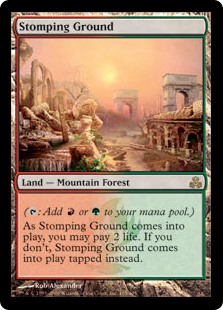
In games with Death's Shadow variants, plenty of situations arise in which Temur Battle Rage would be the best possible draw. Death's Shadow Jund packs a pair so they can have it in these situations, and Grixis runs none since they don't have Tarmogoyf and Traverse to maximize the odds of Rage being live. By the same token, Rage happens to be terrible when we don't have Goyf or Shadow on the field. Serum Visions allows us to dig for our single copy when we want it.

Temur Shadow: Mana

I actually finalized my creature and spell layout for Temur Shadow within the first day of testing, and worked tirelessly all week tweaking the mana. A convoluted manabase is the price we pay for integrating the strongest aspects of Grixis and Jund. Temur Shadow doesn't just splash; it's a bonafide four-color deck.

Like Counter-Cat, Temur Shadow aims to set up a pair of complementary shocks and chase them with a third land (usually a second blue or green source, depending on our hand). I designed this manabase bottom-up, first choosing ideal basics, then shocks, then fetchlands.

Basics

Blue and black are our most represented colors, so we play Island and Swamp as basics. Playing only one basic isn't an option in a format full of Ghost Quarter and Path to Exile. Forest doesn’t work in the main as it fails to cast too many cards. Mountain has the same issues and doesn’t help against Blood Moon.

Shocks

The deck has two shock pairs: Breeding Pool plus Blood Crypt, and Steam Vents plus Overgrown Tomb. As most of our spells are blue or black, we want those colors on separate lands, allowing us to cast more spells each turn cycle. Each shock pair achieves this goal while giving us access to all four colors.

Stomping Ground enables Traverse the Ulvenwald as an early mana fixer. An opener with Traverse, a fetch, and no other lands asks us to fetch Ground and tutor either Island or Swamp depending on the cards in our hand. If we won't need red for a few turns, fetching Tomb is also an option, meaning fetch plus Traverse is guaranteed to yield three colors of our choice (so long as green is one of them). Beyond that opening play, all of our fetchlands find Overgrown Tomb, Stomping Ground, and Steam Vents, so getting our fourth color becomes as simple as drawing any fetch.
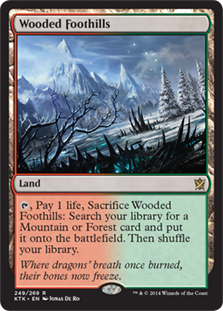
Watery Grave seems like an easy include in this deck, as it casts the most of our spells by itself and pairs with Stomping Ground. But I think the card's a trap for a few reasons. First, starting games off with Watery isn't actually good. We want blue and black on separate lands, so following Watery up with a Stomping Ground (its color pair) makes our mana awkward until we draw a third land.

Second, it's rarely a land we want to lead on and be stuck with for a couple turns. Starting on Watery seems appealing when we open a one-lander with Serum Visions, as Watery still casts Thoughtseize and Fatal Push should Visions whiff on a land. In reality, we would rather have Steam Vents in these situations. Vents casts more early interaction. Bolt and Tarfire are better at keeping us alive while we look for land drops than Thoughtseize, which doesn't impact the board, and Push, which we only play two of.

Third, since we frequently use Stomping Ground to Traverse into a basic, having Watery Grave in the deck to compliment it with is less vital, as following our basic search up with any fetch will grant us access to all four colors.

Fourth, shocks clog. Opening a non-pair, two-land combination of shocks and basics strands us on three or even two mana. Fetchlands, on the other hand, find us any color we need, either to compliment the shocks and basics we open or to set up our manabase from scratch.

Fifth, we don't have space for Watery. Running it as a 19th land would necessitate going under 26 instants and sorceries for Delver, as cutting a fetch would impact both our openers and our late-game negatively. It's true that Watery Grave is a great third land once we've set up our core shocks, but at that point, we have all our colors and have made three land drops; I doubt the marginal advantage a Watery would add compensates for the five major strikes against the card outlined above. After all, Pool or Vents (depending on the pair we have in play) are also ideal third lands.

Fetches

Fetchlands are critical to Temur Shadow. Sure, they synergize with Goyf, Bauble, and even Serum Visions, but that's not all. Running as many as possible gives us an edge in the early game by helping us hit the right colors, and one in the late game by making Death's Shadow that much more menacing.
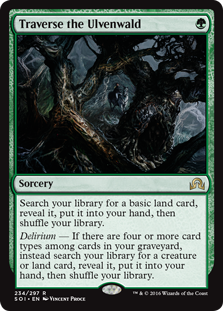
Serum Visions and Traverse the Ulvenwald allow us to keep one-landers, which comes up quite often in an 18-land deck. As a result, all of our fetchlands must get both Steam Vents and Stomping Ground. This requirement takes Verdant Catacombs and Polluted Delta out of the equation.

We also want all of our fetchlands drawn after a turn-one Vents or Ground to perfect our mana; as we'll have our third color from Traverse on a Stomping Ground, we're in the clear there. But since we'll need exactly Tomb on a Steam Vents, we can't run Scalding Tarn, as we risk seeing it off Serum Visions and hating ourselves.

That leaves Wooded Foothills, Misty Rainforest, and Bloodstained Mire. Foothills is our best fetch, as it gets every shock at the minimal detriment of skipping out on basics. It's our best land to open with, as it promises any color, and only ever lackluster in certain late-game scenarios that require us to fetch basics.

Misty and Mire are close, and both can set up perfect mana on their own. Two of either finds Vents-Tomb, while one of each gives us access to every shock combination. We max out on Misty because Breeding Pool is usually a more important third land than Blood Crypt. Double green represents Traverse plus Goyf, and double blue represents Serum into Delver or Snap-Leak. Similarly, we're more likely to search up Island in the late-game than we are Swamp.

A Word to the Wedge

Honestly, I could write a whole article (or two!) about this manabase. The actual spells in Temur Shadow are so powerful that the deck is quite forgiving relative to the other Delver decks I've built—no Disrupting Shoals or Simic Charms to trip over here! I therefore expect most of the losses people experience picking this deck up for the first time to come from mismanaging their fetchlands.

My advice to those struggling with the mana is to pay close attention to the lands they fetch and the problems they encounter, and to start planning their mana one or two turns ahead. Doing so will reveal the benefit of unintuitive available options. Stuff like burning a turn-two Traverse on Island to make a turn-four land drop, by which time we'll be able to commit a 4/4 Shadow and represent Snap-Stubborn (as opposed to allowing that extra G on turn two to go unused). Or using a valuable fetch like Wooded Foothills to get Breeding Pool instead of a less valuable one like Bloodstained Mire (since removing Pool from the deck in fact makes Mire more valuable than Foothills). Or getting Blood Crypt as a first black source with an opener full of black spells (in case we draw Misty Rainforest as our third land and need access to Overgrown Tomb). Practice makes perfect; don't get discouraged, and don't fall back on Watery Grave!
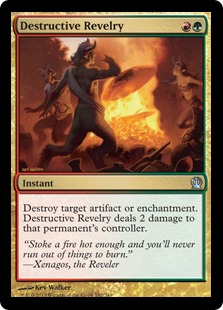
Temur Shadow: Sideboard

Sideboards change rapidly in Modern to accommodate the format's shifting climate. I might want a different 15 in a month, but here's a brief explanation of the cards I'm currently playing.

Bullets

  • Traverse the Ulvenwald lets us run a creature toolbox in the side. Bedlam Reveler is our key to grindy matchups, Fulminator Mage answers annoying lands like Academy Ruins or Gavony Township, and Izzet Staticaster is Modern's most elegant solution to Lingering Souls.

Removal

  • Threads of Disloyalty isn't searchable via Traverse, but it's still a mirror breaker with fringe applications elsewhere. Stealing a Goyf or Shadow is backbreaking in Modern, as these creatures have way more value than their mana cost suggests.
  • Terminate is a concession to Eldrazi decks. Goyf and Shadow easily outgrow Reality Smasher, but we still don't want to lose to a hasty crackback. Also, Mana Leak isn't reliable against Bant Eldrazi thanks to Cavern of Souls.
  • Destructive Revelry and Ancient Grudge answer most problematic permanents. Grudge is simply too efficient not to play in a deck that makes red and green. Revelry has added utility by doubling as a reliable anti-Blood Moon plan.
  • Anger of the Gods solves our Dredge matchup, wipes away chump blockers, and dismantles creature synergy decks like Company, Merfolk, and Affinity.
  • Maelstrom Pulse is a universal answer that comes in for most slower matchups. It deals with planeswalkers, swarms of tokens, and Eldrazi alike.

Utility

  • Collective Brutalityis a highly flexible card that wrecks Burn and is great in Delver mirrors. It's also easy to board in for less effective cards depending on the matchup.
  • Forest is good in grindy matchups, where it's an extra mana-producing land; in Ghost Quarter/Path to Exile matchups, where it generates "free" plusses; against aggressive decks that pressure our life total, where it's a green source we can fetch painlessly; and against Merfolk, where it gives us another green source to fetch as they try to Spreading Seas us off our colors. It also comes in with Destructive Revelry as a plan against Blood Moon. We then prioritize searching out the basic, knowing we have an answer for Moon in the deck should the enchantment come down (it helps that eight of our fetches find green). Having Forest on the field also lets us Traverse for our other colors under Blood Moon. I did try Forest in the mainboard at one point, but cut it for many of the same reasons as Watery Grave.

Fly over the Valley of the Shadow of Death

I've been turning Eldrazi sideways for longer than I care to remember, but Temur Shadow has me excited about grow again. The more I play with the deck, the more I believe I've finally found a Probeless Delver deck I like enough to actually use. I look forward to answering questions about the deck in the comments.

Insider: MM17 Set Review: Common/Uncommons

Are you a Quiet Speculation member?

If not, now is a perfect time to join up! Our powerful tools, breaking-news analysis, and exclusive Discord channel will make sure you stay up to date and ahead of the curve.

Normally, I only do reviews of sets with new cards. Due to the nature of my set reviews (I only focus on commons and uncommons that we'll be pulling out of bulk), it's normally not worth it to focus on reprint sets or ancillary products, because the picks are known quantities.

Everyone who knew to pull Remand from MM15 before that set released knew to pull it after as well. That factor joins with the unfortunate truth that Modern Masters-type sets don't normally have a whole ton of commons and uncommons that are considered picks. The commons might get crushed into dust from 10 cents to nothing (Peer Through Depths is a good example of something you used to be able to ship for a quarter five or so years ago, and now barely sells for 20 percent of that), and the uncommons will either stagnate or rebound because of the low print run on the set (Lightning Helix continuing to return to $5, Kitchen Finks taking a dip to $3.50 before tripling back up, etc).

There was an error retrieving a chart for Kitchen Finks

I often talk about how the common and uncommon market of a set correlates really highly with the overall trajectory of the high-end rares and mythics. We saw this on a larger scale with Expeditions and Masterpieces: the buy prices for commons and uncommons from Shadows over Innistrad and Eldritch Moon were higher than the buy prices for the blocks before and afterward. When approximately 15 percent of the box value is taken up by the Masterpieces, we see the rest of the mythics and rares drop to compensate.

For example, Heart of Kiran just can't hit $25 like Emrakul could, even if it's in the same number of decks. That effect trickles down to the commons and uncommons to an extent, although Fatal Push continues to defy expectations and hold $4. As for the rest of the cards in the set? Even Winding Constrictor and Felidar Guardian struggle to hold 50 and 25 cents respectively despite their obvious tier-one status.

My point here is that several of the "guaranteed quarters" we've seen in sets prior will be crushed by MM17, because of the sheer volume of quality pickable cards they threw in the set. You know how people have been saying we'll see $10 Goblin Guides because the value is being spread so wide across so many non-bulk cards? The same is true for why Inquisition of Kozilek will have its' final nail in the coffin at the uncommon slot.

There was an error retrieving a chart for Familiar's Ruse

Just for future reference; I'm sorting these by the order they appear on mythicspoiler.com. This is actually a really good example card to start out with, because it's always been a quarter-pickable card as a situational casual counterspell that also has a bit of pauper demand. After being in this set at common, you won't ever have a reason to pick this card anymore. There won't be a recovery period for stuff like this.

There was an error retrieving a chart for Ancient Grudge

Grudge hasn't been a real pick for as long as I can remember. Original Innistrad neutered the value of the card, in addition to any reasonable chance of good flavor text. I've always continued to pick these, though; not to throw in buylist piles, but to be the person who has them readily accessible on Modern night to get $.25 a piece at retail when someone decides they want to hedge more against Affinity. Not a buylistable card anymore, but a playable one. It's the same category as Llanowar Elves nowadays.

There was an error retrieving a chart for Gaea's Anthem

This used to be a dollar rare, and could be buylisted at 50 or 75 cents just from casual demand alone. For that reason, I'll still pick these off draft tables hoping to get dimes or quarters. Maybe the reprint kills it because mono-Planar Chaos supply isn't exactly a bunch of copies, and this might fill the void.

There was an error retrieving a chart for Flickerwisp

Man, this one hurts. I own a lot of these, just because of how popular the card is and how often I find them in bulk. It's going to be a 50-cent uncommon, so get ready to pull these.

There was an error retrieving a chart for Serum Visions

This art is much better than either of its' predecessors, so plan accordingly. I still expect Serum Visions to hang between $1 to $2 at uncommon status, but this probably won't be left on draft tables or left in bulk. You should definitely still pick these, but the supply will hit a point that it'll never be a spec again.

There was an error retrieving a chart for Vampire Nighthawk

Ol' faithful. Vampire  Nighthawk holds a special place in my heart for one of the first cards I realized I could make money off of, because there was such a divergence in demand from competitive versus casual players. Sure, it had a tiny bit of competitive demand in the tribal Vampire deck back on original Zendikar, but almost all of the money I made was from trading them to casual players for $1 each. This card has survived enough reprints that I'm not concerned about it in the slightest. Even if the price drops to 50 cents, you want all of these. Stores will always need this card.

There was an error retrieving a chart for Lingering Souls

Meh. Reprint number 1000, and you can still get dimes to quarters. Still pickable, but just goes in this article because it's a quality Magic card.

There was an error retrieving a chart for Molten Rain

See Might of Old Krosa below. This is another case of the Sylvan Scryings. Kind of identical in this case, because Mirrodin was the only printing. This will be worth nothing very soon.

There was an error retrieving a chart for Might of Old Krosa

Might of Old Krosa is a really good example of "it was only expensive due to scarcity." Remember how Sylvan Scrying went from $5 to 10 cents? Yeah, expect something similar, where this will turn into a dollar card. You should obviously still pick them, but don't expect it to ever return to a fraction of its original price.

There was an error retrieving a chart for Path to Exile

Part two in the big three uncommon powerhouses of the set. We'll see $5 Paths for the first time in years, although I wouldn't start stocking up on them expecting to see $10 again. I could be wrong here (I was partially wrong on the next card in our list when it was in Conspiracy 2), but I don't want to be stockpiling Paths at $5. Just be thankful when you open this next to a Mind Shatter, throw it in your binder and move on.

There was an error retrieving a chart for Inquisition of Kozilek

Same with Path, but on a smaller scale. I'm really happy selling these for $3 or $4 in the next few months, and I'll be picking them up for $1 at the shop from people trying to get money back from the boxes that they overpaid for. If you're in the market for IoKs, wait a month until you can find a couple on TCGplayer for stupidly low.

There was an error retrieving a chart for Harmonize

This will soon be 50 cents. EMA gave it a flesh wound, but this is going to rip it wide open.

There was an error retrieving a chart for Lone Missionary

I find a lot of these in bulk, because it's just an underrated card in both Modern and Pauper. Easier to cast than Kor Firedancer, and it gives you a more immediate advantage, but the value train stops as soon as MM17 supply hits tomorrow.

There was an error retrieving a chart for Spell Pierce

You could get $1 from buylists on these a couple months ago, but you'll be lucky to get a quarter soon. (Everyone reading this article should already know to pick these, but if I leave it out, then I look like the idiot who forgot it.)

There was an error retrieving a chart for Soul Warden

This used to be a dollar, but you'll still want to pick these. Notably, its "sister" could see a slight increase in price because it's still managed to dodge reprints to this day. Soul's Attendant becomes that much more of a lynchpin when the rest of the deck is dirt cheap. Think the Eidolon of the Great Revel spike, but on a micro-scale.

There was an error retrieving a chart for Wall of Denial

There's a lot of people who didn't know this was a pick, so I'm doing a quick public announcement. Wall of Denial is a great card in casual and Commander, so you should continue to pick these

There was an error retrieving a chart for Terminate

Ughhhh, this one hurts. You used to be able to get $2 easy for these, even the older crappy art. Yeah, I said it. The older art is worse. Anyway, you'll still probably get close to a dollar for these. There's a nice overlap of casual with Modern demand for the various Grixis lists, so don't give up on these like some people will. I expect a lot of drafters to give up on certain cards with the expectation that they'll be worthless post-reprint, and that's your time to scavenge.

There was an error retrieving a chart for Goblin Electromancer

See Ancient Grudge. I want to own these to sell at $1 playsets, but not for buylisting.

There was an error retrieving a chart for Burning-Tree Emissary

Another card added to the common family! Maybe this is just a local thing, but I sometimes get requests for complete Pauper decks, or just cards to top off a list.

Signets

There was an error retrieving a chart for Dimir Signet
There was an error retrieving a chart for Izzet Signet
There was an error retrieving a chart for Azorius Signet

Sometimes locals will ask me why I charge more for the above three signets, but none of the others. To be honest, blue is the color that needs the ramp the most, and Simic Signet is outclassed by every other ramp spell out there, if you get to play green. Combine that with the fact that blue is often paired with artifacts anyway, and you used to end up with $2.00 retail on Azorius and Dimir, with Izzet trailing behind a bit. I'll still want to pick these three and try to get quarters or maybe 50 cents at best, but leave the rest in the dust. Don't waste your time picking out Signets that no one will ask for.

Tri-Lands

There was an error retrieving a chart for Jungle Shrine
There was an error retrieving a chart for Savage Lands
There was an error retrieving a chart for Seaside Citadel
There was an error retrieving a chart for Crumbling Necropolis
There was an error retrieving a chart for Arcane Sanctum

Man, all five of these used to be slam dunks at $1 or $1.50, but they're getting hit really hard by the double whammy of C16 into MM17. I honestly don't expect to get more than dimes for these in the future, but I would still absolutely keep them around to sell at 25 or 50 cents to Commander players who need them on the spot. It's still something that will take up a spot in your binder if you're a newer player who needs to fluff up the binder without using trash-tier bulk rares.

End Step

If you're opening up some boxes of Modern Masters 2017 tomorrow, the above cards are the ones you want to pull out and set aside from your bulk. Everyone's going to be trying to min/max every dollar on the boxes they overpaid for, so you'll be a small fish in a school of grinders trying to race to the bottom on TCGplayer. I highly recommend dumping everything immediately, because a month from now we'll start to see what we need to be picking up. Thanks for reading!

Insider: The State of Modern

Are you a Quiet Speculation member?

If not, now is a perfect time to join up! Our powerful tools, breaking-news analysis, and exclusive Discord channel will make sure you stay up to date and ahead of the curve.

With Modern Masters 2017 coming out, I’ve covered a lot about the set so far. I’ll provide even more info next week once the set is released.

Today, I want to touch on what’s happening in Modern. Recently we’ve seen a pretty big shift in the Modern metagame, and I want to break down some of what’s going on in the format. There are still tons of viable decks outside of what I’m going to discuss today, but here are the strategies making waves in the format.

Deaths Shadow

Creatures

4 Death's Shadow
4 Tarmogoyf
4 Street Wraith
1 Ghor-Clan Rampager

Spells

4 Mishra's Bauble
4 Thoughtseize
4 Traverse the Ulvenwald
3 Fatal Push
4 Inquisition of Kozilek
2 Tarfire
1 Abrupt Decay
1 Temur Battle Rage
1 Dismember
2 Kolaghan's Command
1 Liliana of the Veil
2 Liliana, the Last Hope

Lands

4 Verdant Catacombs
4 Wooded Foothills
4 Bloodstained Mire
2 Overgrown Tomb
1 Stomping Ground
1 Blood Crypt
1 Forest
1 Swamp

Sideboard

2 Ancient Grudge
2 Collective Brutality
1 Fatal Push
3 Fulminator Mage
1 Kozilek's Return
1 Liliana of the Veil
1 Maelstrom Pulse
2 Nihil Spellbomb
1 Painful Truths
1 Surgical Extraction

If you’ve seen any coverage or looked over recent tournament results, the Death's Shadow deck is crushing events nearly every time. There are still multiple versions floating around out there, but from what I’ve seen, this particular one is showing up frequently.

The biggest change with this version is the focus on just two threats. This obviously includes the namesake card, Death's Shadow, but also Tarmogoyf, because you should be able to make it immense rather quickly. Initially it may seem like two creatures isn’t enough meat to make the deck consistent enough, but you do see a lot of cards with this version, and Traverse the Ulvenwald should have delirium turned on to make it a one-mana tutor.

One aspect about this deck that might get overlooked is the mana efficiency. A huge part of this deck's success is due to how cheap all the spells are. Look at all of the one-cost spells in the deck! It reminds me of Grixis Delver from a few years back, when Deathrite Shaman was still legal. You can win games simply because you can deploy all of your spells before your opponent.

Due to the surge of players drawn to this archetype, another deck has found a resurgence as well: Burn. We all know Burn is the default deck for many new players to the format, but now it’s a truly viable choice because of how great it is against a deck trying to lower its own life total.

Finally, we are getting tons of cards for this deck in the new MMA set. Between Standard cards and MMA17, you can almost build this whole deck. I think that will have a huge impact on the prices of these cards. Normally we’d see a dip in prices, but if the demand is there for new players building this deck, we could even see the cards bump up, but more likely they will just stabilize around their current price points.

Revolt Zoo

Creatures

4 Wild Nacatl
4 Experiment One
4 Goblin Guide
4 Kird Ape
4 Narnam Renegade
4 Burning-Tree Emissary
4 Hidden Herbalists
4 Reckless Bushwhacker
2 Simian Spirit Guide

Spells

4 Lightning Bolt
4 Atarka's Command

Lands

4 Windswept Heath
4 Wooded Foothills
4 Arid Mesa
2 Stomping Ground
1 Temple Garden
1 Sacred Foundry
1 Forest
1 Mountain

Sideboard

1 Declaration in Stone
2 Deflecting Palm
4 Destructive Revelry
2 Grafdigger's Cage
2 Path to Exile
2 Rest in Peace
2 Thalia, Guardian of Thraben

If you’ve been around the Modern metagame for a while, I’m sure you’ve run into this strategy a time or four. Seems like I have to play against this deck at least once every tournament. This deck has been evolving constantly since Burning-Tree Emissary was released. Revolt Zoo also does a great job at deploying its hand. Typically, you can drop almost every card in your hand by turn two. Sometimes you have an Atarka's Command or something that you’re saving for turn three to finish off your opponent, though.

Because we’re getting the Goblin Guide and fetchland reprints, we could see another price increase on Atarka's Command. The lowest availability card is usually the one that gets the bump, but there aren’t that many money cards in this deck. In fact, this deck might be the most affordable in Modern after MMA17 is released.

GW Company

Creatures

2 Birds of Paradise
4 Noble Hierarch
2 Scavenging Ooze
4 Tarmogoyf
3 Voice of Resurgence
1 Tireless Tracker
1 Azusa, Lost but Seeking
4 Courser of Kruphix
4 Knight of the Reliquary
2 Renegade Rallier

Spells

4 Path to Exile
1 Dromoka's Command
1 Crucible of Worlds
4 Collected Company

Lands

4 Windswept Heath
3 Wooded Foothills
3 Temple Garden
1 Gavony Township
4 Ghost Quarter
2 Horizon Canopy
4 Forest
2 Plains

Sideboard

1 Aven Mindcensor
3 Blessed Alliance
1 Crucible of Worlds
2 Engineered Explosives
1 Qasali Pridemage
3 Stony Silence
3 Surgical Extraction
1 Whisperwood Elemental

Here we go. Let’s port one of Standard’s most dominant archetypes into Modern. Although we dropped a color from Bant to make it straight green-white, this deck provides a constant stream of good threats. This is not the deck I tend to play – it's too safe and doesn’t do anything broken. Sure, Collected Company is hyper efficient in putting threats on the board, and you can get it off on turn three, but the guys you’re getting are just guys waiting to attack. I like this deck, don’t get me wrong, but you don’t get lots of free wins for doing broken stuff. I do like the sweet Renegade Rallier tech though. You can bring back a cheap creature or a fetchland, and either of those is sweet.

Cheerios

Creatures

4 Puresteel Paladin
4 Sram, Senior Edificer

Spells

4 Mox Opal
4 Accorder's Shield
3 Bone Saw
4 Cathar's Shield
4 Spidersilk Net
4 Paradise Mantle
2 Noxious Revival
4 Retract
4 Serum Visions
2 Swan Song
1 Grapeshot

Lands

4 Flooded Strand
3 Windswept Heath
1 Arid Mesa
4 Seachrome Coast
1 Hallowed Fountain
1 Sacred Foundry
2 Plains

Sideboard

3 Echoing Truth
1 Ghirapur Aether Grid
4 Leyline of Sanctity
1 Paradoxical Outcome
4 Silence
2 Swan Song

Lastly, I wanted to mention the newest combo deck floating around out there drawing in players with its alluring Magical Christmasland feelings. There’s just something about comboing out on turn two or three in interesting ways that draws us into a strategy.

In case you haven’t seen this deck in action yet, the goal is to play Puresteel Paladin or Sram, Senior Edificer, which each basically do the same thing, and then drop your hand of zero-cost equipment so you can draw another hand. You have Retract to bounce everything and do it again, and while that card isn't necessary to go off, it definitely helps.

Mox Opal is great in this deck too. It should always be turned on and helps you with your mana when you are trying to draw your whole deck and storm them out. This is a card that could go up in price as well, since there's no reprint in sight for it.

The cards in this deck have definitely moved a ton lately. Puresteel Paladin is up to $10 and climbing. The cheap equipment is moving out of bulk status and up to the price of better commons and uncommons. I know my store almost sold out of these equipment just from having a couple players build the deck. The internet was nearly sold out of Kite Shield, and it’s not even a part of the above list I pulled from recent tournament results!

Summary

The Modern card pool is so huge that every set presents the opportunity to see new archetypes emerge that keep the format fresh. New cards are printed that interact with old cards in interesting ways and that brings us new strategies.

Modern Masters 2017 has done a great job reprinting cards we need for many different decks. Right now, Death's Shadow is the new hotness in the format. Before that, it was Affinity that was dominant at every event, so shifting our focus to another deck is fine, and I don’t think a strategy of killing yourself will become too broken. After all, Death's Shadow isn’t Hatred or anything.

Modern seems great, and now is the perfect time to get into it. There will be more staples floating around the market, or you can open them yourself if you buy some MMA.

Until next time,
Unleash the Force!

Mike Lanigan
MtgJedi on Twitter

Rising and Falling Competitive Stock

Are you a Quiet Speculation member?

If not, now is a perfect time to join up! Our powerful tools, breaking-news analysis, and exclusive Discord channel will make sure you stay up to date and ahead of the curve.

No, this isn’t a finance article—I leave those to the geniuses over at Quiet Spec (and Jim Casale of course). What I want to talk about today are individual cards whose "gameplay stock" is trending up or down based on recent trends in the metagame: "what’s hot and what’s not,” if you will. We’ve done a few pieces like this in the past but haven’t touched on the subject in a little while. It seems like a good frame through which we can view the small shifts in the format over the past couple of weeks. Modern is relatively settled following the recent GP weekend and TCG States, which leads us to my absolute favorite part of Magic: tuning!

If you’re looking for an edge, hopefully you’ll find it here. If not, maybe you’ll see a stale sideboard card you should have ditched a long time ago. Let’s get to it!

[wp_ad_camp_1]

Rising

Random White Removal

Fatal Push is still the best removal spell in the format against everything besides Lingering Souls and Primeval Titan, but for those not blessed with the ability to add black mana to their mana pool, it’s time to get creative. Death's Shadow has caused quite an issue for decks that rely on Lightning Bolt as supplemental removal. And the fact that we’re seeing around double the copies of Tarmogoyf we’re used to means that Spell Snare and a prayer aren't enough for Ux decks to rely on anymore. No matter what archetype you’re playing, if you’re in the business of interaction and you’re not playing black, you’re almost assuredly playing white.
So, assuming white decks are looking to deal with Death's Shadow and Tarmogoyf on top of everything else they normally face, and Path to Exile isn’t quite enough to get us there by itself, what’s a mage to do? Condemn, for one, is an excellent option for those troubled by Death's Shadow and friends. Besides dodging the creature going to the graveyard (which helps when fighting against Kolaghan's Command as well), Condemn can potentially two- or even three-for-one depending on the situation, thanks to the life gain “drawback." You haven’t lived until you've Condemned an opposing attacking Tarmogoyf and kill their two attacking 3/3 or 5/5 Death's Shadows.
Blessed Alliance, while not a new option by any sense, is getting better as well. Killing their thing and getting some life back is often worth a full extra turn, as four life lines up nicely with Tarmogoyf’s “base-state” as a 4/5. For decks playing Cryptic Command, the synergy between the two spells feels really smooth. They play a thing? Counter and draw, or tap down their board. They swing in instead? Pull ahead with Blessed Alliance and proceed from there. With Burn benefiting from Death’s Shadow Jund’s spot in the limelight, a little extra lifegain is more than welcome, and a solid path to victory alongside Snapcaster Mage.

Jace, Architect of Thought

I’ve been playing a one-of Jace in my version of Grixis Control, stolen shamelessly from a few other lists in the net, and I’ve been loving it. “Big Jace” reminds me of the old UR Twin days, where the subgame was just, “live to cast Keranos, God of Storms,” and cackle wildly at all the value.
The +1 is great against Lingering Souls and solid against most other aggro lists, though admittedly poor against Death’s Shadow and Eldrazi. That’s not to say you shouldn’t play the card in those matchups, as I’ve had great success with Jace and Ancestral Vision against Eldrazi’s grind. Eldrazi and Death’s Shadow Jund don’t have much haste or trample outside of Reality Smasher (and a couple Temur Battle Rage), which lets Jace sit and grind value with even a little bit of protection.

Timely Reinforcements

Speaking of which, one of my all-time favorite white cards is currently solid against a large percentage of the field. You don’t have to be a control deck to play this card, and you don’t have to be playing against an aggro deck. Three 1/1s against Jund keeps Tarmogoyf at bay for quite a while, and protection against Liliana of the Veil can keep our big guy safe from her -2. And then, of course, there’s Burn, Affinity, Death’s Shadow, and Grixis Delver. Modern is back to Aggro/Big Mana/Midrange/Fast Combo in relative order of representation, so hitting two out of the top three is not bad value for our sideboard.
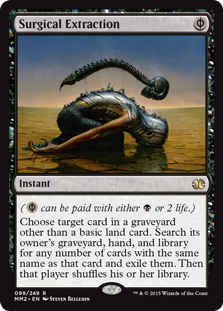
Surgical Extraction

I’ve long been a hater of this card, in control decks at least, as it is card disadvantage that rarely trades with a card out of our opponent’s hand. Nevertheless, there exists no better way to fight both Death’s Shadow and Tron strategies, which are both at an all-time high right now. Tron decks are the biggest challenge for Grixis specifically right now, and I went from three copies to zero, to two, and now I’m back to three again. Dredge is still floating around, and even if we’re not playing control, other people are, and removing Snapcaster Mage targets (or just taking care of Snapcaster Mage itself) is a great way to fight through their grind.
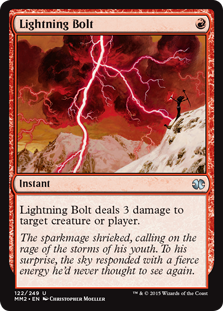
Falling

Lighting Bolt

This one should be pretty well known at this point, as we’ve talked about it repeatedly in previous articles. Lightning Bolt’s inclusion in this list is definitely warranted as this is singlehandedly the reason for Abzan’s resurgence. When Lightning Bolt isn’t that great anymore, and Fatal Push is almost universally better than Terminate, and Lingering Souls is the spicy choice against grindy decks postboard, it stands to reason that just playing all these cards ourselves is right where we want to be. Were it not for Kolaghan's Command giving points to Jund in just about every matchup, Abzan would be the clear BGx midrange deck of choice in Modern today. Think about that: Abzan, not Jund, as the midrange deck of choice in Modern. Has that happened ever? Maybe immediately after the banning of Bloodbraid Elf, but definitely not for long. We’re not there yet, but once I put down my Grixis Control testing, the next archetype I’m picking up is definitely Abzan Midrange. It’s nowhere near the best deck, but it seems to have no glaring weaknesses currently and is poised to take advantage of most of the risers on this list.
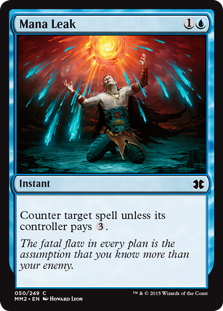
Counterspells

They’ve been poor for a while, and they're just getting worse. This is due almost entirely to Death’s Shadow—it’s just too difficult to extract value from a two-mana counterspell with anything resembling regularity when your opponent can threaten to kill you in two turns with a one-drop. Say that sentence out loud and you start to wonder if Death’s Shadow is too strong for the format, but that’s outside the scope of this article. Still, Mana Leak & Co. are at an all-time low, even with Ancestral Vision on the rise. Vision in the format normally means Remand is better than ever, but in no matchup do I want to be casting that spell, unless it’s in response to flashbacked Lingering Souls. Which, of course, is another reason why counterspells are bad right now.

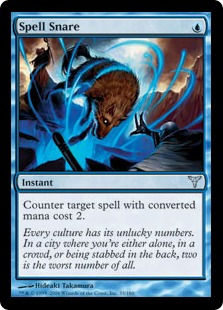
No, this is a sorcery-speed format if I’ve ever seen one. As another aside, this is a knock against the instant-speed-only version of Grixis Control that’s floating around. Just Ancestral Vision, kill a thing, play a Tasigur, cast some discard, and repeat. Cryptic Command gets by because it's Cryptic Command (and the only thing keeping us in the game against big mana) but when the rest of the field is looking to diversify through trumps, we need to be making big plays as well.

Discard

Death’s Shadow Aggro multiplied the number of Thoughtseize running around, which in turn has increased the likes of Leyline of Sanctity. It stinks, because I would much rather attack their hand directly than play something cheaty like Surgical Extraction, but when Tron protects themselves with Leyline of Sanctity they leave me no choice. In other matchups, Lingering Souls still existing as a popular option assures opponents that they will still have something to do—that isn’t a knock against discard directly but rather a commentary on the fact that most people are ready for it at this point. Kolaghan's Command also ensures that we are not getting the mileage out of discard that we once were.

Conclusion

Burn is on the rise, and UR Gifts Storm is putting up a few strong finishes as well. Golgari Charm is another card that has been seeing a little play in a few sideboards, so keep your eye out for spells that handle problematic enchantments, especially if Rest in Peace or Leyline of Sanctity will ruin your day. Abzan has caught my attention as an archetype strongly positioned to adapt to some of the nuanced changes in the format, and its toolbox approach seems well-suited to tinkering against your opponents of choice. Death’s Shadow is still on top, and we can’t get too crazy as Bant Eldrazi is still kicking around as well. But as long as we don’t get too cute and lose to these powerful strategies, the field is relatively forgiving to tuning to beat specific targets. Good luck!

Trevor Holmes

Insider: Modern Masters 2017 Casual Picks

Are you a Quiet Speculation member?

If not, now is a perfect time to join up! Our powerful tools, breaking-news analysis, and exclusive Discord channel will make sure you stay up to date and ahead of the curve.

Welcome back, readers!

I realize my last article showed my pessimism towards Modern Masters 2017 (from both a competitive and financial perspective). However, talking with some players at our weekly Commander night did bring to light some promise for the set in the financial realm.

Alluding back to my last article, I mentioned that WoTC has around 21-22 million active players and about 1 million active DCI numbers. This means there may well be about 20 casual players for every competitive player out there. While the competitive player may need four of the staples from the set, that still pales in comparison to the number of copies the casuals as a whole need (especially for cards that are good in multiple decks).

So, despite the print run of Modern Masters 2017 being considerably larger than the original Modern Masters, I still think there is hope for the casual cards, especially the utilitarian ones.

Modern Masters

Lets start by looking at the original Modern Masters (MMA) cards that have rebounded from this reprinting (and which tend to show up mostly in casual or Commander decks).

  • Demigod of Revenge
  • Doubling Season
  • Elspeth, Knight-Errant
  • Glen Elendra Archmage
  • Grand Arbiter Augustin IV
  • Keiga, the Tide Star
  • Kokusho, the Evening Star
  • Sarkhan Vol
  • Squee, Goblin Nabob
  • Stonehewer Giant
  • Tooth and Nail
  • Woodfall Primus
  • Yosei, the Morning Star
There was an error retrieving a chart for Elspeth, Knight-Errant

Now some of these cards have made it into Modern, but looking at decklists from Modern Nexus, there currently isn't a deck in the Tier 1 or Tier 2 groups that plays any of these cards. So I feel they rightly fit into the category where current prices are for the most part driven by casual and/or Commander players.

All of these cards took a pretty big hit when Modern Masters came out. In fact, the casual cards took the biggest hit at first, because the print run was much lower and the competitive players tended to need playsets of the staples. However, as the playerbase grew, the added supply was absorbed and prices began to rise.

Modern Masters 2015

If we look at Modern Masters 2015, the options are much fewer (and the print run was higher than the original Modern Masters).

  • Inexorable Tide
  • Iona, Shield of Emeria
  • Kozilek, Butcher of Truth
  • Tezzeret the Seeker
  • Ulamog, the Infinite Gyre
There was an error retrieving a chart for Kozilek, Butcher of Truth

The list is a lot smaller for MM2015 and four of the five are mythics. There are still some solid Commander cards in the set, however, they remain at bulk (Puppeteer Clique, for example, which was a $5-plus card before the reprint).

The Modern Masters 2015 print run was larger than MMA, which implies to me that the larger the print run, the fewer casual cards that will rebound. This doesn't look good for Modern Masters 2017, as the print run is even larger still.

The takeaway is to focus on reprinted casual mythics (as they are still going to be rarer than regular rares). The good news is that Modern Masters 2017 has a good bit of these.

Modern Masters 2017

As stated above, we'll focus first on the mythics. After that I'll look at rares that, should they fall to bulk status, would be worth pulling aside from any bulk brought in.

Mythics

There was an error retrieving a chart for Bonfire of the Damned

The miracle mechanic is very powerful. But due to the lack of good deck manipulation in Modern, this Standard all-star has been mostly limited to casual and Commander decks. Bonfire has occasionally found a home in some Modern decks in the sideboard (as it's a huge blowout in slower attrition matchups like the Jund mirror).

It had stabilized around $5 since rotating out of Standard, and this new Modern Masters version is already under $3. This is the type of card I tend to enjoy getting as a price balancer in larger trades and then stashing away, as its power level is very real as it was $40-plus while in Standard.

There was an error retrieving a chart for Craterhoof Behemoth

Craterhoof Behemoth used to see minor play in Modern Elves decks, but lists these days have largely replaced it with Shaman of the Pack, which can be found off of Collected Company and won't get stuck in your hand. However, I've had numerous casual and Commander players ask me if I had any Craterhoofs, and I imagine they were thrilled to see this card spoiled.

If the price drops to under $10 I'm a fan of trading for them, and if it drops under $8 I wouldn't be against cash buys.

There was an error retrieving a chart for Olivia Voldaren

Here's another one that has seen play in Modern decks before (often as a one-of in some Jund sideboards), but more recently has fallen out of favor. However, she's a powerful legendary Vampire, a tribe that has gotten a lot of support in the various Innistrad blocks and is beloved by casual players. I can see this one continuing to fall once packs start getting cracked, but if she falls to $1.50 or less I'm a fan of adding a few to my speculation box.

There was an error retrieving a chart for Sphinx's Revelation

Another Standard all-star that had a brief stint in Modern but has sadly fallen by the wayside as control decks in the format have been pushed out by all the linear aggro decks. Sphinx's Rev provides two things casual Commander players love: life gain and card draw. The slower big-mana Commander format thrives on these giant "x" spells.

This is another one of those cards I expect to see continue to drop simply because there isn't a ton of Modern demand. I expect a lot of these to enter the market, but again if it hits $1.50 or less, I'm a big fan.

There was an error retrieving a chart for Temporal Mastery

As I stated with Bonfire, the miracle mechanic is powerful and casual players love taking extra turns. Interestingly enough, the Avacyn Restored version is still sitting at around $8, whereas the Modern Masters one is selling under $4. I expect we may see these prices converge at $6 (I have seen decent local demand for this card prior to the spoiler so I expect we'll see players pick up their copies once packs get opened). If we see prices drop initially (like we often do) then I'm a big proponent of this card at $3 or less.

Rares

There are a decent number of rares I'm happy to pick up once they've dropped to an appropriate price. For each of these cards I'll note the price I'm waiting for them to hit before I acquire.

But with these Masters sets expected to release bi-yearly (with a likely Eternal Masters sprinkled in between), I no longer advocate long-term speculation. I'm setting my limit to 1.5 years, or six months before the next announced Modern Masters release date, and that is a maximum. If I see significant gains (50% or more) on any speculation targets with a shot at being reprinted, I will happily unload them.

For the astute readers, you'll notice that all my price points fall below current retail prices (some considerably). That's because I'm not looking to acquire them immediately. Previous Modern Masters sets tended to be at their lowest price point 3-6 months after release, and I think many people are still underestimating just how many copies will be added to the supply.

There was an error retrieving a chart for Basilisk Collar

Acquire Price: $3.50

I know this price point might be a bit aggressive, but this card sat under $6 for two years before slowly rising to $9, and then spiking to $16 thanks to seeing play in Modern Eldrazi decks with Walking Ballista.

Collar tends to go in fewer Commander decks, simply because while both abilities are relevant, neither really dominates a game except with specific commanders like Oros, the Avenger or other pinger cards.

That being said, it was always one I got random requests for, until one day I went to get one for a friend and found out I had none left. This after stockpiling about 10 when they were in Standard.

There was an error retrieving a chart for Venser, Shaper Savant

Acquire Price: $3.50

Venser is one of those cards whose previous value was based heavily on having a single printing in an older set (outside of the very small-print-run FTV: Twenty). Venser's power level comes from the ability to "counter" an uncounterable spell by simply returning it to their hand, as well as bouncing problematic permanents when necessary.

This card has dropped by over 50% in less than a week, and I won't be surprised if it continues its downward trend for a while. If it does, I like it at this price point, and will pick up a few extras to finish off a playset for myself and maybe a couple to hold onto for a year or so.

There was an error retrieving a chart for Cyclonic Rift

Acquire Price: $2.00

I'll go on the record saying I hate this card in Commander as I feel it's too good. They banned Upheaval because it hits lands, but I think it's fair to argue that letting everyone keep their lands for a one-sided pseudo-Upheaval at instant speed is just as game-breaking.

However, regardless of my personal feelings on the matter, it continues to prove a staple in every blue Commander deck I've seen (because, again, it's ridiculously powerful). Unless they ban it, I expect it will be the first card on this list to rebound in price.

There was an error retrieving a chart for Zur the Enchanter

Acquire Price: $1.50

Zur is a powerful Commander that sort of builds himself as a deck. It can be extremely competitive or more casual. Prior to this reprint he was a $16 card before stabilizing at around $8.50 (granted, this was due to a Modern deck that popped up) but still he is a great commander in a powerful color combination.

There was an error retrieving a chart for Phantasmal Image

Acquire Price: $1.50

The cheapest clone option available, Phantasmal Image has found a home in Modern Merfolk decks (as it can act like yet another two-drop lord or your opponent's best creature), but it's also very good in Commander. While we often don't see Clone finding a home in the format, costing half as much seems to be where the line between playable and unplayable is drawn. As for the downside of dying to any targeted spell, most spells in Commander that target one or more creatures are kill spells anyway.

There was an error retrieving a chart for Thragtusk

Acquire Price: $1

Ol' Thragtusk, obliterating the hopes of aggro players since 2012. This is the definition of a true value creature and it does find an occasional home in Modern and even Legacy (Nic Fit) decks. This is one of those green creatures that I see a lot of players just default-throw into most green Commander decks because he's all upside.

There was an error retrieving a chart for Summoning Trap

Acquire Price: $0.25

This card has seen some Modern play (I recall a GW Trap deck making waves for a short period of time). But it's predominantly found in Commander as a pseudo-Collected Company, with the upside of sticking it to your opponent who thinks it's funny to Mental Misstep your Birds of Paradise (yes, I have experienced the ecstasy of getting to do that). The fact that you can cheat in any creature (there is no color restriction on this one like there is on something like Natural Order), at this price we're nearly at bulk and I'm willing to take the risk of it never panning out at this price.

Conclusion

While I am still pessimistic about Modern Masters 2017 as a whole (and what it means for MTG speculation moving forward), it's important not to let one's pessimism blind them to potential financial gains. Just don't go hog wild and remember to limit your risk.

A Defense of Unfair Combo

Are you a Quiet Speculation member?

If not, now is a perfect time to join up! Our powerful tools, breaking-news analysis, and exclusive Discord channel will make sure you stay up to date and ahead of the curve.

This is going to be a controversial month for my column. My banlist testing article series will return shortly, which will incite a firestorm even if readers like my results. Rather than run from this, I'm going to embrace it. Bring on Argument Month! I'm going to defy consensus and defend something many believe is indefensible.

First, some background. We're coming off another SCG Modern Open, this time in Dallas. Once again, Death's Shadow won the event. This should not be surprising. Midrange Jund was one of the best decks in the history of Modern, and the current Death's Shadow deck is just Jund built around the namesake card. The threat and support spells have changed, but the core of discard and removal remains intact. That the deck is extremely potent should be no surprise. I was a bit surprised that Burn fell to it in the finals, but in my opinion Trent Avera's deck did not perform very well and with similar draws would have lost to any deck.

More interesting to me are the Classic results. Living End won, with Cheeri0s taking second and sixth. There is no Death's Shadow in the Top 8. This is a significant result. Not just for showing that Death's Shadow is not the end-all-be-all in Modern, but also for the fact that combo decks are starting to make their presence felt again. This is a good thing. Having unfair combo in the metagame, as long as it isn't too powerful, is a good thing for a healthy metagame. Today, I argue that the presence of unfair combo decks works to slow down the format by reducing the presence of uninteractive aggressive decks and promoting slower control and aggro-control decks.

[wp_ad_camp_1]

Contention #1: Fast Combo Preys on Fast Aggro

A fast combo deck has a faster average goldfish than an aggressive deck. In Modern no aggro deck can reliably win before turn four. Affinity can under certain circumstances, but it is highly unlikely. Infect and Death's Shadow used to be able to win on turn three reliably, but the banning of Gitaxian Probe has significantly slowed them down. Death's Shadow is now closer to midrange speed and Infect has significantly fallen off. Merfolk and Burn can only win prior to turn four with substantial help from their opponent. Eldrazi cannot realistically win before turn five. The speed of Modern aggressive decks has declined. It could be argued that their kills were turns 3-4 before, but now they are decidedly 4-5.

Unfair combo decks tend to win on turn three. Both Cheeri0s and Grishoalbrand are capable of winning on turn two, though it is very unlikely. It requires a very specific set of draws to happen and, given the resource requirements, is unlikely, though not impossible. More realistically, both decks win unimpeded turn 3-4. As this preempts the best kills from aggressive decks, unfair combo is a natural predator to aggressive decks. When two ships pass in the night, the faster one will win. Therefore if your metagame is overrun by fast, uninteractive aggro the response is to go combo.

Contention #2: Combo Decks Are Vulnerable to Interaction

Unfair combo decks are powerful but fragile creatures. In the pursuit of speed they must discard anything superfluous to the combo. Furthermore their combos require multiple pieces to function. As a result if their engines fail, they struggle to recover. As I said in the Beginner's Guide article, only a few cards in a combo deck actually matter. If those cards are answered the rest of deck is just air. Playing air does not win games.

Compare this to aggressive decks. If you want to stop an aggressive deck it takes a lot more work, Ensnaring Bridge notwithstanding. As long as aggressive decks have a single threat in play, they are executing their game plan. (Whether this would actually translate into a win is another matter entirely.) Interaction and disruption are not particularly harmful to aggressive decks because their cards are interchangeable and redundant. So long as the aggro player does not lose too many resources to sweepers or similar card-advantage spells, it can continue to play the game with a reasonable expectation of victory, no matter how many of its cards trade with their opponent's cards. It only cares when it can no longer attack because it is either outclassed or out of spells.
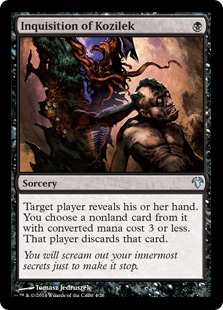
As a result, highly interactive decks naturally prey upon unfair decks. These decks are designed to mess with opposing gameplans and unfair combo does not respond well to disruption. If Grishoalbrand fails to resolve the Goryo's Vengeance or Through the Breach it cannot realistically win. Counterspells, targeted discard, and removal are all speedbumps to aggro decks, but they can be a death sentence for combo. Therefore, when your metagame is full of combo decks the response is to go disruptive.

Example

Consider this: against most Modern decks, a card like Thalia, Guardian of Thraben is mildly annoying. Their gameplans are robust enough that they can still execute their plan despite the drag from her tax. Thus Thalia is not a popular or effective Modern card. Cheeri0s, on the other hand, will not win with her in play. It cannot overcome that type of disruption due to the concessions it has made in order to ensure that its combo works. Merfolk can fight through waves of removal thanks to creature redundancy, but a few discard and counter spells can permanently cripple Storm. Aggressive and fair decks are able to withstand and win wars of attrition. Unfair combo is not.

Conclusion: Adding Combo Promotes Diversity

If you add more unfair combo decks into a format you will promote diversity, not only in terms of decks, but of strategy. By adding additional unfair combos we decrease the ability of uninteractive aggro to win. This replaces robust fast clocks with fragile faster clocks. This incentivizes slower and more interactive decks to enter the format to feed on the fragile speedsters. In turn this causes uninteractive aggro decks to return to run over the slower decks. Over time this cycle leads to an equilibrium state between the major archetypes and promotes strategic diversity.

A lot of the criticism of Modern stems from the perceived lack of interaction and overabundance of aggressive decks. Previous metagame updates have shown the only consistently Tier 1 interactive deck has been Jund. So what happens when we add unfair combo? Consider a metagame that is made up of Jund, Infect, Burn, GR Tron, Bant Eldrazi, and Abzan Company. This metagame has one true interactive Fair deck, three uninteractive aggressive decks, a Ramp deck, and a Fair Combo. Lets throw Cheeri0s into the mix and pretend it is Tier 1. In the original metagame, the non-Jund decks seek to execute their gameplans as quickly as possible while Jund tries to hold them off. Whoever among the non-Jund executes their plan first will win, matchups depending. Jund will win when it cripples the initial attacks of the aggressive decks and then out-resources them going long.

Cheeri0s disrupts this equilibrium. The non-Jund decks run a bare minimum, if any, of relevant interaction. Infect is the only deck with a realistic chance to win on turn three, which is when Cheer0s is supposed to go off, so it will get some wins through racing. It is possible, if very unlikely, that Abzan Company will execute its infinite combo on turn three and so not lose as well. The other non-Jund decks will be severely impacted. They cannot race the combo and cannot reliably disrupt the combo. At most those decks have 8 disruption spells, and they may not actually work in certain circumstances. As a result their share of the metagame will decrease. Jund meanwhile, which plays as many as 20 pieces of relevant disruption in discard spells and cheap removal, will reliably stop the combo and beat Cheerios. Jund's share rises and incentivizes Tron and Eldazi to return.
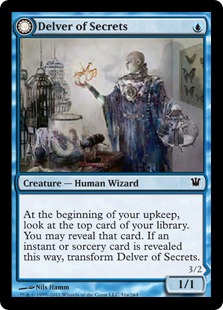
Over time, you would see an equilibrium format where the interactive Jund thrives on eating Cheeri0s players and grinding with the aggressive decks while the aggressive decks will lose share to Cheeri0s. This will force at least some of them to adopt more interactive pieces to compete. This will necessarily make them less streamlined and slow them down. While the new combo deck may be faster than the aggressive decks, it is only one deck compared to several. Therefore the total number of very fast decks will be low compared to the slower decks. In this way adding a faster deck slows down the format and makes it more interactive.

A Corollary

This is all based on unfair combo being good but not too good. Being fast and powerful is okay, but too fast or reliable and we can get into problems. The decks must be good enough to threaten to win on turn three or earlier but not so good that they can do it reliably. It is a balancing act because the threat needs to be real enough to change the deckbuilding calculus of the aggressive decks and force them more towards Tempo or aggro-control, but not so real that it happens every game. I think that the current builds of Cheeri0s and Grishoalbrand are close to right. They can win early, but it is better for them to wait a few turns. The mere threat of that early win is enough to force players to change their play habits.

Case in Point: Legacy

I offer the Legacy metagame as an example of how this works. Aggro decks as most formats understand them are not present in Legacy. For the most part all that is present are aggro-control and tempo decks. Most of these are Delver variants, and Delver pilots will pontificate at length about how their decks are not aggressive decks. There are no Zoo or Affinity decks, no true aggro. Colorless Eldrazi and Death & Taxes are close, but both are closer to Prison/Tempo hybrids than linear aggro. In fact, looking at these standings, the only "real" aggro deck with reasonable metagame presence is Burn. Decks like Modern Affinity just aren't viable in Legacy.
As a result of this aggro deficiency, Legacy is a notably slower format. Some of this must be attributed to the power of Brainstorm and Ponder. These cards create quite the incentive to slow down and durdle (a little too much for my taste. Judges really need to be more aggressive enforcing slow play warnings), but that is not the only reason. Even in a format full of Force of Will, fast aggro should have a huge advantage over tempo decks, especially ones that like to durdle. Even with a control deck as powerful as Miracles ruling the roost, we should still see Affinity-style decks. But the closest is Legacy Infect, which plays a lot of interactive spells and durdles more than its Modern counterpart. Why is that?

I believe that the presence of very fast, but fragile, combo decks has actually slowed Legacy down significantly. An "all-in" deck like Affinity cannot afford to dedicate enough slots to interaction to not just lose to combo and it is incapable of racing them. Storm and Belcher can win on the first turn, sometimes through a Force. The threat of such kills requires most decks to run Force. Once you are playing Force, you have to fill your deck with sufficient cards to turn Force on, which leads you to playing the cantrips, which leads to a much slower game. Decks with Prison elements are an exception to this, but the slot commitment necessary for their taxes and lock pieces leave little room for fast kills. Because there are combos too fast to race, Legacy is a slow format.
Consider Goblins

Goblins is not a very successful Legacy deck, which is surprising considering that it has a very good matchup against fair decks, particularly Miracles. Between Aether Vial and Cavern of Souls the deck never fears counterspells, even the Counterbalance lock, and it has significant card advantage built in through Goblin Matron and Goblin Ringleader. It also plays creature interaction in the form of Goblins like Stingscourger. The result is that Goblins can grind harder than nearly every deck. If you want to really embarrass Miracles, play Grenzo, Dungeon Warden and actively punish Terminus. You cannot grind with Goblins—you have to race them, and that is hard for many decks.
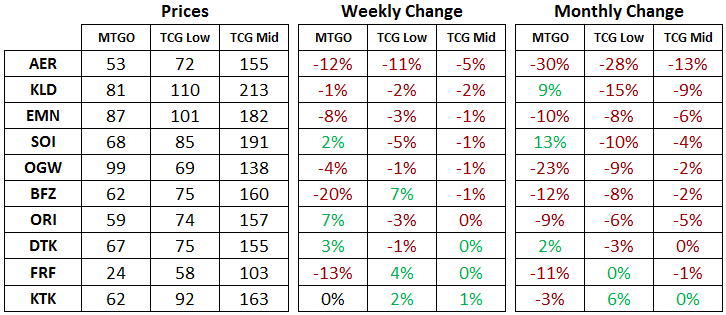
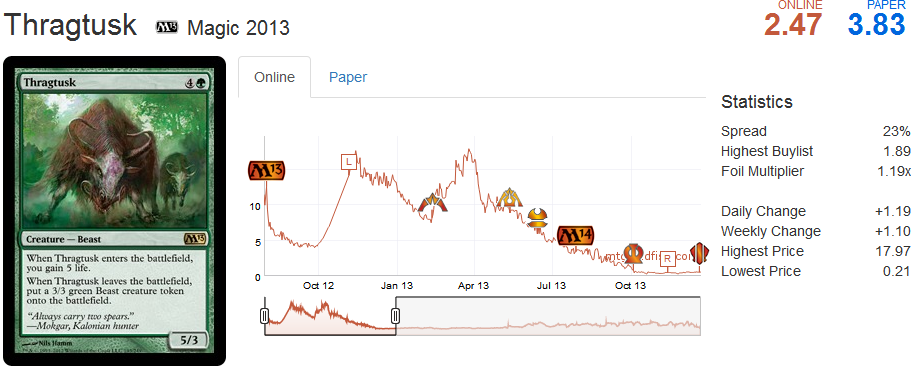

Despite this, Goblins sees very little play because it is incredibly weak to combo. Realistically it will not beat Storm or Belcher. These are the fast unfair combos keeping the less interactive decks out of the format. Without fast combo, decks like Goblins would be far better choices than they currently are. Without the threat of dying before your first turn, the incentive is lower to play interaction, and out of the cutthroat desire to win, most players would streamline their decks to kill more quickly. Already, Force gets cut in many non-combo matchups as card advantage matters more. If Force wasn't necessary anymore, would you still play it? If you don't need Force, do you really want to durdle?

Fast Combo Slows Formats

I believe that if we want to slow down Modern and make it more interactive, we need to make streamlined "all-in" aggro decks less attractive options. The best way to do that is to allow more fast but fragile combo decks into the format. This will encourage players to play more interaction and discourage non-combo uninteractive decks from competing. There is a historic aversion to unfair combo, both on the part of Wizards and the players, and while it can at times be justified, I believe that it has been taken too far. Without the threat of the combo pillar, aggressive decks are incentivized to get as uninteractive as possible to win earlier. Therefore, to encourage more interactive games we should embrace the combo-playing polite-euphemisms and allow more decks like Cheeri0s into Modern. I look forward to hearing about your perspective in the comments.

Insider: MTGO Market Report for March 15th, 2017

Are you a Quiet Speculation member?

If not, now is a perfect time to join up! Our powerful tools, breaking-news analysis, and exclusive Discord channel will make sure you stay up to date and ahead of the curve.

Welcome to the MTGO Market Report as compiled by Matthew Lewis. The report will cover a range of topics, including a summary of set prices and price changes for redeemable sets, a look at the major trends in various Constructed formats and a "Trade of the Week" section that highlights a particular speculative strategy with an example and accompanying explanation.

As always, speculators should take into account their own budgets, risk tolerance and current portfolios before buying or selling any digital objects. Please send questions via private message or post below in the article comments.

Redemption

Below are the total set prices for all redeemable sets on MTGO. All prices are current as of March 14, 2017. The TCGplayer low and TCGplayer mid prices are the sum of each set's individual card prices on TCGplayer, either the low price or the mid price respectively.

All MTGO set prices this week are taken from GoatBot's website, and all weekly changes are now calculated relative to GoatBot's "full set" prices from the previous week. All monthly changes are also relative to the previous month's prices, taken from GoatBot's website at that time. Occasionally, full set prices are not available, and so estimated set prices are used instead.

mar14

Standard

This week's prices were collected the day after the banned and restricted announcement. With no changes to Standard, prices on select cards have recovered in the past day. Gideon, Ally of Zendikar, for instance, was widely available for less than 20 tix prior to Monday morning. Now that it is safe in Standard for the next month or so, the price has recovered to 25 tix. There are other examples of card that had a discount associated with the fear of being banned, such Saheeli Rai and Heart of Kiran.

There was an error retrieving a chart for Gideon, Ally of Zendikar

Despite the recovery in prices of these and other cards, prices on Standard sets on MTGO are still largely in a downtrend. This is mirrored in paper where all Standard sets have lower prices today than they did a month ago. This is not unusual: as spring approaches, the cyclical peak of Standard prices tends to occur in the winter, between December and March. The release of Modern Masters 2017 this week is also weighing on prices as vendors and players calibrate their budgets around this highly anticipated set.

This week I had to the pleasure of watching Luca Ashok's video on how he speculates on Standard cards. It's an excellent primer and guide on speculating with a completely different perspective than what I normally discuss.  I advocate a high-level look at the market, with the lens of redemption as a guide, whereas Luca uses a bottom-up approach. He targets cards that have good potential, but are seeing very little play in Standard. He accumulates those cards, and then waits for the Standard metagame to change.

There was an error retrieving a chart for Oath of Nissa

It sounds like a can't-miss strategy, but it does take some work. First of all, knowledge of which cards are on the rise and which cards are on the wane in Standard is key. This is what leads to the large price fluctuations that speculators can profit off of. This is where good card evaluation skills come in handy, and the Quiet Speculation forums are a great place to develop these skills during spoiler season.

Lastly, I would reiterate a very important point: speculating is a lot easier if you are heading into the winter as opposed to the summer. Interest in playing MTGO (and thus Standard prices) are cyclical in this regard. If you are seeking to replicate Luca's technique, just know that it will be much harder over the next few months as prices will have a general downward trend heading into the warmer weather of the spring and summer. Cards that look like they are at a price bottom will in fact find new floors.

Just check out the price of former Standard staple Thragtusk in the spring of 2013 to see what I mean (see below). If you were a buyer around the release of Dragon's Maze, this card was about to enter a downtrend that lasted well into the Fall and rotation out of Standard.

thragtusk

Modern

Like Standard, Modern was left untouched by the banned and restricted announcement this week. I think this is correct as the format is still adapting to Death's Shadow. Witness the latest incarnation of the deck, as players put the namesake card into a Grixis shell.

There was an error retrieving a chart for Tasigur, the Golden Fang

Unsurprisingly, this deck makes use of Fatal Push as a four-of. Aether Revolt will be drafted heavily for a a little more than a month to go. This means that the time to be accumulating this card is now. If you are a player, get your playset some time over the next four weeks.

Speculators that are willing to think long term should be loading up on this card. It's going be a Modern staple for the foreseeable future, so I would expect it to hit 3-plus tix next winter and 5-plus tix the winter of 2019. Don't be afraid to back the truck up on this one.

There was an error retrieving a chart for Saheeli Rai

Elsewhere, Copy Cat decks are infiltrating Modern as well, often combining with Sun Titan as an additional way to combo out. This innovative build blends in Soul Sisters and Kiki-Combo components as well. This is the type of deck that can be flexible and powerful enough to really shine in Modern. I'd be watching this one to see if it takes off in the current metagame as a descendant of Birthing Pod decks.

Trade of the Week

For a complete look at my recent purchases, please check out the portfolio. I've been watching the price of Aether Revolt (AER) fall steadily over the past few weeks. At its current price, this is the cheapest a small set has ever been since switching to the two-sets-per-block structure that began with Battle for Zendikar (BFZ). I think this can be explained by the relative power level of the set and the fact that AER will have a shortened redemption window.

There was an error retrieving a chart for Heart of Kiran

With Oath of the Gatewatch (OGW) and Eldritch Moon (EMN), both of these sets hit their lowest point at about two months after they were released on MTGO. After that, it took about another two months for them to increase in price by over 50 percent. Buying AER this week was a little early relative to this timeline, but I felt the chance at Standard getting a big shakeup from the banned and restricted announcement was worth considering. If cards had been banned, AER looked primed to be a big gainer as cards like Paradox Engine and Tezzeret the Schemer could potentially anchor new Standard strategies, while Mardu Vehicles, B/G Constrictor and Copy Cat decks were the obvious targets to suffer from a ban.

Despite no changes to the banned and restricted list, I think we are close to prime buying time for cards from AER. With Modern Masters 2017 set to be released on March 22, their will be a new and interesting draft format to take players' interest away from Kaladesh (KLD) block draft. This means the supply of KLD and AER cards to the market will be slowing down, meaning we might have already seen the price bottom for these sets.

There was an error retrieving a chart for Nicol Bolas

AER will be redeemable through the release of Amonkhet (AKH) and up to the date that AKH goes live for redemption. Typically, this is about a month after a set is released, so the target selling window for AER sets will be in the first two weeks of May, although there is much that is unknown about how the price of a Standard set will behave once it is no longer available for redemption. It's possible that demand for Standard staples will drive the price of AER much higher, similar to how the prices of OGW and EMN moved. It's going to be an exciting few months on MTGO as we enter this uncharted territory.


Want Prices?

Browse thousands of prices with the first and most comprehensive MTG Finance tool around.


Trader Tools lists both buylist and retail prices for every MTG card, going back a decade.

Quiet Speculation