Are you a Quiet Speculation member?
If not, now is a perfect time to join up! Our powerful tools, breaking-news analysis, and exclusive Discord channel will make sure you stay up to date and ahead of the curve.
For the first time this year, welcome to The Beginner's Guide! For those new to this series, I am trying to simplify Modern to make it more approachable and comprehensible for those players new to the format. Previously I've covered sideboarding strategies, deck diversity, and an in-depth look at the aggressive strategies. Today, it's time to take on the fair decks.

This article has been both incredibly easy and unexpectedly hard to conceptualize and write. On the one hand, the decks and strategy that I will be discussing are fairly obvious. Even if you've never heard them called under the fair moniker, I think everyone will agree with how they're categorized. On the other, actually defining my terms so that the categorization makes sense has been far more difficult. The terms fair and unfair are loaded and there's a lot of disagreement about their meaning, even without my additional wrinkle of "fair" (pseudo-fair) decks.
I've defined the terms before, but I think an additional articulation is in order for this piece. To wit, fair decks are not the only ones playing fair Magic. It's that their defining strategy is inescapably fair. Yes, I will discuss this at great length. As always, remember that this is intended as an intro to the deck archetype and by necessity I will be simplifying things and skipping over some nuance that more experienced pilots may find critical. I'm trying not to be overwhelming.
[wp_ad_camp_1]
What is a Fair Deck?
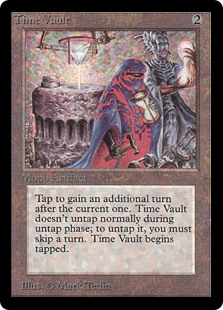
My definition of fair is playing by the rules of Magic: one land drop and one card per turn, pay the mana cost of your spells, etc. "The game of Magic as Richard Garfield intended" is a common phrase to describe fairness, and while the sentiment is good it is not entirely accurate. He is the man who made Time Vault and is on record saying it was designed to combo with Twiddle. I think it is more accurate to say it is Magic as Wizards R&D intends in Standard. As a result, the fair decks will be the most familiar and approachable to Standard converts.
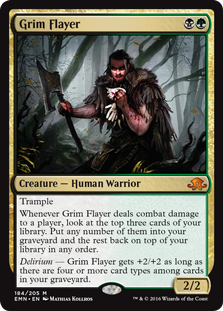
 Wizards has said that they want Magic to be about creature combat and planeswalkers. As a result, Standard has seen a proliferation of midrange decks, beginning with Jund and continuing to current Standard's GB Delirium. They play powerful midlevel threats and a large number of answers. Their main strategic intent is to answer, then invalidate, any faster deck's clock, while overwhelming the answers of slower decks. In current Standard, Delirium will play Grim Flayer, Fatal Push[mtg_card], and [mtg_card]Transgress the Mind. Against an aggressive deck like Vehicles, you will use Push to answer their early threats, Transgress to strip their planeswalkers or cars, and then a delirious Flayer will shut down the smaller creatures and eventually beat down for the win. Against Jeskai Saheeli, you'll play the Flayer early to provide pressure, Transgress to protect it from sorcery-speed removal or to strip card advantage, and Push to protect against the combo. Same cards, different roles.
This versatility and adaptability are the defining features of fair decks in both Standard and Modern. Modern BGx has better cards than Standard BGx, but the play pattern is exactly the same: determine Who's the Beatdown, assume that role, and win through attrition and superior card quality or quantity. Their cards are rarely dead in any matchup and are positioned to trade up in terms of value, mana, or card advantage. They look like piles of good cards, and they are, but they're more than the sum of their parts. As an analogy, the fair decks are the diesel trucks of Magic. They don't look impressive and aren't particularly fast, but they're reliable and indestructible.
Strengths and Weaknesses
This reliability is the greatest strength of the archetype. These decks have play against almost everything and very few matchups are truly unwinnable. They have high card power and are playing the abstractly best cards in their color combinations. As a result they have very few dead cards in any matchup. Cards may not be optimal by any stretch, but they're very rarely actually worthless. They also have very solid mana with a lot of utility lands to make flood less of a problem. They're just good, reliable decks.
 This also means that there are very few ways to effectively target them. They have answers for almost everything and are so redundant and fair that it's hard to target them with hate. You can harm them certainly, as I will detail later, but there really aren't any I-win buttons against fair decks. You can beat at them all you want, but just like a diesel truck as long as it has fuel in the tank it will keep running.
This leads us to what is both a great strength and weakness of the archetype. They're very "average" decks. Jund has been called a 50% deck, in that its win percentage is 50% against everything. While not strictly true, it is the right sentiment. These decks have play against everything, but they're never spectacular against anything. Their good matchups are rarely more than 55%, but their bad matchups are rarely worse than 45%. You're unlikely to "just lose" to anything, but you may really need to work for your wins. Experience is the greatest factor in your actual win percentage with these decks.
Experience is also at play in the archetypes biggest weakness: poor construction. These decks can be built to have play against everything, or be really strong against a few things. Knowing when which is correct, or even recognizing when you are playing one version or the other, is a skill in itself. The presence of Grim Flayer in Jund may subtly change your positioning against the field such that your previously correct lines aren't anymore. There's a lot of opportunity for customization with these decks, which can either improve your deck or ruin it, and you may not know what you've done until you're scrubbing out of the tournament. Newcomers should stick to the established decks and not go exploring until they have really learned their deck.
Playing Fairly
I should stress that the defining characteristic of the fair decks is their gameplan, not their win condition. If your intention is to use your cards to trade with your opponent's cards until they can't trade anymore and then win, you're a fair deck. Your actual win condition will vary. For this reason, Modern's midrange and control decks all fall under the fair banner. Jeskai and newcomer Esper Control have effectively the same gameplan as Jund. Similarly, Grixis Midrange/Control may accelerate out its win conditions with delve, but in total their gameplan is exactly the same. All fair decks want to trade their cards for your cards until you run out of meaningful cards and then they win.
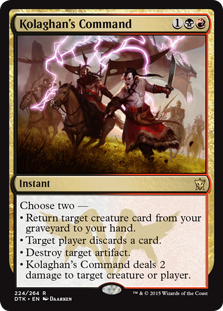 In general, a fair deck pilot should be seeking to maximize their cards' impact and efficiency. You are trading your cards with your opponent, so you want to trade up as much as possible. This can be through card advantage (trading a Kolaghan's Command for Cranial Plating and Vault Skirge), mana advantage (trading a Spell Snare for Blighted Agent) or through quality advantage (trading a Mana Leak for Tarmogoyf). Your cards are generally more individually powerful than your opponent's, so you are looking to wield them as effectively as possible.
It is also important to stress the importance of role evaluation when you're a fair deck because it informs when and how you are trading your cards. This is easier for some decks and matchups than others. Control decks will only diverge from the control role when facing fast combo, for example. When a fair deck is the control, they are looking to stay alive long enough for their superior card power to cancel their opponent's tempo advantage. As a result they should be trading to maximize their time advantage. It is okay to get less than the maximum impact in terms of quality, mana, or card advantage, as long as it keeps you alive. For example, it is correct for Jeskai to play Lightning Bolt at sorcery speed if they can play around Infect's pump spells. Jund will willingly trade Terminate down for Goblin Guide. You have power to spare in these situations, so you can afford a little inefficiency to let it catch up.
When fair decks are the beatdown they are looking to minimize the impact of the opponent's answers and/or constrict their time advantage. This requires them to establish their clocks, even if it isn't the best use of their cards, and trade based on protecting or establishing that clock. Jeskai is forced to play Snapcaster Mage as an Ambush Viper against Ad Nauseam to establish some kind of clock. Jund would really like to trade Thoughtseize for Elspeth, Sun's Champion, but it is usually better to take Mana Leak so that they can stick a Tarmogoyf or Liliana. You want to force them to use the least efficient answers as possible and ideally use more than one to kill your threats. Remember, a fair deck is trying to win an attrition war.
Beating the Fair Decks
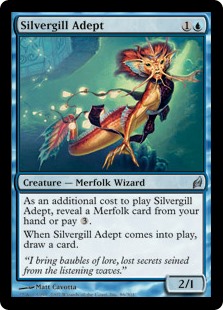 If you want to beat a fair deck, you do not want to fight on their terms. It's hard to win. These decks are set up to win the attrition fight game one, and unless you are another fair deck you will struggle. Jeskai beats a lot of aggressive creature decks handily game one thanks to overwhelming amounts of spot removal. They simply cannot establish their clocks in the face of redundant Bolts. Merfolk is the exception, because so many of its threats are must-answer, it has Silvergill Adept which replaces itself, and Master of Waves which is hard to remove and generates many threats. It is able to win the attrition fight thanks to threat density and cantrips. Similarly, when combo decks are forced to actually fight through walls of discard from Jund they struggle to find the resources they need to win.
It is better to get under or go over them. Gotcha! decks are fast enough that they can deploy their clocks and protection before fair decks can play enough answers. Tron has always been good against these strategies because its threats mostly ignore fair answers and it has a huge mana advantage that can overwhelm them on power. You want to either end the game before they can deploy their superior power, or just overpower them.
If you have to fight along the fair axis and will have to play the attrition game, you do have options. The Merfolk strategy of relying on superior threat density is perfectly legitimate and effective, if somewhat risky. Simply playing more threats than the opponent can answer forces them into racing situations, which they're rarely well suited for. The problem is that if the opponent has a strong independent source of card advantage, you may never run them out of resources and get snowed under. Merfolk can easily beat Jund in an attrition fight when it doesn't stick Dark Confidant. If Bob does hit then that will not work as Jund will never run out of answers. Going wide quickly can fight this problem, which is why BW Tokens has historically been advantaged against fair decks.
 Another option is to out-fair the fair decks. This means having superior threats or card advantage. Bringing in Painful Truths in the BGx mirror is very strong, as is Ancestral Vision against BGx. You either want threats that they cannot interact with, like Thrun, the Last Troll, or to simply snow them under with cards. If you're intending to trade cards for cards, then you will win if you have something they cannot trade for, or more cards than them. Simple and effective.
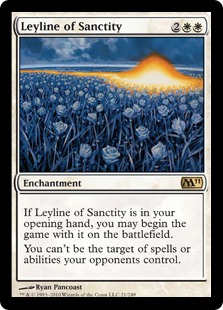
Finally, an underappreciated method is resource denial. If you take away the means for them to play their cards, they cannot win quickly enough to "get under" your denial. Historically this has taken the form of land destruction to keep control decks from deploying their spells, but it can also be shutting off some other avenue of advantage. Grixis leans heavily on its graveyard both as a source of card advantage and as a mana pool for delve spells. Shutting off access to that resource with Rest in Peace can severely cripple them. Similarly, GBx depends on targeted discard to interact and fuel their Tarmogoyfs. Leyline of Sanctity can potentially win the game against them if you're a combo deck. You can win the fair game against fair decks if you want to, but I think it is better to invalidate some part of their gameplan instead.
To Be Fair
Fair decks are not the most impressive decks in Modern, but they do rack up wins. Card power coupled with redundancy and resilience just get there more often than you might think. There is a very good reason that Jund is and has always been a Tier 1 deck. However, these decks require a lot of dedication and practice to really unlock their power. When you can beat everything, you have to know how to prepare for everything. Standard may prepare new players for this style of deck more than the others, but that does not mean that they can just jump in and expect to win. This is Modern, and while card power goes a long way, knowing how to employ it is far more important.

 Wizards wants
 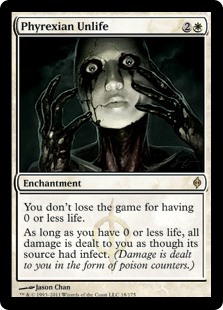 Combo's re-introduction to the format also complicates the rock-paper-scissors triangle, which benefits the format by making matchup nuance richer. Ad Nauseam has a far better time against Jund than something like Infect, while posting a miserable Infect matchup itself (thanks to the unfortunate interaction between Angel's Grace, Phyrexian Unlife, and poison counters). I prefer a format less dependent on the matchup lottery; when there are only four realistically viable decks (say, Jund, Infect, Tron, and Dredge, all best-of-breed representatives of larger archetypes), Modern becomes less about skillfully navigating a mixed field and more about dodging the guy with Mutagenic Growths.
 How about losing to Infect, Affinity, and Ad Nauseam? Already a drastic improvement. These decks kill opponents in different ways and employ unique strategies. Heck, they don't even share a card between them (barring Inkmoth Nexus). They also all demand different types of interaction from opponents. Who knew losing could be so fun!
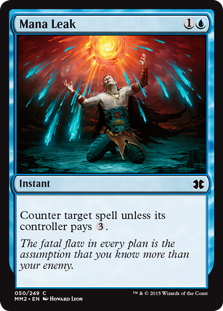 Leak counters crucial threats from mana-light aggro decks, allowing control to stay in the game long enough to resolve its more powerful cards. But it does nothing against an opponent searching up multiple copies of Urza's Tower. And unlike RG Valakut, the nature of Urzatron grants pilots a sizable mana advantage without requiring too many land drops, meaning they can follow up with threat after threat. The big-mana decks of old had to spend precious cards to go up on mana, even if they got to that mana faster than opponents.
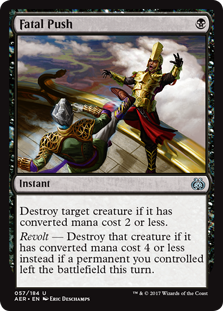 These cards afforded Jeskai a reasonable aggro-control matchup, something Esper, with its clunky answers, desperately lacked. Enter Fatal Push, a card that handily does away with that weakness.
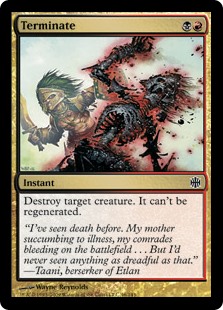 That situation seems narrow, but it comes up all the time, and really just highlights the strength of Fatal Push across the format: Terminate-level removal for a single-mana price. Path to Exile without the drawback. Sound like an over-reaction? What creatures over three mana are seeing play in Modern right now? Gone are the days of Deceiver Exarch. We weren’t killing Etched Champion anyways. If our opponent is casting Wurmcoil Engines we’re probably losing regardless. Outside of Eldrazi, Fatal Push is great to excellent, and this is all putting aside the revolt clause, which is beyond easy to activate in this format.
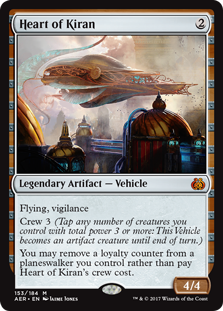 Heart of Kiran has to be interesting, but only because it’s a clearly pushed mythic that’s just begging to be exploited. Does a control deck want a 4/4 that takes advantage of plentiful planeswalker loyalty that wasn’t being used otherwise? Jace, Vryn's Prodigy might say so. A 4/4 doesn’t line up quite well against a 4/5 Tarmogoyf, but swinging for 4 and then blocking for 4 thanks to vigilance and two loyalty could be a great alternate angle of attack. If we have a planeswalker with loyalty to spare, we’re probably doing okay to begin with, but in a way the two can go hand in hand. Heart of Kiran definitely shores up some of the problems reactive decks tend to have against creatures, primary among them being how to answer a bunch of tiny dorks pecking you to death. I probably wouldn’t play this without access to Lingering Souls, but it’s definitely got my interest for now.
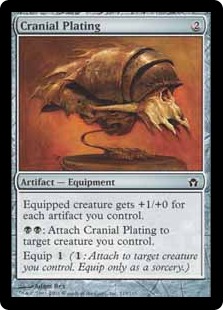
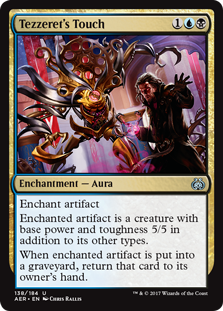 The new Ensoul Artifact is a potential Affinity card. In addition to providing a giant monster to smack the opponent around with, it provides protection of sorts for an important permanent. Is there anything we want to be protecting in this fun, albeit unconventional way? Cranial Plating might say so, but Spell Pierce is almost definitely better. It’s also asking a lot to have two colored sources (between Glimmervoid, Mox Opal, and Springleaf Drum) to get this thing out. Not impossible, but not free either.
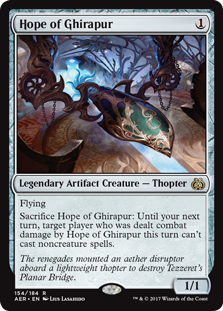 Hope of Ghirapur is the little gnat flying around your ear, that's mildly annoying at first until it flies right in there and “holy #*#& aaaaahhhhh!” As a piece of disruption, it has some applications against a few strategies. It turns off Living End pretty well, for example, as you can sacrifice in response to the cascade trigger. These uses are pretty narrow, however. Ultimately, Hope of Ghirapur will probably be used like its precursors Silence and Xantid Swarm are in other eternal formats, to protect your own combo rather than mess with an opponent's plan.



 I played some sweet games, though none against any new archetypes, so I think match records offer as much information as a full tournament report would:
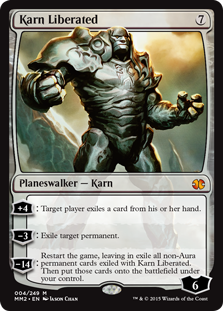 The fact that I played against three Tron decks was no accident. The Top 16 doesn't tell the full story of this tournament, and in addition to playing against Tron a bunch, I couldn't look left or right without seeing multiple additional copies of the deck. I don't have raw data for the tournament, but Tron was very well-represented. In this field, it's not remotely surprising that Goryo's Vengeance and Ad Nauseum finished so highly. Tron is a huge winner at level one with regard to the bannings, and spell-based combo does a great job of wrecking Tron.
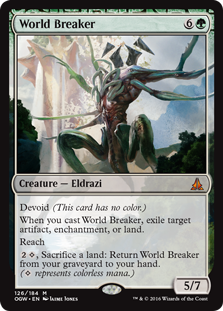 The round that I lost involved my opponent having turn-three natural tron plus a Chromatic Star to cast World Breaker in game three. There's nothing my current configuration can do about this, and if I didn't expect more do-nothing blue control decks to be showing up, I would consider Spreading Seas for this slot. As things stand, I suppose you just accept taking an inevitable loss to the absolute nut draw. Even turn-three Karn Liberated can be countered—it's just turn-three World Breaker that is basically unbeatable.
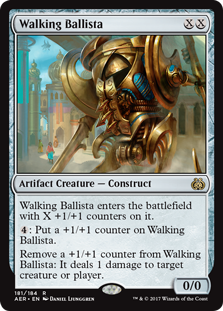 It's a serviceable payoff when you have tron online, and is great on turn two against decks like Delver and Infect. I would expect the card to show up in small numbers in Tron going forward, and also see it as a potential tool for Affinity. The interaction with Arcbound Ravager is definitely powerful, and Arcbound Worker is champing at the bit to reappear in the deck. Expect to play against this card in the near future.
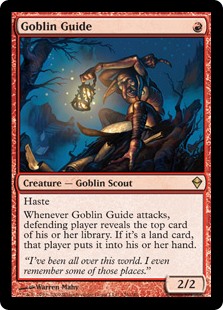
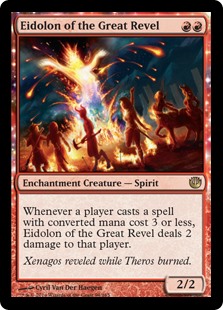
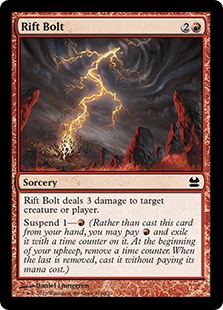
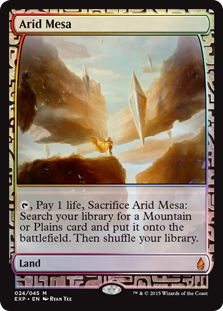 The Burn manabase is definitely the biggest compromise you can make while building the deck. Gerry played the most optimal version with 12 fetches over distinct card names (all of them find Mountain) which technically is the best way to build the mana. Having 3 copies of each of the four fetches instead of 4 copies of three fetches gives you some extra fractions of a percentage point against odd scenarios like Surgical Extraction and Pithing Needle. In practice, you may never even find yourself in a situation to lose a game for this reason, so it's not necessary to play the deck.
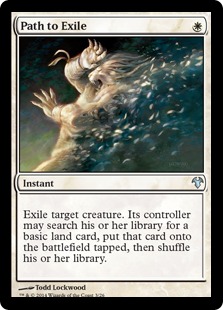 As such it's hard to point exactly where is the best to start, but Path to Exile is a card I definitely always have in my sideboard in some capacity. After that it really depends on your local metagame.