Are you a Quiet Speculation member?
If not, now is a perfect time to join up! Our powerful tools, breaking-news analysis, and exclusive Discord channel will make sure you stay up to date and ahead of the curve.
It's been weeks since our last "Fixing Modern" column, and that has everything to do with format-wide excitement surrounding the April 4 banlist update. I intentionally tabled the column to see how the new Modern shaped out. Early results show promise, and although we're still a month away from Grand Prix Los Angeles on May 20, I remain cautiously optimistic about where Modern is heading.
Pro Tour Shadows Over Innistrad weekend has given me new reason for cautious optimism, and it comes in a surprise announcement made at the height of the Standard-centric event. Starting in 2017, Wizards will move away from using Modern as a Pro Tour format. This update alone may have led to the same outcry we saw in 2014, one I already analyzed in-depth in my last "Fixing Modern" piece. Instead, Aaron Forsythe gave context to that change in an informative, honest, and defining statement on "Where Modern Goes From Here." Today, we'll break down this epochal decision.
Forsythe's article went live in the wee hours of the North American morning, but I imagine most Moderners will have read it and formed a (very strong) opinion by Sunday lunch. As you may have already gathered from the article's art and the introduction's tone, I'm hopeful and excited about the changes and, more importantly, what they represent.
That said, I understand where players might feel nervous, skeptical, or downright betrayed by this decision and Forsythe's followup words. By the end of today's article, I'm hoping to alleviate some of those worries and sign you up to Team Optimism. After all, the update embodies a direct response to not just one but both of my previous pieces on "Improving Communication" and "Defining Format Mission." How could Nexus veterans not be hopeful?
Because both the decision and its explanation are such significant troves of information, this week's Part 1 will focus on the Pro Tour and Modern relationship. Next week, we'll turn to the format guidelines in a Part 2. Splitting up the content ensures I can unpack this material as much as possible without also writing a novella.
[wp_ad_camp_1]
Unpacking Source Material
Based on some of the Tweets, forum posts, and Reddit comments I read on Sunday, an alarming number of Moderners only skimmed the announcement. Some clearly didn't read it at all. This includes those who are both uncritically positive ("MODERN IS SAVED!!") and categorically negative ("RIP Modern, back to Legacy"). In fairness, there are respected, sharp players who appear to have thoroughly read Forsythe's piece and are still in one of those camps, but most of the extreme opinions are  from less diligent readers.
Before we get started, do all the other people who have to read your Internet comments a favor: re-read the article. We can all afford a few minutes to revisit a decision that took Wizards much longer to craft.
Required reading: Aaron Forsythe, "Where Modern Goes From Here" (April 24, 2016)
You can also check out Helene Bergeot's article for additional context on the decision, but Forsythe's is by far the more important of the two. I always talk about how everyone needs a bookmark folder with all their significant Modern articles. Mine is called "Modern Literature," and you can bet both of these pieces went in there the instant I finished.
As I puzzle through Forsythe's points, remember I'm offering just one take on a decision that will surely be picked apart for months to come. I will also undoubtedly revisit my interpretations as Wizards takes action through bans, unbans, reprints, tournament changes, and more.
Unlike some of my other analyses, this one is deeply qualitative and not quantitative. It's all about direct quotes, underlying meaning, and background context. One day I'll get the hard numbers to back up or challenge today's claims, but for now, let's dive in paragraph by paragraph as I argue for why you should be as tentatively excited about the Pro Tour change as I am. Unless otherwise noted, all quotes come from Forsythe's article.
No More Modern Pro Tour
Wizards canned the Modern Pro Tour before in August 2014. This resulted in an outcry so deafening that Wizards backpedaled as fast as George Mason University reversing its naming decision on the Antonin Scalia School of Law. You can read my exhaustive breakdown of the decision in my previous "Fixing Modern" article, but the key context to remember for today is how controversial and problematic this decision was two years ago.
Fast forward to April 24, 2016, when Wizards announces something very similar in an entirely different way under entirely different circumstances. Based on Modern's history to this point, whether in the Pro Tour fiasco of 2014 or the Splinter Twin banning controversy earlier this year, Sunday's decision represents a more considerate and critical approach to Modern that will ultimately benefit the format. It also represents a logical execution of the Pro Tour mission, not a sudden deviation to sink Modern. All of these factors should have us feeling confident about Modern's future going forward.
Established environments and new sets
At the beginning of his article, Forsythe leaped right into the Pro Tour removal as a way to immediately head off controversy and explain Wizards' thought process.
"As you've no doubt heard by now, we no longer plan to use Modern as a Pro Tour format as of 2017. Modern will continue to be a big part of our Organized Play offerings, both at the premier level and otherwise, but it is no longer a good fit for the Pro Tour."
Conspiracy theorists likely read this and immediately hop off the rails with alternate explanations:
- "Modern doesn't sell packs."
- "Wizards wants to kill the format and introduce a new one."
- "The new CEO plans to abandon paper for digital products."
I have no idea how much these tinfoil hat ideas informed the decision, but I'm guessing the Magic truthers are as off-base here as they are in most other areas. Forsythe claims Modern "is no longer a good fit for the Pro Tour," and this is the explanation we have to buy into. Not just because Forsythe said it so it has to be true. Rather, as we'll see shortly, because Modern is honestly not a "good fit for the Pro Tour," something we see both in Forsythe's arguments and in the external factors surrounding the decision.
Forsythe wastes no time jumping into the reasons underlying this bad fit.
"It comes down to our goals for the events. The first is that we want to reward good drafting, innovative deck building, and tight gameplay in unestablished environments.
In previous articles, Wizards made it sound like Modern did not have "innovative deck building" and "tight gameplay." See Helene Bergeot's quote about Standard, not Modern, 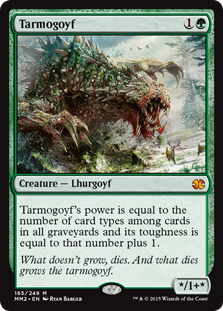 "reward[ing] players who are both good deck builders as well as skilled players" just before she announced the removal of a Modern Pro Tour. Many players may read Bergeot's tone in Forsythe's quote, but for me, that's a gross misinterpretation of the new material. The operative terms aren't "innovative deck building" or "tight gameplay." It's the "unestablished environment."
As any Modern player can attest, our format has a high degree of skill and innovation, even if skill is matchup-specific and innovation is incremental. Forsythe isn't indicting these Modern elements. That said, it's virtually impossible to argue the format represents the "unestablished environment" Wizards seeks for Pro Tours. Metagames are deeply established, with most Tier 1 decks staying Tier 1 even a year later. It's no coincidence I talk about the Big Aggro Three or Jund in virtually every metagame update, or that Tarmogoyf is a Modern Masters poster-child every edition.
Forsythe confirms this consistency later in the article.
"Our top players pointed out to us that Modern wasn't often about innovating or solving the puzzles presented by a new card set, but rather it rewarded huge numbers of repetitions with established decks, and while that kind of play can be interesting and is relevant to a lot of the Magic audience, it wasn't what the Pro Tour was supposed to be about."
 Here, Forsythe not only reinforces Modern being a relatively established format, but also gives new context to the notion of "innovation." In the past, I often read quotes like Bergeot's and Forsythe's as cheap shots at creative Modern deck building when I knew the format certainly rewarded these breakthroughs. But now, I see it's more about navigating the "puzzles presented by a new card set," not just deck building in the abstract.
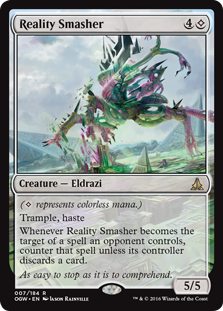
Although the Eldrazi of Oath of the Gatewatch certainly had a big Modern impact, most Modern Pro Tours don't feature enough new cards to shake up the decidedly established environment. Indeed, this mission is at odds with Modern's very definition as a format. Remember Sam Stoddard's quote on Modern, referenced in my "Defining Format Mission" article?
“Modern has provided us a non-rotating format that is far more accessible than Legacy or Vintage, but still retains many of the qualities that people enjoy in those formats—such as a more stable metagame, the ability to play and tweak the same deck week after week, and simply a much more powerful card pool than Standard.”
Sam Stoddard, “Developing Modern” (June 21, 2013)
Talk about a contradiction. On the one hand, the Pro Tour demands an "unestablished environment" to highlight new sets and radical format change. On the other, Modern is supposed to offer a "stable metagame" where players have the opportunity to run the "same deck week after week." This is a fundamental incompatibility which should have been acted on years ago.
Speaking of fundamental inconsistencies, this discussion ties directly to the second disconnect between Modern and Pro Tours.
"Second, we want to highlight the newest card set. To those ends, we positioned the Pro Tour events just a couple weeks after each new set comes out, which both provides the fresh new proving ground for our players and showcases each new set in a premier-level setting right at the beginning of its life cycle."
 Again, with the glaring exception of Oath of the Gatewatch, and the 2014-2015 anomaly of Khans of Tarkir, most new sets are not going to have a sizable Modern impact. Some won't have any Modern impact at all (poor Theros). The card pool is simply stronger in Modern: see Stoddard's comment about Modern having, by its nature, "a much more powerful card pool than Standard." Sure, you'll get your occasional Siege Rhinos that fit into Modern perfectly (and your Treasure Cruises that fit less perfectly), but for the most part, the Modern stage is too crowded with too many high-profile characters to showcase a new set.
All of this makes Modern doubly inappropriate for Pro Tours---the format is both an established environment and it is unlikely to show off new cards.
Historical Pro Tour definitions
Some players still detect an ulterior agenda in Forsythe's article, as if Wizards suddenly pulled the plug on a long-time Pro Tour format to advance sinister aims. It's an attractive theory because we love exposing huge corporate conspiracies, but it's also totally misaligned with the history of the Pro Tour itself. Wizards didn't suddenly change the Pro Tour to kick out Modern. Wizards finally realized Modern was a bad fit for a tournament with historical goals at odds with the format itself.
A number of passages from previous Pro Tour articles and announcements show the tournament's longstanding mission.
"By aligning the Pro Tour so closely to the launch of a new set, the Pro Tour becomes the exclamation point to the Dark Ascension release season... Our expanded Pro Tour coverage will highlight the top players in the world showing off the latest deck ideas and strategies from the new set."
Event staff, Pro Tour Honolulu Announcement (August 24, 2011)
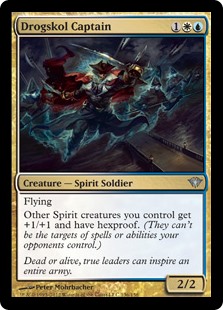 Even before the first Modern Pro Tour, Wizards had already decided to align the tournament with a set release. Their goal: showcase "the latest deck ideas and strategies from the new set." How else was Drogskol Captain going to get time in the spotlight in Top 8 strategies? This echoes exactly what Forsythe would go on to say five years later. Bergeot and other authors also took up this charge in their own Pro Tour endorsements.
"In February 2012, we aligned the Pro Tour with the release of our new card sets, with Pro Tours being named after the most recently released set and taking place two weeks after that set's release. Pro Tour Dark Ascension was the first of these Pro Tours, setting the stage for each Pro Tour to follow."
Helene Bergeot, "Magic Tournament Video Coverage in 2016" (December 8, 2015)
Writing in 2015, Bergeot reflects on the historic pre-2012 decision to align Pro Tours with set releases. This shows Dark Ascension's release wasn't just a one-time fluke or an accidental launching of the new Pro Tour structure. Rather, it was a formative beginning for a new way of running this critical Magic event. Even though Bergeot was looking back from 2015 to 2011, her quote still identifies Wizards' intentions in making the shift. Bergeot also confirmed this purpose in February of 2013 (emphasis added).
"Adding a Pro Tour will put more of the game's greatest players, new cards, and top decks on display to a worldwide audience while providing further Pro Tour Qualifiers around the globe."
Helene Bergeot, "Fourth Pro Tour Coming in 2014" (February 18, 2013)
Whether in this update or the Pro Tour previews and announcements for virtually every single Pro Tour that followed (for example, see Rich Hagon's language in both the Pro Tour Battle for Zendikar FAQ, and the preview for Pro Tour Dragons of Tarkir), we continually see Wizards' emphasis on spotlighting new cards from new sets.
To be sure, there is absolutely a marketing element in this decision, and one that was very deliberately reinforced in 2011. That isn't a bad thing! Magic is run by a company, and the company cannot pay salaries and make new cards without marketing its products. By all measures, the Pro Tour will continue to serve that marketing function, among goals like giving players something to aspire to. Based on that, Modern is not now, will not be, and has never been an appropriate format for the event.
More Pro Tours, more bans
We've already seen Modern's established environment conflicting with the historical Pro Tour requirements for an "unestablished environment." We've also noted the tension between the Pro Tour's long-running need to show new cards and the well-defined Modern rarely accomplishing this end. Wizards noticed this too, for years relying on an infamous policy to force a square peg into a round hole: banning cards before Pro Tours to induce an artificial shakeup. I've discussed this at length in multiple articles on the Twin banning, and Forsythe's recent update represents a vindication for both players like me who identified this problematic behavior, and for the format as a whole. Now, we can retreat from this harmful policy.
Adding context to the Pro Tour and Modern disconnect, Forsythe takes on this banning issue.
"In order to try to present the players with a new environment to explore, we'd implement the changes to the banned list that we had identified throughout the previous year right before the Pro Tour, which often cast a shadow of dread over the impending Pro Tour for many of the format's fans, as the spotlight of a Pro Tour accelerated the rate at which we'd ban problematic cards in the format."
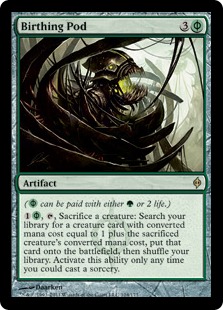 We've seen this before in Tweets, articles, podcasts, and numerous other sources, but now we get it straight from Forsythe in an official Wizards medium. Pro Tours "accelerated the rate at which [Wizards would] ban problematic cards in the format." Does this mean Pro Tours directly caused bans? Not necessarily; problematic cards are almost certainly identified as problems independently of the Pro Tour. Forsythe even says as much himself, so don't think your Birthing Pods and Dig Through Times would have been spared for long if at all. That said, do the Pro Tours hasten a card's demise? Absolutely, and now we have the most definitive proof of this to date.
Here, Forsythe admits Wizards was banning cards ahead of schedule just to rock the Pro Tour boat in an otherwise established environment. Perhaps they did so with the added incentive of making it more likely for a new set to shine, although that's more speculative than provable. The shakeup factor, however, is no longer debatable. In order to align Modern with Pro Tour requirements, Wizards had to somehow stir around a format that was just too established to fit their marquee event. Although this did lead to some Pro Tour changes, it absolutely "cast a shadow of dread" across the entire format and event. Cardboard Crack's notorious Modern comic actually misplaced the fear---the dread was rampant before Pro Tour coverage even commenced.
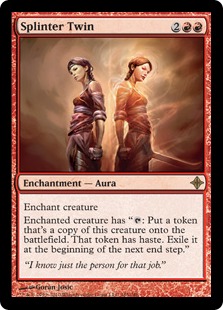 With no more Pro Tours, Modern should see a significantly less aggressive banning policy over the coming years. Bans will still happen, but we shouldn't repeat the Splinter Twin debacle. This is a huge positive for Modern players who just want to invest in a deck, use it over the years, and not see R&D take a bite out of it every 12 months like clockwork. Given how prevalent Modern ban mania has been since the format's birth, and given how much it adversely shades so many Modern interactions, I expect this to be a decisive turning point in Modern and a net benefit going ahead. It certainly represents a more organic approach to metagame management, one Forsythe himself emphasizes in the article.
"We'd rather let those deck evolutions play out over months on Magic Online or at store-level events, as that accelerated metagame pace often just means speeding up more changes to the banned list as well."
This returns to Stoddard's definition of Modern metagame stability. It also harkens back to Modern's inaugural mission, one defined by Tom LaPille in "A Modern Proposal" back in 2011: “…many of you have called for a non-rotating format that doesn’t have the card availability problems of Legacy. We propose Modern as that format.” This foundational promise of a non-rotating format was incompatible with the Pro Tour-timed banlist rotations we've come to expect. By returning to this more organic process of format evolutions, Modern should also return to the roots at the core of its success and popularity.
Modern without its Pro Tour
In the end, Forsythe's article and the related Wizards announcement put Modern into new waters. New waters are scary, uncertain places for everyone, not just Magic and Modern players (even if it seems we are unusually phobic towards any change at all). Looking back on Forsythe's discussion of the Pro Tour, here are the core arguments to remember.
- Pro Tour purpose: Historically, Pro Tours should showcase professional players solving the deck-building puzzle of a new, unestablished environment. In doing so, Pro Tours also highlight new cards.
- The Modern conflict: By its very nature, Modern is an established environment that is unlikely to change just in time for the Pro Tour and a new set release. This makes it inherently inappropriate for Wizards' vision of Pro Tours.
- Banlist solutions: Wizards tried forcing a fit by banning Modern cards, hoping this shakeup would make the format less established and more appropriate for Pro Tour coverage.
- Restoring balance: In finally divorcing Modern from the Pro Tour, Wizards stays true to both the format's mission and the Pro Tour's mission, enacting a change that should have been decided years ago.
 To some extent, all of us will miss the exciting Pro Tour build-up and coverage. Personally, I'll miss it in concept but not in practice---I don't think I could endure more archetype breakdowns like those we saw at Pro Tour Oath. RG Tron under "Control?" Really? Nor will I miss the commentators' uncritical, unambiguous positivity at watching Eldrazi ravage the format. Besides, Grand Prix and SCG Open coverage was always significantly better, offering quality commentary trying to explain the format and decipher play-lines. It did not advertise Modern as something it was not.
Beyond realigning both Modern and the Pro Tour with their respective missions, this change is likely to have a number of other wide-reaching benefits. Instead of picking apart all possible objections to the Pro Tour shift (although I'll surely end up doing that either in the comments or in a follow-up article), I'm going to stay positive and list the three biggest boons Modern players look to gain.
 Fewer bans
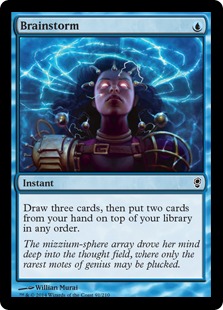
This one hardly needs introduction. If Pro Tours meant an accelerated ban schedule on an annual basis, removing Pro Tours should decelerate that process to a longer one. Perhaps much longer---there's no way Brainstorm would've stayed legal for longer than 12 months if Legacy were in Modern's position. Fewer bans means more format stability, which is good for players who want to stick on a deck for as long as possible, and for investors who want cards to hold value. It's also good for new players because it will gradually undercut the ban mania which has characterized Modern for so many years and driven so many away.
- Better communication and transparency
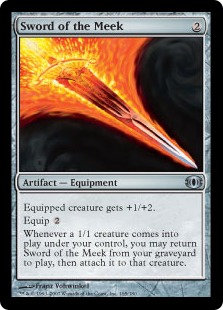 In the last three weeks, we've seen huge improvements in Wizards' format management. This includes not only Forsythe's article but also the April 4 banlist update, as well as the context behind all of those decisions. The dual Sword of the Meek/Ancestral Vision unbanning signaled intentional follow-up on the January changes. Wizards could have simply banned Eye of Ugin and been done with it.
This suggests a new sensitivity to community preferences. Indeed, it directly addresses many worries across the Modern community, around overly aggressive bans (Wizards only banned Eye), a lack of unbans (we just saw two), and bad communication about format goals (Forsythe laid out nine format guidelines in his article, which you can bet I'll dig into next week). All this sets the groundwork for further transparency and continued communication improvements, both of which are necessary safety valves to ensure Modern's success. I have no idea if the Wizards folks read my "Improving Communication" article, but I'm happy to see its suggestions implemented and hope more "Fixing Modern" ideas are realized.
- More Grand Prix
Here's a controversial one. I imagine many readers will believe the opposite: losing Modern Pro Tours means slowly killing off the format and its events. That's an alarmist position which doesn't line up  with either Forsythe's article or, more importantly, Wizards' long-term financial health. No matter how much Wizards pushes other formats, there will always be space for non-rotating Magic. That's true now more than ever with the expedited Standard rotation.
As long as the non-rotating market exists, the no-Reserved List Modern will uniquely fulfill that need and create numerous opportunities for profit. This includes sets like Modern Masters, more Expedition-style seeds such as those in Battle for Zendikar, and significant tournament attendance by a crowd that is never going to invest heavily into Standard. To tap this market, Wizards will likely double down on Modern Grand Prix, both to communicate its investment in a format with no Pro Tour, and to keep it growing. I expect we see at least 2-3 Modern Grand Prix added in 2017 to reflect these shifts, which is a big gain for the average Modern player.
As a final point, this decision also shows Wizards' willingness to make tough decisions to push the format towards a clear direction. That's Management 101 and Wizards has not exhibited this expertise in the past, trying to cater to too many parties and drifting from Modern's core mission. All of us should be happy to have clearer, but still flexible, expectations around the format. It's a more mature and sophisticated management style which is much more likely to benefit Modern than hurt it.
Next week, I'll return to Forsythe's article to break down his nine format guidelines and relate those back to critical Modern issues. If you can't wait to discuss those, or need to share an opinion on today's Pro Tour topic, head down to the comments where we can talk about all these changes in more detail.
Change is a hard process, and Modern has been in flux ever since January. It's been a rocky few months, but I'm seeing things smooth out with two significant unbans followed by Forsythe's and Wizards' recent press releases. We'll need to see where things are heading after this, but as long as Wizards stays this course and delivers on its new and powerful promises, 2016 looks like it will be Modern's best year yet.



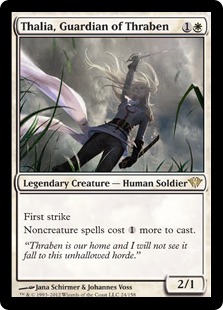 very close to ready, but just aren't there yet. There are still a few holes to fill and I'm not certain what decks I want/need to target yet, so they were out of contention.
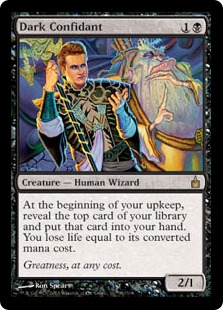 I keep a slow but reasonable hand on the play. Verdant Catacombs into Swamp and Inquisition of Kozilek signal that I'm against BGx. This isn't so bad---I can grind with them and stick the final threat as long as they don't have turn two Dark Confidant. Guess what he has? Followed by Liliana of the Veil and enough Bolts and Terminates that I'm never really in the game. Bob is also kind to his master, flipping only lands with spells on the draw step. Jund, go figure.
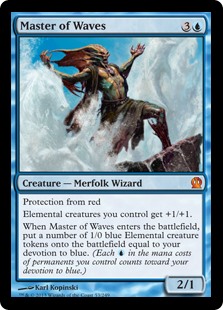 I mulligan, which is never good against Jund. He has turn two Bob which I Path, but two Liliana's and a Maelstrom Pulse seal my fate in this game. The game played out as a classic attrition matchup of threat-for-answer on both sides, but Liliana's edicts and then me having to attack her afterward bought him enough time to draw one more answer than I did.
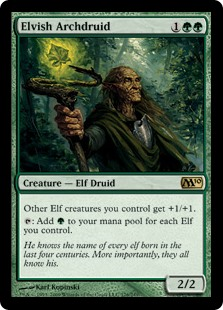 Mario is on the draw and mulligans into a hand that hinges on untapping with a turn-three Elvish Archdruid in play. My draw curves out with Cursecatcher, Spreading Seas, Merrow Reejerey, then turn-four Silvergill, Master of the Pearl Trident, and Path on the Archdruid. Marcus has Reclamation Sage to let him block and survive for a turn but he doesn't have the mana to effectively use his handful of Chord of Callings and scoops.
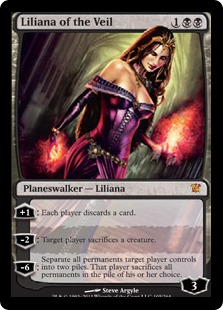 This is a long attrition fight as I grind through his removal, three Liliana's and a Damnation. Eventually I stick a lord on an otherwise empty board and he responds with Bob at twelve life. I peel Kira, my lord isn't blocked when I attack so I assume he has nothing and needs Bob to find spells so I play Kira and start the race.
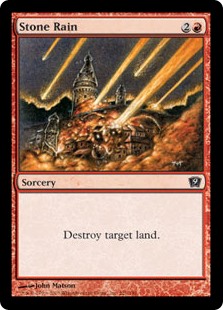 I lead with Cursecatcher which stops a turn-two Stone Rain. He spends a lot of the game attacking my mana with Acid-Moss, Stone Rain, and Ancient Grudge for Vial. I'm not worried since my board is growing in spite of this, when he miracles Bonfire of the Damned. I really hate this card from its time in Standard and am not happy to see it here.
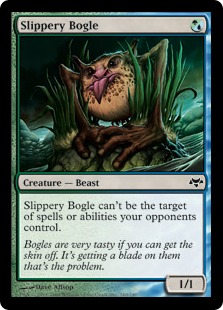 My hand isn't great, but it has Spreading Seas and Hibernation so I keep. Despite going Slippery Bogle into Spiritdancer, Michael's mana is naturally constricted and made worse when I play all my Spreading Seas on his non-painful sources of mana. I use my counters, Echoing Truth, and Hibernation to keep him from putting an offense together and eventually have enough dorks to force through lethal damage. All nine points of it. Yes, that does mean he did eleven points to himself that game. I was kind of superfluous really.
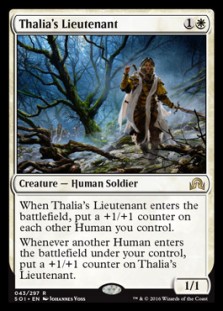 We both mulligan and both our hands are mediocre. This is good for me since my cantrips will eventually pull me ahead as long as I survive. I trade cards for life until Patrick runs out of new cards and I start racing with Kira and lords. He gets close with Lieutenant and Kytheon, but not quite close enough.
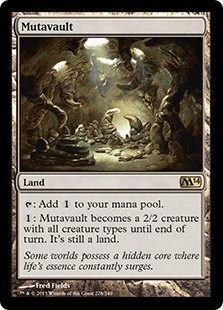 lot of low drops to play around Verdict and just whittle him down while he can never get traction. He ends up having to shock on a lot of land drops to play spells but my mana denial hurts him too much and I win.


![[Ongoing] Live On-Site Pro Tour SOI Coverage](https://www.quietspeculation.com/wp-content/uploads/2016/04/SIO_Header_New_Preloader.jpg)