Are you a Quiet Speculation member?
If not, now is a perfect time to join up! Our powerful tools, breaking-news analysis, and exclusive Discord channel will make sure you stay up to date and ahead of the curve.
Khans of Tarkir (KTK) and Fate Reforged (FRF) may not rotate until April, but to get the most value out of your cards you need to act now.
We all know that in a few months as rotation approaches there will be a mass exodus of players and collectors from Khans and Fate cards. The eve of the rotation is not the time to be looking to dump these cards, because you'll have already missed the boat.
By then prices will have already plummeted and there will be little point to selling out. So we need to get to work now liquidating the future bulk.
Given the choice, selling all our cards from KTK and FRF is better than selling none. That said, the best option lies somewhere in the middle---we want to keep the stuff worth keeping and sell the stuff that will take a nose dive.
Today's article is about predicting which cards will have future value, as we begin to out the cards destined for the dollar boxes.
The most important quality I consider when assessing a card's financial future is whether or not somebody will play it. If not, it will have zero demand and therefore also zero value.
Yes, yes, old collectible cards like Alpha rares can retain value without being played due to the collectible market. However, in the case of Khans block, none of the cards are collectible enough to retain value in this manner. In order for new cards to be worth anything somebody needs to play them.
The two major ways people play with non-Standard-legal cards are in Constructed tournaments (Modern, Legacy, Vintage, etc.) and casual play (Commander, the kitchen table, made-up formats, etc.).
For today's article I made a composite list of all of the cards I could see having a home somewhere post-rotation. I'm okay holding these cards into their post-Standard lifespans because I think they'll ultimately keep or gain value.
Khans of Tarkir
Khans of Tarkir is one of the best sets Wizards has released in a long time. For collectors, this is a mixed blessing. On the one hand there are lots of great cards to trade and sell to players, but it's kind of awkward because the set sold like absolute gangbusters.
While demand for awesome cards will always be strong, the supply is very high. This means there's a lot of competition among sellers and being ahead of the curve is extremely important.
There was a period of time before the Theros block rotation when dealers were paying $5-ish on Temple of Malady and literally two weeks later the buy price had dropped to $1. The bottom really does fall out on certain cards if you wait past their expiration date.
A lot of people want to wait on selling or trading cards until after the January set comes out, but seriously what is going to change? Do people really think some new printing will make a bad card suddenly awesome? I'm going to go out on a limb and say there are no secret $10 gems in either set waiting to be discovered.
That being said, See the Unwritten is one card that could actually increase in stock depending on what giant monsters appear in the next set. The card already spiked in anticipation of BFZ and has dropped off since. I'd hold onto it just in case. It's also a solid casual card, so there isn't much upside to selling now.
Without further ado, let's take a look at the cards from Khans of Tarkir that I think will have a future.
Anafenza, the Foremost
Anafenza is what we in the biz call a great card. It has unbelievable stats and is grossly undercosted. The card will always compete with Doran, the Siege Tower for a place in Modern but I don't think it's cut and dry which one is better.
I love the graveyard hate built into this card. Were you interested in executing some Collected Company-based creature combo? Hmm. Not with Anafenza on the board. Most decks have some sort of interaction with the graveyard so this card has a ton of value.
As a mythic rare it's also a lot harder to come by than some of the cards on this list. It will certainly take a dip when rotation hits, but expect it to climb back over the long run.
Keep in mind it will take several years to return to its pre-rotation price. I don't mind holding this card for a while, but if you're looking for short-term gains feel free to jump ship.
Lastly, this is unlikely to see a Modern Masters reprint, and thus a good candidate to be a slow gainer.
Become Immense
I love this card and have played it to success in both Standard and Modern. In Standard in Atarka Red, and in Modern as a singleton in Zoo.
Of course, the primary home for this card, in basically every format, is Infect. However, it's also powerful in aggressive damage-based decks, and a natural fit anywhere when paired up with Temur Battle Rage.
A fully delved Become Immense is literally the most efficient damage spell ever printed. Six damage for one mana is unheard of, and puts every "true" burn spell to shame.
When a card is the best at what it does, it will always have a high demand. I see this being the case for Become Immense moving forward.
Deflecting Palm
Deflecting Palm sees sideboard play in Modern Zoo and Burn decks. At $0.50 a piece for a Modern playable, it seems hard to justify even bothering to sell or trade away this card.
It's actually pretty scary to play against. For instance, it can deflect away a giant Bogles creature (and stops the lifegain), a robot with an equipped Plating, or an Infect monster pumped all the way up. Another interesting factoid is that because of the way Palm is worded, it cannot be redirected or messed with by Spellskite.
Hardened Scales
Hardened Scales is a card I've thought about jamming into Affinity on more than one occasion and I'm sure somebody will make it work at some point in the future.
Aside from that it's a very hot casual card, because of the way it lets you go super big. It reminds me of a Doubling Season or a Parallel Lives. Every block has one for the kiddies...
Hold onto this card and you'll get rewarded. 100% on that.
Hooded Hydra
Another casual gem. Hydras are the epitome of what the casual kitchen table crowd love, and this card is much better than other hydras commanding a higher price tag.
Nobody wants this right now, and it's easy to pick up (and hard to get rid of.) Rather than sell it as a bulk mythic, do yourself a favor and hold onto it for a while. People will want to play with this down the road.
Jeskai Ascendancy
Ascendancy is a crazy-powerful Magic card. It lost a lot when Treasure Cruise went away but don't underestimate the interaction between Fatestitcher and Ascendancy. I think the deck will find a more permanent home in Modern, and possibly Legacy, in the future.
It also doubles as a "tokens" card for the kitchen table. I have no interest in selling mine off for $0.50 each.
Monastery Swiftspear
Easily one of the most powerful cards in the entire block. I like to get schwifty in basically every single format it's legal.
The card is ridiculously powerful and uncuttable from any deck looking to cast red creatures and burn spells. It's already a proven winner in both Legacy and Modern.
Swiftspear's high price tag has everything to do with its applications outside of Standard. I'd hold onto this one and actively look to pick up more, especially if the price starts to dip.
Murderous Cut
Murderous Cut sees play going all the way back to Legacy and even Vintage. It's a solid Magic card that does something supremely unique. Any deck playing black now has access to a one-mana Terminate for the rest of time.
Cut is just one of those cards that will be good forever and see lots of play across a wide range of formats. I also really like picking up foil copies.
Siege Rhino
Good card is good. People are going to play with this card forever because of how absurdly powerful it is. It is already a Modern staple in Junk. I've certainly played against this card in Legacy a few times as well.
I look at its trajectory as similar to Thragtusk post-rotation. Tusk was basically worthless but its raw power level eventually brought it back up.
I'm not interested in selling this card off for a couple of bucks. I'll wait and feel confident that it will be a $5+ card down the road.
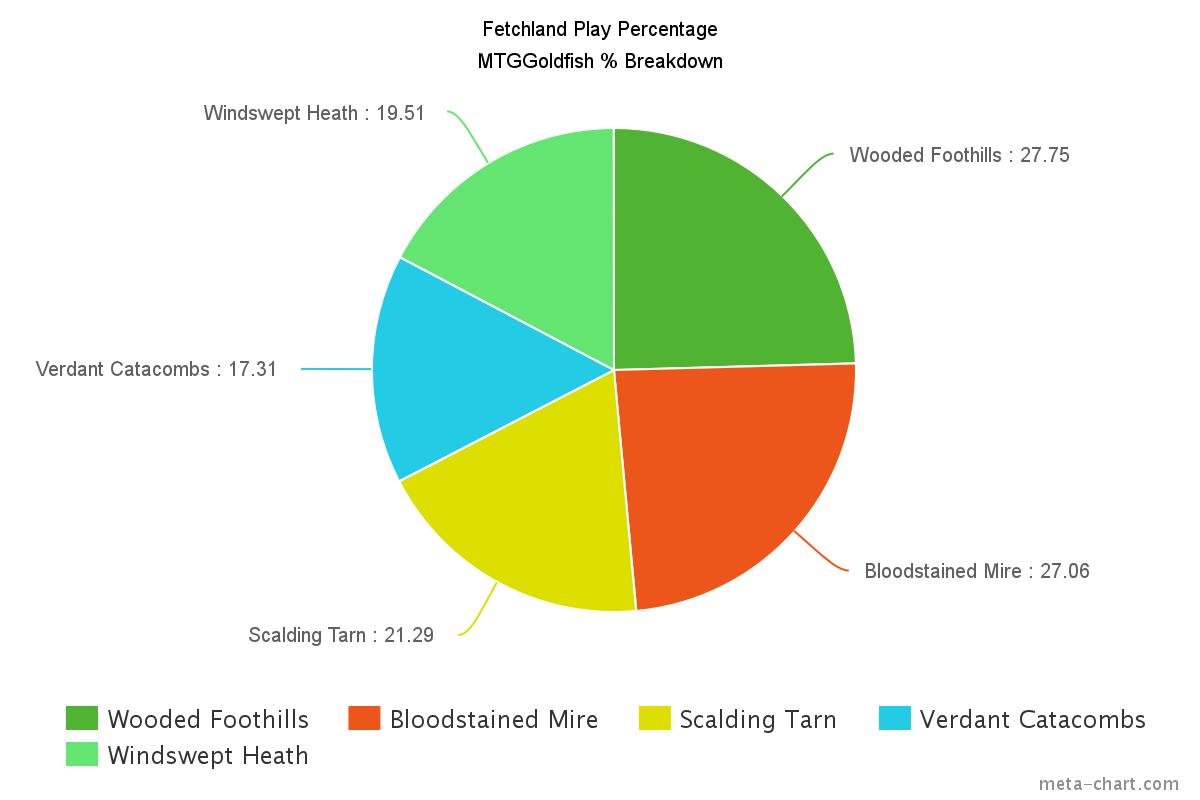
Fetchlands
Fetchlands. I'm holding mine.
I think they'll dip a little bit as rotation starts to approach, but they'll rebound and then some. They are necessary to play every single competitive format (outside of Pauper) and I don't see them showing up as reprints in Modern Masters.
Fate Reforged
Fate Reforged is not my favorite set of all time. It certainly was a disappointment after fetchlands and the absurdity of the delve spells in Khans. However, it does have some nice keepers in it that are likely to gain value over the long run.
Alesha, Who Smiles at Death
The card basically has no value which means there's no reason to sell it. However, it is a great little casual card and an awesome Tiny Leaders Commander for Mardu decks.
Archfiend of Depravity
Same argument applies here. Archfiend has basically zero value and is an interesting casual card, particularly powerful in multiplayer. Don't bulk him off because he might be worth something someday.
Gurmag Angler
If this card doesn't have $1 common written all over it I don't know what does. The flavor text on the card might actually be, "$1 common." I'm cool with trying to pick these up whenever I can.
Monastery Mentor
Mentor already has a high price tag but don't be fooled---the card hardly sees any play in Standard!
Mentor is a powerhouse in both Vintage (where it's the win condition in basically all the best decks), and Legacy. I wouldn't be surprised to see this card shooting up in Modern soon as well. My thought is that it will be going up even at the time of rotation.
Monastery Siege
Siege has seen some Modern and Legacy play already and is actually pretty sweet. It allows you to gas up the graveyard and also has utility as a sideboard card against Burn decks (where it essentially becomes Chill).
Like others on this list, it's just too cheap to sell. I'm keeping mine.
Tasigur, the Golden Fang
I don't even care if Tasigur was reprinted or not because the $3.5 price tag on this card is absolute absurdity. Delve as a mechanic has proven to be completely bonkers, and this one comes attached to a repeatable card advantage engine.
There is no chance this card doesn't rebound and become more valuable in the future. It's literally too good to fail.
Temporal Trespass
Here we have a mythic rare Time Walk effect that's actually good. Don't be a fool and sell this card for $1.5. The Commander, casual, and even Modern players of the future will create a demand for it.
This may be one of the delve "duds," but casual players love their extra turns---and there's no guarantee it won't see play somewhere as a Time Walk for one more mana.
Ugin, the Spirit Dragon
I have a hard time gauging a card like Ugin because I'm not exactly sure where the value is coming from. On the surface I think the super high price tag is due to Standard, but it's also fantastic in Modern Tron, and a dragon planeswalker for casual...
I elected to include Ugin on this list, but I admit a lot of the demand is Standard-driven. So I could either way on this card. When it surged back to $50 a few weeks ago I sold my extra copies, but I held onto my personal playset in case I wanted to play it in Standard.
There is also a good chance this card still has room to grow in Standard if Oath of the Gatewatch makes it even better.
~
No matter what you do with these particular cards, be aware that the window is rapidly closing. Get rid of what you don't want before the next Pro Tour hits.
After that, everybody will start thinking about rotation and you won't be ahead of the curve. It's only down from there.
Thanks for reading.
- Brian

 These decks include UR Twin, Jund, and Jeskai Control.
 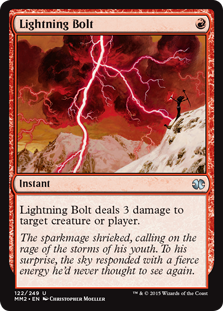 Both
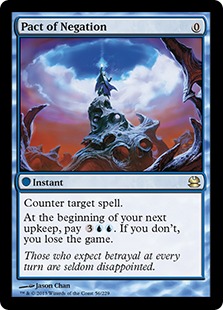
Both 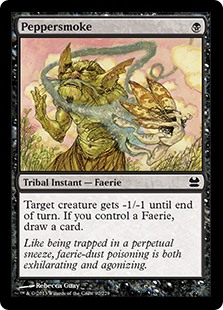 A couple cards I've always wanted reprinted for Modern abuse are Divert and Disrupt. The former punishes tapped-out opponents by redirecting a malevolent Lightning Bolt to their own creature. The latter Force Spikes everything from Serum Visions to Cruel Ultimatum and sugarcoats things with those three magic words: "Draw a card." Timed precisely, Disrupt is a one-mana Cryptic Command; in theory and practice, so is Divert.
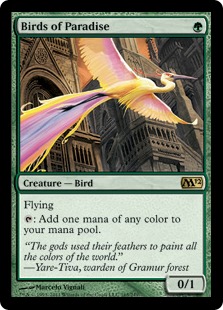 Many cards see Modern play despite dying to Lightning Bolt. Birds of Paradise and Noble Hierarch, Glistener Elf and Blighted Agent, Signal Pest and Steel Overseer, and Dark Confidant and Young Pyromancer all succumb to the mighty red instant, but are mostly cheap enough to break parity with Bolt on mana. These threats have something else in common: if your opponent doesn't have Lightning Bolt, he's in for a world of pain after they resolve.
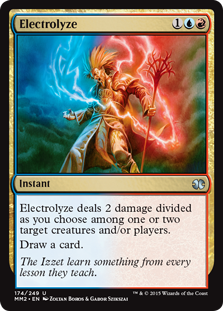 I mostly see Electrolyze resolve as a no-landfall Searing Blaze with cantrip. Peppersmoke lacks the versatility of occasionally killing two creatures, but the sizable mana reduction more than compensates. Electrolyze doesn't see more play than it does because it cannot deal with must-answer x/1s early in a game, whereas Peppersmoke is happy to remove a first-turn Delver of Secrets without cantripping. For perspective, any red deck would have spent a precious Lightning Bolt on the Wizard in a heartbeat.
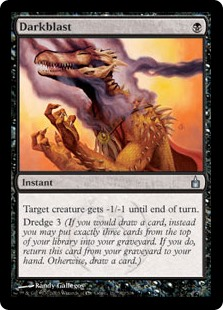 I've always liked Darkblast as an early removal spell in non-red decks. In a pinch, and at the cost of a draw step, it does a tasteless but adequate Disfigure impression. The rest of the time, it slays Snapcaster Mage, Vendilion Clique, and whatever other frail body "decks that don't care about Lightning Bolt" throw at you.
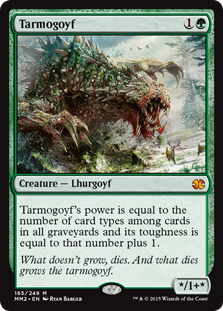
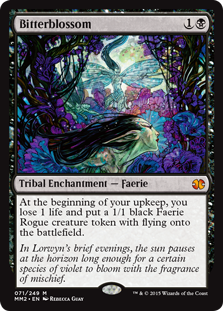 Flash creatures, Mutavault, and Bitterblossom tokens make Liliana embarrassing. Snapcaster Mage and Serum Visions keep us from running out of gas, and our Goyfs tend to stick around longer than theirs thanks to flashbacked Abrupt Decays. Blossom gets out of hand quickly for Jund and Grixis, so it frequently draws the Decay itself, making Tarmogoyf all the bigger. Spellstutter Sprite and Stubborn Denial give us tremendous late-game staying power in both matchups, since they hard-counter everything. Dispel from the sideboard does a number on all blue midrange decks, and Abrupt Decay hoses Twin variants of every color combination, Grixis and otherwise.
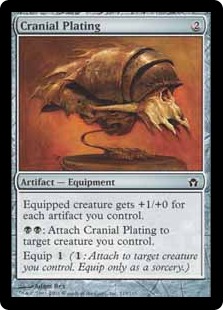 Peppersmoke shines here. Bitterblossom pumps out blockers to trade with Signal Pest and Memnite, and Abrupt Decay is a maindeck out to Cranial Plating. Disrupting Shoal also counters a lot, and Tarmogoyf provides an enormous clock once we’ve disrupted them enough.
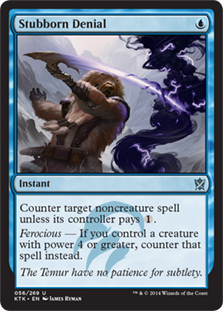 I’ll admit, it looks bad on paper. Bitterblossom and Peppersmoke don’t “blow smoke” against Burn; they blow, period. But the combination of Tarmogoyf, Tasigur, Disrupting Shoal, Spellstutter Sprite, Stubborn Denial, and Abrupt Decay takes care of Burn in game one. We also don’t take much damage from lands if we’re careful.
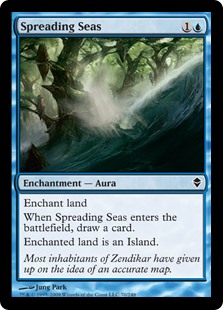 Merfolk can spell trouble with a grip of Spreading Seas, which does a swell job disrupting our mana. Otherwise, we’re the clear favorite, Shoaling or Decaying their Aether Vial and ripping up the board with our removal package. Trading Peppersmoke for Silvergill Adept, or Peppersmoke plus a Faerie for Lord of Atlantis, is also a blast.
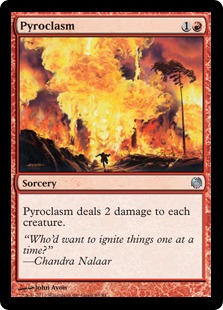 Tron has traditionally posed a huge problem for midrange decks, and BUG Faeries is no exception. Thanks to Mana Leak, Snapcaster Mage, and Stubborn Denial, we have a better time preventing haymakers from resolving than Jund or Abzan do. Still, Pyroclasm chewing through our Faerie squad is no fun.
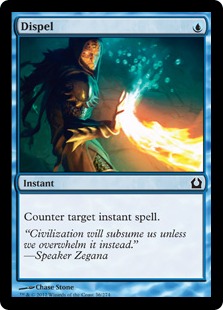 Dispel: Shores up our spell-based matchups. Favorite targets: Terminate, Gifts Ungiven, Cryptic Command.
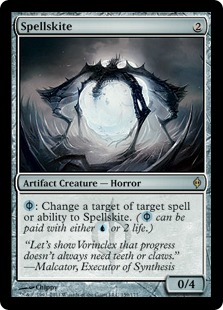 Spellskite: For decks that trade their cards for damage, such as Burn and Small Zoo. Terrific against strategies that target their own permanents like Bogles and Infect. Blocks Etched Champion in Affinity and slows Twin combo way down. Combines with Dispel and Stubborn Denial to seriously disrupt Kolaghan's Command decks. Also comes in against removal-heavy control strategies like Jeskai.


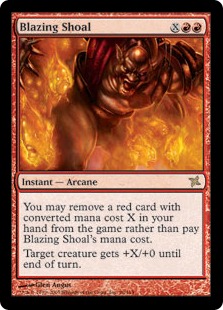
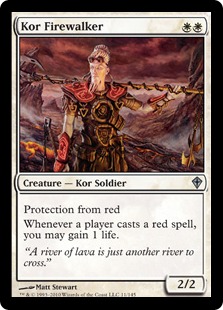 But hold on, because right there lines are already getting blurred (right Robin Thicke?). If Goblin Guide IS so powerful that everyone has to play Kor Firewalker just to stand a chance, then a case can be made for Guide being “oppressive” and ban discussion can be had. Likewise, if a combo deck is so powerful that the only way to disrupt it is through Thoughtseize, then a case can be made for that deck to be oppressive, as it places unhealthy pressure on other decks in the format to play Thoughtseize just to compete.
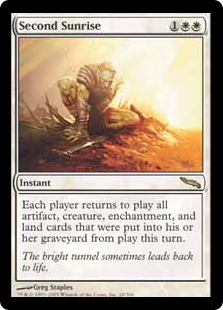
 but Wizards also showed they were interested in cultivating diversity by banning the best blue cantrips and green tutoring (as every blue deck “had” to play Ponder/Preordain and every green deck “had” to play Green Sun's Zenith). The language in this announcement is very important. Erik Lauer is careful to point out that they are committed to restricting “top-tier” decks from winning on Turn 3 (or earlier) "consistently".
 Contrary to popular belief, a staple from Eggs WAS NOT banned because the deck was “unfun”, “non-interactive”, or “too powerful”. Eggs was banned for the exact reason Erik Lauer said in the above quote: rounds were taking too long, and the turnover time in between rounds was causing issues at large events. Public perception and on-camera awkward commentary surely contributed, but to a much smaller extent than most people would like to believe. This is part of the reason why Sensei's Divining Top is banned in Modern (and some have said is at risk of being banned sometime soon in Legacy), as each Top activation could take a minute or more, which adds up over the course of the round and contributes to a large number of draws and prolonged post-time turns (looking straight at you Miracles!)
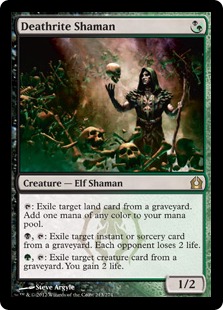 This is entirely true, but Deathrite Shaman also had other significant effects on the format. First, it allowed “fair” decks a way to consistently fight graveyard-based strategies. Decks without card filtering/tutoring (read: non-blue decks) often have difficulty finding sideboard cards quickly in post-board games, and Deathrite Shaman effectively allowed attrition decks 4+ ways to interact with decks that use the graveyard, starting on Turn 1. In conjunction with numerous discard spells, Jund was able to reliably and easily disrupt synergy-based decks.
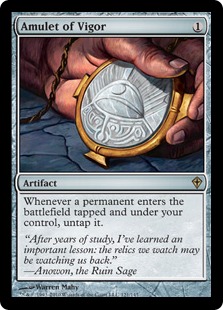 When Amulet Bloom wins, it doesn’t take too long to go through the motions. It takes some time to search and navigate the triggers of Primeval Titan and Amulet of Vigor, but no more so than other decks like Storm or Ad Nauseum. It is capable of Turn 3 wins, and can win on Turn 2 a surprising number of times, which throws up a strong red flag. I don’t have data on consistency of kill, and those numbers have to be taken with a grain of salt as they can vary week to week and event to event based on individual deck composition and opposing hate.
![Insider: [MTGO] Short Selling, Part 3 – Short-Term Short Sales](https://www.quietspeculation.com/wp-content/uploads/2014/01/IMG_7555.jpg)

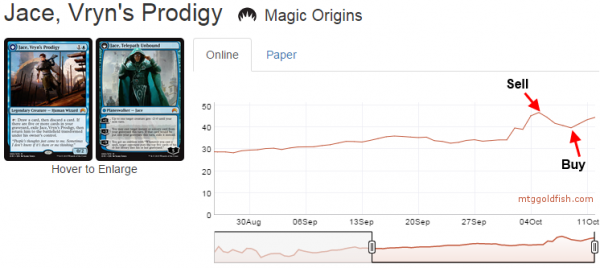


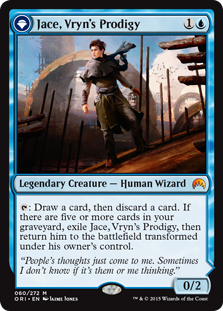 Get used to Jace, Vryn's Prodigy in Modern, because the Merfolk Looter upgrade is here to stay. We saw a preview of this at Grand Prix Pittsburgh, where both Corey Burkhart and Lloyd Kurth teamed up with the flipwalker to earn
 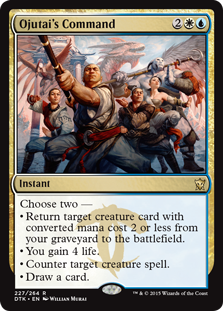 At its most basic level, Command addresses Jace's worst weakness: his piddly two toughness. Outside of Goblin Electromancers and metalcraftless Etched Champions, there are few creatures in Modern with bigger crosshairs on their heads. Jace is a Lightning (Bolt) rod, Terminate bait, Path fodder, a Kolaghan's Command magnet, and one of Burn's juiciest targets for Searing Blaze. Command addresses all of that. With the exception of the vicious Blaze, Ojutai's Command gives you a take-two on Jace while also effectively blanking that old removal. Did your opponent squander their second or third turn with a main phase Abrupt Decay? Just wait two more turns to return Jace, effectively wasting the opponent's Decay turn, and even getting a second effect out of the deal. All at instant speed!
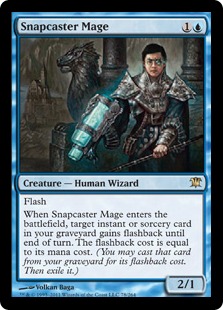 When I first reviewed the Command, I focused on its synergy with Snapcaster Mage. Given Command's utter absence from Modern since then, it's clear Snapcaster alone isn't enough to make Command work. Snapcaster plus Jace? That's serious redundancy and makes me much happier to run Command. Indeed, Jace turns on Command's best mode (the recursion) a turn earlier than Snapcaster: it takes at least five open mana to return a Snapcaster and still flashback another spell. Running Jace alongside Snapcaster, apart from being a synergy on its own, gives you many more Command lines than you would otherwise have.
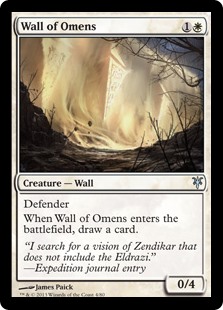 Biava builds on these successes in his own list, keeping the core synergies that made UW Control what it is today while also doubling down on Ojutai's Command interactions. Wall of Omens is excellent both in this deck and in the metagame more broadly. With Burn lists increasingly adopting Wild Nacatl and other creature-based damage sources, Wall frustrates the aggro player's early progress while ushering you into the midgame. As we see more Gruul Zoo, Naya Company, Nacatl Burn, and all the other strategies in between, Wall is only going to get better. Ojutai's Command capitalizes on that, bringing back the wall for either a double card-draw or for an added four life on top of the recursion. Wall's inclusion also guarantees you can use Command proactively on turn four, upping the reanimation target count to nine.