menu

Missing In Action at Pro Tour: Battle for Zendikar

Are you a Quiet Speculation member?

If not, now is a perfect time to join up! Our powerful tools, breaking-news analysis, and exclusive Discord channel will make sure you stay up to date and ahead of the curve.

As you probably saw over the weekend, we decided to send someone to cover Pro Tour: Battle for Zendikar live and in-person. That someone, it turned out to be, was me. Before I get into what I saw (and what my observations imply), I want to talk about why we decided to send someone to report on-site.

The short version is that QS Insiders deserve it.  We don't make any money by selling advertising, nor do we make any money on affiliate sales of Magic cards.  We made a strong decision not to accept any money of that kind when we launched Insider in 2011, and we've never looked back.

When we make 100% of our money based on content and data services, our incentives are aligned with our readers' expectations.  If we make great stuff, we make money.  If we don't, we don't.  Simple.

This alignment also means I can publish an article like this one; focused on cards not to buy!  More than one writer, myself included, has had an article like this rejected outright by an editor because "it doesn't encourage people to buy cards".  You're darn right it doesn't, but it's the truth.   Our business model lets us be honest about things like this without running afoul of sponsors or advertisers who might not want to hear what we have to say.

Another aspect of this business model is that it holds us accountable for what we do with our subscription revenue.  We have expenses, like the giant data warehouse that runs Trader Tools, writers, editors & consultants.  But beyond those, we also have what I consider a duty to reinvest some of our revenue in the site itself.
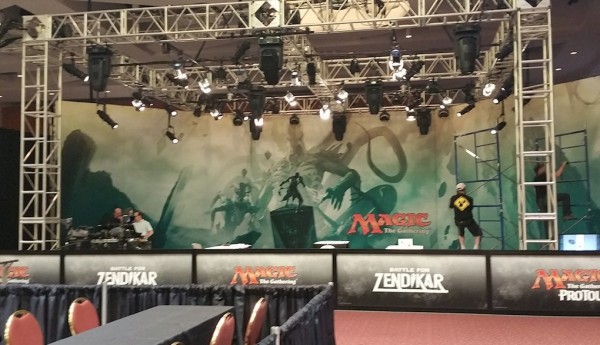
Thursday Night, Calm Before The Storm

There are a lot of great opportunities to spend money (some better than others), but we looked at the opportunity to attend a Pro Tour as the absolute best among them all.  That's because more happens in the first 48 hours of a Pro Tour than happens at any other time in the season beyond Spoiler Coverage time.

The bottom line, literally, is that if we do a smashing good job on covering the Pro Tour, our Insiders will get information that's worth more than they paid for their subscription.  By that virtue, everyone makes more money.  Quite simply, if your goal is to play Magic for free, you need to know what's going on when it's happening, not after the fact.

During the last Pro Tour, I got so frustrated with gathering whatever scraps I could from watching the Twitch stream that I said, "Nevermore"!  I want to know what's really going on, at every single table.

So, I made it my job to know what was happening.  I used the approximately 8 hours during Limited portions and breaks to interview a suite of some of the best Magic players of all time.  You can read these interviews, along with the rest of our coverage and infographics, on our Pro Tour page.  These alone were worth the plane ticket, but the real good stuff came from walking the floor during Constructed.
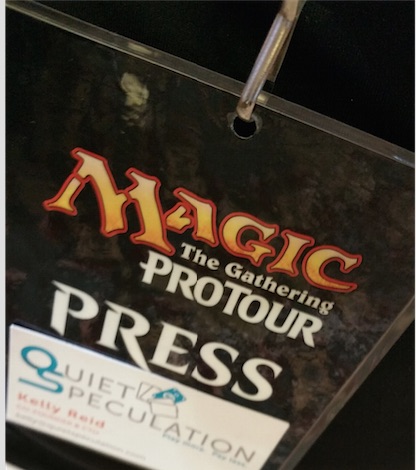
I may not have "street cred" but I have this.

Thanks to my press credentials, I was able to spectate every single match in vivid detail.  I got to see sideboard plans, entire decks during fetch-landing, intricacies of board states, and hands from both sides of the table simultaneously.  It was awesome.  

At one point I realized I had probably watched more individual games of Magic than anyone on planet earth.  Each round had approximately 200 games going at once (more on Day 1, less on Day 2), and there were 10 rounds of Constructed to be played.

I attempted to walk past all 200 tables each round, with varying degrees of success.  Towards the later rounds, I focused intently on the top tables to ensure a density of relevant information.
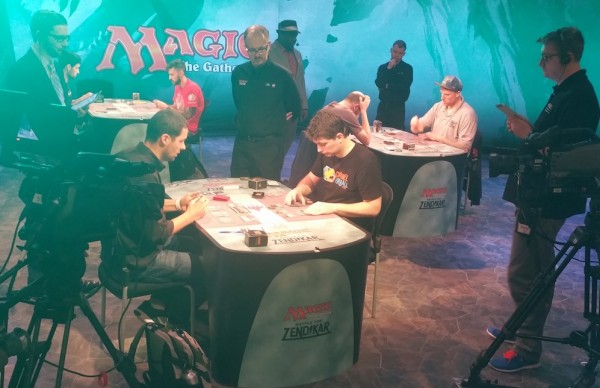
Literally in the limelight.

In all, I must have seen over 500, individual games of Magic being played at the highest level.   It was exhausting and amazingly fun, and I'm already looking forward to doing it again at the next PT.  I even had my own office, which contained WiFi, a photo backdrop of Zendikar, and ample plugs for my small army of robots.

I owe a big thank-you to the entire Event & PR staff for making this happen.  It was an excellent experience and I look forward to the next event.

I got my own office, with a door and everything!

Conspicuous by Their Absence

Enough has been said about what showed up at the Pro Tour.  Diego's infographics from our coverage sum that up nicely.  What we need to focus on is what did not.  What follows is a summary of my observations to that end.

The following refer to the decklists with a Standard record of 7-3 or better.

There was an error retrieving a chart for Oblivion Sower

7 total, one deck with 4.  The 4-of deck was an uninspiring Ramp deck (sorry Victoriano!)  and did not place especially highly.  This was a popular speculation target going into the PT, but it has been utterly absent from the metagame.  I suspect it will have its day (likely in April when KTK and FRF leave Standard), but I also suspect today's not its day.  If you have more compelling places to invest MTG money, feel free to sell them, but if you intend to play 4, just keep the ones you have right now.

There was an error retrieving a chart for See the Unwritten

Zero.  Goose-Egg.  Declaration of Naught.  The utter lack of this card in top decks tells me it's just not good enough against the format, and will rotate out before making any impact.  I strongly doubt OGW will add enough to the format to make this important.  The buylist prices have already dropped substantially.

There was an error retrieving a chart for Sorin, Solemn Visitor

7, mostly 1-ofs.  He's competing with Gideon for a spot on the team, and he's not winning the job.  His abilities are great, but are all situational.  Gideon, by comparison, does proactive, dangerous things.  This is another KTK card I want to be rid of, as much as I enjoy the card, the reality is that it's outclassed at the mana cost and role.

There was an error retrieving a chart for Butcher of the Horde

3.  Despite all the "Aristocrats" strategy discussion, Mardu colors proved not to be the direction chosen by deck builders.  I think this card does still have room to shine, and further testing with maybe a 4-color Aristocrats shell could yield results.

There was an error retrieving a chart for Ruinous Path

7, one deck with a 4x.  I am really glad to see this, honestly.  Ruinous Path is a crazy good card, but not when it's competing with Murderous Cut, Abzan Charm, Silkwrap and other premium removal spells.  The format also seems fast enough that I doubt the Awaken cost will be invoked very often.

At 7 mana, you'd like to be casting Ugin, not making a 4/4.  Thus, I think that this card represents a great buy-low target in the coming weeks and months.  Calling a bottom is hard, but I don't expect this will see play until post-rotation (after which I believe it will be very, very strong).

There was an error retrieving a chart for Ob Nixilis Reignited

12, skewing towards the better-performing decks.  Cited as a Pro favorite in multiple interviews, I saw a disproportionate number of these on the battlefield during my time in Milwaukee.  I chalk that up to his ability to protect himself and the fact that he comes out later in games and tends to stick around.

This is a great case study of two Planeswalkers; Gideon, who is an omnipresent 4-of, and Nix, who is a situational 1- or 2-of.  This tells us everything we need to know about their price.  Gideon is appropriately priced in the $40+ range given his ubiquity, and Nix is less than half that.

There was an error retrieving a chart for Chandra, Fire of Kaladesh

5, skewing towards the lower-performing decks.  One Pro I interviewed cited this as a powerful and under-rated card, but my suspicion here is that double mana costs are keeping Chandra from being dominant.  Once KTK block and its tri-color madness rotates out of Standard, I will revisit this card.

There was an error retrieving a chart for Dragonlord Atarka

Zero.  Missing in action.  Disappeared.  The format is probably just too fast.  When KTK rotates, it may slow down by virtue of losing Temur Battle Rage, Monastery Swiftspear and fetch lands.  This is still an insanely powerful thing to do on 7 mana, but the Dragonlord is going to be sitting out for a few months.  I intend to keep mine, as I have long-term faith in the card.

There was an error retrieving a chart for Ulamog, the Ceaseless Hunger

4, all in one deck.   See above, Oblivion Sower.  These two giants come as a pair, but in a format this fast and punishing you just don't have time to set up before you take a Temur Battle Rage to the face.

There's no reason Ulamog should be anywhere near this expensive given his abject lack of play.  I would not be holding my copies of this, as I suspect there will be an opportunity to re-acquire them for less.  Just keep an eye on OGW spoilers when they start next year; you might see something that changes your mind.

There was an error retrieving a chart for Rally the Ancestors

4, all in one 7-3 deck.  This card has a ton of potential, but no one is exploiting it sufficiently to break into the format.  I want to monitor the evolution of the Aristocrats archetype, but time is limited for this FRF card.  If you have spares, I might trade them in for something more useful, but I'd still hold on to a 4-set for deckbuilding.

There was an error retrieving a chart for Clash of Wills

8 across 3 decks.  Shaun McLaren cited this as his "sleeper" pick in my interview, stating that it's a card he was surprised more people weren't playing.  I once again refer to my "format's too fast" theory to support its absence in top-performing decks.  This will likely reduce the Uncommon's value to near-bulk levels, at which point I will be acquiring them semi-aggressively.

There was an error retrieving a chart for Lumbering Falls

8.   For comparison, its cousin Shambling Vent saw three times as much play, often as a 4-of.  The Simic man-land suffers from a key issue that Vent doesn't;  right now, decks that play blue don't play green, or vice versa.  Dark Jeskai eschews the power of the basic Forest in favor of Crackling Doom & Tasigur, the Golden Fang.  Abzan decks don't have any use for a blue splash, nor do Esper Control decks a use for a Green splash.

This landscape changes entirely after KTK rotates; there are no inherent rewards for playing any 3-color pair.  Cards like Crackling Doom, Mantis Rider and Siege Rhino are ridiculously under-costed because they're on the 'wedge'.  These disproportionate rewards skew the format, in this case away from the UG shards/wedges.

Shambling Vent should steal most of the value away from Lumbering Falls, but once again I see this as an awesome buy-low target in a few months.  We anticipate 3 more man-lands in the next set, so the true measure of this land's value is obviously in the strength of the UG color pair going forward.

There was an error retrieving a chart for Drana, Liberator of Malakir

3, all in one deck.  Double-color is rough, and decks that have access to black now have access to Mantis Rider and Anafenza, the Foremost.  This is another card that gets way better once KTK rotates.  I am once again hoping that a buy-low opportunity arises here.  The card is very powerful, but even great cards rely on context to shine.

There was an error retrieving a chart for Ugin, the Spirit Dragon

9, mostly in the under-performing decks.  Once again the format is too fast for this bomb.  Since he was printed in FRF, I doubt the format will slow down sufficiently before he rotates.   As a Planeswalker Dragon, the card has massive casual appeal (only surpassable if he somehow gains the creature types Vampire, Angel & Elf), and he is also relevant in Modern as a TRON finisher.

That said, the price has got to be propped up by Standard somewhat, so I might be willing to swap mine into more useful things with a longer shelf-life.

There was an error retrieving a chart for Bring to Light

10.  Not a bad showing, but definitely not reflective of what some people tried to call a $10 card.  The card's great, but this isn't the context for it.  Sadly, we're in an era of awesome 5-color mana bases and under-costed multicolor cards, but Bring to Light is so versatile that it can shine in many contexts.

I do not think it can maintain its current price tag, so I would be moving them into more useful cards unless you're actively playing them in a deck.  Long-term I like the card but right now there are better things to do than cast Siege Rhino for 5 mana.


The next Pro Tour is being played in the Modern format and it's only a few months away. As many of my colleagues have been saying, maybe it's time to start paying attention to Modern again.
Many Moons, Part II: Trampling the Color Pie

Are you a Quiet Speculation member?

If not, now is a perfect time to join up! Our powerful tools, breaking-news analysis, and exclusive Discord channel will make sure you stay up to date and ahead of the curve.

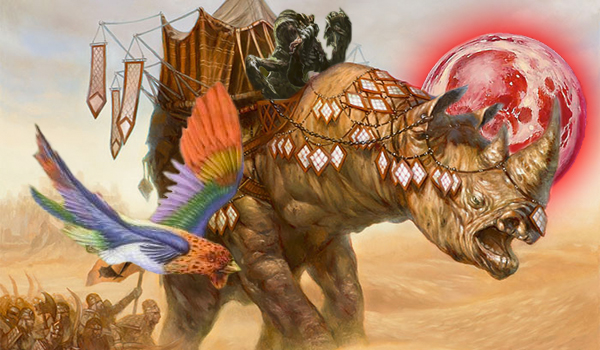
They key to brewing successfully is to work with cards you love. My enduring fascination with Tarmogoyf and Blood Moon led me to develop a strategy that gets the most out of both cards. Last week, we saw the birth of TURBOGOYF and the deck's first draft. This article tracks the deck's development, which culminates in a build with Siege Rhino, and proposes a new take splashing Chalice of the Void.

siege rhino blood moon

(This article is the second in a two-part series on my experience designing  Tarmogoyf/Blood Moon decks in Modern. If you haven't read part one, check that out first!)

[wp_ad_camp_1]

TURBOGOYF 2.0: Goyfblade

TURBOGOYF 1.0 grew enormous Tarmogoyfs while casting consistent, turn-two Blood Moons. The deck's second version followed suit, but also respected the deck's core.

I cut Simian Spirit Guide entirely and added three Sword of Light and Shadow. With all those artifacts to grow the Goyf, I ditched Pyrite Spellbomb. Two Chandra seemed like enough since I rarely wanted multiples, especially in openers.

The big innovation for this version was the sideboard black splash. I needed a way to deal with enemy Goyfs, as my absence of hard removal depended entirely on the fact that my Goyf would be bigger than anything I sat across from. Abrupt Decay best answers the beater, and black also allows Slaughter Games for combo decks like Grishoalbrand. I took the following list to a 60-man PPTQ last summer and lost in the Semifinals to Tribal Zoo.

[wp_ad_camp_1]

TURBOGOYF 2.0, by Jordan Boisvert

Creatures

4 Magus of the Moon
4 Birds of Paradise
4 Tarmogoyf
4 Huntmaster of the Fells

Sorceries

4 Faithless Looting

Instants

4 Lightning Bolt
2 Tarfire
1 Dismember

Other

4 Utopia Sprawl
4 Blood Moon
3 Sword of Light and Shadow
2 Chandra, Pyromaster

Lands

4 Wooded Foothills
4 Verdant Catacombs
2 Stomping Ground
1 Blood Crypt
7 Forest
1 Mountain
1 Swamp

Sideboard

4 Molten Rain
4 Abrupt Decay
2 Thrun, the Last Troll
2 Ancient Grudge
3 Slaughter Games

Testing Takeaways

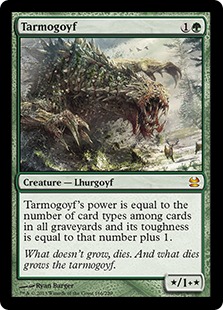
TarmogoyfEven with sideboard Decays, playing against Tarmogoyf meant an uphill battle. Opposing Lhurgoyfs proved impossible to remove game one outside of Goyf+Bolt or a lucky Dismember, so I had to rely on Moons to keep them off the table. Unfortunately, basic Forest isn’t that hard for Tarmogoyf decks to find. Without Decays in the main, Twin also becomes very hard to beat game one, since they don’t care so much about Blood Moon, have counterspells to slow us down, and are difficult to interact with using only Lightning Bolt.
Three Slaughter Games was too many. We can easily Loot into a copy, and it only wins games outright in already favorable matchups (Ad Nauseam, Amulet Bloom, Living End, etc.). In others, Games exiles Splinter Twin or Wurmcoil Engine at best.

In addition to recurring Goyf and Huntmaster, Sword of Light and Shadow protected all our threats (besides Birds) from Lightning Bolt by growing them out-of-range. But three was also too many, since "Protection from white and from black" saves creatures from spells that Moon already cuts off in game one. The card is mostly useful for attrition wars, and the only attrition deck we might face that doesn't lose to Blood Moon is 8Rack, already a favorable matchup thanks to Goyf and Huntmaster.

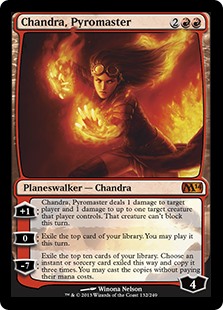
ChandraChandra either secured a hard-lock with her +1 or drew cards. The extra cards were nice, but in those scenarios a threat would have won me the game, whereas Chandra would gradually draw me into victory, giving opponents a chance to find basics before I found an actual win condition.
Finally, while a 6/7 or 7/8 or 8/9 Goyf was good for some laughs, he still "died to removal." In the situations where he’d beat up on a locked-down opponent, it wouldn’t have mattered if he’d been a mere 4/5; the game was already over. Getting too cute to grow him past a certain degree just wasn’t worth it.

TURBOGOYF 3.0: Jund Moon

Going forward, I decided to max Tarmogoyf out at 5/6. At this size, he survives Roast and Dismember, and beats everything not named Wurmcoil Engine (which he’d lose to even at 8/9) or Primeval Titan (which never resolves through Blood Moon) in combat.

The non-Twin, non-Goyf matchups that needed help were primarily of the aggressive variety (Zoo, Affinity, and Burn specifically). Mainboard Decay helped against all of these decks. A four Bolt/four Decay removal suite is extremely versatile and helps TURBOGOYF do a convincing BGx impression when a Moon eludes us. Black also gave us another early beater in Tasigur, the Golden Fang.

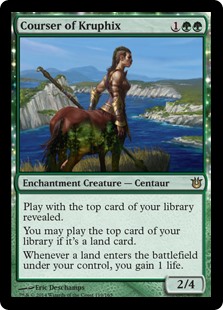
Courser of KruphixI introduced Courser of Kruphix for his synergy with mana birds and Looting, his ability to draw us cards, the lifegain clause, and dat ass. He effectively replaced Chandra as a card advantage engine which also dealt damage. He dealt twice as much as Chandra per turn and drew the cards regardless, all while walling attackers.
Increasing the number of basic Forests was important for this build, since the most common line with Utopia Sprawl on turn 1 was to name black, then to fetch a red source and cast Blood Moon. More Forests meant a better chance of drawing them, and Courser rots in hand if we can’t pay his double green cost. Double green also activates Tasigur’s ability, and double red wasn't needed anymore (except for Faithless Looting + flashback) without Chandra. Naturally, the Molten Rains in the Sideboard had to be replaced for their prohibitive cost, making way for the invariably hideous (and hilarious) Stone Rain.

TURBOGOYF 3.0, by Jordan Boisvert

Creatures

3 Courser of Kruphix
4 Birds of Paradise
2 Magus of the Moon
4 Tarmogoyf
4 Huntmaster of the Fells
2 Tasigur, the Golden Fang

Sorceries

4 Faithless Looting

Instants

4 Lightning Bolt
4 Abrupt Decay

Other

4 Utopia Sprawl
4 Blood Moon

Lands

4 Wooded Foothills
4 Verdant Catacombs
2 Bloodstained Mire
1 Windswept Heath
1 Stomping Ground
1 Blood Crypt
6 Forest
1 Mountain
1 Swamp

Sideboard

4 Stone Rain
1 Magus of the Moon
1 Obstinate Baloth
2 Thrun, the Last Troll
2 Ancient Grudge
2 Creeping Corrosion
2 Slaughter Games
1 Dismember

Testing Takeaways

Tasigur was fine when I had him, but underwhelming. He also synergized very poorly with Faithless Looting.

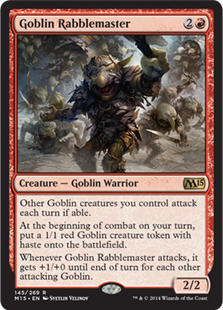
Additionally, I disliked the Coursers. Like Sword of Light and Shadow, they're decent in grindy settings, but Blood Moon already dominates those. There had to be superior options against aggro decks. Double green was also tougher to manage after a turn two Blood Moon than expected, meaning Courser would usually come down on turn four if at all. By then I needed a card in this slot that presented a lot of aggression, like an extra Tarmogoyf or Huntmaster. In searching for one, I even tried Goblin Rabblemaster, but his softness to Bolt was a major issue.

TURBOGOYF 4.0: Abzan Moon

Unfortunately, Jund colors allotted us but Obstinate Baloth for this role. I tried Thragtusk, but his five-mana cost conflicted with the Looting engine, which asks us to stop "ramping" at four mana. So, I looked into other colors.

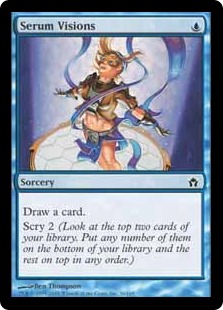
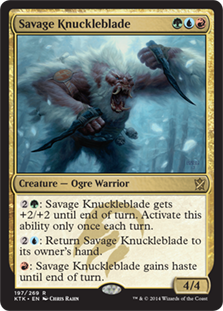
Savage KnucklebladeAt first, I splashed blue over black for Savage Knuckleblade, also cutting two lands and two other spells (meta dependent) for a playset of Serum Visions. Visions is extremely powerful in Modern, and its library manipulation coupled with Faithless Looting to make the deck extremely consistent. Blue also opened up the possibility of counterspells (namely, Negate) from the sideboard. Unfortunately, RUG wasn’t good enough; without Abrupt Decay, the deck became too soft to Twin.

I went back to the Decays (once you go black...) and splashed white for the build’s final form, resulting in a fairly horrific-looking list. Siege Rhino is the four drop of my dreams, applying a ton of pressure, stonewalling aggressive strategies, and coming down for four mana as early as turn three; ideally, right after a Blood Moon!

White also gives us an old favorite of mine in Blood Moon decks: Ajani Vengeant. The planeswalker gains life, kills creatures that sneak in under Blood Moon, and most importantly, freezes our opponent’s basic land. Often, a Stone Rain effect is better than Ajani when we want one, but Ajani's versatility, and his ability to command an opponent's attention for fear of his ultimate, make him a better mainboard card. Still, running Ajani means stretching the manabase a little thinner and running less mana or threats, so I eventually dropped Vengeants from this build.

TURBOGOYF 4.0, by Jordan Boisvert

Creatures

4 Siege Rhino
4 Birds of Paradise
2 Magus of the Moon
4 Tarmogoyf
4 Huntmaster of the Fells

Sorceries

4 Faithless Looting

Instants

4 Lightning Bolt
4 Abrupt Decay

Enchantments

4 Utopia Sprawl
4 Blood Moon

Lands

2 Wooded Foothills
4 Verdant Catacombs
4 Windswept Heath
1 Stomping Ground
1 Blood Crypt
1 Sacred Foundry
6 Forest
1 Mountain
1 Swamp
1 Plains

Sideboard

4 Stone Rain
4 Kolaghan's Command
1 Darkblast
2 Slaughter Games
2 Grafdigger's Cage
2 Dismember

The sideboard also gets a makeover. Rhino makes Baloth obsolete, and Grafdigger's Cage is a concession to Company and Griselbrand decks, many of which can survive a Blood Moon. Dismember offers utility against Twin, aggro, and Goyf decks, and Darkblast shines both in grindy matchups and against linear aggro decks. Kolaghan's Command gives us creature recursion while hosing Affinity, letting us scrap Ancient Grudge for something more universally applicable; for instance, against BGx, I cut the Rhinos and the Plains and become a Huntmaster-recursion deck with the inevitability of four Stone Rains and Blood Moon. Specific hosers like Creeping Corrosion will never allow these sorts of transformational plans.

Testing Takeaways

This Abzan Moon variant won me a respectable haul of boxes at GP side events and smaller tournaments, but I didn't love the deck's midrange playstyle enough to bring it to longer events last summer. I favored Monkey Grow for these, which paid off with an IQ win, but TURBOGOYF remained my weapon of choice for smaller metagames, as it crushed Twin, BGx, and just about any rogue aggressive strategy.

I consider Abzan Moon the natural evolution of Skred Red. On paper, it's a goodstuff Jund/Abzan hybrid that gives up targeted discard for Blood Moon as a trump in the midrange mirror. In practice, it's a hyper-reliable Moon machine and the best Goyf/Moon deck I've built yet.

A Return to Rituals: Chalice and RabbleRit

Day's Undoing drew me away from Tarmogoyf/Blood Moon decks to focus entirely on Delver variants. But as Modern became increasingly linear to choke the storm of Grixis decks we've seen in the last few months, I started working on a core of TURBOGOYF that employs Ryuuta's beloved Rituals over Utopia Sprawl to enable Chalice of the Void.

RabbleRit, by Jordan Boisvert

Creatures

4 Goblin Rabblemaster
4 Tarmogoyf
4 Simian Spirit Guide
2 Magus of the Moon
4 Huntmaster of the Fells

Instants

4 Lightning Helix
4 Desperate Ritual
2 Pyretic Ritual

Other

4 Chalice of the Void
4 Blood Moon
4 Ajani Vengeant

Lands

4 Arid Mesa
4 Windswept Heath
4 Wooded Foothills
2 Stomping Ground
1 Sacred Foundry
1 Plains
1 Forest
1 Mountain
2 Flooded Strand

Sideboard

2 Spellskite
2 Destructive Revelry
2 Rending Volley
3 Anger of the Gods
2 Dismember
4 Molten Rain

Chalice Immunity

Outside of the sideboard Rending Volley, which can't be countered anyway, this deck doesn't run any one-drops. Resultantly, Chalice of the Void never hinders us and always at least annoys our opponents. Chalice seriously damages a plethora of Modern decks, including Burn, Infect, Living End, 8Rack, Affinity, and Delver.

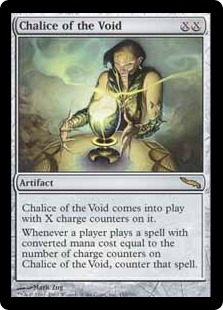
Chalice of the VoidConsidering disruption alone, Chalice is a real beating on turn one or two. Even against midrange decks like Grixis Control, the artifact turns off Serum Visions, Thought Scour, Lightning Bolt, Inquisition of Kozilek, Spell Snare, and Dispel. In Patrick Chapin's list from GP Charlotte, that's a whopping 15 integral cards! Add to that the fact that Grixis Control is stronger against Chalice than some other Modern options, like Restore Balance and Small Zoo, and you have a serious case for the card's playability in this format.

We don't see Chalices in Modern because so many decks don't care about them. In Legacy, the best decks all play a high volume of one-drop spells, so Dragon Stompy and Sylvan Plug can reliably disrupt opponents with the artifact. Modern strategies like Abzan Midrange, content with curving Goyf into Lingering Souls into Siege Rhino, will laugh at a resolved Chalice. Notably, these decks don't laugh so hard at Blood Moon.

Legacy also has better mana acceleration than Modern. Without Chrome Mox or Lotus Petal, we're left with just Simian Spirit Guide to drop a Chalice early. The card needs an additional, crucial purpose to make it in this format, since disruption alone isn't a reason to run it in the mainboard.

siege rhinoThat purpose: Chalice protects our creatures from Lightning Bolt. I've discussed card choices as offbeat as Honor of the Pure to get around Modern's "Bolt Test." In this deck, Chalice of the Void sometimes disrupts opponents greatly, but it also fills the same purpose as Honor in the Mantis Rider deck by shielding our aggressive, fragile three-drop from the innocuous spell. As we've seen, a search for hyper-aggressive beaters to close out games with TURBOGOYF eventually led me to Siege Rhino. Goblin Rabblemaster tested very well when opponents didn't have a Lightning Bolt, but made me want to tear him up when they did. With Chalice on board, I love him either way.
Rituals, Splashes, and Tarmogoyfs - Oh My!

Without Lightning Bolt and Looting effects, Tarmogoyf gets significantly worse. Against opponents who don't interact with us early or give us an avenue to do so with them, Goyf doesn't present the reliable damage we expect and makes it difficult to clock opponents. One option I considered was cutting Goyf and his color from the deck entirely.

Unlike Birds of Paradise and Utopia Sprawl, red Rituals don't come with a specific color restriction - any Blood Moon deck can play them, even ones without green. It's easy to preserve the deck's main pieces and cut the green cards (Huntmaster, Tarmogoyf) for, say, blue ones (Snapcaster Mage, Remand) without sacrificing speed. Another on-color option is Monastery Mentor, whose obvious drawback of dying to Lightning Bolt is mitigated by Chalice. Under Mentor's tutelage, spare Rituals and lock pieces also turn into Monks and trigger prowess.

RabbleRit's Strengths and Weaknesses

The biggest issue with this deck is its lack of Faithless Looting. Pitching extra lock pieces and mana acceleration is tremendous, but we can never resolve Looting through Chalice. Instead, we have to hope the lock-piece-into-win-condition reliably overwhelms opponents. (My initial testing with Rabblemaster indicates that it does, since he provides so much advantage on his own and can be hard to remove with a Chalice in play - he even gets around Liliana of the Veil!) One option to remedy this problem is to run "bad" loot effects like Tormenting Voice, but we don't have much space in this deck, and I'm wary of spending two mana on a spell that doesn't directly impact the board in a deck full of lock pieces. I'm inclined to think that if we're desperate enough to spend two mana on a looting effect, we've probably already lost.

Another weakness is no Lightning Bolt. I won't waste everyone's time singing this card's praises; let's just say it's no coincidence that Modern's strongest interactive decks have always played red.

Goblin RabblemasterAs for strengths, Goblin Rabblemaster boasts a decent Tron matchup compared with TURBOGOYF. In that matchup, Abzan Moon fared the best of all my versions, since Siege Rhino applies a lot of pressure and we aim to race Tron's Wurmcoil Engines. RabbleRit's namesake Goblin comes down sooner than Rhino and ends games more quickly than Tron can handle. Chalice of the Void turns off a huge chunk of Tron's searching power, such as Chromatic Sphere and Ancient Stirrings, rendering them too land-light to overcome Blood Moon with land drops alone. Chalice even proactively turns off Pyroclasm, if our mana permits. Finally, Ajani Vengeant serves as a Time Walk early on as Tron players reach for six mana, and a free "attack" with his -2 to close out games later.


Without Birds in the deck, we can fearlessly play red's most versatile sweeper, Anger of the Gods. But RabbleRit's most obvious strength is the amount of games an early Chalice secures against certain decks. Infect, Living End, Affinity, Burn, and Delver of all flavors have an extremely hard time beating this card.

Locking It Up

We haven't seen Chalice of the Void make waves in Modern since Treasure Cruise was legal, but as long as the format favors linear decks full of one-drops, the card should always have a home in a shell that builds around it and ignores its restrictions. Adrian Sullivan's success with Obliterator Rock from Treasure Cruise-era Modern is a great example of what a Chalice deck can do in the right metagame. Conversely, the more a meta shifts away from decks like Treasure Cruise Delver and towards splashy midrange strategies, the better positioned Abzan Moon becomes.

It doesn't bode well for RabbleRit's development that while writing this article, I dug up (and sleeved up) my Siege Rhinos from last summer; in other words, I might not work on the deck for awhile to come. Still, I can see a home for RabbleRit in Modern eventually. And even if the deck never ends up as competitive as I predict, who doesn't want to be "that guy" at the LGS?

Jordan Boisvert

Jordan is Assistant Director of Content at Quiet Speculation and a longtime contributor to Modern Nexus. Best known for his innovations in Temur Delver and Colorless Eldrazi, Jordan favors highly reversible aggro-control decks and is always striving to embrace his biases when playing or brewing.

View More By Jordan Boisvert

Posted in Brewing, ModernTagged , , , 10 Comments on Many Moons, Part II: Trampling the Color Pie

Have you joined the Quiet Speculation Discord?

If you haven't, you're leaving value on the table! Join our community of experts, enthusiasts, entertainers, and educators and enjoy exclusive podcasts, questions asked and answered, trades, sales, and everything else Discord has to offer.

Want to create content with Quiet Speculation?

All you need to succeed is a passion for Magic: The Gathering, and the ability to write coherently. Share your knowledge of MTG and how you leverage it to win games, get value from your cards – or even turn a profit.

Insider: Planning for Rotation Changes in 2016

Are you a Quiet Speculation member?

If not, now is a perfect time to join up! Our powerful tools, breaking-news analysis, and exclusive Discord channel will make sure you stay up to date and ahead of the curve.

We've seen a lot of price movement in the wake of Pro Tour Battle for Zendikar. Jace, Vryn's Prodigy was exposed for flying too close to the sun, with prices dropping despite substantial success at the PT.

Meanwhile, almost every other card that saw similar success spiked. This included Gideon, Ally of Zendikar, which gained $10 in value, as I predicted last week.

By now you know what spiked and have an idea of the Standard metagame. What I'd like to discuss is the implication of us now living in the universe of two-set block rotations.

Khans Winding Down

Specs from Khans of Tarkir are hitting now, with Mantis Rider and Crackling Doom rising from near bulk to $3, and Anafenza, the Foremost and Wingmate Roc more than doubling.

While I was vending last weekend, one player was buying Mantis Riders from the store for a buck each, expecting them to hit $5 soon. I seriously thought about selling him a bunch at $1.

For $2 each I would have happily sold a healthy portion of my inventory, and not at all because I don't believe in the card. Partly because regular rares from Khans are in abundance, but mostly because we're already close to the time to sell out of Khans.

There was an error retrieving a chart for Mantis Rider

It's crazy to think about, but there are only two more set releases before Khans leaves Standard. The set code-named "Tears" launches in May of 2016 and bumps Khans and Fate Reforged out of Standard.

Battle for Zendikar is to Khans of Tarkir as Dragons of Tarkir was to Theros. Pro Tour Dragons of Tarkir took place in April of 2015. The price history of nearly any Theros rare from that point forward consistently trends downward.

Don't get me wrong, there is definitely a window to sell Mantis Riders and the like right now. People will need these cards to play Standard until the set rotates, but with such a short window it is quite risky to speculate on Khans and Fate Reforged.

I'm going to want a couple sets of Soulfire Grand Master in the booth for the next couple months, but the time to buy aggressively has passed.

There was an error retrieving a chart for Soulfire Grand Master

The next "block," Dragons of Tarkir and Magic Origins, is a much safer place to park your money. We've been saying this here at Quiet Speculation for months, and we are hitting the final window to successfully act on this advice.

Many of the standout cards from Dragons and Origins have already seen new-Standard spikes, but trading Khans and Fate into Dragons and Origins is a pretty strong lateral move right now.

There are also a few gems that haven't completely taken off yet. One card I think is poised for significant gains over the next six months is Nissa, Vastwood Seer.

There was an error retrieving a chart for Nissa, Vastwood Seer

The price points of Jace and Hangarback Walker make it difficult for other cards from Origins to see significant gains as of now, but that's quickly changing.

Liliana, Heretical Healer nearly doubled the weekend of the PT due to its presence in one of the sweet decks from the tournament. U/B Aristocrats won't necessarily have staying power, but Liliana is still up around 33% from her pre-PT price.

Meanwhile, Nissa has only seen small gains. This despite being a four-of in the well performing Bant Tokens deck, a three-of in the Megamorph deck that top-eighted, and even being featured in Gerry Thompson's five-color Bring to Light deck. I could see Nissa being a $35-40 card pretty easily during her time in Standard.

Staying Abreast of Modern

The other general piece of advice regarding MTG finance going into 2016 is that we'll have a PPTQ season driving Modern demand for a few months each year going forward, assuming no changes to the current PPTQ structure.

Snapcaster Mage saw significant growth during this year's Modern PPTQ season, hitting its all-time high just over $70. Ol' Snappy has cooled off a bit now that we're back to hyping Standard, and I expect some players to panic and sell copies off in light of the RPTQ promo announcement.

When Modern season rears its head again, I anticipate an increase in demand to tick Snapcaster back up from its current $50 price tag. We'll be in the off-season for a while, but it's generally wise to pick up any Modern staple taking a dip during this time.

There was an error retrieving a chart for Snapcaster Mage

With Dragons well positioned as a set and it being Modern off-season, a card I'm big on right now is Kolaghan's Command. K Command is coming into its own in Standard, appearing as a three-of in many Jeskai Black decks.

The card has seen significant growth since the PT, but I don't think it's at its ceiling, largely because it's also Modern-defining. It's a staple in every Grixis archetype as well as Jund.

Non-foils might not be great to move on right now, but I think foils are poised for a spike. Currently, foil copies are only commanding about a 2x premium over non-foils, which is low for Modern staples.

For comparison, look at the price of foil Tasigurs--they're both more expensive as individual cards and have significantly higher multipliers. And they're played mostly in the same decks!

There was an error retrieving a chart for Kolaghan's Command

To be fair, Tasigur is also a Legacy/Vintage card, but there are also about twice as many foil Tasigurs on TCG Player than Kolaghan's Commands. With only 28 listings of K Command foils, it wouldn't take much to see a spike.

~

2016 will see the occurrence of our first two-set block rotation in addition to a presumed yearly Modern PPTQ season. Adapting to these new trends will set savvy financiers apart, and will be clutch in making the year successful.

It's the same game as it ever was, but the differences in the timeline will prove relevant.

Thanks for reading.

-Ryan Overturf
@RyanOverdrive on Twitter

Insider: Transitioning to Modern After PT BFZ

Are you a Quiet Speculation member?

If not, now is a perfect time to join up! Our powerful tools, breaking-news analysis, and exclusive Discord channel will make sure you stay up to date and ahead of the curve.

Yet another Pro Tour is in the books. It was quite a busy weekend for us here on QS Staff, and especially for Kelly! I hope everyone enjoyed the coverage, and the commitment put into bringing you well informed updates.

I found myself chatting in the QS Chat with quite a few people. Overall our coverage was fantastic and, I think, the best of the weekend bar none. Thanks again to everyone who hung out in chat and reacted to on-screen performances, our dialogue, and Kelly’s timely updates.

All said it led to a successful weekend for some, especially those who invested in Liliana, Heretical Healer early on.

Rather than rehashing exactly what happened at the Pro Tour, I'll recap the event briefly before discussing what's next. If you're looking for additional coverage, I suggest reading the articles posted earlier this week by our own Brian DeMars, Douglas Linn and David Schumann.

By now if you're still holding cards that didn’t have a significant impact during the PT, I would suggest hitting the buylists.

Keep in mind that Dragons of Tarkir and Origins are sticking around for an additional rotation, as I've mentioned in numerous articles. Some cards from these sets could be worth watching as the post-Pro Tour meta develops.

Pro Tour Recap

Lets look at some brief points about Pro Tour Battle for Zendikar.

While Kazuyuki Takimura (congrats to him!) won the event with Abzan, the archetype put up middling numbers across the board. Out of 18 pilots on Day 1, 55% made Day 2 and only four ended up with a 6-4 record or better. This was one of the lower conversion rates for an archetype.

Atarka Red was the most popular deck of the tournament, with 53 players showing up on Day 1. 35 of those players ended up making Day 2, for a 66.03% conversion rate. Don’t expect the deck to go anywhere anytime soon.

Hangarback Walker, Jace, Vryn's Prodigy and Gideon, Ally of Zendikar were the three most played nonland cards, at 210, 155, and 138 copies respectively. Gideon’s price won’t be nose-diving anytime soon no matter how much product is opened. It’s literally the only card worth owning (again, besides lands) in BFZ at this juncture.

Standard is clearly defined by Khans block at the moment. We might have to wait until Oath of the Gatewatch (OGW) for anything in BFZ block to actually impact the format.

Making the Top 8 of any Pro Tour isn’t easy, and everyone will correctly pay attention to those decks going forward. Remember, though, that it is a dual-format event, and sometimes great decklists don’t end up breaking out because of a poor Limited record.

Take Sam Black’s list, for example:

Bant Tokens by Sam Black (28th Place at PT BFZ)

Creatures

4 Hangarback Walker
3 Wingmate Roc
3 Elvish Visionary
4 Nissa, Vastwood Seer

Spells

4 Gideon, Ally of Zendikar
3 Secure the Wastes
4 Retreat to Emeria
2 Dispel
4 Silkwrap
2 Stasis Snare
1 Planar Outburst
1 Quarantine Field

Lands

4 Windswept Heath
4 Flooded Strand
2 Wooded Foothills
1 Blighted Woodland
2 Lumbering Falls
2 Canopy Vista
4 Plains
4 Forest
2 Prairie Stream

Sideboard

4 Surge of Righteousness
1 Negate
2 Valorous Stance
1 Oblivion Sower
2 Erase
3 Den Protector
2 Evolutionary Leap

To wrap up the Pro Tour section, I do feel there’s a huge emphasis on Khans Block, but it will be short-lived. There just isn't a lot of time for these cards to appreciate before rotation. Like we’ve been saying, Dragons of Tarkir and Magic Origins, especially the latter, are the most promising sets during this period.

Hangarback Walker, and Jace, Vryn's Prodigy aren’t going anywhere. In spite of their play in eternal formats, I have to think their price is driven predominantly by Standard. With prices like these, players might start asking themselves, "would I rather be playing Modern?"

Moving on to Modern

There was an error retrieving a chart for Jace, Vryn's Prodigy

Which brings us to the “moving on” section of the article, as we look ahead from Pro Tour BFZ. Modern didn't magically go away, and it's still a very lively format.

In fact, we have quite a few decklists rolling in from the Star City Games States events. With Standard prices through the roof, I would think the question I posed above is on many minds.

This may be why buylists and market value for Jace, Vryn's Prodigy are considerably lower than retail prices. There are quite a few copies on TCGPlayer in the low 60's, and buylists offer even less. I would say this is a fair indication that hype has died down a bit, and MTGO supply has suppressed the price.

Perhaps we don't want to overreact to an event like States, but I think the observation is valid. To see if these events were indeed just "FNM-level events," I tried to crowdsource an estimate of the number of players in attendance on Twitter.

I was sent these numbers:

  • Oregon - 50
  • Wisconsin - 75
  • Minnesota - 104
  • SoCal - 78
  • Montana - 54

I would have to dig up more from Star City’s Twitter account. While this is a small sample size, it appears these events were a tad bigger than a typical FNM.

I’d say moving out of Standard cards to focus on Modern for the upcoming season is a great idea at this juncture. The best targets are reprints in Modern Masters 2015 (MM2015) that still see a considerable amount of play.

Since MM2015 already feels like an eternity ago, I suspect that the grace period of suppressed prices won’t last too much longer. Unless players wised up and acquired their playsets in the period just after release, many will have to start paying a premium.

Looking at results from States, MTGO and recent SCGs, I would say some familiar cards haven’t gone anywhere. Here’s a quick list of cards to watch:

That’s just scraping the surface. I understand these cards aren’t really surprising, but I felt it was a good idea to mention them anyway. Typically reprints from Modern Masters sets don’t stay depressed for a long time.

I don't expect huge gains over the next few months, but I do expect enough to make investment worth it. A considerable amount of this product was released and box prices basically haven't moved since the set's release date.

With Dig Through Time banned, I think we might see Dark Confidant start ticking up again, which bodes well because it’s also played in Legacy. Other cards like Fulminator Mage are still ubiquitous. I would look at those cards first--the more decks a card is played in, the better its chances of appreciating during Modern season.

~

Well, that’s all for today. Again, I understand when we talk about Modern the cards aren’t the most flashy or “speculative,” but that’s kind of the point. Why not look at what’s been in front of our face all this time, with a newly lowered price point?

I like to stick with these types of cards--even if they don’t increase dramatically they will always have liquidity.

As always, feel free to comment, or find me on Twitter @ChazVMTG and I will always discuss anything I write or talk about.

Until next time, Insiders!

- Chaz

Stock Watch- Expeditions

Are you a Quiet Speculation member?

If not, now is a perfect time to join up! Our powerful tools, breaking-news analysis, and exclusive Discord channel will make sure you stay up to date and ahead of the curve.

With the PT results in, Battle for Zendikar has mostly shaped up to be the story of Gideon and a bunch of lands. Expeditions ended up being more common than anticipated, but still rare enough to command hefty price tags. Prices declined rapidly at first, but now the price graphs have mostly leveled off.

There was an error retrieving a chart for Scalding Tarn

Fetches and duals have dropped by around 50% from pre-order prices across the board, with so-called "tango lands" dropping only about 30% from their pre-order prices. I expected the new lands to drop by a larger margin, but it looks like there's enough demand for now to keep them in the $40+ range.

The tango cycle is likely to decrease in value after it leaves Standard, though they are good Cube and EDH inclusions. The fetches and duals, alternatively, will assuredly only creep up after packs of BFZ stop being opened. If you're interested in owning these bad boys, I'd act on it sooner than later.

Avatar photo

Ryan Overturf

Ryan has been playing Magic since Legions and playing competitively since Lorwyn. While he fancies himself a Legacy specialist, you'll always find him with strong opinions on every constructed format.

View More By Ryan Overturf

Posted in FreeTagged Leave a Comment on Stock Watch- Expeditions

Have you joined the Quiet Speculation Discord?

If you haven't, you're leaving value on the table! Join our community of experts, enthusiasts, entertainers, and educators and enjoy exclusive podcasts, questions asked and answered, trades, sales, and everything else Discord has to offer.

Want to create content with Quiet Speculation?

All you need to succeed is a passion for Magic: The Gathering, and the ability to write coherently. Share your knowledge of MTG and how you leverage it to win games, get value from your cards – or even turn a profit.

Theory: Context and Modern Pt. 1

Are you a Quiet Speculation member?

If not, now is a perfect time to join up! Our powerful tools, breaking-news analysis, and exclusive Discord channel will make sure you stay up to date and ahead of the curve.

For those that have been reading my column for the past few months, you might have heard mention of “context” a few times. I’ve become thoroughly convinced that context is the single most important factor that goes into determining everything we see, from decklists to sideboards to tournament winning lists to archetype tier changes and everything in between. What I naively used to just refer to as “the metagame” has, in my mind, evolved into an understanding of an ever-changing amalgamation of variables, manipulating factors and relationships that all combine to form this notion of “context”, which in turn manipulates and guides the results we see every weekend. I could probably write a whole article on this topic (and maybe I should), but for now, what I’m trying to say is read my words, because I think they are important!          - From September 30, 2015

Burning Inquiry banner

Let’s do this! Battle for Zendikar’s recent release on MTGO and Pro Tour BFZ coverage has me in a brewing mood, and I’ve been furiously sketching out decklists and searching for technology. Along the way, I’ve built a bunch of bad decks, which has been really informative as I’ve learned through trial by fire what works and what doesn’t. I’ve said before that Modern (and Eternal formats in general) exists as a collection of powerful cards and effects kept in check by constraints. These constraints in combination with metagame information and archetype strengths/weaknesses are primarily responsible for influencing what decks/cards perform well week to week. So, today I’d like to take an analytical approach to context and apply this to Modern on a broad scale. Next week, (unless there's something more urgent to talk about) we’ll go more in-depth on this concept and look at constraints in Modern on a card-by-card basis. Let’s go!

[wp_ad_camp_1]

Context

Magic, at its core, is game of interactions and the exchange of resources. Sure, archetypes can have cohesive strategies that ignore this philosophy (like combo) but fundamentally interactions between individual cards drive card value (gameplay, not monetary), which extends to decks, which define metagames.Serum Visions We see this in every game of Magic we play, regardless of format, but we might not think about it that often. Serum Visions trades a mana for library manipulation to be taken advantage of later, Doom Blade trades for Primeval Titan, gaining on mana efficiency but losing on overall cards (due to the Titan trigger). These dozens of interactions accrue over the course of a game until a winner is decided, and then the slate is wiped clean and we start over. Outside of certain game-breaking effects that ignore this principle (Splinter Twin to end the game immediately, Blood Moon against an opponent with all non-basics) most cards are included in decks because they either contribute to a general strategy or allow for favorable interactions.
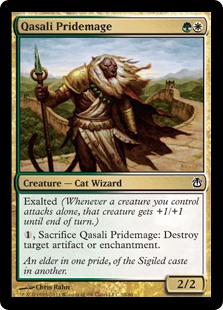
How certain cards line up against others contributes to their “worth” but doesn’t give the whole story. Qasali PridemageFor example; Qasali Pridemage lines up poorly against Lightning Bolt (losing a mana on the exchange) but still sees a fair amount of play. Why? Artifact/Enchantment removal is not necessarily hard to come by in G/W, but attaching this interaction to a creature lets G/W execute its primary gameplan (playing and attacking with creatures) while also providing interaction without having to go off-plan for something like Stony Silence or Erase. The exalted ability helps as well to provide a synergistic “hate-card” that has a high floor and provides incidental interaction, even in the face of its inherent weakness to Lightning Bolt. This scenario is important to keep in mind, as it gives us an explanation for why cards like Fauna Shaman/Lotus Cobra don’t see much play while Qasali Pridemage does.
Taking this principle and applying it to commonly played cards, we can start to see a trend developing. Loxodon Smiter would normally be too underwhelming for three mana (and often is) but its 4/4 size, immunity to counterspells and interaction with Liliana of the Veil all contribute to push it over the line into playable range. Were Liliana of the Veil and Mana Leak to become omnipresent in Modern we would see Loxodon Smiter’s stock go up, and vice versa. Moving forward, if Loxodon Smiter hypothetically starts becoming a format staple, Lightning Bolt’s value (and decks that rely on Lightning Bolt as removal) would start to take a hit.

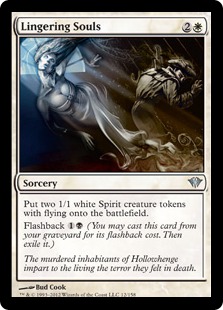
Lingering SoulsThis card evaluation process is something almost every player takes into account, whether they are building decks or just playing games. The most common case is playing against counterspells. Experienced players can attest to leading with Lingering Souls instead of Liliana of the Veil in the face of open mana against a blue player. Why? Because Lingering Souls matches up more favorably against counterspells than Liliana of the Veil. Against Bogles, Liliana will more often than not be played first. Against Affinity, Lingering Souls is miles better. These individual interactions, when aggregated with the other cards in our deck against the format as a whole combine to form the baseline for matchup strengths and weaknesses.
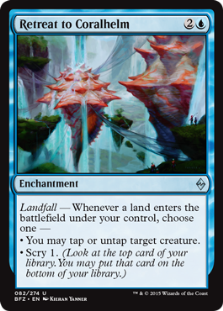
Matchup percentages, while often whimsical and unreliable, are based largely on the aggregate of these interactions. Take the Bant Knightfall vs. Grixis Control matchup. Loxodon Smiter makes Lightning Bolt, counterspells, and discarding with Kolaghan's Command extremely awkward. Geist of Saint Traft is almost impossible to remove if it can resolve, which is made possible through mana creatures and Voice of Resurgence making counterspells either too slow or a huge liability.Retreat to Coralhelm Retreat to Coralhelm just being an enchantment gives it inherent resiliency against Grixis once on the field, as they usually can’t do anything to remove it outside of Cryptic Command. Grixis’ gameplan of dropping quick delve creatures to block is punished heavily by Retreat to Coralhelm, Path to Exile, and Remand. Even Grixis’ primary strategy of trading resources and pulling ahead in the midgame with Kolaghan's Command lines up poorly with Bant Knightfall’s goal of applying quick pressure and leveraging tempo as a resource to keep the opponent on the back foot. Apply this thinking to your matchup of choice and you will start to see inherent strengths, weaknesses, under/overperforming card slots, and areas for potential improvement.
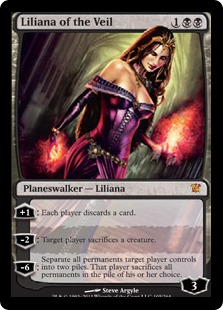
Continuing with the Grixis Control/Bant Knightfall matchup, our analysis has determined that it’s very difficult for Grixis to “control” our gameplan, as most of our threats line up favorably against their interactive elements. Assuming our Grixis opponent is aware of this as well, we can deduce that they will attempt to shift to their backup strategy; racing us with a quick Gurmag Angler or Tasigur, the Golden Fang. This is where what is colloquially referred to as “next-leveling” comes in; crafting our post-sideboard configuration to beat our opponent’s perceived angle of attack in the matchup. When looking at sideboard options, most players would turn to options like Spellskite or Kitchen Finks in an attempt to grind through removal, when it’s possible that spells like Dispel and Dismember would be better options. Strategically, Spellskite and Kitchen Finks are great cards against an opponent looking to trade resources, but contextually Dispel and Dismember are better post-board options. A strong case can be made for any combination of all four of those spells, but Dispel and Dismember directly challenge our opponent’s most potent path to victory, rather than providing us more strength in an area where we are already advantaged.

Analyzing the Context of Modern

As we discussed at the beginning of the article, Modern is a format defined primarily by constraints. In most cases, these constraints exist as individual cards or sets of similar cards that provide a unique effect or punish a particular element of the format. We’ll get into these individual constraints later, but here I want to focus on the metagame; the collective archetypal information that we can expect to face at any given event. Rather than giving a basic overview of what each deck is attempting to do I’m looking instead at what principles each archetype is employing and the pressures it places on the format as a whole. In terms of scope, we’ll be looking primarily at Tier 1/Tier 2 archetypes, with a focus on unique strategies (grouping similar strategies like Abzan/Jund and Elves/Merfolk).

Midrange (Abzan, Jund, Grixis Planeswalkers)

Liliana of the VeilCharacterized by cheap, efficient answers and high individual card quality, midrange strategies prey on synergistic archetypes through the power of discard spells and Liliana of the Veil. These decks mulligan well, employ powerful threats and broad answers, and focus on disruption, trading resources, and then topdecking better in the midgame. These strategies normally play a higher than average land count to support three colors and work their way up the curve to cast powerful 4/5 CMC spells and employ manlands to combat flooding. Midrange strategies have game against everything, and few slam-dunk matchups, but can be weak to dedicated combo and control strategies that have a natural resiliency to discard.
Hyper-Aggressive Aggro (Burn, Infect, Affinity)

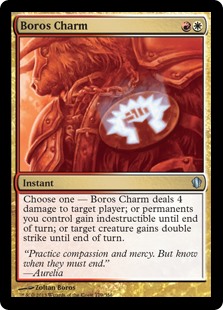
These strategies seek to push a certain principle to the maximum, and can often be described as containing combo elements as a result.Boros Charm Burn seeks to assemble 6-7 cards that do 3-4 damage to an opponent, and takes advantage of widespread incidental fetch/shockland life loss. Infect employs individually weak creatures but pairs them with pumps spells and effectively “doubles-up” bonuses due to Infect’s benefit of having to only deal 10 damage. Affinity floods the board with cheap/free, individually weak artifacts and hopes to pair this with either 12 “payoff spells” or swarm an unprepared opponent. Archetypes like these capitalize on mana-efficiency, punish stumbling, force opponents off their lane and demand early interaction. They exist as the primary “stress-test” in the format, keeping crazy strategies in check and providing a ceiling to game length. Given enough time, Burn will eventually draw enough spells to finish off an opponent, so they have to try and end the game quickly. Hyper-Aggressive Aggro struggles against dedicated hate and as a result are often grouped with combo when evaluating deck choice for an event.
Combo (Splinter Twin, Living End, Tron, Scapeshift, etc)

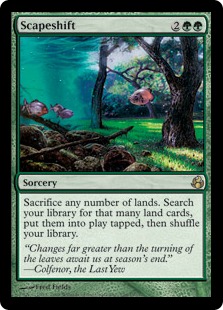
ScapeshiftCombo decks attempt to ignore the principles of exchange in Modern, looking instead to end the game through an effect that goes over the top of everything else. Accruing value through Spell Snare on Tarmogoyfor Lightning Bolt against Kitchen Finks is irrelevant when you can attack for a million, flood the board with big creatures, or just cast gigantic spells until your opponent quits. Their combo element “payoff” either wins the game on the spot or puts the strategy far enough ahead that victory is assured, so the rest of their strategy is often focused on survival and consistency. These strategies punish non-interaction is a similar way to hyper-aggressive aggro, but choose to focus on consistency and incorporation of control elements rather than an “all-in” approach. The widespread combo options available in the format combined with the prevalence of strong hate cards creates a cat and mouse environment. Strategies that are forced to react (either because they are too slow or are looking to control) must prepare for some combo but cannot answer everything, which leads to interesting deck choices as players attempt to “dodge” hate by playing a different deck.
Control (Grixis, Jeskai, UW)

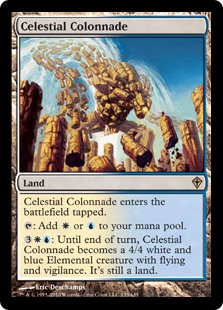
Control decks in Modern seek to win the same as every other control deck over the course of time; grind an opponent down to nothing and win through card advantage or some trump.Celestial Colonnade Kolaghan's Command rebuying Snapcaster Mage, Sphinx's Revelation and Celestial Colonnade, and Cryptic Command are all strong incentives to play reactively towards an endgame. Given the right build, Control wins by simply answering threats and staying alive to make land drops until the opponent starts flooding, at which point Control turns the corner and goes for the win. In Modern, Control exists as the natural ceiling to the midrange creep, as midrange matchups are normally slanted towards which deck is slightly bigger. This natural barrier combined with aggro’s mana efficiency keeps midrange decks honest, which is why we don’t see crazy things like Cruel Ultimatum and Sun Titan for value all the time. Control suffers from a weakness to discard, which can allow some decks to land a powerful threat that can go unanswered. In addition, the vast array of literal insanity that people play in Modern makes things difficult for a reactive strategy to have the right answers. Trying to prepare for Burn, Jund, Merfolk, Affinity, Scapeshift, Splinter Twin, Amulet Bloom, the mirror, and countless other decks can leave a control deck stretched too thin on answers. There just isn’t enough sideboard slots to prepare for everything.

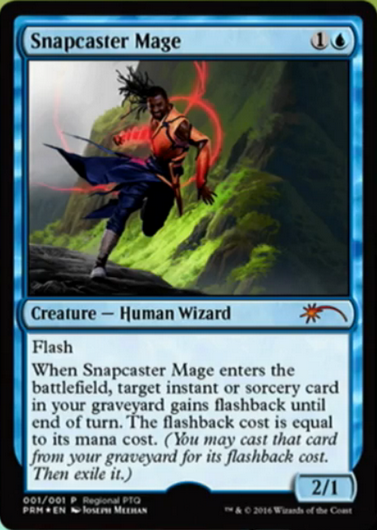

Many other decks exist in the format, of course, but these are the most polarizing in terms of both overall strategy and the type of answers that they demand. When evaluating new or even old decks, it’s always a good idea to look at the format as a whole and see both where your deck of choice sits on this spectrum and how it matches up against these major strategies. Four Color Gifts Loam might be doing some cool things, but if it is weak to aggro, can’t apply pressure fast enough to beat control, struggles against discard and can’t react well enough to fight combo, what are you really doing? Also, we’ve talked before about finding your role in Modern, and by this I mean making sure that we’re not a bad something else. Sliver Aggro as played by Adam Bowman at SCG Cincinnati is a cool, innovative deck, but functions too-similarly to Merfolk. This is fine by itself, but Merfolk does a lot of things better than Slivers which makes us wonder if we’re really gaining anything by playing Slivers or if we should just be playing Merfolk instead. This can be applied to many decks we’ve seen pop up before, like B/W Tokens, Vampires, Goblins, Soul Sisters, U/W Sun Titan, on and on it goes. Making a new deck is awesome, as we sometimes find gems like Amulet Bloom and Grishoalbrand, but these decks are successful because they have a solid foundation, can effectively answer many of the format’s stress tests, and are unique.

Conclusion

As I’ve become busier with school/other commitments, I haven’t been able to devote as much time to actually playing games of Magic anymore. While this can be seen as a negative, this has in a sense forced me to start thinking about Magic more analytically. Where before I would just grind some matches with a deck to determine how it plays in a matchup, I’ve found that just thinking through this process that I’ve outlined above can be far more helpful and efficient in terms of time for both increasing my Magic knowledge and ability and preparing for events. I encourage all of my readers to start thinking more analytically in terms of evaluating cards, decklists, tournament results and sideboarding. It requires a lot of effort upfront, and might not be as fun as just jamming some games, but for those looking to push their Magic ability to the next level I highly suggest practicing this process. One of the areas I struggle the most is sideboarding, both when building decks and playing matches. Thinking analytically about each archetype’s strengths/weaknesses, and then applying those characteristics to the matchup can result in some interesting discoveries (like the Spellskite/Dismember scenario above). If you’ve been stuck in a rut in terms of your Magic progression, you might be surprised where edges can be gained. If you enjoyed the content of this article or found it helpful, let me know what you think in the comments! If you think I got something wrong, I’d love to hear from you! As always, stop by my Twitch channel or Twitter feed and say hello! Thanks for reading, and I’ll see you next week.


Trevor Holmes

The_Architect on MTGO

Twitch.tv/Architect_Gaming

Twitter.com/7he4rchitect

Insider: New Archetypes in the Top 16 of Pro Tour BFZ

Are you a Quiet Speculation member?

If not, now is a perfect time to join up! Our powerful tools, breaking-news analysis, and exclusive Discord channel will make sure you stay up to date and ahead of the curve.

The Pro Tour coverage team keeps getting better and better. At PT Battle for Zendikar, they had interesting and relevant deck techs, cool advertising, and showed tons of Magic. Everything was awesome--until the cut to the Top 8.

It was so disappointing to see none of the sweet decks they highlighted throughout the weekend make the cut. Today I'll focus on some interesting decks that ended up in the Top 16.

Typically, players only focus on the Top 8 at any given event, but the players in the next tier were a small amount of variance away from the Day 3 stage and should not be ignored. Let’s dive right in!

Aristocrats

The first version of Aristocrats originated back in Innistrad-Return to Ravnica Standard. The goal was to use sacrifice engines like Cartel Aristocrat and Falkenrath Aristocrat to take advantage of cards with death triggers like Doomed Traveler and Xathrid Necromancer.

Aristocrats, named for the former two cards, is one of my favorite archetypes of all time. Many pro Magic players seemed to think the premise is solid in the new Standard, and there were some sweet variations on the concept.

Jund Aristocrats

Jund Aristocrats by Gabriel Nassif

Creatures

4 Hangarback Walker
4 Carrier Thrall
4 Zulaport Cutthroat
3 Grim Haruspex
4 Catacomb Sifter
4 Nantuko Husk
4 Smothering Abomination

Spells

1 Duress
4 Collected Company
2 Murderous Cut
1 Evolutionary Leap

Lands

4 Wooded Foothills
4 Bloodstained Mire
1 Polluted Delta
2 Rogue's Passage
3 Llanowar Wastes
3 Forest
5 Swamp
1 Cinder Glade
1 Smoldering Marsh
1 Jungle Hollow

Sideboard

3 Duress
4 Outpost Siege
4 Rending Volley
3 Radiant Flames
1 Roast

First up, we have the least crazy of the three types. You may have seen this deck in coverage listed as G/B Aristocrats, but I've labeled it Jund due to the prominent red cards in the sideboard. This deck takes its base line from the Event Deck.

The most interesting aspect to me here is the integration of the full four Smothering Abominations. It's not often that a four-power, four-mana flyer is good enough for Standard, but this might be one of those times.

In these Aristocrats decks, I'm always skeptical to see Collected Company. The creatures are not individually powerful like in typical Company decks. It won’t ever be terrible as long as you hit two creatures, but hitting just one will be much worse than in other decks.

There was an error retrieving a chart for Collected Company

Additionally, I dislike running Company in decks with Hangarback Walker because you can never put that creature into play for a positive effect.

It might be that the deck simply needs the card advantage, and fetching two synergistic creatures off of one card does sound strong. To compare, I would think about playing something like Eyeless Watcher that puts multiple creatures into play immediately.

To sum up, Company is still good in this deck but not nearly as good as in other decks. As we'll see below, some versions didn't run it.

Another positive quality about this style of deck is that removal spells are mostly terrible at stopping the game plan. It’s great to remove Nantuko Husk from the battlefield, but many of the other creatures will simply generate more creatures when they die. You also have the amazing Zulaport Cutthroat to drain your opponent every time they try to deal with a threat.

U/B Aristocrats

UB Aristocrats by Christian Calcano

Creatures

4 Nantuko Husk
4 Whirler Rogue
4 Zulaport Cutthroat
4 Liliana, Heretical Healer
4 Bloodsoaked Champion
4 Sidisi's Faithful
4 Sultai Emissary
4 Hangarback Walker

Spells

4 Murderous Cut
1 Vampiric Rites

Lands

4 Bloodstained Mire
4 Polluted Delta
2 Flooded Strand
1 Foundry of the Consuls
3 Sunken Hollow
8 Swamp
1 Island

Sideboard

1 Vampiric Rites
3 Duress
3 Complete Disregard
3 Disdainful Stroke
2 Despoiler of Souls
2 Ultimate Price
1 Negate

When I heard someone was playing a blue-black Aristocrats shell, I had two simultaneous thoughts. One, they’re going to scrub out; or two, they’re a genius. As it turned out, the latter was closer to reality.

It’s not often that I am blown away when I see a deck, but this deck design is beautiful nearly to perfection.

The strength of Catacomb Sifter led many to believe green-black was the right shell for a new Aristocrats deck. I thought Mardu Hordechief was playable but Sifter is a strict upgrade if you’re in both green and black. This creature is half of Viscera Seer tacked onto a token maker. It's the type of card that makes me stay up late on a work night brewing decks.

Is it worth it to make your deck green just for this card and a few others? Calcano and his team didn’t think so, and they replaced it with blue mana instead.

Previously I stated that I wasn’t impressed with Collected Company and thought about replacing it with a card like Eyeless Watcher. The minds behind this deck’s design likely had similar thoughts because they ended up with Whirler Rogue in that spot.

Rogue gives you multiple bodies to swarm the battlefield with, as well as a game plan similar to the Knightfall deck in Modern. Both strategies make one gigantic monster and give it a way to deal the finishing blow. Retreat to Coralhelm allows you to tap all their creatures while Rogue makes your Nantuko Husk unblockable, but the concept is nearly the same.

One huge draw to this build is the strength of Liliana, Heretical Healer in it. We’ve seen both Jace, Vryn's Prodigy and Nissa, Vastwood Seer become major metagame players and it comes as no surprise that another planeswalker in this cycle is helping to mold the format.

There was an error retrieving a chart for Liliana, Heretical Healer

While I don't think this version sacrifices much by removing green, there are several cards I'd like to fit in if possible. Carrier Thrall, Grim Haruspex and Smothering Abomination are all reasonable options.

One of the first things I would try is to squeeze in two Grim Haruspex. I would likely cut the Vampiric Rites because Haruspex is almost a creature version of the same card. Although Calcano said Sidisi's Faithful was extremely important to the deck, I would likely cut one of those as well.

Rally Aristocrats

It seems worthwhile to consider morphing this deck into a three- or four-color deck just to play all these cards together. Matt Nass took this concept to crazy heights by adding white for Rally the Ancestors.

Rally Aristocrats by Matt Nass

Creatures

3 Sidisi's Faithful
4 Elvish Visionary
4 Jace, Vryn's Prodigy
4 Zulaport Cutthroat
4 Catacomb Sifter
4 Nantuko Husk
4 Grim Haruspex

Spells

4 Collected Company
4 Rally the Ancestors

Lands

1 Prairie Stream
2 Sunken Hollow
2 Canopy Vista
4 Evolving Wilds
4 Polluted Delta
4 Flooded Strand
4 Windswept Heath
1 Forest
1 Island
1 Plains
1 Swamp

Sideboard

4 Dispel
3 Murderous Cut
2 Fleshbag Marauder
4 Jaddi Offshoot
2 Anafenza, the Foremost

While I have no idea how Matt arrived at this deck list, it seems likely he evolved it from a previous version of the Rally deck. One thing we do know is that this deck is not only crazy but also crazy fun.

This is the most combo-like version of the Aristocrats. I could see it needing more Whirler Rogues though, as a backup plan for when you can’t set up a backbreaking Rally.

The mana in this deck does look dodgy. Sequencing of land drops and fetch activations will be crucial. If you decide to play this deck, make sure to practice with the mana base to iron out all the creases.

I'm thrilled to see Nantuko Husk appear in multiple different decks. Writing about them has me reminiscing about the first Husk deck I brewed back in the day, an Elves deck featuring Caller of the Claw. As I played in a casual-competitive environment, I was able to do well with it while having insane amounts of fun.

If you like intricate interactions like these, this might be the style of deck for you. Give it a try, and don't forget the backup plan of sending all the synergistic creatures into the red zone!

The Many Flavors of Mardu

Mardu has secured a place in my heart ever since the Khans of Tarkir prerelease. I love what the color combination is trying to do, but I haven’t been able to successfully brew my own version. Some Pro Tour competitors were able to do just that this past weekend.

Mardu Midrange

Creatures

4 Hangarback Walker
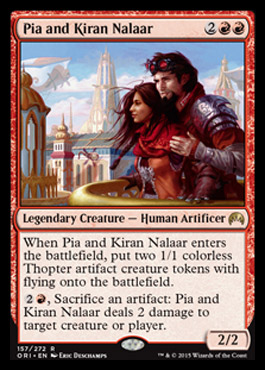
3 Pia and Kiran Nalaar
2 Soulfire Grand Master

Spells

2 Despise
4 Fiery Impulse
4 Crackling Doom
3 Mardu Charm
2 Utter End
2 Murderous Cut
4 Gideon, Ally of Zendikar
2 Sarkhan, the Dragonspeaker
1 Sorin, Solemn Visitor
1 Ob Nixilis Reignited

Lands

4 Nomad Outpost
4 Shambling Vent
4 Bloodstained Mire
2 Wooded Foothills
3 Mountain
2 Plains
1 Swamp
1 Smoldering Marsh
1 Canopy Vista
3 Battlefield Forge
1 Caves of Koilos

Sideboard

4 Radiant Flames
2 Outpost Siege
2 Read the Bones
2 Duress
3 End Hostilities
2 Surge of Righteousness

My business partner has been working on a deck like this for a while now. The deck's goal is similar to Abzan Midrange. Both decks are trying to control the board and use their incremental card advantage to win a long game. Mardu Midrange does that with a suite of powerful planeswalkers and lots of removal to protect them.

The creatures are geared towards this plan as well. Hangarback Walker and Pia and Kiran Nalaar both make multiple creatures for your investment. Soulfire Grand Master allows you to replay removal spells once you generate enough mana and provides life gain to pull you out of even the most dire situations.

Tomoharu Saito opted for a more aggressive build of Mardu that eschewed the planeswalkers entirely.

Mardu Aggro by Tomoharu Saito

Creatures

4 Bloodsoaked Champion
3 Zurgo Bellstriker
4 Flamewake Phoenix
3 Drana, Liberator of Malakir
4 Thunderbreak Regent
2 Kolaghan, the Storm's Fury

Spells

2 Roast
4 Duress
4 Fiery Impulse
2 Draconic Roar
4 Murderous Cut

Lands

4 Swamp
4 Mountain
4 Bloodstained Mire
4 Polluted Delta
4 Wooded Foothills
4 Smoldering Marsh

Sideboard

4 Self-Inflicted Wound
4 Hangarback Walker
3 Outpost Siege
3 Radiant Flames
1 Kolaghan's Command

When I think of Mardu, this is more the style of deck I am looking for.

If you read my articles, you know that I pride myself on rocking the aggressive decks to many victories and this deck is definitely my style. The structure and card choices in this deck remind me of the B/W Aggro deck that I’ve been working on.

There is definitely a place in the metagame for a deck like this. My deck is more streamlined, but it lacks the efficient removal and fliers that red provides. One advantage of my build is a lower curve, to get under opponents before they get their footing.

R/B Midrange by Hao-Shan Huang

Creatures

3 Kolaghan, the Storm's Fury
3 Pia and Kiran Nalaar
4 Thunderbreak Regent
4 Hangarback Walker

Spells

3 Ruinous Path
2 Despise
2 Roast
3 Complete Disregard
2 Foul-Tongue Invocation
4 Draconic Roar
2 Murderous Cut
2 Ob Nixilis Reignited

Lands

4 Bloodstained Mire
2 Blighted Fen
4 Wooded Foothills
4 Bloodfell Caves
5 Swamp
4 Mountain
1 Cinder Glade
2 Smoldering Marsh

Sideboard

2 Self-Inflicted Wound
3 Duress
2 Dragonmaster Outcast
2 Read the Bones
2 Crux of Fate
1 Outpost Siege
3 Radiant Flames

Speaking of similar yet streamlined, this red-black deck removes the white cards altogether in order to focus its game plan. It's basically a hybrid of the two decks above but definitely leans more towards the midrange deck.

Looking over the removal suite, it’s no surprise that this deck was successful. Answers to every deck in the format are available within the confines of red and black.

5-Color Whatever You Want

5-Color Bring to Light by Scott Lipp

Creatures

4 Siege Rhino
2 Nissa, Vastwood Seer
4 Jace, Vryn's Prodigy
1 Tasigur, the Golden Fang
1 Dragonlord Ojutai
1 Whisperwood Elemental

Spells

4 Bring to Light
1 Languish
1 Crux of Fate
4 Abzan Charm
2 Complete Disregard
2 Murderous Cut
1 Foul Renewal
1 Silumgar's Command
1 Dispel
1 Utter End
2 Silkwrap

Lands

1 Plains
3 Forest
1 Swamp
4 Polluted Delta
4 Flooded Strand
1 Island
3 Bloodstained Mire
2 Windswept Heath
1 Wooded Foothills
1 Sunken Hollow
1 Shambling Vent
1 Cinder Glade
1 Lumbering Falls
1 Smoldering Marsh
1 Canopy Vista
1 Prairie Stream

Sideboard

1 Whisperwood Elemental
1 Dispel
1 Feed the Clan
4 Radiant Flames
2 Duress
2 Disdainful Stroke
2 Surge of Righteousness
1 Infinite Obliteration
1 Ugin, the Spirit Dragon

5-Color Bring to Light by Hojae Han

Creatures

4 Hangarback Walker
3 Rattleclaw Mystic
4 Anafenza, the Foremost
4 Siege Rhino
3 Wingmate Roc

Spells

2 Bring to Light
1 Languish
3 Abzan Charm
1 Murderous Cut
1 Dromoka's Command
1 Utter End
4 Silkwrap
3 Gideon, Ally of Zendikar

Lands

4 Wooded Foothills
4 Windswept Heath
4 Flooded Strand
1 Polluted Delta
4 Shambling Vent
1 Canopy Vista
1 Smoldering Marsh
1 Sunken Hollow
1 Prairie Stream
3 Forest
1 Plains
1 Swamp

Sideboard

4 Duress
1 Dispel
1 Arashin Cleric
1 Ob Nixilis Reignited
2 Surge of Righteousness
2 Disdainful Stroke
1 Exert Influence
1 Tragic Arrogance
1 Dragonlord Silumgar
1 Sarkhan Unbroken

With access to fetchlands, the new tango duals, and Bring to Light, it’s no surprise to see decks like this. These two decks should be evidence enough that whatever cards you think are the best, you can jam them all into a similar shell and not worry too much about the mana.

There was an error retrieving a chart for Bring to Light

Bring to Light allows you to run silver bullets like Gilt-Leaf Winnower, as well as searchable situational removal like Utter End or Languish. You can be prepared for any situation.

Bring to Light reminds me of a one-shot Birthing Pod. It wouldn't surprise me to see a similar build with a laundry list of one-ofs to tutor for. We have seen this to a limited extent, but I think we can push the concept further.

My first thought when I saw a Bring to Light list was that we were heading back to Lorwyn Standard when 5-Color Control was tier one. Before its time is up, I imagine we will all be dreading the power of Bring to Light.

Token Innovation

Bant Tokens by Sam Black

Creatures

4 Hangarback Walker
4 Gideon, Ally of Zendikar
3 Secure the Wastes
3 Elvish Visionary
4 Nissa, Vastwood Seer
3 Wingmate Roc

Spells

2 Dispel
4 Silkwrap
2 Stasis Snare
1 Planar Outburst
1 Quarantine Field
4 Retreat to Emeria

Lands

4 Windswept Heath
4 Flooded Strand
2 Wooded Foothills
1 Blighted Woodland
2 Lumbering Falls
2 Canopy Vista
4 Plains
4 Forest
2 Prairie Stream

Sideboard

4 Surge of Righteousness
1 Negate
2 Valorous Stance
1 Oblivion Sower
2 Erase
3 Den Protector
2 Evolutionary Leap

Here we are at the apex of the hidden gems. Sam Black does it again.

The brilliance of this deck design is in its straightforward synergies. Tokens provide you the ability to swarm your opponent with a wide array of creatures. Pump spells like Gideon’s emblem make those innocent 1/1’s into 2/2’s so you can double your on-board power from out of nowhere.

The core of the deck is Retreat to Emeria, which can play both roles. Not only does every fetchland bring two guys to battle with, but you can also add stacks of damage to your army once it’s assembled.

Sam recommended adding another Blighted Woodland and Evolutionary Leap. I would probably cut a Plains and a Quarantine Field to make room.

Sam's team posted three 8-2 records with this deck, and I'd be surprised if any other archetype was as successful. Since nobody on their team made the Top 8 though, this is the perfect deck to take to your next tournament. It's quite strong and players won’t be ready for it this weekend.

Financial Fallout from the Pro Tour

This week, I updated tons of prices in my inventory. I’m sure you noticed cards from successful decks trending upward, but I was surprised to see how all-encompassing that category turned out to be. Nearly every card in the successful decks increased in value.

I increased the price on all these cards:

Many of these cards have been mentioned by myself and other writers on this site as solid investments. The Pro Tour catapulted the process forward, as usual.

No one is shocked that the fetchlands are heading up, but the swiftness of their ascendancy was surprising to me. Fall is historically when the previous block’s lands increase in value. We were duped by the scry lands, but the fetches have fallen back in line with expectations.

Although many cards on this list come as no surprise, a couple stood out to me:

These three cards had minor increases of a dollar or two this past week, yet none of them seem to be connected with any winning strategies from the Pro Tour.

Players are trying to make Oblivion Sower ramp you to bigger threats like Ulamog, the Ceaseless Hunger, but I haven’t seen anyone winning any tournaments with that strategy yet.

Similarly, as far as I’m aware, the two planeswalkers were absent from any successful decks at the PT.

Moving forward, I think these two Dragons of Tarkir planeswalkers are a good investment. They seem like the type of card that just needs the right cards surrounding them to become pillars of the format. They will be legal until next Fall so don’t worry about losing value too soon.

Although these two cards can't utilized as Bring to Light targets because they aren't creatures, instants, or sorceries, that doesn't mean they won't make the cut at some point over the next year. Even if these cards don't share the lime light in Standard, casual players will still love copying their sweet spells or making more dragons. Get in on these casual favorites now, rather than waiting too long.

~

That’s all for me this week. The Pro Tour provided us with some sweet new decks to work with and shifted prices as well. We had an unprecedented amount of financial coverage of this event, so if you missed out this time, make sure to get in on the action next time around.

Until next time,
Unleash the Force of Battle!

Mike Lanigan
MtgJedi on Twitter
Jedicouncilman23@gmail.com

Snapcaster Mage Named 2016 RPTQ Promo

Are you a Quiet Speculation member?

If not, now is a perfect time to join up! Our powerful tools, breaking-news analysis, and exclusive Discord channel will make sure you stay up to date and ahead of the curve.

This weekend at the PT WotC announced next year's RPTQ promo as being Snapcaster Mage. This was a reprint that people were hoping for when Tiago's price skyrocketed earlier this year.

There was an error retrieving a chart for Snapcaster Mage

That said, an RPTQ reprint isn't going to impact the price of Snapcaster Mage they way that players would hope. If you look at the price history of Liliana of the Veil, its promo printing didn't impact that card other than arguably slowing its growth. Snapcaster's price has been in decline since its most recent spike though, and its currently around $50. The RPTQ promo printing makes it seem unlikely that Tiago will be showing up in the next Modern Masters, and as such now might be the best time to buy for a while. Especially if people are fearfully selling off of their copies.

Did I mention that I don't care for the art?
Avatar photo

Ryan Overturf

Ryan has been playing Magic since Legions and playing competitively since Lorwyn. While he fancies himself a Legacy specialist, you'll always find him with strong opinions on every constructed format.

View More By Ryan Overturf

Posted in FreeTagged , 6 Comments on Snapcaster Mage Named 2016 RPTQ Promo

Have you joined the Quiet Speculation Discord?

If you haven't, you're leaving value on the table! Join our community of experts, enthusiasts, entertainers, and educators and enjoy exclusive podcasts, questions asked and answered, trades, sales, and everything else Discord has to offer.

Want to create content with Quiet Speculation?

All you need to succeed is a passion for Magic: The Gathering, and the ability to write coherently. Share your knowledge of MTG and how you leverage it to win games, get value from your cards – or even turn a profit.

Insider: MTGO Market Report for October 21st, 2015

Are you a Quiet Speculation member?

If not, now is a perfect time to join up! Our powerful tools, breaking-news analysis, and exclusive Discord channel will make sure you stay up to date and ahead of the curve.

Welcome to the MTGO Market Report as compiled by Sylvain Lehoux and Matthew Lewis. The report is loosely broken down into two perspectives.

A broader perspective will be written by Matthew and will focus on recent trends in set prices, taking into account how paper prices and MTGO prices interact. Sylvain will take a closer look at particular opportunities based on various factors such as (but not limited to) set releases, flashback drafts and banned/restricted announcements.

There will be some overlap between the two sections. As always, speculators should take into account their own budget, risk tolerance and current portfolio before taking on any recommended positions.

Redemption

Below are the total set prices for all redeemable sets on MTGO. All prices are current as of October 19th, 2015. The TCG Low and TCG Mid prices are the sum of each set’s individual card prices on TCG Player, either the low price or the mid price respectively.

All MTGO set prices this week are taken from Goatbot’s website, and all weekly changes are now calculated relative to Goatbot’s ‘Full Set’ prices from the previous week. All monthly changes are also relative to the previous month prices, taken from Goatbot’s website at that time. Occasionally ‘Full Set’ prices are not available, and so estimated set prices are used instead.

Oct19

Theros Block & M15

Sets of Theros (THS) rebounded an impressive 14% this past week. There is still some value in rares such as the Modern staple Thoughtseize, now over 5 tix. This card will appreciate in price to 10+ tix at some point over the next 18 months. Speculators would do well to stock up on this heavily played card.

Fringe Modern-playable cards like Sylvan Caryatid are worth a punt as well at junk rare prices, but a much longer time frame is required. Buy and hold this one only as a low probability speculative strategy.

Rotating out of Standard has been much less kind to Born of the Gods (BNG), off another 9% this week and 26% in the last month. Despite this drop, there is still very little value in this set overall.

If digital prices remain at this depressed level, and the TCG Low paper price rises into the 40+ tix range, some amount of demand from redeemers would be triggered. As prices currently stand, look only to Modern-playable cards from this set for a chance at gains down the road.

Although facing a similar hurdle as a small set, Journey Into Nyx (JOU) has the benefit of being a third set and featuring two Modern-playable cards in Keranos, God of Storms and Eidolon of the Great Revel.

Players should not hesitate to buy their playsets of these cards at current prices. The selloff from rotation has passed and both cards appear to have put in a cautious bottom.

[tt n="Eidolon of the Great Revel" a=5]

Magic: 2015 (M15) is off 11% this week and starting to look like excellent value. Sliver Hivelord is currently the most expensive card in the set at 7 tix.

Looking to M14 as a guide, that set saw the most value accrue to Archangel of Thune after it rotated out of Standard. Sliver Hivelord compares well to that card, as both are fringe Modern-playable, have some casual appeal and are first printings.

After poking around the classified ads and the bots, it's clear that this mythic rare is in short supply. Look for gains from redemption to accrue to it.

Tarkir Block & Magic Origins

Magic Origins (ORI) continues to represent excellent value on MTGO. Although Jace, Vryn's Prodigy is grabbing the headlines, the overall outlook on ORI continues to be positive as well. It's doubtful we've seen the peak, and speculators should continue to hold this set into the winter.

Event-driven price spikes are fine to sell into, but the overall trend will be higher over the coming months, so selling out completely is not recommended. Hangarback Walker is likely to reach 20 tix at some point, and Jace might not have reached its peak, even though it nearly touched 70 tix this week.

The two large sets from Tarkir block are in a spot similar to ORI. Price increases in paper will translate to higher digital prices through redemption, and with Tarkir block overshadowing Battle for Zendikar (BFZ) in Standard, there is no reason to expect lower prices in the near term.

The trend is your friend in this case, and those that have been holding cards from Khans of Tarkir and Dragons of Tarkir will be rewarded over the coming months with higher prices.

Fate Reforged will not have the same appeal to redeemers due to a relatively small differential between digital and paper prices. Selective selling over the coming months is recommended, especially in response to results-driven price increases.

Soulfire Grand Master and Warden of the First Tree appear poised to hold key spots in Fall Standard. Further gains on these cards are thus expected as players increase play on MTGO with the onset of winter.

Battle for Zendikar

The cards from BFZ with the biggest impact on Standard so far include the new dual lands and Gideon, Ally of Zendikar. With cards form KTK block and ORI still dominating Standard, the value of BFZ sets will be low, for both paper and digital.

The other factor which will impact set prices are the Expeditions. In paper these add some value to a booster. Over the long term, however, that value has to come from the rest of the set--the price of a BFZ booster is the same as any other, and BFZ will be printed to demand.

The online versions of the Expeditions are not redeemable, which eliminates one of the normal sources of price support for online sets. With lower paper prices and less redemption to buttress the set, we can expect BFZ prices on MTGO to be lower than an average set.

All of these factors are working in the same direction: bringing the price of BFZ down. Looking to the price trajectory of KTK last year, that set hit 100 tix by the second week of November. BFZ, which was released almost a week later than KTK was, is close to breaching that price already. No speculator should be considering any purchases from BFZ until January at the earliest.

The one bright spot so far comes from the foil mythic rare strategy. This is an excellent strategy for those looking to play with the new cards, but who don't want to bleed value over time.

The price of a playset of foil mythic rares has been stable, and I purchased my playset last Monday.

Look for a follow-up article detailing the results of pursuing this strategy in early 2016. Although the upfront costs are higher, players should have faith that their tix are much safer in foil mythic rares than in regular versions.

Modern

In the shadow of Pro Tour Battle for Zendikar, Modern prices have found a bottom this past week. The Modern Total Format Price index actually shows a slight progression compared to last week.

indice

Looking closer, several Modern positions we've discussed for the past two weeks, as well as other Modern staples, have seen some upward price movements over the past few days. Nettle Sentinel, Rest in Peace, Tectonic Edge, Stony Silence, Ranger of Eos, Torpor Orb and Gitaxian Probe are among the positions that have gained 25% or more in the last seven days or so. Other positions are likely to follow, including more expensive Modern staples.

Positions such as Blood Moon, Magus of the Moon, Celestial Colonnade, Inkmoth Nexus, Twilight Mire, Creeping Tar Pit and Through the Breach should also be on the rise for the next two to three months, although at a more steady pace than cheaper, more volatile positions.

While prices may still drop further in some individual cases, this period of the year is usually a great time to invest in Modern, with expected profits to be collected later this Winter.

Interest in Modern is currently low as players dig into the new Standard format. As the Standard metagame gets solved in the following weeks, players will seek diversity and many will turn to Modern. Prices will most likely ramp up until Pro Tour Oath of the Gatewatch, featuring Modern Constructed, in February 2016. This time around Modern will also be the format for the PTQ season.

As always, a basket-type approach will expose you to the fewest risks and is the most likely to yield positive returns down the road.

Lastly, this Monday Lee Sharpe announced a special flashback draft event featuring triple Innistrad to celebrate Halloween. This event will start next week and last through November 4th.

Innistrad was a highly popular set to draft and has two of the most impactful cards currently in Modern--Snapcaster Mage and Liliana of the Veil. Jam in Geist of Saint Traft, Past in Flames and Olivia Voldaren and we are left with a value set players should be more than eager to draft.

This certainly is a windfall for speculators, and provides the opportunity to stock up on some of the best Modern staples before the Winter.

Legacy & Vintage

Along with the Halloween event, more details have been given out about the recurrent MTGO Vintage tournaments. The Power Nine Challenge will be held every month starting Saturday, October the 24th. For a 25 Tix entry fee, players will fight for a first prize worth approximately 450 Tix.

power_9_spread_small

Is it enough to attract Vintage players en masse? Is it enough to make this event the Vintage tournament players don’t want to miss? And most of all, will this drive Vintage Masters prices up?

At this point, after so many disillusions with Vintage specs, nothing guarantees this event will have a positive impact on prices, let alone a strong and durable one.

Even if it does herald a turn in VMA prices, it's difficult to argue such an opportunity will be better than the multiple ones we mentioned above with Modern. The simplest way to gauge the skepticism from speculators and players is to look at the flat line of the VMA price index after Lee Sharp's announcement.

The very few positions speculators should have on their radar now are cards that feature in both Legacy and Vintage. These include Force of Will, Wasteland, Daze and the dual lands, some of which rebounded only mildly on Monday.

Pauper

Red was color of the week in Pauper with more than 20% of the top finishers this week playing Mono-Red Goblins. Outside of Pyroblast and Gorilla Shaman in the sideboard, the deck is worth less than 10 Tix.

Mogg Raider is the only other card above bulk, which has seen clear price cycles since earlier this Spring. Currently sitting above 1 Tix, it is an interesting target to keep an eye on if it dips below 0.5 Tix.

More broadly, while many cards in Pauper such as Chittering Rats, Unearth, Quirion Ranger, Moment's Peace and Firebolt keep cycling up and down, other Pauper staples like Sunscape Familiar and Standard Bearer haven’t moved much over the past couple weeks.

The absence of distinct seasons and uniform cycle patterns can make Pauper a difficult format to follow for speculators. While reasonable profits are possible, Pauper speculators are definitely encouraged to monitor positions carefully on a regular basis.

Targeted Speculative Buying Opportunities

Modern

Through the Breach
Eidolon of the Great Revel
Blood Moon
Magus of the Moon
Thalia, Guardian of Thraben
Sower of Temptation
Thragtusk
Grafdigger's Cage
Serum Visions
Torpor Orb
Abrupt Decay
Temple of Epiphany
Keranos, God of Storms
Sliver Hivelord

Targeted Speculative Selling Opportunities

None


Trevor Holmes Plays MTGO Ep.4: Bant Knightfall!

Are you a Quiet Speculation member?

If not, now is a perfect time to join up! Our powerful tools, breaking-news analysis, and exclusive Discord channel will make sure you stay up to date and ahead of the curve.

Hey guys! Welcome to Episode 4 of our Modern Nexus Video Series, where we pick a sweet list and run it through some matches on Magic Online. This week we have our very own Retreat to Coralhelm/Knight of the Reliquary combo deck; Knightfall!

Knightfall_Master

We talked about this list and gave a walkthrough and some strategy in my article last week, so check that out if you missed it! Now that we’ve done our homework, let’s get to the videos!

[wp_ad_camp_1]

"Knightfall - Trevor Holmes"

Creatures

4 Noble Hierarch
3 Birds of Paradise
4 Steppe Lynx
4 Geist of Saint Traft
4 Tarmogoyf
3 Voice of Resurgence
2 Loxodon Smiter
4 Knight of the Reliquary

Instants

4 Path to Exile
3 Remand

Enchantments

4 Retreat to Coralhelm

Land

1 Breeding Pool
1 Hallowed Fountain
2 Temple Garden
1 Oboro, Palace in the Clouds
1 Sejiri Steppe
1 Gavony Township
1 Horizon Canopy
1 Ghost Quarter
4 Windswept Heath
3 Misty Rainforest
3 Forest
2 Plains

Sideboard

1 Dismember
2 Spellskite
2 Stony Silence
1 Aven Mindcensor
3 Kitchen Finks
1 Crucible of Worlds
2 Dispel
2 Feed the Clan
1 Deprive

[youtube http://www.youtube.com/watch?v=39KPvGiMXMI&w=560&h=315]


[youtube http://www.youtube.com/watch?v=s1K68uds_P0&w=560&h=315]


[youtube http://www.youtube.com/watch?v=E_E1RyxJEe8&w=560&h=315]


[youtube http://www.youtube.com/watch?v=ve8FQkEtPwo&w=560&h=315]

Conclusion

So, we didn’t get the results I was hoping for, but I think there is a lot we can take from these videos. First, Knightfall is the real deal, and I think we’ve proven it can hang with pretty much any deck in the format. Both of our match losses were pretty close and could have gone either way, it’s just unfortunate that two of our matches broke our opponent’s way. I think it’s important to keep in mind that we are only playing a 3 game set, rather than looking at the results to determine if a deck is “good enough” we should instead be focusing on how it plays and how it’s positioned in the format. Now, if we’re still 33% after a 10 game set we know something needs to change.
I plan on playing with this deck a lot more, as it’s powerful, customizable, and a blast to play, If you’ve been working on this deck let me know in the comments any thoughts/opinions you have, and send your lists my way. I think Steppe Lynx is a good fit, but I could also see moving another direction and using those slots for something else. As always, feel free to stop by my stream at twitch.tv/Architect_Gaming or follow me on Twitter at twitter.com/7he4rchtect. See you next week!
Trevor Holmes
The_Architect on MTGO
Twitch.tv/Architect_Gaming
Twitter.com/7he4rchitect

Insider: Two Cautionary Modern Tales From SCG States

Are you a Quiet Speculation member?

If not, now is a perfect time to join up! Our powerful tools, breaking-news analysis, and exclusive Discord channel will make sure you stay up to date and ahead of the curve.

One of the hardest aspects of cross-referencing metagame and financial data is looking for what's not there. It's easy to browse decks and highlight key finishes, looking for nutty Modern speculation targets that are likely to explode in the coming weeks. It's much harder to see what decks and cards didn't show up, and to analyze those absences in the context of the broader format.

On the spike side, Restore Balance combo is a perfect example of a runaway Modern stock that everyone noticed. Following a respectable 6th place finish at the SCG Premier IQ in Atlanta, deck staples blew up from bulk-rare status to the dreaded "sold out" tag in a matter of hours.

I shudder to see where these prices will land but I can assure you it's a short-lived hype.

Restore Balance to These Prices

Finding the next Restore Balance is often easy. Finding a key metagame absence, however, is not. A few notable Modern decks didn't appear either at SCG States or in the weeks leading up to these events. Their absences are an important indicator for savvy Modern investors.

Today, I want to look at two Modern decks that are long on hype but short on either immediate event results or long-term metagame prospects. These two examples offer an indirect case study on how metagames and markets interact. I'll also provide direct advice on the decks' core cards.

Before we get started, here's an important disclaimer: SCG has not yet published results from 10/19 States events, so it's possible the picture changes once those go up.

Even without those stats, preliminary factors suggest a mismatch between investor excitement and metagame realities. Let's see if we can get an edge on the Modern market by sorting those out.

Lantern Control

Lantern Control might have taken down a Grand Prix under the careful piloting of Zac Elsik, but this deck is nowhere near breaking out in a big way. In the 29 States standings I looked at, I saw only a single instance of Lantern Control: Jonathan Stock brought a close replica of Elsik's list to Utah's States, getting 7th at the event.

Seventh? At only a single event? We're still waiting on 10/19 data, but that's not what we should expect of a list that took down a Grand Prix. It's certainly not what we should expect of a deck that led to one of the quickest spikes in recent memory.

The Lantern Control Core

To be clear, Lantern Control isn't a bad deck. I'd go so far as to call it a good deck, especially in the right pilot's hands. Unfortunately, it's also not a deck that will enjoy widespread popularity or even success, which makes these cards risky investments.

On the one hand, cards like Ensnaring Bridge are low-circulation rares with theoretically high ceilings. Just look at Blood Moon to see that price magnification in action, and Moon actually enjoys more printings than Bridge.

We see similar trends at play in other core Lantern Control cards: Lantern of Insight itself jumped to $5.50 after the GP with only one or two finishes underlying its rise.

There was an error retrieving a chart for Lantern of Insight

On the other hand, the ceiling on Bridge and Lantern is likely to remain a matter for theory and speculation. The deck just doesn't have what it takes to succeed in big metagames. Without that success, it can't see widespread popularity and cards like Bridge will never climb to Blood Moon levels.

What's holding Lantern Control back? One factor is pilot skill. It takes a lot of practice to be good at the deck, and that's not just me tossing in the overused line that leads every deck primer on the internet. You really do need to know the format and your matchups, and many Modern players lack the energy or interest to make that commitment.

Another problem with Lantern Control is the brutal Burn matchup, which can be a major disincentive for players trying the deck out at the local level. New Moderners tend to gravitate towards cheap, top-tier decks like Burn.

If you are trying to run your neat Lantern Control build in a Burn-infested metagame, particularly one full of these recent Modern converts, you're gonna get Burnt. This makes spending $90 on a playset of niche cards a risky proposition.

There was an error retrieving a chart for Ensnaring Bridge

Lantern Control also suffers from a bunch of incidental drawbacks that collectively bring down its metagame share: splash damage from Affinity hate, cards that don't transfer to other decks, and the complaint that it's boring to play and watch.

None of these suggest Lantern Control can't win another major event, but they seemed to be in full effect over the SCG States weekend.

Recommendation: Steer Clear

If you buy into Lantern Control staples right now, you are likely to see some profit. However, it's likely to be very small and you'll need to sell them quickly.

There simply isn't enough demand to make buying multiple Bridges at $23 per pop worth it. Moreover, the metagame is unlikely to see much more Lantern Control in the future, so its prospects aren't great.

That said, something from Lantern Control like Glimmervoid is a much safer bet because of its overlap with format heavyweight Affinity.

Affinity is currently enjoying tremendous popularity, and that is likely to continue throughout the year. Glimmervoid is integral to Affinity's success and will only go up in price as more Affinity (and Lantern Control!) players use it.

There was an error retrieving a chart for Glimmervoid

As a general rule, if you can buy into Tier 1 staples that overlap with powerful, fringe decks, you should do so in a heartbeat. Be more cautious with niche novelties like Bridge, and Lantern itself.

If you have them already, hold onto them. If you haven't picked them up yet, wait a bit; they are likely to keep dropping as the metagame proves more hostile to Lantern Control than many supporters foresaw.

Knight of the Reliquary

It seems like the online Magic community can't get enough of the Knight of the Reliquary plus Retreat to Coralhelm combo. Knightfall threads and reports have infested my r/modernmagic and r/spikes feed for weeks. I, for one, am just happy we settled on a palatable (even cool) name for the deck.

The good news is that Knightfall development is ongoing and numerous players have reported success with the deck at a local level. This bodes well for Knight/Retreat players who are still tuning their decks and figuring out the best way to bring the combo to a larger tournament.

The bad news? Knightfall was nowhere to be seen at SCG States, at least not in the first 29 events.

Falling Knightfall Stocks

I'm genuinely optimistic about seeing Knightfall succeed as the year progresses. Indeed, we've already seen at least two successful Knightfall players since October started: 4th place at a 60-player event and 5th place at a 34-player one.

Those were international events, however, so they are unlikely to generate the same kind of buzz we see from the SCG States circuit. This is probably (definitely) a disservice to those pilots and tournaments, but it's an unfortunate reality of the Magic content-sphere, especially the English-language one.

Another unfortunate reality is Knightfall's failures so far at SCG States. Say what you will about a bias towards certain events, but it's hard to ignore the deck's absence from 29 tournaments despite an insane online profile. True, this discounts the more anecdotal tournament reports we've seen on reddit, but overall it's still a small competitive imprint for a deck with such hefty hype.

There was an error retrieving a chart for Knight of the Reliquary

Based on all this, we need to approach Knightfall pricing, buying, and selling with a mix of caution and optimism.

Looking at the two reported Knightfall finishes above, we see two very different approaches. One build favors Collected Company. The other approaches Knightfall from a midrange angle, replete with Undergrowth Champion, Simic Charm, and other oddball threats. One of my Modern Nexus authors, rising star Trevor Holmes, opted for an Aether Vial build for his version.

All of this is to show that Knightfall is a budding deck with no agreed-upon core. Until that agreement happens, Knight and its buddies are unlikely to enjoy much Modern success and, by extension, much financial growth.

Recommendation: Hold

We've already seen Knight stagnate around the $15 mark. Many retailers are unwilling to lower her price for fear of a breakout performance, but unable to raise it for lack of results.

This trend will continue until Knightfall exhibits a big win. That said, I do think a big win isn't too far outside of Knightfall's future, which suggests players need to sit tight and not buy or sell too much into this climate.

There was an error retrieving a chart for Retreat to Coralhelm

For now, I recommend holding your Knightfall cards, or looking for cheap buy-ins. Don't buy into these current prices, unless you are doing so as an eleventh-hour response to a major Grand Prix news update.

Don't sell out yet, though! It's tempting to get cold feet when a deck isn't doing well but we're still in an off-season and it's too early to tell if Knightfall is a bust or a boom waiting for its time in the spotlight. We should know this by the end of December, but until then, keep on brewing to make Knightfall work for you.

The Next Big Hit?

There will be plenty more to discuss next week, especially once the 10/19 results go up.

There are also lots of positive results to discuss, as opposed to the decks that didn't make the cut. Such a discussion would certainly include the rise in Twin, a scattering of Jeskai wins, lots of Amulet Bloom, Slivers (!), and a wacky Aggro Loam deck packing more Molten Vortex than Seismic Assault.

There was an error retrieving a chart for Molten Vortex

If you've been paying attention, you should quickly identify this as a potential short-term spike that is unlikely to hold value for long. Tread cautiously.

Hopefully we get enough sweet finishes once the standings update, after which you can be sure I'll revisit this topic for next week.

What were some of the other winners and losers you saw from the 10/18 States? Any movement you saw on the local level, if not the national one? Stories from States to share? I'll check out your comments below and look forward to more Modern lists before next week!

Insider: Learning from Speculation Mistakes

Are you a Quiet Speculation member?

If not, now is a perfect time to join up! Our powerful tools, breaking-news analysis, and exclusive Discord channel will make sure you stay up to date and ahead of the curve.

Welcome back, readers!

Today's article will focus on an issue that cropped up with this last Pro Tour. I got giddy with some potential speculation targets, ones that I honestly didn't believe in and decided to buy anyway. This giddiness cost me around $50 as none of the cards panned out.

You'll often hear people touting their wins when it comes to speculation, but it's just as important to review our misses. I've discussed this previously here, where I go over the reasons why my misses failed. But what's even smarter than reviewing your mistakes is learning from them and not repeating them again...

Luckily for all of you (and unluckily for me), I repeated some of my previous mistakes with these Pro Tour speculation targets. This isn't to say you should never order cards before the Pro Tour begins when you see something clearly overperforming in playtesting or practice. But always beware the dangers of second-hand knowledge you gained from someone else's experience.

Obviously, we are going to make some decisions using this type of information. After all, you're paying for a membership on this site for the information it provides. There's clearly value in benefiting from other people's experiences rather than having to learn everything from scratch.

However, we have to be careful not to make assumptions about things we don't know first-hand. We need to think critically about the claims being made, and apply the finance fundamentals.

Failed Specs

Since I know you're dying to know which targets I picked (and whiffed on), here they are:

  • 26x Smothering Abomination @ $0.67
  • 13x Lantern Scout @ 0.79
  • 12x Wasteland Strangler @ $0.4
  • 24x Blight Herder @ 0.44
  • 4x Fathom Feeder @ 1.79

For a grand total of $50.21.

Before discussing why these were ultimately poor spec targets, let me explain the reasoning that led me to them.

Smothering Abomination - The first constructed game on camera at the Pro Tour showed a G/B Aristocrats deck stalling out Atarka Red with Smothering Abomination. It provided a big blocker, as well as a card advantage engine when coupled with all the creatures that make Eldrazi scions. The latter also happen to be good at blocking and trading with most of Atarka Red's creature base.

This also has EDH written all over it, and being mono-colored it can fit in a lot of potential decks. My LGS owner is pretty big on this card as well (he picks them up and sets most aside in a long-term box).

Lantern Scout - I heard a lot of people talking about Lantern Scout as a better solution to Atarka Red then Arashin Cleric. Lantern Scout has the possibility of gaining a lot more than three life, but it's pretty lousy on an empty board. It does play really well with the new Gideon (which can trigger it every turn), but clearly not enough to break out.

Wasteland Strangler - I read Adam Yurchik's article last week and believed his arguments were valid. I'd already been a big fan of Silkwrap (though I don't tend to invest in uncommons unless they are Eternal-playable).

The dream curve is turn 2 Silkwrap on Jace, turn 3 Strangler to kill your Mantis Rider. I got so focused on this that I forgot, 1) by unexiling Jace you turn Ojutai's Command back on; and 2) there isn't enough synergy to make me play a mediocre creature with a conditional ability.

My biggest problem with the processors is that it's difficult to reliably turn them on early. So while they may seem drastically undercosted, the upside is mitigated since they can't be cast until later in the game.

Blight Herder - Another one on Adam's list. This one had the largest percentage increase leading into the PT (and thus, I felt, the highest demand). I feel like it's far easier to set up late-game processors as the better exile spells are in the 3-4 range (Utter End, Complete Disregard, etc). I also noted that I could buy all 24 copies from the same vendor and save on shipping costs.

Fathom Feeder - This is only a semi-spec as I wanted some to play around with (hence why I only bought a playset). I'm currently working on an Esper Control deck in Standard that pairs the Feeder with Ojutai's Command. However, if I waited another few weeks I probably could have gotten them for half the price.

As we know by now, there was no breakout deck at the Pro Tour utilizing processors. I still think Smothering Abomination may be a fine spec later on down the road. But as I could most likely get them for far less in a few weeks, it counts as a loss in my book.

Learning from Mistakes

I broke some basic rules of mine when deciding to go in on these specs.

With Wasteland Strangler, Blight Herder and Lantern Scout, I jumped right on the hype train. I thought only about the best-case scenario plays, and ignored the more likely ones.

Don't speculate solely based on hype. Even if the cards appreciate in the immediate future, the value may not even hold long enough for you to receive them in the mail.

It's also difficult to trade off cards that suddenly jumped due to hype, because players are hesitant to pay the new price. This is why I could never move copies of Hardened Scales in my area. People wanted to play the deck, but didn't believe the card was worth $5.50.

As for Fathom Feeder and Smothering Abomination, I simply pulled the trigger too early. Even when you believe in a card's power level, it's better to wait for it to prove itself. I still like both of these cards long-term, but I didn't need to pick them up now.

~

Speculating on Magic can be tricky, there's no doubt. I'm looking to avoid these mistakes when the next Pro Tour rolls around, and hopefully you can learn from them too.

Deck Overview- Rakdos Dragons

Are you a Quiet Speculation member?

If not, now is a perfect time to join up! Our powerful tools, breaking-news analysis, and exclusive Discord channel will make sure you stay up to date and ahead of the curve.

An Abzan and Jeskai final at PTBFZ is extremely reminiscent of PTKTK. The top 8 was mostly rounded out by decks that we've already seen, though some sweet ones performed well in the constructed portion without cracking the Top 8. The official wizards coverage did a great job of highlighting most of these awesome decks, with deck techs late in the tournament for Christian Calcano's U/B Aristrocrats deck and Sam Black's Bant Tokens. One successful deck that you might not have seen is Hao-Shan Huang's 8-2 Rakdos Dragons build:

Rakdos Dragons

Creatures

3 Kolaghan, the Storm's Fury
3 Pia and Kiran Nalaar
4 Thunderbreak Regent
4 Hangarback Walker

Spells

2 Ob Nixilis Reignited
3 Ruinous Path
2 Despise
2 Roast
3 Complete Disregard
2 Foul-Tongue Invocation
4 Draconic Roar
2 Murderous Cut

Lands

4 Bloodstained Mire
2 Blighted Fen
4 Wooded Foothills
4 Bloodfell Caves
5 Swamp
4 Mountain
1 Cinder Glade
2 Smoldering Marsh

Sideboard

2 Self-Inflicted Wound
3 Duress
2 Dragonmaster Outcast
2 Read the Bones
2 Crux of Fate
1 Outpost Siege
3 Radiant Flames

It's not often that Rakdos decks end up being top-heavy control strategies, but Hao-Shan's list definitely has a lot of angles to attack the expected decks. Foul-Tongue Invocation and Blighted Fen offer answers to Dragonlords Ojutai and Silumgar, with Complete Disregard being a great way to answer both Hangarback Walker and Mantis Rider. Draconic Roar is also a great way to answer small creatures, especially now that Lightning Strike is no longer an option.

Pia and Kiran Nalaar is a card that didn't even necessarily make the cut in the artifact deck last season, but that people were excited about initially. It definitely fits the bill as a control finisher, and combines very well with Hangarback Walker.

There was an error retrieving a chart for

Two elements that I'm surprised not to see in the deck are Wild Slash/Fiery Temper as efficient answers to Jace and Atarka Red, and Kolaghan's Command, which is just the best red/black card that this deck isn't playing. The Jeskai decks are starting to take advantage of K-Command, and it looks to fit here. Re-buying Pia and Kiran is definitely a strong play.

Want Prices?

Browse thousands of prices with the first and most comprehensive MTG Finance tool around.


Trader Tools lists both buylist and retail prices for every MTG card, going back a decade.

Quiet Speculation