menu

Want to Watch Someone Open Vintage Booster Packs?

Are you a Quiet Speculation member?

If not, now is a perfect time to join up! Our powerful tools, breaking-news analysis, and exclusive Discord channel will make sure you stay up to date and ahead of the curve.

Filming the opening of various booster packs for YouTube is hardly a new phenomenon, but a new channel, openboosters, is taking things to a new level with updates almost every day. Whoever is behind this account has a lot of Vintage product. Think those italics are hyperbolic? Check it out:

If you don't think that's a lot of Vintage product, I'd like to see what's stashed in your closet.

What Has He Opened?

You know, I don't think it would be cool to tell you. Spoilers and all, you know? Personally, I don't care too much about seeing Arabian Nights or Legends boosters get opened. Sure, there's some sweet stuff there, but we all know the real goodies are in Alpha and Beta packs. It's kind of cool that every basic land opened is essentially a $5 bill, and some commons are upward of $20. But it's the rare slots that really matter.

There have been a few nice ones so far. Check this out:

Not bad, huh? How about this one?

That's all pretty cool, but I know what you really came to see:

We're getting closer to insane, so how about one more for the road?

Hard to find a better rare than that one, right?

So far our mystery man has been opening far more Legends than anything else, working his way through a box with one booster per video, so if you're interested in checking that out, you can find the playlist here.

As a Limited player, I never just crack packs for fun. I didn't get started playing until roughly Ice Age, so I have personally never opened product that goes this far back (and I don't think I ever will). This is as close as I'll ever get, and I've been enjoying the vicarious thrill. I hope you do, too!

Avatar photo

Danny Brown

Danny is a Cube enthusiast and the former Director of Content for Quiet Speculation.

View More By Danny Brown

Posted in Free, Video6 Comments on Want to Watch Someone Open Vintage Booster Packs?

Have you joined the Quiet Speculation Discord?

If you haven't, you're leaving value on the table! Join our community of experts, enthusiasts, entertainers, and educators and enjoy exclusive podcasts, questions asked and answered, trades, sales, and everything else Discord has to offer.

Want to create content with Quiet Speculation?

All you need to succeed is a passion for Magic: The Gathering, and the ability to write coherently. Share your knowledge of MTG and how you leverage it to win games, get value from your cards – or even turn a profit.

Insider: [MTGO] Nine Months of Portfolio Management – Conclusion

Are you a Quiet Speculation member?

If not, now is a perfect time to join up! Our powerful tools, breaking-news analysis, and exclusive Discord channel will make sure you stay up to date and ahead of the curve.

It's been one year. Already one year since I started my Nine Months of Portfolio Management experiment.

Things went pretty well and it was such a nice opportunity to be able to write about it here at QS. Now is the time wrap it up and conclude this series of articles.

I really hope my articles about this project helped and will help you in your MTGO investments. They certainly will for me this year. As another cycle is beginning, I'm looking forward to implementing my own tips and see how my returns improve from last year.

Today, as a conclusion of this project, I'll review the different categories that composed this portfolio and propose an updated strategy for the coming year. I will also highlight the key points--good or bad--of this adventure.

M14 Mythics

Then...
The M14 mythics were one of the main reasons I started this portfolio initially. After observing the price trends of M12 and M13 mythics, I postulated that it would be possible to generate some Tix by systematically buying all fifteen mythics from M14.

The experiment was simple and straight forward: buy an equal amount of Tix of all fifteen mythics from M14 within the second week after release. Historically, the second week was the lowest average point for core set mythics. The plan was to hold these mythics until the following January, five months later.

The experiment was a great success, after having sold all my M14 mythics, I generated an overall 29.4% profit. The proof was in the pudding: buying all fifteen M14 mythics regardless of their price, card power or metagame trends proved to be a winning strategy.

…Now
With M15 mythics, I intend to apply a similar strategy with only minor modifications. Pro Tour M15 was held right in the middle of M15 release events on MTGO and I was planing on staying away from M15 mythics affected by the PT. In the end, only Nissa, Worldwaker saw a big three-day spike. I haven't bought any Nissa so far and I'll wait to see if she comes back to the 15 Tix range. I may buy this card later in August.

I also plan on waiting for the junk mythics to really hit the mythic floor--0.3 to 0.5 Tix. So far, only The Chain Veil and Soul of Zendikar have reached this price range and I have started accumulating some copies. I'm now watching the four other colored Souls to see if they hit 0.5 Tix or less.

I also won't buy more than 100 copies of any M15 mythic this time around. This is only likely to be an issue with the junk mythics, as my bankroll is not large enough to pretend I can buy 100 copies of Chandra, Pyromaster, for instance, while keeping a sane diversity among my positions. My experience with the M14 mythics showed me that selling 100 copies of a card is not easy without significantly compromising on the sell price.

There was an error retrieving a chart for The Chain Veil

M14 Rares

Then…
I only bought two M14 rares for my portfolio, Mutavault and Chandra's Phoenix. Obvious picks and huge returns with +194% and +363%. I'm glad these two positions did what I expected, however, I didn't have any global strategy for the other M14 rares.

After reviewing the price fluctuations of this core set rares, it appears that several M14 rares saw huge price fluctuations and some trends could be exploited.

…Now
After more careful study of M14 rares, I came up with a strategy for investing in M15 rares to implement next month. My plan is to wait until mid-September to identify the top M15 rares--the rares that will have a value of 0.2 Tix or more--and buy them. These rares should most likely increase in value once the Standard format rotates. I also plan on buying some outsiders, but only at a bulk price.

Similarly to the mythics strategy, I intend to see if it is possible to generate some Tix by investing on cards independently of metagame trends, card power and prices.

There was an error retrieving a chart for Chord of Calling

Return to Ravnica Block & Standard

Then…
Back in August 2013, as I acquired the rares and mythics from the Return to Ravnica block, I was full of hope. A lot of rares, including the Shock Lands, Abrupt Decay, Mizzium Mortars and Detention Sphere, were extremely promising. In addition, I also got several mythics such as Blood Baron of Vizkopa and Obzedat, Ghost Council at an attractive price. All was set for substantial profit.

After nine months, I ended up losing more than 100 Tix with these. Why? My first mistake was ignoring the impact of PT Theros in defining the Standard metagame, and thus the prices of Return to Ravnica block cards. My second mistake was not paying enough attention to metagame trends, which made card prices increase and decrease, so I was often off beat when selling.

…Now
Even after this disappointing experience, I am certainly going to invest in Theros block cards. For most, they are already at their cheapest price now and will be for months to come.

The big difference in my strategy is that now Pro Tour Khans of Tarkir is my horizon and I plan on assessing all of my Theros block positions then. On average, Theros block cards should rise as we approach the release of the next fall set and until the Pro Tour defines the metagame. At that point, cards may keep rising or slowly fall depending if they are in or out of the metagame. I'll be especially attentive to the cards that won't make the cut and I will be most likely be selling them.

This time around I'll be also more attentive and more reactive to the rise and fall of prices, and I won't set expectations too high with my Standard positions.

There was an error retrieving a chart for Thoughtseize

Modern

Then…
Modern positions were the most prolific category of my portfolio--very few losers and an overall profit of more than 60% after nine months. If you buy Modern staples when they are low, it's only a matter of time before you cash in. Benefiting from the February B&R list changes and from Pro Tour Born of the Gods, I was able to maximize many of my positions. Modern promised, Modern delivered.

…Now
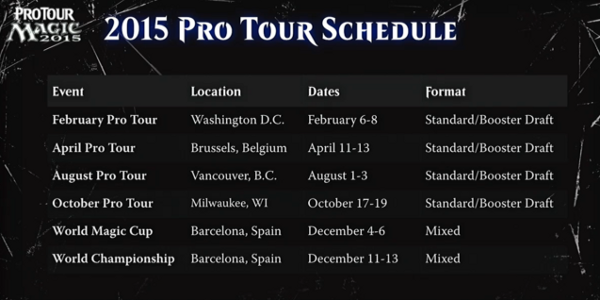
Modern PTQs were cancelled online and the announcement of the 2015 PT schedule revealed that no Modern PT will be held this year, although a Modern PT and Grand Prix has just been reintroduced in the 2015 schedule. It may affect the swings of Modern staples on MTGO, but maybe not. After all, fluctuations of Modern staples as we knew it were not really based on Modern PTQs or PTs. Big events and Modern seasons did, for sure, help with bigger spikes and better predictability.

For now, I'm not really worry about that. I'll simply be more careful to buy Modern staples when they are really low, but I'll keep playing with the swings. Scapeshift, Ranger of Eos, Birthing Pod and Serra Ascendant have nicely rebounded recently and confirmed that Modern is still in people's mind.

There was an error retrieving a chart for Scapeshift

Innistrad Block & Rotating Out of Standard Sets

Then…
Similarly to my Modern positions, Innistrad block cards were largely positive. Cards rotating out of Standard are a quite predictable way to slowly but surely generate some Tix. I had picked rares that had a future in Eternal formats in addition to several promising mythics. With few exceptions, all of them did pretty well, especially those from Avacyn Restored, the third Innistrad block set.

I would say that I played it safe by selecting cards having a strong potential based on their Standard era. In retrospect, I could have picked more mythics, notably some junk or near junk mythics. Some of them saw a relatively large increase, such as Mikaeus, the Unhallowed and Havengul Lich, for instance, while others had a more chaotic trajectory.

…Now
Return to Ravnica block sets don't have mythics of the same caliber as Liliana of the Veil and Griselbrand, or even, to a lesser degree, Geist of Saint Traft, Craterhoof Behemoth or Past in Flames. Domri Rade, Voice of Resurgence and Sphinx's Revelation are probably the mythics with the best chances outside of Standard, and, with the help of redemption, they should sustain a decent price next year.

I'm still hesitant to pull the trigger on mythics that don't have Eternal format applications such as Blood Baron of Vizkopa, Obzedat, Ghost Council and Jace, Architect of Though.

I know they may experience a relatively nice increase, but I'm also not so sure about investing in junk mythics. The only mythic that I might be buying is Enter the Infinite, simply because it has Legacy implications. I hope to catch it below 1 Tix.

One thing that Return to Ravnica block sets do have are their rares. Shock Lands, Abrupt Decay, Deathrite Shaman, Loxodon Smiter and others are certainly cards that I will consider buying in the coming months.

Buying into discounted Eternal format staples when rotation comes is a good investment you won't want to miss.

There was an error retrieving a chart for Deathrite Shaman

Overall Comments

Completing such an experiment with more than 45% total profit it pretty satisfying. It doesn't, however, mean that everything was perfect. Nonetheless, I'm glad that some of the strategies I implemented during these months worked out as expected--M14 mythics, I'm looking at you.

I also knew that some of my specs would end up negative, so I'm rather happy that about 80% of positions yielded some profit.

After the nine months of investment, and after this series of articles, here are what I consider the main take home messages when looking at the big picture.

Be a Good Dad With Yours Positions

As good parents, you have to keep an eye on your child. Don't let him/her run out of sight into dangerous territory. Do the same with your investments. If buying is always an easy process, it is only the beginning of the journey.

When buying a card, you should already have an idea of the price you are willing to sell and/or when you expect to sell. Even with well defined and delimited criteria, be ready to adjust to anything: PTs, B&R list announcements, new sets... Be ready to sell earlier if the opportunity presents itself.

I lost quite a few Tix by not watching prices evolve with my Return to Ravnica block positions. Keep yourself updated of price movements and you'll be able to sell more cards at better prices.

Keep Your Portfolio Fairly Diversified

Diversification is not a new concept here. Along with other QS writers, we have been talking about it for quite some time. To edge your bankroll against bankruptcy, the best thing do to is to diversify your positions.

5% seems to be an accepted consensus. Any of your positions should not weight more than 5% of your total bankroll size at the time you invest. In other words, no less than 20 different positions in your portfolio.

However, there's no need to spend your Tix simply to reach these 20 positions. If nothing is attractive today, wait for tomorrow when there may be a better opportunity.

This being said, if you look at my portfolio during this experience, I had way more than 20 positions. Actually, even the most important of my investment didn't represent more than 2-3% of the total. I think I may have actually held too many positions. Referring to the "being a good dad" lesson--the more kids you have, the harder it becomes to pay equal, quality attention to each.

With a growing bankroll, I'm kind of forcing myself to avoid positions of few Tix and few copies of a card, thus avoiding having too many positions. I plan on focusing more on expensive positions and limit exposure to anything under 0.5 Tix. This is up to you and your bankroll size, however.

Flow is King

Nothing feels as good as selling a positions you have held for only a month or two and moving on to the next one.

Looking back at my results, all my top Tix makers were positions I held for a period of three months or less. I didn't have any big winner when the position was sold after seven, eight or nine months. That's the reality.

One can say that it's easy when a position tripled in three months, but not so much when a position only increased by 30% in the same period. The truth is the benefit of selling a position is not only the figure you make on that specific position, but also the potential benefit you now allow yourself to make on the next one.

I wrote about opportunity cost and opportunity benefit couple of weeks ago. Jumping from on opportunity to another can be extremely valuable, and selling when a position is losing could be a better move than you think.


With that, this is my conclusion of nine great months of investments on MTGO. I hope you enjoyed the series and hope that your investments on MTGO grow as well.

Thank you for reading.

Sylvain Lehoux

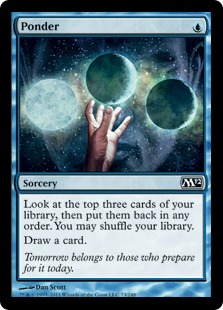
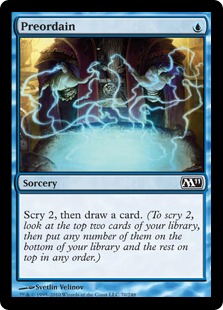
Why are Ponder and Preordain Banned in Modern?

Are you a Quiet Speculation member?

If not, now is a perfect time to join up! Our powerful tools, breaking-news analysis, and exclusive Discord channel will make sure you stay up to date and ahead of the curve.

My favorite part of the Delver of Secrets era in Standard was casting Ponder. The skill-testing nature of this highly efficient card was what made that deck great in the hands of good players and merely average in the hands of lesser ones. So back in 2011, when Modern was still fairly new, it was kind of heartbreaking to see the two best one-mana cantrips banned out of the format.

preordain ponder

These cards are fun because they can be put in any blue deck at an extremely low opportunity cost. I don't hesitate to pick these highly in Cube drafts. As long as you're playing blue, your plan will be strengthened by including these cards.

So why are they banned in Modern? Here is the explanation straight from the source:

A large number of blue-red combination decks kept the field less diverse. One thing that made them so efficient was the cards that would find their combinations. Ponder and Preordain were the most widely used of those cards. Banning these should make those combination decks somewhat less efficient without removing the possibility of playing them.

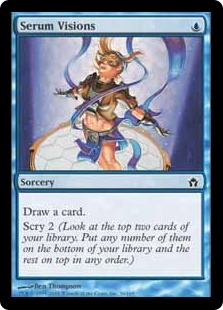
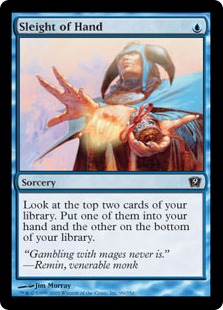
The blue-red decks alluded to here are, of course, Storm and Splinter Twin variants. These decks have continued to see play despite these bannings, using Serum Visions and Sleight of Hand for selection. These legal cards are decidedly worse than the illegal ones, which just goes to show how powerful this type of effect is.

serumvisions sleightofhand

Since Modern lacks Force of Will, combo decks are harder to answer, even for other blue decks. Making combos less consistent is a noble goal for the health of the format, and it's fair to say that the banning of these cards had the desired effect: Storm and Twin are still playable in the format, even outright winning big events on occasion, but they're not oppressive.

The collateral damage, of course, is that Delver of Secrets decks just haven't quite reached top-tier level in the format. I, for one, would love to play a consistent, competitive Delver deck, but without something better than Serum Visions, that deck just hasn't emerged (not for  lack of trying, though!).

It's unfortunate that Delver of Secrets decks are taking splash damage in this situation, but unbanning Preordain and Ponder would mean other nerfs would be necessary for the combo decks of Modern. Storm has already seen Seething Song banned and the DCI could likely find some cards to further weaken the deck without killing it.

But what about Twin variants? What could be cut that wouldn't just ban them out of the format completely? Not all of them play Kiki-Jiki, Mirror Breaker, so that would be of minimal help. Banning Splinter Twin would likely just kill the deck, or at least bring it down a couple tiers. Another option is Deceiver Exarch—making the combo easier to break up since Pestermite dies to Lightning Bolt—but would that do enough? Maybe, but we've seen Village Bell-Ringer in these decks before and splashes are easy in Modern. Besides the already banned selection spells, there just isn't a great way to nerf Twin variants.

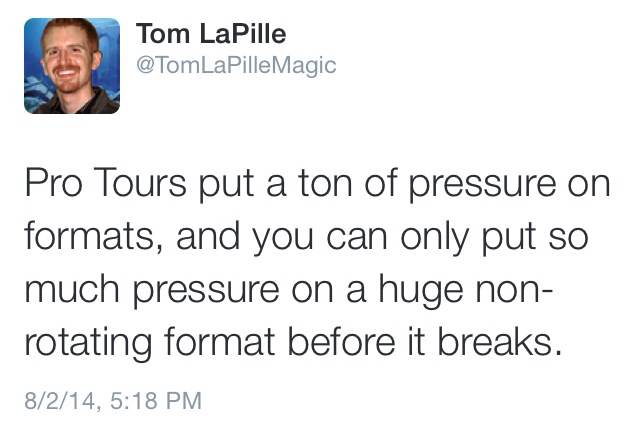
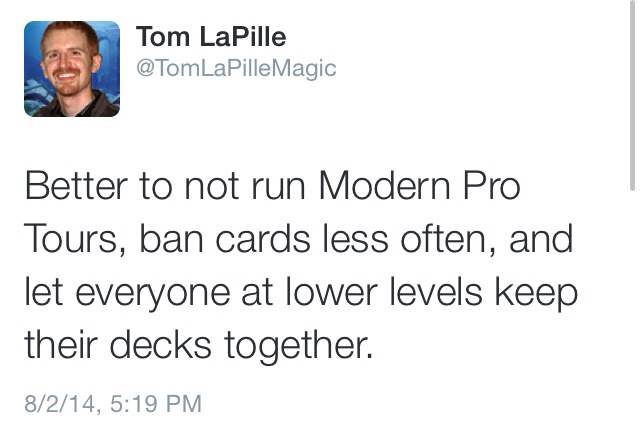
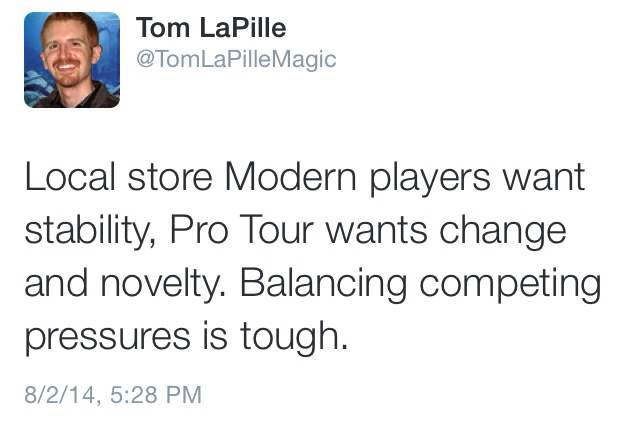
After the announcement that there would be no more Modern pro tours, Magic developer Tom LaPille tweeted some additional information:

IMG_2148 IMG_2149 IMG_2150

The takeaway here is that Wizards of the Coast is cognizant of the fact that players have invested money, time, and effort into the format, and often into one particular deck. At this point, don't expect to see decks completely banned out of the format—there's too much risk of upsetting the playerbase. Instead, the bans will be targeted to weaken decks that are too powerful. That's what the bannings of Ponder and Preordain have done for combos in Modern, and much as I would personally love to see these cards available for tempo decks, I'm not counting on it anytime soon.

Insider: Foil Galerider Lust

Are you a Quiet Speculation member?

If not, now is a perfect time to join up! Our powerful tools, breaking-news analysis, and exclusive Discord channel will make sure you stay up to date and ahead of the curve.

This week, someone on reddit noticed a discrepancy that no one else was talking about.

After doing some research into historical price trends, they combined their findings with their experience in MTG finance. Applying some of the hard and fast rules of MTG finance to the situation they graphed the discrepancy and submitted it to the people on the MTG finance subreddit. A price correction was coming any day now and there was still time to buy in and benefit.


Source

The graph is readable and anyone can instantly see the discrepancy just by looking. It's obvious that the foil and non-foil are the same price, which is not supposed to be the case and that there is a price correction imminent. OP said that the prices being equal now meant that the price of the foil was going to correct upward.

The only problem? The conclusion they came to is very likely wrong.

The Rules

I use something called the reddit enhancement suite so I can tag people who are wrong a lot, are obvious trolls or are people I know. It also tracks how many downvotes I have given the user. The poster here has few downvotes and no such tags.

I think the post OP made is pretty logically sound. This was just an average r/mtgfinance reader who applied some of the rules of finance they had learned to a situation, saw a discrepancy and alerted everyone. I'm also going to conclude that they bought quite a few foil copies from TCG Player, but more on that later.

The first, very basic rule is that foils should cost more than non-foils. That is pretty simple and uncontroversial. Foils are a special, chase commodity. There are more copies of a non-foil rare than there are copies of a foil rare. People who want to optimize (I hate saying "pimp"; it makes it sound like you want your deck to give blowies for money) their decks will pay more for them because they're shiny and special. We have a situation where the foil and non-foil cost exactly the same, and that violates this first rule.

The second is that there is a vague multiplier based on various criteria. People expect foil, Standard-only cards to be worth roughly twice a non-foil. Modern foils can be more than that, Legacy more than that.

Foreign foils have their own unique multiplier based on language and, in no small part, hand-waving and guesswork. With so few data points on cards like Russian foil Tarmogoyf, something as simple as a guy listing them on eBay and having his friend "win" the auction for $6,000 a copy and never pay can determine the price of such a card forever.

These "rules" are pretty vague and imprecise, but in a way they're kind of like Supreme Court Justice Potter Stewart's quip about hardcore pornography, "I don't know how to define it but I know it when I see it." It's not always easy to develop a mathematical formula for what a foil should cost, but sometimes things are obviously wrong. $20 foil Abrupt Decay "felt" wrong. Foil Galerider being the same price as the non-foil, similarly, feels wrong. Even if you don't know what the multiplier for a Standard foil is, you're pretty sure it's not "1x".

Another rule is that for in-demand cards, the price correction will not be achieved by the non-foil tanking so that some sort of golden ratio between the non-foil and foil price will be maintained.

Why would it? Demand typically makes prices go up, not down. With slivers doing things in Standard and desired by casual players, it makes sense that the demand will make prices go up, and that means the foil Galerider is due for an upward price correction. That's the only thing that makes sense when the foil is the same price as the non-foil, right? Demand makes prices go up, and the foil is the only card that can go up.

OP's caption, "These should match in size," refers to the size of the price spikes. If the prices are to maintain their ratio, the price spike for the foil should match the price spike for the non-foil.

In an ideal universe, the lines would maintain an exponential gap and every price increase for either would bring the other along with it, maintaining that golden price ratio. If the non-foil spikes to a certain price and the spike for the foil doesn't match, it's actually just lagging behind and it will eventually spike to catch up. This is sound logic.

Every Rule Has Exceptions

The problem is a fundamental miscalculation about the demand for Galerider and where it's coming from.

Foils should, in theory, cost more than non-foils. In most cases, you're going to have a healthy gap. There are, however, always exceptions to every rule, and one rule we've noticed is that we don't have a very healthy gap for non-EDH casual cards, especially ones where the non-foils are pricey. Let's look at a few examples.

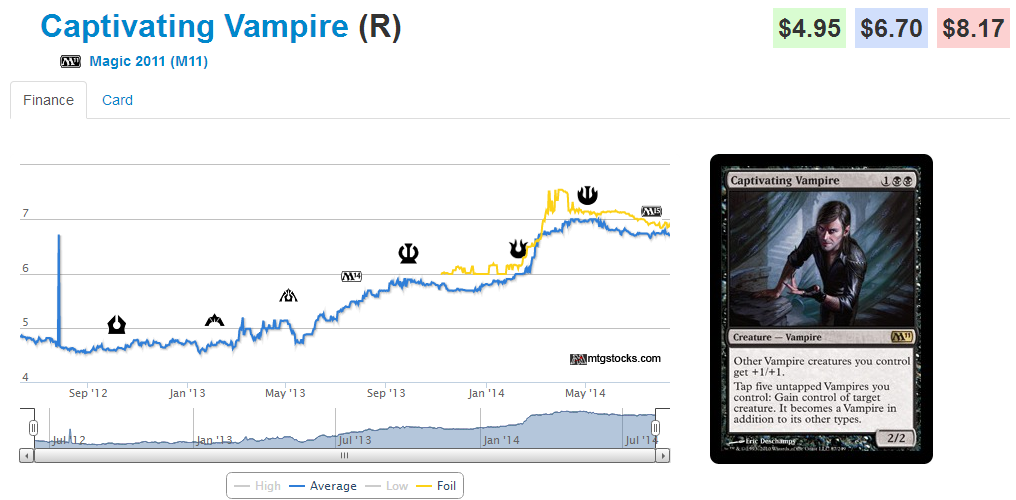
vampire

This is a casual card and its price keeps rising the farther we get from M11. So is the foil poised to go up? Probably not. Casual players want their vampire lord, they don't want to foil the deck out. Sure, it's good value to buy the foil if it's the same price, but casual players who aren't building EDH decks typically don't care about that.

There's another factor people don't always remember.

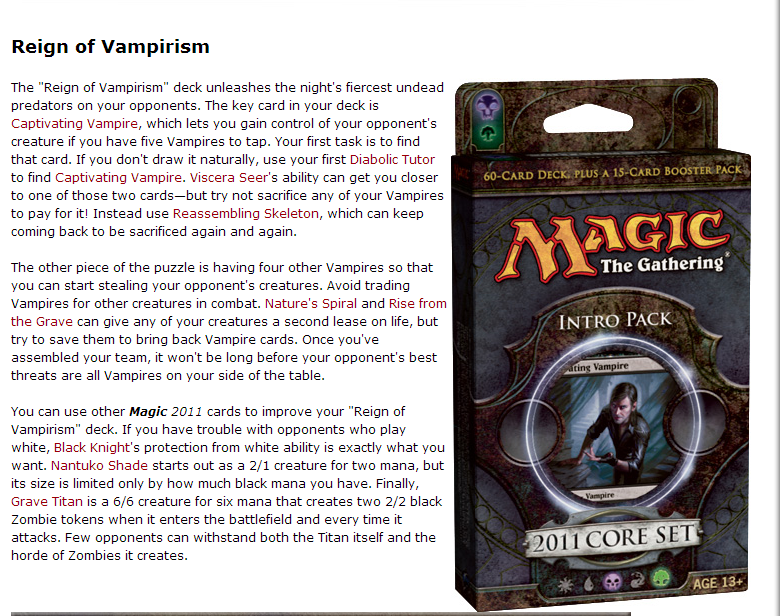
Untitled

The foil was in an intro pack, further complicating things. While not a ton of intro packs were bought, this still adds more copies of the foil to the equation. This has less of an effect than the fact that casual players aren't interested in foils as much, but it's worth mentioning. These two factors combined make a situation where the foil was the same price on TCG Player.

If not for the intro pack, we'd expect the foil to be worth maybe a dollar or two more than the non-foil. Stores are certainly trying to charge twice what a non-foil goes for, but TCG Player is a good barometer for the market's demand.

So what else do casual players like?

SLIVERS! Casual players love the ass out of some slivers, and combining their love of Galerider with the competitive community's adoption of a one-of Galerider to give their Mutavaults some ups, you have a good case for there to be pressure on the price of the non-foil.

Let's not forget the factor on the price that is speculators noticing that Galerider is used as a one-of in Standard and buying out TCG Player. The price of the non-foil is artificially high. Worse still, a lot of "justification after the fact" is going on. Whenever a price spikes suddenly, people apply logic in reverse to justify it. If that logic were sound, it could be applied to other cards to predict price increases, but instead, it's applied after a card went up to make sense of it.

Just read the thread I linked--lots of posters are pointing out reasons why Galerider is so high, but none of it is all that compelling. One-of in Standard Mono-Blue? Sliver deck legal until Khans comes out? Casual demand?

Casual demand isn't making Galerider a $5 non-foil, folks. This was speculators buying out TCG Player. The price of non-foil Galerider is artificially high, and artificially high non-foils don't have an effect on the foil price.

On Foil Multipliers

Our second "rule" dealt with the market's tendency to apply a multiplier to non-foils to get the foil price. Since there are fewer foils, the price should be higher, right?

However, people don't foil out Standard decks. I know some jackwagon is going to throw out some anecdote about the trust fund kid in their store with the foil Standard deck, but it's not a significant price factor and let's not pretend it is. If you know one kid who foils his Standard deck, there's a reason it sticks out as significant--it's an exception, not a rule.

Even if someone were compelled to foil a Standard deck, they're the kind of person who is playing with foil Elspeth, not foil slivers. Casual players don't tend to foil their decks out, and if they did, $5 seems like a decent price for a foil Galerider. $5 for a non-foil is simply not going to be tenable after rotation.

So we have a situation where the non-foil is the same as the foil, and one of those prices has got to change. In most cases, this is achieved by the foil going up in price. However, I think we're seeing the end of the cycle, not the beginning.

A More Sober Prediction

We have a pretty curious situation here where the non-foil is being driven by Standard demand (and speculation surrounding Standard demand) and the foil price is being dictated by Eternal demand. If Galerider gets played in some sort of Legacy Slivers deck (and it will, to the extent that is a deck) you'd expect the Legacy foil price to be roughly 5x the non-foil. How do we know what the "Legacy price" of a non-foil sliver is?

Simple! We look at a time before the card was talked about in Standard. That was the time before the non-foil spiked to $5. It was $2 right when it was new, and the modicum of Standard demand (one-of in one deck) made it maintain its M14 presale price. That in and of itself was quite a feat. For a casual card to maintain its presale price status is remarkable.

Speculation has driven the price up to $5, but we can reasonably assume that post-rotation, Galerider is a $1 or $2 card, tops. 5x $1 is a bit more reasonable, and that's exactly what the foil price is right now.

With no demand for the foil in Standard and the foil price just about right for Legacy demand, there's no reason to assume the price of the foil has any need to correct. It's actually right where it should be, and if it goes up, it's because someone bought out the cheap foils on TCG Player. Possibly the same guy who made a forum post saying, "I think the foil is about to go up." What are the odds he made what he thought was a logical conclusion and didn't buy any copies to benefit from a potential spike?

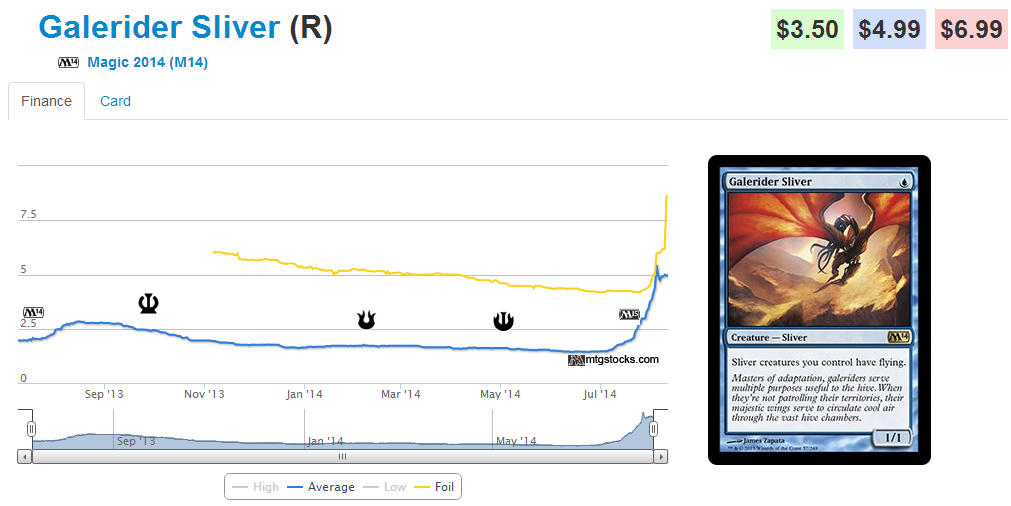
Let's take all of this into account when we look at the updated price graph.

Untitled

I imagine all of the sub-$8 copies were snagged both by OP and a few people who found his reddit post compelling. I don't see the buylist price on foil Galerider increasing, and the $8-$10 this card is in a few weeks is going to look downright comical when non-foil Galerider deflates to a buck or two.

Final Thoughts

I applaud OP for noticing there was a discrepancy here. It took a bit of next-level finance knowledge to debunk this as a good spec, and clearly some people bought in. I would not discourage OP from trying to find things like this in the future. Noticing discrepancies is one of the only ways to truly make money speculating in a market where prices move at the speed of light and information exchange is so efficient.

I am not a buyer at $8 and I wasn't at $5, and I don't expect the $10 copies that have been sitting on TCG Player for months to suddenly start selling now. There is no sudden demand, only speculative purchases. Still, this was a good catch even though it's probably a bad spec.

One last thing, the name of the article may not make sense unless you read the thread.

Untitled

I'd like to thank /u/OSU2015 for giving us all a chance to re-evaluate some of the rules we took for granted, lest our truths become tautology and we're all struck blind by complacency.

Am I full of bologna sausage? Is foil Galerider the nest $20 card? Did I introduce a bunch of personal bias? Would it make you feel better about the conclusion I came to if I told you I had 10 foil copies in my spec box from a year ago? Leave it below and may Supply Side Jesus bless all of you with trickle down economic gains.

Avatar photo

Jason Alt

Jason Alt is a value trader and writer. He is Quiet Speculation's self-appointed web content archivist and co-captain of the interdepartmental dodgeball team. He enjoys craft microbrews and doing things ironically. You may have seen him at magic events; he wears black t-shirts and has a beard and a backpack so he's pretty easy to spot. You can hear him as co-host on the Brainstorm Brewery podcast or catch his articles on Gatheringmagic.com. He is also the Community Manager at BrainstormBrewery.com and writes the odd article there, too. Follow him on Twitter @JasonEAlt unless you don't like having your mind blown.

View More By Jason Alt

Posted in Finance, Free Insider, Magic Card Market TheoryTagged , 4 Comments on Insider: Foil Galerider Lust

Have you joined the Quiet Speculation Discord?

If you haven't, you're leaving value on the table! Join our community of experts, enthusiasts, entertainers, and educators and enjoy exclusive podcasts, questions asked and answered, trades, sales, and everything else Discord has to offer.

Want to create content with Quiet Speculation?

All you need to succeed is a passion for Magic: The Gathering, and the ability to write coherently. Share your knowledge of MTG and how you leverage it to win games, get value from your cards – or even turn a profit.

Hopes Annihilated

Are you a Quiet Speculation member?

If not, now is a perfect time to join up! Our powerful tools, breaking-news analysis, and exclusive Discord channel will make sure you stay up to date and ahead of the curve.

Pictured - a tower representing my hopes and dreams

So, the final update in the FTV: Annihilation debacle is that the potato-quality pic leaked a month ago was right and our mouths are all about to get farted in.

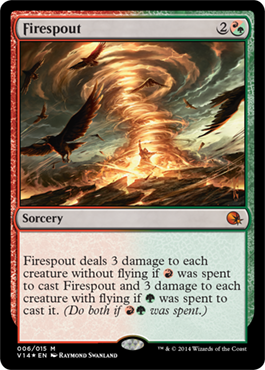
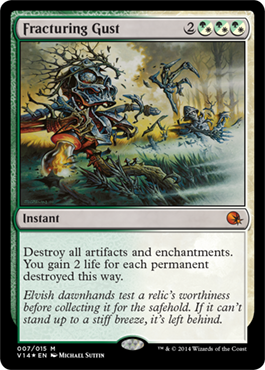
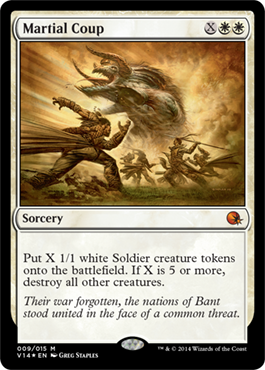
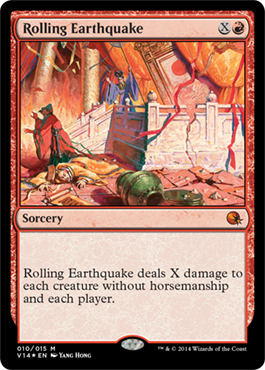
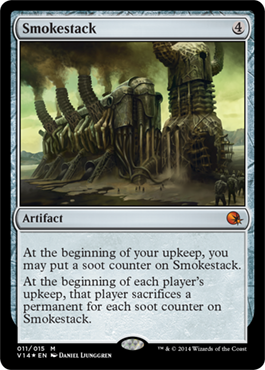
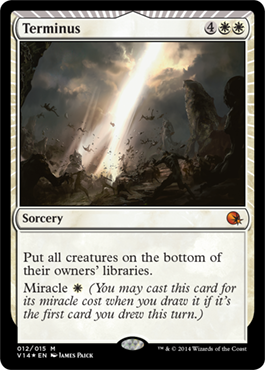
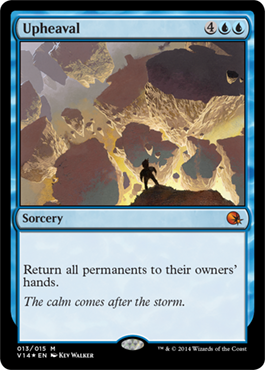
Gavin Verhey posted this article today, annihilating all my hopes and dreams like only a better removal spell than Upheaval and Firespout ever could. The leaked list was 100% accurate and FTV: Annihilation is 100% a "Hope you weren't sitting on any portal cards" set.

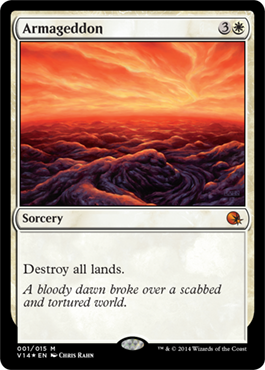
Thank God. A 13th printing of Armageddon.

Literally just because the P3K version of Wildfire was expensive.

I'm OK with this reprint. The Exodus version was getting pricey.

Literally because they thought it would be cute to put a creature in a set full of removal spells.

Literally because it has "annihilation" in the title. This card is $1.

Good, they got all my letters where I begged them to reprint a $0.50 uncommon.

This was expensive for no reason. The price went up but they're not selling well at the new price, so this is a welcome reprint.

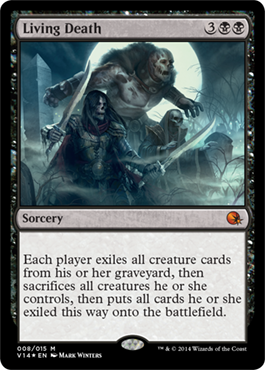
Must have misspelled "Living End" on the sheet and gone with it. This is baffling to me that they reprint the $2 one used in nothing and not the $10 legal in Modern.

$4 card. It climbed 30% up from $3 over the last 2 years. This is another disappointing reprint because I get these for cheap because people think they're junk.

If someone is that desperate to kill fliers with an Earthquake, let them pay the price for a P3K copy. These reprints only hurt the people who took the time to find these. This isn't making EDH suddenly affordable.

Ugh. No one asked for this reprint. I don't like EDH players being reminded this card exists.

K.

"We have to have a blue spell in the set, Gavin. Think of one by the end of the day or you're fired."

More portal price pantsing.

Come back when you're the portal art

Image

There you have it. A few people last time talked about how they were in at MSRP. What's the most you would pay for this set?

Avatar photo

Jason Alt

Jason Alt is a value trader and writer. He is Quiet Speculation's self-appointed web content archivist and co-captain of the interdepartmental dodgeball team. He enjoys craft microbrews and doing things ironically. You may have seen him at magic events; he wears black t-shirts and has a beard and a backpack so he's pretty easy to spot. You can hear him as co-host on the Brainstorm Brewery podcast or catch his articles on Gatheringmagic.com. He is also the Community Manager at BrainstormBrewery.com and writes the odd article there, too. Follow him on Twitter @JasonEAlt unless you don't like having your mind blown.

View More By Jason Alt

Posted in Free7 Comments on Hopes Annihilated

Have you joined the Quiet Speculation Discord?

If you haven't, you're leaving value on the table! Join our community of experts, enthusiasts, entertainers, and educators and enjoy exclusive podcasts, questions asked and answered, trades, sales, and everything else Discord has to offer.

Want to create content with Quiet Speculation?

All you need to succeed is a passion for Magic: The Gathering, and the ability to write coherently. Share your knowledge of MTG and how you leverage it to win games, get value from your cards – or even turn a profit.

Turtenwald, Duke and Jensen win GP Portland

Are you a Quiet Speculation member?

If not, now is a perfect time to join up! Our powerful tools, breaking-news analysis, and exclusive Discord channel will make sure you stay up to date and ahead of the curve.

Admit it. If you had to pick a team before Grand Prix Portland kicked off to win the whole thing, that team would have been these three. Three of the top four ranked players in the world, with an incredible run of success this past year.

And they did it.


Your winners
Your winners

What I most enjoyed about their win was how excited they were. Even after everything else these guys have accomplished in the past year (including at the Pro Tour itself last week), they were jumping up and down when they took down the title. Truly, this is the best part of team events, and it was a blast to watch some great Magic this weekend.

You can read the full story about their victory in the first Premier Play event of the season here.

Avatar photo

Corbin Hosler

Corbin Hosler is a journalist living in Norman, Oklahoma (also known as the hotbed of Magic). He started playing in Shadowmoor and chased the Pro Tour dream for a few years, culminating in a Star City Games Legacy Open finals appearance in 2011 before deciding to turn to trading and speculation full-time. He writes weekly at QuietSpeculation.com and biweekly for LegitMTG. He also cohosts Brainstorm Brewery, the only financial podcast on the net. He can best be reached @Chosler88 on Twitter.

View More By Corbin Hosler

Posted in Feature, Free2 Comments on Turtenwald, Duke and Jensen win GP Portland

Have you joined the Quiet Speculation Discord?

If you haven't, you're leaving value on the table! Join our community of experts, enthusiasts, entertainers, and educators and enjoy exclusive podcasts, questions asked and answered, trades, sales, and everything else Discord has to offer.

Want to create content with Quiet Speculation?

All you need to succeed is a passion for Magic: The Gathering, and the ability to write coherently. Share your knowledge of MTG and how you leverage it to win games, get value from your cards – or even turn a profit.

CliffNotes for Busy Vorthoses

Are you a Quiet Speculation member?

If not, now is a perfect time to join up! Our powerful tools, breaking-news analysis, and exclusive Discord channel will make sure you stay up to date and ahead of the curve.

Before I was introduced to Magic: The Gathering, I was an avid baseball card collector and I loved various playing-card games. Combining gameplay and collectibility was a natural progression from these humble beginnings, but what really drew me into MTG was the flavor of the game. Goblins, elves, and dragons? Sweet! Each card represents a page from a spellbook? How cool is that? Lightning Bolting people's faces? So much better than than winning a game of Thirteen.

lightningbolt shnivandragon

That being said, I was always more interested in playing the game and enjoying the flavor of the cards on an individual level than following every aspect of the story. Sure, the story was interesting to me, but I would rather read a good book that people have actually heard of rather than one that only a subset of a subset of people would be able to discuss with me. This is as true today as it was then.

That's why I was so excited to see this tweet:

photo


I've read the first couple posts on the site, and it's kind of like CliffNotes for MTG books—but with an FJM element as well (all who understood that reference without clicking the link are my new favorite readers, by the way). The breakdowns are informative and humorous, but most importantly, they're quick reads.

Count me as a fan of this blog. Having an idea of the story of MTG, even if you can't be bothered to read the books, can help you better enjoy the game and individual cards. A knowledge of the story also comes with a side-benefit related to MTG finance: knowing who's dead, where we left off in a particular storyline, or other small details can sometimes help you better predict what's coming based on small spoilers of an upcoming block. It won't always turn out the way you expected, of course, but even some cursory additional knowledge can push your speculations to the next level.

You can find the Sick Reads blog here. Enjoy!

Avatar photo

Danny Brown

Danny is a Cube enthusiast and the former Director of Content for Quiet Speculation.

View More By Danny Brown

Posted in FreeTagged 4 Comments on CliffNotes for Busy Vorthoses

Have you joined the Quiet Speculation Discord?

If you haven't, you're leaving value on the table! Join our community of experts, enthusiasts, entertainers, and educators and enjoy exclusive podcasts, questions asked and answered, trades, sales, and everything else Discord has to offer.

Want to create content with Quiet Speculation?

All you need to succeed is a passion for Magic: The Gathering, and the ability to write coherently. Share your knowledge of MTG and how you leverage it to win games, get value from your cards – or even turn a profit.

Insider: [Video] Zwischenzug Drafts M15

Are you a Quiet Speculation member?

If not, now is a perfect time to join up! Our powerful tools, breaking-news analysis, and exclusive Discord channel will make sure you stay up to date and ahead of the curve.

Drafting & Deck Building

There was an error retrieving a chart for Nissa, Worldwaker

Round 1

There was an error retrieving a chart for Perilous Vault

Round 2

There was an error retrieving a chart for Phyrexian Revoker

Round 3

There was an error retrieving a chart for Burning Anger

Some quick tips for your next M15 draft:

  • GW Convoke/Sanctified Charge is the best archetype.
  • Consider aggressively trading creatures in the early game against GW decks since they are likely to have convoke cards.
  • Keep an eye out for the UR Ensoul Artifact deck. You don't want to be drafting Ensoul Artifact early, but you do want to know if it has a chance to wheel and consider taking it then. Patrick Dickmann turned an otherwise awkward six creature draft in to a very sweet 3-0 by moving in on Ensoul Artifacts on the wheel at Pro Tour M15.
  • Semi-removal enchantments such as Encrust, Crippling Blight and Stab Wound are worse than they look because of cards like Invasive Species, Peel From Reality and Quickling.
  • x/1s are worse than they look because of cards like Triplicate Spirits (the best common in the set) Forge Devil, and, if you're really unlucky, Cone of Flame (the best uncommon in the set)
  • It can be helpful to consult a list of instants and flash creatures while you play. I googled "M15 flash" and found http://www.hipstersofthecoast.com/2014/07/grinding-m15-instants-flash-creatures/

Want to know how much each M15 draft is likely to cost you? Check out MagicEV.com you can easily set your expected win% and how much you value QPs at. Note that almost everybody over-estimates their win%. I know I did.

Here is how I manage my collection after drafting:

  • First, I keep cards I like as a spec. For me this means the painlands.
  • Next, I sell the other money cards to Goatbots. If I want to verify I'm getting a good price, I'll compare their price to mtgowikiprice.com. And if I want to pinch pennies, I'll search the classifieds for "we pay" and tediously check whether any of Aboshanbots1/2/3 want any of my cards before I go to Goatbots.
  • Finally, If I have a bunch of bulk I want to get rid of, I'll usually dump it off with the Clanteam bots.

Please leave a comment! I'm happy to discuss other lines of play, methods of managing the draft, or whatever else is on your mind.

Insider: Takeaways from My PTQ Experience

Are you a Quiet Speculation member?

If not, now is a perfect time to join up! Our powerful tools, breaking-news analysis, and exclusive Discord channel will make sure you stay up to date and ahead of the curve.

Editor's note: It was announced on Sunday during the live coverage of GP Portland that Pro Tour in Washington D.C. and Grand Prix Vancouver have been changed to Modern. Sigmund wrote this article prior to this announcement. 

Is it just me, or have PTQ’s become incredibly difficult to win?

Years ago, the field of talent wasn’t nearly as strong and play styles weren’t nearly as diverse sa they are today. Even though I never had delusions of winning such an event, I could always count on the fact that I could notch at least a couple victories against some of the newer, less experienced players.

With the advent of live Magic coverage, constant MTGO streaming, and strategy videos and articles galore, the field has both grown and become much more skillful. This past weekend was no exception.

I attended a PTQ in Columbus (perhaps the last Modern PTQ I'll be able to attend?), and almost all of the 284 attendees were prepared to battle adeptly. My confidence was almost immediately shattered when I had to mulligan to five in game one of my first round, and my opponent led with an Urza's Tower.

I immediately scolded my luck, for I failed to adhere to LSV’s advice on how to navigate past the Tron matchup when playing Melira Pod – dodge it altogether. The rest of my 1-4 day continued in much the same vein.

Fortunately for me (and for my readers), I am an MTG Finance guy first and a player second. Rather than continue to dwell on my misplays and poor luck, allow me to share my vendor experiences, which are what most of you really care about.

A Few Sales

This PTQ was fairly massive as far as I’m concerned. Nearly 300 players is a very large turnout for a PTQ and I’m guessing the format had something to do with the hype. Modern is so much fun and the metagame is so diverse! I didn’t see the same deck twice during my perusal of the top tables.

In order to support all of these players, there were four vendors at this qualifier. That’s quite the representation of retailers for what can be considered a somewhat “local” event. Each of these vendors remained packed with buyers and sellers and I saw stacks and stacks of cards sold to each one.

As for me, my trade binder has thinned considerably over the past few months as I have shifted out of Modern and dabbled in safer Standard bets. My selling was therefore fairly limited, but I did happily manage to move a few cards. I sold some recently acquired Flames of the Blood Hand for a small profit, indicating that buy prices are chasing the selling price higher.

There was an error retrieving a chart for Flames of the Blood Hand

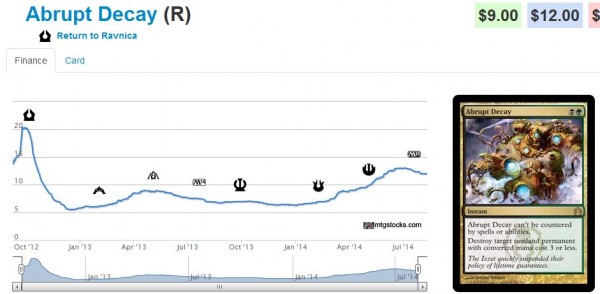
Abrupt Decays were also buy listing for as high as $9 and I really didn’t mind moving a couple of my extra copies near TCG Low.

Decay

There was an error retrieving a chart for Abrupt Decay

One retailer was a bit bullish on Foil Swan Song so I sold the couple I had acquired a few months back in trade. Any time I can sell a card to a dealer for more than what I can buy the card for online immediately after, I am happy to do so. It’s like speculating with guaranteed profit, selling first at a higher price and then buying back in at a lower price.

Finally, I sold my two MP Plateaus for $42 each. Now that I look up the card on TCG Player, I am amazed to see that copies no longer sell for under $40. Moderately Played copies start in the low $40’s and range up to $50. I hadn’t realized how much Plateau has moved and I may be inclined to reacquire a couple copies if I can find them at favorable prices on eBay.

All in all, a largely uneventful selling experience for me, but one worth capturing. In addition to the above, I moved numerous copies of a few smaller things to free up cash, such as Venser's Journal and Caged Sun – all for a small profit.

Dealer Sell Prices and Attitudes

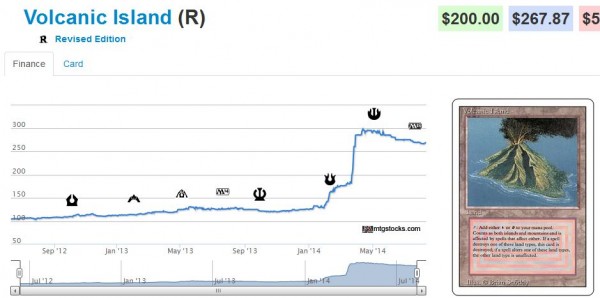
It was very clear to me at this event that most of the vendors came to the PTQ to buy. They each had their selection of singles on display, each including their retail sticker price. The fact that still had $285 price tags on Volcanic Island tells me they are either able to get that price or they plan on sitting on these Duals for a while in hopes that the price bounces back. It probably will.

Volcanic

Other Dual Lands were also overpriced, such as Scrubland at $90 and Bayou in the $180 range. Needless to say, buy prices were half these sell prices, if that, and I wasn’t eager to acquire any new Dual Lands at these prices.

That being said, I do think there was some flexibility on pricing. I spoke at length with one vendor who told me their prices were all flexible in some capacity. If I would have offered somewhere between TCG Low and TCG Mid on a high dollar item, I suspect they would have been happy to make the sale.

Most players don’t bother to negotiate, however. This again leads me to believe that once the PTQ started, the dealers were there to buy cards and fill inventory and not to sell.

This makes me optimistic. Perhaps the summer swoon is nearly over, and Khans of Tarkir will reinvigorate the MTG market. If the set is a home run, then this is entirely possible. It is my belief that some of these vendors are relying on this outcome, hence why they were aggressively acquiring various cards. If this is the case, then perhaps it’s time to loosen my wallet a little bit to buy into a few positions as the fall rapidly approaches.

What I May Buy

It’s funny how I relate so much more to the dealers than the players when I attend events like these. I did very little trading because I played in it, but I also did a lot of chatting with the vendors. The few times I did engage in a little trading, everyone defaulted to the same question: is there anything specific I am looking for?

My answer was constant: Duals. And their response was constant: don’t have any for trade. I refrained from mingling with the grinders, so that is probably the reason behind my failed quest to acquire Duals.

But it is noteworthy that these remain difficult to find – the recent pullback in prices has probably dropped supply because players aren’t eager to unload their Duals at these tapered prices. This observation motivates me to acquire Dual Lands even more.

Remember when Star City Games upped their prices on Volcanic Island and Underground Sea and everyone bought out Tropical Islands because those were supposed to jump next? Well they did jump. Quite a bit.

There was an error retrieving a chart for Tropical Island

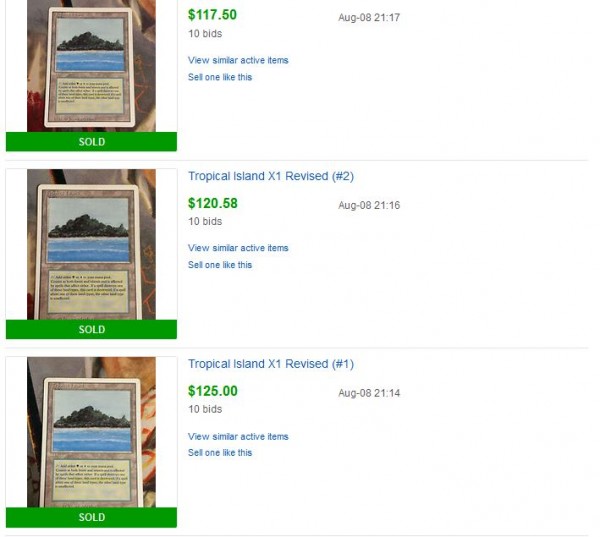
But recent eBay sold auctions are ending nowhere near this $200 price point!

Sold trops

This is a significant disconnect! The fact that you can once again acquire decent Tropical Islands for $120 tells me the market isn’t supporting the higher price… at least not for now. I don’t see how patiently bidding on a few auctions to buy a couple Duals, such as Trops, at these pre-spike prices can be a bad thing. This is one of my top suggestions heading into the fall.

Other than that, there are always the usual Standard targets: foil and nonfoil Thoughtseize, Temples, etc. I can’t advocate aggressively going after Modern cards right now.

Most of you know my MTG Finance approach is fairly risk averse, and with so much uncertainty surrounding Modern these days, I cannot confidently advocate a significant investment. Even though Modern prices are already in a summer lull, the declining demand from the ending Modern PTQ season (for good) means a different catalyst will have to buoy prices. I don’t see that catalyst this moment, and the downward pressure is large enough to deter me from acquiring.

Still A Successful PTQ

Shout-out to all of my MTG buddies who tolerated my constant “bad beats” stories. I had at least half a dozen of them coming out of last week. Although I am convinced I had particularly unfavorable luck throughout the event, I cannot help but think of the mantra “luck favors the prepared”. Perhaps my Modern skills are much rustier than I recently thought. Or, as mentioned earlier, maybe the field truly is becoming a lot more capable.

Either way, I had an amazing experience last weekend networking with vendors, chatting with QS Insiders, and bonding with Doug during our carpool. And, as always, the tidbits of information gained from discussions on the floor will outweigh any lost investment in the event itself. It was well-organized and I made a little money along the way.

It’s a shame these are going away…

…

Sigbits

Just a few months ago, many players were calling for the banning of Birthing Pod. Now it seems like the metagame has shifted significantly, creating a less favorable environment for the creature-based combo deck. As a result, some commonly played cards from new Tier 1 decks are getting expensive.

  • Oblivion Stone, played heavily by Tron strategies, are a bit sparse on SCG’s website and they are retailing for $11.99. This card has blown me out time and again.
  • Infect is a real strategy in Modern. While there’s not a lot of high dollar cards in the deck, many foils of the commons and uncommons are sold out at SCG. Foil Glistener Elf is sold out at $1.99 and foil Might of Old Krosa is nearly sold out at $7.99!
  • Affinity also remains a formidable foe and there are a number of cards from the deck that have held their prices nicely. As prices on Birthing Pod reach recent lows, Arcbound Ravager is near its high and SCG is sold out of the Modern Masters version at $19.99. They have plenty of Darksteel copies in stock at $24.99 and I see no reason the MMA version needs to be cheaper.

How We React to Good News

Are you a Quiet Speculation member?

If not, now is a perfect time to join up! Our powerful tools, breaking-news analysis, and exclusive Discord channel will make sure you stay up to date and ahead of the curve.

Two things happened, and they happened in a specific order.

First, Wizards announced that all future PT events will be Standard.

Then, people started whining and complaining. I made the mistake of going into the MTGSalvation forums doing research for this piece and I wish I could ungo there. The phrase "Wizards is going to kill Magic" was used unironically so many times I considered trying to find every instance of this phrase all the way back to its first use in 1993 when they changed the casting cost of Orcish Oriflamme.

So, Magic: the Gathering is dead forever. Because, you know, the guys on the MTG Salvation forums all play on the Pro Tour, and they were really looking forward to playing Modern and now they won't get to.

Or will they?

Today, this was posted.

Since then, we have received comments and concerns from the Magic community regarding this announcement, and the omission of Modern from the 2015 Pro Tour schedule. After evaluating all feedback and after further discussion, we have decided to add Modern to the 2015 Pro Tour schedule.

I guess Magic would have died if they hadn't made this change, huh?

What do we think? Is this a good change? Did they save Magic from certain oblivion? Is Modern on the PT even a big deal? Is this just going to encourage the whiners to whine louder? Sound off below.

Avatar photo

Jason Alt

Jason Alt is a value trader and writer. He is Quiet Speculation's self-appointed web content archivist and co-captain of the interdepartmental dodgeball team. He enjoys craft microbrews and doing things ironically. You may have seen him at magic events; he wears black t-shirts and has a beard and a backpack so he's pretty easy to spot. You can hear him as co-host on the Brainstorm Brewery podcast or catch his articles on Gatheringmagic.com. He is also the Community Manager at BrainstormBrewery.com and writes the odd article there, too. Follow him on Twitter @JasonEAlt unless you don't like having your mind blown.

View More By Jason Alt

Posted in FreeTagged 11 Comments on How We React to Good News

Have you joined the Quiet Speculation Discord?

If you haven't, you're leaving value on the table! Join our community of experts, enthusiasts, entertainers, and educators and enjoy exclusive podcasts, questions asked and answered, trades, sales, and everything else Discord has to offer.

Want to create content with Quiet Speculation?

All you need to succeed is a passion for Magic: The Gathering, and the ability to write coherently. Share your knowledge of MTG and how you leverage it to win games, get value from your cards – or even turn a profit.

49 Teams March Toward Top 4 in Portland

Are you a Quiet Speculation member?

If not, now is a perfect time to join up! Our powerful tools, breaking-news analysis, and exclusive Discord channel will make sure you stay up to date and ahead of the curve.

Day 1 of Team Limited is always crazy busy, and Grand Prix Portland was no exception. With nearly 2,000 players and many more as spectators for the, well, spectacle that was this event, it was a pretty wild first day of the main event.

Even though it wasn't the first day of the event. Far from it, in fact. The Event began on Thursday, making it the first four-day Grand Prix in Magic history.

r15_friedman
Ben Friedman is one of many pros still in contention in Portland.

As it stands, we have 49 teams about to kick off Day 2, all shooting for the Top 4 spot and the crucial Pro Points that come with the first Grand Prix of the Premier Play season. The favorites at this moment? It has to be the best the Pantheon has to offer, with Reid Duke, Huey Jensen and Owen Turtenwald (2-4 in the world) sitting at the top tables as we begin the day.

You can find full coverage here.

Avatar photo

Corbin Hosler

Corbin Hosler is a journalist living in Norman, Oklahoma (also known as the hotbed of Magic). He started playing in Shadowmoor and chased the Pro Tour dream for a few years, culminating in a Star City Games Legacy Open finals appearance in 2011 before deciding to turn to trading and speculation full-time. He writes weekly at QuietSpeculation.com and biweekly for LegitMTG. He also cohosts Brainstorm Brewery, the only financial podcast on the net. He can best be reached @Chosler88 on Twitter.

View More By Corbin Hosler

Posted in Feature, Free1 Comment on 49 Teams March Toward Top 4 in Portland

Have you joined the Quiet Speculation Discord?

If you haven't, you're leaving value on the table! Join our community of experts, enthusiasts, entertainers, and educators and enjoy exclusive podcasts, questions asked and answered, trades, sales, and everything else Discord has to offer.

Want to create content with Quiet Speculation?

All you need to succeed is a passion for Magic: The Gathering, and the ability to write coherently. Share your knowledge of MTG and how you leverage it to win games, get value from your cards – or even turn a profit.

Insider: Virtually Infinite – Mistakes We Make, Part 2

Are you a Quiet Speculation member?

If not, now is a perfect time to join up! Our powerful tools, breaking-news analysis, and exclusive Discord channel will make sure you stay up to date and ahead of the curve.

This is part two of a series on “Mistakes We Make.” The first article, available here, outlined some common errors that many MTGO investors make and highlighted rules we can learn as we manage our portfolios. Today we'll focus on some other frequent mistakes--and how to avoid them.

Not Monitoring Your Portfolio

One of the biggest mistakes we make when managing our MTGO collection is to lose sight of what we are trying to do with our portfolio.

On Magic Online, the transaction costs to buy and sell cards are quite low—especially compared with paper—so there is no reason to sit on cards unless you need them for playing or think they will appreciate in value. A lot of people forget—or never realize—how much value they are sitting on in their collection, and fail to leverage that value to achieve their goals (whether that goal is to make tix or to build a deck they enjoy playing.)

Most people have a lot more money locked up in “passive” assets then they imagine. Here’s a little exercise: go to this link on MTGO Traders and have them price your collection. (Cardbot and MTGO Academy have similar "buy collection" services that allow you to see what your collection is worth with no obligation to sell.)

Chances are, your collection is worth more than you thought. However, a lot of that value is tied up in “dead wood”—cards that you drafted or bought at some point but are neither playing with nor actively speccing on. In many cases, your “dead wood” is actually rotting away, with many of your cards losing value with rotations and reprints.

If you have a lot of dead wood, you may want to consider selling a lot these cards to create some capital for other opportunities. (In a future article I will discuss the best ways to save time and money in doing this.)

Checking for coins in the seat cushions could be profitable...

From member responses, it looks like passive collection management is a common mistake. Here are some good perspectives from QS Insiders who have had similar experiences:

My biggest mistake so far was forgetting that I have a life outside of MTGO investing. This became especially problematic when I got too busy in real life, and forgot to move out of my ISD positions before they rotated... So now I'm sitting on around 1000 checklands worth 25% of what I bought into them for, and another 500 tix or so of other random M14/ISD specs.

Lesson learned. Since my primary job (restauranteur) is seasonal, I avoid all specs that require a summer sell off, with the exception of boosters, since they are quick and easy to track/sell.

Short form: Be aware of your time limitations, and how they could change due to life events! --BanzaiTron

Be sure to check your checklands...

As Cooper notes, effective portfolio management requires consistent attention:

The thing about the MTGO market is it is harder to get burned unless you don't keep up to date on your collection. This is a huge thing I have learned, if you want to invest on MTGO, you need to be checking your collection daily at minimum. Watching trends/twitter/etc OFC help a lot as you know.  --Coopes (@cooperribb)

Not everyone needs to check their collection every day—it depends on your goals and your available time. But if you don’t check in regularly you will get burned by reprints and rotations. Fortunately you are a member of QS, and the forums are a great resource for staying abreast of developments without spending a ton of time.

[pullquote]For each item in your collection you should have a purpose. [/pullquote]Keeping track of your portfolio is important in order to know the purpose of the various cards you own. Are they for playing? For short-term speculation? To stash for the long term? For each item in your collection you should have a purpose. Here’s a good analysis by J.R. (@time_elemental):

Know exactly what you have, in a sortable spreadsheet. Try to be ready for when flashback drafts are announced on Wednesdays and move quickly to sell any rares/uncommons you have at old prices. In fact you shouldn't have many cards in your account other than the decks you're playing, true staples that haven't gone through the roof and "positions" that you think are going up.

I think people are too mentally attached to MODO cards, but they are so easy/cheap to get in and out of, it's pretty different than paper. Maybe this advice is not useful to someone with very limited resources that only has one deck on MTGO, but keeping fewer cards just reduces the mental clutter and cuts down on stuff falling through the cracks. --J.R. (@time_elemental)

There are some excellent QS articles about how to keep track of your portfolio—check them out:

  • Insider: Getting Started in MTGO Speculating by Matt Lewis: The opening advice is key: "Set up a spreadsheet that will be your trade book. Do not skip this step! You are going to record all relevant information here. Name of card, purchase price, sell price, dates and motivation for buying. Most of this is just basic accounting, to know when the tix left your collection and the card arrived. When the time comes to sell a card, you’ll want to figure out if you made or lost tix in order to do a thorough analysis of your specs. A subtle point here is the motivation for buying. This is important for new speculators. If you don’t have a good reason for taking a position, then you probably shouldn’t take it...Writing down your motivation creates a concrete record of what you were thinking at the time of purchase."
  • Insider: Managing Your Portfolio by Sylvain Lehoux: Sylvain advises, "Keep track of every single card/booster you buy and sell is probably the best favor you can to do yourself if you’re not already doing it."
  • Insider: Excel for Fun and Profit by Matt Lewis: Matt describes some more sophisticated Excel macros (not for everyone, but can be very helpful).

If you employ these tips you will keep money from falling between the cracks.

Ignoring Opportunity Costs

This is connected to the mistake above, but opportunity cost takes different forms. One cost is the value of the potential tix you have locked up in specs. Another is the value of your time, which is significant.

We all have a limited amount of time allotted for Magic, and using that time to execute onerous, low-margin trades is a waste when you could instead be playing matches or brewing decks. Arbitrage (finding a buyer paying more for a card than another seller is selling it for) is a surefire way to make money, but at the cost of your scarce time. Here’s Coopes on the subject:

Another mistake would be trying to grind the profits off arbitrage (I'm talking one selling booster for 1.50 and another buying for 1.60 ), it's usually too small and not worth the time/effort as you just lose tix. Learned this the hard way as well. --Coopes (@cooperribb)

Sometimes we are not losing money, but we are losing money relative to what we could be making if our tix were invested elsewhere. This is a classic definition of opportunity costs.

One part of my money went to "old" Legacy/Classic cards. I bought several copies of Wasteland, Gaea's Cradle, Mishra's Workshop and Force of Will. My concept at the time was that these cards will simply age, as in paper mtg. That was ignoring that nothing is set in stone on MTGO. There's no reserve list unlike paper mtg. And as we know right now, you only need a reprint or two to erase two or three years of profit grinding. I was finally able to sell them about 6 months to one year later with no loss or a minimal profit. But, buying staples of eternal formats and sleeping on them for ever is definitely not a strategy online. –Sylvain Lehoux (@Lepongemagique)

Bulk is another hit or miss investment strategy. Buying a portfolio of penny rares at their bottom can result in nice gains, as with Nightveil Specter, and it’s a strategy Matthew Lewis has written about. But it can also be time consuming and tie up resources. Jacob Corey reminds us never to forget the opportunity costs of taking a certain position:

I also feel that a big mistake was spending tix early on bulk cards.  It was not until a little ways into this test run that I realized I needed a tighter buylist to succeed. None of my bulk speculative targets hit.  I bought a few when I first signed up for this forum because I was ignorant and followed the advice from an article blindly. I don’t think this cost me much money, but I spent several hours buying hundreds of copies of about a dozen cards that I never ended up selling for more than .05 tix each. --Jacob Corey

Buying Too Late:

With markets, timing is everything. Of course, it’s extremely difficult to time markets, but there are certain patterns that you start to recognize. If you see a card rising, you want to try to make sure you are on the leading edge of those gains rather catching the tail end. Speculative bubbles are quite common in MTGO, and you want to make sure you are not buying in at an inflated price right before the bubble pops. Here are some thoughts from Nick Becvar and Coopes:

My big mistakes there have been buying too late. I bought Trostanis and Ral Zareks when they jumped, after they had already increased a bit. Then I decided to keep holding once they went up a little more, and they crashed pretty fast. Outside of that, similarly, most of my specs are successes. I do a lot of booster spec, and then my other ones have been Modern related (buying 3-5 months ago waiting for Modern to start) and also buying right at the end of flashback drafts on the rebound (Dismember, Damnation good examples). --Nick Becvar (@Becvar)

Biggest lesson I'm still learning to this day is when to sell and when to buy. Of course I made profits on the Vintage Masters, but I could have made much more had I centralized my choices rather than just branched out. I chose a safe route, but I feel there was still more profit and better choices to be made. ( like i said in my post, fetches would of been an incredible place to go deep into. Onslaught and Zendikar. I would of bought 20x of each had I known now, instead of 8x of each.     -Coopes (@cooperribb)

How do you know if you’ve missed a spec and are getting in too late? Often times it’s a matter of practice and experience, though there are no doubt metrics you could apply as well. But those are topics I’ll delve into further in a future article.

Selling Too Early

This is a big one for me--I tend to sell too early on positions that still have room to grown. I have forfeited half my profits on successful specs on fetchlands, Remand, Daze, Liliana of the Veil, Griselbrand, Torpor Orb, and others. Sure I made tix, but a more careful reading of the market would have allowed me to do even better.

I did well on these, but not well enough...

Psychologically, it’s easy to rationalize selling too early since “you are already up,” but it’s always important to take a look at a card's fundamental trajectory. Look at the sell price you are getting and ask yourself the following questions: "If I didn’t own this position and were starting with a blank slate, would I buy at this price?” "Is my current position better than the other places I could park my tix?" If the answer to these questions is “yes” then you should not sell.

Selling too soon is another winner, i remember being very happy i could sell my 50 packrats i bought for 0.1 for more then a ticket, but they just kept rising a lot higher then that, that was a sour moment.  I expected that to be a short term boom... --Koen koen_knx

Sylvain has some bittersweet experiences with his early investments as well:

I started speculating when Modern was introduced. At that time, anything except Tarmogoyf and Dark Confidant was extremely low. And it's just insane when you look back three years ago at the prices of 90% of current Modern staples. 1000 tix well invested back then would probably be 10,000 to 50,000 now.

I remember that I had bought a playset of several cards that I thought would be good investment. For instance, I got a playset of Remand @ 0.2 tix/each, Chord of Calling @ 0.35 tix each, Windbrisk Heights @ 0.4 tix/each and Verdant Catacombs @ 2 tix/each. I think I sold them when they doubled, only. That was nice at that time, but whoa, so cheap right now!

But after the first year, and with the introduction of MtgGoldfish and prices history, it was more and more clear that Modern has cycles that could be exploited for nice profits with very low risks. -Sylvain

This last point is very important. Past cycles and price histories can guide us and keep us from selling ourselves short. Before selling a card that you think has "peaked," do some analysis of why it might be peaking. Is this the result of a short-term fever (a Pro Tour spike or a new deck emerging) or of strong fundamentals?

A Deal Too Good to Be True…

If something seems like a steal, it may well mean that you're getting scammed or missing critical information. Here’s a couple examples from Aaron Stuckert:

There was the time I bought 12 of Ted Knutson's Dark Confidants for 25 each, trying to score some free arbitrage with Aboshanbots' buy price of 27.  Obviously Aboshanbots stopped buying after 2 copies and I was stuck with a bunch of peak value Confidants.

Oh yeah, and that time I found 4x foil Gaea's Cradle at Supernovabots selling for 48 each and did a quick search at MTGOLibrary to see if they could be arbitraged.  I see a sick bot named AllFoilzOnly offering 60 each!!  Wow, what a mise!!  I buy them all and head over to collect my well-deserved profits only to find that he has a total of 10 tix.  In hindsight, I was actually pretty lucky since they literally never restock tix and almost never have more than 1 or 2 tix available.  It probably took me 1.5 years to cash out, and I was pretty loose with my purchases too. --"Acceptable Losses" (@Aaron_Stuckert)

It’s quite common for the highest buy price to be a bot with few or no tix, and you could get stuck holding the bag. Make sure you double-check your out before you commit to a spec.

That’s it for this week. Hope you learned something from my mistakes, and from those of your fellow speculators. I will probably revisit this topic once more this summer, so please let me know if I missed any major mistakes that are have tripped you up in the past.

-Alexander Carl (@thoughtlaced)

Insider: First Impressions – Vintage on MTGO and Rotisserie Draft

Are you a Quiet Speculation member?

If not, now is a perfect time to join up! Our powerful tools, breaking-news analysis, and exclusive Discord channel will make sure you stay up to date and ahead of the curve.

I have been trying keep up playing live weekly Vintage as best I can, but recently have been delving into some new avenues for Vintage--Magic Online and Vintage Rotisserie Draft.  I would like to share my initial thoughts about both of these subjects. I will start with Vintage on Magic Online, as much has already been said.

Vintage on MTGO

I have been playing Vintage on Magic Online for about two and a half weeks at this point, and I am loving being able to play this much! There are people to play against constantly, something Vintage players west of the Mississippi have been craving for years.

Before the weekly Vintage tournament that we currently have in Minneapolis, Vintage was available maybe once every couple of months and was not well attended at that. I know it’s shocking, but Magic players in general are usually happiest when they have an opponent.

Secondly, I think one of the most important things Vintage on MTGO brings, and I am surprised I haven’t heard more of this, is the fact that proxies will never be able to become part of the format online.  This brings about many good things.

The first one is that people who want to play the format, but don’t want to break the bank on Wastelands, Misdirections and Vendilion Cliques, are forced to consider playing non-blue decks, as the dual lands for those archetypes are very cheap online.  I have loved getting to play against different kinds of decks, such as Goblins (Goblin Recruiter is not restricted), various Cavern of Souls creature strategies, and my favorite so far, the deck that killed me turn one with Courser of Kruphix.

If you are wondering how that happened, he played Fastbond into Courser, into lots of Bazaar of Baghdad and Horizon Canopy activations. After playing essentially every land in the deck, he finally played Thespian's Stage and Dark Depths with Slayers' Stronghold for the instant kill.  If there were proxies online people would most likely be playing blue decks, workshops or any of the other known decks, and decks like these might never come into existence.

The only Vintage environment that has existed like this recently has been in Europe. Zero-proxy tournaments are much more common and the norm in some regions.  If you are ever browsing through Vintage deck lists online and you are curious about some weird deck choices, I would venture to say that most of the time it is a no-proxy tournament held somewhere in the Eastern Hemisphere.

Version 4.0

In terms of the new client I will keep it relatively short.  The two things that have been the most prevalent and frustrating is how often I am disconnected.  This happens the most by far and hasn’t cost me any matches or tickets, but is just time consuming and some of my opponents in the tournament practice room don’t always care to wait for me to reconnect.

The other is casting and resolving Flusterstorm on the new client.  When I have had just one target for Flusterstorm I have had good success, especially if it is the only spell on the stack.  When there are other spells on the stack it gets tricky.

The little red highlight doesn’t always show up on all the cards when you drag the cursor over it and I am not able to reliably counter multiple spells or one that is on the bottom of the stack.  This has resulted in me countering my own spells or losing out on one copy and my opponent being able to pay for my other copies.

Besides that I have had a pretty good experience with the client, but also have been playing with this client for longer than the previous one, so my experience is pretty different from most.

Vintage Rotisserie

Now onto one of the formats that has been growing in popularity every time it streams on shotgunlotus on twitch: Vintage Rotisserie Draft.

If you haven’t heard of this format, I will give you a quick rundown.  Basically, eight people snake-draft and all of the cards that are legal in the Vintage format are up for grabs.

A few of my fellow Vintage lovers who were willing to dive right in and had some spare time gave it a shot this past week. Our experience was overall good, but we decided to change a few things for the next time.

First off, finding enough people for an eight-man. We were so excited to draft that we decided to just draft with six people rather than waiting for two more.  This was okay, but eight people would make the draft more interesting and competitive.

The second is that many of us theorized about having more than 45 picks.  We had some people advocating or wanting to do 60 picks and have 60-card decks.  This is a huge decision as it changes the power level of the tutors because you are less likely to draw singletons like you would be if you were playing a 40-card deck.  We decided on 40-card decks and met in the middle on 56 picks.

In my opinion that was too many.  I think that 45 is still the right number and that should not change.  Especially since we did not limit the number of sideboard cards we could have, which is something else we need to consider for next time if we don’t do 45 picks.

Finally, and what I feel is the most important, if you plan to do this with your friends, do it in real life.  We attempted to draft using Google documents and basically used Facebook chat to make our picks when we could not access the document online.

This meant that we spent multiple days finishing the draft and if one person was working, sleeping, or didn’t have access to Facebook or the document, the draft came to a halt for an unknown period of time.  We are definitely doing this in person next time and I imagine it will be a much better experience.  At least the banter will be a million times better.

In terms of how or what to draft it seems like the first few picks are very straightforward.  You just take this card first pick every time right?

There was an error retrieving a chart for Black Lotus

Our group had quite the discussion about what to pick in Seat 1 Pick 1.  Quiet Speculation’s own Ryan Overturf was part of this draft and this discussion.  I hope he will leave some of his thoughts in the comments or write an article on his experience with the format.  These three cards were the ones that were a part of the discussion:

Looking back on the draft, if I was in the first seat I would have taken Ancestral Recall.  My reasoning is that blue is obviously a very strong color to be in with access to all Vintage-legal cards, and there is a ton of fast mana available beyond the moxen.  Even if most of the fast mana is gone by the time it gets back to you, picking up Time Walk and Snapcaster Mage on the wheel is a great place to be.

The archetypes are endless because of the depth of the card pool. With only one draft in, I am not in a place to say what is the strongest, or which archetypes seem good but are traps.

I ended up in U/R, taking Ancestral Recall with the second pick in the draft, and in terms of my experience in the second seat, I would venture to say that being on the wheel is a good place to be.  When you are on the wheel you are free to take two-card combos without fear of somebody else taking one of your pieces.

Here is the link to the Google document we used for the draft.

And here is the list I ended up playing:

U/R Tempo

Creatures

1 Snapcaster Mage
1 Ninja of the Deep Hours
1 Delver of Secrets
1 Pestermite
1 True-Name Nemesis
1 Deceiver Exarch
1 Young Pyromancer
1 Vendilion Clique

Spells

1 Ancestral Recall
1 Time Walk
1 Merchant Scroll
1 Gush
1 Mox Ruby
1 Ancestral Vision
1 Lightning Bolt
1 Chain Lightning
1 Magma Jet
1 Force of Will
1 Mana Drain
1 Counterspell
1 Splinter Twin
1 Miscalculation
1 Ponder
1 Spell Snare
1 Rapid Hybridization

Lands

1 Steam Vents
1 Scalding Tarn
1 Wooded Foothills
1 Reflecting Pool
1 Sulfur Falls
1 Temple of Epiphany
1 Mountain
8 Island

The rest of the cards I drafted were obviously in my sideboard. Again this is sort of tainted as we only had six people in the draft, but it still shows some of the different archetypes that people drafted. I think we all learned a lot about the format and I cannot wait to get another draft going.

The most fun thing for me about this was what we were playing for.  The two top finishers after our round robin would choose the decklists that the two players with the worst record would have to play at the following week's Monday Vintage tournament.  The opportunity the get people to playtest decks for you or make people play an archetype they would never consider is a good reason to take it seriously.

Needless to say the format is a blast and will only get better the more times you do it. I suggest you give it a shot.

I am looking forward to seeing what our worst record holders will be playing in a couple of weeks.  I have one match left to play and am currently 3-1, so I am safe from having my deck chosen for me, but need to win to earn the right to choose someone’s deck for them.  Let’s just say I went onto morphling.de and searched for Top 8 deck lists with Temporal Mastery in them in case I do win.

Let me know in the comments what you would pick in the first seat in Vintage Rotisserie and I will see you next time.

Want Prices?

Browse thousands of prices with the first and most comprehensive MTG Finance tool around.


Trader Tools lists both buylist and retail prices for every MTG card, going back a decade.

Quiet Speculation