menu

The First Sale

Are you a Quiet Speculation member?

If not, now is a perfect time to join up! Our powerful tools, breaking-news analysis, and exclusive Discord channel will make sure you stay up to date and ahead of the curve.

Over the past few weeks, I've gone over how to start trading and the techniques involved in conducting a trade. Now we'll begin to jump into the business side of it, actually making a profit off of your trades. You might be saying, “Well I don't want to sell my cards I just want to trade until I have everything.” That's all fine and dandy but if you actually want to see a return on your time invested than this is a good starting point.

My number one rule is to study every buylist you come across and by every buylist, I mean search every website you can find, see what they are buying certain cards at and compare them. Find out which websites are buying up commons and uncommons abnormally high. Write down the 1-2$ rares that are being bought and pick as many as you can up at a FNM. By doing this you are able to make some profit while still keeping your binder and good stock intact. This is how I make the bulk of my money off of Magic, by selling the little things and finding out the casual cards that sell high to specific buyers. It isn't about the big money cards all of the time, sometimes taking a stack of dollar rares in a trade can net you more cash than that single card would.

Now, if you are wondering which cards are good to sell and which you should hold onto as trade fodder, you need not worry. It all depends on how you want to go about it, but I like to keep the bigger cards that trade a lot in my binders and sell off the little things. By doing this I always have on me what people want and sell what they don't want. Take Mind Funeral, for example. It's a simple uncommon that was in a set drafted a ton and are just sitting in storage. I knew people who had stacks of these from opening boxes. By scouring the internet buylists, I found a website that was buying them up at $1.50 each. I immediately went and wrote it down in my notepad and kept in mind to ask for them as throw ins to make up gaps in trades, asking them at .25 each. After a week I had about $20 worth of Mind Funerals! Simple observation can save you having to toss in a big rare or multiples of $5 rares to a dealer to make a little money back; uncommons and commons fill that void nicely.

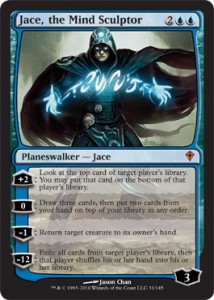
If you want to go the other route and cash in on big money rares every once and awhile, you have pay very close attention to the tournament scene and the Twitter feed. The information and inside word that comes across those channels can make you a lot of money in a very short time. The easy part is figuring out what to pick up and the actual process of getting those cards, the hard part is when and where to dump them. I love local game stores and I play at mine regularly, but unfortunately, the buy prices are just too low to make a reasonable amount back on investment and most of the time they are only looking for certain cards. Instead, I choose to dump my cards off at larger events such as PTQs or GPs because not only are the prices better, but sometimes a card suddenly spikes because it is seeing a large demand throughout the tournament crowd. Now when to do it can be tricky - take, for example, the State and Provincial Championships that had just passed. Channel Fireball was running a booth here in Las Vegas and on their list I saw they were buying Jace, the Mind Sculptor at 50$ cash. I knew that was way too low of a price for him because I felt that he hadn't hit his peak yet at that point, yet I was asked by many of my friends whether or not they should sell theirs. I told them all not to and I realized at that point that a regular player who only just buys their packs and pays their entry fee will see that price and think that it would be a good idea to sell as it is higher than their local shop will pay. Some followed my advice and still have theirs but some didn't and are now kicking the dirt when they see CFB are now offering 70$. The point is, don't pull the trigger unless you are absolutely sure that it is the highest price you could get for that particular card.

Under these rules I have gained an immense amount of knowledge of the buy prices of various cards and have been able to capitalize on that. Keep these techniques in mind when wanting to see a little bit of green on the other side of the trade and you will come out on top. Remember to look at every list possible, write down where you saw certain prices, and come back to them later. Even though the tournament scene will dictate price spikes in certain cards there are many other ways to grind out the trades and make some profit. Thanks for reading and be sure to leave comments. I'll leave you guys with a few secret cards I use to make a good chunk of cash to get you started.

Lord of the Undead – A big surprise to me when I found a website buying them at 5$ cash.

Felidar Sovereign – Seen it at 3.50$ and can pick them up as low as 1-2$

Immaculate Magistrate – Another card seen as high as 3.50$ on some lists and can be found in bulk boxes.

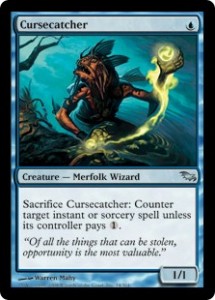
Imperious Perfect – Is seen on some buylists higher than Cursecatcher

- James Trentini

@jtrentini on Twitter

Are the Prices of Mythics Going to Drop?

Are you a Quiet Speculation member?

If not, now is a perfect time to join up! Our powerful tools, breaking-news analysis, and exclusive Discord channel will make sure you stay up to date and ahead of the curve.

Since the release of Worldwake the debate has raged on over whether or not mythic rares were hurting Magic or not. While people had complained about the price of Baneslayer Angel it wasn't until the price of Jace, the Mind Sculptor rose through the roof that the argument against mythics began to look more attractive. Since then the average price of mythics has risen. Is this due to the power level of these cards or because of Jace?

If we look at Scars of Mirrodin mythics, specifically the planeswalkers, we see that all of them were running around $50 at release. Since then they have all dropped in price, and not just because they are less scarce now that the set has been opened up in much greater quantities (though this does have some impact). The reason that I believe they have dropped is that they were overpriced from the start. Elspeth Tirel and Venser, the Sojourner see almost no play in competitive Standard. Koth of the Hammer does but only in a few decks.

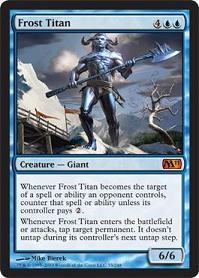
With the exception of Jace all the other high priced mythics have dropped in price. Is this because their prices were inflated due to Jace? Now of course some mythics have risen in price as they found homes in decks, but this is true of any card. Even at its highest Frost Titan didn't break $20.

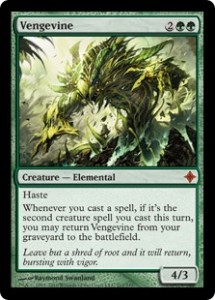
Unless Wizards releases another mythic with the power level of Jace I think we may see the price of mythics drop on average from what they have been since the release of Worldwake. Primeval Titan, Vengevine, and perhaps Koth are probably the only three mythics released since Jace that feel powerful enough to be worth $30 or more. If Survival decks get banned from Legacy in the future then even Vengevine (which honestly has no mythic feel whatsoever) will probably drop significantly.

If the pre-sale prices of Mirrodin Beseiged mythics are as high as they were for Scars I would almost blindly suggest trading them away at the pre-release. Of course this depends on what cards they actually print but ever since Jace they have not released a card that can hold a $50 price tag. Assuming that the price of future mythics does drop, as I suspect they will, what will this do for the prices of current mythics?

This is an interesting question because it could give us an opportunity to make some money with cards we currently have. To be completely honest I'm not sure whether or not it will have any effect on the current prices. We still have a long time until the next set is released and I think the prices will have stabilized on their own by then.

Still this is an idea that is worth discussion because if the price of mythics is going to start dropping for future sets we stand to gain a lot by being aware of this trend before others and getting rid of cards before the prices begin to decline.

I'd like to hear what you think. Do you think that the price of future mythics will be lower, the same, or even higher than they are now? What if another Jace-like card gets printed?

One other topic that I recently discussed has to do with proxy cards. I picked up a couple of proxy power cards about a week ago. I first saw them on eBay but didn't feel they were worth buying. Someone had seven of them at FNM which I traded for at $2 each. They were pretty decent foil proxies of a Black Lotus, Time Vault and a bunch of other older expensive cards.

Is there anything wrong with trading cards like these as long as you make sure the other person is aware they are proxies? I've heard good arguments for and against them and I'm just curious what you think about them. Join me next week when I talk more about collecting and how to use trading to maximize your collection with a minimum of cost.

Endless Horizons – Lotus Cobra Phenomenon

Are you a Quiet Speculation member?

If not, now is a perfect time to join up! Our powerful tools, breaking-news analysis, and exclusive Discord channel will make sure you stay up to date and ahead of the curve.

Its right about that time again, a new set creeps closer and closer to us, and we’ve separated most of the current wheat from chaff. Prices are starting to settle and stabilize, and were seeing the normal order of things restore. This lasts for about four more weeks until we start the Mirrodin Besieged rumor season which will set the market into more up’s and downs as cards are spoiled. This week were going to see just what that’s going to do to Scars of Mirrodin as a whole, and see if we can pull some profit from it.

The Lotus Cobra Phenomenon

There will be a few cards that are in Scars of Mirrodin that you can currently pick up dirt cheap that stand a good chance to see value gains from the next set. It happens almost every single set. Knight of the Reliquary was originally considered junk when it first came out, and they were traded off rather cheaply, usually $2 and sometimes less because they didn’t have a home. Lotus Cobra had the same story, so did Frost Titan, and so did All is Dust. While All is Dust was never truly in the lows that KotR was, until recently its price was dictated by its possibility, and not its use and appearance in decks. Here is a short list of cards that could experience a notable rise in price, either because of hype as the spoilers come out, or because interactions are realized that make them cornerstone cards.

Argent Sphinx

Etched Champion

Grand Architect

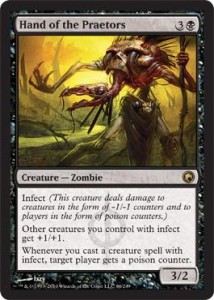
Hand of the Praetors

Indomitable Archangel

Lux Cannon

Putrefax

Skithiryx, the Blight Dragon

Tempered Steel

Could this card double in price? Easily with a few spoilers for the upoming set.

While some of these already have a decent price tag associated with them, they all have the potential to rise. One thing that almost every card on this list has is common? It’s an enabler or an addition to a mechanic or theme that given just a slight boost could see these cards burst onto the “hot” scene.  Remember that most of the Ally rares saw a price spike with the release of Worldwake, because people love building to a theme. Poison and metalcraft are both in the same position, and neither is a mechanic I see them abandoning in the next set. Something to note as well, is the Lotus Cobra Phenomenon works both ways. There are few cards outside of the Planeswalkers in Scars of Mirrodin that can expect a price drop, and I see most of the mythics not on the above list staying where they are. The only exception is Mox Opal if metalcraft breaks onto the scene, but its price won’t go up much from where it’s at.

The Sarkhan Vol Phenomenon

Remember when getting a set of Sarkhan Vols would run you around $80? Yeah, this is the ugly side of mythic price changes. This sets Sarkhan Vol is clearly Elspeth Tirel. While she may not have taken as much of a value hit as Sarkhan Vol, currently you can order her foil version for the same price as her pre-order of a non-foil. That’s a hard fall for anyone to take, and if you didn’t trade off your Elspeths and Vensers in the first couple of weeks and pick up Koths, you were stuck holding the bag. Predicting price falls is much harder without any information on the next set, so I’m not going to attempt that just yet, but I will revisit it when we have more information, and a general idea of what the next set will bring us.

The only thing that we know for sure is that Scars of Mirrodin as a whole will most likely suffer the usual 10% decrease across the board. This is usual whenever a new set comes out, and should be noted since it will make things cheaper which is both good and bad. If you want top dollar for your foil Koth of the Hammer, get rid of it now. If you want foil Koths, then wait for the next set to come out and you should be able to pick them up a bit cheaper. *

Curve balls

Every so often we’re thrown curve balls that define a set, and skew its average pricing. Cards such as Jace, the Mind Sculptor, Figure of Destiny, Thoughtseize, Mutavault, Tarmogoyf, and a few others find a price tag that’s above and beyond most of the cards in the set. Since Alara Block these are almost always Mythic Rares and should be recognizable. These cards tend to dominate a set and are the cards that come to mind when you talk about a specific set.

Seasonal Rotations

Most every DCI season we see a beginning of season price spike, a slight drop, a mid season spike, and an end of season drop. This is common and until

The DCI influences prices more than you know.

recently has worked like clockwork. The recent addition of large and profitable events outside of PTQ, Pro Tours, and Grand Prix’s makes seasonal rotations much harder to count on for inventory spikes. Now because of the events hosted around the country by Starcitygames.com, and to a lesser extent Channelfireball.com, we must look at Standard prices and trends year round. As legacy picks up in popularity and posts results at least once a month it’s a market that can move just as fast and in some cases faster than Standard.  While the DCI seasonal rotations still play a large role in the demand of certain cards, it has been noted that as Starcity opens happen more often, the impact of a seasonal rotation will lessen. The current exclusion to that is Extended. Since last year’s extended chopping happened, there has only been a Pro Tour to find results from, and that Pro Tour included sets that are no longer in Extended. With Extended the next DCI season to rotate in, now would be a good time to begin finding extended staples. These include cards with a proven track record and history, as well as any new cards that have shown potential. One decent resource you can use is the recent extended deck data from www.magic-league.com which hosts an extended event almost every week. Seeing the decks that have done well there could give you a general idea of how the beginning of the season is going to look and give you a good opportunity to get stocked early and cheap. If I were to give any advice for now, it would be to pick up the truly staple and cornerstone cards from decks that have done well in standard over the past 18 months, making sure to not pick up cards from Tenth edition and Timespiral block. A very quick list of cards to be on the lookout for to grab cheap would be something like this

Cryptic Command

Reflecting pool

Thoughtseize

Noble Hierarch

Knight of the Reliquary

Mutavault

Bitterblossom

Cheap foil Jund pieces

Path to Exile

That’s all for this week, next week we’ll go more in depth about the extended cards you should be looking at, and we’ll go over the prices they can be commonly found for now compared to the prices in their prime, and find where the price should settle during the extended season.

Until next week,

Stephen Moss

MTGstephenmoss on twitter

stephen.moss@ymail.com

*- Yes I know that Koth could rise after the next set, but chances are he’s going to fall.

Recapping Risks

Are you a Quiet Speculation member?

If not, now is a perfect time to join up! Our powerful tools, breaking-news analysis, and exclusive Discord channel will make sure you stay up to date and ahead of the curve.

I want to start off today as a continuation of my last article, talking about risk. Here are some of the comments that readers posted.

From Ernest, who encountered the same guy I almost bought from:

I forgot his first name…Thomas? Tom? I don’t know. Last name Gils.

He is a big burly dude, 26-32, brings a friend with him that is skinny/doesn’t talk.

He’s actually very nice, very friendly, and I guess plays the innocent role very well.

To me, his cards were very good fakes. But I’ve been out of the game for a long time. However, at the same time, what I could tell was that the printing was shady.

Finally, he’s very intelligent/tricky. He bolts his Jace’s in plastic, so you can’t take them out/view them. And he pretends he doesn’t know what’s going on, so when you see a Mox Pearl in the pile, you get a little excited about what’s going on. But that’s gotta be fake too given what we’re all talking about here.

Lastly, I should have suspected when I found an identical offering to what you put up, even located in the same geography ( Chicago ).

His facts about this guy check out with what I know. So I would recommend not buying any cards from Mr. Gils.

From Chris:

Some time ago, I had my backpack stolen from me at an event. It was the first big tournament that I had played at (drove out of town to go to) other than new set releases. My backpack was under my chair while I was playing and when I got up, it was gone. No one saw anything. I lost over $1500 of cash/cards/electronics etc. I’ve come to grips with it over time, but I think what annoyed(I was much more than just “annoyed” at the time) was that the tournament host was unsympathic to say the least. My wallet, car keys…everything except my cell phone and the deck I was using was stolen and the host of the tournament seemed to care less. I won’t mention their name cause I’m over it and I’m not interested in smearing a very popular company who I’m sure is otherwise good for the magic community. It was my responsibility and no one else’s. Overall bad day though. I stopped playing for almost a year. Had to sell my deck to the vendor to get cash so I could buy gas to get home. Wife had to call locksmith to make a car key. And when I asked the host to make an announcement or for anything they could do to help, they reacted as though I was annoying them…like I’m supposed to just say, “oh well, it was only $1500…it’s not that big of a deal, don’t bother concerning yourselves with the wellbeing of players at your events.” Anyways, I said all that to say there’s a dark side to all the money that can be made of collectible products and naive participants. Since then, I’ve heard much worse stories, people asked to follow others back to vehicles/hotel rooms only to be mugged…just be wary and careful of what you get yourself into and take the time to think about what you’re doing.

I think Chris gives an excellent lesson in how to protect ourselves at tournaments, and the costs of not doing so. A theft can literally knock you out of the game. Personally, if I had all my stock stolen at a tournament, it would be very difficult for me to recover. One way to avoid getting completely wiped out, if you have enough stock, is to leave some at home, and try to keep all expensive electronics on your person at all times. By making sure you still have some backup if your bag disappears, you might be able to at least rebuild. But Chris’ story also shows us what TOs should be doing to help prevent theft. In his experience, the TO was unhelpful, and didn’t cooperate to help find his bag. This is unacceptable. TOs are morally, if not legally, responsible to prevent theft at their tournaments. The ring of GP bag thieves was broken up due to cooperation and communication between the TO and judges. TOs must do their best to protect their players.

From Lackey:

A whole separate article could be on Magic Online risk mitigation, and the very scary prospect of using PayPal to monetize MTGO objects — Twice I’ve been burned when I’ve sold complete sets or Event Tickets to MTGO users. One transaction occurred when dealing directly with a player on MTGO who reversed the charges three days after the transaction was complete, and the money already in my PayPal account was yanked out of my account. The other was through eBay, but the buyer used what turned out to be a stolen credit card, and the CC company nullified the transaction a month after it had processed. The buyer bought about a dozen similar MTGO items the same week from a variety of sellers before the card was reported stolen, and ebay deactivated that buyer’s account. However, since I had already withdrawn the money from the transaction into my brick and mortar bank, Paypal instead now claims I owe them for the transaction, and has since locked my account. Be aware that PayPal considers the exchange of virtual objects to be a “service” and therefore it not an insurable transaction for goods. So they will not assist in any funds reclamation related to MTGO transactions gone amuck. If there are more secure methods of conducting real-world currency exchanges involving MTGO cards (an escrow service, an automated arbiter, etc.) I’d love to know more.

The selling of MTGO cards is a bit of a difficult process, and here Lackey highlights some of the problems. When you’re selling the items over ebay or paypal, the other person can reverse the charges, take the money back, and keep the cards. This is the main reason I won’t sell cards for cash on MTGO. I usually just go for tickets.

Those were all the comments mentioning specific instances. I don’t have any trading or financial theory today, so just a quick card tip for those of you on the front lines:

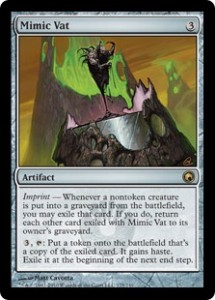
RUG has assumed the role of the most powerful Jace deck in the format. It has the tools to beat both agro and control. Because of this, I anticipate U/B being shoved to the sidelines for the time being, so you might want to sell of some of those archetype staples like Grave Titan and Mimic Vat while the price are still high.

That’s all for this week, but join me next time when I dissect the financial side of MTG Pimp.

--Noah Whinston

Mtgplayer@sbcglobal.net

Arcadefire on mtgo

Nwhinston on Twitter

Baldr7mtgstore on ebay

Posted in Feature, Finance4 Comments on Recapping Risks

Have you joined the Quiet Speculation Discord?

If you haven't, you're leaving value on the table! Join our community of experts, enthusiasts, entertainers, and educators and enjoy exclusive podcasts, questions asked and answered, trades, sales, and everything else Discord has to offer.

Want to create content with Quiet Speculation?

All you need to succeed is a passion for Magic: The Gathering, and the ability to write coherently. Share your knowledge of MTG and how you leverage it to win games, get value from your cards – or even turn a profit.

Uncommonly Good

Are you a Quiet Speculation member?

If not, now is a perfect time to join up! Our powerful tools, breaking-news analysis, and exclusive Discord channel will make sure you stay up to date and ahead of the curve.

I was at a yard sale a couple weeks ago that advertised Magic cards for sale on Craigslist.

These are my favorite things in the world, and I usually try to get there at least half an hour before the start of the sale. For some reason, this time I just didn’t want to wake up early. I didn’t get there until 2 PM – usually far too late to find a bargain – but I decided to check it out anyway. I had a hunch that there might still be something left for me.

I was quickly glad that I didn’t wake up early.

The seller was clearly a casual player back during the original Mirrodin block, and most of his cards were from that era. There was a 5-row full of commons and uncommons, a stack of rares, and a binder with yet more rares. When I strode up and began examining the piles, I overheard the seller speaking with a kid who had found a small collection of cards that he wanted to buy.

“Hold on a minute,” the seller told his customer. “I need to go look these up online. I’ll be right back with a price.”

“Ok!” said the kid, oblivious to the fact that his father had already been waiting for half an hour while his son rifled through several thousand cards and would have been happy never seeing a Magic card again for as long as he lived.

When the seller came back, it took all of my cool not to visibly choke when he started quoting the prices. I didn’t know where he was getting them from, but it was like no price guide I had ever seen. All of them were at least two or three times the price of Star City Games singles on a bad day.

So what did I do? Pick out some money rares, and try to beat him up over the price by showing him a reasonable guide? Cut my losses and go home?

No.

I decided to eschew the rares for the time being and head for the commons and uncommons. Since I knew he was looking up cards, I developed a new plan of action: get a flat price for his non rares, and hope he had some sweet ones. After five minutes of digging, I had found an Isochron Scepter, a Skullclamp, and six(!) Aether Vials.

Now came the tricky part. If I just handed him the stack of commons and uncommons and asked for a price, he’d go look them up and I’d be paying $29.95 per Vial. I knew that if I wanted to get a good deal on the cards I really wanted, I had to pay up for some rares.

In the end, I gave the guy a stack of rares that weren’t embarrassingly bad, had him look up the prices, and ended up paying him through the nose for two of them. (Yeah, $3 for Azami, Lady of Scrolls when SCG has her for $0.89 isn’t the deal of the century.)

In return, I got him to quote me a flat price of fifty cents each for any commons and uncommons I wanted.

Anyone in the market for some Aether Vials?

The Might of the Meek

While Quiet Speculation’s own Corbin Hosler posted an article this summer about the power of trading with Commons and Uncommons, I wanted to weigh in on the subject as well.

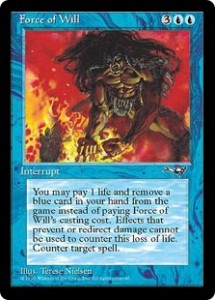
While some older uncommons (Force of Will and Wasteland come immediately to mind) are traded as rares by everyone, a good working knowledge of all valuable commons and uncommons gives you a supreme edge of those for whom value stops at the gold or orange rarity symbol.

The Threshold

I have found that there is a pretty hard threshold at $1 in terms of how ‘money’ commons and uncommons are treated. Non-rares worth below $1 (and I’m speaking in MagicTraders/eBay prices here) simply aren’t worth your time and energy to lug around.

While you may one day find that kid who really needs that fourth Dark Ritual, chances are they’ll find the card in a bulk box before they find you. And even if they do find you first, you aren’t going to strike it rich on a sub-$1 card.

The $1 threshold has another meaning to those of us who sell cards on eBay. $1 on MagicTraders means that, on average, a playset of that card will sell for $4.

Assuming you charge between $2-$3 for shipping and handling for your lot, a $4 average is the lowest price for a playset that basically guarantees your will sell your item if you list it as an auction with a $0.99 starting bid.

If you’ve ever experienced the drag of posting a ton of auctions that closed without a bidder, you know exactly what I’m talking about.

List-O-Mania

This week, I spent a few hours creating a list that I think will be very valuable to you. I went to the MagicTraders price guide, and took note of all the commons and uncommons that regularly sell for over $1 per copy. I have excluded all cards before Revised as well as the Portal releases because these sets are special cases where short print runs and rarity trump everything else. I will do an article in the future on Portal, P3K, older cards, and other rarities.

I also excluded a couple of hilarious outliers, like a Deep Spawn that sold for $19.95 or a Jinx that sold for $45.00!

Please note that while I wanted this list to be exhaustive, I’m sure that I glossed over several cards on my perusal of the gigantic list. Please let me know what I missed in the comments – I would love to have a complete list of “non rare players” for when I’m sorting through collections.

THE COMMON/UNCOMMON POWER LIST

(Sorted by price from highest to lowest)

Thirty-Nine Dollars
Force of Will
Twenty-Two Dollars

Wasteland

Ten Dollars
Aether Vial
Nine Dollars
Goblin Lackey
Sol Ring
Eight Fifty
Standstill
Seven Dollars
Enlightened Tutor
Sensei's Divining Top
Five Twenty Five
Reanimate
Five Dollars
Cabal Coffers
Price of Progress
Four Seventy Five
Ancient Tomb
Isochron Scepter
Four Dollars
Cabal Therapy
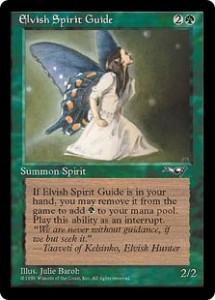
Elvish Spirit Guide
Sterling Grove
Three Seventy Five
Lightning Greaves
Mystical Tutor
Three Twenty Five
Crystalline Sliver
Eternal Witness
Lim-Dul's Vault
Propaganda
Spell Snare
Three Dollars
Path to Exile
Two Seventy Five
Ghostly Prison
Imperious Perfect
Mother of Runes
Priest of Titania
Tinker
Two Fifty
Browbeat
Buried Alive
Cephalid Coliseum
Cursecatcher
Kitchen Finks
Lotus Petal
Squirrel Nest
Undead Warchief
Two Twenty Five
Brain Freeze
Fact or Fiction
Goblin Warchief
Heedless One
Merrow Reejerey
Swords to Plowshares
Thran Dynamo
Trygon Predator
Worldly Tutor
Two Dollars
Bloodbraid Elf
Daru Warchief
Daze
Dragon Arch
Elephant Grass
Fog Bank
Horned Sliver
Mind Harness
Necromancy
One Seventy Five
Circular Logic
Elvish Promenade
Goblin Ringleader
Jotun Grunt
Knight of Meadowgrain
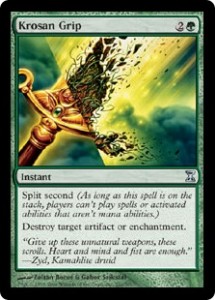
Krosan Grip
Perish
Regrowth
Rite of Flame
Skullclamp
Tangle
Vampire Nighthawk
Wirewood Symbiote
One Fifty
Animate Dead
Boggart Ram-Gang
Chainer's Edict
Firespout
Ghost Quarter
Lightning Helix
Magma Jet
Paradise Mantle
Remand
Soulless One
Wall of Blossoms
Wall of Denial
Wall of Omens
Ward Sliver
Wash Out
Wirewood Lodge
One Twenty Five
Ancient Ziggurat
Anger
Arcane Sanctum
Barbarian Ring
Blightning
Brainstorm
Chain of Vapor
Crumbling Necropolis
Energy Chamber
Engineered Plague
Exhume
Fecundity
Fire/Ice
Flames of the Blood Hand
Gaea's Blessing
Gatekeeper of Malakir
Ghitu Encampment
Goblin Recruiter
Harmonize
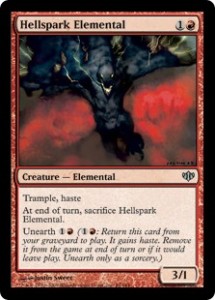
Hellspark Elemental
Hymn to Tourach
Jagged-Scar Archers
Juniper Order Ranger
Leeches
Loxodon Warhammer
Pyrokinesis
Rancor
Savage Lands
Shifting Sliver
Shrapnel Blast
Skyshroud Elite
Spectral Procession
Tendrils of Agony
Wirewood Hivemaster
Zombie Infestation
One Dollar
Aura Shards
Beseech the Queen
Blasting Station
Bramblewood Paragon
Briarhorn
Choke
Control Magic
Cruel Edict
Curiosity
Drove of Elves
Flame Javelin
Goblin Offensive
Hand of Honor
Jungle Shrine
Mogg Fanatic
Mogg Infestation
Mortify
Nimble Mongoose
Seaside Citadel
Shattering Spree
Silvergill Adept
Tainted Isle
Tectonic Edge
Thirst for Knowledge
Tolaria West
Tormod's Crypt
Treetop Village
Wellwisher
Wirewood Channeler
Zombie Trailblazer

Conclusions

Be honest – how many of those cards did you think were bulk until you read this list?

For me, the biggest revelation was the value of the uncommon Sliver cards. While I knew that Crystalline Sliver trades right around $4, I had no idea that there were several other Slivers from Tempest and Legions that are also worth something.

Also: raise your hand if you had Daru freaking Warchief on the same pricing tier as Daze. I’m sure I’ve bulked out dozens of that guy.

Of course, before you go swapping your Dazes for Darus, remember that the sword of knowledge cuts both ways. You can probably find a few people who have Daru Warchiefs that they’ll trade you for a quarter each, but there will be very few trading partners who will trade you for them at full value.

Trading in Silver and Black

While most people you trade with will value rares, uncommons, promos, and whatever else at whatever value point you both agree with, others will look upon their non-rares with disdain. While everyone pretty much knows the cards on that list from $3 and above, starting at the $2.75 mark you may be able to get some very sweet deals on cards that appear to be throw-ins.

When asking about prices in the binder of someone I’ve never traded with before, I always make it a point to ask about the value of an uncommon that I know is worth a couple of bucks. This gives me an idea if this person values their non-rare cards higher than they should or lower than they should.

This is the same reason I’ll always paw through boxes of seemingly bulk fodder that some players bring with them to each and ever event. If they tell me it’s all garbage, that just means I can get a sweet deal on what I find!

Lucrative Lessons

When buying collections, I often make more money on the commons and uncommons than the rares. Often I’ll pay a flat rate of $0.10 each for bulk rares, and I’m lucky if I can make $0.20 on some of them. Bulk commons and uncommons? If I’m buying at $8-$10 per thousand and walk away with some Standstills and Reanimates, it’s been a pretty good day.

Like my story at the start of this post, there are many reasons to be aware of the value of non-rare cards. Are there players in your area who don’t know the value of their silver? Don’t let it be you.

Join me next time when I look at psychographics from a whole new angle.

- Chas Andres

The Creation of a Tournament Deck Rental Company

Are you a Quiet Speculation member?

If not, now is a perfect time to join up! Our powerful tools, breaking-news analysis, and exclusive Discord channel will make sure you stay up to date and ahead of the curve.

Article Submitted By: Eric Portney

Have you ever had that moment of inspiration – that Eureka! moment while you're taking a shower where you have a crazy idea, and you wonder "Why hasn't anyone ever thought of this before?" Sanity soon kicks in, and you dismiss the concept as junk, and try to forget about it. But over time, the idea just won't die.
I had such an idea recently. And while I'm not at all convinced of it's viability as a business model, I thought it would be interesting to present it to the Quiet Speculation community, to attempt to crowdsource the concept, consider its possible merits, or to pick it apart and expose its flaws. As I have no means to actually START a business like I am about to propose, this is purely an exercise for you, the reader, to weigh in on what I think would be an interesting Magic business model.

Well Eric, get on with it then. What's this crazy idea?

Ok, ok, it’s coming! But before I lay the idea out though, consider this. Is it better to own a home or rent one? Common sense says own. But is that really true? An editorial in Wired Magazine this month argues the contrary (http://www.wired.com/magazine/2010/11/st_essay_ownership). What about other goods? Do I need to own a car when I can rent one from ZipCar? How about a lawnmower, if I only use it twice a year (ok, I *should* use a lawnmower on my lawn more often than that, but this is reality here), if I can rent one from my neighbor through http://snapgoods.com/. Why would I pay $80 for the complete Buffy the Vampire Slayer series on DVD, a show I’d probably only watch all the way through once, if I can stream it via Netflix in its entirety to my XBOX 360 or Wii for $9 a month?

Interesting questions, but how do they relate to Magic: the Gathering and Finance? It’s quite simple, really. In short, I propose the creation the Netflix of Magic cards, where customers can rent full decks or deck components for a fraction of the cost necessary to own them outright. Crazy! I know! But perhaps it’s not as far fetched as it sounds at first, and I will outline below some of the details I’ve surmised that would be necessary to establish such a business.

However, I’ll need your help. I am not a successful entrepreneur. I have never been to a local SBA meeting, never registered for a business license, and never gone through any of the trials and tribulations of running my own business before, and have no leg of authority upon which to stand.  All I have is an idea – and I ask you all to participate with me by reviewing my proposed business model, and comment on what works, what’s junk, and what needs fleshed out in more detail.

Right, let’s get down to it then!

The Business Concept

The idea is to create a company, let's call it Tier-1 Rentals, whose purpose is to provide a web site where tournament magic players could acquire the cards, or even whole decks, that they need for an upcoming event. The target audience of this is not the LSVs, Zvis or Floreses of the world, but rather the wannabe tournament player looking to emulate the successes of last week's Pro Tour at their next Friday Night Magic, Grand Prix or other local event, but they have neither the time nor the money to afford the full cost of a high caliber deck (with a high-caliber price tag).

Tier-1 Rentals would allow players to select from a menu of recent winning Magic Tier-1 or Tier-2 decks, customize them as desired, or build a deck from scratch. Pre-defined decks, sideboards, or combo packages can be pre-configured for quick selection. Decks would arrive, pre-sleeved, along with a postage-paid return mailing envelope. 

To determine the price to charge per rental, we would assess the low price value of the deck or desired cards based off of a site like magic.tcgplayer.com, www.magiccards.info and/or www.magictraders.com eBay data scrapes, calculate a 20% value price for rental, and then tack on a per deck or per set number of cards shipping/handling fee.
Rental fees would be valid for a 1 week period, and would be mailed out on Tuesdays via 2-3 day priority USPS mail, and include a pre-addressed priority envelope pouch for returns. Returns not postmarked by the following Wednesday would be assessed an additional week rental fee.

All rentals would require a credit card, and the signing of a waiver that cards would be returned in the same condition, or they would be assessed a replacement fee equal to the "High" value, plus a replacement processing fee. This replacement value would be presented to the customer upon checkout.

If the renter wished to purchase the cards, they could do so for 120% of the initially quoted per-card replacement value, with credit applied at a rate of 20% of value per week already rented. In other words, if after 2 weeks they wished to keep the cards, they could pay 80% of the value. If they rented them for 6 weeks, they could keep them for free at that point.

To help promote the business, custom sleeves with licensed or new artwork/designs could be created, with the www.tier1rentals.com address or logo imprinted across the bottom of each sleeve.

The Startup Costs

The initial investment would involve acquiring multiple sets of key cards used in the top tier decks. We would target possessing in inventory sufficient cards to be able to build 5 to 8 of each Tier-1 deck, with two backup playsets of each “fringe” card. This may mean the acquisition of 8x each Standard set, with additional playsets of particular cards in high demand.

Looking at the current eBay sales of complete, non-foil Standard sets, we get the following numbers (rounded to within $5 for simplicity):

  • SOM - $150 (8x = $1200)
  • M11 - $100 (8x = $800)
  • ROE - $100 (8x = $800)
  • WWK - $125 (8x = $1000)
  • ZEN - $90 (8x = $720)

So, 8x all of the current Standard sets comes in at $4520.

Now, lets consider the cost of two supplemental 4x playsets of the Top 10 most in-demand, and expensive, cards in Standard.  By acquiring these singles, we would be able to create at least four of nearly any competitive deck renters may require.

  • Jace the Mind Sculptor - $70.00 (8x = $560.00)
  • Koth of the Hammer - $30.00 (8x = $240.00)
  • Vengevine - $32 (8x = $256.00)
  • Primeval Titan - $33 (8x = $264.00)
  • Venser the Sojourner - $17.00 (8x = $136.00)
  • Elspeth Tirel - $17.00 (8x = $136.00)
  • Mox Opal- $18.00 (8x = $144.00)
  • Molten-Tail Masticore - $12.00 (8x = $96.00)
  • Gideon Jura - $20.50 (8x = $164.00)
  • Baneslayer Angel $15.50 (8x = $124.00)

The cards identified in this Top 10 list were derived from Chris McNutt’s QS Master Sheet 2 BLS (https://www.quietspeculation.com/2010/10/the-nutt-draw-buy-lists/), however, the price per card was acquired from the Nov. 2, 2010 average monthly eBay prices indicated on www.magictraders.com, or, for Scars card, my own sleuthing on Completed eBay sales. I rounded to the closest $0.50, for simplicity.

With this information, 8x of each high-priced, high demand single totals $1984.00.  Let’s round that to an even $2,000, for use in our estimations.

In addition, custom deck sleeves and sleeve artwork would need to be commissioned, and enough sleeves would need to be ordered to accommodate 20 simultaneous deck rentals, and extras for replacement of damaged/lost sleeves (approximately 2400 sleeves would be required initially). Quick price checks on bulk sleeves put this at around $140.

Adding it all up, the estimated price for these startup costs is $6520 for cards, $140 for sleeves, $1000 for marketing (ballpark guess), $1500 for web site/shopping cart creation (another ballpark guess, although using pre-existing free CMS solutions like Drupal, and free shopping cart add-ins like Zen Cart, this may end up being cheaper, especially if we do the labor ourselves), $1,000 for legal fees/business setup fees and registration (another ballpark figure). Total initial startup estimate – just over $12,000.

Risks and Risk Mitigation

Identified risk scenarios

Item loss/degradation – How would we deal with damaged cards, lost/stolen individual cards, cards replaced with different versions, entire deck theft?

Card value fluctuations – Through the cyclic nature of Magic, cards rise and fall in value as cards are initially released, hyped, and validated through use in tournaments. During these swing periods, there may been the need to invest in additional singles for specific deck creation.

Liquidity to acquire new product – How do we ensure that we have sufficient cash available to acquire new sets as they are released, usually in recurring three month intervals?

Inventory availability – If a deck is rented, sent out on a Tuesday, used by the renter, and then returned postmarked by the following Wednesday, then that deck would be unrentable for a week-long span. For cards that have a short useful life span, only being used every other week cuts into the potential monetization of any given card.

Mitigation

Item loss and degradation would be mitigated through the necessity for the renter to provide a credit card to secure the rental, as well as the signing of a consent form that they understand that they will be charged the full replacement value of any lost/damaged cards. The total value of the rental would be identified for the renter at the time of check-out. However, would-be thieves can work around this, providing a credit card with just enough money to pass a balance check, or the credit card itself could be stolen.

To manage this, we could require the renter to provide their DCI number, and the DCI member name must match the name on the securing credit card, and their listed DCI member town must match the town of their credit card’s billing address. Furthermore, we could limit new customer rentals to those who have at least five DCI sanctioned events associated with their number. This would put up an additional hurdle for those who think they could rent a $300 deck for $60 and just disappear. Requiring five sanctioned events may restrict the pool of customers eligible to use our service; however, given fears over theft, it may be justified to employ this method to help ensure that the renter is legitimate. Besides, how many new, non-sanctioned players would even consider using this service? Those players are not our target clients.

Honestly, this issue is by far the largest risk, and I am keen to hear suggestions from the QS readers regarding it. Are the precautions outlined above sufficient? If not, what would you suggest to solve it? Or is this a showstopper that invalidates the entire business model. Make a note of your thoughts, and consider adding to the conversation in the Comments below.

As for card value fluctuations – this risk would be mitigated through the expected heavy rental rotation of whatever are the highest-valued cards at the present time. Higher value cards will be the most-rented cards, as we are offering a service to allow people to use these cards for a fraction of their actual value, and as such we expect these cards to reach Break Even Point quickly, and provide a strong Return on Investment over the life of the Standard tournament season.

Regardless of why cards need to be replaced (need to increase supply, replace damaged or stolen cards), we would also need to establish a quantity of cash to use for reinvestment into new products. For example, when a hard-to-acquire Legacy staple is reprinted (e.g. Chain Lightning), we would need to be able to predict whether or not this would lead to an increase in demand for Legacy decks, and be able to identify other Legacy cards to acquire that would go into these decks.

As sets rotate, perhaps 2-3 months before the normal October rotation, high value cards from the soon-to-be Extended sets can be sold off via eBay, via direct sales to store buylists, or used as trade material for current Standard high value cards.

As far as lost revenue due to inventory availability – this is tricky, and I don’t know the best answer.  It’s easy to say that if a deck or a synergistic set of cards is out of stock, demand is high enough that we’re likely to rent them again as soon as they are available. But it may become necessary to change the returned postmarked dates to earlier in the week (Mondays?) and/or mail out rentals on Wednesdays or Thursdays. That way, cards can be used week after week – but processing becomes not only labor intensive, but time sensitive, as renters would likely need to have the deck in-hand by Fridays for immediate use.

Return On Investment (ROI)

To figure out our ROI, we’ll start conservatively, and assume 4 concurrent complete Tier-1 deck rentals each week.

For ease of comparison, let’s take the low Deck Price of recent high-placing decks at the Star City Games 2010 5K Standard Open in Nashville, representative of the caliber of decks we would offer:

Elf-vine:            $286.06 http://magic.tcgplayer.com/db/deck.asp?deck_id=703962
Rug Ramp:       $551.85 http://magic.tcgplayer.com/db/deck.asp?deck_id=703963
Eldrazi Ramp    $281.99 http://magic.tcgplayer.com/db/deck.asp?deck_id=703975
Koth Red          $408.06 http://magic.tcgplayer.com/db/deck.asp?deck_id=703979

Together, these decks have a low value of $1,527.96. If we rented these decks at 20%, that would be $305.60.

This would generate approximately $4,000 in revenue over a 13-week quarter (or close to $16,000 in a year). Given the estimated $12,000 to acquire sufficient cards, supplies, marketing and business setup costs, as well as an additional $800 to $1,200 every three months when a new set is released, the Break-Even Point would be about one year. After this point, surplus over revenue would be realized at a rate of around $3000 per quarter.

Of course, renters could consistently check out Pyromancer Ascension decks (Low value $72.19 - http://magic.tcgplayer.com/db/deck.asp?deck_id=703992), and tie up key cards like Scalding Tarns from use in more lucrative rentals like Ramp decks. But I’m working these numbers with the assumption that we are providing a service that grants access to more expensive decks at a discounted price, so the typical client wouldn’t be interested in decks they could otherwise purchase outright.

Hopefully though, as the business grows, we’d be able to sustain renting out more than just four decks at a time and the delta between cost and surplus over revenue will increase favorably.

Gotchas

Here’s an area where I need to ask the community for help. What recurring expenses am I not considering? How much needs to be set aside for taxes.  How much are LLCs taxed, versus estimated taxes I would have to withhold were I simply filing as self-employed via a 1099 Form. How much would insurance cost? As the business grows, if I hired part-time or full-time help, what would be my obligations for benefits? Is this business model defined as a service or a product, and would I need to collect sales tax?

In short, what are the gotchas I am ignoring, and how would they impact the bottom line?

Projected Growth Areas

While initially only offering decks built using current Standard sets, we would increase our deck creation abilities to offer older formats, or casual formats.

Tournament support – The goal would be to be able to provide cards for any tournament sanctioned by Wizards of the Coast, or tournaments offered by Star City Games, TCGPlayer, or any other high-profile tournament (e.g. the Vintage championship annually held at GenCon).

Casual formats – Popular EDH cards can be offered, or even whole EDH decks based on a particular General. Planechase, Archenemy or Vanguard cards could be rented as well, or specialized deck sets could be created for Faction, Two-Headed Giant, Emperor, Chaos Magic games, Shards, Tribal decks, etc. Pre-constructed decks for the above formats (without the ability to customize) could also be sold directly.

Augmented/Future Services

Draft packs – create 24 randomized packs from any Magic base set or expansion, allowing renters to recreate block drafts from the past, or create cross-block drafting sets. The contents of the draft would be cataloged, but the cards wouldn’t be individually assessed for value, rather, a flat draft pack fee would be charged. No chase rares with a value beyond that of the rental fee would be included in the draft set. The renter would be provided with a postage-paid flat rate box to return the draft set. Draft set Rentals could have a longer time period if cards used in it are not in high-demand or part of the current Standard sets. Standard cards would only be incorporated should sufficient quantities of complete sets be available to create both draft sets and sustain the normal deck rental system simultaneously.

On-site Deck Rental – We could prepare Tier-1 decks for quick rental on-site at large tournaments. Pro players may decide to call an audible, and switch decks at the last moment. But if they do, they might not have all of the cards necessary to build the deck on-hand.  Unlike dealers charging full price on the cards, renting a deck may be ideal for Pro tour players, as they may only ever want to use the cards for that tournament, and would end up selling the cards back to the vendors at the end of the event. That is a lot of hassle that could simply vanish through on-site rentals.

Now Here’s Where You Come In

Remember, the purpose of writing this article was to put forth a purely academic business model – I have no intention of creating Tier-1 Rentals or any similar company. Rather, I merely thought it was a concept worth exploring, and one which many of you may have ideas on how to improve. I would love to hear everyone else’s thoughts and opinions on this business model. Are all of the risks identified and acknowledged? What other areas of growth are there? Is this concept so much of a hassle, with too long of a break-even point before realizing any return to be worth exploring?

Please add your thoughts to the Comments below, and thanks for reading!

Eric Portney is just a humble Magic player – one with no financial expertise, business expertise, Pro Tour experience, and a substandard 1569 DCI rating after 15 years of enjoying the game. Suffice to say, he is not an expert, and humbled to present this idea to the Quiet Speculation community for open discussion. He can be reached at eportney@yahoo.com, or @Lackey via Twitter.


Playing the Futures

Are you a Quiet Speculation member?

If not, now is a perfect time to join up! Our powerful tools, breaking-news analysis, and exclusive Discord channel will make sure you stay up to date and ahead of the curve.

(Check out my previous article, Simply Matthematics: Understanding Your Market)

I hear a lot about “that guy” in trading articles. You don’t want to be him. But today I’d like to talk with you about a different “that guy,” one that you may even want to be. He turns the pages of your binder decisively, skipping the cards that give most people pause. You end up trading him a bunch of garbage for one or two midrange staples, and feel pretty good for dumping your chaff. Two weeks later, almost every card he picked up from you has increased in value, and the trade no longer looks so good on paper. You resolve to read more articles from the pros, and up your game, yet you see him do it again and again. How does he do it? Perhaps your friend really has a line that you don't about what's coming, but it seems more likely that there is a method to his madness.

Reason Proactively
There seem to be two modes of thought when considering Magic investment: Reactive reasoning, and proactive reasoning. When Survival of the Fittest decks make up 60% of the top-18 field of the latest big legacy tournament, and you run out and buy a playset of Survivals, you are investing reactively. The same goes for buying Avenger of Zendikar after Paulo Vitore Damo da Rosa used it as a centerpiece of his PT: San Juan winning block deck. If you're fast (really fast) with reactive trends, there is a good bit of money to be made here, but this usually entails buying up every copy on every obscure website that you can find. In my experience, this often does not work out that well. It's shocking how many stores will suddenly have "inventory errors" right after you buy their 30 copies of Grim Monolith for $2 each following WotC’s unbanning it in Legacy.

In your case, you follow the top-8 performances. You are completely ready for "that guy" to pull out your Oracle of Mul Dayas, your Stoneforge Mystics, but those are not the ones that he bites on. So this can't be the game that he's playing. It seems more likely that your friend is practicing proactive investing. Any reactive move is a response to the past. He is dealing in card futures.

We all know the cliché "buy low, sell high." When you buy reactively, you are aiming to buy fast in anticipation of a short-term spike. If you aren't fast enough, you'll unwittingly buy in the middle, or even at the peak of that spike. Either way, you've lost efficiency, and if the price drops at all before you sell, you could even lose money overall. Even the best reactive purchases can become losers if not sold quickly enough. And a banning by WotC can leave you wasting hundreds of dollars (here's looking at you, Flash). The best way to really win is to already have the suddenly hot cards, and to be selling them at mid to peak points to the reactive buyers who form the bulk of demand driving the market.

I can hear you now. "Thank you, Captain Obvious, of course it'd be awesome to know the future." Good, then you're ready to start.

Inform Yourself
The best way to prepare yourself for a prospective discovery is the part that many consider the most tedious: research. Having an encyclopedic knowledge of cards is a proactive trader's best friend. If you do not know every card in the format you are playing or investing in, you are setting yourself up for failure. When looking at a new card, you have to be able to ask yourself if the card has any inherent synergies in the format in question, whether its casting cost gives it an inherent advantage, or whether its drawbacks are mitigated by other cards you could play. Even more importantly, researching the metagame (learning the makeup of the current relevant decks in a format) will allow you to discover cards that will exploit weaknesses in current decks.

Think Metagame
I break the Magic metagame into two broad categories: the Standard metagame, and the extra-Standard metagame. The Standard metagame is undeniably the most exciting, as its constant changes allow for many opportunities for proactive investment. Right now, at the beginning of a new block, is the best time for it. Titans currently dominate the format. Primeval Titan, often in conjunction with Oracle of Mul Daya, has spawned a plethora of “ramp” strategies. Frost Titan, in conjunction with the most powerful card in Standard, Jace, The Mind Sculptor, gives control decks a great long-term game. Trinket Mage packages are also rising in prevalence, as card advantage appears to be winning over raw power as usual. Rounding out the rock-paper-scissors, agro decks are largely dominated by red, with boros and red deck wins rounding things out. Goblin Guide, prevalent in both of these strategies, is as hot as it’s ever been, seeing play in both Boros and mono-red, as is Spikeshot Elder.

This gives us a lot to work with. Frost Titan’s rise has overshadowed Baneslayer Angel, and when coupled with Abyssal Persecutor and vastly superior spot removal, we see compelling evidence that U/B has largely replaced U/W as the control deck of note. But what is most evident across-the-board is that creatures are the current driving force in Standard. This means that board-sweeping effects are going to be powerful. Most finishers in non-agro decks run high converted mana costs; gone are the days of riding a turn 2 Knight of the Reliquary to victory. This means that Memoricide is a no-brainer; investing in it at this point is essentially reactive, but I think it still has room to grow. Slightly less obvious may be Consume the Meek. Although primarily a sideboard card, giving black the ability to counter both the haste and landfall strategies of current agro decks at instant speed should prove important to control builds moving forward. Creeping Tar Pit should rise as well, since it’s now in and Celestial Colonnade is out, giving the same deck an answer to opposing planeswalkers. Tar Pit is currently answered only by opposing Tectonic Edge, Consume the Meek, or Disfigure (a compelling reason to make Disfigure a maindeck inclusion in U/B control).

But let’s dig a little deeper and get really proactive; let’s talk about the future. The rest of the block following Scars promises to make artifacts more relevant than they’ve been in a long while. Assuming a metalcraft strategy proves viable (I think it essentially a given that it will), Etched Champion promises to pay off. A low-CMC artifact with a powerful metalcraft effect is hard to find. Metalcraft strategies are contingent upon the whole being stronger than the sum of its parts, meaning that when metalcraft rises, the Champion’s 2/2 body should not prove a disqualifying factor. It’s virtually guaranteed to be a 4-of in any such deck, and it counters itself nicely, all of which suggest strong future demand. Being immune to most spot removal is also key, since the greatest weakness of a metalcraft strategy is the two-for-one potential of destroying that critical third artifact. Artifact creatures are that much more vulnerable than non-creature artifacts, and Etched Champion is more resilient than both. Working best in multiples, it also wears a Basilisk’s Collar admirably well, which speaks well to the future of both cards.

Speaking of Basilisk’s Collar, the card is amazing. Present in nearly every red deck’s sideboard or maindeck, the card is worthy of note. Currently they are a 1-2of in most builds, but being collared is so powerful in metalcraft that I see the card trending up as it should see play in greater quantities in the future. The current prevalence of Basilisk’s Collar, Adventuring Gear, Trinket Mage toolkits, and a prospective inevitability of metalcraft suggest a trend toward Thada Adel, Acquisitor as well. Already considered one of the best blue creatures in EDH, this micro-cap card promises value, in more ways than one. Buy 20 for less than 10 bucks; you’ll be very glad that you did. Even if the card does not prove to pay off in Standard, the card’s EDH outlook will make it a $3+ card in the future, so in the worst case you will net yourself a $50 bill.

I’ve spent a lot of time discussing the Standard metagame, so I’m going to have to go a little light on the extra-Standard section today. The rise of Phyrexian Devourer, as catalogued by Gerry Thompson’s 2nd place finish, and Jesse and Alix Hatfield’s 7th and 9th place finishes in recent SCG 5k Legacy tournaments, should be noted. It seems to have gone unnoticed so far that Phyrexian Devourer is on the reserve list, meaning that if Survival of the Fittest is not banned at some point, the Devourer stands to gain significant value.

Although I don’t currently see it having a huge impact, integrating Scars-era artifacts into affinity should pay off. If nothing takes, Arcbound Ravager should still trend up mid-term, due to prospective interest and people testing new viability. If a great synergy does emerge, the payoff will be significant.

In closing, I’m concerned that I haven’t given you enough to work with. I’m going to attempt a “that guy”-level call, and while it is almost certain to get me mocked in the short term, we’ll have to see how it pays off. There is a card in Standard that actually synergizes magnificently with one of the hottest cards featured in each of the three archetypes I discussed above, while also possessing a number of other strong qualities I mentioned. It is a non-mythic micro-cap rare from Scars of Mirrodin, and garners a price tag of roughly $.25.

Stumped? I’m talking about Cerebral Eruption. Yeah, really. This card seems far too random to possibly be good, unless you evaluate it using the guidelines I established earlier:
When looking at a new card, you have to be able to ask yourself if the card has any inherent synergies in the format in question, whether its casting cost gives it an inherent advantage, or whether its drawbacks are mitigated by other cards you could play.
With its 4 CMC, this card can easily beat Eldrazi Monument into play. When it hits, it is usually a one-sided Firespout that also kills opposing Planeswalkers. With all of the 6-CMC bombs floating around, a wrath and bash is quite often game over. But only if we can hedge our bets. Enter Goblin Guide, Jace, the Mind Sculptor (fateseal, baby), and a clincher in opposing Oracle of Mul Dayas. Goblin Guide’s is a must ability, so even when it hits a land it effectively gives you a second chance in the turn. And say you do whiff with it. what are they going to do, play into it? The only thing it does not seem great against is an opposing Jace always brainstorming a land on top, but that’s why you hold Lightning Bolt and run your own Jaces to fight it. Oracle is playing all the land off the top of their deck and giving you the knowledge you need. And Jace is just Jace. Never have I more wanted Ponder to be Portent, but eight enablers with a potential for twelve in ramp matchups is not bad. Call it too narrow, call it too random. But consider this: A $25 investment in Cerebral Eruption will net $100 in profit for every dollar the card increases in price. Worth considering now? Because for me, it’s Simply Matthematics.

Matth Ward

Matth is a 23-year old man-child who lives in Southern California. Hit him up on Facebook for privacy. Like the post? Then "Like" the post. It has never been easier to support the community!

View More By Matth Ward

Posted in Finance, Free8 Comments on Playing the Futures

Have you joined the Quiet Speculation Discord?

If you haven't, you're leaving value on the table! Join our community of experts, enthusiasts, entertainers, and educators and enjoy exclusive podcasts, questions asked and answered, trades, sales, and everything else Discord has to offer.

Want to create content with Quiet Speculation?

All you need to succeed is a passion for Magic: The Gathering, and the ability to write coherently. Share your knowledge of MTG and how you leverage it to win games, get value from your cards – or even turn a profit.

The Nutt Draw – Buy Lists and More

Are you a Quiet Speculation member?

If not, now is a perfect time to join up! Our powerful tools, breaking-news analysis, and exclusive Discord channel will make sure you stay up to date and ahead of the curve.

Welcome to another action packed edition of The Nutt Draw! I’m starting to come down with a cold or flu or something, so you better sit further away from the monitor than usual… I don’t want you to get sick too.

After the last article I took in all the data and answers and start working on tuning things a bit more toward what the folken are clamoring for and came up with some new things that I think you’re going to like. There are going to be a lot of instructions and caveats, but please read them all, it will make things go a little smoother.

First off we have the obligatory barrage of data. My usual source data for prices has been corrupt for weeks and it’s forced me to do some re-imagining. For now, I can’t generate the data for the Demand Index numbers or the Womby List, but I’ll have those back online as soon as I can. Because the survey indicated that the most interesting articles were those centered around Buy Lists I’ve taken that on as my first rebuild. My spreadsheets were getting too large, so for now I’ve decided it would be best to only present information for the Standard format. I intend to bring Extended online sometime before the Extended season officially kicks off. It will just come down to having the time to expand the sheets. Our first chart is of the top 30 cards in Standard sorted by their average buy price.

[iframe https://spreadsheets.google.com/pub?key=0AukC5EWiTvOpdGREaGlyaHhfOWU0OXBRWmVhUDItbWc&hl=en&single=true&gid=1&output=html&widget=false 567px 600px]

There aren’t really any surprises on this list. Well, there were some surprises but they turned out to errors so I had to fix them… AdventuresOn/BlackBorder lists their prices a little strangely (I had to correct for the fact that they list the cards below $1 in whole numbers with no decimal point, so Haunting Echoes was coming up at $20 instead of $0.20.) I hope you are all pleased to see that I am now tracking 10 buy lists which makes the chart very wide. Currently being calculated we have, in no particular order, Cool Stuff Inc, AdventuresOn, Troll and Toad, Starcity Games, Channel Fireball, Card Haus Games, AlterReality Games, Stike Zone, MTG Mint Card, and ABU Games.

I’ll link to the full printable list below (as well as these other charts) but I wanted to embed the charts that I divided by rarity. These can be pretty interesting to look over and might also be a bit useful. We’ll start off with Mythics.

[iframe https://spreadsheets.google.com/pub?key=0AukC5EWiTvOpdGREaGlyaHhfOWU0OXBRWmVhUDItbWc&hl=en&single=true&gid=3&output=html&widget=false 567px 600px]

Across the 10 vendors being tracked, every single Mythic card is on a Buy List somewhere. ABU games seems to be the only one currently buying them all, but several others are acquiring nearly all of them. I can’t imagine why Starcity might not need any Cast Through Time cards right now…

[iframe https://spreadsheets.google.com/pub?key=0AukC5EWiTvOpdGREaGlyaHhfOWU0OXBRWmVhUDItbWc&hl=en&single=true&gid=5&output=html&widget=false 567px 600px]

At the time of writing this 229 of the 247 Rare cards in Standard are also present... so all you Rare drafters out there are hate drafting a gold mine.

[iframe https://spreadsheets.google.com/pub?key=0AukC5EWiTvOpdGREaGlyaHhfOWU0OXBRWmVhUDItbWc&hl=en&single=true&gid=7&output=html&widget=false 567px 600px]

[iframe https://spreadsheets.google.com/pub?key=0AukC5EWiTvOpdGREaGlyaHhfOWU0OXBRWmVhUDItbWc&hl=en&single=true&gid=8&output=html&widget=false 567px 100%]

There also seems to be a decent amount of cash available in Uncommons with 120 of the 280 on the list as well as Commons with 109 of the 463 listed. (By the way, I think my sheet is cutting off the commons at 100, but I’ll get it fixed.) Maybe one day I’ll be able to incorporate so many buy lists that every card will be accounted for?

Here is that link I promised you so you can view and print them all on one page…

All of Standard on one page

And now with the appetizer out of the way I bring to the two final courses in this article. These are far from perfect, but I think they are still very useful, and it’s the best I can do using Google Spreadsheets at the moment.

First is a template that allows you to enter in card names and get back a printable sheet with all the current prices on them. The idea is that you can enter in some of the key cards in your trade binder as well as some of the cards that you’re looking to acquire and bring the list with you to your FNM or other event. You can of course use this online as well, but data entry on Google Docs isn’t very good on the mobile phone platforms right now. You could always enter them from a computer and then just look them up on your phone though I suppose.

The second and last bit of new hotness is a similar tool I whipped up that deals with buy lists. On this one we can really see the limitations of complex online spreadsheets. It’s a bit finicky, you’ll have to wait for it to load and if you enter things too fast it might not catch it in the update. Enduring these little hitches though will give you two sorted lists. The first is a list of the best places to sell your hate drafted treasures for the most money, and the second is a list that details out the most money you can get if you’d prefer to deal with fewer buyers.

I can think of a lot more features I’d like to add to these sheets but I’m pretty limited by the abilities of the online sheets.

So here are some things you need to keep in mind with these spread sheets.

  • 1. Access to these will require a (free) Google Docs account.
    2. None of the editions are required to enter, but I included the functionality to deal with reprints.
    3. If it seems like they glitched out, refresh the page, your entered data should be safe.
    4. They are not very fast, so be patient.
    5. I have written them in such a way as when I refresh my source data, the templates associated with your personal Google Docs account will be refreshed too. If I add vendors or features (or you find it broken) come back and get a new template. I’ll continue to advance the version numbers.
    6. Edit only the YELLOW cells. There isn’t a way for me to protect the formulas in the other cells so I have marked the safe ones in yellow and hid as many of the others as I could.
    7. If you’re having any issues I didn’t cover here, please let me know in the comments, I’ll respond as fast as I can.
  • [iframe https://docs.google.com/embeddedtemplate?id=0AukC5EWiTvOpdHpkY3ljQ2pXRGlkRVd2RURKNnRLUFE 567px 210px]

    [iframe https://docs.google.com/embeddedtemplate?id=0AukC5EWiTvOpdGljVTRBeHpXQVpzNUVfaWF6Nnk3SVE 567px 210px]

    Chris McNutt

    Born in Seattle, Washington, Chris McNutt has been playing and collecting Magic: The Gathering since Unlimited Edition. As an active player, tournament organizer and judge he regularly scrubs out of Pro Tour Qualifiers but inexplicably cleans up at the local draft tables. When not net decking Chris is either busy working as an Information Technology Sales Rep or spending time with his family. Other non-magical pastimes include playing guitar and an unhealthy number of video games. Cursed with an undying love of generating spreadsheets purely for “fun”, he’ll be crunching the numbers each week in order to serve up delicious data burritos to the salivating, hungry readers of Quiet Speculation.

    View More By Chris McNutt

    Posted in Feature, Finance, FreeTagged 12 Comments on The Nutt Draw – Buy Lists and More

    Have you joined the Quiet Speculation Discord?

    If you haven't, you're leaving value on the table! Join our community of experts, enthusiasts, entertainers, and educators and enjoy exclusive podcasts, questions asked and answered, trades, sales, and everything else Discord has to offer.

    Want to create content with Quiet Speculation?

    All you need to succeed is a passion for Magic: The Gathering, and the ability to write coherently. Share your knowledge of MTG and how you leverage it to win games, get value from your cards – or even turn a profit.

    Why We Trade

    Are you a Quiet Speculation member?

    If not, now is a perfect time to join up! Our powerful tools, breaking-news analysis, and exclusive Discord channel will make sure you stay up to date and ahead of the curve.

    What makes a trade good? Why do you actively try to pick up certain cards and offload others?

    The short answer, of course, is to profit. But that’s not all there is to trading, and today I’m going to look at some of the motives your trade partners might have for trading, and why you have to look further than the numbers to determine if a trade is profitable.

    Let’s start by looking at some of the incentives players have when trading.

    To profit

    No reason not to start with the reason why most of you are reading this. This site exists to make a profit from trading. For the sake of this week’s column, I’m going to assume everyone knows prices, techniques and other tools necessary to turn profits trading. Instead I want to highlight some factors that can work against your profits, even if you are making money on paper.

    A common one that slips by people is that there is more to card values when taken as a whole than individual prices. 70 $1 rares are not worth a Jace, the Mind Sculptor. The reason for this lies on the back end of the trading process. Jace sells on Ebay for $70. 70 $1 rares sell for… nothing. This concept is defined as trading down, and obviously is not desirable. This is why you should attempt to trade up whenever you can, and, more importantly, why you need to be wary of trades when your partner is offering a number of cards for your big-ticket items. The profit margin on trading down needs to pretty huge for you to make these trades.

    Another trap you can fall into is letting cards rot without even realizing it. This most often occurs by not realizing the effects of rotations. For instance, if you traded for Maelstrom Pulse at $15 figuring it would be great trade fodder. Unfortunately, you didn’t find a trader who wanted it, and now it’s rotated out, and currently commands only an $8 price tag.

    The way to avoid this is to take a regular inventory (say, every month) of your binder, and act according to coming rotations. The high-priced cards from Alara began trending down a month or so before the set’s actual rotation. If you are following these trends using websites like Black Lotus Project (you should be), then you would know it’s time to unload these cards. A week before rotation is too late to start moving your cards. I suggest at least a month out from rotation to start moving your cards, whether that is to step up your game in trading or selling. The worst thing you can do is let cards rot in your binder past their expiration date.

    To play

    As a trader, this is my favorite player to trade with. They want what they need, and are usually willing to sell the farm to get it, assuming the farm isn’t in their new deck. You need to understand that, when trading with someone in this position, they have no interest in trading with you if you don’t have what they want.

    I fall into this category myself occasionally. Ninety percent of my trading is done for profit, but sometimes I need to get cards, and it is an entirely different paradigm than trading for the sake of trading.

    I would venture to say that the majority of traders you’ll encounter trade for this reason, and there are a few important things to remember. Foremost is that playability is extremely fleeting. You have to be current in your knowledge of formats and card prices, and be willing to part with your cards. You should also charge a good premium on the cards you’re trading here because of how fickle demand is among this group.

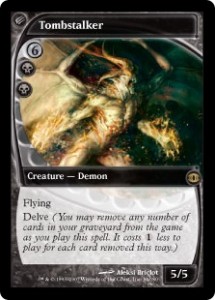
    While it’s great to look through your binder and see cool things like Survival of the Fittest and Tombstalker, they really won’t do anything for you in trading if the players in your area don’t care about Legacy. This is the case in my city, and cards like these don’t move often, if at all. This principle also applies to Extended; so if this is the case in your store, make sure to move these cards online rather than keeping them in your binder.

    To collect

    With people out to collect, you encounter some of the same issues as the group above. They only want certain cards, and are plenty willing to trade away their excess stuff to get it. The problem is that they won’t trade anything they only have one (or four) of. This is especially frustrating since they are only likely to have one (or four) of a particular card, since that is their end goal.

    This is the case where you are most likely to encounter someone who doesn’t know card prices. As illustrated by the debate surrounding Peter Jahn’s article about for-profit traders, opinions on how to approach this situation vary greatly. As I’ve always advocated, I suggest being honest with nearly all traders you encounter (the exception is wannabe “sharks,” but that’s another topic). So when trading with these guys, you need to be aware of their goals and motivations for them.

    These guys are best to trade with right after a set releases and they’re in need of cards. You can easily find them at prerelease and release events, and they are easy to trade with. They are perfectly willing to trade down if they have extras, so take advantage of that fact without taking advantage of the person. Remember that emotional attachment to cards runs high with them, as does the desire to complete sets, so don’t try to push for trades they aren’t completely comfortable with.

    Knowing why your trading partner is trading is a huge step in maximizing profits, and the best way to accomplish this is by talking to them. Take the time to get to know the trader, and it will go a long way toward building a sustainable and profitable trading environment.

    Next week I’m planning on starting a three-week (mini) series of articles about creating, organizing, and pruning your trade binder, so I would love to hear any feedback or suggestions of things you’d like to see included. Just post them in the comment section, message me on Twitter, or e-mail me at chosler.stu@my.okcu.edu.

    Until then,

    Corbin Hosler

    @Chosler88 on Twitter

    Avatar photo

    Corbin Hosler

    Corbin Hosler is a journalist living in Norman, Oklahoma (also known as the hotbed of Magic). He started playing in Shadowmoor and chased the Pro Tour dream for a few years, culminating in a Star City Games Legacy Open finals appearance in 2011 before deciding to turn to trading and speculation full-time. He writes weekly at QuietSpeculation.com and biweekly for LegitMTG. He also cohosts Brainstorm Brewery, the only financial podcast on the net. He can best be reached @Chosler88 on Twitter.

    View More By Corbin Hosler

    Posted in Feature, FinanceTagged , , , 2 Comments on Why We Trade

    Have you joined the Quiet Speculation Discord?

    If you haven't, you're leaving value on the table! Join our community of experts, enthusiasts, entertainers, and educators and enjoy exclusive podcasts, questions asked and answered, trades, sales, and everything else Discord has to offer.

    Want to create content with Quiet Speculation?

    All you need to succeed is a passion for Magic: The Gathering, and the ability to write coherently. Share your knowledge of MTG and how you leverage it to win games, get value from your cards – or even turn a profit.

    Trading Vs Collecting

    Are you a Quiet Speculation member?

    If not, now is a perfect time to join up! Our powerful tools, breaking-news analysis, and exclusive Discord channel will make sure you stay up to date and ahead of the curve.

    Unfortunately I wasn't able to attend the SCG Open in Boston this last weekend. I had loaded up on Mimic Vats and Abyssal Persecutors hoping to make some last minute trades Friday night and Saturday morning since I expected a lot of people to jump on the GerryT bandwagon and play U/B Vat. From what friends told me there was a ton there although it didn't seem to place well. That isn't too surprising though as I've found it can be a difficult deck to play well and picking it up for a week before a major tournament probably isn't going to give you enough time to learn it.

    Anyway, I wanted to talk about the trades I made there but since I didn't go I want to spend some time talking about collecting versus trading for value. I didn't start trading because I wanted to make money; I did it because I wanted to get cards I needed to complete my collection. Even though I now do most of my trading for the profit of it I still make trades to finish my collection.

    There are two kinds of things I generally look for when I'm collecting. The first is that for whatever set I am collecting I want a playset of everything. Second I'm currently trying to complete a playset of promo cards. For both of these I have found that trading over the internet is the best way to acquire the cards I'm seeking.

    Some promo cards are easy to find. Recent FNM promos, textless player rewards cards and pre-release/release promos can usually be found in the binders of people at your local gaming store. On the other hand older promos, Vanguard and judge promos are generally more difficult. Without trading sites like MOTL or the trade forums on sites like mtgsalvation my only other hope would be to try and luck in to finding them at larger events or to pay cash for them on eBay or from dealers. In general I would prefer to spend as little cash as possible on my collection.

    Trying to collect a playset of a given set comes with its own unique challenges. Generally buying a box and doing some drafts is enough to get the commons and most of the uncommons. I've actually found that the most difficult cards to trade for can be the bulk rares.

    The reason for this is that many traders tend to overvalue cards like this and generally try to get at least a dollar for them. While it is often possible to get a couple of them as throw-ins this can be a slow process when trying to complete a set.
    In my experience the best way to trade for these cards has been trading down. Not everyone understands the generally accepted convention among traders of giving up more when trading up. They see twenty-five dollar rares as being equal to a $25 rare. Sometimes you can get them to understand where you are coming from, especially if you can get them to understand the difference in value when selling cards to a dealer. For example that $25 card may be sellable to a dealer for $15 but those bulk rares would only get you $2.50. This may not always work though and again this is where internet trading comes in.

    The traders you meet online are often more understanding when it comes to trading up/down and many of them will be delighted to trade up. Now I'm not recommending trading a $20+ mythic for a bunch of bulk rares unless the deal is amazing but the $5-10 rares are perfect for this. They are often easy to trade up for then use to trade down for more than what you traded away.

    If needed you can also purchase the cards you need from a dealer or eBay. I will usually do this to complete the last few cards of a set. When I need 30 cards it is easy to find people who have some of what I need but as my list shrinks so do the odds that I will be able to make a trade for them. Selling off a few cards to pay for the last cards can be a great way to save time.

    Generally being a collector means that you may take a 'loss' in some of your trades. While it may not be a loss in the strict sense, i.e. you didn't actually lose value, often it will mean trading down or making a trade that is not as favorable as you would normally like. The key is to minimize these losses by using a variety of methods to complete your collection.

    One final thing I want to mention is the idea that you shouldn't have any emotional investment in your cards. That is, the idea that you should look at cards as currency. Unfortunately for collectors this is often more difficult to do. We value our collections and completing a set is, for me at least, an accomplishment in its own right. Breaking up a collection is not something I like to do.

    There are cards in my collection that I wouldn't trade away but on the other hand some cards I'm willing to make deals for. Generally I let people know that the card is coming from my personal collection so I would expect some added value out of it because I will need to replace it later on. My fourth copies of Iona or Avenger of Zendikar, for example, are cards I could trade away because the chances of me actually needing all four copies are slim.

    It is ok to have some personal investment in your cards. I would urge you not to keep any of those cards in your trade binder. I'm sure we all know people who will hand you a binder where they are only willing to trade half of the cards in it. Asking, “Is this for trade?” gets annoying pretty fast when you have to do it for every card you want. If I hear that someone wants a card that I own and am willing to trade away and we can't work anything out with the cards from my trade binder I will sometimes let them know that I have a copy that might be for trade and see what we can work out.

    When I am in the process of completing a set I am much more likely to trade from it than if it is already completed. This is actually a bit irrational but I, and many other collectors I know, have less of a personal investment in sets that are yet to be completed. If you are a collector, the next time you hear that someone wants a card in your collection don't automatically dismiss it but try to see what you can get for it. In the end you will probably be able to get the card back easily and have some extra cards essentially for free.

    For those of you who are both collectors and traders I would love to hear from you. How do you go about acquiring the cards you need? Are there any interesting situations that have come up from being both a collector and someone who looks to trade for value?

    Endless Horizons – Market Influence

    Are you a Quiet Speculation member?

    If not, now is a perfect time to join up! Our powerful tools, breaking-news analysis, and exclusive Discord channel will make sure you stay up to date and ahead of the curve.

    I can’t wait for new tournament results. Every time I see results from a big event, it’s like the opening bell of the stock market going off in my head. I have to compare what I have in stock to what’s doing well, and what’s doing horribly. States this year was a good example of this. I predicted that Vengevine would lose its dominance, Fauna Shaman wouldn’t live up to expectations, and that Primeval Titan would surge since ramp decks only lost rampant growth, and was positioned post rotation to be the big contender out the gates. I had a few friends tell me I was wrong about my predictions, but it turns out people that were putting money on the vine and shaman lost out. Almost everyone here knows how to make money when a market is going up on a card.  This week we’re going to examine how to make money when the market goes down, which is much more difficult to master, but I’ll introduce the basic concepts here today.

    As a small aside here, I really don’t think Frost Titan is that good. In fact I think it sucks. Yes, I understand that it makes you pay more to target it, and that it can tap down one permanent per turn. That’s not nearly the impact that any of the other titans have. Frost titan is currently being played because its ability is half decent for shutting down all the other big mana creatures running around. The next evolution is for speedy decks such as GW aggro, RW aggro, and others along those lines to rise up to fight against them, providing more threats than the Frost Titan is able to deal with. At that point, many RUG Control players will switch to running Inferno Titan so they can mass burn creatures every swing. At that point Inferno Titan will be amazing, and the cycle will continue. Is Frost Titan good right now? Sure, it fills its role for the current metagame, but overall it won’t see the play that cards like Umezawa's Jitte or Tarmogoyf did because it’s too situational. Good card for now, but off them quickly while the price is still high after this weekends 5K.

    We all know to be on the lookout for sleeper or chase rares, to pick them up when its cheap, and sell them when their price hits a level were comfortable with for a profit. This is how you make money when the market goes up. As a savvy reader of Quietspeculation.com you already know this, and as a reader of my articles you know how to open up markets and develop them. Now how do you make money when a card loses value? Here's a basic introduction.

    Cardboard Short Selling – Have a feeling that a card is going to fall in price? Trade all of them off now at their maximum value, then in a couple of weeks or a month, trade to get them back at a much lower value. You net the profits in between, and you still can keep your card in the long run, or you can just take all the profit and not worry about the card coming back.

    I still think its bad, but if it makes me money...

    Trade other peoples stuff – If you have a good reputation, you can trade from other peoples stock for your own gain. I’ve done this a few times, basically writing them an IOU for the card, or sharing some of the profits. This got rid of a card from their stock that was going to lose value, gave me immediate gains, and assured them a return, usually more than the original card was worth. Use these two ideas in combination with each other for easy profits. This is much closer to the actual idea of short selling in the stock market.

    If you can use those two tactics together you will literally have access to every card in the shop, and if your reputation is on par, everyones trade binder is, within reasonable means, your trade binder as well. Just don't default on what you owe.

    Influencing a market is a tricky business. At one of my local shops, Goblins did well pre SOM. The Goblin deck won roughly 40% of the time, and it was gaining popularity. Outside of my shop the market for the cards in the deck was very limited, but within that shop Goblin Chieftain, Warren Instigator, and Goblin Guide were all worth at least 20% above going rate in trades. At the time Goblin Guide was already worth a decent amount because of the success of RDW. I traded many of all the above mentioned cards for healthy profits, kept the players happy, and helped steadily guide the market. I’ll go through the top two things  that dictate most markets, and what you can do to help influence it.

    Winning – Winning is obviously the most important factor in determining how much a card is valued at. If your shop follows coverage from large events such as 5K’s and Pro Tours then your market is already feeling the effects of outside influence. If you can pilot a deck with new tech in it, and win with it on a consistent basis, then the cards you’re using will rise in value within that shop. Consequently the cards that are used to stop you will also rise in value. If you can position an unused mythic to be the perfect counter to your strategy, you can usually reap a hefty profit by trading them off at a higher value.

    Availability- Every market follows the flow of supply and demand. Without these factors we wouldn’t have any kind of measurable economy, so if you want something to rise in price constrict its supply. Trade for every copy you can get, and then when the card shows up in deck lists, with a constricted supply you’ll be set up to make a hefty profit. Paying attention to the tips offered here on the site and from other notable people will give you the opportunity to start gathering cards before they go up in price. It took Frost Titan a couple of months, but it’s gone from a bulk mythic to a current staple. Gerry T said that it was one of the most underrated cards in the set just a few weeks after it came out.

    While no one thing is guaranteed to help you steer the market exactly where you want it to be, those are the top two things you pay attention to. If you do, profits will show up over time, and the better you get at using the methods and the more tricks you learn the easier it becomes to guide your market into a steady profit machine. Once you have the trade capitol you will be able to constrict and release the flow of staple cards as you see fit, at least enough to have more say in price controls.

    To finish this off, I want to point to a few decks from the 5K. In standard, RUG control took both first and second place, and the staple cards in that deck should see a small rise in value. The real attention was in Legacy, where Gerry Thompson took second with a deck based on abusing Survival of the Fittest and Necrotic Ooze. Its worth noting that Survival based decks made up half of the Top 8, and took first and second place. If you don't have them, I would wait until after the banned and restricted announcement in December before buying them, just in case. If Survival isn't banned though, expect to see its price rise very quickly over the next year. That’s all for this week, remember to keep those journals updated, they will help show just how much your time is worth for those couple of hours a week you spend in the cardboard market.

    Until next week,

    Stephen Moss

    MTGstephenmoss on twitter

    or feel free to e-mail me

    mtgstephenmoss@gmail.com

    Starting Off

    Are you a Quiet Speculation member?

    If not, now is a perfect time to join up! Our powerful tools, breaking-news analysis, and exclusive Discord channel will make sure you stay up to date and ahead of the curve.

    As a beginning trader you might be asking yourself some fundamental questions about how to proceed onto getting your starting collection up and running and be able to build the standard deck of your choosing. Last article I went over some of the basic things to keep in mind while trading, things such as building local relationships and breaking the emotional connection to the pieces of cardboard. Some questions you might be asking yourself are things such as: How do I approach someone for a trade? What numbers and values to use? What things should I first be looking for?

    The answer to each of these questions is very deep and each one can be written about in depth. Yet, as a starting trader, you only need to know the short answer to them in order to get your card stock flowing. That is a phrase you should latch onto, keep the card stock flowing, because, like water, anything that sits in your binder for too long becomes stagnant and stale. Most of the locals around here know my stock is constantly changing and keep coming back to check and see if I've picked up anything new in my travels. Keep that in mind when acquiring cards and pulling in new stock. Now, to answer the first question: How do I approach someone for a trade?

    The answer is not to run up to someone you've never seen and yell out “Got trades?” while shoving your binder into their face. It has been done to me and I know a few people who do it themselves. Yes, it may work every now and then and you will get the trades but you won't be developing skills as a trader or building any relationships with the local playerbase. The strategy I use the most is to sit down with the players at my local shop and just talk Magic with them, by doing this I establish that I'm not just interested in gaining cards but I actually enjoy the game. I'll play a game or two casually to see what kind of player they are, this is an important step: knowing who you are dealing with. This is one of the first things I try and nail when attempting to start a trade, who exactly I'm dealing with. By playing a game or two with them you are able to pick up more clearly what they are interested in, whether it be casual or competitive. If you shuffle up and they play a second turn Coiling Oracle you know that they are more than likely a casual player and generally not interested in Type 2 cards. This information will set up the rest of the trade and will steer it in certain directions.

    So during the games I'll try and strike up a conversation and see what kinds of cards this person might be interested in, maybe they like token decks or perhaps are one of those mono-black players who no matter what will never play another color and worship Nantuko Shade and Phyrexian Negator. Whatever the case may be you need to find out what the person's interests are. As an aside, you may be wondering why you even care and why you have to waste time getting to know this random. The point of it is to build a bridge and make a network connection, this person may not have that Underground Sea that you've been hoping to find but his friend might. On more than one occasion I've had someone flipping through my binder and see a card that he knew his friend would want, instead of trading me for it he had his friend come over and trade for it. It might not happen all the time but it is something to keep in mind. Now back to our casual player above, after a few games and some chit chat I may ask him if he's looking for any specific cards for his decks. Now sometimes you will just get a flat out “No.” That's the end of that, there isn't a whole lot you can do except say, “Ok,” and maybe play a game or two more. If you do get a few cards mentioned and you happen to have them stocked go ahead and mention politely that you have some of those and would be willing to trade them. At this point you've either started the trade or have gotten the lethal: “I don't trade.” If you have taken lethal don't act like a jerk and storm off just thank them for the games and turn to the next player.

    On to the next round, the actual trade and the answer to the question of “What values to use?” This is a tricky one, because you might have a specific price in mind for your cards and don't want to detour from that. The answer I'm going to tell you is try and stay away from valuing cards and throwing numbers out onto the table as much as possible. Numbers and dollar values scare people and will cost you more trades in the long run. Now if the person asks what something is worth, tell them. Don't lie or say you don't know, just straight up tell them a high and low and what you are willing to give them in trade value. Take a card like Noble Hierarch for example, currently it's price sits high at 15$ and low at 10$, if someone asked me what that card was worth I would tell them that it hovers between those two numbers and give them a trade value for it. What I recommend, however, is to ask them what they put their cards at first, ask them what they value Noble Hierarch at, if they say 20$ then keep that number in your head and start pulling cards out of their binder until you've reached their determined value of 20$, if it all adds up in your head then make the trade, if not, see if you can get a few dollar throw ins to make up the difference. By trading this way you are by no means determining a price for the cards or trying to shark people, you are merely trading cards on their terms.

    Last but not least, what exactly should you be looking for at the start. A lot of people have different suggestions, some say to break down money cards into smaller 3-4$ rares and then trade those back up but I say to find the staples of Magic, not just Type 2 staples but staples all across the board. The first thing I recommend going for are lands, you can't play Magic without lands and everybody wants them. I've traded playsets of fetchlands for Elspeth Tirel and Venser, the Sojourner, I've traded M11 dual lands and Worldwake Manlands for Revised Dual lands, granted I have a lot of them and can afford to trade out playsets the way I do but when trading random rares see if you can find the occasional land in their binder. Most people who have a 1-of or 2-of just sitting there won't mind getting rid of them because they figure if they don't have 4 there isn't a point in playing them. Eventually you will see that you have multiple playsets sitting in your trade box waiting. Lands are an investment and most people would rather trade for them then spend the 20-25$ cash on a playset of duals. Look at the top decks currently in standard and try and pick up the core cards of it, by keeping current with the new tech off of Twitter or any of the pro sites you can catch a trend just before it happens and turn a quick profit. EDH players require lots of artifact ramp and tutors for their decks, things like Sol Ring, Demonic Tutor, Damnation, Wrath of God are always good to have. Casual money cards should be acquired relatively cheap but are big money cards when it comes to trading because of their odd high price, things like Doubling Season, Bribery, Transmute Artifact. Study your prices and keep an eye on the hot new decks coming out and you should be able to gain momentum on your collection within a month or two.

    Risky Business

    Are you a Quiet Speculation member?

    If not, now is a perfect time to join up! Our powerful tools, breaking-news analysis, and exclusive Discord channel will make sure you stay up to date and ahead of the curve.


    Every week, I’ve been talking to you about how to get information, how to outsmart your competitors, and ultimately, how to profit. But I feel I’ve been remiss in not bringing up any of trading’s risks. Something happened this week to drive this issue home. In my last article, I talked about a collection I had bought online containing 2 Jace, 2 foil Jaces, 2 Force of Wills, and some other very expensive cards, at a price that was a steal. The seller agreed to ship the cards to me COD. Thankfully, a reader contacted me after reading last week’s article letting me know that he had bought a collection containing the exact same card, and the cards turned out to be fake. Here’s the email he sent me:

    I saw in your last article and it mentioned a collection with 2 Jaces, 2 foil Jaces, various duals etc.  I ended up buying that set of cards from the guy and it turns out they are fake (all the valuable ones at least).  I was wondering if you had been in contact with the poster and if you had any info on him.  I understand it is a longshot that I'll stand any chance of getting my money back, but any help/advice you can provide would be really helpful.  Thank you very much and I hope you are doing well.

    After looking around for some information, I found out that the same person had tried to sell the same batch of cards to two local stores, Galactic Force, and Pastimes. Now, to be fair, I don’t know for sure if it’s the same guy. His actions have been fairly suspicious though. Apparently the guy that sold the reader the cards told the same story about his brother moving out and needing to sell his old cards. But does that really make sense? Considering there was a foil Venser, the Sojourner in the collection, does that mean his brother moved out, and less than 2 weeks later he was selling the cards? Also, he said that his paypal account had been closed and asked to ship COD instead. I hadn’t thought about that at the time, but it would’ve left me unable to file a claim had I found out that the cards were fake. Even worse, had I received the cards and not discovered they were fake, I was planning to sell them to a friend who usually buys cards from me. I know it sounds corny, but if there are two things more important to me than money, they’re my reputation and my friends. All of this just points to the complete disaster this could have been if a concerned reader hadn’t let me know what was going on, for which I am extremely thankful.

    But there’s something more important here than a community service announcement. Whenever entering an investment, risk should be a major factor in your considerations. I want to cover two kinds of risk today: investment risk and material risk. I’ll explain in the respective sections what each kind of risk entails.

    Investment risk:

    This is the traditional risk that all traders face. Whenever you buy a card, you must be thinking “Can I sell this card? If I can’t make a profit, can I at least make my money back? What is the most I stand to lose?” investment risk is effectively the monetary loss you take by trading for or buying a card and then reselling it. When looking at how likely you will be able to be to resell a card, it’s important to consider the markets interested in a card. This is why cards currently in Standard that are only played in Eternal formats are worth significantly less than those that are Standard staples. Because the market for those eternal cards is smaller, they are worth less and are harder to sell. As an example of this, let’s look at my last Pack to Power Trade:

    My:

    1 Foil Eldrazi Temple

    1 Goblin Guide

    1 Necrotic Ooze

    1 Leonin Arbiter

    His:

    3 Iona, Shield of Emeria

    2 Inkwell Leviathan

    2 Valakut, the Molten Pinnacle

    Now this was a very poor trade for me, and I’m quite worried about where Pack to Power will be going after this. While I came out ahead monetarily, I traded away cards critical for several Standard archetypes, for some larger ticket ETERNAL items. Now, if I were able to find an Eternal player, I might be able to move these Ionas, but given the amount of money Eternal players invest in their decks, it’s unlikely they wont already have more than enough Ionas to go around. As such, it will be extremely difficult for me to trade these off, so I’ll need to examine new avenues for how to trade myself out of this hole. My trading for Ionas here is a prime example of not paying attention to Investment risk, as I will now most likely lose money on them.

    Material risk:

    This one’s more related to my introduction. Material risk is the risk you incur from trading or dealing with those less scrupulous. Whether it’s someone making fake cards, coloring in the borders of Revised cards to make them more valuable (easy to catch, but only if you’re paying attention), stealing bags from under tables, or even just slipping cards your binder into their pocket while they’re browsing it, you stand to lose quite a lot of money if you aren’t careful. While you could of course say to only trade with people you trust, there’s no reason to limit yourself like that. Instead, just be vigilant. From now on, my general rule is going to be “If it sounds too good to be true, it probably is.” In the earlier situation, I let my discovery blind me. I was so excited to be making this find, on my very first search of craigslist, that I disregarded warning signs, and it almost cost me dearly. Needless to say, the chances of me paying for the package once it arrives are very low.

    With all that said, I want to create a new project. If you’ve ever been the victim of a Magic scam, whether the cards were never sent, or they were fake, or anything else like that, just post your story in the comment or email it to me (my email is at the bottom of the article). I’ll examine some of the stories and look for common themes to find some more specific ways for you to protect yourself.

    No cards that seem to be shooting up overly much this week. I would recommend selling off Frost Titans now, as I feel both Grave Titan and Abyssal Persecutor are better options for U/B Control, and I don’t know if RUG Control is heavily played enough to sustain the current $15 price tag. I’ve recently started playing some Pauper online, which is quite a breath of fresh air from the current Standard format, which I’m already finding slightly boring. For the record, U/R Tron is amazing and so much fun to play. There is northing better than literally just doming your opponent for 20 with a rolling Thunder, or the Tron mirror, where both players have 20-30 mana by turn 8. I managed to top 16 the Pauper PE this past weekend after some topdecks from both me and my opponents, but given that it was my first tournament with the deck, I was fairly happy with the result.

    Well, that’s all for this week, hope you enjoyed it. Once again, don’t forget to submit your scam stories to me, for the benefit of the trading community as a whole!

    --Noah Whinston

    mtgplayer@sbcglobal.net

    nwhinston on twitter

    baldr7mtgstore on ebay

    Posted in Feature, Finance5 Comments on Risky Business

    Have you joined the Quiet Speculation Discord?

    If you haven't, you're leaving value on the table! Join our community of experts, enthusiasts, entertainers, and educators and enjoy exclusive podcasts, questions asked and answered, trades, sales, and everything else Discord has to offer.

    Want to create content with Quiet Speculation?

    All you need to succeed is a passion for Magic: The Gathering, and the ability to write coherently. Share your knowledge of MTG and how you leverage it to win games, get value from your cards – or even turn a profit.

    Want Prices?

    Browse thousands of prices with the first and most comprehensive MTG Finance tool around.


    Trader Tools lists both buylist and retail prices for every MTG card, going back a decade.

    Quiet Speculation