menu

Did March of the Machine Forget About Commander?

Are you a Quiet Speculation member?

If not, now is a perfect time to join up! Our powerful tools, breaking-news analysis, and exclusive Discord channel will make sure you stay up to date and ahead of the curve.

With March of the Machine spoiled and ready to be released, there are as always new cards that have the potential to ruffle feathers. On top of some interesting legendary cards, there's also the brand-new battle card type. But despite all that, MOM may not be the set Commander die-hards needed or wanted.

Team-Ups... But Not Really

When they first spoiled the "team up" concept, I thought of the cards above. Obviously, meld is a unique mechanic, but since it had just re-appeared in The Brothers' War I thought it could easily make an appearance here. I was wrong.

The new "team up" cards feature huge walls of text, an unbelievable amount of abilities slapped onto every card (unless you're Yargle and Multani), and a surprisingly small amount of commas. Overall, I'm broadly happy with the choices here. A lot of the pairings will create some waves in Commander because of mixed creature type potential like Ghalta and Mavren or Kogla and Yidaro. Look for a lot of cards with synergy to spike, at least temporarily. This set is full of cards that interact with existing cards like Sorin, Imperious Bloodlord which get a boost. However, most of these plays are only short-term moves.

Of course, the execution's not perfect. Baral and Kari Zev has creature type Human; no other types. Uh, why are they not a Human Pirate Wizard? This would be much cooler, have tons of great interaction historically, and not have any impact on type-specific decks in Standard. As-is, they generate a token that has more creature types than they do. This odd design "decision" knocks down the concept just a bit for me. Furthermore, it seemed like an interesting idea to make sure all the pairings had three types but not all do. While Drana and Linvala can make sense and work with two very popular types, some of the other cards feel like they are just missing creature types.

Battles are Boring

Let's take a look at Matt Tabak's write-up on the battle mechanic for March of the Machine.

"A battle's subtype provides rules for how it can be attacked. Since every battle in this set has the subtype Siege, they all play by the same rules. (Could future battles have different subtypes and have different combat rules? It would certainly seem some bright, forward-thinking people set the system up that way.) As a Siege battle enters the battlefield, its controller chooses an opponent to be its protector. Every player except a battle's protector may attack it. Only a battle's protector may block creatures attacking it. Don't confuse protector for controller. You're going to attack battles that you control, the first time you've been able to attack your own permanents. Fun!"

Wow, uh, just wow. No Matt, this is not fun. What are most battles in March of the Machine? They are essentially existing spells that turn into a 4/4. For example, look at Invasion of Muraganda // Primordial Plasm. Gee, an over-costed fight card that turns into a 4/4. What about Invasion of Zendikar // Awakened Skyclave? An over-costed Cultivate that turns into a 4/4. Most of the Sieges follow this formula, and this is not very compelling or interesting design space. Telling us "We're working on something better" is a little insulting, to be honest.

When I initially saw the mechanic, I misread it. However, I misread it because I did not think it would be as reductive, simple, and bad as it was. I did not think that Magic card design in 2023 had devolved.

Battles by Beardy

Anybody can look at something and say, "I don't like it." Well, okay, what would you have done? Thanks for asking!

Here's how to make battles both a multiplayer triumph and more interesting in one-on-one play. You cast the battle and give it to another player. Each turn it remains on the battlefield, everyone but the protector gets a benefit. If the battle is defeated, the owner gets a huge benefit; however, if the battle is defended long enough, the protector gets that huge benefit instead.

Now, each turn, your opponent would have to balance whether they want to defend the battle, but continue to give you and the rest of the table a small benefit, versus letting you destroy the battle right away for a large but one-time effect. Actual decisions would be made. And if they happened to be able to defend the battle long enough, they would instead get that huge benefit.

A Quick Tangent

"Why should my cards help my opponent?" I can almost hear you say. Well, because Magic?

Reducing interaction makes a game simpler. Simpler games tend to be more boring. More and more, Magic has chosen to do this on many levels, and it's not great for the game.

I understand capturing a larger audience and trying not to scare people away with complex mechanics. However, according to Hasbro, one-third of Magic players are ten-plus-year veterans while another one-third are three-plus-year veterans. If the vast majority are not scared of complexity and appreciate interaction, why keep dumbing down the game? Why remove the defining characteristic of Slivers? Jeers to one of the two heads in charge of Magic design. Battle - Siege is a boring mechanic, and Magic players are not turned off by slight complexity.

The Multiplayer Angle

If only Wizards had developed this mechanic a little more, everyone would be a lot happier, especially in multi-player. The entire table would be invested in whether or not a battle should be defended or defeated, and also when! Wow, think about the incredible amount of interaction possible. Think about the diplomacy! Think about the format that 70% of your players play regularly. We can think about all that, or, we can reskin an existing card, make it cost a little more mana and then, sometimes, it turns into a 4/4. The least they could have done was put a boat somewhere on Invasion of Segovia // Caetus, Sea Tyrant of Segovia!

Alright, but, according to Matt Wizards has laid the foundation with these cards because they are "battle - Siege" and they will create new battle cards, maybe something like "battle - Skirmish", with rules that are actually fun. As-is, not only are the battles just not very interesting, but they are actively bad for multiplayer. How? Think about it. I play my bad Cultivate which sort of already puts me behind. Now I hope that the table gives me my free 4/4. But why would the table give me my free 4/4?

I'm effectively giving one player extra life points while the other players are getting nothing, so that is more like an alliance mechanic than a diplomacy one. If alliances aren't frowned upon in Commander, then why is Trade Secrets banned? Furthermore, this is for the majority of battle cards where you just get a 4/4. A couple of the effects are powerful enough to where the entire table should work to stop you.

The template for battle cards suggested above resolves all of these issues, instantly.

So Many Double-Faced Cards

Do players love DFCs? I guess so, because for a set with no Werewolves or Optimus Prime, Hero, there's a whole heck of a lot of transforming going on. The nice part about all the DFCs, however, is how many additional new commanders are possible, and how most of these are also throwbacks to other cards. Check out Polukranos Reborn // Polukranos, Engine of Ruin, which turns into a literal Wurmcoil Engine engine, or how Etali, Primal Conqueror // Etali, Primal Sickness goes from Dinosaur to Blightsteel Colossus. These are interesting enough to consider for several potential deck ideas on their own while also being perfectly capable additions for existing deck archetypes. The set is full of throwback ideas like this but the execution is only so-so. There's enough here to like, but not to love.

Underhyped or Overhyped?

Finally, the Dimir sword appears! They did a good job with Sword of Once and Future. Surveil sets up your free spell in any situation and gives you good value.

However, this sword does not seem to have as much raw game-winning power as some of the more popular ones. According to EDHrec, the top 100 equipment lists Sword of Hearth and Home and Sword of Feast and Famine as the most popular swords, and for good reason. However, the next tier of Sword down includes Sword of Truth and Justice and Sword of Forge and Frontier, which I would say is very close to the power of Sword of Once and Future. This is a very medium-power Sword, but at least it's totally usable instead of either completely power crept or functionally useless.

Is Elspeth's Smite the new best removal card in, well, every format? Yes and no. It's a good white hybridization of Lightning Bolt and Swords to Plowshares, two cards that have withstood the test of time as the best removal spells of all time. However, the Smite is simply nowhere near as good as either of those cards because of history.

Both the top 100 all cards and top 100 instants have some situational removal in terms of types or even colors but none of them are situational based on combat. There are piles of white removal spells that do something to an attacking or blocking creature, and none of them have ever been as dominant as other, better options. Unfortunately, while I would love to hype up Elspeth's Smite, I think it will be relatively underwhelming. Still, it's a nice attempt at making a good white removal spell that is not Swords to Plowshares.

Faerie Mastermind deserves all the hype and even more. Blue is obviously the undisputed master of card draw, and they've added another trick to their arsenal for only two mana. As just a 2/1 with flying, the Faerie really is no threat to anyone, and also can bribe people with a four-mana activated ability that effectively draws you two cards. I really do see this card as another copy of cards like Rhystic Study, Mystic Remora, and Esper Sentinel, and I expect it to go into tons of Commander decks.

Good, Bad, or, Other?

I'm solidly in the "other" category regarding March of the Machine. There are some decent ideas and moves that make sense. However, there are just as many things in the set that make me think, "Are they even trying?"

Drafting potential looks good, along with a lot of new Commanders. But mechanics-wise, it's very light. The backup keyword is very ho-hum. While there are a lot of throwbacks, references, and somewhat older keywords, there isn't a whole lot to the set. I guess we'll just have to wait and see which of the heads makes March of the Machine: The Aftermath.

What do you think? Is March of the Machine actually the best Magic set this year and I'm just missing the hype train? Are battles actually sick? Let me know in the comments.

March ’23 Metagame Update: Overwhelming Outliers

Are you a Quiet Speculation member?

If not, now is a perfect time to join up! Our powerful tools, breaking-news analysis, and exclusive Discord channel will make sure you stay up to date and ahead of the curve.

The first full week of the month is synonymous with the Modern Metagame Update. Or it should be by now, anyway. This is the third year I've been at this without missing an update, and I'd like to think readers are looking forward to it. But sadly for those who did, this is the worst looking metagame I've reported on since companions were errata'd.

About the Title...

Gonna cut to the chase here. The top five, yes five, decks on Magic Online (MTGO) are all statistical outliers. It's actually worse in paper (for once), where the top six decks are outliers. Meaning, they lie far enough outside the trend of the rest of the data that they're not really considered part of the data set. They're deviant. The seventh-ranked paper deck was in the grey, where some tests put it as an outlier, and some don't. Burn was therefore left in the paper analysis, but the outlier decks were removed from the calculations per my long-standing policy.

There was an error retrieving a chart for Goblin Guide

Without this policy, MTGO would have no Tier 2. There's a huge gap between the outliers and the next best deck, and that coupled with the enormous Standard Deviation meant that there would be a wide Tier 3 and then the outliers in Tier 1.

With so many culprits, it feels like it distorts the data more than removing the outliers. Paper's population tier would have had one deck (Living End) in Tier 2, while Burn fell to Tier 2 based on power. I've had tiny Tier 2s before, but it's never been non-existent. The fact that it could have been says a great deal about the data that you're about to scroll into.

March Population Metagame

To make the tier list, a given deck has to beat the overall average population for the month. The average is my estimate for how many results a given deck "should” produce in a given month. Being a tiered deck requires being better than “good enough.” Every deck that posts at least the average number of results is "good enough" and makes the tier list.

There was an error retrieving a chart for Murktide Regent

Then we go one standard deviation (STdev) above average to set the limit of Tier 3 and the cutoff for Tier 2. This mathematically defines Tier 3 as those decks clustered near the average. Tier 2 goes from the cutoff to the next standard deviation. These are decks that perform well above average. Tier 1 consists of those decks at least two standard deviations above the mean result, encompassing the truly exceptional performing decks. 

The MTGO data nearly exclusively comes from official Preliminary and Challenge results. Leagues are excluded, as they're a curated list and thus invalid. The paper data comes from any source I can find, with all reported events being counted.

The MTGO Population Data

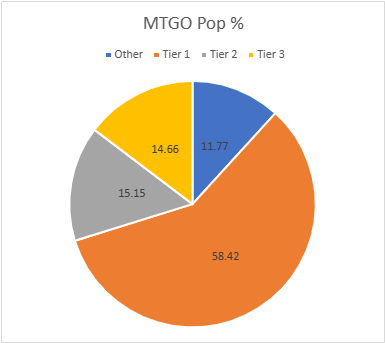
In March, the adjusted average population for MTGO was 6.48, setting the Tier 3 cutoff at eight decks. Tier 3, therefore, begins with decks posting seven results. The adjusted STdev was 7.73, which means that Tier 3 runs to 15 results. Again, it's the starting point to the cutoff, then the next whole number for the next Tier. Therefore Tier 2 starts with 16 results and runs to 24. Subsequently, to make Tier 1, 25 decks are required. These numbers are all very low compared to most months, but are understandable given the five outliers. They also make sense given the spread of the non-outlier data.

There was an error retrieving a chart for Living End

March has set a new record for largest combined data. There were more large Preliminaries and more Challenge level events than normal, fueling the increase. January 2023 had 840 decks, February had 876, and March blows them away with 1,003 decks. I spent 2022 analyzing fewer decks between paper and MTGO combined, making this the most accurate picture of the Modern metagame ever.

There was an error retrieving a chart for Crashing Footfalls

That said, the high population didn't translate to more unique decks. That's unsurprising given the outliers. January had 74 unique decks, February had 84, and March only managed 88. That's far below expectations given how high of an increase the population was. Of those 88 decks, 25 made the population tier. Which is up from February's 25 decks, but that was thanks to the outlier adjustment, not the decks performing better.

Deck NameTotal #Total %
Tier 1
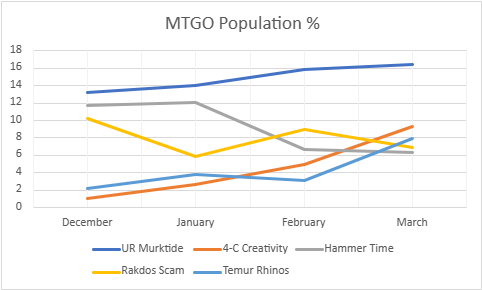
UR Murktide16516.45
4-Color Creativity939.27
Temur Rhinos807.98
Rakdos Scam696.88
Hammer Time646.38
Burn363.59
Amulet Titan282.79
Izzet Value Breach262.59
Living End252.49
Tier 2
Jund Saga232.29
Counter Cat201.99
4-Color Elementals191.89
Temur Creativity191.89
Yawgmoth191.89
UW Control181.79
Jund Creativity181.79
Izzet Prowess161.59
Tier 3
Jeskai Value Breach151.50
Mill141.40
Mono-Green Tron141.40
Hardened Scales111.10
Dredge111.10
Affinity111.10
Mono-Red Moon11 1.10
5-Color Creativity111.10
4-Color Control101.00
Merfolk90.90
Humans80.80
4-Color Rhinos80.80
Eldrazi Tron70.70
Mono-Blue Tron70.70
...This is not healthy.

The five outliers were outliers by quite a wide margin. The unadjusted STDev was 23.59, so the 28-deck gap between Hammer Time and Burn was enough to qualify as an outlier. This is reinforced by the nice trend line of all the nonoutlier decks.

While I can't explain why this happened, I do know how. The top five decks were the primary (sometimes almost only) decks to show up in Challenges. While there were a good mix of decks in Preliminaries, with only Murktide showing up in high numbers, everything outside the top five had to squeeze through the proverbial cracks to make it in the Challenges. I can't say if this was a quirk, MTGO chasing its own tail, or a portent of things to come. We'll get closer to knowing come the April data.

The Paper Population Data

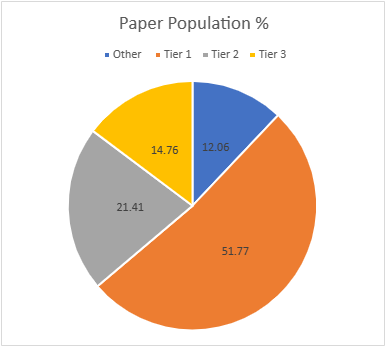
The paper tiers are calculated the same way as the MTGO tiers, just with different data. In most months there are far more reported paper events than online, but paper also tends to report fewer results per event. It's quite annoying, but paper events rarely report more than the Top 8, and far too often for my purposes, the Top 4. This makes the paper data far more variable than MTGO. January saw 667 decks, February is up to 807, and March hit 962. As previously mentioned, this is the largest combined data set I've worked with thanks to a lot more (and larger) events.

There was an error retrieving a chart for Stoneforge Mystic

The big sample size is somewhat indebted to my decision this year to include more results when able. Paper events often report the actual records alongside decklists. Not always, but often. Thus, I've decided to slightly alter how I take decks when win rates are available. For smaller events, the sometimes means I don't include the full Top 8. For larger events, I'm taking the Top 32 and all the decks with the same record as 32nd place. Tiebreakers are a strange and mysterious alchemy, after all, and may benefit or screw players on a dime.

Again, significantly more decks recorded didn't yield a more diverse dataset. Diversity actually fell. January had 101, February was 108, but March only managed 103. 34 decks made the tier list, which seems high but again is thanks to six outliers. The adjusted average population was 5.84, so six decks make Tier 3. The adjusted STDev was 7.84, so the increment is 8. Therefore, Tier 3 runs from 6 to 14, Tier 2 is 15 to 23, and Tier 1 is 24 and over.

Deck NameTotal #Total %
Tier 1
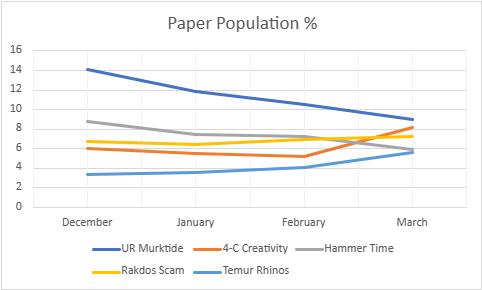
UR Murktide879.04
4-Color Creativity798.21
Rakdos Scam707.28
Hammer Time575.92
Temur Rhinos545.61
Amulet Titan525.40
Burn464.78
Living End282.91
Merfolk252.60
Tier 2
4-Color Elementals232.39
Yawgmoth232.39
UW Control212.18
Jund Creativity202.08
Izzet Prowess191.98
4-Color Rhinos181.87
Mono-Green Tron181.87
Jeskai Combo Breach171.77
4-Color Blink171.77
Jund Saga151.56
Counter Cat151.56
Tier 3
Mill141.45
Grixis Death's Shadow131.35
Hardened Scales131.35
Mono-Red Moon131.35
Jeskai Value Breach111.14
Bring to Light101.04
4-Color Control101.04
Affinity101.04
Death and Taxes90.94
Goryo's Kitchen70.73
Dredge70.73
Domain Zoo70.73
Eldrazi Tron60.62
Mono-Red Artifacts60.62
Humans60.62
An improvement, but still dangerously top-heavy.

While the Top 5 decks are the same between MTGO and paper, here they're joined by Amulet Titan. I'm chalking that up to Amulet being weirdly popular on the US east coast, as it shows up in very high numbers in Star City Games events. It doesn't tend to win said events, it just shows up a lot. The reasons for the outliers are the same in paper as online, as the big events were dominated by the Top 5 to the relative exclusion of other decks.

March Power Metagame

Tracking the metagame in terms of population is standard practice. But how do results actually factor in? Better decks should also have better results. In an effort to measure this, I use a power ranking system in addition to the prevalence list. By doing so, I measure the relative strengths of each deck within the metagame.

The population method gives a deck that consistently just squeaks into the Top 32 the same weight as one that Top 8's. Using a power ranking rewards good results and moves the winningest decks to the top of the pile and better reflects their metagame potential. 

The MTGO Power Tiers

For the MTGO data, points are awarded based on the population of the event. Preliminaries award points based on record (1 for 3 wins, 2 for 4 wins, 3 for 5), and Challenges are scored 3 points for the Top 8, 2 for Top 16, and 1 for Top 32. If I can find them, non-Wizards events will be awarded points the same as Challenges or Preliminaries depending on what the event in question reports/behaves like. Super Qualifiers and similar higher-level events get an extra point and so do other events if they’re over 200 players, with a fifth point for going over 400 players. There were a few 4-point events and no 5-pointer in February.

There was an error retrieving a chart for Indomitable Creativity

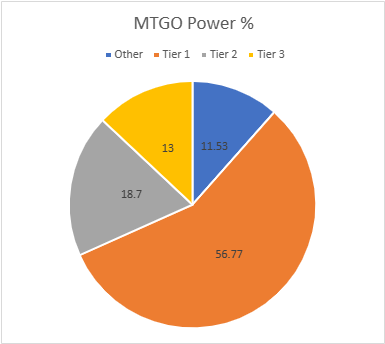
Total points rose just like the population, from 1412 to 1631. The adjusted average points were 10.37, therefore 11 points made Tier 3. The adjusted STDev was 12.39. Thus add 13 to the starting point and Tier 3 runs to 24 points. Tier 2 starts with 25 points and runs to 38. Tier 1 requires at least 39 points.

Eldrazi Tron fell off the power tier from population. It was replaced by Grixis Shadow.

Deck NameTotal #Total %
Tier 1
UR Murktide27216.68
4-Color Creativity1599.75
Temur Rhinos1318.03
Rakdos Scam1136.93
Hammer Time1066.50
Burn603.68
Izzet Value Breach432.64
Amulet Titan422.57
Tier 2
Jund Saga382.33
Yawgmoth352.15
Counter Cat342.08
Living End332.02
4-Color Elementals311.90
Temur Creativity311.90
UW Control271.65
Mono-Green Tron261.59
Jund Creativity251.53
Izzet Prowess251.53
Tier 3
Jeskai Value Breach241.47
Merfolk191.16
Mill181.10
Mono-Red Moon181.10
Affinity171.04
4-Color Rhinos171.04
Hardened Scales160.98
Dredge160.98
5-Color Creativity150.92
Mono-Blue Tron150.92
Humans140.86
4-Color Control120.74
Grixis Death's Shadow110.67
Most concerning is the tiny Other category.

The same trend in the population is apparent in the power tier. Non-Tier 1 decks are really struggling to compete.

The Paper Power Tiers

Due to paper reporting being inconsistent compared to MTGO, I have to adapt how the points work. Applying the MTGO point system just doesn't work when I don't know how many points to award and there are data gaps. Thus, I award points based on the size of the tournament rather than placement. That way I'm being internally consistent with the paper results.

There was an error retrieving a chart for Grief

For events with no reported starting population and those up to 32 players, one point is awarded. Events with 33 players up to 128 players gets two points. From 129 players up to 512 players gets three. Above 512 is four points and five points will be reserved for Modern Pro Tours if they ever happen.

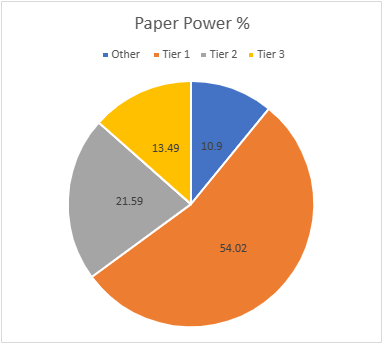
March saw the first paper event to qualify for four points, which dramatically raised the point total. January saw 1178 points, February hit 1316, and March has 1890, more points than MTGO. The adjusted average points were 10.95. This sets the cutoff at 11 decks. The STDev was 15.39, thus adding 16 to the starting point and Tier 3 runs to 27 points. Tier 2 starts with 28 points and runs to 44. Tier 1 requires at least 45 points. The total decks rose from 34 to 33 as Domain Zoo couldn't scrape together enough points to remain.

Deck NameTotal PointsTotal %
Tier 1
4-Color Creativity1769.31
UR Murktide1749.21
Rakdos Scam1427.51
Hammer Time1216.40
Temur Rhinos1156.08
Amulet Titan1045.50
Burn894.71
Living End552.91
4-Color Elementals452.38
Tier 2
UW Control442.33
Yawgmoth432.27
4-Color Rhinos402.12
Merfolk392.06
Jeskai Combo Breach392.06
Izzet Prowess361.90
4-Color Blink361.90
Jund Creativity351.85
Mono-Green Tron341.80
Jund Saga331.75
Counter Cat291.53
Tier 3
Jeskai Value Breach261.38
Mill251.32
Grixis Death's Shadow251.32
Hardened Scales251.32
Mono-Red Moon211.11
Bring to Light211.11
4-Color Control201.06
Eldrazi Tron160.85
Affinity150.79
Death and Taxes130.69
Goryo's Kitchen120.63
Dredge120.63
Mono-Red Artifacts120.63
Humans120.63
Such a tiny Other means decks are being crowded out.

In an unusual twist, 4-Color Creativity actually beat out Murktide for the top slot on power. This isn't surprising given that Murktide's overall win rate is about 50% against everything. It's a very hard deck to pilot well with a high skill ceiling, but also a high floor. Creativity actually gets free wins, so it has always performed better. Given that there's not a huge difference in population this month, it was natural for Creativity to just pip Murktide for the top slot, though statistically they're tied.

Average Power Rankings

Finally, we come to the average power rankings. These are found by taking the total points earned and dividing them by total decks, to measure points per deck. I use this to measure strength vs. popularity. Measuring deck strength is hard. There is no Wins-Above-Replacement metric for Magic, and I'm not certain that one could be credibly devised. The game is too complex, and even then, power is very contextual.

Using the power rankings certainly helps and serves to show how justified a deck’s popularity is. However, more popular decks will still necessarily earn a lot of points. Which tracks, but also means that the top tier doesn't move much between population and power, and obscures whether they really earned their position. 

There was an error retrieving a chart for Yawgmoth, Thran Physician

This is where the averaging comes in. Decks that earn a lot of points because they get a lot of results will do worse than decks that win more events, indicating which deck actually performs better. A higher average indicates lots of high finishes, whereas low averages result from mediocre performances and a high population. Lower-tier decks typically do very well here, likely due to their pilots being enthusiasts. Bear this in mind, and be careful about reading too much into these results. However, as a general rule, decks which place above the baseline average are overperforming and vice versa.

How far above or below that average determines how "justified" a deck's position is on the power tiers. Decks well above baseline are therefore undervalued while decks well below baseline are very popular but aren't necessarily good. 

The Real Story

When considering the average points, the key is looking at how far-off a deck is from the Baseline stat (the overall average of points/population). The closer a deck’s performance to the Baseline, the more likely it is to be performing close to its “true” potential. A deck that is exactly average would therefore perform exactly as well as expected. The greater the deviation from the average, the more a deck under or over-performs. On the low end, a deck’s placing was mainly due to population rather than power, which suggests it’s overrated. A high-scoring deck is the opposite of this. 

I'll begin with the averages for MTGO

Deck NameAverage PowerPower Tier
Mono-Blue Tron2.143
4-Color Rhinos2.133
Merfolk2.113
Mono-Green Tron1.862
Yawgmoth1.842
Grixis Death's Shadow1.833
Humans1.753
4-Color Creativity1.711
Counter Cat1.702
Burn1.671
Hammer Time1.661
UR Murktide1.651
Izzet Value Breach1.651
Jund Saga1.652
Temur Rhinos1.641
Rakdos Scam1.641
Mono-Red Moon1.643
4-Color Elementals1.632
Baseline1.63
Temur Creativity1.632
Jeskai Value Breach1.603
Izzet Prowess1.562
Affinity1.543
Amulet Titan1.501
UW Control1.502
Hardened Scales1.453
Dredge1.453
Jund Creativity1.392
5-Color Creativity1.363
Living End1.322
Mill1.293
4-Color Control1.203

Congratulations to 4-Color Creativity. As the top performing Tier 1 deck, you're MTGO's Deck of the Month for March.

Now the paper averages:

Deck NameAverage PointsPower Tier
Eldrazi Tron2.673
Jeskai Value Breach2.363
Jeskai Combo Breach2.292
4-Color Creativity2.231
4-Color Rhinos2.222
Jund Saga2.202
Temur Rhinos2.131
Hammer Time2.121
4-Color Blink2.122
Bring to Light2.103
UW Control2.092
Rakdos Scam2.031
UR Murktide2.001
Amulet Titan2.001
4-Color Control2.003
Mono-Red Artifacts2.003
Humans2.003
Living End1.961
4-Color Elementals1.961
Burn1.931
Counter Cat1.932
Grixis Death's Shadow1.923
Hardened Scales1.923
Izzet Prowess1.892
Mono-Green Tron1.892
Yawgmoth1.872
Mill1.793
Jund Creativity1.752
Baseline1.74
Goryo's Kitchen1.713
Dredge1.713
Mono-Red Moon1.613
Merfolk1.562
Affinity1.503
Death and Taxes1.443

Congratulations to 4-Color Creativity. As the top performing Tier 1 deck, you're paper's Deck of the Month for March, too. I think this is the first time this the same deck has been Deck of the Month in both categories since I started doing the averages.

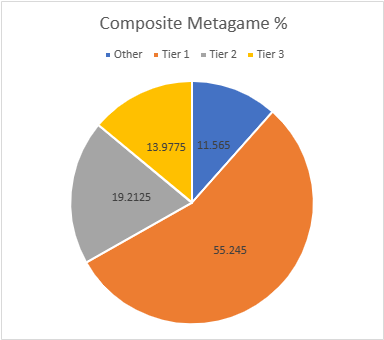
Composite Metagame

That's a lot of data, but what does it all mean? When Modern Nexus was first started, we had a statistical method to combine the MTGO and paper data, but the math of that system doesn't work without big paper events. I tried. Instead, I'm using an averaging system to combine the data. I take the MTGO results and average the tier, then separately average the paper results, then average the paper and MTGO results together for final tier placement.

There was an error retrieving a chart for Amulet of Vigor

This generates a lot of partial Tiers. That's not a bug, but a feature. The nuance separates the solidly Tiered decks from the more flexible ones and shows the true relative power differences between the decks. Every deck in the paper and MTGO results is on the table, and when they don't appear in a given category, they're marked N/A. This is treated as a 4 for averaging purposes.

Deck NameMTGO Pop TierMTGO Power TierMTGO Average TierPaper Pop TierPaper Power TierPaper Average TierComposite Tier
UR Murktide1111111.00
4-Color Creativity1111111.00
Hammer Time1111111.00
Temur Rhinos1111111.00
Rakdos Scam1111111.00
Burn1111111.00
Amulet Titan1111111.00
Living End121.51111.25
4-Color Elementals222211.51.75
Yawgmoth2222222.00
Counter Cat2222222.00
Jund Saga2222222.00
Izzet Prowess2222222.00
UW Control2222222.00
Jund Creativity2222222.00
4-Color Rhinos3332222.00
Mono-Green Tron322.52222.25
Merfolk333121.52.25
Izzet Value Breach111N/AN/AN/A2.50
Temur Creativity222N/AN/AN/A3.00
Humans3333333.00
Mono-Red Moon3333333.00
Jeskai Value Breach3333333.00
Affinity3333333.00
Hardened Scales3333333.00
Dredge3333333.00
Mill3333333.00
4-Color Control3333333.00
Jeskai Combo BreachN/AN/AN/A2223.00
4-Color BlinkN/AN/AN/A2223.00
Grixis Death's ShadowN/A33.53333.25
Eldrazi Tron3N/A3.53333.25
Mono-Blue Tron333N/AN/AN/A3.50
5-Color Creativity333N/AN/AN/A3.50
Bring to LightN/AN/AN/A3333.50
Death and TaxesN/AN/AN/A3333.50
Goryo's KitchenN/AN/AN/A3333.50
Mono-Red ArtifactsN/AN/AN/A3333.50
Domain ZooN/AN/AN/A3N/A3.53.75
This metagame is very unbalanced, and is deeply concerning.

Normally, there are a lot more decks in the partial tiers rather than the full ones, indicating movement and churn in the metagame. The fact that this didn't happen in March indicates stability and possibly stagnation.

Locked In

It is looking increasingly likely that Modern has been locked into a stable equilibrium around Murktide and company. It is going to take either direct action by Wizards or some very powerful cards from March of the Machine to disrupt that stability. I don't like either implication.

As always, this first-of-the-month article merely presents the collected data, offering little in the way of analysis, metagame implications, and financial opportunities. Join me on Friday when I dig into these results and discuss exactly what has my hackles up. These pieces are normally available to Insiders first, but this week's piece is free for all readers. If you like what you read, and you're not an Insider, consider subscribing today!

Adam Plays Magic: Spellslinging in SIR Draft

Are you a Quiet Speculation member?

If not, now is a perfect time to join up! Our powerful tools, breaking-news analysis, and exclusive Discord channel will make sure you stay up to date and ahead of the curve.

This week on Adam Plays Magic, we're hopping into a Shadows Over Innistrad Remastered draft. This Arena-only format takes the best cards of Shadows Over Innistrad and Eldritch Moon and spices it up further with a "bonus sheet" comprised of original Innistrad block favorites. That means Emrakul, the Promised End and Tamiyo, Field Researcher may be able to share a battlefield with Snapcaster Mage, Falkenrath Aristocrat, and the like.

To keep the format fresh, that bonus sheet rotates weekly, prioritizing and de-prioritizing different archetypes. For example, week one had a stronger focus on tribal synergies with cards like Drogskull Captain whereas week two has a greater emphasis on flashback spells like Spider Spawning. These changes meaningfully affect how the format plays out and make it an absolute blast to replay. Check out the full bonus sheet schedule here.

What I Played

One of the stronger archetypes of this format is a personal favorite of mine, UR Spells. Believe it or not, this Limited archetype directly translated into a top-tier Standard deck in its time, mainly thanks to Thermo-Alchemist. With so many cheap spells, this pinger represents upwards of two to three damage per turn, per copy. With three toughness, it does a great job of staving off early creatures and sponging up damage.

There was an error retrieving a chart for Mirrorwing Dragon

My draft started strong with a first-pick Mirrorwing Dragon. The ability isn't at its best in this deck as I'm missing combat tricks like Uncaged Fury, it's a large evasive threat and if the opponent uses a kill spell on it, they wipe their entire board along with it. Moreover, with five toughness, it dodges much of the removal in the set like Alchemist's Greeting. I passed up on a Cackling Counterpart which would've been an amazing combo with the dragon in favor of efficient removal. The disciplined choice was undoubtedly correct, but still, I wish I could've gotten a screenshot.

There was an error retrieving a chart for Rise from the Tides

What really makes UR Spells so strong is Rise from the Tides. Similar to Spider Spawning, all this card asks is that you make it to the late game and then it invalidates the rest of the board by flooding it with 2/2 zombie tokens. In fact, there are so many cheap and interactive spells, UR is incentivized to play as few creatures as possible since the ones you have will give a target to the otherwise dead removal spells in the opponent's hand. Rise goes so wide that it invalidates the opponent's board anyway...and I had two copies along with graveyard recursion to really make sure that final nail was put into my opponents' coffins.

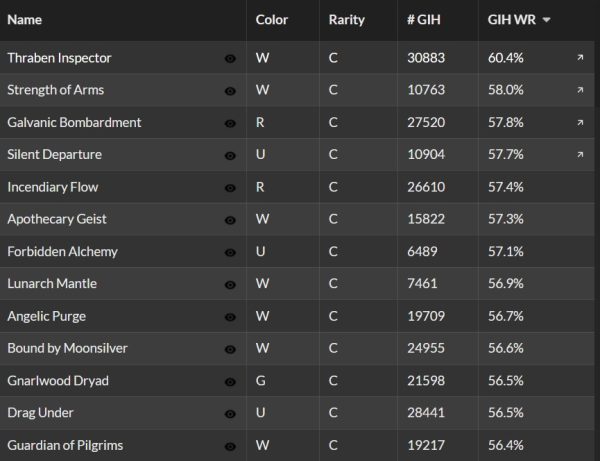
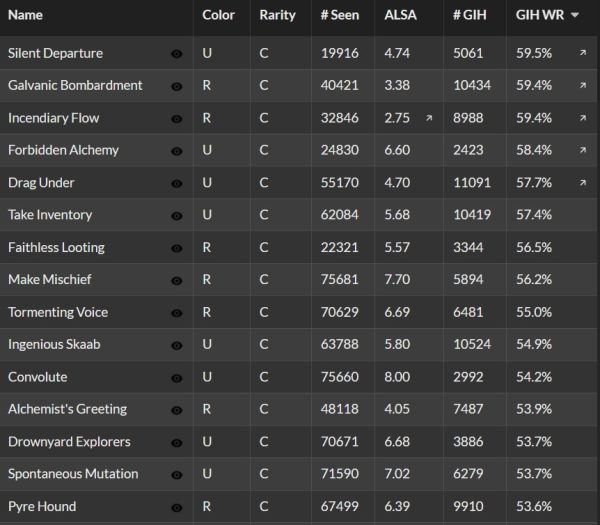
Notably, this deck had three copies of Galvanic Bombardment a Kindle variant that deals more damage for each copy in your graveyard. These ensured I could clear out early and midrange threats efficiently and trade up on mana. Another card I couldn't get enough of was Drag Under, one of the best blue commons. It is a Repulse variant that punishes the opponent for playing large creatures or buffing them with cards like Travel Preparations and Hope Against Hope.

Ultimately, this deck takes early control of the game and out-tempos the opponent with removal and chip damage, followed by a massive Rise from the Tides to close it out. It's powerful, consistent, and demoralizing for the opponent. What more could a person want?

The Deck

SIR UR Draft Deck

Creatures

1 Wharf Infiltrator
2 Thermo-Alchemist
1 Ingenious Skaab
1 Mirrorwing Dragon

Instant

3 Galvanic Bombardment
1 Deny Existence
1 Forbidden Alchemy

Sorcery

1 Silent Departure
1 Tormenting Voice
3 Drag Under
1 Shreds of Sanity
1 Pore over the Pages
1 Alchemist's Greeting
2 Rise from the Tides

Enchantments

1 Fevered Visions

Lands

8 Island
8 Mountain
1 Foreboding Ruins

Sideboard

1 Silent Departure
1 Fogwalker
1 Jace's Scrutiny
1 Convolute
1 Forbidden Alchemy
1 Geist of the Archives
1 Ingenious Skaab
1 Mystic Retrieval
2 Crow of Dark Tidings
1 Gisa's Bidding
1 Faithless Looting
1 Insolent Neonate
2 Ravenous Bloodseeker
1 Insatiable Gorgers
1 Mad Prophet
1 Flameblade Angel
1 Aim High
1 Field Creeper
1 Wild-Field Scarecrow

End Step

I had a blast playing this deck and without spoiling too much, it performed very well. I have a feeling I will be drafting a lot more of this set. As always, you can find me on Twitch and Twitter to keep up with all of my latest decks and testing updates.

With that out of the way, I would like to share a personal note. This will be my last article for Quiet Speculation for the foreseeable future. Last week I started my dream job with a company I love and will be directly improving the lives of people in my community. However, the demands of the position mean that I will need to take a step back from regular content creation.

I cannot thank you enough for coming with me on this journey and supporting my work. This isn't a goodbye forever—more of a see you later.

Cheers,

Adam

A Survey of Magic’s Oversized Cards

Are you a Quiet Speculation member?

If not, now is a perfect time to join up! Our powerful tools, breaking-news analysis, and exclusive Discord channel will make sure you stay up to date and ahead of the curve.

My two children were on their Spring Break last week, so my family decided to take a family vacation somewhere different. We’ve done the East Coast, we’ve done the beach, we’ve visited family—this time we wanted to go somewhere affordable, yet a little less traditional. After much debate, we netted out on a trip to Houston, Texas.

While in Texas, we did a variety of family-friendly activities. We went to the beach (Galveston), explored a rainforest exhibit at Moody Gardens, visited NASA’s Johnson Space Center, went to Houston’s impressive art museum, and even attended a Houston Astros baseball game. Throughout the entire trip, the same amusing phrase kept running through my mind:

“Everything is bigger in Texas.”

When considered in the literal sense, this is probably hyperbole. However, I observed different ways the expression rang true throughout the trip. This begs the facetious question: what about the Magic cards? Do Texas players shuffle up oversized decks at their local game shops? Despite how ridiculous the idea sounds, it served as the inspiration for my article this week!

Oversized Cards: A Very Brief History

I've not written an entire article on oversized cards before, but I've touched on them a bit in the past. In December 2019 I wrote an article about cards that aren’t tournament legal, which of course includes oversized cards. Earlier that year, Adam Yurchick mentioned Vanguard in a finance piece. When I went further back, to 2017, I found an article I wrote on domestic arbitrage. Oversized cards were a part of the broader strategy.

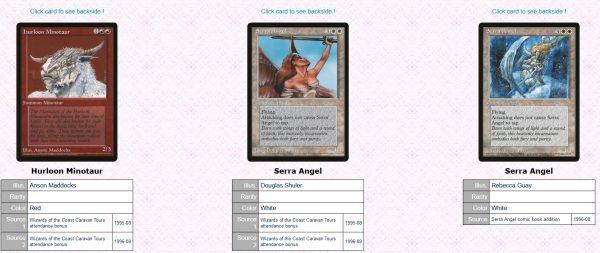
A quick Google search doesn’t yield an obvious, definitive first oversized Magic card. The Magic Librarities site has a section devoted to oversized cards and shares what in their estimation are the earliest ones. They list Hurloon Minotaur and Serra Angel as two of the first, given as an attendance bonus to Wizards of the Coast Caravan Tour attendees back in 1995 and 1996.

Then beginning in 1996, various oversized cards were included with contemporaneous magazines about Magic and collectibles: InQuest, Scrye, and The Duelist. The famous Black Lotus oversized card, one of the most valuable to date, was included in issue number 15 of Scrye magazine, July 1996.

Additional oversized promos were handed out as part of the Arena League in the late 1990s and were discontinued by 2000.

Then there are the game-impacting oversized cards, such as Vanguard cards. These cards are larger than a standard Magic card but have an impact on a game when playing with their custom rules. For example, Titania, the most valuable Vanguard card, grants its owner the ability to play an additional land each turn. The numbers in the bottom left and right corners indicate the owner starts with a maximum hand size of nine and starting life total of fifteen, respectively.

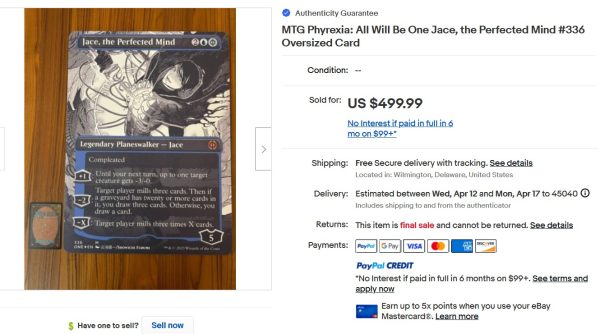
Since then, numerous additional promos, Commanders, and other giveaways have introduced many oversized cards to the market. A filter for oversized cards and Vanguard cards on TCGplayer yields over 500 results!

Noteworthy Oversized Cards: Older

I would quickly run out of space if I attempted to cover every oversized card. Seeing as this is a finance column, I’ll try to touch upon some of the most financially interesting oversized cards.

I've already mentioned Black Lotus. Damaged copies of the card can be had for around $100, but a nicer copy will cost you over $200.

Other older oversized cards don’t appear to be as expensive, which is somewhat surprising. Chaos Orb, for example, can be had for around $35. I would think this card would be more valuable, given the meme potential. Flipping a giant Chaos Orb to jokingly destroy many permanents in a game of Old School sounds hilarious, but I guess that joke is overdone. Juzam Djinn, one of the most iconic cards in Magic, can also be purchased for under $30.

This begs the question: what are the other more valuable oversized cards?

A copy of the oversized Vesuvan Doppelganger, given out as a second-place prize during Arena Summer League Season Two, recently sold for over $400 on TCGplayer. That makes it the oversized card with the highest TCGPlayer market price.

However, I believe other cards from the Arena League could be more expensive if only they actually sold—volume on these cards is extremely limited and copies rarely trade hands. Supply is certainly going to be constrained (how many people came in second place during the Arena League that season?), and demand for such cards must be sparse in kind. It looks like the oversized Library of Alexandria, Wheel of Fortune, City of Brass, and Blacker Lotus are also pretty expensive.

Vanguard Cards

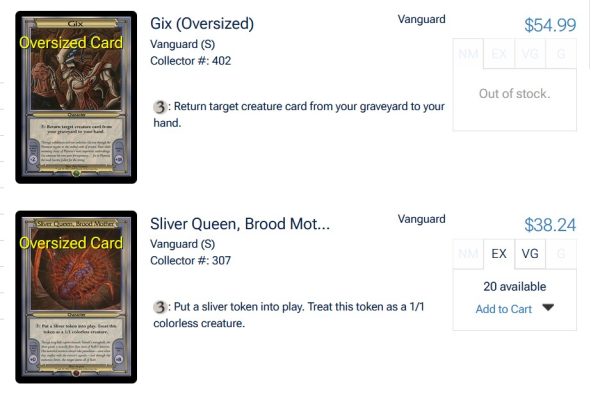
I want to briefly discuss the Vanguard cards. These date back to before 2000 and can carry some value. The most valuable is Titania, but don’t be misled by TCGplayer’s numbers—Card Kingdom has 14 EX copies in stock at just $59.49. Gix is the next most expensive at $54.99. Card Kingdom is sold out of those, however, so you’ll have to buy your copy elsewhere. Sliver Queen, Brood Mother, Urza, and Selenia round out the top five (according to Card Kingdom), though a good bit cheaper than the top two.

If the Vanguard format were to see a modern resurgence, I suspect these would spike in price. They must be relatively rare given their age. Alas, the Vanguard format never really gained much traction, thus the prices of the cards are stunted greatly by the lack of demand. I still think they’re pretty cool!

Noteworthy Newer Oversized Cards

My bias steadfastly remains toward the older cards, and oversized cards are no exception. In fact, writing this article has increased my desire to obtain one of the classic oversized cards just to have it on display—it’s probably the only way I’d allow myself to purchase a Juzam Djinn anymore!

However, I cannot ignore a couple of noteworthy, valuable oversized cards that came out this millennium.

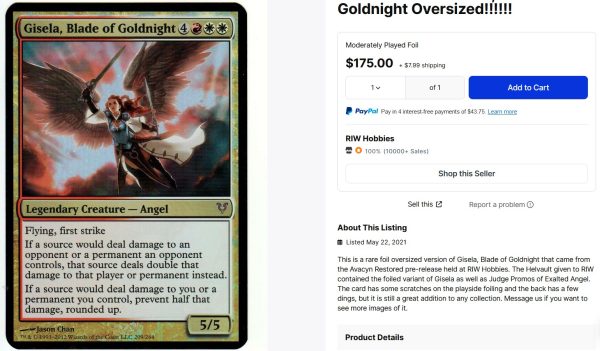
According to ABUGames, which isn’t the pricing authority on Magic but does at least have a reasonable set of listings for oversized cards, the foil oversized Gisela, Blade of Goldnight is the most valuable (around $250). There’s only one copy available on TCGplayer, and it’s listed as moderately played for $175 plus shipping.

Where did these come from? According to Magic Librarirites, “For Avacyn Restored prerelease, WOTC sent out approximately 6,000 Helvaults globally for this exciting and unique Prerelease event… 'of the roughly 6,000 Helvaults we [Wizard of the Coast] sent out, we selected 30 Helvaults to get this special treatment. We picked randomly from our Advanced level WPN stores and sent the Premium Helvaults to their new home.'”

These Premium Helvaults, of which only 30 were made, contained 54 Foil Oversized cards of Avacyn, Angel of Hope, Griselbrand, Sigarda, Host of Herons, Bruna, Light of Alabaster, and Gisela, Blade of Goldnight.

You can do the math quickly—30 Premium Helvaults, 54 foil oversized cards in each. These are rare. Like, Alpha rare-level rare. ABUGames is sold out of all the angels, with prices starting north of $100. They do actually have a played foil oversized Griselbrand in stock, listed for $93.49. I couldn’t find a copy for sale on TCGplayer to price compare, but I did find two copies on eBay listed in the $100 range. Perhaps with store credit, that ABUGames copy isn’t such a bad deal.

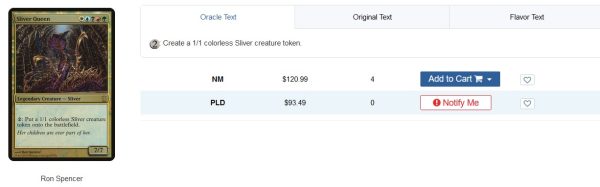
The last modern-day oversized card I want to shout out this week is Sliver Queen.

You may be wondering why I’m mentioning another Reserved List, pre-2000 card in this section of the article. Well, the original printing of Sliver Queen may be over 23 years old, but this special, oversized version wasn’t printed until 2012 when it came out with the Commander’s Arsenal product.

Market price on TCGplayer is a hair above $100, so these $120.99 copies from ABUGames are definitely a solid pickup when using trade-in credit. I would just caution against going crazy on these for arbitrage purposes simply because demand for this oversized card can’t be huge. It may take a long time to sell through four copies at $100 each. That being said, if you’re in the market for a copy or want to sit on one for a long-term hold, I’d get it here.

An Oversized Topic

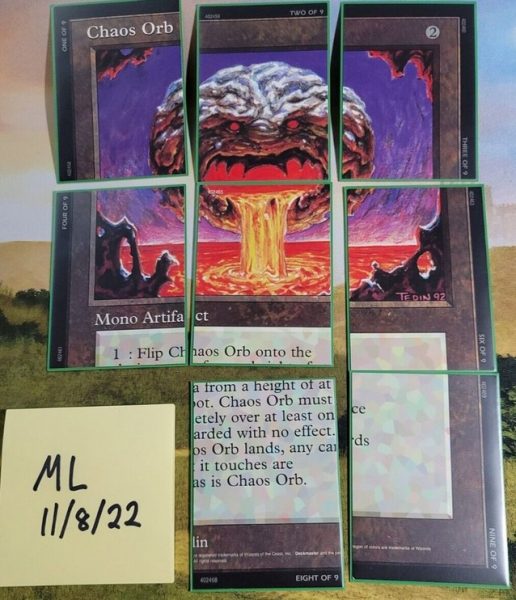
I now realize I’m only scratching the surface on a fairly broad topic. For example, I didn’t even mention the puzzle piece cards that could be assembled to build a super-oversized Chaos Orb (the majority of value to these lies in the one ultrarare piece, see image below).

Then there are the oversized cards that can currently be acquired with tickets at large Magic events—some of these are surely rare and quite valuable.

This is a lucrative space to explore if you know your way around the values and rarities of each! I can’t pretend to be an expert, but I must say I’m surprised by how much value lies in these oversized cards.

The most popular of the bunch appears to be the Black Lotus, which comes as no surprise. An eBay completed listings search shows that this oversized card, along with the Scrye magazine it came in, is the most sold of the bunch. Perhaps this is an interesting oversized card to speculate on if you were truly interested in picking one up. The demand remains relatively strong, so even if supply is larger than, say, the Helvault foil promos, at least there will always be steady interest in any version of Magic’s most iconic card.

Wrapping It Up

In the end, that’s what I love most about these oversized cards—they offer you a chance to own something iconic, classic, and rare without having to sell a kidney. Now if only I can figure out a way to shuffle one into my normal-sized deck…

Grow Away: Why UR Murktide Is Still Dominating Modern

Are you a Quiet Speculation member?

If not, now is a perfect time to join up! Our powerful tools, breaking-news analysis, and exclusive Discord channel will make sure you stay up to date and ahead of the curve.

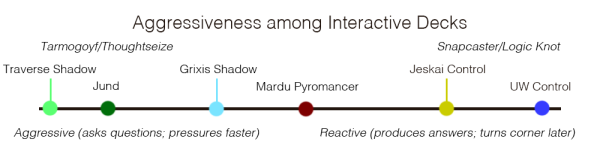
David Ernenwein's recent article on the speed of different proactive decks, "Life in the Fast Lane," touched on a theory topic near and dear to my heart as a thinkin' man: archetypes. I've written extensively on the archetype spectrum wheel, and applied spectrum thinking to topics as trivial as finding a deck I like or as fleeting as figuring out which removal decks were best equipped to beat Champion of the Parish.

Only real Modern fans know about this 5-year-old table

Today's agenda seems equally fleeting on paper: we're talking about the best deck in Modern, and those have a habit of changing. But maybe it's actually more evergreen. For one, Wizards has head-scratchingly decreed that UR Murktide ain't going nowhere despite its dominance. And for two, the deck has been dominating (as in, been an outlier in the data) for a record-breaking period of one year. Man, has it been a year already? Yep; the deck first became an outlier last March. (And spoiler alert, it will continue to be an outlier in next week's monthly metagame report.)

So happy one-year-of-dominating-Modern birthday, Murktide Regent! With any luck, this article will remain relevant well into the 2030s as Murktide continues to have its cake and eat it, too.

You are welcome.

You may be wondering: besides a burning desire to create the above graphic, what prompted me to crawl out of my editor's cave and submit 3000 words about (presumably) something? To answer that, I'll finish my boring History of Archetype Articles story from before, and then we'll circle back to David. By the end, I'll have made my case for why UR Murktide is not just broken but belongs to a storied lineage of indomitable decks wielding the most powerful strategy in Magic.

What's That Archetype?

My theory work on archetypes led me to write "Death's Shadow of Doubt: Exploring Aggro-Control," which I continue to link today as something of a definitive text on tempo, midrange, and the ever-fuzzy micro-archetypes of rock, fish, stompy, and thresh (from least to most fuzzy). I say "fuzzy" as Magic players are somewhat notorious for disagreeing about the meanings of such terms. What I called thresh decks in my article, David called Delver decks in his. And what he called threshold decks... well, what do I call those?

Threshold: Murktide-style decks

This is the point where it starts getting hard to separate the aggro from the midrange deck. While Modern UR Murktide and the very similar Legacy UR Delver play cheap threats, they're typically throw-away threats. The intention is to disrupt the opponent until it's time to drop a big threat and ride it to victory. That might happen early, and it might happen late. Which is perilously close to midrange's strategy.

Life in the Fast Lane: How to Get the Most Out Of Proactive Decks

When I read David's definition of "Threshold: Murktide-style decks," I realized Modern's UR Murktide deck indeed exists in a class of its own. That's not to say such an archetype is new. For the first time, I recognized in UR Murktide an ancient and powerful archetype thought lost to the ages, or at least to shrewd banlist management. And no, it wasn't midrange.

In my eyes, aggro-control decks are interactive creature decks that disrupt opponents with either spells or permanents. They are also fair, meaning they don't cheat on resources and do win over multiple combat steps. There are two types of aggro-control decks: midrange and tempo. Whether an aggro-control deck falls under one category or the other depends on the order in which it tends to deploy its threats relative to its disruption.

Midrange: Disrupts opponents, then establishes a clock.
Tempo: Establishes a clock, then disrupts opponents.

Death’s Shadow of Doubt: Exploring Aggro-Control

UR Murktide plops down Dragon's Rage Channeler or Ragavan, Nimble Pilferer and disrupts opponents until they're dead. Smells like tempo. But I do think the confusion is justified, in the same way it was for Shadow decks when they were fresh on the scene.

There was an error retrieving a chart for death's shadow

For starters, and this was also true of Shadow decks, Murktide has decent reversibility, meaning it can assume the role of its archetypical opposite when necessary; in this case, that means being midrange, or disrupting fast starts from opponents with cards like Unholy Heat and Counterspell before getting proactive with its own threats. However, where Shadow plays as a midrange deck by default, Murktide plays as a tempo deck by default. So far, so good.

Another more insidious reason is that David is spot-on about Murktide's true motives, and those don't jive with those of a thresh deck. Thresh must protect its efficient little clocks if it wants to win. I agree that DRC and Ragavan, blue-chip thresh bodies though they may be, are frequently "throw-away threats" here. Unlike thresh, UR Murktide doesn't shed so much as a tear when they do bite the bullet.

Rather, it actually plays into UR's plans for these creatures to be dealt with, as in fact they must be if one is to survive the game's first phase, since their corpses go on to feed Murktide Regent, which promptly ends the game unanswered. And how difficult is it to answer a Regent? Well, here is a patently terrible card that people play multiples of in Modern sideboards.

There was an error retrieving a chart for Run Afoul

Okay, UR Murktide is not thresh, exactly. Even though it looks like thresh and often plays like thresh. Because it has Murktide to fall back on. What is it, then? And what's so broken about that?

Nameless Inversion

"Thresh" was a name I came up with for "Delver decks" because I was irked by calling them Delver decks. After all, not all decks running 4 Delver of Secrets actually fit under the strategic umbrella I was referring to (some were too aggressive; others too midrangey), and what if those that did fit stopped playing their namesake one day (as recently happened)?

But it wasn't the first name I used for the archetype. Initially, I called them "grow" decks, after Alan Comer's fabled Miracle Grow deck, with which there is significant overlap in both spell and deck composition. My breakout competitive deck was the so-named Monkey Grow, which recovered from the Treasure Cruise ban by mixing Hooting Mandrills, Disrupting Shoal, and Simic Charm into a classic Delver-Bolt shell.

Give that article a click (it features both decklists) and note the striking structural resemblance between Miracle Grow and Monkey Grow. Despite their apparent similarity, though, the two decks employ different strategies to actually win. And their power levels couldn't be more disparate. Monkey Grow never fully caught on despite my own humble successes with the deck, while the original Miracle Grow defined a format and changed deckbuilding forever. As it so often does, the difference lies in a single card.

There was an error retrieving a chart for Gush

I stopped calling Delver decks "grow" and started calling them "thresh" as soon as I came to realize that grow decks are their own separate thing. Delver decks are usually not grow decks. Miracle Grow, however threshy its components on paper, earns the grow label not with its cards but with its strategy, or the way it counts on winning its games. So does Gro-A-Tog, which notably looks nothing like a Delver deck, but generally wins in the same fashion as Miracle Grow.

Delver decks can be grow decks, though. When they are, these decks tend to rule their format and then eat a ban. That's not Delver's fault. It's because at critical mass, grow is a strategy so broken that nothing in Magic has ever been able to keep pace with it.

Veteran readers will notice that "thresh" is a new name I've given to what I used to call grow decks. [...] "Thresh" more accurately reflects an important aspect of these decks: that they'll happily throw away cards in exchange for a tempo advantage, and closely budget their resources (especially mana) throughout the duration of most games.

Conversely, many of Magic's most famous grow decks, including the fabled Miracle Grow and the combo-control slanted Vintage powerhouse Gro-A-Tog, possess built-in ways to recoup card advantage at little cost Ă  la Treasure Cruise (frequently, via Gush), which Thresh decks lack. In hindsight, the only true grow deck Modern has seen was the Cruise-featuring URx Delver.

Death’s Shadow of Doubt: Exploring Aggro-Control

The Meaning of Grow

Thresh, so named for Legacy's Canadian Threshold, eventually runs out of resources; its creatures eventually become outclassed. That's why it's crucial to win within a specific window against most decks (as David put it, turns 5-8). Grow suffers no such limitation. It can play an uncompromising thresh tempo game. And then, when it gets low on resources, it slams Gush and refills on cards. Now it's got a new Quirion Dryad; a new Werebear. And those shiny new creatures seal the deal.

There was an error retrieving a chart for Young Pyromancer

As mentioned in the above quote, we've had one such deck in Modern. Players could take out its early creatures, and indeed needed to or they would lose. But when they did, the deck would slam Treasure Cruise and refill on cards. Then it would have a new Delver of Secrets; a new Young Pyromancer. Of course, opponents wouldn't magically have the new removal spells needed to keep up.

In playtesting with Maxim, I learned to truly appreciate and understand the absurd power level of a deck that could play aggressively when pressed but was perfectly content to take the opponent into the lategame and bury them in card advantage, even against dedicated control decks that thought they should own the lategame. You see, the correct way to play this deck was not as an aggro deck. Instead you used your creatures to occupy your opponent’s attention and resources early in the game while you set up to profit from drawing a lot fewer lands and having free card drawing later in the game.

Carsten Kotter, "Gro History and Current Legacy"

And now, we have UR Murktide. Ragavan and Channeler run you over unless you trade resources to slow its aggressive starts. Your reward for playing along? It slams Murktide Regent. And here's where things differ slightly from our previous examples, since Murktide is not a draw spell. There is no new Ragavan; no new Channeler. It's turn four in 2023; what good is drawing into a 2/1 and a 3/3 anyway? Instead, there's this 8/8 with flying. You can't block it. You can't Push it. You can't Heat it. It will kill you in one or two turns.

Murktide doesn't look exactly like the grow decks we've come to memorialize, reason being that once you zap its weenies and clear Level 1, it's not filling up on free cards. Instead, it's landing a threat that is actually worth those free cards. And you are losing all the same, because Murktide is still grow, and grow is still broken.

Appraising Murktide Regent

That last claim might need some defending. Is Murktide Regent really worth those free cards? How many cards is it worth? Gush offers two for no mana; Cruise offers three for one mana. Regent offers ??? for two mana. I find that when it comes to assessing individual cards, it can pay off to compare them with known quantities.

Consider StifleNought, a decades-old Legacy deck that continues to put up results today. That deck wants to combine Stifle (which is a playable Legacy card in its own right) with Phyrexian Dreadnought (which isn't) to cheat out a 12/12 trample body that closes out the game in short order. It can be built in a tempo shell, with other cheap threats to divert from this purpose, or a midrange one, generating value with engine cards while it assembles its combo.

Casting both halves of the StifleNought combo, like Regent, costs two mana, making it a great point of comparison for assessing the Dragon. I do think that a 12/12 with trample is a bit better than an 8/8 with flying, but taking into account that this is Modern and Regent is immune to both Fatal Push and Prismatic Ending, I'd much rather have the blue guy. So let's call their bodies a wash. Solving for Regent, then, here's what you get for your two mana and a card.

Count 'em: three cards, including a combo payoff good enough to buoy its own Legacy strategy for nearly 20 years (whether that explosive reliability is worth a .5 shall remain up for debate). You get the huge, evasive body on board (Dreadnought + Stifle). That's two. And you get them "entwined" on a single spell, which is also worth one card: instead of drawing the two pieces with your two draw steps, you draw Murktide and another card, here represented by Reach Through Mists.

Thought of this way, Murktide is actively better than StifleNought—no more assembling the combo, and a free card to boot, for the same mana investment. (Fun fact: some StifleNought lists have taken to running Murktide Regent themselves!)

Here's another point of comparison:

Three cards again. You could find two copies of Hooting Mandrills with your one Expressive Iteration. Certainly, you might be quite happy to rip eight trampling power for two mana off the top of the deck. But Murktide triumphs: here's eight flying power for that same two mana, plus an additional pick off the Iteration. And as a bonus, you're delving six cards instead of ten, a graveyard sale close to half off.

So... spend one card, get three cards. Sound familiar?

There was an error retrieving a chart for Treasure Cruise

It's turn five, and our opponent has weathered the initial onslaught of one-drops. By this stage, UR Delver would have drawn its Treasure Cruise and be primed to cast it for one mana, or "basically free." We are likely to have found our massive Dragon. And the way both players have navigated the game all but ensures that it will come down for two mana, or "basically free." A one-card investment that essentially yields the two-card StifleNought combo, netting a card in the process of fielding a game-ending threat.

The grow deck is designed to lead the game to this exact place. Grow accesses its overpowered spell not by ramping with mana dorks and rituals, or by painstakingly finding all the Tron lands, as many lesser decks do; that would cost cards and time. Instead, it gains access doing what the other lesser decks are happy to call their whole gameplan: by putting opponents on a clock with the format's most efficient attackers. And then it takes over the late-game for "basically free." Ain't that just like a birthday? With grow, you have your cake and eat it, too!

Grow? In Your Format? Here's What to Do...

Beating grow is simple enough: you slug through the one-drops and counterspells and advantage generated by Expressive Iteration along the way, and then you have Run Afoul or hopefully a better card like Leyline Binding for the Regent, and at the same time you get your gameplan online and popping before the enemy can pull ahead again with another Murktide or EI. Simple, but a lot of work. And while it's definitely possible, it's not so feasible that UR Murktide can take one month out of a whole year off from being the unequivocal best deck in Modern by the numbers.

When I say grow is broken, I mean that players cannot reliably self-regulate the menace. Just as Merfolk running Relic of Progenitus and Chalice of the Void back in the day was not enough to displace Cruise-powered UR Delver, Elementals packing Run Afoul won't unseat UR Murktide from its throne.

Historically, the only sure-fire way to deal with the best grow deck has been to ban its enabler, or the card that single-handedly allows it to pull far ahead once opponents have successfully traded off in the early game. Otherwise, the second-best grow deck will rise to claim the title of format boogeyman.

This is a principle Wizards seems to understand. That's why they banned Gush in Pauper, and restricted it (what seems like permanently this time) in Vintage. And Treasure Cruise (pretty much everywhere). And just this month, Expressive Iteration in Legacy (two mana for what I see as 2.5 cards, given the sorcery's selection aspect).

Our choice is to ban Expressive Iteration, as the card quality and quantity it provides allows Izzet Delver to easily adapt to stay on top of any changes in the metagame.

In addition to removing a generally strong card, our hope is that by removing Expressive Iteration, we reinforce Izzet Delver's historical strengths (efficient one-for-one exchanges) and weaknesses (lack of sources of card quantity) in a way that leaves the deck more vulnerable in the metagame.

MARCH 6, 2023 BANNED AND RESTRICTED ANNOUNCEMENT

While official banlist announcements don't come out and say "grow is broken and this card enables a grow deck," the pattern is pronounced and consistent. I think Wizards probably sees it more along the lines of "tempo decks become broken when they have easy access to a stream of cards," which doesn't account for the whole tempo vs. grow gameplan nuance we laid out earlier, but does hit at the heart of how grow's superiority as an archetype routinely manifests itself in competitive settings.

Grow being broken explains why UR Murktide has enjoyed statistical outlier status in Modern for a record-breaking one-year period. The deck has dominated not via the endless strings of Top 8s we saw with Cruise-fueled Delver, but through an unshakeable throttle of the data. That makes it all the more suspicious that Wizards apparently doesn't see any issues with Modern.

They Must Take Us for Werebears

As with the last update, Modern continues to be in a healthy spot, with plenty of different viable archetypes and a relatively flat spread among the top decks' metagame shares. Izzet Murktide is currently the most popular archetype in competitive play, but not by a large margin, and the deck isn't showing a concerning win rate.

MARCH 6, 2023 BANNED AND RESTRICTED ANNOUNCEMENT

It could be that since UR Murktide is deploying Murktide Regent and not a literal card-drawer like Cruise in its grow-qualifying "Gush phase," Wizards just hasn't yet recognized it as being a grow deck. Big bodies haven't been a problem in the past, whereas free cards have, although as explored in the previous section, the situation unfolds differently when the big body in question is a pair of airborne Hooting Mandrills. Murktide Regent sits somewhere between Gurmag Angler and Emrakul, the Aeons Torn.

Regardless, failing to fully grasp the strategic weight of Murktide the card is a lousy excuse for letting Murktide the deck off the hook after a year of sitting on Modern's face. And make no mistake, that is what Wizards has done with their latest announcement. So what is really going on?

My guess is that Murktide Regent is not just a card, but actually a real entity, a monster that was once a Magic player, the spirit of Alan Comer warped and distorted from years of casting powerful, forbidden draw spells. From deep in the shadows, like that giant baby in the Star Wars sequels, he runs the banlist meetings at Wizards HQ, ensuring that his cardboard likeness, the invitational card he never earned and thus was forced to scheme for, indefinitely maintains its stranglehold on the format. But I'm open to hearing your theories in the comments.
A Muddled Mixture: Competing Synegies in Shadows Draft

Are you a Quiet Speculation member?

If not, now is a perfect time to join up! Our powerful tools, breaking-news analysis, and exclusive Discord channel will make sure you stay up to date and ahead of the curve.

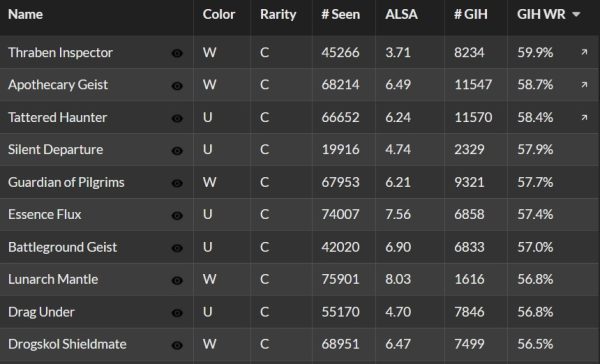
Shadows Over Innistrad Remastered (SIR) is the newest remastered set to grace Arena. It's a curated set, drawn primarily from Wizards' second Innistrad block. Most interestingly, the format cycles through a sheet of "Shadows of the Past" cards. This means each booster pack we open will include one card from that week's cycle of additions. The first week's theme, "Creature Type Terror," provides boosts to the signature tribes of Innistrad. This week is "Fatal Flashback," which means we can expect a card with flashback in every pack. You can read more about the nature of the evolving format here.

This format is a far cry from Phyrexia All Will Be One (ONE). We no longer need to be hyper-vigilant regarding aggressive threats. This isn't to say we can afford to neglect the board, but control decks can exist in this format. For those who remember the Innistrad blocks, many of the cards will feel familiar. However, this being a very different format, many of them perform differently.

Is Green the Best Color?

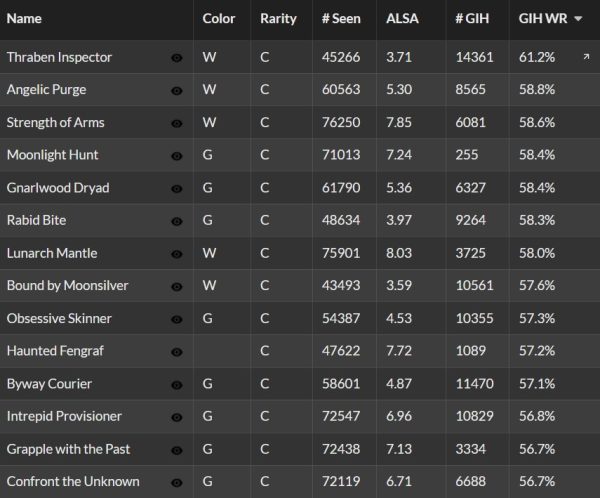
Veterans of original Shadows Over Innistrad (SOI) draft will notice that a number of the rarities have changed in this format. Most notably are the ones in green. Obsessive Skinner and Gnarlwood Dryad have been rarity-shifted down to common. In original SOI, these cards were very strong, and these downgrade gives the green delirium package a number of powerful payoffs. Drafting these in multiples can be a powerful route through the draft.

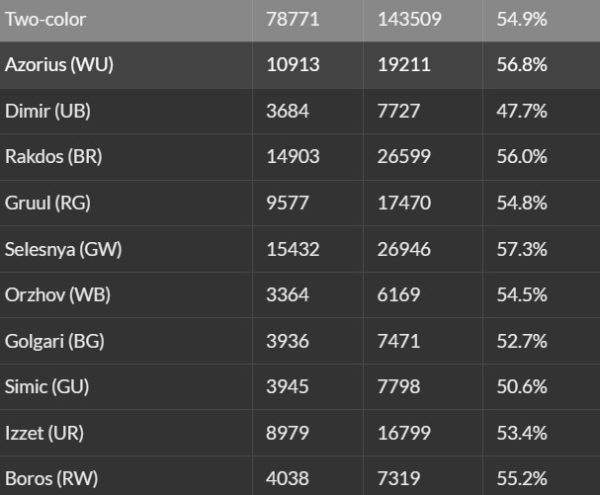
Additionally, one of the most reliable color pairs in the format has proven to be GW Humans. There are a reasonable number of green and white cards to help us build out our curve in the early game. While this deck lost some of its power after the rotation of last week's "Tribal Payoffs," Intrepid Provisioner, True-Faith Censor, and Courageous Outrider all provide a good amount of power to help this creature-based deck power through the late game.

Competing Synergies in a Synergy Format

One of my favorite ways to approach a draft is to get deep in a single color. For this reason, we wanted to prioritize red in ONE, as it was deep at common and the cards were extremely flexible. It is nice to know that green is strong, but our focus should be on finding an archetype more than a color. The green delirium cards don't play well with the GW Humans cards. For the Delirium deck, we want to prioritize things like Terrarion and Grapple with the Past. Those cards don't get the job done in Humans.

As we work through the draft, our decks will oftentimes look like this.

While one could say that we're positioned to be a GU deck, the truth is we have cards for a white-based Humans deck, and we have cards for a Blue-Based Control deck. There is a world where they might overlap, but we shouldn't just assume that the two colors we're seeing represents the best deck. These white cards do not want Forbidden Alchemy. In this format we're okay straddling two decks, but we don't want to play two colors just because they're open. Cohesion is important.

A pile of midrange cards is a recipe for disaster. We always talk about having a plan in draft; in this format, we should stick to the scripted archetypes or iterate off of them. Good stuff from color A plus good stuff from color B does not necessarily make a good deck.

Engaging with the Draft

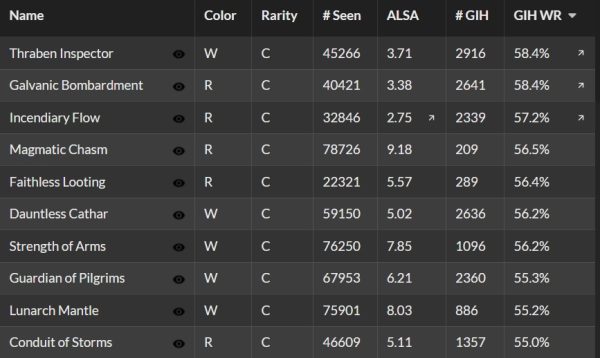
If we're expected to know what archetypes are open, we need to identify the commons and key uncommons that make a deck great. We can start the deck with cards that are more flexible like Drag Under, Incendiary Flow, or Faith Unbroken. However, we want to commit to a lane that offers us some genuine upside.

UW Spirits

Spirits loses Drogskul Captain this week, but Feeling of the Dread has stepped up in its absence. Spirits wants to race, and the flashback common makes that trivially easy. Additionally, Apothecary Geist looks a little weak compared with more modern commons like Oil-Gorger Troll, but this format is not as powerful as ONE. If we're seeing these cards late, we should consider them signs. This deck wants two drops and tempo-based interaction. Often times, I'll top my curve with Faithbearer Paladin, who plays well in the archetype.

Delirium

This deck is marketed as Golgari, but since Forbidden Alchemy entered the format, we should consider blue a reliable contributor. Delirium can splash colors, as it wants to play a slower, more controlling game. Cheap removal like Dead Weight is excellent, and the Dryad makes Rabid Bite a lot better. When we build this deck, our goal should be to get Obsessive Skinner online early. We're willing to play random artifacts like Field Creeper and Explosive Apparatus, but usually we're not happy about it. Spontaneous Mutation does a far better job of getting a difficult card type in the yard.

Blue-Based Spells

Spells has played out like a control deck more than I expected. It can kill fast with Mercurial Geists, but we're better off prioritizing good interaction, and value based creatures. Rise from the Tides is everything we hoped Spider Spawning would be. We shouldn't prioritize Take Inventory, but if we see one late, and we know we passed one early, they can be nice to speculate on.

BR Madness Vampires

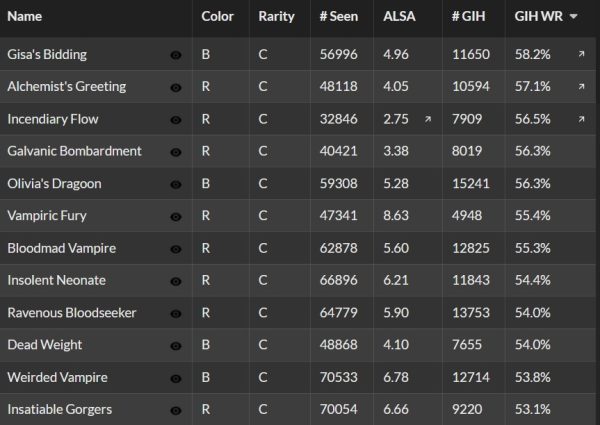
This deck has been the most aggressive decks in the format. It can feel flat-out unfair to play against, however, it is also a little temperamental. It doesn't play well from behind, and it also needs to draw its cards in the right order. The best red cards are a little more open-ended. We can get into this deck by prioritizing strong red cards and finding the vampires later on. If we start off with the Vampire enablers, it's unlikely we'll be passed the Fiery Temper or Mad Prophet that we're hoping for. Start off red, get 'em dead. Start off vamps, end up damp.

GW Humans

This deck is deep at common and even cards like Guardian of the Pilgrims plays nice with our aggressive starts. Intrepid Provisioner continues to impress as a powerful curve topping threat. Additionally, this deck makes good use of combat tricks, so the trample does a little bit of extra work.

One thing that I have noticed is that this format provides a lot of options for go-wide combat tricks. You don't need to prioritize them, and while Travel Preparation was insane in original Innistrad, it seems less effective here. Cards like Rally the Peasants, Borrowed Grace, and even some of the rares like Collective Effort are very strong but can yield diminishing returns if we don't have a high creature count.

Find Value, But Don't Dig Too Deep

A lot of the best decks in this format are able to accentuate the value that some of the commons provide. Dauntless Cathar, for example, does a nice job of trading off as a three-drop. Getting a Spirit is fine, but when we can put some equipment on that token, we start to really generate value. The same is true for Take Inventory. If we have a way to get it into our graveyard for free, then we don't have to cast the ugly two-mana cantrip. Rather, we can start the curve at a two mana Divination.

However, this enhancement comes at a price. Sometimes, as we look to accentuate some of our cards, we find that we spread ourselves too thin.

UW Spirit Human Control ft. Aura Synergies 2-1

Creatures

1 Sigardian Priest
2 Dauntless Cathar
1 Ingenious Skaab
2 Ironclad Slayer
2 Apothecary Geist
1 Drogskol Captain
1 Courageous Outrider
1 Nearheath Chaplain
1 Angel of Flight Alabaster
1 Wretched Gryff

Instants

1 Blessed Alliance
1 Jace's Scrutiny
1 Puncturing Light

Sorceries

1 Drag Under
1 Collective Effort
1 Pore Over the Pages
1 Descend Upon the Sinful

Enchantments

2 Spontaneous Mutation
1 Bound By Moonsilver

Lands

9 Plains
8 Island

One of my first SIR drafts, I first-picked the Descend Upon the Sinful and never looked back. I wanted to build something that could take advantage of a wrath, and the options presented themselves. Eventually, tension emerged between Courageous Outrider and Angel of Flight Alabaster. In short, one wants Spirits, the other wants Humans. Unfortunately, this fork led to another.

One of my best Humans was Ironclad Slayer, which gets back Spontaneous Mutation, which played like a blue Swords to Plowshares in original SOI. Using it to eat a creature in combat and buy back the aura was great value in a deck with a wrath.

There was an error retrieving a chart for Ironclad Slayer

However, to get the most out of this, I needed cards in my yard; namely, instants and sorceries. To remove the instants and sorceries is to weaken the Spontaneous Mutation. To weaken the Spontaneous Mutation is to weaken the entire Human sub-package. This is to go without discussing the nature of the Spirits package headlined by the rare and the Drogskol Captain.

The deck played okay, but lost in the finals because it couldn't answer multiple Thermo-Alchemists. Perhaps a tighter build would have helped, or better draws... who knows? Regardless, this deck illustrates the difficulty of navigating this format. The synergies overlap. The colors provide multiple paths. To master SIR, we will need to find our lane, and know when the time is right to commit to one deck.

Commander Deck Full? Here’s Five Tricks to Beat the Limit

Are you a Quiet Speculation member?

If not, now is a perfect time to join up! Our powerful tools, breaking-news analysis, and exclusive Discord channel will make sure you stay up to date and ahead of the curve.

You have a new deck idea and get to building. At first there are piles of cards, many different themes, and so much promise. After your first round of cuts, there are always cards you wish you could add, but simply do not have the space.

Even though Commander gives you 100 cards to work with, it often feels like you still need more slots. Fortunately, with some creative thinking, there are a few tricks to get the most out of your 100... or play with even more cards! Here are my five favorites.

#5: Cut Lands for Rocks, Dorks, and Utility

Because of the extremely generous free mulligan rule, you get two chances at your opening hand to dig for Sol Ring and a couple of lands or mana rocks. According to EDHREC, 20 of the top 100 cards are mana rocks. How many lands are in the top 100? Zero.

On top of those 20 rocks, there's another 20 cards that are either ramp spells or creatures that make mana. Clearly, the trend of cutting lands and replacing them with other mana-producing sources is well-known. But mana is not the only reason for these replacements.

There are several mana-producing artifacts with big upsides that are great substitutions for almost any deck. Cursed Mirror is an excellent Clone in red, and serves as a rock at worst. At best? This card doubles another doubler and makes you combo off harder and sooner.

Liquimetal Torque is drastically underplayed as a two-mana rock with a huge ability. At worst, it allows for the entire table to target a threat with artifact removal, and is a massive tool for diplomacy. But it can also be used to create combos, secure metalcraft, or even kill Illusions that die to targeting.

Staff of Compleation is a low-cost rock that can do a ton of different things or simply add mana. Savai Crystal and the like are a mana rock if you need them to be, or a new card if you don't.

Removing a few lands for a few rocks with abilities allows you to support more concepts in a deck but also fixes and accelerates you. The cost is running a few less lands. However, the potential for bad openers is smoothed out by the free mulligan.

#4: Prioritize Charms and Commands

Charms have been in Magic a very long time, and have seen play at all levels. Two currently appear in the EDREC Top 100. Few cards approach the incredible flexibility of any of the Charms or Commands, and they are always worth considering for those last few deck slots.

When you are looking to trim cards, that is sometimes the wrong mindset. Really, what you should be thinking about is how many effects of each type you need. If you can substitute an Izzet Charm as both a counter and discard slot, you have created a free slot. Charms, Commands, and other modal spells open up space for other cards while maintaining healthy counts of various effects.

#3: Make Use of Sometimes-Lands

The double-faced cards are significantly underplayed, and also an easy solution for decks that need a few more slots. Some of them, like Malakir Rebirth // Malakir Mire, have seen a high amount of play, but I think nearly all of them deserve slots in most decks. In short, you are adding a land that is sometimes a removal spell, sometimes a mana dork, and sometimes a value generator, and the cost is only half a deck slot for great options. The mythic rare DFCs are powerful spells that also can enter play untapped, so they are the freest of free includes.

DFC removal effects help free up space. Hagra Mauling // Hagra Broodpit is effectively Murder and Swamp. If Bedevil, Terminate, and Mortify are top-100 cards, Mauling is close, and those other cards can never be a land when you need one.

Bala Ged Recovery // Bala Ged Sanctuary takes my vote for the most potentially powerful and flexible DFC. How often do you need a Regrowth effect? Not that often. But when you do need one, paying three instead of two is almost never a deal breaker. Really, it's more about being able to have deck slots to support Regrowth, Noxious Revival, or Reclaim. Recovery gives you the option at the low cost of changing a Forest into a Sanctuary.

Finally, Ondu Inversion // Ondu Skyruins is a boardwipe that replaces a Plains. Eight mana may seem like a lot, but both Ruinous Ultimatum and Eerie Ultimatum make the top 100 despite being extremely difficult-to-cast seven-mana spells. Recovery and Inversion are not equivalent in power to the Ultimatums, but getting "diet Ultimatum" is sometimes good enough.

#2: Turn It Up to 11 with Companions and Attractions

While each companion imposes a restriction upon deck creation, it does not count as a card in the deck, so you get a free card! Currently, the "best" ideas for decks with companion synergy are fairly well-established. However, look to new sets like The Lord of the Rings and March of the Machines for additional ways to build around companion.

There's also the attraction deck, which does not count as part of your 100. Commonly, attractions are played in a dice-rolling archetype, as attractions give you more chances to roll. This means that you can cut the worst dice-rolling cards and instead count on attractions to do some heavy lifting.

#1: When All Else Fails, Cheat and Steal!

That's right, just cheat! If your play group is alright with silver-bordered cards, you can always access more cards via Cheatyface and the most fair tutor ever made, Booster Tutor. While this option probably won't work for all of you, it's worth mentioning.

Alternatively, there are tons of theft effects in Magic. Sometimes you do not have the right answer in your deck, but an opponent does. Decks like Xanathar, Guild Kingpin or Arvinox, the Mind Flail are not 100-card decks; they are 400-card ones! If you want to play the most cards possible, these are your go-to Commanders. But you don't have to play specific commanders to access some of the best theft effects, like Praetor's Grasp or Villainous Wealth.

Case in Point

But even if your deck doesn't feel like it needs more space, it still can be tweaked. As an example, take my mono-white partner deck with Yoshimaru, Ever Faithful and Keleth, Sunmane Familiar. One of my first concepts with the deck was to keep it very low to the ground, with casting costs up to two, but few higher than that. Because of that choice, I found workarounds by including cards like Cast Out, Eternal Dragon, Sunblade Samurai and Kabira Takedown all at the expense of land slots.

There was an error retrieving a chart for Yoshimaru, Ever Faithful

At first glance, all of those cards are more than two mana. But their abilities make them effectively modal removal/draw/ramp/rocks, by paying two to get a land or being a land themselves. Next, I added even more cycling lands, and even a Flourishing Fox once I saw the obvious synergy.

In the building process, I found an additional sub-theme that went well with everything I was already doing, so it was win/win! Furthermore, if the deck doesn't work out, I'm eyeing both Lurrus of the Dream-Den and Kaheera, the Orphanguard for a followup build.

Imposing this kind of "deckbuilding restriction" can actually open you up to cards you never thought you'd play that functionally expand the size of your deck. And, of course, lead to a unique and fun experience.

All the Choice in the World

While I am a firm believer that restrictions breed creativity, it's nice to know that there are so many ways to work around, bend, or completely shatter those restrictions. By including just a few key cards for flexibility and consistency, you can safely create space for more interesting cards. On top of that, there are many mechanics from companions to attractions that allow you even more game space. And there's always the route of playing everyone's deck.

Have you had a hard time cutting decks down to 100 cards? Or do you think Commander needs to add sideboards or wishboards for even more design space? Let me know in the comments. Until then, happy building!
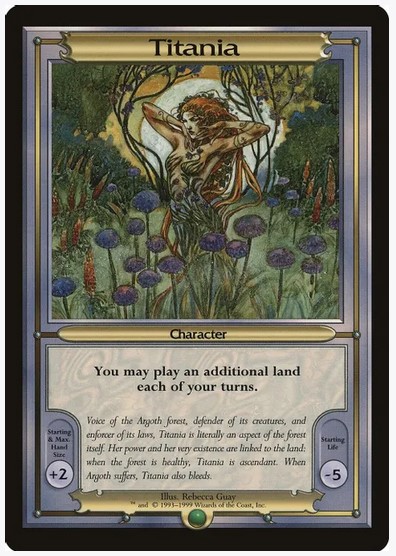
March Madness Rooting Guide for Magic Limited Players

Are you a Quiet Speculation member?

If not, now is a perfect time to join up! Our powerful tools, breaking-news analysis, and exclusive Discord channel will make sure you stay up to date and ahead of the curve.

Perhaps the most exciting sporting event of the year has been taking place over the last few weeks. Every March the sixty-four best college basketball teams face off in a grueling tournament that culminates in the coronation of a new champion. Bracketology sweeps the nation, and next weekend it all comes to a head in the Final Four.

The overlap between Magic players and college basketball fans is uncharted. If we have an alma mater in the tournament, or we're invested in a bracket, then we are likely rooting based on those inherent interests. After spending a weekend alternating between playing Shadows Over Innistrad Remastered drafts and watching the Sweet Sixteen and Elite Eight, I knew what had to be done.

Today, I'll draw some elaborate and occasionally convoluted comparisons between the remaining four college basketball teams, and the Limited archetypes from recent formats that most closely resemble their playstyle, makeup, and general je ne sais quoi. Perhaps we can make a canny assessment of these teams based on their preferred playstyle and what it tells us about these archetypes.

Florida Atlantic University (FAU) as UB Ninjas

The Owls are the first nine-seed to make it to the Final Four since 2013. It is a rare occurrence to see a team win four consecutive games as the lower seed, but FAU has done it. They have an explosive offense, led by undersized attackers, reminiscent of the UB Ninjas deck from Kamigawa: Neon Dynasty.

It all starts with Johnell Davis and Alijah Martin. Similar to Virus Beetle, they can attack into any defense, and leave the defender panicking. Coming at the rim puts defenders in a tough spot. Between their ability to score in the paint and pass it out to the arc, it is like trying to play around Suit Up and Moon-Circuit Hacker. This team creates a lot of scoring options for itself.

We expect an aggressive team to put up points, but what has gotten this team to the Final Four is their surprising ability to ninjitsu in for rebounds. Rebounds are essentially the basketball equivalent to card advantage. The way UB Ninjas felt like it always had cards in their hand reminds us of the way the Owls pull down rebounds. These undersized players outrebounded a number of much taller teams. Center Vladislav Goldin generates value over the course of the game like rebuying a saga. He leads the team, averaging 6.6 rebounds a game, but is a threat to score on his own.

Finally, Michael Forrest is basically a 6' 1" Network Disruptor off the bench. He's an undersized player who can assist others in scoring, and in the clutch, he's been incredible at closing out games.

University of Connecticut (UConn) as RG Oil

The aggressive scoring for the Huskies is reminiscent of the dynamic two-drops in the Phyrexia All Will Be One RG deck. Jordan Hawkins is an elite scorer and plays the Barbed Batterfist role. Conversely, Tristen Newton isn't quite as threatening a scorer but boasts a ton of versatility. He fills out the Axiom Engraver role. Finally, Andre Jackson Jr. isn't quite the scorer that the other two are. He's more physical, and a genuine leader that holds the team together. Contagious Vorrac might sound like an unflattering comparison, but the similarities are all positive. Rebounds, assists, proliferates, finds lands, facilitates a splash. The kid does it all.

UConn does a great job on offense and defense, and a big part of that is superstar Forward, Adama Sonoga. He's vigilant, plays on both sides of the court, and invalidates smaller threats like Cinderslash Ravager.

Just like the RG Oil decks in ONE, this team is great on offense and defense. They have threats up and down the curve... I mean roster. Coach Dan Hurley has been able to interact and disrupt opposing offenses and defenses alike. However, the biggest comparison this team has to RG Oil has been the way they've played in the second halves of tournament games.

Hazardous Blast earned the award for Scourge of the Format in our sunset ceremony for ONE for its ability to end games quickly. Similar to this four-mana sorcery, UConn has done a fantastic job outlasting their opponents. In the second half of games, UConn has run away with games. After half-time, they've dominated opponents 174-107. This team has looked outstanding so far, and as a proud alumnus, I'm rooting for it to continue.

San Diego State University (SDSU) as UB Poison Proliferate

Of all the remaining teams, the Aztecs are the most controlling...err-defensive. They grind out opponents and have held five of their last six opponents under sixty points. This includes a stunning victory over 1-seed Alabama and a last-second win against Creighton. Just like the Proliferate decks in ONE, SDSU's defense-first approach is seen as a liability, however, they're executing masterfully.

The stat lines for a lot of these players read like the blue low-power, high-toughness creatures of ONE. By the end of the game, it's hard to tell where the points came from. Guards Matt Bradley, Lamont Butler, and Darrion Trammel peck in for damage like Gitaxian Raptor and Ichor Synthesizer. Even though the offense is slow, they hold up to aggressive attacks. They play as though they always have the Serum Snare in their back pocket.

Finally, Nathan Mensah leads the team in blocks and rebounds. He's a critical threat that helps hold down the fort. He's a physical defender who can remove threats like a timely Anoint with Affliction. Unlike the UB decks, this team has shown a capacity to come from behind. Also unlike the UB decks, this team has overperformed. This is a group of stoppers, and they will force their opponents to play an ugly game.

Miami Hurricanes as Domain Aggro

The Hurricanes' offense is carried by a series of threats, and any of them can take over the game. Similar to the Domain Aggro decks out of Dominaria United (DOM), any of these players can be the Sunbathing Rootwalla or Nishoba Brawler that can go unmatched. In their most recent upset win against Texas, it was Jordan Miller who performed with Gaea's Might. He was perfect from the field and the foul line, ending the game with a heroic 27 points.

Their most consistent scorer all season has been Isaiah Wong, his combination of speed and power reminds us of the many combat tricks this deck possesses. This team has an explosive offense and looks to outscore their opponents. It wants to play a tempo game and finds itself in racing situations more often than not. But it's those explosive finishes that remind us of Colossal Growth or Meria's Outrider, winning out of nowhere.

This team plays with four guards, which are typically smaller players, but the Hurricanes aren't necessarily undersized. Much like the aggressive creatures in Domain Aggro, these guys are aggressive, but also stout at the point of attack. They're going to be difficult for any team to try and shut down, and veteran head coach Jim Larranaga has been to the Final Four before.

March Madness? March of the Machines? The Choice Is Yours

This weekend is a big one for college basketball. Champions will rise, and pretenders will fall. The things I love about sports bear a lot of commonalities with my passion for Magic. I hope this guide helps readers appreciate the overlapping elements between the two. They're both strategic endeavors with a million variables. Matchups are important, but so is execution. If you're a big fan, you recognize this.

Those choosing not to watch the games have Shadows Over Innistrad Remastered to look forward to on Arena. I'll be discussing the format in my regular Friday article, so stay tuned for that. In the meantime, let me know what you thought of this article in the comments. Last, but not least...LET'S GO HUSKIES!
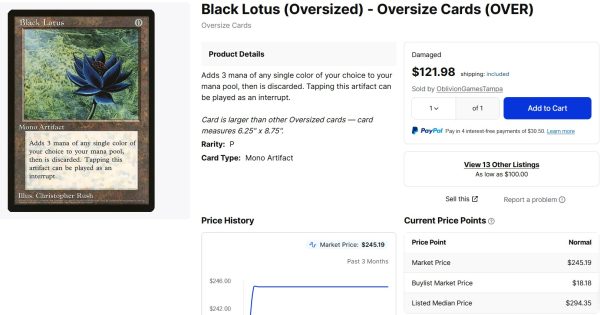
Life in the Fast Lane: How to Get the Most Out Of Proactive Decks

Are you a Quiet Speculation member?

If not, now is a perfect time to join up! Our powerful tools, breaking-news analysis, and exclusive Discord channel will make sure you stay up to date and ahead of the curve.

In our previous discussions of play speed, we focused on the strategic (and round time) appeal of playing slower decks faster. But playing succinctly, and precisely, is equally important for aggressive decks. This week, we'll rank the proactive decks by speed and assess how easily they can switch roles.

Paradox of Proactivity

Why is playing quickly important for a deck that's already fast? Who's the Beatdown is the foundation of Magic strategy. Making things happen is the definition of proactive, and the opposite of reactive. Just as reactive decks want to take over the game and win later on, proactive decks want to advance their gameplans and win as quickly as possible. This is how the archetype wheel has always worked.

There was an error retrieving a chart for Goblin Guide

But it pays to go deeper. Every deck has a Fundamental Turn (FT) on which it intends to win the game, either actually or functionally. Proactive decks of all stripes of course tend to set their FT on the earlier side. However, all FT considerations are done in a vacuum, and are more accurately the Goldfish Turn. Never forget that the opponent gets a say in how the game plays out. Players instinctively know there's a difference between when can a deck win and when will it win.

There was an error retrieving a chart for Solitude

The latter is more important in actual games. How reliable is that theoretical goldfish turn in reality? The dividing line between all the proactive decks is not actually their goldfish speed, but their decision to ignore or remember the opponent's existence. Proactive decks that choose ignore will be faster than proactive decks that remember, but won't hit that goldfish turn as reliably. For all things, there is a trade-off.

Winning Windows

When I think about a deck's kill speed, I don't think in terms of a specific turn. Rather, for each deck, there is a window of turns in which they're capable of winning, and there's a spectrum. From left to right, there is an early window where the fastest decks want to win, a middle window where it's anyone's game, and a late window where the control decks dominate. I think of proactive decks as decks that intend to win in the early-to-mid windows and can win late, while reactive decks are only focused on getting to and then winning in the late window.

Everything in Format Context

This window is contextual for each matchup and format, because some formats kill faster than others. For example, Modern is a more powerful and faster format than Pioneer. Therefore, the relative turns will be different. Take a Modern aggro deck like Burn. Its win probability distributions are roughly demonstrated by this chart, whose numbers I've approximated:

Burn can't win before turn three, reliably goldfishes on turn four, and has sufficient reach to never be completely out of a game.

Compare with a similar chart for Pioneer Mono-Red Aggro:

Most lists can win on turn three if the opponent shocks a bunch, but it is very rare. Wins on turns 5 and 6 are goldfishable half the time.

Both decks are aggressive, and intend to win in their respective format's early window, which varies by format. Burn's peak win chance is on turn four. Mono-Red's turn six makes it middle-window relative to Modern, but decidedly early for Pioneer.

The same holds true if we look at control decks in Modern:

Elementals can only actually win by concession prior to turn five.

Versus Pioneer UW Control:

UW can only win by concession prior to turn seven.

Pioneer's late window is positively glacial compared to Modern's, while Modern's late window is Pioneer's middle. The point is that there is no absolute answer for what constitutes a window. The important thing to keep in mind is which window a deck is aiming for in the intended format, and make sure that it is actually able to hit that window. If the deck can't do that, it needs to change.

The key to understanding a proactive deck is to grasp not how fast it plays, but when it wants to win. Does a deck sit on the left (aggressive) side or the right (control) side? If you intend to play a proactive deck, a way to win the game must be presented early, with the intention of ending the game rather than prolonging it. A dedicatedly reactive deck that prolongs the game is control, and a deck that can shift between proactive and reactive is in the midrange camp.

Picking a Lane

Therefore, every proactive player needs to decide how much they're going to consider the opponent's actions. Assuming everyone is playing to win (or at least not lose), opponents are either trying to win first or prevent you from winning. As a proactive deck, how much does that matter, and what's to be done? All answers are valid, but an answer must be chosen. Once that answer is chosen, stick with it! The fundamental mistake I see players making is trying to inappropriately switch lanes, which leads to disaster.

A deck that has no intention of interacting with the opponent and is just trying to goldfish will be extremely fast. Every spell slot is dedicated to pressuring the opponent's life total or assembling a game-winning combination, and the goal is to interact with opposing cards as little as possible. This Pioneer Goblins deck has only six interactive spells maindeck. It knows what it wants to do, and in the control matchup, will at most bring in stickier threats.

There was an error retrieving a chart for Rundvelt Hordemaster

The mistake I see many decks like this make is to try and move out of lane and become something they're not. If this same Goblins deck instead played a lot of planeswalkers in its sideboard, intending to slow down and play the card advantage game against control, it would lose more. The deck is simply not equipped to support that kind of gameplan. It's shifting its win window too far right and giving up the advantage to the control deck, which already dominates that window. Some decks can change lanes because they were already between them, but for decks on the extremes, that's a pipe dream.

Proactive Deck Spectrum

When players are talking about proactive decks, they're talking about aggro and combo. However, neither deck type is a monolith, and there are many varieties of aggro and combo decks with different intended speeds and levels of interactivity. As the decks get more intentionally interactive, they move further along the spectrum toward being reactive, and eventually the line gets blurry.

Everyone can agree on the end points, but the middle is fuzzy between flavors of proactive decks, midrange decks, and control. Things get even hairier as we zone in on specific angles. In "Death’s Shadow of Doubt: Exploring Aggro-Control," Jordan Boisvert examined the broader categories of aggro-control decks, that is to say aggro decks that incorporate interactive elements; that article left out blitz aggro, which is non-interactive, and combo, which is not an attacking, or aggro, strategy (although it does proact).

We will not leave out these decks, as the following section approaches the topic from a different angle, instead sorting the more easily identifiable left-side decks from most proactive (fast) to most reactive (slow). Ranking them in this way will allow us to more cleanly discern which strategies are capable of diluting their main plan with a reactive 180, and by how much.

Earliest Window: Target Turns 1-3

The most proactive and fastest decks are the blitz decks. These decks intend to take their opening hand and fling it at the opponent's face as hard as possible, with no consideration for holding back or later turns. If that initial onslaught can't outright win or at least get the opponent low enough to burn them out, the deck accepts defeat.

Blitz Combo: Belcher-style decks

The fastest decks in competitive Magic are blitz combo decks, epitomized by Goblin Charbelcher decks. The Legacy version is designed to win on turn one or two and won't reliably win after turn three. Modern's version is slower, but built to the same principles. It only runs interaction to protect its combo.

There was an error retrieving a chart for Goblin Charbelcher

Blitz Aggro: 8-Whack-style decks

The purest blitz aggro decks are built like Modern 8-Whack. The mana curve is as low as possible, with the intention to dump the hand right away and not worry about refilling. The threats are individually weak, but intended to overwhelm the opponent, with some reach to close out the game. If the initial surge doesn't work, the deck can't keep pace with much else.

Early Window: Target Turns 3-6

The more standard aggressive and combo decks will be found in this window. The decks are capable of early wins, but have plans in place for when that doesn't come together, and are capable of planning for longer games.

Velocity Aggro: Prowess-style decks

These decks have threats that individually put them on par with the blitz aggro decks, but have the cantrips, interaction, and card advantage to win with more than just their opening hand. Modern Prowess can get blitz-style wins, but will more often play a slightly longer game with Expressive Iteration and Underworld Breach. Hammer Time falls into this category despite not having cantrips.

There was an error retrieving a chart for Underworld Breach

Disruptive Aggro: Humans-style decks

When I think disruptive aggro, I'm thinking of aggro decks that interact with their opponents as part of their aggro gameplan. The best example of this is circa 2018-2019 Modern Humans. Every card is a creature; it doesn't play any reactive spells. However, many creatures are themselves disruptive, ensuring the opponent can't interact effectively. The deck is slower than pure blitz but faster than decks with dedicated reactive spells, who must take time off from developing their board to cast them.

Velocity Combo: Storm-style decks

Similarly, the velocity combo deck can just win, but will usually need to set up first. Modern Storm is the are classic example. It's happy to blitz out a win, but generally spends time setting up and protecting themselves before going off.

True Combo: Typical combo decks

The next speed of deck is the typical combo deck. This category has no unifying theme other than they're decks that have to win via combo, and don't intend to deliberately slow the game down. Pioneer Lotus Field Combo and Modern Ad Nauseam fall in here. They might have defensive or offensive interaction, but their plan is to combo as quickly as they can.

There was an error retrieving a chart for Lotus Field

Versatile Aggro: Burn-style decks

By the same token, there are a wide variety of generalist aggro decks that are slower than disruptive aggro, but faster than actual reactive decks. Modern Burn is the headliner for this category. It intends to play straightforward aggro, but its versatile spells let it play a slower game if it has to. Lightning Bolt is just as good at hitting a crucial enemy creature as it is helping count to 20.

Tempo: Fish-style decks

Ever since Nicolas Labarre ran Mono-Blue Fish against a field of High Tide (coverage for which has been lost to time), Fish-style decks have been playing out multiple, lightly synergistic threats and then actively disrupting the opponent until the victory is achieved. Pioneer Spirits is today's representative of this strategy.

It's worth noting that Jordan previously categorized "fish" as a tempo deck that "plays many interchangeable/synergistic threats that work together to accelerate the clock or disrupt opponents, and a small number of noncreature spells." He included both Merfolk and Humans under that umbrella, and indeed they both fit. But as we're discussing speed, it's useful to split them up; Merfolk, for instance, tends to run more interactive spells than Humans, slowing down its clock, even if the deck's governing principles are similar. Fish as I'm defining it now, cf. the "disruptive aggro" outlined above, takes a less proactive approach to the same task.

Beatdown

The last grouping in the early window are the beatdown decks. These decks tend to be slower than usual aggro decks but make up for that by either playing bigger creatures or including a combo. Modern Domain Zoo epitomizes the former, and Yawgmoth the latter.

There was an error retrieving a chart for Yawgmoth, Thran Physician

Middle Window: Turn 5-8

Here, the line gets even blurrier. All the decks in this window play extensive interaction, which makes them not only slower, but more able to switch towards a pure control role (even if they'd rather not make the switch, keeping them from being actual midrange decks).

Tempo: Delver-style decks

While built on the same principle of play threats then disrupt the opponent, Delver-style decks take it to an extreme by playing out a standalone threat or two and then protecting that threat. Classic Legacy Delver certainly follows this idea, as do some but not all current lists. Modern's Counter Cat is the best example available today.

Defensive Combo: Doomsday-style decks

The defensive combo deck understands that it is going to be under attack, and while it likes to win quickly, it probably won't. Therefore, it invests in Plan Bs, as well as extensive protection. Legacy Doomsday is the ur-example with all its disruption and Murktide Regent.

There was an error retrieving a chart for Doomsday

Threshold: Murktide-style decks

This is the point where it starts getting hard to separate the aggro from the midrange deck. While Modern UR Murktide and the very similar Legacy UR Delver play cheap threats, they're typically throw-away threats. The intention is to disrupt the opponent until it's time to drop a big threat and ride it to victory. That might happen early, and it might happen late. Which is perilously close to midrange's strategy.

Stay in Your Lane

Proactive decks need to be proactive. It is possible to switch lanes, but that's no guarantee for success. Players need to be more conscious of where their deck falls along the proactivity spectrum and adjust their plans accordingly.

Adam’s Going to Dallas! RCQ Win With NeoTraxa

Are you a Quiet Speculation member?

If not, now is a perfect time to join up! Our powerful tools, breaking-news analysis, and exclusive Discord channel will make sure you stay up to date and ahead of the curve.

This weekend I picked up my invite to the Regional Championship in Dallas with the new hot deck on the block, NeoTraxa. As the name suggests, the deck utilizes Neoform and delve creatures like Tasigur, the Golden Fang to cheat out Atraxa, Grand Unifier for as little as three mana and as early as turn three. Few decks are prepared to deal with such a massive threat, and even decks with removal will struggle to answer the immediate card advantage Atraxa generates.

Key Cards

Recent Successes

Two versions of this archetype were propagated by @TandyMTG and @CaseyLancaster9 and saw significant success this past weekend. One build features additional interaction and card selection in the form of Fatal Push and Consider. The other includes Soulflayer to take advantage of the deck's heavy self-milling and Atraxa's litany of keywords. To further support Soulflayer, these builds also have Zetalpa, Primal Dawn and flex slots that can either be earmarked for Sylvan Caryatid or Striped Riverwinder. A 185-player tournament in Japan saw both versions in the top 8 with the Soulflayer build taking first place. The non-Soulflayer build made the top 8 of an NRG event with over 200 players and put two copies in the top 8 of Sunday's MTGO Showcase Qualifier.

There was an error retrieving a chart for Atraxa, Grand Unifier

Metagame Considerations

Going into this RCQ, I opted for the Soulflayer build. Soulflayer functions as a secondary win condition and hedges against Necromentia effects. It also has the upside of creating hexproof and/or indestructible threats that can dodge commonly played removal spells like Dreadbore, Supreme Verdict, and Leyline Binding. Knowing the local meta, I expected a significant number of RB Midrange, UR Creativity, and Abzan Greasefang decks in this event. I knew I wanted something that was favored against small creature removal like Fire Prophecy and Bonecrusher Giant // Stomp. I also wanted something that could race Greasefang's otherwise unbeatable early Parhellion II draws. Access to Thoughtseize, Collective Brutality, and big, vigilant, and lifelink fliers ticked off all the necessary boxes.

Other popular decks like Mono-Green plan to race and can't easily interact with the combo. Tasigur lines up favorably against Old-Growth Troll's beatdown plan and it takes two blocking Cavalier of Thorns to kill Atraxa. The only route to victory for the opponent is through Karn, the Great Creator which can be managed via discard spells, Stubborn Denial, and post-board Pithing Needle.

There was an error retrieving a chart for Soulflayer

The only matchup that concerned me was UW Control as Dovin's Veto is a massive blowout against Neoform. Six discard spells in the main deck with Founding the Third Path to flash them back seemed like enough to push threats through permission. With that said, Rest in Peace threatens to shut down the deck's entire engine and Soul Partition is a very clean answer to my normally expensive creatures.

Matchups

I lucked out that my predictions for the room were more or less spot on. Multiple opponents were unfamiliar with the archetype and made suboptimal plays due to this. For example, one of my RB Midrange opponents Thoughtseized me, taking an otherwise irrelevant spell over Neoform, allowing me to combo them.

Another player left in Fatal Push post-board despite having no targets. My RG Vehicles opponent kept a hand with The Akroan War but no early or proactive plays allowing me time to cycle Striped Riverwinder, then delve it away for a hexproof Soulflayer.

The Greasefang player kept a Leyline of the Void hand without much to follow it up, giving me time to Assassin's Trophy it off chapter one of Founding the Third Path. They then cast a second Leyline, but Founding's chapter three re-cast Trophy to destroy that as well. Had they waited another turn, the second Leyline might have been more impactful.

These misplays will certainly decrease in frequency once players are more familiar with the deck, but they certainly opened up opportunities to win that I should not have had.

Decklist

Pioneer Soulflayer NeoTraxa

Creatures

4 Soulflayer
3 Tasigur, the Golden Fang
3 Atraxa, Grand Unifier
1 Hooting Mandrills
2 Striped Riverwinder
3 Zetalpa, Primal Dawn

Enchantments

3 Founding the Third Path

Spells

4 Neoform
4 Thoughtseize
2 Collective Brutality
1 Stubborn Denial
4 Grisly Salvage
4 Otherworldly Gaze

Lands

1 Breeding Pool
1 Boseiju, Who Endures
4 Mana Confluence
4 Darkslick Shores
3 Botanical Sanctum
3 Watery Grave
3 Blooming Marsh
2 Overgrown Tomb
1 Swamp

Sideboard

2 Ritual of Soot
3 Ray of Enfeeblement
2 Duress
1 Aether Gust
2 Mystical Dispute
1 Liliana, Death's Majesty
1 Pithing Needle
1 Stubborn Denial
2 Assassin's Trophy

Takeaways

I was very surprised by how mana efficient this deck is. The main deck functionally tops off its curve at two mana allowing the player to double and triple spell early and often. Otherworldly Gaze then gets to shine as a one or two-mana play to fill the graveyard, fix draws, and dig for critical spells. While the card disadvantage may encourage players to include Consider in that slot instead, the cantrip cannot compete with the velocity and selection Gaze provides. Looking up to six cards deep for a combo piece or critical interaction is often good enough to get the job done, and resolving an Atraxa trigger more than makes up for the card disadvantage.

Grisly Salvage digs for delve creatures and puts enough cards in the graveyard to cast them by itself. It's worth noting that between Gaze, Salvage, and Founding, incidental hate like Unlicensed Hearse and Graveyard Trespasser // Graveyard Glutton cannot keep up. The player will still be able to resolve their delve spells with ease. Unlike graveyard decks like UR Phoenix, which look to put specific cards in the graveyard, NeoTraxa cares mostly about graveyard quantity over quality.

There was an error retrieving a chart for Grisly Salvage

A last-minute change I made to the list that really paid off was the addition of Liliana, Death's Majesty to the sideboard. I'm surprised a deck focused so heavily on self-mill had so few ways of taking advantage of the threats it put into the graveyard. Not only does she rebuy milled or destroyed Atraxas, but also generates 2/2 zombies to protect against edict effects like Liliana of the Veil.

I was initially worried that Stubborn Denial would be offline too often, but there were no points during the tournament that I had it in hand and it would not be able to hard-counter a spell. Going forward, I think it's correct to go down to 21 or even 20 lands for additional copies of the one-mana counterspell.

End Step

I'm pretty thrilled with this weekend's results and, barring a major overhaul to the metagame with March of the Machine, I expect NeoTraxa to be a top-tier deck going forward. As always, you can keep up with me on Twitch and Twitter for all the latest content. I'm well beyond my word count for this week, so leave a comment here letting me know if you'd like a sideboard guide. If there's enough interest, expect it in the very near future.

Reminiscing About the “Weird Lands” of Early Magic

Are you a Quiet Speculation member?

If not, now is a perfect time to join up! Our powerful tools, breaking-news analysis, and exclusive Discord channel will make sure you stay up to date and ahead of the curve.

When looking for inspiration for article topics, a website I frequently browse is MTGStocks.com. I typically browse their Interests page, navigating to the “Market” pricing tab to focus on card prices of cards that actually sold, rather than the prices listed. I find these datasets to be far more accurate, particularly when dealing with older cards.

My eyes naturally gravitate to the cards with that little asterisk symbol (*), denoting the card is on the Reserved List (and therefore old). Just a few cards down the weekly list, I found something that stirred up fond memories for me, and immediately gave me my topic for this week.

There was an error retrieving a chart for Halls of Mist

My Early Magic Experience

I’ve mentioned before that I began playing Magic in 1997, around the time Fifth Edition and Visions were released. During that time period, my friends and I were strictly casual players, combatting powerhouses like Nightmare, Force of Nature, and Shivan Dragon with removal spells like Fireball and Dark Banishing. Our strategies were linear and simple, but it was some of the most fun I've ever had playing Magic.

One thing we neglected to an embarrassing extent back then was our mana bases. Our rule was simple: a deck with sixty cards should include twenty basics. That was the fixed ratio, and we rarely deviated unless we literally didn’t own enough basic lands, in which case we stretched things even further.

The idea of including nonbasic utility lands was foreign to our ways of thinking. I do remember including cards like Ruins of Trokair and Crystal Vein because they offered a simple-to-understand benefit: accelerating mana. For the most part, though, we viewed nonbasic lands as “weird.”

No, I’m not being opaque or simplistic for effect. I literally had a small stack of cards that I classified as “weird lands.” If I had to put a definition around the term, I’d describe “weird lands” as nonbasic lands that had abilities of varying oddness unrelated to producing mana.

Noteworthy Weird Lands

There were several “weird lands” from that time period, of various power levels. Ice Age and Alliances had some strange ones, including Halls of Mist, a card that has climbed nearly 70% in market price over the past week, putting it towards the top of the Interests list.

 I remember liking this card as a kid because of how disruptive it was, but we shied away from actually playing it for two reasons: First, the cumulative upkeep meant it couldn’t stick around for long. The second, and more important reason (for us), was that Halls of Mist didn’t tap for mana. The only land at the time that didn't tap for mana that I knew was worth playing was Maze of Ith. I knew about Maze because my stepbrother had a copy. I could never afford one myself.

There was an error retrieving a chart for Maze of Ith

Of course, this was a time before I knew that cards like Library of Alexandria and The Tabernacle at Pendrell Vale even existed. This week's retrospective isn’t to talk about cards that people already know about. I’m focusing on “weird lands” that people may not even know exist unless they played heavily back during that time period.

Ice Age Weird Lands

Beyond Halls of Mist, some other Ice Age weird lands I remember include Ice Floe and Glacial Chasm. These are nonbasic lands that don’t tap for any mana but do offer somewhat unique defensive abilities. I don’t think Ice Floe was ever any good, which is a shame because I seemed to open them consistently from booster packs of Fifth Edition.

Glacial Chasm, on the other hand, is a potential combo piece—combine it with Solemnity, and the upkeep cost can’t accumulate; use with Crucible of Worlds and Zuran Orb to have Glacial Chasm’s effect indefinitely; win via brute force by combining with Heartless Hidetsugu. It’s no wonder the uncommon land is worth a few bucks!

There was an error retrieving a chart for Glacial Chasm

Alliances Weird Lands

While Ice Age and Fifth Edition had some noteworthy “weird lands,” I found that Alliances was the biggest source of bizarre and variably powerful lands.

A quick search reveals eight nonbasic lands from Alliances. A full cycle of five color-centric cards is included that tap for colored mana or provide some unique benefit at an additional cost. The five lands, in dollar value order, are:

  1. Black: Lake of the Dead - $100
  2. White: Kjeldoran Outpost - $15
  3. Blue: Soldevi Excavations - $15
  4. Red: Balduvian Trading Post - $5
  5. Green: Heart of Yavimaya - $2

I love the artwork on Lake of the Dead. I distinctly remember appreciating the flavor associated with the card, even then. It offered such raw power in mana acceleration, but at a steep cost—classic black.

There was an error retrieving a chart for Lake of the Dead

My favorite of the five above though has to be Kjeldoran Outpost. I distinctly remember my stepbrother playing it against me and combining it with Crusade.

The five lands above are relatively straightforward and relatively well-known. There are three other nonbasic lands from Alliances though, that are slightly more obscure.

The Obscure Alliances Lands

While obscure today compared to the five lands above, in its day, Thawing Glaciers, was one of the defining cards of the Standard format of its day. It even helped power Magic great Jon Finkel to a fifth-place finish at the 1997 US Nationals. The Glaciers allow you to tutor out basic lands from your deck once every other turn. It’s odd having to return the Glaciers to your hand at the end of the cleanup step and not upon activation—I guess if you had ways of untapping lands, you could use the ability multiple times in a turn.

There was an error retrieving a chart for Thawing Glaciers

The next Alliances “weird land” is Sheltered Valley, a card I’ve never seen in play in my life. Without looking the card up, I couldn't even tell you what it does. Reading the card now, I realize its ability is pretty poor given the cost. You gain one measly life each upkeep as long as you control no more than three lands—are you kidding me? Life gain tends to be weak as it is, but holding yourself to just three lands to net that life gain is egregious. Sheltered Valley is rare though, so even though it's bad, the card is still worth a buck or two.

There was an error retrieving a chart for Sheltered Valley

The third and final Alliances weird land is worth even less because it’s equally bad but also uncommon. I’m talking about School of the Unseen.

There was an error retrieving a chart for School of the Unseen

This isn’t a complicated card—not by any stretch. It’s a land that taps for a colorless or can filter two mana to give you one of any color. That’s it. No weird “return to your hand” effects, no upkeep costs, and no combat interference. Why is it so cheap? My guess is that Commander players have access to strictly better cards, including Shimmering Grotto, Unknown Shores, and Painted Bluffs. Why pay two mana for something that one mana can buy you, in redundancy?

Sorry School of the Unseen, you are not only outclassed, but you’re also boring. At least Sheltered Valley offers a unique ability.

Last, But Not Least

While I'm keeping this article short this week, I'd be remiss if I didn’t acknowledge a few other “weird land” favorites from my childhood.

Fallen Empires introduced Storage Lands, as well as the cycle of lands that entered the battlefield tapped and could be sacrificed for two mana of their respective color. Homelands had one of my favorite land cycles—filter lands for three colors. They’re not powerful, but they’re flavorful and I love their artwork.

Visions had a bunch of nonbasic lands that didn’t involve colored mana—perhaps seeing all of these is what inspired me to start collecting nonbasic lands in the first place. Undiscovered Paradise, Griffin Canyon, and Quicksand all come to mind, with the latter being plentiful in my booster packs.

If we’re evaluating cards strictly on the artwork, however, then some of my all-time favorite “weird lands” must be the cycle of “bands with other legends” lands from Legends.

There was an error retrieving a chart for Unholy Citadel

The lands themselves are some of the worst ever printed. Their artworks, however, are some of the best, with a classically dark aesthetic. I appreciate these so much that I recently purchased a set of five for my collection. For those following my articles, you’ll know this is a big deal as I have been striving to reduce my collection significantly, not add to it. These Legends classics were too cool to pass up, even though I admit I didn’t know about their existence until years into my time with the hobby.

Wrapping It Up

Hopefully, this walk down memory lane gave you a feel for the kinds of nonbasic lands we had access to back in 1997, and why we didn’t play with most of them. The cards were either too niche, too weak, or both. Those that weren’t, were often expensive. Granted, “expensive” for me back in 1997 meant $10 because I was a poor middle school kid without a bankroll. This was a significant barrier. As a result, we played our Ice Floes, our Halls of Mists, and our Aysen Abbeys and we loved every minute of it. What about you? What weird lands from the past do you have fond memories of? Let me know in the comments or on Twitter.

Speculating on Oathbreaker, Magic’s New Official Format

Are you a Quiet Speculation member?

If not, now is a perfect time to join up! Our powerful tools, breaking-news analysis, and exclusive Discord channel will make sure you stay up to date and ahead of the curve.

Oathbreaker Basics

Wizards of the Coast recently recognized the fan-favorite format Oathbreaker as an official format. In Oathbreaker, each player picks a planeswalker and a "signature" instant or sorcery around which to build a 60-card deck. Color identity rules, as in Commander, apply to what cards can be included in an Oathbreaker deck, including the signature spell.

Both the oathbreaker and their signature spell begin the game in the command zone, and similar to Commander, can be cast from the command zone repeatedly throughout the course of a game. Each successive casting of an oathbreaker or their signature spell costs an additional two colorless mana. Additionally, you cannot cast the signature spell unless your oathbreaker is in play. Personally, I really like this particular requirement as I dislike Commander decks whose Commander isn't a part of their plan and thus often remains on the sidelines.

A Disclaimer Before We Dive In

Oathbreaker has existed as a fan-driven format for several years. I even built a deck or two when my group first heard about it. We didn't find the format as fun as regular Commander and it fell out of favor quickly at my local game store (LGS). Wizards of the Coast making Oathbreaker official will almost certainly move some cards financially. The format will likely be given some side event opportunities at MagicFests, and demand for the best cards will likely cause price jumps as folks figure out the best cards in the format.

Targets For Speculation

When building decks for Oathbreaker, a number of powerful combos for oathbreakers and signature spells immediately jump out. Wrenn and Six and Crop Rotation, Narset, Parter of Veils and Winfall, and others. Many of these cards either have an established price thanks to other formats, or a significant volume of copies out in the wild, minimizing opportunities for speculation.

The challenge for us in finding speculation targets for Oathbreaker is identifying cards that are desirable in the format, but not already in demand for Commander or other formats. Cards that meet those criteria are the ones that are most promising. Here are six cards that I've got my eye on. I've broken these up into a few categories: signature spells, oathbreakers, and others.

Signature Spells

There was an error retrieving a chart for The Elderspell


This seems like an auto-include in every Oathbreaker deck with black in it given that one's Oathbreaker is critical to each deck. The fact that you can three for one with this card and ramp your own Oathbreaker towards ultimating seems amazing. Just as importantly, while many Commander decks do play Planeswalkers, enough don't that this card isn't a Commander staple in most environments. It shows up in only 1% of decks on EDHREC.com.

Thanks to TCGPlayers' sales data, we can see a lot of copies of The Elderspell already started moving on March 16th, the day Wizards of the Coast announced the format was official on Twitter. It's also important to note that despite it feeling like War of the Spark is a recent set, it came out back in 2019 before Wizards started doing all the variant printings. This means that for The Elderspell, your choices are limited to non-foil, foil, and prerelease copies. As Oathbreaker is a singleton format, I expect the foil versions to maintain a premium price.

There was an error retrieving a chart for Tasha's Hideous Laughter

Our second signature spell is a powerful one for any mill Archetype. Mill decks tend to be beloved by their pilots but are rarely competitive in most environments. Tasha's Hideous Laughter is much more powerful in Oathbreaker than in Commander where it sees the most play, partly because the decks in Oathbreaker are 41 cards smaller. The card has additional value in that it exiles the cards it mills, and hits all opponents at once. In more competitive environments, where the average converted mana costs are typically lower, Tasha's Laughter is even more potent. I imagine casting it three times is enough to end most games with a win.

Oathbreakers

There was an error retrieving a chart for Xenagos, the Reveler

Xenagos, the Reveler is actually the only oathbreaker I have on my list right now. The number of decent planeswalkers that aren't mono-colored is not all that big, giving him an immediate upside. Equally important is that Xenagos is one of the few that can generate large amounts of mana. A common strategy with him as the oathbreaker is choosing a signature spell that makes a lot of creature tokens. His +1 ability will generate more mana than its previous Iteration. This combo can allow one to repeatedly cast their signature spell and hopefully swarm the board. I also like that Xenagos is currently in the "bulk" Mythic price range despite having only two printings.

Other Cards For The Deck

There was an error retrieving a chart for Vadrik, Astral Archmage


I've been a fan of Vadrik, Astral Archmage in Commander, but the blue and red mana requirements greatly limit what decks he can be in for Oathbreaker. That said, the fact that the mana cost reduction scales with his power means it can be very abusable in the right type of deck. I think that finding cards that can help eliminate the "tax" on the signature spell may end up being some of the best cards in the format.

There was an error retrieving a chart for Semblance Anvil

While the potential mana reduction for Semblance Anvil is limited to two, the fact that it is colorless means it is one of a few options that can be used in non-blue or red decks. I could see it fitting well in any Oathbreaker deck that wants to cast its signature spell multiple times, but not use it to combo. The biggest issue with Semblance Anvil is that it has inherent card disadvantage thanks to the nature of the Imprint mechanic itself.

There was an error retrieving a chart for Hex Parasite

This card was in the bulk bin for a long time, but every time new cards are printed that care about counters, Hex Parasite gets better. It serves as a repeatable way to kill opponents' Oathbreakers. As most of the Oathbreaker decks typically want to abuse their signature spell, if you can keep the board clear of planeswalkers, your opponents can't cast those signature spells. It also provides a way to repeatedly lose life for no mana if you have a reason to do so. The Parasite only has a single printing way back in New Phyrexia, and is sitting in the $2+ range as of this writing.

Final Thoughts

To be fully honest, I'm not sure where Oathbreaker will go. It will be hard to dethrone Commander as the most beloved and played format. However, there are definitely players who love to brew and build and a new format provides ample opportunities to do so. A lot of new Planeswalkers have been released since the format was initially founded, so I do think there is plenty of room for players to create new and interesting decks. I think the signature spell is the most interesting part of the format, and it creates a lot of unique opportunities to build around.

What do you think about Oathbreaker? What decks are you building, and what cards do you have on your radar? Let me know in the comments.
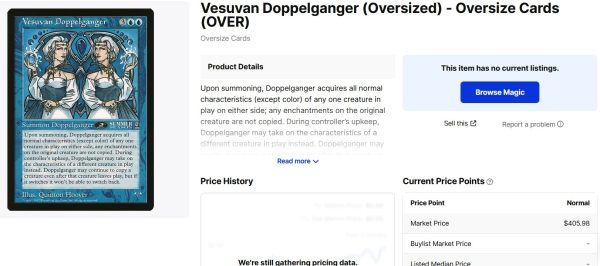
The Best of ONE: Lists, Rankings, and Made-up Trophies

Are you a Quiet Speculation member?

If not, now is a perfect time to join up! Our powerful tools, breaking-news analysis, and exclusive Discord channel will make sure you stay up to date and ahead of the curve.

While there is still some time left to play Phyrexia: All Will Be One (ONE), the advent of Shadows Over Innistrad Remastered and the upcoming March of the Machines is causing us to switch focus a little earlier than planned. In our time-honored tradition, we now send off an embattled, but misunderstood, format the way we always do: with a bunch of subjective lists and awards!

Archetype Power Rankings

  1. RG Oil: RG Oil features a murderer's row of top commons. Red provides access to some of the format's best removal; the creatures are strong, and range from aggressive to midrange. The haste creatures like Chimney Rabble and Furnace Strider are potent top-decks, and the litany of one- and two-drops make this deck feel extremely consistent. When this archetype is open, it has it all.
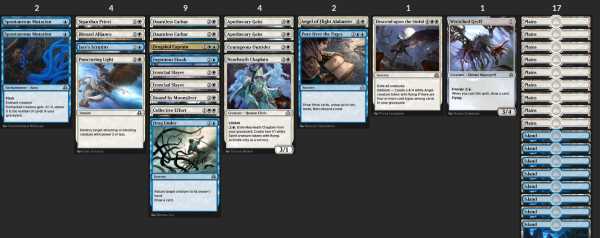
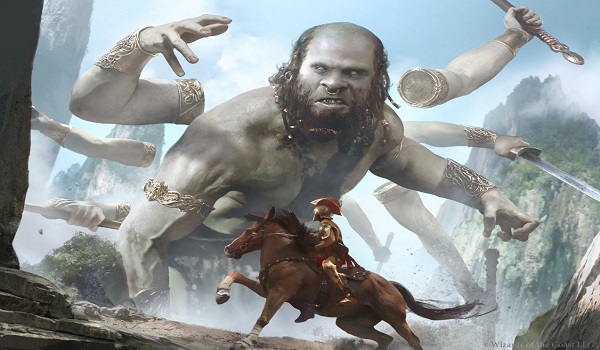
  2. Wx Toxic: The best Toxic decks get the most out of their white cards. Crawling Chorus and Flensing Raptor consistently deal early poison, and the deck doesn't stop there. Basilica Shepherd and Incisor Glider represent a lot of damage, while Planar Disruption and Indoctrination Attendant give the deck a lot of gameplay as well.
  3. RW Equipment: This deck benefits from using the two best colors. The synergies aren't as robust as in Toxic or Oil, but the deck has access to a lot of really good cards.
  4. UW Artifacts: This deck is a little finicky, but has some solid tools. Cards like Eye of Malcator are a bit of a liability, while Mandible Justiciar is an excellent two-drop. Chrome Prowler is under-drafted, and this deck gets the most out of it.
  5. The other red decks: Just having access to red cards goes a long way. While blue and black aren't ideal pairings for them, if you can get deep enough in red, it often doesn't matter.
  6. Sorry, Sultai: The Sultai trio struggles to keep up with the aggression in the format. That being said, when Gitaxian Raptors are wheeling, these decks can hold their own. The proliferate synergies don't matchup well in the format, but they're not nothing.

Color Rankings

  1. Red: Red's commons are deep and versatile. While the only red decks I really want to be in are RG or RW, the color is so deep that as long as any deck is mostly red cards, it feels fine.
  2. White: White has the most partners. As the format's most aggressive color, basically every other color can support its plan. Whether we are a white-based toxic deck, or leverage artifact creatures to beat down, starting off with white cards means we have a lot of options. Unlike red, however, the white cards are more specific to their archetypes. While many of the toxic cards are good enough for non-toxic decks, they lack the raw power level of the red cards.
  3. Green: There's a significant drop-off between white and green. Green pairs well with red, but after that has a hard time finding its footing. While it can be a decent support color, it is pretty shallow at common. That being said, uncommons like Cankerbloom, Evolving Adaptive, Armored Scrapgorger, and others raise the power level of any deck.
  4. Blue: A lot has been said on blue in the past weeks, but it still ranks fourth. Blue's defensive posture is a liability in the format, and while Gitaxian Raptor and Chrome Prowler are both strong, it has a lot of commons that are just too slow.
  5. Black: Black is inexcusably shallow at common, and lacks strong enough uncommons to work consistently.

The Uncommon Common

While the best common in the format is probably Hexgold Slash, that's not a card that really feels like an uncommon. This was the hardest format to select just one card for this award. Crawling Chorus was a personal favorite, and Chimney Rabble does a lot of damage. However, the Uncommon Common award goes to a card that single-handedly elevated the power level of its color.

There was an error retrieving a chart for Contagious Vorrac

Contagious Vorrac does a lot in this format. The body does a nice job holding the fort, and while this isn't a format that I wanted to splash in, this card made it easier. Additionally, having the flexibility to proliferate a poison counter, while also adding oil to a Gitaxian Raptor or Evolving Adaptive, is a valuable piece of versatility.

The Gustwalker Trophy

This column has always recognized the value of two-drops. In this format, the rankings have fluctuated. Mandible Justiciar and Duelist of Deep Faith both have strong cases. The data points to Barbed Batterfist as the best performing two-drop. However, there's another red two-drop that I prioritize over the For Mirrodin! equipment.

There was an error retrieving a chart for Axiom Engraver

Axiom Engraver does a lot of small things that add up to a potent package of value. It's easy to overlook the ability to sift through extra lands or make sure we hit them on curve. It gets value off of proliferate and helps power up the oil synergies. However, its synergy with the scourge of the format puts it over the top.

The Scourge of the Format

It's the middle of a game that's stalled out. We're trading tactical attacks with our opponent, trying to manage the board as best we can. We're both trying to scrape out small pieces of value, and then out of nowhere, the game ends. Because of a common.

There was an error retrieving a chart for Hazardous Blast

Hazardous Blast is the type of card that can end a game on the spot, and in such an aggressive format, it breaks parity like no other card. When we're in a close game, it's the number one card we're hoping to avoid. People probably play it in too many decks; however, Axiom Engraver can help us bin it when it doesn't immediately win the game. Because of cards like the Engraver, we can fit this card into more decks.

This is a card that we want to be able to play around, but often times won't have the opportunity to. Sometimes it will win us games no other card can. Unfortunately, it will cost us some, too.

Common Removal Power Rankings

  1. Hexgold Slash: Cheap removal is so important in this format, and the fact that this thing can knock out four- and five-drops in the right matchup makes it especially valuable.
  2. Planar Disruption: While enchantment-based removal is a liability, the aggressive nature of the format lessens the drawbacks. Arrest for two mana without drawbacks is probably the best this effect has ever been.
  3. Anoint with Affliction: Great removal in a really bad color.
  4. Ruthless Predation: Epic Confrontation still helps green decks snowball their advantage one set later.
  5. Volt Charge: I expected this card to be a top common, but it underperformed. This format was too fast for this damage-to-cost ratio. The proliferate was nice, but rarely mattered.
  6. Whisper of the Dross: This card was a poor man's Hexgold Slash, but Slash was really that good. I wanted at least one of these in all my black decks. It helped us take back the play, and the proliferate matters in black.
  7. Mesmerizing Dose: This card rose up my pick order towards the end of the format. My best blue decks did not want the double blue, but when they did, this card was fine. The decks that want this card make great use of the proliferate.
  8. Charge of the Mites: This was a decent effect in my heavy aggro white decks. While I never happy to include this card, it still could move threats out of the way.
  9. Annihilating Glare: There's not a ton of extra material in the format. Still, this kills anything.
  10. Molten Rebuke: Too expensive, and better off in the sideboard.

The Myron Larabee Award

This is a new award for our sunset ceremony. The Myron Larabee award is named after the Jingle All The Way antagonist, precisely crafted by the veteran thespian Sinbad. At the climax of the film, Myron falsely claims victory, attributing his success to his "bigger brain." Soon after, inevitable hilarity ensues as our namesake villain falls victim to fate.

Thusly, this award goes to a card that often underperforms, but occasionally, in its greatest moments, makes us feel like geniuses. The inaugural Myron Larabee Award goes to an infinitesimal arachnid: Copper Longlegs.

There was an error retrieving a chart for Copper Longlegs

This card could force action in the early turns and slow our opponents' development, and in its best moments, was a blocker that saved us damage, while contributing to our poison clock. Don't be mistaken, this card was mostly terrible. In its best moments it was a godsend, the touch of genius that put our deck over the top. For that, we salute the Spider.

Final Words and Format Rating

There were a lot of complaints levied against Phyrexia: All Will Be One. It is an aggressive format with demanding rules of engagement. However, adhering to those rules yielded domination. It's hard not to love a format when we're winning, and this was my winningest format since using 17lands. This format demands we play to the board early and often.

ONE did have some failings, and ones that may have made the format look patently terrible to those not following its strict playbook of aggression. Red and white were significantly better than blue and black. This discrepancy in power level made it too easy to go red and white, and that imbalance is an overall negative.

The aggression did a nice job painting over some of the absurd bombs in the format, but it would have been nice to see slower decks have more of an opportunity. The black proliferate theme felt specifically underdeveloped.

Overall, I give this format a C. It was a lot of fun, but not quite on the level of recent favorites like Dominaria United or Kamigawa Neon Dynasty. Here's hoping our coming limited formats provide a better experience... and, of course, plenty of trophies!

Want Prices?

Browse thousands of prices with the first and most comprehensive MTG Finance tool around.


Trader Tools lists both buylist and retail prices for every MTG card, going back a decade.

Quiet Speculation