menu

Deck of the Week: Skred Red

Are you a Quiet Speculation member?

If not, now is a perfect time to join up! Our powerful tools, breaking-news analysis, and exclusive Discord channel will make sure you stay up to date and ahead of the curve.

Well, I realize it's been a long hiatus since our last Deck of the Week, but we're back nonetheless. I spent much of the weekend tuned into coverage of Grand Prix Dallas, and if most of the on-camera archetypes were boring mainstays and known quantities, the deck that took it down most certainly was not. As much as I was rooting for Ryoichi Tamada to take his innovative Pyromancer Thing deck to another Top 8 berth, the weekend undoubtedly belonged to Skred Red.

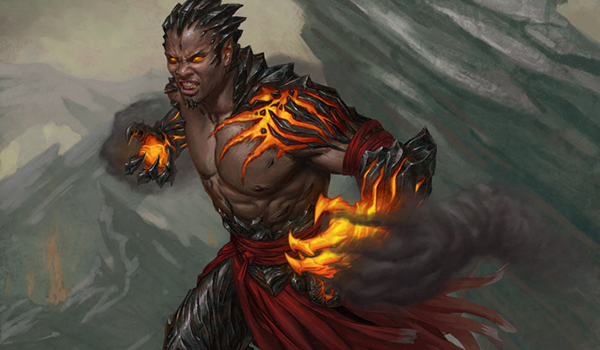
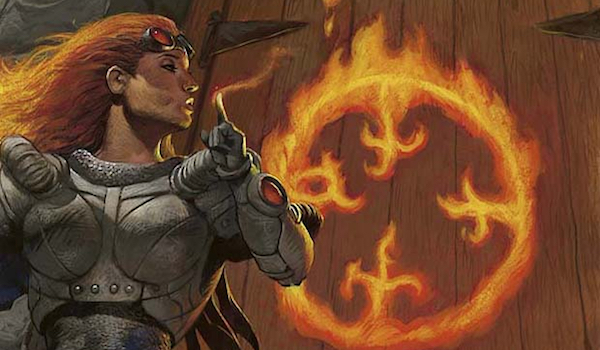
koth-of-the-hammer-cropped

Long-time Modern aficionados won't be wholly unfamiliar with the likes of Skred Red, as it has existed in one form or another for a while. But while you might have run into it at your local FNM or piloted it to a plucky finish in an MTGO league, it hasn't exactly put up impressive numbers on the competitive scene. As near as I can tell, until this week its best showing was a 27th place finish at the Star City Games Open in Louisville. Yesterday it cracked the Top 8 of a major event for the first time, before going on to win the whole thing.

[wp_ad_camp_1]

Skred Red, by Kevin Mackie (1st, GP Dallas)

Creatures

3 Pia and Kiran Nalaar
3 Stormbreath Dragon
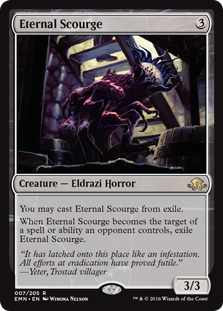
2 Eternal Scourge

Artifacts

1 Pyrite Spellbomb
4 Relic of Progenitus
4 Mind Stone
1 Batterskull

Enchantments

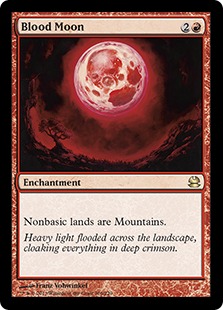
3 Blood Moon

Instants

4 Lightning Bolt
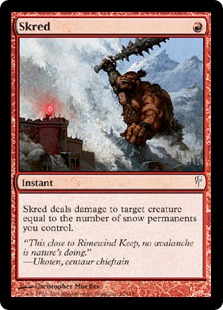
4 Skred
1 Magma Jet

Planeswalkers

4 Koth of the Hammer
1 Chandra, Torch of Defiance

Sorceries

3 Anger of the Gods

Lands

20 Snow-Covered Mountain
2 Scrying Sheets

Sideboard

2 Shattering Spree
1 Grafdigger's Cage
4 Dragon's Claw
2 Goblin Rabblemaster
4 Molten Rain
2 Ricochet Trap

The most obvious draw to playing this deck is unsurprisingly its namesake, Skred. On the weekend Kevin Mackie reporting using the one-mana instant to take down a Platinum Emperion and a 7/8 Kalitas, which is starting to sound shockingly similar to a Swords to Plowshares with no downside. The true cost, of course, is hidden in the hoops you must jump through to put it in your deck in the first place. As the only Snow duals available are woefully underpowered for the Modern format, this effectively translates to a mono-colored deck.

That said, the all-Snow-Covered Mountain manabase brings other benefits with it. I don't think that Scrying Sheets is the kind of powerhouse card draw engine you'd generally write home about, but a resolved Koth of the Hammer sounds quite formidable. This is truly the only deck I could fathom sleeving up Koth, as even the "mono-red" burn deck of the format nearly always splashes for Lightning Helix, Atarka's Command, or (back in the day) Bump in the Night. SkredSkred Red also puts in the work to mitigate that steep four-mana casting cost with the full complement of Mind Stones.

If you ever ultimate him, good luck to the opponent—they can expect an output of 4-5 damage per turn, easily. Koth and Stormbreath Dragon let this deck laugh off planeswalkers like Liliana of the Veil, and turn the corner nice and quick when it's time to kill the opponent. This much haste might make combat math tougher too, although my guess is that Skred Red finds itself on the back foot more often than not.

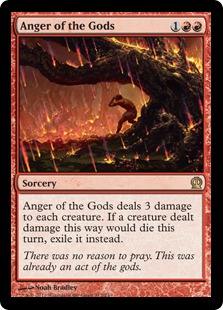
The other payoff for running mono-red is access to a Blood Moon that will never, ever, punish you. In addition to Blood Moon, the deck has access to a variety of disruptive tools, primary among them Relic of Progenitus and a sweeper in Anger of the Gods. That gives Mackie some nice maindeck tools against graveyard-based combo and creature decks alike. All in all, it looks like decks that aim to attack life totals directly will have a tough time fighting through all of the removal. And Burn has to contend with a full four-of Dragon's Claw out of the board—ouch. That makes this deck well positioned against a wide swath of the field right now, dominated as it is by linear creature strategies.

What's in a Threat?

Scouring old tournament results for Skred Red finishes reveals a wide diversity of threats across different lists, which makes sense considering how little attention it has received over the years. In other lists we see appearances by Boros Reckoner (often alongside Blasphemous Act), Demigod of Revenge, Goblin Dark-Dwellers, and even Trading Post. Mackie has a relatively streamlined version, the product, as he explained in his deck tech on the mothership, of several weeks of concerted tuning. Eternal ScourgeThe two headliners here are Stormbreath Dragon and Pia and Kiran Nalaar, joined by two copies, of all things, of Eternal Scourge.

The Nalaar family needs no introduction, in Modern or elsewhere. Here they serve a similar role as in Grixis Control strategies, stabilizing the board against all manner of threats, flying or otherwise, while playing the value game in matchups where that's relevant. That second purpose is largely what Eternal Scourge is up to in this deck, threatening to recur indefinitely off of a Relic of Progenitus and grind down the kill-spell decks.

Stormbreath Dragon seems like an odd inclusion, but if you ignore its hefty mana cost, the stats line up well in format saturated with Path to Exile, Lightning Bolt, and Abrupt Decay. Between the Mind Stones, Koths, and the Chandra, Torch of Defiance, it's not unthinkable to get to seven mana for a monstrous activation either.

A Metagame Choice

Archetypally, Skred Red is kind of like a mono-red Jund. With 4 Bolt, 4 Skred, Anger of the Gods, and threats that can stabilize, you're on the kill-everything plan in some matchups and the pressure-your-life-total plan in others. I imagine this is somewhat determined by the particular opener you fan out in any given game, which is likely also one of the deck's major weaknesses. Blood MoonWith no card filtering, a hand of Blood Moons and Stormbreath Dragons against an aggressive deck might fall flat, whereas a pile of Skreds does little against a control deck. Tarmogoyf and Liliana of the Veil, on the other hand, are flexible enough to be useful, if not perfect, in most situations.

Like with any midrange deck, post-board configurations of Skred Red will be much better suited to address the matchup in question. That said, I don't envy the Modern player who has to sideboard with access to just one color (unless it's white).

The one glaring weakness appears to be spell-based combo and blue counterspells—and Mackie was explicit in stating how a metagame full of such decks is bad news for Skred Red. But if you expect to face lots of matchups where 8 Bolt effects shine, the deck might be a reasonable under-the-radar choice.

Insider: To Redeem or Not to Redeem

Are you a Quiet Speculation member?

If not, now is a perfect time to join up! Our powerful tools, breaking-news analysis, and exclusive Discord channel will make sure you stay up to date and ahead of the curve.

Welcome back, readers! I don't know how many of you are paper-only players like myself, but I definitely advise you to review the weekly MTGO Market Reports. MTGO seems to develop a lot of the metagame changes and trends that we then see mirrored in the paper metagame a bit later. This means that smart players who find MTGO trends quickly can buy into strong speculative investments earlier (and typically at a lower price).

That being said, there's a lot of work/effort behind that, and for someone who doesn't really use MTGO it can be a bit confusing at times. There is, however, one aspect that isn't too difficult to accomplish that can be quite lucrative if you pay attention. I'm talking about redemption, of course.

Running the Numbers on Redemption

One of my favorite parts about the weekly Market Report is the table showing the MTGO set buy price, next to the TCG Low and TCG Mid prices. The focus of the author, Matt Lewis, tends to be on the price trends of the sets in relation to their previous prices (reflected in weekly and monthly changes). However, my interest lies in the difference between the MTGO set price and the TCG Low/Mid prices.

It's important to keep in mind that in order to redeem sets on MTGO you end up paying Wizards of the Coast an additional $25 per set redeemed—so you only want to consider doing this when the MTGO set price is considerably lower than the TCG Low price. To determine that, I typically look at the MTGO set price as a percentage of the TCG Low and Mid prices.

Shadows over Innistrad

For an example, let's look at Shadows over Innistrad from the Oct 26 report:

shadows

MTGO price - $60
TCG Low price - $109
TCG Mid price - $206

Set value as compared to the TCG Low/Mid prices:

MTGO percentage of TCG Low - 55%
MTGO percentage of TCG Mid - 29.3%

Now let's factor in the $25 per-set redemption fee and do our numbers again:

Percentage of TCG Low (with redemption fee) - 78%
Percentage of TCG Mid (with redemption fee) - 41%

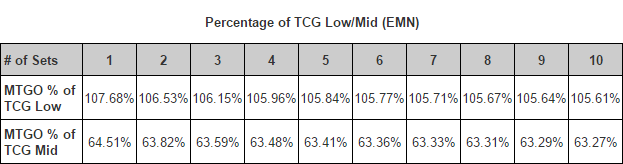
Now we have to factor in shipping costs, which is a flat $2.99 for any number of sets. (The official Wizards page on redemption doesn't specify a limit but does say that it works for "a hundred sets.") So this fee affects your percentage differences, but it's amortized over the number of sets you redeem. The more you redeem, the less it affects the cost on a per-set basis. You can see this in the chart below:

emn-by-percentage

From these data, your potential profit can be calculated by subtracting the percentage difference from the price you tend to sell cards at (whether that be TCG Low/TCG Mid, or something else).

But that makes one huge assumption: that you'll actually sell every single card in the set at said prices—a pretty bold assumption indeed. You are far more likely to sell a few of the highly liquid cards while the others don't move. This is why it's critical to understand what in the sets is actually driving the price.

What we're looking for is a small number of cards soaking up a large percentage of the set value. If five cards make up 90% of the set value, then selling just those five cards may well hit our break-even point (or even make a small profit). Let's look back at Shadows over Innistrad and highlight the top five cards (and see how much of the set's value they make up).

Card Low Mid % of Low % of Mid
Nahiri, the Harbinger 14.91 18.99 13.68% 9.22%
Archangel Avacyn 16 18.99 14.68% 9.22%
Thing in the Ice 6.58 8.71 6.04% 4.23%
Arlinn Kord 5.74 8.41 5.27% 4.08%
Jace, Unraveler of Secrets 4.82 7.99 4.42% 3.88%
Total 44.08% 30.63%


There was an error retrieving a chart for Nahiri, the Harbinger
There was an error retrieving a chart for Archangel Avacyn

This means that if you sell the top five Shadows over Innistrad cards at TCG Low, you'll have made about $48, but you had to invest over $78 (the exact number again depends on the number of sets redeemed). Thus you are still in the red. If you were able to sell them at TCG Mid, you still would have only made around $63, which is $15 short of your initial investment.

To break even selling at TCG Low, you'd need to sell the Sorin, Grim Nemesis ($4.49), Relentless Dead ($3.8), Declaration in Stone ($3.82), Tireless Tracker ($2.86), Prized Amalgam ($2), Traverse the Ulvenwald ($2.3), Olivia, Mobilized for War (1.49), Game Trail ($1.78), Westvale Abbey ($1.75), and Foreboding Ruins ( $1.11). This would land you around the $85 mark.

To break even on the Mid you'd need to sell the Sorin, Grim Nemesis ($6.76), Relentless Dead ($7.49), Declaration in Stone ($5.75), and Tireless Tracker ($4.32). That actually puts you in the slightly in the green.

So the key takeaway here is to determine how easily you can move the more valuable cards in a set and for how much.

Eldritch Moon

Now let's do the same breakdown for Eldritch Moon.

emoon

MTGO price - $112
TCG Low price - $130
TCG Mid price - $217

Set value compared to the TCG Low/Mid prices:

MTGO Percentage of TCG Low (incl. redemption) - 86%
MTGO Percentage of TCG Mid (incl. redemption) - 51.6%

The table below factors in both redemption and shipping costs.

soi-by-percentage

If you sell on the Mid there's some potential, but let's look at the top five cards of the set and see when you'd break even.

Card Low Mid % of Low % of Mid
Liliana, the Last Hope $32.92 $38.86 25.32% 17.91%
Grim Flayer $16.00 $18.00 12.31% 8.29%
Emrakul, the Promised End $14.00 $19.38 10.77% 8.93%
Selfless Spirit $6.01 $9.60 4.62% 4.42%
Gisela, the Broken Blade $7.59 $9.00 5.84% 4.15%
Total 58.86% 43.71%


There was an error retrieving a chart for Liliana, the Last Hope
There was an error retrieving a chart for Grim Flayer

Despite the fact that Liliana, the Last Hope soaks up a lot of the set's value, if you sold the top five cards at TCG Mid you still wouldn't break even. In fact you'd need to sell all five of those, as well as Tamiyo, Field Researcher, Ishkanah, Grafwidow, Spell Queller, Collective Brutality, Elder Deep-Fiend, Collective Defiance, and Eldritch Evolution to be right around the break-even point.

Conclusion

If you own a store with a lot of active Standard players, redeeming sets online might make a lot of fiscal sense. But it is heavily dependent not only on the MTGO set price, but also the price breakdown of the cards in the set.

When you see a big divide between the MTGO price and the TCG Low/Mid you might want to take a closer look at the set. If a few high-demand cards are soaking up a lot of the set's value (and you think you could sell them relatively easily), then redemption is an option.

For an example, about a month ago redeeming SOI sets was a better proposition. At that time they were only 53 tix on MTGO, and you needed to sell just the top eight cards to break even—everything after that was profit. This is a great way to make extra cash, keep your store's stock well maintained, and leave you with a lot of random bulk that may or may not be profitable down the line.

One final caveat is that TCG Low isn't a really great figure to look at, because the lowest-priced cards almost always have really high shipping costs. So that's not the true cost. However, there are a lot of Facebook selling groups that use TCG Low (so there are people who sell at those prices regularly and move cards rapidly because of it).

Insider: High Stakes MTGO – Oct 30th to Nov 5th

Are you a Quiet Speculation member?

If not, now is a perfect time to join up! Our powerful tools, breaking-news analysis, and exclusive Discord channel will make sure you stay up to date and ahead of the curve.

Hello, and welcome back for another High Stakes MTGO article!

Last week was undeniably a very good one for my bankroll. After two months of mixed or clearly disappointing results I closed half a dozen positions for over 600 tix in benefits. Only the Oath of the Gatewatch boosters I sold were negative—just one of the eight positions sold last week—a rate I hadn't see in far too long.

Modern prices have not fully recovered, but we're entering a period of likely gains beginning with the filled-to-capacity Grand Prix in Dallas. Things should get much better soon for Modern speculators. A lot of specs are already doing better now; almost all of my most recent Modern picks are up, and I've even sold a few of them, as you'll see below. I'm also trying to be more conservative with my objectives, which has the double advantage of closing specs faster and with a higher rate of success.

The positive trend in Standard has also continued this past week. Singles, foils, full sets and boosters were on the sales menu, at excellent profit margins. The value of an Eldritch Moon full set is nicely mirroring the trend we observed for Oath of the Gatewatch, amounting to, finally, a great full set spec.

On the topic of full sets, Battle for Zendikar is about to make a improbable comeback. As you read these lines I might even be in a position to sell my BFZ sets for more than what I (over)paid. A month ago BFZ sets were valued a 49 tix; they are now over 72 tix and firmly on their way to top the 78.5 tix record established last June.

Let's look at all of this in more detail; don't forget to take a look at the live portfolio if you want to see my moves as I make them.

Buys This Week

op

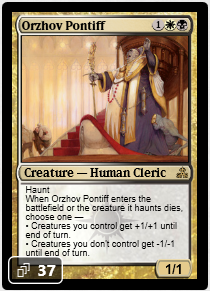
Once a silver bulet in the almighty Pod deck, and omnipresent in the sideboard of WBx decks, the competitive applications of Orzhov Pontiff are currently near zero. At 1 tix earlier last week, a two-and-a-half-year low, the price of the Pontiff totally reflects its weight on the current Modern metagame.

When nobody wants it is exactly when I want to buy it. It might take a few months for this card to spike again at 5 tix or higher, but as long as Orzhov Pontiff can dodge a reprint in Modern Masters 2017, the potential remains. I'm ready to add a few more playsets if the price gets lower again.

dtk

A second round of Dragons of Tarkir full sets. I'm in for six more full sets for a total of sixteen now. The periodic rise and fall of Collected Company is what creates the little oscilliations we see for the online price of a DTK full set, while the paper is still dead flat at the moment.

November and December are usually when freshly-rotated sets start to rise in price again. Let's see where DTK can go from this extremly low price tag for a third large set.

ori-sets

I'm also in for four more Magic Origins full sets. Unless prices significantly drop further, I think I have what I want for both ORI and DTK full sets. The four other core sets with complete records (Magic 2012, 2013, 2014 and 2015) show an increase in their full set value between January and April after their rotation out of Standard. With most of the price hike happening in January, that is my time target to sell my ORI full sets.

lotv

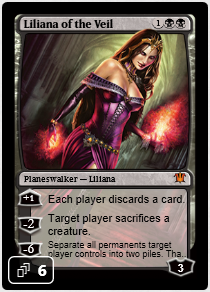
Innistrad flashback drafts end this Wednesday. Following these two weeks of flashback drafts, this iconic version of Liliana fell from almost 100 tix to 70 tix, a bottom she hadn't reached since January 2015.

Liliana of the Veil has been very consistent price-wise for the past three years, despite Jund falling in popularity in Modern. With several Modern events lining up for the next two months, I'm betting Liliana of the Veil can regain 15 to 25 tix in a short period of time. That could represent a middling gain from a percentage point of view, but this is an opportunity to make around 100 tix with only a playset and a half of cards traded.

Sales This Week

As Dredge rises in popularity in Modern, weapons to fight the graveyard-based strategies do too. I bought this Leyline back in September after Magic 2011 flashback drafts and I think now is a good time to safely withdraw from the position with a comfortable profit.

Leyline of the Void is very close to its record high. I would rather sell now than be caught by a disappointing Dredge performance during Grand Prix Dallas or, more likely, by an innevitable adjustment of the Modern metagame.

Collected Company is certainly here to stay in Modern, as the card is extremly powerful and flexible enough to be included in several archetypes. Even if I do believe that Company will have a trajectory similar to Cavern of Souls, the road will be bumpy and the price will most likely cycle up and down a lot.

For now, I'm fully satisfied doubling my bet on a position I bought not even a month ago. I'm certainly ready to buy Collected Company again if the price comes back down closer to 7 tix.

In the vein of Leyline of the Void and Collected Company, I sold the rest of my Gemstone Mines because I considered them to have done their job. There's still a potential for 2 or 3 more tix, but the card would need to go to the top again.

I was only in for this spec to take advantage of the sharp dip that Mine experienced two weeks ago. After a lot of disapointment in Modern positions in these past two months, I'm more looking to secure profit than take risks.

Standard can be very volatile and opportunities may not present themselves twice. Not only did I buy this BFZ land at a higher-than-ideal price, but I also missed two decent opportunities to get out in April and August. I could not seriously decline another opportunity to sell my Prairie Stream for a good price.

If the hits and misses with my enormous ORI painland spec taught me one thing, it's to try to close the majority of large positions whenever possible, without constantly asking for more. You never now how long a price hike will last or whether another will occur. A 48% profit on 100 copies of a 300-tix position sounds like a good number to me.

I also sold 35 more copies of the black-red BFZ land this past week. With only 18 copies left to go, the price of Smoldering Marsh has gone back to 2.5 tix. Will it head back in the 3 tix range? That's exactly what I just talked about. It may have been safer, faster and better just to sell everything here while I could do so around 2.8 tix.

fgf

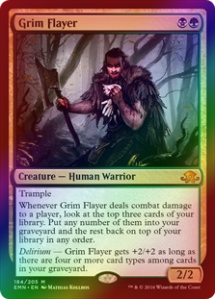
Although it's always a few tix behind, the foil version of Grim Flayer is naturally following the trend of its regular counterpart. The ceiling seems to be 25 tix for the regular version at the moment, while the limit for foils is suprisingly only 21 tix.

Having taken little to no risk on that spec, I sold my last two copies of foil Grim Flayer for 18.8 tix each, closing this position with an average profit of 120%. That's all I needed here.

eldritch moon

Finally a largely postitive speculation with a full set. As anticipated, Eldritch Moon follows in Oath of the Gatewatch's footsteps in terms of price trend, with the price of an EMN full set rising from 90 to 138 tix in less than a month.

If EMN prices are not exactly the same during comparable periods (OGW was around 75 tix before the SOI release and rose to 120 quickly afterwards), the price evolution in terms of percentages is analagous. And if OGW is any indication, there's not much else to expect from EMN full sets. That is why I decided to sell my EMN full sets now to move on to something else.

ogw

Along with BFZ boosters, I have no hope of closing OGW boosters with a profit. As they are doing a little bit better pricewise than a month ago, I'm selling part of my stock a little bit at a time. Still very far from the 3-3.5 tix price range I wish they were in.

On My Radar

The next two months should be interesting because both Modern and Standard prices should rise, but fairly boring at the same time because nothing very special should happen. I'll try to sell my BFZ full sets at a profit and jump on any Modern opportunities—that's as targeted as my goals can be for the next few weeks.

There is one thing I'll look at closer to see if it promises any speculative opportunities: mythics from DTK and ORI.

These are two large sets from the second part of the Standard season. In the past, certain third-set mythics with both casual and competitive appeal have provided nice returns on investment if you were able to pick them up early enough. Sliver Hivelord, Athreos, God of Passage, Ajani, Mentor of Heroes, Avacyn, Angel of Hope, Entreat the Angels, Gisela, Blade of Goldnight, and Kalonian Hydra are examples of this trend that could be exploitable.


Thank you for reading,

Sylvain

Insider: MTG Speculation & Setting Priorities

Are you a Quiet Speculation member?

If not, now is a perfect time to join up! Our powerful tools, breaking-news analysis, and exclusive Discord channel will make sure you stay up to date and ahead of the curve.

This week I want to start off by making an exciting announcement: my spouse and I are expecting another baby at the end of January! We are truly blessed, and I could not be happier.

This life-changing event is incredible for our family, and it will necessitate some changes in the near term. The impact to my Magic speculation will most certainly be non-negligible. While I focus internally on family during this exciting time of change, I will have to turn a bit of a blind eye to some components of MTG finance. That doesn’t mean I’ll neglect it altogether, mind you. But I must recognize that my agility in the scene will be much reduced.

Unfortunately, that means trouble thanks to the current MTG landscape. With rampant speculation and buyouts, rapidly changing Standard formats, Expeditions in every set, and constant reprints, the environment for speculation is filled with landmines. One needs to be most agile and in-touch during this time of change—not the opposite. This poses a bit of a conundrum.

Fortunately, I’ve already circled the wagons. Most of you already know that I’ve consolidated most of my collection into three buckets:

  • Old School cards (Alpha, Beta, Unlimited, Arabian Nights, Legends, Antiquities)
  • Vintage (in the form of a Vintage deck)
  • Reserved List cards

Rest assured I won’t write about these items again this week. You all know about these bets, and I have no intent to remind you. Rather, this week I want to share some of the exceptions to the rules above.

That is, I want to share a few of my remaining bets that fall outside of the categories above, along with the reasons I remain in those investments despite changes in the Magic landscape and my personal life. After all, to remain in my portfolio must mean I have strong belief in these positions’ upside over the next couple of years.

Sealed Booster Boxes

In the past I have had a love-hate relationship with booster boxes. When I initially dove into the sector, I was met with tremendous success. I made significant profits on Unhinged booster boxes, and it seemed I couldn’t go wrong from there. Onslaught, Zendikar, New Phyrexia, Time Spiral, Planar Chaos, and even Coldsnap all paid off handsomely.

Then came Innistrad and Return to Ravnica. The former I lost patience with prematurely, while the latter still would not have paid off had I kept them an additional two years. The losses incurred on RTR were the last straw—my booster box investment days were over…

…and then I saw a video by Rudy of Alpha Magic.

He had a tremendously compelling argument for Origins booster boxes. Being the last Core Set ever, the set contains many iconic and powerful cards, including Hangarback Walker, flip planeswalkers, and painlands. Most notable of all, is of course Jace, Vryn's Prodigy.

There was an error retrieving a chart for Jace, Vryn's Prodigy

After finding a favorable price on a few boxes, I suddenly found myself sizably exposed to the sealed product. Even if I decide to sell other chunks of my collection, these boxes will likely remain stored on my shelf for a couple years to come. They should offer fairly safe and steady returns with absolutely no further effort required on my part.

It will literally follow these three steps: step 1) put boxes on shelf; step 2) wait 2-4 years; step 3) profit. Only the death of Magic or rampant reprinting of flip planeswalkers (unlikely) would hurt this investment. That’s a risk/reward equation I can get behind.

Penny Stocks

I don’t talk about pure speculation all that often—I don’t mean buying up-and-coming Modern staples, mind you. I am referring to true bulk rare or near-bulk rare cards that have a chance of steady appreciation given enough time and the right catalyst.

To me, these are a form of gambling. When dealing in bulk rares or near-bulk rares, you are essentially throwing your money away until that possible day in the distant future when prices jump. This is definitely not my traditional style, but even I have fallen prey to a few temptations over the past couple years.

The largest quantity I am gambling on is Crucible of the Spirit Dragon.

There was an error retrieving a chart for Crucible of the Spirit Dragon

As you can clearly see from the graph above, this bet has not paid off at all. I purchased around 20 copies while Star City Games had them on sale for $0.25 each, and the gamble has yet to pay off. But I haven’t lost hope—this is a land that can be used to cast dragons. Casual dragon players may take a liking to this card eventually, and with such a minimal buy-in I’m okay waiting.

The next card I’ve picked up for speculation purchases should have much more potential: Beck // Call.

There was an error retrieving a chart for Beck // Call

This rare has two things going for it. First, it’s from Dragon’s Maze, which means not a lot of this card was opened relative to other contemporary sets. Second, the card has made sporadic appearances in Modern events, taking part in some Modern Elf decks.

While the strategy clearly isn’t consistently competitive enough, there does remain some lingering chance it breaks out as more cards are printed. One strong showing in a Modern Open, and the card will certainly gain legs and run higher. I’m content to wait on this one.

The next group of cards I plan on holding are my collection of Nephilim. I purchased a couple playsets of all five creatures when Commander 2016 decks were announced to be four colors, and so far the bet still has promise. It’s not that I’ve made significant profit on this bet, but I’m lucky enough to have dodged reprint at least.

There was an error retrieving a chart for Ink-Treader Nephilim

What’s more, the hypothesis that four-colored decks would spark renewed interest in Nephilim has been unfolding as planned. The graph above indicates there is some upward momentum here—not buyout type of traction, mind you, but certainly price appreciation. Once players begin to crack the 2016 Commander decks and make improvements, I suspect a bunch more of these Nephilim will be purchased.

They aren’t necessarily good (I personally think they are), but they do fit the theme in an obvious way. I’ll hold onto my copies for a few more months at least and see where things go—even a $1 buy price on them would mean profit from where they are today.

The last card I will hold for long-term potential is technically on the Reserved List—so it’s kind of cheating—but I also see upside for the card beyond the simple fact it remains on that list of non-reprintable cards. I alluded to it last week but it merits repeating: Rainbow Vale.

There was an error retrieving a chart for Rainbow Vale

As I mentioned last week, the card offers a new and different way to enjoy pack wars and related formats. The card also has classic favor and amazing artwork. The recent upward trajectory as shown in the chart above solidifies my belief in this card’s long-term projection, and I intend to hold my copies for years to come.

Wrapping It Up

Don’t get me wrong—I’m certainly not delusional enough to think that I will be able to walk away from the game of Magic altogether. Far from it.

Instead, I think the next few months or so will be about collection consolidation. Given that January will bring along with it new responsibilities and new priorities, I believe this is the wisest course of action to protect my investment. But while I certainly will focus most of my collection’s value in Old School and Reserved List cards, I won’t be liquidating everything outside of these categories.

The exceptions to the rules are certainly noteworthy, and it is this reason I decided to share them with you. Origins booster boxes remain a steadfast investment in my MTG portfolio. In addition, I’ll surely hold onto some penny stock bets I’ve made over the years. And of course, I’ll always hang onto my Jaya Ballard, Task Mages. I didn’t mention those earlier because they’re not really investments—they are a personal collection I plan on keeping. But I did want to make sure I at least mentioned them.

Perhaps after another year or so of nonstop set releases and reprints, Wizards of the Coast (Hasbro) will shift strategy again. Who knows? I just know that I want to be carefully positioned in the meantime. The uncertainty and fluctuations give me enough reason to pause here and shift focus.

For someone who intends to spend a little less time on MTG speculation in the near future, this is certainly the best way to protect my investment while still maintaining some exposure to the MTG market for the long term. I am not saying I disbelieve in MTG finance as a worthwhile alternative investment going forward. But I do believe the easiest ways to make money have shifted and I need to make sure my portfolio adapts accordingly.

I would suggest you consider the same for you, depending on the stage of life you’re in. Making money in MTG is becoming more and more about collection buying, bulk picking, and agile card-flipping. These each take up significant amounts of time, and I’ve decided for myself that this was not how I wanted to spend my time.

Think about where you want to allocate your time, and plan a portfolio deliberately—one that best reflects your own interests and personal commitments. After all, if we’re making money in Magic but are also sacrificing more important components of life, then why are we pursuing this pastime in the first place?

…

Sigbits

  • Singing Tree has been very hot lately, though outside of being on the Reserved List I’m not sure why. Don’t get me wrong, I enjoy the card’s flavor and classic feel. But I’m not sure enough people feel the same way for the card to merit a $49.99 price tag at retail. Perhaps it is enough, given that Star City Games has just one SP copy in stock. Either way, I may be looking to sell my copy soon—nostalgia is fun and all, but if I can sell the card for $40+ after paying under $20, I think I’d be reckless not to take profits.
  • Wrath of God has been printed a million times. The card has shown up in so many sets, and it's absolutely baffling that it still maintains a price tag of a couple bucks. But there’s only one set where Wrath of God is completely sold out at Star City Games: Unlimited. This is likely due to Old School demand, and it’s definitely noteworthy. I’d fully expect a rise in price of Unlimited copies in the near future due to this demand.
  • Another Old School card that jumped significantly lately is Ali from Cairo. I remember when the card retailed in the $40 to $50 range. Now Star City Games has just two Near Mint copies in stock at $99.99. Again, I’m amazed that collector interest and Old School play is enough to move the card that much but the data doesn’t lie. This is another one I may look to sell in the near future because the card is likely to stagnate in price for a while now that it has reached a new plateau.

High Stakes MTGO – Oct 23rd to Oct 29th

Are you a Quiet Speculation member?

If not, now is a perfect time to join up! Our powerful tools, breaking-news analysis, and exclusive Discord channel will make sure you stay up to date and ahead of the curve.

Hello, and welcome back to High Stakes MTGO!

Finally, things are going better for me and my bankroll. Although still farily low compared to a few months ago, Modern prices have stabilized and some are even generating me some tix now. Hopefuly we are done with bad news for speculators regarding Modern, as I'm counting on recouping some of the losses accumulated in October.

Fortunately Standard is currently pulling my bankroll forward. Many singles are heading up and all my Standard full set positions are doing great, or in the case of Battle for Zendikar full sets, recovering from the bottom of the pit. The main protagonists of our current Standard metagame seem to have been determined, although their relative dominance will probably be refined over the months to come. Any changes in the metagame could signifiy both buying and selling opportunities, but it may also lead to lossses for speculators not ready to adjust.

Unlike Modern, where most cards cycle up and down, cards in Standard may cycle down and never recover from it. Whenever a good opportunity occurs, selling and never looking back is often better than waiting for a hypothetical better opportunity. Doubling up is often a very good deal with Standard positions, and rare are the positions that sustain a price spike in the long run. After all, Standard introduces a new set every three months.

Let's review my moves this past week. The latest moves from my portfolio can be seen here.

Buys This Week

dtk-sets

The paper value of a set of Dragons of Tarkir has been virtually flat for two weeks now and is likely to have found its post-rotation (and absolute) floor.

On the other hand, the online version of a DTK full set has been at an all-time low for only a week. As Matt commented in last week's MTGO Market Report, DTK dropped to a really low price and now might be the best time for some post-rotation speculaton. With all the successes we know of for third-set specs, I'm expecting DTK to yield good profit as well.

ori-sets

Led by Jace, Vryn's Prodigy, the value of online Magic Origins full sets seems to have rebounded from a bottom found two weeks ago. The paper value of ORI full sets is not yet as flat as DTK ones, but I think it's a great time to get in here.

For both DTK and ORI full sets, I haven't yet commited a large amount of tix. I'll likely continue to buy more sets over the next few days if prices decline further or stay at the same low levels.

mt

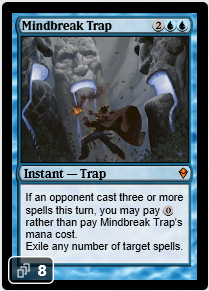
Following Zendikar flashback drafts, I bought 26 copies of this trap at the not-so-low price of 4.5 tix per copy. Mindbreak Trap was dragged down below 3 tix in the wake of the introduction of the Treasure Chests.

This card only has narrow applications in eternal formats. But historically it spikes once a year or so, and has a tremendous potential with a ceiling around 20 tix. I'm trying to be ready for the next spike—I'll be fully satisfied if this card only reaches 10 tix the next time it's in demand.

Sales This Week

After Grand Prix Kuala Lumpur, W/U Flash decks came out to be very dominant. The future of B/R Delirium decks and Mindwrack Demon was not so bright and I decided to sell my copies of this demon while I knew I was making a profit.

However, starting with GP Providence, B/G Delirium decks have progressively become more popular. By now they're certainly filled the gap that separated them from W/U Flash and W/R Vehicles. Although Mindwrack Demon is not played in all variants of B/G Delirium, this card could have more upside than I thought. If you are still holding some copies of this demon it could be worthwhile to wait a week or two before selling.

I sold all my stock of Spell Queller after the results of GP Kuala Lumpur. 80% profit in less than three weeks is always something to consider.

This Spirit is certainly a great card and we'll see it around for a while in both Standard and Modern. With the dominance of W/U Flash decks declining a bit, I'm not sure how high this card can rebound after the peak observed last week. As Nicolas also suggested last Friday, selling now is likely to be the best overall move for a card that has almost tripled from a month ago.

Dark Ascension flashback drafts are next in line. My Thalia spec never really got me anywhere and I missed the few selling windows that would have allowed me to exit this position with a marginal profit. Taking advantage of a little price hike last week, I sold about half of my stock while I was still positive.

I didn't feel like selling the other copies now that buying prices are lower. Prices will certainly drop further with the flashback drafts and I'll wait for the next price increase to sell the rest of my Thalia, Guardian of Thraben.

The Mines were a nice surprise of this past week. 7.3 tix felt like a good buying price point and I was not expecting the rebound to be so fast or high. Gemstone Mine is probably riding the trend of Dredge in Modern and I'm not going to complain about it.

Although rebounding to 15 tix is possible here, I decided to sell 8 copies this past week as the Mines were listed at 11.8 tix on MTGOTraders' Hotlist. After a lot of disillusions with Modern specs, I can't turn my back on 60% made in barely a week.

fgf

One more copy of foil Grim Flayer sold this past week. 16 tix seemed like a good price but it keeps climbing! Selling foils is always more tricky than regular cards and they're almost always under-priced these days. I have two copies left and 20 tix seems possible this week. An incredible ride with this little guy!

bfzlog

Thanks to Gideon, Ally of Zendikar, the value of Battle for Zendikar full sets is picking back up. The trend might sustain for a few more weeks but I don't want to take any more risk with these. Selling four sets just below my buying price was something I had a hard time imagining a month ago, so I'm not going to waste that opportunity. I still have 29 sets to go—hopefully the good shape of BFZ prices keeps up in November.

frf-sets

This full set spec never panned out. I could have sold these at a small profit several months ago but I guess I wanted more. Now it's pretty clear that I'm not going to make any tix on my Fate Reforged full sets. Now I'm looking for the best moment to sell the other 12 FRF sets I still own. I'm likely to sell them before the end of this year, whatever their price may be.

On My Radar

Innistrad has several of the most iconic and powerful cards for Modern and other eternal formats. With flashback drafts going these days, I will try to grab some of the staples at the best discount possible.

The only shadow hanging over these cards is that several have a decent shot at being reprinted next March in Modern Masters 2017. Although Modern prices are expected to regain some strength in the coming months, that doesn't leave us with a lot of room to turn ISD specs into a profit between now and the first spoilers of Modern Masters 2017.

I'm going to keep selling my Standard positions as they go. Standard is always susceptible to changes and nothing guarantees prices will make it through an initial spike.

More specifically, I'm on the verge of selling my Eldritch Moon full sets. They have performed pretty well and have reached my target. In addition, one month after the release of a new first set appears to be the good selling window to sell previous full set specs. No reason to be too greedy here, especially after the recent disappointing performanaces from other full set specs.


Thank you for reading,

Sylvain

Mo’ Mantis, Mo’ Problems: Going Green In Jeskai Aggro

Are you a Quiet Speculation member?

If not, now is a perfect time to join up! Our powerful tools, breaking-news analysis, and exclusive Discord channel will make sure you stay up to date and ahead of the curve.

In an article last month, I looked at a couple of my unsuccessful concoctions to see what went wrong. One deck I dissected was a Jeskai Aggro deck that used Honor of the Pure to get around Mantis Rider's measly 3 toughness. My conclusion was that the deck would be better off with Mutagenic Growth and a more dedicated aggro plan.

seal-of-fire-art-crop

Eight days later, Jeff Hoogland's own Jeskai Aggro deck was profiled on Star City Games. His adoption of the full four Mutagenic Growth and decision to compliment Rider with already-playable creatures that also benefited from the instant fell in line with how I had begun to feel about Mantis Rider decks in Modern. Jeff didn't exactly set the world on fire with his performance at the Open, but seeing Mantis Rider get some love on the big stage still re-piqued my interest in the strategy.

Today we'll look at the tweaks I've been making to Jeskai Aggro over the last week and how they affect the deck.

[wp_ad_camp_1]

Examining Jeskai Aggro

For starters, here's Jeff's list:

Jeskai Aggro, by Jeff Hoogland

Creatures

4 Mantis Rider
4 Monastery Swiftspear
4 Snapcaster Mage
4 Stormchaser Mage

Instants

4 Lightning Bolt
4 Lightning Helix
4 Mutagenic Growth
2 Twisted Image
4 Vapor Snag

Sorceries

4 Gitaxian Probe
4 Serum Visions

Lands

2 Arid Mesa
2 Flooded Strand
2 Scalding Tarn
4 Spirebluff Canal
2 Seachrome Coast
1 Steam Vents
1 Hallowed Fountain
1 Sacred Foundry
1 Island
1 Mountain
1 Plains

Sideboard

2 Blessed Alliance
2 Deflecting Palm
1 Dispel
2 Path to Exile
2 Spell Pierce
3 Surgical Extraction
2 Wear // Tear
1 Vendilion Clique

There are a couple things going on in the mainboard worth discussing.

Prowess creatures. These creatures shoehorn Jeff into playing plenty of main-phase instants and sorceries, which make it difficult for him to pack any countermagic. He maxes out on Gitaxian Probe and Serum Visions, even including a pair of Twisted Image to push through extra damage with Stormchaser Mage. Notably, both Stormchaser and Monastery Swiftspear can be saved from Lightning Bolt by Mutagenic Growth.

While these cards can be explosive with lots of zero-mana spells, I found in my testing that without free air to back them up, they often don't cut it. Turn one Swiftspear into turn two Stormchaser isn't much pressure when we don't also have Gitaxian Probe, since the sequence doesn't leave any mana open for Serum Visions, Lightning Bolt, etc. We don't get to benefit from incidental prowess on that sequence (arguably the deck's best opening) until turn three, which is pretty late in a turn-four format. Before then, Swiftspear and Stormchaser are likely hitting for one each.

To sum up, there are three problems with leaning so heavily on prowess creatures: they limit our deckbuilding options by forcing us into lots of cheap instants and sorceries, they can be awkward with some draws, and they make for terrible topdecks. Besides, the idea is to run already-playable creatures that happen to benefit from Mutagenic Growth, and I'm not sure Stormchaser Mage has what it takes in Modern.

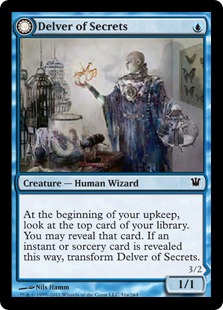
DelverNo Delver. Delver of Secrets does a fine job of solving the issues presented by Stormchaser and Swiftspear. It's vulnerable to Lightning Bolt before flipping, but survives it post-transformation with some help from a Mutagenic Growth. Since Delver costs half as much as Stormchaser, it seems like a straight upgrade to me. It provides more pressure without instants and sorceries, making it a better topdeck and allowing it to smooth out land-heavy hands (which are preferable in some matchups). Delver even smooths out land-light hands thanks to its low mana cost, something crucial for a deck on only 18. The main reason to play Delver in this deck: Jeff already runs 26 instants and sorceries, so the Human Insect is hugely reliable.

A fastland manabase. Kudos to Jeff for being one of the first brewers in the format to experiment with fastland-heavy manabases. I think this is exactly the kind of deck that would want something like a playset of Spirebuff Canal.

Green With Envy

Here's where I ended up after a week of tweaking:

Green Mantis, by Jordan Boisvert

Creatures

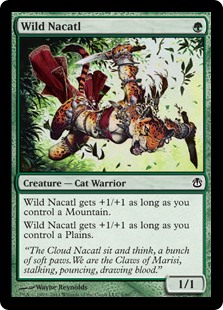
4 Wild Nacatl
4 Tarmogoyf
4 Snapcaster Mage
4 Mantis Rider

Enchantments

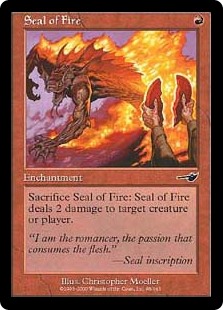
3 Seal of Fire

Instants

4 Lightning Bolt
4 Mutagenic Growth
4 Path to Exile
2 Spell Pierce
2 Lightning Helix

Sorceries

4 Serum Visions
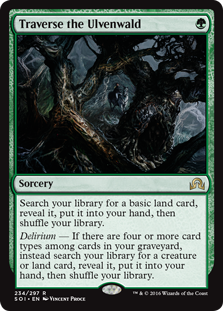
3 Traverse the Ulvenwald

Lands

4 Misty Rainforest
4 Flooded Strand
1 Sacred Foundry
1 Steam Vents
1 Stomping Ground
1 Hallowed Fountain
1 Temple Garden
1 Breeding Pool
1 Botanical Sanctum
1 Island
1 Plains
1 Mountain

Sideboard

2 Pyroclasm
2 Boros Charm
2 Negate
2 Blessed Alliance
2 Surgical Extraction
1 Forest
2 Seal of Primordium
1 Dispel
1 Ancient Grudge

Meet the Greenies

To address the problems with Jeff's list, I turned to the best color in Magic. The three green cards that interested me most were Wild Nacatl, Noble Hierarch, and Tarmogoyf. Here's how I feel about each card after testing them all.

Noble Hierarch: Hierarch looks great on paper. She enables some of the deck's best possible starts, such as Hierarch into Mantis to hit for four; smooths out our colors and helps us produce enough mana to cast our spells; makes our attackers more reasonable; and attracts Lightning Bolts we'd rather go to a mana dork than to a Mantis Rider. But the card underwhelmed in testing. While Noble Hierarch at one time or another did all the valiant things I listed above, she also had her not-so-noble moments.

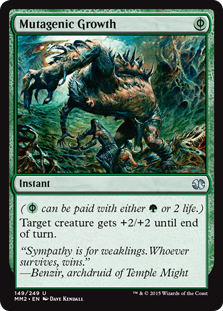
While attacking with a pair of threats (i.e. a Nacatl and a Rider) against opponents with no board (or ones with a board when we want to just go wide around them), Hierarch sits around like a dead fish. Mutagenic GrowthWith Mutagenic Growth protecting our threats, It's not uncommon for us to be attacking with two creatures by turn four. In those games, a turn-one Hierarch will have netted us 1-2 extra damage and 1-2 additional mana, which I'm not sure is worth it for the card investment. Consider that we could have led on Nacatl instead and broken even on the damage, making Nacatl something like a Rite of Flame in this scenario. That's not even taking into account what happens if (God forbid) Hierarch comes down on turn two or later.

The final strike against Hierarch is that we actually don't need much extra mana. Acceleration is always nice at the beginning of the game, but considering how dead Hierarch is in the mid- and late-game, she's just not worth it here. Once we get to four mana we're set for the whole game, and we can operate off three lands without fear. If we're struggling to make land drops, opponents will pick up on our strife and Bolt the Hierarch. While we generally like this to happen, we don't when we are counting on Hierarch to let us cast our spells. Mana dorks in general come with a built-in punisher mechanic in this way, since opponents have the choice of shooting them or not and can decide based on how we play.

Wild Nacatl: Nacatl is basically a strict upgrade to Monastery Swiftspear in this deck. It's more reliably bigger and doesn't force us to cast spells on our turn, allowing us to hold up interaction and pass the turn without feeling guilty. Since Nacatl comes down as a 2/2 on turn one, Growth saves him from Bolt right away. The Cat also plays fine defense, walling creatures like Goblin Guide and Snapcaster Mage. By abandoning Jeff's fastland-heavy manabase, which we have to do anyway on four colors, Nacatl's drawback becomes easy to get around.

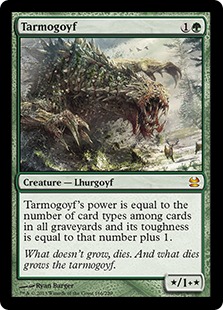
TarmogoyfTarmogoyf: Don't act so surprised. Did you really expect me to play Stormchaser Mage over Tarmogoyf? Goyf plugs a crucial hole in this strategy by complimenting Mutagenic Growth. Sometimes, we don't draw the instant, and in those cases, we need to have a backup plan when our one-drop gets Bolted. Goyf rewards us when opponents interact with our clock, which they must do to not die. It also rewards us for interacting with our opponents, which we must do to not die, and are built to do throughout the game. These factors combine to make Goyf a 4/5 or larger (we'll get to that) in almost every game, and at once a more efficient attacker than Stormchaser and a behemoth on defense.

Fixing Issues

I ran into a number of problems early in my testing and adjusted the deck accordingly. Seal of Fire and Traverse the Ulvenwald didn't start in the mainboad, for example; I added them to clean up some of the issues I was having with Green Mantis.

Durdling until turn three. As with most Mantis Rider decks I've experimented with, this one sometimes opens hands that don't do anything until turn three. Openers like a Rider or two, a Lightning Helix, a Path to Exile, and some lands. We can't realistically ship this hand in the dark, but we also can't expect to pressure opponents until the mid-game with it.

To be clear, plenty of decks in Modern (well, not that many) take a wholly interactive role early and don't even try to pressure opponents until later in the game. We want to play Mantis Rider on turn three every game, which means tapping out. And even with Twin gone, tapping out that late is dangerous in Modern. Inkmoth Nexus, Kiln Fiend, Arcbound Ravager, and even Viscera Seer all make it a liability. I often wished I could spend my early mana on Bolts that I wouldn't have to cast until later. You know, like Seal of Fire.seal of fire.. Oh, yeah! Seal of Fire! Seal allows us to do something with our mana early on in matchups where we want to save our Bolts for the face, threaten interaction for zero mana, set the pace of the game by forcing opponents to play around the burn effect, and pump Goyf by an extra level.

Before Seal, I tried countermagic like Remand in its place. But Remand ran into the same problem as Bolt in turns one through three: sometimes it never did anything. If opponents weren't casting spells, for instance. Hierarch was at its best when it traded for an opponent's Lightning Bolt. I needed a card that would trade for an opponent's card and mana in the first two turns without necessarily caring if they had cast any spells yet. Since I started playing Seal, the deck has felt much better.

Struggling to land Bolt-proof Goyfs in a timely fashion. This was a smaller issue that I still ran into a couple times. Against opponents obviously holding a grip of Bolts, it's unwise to slam Nacatl without some sort of protection. Tarmogoyf shines in this kind of situation. At least, as long as we can make him big enough. With just instants and lands in the graveyard, Goyf lacks Bolt protection. The set of Serum Visions was not enough sorceries, so I harkened back to my Counter-Cat philosophy and included a pair of Gitaxian Probe in the main.

Struggling to make land drops against linear decks. With just 18 lands, it's natural to struggle to find them sometimes. Against decks like Burn, though, not finding lands will just kill us. Very late in testing, I swapped the Probes for Traverse the Ulvenwald to help with this issue without lowering the number of power draws traverse the ulvenwaldwe had access to in longer games. The information was never that relevant for me in this deck and I often wanted a cantrip that always turned itself into something useful later, instead of always turning into a random card. Probe was also less important without prowess creatures. Traverse even fixes our colors when we need it to.

Lacking threats against midrange decks in game one. This is less of an issue in game two, when we can bring in more burn spells. Jeff's deck plays enough burn in the main not to encounter this problem at all. Traverse the Ulvenwald also mitigates this issue, since delirium is always live in the interactive mirror. Seal of Fire helps us achieve it otherwise.

Lacking interaction for linear combo. Without Jeff's heavier burn suite, I found I was often a turn slower than the linear combo decks of the format. Rather than run two more Lightning Helix in the main as he did, I opted to play a pair of Spell Pierce. Pierce is a hugely underrated card in Modern, stopping everything from Ad Nauseam to Through the Breach to Liliana of the Veil. It's even fine to counter a Serum Visions sometimes, and hitting removal is always nice in a Mantis Rider deck. Nobody expects a counterspell at one mana, and we can afford to play some amount of countermagic without prowess creatures. On the other hand, Helix is something of a necessary evil in our mainboard, helping mitigate the amount of life lost from fetching, shocking, and Growthing. It's awkward to cast with a Simic-colored land in play, and very clunky in some matchups, so I wouldn't want to run four.

Worse-Version Principles

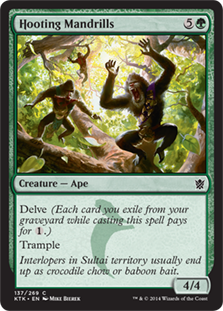
I wrote an article a few months ago with tips on how to spot brews that are worse versions of existing decks, or of other brews. Thus the question at the forefront of my mind while testing Green Mantis: "Is this deck a worse Counter-Cat?" Mantis Rider offers Hooting Mandrillssome benefits over Delver and Mandrills, notably that it's great at turning games around. But I don't think that beats being able to put them away more quickly, and interacting more reliably with opponents while doing so.

We can tweak a worse-version deck so that it's doing something unique. Before I discovered Seal of Fire, Green Mantis was more obviously a worse Counter-Cat to me—we could just cut Mantis Rider for Delver and already have a more competent deck on our hands. But I managed to find a way to improve the deck while lowering the instant/sorcery count, making Delvers less reliable and giving us a hard reason to include Rider instead.

Deckbuilding is a lot like puzzle solving. Too much permission makes us a worse Counter-Cat, too much reach makes us a worse Zoo, and too many creatures makes us a worse 5-Color Company. Striking the balance, and then testing to see if that balance is worth it at all, is the brewer's unending mission.

Post-Kaladesh Burn: Building for the Dredge Metagame

Are you a Quiet Speculation member?

If not, now is a perfect time to join up! Our powerful tools, breaking-news analysis, and exclusive Discord channel will make sure you stay up to date and ahead of the curve.

I'm qualified to play in the next RPTQ for Pro Tour Aether Revolt in Dublin, and I've been wracking my brain trying to figure out how to win it all. I know this is going to sound like a cop-out, but I'm really not interested in buying the Dredge or Infect deck, even if one of them is the best deck in the format. I know the end result of an RPTQ can quickly repair any regret I may have from purchasing the cards, but I think I can leverage my experience playing and sideboarding with Burn to a better finish. Come join me today on my journey to figure out a way to incinerate Prized Amalgam and Blossoming Defense.

diabolic-tutor

If you're not familiar with Burn from the pilot's side of things, you might think it's a cut-and-dry deck that always runs the same cards. In reality there are tons of decisions that will affect your positioning in a given metagame, as with any major Modern archetype. Today I'll walk you through my build from the ground up, starting with the expected metagame that will inform our choices and fleshing out the list from there. To finish I'll present the final decklist.

[wp_ad_camp_1]

The Starting Lineup

The number of creatures, spells, and lands in Burn has fluctuated from person to person but some things always remain the same. If we want to survive and adapt in the Dredge metagame we need to be as fast as them but also interact with their plan. Right now I think we need to go with the lean, mean creature package. Wild NacatlNo Wild Nacatls and no Grim Lavamancers.

Wild Nacatl is in a weird space where it's not big enough to survive Lightning Bolt and strains our mana more than necessary. Grim Lavamancer is just really slow and there isn't a ton of value in killing the small creatures in Dredge. I also want every creature to be able to impact my opponent's life total the turn I play it. A side effect of Infect becoming popular is the need for decks to interact with one-mana creatures more reliably. Many decks were already playing Lightning Bolt, but the prevalence of Collective Brutality (especially out of Dredge itself) means we really want to get in for at least a few points before our guys inevitably die. With that said, I'm just playing Goblin Guide, Monastery Swiftspear, and Eidolon of the Great Revel for now.

If you've read my previous articles, you know I was trying out Bedlam Reveler. While I think Bedlam Reveler is still good, it just isn't well positioned right now. It's too slow against the decks people are playing the most. If Jeskai Nahiri, Jund, or Abzan are more popular in your area, then Revelers might be a good call.

  • Creatures
    4 Goblin Guide
    4 Monastery Swiftspear
    4 Eidolon of the Great Revel

Greatest Burn Spells of All Time

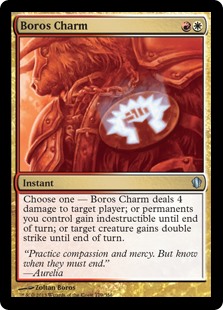
There's a certain line-up of burn spells you need to include to make the deck competitive. These cards may have varied somewhat over the years, but for the most part they're just standard in all lists. Boros CharmWhen you start writing a decklist for Burn you start with 4 Lightning Bolt, 4 Lava Spike, 4 Boros Charm, and usually 4 Rift Bolt. After those 16 cards it gets a little more fuzzy.

My plan is to be able to race Dredge; in order to do that we need to cut a color from the deck. I don't think we need the 2 extra damage that Destructive Revelry would provide, or the possible 1-2 more damage during an attack step from Atarka's Command. My plan is to play a game of inches, and conserving a few extra points of life when possible is a big deal.

So if we're not including green cards, what are we playing instead? Some people might disagree, but I can't convince myself to play less than 4 Searing Blaze. When it's good, it's overpoweringly good. When it's bad, it's unplayable. Usually when it's bad, it's because you're playing against a slower deck without a lot of creatures. In those games Burn is so quick that drawing a blank Searing Blaze isn't enough to cost us a game.

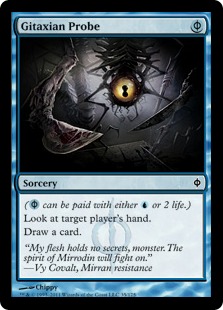
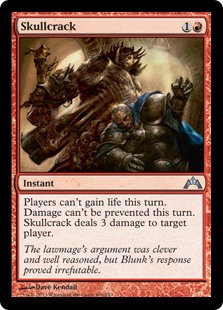
After 4 Searing Blazes, we have space for nine more spells and 19 lands, or eight more spells and 20 lands. I've decided after careful consideration to go with nine spells, 19 lands. I'm playing 3 Skullcrack. Gitaxian ProbeThe fourth copy is in my sideboard because life gain isn't terribly common these days, but they're still a necessary evil. The next two slots are for Lightning Helix. It's ends up working a lot like a reverse Searing Blaze in a lot of matchups.

For the final four spell slots, I don't want anything that costs more than one mana. After a lot of thinking, I've decided to continue using the 4 Gitaxian Probe I was playing before alongside Bedlam Reveler. Much of the spell's value ended up being knowing what to play around. I'm pretty confident playing against stock lists, but every once in a while you play against some weird cards you haven't seen in a while and it causes problems. Probe also makes the deck a virtual 56 cards, meaning there's a higher density of one-mana threats. When you get the draws that allow for a free prowess trigger on Monastery Swiftspear, you feel like the king of the world, trust me. I know it looks odd in a deck that's also playing Eidolon of the Great Revel, but I've had excellent experiences with Probe. It plays a lot better than it looks on paper.

Thus our spell suite is the following:

  • Instants
    4 Lightning Bolt
    4 Boros Charm
    4 Searing Blaze
    3 Skullcrack
    2 Lightning Helix
  • Sorceries
    4 Lava Spike
    4 Rift Bolt
    4 Gitaxian Probe

The Mana

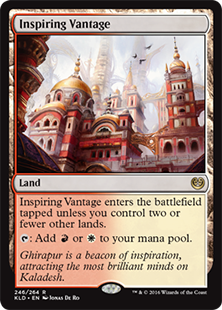
Not many changes here, but we do get the ability to play the new Boros-colored fastland, Inspiring Vantage. Unfortunately this land doesn't really work out too well when you play too many of them. While it's unlikely that we ever want four lands in play as Burn, it happens sometimes, and Inspiring Vantage is light-years worse than Sacred Foundry in those scenarios. inspiring-vantageThat being said, I still managed to find room for two of them because the games you start at 20 are a lot easier to win than the games you start at 17.

The only other thing to mention is that I'm a big fan of 4 Basic Mountains in the deck. Some Burn decks play 2-3 but you aren't able to take advantage of the extra mana Path to Exile decks give you if you don't have enough to find. With the additional white sources from Inspiring Vantage, I cut Sacred Foundry down to three copies and filled out the rest with red fetchlands. If you can afford it, I recommend playing a variety of different fetches rather than four of a few. It's a small issue, but occasionally having too many of the same-named card (against Surgical Extraction or Pithing Needle, for example) is a disadvantage.

  • Land
    3 Scalding Tarn
    3 Bloodstained Mire
    3 Arid Mesa
    1 Wooded Foothills
    4 Mountain
    3 Sacred Foundry
    2 Inspiring Vantage

Constructing a Sideboard

I think that building a sideboard is among the most difficult and underrated skills in Modern. For many decks, Burn included, there are far more than 15 cards you want in your sideboard, so you have to find the most flexible cards or pick matchups you're willing to be unprepared against. I'll break down some of the most effective cards I've considered:

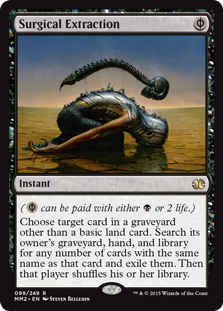
Surgical Extraction: I don't think enough people are playing this card. The fact that you don't actually have to pay any mana for the spell is really the biggest upside and is seriously underrated. Surgical ExtractionExtraction is highly specific in what it targets—some may even say surgical—helping us deal with the biggest problem card in the Dredge matchup: Prized Amalgam. The way that the most recent Dredge decks are built, it's not terribly difficult to beat a pile of Bloodghasts and Narcomoebas. The deck's true power draws involve multiple Prized Amalgams returning to play quickly. Surgical Extraction lets you interact with those types of draws without causing a strain on your mana.

The biggest problem I've had with Rest in Peace and Grafdigger's Cage as sideboard cards is that you have to take time off from playing spells that kill your opponent to cast them. The other problem is sometimes they're just too slow. If you're on the draw and your opponent plays a Cathartic Reunion and dredges 3 Golgari Grave-Troll, you might already be too far behind.

Kor Firewalker: This one is pretty obvious. It gives you an edge in the mirror. If you know a lot of your local players play Burn, then you will want some of these in your sideboard.

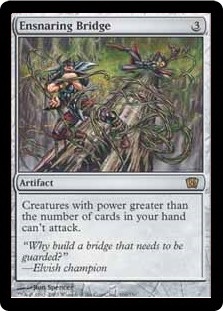
Ensnaring Bridge: I didn't originally intend to include Ensnaring Bridge, but the more I see it in sideboards, the more I feel I need to try it. Turns out it's pretty good. Ensnaring BridgeIt's great against decks with larger creatures, which can normally turn the corner and close out quickly. It's great against Bant Eldrazi (which can otherwise be a pretty tough matchup) as well as weird off-the-wall decks and tribal decks. I've boarded it in against Merfolk and watched as they wished they could remove their Lord of Atlantis from play to get in a meager attack.

Deflecting Palm: If you've never Deflecting Palmed an opponent who was sure you were dead and lethaled them in response, you haven't lived. The first copy is great. The second copy a lot less so. Players rarely play around it and when walking face first into it, often die. I can't recommend more than one but I also can't recommend less than one.

Path to Exile: These are extremely flexible and I can't find a reason I'd ever remove all of them from my sideboard. I recommend 3 or 4 because they're just so great in so many places. Most of the time they're used to remove large blockers (i.e. Tarmogoyf) but they also give you more one-mana interaction against creature-based combo decks like Infect.

Wear // Tear: Another flexible answer that replaces Destructive Revelry. If you know your opponents are playing a lot of Leyline of Sanctity, you can increase the number that you play. They're also pretty reasonable against Lantern Control, Affinity, and Tron.

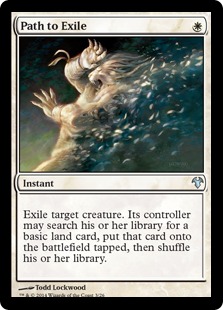
Path to ExileKataki, War's Wage: This is only a good sideboard card against Affinity. If your local meta has Ad Nauseam decks too I would recommend Stony Silence instead.

Less Common Sideboard Options

Bedlam Reveler: Reveler can be a great sideboard card if, like I mentioned earlier, your metagame is much slower with a lot of grindy BGx or UW decks.

Flames of the Bloodhand: Sometimes you just really need to beat Bogles. This lets you beat Bogles. I'm not really a big fan of this card but it's a necessary evil sometimes.

Smash to Smithereens: You can replace some of your Wear // Tear with Smash to put more pressure on the Affinity matchup, but it doesn't solve the problem of losing to a well-timed Spell Pierce.

Putting It Together

Right now I'm tuned to beat Infect and Dredge, with some hedges against Bant Eldrazi. I might increase my Affinity hate in the coming days as I also expect that to be pretty popular at my RPTQ. If the RPTQ were tomorrow, this is the deck I'd probably end up playing.

Post-Kaladesh Burn, by Jim Casale

Creatures

4 Goblin Guide
4 Monastery Swiftspear
4 Eidolon of the Great Revel

Instants

4 Lightning Bolt
4 Boros Charm
4 Searing Blaze
3 Skullcrack
2 Lightning Helix

Sorceries

4 Lava Spike
4 Rift Bolt
4 Gitaxian Probe

Land

3 Scalding Tarn
3 Bloodstained Mire
3 Arid Mesa
1 Wooded Foothills
4 Mountain
3 Sacred Foundry
2 Inspiring Vantage

Sideboard

4 Surgical Extraction
3 Path to Exile
1 Deflecting Palm
2 Wear/Tear
3 Ensnaring Bridge
1 Skullcrack
1 Stony Silence

Insider: MTGO Cards to Buy, Sell or Hold – Episode 16

Are you a Quiet Speculation member?

If not, now is a perfect time to join up! Our powerful tools, breaking-news analysis, and exclusive Discord channel will make sure you stay up to date and ahead of the curve.

Welcome to another BSH! At this time, the metagame is defined by UW and BG Delirium as the most common decks, with Smuggler's Copter aggro decks coming in third.

It's just a matter of time until a new deck rises and shakes up prices. We can't know what that deck will be, but we can prepare for the event by grabbing underpriced staples and/or powerful cards. This weekend we will have a Modern GP in Dallas, then the World Magic Cup three weeks later, featuring more Modern. This format's singles prices have rebounded, and even though I firmly believe in avoiding long-term speculation in Modern cards, I would consider some short-term investment in the most played staples for the next season only.

To that end, let's see what the MTGO finance world has to offer us this week:


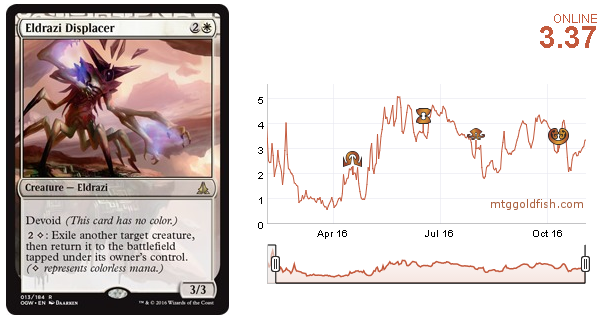
Eldrazi Displacer

eldrazi-displacer

I have read a few articles online claiming that this card is great against the BG Delirium deck. I might have held Eldrazi Displacer for a bit longer, but this weekend's Modern GP will have an immediate and hopefully large influence on its price as we watch to see if the Bant Eldrazi deck is still powerful. I will probably sell my copies no later than this Sunday, no matter how good its performance is.

Verdict: HOLD (AT LEAST UNTIL THE END OF THE WEEKEND)


Gisela, the Broken Blade

gisela-the-broken-blade

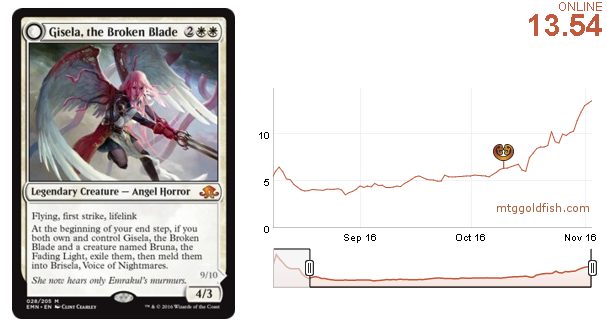
I'm surprised by Gisela's price movement: the card went up since the first appearance of the UW deck at the Pro Tour. That's fine. What is not very common is maintaining this high price over time.

Looking at the graphic, I think the price started increasing due to speculators during the Pro Tour, with those investors liquidating at 10 tix (see the small price drop). The subsequent increase from that point is pure player demand. Congratulations to Gisela! ... but I don't think it will go much higher, so this is the best time to sell it.

Verdict: SELL


Emrakul, the Promised End

emrakul-the-promised-end

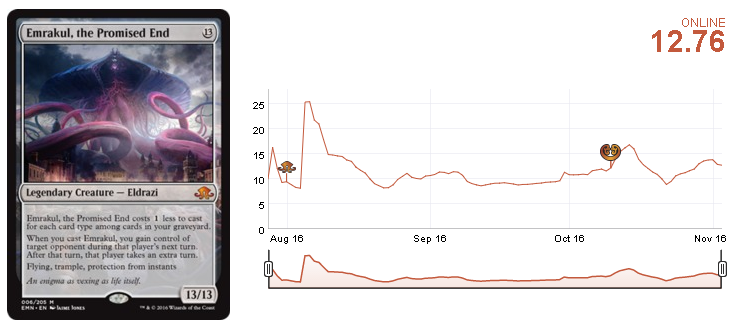
In the previous episode of BSH, I rated Emrakul, the Promised End with HOLD. Now I think its time has come. The BG Delirium deck is now one of the most played in the format, and we will need even more players on the deck for Emrakul's price to go up. On top of that, we are close to two big Modern tournaments, and the expensive cards are the first ones players sell to buy other cards they need (for what it's worth, I don't think we will see Emrakul in Modern anytime soon). Meanwhile, investors are liquidating Standard cards in order to invest in Modern.

Emrakul is great in Standard and I could see rebuying it if it drops to 9 tix again, but I think its price will go down in the very short term, making now is the best time to sell it.

Verdict: SELL

Sorin, Grim Nemesis

sorin-grim-nemesis

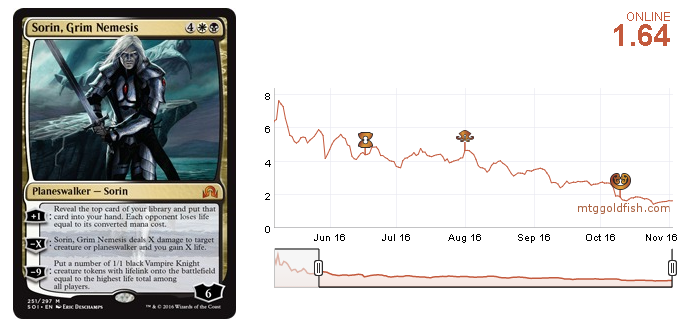
This a great time to pick up cheap and powerful Standard mythics that are off the radar of players, while speculators are focusing on another format altogether. I have mentioned Sorin, Grim Nemesis before, but the card unfortunately kept going down.

This is something that will happen in MTGO (and MTG) finance: every speculation won't go the way we desire; we just have to deal with it and make the best moves from our current positions. Panic selling is a common mistake among inexperienced traders and is one of the worst things you can do.

The right play here is to keep your copies (if you already bought enough) or buy them (if you don't have any or enough in your portfolio). A powerful mythic planeswalker card at this low price isn't something you will see every day.

Verdict: BUY


Kiora, Master of the Depths

kiora-master-of-the-depths

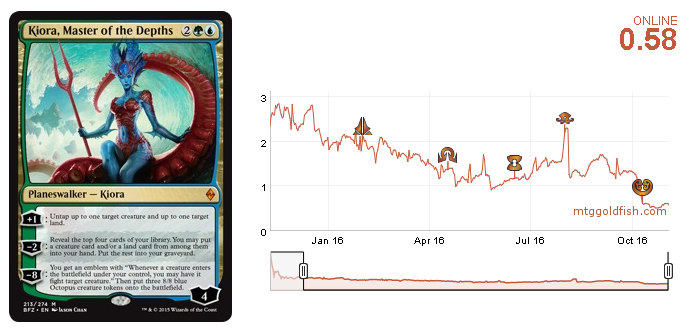
Another mythic planeswalker, but this one is totally unplayed in the metagame. Kiora, Master of the Depths gained popularity with the UG Crush deck, now nobody plays that deck anymore.

Giving another six months to BFZ in Standard makes Kiora a great speculation target. This is the type of card that can produce record profit, and I wouldn't even consider it a hit-or-miss strategy because the card is currently dirt cheap and unlikely to go lower.

Verdict: BUY


See you next week!

Three Decks for GP Dallas

Are you a Quiet Speculation member?

If not, now is a perfect time to join up! Our powerful tools, breaking-news analysis, and exclusive Discord channel will make sure you stay up to date and ahead of the curve.

It’s crunch time. You’ve known this was coming. You had weeks to prepare. You had plans to put on pants, go to FNM, run the Modern gauntlet, and test for Grand Prix Dallas. Instead, you sat on your couch, binge-watched Friends and eating Cheetos off your own bare chest. Now you’re scrambling, wondering what to play, possibly trying to remember how the dredge mechanic works. Your entire collection of dreams and aspirations are laid out in front of you, slowly being crushed to death by an abnormally large infant dressed up in clown paint. Fear not, I did the work for you. Here are the three decks I would play if I was going to GP Dallas.

glistener_elf-cropped

Infect, by Trevor Holmes

Creatures

4 Blighted Agent
2 Spellskite
4 Glistener Elf
4 Noble Hierarch
1 Dryad Arbor

Instants

4 Become Immense
4 Blossoming Defense
2 Dismember
4 Might of Old Krosa
4 Mutagenic Growth
1 Spell Pierce
4 Vines of Vastwood

Sorceries

3 Gitaxian Probe

Lands

4 Inkmoth Nexus
2 Breeding Pool
2 Forest
2 Misty Rainforest
2 Pendelhaven
4 Windswept Heath
3 Wooded Foothills

Sideboard

1 Dismember
2 Dispel
4 Kitchen Finks
2 Nature's Claim
2 Spell Pierce
3 Twisted Image
1 Viridian Corrupter

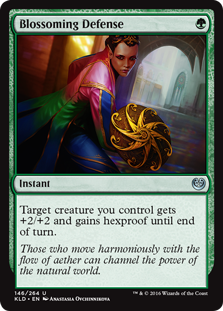
I am of the strong opinion that with the printing of Blossoming Defense, Infect is the best deck in Modern week to week. Without the anchor that was Apostle's Blessing weighting it down, Infect can now steamroll through opposing removal with a plethora of both pump spells and protection effects. The level of consistency that Blossoming Defense brings to an already-consistent archetype is terrifying. We’ve seen Infect’s numbers rise considerably since the printing of Blossoming Defense, and the stage is set for Infect to take down GP Dallas. blossoming-defenseWith the rest of the format focused heavily on stopping Burn and Dredge (as seen from the SCG Milwaukee results we analyzed last week), I believe Infect is poised to pounce on an unsuspecting field and claim another trophy for the Infect clan.

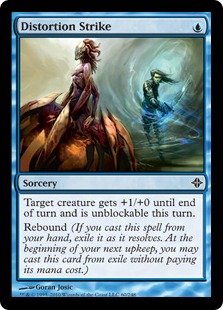
If I was playing in GP Dallas, I would undoubtedly be sleeving up the above list. We’ve talked in the past about my bearish feelings on Distortion Strike, so I’ve cut them here for two maindeck copies of Spellskite. Distortion Strike is really only helping us get through with Glistener Elf, as Blighted Agent has unblockable already and Inkmoth Nexus has flying, which in a format devoid of Lingering Souls is pretty much pseudo-unblockable already. On rate alone, paying U for +1/+0 at sorcery speed is absolutely abysmal, even if we do get to cast it again for free the next turn. Sure, there are scenarios that exist where we have a Glistener Elf and no Pendelhaven/Noble Hierarch to pump it over opposing 1/1’s, but those situations are few enough that I would much rather hedge against Burn, the mirror, and a couple combo decks while giving myself even more protection against opposing removal.

Can you really point to enough situations where Distortion Strike won the game for you, where no other spell would have got you there? distortion strikeMaybe in an open field I would find myself going back to Distortion Strike against an unknown metagame, but on this weekend, one where I expect Infect to do very well, I’m jumping at the opportunity to next-level the mirror while also helping me against the field, albeit in a different way.

As for the board, Kitchen Finks as the transformational sideboard plan is nothing new as far as technology goes, but I’ve nevertheless fallen in love with it and would definitely be playing the full four. It’s possible that with Burn completely imploding on Day 2 of Milwaukee players choose to cut hate for the matchup in favor of extra points against Dredge (and maybe even against us), so the extra lifegain for the Burn matchup is much appreciated here. It’s fine against Infect, and even great against midrange decks like Jund and Junk that can terrorize us with their wealth of removal and Liliana of the Veil. I’m not expecting midrange to show up in large numbers here, but if there was ever a weekend for a nicely tuned midrange deck to take the format by storm, this would be it.

[wp_ad_camp_1]

Jund, by Michael Cohran (1st, SCG IQ Memphis)

Creatures

4 Dark Confidant
3 Scavenging Ooze
4 Tarmogoyf
2 Kalitas, Traitor of Ghet

Instants

2 Abrupt Decay
1 Kolaghan's Command
4 Lightning Bolt
3 Terminate

Planeswalkers

3 Liliana of the Veil
1 Liliana, the Last Hope

Sorceries

1 Collective Brutality
3 Inquisition of Kozilek
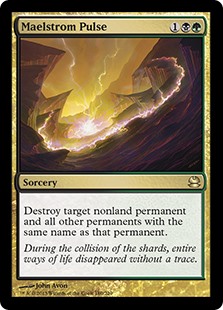
2 Maelstrom Pulse
3 Thoughtseize

Lands

1 Forest
2 Swamp
4 Blackcleave Cliffs
1 Blood Crypt
3 Bloodstained Mire
1 Kessig Wolf Run
2 Overgrown Tomb
3 Raging Ravine
1 Stomping Ground
1 Twilight Mire
4 Verdant Catacombs
1 Wooded Foothills

Sideboard

1 Engineered Explosives
2 Grafdigger's Cage
1 Grim Lavamancer
2 Kitchen Finks
2 Ancient Grudge
1 Chandra, Torch of Defiance
1 Liliana, the Last Hope
2 Anger of the Gods
1 Collective Brutality
1 Damnation
1 Duress

Speaking of midrange, this Jund list looks poised to attack a field that has gone without a top-performing midrange presense for far too long. Dredge is back, putting the most copies of any archetype into Day 2 at SCG Milwaukee, and this list seems ready to face Dredge all day long. Kalitas, Traitor of Ghet and three copies of Scavenging Ooze in the maindeck, Anger of the Godsalongside Grafdigger's Cage and Anger of the Gods in the board, ensure that when Dredge’s creatures die against this deck, they’ll stay dead.

Liliana, the Last Hope still hasn’t convinced me that she is better than the classic Liliana of the Veil, but I very much like the ability to plus and kill an x/1 in this hyper-aggressive format. Infect and Affinity are full of x/1’s, and even Burn, Dredge and Delver have creatures that this ability can kill. Against other value strategies, buying back a Tarmogoyf can often put the game away, especially when we’re already stressing their removal with Kolaghan's Command letting us replay Dark Confidant.

I find myself wanting to play more Kolaghan's Command here, but we really can’t fit it in alongside the two copies of Maelstrom Pulse. Kolaghan's Command would definitely help our Affinity matchup, which can sometimes be a toss-up, and we wouldn’t mind the extra value it gives us against other midrange decks, but Maelstrom Pulse just kills anything.

I think the format is a little too fast for Maelstrom Pulse right now, and I wouldn’t be playing it if we didn’t have Scavenging Ooze and Collective Brutality to gain some life and buy ourselves some time. But I am somewhat concerned that it might play as little more than an expensive Terminate in most cases. Maelstrom PulseStill, we already have so much removal that as long as we’re playing anything on three we should be fine, even if we’re not getting full value. The Maelstrom Pulse debate has gone back and forth between Jund players for so long that I leave it up to them to decide for themselves. I think it’s close enough you can do whatever you choose—just be aware that you shot yourself in the foot when you cut it and find yourself facing down Lingering Souls!

Really, though, this deck is just full of good cards doing good things like always, and Jund’s success on the weekend will come down to how well its draws line up against opposing strategies. Kitchen Finks in the board and Collective Brutality in the main are all good decisions that I agree with, and as long as Jund can beat up on Infect, Delver, Dredge, and Affinity while dodging Burn and Tron strategies, you should be more than fine.

Bant Eldrazi, by Jack Cooke (1st, SCG IQ Toronto)

Creatures

4 Drowner of Hope
4 Eldrazi Displacer
2 Eldrazi Skyspawner
3 Matter Reshaper
4 Noble Hierarch
4 Reality Smasher
4 Thought-Knot Seer
2 Spellskite

Instants

1 Dismember
4 Path to Exile

Sorceries

4 Ancient Stirrings

Lands

2 Forest
1 Plains
1 Breeding Pool
3 Brushland
4 Cavern of Souls
4 Eldrazi Temple
1 Ghost Quarter
1 Hallowed Fountain
1 Temple Garden
4 Windswept Heath
2 Yavimaya Coast

Sideboard

3 Engineered Explosives
2 Grafdigger's Cage
1 Eternal Witness
1 Rest in Peace
2 Stony Silence
1 Worship
2 Disdainful Stroke
2 Stubborn Denial
1 Elspeth, Sun's Champion

Bant Eldrazi is still, quietly, one of the best decks in the format, months after the banning of Eye of Ugin. Ancient Stirrings is just as much if not more unfair than before. With a ton of powerful, hard-hitting creatures with more gametext than you would imagine could fit on a piece of cardboard, every creature in the deck does something incidentally bad for the opponent. Eldrazi Temple and Noble Hierarch power them out quickly, and even to this day this archetype surprises me with both its consistency and velocity. Stubborn DenialThe deck is fast. It is powerful. And it is coming to kill you.

At this point the list has pretty much been "solved," as far as the maindeck is concerned. Path to Exile, Ancient Stirrings and a bunch of dudes are really all it takes to put forth a strong game one. Post-board, Stubborn Denial is excellent against a variety of strategies (as even creature decks tend to get more spell-based post-board) and countering a removal spell aimed at our Thought-Knot Seer for one mana does, and always will, feel incredibly dirty. Running 3 Engineered Explosives is a bit much, but Affinity and Infect are two of the top-played decks and both can be difficult for this archetype, so I understand seeing them here. With three Engineered Explosives alongside Stony Silence and Worship, I don’t expect we’ll be having much trouble with Affinity at all.

Play the Elspeth, Sun's Champion if you want. Six-drops are crazy in this format, but we’re already playing Drowner of Hope. I have nothing else to say on that subject.

Conclusion

Dredge, if you know how to play it, probably deserves to be in this list too, but it’s hard to tell how it will do in a field that's undoubtedly preparing for it. It still put a ton of copies in Day 2 of Milwaukee, but failed to do well in the Top 8, so I’m inclined to believe that the deck is a bad decision in the face of certain hate. The three archetypes above are powerful, consistent, and should give you game against the field regardless of what shows up on Saturday. Good luck, and may all your dreams be memes.

Thanks for reading,

Trevor Holmes

The_Architect on MTGO

Twitch.tv/Architect_Gaming

Twitter.com/7he4rchitect

Insider: Legacy Champs Tournament Finance Report

Are you a Quiet Speculation member?

If not, now is a perfect time to join up! Our powerful tools, breaking-news analysis, and exclusive Discord channel will make sure you stay up to date and ahead of the curve.

Legacy Champs weekend was filled with lots of emotions for me. There was the high of selling cards, the adrenaline of winning round after round, the pressure of continuing the streak, the sadness at so many mistakes on camera, and then the pride at finishing as the number one seed in the top eight. We’re going to talk about the good, the bad and the ugly today, so let’s dive right in!

The Deck

To start off, let’s dissect the deck.

Jeskai Eldrazi by Mike Lanigan

Creatures

4 Eldrazi Mimic
4 Endless One
4 Eldrazi Displacer
4 Eldrazi Obligator
4 Thought-Knot Seer
4 Reality Smasher
1 Drowner of Hope

Spells

4 Chalice of the Void
3 Thorn of Amethyst
3 Warping Wail
2 Dismember
1 Umezawa's Jitte

Lands

4 Ancient Tomb
4 Eldrazi Temple
3 Eye of Ugin
4 Cavern of Souls
4 Aether Hub
4 Corrupted Crossroads
1 Karakas

Sideboard

4 Leyline of the Void
1 Relic of Progenitus
1 Pithing Needle
1 Thorn of Amethyst
1 Warping Wail
1 Batterskull
2 All is Dust
3 Drowner of Hope
1 Urborg, Tomb of Yawgmoth

Last year, I joined team Eldrazi. Colorless Eldrazi in Modern earned me a spot in the Star City Invitational and my first Pro Point at GP Detroit. When Eye of Ugin was unsurprisingly banned from Modern, I knew I was not done with the deck yet. I love casting Eldrazi quickly and bashing with them. As it turns out, I’m pretty good at overcoming nearly any opponent with this strategy. This isn’t your average Eldrazi deck, though. My version is much more colorful.

There was an error retrieving a chart for City of Traitors

I’ve been working on Legacy Eldrazi for a while now and played it in some events with different variations. One of my biggest changes initially was the exclusion of City of Traitors. I guess some spectators this weekend were commenting that my build must be a budget version, and while it is, the reason has nothing to do with playing a cheaper deck. I think that City of Traitors is actually bad for the deck and I choose not to play it. The main reason is that this deck cannot afford to lose any of its lands. Especially when your opponent has Wasteland, but even when they don’t, you want all of your resources; City of Traitors is more like a double Lotus Petal than a land. The game is going to continue, and you are going to wish your traitorous city had stuck around to let you cast your higher-cost guys. Additionally, I needed to make room for more colored sources in the deck.

I feel the same way about Wasteland in this deck as well. Wasteland may be a necessary part of the colorless version, but setting yourself back a land isn't something you want to do regularly. If you are playing Wastelands, be careful when you sacrifice them to destroy your opponent's land.

Speaking of colored sources, we have a lot of sweet Eldrazi to talk about in this Jeskai Eldrazi deck. There are thirteen colored sources of mana in this deck, and usually that’s enough to cast the three Eldrazi Displacers, three Eldrazi Obligators, and one maindeck Drowner of Hope. Sometimes you will have to wait for one of your colored lands, but more often than not you’ll be good to go. This is the first event I’ve run this exact set up, but let me tell you – it was amazing.

There was an error retrieving a chart for Eldrazi Displacer

The main reason I thought about changing up the deck from the successful colorless version to Boros and then eventually to Jeskai is because Matter Reshaper has been unimpressive for me. Sometimes the opposing deck has no removal spells, sometimes they use Swords to Plowshares or Terminus, and as a result Matter Reshaper basically never goes to the graveyard in order for you to gain benefit from its card-advantage trigger. So, in effect, because you have Sol Lands, you are playing a vanilla two-mana 3/2 and that’s not something you should be eager to include in your Legacy deck.

Both Eldrazi Obligator and Eldrazi Displacer are huge upgrades to Matter Reshaper. I also cut down on the number of spells that most versions play in order to squeeze a couple extra Eldrazi into the list. I know that Obligator seems janky, but it was absolutely amazing all weekend. It may not be able to steal a 20/20 Marit Lage token very often, but there are plenty of other threats your other opponents will be relying on right up until you Threaten your way to victory.

I made some sweet plays with Obligator over the tournament. I nabbed Reality Smasher in the mirror to unexpectedly swing for lethal. Stealing reanimated giant monsters to beat my opponent was fun too. You aren’t required to target your opponent’s creatures with the trigger – there were plenty of times when I targeted my own creature to give it haste. A common line is after the board gets cleared with something like Terminus, you untap and cast both Eldrazi Mimic and Eldrazi Obligator to swing for six damage. This usually only works if you have Eye of Ugin so you can get the mana reduction benefit twice, but it’s an important line to be aware of. You can replace Eldrazi Mimic with another creature too if you have enough mana.

Eldrazi Displacer was also good, but my opponents seemed to always have removal for it this weekend. Against Death and Taxes, for example, it’s a great mana sink in the mid game that allows you to swing through their board or slow them down so you can catch up. It has to stay in play for that to happen, though. Displacer is your best card verses a deck like Turbo Depths (like I played in the top eight) or Lands, which also utilizes Dark Depths as a win condition.

Finally, the blue aspect of Jeskai Eldrazi is Drowner of Hope. Before Legacy Champs, I didn’t have Drowner in the deck at all. My maindeck card was the always amazing Endbringer and my sideboard slots were Ashen Riders. On my way to pick up my friends on Friday, I had an epiphany about Drowner of Hope. My thought was: "Isn’t Drowner a better version of Ashen Rider?" I could cast it now that I had Aether Hub in the manabase, and it functions the same way as Ashen Rider by shutting down my opponent’s giant monsters. Another perk is that it also shines in the mirror. I’m anxious to see whether other Eldrazi players change over to this version or stick with their already proven colorless version.

The red, white and blue Eldrazi were great all weekend, and I’m definitely keeping them in the deck going forward. With this manabase, though, there are lots of other possibilities to explore.

The Event

As you know, this tournament went quite well for me. There are some things I want to mention about the deck here, but I’ll keep it quick. Firstly, I want to start with the decks I played against. Legacy is really healthy right now, and I played against a different deck nearly every round of the event.

Round 1 (1-0) – Storm
Round 2 (2-0) – Miracles
Round 3 (3-0) – Colorless Eldrazi
Round 4 (4-0) – Death and Taxes
Round 5 (5-0) – 12-Post Eldrazi Workshop
Round 6 (6-0) – Reanimator
Round 7 (7-0) – Miracles
Round 8 (7-1) – Death and Taxes
Round 9 (8-1) – Grixis Delver
Round 10 (9-1) – RB Reanimator
Quarter Finals (Loss) – GB Turbo Depths

As you can see, my matchups were quite diverse. There were two different Reanimator decks, two Death and Taxes, and two Miracles, but overall, the meta is balanced between many archetypes.

I had a couple feature matches on camera, and as many of you know, in my first camera match I made some huge blunders. Both mistakes came in round six, involved Chalice of the Void and could have easily been avoided. The first one came up once I had three mana. My goal was to cast both Pithing Needle and Chalice of the Void on one. I had the mana in the same turn but I cast them in the wrong order. Clearly, I meant to cast the Needle first so it would be in play before Chalice. Because I knew both would be fine to play that turn, somehow I got the order mixed up in my head as I rushed through my turn. Neither I nor my opponent noticed until his next turn. The judge ruled that the Needle should stay in play, but I tried to have it be put in the graveyard because it was my mistake for the order I sequenced.

The next turn my opponent played a card I haven’t seen in almost a decade, Steady Progress. This got him around Chalice set at one because he proliferated it up to two and then cast his one-cost spells. The problem with this is that Chalice set at two disrupts some of my cards, but I wasn’t thinking about that at the time. On his next turn he cast Thoughtseize. I had Warping Wail in hand so I thought I’d cast it instead of letting the hand hate spell resolve. Since I’m not used to Chalice affecting my play, and my opponent also failed to note the Chalice, it resolved. This time there was something I could do about the judge’s ruling to let my 1/1 token stay in play. So, on my turn, I proceeded to sacrifice the spawn for mana and then pass through phases so it would be unspent. This way even though I messed up, at least it didn’t affect the game.

There was an error retrieving a chart for Thoughtseize

I was quite upset at myself for these mistakes I made due to not diligently paying attention to the board state. My opponent and I were very cordial about the whole thing, and he could tell I was mad at myself for these blunders. Despite these two on-camera misplays, I was able to pull it together and win almost all of my other rounds.

One of the best aspects about any Eldrazi deck in Legacy is that it sports great matchups against not only the combo decks of the format, like Storm and Reanimator, but also because it has a phenomenal win percentage against any controlling deck, like Miracles, Grixis Delver, or Jund. Although these decks can win against Eldrazi, a lot has to go right for them to successfully bring down the horde.

One of the tougher matchups is Death and Taxes. Up until now, I have had no testing against this matchup, because I don’t know anyone with the deck and haven't been paired against the strategy. I think one reason this white aggressive deck is so good against Eldrazi is because it has removal spells coupled with disruptive creatures, while Eldrazi’s disruptive spells don’t really affect the white deck’s game plan. If you’re going to play Eldrazi, definitely find time to test this matchup, because it’s a tough one.

If you have a question about any matchup specifically, let me know in the comments and I can go into more detail. The best advice I have for success in Legacy and Modern is to play as much in the format as possible. With more experience in these formats, you’ll gain knowledge about the types of decks players come to battle with as well as experience playing against a variety of different decks.

The Finance

Prepping for this article, I was set to hype up all of the Eldrazi and basically every card from this deck as a great financial target. Yesterday, though, Star City announced yet another downgrade in Legacy events, so I think that we have to adjust our perspective based on that. Now there will only be two Legacy Opens per year, and the only time you can play a Legacy Classic is at the two Invitationals in Roanoke, Virginia. With these new restrictions combined with the already slim support from Grand Prix, I think Legacy’s financial growth will slow considerably.

Although the prize support left a lot to be desired, Vintage and Legacy Champs were highly anticipated by many players. I know I will plan to attend next year as well, but fewer events means fewer players wanting to get into the format. Keep this in mind with your investments. There are some cards I would advocate picking up, though.

There was an error retrieving a chart for Eldrazi Temple

First up, Eldrazi Temple should be on your radar of cards to watch. Hovering around the rebounded price level of $5 or $6, this Sol land is now essential to tier-one Modern and Legacy decks. I doubt we will see this land printed again anytime soon, and I would expect it to increase in value in the meantime. No matter what type of Eldrazi deck you are going to pilot in an Eternal format, you need four Eldrazi Temples to play the deck. When you find a cheap set, pick it up.

There was an error retrieving a chart for Chalice of the Void

Sitting in the low $30s, Chalice of the Void is great anytime you can cast it. With Legacy going on the back burner a little bit, I don’t know how quickly Chalice will continue its upward climb, but it feels like a $40 to $50 card. Without a reprint, I think it will get there in the next year.

There was an error retrieving a chart for Thorn of Amethyst

Thorn of Amethyst is the unsung hero of Eldrazi. This taxing effect goes so far towards disrupting your opponent’s game plans. Often it acts as a pseudo Time Walk because they can’t cast their spells on time. I think Thorn will find another home in Modern as well. If it does, look for a quick double-up on this one. Under $15 is reasonable for Thorn right now, as I think it should be closer to the same price as Chalice of the Void.

There was an error retrieving a chart for Cavern of Souls

One land that keeps going up and up is Cavern of Souls. I love this land in so many strategies, but I think it’s going to get a reprint soon in a Modern Masters-style product. We could even see it again in Standard. Either way, the price on Cavern is already high, but without a reprint, it will continue to climb. Multiple archetypes need this land to make their decks great, and that’s a sign of a hot card.

There was an error retrieving a chart for Aether Hub

While I love Aether Hub in all formats, I think the foil version is the one that has the most promise. I doubt that this uncommon land’s price can crest much above its already strong $4 to $5 price tag. The foil, though, is sitting under $10, which isn’t bad at all. I already have my foil playset but lots of other players will need theirs too. I was able to get a couple of my copies at $7 each, so there are still some cheap copies to be had if you dig around your local shops a little.

Well, that’s all the time I have for today. If you have any questions about how the deck works, the tournament or the financials surrounding it, let me know in the comments.

Until next time,
Unleash the Finance Force!

Mike Lanigan
@MtgJedi on Twitter

Insider: Wait For It…

Are you a Quiet Speculation member?

If not, now is a perfect time to join up! Our powerful tools, breaking-news analysis, and exclusive Discord channel will make sure you stay up to date and ahead of the curve.

Let's talk about long-term specs.

I could write like 4,000 words on this in a single night, but I unfortunately lost my notes and outline for this article. So instead, we're just gonna kind of improvise it.

There was an error retrieving a chart for Improvised Armor

I recently got into a Twitter discussion with Chaz V about the values and risks of speculating on long-term casual picks versus short-term Standard stuff. You can find the meat of the discussion here and also here, but the basic summary is that I feel confident in the longevity of my specs even when they're not on the Reserved List. I don't believe that the "era of reprints" is a drastic change in the number of cards that are currently being reprinted, and I think that we still have the ability to plan our specs around the announced set releases far into the future. Reprints can even help us choose new specs, by plummeting format staples down to a new low that will continuously creep up over the next couple of years.

Most of this discussion was sparked when Daretti, Scrap Savant was announced as a reprint in the upcoming Commander 2016 product. I've been vocal about liking this as a pick because of its role as one of the most popular and powerful mono-red Commanders (that can also find a slot as one of the 99 in lists that don't have him leading the army). I picked up a dozen or so copies from between $2.50 and $3, and was comfortable waiting a while. After this reprint, I'll be abandoning ship on the card and selling at cost for a small loss. Is it frustrating? A bit, but I've got a whole lot of other specs that dodged that C16 reprint with ease.

There was an error retrieving a chart for Daretti, Scrap Savant

One of my favorite specs that paid off well over the past few years has been Cyclonic Rift, and it works really well as an example of my strategy in long-term speculating. After being decent in the Standard mono-blue Devotion deck and slowing back down to $3, it was kicked into the dirt further by a Commander 2014 reprint.

It was practically a bulk rare at this point, and I felt really confident saving up a whole pile of these until they hit $3, at which point I sold off a whole bunch of them from my display case for an easy multiplier. The fact that I still had some left when they hit $5 was just gravy.

You're probably rolling your eyes at the humblebrag story, but I do have an overarching point here. While it's true that a card becomes a more likely candidate for a reprint the longer it goes without one, you can feel extremely safe buying in almost immediately after the reprint (Burgeoning is currently the only exception to this rule), which is one of the only other real spec targets that C16 even hit).

There was an error retrieving a chart for Cyclonic Rift

Crypt Ghast is another example of this. The C14 reprint took it to bulk rare status, but Nirkana Revenant and Cabal Coffers have shown us that black mana doubling doesn't really like to stay bulk.

Scooping these up at 50 cents was really easy when I didn't have to watch my back for a one-two punch reprint post-C14. A simple EDHrec.com search shows us that Ghast sees play in thousands of decks, and earns a slot in a very significant percentage of mono-black lists. While it's not "one-sided instant-speed Upheaval" good, the idea of it staying true bulk was really questionable here.

There was an error retrieving a chart for Crypt Ghast

How Does This Help Me Right Now?

I've talked about cards that were really easy to target after a Commander printing two years ago, so what's this year's easy Commander staple that has been reprinted but is sure to creep back up to former glory?

Well, I'm going to keep a very close eye on Chromatic Lantern over the next couple of years. As a long-time $3 card that has inched its way up to $9 over the past several years, I'm really questioning the fact that SCG and Cool Stuff, Inc. have their Lanterns listed at $3.99 a pop. Lantern certainly isn't going to dip into dollar-rare or true-bulk status like Rift and Ghast did, but we need to remember that Lantern is only in one out of the five Commander 2016 decks. If the all-but-white Maelstrom Wielder deck isn't very popular, then we won't see nearly as many extra Lanterns as we might be currently expecting.

I was wrong about Inquisition of Kozilek for a similar reason: I underestimated the degree that people would throw Conspiracy 2 to the wayside in the weeks immediately following its release. If Chromatic Lantern avoids the reprint hammer for another couple of years (which I fully expect to happen, after also getting an influx of supply from the Masterpiece Series in Kaladesh, then I don't think $9 Chromatic Lanterns are unlikely halfway through 2018.

If anything, the demand is there to out these whenever I please; just look at the usage on EDHrec.com. It's played in thousands of the most popular three-color Commander lists, and a large majority of the five-color ones. I can only imagine that the players building the other four-color decks will also want to pick up the Lanterns that they didn't get in their precons.

There was an error retrieving a chart for Chromatic Lantern

I just expressed real confidence about Chromatic Lantern dodging reprints. Why? It's the age of reprints, and there are so many more reprints now than there were two years ago, right? Wizards has answered the prayers of Modern and Commander players alike, and are making sure cards are ground into dust.

Well... I'm not so sure. Let's take a look at the current upcoming product list through 2017. While we don't get a Crystal Ball to see the fate of Chromatic Lantern, we can cross out a decent number of sets that we can reasonably expect it to be absent from.

upcoming-sets

Here's the current upcoming products list from the Wizards home page. Now let's look at that page while crossing out the sets that have already been released, or that we can confirm with 100-percent accuracy that Chromatic Lantern won't be included in. There go both of the Anthologies products, and those were part of the "huge increase in products released" that everyone has been so worried about this year.

upcoming-sets2

Okay. Now how likely is it that Wizards burns a slot of one of their Standard-legal sets on Lantern? I mean, we don't actually have a percentage or anything, but it seems really silly for them to burn a slot of Aether Revolt when the Masterpieces happened a few months prior, and I'd argue that it doesn't fit the environment of the Amonkhet plane very well, if at all. So that leaves MM17, a Duel Deck or Archenemy.

With Lantern only excelling in decks of three or more colors, I'm not really seeing it in the Duel Deck. There have been exactly three decks with three or more colors in the history of Duel Deck products, and "Mind vs. Might" feels generic enough to be a RG aggro vs. UW control or something to that effect.

Modern Masters 2017? Ehh... They do throw EDH players a bone in these sets, but it's almost always to suppress the prices of really old and stupid Eventide or Guildpact rares that have gotten out of hand and dodged reprints up until now.

That literally only leaves Archenemy: Nicol Bolas, to which I concede the very small possibility that they jam Lantern in. I mean, they have like 150 different mana rocks to choose from to allow the Nicol Bolas deck to play its three colors, but Lantern is a possibility. Sure.

Even here, Lantern isn't one of my "safer" specs. In my Twitter thread with Chaz, I mentioned a few different archetypes that I believe are absolutely and completely safe from reprints based on the products we know for a fact are coming out.

There was an error retrieving a chart for Eldrazi Displacer
There was an error retrieving a chart for Glistener Elf
There was an error retrieving a chart for Restore Balance

The above cards are three of my favorite specs at the moment, because they're on the "technically not Reserved List, but I mean, come on, we all know that none of us are sick of Eldrazi yet, right?" list.

Each of these archetypes uses a "game-breaking" (for lack of a better term) mechanic that is really hard to reprint almost anywhere on the above list of upcoming products. Anyone want to bet on Infect creatures in Amonkhet? I didn't think so.  The only place I can foresee Infect being placed in that entire list is Modern Masters 2017, and it's reasonably likely with how badly Inkmoth Nexus has been begging for a second printing. Thankfully, my position in the poisonous stock market is all commons and uncommons. Instead of buying Inkmoth Nexus at full retail (bad, bad idea), I've been slowly and steadily picking out my Blight Mambas and Glistener Elfs out of bulk commons and uncommons, costing me fractions of a penny per card. If they get hit, I lose nothing. If they reprint literally every single Infect creature I've been stocking up on, I will be thoroughly shocked.

As for Restore Balance, I'm confident that it's not anywhere near the radar of Wizards of the Coast, what with all the other fires they need to put out. And besides, when can we realistically expect the return of Balance to games of Limited Magic, with the added gameplay of the suspend mechanic? The second we see the card doing well at a Grand Prix or making top eight of an SCG Open, I'll be happy with my double-up.

What's the Real Message Here, DJ?

The real message here is diversification.

It's easy to get hosed by reprints if you only invest in Modern cards or focus all of your energy into picking up Commander cards that have been going without a reprint for a bit too long. While it's true that Wizards has zero obligation to go without reprinting the cards I've talked about in this article, they've also proven to be very careful and calculating in their long-term reprint strategy.

We can play around their reprints in the same way you play around your opponent having the counterspell in hand: have multiple must-answer threats and force them to have the correct answer 100 percent of the time. If they hit my Chromatic Lantern, I have some River Kelpies waiting. While my 10-cent Necroplasms will never see the light of day, they haven't hit my Phyrexian Unlifes yet.

Overall, I don't believe that the increase in reprints has become such an issue that long-term speculation has become the worse choice when compared to short-term. What do you think? Let me know in the comments.

Insider: QS Cast #40: The Cardhoarder Special

Are you a Quiet Speculation member?

If not, now is a perfect time to join up! Our powerful tools, breaking-news analysis, and exclusive Discord channel will make sure you stay up to date and ahead of the curve.

Play

The QS Cast has returned and has now shuffled once again: Chaz Volpe, and Tarkan Dospil continue on with where the cast left off and in this episode they discuss the following:

  • Nathaniel from Cardhoarder joins the cast! @cardhoarder @isleofcards
  • Viewing the finance landscape from MTGO and Paper
  • Where is Magic headed? Adapting to a rapid sucession of changes.

You can find Nathaniels stores here: www.cardhoarder.com (MTGO) and www.isleofcards.com (Paper)

As always, please comment and leave questions for us to address on the next cast! We will be making QS Insider questions a priority, and we want to know what you want covered.

Enjoy! We’re glad to be back.

Find us on Twitter: @ChazVMTG  @the_tark

Avatar photo

Chaz V

Started playing during Invasion block at the age of 13. Always a competitive person by nature, he continues playing to this day. Got into the financial aspect of the game as a method to pay for the hobby and now writes, Podcasts, and covers all aspects of the game, always trying to contribute to the community and create great content for readers and listeners.

View More By Chaz V

Posted in Free Insider, QS Cast2 Comments on Insider: QS Cast #40: The Cardhoarder Special

Have you joined the Quiet Speculation Discord?

If you haven't, you're leaving value on the table! Join our community of experts, enthusiasts, entertainers, and educators and enjoy exclusive podcasts, questions asked and answered, trades, sales, and everything else Discord has to offer.

Want to create content with Quiet Speculation?

All you need to succeed is a passion for Magic: The Gathering, and the ability to write coherently. Share your knowledge of MTG and how you leverage it to win games, get value from your cards – or even turn a profit.

Digging into Dredge: How to Beat ‘Em

Are you a Quiet Speculation member?

If not, now is a perfect time to join up! Our powerful tools, breaking-news analysis, and exclusive Discord channel will make sure you stay up to date and ahead of the curve.

When they unbanned Golgari Grave-Troll in Modern, we all knew it was only a matter of time. For about a year we heard little from the Zombie hoard, until the release of Shadows over Innistrad brought us Prized Amalgam and Insolent Neonate. From there it didn't take long for Grave-Troll decks to start popping up in 5-0 league decks and some premier finishes, though Dredge decks were still far from dominant in Modern. As lists got more streamlined the deck gained steam online, and now with the addition of Cathartic Reunion we are looking at the making of a new boogeyman.

the-aether-flues-cropped

To be clear, once again, this is not an article about banning anything. I don't really care too much or do any speculating on banlist changes. Formats are what they are. I mean, if we could get Treasure Cruise back that would be great, but I aim to make the focus of my articles more pragmatic. For today's piece, I'm going to break down exactly what the Dredge deck is up to, and what we as players can do to beat it. With nine Dredge decks in the Milwaukee Open Top 32, ignoring the deck would be irresponsible.

[wp_ad_camp_1]

Knowing the Enemy

Dredge lists saw some serious fluctuations for a while, and there were somewhat varied plans and enablers. You would see Bridge from Below in some lists while being absent from others, and for a time even Hedron Crab and Vengevine were seeing fringe play. The archetype had pretty divided camps, and nothing to rally around as the consensus best build.

Then Cathartic Reunion happened. Dredge was really looking for something that could make the deck faster, though a two-mana tool with this level of power and consistency was more than enough to get everybody on the same page. No more Greater Gargadons. It's all about consistent Prized Amalgams, Bloodghasts, and Conflagrates now. There was very little deviation in Dredge lists in Milwaukee, and you can expect a Dredge opponent to be playing something close to this:

Dredge, by Kent Ketter (3rd, SCG Milwaukee Open, 10/23/2016)

Creatures

4 Bloodghast
4 Golgari Grave-Troll
4 Insolent Neonate
4 Narcomoeba
4 Prized Amalgam
4 Stinkweed Imp

Instants

1 Rally the Peasants

Sorceries

4 Cathartic Reunion
1 Collective Brutality
3 Conflagrate
4 Faithless Looting
3 Life from the Loam

Lands

2 Mountain
4 Blackcleave Cliffs
4 Copperline Gorge
2 Dakmor Salvage
4 Gemstone Mine
4 Mana Confluence

Sideboard

2 Abrupt Decay
1 Ancient Grudge
1 Darkblast
2 Gnaw to the Bone
2 Golgari Charm
1 Lightning Axe
3 Nature's Claim
2 Collective Brutality
1 Bojuka Bog

This deck wants to get to work discarding its cards and milling itself as early as turn one, and to convert this into a large quantity of generally unassuming creatures very quickly. These creatures can either win the game on their own, or the deck can utilize Life from the Loam to set up large Conflagrates to kill opponents on as high as ten life. Given that it just takes one looting effect to get going and that Life from the Loam and Faithless Looting can fairly reliably facilitate at least some dredging once you start, Dredge is able to mulligan fairly aggressively and doesn't have to ask a lot of a starting hand.

For players who played during the time of Dredge in Extended, or when Dredge was a real contender in Legacy, we know what we're dealing with. In those formats, beating Dredge all came down to your sideboard plan, given how difficult it was to interact with the deck in game one. In Modern, I believe this matter to be slightly different. Hate cards certainly can crush Dredge in Modern, though there are more pre-sideboard strategies that matter.

Decks that Beat Dredge

Narcomoeba provides Dredge with blockers that can make it difficult for decks like Infect and Affinity to punch through in time, though if you're playing a deck with a fast clock that can largely ignore the combat step, you should be relatively favored against Dredge in game one. SkullcrackMost games that Infect wins against Dredge involve Blighted Agent, and reach is the generally going to be the name of the game for beating Dredge.
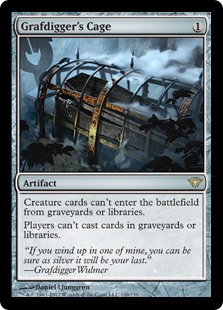
As such, it's not terribly surprising that Burn is a pretty tough matchup for Dredge. One might point to sideboard Gnaw to the Bone as an answer, though Burn is able to power through Gnaw with Skullcrack fairly consistently. The real gem for this matchup out of Dredge is Collective Brutality, and given the texture of that matchup, it's not surprising that Ketter boarded up to three copies of the Burn-crushing haymaker.

The very hard matchups for Dredge are going to be decks that aim to kill on about turn four that are more difficult to disrupt than Burn. Ad Nauseam is pretty great at interacting with Dredge while Dredge doesn't have much to punch back, and as such it wasn't terribly surprising to see Sam Jadin take 2nd in Milwaukee with the deck. Valakut decks will also generally do a pretty good job of racing Dredge, though they don't have quite as many tools as Ad Nauseam given the power of Angel's Grace and Phyrexian Unlife as Time Walk-esque effects.

Hateful Tools, and How to Use Them

For those of us not trying to play a non-interactive combo deck, it's likely that we'll be reaching for our sideboard if we want to beat Dredge. There are a lot of tools available in the format, though it's important to understand the role that they play, and how to actually utilize them to win games. The printing of Prized Amalgam has been very significant for Dredge, and not just because it gave the deck more mana-free actions. Narcomoeba enables a Dredge player to have Amalgams on the battlefield as early as turn one, and the card is eminently castable on turn three. Nessian Courser may not seem like much, but it's a significant upgrade from the Stinkweed Imp beatdown plan that Dredge used to need to go on against hate, and as such mulligaining to hate pieces is worse against Dredge than it ever has been.

Grafdigger's Cage

Grafdiggers CageGrafdigger's Cage is among the more commonly played answers to Dredge, in part because it has a textbox that also hoses Collected Company. Being findable off Ancient Stirrings is also a contributing factor. The ability to come down on turn one and turn off opposing shenanigans is very powerful, and your Dredge opponent is going to need to find some specific cards to beat a good hand with Cage.
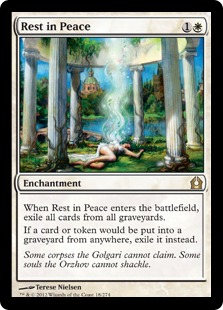
That said, most of your Dredge pilots will be packing Nature's Claim and/or Ancient Grudge to deal with a potential Cage. An opening hand is not keepable merely because it has a Cage, and even though the other factors to assess seem kind of minor, they are important. Basically, when you have Cage you have to account for the medium beats of a turn-one cheated or turn-three hardcast Prized Amalgam and Narcomoeba, in addition to having something to fall back on should your Cage be destroyed. For a general rule, a five-card hand with Cage is likely something that you should always keep, but a seven card hand with Cage still needs to be generally functional.

Rest in Peace

The upside of Rest in Peace over Grafdigger's Cage is both that it actually exiles graveyards and that enchantments are a little harder to remove than artifacts. The downside is that you give your opponents more time to have already cheated creatures into play. rest in peaceAs such, opening hands with Rest in Peace have to be examined even more critically than those with Grafdigger's Cage, and if you're on the draw your Rest in Peace will sometimes be too slow to matter.
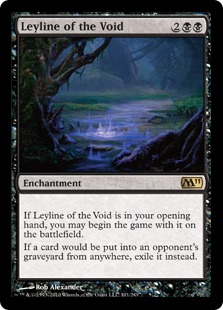
Rest in Peace is among my lesser recommended pieces of graveyard hate, and if this is the tool you're trying to employ then I strongly recommend testing post-sideboard games with the card. You may not be as happy as you thought you were with this particular piece of hate.

Relic of Progenitus

Relic of Progenitus has all of the downside of Rest in Peace and a little bit more. Dredge plays fetchlands, which makes it difficult to leverage the card without actually exiling it, and once you exile it you no longer have your hate piece in play. You can't expect Relic to win the game on its own even if your opponent doesn't have an anti-hate piece. As such, you don't see many Relics these days. Though once a maindeck card for Tron, you're much better off finding a Grafdigger's Cage with your Ancient Stirrings in the current environment.

Leyline of the Void

Leyline of the Void is great, though its particular downside is that it's pretty bad outside of being in your opening hand. That said, if you have four cards that you're looking to commit to beating Dredge, this is likely what you're looking for. Leyline of the VoidWith a Leyline in your opener you can rest assured that your oponent won't be up to anything degenerate on turn one, though you do still have to be somewhat wary of three-mana 3/3s and Nature's Claim. The one-sided nature of this hate piece is also a nice boon, and the reason that Leyline is the card of choice Dredge itself uses to beat the mirror.


Surgical Extraction

When there were varying builds and more potential cards that matter popping out of the graveyard, Surgical Extraction was worse. Now that every Dredge list is just Amalgaming and Bloodghasting, two Surgical Extractions can close the game with little additional assistence. For Snapcaster Mage decks I am pretty big on Surgical Extraction, and it's currently what I recommend for the Grixis Delver sideboard.

The downside of Surgical is that if you only have one your opponent could just mill over Bloodghast, Narcomoeba, and Prized Amalgam to put you in a tight spot. But as long as your hand is relatively functional, a Surgical Extration in your opener is probably pretty great. It's imortant to note that you should genearlly wait for the recursive creatures to pull the trigger on Surgical, but against hands that are demonstrating some weakness it will be wise to just go for the jugular and hit their Golgari Grave-Trolls.

Surgical ExtractionNotably, the Surgical plan leaves the door relatively open for you to get Conflagrated to death, so you can't just rest on Surgical and do nothing.

Bojuka Bog

You don't see a ton of Bojuka Bogs, though they do show up either as part of a Knight of the Reliquary package or in conjunction with Life from the Loam, usually out of Dredge itself. The strength of Bojuka Bog is that it's pretty much a freeroll if you can justify the slot, though it is slow and only has a one-time use. This card is totally fine, but isn't exactly a haymaker. If you expect Dredge mirrors then having it in addition to your Leylines is reasonable, and if you can convince yourself to play Knight of the Reliquary then it's a great piece of utility. But the value that it adds is relatively minor, and won't generally matter in the absense of other hate.

Anger of the Gods

People ask me somewhat often about putting Anger of the Gods in my Delver sideboard, which just seems insane to me. You beat Dredge by messing up their graveyard and killing them before they can do anything about it. In a creature deck, Anger just kills your own clock. This is not a dedicated hate card, and I only like it if it conveniently falls on your curve en route to killing the Dredge player. For example, if I were playing a Valakut deck I would be pretty happy to take a turn off to Anger away some creatures that my Dredge opponent found and then Primeval Titaning or Scapeshifting them to death shortly after. Unless my deck is dedicated control or combo deck that can easily take a turn off to Anger, I'm not really interested in it for the Dredge matchup.

It's on the Community Now

With the results of Milwaukee, the Dredge players have put the ball in our court. Now we find out how beatable the deck is, and how warping the deck is if it is beatable. I'm curious to see how things shake out, as it would be pretty unfortunate if Golgari Grave-Troll ended up returning to the banlist. There are definitely tools available for beating Dredge—just make sure you pick the right one.

Thanks for reading.

-Ryan Overturf
@RyanOverdrive

Want Prices?

Browse thousands of prices with the first and most comprehensive MTG Finance tool around.


Trader Tools lists both buylist and retail prices for every MTG card, going back a decade.

Quiet Speculation