menu

Insider: What Goes Up – The Risk of Standard Specs

Are you a Quiet Speculation member?

If not, now is a perfect time to join up! Our powerful tools, breaking-news analysis, and exclusive Discord channel will make sure you stay up to date and ahead of the curve.

Before launching into this week's article, I first want to introduce myself. My name is Sigmund (AKA Sig) and I'm very passionate about Magic finance. I've been writing on the subject now for nearly five years---if you've been around long enough you're already familiar with my old column here on Quiet Speculation.

While I've covered a broad variety of topics, more recently I've found my niche. Rather than trying to predict the next Standard metagame shift or speculating on hundreds of copies of a given card, I focus on leveraging MTG as an alternate investment vehicle. My focus is typically on older, more collectible cards because they offer some of the best risk/reward equations in the finance game.

Hopefully, through my weekly column, you will develop interest in the opportunities Old School Magic, Legacy and Vintage have to offer. With that said, let's get to it!

...

This morning I woke up and did my daily check of the top Interests over at MTG Stocks. What I saw was an array of Standard cards. If there was any doubt in my mind about Standard speculation and the Pro Tour, it’s completely erased now!
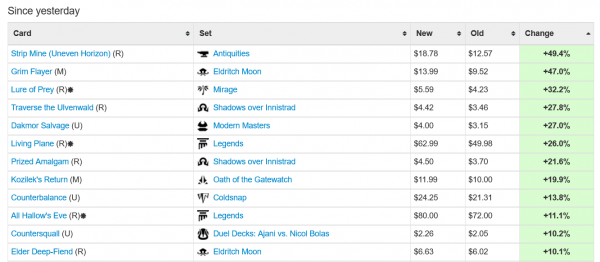
Interests

In the list above I count five Standard cards ranging from the 10% move in Elder Deep-Fiend to the impressive 47% gain in Grim Flayer. And here’s the beauty of using MTG Stocks for Standard cards: there’s no ridiculous price manipulation due to a single seller’s inflated price. Volume is so high with Standard cards that you can pretty much trust the price reported here…

…for about a day.

What Goes Up…

Did you notice there were three Reserved List cards on the list above intertwined with the Standard stuff? I sure did. While I don’t particularly care about Lure of Prey, I do expect Living Plane and All Hallow's Eve will retain these higher prices---at least Near Mint copies should. However, I don’t think we can guarantee the same trend will continue on something like Grim Flayer. Eldritch Moon is loaded with powerful cards, so the ceiling on any individual card within the set will be a bit lower. Add in the fact that the set is still being freshly opened, and I see a risk/reward equation I’d prefer to avoid altogether.

In fact, most of the time when a card spikes after a Pro Tour, there is a notable sell-off in the days that follow. One of my favorite examples is from a couple years ago, when Jon Finkel showed off the power of Dungeon Geists at the Pro Tour. His performance sent a jolt of energy into the card’s price, rescuing it from bulk for about a month.

But after that initial hype, interest in the card died down and its price rapidly deteriorated. Selling at the peak was clearly the right play.

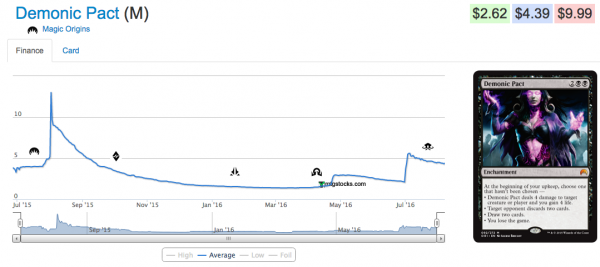
Or how about a more recent example? Remember all the hype behind Demonic Pact?
Screen Shot 2016-08-07 at 9.01.57 PM

I sold copies for over $10 during Pro Tour Magic Origins. Now the best you can hope for is a cute combination with this and the new Donate in Standard. But even this will only give you a small gain given Magic Origins’ lame duck status in Standard. A few months from now it’ll be gone.

And who could forget the classic card spike in Pyromancer's Goggles during Pro Tour Shadows over Innistrad just a few short months ago?

Net, the general trend for Pro Tour spikes has been a short-term inflation in price followed by a rapid decline. In some cases there’s even 100% retracement. In other words, the card that spikes gives up its entire price jump, netting a profit of zero over the timeframe.

Expanding the View

I have a confession to make: the charts I picked above were purposefully selected to illustrate my point. Of course there are exceptions---on occasion, cards spike at a Pro Tour and then maintain their elevated price because those cards redefine Standard for a longer period of time.

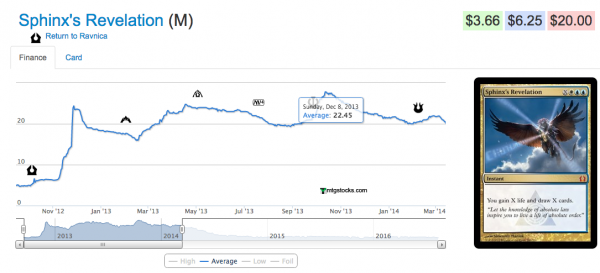
When Sphinx's Revelation broke out in Standard, instead of selling off the card spiked again and again, driving higher highs.
Screen Shot 2016-08-07 at 9.05.05 PM

Look at that beautiful chart---it’s a stock trader’s dream because it performed so predictably from a technical basis. On Wall Street when a stock makes higher highs and higher lows, it’s a bullish sign. This is an example where selling after the immediate spike could have meant sub-peak profits.

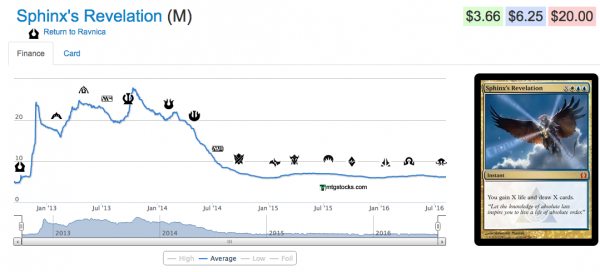
But here’s my real concern: zoom out on the chart to look at data since January 2014…
Screen Shot 2016-08-07 at 9.05.11 PM

Yikes. What once looked like the perfect trade quickly deteriorated into an abysmal chart. Holding through Standard rotation would have meant a 66% depreciation in value. (I’ll toss in an aside here and acknowledge that the card could be bottoming here---if you have your eye on this card for casual or Commander use I’d recommend grabbing a copy now while it’s bottoming.)

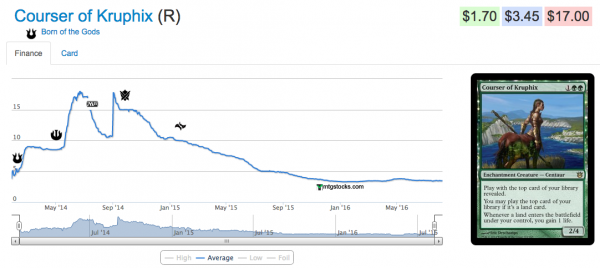
Courser of Kruphix was another example of a card that broke out in Standard and maintained its dominance for a long period of time.
Screen Shot 2016-08-07 at 9.07.16 PM

The trend is identical to Sphinx's Revelation. A couple spikes, healthy price appreciation over a one-year period, and a dramatic sell-off at rotation. Clearly, consistent financial prominence is not a common trend for Standard all-stars. With history's tendency to repeat itself, I would study the charts above closely before thinking Kozilek's Return or the new Emrakul will behave differently.

Speculating over the Long Term

With this data in hand I want to emphasize two points consistent with all of my weekly columns.

First, if you’re watching these Standard spikes I want to encourage you to avoid chasing any of them. Don’t be tempted by the jump in Kozilek's Return---buying now will almost assuredly lead to financial losses unless you have access to a retailer’s buy and sell prices. And whatever you do, please stay away from Eldritch Moon cards that spiked. While there’s always a possibility that you miss out on the next Jace, the Mind Sculptor it’s far more likely that you’re chasing the next Pyromancer's Goggles.

The vast majority of Pro Tour profits have already been made. If you’re trying to chase something, you’ll likely get burned. Unless, of course, you’re chasing the Reserved List cards on that Interests list above. And this brings me to my second point. The long-term trajectory of Standard cards is almost always downward. The long-term trajectory of classic Reserved List cards is generally upward as long as the game is alive and thriving.

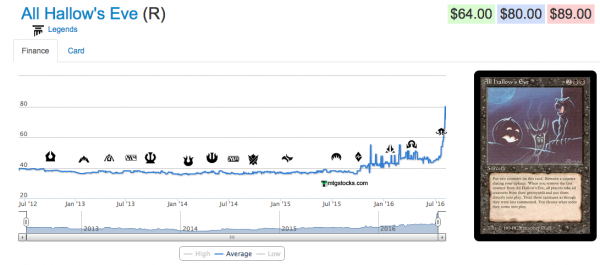
Take a look at the three-year chart for All Hallow's Eve below. The card has been gradually climbing the entire time. If you bought in at $40 in 2013 you would be in the green on the investment. If you bought in at $50 in 2014 you would be up today. If you waited until it was $60 and bought into a small jump in 2016 you would be up today. Now the card is $80---do you think it’s done climbing? Only if you think Magic as a whole has peaked.
Screen Shot 2016-08-07 at 9.09.03 PM

This is why I like buying iconic Reserved List staples so much. Rather than speculating on a metagame shift or hoping to find a greater fool, you can invest in stuff like Juzam Djinn knowing you’re making a bet on the game as a whole. As long as there are 30-somethings with full-time jobs interested in re-living the past, these older cards will be in demand. Sprinkle in a little bit of growth for the game as a whole, and you’re looking at a monotonic increase in price.

Which chart would you rather be engaging in: the rapid rise and fall of Sphinx's Revelation or the steady growth in Juzam Djinn? Granted the recent surge in Old School Magic’s popularity has driven Juzam’s price to a whole new level, but even before the format caught on do you think there was any money to lose buying into Juzam Djinn? With inevitability on his side, I would posit it’s unlikely. And the same can be translated to other iconic classics in Magic: Power, Library of Alexandria, dual lands, etc. As long as the game is healthy, these cards will move in one direction over the long haul: higher.

Lessons from the Stock Market

The Pro Tour is over, and while Standard prices are going to rise and fall I continue to beat the same, steady drum. Apparently my big Standard bet this year was a total flop: I picked up 16 copies of Matter Reshaper and there was a grand total of four copies in the Top 8.

While this isn’t a disaster, I think upside on the card over the next 12 months is minimal. And as I watch sellers undercut each other on eBay, I immediately feel relieved that ABU Games was willing to graciously offer over $3.30 in store credit for each copy I shipped them. And with live coverage of the Pro Tour taking place during the hours I most usually sleep, any chance of further speculation this quarter was out of the question.

Oh well. I never claimed to be a Standard expert. With some luck, I’ll be able to take this modest gain and convert it into a high-flying Reserved List card.

I want to conclude this week’s column with an analogy to the stock market.

Let’s travel back in time to 2004. A time of rapid change. Picture your friends talking about this newfangled way of renting movies called “Netflix.” You’re intrigued by the convenience, absence of late fees, and the future potential of the company. But when it comes time to invest some money in the stock market, you hear of terrific earnings from Blockbuster LLC, sending the stock price to over $20 a share. The hype is irresistible, and you buy some Blockbuster shares while everyone on Wall Street is clamoring for how great the quarter was for the company.

Then time passes…

Stockchart_Blockbuster

Does the chart above remind you of anything? I look at the price chart for Blockbuster and I think of Courser of Kruphix. On the other hand, the chart for Netflix is reminiscent of Juzam Djinn. With the former you have inevitability and with the latter you have unlimited potential.

And here’s the beauty of it all: you don’t need to be a fortune teller or expert analyst to know what lies ahead for Magic. As long as the game remains healthy, you know a card like Nether Void, All Hallow's Eve, or Juzam Djinn will continue to rise. In the meantime, Standard cards will ultimately drop unless they make a once-in-a-lifetime shake-up to Modern and Legacy (e.g. Snapcaster Mage, Liliana of the Veil).

And with print runs being as huge as they are nowadays, is that really a bet you’d want to make? Even Polluted Delta can't gain price traction and that card is everywhere in eternal formats. The risk/reward equation is so much more attractive for older cards that the premise of playing around with a short-term spike in Standard cards---the Blockbuster stock of the moment, if you will---seems preposterous to me. I’ll stick with the classics, thank you very much.

Sig’s Quick Hits

  • Every so often I see Wheel of Fortune on the list of “Interests” and I’m reminded the card is on the Reserved List. Since it was given a promo reprinting, it’s easy to forget about the card’s RL status. Nevertheless the card can’t be printed again and it has gotten some notice. Now Star City Games has just seven Revised copies in stock for between $26 and $35, depending on condition. Honestly this card is so iconic and useful that I see virtually no downside save systemic risk of Magic’s end.
  • Star City Games is sold out of Koskun Falls at $4.99. We’re talking about an Enchant World from Homelands. Though it’s interesting the card doesn’t even show up on SCG’s buylist. It’s like they know the card is worth more now but they refuse to acknowledge it with their bank account. I sold the copies I’m not using (which is nearly all of them, believe me).
  • I’m keeping a close eye on Power Artifact, a Reserved List card from Antiquities. While the card will probably never show up in a Grand Prix Top 8, it has noteworthy relevance in Commander and Old School Magic because of its ability to combo with other cards to make infinite mana. Star City Games restocked a few Near Mint copies at $30 and I’m tempted to buy them all. The cheapest LP copy on TCG Player is $35 and the TCG Player “Market Price” is $31, indicating copies do actually sell in this price range. If you visit Star City Games’ site tomorrow and the card is sold out, you’ll know why.

Insider: Buying Into Modern Dredge

Are you a Quiet Speculation member?

If not, now is a perfect time to join up! Our powerful tools, breaking-news analysis, and exclusive Discord channel will make sure you stay up to date and ahead of the curve.

Back from vacation and back to the Modern grind! Although this week will start with all eyes on Pro Tour Eldritch Moon results, and spikes around breakout Standard staples like Emrakul, the Promised End and Grim Flayer, Modern is just around the corner.

The weekend of August 26-28 will bring us three Grand Prix from across the world, and as Modern Nexus will be discussing in this week's pending July update, the metagame has seen some important stabilizations and evolutions since our last Grand Prix weekend.

Rising Modern players in August

The Nexus June update saw a number of new strategies punching out of their old weight classes, as well as standbys such as Jund, Affinity, and Burn re-establishing their positions at the top. Notably, Jeskai Nahiri continues to defy skeptics and stay at the top of Tier 1. July promises to see this trend continue.

Of all the metagame developments since the May Grand Pix, however, perhaps none is more significant or impressive than Dredge's ascent. Shadows over Innistrad gave the anemic strategic both Insolent Neonate (a Hapless Researcher reprint even better suited for Dredge) and Prized Amalgam (the critical 9th-12th creature after Bloodghast and Narcomoeba that hits play after dredging).

With Neonate and Amalgam joining recently unbanned, and previously irrelevant, Golgari Grave-Troll, Dredge has secured a Tier 2 foothold in the format off a commanding string of MTGO finishes and newfound paper momentum. Bust out the graveyard hate because the Dredge factor is back in a big way.

Dredge returns to Modern!

As with all upstart Modern strategies, Dredge has initiated a slew of buyouts and spikes across its once cheap core. Although the deck remains an MTGO budget all-star at around 250 tickets, its paper stock has almost doubled in the past month from the $200-$250 range to $400-$450. Today's article will help you navigate these spikes when buying into the deck.

Whether you're playing Dredge in the upcoming Grand Prix or just looking to invest around the hot new strategy, this article will give you important advice around purchasing Dredge's volatile stock. We'll review different Dredge variants before separating their staples into two categories: cards you need to buy immediately before further spikes and cards which should drop with time.

The Dredge Core and Variants

According to our Nexus metagame statistics, preliminary for July, Dredge remains solidly Tier 2 in the 2.5% to 3% share range. This share may even increase into the 3%-4% band based on MTGO results, where Dredge has made the most convincing inroads since its rediscovery in May and June.

This means Dredge is definitely going to be a major player at the upcoming Grand Prix, which means you'll need to learn its different iterations. Knowing these variants will also help you decide what is a safe investment and what is more risky.

The dredger engine

Modern's Dredge core isn't too different from the Dredge mainstays of old Ravnica-era Magic, or of Legacy Dredge today. Here's a loose outline:

  • 10+ dredgers (4 Golgari Grave-Troll, 2-4 Stinkweed Imp, 0-2 Golgari Thug, 0-4 Life from the Loam)
  • 12 recurring creatures (4 Prized Amalgam, 4 Bloodghast, 4 Narcomoeba)
  • 12 discard/mill outlets (4 Insolent Neonate, 4 Faithless Looting, 4 of either Burning Inquiry or Shriekhorn)
  • 2-4 Conflagrate
  • 18-20 lands (including 2 Dakmor Salvage)

This affords minimal flexibility for payoff cards like Rally the Peasants or the Bridge from Below/Greater Gargadon package.

From a gameplay perspective, Dredge's goal is to get one of those 10+ dredgers into the graveyard on turn one, either dredging immediately via Insolent Neonate or starting the chain on turn two during the draw step. From there, Narcomoeba's and Salvage/fetchland-powered Bloodghasts start hitting play, bringing with them the Amalgam bruisers.

There was an error retrieving a chart for Insolent Neonate

Conflagrate helps clear the path or seal the game, and the deck typically wins by turn four through beatdown and burn. Turn three is possible with good draws and minimal interaction.

In July alone, we've seen multiple examples of high-level Dredge finishes, each illustrating slightly different angles to the deck. Justin O'Keefe won the StarCityGames Baltimore Classic just last weekend with his Greater Gargadon and Bridge from Below list. In early-July, we saw Rinsei Ooike take down the finals of the 287-player Modern God Final in Japan, eschewing the Bridge combo for Darkblasts and Rally the Peasants. Between Ooike's and O'Keefe's finishes, the Tokyo WMCQ featured two Dredge players in its finals, Kazuyuki Takimura and Kenji Tsumura at 6th and 7th respectively.

Small but important Dredge variations

Between the deck's metagame share and its headline finishes, Dredge has excellent positioning heading into August. The Dredge core has gone from Tier 4 gimmick to Tier 2 exemplar in just a few months, and its track record is a testament to the core's theoretical power. This gives you some telling guidelines about where you want to spend your Dredge money.

Buy 'Em Now

It's always risky to dive into a Modern deck that takes off between Grand Prix. If a deck makes it on the big stage, its stock will rise even further than its hyped start point. If the deck bombs out, all those spikes will quickly retreat.

Thankfully for Dredge buyers, this strategy has all the hallmarks of a real Modern contender. Although Dredge is unlikely to maintain a Tier 1 status, Tier 2 honors should be solidly in its future, which means you'll want to invest in Dredge the same way you invest in any other Tier 2 deck: focusing on low-circulation, critical pieces. Here are the three best, even if they are much higher today than they were before I went on vacation.

Conflagrate

Time Spiral cards make great investments, and the never-reprinted Conflagrate is no exception. Almost all Dredge decks use at least one of these sorceries, with many using 2-3, and the card remains an indispensable discard outlet, interaction piece, and reach element in the linear strategy. If Dredge puts up big Grand Prix finishes, this is a huge steal at just $3-$5.

There was an error retrieving a chart for Conflagrate

Because it's an uncommon and isn't commonly associated with Dredge (it isn't a dredger nor a dredge-enabled creature), Conflagrate can fly under the radar. That will not last if Grand Prix weekend is kind to Dredge. Get these immediately if you want to play the deck, as even a lackluster Grand Prix performance will not see the price fall significantly below its present value.

Golgari Grave-Troll

Remember the ineffectual Troll buyout a few months ago? Some enterprising speculator underestimated the card's stock (the Duel Deck printing messes with this kind of buyout math), but Golgari Grave-Troll did see a price increase and that was well before Dredge was a deck. With Dredge now a major Tier 2 player, Troll is the non-negotiable playset that is just waiting to explode again.

There was an error retrieving a chart for Golgari Grave-Troll

Even a modest Grand Prix performance will see Troll stabilize its current $6-$8 price tag. A Top 8/16 run will easily double it overnight. It shouldn't surprise anyone that Modern's best dredger is also one of Dredge's best investments, so don't sleep on this card before Grand Prix weekend arrives.

Bloodghast

It's Goblin Guide all over again! If Guide and those beloved Zendikar fetches taught us anything, it's that chase Zendikar rares command big dollars if they never get reprinted. Bloodghast is the newest example of that time-honored trend.

There was an error retrieving a chart for Bloodghast

Like Troll, Bloodghast is a non-negotiable playset in all Dredge strategies. That said, I'm somewhat leery of putting the Vampire in the "Buy 'Em Now" category because its current price seems a bit high. Guide is about $13 more than Bloodghast, but sees play in both Tier 2 Gruul Zoo and Tier 1 Burn. Bloodghast is just in Tier 2 Dredge. This might suggest the current price is a bit of a bubble that will stabilize with time, but I also know the Vampire holds intense casual appeal outside of Modern.

I'm in a buying mood on these cards because even if Bloodghast does underperform Guide in the end, a Grand Prix Top 16 will guarantee it rises in the short term.

Make the Gamble

The following cards aren't sure bets, either because of uncertain inventory or unstable positioning within Dredge. That said, if you're feeling lucky or have a good sense of Dredge's variations, these might be rewarding targets.

Greater Gargadon and Bridge from Below

Justin O'Keefe put Gargadon and Bridge from Below to work at the SCG Baltimore Classic on July 31, and players are sure to notice this technology in the leadup to the August Grand Prix. I haven't seen the combo as much on MTGO, and it's unclear to me if this synergy dilutes the Dredge core or makes it more consistently explosive. If you're betting on the latter camp, however, the Time Spiral rare makes a great financial gamble.

There was an error retrieving a chart for Greater Gargadon

Gargadon already saw small increases around the Restore Balance combo deck, and Dredge is a much more enduring strategy to supports its price tag. That said, if Gargadon flubs at the Grand Prix, price memory will only sustain the $3-$4 price-tag for so long. By contrast, a repeat of O'Keefe's finish would send Gargadon into the stratosphere. The same is true of Bridge from Below, which has a Modern Masters reprinting on top of its Future Sight run, but is in similarly limited supply.

There was an error retrieving a chart for Bridge from Below

Unlike Gargadon, Bridge has the added benefit of featuring prominently in Legacy Dredge decks, as well as being a casual favorite for its unique effect. I'm personally optimistic about these cards because Modern is historically a format that rewards swingy and explosive synergies, but I can also see the combo watering down an otherwise tight core. Time will tell!

Foils: Burning Inquiry and Shriekhorn

These two commons might be better investments than I am giving them credit for, which is largely because I do very little investment in the foil common market. That said, if any foil commons are worth investing in, it has to be a pair of single-print run Dredge staples from sets 5+ years old.

There was an error retrieving a chart for Shriekhorn

Although Burning Inquiry remains the most explosive (and potentially unreliable) Dredge outlet, Shriekhorn has rapidly made headway as a strategy mainstay. The Mirrodin Besieged artifact has a lot in its favor. Its a one-drop artifact which can enter turn one play off any land other than Dakmor Salvage. Between the turn one and turn two upkeep activation, it mills four cards before your turn two draw step, which gives Dredge a big chance of finding its dredger or getting creatures into play. The artifact also gives you milling in controlled bursts, which insulates you from graveyard hate.

These qualities make Shriekhorn a frontrunner for the Dredge "discard" outlet core, and make foil copies a valuable commodity.

There was an error retrieving a chart for Burning Inquiry

If you're not using Shriekhorn, you're definitely using the powerful Burning Inquiry in its slot, a Magic 2010 common which hasn't seen serious play since its printing. Inquiry has the biggest potential for enormous turn two plays, but lacks Shriekhorn's consistency and resilience. This creates an odd tension between the two cards: hedge your bets by picking up foil copies of both.

Wait for the Drop

Modern finance has some of the most erratic changes in all of Magic, and breakout decks like Dredge are a big factor in this. Numerous Dredge staples have shot up well over their actual value, so these are the cards you'll want to avoid until some of the hype dies down. That said, a Grand Prix performance will probably push even these overvalued cards higher than they are now.

Prized Amalgam

It feels odd that Dredge's most important new enabler is also a card to avoid for now. Yes, Prized Amalgam is the biggest reason Dredge has enjoyed newfound success after Shadows over Innistrad, but the new rare in a Standard-legal set is not where you want to put your money. Even at the lower-end $3-$4 range, the card is grossly overvalued.

There was an error retrieving a chart for Prized Amalgam

Amalgam sees play exclusively in Modern Dredge, with basically nothing in Standard, Legacy, or any other format. By contrast, Reality Smasher is a multi-format powerhouse from a slightly older Standard-legal set. It is also a rare. Despite this higher profile, Smasher is still just a $3-$4 card. That does not bode well for Amalgam, whose niche Modern status (even in a Tier 2 deck) can't support its price for long. I expect this to drop as more Shadows stock is opened.

Narcomoeba

Conflagrate makes the cut but Narcomoeba falls short? What gives? The culprit in this case is Modern Masters, which reprinted the timeless Dredge classic and ensured a lower price tag for years to come.

There was an error retrieving a chart for Narcomoeba

A great point of comparison here is Eldrazi Temple. Temple sees Legacy and Modern play in multiple decks, all with higher shares than Dredge. Like Narcomoeba, Temple had a Modern Masters reprinting at uncommon. Unlike the illusion, the Eldrazi land's original printing was at rare. If Temple is stuck at a $4 card, it seems very unlikely Narcomoeba can get over its $2 hump with so much volume. If you can get them at sub-$1, that's another story and a great opportunity for a 100%+ profit. Otherwise, stay away.

Gearing Up for Grand Prix Weekend #2!

We have a few weeks before August's Grand Prix bash, and we'll be checking in on the metagame standings to advise some financial moves ahead of the event. In addition to being the first big stage since Dredge's rise, the Grand Prix will also be an opportunity for Eldritch Moon cards to shine. I'm still optimistic on both Eldritch Evolution and Bedlam Reveler in this post-Moon format, but we'll need to wait until the Grand Prix to see how these cards pan out.

Thanks for joining today and let me know in the comments if you have any questions about other Dredge cards or investment opportunities. I'll be back next week with a financial review of the Modern Nexus July metagame update, coming out sometime this week, and to get us pumped for the upcoming Modern tournaments. See you then!

Old Friends and New Faces at QS

Are you a Quiet Speculation member?

If not, now is a perfect time to join up! Our powerful tools, breaking-news analysis, and exclusive Discord channel will make sure you stay up to date and ahead of the curve.

It is with great pleasure that I announce the return of some of our most beloved authors to QS, along with some new people in the QS constellation of sites. Our membership has grown and we want to reinvest that into your Insider subscription, bringing you more intelligent writing and skillful insights.


Corbin Hosler, one of the founding writers of QS, has returned to the site that he started with. Corbin has created a flourishing career in Magic journalism, writing for Wizards of the Coast's coverage team. We are proud to have him back; he will be in an editorial role with QS and Modern Nexus. Modern Nexus is a companion site of ours and is quickly becoming the go-to spot for Modern strategy. We are pleased to welcome his strategic insights and hustle, as well as his patience for turning my improper hyphens into en-dashes.

Corbin profile pic


Sigmund Ausfresser is another founding writer on QS and was a bedrock of the site for many years. We are thrilled to have him back. Sig mixes insights from the traditional stock market along with his long Magic finance history. His articles are always original and sharp. Over the years, Sig has developed well-earned devotion and an enthusiastic following. I've had people email me, asking when we're getting him back. It's good to have him home. Sig is back in his Monday spot, getting you ready for a week of trading. Check out his article today!

Sig


Douglas ( DJ ) Johnson has a phenomenal track record at original Magic finance insights. Whether he's teaching us about basic lands with uncommon price tags or treating buyers right, he's got a hands-on approach that transcends theory. DJ wants you to make money on Magic in unusual ways. If you want to know the right way to handle and process cards, from bulk to gems, keep an eye on his articles. D.J. is a guy who does what he talks about. You'll see his columns appearing on the QS homepage.

DJ


Jim Casale is a hybrid finance and strategy writer. Jim analyzes how tournament performance (or even just hype) can lead you to great speculation cards and underpriced assets. He will be heading a new article series on Modern Nexus, focusing on grinding your way to Modern victories on the battlefield and in the trade binder. We are pleased to add another strategically-minded voice to Modern Nexus and I think you'll love the way Jim looks at the game.

Jim Casale


None of this would be possible without the continued support of our Insiders, who demand an excellent product. We work every day to provide it. If you're not an Insider yet, what are you waiting for? It's time to sign up.

Douglas Linn

Doug Linn has been playing Magic since 1996 and has had a keen interest in Legacy and Modern. By keeping up closely with emerging trends in the field, Doug is able to predict what cards to buy and when to sell them for a substantial profit. Since the Eternal market follows a routine boom-bust cycle, the time to buy and sell short-term speculative investments is often a narrow window. Because Eternal cards often spike in value once people know why they are good, it is essential for a trader to be connected to the format to get great buys before anyone else. Outside of Magic, Doug is an attorney in the state of Ohio.  Doug is a founding member of Quiet Speculation, and brings with him a tremendous amount of business savvy.

View More By Douglas Linn

Posted in Free17 Comments on Old Friends and New Faces at QS

Have you joined the Quiet Speculation Discord?

If you haven't, you're leaving value on the table! Join our community of experts, enthusiasts, entertainers, and educators and enjoy exclusive podcasts, questions asked and answered, trades, sales, and everything else Discord has to offer.

Want to create content with Quiet Speculation?

All you need to succeed is a passion for Magic: The Gathering, and the ability to write coherently. Share your knowledge of MTG and how you leverage it to win games, get value from your cards – or even turn a profit.

Insider: High Stakes MTGO – Aug 31st to Aug 6th

Are you a Quiet Speculation member?

If not, now is a perfect time to join up! Our powerful tools, breaking-news analysis, and exclusive Discord channel will make sure you stay up to date and ahead of the curve.

Hello and welcome back for another High Stakes MTGO article!

Pro Tour Eldritch Moon just ended, bringing with it a huge change to the Standard format. We saw a lot of Emrakul and Kozilek's Return, no W/x Humans and only two Bant Company in the Top 8. Lukas Blohon took home the trophy with a W/B Control deck. In summary it was a great weekend for players and also for speculators, as a lot of cards under scrutiny did great in this tournament.

On a personal level, the tix I was accumulating over the past few weeks were put to good use during PT EMN. Besides being a little disappointed to have sold Kozilek's Return too soon last week and missed the Emrakul, the Promised End spike, I'm rather happy with my quickflips. I'm especially happy to see Yavimaya Coast as the most played card among the Top 8 decklists, as I'm still holding more than 350 copies of this Magic Origins painland.

The link to the live portfolio hasn't changed and can be found here.

Quickflips This Week

Since most of my transactions aimed at quickflips this past weekend, I'll review them in this special category this week. A strategy I used once or twice in the past consists of quickflipping all of the mythics from the newest set that have even a slight chance of being played at the Pro Tour. This strategy has more to do with dynamite fishing than with careful investment, and this very low-risk strategy leads to low profit.

This idea is to capitalize on the Pro Tour hype and the very low supply of mythics from the newly released set. After only one week, the MTGO supplies of the newest set are fairly low. Independently of their price, one or two days prior to the Pro Tour all cards are susceptible to spike if they're exposed on camera or among the top Standard decks.

Though I would not consider a 40-tix card such as Liliana, the Last Hope, anything else under 15 tix is worth considering. Very often I advocate for an equal distribution of tix in a basket of positions. In this case you don't want to be too heavy on copies as it could be very costly to liquidate 100 copies of a losing quickflip. For this reason I would rather simply buy 30 to 50 copies even if that means 350 tix in one position and 35 tix in another one.

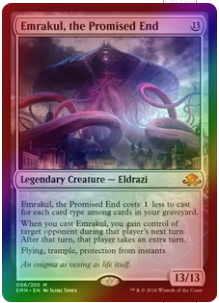
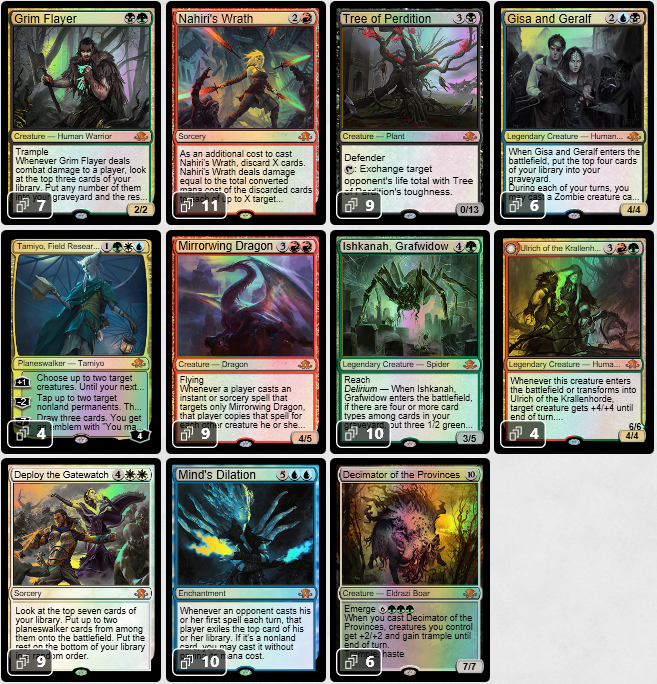
Below is the list of the EMN mythics I speculated on following this strategy. Let's get this out of the way now---I missed Emrakul, the Promised End. I was not sure about her appearance at the PT and with the time shift between Australia and the US I couldn't follow real-time info about the rise of the legendary Eldrazi.

With the exception of Deploy the Gatewatch these were all sold by Friday night, after the end of Day 1 at the Pro Tour. Yes, I barely kept these cards for 24 hours. I only sold Deploy the Gatewatch on Sunday morning because I didn't have time before and because it didn't matter much at that point considering the card's value. Otherwise I would recommend selling everything by the end of Day 2.

Unless you can follow the action and price movements all weekend long, cherry-picking what to sell and what to keep for one or two more days can be the beginning of some troubles. The mythics that didn't make it---the majority of them---quickly plunge and you really want to sell them by the end of Day 1. The goal is to break even with the misses and make a profit as large as possible on the few winners.

Gisela, the Broken Blade, Deploy the Gatewatch, Nahiri's Wrath, Mirrorwing Dragon, Gisa and Geralf, Tamiyo, Field Researcher and Decimator of the Provinces ended up costing me 13.3 tix, an insignificant 1.3% loss considering more than 1000 tix were invested in them. Some were slightly profitable (Gisela, Gisa and Geralf), some not (the Dragon), some totally crashed over the weekend (Decimator of the Provinces), and Nahiri's Wrath actually doubled by Sunday!

Grim Flayer and Ishkanah were the two winners of my basket, for a cumulative +208 tix. Because I was not able to connect to MTGO until Friday night, my average sale price for the legendary spider was only 15.5 tix though it was possible to sell it over 17 tix mid-day. After a little dip to 13 tix, Ishkanah is back to 18 tix by Sunday night and it's doubtful this will last.

Despite missing the actual biggest winner of this past weekend (Emrakul almost tripled!) my quickflip plan with EMN mythics yielded a decent net of 195 tix.

EtPE

While I considered them, foils were ultimately not a part of my quickflip strategy. I did buy some mythic foils with an eye to a longer-term window, including Emrakul. Unlike foil Ishkanah, Grafwidow, which didn't follow the price trend of the regular version, the foil version of Emrakul, the Promised End did actually spike.

Since I believe the price spike won't last for either version it was an easy sale after the price doubled. +100% in 24 hours is definitely a good quickflip, even if that wasn't my intention at purchase.

I had also bought this red angel just in case. Nothing really happened for this card except taking a few slots in some sideboards. Nonetheless the price jumped by about 50% over the weekend.

Since I was on a quickflip option with the Castigator I didn't look further and sold it with a little less than 50% profit. I still believe this card can do more in Standard but that just wasn't my strategy this week. I might come back to it if the price dips under 1 tix again.

Buys This Week

TU

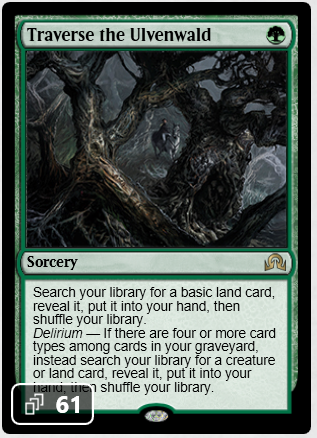
Traverse the Ulvenwald was a card everyone talked about way before this Pro Tour and it turned out to be the exact toolbox card everyone thought it was. With much more delirium enablers now, Traverse is really becoming a one-mana Demonic Tutor for creatures and lands. I think the ceiling on this card is much higher than the 1.5 tix it saw on Saturday, or the sub-1 tix price on Sunday.

16 copies of Traverse the Ulvenwald were in the Pro Tour Top 8 but none of the decks playing them passed the quarterfinals. That's about the only reason I could find for this temporary dip.

24 copies of this card also appear in the 8-2 or better Standard finishers! This is a great opportunity to buy more copies of the green sorcery (which is what I'm doing as you read these lines) before it rises to new heights very soon.

EMN Foils

As noticed by James Chillcott and Matt Lewis in last's week MTGO Market Report, several foil mythics from EMN started with a price tag relatively low for their long-term expected price. Foil mythics under 5 or 6 tix, including potentially playable mythics, are a quasi sure bet in the long run.

Thus I decided to pull the trigger on several of them, including Ishkanah, Grafwidow and Emrakul, the Promised End, which had even higher chances to rise in price considering their current Standard playability. While foil Ishkanah is lagging in price the foil version of Emrakul doubled, which I immediately converted into cash.

CoT

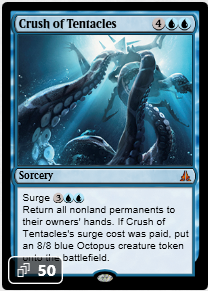
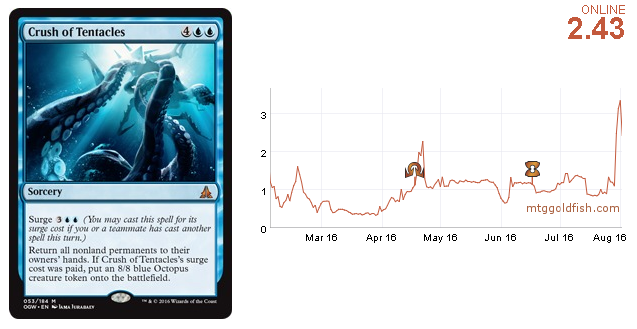
Crush of Tentacles was a missed opportunity this weekend. It was meant to be a quickflip but I have to admit I bought this card against the trend. I could not sell this card at a good price and now I'm stuck with it. That might not be the best option but I'll stick with it for a while and see what happen next.

Sales This Week

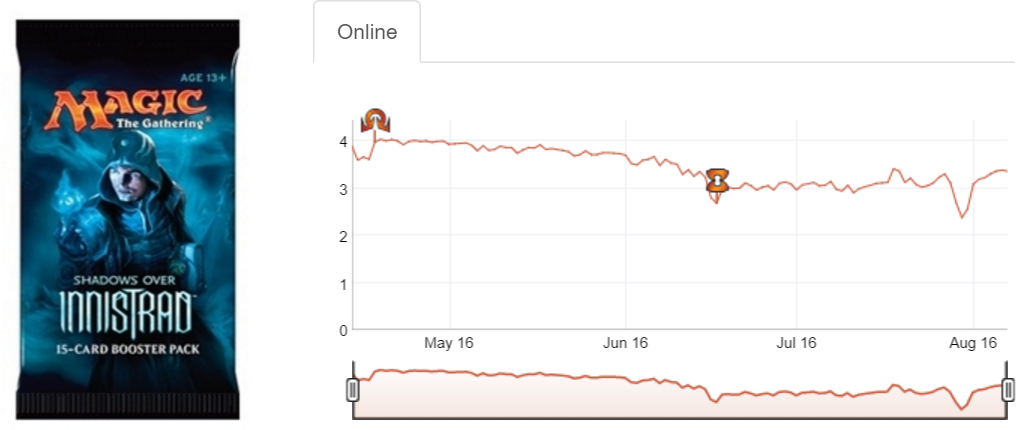
Apart from the half dozen or so quickfilps, I made two regular sales. I should actually say one since the SOI boosters specs turned out to be much faster than I anticipated, and I ended up flipping these boosters after only two days.

SOI

The idea here was really good and I wish I had more time available last weekend to buy more of these. As of last Monday morning the price of SOI boosters was still around 2.5 tix and I was planning on buying more copies once back home from work. Well, that was too late. As of Monday night the price of SOI boosters was already back up to 3 tix and the time to sell had arrived.

This was a spectacular booster spec opportunity as it was almost possible to make a 1 tix profit per pack, in less than a week. What was also exceptional about this spec is that the price of the SOI boosters dropped from 3.2 tix to 2.5 tix in one day and stayed that low for about two days before bouncing back to the original price in about 24 hours.

The price of ORI Yavimaya Coast started to move last week after the good performance of Cory Dissinger's U/G Crush deck. Since I still needed to get rid of about 500 copies of the painland I couldn't pass up an opportunity to sell at double my buying price. I therefore liquidated 128 more copies of Coast. It seems that a price of ~1 tix or more should sustain in the mid-term considering the decent success of decks running blue and green.

On My Radar

An immediate consideration is to consolidate my foil EMN mythic positions for those under 6-7 tix. For the foil mythics still above 8 tix I'm going to be more patient and see if the price decreases over the next few weeks---that's what we observed for some foil OGW mythics. In the following days I'll also be selling the rest of my ORI positions that didn't go anywhere during this Pro Tour, which now have virtually no chance to pick up in price before rotation.

The next big opportunity I'm preparing for are the Zendikar flashback drafts opening in just a little bit more than a week. I'm going to shake the dust off my portfolio and sell any useless positions in order to accumulate a good stack of tix for these events. Zendikar, Worldwake and Rise of the Eldrazi really have a lot to offer speculators.

Thank you for reading.

Sylvain

Deck Overview- Temurge

Are you a Quiet Speculation member?

If not, now is a perfect time to join up! Our powerful tools, breaking-news analysis, and exclusive Discord channel will make sure you stay up to date and ahead of the curve.

There were a lot of cool innovations from PT Shadows Over Innistrad. We finally saw the emergence of powerful Elder Deep-Fiend strategies, and Emrakul, the Promised End made her presence known. Both Andrew Brown and Owen Turtenwald cracked the Top 8 of the PT with similar strategies, though quite different takes. Some self-mill, Kozilek's Return and big fatties are consistent between the build, though there are significant differences in the rest of the deck:

Temerge by Andrew Brown

Creatures

4 Jace, Vryn's Prodigy
4 Primal Druid
4 Matter Reshaper
3 Shaman of Forgotten Ways
1 Nissa, Vastwood Seer
4 Wretched Gryff
1 Lashweed Lurker
3 Elder Deep-Fiend

Spells

4 Gather the Pack
4 Grapple with the Past
4 Kozilek's Return

Lands

4 Yavimaya Coast
4 Shivan Reef
4 Sanctum of Ugin
4 Lumbering Falls
1 Woodland Stream
4 Forest
2 Island
1 Mountain

Sideboard

4 Traverse the Ulvenwald
2 Noose Constrictor
2 Radiant Flames
2 Kiora, Master of the Depths
1 World Breaker
1 Emrakul, the Promised End
1 Eldrazi Obligator
1 Ishkanah, Grafwidow
1 Thought-Knot Seer

Temurge by Owen Turtenwald

Creatures

3 Emrakul, the Promised End
3 Elder Deep-Fiend
1 Wretched Gryff
4 Gnarlwood Dryad
3 Pilgrim's Eye
2 Ishkanah, Grafwidow

Spells

1 Chandra, Flamecaller
4 Gather the Pack
4 Nissa's Pilgrimage
4 Kozilek's Return
4 Grapple with the Past
2 Corrupted Grafstone
4 Vessel of Nascency

Lands

3 Shivan Reef
4 Yavimaya Coast
1 Mountain
3 Island
7 Forest
3 Game Trail

Sideboard

2 Dispel
1 Coax from the Blind Eternities
2 Jace, Vryn's Prodigy
1 Den Protector
2 Fiery Impulse
2 Invasive Surgery
1 Summary Dismissal
1 Clip Wings
1 Negate
2 Shaman of Forgotten Ways

Owen's build is heavily focused on the graveyard elements with a strong delirium focus, and Brown's list is more invested in emerging Deep-Fiends quickly. Owen plays very few creatures to sacrifice to emerge, and one of them is even a one drop! As Owen demonstrated in the event, just casing Deep-Fiend for eight can still be a game-winning proposition, and at a glance I'm more partial to Owen's list.

Realistically though, I can't see myself playing a carbon copy of either deck. Frankly, both are still a bit rough around the edges, and I'm excited to see how the archetype evolves going forward. I would definitely like to maintain the elements of Owen's deck that allow him to operate so light on lands, and I would also like to figure out which creatures that Brown features could be upgrades to Owen's list. I know for sure that I don't want to be casting Primal Druid, as I have been disappointed by Viridian Emissary more than enough times. I am really curious about Owen's omission of Traverse the Ulvenwald given the consistency that the card provides, and I wouldn't be surprised to see some number of copies of that card featured in similar lists going forward.

However these decks evolve, what we know for certain is that they will have a significant impact on the Standard metagame. The ability to find and trigger Kozilek's Return so consistently is going to change the way that we build decks and sculpt game plans. I've been calling Kozilek's Return a good pickup for some time, and this weekend the card doubled in price from $5 to $10. I don't expect the card to game too much more value unless these decks evolve into the most played deck in Standard, though the Kozilek's Return decks aren't going anywhere, and no Standard gauntlet will be complete without them.

There was an error retrieving a chart for Kozilek's Return

High Stakes MTGO – July 24th to July 30th

Are you a Quiet Speculation member?

If not, now is a perfect time to join up! Our powerful tools, breaking-news analysis, and exclusive Discord channel will make sure you stay up to date and ahead of the curve.

Hi and welcome back to another High Stakes MTGO article!

Eldritch Moon finally hit MTGO this past weekend. As expected, the big global price depreciation that comes along with these release events has put a lot specs on hold but also created several buying opportunities. Eldritch Moon boosters (for a quickflip) and Shadows over Innistrad boosters (for a short- to mid-term run) were among the potential specs of this past weekend---as were a few singles from all of the three most recent Standard sets.

Unexpectedly, the price of a Battle for Zendikar (BFZ) full set hit a record low this past weekend. This trend is very unusual, if not totally unseen, for a Standard set that is not the newest draft format and still in its first year. A BFZ full set is currently 20 tix cheaper that it was about two months ago. Consequently several mythics and rares are also at or close to their lowest price point now.

In this regard I wonder if a card like Quarantine Field, which hit a record low at 0.6 tix a few days ago, doesn't represent a great Standard spec. Similarly, a few BFZ rares including Radiant Flames, Drowner of Hope, Painful Truths and Endless One are getting very close to bulk prices at the moment. These cards have seen competitive play in the past---why not get into a spec with almost zero risk?

I also sold about half a dozen cards this past week to generate more tix on the account, to mixed results. I notably closed my Zendikar fetchland positions---not at all with what I had in mind originally, but so be it.

Here is the link to the latest snapshot.

Buys This Week

CT

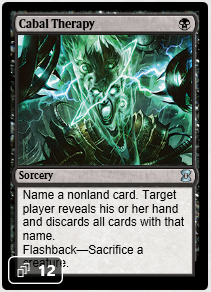
After a little spike at the end of Eternal Masters (EMA) release events, the price of EMA Cabal Therapy dropped again and even reached a lower price than what I paid for my first 28 copies. Since I didn't have a large stock of this card yet I simply reloaded on a few more copies. I really think this is a solid mid- to long-term spec, especially at current buy prices.

Gc

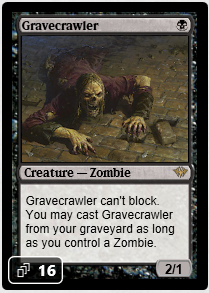
Earlier in July, I was a little bit too ambitious when I bought some Gravecrawlers at 3.6 tix each. Nonetheless, with or without Cryptbreaker the recurring zombie from Dark Ascension sees periodic play in Modern, so with a price back in the 2.5-2.8 tix range I decided to pick up a few more playsets.

SOI

With the prices seen as of Saturday night, executing quickflips with Eldritch Moon (EMN) boosters looked to be tedious and like too much of a grind. If I have some spare time on Sunday and EMN packs stay around 3.7 tix, I might take a chance on them.

On the other hand, Shadows over Innistrad (SOI) boosters took a big dive, falling from a solid 3 tix to 2.4 tix this past weekend. That booster spec opportunity seemed much more profitable to me. I'm expecting the price of these packs to rebound to 3 tix by the end of the month, or maybe even sooner.

Sales This Week

The second half of my Goyfs is sold. Another losing spec I had to let go rather than let these tix be sequestrated forever waiting for an improbable increase in Tarmogoyf's price.

Although this spec wasn't exactly sold at the top of the curve, I'm happy with it nonetheless. A 50% profit is what I was looking for and that's exactly what I got. It wouldn't have been a great move to hold onto the Gorges now hoping for more, with Scars of Mirrodin flashback drafts scheduled in September.

What could have been a nice series of moderate profits turned out to be the exact opposite---a streak of losing positions. With Zendikar flashback drafts coming up I decided to fully bite the bullet here and liquidate my remaining copies. We'll see very soon if it was the right decision.

9 to 10 tix was my initial target price and now that the value of this mass removal spell has risen again I don't want to skip a selling opportunity one more time. There might be more to come with Kozilek's Return. However, the first two Star City Games Standard Opens with EMN didn't particularly make this card a must, so I don't feel like I'm going to miss much at this point.

BotG

One more Born of the Gods full set sold this week. At this pace it might take a while to sell my other 16 sets, but I'm in no particular rush here.

On My Radar

Nothing very original this week again. I'll be monitoring my SOI booster spec closely, although I don't expect the price to significantly rise before the end of SOI release events. I'm looking to sell them around 3 tix, and I'll be interested in buying more if the price sticks around 2.4-2.6 tix longer.

Pro Tour Eldritch Moon is obviously going to be the big thing to keep an eye on this coming weekend. I sure do hope a lot of BFZ cards show up in new decks, considering how deeply committed I am with BFZ (full sets, singles and boosters).

Besides hoping for something I have no control over, I'll also be trying to do some last-minute shopping with Oath of the Gatewatch, SOI and some EMN mythics to try and capitalize on the PT hype.

Thank you for reading,

Sylvain

Modern Melders: Brewing the Broken Blade

Are you a Quiet Speculation member?

If not, now is a perfect time to join up! Our powerful tools, breaking-news analysis, and exclusive Discord channel will make sure you stay up to date and ahead of the curve.

Wizards loves touting Modern as "wide-open," a claim bolstered by the format's incredibly diverse pool of viable decks. With so many options available to them, deckbuilders are bound to ask broader questions about archetype superiority. Is Allies just a worse Merfolk? Goblins, a worse Zoo? Bubble Hulk, a worse Grishoalbrand? Whatever the answers to these questions, someone will play those "worse version" decks, for one of a few reasons. They might think their version has something over the more established one. Maybe they like surprising opponents with lesser-known cards. And possibly, they don't care so much about winning percentages, and simply have their hearts set on a pet deck, no matter how bad it is. Which is fine---even for many pros, there's more to Magic than just winning games.

My articles frequently deal in brews, and today's is no exception. My brews try to do something unique in Modern, and I'm always wary of encroaching on design space monopolized by a strictly better deck. Today, I'll temporarily defect from that habit for the simple reason that I really want to attack with a two-card creature.

Brisela, Voice of Nightmares art crop

This article explores one of brewing's oft-ignored fundamentals: making bad cards better. But Spikes, be warned. We won't be examining Modern's next deck-to-beat.

[wp_ad_camp_1]

Confronting Reality

Let's be honest: Brisela, Voice of Nightmares isn't going to break Modern anytime soon. Making her requires that we end our turn with two unplayable creatures on the battlefield. And once Brisela is formed, we haven't even won. According to Sam Stoddard, this is by design:

"...we wanted something that was powerful and imposing, but also something that could be beaten. The meld action is the most fun when you actually get to attack with it, rather than your opponent just scooping the second it resolves."

In a format where we can make Emrakul for even less work than Brisela, we're already committing to working harder for our wins just by virtue of sleeving up Eldrazi-haunted heroines over the godmother Herself.

Eyes on the Prize

I messed around with a few color combinations before settling into Boros. WR meant running Nahiri, the Harbinger, and I naturally dropped an Emrakul, the Aeons Torn into my list. But then I realized I was Emrakul the Aeons Tornwinning most of my games with Emrakul. If we're not melding, there's no reason to play this deck over a more focused WR midrange deck, or over Jeskai Nahiri---we could cut Gisela, the Broken Blade and Bruna, the Fading Light and already have a superior deck on our hands. So I had to actively worsen the deck by cutting Emrakul from the list. Doing so allowed me to get meld off more consistently, which is the goal of the deck. And nothing quite trumps your opponent's face when you -8, search up Bruna, reanimate Gisela, attack for five, and meld on your end step.
That said, Bruna is clearly the worst card in the deck. I started with one and had to move to two to make meld more consistent. But the 75 does get better without her. If you're interested in the deck's playstyle and don't care so much about making Brisela, check out the more focused WR Lockdown.

Grooming Our Angels

Gisela, the Broken Blade and Bruna, the Fading Light are both unplayable on their own. We need to address their glaring weaknesses to get away with fitting them into a Modern deck. Unfortunately, they don't share many weaknesses, so doing so pulls our deck into multiple directions and ultimately weakens it. But hey, eyes on the prize! We're trying to make Brisela here, not spike a Pro Tour!

Fixing Gisela

Our first Angel's downfalls are fairly obvious. She dramatically fails the Bolt Test, costing (much) more than one mana and dying to the instant without providing any immediate value. Even unanswered, Gisela won't always run away with the game. Addressing this issue was my main concern while brewing the deck. I brainstormed a few ways to get around Gisela's softness to Lightning Bolt.

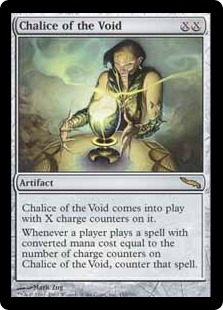
Chalice of the VoidChalice of the Void: I've tried Chalice as a work-around for Boltable creatures before, attempting to use it to protect Goblin Rabblemaster (which didn't work out very well). I also tried Chalice in a Spirit of the Labyrinth/Geier Reach Sanitarium deck, where it proved equally miserable---opponents were happy to throw away one-mana spells to the Sanitarium as I dug for my Spirit, and that deck never wanted to cast Chalice on two. The artifact seems more reasonable in a Brisela deck with fewer two-drops.
Pros:

  • Interacts efficiently with a bevy of Tier 1 decks (Infect, Affinity, Burn) and a host of lower-tier standbys (Delver, Bogles, Storm).
  • Affects the game when we don't have a threat on the field.
  • Allows us to run other Boltable threats, such as Hanweir Garrison (would you like a meld with your meld?).

Cons:

  • Weak in some matchups (Jund, Merfolk, Valakut).
  • Prevents us from running Lightning Bolt and Path to Exile, the best removal spells in the format.
  • Threatens us with slow starts unless we dip into Simian Spirit Guide, which reduces the amount of action we draw during games.

Effects on the deck: A Brisela shell with Chalice is very controlling, speeding out an early lock piece and cleaning up the board with sweepers like Anger of the Gods or Wrath of God. After that, it sits around for a while until it can muster a kill. It lacks early interaction for linear decks and struggles against decks that quickly go over the top like Tron. The deck is also especially weak to disruption, since it expends so many resources on each of its threats and its locks rely on synergy between specific pieces.

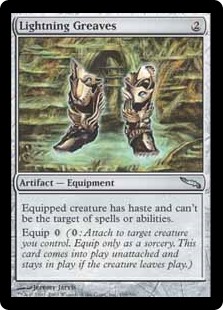
lightning greavesLightning Greaves: Turn one interaction, turn two Lightning Greaves, turn three interaction, turn four Gisela, equip, swing is a line I had the pleasure of enacting a few times online, and it's as nasty as it sounds. Greaves turns Gisela into an A-list threat all by itself, and makes her more dangerous than any other enabler on this list. But it doesn't do much on its own.
Pros:

  • Allows us to turn the corner with great conviction by threatening four points of hasty lifelink.
  • Buys us tempo by forcing opponents who care about combat to hold up mana so they can interact with Gisela the turn she resolves.
  • Greatly improves other possible threats.

Cons:

  • Does nothing on its own.
  • All but dead against decks that ignore combat (Ad Nauseam, Grishoalbrand, Tron).
  • Close to useless in multiples.

Effects on the deck: Greaves incentivizes us to play more threats, making us more of an aggro deck. The best candidates are Hanweir Garrison (who sadly can't meld under Blood Moon) and the Bolt-proof Brimaz, King of Oreskos. I like having a Bolt-proof threat in the deck, since we won't always have our work-around card handy. At three mana, both of these additional threats can come down the turn after a Greaves to wreck some havoc.

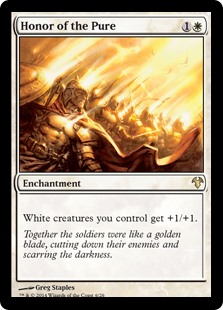
honor of the pureHonor of the Pure: Honor and I also have some brewing history. I once paired the enchantment with another set of Angels, Serra Avenger and Lightning Angel, and their ugly middle sibling, Mantis Rider. That project yielded little competitive success, but it did demonstrate Honor's worth as a Bolt-beater.
Pros:

  • Boasts impressive synergy with lifelink, and with our non-Angel threat options, including Brimaz and Timely Reinforcements.
  • Difficult to remove from the board, unlike the Kolaghan's Command-able Chalice of the Void and Lightning Greaves.

Cons:

  • Does nothing on its own.
  • Doesn't solve Gisela's weakness to heavy-duty removal spells like Path to Exile and Terminate.
  • Especially slow---Chalice at least interacts with opponents directly, and Greaves promises us early swings, helping pay for the time investment of actually casting it.

Effects on the deck: Honor of the Pure slows down our early-game, but its synergy with Timely Reinforcements makes the enchantment well worth considering. A single copy Bolt-proofs Gisela and turns Timely into a three-mana Siege Rhino of sorts. In multiples, the enchantment juices even more value from our token generators. We can also fit more white x/3's in the deck should we take this path (sorry, Hanweir Garrison!). Jamming a bunch of Serra Avengers seems sub-optimal when they all share a Lightning Greaves, but Honor boosts every creature we resolve, encouraging us to play multiples. Avenger can also be reanimated with Bruna's effect, unlike Brimaz.

Fixing Bruna

Bruna suffers from a problem most high-cost creatures in Modern know well: rotting in hand while the linear decks kill you and dying to heavy-duty removal if you survive to cast her. My article on benchmark creature playability analyzed data from MTGGoldfish about Modern's most-played creatures, and not a single five-drop made the list. The reason: five-drops have very large shoes to fill if they want to see play in this turn-four format, since Path to Exile, Terminate, and Maelstrom Pulse kill them indiscriminately. Even value-heavy spell-casters like Goblin Dark-Dwellers and Thragtusk have a ways to go before they make it to the prestigious staple pool occupied by the more efficient Decay-defiers Restoration Angel, Thought-Knot Seer, and Kalitas, Traitor of Ghet.

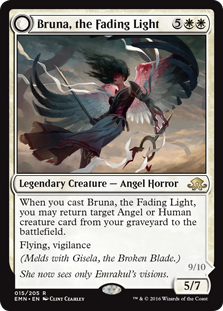
Enter Bruna, the Fading Light, who costs a whopping seven mana. For added context, she shares this manacost with Elesh Norn, Grand Cenobite---one of Magic's most popular reanimation (and now, Eldritch Evolution) targets. Expecting to cast Bruna for such a handsome sum asks us either to drag games out far past Modern's crucial turn-four mark, or to ramp like crazy.

bruna, the fading lightBut assuming our efficient disruption lets us survive to turn seven, Bruna has another problem. If we make seven land drops for the first seven turns of the game, we've spent multiple cards not directly impacting the board. Let's say our curve stops at four, not counting Bruna. The three additional land drops we need to make to cast Bruna, then, are wasted---if we didn't run Bruna, we could play fewer lands, and stop making drops after turn four. This disadvantage is extremely apparent in a deck with Nahiri, whose +2 ability filters through excess lands to find action. With Bruna in hand, looting away lands isn't always an option, since we need to play them to get to seven.
We're already slowing down games with Moon, Nahiri, and company. But we'd like a way to make land drops without spending cards. So far, I've come up with these admittedly unexciting options:

Crucible of Worlds: Brings back fetchlands or lands binned with Nahiri, but soft to Kolaghan's/Decay unless we make a land drop from the grave the turn we cast it. And we almost certainly have better things to do on turn four.

Solemn Simulacrum: Cantripping ramp is exactly what we want, but Jens has quite a high price and clogs our four-drop slot. The sad robot might work with accelerants like Boros Signet, but running all those mana cards limits our ability to interact efficiently.

Life From the Loam/Faithless Looting: Pulls the deck too far into an irrelevant direction, and even forces a color splash. Green also gives us Tarmogoyf and ramp spells like Sakura-Tribe Elder, but all those cards cut into our disruption slots. This plan also complicates running Rest in Peace from the sideboard, which I think is probably too good in this metagame not to pack.

Interacting Efficiently

Forming Brisela involves sticking both Gisela, the Broken Blade, and Bruna, the Fading Light, cards unplayable in Modern without the above enablers helping them out. Each half of Brisela, then, is married to a two-card "combo." For example, resolving Honor of the Pure to compensate for Gisela's paltry three toughness makes the Angel better, but it also makes her cost six mana instead of four and two cards instead of one.

Running these "combos" is necessary to make the Angels work in Modern. But it also puts us down tempo and cards. To compensate, we need to use the rest of our deck to interact with the field extremely efficiently. Here are the best options for this role:

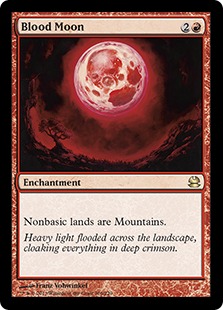
Blood Moon: One of candidates for most efficient interactive card in Modern after Lightning Bolt, and an obvious include for us. Something I wrote on Moon back in January:

Since Moon often shuts players out of games, Delver more obviously represents interaction. But [Blood Moon] is highly interactive; turn two Blood Moon just happens to interact so efficiently with the format’s top decks that it can seem uninteractive to onlookers.

Blood MoonNahiri, the Harbinger: Liliana of the Veil's true equal, Nahiri also interacts very efficiently. She has a ton of loyalty and can easily take control of a board if we have a creature out. Otherwise, she recycles extra Moons, picks off attackers, and can ultimate into Brisela.
One-for-one removal (Lightning Bolt, Path to Exile): When it comes to answering a single card, Bolt and Path set Modern's hallmarks for mana efficiency. Chalice of the Void is another card that interacts efficiently with a big chunk of the field, but we can't run it alongside Bolt/Path.

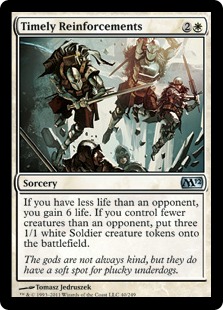
Timely Reinforcements: Interacts very efficiently with aggro decks, trading as favorably as five-for-one. Does nothing against creatureless decks.

Sweepers (Anger of the Gods, Wrath of God): The original X-for-one, Wrath of God, is still relevant in Modern. But Anger usually shines brighter these days. Given matchup variance and Nahiri's looting ability, some combination of both in the 75 is probably ideal.

Sideboard hosers (Rest in Peace, Stony Silence, Leyline of Sanctity): These are the cards white is notorious for in Modern. Rest in Peace and Stony Silence reflect the pinnacle of efficient strategy hosers and should be considered in some number. They're both too narrow for the maindeck.

Melding It All Together

With all that explaining out of the way, we can finally look at the decklist.

Boros Brisela, by Jordan Boisvert

Creatures

4 Gisela, the Broken Blade
2 Bruna, the Fading Light
3 Brimaz, King of Oreskos

Artifacts

2 Lightning Greaves
1 Crucible of Worlds

Enchantments

4 Blood Moon
4 Honor of the Pure

Instants

4 Lightning Bolt
4 Path to Exile

Planeswalkers

4 Nahiri, the Harbinger

Sorceries

4 Timely Reinforcements

Lands

4 Arid Mesa
4 Flooded Strand
2 Marsh Flats
2 Temple of Epiphany
2 Ghost Quarter
3 Sacred Foundry
6 Plains
1 Mountain

Sideboard

3 Wear // Tear
2 Anger of the Gods
2 Rest in Peace
2 Spellskite
2 Dismember
3 Nevermore
1 Wrath of God

Some quick notes on the deck:

  • Honor of the Pure seems like the best Gisela enabler, since it also buffs Timely Reinforcements and Brimaz. But I still liked having some number of Lightning Greaves in the main.
  • timely reinforcementsCrucible usually nets us a pair of lands even after Moon resolves, and allows us to never miss a land drop with Nahiri out, which simplifies finishing disrupted opponents off with an Eldrazi Angel. It can sometimes be clunky, so I don't like more than one.
  • Ghost Quarter works well with Blood Moon, which notoriously underperforms against opponents who expect it. Many three-color decks in Modern only run one of a certain kind of basic (usually Forest or Plains), and Quartering their single copy lets us resolve Moon at our leisure and still have a significant impact on the game.
  • Resolving either Timely Reinforcements or Brimaz before casting Nahiri makes the planeswalker particularly difficult for many opponents to remove.
  • Discarding Gisela to Nahiri's +2 before going -8 to summon Bruna makes for a quick Brisela.
  • Nevermore gives us a plan against combo decks we'd otherwise have trouble interacting with. The other sideboard cards are mostly just flexible solutions to commonly-seen Modern decks.

And there you have it: meld in Modern. If you're looking to have some laughs at a smaller tournament, turn some heads, or just do something our strict format parameters aren't supposed to allow, give Boros Brisela a whirl. And be sure to let me know how it goes!

Insider: MTGO Cards to Buy, Sell or Hold – Episode 4

Are you a Quiet Speculation member?

If not, now is a perfect time to join up! Our powerful tools, breaking-news analysis, and exclusive Discord channel will make sure you stay up to date and ahead of the curve.

Welcome to Episode 4! Pro Tour Eldritch Moon will have begun by the time you read this and prices are already shaking the market, so this week I will do an all-Standard Buy, Sell or Hold. We had two SCG tournaments that are shaping the new Standard and have a big impact in the current prices.

Crush of Tentacles

Crush of Tentacles

The only reason for Crush of Tentacles to spike so abruptly is the new UG deck that made Top 8 in last weekend's SCG tournament. The card is unlikely to go higher or even maintain the current price---plenty of other pro players must play the card in order for this to happen. Even if the deck is played in a good portion of the Pro Tour metagame, the price could just stand still.

Verdict: Sell

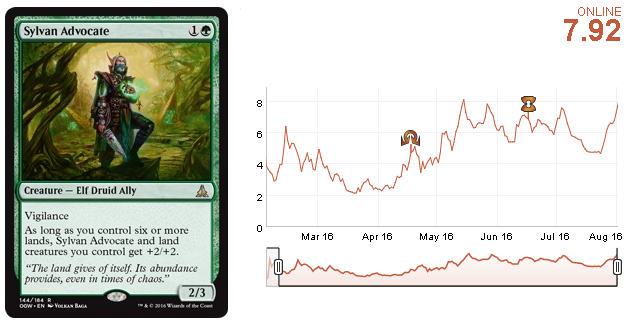
Sylvan Advocate

Sylvan Advocate

This card is the big winner of the new season. Around 50% of the decks in the SCG tournaments played four copies---that's insane! The important question here is how high will it go and the PT will be decisive. If the metagame remains the same it will be very expensive; otherwise it will stay at its current price or drop a little.

The problem with buying Advocate now is that it goes in the deck to beat, not necessarily the deck to play. That will prevent the card from going higher. I wouldn't recommend buying it at this price, but if you manage to get it cheaper or if the price sees an adjustment after the quick spike, it will be a good option. If you have this card in your portfolio you should wait until the Pro Tour to see what happens.

Verdict: Hold

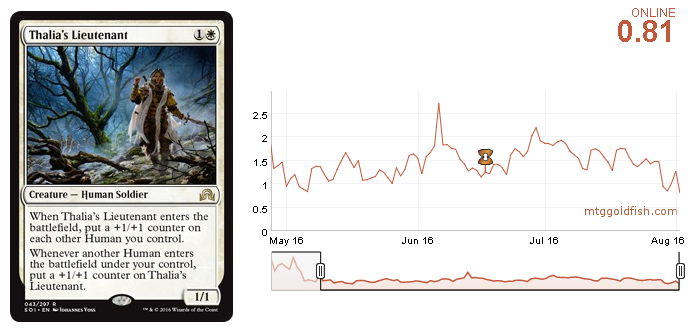
Thalia's Lieutenant

Thalia's Lieutenant

One of the strongest cards in the Humans deck, which seems to have lost popularity in the second week of the new Standard, Thalia's Lieutenant is at its historic low. The trend is very clear here; it bounces between 0.8 and 1.8 tix. The ever-changing Standard metagame makes this effect possible. The card will eventually reach 1.8 again when the deck is played again.

Verdict: Buy

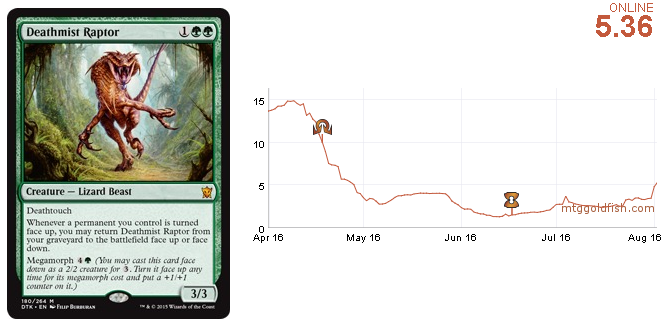
Deathmist Raptor

Deathmist Raptor

This Jurassic Park-esque card has risen up lately but it's not even played that much in the current metagame. Perhaps speculative buyers hoping to see it at the Pro Tour this weekend are the reason behind the rise. Anyway, being from Dragons of Tarkir, a set that will leave the format this fall, is a huge downside.

Verdict: Sell

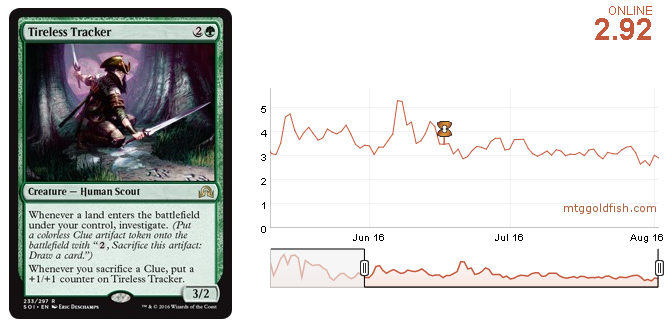
Tireless Tracker

Tireless Tracker

Another trend here between 2.9 and 3.8 tix. The margin is low but the spread on Standard cards is usually very low too---if it's profitable you shouldn't miss the chance. Also we have the chance of seeing it in a new deck at the Pro Tour or heavily-played in Bant decks.

Verdict: Buy

~

That's all for this week. I wish you all a great weekend and if you can watch the coverage and invest at the same time, try it!

Nicolas Cancellara

Insider: Assessing the Impact of the New TCG Buylist Option

Are you a Quiet Speculation member?

If not, now is a perfect time to join up! Our powerful tools, breaking-news analysis, and exclusive Discord channel will make sure you stay up to date and ahead of the curve.

Welcome back, readers!

TCGplayer recently unveiled their buylist program, allowing TCG direct stores to create buylists for cards. This is an interesting option for a lot of people and stores who previously might have just had buylists posted on Facebook or in-house. They can now buy from people all over the country.

Initially one might think these buylists would benefit the people selling to stores, by increasing competition on buylist prices considerably. However, there's one major catch with TCGplayer's buylist option---they get 10% on top of your buylist price.

What this means is that if you want to buy a card at $10 you're actually paying $11. Now for that 10% they will receive the cards, grade them, and give you the option of having them shipped to you or re-uploaded into your inventory for sales. So with this model you could in theory just keep growing your business without ever having to do more than update your buy and sell prices.

Creating and maintaining a buylist for a major store is a full time job. Many smaller store owners can't afford (or may not be able to find) someone who can do this well. This means it becomes another task they themselves have to take on.

My hypothesis is that the addition of a great deal more stores into the buylisting market should increase competition, especially on highly-liquid cards. Today I'll compare the average prices offered by buylists on both Trader Tools and TCG Player and see if we can get an idea of how this new feature is affecting the market. For our data I'll look at prices of the 25 most-played cards across Standard and Modern as well as the 20 most-played cards in Legacy. I expect to see similar buylist prices between the two platforms.

Standard

For Standard I restricted our search to rares and mythics, as commons and uncommons rarely appear on buylists. Obviously some Standard uncommons do find homes on buylists but usually at relatively low prices.

Card Name Trader Tools
Buylist
TCG Player
Buylist
Difference
(TT - TCG)
Percent Difference
Gideon, Ally of Zendikar 14 14 0 0.00%
Ruinous Path 0.76 0.85 -0.09 -11.84%
Collected Company 11.75 9.52 2.23 18.98%
Den Protector 1.5 N/A N/A N/A
Dromoka's Command 2.68 2.1 0.58 21.64%
Ojutai's Command 1 0.75 0.25 25.00%
Mausoleum Wanderer 2.44 2.13 0.31 12.70%
Selfless Spirit 4 2.03 1.97 49.25%
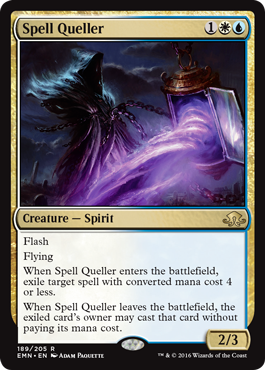
Spell Queller 11.75 9.01 2.74 23.32%
Hangarback Walker 3 1.72 1.28 42.67%
Jace, Vryn's Prodigy 22.04 20.5 1.54 6.99%
Knight of the White Orchid 2 1.75 0.25 12.50%
Languish 3.65 2.76 0.89 24.38%
Nissa, Vastwood Seer 10.34 8.1 2.24 21.66%
Tragic Arrogance 0.42 N/A N/A N/A
Eldrazi Displacer 3.13 2.75 0.38 12.14%
Kozilek's Return 4.5 3.25 1.25 27.78%
Oath of Nissa 2 2 0 0.00%
Sylvan Advocate 3.94 3.56 0.38 9.64%
Always Watching 1.4 0.75 0.65 46.43%
Archangel Avacyn 16.5 14.12 2.38 14.42%
Declaration in Stone 4 3.93 0.07 1.75%
Rattlechains 2.5 2.26 0.24 9.60%
Thalia's Lieutenant 2.5 1.79 0.71 28.40%
Tireless Tracker 4 3 1 25.00%
Average Difference 18.37%


The positive percentage differences show that the stores in Trader Tools tend to pay better than the TCG buylists by 18% on average, which is pretty significant. That one negative number corresponds to Ruinous Path, which is probably an outlier (and the difference is only 9 cents total). Even if we remove that though, we see a large range of percent differences, from 0% to 49.25%.

Note that ten of these 25 most-played cards are from the soon-to-rotate sets Dragons of Tarkir and Magic Origins. Without access to as many customers as the big-name stores, it does make sense that smaller TCGplayer stores would keep a higher spread for cards they have to move quickly.

Takeaway

The implication here is that if you're selling a lot of different Standard cards your best bet is to continue to use the Trader Tools option. TCG buylist will net you on average about 18% less money overall selling the same cards. However, you may save some money on shipping costs, so it would be wise to figure out the shipping costs associated with sending multiple packages to multiple TT dealers vs. one to TCG.

Modern

Card Name Trader Tools
Buylist
TCG Player
Buylist
Difference
(TT - TCG)
Percent Difference
Noble Hierarch 39.59 27.52 12.07 30.49%
Path to Exile 7 6.03 0.97 13.86%
Grafdigger's Cage 7 5.17 1.83 26.14%
Serum Visions 3.46 2.96 N/A N/A
Tarmogoyf 114.15 101.25 12.9 11.30%
Liliana of the Veil 81.89 60 21.89 26.73%
Snapcaster Mage 35 36.26 -1.26 -3.60%
Stony Silence 5.4 5.4 0 0.00%
Monastery Swiftspear 1.09 1 0.09 8.26%
Scavenging Ooze 4 3.61 0.39 9.75%
Gitaxian Probe 2 2 0 0.00%
Spellskite 20.21 15.66 4.55 22.51%
Thought-Knot Seer 4.29 4.1 0.19 4.43%
Dark Confidant 33.34 26 7.34 22.02%
Lightning Helix 3.17 3 N/A N/A
Remand 3.78 N/A N/A N/A
Abrupt Decay 6 5.4 0.6 10.00%
Lightning Bolt 1 1 0 0.00%
Ancient Stirrings 1.61 1 0.61 37.89%
Inquisition of Kozilek 8.82 5.91 2.91 32.99%
Fulminator Mage 22.96 18 4.96 21.60%
Kitchen Finks 10.31 8.5 1.81 17.56%
Relic of Progenitus 1 0.5 0.5 50.00%
Wild Nacatl 1.23 1.26 -0.03 -2.44%
Thoughtseize 8.5 8.11 0.39 4.59%
Average Difference 15.64%


When we look at Modern we see that the average difference is slightly less than that of Standard, but still higher than I would expect. In particular we see very large gaps in the most expensive format staples (Liliana of the Veil, Tarmogoyf, Noble Hierarch), although this trend is bucked by Snapcaster Mage.

Note that half of this list (12) is comprised of commons and uncommons, which tend to have a higher spread. On these cards, we see a much lower difference in buylist prices between Trader Tools and TCG Player.

Takeaway

Similar to our Standard outcome we see that again selling to Trader Tools dealers will net you on average 16% higher return on cards. Again I suggest reviewing shipping costs to determine which route to take, but if you are selling a large number of cards or only to a couple of dealers, Trader Tools is still the correct choice.

Legacy

Card Name

Trader Tools
Buylist

TCG Player
Buylist
Difference
(TT - TCG)
Percent
Difference
Force of Will 50 54 -4 -8.00%
Terminus 2.18 1.6 0.58 26.61%
Sensei's Divining Top 14.5 N/A N/A N/A
Counterbalance 18.13 11.45 6.68 36.85%
Flusterstorm 44 40.5 3.5 7.95%
Baleful Strix 3.7 2 1.7 45.95%
Delver of Secrets 1 0.82 0.18 18.00%
Cabal Therapy 5.4 4 1.4 25.93%
Young Pyromancer 2 0.7 1.3 65.00%
Chalice of the Void 29.3 23 6.3 21.50%
Daze 1 0.5 0.5 50.00%
Gitaxian Probe 2 2 0 0.00%
Surgical Extraction 4 3.6 0.4 10.00%
Deathrite Shaman 2 2.25 -0.25 -12.50%
Swords to Plowshares 1.52 N/A N/A N/A
Pithing Needle 2.65 1.42 1.23 46.42%
Lotus Petal 2.3 2.7 -0.4 -17.39%
Blood Moon 39.38 31.52 7.86 19.96%
Jace, the Mind Sculptor 62.1 42 20.1 32.37%
Spell Pierce 1.09 1.2 -0.11 -10.09%
Average Difference 19.92%


Again with Legacy we see a significant difference of about 20% between Trader Tools options and the TCG Player buylists. Note that the three cards with the biggest difference in the Legacy section were all reprinted in Eternal Masters (all prices are from the original print run, except Lightning Bolt, for which I used 4th Edition).

It's also interesting to note that Legacy staples like Sensei's Divining Top and Swords to Plowshares have no buyers on TCG Player buylist at the time of gathering my data. I imagine that since this is a relatively new feature on TCG Player it will likely include "holes" with no buylist options, though they will likely be filled quickly as stores realize they have no direct competition on that platform and they might be able to pick up some underpriced staples.

Takeaway

Here again Trader Tools seems like the best bet. For the cheaper cards prices are much closer (and in some cases favor TCG Player), but especially for the pricier cards you're still better off with the large stores.

Conclusion

The main point to take away here is that the new TCG Player buylists don't appear to be competitive with the established stores found on Trader Tools. We will likely revisit this topic in the future, as I expect that if stores really need some of these cards, they will have to up their buylist prices on TCG Player---unless enough players use only TCG Player buylist and don't shop around at the bigger stores.

To be fair, as I said in the beginning, maintaining a buylist is a very time-intensive operation for any store. The more cards the stores want the more effort will be required to keep up to date on metagames, prices, reprints, promos, judge foils, bannings/unbannings, etc.---all of which can have dramatic effects on card prices.

We can see TCG Player's 10% cut pretty clearly reflected in these data, as if you added that to the buylist prices the two categories would be much closer. From the standpoint of the seller, however, this is immaterial---they'll be after the best price for their card(s) regardless of the reasons behind it.

Another possibility here is that TCG Player stores are taking advantage of the new option to acquire cards they intend to resell to the major stores' buylists. That would be a smart idea if the TCG Player buylist system takes off.

I expect that we'll see the buylist discrepancy in Standard cards shrink first, as those tend to be the most liquid. Cards that are easier to move encourage stores to make sure they have copies on hand to keep making profits.

Insider: PT Eldritch Moon Picks

Are you a Quiet Speculation member?

If not, now is a perfect time to join up! Our powerful tools, breaking-news analysis, and exclusive Discord channel will make sure you stay up to date and ahead of the curve.

As I write this, Pro Tour Eldritch Moon is a couple hours from starting, though when you read this Day 1 will already be in the books. You'll have more information at that time than I do, though I have been wracking my brain and keeping up on content in an effort to find a deck for SCG Regionals enough that I have some good insights on things to watch out for.

The time zone difference makes the viewing experience for this PT particularly interesting for American viewers, and hitting the ground running (literally) and making it out to local game stores Friday morning/afternoon should be a good way to find some nice deals on decks performing well at the PT.

I've put a lot of lists together, and your methodology may differ from mine, but what this means is that I've found a lot of different ways to be frustrated. Through the madness, I've found some aspects of decks that I really like, and I expect to see some specific elements show up in PT decks.

It has become clear that Emrakul, the Promised End is not all that difficult to cast with a little work, and as such a little bit of work makes enabling delirium relatively easy. While they didn't print any busted graveyard enablers in Eldritch Moon, I do expect these cards to show up side by side in some number of decks:

When Traverse is on, the power level of the card is obvious. Grapple is a little rougher around the edges, but the fact that it can grab any land or creature from the graveyard makes it quite powerful. Even if you whiff with it on turn two, Evolving Wilds on turn one leaves you with a land to pick up. And that is where I've seen the real power of featuring these two cards in a deck.

On the early turns, either of these can facilitate land drops. As the game progresses, suddenly you're looking at a bunch of copies of Eladamri's Call. The fact that both can be used to develop your mana means that you can run a little lean on lands, which gives you space for some nice bullets and a bunch of Den Protector and/or Goblin Dark-Dwellers to generate a lot of value.

There are tons of ways to configure these decks, though one way or the other I am confident in saying that Traverse the Ulvenwald is a great Standard pick. At under $2, this is an easy pickup for me. It's a basis for a deck that is very flexible, and a card that we have already seen in the Goggles Ramp strategy.

There was an error retrieving a chart for Traverse the Ulvenwald

Every build of Traverse decks that I've come up with have featured Ishkanah, Grafwidow, usually as a two-of. Ishkanah spiked to $12 before the set was released, but lost some value as time passed and it looked like people mostly just wanted to cast Collected Company. The card valleyed in the $5-6 range, though now is on the rise, and I expect it to continue to climb from its current $7-8 back up to $10+. Five toughness is a great mark to hit in Standard, and Ishkanah isn't straight outclassed by Archangel Avacyn, which says a lot.

There was an error retrieving a chart for Ishkanah, Grafwidow

So many of the decks I've built---see literally every green deck---started with four Sylvan Advocate. This is one that Brian DeMars also identified, though I'm slightly skeptical of Oath of the Gatewatch rares. We've known that this card is great for a long time, and given the Expedition effect it's possible that the card sees little if any growth during its life in Standard. You'll recall the comically low prices of Khans of Tarkir rares even as Mantis Rider and Siege Rhino dominated Standard due to the fetchland effect. There could be a small bump here, but I'm bearish.

There was an error retrieving a chart for Sylvan Advocate

I messed around with a lot of green builds, and as I branched into other cards, the reason was either to play Elder Deep-Fiend or Distended Mindbender. There are a lot of sweet pairs for these cards, with Matter Reshaper and Foul Emissary being the premium three-drops for such decks, and Eldrazi Skyspawner and Pilgrim's Eye being serviceable support.

With these emerge decks, you can be graveyard-based with efficient Kozilek's Return "flashbacks" as your focus, creature-heavy and value-based, or somewhere in between. Frankly there's too much going on here for these cards to miss. Elder Deep-Fiend has held onto a good amount of its value, while Distended Mindbender has mostly plummeted, though I feel like Mindbinder isn't being given its proper respect.

Imagine that you're expecting a Bant Company-heavy field---not hard to imagine. A sequence available to you is to have a Kozilek's Return in your graveyard with a creature in play to sacrifice to your Mindbender. You cast it, trigger it and the Mindbender, let the Mindbender trigger resolve first so that if they cast Collected Company you kill the stuff they find and if they don't it gets exiled. And since it's a cast trigger, you end all of this with a 5/5 in play.

I think this interaction is too powerful not to show up, and a Top 8 berth would be great for the value of both K-Return and Mindbender.

There was an error retrieving a chart for Kozilek's Return

There was an error retrieving a chart for Distended Mindbender

Of course, if you follow me on Twitter you already know that I've decided against bringing these creature-heavy decks to SCG Regionals this weekend. There are a lot of cool things I want to try, but none of them are polished.

While tinkering around with decks I read Shaun McLaren's Premium piece this week, which featured an Izzet tempo deck that looked neat. I don't like the idea of playing Curious Homunculus, but I believe that McLaren correctly identified Take Inventory as being under-appreciated and Galvanic Bombardment as being very strong. Incendiary Flow is also a big upgrade for red, especially if Matter Reshaper is to become more popular.

Naturally, this led me to Pyromancer's Goggles. Goggles seems great to me, and with Take Inventory being a sweet draw spell that you don't really have to work for as well as major efficiency upgrades to the removal, the deck seems pretty great to me right now.

There is some issue putting Thing in the Ice in your deck with Gisela, the Broken Blade as well as some Eldrazi horrors showing up in the format, though the fact that Awoken Horror is a 7/8 makes it so that you can outclass most of what you'll be paired up against. I'll be sure to report on how things go one way or the other, but I feel like at $4 as a flip rare, the new cogs could make Thing in the Ice much more relevant in Standard.

There was an error retrieving a chart for Thing in the Ice

I'm very excited to see how PT Eldritch Moon shapes up the format, and I fully expect Bant Company to be taken down a few pegs. We've already watched Osyp Lebedowicz slice through a field of Company decks without even getting fancy. There are multiple strong engines as well as payoffs to explore in Standard, and I'm thinking something sweet is going to come of this weekend.

Thanks for reading.

-Ryan Overturf
@RyanOverdrive on Twitter

Breaking The Format: Spell Queller in UW Blink

Are you a Quiet Speculation member?

If not, now is a perfect time to join up! Our powerful tools, breaking-news analysis, and exclusive Discord channel will make sure you stay up to date and ahead of the curve.

Sometimes, innovation takes time. Endless nights of preparation, countless hours of practice, hundreds of games contributing to spreadsheets of statistics that inform close, calculated changes. In Magic (and Modern especially), this is the most common form of innovation we see. Death’s Shadow Zoo lists tend to fall in one of two camps, but within those camps, most players are playing almost the exact list, all the way down to the sideboard Forest. While universally maligned as “netdecking” by old couch-potato Magic players from a bygone era, the fact remains that the groupthink culture of Magic is potent. When hundreds of other players are contributing to the massive spreadsheet of data with you, reaching the “optimal list” comes about that much faster.

moorland-haunt-cropped

There is another form of innovation, however. It comes in the black of night, cutting through the darkness like a bolt of lightning (or perhaps a Lightning Bolt). When it hits, the resulting blindness sponsors questions of disbelief. “How did I not notice this before?” “What did they see that I overlooked?” “What does it mean to ‘kill em’ with the shoulders?” This past week, on my Twitch stream, innovation struck. Behold the new face of Modern. I give you UW Blink.

[wp_ad_camp_1]

UW Blink, by Trevor Holmes (5-0, Modern League)

Creatures

1 Eldrazi Displacer
4 Flickerwisp
4 Restoration Angel
3 Snapcaster Mage
4 Spell Queller
1 Vendilion Clique
4 Wall of Omens

Artifacts

3 Aether Vial

Instants

2 Mana Leak
2 Ojutai's Command
4 Path to Exile
2 Remand

Sorceries

3 Serum Visions

Lands

3 Celestial Colonnade
4 Flooded Strand
1 Ghost Quarter
2 Glacial Fortress
2 Hallowed Fountain
3 Island
1 Moorland Haunt
2 Mystic Gate
3 Plains
2 Windswept Heath

Sideboard

2 Ancestral Vision
1 Celestial Purge
2 Condemn
3 Dispel
1 Engineered Explosives
1 Gideon Jura
2 Kitchen Finks
2 Stony Silence
1 Worship

With this list, I went 11-3 last Monday and Tuesday, including a 5-0 performance in a Competitive Modern League. We’ll start by discussing Spell Queller in general, and then we’ll move on to talking specifically about my list and my thoughts behind it.

Spell Queller

Spell QuellerSpell Queller in Modern is reality, plain and simple. I haven’t been paying attention to what people are saying about it for Standard, but a quick five-game league with a rough list was all it took to convince me (and my five opponents). I’ll admit, at first, I was skeptical of how often a 2/3 for three would survive in a Lightning Bolt format, but I quickly came around to it’s power. While today it is me, we all shall fall. You might be skeptical too, and I get that. We’re ahead of the curve, and Eldritch Moon released online just a week ago. Trust me when I say that while this Spell Queller deck is the first, it won’t be last. The bandwagon hasn’t even left the driveway yet, but you have a chance to ride shotgun.
To start, we’ll evaluate it on rate first, followed by synergy, and lastly we’ll look at positioning. In this way, hopefully we’ll gain a closer understanding of not only how good Spell Queller is/isn’t, but why/why not it is that way.

As a 2/3 flash flying creature for three, Spell Queller isn’t turning any heads on stats alone. Flying is nice, and flash plays well in blue-white colors, but dying to Lightning Bolt is a pretty big strike against it. It blocks Goblin Guide, and can eat a Signal Pest, Snapcaster Mage, or Dark Confidant, but beyond that we’re not excited about what Spell Queller is doing inside the declare blockers step. Flying definitely gives it a step up, however, as trading with Delver of Secrets or flying over a Tarmogoyf to hit Liliana of the Veil gives us a lot of play with the card.

Still, if the ability is worthless, this card is not seeing play, which means the ability has to be consistently powerful for us to want to play this card. This distinction is important to make, as too often we can be blindsided by focusing on “best-case” scenarios rather than the statistical average. Think Tireless Tracker in Jund, or, to a lesser extent Master of Etherium in Affinity. Sure, some of the times they are doing great things, but (in my experience) they are often underwhelming or not worth the cost (real or opportunity) that we are paying for them.

Supreme VerdictSo, the ability. In a format where four-mana spells win the game, Spell Queller eats everything. Removal spells, threats, counterspells, combo pieces, you name it. Liliana of the Veil out of Jund. Cranial Plating out of Affinity. Scapeshift out of Scapeshift. Voice of Resurgence. Thought-Knot Seer. Tarmogoyf. Goblin Guide. Spell Queller is actual Cancel, but instead of being a three mana clunky answer-all it comes attached to a 2/3 flash flyer.
Also, and most importantly, we’re exiling spells, and not countering them. This means we get to eat Supreme Verdict or Abrupt Decay. Thought-Knot Seer off of a Cavern of Souls. Cards cast off a Boseiju, Who Shelters All. The Cavern of Souls scenario is a big one, because it makes tough matchups like Merfolk and Eldrazi much easier to manage. Eating Supreme Verdict just feels unfair, especially when we get to cheat in Spell Queller for free with Aether Vial, but I’m getting ahead of myself. Spell Queller finally offers reactive strategies a broad answer that is not embarrassing (Dissipate) or clunky (Cryptic Command).

I know you’re itching for me to get to the downside, so I will. Yes, they can just kill the Spell Queller and get the spell back, and Spell Queller is easily killed. Quelling a Supreme Verdict, only for them to Path to Exile the Spell Queller and Verdict our board anyways does not feel nice at all, but you have to realize we were losing our board and subsequent creature to those spells anyways. Supreme Verdict isn’t supposed to be interacted with; the fact that we even can should be considered a huge advantage.

Against Jund Midrange, Spell Queller has a tough time staying on the field for sure, but it isn’t until you actually play with the card that you see how frustrating it is to play against. Sure, say they play a Tarmogoyf or something on turn three, and we eat it, just for them to untap and Terminate our Spell Queller and get to recast Tarmogoyf for free. It might seem that Spell Queller “did nothing,” but look at what happened in that scenario. Not only did we Fog the Tarmogoyf for a turn, we forced them to take mana resources away from developing their board to answer our play. Meanwhile (jumping ahead again) we’re ticking up our Aether Vial and getting our Wall of Omens engine rolling and pushing towards the midgame, while we’ve stunted our opponent’s development.

DispelEven when they kill our Spell Queller easily, we gain value by forcing them to play our game. In a deck full of creatures, that’s one less removal spell for our other threat. In a deck with few other removal targets, we’re making them consider keeping Bolts and Terminates in post-board, which any control deck would love, as it reduces the velocity and threat density of the opponent. Making an opponent virtually mulligan by stranding semi-dead removal spells in their hand is every control player’s dream, and part of the reason why I continue to love Gurmag Angler in Grixis to this day (come on, you really thought I could go 3000 words without mentioning Grixis?). Dispel is (and has been for a while) one of the best sideboard cards in the format, and forcing them to interact with us (on their turn) plays right into it. They spent four mana playing a Dark Confidant and attempting a Terminate, while we blew them out with Spell Queller and Dispel. The game has changed.
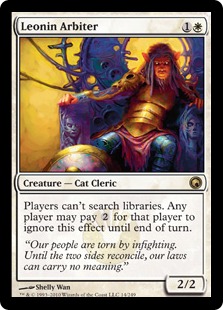
Against most of the format, however, Spell Queller just eats a spell for the rest of the game. Infect has a couple Dismember, Suicide Zoo has two Lightning Bolt, and Merfolk might have a few Dismember or Vapor Snag. I feel like that sentence doesn’t really do my point justice, so commence visual aid:

Here is a list of archetypes in Modern that contain fewer than five ways to kill a Spell Queller in their 75.

  • Affinity (4+1)
  • Suicide Zoo (2+2)
  • Infect (1+2)
  • Dredge (0+2)
  • Bant Eldrazi (4+1)
  • Merfolk (all over the place, usually 4-5)
  • Tron (0-4, depending whether they play Bolt or if they’ve chosen Firespout for the board)
  • Ad Nauseam (0)
  • Living End (0)
  • Abzan Company (1+2)

*(x+y), where x is maindeck and y is sideboard (on average)

For those unfamiliar with the current metagame state, that is every major deck in Modern besides Delver, Jund, Jeskai and Burn. I feel like Ryan Gosling in The Big Short illustrating the teetering housing market with Jenga. Every deck in the format is so focused on doing their own thing, without any care in the world for interaction, that they’ve left themselves wide open to utter destruction. Against a deck with 20+ creatures and multiple ways to blink them, five removal spells isn’t going to cut it. By sleeving up Spell Queller, we’re shorting the Magic metagame market. They chose to leave themselves wide open by cutting all their removal. Blinded by the desire to have their cake and eat it too, they haven’t even noticed we’ve started our own personal bakery.

UW Blink v1.1, by Trevor Holmes

Creatures

4 Restoration Angel
4 Spell Queller
2 Eldrazi Displacer
4 Flickerwisp
3 Snapcaster Mage
1 Vendilion Clique
4 Wall of Omens

Artifacts

3 Aether Vial

Instants

2 Mana Leak
2 Ojutai's Command
4 Path to Exile
1 Remand

Sorceries

3 Serum Visions

Lands

3 Celestial Colonnade
4 Flooded Strand
1 Ghost Quarter
2 Glacial Fortress
2 Hallowed Fountain
1 Adarkar Wastes
2 Island
1 Moorland Haunt
2 Mystic Gate
3 Plains
2 Windswept Heath

Sideboard

2 Ancestral Vision
1 Celestial Purge
2 Condemn
3 Dispel
1 Engineered Explosives
1 Rest in Peace
2 Kitchen Finks
2 Stony Silence
1 Worship

After a little bit of tuning, here is the current version of my UW Blink brew featuring Spell Queller. I’ll start by talking a little bit about my philosophy for the deck, which will explain some of the directions I took with the archetype. Spell Queller specifically (and UW Blink as a whole) can be configured in many different ways, thanks primarily to the individual strength of the cards and the depth of power available to blue and white in the format. I’m not saying mine is the only way to build it, or even the best. Currently, this version fits my playstyle and what I want to be doing in Modern right now, but I could see myself changing literally any card in the deck given the right conditions.

Philosophy (by Ben Folds)

leonin arbiterMy original interest in UW Blink came out of a simple desire: to determine if Spell Queller was playable in Modern. I wanted to build a deck that worked to take full advantage of the strengths of Spell Queller without directly relying on the card in a “build-around-me” sense. With this in mind, I chose to build a UW Tempo/Flash style archetype that could use Spell Queller as a reactive source of disruption just as easily as it could use it as a simple 2/3 flyer for 3. Such an archetype would be interested primarily in dealing damage and creating inefficiencies for our opponent, either in their sequencing, mana, or post-board configuration.
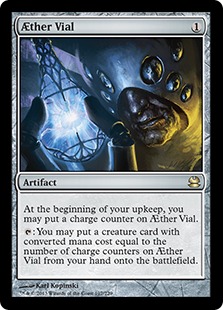
I chose to start with a base two-color build to determine if the core (blue-white at this point, the two colors that we need to cast Spell Queller) contained enough power to compete in the format without relying on complicated synergies. Instead of a Taxes approach that uses cards like Leonin Arbiter and Thalia, Guardian of Thraben, I chose to focus instead on a strong engine of spells that are individually powerful on rate alone, yet have synergistic value when paired together.

Calling back to my Colors of Modern series, I knew that the power of blue and white lies primarily in their spells, and not their creatures. Leonin Arbiter and Aven Mindcensor have synergy with Path to Exile and Ghost Quarter, but I’d rather pass on the situational creatures and just play good spells. This clashes slightly with Spell Queller and my desire to be aggressive, which necessitates attacking with creatures. Luckily, blue and white offer enough strong creatures that a mix can be achieved without dipping into sub-par options.

Once I dodged the poor creatures trap so many others fell into, my next goal was to ensure the reactive elements of my deck played along nicely with the aggressive half. Spell Queller rides that line nicely thanks to flash, which allows me to disrupt if necessary and deploy threats if our opponent refuses to play along. You can probably guess where this is going, so the second card that made the cut became Snapcaster Mage, and the third card became Aether Vial.

Snapcaster Mage wants spells. Aether Vial wants creatures. What the hell is wrong with you?

Aether VialI’m not an Aether Vial deck. I’m not a Snapcaster Mage deck. I’m a reactive blue-white deck interested in playing good spells, disrupting my opponent and getting in damage when possible. Aether Vial lets me deploy threats without spending mana, and allows for Flickerwisp/Spell Queller tricks faster. Snapcaster Mage lets me get more mileage out of Path to Exile, Serum Visions, and sideboard spells, and I cast it as Ambush Viper just as often as I hold it for value.
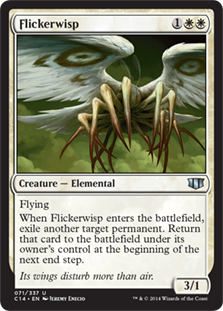
While not necessary, playing counterspells alongside Spell Queller does make our Spell Queller better, as we’re more likely to be able to keep whatever it takes exiled. Remember my earlier point about making the opponent play my game? If I can push my opponent into a post-board configuration where they are diluting their threat-base by bringing in (or keeping in) removal for my creatures, they play right into my threat-dense, efficient-answer strategy. When you can craft the gamestate to a point where your opponent is running removal headfirst into Flickerwisp and Restoration Angel, you’ve won not only the game, but the moral victory of really pissing off your opponent. Tricks are fun, and there’s nothing better than this play:

Opponent: Cast Terminate on Spell Queller holding a Liliana of the Veil.

Us: Vial in Flickerwisp to blink Spell Queller (exiling Terminate but releasing the Liliana).

Opponent: Attempt to cast Liliana of the Veil again, for free.

Us: Flash in second Spell Queller to eat Liliana of the Veil again.

Opponent: Flip Table.

FlickerwispWhile all these tricks are nice, plan A is kill our opponent, and flashy 3/x flyers are great for racing and making math hard. Alongside Wall of Omens clogging up the ground, even a Flickerwisp plus a Spell Queller is a four-turn clock, and can be very dangerous backed up by tricks and protection. I’ve found that in the early turns we might look to our opponent like a do-nothing Wall of Omens durdle deck that they can just deploy threats against at ease. By the time they realize they need to kill our flying creatures quickly, we’re already in a position to blink away their removal (or have just drawn into more threats with Wall) and threatening to win the game in a few turns.
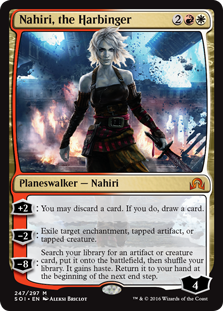
As hardly anyone is playing flying in Modern anymore, our opponents are torn between trying to kill our flyers or blow up our Wall of Omens to race on the ground. Unfortunately for them, both of those options are horrible against our entire deck. Really, any player with experience playing Flickerwisp knows how awesome it is to put our opponent in a position to run right into our Flickerwisp with their removal, and Spell Queller does just that. I’ve never felt so in control over the pace of a game (with a deck filled with 20+ creatures, no less!) than I have playing this list.

Matchups at a Glance

While I intend on soon writing a dedicated primer for the archetype analyzing matchups across the board, for now I just wanted to make a few points that might not be immediately apparent when looking at the list.

First up is the fact that Wall of Omens blanks a large percentage of the format. Most decks in Modern simply have a bunch of trouble with an 0/4. Death's Shadow Zoo needs a Mutagenic Growth or combo pieces just to get through. Burn’s best case scenario involves Searing Blaze, when they would much rather be playing an Eidolon of the Great Revel or another threat on turn two. Merfolk needs a large board to get to 4/4 and above, and while they do have islandwalk, we actually don’t play many islands at all. Just blocking a Matter Reshaper or Eldrazi Displacer lets us focus our Flickerwisp and other tricks on slowing down Reality Smasher and racing in the air. In every matchup so far, Wall of Omens has either been solidly great, or has overperformed immensely.

1_nahiriI spent most of this article talking about removal-light decks, but kind of skated over grindy decks like Jund Midrange and Jeskai Control. I wasn’t dodging these bad matchups in the hopes that you wouldn’t notice---in fact, these matchups are so good that I’m actively excited every time my opponent goes Overgrown Tomb, Inquisition of Kozilek. So far, I’m 4-0 against Jund, and 8-1 in games in those matches.
Wall of Omens stops their early aggression and gives us Liliana of the Veil protection, and if we get to blink it even once we’re pulling ahead. With Snapcaster Mage flashing back Path to Exile and Condemn, and extra Ancestral Visions out of the board, we have access to a lot of card advantage to fight through their disruption. Blinking out of the way of a Lightning Bolt doesn’t sound game-breaking, but every match against Jund I’ve looked across the table in the midgame to find them with three cards in hand while we still have a full grip. If you want to beat Jund, badly, this is the deck for you.

Jeskai Nahiri is, somehow, even easier. They have few ways to apply pressure outside of Nahiri, the Harbinger, which gives us more than enough time to grind them out. Wall of Omens is, again, way better than how it should be against a deck with few attacking creatures. Most of the time Jeskai is letting Wall of Omens resolve, which gives us a free card to replace it. With Aether Vial, we then just have to flash in a Flickerwisp to net another card, unless they choose to Path to Exile our Wall (which has yet to happen, as they now have a Flickerwisp to worry about). Our gameplan becomes “blink Wall as much as possible” while our opponent starts to fall further and further behind.

Wall of OmensReally, their only way to catch up is with an unanswered Nahiri or a bunch of Snapcaster Mage value, which is why I actually am considering Rest in Peace for the matchup. Usually, Rest in Peace is a poor option against a card advantage archetype like Jeskai, but when Snapcaster Mage is literally their only option to keep up with us, it ends up being worth it. When you can fight through a turn one Ancestral Vision, you know there’s something here.



Finally, I’d like to talk a bit about Burn. Burn has been pretty underrepresented online (for a few reasons) which has allowed bad matchups like Death's Shadow Zoo to flourish. We’re at a point now where players are starting to pick Burn back up, and this deck crushes Burn.

We might seem a little too slow and durdly to claim a good matchup, but you have to look at what our cards do here, especially Spell Queller. Kitchen Finks gains life, and we have eight ways to blink it. We take barely any damage from our lands. Ojutai's Command is a powerhouse. Spell Queller might look poor against a deck full of damage-based removal, but once you see that it’s at worse a three-mana “gain 3” its value becomes apparent. I’ve even cast Condemn on my own Restoration Angel to gain four in a pinch. I have yet to lose against Burn.

Looking Ahead

The above list is only a first draft of what I’m convinced will eventually become a steadfast archetype in Modern. It might end up looking nothing like the above list, but I can confidently say that Spell Queller will make an impact of some sort in the metagame. If Spell Queller is good, then it follows that Tidehollow Sculler is good as well. It’s possible that the archetype might grow to involve black, which will give us Sculler, discard, and possibly a few other options.

The Eldrazi Displacer has overperformed for me every time I’ve cast it, but I don’t intend on adding Eldrazi Temple anytime soon. Ojutai's Command is probably the worst card in the list currently, but returning Wall of Omens and countering a Thought-Knot Seer just feels so good. I could see myself moving away from Snapcaster Mage and adding in more creatures and Thalia, Guardian of Thraben, but I’ve been enjoying navigating the complicated lines that this style of the archetype presents.

Adding green for Tarmogoyf would give us a hard-hitting two-drop to push the tempo aspects of the archetype, and tutoring up Spell Queller with the hot Traverse the Ulvenwald sounds pretty fun as well. For now, I’m sticking to blue-white, but my eyes and ears are open.

If you’re interested in learning more about the deck, stop by my stream and join in on the discussion. Possibly I’ll give a more in-depth primer next week when I’ve hopefully finalized the list and have some more data to analyze. Thanks for reading, and good luck!

Trevor Holmes

The_Architect on MTGO

Twitch.tv/Architect_Gaming

Twitter.com/7he4rchitect

Insider: The Financial Value of FTV: Lore

Are you a Quiet Speculation member?

If not, now is a perfect time to join up! Our powerful tools, breaking-news analysis, and exclusive Discord channel will make sure you stay up to date and ahead of the curve.

As the summer winds down, Wizards has yet another product for us that’s dripping with Magic history. The latest From the Vault edition, FTV: Lore, is focused on key points in the Magic timeline that have shaped the universe of our card game. Unfortunately, many of these cards are not playable or valuable. Today we are going to analyze the fifteen-card foil set and discover if it's an investment worth making.

I would hazard a guess that most players are disappointed with the cards chosen for this particular From the Vault and I’ve heard many negative comments online to confirm this. Is it really that bad though? As the consumer, we have gotten used to huge price points for these box sets but the truth is that they are only $35 MSRP products. In the past, there have been so many valuable cards in them that they sell for hundreds of dollars instead of the $35 they are intended to be sold for. By this point, this is business as usual.

Due to the initial dissatisfaction about this product, the first presale copies sold for $75. These eBay copies have since dried up and are now selling in the range of $85-$99. There is a similar price range on TCG Player and other sites. At this point, not all of the big name stores have entered the presale free-for-all, but they soon will.

For an unexciting set, seeing the presale value trend upward is not only surprising but a pleasant change of pace. Normally we see everything plummet in value as time passes. It’s still early in the process but the initial bump is great to see. That’s the overall price so far but let’s dive into what is driving this price. Here’s a list of the cards in the set.

Marit Lage

There is also one bonus card in this edition of From the Vault: the Marit Lage token that you make from Dark Depths. Marit is a nice bonus for the set and definitely a factor in its price. As a rare token, this card has commanded $15+ for a long time now. It sees tons of play in Legacy, and the demand is strong.

Dark Depths

There was an error retrieving a chart for Dark Depths

Dark Depths is your route to getting the giant flying monster onto the battlefield and is the main chase card of the set. A large portion of the price of this set is made up of these two cards. Legacy Lands utilizes Depths as one of its primary routes to victory, but this land has always been a casual favorite as well. Many Commander decks jam this bad boy in their 100 cards and try to live the dream of Marit flying by their side.

As a $50 card, I would expect the foil to be at least that high and it's definitely a great investment for the long haul. The original set foil is still hovering between $150 and $200 and there were never many copies online. Now that this version is going to be printed, players will have a more affordable foil to acquire and I think there will definitely be demand for them.

Umezawa’s Jitte

There was an error retrieving a chart for Umezawa's Jitte

The other card pulling a lot of weight for this set is Umezawa's Jitte. As one of the most powerful equipment cards ever printed, another Jitte printing is a welcome addition. This may be one of the most diversely pronounced cards of all time, but that hasn’t stemmed the demand for the Kamigawa block artifact. You may only need one in most Legacy decks thanks to Stoneforge Mystic, but that isn’t the only reason there is demand for the unique samurai sword. All types of players want a copy of Jitte.

Middle of the Road

After the two home runs from the set, we dip down drastically to the $10 range for six cards. These six cards are Unmask, Tolaria West, Cabal Ritual, Memnarch, Momir Vig, Simic Visionary, and Phyrexian Processor. The Marit Lage token also falls within this grouping.

The future price of this group will likely diverge in two different directions. The ones I like are mainly the cards that were granted new artwork. Both Cabal Ritual and Momir Vig, Simic Visionary got some sweet new art. The problem with Cabal Ritual though is that it was originally printed as a common. Seeing a common in a premium set like this has a bad feel to it. Luckily this common sees play in Legacy Storm and I’m sure that’s what’s driving the price of this particular card.

Momir Vig is a popular Commander to build around. With this new awesome artwork I think he will be purchased frequently, but the subset of players interested in acquiring him will be much lower. They only need one copy and not every Commander player will want one. Still, with the unique art, I think the card should be solid long-term.

As for the rest of the group, I think they’re headed the wrong direction. Phyrexian Processor, Unmask, Memnarch and Tolaria West are not pressing anyone’s brain with a need to purchase. In the future the Tolaria West foil could tick up if it gets included in another Modern deck, but I think the price of the blue land will flow alongside how much constructed play it sees.

Bottom of the Barrel

My real issue with this group is not their price but their desirability. The main reason these cards all fall around or under $5 is because there isn’t much demand for them. The cards in this group are Mind's Desire, Beseech the Queen, Obliterate, Conflux, Glissa, the Traitor, Helvault and Near-Death Experience.

Of them, Mind's Desire is the best; but in addition to being banned in multiple formats, it already has a sweet promo version. Beseech the Queen, Conflux and Glissa, the Traitor are all a couple bucks a piece, but there’s not a lot to drive their price. As for the other three, we have two bulk rares and a bulk mythic. These do not make for wise choices.

I would feel much better about buying/selling this product if this group were replaced with cards that players were looking forward to. Most From the Vault sets have cards that fit this description, but usually they are still cards that players are excited to get a hold of even if they aren’t very expensive.

Current Prices

Beseech the Queen $5
Cabal Ritual $10
Conflux $3
Dark Depths $45
Glissa, the Traitor $3
Helvault $2
Memnarch $10
Mind's Desire $7
Momir Vig, Simic Visionary $7
Near-Death Experience $2
Obliterate $4
Phyrexian Processor $9
Tolaria West $13
Umezawa's Jitte $35
Unmask $13
Marit Lage Token $10

Although there are going to be many changes to these prices, right now the set as a whole is valued at a whopping $178! I expect this total value to drop once more sellers add their stock to the internet. If the numbers on individual cards stay near these current prices though, buying FTV: Lore sealed and breaking them up for singles could prove quite profitable.

Unfortunately, I expect that not to happen. My current prediction is that all of the cards from the set should drop in value except for two. What I think will happen is that Jitte and Depths will dictate the flow of sales for this product and I think that was Wizards plan. Because those are the two cards players care about though, many more copies of the other cards will be available online and therefore the prices of those cards should drop.

When prices are shaped this way from a set, many times the in-demand cards increase in value while the other cards drop. A great example of this is what’s happening right now with Liliana, the Last Hope. Many of the cards in Eldritch Moon have had their prices drastically cut, while Lily has gone up quite a bit from her presale value.

To wrap up my thoughts on FTV: Lore, if the reason you’re interested in the product is the two high-dollar cards, I would get them sooner rather than later. If you want any of the lower-end cards, waiting is the right play. Tons of copies of those cards will be readily available so bide your time until you see the prices fall.

I think sealed copies will be good buys if you can get in at a somewhat low number. I know for my store, we are looking to sell low to help out players and unload all our copies. If you can find a store like that near you, From the Vault: Lore is looking like a better buy than the initial glance might have made you think.

What are your thoughts on the set? Will you be buying a copy of this premium product? If so, what cards are you interested in from the set? Let me know in the comments.

Until next time,
Unleash the Force of Lore!

Mike Lanigan
MtgJedi on Twitter

From the Vault: Lore Announced

Are you a Quiet Speculation member?

If not, now is a perfect time to join up! Our powerful tools, breaking-news analysis, and exclusive Discord channel will make sure you stay up to date and ahead of the curve.

Earlier this week, the contents from the next From the Vault set were revealed. The set is based around Lore, and as suck many of the cards aren't terribly exciting for such a box set. This probably appeals to Vorthos types, though this selection feels a little lacking to me.

This release is headlined by Umezawa's Jitte and Dark Depths, which are reasonably expensive cards, which makes producing more copies useful to a number of players. It is rather unfortunate that this box set doesn't offer really anything in the way of Modern cards, though that's also not really the purpose of these sets.

Given the foil process of From the Vault sets, I wouldn't expect this release to drive the value of these cards down, though I also don't expect this box to be worth all that much. [car]Dark Depths[/card] is only a $50 card, and it is the primary driver of From the Vault: Lore's value. I definitely wouldn't buy this one above MSRP, and even at MSRP I'm not excited about this one.

Want Prices?

Browse thousands of prices with the first and most comprehensive MTG Finance tool around.


Trader Tools lists both buylist and retail prices for every MTG card, going back a decade.

Quiet Speculation