If not, now is a perfect time to join up! Our powerful tools, breaking-news analysis, and exclusive Discord channel will make sure you stay up to date and ahead of the curve.
Of all the rumors that fly around the Magic community, there's none more grand in scope than the theory that all the pros are part of a massive Conspiracy (timely, aren't I?) to cover up the rampant steroid use on the pro scene.
Seriously, you can't make this stuff up. It's a real rumor that's gone around the community, with the idea being that steroids help you perform at a high level for longer. I guess on its face there's something to it since hypothetically there are drugs that could help with that sort of thing.
But, seriously, this is kind of ridiculous, right? At least one other person thinks so.
And satire is oftentimes the best way to get this point across, and you can find the hilarious result of that here.
Chris is dedicated, sure, but not quite that dedicated, I think 😉
An excerpt:
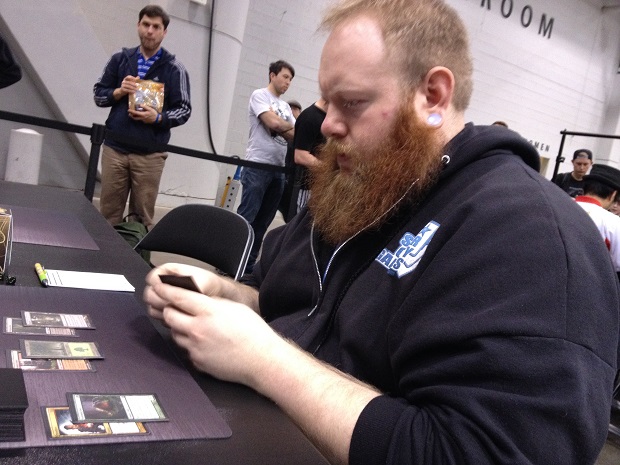
Christopher has undergone a recent and explosive drive to win an SCG open contest. (For those of you don't play Magic, an open event is a large tournament where hundreds, sometimes thousands of players will enter a single cutt-throat style tournament to try and reach the top). Despite already being rated #1 on the esteemed SCG player points scoring system, Christopher has vowed not to shave his facial hair until he wins one of these events. Although his shaving habits are outside the prevue of this article, one look at his fiery, explosive, healthy, crimson mass of facial hair is very convincing evidence of steroid abuse (and magnificence). I caught up with Christopher at SCG New Jersey and when I asked (him) about how he feels regarding the impact of anabolic steroids on competitive MtG and whether he has ever used steroids to gain a competitive edge, he looked at me like I was crazy and said "what??". Whether he is a steroid abuser or just a bearded warrior on a mission, I'll let you make the call.
If you enjoy Magic humor articles, this is definitely one to check out. It's the Onion come to MTG.
If not, now is a perfect time to join up! Our powerful tools, breaking-news analysis, and exclusive Discord channel will make sure you stay up to date and ahead of the curve.
Jason's Alticle is gone and with that bathwater we lost a somewhat valuable baby in the form of the deck results writeup. As much as it felt like a chore at the time, it kept me abreast of what was going on in the game and to that end, I think I might occasionally reprise that bit of the Alticle if there is something significant. There were some significant happenings yesterday.
Nobody played in the greatest Magic event city on the planet. Seriously, no joke, Indianapolis is the absolute best city for a tournament. I'd play there every weekend if I could.
Maybe they were all in Providence. Providence had an SCG Open and the Top 8 was kind of saucy.
Mono Red is back and it looks like the mono red we have seen before. The deck is about to lose a significant portion of its gas, but what is important is that Eidolon of the Great Revel has found a spot in a deck with a low mana curve. I was not a fan of playing "suicide red" but Zac Hill pointed on on Brainstorm Brewery that you only need it to do 4 damage to them to outperform Ash Zealot, a card people were playing despite there being no flashback in the current Type 2. Eidolon is the same devotion and it can shock them as easily as it shocks you. Get there! This card could increase in value if it gets more adoption going forward. I'd watch it. Unfortunately, we'll need replacements for Boros Reckoner and Burning-Tree Emissary if mono red devotion is to remain as robust. Khans of Tarkir (seriously, I'm never going to not hate that name) may give us something even if it's gold.
Mono blue devotion is back and has some new tech; Galerider Sliver to give your Mutavault flying. Some expected Hypnotic Siren in that spot, but it may not be as good as just jumping your 2/2 "slivers" and getting there in the air.
Mono black actually looks new. It seems to answer the question "Which is going to get there going forward, Herald of Torment or Master of the Feast?" I was betting on Herald myself, and it's good to see John McCarthy agree. Gnarled Scarhide the minotaur Gotham City needed but not the one it deserved has eschewed his role as the curve-bottomer in a tribal deck and is smashing face alongside Rakdos Cackler, a card for whose job it's clearly gunning. This deck likely survives rotation, but with Khans potentially being a wedge set, who knows how much we'll care?
As an aside, if Khans is a wedge set and devotion doesn't matter, snag cheap copies of Nykthos, Shrine to Nyx. The card is a Cabal Coffers waiting to happen, although there are probably more copies of Nykthos than coffers out there if the print run numbers I saw extrapolated from Torment are to be believed, which they likely aren't.
Jim Davis is good at Magic and Planar Cleansing is a good card that we're going to miss if it rotates even though most people didn't play it.
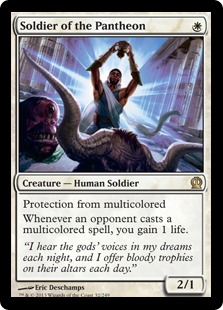
The G/W Aggro list is very similar to a list Rob Daughtery ran back at the PT in Dublin, only it's much better now. Deicide, Banishing Light and Temple of Plenty were all the deck needed to grow the beard. Do I think this is better than the Scion of Vhitu Ghazi deck Ryan Archer is playing (and no one else)? No, not really. But this deck is solid and it is completely obliterated by rotation, so there's that. If Khans is a wedge set, Soldier of the Pantheon likely jumps as quickly as Nykthos tanks, so be prepared. I prepared by buying Soldiers 6 months ago and watching them do approximately dick for me.
That's what happened in Providence. If we see anything significant, I'll be back next week with more analysis.
If not, now is a perfect time to join up! Our powerful tools, breaking-news analysis, and exclusive Discord channel will make sure you stay up to date and ahead of the curve.
Vintage Masters launches on June 13, giving us the chance to finally own some of the most iconic cards in Magic’s history. What’s more, this looks like an exciting set to draft. Wizards set the bar high with Modern Masters, but after seeing the card list I have faith they will deliver on Vintage Masters as well.
If you are looking to build a Vintage or a Legacy collection, VMA is an unprecedented opportunity. Unlike Modern Masters, this set is not a limited-run product—they recently announced, "After the downtime on July 2, a selection of Limited Events will continue for a period of time. You'll be able to purchase Vintage Masters boosters until the release of Khans of Tarkir."
It’s still not clear what that means in practice—for example, after the initial release will they continue to run on-demand draft queues? Or will they only offer VMA events on a more limited basis as DEs and PEs?
What we do know is that VMA will have a longer run than MMA but a shorter shelf life than a regular large set such as Theros (which is heavily drafted for a year).
When is the right time to purchase VMA cards? That depends on your goals—are you primarily a player who wants to hit the Vintage queues that are coming (which will include Vintage DEs, 2-Players, 8-Players, and PEs)? Or are you primarily a speculator, waiting to get the lowest possible price for future profits? Either way, we can learn a great deal from past set releases.
Learning from Modern Masters
Despite some differences which we'll discuss below, the closest analogue to Vintage Masters was the release of Modern Masters (MMA) last June. Both are limited-run sets that cost 25 tix to draft and offer high-value reprints. What patterns did we see during MMA release events?
Heavy Drafting Leads to Fast Drops
This is a pattern we see repeated with every set release. People want new cards and bots want full stock. As a result, prices start high, and drop extremely quickly over the first day. Here is the chart for the release of Modern Masters:
Wow, that was fast. Within 72 hours (June 14 to June 17), Modern Masters lost 33% of its value before leveling off. Remember, every card in Modern Masters was a reprint, so many of these cards had already seen anticipatory drops from sell-offs. That didn't stop the set from losing a third of its value in three days.
Roughly the trajectory of MMA rares.
Rares Dropped Fastest
In the run-up to Modern Masters, the rares that were being reprinted had dropped in value. But it’s clear they didn’t drop enough.
Here's the chart for Cryptic Command, a core tournament staple:
Cryptic lost about 25% of its release-day value, and later rebounded strong. However, borderline cards were hit even harder. Take a look at Kira, Great Glass-Spinner:
Kira went from 3 tix to less than 1 tix in a week, and continued to drop below 0.5 tix. These, and many other borderline MMA cards were great pickups at that level. Kira gradually gained that value back and today sits at around 2 tix. Buying a couple hundred at 0.5 would have been pure gold. But the key was to wait a couple weeks.
Here are a few other MMA rares:
Blood Moon:
Knight of the Reliquary
The take-away here is that if you own rares that are seeing a reprint, they have not yet seen their bottom. The market is going to be flooded.
In a previous article, I cited an estimate by Odin, an MTG Salvation poster, that it will take an average of 477 boosters of Vintage Masters to yield one set of Power Nine; "In addition these boosters will yield 1.99 sets of mythics, 3.98 sets of rares, 17.89 sets of uncommons and 47.23 sets of commons. The 477 boosters needed to open these cards cost $3334.23, and thus this is the maximum value of all these cards combined as long as Vintage Masters is in print.”
This is a good first approximation, but the equilibrium price will be lower than $3,334 because the "true" cost of a VMA pack is not $7 but $5.71. That's because nobody just cracks packs--we use them as entry fee for draft events which pay out in packs. $5.71 is the effective price per pack once you factor in all the entry fees paid in and the packs paid out for a VMA draft.
So equilibrium prices will approach $2725. Based on estimates I've read, I'm expecting power to account for between 1/3 to 1/2 of the total value of the set (900 to 1350 tix). That doesn't leave a lot of value left for all those mythics and rares, and prices will be hit hard if the set is popular among drafters. For those interested in a more detailed dive you should check out this Classic Quarter post here and Odin's original MTG Salvation post.
The key is patience. Cards are going to look too cheap to be true, but don’t buy in until they have hit a true bottom.
When will that bottom be? For Modern Masters, the key buying window was between June 17 to July 2. Prices basically leveled out during this period, which stretched from three days into MMA drafting until MMA drafts became unavailable on July 3.
As soon as they closed down the queues, prices began to slowly rise. As we’ll discuss below, MMA is not a direct analogue, but I would wait until at least eight to twelve days in before picking up rares at retail prices. Beyond that, prices shouldn't fall much (but they also won't rise much either).
Chase Uncommons Dropped Hard But Recovered Within a Year
There will be money to be made on VMA uncommons, but not for while. Modern Masters featured a bunch of uncommons that were worth a couple tix or more: Kitchen Finks, Path to Exile, Spell Snare. All dropped to under a tix within a couple days of drafting. As long as MMA packs were being opened, too many uncommons were flooding the system for them to be absorbed.
Check the chart for Path to Exile:
In three days Path lost 75% of its value. Two weeks in, Path had leveled off at slightly above 1 tix. Buying at this price generated massive profits--in less than a year, Path would climb back above its previous high, achieving a high mark of 4.5 tix.
VMA uncommons that don't see extensive play will drop off a cliff and may never recover. Today there are about a dozen MMA uncommons that are worth more than 0.10, and the rest are complete chaff.
The bottom line is that if you load up on Vintage- and Legacy-playable uncommons at their lows (which we should see 8-10 days after release) you will most likely see excellent returns within a year. Just don't jump the gun on these.
Mythics Leveled Off Quickly, then Bounced Back
Even as the MMA index above shows a drop of 33%, almost all of these losses were shouldered by the rares. In fact, after an initial drop, MMA mythics saw almost no drop at all. Check out the following chart of the first two weeks of MMA:
So if mythics barely dropped at all over the first two weeks, what about over the first two months?
By mid-September, three months after the MMA release, MMA mythics had bounced back to 20% above their release day prices! And despite subsequent dips they are today worth more than ever.
Let's home in on Tarmogoyf, which led the charge:
After an initial quick drop below 50 tix, everyone's favorite lhurgoyf rallied to new heights of over 80 tix. It looks like supply created its own demand--by making Modern more affordable, more people began to assemble Modern collections. And all of them needed goyfs.
Bottom line: There may be some great buying opportunities on mythics and special rarity cards that drop sharply in the first 48 hours.
Arbitrage Opportunities Emerged
During the early days of MMA drafting, it was possible to buy cards at one price and immediate sell at a higher price. Sometimes you could get a lower price by posting in the classifieds than certain bot chains were buying at.
Drafters--cash poor and looking to unload their singles--will often snap sell to the highest offer in the classifieds rather than checking bots. Arbitrage opportunities will disappear as the prices become more established, but there may be some early opportunities to take advantage of price list discrepancies. This is not really my jam, but if you enjoy the rush of flipping cards it can be profitable.
Words of Caution
I will caution you once again that Modern Masters is not a direct analogue to Vintage Masters.
First, Modern Masters was announced as a very short-term three-week release (it was later “flashed back” five months later.) Vintage Masters will be around until September. More product will enter the market, and we are unlikely to see a true rebound in prices until VMA is cut off in September.
Second, Vintage Masters is a much larger set than Modern Masters. VMA has 30 mythics and 100 rares versus MMA's 15 mythics and 53 Rares. That means that your odds of opening any specific rare are much lower than they were in Modern Masters (in fact, the odds of pulling a specific rare in VMA are equivalent to pulling a specific mythic in MMA.)
However, I'm not sure how much this will influence prices since the special and mythic rarities is where the majority of the set's value will be located.
If the set is drafted heavily, singles prices will naturally approach the equilibrium described above by Odin. So even if the odds of opening a particular rare are low, a ton of playsets of rares will be entering the market. That said, we've never seen a set this large and with this rarity distribution, so there may be some unexpected market dynamics.
Third, Wizards really pushed demand for Modern; it's not clear they will do the same for Legacy and Vintage. Modern prices have gone through the roof since MMA launched--check the Modern Index and the MMA Index side by side:
Modern Index since June 2013:
MMA Index since June 2013:
Both have gained roughly 50% in a year. In that climate, it's hard to pick losers. Will Legacy and Vintage see similar growth over the next year? For Legacy I feel fairly confident it will. For Vintage I am not as sure.
Finally, the presence of ultra-rare special rarity for Power will change the market dynamics. Because of this, we may never see a “mythic rebound” and may instead see a "power rebound."
The other huge red flag is the looming shutdown of the current client (v3) and replacement with the wide beta client. Wizards has announced this switchover will occur in July, and has not modified that timeline.
The wide beta is widely detested, and if Wizards proceeds with the forced switchover it is going to lose a lot of players. MTGO Traders and TheCardNexus have already reported sell-offs in anticipation, and Heath Newton predicted several weeks ago that card prices could drop by 20% across the board if the switch is forced upon us.
The smartest play with Vintage Masters may be to wait until mid-July. If the switchover occurs, widespread panic will set in. Everyone will talk about the death of MTGO, popular pros will take to Twitter, petitions will circulate, the sky will be falling, and people will sell their collections. That sounds to me like a good time to have capital ready to deploy.
What to Do When VMA Launches
Day 1
Draft as much of the set as you can: For the first couple days, the EV of drafting VMA will be extremely high, and you are likely to make tix even with a 50% or lower win rate. This “release window” is one of the few times you could justify playing 4-3-2-2 queues instead of Swiss since the opportunities to rare draft and to play more drafts outweigh the extra prize pack that you get in Swiss. Even better is to play 8-4s if you think you have a good feel for the format.
Rare draft like a mofo: When drafting a new set, I always keep open a browser window with a price list. My preference is GoatBots because they show both buy and sell prices and include money uncommons in addition to rares (Supernova shows buy and sell prices but only stocks rares.) When I have a question about a card’s price, the answer is but a Ctrl-F away.
I am often surprised by how much random rares are worth during the first few days of drafting, and you are bleeding value if you don’t pick them up.
Sell everything immediately: Basically, you want to unload any commons, uncommons and rares as soon as they hit your binder. These cards are a wasting asset and will continue to drop as long as VMA is drafted. (Mythics and Power 9 are a different case; as discussed above, we may see a “mythic bounce”.)
You can use MTGOWikiprice to find the best seller, but an alternative is to just make everything tradeable and open up a trade with one of the major buyers. I usually start with the three Aboshan bots since they have the highest average sell prices across the board. They only stock four of each card, so they usually won’t buy a lot from you. But what they do buy, you can be confident you are getting the best (or nearly the best) price.
Other good options that won't show up on MTGOWikiprice include MTGOTraders, TheCardNexus, Cardfiend, AcademyBots, Clanteam, and Dojo bots. Remember, time is money during the early stages, so don't spend too much time shopping your cards around--prices will drop hour by hour.
Arbitrage opportunities: This is not a game I usually play, but there are lots of opportunities for arbitrage during a set release. Keep a Classified post open with cards you are seeking at aggressive prices and you might score some free tix.
Have fun: I can’t stress this enough. Magic should be fun, right? If you are stressing about every dime then you are doing it wrong. This is a unique opportunity to play a Powered Cube and keep the cards. (Not to mention that Doug Linn has a great article on some of the crazy combos you'll be able to draft in the new set.) Enjoy the ride.
Picks of the Week
The past month I have focused heavily on Vintage Masters and haven't talked much about good pickups for Modern and Standard. So as a bonus I wanted to offer a few pickups.
Theros Boosters: As discussed in the forums, these are on the rise and could go as high as 3.3. They are highly liquid and low risk. A few days ago they were 2.5 tix, and have since risen to 2.7 tix, but are still a buy at that price.
Summoner's Pact is down from a high of 4 tix in February to 1 tix today. It should see a nice bounce back eventually.
Temples: Theros Temples are all under 1 tix but won't stay there forever. These have gone up a bit since Anthony Caprece's recent article on "Bargain Hunting On MTGO" over at Brainstorm Brewery. As Anthony notes, “The Temples will either be the best or second best set of duals in the new Standard, and either one of those things means it is too cheap.” BNG Temples have better long term value, so any that go below 1 tix are a snap buy.
Geist of Saint Traft: Innistrad Flashbacks has brought this friendly ghost to 18 tix. It's a great time to pick up a playset, given that he fluctuated between 25-30 tix from Feb to May. Past in Flames is also down from a peak of 27 to 16 tix and represents good value.
Thalia, Guardian of Thraben at 2.75 is another good deal. Should see 3.5 to 4 tix again before long since she also has Vintage and Legacy appeal.
Keeping with the Innistrad theme, the ISD duals are back at their floor, and should see nice gains in the future. Might have some reprint risk in M15 but they are already so cheap.
Manamorphose: Currently at 0.17, this card was at 0.8 in March. Very low risk and moderate reward.
If not, now is a perfect time to join up! Our powerful tools, breaking-news analysis, and exclusive Discord channel will make sure you stay up to date and ahead of the curve.
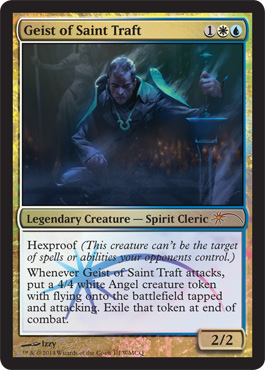
We've all seen some bad promos in our time. Xathrid Gorgon. Scourge of Fleets. Geist of Saint Traft.
Wait, what?
Yes, this is happening.
This is definitely the best promo we've seen in a while. And if you don't count judge foils, maybe the best widely-available since Restoration Angel? Then again, this is a Mythic, so the right comparison may actually be Ajani Vengeant.
So how do you get one these sweet promos? You play in a World Magic Cup Qualifier. If you're in the U.S., that means you have three chances. You can find the full list of events here, and good luck if you choose to compete!
If not, now is a perfect time to join up! Our powerful tools, breaking-news analysis, and exclusive Discord channel will make sure you stay up to date and ahead of the curve.
Yesterday I looked at adding depth to your pool by adding another color or archetype. But how easy is it to do that?
Picture This
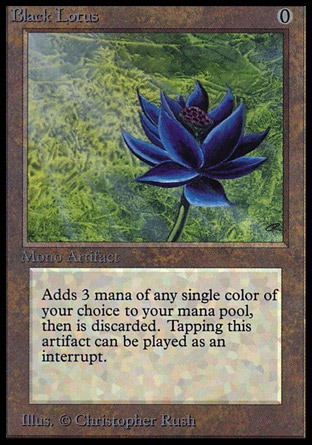
You open a Black Lotus. It happens and it can certainly happen to you. It almost doesn't matter what the rest of the pack is. You're inclined to jam storm, anyway, and the pack has a Temporal Fissure that just might wheel. Perfect. Subsequent packs yield some really gassy blue-red combo fodder.
Someone at the table must have the same idea because that Temporal Fissure does not table. You get a few more copies of High Tide and Turnabout in pack 2 but you don't seem to be any closer to a good finisher besides your miser's Kaervek's Torch. Then, in pack 3, you open it.
Can you even take it?
What kind of mana fixing is there even in the set?
This shouldn't even count. You're not playing Tendrils off of this unless your pool also contains Yawgmoth's Will which can happen, but let's not pretend we want to count on getting two mythics.
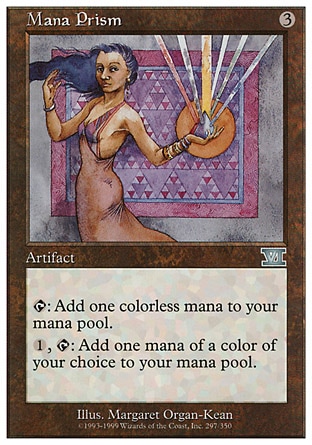
This will do some work. It's not the best for getting double black, but it will do.
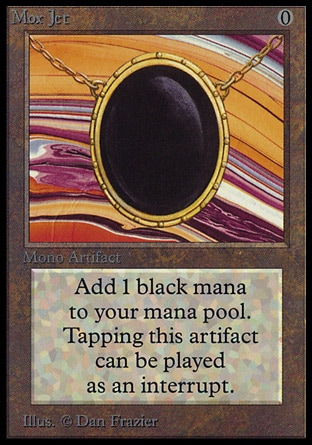
Sure, but who passes Moxen in draft?
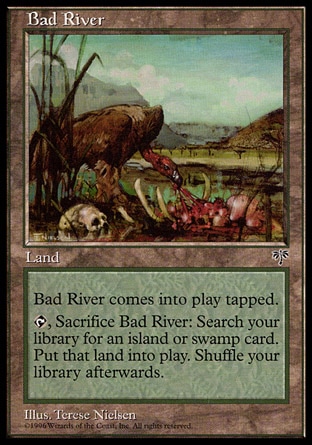
These are gross, but in a pinch, they'll do.
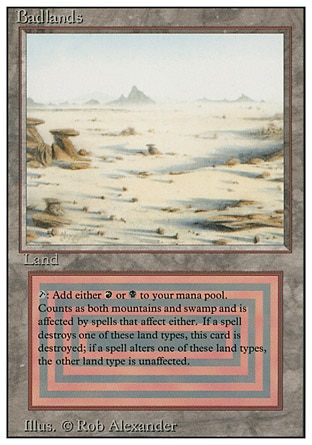
Obviously. Good luck getting passed one, but you take these if you see them and you play them if you can.
Also gross, but we can't have the world's best mana all the time.
This is a solid choice. Don't forget to take this guy.
The Question
So what can we splash? Tendrils is obviously pretty rough. How about Vampiric Tutor? Burning Wish? What is your plan for adding some of the ridiculously powerful cards that are in this set? Faced with the choice between fixing my mana base and passing a Time Walk, I'd say it's a no-brainer.
Tell me about your plan going into thee drafts. Leave it in the comments.
If not, now is a perfect time to join up! Our powerful tools, breaking-news analysis, and exclusive Discord channel will make sure you stay up to date and ahead of the curve.
Last week I delved into the concept of transformational sideboarding. As an example I shared two successful combo decks and explained how they utilized their sideboards to switch their primary gameplans against troublesome opponents.
These combo decks were often faced with immense hate after sideboard, and by switching gameplans to either aggro or control, they sidestepped opposing sideboard cards and played games on their own terms. This sort of sideboard transformation is applicable to many decks across forms, including combo, control, and the subject I will discussed today, aggro.
Today I share two famous aggressive decks from history, one that transformed into a control deck, and one that transformed into a combo deck. I will showcase how they utilized the transformational sideboard to dominate their Pro Tour opposition. The decks I will discuss today are:
Kai Budde's Pro Tour Chicago 2000 Rebel's deck, an aggressive white weenie deck that transformed into a control deck against other aggressive creature decks, and into an Armageddon deck against control. It earned him his second Pro Tour Champion title.
GW Ghazi-Glare from Worlds 2005, an aggressive midrange deck that transformed into a combo deck. The deck was one of a few x-0 decks in the Standard portion, took up 3 of the top 8 slots, and eventually won the entire tournament. It was played by three Japanese players to the top 8, including Shuuhei Nakamura, and earned a 1st place finish in the hands of Katsuhiro Mori. The deck also helped catapult Japan to their first Team World Championship title.
These decks used their sideboards to augment their core aggressive strategies to take advantage of opponents that would be prepared for the game 1 configuration. These decks replaced the typical aggressive endgame with an alternate endgame the opponent would be unable to win.
Aggro into Control
Kai Budde's Rebels-PT Chicago 2000
Maindeck
16 Plains
4 Ramosian Sergeant
4 Lin Sivvi, Defiant Hero
4 Chimeric Idol
4 Parallax Wave
4 Wax
4 Brushland
4 Rishadan Port
3 Steadfast Guard
3 Longbow Archer
2 Defiant Falcon
2 Defiant Vanguard
2 Ramosian Sky Marshal
2 Dust Bowl
1 Thermal Glider
1 Rebel Informer
Sideboard
4 Armageddon
3 Seal of Cleansing
3 Wrath of God
3 Mageta the Lion
1 Defiant Vanguard
1 Lightbringer
A year after his World Championship win, Kai was hungry for victory and he used his Rebel deck in Chicago to win his first of two Pro Tour titles that season. Kai would go on to be the most dominant player in history, winning two more Pro Tour the following season.
Kai's maindeck is relatively simple to those familiar with Rebels. Rebel cards had an ability to search out other Rebels up the curve, so once one Rebel was in play it would start off a chain reaction of threats. Rebel strategies were among the most powerful available for their entirety in Standard, and winning the mirror match was crucial. Kai turned to a sideboard transformation to get a huge edge in mirror.
It has been a long-held belief that the best way to get an edge in aggressive mirrors is to slow down and take on the more controlling role. Kai's deck was a perfect example of that and set a deckbuilding example for years to follow.
The first piece of the puzzle is Wrath of God. This board sweeper completely turns the tables in an aggressive mirror. These games are typically won by jockeying for board position, and, naturally, the player with the most threats will win. It is hard to get ahead from behind against a mechanic like Rebels, so many games would come down to sheer luck, perhaps from winning the die role.By bringing in Wrath of God, Kai wrote his own rules. Wrath of God served as a clean way to catch up from behind, most likely along with generating a large card-advantage gain.
Imagine an opponent against Kai Budde, ecstatic to be ahead against one of the best players in the world. Smelling victory at their door, the opponent would unload their hand into play, seeking to lock up the game quickly. A well-timed Wrath of God from Kai would end their plan.
The second piece of the puzzle is Mageta the Lion. This is essentially a Wrath of God on a stick, a re-usable board sweeper than would render the opponent unable to catch up. Mageta the Lion was particularly dominant against other Rebel decks because most would be without any ways to meaningfully remove it. It would end games by itself.
Kai's board plan of loading up on sweepers was particularly brutal when paired with his playset of maindeck Parallax Wave. Rather than removing opposing creatures, Kai would use the enchantment to protect his own creatures from his sweepers. Kai used the enchantment to break the parity of the sweepers, meaning he was always on the winning end of the exchange.
Kai also sideboarded 4 copies of Armageddon as a semi-transformation against control. Opposing control decks would combat rebels with an assortment of sweepers, including Wrath of God and the devastating Tsabo's Decree, in addition to traditional control elements like targeted removal and card advantage from Fact or Fiction and Probe.
Kai leveled these opponents by attacking their mana. Assuming Kai had any reasonable threat in play, Armageddon would effectively end the game. Kai could also use Armageddon on an empty board, and, presumably holding a land or two, would be able to recover faster than his mana-hungry opponents.
Compared to Counter-Rebels, the UW control/Rebel hybrid that reached the finals of the Pro Tour and became a top deck in the year afterwards, Kai played a very straightforward deck. Rather than complicating and diluting his game one plan, Kai opted for a consistent, aggressive, strategy. He turned to his sideboard to get an edge on his opposition, and it carried him all the way to 1st place.
A more recent example of an aggressive deck transforming into a more controlling build can be found in Shouta Yasooka's Boros Burn deck, which he piloted to the finals of a 269 player Standard event in Japan. Contrary to the usual Burn plan, he sided in a whole control package against aggressive decks.
The headliner was Boros Reckoner, a card known for shutting down ground-based offensives. He also used Prophetic Flamespeaker as a pseudo-Shadowmage Infiltrator. Supplementing his plan was more removal in the form of Banishing Light and even Reprisal! Opponents hoping to fight his Burn plan with lifegain and the like would find themselves at the mercy of a control deck.
For more details on that tournament, and the Boros Burn deck, check this piece I wrote on TCGPlayer.
Aggro into Combo
GW Ghazi-Glare-Worlds 2005
Maindeck
4 Vitu-Ghazi, the City-Tree
4 Temple Garden
4 Selesnya Sanctuary
4 Brushland
1 Okina, Temple to the Grandfathers
6 Forest
4 Llanowar Elves
4 Wood Elves
4 Selesnya Guildmage
4 Loxodon Hierarch
3 Kodama of the North Tree
2 Arashi, the Sky Asunder
2 Yosei, the Morning Star
4 Umezawa's Jitte
3 Pithing Needle
3 Glare of Subdual
2 Seed Spark
2 Congregation at Dawn
Sideboard
4 Carven Caryatid
1 Seedborn Muse
1 Hokori, Dust Drinker
2 Arashi, the Sky Asunder
2 Yosei, the Morning Star
2 Naturalize
3 Greater Good
This deck was the talk of the tournament, and the story goes it was discovered at a local Japanese shop before being honed by the Pros. This is a classic midrange aggressive deck, featuring a bunch of mana acceleration creatures and a powerful top end of 4 and 5-drop creatures.
The defining card in the deck was Vitu-Ghazi, the City-Tree. This card generated a steady stream of tokens to be abused by the power cards Umezawa's Jitte and namesake Glare of Subdual.
In a Standard format dominated by creature strategies, Glare of Subdual was effectively an Opposition that would lock opposing creatures out of game.
The deck was also built to fully abuse Umezawa's Jitte, arguably the best card in the format. The high creature count and token generation meant the equipment would be turned on at all times.
Supplementing Vitu-Ghazi, the City-Tree and bridging the gap between mana acceleration and the top end was Selesnya Guildmage. This bear was the perfect mana sink, whether it be generating tokens per the main strategy, or serving as an Overrun on a stick for pumping said tokens.
Notable here are three Pithing Needle in the maindeck, something never seen today and rarely seen since. Even in a world without planeswalkers, Pithing Needle provided the GW deck an efficient form of psuedo-removal for combating the format. Primarily, it was yet another way to stop Umezawa's Jitte and stopped Sensei's Divining Top from the control decks. It also stopped the omnipresent Meloku the Clouded Mirror, which could give this deck problems, along with the popular sweeper Kagemaro, First to Suffer. Pithing Needle also stopped the primary combo deck in the format, Greater Good.
That card--Greater Good--was the centerpiece of Ghazi-Glare's transformational sideboard. When combined with Yosei, the Morning Star, Greater Good would lock the opponent down and generate massive card advantage.This interaction turned into a bonafide combo when combined with the aptly-named Congregation at Dawn, which found another Yosei, the Morning Star or two or three.
Note two copies of Yosei, the Morning Star in the sideboard that would come in as part of the transformational package. It was also possible to end the combo chain with Hokori, Dust Drinker and ensure the opponent simply never got to play again.
This transformtional sideboard was employed against many opponents, including other midrange decks, combo decks, and control decks. Opponents would likely bring in all sorts of creature control, which left them vulnerable to the combination. Once Greater Good was in play, Yosei, the Morning Star could be sacrificed immediately before the opponent was able to remove the creature. This deck was a unknown quantity at the time, and opponents were unable to meaningfully interact.
Comparing the Ghazi-Glare sideboard plan to contemporary decks has proven difficult. The plan was extremely unique and novel at the time, and I haven't seen it replicated.
Wrapping Up
Combos are typically seen in the maindeck and are sided out when opponents will be prepared. I'd be interested in hearing additional examples of the plan being used successfully. It was a unique set of circumstances that led to the Ghazi-Glare deck, and it would be an incredible opportunity if one could enact the strategy in contemporary times.
The sideboard is a living, breathing part of a Magic deck. It's a space that holds immense potential and, when used properly, is perhaps the most important tool available to a player--a tool available in the arsenal of any archetype. It's a space for creativity and logic, for psychology and game theory, and for a whole lot of fun.
If not, now is a perfect time to join up! Our powerful tools, breaking-news analysis, and exclusive Discord channel will make sure you stay up to date and ahead of the curve.
Ah! Smell that in the air?! Yes! It smells like Modern season!
The last week (plus) has been very exciting for me. Actually, I haven't been this excited about a season in a while. Even last year, after winning a Modern Qualifier the year before and travelling to Barcelona for Pro Tour Avacyn Restored, I just didn't feel excited about the Modern season.
Don't get me wrong, there were a lot of amazing things going on some 18 months ago, now. Do realize though--we've been waiting for this season to come back around again for close to 15 months.
15. Long. Months.
At least with football you get to squee with delight during the summer NFL draft. Also, the season itself from start to finish is about five months. Not only has this season been pushed back to the summer prime time but also Modern Masters was released what seems like an eternity ago now.
But, you know how it is. "Best laid plans of mice & men" and all...
So with the finish line all but shifting to a start line right in front of us, it's amazing to see how things change so fast.
It's not quite at the point where it's keeping me up late at night; that will probably be tonight. The first live fire action I get this season will be this weekend. While I'm looking forward to it greatly, it's almost like you can feel the attention of the Magic world shift it's focus to Modern. The innovation hasn't truly taken hold yet, but we're starting to see major changes already come into play.
1) More Decks Are Adopting Thoughtseize.
It took a long time for interaction to really come back to the forefront, but the recent win of Scapeshift at the Grand Prix is probably the cause of this. Decks have to interact. Especially in Modern. There's just too much going on not to interact, be it Poison using cards like Apostle's Blessing or Vines of Vastwood or UWR Control using Mana Leak and Cryptic Command. You have to be able to outmaneuver or countermand what your opponent is doing, even to a small degree.
With this being said, Thoughtseize is the automatic response. "Don't play blue, but want to actively stop your opponent from doing something specific? Boy, do I have something for you!" That's what Thoughtseize casually says out of the corner of it's mouth. Like a street vendor peddling something you know you need.
One example of this changeover is LSV's Angel Pod, which eschews some of the more inconsistent pieces to gain more traction with additional Abrupt Decays and Thoughtseizes. It's just another play in being able to protect what the deck is trying to do: move into a position where Kitchen Finks plus Birthing Pod creates dynamic situations that you just can't handle efficiently.
2) The Format is Super Diverse Right Now.
With a bunch of excitement surrounding a new format, a wide swath of people just start throwing things at the wall. The practice of seeing what sticks is maddening and time consuming though. Ironically, the thing about large tournament preparation is not knowing what to expect. That would be too easy, wouldn't it? It's learning how to expect the unexpected.
I've always said the most dangerous rounds of a tournament are the first four. Once you get past that, it's almost like you've arrived at the postseason. There's a completely different set of skill levels, manipulation tactics, reads, and just plain things to watch out for (cheating is still rampant).
Getting ROFL stomped by the girl that just loves G/W Beatdown is fun to watch--just not so much if you're on the receiving end. The guy that decided to try his version of Super Friends four years after it was relevant? Ya, I've been the victim of that. Guess which round of a major Invitational it was? Round 2. In the 1-0 bracket.
I'm not bitter. I promise...
Finances
"But Dylan, how this impacts the finance world?"
There are still no "wrong" cards to invest in, in Modern. Supply is still constricted and demand is still high. I'm telling you this just to keep that in the back of your head.
This format will start to separate the chaff from the wheat. Even then, there won't necessarily be a "bad" card to invest in. We're talking about a format that manages only to be slightly less expensive than Legacy and has a medium percentage of crossover with current Standard. Eventually, that will change.
I also foresee Wizards improving the accessibility of Modern, soon. Products like Conspiracy are shaking up what they do with their typical set model, and I really like the approach Wizards has decided to take.
They're offering a great product that generates buzz, doesn't affect normally tournament play but replaces selective cards at their leisure. It's wonderful to watch as casual formats, Legacy and Modern truly take hold of the spotlight, and how that affects business economics.
Here's what I mean about "wrong cards":
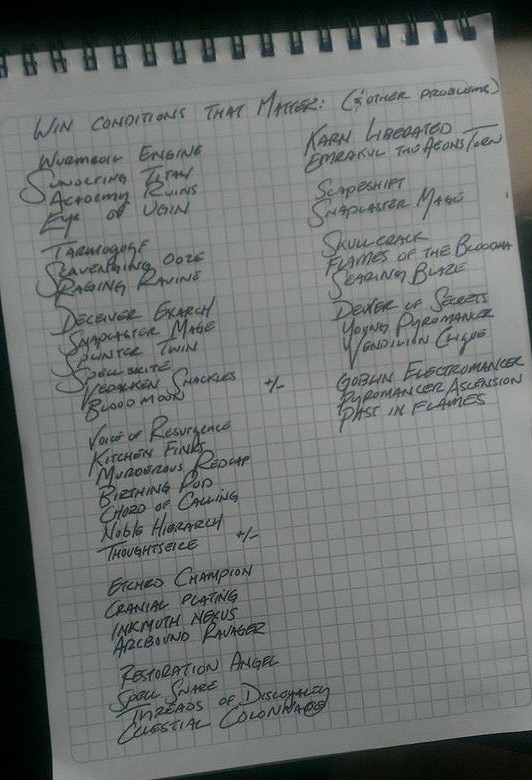
There just aren't. This list tackles about 11 different "main" archetypes. Classify them by Tier 1 or Tier 2 if you like, but many of them are showing up in equally quantities. Just throw a dart at the board for the moment, honestly.
This is just a beginning list I made, while contemplating problem areas for current Jund. I intentionally left off overlap areas so the list is less cluttered in thought processing just to originate problem areas, or things that can turn a mole hill into a mountain.
These are just the main problem areas. Imagine if I started talking about all the support cards that make these decks truly tick. Those are an area all on it's own that deserves massive amounts of attention (and more than likely an article about it in the future).
In the meantime, next week I'll discuss the changes I've made to Jund, hopefully showing off a winning PTQ list complete with as much coverage as I can muster this weekend.
I've decided to hedge my bets against aggressive decks, Pod, Splinter Twin, and other early/midrange strategies. Combo decks are being addressed out of the sideboard, and while there are still a smattering of control decks, most U/W/x strategies are sticking to a Kiki/Restoration Angel combo instead of being a straight-out control deck. We'll see if my strategy, which normally is extremely effective, pays any dividends this weekend.
If not, now is a perfect time to join up! Our powerful tools, breaking-news analysis, and exclusive Discord channel will make sure you stay up to date and ahead of the curve.
I decided to spend another few hours durdling around with the Vintage Masters Sealed Deck Simulator and see how easy it would be to build some of the prefabricated archetypes they baked into the set.
Pool #1
What seemed obvious - Blue-Green Madness
What I had - The basics
What I lacked - Depth
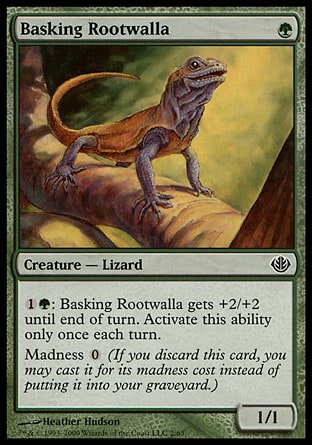
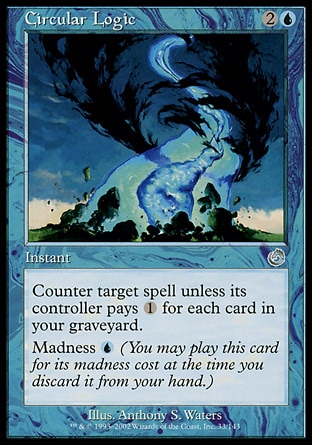
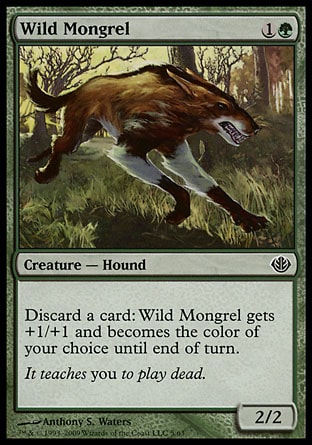
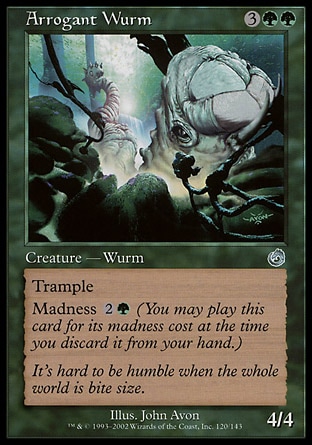
Not very many discard outlets, no real redundancy on Wild Mongrel or Arrogant Wurm which is really what I wanted to see. Circular Logic is solid even for 2U, but I really could stand to see a bit more madness spells. As it is, the pool isn't deep enough to build UG Madness, and this was the archetype for which I had the most cards.
What I would have to do - Add another color or another strategy. There was plenty of depth in UG.
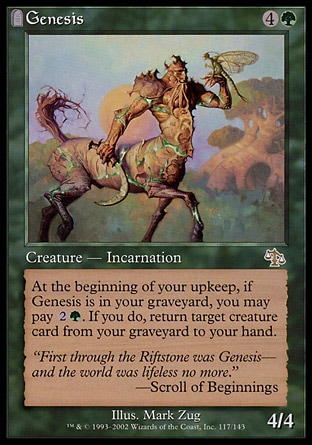
There is a bit of synergy here as well. Discarded cards can be rebought with Genesis, and the discard outlets are a handy way to get him in the yard in the first place. Bouncing Deranged Hermit seems saucy and an army of squirrels is never bad. There are some good and some mediocre fliers and you likely play all of them. Top it off with a Saproling Burst and an Elephant Guide and you have a 40 card deck. Is it the Madness deck Gotham needs? Maybe not, but there are enough Madness elements to get there, and filling the deck in with goodstuff is likely going to be necessary in Sealed.
Pool #2
What Seemed Obvious - Goblins
What I had -
What I lacked - Depth in red. I had some good goblins and I some bad ones like Hulking Goblin and 2 Solar Blast. There were about 10 solid cards and not much else in red, even as filler. I'd have to add another color.
What I would have to do - With almost no creatures in the entire pool in any color, I would be forced to fill my deck in with spells. Spells, I had.
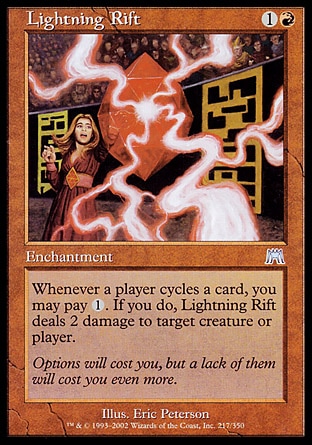
I don't think 2 copies of Solar Blast is enough of an impetus to play Lightning Rift, but if you can add a few cycling cards and go RW cycling-goblins you may end up getting there. There weren't enough cards for a decent cycling deck nor a decent goblins deck. These strategies don't have much synergy beyond the fact that I'd play a burn spell like Solar Blast in both decks. Jamming two disparate archetypes together in an attempt to deal with our depth issues is likely going to be the hallmark of sealed going forward.
Obviously, the better card selection in draft is going to mitigate a lot of these problems. Check back tomorrow and I'll see if I can't invent a few sealed-specific archetypes using the cards we're likely to get that are different from the obvious, draft-specific archetypes we're used to seeing.
If not, now is a perfect time to join up! Our powerful tools, breaking-news analysis, and exclusive Discord channel will make sure you stay up to date and ahead of the curve.
There are many reasons I write for Quiet Speculation, but the main one is my situation provides insight into competitive Magic as well as the financial side. I’m a regular at PTQ’s and Grand Prix but during the week, I’m the co-owner of the shop Galaxy Games in Wintersville, Ohio.
Not only do I have my finger on the pulse of the competitive trends, but I have realtime data about pricing and financial trends. With that being said, today’s topic is centered on the recently released Modern Event Deck: ‘Budget Black-White Tokens.’ There’s a lot you need to know about this product so let’s get started.
If you have not seen the full list, or need to refresh yourself on its contents, this is what you will receive if you purchase the Modern Event Deck.
Budget Black-White Tokens
Creatures
2 Soul Warden
3 Tidehollow Sculler
Spells
2 Inquisition of Kozilek
3 Path to Exile
3 Honor of the Pure
4 Intangible Virtue
3 Zealous Persecution
4 Raise the Alarm
2 Shrine of Loyal Legions
4 Spectral Procession
4 Lingering Souls
1 Sword of Feast and Famine
1 Elspeth, Knight-Errant
Lands
4 Caves of Koilos
4 Isolated Chapel
2 City of Brass
4 Windbrisk Heights
1 Vault of the Archangel
5 Plains
4 Swamp
Sideboard
2 Burrenton Forge-Tender
2 Dismember
3 Duress
2 Ghost Quarter
3 Kataki, War's Wage
3 Relic of Progenitus
The Financial
Pricing
First of all, let’s look into the pricing of the cards in the deck and see what’s going on with them currently. As every person who discusses Magic finance predicted, all of the singles reprinted in the deck have decreased in price. While this is no surprise, it is good to know that nothing out of the ordinary happened. It’s one thing to predict something will happen and another for it to come to fruition.
When the deck list was revealed, it seemed like buying the deck would be a good financial decision because the singles totaled more than twice the MSRP. If you head out and about on the internet and purchase all of the singles from this deck right now, you would spend more money than just buying the actual deck, but not by much.
There is an interesting phenomenon I’ve noticed about Magic finance that occurs in situations with event decks and similar products. (Maybe this is an obvious observation but I have not seen anyone write about this topic.) Once the prices adjust to the influx of copies for sale, the sum of the contents trends towards the cost of the sealed product.
For example, the singles in the Modern Event Deck decreased to a point that you can basically either buy them all individually or buy the deck but pay the same price. This also happened with the Mono-Black Devotion Event Deck.
In the future, it will be a good idea to keep this concept in mind for other related releases. The hard part will be to predict how much the singles will drop individually. Dissecting which card will drop the most and which will be less affected can be difficult but worth thinking about.
Buylisting
Under no circumstances should you purchase this product with the intent of buylisting its contents. All of the available buylist data I’ve been able to collect is that dealers are already well stocked on every single one of these cards.
Therefore, their buy prices are either incredibly low or nonexistent. In addition, the cards that do have reasonable buylist prices are all great investments. Take a look at some further notes on that in the next section.
Trading
Unless you are interested in playing the deck, the info I’ve provided strongly suggest that it is not worth your investment. Although I don’t recommend buying into this product, some specific trading is definitely in the cards.
[cardimage cardname='Inquisition of Kozilek' a=5]
As you might expect from one of the best hand hate spells in Modern, the price of Inquisition of Kozilek has not been decimated by its reprint. After dipping down to almost four dollars, it has recovered some and is heading back to five almost immediately. If you can trade into copies of these cheaply, they are a sound investment long-term.
[cardimage cardname='Path to Exile' a=5]
Despite its many reprints, Path to Exile is holding strong at four dollars. As one of Moderns’ premium removal spells this is no surprise, but certainly worth noting. Just like Inquisition of Kozilek, if you can trade into cheaper copies of this card due to the influx in availability, it is certainly worthwhile.
[cardimage cardname='Sword of Feast and Famine' a=5]
It’s worth noting that the price trajectory of Sword of Feast and Famine has not changed virtually at all since the reprint in this event deck. The price of the Mirrodin Besieged version has been stable and while the event deck version is worth a couple dollars less, the difference is minimal and it looks to be meeting up with the original set price.
Any sword is a solid investment and they have retained their value better than any other card I can think of. All five swords are desirable for Commander, Cube, and fringe Modern play.
I doubt we will see a drastic price increase in this card anytime soon but the price definitely seems stable with potential to gain a bit more long-term. Trading into them may not breed huge dividends but turning RTR Block cards into Swords could prove fruitful.
[cardimage cardname='Elspeth, Knight-Errant' a=5]
How many times are Wizards planning to print Elspeth, Knight-Errant? Granted this is one of the best planeswalkers of all time and a favorite of many players, but with the number of times she’s been printed, her TCG Player page is starting to look a Yu-Gi-Oh cards. They print cards from that game so many times that it’s impossible to keep track of prices on cards.
Other games aside, Elspeth looks like she will be $15 for a long time to come. Solid investment to trade for but finding someone who does not already have their copy may be challenging.
Competitive
Removing Cards
Despite a few terribly awful cards in the deck, overall the strategy is solid and competitive. I would not suggest sleeving up the exact list, but with some minor changes it can be drastically improved. Most players breaking into Modern do not have many of the necessary cards so this deck will be a great start. There are a few cards that really need to be removed before the deck will start being playable.
[cardimage cardname='Shrine of Loyal Legions']
The number one offender is Shrine of Loyal Legions. This artifact is nowhere near playable in Modern. Maybe it is tolerable against UWR Control and Jund, but they both have answers to it if you manage to get some counters on it and cash it in. It’s unplayably slow and needs to be removed before you play any games with it.
[cardimage cardname='Honor of the Pure'][cardimage cardname='Intangible Virtue']
One of the major fundamental issues I have with this deck is that on top of Honor of the Pure and Intangible Virtue, the original deck also contains Zealous Persecution. My problems is not with the playability of these cards because I think all three of them are great, but rather, ten spells that pump your creatures is simply too many for a deck to support.
I’ve witnessed many games where the tokens deck is flooded with pump enchantments and cannot find any spells that make creatures. I don’t think removing most of these would be correct, but some number of the effect needs to be removed in order for the deck to run smoothly.
[cardimage cardname='Soul Warden']
Fortunately, Soul Warden is playable in most matchups but while I support the card once in a while, it belongs in the sideboard if at all. Even though Melira Pod can’t gain infinite life, Splinter Twin can’t win with Deceiver Exarch, and burn must deal with her the turn you play her or be unable to win the game, her impact in the rest of the matchups is miserably low.
Adding Cards
[cardimage cardname='Hero of Bladehold']
As a cheap option that has a huge impact, Hero of Bladehold is perfect for this deck. Not only can we count it as a pump spell part of the time, but all opponents will remember to fear this card quickly or be defeated.
[cardimage cardname='Inquisition of Kozilek'][cardimage cardname='Thoughtseize']
One aspect of the deck that is in dire need of attention is the hand hate department. Sure the deck has three copies of Tidehollow Sculler, which I like more than most Modern players, and two Inquisition of Kozilek, but that is not enough.
Ideally the deck would have both Inquisition and Thoughtseize if possible. By attacking the other players hand, you can disrupt whatever strategy they are trying to defeat you with. These cards are necessary for the deck's success.
The End Goal
The light at the end of the tunnel should look similar to what Craig Wescoe has been running in Modern. As it turns out, he and I were on nearly the exact same page in terms of this archetype. Check out his latest version of this deck.
B/W Tokens by Craig Wescoe
Creatures
4 Mirran Crusader
3 Hero of Bladehold
Spells
4 Inquisition of Kozilek
4 Thoughtseize
4 Path to Exile
2 Doom Blade
4 Honor of the Pure
4 Zealous Persecution
4 Lingering Souls
4 Spectral Procession
Lands
4 Arid Mesa
4 Marsh Flats
4 Godless Shrine
1 Fetid Heath
2 Windbrisk Heights
2 Isolated Chapel
6 Plains
Sideboard
4 Leyline of Sanctity
2 Rest in Peace
1 Rule of Law
4 Runed Halo
4 Stony Silence
As you can see, many of the ideas I presented run parallel to Craig’s thoughts on the deck as well. Mirran Crusader is more uncertain to me, but he claims it is quite good. I could see it being well positioned against some decks, but against the majority of the field, it seems like it will die to Lightning Bolt too often.
I’ve been wondering about where Brimaz, King of Oreskos fits in Modern and this could be a home for the cat king. Four toughness is exactly where you want to be in Modern especially if you are an aggressive deck, so he may be worth testing out in place of Mirran Crusader.
Other than that, I think this version of B/W Tokens looks strong and well positioned to find success in the format.
Hopefully you’ve gotten all the Modern Event Deck info you needed to make the right decisions for your situation. While I may not be ecstatic for the deck choice, I am glad this product exists to help players begin to experience the amazing Modern format. I look forward to more products like this in the future.
If not, now is a perfect time to join up! Our powerful tools, breaking-news analysis, and exclusive Discord channel will make sure you stay up to date and ahead of the curve.
We know that lands are usually the best financial bet there is--well, before I go further, maybe we don’t all know that. I’ll explain.
Cards change, decks change and power level shifts around as the metagame changes. That makes bets on some non-core cards pretty risky. Sometimes they pay off big and sometimes a bet that looked really good like Niv-Mizzet, Dracogenius flames out because they print Aetherling.
But one thing rarely changes, and that’s manabases. Something like RWU Control may not run the big dragon now or even Prognostic Sphinx next year like we’ve been predicting, but it’s sure going to runTemple of Enlightenment.
Lands have accounted for some of my best calls in Magic finance. Fetchlands, of course, paid off in a huge way for me, but even stuff like shocklands have generated some gains in the past few months.
Sure, it hasn’t been as much as we were expecting a year ago, but the price on these as a whole has ticked upwards while becoming much more in demand. So even though the price hasn’t moved as much as I would have liked, they’ve been so liquid that it has generated some solid turnover for me.
That brings us to the topic of today’s article. There are several cycles or individual lands that we should develop a strategy for going forward. After all, there promises to be a shakeup or two in the next year along these lines, so planning in advance is key.
Let’s start at the top.
Fetchlands
There was an error retrieving a chart for Scalding Tarn
Scalding Tarn. Misty Rainforest. To a lesser extent the other three.
Talk about a rollercoaster ride. We’ve seen these go from nothing to basically a million dollars and back down again. The question is, what now?
When the big run-up around GP Richmond came, I advocated for selling out of your fetches if you didn’t need them for Modern season. I didn’t realize then just how right I was going to be. It seems like the hype drove the price up, but the incredibly important psychological barrier of $100 broke that trend. The blue ones hit $100 in the wake of the event, and we’ve seen a steep decline since.
We’re in Modern season now and beginning to see the prices stabilize, but I seriously doubt they’re going to climb back up to Richmond levels. The reason, I believe, is twofold:
People know a reprint is coming, if not exactly when. People have prepared for this Modern season with that in mind, and no one is rushing to buy fetchlands right now because no one wants to pay $100 for a card that could be reprinted en masse and be $20 a year from now. That eats up the demand.
And as I mentioned above, that $100 pricepoint took care of the supply. Remember our old friend Jace hit $100 in Standard before it too hit the breaking point. Psychological barriers are a thing real when it comes to money, and when you can out a fetchland for a c-note people decide it’s worth it. This is why we saw original duals jump again recently, because it suddenly became really easy for newer (than 1995) players to trade into them. If fetches are $100, Tropical Island won’t be $120.
So where are fetches going from here? I have no knowledge of when the reprint is coming, and while I’m extremely confident it won’t be in Magic 2015 (fetches/shocks in Standard together aren’t happening folks), I’m not sure if they will debut in the fall or not.
So the play now, if you still have fetches, is to hold them through Modern season to see if the PTQ format will stimulate demand a little and bring prices back up. If it does, sell. If it doesn’t, sell anyway in 30-45 days. The way I see fetches is they’ve probably already made you money, so take your profits and live like the rest of the 99% until the reprint comes.
Shocklands
As I mentioned, we’ve seen some incremental gains on these. I think a confluence of factors (mostly Modern season moving into the summer) really dented the ability of these to rebound like we expected last year. That said, I’ve still done well on this investment since then and am happy with the result.
Of course, the only question with shocklands is “what about rotation?”
That’s an extremely loaded question, but one I will attempt to answer. We have a few things to consider:
Fetchlands stayed somewhat even in the months beforehand, but didn’t drop a dime on rotation as expected, which you can see in this graph. They climbed slowly for a year or so and then exploded on the announcement of Modern.
People are more savvy now. I don’t think shocks, in relation, dropped as far as fetches did because of this.
Around this time Magic began to blow up. That explains some of this trend.
Modern is a known commodity, so we can’t expect shocks to follow the same trajectory of fetches.
So where does that leave us? In my mind we’ll see shocks fall maybe 10-15% since there are simply so many more in circulation. This will happen maybe a month or two before rotation, and shocks will then stagnate.
Come January, as people get over the holidays and turn their attention back to Magic, we usually see prices across the board take a small hike up. I think it’s around this time we’ll see the rebound on shocks to basically their current prices.
This will be affected by what happens with fetches. If we see the fetchland reprints in this timeframe, people will be even more likely to hold onto their shocks because they’ll have nearly everything they need to break into Modern.
My recommendation? If you have any interest in Modern, hold yours. Even a drop of 20% makes it difficult to profit from a sell-rebuy pattern. Once you factor in fees and time you’re breaking even or slightly losing money in this scenario when you go to rebuy. And I really don’t think they’ll be all that easy to trade back into since people know they need them for Modern.
Temples
Basically, I’m a big fan of all the Temples, but especially the ones from Born of the Gods and Journey into Nyx. We’ve seen all of these hold higher prices than maybe we initially expected, and that means that the upside may be a little limited, but it still exists. And like with shocks, even if these don’t take off price-wise they will be in demand, and that generates opportunities.
Mana Confluence
The decline continues, but it is slowing. This is going to settle at $9-10 in the next month and then I believe climb from there. I’m on record saying $15 is where this will end up in the next year, but I believe this is strictly a short- to medium-term spec.
It has a generic name on a riff of a card (City of Brass) that’s been reprinted a ton. This will show up in Core Set sooner or later. That limits the long-term value here, but I still like it for the next 12 months.
Soft Landings
That’s where I’m at on most of the major questions concerning lands right now, and as always real estate dominates my interest in Magic finance (there’s a reason Knight of the Reliquary is my favorite non-Merfolk card).
What do you guys think? A lot of this work is conjecture, of course, but I believe it’s about as much of an educated opinion as you can get. What are your thoughts?
If not, now is a perfect time to join up! Our powerful tools, breaking-news analysis, and exclusive Discord channel will make sure you stay up to date and ahead of the curve.
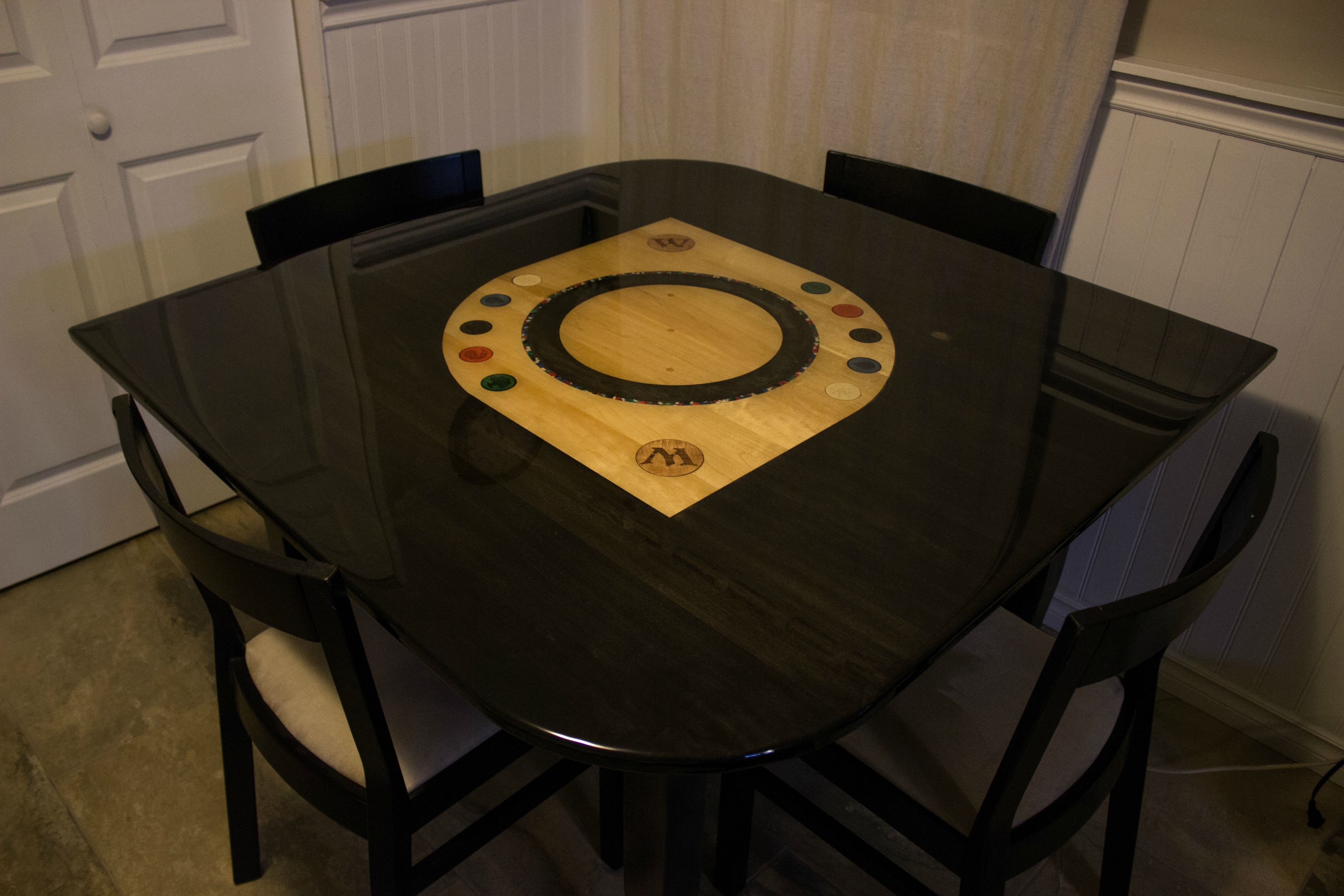
No preamble here; I'll just present this in its beauty.
If only I was this handy...
Welcome to what you can do when you're handy with some woodworking. I'm definitely not the guy skilled enough to make something like this, but Reddit user /u/Leokul is. You can see his entire process from start to finish here. He starts with the bare essentials and Ron Swansons this thing into existence. I'm sure playing on it is a wonderful experience.
Of course, no matter how pretty your table is, it can't help you draw lands when you need them, can it?
If not, now is a perfect time to join up! Our powerful tools, breaking-news analysis, and exclusive Discord channel will make sure you stay up to date and ahead of the curve.
Vintage Masters is a throwback to the "Killer Combos" section in Inquest Magazine. It's a who's-who of dangerous banned cards from Standard formats past. We will get a brief few weeks to play with these dastardly cards before Khans comes out, and here are some of the coolest combos that come from years of Magic past.
Big thanks to Nat Moes for the idea on this part and apologies for the unavoidably Buzzfeedy title here : ) The Vintage Masters visual spoiler with correct rarities isn't in the system yet, so I hope you're cool with the original frames on some of these cards.
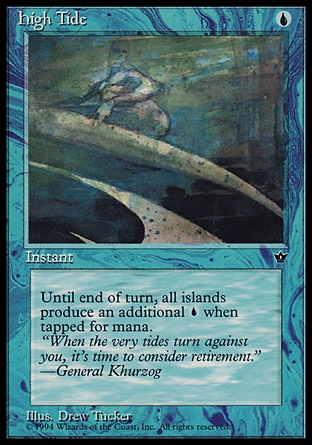
You'll see this come back again and again. Get to seven lands and cast High Tide. Tap your remaining six Islands, make twelve mana, cast that 'Chron and then bounce it. You've got one mana left over. Do it again and you'll make three mana. You can keep doing that until you've got a billion mana. What do you do with that? Well, the old school play was to cast Stroke of Genius on your opponent to draw them out of the game. In Vintage Masters, you can use this loop to make a bunch of storm for Brain Freeze, if you'd prefer.
OK, this is going to be greedy, but you might open these two cards in your Sealed pool. The concept is simple; you'd use Survival to stock up the graveyard and Recurring Nightmare to pull out all the juicy reanimation targets.
Noticing a theme? Get up to seven lands and you can also loop Recurring Nightmare infinitely with Palinchron. What to do with all that mana? Can you use it to keep reanimating something else? Maybe a Beetleback Chieftain for a bunch of tokens, perhaps!
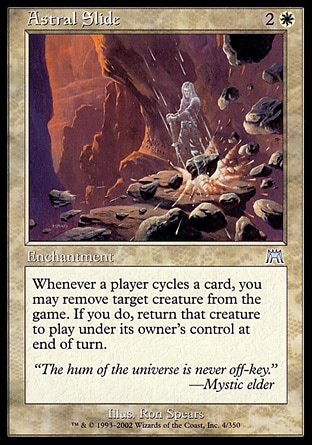
There are a bunch of Slide combos, but this is my favorite in the set from the oldschool. Get the Slide out and a Scrivener, then cycle an instant like Blessing. You can slide out that Scrivener and when it comes back, you can grab your Blessing back! You get a free blocker and a card, all for W. With all the cycling lands, I wish Tilling Treefolk were in this set...
This is an old Onslaught-block special. You can pay a huge pile of mana each turn and get a guaranteed Slide. You can keep your storm combo draft deck - I'll be happily losing with a first-picked Slide!
Last Slide combo, I promise. Slide lets you rebuy really good ETB effects, and this one was brutal back in Standard. Four life plus a giant butt was big enough, but if you could slide the Faithful once or twice, few opponents could break through.
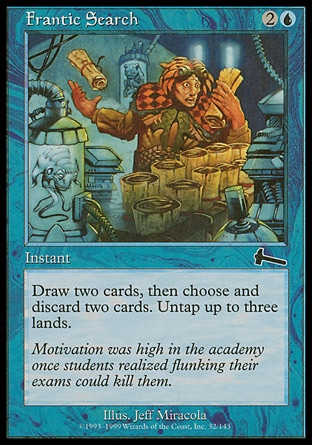
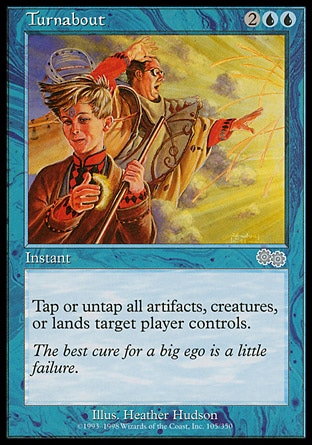
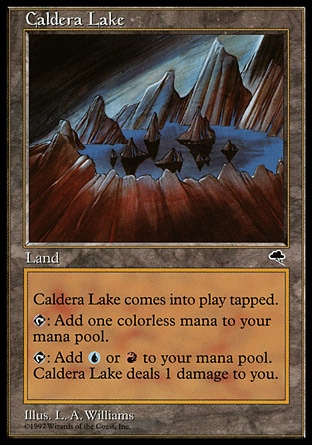
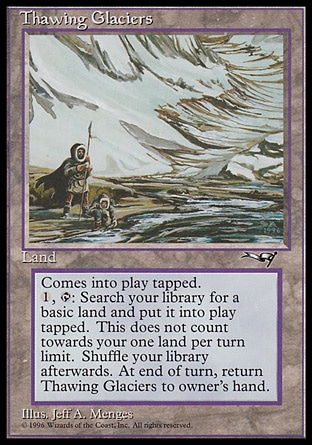
Again, with enough Islands out, you can really make High Tide sing. Both Turnabout and Frantic Search will net positive mana, and both have a really cool combo with Thawing Glaciers as well. I don't know if a monoblue deck is worth playing, since you need a bunch of Islands with High Tide to work. But I know I'll be trying it.
You can target your own land with Sea Drake and then sacrifice that land before it comes into play. This is also really good with Strip Mine, but that's downright rude to do to someone!
This was the dread combination of Odyssey - Onslaught Standard. Here's how it would go: you have eight lands in play at the beginning of your turn. You float all of your mana, then cast Upheaval. Then you play a land, drop that Tog and pass the turn. If the opponent can't kill that 'Tog, you'll probably be attacking for lethal the next turn. Yes, a cumbersome combination like this was actually very good because you could orient your entire deck around existing until turn nine. You needed no other kill cards - just Upheaval and some Togs. In the meantime, you could cast Deep Analysis and use counterspells. If the opponent couldn't kill you before turn nine, you would just Upheaval, undo the entire game up to that point, then kill them.
If you're worried about them stopping your Tog, you can just wait until you have nine lands in play and do the same stunt. You can then pass the turn with an untapped Island to power up a Circular Logic and stop anything that gets in your way!
This combination works with any fattie you want to cheat out and it gets even better if you can use Survival of the Fittest to set it all up. The process is simple - just discard the monster and the 'shifter turns into it.
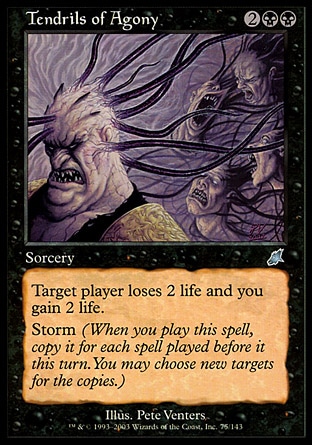
Get these two engine cards in play and you get to pay a life to get a black mana and burn through your deck. Just what do you turn that mana into? How about pounding through till you hit a storm card like Tendrils of Agony and rebuying all that life! You can also use this to draw into, and cast, any other combo you have around. Unfortunately, there isn't much lifegain in the set aside from Tendrils; if you don't have Tendrils, then Bargain gets a lot worse.
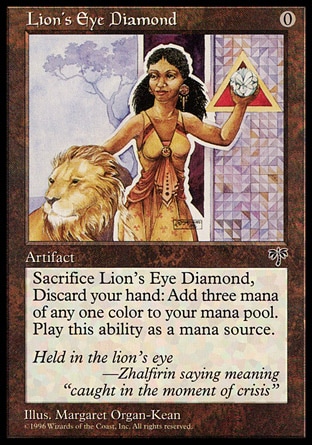
Just cast the Tutor and use the LED in response - you get three mana to cast your spell and you then get to use the Tutor. LED works with the "in response" trick on a lot, in fact. You can combine it with anything that will get you cards to cast - you can do Deep Analysis, Timetwister, Burning Wish, or the big daddy of 'em all, Yawgmoth's Will. Cast that Will, use LED, then when Will resolves, replay the LED to get three more mana!
Okay, you just want to play fair? How about using LED to cheat Arrogant Wurm out early? You can also use this trick to get Roar of the Wurm in the right place and then cast it on the first tun. The combo gets better if you've got some Basking Rootwallas to Madness out, too.
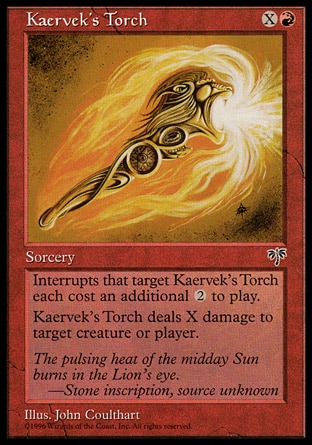
That old Alpha combo is back with a slightly better burn spell. You cast Channel with a life advantage, burn up all your life and then shunt it into that Torch. If you pull it off with a Black Lotus on your first turn, I think you should automatically win the event.
This takes a minute to understand so let me walk ya through it. Get that Dragon into the graveyard somehow. Cast Animate Dead on it. The Aura pulls it up onto the battlefield. The Dragon's ability exiles it, which means the Dragon dies. The Aura comes back, along with all of your other permanents. You then reanimate the Dragon again and keep the loop going forever. You can make infinite mana and get infinite triggers with your ETB effects. While you probably just want to kill with Kaervek's Torch, I'd rather use Scrivener looping Ancestral Recall back again and again - targeting the opponent, of course!
It's turn five. That Psychatog attacks. Your opponent counts up the cards in your hand and graveyard, safe in knowing that the Tog can't get huge. "Just a moment," you say, as you make it a 10/11 and then cast Berserk on it. This used to be a very potent combo and it can still surprise people!
This old duo makes a reappearance again, too. With Fires down, you can remove three counters for a trio of 4/4s. On their own, with the bonus haste, they'll attack for 21 damage. Against the slower decks playing Counterspells or trying to get a combo together, you'll shred them with these monsters.
Blastoderm gets a free mega-swing with Fires out - it was the other scary end of a Fires sitting on the board, aside from Saproling Burst. You get a full twenty damage from these two cards and you'll either mash the opponent to death or eat three or four of his best guys!
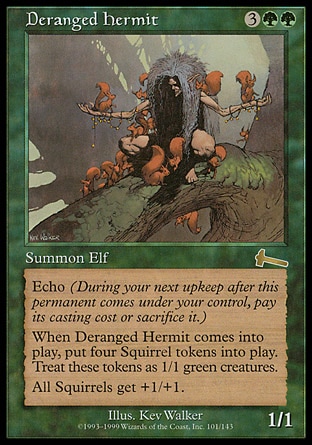
Tradewind Rider is a great lock piece, but how do you feed him? With an angry squirrel army, of course! If you run out of juicy targets for the Rider - if bouncing a land each turn just isn't doing it for you - then you can bounce your own Hermit with the Echo on the stack to get another chance at his ETB effect.
Yes, this is just as absurd as you think it is. Thankfully, it won't come up that often due to the rarities involved. But it's essentially 2B: make a bunch of dudes, over and over. If the opponent can't kill the Nightmare, they'll be facing the Hermit over and over.
The first target for your Survival when you resolve it should be a Genesis and then whatever you wanted to get otherwise. Next turn, you can pay 2G and get Genesis back, ready to be discarded again for another monster. This is also a fun combo with Basking Rootwalla, giving you essentially a free creature from your deck if it's lurking in there.
Saving the best for last!
What is your favorite combo? What's a combo in the set from long ago that I missed? Post your thoughts below!
If not, now is a perfect time to join up! Our powerful tools, breaking-news analysis, and exclusive Discord channel will make sure you stay up to date and ahead of the curve.
If you're nothing like me, you're excited for Vintage Masters on Magic Online. Boasting a mixture of the most powerful cards ever to grace this game and cards like Mistmoon Griffin, Vintage Masters promises to bring the power to the people.
If you're following Quiet Speculation on twitter (@QuietSpec) you're A) doing it right and, B) probably aware of this guy. Boom. Sealed deck generator.
Things like this have a tendency to disappear, but while you still can, have a ball. I banged out a few sealed pools and I have some initial impressions.
Tribal Isn't Happening In Sealed
I wanted to live the dream and build a sweet Goblins deck. My first booster contained a Goblin General AND a Goblin Matron. "Hot damn" I thought. "This is going to get there."
Pack 2 yielded no gobbos but did get me a Giant Strength and a Chain Lightning. This was really shaping up.
Pack 3 yielded another Goblin General and a Falter. No other goblins, but I wasn't worried.
Pack 4 I started to worry. The only red card was Flowstone Hellion.
Pack 5 gave me my first Kindle, another card you love to see by itself.
Pack 6 gave me another Hellion and a Rites of Initiation which was a bummer.
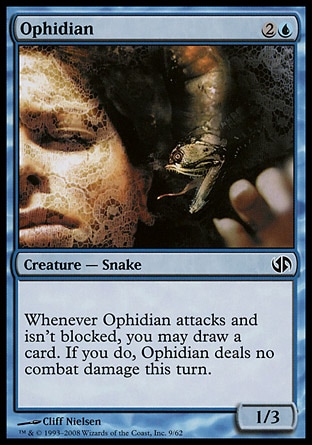
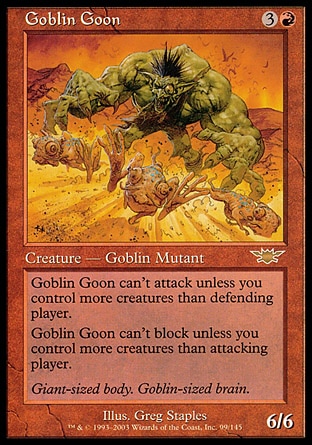
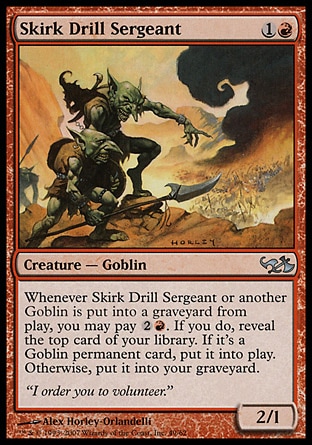
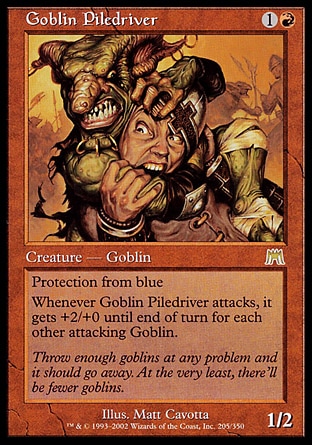
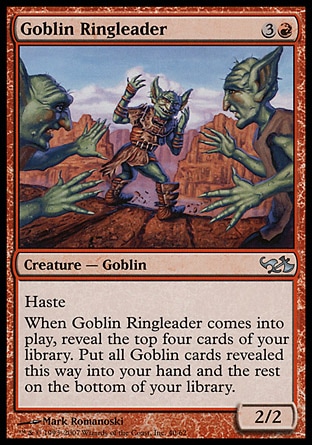
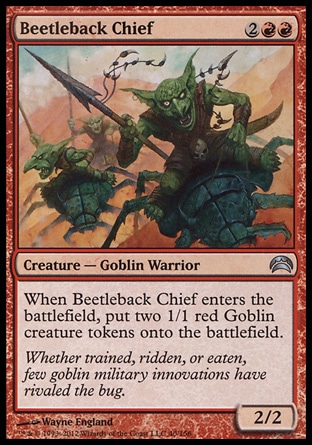
Well, maybe I just whiffed on gobbos. I went back through trying to build elves. Same deal, only without the benefit of any lords unless we decide to be charitable and consider Edric, Spymaster of Trest an elf lord. Birds, same story. I generated more sealed pools. This time I got a Skirk Drill Sergeant and a Beetleback Chief but no lords. Another yielded me the same sack of sad. There are enough goblin cards that you're likely going to have a very good draft deck. But if you're playing sealed, you're likely not getting there and to a greater extent than most sealed formats where tribal is iffy at best. If you like jamming tribal as much as I do, stay away from sealed unless you're feeling lucky.
Sealed Is An Actual Lottery
With such a high buy-in price for sealed events and the prizes so heavy toward having to win the whole thing to be worth it, that you're likely just jamming sealed for the experience, not the EV. However, in my generating of sealed pools for the lulz, I packed a foil Tropical Island which was so exciting I literally forgot for a second that this wasn't real. Not only do I not get a foil Trop for real, I don't even have a tangible digital reproduction of a real foil Trop; I had a fake digital facsimile of a tangible yet still digital recreation of a foil Trop. And I still pooped my pants when I saw that in the pack. Foil duals are going to be worth quite a few tix (that's what the cool kids call Magic Online tickets; we call them 'tix') and a good pull like that can mitigate the misery of having to say "I could have pulled that off if I had topdecked one of my three copies of Paralyze" for an entire afternoon. I still think draft is the play because you can build one of the many archetypes much easier. Good luck making storm in sealed. Hello storm draft deck! Still, Sealed will have random gifts like foil gas, and those can end up being more valuable than the event prizes. Go in apprised of that.
I'll jame a few more of these sealed decks and see if any of them yield a deck I'd be happy to play with. Until then, play around with the deck generator. Let me know if you get a deep enough pool to try a tribal deck.
Want Prices?
Browse thousands of prices with the first and most comprehensive MTG Finance tool around.
Trader Tools lists both buylist and retail prices for every MTG card, going back a decade.