Are you a Quiet Speculation member?
If not, now is a perfect time to join up! Our powerful tools, breaking-news analysis, and exclusive Discord channel will make sure you stay up to date and ahead of the curve.
My local game store (LGS), Tabletop Gaming Center in Newington, CT, recently announced they will be holding a 15-proxy Vintage tournament on October 24th. I've played Magic since 1994. In those nearly 30 years, I've never had the pleasure of playing Vintage, the OG of Magic formats, at a level beyond the kitchen table. I never owned Black Lotus or any other pieces of the Power Nine, (though I almost did). I'm excited to sleeve up and play some high-powered Magic, but before I do, I need to understand the format and figure out what deck to play.
What Makes Vintage Unique
As the original Magic format, Vintage allows access to virtually every card in the history of the game, with some exceptions. Most formats have a banned list of some kind. In addition to a Banned List, Vintage also has a Restricted List. Instead of being banned outright, cards on the Restricted List are limited to a single copy allowed in either the main deck or sideboard. These include some of the most powerful cards from throughout Magic's history, including Black Lotus, Time Walk, Brainstorm, and more recent cards like Dig Through Time and Narset, Parter of Veils.
Deck Archetypes and the Vintage Metagame
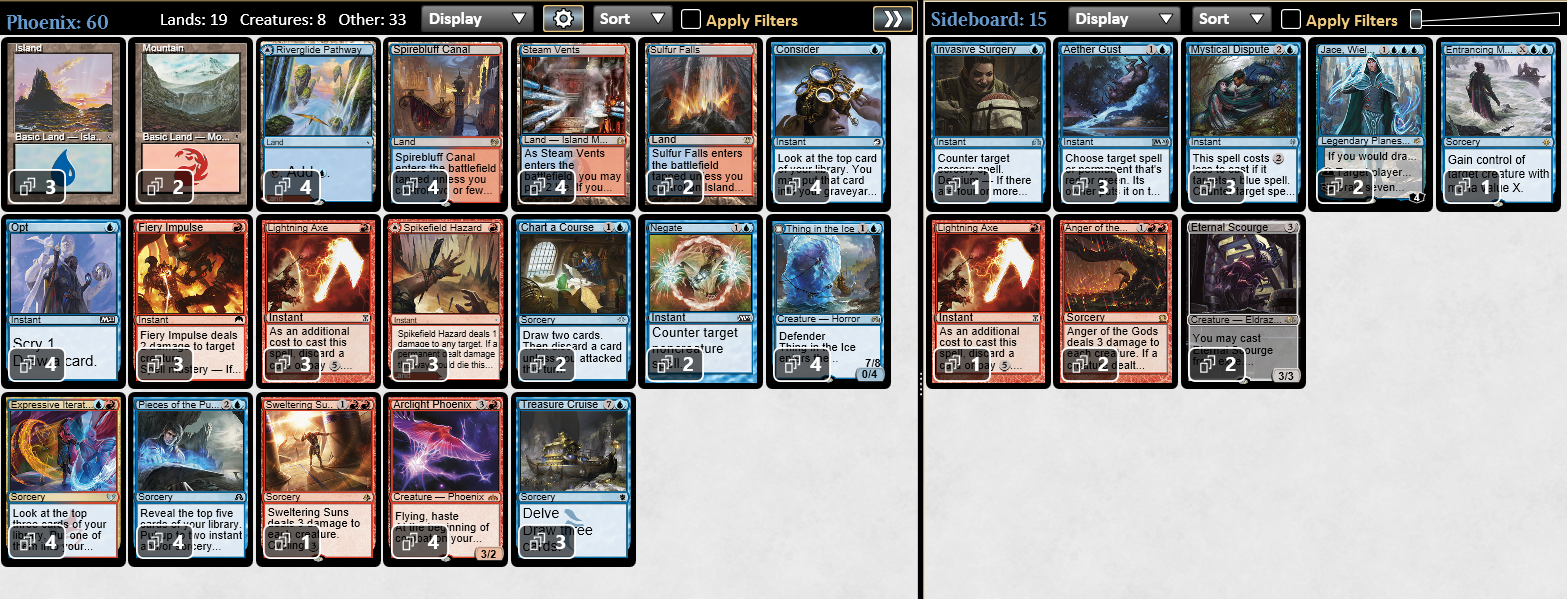
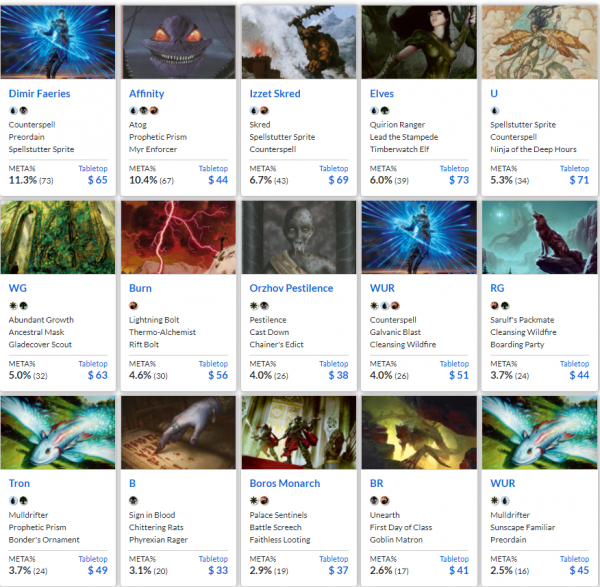
Getting into any new format can be challenging. This is true whether you're getting into Vintage or a more widely played format like Modern. Regardless of format, the process is the same. Study decklists, learn the archetypes and try to develop an understanding of the metagame. A breakdown of the archetypes in the Vintage metagame, according to MTGGoldfish, looks something like this:
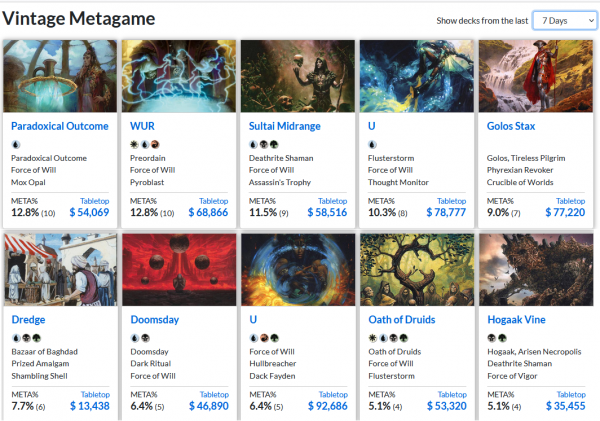
The problem with understanding Vintage is that with such a high concentration of powerful cards in the format, even with an archetype breakdown in front of you, it can still be mystifying to the uninitiated. How do you understand and differentiate between the different archetypes and their play patterns? This is less of an issue in formats like Modern, where the differences between decks like Jeskai Control, Burn, and Storm are more obvious. It's much more apparent at a glance, even with little format knowledge, what is the control deck, what is the aggro deck, and what is the combo deck. This is true even when the decks may contain overlapping cards like Lightning Bolt.
With self-study not getting us where we want, it's necessary to find a format expert to break down the archetypes and explain the subtle, and sometimes not so subtle differences between the decks and their respective game plans.
Deep Dive Into Vintage Metagame Data
One such Vintage format expert is Justin Gennari, aka IamActuallyLvL1 on YouTube. Genari breaks down the Vintage metagame into nine major archetypes and breaks those down even further into over 20 sub-archetypes. If you're interested in Vintage, I highly suggest taking the time to watch his detailed video:
The archetypes Gennari breaks down often revolve around one or two key cards, and are as follows:
- Mishra's Workshop
- Bazaar of Baghdad
- Blue Control
- Combo(non-Tinker)
- Deathrite Shaman
- Aggro
- Oath of Druids
- Blue Tinker Combo
- Other various archetypes
"The line kind of blurs in the way we categorize the decks," Gennari says, noting that some decks can fit into multiple categories depending on specific card choices. Mishra's Workshop-based decks are one such example. While all of the decks are built to exploit the power of the land in casting artifacts, Workshop decks can be approached in one of three ways. "The main two playstyles for Mishra's Workshop decks are more of an aggro slant or more of a prison slant, but there are also Mishra's Workshop decks that are more of a combo slant," Gennari says. Of all the archetypes Genari outlines, the one that most suits my preferred playstyle is Blue Control.
Blue Control in Vintage
Blue-based control decks have a history in Vintage dating all the way back to the earliest days of the game. One of the first truly tier-one competitive decks was a blue-based control deck known simply as The Deck, innovated by early Magic pro Brian Weissman. Weissman was among the first Magic players to recognize and codify the concept of card advantage, the idea that the player who draws the most cards, is the player most likely in the best position to win the game. "Whatever style you wish to play, be it fast and frenzied or slow and tactical, the surest way to defeat your opponent consistently is by dominating him or her in the war of card advantage." Weissman writes.
The lesson holds true for every format of Magic to this day, including Vintage. The goal of blue-based control in Vintage, Gennari says in his video is "Basically you just bury your opponent in card advantage." How you win afterward is almost incidental. That sounds like my kind of deck. So what's in the list?
Card Advantage, Permission, and Threats
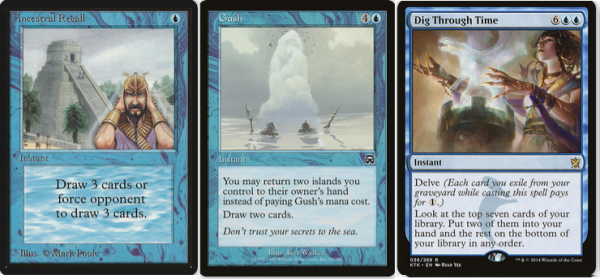
Mana production aside, the cards in a blue-based control deck can be separated into one of three classes, card advantage spells, which allow you to draw extra cards or search for cards and add them to your hand, permission spells that deny your opponent their plays, or cheap threats which can close out the game once the opponent's game plan has been thwarted.
Card Advantage
Permission
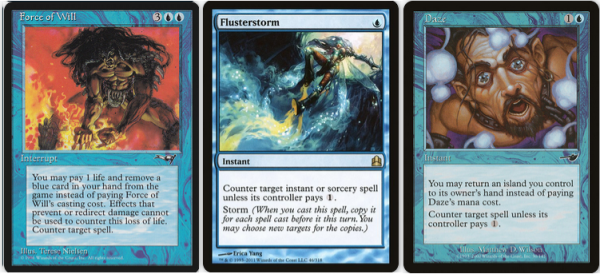
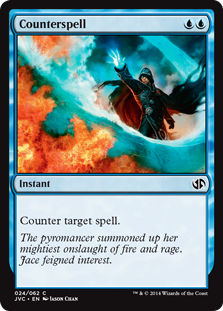
The card advantage and permission suites of the blue control decks are very similar, revolving around the best card advantage spells ever printed, and the best cheap or free countermagic available. While there will be differences in permission choices based on color, the larger differences between the decks are based on their threats.
Threats
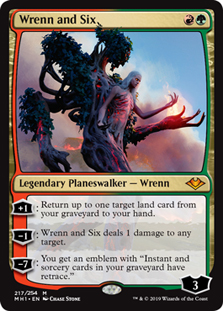
There are two predominant blue-control decks in Vintage, Jeskai, and RUG. Jeskai's signature threat is Monastery Mentor. It also has powerful hate in the form of Lavinia, Azorius Renegade, which can shut down an unprepared opponent and also represent a small clock. The RUG decks have bigger threats including a more substantial planeswalker suite in Oko, Thief of Crowns, and Wrenn and Six. They have a hate bear in Collector Ouphe, and a large clock in Tarmogoyf.
While Jeskai's threats are not as imposing as RUG, the deck makes up for the power of its threats by packing additional permission in Swords to Plowshares and Prismatic Ending, which RUG can't access. Either of these sounds like the kind of deck for me, so what might keep me from playing them?
Metagame Considerations
There are two metagame considerations to take into account if choosing to play Blue Control in Vintage. The first is it can be difficult to pilot if you are not familiar with the format. This could be a major stumbling block for me, as someone who has played zero games of Vintage ever. I'd be leaning into my preferences for control strategies in general, and hoping to make good decisions in the moment. The second metagame consideration is that control strategies have not been putting up good results recently compared to the more proactive archetypes, and may not be well-positioned. Gennari has a solution in mind for both of these potential issues.
BUG Midrange
The deck Gennari suggests for players new to Vintage is BUG Midrange. BUG Midrange, as its name suggests, is a midrange deck that revolves around the power of Deathrite Shaman, and a mix of powerful threats and permission. The blue permission suite in BUG Midrange is very similar to that of the Blue Control decks. Being in black and green the deck also gains access to premium removal in the form of Assasin's Trophy, and powerful card selection in Demonic Tutor. The Tutor acts as an additional copy of any threat or answer whenever the deck needs it.
BUG Midrange is well-positioned right now. It is one of the few blue decks capable of harnessing the power of Wasteland, allowing it a firm answer against Bazaar and Workshop decks, which rely on their namesake lands to power out their busted plays. Gennari also considers it the easiest Vintage deck to learn to pilot, so it is certainly on the list of possibilities.
High-Powered Magic
Regardless of what I ultimately end up playing, I'm looking forward to the experience of playing high-powered Magic. It doesn't get more high-powered than Vintage.
Have you ever played Vintage? Do you remember the feeling of drawing three cards off Ancestral Recall? What would you play in Vintage, given the chance? Let me know in the comments or on Twitter.

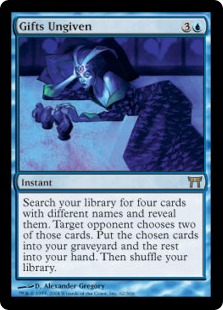 their pet deck is good... no matter how unrealistically drastic the measures would need to be. (5-Color Gifts Reanimator Control is, always has been, and always will be bad <redacted>. Let. It. Go!) Naturally, these are personal opinions. We'll require something more concrete to go on.
 decks are possible, then the 5-deck metagame would be fairly narrow. There's no way to definitively say how many decks are possible in a format like Modern (and may not even be possible for Standard). Fortunately, another reasonable way to measure diversity is whether there are a large number of decks with distinctive gameplay.
 strategies rise to answer existing decks, succeed, and are in turn challenged by new decks. Static formats get boring quickly, since there's no answer to the best decks, and things settle around the best established strategy and its counters.
 other decks win games and the format is constantly moving. There might as well only be those top few decks. In a healthy metagame, there would be certain decks that are better than the others. It has to happen because cards aren't equal nor see equal play. However, those best decks shouldn't be so much better that other decks can't consistently beat them. It's fine if they show up more than other decks, but not if other decks don't consistently place high in a format.
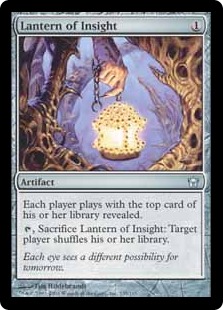 excruciatingly boring to another (now looking at you, Lantern Control). Consequently, the most important consideration is not one that can really be argued over and is even harder to quantify and critique. Consequently, every metagame has its detractors and simply saying that not every player enjoys the format the same is unhelpfully meaningless. Because no duh, they don't!
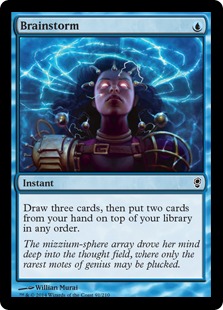 By which said players almost always mean that Modern feels more like Legacy now. And while I don't necessarily agree, I understand the sentiment. Legacy has always been the format of tempo and card selection. Brainstorm, Ponder, and Preordain are all legal, and consequently
  By contrast, for a long time none of that was possible in Modern. Raw card advantage was more expensive and cantrips were few and far between, so decks had to be more redundant. Modern decks weren't going to see too many cards each game, and so they had to maximize the impact of each individual card. It's why
  Those familiar with
  The design philosophies that led to all of the complaints will be in place for the foreseeable future. Not necessarily because they've proven successful or popular (only Wizards knows that), but because sets are designed about two years ahead of release. Even if things are looking glum from a response standpoint, Wizards can't dramatically change course now. And after that, it's hard to say. A lot of the




 being better than “good enough;” in September the average population was 6.55, meaning a deck needed 7 results to beat the average and make Tier 3. This is the
  The biggest story is that both Cascade decks fell hard in September. Cascade Crashers just barely stayed out of Tier 2 and Living End just kept its head above Tier 3. This is a huge fall in fortune for both decks, which have been on an upward trajectory since
  aforementioned players, being who they are, routinely do well with decks that nobody else can. In fact, I remember it being a joke in the Pro community that only Wafo-Tapa can win with Wafo-Tapa decks. However, this latest iteration is a deck that doesn't require complete mastery to run well while simultaneously being very well positioned.
 bash in any amount of damage. Prowess needs its creatures to stick around, and so the current format is very unwelcoming.
 relative strengths of each deck within the metagame. The population method gives a decks that consistently just squeaks into Top 32 the same weight as one that Top 8’s. Using a power ranking rewards good results and moves the winningest decks to the top of the pile and better reflects its metagame potential.
 after MH2 there was an
  game is too complex and power is very contextual. Using the power rankings certainly helps, and serves to show how justified a deck’s popularity is. However, more popular decks will still necessarily earn a lot of points. Which tracks, but also means that the top tier doesn't move much between population and power, and obscures whether they really earned their position.