menu

Sig’s Way of Picking Bulk for Buylists

Are you a Quiet Speculation member?

If not, now is a perfect time to join up! Our powerful tools, breaking-news analysis, and exclusive Discord channel will make sure you stay up to date and ahead of the curve.

I found myself with excess downtime this past weekend—a true rarity for someone with two young children. I caught up on some reading, practiced my chess (I seem to be stuck in a rating range now and it’s requiring tremendous concentration to try and break out of it), and pondered one of my favorite time-killing activities of all: buylisting.

How can a simple buylist eat up so much time? Well, it’s not the primary cards I’m selling—those that are worth real dollars—that take up the time. My collection isn’t that large these days, and the value is highly concentrated in my Old School collection. Instead, the therapeutic activity I like to implement while buylisting is the process of picking my bulk for nickels and dimes.

Most of my buylists contain a few hero cards alongside a small pile (5-50) of $0.05 commons and uncommons. I figure if I’m paying for shipping already, and I have the time, why not? If over time I could buylist the majority of my bulk for a nickel, that would equate to $50/1000, far in excess of the typical $2 or $3/1000 you’d get from ā€œbulking outā€ your collection to a vendor.

This week I’ll share the process I follow, in case there are some tidbits of useful tricks that will help you make your buylist process that much easier.

Prework: Organization & Sorting

When I started playing Magic many years ago, my collection was relatively small and it was inconsequential whether my collection was organized or not. As time went on, new sets came out, and I started having a difficult time tracking what I owned. I suspect this is even more a challenge for newer players as the number of new products being released has dramatically increased between 1997 (when I started) and 2021.

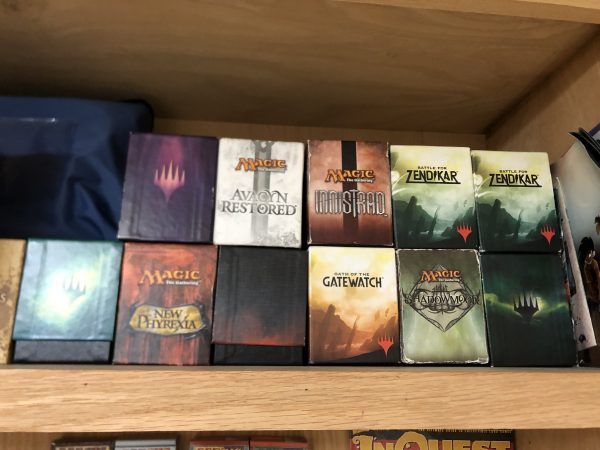
Over time, I came up with a pseudo-natural process for organizing. For a time, most of the new product I obtained was via drafts and the occasional bundle, so it was easy to at least keep my cards separated by set. One of the advantages of purchasing bundles is the lovely set-themed box you receive along with the packs. Whenever I purchased one, I’d organize all cards from that set within the box. If you’re in the habit of purchasing booster boxes or bundles, you could follow a similar practice. This eliminates confusion and the need to label the box since the box itself is already labeled with the set for you!

Set sorting is a huge step in organizing one’s collection, but it’s not the final step. As I open new packs/product and my bulk accumulates, I make sure to keep cards sorted by color in addition to set. I find this natural delineation is the perfect balance between time/effort and utility.

You could go one step further and sort by commons and uncommons. You could go another step and sort alphabetically. The former is probably worthwhile (I have done this before), but the latter is a major time commitment. Unless you’re extremely particular and you plan on picking through bulk on a regular basis (i.e. weekly or more often), the color/set sorting is generally sufficient to implement my buylist strategy.

Finding the Needles in the Haystack

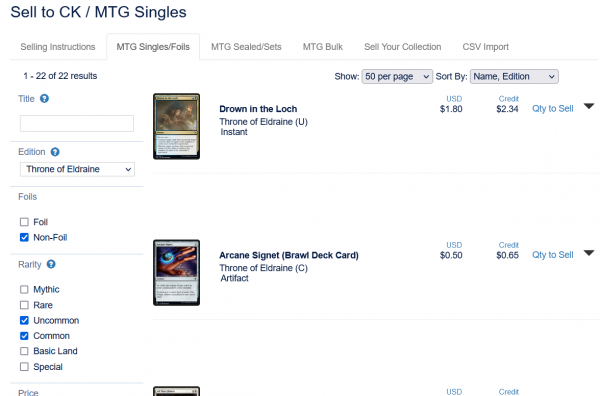
Once your cards are sorted in this manner, the process of finding your nickels and dimes becomes more manageable. To proceed, navigate to your prospective buyer’s buylist page and filter to a single set, common and uncommon rarity, and non-foil. Below is an image of how to perform this filtering on Card Kingdom’s site, my usual go-to store.

Here you can see I’ve filtered down to Throne of Eldraine non-foil commons and uncommons. There are currently only 22 on their buylist, and some won’t apply because they are particular to the Brawl decks…since I didn’t purchase Brawl Decks, I know I don’t have any of those cards.

From here, you can scroll down and identify a couple of cards of the same color on buylist. With those couple in mind, grab the corresponding bulk cards you own and start picking. It doesn’t take too long (unless you have 1000’s of bulk cards of each color…I do not).

After you finish looking through Throne of Eldraine, you can move on to other sets in your collection. One by one, you can cycle through and find any bulk you may have that can be buylisted for at least a nickel.

This may sound like a daunting process at first, but there are two factors with this approach that work in your favor over time. First, many of the obvious picks from your bulk will be easiest to remember and find—you only need to dig through your bulk and find Drown in the Lochs once. After that, you know you’ve already picked this card and you can skip it. The same likely goes for most of the top few cards in the set.

There was an error retrieving a chart for Drown in the Loch

It’s highly infrequent for a bulk card to go from being worth three cents to worth a dollar, especially from newer sets. Therefore when I follow this picking process, I often skip over the top few cards if I’ve picked the set at least once already. There’s no point in going back over the same ground.

In tandem with this, the second factor is that, over time, you’ll begin to remember the cards you picked. This makes browsing one set to the next a faster and faster process. Card Kingdom is constantly cycling through different $0.05 cards on their buylist, so it’s always worth checking. But you don’t have to check for cards you remember already picking. The more you practice this process, the faster it becomes!

The Wildcard Bin

I don’t submit new buylists all that often nowadays. A chunk of time may pass in between, where I may still be acquiring new bulk or finding the occasional nickel and dime while sorting through cards. When that happens, I have a special box where I place any cards I anticipate will be worth shipping for non-bulk at a given time in the future.

Not just anything goes into this box, mind you. This is for stalwart commons like Unsummon, Mana Leak, and Faithless Looting. These are the kinds of cards you know are playable in one format or another, and should be worth something more than bulk. This process is particularly helpful when picking out cards that don’t go in one of my pre-organized boxes. After all, I don’t have a box set aside for every single set and I don’t have enough bulk in most sets to justify following the process I outlined above.

There was an error retrieving a chart for Unsummon

This catch-all ā€œWildcard Binā€ is where I store those cards I come across that I think should be above bulk. Then after I browse through some sets with my method above, I pull out some of these individual cards and run a search for them on the buylist I’m shopping. Inevitably, a few show up on the list and I’m able to ship them out.

I’ll admit this portion of the process can be a little more time consuming than the others, but it’s the best way I’ve come up with to keep a watch on key cards that could be worth something, but don’t fit into one of my pre-organized sets. The procedure is effective, however, and I find the process calming in its own right. Perhaps if I found the task obnoxious or tedious, I wouldn’t bother with this step—sometimes I am in a rush and this is the step I will skip (after all, the same cards have the same likelihood of being relevant the next time). But with a mission of shipping out as many cards for a nickel as possible, this is a necessary step because I’m not going to set sort my entire bulk collection when many sets would have just a couple cards in their respective pile.

Wrapping It Up

Since I find the process of picking bulk relaxing—even rewarding at times—you can see why I spend so much time optimizing the process. For full transparency, last weekend I spent about 60-90 minutes going through an extensive combing of my bulk. In that time, I probably found about $6.50 worth of cards to ship to Card Kingdom.

On a dollar per hour basis, this is horrendous at best. Surely, there are more productive activities one could do with their time. The key here is that I enjoyed the activity. If the task looks daunting and unenjoyable to you, by all means skip it and move on to bigger and better things. For me, it feels like I’m being paid to a) relax, b) organize my collection, and c) cull back my collection to streamline it. The concept of exchanging 70 cards for one I’ll actually use is something I appreciate. As a minimalist and one who likes to consolidate, this is a big motivator.

If you’re like me and also appreciate trading a bunch of nickels for something of actual value and use, I’d try organizing your collection in the minimal way I proposed above. It works fairly well, and also doesn’t demand excessive amounts of time alphabetizing. You never know what you’ll find. This last time around, my big find was an Impact Tremors, which I had no idea was worth as much as it is. That alone made the activity worth it.

There was an error retrieving a chart for Impact Tremors
Avatar photo

Sigmund Ausfresser

Sigmund first started playing Magic when Visions was the newest set, back in 1997. Things were simpler back then. After playing casual Magic for about ten years, he tried his hand at competitive play. It took about two years before Sigmund starting taking down drafts. Since then, he moved his focus towards Legacy and MTG finance. Now that he's married and works full-time, Sigmund enjoys the game by reading up on trends and using this knowledge in buying/selling cards.

View More By Sigmund Ausfresser

Posted in Bulk, Buylist, Collecting, FinanceLeave a Comment on Sig’s Way of Picking Bulk for Buylists

Have you joined the Quiet Speculation Discord?

If you haven't, you're leaving value on the table! Join our community of experts, enthusiasts, entertainers, and educators and enjoy exclusive podcasts, questions asked and answered, trades, sales, and everything else Discord has to offer.

Want to create content with Quiet Speculation?

All you need to succeed is a passion for Magic: The Gathering, and the ability to write coherently. Share your knowledge of MTG and how you leverage it to win games, get value from your cards – or even turn a profit.

Collecting for the Long Term: Modern Format Staples

Are you a Quiet Speculation member?

If not, now is a perfect time to join up! Our powerful tools, breaking-news analysis, and exclusive Discord channel will make sure you stay up to date and ahead of the curve.

The Modern format is one of the most interesting and accessible of the non-rotating formats. There are a diversity of decks, with something to suit any playstyle, and it does not require a sizeable investment in high-dollar reserve list cards to enter the format, meaning the cost of entry is lower compared to formats like Legacy and Vintage. You can learn more about diving into the format in the article Buying Into Modern.

For those that are already into Modern, and looking to dig a little deeper into the format beyond their first deck or two, the following is a guide to Modern format staples. Note that this list is not just high dollar cards like Ragavan, Nimble Pilferer, though cards like that do appear on the list. Instead, this will serve as a starting point for players looking to diversify their Modern collection with the long-term intent of having more decks in their arsenal or being able to construct whatever list they want as the metagame shifts.

Breaking Down Modern

The Modern format has over 15,000 cards in it as of the printing of Adventures In The Forgotten Realms. Any list culled from a format this expansive is going to be largely subjective, but the goal here is to use this as a starting point, or frame of reference for newer or lapsed players looking to get deeper into the format and increase the tools at their disposal.

The list is separated by color, with colorless/artifacts sharing a category, non-basic lands, and multi-colored cards rounding out the list. Only a few of the most staple multi-colored cards will be listed, and not each of the ten color pairs will be represented. If there's interest, a full guide to multi-color Modern staples could be a future article by itself.

To make this list, I started by looking at MTGTop8's list of the top cards played in Modern. I then organized top picks in each color, and broke them down into three categories, with one card of each color representing a given category. The categories provide context for understanding why cards are staples in the Modern format, and what other considerations you may have to take into account when planning to use them in future decks. They're broken down as follows:

Evergreen

Evergreen cards are cards that are played in nearly every deck which supports their color(s). These are the most staple of the cards on this list, as they see play in the widest variety of decks. An example of an evergreen card is Thoughtseize

There was an error retrieving a chart for Thoughtseize

Deck Lynchpin

A deck lynchpin is one of the key cards around which an entire archetype functions, so much so, that it's usually the namesake upon which the deck is named. An example of a deck lynchpin is Death's Shadow.

There was an error retrieving a chart for Death's Shadow

Powerful Uncommon

These are uncommon cards that are powerful enough to see play in Modern constructed. An example of a powerful uncommon would be Fatal Push.

There was an error retrieving a chart for Fatal Push

White

White has historically been the most underpowered color in Modern, with Thalia, Guardian of Traben, and Path to Exile being two of the few exceptions. Modern Horizons breathed new life into the color, introducing powerful new options like Giver of Runes, and Ranger-Captain of Eos to the format. Modern Horizons 2 has continued that trend, bringing more powerful cards to bolster the color in relation to its peers.

Evergreen - Solitude

I must admit to being quite torn on this pick. Originally I had Esper Sentinel in this slot because I feel it has great long-term potential as the format progresses, but there's really no ignoring a free Swords to Plowshares that occasionally comes with a 3/2 Lifelinking body attached. Whether you're Evoking this card or paying full value for the body attached, Solitude is a powerhouse card in Modern and the most-played of the Elemental Incarnation cycle from Modern Horizons 2.

There was an error retrieving a chart for Solitude

Deck Lynchpin - Puresteel Paladin

As one of the key pieces making the Hammertime deck work, Puresteel Paladin is a defining example of a deck lynchpin. If attacking with Voltroned-up creatures appeals to you, then this card and the Hammertime deck should both be on your radar for smashing into the red zone in Modern.

There was an error retrieving a chart for Puresteel Paladin

Powerful Uncomon - Prismatic Ending

Path to Exile occupied the top uncommon spot for white in Modern since the establishment of the format. The recent printing of Prismatic Ending though has knocked Path from its throne and supplanted it as the pinnacle of white removal. Prismatic Ending's versatility against a variety of permanents, and not having the drawback of ramping the opponent, makes it the removal of choice for any white deck capable of producing multiple colors.

There was an error retrieving a chart for Prismatic Ending

Blue

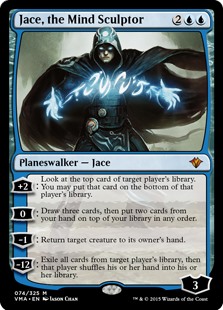
Blue has always hovered near the top of the power order of colors in Modern, thanks to cards like Snapcaster Mage and Cryptic Command. The addition of Jace, the Mind Sculptor, and recent Modern Horizons and Modern Horizons 2 cards like Murktide Regeant have continued to push blue towards the top of the list.

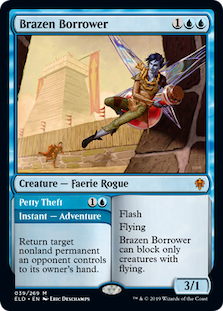
Evergreen - Brazen Borrower

This pick could have gone to one of several cards, including Snapcaster Mage, which is one of the tentpoles of the format. Brazen Borrower is a versatile roleplayer though, showing up in decks more and more frequently, both as a maindeck catch-all, and as an answer out of the sideboard that also doubles as a clock on the opponent's life total. The two are neck and neck on the list of most played cards currently, but it feels like Borrower is rising in popularity while Snapcaster is falling by the wayside.

There was an error retrieving a chart for Brazen Borrower

Deck Lynchpin - Archmage's Charm

Archmage's Charm is fast approaching evergreen status, appearing in Izzet aggro lists, control, and other archetypes. It's as a three- or four-of in control lists where Archmage's Charm particularly shines. A cheaper but equally versatile alternative to Cryptic Command, Archmage's Charms' ability to counter, provide card advantage, or deal with an opponent's cheap threats or utility creatures make this one of the key cards in any control list.

There was an error retrieving a chart for Archmage's Charm

Powerful Uncommon - Counterspell

It doesn't get more elegant than two mana to counter a target spell. The OG of countermagic, it would be almost silly to not give Counterspell the powerful uncommon designation for blue on this list. The card is so good that it could almost be seen as a more important lynchpin in control archetypes than Archmage's Charm. It is so above and beyond any other blue uncommon in the format that it felt more appropriate to make it the undisputed choice for this category.

There was an error retrieving a chart for Counterspell

Black

Black has long been the dominant color in Modern on the back of a combination of cheap disruption, threats, and removal. In explaining the category breakdowns I came up with, it was no coincidence that I chose all black cards. There are just that many to choose from. While Thoughtseize, Death's Shadow, and Fatal Push may be the defining cards of their respective categories, there are plenty of black cards trying to give them a run for their money in Modern.

Evergreen - Grief

Though the least popular of the Elemental Incarnations, Grief is a potent piece of free disruption reminiscent of Unmask from Mercadian Masques, with the option of having a {3B} body attached. Great in a combo deck looking to disrupt the opponent before going off, or an aggro deck looking to have a top-end creature that can also provide disruption, the inherent card disadvantage of evoking Grief is usually negated by just winning the game.

There was an error retrieving a chart for Grief

Deck Lynchpin - Living End

When we talk about cards that come to define the deck they are played in, Living End is certainly one of the cards under discussion. The ability to cascade into this for free with Violent Outburst is the primary method of winning with this deck, after filling the graveyard with cycling creatures and others that were discarded for value. If you're looking for a fun and explosive combo deck, Living End is certainly one of the more exciting ones you can play.

There was an error retrieving a chart for Living End

Powerful Uncommon - Inquisition of Kozilek

Inquisition of Kozilek is currently the most played black card in Modern, and for good reason. It trades the life-loss drawback of Thoughtseize for only being able to hit non-land cards of mana value three or less. This is often a trade-up in Modern, a format where the average mana values of cards are low, to begin with. While currently the top dog, the utility of Inquisition ebbs and flows as the metagame shifts, and its value can be very deck dependant. There are also a number of black uncommons competing for the top uncommon slot including Fatal Push and Dismemeber. While all three are cards players should have on their radar, Inquisition is likely to be the most played option in the near future.

There was an error retrieving a chart for Inquisition of Kozilek

Red

As the color of aggression and direct damage, the power of red in Modern tends to rise and fall with how viable aggressive decks are in the format. Currently, aggressive decks are at the top of the heap, and perhaps the best they've ever been in Modern, thanks to all three of the cards on our list.

Evergreen - Ragavan, Nimble Pilferer

The current poster-card of expensive tier-one mythics, Ragavan, Nimble Pilferer's power level is almost of a higher tier than any other red one-drop we've ever had in Magic.

There was an error retrieving a chart for Ragavan, Nimble Pilferer

Deck Lynchpin - Eidolon of the Great Revel

While it doesn't get the kind of credit its cohorts Goblin Guide and Monastery Swiftspear get for the success of Burn/Red Deck Wins, Eidolon of the Great Revel is responsible for a good number of wins in its own right. The ability of the card to single-handedly shut the door on the opponent's chances of coming back into the game after Guide and Swiftspear have done their work in the red zone can't be understated. It's the kind of card that makes opponents groan at whatever stage of the game it is played, even if they immediately answer it after it hits the battlefield.

There was an error retrieving a chart for Eidolon of the Great Revel

Powerful Uncommon - Dragon's Rage Channeler

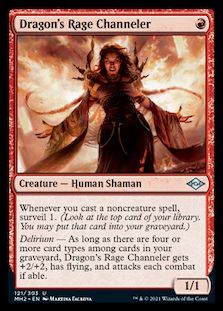
Perhaps the most talked-about card in Modern Horizons 2 after Ragavan, Dragon's Rage Channeler is an aggressive one-drop threat that also provides value in the form of card selection whenever you cast a non-creature spell.

There was an error retrieving a chart for Dragon's Rage Channeler

Green

Green is perhaps the most difficult color to assess because the power and utility of so many of its cards are extremely deck-dependent. Added to this is the difficulties in choosing a powerful uncommon to list when there are five common cards more played and arguably more powerful than the top-played green uncommon. Altogether, this makes green the most subjective of all the colors we've explored so far.

Evergreen - Noble/Ignoble Hierarch

Ramp and color fixing have long been green's specialties, and Noble Hierarch has been the go-to creature for that role in Modern for quite some time. For those looking for non-Bant colors, Hierarch's new cousin Ignoble Hierarch is a Jund-color producing creature that is virtually identical to its otherwise nobler cousin. I'm still waiting for someone to brew up a five-color deck using both of these cards, but with the power of many of the other archetypes in the format, the days of Domain Zoo, and decks of a similar nature might be in the past.

There was an error retrieving a chart for Noble Hierarch
There was an error retrieving a chart for Ignoble Hierarch

Deck Lynchpin - Primeval Titan

A key component in any land-centric strategy, Primeval Titan is most well-known at the moment for being a key player in the big mana Amulet Titan combo decks. Being a 6/6 Trampling monster can sometimes be good enough to close out games on its own, but where Prime Time really gets scary is in its ability to fetch lands out of its controller's deck when it enters the battlefield or attacks. Combined with its friend Dryad of the Ilysian Grove and Valakut, the Molten Pinnacle, every land it fetches can quickly turn into a lightning bolt to the opponent's dome.

There was an error retrieving a chart for Primeval Titan

Powerful Uncommon - Sylvan Scrying

As I mentioned in the introduction to green cards, Sylvan Scrying is the top played green uncommon in Modern, largely only due to mono-green Tron lists. While tutoring for any land for two mana is certainly powerful, it's difficult to want to give Sylvan Scrying any mention when it sees so little play compared to the fantastic list of green commons Utopia Sprawl, Ancient Stirrings, Arbor Elf, Mutagenic Growth, and Explore, which all see considerable more play. Originally a common, Ancient Stirrings was printed at uncommon in a Masters set, so the argument could be made for it to take the top slot, but I'll leave that for the reader to decide.

There was an error retrieving a chart for Sylvan Scrying
There was an error retrieving a chart for Utopia Sprawl
There was an error retrieving a chart for Ancient Stirrings

Multi-Colored

Multi-colored cards vary in power and ability widely depending on their mana costs, and the colors involved. If you're interested in a deep dive into all ten color pairs, and the three, four, and five color possibilities in Modern, let me know via email or on Twitter. Without delving into each of the color pairs, here are three multi-color cards to have on your radar.

Evergreen - Kolaghan's Command

It's hard to match the power of Kolaghan's Command in terms of sheer versatility. The card is very good at what it does, and it has so many possible options! Of particular note is this being one of the few, if not the only instant-speed discard spells in the format. It's a great way to shut the door on an opponent when you're both in topdecking mode, and with another mode to choose, it has plenty of added value as well.

There was an error retrieving a chart for Kolaghan's Command

Deck Lynchpin - Teferi, Hero of Dominaria

The epicenter of any -based control deck, Teferi, Hero of Dominaria is a card advantage engine doubling as a soft win condition if it can go ultimate. Though usually only a two-of in the decks in which it appears, it's an almost mandatory inclusion in those decks in terms of its sheer power and ability to take over a game if protected.

There was an error retrieving a chart for Teferi, Hero of Dominaria

Powerful Uncommon - Expressive Iteration

A recent addition to Modern, Expressive Iteration is a Standard-legal card so powerful that it's making waves in every format in which it's legal. It's so good at card selection, and virtual card advantage, that I would not be surprised if it ends up being banned in an eternal format before its time in Standard is up.

There was an error retrieving a chart for Expressive Iteration

Colorless/Artifacts

When thinking about colorless cards in Modern, the first things that usually come to mind are powerful but narrow sideboard cards like Pithing Needle, or deck-specific haymakers like Ugin, the Spirit Dragon. I explored sideboard cards in depth in my article on Understanding Metagames.

Evergreen - Walking Ballista

A win condition and a piece of removal rolled into one, Walking Ballista is a powerful tool in every deck looking to play a lot of artifacts or take advantage of +1/+1 counter synergies. Regardless of which direction your deck goes, Walking Ballista is sure to be one of the more potent cards in your list.

There was an error retrieving a chart for Walking Ballista

Deck Lynchpin - Karn Liberated

The centerpiece of many of the Urzatron decks, Karn Liberated is usually the card the Tron player is racing to cast immediately upon assembling the Tron trifecta of Urza's Mine, Urza's Power Plant, and Urza's Tower. The seven mana planeswalker absolutely dominates a game when it resolves, making assembling the Tron pieces the hardest obstacle Urzatron decks need to overcome on their path to victory. If this sounds like something you're interested in, Karn Liberated should be one of the first big pieces you acquire on the way to pummeling your opponents with overpowered colorless cards.

There was an error retrieving a chart for Karn Liberated

Powerful Uncommon - Mishra's Bauble

A free cantrip that also powers up Delerium, Mishra's Bauble is an auto-include in any deck that is looking to fill its graveyard and quickly churn through the cards in its library. Plenty of the top decks in Modern right now are taking advantage of this free cantrip. It's a necessary piece of these decks, so if you're going to be playing Dragon's Rage Channeler or anything similar I would pick these up when you can. It's another card to be mindful of though, as I would not be surprised that if Wizards decides to nerf any of these tier-one decks that Mishra's Bauble will be in their sights for a potential ban.

There was an error retrieving a chart for Mishra's Bauble

Non-basic Lands

I wrote an entire article about non-basic lands in the article Investing In Your Mana Base. Pretty much everything I said there applies here, with fetch lands and shock lands being the primary acquisitions on which anyone looking to get deeper into Modern should set their sights. The ability to quickly craft a mana base for any deck you desire cannot be understated, and there is little chance of either fetch or shock lands ever being obsolete in Modern.

Honorable Mentions

What did you think of this guide to staple Modern cards? What cards would you have changed on this list? What else would you have added? Would you like to read a deep-dive into multi-colored cards, covering all ten color pairs? Leave a comment or shoot me a message via email or Twitter.

Avatar photo

Paul Comeau

Paul is Quiet Speculation's Director of Content. He first started playing Magic in 1994 when he cracked open his first Revised packs. He got interested in Magic Finance in 2000 after being swindled on a trade. As a budget-minded competitive player, he's always looking to improve his knowledge of the metagame and the market to stay competitive and to share that knowledge with those around him so we can all make better decisions. An avid Limited player, his favorite Cube card is Shahrazad. A freelance content creator by day, he is currently writing a book on the ā€˜90s TCG boom. You can find him on Twitter and LinkedIn.

View More By Paul Comeau

Posted in Collecting, Free, ModernTagged , , , , , , , Leave a Comment on Collecting for the Long Term: Modern Format Staples

Have you joined the Quiet Speculation Discord?

If you haven't, you're leaving value on the table! Join our community of experts, enthusiasts, entertainers, and educators and enjoy exclusive podcasts, questions asked and answered, trades, sales, and everything else Discord has to offer.

Want to create content with Quiet Speculation?

All you need to succeed is a passion for Magic: The Gathering, and the ability to write coherently. Share your knowledge of MTG and how you leverage it to win games, get value from your cards – or even turn a profit.

Uncommon Report #4 – Shards of Alara Block

Are you a Quiet Speculation member?

If not, now is a perfect time to join up! Our powerful tools, breaking-news analysis, and exclusive Discord channel will make sure you stay up to date and ahead of the curve.

Shards of Alara block is one that is near and dear to me. I took a hiatus from Magic: The Gathering from my senior  year of high school through my college years, so I missed out on quite a few sets. The last set I really played was Judgement. When fresh out of school I moved to Baltimore and started my new job, I was far away from my parents, and had only one friend from college who lived in the city. My solution to make new friends was to dip my toe back into the realm of Magic.

I looked up stores in the area and found one called Games and Stuff (which is a fantastic store if you happen to be in the Glen Burnie, MD area). I hadn't done much limited before, but the night I showed up happened to be a Shards of Alara draft. My first pack had a Tezzeret the Seeker and I built a mediocre Esper artifact deck, partly thanks to another player in the same draft having pulled a Sharuum the Hegemon. Even with a poor record, I had fun and made the store my go to place to enjoy Magic for the year and a half I lived in the area. The experience also made me fall back in love with Magic all over again and here I am 13 years later writing about it.

The other reason I'm excited to write about Shards of Alara, is that it was the last block before Zendikar and the explosion of Commander or  Elder Dragon Highlander (EDH). The success of both Zendikar and the Commander format caused the Magic playerbase to grow immensely. Zendikar block and Magic as a whole began to have much larger print runs, making Shards of Alara block the last block with a smaller print run. This means cards Shards block are much rarer than newer cards with the same rarity. Shards was also the block which introduced the Mythic rarity, which is a subject for another article.

Throughout much of Magic's history we never had a name for tri-color combinations. Shards of Alara solved half the problem, defining the shards of Esper, Grixis, Naya, Bant, and Jund. It would be another six years before the release of Khans of Tarkir completed the cycle. While, I enjoy strolling down memory lane from time to time I know that members of Quiet Speculation want to know about financial ramifications, so without further ado:

Shards of Alara

There was an error retrieving a chart for Fatestitcher

Fatestitcher's value is heavily tied to the viability of the Jeskai Ascendency combo deck in modern. The cheap Unearth cost on this card and the fact that Unearth also grants haste, means this has the ability to quickly untap a land, and with Jeskai Ascendency out allows the deck to "go off" out of nowhere. Fatestitcher is a four-of in the deck. With no reprints, there are likely fewer of these in supply than many newer bulk rares. This card is currently sitting in the $3 range and an all time high of $4.50, however, if something gets printed that makes the Jeskai Ascendency combo deck more consistent and/or allows it to drop green, it could easily be a $5+ card again. The biggest issue the deck has is that it has to run 4 colors because green's mana dorks are so critical and there isn't another creature like Fatestitcher to provide redundancy in the mana production department.

There was an error retrieving a chart for Savage Lands

There was an error retrieving a chart for Arcane Sanctum

There was an error retrieving a chart for Seaside Citadel

Of the five tri-lands, these three have a market price above $1.49, even after numerous reprints in various Commander products. Prior to their first reprinting, all the tri-lands in the set were $2+ cards. I always pull them out when sorting through bulk, but I don't think there is much that can cause these to ever regain a foothold in the $2+ range again.

Watchlist -Shards of Alara

There was an error retrieving a chart for Filigree Sages

Filigree Sages briefly spiked in price when people realized it combo's with Chromatic Orrery to make infinite mana and infinite card draw. It has since dropped back down in price, but the ability to untap artifacts without tapping itself is ripe for breaking, and I could easily see this card spike again the next time some broken mana producing artifact is spoiled.

There was an error retrieving a chart for Swerve

We have a lot more cards with this effect now, but there are plenty of players who love turning an opponents big play against them and with only a single printing I could see Swerve breaking out of bulk at some point.

Conflux

There was an error retrieving a chart for Path to Exile

I don't need to delve into why this is a valuable uncommon. it is still the best removal spell in modern, and that is reflected in its price despite numerous reprints.

There was an error retrieving a chart for Ancient Ziggurat

This land's value is heavily tied to the playability of the Modern Humans deck, as that deck has arguably the greediest mana base in Modern, often running two or fewer basic lands. Ancient Ziggurat has also found a home in the Modern Elementals deck, but that deck is less proven.

There was an error retrieving a chart for Reliquary Tower

Reliquary Tower is arguably the second most obvious auto-include in Commander decks. It has been reprinted into oblivion, 14 times to be exact, yet is still worth over $1.49.

Watchlist- Conflux

There was an error retrieving a chart for Cumber Stone

While Cumber Stone seems pretty unassuming, the fact that it effects all opponents' creatures and not your own, is a blue artifact, and is only four mana, seems like it could find its way into a deck at some point. I wouldn't suggest going out and buying a bunch, but it is a card I pull out of bulk when picking.

Alara Reborn

There was an error retrieving a chart for Mage Slayer

Mage Slayer is a unique and powerful equipment that finds a home in aggressive Commander decks that can play it. With only a single reprint as a one of in the Elemental Thunder Planechase deck, it's not one you find in bulk all that often.

There was an error retrieving a chart for Bloodbraid Elf

Bloodbraid Elf was a house when it was in Standard, and was so good it was banned in Modern for five years (2013-2018). Now legal in Modern, it is still a powerful card that sees play in multiple decks.

There was an error retrieving a chart for Ardent Plea

Cascade has proven to be a broken mechanic, so all the cheaper cascade cards have tended to be worth money, especially ones that can be cast on an empty board, and Ardent Plea is no exception.

There was an error retrieving a chart for Wall of Denial

There are plenty of people who like Walls and  love to build Wall decks. This is a must include in any Arcades, the Strategist Commander builds, but I'm honestly surprised it has maintained it's non-bulk price as interest in that deck has waned considerably since Core Set 2019 debuted.

There was an error retrieving a chart for Mind Funeral

Good mill cards will always have some value thanks to the multitude of people who love that archetype. Mind Funeral is sitting above $2 even with reprints in Modern Masters and Mystery Booster.

Watchlist - Alara Reborn

There was an error retrieving a chart for Thopter Foundry

This is a a pet card of mine, but the fact that this card is under $0.5 when at one point it hit almost $9 seems absurd. While no one has managed to actually break Thopter Foundry/Sword of the Meek in Modern it's a solid finisher option in a control style deck. The recent reprinting of this card in both Double Masters and Mystery Booster has definitely lowered the price ceiling, but one good showing and it's a $3 card again.

There was an error retrieving a chart for Tainted Sigil

B/W lifegain decks are popular at Commander tables, as lifegain has always been a favorite of many casual players. Tainted Sigil has only the one printing, and with multiple cards now that drain opponents when you gain life, it seems like it could easily serve as a good finisher in those decks. The fact that you can activate it the turn you cast it means it can kill the whole table out of nowhere.

There was an error retrieving a chart for Behemoth Sledge

While good ol' Behemoth Sledge has been reprinted four times, three of those were Commander decks and one was a Duel Deck. While its color restrictions make it less playable in many Commander decks, I remember when Loxodon Warhammer was a $3 card solely due to Commander demand. Lifegain and trample are powerful abilities and the increased strength and toughness of Behemoth Sledge often allows your creatures to trade up.

Previous Uncommon Reports

  1. Kaladesh Block
  2. Return to Ravnica Block
  3. Innistrad Block

Howling into Autumn: Midnight Hunt Spoilers

Are you a Quiet Speculation member?

If not, now is a perfect time to join up! Our powerful tools, breaking-news analysis, and exclusive Discord channel will make sure you stay up to date and ahead of the curve.

And here we are again. Another spoiler season. One that will barely be over before the next one begins, because for some reason, Wizards is doing a dual set this fall. Innistrad is such a popular setting that I imagine they'll do well, but it feels like Wizards is pushing our wallets to the breaking point. Something has to give eventually.

Innistrad: Midnight HuntĀ spoilers have only just begun, but it looks like the power trend set by Adventures in the Forgotten Realms is continuing. There's nothing obviously broken, though the overall themes feed into things that are very powerful in Modern. Subsequently, there haven't been any jump-out Uro, Titan of Nature's Wrath-level omnipresent threats or even an Arclight Phoenix to define a new deck. Instead (and I have to stress that this is only true so far), there's one card that is extremely powerful thanks to Modern's context and a few others that might be playable in the right deck. Which is far from destabilizing, as I feared.

Consideration is Better Than Options

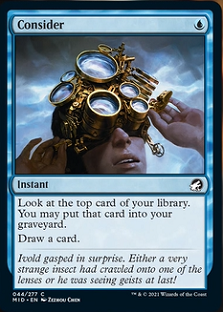
The best Modern card revealed from Midnight Hunt is also one of the most innocuous. I've already mentioned it, but Consider will be aĀ very potent card in Modern. Opt has seen a lot of play since it was introduced and Consider is better because surveil 1 is more powerful than scry 1. Moving a card from library to graveyard is stronger than from the top to the bottom because a card in the graveyard is worth more than a card in a library. How much more is entirely contextual, but Murktide Regent and Dragon's Rage Channeler clearly demonstrate the principle. The only time I can think of where that isn't the case is casting Consider looking for land and seeing your only win condition, or looking for a non-land and seeing a singleton shock. Scrying it away early is much better than binning it. However, in all other cases, surveiling is better. Thus I think Opt is no longer a Modern playable card.
What Does It Mean?

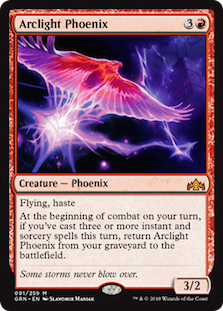
Once Consider is in Modern, expect to see more attempts to revive Arclight Phoenix. Previous attempts were unable to overcome the lack of a turn 1 way to get cards into the graveyard. Thought Scour is quite efficient and was important to the old Phoenix decks but can't do the job alone. The only other option, Haggle, didn't work out because rummaging rather than looting was crippling. Getting an opening Phoenix into the graveyard was excellent, but the rummage was quite bad drawing towards Phoenix. Consider does the latter job better than the existing options at 1 mana
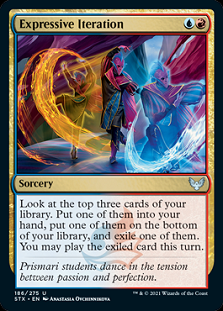
Outside of Phoenix, most if not all the decks that currently run Opt will switch to Consider. However, it's also very likely that a lot of decks that would never run Opt will at least... erm, think about tryingĀ Consider. Telling Time never really made waves, but Expressive Iteration is a multiformat all-star because it draws up to two cards. The same will be true of Consider for many decks. Dredge and Reanimator would never stretch into blue for Opt. But they both might for Consider, though Reanimator is far more likely.
It's also worth remembering that Storm exists, runs Opt, and utilizes the graveyard. Setting up Past in Flames is a fairly strong use for Consider. It reminds me of using Magma Jet to set the bottom of the library for Arc Slogger back in Mirrodin Block Constructed. That almost certainly doesn't much impact Storm's playability, but it does make me wonder if Consider will be less a cantrip and more an enabler.

A Return to Form?

More importantly, Consider's existence signals that a brief era is coming to an end. The banning of Faithless Looting led to a huge downswing in graveyard decks after years of graveyard dominance. While Consider and other IMH graveyard cards (that I currently know about) may not bring back the Looting era, it is a signal that Wizards is in a necromantic mood again. As such, I'd prepare for something like a return to the old ways. I don't think it will be as dedicated as before, but there will definitely be an upswing so start packing hate again.

Rewarding Faith

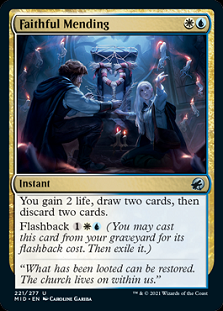
So as I was saying, Wizards is printing more graveyard enablers inĀ IMH, and consequently there will be an upswing in graveyard decks soon. And they won't be in the expected colors, so stop relying on Sanctifier en-Vec. Specifically, it's a new Faithless Looting. Which is multicolor, an instant, and has lifegain tacked on so it can be white. Meaning that it's actually not very much like Looting at all beyond sharing some text. But it does explain why Careful Study wasn't in MH2, disappointing plenty of Phoenix hopefuls. And showing again why Looting won't be unbanned.
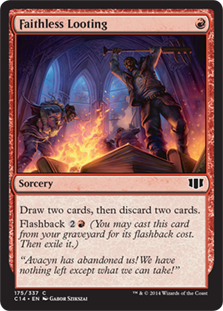
Just like Consider, the new Faithful Mending doesn't simply replace Faithless Looting. Being two mana is a huge burden, even with the lifegain, and especially so when it's two differently colored mana. Additionally, its colors are wrong. Looting was primarily playing in non-blue decks that don't normally get card velocity. A two mana UW velocity card is competing with far more than Looting did, which will limit playability.
However, there are enough upsides that I think it likely Mending will see some play. Just like Consider, Mending is likely to surface in decks that wouldn't necessarily play Looting. Colors aside, Hollow One, Mardu Pyromancer, and related decks didn't just switch to Cathartic Reunion after the ban because two mana is a deal breaker. Mending's home will have to be in a slower deck. And not a control-oriented Jeskai Phoenix deck, which would defeat the point of Arclight Phoenix in the first place. Rather, this looks like a card for Esper Reanimator, a deck that currently doesn't exist but might with Mending. It's also important to note that Mending is an instant. I don't know how that affects it's playability, but I'm sure it does. After all, consider Opt vs. Serum Visions.

...How Rewarding?

Of course, I have no idea how that would work out. I've seen mono-black and WB Reanimator decks over the past few months, and they're not good. Their central strategy is very powerful, it's just hard to make it happen quickly. And even when that does happen, it's not necessarily lights out. A turn 3 Archon of Cruelty can be devastating, or it just gets Path to Exiled and Reanimator has nothing left. Those decks are also heavy with air, so that one reanimation may be their chance to win. Mending offers the deck a way to burn through the air and set up for another attempt. However, it doesn't make the deck faster. The lifegain makes being slow less problematic against aggro decks, but I don't know if that's enough.
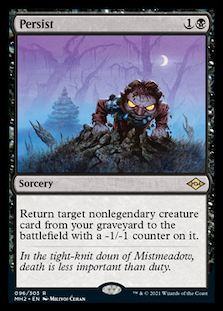
Which is the overall problem with Mending. I think that Wizards specifically meant for this card to be unusable by the current crop of Dredge decks and to keep any of the old Looting decks from coming back. Between Mending and Consider, it's obvious that Wizards is okay with graveyard decks again and is willing to make them playable. But they don't want a return to the old era. They want new and apparently slower decks. There are a number of reanimation spells already spoiled in IMH, and while they're nothing on Persist's level, it does point to Wizards wanting to make that deck exist but not Dredgevine or Hollow One. And I don't know if that will be successful in Modern.

Making it Rite

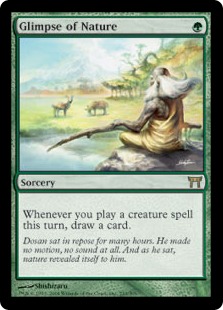
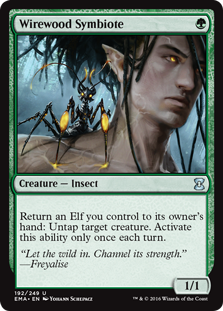
And now for something completely different. Glimpse of Nature has been banned since Modern was invented because in 2008, LSV won the Extended Pro Tour with a Glimpse-powered Elves combo deck, and that deck became a house in Legacy. Modern lacks several key cards from both decks (namely Wirewood Symbiote and Birchlore Rangers), but is still too close for comfort. I've seen attempts to match the old deck with Beck // Call but it hasn't worked out. Again, one mana makes a huge difference. However, IMH brings an option that might finally make it.
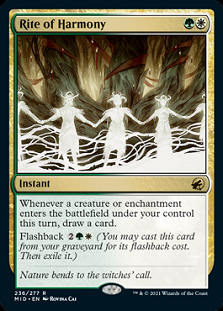
Like Beck, Rite of Harmony costs two mana and triggers on creatures entering the battlefield rather than on cast. That would seem to disqualify it out of hand, but there are considerable upsides. The first is that Rite is an instant. I have no idea how that would help Elves or any other creature combo deck, but it might be something to build around with flash and Collected Company. It also has flashback, but that costs enough that it's a late-game desperation move. Rite also triggers off enchantments, only lightly broadening the scope of which decks can play it. Enchantress already draws all the cards, it doesn't need a temporary boost. So, again, what's the big deal? Simple. Rite is white rather than blue.
That's a fairly small thing, but it significantly changes how Rite is played. There are very few UG creature combo decks in Modern. There are a number of WG combo decks, though. Heliod Company has been big this year, but the older Counters Company deck with Vizier of Remedies and Devoted Druid could use Rite since it makes tons of mana easily but often runs out of gas. Similarly, there have been WG Elves in the past which can use Rite as either a value play or combo piece. And I'm not the only one thinking that.

Which May Still be Wrong

Genuinely, I don't know why the existing WG combo lists would bother with Rite. None of them are Storm-type combos, so churning through their deck is unnecessary. They're correct-card combos and accordingly run tutors. Rite doesn't really fit into their gameplans. And I'm also not certain that Storm- or Elves-style combo is viable in Modern, and if it is, that it's better than existing Company decks.
This leaves Rite as a possible value play in a more traditional creature deck. Spending a card to turn a creature into a cantrip isn't very good, but getting several cantripping creatures definitely is. Aether Vial would help to maximize a Rite turn and GW Hatebears-type decks could really use the help. However, Hatebears is about creatures which cost 2 or more and you're not getting many draws a turn in that deck. It points more to some Humans-style aggro deck. Which doesn't currently exist, and would need some serious punch to be better than Humans. Thinking laterally, tokens also trigger Rite and there are plenty of good token makers in Modern. The trick is that token decks themselves aren't very good. But maybe Rite's card advantage can fix that. It's certainly worth testing.

Keeping Watch

Speaking of Humans, there are a number of Humans cards with potential inĀ IMH. Which makes sense. This is the plane that spawned Champion of the Parish, Thalia, Guardian of Thraben, and Thalia's Lieutenant, after all. The catch is that, so far, most have catches to their playability. The biggest problem is that almost all are three mana or more. They're very good three mana cards, but cost is a huge factor in playability.
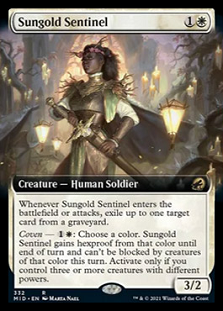
The most playable cheap Human so far is Sungold Sentinel. A 2-mana 3/2 is solid, and hating graveyard is about to get very relevant. The problem is that Sanctifier en-Vec does that on a larger scale, and red is so widely played that Sentinel's hate is just pathetic. In a less red- or black-heavy meta Sentinel could definitely beat Sanctifier but that's not the case right now. The coven ability is quite good and I know from experience that it will be easy to make live. The problem is that I doubt it will ever save Sentinel from removal. Smart players will just kill the other creatures first. Or sweep the board. It would be very good at breaking board stalls, but those are very rare. In other words, it's a good card for a different metagame.
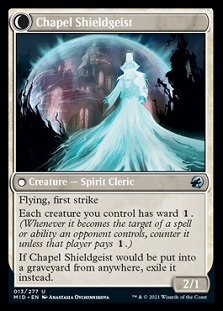
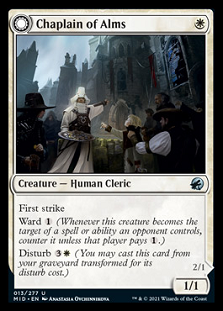
Chaplain of Alms is another one that might be playable in the right metagame and the right deck. A 1/1 with first strike and ward 1 isn't much, but disturb makes me want to get down with that sickness. Getting a dead creature back transformed is decent value, and protecting every creature with ward 1 is pretty good. It's very fragile and costly, but in a very grindy meta it might work out.
On Guard

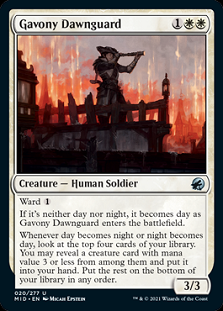
The most playable human for Humans right now is Gavony Dawnguard. It compares favorably to the once-playable Militia Bugler. Stats-wise, +1/+0 and ward 1 is much more useful than vigilance, and in Humans, 1WW is no harder to achieve than 2W. Sounds good. The catch is that the card advantage is both better and worse than Bugler. Dawnguard looks at the creature's mana value rather than its power, so it can actually pick Mantis Rider, which is a huge plus over Bugler. The catch is that Dawnguard doesn't trigger on entry. Instead, the trigger is tied to the Day/Night werewolf mechanic and only triggers when night becomes day or day becomes night. Which means that Dawnguard can trigger multiple times, but unless it was already night when she entered, it will be down the line.
And that's the big problem. Dawnguard can get far more cards than Bugler or Imperial Recruiter can, but can't do it by herself. She needs some setup. If your opponent has already triggered tracking Day/Night and wants it to be night, then Dawnguard is not only potentially disruptive, but better than Bugler. But if Dawnguard is the only card seeing play that cares about the time, Recruiter is much better. Thus Dawnguard is playable stats wise but maybe or maybe not actually usable for in the card advantage slot. Vialing her in main phase and then casting nothing seems the best way to get immediate value, but that's not good enough.

With Some Help

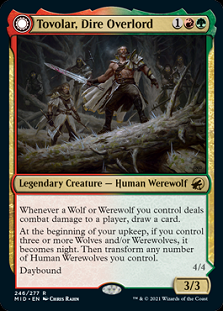
However, it's not too far from possible. There are a number of new Day/Nightbound werewolves that would get the ball rolling for Dawnguard. Tovolar, Dire Overlord is the most playable creature so far, but it is quite early. And there are a few non-creatures that reference day and night, so there may be enough cards to get the ball rolling for Dawnguard. In an actual werewolf deck she'd be quite strong, but such a deck is likely a bad Domain Zoo and more for Standard than Modern.

Moonrise

Midnight Hunt looks to be fairly low-power, but quite interesting. It will certainly be a set that has to be heavily tested since so many cards are very contextual power-wise. I'm hopeful there's enough support to make Dawnguard viable, but not optimistic.

Revisiting Alternate Investments Discussed in 2016

Are you a Quiet Speculation member?

If not, now is a perfect time to join up! Our powerful tools, breaking-news analysis, and exclusive Discord channel will make sure you stay up to date and ahead of the curve.

Something is brewing in the MTG finance world. After a steady pullback from highs, many Reserved List cards are bouncing, and bouncing decisively. Card Kingdom is acting on this movement, increasing their buy prices across the board. For example, Gaea's Cradle is posted now with a $715 buy price, more than $100 higher than it was just a couple weeks ago.

There was an error retrieving a chart for Gaea's Cradle

I’m going to monitor this trend closely, and I’ll report back if I see anything noteworthy. But in the meantime, I want to go off-script a little bit this week and dust off part of an article I wrote nearly five years ago. The article was published on October 10, 2016, and was titled ā€œAlternate Investments Worth Consideration.ā€ At the time of its publishing, the article was locked for Quiet Speculation Insiders only.

Not this time—I’m unlocking that piece and sharing some incredible trends that have occurred since 2016.

Bucket 1: PokƩmon Cards

In 2016, I discussed the massive augmented reality gaming trend that took over the world for a couple weeks: PokĆ©monGO. I remember when this game first deployed, and every park and public placed was filled with players eager to ā€œcatch ā€˜em all.ā€ After it’s initial release in July 2016, popularity of the game rapidly dropped off to a steady state.

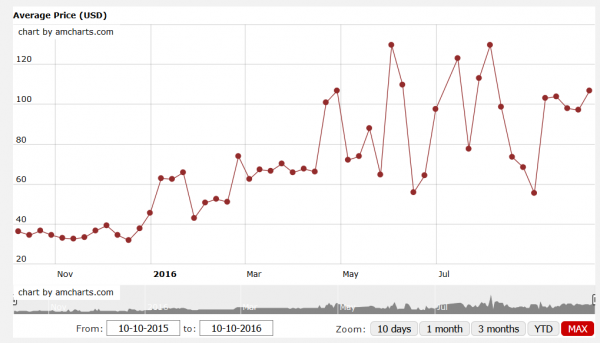
Since then, the game’s following has remained robust. I may have abandoned the game altogether, but I’m shocked to see how popular it remains amongst the gaming community. In fact, my son and spouse still play the game religiously, despite not being your traditional ā€œgamersā€. In October 2016 I predicted growth in PokĆ©mon cards because of PokĆ©monGO’s popularity. I shared the below chart in the article, depicting the growing price of Base Set Charizard:

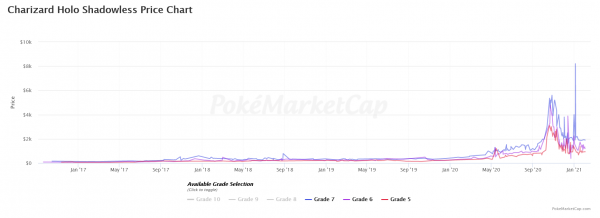
I couldn’t find the comparable price chart to above, but I did track down a different pricing website. This site plotted the value of graded copies of the Charizard card, but I didn’t want high-grade cards to warp the values. So I hid all the highly graded copies so we can see value trends of ā€œplayer’s copiesā€, if you will.

It looks like the card’s value may have gradually and subtly increased over a couple years after my article’s initial publishing. Then in 2020 these card prices took off (along with most collectibles markets). Even a graded 5 copy can fetch nearly $1,000. This may not be the perfect apples-to-apples comparison with the previous chart, but the fact of the matter is PokĆ©mon card prices have skyrocketed since 2016.

Bucket 2: Older Video Games

The real inspiration for my article this week stems from this second bucket: the vintage video game market has been exploding! I track my collection’s value on a weekly basis using the GAMEYE app—if you don’t have this app and you collect older video games, I highly recommend this one. It pulls data directly from pricecharting.com, a valuable video game pricing website.

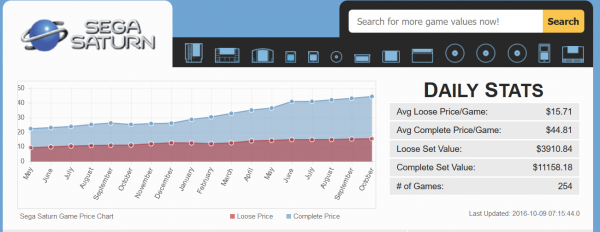
Back in 2016 I talked about my two favorite gaming consoles: Sega Genesis and Sega Saturn. For each, I shared a price chart showing the ā€œindexā€ of video games for each system. Let’s see how those have fared since. First, let’s compare the before and after charts for the Sega Saturn.

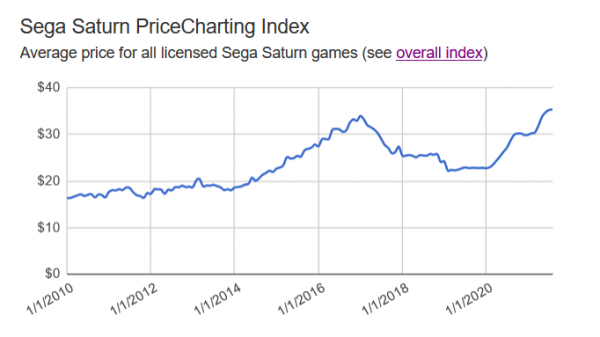
Once again, I can’t easily find the same exact chart, but the Sega Saturn index below does a very nice job capturing the general trend.

The first plot only covers parts of 2015-2016, whereas the second plot above dates back to 2010. Interestingly, at the time of publishing my alternate investment article, Sega Saturn prices were booming. It looks like they actually peaked just a couple months after, in early 2017, before pulling back significantly. If you had bought video games after reading my article, you may have been disappointed in your returns over the following four years.

However 2020 and 2021 have been redeeming for me. Since bottoming in 2019, the average value of a Sega Saturn game skyrocketed from about $23 to $35, a roughly 50% gain!

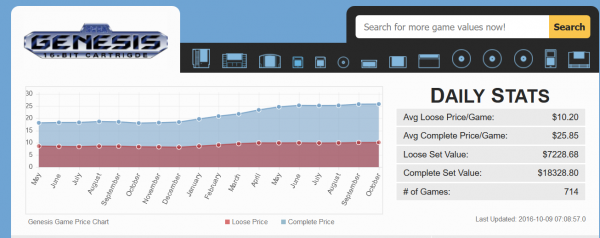
Next, let’s have a look at the Sega Genesis. Here’s the plot I shared back in 2016:

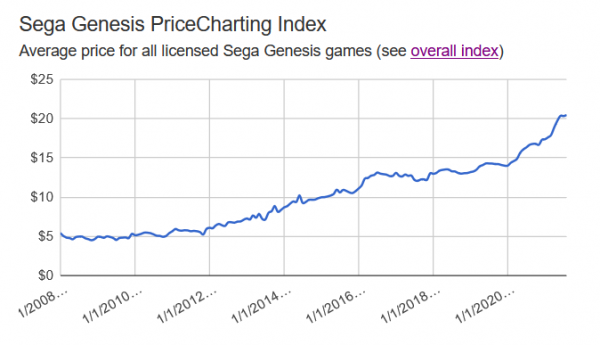
Now for comparison, let’s see what the average Sega Genesis game’s value has done over the years:

This chart is even more compelling that that of the Sega Saturn index. Since 2016, the average Sega Genesis game’s value has steadily risen, reaching an inflection point in 2020 and suddenly jumping even higher!

Lastly, I mentioned one specific game in my 2016 article: Magic Knight Rayearth. At the time, complete copies of this game sold for a little north of $300. Loose copies sold for a little more than $100. What are these games worth now, five years later? Here’s the five year chart:

Currently, complete copies of this anime-inspired Sega Saturn game sells for about $850 and loose copies sell for $350. These are tremendous returns! You’re talking about more than double the value in complete copies and more than triple the value for loose copies of the game!

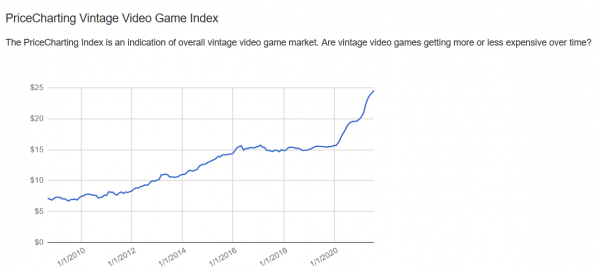
One last chart: if Sega isn’t your thing, rest assured that the entire vintage video game market is following in step. The Video Game Price Charting website has a graph that indexes the entire video game market. Check out the tremendous run that began in 2020:

There’s no doubt that the video game market remained strong after I mentioned it in 2016. While I could never have predicted the effects of COVID-19 on the collectibles market, the fact of the matter remains: video games purchased in 2016 should, on average, be worth significantly more in 2021.

One Caution on Video Games

The chart above is inspiring—it gives me the confidence that if I purchase a collectible video game now, it’ll be worth more five years from now. It’s easy to get caught up in the hype of the exponential part of the curve above, and fear of missing out could start to kick in.

Before diving in and buying your childhood favorites at these inflated prices, however, I need to highlight one word of caution that fellow Quiet Speculation writer Paul Comeau called out recently.

The author of this video alleges that the recent move in video game values could be an artifact of an artificial pump and dump scheme, of sorts. Rather than delve into the intimate details of this video’s claims, I’d encourage you to check it out—it’s lengthy, but interesting and well-produced if nothing else.

The title gives you the TL;DR: ā€œExposing FRAUD And DECEPTION In The Retro Video Game Market.ā€ This isn’t a lunatic conspiracy theorist with nothing better to do, mind you. The video has over 1 million views, and some of the points he makes are compelling.

Could the video game market be experiencing an artificial source of growth due to market manipulation? It’s possible. I’m certainly not about to purchase costly, graded copies of video games. I’m a firm believer that vintage video games are meant to be played, not graded and placed in hermetically sealed cases. I suppose there could be a halo effect—graded copies skyrocket in value, bringing up the average value of played, loose copies.

I’ll keep an eye on trends in this space for sure, but I still believe a lot of the growth since 2020 was driven by COVID-19 and the fact that there as a lengthy period of time where there was nothing to do but stay at home. Nostalgic video games were (and still are) a perfectly safe and enjoyable activity during a pandemic. Add in the fact that the government keeps pumping out money and sending support checks to the majority of the country, and you have record levels of disposable income people have to spend on collectibles.

Now one big moment of reconciliation for this market could come when the world finally does resemble something more ā€œnormalā€. If everything re-opens and people migrate back towards their previous spending habits, shelling out cash for things like cruises, travel, vacations, concerts, and sporting events, we’ll have to see what happens to the video game market. Will the new nostalgic video game collectors sell their games to fund other activities? Or will they hold onto the games for occasional play?

If I had to guess, I’d predict the latter. I think nostalgia is a powerful motivator, and even if people stop spending money on video games, they will be inclined to keep those they had already purchased. This will keep game inventories at a steady state—if there’s no surge in inventory returning to the market, prices should remain stable. I don’t expect 2022 to follow the current trend of 2021, and there could be a healthy pullback, but prices in this space won’t suddenly collapse.

I can’t say the same for the market on highly graded copies of games—those are really out of scope for me. I’m perfectly content playing my old games with the option to sell for more money a few years later. I’m not in this to make millions. Just like with Magic, my aim is to enjoy some classic video games while also making a little money, helping my hobby stay just a little cheaper.

Wrapping It Up

When I wrote about investing in older video games back in 2016, I could never have predicted the impacts of COVID-19 and the 2020-2021 explosion in game values. But here we are. Many of the games I purchased 2016-2019 have jumped up significantly in value since. If any of my readers followed suit after reading my article, and they hung onto their investments for at least a few years, they should also be sitting on some healthy gains.

If you asked me to project out the next five years, and to make a recommendation of whether or not one should buy, hold, or sell, I’d say my answer would depend. If you’re already sitting on healthy gains and you have no interest in actually playing these older games, I wouldn’t fault you for looking to sell in this overheating market. You’re likely to fetch a very attractive price given the exponential growth of 2021.

However if you still enjoy these games and the nostalgia they bring, I’d hold. Prices may pull back some, but they’ll likely return to growth again at some point. To draw an analogy to Magic, many of the games I collect are effectively on the Reserved List—no one is printing copies of Magic Knights Rayearth anymore. Even if something akin to a ā€œSega Saturn Classicā€ were to be released, I don’t think this would damage values of the original games. As long as no one goes out and makes more identical copies of the original game, these will only get rarer and harder to find as they age. For this reason, I’m holding my games for the time being.

Of course, one of my favorite lines is, ā€œEverybody has a price.ā€ These games could theoretically get to a price point that’s so attractive that I will feel compelled to cash out. Let’s just say that, for now, we aren’t close to those values and I don’t anticipate we’ll get there anytime soon. But if we somehow do, and Magic Knights Rayearth suddenly starts selling for north of $2000, rest assured I’ll be sure to write a follow-up article on the trend and its implications. Let’s cross that bridge if we get to it.

Avatar photo

Sigmund Ausfresser

Sigmund first started playing Magic when Visions was the newest set, back in 1997. Things were simpler back then. After playing casual Magic for about ten years, he tried his hand at competitive play. It took about two years before Sigmund starting taking down drafts. Since then, he moved his focus towards Legacy and MTG finance. Now that he's married and works full-time, Sigmund enjoys the game by reading up on trends and using this knowledge in buying/selling cards.

View More By Sigmund Ausfresser

Posted in Finance, Finance History, Pokemon, Video GamesLeave a Comment on Revisiting Alternate Investments Discussed in 2016

Have you joined the Quiet Speculation Discord?

If you haven't, you're leaving value on the table! Join our community of experts, enthusiasts, entertainers, and educators and enjoy exclusive podcasts, questions asked and answered, trades, sales, and everything else Discord has to offer.

Want to create content with Quiet Speculation?

All you need to succeed is a passion for Magic: The Gathering, and the ability to write coherently. Share your knowledge of MTG and how you leverage it to win games, get value from your cards – or even turn a profit.

Insider: Collecting Magic: The Gathering Original Art

Are you a Quiet Speculation member?

If not, now is a perfect time to join up! Our powerful tools, breaking-news analysis, and exclusive Discord channel will make sure you stay up to date and ahead of the curve.

Art has been an essential part of Magic: The Gathering as far back as the game's initial concept. That concept came to be through a chance conversation between Wizards of the Coast founder Peter Adkison and game designer Richard Garfield at their first meeting in 1991.

Garfield had flown out to demonstrate a boardgame design for Adkison, who described that fateful meeting in a 1995 article "How Magic Was Born," for The Duelist Magazine number six. Disappointed that Adkison's start-up gaming company was not in a position to publish the board game idea he'd presented, Garfield, eager to demonstrate his game design chops, told Adkison to "describe a game concept—any concept—and I'll design a game around it for you."

Impressed by Garfield's keen mind and exuberant love of games, Adkison presented him with a design challenge for a game that could be picked up and played with a minimal amount of equipment and in a minimal amount of time. "I figured a card game would work," Adkison wrote in The Duelist, "since the game would need to be highly portable. I also wanted something with a fantasy or science-fiction theme that would be a nice vehicle for showing off artwork." Garfield took that germ of an idea and returned to Adkison a week later with the idea for what would become Magic: The Gathering, and an entire new genre of gaming: Trading Card Games (TCGs).

Where Adkison initially envisioned licensing and using existing fantasy art, newly appointed Art Director Jesper Myrfors had other ideas. Licensing existing artwork was expensive, and did nothing to make Magic visually unique. Knowing Wizards was on a shoestring budget, and wanting Magic to have its own visual identity, Myrfors, still an art student at Cornish College of Art, tapped his growing circle of artist contacts.

"Originally, I was working on the Talislanta books and Primal Order," Myrfors said in a 2019 interview with BigAR, speaking of Wizards' early forays into RPGs, "and those were the projects I started to gather the base of artists that I wanted to work with." As work on Magic picked up steam, RPG books fell to the wayside as the company poured all its resources into this new game concept. The problem facing them was largely financial. "We were all working for stock at that point because there just was no cash. It was a gamble everyone was taking," Myrfors said in the interview.

But Myrfors and the rest of the staff at Wizards believed in Magic, and their zealous devotion to the game was contagious. " I had almost an evangelical fervor about the game, I believed in it that much," Myrfors said. "And I've heard from other artists that it was my excitement of the project that got them involved because they didn't really understand what the game was."

Working like most at Wizards, primarily in exchange for stock in the company, Myrfors recruited a number of artists who would go on to become major names in science fiction, fantasy, and gaming artwork including Christopher Rush, Quinton Hoover, Amy Weber, Anson Maddocks, Melissa Benson, and others.

We know Magic went on to be a resounding success, and the art created for the game over the years has gone on to become some of the most iconic art in fantasy and gaming. People outside Magic might not know what a Black Lotus card does in game terms, but there's a good chance they'll know the name and recognize the iconic Christopher Rush artwork. But that hasn't always been the case.

A Guide To The Original Magic Art Market

Like the Magic secondary market, the market for original Magic artwork has evolved considerably as the game has grown. To best understand the current state of the Magic art market, I reached out to Mike Linnemann, aka @VorthosMike to bring me up to speed. For those in tune with the Magic art scene, Linnemann perhaps needs no introduction, having written extensively on the art and flavor of Magic: The Gathering for years at Mana Nation/Gathering Magic/Cool Stuff Inc. He even did a brief stint writing flavor text for Wizards, which you can see on cards like Remember the Fallen, which he also named.

Like many of us, Linnemann got started in Magic early, playing with his Boy Scout troop. While his fellow scouts were playing Grizzly Bears, Linnemann was playing Dark Ritual into Hypnotic Specter. "Bringing that kind of violence into the camp tents kind of escalated things quickly from there," he joked during our Zoom conversation.

Even before Magic: The Gathering, a love of art was a huge part of Linnemann's life. In a 2015 interview with Bruce Richard on DailyMTG.com, Linnemann said visiting a medieval armory museum at the age of two sparked his lifelong passion for art. Spending his early childhood growing up in Germany also helped fuel his artistic appreciation. "Basically, I grew up in Innistrad's Kessig, complete with werewolves and the subsequent art traditions—fairy tales and illuminated manuscripts were just precursors to Magic's art. All those tropes and familiar things you see come from somewhere, after all," Linnemann said in the interview.

Earning a BA and MA in art history and arts management at the University of Minnesota, Linnemann turned his passion for art into a career. He worked for two years in the registrar's office at the Frederick R. Weisman Art Museum, where he experienced hands-on navigating the ins and outs of art copyright, and parlayed his skills and knowledge into a role as an Associate Art Director at Fantasy Flight Games, working on Star Wars: The Card Game.

More recently, Linnemann has moved into the non-profit world, though he still runs a small art brokerage business on the side, and works on several Magic-related passion projects which we'll discuss later. Having worked on pretty much every aspect of trading card art short of picking up a brush, I was excited to pick his brain on a topic I know little about.

How Big Is The Magic Original Art Market

I'll admit upfront having some assumptions about the Magic original art market. One of them was the size and scale of the market. It's much larger than I realized. When you stop and think about it for a moment though, there are a lot of Magic cards made every year and each of those cards needs art. "Nothing commissions as much art as Magic," Linnemann told me via Zoom, "compared to anything. Compared to the Vatican. No exaggeration. Think of how many unique illustrations by one hand are made in a year...there is nothing that rivals it." So with thousands of pieces of art coming out every year, not to mention sketches and color studies, who is buying all this art?

Who Is Collecting Magic Art?

My unscientific thinking about the art market was that it would be confined mostly to the top 1-3% of the Magic-collecting market. People with multiple graded sets of Power Nine, or other deep investments in Reserve List cards. "You'd think [that was the case]," Linnemann said. "Obviously art costs more than a card, on average, and there's only so many Chains of Mephistopheles [you can buy]." But the reality is a bit different. "Mind you," Linnemann said, "Magic is 30 years old, so if you were 15 [back then], you're now 45. You have way more disposable income now vs. then."

There is then, what Linnemann calls an "onboarding process" into collecting Magic art which happens as people age out of playing the game regularly. "They want to stay current," he says. "They're playing once a week, or playing on Arena, [but their cards] are still in a box. For these people who have graded stuff, unless they have a display, it's in a box. They don't see and they don't interact with Magic."

"Whereas you have a painting on the wall," he says, pointing to one of his own paintings off-screen, "you interact with it every day and it keeps you feeling current whether or not you're listening to Mark Rosewater's podcast every week."

The demographics driving most Magic art sales then are not exclusively high-end graded collectors or even the people who buy artist proofs Linnemann says. "It's people that played heavily and want that feeling of nostalgia. 'I had this in my deck, here are my 15 creatures, I want to have one of those and I want to see it every day.'" It's a similar demographic to the people who are buying prints from artists at Grand Prix events. "People who buy prints at a GP and people who buy graded cards are really different people," Linnemann says.

What Drives The Interest In Original Magic Art?

While today nostalgia among Magic players appears to be one of the key factors getting people into the Magic art market, it's not the only driving force. One of the other major factors is visibility to the art world in general, outside of the Magic community. This hasn't always been the case.

Back in the early 2010s, the Magic community had yet to catch on to the art, and the art world outside Magic wasn't interested. This meant prices of Magic art were still relatively cheap. At the time, "paintings could be bought for $100-300 dollars," Linnemann says.

But the Magic community wasn't interested in spending the money, and the people outside of Magic, "they just didn't get the art," Linnemann says. When you consider the prices of Magic cards at the time as context, Revised dual lands at $100 or less, it makes sense why Magic players might not have been interested in a $300 dollar painting. It's still shocking though to think about the missed opportunities many who now collect Magic art were sleeping on back then. "You could have bought [the art for] Mox Pearl for $2000," Linnemann says.

There was an error retrieving a chart for Mox Pearl

As interest in Magic art has grown within the Magic community since then, and as prices of Magic art have steadily increased over the years, the public, and the outside art world has begun to take note. Today, "every time there's a major sale, Kotaku or whoever picks up on it, and it brings more eyeballs and it brings more major collectors who really have the funds to go deep," Linneman says. "When there are bidding wars, it's real. Two people that are like 'I don't care how much it is.' This is ego now involved."

Linnemann acknowledges that as major collectors with deeper pockets get involved, it does become more difficult for some of the longtime Magic art collectors, many of who specialized in niche themes like elves, birds, etc., to compete in some cases. "You can't really [specialize like that] anymore," Linnemann says, "because you have to go deep."

The effect this has had on the art market overall has created waves. Increasing prices cause long-time collectors to sell their holdings back into the market, putting more eyes on Magic art, bringing more people into the Magic art market, pushing up prices further, and repeating every few years. This has been good not only for legitimizing Magic art but also for supporting Magic artists financially, both of which Linnemann sees as good and necessary. "We're working to raise visibility and to raise all boats," he says.

At this point you might be asking yourself:Ā  should I invest in Magic art? What should I buy?

Should I Invest In Magic Art?

This is a complex question that can best be thought of by exploring the ideas discussed in my articles on why or why not to invest in Magic cards themselves. If you read through and apply the thought processes behind those articles to Magic art, you will be able to determine whether or not investing in Magic art is a good fit for you.

If you do decide that investing in Magic art is something you want to pursue, Linnemann has some suggestions to get you the best return on investment. Especially when looking at new pieces of Magic art, he has a checklist of questions to keep in mind: "is this card hard to reprint, is it going to be played, is it going to be useful, is it something people will want, and is it done by an artist synonymous with quality?" If you can say yes to all of those things about the card, then the art for that card has investment value. What if you're not interested in Magic art as an investment?

I Just Want To Buy Some Cool Art. What Should I Buy?

While investment in Magic art is certainly possible, and can potentially be lucrative to speculate on, I'm inclined to think that buying Magic art primarily for its esthetic value is a better bang for your buck. What to buy though is largely subjective. The short answer is to buy whatever you want! The long answer is to look for Magic art pieces you like, and that hold some kind of meaning to you, whether it's a piece of art by your favorite Magic artist or art of a particular card you enjoy. Whatever the reason, it should be the kind of piece of art that you will want to hang on the wall and look at every day.

Where Can I Buy Magic Art?

If you're interested in diving in and exploring, I'd recommend checking out the MTG Art Market on Facebook, or the Original Magic Art Store website, which sells original art, prints, and official merchandise including playmats and artist tokens. All of the major auction websites including eBay and Heritage Auctions also frequently sell Magic art, including iconic pieces going all the way back to Limited Edition Alpha.

What If The Piece Of Art I'm Interested In Doesn't Exist Physically?

Many Magic artists work exclusively digitally, or the final versions of their pieces exist only digitally. This means for those of us interested in collecting original art, the options for acquiring those pieces are limited or non-existent. In cases like these, it sometimes doesn't hurt to contact the artist and see if they have any preliminary sketches or color studies available for purchase. Sure they won't be as pristine and polished as the final digital piece, but they will be the closest you can come to have that final piece.

Another option Linnemann suggests is mono-prints. This is where an artist who works digitally makes a print of their work, but they change something about it when they print it, making each print unique to its customer – hence, mono-print. This maintains scarcity, and thus value, for a physical object that didn't otherwise exist.

What If I Just Want To See The Art In Person, And Not Necessarily Buy?

If seeing Magic original art in all its glory is something that appeals to you, then do yourself a favor: log on to Twitter and find out the next city where the Magic Art Show will be stopping. Curated by Mike Linnemann and with the support and cooperation of Josh Krause of the Original Magic Art Store, Rico Evangelho of Cardamajigs, and Brian Scott Walters, the Magic Art Show is the only traveling exhibit of Magic original art in the world. The show debuted at Grand Prix Las Vegas in 2017 and was instrumental in facilitating the art exhibition of MTG Japan's 25th Anniversary Celebration in Tokyo in 2018. With art spanning across Magic's history and diverse settings, there's something forĀ Magic players and non-Magic players alike to appreciate.

Finishing Touches

I hope you enjoyed this foray into the world of Magic art. I want to give a big thanks to Mike Linnemann for patiently answering all of my questions. Please check him out on Twitter at @VorthosMike.

Also, don't forget to follow the Magic Art Show for updates on their event schedule and when they may be in a city near you.

Has this made you want to buy some Magic art? What is your favorite piece of Magic art? Your favorite artist? Leave a comment or let me know via email or Twitter.

Uncommon Report #3 – Innistrad Block

Are you a Quiet Speculation member?

If not, now is a perfect time to join up! Our powerful tools, breaking-news analysis, and exclusive Discord channel will make sure you stay up to date and ahead of the curve.

It seems only fitting with an upcoming return to the plane of Innistrad that I look at the original Innistrad block for uncommons to keep an eye on. I have already covered Return to RavnicaĀ block and KaladeshĀ block with my first two articles in this series. For those who didn't playback in 2011, InnistradĀ was a block that players absolutely loved and was the game's first foray into a top-down heavy gothic horror theme. At the time, Commander as a format was still referred to as EDH (Elder Dragon Highlander) and it was still a semi-niche format.

Innistrad

Sadly, there are no uncommons in Innistrad that have a TCGMarket value above $1.49, which is my cutoff. This set actually did have a lot of casual favorites, but many have been reprinted enough times to suppress any real value.

Watch List – Innistrad

There was an error retrieving a chart for Inquisitor's Flail

Inquisitor's Flail is a powerful piece of equipment with enough of a downside that it often just misses the cut in many equipment-based Commander decks. One important distinction to make with this card is that it doubles damage but isn't providing double strike. This is critical because instances of double strike don't stack; however, damage doubling instances do. This card would also fit well in any type of deck which wants damage done to a creature Ć  la Stuffy Doll or Boros Reckoner.

Dark Ascension

Yet again, we have no cards from Dark Ascension that have a TCGMarket value above $1.49, so I am forced to skip straight to my watch list.

Watch List – Dark Ascension

There was an error retrieving a chart for Drogskol Captain

Drogskol Captain is a card that has actually met the greater-than-$1.49 requirement in the past. This card is a great speculative opportunity because its value is so heavily dependent on how good Modern Spirits is as a deck. This card is a crucial part of that deck and a four-of in every version. Being a lord that provides hexproof to all other spirits is integral to the deck's strategy. Phantasmal Image is also in the list mainly to copy Drogskol Captain – once a player has two on board, they give each other hexproof and the whole team is safe from opposing spells.

There was an error retrieving a chart for Immerwolf

Immerwolf is another of the lord cycle from this set that hasn't been reprinted. It too once sat in the $2+ range, back when Shadows over Innistrad released and casual players were finally given a Werewolf legend to make a Commander deck around. Sadly,Ā Ulrich of the Krallenhorde turned out to be a dud of a Commander, and poor Immerwolfhas fallen back by the wayside. Still, if we have learned anything, it's that casual players really want a good werewolf Commander, and should we see one in the upcoming Innistrad: Midnight Hunt or Innistrad: Crimson Vow,Ā then this card will likely spike above $2 again.

There was an error retrieving a chart for Stromkirk Captain

If you hadn't noticed a pattern yet, I really like the uncommon lords from this set, and Stromkirk Captain is no exception. We can be very confident thatĀ Innistrad: Crimson Vow is a Vampire-themed set, and it's highly unlikely that Wizards doesn't print at least one decent legendary Vampire creature in the set. The only hiccup in this one being a home run is that it was reprinted in Commander 2017. That being said, that's still a relatively minor reprint and this card can very easily double up with the release of theĀ Innistrad: Crimson Vow.

There was an error retrieving a chart for Diregraf Captain

Diregraf Captain finishes off our uncommon lords from the set and his static ability is extremely powerful in a Zombie-themed deck. The biggest challenge for this one is that it was printed in Duel Deck: Blessed vs Cursed as a two-of and is also included on The List. Still, duel decks tend to not be big sellers overall, and so I still think there is potential upside for this card.

There was an error retrieving a chart for Chalice of Life

Chalice of Life is the one card on this list that isn't a creature. It's a relatively innocuous card on its front half, being relatively unimpressive, but its back half can end games rather quickly, especially in decks that can untap it repeatedly.

Avacyn Restored

There was an error retrieving a chart for Blood Artist

The only card that meets our $1.49 or greater TCGMarket Price requirements is Blood Artist, which is a $5+ uncommon even with six printings. While it's important to know the value of Blood Artist, the rest of the uncommons in this set are rather unimpressive. However, there are a few that have some potential if the fates align.

Watch List – Avacyn Restored

There was an error retrieving a chart for Vigilante Justice

Vigilante Justice would have had a lot more potential had it not been reprinted in Commander 20. This does seem like a very good card for any human deck that can generate a lot of human tokens or if there ever develops a deck that can recast any human infinite times.

There was an error retrieving a chart for Triumph of Ferocity

While mono green has gotten more options for card draw as of recently, a cheap repeatable card draw enchantment like Triumph of Ferocity, is one that mono-green decks can really use. There is a bit of controversy regarding the artwork of this card, but for now, it seems like a good one to set aside when picking bulk, as it has some decent long-term potential having dodged any reprints so far.

Previous Articles in this series:

Metagame Stabilizing: August ’21 Metagame Update

Are you a Quiet Speculation member?

If not, now is a perfect time to join up! Our powerful tools, breaking-news analysis, and exclusive Discord channel will make sure you stay up to date and ahead of the curve.

How apropos that the Metagame Update is falling on the same day thatĀ Innistrad: Midnight HuntĀ spoilers begin. It's a perfect transition from the metagame we knew to the new one to come. However new it actually is or isn't is irrelevant. The addition of new cards creates new possibilities which alone change the metagame dynamics. And we already know of one card that will absolutely see play, so I feel confidant saying that the metagame will be shaken up. Again. It may be more accurate to say that Modern is getting continuously shaken up these days.

August's data is a huge turnaround compared the past few months. For one, the total decks are considerably up, back toward what I'd consider and average month. After 5 months of below 500 population, I was pleasantly surprised to be over 500 for the first time since January. And I wasn't even including non-Wizards events to get those numbers up. However, this didn't mean that the Tier lists became more average and the overall picture has the metagame pulling in several directions. I'm not entirely sure what it means yet, and given the incoming sets I'm not sure we'll ever find out. But anything is possible and there's plenty of opportunities to find out.

August Metagame

To make the tier list, a given deck has to beat the overall average population for the month. The average is my estimate for how many results a given deck ā€œshouldā€ produce on MTGO. Being a tiered deck requires being better than ā€œgood enough;ā€ in July the average population was 6.44, meaning a deck needed 7 results to beat the average and make Tier 3. This means that the cutoff is the same as July's despite the actual average being slightly down. That's just what happens when you have a system with hard cutoffs in place.
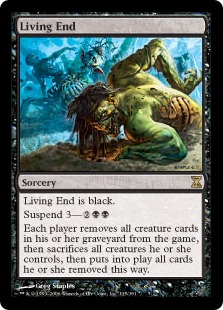
Speaking of the cutoff, that's where Tier 3 starts. Then we go one standard deviation above average to set the limit of Tier 3 and cutoff for Tier 2. The STdev was 10.39, which means that means Tier 3 runs to 18. Again, it's the starting point to the cutoff, then one above for the next Tier.Ā Therefore Tier 2 starts with 19 results and runs to 30. Subsequently, to make Tier 1, 31 decks are required. This remarkably similar to how the Tier list worked in July.

The Tier Data

As mentioned, August's data is a little weird. The unique decks was quite high at 80. Which is very high compared to July's 60 but not quite up to June's level of 87. I'm not sure why that happened. June made sense, it was the month MH2 was released and everyone was brewing. August didn't have the impetuous. My guess, based on what I saw, is that August was a tuning month. There were lots of singleton decks that were riffs on existing decks or mashups of several. Players were experimenting and looking for edges in August and at least a few found them.

But unlike June, August's total decks were more like earlier months. May, June, and July had relatively low total populations of 488, 457, and 405 respectively. August's numbers are back in line with April's at 515 decks. Which is on the lower end of where Modern was last year. I'm not sure what's going on, but there were more events in August than July but not that many more. I didn't even include non-Wizards results this time since I didn't see any that met my inclusion standards.
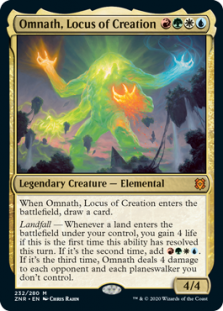
You might expect that the much higher population and high deck count means that the tiered decks would challenge June's 28 deck record. That didn't happen. There are only 18 deck in August's tier list. Which is still up from July and on the lower end of the overall average, but it is unexpected. The cause is all the aforementioned singletons. They're unique and so get a separate entry but don't impact the tiers at all.

Deck Name Total # Total %
Tier 1
Hammer Time5310.29
UR Thresh468.93
Cascade Crashers377.18
Blue Living End316.02
Tier 2
Burn295.63
Elementals285.44
Grixis Channeler254.85
Mono-Green Tron224.27
Tier 3
4-Color Creativity183.50
Jund Saga183.50
UW Control163.11
4-Color Bring to Light132.52
Mardu Rock101.94
Jund91.75
Eldrazi Tron81.55
Hardened Scales81.55
Mill71.36
Yawgmoth71.36

The first and most important thing to note is that the upper Tiers are quite full relative to previous numbers. July only had four decks above Tier 3 and August doubled it, again moving back towards the average from the past year. The other thing that's striking is how many decks are right on the borderline between tiers. This indicates that the metagame is far closer than in previous months and the overall power in Modern is starting to get spread around. Whether or not that will be sustained is impossible to say.

Hammer Time is the most popular deck by a good margin, followed by UR Thresh. I expected both decks to fall off compared to July and they have. In absolute terms, Hammer Time is down 5 decks while Thresh is down 10. However, they didn't move from their metagame positions. To me, this says that the metagame is stabilizing and while the top decks aren't losing position, they are losing ground to the alternatives. Speak of which, July's Tier 2 is now part of Tier 1 and a lot of unexpected decks now comprise Tier 2. And there's a story here.

Rapid Rise and Precipitous Fall

Tier 2's composition is the result of the weirdness of August's metagame shift. At the end of July, Elementals was having a huge resurgence. It had just won a Challenge and had become the It Deck, getting results everywhere and surging from obscurity to upper Tier 3. This continued into August and for the first few weeks it looked like Elementals would just dominate the postings. Then it just stopped. By mid-August Elementals just stopped putting up results. It seemed inexplicable initially, but then I heard that two other (re)surging decks, Burn and Tron, had good Elementals matchups. Both decks had been low Tier 3 at best this year but were suddenly right in the hunt. If they were preying on Elementals, then it fits that they'd fall off when Elementals did, and that was the case for Tron. Both decks had strong upward trends that just flatlined mid-August.
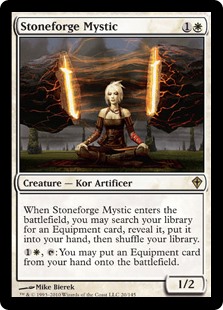
Burn meanwhile, had a slower start than Tron but kept picking up results all month. For the most part it's been Burn Classic as was played in 2017 (maindeck anyway). However, an alternative Burn deck using Dragons' Rage Channeler, Mishra's Bauble, and Lurrus of the Dream-Den has been getting results too. Not more than Classic, but enough to be noticeable. I don'tĀ think this new version is overall better than Classic since it's not running Eidolon of the Great Revel, but it's too new to tell. And another reason to watch Lurrus/Bauble for future bans.

Power Rankings

Tracking the metagame in terms of population is standard practice. However, how do results actually factor in? Better decks should also have better results. In an effort to measure this, I use a power ranking system in addition to the prevalence list. By doing so I measure the relative strengths of each deck within the metagame. The population method gives a decks that consistently just squeaks into Top 32 the same weight as one that Top 8’s. Using a power ranking rewards good results and moves the winningest decks to the top of the pile and better reflects its metagame potential.
Points are awarded based on the population of the event. Preliminaries award points for record (1 for 3 wins, 2 for 4 wins) and Challenges are scored 3 points for Top 8, 2 for Top 16, 1 for Top 32. If I can find them, non-Wizards events will be awarded points the same as Challenges or Preliminaries are depending on what the event in question reports/behaves like. Super Qualifiers and similar higher-level events get an extra point if they’re over 200 players, and a fifth for over 400 players. There was one Super Qualifier and a Showcase Qualifier awarding 4 points in July and no events that awarded 5 points.

The Power Tiers

Just like with population, the total points were up a lot in August. This tracks given the population, but might be surprising since there were fewer big events. Part of this was due to huge Preliminaries, but also all the events that I expected to be reported actually were. Thus August is up to 888 total points from July's 741. Once again, that's back in the typical range but still on the lower end compared to January and earlier. I could have hand-waved in some borderline events from MTGMelee and been right about average, but I decided against it. I'd rather have confidence in my sources than nice looking data. The events were just slightly too small to use, and I didn't see usable events anywhere else either.

The average points were 11.10, which would normally mean that 12 points makes Tier 3. However, 11.1 is so much closer to 11 than 12 that using the normal method feels rather dishonest. Therefore I decided this month I'm making an exception and the power Tiers start at 11. By chance, this decision didn't matter as no deck had 11 or 12 points. It was all 13 and above or 9 and below. I did a lot of agonizing for nothing. Anyway, the STDev was 19.08, which is fairly average again and again since it's so close to 19 rather than 20 round down. Thus add 19 and Tier 3 runs to 30 points. Tier 2 starts with 31 points and runs to 50. Tier 1 requires at least 51 points.

Deck Name Total # Total %
Tier 1
Hammer Time9010.14
UR Thresh8910.02
Cascade Crashers798.90
Blue Living End576.42
Elementals535.97
Tier 2
Burn475.29
Mono-Green Tron374.17
Grixis Channeler353.94
4-Color Creativity313.49
UW Control313.49
Tier 3
Jund Saga273.04
4-Color Bring to Light212.36
Mardu Rock192.14
Yawgmoth171.91
Eldrazi Tron141.58
Hardened Scales141.58
Mill141.58
Jund131.46

I'd just like to note that a rarity occurred. Every deck on August's Population list made the Power Tier. Usually, there are a few from one that don't make the other and it isn't an equal exchange. Some months more decks make it on population than power, other's the other way around. To have the exact same decks though in very different orders for both is atypical. And again points to stability in the metagame.

Surprise Arrivals

Despite falling off as the month went on, Elementals did well enough initially to still make the cut to Tier 1. Which really makes me wonder if the bad matchups were really bad enough to warrant the apparent abandonment of the deck. 4-Color Creativity and UW Control just squeaked over the line to Tier 2. Creativity has distinguished itself from predecessor Lorehold Turns by keeping the strategy of Indomitable Creativity into big creature but ditched the turns package to just win with Emrakul, the Aeons Torn and sometimes Iona, Shield of Emeria or other big finisher. Which seems like a huge upgrade to me.
UW is somewhat surprising. When Wafo-Tapa (Wato0 on MTGO) won with UW playing maindeck Chalice of the Void, I thought that the old saw that only Wafo-Tapa can win with Wafo-Tapa decks would repeat. That clearly isn't happening and it's quite a contender. I'll be watching closely to see if this is sustained, especially with a new metagame incoming. I should also note that Grixis Channeler was my pick to make Tier 1 this month given how the previous few had gone. I was completely wrong and the deck ended up underperforming compared to my expectations.

Average Power Rankings

Finally, we come to the average power rankings. These are found by taking total points earned and dividing it by total decks, which measures points per deck. I use this to measure strength vs. popularity. Measuring deck strength is hard. There is no Wins-Above-Replacement metric forĀ Magic, and I'm not certain that one could be credibly devised. The game is too complex and power is very contextual. Using the power rankings certainly helps, and serves to show how justified a deck’s popularity is. However, more popular decks will still necessarily earn a lot of points. Which tracks, but also means that the top tier doesn't move much between population and power, and obscures whether they really earned their position.

This is where the averaging comes in. Decks that earn a lot of points because they get a lot of results will do worse than decks that win more events, indicating which deck actually performs better. A higher average indicates lots of high finishes, where low averages result from mediocre performances and high population. Lower-tier decks typically do very well here, likely due to their pilots being enthusiasts. So be careful about reading too much into the results.

The Real Story

When considering the average points, the key is to look at how far-off a deck is from the baseline stat (the overall average of points/population). The closer a deck’s performance to the baseline, the more likely it is to be performing close to its ā€œtrueā€ potential. A deck that is exactly average would therefore perform exactly as well as expected. The further away the greater the deviation from average, the more a deck under- or over-performs. On the low end, the deck’s placing was mainly due to population rather than power, which suggests it’s overrated. A high-scoring deck is the opposite.

Deck Name Average PointsPower Tier
Yawgmoth2.433
Cascade Crashers2.141
Mill2.003
UW Control1.942
UR Thresh1.931
Mardu Rock1.903
Elementals1.891
Blue Living End1.841
Eldrazi Tron1.753
Hardened Scales1.753
Hammer Time1.701
Mono-Green Tron1.682
Burn1.622
4-Color Creativity1.622
4-Color Bring to Light1.623
Baseline1.56
Jund Saga1.503
Jund1.443
Grixis Channeler1.402

BG Yawgmoth beatdown/combo was the best average deck. This is probably because of it just barely making the population Tier 3. A lot of good results not getting spread around much does that. However, I think Cascade Crashers must be declared August's Best Deck. It outperformed not only the baseline but other Tier 1 decks by quite a bit. The winner of both the Population and Power standings, Hammer Time, is pretty average here, though the baseline isĀ really low thanks to all the singletons that only earned 1 point. And Grixis Channeler still managed to fall way under the baseline. A clear underperformer.
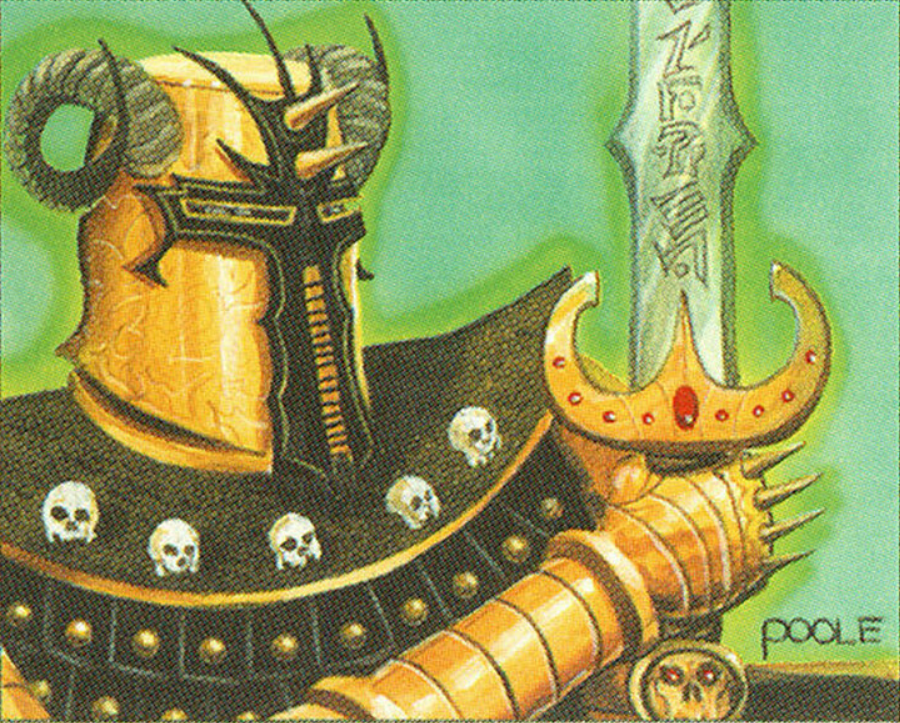

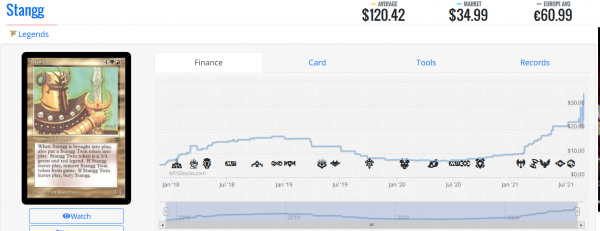
And That's the Way it Was

And with that I'm closing the door on this metagame.Ā Midnight Hunt and the soon-followingĀ Crimson Vow promise months of turbulence that will shake the relative stability that Modern had achieved in August. Or maybe they won't, we have to wait and see. But given that Consider is certain to be played in Modern, my money is on more metagame churn in the coming months.

Stealth Movement in Legends Cards

Are you a Quiet Speculation member?

If not, now is a perfect time to join up! Our powerful tools, breaking-news analysis, and exclusive Discord channel will make sure you stay up to date and ahead of the curve.

From a 10,000-foot perspective, the stock market has been soaring to new highs almost every week. In fact, there have been over 50 new all-time highs in the S&P 500 in 2021! Some Wall Street investors are sometimes concerned about the weighting of this index, however, and express the bias to these numbers.

For example, consider that roughly 17.5% of the S&P 500 consists of the five largest companies: Microsoft, Apple, Alphabet, Amazon, and Facebook. These megacap technology stocks represent just 1% of the S&P 500, yet their market caps are so huge that they represent nearly 20% of the index’s value. Therefore, when these companies climb as they have over the past year, it can distort the overall index, making the market look stronger than it perhaps would otherwise appear without those five companies.

Shifting Focus to Magic

Could something like this happen in Magic? I suppose it’s possible, though I don’t normally track card values from an index perspective. While technically such a thing exists, I don’t readily have access to an index that tracks Reserved List cards, for example. If there were such a tracker, I suspect it would be heavily influenced by the price movement in Power 9, since the combined value of those nine cards would probably make up a significant percentage of the Reserved List’s value.

Even though data isn’t tracked in this same fashion, I have been noticing small pockets of strength in the Reserved List and Old School market—this is occurring in the face of an overall correction happening. Others are also seeing this trend, including fellow Quiet Speculation writer David Schumann. Check out a post he recently made in the Quiet Speculation Discord:

Usually it’s me who is watching Legends cards like a hawk, reporting my observations to the Discord group as they come. So when someone else points out a trend in this Old School Magic set, I take notice.

And he’s absolutely right in his observation. In total, 27 Legends cards increased enough to show up on MTG Stocks’ Market Interests page for the past seven days.

The biggest movers have been the set’s creatures. Here are the top five, for example:

Stangg +69%
Sunastian Falconer +68%
Adun Oakenshield + 60%
Infernal Medusa +45%
Willow Satyr +40%

I know there are many creatures in the set, but out of the 27 movers last week, nearly half of them are creatures, and a handful aren’t even on the Reserved List. And a good number of them are uncommons as well.

Keep in mind, these are movers in ā€œMarket Priceā€, TCGplayer’s proprietary way of calculating a card’s value based on recent sales. Traditionally, it’s the ā€œAverage Priceā€ that can be manipulated by speculators and other TCGplayer sellers, posting their copies at exorbitant prices when a card has thin supply. While technically the ā€œMarket Priceā€ can be manipulated by generating fake sales, I think in general this value is the more reliable one for these Legends cards.

In other words, these cards are on the move, people are noticing, and it’s got me scratching my head.

Only Legends Cards?

While there are 27 market movers over the past week from Legends, there are only seven such risers from Antiquities. There were eight from Arabian Nights and only one single market mover from The Dark over the past week.

Granted, Arabian Nights, Antiquities, and The Dark are significantly smaller sets than Legends. Here’s the breakdown for cards in each set:

Arabian Nights: 78
Antiquities: 101
The Dark: 122
Legends: 310

So percentage-wise, Arabian Nights and Antiquities would technically have more interests over the past week. This explains why Legends gives us the impression that its cards are most noticeably on the move. More cards in the set means there are more cards that could potentially climb in price.

I don’t think that’s the complete picture, however. I really do believe there’s a trend here, and a certain pool of cards appears to be outperforming the market relative to other sets.

Consider this data point: other than the Light version of War Elephant, the top Arabian Nights market mover climbed just 20% over the past week. Likewise with Antiquities, Obelisk of Undoing was the only card that climbed more than 20%, increasing 28% over the past week.

Meanwhile, ten cards climbed more than 20% over that same time period! Now the percentages favor Legends. Ten cards out of 310 jumped over 20%, whereas only one card out of 78 and one card out of 101 jumped over 20% from Arabian Nights and Antiquities, respectively. In other words, a disproportionate percentage of cards have been selling at much higher prices from Legends than from the other three ā€œFour Horsemenā€ sets.

By peeling back the onion a little further, there’s clearly a trend here.

Card Kingdom has been gradually reacting to these market trends as well. Browsing their buylist for Legends cards, I’m seeing strength in certain creatures. Adun Oakenshield and Hazezon Tamar seem to have rebounded lately.

Notably, some of the uncommons have surprisingly robust buy prices—high enough to be worth pulling out of boxes and shipping to them. Everyone knows Mana Drain and Karakas are valuable, but did you know that Presence of the Master has a buy price of $19? Legends Kismet and Spirit Link, cards that have also been reprinted multiple times, have buy prices of $17.50 and $14.50 respectively.

Then you have the lesser Legends uncommons—those that I had no idea were worth anything more than bulk. Azure Drake, for example, buylists for $8!

In fact, out of the 114 uncommons printed in Legends, Card Kingdom is currently offering a buy price on 102 of them! Their lowest offer is $0.85 for cards like Kry Shield and Righteous Avengers.

Why Legends Cards?

There’s enough data out there that convinced me that a) Legends cards are particularly strong in this otherwise-stabilizing market and b) the movement in price is enough to catch Card Kingdom’s attention. The action here is obvious: to continue tracking Legends prices, perhaps scouring the market for great deals as people continue to pull back from their Old School inventory. After the buyouts earlier this year, there’s likely a good bit of Legends cards in vendors’ inventories, and you may catch a good deal as compared to the recent movement in prices.

Rather than rehash those oft-discussed strategies, I’m more interested in posing the question, ā€œWhy Legends cards?ā€ Why are we seeing a disproportionate amount of price rebounding from this set rather than any other?

I won’t have the definitive answer here, but I do have a guess. This speculation comes courtesy of the Old School Discord as well, where a couple of active members hypothesized that the cards are climbing because people are looking to complete their sets.

I’m inclined to agree with this theory. While Arabian Nights and Antiquities are also flavorful sets, I suspect Legends’ size makes it more challenging and enticing to collect. Whereas the more powerful Legends cards have always been valuable and highly desirable, an increase in collectorship of Legends could explain why some of the lesser known rares and uncommons from the set are on the climb.

It would have to be gradual, but over time the more people who collect Legends cards, the rarer they’ll become. Don’t forget also that there are still limited in-person events where people can bring their collections to vendors to cash out. Given how old Legends is, even uncommons from the set won’t be in your standard, everyday collection. I think the cards are old enough that most people holding Legends cards know they have something of value, regardless of the card. Even 56 of the set’s commons show up on Card Kingdom’s buylist, after all.

Wrapping It Up

Is there a call to action here? I’m never going to go out and advocate rampant speculation on an Old School set like Legends. I don’t like the impact on the market, and unless you’re purchasing the cards at an ā€œoutdatedā€ price, you’re going to have a tough time moving 30 copies of Stangg (unless it’s to a buylist).

But I do think this recent movement in Legends represents an opportunity. I would encourage readers to monitor inventory and best sellers from the set, tracking when a card is on the cusp of another jump. Just before that happens, it may be worthwhile to pick up a copy or two for your collection. As Card Kingdom’s buy prices climb, you could also browse TCGplayer and eBay inventory and attempt to find an arbitrage opportunity or two.

Don’t forget, Card Kingdom pays a reasonable percentage of their near-mint prices for ā€œgoodā€ (i.e., nicer heavily played cards) condition cards, especially on the higher dollar cards. You could very well find listings of heavily and moderately played cards—cards which collectors often bypass—and flip for a gain, especially if you’re willing to take store credit. I may pursue opportunities like these in the coming days as Legends cards remain particularly hot.

If nothing else, the call to action here is heightened awareness. There’s a subtle, underlying trend in Legends cards here that could easily be overlooked if you focus only on the big picture ā€œReserved List index.ā€ Hopefully, this week’s article has directed your attention toward this stealth move in the market, giving you more insight into an upward trend in an otherwise retreating market.

Avatar photo

Sigmund Ausfresser

Sigmund first started playing Magic when Visions was the newest set, back in 1997. Things were simpler back then. After playing casual Magic for about ten years, he tried his hand at competitive play. It took about two years before Sigmund starting taking down drafts. Since then, he moved his focus towards Legacy and MTG finance. Now that he's married and works full-time, Sigmund enjoys the game by reading up on trends and using this knowledge in buying/selling cards.

View More By Sigmund Ausfresser

Posted in Analysis, Collecting, Finance, Legends, Old School Magic, Reserved List1 Comment on Stealth Movement in Legends Cards

Have you joined the Quiet Speculation Discord?

If you haven't, you're leaving value on the table! Join our community of experts, enthusiasts, entertainers, and educators and enjoy exclusive podcasts, questions asked and answered, trades, sales, and everything else Discord has to offer.

Want to create content with Quiet Speculation?

All you need to succeed is a passion for Magic: The Gathering, and the ability to write coherently. Share your knowledge of MTG and how you leverage it to win games, get value from your cards – or even turn a profit.

You Can’t Go Home: The Unban Problem

Are you a Quiet Speculation member?

If not, now is a perfect time to join up! Our powerful tools, breaking-news analysis, and exclusive Discord channel will make sure you stay up to date and ahead of the curve.

Being unable to play with your cards sucks. No one will dispute this. What is also unequivocally true is that cards need to be banned. Sometimes Wizards makes mistakes while making cards, and the likes of Oko, Thief of Crowns proceed to wreck their havoc. Other times new cards interact with old ones in unexpected ways like cascade cards and Tibalt's Trickery. And when that happens there is always collateral damage.

Said bannable cards are typically only bannable because of a single deck with a slew of perfectly fine decks surrounding them. Mox Opal was perfectly fine in Hardened Scales but was banned due to its interaction with Emry, Lurker of the Loch and Urza, Lord High Artificer. Which leaves a lot of innocent victims, resentment, and calls for unbans afterward.

The problem with that attitude is that it frequently leaves the conversation about the banned card in stasis. Players tend to only focus on what the card was doing in their deck at the time of the ban and then argue as if things will just go back to the way they were prior to the ban. It's an understandable bias, nostalgia being what it is. However, that is a trap. And more importantly, counterproductive. The title of this article was not picked at random; once a card is banned, things will never just go back to the way they were. Modern has grown and evolved in the intervening years, said card's home won't be the same anymore.

Constant Card Creation

I think that it should be obvious, but I'm surprised by how often players I've argued with seem surprised that decks won't "just come back" after an unban. It's like they conveniently forget that new sets are released every quarter. Because of that, the format as a whole and individual decks are constantly evolving. Meaning that, should a card be unbanned to revive a dead deck, it wouldn't actually revive the dead deck. It would enable a new deck that is similar to the old one, but with new cards which would certainly change the deck, and may make it completely different to the original.

Consider Wild Nacatl. It was banned in December 2011 for being too efficient. A 3/3 for one was very far above the curve at the time. Consequently, there was little incentive to play an aggro deck that wasn't Nacatl Zoo. More importantly, Wizards was concerned about Nacatl squeezing future design space. Modern didn't exist when Nacatl was printed, and the explanation made clear that Nacatl would not have been printed as-is had Modern existed then. Nacatl's was a diversity and power level ban similar to Birthing Pod's.

When Nacatl was unbanned in February 2014, there was considerable fanfare, but not much came of it. Modern had changed so much that, while Nacatl's stats were still solid, that was no longer enough. Seven new sets had released since the ban, and Modern was a far more combo/value-oriented format (this being the start of the Twin vs Pod format). Being just a good beatdown creature wasn't enough anymore. Zoo and Nacatl were just as before, but Modern's context Nacatl lived had changed too much. A straight aggro deck was too easy to disrupt or race and Nacatl remains a fringe at best card.

Also, Attitudes Adjust

The other problem is that players change. That new players will pick up Modern and old will leave should be obvious. However, even those who remain for the duration won't be the same. Time's passed and they've grown and changed as people and players. And this in turn means that the unbanned card will be viewed by an entirely new playerbase who will have to reassess the card for essentially the first time. How they actually utilize the card will be quite different.

Consider Jace, the Mind Sculptor. When he was unbanned, players took awhile to adopt him. Players wanted Jace to be good, but Modern was a very different place from Standard and Extended, where he'd previously dominated. And then, just as Jace was starting to find footing, Teferi, Hero of Dominaria arrived and shoved Jace aside. Teferi was new, powerful, and more straightforward to use, and so saw a lot more play than Jace in 2018. I remember many players that year declaring that Jace was completely outclassed by Teferi and that Jace was a joke. While in the format context that might have been true, a lot of that was simply excitement over the new card, evidenced by Jace now seeing as much or more play than Teferi.
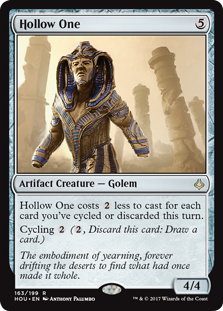
For example, the biggest impact of banning Splinter Twin was that players no longer had to play scared. Twin didn't police the format or require players to play interaction like we thought at the time. It was a dominant and powerful deck that overawed players and "forced" them to play around losing. Since Twin was banned, players have played increasingly fearlessly even against combo decks. You hear streamers and pro players saying "can't stop it, can't win if they have it, I'll just jam" farĀ more today than in 2015. It stands to reason that Twin may perform worse today than in 2015, regardless of new answers.

The Looting Issue

Which finally brings me this article's inspiration. Last week, Todd Anderson advocated unbanning Faithless Looting because he misses all the decks that were killed. As far as Todd's concerned, Looting was just caught in Hogaak, Arisen Necropolis's wake, and banned unfairly. He says about midway through that he wants Looting back because he wants to play with Looting. Further, the only problem with Looting was Dredge, and Todd argues that the only dredgers worth keeping around are Life from the Loam, Darkblast, and Dakmor Salvage. I have a number of issues with the specifics of his arguments, but the main problem is the attitude. As I stated above, you can't just rewind the clock. Being nostalgic is one thing, but if you're going to advocate for something, you can't favor how it was over how it will be. And unbanning Looting will beĀ a problem.

First though, everyone please stop asking for exchange bans. That's not how Wizards operates. They don't want to ban cards at all, and do everything they can to ensure not only that the minimum necessary bans occur but also that they won't have to revisit the issue down the line. A card which is only okay if another otherwise inoffensive card is banned instead is not an okay card. A busted enabler is a busted enabler, and banning the payoff to save the enabler threatens that at some point in the future, they'll have to ban again when the enabler breaks something new. A powerful card may eventually be fair, but a broken one will always be broken. And Looting was a veryĀ broken card.

Blame Mislaid

I understand wanting to play the cards and decks that you enjoy. However, that should never blind you to the reality of those cards and decks. By blaming Hogaak and Dredge, Todd is ignoring the primary reasons that Wizards cited in the ban announcement:

By our data gathered fromĀ Magic OnlineĀ and tabletop tournament results, over the past year the winningest Modern deck at any given point in time has usually been aĀ Faithless LootingĀ deck.

Regardless of Hogaak's recent impact,Ā Faithless LootingĀ would be a likely eventual addition to the banned list in the near future. In order to ensure the metagame doesn't again revert to aĀ Faithless LootingĀ graveyard deck being dominant, we believe now is the correct time to make this change.

In short, Looting was banned on its own merits. As Wizards stated, Looting was living on borrowed time even before Hogaak came along. Try to think back to the end of 2018 and through to Spring 2019. Or better yet, go back and look at what was being written about during that time. Specifically, I want to remind everyone that it was Faithless Looting's format and everything else was just along for the ride. Arclight Phoenix decks were the winningest decks and getting all the billing, but at various times Hollow One, Dredge, and Mardu Pyromancer were doing well. Pyromancer was never a problem and I recall and can find no complaints. However, players did complain about Hollow One and Phoenix decks. A lot. Neither deck were very fun to play against and were arguably too good. And it was all being facilitated by Looting.

Given that the winningest decks were mainly Looting decks, a diversity ban was in the cards for the red sorcery. Especially since the next two years would have plenty of graveyard synergy cards which Looting would have facilitated. Hogaak was an excuse, but the bottom line is that Wizards was very clearly thinking about banning Looting anyway before Hogaak came along. Again, look at achieved articles and discussions from 2019 and earlier. Players were talking about how powerful Looting was before even Phoenix was a thing. I called out Looting as bannable in December 2018. Don't whitewash a card's history; had Wizards not banned Looting along with Hogaak, Looting would have still been axed down the line. But itĀ was going to happen.

Let's Hypothesize

Which brings me to the most annoying aspect. Looking back on a deck or an era of Modern with rose-tinted glasses is one thing. Using said goggles to ignore reality is another. Todd is like most players I've argued with in that he used his nostalgia to push past potential problems with unbanning their favorite card, in this case Faithless Looting. He has a section specifically about how Dragon's Rage Channeler and Persist could be a problem with Looting, but he just pushes on and dismisses the concerns. Which is repeated later on with his community roundtable. And that's not acceptable.

The Channeler Effect

Egregiously, Todd was very dismissive of DRC alongside Looting. He didn't think that DRC decks would play Looting, and so there's no problem there. He's wrong. The DRC decks as they exist right now may not want Looting (but I'm pretty sure they do). However, those same decks would adjust themselves in a world where Looting exists to take advantage of Looting and the result is almost certainly dangerous. Consider a typical UR Thresh deck. Replace Ragavan with Arclight Phoenix and Serum Visions with Looting. How much easier does it get to always have a delirious DRC with early Murktide and some Phoenixes? Is that an acceptable deck?

However, the more likely result is to go all in on Looting and really push the envelope. Think back to the Izzet Phoenix decks of 2019 and add DRC to the mix. How much easier is it to find multiple Phoenixes and trigger them on turn 2? I don't have a definitive answer, but a turn 1 DRC into Manamorphose, Thought Scour, and Looting makes three surveil triggers, two milled cards, and four drawn cards for a total of 9 cards deep into the library. The odds of hitting at least 1 Phoenix in the opening hand are 40%, and another 9 cards pushes it up to 75% while the odds of hitting all four go up from .007% to 0.5%. DRC is a card I could see banned on its own merits for digging too deep too quickly, and you want to help it out?

An Extreme Case

At its most extreme, things get absurd. This scenario is extremely improbable, but it does illustrate the issue with Phoenix, DRC, and Looting:

Start with turn 1 DRC into four Mishra's Baubles. Then on turn 2 let's chain all the Manamorphose into four Gut Shot and finish on two Lootings. That is 14 surveil triggers and 12 cards drawn. That is an opening hand, draw step, and 26 chances to see Phoenix's, for a hypergeometric probability of seeing one Phoenix of 97%, and the probability of seeing all four is now 9.5%. In this most extreme case, the opponent has taken four damage from Shots, and will be attacked for 15 leaving them at 1.


Such spell sequences were possible before DRC. However, without the surveil triggers, the odds of hitting four Phoenixes drops to just 0.99%. The impact of one new card on the most busted Phoenix opening is very dramatic, making it about 10 times more likely. And this isn't considering the impact of Expressive Iteration, Lava Dart, Cling to Dust, or any of the other UBR velocity cards we've received over the past few years.

It Gets Worse

And here's a bigger problem.Ā Innistrad: Midnight Hunt is bringing Consider to Modern. Consider will be Opt with surveil 1 instead of scry 1. Enjoy Opt while it lasts, for there will be no reason to play it over Consider because a card in the graveyard is worth far more than one in the library. This adds another way to get Phoenix into the graveyard early. And if this is what's being previewed in the teasers, what can we expect from the full set? Looting is a higher risk now than ever before.

Can't Rewind the Clock

Unbanning Looting won't take Modern back to April 2019. There have been plenty of fair Mardu decks over the past year and Young Pyromancer has only rarely been played. That deck was a product of its time, and that time is past. Mardu decks are built on being low-to-the-ground, aggressive midrange decks rather than midrange control. Hollow One, Izzet Phoenix, and other Looting decks were borderline back then and likely to be much stronger now. It sucks not getting to play with your cards. But don't let that nostalgia blind you into making a poor decision. Faithless Looting earned its place on the banned list and it only gets more broken as time goes on. Leave it alone.

Why Not To Invest In Magic: The Gathering

Are you a Quiet Speculation member?

If not, now is a perfect time to join up! Our powerful tools, breaking-news analysis, and exclusive Discord channel will make sure you stay up to date and ahead of the curve.

In last week's article, we looked at why to invest in Magic: The Gathering, and how the reasons you invested shaped the methodology behind what you put your money into. We also explored some of my thoughts on what it means to invest in Magic and the differences between investment and speculation. Regardless of whether you agree or disagree with my perspective, there are some fundamental questions you need to ask yourself before throwing money into Magic cards.

Do You Believe In Magic: The Gathering As A Product?

This is the first question that needs answering. Regardless of what you choose to invest in, be it Magic cards, vintage video games, or the stock market, belief backed by strong evidence is necessary when putting money into any type of investment. No one should be putting money into a stock, product, or endeavor which they do not believe in. If you are going to buy into Magic, for however long a time frame in which you want to operate, you need to do so with the understanding that you believe in Magic as a product, whether you play the game yourself or not.

It bears repeating that I consider Magic to be one of the greatest, if not the greatest, game ever created. If you've read my previous articles, you know that I invest in the game primarily as a player, but that I trade, invest, and speculate heavily on the side as a means to finance my hobby. My outlook on Magic, you can no doubt guess, is almost universally positive.

Though I would encourage you to do so, you do not need to play the game of Magic to believe in the product. Simply looking at Wizards' 2020 and 2021 record profits can be evidence enough to want to invest. If that alone convinces you to want to put money in, take a look and try to answer this next question.

Could You Get A Better Return On This Money Elsewhere?

Magic, and trading card games in general, are only a small segment of the much greater collectibles and antiques market. Collectibles and antiques themselves are part of the larger class of so-called alternative investments – investments different from your traditional ones like stocks, bonds, and cash.

When you are looking to put your money into Magic, it's important to be forthright with yourself on if the money you are planning to put into Magic cards could get you a better return elsewhere, whether it's in another collectible like rare coins, or real estate, or in a traditional investment. If you are actively worried about the kind of return you'll receive, you should think twice before putting your money intoĀ Magic, or any other type of investment. You might need to do some serious homework before committing your cash, which takes us to the next question:

Do I Have The Knowledge To Properly Invest In Magic?

If you are reading this website, and others like it, you are already actively working to answer this question. It's a more nebulous question than it may at first seem. This is because the very nature of the Magic market changes on a daily basis, much like the stock market. What was true last year, last week, or even yesterday, may not be true today. Brand new cards are released every few months, and when you factor Secret Lairs into the mix, it feels like old cards are reprinted and introduced to the market almost daily. This not only affects the value of the new versions of cards but the previously printed versions as well.

Let's look at the printing of the recent Modern Horizons 2 as an example. Prior to Modern Horizons 2, the land Cabal Coffers from Torment was an uncommon that was over $150 in March of this year (2021).

There was an error retrieving a chart for Cabal Coffers

An uncommon printing in the Planechase product, and a foil FNM promo had done little to suppress the price of the card over the years. Following the announcement of Cabal Coffers being reprinted in Modern Horizons 2 however, the price of the original Torment printing, and those small reprints went into freefall. The Torment version appears to be stabilizing at just under $50, and the other printings will likely stabilize soon as well, though all significantly off from their former highs prior to Modern Horizons 2.

If you had purchased Cabal Coffers as a long-term investment after April 2020, you likely paid significantly more for the card than they are now going for, assuming you missed the window of opportunity to sell in the last six months when you might have been able to recoup some or all of your investment. This is just one example where having the knowledge to properly invest in Magic is crucial.

Here is another scenario to consider. Perhaps you've read in the news about Reserved List Magic cards selling at auction for six-figure price tags, and you've decided you want to put money into Reserved List cards. A Google search led you to MTGStocks' handy list of everything Reserved, and you decided to buy out all of the two cheapest cards on the list, Mercenaries and Balm of Restoration.

It's a fallacy to think that just because a card is on the Reserved List, it inherently has substantial untapped value, as parodied by this Cardboard Crack comic. The reason cards on the Reserved List command the prices they do is not just tied to rarity, and the fact they will never be reprinted. It is also tied directly to their playability within the game of Magic.

This is another instance where understanding how to play the game itself is important to understand the values of some of the cards. Black Lotus commands the price it does not only because it is on the Reserved List, but because it is arguably the most powerful card printed in the history of the game. Balm of Restoration, on the other hand, is a bad investment however you look at it, summed up succinctly by the words of the character in the comic, "that card sucks."

Black Lotus commands the price it does not only because it is on the Reserved List, but because it is arguably the most powerful card printed in the history of the game.

If you're going to put money into Magic, it is important to understand what you're putting your money into, and this website can help. Quiet Speculation is a great guide for those looking to invest in Magic. Not only do we have news and insights from writers with decades in the game, but we have powerful tools and metrics for Quiet Speculation Insiders, to help them make smart decisions. More on that at the end of the article.

While we'd all rather buy Black Lotuses than Balm of Restorations, not all of us have six figures to spend on Magic cards. This leads us to the next question:

Do I Have The Means To Invest?

This might be the most important question we have to grapple with. While I love Magic: The Gathering, I have to agree with Sig's assessment from his article last week: Magic is expensive. We need to understand that before we can begin dipping into the Magic market. If you are struggling to make ends meet, or lacking in disposable income that could stand to be spent elsewhere, then perhaps investing in Magic at this moment is not the right decision.

If, on the other hand, you have a stable income, a comfortable living, and a little money on the side you'd like to do something with, putting some of that money into Magic doesn't seem like a bad idea. Before you do, though, I'd advise speaking to a financial planner or another licensed professional about your long-term finances. Don't think that putting your money into Magic cards today is going to pay for your kids to go to college, or pad your retirement until you talk to a professional, and also carefully ponder the next question.

What Are The Long-Term Prospects of Magic: The Gathering?

If you've paid attention to the YouTube Channel Reserved Investments, or any of the other sites that focus on the greater collectibles and antiques market, you'd see a much more cautious approach to Magic and similar pop-culture collectibles. In my last article, I discussed a long-term Magic investment being in the range of two to five years or more. I considered speculation to be anything held less than two years. This scale aligned roughly with both cycles of price spikes we have seen occur in Reserved List cards over the years and the frequency at which we see reprints of popular staple cards for Modern, Commander, and other constructed formats.

In the greater collectible and antiques category, however, anything held less than five years is considered speculation, not investment. Investment is seen operating on a timeframe of five, ten, twenty, even fifty years or more.

On that time scale, what do the long-term prospects of Magic: The Gathering look like? The answer to this ties back into much of the answer to our first question. The long-term prospects of Magic seem really good right now. The game is at an all-time high in terms of both popularity and profits, a year and a half into a pandemic where almost no large-scale events have occurred. Extrapolating from there as an indicator points to mostly positive futures. Even in the extremely unlikely scenario where Wizards or Hasbro went out of business, Magic would live on: either in the hands of the players or in the hands of a new owner of the property. This bodes well for us for whatever timeframe we want to have money in Magic.

What Is Your Endgame?

I owe this question to Gavin Verhey and his phenomenal final article for his Flow Of Ideas column on StarCityGames.com. "An endgame is a singular vision of the person you want to be. It is an image of you, sometime in the future, where you have accomplished your goal," Verhey wrote. The essence of the article as I've come to take it is that every action you take, every decision you make, whether in a game of Magic or in life, should always be leading you towards your endgame.

When it comes to Magic finance, being able to articulate the answer to this question should bring our discussion full circle. Whether the answer is to be able to play Modern or to make some money to put towards your retirement, you should be able to answer this question succinctly before buying a single card. It ties closely to our previous discussion on Why To Invest in Magic, and will embody the reason you collect and invest.

As we come to the end of this piece, have you been able to answer all these questions? What are other questions that come to mind when you think about investing in Magic? What other questions do you ask yourself when making financial decisions, Magic or otherwise? What other Magic finance questions are you interested in reading more about? Post your answers in the comments or reach out via Twitter or email.

Avatar photo

Paul Comeau

Paul is Quiet Speculation's Director of Content. He first started playing Magic in 1994 when he cracked open his first Revised packs. He got interested in Magic Finance in 2000 after being swindled on a trade. As a budget-minded competitive player, he's always looking to improve his knowledge of the metagame and the market to stay competitive and to share that knowledge with those around him so we can all make better decisions. An avid Limited player, his favorite Cube card is Shahrazad. A freelance content creator by day, he is currently writing a book on the ā€˜90s TCG boom. You can find him on Twitter and LinkedIn.

View More By Paul Comeau

Posted in Buying, Collecting, Finance, Free, Free FinanceTagged , , , , Leave a Comment on Why Not To Invest In Magic: The Gathering

Have you joined the Quiet Speculation Discord?

If you haven't, you're leaving value on the table! Join our community of experts, enthusiasts, entertainers, and educators and enjoy exclusive podcasts, questions asked and answered, trades, sales, and everything else Discord has to offer.

Want to create content with Quiet Speculation?

All you need to succeed is a passion for Magic: The Gathering, and the ability to write coherently. Share your knowledge of MTG and how you leverage it to win games, get value from your cards – or even turn a profit.

A Much Needed Break from MTG Finance

Are you a Quiet Speculation member?

If not, now is a perfect time to join up! Our powerful tools, breaking-news analysis, and exclusive Discord channel will make sure you stay up to date and ahead of the curve.

Have you ever fallen asleep on a train before? It’s not difficult to imagine: you blink your eyes open, disoriented. Some people look familiar and have been on board with you the whole time, while other faces are new because they got on while you were sleeping. Others departed the train while you were dreaming, getting off at their respective stops. It’s also unclear exactly where you are at first, and it takes you a few moments to recognize precisely where you’re located and what stop is next.

This analogy is an apt description of how I am experiencing (or, more precisely, not experiencing) Magic at the present moment. I am asleep. The game continues to evolve as new sets are released. At some point, some sets will rotate out of Standard. When I occasionally blink my eyes open, I see some familiar cards being played on Arena, while others are unfamiliar. But I’m still not rested enough, and I end up falling back asleep.

This has happened to me in the past, many times. I can’t remain fully engaged with Magic gameplay and the metagame nonstop. After some amount of time, I need to take a break. I admittedly burned out on the game over the last winter break, when my push for top 1200 mythic fell just short. Since then, I've shifted focus to a different game: chess.

But this break is different. This time I’m not only bored with the game, but the financial component has also been passing me by while I slumber.

My Boredom with MTG Finance

Before my current ā€œnap on the train,ā€ I would typically buy and sell at least a couple of cards every week. There would be a semi-constant flow of envelopes coming into my house—always a card to look forward to opening. As prices fluctuated, I would also be eagerly looking for opportunities to sell some cards, taking profits that I could use to either purchase other cards for my collection or build up the college fund.

Recent market activity (more like inactivity) has left me feeling bored with MTG finance. Back in early Spring, buy prices on Old School / Reserved List cards were climbing to new highs almost daily. I was excited to check MTG Stocks to see what card was bought out next. Then I would navigate to Card Kingdom’s buylist to see what cards I could sell to the large vendor for record profits. I would also scour the internet for possible opportunities for arbitrage—buying cards from one place and then selling to Card Kingdom for gain.

Since April, prices have retraced significantly. For example, consider one card I have been holding for a while now: Eureka.

There was an error retrieving a chart for Eureka

I purchased a lightly played English copy of the card back on June 11, 2020, for $323.13. At the time, I sensed a gradual disappearance of the card and noticed only a few lightly played and near mint copies were left on TCGplayer. My love for the artwork and the artist (Kaja Foglio is my favorite) was enough to motivate me to purchase the copy.

Less than a year later, in April 2021, Card Kingdom’s buy price on near mint copies of Eureka peaked at $780. Assuming an EX grade, that would mean my copy could fetch me $702, more than double my purchase price 10 months earlier! This was peak temptation for me—while I love the card, I’m currently not playing it in a deck, and it’s hard to overlook a significant profit like this. Just think of what I could do with that kind of money (consider my article from last week where I explain how expensive Magic cards are relative to goods and services outside the hobby).

For whatever reason, I resisted the temptation to sell—the card remains in my collection to this day. Instead, I sold other high-end Old School cards as their prices peaked: Moat and Candelabra of Tawnos are two examples.

There was an error retrieving a chart for Moat

There was an error retrieving a chart for Candelabra of Tawnos

Today, Card Kingdom is still the top buyer of Eureka, with a $585 buy price. Now my EX copy will fetch me $526.50—a far cry from the $702 offer they had for a brief moment earlier this year. If I didn’t want to sell for $700, it’s very unlikely enough has changed to make me want to sell for $175 less. Thus, the card remains in my collection.

This is a pattern most of my current collection follows. Nearly every card I own could have been sold for more money earlier in 2021. But I didn’t cash out, and now I’m being offered lesser amounts for each one. If personal attachments to the cards kept me from selling at their highs, I certainly don't want to sell now at lower prices with those personal attachments still present. Thus, the number of cards I’m actively selling today is near zero.

On the other side, I am also unmotivated to be a buyer in today’s market. For one, I already picked up most of the cards I was looking for while the market was booming back in the spring. But more importantly, prices haven’t retraced enough to make me a motivated buyer. They’re still elevated, and they still have some room to fall further. I don’t wish to catch the proverbial ā€œfalling knifeā€ and purchase an asset while its price is dropping.

While I don’t pretend to be able to predict the precise bottom, with Magic prices, there should be sufficient time in a ā€œlocal minimumā€ to purchase cards opportunistically before a price rebounds. Ā There’s no need for me to rush out and buy.

Thus, I’m in this limbo where I don’t want to buy cards and I don’t really want to sell many cards. I’m content to be asleep.

The Magic World is Passing Me By

While I take a soft reprieve from Magic finance, I recognize that the world is passing me by. I used to visit a couple Discord servers multiple times a day—the Old School Discord group was one of my favorite places to browse for the buy and sell threads. What a great way to keep my finger on the pulse of the market!

But I find myself rather uninterested in any Discord channels involving Magic these days. I’ll still check them occasionally, maybe once a day or once every other day. But you know what I realized? Despite ā€œmissingā€ numerous sale posts, I find I’m not really missing much. Cards come and cards go, but it’s the same beat to a slightly different tune. It’s constant enough to lull me to ā€œsleepā€.

There was an error retrieving a chart for Apathy

I sit here and ponder what it would take to reinspire me, and motivate me to buy and sell cards once again? I believe there are three things that can help reinvigorate my interest in the hobby:

  1. The return of MagicFests, with a significant one being hosted within a couple hours’ drive from my home. Such an event would give me the chance to liquidate cards in person for immediate cash—even I can’t resist the feel of $100 bills in my pocket. Eureka wouldn’t stand a chance, even if the best offer I receive is a far cry from the April 2021 peak.
  2. A new wave of Reserved List speculation and buyouts. This isn’t something I’m exactly clamoring for, but if another round of buyouts were to take place I would definitely act opportunistically. Next time we have a spike in interest, I’ll probably sell more aggressively than before.
  3. The passing of time. In an ironic way, if the Reserved List market calmed down and reached a steady state, I’d also be tempted to do some more selling. I’d prefer to sell into buyouts, of course, but if it became apparent that prices were going to remain stagnant for months to come (I’m not exactly sure how I’d know this, mind you), I’d be tempted to trim back the portfolio so I can allocate more money toward the college account.

While I sit here and wait for one of these three events to unfold, I’m content to keep my eyes closed and let the world of Magic continue to pass by.

Wrapping It Up

This was a rather personal, introspective article this week. I hope folks appreciated the transparency of the piece—it’s a reflection of how I feel in this current, ho-hum market environment. I’m curious to hear if others are feeling a similar sense of boredom with Magic, or if its perhaps local to a certain subset of the player base. If you feel comfortable, please reach out to me in the Quiet Speculation discord or on Twitter (@sigfig8) and share your feelings on the matter.

Before closing, I do want to take my transparency one step further and highlight a few cards that I have sold recently. After going weeks without posting anything for sale, I decided to cash out of a couple of key cards to raise cash for the college account.

A couple weeks ago, I buylisted a couple cards to Card Kingdom, including my Alpha Nether Shadow, Acid Rain, and Wolf Pack. Then, after a favorable round of grading from Card Kingdom, my interest in selling was momentarily piqued. So I buylisted my Elephant Graveyard and Beta Fire Elemental to ABUGames. Lastly, I saw someone in the Old School Discord was looking for Beta rares, so I shipped them my Raging River for a fair deal.

There was an error retrieving a chart for Raging River

These were the first sizable sales I made in quite a while, and I’ll admit it’s waking me up a little bit. After zero transactions for a couple weeks, the feeling of receiving cash in my PayPal account is enough to make me want to pursue further sales. I suppose this is a fourth reason I'd be motivated to re-engage with the market--that feeling of selling cards and accumulating PayPal funds is addicting.

But at the moment, there’s not much else I’m tempted to sell given current prices. So while I may not be completely asleep to the hobby, a more precise analogy would be a light ā€œdozing offā€ while riding the train. I open my eyes frequently enough to be aware of the world passing by, but not so alert to pick up on every motion.

This mode of operation feels comfortable to me at the moment, and I’m disinclined to change things in the near term. Of course, with the passing of enough time, anything is fair game. Until then, though, I’ll enjoy catching up on some sleep.

Insider – Uncommon Report #2 – Return to Ravnica

Are you a Quiet Speculation member?

If not, now is a perfect time to join up! Our powerful tools, breaking-news analysis, and exclusive Discord channel will make sure you stay up to date and ahead of the curve.

As I mentioned in my last article, I wanted to start reviewing sets specifically covering uncommons whose market price exceeds $1.49. I go through a lot of bulk and it is very important when doing so to know which cards are worth picking out and setting aside. Knowing that I'm not the only one in this position, I'm taking the opportunity to both inform QS readers and refresh my own knowledge relatively consistently by covering which commons and uncommons are more valuable than bulk.

Due to the far higher number in existence of commons, it tends to take a lot more demand for them to hit this price point. I will point out any commons to also be on the lookout for in each block review, but the focus is mainly on uncommons, as they have a higher price floor and more potential to break out of the bulk status simply due to there being only three per pack.

Today, we will focus on Return to Ravnica block, which includes Return to Ravnica, Gatecrash, and Dragon's Maze. Ravnica is a fan favorite and WotC's return to it made it a big hit with both casual and competitive players alike. The first reprinting of the shock land cycle made sure packs were opened in droves, and I can honestly say that Return to Ravnica is the set I spent the most money I have ever spent cracking boxes, having purchased an entire case for my own personal use. While I'm enjoying this stroll down memory lane, I am sure most of you want me to delve into the financial aspects, so without further ado.

Return to Ravnica

There was an error retrieving a chart for Sphere of Safety

Sphere of Safety was a pet favorite card of mine from this set. While I loved playing Standard at the time of RTR, the best deck was Jund, and I played that.

Sphere is a card whose power level is heavily influenced by synergy. If there aren't many enchantments worth playing at the time it falls by the wayside, but when there are, it can be extremely powerful. There is a reason that Propaganda, despite seven printings, is still a $4 uncommon.

Sphere of Safety typically reads like a one-sided Moat against many Commander decks, and it is often a very important card in the decks that play it. It was reprinted in Commander 2016, but that isn't really a mass reprint, as it only came in the Stalwart Unity deck.

The biggest risk to this card is that its demand is almost exclusively from Commander, so any mass reprint will likely kill the value, thanks to Commander decks only ever needing one copy.

There was an error retrieving a chart for Vandalblast

Not surprisingly, our other $1.50+ uncommon from R\TR is another Commander staple. More interestingly, this card has been reprinted four times, though two were Commander products and the other is Time Spiral: Remastered, none of which I would consider a mass reprint. I personally put a copy in every deck that plays red, thanks in large part to the prevalence of artifacts in Commander games. The fact that, unlike Shatterstorm, this card doesn't harm your own board is huge.

Watchlist – RTR

There was an error retrieving a chart for Shrieking Affliction

Shrieking Affliction has managed to dodge any reprints since its inception and is a four-of in the modern 8-Rack decks. While those style of decks rarely tend to be the best in any given format, they have a cult following, and they can prey on slower metagames. Should a modern 8-Rack deck do well in any major tournament, this is easily a card that jumps to $1.50 as players rush to pick up copies.

There was an error retrieving a chart for Golgari Charm

Golgari Charm – We already saw Izzet Charm skyrocket during the days of U/R Phoenix decks dominating Modern, so we know that with the right demand, the versatile charm cycle from RTR block can be worth money. That being said, Izzet Charm was a four-of in the deck, and most of the other options are far more likely to be a one- or two-of.

This chard has four additional reprintings, with theĀ Ultimate Masters one being the one most likely lowering the potential price ceiling. The reason I like this card though is that all three modes can be extremely relevant in any given game of Commander. Many of the charms in the cycle have one or two good modes, but few have three modes that are equally valuable.

There was an error retrieving a chart for Rakdos Charm

Rakdos Charm is another of the charm cycle which has three good modes for Commander games. Unfortunately, it too has seen a significant number of reprints, though in this case, all five are in somewhat limited-run products. A lot of more casual Commander players dislike running cards whose sole purpose is graveyard hate due to the fact that plenty of Commander decks have no use of their own graveyards. The ability to run graveyard hate when needed, but also artifact destruction and a powerful token army hoser makes this an auto-include in any R/B/X deck I build.

Gatecrash

There was an error retrieving a chart for Boros Charm

Boros Charm is arguably the highest-damage two-mana burn spell we have. It's one of the primary reasons that burn decks in modern splash for white. It's a very efficient Charm that also has a powerful anti-wrath mode that comes in handy as well. It currently has seven reprints, though only Commander Legends as a mass reprint, though that actually poses a bigger challenge because a foil extended art option is now available, which may eat into the demand of the original Gatecrash option.

There was an error retrieving a chart for Skullcrack

If Boros Charm wasn't enough for burn players, Gatecrash also brought us Skullcrack, which while usually not a four-of in Burn decks, it can be critical against certain archetypes. The "damage can't be prevented" clause is extremely relevant when facing down any creatures with protection from red.

There was an error retrieving a chart for Rapid Hybridization

Here we have our lone Commander staple from the set. This remake of Pongify serves as one of a very small number of solutions that mono-blue decks have to permanently deal with a creature. While it has had three reprints, all of them have been in either Commander decks or a Guild Kit, which means minimal supply was added to the overall market.

Watchlist – GTC

There was an error retrieving a chart for Alpha Authority

Alpha Authoritytends to find a home in green-based Commander decks that have a hard time functioning without their Commanders on the battlefield.

There was an error retrieving a chart for Orzhov Charm

Yet another charm from this block, Orzhov Charm has two very powerful abilities- reanimation and unconditional removal. With the low curve of decks like Death's Shadow in modern, this card's potential only grows with every powerful one-drop WotC prints. The fact that the removal half costs you life actually fits really well in a Death's Shadow style archetype. This is the type of card I could see pulling an Izzet Charm and spiking to $2 if it ever shows up as a four-of in a modern decklist.

Dragon's Maze

Poor Dragon's Maze was a very unloved set. It didn't help that the power level of the set as a whole seemed completely toned down with the only breakout star being Voice of Resurgence, which in its heyday was a $50+ card – and the only card you could open in a box of Dragon's MazeĀ to make your money back.

Back in late 2019 and early 2020, this card was selling for over $3 a copy, but due to a lack of in-person events throughout 2020, its price has dropped considerably. It also doesn't help that it is usually only a one-of in Legacy and Modern sideboards, but it is an important one serving as a nice utility answer to a lot of potential problems.

Watchlist – DGM

There was an error retrieving a chart for Debt to the Deathless

Thanks to cards like Cabal Coffers and Crypt Ghast, black Commander decks can often generate large amounts of mana, so mass life-drain spells tend to be popular ways of winning all at once. The fact that this card doesn't target and also has the word "double" on it adds to the power level. One must only be able to generate 24 mana to kill any number of opponents at 40 or less life, and it can often be used as a simple way to pad one's own life total when necessary.

Want Prices?

Browse thousands of prices with the first and most comprehensive MTG Finance tool around.


Trader Tools lists both buylist and retail prices for every MTG card, going back a decade.

Quiet Speculation