Are you a Quiet Speculation member?
If not, now is a perfect time to join up! Our powerful tools, breaking-news analysis, and exclusive Discord channel will make sure you stay up to date and ahead of the curve.
On a daily basis, I review MTG Stocks’ Interests page to track the largest movers in the market. This tracking doesn’t necessarily help me get in front of trends, but it at least keeps me abreast of market dynamics. This is valuable when constantly buying and selling cards.
One sub-page of MTG Stocks I don’t review nearly as often is the All-Time Highs/Lows page. But in reality, this is arguably the more valuable summary to review. Often times a card is bought out and its price is temporarily warped, making it seem ridiculously high on MTG Stocks.
That card may be hitting its all-time high, but that high only lasts one day. Most frequently a card that spikes proceeds to retract in the days following the buyout. Therefore, such cards don’t appear on the all-time high list for more than that 24 hour period, making most cards on this list a better representation of what is actually sustaining higher prices.
This week I’m going to review this underutilized page and flag cards that I think are a buy at all-time highs and cards I’d consider a potential sell. Such a review will reveal my thought process as I assess some of this market’s strength.
Buying at the Highs
To start, here’s a partial list of June 23’s all-time highs, which is the list I’m referencing for this week’s article:
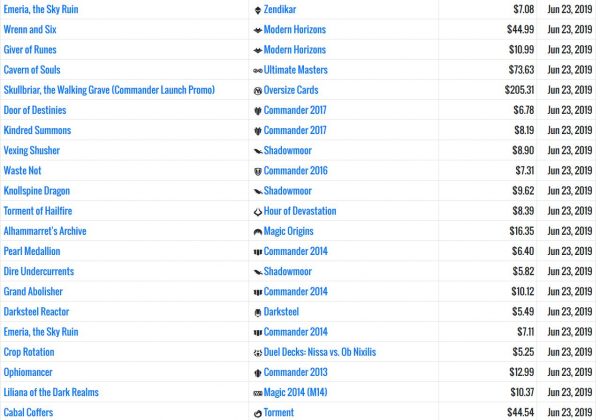
I want to focus first on the Modern Horizons all-time highs: Wrenn and Six and Giver of Runes. Both of these cards are making waves in tournament play, and their recent movement is a reflection of how easily a Modern Horizons card can pop. With the higher MSRP, the overlap with Core 2020 and War of the Spark, and so many single-printing cards, Modern Horizons is a gold mine of potential profits. A card from this set need only have some success in a Modern or Legacy list, and its price can pop like a coiled spring.
With this backdrop, I’d consider these two cards worth holding. I’m not that excited about them now that they’re $40+ and $10, respectively, but I don’t see them giving up recent gains either. It’s hard to buy a card at its all-time high, but if you want these for play I don’t think waiting around will do much unless you think their impact on Modern and Legacy will evaporate…in which case, why would you want them to begin with?
Another card on this list I would still buy at highs is Pearl Medallion.
In reality, the full cycle of Medallions is hot right now with Sapphire Medallion leading the charge. Card Kingdom has fairly aggressive buy prices on the Commander 2014 printings of these artifacts, and they are EDH gold as far as I’m concerned. Even though only Pearl Medallion showed up on June 23’s list, I see Jet Medallion hit its high June 22 and Sapphire Medallion hit its high June 19.
Unless Wizards does another mono-colored cycle of Commander decks (not likely), I don’t think they’d randomly throw these in a subsequent Commander product. I suppose they could show up in a Standard set at some point, but this is also doubtful.
Speaking of popular Commander cards, it’s not surprising to see Omnath, Locus of Mana hitting all-time highs. Wizards keeps printing new versions of Omnath—Omnath, Locus of Rage in Battle for Zendikar and Omnath, Locus of the Roil in Core Set 2020—but other than one From the Vault product, they won’t reprint the original version from Worldwake. This naturally drums up interest in the original version and I expect all three work well together in a Commander deck. Let’s not forget how rare mythics are from Worldwake, too. That set was released nearly ten years ago at this point, during a time when Magic wasn’t opened in the quantities it is today.
Selling Into The Highs
I don’t have a crystal ball and there’s no way I can predict what cards will be reprinted and what cards won’t be. But my thesis for selling certain cards at all-time highs boils down to two simple factors: a card is expensive due to being old and seldom reprinted, and it doesn’t have demand in formats where four copies are played in a deck.
One example of such cards is Alhammarret's Archive.
After bottoming throughout 2017, this card has steadily climbed to its current all-time high and is closing in on $20. The card seems like a casual player’s dream, doubling life gain and card draw is something we all appreciate. I know better than to blindly trust EDHREC’s numbers, but it appears the card does have some utility in Commander. That said, it’s not ubiquitous in the format and it definitely doesn’t see play in Modern or Legacy. So why is the card so expensive? The card was printed once, as a mythic rare, in Magic Origins—a four-year-old set that wasn’t opened a ton.
If the card continues to dodge reprint, then of course Alhammarret's Archive’s price can continue to steadily climb. But this seems like an easy card to reprint, either in a supplemental Commander set or even in Standard. After all, the card isn’t exactly too dangerous to put back into Standard, and it seems like low-hanging fruit for WotC if they’re looking to juice a set’s EV a little bit. There’s no need to panic sell this one, but you should be aware of its high price tag and vulnerability.
The next card on the all-time high list I’d consider selling is Ophiomancer.
This is a Gray Ogre that gives you one 1/1 snake. I suppose this is effective as a chump blocker, and you get the snake back every upkeep, meaning you can block each of your opponents’ biggest attackers (without trample). Or, more likely, you could sacrifice the snake to some greater effect every turn. But this card isn’t in many Commander lists on EDHREC. I suspect its price tag of $13 is due to its single printing back in Commander 2013.
I suppose if this dodges a reprint another six years, it’ll be more expensive than it is today. But it’s certainly easy to throw in a future Commander product. If I owned any copies, I’d think long and hard about the utility I’m getting out of this Human Shaman and consider converting that $13 into something more powerful or with more potential upside.
The most obvious sell on this list is Trained Cheetah.
This Portal: Three Kingdoms card was $3 for years and years and is only now, suddenly worth $160? I don’t think so. I smell a buyout. But the market price is $10, so I doubt we’ll see the Cheetah back to its former $3 price tag. That said, this card’s price is driven solely by rarity and collectability. I don’t even think this makes the cut in casual Cat decks. Sell them if you’ve got them. While you’re at it, sell Pale Bears at its high of $9 and Bear Cub at its high of $8.
Wrapping It Up
The all-time high list is really helpful in tracking real price movement of cards because it doesn’t shine a spotlight on buyouts. Sure, cards that are bought out that day show up on the list, but the majority of cards are steady climbers with real demand.
Since the stock market is at all-time highs and I’m looking to trim various positions into this strength, I thought I’d apply a similar thought process and examine which cards on the all-time high list are a buy and which are a sell. Sometimes the momentum and strength in demand are real, and a card hitting highs one day is likely to hit a new high the next. But not all all-time highs are created equally, and sometimes a card’s price gets too high for its utility and risk. An easy reprint of an obscure card printed in one set many years ago is quite risky to hold onto, and all-time highs can be an attractive exit point.
Right now, my general thought is that anything Modern Horizons is a buy or hold, even at highs. The most desirable cards from that set will be very hard to come by a couple years from now and I want to be a buyer while supply is high. Meanwhile, I’m bearish on anything related to bears (forgive the pun). I believe this trend won’t last, and even if it does, do we really think Pale Bears can sustain a $10 price tag? I’m not a believer.
Sell out of Bears, buy into Horizons, and you should be well positioned to ride higher highs and avoid any major pullbacks.
…
Sigbits
- Don’t get me wrong, there is a newfound demand for all these random Bears. But some of these prices are ludicrous and Card Kingdom isn’t chasing. They currently have a $0.90 buy price on Pale Bears and a $0.21 buy price on Striped Bears. These are certainly above bulk now, but still don’t get me all that excited.
- With recent spoilers, we’re also seeing Elemental cards gain interest from a tribal standpoint. Cards are exiting bulk and popping onto Card Kingdom’s buylist. This includes Roil Elemental ($0.80), Hellspark Elemental ($0.25), and War Elemental ($0.21). If you’ve got some time, dig through your bulk and pull out any Elemental cards you find—they just might fetch you a quarter each.
- I’m noticing a trend with International Collectors’ Edition cards on Card Kingdom’s buylist. It appears that even the most unexciting of commons are buylisting for around a buck nowadays. Healing Salve, Holy Strength, and Holy Armor will each fetch you a dollar cash if they’re near mint. It may be time to dig through your obscure websites and LGS to see if you can find any of these near bulk prices.

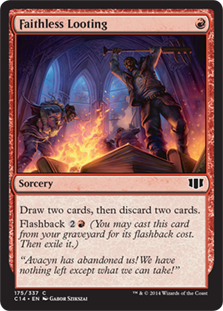
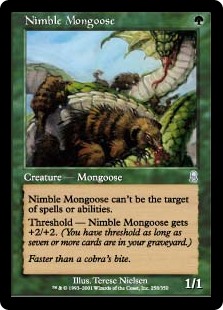 Magic is a game of resources, of which boundary-pushing card design ensures there are plenty of. Mana is but one such resource, if the most obvious; others include cards in the graveyard (Nimble Mongoose), land types in play (Wild Nacatl), life not had below a certain number (Death's Shadow), or number of cards discarded this turn (Hollow One).
 Casting Time
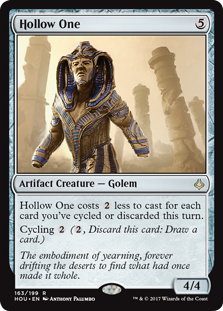 Similarly, Hollow One prices players into spending mana on the Golem during turns they discard spells, even if they've drawn another juicy castable off their Goblin Lore (say, Fatal Push). In lieu of another looting spell, they may otherwise miss out on the chance to cast their creature at all.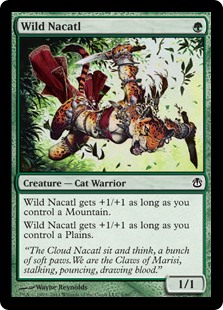
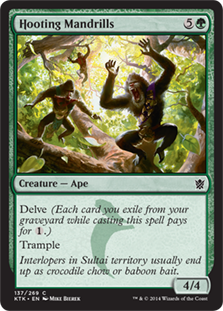
 Evasion keywords are becoming increasingly common on cheap combat creatures, but they often replace raw stats, a bad trade for our purposes. Hooting Mandrills and Delver of Secrets are the only one-drops in Modern with 3 or more power and an evasion ability.
 Of course, some removal spells slaughter beaters regardless of toughness, which is where converted mana cost enters the equation. Fatal Push may have
 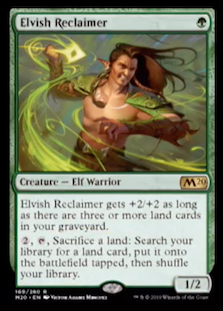 With the metrics for playability among one-mana beaters clearly outlined, we can apply this theory to existing creatures in Modern. In terms of cost, Nimble Mongoose is potentially a 3/3 with shroud that leaves used resources intact and can be played at any time. So why doesn't it see any action? Because of its low reward: Mongoose is slower than Mandrills or Angler at getting in for full damage, always soft to the common practice of graveyard nuking, vulnerable to popular sweepers despite the shroud, and with no evasion, outclassed by many of Modern's creatures. Let's apply these same principles to newcomer Elvish Reclaimer and see how the Warrior ranks.
 Resources used: None. Flying colors on this one.
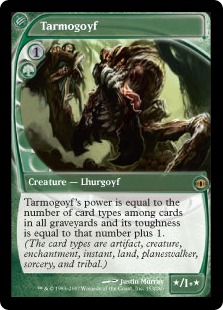 As is a common theme of my writing, I find myself sizing up Elvish Reclaimer against Tarmogoyf,
 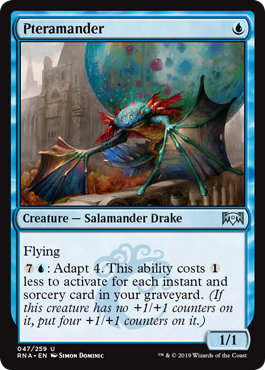 I have yet to be blown away by Reclaimer in Temur Delver, the shell I spent yesterday testing it in. But the Elf did have its moments. I'm up to 4 Scour, 4 Looting now in a bid to accelerate its development; so far, the additional cogs smooth things out considerably. They've also left me wondering if there's not a better creature to spend all that effort enabling; Pteramander
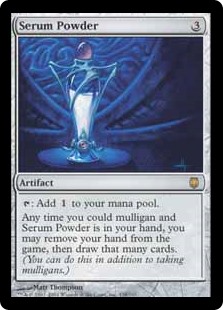 the end of the month. Even once that data is in, it will almost immediately be mooted as a metagame indicator, because the metagame will be shaken up further wiith Core 2020
 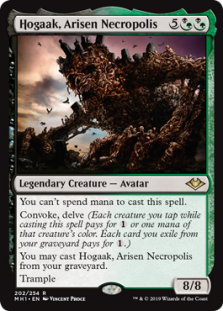 Hogaak took 10 of 32 places in the first Challenge, and six of 32 in the second. These impressive results, coupled with the potential for early kills, has already spurred
 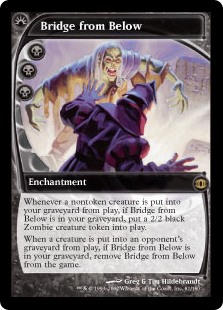 The other advantage is that Hogaak isn't a glass-cannon aggro deck. If the fast kill didn't come together or was somehow answered, Bridgevine didn't have any other options. Altar gives Hogaak
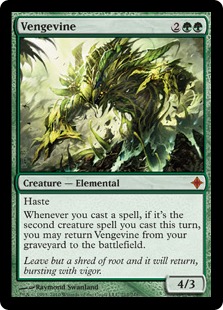
  Bridgevine had its moment
  The other problem is one that Bridgevine shared with another deck that
  metagame. It didn't last time, and the Hogaak combo hasn't made the deck better enough for me to believe that will change. Long-term, Hogaak will remain a threat, but a manageable one so long as the metagame doesn't forget about it. In the short term, I expect fewer Surgical Extractions and more broad-pattern graveyard hate.
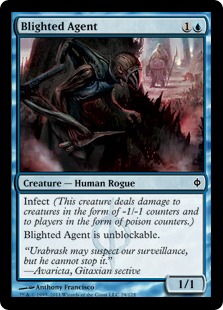 is partially that it can't sculpt the game to its advantage using information from Probe, and also because cheap removal became more common. It wasn't that hard to overcome Lightning Bolt, but Fatal Push is another story.
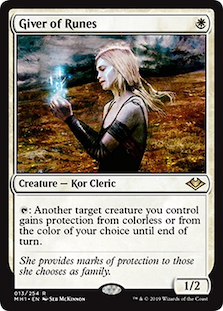
 While they haven't made the standings, I've also seen some pilots go further by playing Giver of Runes. Spellskite has long been played as creature protection, but Giver can also make creatures unblockable. True, Giver can only be used once per turn, and not immediately. But she's also cheaper and can protect from more things than Spellskite; protecting from creatures aside, Giver can save a creature from Kolaghan's Command or Pyroclasm where Spellskite couldn't, for example.
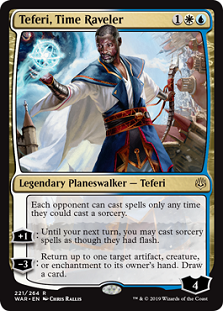
 which leaves it resource-poor, a brutal result for a critical-mass deck. Removing pump spells for Teferi or Giver arguably worsens this predicament. Scale's raw efficiency reduces the need for other pump spells, but can't eliminate it, and can make things worse should the non-stacking Scale appear in multiples.
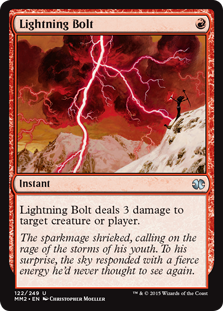 be fatal for Infect. In other words, the new cards don't alter the playstyle against Infect.
 Even if the new protection spells don't work out for Infect, I would expect the appeal of the fast kill to renew interest in the strategy. It's unlikely to become the
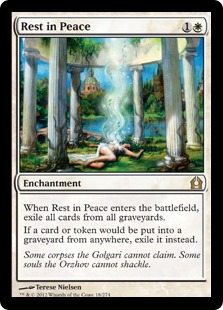
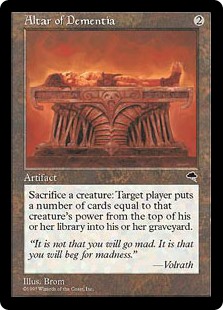 Bridgevine received two superb sacrifice outlets in Modern Horizons: Carrion Feeder and Altar of Dementia. Together with Stitcher's Supplier and Bridge from Below, these cards help generate boards of creatures faster than opponents can even deploy their Rest in Peace. Hogaak, Bridge, and Altar together have
 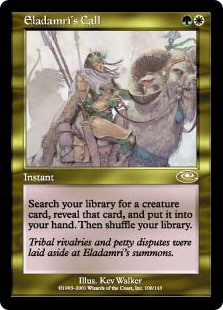 Once named for Collected Company, Abzan Vizier runs the same packages, but 0 copies of its "namesake" insant. Instead, this deck packs two newcomers to Modern in its spell slots: Finale of Devastation, a standout searcher from War of the Spark, and Eladamri's Call, a Commander-staple-turned-Modern-staple via timely reprint. All that searching, and at such an economical rate, helps Vizier assemble its combo with surgical precision, all while enabling a toolbox package rounded out by Yawgmoth, Thran Physician. The Human plays double-duty here as removal and card advantage should opponents find a way to weather or blank the combo.
 After some testing,

 competent shell, failing to produce an even-publishable Temur list.
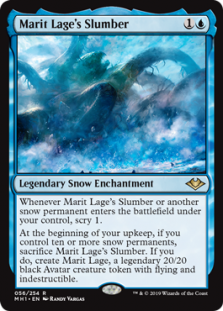 Marit Lage's Slumber is a very interesting finisher. Against control it is terrible, since they have Path to Exile and two types of Teferi to deal with the token before it attacks. It also doesn't provide the continuous card advantage of Search for Azcanta, so you'd never play Slumber in a control heavy meta. Scrying several times a turn isn't good enough in those cases. Against combo and creatures, Slumber is far better, since it threatens to win the game next turn with a massive blocker. It does take a while to fire, but in a more counter-heavy version, time would be less of an issue.
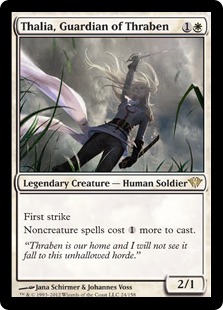 be better than the current
 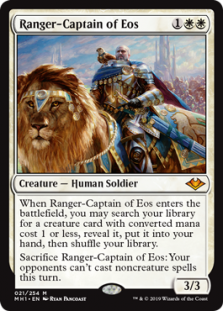 As for Ranger-Captain, the tutoring ability is okay, but not amazing. Champion of the Parish off Militia Bugler is never great, and that's realistically all Ranger-Captain finds. Tutoring is usually best used for silver bullets, and the only one that Captain can find is Burrenton Forge-Tender. Playing Eos for its stats and tutoring is asking for disappointment.
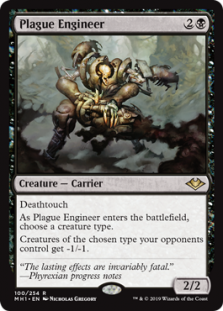 Of course, Engineer isn't the only potential inclusion from Horizons. If artifact decks make a resurgence, Collector Ouphe would make the cut. Stony Silence is incredibly powerful, but can't really be played with Humans' manabase. I wouldn't rely on Ouphe against Tron, because Damping Sphere is so powerful and useful against Amulet Titan. However, if there's a shift towards artifact combo, then a swap could be warranted.
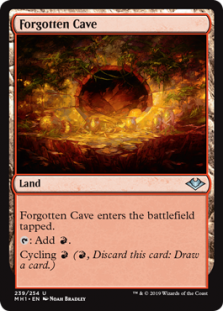 actually utilize all the extra cards can be tough in Modern, and my shell is not very good against creature decks. If you dredge away any removal spells, you tend to lose to Humans. This is a solvable problem if the deck is worthwhile enough to keep refining.
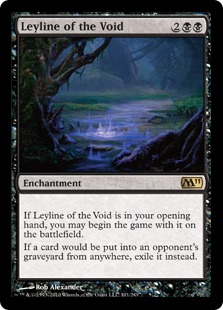
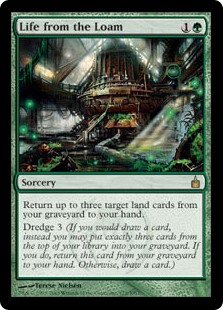 However, Modern Loam decks have to deal with graveyard hate on a scale impossible in Extended. Back then, there was only Yixlid Jailer, Leyline of the Void, and Tormod's Crypt to contend with, and only in quantity when players remembered that Dredge existed. Relic of Progenitus, Surgical Extraction, Rest in Peace, and Scavenging Ooze are everywhere in Modern in addition to Leyline. Without the graveyard, the engine can't run and the deck fails.
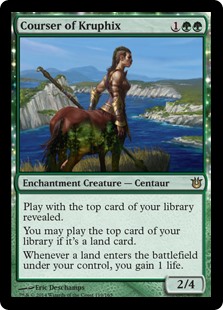 how much more it could be, I think a new shell
 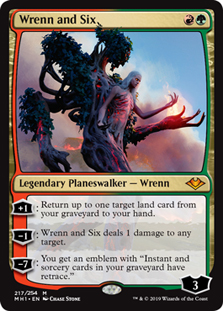 The final thing my Loam testing suggested to me was that Wrenn and Six is overhyped. Wrenn
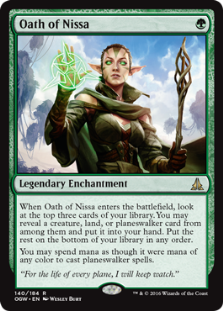 From green, the deck cribs eight mana dorks and a set of Oath of Nissa to find its combo pieces. Oath is practically Ponder in this list, whiffing only on itself, Lightning Bolt, and Remand. Nissa, Steward of Elements is also hired as a creature-finder (I saw a lot of this walker in creature-based combo decks from May's published lists). Creature dorks get the nod over the more resilient Utopia Sprawl for their interaction with Oath and Steward, and push the combo to be a turn faster.
 Replacing the chaff is a loaded acceleration package. Pentad Prism and Generator Servant join Simian Spirit Guide to give the deck plenty of ways to reach five mana a turn early. As permanents, these cards are more versatile than the Desperate Rituals of old, if also more disruptable via removal. On the plus side, they don't care so much about Damping Sphere and its ilk, which could previously shut down the Griselbrand decks.
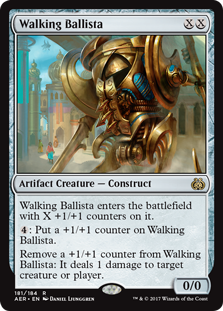 Speaking of power, Walking Ballista appears here in maximum quantity, with a functional sixteen copies in the main—once this deck does achieve infinite mana via Vizier and Druid, which it's tailor-made to do as fast as possible, any of those cards ends the game on the spot. Besides, Ballista is just good in general for a ramping strategy, especially against the disruptive aggro decks that can otherwise pose hurdles for combo (i.e. Humans).
 requiring a re-tool and giving me the impression this deck could be improved.
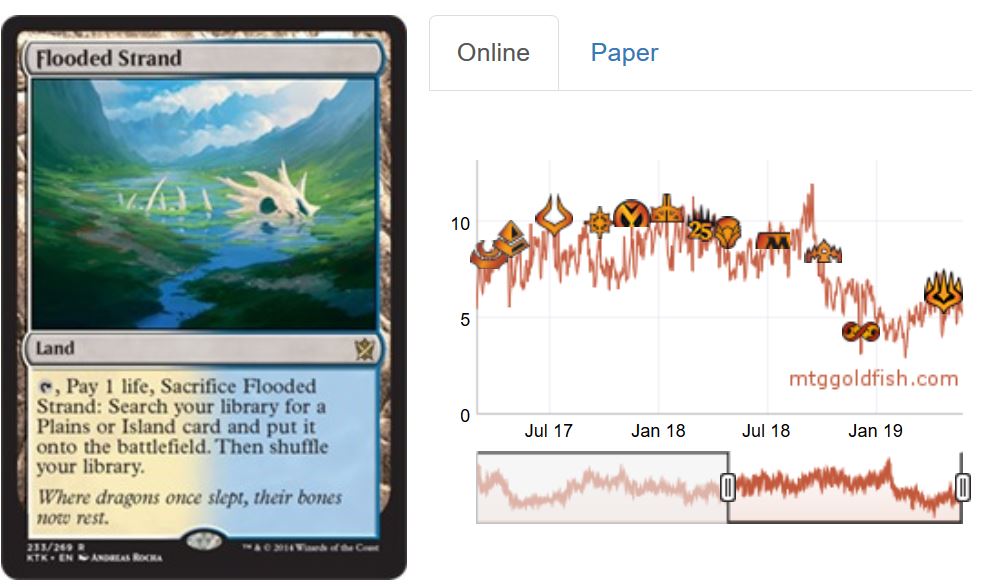
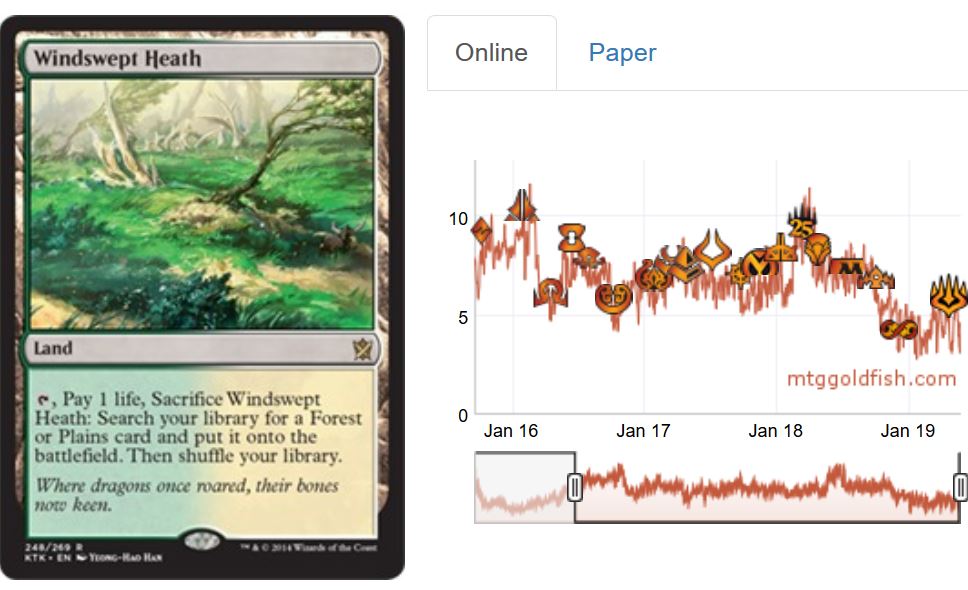


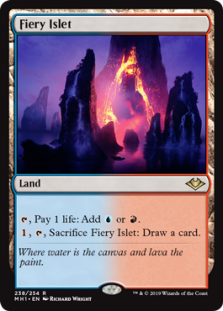 Since they were revealed, the enemy-colored Horizon Canopy cycle has received
 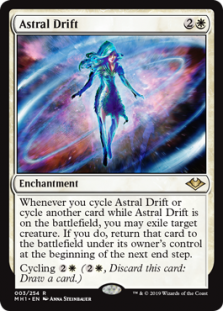 Astral Drift is Slide with upsides, and with the unicyclers back there's potential for a resurrection. However, several problems need to be overcome. First and foremost, the speed problem must be solved. The old Slide deck was glacial, and a reborn version would still need to tap out for a three-mana enchantment that does nothing on its own. If you're still alive by then, you start cycling cards to dig you deeper and blink out attacking creatures.
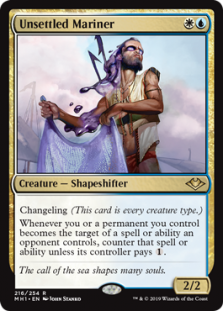
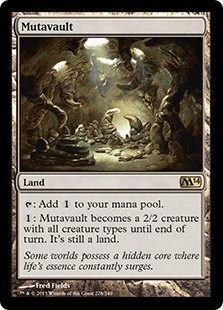 Prior to Modern Horizons, Mutavault was the best changeling in Magic.
 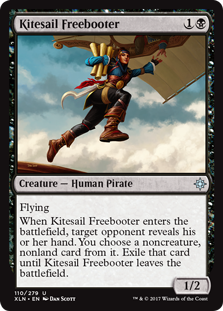 trigger. It also forces UW to actually hit its sweepers on curve rather than banking on Path and Detention Sphere buying time.
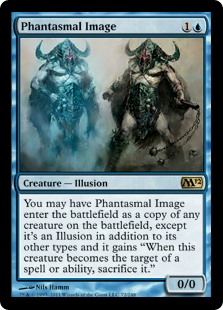 But that clause may also be the Engineer's downfall. Another part of the Humans mirror is Phantasmal Image. Image copying opposing Lieutenants and Mages is incredibly good, and is a reason there's some fear about making the first move in the mirror. It is often necessary to play Mage or Lieutenant to get the deck moving. However, doing so provides a very tempting option for Image, and that card is a four-of. If your opponent is missing a critical card, it's often a good idea not to play yours so their Image can't get them back into the game. You want to do exactly enough to win, but not enough to let opposing Images wreck you.
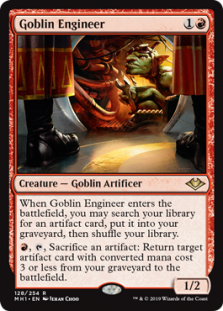 From there, Engineer can do a decent Mystic impression. If you use Engineer to tutor for Sword of Fire and Ice or similar, you can then trade it for an artifact in play, which is functionally the same as Mystic (though easier to disrupt). I could see this working as a red splash in Death and Taxes that makes clue tokens to feed Engineer. Whether this is good I can't say, but it might see some play while Stoneforge Mystic remains banned.
 I don't know how to break Engineer. A lengthy