

Are you a Quiet Speculation member?
If not, now is a perfect time to join up! Our powerful tools, breaking-news analysis, and exclusive Discord channel will make sure you stay up to date and ahead of the curve.
It is confirmed: articles on the negative implications of MTG finance are well received. Feedback was largely positive, and I really appreciate everyone’s mature and thoughtful engagement on the subject.
As I wrapped up the article last week, the momentum was difficult to halt. Rather than combatting writer’s block, I had to do the opposite—I forced myself to stop even though I could have gone on for many more words on the subject. Due to the positive reception, I’m going to explore this subject even further through a series of articles in the coming weeks. As long as feedback remains mostly positive and the ideas continue to flow, I’ll continue to explore this space.
This week will be the second article in this series and will focus on the impact of buyouts on the community and its economy. This data will be used to segue into actions that should be taken in the face of a buyout.
The Buyout Curve
We’ve all seen this happen numerous times. There’s a catalyst of some sort, followed by an overnight buyout, followed again by a rapid “race to the bottom” as sellers seek to undercut one another on price. The resulting graph looks like this:
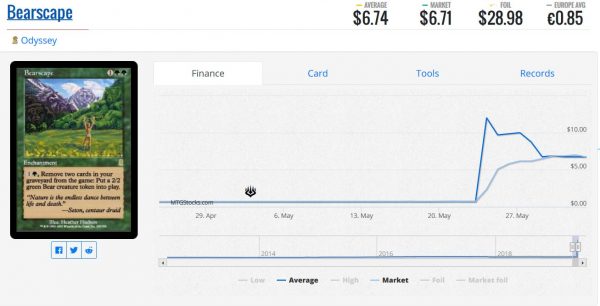
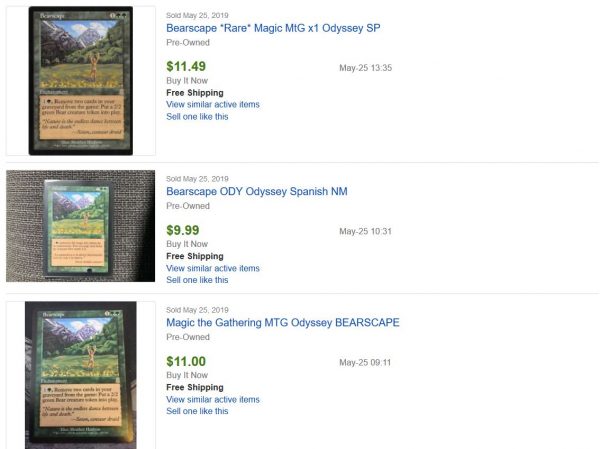
In the case of Bearscape, a virtually bulk rare shot up to about $12, only to drift back down to under $7 one week later.
This buyout, in particular, is what set me off on this article series because I perceived it to be absolutely ludicrous in nature. There is no way Modern Horizons will give us enough bears to support a massively popular bear-themed Commander deck. And even though Odyssey is an old set, it was printed quite a bit and I’m confident there are plenty of copies out there for every bear fan to obtain their copy. In short, the buyout was hype-driven and fueled by MTG finance: the chase for profits.
Now, on the one hand, the argument made by the MTG finance community about the market naturally setting the price is absolutely true…in the long term. I agree wholeheartedly that the price on Bearscape will be higher now than it was pre-Modern Horizons because of a true increase in demand. I don’t take issue with the higher price tag after a few weeks of settling. What bothers me about MTG finance is the interim period.
I break down this price trajectory further in the image below.
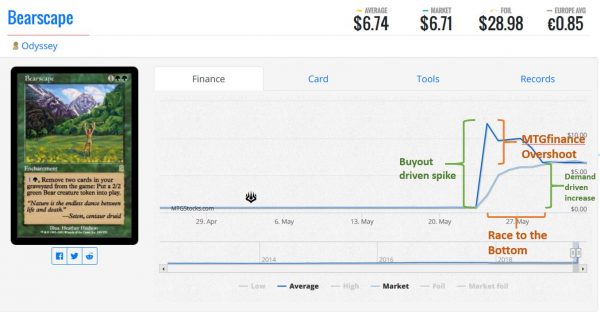
Here are the numbers:
Magnitude of initial spike: $12
Time it takes for price spike to diffuse and stabilize: 1 week
Final demand-driven price: $6
MTG finance overshoot: $12 - $6 = $6
When the MTG finance community says they are merely accelerating price adjustments that would inevitably happen, they’re right. The price is spiking overnight and will settle at a higher price than previously established, and this is a result of a natural increase in demand. Bears are pretty cool, after all.
What the speculator community doesn’t confess to is the temporary removal of market liquidity in the short-term. After buying out the market, speculators re-list their copies at an exorbitantly high price hoping to capitalize on an emotional buyer afraid they may not be able to own the card if they don’t buy it immediately. The result is an interim period where the price is too high, buyers disappear from the market, and the bid/ask spread—the difference between the least someone is willing to sell an asset and the most someone is willing to pay for that asset—becomes too large.
When the bid/ask spread grows it leads to market illiquidity. An illiquid market introduces a number of risks. Speculators sitting on stacks of Bearscapes that they’re unable to move may become desperate to raise cash. They do so by reducing prices, whether on Bearscape or some other card.
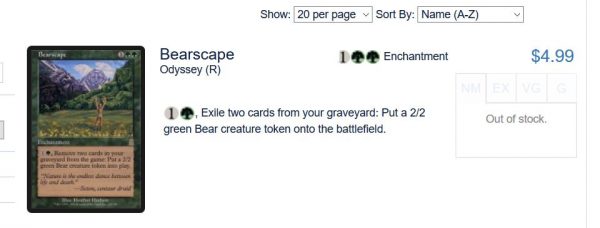
In the extreme, sellers may have to reduce prices and sell their assets at a loss to recoup liquidity, causing the market to overshoot to the downside. This volatility may be great for day-traders, but it disrupts the MTG market and leads to frustration of the masses. Even large vendors may struggle with this volatility, either remaining “out of stock” for far longer than desired or else risk overpaying for a card that is difficult to move, putting a strain on their own liquidity. In the case of Bearscape, Card Kingdom is choosing the former (the right call in my opinion). But there are other cases where Card Kingdom chased a spike, overpaid on a card, and was left holding dozens of copies unable to sell for anything but a loss. I think Star City Games does this too, at times, and I hypothesize this is why they place some of the same cards on sale every Monday.
The average person not participating in MTG finance may wonder, “Why does the price have to overshoot so much to begin with?” The answer is MTG finance, speculation, and the motivation to profit.
What Can Be Done?
A Twitter follower stated in response to last week’s column that this behavior is inherent to Magic because of its economy; it has been this way since the very beginning. To change Magic’s economy is to change Magic entirely. If its economy truly bothers someone, their best alternative is to play Magic Arena because the paper market isn’t about to change.
Since the game itself won’t change, the next best option is to modify one’s behavior to adapt to this volatile environment. Fortunately, I have some ideas to consider.
First and foremost, emotions must be kept in check. Speculative behavior nearly always creates an overshoot in price to the upside, and the worst thing that can be done is making a purchase into the spike. That is precisely what the MTG finance community is hoping for, so they can make that 1000% profit they highly covet. The fewer people who panic-buy, the quicker the price can readjust to a more reasonable level.
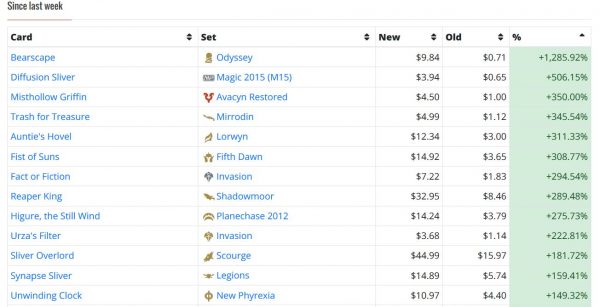
In the case of Bearscape, waiting one week to purchase the card post-buyout led to a price drop of nearly $6, a 50% discount from its peak price. Another recent buyout was Fist of Suns, which spiked to $25 for one day before quickly retracing to $13. Again, this is nearly 50% from peak to trough.
Premium cards are no different in this regard. A third example was the recent buyout of Mythic Edition Dack Fayden, which spiked from $60 to $150 before retracing down to $85. While not quite a 50% drop, you are probably starting to get the idea.
In each of these cases, the nearly-50% price retraction from buyout highs took place over the course of about a week. Thus, I’d posit that a “one week rule” be implemented whenever a buyout occurs. From the moment the card shows up with a triple-digit percent increase on MTG Stocks, wait at least one week before purchasing a copy. This same concept is implemented by many well-known traders on Wall Street, except there it’s referred to as the “three-day rule”. Jeffrey Kosnett, a senior editor from Kiplinger, puts it best:
“This prompts me to reiterate a three-day rule, my personal iron law of investing, because Brexit absolutely revalidates it. Simply put, in any news-driven market crisis, wait until the third business day after the news breaks to trade anything—bonds, stocks, funds, gold, anything. Meditate. Breathe. Savor fine wine. Just don’t obsess.”
Such behavior has been effective for Wall Street traders for years. It’s time Magic card buyers behave the same way. The overall intent of such a rule is to combat emotions and refrain from panic buying or selling. Do this, and the speculators won’t be able to profit from the hype. If no one buys Bearscapes at $12, or $10, or $8, or $6 and suddenly speculators have to flip their copies for minimal profit or risk sacrificing liquidity, they may think twice before participating in such activity again.
Wrapping It Up
I’m sick of MTG finance personalities hiding behind generic economic concepts such as supply-and-demand to argue why their buyout activity is somehow a reflection of natural trends. While I do believe the appropriate price will eventually prevail, the volatility that happens in the interim is anything but natural. These buyouts and price spikes occur because of MTG finance, and the repeated pricing patterns on graphs for Bearscape and Fist of Suns highlights this.
In every case, the price overshoots to the upside, liquidity dries up, and the market enters a period of volatility. Can this be healthy for the market? I’d argue it’s not. It feels like the market would be healthier if prices increased gradually as new Bear Commander decks slowly become built by the player base, rather than speculators buying ten copies of the card at a time with the intent to sell with a 1000% markup.
Due to the nature of this game, this activity is here to stay, which is why I recommend the one-week rule. That is, if a card spikes due to a buyout, someone interested in purchasing that card should wait at least one week before pulling the trigger. Most often, they’ll end up paying a much lower price, often 50% lower than the peak buyout price.
If more people embrace this strategy, perhaps the prices will adjust even more quickly. Better yet, if liquidity becomes too much an issue, you may see an overshoot in price to the downside as people panic-sell. It doesn’t usually happen this way—typically I see overshooting to the downside when a card’s reprint is spoiled, and the retrace to a higher price takes much longer. But with enough discipline maybe one day we’ll see it happen during random buyouts as well.
…
Sigbits
- Card Kingdom has made some noteworthy buylist increases on diamonds lately. They’re now paying $175 for both Lion's Eye Diamond and Mox Diamond. These are local highs, and I think these numbers will bump even higher as the market dries up. I have my eyes set on a $200 buylist price.
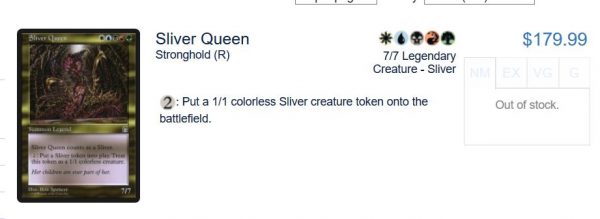
- One card that spiked and did not retrace 50% is Sliver Queen. This leads me to believe older cards—especially Reserved List cards—behave on a completely different time scale. Perhaps this merits further investigation next week. Until then, keep in mind that Card Kingdom is offering $110 on near mint copies of this card.
- The buylist on Sliver Legion is also up at Card Kingdom, showing a buy price of $60 on their hotlist. This one spiked on MTG Stocks to $140, and is still retracing at the time of this article’s writing. The market price shows as $115, but it wouldn’t surprise me to see this sub-$100 again in a week or two. A time may come when that $60 buylist would be quite attractive.
![Insider: QS Cast #125 – #EDHorizons [Unlocked]](https://www.quietspeculation.com/wp-content/uploads/2019/05/MTG-Morophon-the-Boundless-MH1.jpg)
 ability to assume the role of its archetypical opposite when necessary." There's a lot to unpack there without the context of the linked article, but in essence, reversibility is a measure of the capacity tempo or midrange decks have to switch fluently between aggressive or disruptive roles.
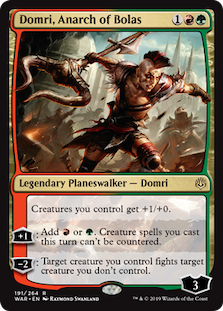 Static ability: Domri significantly improves token-producers, notably Goblin Rabblemaster, who has been with the archetype since
 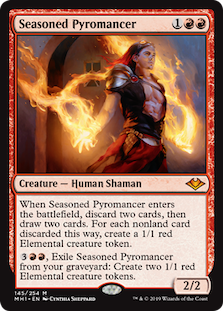 Enter the card that caused me to drop everything I was doing (um, playing Yu-Gi-Oh!) and double-down on tuning GR Moon: Seasoned Pyromancer. Like I said in the Domri article, "I don’t think [GR Moon] will upend Modern, or even close—[it has] fundamental issues that Domri doesn’t fix." But Pyromancer does fix those issues, and convincingly.
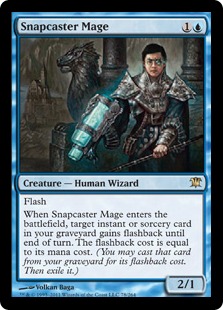 Pyromancer sifts through the hand just as fast as Looting, guaranteeing upon resolution that we'll access two new cards that turn—even when we're under two cards, something its effect has over the sorcery. But like Modern staple Snapcaster Mage, that card selection (or advantage) comes while affecting the board; any nonland card looted away becomes a 1/1 Elemental.
 into turbo-charged Tarmogoyfs, TURBOGOYF has always had a problem establishing an adequate clock. I've looked to closers such as
 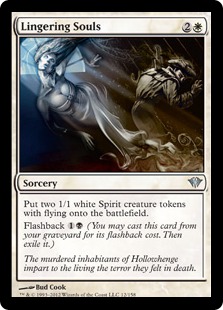 Taking stock of all the cards, that's:
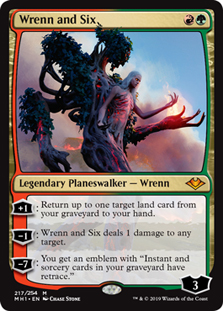 mana dorks tends to backfire if opponents immediately deal with the dork, or should a dork evade our opener. Both scenarios leave us with precious little to do on turn two. We've long thirsted for a relevant two-drop to compliment our set of Goyfs.
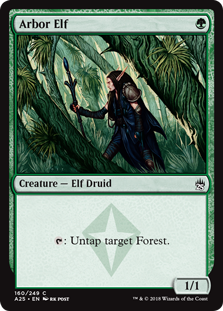 With the new curve, we have enough significant follow-up plays that we don't really care if opponents disrupt us with powerful one-shot effects. Kill the dork? Chase with Goyf or Wrenn. Remove Goyf? Punish with Rabblemaster or Pyromancer. Strip our best card? We've got enough cantrip effects to loot into more business. But opponents do need to interact with our plays—let that dork breathe and get hit with Blood Moon a turn early, or meet a turn-three Hazoret post-disruption. Having impactful plays so often is relatively new to GR Moon, and helps it feel, power-level wise, closer to a tiered Modern deck.
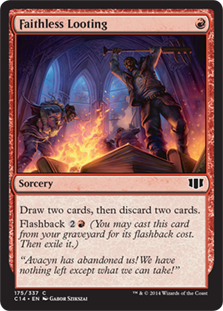 after opponents let down their shields. Both interact with the board and enable a successful long-game. The difference is that Wrenn snowballs value and eventually wins us the game, while Liliana simply strips opponents of resources. And Wrenn is 33% cheaper.
 It turns out coming down a turn earlier than we're accustomed to for planeswalkers does a world of good for the card type's final ability. Superficially, it's one more turn of ticking up; practically, though, the walker sticks before many decks have a way to pressure it, making it that much easier for us to defend through disruption or distract from it by presenting other threats. I've activated Wrenn's -7 ability multiple times as a result, and it's always game-winning.
 therefore flounder when that plan is interrupted and Tarmogoyf proves absent; etc. No more does the deck revolve purely around those two cards. It's become better-rounded in large part thanks to the strategic cohesion enjoyed by its new moving parts. As is necessary in Modern, all that
![Insider: QS Cast #124 – Before the Horizon [Unlocked]](https://www.quietspeculation.com/wp-content/uploads/2019/05/Deep-Forest-Hermit-Modern-Horizons-MtG-Art.jpg)


![Insider: QS Cast #123 – Mythic Sparking Fiasco [Unlocked]](https://www.quietspeculation.com/wp-content/uploads/2019/05/1555962272Screen_Shot_2019-04-22_at_3.20_.57_PM_.png)

 However, that doesn't appear to have happened so far. As of writing, roughly half the set has been spoiled, and nothing strikes me as overpowered.
  The first theme spoiled was the return of snow.
 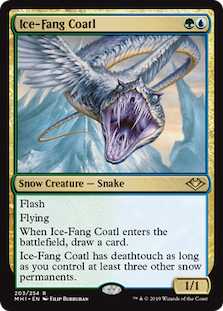 However, that's not the whole story; with three more snow permanents, the Snake gains deathtouch. This turns Coatl into an arguably better Baleful Strix, and Strix is an absurd card. In Legacy, Stix is arguably the best removal spell in the format; it cantrips, trades with everything, walls off Gurmag Angler and Eldrazi, and pitches to Force of Will. Every non-combo Dimir-friendly deck runs a set.
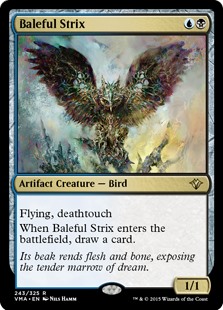 To be a better Strix, Coatl needs a lot of snow, and by extension, playable snow permanents. But there aren't. Now, there is no opportunity cost for running snow basics over regular basics. They're necessary in a deck that cares about snow and identical to regular basics in a deck that doesn't. Therefore, a Coatl deck could just run a set of Coatls and tons of Snow-Covered Islands and Snow-Covered Forests and call it a day. However, this strategy would lose the mana fixing of shocklands. Since a normal Modern manabase only has ~6 basics, running Coatl puts a lot of pressure on the mana.
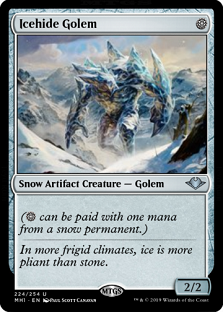 Edit: Shortly before this article went to press, two new snow permanents were spoiled. Both are potentially playable, however it won't be in the same deck as Coatl. Arcum's Astrolabe is a one-mana egg, and will only see play in a combo deck. What combo deck is unclear since Krark-Clan Ironworks is banned, but that's the only style of deck that wants something like Astrolabe. While a mana fixing egg may up your snow count, it's not the sort of card that midrange decks historically want to play.
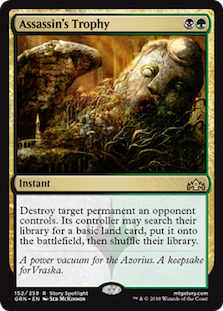 The snow lands add further tension. Fetching one of each basic ensures all colors, but makes it hard to cast Liliana of the Veil or flashback Assassin's Trophy.
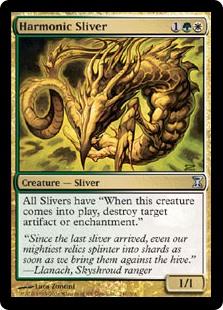 despite this because it couldn't disrupt the opponent. Merfolk runs counterspells and Spreading Seas, where Slivers just has creatures. This put Slivers in the same lane as the faster Affinity, and now means it competes with Humans.
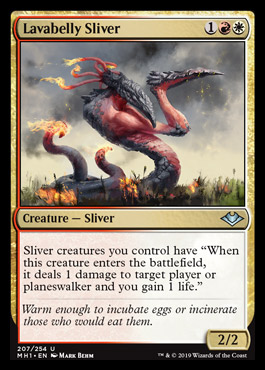
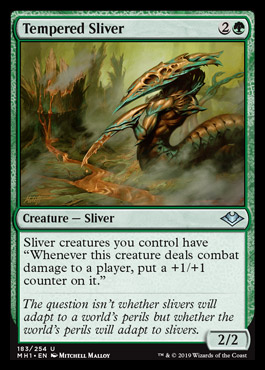
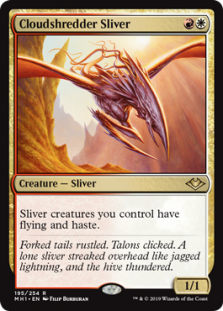 So far, the new Slivers have all been buffers rather than disruptors. This probably means that Slivers will remain fringe. If that isn't the case, it will be because of Cloudshredder Sliver, though I'm skeptical. Haste and flying for two mana should decrease the kill turn, assuming Cloudshredder survives to attack. The ideal curve is probably turn one Aether Vial; turn 2 Vial in a one mana Sliver, cast Cloudshredder and attack for 2; turn three cast another one drop and Sinew Sliver, Vial in Predatory Sliver, and attack for 15. That could be lethal. However, any removal just kills that curve, and if that's not good, enough what is?
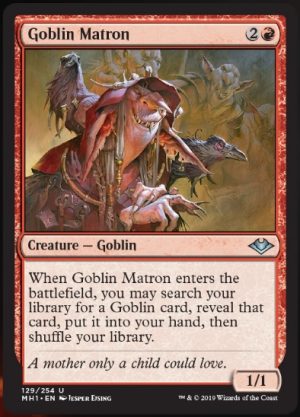
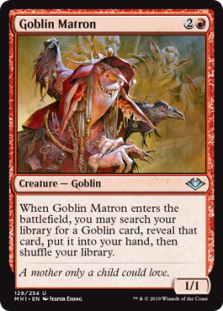 The tribal support doesn't end with Slivers. The card that I'm most excited about is Goblin Matron.

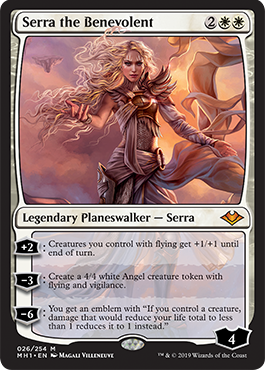
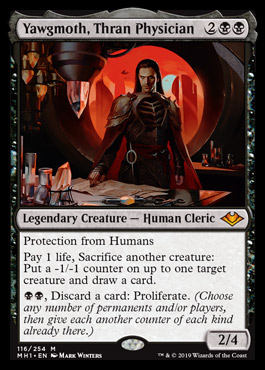
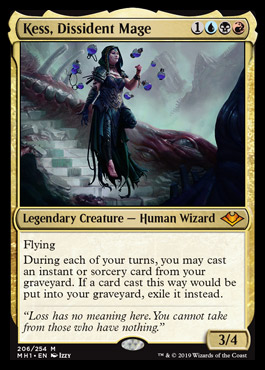
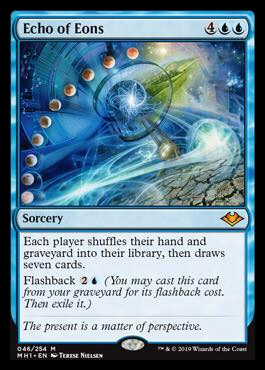
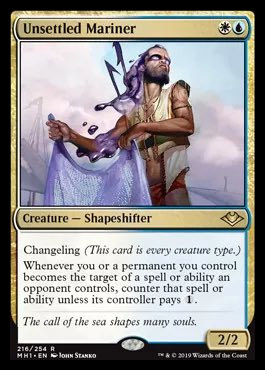
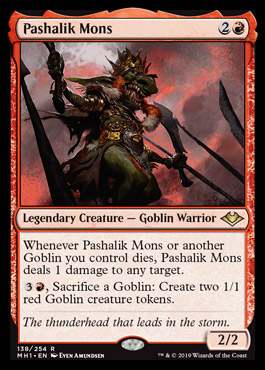
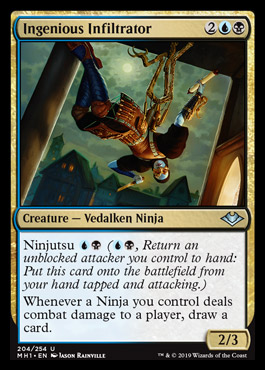
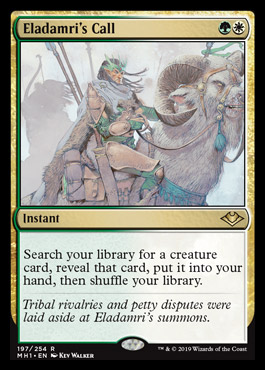
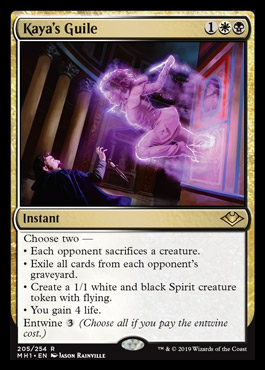
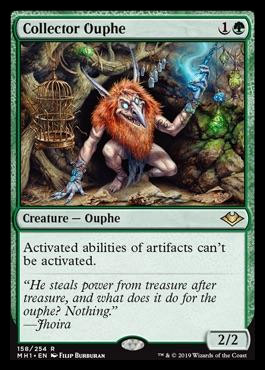
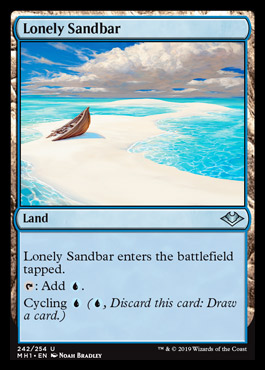
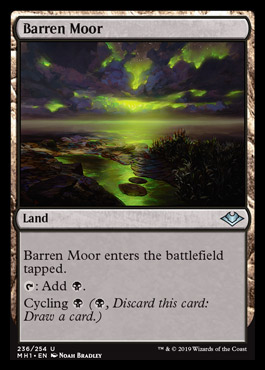
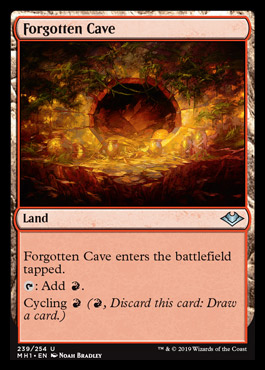
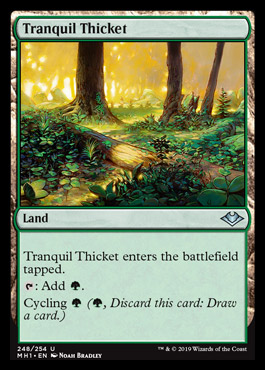
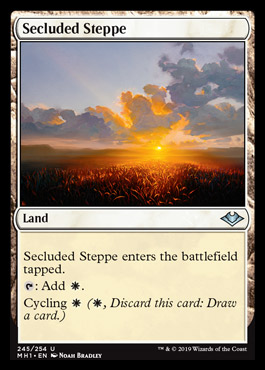
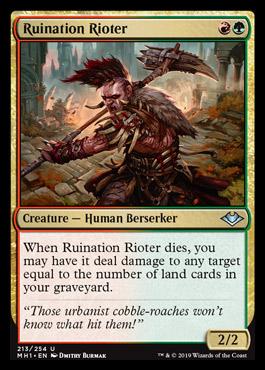
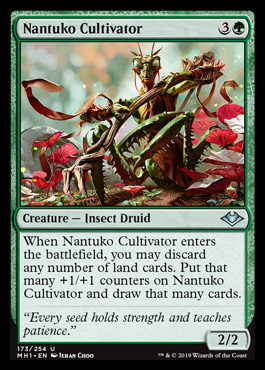
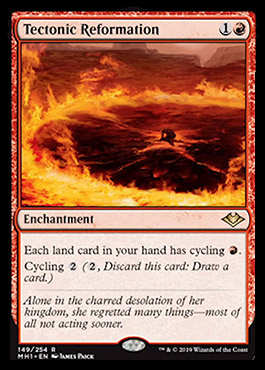
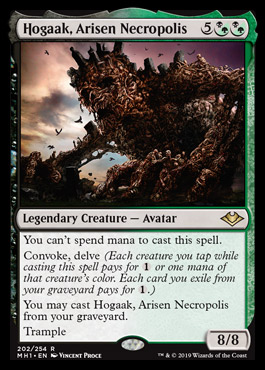
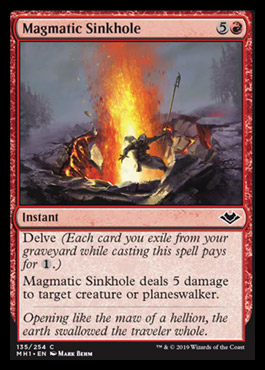
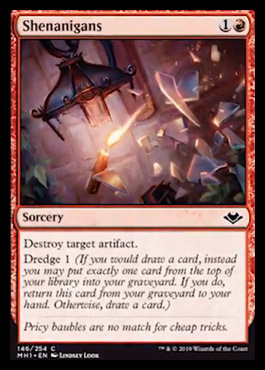

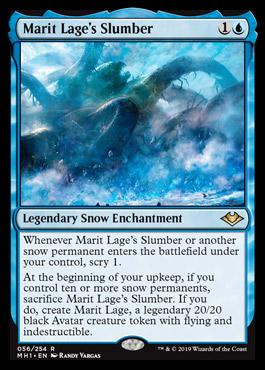
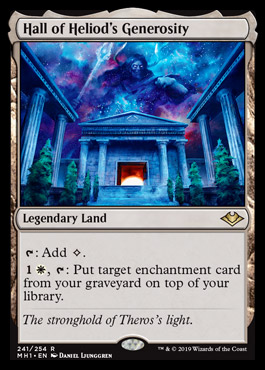
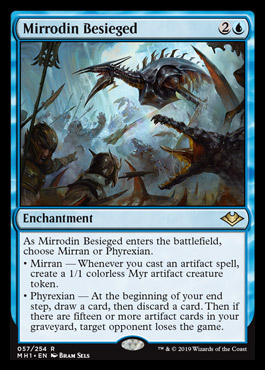
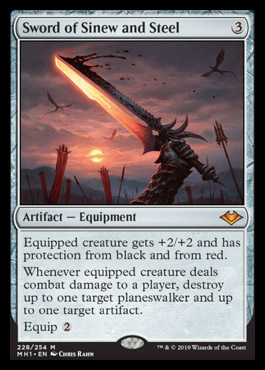
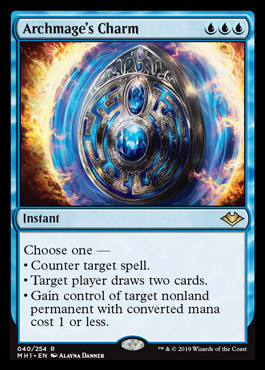
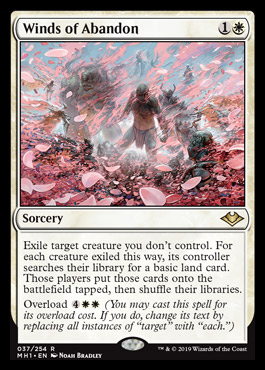
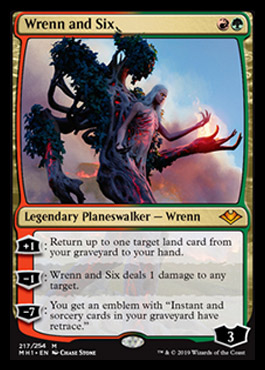
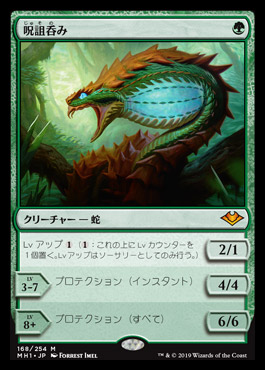
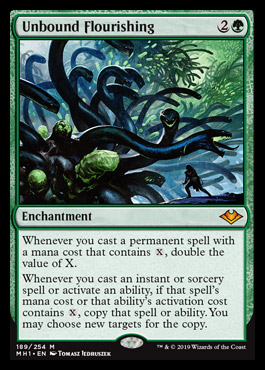
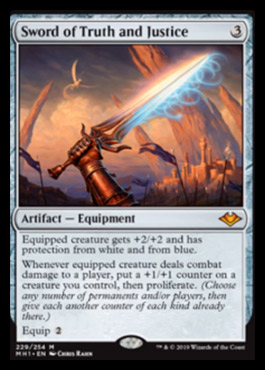
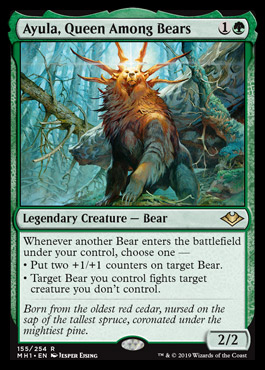
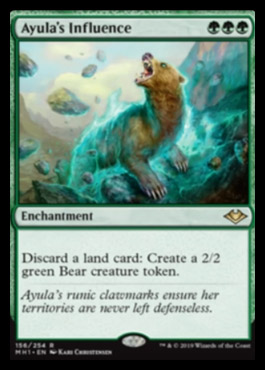
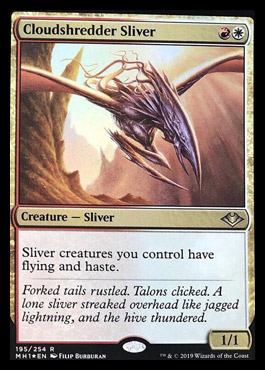
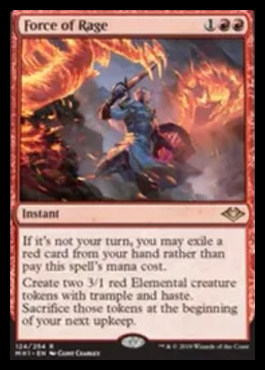
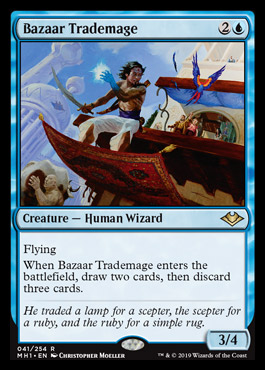
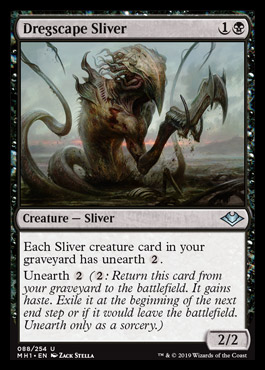
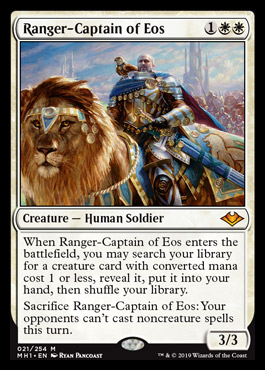
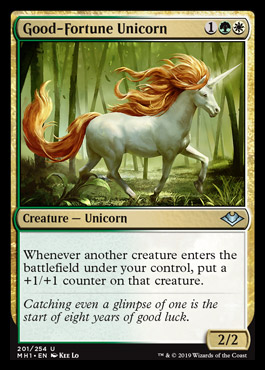
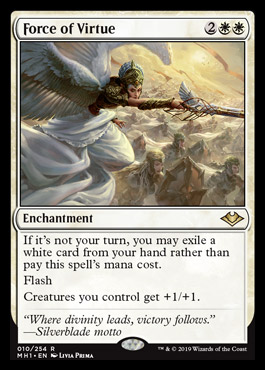
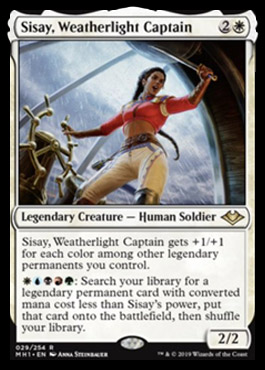
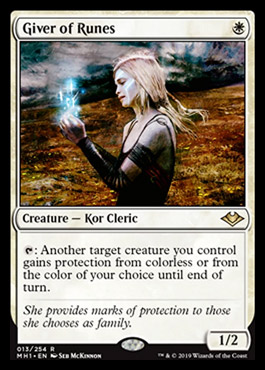
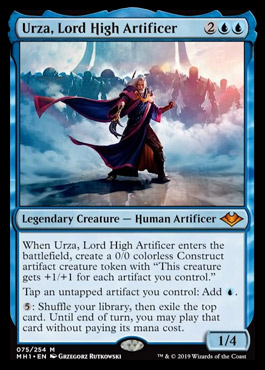
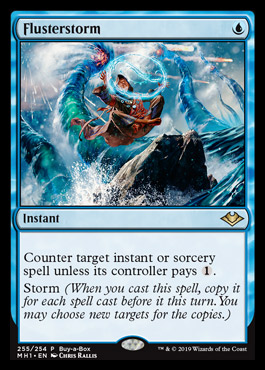
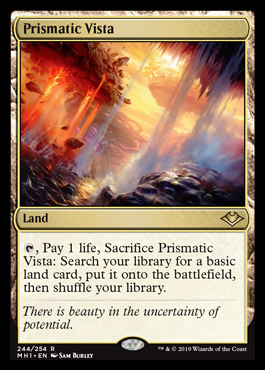
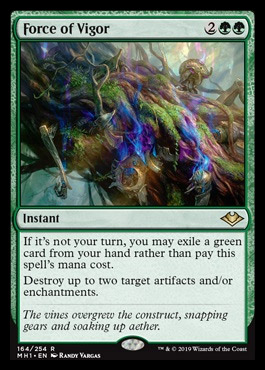
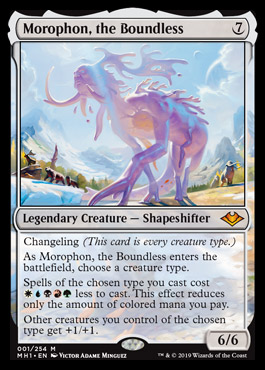
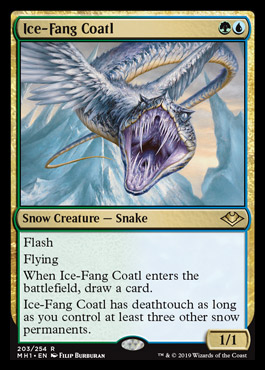



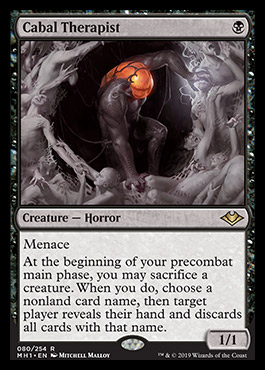
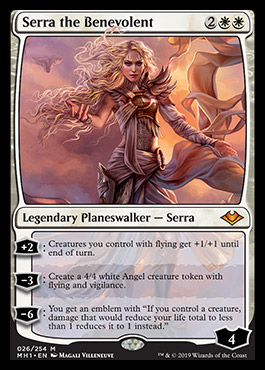
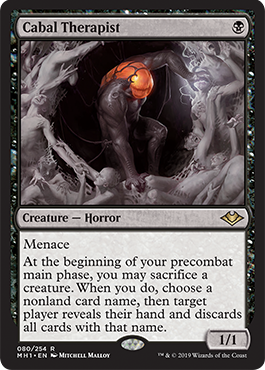 With part of the set spoiled, we at last have a pretty good idea of what Horzions is supposed to look like. In short, Wizards has taken to reinventing or updating older cards with contemporary text and refined flavor rather than just reprinting all-stars from Vintage and Legacy. The result is a batch of cards that generate nostalgia while providing a novel play experience. Flavor-wise, it turns out Cabal Therapist truly was a harbinger of things to come.
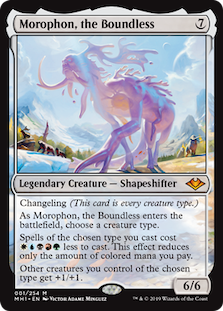 Morophon, the Boundless: Let's start with the card designed to help every tribe. Morophon strikes me as more of a combo card than anything else, and one destined for Commander at that. But I think we will see it poke its weird head out in Modern from time to time. Free mana is just too alluring to ignore, and the format features plenty of ways to get this down early.
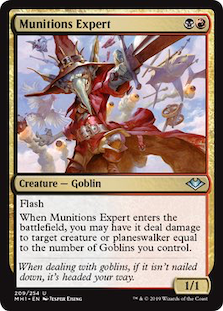 Munitions Expert: On to the Goblin support. Goblin Matron is a bit pricey for Modern,
 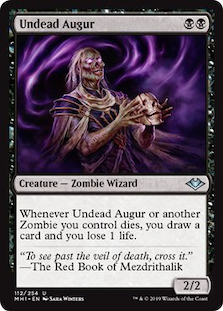 Undead Augur: This Zombie buff is less exciting, but good nonetheless, further punishing opponents for interacting with the deck's threats. It's a high-priority target for removal spell decks, but getting it off the table results in a minus, and Augur is cheap enough to make the exchange worthwhile for the tribal deck most of the time. We've seen Zombies put up
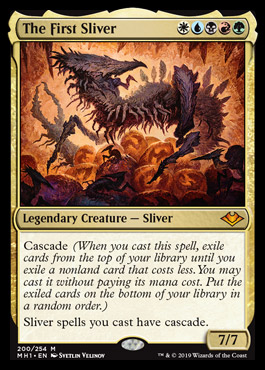
 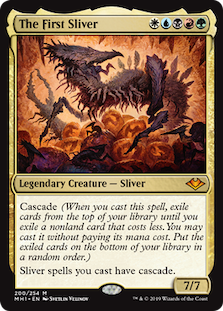 The First Sliver: Slivers, though, are Horizons's most pushed tribe. This Sliver Queen update staples an ability to the body that's actually worth five mana, and has intriguing implications for building around; players can even fit an Ancestral Vision or two into their deck and guarantee that the next couple Slivers they cast also draw them three cards, for example. Besides, there's a relatively simple way to bust it out:
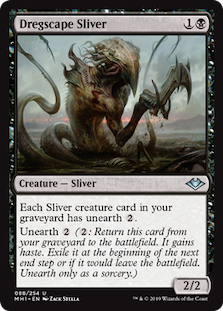 Dregscape Sliver: Besides the potential combo with The First Sliver, giving all the dead Slivers unearth makes Dregscape a heck of a comeback card. This creature mounts alpha-strikes from beyond the grave in the mid-game, so long as opponents can't remove it immediately. And if they can, Slivers still gets to reanimate one threat.
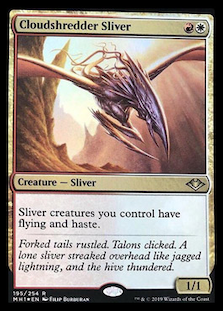 Cloudshredder Sliver: Both of those creatures pale, though, next to Cloudshredder Sliver, an update of the long-awaited Heart Sliver that tacks on the tribe's next-best creature, Galerider Sliver. Like Zombies,
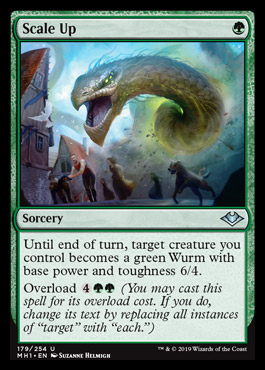
 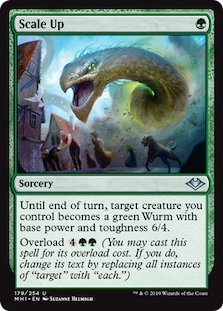 Scale Up: Let's be real—nobody's playing Wurm tribal. Scale Up is the most overt Infect support of all time. Perhaps pushing that deck is Wizards' answer to
 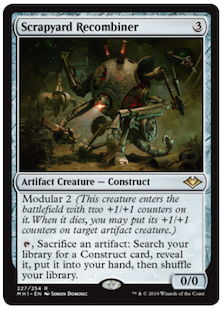 Scrapyard Recombiner: This one is more tentative, but I've heard players discuss it in Hardened Scales. It may have a home there as a tutor to multiple engine and payoff cards, as Modular helps forgive its steep price.
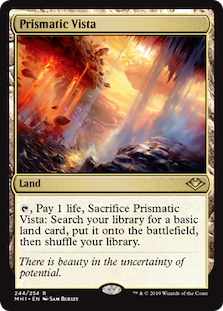 Prismatic Vista: Vista might help snow keep its head above water, and could shruggingly slot into two-color decks with plenty of basics like UW Control. But this card seems more to me like a budget consideration for players who don't want to buy the right fetches.
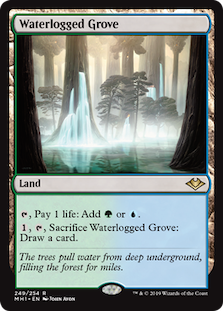 Canopy lands: As I see it, the Canopy lands—an enemy-colored cycle of lands with Horizon Canopy's effect—are the most important card spoiled so far. These will be run in decks across multiple archetypes, including midrange (BG Rock) and aggro-combo (Infect). While I don't expect the canopy lands to shake Modern up as a flexible answer or powerful threat might, they will have a sweeping, if subtle, effect on deck construction.
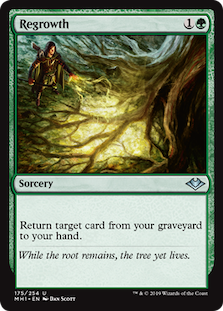 Regrowth: I imagine there's a deck in the market for Eternal Witness with little use for the body, but I sure as heck can't think of it. Regrowth may well find its way into a combo strategy down the road, though.
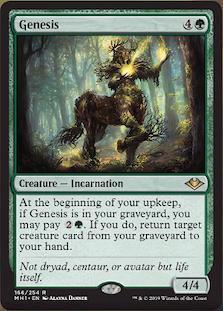 Genesis: Another great card without a home, Genesis may make it into fair deck sideboards as a value engine, especially alongside Faithless Looting. But there are probably better options in that role, colors depending. I'm excited to see where Genesis lands.
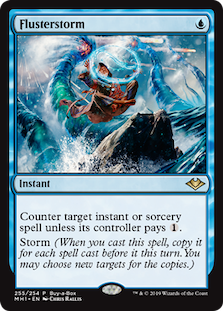 Flusterstorm: Move over, Force of Negation! Flusterstorm is one of the tools
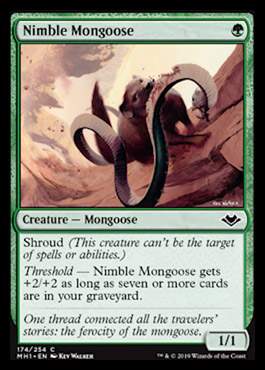
 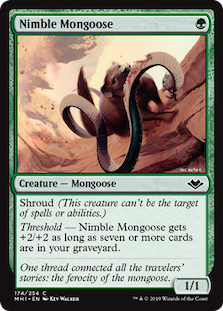 Nimble Mongoose: Speaking of thresh, here's the card that inspired me to build
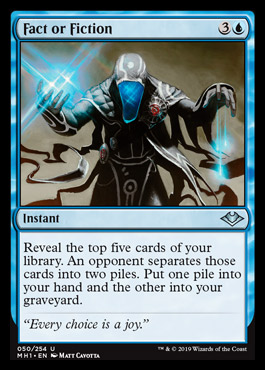
 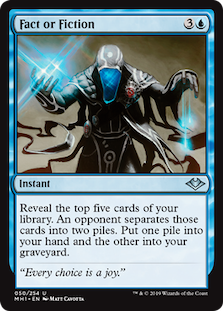 Fact or Fiction: Kids These Days Will Never Understand EOTFOFYL. Or will they? Having played against Fact a little online, I'll confirm that the piles are still excruciating to make. I'll also mention that flashing back my opponent's Fact with Dire Fleet Daredevil, the Human protected from Spell Snare via Domri, Anarch of Bolas, was some of the most fun I've had playing Magic lately. Fact will definitely see play, for one reason (winning) or another (giggling). I think UR Moon and UW Control are its most natural homes, although it's also possible we see Fact as a one- or two-of in the sideboard of more aggressive interactive blue decks
 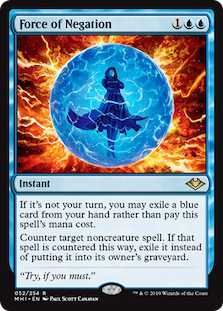 Force of Negation: The breakout "answer card" of the set, Negation's purpose is to prevent early wins from linear combo strategies. It looks like a sideboard card to me, and I doubt it replaces Disrupting Shoal in the decks that want that instant; countering creatures is too important. Like Force of Will, though, Negation will affect the format's complexion by virtue of existing.
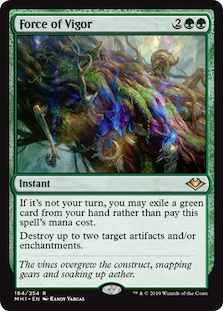 Force of Vigor: Another combo-breaker, Vigor has been noted for bailing players out of
 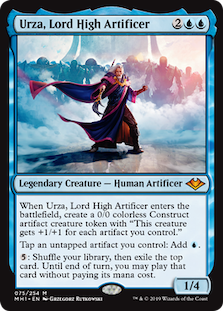 Urza, Lord High Artificer: Urza is generating hype for its interaction with the Thopter-Sword combo, which lets players make infinite mana, gain infinite life, and draw their deck. I think the card will end up like Prime Speaker Vannifar, another niche 1/4, in an artifact-based deck as an enabler and payoff. But in that respect, it's probably weaker than Sai, Master Thopterist, which is a win condition on its own.
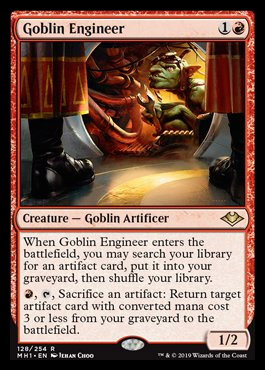
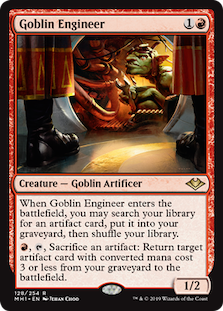 Goblin Engineer: This reference-packed mashup of Goblin Welder and Stoneforge Mystic is expertly-designed, setting up combos at a reasonable pace on its own or combining with the likes of Trash for Treasure to cheat fatties like Sundering Titan and Wurmcoil Engine into play early. If Engineer sees play outside of a Thopter-Sword build, where it super-tutors for the Sword, it'll be in its own deck, and I can't wait to see what that looks like.
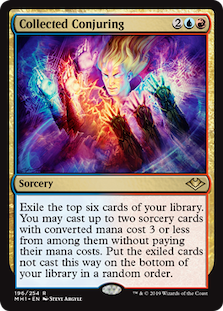 Collected Conjuring: What exactly are we hitting with this? Serum Visions? Modern isn't exactly known for its high density of cheap, busted sorceries. At four mana, even ripping costless suspend cards like Ancestral Vision seems like more work than assembling a shell with As Foretold or Finale of Promise.
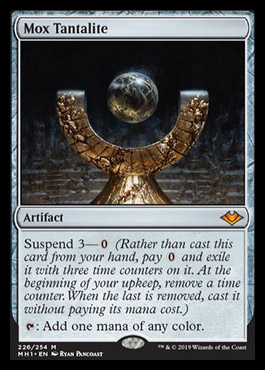
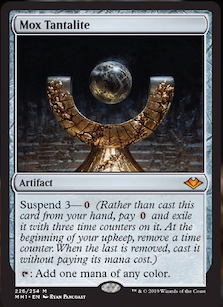 Mox Tantalite: I'm not one to dismiss nerfed moxen outright, having spent a good deal of time
 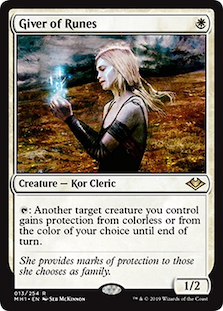 Giver of Runes: Giver's no Mother. Untap with her and she can still be Bolted, Pushed, you name it. Realistically, Giver is like a one-mana Spellskite that gives up the latter's disruptive effects; Runes doesn't do anything against Infect or Temur Battle Rage.
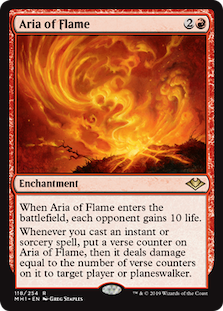 Aria of Flame: Yesterday, in an online Horizons room, my opponent stormed off as I occupied myself with other apps for a few minutes. He ended on Aria of Flame. Granted, I lost the game, failing to find a third land drop (or red source) to compliment my Arbor Elves and pair of Forests over something like six turn cycles. But with me doing nothing, it took my opponent six turns to kill me. I'll happily blame Aria. Storm doesn't need this card, and neither does anyone else.
 Fire is a fairly brainless card, and once the engine gets going, the whole thing plays itself. On my end, everything became very rote and mechanical. Every turn: throw some Fire at something, get it back, none of my other cards do anything at this point so say go, repeat until the game's over. My opponents either just kept doing what they were doing (Tron, Ironworks, sometimes Spirits) or were gradually snowed under with nothing to do (Humans, the other times with Spirits). Those games proved frustrating, tedious, and boring for opponents.
 Everything that I found atrocious about Fire's gameplay, he embraced. Ideally, he wants every game to be a lengthy, close, hard to win/easy to lose grind fest that taxes him mentally and physically to the limit. Which was the reality of his test matches. He says that on his end, it was like playing a combination of 3D Chess and a Rubik's Cube using 90's adventure-game logic. Winning was mind-meltingly hard, and the correct lines were non-obvious and convoluted. While it won't be majority, there will be plenty of players that would genuinely enjoy playing against Fire in Modern.
 better cards at every stage of the game. Fire is never the best card; the value comes though continuous use. What Jund really wants to do is fire off a few disruption spells then start ramming home better threats to quickly close out the game. Going long is possible, but not its thing.
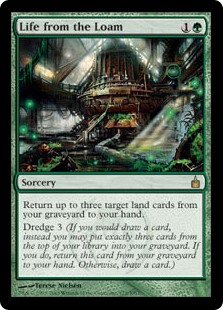 However, Punishing Fire could solve many Assault Loam's problems. As
 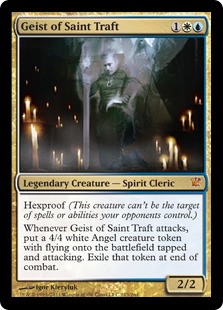 Based on the Spirits and Humans matchup, I don't expect Fire to be that great against creature decks. Back in 2011, creatures were so much worse that a repeatable two damage for three mana was oppressive. These days, we have rapidly growing 1/1s, hexproof creatures, and more cheap x/3s. A single Fire isn't that threatening. When multiple get going, it can be devastating. However, Magic has evolved enough that even a recursive four damage for five mana isn't that threatening for aggro decks. Decks like Merfolk would suffer, but they are struggling to stay relevant anyway. I think the anti-aggro argument isn't strong anymore.
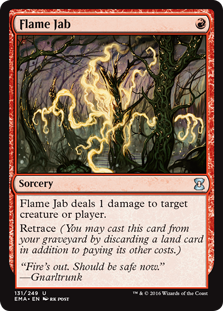
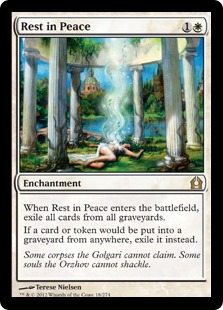
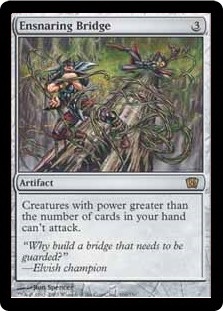 combo is very slow, this will lengthen matches. Post-board, graveyard hate becomes essential. Against aggro decks, Loam potentially gets an improved Flame Jab to protect itself. It's hard to believe it turns the matchup around, but would stretch the game out and make aggro work harder.
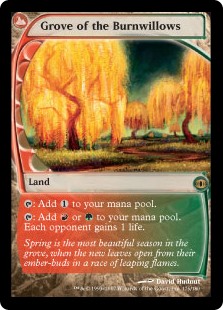 The Fire player has an untapped Grove and Fire in the graveyard. Their opponent has Extraction. The opponent can't just Extract the Fire, because in response, Grove will save it. Fire also can't just be retrieved, because there's only one Grove and one trigger. So both players enter into a standoff, trying to force an opening. The opponent is looking to force Fire to tap the Grove; Fire hopes to present a more pressing target for the Extraction. As a mental game, it is fascinating and enjoyable. However, it also tends to extend match length, since both players have to carefully and continually consider their moves and their opponent's counter moves while assessing whether to continue the dance.
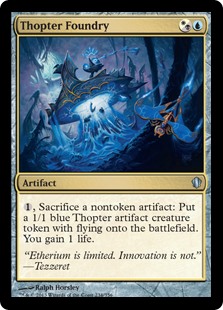 However, the Thopter combo has two saving graces. The first is that it is cleanly shortcutable: You simply declare how many tokens you're making at a time, skip going through all the steps, and gain life in a lump sum. You can't just declare a Fire loop; you do have to go through most of the motions. You can shortcut the triggers, but you will have to actually cast the Fire(s) and mark all the life total changes individually for proper tournament procedure. Also, there's no timing weirdness with Thopter combo.