menu

Daily Stock Watch – Risk Factor

Are you a Quiet Speculation member?

If not, now is a perfect time to join up! Our powerful tools, breaking-news analysis, and exclusive Discord channel will make sure you stay up to date and ahead of the curve.

Hello, everyone and welcome to a new segment of the Daily Stock Watch! I have to be honest that I was pretty much disappointed when Guilds of Ravnica was spoiled but I'm happy now that I'm somehow being proven wrong by my initial impressions. I wrote about Vexing Devil yesterday which was the recipient of a financial boost courtesy of Pelt Collector and today, I will be writing about a card that's actually making a name for itself both in Standard and Modern (and maybe Duel Commander if its viable) as it has slowly rose to $10 range from its initial release of $2.93.

There was an error retrieving a chart for Risk Factor

Char was a pretty decent burn spell back in the day, and so was Browbeat. I didn't actually think that you could get the best of both worlds (sans the ability to hit the creature which you get with Char at the cost of two life) and have the ability to do it again in a manner that allows you to abuse another mechanic. Just imagine playing Risk Factor when you have three mana, then playing it via jump start and discarding a Fiery Temper for an 11-point life swing, or three damage and access to six new cards. That's a high value threat that could net you a decent haul for one card slot, six mana, and a card that you could afford to discard (or would love to be discarded to be abused e.g. Bloodghast or Flamewake Phoenix).

There have been multiple brews already both in Standard and Modern and I'd like to give you a glimpse of how Risk Factor is doing in those respective lists so far.

Standard Red Deck Wins

Creatures

4 Ghitu Lavarunner
4 Viashino Pyromancer
4 Runaway Steam-Kin
4 Goblin Chainwhirler
4 Fanatical Firebrand

Other Spells

4 The Flame of Keld
4 Lightning Strike
4 Wizard's Lightning
4 Shock
4 Risk Factor

Lands

20 Mountain

Sideboard

2 Vance's Blasting Cannons
3 Rekindling Phoenix
4 Lava Coil
4 Fight with Fire
1 Experimental Frenzy
1 Mountain

Modern Red Deck Wins

Creatures

2 Grim Lavamancer
4 Eidolon of the Great Revel
4 Goblin Guide
4 Monastery Swiftspear

Other Spells

4 Atarka's Command
4 Lightning Bolt
1 Devastating Summons

Lands

1 Scalding Tarn
2 Sacred Foundry
3 Arid Mesa
3 Bloodstained Mire
3 Wooded Foothills
4 Mountain
4 Inspiring Vantage

Sideboard

2 Skullcrack
4 Boros Charm
4 Lightning Bolt
4 Lightning Helix
4 Searing Blaze
4 Lava Spike
4 Rift Bolt

I guess it's pretty safe to say that a card is really good if it's already getting a lot of exposure in tried and tested decks across various formats. Risk Factor might not have the versatility of other burn spells to rid the board of possible threats, but it has the ability to almost guarantee four damage when you cast it unless your opponent would like to gamble and hope you get three lands off the three cards you'll draw. The jump start mechanic puts the card over the top though I'm still not convinced that it will be as successful as it seems now when you look at it on paper. The $10 price tag is somehow justified for me, as I could easily see this card hitting the $15-$20 barrier in a short-term window. I'd say that if you'd like to invest on the card now, get it for $10 or less and move them when it hits the price range I just mentioned. I'd also favor the foil copies more in this scenario.

At the moment, you could get a lot of copies of Risk Factor from online stores such as StarCityGames, TCGPlayer, Card Kingdom, and ChannelFireball for anywhere between $8.49 up to $11.99 for normal copies. It's safe to wedge your bet on the ones below $10 in my opinion, as there will be lots of love for it among the red-loving crowd. Just be wary that an awful lot of GRN will be opened in the coming months until the box EV eventually balances itself out and box opening won't be as appealing as it is right now. I would go for foil copies at below $15 as well if that's possible. I'm quite sure we'd be seeing a lot of Red Deck Wins in Standard and Modern for the coming weeks that's jammed with copies of this card.

And that’s it for today’s edition of the Daily Stock Watch! See you again next time, as we check out a new card that should be on the go, or good enough for speculating. As always, feel free to share your opinion in the comments section below. And if you want to keep up with all the market movement, be sure to check in with the QS Discord Channel for real time market information, and stay ahead of the hottest specs!

Unleash the Hatebears: GW Post-Guilds

Are you a Quiet Speculation member?

If not, now is a perfect time to join up! Our powerful tools, breaking-news analysis, and exclusive Discord channel will make sure you stay up to date and ahead of the curve.

The metagame constantly cycles and decks rise and fall. Last year, Grixis Death's Shadow was the deck-to-beat in Modern; today, it's Humans. Sometimes, this fluctuation occurs because of players reacting to new decks or trends; sometimes, it's because of new printings. With the release of Guilds of Ravnica, Modern seems poised for a major shift thanks to one card, Assassin's Trophy. But I think there is also a minor shift in the wings thanks to some other newcomers.

Selesnya Rising

Assassin's Trophy has seen the widest Modern discussion of the new Guilds cards, and rightly so. However, GW also received new and potentially game changing cards. While I have serious doubts that Trostani Discordant or any of the convoke creatures will see play, there are several cards that have made me wonder if they're enough to not just see play, but bring an old archetype back to life. It's certainly possible given the current metagame.

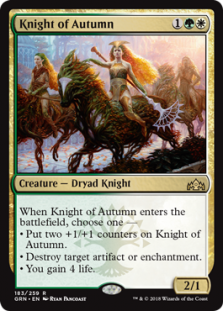
Knight of Autumn

The most-discussed addition is Knight of Autumn, and with good reason: three modes on a three-mana creature is an insane rate. It's even more insane because the modes are all Modern-playable abilities. Kitchen Finks and Reclamation Sage see extensive play, and the fail state is still an impressive beater. Knight replaces those cards in decks that can afford her, which frees up card slots.

Despite this, I actually expect Knight to see limited play. Its problem are the creature type and the cost. Dryads and Knights don't have any real tribal synergies at all, while Sage does; Elves doesn't have a reason to switch. Costing white and green means Autumn is far less splashable than Finks; Kitchen Finks can be played in mono-white or green, while Autumn must go in a two-color deck.

This disqualifies Autumn from a lot of decks. Humans won't switch to Autumn because she will be uncastable frequently. While Humans is a five-color deck, it relies on Cavern of Souls and Unclaimed Territory, which won't produce mana for Autumn in most circumstances. Casting Autumn takes two of Noble Hierarch, Ancient Ziggurat, Seachrome Coast, Plains, and/or uncycled Horizion Canopy which is a big ask for Humans. Assuming that Humans only wants the Naturalize ability out of the sideboard, there's no reason to adopt Autumn over Sage.

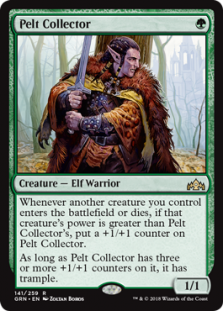
Pelt Collector

Humans probably wouldn't be a deck without Champion of the Parish. One-drops that become serious threats during a game are rare and powerful (see: Deathrite Shaman), and Pelt Collector looks to join that club. Collector is simultaneously more and less limited than Champion, since the Elf Warrior can't grow infinitely but also isn't limited to a single tribe. Gaining trample once it hits 4/4 is a very nice touch. Of course, that's also likely as large as Collector will be growing on its own, since green creature decks rarely contain anything larger than a 4/4. Still, a one drop that scales as the curve rises has a lot of potential.

I haven't seen much discussion of Pelt Collector for Modern yet. What there have been are combo decks using Vexing Devil and Death's Shadow as part of all-in aggro strategies. My experience with such decks says it's a cute idea, but not really competitive; they can win out of nowhere, but even a small hiccup shatters the axel, and the whole thing crashes to a halt. A more fair and resilient deck is still gong to grow Collector just by playing out its curve. It might even be a better home since there will be more must-kill threats.

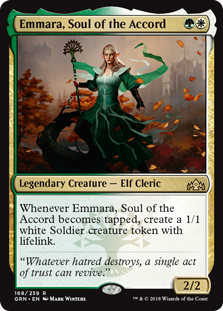
Emmara, Soul of the Accord

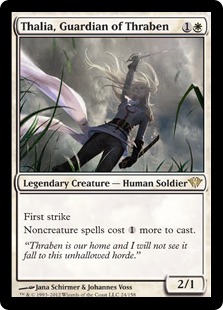
Modern asks a lot of two-mana 2/2s. Its removal and speed mean that they need to be disruptive like Thalia, Guardian of Thraben, immediately impact the board like Thalia's Lieutenant, or provide a long-term advantage like Dark Confidant. Given that Emmara, Soul of the Accord is only notable because she makes a token, she doesn't immediately appear playable. But I think she may have legs.

Against UW Control, Emmara is an army unto herself, and a priority removal target. UW Control doesn't play that many hard answers, instead relying on drawing enough Terminuses to withstand creature decks until Cryptic Command and planeswalkers can seal the game. A single threat that can go wide unassisted throws a significant wrench in UW's gameplan. Jeskai doesn't have this problem thanks to all its burn, but with straight UW apparently being the control deck of choice, I'm interested.

Back in Return to Ravnica Standard, I remember that Precinct Captain served a similar role early in the format. Captain never made it in Modern because of Lightning Bolt, but right now, that's not true. First strike is a very good ability, but I think that Emmara is actually better because Captain only makes tokens if he deals combat damage to players. Emmara just needs to tap, be that by attacking, convoking, or getting hit with Cryptic Command. I don't see Emmara beating out Voice of Resurgence for maindeck play, but she's definitely sideboard material.

Tax or Hate

The wealth of new GW cards made me wonder if it's time to reexamine GW Hatebears. Longtime readers know that I've always preferred mono-white Death & Taxes, but for a time years ago Little Kid Abzan and GW Hatebears were better choices because of their superior matchup against Jund. Thanks to the rise of Grixis Death's Shadow and GP Las Vegas 2017, mono-white finally emerged as the preferred deck last year, and GW virtually disappeared. However, I'm starting to think the winds have shifted enough for GW to be worthwhile.

The difference between Hatebears and Taxes isn't just about color. Taxes decks rely on Thalia, Guardian of Thraben and Leonin Arbiter coupled with Ghost Quarter and Field of Ruin to attack an opponent's mana, grind down their engines, and win via many small, disruptive creatures. These decks use Aether Vial coupled with Flickerwisp and Restoration Angel to play around removal and gain card and mana advantage. However, Humans uses Thalia more effectively than Death & Taxes because it kills faster. Its other disruptive creatures are also relevant more often than Arbiter, meaning it's gotten hard to justify Taxes over Humans.

Many Hatebears decks did run Thalia, but not as a primary strategy. Instead, Hatebears is about directly disrupting the opponent while outclassing opposing creatures and removal. Where Taxes induces inefficiencies, Hatebears shuts strategies down. Instead of Arbiter, it runs Aven Mindcensor; Gaddock Teeg over Thalia; Noble Hierarch rather than Aether Vial. Hatebears doesn't beat removal with tricks, it plays creatures that are less vulnerable, like Loxodon Smiter. In a Jund-heavy world, this stat-based approach worked well. Jund isn't the powerhouse it used to be, but I think a similar metagame opportunity is developing.

Metagame Opportunities

The metagame is becoming more polarized, with Humans and UWx Control emerging as the big players. Meanwhile, Affinity is changing forms from the classic explosive artifact deck to the less vulnerable Hardened Scales version. This shift presents an opportunity for Hatebears to rise again, as it has considerable advantages against this new metagame notwithstanding the new Guilds additions. I know that many are turning towards GW Taxes instead of Hatebears, and that's fair, but Knight of Autumn doesn't make up for the fundamental Taxes problem of small, fragile creatures. I've been testing a more classic take on the deck.

GW Hatebears, Test Deck

Creatures

4 Noble Hierarch
2 Birds of Paradise
4 Pelt Collector
4 Voice of Resurgence
4 Scavenging Ooze
1 Selfless Spirit
1 Gaddock Teeg
4 Knight of Autumn
4 Loxodon Smiter
1 Aven Mindcensor
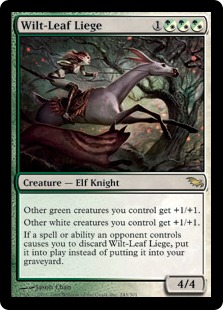
3 Wilt-Leaf Liege
1 Shalai, Voice of Plenty

Instants

4 Path to Exile
2 Chord of Calling

Lands

4 Razorverge Thicket
4 Temple Garden
4 Windswept Heath
3 Horizion Canopy
2 Gavony Township
3 Forest
1 Plains

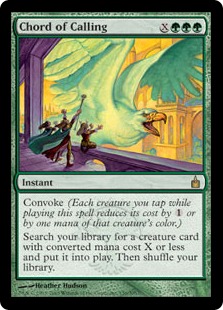
This deck accelerates into mid-game creatures while growing its threats. While Knight almost never triggers Collector without Wilt-Leaf Liege, Voice tokens frequently do. The Chords are there because Chording for Teeg in response to a miracle trigger or other play can be backbreaking for opponents, and potentially great against strategies besides UW. Further testing will tell for sure. In this section, we'll see how my proposed Hatebears list compares to Death & Taxes against Modern's top decks.

Vs. Humans

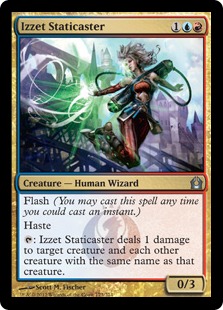
I was playing mono-White Death & Taxes when Humans first reared its head, and the match is very close. Humans usually dominates the early game, but if the game goes long, Blade Splicer and Flickerwisp take over. Wins were never easy, and I often stabilized at a precarious life total. The problem was that Taxes' one- and two-drop creatures are worse than Humans's, and without Vial, it proved easy to fall behind. D&T is also very weak to decks that can go wide and tall, which is a Humans specialty. Since then, Humans has adopted Izzet Staticaster, which wrecks the low-toughness creatures in Taxes. One available solution is to sideboard into a white control deck, but Humans is built to pick apart slower decks, so the matchup is just tough.

Hatebears' creatures are naturally tougher than D&T's, so it stands up in combat far better. Having Gavony Township and Wilt-Leaf also makes Thalia's Lieutenant less crushing. Being able to lock down the ground and eventually win with massive, trampling Pelt Collectors has been effective in testing. The main problem I still have is Humans filling the skies, because Hatebears lacks fliers. I'm uncertain at this point if this problem is worth trying to solve with mainboard cards.

Vs. UWx Control

The Taxes matchup against control decks is very hard. Jeskai has a plethora of relevant removal for every creature, while UW has Terminus to avoid paying taxes. Games come down to careful resource management, and if Taxes falls behind on cards, it is very hard to get back into the game. My post-board solution was to utilize planeswalkers, but that was still risky against countermagic. Once Terminus replaced Supreme Verdict as the go-to sweeper, I decided I just didn't need the stress in my life.

Hatebears has a number of advantages game 1 against both decks. UW only definitely has Terminus and Path to Exile as hard removal. Occasionally Detention Sphere joins the party, and Autumn answers it. Path is Path, and Snapcaster Mage plus Path is very nasty, but Scavenging Ooze makes Snapcaster worse. Also, Terminus tucks creatures back into the library, meaning they can be found with Chord or just shuffled back into circulation. Smiter's uncounterability is the final nail in the coffin for UW to have a tougher time against Hatebears even before we sideboard in more Teeg's, Thrun, the Last Troll, and Emmara.

Jeskai has a somewhat easier time since it has more removal, but Smiter and Voice have always been good because they shrug off Lightning Bolt. What tends to happen is Jeskai has to 2-for-1 itself to get Hatebears off the board and just runs out of steam. Chording for Shalai in response to removal is also a beating against Jeskai.

Hardened Scales

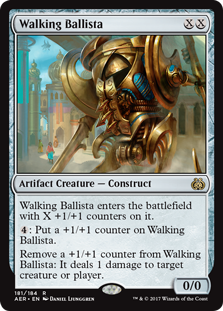
Normal Affinity was an easy match for Death and Taxes. Between the land destruction, Blade Splicer tokens, and fliers, D&T had all the bases covered game 1, and things got fantastic after sideboarding. Hardened Scales is a different animal. Walking Ballista and Hangerback Walker are nightmares for D&T's tiny creatures. Absent Phyrexian Revoker, a single large Ballista is often game over, making Taxes more reliant on Stony Silence than before.

Simply having bigger creatures is a huge plus for Hatebears. Instead of being a board wipe, Ballista is often just a removal spell. Knight and Pridemage also make the matchup manageable by removing the Scales. Shalai and Gavony Township mean Hatebears can match Affinity on size. It can still be terrifying when Scales starts to snowball, but Hatebears has more options to successfully fight back than Taxes.

Hollow One

Here's the factor that has me most excited about Hatebears. I've made no secret that I dislike Hollow One because Burning Inquiry can be so frustrating to play against. Hatebears turns Inquiry against its controller with Smiters and Lieges. There's also the statistically implausible chance that we discard all three Lieges, there's no opposing Hollow One, and we crash in for 24 damage on turn one!

Outside of that pleasant dream, once again, Hatebears's size matches Hollow One and Gurmag Angler and stonewalls Bloodghast. Scavenging Ooze is exceptional for stopping the recursion engine and stabilizing. The additional artifact removal from Knight is also highly relevant.

Give In to Your Hatred

It's not always obvious when a shift brings an older deck back to playability. Between combo revolving around Teeg targets, aggro becoming about size, and control narrowing its answer suite, I think that Hatebears is due for a resurgence. In any case, there's at least enough power in the deck for me to continue my testing.

Daily Stock Watch – Vexing Devil

Are you a Quiet Speculation member?

If not, now is a perfect time to join up! Our powerful tools, breaking-news analysis, and exclusive Discord channel will make sure you stay up to date and ahead of the curve.

Hello, everyone and welcome to a new edition of the Daily Stock Watch! In case you missed last week's special edition, you could check out a week long worth of posts that I dedicated to reviews of cards that won us some profit, or helped save us some bucks by not speculating on them. Today, we will be back to our regular segment and I will be talking about a card that has gained some leverage off a new card from Guilds of Ravnica, but is still the same old, dangerous creature that it ever is.

There was an error retrieving a chart for Vexing Devil

Zoo is back on the map and all of this is because of Pelt Collector. It has superb interaction with all the cards in the deck designed to cater to it when it hits play on turn one as the likes of Kird Ape, Wild Nacatl, and our featured card Vexing Devil all become enablers for this card that could make your opponents nudge in fear as soon at it gets the counters it needs to push with trample. You might be wondering why we're talking about Vexing Devil instead of Pelt Collector, but I'll give you more insight on that later. For now, check out this list that people are brewing featuring our very aggressive friends.

New Zoo

Creatures

4 Wild Nacatl
4 Burning-Tree Emissary
4 Experiment One
4 Goblin Guide
4 Kird Ape
4 Pelt Collector
4 Reckless Bushwhacker
4 Vexing Devil

Other Spells

4 Atarka's Command
4 Lightning Bolt
1 Devastating Summons

Lands

1 Temple Garden
1 Copperline Gorge
1 Forest
1 Mountain
2 Stomping Ground
2 Sacred Foundry
3 Windswept Heath
4 Arid Mesa
4 Wooded Foothills

Sideboard

1 Stony Silence
1 Rest in Peace
1 Remorseful Cleric
2 Path to Exile
1 Kataki, War's Wage
2 Grim Lavamancer
1 Forked Bolt
3 Destructive Revelry
1 Burrenton Forge-Tender
2 Alpine Moon

When news about this deck broke out, Vexing Devil was sitting at sub-$9 range and was still being used everywhere because it's a very strong yet situational red card. Modern Burn decks have already ditched it in favor of Monastery Swiftspear, Goblin Guide, Eidolon of the Great Revels, and Grim Lavamancer as of late. However, this new deck brew makes Vexing Devil a pretty strong enabler for Pelt Collector on turn two with utter disregard if your opponent chooses it to stay on the field, or just take four damage to see it go (which leaves you with a 3/3 Pelt Collector for a potential seven damage on turn two). Multiple copies of the card on the first three turns along with the right creature mix is just straight up lethal if left unanswered. But is this enough reason to believe the hype that made this creature reach its all-time high of $15.99?

Beatdown Gang

I'm not sure if a Legacy rendition of this deck is possible, but I would be thrilled if it does as that would boost the stock of these cards (probably the foil ones) in the long run. There will always be love for aggressive decks even in casual formats, and it should take a while before the meta adjusts to a new shift in power if it does occur. I think this price tag will stick around for a while unless Vexing Devil becomes reprinted in any new sets. If you were able to acquire copies before the spike and you intend to use it, it should be safe to keep it. Otherwise, I don't really recommend that you get copies now for speculation purposes because UW is still a tier one deck in Modern, and one Terminus could flip the game around. I'm not saying that it automatically loses to that deck (hello Timely Reinforcements because there are tons of other decks in the format but if I am to invest in one, I would be looking at something that would be able to beat the consensus best decks in the format. With all these in mind, I wouldn't be buying Vexing Devil at this price but I won't mind holding on to them either. If they do reach $20-$25 though, I would be glad to let them go.

At the moment, both StarCityGames and Card Kingdom are out of stock of Vexing Devil while only a few vendors are left with near mint copies via TCGPlayer for $15.50 and above. There's a low ceiling for foil copies of this card so I suggest that you stay away from it, and just try trading in some cards for it if you want to speculate. Always proceed with caution when dealing with red creatures that's not named Grim Lavamancer.

And that’s it for today’s edition of the Daily Stock Watch! See you again next time, as we check out a new card that should be on the go, or good enough for speculating. As always, feel free to share your opinion in the comments section below. And if you want to keep up with all the market movement, be sure to check in with the QS Discord Channel for real time market information, and stay ahead of the hottest specs!

Three Different Approaches to MTG Finance

Are you a Quiet Speculation member?

If not, now is a perfect time to join up! Our powerful tools, breaking-news analysis, and exclusive Discord channel will make sure you stay up to date and ahead of the curve.

A couple weeks ago fellow Quiet Speculation writer Edward Eng and I hosted the inaugural Office Hours podcast. This was a live question & answer session where Insiders could post written questions to the Insider Discord while Ed and I replied with audio. Check out the recorded session above if you’re curious to listen.

There were two highlights from this session in my mind. First, someone asked about Runaway Steam-Kin. Most of you know by now I don’t spend a second of my time analyzing Standard. However, this one intrigued me and I decided to grab eight copies on a whim. Not too long after, I managed to sell them for a modest gain—getting “paid” to talk about Magic is one of my favorite pastimes!

There was an error retrieving a chart for Runaway Steam-Kin

The second highlight came in the form of a more open-ended question. An Insider asked for strategies to participate in MTG finance with a limited budget. Ed and I tried our best to tackle this massive question, but I don’t think I did the subject enough justice. There are probably many people with this same question, and I thought I’d elaborate a bit more on my philosophy surrounding this concept.

It really comes down to three possible priorities


The Three Priorities

In some offices at work, people hang up posters that are meant to inspire creative thought. One such poster—a bit more cynical if you ask me—states that if we want to create the best product we must choose two of the following: time, cost, quality.

Rather than get into economic theory, I bring this up because I believe a similar paradigm can be used to describe Magic finance. In my view, you have to choose between time, money (bankroll), and enjoyment. If you’re dealing with any sort of limitation (most of us are), you cannot have all three of those. You must sacrifice one of them to prioritize the other two.

Depending on what you choose to deprioritize, your involvement in this hobby can vary significantly.

Sacrificing Money: The Budget Speculator

The Insider question brought up during Office Hours directly relates to this persona. Someone who either prefers to spend less money on Magic or someone who has a limited budget basically falls into this category by default.

The budget speculator must utilize time to close the gap created by a limited bankroll. For example, they can seek out underpriced cards on TCGplayer by browsing stock by set. They can observe which Reserved List cards are selling rapidly, acquiring a few copies before the “buyout” manifests itself completely. They can also browse buylists frequently, keeping an eye out for arbitrage opportunities, such as when Card Kingdom temporarily had a $1400 buy price on Library of Alexandria.

There was an error retrieving a chart for Library of Alexandria

You have the flexibility to focus on whatever category of cards you want. If you wish to play Commander for example, you could focus on Commander trends when speculating. But you will have to read up on articles, monitor EDH REC numbers religiously, and listen to podcasts in order to make the timely purchases necessary to maintain a budget. You also may need to wait patiently for an upcoming reprint in order to acquire those cards you most desperately need for your decks.

If Modern is more your format of choice, there are plenty of ways to speculate in these spaces. Legacy and Vintage are probably not the best formats to engage in, however, due to the higher price of entry. Stick to less expensive formats, be willing to sink time into this hobby, and you should have no issues with budget finance.

Sacrificing Time: The Long-Term Investor

If I had to categorize myself, it would be in this group. I am fortunate to have a reasonable bankroll for MTG speculation and I want to focus on the formats that give me the most enjoyment. But my time is quite limited due to family obligations. Therefore, I have chosen to deprioritize time.

What does this look like? Well, I need to avoid rapidly changing formats like Standard because I don’t have enough time to keep up with the metagame. I choose not to watch coverage over the weekend because I spend that time running errands and watching my son’s soccer games. But I can certainly engage with the slower-moving formats I enjoy most: Vintage and Old School.

These are the perfect formats (Legacy would also be fine) because the cards are most immune to evolving market dynamics. The price of entry is high, but the cards I purchase are immune to reprint or metagame shifts. In fact, when dealing in Old School you could make the argument that reprints are favorable to card prices. Just look at what happened to Beta Llanowar Elves when it was re-introduced into Standard.

There was an error retrieving a chart for Llanowar Elves

For someone with limited time on their hands, buying into collectible cards with plenty of upside is the best of both worlds. And if Old School isn’t your thing, you could follow the same approach in whatever format you enjoy most.

You could engage in Pauper by purchasing rare, original foil printings of your favorite cards. I’m sure Japanese foil Seventh Edition Llanowar Elves are just as expensive and just as collectible as their Beta counterparts. You could also purchase original foil printings of your favorite Commander cards. Better yet, stick to foil Reserved List cards for Commander, such as Academy Rector.

As long as you avoid Standard, this category enjoys the best formats with the best cards. We just don’t get to play all too often.

Sacrificing Enjoyment: The Backpack Vendor

Someone who deprioritizes enjoyment of Magic as a game in favor of investing time and money into the hobby is essentially a wannabe vendor. They have a sufficient bankroll and the time to endure the grind. They could be the ones trading all weekend at events. Or they could be the people who pick collections to make some extra cash. Or they could be the type that researches every format, speculates accordingly, and runs a sizable store on TCGplayer or eBay.

What they sacrifice in this endeavor is paying actual games of Magic. Maintaining decks is terrible because it forces them to own cards that may not offer good returns on their investment. They also can’t maintain a deck because they would rather sell their cards to make money. Imagine trying to build a Standard deck with History of Benalia, and then suddenly having the opportunity to cash out of the card for a sizable profit.

There was an error retrieving a chart for History of Benalia

If you’re in this category, you can’t keep that card in good conscience because you know its price is inflated and destined to drop back down. This mindset basically prevents you from ever playing the best decks in a given format. The best decks often have the most expensive cards, which is valuable liquidity you can’t afford to sacrifice.

To the backpack vendor, Magic finance is a job and not a game.

Know Where You Stand

This article describes three very black and white categories. In reality, everything is a continuum. There’s no hard and fast rule that says you must completely deprioritize either bankroll, time, or enjoyment. That would be ludicrous and make for a less interesting hobby. But just understand that every time you give in to temptation and indulge in the one aspect you’ve deprioritized, you are making a sacrifice in one of the others.

If you are the backpack vendor you can still enjoy playing Magic. But in doing so, understand you may be sacrificing a little value and time. If you are the long-term investor with little time to enjoy the hobby, you can still get to a GP once in a while. But in doing so, you may be sacrificing time with family. And if you are on a limited budget you can still splurge once in a while. But to do so, you may need to sacrifice some money from another part of your budget—maybe eat a couple ramen meals and forgo that trip to the movies once or twice.

It’s all about maintaining the right balance for you. Being cognizant of where you stand will help you think more strategically about Magic finance. You’ll know when you’re making a sacrifice, and you’ll know where you need to make priority calls. This awareness will help you achieve the most important goal of all in any hobby: happiness.

Wrapping It Up

Between enjoyment of the game, size of bankroll, and free time, you need to select two to prioritize. It can be any combination of two you’d like, but you need to be willing to accept the limitations that come with whichever combination. This will dictate whether you are the long-term investor, the backpack vendor, or the budget speculator.

You may ask if you can choose to prioritize only one of the three vectors, neglecting the other two. I would argue doing so would lead to a highly inefficient approach to MTG finance.

You can’t sacrifice bankroll and time—this essentially means you’re a casual player and should not get involved with MTG finance. Sacrifice budget and enjoyment, and you’re basically a consumer of content with insufficient resources to make any moves. And sacrificing time and enjoyment means you have resources but no interest in applying them to Magic—you’d be better off parking that money in a brokerage account’s index fund.

In other words, you can only forego one vector and still participate fruitfully in Magic finance. It can be any of the three vectors you want, but understand what category you fall in as a result. In doing so, you will need to make certain sacrifices. That’s not to say you can’t indulge once in a while, but if you find yourself indulging too much then you may need to reconsider which category you belong in. If you bounce around too much, you will find yourself unhappy with the hobby. Find the right balance, and you’ll enjoy Magic finance for years to come.


Sigbits

  • After jacking up their buy price to an impressive $1400, Card Kingdom scaled back their buylist on Library of Alexandria. They must have gotten enough copies back in stock. Now they are aggressively going after Bazaar of Baghdad with a buy price of $1140. By the time this article goes live, they may get new stock in and drop that number back down again. But in the meantime, this is certainly an attractive exit point.
  • I was surprised to see Beta Black Knight randomly appear on Card Kingdom’s hot list. They had really backed off on their Alpha, Beta, and Unlimited buy prices as they restock these sets. They’ve gradually gotten cards in stock at new, higher prices, and this has led to a decline in buy prices across the board. For whatever reason, they must be having a tough time keeping Beta Black Knight in stock, hence the aggressive buy price.
  • Card Kingdom has been moving their buy price on Power around a bit lately, depending on what they’ve been able to acquire. For example, they haven’t been able to keep more than one or two Black Lotuses in stock at any given time, so they recently upped their buylist from $6500 to $7800. But they must be somewhat content with their stock of Unlimited Ancestral Recall because they just dropped their buy price down to $2000.

Daily Stock Watch – Part 2 of Review of Cards that We Saved Ourselves From

Are you a Quiet Speculation member?

If not, now is a perfect time to join up! Our powerful tools, breaking-news analysis, and exclusive Discord channel will make sure you stay up to date and ahead of the curve.

Hello, everyone and welcome to this week's last edition of the Daily Stock Watch! We will return to the regular segment next week after doing special editions for the entire week. For our last special post, I will be talking about the other half of the cards that saw some spikes by the time of writing, but I was wary about it holding its value so I asked you stay away from it.

There was an error retrieving a chart for Daybreak Coronet

This card went bananas when Bogles started winning and almost reached $20 when I wrote about it. I am very skeptic when it comes to cards like this that are particularly good in a certain "surprise deck" that isn't bound to last because they are quite easy to check come tournament time. I warned you that its success won't last and as it turns out, this card is down to $13 as of writing. Unless you're using the Voltron deck, you just saved yourself some cash by not buying into this.

There was an error retrieving a chart for Archive Trap

Somewhere out there is a casual player who played a Modern tournament and almost milled his way to victory with a Mesmeric Orb and Archive Trap powered deck. It was crazy good in a fun way and it almost willed those cards to some pretty decent financial spikes that didn't last long. This card was out of stock at $12 from various online stores when I wrote about it, and common sense along with some MTG Finance knowledge will tell you that they will restock at a higher price when they decide to do so. Fast track to today and this card is still sitting at $10, so don't feel bad if you didn't panic buy during the hype.

There was an error retrieving a chart for Mizzix's Mastery

Cards from special sets such as Commander can get expensive from time to time (check out Fiery Confluence) so we could easily be fooled by a certain price spike when it happens. Mizzix's Mastery was a sub $3 card for the longest time and the sudden surge to $12 territory didn't seem fairly justified for me. I told you to get copies for something like $7 because it won't go that high and it isn't really a good spec target. Today, the card is just at $10.20 so you would have saved yourself from going all in on a possibly lousy spec. It's still a good card, but there are better

There was an error retrieving a chart for Geth, Lord of the Vault

One of my initial freaky Friday posts was about this Mythic rare from SOM that reached its all-time high of $11 when I wrote about it. Online stores already adjusted to $12.99 and showed us that they are out of stock which somehow started a buying craze for finance junkies out there who are into Commander specs. I didn't really have a high value or liking for this card, so I advised you to stay away from it as it is reprint-prone and clunky as a Commander card at the same time. That paid dividends if you listened, as this card is now at $9.50 and didn't really materialize into something that's broken in an ever-evolving format like Commander.

There was an error retrieving a chart for Settle the Wreckage

This multi-creature removal isn't exactly something that didn't pan out amidst is price spike but we'll include it in this list because we got them cheap if we bought in at the time of writing. I was a fan at $5 and rightfully so, this card remains above $6 and is still a viable removable as it sees Modern play and some fringe Commander and Legacy action. You would have saved yourself a couple of bucks if you got them higher before the price stabilized at the $6-$7 range.

There was an error retrieving a chart for Gideon of the Trials

Remember when this made some appearance in Modern decks and made a lot of noise prior to the Pro Tour back in May? It looked so promising and absurd back then that it reached $25 and made all non-believers look silly for not keeping copies of the card. I was one of those silly non-believers that didn't even bulge at the face of the price spike, knowing that this card will come crashing back to earth financially once rotation time has arrived despite of its Modern relevance. This card is now $7 on average and moving at $5 in the market, so you must be really happy if you sold out during that spike window and didn't bother getting copies at a cheaper price. It just plummeted all the way down after that stretch and doesn't look like it will recover any time soon.

There was an error retrieving a chart for Heart of Kiran

It is essential that we move around rotating pieces at the right time but it was kinda hard to swallow how lowly Heart of Kiran got by the time I was writing about it. It was seeing some competitive play via BR Midrange and it was going back to $3 (which is still a far cry from its high of $25 at the peak of its Standard prowess) when I asked you to let go of all your copies. This card is barely a dollar now so you definitely saved yourself from more losses by moving them around back then. It's going to be Smuggler's Copter over this whatever happens post-rotation.

And that’s it for this week's special edition of the Daily Stock Watch! See you again next week, as we check out a new card that should be on the go, or good enough for speculating. As always, feel free to share your opinion in the comments section below. And if you want to keep up with all the market movement, be sure to check in with the QS Discord Channel for real time market information, and stay ahead of the hottest specs!

Fat Guy, Little Coat: Revisiting TarmoDrazi

Are you a Quiet Speculation member?

If not, now is a perfect time to join up! Our powerful tools, breaking-news analysis, and exclusive Discord channel will make sure you stay up to date and ahead of the curve.

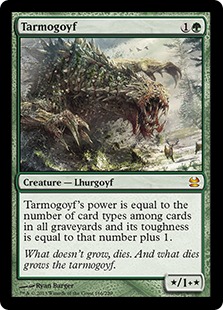
I'm always brewing new Modern decks, especially when spoiler season rolls around. After the novelty wears off, I inevitably find myself pulled back to my favorite card combinations. Goyfs, Bolts, cantrips; Temples, Mimics, Seers. I believe the decks that best house these respective combinations are Counter-Cat and Colorless Eldrazi Stompy, both of which I've tuned to finely match my playstyle preferences. But lately, I've again become enamored with an older creation of mine, and one that essentially mashes the two strategies together: TarmoDrazi.
Today, we'll take a look at my updates to the TarmoDrazi deck and assess the strategy's prospects in the current metagame.

Deck Concept and History
TarmoDrazi was born from a joke gone wrong: the weekend following Eye of Ugin's banning, I brought a Simic Eldrazi deck containing the newly-legal Ancestral Vision and a playset of Goyfs to Fright Night Magic. But Goyf's applications in the shell actually impressed me. A week later, I'd built the prototype.

That first version received backlash for my continued inclusion of Serum Powder, a card I had yet to put on the map as a worthwhile tool in Modern Eldrazi decks. I closely analyzed Powder's roles in the deck and finished by cutting it from my subsequent build. Version 1 also revealed the power of Traverse the Ulvenwald in a focused Tarmogoyf shell, and especially alongside the Eldrazi—when searching for Temple, Traverse functioned as a green Sol Ring, heavily incentivizing the deck to achieve delirium rapidly.
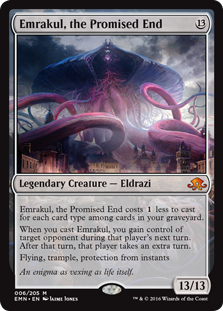
Version 2 came about after the spoiling of Emrakul, the Promised End. I went into Temur colors for Thought Scour, which helped fill the graveyard for Emrakul, and included Oath of Nissa as a mini-Ancient Stirrings that added to delirium and found Tarmogoyf. Noble Hierarch was introduced to help with delirium, mana fixing, and speed. Blue also gave the deck Serum Visions, at the time a powerful cantrip, and Stubborn Denial, which insulated the shell against combo decks. Stubborn was nice; Serum was a bit slow. Same deal with Emrakul, which was regularly a worse Traverse find than Tarmogoyf.

The project received new life when I remembered Architects of Will and went on another brewing spree. Version 3 employed Architects to make delirium more reliable. Emrakul and Oath were cut from this build, but spending mana on a blind cantrip wasn't what the shell wanted to be doing. I abandoned TarmoDrazi a month later, when Wizards revealed Eternal Scourge, and got to work on Colorless Eldrazi Stompy.

Current Build

Abandoned until now, that is. After two years on Colorless, I've re-sleeved my Ancient Stirrings to update TarmoDrazi. As always, we'll start with the list.

TarmoDrazi, by Jordan Boisvert

Creatures

4 Noble Hierarch
4 Tarmogoyf
4 Thought-Knot Seer
4 Reality Smasher
1 Scavenging Ooze
1 Tireless Tracker

Artifacts

4 Mishra's Bauble

Instants

4 Tarfire
2 Lightning Bolt
2 Dismember

Sorceries

4 Ancient Stirrings
4 Traverse the Ulvenwald
2 Faithless Looting

Lands

4 Wooded Foothills
2 Misty Rainforest
4 Eldrazi Temple
3 Karplusan Forest
1 Grove of the Burnwillows
2 Stomping Ground
2 Forest
1 Mountain
1 Wastes

Sideboard

4 Stubborn Denial
2 Kozilek's Return
2 Damping Sphere
1 Engineered Explosives
1 Dire Fleet Daredevil
1 Magus of the Moon
1 Huntmaster of the Fells
1 World Breaker
1 Breeding Pool
1 Cavern of Souls

Philosophy

The contemporary TarmoDrazi deck improves on its predecessors in a few ways. For one, it's sleeker. Full sets of Hierarch, Bauble, and Tarfire greatly enhance the deck's speed, a crucial factor in this midrange-light format. Value-leaning cards like Matter Reshaper and Architects of Will have little merit here. Trimming Architects also has the benefit of relegating our blue splash to the sideboard.
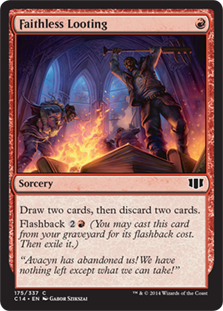
Faithless Looting further adds to our velocity factor, chewing through ill-fitting pieces in hand while growing Tarmogoyf and enabling Traverse the Ulvenwald in linear matchups. Those matchups have always peeved TarmoDrazi, as when opponents weren't stripping our cards with Thoughtseize, amassing delirium could prove cumbersome. Looting even improves the midrange matchups by dumping lands for business in the mid-game. Of course, it doesn't hurt that our "business" is midrange's Public Enemy No. 1, Reality Smasher.

Another crucial aspect of the deck is its resilience to graveyard hate. Rest in Peace seems great against TarmoDrazi on paper, but in practice, all it achieves is neutering Tarmogoyf and turning Traverse the Ulvenwald into Lay of the Land. That's just eight cards it cripples. We're still a deck with Thought-Knot Seer and Cavern of Souls, and remain fully capable of punishing opponents for deploying the enchantment on-curve.

Positioning
Modern already has a GR Eldrazi deck—the one with Obligators and Bloodbraid Elves. While that deck excels against large creatures, TarmoDrazi has a better time against small creatures thanks to its abundance of spot removal. Frequently having a 6/7 Goyf also pays dividends against those strategies, which are forced into chump-blocking. TarmoDrazi also gets the nod against combo decks, which similarly struggle against large Goyfs (not to mention Stubborn Denial).

I think GR probably outperforms us against midrange, what with all its Goyf-stealing and Bloodbraid value. But we certainly don't have a bad midrange matchup ourselves, what with all our... Eldrazi Temples. I feel like a more proactive, less rampy version of that deck that isn't so dependent on opponents having creatures is well-positioned for this metagame of Hardened Scales, Tron, UW, and Burn.

TarmoDrazi's sideboard also helps with matchups historically tricky for Eldrazi decks. Kozilek's Return fills in admirably for the heavy removal packages I've been forced to include in Colorless Eldrazi Stompy, but it certainly underwhelms against Humans.

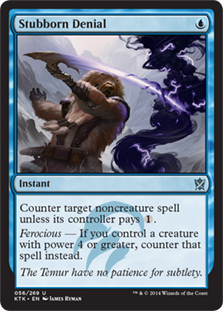
I also began without a blue splash, but added it back in for Stubborn Denial. This counterspell teams up with the accelerated beatdown plan of Hierarch, Goyf, and Seer to make most of our combo matchups—including spell-based aggro-combo decks, like Burn—a breeze. Lastly, Traverse gives us access to Magus of the Moon, which takes care of Valakut and UrzaTron decks alike.

Card Choices

Here, we'll dissect the individual components that make TarmoDrazi tick.

Creatures
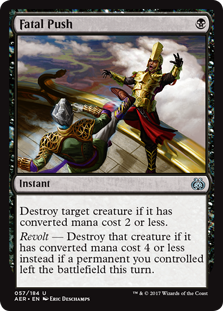
Noble Hierarch remains critical to the strategy, baiting out removal and feeding the creature type to delirium. With Fatal Push in the picture, this role is more relevant than ever.

I've found Looting and Bauble to buff our consistency enough that an early Goyf or Seer is par for the course. As such, additional early threats like Matter Reshaper, Eldrazi Obligator, or Bloodbraid Elf feel superfluous. Reality Smasher sits comfortably on top of the mana curve.

As for Traverse bullets, the only two I've found worthwhile are Scavenging Ooze and Tireless Tracker. Both are go-tall creatures that can outgrow anything and break board stalls, but they do so in different ways.

Ooze gets bigger faster and controls boards gummed up with Goyfs on either side. It also incidentally hates on the graveyard and gains life, hosing certain strategies. Sticking Ooze has been important in game 1s when it comes to turning off Snapcaster Mage, who's already stretched thin against this deck thanks to all the Path to Exile targets.
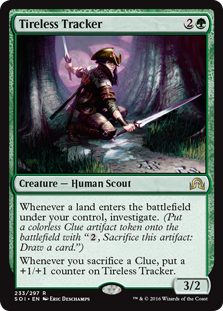
Tireless Tracker stays small for longer, but attacks opponents from a different angle entirely: with card advantage. Especially in a deck with Faithless Looting, drawing once (or twice) for each land drop can out-resource many Modern decks.

I like to exchange resources with interactive opponents as much as possible before deploying Scooze or Tracker. That way, the creatures come down and just take over the game, Ă  la Huntmaster of the Fells. Both creatures leave something to be desired against linear combo decks, although Scooze has applications against some of them, but their presence provides a mighty boon to our interactive matchups. Not coincidentally, these are the matchups in which we're likeliest to have delirium active and find ourselves able to tutor up haymakers.

Removal
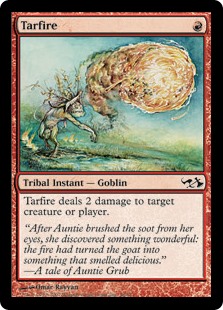
After experimenting with varying numbers, I think 4 Tarfire is definitely correct. No other card in the deck is worth two card types. It turns out taking a minus in matchups with few Tarfire targets is worth having delirium active from the game's outset.

Lightning Bolt is technically a flex card here, but I think it performs well in the slot. 3 is much more than 2 when it comes to burning opponents out, and Modern has never been so stat-centric. There are some creatures, most notably Mantis Rider, that Tarfire just won't kill.

For everything else, there's Dismember. This all-purpose kill spell is a shoe-in at 2. It nabs early Goyfs, lets us beat later ones, and clears the path of Gurmags and Baneslayers for Thought-Knot and friends.

Cantrips
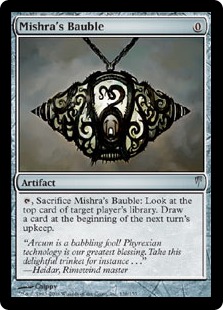
While I've discussed Traverse and Stirrings to death in the context of this shell, Bauble and Looting are relative newcomers (although I have experimented with Bauble here before). Let's start with the artifact cantrip. At 0 mana, Bauble is just miles more efficient than Architects of Will. And we have enough library manipulation to make great use of the scry. Our land configuration gives us the option of scrying while making a turn one play a good chunk of the time. We can also Bauble before casting Traverse or Stirrings if we're really looking for something specific, and hold off on the green cantrip until we draw the top card. Bauble even gives us super-Thoughtseize by looking at an opponent's card before resolving Seer. I'll admit that Bauble occasionally gets Looted away in the mid-game, but there's no card I'd rather have in an opener.

Since I've played Faithless Looting religiously in GRx Moon decks for years, I'm surprised in hindsight that I never tried it in TarmoDrazi. After all, Looting does plenty that we want—it cycles through extra lands, grows Tarmogoyf, and turbo-activates delirium. In game 2, it even helps find sideboard bullets we can't Traverse for, like Stubborn Denial. Including Looting also makes hit-or-miss cards like Dismember less of a liability.

Mana

The TarmoDrazi manabase is a tightrope walk of package balance, and I'm not sure I've found quite the right combination of lands yet. There are four types of lands vying for space among our precious 20 slots.
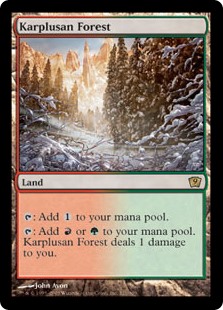
  • Colorless producers: Karplusan Forest seems like the better land, since a reach-inclusive aggro deck doesn't really want to gain opponents life. But it seems including Grove of the Burnwillows has some merit, as with both lands in play, pilots can choose whether to give life or take damage. Similarly, seeing both lands off a Stirrings lets us select the best one for the matchup.
  • Fetchlands: I've been bouncing between 5 and 6 fetchlands lately. We badly want a fetchland in the first couple turns of the game, but they become our worst lands by the mid-game. Exceptions do arise; Mishra's Bauble and Tireless Tracker both extract extra value from fetchlands. But I've had them be dead occasionally, and the damage adds up.
  • Fetchable lands: Having targets for fetchlands wasn't a problem when I ran Breeding Pool in the main, but since switching to Wastes, 6 fetchlands feels like it might be too many. Among these lands, I think at least three should be basics, including 1 Mountain. It's possible the 2nd Forest can be cut for another shock.
  • Utility lands: Right now, my only mainboard utility land is Wastes. The fourth basic stands to help out against Assassin's Trophy (I have yet to test that), and it's a colorless source we can Traverse for in lieu of delirium. Having a Wastes in the 75 blocks Blood Moon and Field of Ruin from ever cutting us off colorless.

It pays in this deck to deploy lands very conservatively, at times holding up to four additional lands in hand. A topdecked Faithless Looting can turn those lands into threats. Because of Bauble and Tracker, fetchlands are the most valuable type to hold. Pilots should play out lands so that they have enough to Loot and make a desired play, or flashback Loot and make a desired play. Properly pacing land drops requires a solid understanding of what's in the deck and the paths available should one card or another be drawn.

Sideboard
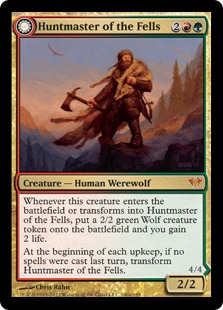
The sideboard, too, is a work-in-progress. Lately, I'm wondering if Huntmaster of the Fells and Magus of the Moon can be cut. The former seems a little redundant as a bullet—if we've stabilized the board, won't Tireless Tracker or Smasher put the game away, even against small creature decks? As for the latter, are there decks besides Tron it's there for? If not, I'd rather have a third Damping Sphere.

I'm also wondering if World Breaker can't be Reclamation Sage. I figured the only time I'd need to blow up an artifact or enchantment was if I was already deep in the late-game, in which Breaker is castable, and liked his applications against attrition decks. But seven mana is still a ton. Other bullets I've tried and cut include Eldrazi Obligator (never wanted it) and Hazoret the Fervent (too redundant with Smasher). I've considered Izzet Staticaster and, just for kicks (I swear), Nullhide Ferox. (Just for kicks!) (I swear!)
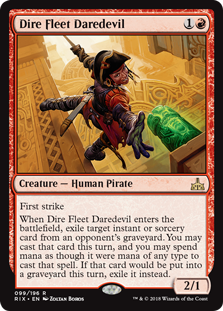
The rest of the sideboard feels great. Dire Fleet Daredevil shines in Goyf mirrors, Kozilek's Return wrecks small creature decks, and Stubborn Denial runs circles around anyone casting pricey spells. Cavern of Souls is also riotous against the UW decks.

Merry Christmas, Everyone

After putting this deck back together, I promptly went 4-0 at my LGS and came home eager to share the updated TarmoDrazi with the world. If anyone else takes it for a spin, be sure to let me know how it goes!


Exploring Some Overlooked Modern Gems

Are you a Quiet Speculation member?

If not, now is a perfect time to join up! Our powerful tools, breaking-news analysis, and exclusive Discord channel will make sure you stay up to date and ahead of the curve.

In the vast card pool of Modern, there are quite a few hidden gems that are either underplayed or could see play in other strategies. Decks like Death's Shadow and KCI existed for a long time before being discovered. This leads me to believe there are plenty of other undiscovered viable decks lurking in the depths of Modern. Whenever I come across a card that sparks my interest, I take note of it. Sometimes I'll build some exploratory lists around it. In rare cases, I'll continue digging if I think there is something truly great in the idea. Over the years, these cards have formed a disorganized list in my brain of cards that could potentially take over Modern either in established decks or entirely new strategies.

In an attempt to make the list a little more organized, I want to document a few of those cards on that list. It is important to note that the decklists in this article are rough starting points and are far from polished.

Bomat Courier

Bomat Courier is an incredibly powerful card and has certainly demonstrated that in Standard. It presents pressure in the form of inevitable card advantage that must be dealt with, all at the low cost of one mana. Despite its efficiency, the deckbuilding constraints Bomat Courier puts on a deck are fairly significant. To cash in on the card advantage machine, you need to have few, preferably zero cards in hand. The type of deck that wants this card will be emptying its hand quickly to prepare to reload. Not many decks can or are actively looking to do that, but the ones that do will be happy to have it.

One deck I would look to for Bomat Courier is Burn. All Burn is trying to do is empty its hand of burn spells to put the opponent’s life from 20 to 0. That can be difficult to do sometimes when resources are tight. If the deck draws a few too many lands, it will often be six to nine life points short. Bomat Courier not only acts as a burn spell by chipping in for 2-3 damage, but it brings along with it the burn spells under it. Bomat Courier is at its best in a slimmed down version of Burn playing Bump in the Night. My biggest issue with traditional RW Burn are the hands that die with two-mana spells rotting away in hand. The lowering of the curve will both help kill the opponent quicker and make Bomat Courier better.

The other deck I propose we add Bomat Courier to is Death’s Shadow. The deck is all about playing the most efficient spells possible, and what better than a one-mana draw-four? That characterization is a bit of an exaggeration, but the card is still a perfect fit. The deck plays removal spells to let Courier get hits in, and it plays hand disruption to quickly trade off resources. If both sides are constantly trading one-for-one, but one side has a Bomat Courier, it is clear which side will win.

Erayo, Soratami Ascendent

Erayo, Soratami Ascendent may fit more under the category of pet card rather than secretly powerful card in Modern. Part of me just really wants this card to work, but I should still try to honestly evaluate this card. When looking at the power of a card, It is important to weigh the setup cost against the payoffs. If the payoff does not overcome the amount of setup required, then the card is not worth playing. If it feels like you are having to do too much to make a card work, than you almost certainly are.

Now, the payoff for Erayo is pretty strong. Countering the first spell an opponent plays each turn will slow them down a lot, and in some cases, just lock them out. It won’t win the game on its own, but it won’t need too much help. What is the setup? Cast four spells. That is a lot of spells. That is more than half the number of cards in a starting hand. I think most people would stop at that and move on to something else. They are probably even correct in doing so, but it is possible this card is playable now with Mox Amber and Sai, Master Thopterist.

Casting four spells in one turn is no small order. Doing it consistently is even more difficult. Accomplishing it, and then still having enough resources left over to win the game, is seemingly impossible. Needless to say, Erayo, Soratami Ascendent has the biggest deckbuilding constraints of any card on this list. To cast four spells in a turn, the deck needs to be filled with tons of free spells. That almost certainly locks us in to playing artifacts. If we have Erayo in hand, we certainly want to be able to consistently flip it on turn two. That means we need mana ramp. This cross section pushes us towards Mox Opal and Mox Amber. Mishra's Bauble gives us a free spell that also replaces itself. Round out the zero-cost artifacts with Engineered Explosives for some disruption and we have a nice core. Without Mox Amber, this core would not be consistent enough to work.

The enchantment side of Erayo is pretty good, but not good enough to end the game on its own. We need threats to end the game that work well in a deck filled with zero-mana artifact spells. The two cards that work perfectly in that environment are Monastery Mentor and Sai, Master Thopterist. Again we run into more redundancy. We have up to eight copies of a card that will end the game shortly backed up by a pile of zero-mana artifacts.

Erayo Combo, by Max Magnuson

Creatures

4 Erayo, Soratami Ascendant
3 Ethersworn Canonist
4 Monastery Mentor
4 Sai, Master Thopterist
4 Simian Spirit Guide

Artifacts

4 Mishra's Bauble
4 Mox Amber
4 Mox Opal
4 Engineered Explosives
1 Chalice of the Void

Instants

4 Repeal

Sorceries

4 Serum Visions

Lands

4 Darksteel Citadel
4 Flooded Strand
2 Hallowed Fountain
2 Island
4 Seachrome Coast

A couple notes about this list as a starting point. Repeal is the key. Either Mox with a Repeal is enough to flip an Erayo the same turn you play it. It also combos well with Monastery Mentor and Sai, Master Thopterist.

The one Chalice of the Void is pretty awkward. You don’t really want to cast it on zero unless there is no other way to flip Erayo, as it locks out a lot of the other spells in the deck. I could see cutting that one immediately. I like having a Rule of Law type effect in Ethersworn Canonist. It assembles the true lock with Erayo’s Essence, and is even an artifact for Mox Opal. Overall, this is a pretty good starting point—despite my bias, I’m confident it has a lot of potential.

Utopia Sprawl

Utopia Sprawl is a unique ramp spell in Modern. It is a one-mana ramp spell that is not a creature. If you want that type of effect in Modern, typically you would have to play Noble Hierarch or Birds of Paradise. Unlike those staple mana dorks, Utopia Sprawl isn't vulnerable to removal spells, which makes it more reliable. We've seen a little bit of Utopia Sprawl in Modern in decks like Ponza or Green Devotion, but I think it could easily spawn other archetypes.

Utopia Sprawl puts a lot of constraints on the land choices in a deck. The majority of the basics and dual lands need to be Forests. This forces any deck relying on Utopia Sprawl to be base green. This constraint is a big reason why we've only seen it in mostly green decks. Getting to choose the extra color the land taps for is a form of fixing, and we should be able to get a little greedier with our color choices. Thanks to shocklands, Modern manabases can support three-color decks while still having enough Forests for the land enchantment to function.

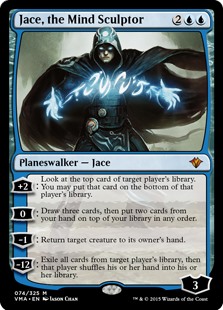
The place I'd start brewing with Utopia Sprawl is a bigger midrange deck. Midrange decks in Modern need to play a lot of one- and two-mana plays, so that they can keep up with the other decks in Modern. With Utopia Sprawl, we could play some three-, four-, or five-mana haymakers to get us back in the game. We could play three-mana wraths like Sweltering Suns or maybe a Liliana. With four mana we could play a Jace, the Mind Sculptor on turn three. For five mana, we could look at cards like Thragtusk or Teferi, Hero of Dominaria. There are a wide range of options available in all four of the possible supporting colors. Figuring out exactly what the deck wants would require a lot more testing than theorizing.

There are a few things working against Utopia Sprawl in Modern. Most green decks are interested in playing creatures. Part of green's color pie is that its power is largely focused in creatures. In decks built around creatures, there is not much incentive to play Utopia Sprawl over the one-mana creature accelerators. Most of the good noncreature midrange payoffs are in other colors. This pushes the deck away from base green. Utopia Sprawl is also lacking an effective second copy of it. Noble Hierarch has Birds of Paradise. Any deck built around having Utopia Sprawl in play will run into consistency issues. But if we ever do get copies five through eight, Utopia Sprawl will be the very next card I start brewing around.

Mausoleum Secrets

Mausoleum Secrets is a bit of a bold prediction. This card could very easily never see play in Modern. It is a two-mana tutor though, and that is very exciting. Modern does not have many tutors on the cheap. Traverse the Ulvenwald requires too much setup to reliably be used in a combo deck. Time of Need is a bit too narrow to be effective. Summoner's Pact has been the most impactful in Modern, seeing play in Amulet Titan and Valakut, the Molten Pinnacle strategies. Mausoleum Secrets might fall into one of these categories, but I can’t really be sure without playing with it.

The biggest thing that Mausoleum Secrets has going for it is the recent printing of Stitcher's Supplier. Combine it with Hedron Crab, and that is a quick self-mill engine based around creatures. I could possibly even see a couple Minister of Inquiries for redundancy. Previously, graveyard-based decks would rely on spells like Faithless Looting and Cathartic Reunion, but now the enablers can also count towards the creature count needed for Mausoleum Secrets.

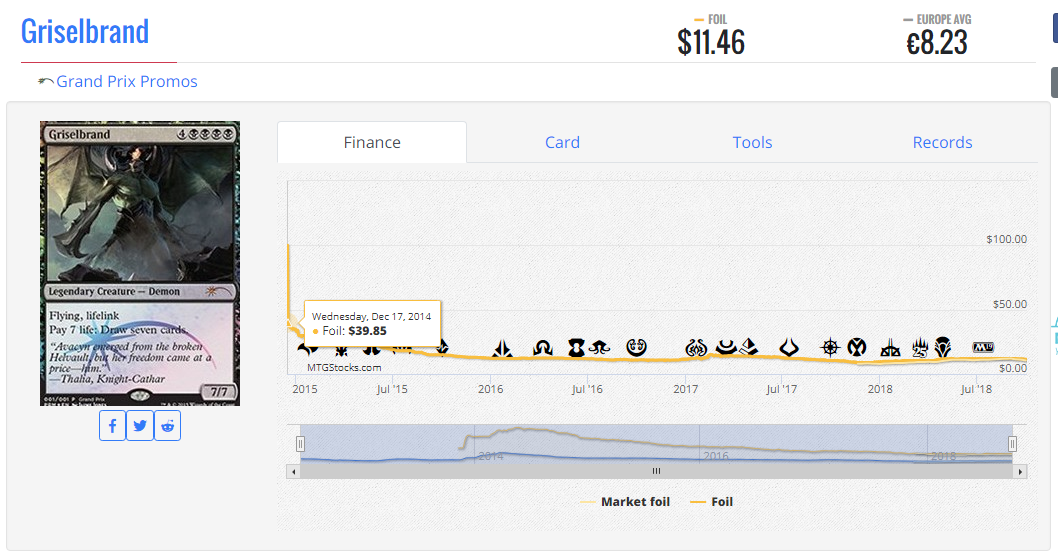
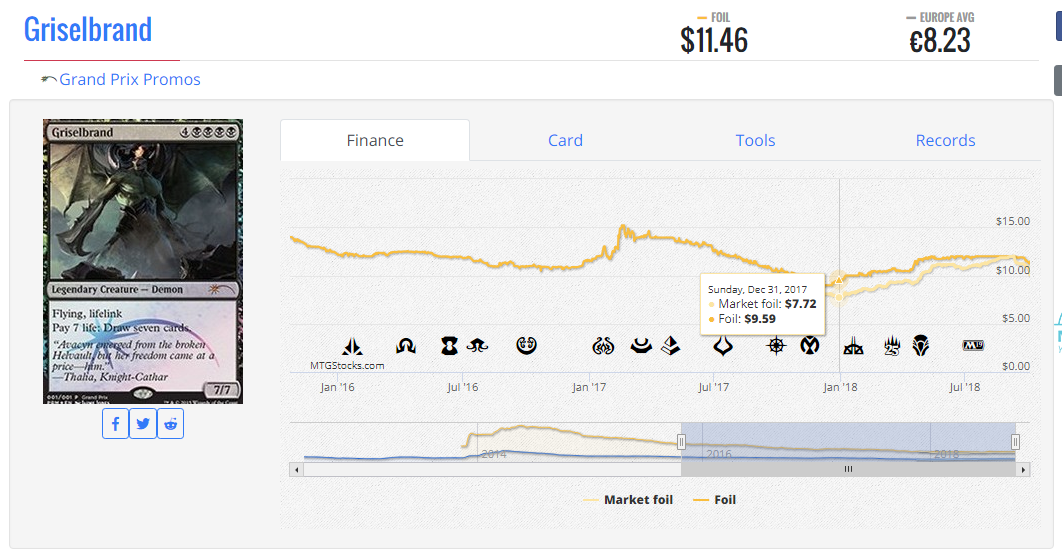
The first shell I thought of for this card was Goryo's Vengeance. The main weakness of Goryo’s is that the deck has too high of a fail rate. On top of that, the Through the Breach plan is a bit too disjointed from the Goryo's Vengeance plan. One part of the deck is trying to dump Griselbrand in the graveyard and reanimate it with Goryo’s. The other half needs fast mana and a Through the Breach.

There is an awkward tension between the two packages. Faithless looting is card disadvantage, which is great for an all-in, graveyard-based combo deck, but makes it difficult to hit a bunch of land drops or rituals for a five-mana spell. Goryo's Vengeance wants the payoff to be in the graveyard, while Through the Breach wants the payoff in hand.

Not only is the strategy overall awkward, it is fragile too. One or two discard spells or any graveyard hate is often enough. All of that aside, Goryo's Vengeance on Griselbrand is a powerful combination that leads to a number of turn-two kills.

What excites me most about adding Mausoleum Secrets to the Goryo's Vengeance/Griselbrand shell is that we can cut the Through the Breach package. With Mausoleum Secrets to provide redundancy as a tutor for Goryo's Vengeance, we can go all in on that plan.

I’ve played around with a few different shells of the deck. My first build used Street Wraith and Insolent Neonate as ways to enable Mausoleum Secrets. I found that build to be just too inconsistent. Neonate is great at enabling Secrets, but rather poor at digging for pieces of a combo. My favorite version I tried is a turbo self-mill version with Stitcher's Supplier and Shriekhorn. I tried Hedron Crab, but found it a little too hard on the mana. Despite that, I think a Hedron Crab version still deserves some more exploring.

Goryo's Vengeance, by Max Magnuson

Creatures

1 Insolent Neonate
4 Autochthon Wurm
4 Griselbrand
4 Simian Spirit Guide
4 Stitcher's Supplier

Artifacts

4 Shriekhorn

Instants

4 Goryo's Vengeance
4 Nourishing Shoal
4 Mausoleum Secrets

Sorceries

4 Faithless Looting
2 Cathartic Reunion
2 Conflagrate

Lands

4 Blackcleave Cliffs
3 Blood Crypt
4 Bloodstained Mire
3 Polluted Delta
2 Wooded Foothills
2 Mountain
1 Swamp

My main goal with this deck is to keep intact the powerful turn-two kill potential, but add consistency through self-milling and Mausoleum Secrets. I really like Stitcher's Supplier as a tutorable self-mill target. It won’t come up often, but it is nice to have. Switching over to Conflagrate instead of Borborygmos Enraged as the win condition makes only one to two activations of Griselbrand lethal. This might make the Nourishing Shoal package obsolete as you do not need to draw the deck to win.

The main weak point for any shell I've looked at is finding a copy of Griselbrand. The entire deck is based around getting him into play, and it really doesn’t do anything without him. I’m hoping that all of the self mill will be enough to find one, but there are still only four copies in the deck. It is possible there exists a green version with some number of Time of Need to help mitigate this issue.

Wrapping Up

I hope my dive into these cards gets you excited to do some brewing, or to look deeper into some cards you think are overlooked. I plan on revisiting this list from time to time to construct a potentially referenceable list. I would be interested in hearing what cards you think deserve a spot in the comments.

Insider: Digging for Post-Rotation Standard Specs

Are you a Quiet Speculation member?

If not, now is a perfect time to join up! Our powerful tools, breaking-news analysis, and exclusive Discord channel will make sure you stay up to date and ahead of the curve.

Guilds of Ravnica (GRN) becomes tournament-legal today, but it has already made a big impact on the market. There have been some large movements in the past week, both of new cards like Pelt Collector and March of the Multitudes, and of old cards like History of Benalia.

These cards definitely made some people money, but the ship has likely already sailed, and if there is further growth it won't be much or sustained for long. Today I will dig a bit deeper into the market and share some other cards that are on the rise but look to still have some meat on the bones and potential profit to be had.

There was an error retrieving a chart for Dream Eater

One example is Dream Eater. It has already seen some large gains, up from under $4 pre-order to over $7, but could go higher. It’s the closest thing we have left to Torrential Gearhulk, and could fill in some of the same role, or perhaps will stand out in a surveil deck. If it does, it could soar past $10.

There was an error retrieving a chart for Aurelia, Exemplar of Justice

Looking at a much more expensive mythic, Aurelia, Exemplar of Justice is up from $10 to $15, but I could see movement past $20 in the short-term. There’s a high chance that Boros picks up where Red-Black left off and becomes the new best deck. Aurelia, Exemplar of Justice can be found in just about all of them, even as up to a four-of.

There was an error retrieving a chart for Swiftblade Vindicator

A more bargain spec that could cash in on the popularity of Boros is Swiftblade Vindicator, which seems to be a staple of the Boros decks, particularly because of how well it works with Mentor. At $2 it looks like a bargain compared to Pelt Collector's $10, even if it's more color-restrictive, and could double or triple in price. It's great with Tajic, Legion's Edge, which at $3 could be a bargain as well.

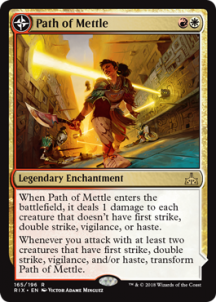
An even cheaper Boros spec is Path of Mettle, which is seeing play in some Boros decks. Its price is heading towards a $1, and could double or triple in if it becomes a staple of the archetype.

There was an error retrieving a chart for Muldrotha, the Gravetide

A much more speculative pick is Muldrotha, the Gravetide. The duals of GRN mean Sultai is a top color combination, which could bring the card into the spotlight. It has seen some nice gains in market price over the past day, up to $4 from $3.75, from a low of $3 a month ago.

Along with Golgari’s many graveyard enablers and Golgari Findbroker, which like Muldrotha also promotes a focus on permanents, it could be a great win-condition for a midrange deck. Standard aside, I also think it’s a very strong pick in the long run because of its Commander appeal.

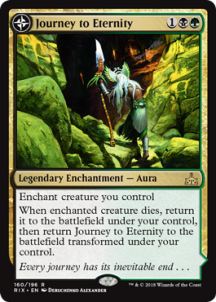
Another Golgari card of note is Journey to Eternity. The card was somewhat hyped when spoiled, but has been completely absent competitively. Now with the return of Golgari it is seeing renewed attention, and could finally break out.

There was an error retrieving a chart for Stitcher's Supplier

The most-improved Golgari card might be Stitcher's Supplier, a fantastic enabler for undergrowth and other graveyard synergies, and a great card to sacrifice to Vraska, Golgari Queen. It was already a Modern staple, which brought its price to over $1, but over the past couple weeks has grown to over $2 on GRN hype. If it pans out, the extra demand on top of the Modern demand could send its price even higher.

There was an error retrieving a chart for Vivien Reid

Green has gotten a lot of great tools from GRN, which makes its existing cards even better. One card that is suddenly hot again is Vivien Reid. Vivien can play a part in all variety of green decks, whether it be Golgari, Selesnya, Steel Leaf Stompy, or anything in between, like Abzan.

It has grown from $8 to $9 over the past week, and from 7 tickets to over 10 online. I expect the paper price to grow another couple dollars too, and maybe even more if green becomes the dominant color in Standard.

There was an error retrieving a chart for Radiant Destiny

Goblins received enough new cards in GRN that it can form a tribal deck in Standard, which has renewed demand for cards like Siege-Gang Commander.

One of the best specs might be Radiant Destiny, which is a great anthem for a tribe with plenty of tokens to help it gain the City’s Blessing. It's up to $3.50 from $3 a month ago, but the online price doubling this week to 1.5 tickets means demand has been very high—the paper price could follow suit and grow to $5 or more.

There was an error retrieving a chart for Clifftop Retreat

One of the safest specs right now is probably lands. The best might be the Dominaria checklands, which have started to creep up in price over the past week, with Clifftop Retreat and Hinterland Harbor leading the way. The Ixalan checklands are heading up too, with Sunpetal Grove being the biggest gainer.

The past printings of these cards have been trending upwards as well. Really any checkland is fair game at this point, but those that align with the GRN shocklands are probably the best bet. That said, planning ahead for the next five shocklands being released in Ravnica Allegiance in January by buying those checklands now is likely a smart move.

There was an error retrieving a chart for Field of Ruin

Another great land to target is Field of Ruin, which is up from a $3.50 market price past $3.75 and heading towards $4. It’s a strong Standard card, and a staple of Modern. I think it has a bright future.

-Adam

Insider: Office Hours Cast #1 (Edward Eng & Sigmund Ausfresser)

Are you a Quiet Speculation member?

If not, now is a perfect time to join up! Our powerful tools, breaking-news analysis, and exclusive Discord channel will make sure you stay up to date and ahead of the curve.

Below is the inaugural Office Hours cast! This is a new style of podcast where Quiet Speculation Insiders post questions to our Discord, live, and QS writers respond with audio answers. This month featured Sigmund Ausfresser and Edward Eng. Future Office Hours may feature different writers for fresh new perspective. If we gain traction with these, there will be more to come. So stay tuned!

Here are some key links mentioned throughout the cast:

https://www.channelfireball.com/articles/you-can-turn-1-kill-with-runaway-steam-kin-in-modern/

https://docs.google.com/spreadsheets/d/1h49lKpHPjGwCiIte2ReX2NGVTPfxC1BaYWxVn2v7VXE/edit#gid=0

https://www.npr.org/sections/money/2015/03/11/392381112/episode-609-the-curse-of-the-black-lotus

Let us know what you think!

Avatar photo

Sigmund Ausfresser

Sigmund first started playing Magic when Visions was the newest set, back in 1997. Things were simpler back then. After playing casual Magic for about ten years, he tried his hand at competitive play. It took about two years before Sigmund starting taking down drafts. Since then, he moved his focus towards Legacy and MTG finance. Now that he's married and works full-time, Sigmund enjoys the game by reading up on trends and using this knowledge in buying/selling cards.

View More By Sigmund Ausfresser

Posted in Free Insider, Office Hours, Podcast, Podcasts1 Comment on Insider: Office Hours Cast #1 (Edward Eng & Sigmund Ausfresser)

Have you joined the Quiet Speculation Discord?

If you haven't, you're leaving value on the table! Join our community of experts, enthusiasts, entertainers, and educators and enjoy exclusive podcasts, questions asked and answered, trades, sales, and everything else Discord has to offer.

Want to create content with Quiet Speculation?

All you need to succeed is a passion for Magic: The Gathering, and the ability to write coherently. Share your knowledge of MTG and how you leverage it to win games, get value from your cards – or even turn a profit.

Daily Stock Watch – A Review of Cards that We Saved Ourselves From

Are you a Quiet Speculation member?

If not, now is a perfect time to join up! Our powerful tools, breaking-news analysis, and exclusive Discord channel will make sure you stay up to date and ahead of the curve.

Hello, everyone and welcome to the next part of this week's special edition! I'd be on my first year with Quiet Speculation soon and if you missed out on the first two parts of this week's segment, you could find the first one here and the other one here.

Today, I'll be doing a post about the specs that spiked for a certain period but I wanted to stay away from for various reasons. It's like saving our chips before going all-in with a bad hand!

There was an error retrieving a chart for Bloodbraid Elf

Everyone was stoked at the idea of BBE getting unbanned in Modern so it was actually a $3 card that was out of stock when I wrote about it. Stores refilled at $10 upon unbanning and I have to admit that I was wrong about the possibility of it getting unbanned, but I was also luckily right to tell you to stay away from it whatever happens. If you bought in at under $3, you're pretty much doing fine right now with some minor gains. However, I wish that you didn't go all out when it spiked because of its return to legal play or else you would be staring at some losses by now.

There was an error retrieving a chart for Aether Hub

People were so high on this card when Energy decks were winning tournaments left and right when I wrote about it. I was already afraid of what WotC would do to the archetype because of its dominance so I wanted you to let go of your copies even at buylist price (around $1.20-$1.50 via Card Kingdom and StarCityGames) and rightfully so, Attune with Aether and [card]Rogue Refiner[card], two of the most unfair energy-enablers, was banned soon. Uncommons are very good candidates for penny stocks so if you went all out before the banning, you just saved yourself a couple of bucks.

There was an error retrieving a chart for Avacyn, Angel of Hope

Avacyn, Angel of Hope was pre-selling at $20 when I wrote about it and I wanted you to stay away from it because the card isn't as good as it seems. Even the Avacyn Restored version (pegged at $24-$28 back then and now sitting at $19) wasn't a good target for me and luckily for us, it was a card that really went down the drain (unlike Aether Vial which was also printed in the same set but still continues to see lots of competitive play therefore retaining its price) and we were able to dodge the speculation axe.

There was an error retrieving a chart for Magus of the Moon

People are skeptic about cards that get reprinted (and for good reason they should be) but one that I kept my faith on was this card. Online stores were down to $6 on this card when it was spoiled and I was against the idea of selling it because it is still a good card for multiple formats. If you listened to me and didn't sell for below $10, you'd be glad to know that it's still a $10 card after everything has been said and done. Great red cards will remain good financially no matter what happens.

There was an error retrieving a chart for Runed Halo

I never really liked this card and I still don't understand why this spiked so high and continues to keep its high price tag despite the almost moot demand for it. It was a $48 card when I wrote about it and I wanted you to stay away from it for personal and financial reasons alike so I guess you should be happy if you didn't buy in to the hype back then. This card is barely $40 nowadays and it should continue to dip lower since there's no actual need for it in an already absurdly strong UW Control deck.

There was an error retrieving a chart for Rishadan Port

Everyone was hyped that this card was included in A25 (myself included) because stocks of the Mercadian Masques version was very low prior to the reprint. A lot of players must have bought in at the pre-selling price of $45-50 but I was skeptic about it keeping the price tag so I said that we should only buy in even for personal use at the $30 range. It's now sitting at $25 and you would have saved yourself close to a hundred bucks if you waited patiently like me. It's still funny though that the price disparity of the older version and the latest one is that big. I guess it's important to keep OG versions of cards for Legacy and collection purposes.

And that’s it for this edition of the Daily Stock Watch! See you again tomorrow, as I continue with the second part of this special. As always, feel free to share your opinion in the comments section below. And if you want to keep up with all the market movement, be sure to check in with the QS Discord Channel for real time market information, and stay ahead of the hottest specs!


Hold ‘Em & Fold ‘Em #13

Are you a Quiet Speculation member?

If not, now is a perfect time to join up! Our powerful tools, breaking-news analysis, and exclusive Discord channel will make sure you stay up to date and ahead of the curve.

The prerelease for Guilds of Ravnica has finally made its mark in the history books. I also made history by missing it, making it the first prerelease I’ve missed in the last few years owing to the recent birth of my first child—a fair trade off.

But that’s not what we’re here to discuss, as it’s back to business as usual. As always, the focus is on...

  • Cards that you should hold on to or pick up for tournaments if you need them before they rise in price. These cards are either seeing increased play in one or more formats, the supply is drying up, or they’re pretty far from the next reprint.
  • Cards that you should consider selling or trading away. Their prices are pretty much at the ceiling owing to inflation from speculation, reprint inevitability in the near future, a lull in tournament play, or some combination of these.

Hold ‘Em

Mutavault - Grand Prix Promos

Target Buy Price
Under $12

2018 is quickly coming to an end, and that means we’ll probably be getting a new promo for next year’s Grand Prix. I was recently talking to my good friend and consistent Quiet Speculation commenter, Zandy, about how we haven’t reached peak supply yet, which will happen in December. However, if we look at previous Grand Prix promos like Griselbrand and Stoneforge Mystic, you’ll notice that the price rebound has gotten continuously shorter over the years.

You can see that it’s taken Griselbrand about three years to rebound and start its inevitable gradual climb upwards till pretty much the end of time, since it’s a promo that Wizards will probably never print again. And this is why I highlighted it in Article #2 back on July 17, 2018.

But wow, three years is a long time. Okay, so let’s continue forward and look at Stoneforge Mystic.

You can see that’s it’s taken Stoneforge about two years compared to Griselbrand’s three to begin its price rebound and upward trajectory—hence the mention in Article #5 on August 11, 2018.

Now let’s take a look at Mutavault’s graphs.

You can see that it’s taken less than a year compared to Stongeforge’s two, and Griselbrand’s three, to start its rise. Given these charts, I think it’s pretty safe to say that now is a good time to start picking up the promo Mutavaults if you need or want them.

Yes there are a lot out there, but that’s when you should be looking to pick them up before they start disappearing into people’s collections and decks. Not to mention, the artwork is done by the beloved John Avon.

Chalice of the Void - Modern Masters (Non-Foil)

There was an error retrieving a chart for Chalice of the Void

Target Buy Price
Under $44

The Masters 25 reprinting almost a year ago has really tanked the price of this card, especially the Modern Masters version. Thus, now is a great time to pick this up if you need it to play something like Eldrazi in Legacy or Tron in Modern. This will bounce back again if Wizards chooses not to print it in the next Masters set.

Fold ‘Em

Mutavault - M14 (Non-Foil)

Target Sell Price
$10

$10 is pretty close to the target buy price of Mutavault's Grand Prix promo counterpart. Now is a good time to get rid of these as these are easy to reprint and could easily show up in the next Masters set. If you have these and want the promo version, you can sell them to a vendor like Star City Games and use store credit to also pick up the promos from them. That’s what I plan to do.

Recent Buys

Barbarian Ring - Premium Deck Series: Fire and Lightning

There was an error retrieving a chart for Barbarian Ring

Purchased Price
$0.39

I mainly got these for Premodern, and I bought two playsets from Card Kingdom since they were so cheap. While I don’t target cards that only see play in Premodern, the funny thing is, I just noticed that this sees play in Lands in Legacy. Even Daniel Barkon’s list from Article #12 runs one copy.

Hatchery Spider - Guilds of Ravnica (Foil)

There was an error retrieving a chart for Hatchery Spider

Purchased Price
$1.49

Just like Premodern, I don’t advise picking up cards that will probably only see play in Standard. However, $1.49 for foil versions of this card is super cheap. This card is essentially a two-for-one since it has a cast trigger. Mono-Green Stompy, which will probably be one of the front-runners for the new Standard this month, will most likely play at least one copy.

One other thing to mention: green is very powerful in EDH/Commander; so I could see there being some demand for this there. I bought the only six copies that were available on Card Kingdom on September 27. They’ve restocked since then if you want to pick some up too.

Nightveil Sprite - Guilds of Ravnica (Foil)

There was an error retrieving a chart for Nightveil Sprite

Purchased Price
$0.49

Here’s another card that’s probably only Standard-worthy but was also super cheap to pick up. I got a playset of these on September 27 from Card Kingdom as well. Since then, they’ve bumped their price up to $0.79, and are still sold out of them.

The surveil mechanic is quite powerful since it’s pretty much scry on steroids. While Todd Anderson has been playing around with some surveil Standard lists. I still don’t think this card will make waves in eternal formats in something like UB Faeries or some other deck that tries to abuse the graveyard. I’m not saying it’s impossible, but it’s highly unlikely.

However, $0.49 was just too good to pass up for at least a playset for Standard at the very least. And $0.79 still isn’t too bad if they restock them at that price and you’re able to get them.

A couple of things to point out here:

  • You have to be flexible and bend the guidelines sometimes when it comes to cards like Hatchery Spider or Nightveil Sprite with regard to small tangible potential and price points.
  • I advise bookmarking the Hold ‘Em & Fold ‘Em - Public MTG Finance Spreadsheet to really stay up to date on market movements, especially during times like this when new sets are getting released since the market shifts quickly and is quite volatile.

Standard: Dimir Surveil by Todd Anderson

Creatures

2 Blood Operative
4 Dimir Spybug
3 Doom Whisperer
4 Nightveil Sprite
4 Thoughtbound Phantasm
2 Lazav, the Multifarious

Non-Creature Spells

3 Dead Weight
2 Cast Down
2 Vraska's Contempt
4 Discovery
4 Notion Rain
4 Thought Erasure

Lands

7 Island
7 Swamp
4 Drowned Catacomb
4 Watery Grave

Sideboard

1 Dead Weight
2 Disinformation Campaign
3 Disdainful Stroke
2 Spell Pierce
3 Golden Demise
4 Unmoored Ego

Standard: Turbo Surveil by Todd Anderson

Creatures

4 Dimir Spybug
4 Doom Whisperer
2 Exclusion Mage
4 Nightveil Sprite
4 Thoughtbound Phantasm
3 Lazav, the Multifarious

Non-Creature Spells

3 Dead Weight
2 Spell Pierce
4 Discovery
4 Notion Rain
4 Thought Erasure

Lands

8 Island
6 Swamp
4 Drowned Catacomb
4 Watery Grave

Sideboard

1 Dead Weight
2 The Eldest Reborn
3 Disdainful Stroke
2 Dive Down
3 Golden Demise
4 Unmoored Ego

Updates

Pelt Collector - Guilds of Ravnica (Non-Foil & Foil)

There was an error retrieving a chart for Pelt Collector

Purchased Price
Non-Foil: $1.40 (shipping included)

Speaking of quick market shifts and volatility, Pelt Collector has skyrocketed in price since I bought it on September 18 and mentioned it in Article #11. This is yet another example of why bookmarking the spreadsheet is crucial.

Runaway Steam-Kin - Guilds of Ravnica (Non-Foil & Foil)

There was an error retrieving a chart for Runaway Steam-Kin

Purchased Price
Non-Foil: $2.49
Foil: $6.99

You want another reason? Here you go. This is another card that has been making waves prior to and throughout the Prerelease weekend. I bought multiple playsets of and featured it in Article #12 on September 27.

Recent Sells

Here’s a buylist order I placed with Star City Games on September 29.

I bought the Flameblade Adepts from TCGplayer on January 11, 2018 for $1.79 each, and they're been rotting in my trade binder since then. So I decided to get rid of them. As you can see, I’m putting my words into action regarding Mutavault, as well as Fulminator Mage, which I mentioned in Article #11.

All for all the other cards, I either opened them in packs during some tournament or traded for them. The only exception is Rekindling Phoenix, which I bought from Card Kingdom in February for $27.99 to play in two Preliminary Pro Tour Qualifiers that I both cashed and pseudo-qualified for a Regional Pro Tour Qualifier.

So they’ve been well worth the money spent. Although Phoenix will probably see play throughout the rest of its time in Standard, it’ll probably never see Eternal play. So I’m happy to lock in the value now and spend it on other cards I’ve mentioned and need.

Office Hours

Last week, Sigmund Ausfresser and I hosted Quiet Speculation’s inaugural Office Hours in the Discord channel...an ask-us-anything session that lasted an hour. It was quite successful as there was a good group of people who were asking questions and listening the whole time.

Throughout the session we discussed Guilds of Ravnica, Old School, and general MTG finance questions like strategies for buylisting and how to afford Magic with a limited bankroll.

We’re working on getting the audio together to see if we can feature this as additional value-add to our QS Insiders that they can listen to and refer back to anytime. We plan to continue doing this, so if you want to partake in the next session don’t forget to sign up to the Discord channel.

Summary

Holds

  • Mutavault - Grand Prix Promos
  • Chalice of the Void - Modern Master (Non-Foil)

Folds

  • Mutavault - M14 (Non-Foil)

Recent Buys

  • Barbarian Ring - Premium Deck Series: Fire and Lightning
  • Hatchery Spider - Guilds of Ravnica (Foil)
  • Nightveil Sprite - Guilds of Ravnica (Foil)

Updates

  • Pelt Collector - Guilds of Ravnica (Non-Foil & Foil)
  • Runaway Steam-Kin - Guilds of Ravnica (Non-Foil & Foil)

Recent Sells

Public Spreadsheet

Hold ‘Em & Fold ‘Em Spreadsheet

Let me know what you think in the comments below. Agree? Disagree? Why? You can also connect with me on Twitter at @edwardeng. I’m also open to suggestions on how to make this series more valuable. Hit me up.

Have fun,
Eddie

Daily Stock Watch – Part 2 of Our Review of Our Best Specs So Far

Are you a Quiet Speculation member?

If not, now is a perfect time to join up! Our powerful tools, breaking-news analysis, and exclusive Discord channel will make sure you stay up to date and ahead of the curve.

Hello, everyone and welcome to the second part of our special edition of the Daily Stock Watch! Let's continue our review of my best picks so far so we could see how far our specs have gone!

There was an error retrieving a chart for Collective Brutality

This was a $12 card when I wrote about it last January and it peaked at $25 a month later. Fast forward to today and it's still a $19 card that's being used a lot in almost every Modern deck that packs black. One of the best investments you could have made as this card will obviously be around for a while because of its versatility.

There was an error retrieving a chart for Goblin Lore

One of the most absurd spikes in card prices happened to Goblin Lore as the Hollow One deck scaled new heights with relative success for the first half of 2018. It makes me dizzy when I read how much this was when I wrote about it ($2-$3 before going out of stock) and how high I was on foil copies of it. Now sitting at an average price of almost $27, it's one of those maddening buys that you wish you made so that you could cash out nicely. I have a gut feel that another card of this caliber would spike in the coming months. Keep your eyes open.

There was an error retrieving a chart for Hollow One

Another penny stocks spec that we had was the namesake card of the breakthrough deck in Modern which was priced under a dollar even in online stores by the time I featured it last January. Now at just a shade under $2, you would have doubled up nicely if you held on to copies of the card and would be five times up with profit if you decided to gamble on the foil copies. The deck hasn't been winning that much, but it could still win a tourney in the very wide open Modern format at anytime.

There was an error retrieving a chart for Manamorphose

Another spec that would have doubled you up if you decided to get it is this CMC spell that sees a lot of play in various formats. It was lucky enough to dodge the reprint in Masters 25 where I thought it would be making its appearance once more while it continues to see play in decks like Storm and Grishoalbrand even as of today. It was at $5.99 when I tried speculating on it and it's now at just a shade under $10 so it's another good spec that almost gave you twice your money's worth.

There was an error retrieving a chart for Rest in Peace

Very good sideboard cards are always good investments in my opinion and this was one of those cards that made me buy in to other sideboard staples. It was pre-selling online at $3.50 when I wrote about it and was at a shade below $3 when supplies were abundant, so you would have easily doubled up by now if you picked up copies of Rest in Peace. It's now a $6 card even though it functions in the same air as that of Grafidgger's Cage, Leyline of the Void, and Relic of Progenitus. A lot of unfair decks in Modern are graveyard reliant and this trend will continue for as long as the format exists.

There was an error retrieving a chart for Back to Basics

Back to Basics was a $50 card when I wrote about it and I was honestly skeptic at first if I should encourage you to buy it. Masters 25 was around the corner back then and it could have easily been reprinted if WotC decided to do so but since it didn't, the card is now a $115 juggernaut that is still a scary spec because of a possible reprint, but definitely a good one to cash out if you bought in to the hype last March.

There was an error retrieving a chart for Hall of the Bandit Lord

It's hard to go wrong with real estate investments, both in real life and in Magic. This was supposed to be the breakout land among its kin when a deck called "All in Devotee" almost started running amok in Modern but it didn't really materialize into anything sucessful. Still a good call to invest on if you got it for $10 or less when I wanted to buy in as it is now just a shade under $19. Another one of those specs that gained a lot of ground as time progressed.

There was an error retrieving a chart for Teferi, Hero of Dominaria

It feels great that we didn't go all in on Karn, Scion of Urza and I was more encouraged by the possiblity of Teferi, Hero of Dominaria reaching $60 when it was still being sold for $32 online. I made the spec call just three months ago and you would be handsomely rewarded by now if you got your copies for under $30 via trades like how I did, and cashing out now with your spare copies for an almost $20 profit. Its inclusion the Ravnica: Mythic Edition didn't hurt its cause one bit and this will continue to trend upwards as time passes by. The card is just crazy good wherever you decide to put it.

And that’s it for today’s edition of the Daily Stock Watch! See you again next time, as I'll continue my special reviews of our specs for the past year. As always, feel free to share your opinion in the comments section below. And if you want to keep up with all the market movement, be sure to check in with the QS Discord Channel for real time market information, and stay ahead of the hottest specs!

Complexity, Power, and Playability

Are you a Quiet Speculation member?

If not, now is a perfect time to join up! Our powerful tools, breaking-news analysis, and exclusive Discord channel will make sure you stay up to date and ahead of the curve.

There's an old saw in Standard: play the best deck with the best cards. Standard is about the cardpool's restrictions and the disparities in card power. Therefore, it makes sense to only play the most powerful cards, or to play as many as can work together. Modern's far greater size means there are far more options for every slot in a deck. However, power disparities still exist, and it is still usually wrong to run weaker cards.

That isn't always the case. Sometimes, metagame positioning is more important, as with Condemn over Path to Exile last summer to answer Death's Shadow. And sometimes, the reason a card is powerful is also a barrier to its adoption.

Being difficult to understand or master makes many decks and cards less attractive for non-enthusiasts. The lower playability of complex cards makes them appear to be less powerful than weaker, more understandable cards. Ultimately, this perception becomes reality when the better card never sees play because there's no reason to pick it over the worse option.

We see this scenario play out both among individual cards and deck archetypes. Today's article seeks to address some such complexity/power dynamics in Modern.

Jace vs. Teferi

There's a problem that I've been struggling with for some time. Jace, the Mind Sculptor doesn't see much play in Modern. I assumed from experience that it would see play in a few archetypes as a finisher. However after the unbanning it saw almost no play. There was an initial burst of interest and then nothing for months.
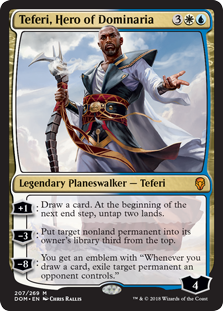
By contrast, Teferi, Hero of Dominaria was readily adopted right after release. There have also been articles outright stating that Teferi is better than Jace. The reason people always give for this belief is that Teferi functionally costs three mana, thanks to his +1 untapping lands. This makes him easier to defend the turn he's cast. But other than that distinction, on paper, Jace is the better planeswalker.

Direct Comparison

Consider the two planeswalkers side-by-side:

  1. Jace costs four to cast; Teferi, five.
  2. Jace can fit in any blue deck; Teferi must be in UWx.
  3. Jace has four abilities; Teferi, three.
  4. Jace starts with 3 Loyalty and +2s to 5; Teferi starts at 5 and +1s to 6.
  5. Jace casts Brainstorms, a Legacy-defining ability, every turn. Teferi draws a random card and untaps two lands.
  6. Jace can bounce a creature; Teferi can tuck any permanent.
  7. Jace's ultimate actually wins the game via decking after locking the opponent's draw steps. Teferi's ultimate creates an emblem that may functionally win the game after drawing lots of cards.
  8. Resolving then using Jace leaves four tapped lands. Resolving and +1ing Teferi leaves three.

Of my list, Jace is clearly better in categories 1, 2, 3, and 5. Teferi wins 4, 6, and 8, while 7 is a bit of a judgement call. Given how much stronger a Brainstorm every turn is than another random draw, I'd say that Jace is more powerful than Teferi. Given the additional constraints it's hard to see why Teferi's +1 makes up for being behind elsewhere. My struggle is that untapping lands doesn't seem like enough to push Teferi over Jace. My theory is that Teferi appears better than Jace because of how they're used.

The Complexity Problem

Jace is more complicated than Teferi, and this causes players to favor Teferi despite being arguably the weaker planeswalker. That Jace has four abilities to Teferi's three does play a role but it's not the only reason. The real distinction is that Teferi's abilities are very straightforward and therefore easier to wield. Jace's abilities, especially what I'd consider his primary mode of Brainstorming, are more powerful than Teferi's, but require far more thought and planning to use. Therefore, they are harder to use. The result is they're less useful and subsequently less powerful in context.

When Teferi resolves, the next step is obvious. If there is a permanent that cannot be ignored, -3 Teferi and tuck it back in its owners library. Otherwise, just start the +1 chain, gaining card and mana advantage. Eventually, creating Teferi's emblem may become an option.
Jace complicates the decision process. On an empty board, choosing the +2 Fateseal ensures that Jace doesn't immediately die to Lightning Bolt. It also starts a clocking ticking down to Jace's game-winning ultimate. However, if the opponent has Assassin's Trophy or Dreadbore handy, then Jace provided minimal value. Fateseal also doesn't really dig for action when used on the controlling player. Choosing to 0 and Brainstorm gains card advantage while improving the hand, but leaves Jace vulnerable to a stiff breeze. Consistently choosing the right mode at the right time requires rigorous training.

Programing Dilemma

One way to think about the problem is to compare it to computer programming. As anyone who has ever participated in the PB&J exercise knows, a computer does exactly what it is told, no more and no less. As the complexity of a task increases linearly, the complexity of the programing needed to execute the task increases exponentially. In that vein, the simplified decision tree for using Teferi might work like this:

  • IF Problematic Permanent [Evaluation Heuristic] AND >3 Loyalty AND High Threat [Evaluation Heuristic]
    • THEN Execute -3 on that permanent
    • IF NOT Execute+1. Triggered Event On End Step, Untap 2 Own Best Lands [Evaluation Heuristic]

The bracketed items are separate decision trees that would need to be written in detail. Also, before the real programmers start commenting, this is illustrative, not a definitive program. It's also relatively straightforward, and only includes three complicated pieces in designing the evaluation heuristics for the computer to follow. Jace is another matter.

  • IF Problematic Creature [Evaluation Heuristic] AND High Threat [Evaluation Heuristic]
    • THEN Execute -1 on that Creature
    • IF NOT Next Tree
  • IF Bolt threat >50% [Odds Calculation] OR Winning Decision [Decision Tree]
    • Then Execute +2
      • IF Winning Decision [Decision Tree] OR Strong Own Hand [Evaluation Heuristic]
        • Then target opponent [Evaluation Heuristic]
      • IF Weak Own Hand [Evaluation Heuristic]
        • Then target self [Evaluation Heuristic]
    • IF NOT Execute +0 [Brainstorm Evaluation Heuristic]

There are a lot of additional programs to write to make Jace work, and I haven't even gotten to conditionals. I can't blame anyone not wanting to deal with the headache of unlocking Jace's power and just running Teferi.

Wielding Complexity

This is not to say that complexity is a bad thing. Since time immemorial, control players have benefited from playing complex decks because it was balanced by the additional power they gained. Despite evidence to the contrary, aggressive decks have a reputation for being easy mode because their path to victory is straightforward. Control decks have to maneuver through opposing threats and gradually wear the opponent out, often winning via narrow margins. As a result, the player most likely to win is the one that can outmaneuver their opponent and/or identify what is actually important and focus on only that thing.

Complexity in card and deck design often leads to greater power. Consider the classic draw spell, Fact or Fiction. Back in Invasion block and for years afterward in Extended and Type 1 (now Vintage), it was the card draw spell.Fact's decisions for the caster were fairly straightforward. You played Fact whenever the opportunity arose, chose the best pile, and then won the game. As a result, it was everywhere for years.
Meanwhile, Fact's direct descendant Gifts Ungiven has only ever seen niche play. The caster chooses the cards and the opponent picks the piles, meaning the piles usually can't just be for value, but must be specifically designed. Thus, when it's used as a combo tutor, Gifts is more powerful than Fact ever was. However, it's lackluster as a generic power card.

A common thread during the Caw-Blade era of Standard was that the better player always won. Irrespective of starting position, the more experienced, practiced, and skillful player would win the Caw-Blade mirror because making lots of decisions favored them. My memory of that Standard is that thanks to all the cantrips and deterministic play patterns, luck was a non-factor in most games. Managing complex board states and decision trees is already part of the game, and that Standard showed clearly just how powerful mastering that skill actually is. Wielding complexity correctly wins games.

A Double-Edged Sword

The key word there is correctly. If a player isn't ready for the difficulty of their deck, it will hurt them. The more decisions a player has to make the more opportunities they have to make the wrong decision. How many times in my tournament reports have I misunderstood an interaction or deck and lost as a result? One time, I played a deck that was too complicated given my health, and punted the tournament away.
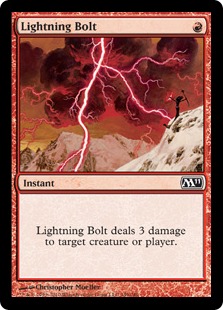
There have been a lot of articles about how to become better at Magic, and the most consistent advice is to practice. The game is incredibly complicated by its nature. Deliberately adding more complexity to games may give more opportunities to win, but it requires more right decisions. Over a long tournament, the additional strain can be overwhelming until exhaustion becomes a factor.

Playability of Complexity

As a result, complex cards and decks see less play than more straightforward ones because the latter group is easier for inexperienced players to use. I've previously warned players about the danger of playing decks that are too difficult for their level. Reason being, unlocking the power of complex decks takes considerable practice and experience. Jumping in at the deep end is a surefire way to lose games.

The same thing can happen with cards. The most-played powerful cards tend to be relatively easy to understand and then wield. Lightning Bolt, Thoughtseize, Tarmogoyf, and Path to Exile have powerful effects that are very easy to comprehend and effectively use. Bedlam Reveler, Death's Shadow, Primeval Titan, and Terminus are also very powerful cards (arguably more in the right decks), but only when used correctly in the right context. Show them to a new player and there's a good chance they won't understand why they should play the cards at all. The first group doesn't have that problem.
Power and complexity are often intertwined, but the magnitude of the latter impacts playability by limiting widespread adoption. Many decks and cards see niche at best play because they're just too much work for the average player. Why did Amulet Bloom never catch on, or why wasn't Ironworks everywhere after Matt Nass's winning streak? The answer comes down to the fact that they are so complicated that it turns players off. Simpler cards are more playable because they're easier for players to latch onto and comprehend the value. And a card's theoretical power is irrelevant if it never sees play.

The Familiarity Complication

Of course, this ease of use isn't the whole story. Another factor that I don't see discussed is that most players are more familiar with Teferi and are therefore drawn to him rather than Jace. Jace, the Mind Sculptor has been legal in Modern slightly longer than Teferi, but Teferi is also Standard-legal. From personal experience, there are a lot of control mages running UW in both formats. Thus, they have more opportunities to play Teferi and will naturally gravitate towards him, regardless of his power relative to Jace's. To have the same play history with Jace takes being a dinosaur like me or a Legacy control player. Teferi's lower complexity made him attractive to begin with, but being Standard-legal in a good deck pushed him over the top.

Food For Thought

For another way to think about this problem, consider this thought experiment about industrialization.

A customer needs a wooden table and chairs constructed from a pile of lumber. They have the option of using an automated assembly line or handing the wood off to a craftsman. The assembly line produces the exact same dining set every time. It is not particularly interesting to look at, but it is perfectly serviceable and built to last. The craftsman will produce a set equivalent to their skill, which the customer cannot measure. A master craftsman will produce a set of greater quality and beauty than a machine ever could; an average one will equal the mass produced set; a bad one will make a set worth less than the starting lumber. The lesson then argued that because most humans are risk averse, they would choose the mass produced product, all else being equal.


Applying the analogy back to Magic, using Jace is like handing the craftsman the wood. The outcome depends on the skill of the wielder more than any other factor. Teferi is a machine. He produces reliable and predictable results, meaning he's easier to play. This reliability and ease of play makes Teferi the more attractive option for many players, even if he's not as powerful as Jace.

Want Prices?

Browse thousands of prices with the first and most comprehensive MTG Finance tool around.


Trader Tools lists both buylist and retail prices for every MTG card, going back a decade.

Quiet Speculation