menu

Daily Stock Watch – Arclight Phoenix

Are you a Quiet Speculation member?

If not, now is a perfect time to join up! Our powerful tools, breaking-news analysis, and exclusive Discord channel will make sure you stay up to date and ahead of the curve.

Hello, everyone and welcome to a new week of the Daily Stock Watch! Guilds of Ravnica continues to bring us some pleasant surprises as it continues to balance out its financial value by providing us with more gainers and potential sleepers. Assassin's Trophy has started dipping as expected, and there aren't enough reasons for now for us to believe that it will regain its bearing as the hype has died down. In the wake of its decline, another surprise has emerged in the form of today's featured card which has been a revelation to a lot who didn't see this coming (myself included!)

There was an error retrieving a chart for Arclight Phoenix

It was a $2 card that looked like one of the crap mythics of the set when out of nowhere, Runaway Steam-Kin made it look like a superstar. There have been Standard brews that tries to explore the advantage that this card possesses, but a Modern list looked better as its new home. I would have loved to see this work in a Mardu shell that could revive one of the more loved decks in the format, but I think that it works best in this list that's fueled by everything that has burn written all over it.

Arclight Burn

Creatures

4 Arclight Phoenix
4 Bedlam Reveler
4 Runaway Steam-Kin

Other Spells

2 Gut Shot
3 Risk Factor
4 Desperate Ritual
4 Manamorphose
4 Lightning Bolt
4 Fiery Temper
2 Tormenting Voice
3 Lava Spike
4 Faithless Looting

Lands

18 Mountain

Sideboard

3 Surgical Extraction
2 Shrine of Burning Rage
3 Dragon's Claw
2 Blood Moon
2 Anger of the Gods
2 Abrade
1 Risk Factor

I would have loved to see Simian Spirit Guide on this list just so we could go off with card]Runaway Steam-Kin[/card] on turn one, and go bananas with tons of damage on turn two, but it would be best to start the experiments with this build. Depending on an alive Steam-Kin on turn three seems like a farfetched idea for me in a world filled with Lightning Bolt. Path to Exile, and Fatal Push but if you manage to pull it off out of nowhere, your opponent is in a world of trouble. Arclight Phoenix would be the gravy to your strategy that would be built around a sturdy Steam-Kin, some burn spells to the dome, and Bedlam Reveler to make sure you don't run out of gas. Somehow, this looks like a very backbreaking strategy on paper, but I don't like the chances of this deck to go all the way in a competitive tournament. It may or may not be as resilient and as threatening as stock Burn, but there's plenty of promise to make this strategy work going forward.

Guilds of Ravnica Mythics

These are the mythics from GRN that I think would have financial implications in the near future when things get discovered or broken in other formats such as Legacy and Commander. I'm keeping a close eye on March of the Multitudes and Thousand-Year Storm in particular, as their foils continue to demand huge prices in the market and have a strong following. Arclight Phoenix looks like a better fit in multiples for competitive play and if history is to be followed, we are supposed to invest on the normal copies of this card instead of the foil ones for more profit and easier access to disposal. If you were able to get a hold of the phoenix since day one, you should be cashing out real soon.

At the moment, you could find copies of Arclight Phoenix from online stores such as StarCityGames, Card Kingdom, and TCGPlayer vendors for anywhere between $11.99 to $14.99, while foil copies are just a shade above $20. I would be interested to acquire them for $10 or less and cash out at $18-$20, as I see this card as more of a hype thing than a successful spec. I love how old decks have resurfaced in the Modern metagame thanks to cards from GRN (hello, Dredge and Creeping Chill!) but I don't think that we'd see the list anytime soon that would push this card and its new deck over the top. There's plenty of room for growth and speculation on this card but I'd say don't go all in on it. There's lot of potential, but I don't see the need to build around it. There are always better ways to win in the same fashion as this one.

And that’s it for today’s edition of the Daily Stock Watch! See you again next time, as we check out a new card that should be on the go, or good enough for speculating. As always, feel free to share your opinion in the comments section below. And if you want to keep up with all the market movement, be sure to check in with the QS Discord Channel for real time market information, and stay ahead of the hottest specs!

Interaction Between the Global Economy and MTG Finance

Are you a Quiet Speculation member?

If not, now is a perfect time to join up! Our powerful tools, breaking-news analysis, and exclusive Discord channel will make sure you stay up to date and ahead of the curve.

This week I want to start off with an announcement for all Quiet Speculation Insiders. If you enjoyed the Office Hours Q&A Podcast hosted by Edward Eng and myself last month, then make sure to tune into the Discord this Thursday, October 25th at 9pm Eastern Time. We will be having our second Office Hours session, this time hosted by QS writers Edward Eng and Chris Martin!

This is your chance to ask your questions and get information most directly applicable to your situation. So please tune in and check it out if you’re available!

Switching gears to this week’s topic, I want to spend a little time discussing potential correlations between the Magic market and the global economy.

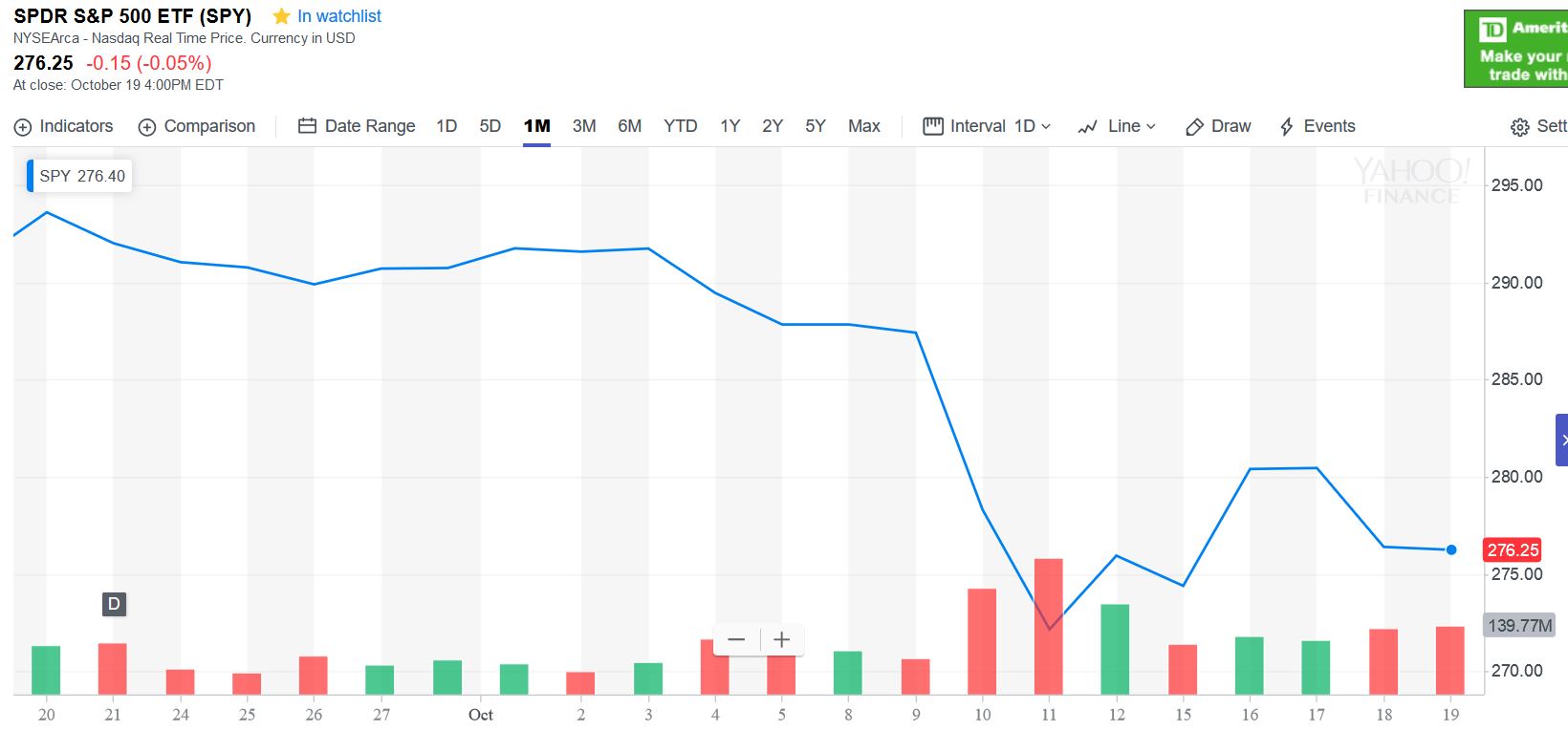
I've written about these possible interactions in the past, and with the recent market pullback, now is a good time to remind folks that the interplay between the stock market and the Magic market is not so strong. One market pullback of a few percent does not equate to a comparable pullback in your dual lands and Modern staples.

(Click to expand.)
There was an error retrieving a chart for Tarmogoyf

That said, there are a few times when the global economy can impact Magic prices, but it requires a certain scenario to play out. This week I’ll go over three such circumstances that may have impacted Magic prices in the past. Hopefully the extremities of these scenarios will help calm down the more fragile investors as they watch stock market volatility soar through the roof.

Scenario 1: The Cryptocurrency Fad

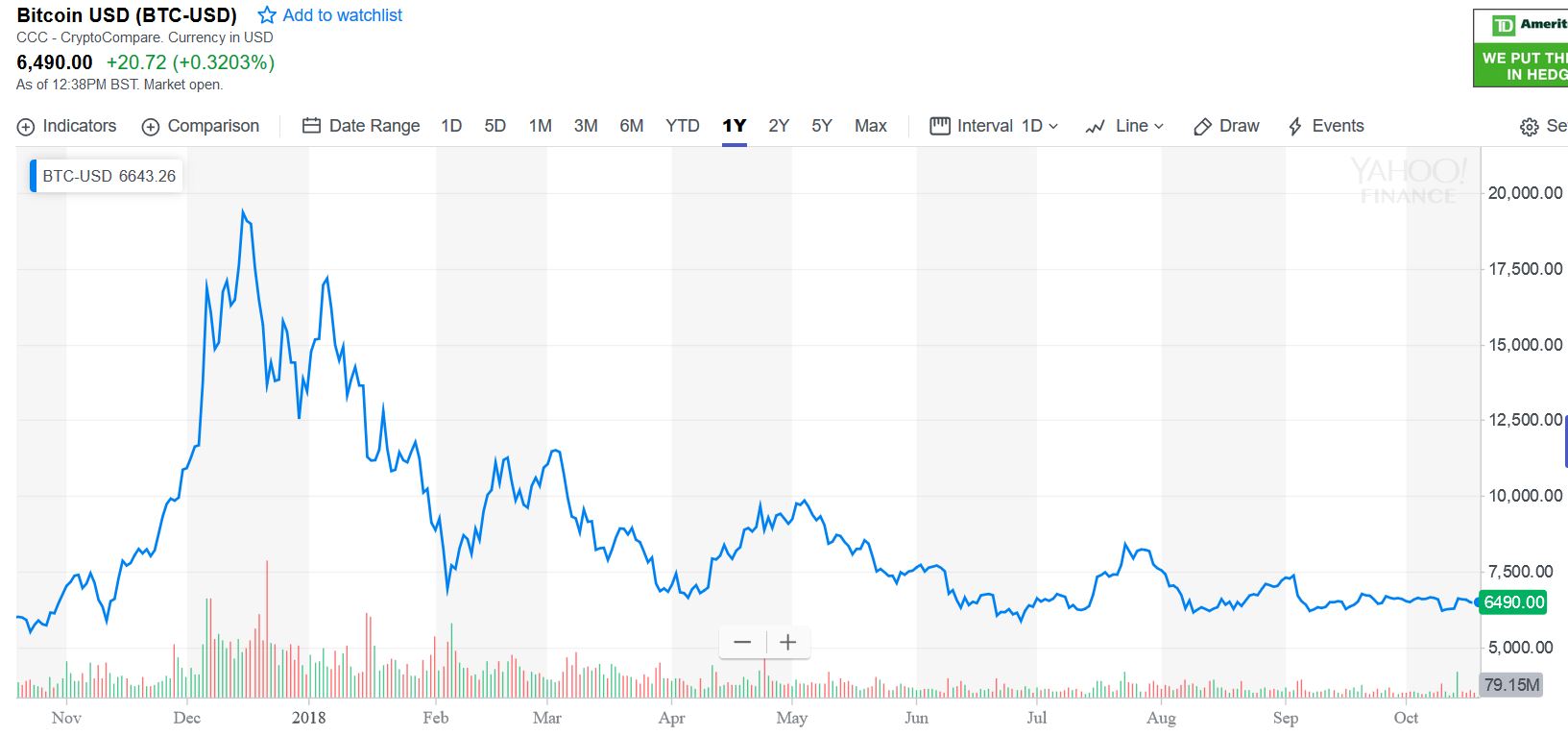
Is it too soon to call the cryptocurrency craze a fad? Perhaps, but the lack of movement in currencies such as Bitcoin suggests the hype is severely curtailed.

(Click to expand.)

I suppose these assets could once again catch the hype train and soar higher. But until then, it looks like they’re fairly stuck. What does that mean for Magic, though?

First of all, while Bitcoin soared last winter, there were a few noteworthy MTG finance people who were looking to move their Magic cards into Bitcoin. Numerous Facebook posts appeared on the High End Facebook group asking for such transactions. This formed a connection between Magic cards and the cryptocurrency market. Thus, if cryptocurrencies rose higher, there would be more liquidity available to purchase Magic cards with. Demand rose and with it went prices.

Beyond this, there are also all the rumors—that big time investors were cashing out of Bitcoin near the highs to move into Reserved List cards. I can’t prove these rumors definitively, but I believe them myself. Even if they weren’t true, the mere mention of them could have spurned people to buy more cards out of fear that they may dry up from the market due to crypto billionaires getting their hands on an alternative nontraditional asset like Magic.

Now that Bitcoin has faded, we have seen Reserved List card prices fade. Is this causation? I don’t believe so, but there is a correlation and I wonder if Bitcoin returned to $19,000 if we’d see another bounce in Reserved List cards. It’s something to think about, and certainly motivation to monitor the cryptocurrency market more closely.

Scenario 2: Currency Fluctuations

When it comes to the relationship between cryptocurrencies and Magic cards, one can only speculate on how tightly the two are correlated. But I am far more confident in the relationship between the strength of the U.S. Dollar and the flow of Magic cards across borders.

(Click to expand.)

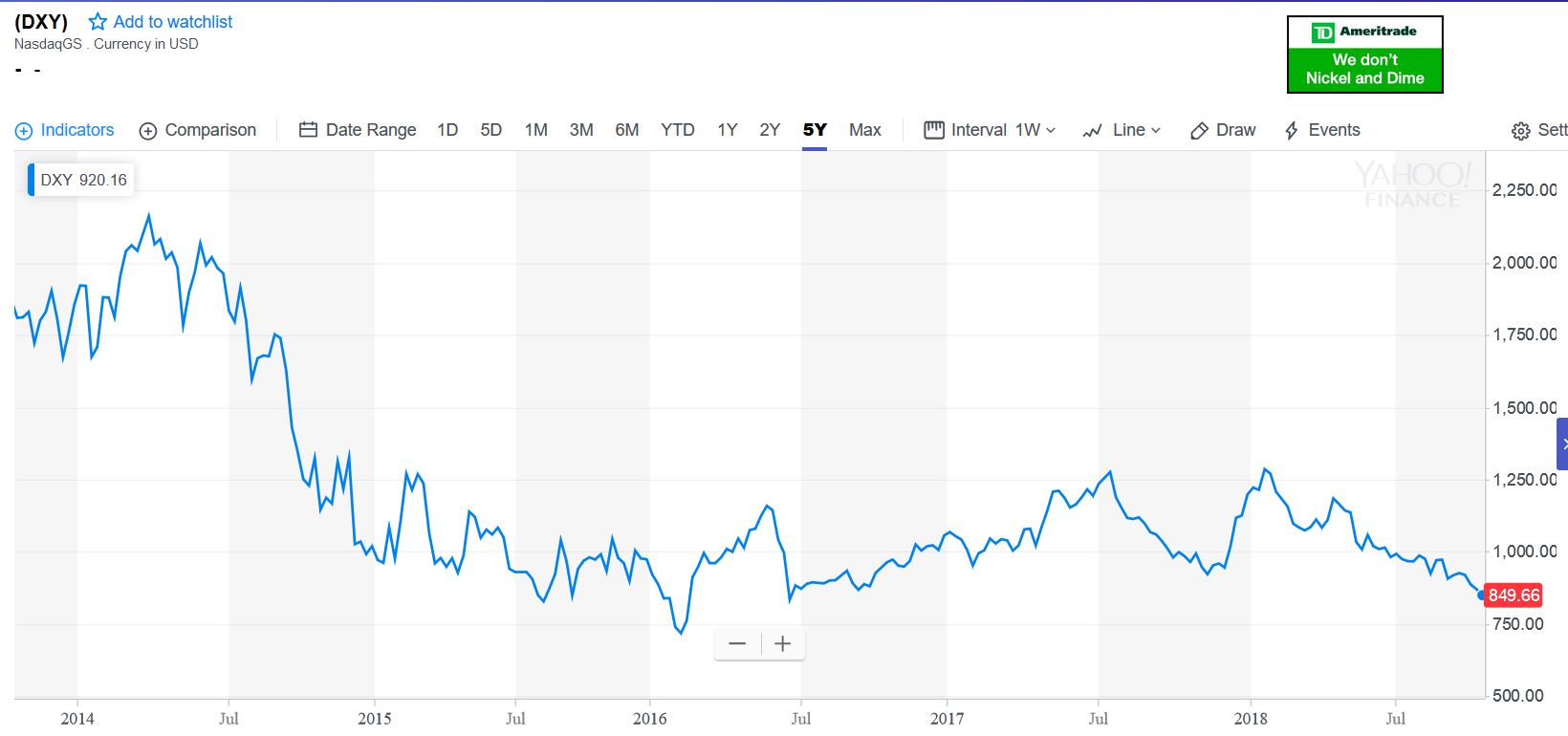
There’s no need to speculate here—this is basic economics. Back in 2014 the U.S. Dollar was incredibly strong. The result: a flow of cash outside the U.S. and the reciprocal flow of cards into the country. Arbitrage was quite favorable, and it was easy to purchase cards from Japan to sell within the U.S. at a discount. Why? Because the purchasing power of the U.S. Dollar was much stronger and could get you further as a result.

But since 2015 the dollar (as indicated by the DXY chart above) suddenly tanked. That’s where it has remained ever since—in fact, after a small recovery earlier this year, we’re now back to 52-week lows. As a result, we will see the reverse trend: money will flow into the U.S. from overseas and cards will move abroad. More specifically, we should see Old School and high-end cards move abroad, as these are the ones most subject to international arbitrage due to their scarcity.

This is why I check card prices on MKM just as much as I do TCGplayer these days. Often times stock on TCGplayer and eBay is near zero for a playable Alpha or Beta rare. Meanwhile there is ample stock in Europe.

For example, there is one Beta Nevinyrral's Disk in stock on TCGplayer: a damaged copy from Channel Fireball for $549.99. Meanwhile there are 20 copies in stock in Europe ranging from 400 Euros (damaged) to 1449 Euros (BGS 9.5). Supply is more plentiful in Europe, and that trend will continue if the dollar weakens further. People holding Euros will suddenly be able to afford a lot more cards from the U.S. and the supply will shift even further.

There was an error retrieving a chart for Nevinyrral's Disk

Net, don’t be surprised if you get more offers from European buyers over the coming months. It is being driven by currency shifts.

Scenario 3: The Great Recession

October has been a rough month for investors in the stock market. The pullback has been painful as the Fed raises interest rates. But we need to keep things in perspective here. We are still just a few percent from all-time highs. This is nothing, in the grand scheme of things. Just a small blip on the radar.

Can the stock market really impact the health of Magic? Absolutely. I would argue it happened during the Great Recession of 2007. But during that time, the stock market dropped by more than 50% as unemployment crested 10%. This was a severe set of circumstances.

During this time, Magic sales slowed—it’s one of the reasons so little product from Lorwyn block exists, and why Commander foils from those sets are so prone to spiking. During that time (I remember it well), Magic just wasn’t doing all that well. But it wasn’t something inherently wrong with Magic. I suspect many players had to tighten their belts a little bit during this timeframe due to an array of financial hardships.

There was an error retrieving a chart for Blowfly Infestation

But despite this correlation, I want to emphasize the severity of the market decline that the world weathered in 2007. Some of you may not have been that aware of market conditions during that time: it was very bad. Things were glum, jobs were lost, houses were foreclosed. It was not a time to be spending precious dollars on luxury items like Magic cards. Thus, the softening of the market.

We are far from that now, and will continue to be far from this scenario for a long time. It will take another major recession to impact Magic sales, and I don’t see such a move on the immediate horizon. We could certainly see a 10% correction or even a 20% bear market (we haven’t had the latter in about a decade). But it would take something far worse to negatively impact the market. Until that time comes, Magic’s performance should not be so closely tied to the stock market.

Wrapping It Up

Macroeconomic trends across the globe can certainly impact the Magic market. This is one of the reasons I follow the economy’s health so closely. Ignoring headlines such as the corporate tax cuts, employment rate declines, and wage growth/inflation is a detriment to your MTG finance prowess. But despite this, the correlation between the global economy and the Magic market isn’t exceptionally strong except for the most extreme cases.

In scenarios where currency values fluctuate drastically, or a new source of wealth suddenly is infused into the market, or a major recession occurs, the MTG market can certainly be impacted. We’re seeing that unfold now as the U.S. Dollar weakens and high-end cards move abroad yet again. But the extent of the move is going to be confounded by the overall health of Magic. In the end, this should overrule nearly all economic scenarios. Only the most extreme can have a more lasting impact on the MTG market.

And that’s what keeps me invested in Magic: my belief that the hobby remains strong despite all the noise. A bet on Magic is a bet that the game is here to stay for at least another decade. If you don’t feel confidently in this, I’d recommend you start selling right away. Otherwise you are contradicting yourself, or else you believe the global economy will collapse altogether—another scenario I struggle to envision for the immediate future.

Sigbits

  • Some of the more aggressive buy prices I flagged on Card Kingdom’s site last week have already dropped back down again. The window within which to take advantage of such lucrative opportunities is very narrow. But there’s always another one. Unlimited Counterspell may be one. CK has a buy price of $35 for near mint copies, which is fairly impressive given it’s only an uncommon.
  • Scroll Rack is another card on CK’s hotlist that catches my eye. They’re paying $36 on their buylist, which is fairly reasonable when comparing to TCG low and subtracting out fees. Still, there aren’t a ton of copies in stock—this could be more a flag that this card is going to jump higher soon rather than an opportunity to cash out. I’d watch stock closely.
  • Here’s an extremely tight spread: Card Kingdom is paying $42 on near mint Falling Star while Channel Fireball has one for sale for $49.99 on TCGplayer. Apply a small coupon, and you could be paying very near top buylist for this card. Actually, never mind that, I decided to buy it. Still, that’s a nice buy price.

Insider: Overlooked and Undervalued Standard Picks

Are you a Quiet Speculation member?

If not, now is a perfect time to join up! Our powerful tools, breaking-news analysis, and exclusive Discord channel will make sure you stay up to date and ahead of the curve.

With a week or so of results in the bag, it would appear that Standard is shaping up to be a fairly compelling format. Perhaps the most interesting aspect of the format was that all of the major archetypes—aggro, midrange, and control—were well-represented in the winner's metagame.

  • Aggro - 50%
  • Control - 25%
  • Midrange - 25%

I would expect aggro to see a slight decline and the other two archetypes to improve. It's no secret that proactive decks are favored in the first week of a format, since it takes more refinement to ensure a controlling deck has the appropriate answers to the suite of threats the aggressive decks will play.

The other thing that is noteworthy is that each major archetype had multiple subgroups:

  • Aggro - Boros Aggro, Boros Angels, Red Deck Wins, Izzet Wizards, and Mono-Blue Aggro.
  • Midrange - Golgari, Sultai, Temur, Abzan and Selesnya Tokens.
  • Control - UW Control, Jeskai, Grixis, and Dimir.

There were three large Standard events that I analysed lists from (SCG Open, SCG Classic, and MTGO PTQ) and each of these lists had at least one Top 16 at a major event.

Why is this important? Well, it's important because we have the real potential for something special to happen that hasn't happened for years. I don't want to get anybody's hopes up too much, but for the first time in a few years Standard might not be a trainwreck. In fact, it might actually be fun to play for a change!

I guess that is just my opinion that Standard has been poorly designed and not fun to play for several years. I would cite a major lack of diversity in the winner's metagame and the necessity to ban tons of cards as central to my "Standard sucked" opinion. Even if we disagree about how good or bad we think Standard has been in the past, I'd still like to sell you on the idea that this current Standard is shaping up to be well above average.

Popularity Breeds Opportunity

I've already spent a lot of ink establishing my primary premise: "We have a potentially great, and thus very popular, Standard format in front f us." But why does that matter? Well, it matters because it creates opportunity to buy and sell more cards to a larger pool of tournament players. If the format is a lot of fun it has the ability to attract a larger number of potential players. And, just as importantly, it can also create a format where players are willing to play more often.

The potential to take advantage of these types of dynamics makes me more interested in investing in Standard cards.

The best performing decks in terms of raw numbers across Top 16s were derivatives of BG and BGx. Yet, while BG had the most representation across Top 16, both Boros and Control had the highest percentage conversion rate to Top 8s.

While all three archetypes are a good place to look for potential speculation targets, I'm most interested in cards from Jeskai and Boros. I'm going to bet that the numbers don't lie and that these decks have a very good chance of remaining Top Tier.

Let's look at some of the cards that have serious potential to become major players in the unfolding Standard metagame. These are the types of cards that I'm looking to pick up right now in anticipation of them becoming the popular staples that everybody needs to build decks in the coming months.

Standard Picks

The problem with making Standard-based picks right now is that the majority of the cards are way overpriced because demand is higher than the supply. Honestly, if you have a mythic rare that you are not currently playing with, chances are that it is correct to sell now, since this is likely close to the tip of the price iceberg for the majority of pricey mythics.

We always see this trends at the start of a Standard format, but it's even more pronounced since so many cards rotated out. Essentially, we are just now learning what the staples of "New Standard" will be.

There was an error retrieving a chart for Teferi, Hero of Dominaria

The exception, in my opinion, is Teferi. I'm certainly keeping my playset of these forever. I could see this card continuing the rise. I would say this card is almost guaranteed to go up in value based on it being so insane, except I'm worried about it appearing in a preconstructed deck to help keep the cost down.

I do have some underpriced cards that I'm all about picking up right now.

There was an error retrieving a chart for Conclave Tribunal

If you are playing White (and you should be) Conclave Tribunal is likely in your deck, and for good reason—the card is excellent. The fact that it is so flexible makes it an easy maindeck inclusion regardless of whether you are aggressive, midrange, or even control!

The fact that this is poised to be one of the most ubiquitously played cards in Standard is not necessarily obvious, which makes this a great pick-up. If this is true, which it probably will be, the card could easily double or triple from its current price, which would make it a fantastic card to make a point of picking up now.

There was an error retrieving a chart for Deafening Clarion

Deafening Clarion has the potential to be the best sleeper from Guilds of Ravnica. Both the Boros Angels deck that won the Team Event, and the Jeskai decks that performed exceptionally well, were packing this powerful spell. I love the fact that it does more than one thing, which makes it more flexible than the typical damage-based Pyroclasm type effect. It's also a very cute combo with Adanto Vanguard!

There was an error retrieving a chart for Thief of Sanity

The card is really, really good, and kind of under the radar. It's obviously more important in slower match-ups, which I think will become more important as the format becomes better established. Week one is about defending against beatdown decks, but once people figure that out, Control gets much better. What matters when control is good (and it will be be because Teferi is an outrageous Magic card)? Control mirrors!

Thief of Sanity is one of the best anti-control cards in the format and it's really just a good card in general. I fully expect the card to pick up steam.

There was an error retrieving a chart for Lazav, the Multifarious

First of all, this is a good surveil card. Second of all, it's just a good card! It appears in several decks: Surveil, Dimir Control, and Grixis Control. At less than $5 for a mythic this card seems like great value right now. It's also a combo in Legacy with Phyrexian Dreadnought. It's actually a combo with a lot of things! One of the best potential values in Standard right now.

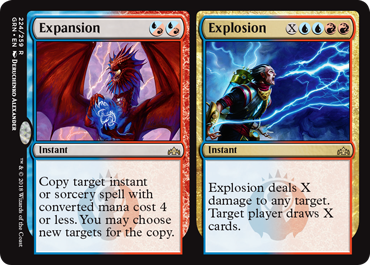
Expansion // Explosion

Expansion // Explosion is another great sleeper card. I don't think the upside is more than a couple of bucks, but the buy-in cost is about fifty cents. The card is seeing a lot of play as a versatile spell in Jeskai Control. Expansion is great protection back-up for your own spells, since it can counter most opposing counterspells. Explosion is obviously just a great value card-draw spell for a hardcore control deck.

Where Credit Is Due

The key to all of these picks is that they are cards that people are not currently giving due credit. They look and feel like unwanted, misfit toys that we don't even bother to unsleeve after a draft. The thing is, these are all cards that will be format-defining for months to come. They fill roles that have been left empty with Amonkhet and Kaladesh leaving the format, and now is the time to strike before the hive mind catches on and the market adjusts.

While everyone is busy overpaying for History of Benalia and Risk Factor today, I want to be picking up the Deafening Clarions and Thief of Sanity's that they'll be lining up to overpay for in a couple of weeks! Don't overpay for cards doomed to decline, look for the cards with potential that are likely to grow.

Modern Myths: Dismantling Preconceptions

Are you a Quiet Speculation member?

If not, now is a perfect time to join up! Our powerful tools, breaking-news analysis, and exclusive Discord channel will make sure you stay up to date and ahead of the curve.

How many times have you heard something you disagree with? How often has it pertained to Modern? My answer to both questions is plenty. Lately, none spur me into debate more than the claims that countermagic is bad and midrange is dead.

In this article, we'll debunk each of these myths by examining theory, decklists, and results. It's time to pierce the veil!

Myth #1: Modern Counterspells are Weak
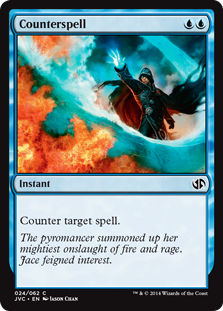
There's a prevailing idea in the Modern community that the format's counterspells are bad to the point of being unplayable. This argument is at last losing traction a bit now that UWx has risen to Tier 1 status, but the notion that Counterspell isn't only safe for Modern, but underpowered for the format, continues to reverberate around the game stores and online forums I frequent. Granted, Counterspellwouldn't magically solve the problems permission decks face. It's true that Modern permission isn't as powerful or as prevalent as it is in eternal formats, but it's far from weak—I'd venture that if anything, it's just balanced.

Weighing Permission in a Proactive Format

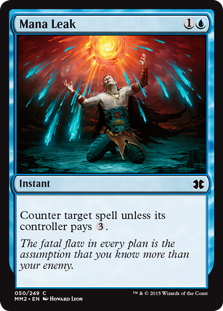
Modern rewards players for being highly proactive in their strategy, or quickly establishing a board advantage and riding that lead to a fast win. Decks with this gameplan are innumerable—Burn, Infect, Affinity, Hardened Scales, Hollow One, Zoo, Dredge, Humans, and Spirits all exemplify Modern's aggro bent. These decks tend to be full of more-or-less interchangeable, cheap threats that work together to create a snowball effect. It goes without saying that casting a  two-mana Mana Leak on one such creature isn't very exciting. Incidentally counter-proof measures like Aether Vial and Cavern of Souls just add insult to injury.

Existing counterspells line up poorly against aggro decks not because the spells themselves are weak in the format, but because that's how Magic is and has always been. Take these excerpts from Mike Flores's 2003 fundamentals article, "Finding the Tinker Deck."
On CounterSlivers, one of the game's early fish decks:

The CounterSliver deck is designed to slide low mana threats under counterspell walls and protect these with some control element (usually permission) while they hassle the opposing life total.

CounterSliver decks shine in Weissman-heavy fields, where any typical hand will yield a cheap threat, and the light-to-moderate permission count can stop creature removal and/or card advantage.

On Sligh, a red deck full of aggressive one-drops:

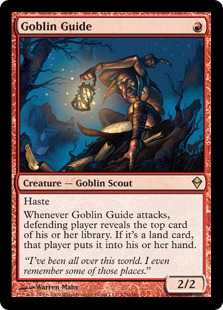
For a short while, WotC's printing of incredibly powerful and cheap cards, including Cursed Scroll, Fireblast, Jackal Pup, and Mogg Fanatic temporarily catapulted the Sligh archetype to Enigma-level status and made it the undisputed best deck of about three Constructed formats, concurrently.

In any case, Sligh decks have historically punished slow control decks and fallen prey to busty green creatures. In environments powered up by blue super decks, forcing green fatties to the fringe, it flourished.
These passages illustrate that at least for the past 15 years, counterspells have underperformed against aggro decks. That's less a problem with the power level of counterspells and more a classic rock-paper-scissors strategy triangle at work.

Permission is still played in Modern, and excels in matchups historically kind to the spell type: against combo (which needs to find and resolve a key component, and usually a mana-intensive one) and control (which relies on late-game haymakers to close out games and prioritizes making land drops to wield the mana advantage that makes those spells castable). It's also fine against midrange, an aggro-control deck that carefully walks up the curve as games progress.

No Broken Counterspells

Part of the reason counterspells inhabit such a large portion of Legacy decks is the sheer power of the format's legal permission. Mana Leak is no Force of Will or Daze—for this reality, though, I think Modern players can rejoice. Counterspells are strategically weak to aggressive decks because they have to be weak to something; their effect is devastating. Unlike proactive disruption like Thoughtseize, counterspells are often tempo-positive, costing less mana than the spells they deal with. They force opponents to commit to a play first, paying all costs associated with their spells before being told "no." Reliably accessing this effect for zero mana is, frankly, busted.
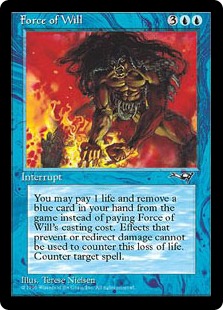
For proof of the brokenness of Daze and Force, look no further than the non-counterspell decks in Legacy. Rakdos Reanimator, Ad Nauseam Tendrils, Sneak and Show, Charbelcher, Storm, and Elves demonstrate the power level of combination decks acceptable in a world of free permission. Most of these decks are more than capable of winning on turns 1 or 2 unmolested, and none would be allowed into Modern.

The argument that free permission cancels out blistering combos snubs every other strategy in a given format. Modern is first and foremost about diversity, and forcing decks to play blue just to survive an onslaught of combos would probably remove more decks from the format than it would create.

Finding the Right Shell

The former two points skirt over the biggest impediment to this myth, which is that countermagic is in fact alive and well in Modern. It just thrives in certain shells, unlike in Legacy, where decks splash blue deliberately to access the broken permission. Historically, two deck types have emerged that want counterspells: control decks and tempo decks. These same decks utilize the card type in Modern.

UW Control, by Kyle Teagan (10th, SCG Columbus Team Open)

Creatures

3 Snapcaster Mage
1 Vendilion Clique

Planeswalkers

2 Jace, the Mind Sculptor
2 Teferi, Hero of Dominaria

Enchantments

1 Porphyry Nodes

Instants

3 Cryptic Command
2 Logic Knot
1 Negate
4 Opt
4 Path to Exile
2 Spell Snare

Sorceries

3 Ancestral Vision
1 Oust
3 Serum Visions
4 Terminus

Lands

7 Island
2 Plains
3 Celestial Colonnade
4 Field of Ruin
4 Flooded Strand
1 Glacial Fortress
2 Hallowed Fountain
1 Scalding Tarn

Sideboard

1 Spell Queller
1 Detention Sphere
1 Celestial Purge
2 Ceremonious Rejection
2 Dispel
1 Negate
2 Surgical Extraction
1 Lyra Dawnbringer
1 Vendilion Clique
1 Supreme Verdict
2 Timely Reinforcements
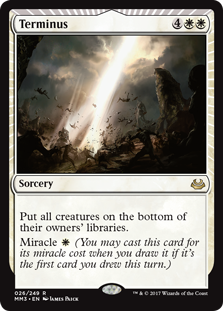
UW is the premier control deck in the format, and the deck is chock-full of countermagic. Its sweepers and removal get it to the late-game, where Cryptic Command and Logic Knot can shine; in the meantime, Negatedeals with noncreature spells. Spell Snare helps the deck recoup tempo against early-game plays from the opponent, and Spell Queller joins the fray against removal-light decks after siding.

This deck has enough ways to survive the early game to make good use of Modern's more expensive (and impactful) permission spells.

Counter-Cat, by Jordan Boisvert

Creatures

4 Wild Nacatl
4 Delver of Secrets
4 Tarmogoyf
3 Hooting Mandrills
1 Snapcaster Mage

Instants

4 Lightning Bolt
4 Path to Exile
2 Mana Leak
2 Spell Pierce
1 Spell Snare
2 Thought Scour
1 Opt
3 Mutagenic Growth

Sorceries

4 Serum Visions
1 Sleight of Hand
1 Faithless Looting
1 Chart a Course

Lands

4 Misty Rainforest
3 Scalding Tarn
2 Flooded Strand
2 Wooded Foothills
1 Stomping Ground
1 Hallowed Fountain
1 Steam Vents
1 Temple Garden
1 Breeding Pool
1 Island
1 Forest

Sideboard

2 Damping Sphere
1 Ancient Grudge
1 Destructive Revelry
1 Surgical Extraction
2 Huntmaster of the Fells
1 Hazoret the Fervent
1 Snapcaster Mage
1 Shapers' Sanctuary
2 Pyroclasm
1 Engineered Explosives
1 Negate
1 Mountain

Tempo decks seek to establish a lead on the board and gently disrupt opponents until their clocks can tie up the game. My own Counter-Cat deck is a good example of the thresh sub-archetype, which wins by backing individually powerful threats with spell-based disruption like countermagic and removal. An aggro deck like this one doesn't need its permission to be as decisive as UW's, but merely to enable its fairness in the face of combo. Merfolk runs Unified Will, Spell Pierce, and most recently, Deprive for the same reason. Their lack of permission is a major barrier to "pure" Zoo decks entering Modern.
While UW is interactive enough to support permission (using it defensively), Counter-Cat is proactive enough (using it aggressively). Decks that don't check these boxes, such as midrange, are doomed to be poor homes for countermagic. The subsequent failed experiments in, for example, Sultai might prematurely convince some brewers of permission's weakness relative to other forms of disruption. But as the results indicate, counterspells in Modern aren't weak. They just aren't broken.

Myth #2: Midrange is Dead

The rise of Mardu and ensuing rise of UW have led some Modern players to mourn the death of midrange as they knew it: black and green. But Jund clung on as a solid Tier 2 option before Assassin's Trophy was printed, and according to MTGGoldfish, seems to be reclaiming its throne as midrange poster boy with Trophy in the picture. As LL once said, don't call it a comeback. But what led so many players to decry BGx in the first place?

Midrange as Synergy Assassin

Fair decks like midrange rarely enjoy free wins, as with turn 1 Chalice or turn 2 infect for 10. In a world of Hollow Ones and Vengevines, curving Inquisition of Kozilek into Dark Confidant can feel underwhelming, to say the least. But these decks do have their great matchups.
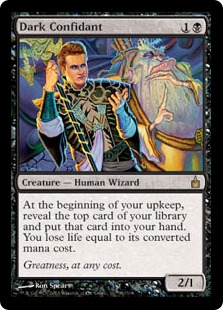
If there's one thing midrange excels at, it's picking apart synergy decks. Decks that need multiple or specific pieces to operate, such as mana dork decks, critical mass strategies like Burn, and one-card ponies like Lantern Control, struggle in the face of targeted discard and early pressure. Between Confidant to keep the cards flowing and Tarmogoyfto just finish the game before opponents recover, BGx has no shortage of ways to destroy players assembling components.

Inquisition into Confidant used to beat nearly everything in Modern. The format has changed and become more powerful over time, but those cards still make up the backbone of BGx. It's only natural that they aren't as strong, relatively, as they once were. But that combination, and the midrange decks it helms, is still a nightmare for the synergy decks Modern continues to house and will probably never divorce. By that token, midrange should always have a place in the format.

Old Faithful
Another huge draw to midrange is its reliability. With their high land count, compact but streamlined threat suite, and similarly uniform disruption numbers, BGx decks are very good at executing their primary plan every game. Of course, that plan might not line up so well against some decks, and critically against the nut-draw from less consistent strategies. But it does perform adequately against many.

Discard spell into two-drop into three-drop won't win any games against triple Hollow One. But it's great at punishing stumbles from opponents, as well as more fragile opening hands. Many keeps in Modern revolve around a single card or two, and without that crucial piece, the hand becomes an easy mulligan. Besides giving pilots perfect information, targeted discard can exploit these weaknesses in hands to turn the slow, fair deck into a killing machine.

Jund, by Michael Olson (13th, SCG Columbus Classic)

Creatures

4 Bloodbraid Elf
3 Dark Confidant
3 Scavenging Ooze
4 Tarmogoyf

Planeswalkers

4 Liliana of the Veil
1 Liliana, the Last Hope

Instants

3 Assassin's Trophy
2 Fatal Push
2 Kolaghan's Command
4 Lightning Bolt

Sorceries

4 Inquisition of Kozilek
2 Thoughtseize

Lands

2 Forest
1 Mountain
2 Swamp
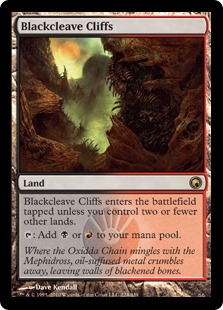
4 Blackcleave Cliffs
1 Blood Crypt
2 Bloodstained Mire
2 Overgrown Tomb
2 Raging Ravine
1 Stomping Ground
1 Treetop Village
1 Twilight Mire
4 Verdant Catacombs
1 Wooded Foothills

Sideboard

1 Damping Sphere
2 Nihil Spellbomb
1 Huntmaster of the Fells
1 Seal of Fire
1 Ancient Grudge
1 Assassin's Trophy
1 Fatal Push
2 Surgical Extraction
1 Kalitas, Traitor of Ghet
1 Angrath, the Flame-Chained
1 Anger of the Gods
2 Collective Brutality

Jund has never necessitated cantrips because it achieves consistency by redundancy. The deck plays enough of its key pieces that opening a solid mix of lands, disruption, and pressure is par for the course. As such, it mulligans lightly in the dark.

Tarmogoyf is Freaking Awesome
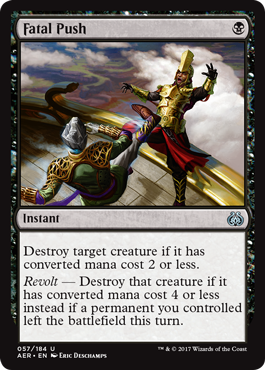
In "Pushing Back: How to Goyf in 2017," I discussed Tarmogoyf's applications in a post-Push world and how Fatal Push changed where the creature would be included. My predictions mostly rang true, chief among them that Goyf far from became obsolete.

Dropping to something like 5% of Modern decks, of course, marked a significant downturn from Goyf's glory days as the most-played creature in Modern by a mile. Back then, the Lhurgoyf was splashed into archetypes as diverse as aggro-combo and control in addition to helming aggro and midrange strategies alike.

The creature's continued relevance answers the question asked so often in that not-so-distant past: "what's a budget alternative to Tarmogoyf?" Hopefuls would be met with a deadpan "nothing," as nothing can really replace Tarmogoyf. Another two-mana combat creature with this good a rate simply does not exist in Modern. Stats are more important now than ever, and having a huge beater that's relatively easy to accommodate (Goyf asks only that players have a game of Magic, although purposefully building around Goyf can pay dividends of its own) is a boon for strategies that want to load up on disruption.
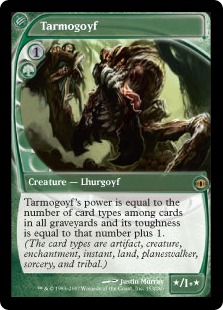
Today, those strategies are primarily midrange ones, and Goyf finds itself more or less confined to aggro-control decks. Given its unmatched rate and ease of inclusion, I don't see the creature going anywhere anytime soon, Fatal Push or no. Besides, Push seems to mostly see mainboard play in lower-tier decks, making Goyf a solid creature against Modern's performing gauntlet.

Fair or Square

I'm fortunate to have a platform in ModernNexus with which to frame my arguments. But part of the fun is shopping my ideas with others. If you disagree with any of the points made in this article, I'd love to hear from you in the comments. Until then, may you counter many Krark-Clan Ironworks!


Why Magic Online Has More Life Left Than You Realize

Are you a Quiet Speculation member?

If not, now is a perfect time to join up! Our powerful tools, breaking-news analysis, and exclusive Discord channel will make sure you stay up to date and ahead of the curve.

Magic Arena has many sounding the death knell of Magic Online, but I as I see it, the 16+-year-old program still has plenty of life left to live. Today I’ll cover Magic Online’s key advantages over Magic Arena and the roles it fills, which will keep it relevant into 2019 and beyond.

Image result for mtg arena Image result for mtgo logo

Tournament Infrastructure

The biggest strength of Magic Online over Magic Arena in its current state is its tournament infrastructure. Magic Online has been developed with the ability to host large tournaments as a key feature. Its first years were plagued with crashes due to server instability, but these downtimes have become nonexistent in the MTGO 3.0 world. Magic Online hosts Pro Tour Qualifiers and Magic Online Championship Series (MOCS) events, both which lead to the Pro Tour and have significant real-life prizes, and so draw hundreds of players to compete.

Magic Arena currently has no capability for hosting tournaments, and until it does, it’s not a competitor with Magic Online with respect to the most competitive players. Magic Arena does offer “Challenges”, which are essentially Magic Online leagues with a different name. These look to be the bread-and-butter competitive option for the platform, and are in direct competition with Magic Online Leagues, but in no way fulfill the need for hosting large tournaments.

I remember back when I started playing Hearthstone, one of the glaring issues was the lack of tournament infrastructure. I haven’t played in years, but for research's sake, I looked into how they implemented it, only to find out it still hasn't been! In fact, it’s actually a very current issue in Hearthstone – tournaments were announced in February, but one month ago was announced to be put on hold because there was still so much work to be done to meet expectations. If Hearthstone has not implemented a tournament feature in over four years, then I assume Magic Arena will have a significant challenge doing so.

I played some early Hearthstone tournaments through third-party organizers, a process that could be replicated for Magic Arena. As far as I know, most high-profile Hearthstone events are played live in-person, and Magic Arena could fill a similar role for Magic. It will be great for showcasing streamers and special-event style tournaments like super-leagues and live invitationals, or even Grand Prix-style events like Hearthstone's Dreamhack, but time will tell if it becomes an effective online tournament platform like Magic Online.

Cash Prizes

There’s also the issue of tournament prizes: Magic Arena does not have trading or any sort of inter-player economy like Magic Online, so any prizes only have value in Magic Arena. Currently Magic Arena is a great way to play Magic cheaply or for free, but it’s not comparable to Magic Online, where one can compete for prizes with actual cash value – any tickets or boosters won in events can be sold for cash. I’ve heard this referred to as the online-gambling aspect, and it’s what drives a large number of players to compete. If Magic Arena does add tournaments, the prizes will be in Magic Arena packs, gold, and gems, which will allow one to play more, but there’s no monetary profit to be gained. I imagine that the largest events could offer real prizes like Pro Tour invites, but otherwise, it won’t really be comparable.

Magic Arena stands in direct contrast to the new Valve game Artifact slated for release next month, which will have trading and cards that can be bought and sold on the Steam Marketplace. With such a high-profile backing, I expect the game to be huge, and it’s going to be in direct competition with Magic and Hearthstone. I imagine that much of the current hype over Magic Arena from various Magic and Hearthstone pros and grinders will die down when they realize that Artifact offers a more appealing value proposition for the most competitive players.

Old Cards and Formats

One glaring omission from Magic Arena is old cards, as the platform currently goes back only to Ixalan. It has been known for a while that the source code of the program has references back to Shadows over Innistrad, which some take to mean that they will eventually print those sets, maybe to start a new post-Modern format. Whatever the case, the oldest Magic cards are not on the program.

Image result for vintage cube logo mtg wizards.com

If old cards are never printed, then Magic Arena will never truly replace Magic Online’s ability to completely replicate the paper Magic experience. If they are printed, then I imagine it will be a very long and drawn out process, both from a programming perspective and an economic one. Magic Online did not always have the oldest sets, but they were slowly released in the form of new draft formats, etc, which Magic Online cashed in on, and Magic Arena could do as well. Regardless of what happens, Magic Online has this advantage and will be useful until Magic Arena catches up.

Real Eight-Player Drafts

Magic Arena currently does not offer true drafts, but rather drafting against robots, similar to how Hearthstone drafting is done solo. Magic Arena will need to add true eight-player drafts if it is to become a replacement for Magic Online. I expect this will only be a matter of time, but as it stands, currently it’s apple and oranges. Much of the success of Magic Online came because it was such an effective drafting platform and was revolutionary compared to the old way of having to muster eight players together in person to play, which was a challenge anywhere, and an often insurmountable one for geographically isolated players. It’s still the most convenient way to draft, and Magic Arena will need to replicate the true drafting experience if it’s to fully replace Magic Online.

It’s Profitable for WotC

Magic Online makes Wizards of the Coast money, and quite a lot of it the last I heard, and history shows that they and their stockholders are awfully motivated by money. Magic Arena certainly cannibalizes some of Magic Online’s audience and profits, but it makes sense for the company to keep this at a minimum. From their perspective, ideally, Magic Arena captures new players from the non-Magic playing populace, not steals Magic Online players. While their grand plan may be to eventually transition away every Magic Online player to Magic Arena before shuttering the program, they’ll do their best to keep the profits flowing for as long as possible and double-dip on both. What that means is plenty of continued support for Magic Online, at least in the near-term.

What Should We Do Now?

The best thing to do with Magic Online now is to keep getting while the getting’s good, just like Wizards is doing. If you’re a tournament grinder, one option to decrease risk is to rent cards rather than hold them. There are various websites offering the service, and the prices seem very reasonable relative to the value it provides – a pittance compared to the thousands of dollars many collections are worth.

That said, the market is still strong, and it’s notable that many Standard cards are now at record highs after rotation, despite being in direct competition with Magic Arena . There are also thousands of players in the Limited queues, so it seems like business as usual for the time being.

On the other hand, there have been some recent pullbacks in the prices of Eternal cards, which some have attributed to Magic Arena , but these prices have always been very cyclical online, with prices falling to a low at the end of the year with the closure of Modern/formerly Extended season and spiking in the spring. If Magic Online does hold strong through 2020, the next few months could actually be a good time to get in the market. The most prudent move will be to keep speculations in the short term, and go for quick flips and small-ball plays that lock in profits immediately, as opposed to holding specs for a long term that might not come to fruition.

–Adam

Avatar photo

Adam Yurchick

Adam started playing Magic in 1999 at age 12, and soon afterwards he was working his trade binder at school, the mall food court, FNM, and the Junior Super Series circuit. He's a long-time Pro Tour gravy-trainer who has competed in 26 Pro Tours, a former US National Team member, Grand Prix champion, and magic.tcgplayer.com columnist. Follow him at: http://twitter.com/adamyurchick

View More By Adam Yurchick

Posted in Arena, Finance, MTGO, Predictions1 Comment on Why Magic Online Has More Life Left Than You Realize

Have you joined the Quiet Speculation Discord?

If you haven't, you're leaving value on the table! Join our community of experts, enthusiasts, entertainers, and educators and enjoy exclusive podcasts, questions asked and answered, trades, sales, and everything else Discord has to offer.

Want to create content with Quiet Speculation?

All you need to succeed is a passion for Magic: The Gathering, and the ability to write coherently. Share your knowledge of MTG and how you leverage it to win games, get value from your cards – or even turn a profit.

Hold ‘Em & Fold ‘Em #15

Are you a Quiet Speculation member?

If not, now is a perfect time to join up! Our powerful tools, breaking-news analysis, and exclusive Discord channel will make sure you stay up to date and ahead of the curve.

Although the SCG Open in Philadelphia was cancelled this past weekend, and Grand Prix Denver along with Grand Prix Nagoya were Team Limited, there’s still data to look at. There always is thanks to sources like Magic Online.

I check this source on a daily basis since online Magic tends to shift a bit faster than paper Magic. This can give you insight as to where to metagame might be headed, which is an important part of shaping this article series.

This is by no means a get-rich-quick deal. It’s more of a how-to-grow your Magic collection and/or bankroll for tournament play over time with less money, to acquire the cards you need and get the most out of the cards you don’t need.

Article Series Main Focus Points

  • Cards that you should hold on to or pick up for tournaments if you need them before they rise in price. These cards are either seeing increased play in one or more formats, the supply is drying up, or they’re pretty far from the next reprint.
  • Cards that you should consider selling or trading away. Their prices are pretty much at the ceiling owing to inflation from speculation, reprint inevitability in the near future, a lull in tournament play, or some combination of these.

Recent Buys

Narnam Renegade - Aether Revolt (Foil)

There was an error retrieving a chart for Narnam Renegade

Purchased Price
$1

I mentioned this towards the end of article #14 when talking about Pelt Collector, and decided to buy eight of them from Miniature Market since they were only $1 each. This just rotated out of Standard so you can probably find these at your local game store or in trade binders. They could go up to $3-5 dollars in a year or less.

Grisly Salvage - FNM Promos

There was an error retrieving a chart for Grisly Salvage

Purchased Price
$1.25

We saw Necrotic Ooze pop like crazy last week because of decks like the one Ben Friedman talked about on Star City Games.

Modern: Abzan Ooze by Bryan Gottlieb

Creatures

1 Grim Poppet
1 Walking Ballista
4 Birds of Paradise
4 Devoted Druid
2 Doom Whisperer
3 Duskwatch Recruiter
1 Fauna Shaman
1 Kitchen Finks
1 Morselhoarder
3 Necrotic Ooze
3 Noble Hierarch
1 Viscera Seer
4 Vizier of Remedies

Non-Creature Spells

4 Chord of Calling
3 Grisly Salvage
3 Eldritch Evolution

Lands

3 Forest
1 Plains
1 Swamp
1 Gavony Township
1 Godless Shrine
1 Horizon Canopy
3 Overgrown Tomb
2 Temple Garden
4 Verdant Catacombs
4 Windswept Heath

Sideboard

1 Burrenton Forge-Tender
1 Fairgrounds Warden
3 Obstinate Baloth
1 Scavenging Ooze
1 Wickerbough Elder
1 Eidolon of Rhetoric
3 Assassin's Trophy
1 Liliana, the Last Hope
3 Thoughtseize

But the card the stuck out to me in this list was Grisly Salvage. There’s only the original printing from Return to Ravnica and the FNM promo that come in foil. Even more importantly, Salvage sees play not only here but also in the explosive Bridgevine deck that came to fruition earlier this year.

The thing I really like about this card is that it’s an enabler that’s also an instant, which gives this card a lot of flexibility. Not to mention, it’s in the same colors as Assassin's Trophy. This card does a lot. It digs for the critical creature or land you need all while feeding your graveyard, which is a very powerful resource to draw from.

They probably won’t print this artwork again very soon either, so you can pretty safely pick these up without too much investment and just store them away.

Shrine of Burning Rage - WPN & Gateway Promos

There was an error retrieving a chart for Shrine of Burning Rage

Purchased Price
$2.99

I mentioned Arclight Phoenix and Runaway Steam-Kin in Archangelic76‘s Mono-Red Modern deck in article #14. I also said I wasn’t sure how viable the deck is going forward, but it did pop up again on October 12 on Magic Online via egadd2894’s list.

Modern: Runaway Red by egadd2894

Creatures

4 Arclight Phoenix
4 Bedlam Reveler
4 Runaway Steam-Kin

Non-Creature Spells

4 Desperate Ritual
4 Faithless Looting
4 Fiery Temper
1 Insult / Injury
2 Lava Spike
4 Lightning Bolt
4 Manamorphose
3 Risk Factor
3 Tormenting Voice

Lands

19 Mountain

Sideboard

2 Abrade
3 Anger of the Gods
3 Blood Moon
1 Gut Shot
1 Risk Factor
2 Shrine of Burning Rage
3 Surgical Extraction

Egadd2894 played two copies of Shrine of Burning Rage versus Archangelic76's three in the sideboard. But nonetheless, it’s still making the cut. There’s only the original New Phyrexia printing and this promo. Also, don’t forget that Loïc Le Briand won Grand Prix Birmingham a little over a year ago in 2017 with four copies of Shrine.

Modern: Burn by Loïc Le Briand

Creatures

4 Goblin Guide
4 Monastery Swiftspear

Non-Creature Spells

4 Boros Charm
4 Lava Spike
4 Lightning Bolt
4 Lightning Helix
4 Rift Bolt
4 Searing Blaze
4 Skullcrack
4 Shrine of Burning Rage

Lands

4 Arid Mesa
3 Bloodstained Mire
3 Inspiring Vantage
3 Mountain
2 Sacred Foundry
1 Stomping Ground
4 Wooded Foothills

Sideboard

4 Destructive Revelry
2 Grim Lavamancer
2 Kor Firewalker
2 Path to Exile
3 Relic of Progenitus
2 Shattering Spree

Folds

Allied Dual Creature Lands - Worldwake (Non-Foil & Foil)

There was an error retrieving a chart for Celestial Colonnade

Target Sell Prices
Non-Foil & Foil: Current Market Prices

This is the only printing of these cards since February 2010. They just recently peaked at an all-time high and have started their descent. If you don’t need these, particularly Celestial Colonnade, Creeping Tar Pit, and Raging Ravine, I would get rid of them and buy back in when they get reprinted.

Caustic Caterpillar - Magic Origins (Foil)

There was an error retrieving a chart for Caustic Caterpillar

Target Sell Price
$5+

I have no idea why the foil version of this card is $7-8. The only thing I can think of is EDH/Commander. But even then, it only sees play in about 6,000 decks. This card is pretty easy to reprint and it’s a common. I would dump any copies you have. Card Kingdom is buying them for $4 cash right now.

Seekers' Squire - Ixalan (Foil)

There was an error retrieving a chart for Seekers' Squire

Target Sell Price
$.50 to $1

Have you seen the Magic Online Standard PTQ results from October 14? Five of the six Golgari decks in the Top 8 played this card. Take a look at Tixis’s winning list.

Standard: Golgari Aggro by Tixis

Creatures

1 District Guide
4 Doom Whisperer
2 Golgari Findbroker
1 Izoni, Thousand-Eyed
4 Jadelight Ranger
4 Llanowar Elves
4 Merfolk Branchwalker
3 Ravenous Chupacabra
3 Seekers' Squire
2 Wildgrowth Walker

Non-Creature Spells

2 Assassin's Trophy
2 Find / Finality
2 Vraska, Golgari Queen
3 Vraska, Relic Seeker

Lands

8 Forest
4 Overgrown Tomb
7 Swamp
4 Woodland Cemetery

Sideboard

1 Arguel's Blood Fast
3 Duress
1 Find / Finality
1 Izoni, Thousand-Eyed
3 Moment of Craving
2 The Eldest Reborn
1 Vivien Reid
2 Vraska's Contempt
1 Wildgrowth Walker

I don’t think the card will ever see play outside of Standard, so I would get rid of these if you have any to lock in some value now.

Wildgrowth Walker - Ixalan (Foil)

There was an error retrieving a chart for Wildgrowth Walker

Target Sell Price
$.50 to $1

The same goes for this card.

Shriekhorn - Mirrodin Besieged (Foil)

There was an error retrieving a chart for Shriekhorn

Target Sell Price
$5ish

Dredge has started to become more popular again with the printing of Creeping Chill. The deck is poised to prey on all the UW Control and BGx decks running around Modern. Shriekhorn is an integral part of the deck since it’s easy to cast and gives you the most efficient way of hitting as many Creeping Chills as possible. Take a look at Rvng’s list for the latest iteration.

Modern: Dredge by Rvng

Creatures

4 Bloodghast
2 Golgari Thug
4 Narcomoeba
4 Prized Amalgam
4 Stinkweed Imp

Non-Creature Spells

4 Cathartic Reunion
3 Conflagrate
4 Creeping Chill
4 Faithless Looting
4 Life from the Loam
4 Shriekhorn

Lands

2 Blood Crypt
4 Bloodstained Mire
1 City of Brass
4 Copperline Gorge
1 Gemstone Mine
2 Mountain
3 Scalding Tarn
2 Stomping Ground

Sideboard

2 Ancient Grudge
2 Darkblast
4 Leyline of the Void
3 Lightning Axe
4 Nature's Claim

There’s only one printing of this card and it’s also a common artifact, making it pretty easy to reprint in something like the next Masters set.

Recent Sells

Runaway Steam-Kin - Guilds of Ravnica (Non-Foil & Foil)

There was an error retrieving a chart for Runaway Steam-Kin

Sold Prices
Non-Foil Playsets: $19 & $21
Foil Playsets: $46

I was able to sell non-foil playsets pretty quickly. However, the foil playsets are much hard to sell. I’m probably stuck with these for a while, hoping that it sees more play in Modern. I played in a Standard PPTQ this past weekend and Steam-Kin seemed powerful, but the card that seemed to do the most work was Experimental Frenzy.

For those who are interested, I made a mistake in round four that cost me the tournament. If it weren't for that, I would've had a chance at Top 8 and potentially winning the tourney from there, so the deck has potential. But I'm just not sure if it'll be dominant going forward.

Mono-Red did well, as it often does right out of the gates when a format is the furthest away from being solved. It seems very medium right now in the face of all the Golgari and Jeskai decks.

If you have these and aren’t using them, I’d get rid of them and buy back in later when they drop in price. Or you can wait to see what happens this coming weekend at the SCG Open in Dallas, or maybe Grand Prix Atlanta in November.

Pelt Collector - Guilds of Ravnica (Non-Foil)

There was an error retrieving a chart for Pelt Collector

Sold Prices
Non-Foil Playset: $21.50

This is definitely showing up in many different archetypes in Standard but hasn’t really made waves with Vexing Devil in Modern yet. I’m still not sure how viable this is with Fatal Pushes and Assassin Trophies all over the place. And I’m not sure how this fares against decks that are doing broken things like Storm, Ironworks Combo, or Lantern Control.

I think the same goes for this as with Runaway Steam-Kin. If you don’t need them, get rid of them and buy them later on the dip.

Office Hours

I’ll be co-hosting Quiet Speculation’s Office Hours again. This will be the second time. You can catch the audio of the inaugural session with Sigmund Ausfresser and me here in case you missed it. Christopher Martin will be joining me for the second session. It’s set for Thursday, October 25 at 8pm Central, so mark your calendars and join us in the Discord channel.

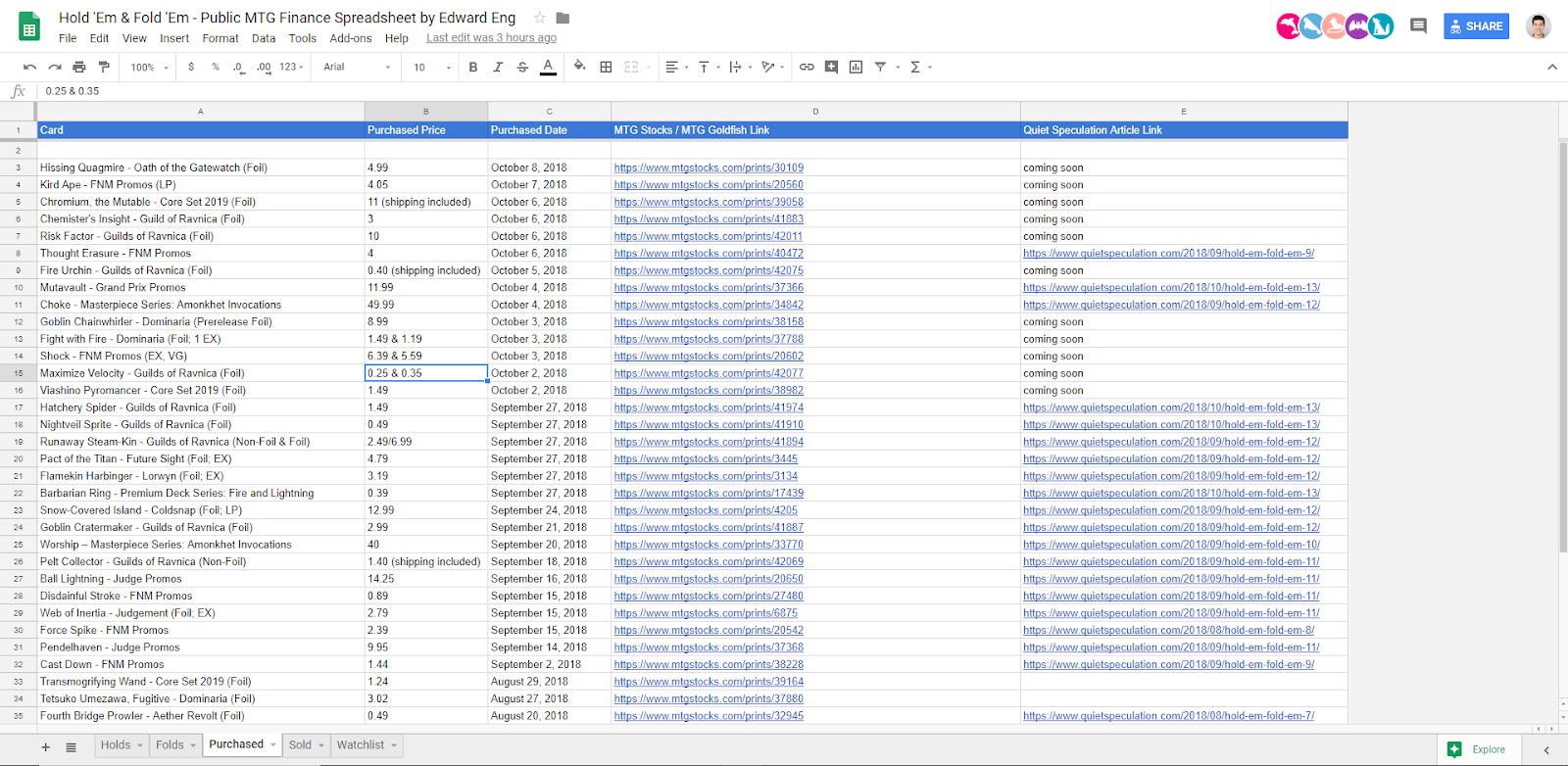
Public Spreadsheet

Stay up to the minute on what I’m looking at on a daily basis via the Hold ‘Em & Fold ‘Em - Public MTG Finance Spreadsheet. Don’t forget to bookmark it because I update it on the fly so you can see what’s going on as the market moves and before articles about certain cards are published.

Summary

Recent Buys

  • Narnam Renegade - Aether Revolt (Foil)
  • Grisly Salvage - FNM Promos
  • Shrine of Burning Rage - WPN & Gateway Promos

Folds

  • Celestial Colonnade - Worldwake (Non-Foil & Foil)
  • Creeping Tar Pit - Worldwake (Non-Foil & Foil)
  • Raging Ravine - Worldwake (Non-Foil & Foil)
  • Caustic Caterpillar - Magic Origins (Foil)
  • Seekers' Squire - Ixalan (Foil)
  • Wildgrowth Walker - Ixalan (Foil)
  • Shriekhorn - Mirrodin Besieged (Foil)

Recent Sells

  • Runaway Steam-Kin - Guilds of Ravnica (Non-Foil & Foil)
  • Pelt Collector - Guilds of Ravnica (Non-Foil)

Public Spreadsheet

Hold ‘Em & Fold ‘Em Spreadsheet

Let me know what you think in the comments below. Agree? Disagree? Why? You can also connect with me on Twitter at @edwardeng. I’m also open to suggestions on how to make this series more valuable. Hit me up.

Have fun,
Eddie

Daily Stock Watch – Arena Rector

Are you a Quiet Speculation member?

If not, now is a perfect time to join up! Our powerful tools, breaking-news analysis, and exclusive Discord channel will make sure you stay up to date and ahead of the curve.

Hello, everyone and welcome to a new edition of the Daily Stock Watch! There are lots of movement in the Standard market as decks are starting to emerge as new decks are starting to emerge one by one. In the wake of these developments, let us focus our attention on the market that everyone is not paying much attention to as this is where we could get some financial leverage in our spec buying. The format I'm talking about is Commander, and I would like to single out a card from the set that's now slowly being forgotten in Battlebond.

There was an error retrieving a chart for Arena Rector

This card just reached its all-time low of $14.49 today and I think that this trend will slowly continue in the coming days. I'm not sure up to what price this could dip to, but I would be very interested to go all in on it for $10-$12. The card does the same effect as Academy Rector, although that card is a special case because it's part of the reserved list, and that the scope of "win now" cards in the form of enchantments are quite bigger than that of planeswalkers (which is what Arena Rector could fetch when it dies) With all these in consideration, it's still a pretty good investment in my opinion because it will always have casual appeal and the number of BBD boxes being opened will eventually dip. Guilds of Ravnica, Dominaria, and Core 2019 are all doing well at the moment and it's the primary source of income from the big market. Secondary markets would be more interested in the older formats and based on experience, most of the big bucks are particularly made on these cards than those that go up and down quickly in the course of the Standard season.

Battlebond Goodies

These are the cards that I'm targeting from the set and I think that going after their foils is the best idea for spec purposes. Doubling Season, Seedborn Muse and True-Name Nemesis are old reliables while the rest of the cards in my list are new cards that are exclusive to this set. There's a lot of value in the foils but casual favorites like Arena Rector will stand out because it's easy to splash and the pay off that players could get in showing off their planeswalkers (could easily be from SDCC, the Mythic Edition, or normal foil ones) when it dies is very interesting in its entirety. The card is not as powerful as it seems but everything that's written on it says otherwise. Just exactly the kind of card that we should be interested in investing on as it caters to the market where haggling and spending is not given that much attention to. There will always be a constant demand for this card in the future, and this is definitely one of those cards that we would want to have a stock of when everything goes MIA in stores.

At the moment, you could get copies of Arena Rector from online stores such as StarCityGames, Card Kingdom and multiple vendors from TCGPlayer for as low as $11.54 and up to $15.99. I would be very interested in these copies worth $12 and less but you could play it out a bit and see if it could go to as low as $10. Foil copies have been popular since day one (and pricey as well) but that's a bit justified since cards like this have so much appeal to collectors and high end players. If we're looking for figures, I'd say it's good to invest at $60 or less for the foil copies as they will be worth a lot by as early as next year when the next set that's set up just like BBD is released. It's a very safe investment if you ask me.

And that’s it for today’s edition of the Daily Stock Watch! See you again next time, as we check out a new card that should be on the go, or good enough for speculating. As always, feel free to share your opinion in the comments section below. And if you want to keep up with all the market movement, be sure to check in with the QS Discord Channel for real time market information, and stay ahead of the hottest specs!

GRN Standard and the State of Shocklands

Are you a Quiet Speculation member?

If not, now is a perfect time to join up! Our powerful tools, breaking-news analysis, and exclusive Discord channel will make sure you stay up to date and ahead of the curve.

Standard card prices have exploded over the past several weeks. History of Benalia tripled from 6 tix to 18 tix. Vraska's Contempt more than doubled from 4.5 tix to 10 tix. Rekindling Phoenix surged back up to 30 tix, and Teferi, Hero of Dominaria cracked the 40 tix mark.

Interest in Standard post-rotation has surged, and people are invested in playing it. I myself have been playing Standard for the first time since Theros block, and I'm likely not alone. At any given time there are now 1600 people in the Standard Leagues on MTGO; this is more people than were playing Standard in the Spring, and that number continues to grow by about 50 per day. This is great news for Magic Online investors and players.

Today we're going to look at how high popular Standard cards can go. Folks are especially interested in the Guilds of Ravnica shocklands, so let's get right to it!

Shocklands - How High Can They Go?

Investing in lands is one of the easy no-brainers in Magic Online finance. Rare land cycles always go up once their sets cease to be drafted. What's harder to discern is when to sell, when to know how high they will go.

I remember investing in the Kaladesh fastlands, buying most of them for between 0.75 and 1.00 tix. In turn, I sold most of them for between 2.25 and 3.00 tix. A nice profit to be sure, but…

…I left a lot of money on the table.

I figured that these lands, widely opened in a fall set, wouldn't have ceilings higher than 5 tix, and boy was I wrong.

There are many factors that affect how high lands in a rare land cycle can go. How many printings does it have? And how long ago were its first printings? Were they printed in large fall sets or smaller summer Core sets? Are they seeing closer to four copies per deck, or closer to two? Do they have demand in Modern and Legacy, or just in Standard? How high is their frequency in the treasure chests?

All of these variables are important to consider, and identifying other land cycles with similar answers to the above can often serve as a helpful guidepost. For a list of all the rare dual land cycles, along with their original printings and reprintings, click here.

The Guilds of Ravnica rare duals are now experiencing their third printing, first in 2005-2006 and next in 2012-2013. We might go ahead and say that this is their fourth printing due to their perpetual inclusion in the treasure chests. These see extensive Modern play and will constitute the backbone of Standard decks.

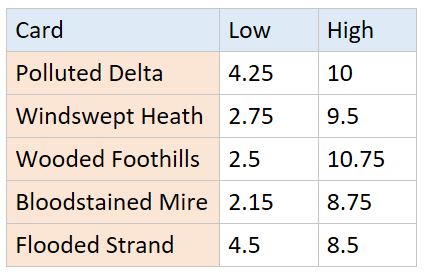
My forecast for these lands is that they will peak somewhere in the 3.0 to 6.0 tix range. The last time we saw a cycle of lands printed in the major fall set for Standard that saw extensive Modern and Standard play was when the allied fetchlands were reprinted in Khans of Tarkir:

If you recall, these peaked between 8.50 and 11.00 tix. We should expect the Guilds of Ravnica shocklands to peak lower than that since there are far more Steam Vents and Overgrown Tombs in the wild than there were Flooded Strands and Wooded Foothills at the time. Peaks between 3.00 and 6.00 therefore seem like reasonable expectations for these lands, and they'll probably crater down to 1.00 or 2.00 tix after they rotate out of Standard.

It's a bit too early to invest in anything in Guilds of Ravnica, but these lands are all at fair prices right now if you want to pick them up for your Modern collection or to play with in Standard.

Steam Vents {UR} : 3.54 tix
Overgrown Tomb {BG} : 1.90 tix
Watery Grave {UB} : 1.00 tix
Sacred Foundry {RW} : 0.97 tix
Temple Garden {WG} : 0.78 tix

I expect them to dip about 20-percent over the next month. Guilds of Ravnica as a set is still holding a high value of $90, and the basic economics of redemption will force that down closer to $70 over the next month or two.

Golgari Here, Golgari There, Golgari Everywhere!

I've done a lot of selling this month, in part thanks to price spikes like this.

Initially Magic players took to white-based strategies revolving around History of Benalia, Aurelia, Exemplar of Justice, and Lyra Dawnbringer. However, it didn't take long for Jadelight Ranger, Ravenous Chupacabra, Find // Finality, and Vraska, Relic Seeker to overtake them as Golgari emerged as the deck to beat in Standard.

Even now, cards like Carnage Tyrant and Vivien Reid continue to rise. When should you sell?

Vivien Reid has now breached the 20-tix mark, and there is no precedent for a card like her to stay above 20 tix. I've now sold all the copies I'm not playing with. What's thrust her price so high is that (i) she is a maindeck card in a dominant strategy; (ii) she is a prominent card in lesser Green strategies; and (iii) she is from a small set. I expect her price to cool off down to 15 tix even if Golgari cannot be dethroned, although maybe the supply of Core 19 is so low that she'll stay above 20.

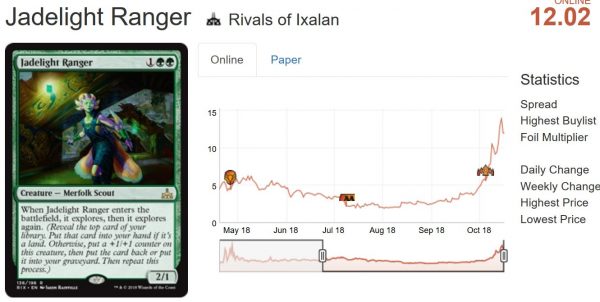
Jadelight Ranger is a card I invested heavily in, and I've now relinquished my holdings of her. It's hard for a rare that isn't colorless or removal to rocket north of 10 tix, and Jadelight Ranger's price spike is indicative of Golgari's dominating performance online over the past week. Expect her to slowly dip back down to 7.00 tix over the next several weeks.

Doom Whisperer is a card that fellow MTGO financier Chas Andres has recommended speculating on, and indeed it has been rising in value over the past week despite copies entering the market through Limited.

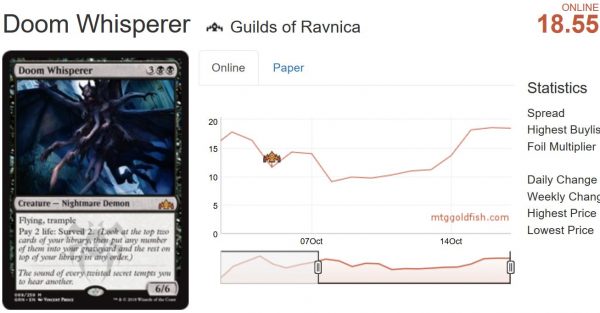
I think 19 tix is a fair valuation of the card. I would hold any copies I need for playing with and would sell the rest. Guilds of Ravnica still has a long way to fall, and I think a lot of that will necessarily come from its most expensive cards: Doom Whisperer and Assassin's Trophy.

I think it's more likely that Doom Whisperer is a 10-tix card one month from now than a 25-tix card. Like Chas, I think this card has a bright financial future ahead of it, but I'd like to see Limited demand cool off before owning more than a playset.

Signing Off

I look forward to reading your comments and questions down below. How have y'all been enjoying Guilds of Ravnica Standard and Draft? Until next time, and have a good rest of your week.

In Questionable Company: Updating Spirits

Are you a Quiet Speculation member?

If not, now is a perfect time to join up! Our powerful tools, breaking-news analysis, and exclusive Discord channel will make sure you stay up to date and ahead of the curve.

Every player has their own biases and preferences when it comes to deck selection. There's nothing wrong with playing to strengths, and it is important to remember that Magic is a game. You have more fun playing something you enjoy. However, this goes both ways, and you can dislike a deck for less-than-rational reasons. I have a problem with the most popular version of Bant Spirits that has little to do with the deck itself.

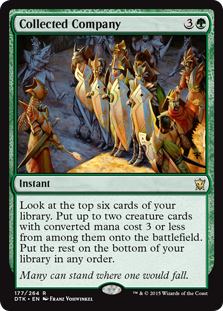
I don't enjoy playing the latest version of Bant Spirits, but that doesn't mean that it's a bad deck by any means. I prefer UW Spirits, and would probably play it even if I didn't have hang-ups with the Bant version. Outside of personal preference, I don't feel that Bant Spirits in any form utilizes Collected Company very well. Why this is and how I'd rather use Company are the topics for today's article.

UW Staying Strong

While I've been experimenting with new decks since the end of PPTQ season, I do make sure that my workhorse is in shape. UW Spirits will remain a powerful tool against the Modern metagame while control decks, Burn, and Humans dominate Tier 1. I haven't had much reason to change the maindeck, but I have been working on the sideboard.

UW Spirits, by David Ernenwein

Creatures

4 Mausoleum Wanderer
4 Rattlechains
4 Selfless Spirit
4 Supreme Phantom
2 Phantasmal Image
2 Remorseful Cleric
4 Spell Queller
4 Drogskol Captain
2 Geist of Saint Traft
1 Kira, Great Glass-Spinner

Artifacts

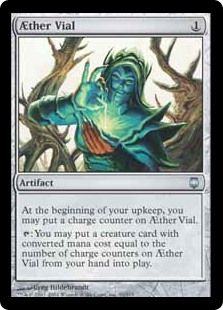
4 Aether Vial

Instants

4 Path to Exile

Lands

4 Flooded Strand
4 Seachrome Coast
4 Hallowed Fountain
3 Cavern of Souls
3 Ghost Quarter
2 Plains
1 Island

Sideboard

3 Stony Silence
2 Rest in Peace
2 Negate
2 Damping Sphere
2 Echoing Truth
2 Blessed Alliance
2 Worship

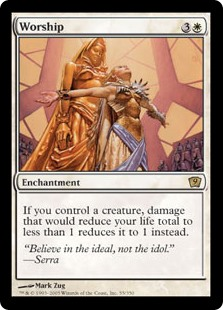
My anti-creature plan of winning the tempo game and using Slaughter the Strong to catch up left something to be desired. Here, I instead went for a prison plan using Worship. Cutting the Slaughters for another Echoing Truth has paid dividends against UW Control. Terminus is hard to fight, but responding with Truth to retrieve whichever creature we have multiples of saves the day. Truth is also great against tokens and any deck with problematic permanents like Ensnaring Bridge.
Worship has been a bit of a disappointment for me. Players have gotten the memo about Spirits and know to bring in answers for non-creature permanents. Assassin's Trophy also really hurts the card. I've had success using it as a multi-turn Fog to buy time to catch up on damage, but it never earns an automatic concession anymore. I'll keep looking for a better anti-creature strategy. Other than that, I'm very happy with UW Spirits.

Bant's Adaptation

However, despite some strong showings, UW is still not the Spirits deck of choice for most Modern players. That honor goes to Bant Spirits, and specifically the version with Aether Vial. Ondrej Strasky won GP Stockholm with the deck, which has since received the endorsement of a Hall of Famer.

Bant Spirits, by Adam Fronsee (SCG Columbus Classic, 8th Place)

Creatures

4 Noble Hierarch
4 Mausoleum Wanderer
4 Supreme Phantom
3 Phantasmal Image
2 Selfless Spirit
1 Rattlechains
4 Spell Queller
4 Drogskol Captain
2 Geist of Saint Traft

Artifacts

3 Aether Vial

Instants

4 Collected Company
4 Path to Exile

Lands

4 Windswept Heath
3 Flooded Strand
2 Horizon Canopy
2 Cavern of Souls
2 Botanical Sanctum
1 Temple Garden
1 Breeding Pool
1 Hallowed Fountain
1 Seachrome Coast
1 Moorland Haunt
1 Forest
1 Island
1 Plains

Sideboard

3 Stony Silence
3 Unified Will
3 Thalia, Guardian of Thraben
2 Rest in Peace
2 Dromoka's Command
1 Gaddock Teeg
1 Geist of Saint Traft

While the no-Vial version isn't my cup of tea, I like that version better than this one. I feel that the deck is full of compromises. Both Ondrej and Paulo admitted as much. It is a hybrid between UW and Bant, picking aspects of one to cover weaknesses of the other.

As a result, it has better matchups across the board, but its good matchups aren't as favorable as those of the other Spirits decks. With fewer Company hits, Vial Bant isn't as grindy as no-Vial Bant, and fewer Vials and Rattlechains means it isn't as tricky as UW. It therefore leans more on hitting lords than either alternative does. Merfolk players know well the power of lords, but leaning on a small number of cards to make a deck good creates more failure states through variance or disruption. I'd rather have spikier matchup percentages and more reliable gameplans.

On Rattlechains

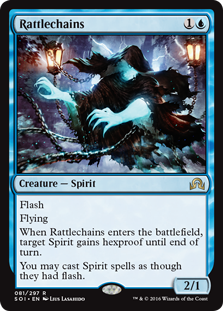
Another aspect I don't like is the lack of Rattlechains. Paulo likes the card, but needed something to cut, while Ondrej just thinks it's bad. And true, Rattlechains isn't very impressive in terms of stats; rather, it shines given the context, and I'd argue that this metagame is friendly to Chains. Against Jeskai, it's Spirits's best card, since that matchup revolves around two-for-ones. Even when that isn't the case, Rattlechains is powerful because it's a flash creature that makes more flash creatures, allowing the deck to play at instant speed.
Rattlechains is a card that to jam on the opponent's end step after making them play around a counterspell, hopefully sub-optimally. After that, it creates more uncertainty for the opponent, as we could have anything at anytime and potentially wreck them. This intangible information advantage and stress generation can translate into game wins.

The Intangible Problem

Vial Bant Spirits is a Frankenstein of a deck (for the record, any commenter who says "Actually, it's Frankenstein's Monster" earns my scorn). Bant and UW have separate identities as the deck that overwhelms or outplays opponents, respectively. This new version is a hybrid, aspiring to the overwhelming card advantage of Collected Company and the tricky mana advantage of Aether Vial. Maybe if I hadn't worked on Spirits as long I as I have, I wouldn't have a problem with the Bant Vial build.

However, my experience with the archetype renders me acutely attuned to the minor inefficiencies that hybridizing Bant and UW creates, and subsequently to where each deck is superior to Bant Vial. Bant Vial has fewer creatures than no-Vial, and so Company whiffs more often. It also can't run all the utility lands, and they're integral to no-Vial. Despite only having three Vials, Bant Vial is more reliant on them than UW. Rattlechains provides UW a lot of flexibility and makes it easy to play at instant speed and gain more value from Captain or Phantom. To match that, Bant Vial must either hit well with Company or have Vial out. UW also has more flex slots maindeck which allows for more metagame tuning and adaptation.

In other words, because of my experience I can see the seams and scars left over from making the monster. Other players seem to see what the creator intended; a new lifeform, whole and flawless. It cannot be that to me, at least right now, because I'm too invested in the results of my own tweaking to stomach the stitch-work.

Rehoming Collected Company

One big issue with the hybridized Spirits deck is its lackluster Collected Companies. The deck has few passable targets outside of Drogskol Captain. Casting Company to look for Spell Queller or Selfless Spirit in response to a dangerous spell has a high ceiling, but can be quite risky.

Company is not a card that can just be jammed into any deck with creatures and be great. Yes, Company will find creatures and put them into play, which is always card advantage. Company can be straight tempo advantage if it finds 4+ mana worth of creatures, but simply getting creatures from the deck on the opponent's end step technically provides a tempo advantage, too. Digging six cards into the deck is also quite good. However, that's not what makes Company a great Magic card. Playing Company "for value" is like using Black Lotus to cast three Birds of Paradise turn one. It's not wrong, but it is a long way from right.
If believe the best way to play Collected Company is to play Collected Company. Or, because I like using symmetrical tautologies as a teaching tool, instead of going for value, play Company for value. Company decks excel when they use the card to explicitly go for the most value as they possibly can. The Standard Bant Company decks that nearly got Company banned were built to maximize each Company. They were designed to hit 5-6 mana worth of cards every time, and every single creature gained value on its own. The creatures were already spells, and Company made them instants. Modern has typically used Company to dig for combo pieces, which is also very good. So why mess about with dinky fliers?

A Shell Worth Four Mana

Most recent Bant Company decks revolve around Knight of the Reliquary. Sometimes it's to execute the Retreat to Coralhelm combo, but usually they're just big threats that find utility lands. I don't like this plan. Coralhelm combo has never worked as well as Splinter Twin, despite hopes to the contrary, while Knight takes too long to become threatening in my book. Durdling around fetching lands and getting wrecked by Fatal Push is not what I want from a Company deck. Instead, I want my Bant Company cards to be good right away.

Bant Company, by David Ernenwein

Creatures

4 Noble Hierarch
2 Devoted Druid
1 Vizier of Remedies
3 Duskwatch Recruiter
1 Rhonas the Indominable
2 Voice of Resurgence
2 Scavenging Ooze
3 Eternal Witness
3 Spell Queller
2 Reflector Mage
2 Tireless Tracker
2 Knight of Autumn

Instants

4 Collected Company
4 Chord of Calling
3 Path to Exile

Lands

4 Windswept Heath
3 Flooded Strand
3 Misty Rainforest
2 Forest
2 Horizon Canopy
2 Gavony Township
1 Breeding Pool
1 Hallowed Fountain
1 Temple Garden
1 Botanical Sanctum
1 Plains
1 Island

I've included the Devoted Druid combo package because winning on turn three is very attractive. I've only included a few copies of each piece because my experience has been that it just isn't a reliable path to victory when the opponent has any interaction. Considering the aforementioned metagame, I expect plenty of interaction. However, it's nice to just win against linear decks. I wish I could risk cutting the Path to Exiles for additional copies of Knight of Autumn, Spell Queller, and Reflector Mage, but dedicated Counters Company Combo is popular enough in my area that I need cheap answers.
The goal of the rest of the deck is to get as much value from our creatures as possible. Hitting any two utility creatures on is great and frequently provides more than two cards and six mana of value. In testing Reflector Mage plus Knight of Autumn has been game winning against Hardened Affinity while Voice of Resurgence and Scavenging Ooze are huge problems for creature decks. Queller is frequently mediocre off end step value Companies, so I've starting firing Company off in response to almost anything Queller can stop just to get that sweet value hit.

This greatest advantage is deck grinds harder than a machine shop. Chaining the same Company using Eternal Witnesses is backbreaking for any attrition deck, and Witness is arguably the best hit as a result. So too are an active Tireless Tracker or Duskwatch Recruiter. So long as sweepers are kept in mind, it is almost impossible to run out of gas in this deck. Couple that with [mtg_card]Gavony Township and, given time, there's no fair deck that can't be out-valued and overwhelmed.


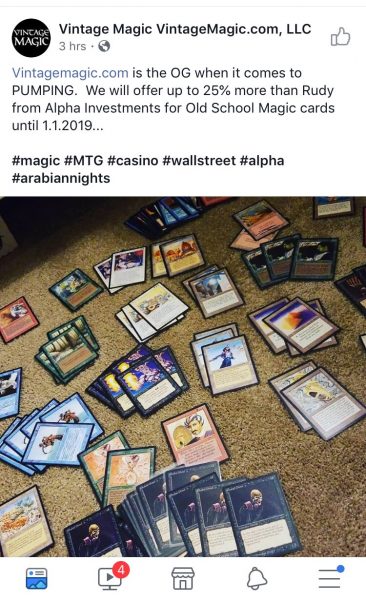
Tron is a weakness game 1, but that's why my current sideboard is Damping Sphere. And nothing else, as I'm still working on the sideboard and am spoiled for choice. There are a lot of options to transform the deck into a straight combo deck, change up the value package, or go for traditional hate and hole-filling, and I don't know which is best. I don't even know if this Bant Company deck is better than Bant Spirits. What I do know is that I've never felt like I'm wasting time with Company in this deck, and that nagging disquiet I get playing Bant Spirits is gone.

Playing to Strengths

Certain decks just don't fit some players style or preferences. Regardless of its results, Bant Spirits just isn't for me. I want my Spirits to be tricky and Companies so value-laden they melt the table. That doesn't mean the alternatives are bad in a vacuum. The format is Modern. Pick what you want to play and master it.

Avatar photo

David Ernenwein

David has been playing Magic since Odyssey block. A dedicated Spike, he's been grinding tournaments for over a decade, including a Pro Tour appearance. A Modern specialist who dabbles in Legacy, his writing is focused on metagame analysis and deck evolution.

View More By David Ernenwein

Posted in Modern, TechTagged , , , , 2 Comments on In Questionable Company: Updating Spirits

Have you joined the Quiet Speculation Discord?

If you haven't, you're leaving value on the table! Join our community of experts, enthusiasts, entertainers, and educators and enjoy exclusive podcasts, questions asked and answered, trades, sales, and everything else Discord has to offer.

Want to create content with Quiet Speculation?

All you need to succeed is a passion for Magic: The Gathering, and the ability to write coherently. Share your knowledge of MTG and how you leverage it to win games, get value from your cards – or even turn a profit.

Latest Changes to Buylists

Are you a Quiet Speculation member?

If not, now is a perfect time to join up! Our powerful tools, breaking-news analysis, and exclusive Discord channel will make sure you stay up to date and ahead of the curve.

I continue to browse MTG Stocks every day, checking out the Interests page to identify top movers and shakers. On the surface, the market appears to remain calm. In fact many Old School staples have had a steady, downward trajectory these past few months.

It comes as no surprise that various Standard cards are lighting up the charts, however. Star of Extinction was the latest card to spike, but there are plenty of other cards that offered solid return on investment as the new metagame unfolds. Despite having no interest in the format, even I managed to blunder into some profits on Runaway Steam-Kin.

There was an error retrieving a chart for Runaway Steam-Kin

But if we dig a little deeper—beyond Standard and beyond MTG Stocks—I believe there are some tectonic shifts taking place in the market. This week I want to examine some very recent shifts in vendor buylists that may be an indication of what’s to come.

The Trees are Singing

There continue to be market forces that drive demand (maybe artificial, maybe real) for cards from Magic’s earliest sets. I was fairly convinced we would see sideways to downward motion on prices for at least a few more months. After spiking pretty hard, the pullback on cards that are rare but not very playable is easy to see on a chart. Look at Singing Tree, for example.

There was an error retrieving a chart for Singing Tree

I was fully expecting to see this card continue a listless move sideways with little catalyst on the horizon. Then a couple of things caught my eye out of nowhere.

First, there’s this controversial post from Vintage Magic:

We all know how much Daniel Chang and Rudy of Alpha Investments have catalyzed higher prices for these cards. They’ve become controversial figures in the community for being so open about purchasing many copies of the same old cards. Let’s put judgment aside for a moment. Whether we like it or not, posts like these can catalyze panic-buying and higher demand.

But we don’t need to seek out boogie men to find a reason for climbing Arabian Nights prices. Recently, Card Kingdom has been displaying some fairly aggressive buy prices on certain cards. In fact, check out this buylist I just submitted this past week!

This is an extremely aggressive buy price, especially given how generous Card Kingdom is when paying a downgrade percentage. I predict my copy will be EX, which means I should net just over $85 for my copy. That’s about $7 below market price on TCGplayer—after fees there’s no way I could have made that much selling on eBay.

While We’re at Card Kingdom…

For a couple months, I’ve been watching Card Kingdom’s buylist prices on Old School cards drop steadily. Then, out of nowhere, it appears Card Kingdom decided to suddenly jack up buy prices on certain cards. I watched them up their buy price on Singing Tree from $55 to $75 to $95 over the course of a couple days.

I observe these trends because I literally browse their buylist at least twice a day. Obsessed? Possibly. But when prices move so quickly (they already dropped Singing Tree down to $85 for example), catching the peak can mean an extra bit of cash in my account.

These sudden buylist bumps go beyond just green creatures from Arabian Nights, too. For a hot minute they had a $1400 buylist on Library of Alexandria. That lasted about a day until they presumably got more copies back in stock. They also had a buy price on Bazaar of Baghdad of around $1200 but that didn’t last either.

Funny enough, Star City Games currently has a $1200 buy price on Near Mint Bazaars. If you've got a minty copy you want to buylist, ship to SCG. If your copy has any wear whatsoever, you will be better off sticking to Card Kingdom because their downgrade percentage is more generous.

Most recently, Card Kingdom has upped their buy price on Arabian Nights City of Brass.

There was an error retrieving a chart for City of Brass

They were paying less and less over the past couple months, then suddenly they upped their buy price to $315. That’s quite aggressive. And it’s not like they’re out of stock and eagerly trying to replenish. That was the case for Library of Alexandria, where they were down to just a single played copy in stock at one point. CK has ten Cities in stock, four being VG and six G. While I’m sure they’d prefer some minty copies in stock, they aren’t exactly out of the card.

Before moving on, here are some other aggressive Card Kingdom numbers worth your consideration:

Candelabra of Tawnos: $665
Ydwen Efreet: $85

ABU Games’s Bold Move

If you are wondering why Card Kingdom has zero NM Arabian Nights City of Brass in stock, you may not have to look very far for a reason. ABU Games currently has a $351 buy price on the card. Cash! Their ridiculous credit number is up to $802.50! But their played buy prices aren’t as generous as Card Kingdom’s, hence why CK probably has only played copies in stock.

In fact, ABU Games continues to have best-in-class buy prices on near mint Arabian Nights cards. And I’m not even referring to their crazy credit offers (more on that in a sec). We’re talking cash. $92.14 for Singing Tree and $113.10 for Ifh-Biff Efreet are two other best-in-class cash buy prices on the site.

Admittedly, they aren’t paying that great on other Arabian Nights cards. And I suspect the same can be said for Legends and Antiquities. There are probably a few stand-outs, but no noteworthy trend.

Then you look at their Alpha, Beta, and Unlimited numbers and all bets are off.

ABU Games pays an exorbitant amount of store credit for cards from Magic’s first three sets. I know I’ve written about this in the past, but I need to bring this up again because just this past week they increased their numbers even further! Seriously! I have a few random Alpha uncommons I’ve been thinking of unloading now that prices have settled, and I was shocked to find out that I could get $85.50 in store credit for my played Fire Elemental.

That’s an impressive number. But if you really want to have your socks knocked off, you have to examine numbers for some of the more playable Old School cards. A played Unlimited Chaos Orb will only fetch you $412.42 in cash, but you can get a whopping $1282.50 in store credit! That puts Card Kingdom’s and Star City Games’s numbers far behind, even with credit bonuses. A played, Unlimited Underground Sea will net you $1425 in store credit. If you prefer cash, you’re better off shipping to Card Kingdom, but this is a crazily high store credit number.

Don’t even get me started on Power (a played Unlimited Black Lotus fetches you $9975 in store credit). Across the board, ABU Games is offering even more in store credit for your desirable Alpha, Beta, and Unlimited cards. This in addition to their occasionally aggressive numbers on Near Mint stuff from Magic’s earliest expansions.

Who is more to-blame here for inflated prices now? Daniel Chang for his goofy post, which was likely a friendly jab at Rudy, or ABU Games for their inflationary practices on Old School cards?

Some Watchouts

Before you start planning your retirement on Alpha Glasses of Urzas, however, you need to be aware of a couple things. First and foremost, ABU Games increased both their buylist credit numbers and their sell prices. The two move together in tandem (naturally), so while $1200 sounds like a huge number, it really isn’t convertible to cash so easily.

In reality, I would assume 60-70% value when trading into ABU Games. In other words, $1200 in trade credit should net you cards that you could sell for $720-$840. This still beats their cash pricing most of the time, but it does represent an inefficiency when dealing with ABU Games.

Even Card Kingdom has higher prices on most cards now, when compared to TCGplayer. At one point in time, you could acquire “Good” Beta and Unlimited cards for below TCG low pricing because of Card Kigndom’s aggressive downgrade on “Good” pricing. But recently their prices have caught up with the rest of the market—they have plenty in stock now, but the pricing isn’t as much of a steal as it once was. Keep this in mind when trading into Card Kingdom for store credit. Lately I’ve been sticking to cash.

Lastly, keep in mind that these strengthening buylists are somewhat isolated. ABU Games may be offering a load of credit for Alpha, Beta, and Unlimited cards, but their cash prices from those sets are unexciting. Their numbers are very inconsistent from the early expansions. Card Kingdom is the same way—pockets of aggressive numbers, but at the same time they also have many weaker numbers. For example, their buy prices on Legends cards are all much lower than they were a couple months ago.

There was an error retrieving a chart for Angus Mackenzie

Put simply, we need to continue monitoring these movements closely. There are some opportunities that could arise (such as Singing Tree) and we need to be prepared. But by no means can we declare that we’re out of the woods yet on this pullback. But with the way some big time market movers are behaving, you never know.

Wrapping It Up

I felt obligated to return to the subject of Old School buylist prices because the market has been so dynamic lately. ABU Games made some dramatic changes to their trade credit numbers just this past week, and these should be flagged. This is yet another move by the large retailer that furthers their inflationary problems.

If you have any store credit with ABU Games, I encourage you to spend it all immediately. At the rate things are going, they could one day be dealing solely in store credit rather than cash because of the large divide in value between the two. Keep this in mind.

Card Kingdom’s credit is far more stable, but their sell prices aren’t as attractive as they once were either. At least, not on Old School stuff. I’m sure you can find opportunities on their site—well priced cards from other sets. I’m just reacting to the market I track most closely. And from this vantage point, things are very much in flux right now. Other than Standard, this is probably the most interesting market at this moment. And since I know so little about Standard, I will stick to reporting on the news as I see it from the Old School vantage point.

Sigbits

  • I’ve got some more crazy trade credit numbers from ABU Games to share. How about a played Alpha Serra Angel. ABU Games offers $665 in trade credit for this card. This is fairly impressive considering played copies aren’t worth nearly as much as their near mint counterparts. Perhaps more shocking is the fact that you can get $60.56 in credit by trading in a played International Edition copy of the same card!
  • Not long ago I picked up a creased Alpha Icy Manipulator for use in my all Alpha cube. I got it for a good price. But I did not anticipate that ABU Games would be offering $565.50 in store credit for heavily played copies of the card! If that sounds baffling, consider that they're offering $760 in trade credit for played copies!
  • Let’s end on a high note: consider trading in a heavily played Beta Shivan Dragon into ABU Games. This would net you a whopping $1815 in store credit! But remember, that’s not equal to $1815 in cash—not even close. You can probably flip that credit for about $1100-$1200 worth of cards. Considering that CK pays $1260 on “VG” copies, though, you may be better off skipping the interim step and selling directly to Card Kingdom for cash.

Why Magic Arena Makes Me Optimistic About the Market in 2019

Are you a Quiet Speculation member?

If not, now is a perfect time to join up! Our powerful tools, breaking-news analysis, and exclusive Discord channel will make sure you stay up to date and ahead of the curve.

The official release of Guilds of Ravnica last week has ended the summer doldrums and ushered in a new season for the Magic market. Players are excited about the freshly rotated Standard format, which over the past two years has been plagued by multiple rounds of bannings and a stale metagame.

Rotation has provided a fresh start, and so far things look great. Magic Online releases 5-0 decklists from leagues with an algorithm that selects for uniqueness. The two dozen or so decklists released last week have been followed up this week by nearly 100.

So there’s evidence that players are trying, and succeeding, with a ton of new ideas—the sign of a healthy format. Even the hyper-competitive Pro Tour Qualifier last weekend had seven unique decks in the Top 8, compared to some events before rotation where every top spot would be held by red aggro.

Guilds of Ravnica also brings a whole new limited format to explore. It’s welcomed because Core 2019 was widely maligned as a limited format, especially compared to Dominaria, which many consider the best ever. Ravnica block is loved, and in my opinion has made for really great limited formats during our last two visits. This one is still too new to judge; it sounds like plenty of people are enjoying it, myself included.

The Arrival of Arena

I was able to play some Guilds of Ravnica sealed deck on Magic Arena, which went into open beta two weeks ago. The floodgates have been opened. Magic Arena has taken over Twitch, where it has more streamers gaining more views than Magic Online.

It fills my Twitter feed, where there seems to be nothing but praise for the program. I had many complaints about Magic Arena during the Alpha test, but after having stepped away for months, I’ve come back to a polished program that has exceeded my expectations to offer a quality Magic gameplay experience.

Players around the world now have unprecedented access to the game because of Magic Arena. It’s generally accepted that the 2009 release of Magic: Duels of the Planeswalkers brought Magic to a wider audience, playing a pivotal role in the massive expansion that began shortly after and during the next few years. Magic being brought right to gaming consoles alongside Halo and Grand Theft Auto exposed it to a new generation of players and helped elevated Magic further towards mainstream gaming culture. Magic Arena is poised to have that same effect, but on a much grander scale.

Computer gaming and e-sports have grown exponentially since Duels of the Planeswalkers was released nearly a decade ago. Digital games like Hearthstone have primed players for Magic Arena, which feels very similar if not nearly a complete replica in execution, from the gameplay down to the economy. It’s a proven model, and following it should lead to success.

A quick google search shows that Hearthstone claimed to have 70 million players early last year, so in theory the potential new player base for Arena is quite literally tens of millions of people. It currently being unavailable on phones means that number is certainly much less than 70 million, but still very significant.

Magic Is Magic By Any Name

New Arena players are, in the literal sense, Magic players, the same as any other. The more people who play Magic, the better. The more people who even know about it, the better, and the exposure Magic Arena will bring the game will do a lot to increase awareness. While the realm of many of the new players may be strictly online, rest assured that plenty of them will dig deeper into the rabbit hole and start collecting and playing paper Magic.

Magic Arena will spawn a whole new generation of drafters and Standard players, some of whom will start showing up at FNM. It will get people interested in other formats, like Modern, Legacy, or Commander.

I imagine there are people who have never even heard of Magic today but will be buying graded cards in 2019 and beyond. Even if these new players never spend a cent on cardboard and keep their money online, that means growth for Wizards and potentially bigger things for Magic. Even if that player never spends any money on Magic Arena and just grinds free-to-play, but also tells a friend about the game, it all adds up to a net positive.

I see Magic Arena doing a lot to promote Magic and usher it into the future. Magic Online has not performed well as an audience-friendly e-sports platform, which Magic needs if it hopes to truly thrive in the next decade and beyond. Magic Arena will help make that a reality, and as we are still in the beta test, I’m hopeful that the program and experience will only continue to improve.

Magic Arena will create a whole new generation of players, in addition to helping to further enfranchise current players. I also imagine it will help recapture lapsed players that no longer play but could use the program to rediscover the game.

The Paper Markets

There is an argument that the success of the purely online Magic Arena means bad things for the future of paper Magic. But it’s difficult for me to see increased popularity of Magic as anything but positive pressure on demand for paper cards.

In theory there’s a future where paper cards are no longer printed and organized play becomes completely digital, but it seems far too profitable to stop now. The recent deal that Wizards made with Amazon to sell directly only further solidifies this point. I imagine the best hedge against the end of paper Magic would be to invest in the most collectible cards, specifically graded cards, Alpha, Beta, etc., with prices not wholly determined by their playability.

How do you see Magic Arena affecting the future of Magic?

-Adam

Daily Stock Watch – Privileged Position

Are you a Quiet Speculation member?

If not, now is a perfect time to join up! Our powerful tools, breaking-news analysis, and exclusive Discord channel will make sure you stay up to date and ahead of the curve.

Hello, everyone and welcome to the freaky Friday edition of the Daily Stock Watch! We've been talking about cards that have seen some financial gains because of new goods from Guilds of Ravnica all week so let's end it with a feature that doesn't rely on GRN to boost its stock. I'd like to talk about an enchantment from the original Ravnica set that has been slowly climbing again after peaking last month and eventually dipping a bit as the market stabilized. I know that this card is strong when it hits play and is pretty much a casual favorite among Commander groups.

There was an error retrieving a chart for Privileged Position

I've been playing competitive Commander (or better known as cEDH among active players) for quite a while now and I know what it's like to be at the opposing end of this card and you just want to get rid of your opponent's creatures or artifacts to be able to cope up. If you're playing a red or black-based deck, this card is almost a nightmare as it's almost moot to answer because you lack the supporting color to deal with enchantments. Just imagine playing a Balthor, the Defiled or Krenko, Mob Boss deck that has some spot removals to push through the enemy defense's during combat, but is left scratching their heads because everything became untouchable upon Privileged Position's entry.

I had to write about this card today because it has rose back to $26.49 after dropping just a couple of bucks down since it reached its all-time high of $29.22 last month. Commander cards don't actually buckle down amidst over supply issues if it's from an old set like Ravnica, so it might have caused some concern for those who are invested in this to move their copies around when it started going down. I'll admit that I'm annoyed by the strength of this card but I'm not one of those believers when it comes to its financial value (which is gradually increasing as the set matures and this card isn't getting reprinted) because I don't see it as a "win now" card. When you live in a world where two-card combos could end the games in an instant, I'd like to see a card of this value coming into play to close out games and not wait around to see if we could do something about our permanents before we pull off our trick. As much as I'm inclined to believe that it's the reason why this card is expensive, I haven't heard much of a deck that resorts to Privileged Position to win games. If you have some knowledge about where this is abused, please feel free to shout it out in the comments section below.

Commander Superstar Enchantments

You could easily add a lot of other enchantments that's doing very well financially because of Commander to this list but these are the ones that are usually dominating in multiplayer tables. Almost all of these cards provide very lopsided results to its owner when they hit play and I'm not sold on the idea that Privileged Position belongs to this class. I would be very glad to sell my copies at $25 because I don't see it going up any further, especially with its inclusion in the Guild Kit for GRN (the version of this card from that set is up for pre-order via StarCityGames for only $14.99) considering how much Doubling Season

At the moment, you could get copies of Privileged Position from Card Kingdom for $23.99, while multiple vendors have it via TCGPlayer for as low as $13.99 (damaged copies) up to $25.99 for near mint ones. StarCityGames is out of stock for the OG art, but they have the new ones coming in from the Guild Kit for the price I mentioned earlier. I'm just really looking forward to moving around copies of this card. I don't see any appeal for it today, and I'm quite sure that there won't be much still going forward if you ask me. Bias aside, this card is loved by many so you could still do some spec buying at $10 (I would only buy at this price) and see if you could save some copies. One lesson I learned in Commander finance is that no matter how bad you think a card is, it won't matter financially if the bigger crows loves it. Always go for the popular cards when speculating.

And that’s it for this week’s edition of the Daily Stock Watch! See you again next week, as we check out a new card that should be on the go, or good enough for speculating. As always, feel free to share your opinion in the comments section below. And if you want to keep up with all the market movement, be sure to check in with the QS Discord Channel for real time market information, and stay ahead of the hottest specs!

Want Prices?

Browse thousands of prices with the first and most comprehensive MTG Finance tool around.


Trader Tools lists both buylist and retail prices for every MTG card, going back a decade.

Quiet Speculation