menu

Another New Years’ Resolution Article

Are you a Quiet Speculation member?

If not, now is a perfect time to join up! Our powerful tools, breaking-news analysis, and exclusive Discord channel will make sure you stay up to date and ahead of the curve.

This is the time of year I usually pause and reflect on what I accomplished over the past 365 days and what I would like to prioritize for the next year. I've been doing this for a while now. This year, 2023, is no different. What is different is my new approach to this beloved hobby, Magic: the Gathering.

You see, yesterday I went to my LGS with my 10-year-old son. We both had a small smattering of singles from recent booster packs we opened over the holidays (many pack wars ensued). Of course, he was a good bit luckier than I, so he had two Unfinity Shock Lands to sell along with a Phyrexian Fleshgorger.

There was an error retrieving a chart for Phyrexian Fleshgorger

My wares consisted mostly of Jumpstart 2022 leftovers. He sold four cards and netted over $50 in store credit—I sold about 15 cards and managed to build up a mere $22. It was enough.

A New Appreciation for the Game

Initially, I made the decision to sell my cards to this local game shop for two reasons. First and foremost, Card Kingdom wasn’t buying these cards at the moment so my normal go-to store wasn’t an option. Second, I was looking for something to do with my son and I knew browsing their selection of cards and games would be a good way to spend an hour of quality time together.

What resulted exceeded my expectations by far, and something amazing happened on that day. I didn’t focus solely on the financial aspect of what I was doing! I was able to let go of the finance mindset enough to experience the pure enjoyment of trading cards with the shop! That may not seem significant, but for the guy who prioritized Magic finance first for over a decade, thinking about something beyond the money was quite refreshing.

With the store credit I accrued, I purchased a French Planar Chaos Damnation and a Sulfurous Springs for my Commander deck. I even had a little credit left over so I picked up a Neon Dynasty booster pack. Trading in a small stack of singles I knew I wasn’t going to use to pick up a couple of key cards for a deck felt so rewarding.

There was an error retrieving a chart for Damnation

My son’s transaction was arguably even more successful. The first thing he asked about was a sealed Unfinity booster box. He indicated he would be willing to combine cash with his trade credit to buy the box. I steered him away from this decision by arguing that he already had the cards he wanted most from this set and if his angle was to open more Shock Lands to sell, it would most likely be a losing proposition.

That’s when he asked me about Dungeons and Dragons.

My Two Resolutions For 2023

For 2023, I am making two New Year's resolutions related to gaming. While the first resolution stands on its own, the second has a close tie to Magic finance, as I'll explain.

Resolution One: Learn To Play Dungeons & Dragons

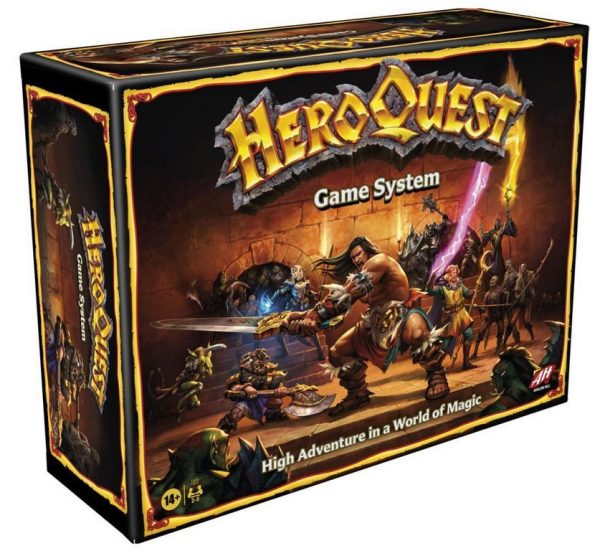
I never played D&D as a kid. A friend and I dabbled with Hero Quest at the time, a much simpler game of a similar genre. D&D is a whole separate world with rules that, to a newcomer, outclass even Magic when it comes to complexity. That said, I think it’ll be a tremendous bonding opportunity for my son and I so I’m going to make the effort to get a campaign going.

To start, we’re going to use the introductory kit and figures he bought using his store credit the other day. It turns out, while $55 may only get you a few desirable Magic cards, it can purchase you a D&D starter kit and ten figures to represent heroes, monsters, etc. As we walked out of the store, I was impressed by my son’s trade-in. Who would have thought a few pieces of cardboard could get you a whole new game with hours and hours of potential enjoyment?

Resolution Two: Shift My Approach To Magic

My second resolution is a simple one and is inspired by my son’s transaction. My primary purpose for pursuing Magic finance has been to save money for my kids’ college educations. After over a decade of this pursuit, I finally sold the majority of the value from my collection. My college fund goals haven’t been met just yet, but my progress has exceeded where I thought I would be at this stage. It’s time to shift focus a bit.

My “Magic investment” mostly consists of sealed product at this point. I intend to keep it that way. That doesn’t mean I won’t pick up some Reserved List cards here and there, especially as prices have really softened over the past few months. It just means that my primary motivation for picking up cards won’t be “to sell for profit x months from now.” I think this is a healthier mindset, and it’ll hopefully help me appreciate the game for what it is: a game.

How To Achieve My Resolutions

To maximize my chance of succeeding in my two resolutions, I need to come up with a specific action plan to turn them into reality. By getting prescriptive here, I can visualize what success will look like, motivating me to stay on track throughout the year.

Learn Enough D&D To Get Going

This is easy to do for the Dungeons & Dragons resolution. My action plan entails reading the starter manual on how to play the game and then trying some things out with my son, perhaps creating a simplified campaign just to test the waters. My first impression of D&D is that the game is highly flexible and open-ended. Therefore, even if we don’t play by the right rules, we can really do anything we want story-wise and system-wise. As long as we’re having fun, it doesn’t matter if we’re playing like everyone else. It’s a real chance to unleash my imagination, which tends to stay bottled up by impatience, greed, and day-to-day distraction.

A Threefold Plan For Shifting My Magic Focus

As for the Magic finance resolution, this will be much harder. I am programmed to think about money—I think I developed this tendency from an upbringing where money was a constant concern and we didn’t have enough resources to go around growing up. If I don’t set hard and fast rules in place, I will fall into the same patterns as the past decade.

There was an error retrieving a chart for Tragic Slip

Therefore, I am going to apply three simple heuristics as prompts to stay true to this resolution.

  1. No more acquiring sealed product for a bit, unless it’s to crack open with my son. My shelf is pretty full already anyway, so I can appreciate that I still have skin in the Magic investment game without committing incremental funds to this pursuit.
  2. I will acquire Old School cards primarily with store credit. This is especially true for anything of significant (> $100) value. I love trading up a bunch of smaller cards to consolidate them into a few bigger pieces, so if I intend to pick up new cards this year I will be leveraging this strategy. I’m going to avoid making large-dollar cash purchases on Magic in 2023. My primary cash purchases will be smaller pick-ups via ABUGames' eBay auctions. I can't resist those sweet, cheap Beta rares.
  3. I plan to visit my LGS a little more frequently, and even trade them some more cards opened up from booster packs throughout the year. Of course, I won’t ignore Card Kingdom—I still love shipping them a stack of nickels and dimes with my buylists to further consolidate my collection. When I have smaller transactions, however, it’ll be fun to trade those locally and re-experience the thrill of walking out of the shop with something fresh and new. It reminds me of my childhood pursuits.

Hopefully, these action steps will help me achieve my 2023 resolution goals and maximize my enjoyment (not financial returns) of Magic.

Wrapping It Up

As you can see, Magic for me in 2023 will look quite different. This is a natural evolution after my actions in 2022—namely, selling the majority of my collection. It truly is freeing to own a more modest-valued collection, and I don’t intend to go back.

That doesn’t mean that I’ll ignore the value of cards or that I won’t try to make a little more money on the game going forward. I’m still in tune with card values (especially Old School) and will look to trade around and pick up cards here or there. It just means that financial gain won’t be my primary motivation.

In short, I’m going to do my best to let go of Magic finance a little bit in the hopes I can rehabilitate my love for the game itself. Playing more casual games with my son, learning Dungeons & Dragons, and experiencing the thrill of trading cards to my LGS are three great ways I can pursue this resolution. That I can do so with my son is yet another way this amazing hobby can be so rewarding.

Not only will it help pay for college, but it’ll also help grow a bond between a father and his son (and just maybe his daughter in another couple of years)! Where else can a game provide such fantastic rewards?

Knowledge Transfer: What Diablo II: Resurrected Taught Me About Magic Finance

Are you a Quiet Speculation member?

If not, now is a perfect time to join up! Our powerful tools, breaking-news analysis, and exclusive Discord channel will make sure you stay up to date and ahead of the curve.

For those who have never played any of the Diablo games from Blizzard-Activision, they are hack-and-slash dungeon crawlers. As is typical with these types of games, one's gear or items often plays a significant role in one's power level and ability to progress through the game.

A Bit of History

I began playing Diablo II the summer before I graduated college. A major medical issue put me in the hospital for a week and also kept me limited in terms of what I could do for about two months. One of the few things I could do during that time was play video games. A game showing a clear progression via leveling appealed to me greatly.

Collecting Items

When I first got into the game, I picked up every item I found to sell to a vendor in town for gold if it didn't fit with any of my characters. The problem with this is that you can only use the gold in the game to buy things from vendor NPCs and the power level of buyable items quickly falls behind the power level of items you can find.

Magic Finance Lesson #1: Understand the Value of Your Time

I have a problem with Magic bulk. I love buying it but hate selling it. I try to squeeze every penny out of it, but there is a time cost to doing this. Whenever I pick up a collection, I dig through everything and pull out all cards that I know are worth something and all cards that have the potential to be worth something. The "potentials" go into a separate 5000-count box that is color sorted. The problem is that occasionally a card I wasn't expecting jumps in price so I go digging through my bulk again. While it may feel great pulling twenty copies of a card that has now jumped to $1 that I got for 1/3 of a cent, I have likely invested four hours into all that effort which means I am paying myself $5 an hour. As I have gotten older and started a family, the value of free time has grown exponentially and this type of "mining for diamonds" is no longer viable.

Managing Item Inventory in Diablo

There was an error retrieving a chart for Bootleggers' Stash

The Diablo franchise, like most hack-and-slash dungeon crawlers, provides players with a limited "stash" to store items. The idea is that as your character progresses and you find better loot you no longer need to hold onto the old stuff. This encourages players to donate their old stuff to newer players. You are allowed to have multiple characters on an account so there is still plenty of storage in case you want to make another one and reuse some of that old gear or if you find something really cool for a build you might want to do or something niche that someone specific might want. That being said, with the original Diablo 2 one could just make multiple accounts and just have lots of storage characters. In Diablo 2 Resurrected, that is no longer an option. This forces players to be a lot more charitable and to be more cognizant of storage and what is truly worth its "stash space".

Magic Finance Lesson #2: There Is an Opportunity Cost to Storing

I already admitted to having a Magic bulk problem, but that problem extends beyond poor time vs money value to storage space. In the real world, space is not unlimited. There is a good reason that many of us see so many storage rental facilities while driving down the road. Many people are "collectors" and have a difficult time getting rid of the things they have accumulated over time. I am one of those people. I have over 200,000 bulk commons sorted by sets in my basement office. I haven't looked through 99% of those boxes in over a year.

If I take a step back from my "collector" viewpoint and instead look at my bulk pile from a "business" viewpoint, I can quickly see that I am losing a lot of money on storage. I could do other things with that space and I don't actively look for new bulk to pick the real diamonds out of because I have nowhere to put it. Thus, it sits collecting dust, providing no value, and serving as an eyesore in my office.

There was an error retrieving a chart for Collector Ouphe

Markets For Diablo II Items Outside The Game Itself

This section may upset some "purists" of the game, but I admit to being an active user of D2JSP. This is a website that serves as the unofficial "auction house" for trading in-game items for the site's own digital currency forum gold. Before this site existed trading in the game was limited to creating a game and advertising what you had and or what you were looking for. This is a very inefficient method and prior to joining D2JSP, I struggled to progress in the game once I got to around level 25. The important part though is that one can exchange items for another form of currency outside the game that is accepted by thousands of other players and doesn't violate the game's own Terms of Service, unlike selling items for actual cash.

I have never once spent a dime buying forum gold and have acquired all of it via trading. I began accumulating forum gold by being responsive to people's search posts and selling whatever I found in order to build up a stash of forum gold to buy more expensive items. I quickly noticed that prices for the same items could often vary by 10-20%. I aggressively searched for the items I saw a lot of people asking for, buying them cheap and then reselling them for a modest profit. By doing this over and over, I was able to buy multiple versions of the best items in the game.

There was an error retrieving a chart for Golden Wish

Magic Finance Lesson #3: Arbitrage Is Great, but the Window to Enjoy it is Often Short.

One of the easiest ways to make money is to look for market inefficiencies and take advantage of them. In the past, I would buy Commander cards from Japan, where the format isn't very popular. The stores would often mass open the Commander decks that had Legacy staples in them and then sell the remaining cards cheaply. Unfortunately, those stores must have picked up on the large orders of Commander cards to the US because the prices are now in line with TCGPlayer. I have also heard of European dealers who would come to the major US events and buy up cheap power and Vintage staples that they could turn around and sell at a premium when they got back home. This gets more difficult when "perfect" market information is available to both buyer and seller, which nowadays it typically is.

There was an error retrieving a chart for Black Market Connections

Managing The Massive Quantity of Items in Diablo II

There are a huge number of different items in the game and it's not possible to have every single one on any given account. I realized very quickly that it was easy to spread yourself too thin when you were buying and reselling items, which is why I focused on specific ones that I saw a lot of people asking for. I also noticed that players would pay for "graphic swaps" on items that had different graphics but the same stats. This opened up another revenue stream that didn't have any additional buy-in cost. The challenge was that typically people would want to swap multiples at a time for the same graphic and finding another player wanting the opposite graphics was nearly impossible.

I realized that if I gathered multiple of each item in each graphic I could pretty easily do lots of trades between people looking for one graphic or another. This focus also meant that players would message me requesting specific items with specific graphics and we would agree on a price ahead of time and I would message them once I had the item. This essentially allowed me to presell things and my profit based on whatever the cheapest option that met the requirements cost.

Magic Finance Lesson #4: There is Such a Thing as "Too Diverse" When It Comes to an Inventory.

When I first started dealing in Magic Finance I would buy cards for all formats. I had a lot of free time to follow metagames for Modern, Legacy, and Standard, and I played a lot of Commander as well. As I have grown older, my free time has ebbed considerably and I can't keep my finger on the pulse of every format. I now only buy cards with an eye on Commander desirability. In fact, the last Modern-specific cards I purchased are still in my store inventory six months later.

It is crucial to understand that most of us are resource-limited at all times. While the amount and type of said resource can vary, that truth is still universal. This is especially true when your Magic finance business is not your main source of income. I have a 9-5 job and family duties that take priority over operating my TCGPlayer store, so I devote less and less time to the store. I sacrifice income for free time and I am always trying to create efficiencies to minimize that store time even more, although I am at the point where I am happy with how little time I have to devote to it versus how much additional income it brings in per year.

There was an error retrieving a chart for Balance

The End Step

While it might not seem like there is significant overlap between a video game and Magic outside of the fantasy setting; it can be beneficial to look at things from a broader perspective. By looking for the bigger picture, and trying to find the overlaps, we are training our brains to find patterns. In doing so, the hope is that we can see with a clearer mental vision, and make better decisions moving forward. This sounds like a good mindset to have as we enter a new year. I hope everyone has a safe and happy New Year's Eve and got to enjoy some time together with loved ones over the holidays.

First Picked: The Biggest Bombs in BRO Limited

Are you a Quiet Speculation member?

If not, now is a perfect time to join up! Our powerful tools, breaking-news analysis, and exclusive Discord channel will make sure you stay up to date and ahead of the curve.

Outrage? On the internet?! Believe it or not, yes. It happened.

One of the first reactions to BRO Limited was a wild fear that it might be a dreaded prince format. Every format wears this crown at some point during the initial reaction cycle. It's as if people forget how much more prevalent bombs are at prerelease, and in Sealed events in general. They then panic and subsequently label the Draft format with the same diagnosis. Despite this initial outrage, BRO Draft has emerged as something far more intricate and nuanced than early fearmongering might have us believe.

While the reality is certainly better than the hype, admittedly, the format does include some game-warping cards. This week, we'll list the most powerful among them, and discuss how first-picking these bombs shapes our overall draft.

Honorable Mentions:

Tyrant of Kher Ridges

I really respect this dragon. It's the perfect Limited bomb. It generates immediate value. It's a big creature. Best of all, it can close out a game quickly. Even if we have a removal spell for it, it's still going to be a two-for-one. This flying Flametongue Kavu can stabilize a board, but with its Firebreathing, can also put things away fast.

There was an error retrieving a chart for Tyrant of Kher Ridges

It does all this without feeling completely unfair. Six mana is appropriate for such a creature. This card reminds me of a different era. It's almost a pre-power-creep bomb, but somehow it still holds its own.

Liberator, Urza's Battlethopter

Whenever an opponent chooses not to cast something on turn three, this is my number one fear. It flashes in and creates horrifying scenarios each turn. Never has open mana been so scary. Flashing in a Mishra's Juggernaut or Scrapwork Cohort makes for an ambush with upside. Many of the unearth cards are way better if you can get an opponent to trade a premium creature for the first half of them, and the copter sets those up really well.

There was an error retrieving a chart for Liberator, Urza's Battlethopter

If that was all, then it would be a problem. However, the fact that it routinely grows to a 4/5 flyer without any work at all is what puts it on this list. That we can hit this with Recommission and pick it up with every mill creature besides Blanchwood Prowler is just gravy.

Okay, now to the truly degenerate stuff...

10. Cityscape Leveler

From an art standpoint, I'm not quite sure what's happening here.

There was an error retrieving a chart for Cityscape Leveler

From a gameplay standpoint, I understand it completely. This massive threat comes down and immediately starts eating permanents and pooping out powerstone tokens as grave markers. Trample accelerates the clock nicely. However, unlike the prototype threats in the format, we have no choice but to pay full price for this one. Eight can be a lot of mana, so we want to be sure to support Cityscape Leveler with cards like Argothian Opportunist and other forms of ramp. In addition to the top end in a ramp deck, it also makes for a great finisher in more controlling decks. Like many of the threats in this format, Cityscape Leveler does a nice job of reaching back from the grave for one last attack. However, this unearth effect is probably going to be the most impactful in the entire set.

9. Portal to Phyrexia

While Portal to Phyrexia and Leveler, might be viewed as bigger and bombier than some of the cards that come after them on this list, the mana costs provide a significant barrier to entry. The scenario of wiping an opponent's board, followed by recruiting those very creatures onto your own army, Ă  la God-Pharaoh's Gift, is a nightmare for anyone on the opposite end, in Limited or Constructed.

There was an error retrieving a chart for Portal to Phyrexia

We can deal with Portal via a simple disenchant, but often times the damage is already done. At full value, that "solution" comes out as a four-for-one. A few weeks ago, I wrote about reanimator as an archetype, and this card actively makes me want to include Repair and Recharge. Cheating this into play on Arena will make plenty of heads explode.

8. Skystrike Officer

When this card was first played against me, I had to read it three times. It gets you free creatures every attack and then it converts those free creatures into additional cards. This army-in-a-can is the perfect addition to a Soldiers deck but will thrive in any deck capable of casting it. Recently, I played it to five wins in a five-color Citanul Stalwart deck, and it was great every time I cast it.

There was an error retrieving a chart for Skystrike Officer

The two three-drop rare soldiers are a frightening combination. The one downside about this one is that it gets gobbled up real quick by Koilos Roc, Deadly Riposte, and even Gaea's Gift. The fact that it needs to attack to generate value can be a liability.

7. Urza, Prince of Kroog

Urza immediately provides a Tempered Steel effect to all artifact creatures, so if we're aggressive, it's going to end the game very quickly. However, the real power lies in its second ability. It's a perfect control finisher and can win a game single-handedly if given time. We can start turning Powerstones into 3/3 creatures, which in turn help pay for more activations until our board state is overwhelming. Additionally, copying retro artifacts and Energy Refractor can keep our hand full.

There was an error retrieving a chart for Urza, Prince of Kroog

Simply put, The Prince is impossible to grind out. The one concern is having it removed in combat, causing all of your creatures to shrink before damage is dealt. That said, we should be playing around that once we've stabilized. This card makes for an excellent splash, especially because of the synergy with Refractor.

6. Gix's Command

Versatility incarnate. This card can be a removal spell for our opponent's biggest creature, a board wipe for smaller creatures, or both. Additionally, we have the option to grow a creature with two counters and a temporary lifelink, or even a double-Raise Dead.

There was an error retrieving a chart for Gix's Command

Most of the cards on this list are hammers. This one is a Swiss Army knife. Don't sleep on the power level, though. There are very few situations where this card can't help you get back into the game.

5. Siege Veteran

It comes down on turn three and generates an advantage every turn until it's gone. This card is frustrating in that it makes the entire game about removing it. It's a card that we want to deal with fast. The longer it sticks around, the more those counters add up. The second clause allows you to attack aggressively with your growing threats because as they trade off, you get fresh bodies to carry the counters.

There was an error retrieving a chart for Siege Veteran

However, being a three-mana 2/2, the Veteran proves susceptible to plenty of common removal. A same-turn Disfigure is a lovely answer, but Excavation Explosion is nearly as effective. It plays around the common Enchantment-based removal, though. Hiding it behind a Prison Sentence or a Weakstone's Subjugation does little to blunt its impact.

4. Skitterbeam Battalion

No doubt, in preparation for Universes Beyond: Hot Wheels, Magic the Gathering has introduced a powerful trio of race cars on this mythic.

There was an error retrieving a chart for Skitterbeam Battalion

It is not easy to play around twelve haste damage. The nine mana needed to cast this for full value is an approachable sum when Powerstone tokens are part of the equation. However, the versatility of playing this for five to generate three speedsters is also a fine way to end games. The haste damage, plus the three bodies, plus the versatility makes this one of the most potent bombs in the format.

3. Simian Simulacrum

Third place may seem high for this three-drop. That has not been my experience. My experience, almost unilaterally, is that Simian Simulacrum kills me.

There was an error retrieving a chart for Simian Simulacrum

It is impossible to trade with this card at an advantage. It comes down on turn three, and the counters essentially have haste. It's hard for opponents to account for that sizing, which usually means immediate damage. Those counters make any random Ambush Paratrooper or Blanchwood Prowler a real threat in the early game. And that's only the first half.

For four mana, it comes back and represents another chunk of damage. Because of unearth, even a counterspell doesn't stop this card from gaining an advantage. On-curve, and especially on the play, this card is basically unbeatable. It's good early or late. Even if it gets milled over, those counters end up being a relevant play we can access seemingly for free. Simian puts opponents on the back foot, pressures life totals, and consumes resources with extreme prejudice.

2. Wurmcoil Engine

This card has always been a bomb. It is a ruthless killing machine that can salvage even the most precipitous situations. Overwhelming Remorse is a clean answer. If we can block it and sacrifice our blocker, we can prevent massive life swings. However, the sacrifice themes of the deck also allow Wurmcoil Engine to generate value off of any of the typical answers.

There was an error retrieving a chart for Wurmcoil Engine

While the sacrifice decks are probably the best home for the only retro artifact worthy of our list, the headline is that this colorless Construct can go into any deck. It's the easiest card to first pick in the format, and it's hard to imagine ever passing this card.

1. Titania's Command

There was an error retrieving a chart for Titania's Command

This is the single most powerful card in BRO Draft. Good on its own. Insane when we're ahead. Still very strong when we're behind.

The commands all offer a choice of two out of four possible options, but in most cases, Titania's Command values the last two. Getting two 2/2 bears, and immediately upgrading them to 4/4s as the rest of your team also gets two counters, can create such an enormous board that the game will typically end soon after. If our back is against the wall, we might need to exile a graveyard full of unearth creatures and generate some life, but if the board is at parity or even close for that matter, this spell will end the game in short order.

Honorably Unmentioned

There are quite a few bombs that didn't make this list, and I'm all ears for disagreement. Fans of Visions of Phyrexia and Teferi, Temporal Pilgrim, the stage is yours! Different approaches to the format and different experiences from opponents will lead to different perspectives, so let me know about yours. What bombs have blown you out? What cards have carried you to glory? Let me know in the comments!

Shine a Little Light

In Guilds of Ravnica, there was a common that crept up my pick order. The card was completely vanilla and easily overlooked. Because of its sizing though, it was weirdly effective in the format. Game after game, I'd watch opponents stumble as they started planning their attacks, baffled as to how they would answer the lowly Douser of Lights. BRO has a strict upgrade.

There was an error retrieving a chart for Trench Stalker

Most of the value of the card comes from the fact that it's a 4/5. Unfortunately for Douser Enthusiasts, power creep has made the format hostile to sitting back and blocking.

However, it only requires a single activation of lifelink for this card to make the best defense out of a good offense. Pairing Stalker with a Mightstone's Animation, or tagging a fellow attacker with a Moment of Defiance, will generate a huge life swing. This is a reasonable strategy to help protect your life total against aggressive decks.

In my slower black decks, I'm usually pretty happy with one or two if I have a couple of ways to activate its lifelink. It isn't a card that I'm looking to take early, but if I'm playing a slower game, I need to make sure I can outlive a top-decked Excavation Explosion or an active Penregon Strongbull.

New Year, New You, 2022 in Commander

Are you a Quiet Speculation member?

If not, now is a perfect time to join up! Our powerful tools, breaking-news analysis, and exclusive Discord channel will make sure you stay up to date and ahead of the curve.

2022 has been a heck of a year for Magic. We've seen massive swings in card value, more new product than ever, the reprint of Black Lotus and other Reserved List cards from Magic 30th, and ever more Commander product. Given all of that, it may be surprising that my overall outlook for 2023 is positive on the Magic front and not just for Commander fans! Let me show you why 2023 has so much potential.

There was an error retrieving a chart for Underground Sea

While Underground Sea and Volcanic Island trade blows for the single most valuable dual, it's historically been Sea and this card is a bellwether for Magic. Checking the price graph, its price has recovered. Yes, there was a bottom and many of us probably missed it (I picked up a dirt cheap, graded Scrubland). What does this matter to the average player, though? Everyone that plays should want some of their cards to at least potentially have value. The failure of Magic 30th proves that most players do put at least some value on authenticity and that Wizards cannot just generate Black Lotus or other rare cards out of thin air without significant pushback.

The Reserved List website was missing for a short time which caused conspiracy theories! Like it or not, incredibly rare and super powerful cards that not everyone can own are part of the mystical DNA that makes Magic magic. Considering the "failure" of 30th, the price recovery of many cards, and the overall sentiment towards Secret Lair I feel like it's safe to say that the collectibility of Magic is safe.

Start Me Up to a Whole New Universe

It's happening. The new Commander Starter Decks are successful. I know this because I've gotten to play both in person and over SpellTable with several new players using these decks. 2023 won't be any different. With both Lord of the Rings and Dr. Who bringing in fans it's guaranteed that some of them will be converted fully into Commander players. The future for Commander looks very bright.

Outside of strictly Commander play, though, is Jumpstart 2022. This is a great product and would make for a good gift. For a casual night of Magic, Jumpstart essentially replaces both Draft and Sealed formats. This is something I do not say enough. One thing that differentiates Magic from other games is the ability to play many different formats including Draft and Sealed. This versatility is part of Magic's DNA as it is many games in one. I believe this is the kind of product that does a great job of getting brand new players into Magic and the addition of anime artwork in every pack sells cards.

Living in the Here and Now

Looking to the future is important but what about the now? Sometimes it's important to slow down and practice mindfulness. I've done that in two specific ways. First, I've focused on my deck-building goals. Last month, I had only built seven of the 32 decks I planned since August. Yikes! While it would be easy to blame the crazy product release schedule, or work, or the holidays or any number of other things, the true issue was lack of focus. However, by shifting my priorities to getting decks "playable, not perfect" I've been able to get another 11 built. Playing an imperfect deck really hones the optimization process because I get real meta feedback, not just EDREC suggestions.

Second, events, events everywhere! Playing Magic in person is great and I took the opportunity to be present as much as my schedule allowed. Interacting with other Magic players has helped me get a better picture of who plays Magic. It's a diverse group, for sure, but there are definitely some things that stand out. By and large, players want a deep and compelling gameplay experience with infinite variables. So far, I believe that Wizards is continuing to offer that experience.

2022 Realities vs 2023 Resolutions

So what will change in Commander in the new year? Certainly, there will be more variety, more cards to flesh out any deck idea, and more build-around cards than ever. But will you be different? For me, I'm going to bring out my more competitive side, with a minor caveat. Stax is not on the menu. However, I am going to build in more game-ending combos than I might normally have in lower-powered decks. Typically most of my casual decks are around a power level of five or six, with most other players bringing decks from five to seven. Locally we have a pretty healthy and established rule 0 and it generally results in excellent games.

That said, a particular situation crops up a little too often, namely, games going on for an hour or even longer. The games are good fun, and there's generally lots of interaction, comeback potential, alliances forged and broken, you name it. However, sometimes the fact that the games drag on makes getting a second or third game for the night impossible. One really long, intricate, and fun, game of Commander is great but it's still only one game.

So yes, I'm trying to get players to bring more powerful casual decks and at least one really competitive deck. Getting in a quick game in fifteen or twenty minutes before the LGS closes is better than no game. Overall the metagame and power creep at my local venues have not gotten so bad that even casual decks are dripping with infinite combos and I don't want to set that into motion. However, games do need to end and I plan on making that happen more often.

Breaking the Bank? Not on my Watch!

There was an error retrieving a chart for Raffine's Tower

I'm a huge advocate for budget cards. You don't have to take my word for it, though, just pay close attention to your own games. At a competitive tournament, my Reliquary Tower was blown up by a Boseiju, Who Endures. Did I get Scrubland, Tundra orUnderground Sea? No, I got Raffine's Tower. I did not need one mana right then and there so I opted for better color fixing in the future. Furthermore, I could draw one of the better duals and play it untapped so it was better to leave them in the deck. Including this budget card made my tournament deck better, not worse.

There were, in fact, a ton of budget cards that would have been bonkers level for this tournament, meta breakers that don't see "normal" play that cost mere pennies. I will continue to advocate for cards that do a thing well at every price point, even if they are not always the most popular, well-known, or expensive.

2023 might have more shiny, new cards than 2022. However, will those cards be truly better? That remains to be seen and we will be reviewing them together to determine what cards are worth it.

So Much to Look Forward to

Wizards has an opportunity to continue to grow Magic and undo some of the damage that Hasbro has caused by reaching over and grabbing the steering wheel as often as possible. The road map is there for everyone to see but just because you see the road does not mean you drive it accident-free. Right now everything is in place for a successful Magic year and I am ready to welcome many new Commander players. If Wizards can stick with what makes Magic great it will be a great year!

I've resolved to bring a little more competitive heat to even my casual games in the next year. Will you do the same? Let me know in the comments if you have any Magic resolutions for 2023!

Avatar photo

Joe Mauri

Joe has been an avid MTG player and collector since the summer of 1994 when he started his collection with a booster box of Revised. Millions of cards later he still enjoys tapping lands and slinging spells at the kitchen table, LGS, or digital Arena. Commander followed by Draft are his favorite formats, but, he absolutely loves tournaments with unique build restrictions and alternate rules. A lover of all things feline, he currently resides with no less than five majestic creatures who are never allowed anywhere near his cards. When not Gathering the Magic, Joe loves streaming a variety of games on Twitch(https://www.twitch.tv/beardymagics) both card and other.

View More By Joe Mauri

Posted in Commander, Free, Magic 30, Year End ReviewTagged , , , , , , , Leave a Comment on New Year, New You, 2022 in Commander

Have you joined the Quiet Speculation Discord?

If you haven't, you're leaving value on the table! Join our community of experts, enthusiasts, entertainers, and educators and enjoy exclusive podcasts, questions asked and answered, trades, sales, and everything else Discord has to offer.

Want to create content with Quiet Speculation?

All you need to succeed is a passion for Magic: The Gathering, and the ability to write coherently. Share your knowledge of MTG and how you leverage it to win games, get value from your cards – or even turn a profit.

Sig Drafts The Brothers’ War on Arena

Are you a Quiet Speculation member?

If not, now is a perfect time to join up! Our powerful tools, breaking-news analysis, and exclusive Discord channel will make sure you stay up to date and ahead of the curve.

Drafting is one of my favorite aspects of Magic. I first discovered the format around Time Spiral block. The additional layers of complexity and difficulty have always intrigued me. Every draft feels different, so matches tend to be less redundant than, say, Standard. The convenience of Arena makes it easy to jump into a Draft whenever I want, and it's my favorite way to experience Magic on the platform.

Despite my affinity for Drafting, I must say I’ve been slow to learn how to succeed in The Brothers’ War drafts. The first couple I attempted did not work out well. I won maybe two or three games out of the few drafts I’ve tried. This isn’t a great record, not to mention it eroded all my gold and gems.

After grinding Standard for a week or two, I finally scraped enough gold together to try another Draft. At this point, after barely drafting last month, my ranking had fallen all the way down to silver. This hopefully meant my opponents would be equally inexperienced, offering a level playing field. Without hesitation, I jumped in.

Pack 1 Pick 1

As you’ll see in the video, my pack one pick one was pretty much a no-brainer. When I saw my mythic rare was the Standard staple Phyrexian Fleshgorger, I had to slam it down. The rest of the draft, however, did not flow quite as smoothly. I had to make some tough choices. I even pivoted on colors at one point in pack two. This kind of flexibility is vital when navigating a draft format, and I’d like to think I did a decent job keeping an open mind.

The Draft and Deckbuilding

At the end of the draft, I ended up with an Orzhov deck, splashing green for two Skyfisher Spider, one of the most powerful uncommons in the format. Here's the list:

Sig's Brothers' War Draft Deck

Artifact

1 Elsewhere Flask

Artifact Creatures

1 Yotian Frontliner
1 Clay Revenant
1 Ashnod's Harvester
1 Scrapwork Cohort
1 Scrapwork Rager
1 Precursor Golem
1 Phyrexian Fleshgorger

Instant

1 Disenchant

Sorcery

2 Recommission
2 Powerstone Fracture
1 Kayla's Command

Enchantment - Aura

1 Military Discipline

Creature

2 Powerstone Engineer
2 Gixian Infiltrator
1 Siege Veteran
1 Kill-Zone Acrobat
2 Skyfisher Spider

Land

7 Plains
7 Swamp
2 Forest
1 Evolving Wilds

Gameplay

Technical Difficulties

I’m relatively new to recording Arena videos. While I had a lot of fun jamming these games and talking out loud (something I do naturally), I must confess I had a small technology SNAFU towards the very end. I accidentally started the recording for what was supposed to be the last video while I had a web browser open. Even though I switched over immediately to the Arena client to play my final few games, the damage was done. The entire video recorded only that idle web browser—so I've omitted it from the playthrough list above. You can hear me talking over it, but I suspect it won’t do justice to the games themselves.

That said, I can proudly state that I did finish this draft with a trophy! After starting with a hot 6-0 streak, I lost games seven and eight before winning the final game and notching a 7-2 victory. Here’s all I can offer as proof: a screenshot underlining my gem count, 2200 higher than it was at the beginning of the first video.

The main highlight from the missing video worth mentioning came during my second loss—I faced a grueling match where my opponent leveraged creatures that put cards from their graveyard to the bottom of their library, ensuring they didn’t deck themselves. I had them down to one or two cards left in their deck, but I drew one too many lands in a row, my luck ran out, and I couldn’t keep sufficient pressure.

Despite the technical hiccup, I had a great time recording this draft and I hope to create more Magic video content in the future. I hope you enjoyed watching it. please leave comments or contact me on social media (@sigfig8) to share your thoughts on how I drafted and played. I’m sure I made some mistakes here and there, but I hope I didn’t embarrass myself too much with these videos.

Modern Ban Watchlist: 2023 Edition

Are you a Quiet Speculation member?

If not, now is a perfect time to join up! Our powerful tools, breaking-news analysis, and exclusive Discord channel will make sure you stay up to date and ahead of the curve.

Farewell 2022; you've been... better? Than the last two years? Which admittedly isn't a high bar to clear, but you did have actual competitive Magic, so that's a big plus. Though, 2023 promises to have a lot more of that, as well as light at the end of a lot of tunnels. So, yeah, time to move on from the present and look to the future. And as is tradition, doing so begins with an update to the Official Modern Ban Watchlist.

Standard Disclaimer

I am not saying that anything will actually be banned in the next year. Only Wizards knows when and how Wizards makes their decisions. I have no special insight into Wizards' inner workings, just a prediction system that has worked well over the years and the publicly available data about the metagame. This list is a reflection of what I think could be banned on the basis of what is currently happening in the metagame. Proceed accordingly.

Measuring Last Year's Ban Predictions

Compared to previous years, 2022 was rather quiet on the banning front. The two highly-played companions got the ax, but that was all. I called Lurrus of the Dream-Den being banned and it was. Much sooner than I thought it would, but no complaints here. Frankly, I was more surprised Lurrus lasted until March.

There was an error retrieving a chart for Lurrus of the Dream-Den

I'm giving myself partial credit on Yorion, Sky Nomad's ban. I specifically called out Omnath, Locus of Creation as a target, but as I said last year, saying 4-Color Pile card should be banned was a more accurate prediction. I made myself take a stand and name a single card rather than a deck. I thought the power-cell of the deck would be targeted for power reasons, but Wizards decided that 80-card decks were a tournament logistics problem. I had no way to see specifically that being a problem last year, but the deck was correct.

There was an error retrieving a chart for Yorion, Sky Nomad

I didn't actually expect the other three mentioned cards to be banned, as two of them required the right printing and the third was annoying but not a proven problem at the time. Wizards would need to see something I couldn't or have an ax to grind for Ragavan, Nimble Pilferer to be banned in 2022, my thinking went. My thinking has since changed.

The Criteria

There's no way to know exactly what, if anything, will get banned in 2023. Where once it was a simple case of violating the Turn 4 rule or general brokenness, Wizards has vastly expanded its scope and now bans more actively and for more reasons.

I can't know what new cards will be printed, or if a new deck will finally be discovered. Furthermore, Wizards' exact criteria for banning a card is not known. They've never specifically said anything about how they consider banning a card, and with every ban, the exact reason changes.

Over the past three years, the only consistent criteria have been a 55% non-mirror win rate. Which may or may not be an actual red line for banning, but even if it is, only Wizards has the data to make such a determination. Thus, players can't know if a ban is coming, making it the perfect metric to cite, which they don't always do anyway.

There was an error retrieving a chart for Splinter Twin

As a result, any speculation about what could get banned will necessarily be guesswork. The key: to turn the guesswork into an educated guesstimate. To that end, I have gone back through the Wizards announcements to see how they've justified their bans. There's always a primary reason, but it's often (not always) couched by ancillary reasons. The most common ones with examples are:

  1. Generally broken. (Hogaak, Arisen Necropolis)
  2. Enables brokenness. (Mox Opal, Bridge from Below)
  3. Harms deck diversity. (Splinter Twin)
  4. Homogenizes deck construction. (Oko, Thief of Crowns, Deathrite Shaman)
  5. Creates problematic play patterns.Subcategorized between:
    1. Encourages repetitive gameplay/gamestates. (Once Upon a Time)
    2. Encourages unfun gameplay. (Mycosynth Lattice)
    3. Warps the meta. (Treasure Cruise, Arcum's Astrolabe)
  6. Complicates tournament logistics. (Sensei's Divining Top, Yorion, Sky Nomad)
  7. Constrains or threatens future design. (Birthing Pod)
  8. Achieves a 55% non-mirror win rate. (Arcum's Astrolabe)

As the last one is impossible for me to know, I won't consider it. These are the most often-cited reasons and should not be viewed as a comprehensive list.

My Approach

I'll be using the Wizards-stated reasons to inform my watch list. However, there will necessarily be a lot of intuition and speculation. Wizards certainly could have gone after Izzet Phoenix in 2019 for several of the listed reasons, but they never specifically targeted it. The best I or anyone can do is to see what the metagame data says about the format, then look for key pressure points and gameplay trends and try to intuit how things could break.

Some key things to remember:

  1. Wizards prefers to ban enablers or engines over payoffs
  2. Bans should target the actual problem, not the symptoms of the problem
  3. There is no hard threshold for what constitutes a problem
  4. There is no way of knowing how decisively Wizards wants to intervene

The last point is all thanks to the February 2021 ban. Wizards has historically preferred highly-targeted bans for minimal format disruption. They dropped a bomb last year, and that may or may not signal a policy change. There's no way to know, but it must be considered.

There was an error retrieving a chart for Uro, Titan of Nature's Wrath

With the disclaimers out of the way, I see three potential fracturing points in the current meta which could be banned on their own merits. There are also three cards that might break if the right card(s) are printed in 2023. I'll be dealing them as separate categories.

Ragavan, Nimble Pilferer

Offenses: homogenizes deck construction; problematic play patterns (all three subcategories)

Over the past year, I've soured strongly on the monkey. I put Ragavan, Nimble Pilferer on my list last year because it wasn't clear if the problem was Ragavan or Lurrus. As things have turned out, the answer was yes. After Lurrus was banned, Ragavan-powered UR Murktide shot to outlier status on top of the metagame and has stayed there all year. Spoiler alert for the metagame update next week: nothing's changing.

There was an error retrieving a chart for Ragavan, Nimble Pilferer

Worse, Ragavan's overall metagame share is rising. If it were just Murktide with inordinate metagame share, I could write it off as players being too enamored with Izzet colors and tempo decks. However, Rakdos Scam was also an outlier in November and is on pace to repeat in December. In Tier 2, Jeskai Breach Combo has been gradually rising for some time. That's not accounting for fringe decks or for Ragavan randomly showing up in any red deck. The only nonland card that sees more play is Lightning Bolt. Taken as a whole, Ragavan decks account for somewhere between a quarter and a third of Modern.

There was an error retrieving a chart for Murktide Regent

It's rather tragic, because as a threat, Ragavan isn't that impressive. What elevates the monkey above other red threats is the treasure-making clause. If Ragavan just stole cards and allowed players to cast them with any-color mana, I doubt there'd be a problem. However, it's proven to be more beneficial to just build treasures for later, creating repetitive, snowballing gameplay that players generally find frustrating.

Why Ragavan Won't Be Banned

Wizards has been watching this develop for about a year and a half now. They've seen everything I've described play out and have taken no action. It could be that there are cards coming that will contain or eliminate the problem. It may also be that Wizards feels that Ragavan isn't a problem, as it's a 2/1 that has to connect with a player's face to do anything, and that's easy enough to prevent that the metagame should be able to deal with the problem given time.

How Ragavan Could Be Banned

How much more time does the metagame need? If it hasn't done so already, is there really going to be something that will answer Ragavan in a way that Modern couldn't already? If something could happen and hasn't, there's a good reason, and just hoping for change is meaningless.

There was an error retrieving a chart for Lay Down Arms

Wizards has all the data I use and more. It'd be extremely unusual for them to be wildly divergent enough for what is clearly a statistical problem in my set to not be so in theirs. Moreover, Magic players have known for years that threats are more potent than answers regardless of quantity. It only takes one threat to win. The data doesn't lie, and players have not negated the Ragavan threat, so at this point it's safe to assume they cannot.

Ban likelihood: medium-high

I can't fathom Ragavan making it another year. However, there's also not an inordinate amount of pressure to ban it soon. This isn't an Oko, Thief of Crowns situation. I'd expect Wizards to take a Lurrus-like approach and ax the monkey after a few more set releases.

Colossus Hammer

Offenses: generally broken (fast wins); harms deck diversity; problematic play patterns (unfun gameplay)

Since emerging in 2020, Hammer Time has been a consistent top contender in Modern and was the boogeyman deck of 2021. I thought the Lurrus ban would knock the deck out of Tier 1, but that hasn't happened.

That's not a reason to target a deck for banning. The fact that Hammer Time has been Murktide's companion in outlier status, however, is. Murktide has been an outlier for 10 months in a row. For six of those (not fully consecutively), Hammer was also an outlier. That fact plus Hammer's history put it in the crosshairs.

There was an error retrieving a chart for Colossus Hammer

The question is what to actually ban. The deck is so strong thanks to the combo of Colossus Hammer and Sigarda's Aid. With the right draw the deck can win on turn 2, but more often the deck wins by stretching the opponent's resources and turning an unblocked Ornithopter into a lethal threat.

There's a strong argument that Aid should go as the enabler, but Hammer has precedent on the banlist itself. Blazing Shoal was banned for basically the same problem, and if that card is too good then Hammer is too. If that isn't the case, Shoal should be unbanned and Aid banned.

Why Hammer Won't Be Banned

The first reason Hammer may escape the banhammer is that Aid will get targeted instead. I'm treating this as a case of a deck needs targeting, and there are multiple options.

There was an error retrieving a chart for Sigarda's Aid

On a less hedging topic, Hammer has been progressively moving away from the fast kills as integral to the strategy. Ever since Lurrus was banned, Hammer Time has prioritized protection and grinding over being all-in on the fast combos. This is a healthier direction for the deck and leads to better gameplay. Plus, just being a good deck for a long time isn't a reason to ban a deck.

How Hammer Could Be Banned

Everything I said about Ragavan applies here. The data very clearly shows that Hammer Time takes up an inordinate amount of metagame space by itself, and I'm pretty sure it wins events more often than Murktide does. Hammer Time is almost certainly preventing any other Stoneforge Mystic strategy from existing in Modern. Whether or not another such deck is viable in the first place is irrelevant; it will definitely be worse than Hammer Time. That's not getting into non-Stoneforge decks getting pushed out because there is literally no room for anything but Ragavan decks and Hammer Time.

Ban likelihood: medium-low

Hammer is entering its third year as the premier aggro deck in Modern, and it's metagame share growth has no signs of stopping. However, the fact that it has changed itself and slowed down reduces the threat to somewhere in between low and medium.

Wrenn and Six

Offenses: homogenizes deck construction; problematic play patterns (repetitive gameplay/gamestates)

When I discussed Omnath, I mentioned that Wrenn and Six was a target as the enabler of the deck. That was true, but I didn't think that Wrenn was key enough to consider banning, especially when Omnath decks played Abundant Growth and the like. However, over the past year, Wrenn has been spreading throughout Modern and could soon become omnipresent in slower decks.

There was an error retrieving a chart for Wrenn and Six

Not content to just hang around with Omnath, Wrenn is now a keystone card in Indomitable Creativity decks of most stripes, Valakut, the Molten Pinnacle decks, the odd Zoo or Ponza deck, and even control decks. What convinced me that Wrenn was becoming a homogenizing force was Wrenn, White, and Blue. The fact that an otherwise completely stock UW Control deck can add in Wrenn and make it work very strongly indicates that any midrange or slower can and potentially should play Wrenn.

Why Wrenn Won't Be Banned

The total metagame share of all the Wrenn decks is fairly low. Even aggregating all the green Creativity variants doesn't produce a metagame share of more than 14%-20%, and that encompasses a very wide range of deck types. Wrenn isn't harming diversity nor pushing the format as a whole in an unhealthy direction. There's nothing inherently bad with players having access to unlimited land drops and perfect mana, and since slower decks have historically needed help in Modern, giving them a leg up is desirable.

How Wrenn Could Be Banned

If the above-mentioned stats aren't enough, Wrenn is a master of time wasting and repetitive gameplay. Every turn, uptick Wrenn, get back a fetchland, play it,and crack it. It leads to many situations where the game gets repetitive and worse, dragged out. Wizards has stated shuffling during the game is something they try to minimize, as it slows the game down and can be difficult for newer players to repeatedly do well. If Yorion had to go for slowing the game down and making decks hard to shuffle, then Wrenn could go for encouraging that gameplay, in addition to becoming omnipresent in slower decks.

Ban likelihood: low

Wrenn isn't putting an excessive amount of pressure on Modern, but it is building. As we get more large paper Modern events, it will become clearer whether or not Wrenn is slowing down play to an unacceptable degree or not. Simultaneously, it will become clear whether this trend of Wrenn finding its way into every slow deck will continue. Thus, sometime in late 2023, it will be obvious whether or not Wrenn is too omnipresent. Anything earlier would be Wizards being preemptive or vindictive.

There was an error retrieving a chart for Indomitable Creativity

That's it for the cards that could be banned given the current metagame and their own merits. However, there are also cards that could be banned if the right cards are printed. To be perfectly clear, under current metagame conditions, none of the next three cards should be banned. They need to help from Wizards to make that happen. The first one should be obvious to longtime readers.

Urza, Lord High Artificer

Risks: general brokenness; enables brokenness

I put Urza, Lord High Artificer on my list every year because he is the last really dangerous mana engine in Modern. In fact... (furious Scryfall searching)... I'm pretty sure he's the only nonland mana engine left. Mana engines should always be watched carefully, and since Urza has an infinite combo with Thopter Foundry, there is always danger. Especially with mana generated by artifacts.

There was an error retrieving a chart for Urza, Lord High Artificer

However, Urza has survived where comrades Oko, Thief of Crowns and Uro, Titan of Nature's Wrath have fallen thanks to his best enablers being banned. Oko and Uro were great with support, but still absurd on their own. Urza has proven to be only as good as his supporting cast. Without Arcum's Astrolabe and Mox Opal, Urza just hasn't been very impressive. If he ever gets replacements better than Mox Amber and Witching Well, he could regain lost glory and be a problem.

There was an error retrieving a chart for Mox Opal

Ban likelihood: very low

Wizards says that it has learned its lesson with cheap cantrip artifacts and artifact mana. That lesson might be the lesson I think it is, but that's nothing but paranoia and cynicism. The odds that Urza will get a direct replacement for his losses is small, but not zero. The powerstone tokens show that Wizards might not have given up on cheap mana. We need to be watchful, but there's no tangible threat.

Urza's Saga and Karn, the Great Creator

Risks: constrains or threatens future design

I've discussed the problem with Karn, the Great Creator before, but the same logic applies to Urza's Saga. As tutoring engines, there's always the risk that they'll suffer the Birthing Pod problem and have to go to unlock Wizards' ability to make cards. The Brothers' War gave both cards new tools, with Haywire Mite in particular seeing considerable play. There is no immediate threat here given the limitations of both cards. However, with any repeatable tutor, there is a risk of it tutoring for something broken or simply getting too versatile and universal.

There was an error retrieving a chart for Urza's Saga

Ban likelihood: very low

Wizards must make some major mistake, or make too many good targets for either of these cards, for them to be banned. However, in the long run, both could become targets simply through gradual target accumulation.

There was an error retrieving a chart for Karn, the Great Creator

Be Vigilant

That's the Watchlist for the next year. As always, there could be new cards coming that could change the fortunes of any of these cards or even cards that aren't on the list. I have no means of knowing and my crystal ball just isn't that powerful. We must all wait and see what Wizards' Mystic Cauldron Which Decides on Bans spits out next year. On the unbanning front, nothing has changed since the last time I looked at unbans. Head on over to that article for a deeper analysis. And happy new year!


Adam Plays Magic: Arena Cube is Back!

Are you a Quiet Speculation member?

If not, now is a perfect time to join up! Our powerful tools, breaking-news analysis, and exclusive Discord channel will make sure you stay up to date and ahead of the curve.

This week on Adam Plays Magic, we're jamming Arena Cube! For those unfamiliar, Cube is a customized, phantom draft format, meaning it's curated using cards that mechanically work together, but are not necessarily tied to a particular set and you don't keep the cards after drafting them. This allows for a much higher-powered environment using the greatest hits from just about any set available on the client.

For more information on this iteration of Arena Cube, check out the full card pool from Wizards here.

Archetype Highlights

Each time the Arena Cube comes back around, Wizards makes a few changes to the card pool, often adding cards from the latest sets and removing pieces that either weren't holding their weight or may have been overperforming to keep the environment fresh.

According to 17lands.com, a metagame and performance tracking site, mono-color aggro decks seem to be the winners for this current iteration of the Cube. Mono-Red and Mono-Red in particular have been overperforming with a 62.2% and 60.6% win rates respectively. Mono-color decks with a light splash have red and white leading again at 59.4% and 57.9%. Looking at two-color decks, Boros leads the pack at 59.5%, with Rakdos and Gruul in distant second and third place with 56.8% and 56.6%.

Interestingly, blue decks almost across the board underperformed at or slightly above a 50% win rate. It's worthwhile to note that while winning more than 50% of games is ostensibly good, users that utilize and report their records through 17Lands will skew toward the higher end of play performance and better overall records. This lets us isolate player skill as a confounding variable because when the best players in the game are losing with a deck, that's more of a sign of card quality over deckbuilding or play errors.

Key Takeaways

While past iterations of the Cube have pushed toward either control or ramp/mid-range strategies based around Golos, Tireless Pilgrim, this time it looks like Luminarch Aspirant and Kumano Faces Kakkazan are the top dogs. That said, there seems to be room for control to still get there as Sublime Epiphany is the second most winning card based on its games-in-hand win rate (second only to Kumano Faces Kakkazan).

There was an error retrieving a chart for Sublime Epiphany

In fact, among the top ten performing cards, four are red (KFK, Goblin Chainwhirler, Fable of the Mirror-Breaker, and Lightning Bolt), and four are white Approach of the Second Sun, Adeline, Resplendent Cathar, Elite Spellbinder, and Luminarch Aspirant. Sublime Epiphany and Sheoldred, the Apocalypse are the only other non-red, non-white cards to crack the top ten. Domri, Anarch of Bolas at 33rd place is the first green card to make the list, and Esika's Chariot at 52nd place is the next green and first Mono-Green card to appear.

Overall, it appears Mono-Red and Mono-White, or decks heavily based in those colors with light splashes, are the most winning options. However, there seems to be room for more controlling decks to shine that are designed to beat those archetypes. Decks with lots of early removal like Lightining Bolt and Fatal Push can keep up with the aggressive plays, then turn the corner with midrange value cards like The Wandering Emperor, Teferi, Hero of Dominaria, and Skysoverign, Consul Flagship.

My Draft

Without spoiling too much, my deck this time around was Jeskai Spells, focused on the combo of Magma Opus and Mizzix's Mastery. As early as turn three, this allows the player to stabilize with a sizable creature, clear out a few smaller threats, draw additional cards, and create overwhelming card advantage. It also scales well for the late game with a hard-cast Opus or overloaded Mastery dealing a bunch of damage to the opponent and clearing out their board with a slew of removal spells.

There was an error retrieving a chart for Magma Opus

I was very impressed with Pact of Negation as a way to protect game-winning cards like Opus and Discover the Formula. Pact also pairs nicely with cheap removal so even when I needed to pay the piper with Pact's upkeep trigger, I had ways of interacting with my remaining one or two mana.

Spikefield Hazard similarly hit above its weight class thanks to all of the recursive creatures with one toughness in the Cube. Clearing out a Gutterbones, Reassembling Skeleton, or Phoenix Chick for good feels incredible and at such a low opportunity cost. Recursive threats like these can otherwise pose an issue if they need to be removed more than once.

I'm a big fan of built-in two-for-ones like Bonecrusher Giant and Devil's Play, which can both be cheap removal on the front side and game-ending threats on the back end. Glorybringer also fits under this umbrella as a recursive creature removal spell, a revenge killer for planeswalkers, and a hasty evasive threat for repeated damage.

As discussed above, this deck is teeming with cheap removal like Lightning Bolt, Abrade, and Roil Eruption. The critical mass of removal hedges against the overwhelming presence of aggro decks, and these cards are never dead draws thanks to the Cube's creature focus. Even against non-creature decks, midrange and control decks will often have some number of artifacts like Key to the Archive or Reckoner Bankbuster to destroy with Abrade and the burn spells can point at a planeswalker or just hit face.

Notably, this deck is splashing a single card, Teferi, Hero of Dominaria, and for good reason. Teferi is a great way to snowball card advantage as it draws cards and provides a rebate on mana for instant-speed interaction. By landing this planeswalker and then holding up Unholy Heat or something similar, it is profoundly difficult for the opponent to immediately kill Teferi. They need to devote additional resources to answering it, and by that point, Teferi has already paid for itself.

A nice complement to Teferi is Mazemind Tome, which can more efficiently make use of Teferi's mana rebate and pad the player's life total to stabilize against aggro decks. I'd also be remiss to note the interaction of floating the mana from Teferi to then cast a Magma Opus with six lands.

The Deck

URw Limited Deck

Creatures

1 Champion of Wits
1 Pilgrim's Eye
1 Bonecrusher Giant
1 Phyrexian Metamorph
1 Malevolent Hermit
1 Glorybringer

Spells

1 Mizzix's Mastery
1 Lightning Bolt
1 Behold the Multiverse
1 Magma Opus
1 Fiery Impulse
1 Discover the Formula
1 Multiple Choice
1 Unholy Heat
1 Roil Eruption
1 Abrade
1 Pact of Negation
1 Commit // Memory
1 Devil's Play
1 Chart a Course
1 Spikefield Hazard

Artifacts

1 Mazemind Tome

Planeswalkers

1 Teferi, Hero of Dominaria

Enchantments

1 Shark Typhoon

Lands

1 Raugrin Triome
1 Otawara, Soaring City
1 Raffine's Tower
1 Sulfur Falls
1 Xander's Lounge
1 Plains
5 Island
5 Mountain
1 Bonders' Enclave
1 Barkchannel Pathway
1 The World Spell
1 Jegantha, the Wellspring
1 Karn, Living Legacy
1 Darkbore Pathway
1 Jin-Gitaxias, Progress Tyrant
1 Seize the Storm
1 Sea Gate Stormcaller
1 Skysovereign, Consul Flagship
1 Legion Warboss
1 Big Score
1 Tolarian Terror
1 Sweltering Suns
1 Radha, Heart of Keld
1 Mythos of Illuna

End Step

This deck was a ton of fun and I'm excited to play more of the Cube while it's still around. I'm also looking forward to diving into some of the new and updated archetypes made possible by Explorer Anthology 2 which dropped earlier this month. There's a lot to love about Magic on Arena right now, so be sure to stay tuned.

Don't forget to follow me on Twitter and Twitch to stay up to date with all of my content. Happy holidays, and I'll see you all next week!

Guess the Card: A Fun Trivia Game

Are you a Quiet Speculation member?

If not, now is a perfect time to join up! Our powerful tools, breaking-news analysis, and exclusive Discord channel will make sure you stay up to date and ahead of the curve.

It’s another frightfully chilly day outside here in the Midwest. Yesterday’s low touched down near -8 degrees with wind chills down around -30. Today is only slightly warmer, with the current temperature as of this article’s writing at 2 degrees and a wind chill factor of -17 degrees.

That’s in Fahrenheit, for my international readers, not Celsius.  

While I sit inside and cower from the cold, I ponder on a fun and interesting article topic for this week. My mind races through different ideas, rejecting most as quickly as they come into existence. Then a fun thought strikes my fancy and I jump in.

This week I’m feeling whimsical, so I’m going to write about five cards with strange and unique characteristics. To make it more fun, I’ll first describe the card to give readers a chance to guess it, akin to a trivia game of sorts. Think you got what it takes? Let’s find out!

What am I? #1

I am a rare from Arabian Nights but did not make the Reserved List. Thus, you’ll find me again in Revised, and Fourth Edition. However, those printings don’t contain the unique characteristic that can only be found on the original copy.

You see, my casting cost was the largest ever at the time of my printing. So big, in fact, that Wizards of the Coast couldn’t fit in in the standard circle allotted for the purpose of displaying cost. What was their solution? They used two numbers to depict my cost instead of the one that was required. It’s the first and only card to have this feature, and Wizards of the Coast since corrected their printing abilities to account for my special case.

What am I? #2

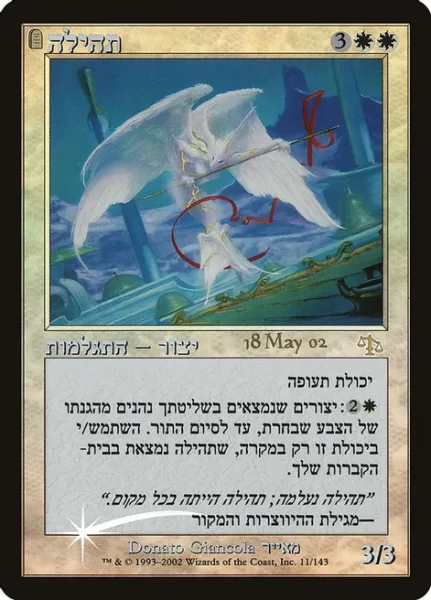
I am a prerelease card that dates back to Judgement’s release over twenty years ago. There’s nothing spectacular about my card: I’m a 3/3 flying creature for 3WW with an extra ability to help protect your creatures. My first-ever reprint is about to launch with Dominaria Remastered, but you can find copies of me for just a couple of bucks.

Of course, the unique prerelease version of me is worth well over $20. Why is that? It’s because I am the only card ever to be printed in the Hebrew language! Granted, the translators didn’t exactly get my text box correctly, but it’s still a worthwhile endeavor.

What am I? #3

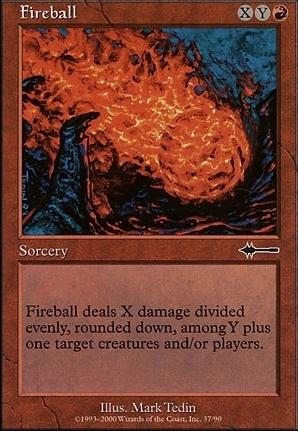
A staple from the early days of Magic, you’d often find me in young players’ burn decks. The ability to do any amount of damage to a creature or player was a very strong card back then, but I had an additional ability that made me even more powerful. If you paid the right amount of mana, you could do damage to not just one target, but any number of targets.

The problem was, the way my card was printed made it feel like you needed to have completed Algebra II in high school in order to calculate the appropriate mana cost for my card to do the amount of damage you intended to each target. As a result, my text box could be fairly daunting for what could have been a simple effect.

At one point, Wizards of the Coast tried printing me with an alternate mana cost in order to correct the situation. I’m sure this violated all sorts of technical rules around mana values, but the idea was creative and novel at the time. Nowadays you’ll never see my casting cost outside of a silver-bordered set. In fact, I’m the only non-silver bordered card to have not just an X in my casting cost, but also a Y.

What am I? #4

There are many ways to change basic land types from one to another in Magic. You can do it with enchantment auras like Phantasmal Terrain, enchantments like Celestial Dawn, creatures like Dream Thrush, instants like Jinx, and even lands like Unstable Frontier.

I am none of those, however. Instead, I’m an artifact. Yes, there are multiple artifacts that can change land types as I do, but I focus on swamps in particular. You’ll find me on the Reserved List, and therefore will only be able to buy copies of me from Alpha, Beta, or Unlimited. The first printing in Alpha was the most unique and special printing of all.

You see, my Alpha version was printed without its mana cost, baffling all new players simultaneously. It’s probably one of the most incorrectly played cards of its time.

What am I? #5

I am another Reserved List card, this time a creature from The Dark. There’s nothing too spectacular about my abilities—I have trample, but not much else. To determine my power and toughness, you need to count up how many white creatures your opponent controls and how many are in their graveyard. At that point, you’ll pay an amount of life, and then have to keep track as that becomes my base power and toughness.

Ok, so maybe that already makes me fairly special. That’s not even the best part. You see, I’m so special, that in a way I am not special at all. Thanks to Magic errata, I currently have no creature type! I’m just a plain old creature, though as printed my creature type was technically the same as my name.

Some Quick Finance Discussion On These Cards

Each of the above cards has some unique characteristics that (I think) make them interesting. It’s unlikely Wizards reprints any of them in their unique form, and two of the five cards will never be reprinted for tournament play thanks to the Reserved List. As such, they may all be worth picking up as long-term investments.

I wouldn’t go super deep on Beatdown copies of Fireball, mind you. It’s a common from a box set. While inventory wouldn’t be particularly deep I think you’ll have trouble finding many people out there who appreciate its novel casting cost. That said, maybe next time you’re placing an order, it’s worth grabbing a copy of this to show off to your friends.

Nameless Race and Arabian Nights' Aladdin's Lamp have not been immune to the ongoing selloff taking place throughout the collectible landscape. Their prices have come down significantly from their highs earlier this year. I wouldn’t catch a falling knife if I could avoid it, but the opportunity could arise to pick up these novelties at a good price if you’re patient.

If nothing else, their presence in the non-existent Magic: the Gathering Record Book makes them interesting pieces of history, if nothing else. I already have Fireball, Aladdin's Lamp, and Glory, and I intend to pick up a Nameless Race next time I  get some store credit. As for Alpha Cyclopean Tomb—I owned one of them years ago, but it’s a bit steep for my liking nowadays. I’ll need to see its price retreat much further before I am tempted to pick up the card again.

Wrapping It Up

I hope you enjoyed this foray into Magic’s more niche and bizarre past. How did you do playing my trivia game? Were you able to guess them all before seeing the answers? Was one particularly tricky? I suspect that many newer players will have a difficult time guessing any of these, whereas players who have been around since the 1990s (as I have) will have a better chance at answering these correctly.

Either way, I hope it gave you a bit of entertainment while we navigate the polar vortex outside. At least in the Midwest, it’ll be the first White Christmas / White Chanukah that I can remember in a long time. I guess that counts for something.

Why BRO Limited Is a Sixteen Land Format

Are you a Quiet Speculation member?

If not, now is a perfect time to join up! Our powerful tools, breaking-news analysis, and exclusive Discord channel will make sure you stay up to date and ahead of the curve.

Seventeen lands is the default in Limited. It's how helpful veterans inform new drafters to construct their decks. This practice has become so standard that the most commonly used Limited database is literally named after it. However, in The Brothers' War (BRO), we should be playing fewer. Here's why.

Needing Lands vs. Needing Colors

The first thing we think of when we discuss land count is our mana curve. It shouldn't be. The central concept we need to consider is the importance of hitting our colored sources. It's one of the reasons why mono-colored decks liberally cut lands. Seventeen lands, in a typical two-colored deck without fixing, represents nine sources of one color and eight of the other. We accepted this as reliable long ago. However, in a lot of our decks, that might be overkill.

BRO is an artifact-heavy set. The retro artifacts are all colorless, and many of them draw cards. Additionally, each color has access to unearth cards, which should be taken highly. These are powerful cards, but more pertinently, they don't require colored mana on the front side. The demand for colored sources is thus lessened.

This principle should inform the way we look to build our decks. We benefit from leaning in one direction when it comes to our early plays. While we can't always afford this luxury, or while power level may cause us to split our colors more evenly, there is a distinct advantage of consolidating requirements amongst our early plays.

Card Advantage vs. Cantrips

Decks that generate tons of card advantage typically want to run more lands. They can afford to draw more lands, because they're seeing more cards. Stumbling, followed by playing cards that don't affect the board, is a recipe for a quick 0-3.

Conversely, when your hand is always full, you want lands in play to enable all of the flexibility your hand offers. This is why the advantage in control mirrors often goes to the deck that doesn't miss a land drop.

BRO doesn't really generate card advantage in that nature. It does, however, offer many cantrips to help us develop our gameplan.

Can't Trip with Cantrips

These cards perform more like cantrips than raw card advantage, though a few do help us build out our board. Through cheap ways of drawing cards, we get to see more of our deck. These cards aren't super potent as game pieces, but the fact that they replace themselves means they serve as a fraction of a land. For this same reason, players were able to get away with absurdly low land counts in Ikoria's Cycling decks.

Bitter Reunion is a card that does this exceptionally well, and something we should be including in most of our red decks. If we're moving through our deck and progressing our gameplan in a high-tempo format, we can't afford to flood.

Air-Tight Designs

Streets of New Capenna (SNC) Limited punished players for stumbling more than any format since. Like BRO, SNC was an aggressive format. In SNC, however, it was extremely easy to keep pushing your aggression. Connive, blitz, and cards like Inspiring Overseer kept the cards flowing effortlessly. In BRO, we have to work harder. Cutting a land can make that work easier, as long as we're building our decks correctly.

Thematically, BRO plays out a lot like the lore would imply. Games start with aggressive pressure, and players trading off resources to preserve their life total. Then the game turns to the engines. This might mean reusable activated abilities, unearthing for value and pressure, or maximizing synergies. However, if we run out of action, we're dead in the water.

We need to build our decks to thrive in this environment. That means ensuring we're keeping our mana curve under control, cantripping when possible, and providing ourselves room for error with unearth cards when we can get them. Since our cards don't provide a ton of raw card advantage, we don't need ten-plus lands in play. We can double-spell with lower-cost cards, and prototype gives us a ripcord to resolve our curve-toppers early as cheaper creatures, or later, off the back of powerstones. Hitting three lands in a row in the mid-game is a death sentence.

And, Finally, Alternative Mana Sources

The most obvious reason we can afford fewer lands is by including cards that act like lands. Powerstones are a unique element to this format. The closest comparison is treasures, but the two do very different things. Treasure made splashing easier, though it could provide a temporary burst in mana. Powerstones generate mana, but with their restrictions, they can be somewhat awkward to use. These artifact tokens help us with both halves of our unearth threats, to cast our most expensive spells in prototype creatures, and to use, and reuse, the format's many activated abilities.

Outside of powerstones, we have the one-mana all-star, Citanul Stalwart, who we should basically cut one land for per copy. Decks with multiple Stalwarts boast the lowest land counts in the format.

This is a sixteen-land format. When I'm looking at decklists, the first piece of advice I find myself giving is to cut the seventeenth land. That extra land is a disadvantage that we should try to avoid in drafting and in deck construction. This format wants lean decks. As competition heats up, small edges are the only edges we're likely to find.

Shine a Little Light

This week, I wanted to look at one of the cheapest answers in the format.

There was an error retrieving a chart for Disfigure

In some formats, this effect is just fine; here it is actively good. This format has meaningful plays at one mana, and having an answer for them that can be cast at mana parity is a big deal if we're looking to avoid falling behind. Citanul Stalwart and Goblin Blast-Runner are both really good in the decks that want them, and they're not the only potent one-drops in the format. Additionally, being able to trade off one spare mana with an opponent's entire turn two or three puts us far ahead in such a tempo-oriented format.

The first one we should always include, and the second is often pretty good as well. After that, we should leave this effect in the board, as it does have diminishing returns. However, leaning on Disfigure to preserve our more versatile removal goes a long way in a format that does have a good number of bombs. While I'm never first- or second-picking this card, it's still one I want in every black deck.

The Wrong Two Heads: When a Loss Is More Valuable Than a Win

Are you a Quiet Speculation member?

If not, now is a perfect time to join up! Our powerful tools, breaking-news analysis, and exclusive Discord channel will make sure you stay up to date and ahead of the curve.

A local venue just had their biggest Two-Headed Giant Commander event of the year, with two awesome Revised Plateaus as the grand prize. My partner and I had placed third, third and second in previous events. This time, we didn't just want the win for store credit; we needed the win for bragging rights... and dual lands!

The most interesting aspect of Two-Headed Giant Commander is the team element. Virtually every play is heavily contested with all four players involved. At levels of interaction like this, it's important to play the absolute lowest mana value spells. For that reason, let me present you the best Commander at the event, the one I somehow convinced myself not to play.

There was an error retrieving a chart for Rograkh, Son of Rohgahh

For zero, Rograkh allows you to play the Ikoria Commander free spells. Having both Deflecting Swat and Fierce Guardianship up turn one seemed very good. Not only that, but access to better mana rocks and acceleration from cards like Springleaf Drum, Paradise Mantle, and Infernal Plunge was attractive.

My thought was Rograkh, Son of Rohgahh and Ishai, Ojutai Dragonspeaker as partner commanders. My teammate wanted to play something stax-heavy like Grand Arbiter Augustin IV. Previously, we had one deck as an all-in combo, while the other sought to protect it. But with so much free counter magic and cheap stax effects, an all-in combo deck simply does not work. So we started brewing, building, and even play testing.

We Decided to Try Something Different...

Something something, best laid plans. I was trying to figure out how to make the decks co-exist and not get staxed out by our own plan. Blood Moon was well on my mind for multiple reasons. At the same time, my teammate was looking at shiny blue cards and wondering if those could be added. Slowly, both sets of ideas morphed into Baral, Chief of Compliance and Zur The Enchanter.

Certainly, we would have a ton of counter magic and could tutor for the ideal stax effect thanks to Zur and Enlightened Tutor. Zur had a more consistent wincon, utilizing Unspeakable Symbol to just kill someone. We were highly resistant to stax enchantments and artifacts from the white include. It seemed like the pros outweighed the cons. We were running Mental Misstep, Force of Will, Force of Negation, and Fierce Guardianship. Playtests went well versus a couple of different decks. The flexibility of Zur proved a major selling point because he simply could remove anything by attacking, and once we had board control, the game ended in short order without relying on a combo.

First Match

Our opponents? An ultra stax-heavy Urza, Lord High Artificer plus Derevi, Empyrial Tactician that had either beaten us or drawn with us in past events. We shut them down cold. Our plays were optimal; we hid behind a Standstill until they gave us three cards each and won the ensuing counter battle.

If the game didn't go to time, they would have died in two turns to Stasis and Zur, but we sandbagged hard and forced the draw.

Turns Out None of That Mattered (But Some Things Did)

From there it was out of our hands, literally. Our opponents in game two resolved a Windfall but I had a Narset, Parter of Veils on the table already and they knew it, so, yeah, that was a huge misplay. They discarded their hands and we drew six cards. Freebie.

In match three, we were plagued by bad draws. We had to mulligan twice and kept hands with six mediocre cards. Should we have mulled to five each instead of keeping a playable, but not ideal, six? The answer is yes, absolutely.

We never had a turn one Sol Ring in any game, but in each round, at least one of our opponents had faster mana. My partner kept a two-land hand full of interaction but never drew a third land. At the time keeping a modest six seemed fine, but it ultimately proved a bad decision.

In retrospect, without at least two forms of interaction every turn for the first three turns, a team was dead in the water, and this match also showed that Angel's Grace was a completely live card we just didn't have in hand.

What a Competitive Meta Call Could Look Like

Of course the various Blasts like Red Elemental Blast and Blue Elemental Blast have been well-known, highly played cards throughout Magic's history. This tournament was proof positive. Incredibly enough, in a meta of Blasts, the absolutely garbage-tier 'Lace cards are live!

As older cards go, there are several sleepers that do something at the one mana mark. The following cards would have been extremely powerful this event.

None of these cards show on any EDREC top 100 list. Even so, they would all have been great at this event. This reinforces two general ideas I have about Magic. First, mana cost, not what a card does, is vastly important. Second, the strength of cards is relative to the meta; nothing exists in a vacuum. Historically "sub-optimal" cards like Spell Blast were popular against Black Lotus, but have fallen out of favor over time. Our meta call should have been ultra-focused on one- and zero-mana spells. Furthermore, we needed more creature hate, and less artifact and enchantment hate. Unfortunately, we zigged when we should have zagged.

Also, We Did Something for the Memes

Our match record was one, one, and one, so I cannot say my heart was entirely in it for match four. This turned out to be a big mistake because, there were so many draws that we actually would have made top four with a win. It's important to stay focused and high-energy.

Originally, my teammate wanted to include a lot of cards that were much more Timmy than Spike. While I was able to reel them in a bit, a couple of cards were non-negotiable. It was their goal to have an opening hand with Leyline of Anticipation and Jeweled Lotus so that they could flash in Baral and counter a spell on our opponents first turn. Well, we got two out of three!

Additional Thoughts

This venue has had a generous prize for the best-named team, and the team names are usually pretty funny. While it was a very competitive environment there was room to have a little fun. However, we might have built just a little too loose, and that is on us entirely. The ultimate winners had a 5-color good-stuff Najeela, The Blade-Blossom and a turbo Ad Nauseam with Silas Ren and Rograkh, Son of Rohgahh. They knew that free spells including Deadly Rollick were just too good to pass up, and had further help from Culling Ritual and Diabolic Intent.

While I was disappointed to not take home a Plateau, I did learn a lot, not only about the local metagame but also my own thought process both pre- and post-event. I'm already analyzing and re-optimizing, and am fairly certain that white is the answer here even though black offers some compelling cards. However, there is zero chance I'm not bringing the Kobold next time.

State of Modern: 2022 Edition

Are you a Quiet Speculation member?

If not, now is a perfect time to join up! Our powerful tools, breaking-news analysis, and exclusive Discord channel will make sure you stay up to date and ahead of the curve.

The end of the year is always a time for reflection, review, and rededication. It's why New Year's Resolutions are a thing. The world of Magic content creations is no different. So this year, as will now be a recurring tradition, I'll be reflecting on the state of Modern in 2022. Which has been... something.

The State of Modern Address

Assembled players of Modern, welcome. The State of Our Modern is... erm, complicated. There will always be those who dislike where the metagame is going. Magic players need something to complain about more than they need their next breath. Players being unhappy isn't a reason to condemn any metagame trend.

That said, the data shows that there are problems in the metagame, and they're not getting solved. This indicates an unhealthy Modern. However, there is other evidence that Modern in a good place and is quite healthy. Thus, I'm in a difficult position.

There was an error retrieving a chart for Murktide Regent

Definitions to the Rescue

As with most researchers trapped in contradictory data, I'm utilizing definitions to extricate myself. Specifically, the definition I created for this exact purpose over a year ago. To paraphrase myself, since everyone agrees that unhealthy metagames are stagnant, noncompetitive, and lack diversity, healthy ones are dynamic, competitive, and diverse. To get more specific on the criteria:

  • Dynamic: The metagame evolves and changes over time. The same decks in the same configuration don't win all the time with new counterstrategies arising to defeat the existing decks and in turn be answered. In other words, Modern should play like Magic, and not chess.
  • Competitive: Many decks should be able to win. There will always be decks that are definitively better than others, but they shouldn't be so dominant that others cannot win. Tier 2-3 decks should Top 8 and win events at reasonable rates.
  • Diverse: There should be many different decks, cards, and strategies represented in the metagame. There's no hard number for how many decks should be in the metagame. However, a metagame with 20 distinct decks representing the whole archetype spectrum is very healthy while a metagame of 20 different Delver of Secrets decks is unhealthy.

One criterion that always gets thrown around is Fun. We're playing a game and it should be fun. The problem with that is that fun is relative. Some players actually enjoy Lantern Control, after all. This is certainly a good talking point, but it's not a valid way to evaluate metagame health.

Evaluating Modern's Health

I've already tipped my hand, but Modern's in a complicated place. There are aspects of this format which are the pinnacle of health. There are other aspects which are decidedly unhealthy. It's not a matter of it being healthy according to one criterion versus another; there's bits of each that point in different directions. Hence, the answer to Modern's health is complex.

Modern's Dynamism

In terms of metagame dynamism, Modern is doing very well on the micro-scale but not as well as I'd like on the macro-scale. On the micro-scale (which is decklist level) decks have changed significantly over 2022. In March, the Murktide lists were effectively standardized, whereas today they're anything but, reflecting a need to evolve and grow as the deck became established. The same is true for Hammer Time. Many other decks have evolved as new cards entered the format, most notably Crashing Footfalls moving from a Temur tempo deck to a four-color control deck thanks to Leyline Binding. Thus, decklist dynamism is high, indicating health.

There was an error retrieving a chart for Crashing Footfalls

However, the maco-scale overall metagame is not so rosy. Comparing the metagame from the Lurrus of the Dream-Den ban to the Yorion, Sky Nomad ban shows that lots of decks rose and fell in position across online and paper play, which is quite dynamic. But throughout that period and continuing onto today, the metagame has been dominated by UR Murktide. Having one deck be better than every other is natural, however the degree to which that has been true this year is troubling and limits the ability of the overall metagame to grow and change. There's also the issue that the biggest changes have been ban driven rather than evolution driven. That's not inherently bad, but it's not great either.

There was an error retrieving a chart for Yorion, Sky Nomad

Therefore, Modern scores well in dynamism, but not as well as I'd prefer to see.

Modern's Competitiveness

This is the big stumbling block. As alluded to above and frequently mentioned in the metagame articles, Modern's top table have been far less competitive than in previous years. Both 2020 and 2021's metagame's had their own issues, but at least the top decks changed month to month and their metagame share was reasonably close. 2022 has been a year of outliers, particularly online. Online has a small playerbase and is more prone to follow-the-leader metagame moves, but the same thing was happening in paper. This Modern is very clearly dominated by Murktide and Hammer time and everything else is following in its wake. Rakdos Scam may be joining them, it's too early to tell.

There was an error retrieving a chart for Grief

On an event-by-event basis, the picture is technically but I'd say not actually better. Any deck can win any event. However, it has to do so pushing through seas of Murktide and Hammer, with 4-Color Omnath variants or Scam piling on depending on the month. The no deck has consistently overperformed for more than a couple months according to my data, but the top few decks in every month are so overrepresented that it leaves very little room for anything else to compete. There's also the issue that many of the top deck today are the same as they were at the end of 2021.

There was an error retrieving a chart for Colossus Hammer

Modern is a format where almost any deck can win. However, the ability for any deck to win is severely hampered by a small number of decks. Whether that counts as highly competitive or non-competitive is ambiguous.

Modern's Diversity

If I count diversity as number of playable decks and archetypes, Modern is quite healthy. The average number of unique decks in my metagame data (both paper and online) is around 65, with an average of around 20 making it to the tier list. There are pure aggro, combo, and control decks represented, with numerous sub-archetypes as well. Aggro-combo is a little more represented than others thanks to Hammer Time and the Underworld Breach decks, but overall, the metagame is quite diverse.

There was an error retrieving a chart for Ragavan, Nimble Pilferer

However, on a card level, things aren't great. True to our pre-Lurrus ban analysis of Modern pillars, there are more decks taking advantage of Ragavan, Nimble Pilferer than any other by a long shot, or between 27%-36% depending on source. In fact, the only nonland card that sees more play is Lightning Bolt. The next most popular build-around card is Urza's Saga at 22%-26% of decks. There's a lot of overlap between Ragavan and Saga decks, but the point is that Modern's deckbuilding choices are being squeezed by a small number of cards. That's not inherently bad, but it's not inherently good either.

There was an error retrieving a chart for Urza's Saga

Thus, I must again say that Modern diversity is good but not great. How good depends on the perspective employed.

The Issue of Fun

However, all the objective measurements and definitions in the world won't mean anything if players aren't having fun. Of course, see my opening statement that fun is completely subjective, and therefore I can't really use it as a measure of format health. There's nonetheless an important fun-related issue to bring up.

There was an error retrieving a chart for Lantern of Insight

In the course of writing these data articles I peruse a lot of Magic social media. It helps spark ideas for my own articles, but also fills in the blanks of many developments, trends, and deviations I see in the data. Numbers tell me what happened but not why. Only people know the why. In doing so, there's been heavy polarization surrounding opinions on Modern.

There was an error retrieving a chart for Omnath, Locus of Creation

In any year or metagame, there are those that love it and those that hate it. Guaranteed; no exceptions. Most opinions will fall somewhere near the middle. I haven't seen that this year. There have been a large number of players extolling this Modern metagame. There have also been a large, but not quite as large, number condemning this metagame as the worst ever. What there hasn't been is many in the middle. This is a polarizing Modern which players either really love or hate. And it all comes down to whether or not they're ok with the precedent set by Modern Horizons.

Play It Again

If that sounds familiar, thank you! That means you read last year's State of Modern article. This is the same objection that players had last year, and it won't be going away. As I said then, and maintain now, Modern is the most interactive it's ever been. That's something that players have whined about forever, and it's finally been fixed.

There was an error retrieving a chart for Bloodbraid Elf

It just took free spells to accomplish, which isn't what many of the aggrieved wanted. They meant everyone utilizing the 2018 Jund-style interaction best suited for fair-leaning formats, not the Legacy-style free interaction that can actually keep down increasingly powerful linear strategies.

I'm Unmoved

I'm not very sympathetic to this objection. The lesson from Pioneer is that adding more removal to a format doesn't make it more interactive, nor push it towards midrange-on-midrange gameplay. Tempo is king there because even with increasing numbers of playable removal spells, something can still sneak through and win.

It takes a lot more effort to interact with mana than threats, and so in formats where players have to pay mana for everything, the threat decks have the advantage. The evoke elementals have shifted the playing field in interaction's favor, and that's a good thing. It wasn't going to happen any other way.

There was an error retrieving a chart for Solitude

I'm also unmoved by the "rotating format" complaints. Modern has always been a rotating format by the definition of decks losing viability as new cards are printed. All anyone has to do to see this is look at the year-to-year metagame data on MTGTop8.com. The average lifespan of a deck is two years. For example, Eldrazi rose in 2016, was a strong deck in 2017, and by 2018 was falling from the metagame. The only exceptions are Burn and Mono-Green Tron. If you don't want to update your deck, play either of those decks. The Horizons sets didn't make Modern into a rotating format. They just made its status as one more obvious.

Salving the Wound

There's no putting the genie back in the bottle or snapping Pandora's Box shut again. Modern has, and I'd argue needs, the free spells from the Horizons sets, and Wizards will make more Horizons sets regardless of the objections. However, they could be made more palatable. I agree with the critics that Modern's cost has increased a lot over the past few years. All the critical spells from Horizons are mythic rares. This sold the sets, but it now means that cost is rising due to limited supply.

There was an error retrieving a chart for Fury

I therefore advocate for another Modern Masters set with a focus on Horizons staples. Horizons isn't going to go away, and Wizards cannot be dissuaded from making more (I blame Hasbro), but it could be made cheaper and therefore more palatable.

Modern's Complicated

Modern is neither especially healthy nor unhealthy. The factors pointing in one direction vs another effectively offset and it becomes a matter of perspective how to evaluate them. From my perspective, Modern is on the healthier side of the spectrum, but there are problems in the metagame. It isn't exactly pressing to deal with the issues, but at some point there will need to be action taken unless there's a dramatic metagame shift. I'll be explaining how next week.

On Bundles and Fat Packs

Are you a Quiet Speculation member?

If not, now is a perfect time to join up! Our powerful tools, breaking-news analysis, and exclusive Discord channel will make sure you stay up to date and ahead of the curve.

I’ve been very overt lately about my newfound Magic finance strategy: sealed product. After moving on from a large portion of my Vintage and Old School collection, sealed product, such as booster boxes, was one asset type in Magic that still gave me that small bit of excitement when it arrived at my home. Holding a booster box of Visions, Magic’s newest expansion when I first started playing back in 1997, was a cherished moment of nostalgia I’m glad I could experience again in 2022.

Taking a step back, though, I realize that booster boxes aren’t the only sealed product investment vehicle worth tracking. A recent Card Kingdom sale on Aether Revolt bundles got me thinking about the fat pack (more recently, bundle) product. Could these be even better investments than booster boxes? What are the pros and cons of bundles?

Bundles and Fat Packs: A Brief History

The original fat pack (sometimes referred to as “phat pack” because the 1990s were awesome) was released as an alternate way to market Mercadian Masques product. The bundle itself included a starter deck, three booster packs, two premium cards, a player’s guide,  and my personal favorite, the Mercadian Masques novel.

That’s a whole lot of value for $24.99! Of course, if you want to purchase one of these original fat packs now, you’re looking at a much higher price point—more on that later.

Since their introduction, fat packs and bundles have gone through numerous iterations and evolutions over the years. Different variations have included other numbers of booster packs, novels, player’s guides, deck boxes, land packs, premium cards, spindown dice, and more. Each product is designed to give a player a nice immersive experience into a set without demanding the steep price point of an entire booster box.

In all honesty, fat packs and bundles are my favorite ways to enjoy the paper version of a new set because it strikes the perfect balance of product variety, number of booster packs, and price point. I have acquired a few different Magic novels over the course of the game’s history through these fat packs—I figured if I wanted to buy the book anyway, and those were $7.99 or something, then I’d get a significant discount on the booster packs as a result.

Interestingly, the novels have held their prices fairly well over the years, some even appreciating a little bit. I could do a whole separate article on Magic novels, however, so I’ll save that for another time.

Some Price Trends

Like booster boxes, fat packs and bundles tend to appreciate in price over time. I’ve seen various postings on the sealed product Facebook group where people showcase (or sell) their collection of fat packs and bundles.

They make for impressive display pieces. Of course, I would never crack open an old fat pack—the EV is going to be absolutely abysmal. These are strictly display and collector pieces now. Even if you wanted product to draft, you’d be better off purchasing a booster box or loose packs.

Why do I make this claim? Simply put, these old fat packs are worth more than the $24.95 their MSRP label advertises! Take a look at the asking prices for the FB sales post I pulled this image from. Keep in mind this post is a year old, so prices have likely climbed since then.

Talk about expensive! Hopefully, by now you see my point about the purpose of these sealed products. Quickly glancing at the numbers, it appears these fat packs are worth about 1/3 the cost of the corresponding set’s booster box prices. I’m not sure why that ratio is where things settled, but that’s a reasonable rule of thumb.

The exception would be Zendikar fat packs, which retail for close to $1000. I guessed it was because of the sealed pack of full-art basic lands that are included. A friend on Facebook messaged me, however, and reminded me that OG Zendikar fat packs included booster packs from the set's first print run. This means they qualify for the hidden treasures program that Wizards of the Coast implemented in this set. I suppose a chance at opening a Black Lotus is enough reason for the higher price point!

A New Investment Idea?

The numbers are quite compelling for older fat packs—clearly purchasing these at $24.95 (MSRP) 20 years ago would have yielded a hefty profit. Can we rely on this trend to continue going forward, however?

To answer this, I’m going to look at some of the more recent, less expensive fat packs and bundles to see what pricing trends look like. To start, I browsed Card Kingdom’s inventory of the cheapest fat packs—note that fat packs converted into bundles starting with Kaladesh, so by searching Card Kingdom for “fat pack” I’m essentially browsing all products that were released prior to Kaladesh.

What do you think the cheapest ones are? If you guessed Magic Origins, Born of the Gods and Dragon’s Maze, you’d be right! These still retail for just $39.99, not much above MSRP.

Is this proof that these are now horrible investments? Definitely not! It’s no secret that these three sets are some of the worst in Magic’s history, at least from an EV and investment standpoint. You can still get booster boxes of these sets for under $150, even after many years since their release. These products were disappointments by my account, so it’s no surprise there’s little demand for their corresponding sealed products.

To get a better snapshot of what returns look like on newer fat packs, we need to change our Card Kingdom search to “bundle” to browse those released since Kaladesh.

Are there still inexpensive bundles? Of course—all the more recent bundles from 2021-2022 are relatively cheap. However, there are some that are just a couple of years old that have doubled in price since their initial release.

Take Ikoria, for example. Booster boxes of this set can still be found for around $115, yet the TCGplayer market price for an Ikoria bundle is over $70! You don’t even get one-third of a booster box worth of packs in a bundle, yet they cost over half the price of a booster box. Rivals of Ixalan bundles are at a similar price point, around $75. Booster boxes of the set are about double that, nearly $150.

The same trend is found for sets like Throne of Eldraine, Kaldheim, and Guilds of Ravnica. It seems that bundle prices for sets that were released just a couple of years prior tend to appreciate fairly consistently, especially if you consider bundles from Standard-legal sets can often be found at a discount on TCGplayer—Streets of New Capenna bundles can be had for as low as $25! That can make for a particularly attractive entry point.

Before You Dive In


Is this it? The perfect Magic investment?

Whoa, hold your horses! There are some important drawbacks to investing in bundles that I need to touch on before letting you decide for yourself if there should be a collection of bundles and fat packs in your Magic collection.

First and foremost, there’s the timeline and opportunity cost. Investing in sealed product is akin to investing in savings bonds. They’re not likely to lose much value in the long run (though it’s not impossible), but they also don’t offer the flashiest of returns. Seeing a Mercadian Masques fat pack appreciate from $25 to $500 in 23 years appears exciting, but I don’t foresee a similar return for a bundle purchased today. There’s too much premium in the originality and lower print run of the older sets to expect comparable returns in 2022 and beyond.

You very well may end up buying 10 Streets of New Capenna bundles for $25 each, only to sell them for $50 each 5 years from now—hardly an impressive return, especially when you take into consideration shipping and handling costs. These bundles aren’t the most economical to send around the country after all, and a $15 priority mail shipping bill can really eat into profit margins.

To make it worthwhile, you really need to see your bundle appreciate at least $40 or so in price. For example, if you had purchased a Throne of Eldraine bundle for $30 a few years ago and could now sell for $70, I’d say that’s worth it. Even after shipping and some fees, you’d probably net a solid $20 profit—multiply that by ten, and you have an endeavor worth thinking about.

What if you end up accidentally buying a bunch of bundles from a set like Dragon’s Maze, and there’s virtually no appreciation over a few years? I guess you need to cut your losses, or else crack them open for some nostalgia on a rainy day. There is a risk that this may happen, but if your entry point is low enough then at least you won’t feel so awful if you have to go this route.

At least you have a beautiful display piece (assuming you have room on your shelves) in the meantime. Bundles look great lined up on a shelf, and also make for great gifts in a pinch (image from another collector on Facebook).

Even if you don’t break the bank investing in these, it’s hard to come up with a 100% losing scenario when buying a bunch to sit on. Just don’t waste your time with Dragon’s Maze.

Wrapping It Up

If I’m in the market for a few booster packs of the latest set, I still consider bundles as a fun option. It’s a nice combination of booster packs, a quality box, a spindown die, and other goodies to justify the price point.

When it comes to investments, however, bundles demand a good bit more research and scrutiny. While historical “phat packs” have performed very well financially, that doesn’t guarantee modern-day bundles to offer the same stellar returns. That said, some more recent releases seem to have already doubled in value after just a few years. Clearly, there is something to this strategy that merits consideration.

It may just boil down to picking the right sets to purchase and finding the right entry point. This can be tricky since we don’t always know what sets will do well a couple of years after their release. My best advice here would be to diversify. If you want to pursue bundles as an investment strategy going forward, then make sure you time your purchases well to take advantage of markdowns and discounts. Often times a set’s bundles will be discounted 6-12 months after its release. Streets of New Capenna bundles are especially cheap right now.

Lastly, a word of advice would be to try and purchase a few at a time to save on shipping. When Card Kingdom marked Aether Revolt bundles down to $29.99 a couple of weeks ago, I knew I wanted to take advantage—these sell for nearly $50 on TCGplayer. However, buying just one would not be worthwhile because I’d be paying north of $40 after shipping. To bring my cost basis down, I purchased four. In hindsight, I probably should have gotten even more, but I didn’t want to go too deep on a single set out of fear I picked a stinker like Dragon’s Maze. It’s about balancing that risk and reward.

There was an error retrieving a chart for Voice of Resurgence

Perhaps that’s a good reason to consider bundles as a component of one’s Magic investment strategy. Simply put, it adds some diversification to your portfolio with low risk and a modest reward. You won’t make a fortune on these, I suspect, but there are definitely worse places to park some money for a few years—especially if you have some shelf space to spare!

To Catch a Falling Knife

Are you a Quiet Speculation member?

If not, now is a perfect time to join up! Our powerful tools, breaking-news analysis, and exclusive Discord channel will make sure you stay up to date and ahead of the curve.

All types of assets, not just Magic cards, are struggling to gain traction across the board. I’m observing this trend in the stock market and the collectible video game market—I have to assume the same goes for other collectible markets as well. As a Magic finance writer, of course, my primary focus is on the price of cards.

People aren’t willing to pay for such luxury goods given inflation, overall market uncertainty, and an array of other factors. This has led to some noteworthy weaknesses across the board. I'm suddenly reminded of the old Warren Buffett adage, “Be fearful when others are greedy, and greedy when others are fearful.”

The big question becomes, how do we know we’ve hit bottom? What if we buy at these discounted prices, only to see prices decrease even further? The classic “falling knife” conundrum comes into play.

The Falling Knife

For those unfamiliar with the expression, attempting to catch a falling knife is a term used commonly in the investing world to describe the practice of purchasing an asset that is rapidly decreasing in value. Often times these declining entities (such as stocks) can become attractive because their valuation had suddenly become much cheaper.

Like the literal interpretation of the expression, however, the proverbial “catching a falling knife” can also have devastating effects. You don’t risk physical harm, but you certainly risk harm to your net worth!

I tried Googling where the expression originated from (in the context of investing
surely, the first use of the phrase referred to food preparation in the kitchen for the literal interpretation). I found one citation in Reddit that dated back to 1919 in Harry Johnston’s The Gay-Dombeys: A Novel:

“I’m only infectious now as a political and social delinquent, and if you’ve much regard for your own welfare you oughtn’t to mix yourself up with my affairs
What’s the saying? ‘Never catch a falling knife or save a falling friend!”

The Gay-Dombeys: A Novel

Back to Magic

On the stock market, prices can move very rapidly, dropping significant percent in a given month, week, or even day. Take a look at once-darling Upstart Holdings Inc, a stock that went from near-$400 to $15 in just over a year.

It was easy to think that after dropping over 50% from $380 to well below $200, this stock was suddenly attractively valued. The falling knife would have cut you badly if you had bought it, as the stock still had yet another 80+% to drop from there!

Magic cards don’t typically move this drastically or this quickly. The exception is when an old/rare card is reprinted in a Standard set. Instead, the price chart of many collectible Magic cards looks more akin to a gradual, steady decline over a similar time period as Upstart Holding’s collapse.

There was an error retrieving a chart for Underground Sea

Check out the price chart above for Underground Sea, once the most desirable Dual Land of the cycle (since replaced by Volcanic Island). The best buy price on this card peaked at around $730 less than two years ago. Today that number is just $471. A 35% decline pales in comparison to a stock like Upstart, but this was supposed to be a blue chip card! It would be more apt to compare Underground Sea to a blue chip stock like Apple.

The fluctuations in Apple’s stock are larger than that of Underground Sea, but the net decline over the past year is more comparable.

If you want to see something more Upstart-like in Magic, you’ll have to turn towards an old Reserved List card with far less playability. Let’s check out the graph of Pixie Queen for comparison.

There was an error retrieving a chart for Pixie Queen

This is one of my favorite Legends cards—it’s neat to see a green flying faerie as I can’t imagine there are many (my search yields 12, not counting multicolored creatures). The classic Quinton Hoover artwork is also one of my all-time favorites. Perhaps others agreed at one point, and that’s why this card’s price soared to over $150 with a peak buylist of $120.

In any event, today the best buylist for Pixie Queen is a meager $38, a whopping 68% from its peak! Talk about a falling knife!

Other cards I’ve found with comparable price declines include some less-than-desirable Beta rares, Golgothian Sylex from Antiquities, and Singing Tree from Arabian Nights.

Is It Time to Play Catch?

If last year’s prices felt far too high, and you were priced out of some of these iconic, historical cards in Magic, you may start to get tempted by these pullbacks. Of course, the question becomes, “Is it time to catch the falling knife in Magic?”

I don’t have a crystal ball. I could make a bold statement and say “YES, now is the time to lock in lower prices and buy!” but I’d have no basis for such a claim outside of an arbitrary guess. I’m not going to try and apply technical analysis to the price charts of these Magic cards like people do for stocks, and pretend they have validity.

Rather than try to force some sort of hot take, I’ll follow a more pragmatic approach. If you want my advice (remember, I’m not a financial adviser and you should consult with a professional before making any investment decisions
 the usual disclaimer), I’d say there may be an opportunity here to begin cost averaging into cards.

In other words, it may be a good time to start buying a little bit if you do so gradually and strategically. If you have $1000 you want to put into Magic, don’t spend it all at once today. Maybe buy a couple of well-priced cards next time TCGplayer does a promotion, then bid on a couple more on eBay, and see what happens.

Some Ideas to Consider

ABUGames has a ton of played Old School cards at auction that keep dropping in price as they fail to sell. I’ve been watching these for months now, and I’m amazed by a) how cheap these cards are becoming prior to selling and b) how many Beta rares ABUGames has listed for sale at any given time. My current count is 444! I remember during the peak of valuations, ABUGames would not have more than just a couple for sale at a given time. Remember, these are their auctions only—they have more cards listed for sale with buy it now!

In case you’re wondering, I am putting my money where my mouth is. See that one bid on the Beta Web above? That’s me. I’ll buy pretty much any non-damaged Beta rare for under $50.

There was an error retrieving a chart for Web

It’s the first Beta card I’ve attempted to purchase since selling most of my collection in Las Vegas. Additionally, the last time I received a little Card Kingdom store credit, I actually used it to pick up some Old School cards rather than sealed product.

You can see above that this wasn’t a gigantic purchase. Little by little, that’s the name of the game here. When attempting to catch a falling knife, you must proceed with extreme caution.

 Why did I pick up these cards in particular? It’s a combination of factors, but there are three major ones to consider:

  1. Their price relative to TCGlow – ideally the gap between the two is minimal so I know I’m not overpaying relative to the open market. This also means that if I decide to flip the cards I just acquired, I can get as close to cash value as possible for my credit. In reality, as long as I can get at least 85% cash conversion from my store credit, I’ll be achieving a market rate.
  2. My personal interest in the cards. There are hundreds of Old School cards I could choose from. My general strategy right now is to leverage ABUGames auctions to acquire any Beta cards I’m interested in and then use Card Kingdom’s store credit to acquire cards from the Four Horsemen sets. Singing Tree has always been a favorite card of mine, but the last one I had I sold (for more than $118.99 I’m sure). Felt like a good chance to get a copy back again. Haunting Wind surprised me because its price has been quite resilient in this economy.
  3. Consider how much you want to spend before making a purchase. In the case above, Spiritual Sanctuary was admittedly a throw-in—I love the artwork, but I only had a little more store credit left so I found something to close that gap.

By sticking to these principles, I hope to cautiously and deliberately scale back into Magic little by little.

Wrapping It Up

By pursuing the strategy I detailed above, I am not guaranteeing myself anything. It is certainly possible prices tumble even further, and I get cut by the proverbial falling knife. By taking this gradually, though, I hope to minimize the damage while also taking advantage of the recent sell-off. I think prices will eventually bottom, so it stands to reason that picking up a few cards here or there could eventually yield profits.

In the meantime, we need to exercise extreme patience. When prices bottom and things turn around, it won’t happen overnight. We won’t wake up to a 20% gain in our Magic portfolios. There will be ample time to scale in and acquire cards at these attractive prices. Because of this, I urge you to resist the FOMO and avoid any impulse purchases. Since there is so much time to react, we can afford to wait, be picky, and choose our entry points with extreme care.

This is precisely what I’m doing and what I hope to continue as the New Year comes in. Mind you, I don’t plan on going very deep in Magic like I once was. However, when I see an opportunity present itself, I can’t ignore it! With any luck, I’ll have another modest collection to sell at a future Magic event a few years from now.

Want Prices?

Browse thousands of prices with the first and most comprehensive MTG Finance tool around.


Trader Tools lists both buylist and retail prices for every MTG card, going back a decade.

Quiet Speculation