menu

Insider: The Runaway CCG Hype Train

Are you a Quiet Speculation member?

If not, now is a perfect time to join up! Our powerful tools, breaking-news analysis, and exclusive Discord channel will make sure you stay up to date and ahead of the curve.

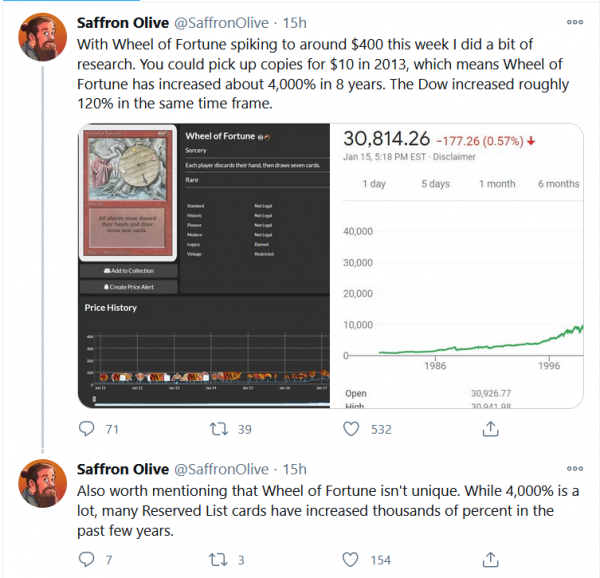
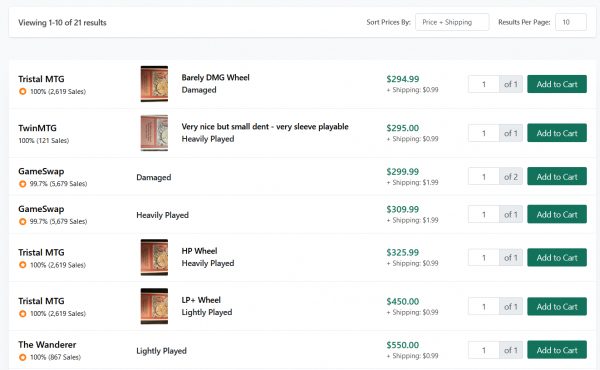
This is a sliding friction buffer stop that is used to slow down runaway trains safely without damaging the train, cargo, or passengers. It is an important safety device used on numerous railway systems around the world. You might ask what on earth that has to do with Magic: The Gathering finance. Today's article is going to dive into Collectible Card Game finance as a whole instead of only focusing on Magic. It seems that CCGs have suddenly caught fire in the investment world and prices of cards and boxes have skyrocketed in 2020. It is my belief that these massive price increases are a bubble and I would caution anyone looking to jump into that realm to give it a second thought.

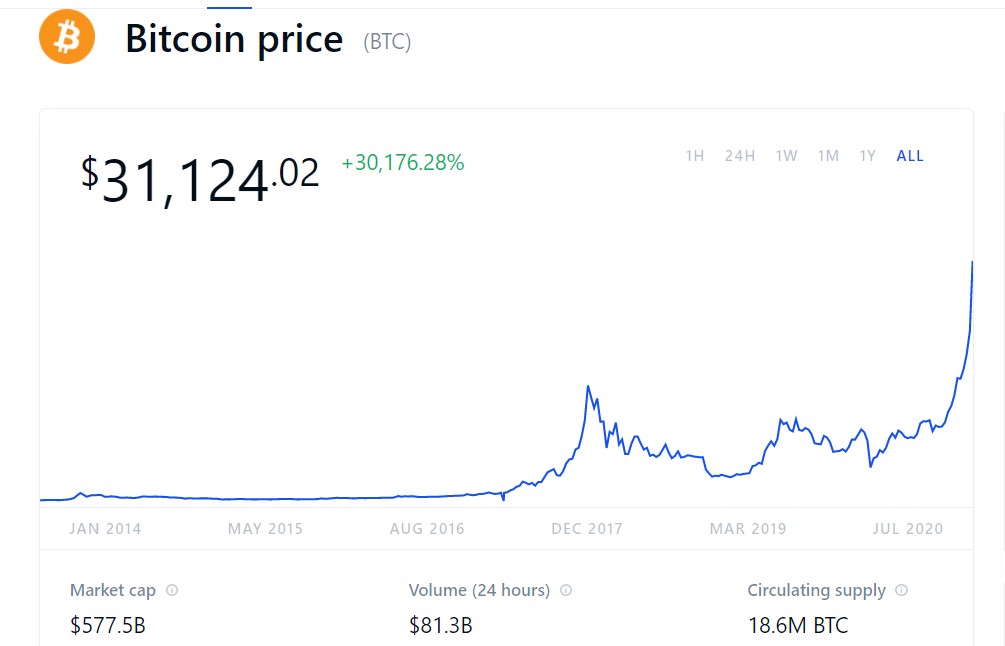
I felt the same way with Bitcoin back in 2017 when it spiked hard and then quickly plummeted back to less than 30% of the spike price. There was a lot of "FOMO" running around with investors who didn't understand Bitcoin and just didn't want to miss out on the next big thing. Once the hype cooled down, it quickly lost a lot of value. This is the same issue I see with many CCGs and TCGs right now.

Pokémon

Pokémon is actually very near and dear to me as I loved playing it back in 1999 when it first came out and it's the only other TCG that I really got into after Magic. I actually found my old Pokemon deck while clearing out some stuff this past holiday season and I have at least one card that appears to be highly valuable, 1st Edition Shadowless Holo Nidoking.

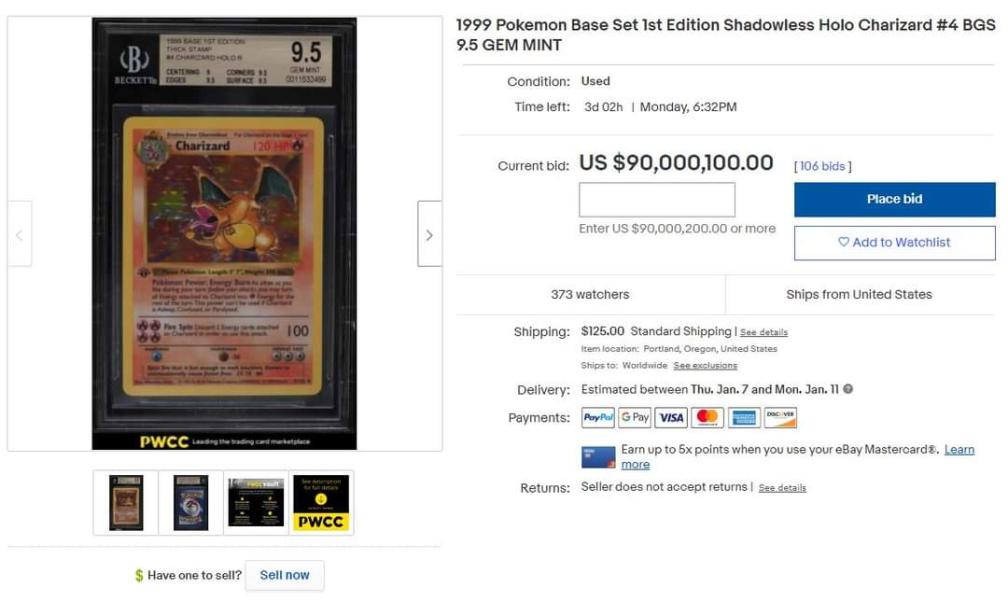
While Pokémon post-dated Magic by 6 years, its player base was a predominantly younger crowd that typically focused more on playing the game than collecting, as is such, finding the original cards in near mint condition is extremely difficult. Thus, it would make sense that the price for those copies could be hundreds of percent higher than played versions. Unfortunately, some of the highest-end cards, namely 1st Edition Shadowless Holo Charizard, almost assuredly have been price manipulated on eBay.

While this price is laughable and the bids were retracted, as one can't find that auction in the sold section anywhere on eBay. The point of these auctions is that they go viral and make people think the value of the card has risen dramatically.  Even major news outlets are picking up these stories. Sellers can then refer back to these types of auctions and convince people to pay way more for a "collectible" than the actual market price. While I won't delve anymore into this subject, there have been allegations of fraud and grade manipulation in the sports card realm which are relevant to the TCG realm.

Flesh and Blood

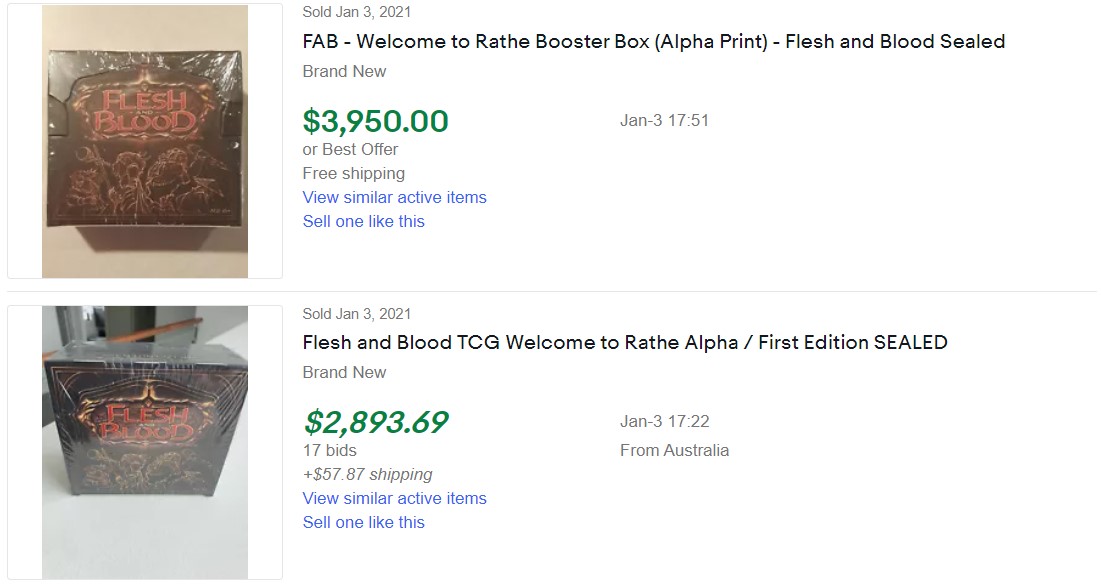
This TCG released October 11, 2019 so the game itself is only 15 months old as of me writing this. While print runs don't appear to be known, the fact that this came out shortly before the pandemic began likely means that its print run wasn't exceedingly high. Looking at recent eBay sales it appears that the Alpha print boxes are going for $3,000+ already. It took Magic: The Gathering's Alpha set 3 years before booster boxes were selling for $3000+ and in that time Magic had established itself as the top TCG.

I have not played Flesh and Blood so I can't give a first-hand count of how fun it is, but it seems like people look at old school Magic sealed boxes and assume that this game will follow the exact same trajectory. That is quite an assumption and one I certainly wouldn't make. I realize that these statements may ruffle some feathers and I feel it wise to give some additional context.

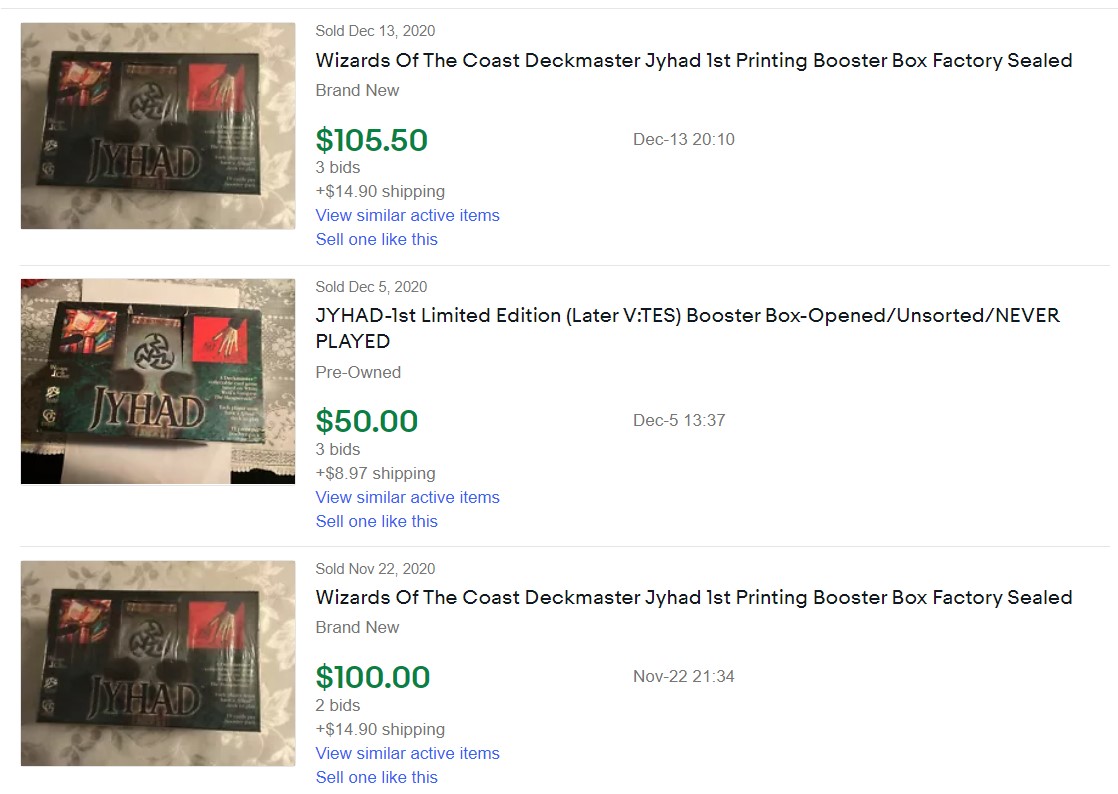
For those that don't know Jyhad (Vampire: The Eternal Struggle) was another CCG designed by Richard Garfield and was originally released back in 1994, 1 year after Magic. The name changed to Vampire the Eternal Struggle after the first printing. One would think that a game that was developed by Richard Garfield and released back in 1994 would certainly be more "investable" than a new game released in 2019, and yet sealed boxes go for only slightly more than in print standard boxes on eBay.

Why would a game that is 1 year younger than Magic and 5 years older than Pokémon still have sealed product available for around MSRP? The answer is that it simply didn't have the following that Magic did and thus it's price reflects that.

How about a game not designed by Richard Garfield, but with a massive fan base and is arguably one of the most valuable franchises in the history of media? Surely Decipher's original Star Wars CCG (released in 1995) must be obscenely valuable.

These boxes are selling for around twice the original MSRP, despite the fact that there is a dedicated player base who continues to develop cards and expansions for this game they love.

I would simply ask anyone looking to invest in any of these products:

  1. Does this game feel like it has strong staying power?
  2. Is this game more fun than Magic?
  3. How well do I understand this game and are the current prices accurate of demand or are they heavily inflated?
  4. Will the players feel nostalgic about this game in 5 years, 10 years, 20+ years?

It is also important to mention that unlike most other forms of investments; stocks, funds, etc; collectible card games are not regulated by any government entity in the US and I'm not aware of any such entities outside the US either. This means they can be manipulated with no risk of punitive measures and thus are more likely to be.

Conclusion

The purpose of this article isn't to completely discourage people from investing in TCGs or CCGs, but to make one pause to really think about such an investment. I use the same mindset when looking at any investments and I hope to encourage others to do the same.

Snow-Thing to Consider: Kaldheim Spoiler Week 1

Are you a Quiet Speculation member?

If not, now is a perfect time to join up! Our powerful tools, breaking-news analysis, and exclusive Discord channel will make sure you stay up to date and ahead of the curve.

It's time for that quarterly tradition of reviewing the latest spoilers! Which for the past few iterations has been oddly trepidatious. Prior to 2019, Modern never had to worry about a new set coming out. We maybe had one or two cards make lasting impressions, which kept the format stable. Then Wizards seemed to lose the plot. We've seen constant upheaval and disruption since Modern Horizons. And it had been getting tiresome. Which means that I entered this season wondering what fresh horror awaited.

However, the coast is clear. So far. It's always important to remember that Wizards works roughly two years ahead, so the lessons learned from the mistakes of 2019 are just now starting to apply. Though the full effect won't be felt until after 2022. As I'm writing this article, Kaldheim looks very benign. There are a few interesting role players and build-arounds, but no massive card advantage engines, inexplicable ramp, or endlessly recurring creatures. Good sign. As is tradition, I'll lead off by looking at the mechanics of Kaldheim and a card with brew potential.

A Light Flurry

Wizards has made it something of a habit over the past few years to have a number of returning mechanics as well as two new ones. This seems to be the standard for all these stand-alone sets; back when blocks were a thing, 3-4 were typical of a big set. Which means that I can just point back to what I've already said about most of the mechanics. However, this time around it's particularly bad, as there's only one new mechanic with any depth to discuss.

Boast

The first of the new mechanics, boast, probably won't see Modern play. Boast is a creature ability that lets said creature have a spell effect if the cost is paid. Which sounds like a normal activated ability, honestly, and I question making it a whole mechanic. The ability's hook (I guess) is that a creature can only boast if it attacked. And only once per turn. So, it's in every way worse than just an activated ability. However, those restrictions allow boast abilities to be more powerful than a normal activated ability. As we saw with the companions, sufficient power trumps any restrictions, so there is potential for boast.

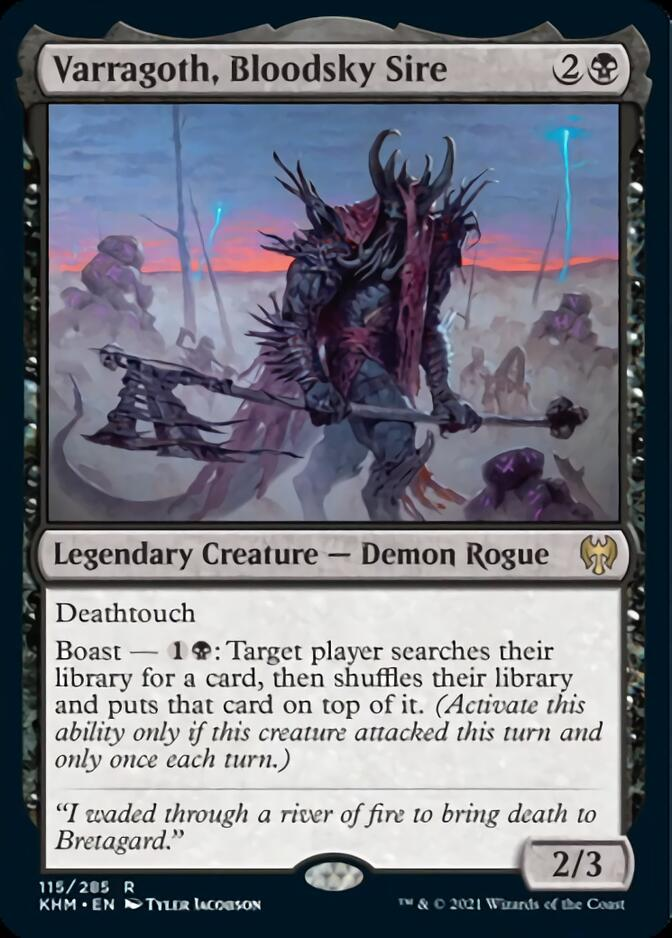
However, it appears that Wizards was extremely cautious with boast. As of writing, the only boast creature that's vaguely Modern playable is Varragoth, Bloodsky Sire, and that's pretty questionable. A 2/3 deathtouch for three is not Modern playable, and given the current metagame won't meaningfully trade up very often. The ability is very attractive, as Vampiric Tutor is a good card. Losing instant speed and costing double is burdensome, but Modern is so tutoring deficient that it could be worthwhile. However, that doesn't change the fact that Varragoth will probably play as a three mana removal spell that lets you pay another two to Vamp, which doesn't seem playable. There may be something coming down the pipe with boast, but I'm skeptical.

More MDFC's

I get the feeling that there's some internal dissension about getting rid of blocks, on the basis that Kaldheim and Strixhaven both have modal double-face cards just like Zendikar Rising. As they would if it was a block mechanic. Wizards has had a problem of Magic feeling disjoined and the sets being overcrowded since blocks went away, so maybe this is an attempt to fix the problem. Or subtly bring blocks design back, subverting the structure change. I'm keeping my eyes open.

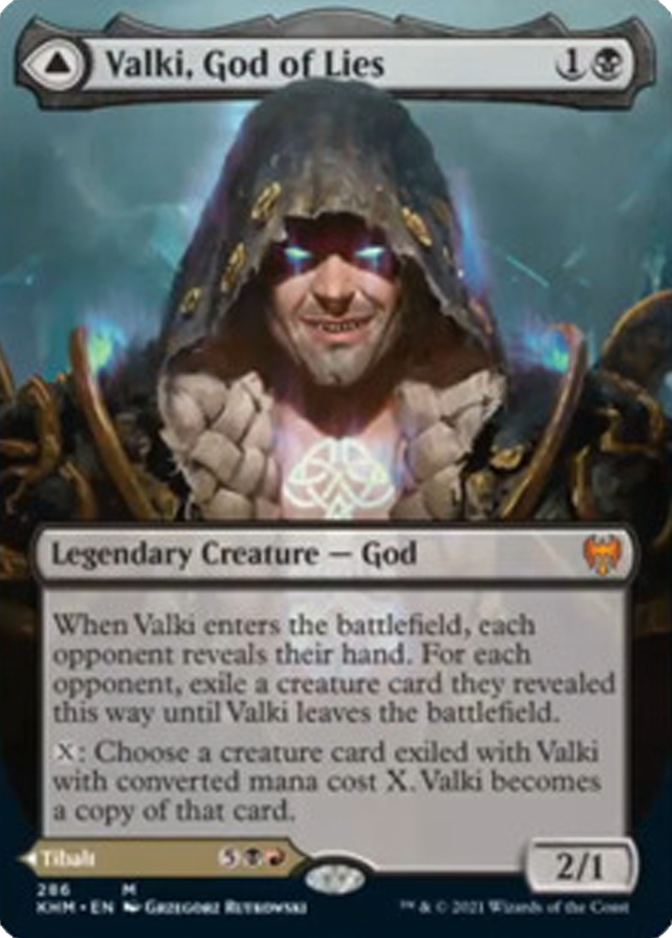
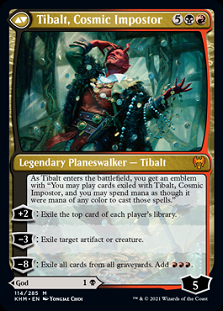
In any case, what was a big deal in the last set is now small potatoes. Zendikar Rising's MDFC's allowed Goblin Charbelcher and Oops, All Spells to become things in Modern. Kaldheim's are a choice between a creature and a non-land permanent (plus finishing the dual land cycle). None of which appear to be good enough at this point. Except for the fact that cascading into the front side allows the back face to be played, which means that Jund could play Bloodbraid Elf, cascade into Valki, God of Lies and choose to play Tibalt, Cosmic Imposter instead. Which seems really gimmicky to me. But might be okay?

Sagas and Changeling

Sagas and changeling are also returning, but neither are especially worth discussing. Changeling isn't good on its own, and no deck ever plays a card just because it's a changeling. Tribal synergies aren't enough, the abilities have to matter, which is why Unsettled Mariner sees play. Realmwalker has some potential, but is quite slow. As a result, it doesn't outright beat a Militia Bugler for Humans and Elves or Elementals don't need another card advantage creature. As for sagas, the only one I've ever seen get played in Modern is The Antiquities War, and only pre-Urza, Lord High Artificer. They're so slow that one's going to have to be very niche or just busted to see play.

It's Snowing Again

And finally, snow is getting back into Standard for the first time since Coldsnap. However, Modern's already been over the implications of snow (specifically, snow-covered lands) back in 2019. And it's worth remembering that since Arcum's Astrolabe was banned, the only non-land snow permanent that sees play is Ice-Fang Coatl. And that's been very limited lately. The bottom line is that there's no harm in playing snow-covered lands, but there's not any payoff either. At least now yet, only a small fraction of the set is spoiled and there could be a snow card (be it a permanent or an instant or sorcery) that justifies the snow theme.

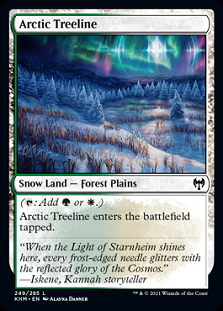
The only exception is the new snow duals. Coldsnap had ETB tapped snow lands, and Kaldheim takes those and makes them dual lands, and thereby fetchable. Which puts them in the same boat as the Ikoria triomes. However, unless there's some snow synergy to exploit, I don't see how any of the snow lands beat out a triome. Two colors are less than three and cycling is a phenomenal mechanic. As fetch targets for a slow two-color deck they're fine, but there are so many better options that I need to see more reason to play snow to bother.

I'm Seeing Potential

That leaves the only one mechanic: foretell. And this one has a lot of promise, so it gets its own section. Foretell is what might happen if morph and suspend had an ugly, yet very smart, baby. Cards with foretell are foretold by paying two generic mana and then exiling the card face-down. On another turn, that exiled spell can be cast for its foretell cost. Which is a weird in terms of sequencing and restrictions (hence the ugly). However, it's also a very elegant mechanic past that point. Just like morph, it's not a net cost reduction mechanic. The foretell cards spoiled so far cost the same or a mana more to foretell as they do to just cast. But foretell being spread out over turns makes it more like an investment mechanic and creates some interesting gameplay potential.

As I see it there are two uses for foretell:

  1. Hiding cards from discard
  2. Saving mana on a critical turn

The first option is admittedly pretty marginal. Discard spells cost one, foretell costs two. Opponents will get more cards from you than can be hidden with foretell. The best use there is simply sandbagging a critical spell for a few turns, which isn't nothing, but it's also not good.

Win the Big Turn

The second one is the most interesting, especially given the currently known foretell cards. Foretold cards can only be interacted with via Riftsweeper and the Eldrazi processors like Wasteland Strangler. Also, remember that they're cheaper to cast via foretell than from hand on the turn they're cast. Which in turn means that foretell can be used in attrition matchups, particularly control mirrors, to overwhelm opposing mana. Casting a cheap(er) payoff and then having mana for more or to defend it seems like a good strategy.

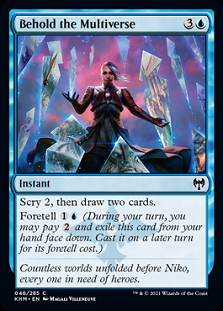
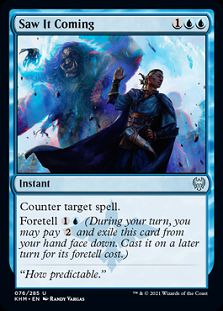
There are two foretell cards that may make this a reality. Behold the Multiverse is Glimmer of Genius but without energy, and I've seen Glimmer played in Modern before, though it was in a ponderous UW deck. At two mana, it suddenly becomes more attractive, especially when sneaking it in on an opponent's end step with counter backup. Not a backbreaking play, but good incremental advantage in a control mirror. Kaldheim also has the foretell counterspell Saw it Coming, which isn't good enough on its own, but a two-mana hard counter down the line is nothing to sneeze at. I'm seeing the potential of using Behold and Coming to out gradually build what's effectively a hand in exile and then wait to spring a trap.

Outside of this very specific application, neither card is really Modern playable. Unless that plan is needed a lot or there are other playable foretell cards, it seems too niche to see play. However, I also know That One Control Player whose eyes rolled back in his head when I mentioned this potential. I'm certain he's working on the problem and I'll fill all you in on his findings when he inevitably (and unwelcomely) gushes my ears off.

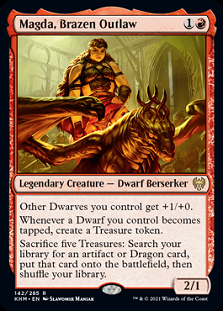
Magda, Brazen Outlaw

I am not a combo player. I have played many combo decks before, but I don't have the madness vision to conceive the like of Bubble Hulk or Neobrand. However, I've hung around enough of them to at least glimpse that world, and some parts have rubbed off. Which is why I've been fruitlessly pondering over Magda, Brazen Outlaw. When she was spoiled around Christmas as a teaser, I noted that she has a weird number of abilities, but little more. She's a 2/1 that buffs an uncompetitive tribe and can find a dragon. Clearly destined for commander and nothing else; time to move on.

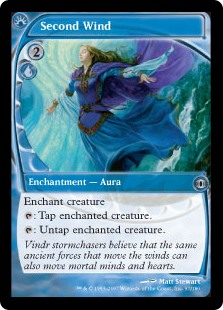
Except, I didn't move on. There was an itch in the back of my mind, and every time I tried to scratch it, Magda came up. But I didn't know why. There was nothing obviously Modern playable about her. Dwarfs don't see play and there are no good treasure makers to use her tutoring ability. But the thought that Magda was important wouldn't go away. Around New Years, I finally started wondering if she was actually an engine. Which made me reread the card and realize that she triggers on any dwarf being tapped, including her. In turn, I wondered if there was a way to untap her and go infinite. Which led to way too much time with Scryfall before discovering the legendarily bad card Second Wind would do the job. And I finally figured out what my subconscious was trying to tell me: Magda solves the Four Horseman problem.

The Soft-Ban Work Around

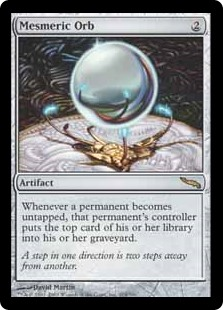
Four Horsemen is an unremarkable Legacy combo deck built around Basalt Monolith, which can tap and untap itself indefinitely, and Mesmeric Orb to mill the entire deck. The actual kill was to feed Narcomoeba into Blasting Station (which was previously Sharuum the Hegemon-ed into play after the latter had been Dread Returned) over and over while milling Emrakul, the Aeons Torn to reset the combo. It's complicated and easily disrupted, and so never saw much success.

However, Four Horsemen is a legendary deck because it is one of two decks to be soft-banned. The decks are legal to play, except technically they're not, because they violate the Tournament Rules. Specifically, Four Horsemen violates the slow play rules. The loop is infinitely repeatable, but not deterministic, as there's no way to know when Sharuum will be in the graveyard at the same time as Dread Return with three Nacromoebas in play. And loops that don't advance the board state are slow play, meaning that executing the combo is likely to accrue warnings and penalties, enough to get a player disqualified. For those wondering, the other deck is Battle of Wits. You can't shuffle that monster of a deck in compliance with the randomization rules. And even if you can, your opponent can't, and the judge won't. Nor should they have to.

Magda allows the same loop, but since she generates a treasure each time, she is technically in compliance with the slow play rules. Adding a treasure is advancing the board, albeit lamely. Which means that Four Horsemen can be played in Modern. And it's also easier, since Magda can just tutor up the Station without Sharuum.

Winning with Bad Cards

Except don't do that. Before I had finished writing up that decklist, I asked myself, why? Why bother with that whole rigmarole when Magda could just make infinite mana and tutor up a win? So I did that instead. Except, after another lengthy search, I found that the number of artifacts and dragons that win the game from the battlefield in one shot is very low. Walking Ballista doesn't work; it enters the battlefield as a 0/0. A shortlist consisted of Skarrgan Hellkite, Shivan Hellkite, Welder Automaton, and Goblin Cannon. All amazingly bad cards.

But that's okay, as the rest of the combo is pretty bad, too. None of you remembered that Second Wind existed until I mentioned it five paragraphs ago. The first ability does nothing, actual nothing. And Magda dies to every removal spell. And the win condition is Goblin Cannon. But then, it's a combo deck, and those routinely play terrible cards because the whole is greater than the sum of their parts. And since this combo happens turn three, that might be good enough. It's similar to Splinter Twin, but faster, after all.

But no, it's worse than Twin. I actually started working with it in a Kiki-Twin shell, using Cannon as the kill. And it was so much worse as a result. Magda plays a little better since at least she can attack and make a treasure, but she really throws that deck off. And unlike Twin, Wind does actual nothing without Magda. Don't follow my lead—this combo is terrible!

Urza by Another Name?

But I can't give it up. After failing so abysmally with a dedicated shell, I remembered that treasures are artifacts. And so is Cannon. And that Springleaf Drum could make Magda useful outside of combat. So why not try it in an artifact deck instead?

Magda Whirza, Test Deck

Creatures

2 Goblin Engineer
3 Magda, Brazen Outlaw
4 Urza, Lord High Artificer

Enchantments

2 Second Wind

Instants

2 Galvanic Blast
2 Metalic Rebuke
3 Whir of Invention

Artifacts

4 Witching Well
2 Chromatic Sphere
2 Nihil Spellbomb
1 Springleaf Drum
1 Pithing Needle
4 Thopter Foundry
3 Pentad Prism
2 Sword of the Meek
1 Ensnaring Bridge
1 Goblin Cannon

Lands

4 Island
3 Polluted Delta
3 Spire of Industry
2 Scalding Tarn
2 Darkslick Shores
1 Academy Ruins
1 Glimmervoid
1 Mountain
1 Swamp
1 Spirebluff Canal
1 Steam Vents
1 Watery Grave

To be clear, the deck is still bad. But not so much worse than normal Grixis Whirza as to be immediately rejected. Magda and Drum is just okay, but it's an option to accelerate out Urza and then keep benefitting from the treasures. The Magda combo can facilitate the thopter combo, and Urza can produce the mana for Cannon. However, it still feels wrong, like I have the parts don't fit quite right. I may be onto something here, but I don't know what nor how to fix it, so I'm asking for help. Are there any real combo players out there that can figure out how to make this good?

The Norsemen Come

Kaldheim spoilers have been trickling out for over a month, but the spoiler season has only just begun in earnest. Hopefully there will be a real reason to play snow in the set, but even if not, it's nice to not have an obviously disruptive new addition to worry about.

December ’20 Brew Report, Pt. 2: Loose Ends

Are you a Quiet Speculation member?

If not, now is a perfect time to join up! Our powerful tools, breaking-news analysis, and exclusive Discord channel will make sure you stay up to date and ahead of the curve.

It may well be January, but we're not out of the woods yet—2020 and I have some unfinished bidness to attend to, or specifically, the final brew report of the year! That players are still brewing novel decks bodes well for the new year, as such trends will probably continue.

Creatures Galore

Modern's always been a format defined first and foremost by its creatures, unlike the older formats better known for powerful spells. So of course new brews are going to tap that reservoir!

Death's Domain Zoo, FAISAL (5-0)

Creatures

4 Wild Nacatl
4 Death's Shadow
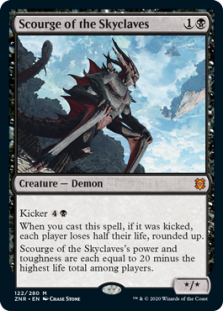
4 Scourge of the Skyclaves
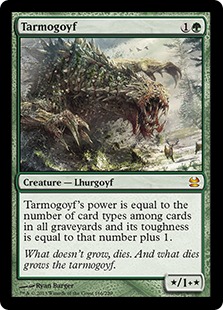
4 Tarmogoyf
4 Street Wraith

Planeswalkers

3 Wrenn and Six

Sorceries

2 Inquisition of Kozilek
4 Thoughtseize
4 Tribal Flames

Instants

4 Boros Charm
4 Lightning Bolt

Lands

1 Blood Crypt
3 Bloodstained Mire
1 Godless Shrine
1 Marsh Flats
1 Nurturing Peatland
1 Overgrown Tomb
1 Sacred Foundry
1 Stomping Ground
1 Swamp
1 Temple Garden
2 Verdant Catacombs
1 Watery Grave
2 Windswept Heath
2 Wooded Foothills

Sideboard

1 Boil
3 Cleansing Wildfire
1 Grafdigger's Cage
3 Lightning Helix
1 Nihil Spellbomb
2 Path to Exile
2 Pithing Needle
2 Rakdos Charm

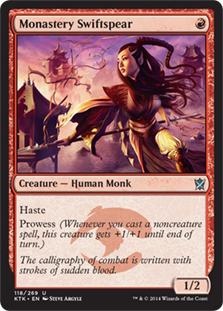
Death's Domain Zoo follows a blueprint now well-known: backing up a couple massive threats with a highly efficient Stage 1 combat creature. But a few things are different. For one, there's no Monastery Swiftspear, that role filled by the splash-intensive Wild Nacatl. I'm reminded of my experiments with Counter-Cat, which had me looking to Nacatl after finding Swiftspear decidedly lackluster in a shell more interested in sticking stand-alone threats. Next, there's the extreme density of large creatures; while Death's Shadow Jund traditionally employed just Goyf and Shadow as beaters, and Scourge Shadow hires Scourge and Shadow, DDZ runs all three to keep the pressure on no matter the number of removal spells it walks into. This is not a deck that wants to hit the mid-game!

Playing to that plan is the additional payoff for splashing so much: Tribal Flames. In Counter-Cat, I neglected to run black after realizing that Boros Charm, with its versatility in being able to protect our creatures, was generally better than Flames. Here, both are ran at max, and the extra burn saves pilots from even wanting countermagic. Go ahead and resolve that Ugin; I'll just dome you 9! Tying everything together is Wrenn and Six, a superb enabler in this kind of shell as it lets players fix their mana at their leisure.

Yorion Taxes, FABEE1 (5-0)

Creatures

4 Akoum Warrior
4 Akroma, Angel of Fury
2 Auriok Champion
4 Flickerwisp
4 Giver of Runes
3 Glimmerpoint Stag
4 Leonin Arbiter
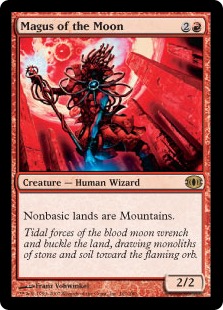
4 Magus of the Moon
4 Skyclave Apparition
4 Thalia, Guardian of Thraben
4 Wall of Omens

Artifacts

4 Aether Vial

Instants

4 Ephemerate
4 Path to Exile

Lands

4 Field of Ruin
4 Ghost Quarter
4 Inspiring Vantage
4 Sacred Foundry
1 Snow-Covered Mountain
10 Snow-Covered Plains

Sideboard

3 Archon of Emeria
3 Kor Firewalker
4 Phyrexian Revoker
4 Rest in Peace
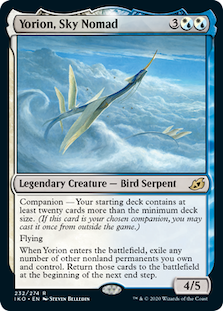
1 Yorion, Sky Nomad

If you thought 12 big threats was a lot, wait until you've seen Yorion Taxes! Like most Yorion decks, it's chock-full of guys, although these are less about beating down than applying disruption. Here, the fish-style taxing strategy of Death and Taxes is mashed with a creature suite more about generating value. Since these decks can flounder in the face of removal spells, and such midrange decks are on the rise as Jund Rock converts to Mardu, employing both value creatures and Yorion as a failsafe is a strategy that aims to stick it to the Fatal Pusher while nonetheless boasting game against combo.

To me, the deck seems a bit unfocused; I can see it drawing the wrong half against the wrong deck, and finding itself randomly soft to something like Storm or Belcher. Still, the red splash has got to dig up some points, as Magus of the Moon is no joke this format.

It does boast a very spicy interaction though: Akoum Warrior isn't just here as a sometimes-six-drop. Flickerwisp can blink the land and have it return as a creature!

Yorion Incarnation, DAVIUSMINIMUS (5-0)

Creatures

4 Birds of Paradise
1 Brain Maggot
1 Charming Prince
1 Deputy of Detention
1 Eidolon of Rhetoric
1 Flickerwisp
1 Glasspool Mimic
1 Goblin Cratermaker
1 Huntmaster of the Fells
2 Ice-Fang Coatl
1 Magus of the Moon
1 Meddling Mage
1 Niv-Mizzet Reborn
2 Renegade Rallier
1 Seasoned Pyromancer
2 Skyclave Apparition
1 Spellskite
1 Lurrus of the Dream-Den

Enchantments

4 Abundant Growth
4 Enigmatic Incarnation
3 Lithoform Blight
2 Oath of Kaya
2 Omen of the Forge
4 Omen of the Sea
4 Utopia Sprawl
2 Uro, Titan of Nature's Wrath
1 Yorion, Sky Nomad

Instants

1 Abrupt Decay
1 Assassin's Trophy

Lands

1 Breeding Pool
1 Indatha Triome
1 Ketria Triome
4 Misty Rainforest
1 Overgrown Tomb
4 Prismatic Vista
2 Snow-Covered Forest
1 Snow-Covered Island
1 Snow-Covered Mountain
1 Snow-Covered Plains
1 Snow-Covered Swamp
1 Stomping Ground
1 Temple Garden
4 Verdant Catacombs
4 Windswept Heath

Sideboard

1 Brain Maggot
1 Yorion, Sky Nomad
1 Auriok Champion
2 Dovin's Veto
1 Izzet Staticaster
1 Knight of Autumn
1 Kunoros, Hound of Athreos
4 On Thin Ice
2 Spell Pierce
1 Yixlid Jailer

A second Yorion deck, and the one that's been performing the best this month, is Yorion Incarnation. It looks at first glance like any old 5-0 deck, but as it's placed multiple times, the pile may merit a closer look.

It's Enigmatic Incarnation itself that makes this deck so unique, turning its many ramping enchantments (including the eyebrow-raising Lithoform Blight) into whatever utility creature happens to be the most useful at the time. Since players have already cashed in on their enchantment, which cantrips, throwing it away for a valuable creature is great advantage, especially since the creature in question can be chosen from an impressive roster. Incarnation isn't totally dead in multiples, either, since now it can search up a five-drop like Yorion or Niv-Mizzet.

Combos—Some More!

We've talked at length about how Uro, Titan of Nature's Wrath has come to define the present format, whether or not its numbers place it at the top of the heap. But there are other ways to generate value in Modern, and even other ways to play Simic.

Temur Time Warp, TALOS41 (5-0)

Creatures

4 Ice-Fang Coatl
4 Uro, Titan of Nature's Wrath
4 Arbor Elf

Planeswalkers

3 Jace, the Mind Sculptor
3 Tamiyo, Collector of Tales
3 Wrenn and Six

Enchantments

2 Abundant Growth
4 Utopia Sprawl

Sorceries

4 Time Warp

Instants

4 Lightning Bolt
4 Remand

Lands

1 Breeding Pool
4 Misty Rainforest
4 Prismatic Vista
3 Snow-Covered Forest
3 Snow-Covered Island
1 Snow-Covered Mountain
1 Steam Vents
1 Stomping Ground
3 Wooded Foothills

Sideboard

3 Aether Gust
3 Blood Moon
2 Flame Slash
2 Obstinate Baloth
3 Veil of Summer
2 Wilt

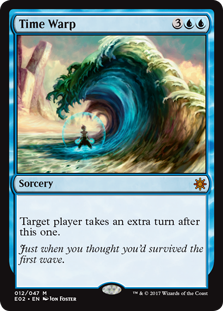
Here's a snowballing-value deck in the same vein as the regular Uro piles, but conspicuously lacking Omnath. Temur Time Warp instead makes use of Tamiyo, Collector of Tales to copy its own Time Warps, setting itself up to generate massive value over the course of multiple free turns wherein it's free to cast and activate different planeswalkers to its heart's content.

But at this deck's own heart is the assumption that in a midrange deck with Wrenn and Six to help hit them land drops, Time Warp might just be a reasonable card to cast for five mana some portion of the time.

Underworld Paradox, BILLSIVE (5-0)

Creatures

4 Emry, Lurker of the Loch
4 Gilded Goose
4 Kinnan, Bonder Prodigy

Planeswalkers

4 Karn, the Great Creator

Artifacts

2 Chromatic Sphere
4 Chromatic Star
3 Grinding Station
4 Mishra's Bauble
4 Mox Amber
3 Paradox Engine

Enchantments

4 Underworld Breach

Lands

2 Breeding Pool
1 Ketria Triome
4 Misty Rainforest
4 Scalding Tarn
1 Snow-Covered Forest
2 Snow-Covered Island
1 Snow-Covered Mountain
1 Steam Vents
1 Stomping Ground
3 Wooded Foothills

Sideboard

1 Grinding Station
1 Paradox Engine
1 Ensnaring Bridge
2 Lightning Bolt
1 Liquimetal Coating
2 Mystical Dispute
2 Nature's Claim
1 Tormod's Crypt
1 Torpor Orb
2 Veil of Summer
1 Walking Ballista

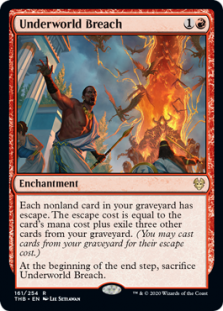
Underworld Paradox takes the word "combo" beyond merely copying a sorcery, and also proves players don't need Uro to be in UGx. This deck looks a lot like the Oko Urza decks from late 2019, but minus the emphasis on playing a fair game with the Artificer. Kinnan, Bonder Prodigy replaces Urza, jump-starting the mana engine so players can resolve Karn, the Great Creator to dig for a combo piece or otherwise go off with what they have.

There are even new variations of this deck in Sultai that do run Urza, as well as Uro, and rely on Thopter-Sword to out-grind players that manage to disrupt it. Based on these developments, will be interesting to see the different directions artifact-based combo-control piles elect to take in 2021 with Mox Opal gone for good.

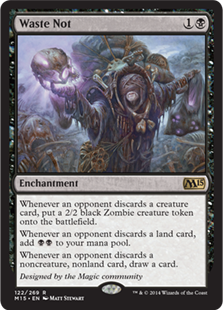
Rakdos Waste Not, TOYA (5-0)

Creatures

4 Dreadhorde Arcanist
2 Kroxa, Titan of Death's Hunger

Artifacts

4 Mishra's Bauble
1 Necrogen Spellbomb

Enchantments

4 Waste Not

Sorceries

4 Burning Inquiry
4 Inquisition of Kozilek
2 Raven's Crime
3 Thoughtseize

Instants

2 Cling to Dust
4 Fatal Push
2 Kolaghan's Command
3 Lightning Bolt

Lands

2 Arid Mesa
4 Blackcleave Cliffs
3 Blood Crypt
4 Bloodstained Mire
1 Castle Locthwain
2 Marsh Flats
2 Mountain
3 Swamp

Sideboard

1 Lurrus of the Dream-Den
2 Anger of the Gods
1 Crumble to Dust
1 Dreadbore
3 Feed the Swarm
2 Nihil Spellbomb
3 Pillage
2 Surgical Extraction

Combo-control, eh? Who needs Islands and Forests at all? Certainly not Rakdos Waste Not, an update to a fan favorite featuring welcome additions like Kroxa, Titan of Death's Hunger and the Dark Confidant upgrade Dreadhorde Arcanist. Drawing an extra card for life is a lot worse than flashing back your best one every turn, in this case Burning Inquiry or even a Thoughtseize.

Even if this deck shreds everyone's hand without the enchantment in play, it doesn't have to wait for a topdeck to take a lead; Lurrus of the Dream-Den, the sideboard companion, waits in the wings to retrieve whatever Burning Inquiry decides to discard. Alternatively, there's just Kroxa.

Cheers to That

New year, new decks, new fun. Or is it old fun? Modern's always had ample room for brewing and innovation. "The more things change," they say... let's all hope the saying only applies to some aspects of the new year!

Self-Reflection: How MTG Finance Ruined Magic

Are you a Quiet Speculation member?

If not, now is a perfect time to join up! Our powerful tools, breaking-news analysis, and exclusive Discord channel will make sure you stay up to date and ahead of the curve.

We are officially in the thick of Kaldheim spoiler season. Every day I see new cards from the upcoming set on Twitter. A few have looked interesting, but for the most part, I have to admit I’m distracted.

First of all, there’s the whole political situation in the United States. I’m going to try my very best to keep politics out of this article, but I do want my readers to know how upset I am about everything that happened last week. The news has monopolized my attention, and this is probably the major reason I’m behind on spoiler season.

The other distraction from spoiler season, outside politics, is the rampant asset appreciation seen across the board. After a brief cooldown, Magic cards are once again on the rise. Namely, I’m seeing numerous Discord and Facebook posts by folks looking to buy Power, Dual Lands, and Collectors’ Edition cards. These rises in price are also gripping my attention since I follow Magic prices very closely.

There was an error retrieving a chart for Underground Sea

Perhaps too closely.

In fact, I wonder if Magic prices have become such a focus for me, that it has detracted from the game itself? That’s what I want to reflect upon this week, as an off-beat article. Rather than go on and on again about how economic factors are driving card prices higher, I want to ponder about how Magic finance has shifted my approach to the hobby itself. It’s not all sunshine and roses.

My History in Magic

I can define my engagement with Magic by breaking my history in the game into a few distinct phases. The first phase was the longest, ranging from 1997 until 2006. During this time period, I was strictly a casual player engaging with the game purely for its entertainment. When I had spare funds I wanted to spend on Magic, I purchased booster packs (or the occasional eBay repack). That was my primary way of acquiring new cards.

I never read about the game online. I very rarely bought singles (outside of the cool card I saw and could afford at my LGS). I never looked up deck strategy. My friends and I played for fun, building decks that fit our whimsy, and innocently playing a game.

Then something changed in 2006. I had purchased a booster pack of cards and the rare inspired me to build a new kind of deck. I believe that card was Celestial Convergence, but my memory is admittedly fuzzy. Around that same period, I also remember opening an Overburden from a booster pack of Prophecy once and immediately buying three more to try and make a deck out of the card.

There was an error retrieving a chart for Overburden

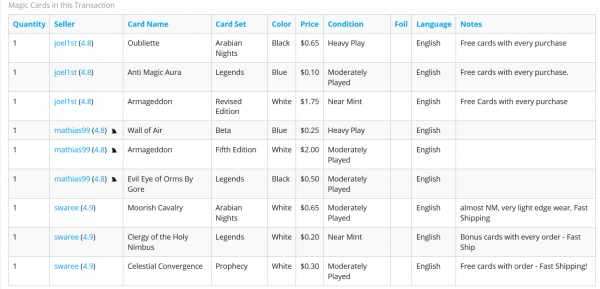
I delineate 2006 as the start of a new phase because that’s the first time I started purchasing singles online. Looking back at my Card Shark order history, I see that January 25th, 2006 marked the date of this momentous event. Here’s the order below (notice how I was into older cards even back then):

This event seems inconsequential on the surface; I didn’t really buy any cards of note, other than Armageddon and Oubliette. But this was the first time I realized I didn’t have to open boosters or shop at my LGS in order to obtain cards for a deck. I can order them (inexpensively) online and they arrive at my doorstep a week later.

From 2006 until 2011, I started elevating my game. I started engaging with Magic like never before, engaging with the website to learn about new sets, the story behind them, and most importantly, the decks that made waves in the game. I still wasn’t net-decking at this point, but I realized for just a few bucks I could make my brews more streamlined by filling it out with key deck pieces. This was the time period where I started playing competitively: I attended a couple PTQ’s and started drafting at a local game shop (side note: Time Spiral is a very difficult format to learn how to draft!). I had the most success with local Legacy events, and I took down a few tournaments with Storm, Reanimator, and a deck called “New Horizons”. (I miss the days when deck names told you absolutely nothing about the deck itself. Who remembers decks like Team America and Fruity Pebbles?)

There was an error retrieving a chart for Terravore

Towards the tail end of this range, I got to know a popular Magic personality at my local game shop: Jonathan Medina. Medina was a pioneer in MTG finance. I’ll always remember the first time I browsed through his trade binder and asked him how he acquired so many sweet, valuable cards. In my naivete, I asked him if he obtained all these $20 Standard rares by opening packs. He responded, “No. Through trades!”

Thus my foray into MTG finance began.

It didn’t really take form, however, until 2012. That’s the year my son was born, and it required I dial back my engagement with playing the game significantly. This was also around the time where Legacy was peaking and prices were reaching new highs. I noticed I could start converting Magic cards into real-life amounts of money (not just quarters and dollars; we’re talking $20 and $100 bills!).

This was when a circuit jumped in my brain—I flipped from being a player first to being an MTG finance person first. Playing became secondary to being able to make some money from Magic. It was precisely then when I lost my innocence. And it has been like this ever since.

The Impact of MTG Finance

When I started putting MTG finance first, I started making drastically different decisions involving how I engage with Magic. I no longer purchased booster packs, for starters. Such terrible EV, right? And on the rare occasions when I do open packs, it’s not because I want to explore a new world within the game. I’m not looking for new build-around cards to play with on my kitchen table. Instead, all I care about is whether or not I made a few bucks by opening a valuable rare. (spoiler: most of the time I don’t)

But the negative impact on my perception of Magic goes well beyond not opening booster packs. I completely lost my passion for playing the game. For example, participating in large events such as Grands Prix is terrible EV. From a money standpoint, it’s a complete waste of time to pay $100 to enter a tournament, play Magic all day, and have only a sliver’s chance of cashing out. I realized the most money-efficient way to engage with a Grand Prix is to use that time to sell cards to vendors, trade (less common nowadays), and shop dealer booths for underpriced cards.

The thrill and excitement I had playing in my first Grand Prix, a Legacy Grand Prix in Columbus (I went 6-2-1 and had a blast), became a thing of the past. Instead of tweaking decks and reading about metagames, I spent my pre-GP energy on researching card prices and mapping out what I hope to sell.

There was an error retrieving a chart for Stifle

Fast-forward a few years to the mid-to-late 2010’s. I still maintain decks to play with, but I purposefully neuter them when it makes financial sense to do so. I abandon Standard because it’s terrible EV to constantly have cards rotate out. I abandon Modern because Wizards keeps reprinting cards, crushing values. I abandon Legacy for the same reason (although there’s reason to keep the Reserved List stuff).

There was an error retrieving a chart for Rishadan Port

I maintain a couple Commander decks, but I can’t bring myself to put any cards of value in them because those cards could be converted into cash before Wizards reprints them. As a result, I start tweaking decks to make them fun, but my focus no longer is on winning the game. Winning consistently usually costs money—money I’d rather not spend on the hobby. At this point, I do almost nothing in Magic that may be cash-negative on the balance sheet.

Magic had become nothing more than a modest cash-generator. While this is how numerous vendors, re-sellers, and MTG financiers continuously engage in the hobby, for me personally this was a disappointment. I longed for the days when opening a pack was about getting cool new cards and not about trying to win $10 on a $4 scratch-off ticket.

Optimism For 2020 and Beyond

In the back half of the 2010s, I started exploring Old School as a way of re-engaging with Magic. In a way, the format is ideal for people like me—people who craved the “good old days” of innocent Magic while also keeping an eye on the financial implications of doing so. With Old School, I was able to play the old cards I always wanted as a kid but could never afford, brew to my heart’s content, and focus on having fun. In the meantime, I didn’t have to worry about reprints, rotation, or masters sets crushing my collection’s value.

For once I could have my cake and eat it too.

What’s more, another new development came for me in 2020: I discovered Magic Arena. With the advent of this platform, I can engage in competitive Magic at no financial cost. Previously, if I wanted to play competitive Magic I’d have to sink $100’s into Standard decks or drafts with a hope and a prayer that I could cash out at tournaments to subsidize the practice. Now I can scratch the itch of competitive play for free!

It’s not quite the same as the late 90’s or early 00’s, when my enjoyment of Magic was the least impacted by money. But given my current paradigm, Old School is the closest I have to that childhood mindset. Frankly, I’ll take whatever I can get.

There was an error retrieving a chart for Erhnam Djinn

Wrapping It Up

The concept of Magic finance nearly ruined the game for me. With 24 years of playing under my belt, I reflect on my history and realize how the financial aspect spoiled the most beloved part of the game. My childhood innocence was washed away, replaced with greed. There’s no other way to put it.

Now that Magic is in its fourth decade (90’s, 00’s, 10’s, and 20’s) I can use this perspective in an attempt to deliberately shift my attitude about the game. Rather than fixate on money, I have found alternate ways of engaging in the hobby without burning through cash. Old School Magic is one avenue, and Magic Arena is another.

I don’t think I could ever return to the olden days. Gone are the times when I could drive to my LGS, purchase a handful of packs, and use the new cards to brew up new deck ideas using whatever I had on hand. These days are behind me not only because of my focus on finance, but also because I lack the luxury of time—I can’t play new decks on a daily basis with friends like I once did.

But what I can do, is utilize what I have available to me to try and enjoy the game like I once did. In addition, I can strive to re-create my innocent enjoyment of Magic for my 8-year-old son, who is only recently getting into the game. I need to make sure I engage with him on the exciting parts of the game and deck building rather than its financial component. I admit I have not done a great job with this thus far, but hopefully I have time to reconcile with that innocence. Just because finance corrupted my view of the game doesn’t mean it needs to do that for my children.

In the end, I’d like to enter a fourth state of Magic. One of generativity, where I can help my kids and other newcomers to the game enjoy it for what it is: a game.

Insider: Business Year-End Review 2020

Are you a Quiet Speculation member?

If not, now is a perfect time to join up! Our powerful tools, breaking-news analysis, and exclusive Discord channel will make sure you stay up to date and ahead of the curve.

This year has been crazy, to say the least. COVID-19 completely turned the world upside down and the new normal isn't like any normal in recent history. There were a lot of negatives this year, but I know that many of us running MTG stores out of our homes have likely had a good year; especially those whose focus is on Commander. It certainly helps that even before the pandemic, WotC had already deemed 2020 to be the "Year of Commander", so we would have expected a lot of sales tied to the format.

Anyone who has read my previous articles related to my actual online storefront know, I like to keep pretty detailed records of my transactions. There is a reason that Google and Facebook are highly valuable and highly profitable companies and yet most consumers get their products for free. Data has a lot of value and hopefully, after reading this article, any of you who don't keep records or keep minimal records may want to adjust that strategy moving into 2021. Below is a screenshot of my sales datasheet which I fill out after every order;

For those who remember my "Optimizing Fulfillment" article it actually takes me a decent amount of time to fill this out, particularly the purchase price field as I often have to dig through my records to find that information. This step can add between 20 and 80 seconds to an order, which is a lot of time if you have a lot of sales in a day. Though it may not even seem worthwhile at the time, it pays dividends in the long run.

The whole reason I perform this task throughout the year is so that I can review the data at the end of the year. I should mention that I keep a similar datasheet for my expenses which has made finding the "purchase price" a whole lot easier.

Sales by Format

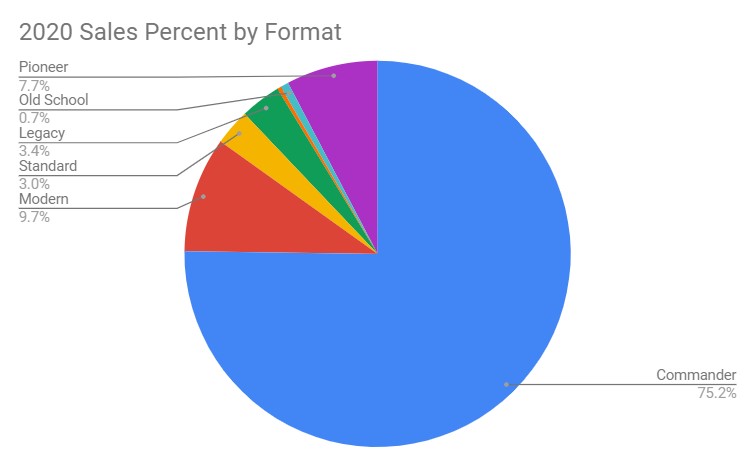
Here's my 'sales by format' pie chart. As you can see, Commander accounted for 75.2% of my overall sales this entire year compared to 2019, where it accounted for 44.9% which is a significant difference. What's more interesting is that the Pioneer format accounted for only 7.7% of my overall sales, despite the fact that last year it was introduced as a format in Q4 and managed to make up 11% of my overall yearly sales numbers.

However, given that paper events have been virtually non-existent all year, it makes sense that the majority of sales in 2020 are for a format that can be played casually at the kitchen table rather than at an LGS or major event. What isn't surprising is the minimal sales for Standard and Old School, as these are both formats I tend to avoid purchasing inventory for.

The reason I find this data so important is when I buy inventory. If you know what you've been selling, you'll have a better idea of what to keep buying. This seems obvious, but it's important to keep in mind that if you only list a certain format's staples, then you can create a feedback loop with this type of data. In 2019 I had almost 34% of my sales come from Modern demand, so I have a fair amount of Modern inventory that clearly isn't moving.

Sales Avenue

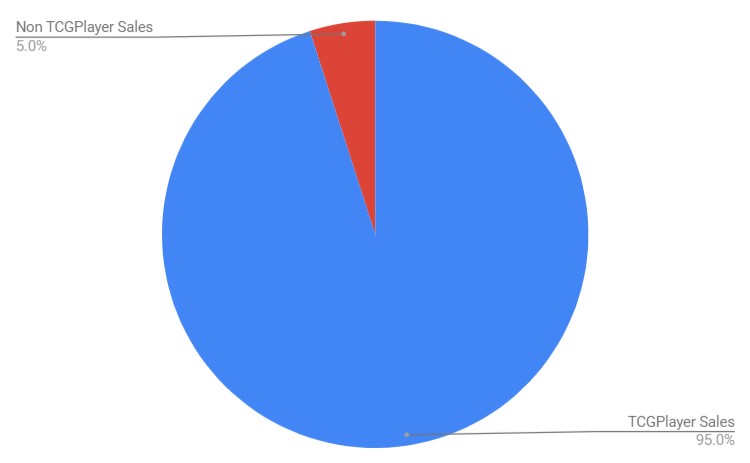
While the sales avenue isn't data I typically lean on for any meaningful interpretation, it does give me a good idea of where my sales are coming from. I should note that I haven't listed anything on Amazon or eBay this year, so my non-TCGplayer sales are almost always either Facebook or local sales. I will differentiate between the two for next year, but my latest chart shows me that I rely heavily on TCGplayer for most of my sales and it might be smart to diversify my sales venues.

Expenses

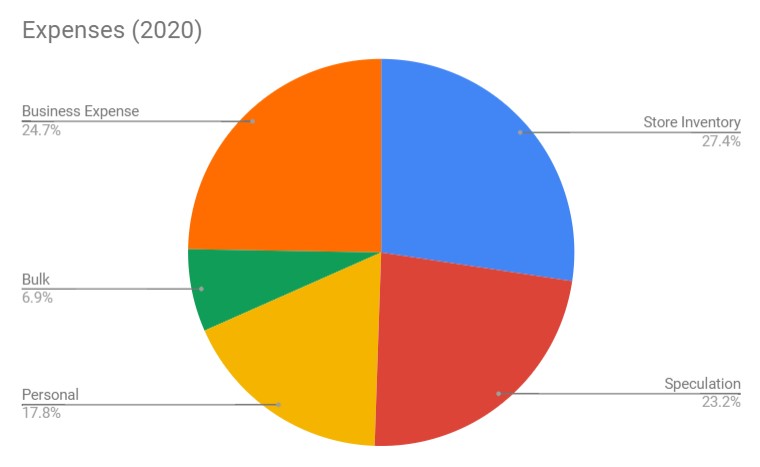
You can't have sales without expenses and I think it's equally as important to track your spending. I should mention that when it comes to expenses, I do have a "personal" category which is when I buy cards or boxes for my own personal use with no intention of selling the cards. Interestingly enough, my 2020 Personal expenses are actually up by around 5% compared to 2019. This isn't surprising, given the only format I really play anymore is Commander, and a lot of Commander cards came out this year.

My business expenses are up by 19% this year; I purchased a lot of stamps after some stellar sales months in April, May, and June and orders slowed down after June, so I have plenty of stamps for 2021. Lastly, my Store Inventory and Speculation are down by 17% and 7% respectfully. This makes sense as I have been focusing more on selling cards I had previously acquired and with WotC's drive to keep pumping out new products I have been far more hesitant to speculate on cards than in the past.

Yearly Sales Comparison

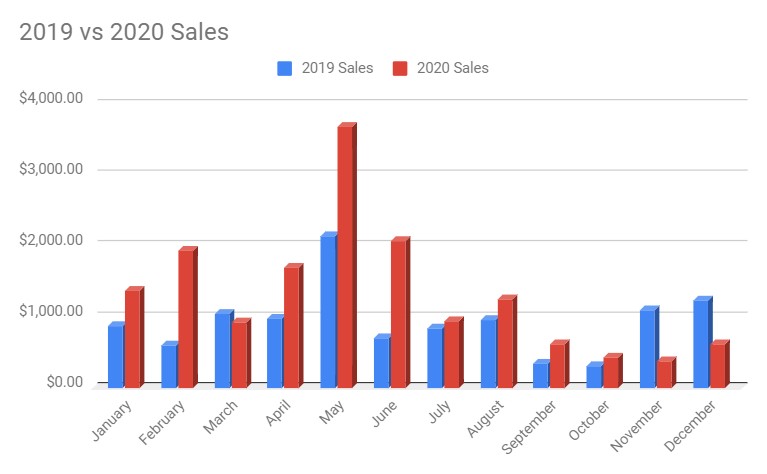
My last graph is a comparison bar chart between monthly sales in 2019 and 2020. Overall, 2020 had significantly higher sales volumes than 2019 for every month but November and December, which if you'll, recall Pioneer was announced October 21, 2019. I imagine many sellers like myself got a nice spike in sales going into the 2019 Holiday Season thanks to the new format.

It's also important to notice that May has repeatedly been my best sales month 2 years in a row. While only 2 years' worth of data isn't really a lot to go by, if this trend is accurate, it means I should make sure to buy more aggressively in April to make sure I have the most inventory available for May.

Conclusion

While 2020 has been a trying year for the whole world, it has been a good year for selling Magic cards. Hopefully reading over this and looking at my data, you get a picture of why it's important to track this type of information and get a better understanding of the value of the data itself.

So It Ends: December 2020 Metagame Update

Are you a Quiet Speculation member?

If not, now is a perfect time to join up! Our powerful tools, breaking-news analysis, and exclusive Discord channel will make sure you stay up to date and ahead of the curve.

And now, to formally close the books on a terrible year. Yes, it is in fact 2021; time did truly progress, and we're not trapped in a Doctor Who-style loop. However, a new month means a new metagame update, which means that I must remind everyone of the past year. Sorry!

The data set is significantly down for December. November was the largest set I've ever worked with at 681 decks, which would have been hard for any month to top. December didn't even try, yielding are only 558 decks. It's not the smallest total for a full month; August still holds that distinction. However, December also doesn't have August's excuse. Up until October, Wizards wasn't especially consistent about how many events were posted per week, while August and September had a lot of missing Preliminaries and Challenges. December's events were posted like clockwork and completely, as far as I know, but numbers were way down.

After the first week of December, I don't think a single Preliminary posted a 5-0 deck, and often only ~5 decks were listed. Which is not too surprising considering the holidays. Even the most dedicated streamers and grinders have to rest sometime, and I saw a lot of unusual decks crop up as a result. With the sharks away, the minnows will play. It does mean that December's data will be a bit weird.

December Metagame

To make the tier list, a given deck has to beat the overall average population for the month. The average is my estimate for how many results a given deck “should” produce on MTGO. To be a tiered deck requires being better than “good enough;” in December, the average population was 7.97, meaning a deck needed 8 results to beat the average and make Tier 3. Then, we go one standard deviation above average to set the limit of Tier 3 and cutoff to Tier 2. The STdev was 10.20, so that means Tier 3 runs to 18, and Tier 2 starts with 19 results and runs to 29. Subsequently, to make Tier 1, 30 decks are required.

The smaller population meant that both the cutoff and the deviation was lower than normal, though the deviation was still higher than in September. Hard to say if that means anything for the data or results, but it's worth noting, and suggests that September was relatively more stable than every other month.

The Tier List

Just as the total population is down, the number of decks in the sample are down. However, not as down as I'd expect. Despite December dropping 123 results compared to November, it's only down 10 decks to 70. Which says a lot about how many rogue or at least untiered decks continue to place, which in turn says positive things about Modern's health and diversity. Of those 70 decks, 23 made the tier list, which is up one from November. The lower average coupled with a fairly high deviation is likely the reason, but it does go to show how volatile these standings really are.

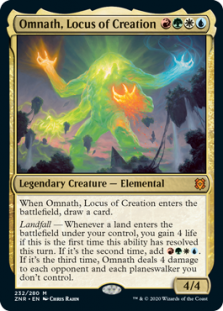
I'd also like to take a moment to mention that there aren't any aggregate decks here except 4-C Omnath, which keeps getting harder to classify and separate. The true control decks and the ramp-ish versions keep moving closer together, which pressures the other versions to merge. I've resisted so far, but the term Uro Pile is getting harder and harder to argue against.

Deck NameTotal #Total %
Tier 1
4-C Omnath468.24
Scourge Shadow376.63
Heliod Company376.63
Mono-Red Prowess315.56
BR Midrange315.56
Reclaimer Titan315.56
Tier 2
Hammer Time274.84
Tier 3
Mono-Green Tron183.22
Amulet Titan173.05
Ad Nauseam162.87
Izzet Prowess152.69
Sultai Uro142.51
Death and Taxes142.51
Dredge142.51
Crab Mill142.51
Oops, All Spells132.33
Belcher122.15
Storm122.15
Burn111.97
Kiki-Twin101.79
Temur Uro101.79
Ponza91.61
Jund81.43

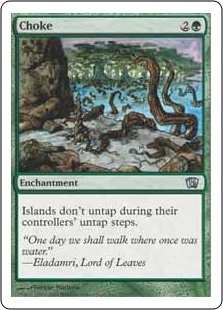
I meant to bring this up last month and forgot, but Kiki-Twin is a Tier 3 deck. Which is very impressive given its small player base. It turns out that Bolt-Snap-Bolt is still a very powerful line, as is the ability to quickly combo after playing a tempo game. It's not as powerful as true Splinter Twin, but that might be due to lack of polish or metagame woes. Despite everything, it's still a very solid deck. Interesting to note as well, Kiki-Twin is built around Boil, both dodging it and wielding it against 4-C Omnath and Dryad of the Illysian Grove decks. It's not a bad strategy, but fairly ironic that now it's quite soft to Blood Moon, while UR Twin was the Blood Moon deck in Modern for years.

They're Still There

The other thing to note is that 4-Color Omanth is the top deck followed by Scourge Shadow. Again. And also again, they're down from their October heights. This is partially due to the overall population decline and partially due to the metagame gradually adapting to both. Which factor is stronger is impossible to determine. However, the fact that this has been a trend for several months, and reflects earlier examples of Uro decks rising and falling, seems to point to the latter explanation. The question is whether this is what players want, as the method of adaptation appears to be running Blood Moon (as I'll demonstrate below).

Tier 2 Vanishes Again

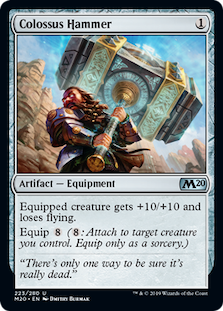
Once more, there is only a single deck in Tier 2: Hammer Time has done quite well for itself by moving up a tier in a month. However, I wouldn't read too much into that. It's received a lot of attention, which always boosts numbers. The deck is also very well positioned. Much like Infect, Hammer Time wrecks low- or no-interaction decks and runs over slow decks. It suffers greatly against decks with lots of cheap interaction, and those decks have been down recently. Plus, it's able to take advantage of 2020's most consistently good card advantage engine better than most decks. We'll see if it can weather the spotlight, or if the deck is too clunky and anemic when the combo doesn't come together to survive.

As for it being alone, that's just a quirk of the data. December's population being low made the data very skewed and polarized. More of the data is caused by the most invested players, and they're more likely to either play their pet deck or just the best one. This pushes the numbers to either end of the spectrum and away from Tier 2. Therefore, decks that I will argue should be Tier 2 fell outside the bracket. Mono-Red Prowess, Reclaimer Titan, and BR Midrange are just over the line for Tier 1, and Mono-Green Tron is right at the Tier 3 cutoff. In fact, there is a huge gap between Hammer Time and Tron, which I can only chalk up to skewed data. The power rankings back me up.

The Midrange Resurrection

Why do players insist midrange is dead in Uro's world? Every time it looks like Jund is finished, something replaces it. Last month it was Jund Scourge, which was straight Jund but with Scourge of the Skyclaves. This month, it's Rakdos Rock.

Rakdos Rock, Ozymandias17 (MTGO Challenge, 8th Place)

Creatures

4 Magmatic Channeler
3 Kroxa, Titan of Death's Hunger
4 Bonecrusher Giant
4 Seasoned Pyromancer

Planeswalkers

3 Liliana of the Veil

Enchantments

4 Blood Moon

Sorceries

4 Inquisition of Kozilek
4 Thoughtseize
2 Dreadbore

Instants

4 Fatal Push
2 Lightning Bolt

Lands

4 Bloodstained Mire
4 Blackcleave Cliffs
4 Polluted Delta
3 Blood Crypt
5 Swamp
3 Mountain

Sideboard

2 Engineered Explosives
2 Nihil Spellbomb
2 Pithing Needle
2 Soul-Guide Lantern
1 Dragon's Claw
1 Dreadbore
2 Kolaghan's Command
2 Boil
1 Kalitas, Traitor of Ghet

And this deck is just Jund but trading flexibility and power for mana consistency. I'm tempted to just keep calling it Jund, because it plays exactly the same way. And I'm going to, because it annoys certain people I like annoying. By dropping green, Jund is giving up flexible removal in Abrupt Decay, Assassin's Trophy, and sideboard Veil of Summer and raw power in Tarmogoyf and Bloodbraid Elf. In exchange, they get to play Blood Moon, which again, is a very good metagame decision. So long as small creature decks are running around, I expect Jund to remain a player, and so long as 4-C Omnath remains on top, I'd expect two-color Jund over three.

It might look like this version came out of nowhere to make Tier 1, but that isn't the case. A lot of the players who played Jund Scourge in November were on Rakdos in December. Plus, Rakdos Rock has been a deck I've been recording, but didn't make the Tier list for months. This is a case of players changing horses rather than a new deck magically appearing.

Power Rankings

Tracking the metagame in terms of population is standard practice. However, how do results actually factor in? Better decks should also have better results. In an effort to measure this, I use a power ranking system in addition to the prevalence list. And the practice proved particularly relevant this month, as it backed up a lot of what I've said about Tier 2.

A reminder of how it works: as I go through the Preliminary and Challenge results, I mark each deck’s record or placement respectively. Points are then awarded based on those results. Preliminaries report results based on record, so that’s how the points are distributed. 5-0 is three points, 4-1 is two, and 3-2 is one. Challenges are reported in terms of placing, so being Top 8 is worth three points, Top 16 is two, and being reported at all is one. The system is thus weighted to award more points to decks that perform well in Challenges rather than Preliminaries. The reason is simply that Challenges are larger and more competitive events, and the harder the field, the better a deck needs to be.

The Power Tiers

Just like with population, the point total fell in December. And by a higher percentage (18% vs 21%) thanks to the tiny Preliminaries awarding fewer points. The 558 decks earned a total of 873 points in December. The average points were 12.47, so 13 points makes Tier 3. The STdev was 16.23, meaning Tier 2 began at 30 points and Tier 1 is for 47 points or more. There were 23 decks just like the population tiers, but Jund didn't make the cut on points. In its place is Eldrazi Tron, which in turn just missed the population cutoff.

Deck NameTotal Points% Points
Tier 1
4-C Omnath809.16
Scourge Shadow627.10
Heliod Company525.96
Mono-Red Prowess475.38
Tier 2
BR Midrange455.15
Reclaimer Titan455.15
Hammer Time414.70
Tier 3
Mono-Green Tron283.21
Amulet Titan283.21
Ad Nauseam262.98
Crab Mill252.86
Izzet Prowess232.63
Sultai Uro232.63
Dredge222.52
Oops, All Spells212.40
Storm202.29
Death and Taxes192.18
Belcher192.18
Burn192.18
Temur Uro182.29
Kiki-Twin151.72
Ponza141.60
Eldrazi Tron131.49

Rakdos Rock and Reclaimer fell out of Tier 1 when power is considered. As stated earlier, skewed data artificially shrunk Tier 2, and the power rankings correct some of that drift. On the whole, however, it is striking how similar the power rankings are to population this month. Typically, there's a lot of variation, and decks jump around within their tier, so the lists look very dissimilar. But the most notable change this time around is Crab Mill's jump from Tier 3's basement into upper Tier 3. Tier 3 is always the most volatile tier, and decks move around a lot in there, but this time the upper half is in the same order in both lists other than Crab Mill passing Izzet Prowess.

The Millstone

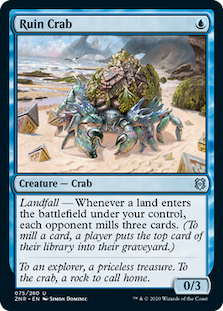
It makes sense that Crab Mill would do well. The metagame being skewed toward 4-C Omnath and Primeval Titan decks is ripe ground for Mill. Essentially, Mill is just an aggro deck using a different life total. By which I mean library size. The slower the deck, the more vulnerable to Mill's attack it becomes. In many cases, because it helps Mill out by drawing cards. In a more aggro metagame, Mill will suffer. Thanks to Archive Trap and all the Crabs, Mill's best hands are faster kills than the typical aggro deck. However, its average hand is a bit slower, and the attack more easily avoided.

The meta also has much better tools for dealing with Mill than aggro. The gold standard of anti-aggro cards is arguably Timely Reinforcements, as it undoes a huge chunk of damage and board advantage. The Rise of the Eldrazi titans and Gaea's Blessing undo all the damage Mill's done, and most can be run as singletons and still have the maximum effect. Depending on build, Leyline of Sanctity may be unbeatable. Mill will always be around, but I have serious doubts that it will be a serious threat for very long; as soon as it gains too much steam, players can elect to beat it blindfolded.

A Unique Problem

However, the power rankings aren't necessarily the most accurate this time. Going back to what I said at the beginning, the opportunity for decks to earn points was diminished and very unequal. The Challenges had exactly 32 listings as always. However, that also means that they awarded the normal spread of points. The Preliminaries only have 4-0's, meaning no 3 point decks, so the power ranking is necessarily skewed towards decks that perform well in Challenges. Normally, the higher number of Preliminaries balances this natural (and deliberate) bias. This is relevant because the Tier 1 decks from population tend to show up more in Challenges than Preliminaries (particularly 4-C Omnath), and thus they were more easily able to maintain their spots than under normal circumstances. I'll be keeping an eye on this for January.

Average Power Rankings

Finally, we come to the average power rankings. These are found by taking total points earned and dividing it by total decks, which measures points per deck. I use this to measure strength vs. popularity. Measuring deck strength is hard. Using the power rankings certainly helps, and serves to show how justified a deck’s popularity is.

However, more popular decks will still necessarily earn a lot of points. This is where the averaging comes in. Decks that earn a lot of points because they get a lot of results will do worse than decks that win more events, indicating which deck actually performs better. A higher average indicates lots of high finishes, where low averages result from mediocre performances and high population. Lower-tier decks typically do very well here, likely due to their pilots being enthusiasts. So be careful about reading too much into the results.

The Real Story

When considering the average points, the key is looking at how far-off a deck is from the Baseline stat (the overall average of points/population). The closer a deck’s performance to the Baseline, the more likely it is to be performing close to its “true” potential. A deck that is exactly average would therefore perform exactly as well as expected. The further away the greater the deviation from average, the more a deck under- or over-performs. On the low end, the deck’s placing was mainly due to population rather than power, which suggests it’s overrated. A high-scoring deck is the opposite.

Deck NameAverage PointsPower Tier
Eldrazi Tron1.863
Temur Uro1.803
Crab Mill1.793
4-C Omnath1.741
Burn1.733
Scourge Shadow1.681
Storm1.673
Amulet Titan1.653
Sultai Uro1.643
Ad Nauseam1.633
Oops, All Spells1.623
Belcher1.583
Dredge1.573
Mono-Green Tron1.563
Ponza1.563
Baseline1.54
Izzet Prowess1.533
Mono-Red Prowess1.521
Hammer Time1.522
Kiki-Twin1.503
BR Midrange1.452
Reclaimer Titan1.452
Heliod Company1.401
Death and Taxes1.363
Jund1.25-

As always, the lower-tiered decks did better in the average ranking thanks to few results spreading out the good results. It might look like a lot more decks did above averagely than normal in December. However, a lot of this is again due to the low turnout. The baseline is the lowest it's ever been at 1.54. The average of the previous months is 1.65, and that obviously changes how I see this data. That 4-C Omnath and decks that prey on it (Crab Mill specifically) are overperforming is beyond dispute. However, how many other decks are overperforming is a greater question.

The Metagame Evolves

There was quite a bit of change over the first five months of the Metagame Update's return. Rakdos Prowess was consistently Tier 1, but nothing else held that distinction. Uro decks have changed significantly, though it's my observation that the rate of change is slowing. However, it's a new year now, and there are more sets incoming to shake things up. We'll all have to see how Kaldheim affects Modern starting next week.

On Bitcoin and Magic

Are you a Quiet Speculation member?

If not, now is a perfect time to join up! Our powerful tools, breaking-news analysis, and exclusive Discord channel will make sure you stay up to date and ahead of the curve.

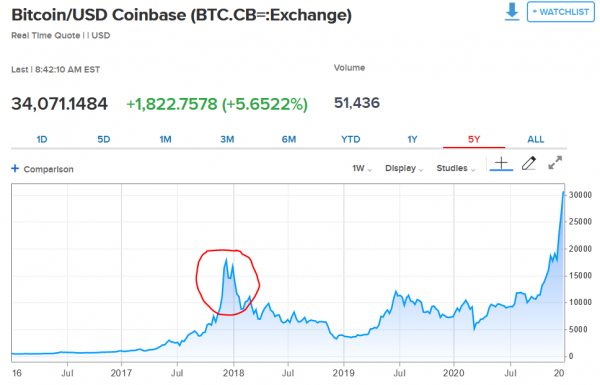
Remember in late 2017 and early 2018, when Bitcoin spiked to a then all-time high and Reserved List cards followed suit? Many members of the Magic community speculated that the two were connected and that those savvy enough to cash out of Bitcoin and turn a hefty profit were reinvesting those proceeds into Magic cards.

Well, if you haven’t noticed, Bitcoin has recently surged a new all-time high. It is approaching $35,000, almost double its 2017/2018 peak. This is likely to generate some ripples in the MTG finance market.

Correlating Bitcoin and Magic

Bitcoin and Magic have an overlapping history, in a roundabout way. In 2013 and 2014, a website known as Mt. Gox was handling over 70% of all Bitcoin transactions worldwide. At the time, this made the site the largest intermediary for Bitcoin exchange. Then the majority of Bitcoin on the site were stolen and Mt. Gox was no more.

But if you go back to 2007, Mt. Gox wasn’t a Bitcoin exchange site. The founder of the website initially created it to track Magic card prices like stocks! In fact, Mt. Gox is short for “Magic: the Gathering Online eXchange.” It was only in 2010 when founder Jed McCaleb converted his website into one for Bitcoin exchange.

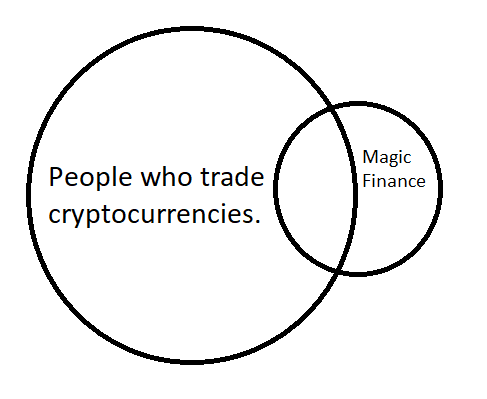
Since then, it seems like the demographic that trades in cryptocurrencies appear to overlap with the demographic that participates in the Magic secondary market. Of course, it’s not a direct overlap, but if this were a Venn Diagram, I believe there would be enough overlap to link prices of the two.

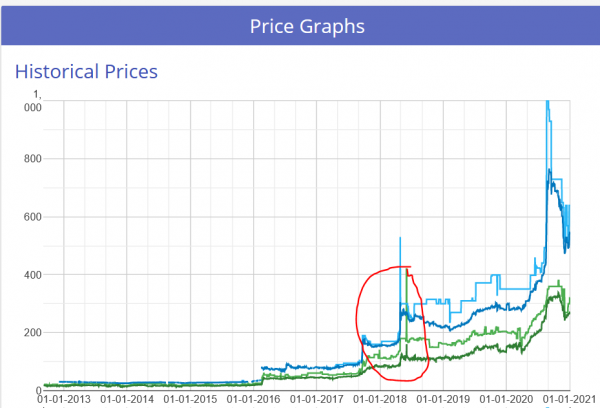
Here are a couple charts as evidence. First, consider the price chart of Bitcoin and a Reserved List staple, Mox Diamond from around that time period.

While this is just a single example, there does appear to be a correlation. Shortly after Bitcoin hit $19,800 or so, Mox Diamond spiked, momentarily hitting $400 on buy lists. How about a Dual Land, like Bayou?

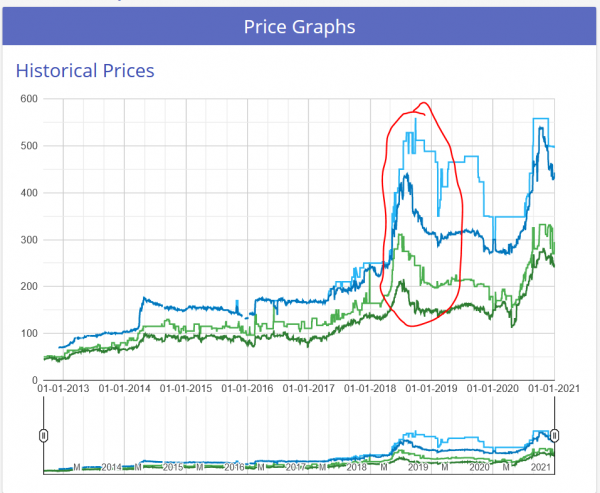
Notice how Bayou follows a similar trend. A couple months after Bitcoin surged in late 2017 / early 2018, Bayou (and other Dual Lands) spiked to record highs. Let’s look at one more: City in a Bottle:

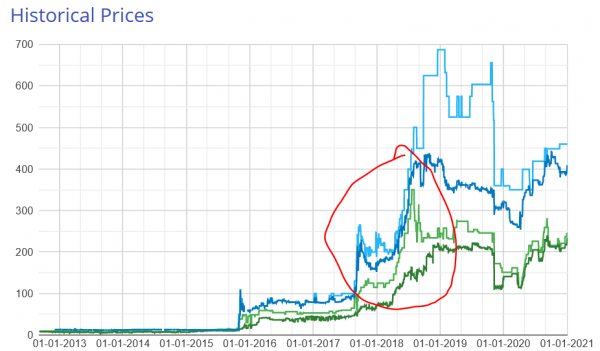
Notice the same trend here. As Bitcoin notched its all-time high, the price of City in a Bottle surged to record highs as well.

Prices cooled off throughout 2019 in all of these price charts, including that of Bitcoin. This strengthens my belief that the two are correlated. Accepting this hypothesis, implications are about to be profound as we head into 2021.

2021: Bitcoin at Record Highs

Now we’re sitting at new all-time highs for Bitcoin, significantly above where it traded during its previous peak. Will the correlation between Magic and Bitcoin continue, leading to new highs for Magic prices? I believe this is likely.

In fact, I’ve already seen some moves higher on Card Kingdom’s buylist. Why is this relevant? Because Card Kingdom is highly agile when it comes to pricing—their buy prices on popular cards can fluctuate multiple times in a week (sometimes in a day!). So when prices move, Card Kingdom’s algorithm responds quickly.

I already mentioned Mox Diamond before, but here’s the Trader Tools chart again:

There was an error retrieving a chart for Mox Diamond

Notice how, after dropping for a week or two, the top buy price on this card has been rebounding? That’s because Card Kingdom has increased their buy price on the card a couple of times in the past week or so.

Another card on the move is Elephant Graveyard, where Card Kingdom recently upped their buy price from $140 to $185 to reflect the recent move in its price.

There was an error retrieving a chart for Elephant Graveyard

Other cards Card Kingdom has recently upped their buy prices for include Gaea's Cradle (up to $510), Lion's Eye Diamond (up to $300), and a smattering of Dual Lands. After pulling back from the recent run, it appears the demand for expensive Reserved List cards has returned with a vengeance. I believe this trend will continue thanks to the recent surge in Bitcoin.

Beyond Bitcoin

Beyond Bitcoin, there are economic dynamics that are conducive to rising asset prices. I discussed this a couple weeks ago, so I won’t go into excess detail here. What I will touch upon here is the newest development from Washington, D.C.: new stimulus checks to Americans.

Starting last weekend, qualifying individuals are receiving $600, plus another $600 per child! A family of four making less than $150,000 annually in total would qualify for a $2400 check. While this is less than the previous stimulus check, it is still a lump of cash in people’s bank accounts. Many Americans are struggling in this pandemic—unfortunately, this money won’t be nearly enough for them to make ends meet.

However, there’s a large portion of people who qualify for this check but hasn’t been as impacted financially by the pandemic. For them, this money is like a little bonus to do with what they please. Some may use the money to pay off debt. Others may use it to fund some house projects. Others, yet, will probably spend the money on Magic cards and other collectibles. It’s inevitable.

Fast forward a couple months, and tax returns will start rolling in. I have no clue what refund checks will look like this year as compared to last year. None at all. But I have to assume at least some folks will receive refund checks, and some portion of that group will use their refunds to fund their hobbies, including Magic. We’ve seen this happen in years past and I don’t see a reason why this wouldn’t happen again in 2021.

There was an error retrieving a chart for Land Tax

Lastly, there’s the hope factor. We made it through a miserable 2020, and 2021 brings a great deal of hope to people across the world. This is the year: the year we can get vaccinated, the year we can go into public again without fear, the year we can feel a little closer to normal, and the year we can [hopefully] start participating in large paper Magic events again.

The stock market is forward-looking; that is, prices trade on anticipated trends and performance. If people maintain hope that 2021 will be better than 2020, then stock prices could react accordingly. In the same, way, Magic prices could trend upwards if people anticipate playing paper Magic at some point in the near future. This is yet another positive catalyst for Magic card prices.

Wrapping It Up

This article may seem overly bullish. It also may appear, on the surface, to be an attempt to drive prices higher in a similar vein as a Rudy (Alpha Investments) video. I assure you, this article is neither. My intention is not to drive buyouts nor to encourage reckless speculation.

Before investing in Magic cards, make sure you have other boxes checked: you don’t have any high-interest rate debt, you have health insurance, you have a 401(k) and/or a Roth IRA, etc. Only once these items are in place do I recommend an alternate investment like Magic.

I also don’t recommend buying out individual cards. This puts huge pressure on the market. If you target a staple, you’re likely going to pay hefty premiums once you finish buying the first dozen or so copies. Paying higher prices is not a productive way to invest. If you target something obscure you can pick up more copies on the cheap, but it is difficult to liquidate 100 copies of a card that only set collectors want to buy.

There was an error retrieving a chart for Eternal Flame

Instead, I’d make sure you have a list of priority cards in you mind and start checking some off your list little by little. For example, if you’re hoping to acquire a Commander set of Dual Lands (one each), start prioritizing these now rather than waiting for a deal on the Sick Deals Facebook group. I don’t think prices are going to be soft as we work our way through 2021 and if history is any indication, the opposite may be true. Prices may surge to new highs on the backs of stimulus checks, tax refunds, inflation, and newfound profits from Bitcoin.

MTG Finance New Year’s Resolutions

Are you a Quiet Speculation member?

If not, now is a perfect time to join up! Our powerful tools, breaking-news analysis, and exclusive Discord channel will make sure you stay up to date and ahead of the curve.

Hello friends, and Happy New Year! 2020 is finally over and if we work hard I'm sure we can make 2021 a much better year. A lot of things happened for me this year - some awful, some amazing (like getting the chance to work at Quiet Speculation) and I'm heading into 2021 cautiously optimistic. I, like many people, have been thinking about goals to set for the coming year in all areas of my life, from personal life goals to growing as a content creator.

As I was tidying up my house on New Year's Eve day before some safe, quarantined, Discord-celebrating with my friends, I happened to come across stacks of random MTG speculations and stuff for my collection and realized that I better set some MTG Finance resolutions for the new year as well. There's plenty that needs doing, but let's take a look at three of my big resolutions for the coming year.

1. Get Organized

This is the big one. 2020 has been an overwhelming year for everyone, and my unorganized chaos of a Magic collection has grown even crazier during the Pandemic. I feel like some level of disorganization is common for many Magic players and collectors, but it doesn't make thriving in the MTG Finance world easy.

If you want to speculate on cards and be prepared to sell them when they spike, you'll need to have some sort of system in place.  My overflowing spec box probably isn't the best bet on that for 2021, given how full it has become. If I don't know where my stacks of Maul of the Skyclaves I impulse bought got off to, how will I sell them if they ever go up?

There was an error retrieving a chart for Maul of the Skyclaves

I found a giant stack of them in my kitchen - they never even made it much farther than getting out of the envelopes they came in. If I hadn't found them while I was cleaning, there's a good chance I would have just forgotten I'd ordered them at all. (Sidenote, I still think these were a good buy, especially with the Mono-White Aggro decks making great appearances in Standard leagues and the likelihood that we'll see some cool equipment matters stuff in Kaldheim.)

Normally, in years past, I've been really good at keeping my collection cataloged and all of my specs organized, but something about 2020 sapped that out of me and I'm afraid I'm going to have to start all over - but that's okay. I'll be cataloging my collection, reorganizing my speculation box, making spreadsheets, and ideally becoming more organized than ever.

2. Track Everything

Along with my organizing, I realize I need to do a much better job keeping track of my speculations and MTG Finance purchases. My ever-growing boxes of Magic cards could be broken up into four categories:

  1. My Personal Collection - these are cards I want to be able to have on hand at all times for paper play (when it returns, which is hopefully some time this year!) or just cards I like collecting (like goblins). Unfortunately, 2020 necessitated selling off a lot of my a good chunk of my Reserved List collection, but I'm hoping to build that back up this year.
  2. My small TCGplayer Store Inventory - I run a small TCGplayer store and have a dedicated section in my MTG stuff for this to be organized in. This is filled from buying local collections, cards obtained as prizes from paper events I don't need, speculations I'm no longer sitting on, and that sort of thing. Previously, this was the most organized part of my MTG life, but I'm hoping to grow it in 2021!
  3. The Spec Box - this is where all the cards I've speculated on end up. It both grew significantly during 2020 and became incredibly unorganized (we'll talk about why in the next section of the article.) I couldn't even tell you half of the stuff that's in here without pawing through it - and that's not a good way to run a spec box.
  4. The Secret Lairs - I uh, I keep impulse buying these and not opening them. I definitely need to re-organize these and find a good way to track them.

As you can see, my MTG life has become kind of a mess, and one of the big things I need to work on this year is cataloging everything I have and finding a good way to track the price movements. Lucky for me, Quiet Speculation's Trader Tools are going to save me a lot of headaches here and help me both organize and track everything! I need to be watching more price graphs than just my favorite new card, Skyclave Apparition...

There was an error retrieving a chart for Skyclave Apparition

On the subject of Secret Lairs, these seem a little more nebulous to track and I've been brainstorming how I want to do these. I'll likely custom make a spreadsheet for my own use, but if anyone out there has a process they really like for tracking their Secret Lair value, I'm all ears and would love to see it! I'll likely share what I end up coming up with (in a future article) this year.

3. Work Smarter (and with less impulse speculating)

Okay, I know I've already painted a pretty messy picture of 2020 Joe, but one thing I'm for sure going to try to work on this year is less impulse speculating and trying to plan my investments smarter.

Many times this year I've been guilty of seeing a Twitter post or getting a message from a friend about a card doing well in a tournament late at night, and impulsively running to TCGplayer to order as many copies as I feel like gambling on. Like when I woke up in the middle of the night, saw a message I missed from Chroberry about Yasharn, Implacable Earth doing well in a tournament, and bought 50 copies without doing any research and then falling back asleep and forgetting I'd even done it.

Editor's Note: I did not tell him to buy 50 copies of Yasharn because of one tournament showing.

There was an error retrieving a chart for Yasharn, Implacable Earth

Twitter isn't a the worst place to get ideas on what is performing well if you follow the right accounts, but you should definitely be playing it smarter than me and doing a bit of research. I've gotten super lucky on my impulse specs this year (well, so far) but there's no way that holds up as a long-term strategy, so I'm going to try to play it smarter. As a player first, I stand by the strategy of analyzing tournament results on MTGO and Arena and identifying cards that are performing well consistently and moving towards picking those up.

With paper play possibly returning towards the end of the year, I think now is one of the best times you could be studying online results and getting ready for the paper boom that will likely happen when large tournaments start back up. Just make sure you're taking the time to ensure you're not buying into random hype. If it's not from a format you're already familiar with, reach out to friends who play that format and ask their opinion; get the information you need to feel comfortable taking a risk.

4. Play Paper Magic Again

This is less of an MTG Finance related goal and more of a convenient way to label my closing paragraph. Thank you for sticking with me through this - I know I likely painted a pretty embarrassing picture of myself, but hopefully, my resolutions to get back on track can help motivate the rest of you out there who let themselves slip in the chaos of 2020 (which is understandable, this was a traumatic year and there's no reason to beat yourself up).

The thing I'm looking forward to most this year is the likelihood of returning to paper MTG play. If that happens, and there's a large event in the US, I hope I get to sit down across from as many of you as possible and jam some cards. Congratulations on making it through 2020, and thank you for reading all of my articles. Feel free to reach out to me on Twitter, in the QS Discord, on Twitch, or on my YouTube. I'm wishing you all the best, safest new year possible. Take care of yourselves, and I'll see you next week!

All I Want for New Year’s: 2021 Wishlist

Are you a Quiet Speculation member?

If not, now is a perfect time to join up! Our powerful tools, breaking-news analysis, and exclusive Discord channel will make sure you stay up to date and ahead of the curve.

Whew! What a year it's been. All signs point to 2021 being better than 2020, but how much better? Like, what if we wanted to totally decimate 2020 out of spite? (Big "what if...") I've got a few ideas cooking that would make year a memorable one for me. And after sharing them, I'd love to hear yours!

Power to the Pets

“I just want what’s best for Modern!” What a load of baloney. I know what I like to play, and so do you, so let’s stop kidding ourselves and just admit it already: some spanking-new toys that happen to mesh exceptionally with whatever pet strategy keeps us playing this format in the first place would be A1. In my case, that’s Delver-based, Goyf-featuring thresh decks and Colorless Eldrazi Stompy.

Big Wins for Little Guys

It's not like thresh strategies are allergic to intriguing printings; it seems pretty much every expansion or two, blue-based tempo shells receive new toys to play with. The catch? These toys are almost always threats, and almost always Stage 2 combat creatures at that. So there are a million ways to build thresh, or a couple for each of the million viable thresh clocks—Stormwing Entity, Young Pyromancer, you name it. But each of these shells finds itself limited by the relatively shallow pool of support cards, which are always the same.

Take blue, the classic default color of thresh decks. It earns that title thanks to the tempo-jacking nature of countermagic, but also for the color's frequent excursion into card-selection cantrips. The thing is, there aren't really any good card selection cantrips anymore. Blue's only remaining option is Serum Visions, but even thresh decks that run blue often eschew that card for off-color cantrips that actually impact the game state because "Draw a card. Scry 2." is such an underwhelming sequence of card text.

I say "sequence" because timing is everything. Flip those effects around and you have something at once powerful enough to run and safe enough to have in the format. That's right: I'm breaking my four-year silence (practically to the day!) and again floating an unban for Preordain!

While I won't get so deep into the reasons I do or don't think Preordain would be okay for the format, I'll readily admit that I'd be happy to see it released, even in a trial period. Trial unbannings? Do they even do that? Who cares! They could, and I'd love for them to. What does Wizards have to lose from experimenting a bit, especially if it means potentially freeing cards players love?

But going back to countermagic, there's plenty I'd like to see here, too. I've always dreamed of a Spell Pierce for creatures, for example. And how about finally getting Daze in Modern? Some of the most fun I had playing Magic was at my first and only Legacy tournament, GP New Jersey, where I managed to make Day 2 and cash with a straight port of my Modern Counter-Cat deck—think Canadian Threshold with Wild Nacatl over Nimble Mongoose, a pivot that allowed me to run Treasure Cruise like I did back home. Sure, Brainstorm was a joy to cast, but resolving Daze was my favorite part of the day! The namesake factor of Modern's ubiquitous shock lands would also add an interesting dimension to the instant's drawback not seen in Legacy.

Stocking Smashers

Then there's Colorless Eldrazi Stompy, my other Modern go-to. There's honestly not a lot I can point to right away to improve this deck, but it says something that I get excited every time I see a cheap artifact in the spoilers. Threat-wise, the deck is already crowded full of great options, while Chalice and Dismember provide ample disruption that's best-of-breed.

What's left? Utility, especially for the sideboard, and mana. There are tons of intriguing utility options that have yet to come to Modern, like Null Rod or Tsabo's Web, and these could also be reprinted in alternate forms (oh wait... Stony Silence!). More intriguing still is the prospect of getting another fast-mana land. I think the most likely on this front is Crystal Vein, which can either tap for colorless or sacrifice itself to produce a burst of mana.

Vein would be awesome in Stompy as it would increase the odds of dropping turn one Chalice, or of following a Mimic with a turn two Thought-Knot Seer; those are the kinds of plays that made it all worthwhile to shred our hands via Serum Powder and Simian Spirit Guide. Granted, there's the chance of Vein pushing some combo decks ahead by a critical turn, such as Ad Nauseam... but what's the fun without the risk? And anyway, this is my wishlist!

The Return of the LGS

"It's Not Heaven If You're Not There," blissfuly sang The Winans some 27 years ago. And that's how I feel about the local game store: Modern simply doesn't feel like Modern without it.

Jordan and the LGS: A Love Story

Historically, the LGS has been at the heart of my own Modern experience since I started playing the format at its inception. I loved fine-tuning combinations of my favorite cards to beat the developing metagame around the corner, and finding creative ways to get around the decks my opponents were on, they invariably being tuned to crush me (think mainboard Thrun, the Last Troll in most of the BGx decks—that'll show the little twerp on Delver of Secrets!).

As Modern grew and then exploded in popularity, I found myself more and more fighting the metagame "at large," with swaths of local Spikes picking up whatever deck StarCityGames touted as the hottest after a high-profile event. That caused me to get my kicks throwing together fresh brews each week to see if I could go undefeated with something totally unique and off-the-radar, an exercise that led me to develop some of my favorite decks.

At the same time, newer players added cards to their deck each weak, and despite the lack of focus in their strategies, were more than willing to mess with the structure of their 60 to include crazy hate cards just to beat the guy they'd lost to last Friday. So you had random kids with Choke in their mono-green mainboards occasionally destroying dudes on fully-foiled Celestial Colonnade decks.

Holiday Spirit

All that interplay led to a diverse and thriving environment that I think was Wizards's intention when they created Modern, and a strategic ecosystem that isn't just unsustainable, but totally unfeasible in the cold, percentage-driven world of Magic: Online. And in 2020, we've been robbed of that most critical Modern feature by COVID-19, which caused local game stores the world over to shut their doors indefinitely.

Without the LGS, Modern's spirit is broken. My biggest wish for 2021 is the successful reopening of these community hubs, and with it, some much-needed wind in Modern's sails!

World Peace

You know, world peace! Or: why can’t all the decks just get along and share the meta pie fairly? Well, thanks to our monthly metagame updates and supplied analysis, we get a pretty good idea of the answer every 30 days or so. Wishfully thinking about Modern fixing itself into some imagined configuration overnight isn’t much more than a pipe dream. So make like Tarmogandh and be the change you want to see in the format—play the decks you like, hate out the ones you can’t stand, and encourage your buddies to do the same. Before you know it, that LGS of yours will be looking a little more like paradise. Happy new year, Nexites!

Modern Banlist Watchlist: 2021 Edition

Are you a Quiet Speculation member?

If not, now is a perfect time to join up! Our powerful tools, breaking-news analysis, and exclusive Discord channel will make sure you stay up to date and ahead of the curve.

Final article of the year! Good riddance, 2020. Hopefully, things start to turn around quickly and we can have the gathering part of Magic: The Gathering back again. But, this isn't about a virus or vaccine. Today, I have business that must be finished before 2021 begins. For the third year running, it's time to update my unofficial Modern Banlist Watchlist. Actually, no, it deserves an upgrade. I've kept up my list and have a solid prediction rate. It's also not just a wishlist, both of which are more than can be said of other attempts. Therefore, I'm declaring my list to be the Official Modern Banlist Watchlist! If anyone objects, they should have been putting in the work before now.

And so, it is my pleasure to welcome everyone to the Official Modern Banlist Watchlist. To be perfectly clear, I'm not saying with certainty that any card on this list will be banned nor that it will happen anytime soon. Modern's in a pretty decent place, and Wizards doesn't have much incentive to do anything until paper comes back. Rather, this is the list of cards that I think could be banned if the stars align correctly. It will take the right tipping point to happen, which could be any combination of metagame shifts, new cards, or new decks emerging or metagame stagnation before something actually occurs.

2020 Recap

I was 3/3 for already existing cards in 2019. An auspicious start! I did worse in 2020, with only 2/3. And I missed Arcum's Astrolabe getting axed, though I argue that's a forgivable oversight. Back in December 2019, Astrolabe wasn't doing anything besides facilitating Oko, Thief of Crowns. It took both Oko and Once Upon a Time getting axed (and the Companion nerf) for Astrolabe's power to become obviously and uniquely troublesome. And I'm tempted to give myself partial credit on Urza, Lord High Artificer. Mox Opal and Astrolabe were both critical pieces of Urza decks, resulting in Urza getting nerfed severely. Getting cards around you banned is still a strong indication of a card's power and potential banability.

The Criteria
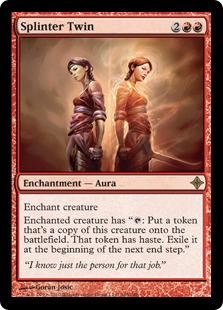
There's no way to know exactly what, if anything, will get banned in 2021. Where once it was a simple case of violating the Turn 4 rule or general brokenness, Wizards has vastly expanded its scope and now bans more actively and for more reasons. I can't know what new cards will be printed, or if a new deck will finally be discovered. Furthermore, Wizards' exact criteria for banning a card is not known. They've never specifically said anything about how they consider banning a card, and with every ban, the exact reason changes. Over the past year, the only consistent thread has been a 55% non-mirror win rate. Which may or may not be an actual red line for banning, but even if it is, only Wizards has the data to make such a determination. Thus, players can't know if a ban is coming, making it the perfect metric to cite.

As a result, any speculation about what could get banned will necessarily be guesswork. The key: to turn the guesswork into an educated guesstimate. To that end, I have gone back through the Wizards announcements to see how they've justified their bans. There's always a primary reason, but it's often (not always) couched by ancillary reasons. The most common ones with examples are:

  1. Generally broken. (Hogaak, Arisen Necropolis)
  2. Enables brokenness. (Mox Opal, Bridge from Below)
  3. Harms deck diversity. (Splinter Twin)
  4. Homogenizes deck construction. (Oko, Thief of Crowns, Deathrite Shaman)
  5. Creates problematic play patterns. Subcategorized between:
    1. Encourages repetitive gameplay/gamestates. (Once Upon a Time)
    2. Encourages unfun gameplay. (Mycosynth Lattice)
    3. Metagame-warping. (Treasure Cruise, Arcum's Astrolabe
  6. Complicates tournament logistics. (Sensei's Divining Top)
  7. Constrains/threatens future design. (Birthing Pod)
  8. Achieves a 55% non-mirror win rate. (Arcum's Astrolabe)

As the last one is impossible for me to know, I won't consider it. These are the most often cited reasons, and should not be viewed as a comprehensive list. Such a list would require an entire article... so I'll have it be one in the future!

My Approach

I'll be using the Wizards-stated reasons to inform my watchlist. However, there will necessarily be a lot of intuition and speculation. I can't know how the future will play out, nor if Wizards will actually take action. Wizards certainly could have gone after Izzet Phoenix in 2019 for several of the listed reasons, but they never specifically targeted it. The best I or anyone can do is to see what the metagame data says about the format then look for key pressure points and gameplay trends and try to intuit how things could break.

Some key things to remember:

  1. Wizards prefers to ban enablers or engines over payoffs
  2. Bans should target the actual problem, not the symptoms of the problem
  3. There is no hard threshold for what constitutes a problem

With the disclaimers out of the way, I see two potential fracturing points for the current meta and one card that threatens to break again.

Urza, Lord High Artificer

Offenses: generally broken; enables brokenness
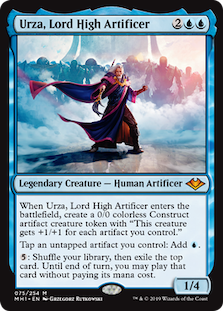
Urza, Lord High Artificer makes this list partially as a holdover from 2020, and partially because it remains an absurd card. There are just too many lines of text on that card, and they're all things that consistently prove to be problems. Urza was integral to the Oko decks that dominated late 2019, in some ways more than Oko. Oko was a grindy value engine and the Simic Urza's best threat, but Urza is an artifact payoff, a value play, a threat, a mana engine, and a card advantage engine all in one. Cards that do too much have been the boogeymen of 2020 far more than 2019, and given Urza's potential, it's very easy to envision him being utterly broken.

Why It Won't be Banned

Urza survived 2020 thanks to everyone around him biting the bullet instead. All of Urza's best support cards are banned now, and subsequently Urza has dropped out of the metagame. I still see Whirza decks crop up from time to time, but it's nothing like 2019 or even early 2020. Without the reliable acceleration of Mox Opal, Urza decks can't keep up with the metagame. Without Oko, they can't turn all their weak artifact enablers into actual cards. Astrolabe was the most important loss, as it was not only a source of velocity, but could then become a mana source. It doesn't really matter how busted Urza is in theory if it doesn't actually do anything. Something drastic needs to change for Urza to become a player again, let alone a problem.

How It Could be Banned

That said, it won't take much for Urza to be a major powerhouse again. A shift in the meta away from Uro, Titan of Nature's Wrath-type value decks could let the slower Urza engine come back. A drop in blitz-type Prowess could also do the trick. Don't forget that Urza already goes infinite with Thopter Foundry/Sword of the Meek, or that artifact hate is at an all-time low. Alternatively, Wizards could print some new, cheap artifact that replaces something Urza lost. Given their history, one would expect Wizards to avoid any cheap artifact that might enable Urza. However, while Wizards learns the broad strokes of its mistakes, the specifics often escape them. Artifacts, free cards, and easy mana fixing have bitten them before, and they still made Arcum's Astrolabe.

Likelihood: Low

As it stands, there is very little chance that Urza will be banned in 2021. However, I can envision a number of scenarios wherein Urza could regain its lost power, and at least a few of those push it into dangerous territory. Not something I'd expect, but something to keep an eye on.

Uro, Titan of Nature's Wrath

Offenses: harms deck diversity; creates problematic play patterns: encourages repetitive gameplay, metagame-warping
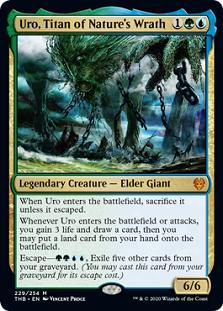
Genuine question: has any card been complained about more this year then Uro, Titan of Nature's Wrath? It seems like everyone will take any opportunity to moan about the titan. Players are generally tired of Wizards pushing certain cards, particularly Simic-colored ones, after a year of heavy bans. There's also a general sense that Uro is pushing out all other midrange decks because it is too good at everything midrange wants to do. It's lifegain, ramp, and card draw, plus a recursive threat. Again, that's too much text on a single card.

Additionally, Uro is a pretty boring card. It's so much value it shows up everywhere, and not always in grindy midrange decks. This omnipresence is coupled with Uro being a pretty boring card to play with or against. Cast it once for value, then escape it for more value and to win the game. Grind, grind, grind; it just keeps going. This incentivizes a certain style of gameplan and deck that many players are getting tired of seeing. In addition, there are a lot of other annoying cards constantly following in Uro's wake that get a lot of complaints. Veil of Summer, Mystic Sanctuary, Teferi, Time Raveler, and Field of the Dead are all cards with their own issues, but seem to reach their greatest potential when paired with Uro. It's both an enabler and a payoff, creating a lot of irritating gameplay.

Why It Won't be Banned

Gameplay that is proving to be less than dominating. In terms of metagame share, Uro is down from its October high. And that was a huge spike after Uro decks tanked in September. There is very clear evidence that the metagame is adapting and Uro is losing its punch, the poster child being the resurgent Mono-Red Prowess decks maindecking Blood Moon. Uro decks are far more vulnerable to attack than they get credit for, and now that the metagame is catching on, Uro is losing ground. In addition, it's a graveyard creature and this is Modern, so players should be packing the graveyard hate needed to beat the card. Uro's losing its power and is highly answerable, so there's no need to ban it.

How It Could be Banned

The question is whether the environment Uro creates is healthy and desirable, even if it does lose ground. The metagame is adapting by adopting more hate pieces and churning out more combo and glass cannon decks. Modern can handle that easily, but it's not clear that's something the players or Wizards actually want to happen. Then there's the issue of whether, like Splinter Twin, Uro is keeping out other more desirable player patterns and decks.

Likelihood: Medium

There's a lot to dislike about Uro's gameplay and place in the metagame. Even without additional printings, there's a solid case for a banning on the basis of fun and metagame stagnation, but it isn't urgent. I'd be surprised to see Uro survive 2021, and equally surprised to see a ban before summer.

Mishra's Bauble/Lurrus of the Dream-Den

Offenses: homogenizes deck construction; creates problematic play patterns: encourages repetitive gameplay; constrains/threatens future design
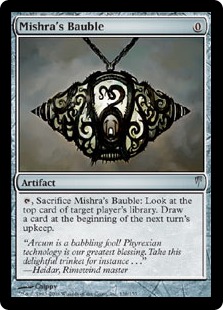
This is a tricky one. While Uro is a lightning rod for Wizards making card advantage engines too easy, the combination of Lurrus of the Dream-Den and Mishra's Bauble is the most successful one. It's arguably more defining than Uro, is far more widespread, and has been running around longer. Go back through my metagame articles for this year and there's a constant tread: Rakdos Prowess featuring Mishra's Bauble is top-tier. And once Lurrus was printed, the decks that ran Bauble exploded, a trend which survived the companion nerf. In November's metagame update, Uro decks represented ~10.5% of the metagame. Scourge Shadow and Hammer Time always run Lurrus/Bauble and accounted for 9.4%, which doesn't include various fringe decks and variants of other tiered decks that also run the combo. Uro might endure more player ire, but the Lurrus-Bauble pairing is just as widespread as that single card!

I don't see this discussed anywhere, but Bauble plus Lurrus gives any deck the ability to grind out the late game, and most don't deserve to. Hammer Time is the latest deck to benefit from the combo. On its face, Hammer Time is a pretty inconsistent and fragile glass-cannon combo deck. It should die to a few removal spells played smartly, just like Infect. However, Lurrus ensures that Hammer Time can get back into the game, either by recurring threats or using Bauble to find missing pieces. This is a thread that was first seen in Burn. The combination is giving decks that have never enjoyed draw engines a solid engine, much like Treasure Cruise did. And it is the combination which is the problem, more than the individual cards, to the point that I'd rate this combo as a:

Likelihood: Medium

However, I can't decided which card to target. So I'll deal with each individually.

Why Bauble Won't be Banned

Prior to Lurrus, Bauble was an odd but fine card in Modern. It saw no play until 2017 when it was used as a delirium enabler in Jund Shadow, and then dropped off once Shadow started declining. In 2019 it saw a lot of play in Urza decks, where it turned on Emry, Lurker in the Loch and Mox Opal turn 1, but then did little else but become an Elk. Next, the Prowess decks picked up Bauble as free prowess triggers and cantrips. Bauble is only up for consideration because of its interaction with Lurrus as a build-your-own-cantrip creature. The problem is Lurrus, not Bauble.

How Bauble Could be Banned

However, Bauble has enabled other decks in the past, and could do so again. It's a free artifact and more importantly a cantrip, something that spelled doom for Gitaxian Probe. The risk of a zero-mana cantrip was known all the way back in Ice Age, when Urza's Bauble demanded the creation of the slow-trip ability on Bauble. Urza's still hanging around, and zero-mana cards always have a risk of helping something else get busted.

Likelihood: Low

Bauble is so innocuous a card that I can't help thinking that if there's a problem, Wizards will opt for a target more substantial. However, there's always the chance that a zero-mana cantrip is just something that shouldn't happen. Wizards appears to favor going after free spells and seeing if that's enough (based on Opal's ban), so it makes some sense for them to target Bauble rather than Lurrus. Lurrus is a creature, after all, and more vulnerable to normal answers.
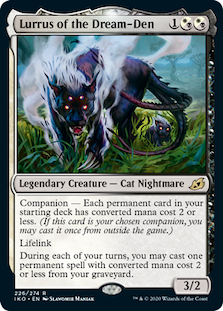
Why Lurrus Won't be Banned

The companion errata severely impacted Lurrus' playability already. At its height, Lurrus was everywhere and in every deck, and not all of them included Bauble. Since the errata, Lurrus has retreated to the types of decks it was always meant to be in. Nonetheless, if there's a problem with Lurrus, it continues to be the companion ability rather than the card itself. Lurrus dies to everything, has pretty unimpressive stats for Modern, and now can be preemptively answered via, say, discard. The only reason to be concerned is the interaction with Bauble rather than the sweep of Lurrus' uses.

How Lurrus Could be Banned

Lurrus was the most busted companion by far, to the point it required the only ban in Vintage in decades. This is entirely down to its interaction with zero-mana artifacts. Granted, in Vintage and Legacy said artifacts made mana, but if there actually is a problem in Modern, it makes more sense to point the ban hammer at the card that's proven to be trouble. Repeatable effects shouldn't be free, and Lurrus being a recursion engine is too good. Additionally, given its companion deckbuilding constraints, graveyard hate isn't an answer. Lurrus goes into aggressive decks, and they never seem to have graveyard interaction outside of Lurrus, making sideboarding hate in against the combo actively bad against the gameplan. When the right answer won't work and the engine is proven to be too good, the answer is a ban.

Likelihood: Medium
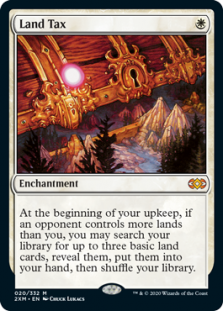
I favor going after Lurrus over Bauble. Lurrus has the history on its side, and the companions were clearly mistakes. If an engine gets out of hand once, it's likely to do so again, so better to just nip it in the bud. Additionally, Wizards is working on ways to give white more card drawing, and the existence of Lurrus is likely to conflict with that goal. At minimum, it makes any >2CMC permanent a riskier card than it would otherwise be.

Wait and See

And that's my 2021 banning watch list. I want to reiterate that I don't see any bans in the immediate future, as Modern is overall in a pretty good place. However, you never know with Wizards. We just have to wait and see how the new year develops. Happy new year, Modern Nexus readers!


Reflections on This Year and Next

Are you a Quiet Speculation member?

If not, now is a perfect time to join up! Our powerful tools, breaking-news analysis, and exclusive Discord channel will make sure you stay up to date and ahead of the curve.

As I sit down and ponder over my computer, considering possible topics for this week’s article, I can’t help but acknowledge that this will be my final article of 2020. Good riddance. This year was pretty much awful on all fronts save a scant few. The pandemic has introduced a great deal of stress into life, especially for extroverts like myself.

Despite all the hardships this disease introduced into the lives of billions of people, I will try to remain emotionally resilient as I look ahead to 2021. With this positivity in mind, I’m going to write a personal piece this week describing three things I’m happy about from 2020 and three things I look forward to in 2021. Don’t worry, loyal readers. Some of these thoughts will still relate to MTG finance because Magic was a bright spot for me this year.

Three Positives from 2020

I still remember the fateful Thursday in March. The leader of my department called an emergency meeting for everyone. We were all sitting together in the large conference room when she announced that, effective immediately, everyone would be working from home except for a small group of critical employees. This was to last through the end of March, when we would return to the office again.

Then the return was postponed until May. Then early June. Then after Labor Day. Then after New Years’ Day. And, most recently, our return to the office was postponed until May.

In airline-delay fashion, our return to the office was pushed back time and again. All this time, I was thankfully allowed to work from home. I am very blessed that my job is largely virtual and that I can do 99% of my job from my home office—all I need is my work computer and an internet connection. This is the first thing I am thankful for in 2020. I am fully aware not everyone is as fortunate as I am. Some people (including my siblings) still have to go into an office/school to work. Others lost their job altogether. I am extremely lucky that I still maintain my full-time job and can do it completely from home with minimal disruption.

Now that I’m working from home 100% of the time, I suddenly have more free time on my hands. Or, more accurately put, I have more time where I need to find entertainment for my children. In reality, while my “free time” may be marginally increased, the free time is not continuous in nature; I don’t suddenly have a 90-minute block of time where I used to commute and could now pursue anything I’d like. Instead, I have small pockets of time when my kids are distracted and I can steal a few minutes to myself.

Enter the second thing I’m grateful for from 2020: Magic Arena. Thanks to the online platform, I can once again engage in my favorite hobby, even on a competitive level! Granted, I can’t play my favorite formats on Arena, but I’ve learned to love the Arena Cube, Drafting, and even Historic.

There’s an MTG finance benefit to engaging in Arena too. For the first time in nearly a decade, I am familiar with the Standard metagame and the finance movers and shakers. I know how powerful Shark Typhoon is, for example, so I am aware that its price trajectory has been strong.

There was an error retrieving a chart for Shark Typhoon

I recently opened a Shatterskull Smashing from a Zendikar Rising booster pack. Instead of instantly buylisting it for some value, I decided to hold onto it because I see how widespread the card is played in Standard and Historic. This informs me of the card’s utility, and I can make finance decisions accordingly. Once Throne of Eldraine rotates, I believe some Zendikar Rising cards will have a chance to really shine in Standard.

There was an error retrieving a chart for Scute Swarm

The third positive that came out of 2020 was the strength in Magic card prices—particularly in Old School cards and Commander staples. Some may deem rising prices as a negative, but in general, I believe this underscores the health of the game as a whole. I’d much rather prices be rising because the game is alive and well rather than tanking as players leave the game to pursue other interests.

There was an error retrieving a chart for Triskelion

Does this mean some cards I would like are suddenly more expensive? Sure. But I’m willing to accept this because the cards I do own are climbing in step. So while that next purchase will cost me a bit more, I have more value to work with from the cards I already own. For this, I am thankful. As I look at the value of my collection, the dream of funding my children’s college costs (or at least the majority of them) with Magic is becoming more and more possible thanks to the strength of this game.

Looking Ahead to 2021

It’s easy to take the easy route here and cite the vaccine and a return to some semblance of normalcy being the first thing I look forward to in 2021. Of course that counts. But I’m trying to think more creatively here so that there’s a tie to Magic. So I’m going to start with the base assumption that at some point in 2021 we will start to interact in public again.

Under this assumption, I believe we may see the return of large, in-person Magic events in the back half of 2021. If this comes to pass, it will have a significant impact on the game as a whole. Demand for newer cards, such as Standard-legal cards, will increase dramatically as more players have opportunities to play paper Standard. Meanwhile, far fewer packs of the newest sets have been opened—there are far fewer drafts taking place in paper. This could lead to jumping prices in Standard staples. The new cards that also double as playable in Commander are especially attractive.

There was an error retrieving a chart for Indatha Triome

While I don’t really deal in new cards all that often, I will be paying attention to their trends once in-paper events resume. I believe this will lead to some price appreciation as, at least temporarily, demand outstrips supply. Despite the numerous Twitter complaints we’ll see about the cost of Standard, all in all, I see rising prices as a positive for the hobby as (again) it’s an indicator of strength.

There was an error retrieving a chart for The Great Henge

The next thing I look forward to in 2021 is the relationship between inflation, Fed policy, and asset prices. Sprinkle on top tax refunds and government checks, and we have a recipe for asset appreciation. I wrote about this last week, so I won’t dive into too much detail here. I’ll merely mention that I believe asset prices across the board will climb in 2021 as a result of all the factors mentioned. Let’s not forget the all-time highs Bitcoin is currently seeing. Last time Bitcoin went on a rampage like this, we saw Magic prices (particularly Reserved List cards) spike. We could see this again in 2021.

There was an error retrieving a chart for The Tabernacle at Pendrell Vale
There was an error retrieving a chart for Gwendlyn Di Corci

Lastly, I look forward to elevating my game in the streaming and video recording space. I recently purchased a gaming laptop and for Christmas I received a nice headset. At this point I have most the hardware I need to create an effective stream or YouTube video. Now the challenge is just prioritizing them. I hope to use the newfound pockets of free time to start a drumbeat of content creation in video form for viewers to explore. If this is something that may interest you, the reader, please leave a comment below and mention the type of content you’d be most interested in: MTG finance chatter, drafts on Arena, Historic/Standard ladder play, Old School Deck Techs, or any other Magic related topic. I’m open to suggestions as I try to grow a modest following in the space.

Wrapping It Up

I believe 2020 will go down in history books as one of the most despised in human history. One hundred years from now, students will study the pandemic and its impact on society and the economy in their history books. They’ll read about how the world came to a temporary halt, millions lost their jobs, and yet the stock market notched an all-time high again and again.

The impact of the pandemic on Magic won’t even bee a footnote in the history books. The game is too small, and the only place one will be able to read about it years from now will be in Hasbro’s quarterly earnings reports. But those of us who enjoy the game today are fully feeling the impact via how we interact with the game and how prices have been impacted.

I’m trying to remain positively focused as I look back at the last 365 days of my life. It’s easy to become overwhelmed by how drastically life has changed due to this pandemic, but it does me no good to dwell on the negatives (the things I have lost). I’m instead trying to focus on what I have maintained or gained thanks to COVID-19 in an attempt to keep a positive attitude. I have maintained my job and gained free time for which to enjoy playing Magic virtually. I’ve also gained some value in my collection thanks to price appreciation.

There was an error retrieving a chart for Erhnam Djinn

As I look ahead to 2021, I am again trying to maintain an optimistic attitude for the sake of my mental health. In addition to paper Magic events, I’m trying to approach 2021 with a curious mindset because I suspect prices will be volatile. This means MTG finance will remain relevant and worth following next year. And, of course, that means I hope to be gainfully writing here and producing content for my followers through 2021. I guess in some ways, the more things change the more they stay the same!

Insider: QS Insider Cast: Kaldheim Spoilers and Discussion!

Are you a Quiet Speculation member?

If not, now is a perfect time to join up! Our powerful tools, breaking-news analysis, and exclusive Discord channel will make sure you stay up to date and ahead of the curve.

Welcome back to the QS Insider Podcast! Chris O'Berry and Joe Davidson discuss the new Kaldheim spoilers and the marketing strategy surrounding them! This cast was originally broadcasted live to Insiders in the QS Insider Discord, December 20th, 2020.

Show Notes

  • Kaldheim Spoilers and Discussion!
    • Magda, Brazen Outlaw, Realmwalker, Halvar, God of Battle, Sword of the Realms, Kaya the Inexorable, Pyre of Heroes, Showdown of the Skalds, Sarulf, Realm Eater, The Pathways, Lathril, Blade of the Elves, Ranar the Ever-Watchful
  • Joe sang a bit for some reason?
  • Metal Marketing

Wanna Chat? Find us in the QS Discord or on Social Media

Chroberry - Twitter / Instagram / Twitch

Joe - Twitch / YouTube / Twitter

Insider: Is the Reserved List Buyout Bubble Breaking?

Are you a Quiet Speculation member?

If not, now is a perfect time to join up! Our powerful tools, breaking-news analysis, and exclusive Discord channel will make sure you stay up to date and ahead of the curve.

2020 has been an exciting time to be involved in the Magic market, with widespread price increases across huge swaths of cards, including plenty of massive spikes.

  • Magic has been moving upwards along with the wider collectible market, including the meteoric rise of Pokemon, and a renewed interest in sports cards. The oldest and most iconic Magic cards are being seen for their collectible value and appreciation along with these other assets.
  • A lack of in-person tournaments has helped Commander, with its small, personal playgroups, some already accustomed to playing through webcam, surge to new heights of popularity. Its staples have been steadily rising in price, some astronomically so.
  • Many of these old collectible cards and Commander staples intersect with the Reserved List of cards that are promised to never be printed again. These and other more useless reserved list cards have been targeted in buyouts spiking their price.

While Magic prices have been steadily rising this year, I have been seeing some signs that things are slowing down.

My main strategy for playing price spikes has been the tried and true method of finding cheap copies of cards after they spike and profiting from the arbitrage. My inventory is almost entirely made up of these cards that I’ve bought for a quick flip. Selling cards on TCGplayer means constantly updating prices, and that provides me frequent feedback on what’s going on in the market.

This sort of strategy puts me right into a “race to the bottom” against other sellers as we all compete on price and eventually drive the spiked price back down. So my entire experience is seeing each card in my inventory slowly depreciate; it’s rare that something increases. But not every card has decreased in the same way, and it provides some insight into what’s going in the market.

The Four Horsemen

One class of cards I’ve bought many of are some old collectible reserved list cards from Magic’s first expansions: Arabian Nights, Legends, Antiquities, and The Dark. Cards from these sets specifically have seen buyouts and spikes as some of Magic’s oldest and coolest cards but that were still relatively overlooked, and are more accessible than the top-tier like the Power Nine.

This year it was a frequent occurrence to look at the top price moving cards of the day and see one of these at the top with enormous gains. The reality is that these prices only truly reflect near-mint cards, which demand a premium as collectibles and especially because of their desirability for grading. Grading cards has never been more popular, with services like BGS and PSA reportedly backlogged for months and with new companies appearing,  and that includes an ever-broadening range of Magic cards like these.

The more played cards do follow the increase of mint cards, whether it’s by people wanting to not miss out and at least own a copy, or people hoping to make a buck by selling at the inflated price. I’ve been a bit of both, and have scoured for cheap copies of these spiked cards, some which I’ve always found cool and suddenly want to own, a FOMO feeling many others must feel too, and some to flip.

My efforts in flipping them have been mostly successful, and my eyes would light up with dollar signs when I saw I sold a card at the new price that I had bought on the cheap. But I’ve also been stuck with some that didn’t sell, and recently I’ve seen some fall considerably.

There was an error retrieving a chart for Golgothian Sylex

A great example is Golgothian Sylex, which in August was a $17 card but on paper showed a price spike to $200. A month later it was down to $100, and it’s now $75. Played copies are faring worse - I sold a Lightly Played copy at $54 on November 8th, but today I could buy one for under $34. That’s still much higher than the price under $10 some played copies were available for just a few months ago, but I do expect it to continue falling further.

There’s some real value and demand in these old cards, but prices are obviously inflated. The best mint copies were bought out to be graded, and the rest came along for the ride, but played cards can’t sustain these super high prices.

There was an error retrieving a chart for Livonya Silone

Saga Block Commander Staples on Reserved List

Another class of cards that spiked seem to be faring better, and while have naturally retraced a bit lower, have still maintained relatively strong prices. Rather than being desired almost solely for collectibility like the previous cards, these are reserved list cards with in-game applications, especially in Commander. The prime example is Gaea's Cradle (a card that's been stable around $350 for nearly two years now) grew to $500 this spring before showing a spike to nearly $1000, more realistically around $800, and then settling for a while at around $700.

There was an error retrieving a chart for Gaea's Cradle

Of course, most of the action around the card was with played copies, as can be expected for a card that derives most of its demand from playability. At the end of August I sold an HP copy for $640, but a week later sold a second for just $545. There was certainly a fast race to the bottom on the card initially, but it stabilized quickly; today it would still bring me around $500.

It’s a similar story with cards like Replenish and Yavimaya Hollow. I bought and sold multiples of each, and still have some left. At the peak I sold multiple LP Replenish for $95, but I sold some this week for $75, but still twice as much as it cost earlier this year.

There was an error retrieving a chart for Yavimaya Hollow

After the spike of Yavimaya Hollow I sold a near-mint copy for nearly $80 and LP for $63. Last week I sold an MP copy for $48. Still, a strong price compared to the $30 a Near-Mint would have cost this spring. My NM copies all sold this week for $65 so they are definitely still in demand. In fact, the price graph actually shows them trending upwards this past week. I expect demand will be strong for it and similar cards through 2021.

The Power 9+

I expect all of the very playable Reserved List cards that spiked this year to at least maintain their current prices, and more likely grow through the next year. Their demand isn’t tied to condition, but playability, and are safe to hold because of their spot on the Reserved List. This also applies to the Power 9 and other related cards like The Tabernacle at Pendrell Vale. These cards have high demand at all conditions as iconic and playable cards, and have seen their own price increases.

There was an error retrieving a chart for The Tabernacle at Pendrell Vale

Bulk Reserved List Rares

On the other hand, the other Reserved List cards that are neither iconic nor very playable have the weakest price outlook. There’s a large number of “bulk” Reserved List cards that have been the targets of speculators buying them out. These cards with little value as collectors or to players seem to have more value as pawns for speculators than anything else, so anything that spikes will soon fall as they flood the market.

There was an error retrieving a chart for Grim Feast

In some cases, these cards do intersect with more obscure potential Commander playables that have been brought to light. These hold the most promise for finding a diamond in the rough that could be popularized by something like a new card that it works well with or popular figures in the community discussing it. Still, these too have seen their prices fall considerably. At its height in September I sold an MP Carrion for $10, up from around $3, but last month a near-mint was only $6.

There was an error retrieving a chart for Carrion

Looking Forward to 2021

Keep in mind that prices tend to be at their lowest at this time of year, so it’s not surprising we’ve seen the big spikes of the year fall back. We typically see big increases in the spring, so now is a great time to buy cheap cards in anticipation.


Want Prices?

Browse thousands of prices with the first and most comprehensive MTG Finance tool around.


Trader Tools lists both buylist and retail prices for every MTG card, going back a decade.

Quiet Speculation