menu

Arena: ZNR – How Often Do You Need to Play to Complete a Playset?

Are you a Quiet Speculation member?

If not, now is a perfect time to join up! Our powerful tools, breaking-news analysis, and exclusive Discord channel will make sure you stay up to date and ahead of the curve.

Hello, everyone, and welcome to another Magic Arena article! Now that Zendikar Rising (ZNR) has been released, have you tried playing some Sealed or Draft to collect cards? In this week's article, we are going to go through a few things regarding ZNR:

  1. How much time does it take to fully unlock the Zendikar Rising Mastery Pass?
  2. How many drafts do you need to play to collect all the rares and mythics?

As always, keep in mind that the following is written with the goal of playing Arena as budget-friendly possible.

Zendikar Rising Mastery Pass

First, let's evaluate the Mastery Pass, which can be unlocked for 3400 Gems.

This time, the maximum level for Mastery Pass is 130, which is way higher than the one in Core Set 2021. Let me give you a quick breakdown of all Mastery Pass rewards if you reach level 130:

  • 1 Player Draft Token
  • 1200 Gems
  • 4000 Gold
  • 20 Standard-legal packs
  • 10 Mythic Card Individual Card Rewards (ICR) - Zendikar Rising Mythic
  • 35 Card Styles
  • 15 Emotes
  • 2 types of Card Sleeves
  • 1 Nahiri, Heir of the Ancients avatar
  • 5 Elemental pets

Let's go ahead and calculate the values of these rewards.

  • A Player Draft Token is worth 1500 Gems. 4000 Gold is equivalent to 2/5 premier draft, which is around 600 Gems. If you use gems instead to buy packs, you can get 4 packs for 800 Gems.
  • 20 Standard-legal packs, assuming you already have all cards available in Standard-legal sets before ZNR, you get at least 400 Gems.
  • 10 guaranteed ZNR mythics! The value here is tough to pinpoint, given that the chance of opening a mythic from a pack is approximately 12.5 percent. If I were to rate this reward, it's probably worth around 3000 - 4000 Gems.
  • Cosmetics - it depends on your interest in these items, but it usually costs several thousand gold or gems to purchase cosmetics.
  • That's a total of about 7000 Gems to more than 10,000 Gems, depending on how you value these contents! Worth the money, I would say.

Now, you'll probably ask: is there enough time for me to unlock all the levels? Let me do the maths for you -
The next set will be released around January 15th, 2021. If we count the release weekends of ZNR, there are 18 weeks worth of XP to be earned. The daily quest is also renewed when ZNR update hits, which means there are roughly 120 daily quests before the next release.

120 x 500 XP = 60,000 XP (60 Levels) (this also gets you 120 x 500 = 60000 Gold at the very minimum)

Next, we have the weekly wins rewards:  250 XP per win, for the first 15 wins weekly. That, multiplied by 18 weeks:

18 x 250 XP x 15 = 67,500 XP (67.5 Levels)

If you did not miss any of the above, that's only 2.5 Levels away from completion! 2500 XP can be obtained through winning 100 games across the 18 weeks. If you do complete your weekly wins, you will get XP from the daily wins anyways, so assuming all 15 weekly wins come together with 25 XP from the daily rewards:

18 x 25 XP x 15 = 6,750 (6.75 Levels)

As Arena players know, we can have a maximum of three daily quests at a time, so we could play as few as three days each week, just to clear daily quests and get some wins along the way. If you play Arena almost every day, completing the Mastery Pass is definitely not a problem for you!

Number of Drafts to Complete the Rares Collection?

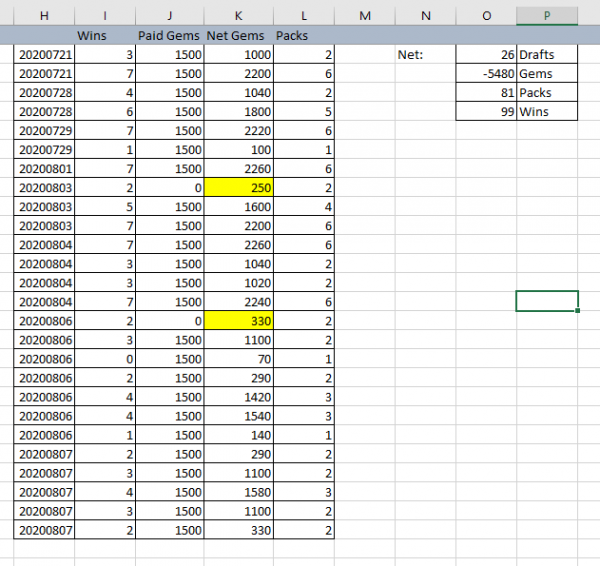
For most players, drafting is the ideal way to complete any set simply because opening pack using gems is way too expensive. There are various templates found online to calculate the number of drafts needed to complete sets, but rather than getting into complex formulas, let me share a method I used previously in M21. I maintained a spreadsheet on my draft records as shown below:

The numbers highlighted in yellow means I paid gold for that particular draft - no gem spending while "Net Gems" means the amount I earned after a given draft. These are all records from premier drafts. The reason why I choose Premier Draft instead of Quick Draft is that there's a high chance I will win more than two packs, and it only takes five wins to earn enough entry fee for the next draft, instead of six wins for Quick Draft. Of course, if you are not confident to get more than four wins per draft, Quick Draft is slightly cheaper and you'll lose fewer gems if the draft does not go well.

In summary, for about 5500 Gems, I got to complete 26 drafts and earned 81 packs. I did not record the number of rares picked in each draft, but let's assume I picked three rares or mythics on average. For 26 drafts, I get 78 cards so basically for these drafts, I earn about 159 rare and mythic cards (adding the 81 from packs to the 78 from drafting).

This is an easy way that you can use to track your progress and estimate the number of drafts you'll need to complete a set collection. There are 63 rares in Zendikar Rising, so assuming you keep all your wildcards, you will need roughly 300 packs, minus the number of rares you obtained through drafts.

In summary, for M21, I picked up 159 rares over the course of 26 drafts, spending a total of 5,500 gems (after accounting for prizes). If I'm able to maintain for ZNR the same win rate as I did for M21, which is about 3.8 wins per draft, in order to obtain the 285 packs I'll need to complete the much larger set that is ZNR, I'll need to do roughly 50 drafts, which should cost me approximately 11,000 gems.

So from here, I can break down those 50 drafts over the 17-week period that ZNR will be the latest Standard-legal set, which is just about three drafts per week. As per the evaluation from the previous section, we need to play three days a week minimum to complete the Mastery Pass – we can totally join a draft each of these days along with clearing our daily quests.

Alright, you're probably asking: how about the mythics? The truth is that it is extremely hard to complete a mythic playset without spending mythic wildcards. In general, I suggest picking up a mythic card during a draft if you haven't completed its playset – whether the card will help your draft deck or not! ZNR has 20 mythics, which is double that of M21, so in order to collect the majority of the orange-rarity cards, I suggest mythic-picking whenever possible.

Don't forget, though, there are 10 Mythic ICRs from the Mastery Pass which will help to reduce your grind by 12.5 percent. And for every 30 packs opened, you will be getting a guaranteed mythic wildcard.

I understand that this is a long grind – totally feel you – but as long as you plan nicely through the methods mentioned, you will eventually complete at least 95 percent of Zendikar Rising set, if not 100!


That's all for this week, next week I'll do another article for "Building on Budget" with Zendikar Rising cards. Stay tuned, and if you have any thoughts, let me know in the comment section below.

Thanks for reading, and I’ll see you again next week!

–Adrian, signing out.

Avatar photo

Adrian Tan

Adrian started playing Magic relatively recently, during Return to Ravnica block. He used to play a lot of paper Magic, but family and work commitments starting at the end of 2016 led to him selling off a large portion of his paper collection to focus on MTGO. He's found speculating on MTGO singles to be a great way to subsidize his gameplay expenses, and he's here to help you go infinite on MTGO!

View More By Adrian Tan

Posted in Arena, Budget Decks, FreeTagged Leave a Comment on Arena: ZNR – How Often Do You Need to Play to Complete a Playset?

Have you joined the Quiet Speculation Discord?

If you haven't, you're leaving value on the table! Join our community of experts, enthusiasts, entertainers, and educators and enjoy exclusive podcasts, questions asked and answered, trades, sales, and everything else Discord has to offer.

Want to create content with Quiet Speculation?

All you need to succeed is a passion for Magic: The Gathering, and the ability to write coherently. Share your knowledge of MTG and how you leverage it to win games, get value from your cards – or even turn a profit.

September ’20 Brew Report, Pt. 2: Hard Landings

Are you a Quiet Speculation member?

If not, now is a perfect time to join up! Our powerful tools, breaking-news analysis, and exclusive Discord channel will make sure you stay up to date and ahead of the curve.

The second half of September 2020 brought us swaths of new decks, as Zendikar Rising did more than its fair share in shaking up the Modern metagame. Today, we'll explore new combo options and view the myriad directions ramp strategies are starting to take.

Kombo Krazy

We'll start with Belcher, a deck that recently received an exposé here at Modern Nexus. David found that while the combo itself was broken on multiple metrics, its inherent unfairness didn't necessarily mean it would come to dominate Modern. Indeed, Belcher achieved modest success this month. But any measure of success should count as a victory for the die-hards who have fruitlessly slaved away at making the deck tick for close to a decade. With the new spell-lands, the deck is at least good enough to place in high-level online events in its opening weeks, which bodes well for Goblin Charbelcher's big fans!

Pure Belcher, SEBASTIANSTUECKL (24th, Challenge #12208833)

Creatures

4 Simian Spirit Guide

Artifacts

4 Goblin Charbelcher

Enchantments

3 Vessel of Volatility

Instants

4 Desperate Ritual
4 Manamorphose
4 Pyretic Ritual
4 Spikefield Hazard
4 Valakut Awakening
4 Veil of Summer

Sorceries

4 Bala Ged Recovery
4 Emeria's Call
4 Irencrag Feat
4 Recross the Paths
1 Reforge the Soul
4 Shatterskull Smashing
4 Turntimber Symbiosis

Sideboard

3 Blood Moon
1 Empty the Warrens
1 Goblin Bushwhacker
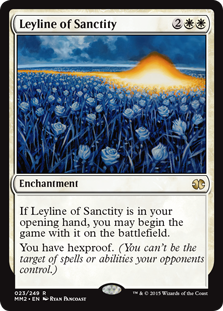
4 Leyline of Sanctity
1 Mountain
3 Pyroclasm
2 Wilt

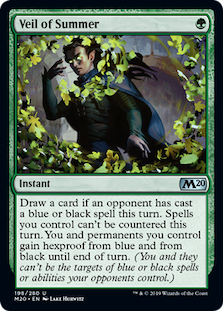
This Pure Belcher deck is simple enough: it seeks to make enough mana to cast and activate Goblin Charbelcher, which ends the game. It runs Leyline of Sanctity in the sideboard as protection from targeted discard, a full set of Veil of Summer in the mainboard to hedge against such disruption in game 1. Veil also beats pesky counterspells, allowing pilots to force through their rituals and payoff spells.

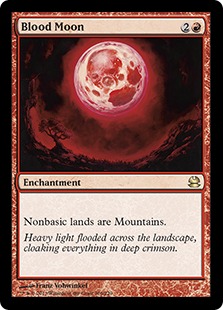
Also featured in the sideboard is Blood Moon, a card that, combined with a turn two ritual, can also end games early. Resolving Moon can give pilots enough time to assemble their Belcher combo the hard way (re: through Damping Sphere), or otherwise assemble an alternate win condition like Empty the Warrens with Goblin Bushwhacker.

Some players liked Moon's prison dimension enough to back it up with Chalice of the Void... and mix all of those elements into the mainboard, giving Belcher a two-pronged attack as of the beginning of a match.

Prison Belcher, SKK (9th, Champs #12208810)

Creatures

3 Tangled Florahedron
4 Simian Spirit Guide

Artifacts

4 Chalice of the Void
4 Goblin Charbelcher

Enchantments

4 Blood Moon

Instants

4 Desperate Ritual
4 Manamorphose
4 Pyretic Ritual
4 Spikefield Hazard
4 Valakut Awakening

Sorceries

4 Bala Ged Recovery
4 Irencrag Feat
4 Recross the Paths
1 Reforge the Soul
4 Shatterskull Smashing
4 Turntimber Symbiosis

Sideboard

1 Collected Company
3 Leyline of Sanctity
3 Lightning Bolt
1 Thassa's Oracle
1 Undercity Informer
4 Veil of Summer
2 Wilt

Running Chalice main in Prison Belcher shifts the deck's makeup a bit. Most notably, Veil of Summer has been relegated to sideboard duties. Veil happens to be dead against the aggro strategies that both decimate combo traditionally and struggle to beat Chalice of the Void, especially Infect and Prowess, so perhaps this build is better suited to combat Belcher's strategic predators.

Mill, D00MWAKE (10th, Champs #12208810)

Creatures

4 Hedron Crab
4 Ruin Crab

Artifacts

4 Mesmeric Orb

Enchantments

1 Search for Azcanta

Instants

4 Archive Trap
1 Cling to Dust
4 Drown in the Loch
4 Fatal Push
1 Mission Briefing
4 Surgical Extraction
4 Visions of Beyond

Sorceries

4 Maddening Cacophony

Lands

2 Darkslick Shores
4 Field of Ruin
3 Island
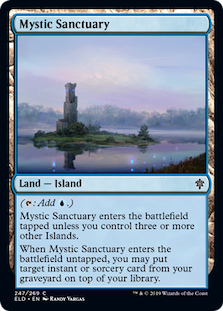
1 Mystic Sanctuary
1 Oboro, Palace in the Clouds
4 Polluted Delta
2 Prismatic Vista
1 Shelldock Isle
2 Swamp
1 Watery Grave

Sideboard

1 Lurrus of the Dream-Den
3 Aether Gust
2 Crypt Incursion
2 Echoing Truth
2 Ensnaring Bridge
2 Extirpate
2 Mystical Dispute
1 Set Adrift

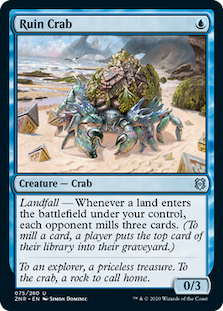
We saw this one coming, too, as Mill was putting up light results even before Ruin Crab was released. Now, though, the deck has undergone some significant changes: gone are clunky once-staples like Glimpse the Unthinkable. Doubling up on the deck's best card lets Mill streamline its strategy like never before, and it'll be interesting to see if tech like Emrakul, the Aeons Torn starts cropping up should Mill sustain its online presence in the coming weeks.

Land Drop & Give Me 50

Belcher doesn't play any "lands," in a sense; to trigger Archive Trap, Mill forces opponents to search up their basics. And on the complete other side of the spectrum lies Ramp, a macro-archetype mostly concerned with making as many land drops as possible. September brought new developments on this front, too, one that had long stagnated around Ponza and Tron.

Uro Gifts, ASPIRINGSPIKE (29th, Modern Challenge #12203374)

Creatures

1 Snapcaster Mage
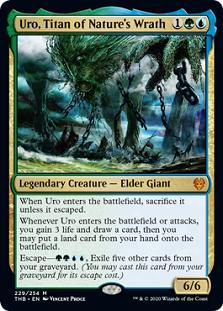
3 Uro, Titan of Nature's Wrath

Instants

3 Abrupt Decay
1 Assassin's Trophy
1 Cryptic Command
4 Fatal Push
3 Force of Negation
4 Gifts Ungiven
4 Growth Spiral
3 Remand

Sorceries

1 Damnation
1 Hour of Promise
1 Life from the Loam
1 Splendid Reclamation
1 Time Warp

Lands

1 Breeding Pool
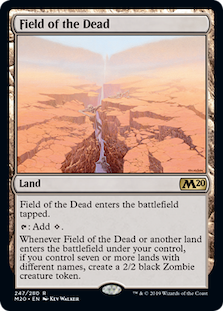
2 Field of the Dead
1 Forest
1 Ghost Quarter
2 Island
1 Lonely Sandbar
4 Misty Rainforest
2 Mystic Sanctuary
1 Oboro, Palace in the Clouds
1 Overgrown Tomb
4 Polluted Delta
1 Prismatic Vista
1 Snow-Covered Forest
2 Snow-Covered Island
1 Sunken Hollow
1 Swamp
1 Watery Grave
1 Zagoth Triome

Sideboard

4 Aether Gust
1 Arasta of the Endless Web
3 Ceremonious Rejection
1 Elder Gargaroth
1 Plague Engineer
1 Pulse of Murasa
1 Raven's Crime
2 Veil of Summer
1 Weather the Storm

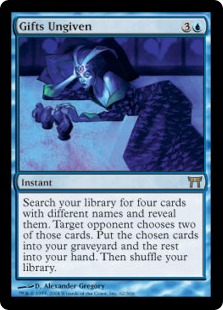
While Uro decks haven't been tremendously popular as of late, Uro Gifts takes the Titan in a whole new direction. Employing Gifts Ungiven over Fact or Fiction (a common include among Wilderness Reclamation-featuring Uro decks) as an instant-speed card advantage engine lets Uro more selectively dump its escaper, and also sets up the Life from the Loam engine.

The sideboard can also be twisted to get the most out of Gifts, with different packages earning includes alongside the now-requisite full set of Aether Gust.

Omnath Ramp, MCWINSAUCE (6th, Challenge #12208833)

Creatures

4 Uro, Titan of Nature's Wrath
3 Omnath, Locus of Creation

Planeswalkers

2 Teferi, Time Raveler
3 Wrenn and Six

Instants

1 Aether Gust
2 Cryptic Command
3 Force of Negation
2 Growth Spiral
1 Lightning Bolt
2 Mana Leak
4 Path to Exile
1 Remand
1 Spell Snare

Sorceries

2 Hour of Promise
1 Sea Gate Restoration

Lands

1 Breeding Pool
2 Field of Ruin
2 Field of the Dead
3 Flooded Strand
1 Forest
1 Hallowed Fountain
1 Island
1 Ketria Triome
4 Misty Rainforest
2 Mystic Sanctuary
1 Raugrin Triome
3 Scalding Tarn
1 Snow-Covered Forest
1 Snow-Covered Island
1 Snow-Covered Mountain
1 Snow-Covered Plains
1 Steam Vents
1 Temple Garden

Sideboard

2 Aether Gust
1 Lightning Bolt
1 Celestial Purge
3 Cleansing Wildfire
1 Dispel
1 Elder Gargaroth
1 Firespout
1 Kozilek, Butcher of Truth
1 Mystical Dispute
1 Stony Silence
1 Timely Reinforcements
1 Veil of Summer

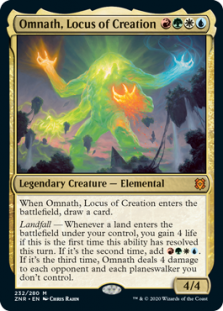
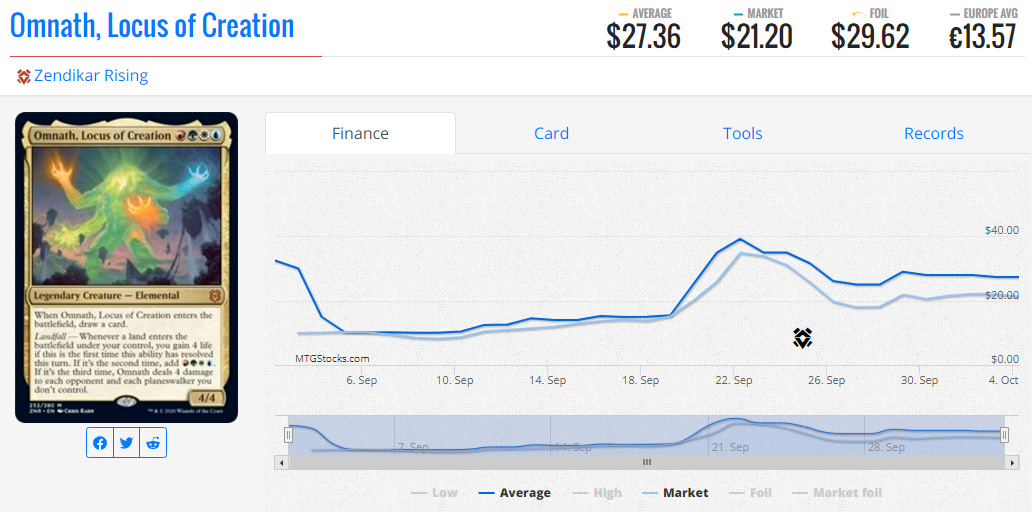
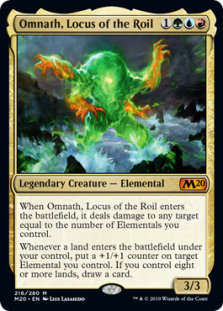
Modern, meet Omnath Ramp, the deck that's been terrorizing Standard and just got Uro banned in that format. Omnath put multiple copies into that same Challenge Top 8, and has also been spotted this month placing in Champs and Preliminaries alike. So, what's up with this Elemental? Let's break down its heavy card text and find out!

When Omnath, Locus of Creation enters the battlefield, draw a card.

We're already off to a pretty good start; this line of text turned Uro into a format-definer, after all. Four mana isn't so steep in a ramp deck, and locking in self-replacement isn't bad at all for a 4/4 at this rate. Think: Thought-Knot Seer!

Landfall — Whenever a land enters the battlefield under your control, you gain 4 life if this is the first time this ability has resolved this turn.

Now, think: Thragtusk! One mana less for one life less seems like a great trade to me. Or even... Siege Rhino? 4 is less than 6 (Rhino's total swing), but there's more to the story....

If it's the second time, add RGWU.

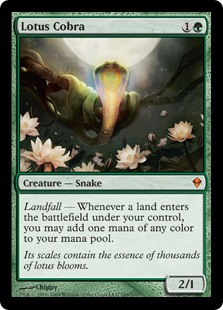
Triggering two land drops in a turn ain't tough in Modern. Just play and crack a fetchland, and voila! To immediately be rewarded with Omnath's entire casting cost for doing so is a bit ridiculous—that's the payoff of two active Lotus Cobras. And it's not like this deck lacks for things to do with all that mana; it's got walkers, interaction, and more. Still, it's a shame RGWU doesn't cleanly cast Cryptic Command or escape Uro.

If it's the third time, Omnath deals 4 damage to each opponent and each planeswalker you don't control.

Siege Rhino, we meet again! Fulfilling this condition is simpler than first appears. Since the first two drops are fulfilled by playing and cracking a fetch, all that's needed for the third is an Uro escape, Growth Spiral resolution, or Field of Ruin activation. 8-point swings, here we come!

Clearly, Omnath provides Ramp decks with enough juice to stick around awhile, especially backed up by the omnipotent Uro. Will Confounding Conundrum manage to suppress this deck in the coming weeks? For that to happen, after all, players have to actually run it!

Borderpost Mastery, ARTEM_KUHTIN (16th, Challenge #12208833)

Creatures

4 Weathered Wayfarer
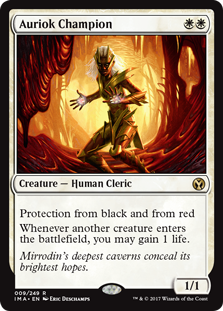
4 Auriok Champion
2 Daxos, Blessed by the Sun
1 Elesh Norn, Grand Cenobite
4 Heliod, Sun-Crowned
4 Knight of the White Orchid
4 Walking Ballista

Artifacts

4 Fieldmist Borderpost
3 Wildfield Borderpost

Enchantments

4 Leyline of Sanctity
4 Mastery of the Unseen
3 Runed Halo

Lands

4 Ghost Quarter
4 Nykthos, Shrine to Nyx
11 Snow-Covered Plains

Sideboard

1 Runed Halo
1 Aven Mindcensor
4 Leonin Arbiter
2 Leonin Relic-Warder
2 On Thin Ice
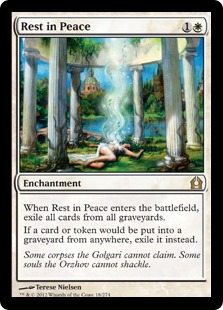
3 Rest in Peace
1 Tectonic Edge
1 Winds of Abandon

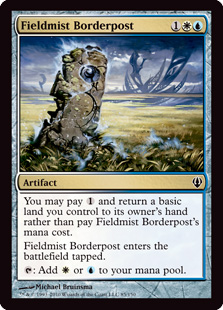
Last up today is this beautiful disaster. Players using the Borderposts to bounce their own lands have historically favored game-ending power-plays to break symmetry, such as Restore Balance. We've also seen the curious artifacts support blue-pitching spells like Disrupting Shoal and bolster blue devotion strategies. But now, we have something totally novel.

In Borderpost Mastery, the Borderposts serve to reduce the number of lands pilots have in play without restricting their mana production capabilities. That way, they can extract maximum value from Knight of the White Orchid (a ramping weenie) and Weathered Wayfarer (a land-searching engine-in-a-can). The 1/1 can grab Nykthos, Shrine to Nyx if it hasn't been drawn already, letting the deck make tons of mana with few lands in play. Otherwise, there's nothing like searching up multiple copies of Ghost Quarter and running opponents out of basics—who needs Leonin Arbiter?

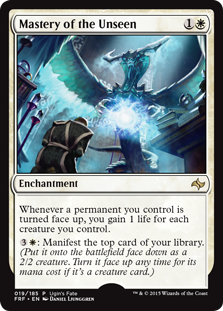
Rounding things out are Auriok Champion and Daxos, Blessed by the Sun to hose aggro, Walking Ballista to decimate creature-combo strategies, and Leyline of Sanctity to beat random combo decks and prevent engines from suffering the wrath of Thoughtseize. And oh yeah, some two-mana enchantments: Runed Halo, a pseudo-removal spell which certain decks simply don't beat, and Mastery of the Unseen, a head-scratching value engine I never thought would see the light of Modern day.

In short, there's a lot to love here for novelty fanatics; I'd be elated if this deck, or a twist on it, caught on in the format!

Land Ho!

September was a wild month for land-hates and land-lubbers alike. As such, I might've skipped over a couple more post-Rising gems. Do you have a favorite new brew from this new Modern that I've missed? Let's pay the deck its due in the comments!

Real Estate is Key: Looking at Zendikar Rising Lands

Are you a Quiet Speculation member?

If not, now is a perfect time to join up! Our powerful tools, breaking-news analysis, and exclusive Discord channel will make sure you stay up to date and ahead of the curve.

When I first started playing Magic: The Gathering and was trying to build a collection for myself so that I could play competitively, several local players drilled one idea into my head: Real Estate is Key. No, they weren't talking about buying physical land (though that can be a pretty great investment) - they were talking about lands in the card game. When you're trying to play in several different formats, and have varied interests in the style of decks you want to play, having access to a diverse mana base is key. Very often - especially in eternal formats - the land base is going to be one of the most expensive cards in any deck.

So I focused on lands first. I traded into and bought shock lands, moved up to getting my playsets of fetch lands, and then finally started getting all of the Revised dual lands I needed (I'm still a few short of a full set, but I'm almost there!) The philosophy of focusing on land bases has stuck with me throughout the years though, and any time a new cycle of lands comes out in a new set I pay attention. Now, a set with new lands that are also spells? Be still my beating heart, Zendikar Rising has definitely caught my attention.

For those of you who may have missed it, Zendikar Rising introduced a new style of double-sided lands that have a land on one side and some sort of spell on the other, and I think they're all super neat. There's a good chance this is one of the new play designs we look back on years from now and recognize as one of the big, innovative shifts for the game. They add all sorts of new interesting play decisions and patterns to the game, and as a player, I'm super excited to get a chance to experiment with all of them. But what about their financial impact? Are they going to be nearly as impactful on our wallets as say, fetch lands, or shock lands? I doubt it, but I still think many of these are worth keeping an eye on. Let's take a look at them all, shall we?

The Mythics

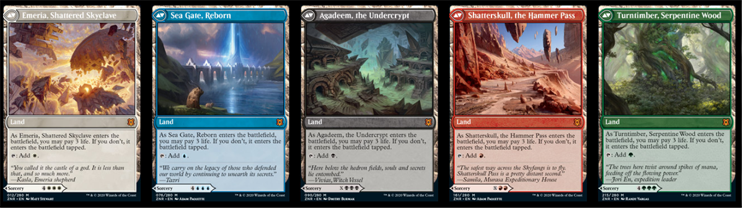
The mythic rare land cycle, which I have been hearing people refer to as "bolt lands," all have a sorcery on one side and can come into play untapped if you pay three life (hence the name "bolt land.") We have Emeria, Shattered Skyclave/Emeria's Call in white; Sea Gate, Reborn/Sea Gate Restoration in blue; Agadeem, the Undercrypt/Agadeem's Awakening; Shatterskull, the Hammer Pass/Shatterskull Smashing (my favorite) in red; and Turntimber, Serpentine Wood/Turntimber Symbiosis in green.

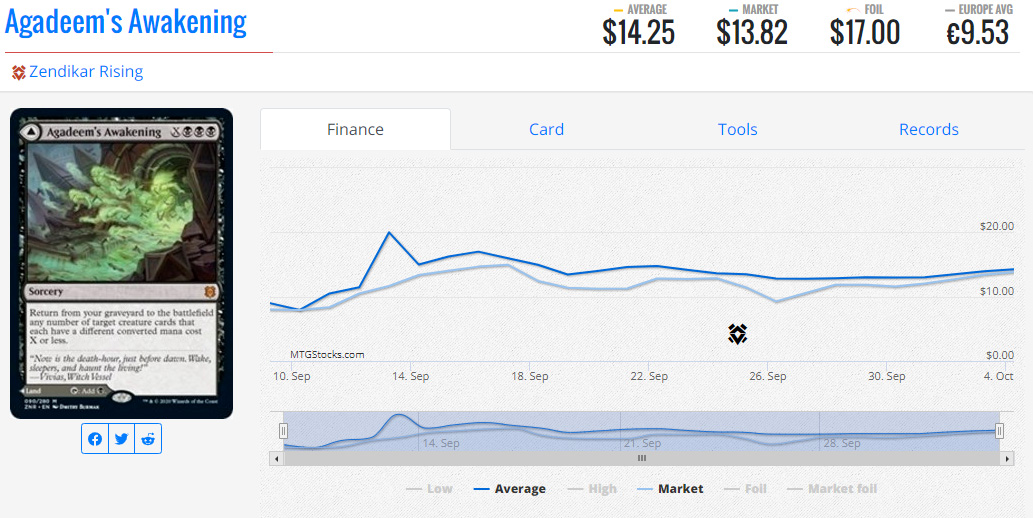
Honestly, I think all of these mythics are pretty cool, design-wise. Currently Agadeem, the Undercrypt is leading the pack price-wise, with the normal printing fetching around $12. It's being played in Standard Rogues lists, but also features in a sweet BR list in Modern that pilot NuBlkAu took to a 5-0 finish in a Modern League. These lands, in general, have the potential to make "landless" Goblin Charbelcher strategies very successful in Legacy, and Agadeem, the Undercrypt also features as a four-of in this Charbelcher list piloted by ziyanghuakai that took a 5-0 finish in a Legacy League.

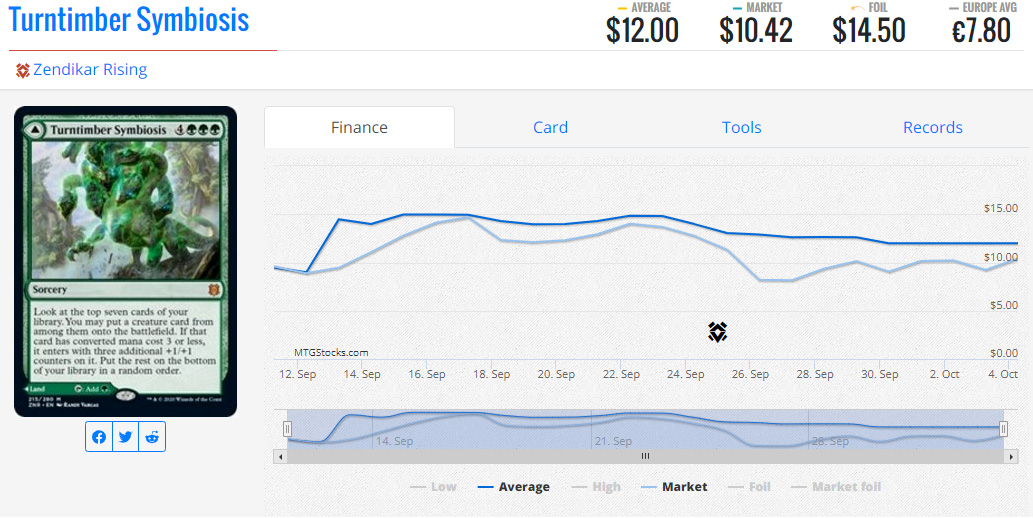
Turntimer, Serpentine Wood, which also is a four-of in that Charbelcher list, is the next most expensive at around $10. Honestly, while we're still in the Pandemic, I don't see these cards rising up much past that - but if the decks that play them in eternal formats take off once we get back to playing in big paper Magic tournaments I could see the ones that get featured shooting up towards the $20 or more range. The versatility of having a spell on one side and a land that can come in untapped is pretty awesome, and I think we'll be seeing a lot more of these in the future.

The Rares

There are two rare land cycles in Zendikar Rising (along with two rare lands, Crawling Barrens and Throne of Makindi which don't really excite me at all), one of which is like the mythic cycle we talked about above, featuring a land on one side and some sort of spell on the other, and the other cycle has lands of different colors on both sides. I'll definitely be adding at least a playset of each to my speculation box if I can trade into them at decent prices in the next couple of months.

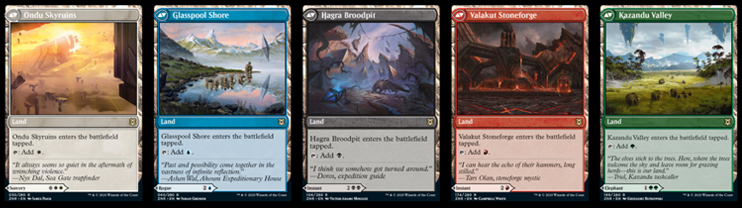
These spell lands are less exciting than their mythic counterparts because the land side comes in tapped, but I still think they're super interesting cards and have the potential to be decent pickups right now. The only ones that are above $2 right now are Valakut Stoneforge/Valakut Awakening and Glasspool Shore/Glasspool Mimic, and even then they're just barely above the $2 mark. While I don't think these have quite the competitive potential that the mythic lands do, they're interesting enough to me that I'll definitely be trying to pick up borderless and foil versions for my spec box (focusing on the red and blue ones) while they're still in print and cheap during the pandemic.

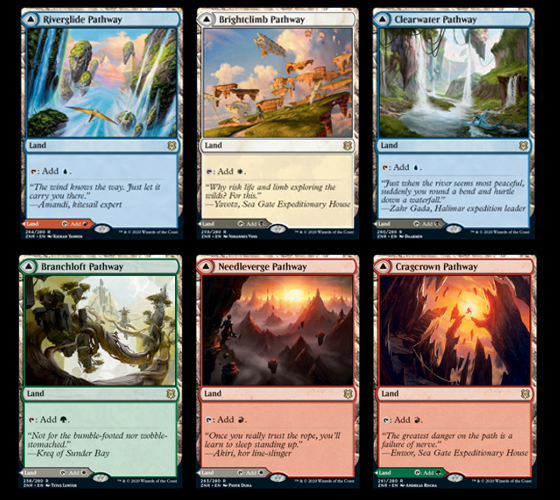
The other rare cycle is one I was particularly pumped about when they were spoiled. Honestly, I may have over-estimated how good they are when I was talking with my playgroup about them - I was raving about how all kinds of eternal decks were going to want them, but my group brought up a pretty serious downside: they aren't fetchable.

Not being able to fetch them out of your deck may be a pretty big downside, but I still think they're versatile enough that people are going to experiment with playing a few copies in their decks! I know I'll be experimenting with them and with their gorgeous, borderless non-foil copies all going for $3-6 (with the only one closely pushing the $6 mark being Riverglide Pathway I'll for sure be picking up a playset of each for my personal collection and plenty of extras for my speculation box.

The Uncommons

There are too many uncommons to list nicely in this particular article, and I doubt that many of them will be worth more than a dollar ever. I do think they're all super neat, and they've made limited for this set a ton of fun to play. I would recommend keeping an eye on Spikefield Cave/Spikefield Hazard and holding onto any you pull or picking up some foils, because it's being played in eternal burn strategies. I could also see the one uncommon land that's not part of the cycle, Base Camp being worth picking up foil copies of, just in case there's ever interest in a party-based EDH deck.

There was an error retrieving a chart for Land Tax

Well, friends, that's all for me today! What do you think of the lands from this set? Have you been able to play with many of them? I've been having a blast playing in drafts and trying new standard brews over on my Twitch channel - where you can find me streaming every Wednesday, Friday, and Sunday. You can also find box openings of this set on my YouTube channel, and if you want to chat feel free to hit me up in the QS Discord or find me @MTGJoeD on all the socials! I hope you're taking care of yourselves out there, have a good week and I'll see you next time!

Building a Sideboard Redux: 2020’s New Rules

Are you a Quiet Speculation member?

If not, now is a perfect time to join up! Our powerful tools, breaking-news analysis, and exclusive Discord channel will make sure you stay up to date and ahead of the curve.

Time waits for no man, as they say, and Magic is the same for all players. Good advice will always be good advice, but relevance is relative. By the same token, Magic players need advice that is relevant to formats as they actually exist. And that must be re-evaluated periodically.

The second Beginner's Guide article I ever wrote dealt with the differences between Modern and Standard sideboards. Standard was about tuning matches; Modern is about bullets, and countering opposing bullets. That general advice still stands. However, I also included a number of rules to serve as a guide for new players. And those needs to be reexamined. In the four years since that article, Modern has changed a lot. Correctly choosing sideboard cards is more important than ever, and the how is trickier than ever. Thus, I need to update not only the rules themselves, but the reasoning behind them.

The Card Selection Rules

First and foremost are the card selection rules. The original ones read thusly:

1) Sideboard cards should be good no matter when they're drawn
2) Play four of the most important cards

The reasoning was that Modern is very cantrip-poor and features powerful aggro decks. There's no time to durdle around, and even if there was, the available cantrips didn't offer much in the way of card selection. The only one worth mentioning at the time was Serum Visions. More pressingly, a lot of highly played cards were only good at the very start of the game. It was therefore essential to maximize the odds of actually having the card early. Leyline of Sanctity is a beating against Jund if and only if it hits on turn 0. If there's no space for all four, it's better to run cards that are good whenever they're drawn.

Over the course of the series, another rule emerged. Initially, I didn't think of it as a rule, but the larval form of the idea is definitely present in the original article. As I wrote more articles, it became more clearly articulated as:

3) Play widely applicable cards.

Modern is very diverse and it isn't possible to have cards for every single matchup, or even to contemplate all the different decks that might appear at a given tournament. So preparing specific hate or answers is pretty pointless. It's far better to play cards that have a wide range of applications as a result.

I stand strongly behind rule 3, and actually think that it has gained importance over time. As more and more cards enter the format, the number of plausible decks just keeps rising. Decks don't stay tier 1 or even tier 2 for years, as they once did. Flexibility is the name of the sideboarding game in Modern.

London's Influence

The first two rules, on the other hand, have lost a lot of their punch. It's not that Modern's got the cantrips to make digging viable for bullets easier now. Opt is not Ponder, and Modern still isn't Legacy-lite. Rather, a major rules change has made finding sideboard cards sufficiently easier that niche answers are much better today than they were in 2016.

The London Mulligan has had a significant effect on Magic by severely reducing variance in opening hands. I won't get into the math here because that's what linking Frank Karsten is for, but the bottom line is that mulliganing aggressively for specific cards is far more effective now than ever before. Therefore, running more niche sideboard cards or running less than a full set is less punishing, and often correct. Sideboarding guides need to reflect this fact and acknowledge that reactive sideboarding is now at its best.

For proof, look no further than Veil of Summer. The card is absolutely everywhere and a significant beneficiary of the London Mulligan. The similar Autumn's Veil and numerous variants existed prior to 2016, but didn't see much play. Granted, Veil of Summer is significantly more powerful than any other option thanks to cantripping and giving players hexproof too, but that's not the whole story. The most widespread use for Veil in Modern has been to counter Thoughtseize, and that's far harder without London.

To make such a play requires a convergence between two players, and there are a lot more playable targeted discard spells than one-mana counters. Thus, it was more likely for the discard player to see their cards than the Veil player, and so Veil's utility was limited. The only time I remember Autumn's Veil seeing play was to protect Scapeshift from counters. And Boseiju, Who Shelters All was just better. The London Mulligan dramatically improves the odds of having Veil of Summer in a given hand, making it more likely to counter Inquisition of Kozilek, which makes it more powerful a card than Autumn's Veil despite being just as niche.

Card Selection: The New Rules

With that in mind, here are my updated sideboard card selection rules:

1) Play widely applicable cards

Just as I said above, Modern has a huge number of distinct decks. It is impossible to prepare for everything. It's better to be ready for a wide variety of decks. The best achievable goal is still to target specific interactions that see widespread play rather than specific decks. However, even when selecting cards with specific decks in mind, it's best to ensure that they're not for just that deck. Modern remains a format where you can, through no fault of your own, dodge the best and most widely played deck in the room for a whole tournament.

2) Play the best card for the job

Or at least, the best that can fit into your deck. Modern's gotten powerful enough that playing cards that hedge your bets is giving up value. There was a time that good enough was good enough, but there are sufficient options now that every deck should be able to play the most high-impact sideboard cards in their colors. This might sound like it's at odds with the first rule, but they're not mutually exclusive. Much like Veil of Summer has many uses in many matchups, it's also the best option for forcing through spells and protecting them from targeted discard. Players need to look for devastating cards that are useful in multiple matchups.

3) The number of slots should reflect the card's importance

In an age of Karn, the Great Creator incentivizing wishboards, it's easy to forget that sideboard cards aren't all tutor targets. Outside of wish targets, the number of slots a given sideboard card gets should reflect its importance to a matchup. When you really need a specific card, you still need to run a full set. The London Mulligan only goes so far, and trying to mulligan for a one-of bullet is still not strategically favorable.

Humans struggles massively against Prowess without Auriok Champion. With Champion, the matchup is still not great, but it is winnable. This is why Humans has taken to full sets of Champion recently while utility spells like Dismember and Deputy of Detention are two-ofs. They're good in the right situations, but not necessarily essential to victory, unlike Champion, and so can be deemphasized. Champion is also a great example of a card that works in many matchups (Jund, Shadow, Burn, other aggro decks) and is the best card at what it does given Humans's deck restrictions.

The Matchup Rules

Next, there were the guides for specific matchups. I was writing just after the end of Eldrazi Winter, and Modern was still trying to figure itself out. However, there were a few constants that were worth discussing. I said that players should:

1) Not concede to Affinity
2) Not concede to Dredge
3) Win the close matchups
4) Not lose good matchups
5) Only try for bad matchups if they're winnable

The reasoning for the first two: these were strong decks that are easily hated on, making it silly to just ignore them. Those are match points being left on the table. The latter three are the prioritization list for matchups. The close matchups are where sideboarding strategy will be most important, as the maindecks are so closely matched. Next, the good matchup is usually good thanks to some advantage inherent to a deck. Don't let that slip away. Finally, every deck has an unwinnable matchup. Just accept it and move on. It may not matter in a tournament, and turning it around takes too much space. If a small change can turn things around, then by all means. But don't prioritize moving a matchup from 20% to win to 40%. You should be trying for 50% to 60%.

Shifts of the Format

The first two rules are obviously problems for current Modern. Most glaringly, Affinity is no longer a deck. It started to fade away in 2017 before being replaced by Hardened Scales in 2018. Artifact decks in general proliferated after that thanks to Whir of Invention, Arcum's Astrolabe, and Urza, Lord High Artificer, so I could have morphed that point into a general point about artifact decks. However, banning Mox Opal has completely killed artifact aggro, and Astrolabe's ban finished off artifact decks in general. Whirza still pops its head up occasionally, but it's so rare that there's no need to worry anymore.

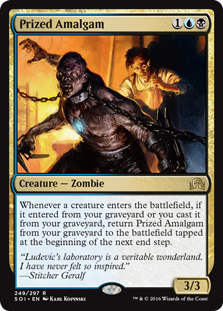
Dredge has gone the complete opposite direction. Golgari Grave-Troll's unbanning had only recently borne fruit with the printing of Prized Amalgam, and at the time I was considering dropping graveyard hate altogether. Oh, to be that naĂŻve and hopeful again. The intervening years have seen Dredge rise and fall but graveyard-centric decks ramped up their presence. It's more important than ever to be ready for graveyard decks and play the hate.

Keeping Priorities Straight

Meanwhile, the rules about matchup prioritization are still valid, though there's some adjustment needed. With Modern being so diverse, it's more important than ever to be aware of where a deck stands in a given matchup and prepare accordingly. The addition of new cards has also made it easier to plan around known sideboard strategies and answers. Thus, while the priorities have not changed, how players have to deal with those matchups has.

Matches: The New Rules

Here are my revised rules for match selection:

1) Play effective graveyard hate. No exceptions; no excuses

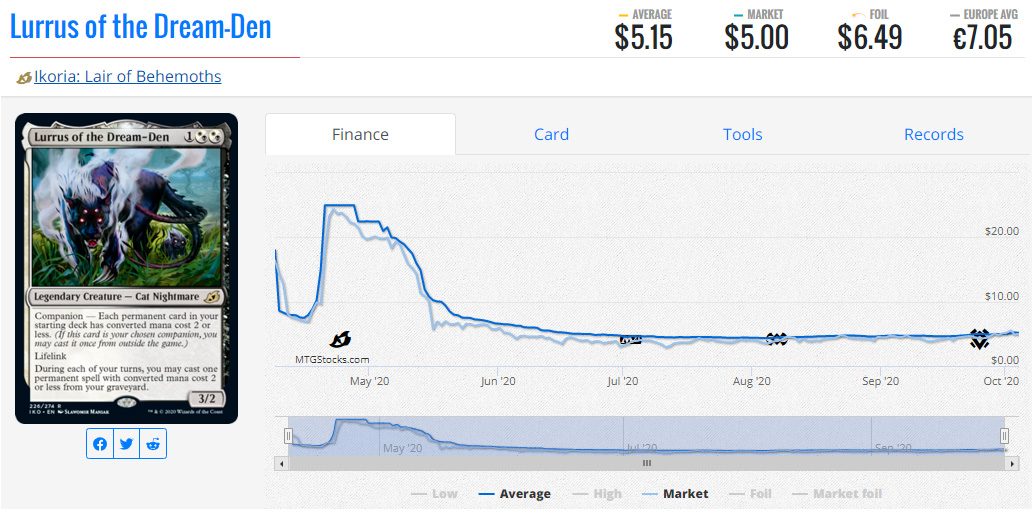
Look, there are lots of graveyard centric decks in Modern, and they consistently do well. Off the top of my head I can think of the compendium of Uro, Titan of Nature's Wrath decks, Jund, Lurrus of the Dream-Den, Death's Shadow, and yes, Dredge is still... (dead?) and kicking. Every deck will hit some other deck that requires hate. There's enough hate that has an additional upside now that there are no excuses for skimping. Stop letting the Zombies off easy!

2) Hate out common, vulnerable decks

You can't be ready for everything. But there is no excuse for not being ready for certain decks. I'm specifically thinking of Amulet Titan and Tron, though Storm and Ad Nauseam are in the same boat. These are common decks that are all hit, and hit hard, by Damping Sphere. Every deck has access to something effective against these decks now-a-days, so don't give them a pass unless the matchup is unlosable or unwinnable for other reasons. This applies to other decks besides the aforementioned; I'm just not listing all of them.

3) Have a specific strategy in mind for targeted matchups

It's not enough to just play effective cards; everybody does that these days! They now need to be deployed in a more strategic manner, as follows.

  • High Priority: Win Close Matchups

This is harder than it used to be, partially because of more and better cards in the pool, and partially because more information on decks is more widely available. Players will be more prepared and are unlikely to straight-up lose to powerful cards. Strategic changes are needed to compliment and enhance the sideboard cards. Players need to prioritize figuring out what matters most after sideboarding, and either target that aspect or dodge it. A classic example of the former is Jund leaning into the attrition of the mirror by boarding out the more situational discard spells for universally useful planeswalkers and card advantage. An example of the latter is ditching the card advantage fight in the control mirror by boarding in Geist of Saint Traft to slide under clunky counterspells and end things quickly.

  • Medium Priority: Don't Lose Good Matchups

You opponent will be more concerned about beating you than you are them. Try to anticipate how they'll try to turn the matchup around and preempt them. This may be directly answering the attack, like playing Wilt for Damping Sphere, or strategically changing your deck like Tron bringing in Thragtusk and Veil of Summer.

  • Low Priority: Improve Winnable Bad Matchups

The only decks that are strong everywhere have the banlist breathing down their necks. If a bad matchup has an obvious weakness that doesn't require inordinate effort to exploit, go for it. Jund is still a dog to Tron in game 1, but thanks to all the land hate printed since 2016, winning games 2-3 is achievable now. And the cards to do so are useful against other decks to boot. Just don't try stretching to beat Bogles as Prowess.

Sideboard with Confidence

This is only a guideline for how to approach sideboarding. Every deck will have to figure out what its priorities are, and if they even need to sideboard in some matchups. That's what testing and experience are for. So always remember to put in the effort to actually earn that win!

Insider: QS Insider Cast – Zendikar Rising, Standard Bannings, Pick-ups for a Paper Future, and more!

Are you a Quiet Speculation member?

If not, now is a perfect time to join up! Our powerful tools, breaking-news analysis, and exclusive Discord channel will make sure you stay up to date and ahead of the curve.

Welcome back to the QS Insider Podcast! Chris O'Berry and Joe Davidson discuss Zendikar Rising, the upcoming Standard banning, the future of paper Magic, whether or not formats being solved so early in the digital age is a problem, and more! This cast was originally broadcasted live to Insiders in the QS Insider Discord, September 24th, 2020.

Show Notes

  • Return of the QS Insider Cast and Introducing Joe
  • Talking about Standard’s Likely Week 1 Ban
  • Cards to Look at from Zendikar Rising
  • The Paper Magic Lull, Alternate Arts, and Smart Pickups for the Future
  • Do Formats Being Solved too Early make it Hard to Spec on Non-eternal Formats?
  • Reserved List Shenanigans - Buyouts and Spikes

Wanna Chat? Find us in the QS Discord or on Social Media

Chroberry - Twitter / Instagram / Twitch

Joe - Twitch / YouTube / Twitter

Scourge of the Skyclaves Settling Down

Are you a Quiet Speculation member?

If not, now is a perfect time to join up! Our powerful tools, breaking-news analysis, and exclusive Discord channel will make sure you stay up to date and ahead of the curve.

A house is not a home, they say, and what is Modern if not a format that houses some of the baddest cards banned from Standard? Well, it's also got Standard newcomers, be they banned or not. And one among them has had its heart set on turning our beloved format into its own sweet digs.

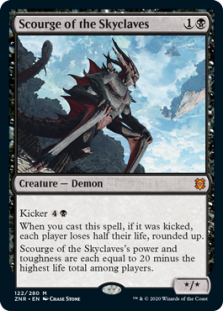
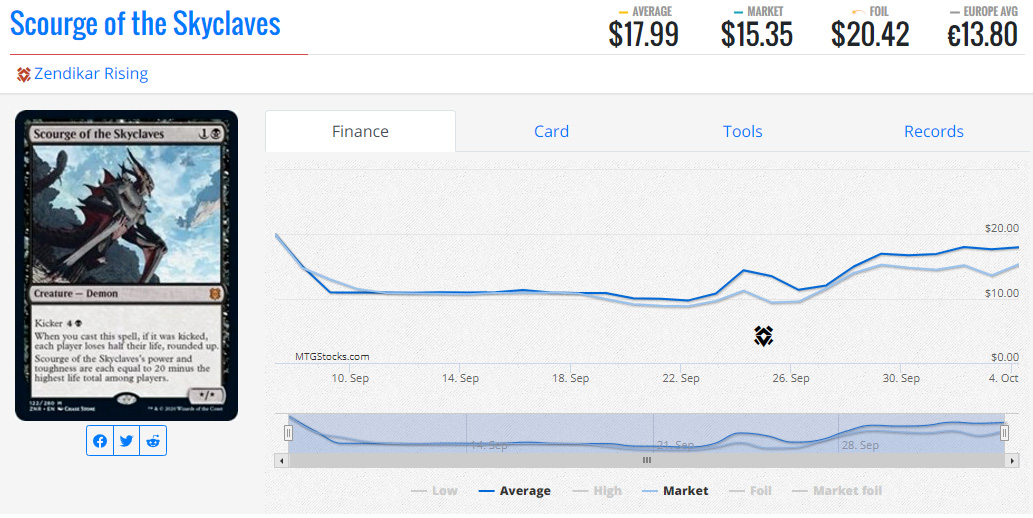
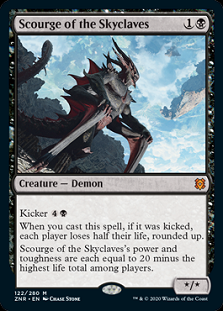
So, what is Scourge of the Skyclaves? Overhyped cardboard? A "budget" Tarmogoyf? A Goyf fit for the Fatal Push era? Today, I want to let the numbers talk. Let's dive right into the decklists and see where Scourge is setting up shop... and where it could!

Potential Homes

While Scourge has yet to sully these neighborhoods, I fear their time is nigh.

BGx Rock

It's mostly conjecture at this point, as I haven't seen any BGx Rock lists running Scourge. But I do think the creature has a place in the deck... depending on the metagame.

Of the BGx Rock strategies, Jund seems like the best fit, as it's got red for the hasty Bloodbraid Elf, the damage-dealing Kroxa, Titan of Death's Hunger, and of course Lightning Bolt. All of these cards help control the opponent's life total, making Scourge less of a liability against the likes of control decks.

Jund, Reynad (2nd, Modern Champs #12208810)

Creatures

4 Lurrus of the Dream-Den
4 Tarmogoyf
2 Dark Confidant
1 Kroxa, Titan of Death's Hunger

Planeswalkers

4 Liliana of the Veil
3 Wrenn and Six

Artifacts

4 Mishra's Bauble

Enchantments

3 Seal of Fire

Instants

2 Assassin's Trophy
2 Kolaghan's Command
1 Lightning Bolt

Sorceries

4 Inquisition of Kozilek
3 Thoughtseize

Lands

4 Blackcleave Cliffs
1 Blood Crypt
4 Bloodstained Mire
1 Forest
1 Ghost Quarter
2 Nurturing Peatland
1 Overgrown Tomb
1 Raging Ravine
1 Stomping Ground
2 Swamp
4 Verdant Catacombs
1 Wooded Foothills

Sideboard

1 Assassin's Trophy
1 Thoughtseize
1 Wrenn and Six
1 Ashiok, Dream Render
1 Boil
4 Cleansing Wildfire
4 Collective Brutality
1 Klothys, God of Destiny
1 Plague Engineer

However, Scourge still underperforms relative to other two-drops against said decks, and Rock decks walk a precarious line in terms of ceding matchup points. As a slower reactive deck, they don't have much of a choice; Modern is too fast and focused to permit much else. Even against aggressive opponents, Rock might find itself hard-pressed to deal enough damage to make Scourge a defensive wall at all. I wouldn't rule out the creature's eventual appearance in Rock decks, but the time will certainly have to be right for it.

Traverse Shadow, alexmw14 (#2, Modern Challenge #12211164)

Creatures

4 Tarmogoyf
4 Death's Shadow
4 Street Wraith
1 Lurrus of the Dream-Den
1 Grim Flayer

Artifacts

4 Mishra's Bauble

Instants

1 Abrupt Decay
2 Cling to Dust
2 Dismember
4 Fatal Push
2 Temur Battle Rage

Sorceries

2 Bloodchief's Thirst
4 Inquisition of Kozilek
4 Thoughtseize
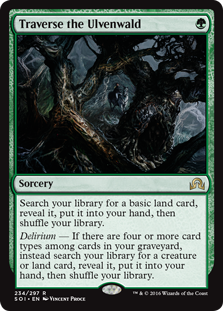
2 Traverse the Ulvenwald

Lands

2 Blood Crypt
4 Bloodstained Mire
1 Forest
3 Nurturing Peatland
2 Overgrown Tomb
1 Stomping Ground
1 Swamp
4 Verdant Catacombs
1 Wooded Foothills

Sideboard

2 Ashiok, Dream Render
3 Cleansing Wildfire
2 Collective Brutality
2 Kolaghan's Command
2 Liliana of the Veil
2 Nihil Spellbomb
2 Veil of Summer

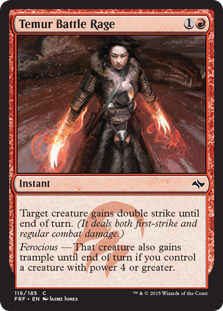
Traverse Shadow initially struck me as a great home for Scourge of the Skyclaves. Even if the deck didn't want too many copies, it could run as little as one to fetch up when Temur Battle Rage found itself in a mid-game hand or if Scourge would otherwise just be the biggest thing on the battlefield. The opportunity cost of running a single copy in a deck that's already swinging with huge Goyfs still seems quite low to me, but alexmw14 opted not to run any in his 2nd-place Challenge list, which incidentally lost to a set of Scourges in the finals. The jury's out on this one, but as of yet, I have not seen a Traverse Shadow list which welcomes Scourge.

Home Alone

There are also plenty of spots that Scourge has gotten comfy in already. Naysayers: take heed!

Rakdos Prowess

Perhaps the most exciting home for Scourge right now is in Rakdos Prowess, a deck that was already sitting on top of the metagame and our power rankings when the card was released.

Rakdos Prowess, COLIOBEWARE (5-0)

Creatures

4 Monastery Swiftspear
4 Soul-Scar Mage
4 Death's Shadow
4 Scourge of the Skyclaves

Artifacts

4 Mishra's Bauble

Instants

2 Apostle's Blessing
2 Dismember
1 Fatal Push
3 Lava Dart
4 Lightning Bolt
2 Mutagenic Growth
2 Temur Battle Rage

Sorceries

1 Agadeem's Awakening
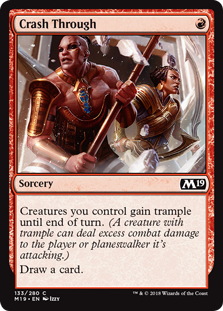
2 Crash Through
4 Thoughtseize

Lands

4 Blood Crypt
4 Bloodstained Mire
1 Mountain
3 Polluted Delta
3 Scalding Tarn
1 Sunbaked Canyon
1 Swamp

Sideboard

1 Lurrus of the Dream-Den
1 Abrade
1 Boil
4 Cleansing Wildfire
1 Engineered Explosives
3 Feed the Swarm
4 Nihil Spellbomb

Rakdos Prowess being good is hardly news to Modernites, but it perhaps bears stating how great Scourge can be in this shell. With Swiftspear locking in early damage before opponents can even play their first land and Push it, Scourge is all but a lock to come down and wreak havoc, as pilots have plenty of control over their own life points. Crash Through lets the big dummy do just that.

Prowess in general has longed for Goyf enough to splash green, and we've seen Jund builds pop up and enjoy success ever since the widespread adoption of Lurrus of the Dream-Den. Scourge all but renders green obsolete, marking a turning point for the archetype.

Grixis Shadow

Traverse Shadow might be missing the boat on Scourge for the moment, or maybe it's me having a tough time figuring out why they wouldn't want it. But ugly little brother Grixis is buying in.

Grixis Shadow, Istillhaveeczema (5-0)

Creatures

1 Snapcaster Mage
2 Scourge of the Skyclaves
4 Street Wraith
4 Death's Shadow
4 Gurmag Angler

Artifacts

4 Mishra's Bauble

Instants

1 Kolaghan's Command
2 Dismember
2 Temur Battle Rage
2 Fatal Push
3 Lightning Bolt
4 Thought Scour
4 Stubborn Denial

Sorceries

2 Inquisition of Kozilek
4 Thoughtseize

Sideboard (15)

2 Plague Engineer
1 Kolaghan's Command
1 Terminate
2 Ceremonious Rejection
3 Aether Gust
2 Cleansing Wildfire
2 Collective Brutality
1 Nihil Spellbomb
1 Ashiok, Dream Render

Lands

1 Steam Vents
1 Island
1 Swamp
2 Scalding Tarn
2 Blood Crypt
2 Watery Grave
4 Bloodstained Mire
4 Polluted Delta

Scourge seems less appealing in Grixis Shadow, primarily because the deck can't reliably find it. Grixis leans on xerox-style cantrips without selection to get to Scourge when the Scourgin's good, and that makes the creature somewhat awkward; at 4, it'll clog too many early hands, and at 1, pilots may never draw it at all. Either way, it's a bomb in the mid-to-late-game. Istillhaveeczema settled on 2 copies, perhaps to test the creature at all. Whether or not mainboard copies are adopted long-term, I do think it will be great in the Grixis Shadow sideboard as extra insurance against aggro decks when needed.

Death's Shadow Zoo

Of all Modern's old Shadow decks, this one seems best positioned to abuse Scourge:

Death's Shadow Zoo, Kuhb (5-0)

Creatures

4 Akoum Hellhound
4 Death's Shadow
4 Monastery Swiftspear
4 Scourge of the Skyclaves
4 Street Wraith

Instants

2 Become Immense
4 Lightning Bolt
4 Mutagenic Growth
4 Temur Battle Rage

Sorceries

1 Agadeem's Awakening
4 Thoughtseize

Artifacts

4 Mishra's Bauble

Lands

1 Stomping Ground
2 Blood Crypt
2 Overgrown Tomb
4 Bloodstained Mire
4 Verdant Catacombs
4 Wooded Foothills

Sideboard

1 Apostle's Blessing
2 Collector Ouphe
2 Fatal Push
1 Gaea's Blessing
2 Hooting Mandrills
2 Inquisition of Kozilek
2 Nihil Spellbomb
3 Veil of Summer

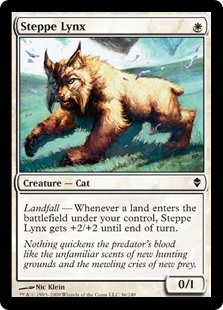
Oh yes, that's Akoum Hellhound! Death's Shadow Zoo used to splash Steppe Lynx (and Wild Nacatl), and now it doesn't have to. The deck is a natural home for Scourge because of its high aggression, suicidal bent, and tendency to want multiple Temur Battle Rage anyway. The deck has long run Hooting Mandrills in that slot, supplementing it with or subbing it out for Tarmogoyf from the sideboard depending on the matchup; Scourge is a clear upgrade to either creature here, as it outgrows both and comes down more unconditionally.

Rakdos Shadow

I did say "existing" Shadow decks. Since Rakdos Prowess and Death's Shadow Zoo have such similar bottom lines, wouldn't it perhaps make sense to fuse the two into a shell tailor-made for Scourge?

Shadow Prowess, TuggaNaxos (#1, Modern Challenge #12211164)

Creatures

4 Soul-Scar Mage
4 Monastery Swiftspear
4 Death's Shadow
4 Scourge of the Skyclaves

Artifacts

4 Mishra's Bauble

Instants

4 Lava Dart
4 Lightning Bolt
2 Mutagenic Growth
2 Temur Battle Rage
2 Apostle's Blessing
2 Dismember

Sorceries

1 Agadeem's Awakening
2 Crash Through
4 Thoughtseize

Lands

4 Blood Crypt
4 Bloodstained Mire
1 Mountain
3 Polluted Delta
3 Scalding Tarn
1 Sunbaked Canyon
1 Swamp

Sideboard

1 Lurrus of the Dream-Den
4 Fatal Push
2 Feed the Swarm
1 Kolaghan's Command
2 Kozilek's Return
2 Kroxa, Titan of Death's Hunger
3 Tormod's Crypt

This deck looks absolutely brutal, combining the best Rakdos Prowess and the Shadow archetypes have to offer into a blazing-fast aggro-combo behemoth. The sideboard hosts 4 Fatal Push, helping clear enemy boards of other Scourges and breaking up creature combos. But the instant doesn't earn a mainboard slot, presumably because this deck is too fast to need the interaction. 0-mana Tormod's Crypt being selected as graveyard hate is also telling. And should pilots need to go long, Kroxa, Titan of Death's Hunger is the only card in the 75 using the grave as a resource, and is here to put a beating on any card advantage-focused strategy.

From Hell to the Hills

Hopefully, by now, Modern players have woken up to the fact that Scourge is for real, and here to stay. Soon, I'll unveil the directions my own Scourge brewing has led me and dissect what each color splash has to offer the Demon. See you then!

News: Uro Banned in Standard, Walking Dead Secret Lair Contains New, Eternal Legal Cards

Are you a Quiet Speculation member?

If not, now is a perfect time to join up! Our powerful tools, breaking-news analysis, and exclusive Discord channel will make sure you stay up to date and ahead of the curve.

Two big Magic: The Gathering news items hit the internet this morning, 9/28/2020, one being an expected Banned and Restricted announcement, and the other containing some unexpected news about the upcoming The Walking Dead Secret Lair.

Uro, Titan of Nature’s Wrath is Banned in Standard

As many players seemed to be expecting, Wizards announced in their Banned and Restricted Announcement today that Uro, Titan of Nature's Wrath will now be banned in Standard.

Ian Duke provided a breakdown of their decision-making process, stating:

In order to weaken these post-rotation ramp strategies, we’re choosing to ban Uro, Titan of Nature's Wrath in Standard. Our goal is to bring these decks down to a level where they are still appealing and competitive, but where natural metagame forces are enough to keep them in check. In general, we prefer this approach to overshooting the mark and removing an archetype from viability. However, we've certainly noted this weekend's strong results for the Four-Color Omnath deck and will continue to watch how that strategy and the overall metagame adjust in the coming weeks.

It's interesting to see a ban almost immediately after a new set releases. Only time will tell if just getting rid of Uro is enough to bring balance back to the Standard metagame!

The Walking Dead Secret Lair will Contain New, Eternal Legal Cards

The first official details of the new Secret Lair x The Walking Dead were released today as well. This new Secret Lair will be available for preorder from October 4-12, and in typical Secret Lair fashion, the cards will be printed and shipped after the preorder period ends.

Here is perhaps the most interesting bit of information from the official Wizards post:

The cards included in this very special Secret Lair drop will be completely new to Magic, depicting the iconic characters of the long-running and critically acclaimed TV series. These are mechanically unique cards that will be legal in Eternal formats. Commander players especially should look forward to bringing their favorite characters from to life on the tabletop!

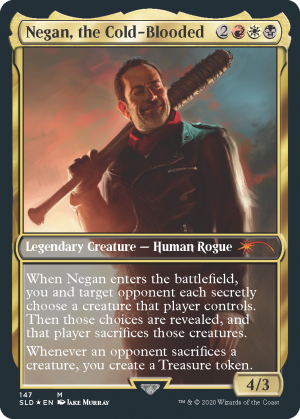
This is the first time a limited run product like this will include completely new cards that are also legal in eternal formats, which sets an interesting precedent for the game. Only two of the cards have been spoiled so far at the writing of this article, one from The Hollywood Reporter and the other from Entertainment Weekly. You can see them below, and we will add the others and their sources as they are revealed.

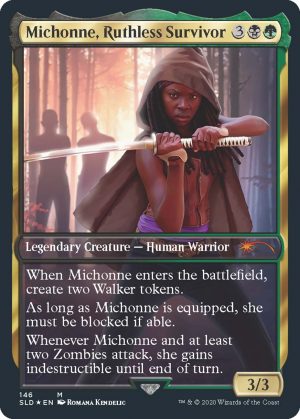
Michonne, Ruthless Survivor revealed in The Hollwyood Reporter

Pitfalls of eBay Completed Listing Data

Are you a Quiet Speculation member?

If not, now is a perfect time to join up! Our powerful tools, breaking-news analysis, and exclusive Discord channel will make sure you stay up to date and ahead of the curve.

In addition to straight-up finding cards at fair prices, these buyouts can also make pricing out cards difficult. As supply dwindles on older, collectible cards, identifying a fair price to buy and sell at can become challenging. Retailers may be out of stock because their pricing is obsolete, TCGplayer may only have a few copies listed at 10x the previous price, and eBay listings may be all over the place.

Enter eBay completed listings. For those who don’t have access to TCGplayer sales data, eBay’s completed listings can be the most useful resource when it comes to pricing out rare cards.

But one should not follow this strategy off a cliff—depending on the situation, eBay’s completed listings are even more misleading than some of the other, more traditional methods for a number of reasons. This week, I’m going to share some examples and highlight key watch-outs when it comes to using eBay’s completed listings as a source of pricing data.

Watchout #1: Insufficient Or Noisy Data

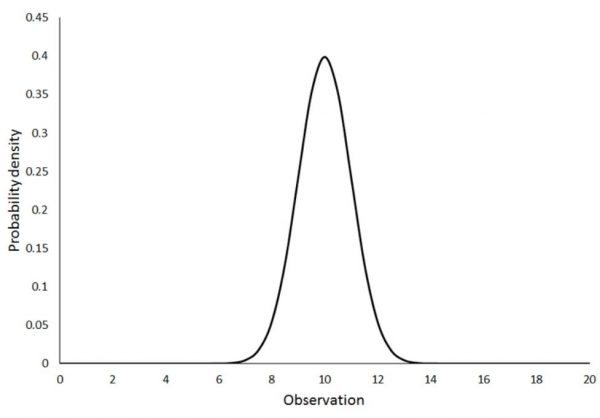
When examining sold listings on eBay, I expect the data to follow a somewhat normal distribution. Copies with nicer conditions would sell for a little more, heavily played copies would sell for a bit less, and the majority would fall within a given window.

The plot above depicts a typical normal distribution. The x-axis would be the value (the mean here would be $10) and the y-axis is the probability density—how likely the card is a given price.

This works well when looking at eBay’s completed listings for a card with reasonable sale volume. A larger data set will tend to work out the “noise” and yield a reliable prediction. When sales data are sparse, however, this can break down.

Consider, for example, a Foreign Black Bordered, Italian Wheel of Fortune. This was a card I was trying to price fairly to sell the other day. The cheapest available copy on TCGplayer and eBay was approaching $300, but that seemed too high. I checked eBay’s completed listings and I see the following sale prices: $145, $139, $199, $261, $275, $298. Note many of these are marked as “best offer accepted”, so the true sale price is tougher to track down.

There was an error retrieving a chart for Wheel Of Fortune

These data hardly fit a normal distribution! There’s a couple low data points below $150, one in the $200 range, and then three near the “current listed prices” of nearly $300. With these data alone, it’s impossible to identify a fair price. A buyer may cite the two lower values and say the card should be worth $140. A seller may refer to the $250+ sold listings and argue this is more reasonable.

One item of note here: the two cheapest sales were both from sellers in Italy. While I have no qualms buying a card from an international seller, I am willing to pay more for domestic copies to avoid dealing with international shipping (especially during a pandemic). Therefore, I would not value those two data points nearly as much.

This is a classic example where there’s just not enough consistent data on eBay to use it as a reliable pricing source. There needs to be enough data and the data needs to be consistent.

Watchout #2: Outliers

The next watchout I have when using eBay’s completed listings for pricing data is related to the above. One way a normal distribution can be disrupted is when there are outliers. No, I’m not talking about the Malcolm Gladwell book. I’m talking about a data point that differs significantly from other observations.

Outliers on eBay could exist for multiple reasons. Maybe the outlier copy was extremely cheap because it was damaged? Maybe one is extremely expensive because it was highly graded? Maybe a copy sold during buyout hype, and no other copies sold in that range since? Or, put harshly, maybe someone made a mistake and listed a copy too low and the card was snapped up.

Whatever the reason, outliers are common on eBay and should not be used when using the website as a source of pricing data.

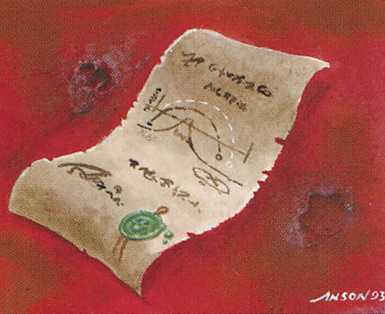
One example immediately comes to mind, because I discovered it a couple weeks ago when doing research for my Italian Legends article. If you missed it, I was examining eBay completed listings for Italian Gwendlyn Di Corci.

There was an error retrieving a chart for Gwendlyn Di Corci

Here are the completed listings, group by month sold, rounded to nearest dollar (note again, sometimes best offers were accepted and actual sale price was lower than listed):

July: $70, $68, $50, $50, $50, $52, $63
August: $80, $60, $70, $180, $200, $270, $270
September: $75

Most of the data lies in the $50 to $80 range, and one listing even sold within this range this month. But hopefully, the outliers are as obvious to you as they are to me. Four copies sold for triple the average over the past three months! Granted, two were graded BGS 8.5, but the other two weren’t! And BGS 8.5 is basically near mint—the grade isn’t adding a ton of value here.

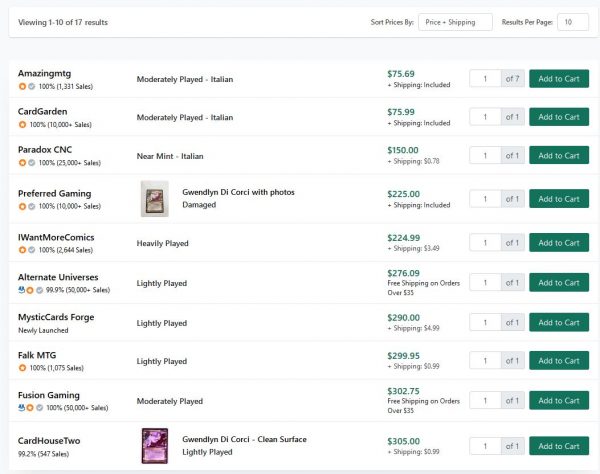
What happened was Gwendlyn Di Corci was bought out. My hypothesis is that a few folks experienced FOMO and panic-bought whatever copies they could find while they were virtually sold out on the internet. The result: a few outlying data points of sold listings. Does this mean Italian Gwendlyn Di Corci is now worth $200? Hardly. If I was a buyer or seller of this card, I would take these outliers with a grain of salt, and use other sources (TCGplayer, ABUGames, Star City Games) for cross-references when determining pricing. TCGplayer’s listings are below, for example.

Just because a copy sold at $200+ doesn’t mean it’s worth $200 on the open market.

Watchout #3: Sellers With Little Feedback

I don’t mean to offend anyone with this section of the article. But let’s face it, buying high-dollar cards from eBay sellers with very little feedback can be risky. Sometimes you get lucky, and the card is 100% legitimate. But this risk needs to be weighed when shopping for expensive cards on eBay.

That risk is not for me—I prefer to buy my cards from eBay sellers with a solid reputation and numerous positive feedback. Yes, it’s true eBay protects buyers from counterfeits and rippers. But do you really want to tie up hundreds of dollars for weeks at a time as you contest a bogus purchase? I don’t, that’s for sure!

Clearly, though, others are more risk-embracing than I am. As a result, you can find an array of completed eBay listings where the sale price was significantly lower than market price.

For example, check out this completed listing for an Unlimited Mox Jet:

There are multiple red flags here. First, the seller’s feedback rating is 5, which is extremely low for someone selling Power on eBay. I wouldn’t go near a piece of Power sold by an eBay seller with less than a few hundred feedback. But the most glaring issue here is the picture—it’s one of PowerNine’s pictures! This seller basically took PowerNine’s listing, copied it, and set the price to $700. I can pretty much guarantee the buyer of this listing did NOT get the Mox Jet pictured.

There was an error retrieving a chart for Mox Jet

This is a fairly obvious bogus listing. But when browsing through eBay’s completed listings in rapid fashion to identify a price point, something like this can skew data. This is an extreme example, I’ll admit, and no one would look at this listing and attempt to argue an Unlimited Mox Jet is worth $700. But there are many misleading listings out there, and sometimes the bogus listing isn’t obvious.

Other examples include: clipped Collectors’ Edition cards being sold as Beta, re-backs of Collectors Edition cards, clipped Beta cards being sold as Alpha, and even legitimate sellers who have are new to eBay and use poor-quality photos in their listing. All of these are situations where a card is likely to sell for significantly less than what a genuine copy would sell for, skewing eBay’s completed listings data.

Wrapping It Up

I spent this entire article explaining why eBay’s completed listings are not reliable sources of data when pricing out a rare or obscure card. In reality, I wholly embrace the pricing strategy as it can be more reliable than any other source out there. My point is not to dissuade others from relying on eBay’s completed listings. Rather, I want to highlight some of the pitfalls in trusting the data too blindly.

There are many different reasons why some data points on eBay need to be discarded. They may be outliers that don’t accurately reflect the current market state, they may be sold by questionable sellers, or there may just be insufficient data available to estimate a price accurately. These are all legitimate reasons to eschew eBay completed listings in favor of an alternate data source.

Next time you’re pricing out a card and negotiating with someone, and they point to a couple of completed listings on eBay, make sure you scrutinize closely. While they may be legitimate sales, there could be a number of reasons why the data aren’t reliable for pricing. With this article in mind, you are now equipped with the tools necessary to examine those listings and make a counter proposal accordingly.

When selling, the counter to insufficient eBay data and a lowball offer is simple. I point out that eBay completed listings are just that: completed. They aren't available any longer, whereas my card is still available. My copy is usually priced below any other available copy on the market. It may be more than the cheapest sold listings on eBay, but those copies aren't available any for purchase. Therefore, while the data may be informative, it should not be the only basis for determining pricing--prices change, circumstances differ, and therefore eBay completed listings cannot be trusted blindly when evaluating a card's price.

Budget-Focused: Cheating Out Cards And Discarding As Win Cons!?

Are you a Quiet Speculation member?

If not, now is a perfect time to join up! Our powerful tools, breaking-news analysis, and exclusive Discord channel will make sure you stay up to date and ahead of the curve.

Hey everyone! Today, we are going to continue with some more Pioneer format cards. However, these may hold value elsewhere! I know I said that I was going to do my best to focus on lower-cmc cards, but I feel these need attention sooner than later, and you all may have a similar outlook at the end of this week’s read!

Cheating Out Creatures

There was an error retrieving a chart for Champion of Rhonas

Champion of Rhonas has the potential to be a champion in Pioneer. It is a four-drop, but a Llanowar Elves and Kiora's Follower, it's coming out turn three if there are no threats. The current price is $0.50(TCGPlayer.com) for the non-foils, $1.13 for the foils, and $1.55 for the prerelease foils. The big deal with this is simple, cheating big creatures into play!

I've been working on a brew that utilizes Champion of Rhonas as a focal point to cheat out Agent of Treachery. Once Agent of Treachery is on the board, we will try to get Thassa, Deep Dwelling to flicker Agent of Treachery each turn. I'm working on streamlining this for speed, but here is the draft so far:

Simic Champion of Rhonas by UndyingMTG

Creatures

4 Llanowar Elves
3 Kiora's Follower
2 Warkite Marauder
2 Wildborn Preserver
4 Garruk's Harbinger
4 Ramunap Excavator
4 Champion of Rhonas
2 Thassa, Deep-Dwelling
2 Agent of Treachery

Other Spells

4 Adventurous Impulse
2 Blossoming Defense
4 Collected Company

Lands

3 Breeding Pool
3 Ketria Triome
2 Lotus Field
4 Fabled Passage
6 Forest
3 Island

It has won some matches in tournament practice, but I've still got some work to do on the list.

We have a slew of other creature options we can use with Champion of Rhonas’ ability. This was just an example of how we can utilize it and reuse it by untapping it with Kiora's Follower. If we can keep it protected or continue dropping other copies of it to use, it can bolster creatures out rather quick! Long-term, this has the potential to get to the $3.00 - $5.00 range for the non-foil printings.

Omnispell Adept - A Star On The Rise?

There was an error retrieving a chart for Omnispell Adept

Next on our list continuing with cheating stuff out we have Omnispell Adept. The non-foils are coming in at $0.35(TCGPlayer.com) and foils are $0.95. This card has so much potential and Simic feels where the strength lies. With the cmc being at five we need to be able to either cheat this out as stated above or ramping into lands and using dorks to drop this by turn three or four. Being able to cheat out big sorceries or instants on your opponents’ turn is huge in any format. With the ability to literally be a wincon, this is something to consider.

Like Inverter of Truth builds, we want to win by milling ourselves out, right? We can use Omnispell Adept to cheat out a card like Enter the Infinite on our opponent's end step. Once we do that, we can use Jace, Wielder of Mysteries or Thassa's Oracle to win the game. Yes, we must make sure we grind into Enter the Infinite but that's how those builds typically work anyway. If you want to take the route of Dimir versus Simic to try and tutor for Enter the Infinite, that is another way to go. In that case, we would have to make sure the build has enough defense to then keep us in the game long enough to do everything.

Say we have a deck where we can utilize red, black, and blue. If we have Omnispell Adept and Glint-Horn Buccaneer out on the board, and we have Enter the Infinite in hand. On an opponent's turn (if the play is available) we can use Adepts’ ability to cheat outEnter the Infinite followed by One With Nothing. This would trigger Glint-Horn Buccaneer to deal damage to all opponents and rightfully you should win. This would be a wincon people would not be expecting in most scenarios. In closing Omnispell Adept has potential in the foil department to go up quite a bit pending play.

Ilharg, the Raze-Boar Flickering Our Way To Victory!

There was an error retrieving a chart for Ilharg, the Raze-Boar

The last card we are going to be talking about is Ilharg, the Raze-Boar. The current price is $5.23 for the non-foils, $12.81 for the foils, and 12.03 for the prerelease copy(TCGPlayer.com). This has been popping up in some top eight decks(MTGtop8.com) in Pioneer, but certainly has room to grow. Gruul Aggro is where this certainly has a position to see optimal usage. Like Champion of Rhonas we are looking at not only cheating cards out but using the flicker ability (Agent of Treachery) on cards with ETB effects.

Given the CMC on Ilharg, it's not too expensive to try and play around. It is surprising that it has not popped up more in the format given the upside it holds. The current price is a steal given where this can potentially go post rotation. Speaking of post-rotation, this is one to keep an eye on to see if it goes any lower in the coming months. If you have any of these on hand consider holding on to them.

Closing today’s article, I just wanted to state something that is probably obvious to most of us. Always look for cards that have ETBs that hold upside. Rather it is helping us offensively or defensively. Sometimes it is the utility cards that help us get to a wincon that holds value. Those same utility cards can draw attention to a wincon that might not otherwise exist causing the value of another card to increase. Just something to keep in mind if you or someone you know comes up with a useful combo that has competitive potential. Thanks again for reading and I hope you come back for the next installment!

Busted Doesn’t Equal Good: Testing ‘Belcher

Are you a Quiet Speculation member?

If not, now is a perfect time to join up! Our powerful tools, breaking-news analysis, and exclusive Discord channel will make sure you stay up to date and ahead of the curve.

Magic can get weird at times. There are utterly incomprehensible cards like Ice Cauldron. Sometimes it's rules weirdness, like Blood Sun not stopping Urborg, Tomb of Yawgmoth's ability. Other times it's a deck that makes no sense, like Inverter of Truth combo. And sometimes it's because of logical paradoxes and other contradictory truths. Case in point: today I'm going to discuss an utterly busted combo deck. Then, I'm going to conclude that it's nothing to worry about. Because it isn't very good, and it's only worth worrying about good decks in a format as big as Modern.

All this lead in may be pointing to an article about Neoform combo. And, to be fair, I've definitely said that about Neobrand before. It's capable of winning on turn 1, but probably won't, and folds to itself most of the time. No, I'll never pass on an opportunity to give Neobrand a kick in the ribs. However, I'm going to have to retire that deck as my whipping boy. Not because anything has changed my mind about Neobrand, but because I don't think I'll be seeing it as much. There's a new kid on the block. A deck that is very similar to Neobrand, but doesn't fizzle mid-combo and is far less likely to sit there and do nothing. It's still not very good, though.

Excuse You

In case you've been hiding under a rock, there's been a lot of buzz about Zendikar Rising making Goblin Charbelcher viable in Modern for the first time. Not the first time the deck was playable, mind, just that it's actually viable now. The older versions were bizarre Elves piles running around five lands and trying to cheat in mana dorks using Chancellor of the Tangle or Simian Spirit Guide into Aether Vial. They were clunky, fragile, and bad, but could just win out of nowhere in theory. They didn't, of course, and I thought that they'd died off by 2016.
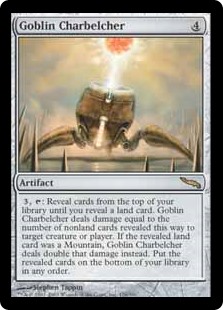
Apparently I was wrong. There existed an entire community dedicated to Modern Belcher the whole time. They never actually fixed the problem with the deck, and all that effort didn't translate to legitimacy, but they were out there. Waiting. For Rising and the MDFC's, apparently. As soon as the combination spell/lands were revealed, speculation about Belcher's viability ran wild. Shatterskull Smashing and its ilk are always the front face, which is a spell, unless being played as a land. Anything that is looking for land won't see Smashing, but anything that allows lands to be played will allow Shatterskull, the Hammer Pass to hit the table. Thus, Belcher can finally run lands without making Goblin Charbelcher ineffective. And so, the Belcher community got to work.

Legacy Lesson

I kept tabs on the goings on, though I didn't participate. I'm always on the lookout for new developments, but I don't know anything about making combo decks. Particularly when it comes to Belcher, the only experience I have is playing against it in Legacy. There, it's an incredibly busted deck that sees almost no play. It either wins on turn 1 or 2, or it doesn't win at all.
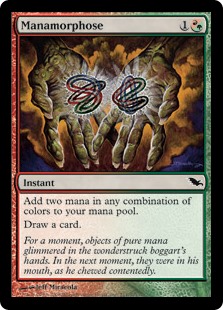
Reason being, it's all-in on the combo and if anything goes wrong, it just loses. I play Death and Taxes and don't fear Belcher because there's nothing I can do against a turn 1 kill, but after that, all it takes is one Deafening Silence, Thalia, Guardian of Thraben, or Phyrexian Revoker to completely shut it down. It's a much less precarious matchup than the other combo decks that can win through a single hate piece.

The Modern version is always going to be worse than Legacy's, so I have nothing meaningful to contribute to the discussion. Modern lacks all the fast mana that makes Legacy Belcher possible. More importantly, Burning Wish is illegal, and with that goes win condition flexibility. Legacy Belcher does just win via dropping the namesake, but more often it has to take a longer route, wishing for Empty the Warrens, Reforge the Soul, or Echo of Eons. The Modern version has to play everything maindeck, with far fewer and more expensive rituals and no moxen. I had no clue how it was going to shake out.

The Key

The breakthrough came when someone realized that Recross the Paths, a piece of Morningtide draft chaff, could stack a landless deck. I guess that's the kind of memory and lateral thinking it takes to be a combo player. This typically sets up a combo turn using Reforge the Soul for the perfect hand. However, there is tons of utility to stacking a deck, including sculpting a gameplan to play around the opponent's interaction. With that piece of tech, the Belcher players hit MTGO, trying to make the deck work.
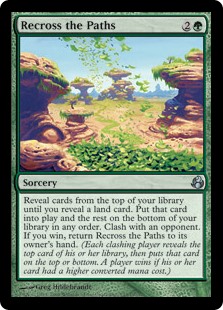
I began to hear about actual results coming in the middle of last week. There had been hyperbolic declarations previously, but actual results can't be dismissed. Admittedly, they were just League results, but that does indicate that there's something to the deck. And that meant that I would have to test the deck. I normally wait for results to come in and then analyze them. However, I had doubts I'd ever get enough data waiting around, so I made my own.

Testing the Brokenness

In fairness, I did have to wait for decklists to come in; I'm not a combo player, I just emulate one on Twitch. About the middle of last week, I saw a list had 5-0'd a League, so I took it as my test platform. It looked like a reasonable deck and much more stable than some of the 4-5 color piles I'd heard about.

Modern Belcher, Sebastian StĂĽckl (MTGO League 5-0)

Creatures

4 Simian Spirit Guide
2 Tangled Florahedron
2 Akoum Warrior

Artifact

4 Goblin Charbelcher

Enchantment

3 Vessel of Volatility

Sorcery

4 Shatterskull Smashing
4 Bala Ged Recovery
4 Recross the Paths
4 Irencrag Feat
1 Reforge the Soul
4 Turntimber Symbiosis

Instant

4 Spikefield Hazard
4 Veil of Summer
4 Desperate Ritual
4 Pyretic Ritual
4 Manamorphose
4 Valakut Awakening

Sideboard

4 Leyline of Sanctity
3 Blood Moon
3 Pyroclasm
2 Wilt
1 Collected Company
1 Thassa's Oracle
1 Undercity Informer
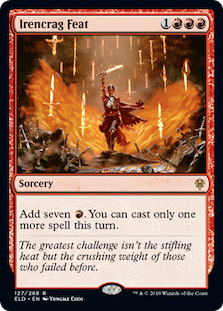
My understanding of this deck and similar is that the goal is to maximize the ability to accelerate into the Belcher kill in game one. To that end, they're playing all the rituals, including Irencrag Feat, which conveniently produces exactly enough mana to cast and activate Goblin Charbelcher. Vessel of Volatility is finally getting some love, too. There's also a full set of Veil of Summer to force the combo through disruption, be it Thoughtseize or Archmage's Charm.

The sideboard is split between answers and a transformational plan. Leyline and Blood Moon are standard faire for red combo, though I was surprised by Pyroclasm. Most combo decks opt for Lightning Bolt or Abrade as the anti-Humans card. I'm unsure what prompted the switch in this case, though sweeping up lots of creatures always seems like a good idea. The transform is for decks with Pithing Needle. The plan is to Recross, stack Collected Company above Oracle and Informer, and make five mana the next turn so that in response to Oracle's trigger, Informer exiles the library and wins the game.

In a Vacuum

First off, I did some goldfishing. I played Storm a few times when I thought I could steal wins, but I'm not naturally a combo player, and needed to learn how this Belcher deck worked. It's also just good policy to try a deck out before testing with it. Especially with a deck as atypical as Modern Belcher.
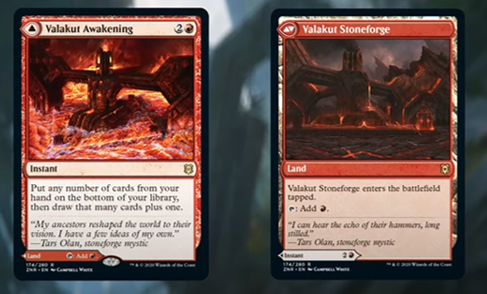
The primary thing I learned is that the deck is very weird. There are a number of ways for it to win on turn two. There exists a turn one kill too, but I never had that come together. However, if the fast kill doesn't happen, Belcher is actually quite slow. Most of the lands come into play tapped, the sculpting cards cost three, and until you go off, there's not much to do. Storm and Neoform have a lot of play to them because they cast lots of cantrips. I mostly just sat around playing tapped lands until I went off. On that note, the deck only wants to keep hands with at least one Valakut Awakening, Recross the Paths, or Goblin Charbelcher. The only cantrip is Manamorphose, so if the opening doesn't have a payoff, it's unlikely to draw one. As such, aggressive mulligans are crucial.

As for the combo itself, I appreciated that it couldn't fizzle. I know that sounds like I'm damning it with faint praise, but that's not my intention. Playing Storm or Neobrand is an exercise in comboing until the win happens, and both fizzle sometimes. It happens a lot more to Neobrand since it's entirely at the mercy of its library order. Sometimes it never draws Nourishing Shoal in 14 cards or it can't get the Laboratory Maniac to win because it's the last card in the deck. If Charbelcher's ability resolves, the game is over.

A Challenger Appears

Lots of decks seem reasonable in a vacuum; what matters is reality. Thus, I was going to have to test against another deck. And I couldn't find anyone able to do some consistent testing against Belcher in time, so I did it all myself.

It's easy to do: Take 60 random basics. Mark them and sleeve them to make a generic proxy deck. Then, write out a decklist that corresponds to your markings. I use a 15 x 4 grid, with the rows being letters and the columns numbers. Thus, I can look at my hand, see A1, and now that it's a specific card. Keeping information straight and not acting on knowledge of the opposing hand is tricky, but you learn how with practice. It's a great way, from experience, to kill time while on hold or when you're done with work for the day, can't go home, and aren't allowed to surf the internet at work.

The deck that I played against Belcher was Humans, because it's currently the only paper Modern deck I have built and handy. The Belcher lists are more set up against slower blue decks, but I'd already spent a lot of time making the proxy deck, and wasn't about to rebuild Stoneblade. Also, I know how Humans matches up against Neoform and Storm, so it's a good yardstick.

Humans, Test Deck

Creatures

4 Noble Hierarch
4 Champion of the Parish
3 Thalia, Guardian of Thraben
3 Phantasmal Image
3 Meddling Mage
3 Kitesail Freebooter
3 Unsettled Mariner
4 Thalia's Lieutenant
4 Mantis Rider
4 Reflector Mage
2 General Kudro of Drannith

Artifact

4 Aether Vial

Lands

4 Cavern of Souls
4 Ancient Ziggurat
4 Unclaimed Territory
4 Horizon Canopy
1 Waterlogged Grove
1 Plains
1 Island

I only played with the maindecks because I don't know how I'm supposed to set up Belcher post-board. The info and streams I found online were contradictory, so I just moved on.

The Results

I got 36 games in between last Wednesday and writing this sentence. I played 20 games where Belcher was on the play and 16 with it on the draw. And Belcher managed records of 5/20 and 2/16 respectively. 2/5 of the play wins and all the draw wins were thanks to turn two kills when Humans didn't disrupt the combo. The other three were longer games with a very anemic Humans clock and low disruption, usually just Kitesail Freebooter. These results are quite poor, but it bears remembering that Humans is very much an anti-combo deck, so the result isn't entirely surprising. Belcher performed better than Neoform typically does, but much worse than Storm in my experience. And the reasons are revealing about the deck.

Numbing the Numbers
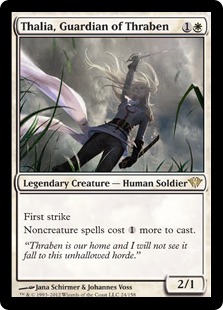
First and foremost is Thalia. She's a legendary anti-combo card, but wasn't always great against Storm because her tax trades with Goblin Electromancer's reduction effect. This certainly makes it harder for Storm to go off, but not impossible. Neoform can't combo against a Thalia. It can certainly tutor up Griselbrand, but won't have the mana to pay for the Shoals and keep going. Manamorphose is also mana-negative against Thalia.

Belcher is between the two decks. It can power through Thalia if it gets out Vessel early, keeps playing lands, and/or plans to go off in over two turns. However, she is a huge wrench in the gears. The rituals become uselessly mana-neutral, while Feat is still somewhat useful.
Meanwhile, Meddling Mage is a huge beating. Storm has multiple combo lines and plays maindeck answers, so Mage is mostly annoying. Neoform scoops to Mage naming Allosaurus Rider, especially game 1. Mage on Belcher is crippling, but not lethal. Most recent versions can only win via resolving Belcher, but they can remove the Mage with Shatterkull Smashing for 4 or more or two Spikefield Hazards. Those aren't impossible to pull off, but the odds aren't great.

Finally, there is a time issue. If Neoform is disrupted at all, it struggles to win. Storm is quite robust, and it takes a lot of disruption to really kill the deck. One is a hiccup; it's the second piece that actually has an effect. Conversely, any disruption of Belcher buys a full turn. However, if it's a momentary thing like Freebooter, that's all that happens. It takes persistent disruption (meaning Thalia) to nail the coffin shut.

The Takeaway
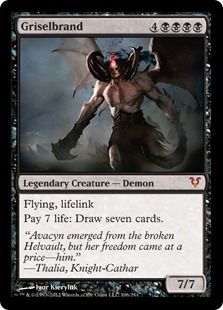
After testing, my conclusion is that Belcher is unlikely to be a format-breaking combo. At least in its current form, it's too clunky and slow to ruin Modern. Humans just eats it, and I doubt it can reliably race other combo decks. There's not enough here to recommend it over the premier combo decks like Ad Nauseam or Storm.

However, I will unequivocally recommend it over Neobrand. It is less all-in, never fizzles mid-combo, has more outs to disruption, and can adapt when it can't just go off. Belcher occupies a middle ground between Storm and Neobrand in all things, and I think that's where it will remain. And the middle combo deck is a fine niche to fill. If Neobrand has been Modern's version of Belcher for the past year, then the new Belcher lists are the best Belcher decks in Modern. Funny how that works out.


The Changing Landscape of Magic: The Gathering

Are you a Quiet Speculation member?

If not, now is a perfect time to join up! Our powerful tools, breaking-news analysis, and exclusive Discord channel will make sure you stay up to date and ahead of the curve.

2020 has been a strange year that will forever change society as we know it. The entire landscape of our future has been altered by the COVID-19 Pandemic in ways both large and small. I don't think there are many industries that haven't been affected, but as a Magic: The Gathering player, writer, and video maker I have been spending a lot of time thinking about what the future of my beloved game is.

I've been writing about preparing to return to paper Magic for a while, and while I don't think there is any way for paper Magic to disappear completely, I do think that the future landscape of the game will be changed enough that both Magic players and those who exist only in the MTG Finance realm will need to plan and adapt accordingly.

There was an error retrieving a chart for Once Upon a Time

The “Arena Pro” and the Digital Age

With the spread of the Pandemic came a mass cancellation from Wizards of the Coast of all paper events, from the major MagicFests all the way down to any sanctioned event at local game stores. With this came what felt like an even bigger push towards supporting and advertising Magic Arena. There have been large, Arena-based tournaments, a bigger emphasis on advertising the Wizards Creator Program and it’s members, as well as options for Local Game Stores to award Arena-based rewards with preorders and in-lieu of actual, in-person FNM events.

This new emphasis on advertising and supporting Arena, along with it being one of the few ways to still be safely playing Magic, has created a new class of online personality I like to call the “Arena Pro.” Where we once had articles, decklists, and tournament results were centered around the professional players and “grinders” that traveled around the world playing in events, now the online Magic space is dominated by Arena streamers and content creators.

Twitch streamers and YouTube creators like Bloody, JdoubleR2, MTGNerdGirl, Crokeyz, Merchant, and plenty of others have risen to prominence over the course of Arena's lifespan. These creators have been producing quality Arena-centered content, playing in big digital tournaments, and even being invited to case large tournaments by the Arena team.

What about all of the players whose main focus had been traveling to paper events? The players who had for so long been driving the sales of competitive cards based on their performances in large cash tournaments across the world?

There was an error retrieving a chart for Uro, Titan of Nature's Wrath

Some of them were already streaming MTGO and Arena (Jim Davis, in particular, puts out lots of great streaming content in both online platforms, and has been doing so long before the Pandemic) and some have jumped into the digital-only world with open arms. It seems like other prominent tournament grinders haven't taken to it quite the same way, and there was even briefly Twitter conflict centered around the idea that consistently reaching high-ranked Mythic in Arena and placing highly in digital-only tournaments was less impressive than grinding and doing well in paper Magic tournaments (for the record, I think that both things take an immense amount of skill and that the Twitter shade-throwing was silly - but it did result in the term "paper-boomer" being coined, which I find amusing.)

You might be asking yourself what the point of all of this is - this being an MTG Finance website and all. Well, with the future of Magic changing so drastically, so is the financial market for cards. The prices of cards in the Standard, Modern, and Legacy formats have always ebbed and flowed based on what was competitively playable (or had major casual player appeal), and players found the data on those cards based upon paper tournament results and articles being written by the paper Magic players and competitive deck brewers who were involved in that world. Speculation based on paper tournament results was a common avenue to partake in for MTG finance, but with the landscape of competitive Magic evolving like it is, we will also have to adapt our methods for evaluating potential card speculations.

There was an error retrieving a chart for Arcane Adaptation

Adapting to the New Normal

With the new wealth of popular Magic players and the widespread adoption of digital, Arena-based tournaments there's more tournament data floating around than ever, more constant discussion of competitive Magic on social media platforms, and some people would argue a much quicker "solving" of formats. As a player concerned with the future of MTG Finance, you'll need to consider where you think the future of competitive Magic is going to land, and act accordingly. Do you think competitive paper Magic will be largely extinct post Pandemic? Then it's probably a smart idea to trade into Reserved List and EDH staples only. Personally, I believe that if we can successfully "beat" COVID-19 and get to a place where the majority of the world can safely gather in large groups again, paper Magic will come back full force.

We'll never go back to a mostly paper-only world like we were living in before the boom in popularity of Arena. The ease of access for players is too easy to ignore, and there's no way Hasbro is going to just lay such a profitable venture aside and focus all of their efforts back into promoting paper product. However, people are going to want to play in paper tournaments again, I don't think there's any doubt about that. I imagine that the first MagicFest after the Pandemic is going to be quite a grand affair, whatever shape that it ends up taking.

When this happens, old veterans of the paper Magic world will need to be picking up new cards for the new formats, all of the new players who have become interested in the game via playing Arena during quarantine are going to want to try out real paper tournaments, and all of the shops and vendors who survived the slump in business during the pandemic are going to jump at the chance to cater to these player bases. Where are all of these players going to look for the best decklists and cards to pick up for their decks? The Arena-pros, and the new culture of competitive Mythic-level Arena grinders who are constantly sharing lists and data online.

There was an error retrieving a chart for Future Sight

So if you're a speculator who wants to keep on top of the fast-moving trends of the competitive Magic scene, I'd recommend you familiarize yourself with the people who are consistently putting out popular competitive Magic content right now. Follow the players on Twitter, keep an eye on their streams and YouTube videos, and dig into all of the Standard tournaments that are being played in Arena right now. When paper Magic comes back in force, those are going to be the sources to keep an eye on when thinking about potential speculation targets at first, and likely far into the future of the game.

In the meantime, I still think it's a great idea to be taking advantage of the low prices we're seeing for competitive Modern staples and stocking up on cards that will be in demand again once we're allowed to sit down across from other players in a large, competitive event again.

Well, that's all for this week folks! How have you been holding up during the Pandemic? Have you been playing any Arena? What have you been targeting lately for your personal speculation boxes? Feel free to reach out to me in the QS Discord, Twitter, or YouTube anytime. If you'd like to chat live, I stream on Twitch every Wednesday, Friday, and Sunday and would love to chat while I jam some games. Take care of yourselves out there, I'll see you next week!

September ’20 Brew Report, Pt. 1: Future Flavors

Are you a Quiet Speculation member?

If not, now is a perfect time to join up! Our powerful tools, breaking-news analysis, and exclusive Discord channel will make sure you stay up to date and ahead of the curve.

New sets always inspire brewing and changes of pace, but this month, I was pleased to see that some of the ideas I've had about future metagame developments seem to be more realistic than I'd thought! If these decks have legs now, imagine what they'll look like when Zendikar Rising drops... maybe quite similar, and who knows if they'll truly take off, but imagine!

Not Your Run-of-the-Mill

Yes, they are weird—Mill decks, that is. "Unfair" in the sense that they win through unconventional means, but certainly not in the respect that they dominate events, let alone metagames. While we haven't seen Mill experience anything but fringe success in Modern, that predicament may change with the upcoming expansion, which bears a functional reprint of the deck's best card, Hedron Crab.

So imagine my surprise when various Mill-oriented builds showed up in the dumps a whole month before Ruin Crab reared its little head.

Uro Mill, ZMUNKEYXZ (5-0)

Creatures

3 Uro, Titan of Nature's Wrath
4 Hedron Crab
1 Snapcaster Mage

Artifacts

4 Mesmeric Orb

Enchantments

1 Search for Azcanta

Instants

1 Abrupt Decay
4 Archive Trap
3 Assassin's Trophy
3 Fatal Push
1 Pulse of Murasa
1 Spell Pierce
2 Surgical Extraction
4 Visions of Beyond

Sorceries

4 Glimpse the Unthinkable
2 Damnation

Lands

2 Breeding Pool
3 Field of Ruin
1 Forest
3 Island
2 Misty Rainforest
1 Nurturing Peatland
1 Overgrown Tomb
4 Polluted Delta
1 Shelldock Isle
1 Swamp
2 Watery Grave
1 Zagoth Triome

Sideboard

1 Fatal Push
1 Surgical Extraction
3 Aether Gust
2 Ashiok, Dream Render
1 Bontu's Last Reckoning
2 Ceremonious Rejection
2 Devour Flesh
3 Weather the Storm

Uro Mill is exactly what it sounds like: Mill splashing Uro, Titan of Nature's Wrath as a fair Plan B. The titan can be turned over freely by Mesmiric Orb, gains life, stands in the way of enemy beatdown plans, and of course turns the corner itself should opponents bring Spell Pierce or Emrakul to the party.

Moving closer to midrange with the fair plan encourages adoption of generic removal such as Fatal Push and Abrupt Decay, permission like Spell Pierce, and even sweepers like Damnation.

With these spells in the picture, cheesing a fast victory via multi-Crab or multi-Trap becomes less a necessity, as Uro Mill has the tools to both enter the midgame and also excel there. Maybe a valid strategic innovation, since the deck in its pure form hardly has the tools to out-race Prowess and the like. Or does it?

UB Mill, YU-KI (5-0)

Creatures

3 Manic Scribe
4 Hedron Crab

Artifacts

4 Mesmeric Orb

Instants

4 Archive Trap
1 Crypt Incursion
3 Fatal Push
2 Surgical Extraction
4 Thought Scour
4 Visions of Beyond

Sorceries

4 Scheming Symmetry
4 Glimpse the Unthinkable
1 Mind Funeral

Lands

2 Darkslick Shores
4 Field of Ruin
1 Flooded Strand
1 Misty Rainforest
1 Oboro, Palace in the Clouds
4 Polluted Delta
1 Scalding Tarn
4 Snow-Covered Island
2 Snow-Covered Swamp
2 Watery Grave

Sideboard

2 Crypt Incursion
1 Fatal Push
2 Surgical Extraction
1 Aether Gust
2 Eliminate
1 Lurrus of the Dream-Den
1 Murderous Cut
2 Mystical Dispute
3 Thoughtseize

Here's pure UB Mill with a 5-0, an achievement the deck and its bullied Manic Scribes repeated later in the month. Maybe there's more to this deck than meets the eye! Given these results, I'd definitely have Mill on my radar heading into the post-Ruin Crab metagame.

UroVine, HYERI0418 (7th, Modern Challenge #12203374)

Creatures

4 Vengevine
4 Stitcher's Supplier
4 Hedron Crab
4 Merfolk Secretkeeper
3 Gravecrawler
3 Narcomoeba
3 Prized Amalgam
2 Satyr Wayfinder
3 Silversmote Ghoul
2 Uro, Titan of Nature's Wrath

Sorceries

4 Creeping Chill
4 Glimpse the Unthinkable

Lands

1 Bloodstained Mire
2 Breeding Pool
1 Island
2 Misty Rainforest
3 Overgrown Tomb
4 Polluted Delta
1 Swamp
4 Verdant Catacombs
2 Watery Grave

Sideboard

1 Assassin's Trophy
3 Fatal Push
3 Force of Negation
3 Force of Vigor
2 Surgical Extraction
3 Thoughtseize

The next unholy Uro-Crab fusion is UroVine, a self-mill strategy reminiscent of Hogaak's glory days. Indeed, another set of Crabs seems like a solid improvement over clunkers like Satyr Wayfinder, and it'll be interesting to see if off-kilter decks like this one experience a renaissance soon.

A Pox on Both Your Houses

Another Modern old-timer to get a fresh look this month was Pox.

Mardu Pox, BODINGLE (5-0)

Creatures

4 Rix Maadi Reveler
4 Silversmote Ghoul
2 Vito, Thorn of the Dusk Rose

Planeswalkers

3 Kaya, Orzhov Usurper

Instants

4 Cling to Dust
4 Lightning Bolt
2 Lightning Helix
2 Kaya's Guile
2 Kolaghan's Command

Sorceries

4 Smallpox
4 Thoughtseize
2 Inquisition of Kozilek
2 Lingering Souls

Lands

4 Blackcleave Cliffs
2 Blood Crypt
4 Bloodstained Mire
1 Castle Locthwain
1 Flagstones of Trokair
1 Godless Shrine
4 Marsh Flats
1 Plains
1 Sacred Foundry
1 Swamp
1 Urborg, Tomb of Yawgmoth

Sideboard

2 Ashiok, Dream Render
2 Bedevil
3 Damping Sphere
3 Fatal Push
2 Infernal Reckoning
1 Molten Rain
2 Nihil Spellbomb

Mardu Pox dips into white for Lingering Souls (sure), Lightning Helix (why not?), and Kaya, Orzhov Usurper (the big payoff). Kaya's a great planeswalker in this deck, providing removal, grave interaction, lifegain, and even a win-condition all for three mana. If the board is kept clear, as is Pox's calling card, Kaya should have plenty of time to put the game away, or at least heavily disrupt opponents relative to what she costs.

For its part, red is co-opted for Lightning Bolt (d'ac), Lightning Helix (porquoi pas?), and Rix Maadi Reveler (voila notre raison-d'ĂŞtre!). Rix is great for gassing up via Spectacle, and provides incidental looting otherwise. Kaya. Smallpox, and naturally all that reach help fulfill the Shaman's "lost life this turn" condition. Regularly re-stocking is a great way to pull ahead in a deck full of cards otherwise singularly focused on exchanging resources.

Some other flashy additions to Pox are Silversmote Ghoul, a carryover from Dredge that plays nice with self-discard and Lightning Helix, and Vito, Thorn of the Dusk Rose, in my eyes the most suspect card here—just seems hard to get a lot out of, since it doesn't recur, costs a ton, dies to Bolt, and only synergizes with a handful of cards.

8-Rack, SUPERCOW12653 (5-0)

Creatures

1 Nether Spirit

Planeswalkers

4 Liliana of the Veil

Artifacts

4 The Rack

Enchantments

4 Shrieking Affliction

Instants

1 Cling to Dust
1 Dismember
3 Fatal Push
1 Funeral Charm

Sorceries

4 Inquisition of Kozilek
4 Raven's Crime
4 Smallpox
3 Thoughtseize
3 Wrench Mind

Lands

4 Castle Locthwain
2 Marsh Flats
4 Mutavault
9 Swamp
4 Urborg, Tomb of Yawgmoth

Sideboard

2 Ashiok, Dream Render
1 Bontu's Last Reckoning
2 Collective Brutality
3 Delirium Skeins
1 Murderous Rider
1 Pithing Needle
1 Plague Engineer
2 Ratchet Bomb
2 Rotting Regisaur

True! 8-Rack is not a brew. But it nevertheless stands tall as Modern's most successful Pox variant. Given that we've seen Pox decks occasionally splash Tarmogoyf in the past, I wonder if post-Zenikar Rising, we won't see some such decks dip into Scourge of the Skycleaves.

Scourge strikes me as significantly better than Rotting Regisaur in this style of deck, which taxes both players' life totals, is known to take some hits from aggro decks, can and does integrate different splashes fo specific tech and incurs the requisite damage from fetchlands, and makes a gameplan of stripping away enemy answers. Fatal Push is pretty far from a card players want to leave in their decks against 8-Rack, but Scourge may otherwise take total command of the battlefield; in other cases, there's Smallpox to regain control of what's happening.

A note on Scourge: I realize the creature is something of a wild card at this point, with many players (even here on Modern Nexus) doubting its effectiveness over other options. But I'm quite optimistic about its prospects, and have been impressed in my testing... more to come on that soon!

And a final note on the above Pox decks: both integrate Cling to Dust as a hyper-versatile cantrip that gains life or draws a card depending on what's needed, all while providing incidental graveyard hate and a late-game card advantage engine. The card's increasing prevalence in Prowess decks speaks to how effective it is. Black players: don't be afraid to try one of these in your flex spot!

A Cure for Zentropy

That about wraps up potential developments in Mill and Pox. Are any of you pet decks looking to improve with the new expansion? Which ones? Let me know down below!

Strange Pricing Trends in the Market

Are you a Quiet Speculation member?

If not, now is a perfect time to join up! Our powerful tools, breaking-news analysis, and exclusive Discord channel will make sure you stay up to date and ahead of the curve.

While there are still pockets of buyouts here and there, I think the “Reserved List Hysteria of 2020” is nearly behind us. There’s still an occasional move, but for the most part I think prices are going to start to settle soon. Copies will gradually come back into stock, sellers will undercut themselves as they realize not many people are willing to pay $250 for a North Star, and things (at least in this market) will return to some sort of new normal.

There was an error retrieving a chart for North Star

As I look at where prices are ending up, I noticed a few head-scratching trends. I’m referring to situations where two different printings of a card have relative prices that don’t make a whole lot of sense. This week I’ll flag these trends and speculate on how the market may correct this temporary, bizarre state.

Revised vs. Unlimited Dual Lands

Dual Lands were hit very hard during this year’s buyout craze; they were also some of the first Reserved List cards to jump. Unlike random unplayables like Gosta Dirk, Dual Lands are seeing significant demand from the Commander community. Because of the explosion in Commander, I honestly can’t say I’m surprised that Tropical Islands start at $376 on TCGplayer. Until large events take place again, and vendors can buy cards from more of the player base, I suspect this trend won’t reverse itself much.

But what doesn’t make much sense at all is the cost of Unlimited Dual Lands relative to their Revised counterparts.

There was an error retrieving a chart for Tropical Island

You see, the price I cited above was for the Revised printing of Tropical Island. You could pay $376 on TCGplayer for a Revised Trop. Or you could pay $388—just $12 more—for an Unlimited copy. Since when were the two printings that close in price?!

This trend also manifests itself at Card Kingdom’s site, where they buy/sell heavily played Alpha, Beta, and Unlimited cards at a significant discount to their near mint pricing. They don’t do the same severe downgrading in price for Revised cards. The result: while Card Kingdom sells near mint and EX/VG Unlimited Tropical Islands for more than Revised, their “Good” pricing is flipped! If you can catch a restock, you could pay $320 for a “Good” Unlimited Trop, whereas a “Good” Revised Trop will run you $377.99!

Now, the discrepancy between Revised and Unlimited Dual Lands isn’t so tiny with the others. For example, the cheapest Unlimited Tundra is damaged and $376, whereas the cheapest Revised on TCGplayer is damaged and $210. Card Kingdom sells “Good” Revised Tundras for $293.99 and “Good” Unlimited Tundras (if you can ever catch a restock) for $320. This makes a little more sense at least.

So what’s going on with Tropical Island in particular? I honestly don’t have a clue on this one, but this gap can’t remain so tiny forever. Remember, there are approximately 289,000 of each Revised rare printed, but only 18,500 of each Unlimited rare. That alone should propel the Unlimited copy’s price upward.

I fully expect the Unlimited printing to climb eventually. But more importantly, there are two things I have gleaned from this odd pricing trend. First, these Dual Lands (and for some reason, especially Trop) are being bought by Commander players wanting the cheapest legal versions they can find. If this was driven by collectors, or even Old School players, the Unlimited copies would move more.

Second, if the Reserved List was removed and Wizards announced a Dual Land reprint tomorrow, these would tank in price (depending on the magnitude of the reprint). Why? Because it’s clear players are looking to acquire the cheapest versions possible of these cards. Any meaningful reprint would introduce cheaper copies of Dual Lands into the market, and Revised and Unlimited copies would suffer. But this isn’t a Reserved List article, so I’ll end the chatter here.

Timetwisters are How Much?!

When’s the last time you shopped around for a Timetwister? At one point, the card had virtually disappeared from the market.

There was an error retrieving a chart for Timetwister

Even now, there are so few copies available for sale that sellers are able to name their price. TCGplayer is completely sold out, and the market price (reflecting some of the last copies sold) is up to $2771. The cheapest “Buy It Now” listing on eBay is a staggeringly high $4500. The last copy to have sold on eBay was $3250, with near mint copies selling over $4000.

I have to imagine that, just like Dual Lands, Timetwister is moving due to Commander. It’s the only piece of Power legal in Commander, and it has very little relevance in other formats (even Old School and Vintage).

Once again, Commander players are swarming over the cheapest copies they can find. Thus, the white-bordered Unlimited printing is climbing the most. If you wanted to buy a Timetwister right now, for immediate use, you’d be stuck paying up for that $4500 copy on eBay. But why spend that much for an Unlimited copy when you could spend $5555, about 22% more, for a Beta copy?!

In fact, the last two Beta copies to have sold on eBay cost $5000 and $4000. The delta between Unlimited and Beta printings has gotten relatively small. Other Power has followed a similar trend, with nicer Unlimited copies fetching nearly the same price as beat-up Beta copies. Don’t just take my word for it—check out this tweet from Tales of Adventure President Michael Caffrey:

As I’ve done some collection clean-up during wild Reserved List buyouts, I’ve reached a threshold where I could effectively trade up into a piece of Power. When I made a comment about this on Twitter, Michael chimed in and cited how close Unlimited and Beta were in price at the moment. He even mentions how Black Lotus is following this same trend.

This has me scratching my head. For Timetwister, I assumed the trend was driven by Commander play. But Commander players can’t use any of the other pieces of Power. Maybe Old School players and collectors are similarly cashing out of Reserved List buyouts and using the proceeds to trade up to Power? That’s certainly what I’m doing, so it stands to reason others are looking for the same opportunities. But for every 100 Unlimited Timetwisters printed, only 17 Beta copies were printed. Thus, I expect the delta between the two printings will widen eventually, perhaps as holders of Unlimited copies start seeking the opportunity to trade up to Beta.

The Cheapest Wheel of Fortune Is…

Wheel of Fortune holds synergies with so many newly-printed Commander cards. It’s no surprise that this card is hot. Since it’s on the Reserved List, we can expect it to continue climbing in price with every new card that takes advantage of the card-drawing machine.

There was an error retrieving a chart for Wheel Of Fortune

Based on the trend with Dual Lands and Timetwister, we’d expect that Revised copies, being the cheapest, would have climbed the most lately. Perhaps Unlimited copies would be priced closely to Revised since Commander players are more interested in acquiring the cheapest legal printing they could find, rather than a rarer, more collectible (and more vibrantly colored) Unlimited version.

But a quick search on TCGplayer yields an interesting find. Here’s a quick breakdown of cheapest copies available for multiple versions of Wheel of Fortune on TCGplayer:

Revised: $180 (Damaged)
Unlimited: $260 (HP)
Collectors’ Edition: $224.99 (LP)
Foreign White Border: Out of Stock
Foreign Black Border: $283
International Edition: Out of Stock

A few things surprise me with the pricing above. First, the cheapest Unlimited copy is significantly more expensive than the cheapest Revised copy. If the demand for Wheel of Fortune was mostly coming from Commander players, I would have expected the two to be more closely priced like with Tropical Island.

Second, and more surprisingly, the non-tournament legal Collectors’ Edition copies are more expensive than their Revised counterpart! In fact, Foreign Black Border copies, which are tournament legal, are selling for only a tiny premium relative to Unlimited and Collectors’ Edition copies. Why is that? Why are Collectors’ Edition copies so expensive relatively speaking?

I would reference Card Kingdom’s pricing here to support this strange observation, but their CE/IE prices are a bit outdated (currently $149.99 and sold out). ABUGames has a couple near mint FBB copies in stock—their pricing for FBB is just $50 more than near mint Revised and $115 less than Unlimited. This trend is reversed from TCGplayer, currently. For this card, in particular, it’ll be interesting to observe how pricing unfolds.

No matter how you slice it, Wheel of Fortune is hot. But before rushing to buy the cheapest Revised copy on TCGplayer, remember to browse other versions/sets—you may be surprised what just a few bucks more can get you!

Wrapping It Up

The Reserved List buyouts will never fully go away. But just like the summer, I also think the days of massive buyouts are behind us—at least for now. I’m sure we’ll have another round of Reserved List buyouts in a couple years, as this tends to be a cyclical trend.

As the dust settles, some bizarre trends remain behind. The most perplexing ones to me are occurring with Tropical Island, Timetwister, and Wheel of Fortune. Similar observations can be made with other Dual Lands and pieces of Power, but these three cards seem to stand out the most.

In each of these cases, the delta between the cheapest printing and next-cheapest printing is tiny. For Tropical Island, I’m surprised by how closely Unlimited copies are priced with Revised copies. For Timetwister, I’m surprised by the delta between Unlimited copies and Beta copies. And for Wheel of Fortune, I’m surprised that FBB copies are not too much higher than Revised copies and that Collectors’ Edition copies are more expensive than Revised! It’s a strange market indeed.

I don’t think these bizarre trends will last forever—eventually, the market will correct. In the meantime, just be aware of them and make sure you do some research before rushing out to buy. If you’re in the market for one of these cards, or a card in a similar category, do some research and shop around before you pull the trigger. You just may be able to get a rarer, more desirable copy for just a little more than you were originally planning to spend!

Want Prices?

Browse thousands of prices with the first and most comprehensive MTG Finance tool around.


Trader Tools lists both buylist and retail prices for every MTG card, going back a decade.

Quiet Speculation