Are you a Quiet Speculation member?
If not, now is a perfect time to join up! Our powerful tools, breaking-news analysis, and exclusive Discord channel will make sure you stay up to date and ahead of the curve.
In addition to straight-up finding cards at fair prices, these buyouts can also make pricing out cards difficult. As supply dwindles on older, collectible cards, identifying a fair price to buy and sell at can become challenging. Retailers may be out of stock because their pricing is obsolete, TCGplayer may only have a few copies listed at 10x the previous price, and eBay listings may be all over the place.
Enter eBay completed listings. For those who don’t have access to TCGplayer sales data, eBay’s completed listings can be the most useful resource when it comes to pricing out rare cards.
But one should not follow this strategy off a cliff—depending on the situation, eBay’s completed listings are even more misleading than some of the other, more traditional methods for a number of reasons. This week, I’m going to share some examples and highlight key watch-outs when it comes to using eBay’s completed listings as a source of pricing data.
Watchout #1: Insufficient Or Noisy Data
When examining sold listings on eBay, I expect the data to follow a somewhat normal distribution. Copies with nicer conditions would sell for a little more, heavily played copies would sell for a bit less, and the majority would fall within a given window.
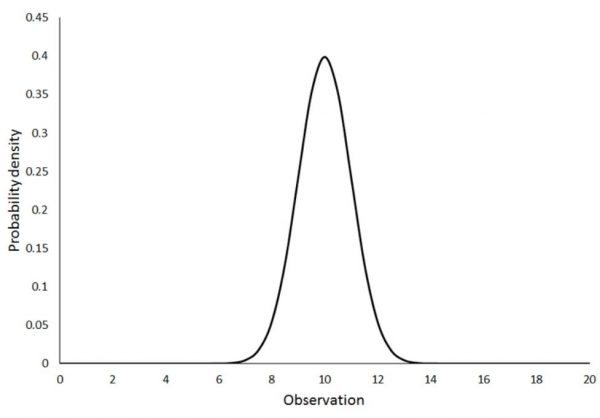
The plot above depicts a typical normal distribution. The x-axis would be the value (the mean here would be $10) and the y-axis is the probability density—how likely the card is a given price.
This works well when looking at eBay’s completed listings for a card with reasonable sale volume. A larger data set will tend to work out the “noise” and yield a reliable prediction. When sales data are sparse, however, this can break down.
Consider, for example, a Foreign Black Bordered, Italian Wheel of Fortune. This was a card I was trying to price fairly to sell the other day. The cheapest available copy on TCGplayer and eBay was approaching $300, but that seemed too high. I checked eBay’s completed listings and I see the following sale prices: $145, $139, $199, $261, $275, $298. Note many of these are marked as “best offer accepted”, so the true sale price is tougher to track down.
These data hardly fit a normal distribution! There’s a couple low data points below $150, one in the $200 range, and then three near the “current listed prices” of nearly $300. With these data alone, it’s impossible to identify a fair price. A buyer may cite the two lower values and say the card should be worth $140. A seller may refer to the $250+ sold listings and argue this is more reasonable.
One item of note here: the two cheapest sales were both from sellers in Italy. While I have no qualms buying a card from an international seller, I am willing to pay more for domestic copies to avoid dealing with international shipping (especially during a pandemic). Therefore, I would not value those two data points nearly as much.
This is a classic example where there’s just not enough consistent data on eBay to use it as a reliable pricing source. There needs to be enough data and the data needs to be consistent.
Watchout #2: Outliers
The next watchout I have when using eBay’s completed listings for pricing data is related to the above. One way a normal distribution can be disrupted is when there are outliers. No, I’m not talking about the Malcolm Gladwell book. I’m talking about a data point that differs significantly from other observations.
Outliers on eBay could exist for multiple reasons. Maybe the outlier copy was extremely cheap because it was damaged? Maybe one is extremely expensive because it was highly graded? Maybe a copy sold during buyout hype, and no other copies sold in that range since? Or, put harshly, maybe someone made a mistake and listed a copy too low and the card was snapped up.
Whatever the reason, outliers are common on eBay and should not be used when using the website as a source of pricing data.
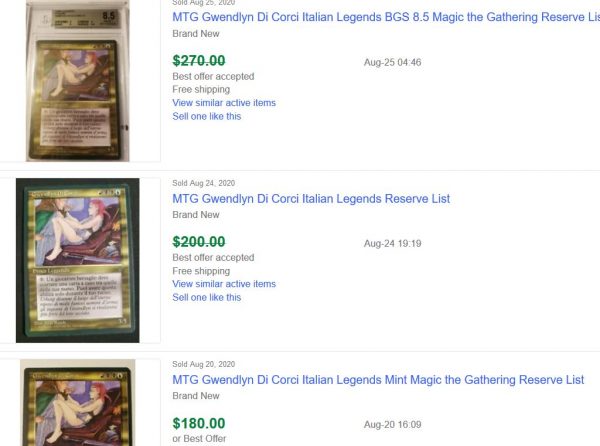
One example immediately comes to mind, because I discovered it a couple weeks ago when doing research for my Italian Legends article. If you missed it, I was examining eBay completed listings for Italian Gwendlyn Di Corci.
Here are the completed listings, group by month sold, rounded to nearest dollar (note again, sometimes best offers were accepted and actual sale price was lower than listed):
July: $70, $68, $50, $50, $50, $52, $63
August: $80, $60, $70, $180, $200, $270, $270
September: $75
Most of the data lies in the $50 to $80 range, and one listing even sold within this range this month. But hopefully, the outliers are as obvious to you as they are to me. Four copies sold for triple the average over the past three months! Granted, two were graded BGS 8.5, but the other two weren’t! And BGS 8.5 is basically near mint—the grade isn’t adding a ton of value here.
What happened was Gwendlyn Di Corci was bought out. My hypothesis is that a few folks experienced FOMO and panic-bought whatever copies they could find while they were virtually sold out on the internet. The result: a few outlying data points of sold listings. Does this mean Italian Gwendlyn Di Corci is now worth $200? Hardly. If I was a buyer or seller of this card, I would take these outliers with a grain of salt, and use other sources (TCGplayer, ABUGames, Star City Games) for cross-references when determining pricing. TCGplayer’s listings are below, for example.
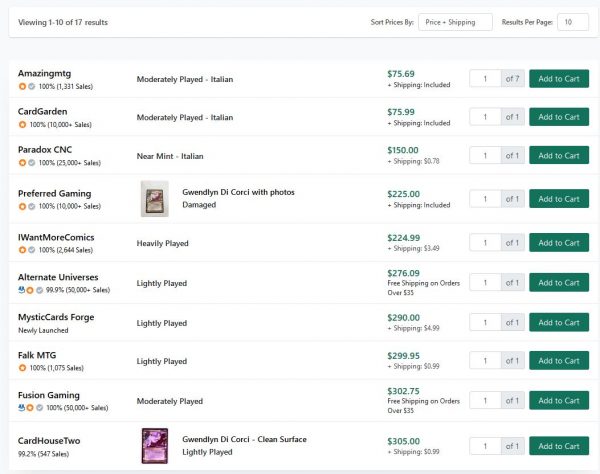
Just because a copy sold at $200+ doesn’t mean it’s worth $200 on the open market.
Watchout #3: Sellers With Little Feedback
I don’t mean to offend anyone with this section of the article. But let’s face it, buying high-dollar cards from eBay sellers with very little feedback can be risky. Sometimes you get lucky, and the card is 100% legitimate. But this risk needs to be weighed when shopping for expensive cards on eBay.
That risk is not for me—I prefer to buy my cards from eBay sellers with a solid reputation and numerous positive feedback. Yes, it’s true eBay protects buyers from counterfeits and rippers. But do you really want to tie up hundreds of dollars for weeks at a time as you contest a bogus purchase? I don’t, that’s for sure!
Clearly, though, others are more risk-embracing than I am. As a result, you can find an array of completed eBay listings where the sale price was significantly lower than market price.
For example, check out this completed listing for an Unlimited Mox Jet:
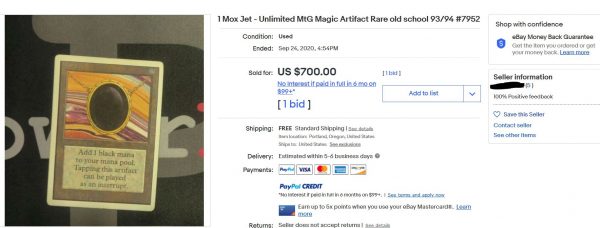
There are multiple red flags here. First, the seller’s feedback rating is 5, which is extremely low for someone selling Power on eBay. I wouldn’t go near a piece of Power sold by an eBay seller with less than a few hundred feedback. But the most glaring issue here is the picture—it’s one of PowerNine’s pictures! This seller basically took PowerNine’s listing, copied it, and set the price to $700. I can pretty much guarantee the buyer of this listing did NOT get the Mox Jet pictured.
This is a fairly obvious bogus listing. But when browsing through eBay’s completed listings in rapid fashion to identify a price point, something like this can skew data. This is an extreme example, I’ll admit, and no one would look at this listing and attempt to argue an Unlimited Mox Jet is worth $700. But there are many misleading listings out there, and sometimes the bogus listing isn’t obvious.
Other examples include: clipped Collectors’ Edition cards being sold as Beta, re-backs of Collectors Edition cards, clipped Beta cards being sold as Alpha, and even legitimate sellers who have are new to eBay and use poor-quality photos in their listing. All of these are situations where a card is likely to sell for significantly less than what a genuine copy would sell for, skewing eBay’s completed listings data.
Wrapping It Up
I spent this entire article explaining why eBay’s completed listings are not reliable sources of data when pricing out a rare or obscure card. In reality, I wholly embrace the pricing strategy as it can be more reliable than any other source out there. My point is not to dissuade others from relying on eBay’s completed listings. Rather, I want to highlight some of the pitfalls in trusting the data too blindly.
There are many different reasons why some data points on eBay need to be discarded. They may be outliers that don’t accurately reflect the current market state, they may be sold by questionable sellers, or there may just be insufficient data available to estimate a price accurately. These are all legitimate reasons to eschew eBay completed listings in favor of an alternate data source.
Next time you’re pricing out a card and negotiating with someone, and they point to a couple of completed listings on eBay, make sure you scrutinize closely. While they may be legitimate sales, there could be a number of reasons why the data aren’t reliable for pricing. With this article in mind, you are now equipped with the tools necessary to examine those listings and make a counter proposal accordingly.
When selling, the counter to insufficient eBay data and a lowball offer is simple. I point out that eBay completed listings are just that: completed. They aren't available any longer, whereas my card is still available. My copy is usually priced below any other available copy on the market. It may be more than the cheapest sold listings on eBay, but those copies aren't available any for purchase. Therefore, while the data may be informative, it should not be the only basis for determining pricing--prices change, circumstances differ, and therefore eBay completed listings cannot be trusted blindly when evaluating a card's price.


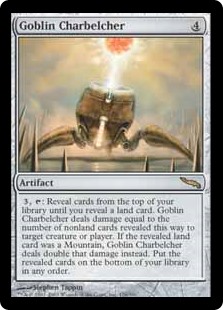 piles running around five lands and trying to cheat in mana dorks using Chancellor of the Tangle or Simian Spirit Guide into Aether Vial. They were clunky, fragile, and bad, but
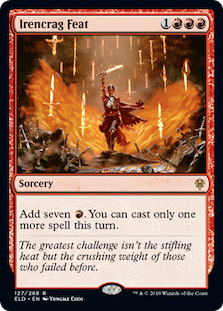
  Reason being, it's all-in on the combo and if anything goes wrong, it just loses. I play Death and Taxes and don't fear Belcher because there's nothing I can do against a turn 1 kill, but after that, all it takes is one Deafening Silence, Thalia, Guardian of Thraben, or Phyrexian Revoker to completely shut it down. It's a much less precarious matchup than the other combo decks that can win through a single hate piece.
 for the perfect hand. However, there is tons of utility to stacking a deck, including sculpting a gameplan to play around the opponent's interaction. With that piece of tech, the Belcher players hit MTGO, trying to make the deck work.
 My understanding of
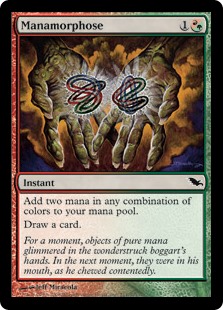
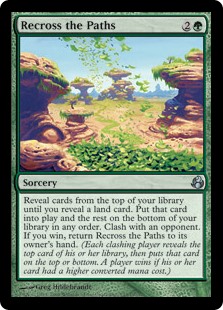
 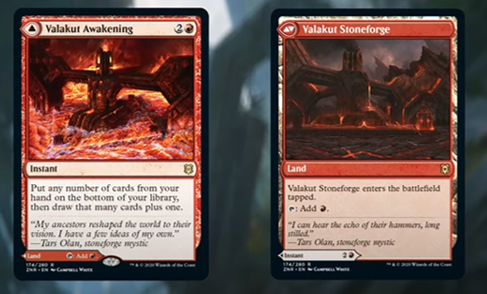 The primary thing I learned is that the deck is very weird. There are a number of ways for it to win on turn two. There exists a turn one kill too, but I never had that come together. However, if the fast kill doesn't happen, Belcher is actually quite slow. Most of the lands come into play tapped, the sculpting cards cost three, and until you go off, there's not much to do. Storm and Neoform have a lot of play to them because they cast lots of cantrips. I mostly just sat around playing tapped lands until I went off. On that note, the deck only wants to keep hands with at least one Valakut Awakening, Recross the Paths, or Goblin Charbelcher. The only cantrip is Manamorphose, so if the opening doesn't have a payoff, it's unlikely to draw one. As such, aggressive mulligans are crucial.
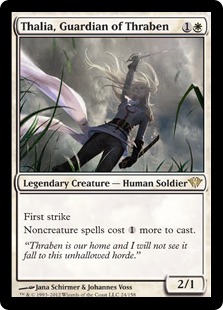 First and foremost is Thalia. She's a legendary anti-combo card, but wasn't always great against Storm because her tax trades with Goblin Electromancer's reduction effect. This certainly makes it harder for Storm to go off, but not impossible. Neoform can't combo against a Thalia. It can certainly tutor up Griselbrand, but won't have the mana to pay for the Shoals and keep going. Manamorphose is also mana-negative against Thalia.
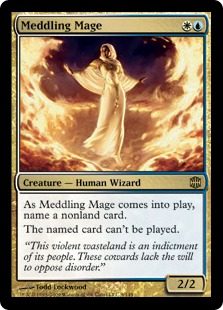 Meanwhile, Meddling Mage is a huge beating. Storm has multiple combo lines and plays maindeck answers, so Mage is mostly annoying. Neoform scoops to Mage naming Allosaurus Rider, especially game 1. Mage on Belcher is crippling, but not lethal. Most recent versions can only win via resolving Belcher, but they can remove the Mage with Shatterkull Smashing for 4 or more or two Spikefield Hazards. Those aren't impossible to pull off, but the odds aren't great.
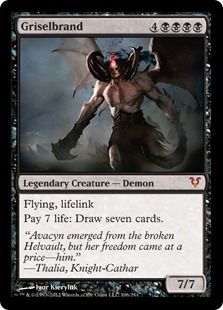 After testing, my conclusion is that Belcher is unlikely to be a format-breaking combo. At least in its current form, it's too clunky and slow to ruin Modern. Humans just eats it, and I doubt it can reliably race other combo decks. There's not enough here to recommend it over the premier combo decks like Ad Nauseam or Storm.

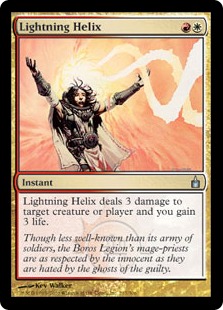 For its part, red is co-opted for Lightning Bolt (d'ac), Lightning Helix (porquoi pas?), and Rix Maadi Reveler (voila notre raison-d'être!). Rix is great for gassing up via Spectacle, and provides incidental looting otherwise. Kaya. Smallpox, and naturally all that reach help fulfill the Shaman's "lost life this turn" condition. Regularly re-stocking is a great way to pull ahead in a deck full of cards otherwise singularly focused on exchanging resources.
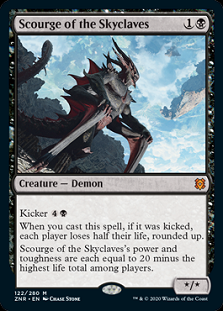 Scourge strikes me as significantly better than Rotting Regisaur in this style of deck, which taxes both players' life totals, is known to take some hits from aggro decks, can and does integrate different splashes fo specific tech and incurs the requisite damage from fetchlands, and makes a gameplan of stripping away enemy answers. Fatal Push is pretty far from a card players want to leave in their decks against 8-Rack, but Scourge may otherwise take total command of the battlefield; in other cases, there's Smallpox to regain control of what's happening.
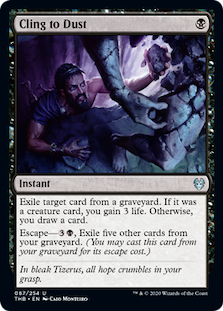 And a final note on the above Pox decks: both integrate Cling to Dust as a hyper-versatile cantrip that gains life or draws a card depending on what's needed, all while providing incidental graveyard hate and a late-game card advantage engine. The card's increasing prevalence in Prowess decks speaks to how effective it is. Black players: don't be afraid to try one of these in your flex spot!



 I fully agree with
 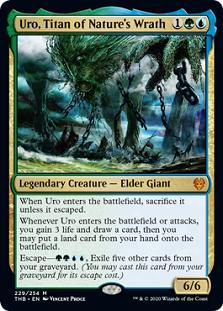 Then there's the fact that the opponent will object to having their life lowered. Plans never survive contact with the enemy and all that. I read
 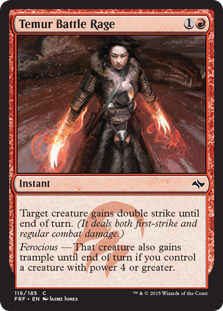 better than Shadow. Killing the opponent from high life requires Shadow players to be quite low themselves. To kill an opponent on 16 life, for example, Shadow must be at least an 8/8, meaning 5 or less life. That's not a small amount of danger in a world
 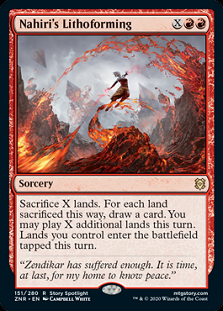 If Scourge was a card where I know exactly what it does, but I don't know where it's for, then this next card is one that I know exactly what it's for, but not what it does. On the surface, Nahiri's Lithoforming looks like a variation of Scapeshift, sacrificing lands then replacing them. However, cost notwithstanding, Lithoforming is worse than Scapeshift because it doesn't search for lands. Instead, it draws cards, and its controller may play lands from hand to replaced the sacrificed ones. Assuming they've drawn enough to replace the lost lands. And the new lands enter tapped. Which means that Lithoforming is far less likely to combo kill than Scapeshift.
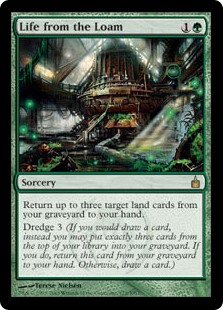 However, there is a deck that doesn't mind sacrificing lands, doesn't care about comboing with the right ones, and likes to draw cards. Its name is
 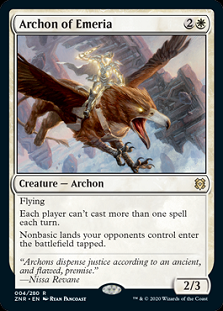 Critically, Archon swaps the anti-creature ability for Rule of Law. Suddenly, Archon becomes a huge beating against Prowess decks. Unless they have Lightning Bolt the turn Archon comes out, Archon will buy absurd amounts of time to stabilize. Prowess will only get to play one spell, which means there will be no explosion, and few ways to take out the flier. Theoretically, that also means that Archon could profitably block Monastery Swiftspear, but that's only for the brave; blocking a 1/2 then getting the Archon Darted is a bad time. Archon's also devastating against traditional combo decks as a result.
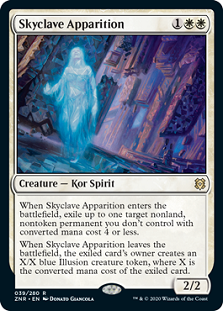 On the other hand, Skyclave Apparition looks to fit right into existing decks. Apparition exiles anything with CMC 4 or less. Thus, it is the most versatile removal in white's arsenal. The drawback is that when Apparition leaves play, the exiled card's owner gets an Illusion with P/T equal to said card's CMC. However, this is a very small drawback compared to the fact that the card never comes back. Turning a planeswalker, Uro, or Ensnaring Bridge into a vanilla creature is still amazing. And the drawback only manifests if Apparition leaves the battlefield.