Are you a Quiet Speculation member?
If not, now is a perfect time to join up! Our powerful tools, breaking-news analysis, and exclusive Discord channel will make sure you stay up to date and ahead of the curve.
Well, it’s official. I’m planning to attend MagicFest Indianapolis next month—hopefully, I’ll have the opportunity to connect with many of my readers. With any luck, I’ll squeeze in a few games and even try my luck at a draft. However, none of these activities is my primary objective for the trip.
Instead, I intend to sell some cards.
Selling cards will be complicated, though. If my collection were filled with Standard and Modern staples, it would be straightforward—I’d wander each vendor’s booth, glancing through hotlists and finding the best offers on each of my cards. With a little preparation, I’d also have a rough estimate of TCG low pricing as well as top buylist for comparison.
Unfortunately, with my collection, this isn’t going to be this simple.
Randomness is Random
Many of my readers are already familiar with my general approach to Magic these days. I gravitate towards older cards, often on the Reserved List, both because I enjoy the Old School format and simply because such a collection fuels my nostalgia craving. But these are cards aren’t exactly the easiest to sell to vendors.
Granted a stack of Dual Lands and Legacy staples wouldn’t be difficult to liquidate. Many vendors in a MagicFest room would jump on the chance to purchase such cards. But that’s not what I’m going to be shopping around. Instead, I’m going to have stuff like Alpha Mind Twist.
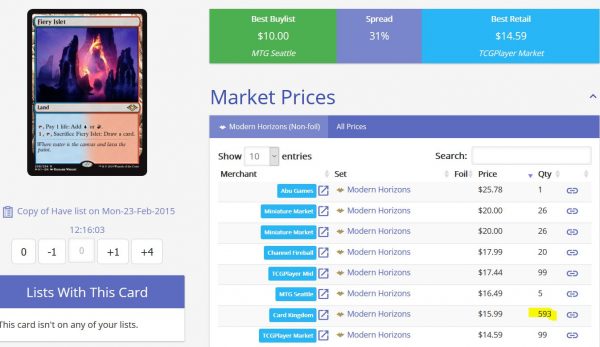
Cards like Alpha Mind Twist are valuable, but it’s challenging to put a precise value on such a rarity. I could browse buylists, but are buylists really the right metric when vendors are completely out of stock of the card? This may set a floor in negotiation, but I’m confident the market value of a moderately played Alpha Mind Twist is greater than the $2160 * 60% = $1296 Card Kingdom would offer.
I could also look at eBay and TCGPlayer listings, but these data are spotty at best. There is exactly one listing for Alpha Mind Twist on TCGPlayer at the moment: an HP copy for $1899 (plus that critical $0.79 shipping). If my copy was identical in condition to this one, it may be a useful data point. But mine is a little better than HP, and so I’m still left scratching my head. eBay has similar results.
Then there’s the next challenge: finding the vendors who are most interested in purchasing Alpha and other Old School cards. Some vendors probably have no interest whatsoever in acquiring stuff like Island of Wak-Wak or Pixie Queen, even though they hold decent value. I have to imagine some of the less playable Legends and Arabian Nights cards are very difficult to sell, and so some vendors are likely to be inclined to offer disappointing numbers.
Hopefully, I’ll be able to walk from booth to booth and inquire about Old School interest to try and find the most eager buyers. But assuming I do, that still leaves me with one more hurdle to overcome.
Presentation and Organization
How should I organize a collection of cards printed in 1993 and 1994? Currently, many of my cards are either in sleeved decks or a Monster binder. Neither of these is conducive to quick, painless transacting with vendors. If I had a Commander or Standard deck, it would be easy for a vendor to skim through the cards and pull out cards of value. But when an all-Alpha deck contains 60 cards worth $10 or more, this fast-sorting approach breaks down.
The other reason organization is critical is that these card values vary heavily on condition. Most newer cards are going to be near mint; maybe the occasional Dual Land or older card in a Commander deck needs to be pulled from a sleeve for closer scrutiny. But an Old School deck can be filled with moderately and heavily played cards. Every single one could potentially be harshly scrutinized because pricing varies so greatly by condition.
It becomes prohibitively time-consuming for a vendor to take every card of a 60 card deck out of a sleeve to scrutinize condition and try and negotiate price.
Monster binders are probably not much better. I appreciate these binders because they provide ample protection for my cards—no binder dings for me! However, they’re not ideal for browsing Old School cards because a vendor can’t see the condition of the backs of these cards without first removing them. Again, this is likely to slow down transactions significantly, and that could hurt my ability to cash out at top dollar.
The Plan
Recognizing all of these potential pitfalls, I’ve devised a plan that should help me navigate this upcoming MagicFest. I’ve boiled this plan down to three tips—hopefully, they prove helpful to others who also plan on selling at events, but perhaps don’t do so very often (I average once a year).
Tip 1: Know your prices
This is going to be time-consuming, but the time investment prior to the event should help me maximize my time (and vendors’ time) when buylisting. I’m going to look up every card I intend to sell online and create a spreadsheet summarizing prices. The key numbers I’m going to include in this spreadsheet are:
- Card Kingdom’s buy price adjusted for condition
- ABU Games’ trade credit price by condition * 60% (my cash value of ABU credit)
- TCG low for condition, if applicable
With these numbers in hand, I’ll be well prepared to talk pricing with a vendor. My going in asking price will in a range established by the three numbers above, and the lowest I’d go is probably around 50-60% of ABU’s trade credit number—any lower, and I’m better off trading to ABU. By knowing these prices in advance, I’ll come prepared to each vendor with numbers in hand. Their job will become simpler, as they’ll just have to say “yes” or “no” to my proposed prices.
Tip 2: Organize cards by price
How will vendors know my asking price for each card? I don’t plan on handing them each a copy of my Excel sheet. Instead, I’m going to sort cards I wish to sell by value. This doesn’t have to be 100% perfect—if a $10 card falls between an $11 and a $12 card, it’s not the end of the world. But in general, I want my cards to be broken into piles based on their relative worth.
This way, I can hand a vendor a small stack and say something like, “This stack is between $10 and $20.” The top-end cards will be in a separate pile, all 1-offs, and will definitely require higher scrutiny. But for the low-end stuff, if a vendor has no interest in paying $20 for Alpha Plague Rats, they’ll be able to leaf past those quickly.
Tip 3: Pull Cards Out of Sleeves and Binders
Don’t worry, I’m not crazy. I won’t walk around with a pile of loose Alpha cards in my hands and I definitely won’t hand a loose Alpha Mind Twist to vendors for evaluation. But I do plan on removing most cards from their sleeves/binders and keeping them, sorted, in a box of some sort. The box will offer sufficient protection to card condition while also being easy for vendors to browse through and inspect condition as they go.
Higher-end cards, of course, will still be in soft sleeves. Those will all require unique discussion and negotiation, and I’m sure every vendor will understand why 3- and 4- figure cards should be kept in sleeves.
Wrapping It Up
After listening to the Cartel Aristocrats podcast, I’ve learned a few things about how vendors feel when buying at large events. Their time is very valuable, and their goal is to perform many transactions. If a prospective seller sits down with a disorganized collection, cards in sleeves, and no idea of how much cash they want for each card, it can be a nightmare for the vendor.
I’ve even heard stories that vendors have offered less for a given card in such nightmare scenarios because they need greater margins to make up for the lost time.
Because it has been so long since I’ve buylisted at a large event, I know I need to do my homework in advance. Good organization and advanced knowledge of what I want for each card should go a long way in making my engagement with vendors as pleasant and mutually profitable as possible.
To tackle this task, I’ve devised a plan. That plan can be boiled down into 3 tips: know what you want for your cards, organize your cards by value (some call this “Ogre Box”), and remove lower-value cards from sleeves / make them easy to examine front and back. Even though I’m using this approach to sell Old School cards, it can readily be reapplied to any in-person buylisting situation.
Hopefully, these tips will help others in their preparation. Efficiency is what vendors are after, and they just may be willing to offer a little more if you demonstrate your consideration for their time. At least, that’s my hope come MagicFest Indianapolis—wish me luck!
…
Sigbits
- Even though some Old School cards have faded in value, some still remain robust. Mishra's Workshop recently returned to the top of Card Kingdom’s hotlist with a buy price of $1140. This card is a mainstay of Vintage and despite some players’ wishes, it will remain so for quite some time; no banning likely.
- It was gone and then came back again—FtV printing of Mox Diamond has returned to Card Kingdom’s hotlist with a $200 buy price. This card, along with the Stronghold version, has been fluctuating quite a bit lately but demand remains strong overall.
- Card Kingdom’s buy price on Legends copies of Mana Drain recently jumped from $110 to $130. When browsing supply online, it appears this card has finally tightened up after it was reprinted in Iconic Masters. Barring another reprint, this card should be stable for now with long-term upside potential.

 But seeing it
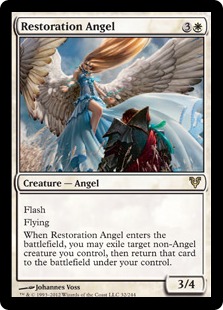 Soulherder acts like a mini-planeswalker here, blinking creatures every turn and promising streams of value if opponents don't deal with it. It also grows pretty large in that case, making it even tougher to remove as the game drags on. Another new card here is Watcher for Tomorrow. Despite the creature entering tapped, the prospect of casting multiple pseudo-Impulses, and having a 2/1 to boot, seems to beat the blind-draw blocking of Wall of Omens.
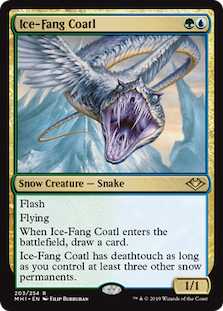 are also significant reasons to go green, buffing the scope of Blink's enters effects and adding a multi-pronged defensive plan.
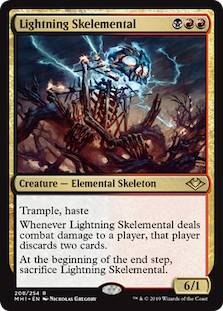 Seasoned Pyromancer, and Lightning Skelemental, like



 There is very little information about Day 1 to go on. All that I have is the
 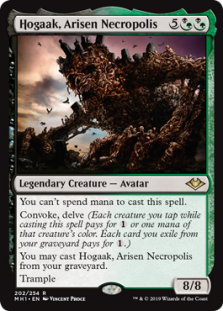 starting population. If Hogaak was around 20% of the Day 1 population, then its Day 2 numbers are to be expected and don't mean anything. If it was less than that, we'd be looking at a very dominant performance and more than 20% of Day 1 would indicate that Hogaak underperformed. We don't have the data to determine which scenario is true.
 Given that the chances of an emergency ban happening are
  However, that strategy clearly isn't working. Hogaak dominated the
  Then there's the question of the rest of the hand. I suspect that, given how
  My results have been inconclusive so far. I've been testing a very hateful UW Spirits deck vs a



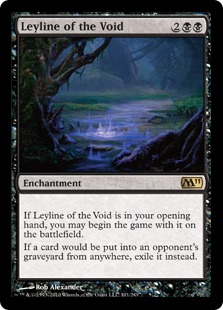
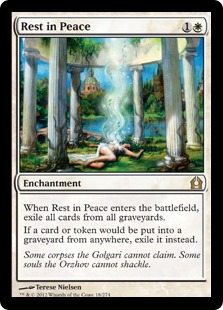
 Of special note this article, I still favor Relic of Progenitus as my grave hate of choice. Leyline of the Void can also work, although it has less synergy with Karn, the Great Creator; either way, one should be employed. Relic happens to be far stronger against Jund, which is shaping up to prove a real force with Wrenn and Six in the format.
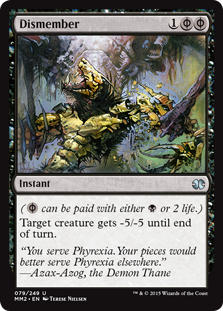
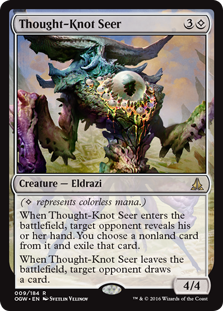 Game 1 sees us lean more heavily on fast starts, as much of our disruption is in the sideboard. Still, we have some to work with; Chalice of the Void on 1 is a major headache for Hogaak, which is full of one-drop enablers, and Dismember can remove a crucial Zombie or blocker. Best of all is Thought-Knot Seer, which foils enemy plans if deployed early enough and also turns sideways.
 Sideboarding
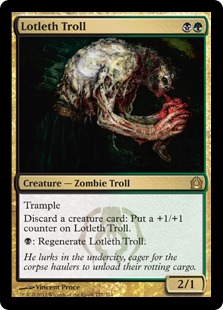
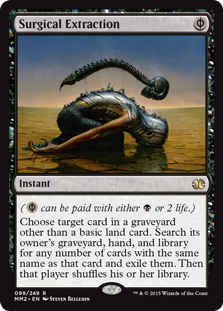
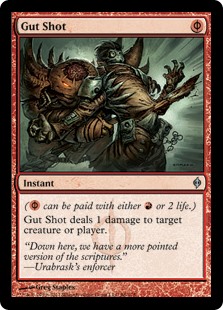
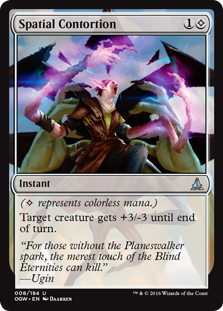
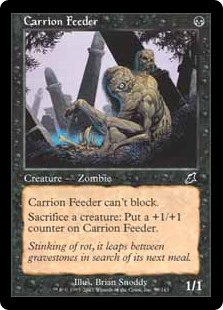 Relic and Surgical are obvious bring-ins, with the latter ideally hitting Vengevine or just Hogaak itself. Gut Shot is more subtle, but the card is fantastic in this matchup, hitting just about any blocker opponents produce and sniping early Carrion Feeders, Crypt Breakers, and Lotleth Trolls, build depending. While Stitcher's Supplier dying is generally a plus for opponents, keeping their board clear of Zombies can blank their Gravecrawlers and complicate ever casting Hogaak. Spatial Contortion can also come in alongside Shot, maybe over a couple Smashers; the colorless spell has the benefit of picking off Vengevine, too.
 Takeaways
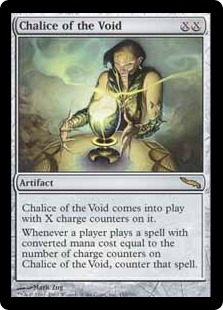 Colorless Eldrazi Stompy likes to mulligan into turn-one Chalice, a solid plan against most of the format and incidentally against Hogaak. Unfortunately, that plan doesn't do much against Dredge. Many of my losses to this deck have been on the back of a powered-out Chalice that failed to accomplish anything. Stinkweed Imp is another hurdle Dredge throws at us; without removal for the flier, it's free to block and trade with any of our larger beaters. The recurring Prized Amalgam matches our smaller attackers, although it does help that it enters tapped.
 Sideboarding
 Dredge is a more polarized matchup than Hogaak, as less of our mainboard is viable; our Game 1 odds are worse, while our Game 2 odds are better. In this way, Dredge-Hogaak mirrors
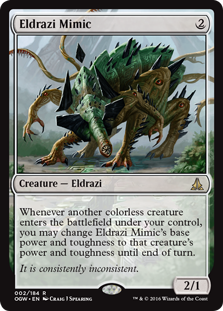 haste; probably, though not necessarily, enough to earn a concession. The most busted Eldrazi start called for Eye into four Eldrazi Mimics, then using Eldrazi Temple and Simian Spirit Guide to play Reality Smasher and actually win on turn 2. The problem for Hogaak is that it lacks the same consistency that Eldrazi had.
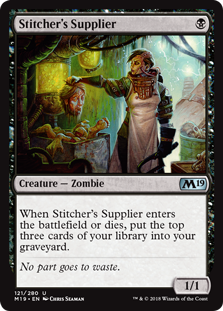 was incredibly powerful when everything came together, but when it didn't, the deck was anemic.
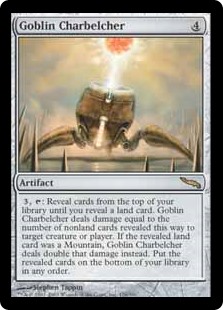 is largely because the deck has a reputation for just losing to
 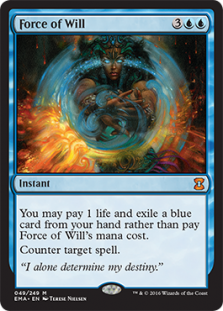 also needs a critical mass of mana to do anything. It also needs to hit Burning Wish, Empty the Warrens, or its namesake to win; that means it needs to draw one of eleven cards plus the right six mana sources to go off. If it opens the right hand, that's easy.
 To evaluate this idea, I ran an experiment. I goldfished Hogaak against Belcher and
  Belcher and Neoform cannot. If they don't win quickly, disruption will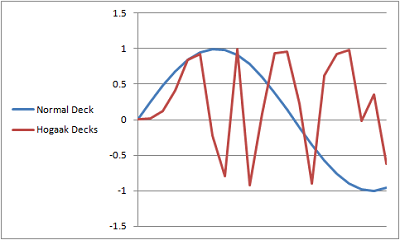
 are
are 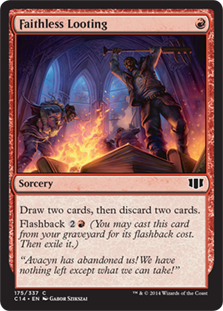 Hogaak and similar set-up-heavy cards sink or swim on the strength of their enablers. Faithless Looting is a