menu

Daily Stock Watch – Copperline Gorge

Are you a Quiet Speculation member?

If not, now is a perfect time to join up! Our powerful tools, breaking-news analysis, and exclusive Discord channel will make sure you stay up to date and ahead of the curve.

Hello, everyone and welcome to a new week of the Daily Stock Watch! Ultimate Masters just rocked the world of Magic, and we have yet to scratch the surface of the whole set as we only know so much about the cards that would be appearing in the box toppers. For those who aren't aware yet of its availability, the product is set for release on December 7 thru your LGS (Local Gaming Stores), and spoiler season is set to begin during Thanksgiving. We all know that the manlands cycle from Worldwake will be there, but could we be in for another surprise if we see the Scars of Mirrodin lands in it? That's one of the things that I'm actually thinking of as we talk about our featured card for today.

There was an error retrieving a chart for Copperline Gorge

I'm no expert in number crunching new sets, so I'm not really sure if we will see these cards in the upcoming Masters set. Based on the MtG's Twitch feed, the guys doing the preview of the set were surprised to see some of the cards included in the set and at this point in time, all we can do is speculate on what those cards are. Hints of more lands getting included in this set are almost nil as of writing time but if you've got ideas on what we could find in the set, please feel free to chat about it with me in the comments section.

Today's card is back to prominence thanks to the emergence of Dredge in competitive Modern, as it is now close to peaking again at $15 which was almost the best price it ever reached since it came to existence. We all know how Blackcleave Cliffs is such an expensive card thanks to Jund and Hollowed One decks, and how Seachrome Coast made waves again because of Spirits and Humans decks. We could be staring at the inevitable rise of another one of its kin in Copperline Gorge especially if the SOM fast lands cycle dodges the reprint in the upcoming set.

Dredge

Creatures

4 Bloodghast
2 Golgari Thug
4 Narcomoeba
4 Prized Amalgam
4 Stinkweed Imp

Other Spells

4 Cathartic Reunion
3 Conflagrate
4 Creeping Chill
1 Darkblast
4 Faithless Looting
3 Life from the Loam
4 Shriekhorn

Lands

1 Blackcleave Cliffs
2 Blood Crypt
2 Bloodstained Mire
3 Copperline Gorge
1 Dakmor Salvage
2 Gemstone Mine
2 Mountain
2 Stomping Ground
4 Wooded Foothills

Sideboard

1 Ancient Grudge
2 Assassin's Trophy
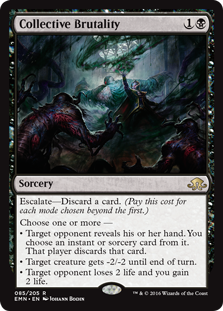
3 Collective Brutality
1 Darkblast
4 Leyline of the Void
1 Lightning Axe
3 Nature's Claim

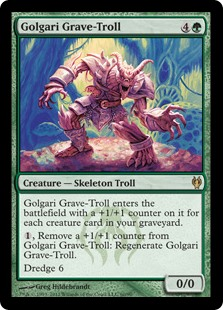
This deck has been phenomenal at the highest stages, and it's no secret that Life from the Loam's financial spike won't hold for good thanks to Ultimate Masters. As is the case was with the reprint of Scapeshift in Core 2019 that led to the price spike of Valakut, the Molten Pinnacle, I think that other pieces of the Dredge deck will see a significant price increase because of Life from the Loam's upcoming Masters version. Its current price tag of $13 might actually hit a high of $20 if the deck continues to perform at a high rate, but we could be see it get checked by another archetype out of nowhere (think UW Control and Terminus) or people will just start main decking graveyard hate cards. Either way, the deck is very resilient and let's focus more on the financial gains that we could get from it for now.

The Dredge Crew

I'd like to be very particular with foil copies of these cards as possible premiums in the future, especially now that the most recent releases from WotC have been foils (Ravnica Mythic Edition and the box toppers in UMA) which could only mean that foil collectors would be looking to foil just about everything in their decks once they've started it. I am also a victim of this disease, as I have somehow almost foiled all my Commander decks (with the exception of RL cards that doesn't have foil counter parts) and I just find it hard to stop since I have started it. I think that now's the best time to get normal copies of Copperline Gorge if we'll be lucky enough as spec lovers that it dodges the reprint axe.

At the moment, you could get copies of Copperline Gorge from a few vendors via TCGPlayer for as low as $12.96 up to a high of $19.99. Card Kingdom and StarCityGames are both out of stock, and should be back with supply at a higher rate once every other site have already ran out. I expect this card to continue rising in value until it reaches $20 or it gets spoiled (fingers crossed!) in UMA. Invest now!

And that’s it for today’s edition of the Daily Stock Watch! See you again next time, as we check out a new card that should be on the go, or good enough for speculating. As always, feel free to share your opinion in the comments section below. And if you want to keep up with all the market movement, be sure to check in with the QS Discord Channel for real time market information, and stay ahead of the hottest specs!

Insider: How to Capitalize on Standard Being Good

Are you a Quiet Speculation member?

If not, now is a perfect time to join up! Our powerful tools, breaking-news analysis, and exclusive Discord channel will make sure you stay up to date and ahead of the curve.

It has been years since I've been able to say the following sentence: "Wow, Standard is really great right now." After several years of poorly designed formats, stale metagames, and an excessive number of banworthy cards, we have arrived at a time where Standard is actively in a great place, at least after the first month of tournament results.

I don't want to get too deep into what makes or breaks a format, but for the sake of clarity, I'll give a bit of context. "Good formats" – the ones that people tend to enjoy the most – offer a wide array of diversity and are dynamic in the sense that they change and evolve from week to week. It's actually easier to pinpoint what makes a bad format than a good one: bad formats tend to quickly devolve into only a handful of decks that are much better than all the other options.

There was an error retrieving a chart for Stoneforge Mystic

Grinders and serious tournament players tend to play any format no matter how good or bad it is simply because playing Magic tournaments is what they enjoy most about the hobby. Qualifying for the Pro Tour playing a bad format means the same as qualifying in a particularly fun format. However, serious grinders are not the majority of the Magic community. Not even close.

One of the reasons great Standard formats are so important is that they get the average and casual players fired up to play Magic once again. Just in the last month, I've seen lots of familiar faces around game shops that I haven't seen in years. Standard looks like a lot of fun and people notice that, get excited, and come back to play.

The format is also a flavor win: Dominaria and Ravnica, anyone? These are two of the most popular planes of all time and full of sweet cards, locations, and fluff that makes people want to jump back in. The secret is these cards look and feel like playing Magic, whereas Standard for the past four years has felt like a husk of what Magic used to be. It was boring.

The Numbers Don't Lie

If I tell you that Standard is fun, that's just my opinion. People like different things. I'm sure a lot of people enjoyed Standard formats that I thought were awful. But options are important, and the fewer options available, the greater the chance will be that there isn't a suitable deck to satisfy a particular group of players.

The more viable options available in a format lead to a greater appeal to more players. Standard has a ton of decks. It feels like Modern, except the gameplay is more dynamic and the matchups are less one-sided.

There was an error retrieving a chart for Curious Obsession

Not only are control, midrange, and aggro all widely represented as archetypes, but there are multiple variations on each category. For example, if you want to play control, Jeskai, UW, Izzet, Dimir, Esper, and Grixis are all options on the table for you. Similar numbers of options exist for whatever style of deck you feel like jamming.

How to Capitalize

I don't want to spend the whole article debating whether or not Standard is actually good or not. I believe it is a fantastic format and I also believe that is the perception of the majority of players spanning across the board in terms of skill level.

How do we capitalize on a popular, fun, and dynamic format? It's been so long since we've had one that I'd almost forgotten myself!

The key is to anticipate that the format will change and evolve from week to week. Bad formats stagnate into a rock, scissors, paper match between the two or three dominant decks, whereas good formats are a cluster of viable decks that have enough viability to stay in the mix.

One of the primary ways that Magic financiers like us make money is to anticipate price spikes and sell our cards into those spikes.

Good formats are great for us, especially when that format is Standard. There are two reasons for in particular:

  1. Good formats attract more players, and a larger playerbase creates higher demand and more liquidity.
  2. Good formats tend to mean dynamic formats, in the sense that new decks and cards have a chance to break out. Break-out cards and decks are the epitomai of what create price spikes in Magic. The new tech that emerges over a given weekend tends to feature the very cards that fans at home are chasing down on Monday and Tuesday for their weekly events.

Cards that I'm targeting for potential Standard spikes:

There was an error retrieving a chart for Phyrexian Scriptures

I've been playing a ton of MTG Arena, and this card seems amazing to me. The drawback of not hitting artifact creatures isn't a huge deal and it allows me to Wrath even while playing a creature deck. It's ability to exile opponents' graveyards is incidentally pretty sweet against Crackling Drake and Find // Finality. It also answers Carnage Tyrant, which is difficult for black to do outside of killing all of their other creatures and having a Diabolic Edict effect.

It's not a card that has seen a ton of tournament success, but it is a card that I've been playing with a lot and think is underrated.

There was an error retrieving a chart for Mnemonic Betrayal

Another random mythic that hasn't seen much play but could be future hot tech is Mnemonic Betrayal. The card can be a nice two-for-one in the midgame but can be a straightup Yawgmoth's Will to win the game later on. It also has some neat Legacy applications and clear Commander appeal.

It's the kind of card that feels like hot trash right up until somebody wins something with it. To me, this feels like a card that could go into real decks and have a big impact at some point. Remember, the card only needs to have one good weekend to peak in value and make money for those who bought in.

There was an error retrieving a chart for Trostani Discordant

Another card that could easily have a great week and peak in value is Trostani. The card is a fixture in GW Tokens which is powerful enough to spike events if it gets the right matchups over the course of the day. GW Tokens is likely a deck that is underplayed compared to how good it actually is right now, which makes this a good time to pick up Trostani and friends.

There was an error retrieving a chart for Divine Visitation

Speaking of Trostani's friends, Divine Visitation is another one of those cards that could easily spike for a massive gain. I also love this card as a pickup based on casual and Commander appeal. It has that Doubling Season quality to it that casual players love to use and abuse.

There was an error retrieving a chart for Dawn of Hope

Another card that feels like it has serious tournament appeal, Dawn of Hope is the best Sacred Mesa I've ever seen. Not only does it make tokens and not have an upkeep, but the tokens have lifelink, which allows us to use Dawn of Hope to draw extra cards and helps keep our life total safe from burn. Dawn of Hope also seems like a hardcore mirror breaker for control matchups.

The card is worth approximately nothing right now, which is exactly the price I love to buy in at!

Find // Finality

Find // Finality is secretly one of the most important cards in Standard and one of the best cards in The Rock decks. It does everything: it's a one-sided sweeper that boosts your own creature, but it's also a Divination that allows you to buy back two great value creatures such as Ravenous Chupacabra, Kraul Harpooner, or whatever else you've played. I love this card and expect it to spike before the season is up.

The key to capitalizing on a dynamic, diverse format like we're seeing right now is to understand that players are actually rewarded for thinking outside the box and inventing new tech to attack familiar matchups from new angles. When a format looks like this, people are constantly trying out and discovering new cards that give them an edge – and these "new edges" are the cards people chase after tournaments. So keep an eye out for cards that look like they could do something because chances are that they will!

Green Sun’s Zenith Testing: Experimental Setup

Are you a Quiet Speculation member?

If not, now is a perfect time to join up! Our powerful tools, breaking-news analysis, and exclusive Discord channel will make sure you stay up to date and ahead of the curve.

It's finally time for another banlist testing report. Back in May, readers chose Green Sun's Zenith as the next banned card to test, which I'll just call GSZ from here on out. I've spent the intervening months grinding games and recording results to test its effect on Modern. This week, I'll explain my test procedure, unveil the testing gauntlet, and describe the huge complication I encountered along the way.

Testing Procedure

It's been a while since my last banlist test, so let's review how they're done. My general procedure is described here: in short, I select a deck to run the test card as a four-of, then run it against a gauntlet of high-performing decks. Ideally, the test deck would be an updated version of the deck that got the card banned, but building that is rarely possible. I compare that result to a baseline control test, and use statistical analysis and the experience gained during testing to draw conclusions about the card in question.

Testing is done in paper, not online. I locate players who actually pilot the decks in the gauntlet, and after some practice to get a feel for the matchup, we play 50 recorded matches with the control (current) deck, and 50 with the test deck (which runs the banned card). Sideboarding and decklists are set in stone once the first recorded match begins. Because it's natural to improve at a matchup through practice, we alternate between the control and test decks each match.

Choosing the Deck

When the vote came in for GSZ, I was surprised and rather unprepared. I'd thrown it in for some variety, as previous votes indicated that Dig Through Time would be the winner hands down. I didn't know which deck to test GSZ with, and there really wasn't guidance available because it had been banned in the first wave in hopes of increasing diversity among creature decks. Asking around for ideas didn't help, as every single green-featuring deck was suggested. The only consistent advice was to run Dryad Arbor too, which grants Zenith ability to act as a mana dork on turn 1.
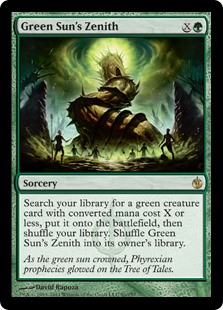
Looking to Legacy showed GSZ in Elves, Maverick, and sometimes Infect. Maverick is a hybrid of Death and Taxes and Abzan Midrange, which suggested that the card could work in Hatebears or BGx Rock. After some exploratory testing, the answer was... maybe? Running GSZ alongside Gaddock Teeg generates a lot of tension, and in midrange, I was mostly trying to dig up Siege Rhino. GSZ was never bad in either deck, but I also didn't feel they fully utilized the spell. However, they could have, which is a point in favor of Wizard's diversity argument.

Almost-There Infect

Infect actually seemed promising enough that I nearly picked it for the test. It already ran Dryad Arbor as Liliana of the Veil protection, and there are some decent green infectors beside Glistener Elf. However, it couldn't quite live up to my expectations.

Space requirements meant Blighted Agent, arguably the best infector, had to be cut. Blight Mamba was decent, but kept getting chump-blocked. Rancor helped on this front, but that plan subtracted from the raw power of a standalone threat. There was enough doubt about the deck that I didn't pull the trigger. However, I do believe that with more development, GSZ could be good in Infect.

GSZ Infect, Test Deck

Creatures

4 Noble Hierarch
4 Glistener Elf
3 Blight Mamba
2 Viridian Corrupter
1 Dryad Arbor

Sorceries

4 Green Sun's Zenith

Enchantments

4 Rancor

Instants

4 Mutagenic Growth
4 Might of Old Krosa
4 Blossoming Defense
4 Vines of Vastwood
3 Groundswell

Lands

4 Inkmoth Nexus
4 Misty Rainforest
4 Wooded Foothills
2 Pendelhaven
5 Forest

Defaulting to Elves

In the end, I just went with Elves. It's a pretty obvious choice, and I had the advantage of knowing a lot of Elves players, so I could get help building the deck. I ended up regretting asking for help, as those players gave me very different answers individually, and whenever they overheard another player, it started arguments: which deck; which splashes; which cards to cut. The only things they agreed on was a Dryad Arbor, and not to run Bloodbraid Elf, which doesn't cascade off GSZ or Chord. In the end, I found a GB list and modified it until I was happy.

GB Elves, Control Deck

Creatures

4 Llanowar Elves
4 Elvish Mystic
4 Heritage Druid
4 Nettle Sentinel
4 Dwynen's Elite
3 Devoted Druid
4 Elvish Archdruid
4 Shaman of the Pack
3 Ezuri, Renegade Leader

Instants

4 Collected Company
4 Chord of Calling

Lands

3 Blooming Marsh
3 Gilt-Leaf Palace
2 Pendelhaven
2 Cavern of Souls
1 Nykthos, Shrine to Nyx
7 Forest

Sideboard

4 Thoughtseize
3 Abrupt Decay
2 Scavenging Ooze
2 Relic of Progenitus
2 Reclamation Sage
2 Damping Sphere

It may seem odd to have Devoted Druid without Vizier of Remedies, but the whole combo is a bit space-intensive and doesn't mesh with the tribal synergies. Also, two Druids and Ezuri already goes infinite. A single Druid will provide enough mana for a second pump on its own, and if the game isn't won at that point, it's probably not winnable.

The test deck was basically the same, but I tweaked the numbers around to fit the extra non-creature spells in.

GB Elves, Test Deck

Creatures

1 Dryad Arbor
3 Llanowar Elves
3 Elvish Mystic
4 Heritage Druid
4 Nettle Sentinel
4 Dwynen's Elite
3 Devoted Druid
4 Elvish Archdruid
4 Shaman of the Pack
3 Ezuri, Renegade Leader

Instants

2 Collected Company
4 Chord of Calling

Sorceries

4 Green Sun's Zenith

Lands

3 Blooming Marsh
3 Gilt-Leaf Palace
2 Pendelhaven
1 Cavern of Souls
1 Nykthos, Shrine to Nyx
7 Forest

Sideboard

4 Thoughtseize
3 Abrupt Decay
2 Scavenging Ooze
2 Relic of Progenitus
2 Reclamation Sage
2 Damping Sphere

Building the Gauntlet

These decisions were easier to make. I was putting this together in mid-June, around GP Las Vegas and the metagame was fairly defined. UW Control was rising, Humans was still on top, mono-green Tron was the deck of the GP, and Storm was the most popular combo deck. Ironworks was admittedly the combo in the spotlight, but I didn't know any Ironworks players, and so stuck with Storm.

Gifts Storm, Gauntlet Deck

Creatures

3 Goblin Electromancer
3 Baral, Chief of Compliance

Instants

3 Opt
4 Desperate Ritual
4 Pyretic Ritual
4 Manamorphose
2 Remand
1 Repeal
1 Unsubstantiate
1 Noxious Revival
4 Gifts Ungiven

Sorceries

4 Serum Visions
4 Sleight of Hand
2 Past in Flames
2 Grapeshot
1 Empty the Warrens

Lands

4 Steam Vents
4 Spirebluff Canal
4 Shivan Reef
2 Snow-Covered Island
2 Island
1 Mountain

Sideboard

4 Pieces of the Puzzle
3 Lightning Bolt
2 Empty the Warrens
1 Abrade
1 Shattering Spree
1 Echoing Truth
1 Engineered Explosives
1 Gigadrowse
1 Wipe Away

Humans, Gauntlet Deck

Creatures

4 Champion of the Parish
4 Noble Hierarch
4 Kitesail Freebooter
4 Meddling Mage
4 Phantasmal Image
4 Thalia's Lieutenant
3 Thalia, Guardian of Thraben
4 Mantis Rider
4 Reflector Mage
2 Militia Bugler

Artifacts

4 Aether Vial

Lands

4 Ancient Ziggurat
4 Cavern of Souls
4 Unclaimed Territory
4 Horizon Canopy
2 Seachrome Coast
1 Plains

Sideboard

2 Auriok Champion
2 Izzet Staticaster
2 Sin Collector
2 Kataki, War's Wage
2 Dire Fleet Daredevil
2 Reclamation Sage
3 Dismember

Mono-Green Tron, Gauntlet Deck

Creatures

2 Walking Ballista
3 Wurncoil Engine
2 World Breaker
2 Ulamog, the Ceaseless Hunger

Sorceries

4 Ancient Stirrings
4 Sylvan Scrying

Planeswalkers

4 Karn Liberated
2 Ugin, the Spirit Dragon

Artifacts

4 Chromatic Star
4 Chromatic Sphere
4 Expedition Map
3 Relic of Progenitus
3 Oblivion Stone

Lands

4 Urza's Mine
4 Urza's Tower
4 Urza's Power Plant
2 Sanctum of Ugin
5 Forest

Sideboard

4 Nature's Claim
4 Thragtusk
3 Thought-Knot Seer
2 Spatial Contrortion
2 Grafdigger's Cage

UW Control, Gauntlet Deck

Creatures

2 Snapcaster Mage
1 Vendilion Clique

Sorceries

4 Terminus

Planeswalkers

3 Jace, the Mind Sculptor
2 Teferi, Hero of Dominaria

Enchantments

2 Detention Sphere
2 Search for Azcanta

Instants

4 Opt
4 Path to Exile
1 Condemn
3 Logic Knot
1 Negate
4 Cryptic Command
2 Timely Reinforcements

Lands

4 Celestial Colonnade
4 Flooded Strand
4 Field of Ruin
2 Hallowed Fountain
1 Glacial Fortress
1 Ghost Quarter
5 Plains
4 Island

Sideboard

2 Damping Sphere
2 Rest in Peace
2 Stony Silence
2 Negate
2 Dispel
2 Geist of Saint Traft
1 Vendilion Clique
1 Baneslayer Angel
1 Celestial Purge

The fifth deck was a judgement call. The top tier at the time was primarily aggro decks, but I wanted more variety, so I didn't pick Burn or Affinity. Hollow One was everywhere, but I didn't want to play against it 100 times; I can barely stand it once a tournament. It also wasn't clear if Hollow One was real or a deck of the moment. Mardu Pyromancer was another fine choice, and had I found a willing pilot, I would have chosen that. Unfortunately, the only willing pilot had to drop out shortly before testing. I therefore defaulted to Grixis Death's Shadow.

Grixis Death's Shadow, test deck

Creatures

4 Death's Shadow
4 Snapcaster Mage
4 Street Wraith
2 Tasigur, the Golden Fang
2 Gurmag Angler

Instants

4 Fatal Push
4 Thought Scour
2 Stubborn Denial
2 Opt
2 Terminate
1 Kolaghan's Command
1 Temur Battle Rage

Sorceries

4 Serum Visions
4 Thoughtseize
2 Inquisition of Kozilek

Lands

4 Bloodstained Mire
4 Polluted Delta
4 Scalding Tarn
2 Watery Grave
1 Blood Crypt
1 Steam Vents
1 Island
1 Swamp

Sideboard

2 Ceremonious Rejection
2 Collective Brutality
2 Young Pyromancer
1 Temur Battle Rage
2 Liliana of the Veil
1 Liliana, the Last Hope
2 Nihil Spellbomb
1 Kolaghan's Command
1 Stubborn Denial
1 Engineered Explosives

I let the pilots run their personal decks for the test, as there's no time-efficient method that I trust of averaging decks. MTGGoldfish's averaging system gives some weird results, and my pilots were playing close to norms anyway.

The Great Complication

I got started with Elves vs UW Control first, before anyone else was ready. This wasn't planned, but it was fortunate that it happened this way. Simply put, my UW pilot and I didn't have enough work to do mid-June and did the testing instead. The testing went very smoothly, however once it was done and I summed up the results, I realized that there was a problem. Here were the results:

  • Control Win: 22/50, 44%
  • Test Win: 41/50, 82%

That is an enormous deviation. I was shocked, and my opponent was in denial. This required further investigation.

Outlier Problem
While this is the experimental result, and any result is still a result scientifically speaking, this result looked extremely problematic to me. I've had some big swings before, but never one as massive as 44%-82%, nor any that were this unexpected. Nothing that happened during testing indicated that it would be this skewed, and both of us had thought the matchup felt really close. However, with the data indicating otherwise, I began to suspect that the result was actually an outlier. My UW pilot was similarly sure that something was wrong, though for him, I think it was more indignation at losing to Elves so unequivocally.

I decided that further investigation was necessary. Fortunately, we discovered very quickly that mistakes had been made during our test. The question was how to correct them.

Realizing the Mistake

We ran into a number of pitfalls in this test. The main one: I didn't recognize the deviation between the control and test results until the very end. Had I been more aware during testing, we could have adjusted earlier.
The second problem happened on the UW end. The pilot was a Legacy Miracles specialist who took the Sensei's Divining Top ban worryingly hard and jumped on the Modern Miracles hope train the minute Jace, the Mind Sculptor was unbanned. As a result, he thinks like a Legacy player, and apparently that was the problem.

In his evaluation, he was playing our test games as if it were Legacy Elves vs Miracles. This makes logical sense, but Legacy Elves is a combo deck. It plays no lords or reasonably sized creatures, and is all about finding Craterhoof Behemoth and crashing in for 20. Modern Elves is beatdown to the bone. It can have combos in it, but the deck mostly revolves around Elvish Archdruid and Ezuri, Renegade Leader.

Compounding Problem

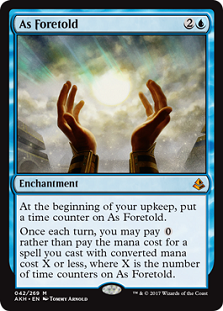
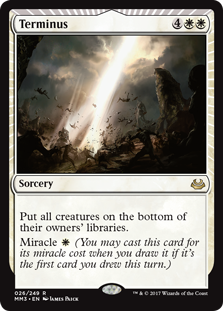
Given this difference and the effect that we realized GSZ had on Elves, he should have playing like he does against Legacy Goblins. Goblins was one of the few bad matchups Miracles had, because it couldn't be locked out with Counterbalance and couldn't be exhausted by attrition: Terminus tucks creatures back into the library, where they can be found by Goblin Matron. Even worse was stacking Terminused goblins for Grenzo, Dungeon Warden retrieve. At the time, Miracles won either through concession, Jace, or a single Entreat the Angels. The eventual solution was to become more aggressive by following Terminus with Monastery Mentor and winning before Goblins rebuilt.
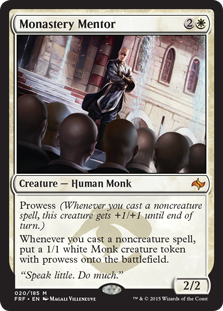
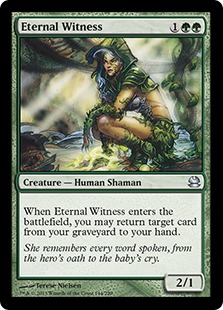
GSZ was allowing Modern Elves to play a very similar game to Legacy Goblins. I would flood the board with dorks, and if I got Terminused, I had so many tutors that I could find whatever I needed to get going again. Also, GSZ recycles itself, so sneaking even one through created a long-term problem for UW. My pilot argued that the potential to just grind him to death was so high I should be prioritizing that strategy, sideboarding in Eternal Witness to rebuy the tutors he counters and the "missing" copies of Collected Company. I had wanted to run Witness, but there wasn't maindeck room and it's not really a sideboard card. Given the experience of this matchup, though, it made sense to find some room.

The Fix

In the end, I decided to redo the testing with new decklists. The rest of the team wasn't ready to start, so redoing a test wouldn't hamper testing. It was hard to disagree that Eternal Witness wasn't the right strategy for Elves post-board. Additionally, it was July by then, and M19 with Elvish Clancaller was being released. Normally my testing doesn't consider new releases, but if I was going to change the sideboard, I figured I might as well alter the maindeck, too. I was also keeping a closer watch on the data this time so nothing surprised me again.
On the opposite side, the UW deck would greatly change its strategy post-board. Taking a page from Legacy, my partner would try to become an aggro-control deck instead of pure control. This would prove difficult since Monastery Mentor isn't really Modern playable, and I wasn't going to let him go too far off the rails just to beat Elves in a theoretical test, but Geist of Saint Traft, Baneslayer Angel, and Vendilion Clique were already inclusions in UW sideboards, so he got a few more. After some minor adjustments in his post-board counter suite, we were ready.

Final Decklists

In the end, the decklists didn't end up that different from the originals. I tried a number of combinations and while these felt best, I'm not convinced they're correct. I ended up cutting the Devoted Druids because it felt like I wouldn't need to combo off ever, but in retrospect I think that was a mistake. The way things played out I realized that I was underevaluating the power of the tutors, and could have included more searchable synergy elements.

GB Elves, Final Control Deck

Creatures

4 Nettle Sentinel
4 Llanowar Elves
4 Elvish Mystic
4 Heritage Druid
4 Dwynen's Elite
4 Elvish Clancaller
4 Elvish Archdruid
4 Shaman of the Pack
2 Ezuri, Renegade Leader

Instants

4 Collected Company
4 Chord of Calling

Lands

3 Blooming Marsh
3 Gilt-Leaf Palace
2 Pendelhaven
2 Cavern of Souls
1 Nykthos, Shrine to Nyx
7 Forest

Sideboard

4 Thoughtseize
3 Abrupt Decay
2 Scavenging Ooze
2 Relic of Progenitus
2 Reclamation Sage
2 Damping Sphere

GB Elves, Final Test Deck

Creatures

1 Dryad Arbor
4 Nettle Sentinel
3 Llanowar Elves
3 Elvish Mystic
4 Heritage Druid
4 Dwynen's Elite
4 Elvish Clancaller
4 Elvish Archdruid
4 Shaman of the Pack
2 Ezuri, Renegade Leader

Instants

2 Collected Company
4 Chord of Calling

Sorceries

4 Green Sun's Zenith

Lands

3 Blooming Marsh
3 Gilt-Leaf Palace
2 Pendelhaven
1 Cavern of Souls
1 Nykthos, Shrine to Nyx
7 Forest

Sideboard

4 Thoughtseize
3 Eternal Witness
3 Scavenging Ooze
2 Reclamation Sage
3 Damping Sphere

Elvish Visionary was a major piece of older Elves decks, and with GSZ, it would have been great for the grinding plan, but they're getting cut fairly universally. Maybe that would change in a GSZ world, but I can't say for certain. It also didn't end up mattering that much to the overall test.

My UW pilot kept trying to drastically change his sideboard and maindeck for the matchup, but I held firm. Most of his changes were the agreed upon and some he'd made for his real deck based on metagame shifts in late June.

UW Control, Final Gauntlet Deck

Creatures

2 Snapcaster Mage
1 Vendilion Clique

Sorceries

4 Terminus

Planeswalkers

3 Jace, the Mind Sculptor
2 Teferi, Hero of Dominaria

Enchantments

2 Detention Sphere
2 Search for Azcanta

Instants

4 Opt
4 Path to Exile
2 Oust
3 Logic Knot
4 Cryptic Command
2 Timely Reinforcements

Lands

4 Celestial Colonnade
4 Flooded Strand
4 Field of Ruin
2 Hallowed Fountain
1 Glacial Fortress
1 Ghost Quarter
5 Plains
4 Island

Sideboard

2 Damping Sphere
1 Rest in Peace
2 Stony Silence
3 Negate
2 Geist of Saint Traft
2 Vendilion Clique
2 Baneslayer Angel
1 Celestial Purge

Testing Begins

No other changes occurred, and testing proceeded normally from this point. Or, at least, as normally as infrequent testing schedules allowed. Next week, I will reveal the data from those tests. See you then!


Sig’s Current Approach to the MTG Market

Are you a Quiet Speculation member?

If not, now is a perfect time to join up! Our powerful tools, breaking-news analysis, and exclusive Discord channel will make sure you stay up to date and ahead of the curve.

Recently I wrote about how the stock market could possibly interact with the Magic market—to see a measurable impact, it takes a significant move on Wall Street.

However, I admit I was mainly looking at these markets at their macro level. In other words, I focused on impacts to the broader market and not impacts to my own strategy. Because I enjoy the grind of both the stock market and MTG finance, I tend to maintain more frequent turnover within these portfolios. Thus even a move of the slightest in either market may be enough to motivate me to readjust.

You could call it unnecessary. You could call my behavior tedious and without merit because it’s impossible to time market tops and bottoms. But it’s how I enjoy Magic as a hobby these days.

This week I’m going to review some of my most recent transactions (there are only a few) and underscore my motivations behind each one so you can get a feel for where I am at, personally, with MTG finance right now.

The Sales

The last significant sale I made was via an ABU Games buylist order I made months ago. That trade-in entailed shipping all but a few of my Alpha bulk commons/uncommons to their buylist for trade credit, and picking up a played The Tabernacle at Pendrell Vale.

There was an error retrieving a chart for The Tabernacle at Pendrell Vale

I made this trade for two key reasons. First, Alpha and Beta cards have finally stagnated in value over the past couple months. Cards that were easy to acquire at cheap pricing on TCGplayer and Card Kingdom suddenly became more expensive, and ABU Games offers serious trade credit for these cards. If they really want my Alpha Glasses of Urza that badly, I guess I can ship it to them.

The second motivation was consolidation. As I was browsing my Alpha cards, and seeing the slowdown in demand at the new price points, I realized that moving them would be a tedious process. Trading them all to ABU Games for credit was an easy way to exit the position cleanly and minimize effort on my part. Remember, time is a valuable commodity too!

Since then, I managed to sell the Tabernacle and use the cash for a purchase (more on that in the next section). After selling the Tabernacle, I was fairly content with the cards that remained in my collection. I actually thought about stopping for 2018.

Then the stock market dropped a bit, and I suddenly came to a different realization. I should be opportunistically cashing out of some more cardboard to reallocate funds into the stock market. The market may not have moved enough to get some people excited, but my personal end game is to slowly take money out of Magic and move into stocks to help save for my kids’ college costs. After riding near all-time highs in the stock market, I felt the modest pullback we had in October was worth taking advantage of.

So I sold a few more cards—not a ton, just a little here and there. I sold another Alpha uncommon left behind (Earth Elemental) and I sold the two Arabian Nights City of Brass I wasn’t using in my Old School decks. I even sold the Singing Tree and one Mirror Universe to try and raise liquidity further.

Lastly, I still have a few more Alpha uncommons listed on eBay with the hopes of eventually moving them. As expected, moving random, played, Alpha uncommons for cash is a slow process (hence why I moved so many to ABU Games at once ).

There was an error retrieving a chart for Earth Elemental

You may be wondering why I sold such collectible cards. Surely these will climb higher in price, right? They probably will over the long term, but I believe their prices are fairly stagnant in the short term. Also, keep in mind that Old School cards are pretty much all I own nowadays. There’s not much else in my collection worth any money other than the Old School stuff, so that’s what I have to sell when I want to raise cash. I just trim carefully.

The Purchases

I already established that my motivation for selling was to put more money into the stock market—that’s a big chunk of my buying lately. For those who are interested, I mostly focus on ETF’s in the college portfolio for diversification, but I did make an individual stock purchase in Activision Blizzard. But don’t take this as investment advice, please. Normal disclaimers: I have vested interest in the stocks I own, consult a financial adviser before buying stocks, etc.

Most of you probably don’t care about the stock part of my investing. But rest assured I have not been completely removed from buying cards these last few months. For example, when I sold the Tabernacle I used the funds to acquire a beat up Unlimited Timetwister. I made this purchase for play in a deck, but also because I still think Power is a worthwhile investment. Even at elevated prices, there is still persistent demand for Power—especially heavily played stuff at discounts to the market.

I still browse Card Kingdom’s stock of Unlimited Power on a regular basis and I see cards coming and going (meaning things still move at the new prices). Also, they have a total of 14 pieces in stock right now. That’s not a huge amount, and it’s noteworthy they have no Timetwisters, Mox Jets, or Ancestral Recalls in stock. Most important of all, though, is the fact they still have zero “Good” copies in stock. Any time they get one it sells immediately, because their “Good” pricing is discounted to the market and the demand for more affordable copies is so strong.

My recent buying doesn’t stop there, however. I also made an opportunistic buy of a Beta Nevinyrral's Disk. The price was right, the played condition helped make it affordable, and I wanted to upgrade the card in one of my decks. But the main reason I pulled the trigger was because Card Kingdom has been out of stock of Alpha and Beta Disks for a long time, and I can see their buylist increasing sometime soon. Card Kingdom has restocked many cards from Magic’s first two sets, but Nevinyrral's Disk is one that remains tough to track down.

There was an error retrieving a chart for Nevinyrral'S Disk

I also picked up a near mint [card]Falling Star]/card] not long ago. The price was right, and it was sold by Channel Fireball so I was confident the card would be truly nice (and it was). At the time the price I paid was just a smidge away from Card Kingdom’s buylist, but they did drop their buy price a bit since then. Still, it’s a unique Reserved List card and a cool ability, so I don’t mind sitting on it for a while.

The last thing I purchased recently was a bunch of Seedtimes from Tokyo MTG and Hareruya. The card spiked, and while I have no delusions that it’ll remain over $7, buying at the old price (between $1-$2) seems like a slam dunk. If nothing else, it’s an awesome card that should gradually rise as long as it’s not reprinted. And with such a low buy in, the opportunity cost is negligible. Card Kingdom is already paying $2.20 on their buylist and if I can catch one more increase, I should be able to flip these for some store credit at a modest profit.

There was an error retrieving a chart for Seedtime

Besides, I think it’s every green mage’s dream to use this card to take an extra turn in Commander.

Wrapping It Up

While I have full confidence in the health of Magic’s market on the whole, I admit I have been reallocating some funds to the stock market in light of recent trends. I tend to micromanage my portfolio excessively, but it’s mainly because I enjoy doing so. It would be a disservice to readers if I wrote a generalist article without following it up with my own, personal strategy.

As you can see, I am still making strategic buys here and there. But the net movement of my money is out of cardboard and into stocks. This isn’t a reflection of my confidence in Magic; it’s mostly just opportunism and a focus on the end goal to save for college costs.

I still like holding Power and playable Alpha/Beta cards most of all, and this is reflected in my recent purchases. But the less useful Alpha cards may have limited upside over the next 12 months considering their recent run. Thus, I am rebalancing my portfolio accordingly, but mostly operating in the margins. And that’s probably where I will stay through the end of 2018.

Sigbits

  • I see a lot of Masterpieces on Card Kingdom’s hotlist nowadays. I think they’re pretty solid investments now that the hype around them finally calmed down. Examples include Sword of Feast and Famine ($85), Marsh Flats ($85), and Watery Grave ($65). Recently I traded in some Unlimited commons to ABU Games and had enough credit for a low-end Expedition (Kor Haven). It’s a small pick-up, but it does reflect my confidence in these cards.
  • After falling precipitously, Card Kingdom’s buy prices on a few Legends legends have finally stabilized. A couple are even reappearing on their hotlist, including Rasputin Dreamweaver ($65) and Angus Mackenzie ($105). These are far from their peaks, but perhaps it reflects a stabilization in this market.
  • You know what card remains on Card Kingdom’s hotlist that I can’t seem to understand? Willow Satyr. That card has been on their hotlist for weeks and their buy price remains robust at $46. Is this card actually seeing play anywhere? I have no clue where the demand is coming from, but you can’t argue with the price!

Insider: Standard Specs Before the Pro Tour

Are you a Quiet Speculation member?

If not, now is a perfect time to join up! Our powerful tools, breaking-news analysis, and exclusive Discord channel will make sure you stay up to date and ahead of the curve.

With two Grand Prix, last weekend was the biggest display of Standard so far since Guilds of Ravnica's release, and as such has huge implications for the market. It has sent some cards spiking, but there’s still a lot of movement to be made, especially with the Standard Pro Tour starting in just one week.

Today I’ll make some sense of what’s going on by explaining what happened last weekend and how it has impacted the market. I’ll also look forward and make some predictions about the future, identifying some cards that I’d recommend selling because I don’t see a bright future, and cards I’d hold in anticipation of gains.

There was an error retrieving a chart for Teferi, Hero of Dominaria

The big winner last weekend was Jeskai. It won the GP in New Jersey, with two more copies in the Top 8, and put an additional two in the Top 8 in Lille—it also finished 9th place in both events.

As expected, Teferi, Hero of Dominaria was the star of the show, and it looks to be a very strong buy. It’s going to remain a key staple of Standard until it rotates next year, and it will only get better when Ravnica Allegiance brings Hallowed Fountain and other Azorius goodies. It’s an Eternal staple that sees play as far back as Vintage, so I think there’s also a possibility it could just continue to rise through rotation.

There was an error retrieving a chart for Ral, Izzet Viceroy

New cards played a big part as well. Ral, Izzet Viceroy was a common one-of replacing the 4th Teferi, Hero of Dominaria. So it’s definitely competitive, and possibly underpriced.

There was an error retrieving a chart for Deafening Clarion

Deafening Clarion was a four-of in all of the Jeskai decks, and one of Standard’s key sweepers. It’s also a sideboard card in Boros decks. This cross-archetype demand explains why the price has been steadily increasing since release, from $1 to nearly $3, likely with plenty of room to grow.

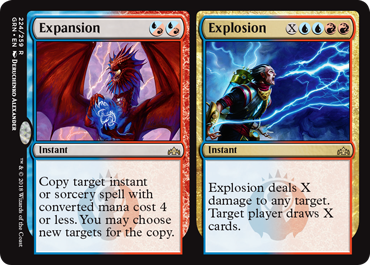
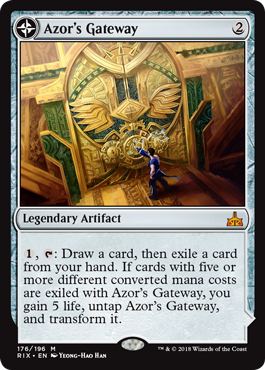
Expansion // Explosion was peppered through the Jeskai decks as one- or two-ofs, but big winner Eli Kassis sported a full playset. Accompanying it was Azor's Gateway, which can flip and turn into a mana engine that makes Explosion lethal. It’s a potent combination, and because Azor's Gateway is quite effective in a control deck as a looting effect, there’s not a lot of downside.

Expansion // Explosion spiked a few weeks ago, from a $1 to over $3.50. There could be some more growth, but looking at Deafening Clarion, which has more demand but is cheaper, it makes me think Expansion // Explosion doesn’t have a ton of room to grow.

There’s little chance it’s overpriced after Jeskai’s big weekend, so it makes me confident Deafening Clarion should be worth more than it is. Although there is some chance that non-Standard casual and Commander demand is what’s elevating the split card.

Azor's Gateway was definitely underpriced, and has spiked to over $10. Jeskai will be a big deal at the Pro Tour and a fixture of the metagame in the future, and the Azor's Gateway version might be the best. If it is, then this price could go even higher. If other versions are more popular at the Pro Tour, then the price should settle.

There was an error retrieving a chart for Arclight Phoenix

Last weekend was Arclight Phoenix coming-out party, which proved the hype was well-founded. It didn’t dominate, but top-eighting both Grand Prix, with three more in the Top 8 of Lille, show it’s very viable and competitive. Arclight Phoenix is also performing in Modern, and together this has continued to drive its price higher.

Arclight Phoenix grew to $25 but has settled at around $22, so somewhere around this price is probably correct. There doesn’t really seem to be any viable spec targets in the deck, which is otherwise almost all commons and uncommons, but perhaps foils of its cards could yield some gains.

There was an error retrieving a chart for Tocatli Honor Guard

A breakout deck last weekend was Boros Angels, which Brad Nelson took all the way to the finals in New Jersey. He’s known for his Standard prowess, so I expect his deck to be widely copied. Compared to the Izzet deck, it’s packed full of rares and mythics.

It’s responsible for spiking Tocatli Honor Guard, a devastating hoser against Golgari that nullifies its entire creature base. It’s grown from around $0.50 to over $2, but seems to be tapering off. I do see some possible growth because it’s accessible to any white deck, but another spike is unlikely.

There was an error retrieving a chart for Resplendent Angel

Accessibility is also why I like Resplendent Angel. It’s a strong card in any white aggressive deck, and was in a green version of the Angels deck that top-eighted New Jersey. The price almost doubled over the past month, but it seems to be moving slightly higher. I could see it heading from its current $20 to $25 or more if it performs at the Pro Tour.

There was an error retrieving a chart for Venerated Loxodon

A sleeper deck is Selesyna Tokens, which slipped into both Top 8s. It did well after release but seemed to have fallen by the wayside since. It’s clear the deck is competitive, and seems likely to remain a fixture of the metagame going forward.

Any of its staples could be good spec targets that will increase if the deck does great at the Pro Tour; otherwise the prices aren’t likely to move much. The card I like the most is Venerated Loxodon, which is not only a key staple that should be a four-of in any version of the deck, but also a staple of Mono-White Aggro, a couple copies of which made Top 32 in New Jersey.

A Few Oddballs

The finals of Lille was a bit of an anomaly, featuring a finals of Mono-Red versus Mono-Blue Aggro. There was only one other red deck between both Top 32s, and the blue deck was nowhere to be found. At this point the safe play is to stay away from these cards, but there is a chance of a big Pro Tour result increasing their popularity.

Speaking of anomalies, winning the SCG Standard Classic last weekend was a Five-Color Mastermind's Acquisition control deck, similar to the deck that saw some play last season, but with the addition of Lich's Mastery!

Other obscure rares in the deck include its namesake and The Mirari Conjecture, but there’s also a mythic in Chance for Glory, which combos with Lich's Mastery not allowing one to lose the game.

I’m not running to speculate on the cards in this deck, but I’ll sure be paying close attention to results to see when it appears again. If it happened to be picked up by some big players at the Pro Tour, however unlikely, then all bets are off.

-Adam

Back Again: Arclight Phoenix Rises over Modern

Are you a Quiet Speculation member?

If not, now is a perfect time to join up! Our powerful tools, breaking-news analysis, and exclusive Discord channel will make sure you stay up to date and ahead of the curve.

Looking over the Top 32 lists from last week's Modern Open, I realized I hadn't studied Wizards' 5-0 lists in some time. My wake-up call? Andrew Schneider's deck, which revolved around a Guilds of Ravnica card that immediately piqued my interest when it was spoiled six weeks ago: Arclight Phoenix. A careful review of each unchecked 5-0 document revealed that Andrew's list was no fluke; Phoenix has been tearing up the online metagame, excelling alongside a wildly varying cast of accompanying characters. Today, we'll revisit Phoenix's applications in Modern and explore those winning builds.

Strategic Curving

Critical to Arclight Phoenix's Modern success is a new idea I've been working on called strategic curving. Most Magic players are aware of the mana curve, or "the application of mana optimization theory to deck construction." A deck full of two-drops won't have anything to do until turn two, while a deck with a healthy mix of one-, two, and three-drops can make land drops each turn while consistently spending all its available mana. That said, the deck with exclusively two-drops is all but guaranteed to have a play on turn two, while the deck with the mix is not.

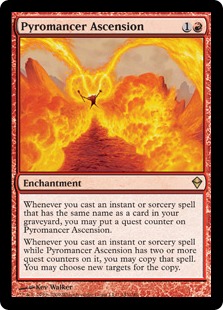
Strategic curving follows the same principle, but deals with limitations placed on cards other than their mana cost. Take, for instance, Thing in the Ice and Pyromancer's Ascension. These cards occupy the same notch on the strategic curve: pilots need to deploy them early and power them up with instants and sorceries cast after the fact. Until "turned on," the cards do nothing; if bounced or drawn late, they rot on the battlefield. Running full sets of both cards helps ensure players have one to cast on turn two, but also locks players into that slot on the strategic curve.
To counteract this effect, deckbuilders look to cards that utilize similar resources in the hopes of retaining synergy, but that thrive under different conditions to provide flexibility. One common yang to the ying of Thing in the Ice is Bedlam Reveler. Unlike Thing and Ascension, Reveler can't be cast on turn two. Rather, its job is to come down late in the game, blowing other topdecks out of the water. In a deck that casts lots of instants and sorceries, both types of card have their place, but each dominates its own part of the game.

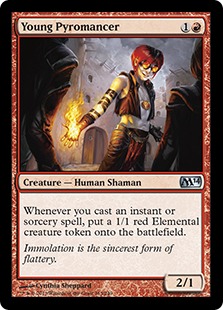
In the middle of this see-saw rest cards like Monastery Swiftspear, Kiln Fiend, Young Pyromancer, and Arclight Phoenix. These cards don't have as steep a late-game requirement as Bedlam Reveler, but still provide value without a full grip of instants and sorceries at the ready; the value they generate (be it damage or tokens) also lasts if removed, unlike Ascension and Thing (counters irrelevant with their permanents absent from the battlefield).
A properly-balanced strategic curve mixes these cards in such a way that it has impactful plays throughout the game and rarely chokes on too many cards that occupy the same game space. The following lists occupy varying sides of that tightrope, their decisions crystallized by their creature counts.

Mono-Red

Arclight Phoenix decks live and die by their monsters. In total, I found seven distinct threat suites among dedicated Phoenix decks, four of which employ only a single color. We'll start with those.

Arclight Red, by Andrew Schneider (30th, SCG Charlotte)

Creatures

4 Monastery Swiftspear
4 Arclight Phoenix
4 Bedlam Reveler

Instants

4 Lightning Bolt
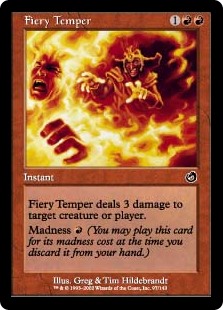
4 Fiery Temper
4 Manamorphose

Sorceries

4 Faithless Looting
4 Lava Spike
4 Rift Bolt
4 Needle Drop
1 Flame Jab
1 Tormenting Voice

Lands

18 Mountain

Sideboard

2 Dragon's Claw
3 Shrine of Burning Rage
4 Tormod's Crypt
1 Risk Factor
2 Anger of the Gods
3 Molten Rain

Andrew's aforementioned build warps a reach-heavy Burn shell around Phoenix, and is a go-to online. Monastery Swiftspear is the primary carry-over from actual Burn, but the deck still seeks to string together 20 damage before opponents can get their bearings.

Strategically, Arclight Red lords two things over Burn: impressive bodies and incidental value. A 3/2 flying and a 3/4 prowess let this deck dominate the red zone in ways Burn can only dream of. And native to the apparent Phoenix core is Faithless Looting, which not only turbo-charges Monastery Swiftspear by turning lands into business, but effectively draws players cards when pitching Fiery Temper or Phoenix itself. These dimensions allow the deck to function on fewer cards than Burn, a deck that assembles 20 damage more traditionally: by just having it.
Burn still has its benefits over Arclight Red, though. It's more consistent, for one. While Looting helps Arclight on this front, it doesn't come close to matching the streamlined core of the Burn deck, which has time again proven itself as one of Modern's most reliable machines. Burn also doesn't have to worry about protecting its synergies from random hosers like Scavenging Ooze.

On that synergy note, not needing its cards to work together beyond just dealing damage lets Burn dedicate its slots to on-plan role-players like Lightning Helix and Skullcrack rather than must-include engine greasers like Manamorphose. Too much of the latter can soften the deck to other format checks, such as Thalia, Guardian of Thraben and even Eidolon of the Great Revel in the pseudo-mirror.

Runaway Red, by ARCHANGELIC76 (5-0)

Creatures

4 Runaway Steam-Kin
4 Arclight Phoenix
4 Bedlam Reveler

Instants

4 Lightning Bolt
4 Fiery Temper
4 Manamorphose
4 Desperate Ritual
4 Pyretic Ritual
3 Risk Factor

Sorceries

4 Faithless Looting
2 Insult // Injury

Lands

19 Mountain

Sideboard

1 Risk Factor
2 Abrade
3 Anger of the Gods
3 Blood Moon
3 Shrine of Burning Rage
3 Surgical Extraction

This deck replaces Swiftspear with Runaway Steam-Kin, and becomes more combo-focused as a result. Steam-Kin can prove slow in the early turns, when mana's tight, but untapping with it lets players embark on a card-sifting journey to damage land, chaining together Risk Factors and Fiery Tempers while digging through the deck with Faithless Looting. That journey's sponsored by the Elemental, which first made Modern headlines amidst promises of first-turn kills, but now seems better-poised as a low-investment value engine.
ARCHANGELIC76's build goes all-in on the combo dimension, maxing out on two-mana rituals as well as Manamorphose. It counts on Reveler, as well as Looting and Factor in the grave, to serve as outlets for all the mana provided on critical turns. Alongside these aims, Phoenix acts as a sort of Plan B, front-loading damage and diverting opponents' resources while pilots set up a big turn.

The combo version seems better than the Burn version against one-shot hate such as Feed the Clan. Its big turns overwhelm that kind of disruption at the price of being more synergy-based, and therefore softer to targeted discard and permission.

Runaway Red, by NEMATIC (23rd, Modern Challenge #11659813)

Creatures

4 Bedlam Reveler
4 Monastery Swiftspear
4 Runaway Steam-Kin
4 Arclight Phoenix

Instants

4 Lightning Bolt
3 Fiery Temper
4 Manamorphose
4 Desperate Ritual
3 Risk Factor

Sorceries

4 Faithless Looting
4 Lava Spike

Lands

18 Mountain

Sideboard

2 Abrade
3 Anger of the Gods
2 Blood Moon
3 Dragon's Claw
2 Shrine of Burning Rage
3 Surgical Extraction

Up next is a list featuring Reveler, Swiftspear, and Steam-Kin, bringing the creature count up from 12 to 16. To make room for the newcomers, NEMATIC cut a little bit from each previous list, settling on just the four best rituals and Lava Spikes, respectively. By divesting his plans, NEMATIC increases both his resilience to focused hate and his dependance on the deck to provide him with the right pieces at the right times. In other words, he's accepted some degree of tension to have access to aspects of both shells throughout the tournament.

Bomat Kin, by SUPERRADJOE (5-0)

Creatures

4 Bomat Courier
4 Runaway Steam-Kin
4 Arclight Phoenix
4 Bedlam Reveler

Instants

4 Lightning Bolt
4 Fiery Temper
4 Manamorphose
4 Desperate Ritual
3 Pyretic Ritual

Sorceries

4 Faithless Looting
3 Tormenting Voice

Lands

18 Mountain

Sideboard

2 Abrade
3 Anger of the Gods
3 Blood Moon
2 Dragon's Claw
2 Shrine of Burning Rage
3 Surgical Extraction

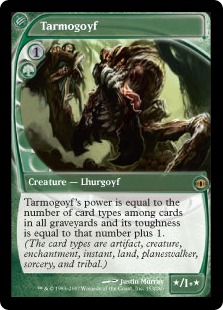
SUPERRADJOE also runs 16 creatures, but Monastery Swiftspear gets the axe here for Bomat Courier. Gone too is Lava Spike, replaced by Tormenting Voice and more rituals to help with the Steam-Kin combo plan. A beefy Bomat can immediately draw pilots into big turns, even after combat; that said, Bomat could just as well draw a more traditional Burn deck into enough Lava Spikes to close out the game.
On the Construct itself, I explored its applications in Modern earlier this year, and found it especially potent against decks without blockers. These opponents are incentivized to remove Bomat as quickly as possible, which draws heat away from more critical creatures (for me, Tarmogoyf; for Joe, Steam-Kin). Should it live, Bomat rewards players with reach in their decks. Despite this reward, I'm not totally sold on Bomat in a Phoenix shell, for now preferring creatures that directly contribute to its gameplans (i.e. Swiftspear).

Blue-Red

Arclight Phoenix has also found its way into ostensibly fairer decks, or ones looking to do most of their damage through combat. These shells tend to splash blue for additional filtering and the occasional juicy creature.

Phoenix Thing, by W0RDJUICEBOX (5-0)

Creatures

4 Thing in the Ice
4 Arclight Phoenix
4 Bedlam Reveler

Instants

4 Lightning Bolt
4 Fiery Temper
2 Burst Lightning
4 Opt
4 Manamorphose

Sorceries

4 Serum Visions
4 Faithless Looting
4 Chart a Course

Land s

4 Island
2 Mountain
4 Scalding Tarn
1 Shivan Reef
4 Spirebluff Canal
3 Steam Vents

Sideboard

2 Abrade
2 Alpine Moon
2 Anger of the Gods
2 Dispel
3 Dragon's Claw
4 Ravenous Trap

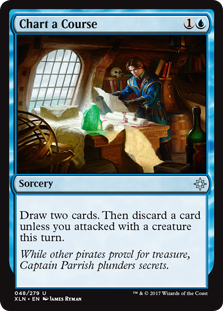
We'll begin with the simplest of the UR lists. W0RDJUICEBOX's plays a paltry 12 creatures, but boasts a serious upgrade to Tormenting Voice in Chart a Course. Chart keeps the cards flowing and even provides players with hard card advantage, an important benefit over mere filtering with Looting in the picture. Discarding a card with Chart can even prove preferable when it comes to pumping out Bedlam Reveler or casting Fiery Temper, giving the sorcery more play.
Thing in the Ice packs a wallop against removal-light creature strategies, taking the pressure off Bolt effects when it comes to disrupting synergies and combos. Those burn spells can instead by pointed at opponents' heads, helping a swing from Awoken Horror turn lethal. As usual, Phoenix also contributes to the damage count, but its role as a recursive flying blocker is underlined in this build. Alongside Thing, the UR deck has more reversibility than the mono-red builds we've seen so far.

Electro Steam, by MENTALMISSTEP (5-0)

Creatures

4 Goblin Electromancer
4 Monastery Swiftspear
4 Runaway Steam-Kin
4 Arclight Phoenix

Sorceries

4 Faithless Looting
4 Chart a Course

Instants

4 Lightning Bolt
4 Fiery Temper
1 Gut Shot
4 Manamorphose
4 Risk Factor

Lands

2 Bloodstained Mire
1 Island
4 Mountain
4 Scalding Tarn
4 Spirebluff Canal
3 Steam Vents
1 Stomping Ground

Sideboard

3 Ancient Grudge
2 Grim Lavamancer
3 Spell Pierce
1 Surgical Extraction
4 The Flame of Keld
2 Tormod's Crypt

If you thought Chart a Course was strong at two mana, wait till you see it at one! My own attempts at combining Baral or Electromancer with Chart in a tempo shell failed, but MENTALMISSTEP appears to have achieved that dream for me. This deck features a lot of pieces that don't quite fit together all the time, but occasionally produce impressive results. Things tend to snowball the more of each creature is in play. In testing, my Electromancer enabled a combo kill with Steam-Kin in which I chained multiple Lootings and Risk Factors from the grave to draw into 12 points of reach. I also attacked with a 7/8 Swiftspear!

This deck is alone in excluding Bedlam Reveler, as the Horror has no direct synergy with Electromancer. I think it could stand to abuse the graveyard a little more.

Crackling Kiln, by BLOOPBLOP (5-0)

Creatures

3 Kiln Fiend
4 Thing in the Ice
4 Arclight Phoenix
1 Crackling Drake
4 Bedlam Reveler

Instants

4 Lightning Bolt
4 Thought Scour
2 Stubborn Denial
4 Manamorphose
4 Mission Briefing

Sorceries

4 Serum Visions
4 Faithless Looting

Lands

4 Bloodstained Mire
3 Island
2 Mountain
4 Spirebluff Canal
3 Steam Vents
2 Sulfur Falls

Sideboard

1 Crackling Drake
1 Stubborn Denial
2 Abrade
2 Ceremonious Rejection
2 Gut Shot
3 Molten Rain
1 Roast
3 Surgical Extraction

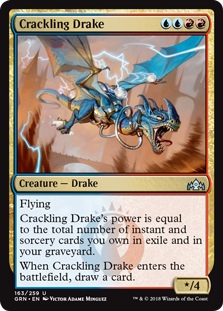
Joining the slower Thing in the Ice here is Kiln Fiend, an aggro-combo standby that steals games against uninteractive opponents. Blue spells compliment Fiend well, especially Thought Scour and Stubborn Denial—the former can be cast after no blocks are declared while Denial stays up to protect the Elemental, and the latter immediately turns on ferocious, as it does with an almost-flipped Thing.
This build is more reversible than any of the others, both thanks to its counterspells and its diverse collection of creatures. Thing and Phoenix can play proactive and defensive roles, as discussed, but complimenting the all-in Kiln Fiend plan is another pet card of mine from Guilds, Crackling Drake. Drake may be one-of, but the deck nonetheless seems built around it. Scour and Briefing retain relevance in multiples thanks to Drake's presence, which can be doubled after siding against more disruptive decks.

Born Again

I've come away with a couple conclusions from this onslaught of Phoenix decks. For one, the card clearly has a place in Modern, both as one worthy of building around and perhaps as a role-player for other strategies (I even spotted a set in Hollow One). Second, I'm convinced there's an ideal threat combination for the Phoenix decks, but that combination has yet to be settled on by the community at large. I'd be surprised if we didn't see a black shell emerge in the near future, as Collective Brutality, Fatal Push, and targeted discard all seem like fine ways to support the 3/2. But then, they might not be proactive enough.

In any case, I can't wait to see what Phoenix devotees have in store for us in the coming months! Which Guilds cards have you been experimenting with?

Daily Stock Watch – The Immortal Sun

Are you a Quiet Speculation member?

If not, now is a perfect time to join up! Our powerful tools, breaking-news analysis, and exclusive Discord channel will make sure you stay up to date and ahead of the curve.

Hello, everyone and welcome to the Halloween edition of the Daily Stock Watch! I'm quite scared with how prices have been jumping up and down over the past few days (Mist-Cloaked Herald what's up?) and how we are going to handle these price changes. Today, I want to talk about a card that has been fairly expensive ever since it was printed,  and I'm only starting to appreciate it now as it's seeing competitive play. It has now breached the $20 barrier which puts it in rarefied air for Standard pieces, and we'll evaluate how far this card could probably go from here financially.

There was an error retrieving a chart for The Immortal Sun

The Immortal Sun is a solid card on first glance even though I personally feel that this should have been a five CMC card (just a personal opinion, not an expert assessment!) regardless of its power level. It kind of felt underwhelming for me at six, but it has found its niche on this new Selesnya brew that has been making some waves in Standard online tournaments.

Selesnya

Creatures

1 Venerated Loxodon
1 Lyra Dawnbringer
1 Resplendent Angel
1 Trostani Discordant
3 Benalish Marshal
3 Emmara, Soul of the Accord
2 Thorn Lieutenant

Other Spells

4 March of the Multitudes
3 Saproling Migration
4 Flower // Flourish
2 Divine Visitation
3 Legion's Landing
4 History of Benalia
4 Conclave Tribunal
2 The Immortal Sun

Lands

1 Arch of Orazca
4 Temple Garden
4 Forest
4 Sunpetal Grove
9 Plains

Sideboard

3 Tocatli Honor Guard
2 Settle the Wreckage
2 Seal Away
2 Knight of Autumn
1 Ixalan's Binding
2 Cleansing Nova
1 Divine Visitation
1 Trostani Discordant
1 Benalish Marshal

Currently sitting at its all-time high of $21.66, The Immortal Sun gives this deck a lot of gas when it hits the board. It runs a lot of value spells that keeps you alive while you setup for your big threats, as swarms of tokens helps you keep going until you could swarm the opponents with bigger versions of them with the help of Divine Visitation, Trostani Discordant, and Venerated Loxodon. Its ability to render opposing planeswalkers useless (which are Golgari and Teferi, Hero of Dominaria decks' main source of deck advtange) also gives you a one-sided advantage against most of the meta. There's no doubt that this is now peaking and proving its financial worth in the format but how far could it actually go post rotation? It might be too early to gauge that but we have to be vigilant enough to know if we should be speculating on it beyond this season.

Famous Commander Artifacts

A lot of other strong artifacts could easily be slotted in on this list but it's hard to imagine The Immortal Sun not joining this list anytime soon (if it hasn't yet) and helping its cause in maintaining its value over time. It would also be a great factor to consider that Rivals of Ixalan packs are getting cracked less nowadays which should further help in increasing the value of the cards from the set, particularly the mythics such as this card and the likes of Rekindling Phoenix, Azor's Gateway, and even the overrated Zacama, Primal Calamity. Should we be investing on this card now that it has breached the $20 barrier? I beg to disagree. This is something that we could have easily picked up in the $10 range and should be selling by now. I'm going to stand by my gut feel that this is a bit expensive as a support card at six mana, and its popularity will dwindle down eventually. I would be against the idea of getting them at $15 and above unless you're going to play with the card, so just wait a bit for it to drop to that range if you plan to keep them for spec purposes. Standard pieces should be fairly easy to get via trades so just trade up for them wisely and don't get too caught up with the hype. The card is absolutely brilliant but a bit overpriced for me for now.

At the moment, you could get copies of The Immortal Sun from vendors via TCGPlayer for as low as $15.83 for near mint copies up to $25. Card Kingdom and StarCityGames are both out of stock at already high prices, and I wouldn't be surprised if this could go up to $30 in the near future. Foil copies have non-standard implications, and should be good acquisitions at $30-$35 if the chance to get them presents itself. Just proceed with caution as this could go really good or bad in the coming months. I wouldn't wager too much on a card of this price and caliber but it wouldn't hurt to have some for safety purposes.

And that’s it for the Halloween edition of the Daily Stock Watch! See you again next time, as we check out a new card that should be on the go, or good enough for speculating. As always, feel free to share your opinion in the comments section below. And if you want to keep up with all the market movement, be sure to check in with the QS Discord Channel for real time market information, and stay ahead of the hottest specs!

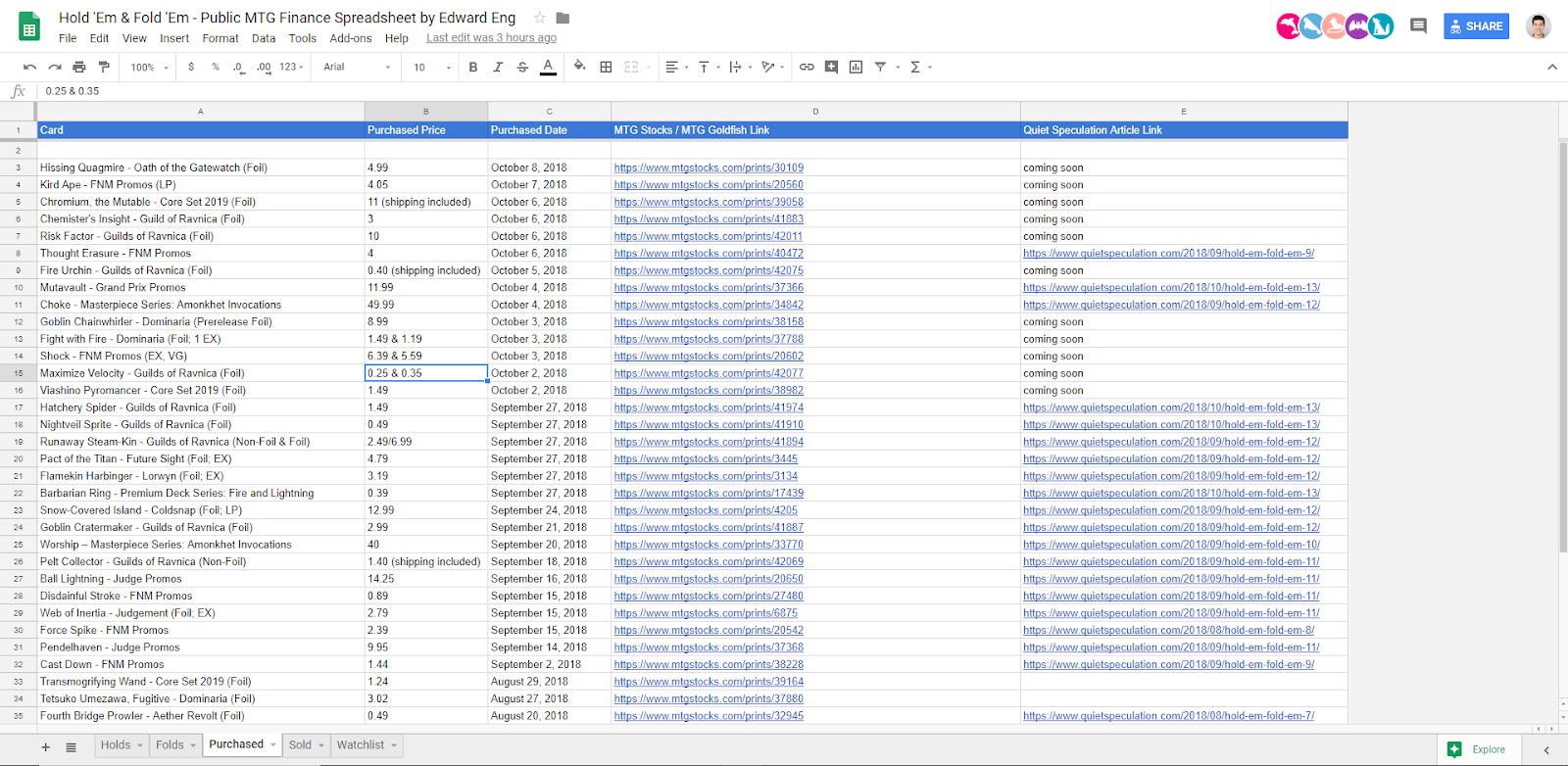
Hold ‘Em & Fold ‘Em #17

Are you a Quiet Speculation member?

If not, now is a perfect time to join up! Our powerful tools, breaking-news analysis, and exclusive Discord channel will make sure you stay up to date and ahead of the curve.

People have been talking about a lull in the Magic finance world even though there was quite a bit of Magic going on this past weekend with Grand Prix Lille, Grand Prix New Jersey, and the SCG Open in Charlotte. The beauty of tournaments is that there’s always something to take away from them to help build your collection or get the most value out of the cards you're already playing with. My goal every time I write one of these articles is to identify those trends.

Article Series Main Focus Points

  • Cards that you should hold on to or pick up for tournaments if you need them before they rise in price. These cards are either seeing increased play in one or more formats, the supply is drying up, or they’re pretty far from the next reprint.
  • Cards that you should consider selling or trading away. Their prices are pretty much at the ceiling owing to inflation from speculation, reprint inevitability in the near future, a lull in tournament play, or some combination of these.

Holds

Chandra, Torch of Defiance - Kaladesh (Any Version)

There was an error retrieving a chart for Chandra, Torch of Defiance

Target Purchase Price
Under $10

This just rotated out of Standard, so it could drop a little bit more, but not a huge amount. It sees a decent amount of play in Modern and Legacy.

And as proof of its viability, take a look at Braxton Leddon’s winning list from the Modern Classic at SCG Charlotte.

Modern: Gruul Land Destruction by Braxton Leddon

Creatures

4 Arbor Elf
2 Birds of Paradise
4 Bloodbraid Elf
2 Inferno Titan
1 Stormbreath Dragon
3 Tireless Tracker
1 Courser of Kruphix
2 Pia and Kiran Nalaar

Non-Creature Spells

2 Chandra, Torch of Defiance
4 Blood Moon
4 Utopia Sprawl
4 Lightning Bolt
2 Molten Rain
4 Stone Rain

Lands

8 Forest
1 Mountain
1 Kessig Wolf Run
3 Stomping Ground
4 Windswept Heath
4 Wooded Foothills

Sideboard

2 Relic of Progenitus
2 Trinisphere
3 Kitchen Finks
2 Scavenging Ooze
2 Abrade
1 Ancient Grudge
3 Anger of the Gods

If you need or want these, I’d go for the SDCC 2018 version if you have the extra cash.

Molten Rain - Modern Masters 2017 (Foil)

There was an error retrieving a chart for Molten Rain

Target Purchased Price
Under $4

This is another card that sticks out from Braxton Leddon’s list even though there are only two copies. It also sees a good amount of play in various Modern decks as well as Pauper.

It’s even seeing play in the new Izzet Phoenix decks, which has some card overlap with Mardu Pyromancer decks. Take a look at BloopBlop’s list.

Modern: Izzet Phoenix by BloopBlop

Creatures

4 Arclight Phoenix
4 Bedlam Reveler
1 Crackling Drake
3 Kiln Fiend
4 Thing in the Ice

Non-Creature Spells

4 Faithless Looting
4 Serum Visions
4 Lightning Bolt
4 Manamorphose
4 Mission Briefing
2 Stubborn Denial
4 Thought Scour

Lands

4 Bloodstained Mire
3 Island
2 Mountain
4 Spirebluff Canal
3 Steam Vents
2 Sulfur Falls

Sideboard

1 Crackling Drake
1 Stubborn Denial
2 Abrade
2 Ceremonious Rejection
2 Gut Shot
3 Molten Rain
1 Roast
3 Surgical Extraction

Folds

Hieroglyphic Illumination - Amonkhet (Foil)

There was an error retrieving a chart for Hieroglyphic Illumination

Target Sell Price
$10+

This only sees play in UWx Control in Modern like Galanator’s. And while this just rotated out of Standard and cycling make it a tad tougher to reprint, it’s still a pretty easily reprintable common. Not to mention, the rise of Dredge has put a damper on control decks.

Modern: Jeskai Control by Galanator

Creatures

3 Snapcaster Mage

Non-Creature Spells

3 Teferi, Hero of Dominaria
4 Serum Visions
1 Supreme Verdict
4 Cryptic Command
3 Electrolyze
4 Hieroglyphic Illumination
2 Lightning Bolt
4 Lightning Helix
1 Logic Knot
1 Mana Leak
1 Negate
4 Path to Exile
1 Settle the Wreckage

Lands

1 Celestial Colonnade
3 Field of Ruin
4 Flooded Strand
2 Glacial Fortress
2 Hallowed Fountain
3 Island
1 Mountain
2 Plains
2 Scalding Tarn
2 Steam Vents
2 Sulfur Falls

Sideboard

2 Negate
1 Celestial Purge
1 Ceremonious Rejection
2 Crumble to Dust
2 Dispel
2 Kozilek's Return
3 Rest in Peace
2 Wear // Tear

Needle Drop - Lorwyn (Foil)

There was an error retrieving a chart for Needle Drop

Target Sell Price
$7-10

Pauper is what really made this card spike with the past year. However, it’s finally made its way into a top-tier Modern deck thanks to Arclight Phoenix. Take a look at Pimmonds’s list.

Modern: Arclight Red by Pimmonds

Creatures

4 Monastery Swiftspear
4 Bedlam Reveler
4 Arclight Phoenix

Non-Creature Spells

4 Manamorphose
4 Lightning Bolt
4 Fiery Temper
4 Needle Drop
1 Flame Jab
1 Tormenting Voice
4 Rift Bolt
4 Lava Spike
4 Faithless Looting

Lands

18 Mountain

Sideboard

4 Tormod's Crypt
2 Shrine of Burning Rage
2 Risk Factor
3 Molten Rain
2 Dragon's Claw
2 Anger of the Gods

And just like Hieroglyphic Illumination, this is another common that can easily be reprinted in something like the next Masters set, especially because there’s only been one printing.

The Immortal Sun - Rivals of Ixalan (Non-Foil)

There was an error retrieving a chart for The Immortal Sun

Target Sell Price
$15

This was one of the cards on my buylist order to Card Kingdom that I featured in Hold 'Em Fold 'Em #16. Did I sell them a little too early? Maybe. Did I also sell some of the other cards on the list for a little lower than I could have? Maybe. These were some of the discussion points that came up with people in the Discord channel after that article went live.

So, The Immortal Sun. This card is popping up all over Standard. So if you have these and don’t need or want them, sell into the demand.

Foils are a little bit different on this card, though. It’s a mythic artifact, so that means it can go in any deck, which is part of the reason why it’s seeing so much play in Standard right now. But I have a hard time seeing this pop up in Modern since it costs six mana. However, it shows up in over 1,000 decks on EDHREC. And since it has the word "players" on it, it's a card that more and more people will consider putting in their EDH/Commander decks over time.

Arclight Phoenix - Guilds of Ravnica (Non-Foil & Foil)

There was an error retrieving a chart for Arclight Phoenix

Target Sell Prices
Non-Foil: $15-20
Foil: $30-35

This card is starting to pop up all over the place in Standard and Modern, making this quite the sleeper from Guilds of Ravnica.

If you have these and don’t plan on playing them, you can easily sell or trade them away. You can get them later as more supply becomes available or when there’s a dip in graveyard strategies.

Resplendent Angel - Core Set 2019 (Non-Foil & Foil)

There was an error retrieving a chart for Resplendent Angel

Target Sell Prices
Non-Foil: $10+
Foil: $20+

This is another card that I might have sold a little too early. But that was over a month ago. Since then, this card has shot up in popularity in Standard. But that’s the only place we see it, so I would definitely sell into the demand. You can make twice as much as I did when I sold it on September 29. Card Kingdom is buying non-foils for $11 and foils for $21 cash.

Chromatic Star - Time Spiral & 10th Edition (Non-Foil & Foil)

There was an error retrieving a chart for Chromatic Star

Target Sell Prices
Non-Foil: $7
Foil: $30

Here’s another easily reprintable common that’s due for a reprint. And the demand is there. Just take a look at all the decks is sees play in.

For reference, take a look at Card Kingdom’s buylist prices on the card. They’re pretty attractive.

Office Hours

The recent Office Hours #2 on Thursday, October 25 with Christopher Martin went pretty well, just as the first one with Sigmund Ausfresser did. Look out for another post featuring a quick bulletpoint writeup and audio from that session. And don’t forget to join the Discord channel if you haven’t already. There’s a good amount of insight there.

Public Spreadsheet

Stay up to the minute on what I’m looking at on a daily basis via the Hold ‘Em & Fold ‘Em - Public MTG Finance Spreadsheet. Don’t forget to bookmark it, because I update it on the fly so you can see what’s going on as the market moves and before articles about certain cards are published.

Summary

Holds

  • Chandra, Torch of Defiance - Any Version
  • Molten Rain - Modern Masters 2017 (Foil)

Folds

  • Hieroglyphic Illumination - Amonkhet (Foil)
  • Needle Drop - Lorwyn (Non-Foil & Foil)
  • The Immortal Sun - Rivals of Ixalan (Non-Foil)
  • Arclight Phoenix - Guilds of Ravnica (Non-Foil & Foil)
  • Resplendent Angel - Core Set 2019 (Non-Foil & Foil)
  • Chromatic Star - Time Spiral & 10th Edition (Non-Foil & Foil)

Public Spreadsheet

Hold ‘Em & Fold ‘Em Spreadsheet

Let me know what you think in the comments below. Agree? Disagree? Why? You can also connect with me on Twitter at @edwardeng. I’m also open to suggestions on how to make this series more valuable. Hit me up.

Have fun,
Eddie

QS Flash Cast #10: Picktacular

Are you a Quiet Speculation member?

If not, now is a perfect time to join up! Our powerful tools, breaking-news analysis, and exclusive Discord channel will make sure you stay up to date and ahead of the curve.

Play

The QS Cast returns! Chaz, and Tarkan come together as the new panel – and in this episode they discuss the following:

  • Insider Questions
  • Standard Foils? - Discussion
  • Planeswalker Deck Planeswalkers
Avatar photo

Chaz V

Started playing during Invasion block at the age of 13. Always a competitive person by nature, he continues playing to this day. Got into the financial aspect of the game as a method to pay for the hobby and now writes, Podcasts, and covers all aspects of the game, always trying to contribute to the community and create great content for readers and listeners.

View More By Chaz V

Posted in Free Insider, QS CastLeave a Comment on QS Flash Cast #10: Picktacular

Have you joined the Quiet Speculation Discord?

If you haven't, you're leaving value on the table! Join our community of experts, enthusiasts, entertainers, and educators and enjoy exclusive podcasts, questions asked and answered, trades, sales, and everything else Discord has to offer.

Want to create content with Quiet Speculation?

All you need to succeed is a passion for Magic: The Gathering, and the ability to write coherently. Share your knowledge of MTG and how you leverage it to win games, get value from your cards – or even turn a profit.

QS Cast #107 – Almost An Half Hour

Are you a Quiet Speculation member?

If not, now is a perfect time to join up! Our powerful tools, breaking-news analysis, and exclusive Discord channel will make sure you stay up to date and ahead of the curve.

Play

The QS Cast returns! Chaz, and Tarkan come together as the new panel – and in this episode they discuss the following:

  • Insider Questions
  • Mythic Edition
  • Commander 2018 Retrospect
Avatar photo

Chaz V

Started playing during Invasion block at the age of 13. Always a competitive person by nature, he continues playing to this day. Got into the financial aspect of the game as a method to pay for the hobby and now writes, Podcasts, and covers all aspects of the game, always trying to contribute to the community and create great content for readers and listeners.

View More By Chaz V

Posted in QS CastLeave a Comment on QS Cast #107 – Almost An Half Hour

Have you joined the Quiet Speculation Discord?

If you haven't, you're leaving value on the table! Join our community of experts, enthusiasts, entertainers, and educators and enjoy exclusive podcasts, questions asked and answered, trades, sales, and everything else Discord has to offer.

Want to create content with Quiet Speculation?

All you need to succeed is a passion for Magic: The Gathering, and the ability to write coherently. Share your knowledge of MTG and how you leverage it to win games, get value from your cards – or even turn a profit.

QS Cast #106: Vendor Series – Brute Force Games

Are you a Quiet Speculation member?

If not, now is a perfect time to join up! Our powerful tools, breaking-news analysis, and exclusive Discord channel will make sure you stay up to date and ahead of the curve.

Play

The QS Cast returns! Chaz, and Tarkan come together as the new panel – and in this episode they discuss the following:

  • QS Vendor Series - Brute Force Games!
  • Insider Questions
  • Shop Talk
  • WOTC Direct and the Future
Avatar photo

Chaz V

Started playing during Invasion block at the age of 13. Always a competitive person by nature, he continues playing to this day. Got into the financial aspect of the game as a method to pay for the hobby and now writes, Podcasts, and covers all aspects of the game, always trying to contribute to the community and create great content for readers and listeners.

View More By Chaz V

Posted in QS CastLeave a Comment on QS Cast #106: Vendor Series – Brute Force Games

Have you joined the Quiet Speculation Discord?

If you haven't, you're leaving value on the table! Join our community of experts, enthusiasts, entertainers, and educators and enjoy exclusive podcasts, questions asked and answered, trades, sales, and everything else Discord has to offer.

Want to create content with Quiet Speculation?

All you need to succeed is a passion for Magic: The Gathering, and the ability to write coherently. Share your knowledge of MTG and how you leverage it to win games, get value from your cards – or even turn a profit.

Daily Stock Watch – Life from the Loam

Are you a Quiet Speculation member?

If not, now is a perfect time to join up! Our powerful tools, breaking-news analysis, and exclusive Discord channel will make sure you stay up to date and ahead of the curve.

Hello, everyone and welcome to a new edition of the Daily Stock Watch! I was just waiting for cards from the new Modern "pet deck" Dredge to break out financially, and do so it actually did in such a short notice. The deck is annoying if you're playing against it, and it's just borderline absurd because of its consistency especially if you're up against it on game one. Today, one of the key components of the deck just reached its new all-time high across all versions printed, and it's definitely one that we should keep an eye on.

There was an error retrieving a chart for Life from the Loam

There are three printings of this card to date: Ravnica, Duel Decks: Izzet vs. Golgari, and Modern Masters. All of these versions reached its respective peak prices as of today and that's because of the deck's success both online and in paper tournament. Its most recent haul was when it steered two of its pilots to the top eight of SCG's Modern Open Dallas, with one reaching the semis and the other losing to the eventual winner Death's Shadow. Let's take a look at the list of the finalist Ian Thorne.

Dredge

Creatures

4 Bloodghast
2 Golgari Thug
4 Narcomoeba
4 Prized Amalgam
4 Stinkweed Imp

Other Spells

4 Cathartic Reunion
3 Conflagrate
4 Creeping Chill
1 Darkblast
4 Faithless Looting
3 Life from the Loam
4 Shriekhorn

Lands

1 Blackcleave Cliffs
2 Blood Crypt
2 Bloodstained Mire
3 Copperline Gorge
1 Dakmor Salvage
2 Gemstone Mine
2 Mountain
2 Stomping Ground
4 Wooded Foothills

Sideboard

1 Ancient Grudge
2 Assassin's Trophy
3 Collective Brutality
1 Darkblast
4 Leyline of the Void
1 Lightning Axe
3 Nature's Claim

I've played this deck a couple of times already in tournaments and I could say that this is definitely for real. Creeping Chill is the main reason why this deck has gone overboard, and its ability to have strong answers to graveyard hate cards off the board is what makes it better than BR Dredgevine. The steady attack of Bloodghast, Narcomoeba, and what I think is the strongest creature in the deck in Prized Amalgam is what makes it scary good and almost impossible to stop in game one unless you're running this wonderful card called Terminus. Even so, it only delays the inevitable as you are still almost guaranteed to see these creatures as the Dredge player could just fetch a land and repeat the cycle of burying cards from the top of their deck until you run out of life. To make sure that the deck isn't too reliant on creatures, Conflagrate is there to save the day along with Life from the Loam, as it clears the board of opposing blockers, or just hit the enemy straight to the dome with the required damage to end the game. The card is almost irreplaceable in the list and that's why we're now seeing a simultaneous spike in its prices across all formats.

How to Combat Dredge

I'm not saying that these cards would increase in prices as some of them are already format staples but we should probably see a little surge in their prices as the popularity of Dredge continues to rise. The deck is just crazy good and you'd need to have some serious hate to combat it post board. It's also crucial that you know when to time your hate spells well, as the deck could just build around again in the blink of an eye with the help of cards like Life from the Loam. I would say that this current price spike is somehow justified, and it's interesting to see how far the card could go financially. I'm a firm believer of Modern's versatility and ability to adapt to any meta changes, so I'd say that Life from the Loam is here to stay for good. I'd be grabbing my copies now if I were you.

At the moment, you could get copies of Life from the Loam from StarCityGames (few played copies of Ravnica left at $21.39), TCGPlayer (multiple vendors has it at as low as $16 for foreign copies and up to $39.36 for near mint ones), and Card Kingdom (last two Ravnica copies at $26.99). Foil copies are north of $75 even before this price spike, so I'm not sure if you would be interested in getting those for spec purposes (I wouldn't be!) I suggest that you grab your copies now if you intend to play Dredge for the upcoming season, but only buy at $20 and less if you wanna speculate. This could easily be reprinted in any upcoming sets.

And that’s it for today’s edition of the Daily Stock Watch! See you again next time, as we check out a new card that should be on the go, or good enough for speculating. As always, feel free to share your opinion in the comments section below. And if you want to keep up with all the market movement, be sure to check in with the QS Discord Channel for real time market information, and stay ahead of the hottest specs!

Partial Resurrection: Assessing the New Dredge

Are you a Quiet Speculation member?

If not, now is a perfect time to join up! Our powerful tools, breaking-news analysis, and exclusive Discord channel will make sure you stay up to date and ahead of the curve.

As the metagame shifts, decks rise and fall. Sometimes, that churning is explosive. Such events are exciting and foster discussion and articles. However, it is important to remember to temper excitement with reason. Spikes and oscillations are just that, and only matter if they're sustained.

After Golgari Grave-Troll was banned, Dredge dropped out of sight. It never went away, and in fact maintained similar metagame numbers post-ban, but it stopped being the format's boogeyman. Even archetype aficionados like Ross Merriam went silent, acknowledging that it just wasn't the time for Dredge. However, over the past month, Dredge has returned to prominence. Where previously Dredge spiked up and down in accordance with the Dredge Cycle, this time's sustained push is owed to Creeping Chill being printed. Chill has excited commentators to the point that some now believe Dredge beats anything that isn't combo.
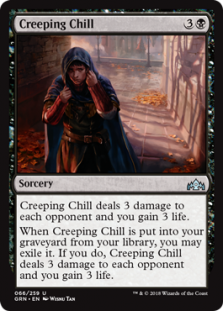
Contrarily, I've seen nothing to indicate the deck is drastically different than previous versions. Dredge is still dependent on its graveyard to do anything, and recent tweaks also soften it to other angles of attack. This article explores the new Dredge's allures and pressure points.

A Chilling Return

Traditional Dredge was largely absent from the PPTQ season. Instead, the previously hot deck Bridgevine filled the niche. Besides being something fresh and exciting, Bridgevine boasted the new Stitcher's Supplier to enable better starts than previous iterations. Once Guilds of Ravnica spoilers began, that was a different story. Creeping Chill was as obviously a traditional Dredge card as possible, and players went to work immediately. As far as I can tell, the most successful version to date is Alek Jones's from SCG Dallas.

Dredge, Alek Jones (SCG Dallas, 3rd Place)

Creatures

4 Bloodghast
4 Narcomoeba
2 Golgari Thug
4 Prized Amalgam
4 Stinkweed Imp

Artifacts

4 Shriekhorn

Sorceries

4 Faithless Looting
4 Cathartic Reunion
4 Life from the Loam
3 Conflagrate
4 Creeping Chill

Lands

4 Bloodstained Mire
4 Copperline Gorge
3 Wooded Foothills
2 Stomping Grounds
2 Gemstone Mine
2 Blood Crypt
2 Mountain

Sideboard

4 Nature's Claim
3 Ancient Grudge
3 Thoughtseize
3 Lightning Axe
2 Darkblast

Gone is the pile of random dredgers in favor of a tight package of the best and most useful ones, respectively. Shriekhorn serves as a means to essentially dredge 4 by the second draw step, and replaces Insolent Neonate, presumably because the vampire's applications prove too marginal without more literal dredgers.

The sideboard reflects how vulnerable Dredge is to graveyard hate. Nature's Claim replaces Ray of Revelation, as it's cheaper and more flexible. Thoughtseize is mainly here to provide hope against combo, but can also be useful to preemptively remove hate. The rest of the board houses anti-creature cards that also enable dredging.

Subtle Shift

Creeping Chill is good in Dredge primarily because it provides uncounterable reach. Flipping Chill doesn't cast a spell, but rather triggers an ability. This means Dredge can "burn" out control decks through permission when Conflagrate would be useless. Because Chill is a drain effect, it's also useful against aggressive decks. Humans can be quite tough for Dredge because Meddling Mage shuts off Conflagrate as Thalia's Lieutenant grows the team past Prized Amalgam. Chill allows Dredge to get in some chip shots and buy time to find enough Bloodghasts and Amalgams to force through lethal.
The effect is actual fairly small, but can be significant. Against Humans it helps Dredge win more close games. Slower decks must suddenly contend with the inevitability of Chill's reach, and will therefore be forced to drop its shields more often. Doing so provides Dredge with the opportunity to exploit strategic cracks and win the game, as was prominently displayed two weeks ago at SCG Dallas.

Visibility Distortion

However, a few weeks of good showings does not a good deck make. A rather strong reality check is that Dredge did well in the October 7 Modern Challenge and took four spots at SCG Dallas, but had very few results otherwise. Dredge has performed prosaically in subsequent Challenges, more in line with what it normally does. Regardless of the actual value of Creeping Chill, it isn't drastically changing Dredge. At best, the deck does what it always did, if perhaps a little faster.

As usually happens when a niche deck receives a lot of press prior to an event, Dredge did do well in Dallas. However, the same thing happened in 2016 with Lantern Control after Sam Black and other prominent Pros picked up the deck. Lantern even won a Pro Tour. Despite continued praise, Lantern has failed to catch on in Modern.
Then there's Death's Shadow. Sam Black declared Jund Death's Shadow the best deck in Modern in February 2017. By May, Jund had been displaced by Grixis. By June, Grixis was so good bans were called for. By December, Grixis had lost its luster and Humans was rising. These days, Grixis Death's Shadow is just another deck in Modern. Bursts of interest in these non-traditional decks are almost always only that: bursts.

In the past, I've lamented the lack of GP and Open Day 1 data. Without them, it's impossible to tell the real strength of the decks represented in Day 2. A deck representing 15% of the Day 2 metagame might sound impressive without knowledge that started off at 50%. In that scenario, there was very little chance that it would be well represented Day 2 no matter what happened. Whenever a deck does well after weeks of hype and attention, the odds are good that it is a function of population more than of strategic credentials.

Dredge Remains Dredge

Despite the hype and Dallas results, Dredge is still Dredge. It may have acquired a new toy, but the strategy with all its strengths and vulnerabilities hasn't changed. Dredge's metagame share may have risen recently, but it only had any worth mentioning in the first place because of being lumped together with Bridgevine.
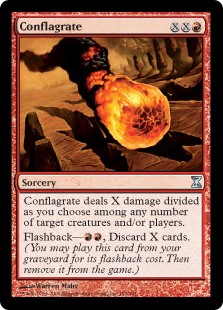
It made sense to switch because if Bridgevine is going to win, it will always do so before most graveyard hate starts to bite, whereas Dredge is slow enough for late hate to still win the game. This fact remains true, and so the only reason to adopt Dredge now is the slight re-positioning advantage Chill gives in certain matchups. Once this metagame opportunity fades and the hype dies down, I cannot see why Dredge wouldn't also fade again.

Just as Linear

The other glaring problem with Chill is that it attacks from the exact same angle as every other card in Dredge: the graveyard. It can still be cast, but that's not why Chill or any other card in Dredge is playable. For Chill to be effective, it needs to be free, and the drain needs to be meaningful. Alongside a pile of free creatures, that will absolutely be true. However, on its own, Chill is meaningless. Decks must handle their life total carelessly to lose to 12 damage. Chill reinforces Dredge's linear graveyard strategy without actually changing anything.
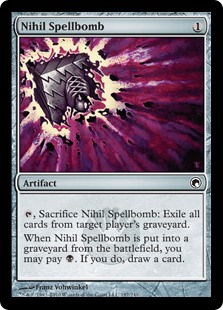
If anything, Chill may make Dredge even more susceptible to grave hate. There's been a trend in Dredge since the ban to cut back on actual dredgers and become more of a Life from the Loam deck, facilitating bigger and better Conflagrates. This has meant cutting Golgari Thugs, shrinking average dredges. Chill is a four-of, so Thug is now getting cut completely, often along with Darkblast. Together with Shriekhorn's adoption, this has created a Dredge packed with cards that do absolutely nothing in the face of Rest in Peace, where once they could still be cast as beaters.

Altered Playstyle

The trick to fighting Dredge is recognizing how Chill has actually affected its matchups. Close races are going to be closer, and locking the board down doesn't guarantee victory. It's important to either hate Dredge out or win faster. However, that's always been true. Dredge wins when it either explodes onto the board or through grinding with recurring creatures. The most substantial change that players need to make is adjusting how they utilize one-shot hate.

When using hate in this vein, such as Nihil Spellbomb or Relic of Progenitus, the temptation is to blow them at the first opportunity for value, especially in response to Narcomoeba and/or Creeping Chill triggers. This is often wrong. Since many decks only have 2-3 pieces of graveyard hate, it's critical to be judicious and try to maximize the value gained. Recall my previous tautology: Don't try and get value, go get some value!
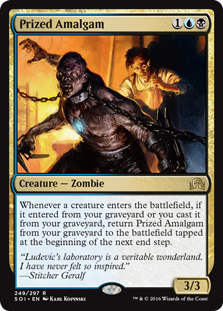
Only a few cards actually matter in Dredge. Losing to mediocre beats from Narcomoeba or Stinkweed Imp sucks, but if that happens, you weren't winning anyway. Dredge's pedigree is founded on big turns with Prized Amalgam and Conflagrate. Therefore, players need to hold their hate for longer to nail as many of those cards as possible.
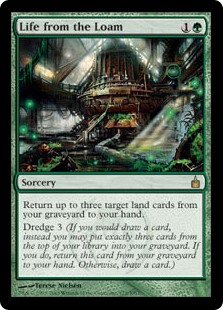
Generally speaking, the minimum value I'm willing to pop a Remorseful Cleric for is Bloodghast, Conflagrate, and Darkblast. Put another way, get at least one great card and some extra value when you blast a graveyard. Creeping Chill is a nice hit, but not enough by itself to warrant action. Let Dredge have its medium cards, and target the real killers.

Also, ignore the dredgers themselves. They're only threatening in conjunction with Amalgam and Conflagrate.

Alterations have Consequences

After more than a month of running UW Spirits into various Chilling Dredge decks and pilots, I'm not certain that actual graveyard hate is necessary for the matchup. I've been winning handily by Spell Quellering Life from the Loams and dumping Spirits into play. The matchup has become far easier than I remember it being, which birthed my initial skepticism regarding Dredge's resurgence. The only times Chill has mattered were very tight races when hitting Chills were the only way to survive and then win.

The changes to Dredge make the deck more inevitable, but less explosive. While Dredge is now better at powering Conflagrate, it's also more dependent on Conflagrate. Shutting off or weakening that angle of attack can spell doom for Dredge. Without some 3/3 meat or reach, swarms of 2/1s and 1/1s are too weak for Modern. Spirits can shut down the Loam engine, brick the board, and fly over for the win without hate now. As a result, I think Chilling Dredge is a worse deck than the non-Chill versions.
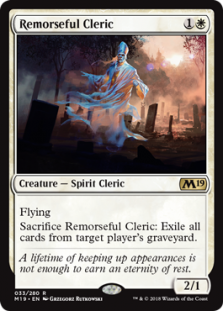
Golgari Grave-Troll let Dredge dump its library far too quickly. The decks that followed the banning played more dredgers to make up for Grave-Troll's loss, and I thought they were still so explosive that I resigned myself to defeat whenever Cathartic Reunion resolved. Playing the full set of Stinkweed Imp and Golgari Thug along with some Lifes and Darkblasts meant that every big dredge was likely to hit several more. Now, the odds of chaining dredgers are low enough that I don't fear Reunion.
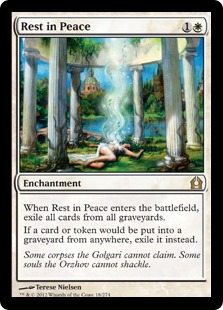
The focus on Loaming for Conflagrate means Dredge feels almost fair, which is the most scathing indictment of the deck I can think of. The second- most is that Surgical Extraction is a reasonable card against Dredge because the deck has become so reliant on Conflagrate. My experience says that even with Chill, Dredge just isn't that scary anymore.

It's Already Begun

Dredge's fall-off has already begun. As mentioned, Dredge took four spots in the first Modern Challenge of October and SCG Dallas. Otherwise, it's posted fairly average numbers. There was a single Dredge deck in the second Challenge, and in the most recent one, there were two. However, that's about equal to September and August's numbers, accounting for lower quantity of events. If Chill was really supercharging Dredge, I would expect far more results than I'm actually seeing, so my skepticism will stand.

The data just don't back the narrative around Dredge being back and a greater threat. With time, that could become more true, but such is the case for any deck that receives new cards. Rather, it appears the primary effect of Creeping Chill is to give players a reason to consider Dredge over an alternative like Bridgevine. While this will improve its metagame representation, it doesn't change Dredge's overall place within the metagame.

Both Feet in the Grave

Just because a deck suddenly returns in force doesn't mean it's back to stay. Any deck can win any event with the right pilot and/or favorable matchups. As I'm writing this conclusion, the Top 8 for SCG Charlotte is being announced, and no Dredge decks made it. In their place at the finals table was a pair of Amulet Titan decks. Titan is another deck that has been neutered by bans but still hangs around. I wouldn't be surprised if it became the hot deck this week, but just like Dredge, its numbers will sink back down once the frenzy calms. Great showings are one thing, but it's metagame contexts that make the deck.

Want Prices?

Browse thousands of prices with the first and most comprehensive MTG Finance tool around.


Trader Tools lists both buylist and retail prices for every MTG card, going back a decade.

Quiet Speculation