Are you a Quiet Speculation member?
If not, now is a perfect time to join up! Our powerful tools, breaking-news analysis, and exclusive Discord channel will make sure you stay up to date and ahead of the curve.
Welcome back, readers!
In last week's article, I mentioned how one of the world's wisest investors utilizes a creed of buying when others are selling, and selling when others are buying.
The biggest challenge of this strategy is that it feels safer to move with the herd (so to speak), whereas going against it often incites fear. The thought is usually that the collective mind is smarter than the individual, so going against the collective is not smart. However, we've seen plenty of times throughout history when you could have won big by betting against the collective.
Today we'll look at a once-rising star in the MTG trading community that seems to have fallen out of favor: PucaTrade. If we're following Mr. Buffet's advice to be greedy when others are fearful, then PucaTrade's hard times might be just the time to look for opportunities.
Today I'll go over the reasons for PucaTrade's recent decline and discuss some of the ways we might be able to use it to our benefit.
A Brief History of PucaTrade

For readers still unfamiliar with the site, PucaTrade was created a couple years ago to facilitate Magic trading among strangers. Rather than require traders exchange cards for other cards, PucaTrade allows you to trade cards for their proprietary currency, PucaPoints, which can then be cashed in for other cards. Thus they have created their own mini-economy.
The service's major selling point is that it's much easier to trade cards for a currency (i.e. sell) then it is to create equal trades between two trading partners. Say that I had four $3 cards that someone wanted, but they only had one $10 card that I wanted. To trade make a trade, I'd either have to lose out on $2 worth of value to "trade up," or convince them to lose $1 worth of value to trade down.
Obviously, the other option is to just sell the cards and then buy the ones you want, but selling for actual money can be difficult if you want to get full value. To lock in your card's current value, you likely have to sell to a buylist, which lops off a big percentage (typically between 30-55%).
Of course a dealer or store won't sell you cards at the same rate. Imagine you sell your $12 worth of cards at 70% of their value. If you wanted to buy from a store, you'd then need to chip in another $2 of your own money. So now you've invested $14 of value for your $10 card.
PucaTrade allows you to trade your four $3 cards for 1200 PucaPoints. Then someone could trade you the $10 card you wanted for 1000 PucaPoints, and you still have 200 left over.
It's even free to use, so all you pay is shipping. Sounds great, doesn't it?

Problems with PucaTrade
As it turns out, the PucaTrade system has presented some difficulties. What happens when your users lose faith in the system?
Early on, one of Puca's biggest problems was that it relied on the honesty of both parties—the seller actually sending the cards, and the buyer admitting they got them. As in any large market, you're bound to have people who try to abuse it. For a while, the Puca admins' strategy in the case of disputes was simply to refund the points to the receiver without subtracting them from the sender's account. In effect this practice added points into the system, leading to inflation.
That wasn't the only way points were added either. New users could earn up to 500 points (around $5) by completing some pretty simple beginner tasks. While that was a good way to encourage new users to join, it added a ton of extra points to the system. As we've seen with actual governments when they just create money out of thin air, this ends up devaluing the currency.
Another issue is how the price-setting mechanism affects incentives for prospective traders. The PucaPoint is linked to the dollar (you can buy 100 points for $1), and card prices are taken mostly from TCG mid. If I want to pay cash for a card, I can simply buy the cheapest copy on TCG Player. Why would I want to buy PucaPoints and then wait for someone to send me the card, all while paying the full TCG mid value?
Being a mini-economy, PucaTrade needs to attract a diverse group of traders—otherwise everyone will want the same things and nothing will ever change hands. An ideal LGS environment is the same way. One needs a healthy group of casual, competitive-Standard, competitive-Modern, Legacy, and Commander players to keep feeding the card economy, as one group typically wants things the other group has. If you only have one or two groups heavily represented, you end up with far fewer transactions.
For example, say you have a store with a very competitive Standard playerbase. They are likely to trade in all their copies of Mikaeus the Unhallowed, and they'll be wanting copies of Liliana, the Last Hope. But if you have no Commander playerbase, then the Mikaeus's will start to pile up and you'll never get any Lilianas in.
Your Standard players will begin to rethink whether trading cards into your store is worth it, because they can't get the cards they need to play. This creates a drought in new trade-ins as players lose faith in their store credit buying what they want.
If we look at what's being traded a lot on PucaTrade, only nine of the top 50 traded cards weren't Standard-legal. And two of those were Catacomb Slug (which I can only assume is either a joke or the Puca owners testing something out). The most expensive card was Smuggler's Copter, which shows that even medium-dollar stuff isn't moving very quickly.
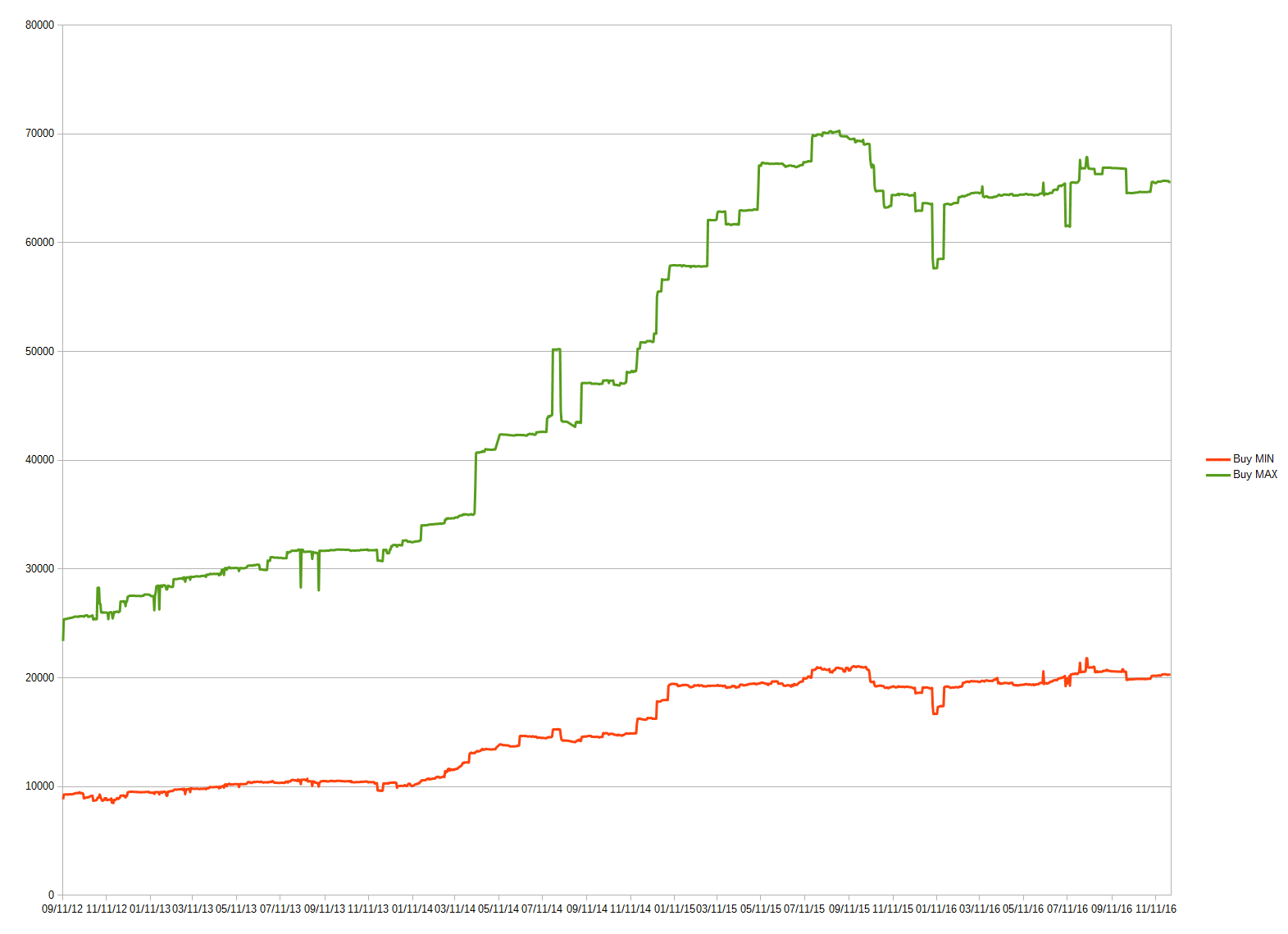
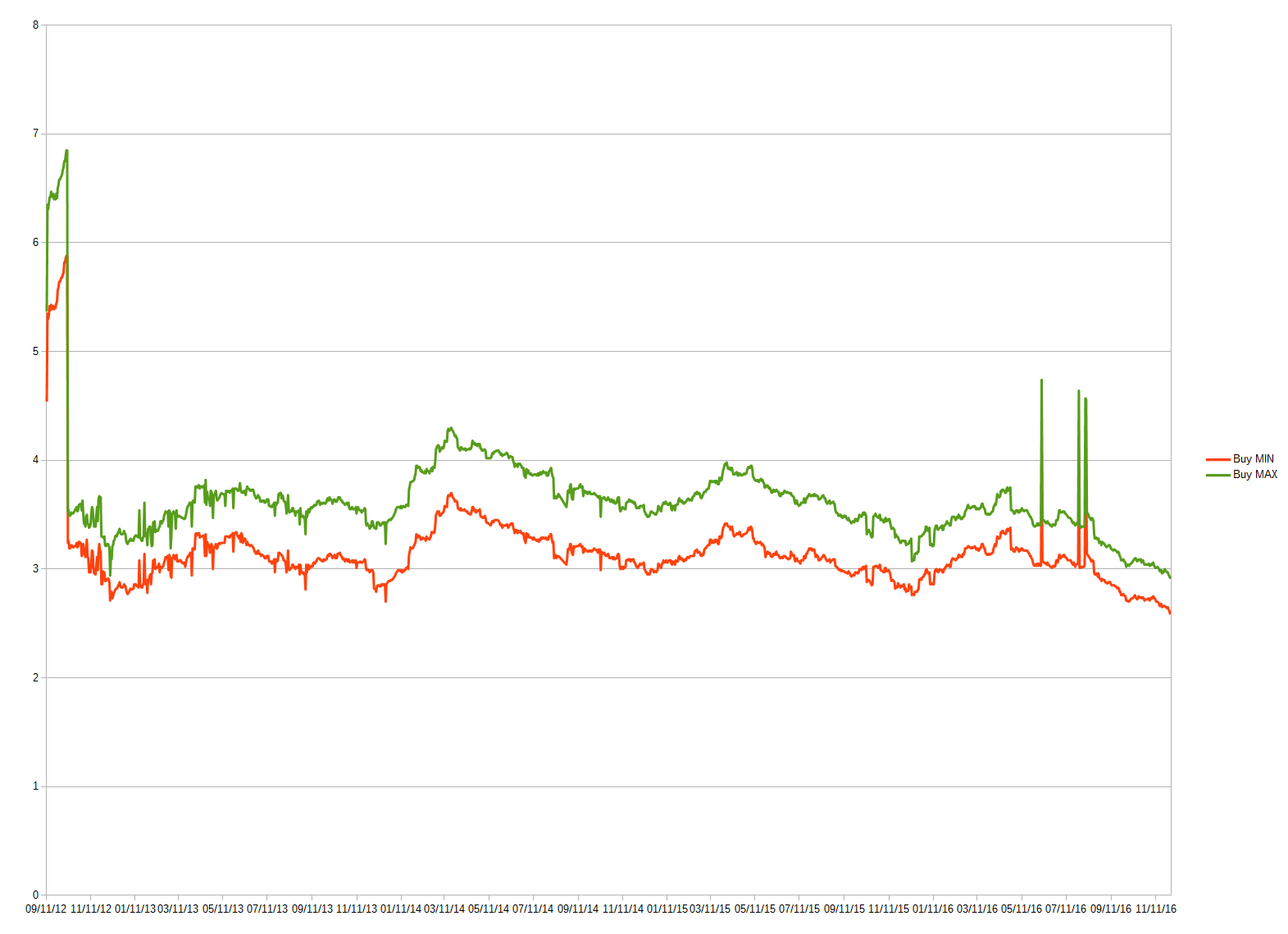
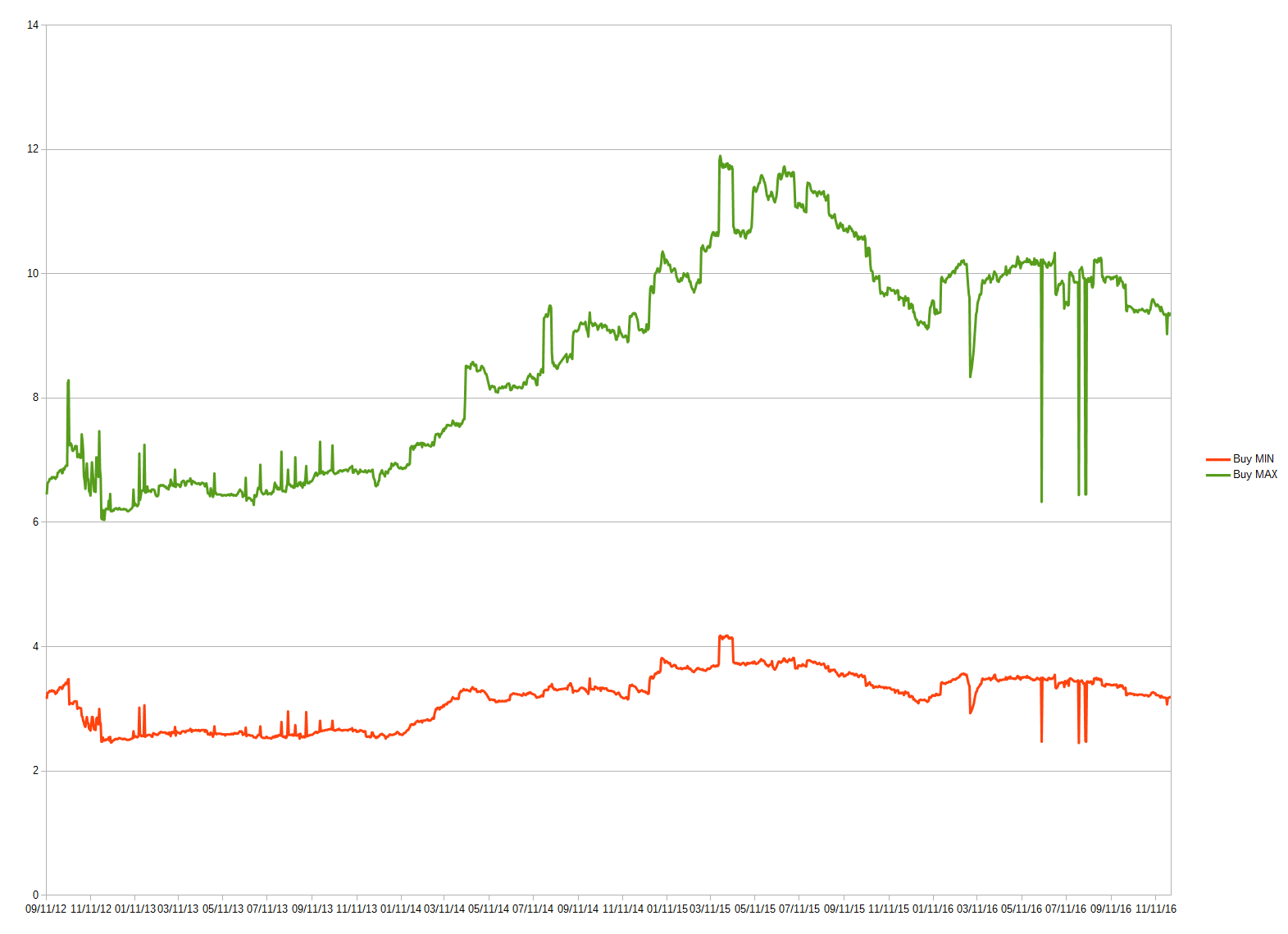
Another major factor to look at is what people are selling PucaPoints for. For a long time, the going rate was $0.7-$0.75 per 100 (i.e. 70-75 cents on the dollar). Now we're seeing people try to sell for $0.45-$0.5 per 100, which is a pretty significant difference.
Opportunities on PucaTrade
That's a lot of doom and gloom surrounding PucaTrade, so where's the upside?
As I alluded to earlier, stores that are heavily skewed towards one or two types of player often find themselves lacking in specific staples. Right now PucaTrade still seems to be moving some Standard stuff, so it might be a good venue for picking up those staples. If larger-ticket eternal staples are languishing in your case while you can't keep Standard cards in stock, PucaTrade might be a good way to turn them into cards you can sell more easily.
If such stores start using PucaTrade as an avenue to convert non-liquid cards into liquid cards, I think the Puca economy will recover. The owners have also accepted that the PucaPoint has hit some pretty heavy inflation and are actively taking steps to remove points from the system (via raffles and trade "insurance"). They've reduced the 500-point bonuses down to a 350-point bonus, and admins do more review before resolving cases (helping cut back on fraud as well).
Another thing to consider are Frontier cards. After reviewing the top-selling cards on TCG Player, we see the #1 and #2 spots were both Khans rares which are big in the Frontier format. I am still reluctant to jump on board this train (I got burned on Tiny Leaders). But the big difference here is that stores seem to be picking up the format (partly because it draws demand for cards that otherwise might just languish in boxes in the corner).
So picking up extra copies of these via PucaTrade may not be a bad way to stockpile. Again, if you can buy the points dirt-cheap you could be getting these cards at or below buylist pricing.


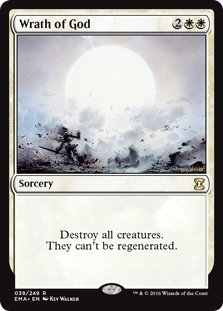 Game 1: This matchup seemed like the worst one for Counter-Cat on paper, so I was sad to run into it so soon. I mulligan once. Foundry, Plains from my opponent is plenty of incentive to fetch around Blood Moon as I land Wild Nacatl. I Growth the cat past a Helix and land another before Moon does come down to shrink my creatures to 2/2. It takes my whole board, but I'm able to slug through a resolved Nahiri and Ajani Vengeant, and with the help of a 3/4 Tarmogoyf put my opponent on a clock to find another big card. At this point my opponent has drawn and resolved two copies of Wrath of God.
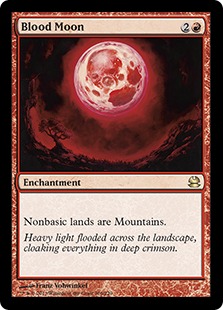 Revelry, Tarmogoyf. I Serum on turn one to find more lands (to no avail), and follow up with Delver. My fear is Guide into Blood Moon, but I'm hoping I can untap with Leak or draw a green fetch for my Revelry. But Guide into Moon locks me out, and Helix kills the Delver.
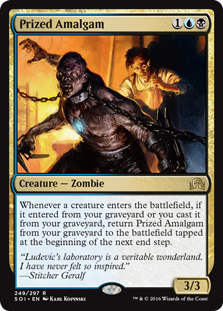
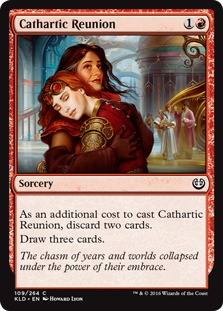 Game 1: I have a fast Delver and Mandrills, a Path to Exile, and get to Snare a Cathartic Reunion. But my opponent opens much better despite taking a mulligan. I'm quickly put on the defense and die to Conflagrate plus a horde of Amalgams.
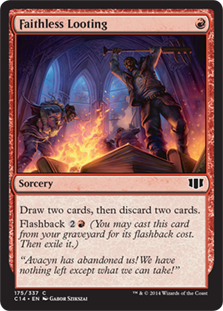 Game 1: I flip an early Delver, but it's nothing compared to my opponent's turn two board. He makes a pair of Narcomoebas, one Bloodghast, and two Amalgams with a Faithless Looting.
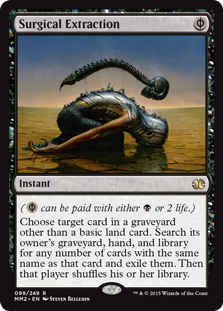 Dredge with Counter-Cat before the RPTQ, I would have seen that I needed more than a mere two Surgicals in the board to support this gameplan. Ryan Overturf plays a full four in his Grixis Delver sideboard, which should have encouraged me to test against Dredge and see if I wanted that many.
 My interest in Modern is always fervent, but the amount of time I dedicate to playing the format waxes and wanes. Some weeks I'll jam 50 hours and others I'll hardly play at all. This RPTQ caught me at a time when Modern, like Lightning Bolt (coincidence?), occupied a historically low share of my daily thoughts. I've been moving and discovering a new city and scouting for non-Nexus jobs. I had prepared for this event slightly less than I would have prepared for a PPTQ—to expect to have a shot against players of RPTQ caliber, I actually needed to prepare much more.
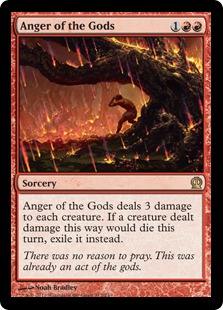 While they are busy trying to protect from Jund’s Lightning Bolt and Terminate onslaught, Jund players have been patiently waiting for turn three to sweep the board completely while Infect can only watch in horror.
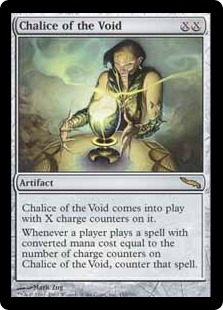 Chalice of the Void, especially on the play with access to Simian Spirit Guide, is one of the best strategies currently available in Modern to fight Infect, one of the major contenders for "best deck." With Nature's Claim/Natural State as the artifact/enchantment hate of choice for almost every Infect deck in the wild, Chalice of the Void on one is essentially lights out.
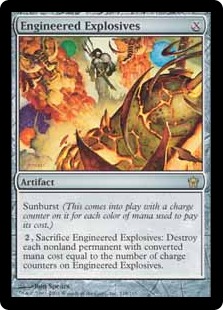 This current state of Modern is incredibly diverse, but instead of a midrange field we have a fast, hyper-aggressive landscape. Still, Engineered Explosives is seeing an increase in play, as reactive decks look to options that can help them solve a diverse set of problems.
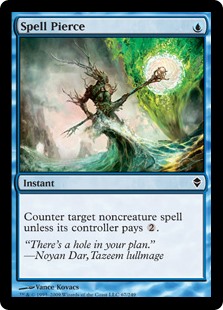 Spell Pierce protecting a one-drop is and always has been insanely powerful and unfair, which is part of the reason why UR Prowess is seeing play over Death's Shadow Zoo. Infect could play Dispel, but given their aversion to those of the planeswalker persuasion, Spell Pierce is the clear preference.
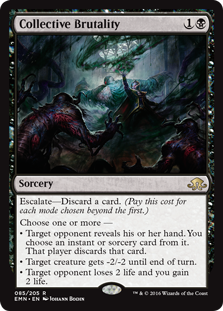 Nobody will argue that spending two mana for any of Brutality’s three options is enticing. The best part of waking up is surely not getting a two-mana discount on an Exsanguinate for two. No, the true power in Collective Brutality lies in its ability to just do stuff for the mana beyond its printed cost.




 A player can go 6-4 with an aggressive deck against a controlling deck but feel negatively about the matchup because they spent more time losing than they did winning, despite winning more times. You'll also see more weight assigned to particularly bad losses and to the most recent game played.
 If you refuse to cut pet cards because they're good sometimes, give your friends some authority to cut cards from your decks. Testing should never be an echo chamber, and a good partner is one who meaningfully disagrees with you.
 Two great tools to make use of in this regard are backing games up and manufacturing gamestates. Sometimes it will be beneficial to just turn the game back a turn or two. Remember, testing is about learning, not being cutthroat. Takebacks are your friend. In other situations it's useful to stack one of the decks, or have one player start the game with a particular card in their hand to see how games go under those conditions. This is particularly useful when you're working on fine-tuning a deck and want to get a feel for a new inclusion.
 I know that I've seen players picking up my decks butcher the sideboards plenty, without any real justification given.
 Know the arguments for casting Thoughtseize on turn one as opposed to turn three, or vice-versa.