menu

Insider: The Contrarian vs. The Momentum Trade

Are you a Quiet Speculation member?

If not, now is a perfect time to join up! Our powerful tools, breaking-news analysis, and exclusive Discord channel will make sure you stay up to date and ahead of the curve.

For those unfamiliar with my interests outside of MTG finance, I am extremely passionate about investing in the stock market (some may find amusement in my dubbing this “RL finance”). In fact, the vast majority of my taxable savings lie in stocks and ETF’s---not MTG like many would believe.

With this interest in Wall Street, I tend to extend my research well beyond the realm of MTG finance when determining where to invest new funds. This includes various websites, Twitter users and Podcasts. As I pick up strategies and methodologies from RL finance, I often attempt to reapply the practices to MTG finance where possible. I’d like to think this offers up a unique paradigm for MTG investing that many others wouldn’t readily have.

Recently, I have been hearing debate about stock market strategy that could apply to MTG finance as well. Allow me to explain the concept of momentum investing versus contrarian investing.

The stock market is like a massive truck with poor brakes. Any time there’s a sudden shift in direction, the vehicle overshoots where it ought to end up and momentum yanks it beyond rationality. For this reason, some strategists prefer chasing momentum trades---stocks that are ripping higher day in and day out.

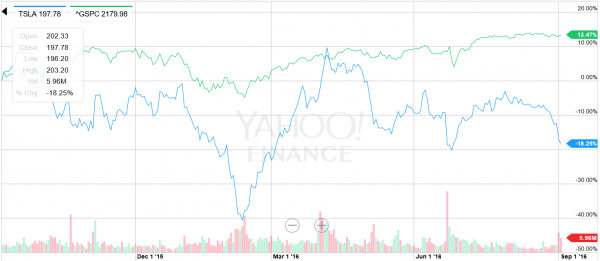
Valuation isn’t important when thinking about momentum stocks---as long as more people are jumping onto the bandwagon the price can overextend beyond any reasonable valuation. Tesla Motors is a momentum stock. Just look at that wild volatility over the past year as the company fluctuates between overbought and oversold territory.
TSLA
(Click to expand.)


Buying Tesla stock while it is on a run higher---such as back in February---can yield massive profits. On the other hand, buying the stock while it’s falling can lead to an awful lot of pain. Observe how it tanked over 40% in just a couple short months right after the New Year. Clearly this is one truck you don’t want to jump in front of.

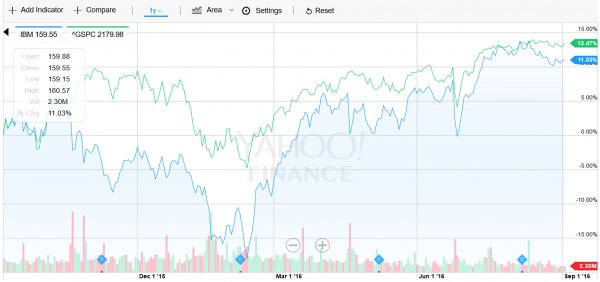
Other investors prefer a different strategy of stock trading. This alternate style is best summarized by using Warren Buffett’s oft-quoted wisdom: “Be fearful when others are greedy and greedy when others are fearful.” Buffett wouldn’t go near a stock like Tesla Motors. But he certainly does find interest in top-notch companies with beaten up stocks. One example could be IBM, a company Buffett owns a significant amount of.
IBM
(Click to expand.)


Observe how the company really fell out of favor most of this year. Instead of panicking, Berkshire Hathaway continued to build its position in the beaten and battered name.

Since the recent bottom, the company has recovered surprisingly well. Even though the stock is temporarily out of favor, faith in management and a great pedigree throughout history may make such a disliked stock a terrific buying opportunity. Someone buying into a disliked name like IBM (or Disney, Macy’s, etc.) could be considered a contrarian investor for buying stock in strong companies that don’t have momentum in their favor.

Parallels in Magic

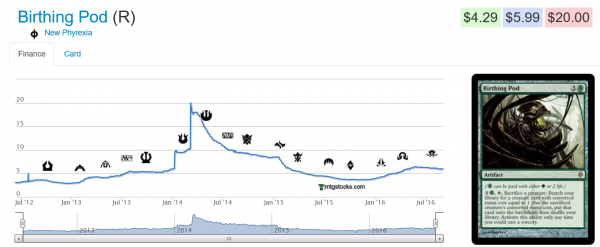
While Magic cards cannot be directly compared with stocks, there are interesting parallels when it comes to monitoring trends. For example, Magic cards have a tendency to “overshoot” due to momentum-based speculation. Birthing Pod is an excellent example because during its pre-banning hype in Modern the card became expensive very rapidly and unsustainably.
Pod

Once Birthing Pod received the ban hammer, you can see how quickly the card was hated. Ultimately, the card became oversold. After bottoming in late 2015, the card has actually increased in value by about 30%-50%. The momentum buyer would have been picking up copies during its 2014 hype, whereas a contrarian buyer may have been the one picking up copies for the long haul during its 2015 low.

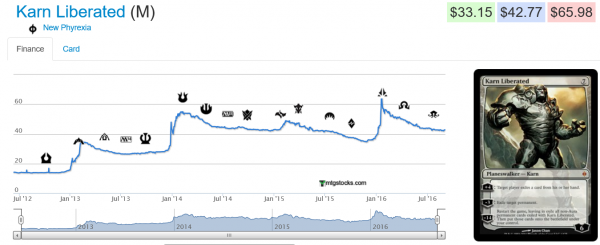
The more I research, the more I realize many Modern cards exhibit this kind of “momentum” type behavior. Check out the historical chart of Karn Liberated as another example.
Karn

This card’s price never changed gradually---it always seemed to rise in spikes. Karn spiked in 2013, 2014 and 2016 (even after it was reprinted). Momentum has really taken this card temporarily higher, only to sell back off either quickly or gradually afterwards depending on the year.

Momentum buyers would have been buying during each spike; contrarian investors would have picked up copies after each dip (including right now, where it appears to be bottoming yet again).

Which Strategy Should You Take?

There are pros and cons to these two strategies. If there was a clear-cut superior strategy, the other wouldn’t exist---everyone would follow the same trades, and the strategy wouldn’t really be a “strategy” anymore because the opportunity would be erased. Having these two balanced approaches means one can work in some circumstances and the other can work in others.

I like the momentum trade when a major market disruption occurs. This can manifest itself as a buyout or a major metagame shift. Standard rotation can also catalyze significant movement whose momentum can be capitalized upon.

For example, when Reserved List cards were all the rage a couple months ago I enjoyed locating copies at the “old price” or even at a slightly elevated price. This happened most recently with Aluren, which recently spiked. I found a single copy at ABU Games at $16 and I was eager to grab it knowing that the card was seeing significant movement and had potential to jump again in the future.

There was an error retrieving a chart for Aluren

Of course I’m heavily biased by Reserved List cards. I figure if I don’t get my copies at the “old” price to flip for immediate profit, I have no qualms sitting long-term. These are cards that will never be printed again after all.

Beyond those I still like other, narrow opportunities for momentum buying. During a Pro Tour it can be favorable to acquire hot new Standard cards if you’re early enough to buy in (i.e. by Friday). When a card is unbanned in Modern or Legacy there’s also a huge buying opportunity off momentum. Ancestral Vision is a great recent example.

There was an error retrieving a chart for Ancestral Vision

On the other hand, contrarian investing also offers some attractive returns when played correctly. Buying Modern staples during an “off-season” has been a robust strategy for years now.

Dual lands tend to jump, fade, and jump again in price---picking up copies when they’re temporarily down is extremely attractive because you know it’s just a matter of time before they tick higher (especially with Eternal Masters being a thing now). Even Power has a tendency to jump, fade, and jump again.
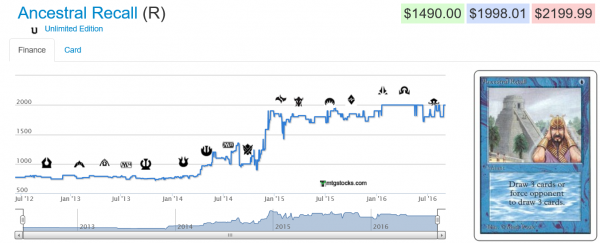
Recall

While momentum trading is best when a card can be sold immediately after it is purchased, contrarian buying allows you a longer time horizon. You don’t have to worry about buying in too late and being unable to sell before the price tanks. Because you’re buying during a local “bottom," you are banking on an increase in price sometime in the future but not necessarily right away.

In reality, some Modern staples are excellent contrarian trades right now. Check out Flooded Strand, which is only $2 off its all-time low.
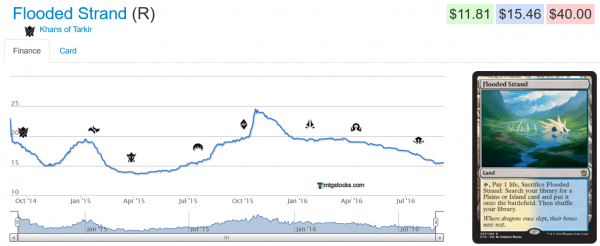
Strand

We all know fetchlands aren’t going anywhere. They’ve been Legacy staples since their printing and they are a dominant force in Modern as well. Therefore, a contrarian investor may be thinking it’s the perfect time to acquire copies. The same goes for a number of Modern staples.

Or how about stuff recently reprinted in Conspiracy 2. One day, many many moons from now, something like Serum Visions or Inquisition of Kozilek will be an excellent pick-up. It’s going to tank in price due to its reprinting, which should yield a reasonable contrarian play for profits.

With contrarian trades you have ample time to move in and out of positions. However there’s one significant downside: reprint risk.

If you’re going to buy something while it’s out of favor with the intent of selling after a long waiting period, you incur risk of having your card reprinted in a subsequent set. Snapcaster Mage can look awfully tempting now that it has pulled back in price, but the risk of reprint in Modern Masters 2017 is enough to keep me away. This is essentially why I prefer to stick to Reserved List staples.

Wrapping It Up

Momentum trading and contrarian investing---there’s a time and a place for both. I tend to prefer picking up cards for longer time horizons. As a result, I think I tend to favor contrarian investing a bit more than momentum when it comes to MTG finance (and RL finance for that matter).

I just can’t stand buying cards when they’re hitting all-time highs. I’d much prefer allocating resources to positions that are suffering in the short term but have great long-term prospects. It’s akin to how Warren Buffett invests.

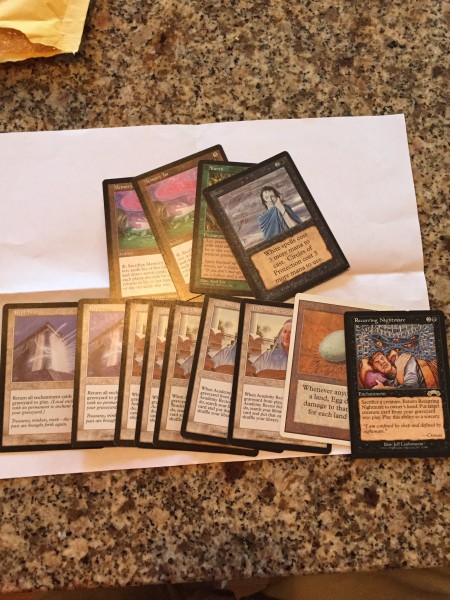
With this in mind, I continue to target Old School staples as well as playable Reserved List cards that haven’t jumped in price crazily yet. A recent picture I Tweeted (@sigfig8) sums up the kind of stuff I’m after.
Tweet

Notice any trends? With the exception of Beta Gloom and Unlimited Dingus Egg (two pickups for Old School play), each of these cards are on the Reserved List. They all offer plenty of long-term upside potential. The fact that most haven’t really spiked yet (besides Aluren) means I am picking up these cards in the hopes that one day they do become suddenly more desirable than they are today. If not, I can wait. I got time.

Just as you can find a strong company with a broken stock, I am confident we can find a Magic card with a ton of utility but an out-of-favor price. By targeting powerful cards, you can set yourself up for plenty of upside with minimal downside. Add in the requirement of targeting Reserved List cards and you avoid the turmoil of reprints. This ultimately enables you to acquire your cards and then sit and wait. That’s my kind of MTG finance!

…

Sig’s Quick Hits

  • I did not realize Engineered Explosives became so expensive recently. There are only a few dozen copies in stock on TCG Player across both printings, with “Market Price” in the $32 range! I could have sworn this was a $20 card just a short while ago. This is a great example of a momentum card---it continues to hit all-time highs day after day. Eventually it will sell off a bit, but as long as it runs higher, people buying in are making decent money on this one!
  • Another recent all-time high came last weekend in the surprising form of Arabian Nights Ali Baba. I knew the card was rising in price, but I did not anticipate a sudden buyout. I always thought the card was a common, but according to TCG Player it is uncommon so I suppose that makes sense. No wonder there are only ten sellers with copies in stock left on TCG Player. But beware: the $10 price tag on MTG Stocks is highly misleading given the “Market Price” is only $3.22. Still, with Card Kingdom paying well over $4 for Near Mint copies, this card’s price was bound to jump!
  • The last card I wanted to highlight was one I recently acquired (pictured above): Beta Gloom. Black bordered copies of the black enchantment have really spiked in price lately, driven by utility in the Old School format. There are under ten copies of Alpha and Beta copies in stock, combined. “Market Price” is $10 and $8 for the two sets, respectively, meaning the recent jumps in their price is 100% legitimate. As long as Old School MTG remains relevant, these cards will only rise. They’re not on the Reserved List, but Gloom reprints are meaningless in the world of Old School!

Insider: Entry Fees for Major Events

Are you a Quiet Speculation member?

If not, now is a perfect time to join up! Our powerful tools, breaking-news analysis, and exclusive Discord channel will make sure you stay up to date and ahead of the curve.

Recently I've noticed that a lot of our local players have reduced their willingness to go to major events like Grand Prix due to the high cost of entry compared to just a few years ago. This got me thinking, why are they so expensive? Do the tournament organizers (TOs) just make a killing in profits? What kinds of costs are associated with these events now?

While I accept that tournament entry fees are not really directly related to the subject of MTG finance, there have been quite a few discussions about them in our forums. This caused me to want to dig in, do some research, and see for myself.

This question is a good example of a Fermi problem. The basic idea is that if you have a difficult-to-answer question (perhaps one that can't be answered at all), you can try to break it down into parts. You logically estimate each part separately and then combine your answers to come up with a relatively accurate solution.

Today I'll approach the question of tournament entry fees in this way. We'll break down the costs associated with running a Grand Prix to get an idea of what kind of entry fee is required for TOs to turn a profit.

Expenses

Venue

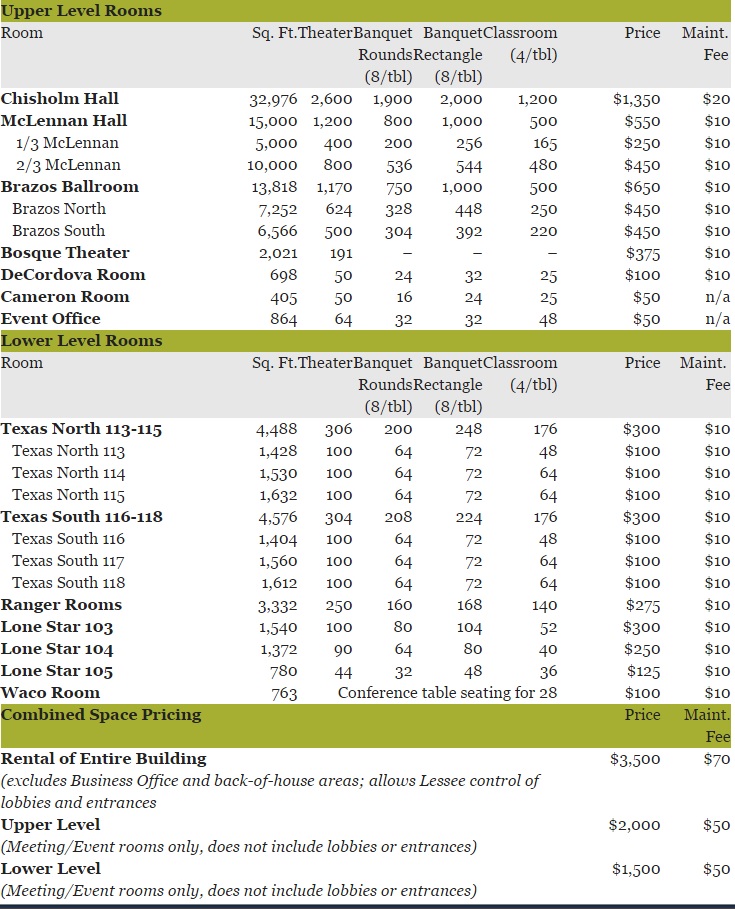
Unfortunately, I can't get perfect information on venue rental costs as it seems they're only available to people actually planning to host an event. However, I was able to find one venue to get a baseline idea (granted, I don't believe they've ever hosted an MTG event). Here's the pricing for the Waco Convention Center (in Waco, TX).

Waco convention center

First off, the cost to rent the entire venue is only $3,500, which seems really low. We need to understand how big the facility is. We'll just add up the larger rooms (since it would be difficult to have a tournament with people reporting to 4+ rooms and awkward to staff small 100-person rooms). Thus the three largest rooms amount to 61,794 square feet.

In Charlotte the Grand Prix tend to be held in Hall A of the Charlotte Convention Center, which is 100,000 square feet. That is around 1.6 times larger than the entire Waco Convention Center. The population of Charlotte is also six times larger than Waco's, so it's fair to assume demand for the convention center would be much higher.

Let's estimate that the Charlotte Convention Center would cost ten times that of the Waco Convention Center (to be on the conservative side). So our cost to rent the venue is $35,000.

Chairs and Tables

That doesn't include the cost of chairs and tables. Again, the cost in Waco for these is:

waco pricing sheet

So the 8' tables cost $8 each to rent and chairs are $0.75 each.

Now GP Charlotte of this year (the one with the pairings debacle) had 2400-(ish) players in the main event. It's fair to assume there were probably close to 3000 players in attendance, and that thanks to some other 4,000+ player GPs they likely rented enough chairs and tables to hold more than enough people. For argument's sake let's say they rented enough chairs/tables for 4500 players (the maximum they claimed could sign up).

An 8' table can comfortably hold about six players, which equates to 750 tables for play space. Let's say another 64 for vendors (4 tables x 16 vendors). So table rental fees equate to $8 x 814 tables = $6512.

Chair rental fees would equate to $0.75 x 4550 (adding 50 chairs for vendors) = $3412.5.

Staff and Judges

Then we have judges and event staff. WoTC proposes that TOs have at least one judge per 32 players (and then additional higher-level judges based on the size of the event). Again let's assume that the TO followed this guideline. This means they need 142 judges (141 plus the head judge); we'll round this to 150 judges to include scorekeepers, etc.

I found Legion Events' old pay scale for judges. These payouts are for the entire weekend (Saturday and Sunday).

  • Level 3+
    • $598
    • 3 boxes of current set product
    • One GP judge playmat
  • Level 2
    • $400
    • 2 boxes of current set product
    • One GP judge playmat
  • Level 1
    • $200
    • 2 boxes of current set product
    • One GP judge playmat

For a fair breakdown let's assume 100 Level 1 judges, 45 Level 2 judges, four Level 3 judges, and one head judge. We'll also assume the value of the sealed product at cost is $77 per box (the typical going rate for stores from the distributor).

So total judge compensation is:

  • $900 x 1 (head judge guestimate)
  • $598 x 4
  • $400 x 45
  • $200 x 100
  • $77 x 300 (150 x 2 boxes)
  • $3 x 150 (guestimate that the playmats cost $3 to make)

...which equals $64,842.

There's also some support staff who aren't judges that need to be paid (typically they work for the TO). We'll estimate the cost for these people to be $1000 for the weekend.

Miscellaneous Expenses and Total

WoTC pays the actual prize support for Grand Prix so that doesn't come out of the TO's pocket. However, TOs have to bid on hosting the GPs. This is obviously a company secret for each TO, but I honestly wouldn't be surprised if that cost was upwards of $20,000 (which we'll assume for this calculation).

Next up we have maintenance and security fees at the venue, which are maybe $500 (this is a guestimate, but doesn't seem implausible).

Lastly we have the cost of the playmats/miscellaneous items given out to players who enter. We'll assume these to be around $3.50 per player ($3 for the mat and $0.50 for other things) which is another $15,750.

So let's add up all the expenses. The total estimated expense of running a GP is $147,000 (rounded).

Profits

Now let's figure out what brings in the money.

Being the TO means you get to sell booth space to the other vendors. At GP Charlotte there were 16 vendors. I've heard it costs around $3,000-$5,000 for a booth. We'll stick with the $3,000 figure for this calculation (which is likely on the lower end). This means that the TO can generate $45,000 from vendors (assuming the TO uses one of the vendor slots for their own store, that's 15 vendors x $3,000 each).

This means that after vendor fees the TO is still $102,000 in the negative.

Entry Fee Calculations

Their other source of income is the actual tournament entry fees. If we take the $102,000 and divide it by the 3500 actual players who showed up (rather than the 4500 that might have), we get $30. That entry fee will only let them break even, with no profit.

Now if you're a large company looking to invest $147,000 into a venture you'd want a decent return on that money---say 15% profit. If we calculate for the expected profit on the original investment we calculate the entry fee cost to be ($147,000 x 1.15 [15% profit] - $45,000 [vendor fees])/3500 [players] = $35.50 per player.

What Ifs

Now for the "what if" section. Here we'll cover what happens if we tweak our estimates.

What if the venue fee was twice as much ($70,000); if so then the tournament entry fee (with 15% profit) would need to be $47.

What if your support staff was $5,000 instead of $1000; if so then the tournament entry fee (with 15% profit) would need to be $37.

What if the WoTC bid was $40,000 instead of $20,000; if so then the tournament entry fee (with 15% profit) would need to be $42.

What if the TO wants a profit margin of 25%; if so then the tournament entry fee would need to be $40.

Conclusion

I've heard lots of complaints about the increased costs of GPs, from friends as well as on the forums. A few articles have tried to justify the price increases, but in the end the TOs are acting like a business and if players keep showing up in large numbers to these events and paying whatever the entry fee is, they can charge as much as they think the market will bear.

One solution for this would be to open up GP bidding to additional competitors. The problem there is that the upfront cost of $150,000 is very high and some of the fees likely need to be paid months in advance (which means the TO has to shell out that money with no return on it until the event actually occurs). This upfront cost likely hinders a lot of smaller TOs from even being able to run it.

It's also very important to WoTC (and the players) that the events be run well. I've been to GPs hosted by several TOs and I can honestly say that the most impressive ones were run by Star City Games. This makes sense given the exceptionally large number of bigger events they host every year. They have a lot of practice and have likely run into most of the major pitfalls that can befall a tournament before, which means they are more prepared to deal with them.

I'll also state that personally I rarely play in the main events at GPs anymore, largely because I think the ROI is so bad. Assume you pay $80 to enter a 3000+ player tournament. You have to make Top 180 (the top 6% of the field) to come out ahead. If you don't make Top 32 (the top 1.06%) then you're still only making 2.5x - 3.125x back on your investment. Now the playmats are sometimes worth something as are the promos, but it's still a lot of money and time invested for such little gain.

Of course, if you just love playing highly competitive Magic that could easily be worth the investment. But I do find it amusing how many people I hear complain constantly of paying $70-$80 and then drop by the fifth round who then repeat the same process at the next GP.

Avatar photo

David Schumann

David started playing Magic in the days of Fifth Edition, with a hiatus between Judgment to Shards. He's been playing Commander since 2009 and Legacy since 2010.

View More By David Schumann

Posted in Business, Finance, Free Insider5 Comments on Insider: Entry Fees for Major Events

Have you joined the Quiet Speculation Discord?

If you haven't, you're leaving value on the table! Join our community of experts, enthusiasts, entertainers, and educators and enjoy exclusive podcasts, questions asked and answered, trades, sales, and everything else Discord has to offer.

Want to create content with Quiet Speculation?

All you need to succeed is a passion for Magic: The Gathering, and the ability to write coherently. Share your knowledge of MTG and how you leverage it to win games, get value from your cards – or even turn a profit.

More Fair, Don’t Care: Death’s Shadow Blue

Are you a Quiet Speculation member?

If not, now is a perfect time to join up! Our powerful tools, breaking-news analysis, and exclusive Discord channel will make sure you stay up to date and ahead of the curve.

Another PPTQ last weekend saw me again go 4-2 with Monkey Grow. I beat Jeskai Control, Affinity, and two Burn decks, dropping matches to Delirium Jund and Bant Eldrazi. The matches were interesting, but I'm wary of writing too exclusively for one niche. So I'll spare you the tournament report and unveil a new brew: an especially ferocious take on Death's Shadow Zoo.

grim flayer art crop

Death's Shadow Zoo has been putting up serious numbers this season, and recently solidified its Tier 1 status. The deck has a number of things going for it that I like a lot, including efficient threats and a penchant for straining every resource. But I can't stand how linear it is. After playing a few matches with a standard list, I wondered if there wouldn't be any merit to slowing the deck down to include more disruption.

Big Beaters, Efficient Interaction

We'll start with the list and concept, then move into a discussion about the pros and cons of Death's Shadow Blue over traditional builds of Death's Shadow Zoo. At the end of the article, we'll compare Death's Shadow Blue to one of my older brews.

[wp_ad_camp_1]

Death's Shadow Blue, by Jordan Boisvert

Creatures

4 Death's Shadow
4 Tarmogoyf
4 Grim Flayer
4 Street Wraith
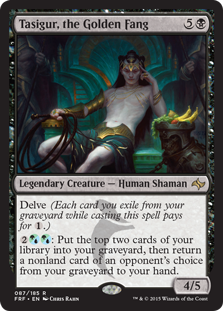
1 Tasigur, the Golden Fang
1 Snapcaster Mage

Artifacts

4 Mishra's Bauble

Instants

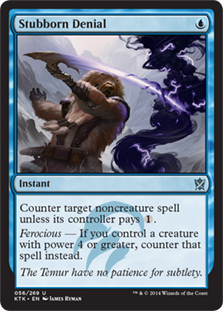
4 Stubborn Denial
4 Dismember

Sorceries

4 Thoughtseize
4 Gitaxian Probe
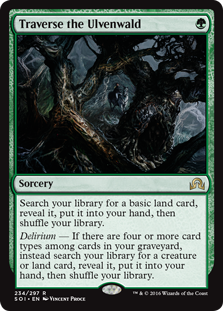
4 Traverse the Ulvenwald

Lands

4 Polluted Delta
4 Verdant Catacombs
4 Misty Rainforest
2 Overgrown Tomb
1 Breeding Pool
1 Watery Grave
1 Island
1 Swamp

Sideboard

3 Feed the Clan
2 Invasive Surgery
2 Natural State
4 Gut Shot
2 Grafdigger's Cage
1 Bojuka Bog
1 Forest

Death's Shadow Zoo spends its life points recklessly to grow its Avatar. The life points aren't wasted, either. They go to the manabase, allowing the deck to consistently access its four colors, and to deck size, allowing the deck to run a functional 48 cards between Gitaxian Probe, Mishra's Bauble, and Street Wraith.

In the traditional four-color build, less life points remain to go to disruption. Thoughtseize is a mainboard staple, but the disruption mostly stops there. Playing fewer colors gives us more life points to work with, and opens up the possibility running a set of Dismember in the main.

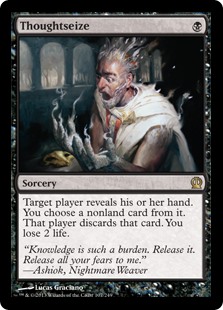
ThoughtseizeThoughtseize and Dismember give us great ways to remove cards from the hand as well as creatures from the board, and Stubborn Denial fleshes out the disruption suite as an efficient stopper for spells on the stack.

Ferocious is pretty much always live in this deck, and costing just one mana proves ultra-relevant with Death's Shadow. With some cantrips thrown into the mix, turn one Thoughtseize, turn two Death's Shadow plus Denial is an opening few decks can tangle with.

Blue vs Zoo: Pros and Cons

Of course, this new build isn't necessarily better than the already-proven Death's Shadow Zoo. But I think it's different enough to stand alone from that deck.

Pros

Our bad matchups improve. Since they output so much damage so quickly, Burn and Affinity are notoriously difficult for Death's Shadow decks to beat. But Burn has a lot of trouble beating Tarmogoyf, and we essentially play 12 in this deck. Stubborn Denial also gives the deck a hard time. Putting the nail in the coffin, we play so many ferocious threats that Feed the Clan becomes a hyper-reliable answer to the Lava Spike deck after siding.

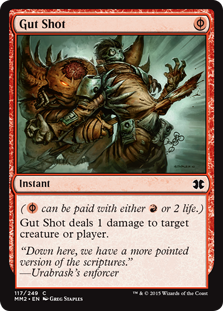
Gut ShotAffinity struggles to slog through too much disruption. Standard Death's Shadow decks play a pair of Bolts in the main, but any Modern grinder knows that's not enough. Post-board, it hopes to draw into one of a couple copies of Stony Silence.
Death's Shadow Blue ups the ante with a full set of Gut Shot in the sideboard and four Dismembers main. With this removal suite, winning the Affinity matchup becomes trivial, especially considering that Traverse can grab Snapcaster Mage to flash back a Natural State.

Gut Shot also teams up with Dismember to wreck synergy-based aggro decks like Kiki-Chord and Merfolk. Combined, the Phyrexian-mana removal spells make it close to impossible for creature decks to overwhelm us on the board, despite our lowered threat count.

Lastly, interactive combo decks become much easier to beat with Stubborn Denial. Decks like Bring to Light Scapeshift, which play a host of effective answers against Death's Shadow Zoo's creatures and a combo finish, can't actually beat one-mana Negate.

Our good matchups remain favorable. We're still much faster than Tron, and the addition of Stubborn Denial excuses a lowered speed against other linear combo decks. Attrition matchups even improve, since our threats are more resilient to removal than Wild Nacatl and Monastery Swiftspear. Getting hit by Inquisition of Kozilek on the draw still hurts, but having a hard, one-mana answer to Terminate, Path to Exile, and Liliana of the Veil gives us added game against opponents looking to interact.

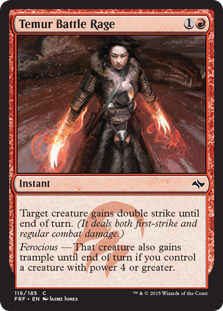
Interestingly, Dredge gets slightly better on the play and slightly worse on the draw. A turn one Denial can throw that deck way off-kilter. Unfortunately, the card does a lot less once Dredge gets going, and we'd rather our blue spells simply be Temur Battle Rage at that point. Goyf and Shadow still put in a ton of work here, and Cage from the board helps turn the matchup in our favor.

We have better mana. Classic builds sometimes scoop to Blood Moon. Their insurance against the enchantment is to get way under it, traverse the ulvenwaldlanding Nacatl, Swiftspear, or Shadow before opponents are able to tap out for the clunky hoser. But this plan doesn't account for opponents interacting each turn. Against openings of Bolt-Leak-Moon, Death's Shadow Zoo is dead in the water. And that's to say nothing of Vapor Snag and harder removal.
Traverse the Ulvenwald makes Moon into a total non-issue, helping us search out basic lands even after the enchantment resolves. Denial also excels at countering the hoser, which will pump our Goyfs from the grave to boot.

Playing only three colors also allows us the luxury of not taking three damage every turn for making a land drop. We can fetch out our basics and cast spells on the cheap if we need to. Against aggressive decks built to pummel our life total anyway, having this option can prove very useful.

Cons

Death's Shadow Blue is slower. Something like three turns slower, and sometimes more. Sure, we get to interact a lot. But we can't goldfish turn two victories like Death's Shadow Zoo. Against decks that sneer in the face of interaction like Tron or Bant Eldrazi, slowing down puts us at a disadvantage.

Stubborn DenialAs long as we make sure we can still beat those decks, though, there's nothing wrong with taking things slow. We're still ahead of Tron on speed, and countering land search effects or Karn Liberated with Stubborn Denial can put slower games away. Gut Shot and Dismember prove their worth in the Bant Eldrazi matchup, where they eat pretty much everything on the other side of the table while Tarmogoyf goes to town.

Our speed greatly affects our mana. Even with a set of Traverse in the deck, we play an 18th land to accommodate Tarmogoyf and Grim Flayer. Since we're more interactive than regular Death's Shadow Zoo, our games are bound to go longer, and making land drops isn't such a terrible thing.

All that explaining aside, Modern is an extremely fast format. I may have just listed the reasons I don't think losing speed is the end of the world, but there's an endless supply of arguments for the opposite stance. The main draw to Death's Shadow Zoo is its speed, so I'm considering this point a con.

We have trouble getting over certain boards. Like Infect, Death's Shadow Zoo can overcome pretty much any board state. The combination of trample or unblockable-granting effects and heavy-duty pump spells make blocking a losing proposition against a Death's Shadow Zoo opponent with a full grip. The major player here is Temur Battle Rage, which Death's Shadow Blue doesn't run.

We have plenty of available pump spells in green, but none are as efficient as Temur Battle Rage, and none mesh very well with our non-blitz plan of keeping opponents off their game. Mutagenic Growth, my favorite pump spell in Death's Shadow Zoo, doesn't fit very nicely into this deck, since our threats all already resist Lightning Bolt. A big draw to playing that card is its ability to double as Mental Misstep against Modern's best removal spell.

Temur Battle RageHow does Death's Shadow Blue beat Ulamog, the Ceaseless Hunger? Well, it doesn't. These kinds of creatures are road blocks we're simply not equipped to deal with. My counter-argument for this concern is that Ulamog doesn't show up that often on the other side of the table, since we've (hopefully) killed opponents by the time they hit ten mana.

That said, Temur Battle Rage is sorely missed against streams of chump blockers. Lingering Souls is public enemy #1 for this deck. Grim Flayer can trample through them, but a suite of four Spirit tokens will trade with the bloody human.

Another key omission is Become Immense. This instant combos with Battle Rage to provide a quick 20 damage, so it makes some sense not to include it in a deck without red. The main reason not to play Become Immense, or many delve spells in general, is that it clashes with delirium. We want Traverse the Ulvenwald and Grim Flayer online for the whole game, so these spells are off-limit for us.

Graveyard hate hurts us more. Death's Shadow Zoo has a very elegant answer to Rest in Peace: ignore it. Monastery Swiftspear, Wild Nacatl, and Steppe Lynx could care less about the graveyard police, and will all punish opponents for spending their precious second turn on a spell that doesn't interact with them. Conversely, Death's Shadow Blue has only its namesake creature to lean on should Rest in Peace hit the board. And 2/2 Grim Flayers, but those don't really count.

Compared with Death's Shadow Zoo, This softness to grave hate is the biggest strike against the new brew. In a metagame where everyone expects Dredge, sleeving up Grim Flayer over Monastery Swiftspear is a huge liability.

Remembering Counter-Cat

When you water it down with interaction, Death's Shadow Zoo starts to look a lot like Counter-Cat. That deck also ran permission, removal, a painful manabase, Phyrexian mana spells, and Wild Nacatls. Upon direct comparison, the two decks are strikingly similar. Here's my current build of Counter-Cat, for reference:

Counter-Cat, by Jordan Boisvert

Creatures

4 Wild Nacatl
4 Delver of Secrets
4 Tarmogoyf
3 Hooting Mandrills
2 Snapcaster Mage

Instants

3 Mutagenic Growth
4 Path to Exile
4 Lightning Bolt
2 Lightning Helix
2 Spell Pierce
2 Spell Snare
2 Mana Leak

Sorceries

4 Serum Visions
2 Gitaxian Probe

Lands

4 Misty Rainforest
2 Flooded Strand
2 Scalding Tarn
3 Arid Mesa
1 Wooded Foothills
1 Steam Vents
1 Temple Garden
1 Stomping Ground
1 Hallowed Fountain
1 Island
1 Forest

Sideboard

2 Huntmaster of the Fells
2 Isochron Scepter
2 Pyroclasm
2 Lightning Helix
2 Destructive Revelry
1 Ancient Grudge
2 Negate
2 Boros Charm

In terms of roles, playstyle, and tempo, Death's Shadow Blue plays a lot more like an interactive blue aggro deck than like the combo-kill-focused Death's Shadow Zoo. My primary concern after some testing with wasn't whether the deck was a worse Death's Shadow Zoo, but whether it was a worse Counter-Cat.

The two decks attack in similar ways and suffer from a set of common problems: they take a lot of damage and they're soft to mana denial strategies. Counter-Cat has an obvious benefit over the air-stocked Death's Shadow Blue in that it can run more versatile cards in its four colors, allowing it to change roles fluidly between games. On the other hand, Death's Shadow itself is a far scarier threat than Wild Nacatl against any deck with Lightning Bolts. So in a Bolt-heavy metagame, I think I would prefer to leave Wild Nacatl at home.

Interacting... At Any Cost

Interactive blue aggro decks don't have the speed of Become Immense + Temur Battle Rage, and they probably shouldn't (although they once did). That's the reason we're seeing Death's Shadow Aggro perform without Stubborn Denial, and decks like Counter-Cat benched in favor of linear takes like Gruul Zoo. Speed is at a premium in Modern. To echo a concern raised by many over the triple GP weekend, Modern might be a format that so rewards speed and linearity that playing blue-based interactive aggro decks becomes a losing proposition.

I like playing Magic, and forcing my opponents to play Magic. But Modern has long been a format of questions, not answers. It's possible the very process of turning a linear deck into an interactive one makes it weaker. What do you think? Let me know in the comments.

Stock Watch – Emrakul, the Promised End

Are you a Quiet Speculation member?

If not, now is a perfect time to join up! Our powerful tools, breaking-news analysis, and exclusive Discord channel will make sure you stay up to date and ahead of the curve.

With regard to Standard, we are officially on the Collected Company farewell tour. Kaladesh isn't too far out, and with it will come major Standard shakeups, if only with regard to what is rotating out. Bant creatures start to look a lot more mopey without Collected Company, though notably Emrakul, the Promised End will still have a lot of support post-rotation.

There was an error retrieving a chart for Emrakul, the Promised End

Some great players are already claiming that the Emrakul decks are the best decks in Standard, though they are considerably more difficult to pilot than the Company decks which causes them to not necessarily put up as good of numbers. A low land count deck with Traverse the Ulvenwald and Grapple with the Past allows players to sort of cheat on deck building, which is clearly very powerful. Emrakul is basically the biggest way to end a game in such a shell, and many Emrakul decks are now playing as many as three copies when initial perception was that you could maybe play one or two.

Copies of Emrakul can currently be found for $18, and buylist prices are sitting above $15. That spread is insanely small, and when Company rotates I expect an uptick in players playing the Emrakul decks, however poorly, and with it an increase in the cards price. Emrakul is a very popular strategy among players at the World Championship this weekend, and as such it's possible that Emrakul gets a bump as soon as this weekend.

High Stakes MTGO – Aug 21st to Aug 27th

Are you a Quiet Speculation member?

If not, now is a perfect time to join up! Our powerful tools, breaking-news analysis, and exclusive Discord channel will make sure you stay up to date and ahead of the curve.

Hello and welcome back for another High Stakes MTGO report!

While the past few weeks were all about selling, this week was all about buying. With the exception of selling a few playsets of Magic Origins painlands I spent all my time buying Modern positions, and more specifically Zendikar and Worldwake targets. Between fetchlands, creature lands, iconic Modern staples, rares, mythics and bulk specs, the Zendikar block is the Magic Christmasland for speculators.

As discussed previously, the best time to pick up ZEN positions was, depending on your targets, sometime between Friday and Sunday following the introduction of the triple ZEN flashback drafts.

Fetchlands actually saw their lowest price point on Friday morning, and then rebounded on Friday afternoon most likely following a first wave of speculative buys. After that rebound over the weekend all prices lowered again this past week as Worldwake was introduced in the mix, though not reaching the lowest point seen by the first weekend of drafts.

With this in mind my strategy has been to make a first round of purchases on Saturday and Sunday, August 19-20th, and then keep track of the evolution of prices to consolidate my positions as we go. I completed my stock this past week but with prices getting lower for some cards last weekend I'm not excluding adding another playset or two of some cards, including the fetchlands.

ZEN/WWK flashback drafts end this Wednesday and after this week prices should not get any lower. With three Modern GPs underway as I'm writing this, some ZEN/WWK cards might have already significantly rebounded by the time you read these lines. Similarly to previous specs following flashback drafts, my goal is to clinch a 50% profit at minimum so if this happen within a week I'll be happy to sell. But I'm also ready to hold on to these cards for a while if needed.

The snapshot of the portfolio is available here. Let's dig into more details of my pick-ups now.

Buys This Week

RaresZEN

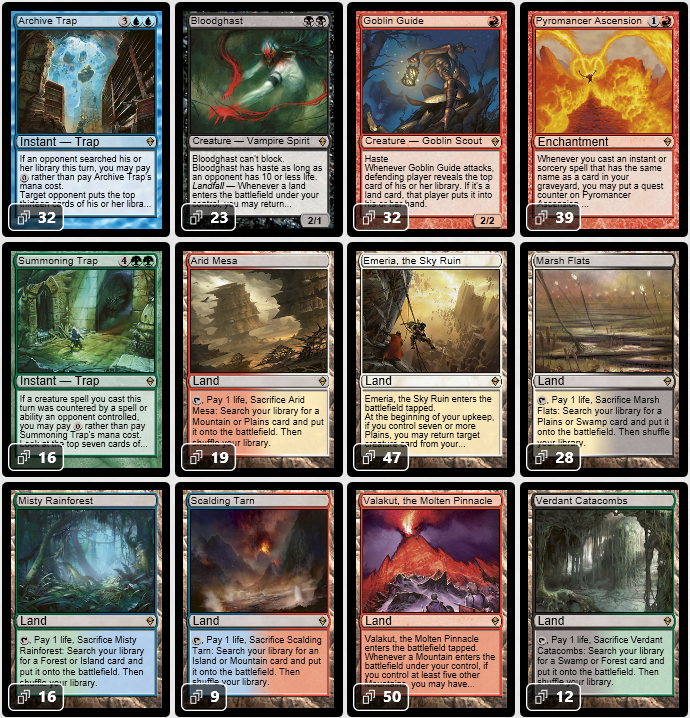
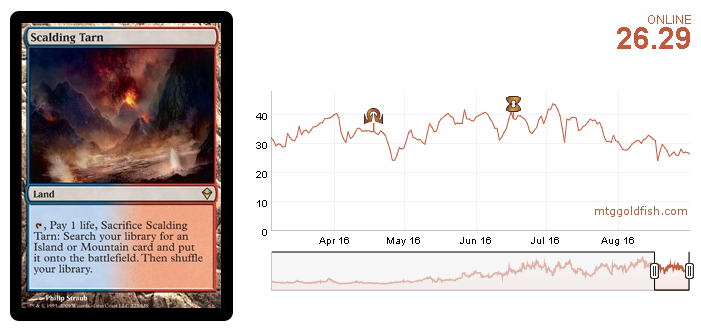
Here is my current selection of Zendikar rares. This panel is quite diverse ranging from penny cards such as Summoning Trap to expensive staples such as Scalding Tarn.

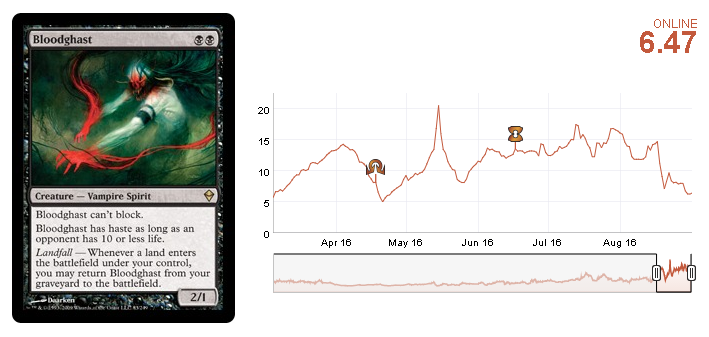
Nothing surprising here and besides the obvious fetchlands I opted for the solid Modern staples that are Goblin Guide, Pyromancer Ascension and Bloodghast, all of them having the potential to double up from my buying prices.

Bloodghast might be the most risky position of all here. Sure this vampire topped 20 tix last May and has been flying between 10 tix and 15 tix since then, but I'm not so certain that the resurgence of Dredge decks in Modern is strong enough to permanently pull up Bloodghast above 10 tix. I guess we'll see.

In the bulk section I opted for Summoning Trap, Archive Trap and Emeria, the Sky Ruin. All of them were able to move up to 1 tix or more--up to 4 tix for Emeria--so buying in around 0.2-0.3 tix seems perfectly appropriate. I wish I was able to grab more copies of Valakut, the Molten Pinnacle closer to 0.5 tix but this is again a solid pick moving forward considering the recent strong finishes of Scapeshift and RG Titan decks.

MythZEN

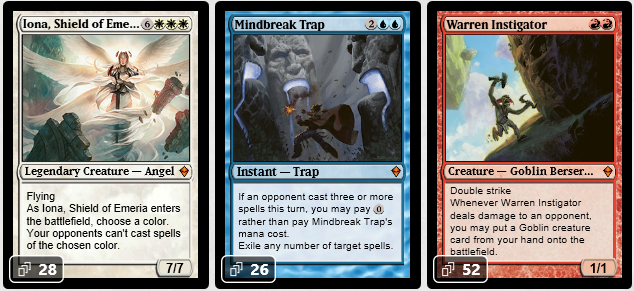
Zendikar is packed with rares that are staples in Modern, Legacy and/or Vintage. When it comes to ZEN mythics this is not the same story. At best Iona is a one-of in Reanimator or Gifts decks, Mindbreak Trap is a decent sideboard card in some Legacy/Vintage decks and Warren Instigator is at best an average casual goblin. So the only game I'm playing here is the patience game.

With the ZEN flashback drafts all of these three have hit a very long-term low and I'm simply betting that the price can only go higher from here. About once every two years Mindbreak Trap hits 20 tix. Although in Modern Masters 2015, Iona may hit 3 tix some day. And the Instigator could reach 5 tix again--which it has done several time in the past--if Goblins become more viable in Modern (and Warren Instigator has a spot in the 75).

Eldrazi Monument could have completed this trio but the artifact simply fell short of any competitive strategies, even remotely. So even after a dramatic drop from 6.5 tix to 2 tix I would not consider buying here.

RaresWWK

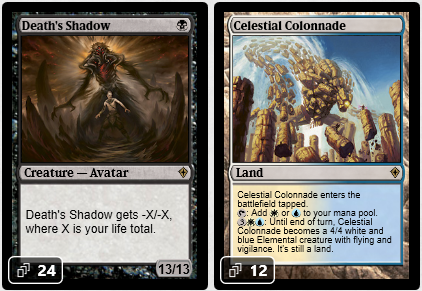
My two first-picks in Worldwake are not a surprise for anyone. Celestial Colonnade made its way to 35 tix three times over the past five months and one week of ZZW drafts won't prevent this creature land from doing it again in a near future. From a buying price of 20 tix the percentage profit may never be a triple-digit one but it's a spec that only requires three playsets to move.

I place Death's Shadow in a similar situation as Bloodghast. Strong of recent tournament success, this creature that was a bulk rare two years ago spiked to an incredible 15 tix last month. That's why even at a discounted 9 tix this spec looks more like a gamble than a strong investment. I would be prompt to sell if this avatar cross the 15 tix bar again.

GtU

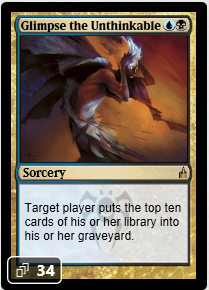
In the long series of "why not buy a Modern card when it reaches a long-term low," I picked up Glimpse the Unthinkable last week. The last time this mill card was under 4 tix for more than a month was in April 2013. With multiple incursions above 8 tix in the past three years and with Ravnica flashback drafts out of the way, I hope the next price movement for this card is toward 8 tix again.

RS

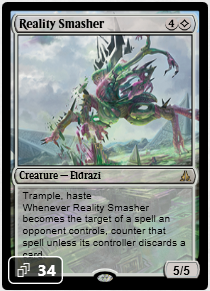
Standard cards playable in all formats are very rare. Although this one is not very popular in Standard right now the potential for more than 3 tix is obvious. Nicholas Cancellara mentioned it twice in his Buy, Sell or Hold articles including when this Eldrazi was around 2.5 tix. Thanks to Nicholas's reminder last week I thought I would grab some copies of Reality Smasher too.

Sales This Week

Without hundreds of copies of painlands to sell, I would not have sold anything this past week. Llanowar Wastes and Yavimaya Coast were on the menu, with a 31% loss and a 16% gain respectively. I'm getting closer to breaking even with the Wastes, which should be the next wave of sales.

The pseudo good news was for Battlefield Forge which rebounded to 0.6 tix this past week after hitting a terrible 0.2 tix two weeks ago. This is not going to turn my stock of Forges into a profitable spec but it will surely limit the loss, even though I still have yet to start selling.

On My Radar

With a lot purchases in the past few weeks Modern is definitely back in business in my portfolio. The trick with Modern specs is always to keep them in the back of your mind as they can cycle up faster that anticipated.

It often only takes one good result to propel a card to new heights and there are too many viable decks in Modern for a spike to sustain for a long period of time. Selling after a 50% gain or after a position reaches its previous record high is my mantra when it comes to Modern specs.

Rise of the Eldrazi is up next! The third set of the Zendikar block also has a couple of interesting Modern targets to keep an eye on. Linvala, Keeper of Silence, Vengevine, Eldrazi Temple, Inquisition of Kozilek and Kor Spiritdancer are among the cards I'm lurking on right now.

Vengevine and the Spiritdancer are particularly out of favor these days so I would expect prices to drop significantly for them, and that's just what we want as speculators--extremely low prices for great cards nobody is interested in.


Thank you for reading,

Sylvain

Insider: MTGO Cards to Buy, Sell or Hold – Episode 8

Are you a Quiet Speculation member?

If not, now is a perfect time to join up! Our powerful tools, breaking-news analysis, and exclusive Discord channel will make sure you stay up to date and ahead of the curve.

Hello investors welcome back to another Buy, Sell or Hold,  I hope you all had a very profitable weekend after the triple modern GPs.  MTGO finance is a dynamic work, hard to follow the rhythm sometimes, but the important events shouldn't be missed. The multi format MTG champ started this Thursday and will be the last important modern event in the next two month. It won't be as important as the previous week for speculators, but will definitely move prices a little more.

This week again will write an all modern episode trying to cover the different archetypes, the followings will be focused in standard.

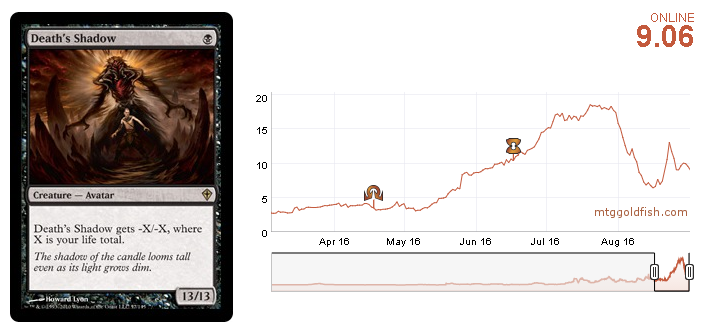
 Death's Shadow

Death's Shadow


The Death's Shadow Zoo build was one of the expected decks for the tournaments, and it performed very well. The reason behind this card dropping from 18 tix to 9 is WWK flashback drafts but the future price is uncertain. It actual price is not good enough to invest in it, but keeping the copies you might have grabbed at a better price, and play close attention to it price, I think is the way to go. Aiming a conservative profit, 5% to 20%, is better than risking a loss in this scenario. It's important to know that there are plenty of investors holding copies of this card they bought a few days after the flashback draft started, when it is believed to hit it bottom short term price; that will cause a fast price adjustment when they all decide to liquidate.

Verdict: HOLD


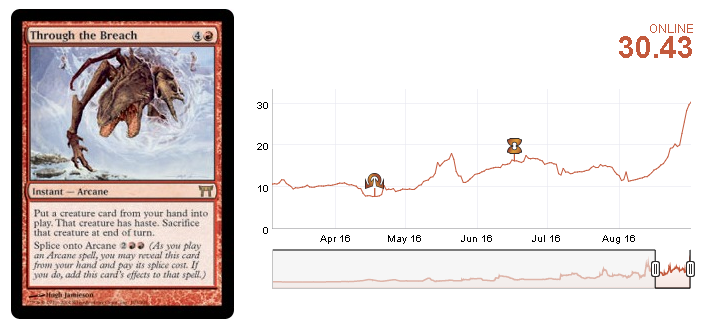
Through the Breach

Through the Breach


The RG Titan deck was one of the big winners of the weekend, although it was common to play vs the deck in mtgo leagues it hadn't had a big impact in paper magic until now. Most of the cards of the deck spiked and this one did it really high. There is no reason for me to think it will go even higher, if you are still holding some copies you should sell them as soon as possible.

Verdict: SELL


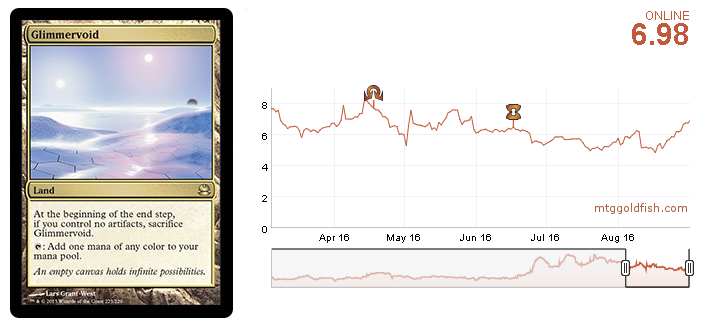
Glimmervoid (Modern Masters)

Glimmervoid


Another will positioned deck after the GPs is affinity. Most of the cards rised as well, but this particular edition of Glimmervoid has an unusual price compared to the Mirrodin print at 6 tix. Logic indicates that they will meet in the middle at 6.5 or maybe both at 6 or both at 7. While I rather still keep the MRD version I think selling the MMA version at the current price is the best option.

Verdict: SELL


Bloodghast

Bloodghast

Dredge is undoubtedly the biggest blow out of the weekend.  I hope you sold your cards during the live coverage; anyway 6.5 seems a good price to buy it, specially now that ZEN flashback drafts ended, the problem is how competitive the deck will be from now on. There will always be dredge players that demand these cards, on the other side I think there are still plenty of speculators holding some copies that will liquidate soon plus a bunch of players unhappy will all the graveyard hate these days that will sell their decks to buy a new one. My strategy here is try to close the position as soon as it is profitable, otherwise just keep them and wait for a price rebound. If you want to buy it I recommend to keep an eye on it and wait for a better price.

Verdict: HOLD


Scalding Tarn

Scalding Tarn


One of the best investment right now are the ZEN fetchlands, and the only BUY in this episode. The ZEN flashback draft ended, and the offer for one of the strongest staples ceased. They won't be this cheap again anytime soon. This is the perfect moment to buy them even if you are just a player and know nothing about finance.

Verdict: BUY


See you next week!

Blueprinting and Comparing Eldritch Moon and Shadows over Innistrad

Are you a Quiet Speculation member?

If not, now is a perfect time to join up! Our powerful tools, breaking-news analysis, and exclusive Discord channel will make sure you stay up to date and ahead of the curve.

Hey there! I had some positive comments on last week's article, so go ahead and catch up now if you haven't had the chance. We'll be following a similar style this week, focusing more on the difference between Eldritch Moon and Shadows Over Innistrad's bulk common and uncommons. With Conspiracy: Take the Crown filling up a significant chunk of draft tables for the next month or so until Kaladesh, I feel like it's important to double check the bulk that we'll be buying as people make room in their closets and game rooms for the new piles of chaff yet to come.

We'll be using Trader Tools again to create a very easy to read layout of exactly what we want to pick, and which set we'd rather be picking. While there are other equally useful tools (mtgblueprint.com, and download the buylist), I'm going to make a general assumption that you want to be able to use the tools that you pay for to customize your own picks.

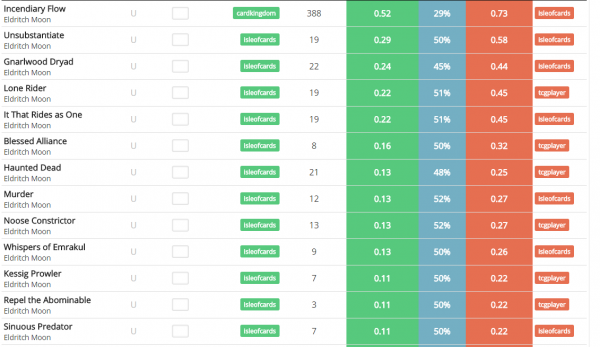
To start, let's talk about the fact that a lot of other people are talking about Eldritch Moon. The rares and mythics in the set have an expectation to reach abnormally high prices, thanks to lower than average supply. Corbin Hosler talked about this recently on the Quietspeculation cast, and Jim Casale has mentioned it in several of his articles recently. If you play Standard, you want to pick up your EMN. Does this "grab it now before it jumps" apply to some of the bulk commons and uncommons (c/u) as well? Here's the list of c/u that you should be keeping an eye out for, whether you're a Scavenging Ooze checking draft chaff at FNM, or cracking a box that you won at a PPTQ.

EDM tools

Incendiary Flow is the most sought-after uncommon, which isn't too surprising. It's a 4-of when it's played, regardless of the Reddit complaints that Red no longer exists in Standard. There's a pun here with Red and Reddit, but I'm not gonna go for it. After Unsubstantiate and Gnarlwood Dryad, we don't have more than 16 other cards worth more than 0.08 to the highest paying buylist. Hrm. If you're someone picking primarily for Standard trade fodder or playsets for a deckbuilding gauntlet, we're not left with a whole lot of appetizing options. Let's check on the other side of the moon.

SOItools


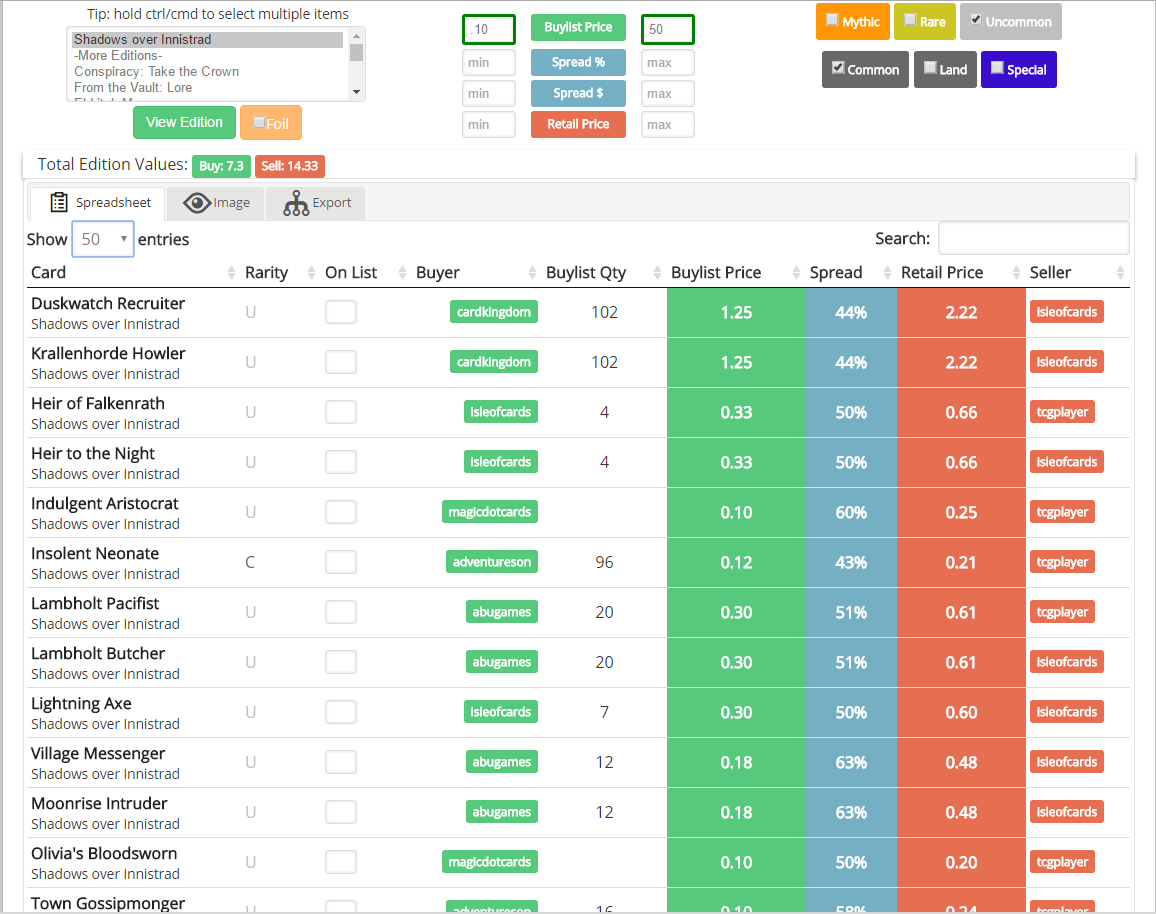
Hrm. I mean, it's not a Hrm for the same reason. It's just that double-sided cards being treated as two cards is kind of misleading, and I wish I could hide one of them to make it easier to read. I also don't want to take up this entire article with a blown up picture scrolling all the way down to the end of the .10 cards, but you can run the data for yourself very easily with the filters I included at the top of the image. The brief version of the data is that Shadows Over Innistrad has over 30 (30!) various commons and uncommons that a half dozen vendors are willing to pay a dime a piece on. Buying an Olivia's Bloodsworn for a half of a penny in bulk equals getting a dime from magicdotcards, equals buying a bulk rare from Spike, which you sell to Timmy for $.25, which buys you two more bulk rares.... and you live happily ever after writing Insider articles for QS five years later.

So what's the moral of the story? Even if your sellers pick out the Duskwatch Recruiters and Lambholt Pacifists for their Company decks, you're still going to have a very successful time buying bulk SOI cards. You can find buyers for Fiery Temper at a quarter each, and vendors paying 30 cents on Lightning Axe recoups shipping costs in a flash. If you can guarantee that the person you're buying from did not read this article, you might still be happy buying SOI bulk at $4 per thousand intead of just $3-3.5. Ideally you should still be paying 3-3.5, but if that's the deal breaker then I won't walk away from SOI bulk at this point.

There was an error retrieving a chart for Duskwatch Recruiter

So what about Eldritch Moon? Is it even worth picking for only a few scattered dimes and the off-chance of finding a half-dollar coin? If you're reading this article and already know that you don't have the time to turn bulk commons and uncommons into a mass production operation, you might be better off just skimming for the top five or six cards in the set that you can memorize, then throwing the rest to Craigslist for the non-competitive crowd to dig through and build their own decks. Don't worry, they won't be wondering where the random uncommon two-mana burn spell went. I've had a lot of success selling bulk c/u on Craigslist over the past several years, and a huge majority of the buyers that contact me fall into the category of "I used to play X years ago, and want a cheap way to get into the game for myself and/or my child(ren)." Having thousands of c/u at the ready can serve as an excellent starter collection once you pick out the basic lands and tokens separately, then include X basic lands of each type for a couple dollars extra. Here's an example Craigslist ad that I've used in the past; we'll probably look back at this in a few weeks time as the source of a related article.

1ks

End Step

Oh, right. There were actual announcements and stuff from Wizards yesterday. We're officially getting Modern Masters 2017, and a plane called Amonkhet. Now I'm not an expert on exactly how many Egyptian themed cards that already exist in Magic, but I'm confident that it's a small list. The number of those that have proven to have demand in even casual decks is even smaller. I'm honestly considering purchasing a pile of Vengeful Pharaoh in the next few days, if I can find a cheap enough seller on TCGplayer with a large enough inventory to make it worth my while.

There was an error retrieving a chart for Vengeful Pharaoh

Am I crazy for wanting to buy a pile of these at $3 each? We really don't have a precedent in Magic for mummies and pyramids, although I'm going to assume that mummies would all fall under the "Zombie" category and play nicely with the SOI/EMN zombies for a few months. On the other hand, it's not exactly the kind of card you want to play as a 4-of, unless you're burning cards off the top of your deck at your upkeep or draw step. Non-competitive players don't play dredge, they're more focused on milling out each other than wanting to incrementally draw cards from the graveyard. Then again, you're probably better off paying $1 more for copies of Rest in Peace, which is ironically at the complete opposite end of the spectrum; a graveyard hosing Spike card to crush a graveyard Johnny zombie. Hmm.... Maybe the correct answer is "Don't buy either of them, because buying cards at full retail is silly. Buy collections and bulk like you suggest for us to do, DJ!" Let me know in the comments below, or find me on Twitter at @Rose0fthorns!

Triple GP Analysis!

Are you a Quiet Speculation member?

If not, now is a perfect time to join up! Our powerful tools, breaking-news analysis, and exclusive Discord channel will make sure you stay up to date and ahead of the curve.

Ah, Triple Modern GP Weekend. Nothing compares. Chocolate and peanut butter falls short, metalcore music comes close, dominating unsuspecting children in a friendly game of chess in the local park almost beats it, but still: nothing beats Modern GP Weekend. Today, we’ve got a ton of information to go through, a mountain of decklists to analyze, and a few essential pieces of tech hidden in the mound. Let’s break it down.

Scapeshift-banner-cropped

By The Numbers

Before going into each individual Grand Prix, it makes sense to first evaluate this weekend’s results as a whole. In doing so, we can gain some surface-level insight about the metagame as a whole before delving deeper into each specific event. While a lot of important information can get lost when looking at the “big picture,” value still exists in first taking a broad-level approach regarding results analysis. We can still miss things, like a niche archetype winning a big event, but as long we look at data side by side we can gain a better understanding of the results without the risk of some fatal misconceptions.

So, how was the weekend as a whole? Aggregating the three events together, here is the representation of every archetype that managed a Top 16 or better result for the three events:

[wp_ad_camp_1]

Infect 6
Bant Eldrazi 5
Zooicide (Death's Shadow Zoo) 6
Affinity 4
Naya Burn 4
Jund 3
RG Breach 3
Ad Nauseam 2
Green-White Hatebears 2
Abzan 1
Amulet-Scout 1
B/R Eldrazi 1
Blood Moon Jund 1
Dredge 1
Goryo's Vengeance 1
Green-Black Elves 1
Grixis Delver 1
Knightfall 1
Living End 1
Nahiri Mardu 1
Thing Ascension 1
White-Blue Control 1

So, what does this table tell us? Looking purely at representation numbers without weighting by results only does so much for us, but as we said before, it’s a start. Here, we can use it to get a snapshot of the metagame at the top tables, and determine if any archetype is over- or under-performing according to their representation. Starting at the top, we can see relatively unsurprising numbers out of Infect, Bant Eldrazi, Zooicide, Affinity, Naya Burn and Jund, which are all major players in the format. In the middle of the pack we have RG Breach, Ad Nauseam, and GW Hatebears threatening to break into top-tier levels of representation, and then fringe strategies and “rogue” decks rounding out the bottom.

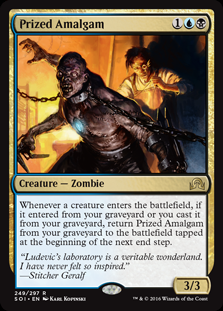
Prized AmalgamImmediately, the first major takeaway for me is the poor performance of Dredge. One of the most common top performing decks on MTGO in the past few weeks, Dredge’s showing here at GP Weekend is surprising, considering how consistent its performance has been both online and in paper events recently. This suggests, (emphasis on suggests) that Dredge either met an actively hostile field in all three events, or some other archetype’s natural rise has proven unfavorable for the deck’s overall position in the metagame.

Second, Bant Eldrazi’s performance suggests my analysis of last weekend’s events was correct, and we are witnessing an archetype on the rise. Elves only managed to put one copy into the combined results, while Bant Eldrazi takes the bronze medal for “most represented” on the weekend. We can safely say that either the right list has been found, or the format has shifted to a point where Eldrazi is here to stay until the format adjusts to fight it. If it wasn’t on your personal radar, it should be now.

Grand Prix Guangzhou

1st Grixis Delver
2nd Naya Burn
3rd Zooicide
4th Knightfall
5th Thing Ascension
6th Naya Burn
7th Goryo's Vengeance
8th Jund
9th B/R Eldrazi
10th Infect
11th Ad Nauseam
12th Zooicide
13th Nahiri Mardu
14th Infect
15th Infect
16th Infect

I chose to start with Grand Prix Guangzhou as, for me, its results are the most interesting. Seven different archetypes in the Top 8, with Naya Burn taking two slots, is immediately attention grabbing---not to mention the winning list.

Grixis Delver, by Albertus Law (1st, GP Guangzhou)

Creatures

4 Delver of Secrets
1 Gurmag Angler
4 Snapcaster Mage
3 Tasigur, the Golden Fang
3 Young Pyromancer

Instants

2 Terminate
1 Spell Snare
4 Thought Scour
2 Kolaghan's Command
1 Spell Pierce
4 Lightning Bolt
1 Mana Leak
1 Murderous Cut
1 Electrolyze
1 Countersquall

Sorceries

4 Serum Visions
3 Gitaxian Probe
1 Dreadbore

Lands

2 Steam Vents
1 Watery Grave
1 Sulfur Falls
1 Swamp
1 Blood Crypt
2 Bloodstained Mire
1 Darkslick Shores
2 Island
1 Mountain
3 Polluted Delta
4 Scalding Tarn

Sideboard

2 Blood Moon
1 Dismember
2 Dispel
1 Dreadbore
1 Engineered Explosives
1 Flashfreeze
1 Izzet Staticaster
2 Magma Spray
1 Spell Pierce
2 Surgical Extraction
1 Vandalblast

Grixis Delver is one of those archetypes that I never seem to do well with when I pick it up, but still puts up amazing results here and there. You rarely see a large portion of the field playing Delver of Secrets, yet when it pops up in a Top 8 it often tends to take home the trophy. The fact that Delver even beat Naya Burn in the finals to take the trophy (one of its worst matchups) is even more impressive to me. While other people continue to show up in large numbers with Infect, Zooicide, and fast combo, Grixis Delver will continue to do well. Its combination of fast, cheap threats and plentiful, cheap interaction work together to quickly apply pressure and disrupt the opponent until they are dead. While the collective “unfairness” of the format keeps down decks like Abzan, Jund, and Naya Burn, you can expect (with a bit of luck and a lot of play skill) to do well with this deck.

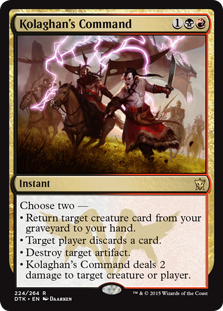
Kolaghans CommandLooking at the list specifically, four delve creatures and more Kolaghan's Command is exactly what I like to see. For me, Grixis Delver always played second chair to Grixis Control as they cut what were, in my mind, the best reasons to be in the color in an attempt to support Delver of Secrets. In this list, Albertus Law chose to trim a lot of the reactive counterspells in exchange for more creatures and more individually powerful spells. When you can go Delver of Secrets, Young Pyromancer, Gurmag Angler, Kolaghan's Command, you don’t really care if your opponent killed off a few of your creatures along the way. Eventually their removal will run out, and if not, spending time casting removal spells plays right into our Snapcaster Mage/Kolaghan's Command long-game.

As a final note, pay attention to the two copies of Blood Moon in the board. With Eldrazi Temple picking up in popularity, along with Blood Moon’s continued strength in the format, the time has come again to expect a possible Blood Moon out of any archetype that has access to red mana.

Bant Knightfall, by Kelvin Chew (4th, GP Guangzhou)

Creatures

4 Knight of the Reliquary
4 Birds of Paradise
3 Noble Hierarch
2 Qasali Pridemage
2 Scavenging Ooze
2 Selfless Spirit
4 Spell Queller
1 Spellskite
3 Voice of Resurgence
2 Courser of Kruphix

Enchantments

3 Retreat to Coralhelm

Instants

4 Path to Exile
4 Collected Company

Lands

1 Plains
2 Flooded Strand
1 Breeding Pool
3 Forest
1 Gavony Township
1 Ghost Quarter
1 Hallowed Fountain
1 Horizon Canopy
1 Kessig Wolf Run
4 Misty Rainforest
1 Stomping Ground
1 Temple Garden
4 Windswept Heath

Sideboard

2 Blessed Alliance
1 Ghost Quarter
3 Izzet Staticaster
3 Kitchen Finks
3 Negate
1 Scavenging Ooze
2 Worship

Knightfall placing 4th in a Grand Prix is a big deal. This archetype has been poking around the edge of the format for about a year now (check out my Video Series on the deck!) but has only managed a couple strong performances, and never a Top 4. The fact that we’re seeing it now suggests either a major format change or some new technology that improved the deck.

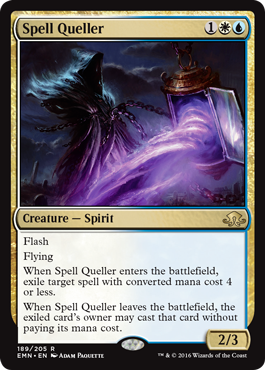
Spell QuellerFour Spell Queller definitely counts as new technology! I’ve been having a ton of success with Spell Queller in Modern and I know from experience that it definitely fits in here. For those who have yet to play with/against the card, it can be awkward at times versus opponents with lots of removal, but the strengths far outweigh the weaknesses. For a creature-based combo archetype like this, a lightning rod for removal that can interact with/disrupt the opponent while also just applying pressure if need be is exactly what the deck wants access to. Alongside Selfless Spirit and Collected Company, Bant Knightfall has successfully incorporated enough tools and tricks to make the opponent’s plays consistently awkward. This list is definitely one I plan on picking up and testing out soon.

Grand Prix Lille

1st         Infect

2nd       Zooicide

4th        Green-White Hatebears

4th        Jund

8th        Affinity

8th        Bant Eldrazi

8th        RG Breach

8th        White-Blue Control

9th        Amulet-Scout

10th      Jund

11th      Blood Moon Jund

12th      Ad Nauseam

13th      Green-Black Elves

14th      Bant Eldrazi

15th      Death's Shadow Zoo

16th      Infect

Not to be defeated by Guangzhou’s Top 8 diversity, GP Lille featured a full eight different archetypes in the Top 8, with Infect taking home the trophy! Zooicide taking second is surprising to me, as they are generally faster and more disruptive than Infect, and only have to worry about their precarious life total in some obscure scenarios. Still, Infect can deploy to the board faster with mana creatures, and Spell Pierce can slow down Zooicide enough on their pivotal turn to swing the race the other way. While I would rather be on the Thoughtseize side of things, Infect remains a consistent choice.

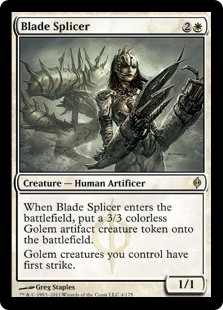
Blade SplicerGW Hatebears in the semifinals is the only other major point of interest for me here, this time with Blade Splicer! Blade Splicer, Flickerwisp, Restoration Angel, Collected Company, and Eternal Witness give the deck a lot of power and help to make up for the lackluster performance of Leonin Arbiter. Cutting away a lot of the flair, playing only Noble Hierarch as acceleration, and a playset of Scavenging Ooze to both hate on Dredge and provide a cheap, hard-hitting threat against removal-heavy decks all are steps in the right direction for me.

So, the big takeaway from Lille for me is more of a question than anything else: is this the new normal going forward? With archetypes like GW Hatebears taking steps to reduce Dredge’s effectiveness in the metagame, we could possibly be seeing a shift in the market share at the top, with archetypes like GW and Bant Eldrazi taking some of the points once held by Dredge. Whether the metagame will shift towards a “fairer” Hatebears style approach or a “trump” style of Blood Moon-type haymakers is yet to be seen.

Before moving on to Indianapolis, I have to mention the UW Control list Daniel Ballestin used to make his way to the quarterfinals:

UW Control, by Daniel Ballestin (7th, GP Lille)

Creatures

2 Kitchen Finks
2 Restoration Angel
2 Snapcaster Mage
2 Vendilion Clique
3 Wall of Omens

Instants

1 Blessed Alliance
1 Condemn
3 Cryptic Command
2 Spell Snare
3 Mana Leak
2 Negate
4 Path to Exile

Enchantments

1 Detention Sphere

Planeswalkers

1 Gideon Jura

Sorceries

3 Ancestral Vision
3 Supreme Verdict

Land

1 Mystic Gate
2 Tectonic Edge
4 Celestial Colonnade
4 Flooded Strand
3 Ghost Quarter
2 Plains
2 Glacial Fortress
2 Hallowed Fountain
5 Island

Sideboard

1 Blessed Alliance
1 Crucible of Worlds
2 Dispel
1 Elspeth, Sun's Champion
1 Engineered Explosives
1 Grafdigger's Cage
1 Hallowed Burial
1 Negate
2 Rest in Peace
2 Stony Silence
1 Timely Reinforcements
1 Vendilion Clique

Daniel’s list is pretty usual, full of “good stuff” UW cards that when combined together buy enough time to land some haymaker or other and win the game in convincing fashion. The thing I like the most about this list is exactly how unremarkable it is---no spicy bomb or over-the-top synergy to distract from the goal. Kitchen Finks and Restoration Angel block and gain life just as well as they attack, and Gideon Jura can play excellent defense or offense depending on our position when he comes down. Really, the true win condition in a list like this is Ancestral Vision, as an opponent low on resources will often just concede when this thing comes off suspend and we get to draw four cards to their one. Still, taking complete control and attacking with the old one-two of Gideon Jura and Celestial Colonnade for two turns is just good fun. If you’re interested in picking up this archetype, I think now is the time to do so. It’s not often that Supreme Verdict is good against such a large percentage of the field. We know we’re in a bubble when cards like Blessed Alliance and Blood Moon pop up in maindecks.

Grand Prix Indianapolis

1st         Naya Burn

2nd       RG Breach

4th        Green-White Hatebears

4th        RG Breach

8th        Affinity

8th        Affinity

8th        Bant Eldrazi

8th        Zooicide

9th        Naya Burn

10th      Zooicide

11th      Bant Eldrazi

12th      Bant Eldrazi

13th      Dredge

14th      Living End

15th      Abzan

16th      Affinity

Naya Burn, by Brandon Burton (1st, GP Indianapolis)

Creatures

4 Wild Nacatl
4 Monastery Swiftspear
4 Eidolon of the Great Revel
4 Goblin Guide
1 Grim Lavamancer

Instants

4 Searing Blaze
4 Lightning Bolt
4 Atarka's Command
4 Boros Charm

Sorceries

4 Lava Spike
3 Rift Bolt

Lands

2 Copperline Gorge
3 Sacred Foundry
2 Stomping Ground
2 Mountain
4 Bloodstained Mire
3 Arid Mesa
4 Wooded Foothills

Sideboard

2 Deflecting Palm
3 Destructive Revelry
3 Kor Firewalker
1 Lightning Helix
4 Path to Exile
2 Skullcrack

Burn wins a Grand Prix! For weeks Burn has been almost non-existent in the metagame, thanks in large part to Dredge and Gnaw to the Bone keeping it down. With Dredge on the downswing, and most players dedicating hate slots to fight it, Brandon Burton picked the exact right week to play Burn, while everyone else was focused elsewhere. I think we’ve finally come all the way around to the origin point, where Burn has been off the radar for so long, until the format got soft and allowed it to crush an event, at which point it will start to get hated out again. Worship is a fine plan against them, but keep in mind that more people are playing Worship now compared to a few weeks ago, and you won’t always “get em’” like you could in some games. Burn players know to bring in Destructive Revelry, or can afford to “wait and see” for Game 3 as they are still winning most Game 1s. While the rest of the format continues to spend slots hating on Dredge, Burn will capitalize on a favorable field.

As for RG Breach, I’m still calling it a bad deck that the rest of the format allows to exist. It’s slower than Tron, almost as slow as Scapeshift, and doesn’t even have access to blue. It’s my opinion that Breach is held up singlehandedly by the strength of Lightning Bolt, and the fact that everyone else is messing around with things like Wall of Omens and Blessed Alliance. While the control decks are dropping Nahiri, the Harbinger and durdling for a few turns after that before they win, Breach has all the time in the world to just get to lands naturally, or play threat after threat through control’s limited counterspells. This lets Breach skew their sideboard to fight all the aggro decks and help a bit against unfair combo, but it still just feels really lackluster. Everyone else is doing better, more powerful things faster, and I feel like we might just want to play Tron. Still, if people are starting to play more Blood Moon, Breach isn’t the worst option for those that want to do unfair things with their lands.

Takeaways

So, to recap, Eldrazi put up strong numbers, but didn’t translate well to the Top 8. This suggests to me that the deck is still the “real deal” but players came prepared for it this week. Dredge was successfully hated out of three different tournaments simultaneously, and Burn took advantage, putting up two finals performances and taking home one trophy. Worship is picking up in popularity as a strong trump for all the linear creature decks running around, but the surprise factor is gone now and most lists are starting to adapt to handle it. What happens next is anyone’s guess! Thanks for reading, and I’ll see you next week!


Trevor Holmes

The_Architect on MTGO

Twitch.tv/Architect_Gaming

Twitter.com/7he4rchitect

Stock Watch- Through the Breach

Are you a Quiet Speculation member?

If not, now is a perfect time to join up! Our powerful tools, breaking-news analysis, and exclusive Discord channel will make sure you stay up to date and ahead of the curve.

While no significant new additions have been made to the deck, Gruul Valakut, the Molten Pinnacle has reappeared on the Modern scene in a big way recently. It's not the fastest deck in Modern, though the consistency and inevitability that it offers are the envy of many Modern decks. And for games when you need to be fast, well, there's Through the Breach.

There was an error retrieving a chart for Through the Breach

A suspended Search for Tomorrow on turn one followed by any two mana accelerant on turn two leads to a turn three Through the Breach, and if everything goes according to plan that means attacking with a 6/6 Primeval Titan along with two Titan triggers. I'm no math scientist, but I've been told that this is easily lethal with a pair of Valakuts, and this sequence is what allows the deck to be a competitor even against the most busted decks in the format. As such, Through the Breach is among the most important cards for the strategy.

Through the Breach has been ticking up in value as of late, and should this deck continue to be a force in Modern you can expect further growth from this Champions of Kamigawa rare. As an arcane spell, it's a difficult one to reprint. That said, there is some real risk to this investment. Modern Masters 2017 was just announced, and Through the Breach is certainly an eligible candidate for reprint. I don't know that we'll see arcane as a theme again as that would be quite boring, but having an odd arcane spell in a set like Modern Masters wouldn't be all that surprising. I expect some more growth in the short term, and should this card be confirmed to not be in MM17, the price could get all kinds of crazy.

Insider: Post Rotation Standard

Are you a Quiet Speculation member?

If not, now is a perfect time to join up! Our powerful tools, breaking-news analysis, and exclusive Discord channel will make sure you stay up to date and ahead of the curve.

Whether you're ready or not, rotation is coming soon. The Prerelease is less than a month away and the release is in a month at the end of September! I don't know about you, but when I had this realization, I knew what I was going to write about this week. This new release schedule has really surprised me with how quickly we've moved from one format to another. When Kaladesh hits in a month, we are losing Dragons of Tarkir and Magic Origins. That's a ton of influential spells that will be leaving the format but there are other implications as well.

Up until now we were on the triple set block rotation with the core set mixed in there as well. Over the past year we started seeing the two set blocks as our norm. This will be the first season that will truly be on the new two block system. For the first time, we will have two, two set blocks and a third coming into the fray. We don't really know what differences we will see but my guess is that the over all power level of decks will decrease. My guess is that most decks will rely on cards from within their respective blocks to synergize with.

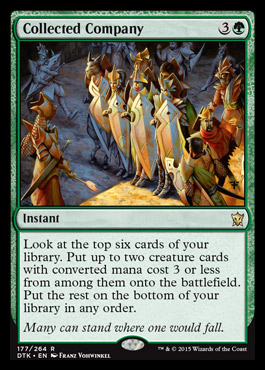
Collected CompanyThe biggest format shift will come with the much anticipated rotation of Collected Company. This is a card that I've said repeatedly is too powerful for Standard. There are ways to beat this potent card but it gives the cast such an advantage that often the steps players take to beat it end up falling short. Company decks have dictated the flow of the format for far too long but once the spell leaves for it's home in Modern, Standard should look quite different than where it stands currently.

What can we expect though with the new format? Some of this we can guess already, so let's dive in and see what's what with Standard.

First up is GW Tokens. Here's a current list.

GW Tokens

Creatures

4 Hangarback Walker
4 Sylvan Advocate
3 Tireless Tracker
4 Archangel Avacyn

Spells

4 Oath of Nissa
2 Declaration in Stone
4 Dromoka's Command
2 Evolutionary Leap
4 Nissa, Voice of Zendikar
4 Gideon, Ally of Zendikar

Lands

4 Fortified Village
4 Canopy Vista
1 Westvale Abbey
9 Forest
7 Plains

Sideboard

2 Clip Wings
2 Declaration in Stone
1 Den Protector
1 Lambholt Pacifist
2 Linvala, the Preserver
1 Nissa, Vastwood Seer
1 Quarantine Field
2 Stasis Snare
3 Tragic Arrogance

Surprisingly a lot of cards are leaving this strategy with rotation. The combination of Nissa, Voice of Zendikar and Gideon, Ally of Zendikar is a potent one, but without a card like Dromoka's Command we may find ourselves lacking a way to efficiently deal with the opponent’s permanents. This green white instant is on another level in terms of efficiency, so I doubt we will get an easy replacement. Both of these planeswalkers should still be great after rotation though and should certainly show up in decks.

The same could be said of the Collected Company strategies. A big part of why they are successful is due to the power level of Dromoka's Command, as well as the deck’s namesake. After rotation, there are no current cards that will guide our deck construction the way these two instants did. We could pair green or white with any other combination of colors because the glue that held them together will not be present. The powerful cards like Sylvan Advocate — and likely the werewolves like Duskwatch Recruiter — will be played though, so hang on to those cards.

Next up I was prepared to discuss how easy Mono White Humans and BW Control ported into the new metagame, but after looking over the strategies I noted they will be missing some key parts that make their machines function efficiently. Humans will be losing both Dragon Hunter or Kytheon, Hero of Akros. There are other white one drops but none so capable of forcing aggression. We could certainly see more cards printed to replace these attacking creatures but we’ll have to wait and see. This should open the door for other aggressive strategies to take over. Without these one cost creatures the decks slows down dramatically and loses its effectiveness to kill quickly.

Due to this hole in the metagame for swiftly attacking creature decks I think getting some play sets of both Vampire and Zombie creature types could prove profitable. If you have your head in the financial mind set you probably already have cards that fit this category, but if not, now is the time. Should one of these two tribal decks take off, the prices of these cards might double over night.

Getting back to White-Black Control, Standard is losing its only four mana sweeper. Once Languish leaves the format, all of the key components will shift. If we don’t see a similar card to this black wrath variant, we may find ourselves relying on red for Kozilek's Return or slower white cards like Planar Outburst. I’ve liked Outburst for a while now and I sell them regularly at $1 or $1.5 depending on my current stock.

What other strategies are left then?

With all the Eldrazi floating around in the card pool we can be nearly certain that a deck will show up utilizing these creatures. We have a couple of options when it comes to the new Eldrazi. First up we can ramp towards giant Eldrazi monsters.

RG Delirium Ramp

Creatures

1 Sylvan Advocate
2 Hedron Crawler
1 Nissa, Vastwood Seer
2 Ishkanah, Grafwidow
1 Ulvenwald Hydra
2 World Breaker
2 Dragonlord Atarka
2 Emrakul, the Promised End

Spells

2 Fiery Impulse
4 Vessel of Nascency
4 Traverse the Ulvenwald
2 Gather the Pack
4 Grapple with the Past
4 Nissa's Pilgrimage
3 Kozilek's Return
2 Hedron Archive

Lands

4 Game Trail
1 Cinder Glade
1 Evolving Wilds
2 Drownyard Temple
1 Rogue's Passage
2 Shrine of the Forsaken Gods
2 Mountain
9 Forest

Sideboard

1 Fiery Impulse
2 Gnarlwood Dryad
2 Greenwarden of Murasa
2 Jaddi Offshoot
1 Kozilek's Return
2 Pulse of Murasa
2 Rending Volley
2 Tireless Tracker
1 Ulamog, the Ceaseless Hunger

The core of this deck utilizes two different parts of the card pool that I believe will be pillars. Both ramping to Eldrazi and achieving delirium should be core strategies in the new format. Very few aspects of this strategy will leave the format and cards like Fiery Impulse are easily replaced. We don’t know if this type of deck will be well placed post rotation, but we do know that it’s a good starting point. Regardless of this strategy surviving, we definitely do know that Emrakul, the Promised End is too good to not see play. We don’t know where she will show up, but I’d be surprised if she didn’t exert her influence over the format in some way.

Ramping isn’t the only way that Eldrazi tear through the metagame. Don’t forget about decks like this one we haven’t seen for a while.

Mono Red Eldrazi

Creatures

4 Hangarback Walker
4 Hedron Crawler
4 Thopter Engineer
4 Vile Aggregate
2 Pia and Kiran Nalaar
3 Thought-Knot Seer
4 Reality Smasher

Spells

2 Outnumber
3 Spatial Contortion
1 Roast
4 Chandra, Flamecaller

Lands

2 Ruins of Oran-Rief
3 Battlefield Forge
3 Shivan Reef
3 Westvale Abbey
4 Foundry of the Consuls
10 Mountain

Sideboard

2 Tears of Valakut
3 Kozilek's Return
4 Goldnight Castigator
3 Eldrazi Obligator
3 Roast

Mono Red Eldrazi and decks of its breed were quite popular and successful for a time but have since lost favor. They fell short due to the changes in the current of the metagame, but these cards are still legal and will be waiting for a home in the new environment. The aggressive Eldrazi are good enough to get Eye of Ugin banned in Modern. Playing them a turn slower in Standard is still a tough line to deal with for any opponent. I know I still have these cards sleeved and ready to rock in another deck. We’re heading to a block presumably full of thopters as well and we’ve already seen them pair perfectly with Eldrazi. All the signs are pointing to the Eldrazi menace reemerging.

Speaking of Emerge, those cards will be jumping at you all year long.

Temur Emerge

Creatures

1 Sidisi's Faithful
2 Pilgrim's Eye
4 Primal Druid
2 Ishkanah, Grafwidow
3 Wretched Gryff
2 Elder Deep-Fiend
3 Emrakul, the Promised End

Spells

2 Traverse the Ulvenwald
4 Vessel of Nascency
3 Gather the Pack
4 Grapple with the Past
4 Nissa's Pilgrimage
4 Kozilek's Return

Lands

4 Yavimaya Coast
2 Shivan Reef
2 Shrine of the Forsaken Gods
10 Forest
3 Island
1 Mountain

Sideboard

1 Dragonmaster Outcast
1 Elder Deep-Fiend
2 Evolutionary Leap
1 Ishkanah, Grafwidow
2 Kiora, Master of the Depths
1 Lashweed Lurker
2 Negate
3 Noose Constrictor
2 Tireless Tracker

This is just the latest advancement trying out our newly added Emerge mechanic. I expect the metagame to have many variants on this strategy. One thing we know for sure though is that these Emerge creatures are very good. Cutting the cost of expensive spell is always a powerful strategy and we have proven that yet again with creatures in this cycle.

Another tribe that has busted onto the competitive scene is Spirits.

UW Spirits

Creatures

4 Rattlechains
3 Reflector Mage
4 Selfless Spirit
4 Spell Queller
3 Gisela, the Broken Blade
2 Thalia's Lancers
3 Archangel Avacyn
1 Bruna, the Fading Light

Spells

1 Clash of Wills
3 Declaration in Stone
2 Anticipate
2 Stasis Snare
3 Ojutai's Command

Lands

4 Port Town
4 Prairie Stream
1 Meandering River
8 Plains
8 Island

Sideboard

3 Blessed Alliance
2 Clash of Wills
1 Dispel
4 Negate
1 Subjugator Angel
3 Summary Dismissal
1 Thalia, Heretic Cathar

Tentatively, I would call this the deck to beat in the post rotation meta. Just like with the Eldrazi Aggro deck, this is an established competitive archetype with few cards leaving upon rotation. Additionally, playlers love this concept of playing the game on their opponent’s turn so that will draw more players to play this deck. Reflector Mage and Spell Queller provide the one two punch for any opponent. The tempo and disruption this Sprits deck can muster is immense and difficult for anyone to overcome. In Kaladesh, I would look for a cheap Counterspell to pair with these flash creatures as well. I could also see removing the top end of this deck for some Emerge action. The deck won’t stay as it is but its core should survive the rotation updates.

All of these strategies are great to keep in mind because they will show us some potential targets for investmen as well. Following the competitive scene is always a glimpse of the monetary side to follow.

Until next time,
Unleash the Force!

Mike Lanigan
MtgJedi on Twitter

Smart Planning: A Guide to Acquiring Modern Decks

Are you a Quiet Speculation member?

If not, now is a perfect time to join up! Our powerful tools, breaking-news analysis, and exclusive Discord channel will make sure you stay up to date and ahead of the curve.

I often get asked, "How do I build a Modern deck cheaply?" Or "on a budget." Or any of a plethora of other caveats that basically boil down to "less than retail." Modern is something of a double-edged sword when it comes to the budget-conscious player. The upfront cost is substantial, and most people don't have hundreds of dollars sitting around waiting for a hobby to be sunk into. But once you make that initial plunge, you get to reap the rewards for years. Barring a banning, or some extreme metagame shakeups, if a deck was viable once it likely will be in the future. So how do we defray those initial costs to buy into a deck?

Greed-Art2

This is a very deep topic, and perhaps I can go into more detail in future articles. For today I want to go over some basic tips to follow as you're picking up staples for a new deck. Keep in mind that these strategies are predicated on patience---if you absolutely must play that shiny new deck tomorrow, you're probably going to have to shell out for it. That said, there are a lot of ways to reduce costs. These are the steps I personally use.

Pick a Deck

Pick a deck you want to build. It seems pretty obvious but I see so many players without a clear plan of what they even want to play. Maybe you own a few Mox Opals and want to play Affinity but also own some Snapcaster Mages and wouldn't mind playing a blue deck. Two Spell Snares, an Arcbound Ravager, a Liliana of the Veil, and a Kolaghan's Command later you have a lot of money in cards and no deck.

If you don't own any Modern decks it's really important to have a clear vision of what your end goal is before you start. It might make the most sense before even starting to make the investment to play a friend's copy or proxy it up and play some games with friends. Don't fall into the trap of investing tons of money into something you won't even enjoy.

[wp_ad_camp_1]

Buy the Cheap Stuff First

Modern cards don't usually get cheaper over time. Without any reprints, a card can quickly climb year after year. Even the commons are destined for rising prices.

glistener elf

While linking you the graph of Glistener Elf might not seem that daunting, much more expensive cards share the same curve. Getting the "cheap stuff" out of the way early is the most important way to keep a deck's cost down.

Last year Tarmogoyfand Dark Confidant were reprinted again in Modern Masters 2015. Did you notice what happened to the other cards in the Jund deck?

raging ravineblackcleave cliffs

terminate

Two of the cheaper lands in the deck saw huge growth almost overnight. Even a common with multiple printings, Terminate, shot up over 500%. When the price of Tarmogoyf and Dark Confidant dropped, it let the other staples gain value because people suddenly needed them. We can see from the price graphs that it's not a malicious buyout because the price of the lands almost immediately leveled out and continued to grow slowly.

Go look at your target decklist, find all the cards under $5, and just buy them. Don't wait because the longer you procrastinate on this the worse it gets.

Buy Recent Reprints

Conspiracy: Take the Crown just hit the shelves, bringing with it reprints of some notable Modern staples. We don't have enough data yet to see the price movements on these new cards, but we can get an idea of their future by looking at Eternal Masters. In a few months Conspiracy reprints will be following a similar trend.

heritage druid

Heritage Druid might continue to drop from here and maybe we'll see the lowest points in December. But if you've been looking to get into Elves for a while, now is close to the time to buy Heritage Druid. We don't have quite enough data on this graph so let's take look at a staple reprinted last summer.

noble hierarch

Noble Hierarch was reprinted in the summer (right before Magic Origins) and bottomed out in December before climbing back up. What am I expecting to happen? Pretty much the same thing with Conspiracy: Take the Crown and Eternal Masters cards. You need Inquisition of Kozilek? Buy them in December if you can wait.

Avoid Top-Dollar Cards

It's scary to look at the price of Snapcaster Mage or Liliana of the Veil and try to figure out how to afford them. Many players make the mistake of assuming the place to start is with these cards and work their way down. It makes some sense, of course. Get the hardest-to-get cards and then the rest should fall into place more easily.

Liliana of the VeilWell, as you can see from the charts above this thinking actually ends up costing you more money because too many people assume this is the way to do things. These cards are very often on Wizards of the Coast's radar for reprints. If you're worried about a reprint, wait for the product announcements every six months. We'll find out in the Fall if we're getting a Modern Masters 2017. If we are, it will presumably include high-value reprints from original Innistrad block (since Modern Masters 2015 stopped with New Phyrexia). You should plan your deck purchasing around such information.
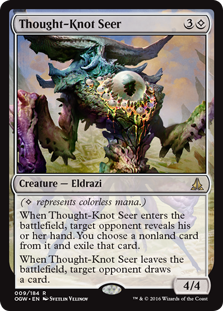
Prioritize the Least Likely Reprints

This is a tough topic to talk about with exact precision. Most of it comes down to feel but the gist is some cards are just less likely to be reprinted than others.

  • Cards with a high value on the secondary market are less likely to be reprinted. This is because Wizards wants the MSRP of supplemental products to be close to the actual sale price at stores.
  • Cards that make specific references to a plane are less likely to be reprinted.
  • Cards with non-evergreen keywords are less likely to reprinted.
  • Cards that were printed more recently are less likely to be reprinted.

But in the end, Wizards of the Coast does whatever it feels like, whenever, so it's not an exact science. Inquisition of Kozilek was expensive and specific to a plane but ended up in Conspiracy: Take the Crown.

An Example: Bant Eldrazi

It might be easier to illustrate my point by taking a look at Thomas Smiley's Bant Eldrazi deck that he used to win the Star City Games Open in Somerset. Here's how I would approach buying this deck if I was interested in it at this time.

Newer Cards

First you have the cards unlikely to be reprinted due to their age. Bant Eldrazi has a bunch of cards printed in the last two years in unlimited-print-run sets:

  • Thought-Knot SeerBirds of Paradise
  • Reality Smasher
  • Matter Reshaper
  • Thought-Knot Seer
  • Eldrazi Skyspawner
  • Eldrazi Displacer
  • Drowner of Hope
  • Elder Deep-Fiend
  • World Breaker
  • Windswept Heath
  • Yavimaya Coast

I wouldn't pick up all of these immediately (more on this below). But I would be aware of all these cards and look for opportunities to snag them, especially in trades if possible.

Likely Reprints

Some other cards in the deck, while expensive, have the potential to be seen another time soon. I'd keep an eye on WoTC's announcements and budget to pick these up if and when they see a reprint.

  • Cavern of SoulsCavern of Souls
    Cavern of Souls is rather old. It is just after the cutoff for the last Modern Masters and would be a great way to sell a set. It's a bit expensive so it's unlikely to be seen in casual supplementary sealed deck products (Commander, Planechase, Duel Decks, etc). It doesn't refer to a specific plane, but it was pretty powerful the last time it was in Standard. I don't expect it in a Standard set. If there is a Modern Masters 2017, I think Cavern is a likely reprint.
  • Engineered Explosives
    It's been three years since Modern Masters gave us our first reprint of Engineered Explosives, so I would say it's possibly on the short list of cards to reprint. Explosives became very expensive only very recently, so there's a good chance it was already slated for reprint in a supplemental product. The sunburst keyword is normally pretty hard to reprint---however, there is a Commander product coming out this year with a focus on four-color decks, and sunburst would be a perfect fit there.
  • Ancient StirringsAncient Stirrings
    Ancient Stirrings is cheap, and although a little niche, I could see them sticking it quietly into a Modern Masters set. We got the awkward Remand reprint in Modern Masters 2015 so it's not out of the realm of possibility that they stick Ancient Stirrings into another Masters set without a lot of support. While it doesn't draft well without a lot of colorless cards, it doesn't technically have any keywords that would put a burden on a set. Although Eldrazi Temple is a similar card (in that it requires support), I don't believe that one will be reprinted anytime soon.

Overall Approach

So here's my overall approach to buying into Bant Eldrazi. I would begin by focusing on the lands and the new creatures. Windswept Heath has recently left Standard and is the cheapest it's ever been, whereas Eldrazi Temple is the kind of card that could get very expensive like Blackcleave Cliffs. I want both of these cards as soon as possible. Noble Hierarch is the kind of card that could burn you if they reprint it abruptly, but it isn't a shoe-in for another Masters set.

You can wait until Spring of 2017 to buy the Eldrazi creatures themselves (Reality Smasher, et.al.) because that's when they're going to leave Standard and be at their cheapest. That being said, I think they're extremely difficult to reprint unless the colorless mana cost becomes more common. Note that the Magic storyline has been saturated with Eldrazi of late, and Wizards is probably not returning to them for a bit.

Bringing It All Back

While it's not really possible to buy a Modern deck cheaply without a lot of patience, there is certainly a way to spend your money effectively and efficiently to avoid the prohibitive costs of some Modern decks. Ultimately, however, there is no foolproof way to pay nothing for a Modern deck. You have to weigh the opportunity cost of not owning each card against the savings you get from waiting for a reprint.

Insider: QS Cast #34: Penny for your Thoughts

Are you a Quiet Speculation member?

If not, now is a perfect time to join up! Our powerful tools, breaking-news analysis, and exclusive Discord channel will make sure you stay up to date and ahead of the curve.

Play

After a long hiatus the QS Cast has returned with a new panel of hosts: Chaz Volpe, Corbin Hosler, and Tarkan Dospil continue on with where the cast left off and in this episode they discuss the following:

  • Latest Results – another large GP Weekend: GP:Lille, GP: Indy, GP: Gangzhou
  • Death’s Shadow – Collective Brutality, Thing in the Ice(?), Amulet of Vigor (under $10)
  • Interests of the Week – Engineered Explosives, Conspiracy foils, Kaya
  • FNM Pickups

As always, please comment and leave questions for us to address on the next cast! We will be making QS Insider questions a priority, and we want to know what you want covered.

Enjoy! We’re glad to be back.

Find us on Twitter: @ChazVMTG @Chosler88 @the_tark

Avatar photo

Chaz V

Started playing during Invasion block at the age of 13. Always a competitive person by nature, he continues playing to this day. Got into the financial aspect of the game as a method to pay for the hobby and now writes, Podcasts, and covers all aspects of the game, always trying to contribute to the community and create great content for readers and listeners.

View More By Chaz V

Posted in Free Insider, QS Cast6 Comments on Insider: QS Cast #34: Penny for your Thoughts

Have you joined the Quiet Speculation Discord?

If you haven't, you're leaving value on the table! Join our community of experts, enthusiasts, entertainers, and educators and enjoy exclusive podcasts, questions asked and answered, trades, sales, and everything else Discord has to offer.

Want to create content with Quiet Speculation?

All you need to succeed is a passion for Magic: The Gathering, and the ability to write coherently. Share your knowledge of MTG and how you leverage it to win games, get value from your cards – or even turn a profit.

Breaking Down Bedlam Reveler

Are you a Quiet Speculation member?

If not, now is a perfect time to join up! Our powerful tools, breaking-news analysis, and exclusive Discord channel will make sure you stay up to date and ahead of the curve.

Treasure Cruise Modern was easily my favorite Modern format of all time---and my addiction to Delver of Secrets is well-documented. Given this, a lot of people have asked me about Bedlam Reveler since it was spoiled. I think it's important to be open to the potential viability of new cards, as being the first to discover a new strategy gives you a leg up on the field. Initially I'll admit I was excited about Reveler's prospects, but my fervor has since cooled somewhat.

Faithless Looting-cropped

With regard to Bedlam Reveler I started looking at decklists almost immediately, and it didn't take long to feel like R&D was playing with my heartstrings. The first thing that one must realize about the card is that it is much harder to get a discount on than a delve spell. I've cast a lot of turn two Tasigur, the Golden Fang in my day, but doing so is aided by fetchlands. Reveler only counts instants and sorceries and also has a higher base cost. In order to try to turbo-Reveler I started playing with Faithless Looting. It was at this time that I realized things just weren't going to work.

The idea was to be a dedicated Reveler deck. This meant a lot of cheap cantrips: Gitaxian Probe, Thought Scour, Serum Visions, and Faithless Looting. Maybe even some Izzet Charm. Goldfishing that list, it was clear that I was not consistently able to cast Bedlam Reveler on pace where a comparison to Treasure Cruise was anywhere near fair.

I still think Reveler has a place in Modern, but my early dreams of a full-on "Reveler deck" have fallen by the wayside. From working on these lists, here are my findings on Bedlam Reveler.

[wp_ad_camp_1]

A Bad Goryo's Vengeance

After casting some combination of Serum Visions, Faithless Looting, and Thought Scour on turns one and two and not being able to cast Bedlam Reveler on turn three, it occurred to me that there is a deck with most of these elements that could have a Griselbrand in play at this point in the game. TasigurThis composition also starts to look at lot like Dredge, which is another deck that is better able to exploit aggressively filling its graveyard. Even outside of those extreme arguments, a Thought Scour into a turn two Tasigur out of Grixis Delver is arguably stronger than most, if not all, early plays from a dedicated Reveler deck.
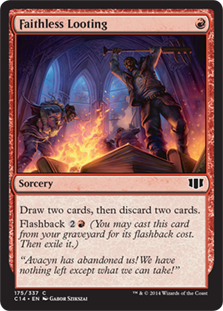
The thing is, when you go to the extreme your deck ends up filled with a lot of air, and while "draw three cards" would be a great textbox from here, discarding your hand to do so is far form ideal. Not to mention that a 3/4 prowess is only pretty good in Modern, not exceptional. The primary objective of building a new deck is not to build a worse something else, and dedicated Reveler feels like a worse version of at least two different things. It also provides a unique drawback.

Multiple Revelers in Hand

Bedlam Reveler is your payoff card. The nice thing about is that chaining them together is easy given that it leaves your graveyard behind. So in that respect, you can get to the second Reveler a little easier than the second Cruise. Faithless LootingThe problem is that keeping a hand with two Revelers is a mulligan. You never want to draw more than one copy at a time, and as such it makes sense to trim on Revelers. That's a problem. Dedicated Reveler distorts your deck significantly for a card that you are incentivized not to play four copies of.
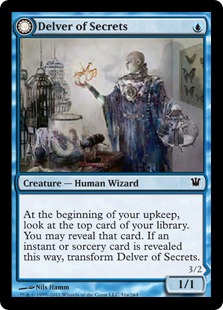
From here the next logical step is to trim on Reveler, and also to trim on the cards that are concessions to being Reveler-heavy. As you move off of Faithless Looting, Reveler becomes more of a plan B, which is not a bad thing to have in Modern. What is problematic though, is that Reveler doesn't necessarily gel well with many plan As. Let's talk about some of these applications, and where they fall short.

Delver of Secrets, BFF?

Delver of Secrets is the most commonly suggested pairing for Bedlam Reveler. The idea is that both Delver and Reveler are looking for a high instant and sorcery density. Theoretically, both cards are trying to play fast games as well, which suggests another degree of synergy. The issue, as stated above, is that Reveler just doesn't come down fast enough. Reveler actually ends up forcing you to play a slightly longer game. In principle I have no problem with that---in fact, my Grixis Delver deck is built for that exact sort of thing. But the cards that help achieve this purpose don't play well with Reveler.

DelverMana Leak is an essential element of every Delver deck that I've ever built. You will have some opponent playing low-to-the-ground decks where the card doesn't shine and your other cheap interaction will be the heroes---though Mana Leak is the singular card that enables Delver to compete with three- and four-mana spells. Spell Snare is also hugely important, as trading up on mana matters a ton for these lean decks. It also offers the ability to fight attrition wars against Snapcaster Mage, which otherwise leaves these decks dead to rites.


Counters have the same problem with Reveler as redundant Revelers. You will often be forced to discard them. You can technically build a Delver deck that is light on counters or off them entirely, though at this point you're not actually taking advantage of being blue. The UR Delver decks in Legacy play a counter-light burn-heavy strategy, but Modern decks are missing out on both Chain Lightning and, more importantly, Price of Progress. The damage output and modality of most red spells in Modern are too low to reasonably pair them with Delver. Delver does not combine nearly as well with Lava Spike as Goblin Guide does.

Bedlam Reveler Burn

That brings us to an interesting deck that showed up this week. Sam Black posted a video series with a hot take on Bedlam Reveler on Star City Games. Here is the list he used for reference:

Bedlam Reveler Burn, by Sam Black

Creatures

3 Bedlam Reveler
4 Monastery Swiftspear
4 Eidolon of the Great Revel

Instants

4 Boros Charm
4 Lightning Bolt
4 Manamorphose
4 Searing Blaze

Sorceries

4 Bump in the Night
3 Gitaxian Probe
4 Lava Spike
4 Rift Bolt

Lands

3 Mountain
2 Arid Mesa
2 Blood Crypt
2 Bloodstained Mire
3 Sacred Foundry
2 Scalding Tarn
1 Steam Vents
3 Wooded Foothills

Sideboard

1 Bedlam Reveler
3 Kor Firewalker
4 Lightning Helix
3 Rakdos Charm
2 Skullcrack
2 Wear // Tear

I can appreciate the angle here. Without going over individual card choices, from a theory perspective this deck looks to do a good job of addressing Burn's problem with running out of gas. Bedlam Reveler can gas back up, and this is a rare version of Burn that can realistically flashback Bump in the Night!

Which brings us to my problem with the core strategy---this deck is too slow. In a field of all Junds, this build seems quite strong. But Modern is full of other decks that are just trying to kill you. With the majority of the spells being non-interactive, this deck simply can't afford to be this slow. If you watch the video, you'll see Sam taking some beatings from Valakut, the Molten Pinnacle. While it is true that Obstinate Baloth is problematic for Burn, Burn's average goldfish is at least a full turn ahead of Valakut's, and the Skullcracks and Atarka's Commands usually found in stock lists make this matchup solidly favorable. Sam's list gives the deck better longevity, but in a way that seriously damages the deck's speed in a format where speed can be everything.

The Takeaway

In a format that is largely about speed and consistency, Bedlam Reveler offers neither. What it does offer is a way to claw back into a game, or to intentionally play a longer game. There are decks in Modern that will put you in positions where this will pay off. In particular, Reveler offers a lot to like against all of the three-color "good stuff" decks of the format. Given the way that Reveler pulls deckbuilding, it makes the most sense as a one- or two-of, and/or as a sideboard option.

traverse the ulvenwaldBedlam Reveler is a card that can win you games in Modern that no other red card could, and I am not trying to posit anything to the contrary. That said, it doesn't line up in a way that contorting your deck significantly to enable Reveler makes sense in Modern. While I don't know how much I approve of the maindeck, I will commend fellow Modern Nexus author Jordan Boisvert on his Reveler management in his latest build of Monkey Grow. Game 1 he has largely conceded a poor attrition matchup, with no Revelers and lots of cards that line up poorly against the interactive decks. This allows him to load up the Revelers and attrition tools in the sideboard and transition for Games 2 and 3. The Traverse the Ulvenwald package in particular is an effective way to avoid overloading on Revelers while maintaining easy access to the card.

I see Bedlam Reveler as a player in Modern, though not a flagship card. Reveler generates significant tension in deckbuilding, and doesn't necessarily offer a tool that fits the Modern format at large. At this point in time, I believe that it fits best in the sideboard of red decks. In particular, I like two or three copies in the sideboard of Burn, and could see other low-to-the-ground decks adopting it as a sideboard option or in a small number in the maindeck as well.

When evaluating new cards and strategies, an open mind is a powerful ally. That said, it needs to be backed by a logical process, and good theory. Brew happily, but brew carefully.

Thanks for reading,

Ryan Overturf
@RyanOverdrive on Twitter

Want Prices?

Browse thousands of prices with the first and most comprehensive MTG Finance tool around.


Trader Tools lists both buylist and retail prices for every MTG card, going back a decade.

Quiet Speculation