menu

Insider: High Stakes MTGO – Aug 14th to Aug 20th

Are you a Quiet Speculation member?

If not, now is a perfect time to join up! Our powerful tools, breaking-news analysis, and exclusive Discord channel will make sure you stay up to date and ahead of the curve.

Hello, QS readers, and welcome back to High Stakes MTGO!

This week I kept busy selling my truck-loads of Magic Origins painlands and with a return to Modern speculation. With so many buying and selling opportunities these days I wish I had a couple more hours per week available for MTGO specs.

Juggling between buying good targets, selling when appropriate, cutting losses, and optimizing winning positions is the essence of MTGO speculation---or any other speculative venture. With limited time to dedicate to MTGO, the juggling game becomes even more perilous---I have to accept the fact that I can't do it all perfectly and that I will miss some opportunities. Luckily there's still plenty enough room for profit.

Although Bant Company still dominates debate on the metagame, the Standard 7-1 or better decks and the Top 8 decks of the Star City Games Invitational keep showing some amount of diversity in Standard. That's progress from the Bant Company vs. W/x Humans rivalry we had for the past three months.

The field will probably get even wider after Collected Company rotates out of Standard. If we don't see much speculative movement between now and October it could be a good period to accumulate potential sleepers that could emerge next Fall.

In Modern interestingly enough, Burn and Infect were the most popular decks in the 7-1 or better decks at this same SCG Invitational with four of each deck among these top 15 finishers. Not that it wasn't a good target before, but with the recent price drop due to Zendikar flashback drafts, Goblin Guide becomes even more a target of choice.

Let's see what happened this past week in my portfolio, which you can always follow live here.

Buys This Week

Modern

I was looking this week to put my hands on Modern positions. With the Modern flashback drafts, the release of Eternal Masters, the Legacy Festival, the release of Eldritch Moon and the adjustment of my bankroll, investing in Modern has been sort of paused for several weeks. Nonetheless Modern is still one of the best places for speculators, and it's time to acquire fresh positions.

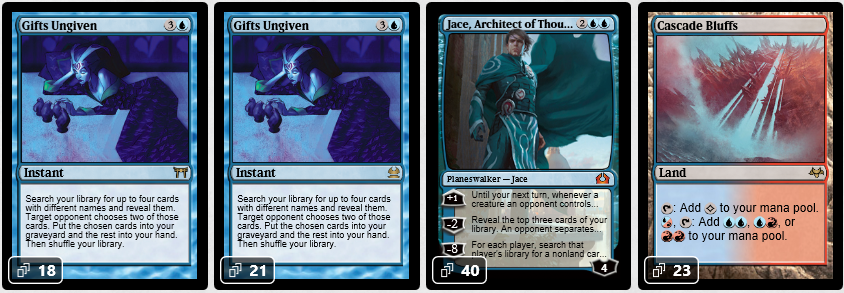
Before or after its reprint in Modern Masters, Gifts Ungiven had a long history of price fluctuations and seasonal appearances in Modern decks. The latest peak to date---right before the release of Shadows over Innistrad---brought Gifts to a three-year high at 10 tix. A recent little dip below 3 tix makes it a great opportunity to grab a few playsets of this card. With an average ceiling around 6 tix I hope to double within a few months here.

Return to Ravnica flashback drafts are a little over three months away. That's kind of close but it should be enough time to see Jace, Architect of Thought rebound, especially from a speculatively interesting 4 tix low. Until recently Jace hadn't dropped below 4 tix since rotating out of Standard about two years ago. In that time Jace has proven he can easily reach 10 tix---I'm in for another ride.

Cascade Bluffs is a filter land that sees plays here and there in Modern. Three points make this land attractive to me: 1) it has been printed in Eventide, meaning supplies are low; 2) Bluffs just reached a four-year low; and 3) Eventide flashback drafts are behind us. A rebound to 12 tix is all I ask for now.

GA

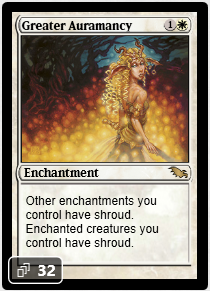
Surprising pick, isn't it? Auramancy is not exactly a competitive card, but its price climbed as high as 10 tix only four months ago until Shadowmoor flashback drafts struck. This is unlikely to be a short-term spec but I'm okay with the odds here. Greater Auramancy is not played now in Modern though its casting cost and abilities could make it possible, and if it happens then we might see a price tag much higher than 10 tix.

Sales This Week

More painlands sold this week as the clock is seriously ticking now. Shivan Reef is the first painland position I closed entirely, riding the post-Pro Tour trend of U/R Thermo-Thing. Overall I close this 540-copy position with almost 90% profit and +605 tix in my pocket.

I will certainly close my Llanowar Wastes position with a profit but even now I have to sell at a price below my buying price. Luckily B/G Delirium decks are supporting the price a bit but Standard rotation is getting really close---time to exit.

Prices are still miserably low (compared to what I paid for them) for Battlefield Forge and Caves of Koilos. I'm happy the bulk of my stock of Caves is gone and I will make a large profit with the Caves in the end. However, I will most likely lose several hundreds of tix with Forge unless a miracle happens.

No doubt the Seer is a powerful staple in all formats it's allowed in, something only a handful of cards can aspire to. Nevertheless our Standard metagame is for some reason not very favorable to this Eldrazi.

Given that playability in Standard is what dictates the price trend of Standard cards, Thought-Knot Seer looks rather uncertain for the next two months. I'd rather sell this guy now and maybe come back later, right before Standard changes again in October.

With Rise of the Eldrazi just around the corner there's virtually no incentive to keep this card, especially since I was able to sell Linvala at a reasonable price, even cashing out 30 tix worth of profit. Linvala, Keeper of Silence clearly lost a lot of her appeal with the banning of Birthing Pod in Modern, but if her price gets low enough at the end of the month this is still a great speculative target.

Foil BFZ M

The only thing that has been working well so far with my Battle for Zendikar-related specs are the foil mythics. To some degree they have almost all been up since I bought them around the release of Oath of the Gatewatch. If I lost a few percent on Void Winnower and Part the Waterveil, everything else is up by 10% to 80%.

With the basket strategy my average profit is likely to be in the 20-30% range, pretty much what I signed up for when I got into the BFZ foil mythic spec. I'm not entirely sure selling some of these now is the best option since prices of foil mythics tend to keep slowly rising until redemption ends, but I figured I would sell a couple of the biggest winners to secure some of this profit. Hopefully the lagging positions will catch up.

On My Radar

As I'm writing these lines I'm making a first round of buys with Zendikar. Timing the absolute bottom is tricky (not to say impossible) so I'm buying about half of what I wanted now and will keep buying through the week.

Worldwake singles are obviously also on my buying list for the coming week. WWK will be flashback-drafted for only one week and only one booster will be opened per draft. Although the expected value for WWK is high I don't expect prices to drop by much, so anything that goes down will be good for picking up.

As of last week, Modern positions are back on my radar. Now that my bankroll situation is settled I know what I'm going to be doing for the next six months and how many tix I have to play with. Modern specs are definitely where I want to put a decent chunk of my tix.


Thank you for reading,

Sylvain

Insider: Modern Pointers for August Grand Prix Weekend

Are you a Quiet Speculation member?

If not, now is a perfect time to join up! Our powerful tools, breaking-news analysis, and exclusive Discord channel will make sure you stay up to date and ahead of the curve.

The Grand Prix are coming! Between the Twitch coverage, Twitter updates, Reddit and online forum discussion, and all the inevitable spikes, buyouts and letdowns, it's a can't-miss weekend of Modern action.

Lille, Indianapolis, and Guangzhou will also, in all likelihood, be the format-defining events for the rest of 2016. The only remaining Modern Grand Prix (Dallas) isn't until November, with nothing else until 2017. Because Grand Prix set the Modern cadence more than any other event, this means August's Grand Prix are going to be the big pace-setters for players, fans, and investors to watch for the next 4-5 months.

Besides, with a format as open as we've seen since May, anything can happen!

Modern hopefuls before Grand Prix weekend

On the eve of the Grand Prix, Modern hasn't changed too much from our Modern Nexus metagame update in July. That doesn't mean my friends heading to Indianapolis will encounter those exact same Tier 1, 2, and 3 decks in their Grand Prix bid. It just suggests a "Stage 1" for the current metagame, with "Stage 2" sure to develop by Sunday evening. With Modern's top-tiers split between so many different strategies, it's anyone's guess how the contests will resolve.

In today's article, I want to give a diverse range of strategic and financial advice to reflect Modern's diversity leading up to the Grand Prix. We'll start with the format's deck-to-beat before moving to the format's big story (Dredge! Be afraid!) and how it should affect your tournament plans. We'll end with a few cards I'm eyeing before the weekend.

These pointers will be valuable to both players and speculators alike as you gear up for the weekend and look to make the most of an awesome three-day streak.

Bet on Jund

Since April's Eye of Ugin banning, Jund has cemented itself as Modern's most reliable top-tier deck. I specify "reliable" over "best" or "top" because Modern is never going to have a best deck in the top-tier: Wizards' banning and format policies all but ensure this.

That said, Modern can definitely accommodate different decks at the top of their class. It can have a fastest deck. It can have a best-positioned deck. It can have a most-rewarding deck. And, in the case of Jund, it can have a reliable deck which has average matchups across the format, few bad matchups, and a string of good matchups against random strategies. As anyone who has been following tournament results for the past month can attest, this matchup spectrum is Jund in a nutshell.

Jund them out

Jund got second at the past weekend's Star City Games Invitational. It sent five players to the Top 16 of last weekend's Syracuse Open, where Jund also took second place. It's the most-played deck in paper by 3%+ and a top three in MTGO. The deck has also been at the top of the Nexus metagame charts since April with no sign of faltering.

These are commanding performance measures and ones that guarantee Jund will be a huge player in the upcoming Grand Prix metagames. It might not win the event. It might not put more than one player into the Top 8. But it will be a huge factor and force---prepare your decks and buylists accordingly!

For the most part, Jund's territory is too frequently traveled for either innovation or breakout financial hits. Tarmogoyf fluctuates between the $110 - $150 mark. Dark Confidant had pushed closer to Snapcaster Mage for a while, but frequent reprintings dumped his stock to the mid-$30 range.

Most Jund staples follow a similar story because they are such known quantities, which is good for players who need to know what to expect but worse for investors who want to make money off the deck.

There was an error retrieving a chart for Dark Confidant

But fear not! Despite Jund's mainstream status, the deck does have some cards worth picking up and room for growth. Here are a few I've identified before the Grand Prix weekend. If you're a player, this section will clue you in on some of Jund's important strengths and update you on recent technology. If you're a buyer or seller, it will give you ideas of where to put your money.

Kalitas and Pact

During Sunday's Top 8 rounds at the Star City Games Invitational, Jadine Klomparens showcased the extraordinary power of Kalitas, Traitor of Ghet and Slaughter Pact. Since his release, Kalitas has been a major Jund (and Grixis) player, bolstering the deck's stock in both grindy and fast matchups. Pact had seen lesser play as a sideboard card, but was also on most Jund mages' radar before the Invitational.

With Klomparens maindecking both and putting on a great show to exhibit their power, I expect we'll see more of this pairing in the future.

There was an error retrieving a chart for Kalitas, Traitor of Ghet

The vampire legend is already hovering in the $25-$30 range and could easily increase with a major Jund Grand Prix finish. The card sees widespread Modern play in a variety of black-based decks, which has supported this price tag despite little Standard pressure. Once Collected Company rotates out of Standard, Kalitas might only get stronger and pricier as more people jump from Bant Company and similar strategies to Kalitas options.

Kalitas' removal spell of choice is a much safer target, a two-printing rare (one in Future Sight!) that hasn't been reprinted since 2013. It's undervalued in the $5-$6 range if Jund and other Kalitas players pick it up more widely.

There was an error retrieving a chart for Slaughter Pact

In a punishing and fast format like Modern, Pact lets you develop your board on the critical turns 3-4 without letting the shields down. It also offers disgusting blowouts against the popular Death's Shadow Zoo strategies. Of course, Pact is at its best when cast following a Kalitas---Klomparens almost won a critical Game 2 off that line, were it not for a misplay involving Lily and a discarded Maelstrom Pulse.

Summoner's Pact supports a value closer to $10 with a virtually identical reprinting and print run. Unlike the black version, however, Summoner's Pact doesn't see regular Tier 1 play yet. This means Slaughter Pact probably has a few dollars to grow, which could mean decent margins for investors.

As for players, beware of the card if you're against Jund, and strongly consider playing it if you are on the BGx Midrange train.

Blackcleave Cliffs

The painless dual-land has quietly been integral to Jund's success for years. It's also a major reason why Abzan continues to flounder as a midrange strategy and Jund excels (Lightning Bolt also has something to say about that). Cliffs is indispensable to even the most budget Jund list, and even upstart Mardu players are using it to try a new take on BRx Midrange strategies.

All of this is great news for people who want to pluck copies of the single-printing Scars of Mirrodin rare.

There was an error retrieving a chart for Blackcleave Cliffs

Because every Jund player uses the card, to say nothing of the Grixis and Mardu strategies which use it too, Cliffs is a very safe investment that is likely to rise over the next six months. The only danger would be a fastland reprinting, complete with enemy-colored versions, in Kaladesh. I'm a doubter because I'm still confident Wizards will prioritize Zendikar fetches first, but it is something to consider if you think Cliffs are the best bet for spending cash.

Playing Jund or thinking of playing it? The ubiquity of damage-based aggro (Death's Shadow Zoo, Elves, Eldrazi, Dredge, etc.) makes these cards invaluable and should push you away from other midrange options with more painful manabases.

Anger of the Gods

I talked about the impressive red sweeper in last week's article and not much has changed since then. Despite being a rare from a relatively recent set, this card is still undervalued in the $1-$2 range. Once more red mages catch on to Anger in this new Modern metagame, the card is going to gain value. Remember: an increase from $1-$2 into the $3-$4 range is still a 100%-400% gain and a big chance for profit.

There was an error retrieving a chart for Anger of the Gods

Expect Jund to pack at least two, possibly three, copies of Anger into most sideboards. Expect the same for Jeskai, Mardu, Scapeshift and Valakut strategies, along with all the other non-creature decks at the Grand Prix. Dredge's rise makes Anger even better than it was when you just had to worry about Death's Shadow Zoo, and Elves' victory at the recent Invitational should increase Anger's stock even further.

Even if you aren't interested in speculating, test this card as a midrange/control player and prepare for it as an aggro one. This card should be everywhere at the Grand Prix.

As a whole, both these select cards and Jund are all great choices for the weekend. Know them, prepare for them, fill your shopping carts with them, and don't be surprised to see Jund on camera.

Be Wary of All Things Dredge

In my initial vision for this article, I was going to focus exclusively on Dredge-based cautions for the weekend. Then I remembered I wrote two Dredge articles over the last two weeks and didn't want to go three for three. Topic-streaks aside, Dredge is definitely the specter looming over Grand Prix weekend, even if it's more overblown than many of the Modern alarmists would have us believe.

Instead of giving you the full-article cautionary tale, I'm going to split out my Dredge warnings into four different categories. You'll need to heed all of these both as a Grand Prix contender and a TCGPlayer entrepreneur.

Watch out for Dredge

Dredge hasn't approached any of the metrics to remotely justify the usual round of alarmism (Bans! Unbans! "R&D sux!", etc.), but it's undoubtedly a good deck. I do think its current Tier 1 march has a healthy dose of hype behind it, but even after that buzz dies down, the deck will surely stay in Tier 2 with the occasional Tier 1 foray. Simply put, Modern never had a deck with Dredge's trajectory that didn't stick around.

This means Dredge is here to stay and that you need to respect Dredge's gameplan at the Grand Prix. It also means your investments into Dredge should endure alongside the deck's top-tier rating. Good news for people that heeded my advice two weeks ago and got those Bloodghasts early!

There was an error retrieving a chart for Bloodghast

At the very least, you need a solid gameplan against Dredge and four sideboard slots against the deck. That doesn't mean jamming a Leyline of the Void playset and calling it a day, unless Leyline is also helping close other holes in your matchup grid. It means something like two Nihil Spellbomb and two Anger of the Gods, cards that see play across matchups and are relevant against Dredge.

It could also mean running a strategy with a maindeck game plan that ignores Dredge (e.g. Infect, Bogles, Ad Nauseam). Modern's narrower answers do reward diverse, proactive threats, so that approach is always feasible.

However you prepare for the weekend, respect Dredge. It's here to stay.

Watch out for anti-Dredge cards

Splash damage is one of the most important and least understood elements of Modern metagaming. Stated generally, a deck that seems like a good choice against another strategy may fall apart because of how other people are preparing to beat that strategy.

The Merfolk example during Eldrazi Winter illustrates this perfectly. Merfolk was pretty good against Eldrazi, but terrible against all the random hate (Worship, Ensnaring Bridge, Supreme Verdict, etc.) that people were playing to beat Eldrazi. This ruined many Merfolk players' days during Eldrazi Winter, and the same effect is at play if people get too trigger-happy against Dredge.

I won't get into every example of how this plays out in a format drowning in Dredge content, but Grafdigger's Cage is a great illustrator.

There was an error retrieving a chart for Grafdigger's Cage

Cage is great against Dredge and only costs one colorless mana. Bad news for Dredge and good news for people who want to beat it! Unless that person is on Abzan Company or Kiki Chord and has to face 2-3 Cages in every single round. The same goes for Living End and graveyard hate like Leyline, Relic, and Spellbomb (Living End itself does dodge Cage).

When you get ready for the Grand Prix, or think of cards to invest in ahead of breakout trends, consider splash damage. People will prepare for Dredge. People will also prepare for Death's Shadow Zoo, Jund, and Valakut decks. Don't walk into those hate cards and don't spend money on things those hate cards destroy.

Don't go overboard

I can't emphasize this enough: don't over-prepare for Dredge! Dredge is not Eldrazi 2.0. It's not even Amulet Bloom 2.0. It's just a good deck that the online and cardboard communities have seized on as a major Modern force. To be clear, this is a good deck that should slot nicely into the Tier 1 and Tier 2 band. It is not, however, at the format breaking point yet.

One of the perils of the 24/7 Modern content-mill, as is a peril in current-events-media, is hyperbole. That has been at play in lots of Dredge coverage and it might incentivize you to overcommit resources to the Dredge fight. Don't do that and don't treat Dredge any differently than you would any other Tier 1 strategy.

From a deck-building perspective, this means not picking a deck just because it beats Dredge or sleeving up too many anti-Dredge cards. From a gameplay perspective, don't sideboard too heavily and dilute your plan. From a financial perspective, don't go nuts buying Dredge or anti-Dredge cards. These cards have a ceiling and barring a Grand Prix win they'll hit it very soon.

Two Pickups for the Wise

I'm Dredged out for now, but I did want to end with two nice pickups worth monitoring for the coming weeks. Both of these cards feature prominently in major Modern strategies, have significant financial upside, and are sure to have bright spotlights over Grand Prix weekend.

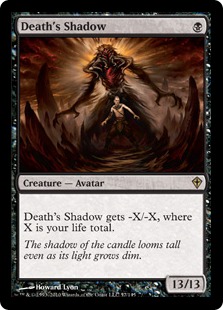
Death's Shadow

After breakout Dredge, Death's Shadow Zoo has been the most popular MTGO deck in the past months and with good reason. It has an extremely favorable ratio of cost to competitiveness, doesn't have too many expensive cards, and follows Modern's pattern of rewarding proactive strategies. With the exception of big-bucks Tarmogoyf (an option in certain Zoo builds) the deck is quite affordable without a lot of room for growth.

That is, except for the deck's namesake, a one-printing rare from the seldom-opened Worldwake.

There was an error retrieving a chart for Death's Shadow

We all know how expensive Zendikar block rares can get, and although Death's Shadow is no Goblin Guide, Worldwake saw much less stock on the market than did Zendikar. See Jace, the Mind Sculptor's value for continued evidence of that effect in action. If we see Shadow Zoo make it big over Grand Prix weekend, I expect we'll see Death's Shadow push past $10 in short order.

I hate bringing banlist talk into my articles, but this is the kind of deck which might eat a ban depending on its performance. Thankfully, that card would almost certainly be Become Immense, a broken delve spell like Treasure Cruise and Dig Through Time before it, so Shadow's value wouldn't crash completely. If the deck doesn't take any bans, Shadow's obviously just go up from here.

Noble Hierarch

Jund may be the most reliable deck for Grand Prix weekend, but Infect feels like the best-positioned. It's surprisingly good against Jund, excellent against Dredge, and off most players' radars as they focus too heavily on Death's Shadow Zoo and other strategies. Bant Eldrazi and various Chord/Company/Eldritch Evolution strategies are also sure to make big appearances.

All those decks have one card in common: Noble Hierarch. This rare, despite high profile reprinting, remains a financial powerhouse and looks to keep increasing until its (hopeful) re-release in Modern Masters 2017.

There was an error retrieving a chart for Noble Hierarch

I'm always cautious about advising people to invest in expensive staples like Hierarch, but she's guaranteed to keep rising off the combination of Infect, Bant Eldrazi, and any blue-based Chord or Evolution strategies which emerge (pun intended) from post-Eldritch Moon Modern. Now's the time to buy these if you want to play them, and even if you're just looking to turn a profit, they aren't getting cheaper.

Five Days Left!

I'll be back next Monday with some major takeaways from the Modern extravaganza, although you'll need to stay sharp all weekend to react quickly to different price shifts. Monday will be too late to respond to the most immediate price shocks, but it will be important to reflect on the weekend and see which trends will hold and which will fall flat. I'm not attending the Grand Prix this weekend, but if I had to, I'd be packing up those Ad Nauseams and calling it a day.

Want a third pickup? Spoils of the Vault, one I've talked about numerous times before, is still undervalued in the $4 range.

There was an error retrieving a chart for Spoils of the Vault

Let me know in the comments if you have questions about any cards, strategies, or metagame developments as we get closer to the Saturday kickoff. Talk to you over the week and see you all after the dust has cleared!


Eternal Devotion: Rebuilding Colorless Eldrazi Stompy

Are you a Quiet Speculation member?

If not, now is a perfect time to join up! Our powerful tools, breaking-news analysis, and exclusive Discord channel will make sure you stay up to date and ahead of the curve.

One of my favorite things about Modern: the power level is high enough to allow us to play with Lightning Bolt, but low enough for Standard sets to consistently impact the format. Eldritch Moon injected some welcome lifeblood into my pettest deck, Monkey Grow, with Bedlam Reveler. The set also gave a boost to another of my pet decks, Colorless Eldrazi Stompy.

eldrazi mimic art crop

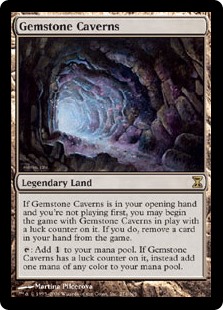
As much as I love resolving Treasure Cruise-casting Tarmogoyfs, it was only a matter of time before I returned to my big, dumb Eldrazi buddies. How does that age-old adage go? Once you turn-two Thought-Knot, you never go back? Call it eternal devotion... to colorless, that is. Eternal Scourge gives Colorless Eldrazi Stompy something it desperately needed after the Eye of Ugin ban: a compelling reason to play turn-zero consistency tools Gemstone Caverns and Serum Powder.

[wp_ad_camp_1]

First, About Monkeys

Before we begin, I need to take out the trash. Last Friday saw me unveil a modified Monkey Grow that included Traverse the Ulvenwald and Bedlam Reveler in the sideboard. I attended a pair of PPTQs last weekend with that deck and went 3-2 in each, leading me to believe the deck---or my play---still needs work.

While I have many notes on the tournaments and the deck, I doubt analysis this close would prove entertaining for an average Modern Nexus reader, or even particularly helpful for a burgeoning Monkey Grow player. If I'm mistaken, please let me know in the comments. In the meantime, we'll take a look at my other recent project---Colorless Eldrazi Stompy---and leave the follow-up Monkey Grow article for when I have more concrete insights about Reveler and Traverse.

Next, About Eldrazis

Like Mom always said, decklists speak louder than words:

Colorless Eldrazi Stompy, by Jordan Boisvert

Creatures

4 Reality Smasher
4 Eldrazi Mimic
4 Eternal Scourge
4 Matter Reshaper
4 Thought-Knot Seer
4 Endless One

Artifacts

4 Serum Powder
4 Relic of Progenitus

Instants

4 Dismember

Lands

4 Eldrazi Temple
3 Gemstone Caverns
4 Ghost Quarter
4 Blinkmoth Nexus
2 Mutavault
2 Sea Gate Wreckage
2 Cavern of Souls
1 Urborg, Tomb of Yawgmoth
2 Wastes

Sideboard

2 Endbringer
3 Chalice of the Void
2 Ratchet Bomb
1 Pithing Needle
1 Grafdigger's Cage
2 Warping Wail
2 Spatial Contortion
1 Gut Shot
1 All Is Dust

To the judges out there, how badly would you want to deck check this thing? You'd be done in sixty seconds! As usual, we'll go over the deck's core components and see what's new with Colorless Eldrazi Stompy post-Eldritch Moon.

A Streamlined Threat Suite

Serum Powder rewards deckbuilders for constructing piles full of four-ofs. Colorless Eldrazi Stompy effortlessly fulfills this requirement. With four Relics, four Dismembers, four Mimics, and eight three-drops, the deck almost always has plays for the first couple turns of the game.

Casting spells early paves the way for Thought-Knot Seer and Reality Smasher to turn slipping boards around. In this section, we'll go over the less obvious creature inclusions.

Eldrazi Mimic: The Sincerest Form of Flattery

Eldrazi Mimic is a card I long forewent in Colorless Eldrazi Stompy, but doing so was a mistake perhaps even bigger than running Serum Powder in a deck with few ways to abuse it. Mimic fulfills a crucial role in this deck by pressuring linear strategies. He's functionally Delver of Secrets in those matchups, coming down on turn one or two and hitting for three, four, five in the next few turns. Sometimes, the best counterspell for Ad Nauseam is simply not letting your opponent live long enough to cast it.

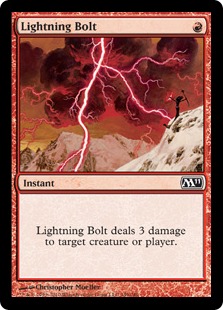
Lightning BoltGranted, Mimic sucks against interactive decks. Eldrazi doesn't love trading one-for-one, especially after brutalizing its own hand with a series of Temple-searching mulligans. It would rather grind out card advantage with Eternal Scourge or Matter Reshaper while impacting the board. In non-Burn Lightning Bolt matchups, Mimic gets the axe post-board for relevant interaction or the infinitely more durable Endbringer. Notably, this deck already has an edge over interactive strategies, so Mimic's downfalls here aren't deeply felt.
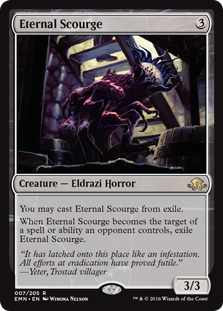
Mimic also looks less appealing in a deck with only four Sol lands. As an actual two-drop, he's decidedly unexciting. The consistency bonus our manabase gets from Powder and Caverns, combined with our dedicated aggro gameplan, make it acceptable in my eyes.

Endless One: Endless Fun

Sure, Thought-Knot and Smasher get all the accolades. But Endless One is quietly one of the most important creatures in Colorless Eldrazi Stompy. Its strengths lie in helping us curve out beautifully.

Double-Temple hand full of four-mana threats? Slam a 2/2 Endless One on turn one. Removal-heavy opener versus an interactive deck? Play it as a 4/4. The game stalls out and it's turn eight? Guess we'll make an 8/8---or larger, Temples depending. Endless One is tremendously versatile.

Matter Reshaper: Killing Bolts Since '15

Reshaper trades very favorably with any removal spell in Modern, but then again, so does Eternal Scourge. I do like that it cantrips after removing a Nacatl or Goblin Guide. Still, Reshaper is the worst creature in the deck. Whatever advantage it grants us in interactive matchups, we pay for with its lackluster performance against linear combo.

What About Scourge?

The newest addition to the deck deserves its own section. Without Eternal Scourge, this build of Colorless Eldrazi Stompy wouldn't be possible---it would just be another bad Serum Powder deck from yours truly. Scourge adds a great deal of synergy and allows us to play consistency tools necessary to give us fast mana comparable to that of the Hierarch-toting Bant Eldrazi deck.

The Eldrazi Itself

Eternal ScourgeEternal Scourge is a fine Modern card in its own right. The Eldrazi decks of old combined Affinity's explosive starts with the resiliency of a buffer aggro deck, but could still be grinded out by Jund's removal-heavy Confidant draws or Blue Moon's Snapcaster-powered stream of Roasts. Scourge makes it very difficult for interactive opponents to actually remove all our threats.
Bolt, Path, Terminate, and Abrupt Decay all turn into Unsummon when they target the Scourge, making the new Eldrazi a huge pain for anyone slinging removal spells. Even Nahiri can't remove it permanently. The only way to get Scourge out of the picture is to kill it in combat, which doesn't even work with a Relic online. That Relic and Scourge interaction gives us a recurring removal spell against x/3-heavy aggro decks like Zoo, and an endless chump blocker against vanilla monsters like Gurmag Angler and Tarmogoyf.

The real reason to play Eternal Scourge in this deck might be its interaction with Serum Powder and Gemstone Caverns, but it's important to remember it's a real card by itself.

"Mulligan to Eight" with Serum Powder

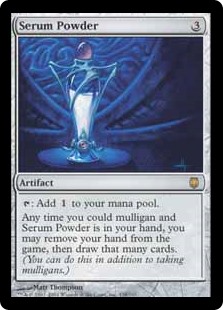
I've been playing Serum Powder in Eldrazi Stompy decks since I brewed my first one, and eventually came to the conclusion (emphasis on "eventually") that the card didn't do enough in this shell. After the Eye ban, Powder became more attractive as a way to ensure we opened with Sol lands. But it still wasn't quite good enough. Eternal Scourge gives us a great reason to revisit the artifact.

Serum PowderExiling a hand with Serum Powder and Eternal Scourge doesn't just give us a "free mulligan" to seven---it gives us a free mulligan to eight. With Scourge in the exile zone from Serum Powder, we can cast it as though it were in our hand, meaning our new opener functionally has more cards than our last one.
This interaction incentivizes us to mulligan very aggressively into Sol lands and Serum Powders. A four-carder with a pair of Scourges in exile is really a six-carder. And we got to see more than three hands along the way, greatly increasing our chance of opening Eldrazi Temple. If you consider a Sol land as counting for two cards, a four-carder with two Scourges in exile and a Temple in hand is in a certain sense a seven-carder---and our Temple lets us jump the opponent in mana production too!

A final note on Serum Powder: having six mainboard colorless sources under Blood Moon gives us a big edge over Bant Eldrazi in fighting the enchantment.

Play and Draw with Gemstone Caverns

We don't even have to open Temple to benefit from a fast-mana effect. Gemstone Caverns provides another way to start the game ahead on mana.

The card's major drawback---exiling a card from our hand---exists to make the card more fair. If we're going to functionally be on the play by starting the game ahead of our opponent on lands, we need to give up the only advantage to being on the draw: getting that first turn draw. Our on-the-play opponent doesn't get to draw for turn when we start the game with Caverns in play, so it makes sense that we would give up a card to play it.

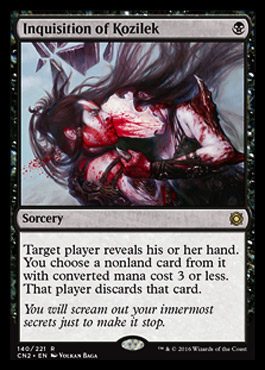
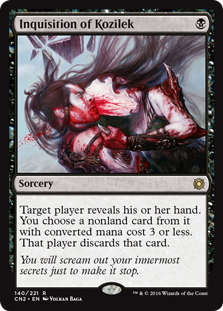
Gemstone CavernsEternal Scourge in the opener negates this drawback, since exiling it to Caverns is the same as not exiling a card at all. (It's actually even better, because then opponents can't move Eternal Scourge to the graveyard with an Inquisition of Kozilek.) That means we get to be on the play in games we should be on the draw with no drawback at all. In fact, we're given an advantage, as our opponent doesn't get to draw on their turn!
Caverns also enables some broken lines on the draw, like turn one Eternal Scourge, turn two Thought-Knot Seer, turn three Reality Smasher. With a single Eldrazi Temple in hand, all of these plays become par for the course.

It's true that we won't always open Caverns and Scourge together. But the odds of us opening either Temple + land + threats, Caverns + lands + Scourge, or any combination of lackluster cards + Powder are so high that we can frequently mulligan into exquisitely competent hands. The Caverns + Scourge interaction just gives us another combination that turns decent hands into great ones.

We would play four Caverns in a flash if they weren't legendary. At three, I rarely have a problem with clunky multiples.

A Modified Disruptive Suite

One major draw to Colorless Eldrazi Stompy has always been Chalice of the Void. In such a fast format, Chalice at one neuters plenty of linear decks, and even cripples interactive lynchpins leaning on Serum Visions or Thoughtseize. But this version omits Chalice in favor of Relic of Progenitus.

Who Needs a (Spirit) Guide?

Basically, anyone playing Chalice of the Void. Tapping out on turn two for the artifact is a lot less appealing when we're already facing down Goblin Guide, Wild Nacatl, Experiment One, and Burning-Tree Emissary. Simian Spirit Guide becomes necessary alongside mainboard Chalice. We don't have room in this deck for the eight-card disruption package of Chalice and Guide, and we can't really play the former without the latter.

My testing with the snotty Ape also didn't convince me of his applications outside of powering out Chalice. We have enough ways to find fast-mana hands without him, and rarely want to lose more cards after mulliganing so much. Guide also clunks up our openers and makes mulligan decisions much harder. We don't want eight nonland mana-producers in a deck so focused on powering out threats and disruption.

Remember Dismember

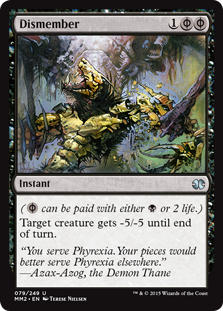
DismemberAnother reason we can't play Guide and Chalice is we'd have to cut down on Dismembers. I tried playing 0-3 of this card and always found myself wanting more. It's Lightning Bolt and Path to Exile rolled into one, and for a drawback that isn't even relevant in many games. When Sol lands enable you to out-aggro almost any opponent, four life is a more-than-acceptable price to pay for such an insane effect.
Enter the Relic

Relic of Progenitus was a staple in Eldrazi decks before Oath of the Gatewatch, when pilots were casting Blight Herder and Oblivion Sower instead of Thought-Knot Seer and Reality Smasher. In this deck, it combines with Eternal Scourge to create a stream of battling Eldrazis, but the main reason to play it is that it interacts so efficiently with Modern's best decks.

Relic is a huge pain for Tarmogoyf and Snapaster Mage decks alike. It does significantly less work in our linear matchups, generally switching out for Chalice post-board. It still has some relevance against Infect, where it powers down or shuts off Become Immense. And man, do four Relics hurt Dredge. Between mainboard graveyard hate and our fast aggressive starts, I've found that matchup unloseable.

It's possible that another card should be played in this slot. I do like that Relic can be cycled away when it's dead, unlike other hate cards. Another bullet on my to-test list is splitting the Matter Reshapers with a pair of Blight Herders to further benefit from the mainboard Relics.

Notes on the Manabase

One big benefit of going colorless is not having to worry about mana. We can just play enough lands and be good to go. Here are some notes on the lands I've chosen to include:

4 Ghost Quarter: This card is nuts in Colorless Eldrazi Stompy. Quarter does wonders for keeping Tron decks off their mana while we stomp them, and harasses three-color decks trying to fetch around their own Blood Moons. It's also good for cutting opponents off red before putting them on a short clock with unkillable Blinkmoth Nexi.

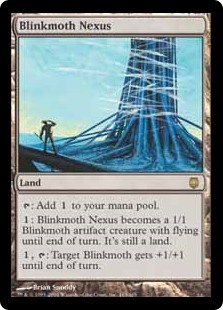
blinkmoth nexus4 Blinkmoth Nexus: Still the best manland for the deck. Gives us reach in the late-game and a way to interact with fliers like Flickerwisp or Delver of Secrets in Game 1. Other than Restoration Angel, Modern's fliers all trade with the Blinkmoth.
2 Mutavault: A more aggressive Blinkmoth (no, it's really a Blinkmoth!). I wish we could play more of these, but the other utility lands are too important.

2 Cavern of Souls: The main reason not to max out on Vaults. Mana Leak can spell trouble for this deck in some cases, and Cavern addresses that weakness without even costing a card. It's especially satisfying to sandbag the Cavern until blue opponents leave up their counterspell mana.

2 Sea Gate Wreckage: I like a pair of these in a four-Powder deck. We almost always see one in longer games, which is when the Wreckage shines. Works well with late-game Powders and makes it difficult for grindy opponents to stabilize.

1 Urborg, Tomb of Yawgmoth: It doesn't hurt to have one Urborg, since the upside can be so radical in some matchups. Not having to pay life for Dismember makes the Phyrexian removal spell even sillier.

2 Wastes: What can I say? I like when Path to Exile ramps me up every time. Double Wastes is also great against Ghost Quarter.

The Old Scourge of the Format

Few Modern decks were ever as hated as Colorless Eldrazi Stompy. Even the ostensibly superior UW Eldrazi deck that came to dominate the format didn't inspire the rage of the mythical turn-one Chalice deck that dominated Pro Tour Oath of the Gatewatch. But some players have always wanted to play such a strategy in Modern. I'm sure I don't speak just for myself when I say I love casting Thought-Knot Seer and hate tapping Brushland. Eternal Scourge might be the card we've been waiting for.

Insider: MTGO Cards to Buy, Sell or Hold – Episode 6 (Olympic Edition)

Are you a Quiet Speculation member?

If not, now is a perfect time to join up! Our powerful tools, breaking-news analysis, and exclusive Discord channel will make sure you stay up to date and ahead of the curve.

Welcome back to another Buy, Sell or Hold! This week I watched a lot of the Olympic Games competition and cheered for Argentina in every event we participated in, even those I don't understand much. For this episode I'm going to add a little twist and rate the cards with Gold, Silver or Bronze just to make it a little more entertaining.

Greater Gargadon

Greater Gargadon

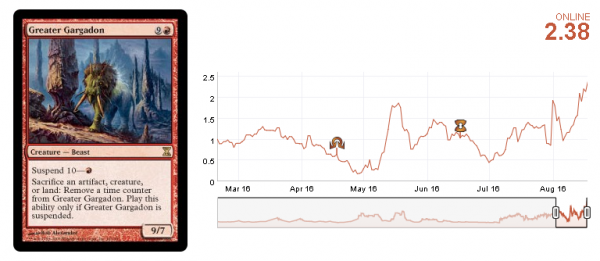
Greater Gargadon went from almost unplayed to Dredge's new best friend. Thanks to hints from Quiet Speculation on Dredge's rise, specifically in Star City Games tournaments, I was able to grab some copies at 1 tix. Now it's at 2.38 tix, a historic high.

From a technical analysis perspective the card should be sold. But from a theoretical point of view, the new version of Dredge first started in paper Magic and is still making the transition to MTGO. SCG tournaments don't have the same influence as Grand Prix or Pro Tours---so there might be a few players that still are unaware of the deck's upgrade. Keep in mind that we have a triple Modern GP at the end of the month, and those events could catapult the price even higher.

Buying at the current price is a bit risky, which I wouldn't recommend unless you like the hit-or-miss strategy. But I will definitely wait to sell my copies until the Grand Prix weekend.

Verdict:

silverSilver medal (Hold)


Thoughtseize

Thoughtseize

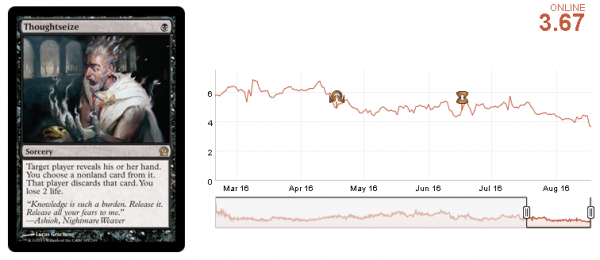
Thoughtseize is one of the best discard spells in Modern and surprisingly its price has been in a plateau for a long time. The current price is an excellent buy-in point for some extra copies. The deadline to sell them will be when Theros flashback drafts hit MTGO, at least four months from now.

Verdict:

goldGold medal (Buy)


Eldritch Evolution

Eldritch Evolution

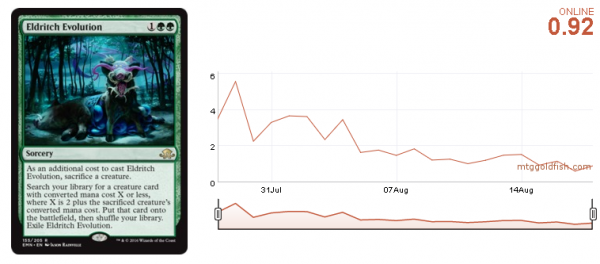
Investing in cards from new sets on MTGO is extremely hard and usually a mistake, because prices tend to go down as supply increases from drafting, and support levels are difficult to identify. In my opinion, Eldritch Evolution is one of those exceptions to the rule.

Before the release of Eldritch Moon (EMN) it was one of the most hyped new cards---I even read some players saying it should be banned in Modern. What is the scenario nowadays? Unplayed in Standard and occasionally played in Modern; not a format shaker.

I don't think the card will go much lower. On the other hand, Natural Order's little brother could spike super high as soon as it sees Standard play and we still have a bunch of upcoming sets for it to interact with.

Verdict:

goldGold medal (Buy)


Hissing Quagmire

Hissing Quagmire

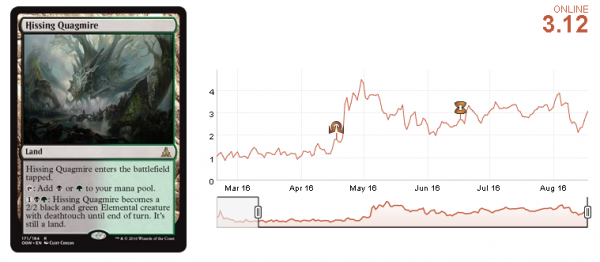
Standard rare dual lands have trends that are easy to identify. Instead of buying them when they hit their low price and selling it at their high, it's more profitable in the long term to buy and resell them many times with a narrower profit. Hissing Quagmire is currently on an upswing, and I see it coming down again.

Verdict:

bronzeBronze medal (Sell)


Collective Defiance

Collective Defiance

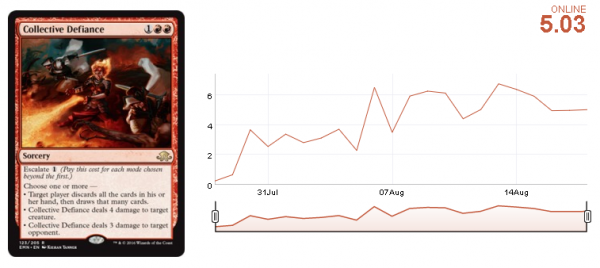
Collective Defiance has been one of the most volatile cards in EMN. Lately it found a home in the U/R Spells deck, and because of the delay in adoption the price went up, unlike most EMN cards. I don't see any reason for it to keep rising so I recommend selling any copies you might have.

Verdict:

bronzeBronze medal (Sell)

High Stakes MTGO – Aug 7th to Aug 13th

Are you a Quiet Speculation member?

If not, now is a perfect time to join up! Our powerful tools, breaking-news analysis, and exclusive Discord channel will make sure you stay up to date and ahead of the curve.

Hello, everyone, and welcome back for another High Stakes MTGO article! One week after a very entertaining Pro Tour, prices are starting to recover and move toward a more stable position. It's often, if not always, a good strategy to sell during the PT hype. A lot of cards, including those in winning decks, are unlikely to hit higher prices afterwards.

While this didn't happen after Pro Tour Shadow over Innistrad, when G/W Tokens dominated the subsequent environment, the Standard metagame usually evolves quite a bit after a Pro Tour. This means that the price height reached during a Pro Tour may not happen ever again.

A few cards such as Shaman of Forgotten Ways, Goldnight Castigator and Wandering Fumarole have been on a straight upward trend since Pro Tour Eldritch Moon (PT EMN). But there's another phenomenon on display that we've seen several times before---a big downward price swing among all sorts of cards, independently of their success during the Pro Tour.

These price swings are another side effect of the Pro Tour speculative frenzy, as people overreact by selling everything from top cards to worst failures, thus putting more pressure on prices.

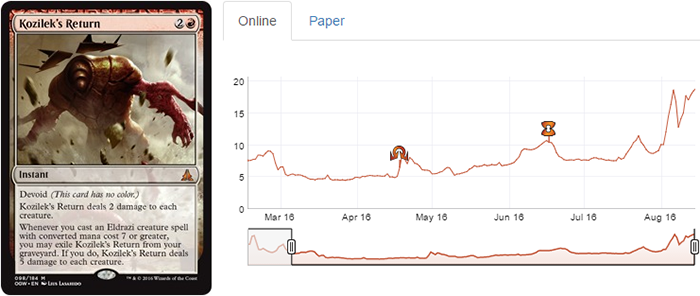
From 18 tix, Kozilek's Return dropped about 6 tix in two days before getting back to 18 the next weekend.

Kozi2

Sylvan Advocate and Matter Reshaper lost about 50% of their value in a few days and then recovered just as fast. Thought-Knot Seer and Reality Smasher are two powerful cards that didn't see much play at PT EMN---after a big drop last week they too have quickly recovered to their pre-PT EMN level. Eldrazi Displacer as well is another Eldrazi that didn't do much at PT EMN and which is now recovering after a 35% drop in two days.

This price storm usually lasts a week or two before we see stronger and more reliable price trends shaped by SCG Standard tournaments, Standard GPs, and of course MTGO results. While these price movements may caught novice speculators to be surprised in a panic-wave of sales, they also create great buying opportunities for experienced speculators and players able to rapidly read how the Standard metagame will evolve.

Although I missed some buying opportunities, with Reality Smasher and Kozilek's Return for instance, most of my buys this past week were based on that principle---trying to grab valuable cards at discounted prices.

As of Saturday 13th, the portfolio looked like this.

Buys This Week

TtU

A breakthrough card for Pro Tour EMN, Traverse the Ulvenwald was among the most-played card in the top decks and the Top 8. It was also one of the many cards to see a relatively big drop immediately following the PT and rebound the very next day.

Rather than selling, I doubled down on this card and bought an additional 39 copies at 0.69 tix per copy on average. Despite still being drafted along with two EMN packs, I think this card should see a lot of play now and after Standard rotates. I see this card being at or above 2 tix sometime in the coming year.

That's a vague and wide timeline but I'm okay to wait and even ready to add more playsets to my stock if Traverse the Ulvenwald moves back to 0.5 tix again.

PA

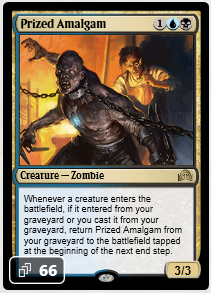
Prized Amalgam was also getting some attention before Pro Tour EMN and got included in the most recent version of Modern Dredge decks. In Four-color Emerge and in Zombies, this new zombie finished outside of the PT EMN Top 8 last weekend. With a price stabilizing between 0.5 and 0.6 tix I decided to jump in for 66 copies.

This is not a slam dunk as the price is exceptionally low and, as with Traverse the Ulvenwald, packs of SOI are still being opened. However I believe the card has enough potential in Standard and Modern at this point to make it a decent spec, with 2 tix as a target price.

OoN

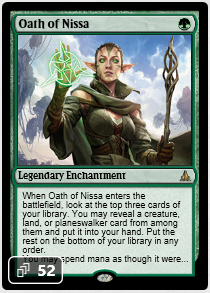
The price of the green Oath from Oath of the Gatewatch is also on a nice roller coaster ride---from 2 tix to 4 and then back to 1.6 in barely a week. This card didn't finish strong at the last PT, as G/W Tokens is no longer the dominant deck.

Nonetheless this is still a very solid card that will certainly be played in many Standard and Modern decks in the future. In my opinion this is an easy pick-up at 1.6 tix and I know now that 4 tix is the target ceiling for this card.

DS

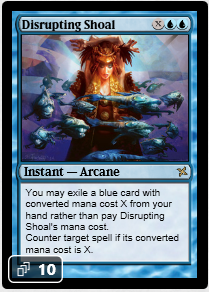
While this shoal doesn't have any permanent home it plays wonderfully in any number of Travis Woo or SaffronOlive brews. The long-term price baseline of Disrupting Shoal seems to be fairly anchored in the 3-4 tix range.

I had bought 20 copies after the Betrayers of Kamigawa flashback drafts at the beginning of this year, and now that the price is getting closer to 3.5 tix I'm adding a few copies to my initial stake. It's a game of patience with this spec but since the potential to double (or more) is real I'm fine waiting.

NVoZ

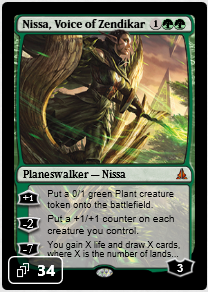
Along with other very good targets, both QS writers Matt Lewis and Nicolas Cancellara pointed out last week that Nissa was most likely a great pick-up now. From a height of 15 tix thanks to the dominance of G/W Tokens, this planeswalker dropped to 5.5 tix last week, its absolute floor so far.

Nissa, Voice of Zendikar might be a little bit out of favor with EMN but there's no reason to think this card won't maintain a certain level of play in Standard and even in Modern.

Sales This Week

These two were the painland winners of the last PT. I'm not going to wait any longer to see how high they can go after this PT; I'm selling now. While my pile of Shivan Reefs only contains a few playsets left to be cleared away, I'm still sitting on hundreds of copies of the Coast (and of the other three painlands as well).

I'm selling as soon as my minimum price target is reached. Unfortunately, while Reef keeps climbing Coast fell below the 1 tix bar in the middle of last week. Considering the current popularity of UGx decks, I'm still confident Yavimaya Coast will get above 1 tix---where I want to sell---again quickly.

The last of my foil EMN mythic quickflips. This one didn't make me any tix but as a part of a bigger plan I sold it without any regrets.

These two red cards got better recently and Abbot even had an additional momentary boost with the emergence of the U/R Thermo-Thing deck. For two cards about to rotate and for which I was losing money anyway, I gladly sell them now with a little bit fewer losses. The first half of 2016 is definitely not for red---such a waste for two cards that would have probably been great in almost any other Standard metagame.

fAW

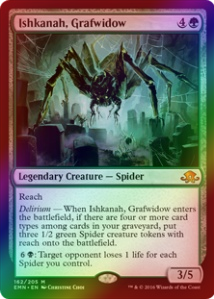
Similarly to foil Emrakul, the Promised End I took advantage of the price spike hitting the foil version of the legendary spider as well. With more and more supplies entering the market, I expect the price of both foil and regular versions of Ishkanah, Grafwidow to stabilize under 10 tix, perhaps before the foil version takes off again in a few weeks.

Two cards soon to be flashback-drafted, which I would rather sell now than wait on or keep in my portfolio for a while. I should most likely have sold these guys earlier but I think it will get worse so let's get rid of them now. I somehow managed to break even with Iona but I'm losing 50 tix with the Inquisitions. Nevertheless, two cards to keep an eye on and probably rebuy this month.

On My Radar

Zendikar block drafts are going to be the big attraction in town for speculators in the coming three weeks starting this Wednesday. Between Zendikar, Worldwake and Rise of the Eldrazi, an amazing minimum of 30 cards could be on speculators' buying lists. From Scalding Tarn to Flame Slash, from mythics to commons, there will be buying opportunities for all sizes of bankrolls.

With so many potential targets, my advice is simply to focus on what fits your bankroll. I won't be buying any Kiln Fiends whereas Celestial Colonnade may not be a great choice for others.

If the ZEN fetchlands are the number one targets everyone wants to grab, you might as well focus on cards with a bigger potential such as Pyromancer Ascension, Vengevine, or even Eldrazi Temple if prices drop by a lot. Due to their popularity, the prices of ZEN fetchlands may not tank that much and their return on investment could therefore be limited. I don't think you can realistically double up on Scalding Tarn whereas you could quadruple up on an Inquisition of Kozilek bought at a timely moment.

If the timing for targeting Worldwake and Rise of the Eldrazi cards is rather simple since they are only drafted for one week, Zendikar will however be drafted for two weeks. The cards in the highest demand such as the fetchlands are likely to see their biggest drop this very next weekend, while other cards may lose ground continuously until the very end of the flashback series.

If you're planning on buying multiple copies it might be worthwhile to spread your purchases over several days so you're not missing a part of the action but are also letting the door open to buy more if prices keep falling.

Thank you for reading,

Sylvain Lehoux

Insider: Picks Going Into Somerset

Are you a Quiet Speculation member?

If not, now is a perfect time to join up! Our powerful tools, breaking-news analysis, and exclusive Discord channel will make sure you stay up to date and ahead of the curve.

It's unclear where this year has gone, though this weekend it's already time for the Star City Games Season 2 Invitational. These events tend to have a higher viewer count, and are near the highest level of exposure that Modern gets now with the cancellation of the Modern Pro Tour. I expect to see some cool decks this weekend, and to get a better feel of the direction of the Standard and Modern metagames.

Standard

With regard to Standard, what I can say for sure is that Bant Company will be the most played deck among the masses. This is not to say that it will be the best performing deck or that the best players will be piloting it---rather the opposite. This is a safe, very strong choice, and it will be out in numbers.

Three copies of the deck top-eighted in Portland last weekend, and six made the elimination rounds in Rimini. Bant Company prays on people who think they can play whatever they want, and has enough play and sideboard options to keep even bad matchups guessing.

Collected Company is a very known quantity with its namesake about to rotate, so there's really nothing worth investing in here barring some significant innovation that looks like it will carry on post-rotation. In particular, I'm looking out for the floor on Tamiyo, Field Researcher, as I suspect she will be great once the tension between her and Company is no longer a factor.

There was an error retrieving a chart for Tamiyo, Field Researcher

Expect Golgari and Jund Delirium decks, Temur Emerge, and Orzhov Control to be out as well, though again we're talking about a bunch of known quantities. Should something spicy show up on camera some investment opportunities could arise, though it's important to remember not only that we're in lame-duck status for Standard, but also that the Top 8 will be Modern. As such, Standard will simply get less exposure.

The only Standard deck that I'm keeping particularly close tabs on is Izzet Spells. In part because it's just my style, but also because most of the deck will survive rotation---certainly enough to create a functionally similar shell. Sure, Jace is rotating, but Lucas Blohon wasn't even on Jace for his Rimini Top 8:

Izzet Spells by Lucas Blohon

Creatures

4 Stormchaser Mage
4 Thermo-Alchemist

Spells

4 Tormenting Voice
4 Collective Defiance
4 Incendiary Flow
2 Exquisite Firecraft
2 Lightning Axe
4 Fiery Impulse
4 Fiery Temper
4 Fevered Visions

Lands

4 Shivan Reef
1 Geier Reach Sanitarium
3 Highland Lake
3 Island
4 Wandering Fumarole
9 Mountain

Sideboard

1 Lightning Axe
3 Bedlam Reveler
3 Dispel
2 Nahiri's Wrath
3 Jace, Vryn's Prodigy
3 Goldnight Castigator

Sure, Jace is in the sideboard, though that's certainly replaceable. From the maindeck, only Stormchaser Mage, Exquisite Firecraft and Shivan Reef are on the outs. The mana still looks functional without Reef, and Stormchaser Mage can just turn into Thing in the Ice assuming that this deck gets nothing from Kaladesh.

Todd Anderson won the Syracuse Classic with a list more closely resembling the Pro Tour deck with a focus more on sideboard changes, which helps to demonstrate the point that this deck will be sticking around:

Izzet Spells by Todd Anderson

Creatures

4 Thermo-Alchemist
3 Thing in the Ice
2 Jace, Vryn's Prodigy

Spells

4 Fevered Visions
2 Dispel
3 Fiery Impulse
4 Fiery Temper
2 Lightning Axe
2 Unsubstantiate
4 Collective Defiance
4 Incendiary Flow
2 Tormenting Voice

Lands

4 Island
9 Mountain
3 Highland Lake
4 Shivan Reef
4 Wandering Fumarole

Sideboard

2 Bedlam Reveler
3 Goldnight Castigator
3 Weaver of Lightning
1 Fiery Impulse
2 Kozilek's Return
2 Negate
2 Spell Shrivel

I dig the sideboard Bedlam Revelers, and I could even see them making the maindeck as a one- or two-of. I wasn't sure of Collective Defiance initially, though it looks to be a unanimous staple that is already $5+, which makes it too steep of a target for a regular rare.

The two cards that I'm watching here continue to be Thing in the Ice and Fevered Visions. You might have some time on Thing, as it's not universally accepted as stock though it likely will be post-rotation. Meanwhile, Visions is already slowly creeping up, and as this deck continues to prove itself I expect this card only to continue to grow.

There was an error retrieving a chart for Thing in the Ice
There was an error retrieving a chart for Fevered Visions

Modern

Of course, Modern is going to be the format with more exposure this weekend, and Modern is at an interesting point now. Eldritch Moon has introduced some interesting cards to the format, and the Dredge menace has finally made itself known in paper Magic after seeing increasingly more success online. Of course, much like Standard, the most popular Modern deck is likewise going to be a boring one:

Jund by Chris Anderson

Creatures

4 Dark Confidant
1 Grim Lavamancer
2 Scavenging Ooze
4 Tarmogoyf
2 Kalitas, Traitor of Ghet

Spells

3 Liliana of the Veil
1 Liliana, the Last Hope
1 Seal of Fire
2 Abrupt Decay
1 Kolaghan's Command
4 Lightning Bolt
3 Terminate
4 Inquisition of Kozilek
2 Maelstrom Pulse
2 Thoughtseize

Lands

1 Forest
2 Swamp
4 Blackcleave Cliffs
1 Blood Crypt
4 Bloodstained Mire
2 Overgrown Tomb
3 Raging Ravine
1 Stomping Ground
1 Twilight Mire
4 Verdant Catacombs
1 Wooded Foothills

Sideboard

2 Grafdigger's Cage
1 Pithing Needle
3 Fulminator Mage
2 Kitchen Finks
1 Ancient Grudge
1 Disfigure
1 Thrun, the Last Troll
1 Night of Souls' Betrayal
1 Crumble to Dust
1 Duress
1 Shatterstorm

Maybe this is the week that we start seeing more movement on Scavenging Ooze, a pick that has been too cheap for a long time at $5, though it's worth noting that Scavenging Ooze is generally too slow to hack it against Dredge.

I recommend checking out Sheridan's article on investing in beating Dredge for some great picks. In particular, Leyline of the Void looks like a great pick in no small part because it's Dredge's choice for the mirror, and Rest in Peace is likely the most under-valued and due for a spike in general. Grafdigger's Cage is the card that can go into any old sideboard, though given that it just spiked recently it's my third pick here.

There was an error retrieving a chart for Leyline of the Void

With regard to how to build Dredge, there is some skepticism with regard to Greater Gargadon and Bridge from Below. Given the spikes that these cards have seen, I believe the time to invest has passed, and now or soon is the time to sell on those positions. Currently, I still think it's worth paying attention to Bloodghast.

There was an error retrieving a chart for Bloodghast

Going into last weekend, Bloodghast was already $20, and has about 70 listings on TCG Player. Currently, there are about ten listings with the cheapest copy being $30. I've been watching this one through the week, and what I've noticed is that copies in the low $20's keep showing up. This suggests that some owners of the card are skeptical of the card's staying power, though realistically the card is a $20 card on its casual merits alone.

What is particularly amusing about the lower-priced listings, is that these copies are being sold for last week's price. I assume that these sellers just didn't know that they already could have sold Bloodghast for $20 for a while now and were jumping on a "new" opportunity that already existed. Anyway, what I'm getting at is that if you're vigilant you can probably still find $20-25 Bloodghasts while the price continues to increase from $30, assuming a good weekend for Dredge.

There will be a lot of hate for Dredge this weekend, though the question is whether or not the deck is resilient enough to survive. There was definitely hate in Syracuse and the deck still put two players in the Top 8 and took the trophy. If players pack too much hate they can just get cannibalized by the non-Dredge decks as well. Modern sideboard slots aren't free.

I won't be surprised to see Dredge have a good weekend despite hate in Somerset, and as such I'd be willing to take the Bloodghasts off of apprehensive owner's hands.

~

Despite getting some flack for liking Modern on Twitter, I think it's in a solid place as a format right now, and I'm excited to see what happens this weekend. Even if you hate the format, Modern continues to present great investment opportunities, and I'm curious to see where graveyard hate cards and Bloodghast end up next week.

Thanks for reading.

-Ryan Overturf
@RyanOverdrive on Twitter

Archetype Variations & Esper Blink

Are you a Quiet Speculation member?

If not, now is a perfect time to join up! Our powerful tools, breaking-news analysis, and exclusive Discord channel will make sure you stay up to date and ahead of the curve.

Since the release of Eldritch Moon a few weeks ago, I’ve been obsessed with Spell Queller in Modern. The versatility and unique power of the card, along with the potential for synergies in deckbuilding and the complex lines of play it can sponsor, have been too enticing to resist. For the past few weeks I’ve been playing nothing else. In case you’re behind, two weeks ago I wrote an introductory piece discussing my philosophy behind my starting brew, and last week I wrote a more detailed piece discussing matchups and thoughts on a few individual cards. This week, I’ll be discussing variations; how the theory is applied to Magic archetypes in a general sense, and then how I applied the theory to my UW Blink brew specifically. Let’s get going!

Tidehollow Sculler-cropped

The Baseline

For a “variation” to exist, a baseline must be established. In Magic, this baseline often takes the form of a “stock” list, or a generally agreed-upon consensus for what the base of a deck should be. Think UR Twin pre-banning, or Caw Blade in Standard. These types of archetypes are powerful, ever-present (by that I mean that they put up results almost independently of metagame conditions), and popular. For the most part, the power of these archetypes are proven, and the strengths and weaknesses well-known.

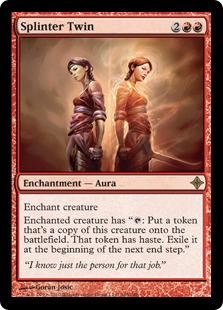
Splinter TwinMost of the time, archetype variations are born out of a desire to shore up a specific weakness in the stock list, or to attack a specific vulnerability in a specific matchup or the broader metagame as a whole. We see the more benign form of variations frequently in Standard, as decks constantly adapt and modify their configurations to better attack opposing strategies or gain edges in specific matchups (particularly the mirror). The line between simple deck tuning and archetype variation can be blurry, but usually the distinction can be made depending on whether the deck’s Plan A (how the deck operates when given the freedom to do so) changes or stays the same. Mono-Black Devotion with 12 removal spells versus 8 doesn’t change gameflow that much, but Mono-Black Devotion with six ways to generate repeated card advantage in the main deck in place of six removal spells looks and plays entirely different.
Often, an archetype can employ a variation but stays on-color to gain a surprise factor advantage. Around the time Delver of Secrets was first starting to be played in Standard (in a metagame that contained Tempered Steel, UW Humans and Mono-Blue Illusions) I piloted a UW Control deck that played four Delver of Secrets, but boarded them out after every game one. I placed 10th in my first SCG Open event ever, missing out on Top 8 on breakers. For fun, here is that list:

[wp_ad_camp_1]

UW Blade, by Trevor Holmes (10th, SCG Charlotte, 2011)

Creatures

4 Delver of Secrets
4 Snapcaster Mage
2 Consecrated Sphinx
1 Spellskite

Artifacts

2 Sword of Feast and Famine
1 Sword of War and Peace

Instants

4 Mana Leak
2 Dissipate
4 Think Twice
2 Midnight Haunting

Planeswalkers

2 Gideon Jura

Sorceries

3 Ponder
3 Day of Judgment

Lands

1 Moorland Haunt
2 Inkmoth Nexus
4 Seachrome Coast
4 Glacial Fortress
3 Ghost Quarter
7 Island
5 Plains

Sideboard

2 Geist of Saint Traft
1 Azure Mage
3 Timely Reinforcements
1 Sword of War and Peace
1 Batterskull
2 Tumble Magnet
1 Ratchet Bomb
1 Oblivion Ring
3 Flashfreeze

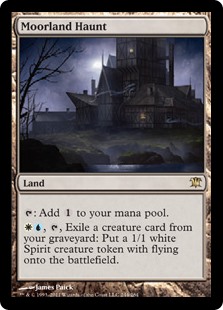
While this list looks pretty disjointed, my idea for the deck came about from a desire to do a few specific things. Leading up to that event, every article was talking about Delver of Secrets, and every deck was packing their 75 full of ways to kill a Signal Pest and Phantasmal Bear. I wanted to employ the power of Delver of Secrets alongside Swords as well, but also to make my opponent's removal as awkward as possible. Moorland HauntI accomplished this either by forcing them to spend whole cards to kill Moorland Haunt or Midnight Haunting tokens, or blanking them completely with Gideon Jura.
I won my "win and in" to top-eight on camera, but missed out on breakers. Sadly, video coverage of my feature match can no longer be found. Regardless, employing variations that either look or play similar to mainline archetypes, yet in reality do something completely different can be very successful given the right list and metagame conditions.

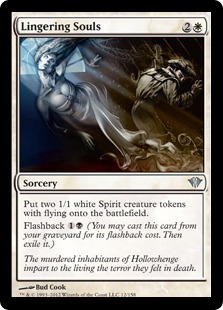
In Modern, we’ve seen examples of these types of variations multiple times over the course of the format's history. UR Splinter Twin, long considered the “Level 0” archetype in the format, splintered into three sub-variations for months a while back, with the old market share spread between Classic UR, Temur Twin, and Grixis Twin. Temur Twin sought to include Tarmogoyf to present a hard-hitting tempo attacker (and capable blocker) on turn two, which worked to negate multiple weaknesses present in the Classic UR version. Grixis Twin incorporated Kolaghan's Command, Tasigur, the Golden Fang and better removal in an attempt to increase overall card quality and decrease reliance on the combo and situational answers. Kolaghans CommandIn each case, these variations grew out of a desire to address a targeted weakness.
Before the Splinter Twin Trinity, brought about largely because of the printing of Kolaghan's Command, Twin had split before, this time into UR and Jeskai. In an attempt to increase overall card quality and gain access to more/stronger threats and answers, UWr Twin (as Jeskai was not a word at this time) cut most of the situational spells in exchange for Path to Exile, Restoration Angel, and Kiki-Jiki, Mirror Breaker. The results of this change were numerous and outside of the scope of this article, but in a general sense, each variation changes the texture of how every matchup plays, due to the differences inherent in how the deck is built and played. Access to more colors gives opportunity to include more powerful cards, but comes at a cost; three-color manabases are more painful against aggressive decks and inherently less consistent.

Identifying Our Weaknesses

For UW Blink, in my article last week I identified combo as an area of weakness that I was interested in shoring up. Wall of Omens, Kitchen Finks, and Path to Exile do great things, but when facing up against Ad Nauseam, Urza's Tower,  Through the Breach they were hopelessly worthless.

Many viewers on stream suggested Meddling Mage as an answer for these specific matchups, and while I didn’t have any specific issues with the card, overall I wasn’t very impressed. Going back again to my overall philosophy for the deck, I wanted to play individually powerful cards that offered synergy when combined together, yet were still strong when played alone. Meddling Mage had some great applications in specific matchups, but I would really only be excited to play that card in the sideboard and I was interested in finding a way to improve my percentage against combo decks in the maindeck.

Thus, I turned to black.

Esper Blink, by Trevor Holmes

Creatures

4 Spell Queller
4 Wall of Omens
4 Flickerwisp
4 Restoration Angel
2 Eldrazi Displacer
4 Tidehollow Sculler
2 Thalia, Guardian of Thraben
3 Wasteland Strangler

Artifacts

4 Aether Vial

Instants

1 Dismember
1 Ojutai's Command
4 Path to Exile

Lands

1 Shambling Vent
1 Swamp
1 Godless Shrine
2 Darkslick Shores
2 Seachrome Coast
1 Hallowed Fountain
1 Celestial Colonnade
3 Flooded Strand
3 Ghost Quarter
1 Island
2 Plains
1 Caves of Koilos
3 Marsh Flats
1 Mystic Gate

Sideboard

2 Dispel
1 Kataki, War's Wage
1 Engineered Explosives
1 Condemn
2 Kitchen Finks
2 Rest in Peace
1 Worship
1 Negate
2 Thoughtseize
2 Meddling Mage

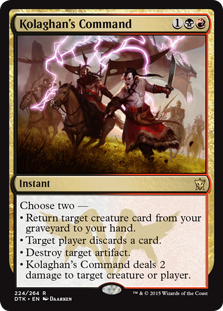
Adding a color to an archetype is something I resist doing at all costs, as I am usually of the opinion that if a problem can’t be solved in-archetype/in-color, then that is a strong sign I shouldn’t be playing that archetype/color combination to begin with. Most of the time (in three-color archetypes at least) splashing for a specific spell often isn’t worth the extra costs associated, Lingering Soulssuch as the changes required to the manabase and increased complexity in fetchland decisions. I get asked often about splashing Lingering Souls in Grixis Control, or adding white sideboard cards to Jund, and every time the answer is a definite no.
Still, going from two colors to three colors is “almost” free, and I say almost because it really isn’t free at all. However, fetch/shock manabases already contain “lost” points for the third color anyways (such as playing Scalding Tarn or Windswept Heath in UW) so the opportunity cost is lower than one might think. Really, the only major issues involved with adding a third color come about by making it difficult to play more basics or colorless sources, but with the right restrictions in place even this downside can be overcome.

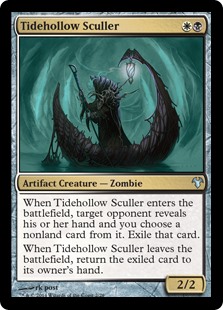
Adding black gives us access to Tidehollow Sculler, Wasteland Strangler, and Thoughtseize, which are both more synergistic and more individually powerful than staying on-color for Meddling Mage. We’ll go through them one at a time.

  • Tidehollow Sculler
    Tidehollow Sculler
    Sculler fills the hole of “power two-drop” that Snapcaster Mage filled on cost but couldn’t translate to curve. Snapcaster Mage is a “two-drop” in CMC, but without Gitaxian Probe in our deck we’re never playing it on turn two. In our straight UW list this was fine, as we had Remand and Mana Leak to fill those spots, but in many games I found myself looking at a disjointed hand just wishing I could curve out with some other spell similar to Wall of Omens.
Tidehollow Sculler (while doing vastly different things than Wall of Omens) filled a hole in the deck and gave the archetype a ton of power against the field. Taking Supreme Verdict (or Path to Exile) against Jeskai Control makes our Spell Queller that much better, and the ability to nab a Karn Liberated from Tron, Cranial Plating from Affinity, Master of Waves from Merfolk, Become Immense from Infect, etc. is incredibly powerful and gives us a ton of much needed disruption to slow down our opponents. Our value gameplan remains the same, but where before we were looking to be more reactive with counterspells, now we’re just ripping their hand apart.

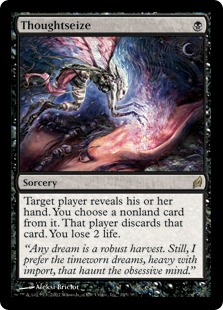
  • Thoughtseize
    ThoughtseizeSupplementing Tidehollow Sculler in the maindeck, Thoughtseize in the sideboard gives us a lot more disruption for the combo matchups, as well as post-board games when our opponent is looking to interact and stop us from setting up our value engine. Where before we had Serum Visions, it was really just more of the same, as we were already drawing a bunch of cards with Wall of Omens, Flickerwisp, and Restoration Angel. Grabbing a removal spell (or hard-to-deal-with threat) to clear the way and buy time for our value engine ends up drawing us more than the one card the cantrip would have provided, and since making the swap I haven’t missed Serum Visions yet.
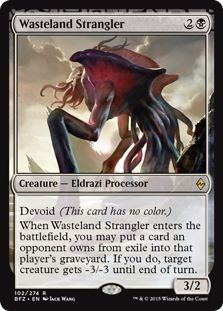
  • Wasteland Strangler
    Wasteland StranglerFinally, Wasteland Strangler joined the team as a way to take advantage of the numerous exile effects in place between Path to Exile, Tidehollow Sculler, and Spell Queller. While we don’t “need” Wasteland Strangler to make Tidehollow Sculler and Spell Queller good, having access to it gives us a lot more play and helps us in matchups where Queller/Sculler might not be as great (Jeskai Control, Jund Midrange).
Games our opponent doesn't cast any creatures will downgrade Strangler to a mediocre Moriok Reaver. But in any other scenario, Wasteland Strangler will be rock-solid, killing a Dark Confidant that was drawing our opponent cards, shooting down a Signal Pest or Noble Hierarch, or finishing off an opposing Restoration Angel that was soaking up our own Angel’s attacks.

To make room for these spells, Snapcaster Mage was cut, and with him, most of the blue spells in the maindeck. In their place, we were able to maximize Aether Vial (it gets much better with these new creatures) and become a base BW deck splashing Spell Queller, at least in the maindeck. We are slowly shifting closer and closer to the BW Eldrazi Taxes list, but with a few key differences.

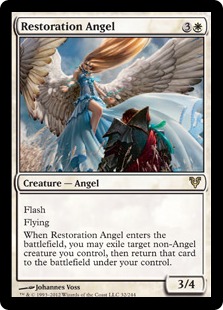
Restoration AngelNot playing Eldrazi Temple, Thought-Knot Seer, and Reality Smasher might seem like we’re leaving power on the table, but we are gaining points in other areas instead. Wall of Omens, Restoration Angel, and Flickerwisp are all really good in the format right now, and access to all that card draw helps us find our reactive elements and sideboard spells more quickly and efficiently, while Eldrazi is often left to dump their hand and hope it's "good enough."
Conclusion

Don’t forget that this whole archetype is an exercise in determining how good we can make Spell Queller in Modern. I’m under no delusions here and understand that Eldrazi is the more defined archetype with a much more successful pedigree. Still, I like where the archetype is going and I feel like it’s getting better and closer to a great list with every match I play.

Spell Queller continues to put our opponent in awkward situations, and I’m still enjoying crafting the game to a state where our opponent is forced to walk removal straight into our Flickerwisp. Now that we’ve added Wasteland Strangler, the increased potential for blow-outs, two-for-ones, and even three-for-ones has me itching to fire up another match. Which I think I’ll do right now! If you’re interested in learning more about the deck, or have any opinions/thoughts, let me know in the comments below and stop by my stream! Thanks for reading and I’ll see you next week!

Trevor Holmes

The_Architect on MTGO

Twitch.tv/Architect_Gaming

Twitter.com/7he4rchitect


First Look at ION Core

Are you a Quiet Speculation member?

If not, now is a perfect time to join up! Our powerful tools, breaking-news analysis, and exclusive Discord channel will make sure you stay up to date and ahead of the curve.

Hey there! I liked it here, so I decided to stick around. There was an SCG Open this weekend and a couple of Grand Prix, but you (I) don't care about that. I'm here to talk about one of the benefits to Insider that didn't exist back when I was paying for a subscription to Quiet Spec.

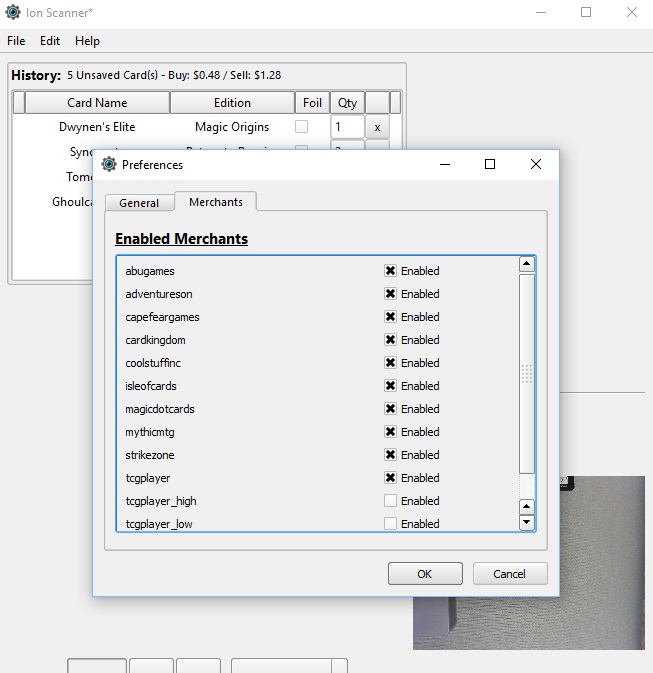
The main reasons I subbed back in the old days were for the forums, and for the (then beta) Trader Tools program, which would let me check the top buylist prices of a few other stores with only a single search bar. I kinda wish I had a screenshot of it for comparison.

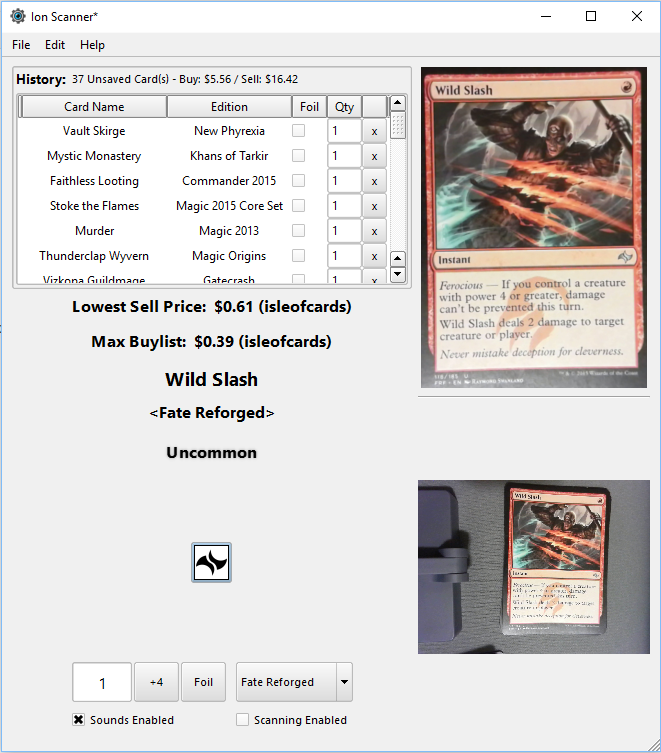
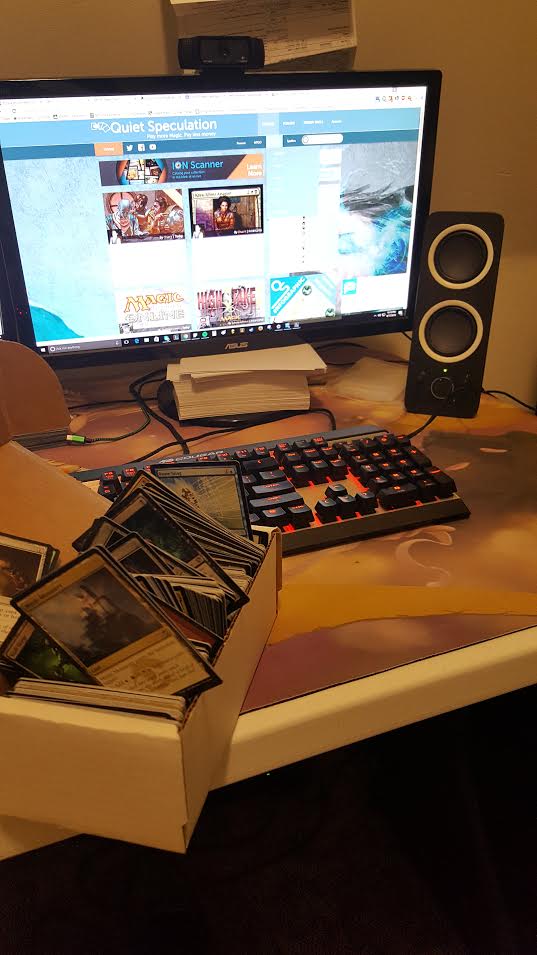
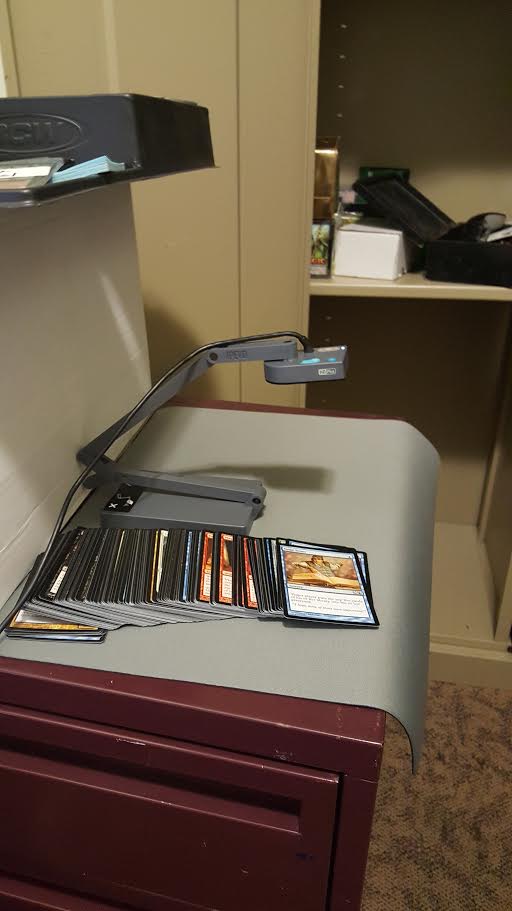
Anyway, when I signed up to write here I didn't realize I would also receive access to the ION Core scanning software. That was just an added bonus that might help me do what I enjoy the most: dealing with bulk commons and uncommons.

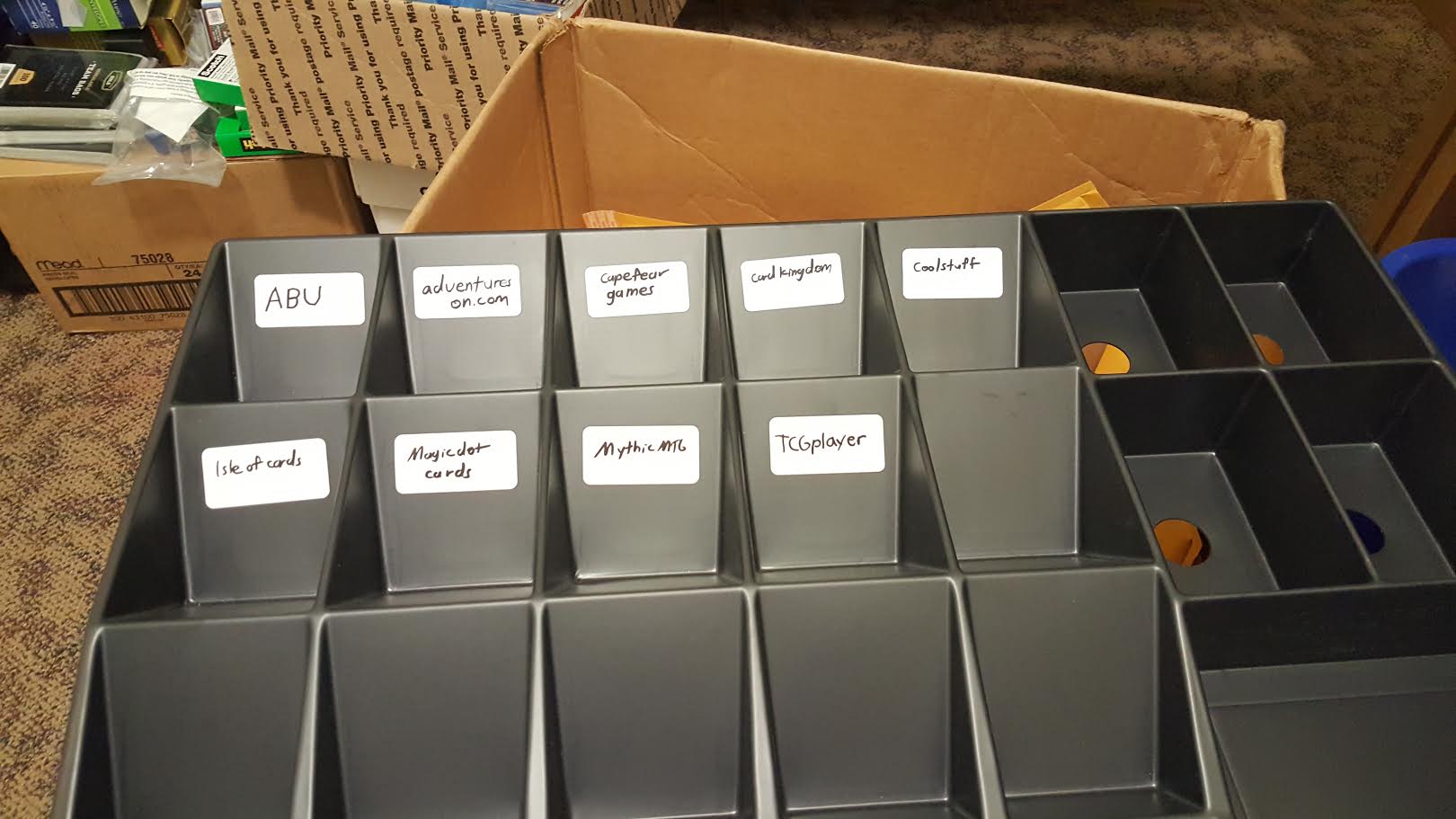
Just today I picked up several collections, one of which had a box of stuff that looked like it was "already picked" (as in, not that thoroughly). That's going to make my life a bit easier, at least for the purposes of writing this article. This box is full of dimes, quarters, and even some crisp dollar bills. All we need to do is figure out the most efficient way to determine which cards are going to which stores.

qs

So what is ION Core and why is my article conveniently located on the free side this week? Well, it's basically a software program to scan Magic cards, and I'm the perfect guinea pig to test this thing out blind. It's designed to help you check prices (retail and buylist) a lot quicker than clicking and typing in every single card name, and then upload the inventory you scan in onto a Trader Tools list to be directly exported to a bunch of different buylists of your choosing.

While the software comes with your Quiet Spec subscription, it does require a USB camera to function. The designers of the software recommend this camera as the top-tier document camera that won't get bumped or move around while trying to scan cards, but there are cheaper alternatives out there.

Heck, the camera on my desktop monitor in the above picture was only $50 on Amazon, which I use for podcasting. You'd probably have to use some tape and tools to secure it to look down on a flat surface, but it should do the trick.

In any case, my new camera just came in today, so let's start scanning some cards and see if this $100 investment was worth it.

scanner

Wild slash

This is the interface you'll be met with once you set up the camera and start scanning in cards. The process is surprisingly quick, and you can customize what stores to show and hide. I immediately hid Troll and Toad and Strikezone Online from my vendor list, but that's a frustrating story for another day.

ION1

One thing I learned from experience back when I was an Insider was to narrow down the total number of buylists that you're shipping to. While ABU might be paying a few pennies more per card on a couple dozen picks, it might not be worth the extra several dollars to ship them an entirely separate buylist order when Isle of Cards will take that same list ABU was buying for a dollar or two less overall.

Once you get the hang of which vendors consistently pay the highest across the board and accept the most number of copies per card, you'll be able to narrow down your final list to 3-4 stores at the most. If you're just starting out at this kind of thing and want a visual to see what cards are going where, I recommend dedicating a sorting tray to all of the stores and finding out where your bulk will be going.

unnamed

Of course, most of this doesn't help you a lot if your cards aren't sorted properly before you scan. You'll be making a ton of work for yourself if you just grab stuff out of a box like I did in my example, and then throw them into each sorting tray section. When you buylist to a store, they will want all of the cards sorted by set and then alphabetically when they arrive.

It makes adding the cards to their inventory much easier on their end, and it's the fastest way to find something in our own collection as well. Depending on how much bulk you have, sorting by set and alphabetically could take, uh, a while... Yeah...

mtg3

This is a picture from about five months ago, and I've only accumulated more bulk in the meantime. It's hard to find time to sort with work and preparation for grad school, but hopefully I should have my schedule ironed out soon. I'm hoping to get into a routine where I can spend about 5-6 hours a week on Wednesdays sorting out bulk and scanning it, but that's another article for another day.

If you're going to be working with anything more than 40k+ bulk, I really recommend investing in BCW sorting trays in bulk. They're cheap, they get the job done, and can be easily labeled to suit your own needs. That tray above is an example of one, but here's my personal stash that I've been using to sort bulk by set.

zzzzzzzzz

While most stores will want you to ship them cards with all of the sets in alphabetical order (Alara Reborn to Zendikar), I still recommend going chronological for the purposes of organizing these trays by set. It makes adding new sets upon release infinitely easier to the next sorting tray, and a lot of bulk will be portioned approximately by date naturally. The Darksteel doesn't fall far from the Fifth Dawn bulk, at least in my experience.

Here are all the trays in action, in the basement of my Dad's house.

one-1038x576

setsort

If you're someone who buylists competitive staples and actual money cards regularly, you can take the slightly "relevant" bulk picks that would be going to that store, and add them into a normal buylist order to make the shipping costs hurt less. You don't have to accumulate hundreds of thousands of bulk and make a single order to save on shipping costs, if you were already buylisting a pile of competitive staples to the same store anyway.

Remember that Wild Slash that Isle of Cards was paying $0.39 on? Add in a couple playsets of those, even if the other 3,000 cards you're sending them might take a few weeks to get sorted out. Give ABU Games that Commander's Sphere for $0.41 while you buylist those Inquisition of Kozileks and Hallowed Burials, because you know that you picked it up for less than a penny.

In summary, I do expect to be using ION Scanner a lot once I get my bulk sorted. It's a great tool for figuring out what needs to go to the blueprint, and what's getting parsed out to other stores through Trader Tools. The most important factor when sorting bulk is speed, and it does have that. Call me a corporate shrill if you'd like, but I bought that $100 camera from Amazon; it wasn't a gift from QS. It's still eligible for me to return it for a refund, and I don't plan on doing that.

Maybe next week we'll look at bulk rares, an area that the blueprint doesn't really cover in detail, and how the ION scanner can be used to our advantage when sorting out the true, true bulk from the maybe, not-so-true bulk. Until next week!

Insider: Conspiracy: Take the Crown Spoilers

Are you a Quiet Speculation member?

If not, now is a perfect time to join up! Our powerful tools, breaking-news analysis, and exclusive Discord channel will make sure you stay up to date and ahead of the curve.

You may not know this, but a very popular casual set is about to be released in a couple weeks. I have spoken about how this set might seem overshadowed this summer due to the high volume of products that have hit the shelves. Well, I think that happened in a big Emrakul, the Promised End kind of way. Despite Wizards' advertising campaign, I’ve noted that many of my patrons had no clue about this upcoming release. Word will spread but my fear of bank accounts spread too thin is still ever-present.

One positive aspect of Conspiracy: Take the Crown is that for the most part it applies to a different audience than most sets that are created. This should draw a different crowd out to the stores for release events.

For example, I have a group of players that don’t make it to FNM very often but have been planning to come out and draft the new Conspiracy for a while now. They’ve made their plans because they expect the set to be super fun, casual, and chalked full of multiplayer mechanics. From what we’ve seen so far, which has been slow coming out, the set has exactly what’s going to drive the casual players wild.

As a prime example, take a look at the first spoiler from the set.

Kaya, Ghost Assassin

kayaghostassassin

This Orzhov planeswalker may not look like much but let’s break it down and see what’s really going on with this card. I’ll be honest, I didn’t read the first ability when I glanced at the card because it was too wordy. So, let’s head onto the second ability and come back to that.

Starting off with "each opponent" immediately gives the feel of Commander or some other casual format. It is fine one-on-one but you will get more value out of the drain effect the more opponents you have. Unlike old-school multiplayer all-star Syphon Soul, you don’t gain the amount you drain for but that's not that big of a deal. You can do this effect four turns in a row assuming you can protect Kaya.

Up next we can -2 twice in a row to make all of your friends happy and have them discard a card and you draw one. Again similar to Syphon Mind but you only get to draw one card. Still, recursive card drawing in any multiplayer format is a great boon to have access to. This card isn’t looking like it will be much fun for the other players in your group, but for you it’s awesome.

What about that first ability though? Basically the shortened version is it blinks a creature or herself. Bringing her back onto the field means that her loyalty resets. This ability only triggers on your next upkeep too so there are many great lines of play that will be set up due to the timing. You have to lose two life every time you use the zero ability but that’s a small price to pay.

One thing to remember about this zero ability is that it can lock down any creature. Is a commander giving you fits? Does another player’s creature have an ability that’s shutting down your strategy? Would another creature be nerfed if it was removed from the game like a huge token creature? All of these scenarios make this zero ability great. Not to mention that you can just remove any creature from possibly attacking you.

Kaya is a great card that will appeal to a variety of casual players. Initial data may be low, but she does have the typical $20+ planeswalker starting price right now. Although the price should come down, I don’t think as many players will be selling this card as with your average planeswalker so that should help its post-release price not drop as far.

There are plenty of other great casual hits that will be released in this set. As of this writing, we don’t know many of them yet. What we do know is that there are a couple of cards that will draw the attention of the competitive players. I know everyone reads my articles for both the financial and competitive information so let’s talk about what else is going on with this set.

Inquisition of Kozilek

inquisitionofkozilek

One of the biggest Modern staples, Inquisition of Kozilek, is getting a reprint and this time it comes freshly packaged with new artwork. I’m sure there are varying opinions about the new art but from what I’ve heard so far, many buyers are interested in it.

What I’m interested in is the addition of more copies to the card pool. The Modern Event Deck was great and all, but that limited-release product didn’t do much to stem the lack of supply on this Rise of the Eldrazi card. Adding this to a new set release is a much larger boost to the available copies, and more importantly, to access.

Although Inquisition may not have been the most expensive card in Modern by a large margin, it is a card without frequent opportunities for purchase. Many players are still looking to trade their way into Modern, but that’s a hard process when most of your trade partners don’t have access to a staple like this. Additionally, as a dealer, I don’t see many copies of this hand hate spell either. When I do acquire a play set, I set it at a higher price because I know my ability to buy in is quite limited.

There was an error retrieving a chart for Inquisition of Kozilek

The additional copies of Inquisition will be highly in demand from many players. Even as a rare, this card will still be highly sought after. Even if the price of the new version is higher, players in the market will give up more to get their hands on copies to use in their next Modern deck.

Recruiter of the Guard


recruiteroftheguard

Both Burning Wish and Hallowed Burial have been spoiled as reprints so far, but I don’t think they are nearly as exciting as the new Imperial Recruiter. Recruiter of the Guard is going to be this set's True-Name Nemesis, Flusterstorm, or Dack Fayden.

Providing an effect similar to a card that costs hundreds of dollars like Imperial Recruiter is obviously going to be a huge deal. There is also the fact that now we can run eight recruiters in a deck if we want to. White mana might change the whole situation as well, but there is one thing I know for certain. Recruiter of the Guard will be valuable, especially the foils.

Imperial Recruiter has been used in the Imperial Painter deck to search out a toolbox of creatures, including Painter's Servant to mill your opponent’s entire deck with Grindstone. This old red card has been a staple of another fringe Legacy deck based on the enchantment, Aluren.

There was an error retrieving a chart for Imperial Recruiter

Any tutor that can decrease the randomness of your deck will be at minimum a consideration for constructed formats. A proven ability like this one attached to a new creature in a new color might make the archetype even better or spawn completely new archetypes.

The main aspect to focus on is that this is a much more affordable version of an established card. Switching the wording from power to toughness might be a bigger deal than I’m giving it credit for, but in any case the new Recruiter shows a lot of promise.

~

We haven’t seen that many cards yet and already we have three that will definitely generate some hype for the set. I look forward to seeing what other gems the set has to offer. Stay tuned next week for more Conspiracy updates.

Until next time,
Unleash the Force of Lore!

Mike Lanigan
MtgJedi on Twitter

Insider: QS Cast #32: GP Weekend, Dredge, and “Things”

Are you a Quiet Speculation member?

If not, now is a perfect time to join up! Our powerful tools, breaking-news analysis, and exclusive Discord channel will make sure you stay up to date and ahead of the curve.

Play

Welcome Back QS Cast! After a long hiatus the QS Cast has returned with a new panel of hosts: Chaz Volpe, Corbin Hosler, and Tarkan Dospil continue on where the cast left off and in this episode they discuss the following:

Where the cast has been, and the direction it will intent to take.
- Major GP Weekend and Modern SCG (GPPortland, GPRimini)
- Discuss major value changes on specific cards on major daily interest pages on MTGStocks
- The validity of Dredge and what to identify - what cards have increased, what cards will continue to increase, and what cards may increase in the future.
- Identifying future trends and what specific cards to acquire for value over the coming weekends.

As always, please comment and leave questions for us to address on the next cast! We will be making QS Insider questions a priority, and we want to know what you want covered.

Enjoy!

We're glad to be back. Follow us and find us here @ChazVMTG @Chosler88 @the_tark

Avatar photo

Chaz V

Started playing during Invasion block at the age of 13. Always a competitive person by nature, he continues playing to this day. Got into the financial aspect of the game as a method to pay for the hobby and now writes, Podcasts, and covers all aspects of the game, always trying to contribute to the community and create great content for readers and listeners.

View More By Chaz V

Posted in Free Insider, QS Cast1 Comment on Insider: QS Cast #32: GP Weekend, Dredge, and “Things”

Have you joined the Quiet Speculation Discord?

If you haven't, you're leaving value on the table! Join our community of experts, enthusiasts, entertainers, and educators and enjoy exclusive podcasts, questions asked and answered, trades, sales, and everything else Discord has to offer.

Want to create content with Quiet Speculation?

All you need to succeed is a passion for Magic: The Gathering, and the ability to write coherently. Share your knowledge of MTG and how you leverage it to win games, get value from your cards – or even turn a profit.

Repairing the Urzatron with WG Tron

Are you a Quiet Speculation member?

If not, now is a perfect time to join up! Our powerful tools, breaking-news analysis, and exclusive Discord channel will make sure you stay up to date and ahead of the curve.

Summer 2016 has been a hostile season for the Urzatron. I'd been rolling over online opponents with RG Tron for months, but starting in late May, I detected a shift. More Infect and Death's Shadow Zoo. More Through the Breach and Valakut. More crazy optimists thinking their new Shadows Over Innistrad tech would make Dredge great again. Alone, any of these shifts would have been manageable. Taken together and taken to their July metagame conclusion, they marked a real format upheaval and a precipitous decline in Tron's top-tier stock. They also signaled an equally steep drop in my League records. RG Tron's horrendous performance at Star City Games' Syracuse Open, sending just two players to Day 2 and only one of those to 29th place, further confirms its downfall. Can it be reversed in time for the upcoming Grand Prix weekend? If a white splash has anything to say about it, maybe.

GW-Tron-Art-cropped

RG Tron may be Modern's biggest name in Tier 1 ramp, but WG Tron might hold the key to keeping Urzatron relevant in this hostile metagame. Historically, I've been skeptical of the Lightning Bolt to Path to Exile swap in Tron, particularly in metagames where Bolt is clearly so strong (there's a reason Jund, not Abzan, is king).

That was before Tron took a nosedive from Tier 1 to Tier 2, plummeting over four percentage points in the span of just 2-3 months. Drastic declines like that lead me to consider drastic changes, and WG Tron is the shell which most preserves RG Tron's proven core while also updating some of its potentially outclassed technology. Today, I'll explore Tron's white options to try and improve the deck in time for Grand Prix weekend. Maybe WG Tron ends up a worse version than the tested RG mainstay, but with the deck floundering in Tier 2 and still falling, we need to think outside of the established Tron box to find fixes.

[wp_ad_camp_1]

Choosing WG from the Urzatron Buffet

Before talking about the WG Tron edge, we need to address the Urza's Tower in the room: why go with white-green over other time-honored Urza's variants? On the one hand, we know Tron players need to make some kind of change---the deck's share crashed over 50% from second most-played Tier 1 strategy to Tier 2 in just two months, so something isn't working. On the other hand, it feels risky to invest in the relatively unproven WG shell, especially when faced with more established alternatives.

MindslaverMono Blue and UW Tron ostensibly hold more promise than WG, with the latter enjoying 2016 success in the immediate aftermath of Sword of the Meek's unbanning, and the former taking 16th at last weekend's inhospitable Syracuse Open. Both decks have also seen semi-regular showings in Tier 3 throughout our metagame tracking cycles. By contrast, WG Tron has consistently occupied anywhere from 0.5% all the way down to 0% of the metagame, with 0% being more the norm than the exception. It's never cracked Tier 3 once. This makes WG Tron a tougher sell than its venerable Mono Blue and UW contenders.
Unfortunately for Mono Blue and UW proponents, the above assessment misses a key dimension that sets WG Tron apart from its competitors. Mono Blue Tron and UW Tron are distinct decks, both from each other and, most importantly, from RG Tron. WG Tron, however, is fundamentally still an RG Tron deck. It preserves the Ancient Stirrings, Sylvan Scrying, and Chromatic cantrip engine. It keeps turn three Karn Liberated. It allows you to play World Breaker, Nature's Claim, and Thragtusk. These are some of the strengths which made RG Tron into a Tier 1 heavyweight. Despite its scarcity in the format, WG Tron preserves all of them.

Wild NacatlI want us to consider WG and RG Tron as being on a continuum, one even more fluid than the oft-compared Jund vs. Abzan. A much better comparison is the Burn and Zoo scale. There, we see subtle shifts from Naya Burn to Wild Nacatl Burn, RW to Mardu, or Nacatl alone to an extra Mutagenic Growth playset. Plus everything else in between! When the metagame makes new demands, Burn adapts. The same can be said of the RG to WG Tron shift. If viewed this way, the transition feels less radical.
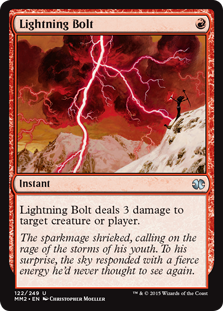
That's not the case with the blue-based Tron variants, which do not keep those core RG advantages (Stirrings, Scrying, Karn, etc.). This is one critical reason they've never come close to Tier 1: there's something about that Gx Tron engine which makes the deck powerful. The Urzatron lands alone don't cut it! It's the supporting cast which gets there. Sure, red cards like Pyroclam, Firespout, and Lightning Bolt are parts of this winning formula, but the shift from Bolt to Path is much less severe than that of Sylvan Scrying and Ancient Stirrings to Thirst for Knowledge and Condescend. To make matters worse, it's a terrible idea to shift Tron gears away from graveyard-agnostic RG/WG to graveyard-dependent Ux: the format is going to be overflowing with Dredge hate by the end of August and we don't want to be collateral damage.

Taken as a whole, this means WG Tron isn't really a new Tron deck in the same way as Mono Blue or UW. Rather, it's a slight adjustment to the Gx Tron base, much like Wild Nacatl suits Burn in some metagames and not in others. WG Tron might end up being a worse RG Tron because its specific white substitutions are worse than the red ones, but at least we are still playing a fundamentally powerful, Tier 1 strategy.

The Path Away from Bolt

Moving from RG to WG Tron is largely a choice made in two separate domains. First, do you want to run maindeck Lightning Bolt/sweeper or Path to Exile? Second, do you want to sideboard more red removal, or white's splashy Games 2-3 haymakers? These decisions will help you determine if the jump from RG to WG makes sense, and it all starts with one of Modern's most important tensions: Bolt vs. Path.

Making the Bolt and Sweeper Case

We've all heard of Modern's "Bolt Test" and how Lightning Bolt defines creature playability. Jordan's discussed how this test has dictated creature selection. I've written about how the test actually plays out in practice. Even if you've never read Nexus articles before today, you've undoubtedly heard of Bolt's supremacy, and undoubtedly seen it in action. After all, Jund reigned in both the July metagame update and over the weekend at Syracuse: Bolt was a major player in its dominance.

Lightning BoltFrom an RG Tron perspective, Bolt is a relatively recent innovation (at least on a metagame-wide level) in the traditional Pyroclasm/Firespout slot. Joe Lossett was one of the chief pioneers of this switch, something I wrote about in detail when reviewing the May Grand Prix, and his technology has largely stuck around since then. In essence, Bolt gives Tron an early out to fast and aggressive decks which otherwise give Karn and company fits. This is particularly true against Infect, where turn one Glistener Elf is virtually unbeatable for all but the best draws.
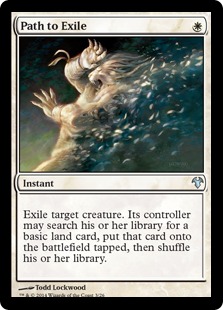
Of course, Bolt isn't always the best answer to an aggressive field. Wide decks such as Affinity, Gruul Zoo, Merfolk, and Elves are notoriously resilient to one-shot Bolts. Against those strategies, Tron uses Firespouts and Pyroclasms to crank up the heat. Thinking back to continuums, we can say red presents Tron players with an option of sweeper vs. Bolt, allowing them to tailor their selection to the metagame.

Making the Path Case

Path to ExileThere's no such thing as the "Path Test" in Modern, and none of the Path-only decks are doing so hot in our metagame standings. Abzan, Abzan Company, Esper Control, and others have largely fallen by the wayside in favor of Bolt-toting sluggers like Jund, Valakut variants, and Jeskai Control. We also know from experience that Bolt tends to be Modern's removal of choice in aggressive formats, and with so many aggressive decks in Tier 1 and Tier 2, Modern has never felt so aggro. Path takes the edge in grindier metagames where trumping Tarmogoyfs and Gurmag Anglers is more important than zapping turn one Goblin Guides. Given this history, why go Path over Bolt?
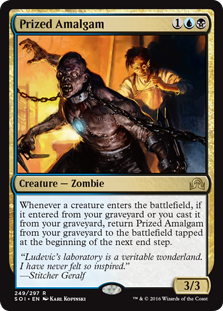
It feels counterintuitive, but Path might actually be better than Bolt in this current metagame. We have three decks to thank for that, all of which have only risen since the summer started (literally in the first deck's case):

  • prized amalgumDredge
    By now, everyone has heard of Dredge's meteoric ascent from obscurity to Tier 1. Everyone has also experienced just how bad Bolt is in this matchup. Most Dredge damage comes from Prized Amalgam and Bloodghast, neither of which care about a quick trip back to see the family in the graveyard. Path exiles these threats for good. Although Dredge players have tried adapting to Path with Greater Gargadon and Bridge from Below, Path is still better than Bolt against those particular builds. Against Bridge alone, Path doesn't create Zombie tokens. Against Gargadon alone, Path actually kills the hasted 9/7. The only time Path doesn't save the day is against an active Gargadon and an active Bridge, but that's a scenario where Bolt ain't helping either.
  • Deaths ShadowDeath's Shadow Zoo
    Here's another aggressive strategy which has pushed into Tier 1 and seems to defy Bolt's regulatory effect. Mutagenic Growth protects both Wild Nacatl and Monastery Swiftspear from the instant. All but the smallest Death's Shadows are similarly immune to the effect. Unlike Jeskai and Jund decks, durdly Tron can't even reliably benefit from Bolt's reach in the matchup. Path, on the other hand, stops all those threats cold and can even blow up the Shadow after an opponent commits the delve pump spell and Temur Battle Rage.
  • Primeval titanBreach Valakut strategies
    If you thought Summer Bloom's ban was the end of Primeval Titan in Modern, think again! As Jason wrote about on Monday, Through the Breach and Summoner's Pact decks have enjoyed considerable Modern success in the past months, and Prime Time is a lynchpin in their strategy. These decks are also highly resilient to Bolt, whether through Titan, Courser of Kruphix, or Obstinate Baloth. Particularly in the Titan case, Path gives Tron the extra turn-plus it might need to stop those Valakut triggers from stacking up. Path won't save you from Emrakul, but neither would Bolt.

Three decks, three bad-to-terrible Tron matchups, and three areas where Path gives a lot of support. Lightning Bolt is also getting even worse in the Dredge matchup, as players improve their Bloodghast and Amalgam sequencing to even more effectively neutralize the red spell. Path is a much more permanent solution. As a bonus, Path is also very effective against the Bolt-resistant Jund creature base, although Gx Tron doesn't have too much difficulty in that matchup to begin with.

This is all good news for Path fans, but there's one more predator you need to consider before making the switch, and you'll want to consider it carefully: Infect.

The Infect Factor

From a metagame perspective, I fully expect Infect to be the best positioned deck at Grand Prix weekend, even if not the most-played. It races all the non-interactive turn-four decks like Dredge and Burn, as well as turn 3.5 Death's Shadow Zoo. It either punishes bad Jund draws or ekes out victories through careful resource allocation---the matchup is much harder than many Junders let themselves believe. Infect also takes the Splinter Twin mantle for punishing random decks with a speedy, albeit less interactive, win condition. All of this establishes Infect as a solid choice in the coming weeks, and forces Tron players to carefully consider their removal.

Glistener ElfPath is a terrible turn one answer to Glistener Elf and Noble Hierarch (especially Hierarch). It guarantees the opponent will have turn two Blighted Agent with one mana in reserve for Vines or some other trick. That said, Path is much better if you're past turn two and the opponent doesn't have Vines. There, unlike with Bolt, you can get the valuable two-for-one (or three-for-one) by Pathing an infecting creature after it has 1-2 pump spells on it. Bonus points for doing it off Chromatic Sphere or Star when your opponent doesn't realize you have white at all!
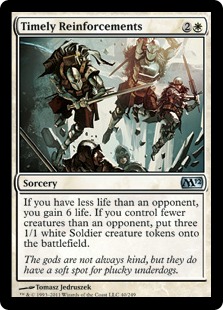
Honestly, I'm not sure the metagame will actually recognize Infect as Modern's current "best deck" in time for the Grand Prix, which means Path's drawbacks against Infect aren't as severe. If it does, however, then you might find yourself missing those Bolts when facing down the turn one Elf or Hierarch. If not, and if everyone is too preoccupied with playing Dredge, Jund, Burn, Valakut, and Zoo, then I'm much happier about a shift to Path and much more convinced about WG over RG.

White Sideboard Specials

The jury is still out on Path vs. Bolt and I have more testing to do before picking a side. That's less the case with sideboard cards---I'm in absolute love with white's offerings. We've seen these bullets in action in past WG Tron lists, notably Joshua Ferrell's that took Top 8 at two different SCG IQs in a two-month span, and Twibs' from an August 7th MTGO League. Here are my four favorite tech additions I've found so far:

  • timely reinforcementsTimely Reinforcements
    The Syracuse Open saw numerous players maindeck or sideboard this powerful sorcery, and with good reason in our aggressive format. The card can easily buy you two or even three turns depending on the matchup, which is more than enough time for Tron to get its dangerous finishers online. It picks up points over red sweepers in the Dredge contest for not triggering Bridge and not being easy to play around with Bloodghasts, fetchlands, and Amalgam triggers (worse than Anger of the Gods, but Tron isn't running double-red spells anyway). The card is also made for the Burn/Zoo matchup, strategies I expect to see in spades the next two weeks.
  • Sacred Ground
    I've been seeing less Crumble to Dust online and more Ghost Quarters, Fulminator Mages, and Molten Rains. That's doubly true with all those obnoxious RG Ponza players out there (much love, however, to using Primal Command to trounce Dredge). Ground stops these cards cold, and typically dodges other hate, such as Ancient Grudge, that an opponent might bring to the field.
  • Rule of LawRule of Law
    As an Ad Nauseam player, I'm always gleeful to sit down across from a Tron mage. As a Tron player, I'm always gnashing my teeth at this lopsided matchup. Rule of Law is one of the best ways to derail Ad Nauseam's plans, forcing the combo player to win exclusively through an active Phyrexian Unlife or Laboratory Maniac nonsense. The enchantment also messes with a variety of random decks such as Living End, Restore Balance, Bring to Light Scapeshift, Storm, and others---I place a premium on versatile sideboard cards in Modern.
  • Rest in Peace
    I played Dredge for years in Extended and Legacy, and have recently been putting in some reps in Modern. One-shot graveyard effects are generally less effective against Dredge decks, particularly if you had to mulligan to find them and/or couldn't back them up with a clock. That's a problem for Relic of Progenitus and, to a lesser extent, Grafdigger's Cage (which doesn't actually remove the offending graveyard). Rest in Peace solves all those issues, wiping out the current graveyard and keeping it empty until Dredge topdecks enchantment removal. That's typically more than enough time for you to deploy a bomb and win the game.
  • SunlanceSunlance
    And you thought we had to abandon Lightning Bolt entirely! Although Lance isn't quite the instant-speed staple we've come to know and love, in many matchups it will fulfill a similar purpose. Against Infect, for instance, you almost always want to fire off sorcery-speed Bolt effects anyway to play around pump spells. When evaluating Sunlance and its accompanying white splash, don't think of it just as a worse Bolt. Instead, think of it as a good-enough Bolt that also lets us run Path to Exile. This dual-removal edge is something you can't get in red.

Whereas red offers more of the same (sweepers and spot removal), white lets Tron field a diverse toolbox to a huge range of Modern threats. This can run the risk of turning Tron too much into an answers deck as opposed to a proactive one, but as long as you don't over-sideboard and select the right cards, it can make up for otherwise critical deficits.

Getting Gx Tron Ready for Gameday

Path and sideboard cards aren't your only considerations as you prepare a Tron list for the Grand Prix showdown. If nothing else, you'll want to take a close look at the losses incurred by switching over your Grove of the Burnwillows playset for some combination of Razorverge Thicket and Brushland. I'm not just talking about the pain you'll feel subbing out over $200 in cards for less than $50! That's enough to make some RG Tron players stick with RG for life. Financial costs aside, the downgraded manabase is a very real consideration as you mull over the shift, although in the right metagame, the benefits (Path! Sideboard cards! Sunlance!) are well worth the costs.

I'll be doing some WG vs. RG Tron testing this week to see if anything fruitful comes of it in time for the Grand Prix. I'll also be back next Wednesday with some Grand Prix predictions and preparation steps for our readers. Let me know in the comments if you have any experience with the nuances of the RG vs. WG Tron shift, or if you're an RG Tron player (or opponent) who has some other insights about the deck's current status. We're in a brave new Modern right now with a metagame changing by the week, and I'm excited to see what the rest of the month holds. See you all soon!

Insider: MTGO Market Report for August 17th, 2016

Are you a Quiet Speculation member?

If not, now is a perfect time to join up! Our powerful tools, breaking-news analysis, and exclusive Discord channel will make sure you stay up to date and ahead of the curve.

Welcome to the MTGO Market Report as compiled by Matthew Lewis. The report will cover a range of topics, including a summary of set prices and price changes for redeemable sets, a look at the major trends in various constructed formats, and a "Trade of the Week" section that highlights a particular speculative strategy with an example and accompanying explanation.

As always, speculators should take into account their own budget, risk tolerance and current portfolio before buying or selling any digital objects. Questions will be answered and can be sent via private message or posted in the article comments.

Redemption

Below are the total set prices for all redeemable sets on MTGO. All prices are current as of August 15th, 2016. The TCG Low and TCG Mid prices are the sum of each set’s individual card prices on TCG Player, either the low price or the mid price respectively. Note that sets of Theros (THS) are out of stock in the store, so this set is no longer redeemable.

All MTGO set prices this week are taken from Goatbot’s website, and all weekly changes are now calculated relative to Goatbot’s ‘Full Set’ prices from the previous week. All monthly changes are also relative to the previous month prices, taken from Goatbot’s website at that time. Occasionally ‘Full Set’ prices are not available, and so estimated set prices are used instead.

Aug15

Flashback Draft of the Week

Flashback drafts return this week with triple Zendikar (ZEN) draft. This was the set that really fired up the growth in the player base as WoTC pulled out all the stops. Coming on the heels of Magic 2010, the well received core set reboot, ZEN brought with it the flavor of an Indiana Jones movie with traps, quests, and hidden treasures.

The gimmick with the treasures was a stroke of genius as WotC purchased cards on the secondary market and then inserted them into ZEN booster packs. These included the Power 9 and the original dual lands among other out-of-print cards. Topping it all off was the completion of the fetch land cycle with the printing of the five opposing-coloured lands. Needless to say, the set was very popular.

Unfortunately there were no treasures in the online version of ZEN, but the lightning-quick draft format rewarded MTGO players who could get the hang of it. This is an extremely aggressive draft format with multiple one-casting-cost creatures from the common slot that can swing for two on turn two. There are also many two-power evasive creatures in the two-casting-cost slot.

This means that Disfigure and Burst Lightning are premium removal spells and top picks in this draft format. Journey to Nowhere is another top pick, so I would definitely be looking to be one of red, black or white in the early stages of a draft. Landfall is a very powerful mechanic in ZEN draft as well, so don't skimp on land. Putting eighteen in your deck is very typical.

Standard

With Eldritch Moon (EMN) prices starting to come down to earth, and Shadows over Innistrad (SOI) exploring new lows, I thought it would be time to consider what will be a good buying window for these two sets. Below is a chart of all the Standard set prices in the 26 weeks after the prerelease.

We have complete data sets for Dragons of Tarkir (DTK), Magic Origins (ORI), Battle for Zendikar (BFZ) and Oath of the Gatewatch (OGW), but SOI and EMN are still working on their first half-year on MTGO. Using this chart, I hope to glean some idea of when to time the purchase of cards from SOI and EMN.

Std sets

For SOI, there is no clean predictor of where the price is headed. Although DTK and SOI are both large sets and both were released in the first month of Spring, there are differences in how they were drafted. DTK was only drafted alongside Fate Reforged (FRF), so it was opened two boosters at a time instead of three. Also, ORI was released at week 14 for DTK. This is visible in the chart as DTK makes its second dip to around 90 tix as players stopped drafting DTK and switched to triple ORI draft.

With SOI, it was opened three boosters at a time and now continues to be opened with the release of EMN. It's getting close to the level that BFZ reached and if that set is a good indicator for the future price of SOI, then speculators would be best to steer clear of buying sets of SOI.

However, I don't think BFZ is a good predictor for SOI's future price, as BFZ on MTGO has the lodestone of the Expeditions around its neck. Through redemption the price of a digital set of BFZ is tied to the price of a paper set. But in paper the Expeditions have soaked up some of the value from the rest of the set. So all things being equal, the price of a digital set of BFZ is lower than it would be without the presence of the Expeditions, since these special inserts are worth much less on MTGO than in paper. SOI will probably end up performing better than BFZ, but probably not as good as ORI or DTK.

The other set to consider is EMN, and here we have the nice clear comparison with OGW. Both are being drafted in a similar fashion two boosters at a time and for a similar length of time.

Right now EMN is roughly following the trend laid out by OGW, albeit starting from a much higher level. OGW bottomed out at about 70 tix and 7 weeks after the prerelease. If EMN follows this pattern, then it will be in the middle of spoiler season for Kaladesh that EMN bottoms out. The hope will be that EMN sees a similar 50% gain after the release of the Fall set, similar to how OGW saw a 50% gain after the release of SOI.

Modern

Here's an interesting deck from the most recent Modern league results. It's an Eldrzi/Tron variant that eschews playing red and sticks to green only. Eldrazi Temple helps to power out Thought-Knot Seer and Conduit of Ruin. Instead of trying to sweep the board with Pyroclasm, this deck uses Fog to reach the mid game where an activation of Ugin, the Spirit Dragon or an Oblivion Stone can clear the board.

The deck also features two singleton cards from EMN in Emrakul, the Promised End and Geier Reach Sanitarium. This deck looks like a fun take on Tron, which hasn't been lighting up the top tables of Modern for a while. And it plays Fog! What a world.

Standard Boosters

Value continues to bleed from BFZ boosters, which constantly takes me by surprise even though I am aware of the market forces working on the prices. Where BFZ bleeds value, OGW is maintaining its value and even rising slightly this week. With the trend firmly in place, look for OGW to creep up in price over the next six weeks as drafters tire of EMN-SOI draft and look for alternatives with good value.

Those holding SOI boosters would do well to heed the lessons we've learned with the BFZ block boosters. SOI boosters will eventually suffer a similar fate as BFZ boosters, as the structural imbalance in boosters needed to draft versus boosters awarded in prizes skews the market price. These are back down to 3 tix this week.

Trade of the Week

As usual, the portfolio is available at this link. This week I put a couple of foil copies of Ulrich the Krallenhorde into the portfolio for 4 tix each. I think this card has potential applications in Standard, but that would not be the primary motivation for buying this card at this price. I am a big fan of low-risk speculation and this card fits the bill due to being a foil mythic rare.

Although the new prerelease events now favor foil uncommons as a partial bottleneck to redemption, I suspect that this is already taken into account by the market. Longer-term, I expect all foil mythic rares from SOI and EMN to appreciate in price, though it is unpredictable which one will rise the the most.

4 tix for a foil mythic rare from EMN is a very safe level to buy in at based on observing the price of foil mythic rares from SOI. Any speculator or players looking to pick up cards from EMN should feel confident that foil mythic rares at 4 tix or less are a good store of value over the long term, with potential for price increases tied to redemption, and to uptake in Standard.

Reprints & Evaluating the Dredge Menace

Are you a Quiet Speculation member?

If not, now is a perfect time to join up! Our powerful tools, breaking-news analysis, and exclusive Discord channel will make sure you stay up to date and ahead of the curve.

In case you missed the news yesterday, Inquisition of Kozilek is back! Yes, IoK is being upgraded to a rare for its printing with brand-new art in Conspiracy: Take the Crown, aka Conspiracy 2. While cards from this set are not usually Modern-legal, this time we have a reprint that is obviously geared toward the Modern crowd.

inquisition-of-kozilek-art-cropped

Moderners have been clamoring for a reprint of Inquisition for quite some time, and this will bring plenty of copies into the hands of players, despite being a rare. Inquisition of KozilekThe rarity change shouldn't be a big issue either---the Eternal Masters printing of Heritage Druid at rare nevertheless brought the price down a ton. Pre-Innistrad commons and uncommons are hard to come by, and when they get popular they get very expensive. This should help alleviate some of the supply issues with Inquisition of Kozilek. I'm expecting these copies of Inquisition to be between $2 and $5 by December.
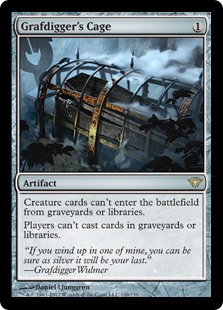
While we got one pretty high-profile reprint in Conspiracy: Take the Crown, I am not expecting to see many more. It's not a Modern Masters set so there isn't really a lot of incentive for Wizards to reprint more eternal staple cards in this set. The quirky draft cards are more than enough to sell it.

SCG Syracuse and Dredge Hate

At the Star City Games Open in Syracuse this past weekend, the talk of the town was Dredge. A lot of the Roanoke SCG guys were on the deck and Ross Merriam was able to take it to a win.

What does this mean for short-term Modern prices? Well, next weekend is the SCG Invitational (which is split-format Modern and Standard) and then the following weekend is a triple Modern GP weekend in North America, Europe, and Asia. I have a feeling going into next week that people will have to dedicate more sideboard slots to beating Dredge. Expect this to put upward pressure on prices of anything that catches on. On the other hand, the cards in Dredge themselves are posting very high prices. If you're not looking to play the deck yourself, now is a good time to move any extra copies you have lying around.

Today I'll cover some of the notable cards affected by Dredge's rise. I'll offer my thoughts on their effectiveness at combating Dredge strategically, as well as where I see their prices settling in the near-term.

[wp_ad_camp_1]

The K.O. Staples

These cards have varying levels of effectiveness and playability, but they're all proven players in combating Dredge and other graveyard shenanigans, both in Modern and in other formats. These are the best of the best, and as the go-to answers they should all see some price movement.

  • Grafdiggers CageGrafdigger's Cage: Cage is by far the most flexible option. Being a one-mana artifact you can drop it into any deck's sideboard and it is relatively good at containing Dredge. However, because Cage doesn't actually interact with the graveyard itself it's not a fool-proof plan. A timely Ancient Grudge, Abrupt Decay, or Nature's Claim can take it out and lead to a flurry of action. This card is best for decks with a quick clock that can pressure Dredge. I'd recommend it in Affinity, Burn, Zoo, and other linear aggro decks. It also has some good applications against Nahiri, the Harbinger and Collected Company decks.
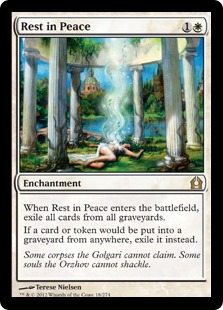
The lowest price you can find Grafdigger's Cage right now is $10.50, and with a top buylist price of $7.50 it's clear that vendors have a positive outlook on the card. I wouldn't be surprised to see Grafdigger's Cage hitting $20 the weekend of Grand Prix Indianapolis if dredge has a good weekend at the Invitational. Now's the time to pick these up if you're inclined to play them.

  • rest in peaceRest in Peace: Rest in Peace is by far the most effective answer to anything Dredge is trying to do. It can't be disrupted by any of their ways to deal with artifacts or enchantments. Unfortunately, it's also a much more narrow card and is harder to fit in decks for its color requirement. If you play a slower deck like Jeskai Nahiri this card is much more up your alley than Cage. I also think it's a better card to play in the Bant Eldrazi deck as they tend to kill a bit slower than most aggro decks.
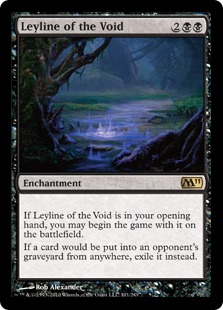
Buylists for Rest in Peace are currently only at $2.65, with it selling for nearly double at $4.50. Grafdigger's Cage hails from Dark Ascension, a low-print-run set that only saw regular drafting for a short period. Rest in Peace, on the other hand, was printed in a large fall set, which means more copies floating around. I wouldn't expect Rest in Peace to reach the $10 that Grafdigger's Cage is at right now, but we should still see some solid growth over the next two weeks---a peak of $8 isn't unreasonable. If you have a bunch of extra copies you will probably see some absurd buylist prices on the Friday before the Grand Prix.

  • Leyline of the VoidLeyline of the Void: Leyline is kind of like a combination of Grafdigger's Cage and Rest in Peace. It's difficult to cast like Rest in Peace but has the ability to slot into any deck like Cage if you don't plan on paying for it. It's a staple in the Dredge deck itself to beat the mirror match because it's immune to everything except Nature's Claim. Obviously if this doesn't come down early it doesn't do anything, but if it does it's back breaking. If you're playing a minimal-interaction deck like Ad Nauseam, Storm, or Living End, Leyline is likely your best way to get a free win. I've also seen it occasionally in Grixis decks (both Delver and Control/Midrange) that are running Snapcaster Mage. Cage is not plausible in those decks for obvious reasons.
Last week, buylist prices on Leyline of the Void were as high as $8.50 and although they have simmered down to a more reasonable $6.50, the card still commands a $10+ price tag. I would not expect many vendors to be sold out in the next two weekends as people scramble to figure out how to beat Dredge. My expectation is that Leyline of the Void closely follows Grafdigger's Cage in price.

Some Weird Ones

  • primal commandPrimal Command: Primal Command's shuffle effect can be used to great effect in big-mana green decks. I'm probably going to be playing Elves this weekend and I will be packing a few copies of Primal Command and Scavenging Ooze to bring the pain. This card is also fairly straightforward to play in the R/G Valakut deck that took 2nd last week in Syracuse. While I don't have high aspirations for a spike in Primal Command's price, it is a pretty good budget option if you're only worried about preparing for the next couple weeks of tournaments.
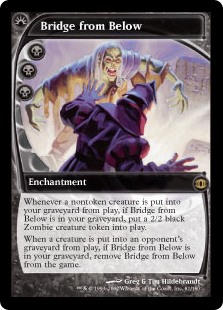
  • Hallowed Moonlight: Hallowed Moonlight can help exile a pile of pesky Amalgams, and is also a reasonable answer to a Living End, Through the Breach, Goryo's Vengeance, Collected Company, or Eldritch Evolution. I think this is generally worse than Rest in Peace in most white decks but it is an instant which matters sometimes. It can be revealed to a Delver of Secrets and doesn't turn your Snapcaster Mages into bad Ambush Vipers. It being mostly a Standard card means it should be cheap and relatively easy to find.

Sell, Sell, Sell!

As I mentioned above, several staples of the Dredge deck are unreasonably expensive right now. Even if Dredge remains a Tier 1 deck and continues to post high finishes, the ceiling for these cards just isn't much higher. There are four in particular I'd be looking to offload (again, assuming you won't need them to play): bridge from belowPrized Amalgam, Greater Gargadon, Bloodghast, and Bridge from Below.


Prized Amalgam is a $4 in-print rare that hasn't made any waves in Standard tournaments. Greater Gargadon was a bulk rare turned into $25 rare overnight. An extremely sluggish $5 buylist price on Gargadon tells me this price is not sustainable---certainly vendors feel that way. Bloodghast has been growing for the past year pretty steadily but is ready for a price correction. At nearly $30, it's hard to see it keep climbing.

Bridge from Below has been a steady $5 card until June, and now in August is all of a sudden $16. Spikes of that magnitude that hit this fast are rarely sustainable, and I think Bridge is no exception. Note as well that while Ross Merriam's list ran the full four copies, Tom Ross elected to play just two---and non-Gargadon builds online have eschewed Bridge entirely. It's not as good at setting up kills like in Legacy and we may see Dredge builds shedding copies or moving away from it completely.

Questions, Comments, Zombies

Hopefully that gives you an idea of the financial picture I see in store for our new Zombie overlords. If you have any questions, hit me up in the comments below. I'm also still waiting to hear more from our readers about where you'd like me to take this column. Let me know in the comments or on Twitter, and I'll see you next week.

Want Prices?

Browse thousands of prices with the first and most comprehensive MTG Finance tool around.


Trader Tools lists both buylist and retail prices for every MTG card, going back a decade.

Quiet Speculation