
Are you a Quiet Speculation member?
If not, now is a perfect time to join up! Our powerful tools, breaking-news analysis, and exclusive Discord channel will make sure you stay up to date and ahead of the curve.
While I'm around six pieces of Power shy of getting into Vintage on MTGO, I have been able to regularly play an unlimited proxy live Vintage event on a near-weekly basis for a while now.
In the last few events I've played, I've felt I actually knew what was going on in the format and have been working on tuning Grixis Keeper. You can find the list that I've been building off and a tournament report here.
Grixis Keeper
The above list is leaning more on the side of control than combo. And, to be fair, any build of Keeper isn't going to be an especially heavy combo deck.
To be even more fair, you don't get a lot of flex slots in Vintage. That said, the more that I've played with the deck, the more I've shied away from the controlling cards. I think that the best way to illustrate what I mean is to start with the current list that I'm playing:
Grixis Keeper
Most of the slots remain unchanged, but this is Vintage and a handful of changes can result in a world of difference. Any card that can be found with Merchant Scroll is actually representing more than a playset with the slew of tutors available.
On the topic of tutors, I believe the best way to explain the evolution of the deck is to explain the changes card by card.
Gifts Ungiven
As I moved slots around, I wanted another hay-maker in the deck.
I initially elected to play a third copy of Jace, the Mind Sculptor. Jace is definitely a nice one, but something about the slot was lacking. Redundant Jaces were always good to have when my opponent countered the first, but it was a lot of copies of a card to have in the deck that didn't do much when I was under the gun.
Gifts Ungiven, alternatively, can tutor for Time Vault, Voltaic Key and some combination of Snapcaster Mage, Yawgmoth's Will and another value card if any of these had already been drawn. Access to a card that can singularly set up a winning turn has been excellent, and I feel a little silly for not running it previously.
The singleton-esque nature of the deck adds a lot of play to Gifts, but also a lot of complexity. The card is so contextual that it's hard to craft go-to piles outside of the aforementioned Vault-Key-Snap-Will and this disruption suite:
You can also just value Gifts for Ancestral Recall and... other cards. Probably Snapcaster Mage and Yawgmoth's Will.
There's no card that challenges you to know your deck more than Gifts Ungiven, and my greatest recommendation on how to play the card is to practice extensively.
Mana Drain
Mana Drain is an excellent card, and one that is completely unprintable by today's design standards. In some respects, Drain is a reactive card with proactive elements, but, for the most part, drawing Mana Drain means that you need to leave up two blue mana or you've functionally mulliganed.
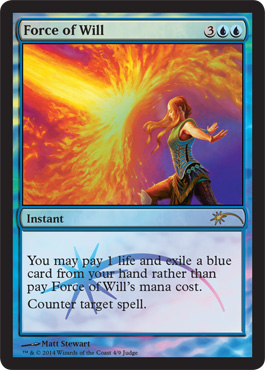
This deck just wants to jam Bobs, Tinker and Jaces, and I haven't had many windows to just leave up mana and do nothing. Having access to one is pretty low cost and can be used to set up Myr Battlesphere very easily, but this deck really prefers proactive counterspells such as Force of Will.
Flusterstorm
With apologies to Mindbreak Trap, Flusterstorm is the best option for a counterspell to win counter wars as well as wreck a Tendrils of Agony.
That said, much like Mindbreak Trap, Flusterstorm performs pretty poorly in other roles. It can't counter Jaces or artifacts, and that counts for a lot in Vintage. I initially boarded up to three copies against other blue decks, but there was nothing that caused me to lose in these matches more than drawing too many Flusterstorms.
One copy is fine, and I do tutor for it on occasion, but I really only want multiples against Storm decks.
Spell Pierce
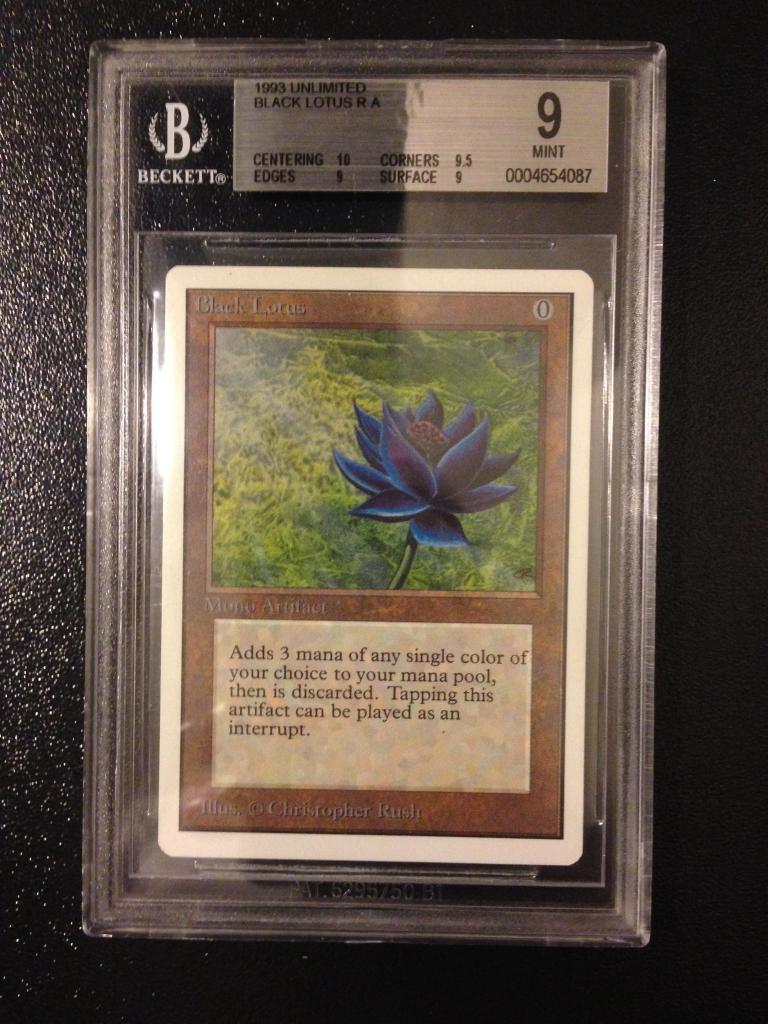
All of the reasons to Spell Pierce are listed in the section on Flusterstorm. It's not always difficult to pay for Spell Pierce in a format where they let you play Black Lotus, and that explains why I only like one copy.
Spell Pierce, like Mana Drain, most commonly plays a reactive role, but leaving up one blue is considerably easier than leaving up two.
Dack Fayden
Outside of a random blowout or two against Shops, Dack hasn't been doing it for me in this list. At least when I tap all of my mana for Jace I feel like I'll generally win the game when he resolves. Looting is so much worse than Brainstorming in a deck that's filthy with singletons, and Dack doesn't actually build to anything when you plus him. It's true that stealing a Mox will commonly be an option, but that's not what I want to be doing for three mana.
I do really like him against Shops though. The Ingot Chewers alone have made that matchup feel very positive for me, and Dack and Rack and Ruin seems like too extensive an insurance policy, so cutting R&R in favor of moving Dack to the board has worked well.
Lightning Bolt
I love Lightning Bolt in Modern and Legacy.
In those formats, Lightning Bolt is a split card between Lava Spike and Terminate. In this deck, the Lava Spike is essentially never what you want to be doing and the removal aspect is pretty restrictive.
Bolt can be aimed at a Jace, but savvy players will just +2 it anyway. If I'm going to play a spell that kills things, I would rather that it have higher potential impact.
Toxic Deluge
Scott Fielder isn't wrong when he says that Toxic Deluge is criminally underplayed in Vintage.
There are a lot of things that Lightning Bolt can't kill. Conversely, Toxic Deluge kills all the things. Young Pyromancer? I'll kill you and your little friends, too. Blightsteel Colossus? I'll pay 11. Worth it. True-Name Nemesis? Easy game.
It's hard to imagine not playing this card in Vintage being correct.
Fire // Ice
Fire // Ice is a bit worse at killing things than Lightning Bolt. Most notably, Lodestone Golem slips through the cracks.
Upsides, however, include that it can't be Mental Missteped, that it can be Merchant Scrolled for, and that it can be pitched to Force of Will. This is a fairly common inclusion and I've been happy with it thus far.
Mox Emerald
My initial list suggests that I'm not really in the off-color mox camp.
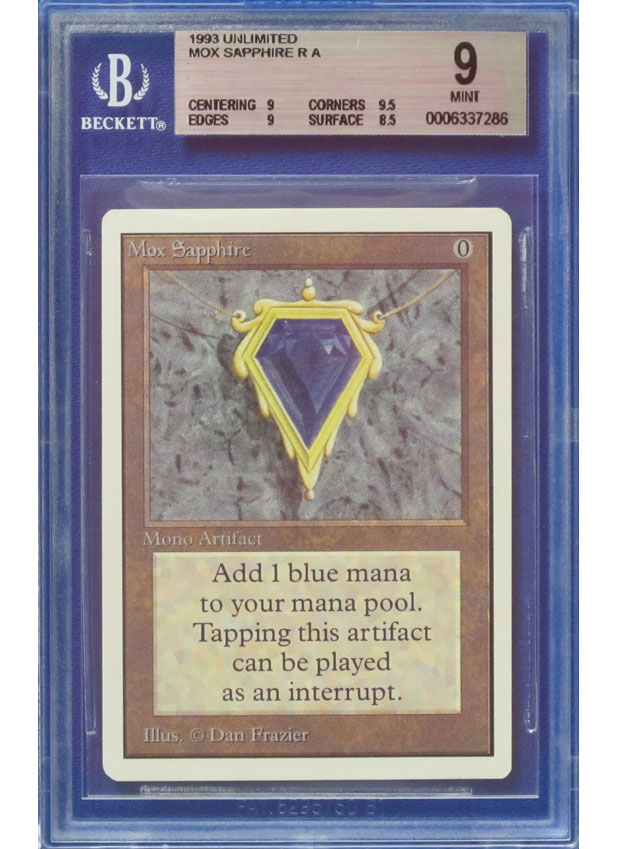
I am, however, in the turn one Dark Confidant camp. Turn one Bob wins a staggering percentage of games, and while I'm not ready to commit to Mox Pearl (ew), Mox Emerald has gotten a very confident nod.
Snapcaster Mage
Former Standard all-star, best card in Modern, and Legacy playable, Snapcaster Mage is simultaneously at its best and worst in Vintage. Flashback Ancestral Recall? Amazing. Die with a 2/1 creature in my hand? Less so. There is no format where Snapcaster Mage has more varied power than Vintage and it's not a particularly close comparison.
With Gifts Ungiven and Yawgmoth's Will in tow, Snapcaster is unquestionably uncuttable. Hell, even just by virtue of playing Ancestral Recall, I'm extremely happy with his inclusion. Two was definitely not a bad number to have, and cutting the second was largely due to needing to fit in all of the other elements of the deck.
Mental Misstep
If there were any slot that I would consider converting to the second Snapcaster, it would be the fourth Mental Misstep.
I racked my brain for a while after moving the Dack Fayden to the sideboard over what to replace him with in the maindeck. Third Jace and Misdirection were also strong considerations, but ultimately the decision came down to the fact that Mental Misstep is just so good against everything but Shops.
The ability to counter Ancestral Recall speaks for itself, and the strength against Dredge is not to be understated. Even with six dedicated sideboard slots in the matchup, Dredge can be tough to beat, and having counters that interacts with most of their spells for "free" is a very good place to be.
The Mana
A few weekends ago, I Top 4'd the local "Big Vintage" tournament with a list somewhere between the above two, despite mulliganing what must have been 1,000 no-land hands.
At this point I decided that the deck could really just use another land and elected to chose a fetchland. I have yet to play a game where I was just ground out and Wastelanded to death in Vintage, so I really don't have much interest in basics. Fetchlands are the only tri-color option, and I've been happy with it so far.
Along those same lines, I didn't see much reason to keep the sideboard Mountain around with both the extra land and the extra Mox to help me beat Sphere effects in the deck.
I will grant it's possible that I am entirely wrong about this and that a basic Island and/or a basic Mountain could be shoring up some matchup that I'm unfamiliar with, or even that my games against Shops and BUG control have not been entirely indicative of the matchups, but for now I have been happy with this mana configuration.
The Sideboard
This is an oversimplification, but there are more or less four archetypes that Vintage can be broken down into. Dredge, Shops, blue decks and Hatebears. "Blue decks" can range from very combo-ish to very controlling, but outside of things like Oath of Druids, there isn't a lot that shows up in any sub-category of these generalities that influences my sideboarding.
Dredge and Shops play fundamentally different games than anything else, and thus require radical sideboarding.
That leaves room for two Pyroblasts against blue decks, a Flusterstorm if they're storm-centric blue decks, and a Pyroclasm to take out Hatebears and to tackle opposing Bobs.
In order to run this light on sideboard slots, the maindeck has to be configured to have good matchups against blue decks and Hatebears. The blue matchups have been favorable in all of my experience and Hatebears does us a favor by being the worst archetype in the format by a country mile.
Closing Thoughts
I believe it's an extremely bold claim to say that there's a best deck in Vintage. Keeper has been the best deck for me and the expected metagame in the area, but it would be foolish to not switch around a few cards in a Shops or Dredge infested metagame. Generally, blue decks will be the most popular and I can confidently recommend my list as a good starting point.
Vintage has really grown on me as a format, though I still prefer Cube and Legacy. I would be very happy to hear any critiques of my list and/or reasoning from any Vintage aficionados out there.
Thanks for reading.
-Ryan Overturf
@RyanOverdrive on Twitter








![Insider: [MTGO] Investing in M15 Rares on MTGO](https://www.quietspeculation.com/wp-content/uploads/2014/01/IMG_7555.jpg)