
menu

Reality Check: The Real Metagame Driver

Are you a Quiet Speculation member?

If not, now is a perfect time to join up! Our powerful tools, breaking-news analysis, and exclusive Discord channel will make sure you stay up to date and ahead of the curve.

The more I dig into the metagame, the more article topics I find. This is by design, because that's how research is supposed work. Every article is just the preface to the next, as I heard in graduate school. It's usually the case that the problem that you began looking into is only part of the overall problem, specifically the most visible part. It's during the digging that the extent of what needs to be found becomes apparent. Assuming that you can notice it yourself. Becomes sometimes it takes other eyes to find them because you were too focused on your main question. Or it just never occurred to you. In academics, this is what the review process is for. In content creation, this is why we seek feedback and reader comments.

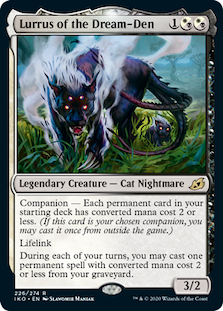
While I was working on last week's article, something was tickling the back of my mind. There was a general feeling that something unfair was going on, but I couldn't articulate anything. There was just a general sense that I was missing something. It wasn't until publication and subsequent discussion happened that I finally realized that we're all focusing on the wrong thing. The trend of Modern decks aggressively lowering their curves, upping their card flow, and also seeing a general price increase didn't start with Modern Horizons 2. It started when Lurrus of the Dream-Den was printed. MH2 just left no doubt or place to hide.

Lessons from History
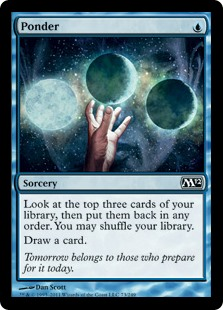
Modern has always been about maximum efficiency. It's a competitive Constructed Magic format. They're all like that. It's just a matter of degree. Standard can never hope to match Vintage's mana efficiency and velocity, but it can be as efficient as its cardpool allows. Modern was no exception, but it wasn't until recently that velocity was really possible. Ponder and Preordain were banned early on and Wizards just didn't print good one-mana cantrips. Thus, Modern players had to focus more on individual card impact than quantity of spells played to win the game. The cardpool also meant that more power was tied up in higher mana costs. Storm was always partially an exception (played more cantrips than anyone else, relied on four mana cards), but for the most part Modern was defined by Jund-style gameplay.
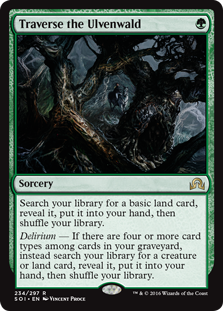
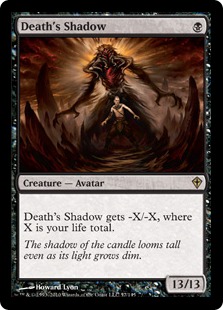
The first good non-Storm deck to bring the Legacy-style of gameplay to Modern was Death's Shadow. Both Traverse Shadow and its successor Grixis Shadow were built around cantrips and minimized mana costs. I'm fairly certain that Shadow decks were the first top-tier, non-aggro decks that intended to never pay more than two mana for a spell (Liliana was far from a universal inclusion). Shadow fell off into 2018, and for a time it looked like Modern was returning to pre-Shadow equilibrium. However, that fall, Izzet Phoenix arose. Since then, Modern has never been without some velocity-centric, low-mana-cost deck. Throughout 2019 we had Phoenix decks, and after Faithless Looting was banned, they became Izzet Prowess.

Remembering Companion Spring
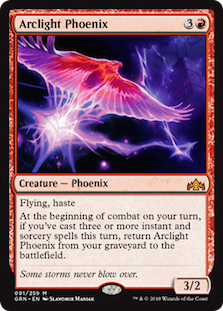
This rewriting of Modern's rules was hard to see because it only applied to one deck at a time. Whenever Phoenix or Prowess was good, Shadow wasn't, and vice versa. 2020's Companion Spring changed that. Having an extra card in hand was so good that every deck contorted themselves to play one. And Lurrus of the Dream-Den was the winner by far. For the first time, every deck had access to a cheap velocity engine that doubled as straight card advantage in Lurrus plus Mishra's Bauble. Even decks that didn't really need it (namely Burn) still ran the cat and curio combo because if they didn't, they'd get buried by those that did. It was a huge break from earlier Modern eras since every deck needed to be as low to the ground as possible and run cantrips, making Modern feel more like Legacy than ever.
Lurrus was by far the biggest problem for those few months, but it wasn't alone. Yorion, Sky Nomad allowed slower decks to put up a fight against all the Lurrus decks. And it did so by playing every cantrip permanent it could find. Rather than focusing on maximizing individual card impact, the Yorion decks looked to resolve as many permanent spells as possible in order to build into a single massive turn and then overwhelm the opponent, which is in fact quite similar to how the Lurrus decks played. This was necessary because it was Lurrus driving the format, not Yorion. Otherwise, the Yorion decks would probably have taken on their current form of pure goodstuff piles with fewer cantrips.

The Natural Progression
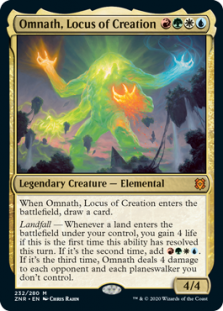
Nerfing the companions and banning Arcum's Astrolabe were supposed to bring Modern back to its old ways. That didn't happen. After a brief attempt to turn back the clock in July, the rest of 2020 was defined by the same gameplay patterns as before. The format was polarized between the 4-Color Omnath piles and prowess decks, out of which Rakdos performed best. The Omnath decks were all about spending the first few turns durdling into a big turn with Omnath, Locus of Creation, which was only possible thanks to all the cantrips it had access to, the most important being Uro, Titan of Nature's Wrath. Rakdos Prowess became Scourge Shadow to match 4-Color's power, but it could not have hung with 4-Color's card advantage and velocity without Lurrus and Bauble. Despite everything, the best non-control deck was still Lurrus.dec.

A Turning Point

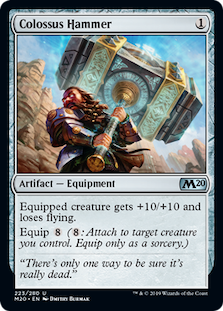
In January 2021, there was a twist. Hammer Time emerged and while it hasn't always been high tiered this year, it has managed to remain a contender. This is despite this deck being around for a while (I played against several versions back in 2019) it had never done well enough to earn any notice. It was the adoption of Lurrus as its companion that changed things. In fact, it set the tone for all the aggro decks that have seen play in 2021, particularly since the Uro ban. The best aggro deck has either been the best velocity deck (Izzet Prowess, namely) or the best Lurrus deck. Sometimes it was Hammer Time; sometimes it was Jund Shadow.

Where We Are Now

Which brings me to the current metagame. Unless there is an enormous shift starting right now, the October metagame update will look very similar to September's. There's no interruption in this trend of velocity and/or Lurrus deck domination. In fact, it's looking like the Lurrus decks will extend their lead over velocity. Modern Horizons 2 did not change or even substantially contribute to this overall trend, but it is helping Lurrus pull ahead.
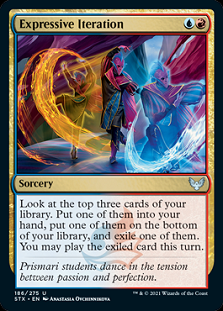
Of course, this is just one part of the metagame. There's a lot more going on throughout Modern than just Lurrus vs Expressive Iteration. However, this conflict is definitely at the forefront of most player's thinking and discussions. UW Control is performing very well on the basis of it being reworked to better deal with the Lurrus and Iteration decks. Burn is also making a resurgence thanks to the drop-off in rival Prowess decks driven by MH2 changes and the meta's evolution. It is telling that the latter still sometimes runs Lurrus even though Bauble is long gone.

While all the MH2 additions have seen their share of player dissatisfaction, none have done so as visibly as Ragavan. And there are certain elements of the card that are troubling and potentially dangerous. However, there evidence that it actually is dangerous is lacking. In fact, Ragavan is an excellent stand in for all of MH2 as to why it isn't the metagame driver that players think.

Ragavan Is an Illusion

Ragavan, Nimble Pilferer is a very powerful card, arguably riding the line of what is acceptable. If it didn't make treasure, or didn't steal cards, or didn't have dash, it would be perfectly fine and maybe just barely playable. However, it does all of those things, and as such can run away with games. It certainly does in Legacy. As a result, Ragavan has become a premier threat for a lot of decks and is the focus of many player complaints.
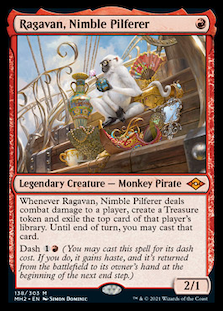
However, the metagame has absorbed Ragavan and made it largely a non-issue. Yes, Ragavan can still run away with games in a way Modern hasn't seen since Deathrite Shaman. However, because that can only happen when Ragavan attacks and connects, it's far easier to manage. Every deck these days can block Ragavan on turn 2 and/or has multiple ways to remove it. As a result, Ragavan is quickly becoming just another threat in Modern. For proof of this, when Deathrite was legal in Modern and Legacy, it went into every deck, becoming basically ubiquitous. That isn't happening with Ragavan. Yes, the monkey does show up in weird and unexpected places. But not consistently. If Ragavan was powerful enough to warrant inclusion in every deck, then it would be showing up in even more unexpected places more than it does.

And that's the key. Ragavan only works in a shell that will specifically support it. You can certainly get some value running it anywhere, but not enough to stand out. The best Ragavan lists are built to clear the way for the monkey while still being fine without ever connecting. Which worked great for UR Thresh for a while, but not anymore. The format has caught on and both in September and so far in October its numbers and win rate are down substantially.

Lurrus Is the Real Deal

Meanwhile, all the Lurrus decks are seeing an increase in win rate. Unless something changes dramatically, Hammer Time will the top deck for the fourth month in a row. The Lurrus standard bearer continues to perform. However, the best performing high-tier deck is Jund Saga. Its average points and overall win rate are better than for any other Tier 2+ deck despite being on track for mid-Tier 2. And the reason is that the deck is at once the best Ragavan deck and the best Urza's Saga deck because it is also the best Lurrus deck.
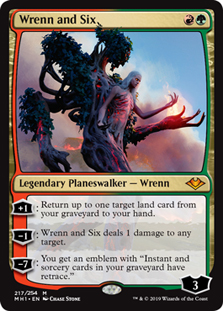
Part of Jund being the best Saga deck hands down is because it gets to recycle its Sagas with Wrenn and Six. However, it also makes great use of the tutoring abilities to add to its disruption package and beef up Tarmogoyf. All the removal and targeted discard clear the road for Ragavan far better than the counterspells of other versions. But most importantly, Lurrus is there to restart whichever engine fails and/or to close out a stalled game. Simply put, Lurrus is the key card gluing together Modern's best-performing deck. A deck that existed before MH2 in slightly different form.

Who Needs Who?

And this is my final point: how many decks require MH2-versus-Lurrus to exist? Or at least to take a form recognizable to their current iteration? The only deck that is consistently devoid of additions from the past two years is Burn, but there are plenty of decks like UW Control that could exist with MH2 or even 2020 cards. Meanwhile, UR Thresh and Cascade Crashers could not exist in their competitive form without MH2. All of Thresh's threats are from that set. Without MH2, the spell core would still be used but for the very different UR Prowess. Cascade Crashers needs Fury and Shardless Agent. Without Fury, Crashers is very soft to creature decks, and without Agent it lacks on color enablers.
Meanwhile, Jund Saga would revert to Jund shadow, a Lurrus deck without MH2. Without Lurrus, Jund would have an entirely different character, looking more like 2019 builds. Similarly, Hammer Time would straight up no longer be viable. It was around pre-Lurrus in almost the same form; there's no indication that it would survive without Lurrus. That's two of the best decks taken out.

But more importantly, how many Tier 3 or lower decks can only exist thanks to Lurrus? I'm currently playing a UW Humans list that is absolute garbage except for it having Lurrus as a companion. And similar stories can be found around Modern's fringes. Conversely, there are no fringe decks I'm aware of that would not survive without MH2. Domain Zoo has even dropped most of its MH2 cards just to run Lurrus, and that's the best argument available. Lurrus has more impact and power in Modern than MH2.

Was It Meant to Be?

Last December, I put both Lurrus and Bauble on the banning watchlist because the combination felt overpowered, but I didn't know which card was the correct target if one needed to be targeted at all. I can now say with confidence that Lurrus appears in more decks without Bauble than vice versa, meaning that Lurrus is the bigger threat. Given Wizards' design decisions around MH2 and other sets, I'm thinking that they did intend for Modern to be more driven by Lurrus than anything else. The format was tested with un-errated companions, after all. Which, given everything we've seen about the card since it was designed, makes me wonder how long that card has.
Sealed Away but Not Forgotten: Magic Boxed Sets

Are you a Quiet Speculation member?

If not, now is a perfect time to join up! Our powerful tools, breaking-news analysis, and exclusive Discord channel will make sure you stay up to date and ahead of the curve.

Players who started their journey in the realm of Magic: The Gathering in the past five years or so are used to Wizards releasing all kinds of new products throughout the year. Many of us Old Fogeys though, grew up with just four releases a year (once per quarter), and we liked it!

There was an error retrieving a chart for Old Fogey

Nowadays we have new Commander decks with every set release, Secret Lair Drops, Masters sets, Horizons sets, Collector Boosters, Set Boosters, Pioneer Challenger Decks, Standard Challenger Decks; basically if you can come up with a product idea, Wizards will probably release one within the year.

It wasn't always like this. For much of Magic's history, these kinds of specialty products were few and far between. The very first specialty product Wizards produced though, was actually in the very first year of Magic's existence.

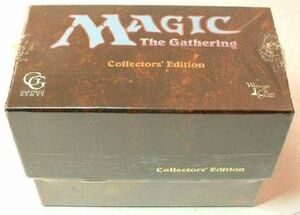
Collector's Edition/International Edition

Collector's Edition was a full-set reprint of the original Limited Edition Beta Core Set, but with square corners and gold borders on the back. 9,000 of these sets were printed and released, and the demand was extremely high. So high in fact that Wizards ordered an additional print run of  5,000 sets for non-US distributors and called it International Edition. Unfortunately, one of the big issues with these cards was that some unscrupulous people would buy the boxes, "peel" the card images of the rares and glue them onto Beta common cards and try to pass them off as Beta's. This was especially true of the Power 9 copies from these sets. The sets had an MSRP of $49.99 when they were released in 1993. Currently, the only sealed copy I can find online has an asking price of $34,999.99. For more information on the set check out the MTG Wiki page.

Pro Tour Collector's Set

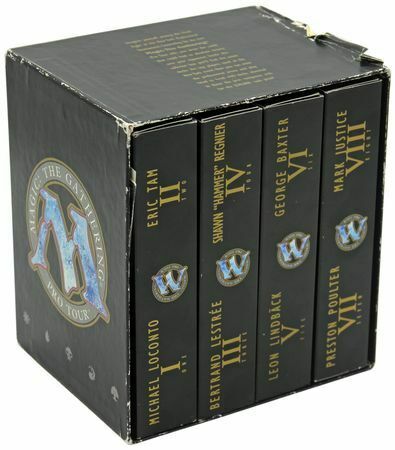
The 1996 Pro Tour Collector's Set, commemorated the very first Magic Pro Tour.  20,000 copies of the set were printed, with an original MSRP of $125.  By the time 1996 rolled around, many of Magic's most broken cards were no longer legal in Type 2 (what we now call Standard), which was the format of the first Pro Tour, so no Moxes or Lotuses here. Looking over all the decklists though, there are many cards like Balance and Strip Mine that are too powerful even in the current Standard. This reprint set again featured gold borders, this time on the front of the cards, eliminating the risk of rebacking. Finding prices for these decks is difficult, but a current listing on eBay has an asking price of $988.24.

The cards of note from this collection, separated by deck are:

Michael Loconto

  • 2x Land Tax ($20.11)
  • 1x Strip Mine ($13.99)

Eric Tam

  • 1x Land Tax ($20.11)

Bertrand Lestree

  • 4x Strip Mine ($13.99)
  • 2x Land Tax ($20.11)
  • 2x Sylvan Library ($47.54)

Shawn "Hammer" Regnier

  • 3x Land Tax ($20.11)

Leon Lindback

  • 4x Strip Mine ($13.99)
  • 4x Necropotence ($39.98)

Preston Poulter

  • 2x Strip Mine ($13.99)
  • 4x Land Tax ($20.11)
  • 1x Sylvan Library ($47.54)

Battle Royale

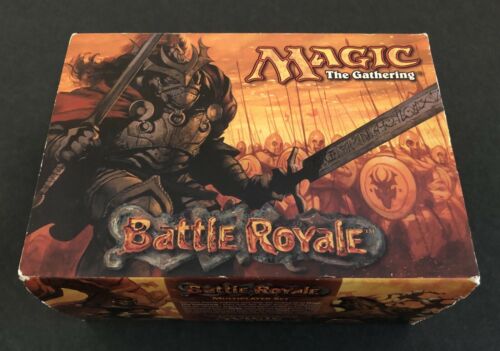
Released in late 1999, Battle Royale was the first specialty set that had tournament-legal borders. Because it was a set of reprints, the borders were white, which was Unfortunately a policy at the time for all reprints.   Battle Royale's notable cards include Reanimate, Land Tax, and Wrath of God. It looks like you can currently buy a completely sealed box for around $250. This product was meant to encourage more multiplayer games, which at the time were not all that common outside of very casual circles, such as the one I played in.

World Championship Decks (1997-2004)

For eight years Wizards made a supplemental gold-bordered product of the top 4 decks from the World Championships for each year. As such, there were a total of 32 different decks. These decks serve as a fun way to look back at what were the best decks of the time and compare them to what we see nowadays. More critically though, similar to how many of the high dollar Reserved List cards from the previously mentioned Collector's Edition and International Edition sets are worth a considerable amount, there are desirable Commander staples included in many of these decks that are worth a good bit. These decks range in price considerably depending on their contents, from a few hundred, up to $1,000 or more. Take note that in addition to the gold borders on the fronts, the cards in these decks do not have normal Magic backs, and are not tournament-legal. Here are some highlights of the contents of these decks, with cards that have a TCGPlayer Market price of $10 or above:

1997 - Janosch Kuhn (Red/White/Blue Speed Control)

  • 4x Force of Will ($35)
  • 4x Thawing Glaciers ($14.44)

1997- Paul McCabe (Red/Blue Aggro Control)

  • 4x Force of Will ($35)

1998- Brian Selden (Cali Nightmare)

  • 4x Survival of the Fittest ($25)
  • 2x Scroll Rack ($13.81)
  • 1x Volrath's Stronghold ($33.53)

1999-Kai Budde (Red/Artifact Wildfire)

  • 4x Grim Monolith ($47.5)
  • 4x City of Traitors ($33.53)
  • 3x Ancient Tomb ($26.75)
  • 1x Karn, Silver Golem ($15)

1999-Mark Le Pine (Sped Red)

  • 2x Ancient Tomb ($26.75)

1999-Matt Linde (Mono-Green Stompy)

  • 4x Gaea's Cradle ($199.88)

1999-Jakub Slemr (Mono-Black Control)

  • 1x Volrath's Stronghold ($33.53)
  • 1x Hatred ($32.33)
  • 1x Sphere of Resistance ($14.99)
  • 1x Vampiric Tutor ($59.99)
  • 3x Yawgmoth's Will ($98)

2000-Jon Finkel (Mono-Blue Tinker)

  • 4x Metalworker ($41.33)
  • 4x Grim Monolith ($36.1)

2000-Tom van de Logt (Replenish)

  • 4x Replenish ($33.11)
  • 3x Enlightened Tutor ($23.28)
  • 1x Mystical Tutor ($17.24)

2000-Nicolas Labarre (Chimera)

  • 4x Enlightened Tutor ($23.28)
  • 1x Yawgmoth's Will ($98)

2001- Tom van de Logt (Machine Head)

  • 3x Phyrexian Arena ($16.66)

2001-Alex Borteh (Merfolk Opposition)

  • 4x Static Orb ($15.26)

2003-Daniel Zink (White/Blue/Green Wake)

  • 3x Mirari's Wake ($12.02)
  • 2x Flooded Strand ($18.28)

2003-Wolfgang Eder (Goblin Bidding)

  • 4x Bloodstained Mire ($18.24)

2003-Peer Kroger (Reanimator)

  • 4x Bloodstained Mire ($18.24)
  • 3x Entomb ($15.25)

2004-Aeo Paguette (Affinity)

  • 4xChrome Mox ($18.25)

2004-Manuel Bevand (Myr Incubator Combo)

  • 4x Chrome Mox ($18.25)
  • 4x Krark-Clan Ironworks ($13.16)

2004-Gabriel Nassif (Blue/White Anti-Affinity Control)

  • 4x Flooded Strand ($18.28)


Deckmasters Garfield vs Finkel

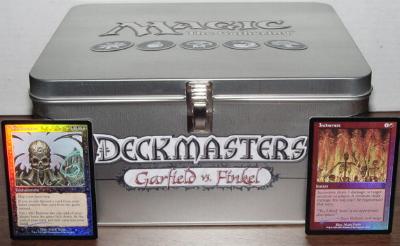
This was a very interesting product as it was created in 2001 and was dubbed "The Creator" vs "The Champion" where both Richard Garfield and Jon Finkel crafted a deck. Based on some of the cards, it seems that they were limited in their choices. That said, a sealed copy of this boxed set goes for about $550, and there are three cards of note from this specialty product:

  • Necropotence ($126.05) - The only foil version with the original art (currently)
  • Sulfurous Springs ($13.30)
  • Underground River ($12.75)
There was an error retrieving a chart for Necropotence

Conclusion

Throughout Magic's history, Wizards has made some interesting supplemental products. It's pretty clear their original idea was to reprint valuable and powerful cards but do so in a way that wouldn't make them tournament legal, thus protecting the value of the originals. When I started this article I didn't realize that Collector's and International Edition were printed the same year as Alpha and Beta. It was surprising to see Wizards jump on the specialty set bandwagon so quickly. Obviously, there are plenty of other supplemental products that Wizards has released over the years like the From the Vault series, Duel Decks, and so on. My focus today was on the earliest ones, some that you may have never known existed.

It surprised me how many of the World Championship cards had a TCGPlayer Market price above $10. I knew about the copies of Reserved List cards that are highly desirably in Commander, but there are a surprising number of these cards not on the Reserved List over that mark. There are quite a few others that are close enough that in another year the list might grow by a good bit.

Avatar photo

David Schumann

David started playing Magic in the days of Fifth Edition, with a hiatus between Judgment to Shards. He's been playing Commander since 2009 and Legacy since 2010.

View More By David Schumann

Posted in FreeLeave a Comment on Sealed Away but Not Forgotten: Magic Boxed Sets

Have you joined the Quiet Speculation Discord?

If you haven't, you're leaving value on the table! Join our community of experts, enthusiasts, entertainers, and educators and enjoy exclusive podcasts, questions asked and answered, trades, sales, and everything else Discord has to offer.

Want to create content with Quiet Speculation?

All you need to succeed is a passion for Magic: The Gathering, and the ability to write coherently. Share your knowledge of MTG and how you leverage it to win games, get value from your cards – or even turn a profit.

Historical Pricing Trends of the Power Nine

Are you a Quiet Speculation member?

If not, now is a perfect time to join up! Our powerful tools, breaking-news analysis, and exclusive Discord channel will make sure you stay up to date and ahead of the curve.

The decision to sell a piece of Power can be difficult, and should not be taken lightly. I remember back before I got into Vintage, I flipped a few pieces of Power in my day. Most of this was arbitrage—I would purchase a few heavily played copies from a European seller to sell in the U.S. for a slight markup (my margins were always razor thin).

Back in 2015, I made the decision to actually collect a set of Power Nine (under @MissouriMTG’s tutelage). Since then, I never even considered the prospect of selling a piece of Power.

Until 2021.

What changed after six years? Firstly, I picked up a couple Collectors’ Edition copies of Power through trade with ABUGames; I didn’t really intend to keep those over the long term. I considered the non-tournament legal cards exceptions to my self-imposed rule. It didn’t feel so bad selling those, especially if I could help out a couple Old School players obtain copies they could feel comfortable shuffling up in a game. I rationalized the decision to sell, convincing myself it would be my Unlimited Power that I would hold for years and years.

Another Exception to the Rule

Last week I began pondering yet another exception to my rule. I currently own a spare Unlimited Mox Sapphire.

There was an error retrieving a chart for Mox Sapphire

I picked up this heavily played copy after making a few consecutive sales a while back (before the most recent jump in price). I had intended to add the card to one of my Old School decks, but I never followed up. Instead, the card sits in my binder in all its glory.

When I made a passing comment in the Quiet Speculation Discord about pondering a sale, a friend of mine contacted me through Discord and asked me about a price.

That’s where I faltered.

I struggled to come up with a definitive price—one that would be fair relative to its market value, but also modestly discounted in acknowledgement of our friendship. But even putting the friendship factor aside for a second, how many people (who aren’t vendors / don’t work for vendors) could accurately declare the value of a heavily played Mox Sapphire? I check on Card Kingdom’s buylist for Power now and again, but that doesn’t exactly reflect true market value.

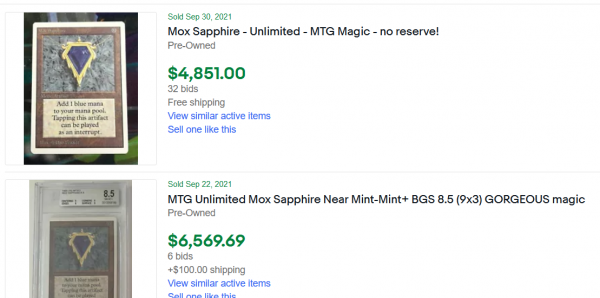
My first stop was eBay—looking at eBay completed listings, I figured I’d get a good feel for what the card has been selling for recently.

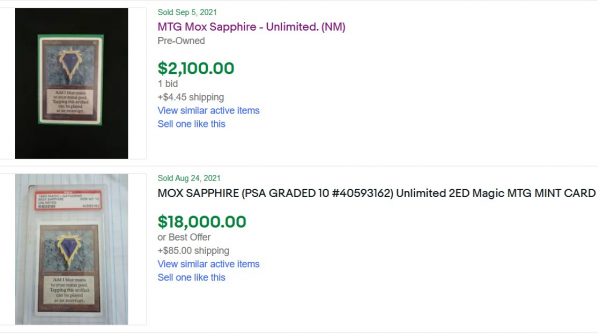
This exercise was moderately helpful. While a couple of the numbers seemed consistent, such as the two completed listings above, other values were useless at best and suspect at worst. Consider these two completed listings (note there were only 8, so these two represent 25% of them).

The top listing is extremely suspicious. Who would sell a near mint Mox Sapphire for $2100 in 2021? The seller had some feedback, but I still wouldn’t trust this data point. The bottom listing is probably perfectly reflective of the market…the market for PSA 10 copies, that is! Seeing this copy sell for $18,000 doesn’t really help me price my heavily played copy much.

Still, I can guesstimate that a heavily played copy should sell for somewhere in the high $3,000’s range based on the complete data set.

Recently, TCGplayer started sharing recent sales to all shoppers—not just those with a seller account. Checking there, I see a single data point: an LP copy sold back in August for $5899.99. Not all that helpful, but consistent with eBay for the most part. The lowest price for a heavily played copy on TCGplayer is about $4100. Knocking off 10% for fees, you end up in the $3600-$3700 range.

It’s worth noting, however, that the heavily played copy listed is in considerably worse condition than my own. But in terms of identifying a ballpark number to work with, it seems like anywhere between $3600 and $3900 would be fairly priced, with some wiggle room within the range.

A Surprising Side Note

The purpose for this week’s article is twofold. First, I wanted to share a brief overview of how one could go about pricing a high-end piece of cardboard, highlighting the pitfalls of outlier data. But my research inspired a second, tangential topic related to Power.

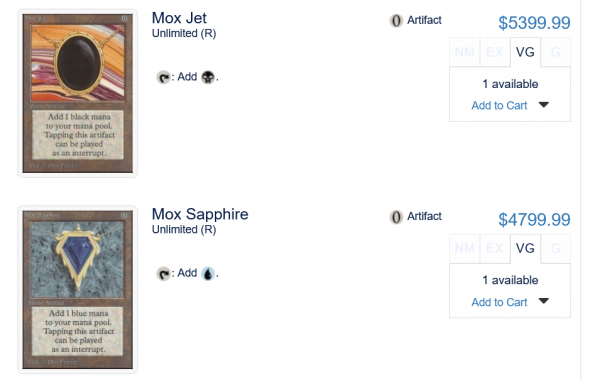
While researching Card Kingdom’s prices for Unlimited Power, I discovered a trend I hadn’t seen before:

As of right now, Card Kingdom sells Mox Jet for a higher price than Mox Sapphire! The blue Mox has been dethroned as the most valuable color, at least according to Card Kingdom. I’m not sure if that has ever happened in the history of the game. Sapphire used to be the second most valuable piece of Power, after Black Lotus. Now, at least according to Card Kingdom, it’s number four (also behind Timetwister.

For the record, there are cheaper damaged and heavily played copies of Mox Jet than there are of Mox Sapphire on TCGplayer. Though it’s worth noting that the last sold LP copy of Mox Jet apparently went for $7,175. I’m not sure I fully embrace that data point as an indication of the card’s value relative to Sapphire, but the directional trend is consistent with Card Kingdom.

Either way, it’s safe to say the two are valued closer together than in the past.

A Brief History Lesson

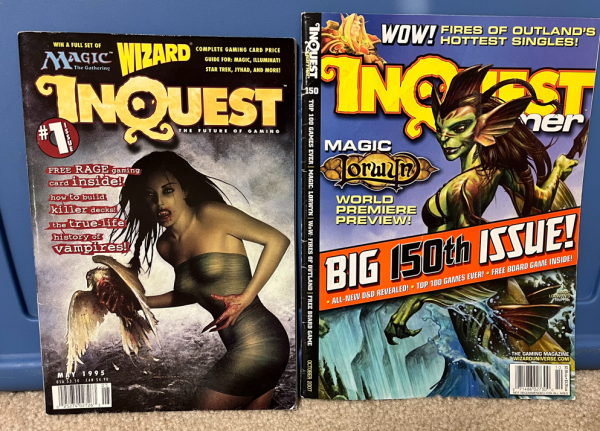
Now for the fun part of the article. When I saw this trend on Card Kingdom’s website, I decided to do a quick check through some historical data to see if Mox Sapphire was ever worth the same as Mox Jet. According to InQuest Magazine, this was the case…back in 1995! Here’s a comparison of prices for the Power Nine between InQuest’s first issue from May 1995 and their final (150th) issue from October 2007.

Warning: Be prepared to be depressed at how “cheap” these used to be!

Card | Value in InQuest #1 | Value in InQuest #150
Black Lotus  | $150 | $800
Timetwister | $52.50 | $200
Mox Sapphire | $80 | $450
Mox Jet | $80 | $400
Mox Ruby | $80 | $350
Mox Emerald | $80 | $350
Mox Pearl | $80 | $350
Ancestral Recall | $60 | $500
Time Walk | $75 | $400

Back in the early days of Magic, the five Moxes were all considered relatively equivalent in value. However as the years progressed, it became clear that Blue was the best color in Magic, creating separation between Mox Sapphire, Time Walk, and Ancestral Recall and the non-blue Moxes. Note that even as late as 2007, you could still find beat copies of Timetwister for $125-$150 (in fact I once purchased an HP copy on eBay for $125 around 2009).

Of course, thanks to its legality in Commander, Timetwister has soared to new heights becoming the second most valuable piece of Power. Nowadays it’s not even close. In fact, Card Kingdom has a VG copy in stock so it makes for an easy price comparison. VG Timetwister: $7799.99. VG Mox Jet (third most valuable): $5399.99. That’s a delta of $2400!

It’s also interesting to see how Ancestral Recall and Time Walk have dropped in relative price since 2007. Back then, these two blue cards were worth more than the non-blue Moxes. Nowadays, according to Card Kingdom, Ancestral Recall lags behind Mox Jet (but still ahead of Emerald, Ruby, and Pearl) and Time Walk is only ahead of Ruby and Pearl.

Apparently, Mox Emerald has also shown a slight bump in popularity relative to Ruby and Pearl. And Mox Pearl is in a distant last, with near mint copies listed at $800 less than the next cheapest piece of Power, Mox Ruby.

Wrapping It Up

If I had the time, I would look at all the InQuest magazine issues in between 1 and 150 to track the evolution of Power Nine pricing. But that’s not something I can prioritize at the moment, so for now we’ll have to settle for the first and last. (Side note: if anyone wants to embark on a long endeavor, it would be amazing to digitize InQuest Magazine’s pricing data over the years of its existence…I think some folks would pay for access to that!).

Luckily, the two issues of InQuest are spaced far enough apart that we can get a great snapshot of how Power pricing has evolved over the years. We have a data point from 1995, a data point from 2007, and of course a data point from 2021. Over the years, we can see how the five Moxes started to differentiate from one another. At first, only Mox Sapphire outpaced the rest. Then, over the last decade, we’ve seen all five Moxes become slightly different in price from one another.

And, most recently, Mox Jet has demonstrated competition with Mox Sapphire to become the most valuable Mox. I’m not exactly sure what catalyzed this change—likely it’s part of Card Kingdom’s pricing algorithm. But even if that’s all it is, that’s still a reflection of actual sales data from Card Kingdom, so I don’t take the data point lightly. This could be a real trend, and it’ll be interesting to see if it continues over the next decade.

As for my Mox Sapphire for sale, I now have a good idea what my asking price should be. At this point, it really comes down to my motivation (or lack thereof) to take quality pictures of the card and post it for sale somewhere. I’m not eager to sell the card; as I said at the beginning, I don’t like selling my Power. I’ll have to let it go eventually, since my end goal is still to fund my kids’ college costs with Magic. I just don’t need to rush out today and sell it.

I’ll get to it eventually. I have time.

Avatar photo

Sigmund Ausfresser

Sigmund first started playing Magic when Visions was the newest set, back in 1997. Things were simpler back then. After playing casual Magic for about ten years, he tried his hand at competitive play. It took about two years before Sigmund starting taking down drafts. Since then, he moved his focus towards Legacy and MTG finance. Now that he's married and works full-time, Sigmund enjoys the game by reading up on trends and using this knowledge in buying/selling cards.

View More By Sigmund Ausfresser

Posted in eBay, Finance, Finance History, Power 91 Comment on Historical Pricing Trends of the Power Nine

Have you joined the Quiet Speculation Discord?

If you haven't, you're leaving value on the table! Join our community of experts, enthusiasts, entertainers, and educators and enjoy exclusive podcasts, questions asked and answered, trades, sales, and everything else Discord has to offer.

Want to create content with Quiet Speculation?

All you need to succeed is a passion for Magic: The Gathering, and the ability to write coherently. Share your knowledge of MTG and how you leverage it to win games, get value from your cards – or even turn a profit.

Exploring Vintage, the Original Magic Format

Are you a Quiet Speculation member?

If not, now is a perfect time to join up! Our powerful tools, breaking-news analysis, and exclusive Discord channel will make sure you stay up to date and ahead of the curve.

My local game store (LGS), Tabletop Gaming Center in Newington, CT, recently announced they will be holding a 15-proxy Vintage tournament on October 24th. I've played Magic since 1994. In those nearly 30 years, I've never had the pleasure of playing Vintage, the OG of Magic formats, at a level beyond the kitchen table. I never owned Black Lotus or any other pieces of the Power Nine, (though I almost did). I'm excited to sleeve up and play some high-powered Magic, but before I do, I need to understand the format and figure out what deck to play.

What Makes Vintage Unique

As the original Magic format, Vintage allows access to virtually every card in the history of the game, with some exceptions. Most formats have a banned list of some kind. In addition to a Banned List, Vintage also has a Restricted List. Instead of being banned outright, cards on the Restricted List are limited to a single copy allowed in either the main deck or sideboard. These include some of the most powerful cards from throughout Magic's history, including Black Lotus, Time Walk, Brainstorm, and more recent cards like Dig Through Time and Narset, Parter of Veils.

Deck Archetypes and the Vintage Metagame

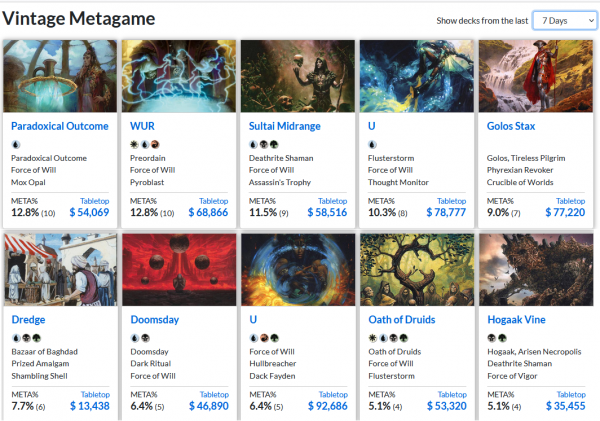
Getting into any new format can be challenging. This is true whether you're getting into Vintage or a more widely played format like Modern. Regardless of format, the process is the same. Study decklists, learn the archetypes and try to develop an understanding of the metagame. A breakdown of the archetypes in the Vintage metagame, according to MTGGoldfish, looks something like this:

The problem with understanding Vintage is that with such a high concentration of powerful cards in the format, even with an archetype breakdown in front of you, it can still be mystifying to the uninitiated. How do you understand and differentiate between the different archetypes and their play patterns? This is less of an issue in formats like Modern, where the differences between decks like Jeskai Control, Burn, and Storm are more obvious. It's much more apparent at a glance, even with little format knowledge, what is the control deck, what is the aggro deck, and what is the combo deck. This is true even when the decks may contain overlapping cards like Lightning Bolt.

With self-study not getting us where we want, it's necessary to find a format expert to break down the archetypes and explain the subtle, and sometimes not so subtle differences between the decks and their respective game plans.

Deep Dive Into Vintage Metagame Data

One such Vintage format expert is Justin Gennari, aka IamActuallyLvL1 on YouTube. Genari breaks down the Vintage metagame into nine major archetypes and breaks those down even further into over 20 sub-archetypes. If you're interested in Vintage, I highly suggest taking the time to watch his detailed video:

The archetypes Gennari breaks down often revolve around one or two key cards, and are as follows:

  • Mishra's Workshop
  • Bazaar of Baghdad
  • Blue Control
  • Combo(non-Tinker)
  • Deathrite Shaman
  • Aggro
  • Oath of Druids
  • Blue Tinker Combo
  • Other various archetypes

"The line kind of blurs in the way we categorize the decks," Gennari says, noting that some decks can fit into multiple categories depending on specific card choices. Mishra's Workshop-based decks are one such example. While all of the decks are built to exploit the power of the land in casting artifacts, Workshop decks can be approached in one of three ways. "The main two playstyles for Mishra's Workshop decks are more of an aggro slant or more of a prison slant, but there are also Mishra's Workshop decks that are more of a combo slant," Gennari says. Of all the archetypes Genari outlines, the one that most suits my preferred playstyle is Blue Control.

Blue Control in Vintage

Blue-based control decks have a history in Vintage dating all the way back to the earliest days of the game. One of the first truly tier-one competitive decks was a blue-based control deck known simply as The Deck, innovated by early Magic pro Brian Weissman. Weissman was among the first Magic players to recognize and codify the concept of card advantage, the idea that the player who draws the most cards, is the player most likely in the best position to win the game. "Whatever style you wish to play, be it fast and frenzied or slow and tactical, the surest way to defeat your opponent consistently is by dominating him or her in the war of card advantage." Weissman writes.

The lesson holds true for every format of Magic to this day, including Vintage. The goal of blue-based control in Vintage, Gennari says in his video is "Basically you just bury your opponent in card advantage." How you win afterward is almost incidental. That sounds like my kind of deck. So what's in the list?

Card Advantage, Permission, and Threats

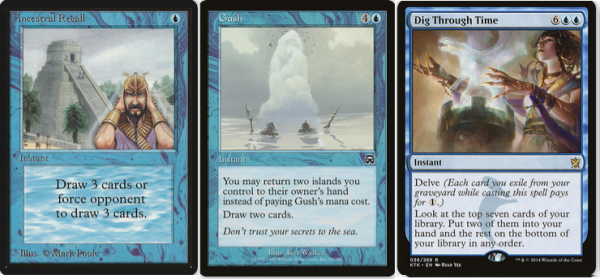
Mana production aside, the cards in a blue-based control deck can be separated into one of three classes, card advantage spells, which allow you to draw extra cards or search for cards and add them to your hand, permission spells that deny your opponent their plays, or cheap threats which can close out the game once the opponent's game plan has been thwarted.

Card Advantage

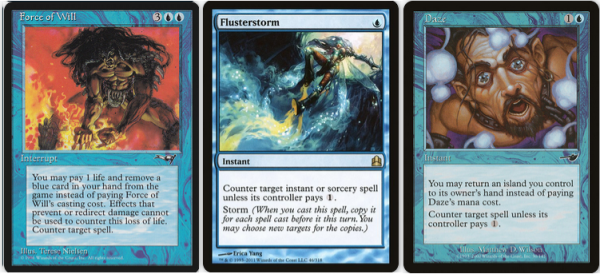
Permission

The card advantage and permission suites of the blue control decks are very similar, revolving around the best card advantage spells ever printed, and the best cheap or free countermagic available. While there will be differences in permission choices based on color, the larger differences between the decks are based on their threats.

Threats

There are two predominant blue-control decks in Vintage, Jeskai, and RUG. Jeskai's signature threat is Monastery Mentor. It also has powerful hate in the form of Lavinia, Azorius Renegade, which can shut down an unprepared opponent and also represent a small clock. The RUG decks have bigger threats including a more substantial planeswalker suite in Oko, Thief of Crowns, and Wrenn and Six. They have a hate bear in Collector Ouphe, and a large clock in Tarmogoyf.

While Jeskai's threats are not as imposing as RUG, the deck makes up for the power of its threats by packing additional permission in Swords to Plowshares and Prismatic Ending, which RUG can't access. Either of these sounds like the kind of deck for me, so what might keep me from playing them?

Metagame Considerations

There are two metagame considerations to take into account if choosing to play Blue Control in Vintage. The first is it can be difficult to pilot if you are not familiar with the format. This could be a major stumbling block for me, as someone who has played zero games of Vintage ever. I'd be leaning into my preferences for control strategies in general, and hoping to make good decisions in the moment. The second metagame consideration is that control strategies have not been putting up good results recently compared to the more proactive archetypes, and may not be well-positioned. Gennari has a solution in mind for both of these potential issues.

BUG Midrange

The deck Gennari suggests for players new to Vintage is BUG Midrange. BUG Midrange, as its name suggests, is a midrange deck that revolves around the power of Deathrite Shaman, and a mix of powerful threats and permission. The blue permission suite in BUG Midrange is very similar to that of the Blue Control decks. Being in black and green the deck also gains access to premium removal in the form of Assasin's Trophy, and powerful card selection in Demonic Tutor. The Tutor acts as an additional copy of any threat or answer whenever the deck needs it.

BUG Midrange is well-positioned right now. It is one of the few blue decks capable of harnessing the power of Wasteland, allowing it a firm answer against Bazaar and Workshop decks, which rely on their namesake lands to power out their busted plays. Gennari also considers it the easiest Vintage deck to learn to pilot, so it is certainly on the list of possibilities.

High-Powered Magic

Regardless of what I ultimately end up playing, I'm looking forward to the experience of playing high-powered Magic. It doesn't get more high-powered than Vintage.

Have you ever played Vintage? Do you remember the feeling of drawing three cards off Ancestral Recall? What would you play in Vintage, given the chance? Let me know in the comments or on Twitter.

Avatar photo

Paul Comeau

Paul is Quiet Speculation's Director of Content. He first started playing Magic in 1994 when he cracked open his first Revised packs. He got interested in Magic Finance in 2000 after being swindled on a trade. As a budget-minded competitive player, he's always looking to improve his knowledge of the metagame and the market to stay competitive and to share that knowledge with those around him so we can all make better decisions. An avid Limited player, his favorite Cube card is Shahrazad. A freelance content creator by day, he is currently writing a book on the ‘90s TCG boom. You can find him on Twitter and LinkedIn.

View More By Paul Comeau

Posted in Free, Strategy, VintageTagged , , , , , , , Leave a Comment on Exploring Vintage, the Original Magic Format

Have you joined the Quiet Speculation Discord?

If you haven't, you're leaving value on the table! Join our community of experts, enthusiasts, entertainers, and educators and enjoy exclusive podcasts, questions asked and answered, trades, sales, and everything else Discord has to offer.

Want to create content with Quiet Speculation?

All you need to succeed is a passion for Magic: The Gathering, and the ability to write coherently. Share your knowledge of MTG and how you leverage it to win games, get value from your cards – or even turn a profit.

A Quick Look at Post-Worlds Standard

Are you a Quiet Speculation member?

If not, now is a perfect time to join up! Our powerful tools, breaking-news analysis, and exclusive Discord channel will make sure you stay up to date and ahead of the curve.

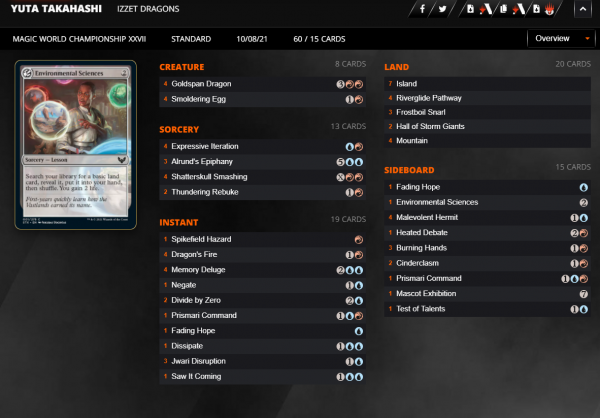
With an upcoming Arena Open, my eyes are on Standard. This past weekend Yuta Takahashi won Worlds with an undefeated tear in Standard after starting 0-3 in Draft. he piloted an exciting Izzet Dragons deck featuring four of the new card Smoldering Egg // Ashmouth Dragon alongside the proven Goldspan Dragon. I will try to use the results from Worlds to prepare for the upcoming weekend.

Surveying the Scene

The metagame is mostly comprised of URx Alrund's Epiphany decks and Faceless Haven mono-color aggro decks. The defending champion, Paulo Vitor Damo da Rosa, said that he regretted registering Mono-Green. He explained that he expected people playing the URx decks to target the mirror more heavily, but they ended up not doing so. The takeaway here should imply that the stock URx decks are favored vs Green (the most popular form of Faceless Haven aggro).

My initial impression is that as both players cast spells in the early turns, the UR player gets a heavy cascading advantage from simply hitting land drops. This puts a ton of pressure on the Faceless Haven player to do something before that inevitable advantage takes over. In addition, the Faceless Haven aggro decks don’t have much wiggle room in how they can approach the URx matchups. The URx decks, on the other hand, can be configured in many different ways. Those two statements make me gravitate heavily towards UR, for the time being. I don’t see the reward for putting myself in a position where I feel I am falling far behind simply because my opponent is hitting land drops. 

Analyzing UR lists

Warning

Simply copypasting a deck from one of the Worlds players might be a better strategy than trying crude changes on your own. Seeing if one of them has posted updates on their ideas on Standard is better. That said, I enjoy following my gut and thinking things through for myself from first principles. It’s important to be somewhat self-aware when doing so though. Make sure you aren’t hurting yourself in the long run by making sub-optimal changes to Worlds lists. Using the results of Worlds gives us a new understanding of the original decklists players submitted.

Izzet Dragons

Takahashi piloted his Izzet Dragons deck to an insane 10-0 record in Standard to take the title. Looking at the list, I thought it might have difficulty dealing with Galvanic Iteration into Alrund's Epiphany. Dealing with Takahashi's Dragons didn’t seem too difficult for a combo-oriented Epiphany build, and the Dragons deck wouldn't be as favored as the game drags on. I thought the Dragons deck would be better vs the Faceless Haven aggro decks, as all the creatures are quite potent vs them. You also play more cheap removal in the form of Dragon's Fire.

I figured URx decks should already be quite favored vs Faceless Haven, so I was more concerned with the mirror. Takahashi obviously beat many UR players along the way to his victory, so maybe I am off on my analysis here. There are many things to like about his Dragons build, but it's not the focus of my attention. My focus is on Izzet Turns.

Looking at the Turns deck, My impression was that when you cast Galvanic Iteration into Alrund's Epiphany, you tended to win. I want to play a list that has the best ability to do that. Out of all the lists from Worlds, The Czech house list is most suited to do that.

The Czech List

After playing the Czech List in a Magic Online PTQ over the weekend, I wondered about the card Consider. It seemed like it could improve the floor on Galvanic Iteration and maybe even make Expressive Iteration a bit better. I’m not sure how strong the consensus on Consider is. Nobody plays it. But do they confidently not play it, or is it on the borderline? The downside is it can have the feeling of an Izzet Guildgate.

I realized The Celestus had a similar ability to improve the floor on Galvanic Iteration but let your mana investment go more directly toward impacting the board, so I decided to start with that instead. I could also see trying some sort of split between the two. There’s a good chance The Celestus and Consider end up being quite poor, but I think they are interesting to experiment with in relation to trying to improve the floor on Galvanic Iteration.

There are three Test of Talents in the Czech list. Takahashi won Worlds with a list featuring four Goldspan Dragons, so it seems reasonable to try Disdainful Stroke instead. Stroke nicely hits some of the larger threats out of the green decks at a nice rate as well. I also contemplated adding a couple Dissipates for extra countermagic. Dissipate seemed very effective against lists like Takahashi's.

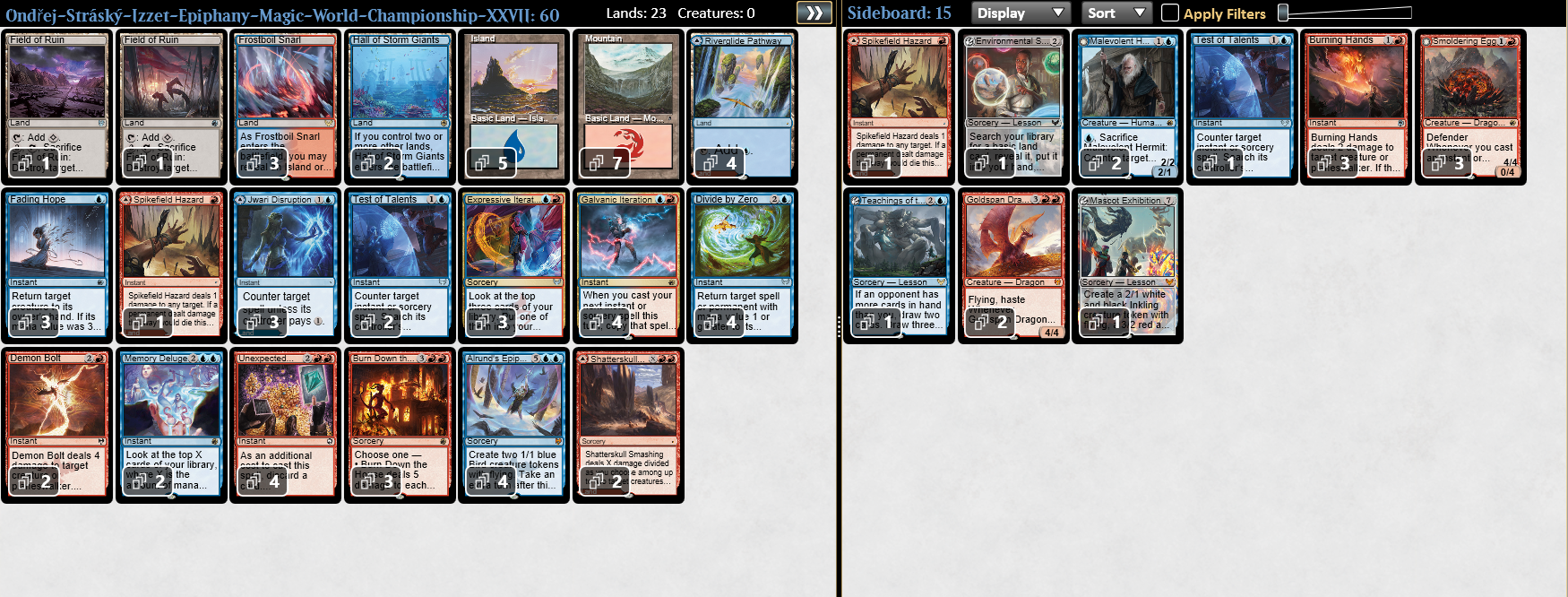
The Czech list played three Fading Hope and three Burn Down the House. I'm interested in trying to up the Demon Bolt numbers to prepare for Goldspan Dragon I am not sure how important Burn Down the House or Fading Hope really are, so these changes could end up going quite poorly. Here's my take on the list:

Goetschel Turns

Sideboard Considerations

For the sideboard, with this list not needing to sideboard in UR mirrors outside of bringing in a couple Spikefield Hazards, I had more space to mess around vs aggressive decks. It made sense to me that Unexpected Windfall would be quite potent vs aggressive decks, and be an upgrade to Memory Deluge.

I removed the Unexpected Windfall favoring the durdlier Memory Deluge, and trying to find ramp in the form of The Celestus. I did this to try not to set myself up for bad exchanges in the mirror but might be overreacting to the downside of the opponent countering a Windfall. While that is not a great trade, when it resolves in the mirror making two treasures is quite powerful, and the lack of explosive ramp might hurt me more than I expect vs aggressive decks.

Creatures or No Creatures?

I think it might make sense to play no creatures in the mirror. Last weekend a lot of my opponents seemed to be maxed out on removal. I assume that number will only increase this weekend. This causes some subtle effects like making Unexpected Windfall slightly worse. For example, without siding in creatures, you won’t be able to punish an opponent for countering your Windfall on their end step.

In my experience, I found that creatures weren't that impressive, though I might be underrating them. I'm heading away from the prevailing consensus here, and the risk/reward for doing this is generally pretty poor if you do it too haphazardly (see my warning from earlier). I can see that part of the appeal to creatures is that they help you win games vs Test of Talents. Additionally, I might be underrating them in general. This format is pretty new, so I don't have particularly strong ideas yet.

I was also interested in trying Introduction to Prophecy over Teachings of the Archaics. It's a bit more consistent but a bit less powerful. This shouldn't be too complicated to figure out. Playing with the deck and paying attention to your lessons should reveal the preferred one. I would lean to the common consensus in Teachings for now, but keeping an open mind to alternatives. It's worth noting the Czech List played a bunch of bounce spells, which should make the Archaics more appealing than a list without, at least to some degree.

Zooming Out

It's generally a bad process to take a list from more experienced players playing more high-stakes events and make tons of changes. That's why I mentioned earlier it's worth being self-aware and trying to make sure you aren't hurting yourself more in the long run with changes. I do find it fun though to think through various iterations of lists, and then see how those theorized changes perform. After playing with the Czech List a bit, I wanted to mess around with other fringe ideas and see how they'd perform.

After giving it some additional thought, playing an extra Spikefield Hazard or two seemed alluring. Many people will be playing Malevolent Hermits, but it might be better to stick with more Shatterskull Smasings. I will keep two Burning Down the House for now. I'll be able to find it with the looting ability of The Celestus and with Memory Deluge. This should let me smoothly sideboard them out for Spikefield Hazards in the mirror. I'm still not sure on the appropriate numbers of [card]Field of Ruin, Shatterskull Smashing, or the rest of the manabase.

Final Thoughts

With all these considerations in mind, I will likely try out a list similar to the one above. If I don’t feel comfortable, my backup plan is to copy a list from Worlds and make some considerations to deal with Goldspan Dragon. I could also go on Twitter, find a top-notch player, and copy their list. (Several pros commonly tweet their lists prior to the Arena Open). Good luck this weekend with whatever you end up playing!

Modern’s Health: Metagame Musings

Are you a Quiet Speculation member?

If not, now is a perfect time to join up! Our powerful tools, breaking-news analysis, and exclusive Discord channel will make sure you stay up to date and ahead of the curve.

How does one measure the unmeasurable? I'm not being facetious or rhetorical. That was an actual question. It's something that analysts in many capacities must struggle with alongside quantifying the unquantifiable and persuading the unpersuadable. The struggle is very, very real. I bring this up because it's been awhile since I really dove into the health of Modern. Measuring format health is simultaneously easy and almost impossible. On one extreme, sick and broken metagames are easy to identify. However, as the format gets healthier, the degree of health gets increasingly ambiguous. Which makes it increasingly hard to measure and discuss.

I've been meaning to include this discussion in the metagame updates for awhile now. However, those articles are long enough already. Coupled with the above discussed problem this keeps getting shoved onto the back burner. It's nonetheless very important that I finally get around to writing this article because Modern is in a very strange place. Since Wizards blasted away Modern's problems back in February the format has been quite dynamic, innovative, and most importantly, diverse. This should lead to higher player satisfaction. However, I've been hearing very polarized views on the new Modern which have gotten worse since MH2. Many players think that Modern's never been better. A roughly equivalent number think the exact opposite.

It's odd to see such polarized opinions, but I think I know why. Today, I'll argue that Modern is by most measures quite healthy. However, it's so different from before that many players feel alienated.

Measuring Health

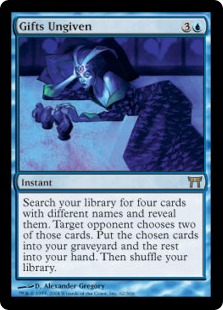
Metagame health is something every player understands intuitively, but can't really quantify. Proverbially, we know it when we see it. Of course, no two people ever fully agree on anything, and so everyone's exact definition of health will differ. There are those perfectly fine with really busted decks so long as they're fun to play and others that want to ban until their pet deck is good... no matter how unrealistically drastic the measures would need to be. (5-Color Gifts Reanimator Control is, always has been, and always will be bad <redacted>. Let. It. Go!) Naturally, these are personal opinions. We'll require something more concrete to go on.
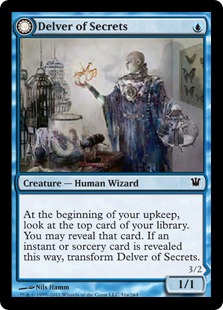
Fortunately, I and many other writers and commenters (including some on this very site) have been thinking and commenting on this problem for years and have come to consensus on certain criteria. We're not doctors, and the metagame is not our patient, let alone a physical being at all. So we lack a checklist or test that will scientifically diagnose a metagame problem. However, we do know what makes a metagame unhealthy, and can use the opposite of that to measure health. From experience and consensus, the unhealthy formats are ones with low diversity which are stagnant and uncompetitive. Therefore, healthy formats are diverse, dynamic, and competitive.

Metagame Diversity

This is the most commonly cited metric, but it can be a bit squishy: while everyone wants a diverse and interesting metagame, diversity is relative. A format with only 5 total decks may or may not be diverse depending on the context. If only 7 decks are plausible (as used to happen in Block Constructed), then that 5-deck metagame is quite diverse. If instead 20 decks are possible, then the 5-deck metagame would be fairly narrow. There's no way to definitively say how many decks are possible in a format like Modern (and may not even be possible for Standard). Fortunately, another reasonable way to measure diversity is whether there are a large number of decks with distinctive gameplay.
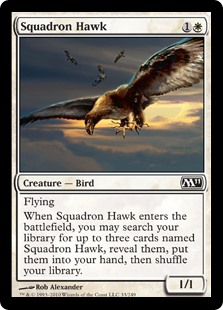
That last point is the most important to me. A format with 20 viable decks sounds quite diverse. But if they're all variants on the same theme, then the diversity is artificial, because every game feels extremely similar. This has happened several times with Delver of Secrets. Innistrad-era Standard was primarily made up of variations on UW Delver, while Legacy has seen several periods where URx Delver was best and most widespread deck. Exactly which color filled the x slot varied over the course of the year, but that didn't sufficiently change the essential sameness of the decks. Diversity is not just a lot of decks with different names but similar deck lists; it requires actually unique gameplay between the decks.

Dynamism

However, having a lot of different decks isn't enough. There needs to be metagame dynamism. Decks can't just hang around forever; there should be growth and change. In a dynamic metagame, the exact composition of the metagame changes over time as new strategies rise to answer existing decks, succeed, and are in turn challenged by new decks. Static formats get boring quickly, since there's no answer to the best decks, and things settle around the best established strategy and its counters.
Which is exactly what playing chess is like. That game has so many established openings, counters, and counter-counter strategies that it's somewhat robotic. Once your opponent establishes a given strategy, there already exists a counter, and the game from that point becomes about who best executes the known strategies. True innovation is quite rare. That is great for masters but hard on everyone else. And Magic isn't chess, so I'll argue that when the game becomes chess-like, it becomes less healthy (which was the problem with Standard Cawblade).

Competitiveness

The final criteria, building on the idea of dynamism, is competitiveness. It's not enough for the overall metagame to gradually cycle. There should be turnover in the event standings, too. If the same few decks (or worse, one deck) win every event, then it really doesn't matter that many other decks win games and the format is constantly moving. There might as well only be those top few decks. In a healthy metagame, there would be certain decks that are better than the others. It has to happen because cards aren't equal nor see equal play. However, those best decks shouldn't be so much better that other decks can't consistently beat them. It's fine if they show up more than other decks, but not if other decks don't consistently place high in a format.
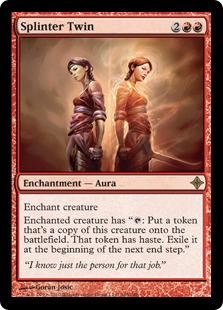
This is ultimately the reason that Splinter Twin was banned. It didn't meaningfully restrict diversity and the metagame did cycle around Twin. However, Twin won events. Far more events than any other deck in its era. It won half the Modern Pro Tours and far more Grand Prix than any other deck. That was effectively stagnating growth and change because while other decks could compete, the playing field was slanted towards Twin. It's healthier when many decks are able to take the top slots.

A Clean Bill

Taking the above criteria and applying it to Modern leads me to say that the format is quite healthy. The metagame updates since March have shown that fairly clearly. To wit:

  • Metagame Diversity: Modern has had an average of 17.8 decks make the tier list, with a high of 23 and low of 13. These decks make up a fraction of the total decks that appear in results. Every deck plays quite differently from each other despite card overlap and many strategies are viable. The metagame is quite open.
  • Dynamism: The best decks in March were Jund Shadow, Heliod Company, Mono-Green Tron, Amulet Titan, Death and Taxes, and Izzet Prowess. The current list is Hammer Time, UW Control, UR Thresh, Burn, Cascade Crashers, Jund Saga, Elementals, and Living End. Modern is showing considerable dynamism overall, and even month-to-month decks are rising and falling in all tiers.
  • Competitiveness: This has varied highly over the past year. May was a very non-competitive month. However, that was corrected shortly afterward and the most recent data shows many decks doing well. I will attest that October is continuing the trend of decks of all tiers winning events and/or placing highly. Thus, Modern is quite competitive right now and has overall been very competitive this year.

The data I've collected very clearly shows that Modern is overall in a very healthy spot. The top tiers are no longer so dominant that other decks can't win and there is constant evolution between tier composition while diversity has been quite high. On a more qualitative level, I can't see how formats where Burn and UW Control (two extremely fair decks) are Tier 1 can't be healthy.

Those Dissatisfied

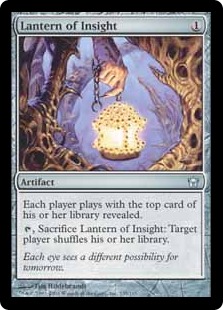
All that said, there is one other constantly cited criterion: it's fun. If the format isn't fun then nothing else matters. We're playing a game, and games are intended to be fun. If they are not, then other measures of quality don't actually matter (looking at you, Escape from Tarkov). However, fun isn't objective; it's personal and therefore unmeasurable. What is fun for one person is excruciatingly boring to another (now looking at you, Lantern Control). Consequently, the most important consideration is not one that can really be argued over and is even harder to quantify and critique. Consequently, every metagame has its detractors and simply saying that not every player enjoys the format the same is unhelpfully meaningless. Because no duh, they don't!
However, what's interesting this time is the form the complaints are taking. As mentioned earlier, as many players seem to dislike this metagame as enjoy it. Most of the complaints point back to developments since MH2, but unlike last time, it's not really about cards being too powerful. Rather, there are a lot of players arguing that certain cards should not exist, regardless of whether they think the cards are oppressive or overpowered. Saying cards should never be is nothing new (Teferi, Time Raveler says hello), but that's usually as a function of it being oppressive against a deck or too powerful. The most common thread I hear is that the cards that shouldn't exist from MH2 shouldn't exist because they make Modern not feel like Modern.

Modern's Gone a Bit "Legacy"

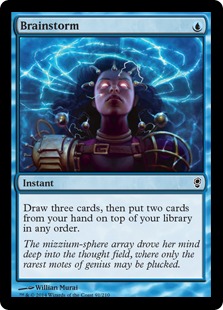
By which said players almost always mean that Modern feels more like Legacy now. And while I don't necessarily agree, I understand the sentiment. Legacy has always been the format of tempo and card selection. Brainstorm, Ponder, and Preordain are all legal, and consequently most decks are based around cantripping through their decks looking for the right spell for the current situation. Subsequently, every deck seeks to maximize its mana efficiency and minimize dead draws by playing only cheap spells and as few lands as possible. Games are won either by tempo-ing the opponent out of the game or by cantripping into the right spells to win. Additionally, raw card advantage is far more prevalent and wins games.
By contrast, for a long time none of that was possible in Modern. Raw card advantage was more expensive and cantrips were few and far between, so decks had to be more redundant. Modern decks weren't going to see too many cards each game, and so they had to maximize the impact of each individual card. It's why Jund was so successful for so long and why Grixis Shadow was so feared back in 2017. It played a lot of cantrips, a low number of lands and threats, a low curve, and was built around card advantage, all Legacy traits. It was unheard of for Modern and looked like a huge turning point. Then 2018 happened and all those fears went away.
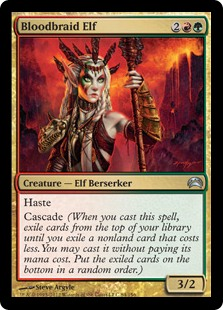
Only to resurface in June when MH2 gave Modern Ragavan, Nimble Pilferer, Murktide Regent, and Dragon's Rage Channeler. These cards combined to push Izzet decks away from the very Modern Izzet Prowess and towards the very Legacy UR Thresh, a deck that looks like Delver and plays like Legacy's classic Thresh decks (hence the archetype name being more specific than simply UR Tempo). In turn, it's incentivizing a lot of players to lower their curves, Legacy-style, to compete. It's everything that Modern wasn't and that's alienating players.

And That's By Design

Unfortunately for those alienated players, that's not going to change. This is what Wizards wants. It's why Ragavan and company were designed that way. The deck changes caused by MH2 were what Wizards was going for because that's where their design is heading, not just for Modern, but Standard too.

Those familiar with Mark Rosewater's blog can attest: Wizards is looking for ways to make it easier to play with more cards in a game of Magic. Despite what it sometimes seems, Wizards wants players to play with their cards. As many as possible per game. They had been trying to accomplish this by deliberately slowing Standard down circa Battle for Zendikar, but it didn't really work out. The games tended to stalemate for snowball out of control and players didn't like that. Combined with pressure from Commander players, now they're looking to improve each color's card flow and mana development so that more cards are drawn and cast per game.

This is why there's been an increase in cheap card draw and cantrips, with treasure tokens going evergreen. Wizards can't maintain the Color Pie by just giving every color everything, so they looked for a way around it. Improving access to cards is why red's been getting Light Up the Stage and similar cards in such quantity, Opt and now Consider are constantly in Standard; green has so many cantrip creatures; and white is getting (still very weak) card advantage. Treasure is a way to provide temporary mana ramp so that non-green colors can keep up and sometimes jump ahead. It's the reason that Expressive Iteration lets players play the exiled card. Wizards apparently likes Legacy's card flow and mana cheating, if at a lower power level.

Where Does This Lead?

The design philosophies that led to all of the complaints will be in place for the foreseeable future. Not necessarily because they've proven successful or popular (only Wizards knows that), but because sets are designed about two years ahead of release. Even if things are looking glum from a response standpoint, Wizards can't dramatically change course now. And after that, it's hard to say. A lot of the discourse around the recent World Championship has been critical of those decisions. Alrund's Epiphany may be oppressive in Standard (or not) but everyone appears to agree that the deck just never runs out of cards and the real power is how it generates treasure tokens. In other words, those things Wizards are pushing right now appear to be dangerous for Standard. This may lead to a doctrinal change down the line or it might not. But in any case, this is the world we must live in, like it or not.

The Only Constant Is Change

I sympathize with the players who feel left out by Wizards' new course. It is a huge deviation from old patterns and it does mean that old strategies must heavily adapt. This isn't inherently bad, and in some ways makes for a more interesting and dynamic format. It's just not fun for everyone. If you don't like it, I'm sorry. You can vote against it with your wallet, but Wizards's sales figures may continue to vote against you. Healthy? You tell me!

Uncommon Report #7 – Invasion Block

Are you a Quiet Speculation member?

If not, now is a perfect time to join up! Our powerful tools, breaking-news analysis, and exclusive Discord channel will make sure you stay up to date and ahead of the curve.

Invasion Block

Invasion has a special place in my heart. Prior to the Invasion prerelease, I had never played in an actual Wizards-sanctioned event, nor had I ever played any Limited at all. One of the big stories leading up to the prerelease was the fact that the full spoiler was released ahead of schedule. I printed it off and was reading over all the cards repeatedly in between classes in High School. It was the first "tournament preparation" I ever did. At the event, I opened a Darigaaz, the Igniter, and managed to steamroll most opponents, right up until my last opponent. They also had a Darigaaz, and better support cards to go with it. Second place in my first-ever release tournament was definitely something I will always remember and thus, my fondness for the set.

The next set in the block was Planeshift. My second ever prerelease went nowhere near as well as my first. My brother, however, got second place at this one on the back of Phyrexian Scuta and proceeded to win a Planeshift deck box with the Phyrexian Scuta art on it. Apocalypse, The last set in the block,  also happens to be one of my favorite sets ever, behind Urza's Saga. It's the first set whose prerelease I attended after moving away from the only home I'd ever known. While I didn't do particularly well in the event, I pulled both a Spiritmonger and a Pernicious Deed. I used these cards to trade into 2x Gaea's Cradles for my G/W Elf/Lifegain casual deck. What a trade that turned out to be in the long run. I could write an entire article just reminiscing about my love of Magic during this timeframe, but let's dig into the financial aspects of this wonderful block.

Value Targets When Picking Bulk

As I've mentioned in previous installments of this series, I go through a lot of bulk and it is very important when doing so to know which cards are worth picking out and setting aside.  I set my target on uncommons whose TCG Market price exceeds $1.49. Knowing that I'm not the only one in this position, This series allows me the opportunity to inform QS readers and refresh my own knowledge. So what does Invasion block have to offer?

Invasion

There are currently 5 uncommons that meet my $1.49 or greater TCG Market value requirement.

There was an error retrieving a chart for Aura Shards

This Commander all star is absolutely an auto-include in any creature-based deck that can play it. It has only one reprinting, the original Commander decks back in 2013, so its price of nearly $11 is heavily influenced by scarcity.

There was an error retrieving a chart for Sterling Grove

Another Selesnya enchantment from this set, the recent reprinting in Modern Horizons 2 as well as a judge promo has quickly tanked this once nearly $20 card down to around $5. I fell in love with this card back when it first came out as a way to protect and search out one of my two copies of Angelic Chorus for my previously mentioned G/W Elf/Lifegain deck.

There was an error retrieving a chart for Fact or Fiction

While most copies of Fact or Fiction, or FoF, as it was known back during Invasion Standard, are worth only around $0.25, the original printing has additional demand thanks to many players' love of the "retro" look and the card's addition into Modern with Modern Horizons.

There was an error retrieving a chart for Tangle

Fog with a built-in Sleep, you essentially get 2x Fogs for the price of...well two Fogs, but only one card. This card has never been reprinted in a tournament legal form. The only technical reprinting was in one of the World Championship decks.

There was an error retrieving a chart for Chromatic Sphere

The first printing of this card and the only version with the beloved brown artifact frame, this printing of Chromatic Sphere currently goes for 2x its other versions, most likely due to its frame.

Invasion-Watchlist

There was an error retrieving a chart for Elfhame Sanctuary

While skipping your draw step is a relatively high cost, losing a game due to mana screw is one of the worst feelings. Elfhame Sanctuary essentially reads "draw a land instead of another card any turn you would like" and happens to provide a safety net against mill strategies. It has only the single printing and fits well in most landfall-based Commander decks.

There was an error retrieving a chart for Scouting Trek

This is essentially a Goblin Recruiter for basic lands. Anyone who has played against a Goblins deck that has stacked its whole deck against you knows just how potentially broken that is. Scouting Trek has no reprints, and should it ever combo with some new card, it could easily be a $10+ card.

There was an error retrieving a chart for Teferi's Care

Enchantments are good in Commander because there are some colors that have almost no way to remove them, making them quite powerful against the right decks. Teferi's Care acts as a great answer to enchantments as it can eliminate those that have already resolved and can stop others from resolving. Admittedly, it has a high cost for both abilities, but Commander decks like flexible solutions to problems.

Planeshift

There was an error retrieving a chart for Star Compass

This is a nice two-drop artifact that can add multiple colors of mana but does require you to run a fair number of basic lands to make it operate. Unfortunately, this goes against what most multi-color Commander decks that would want the effect actually want to do.

There was an error retrieving a chart for Crosis's Catacombs

There was an error retrieving a chart for Darigaaz's Caldera

There was an error retrieving a chart for Treva's Ruins

I'm actually amazed that these are worth a little bit of money. They serve as a good example of "power creep" as back in 2000 in order to get a land to produce more than two colors it had to have a pretty significant downside. Nowadays we get uncommon tri-lands similar to this, and all you have to do is let them come into play tapped.

Planeshift-Watchlist

There was an error retrieving a chart for Warped Devotion

This card's only reprint was in Eighth Edition as a rare. The effect is very powerful and combos brutally well with Cyclonic Rift.  I feel like the only reason this card doesn't see as much play is because bouncing permanents tends to be a lot less effective as a source of removal in slower multiplayer games.

There was an error retrieving a chart for Shifting Sky

Back before cards like Painter's Servant existed, if you wanted to abuse cards that punished you for playing a certain color, you had to play cards like Shifting Sky which didn't affect lands. While I wouldn't go and buy up a lot of these, I suggest keeping this one in mind should any color-hosing commander ever get spoiled.

Apocalypse

There was an error retrieving a chart for Life // Death

This card's value is heavily tied to the "Death" side, acting as a slightly more expensive Reanimate that can only target creatures in your own graveyard. It was a Friday Night Magic (FNM) promo and was reprinted in Duel Decks: Izzet vs. Golgari.

There was an error retrieving a chart for Fire // Ice

This was one of Standard's (or Type 2 as it was known back in 2001) best catch-all cards and was played heavily in the Urza's Rage-based control decks of the day. Fire // Ice has a fair number of reprints, none of which carry much value save for the original and the FNM promo.

There was an error retrieving a chart for Dragon Arch

This card gets more powerful with every multi-colored creature printed. Thanks to creature power creep the last 20 years it's significantly better now than it ever was in 2001.

Apocalypse-Watchlist

There was an error retrieving a chart for Tidal Courier

There was an error retrieving a chart for Grave Defiler

There was an error retrieving a chart for Enlistment Officer

Goblin Ringleader and Sylvan Messenger are easily the more well-known and powerful of this series of four mana creature-specific card drawers. These other three have the benefit of one reprint, in the case of Tidal Courier, or no reprints in the case of the other two. I especially like Grave Defiler right now because the current set and the next one to follow both take place on Innistrad, where we're almost guaranteed to have a surplus of new zombies.

Conclusion

I enjoy looking back at sets created before the Commander format was a thing. It's cool finding cards that when originally printed may have been underpowered or not worth the cost when playing one-on-one, but now have a lot more promise in a slower multiplayer environment like Commander. One last fun fact about the Invasion set, it was the first set that was released on Magic: The Gathering Online (MTGO) and one of the hardest to find in an MTGO set redemption box. I hope you enjoyed my report on Invasion Block as much as I enjoyed strolling down memory lane to write it. If you have any suggestions, feedback, or thoughts on the block as a whole please feel free to comment below or message me in the QS Discord.

Previous Uncommon Reports

  1. Kaladesh Block
  2. Return to Ravnica Block
  3. Innistrad Block
  4. Shards of Alara Block
  5. Zendikar Block
  6. Theros Block

Five Good Opportunities in Reserved List Foils

Are you a Quiet Speculation member?

If not, now is a perfect time to join up! Our powerful tools, breaking-news analysis, and exclusive Discord channel will make sure you stay up to date and ahead of the curve.

A Short History of Foils

There are only 34 cards on the Reserved List (RL) that have a foil version. Quite a small amount, considering the vastness of the Magic: the Gathering universe. While Magic started in 1993, the first foil card wasn't released until 1998, at the Urza's Saga prerelease. The prerelease promo Lightning Dragon, became the first foil premium card and is still sought-after by collectors. When Urza's Legacy was released a few months later, it was the first time players could open booster packs containing foil cards.

In 2002, Wizards updated the Reserved List, stopping it for all sets from Mercadian Masques onward. This meant that the Urza's block were the only sets players could open foil cards that would appear on the Reserved List. The only other way Reserved List foils could be obtained was through premium-version reprints, what's come to be known as the "foil loophole."

The Foiling Process

The early foiling process had a frequent manufacturing problem. Achieving the well-loved shooting star embellishment caused some foils to have a "cutline" or "print line" across the face of the card. The process was updated with Eighth Edition, doing away with the shooting star, and replacing it with a rainbow foiling effect.

The rainbow effect foil treatment is achieved by applying an extra layer of ink that highlights certain parts of the card artwork over others. This is called "white under-print plate" or "WUP". The holographic foil laminate (a metallic "sticker") has to be attached to this WUP and the regular card back as well.

Premium Reprints: The "Foil Loophole"

The 2002 Reprint Policy update included an exception allowing for the reprint of cards in Premium, ie. foil versions. This “foil loophole” allowed Wizards to print Reserved List cards as Judge promos, Player Rewards, and Arena promos. Between 1998 and 2009 they printed eight such cards:

  • Gaea's Cradle (1998)
  • Karn, Silver Golem (1998)
  • Intuition (2003)
  • Phyrexian Negator (2004)
  • Powder Keg, (2004)
  • Deranged Hermit (2004)
  • Yawgmoth's Will (2007)
  • Survival of the Fittest (2009)

The first three cards used the classic star embellishment foiling, while the rest used the rainbow effect foiling treatment. These cards were positively received by most of the community, but the goodwill would not last. Two products, in particular, brought this shift: Duel Decks: Phyrexia vs. the Coalition and From the Vault: Relics.

The “Foil Loophole”, Part Two

In 2010, Wizards made use of the foil loophole in grand fashion. They printed four popular Reserved List cards as Judge promos: Morphling, Phyrexian Dreadnought, Thawing Glaciers and Wheel of Fortune.

The prices of these foil reprints skyrocketed, and are now considerably higher than their original printings. No doubt this was a sore sticking point with long-time collectors. The printing of Duel Deck: Phyrexia vs. the Coalition and From the Vault: Relics only exacerbated things further. The printing of Phyrexian Negator and Mox Diamond in these sets was a tipping point, and there must have been an outcry from a small but vocal segment of the community. In 2010 Wizards updated their reprint policy, eliminating the premium exception clause, effectively ending the "foil loophole." Since then they've given no hints of Reserved List reprints. I believe it is safe to say that those wild days are over.

A New Type of Foil

From the Vault: Relics was printed using a unique foiling process: twice as reflective and treated with varnish. As a result, they look shinier and feel thicker, weighing significantly more than a regular foil. Many players do not like them. they look and feel different than your average Magic: The Gathering card. Because of this, they've been snubbed for a very long time. But that might be changing. As time passes and Reserved List cards in general appreciate in value, I believe that the market will not look down on them anymore.

Prices on the Move

There has been considerable movement in some Reserved List foils, and not much in others. I remember seeing available copies of Morphling in its Judge version for roughly $40 six months ago. Now, the cheapest EX copy you can find in TCG is $75, while the card is fully out of stock on CardKingdom, with the NM price set at $100.

There is a similar price trend on Mox Diamond, an all-star staple. The card went from less than $300 in January 2020 to $720 for an Excellent copy in CardKingdom, a 240% increase in less than 24 months.

There was an error retrieving a chart for Mox Diamond

However, not all Reserved List foils are seeing these price jumps, and this is where I believe that there is an opportunity.

Price History, and Future Opportunity

While working on this article I came across an excellent 2014 Reddit post from the user Encendi. It contained a detailed breakdown of most Reserved List (RL) foils, including a spreadsheet. Looking at it today is like opening a time capsule. I wasn't playing Magic in 2014. My return to the beautiful game was a year later in 2015. According to the data on the spreadsheet, at the time, you could buy a foil Grim Monolith for less than $250. When I got back into Magic, I didn't know the card existed.

"At this point I think there's little money to be made on the card," said Encendi seven years ago. Today, if you are shopping for a foil Grim Monolith, you will find that you need to spend at least $3500 for a Near Mint copy.

There was an error retrieving a chart for Grim Monolith

It's amazing, seven years later, to see how the market got it wrong. Nearly every RL foil card in its original printing is now worth more than $100. Ring of Gix is the only exception I could find. I would buy nearly any RL foil card in NM condition from Urza's Legacy or Urza's Destiny for $100 without hesitating a bit.

It won't be long before the additional foil printings of Reserved List cards start climbing in price. Let’s take a look at what I believe are the five best opportunities in the Foil Reserved List Universe. No card on this list is over $100 (for now).

5 – Karn, Silver Golem (From the Vault: Relics)

There was an error retrieving a chart for Karn, Silver Golem

Of the three Karn, Silver Golem printings, the From the Vault: Relics one is the cheapest version. The Arena League promo version of the card, the other foil print, is over $100. It features a well-loved character from Magic: the Gathering lore, plus it sees a little play in Commander. At $30 apiece, I think it is a solid buy.

4 – Powder Keg (Magic Player Rewards 2004)

There was an error retrieving a chart for Powder Keg

The only card in this list not printed in the wild year 2010, this Player Rewards print has recently spiked in price. My guess would be this is due to Premodern slowly rising in popularity. I picked up several copies of the card for $5 apiece less than a year ago. CardKingdom currently has NM copies available for over $20. I think this is still a cheap entry point, considering a regular Powder Keg costs nearly $10 and a foil original printing is more than $100.

3 – Memory Jar (From the Vault: Relics)

There was an error retrieving a chart for Memory Jar

The most expensive card on this list is a Commander and Cube staple. We all know that these players love their foils. If you consider the fact that a foil Urza’s Legacy Memory Jar costs well over $700, buying a tournament legal foil copy featuring the same artwork for $90 is a bargain. I do not expect this card to hold this price tag much longer.

2 – Masticore (From the Vault: Relics)

There was an error retrieving a chart for Masticore

Seriously: $8 for a NM copy of this card feels like a steal. A regular Urza's Destiny Masticore costs $20 and its foil version is well north of $400. I was quite happy to pick up a playset of these for $30. If you want a shiny Masticore in the future, more likely than not this will have to be the go-to direction. The original foil printings continue to rise. CardKingdom currently has one listed at VG condition for $420.

1 – Phyrexian Negator (Duel Decks: Phyrexia vs. the Coalition)

There was an error retrieving a chart for Phyrexian Negator

If $8 apiece is a steal, then $2 for an EX copy of a RL foil card is bank robbery. It does not get any better than this. It is a card that sees play in Pre-Modern. Even if the new framing and the different artwork might not be appealing to some players, this is again, a $2 card we are talking about. What could possibly go wrong? If I had access to copies of this I would buy them at instant speed. Feels a lot like free money.

Conclusion

Do you feel there is an opportunity in foil Reserved List cards? Are there any cards not featured in this list that you think are also good investments? Let me know your thoughts in the comments. I will continue to monitor these prices and eventually update on them. Keep buying cheap RL foils!

A Look At Some Recent Purchases

Are you a Quiet Speculation member?

If not, now is a perfect time to join up! Our powerful tools, breaking-news analysis, and exclusive Discord channel will make sure you stay up to date and ahead of the curve.

Months have gone by since I last played a game of Magic against anyone other than my 9-year-old son. He and I dust off a casual deck now and again. Otherwise, like an aging set of silverware, luster of battling on Arena, shuffling up an Old School deck, or playing in any sanctioned event has truly faded.

Even Magic finance has lost its grip on my attention lately—in fact, many of the Magic personalities I follow on Twitter haven’t even been tweeting about Magic! It’s interesting to see how my newsfeed has evolved over time. Nowadays, I see more commentary on politics, video games, Pokemon, and an array of other games and experiences than I see about Magic finance.

I’m not sure if this is temporary (I’d guess it is), but it’s an interesting observation nonetheless. In order to motivate me to make a Magic purchase, there has to be something unique about the product. While it has been infrequent, I have actually made a couple of purchases recently. This week, I’m going to review my (admittedly brief) recent purchase history on TCGplayer to highlight where my mind is at within the hobby as a way of emphasizing how I’m currently engaging in the game.

Don’t worry, I’ll touch on some Magic finance tidbits along the way!

I Collect White Cards But Don’t Play Them

There’s a minor sense of irony to my love/hate relationship with White cards. Currently I maintain three Old School decks: an Ehrnam and Burn’em Red/Green deck, a mono Black Discard deck, and a mono Blue aggro-control deck. Across these three decks, the total number of White cards I play are exactly zero. I used to play White to incorporate Old School powerhouses Swords to Plowshares and Disenchant, but I was never impressed with how they performed.

There was an error retrieving a chart for Disenchant

As I mentioned before, I haven’t really touched my Old School decks recently. My primary engagement with the format has been more on the collecting side. With this perspective, I’m not really interested in a card’s playability. Instead, I merely purchase cards whose artwork I appreciate, so that I can place them in my Old School binder and enjoy the aesthetic of flipping through the pages.

This would adequately describe my most recent Old School purchases, and many such cards turn out to be White. This includes Spiritual Sanctuary, an absolutely terrible Legends Reserved List enchantment. I still cannot believe this is a $30 card—I used to own a copy of this card a few years ago, back when it was worth just a couple bucks. But when I saw it climb in price I was quick to sell my copy to Card Kingdom’s buylist for a modest profit.

Fast forward to the present, and suddenly I had to pay $20 plus tax and shipping just to purchase a heavily played copy!

There was an error retrieving a chart for Spiritual Sanctuary

I love the card’s artwork—there’s something about the depiction of a sanctuary that resonates with my own definition of the word. I can see myself bathing in the water pictured, and then admiring the stars while resting in utter peace. Amy Weber and I were truly on the same wavelength with this card.

If I had purchased this card months ago, I would have had to pay even more! I waited a while to see if this card’s price would retrace some. Fortunately it has, but not enough for me to feel happy about the price I paid. The only reason I finally pulled the trigger, in fact, was because I had some store credit from TCGplayer’s 15% bonus bucks special.

In fact, the other cards I purchased with that store credit were also White and from Magic’s earliest sets: an Unlimited Blessing and a copy of Fasting from The Dark.

There was an error retrieving a chart for Blessing

There was an error retrieving a chart for Fasting

I purchased the former because I appreciate (what I interpret to be) the Biblical depiction of the three wise men within the artwork. I’m not sure if that’s the true intent of the artist, Julie Baroh, but that’s what I see. In general I’m not super religious, but I find religious depictions in Magic an interesting subsection of the game (and also something Wizards tends to avoid nowadays, making older cards like these special). The copy I purchased was “Damaged” and cost me $4.50. I played the “damaged” lottery in this case because the seller had very positive feedback, some of which indicating they graded favorably to the buyer.

The seller, Good Games USA, did not disappoint and I would grade the card as a solid HP myself. The other card I purchased from the same seller, Fasting, was a throw-in for free shipping. I overpaid on the card (it cost me $0.93) but considering it saved me $0.75 or so on shipping cost, I view the true price I paid as roughly $0.18. This is another White card with religious overtones (there’s even a cross in the background…this is definitely more obvious). The card is awful, but the artwork is neat, a common theme with the cards I like to collect.

Where Did This Store Credit Come From?

The three white cards I purchased were all covered (almost completely) by store credit. So what did I purchase in order to obtain the roughly $24 in credit via TCGplayers 15% kickback deal?

I fear I overpaid a little bit, but I have been wanting an Alpha or Beta Fungusaur for quite some time now. Since reasonably priced Alpha copies were much harder to come by, I decided to purchase a Beta for my collection.

But I didn’t just go out and buy any Beta Fungusaur. I was tempted by the BGS 6.5 graded copy sold by MTGCCG and More on TCGplayer. Obviously, the grade itself adds very little value to the card. The reason I wanted Fungusaur was because I appreciated the art (once again). It reminds me of the Rancor from Star Wars: Return of the Jedi. Can you see the resemblance?

By purchasing a graded copy (even one graded just 6.5), the card came in the secure, hard plastic case that I could stand up on my shelf for display. This was why I was OK paying $145 plus tax for a moderately played copy. Considering I received 15% back in store credit, it felt like I wasn't overpaying quite as much. In any event, in five years this card will probably be worth twice as much anyway since it's a Beta rare!

There was one other purchase I made during the TCGplayer kickback sale, and it has nothing to do with Old School. In fact, it has to do with the fact that my son has basically been my sole Magic opponent for the past few months. I purchased him the Zendikar Rising – Land’s Wrath Commander Deck for $19.22 shipped.

Why did I make this purchase? At face value, it’s a complete money sink as I’ll be lucky to get $5 in value out of the singles. In this case, the motivation had nothing to do with money. I received a different Commander deck for Christmas last December and for the past ten months, I haven’t been able to play the deck as it was meant to be playedin games of Commanderbecause my son didn’t have a Commander deck. Rather than piecemeal a terrible deck for him, I decided I would buy him his own Commander deck. This way our two decks would be on relatively equal ground in terms of power level.

In hindsight, I probably could have gotten him a cheaper deck, but he wanted one that included Green cards. What better way to embrace Green than to play a landfall-themed deck? It seemed like a great match, and he and I have already had fun playing our first true game of Commander. To me, this is $19 well spent!

Wrapping It Up

This basically sums up all my Magic purchases over the past couple of weeks. The only other thing I bought was a random Floral Spuzzem on eBay in order to spend the meager dollar and change I received in eBay bucks for the last quarter.

There was an error retrieving a chart for Floral Spuzzem

Why Floral Spuzzem? Simply because the text box is very oddly written—why does Floral Spuzzem get to make decisions rather than its controller? Talk about strange templating!

I’m not sure when I will be re-inspired to continue purchasing cards or playing competitive games of Magic again. Perhaps not until the holidays. Perhaps next year. My guess is I’ll get excited about the hobby again the next time I can attend a large in-person event, which I’m hoping will happen in 2022. Until then, I’m content making small purchases here and there to fill out my collection, battling my son in casual and Commander games, and selling the occasional card for modest gains. This “treading water” of sorts is a fine way to maintain a baseline amount of engagement in the hobby while also enjoying other pastimes.

Avatar photo

Sigmund Ausfresser

Sigmund first started playing Magic when Visions was the newest set, back in 1997. Things were simpler back then. After playing casual Magic for about ten years, he tried his hand at competitive play. It took about two years before Sigmund starting taking down drafts. Since then, he moved his focus towards Legacy and MTG finance. Now that he's married and works full-time, Sigmund enjoys the game by reading up on trends and using this knowledge in buying/selling cards.

View More By Sigmund Ausfresser

Posted in Buying, Casual, Commander, Old School Magic, Reserved List, TCGPlayerLeave a Comment on A Look At Some Recent Purchases

Have you joined the Quiet Speculation Discord?

If you haven't, you're leaving value on the table! Join our community of experts, enthusiasts, entertainers, and educators and enjoy exclusive podcasts, questions asked and answered, trades, sales, and everything else Discord has to offer.

Want to create content with Quiet Speculation?

All you need to succeed is a passion for Magic: The Gathering, and the ability to write coherently. Share your knowledge of MTG and how you leverage it to win games, get value from your cards – or even turn a profit.

Diving Into Pauper with Faeries

Are you a Quiet Speculation member?

If not, now is a perfect time to join up! Our powerful tools, breaking-news analysis, and exclusive Discord channel will make sure you stay up to date and ahead of the curve.

Interest in Pauper, the 60-card constructed format you play with only commons, has taken off on Magic Online since the banning of Chatterstorm and Sojourner's Companion in September. The inclusion of Pauper as one of the Magic Online Championship qualifier formats, with multiple PTQs taking place, piqued my interest and I've started playing. Here's a quick look at the format, and my Faeries deck after a couple of weeks of testing and playing.

Pauper Metagame

A snapshot of the Pauper metagame from MTGGoldfish looks like this:

Why I Chose Faeries?

There are theoretical reasons why Faeries is nice. The first that comes to mind is that it’s pretty good at doing powerful things while avoiding hate cards. Generally when your deck is able to do busted stuff, your opponent has the opportunity to side in cards like Rest in Peace or Stony Silence to answer it. Faeries, like many top tier “fair” decks, is not particularly weak to any matchup or sideboard plan while simultaneously leveraging high power level cards.

Here are some of the powerful things Faeries has access to:

  • Potent blue cantrips in the form of Preordain, Ponder and Brainstorm.
  • The ability to present a Ninja of the Deep-Hours as early as turn 2.
  • Access to powerful creautres like Gurmag Angler and Thorn of the Black Rose.
  • Interaction like Snuff Out Cast Down Counterspell etc.
  • Flexible + Powerful, the recipe of a Delver or Jund-type deck at their best.

The main reason I like Faeries isn’t too convoluted. I started playing the deck and didn’t see any reason to put it down. It performed pretty well for me and I just kept playing it.

Why Black Over Red?

Red certainly intrigues me, Pyroblast seems great in the mirror, being able to resolve more Augur of Bolases than the opponent seems like a good plan. Pyroblast also avoids the awkwardness Counterspell has of leaving it up and getting rekt by a flash faerie into a ninja.

You play Skred and Lightning Bolt over Snuff Out and Cast Down. I am not exactly sure I can call this a downside though. The prevailing concensus is that the black removal is better, and they are certainly better at killing threats from Affinity like Atog and Myr Enforcer. But I can also see spots the Burn spells can overperform. Being one mana instead of two, the ability to go to the face and so on.

The ability to play Fiery Cannonade also seems like an upgrade to the black sweepers to me. Many decks side in cards that grant an additional toughness, so I am not sure on this. It's also a delicate balance as the Pirateclasm can blow up your own faeries.

The biggest difference in my eyes is black seems a bit more versatile. It has access to edicts like Devour Flesh, giving you options versus tricky threats like Slippery Bogle and Guardian of the Guildpact. Gurmag Angler also adds some raw power you miss out on in red.

Last Week's List

I went 6-2 in the pauper PTQ last week with this list, losing aginst Affinity in the first round, and sadly playing poorly against it the last round.

Going Deeper Down the Rabbit Hole

After thinking a bit more, I put together an updated version of the list:

The Main Deck

Spellstutter Sprite hasn't impressed me. It wasn't as proactive as the other creatures, and wasn't a reliable interactive spell. I think you need it because it gives you an "engine" and you want access to it sometimes. I cut down on one for the time being.

I added in extra cantrips. In my small sample so far I have always been happy to draw the cantrips. I felt they made the deck operate more smoothly. I might be taking the durdling too far, but I feel comfortable following my gut and seeing where it takes me. To make room for all these extra cantrips I cut a couple lands. The extra ponders do some things that might not be obvious at first glance. This includes facilitating the siding out of blue creatures gameplan, which I will get to.

I'm not sure what the maindeck removal spells package should look like. I landed here for now and plan to keep an open mind as I keep playing to update as necessary.

The Sideboard

The Juke

I added black creatures to the sideboard with a plan to cut all my faeries/ninjas in some matchups. I theorized that in some matchups, interaction into black creatures was a better plan. The blue creatures were mostly getting in the way of executing that plan. I did this with matchups like Mono Green Stompy, and potentially even Elves and Affinity in mind. I am not 100% sure this plan makes the most sense, but it has felt good so far. Another card to consider in a similar vein is Spire Golem. This is another creature out of the sideboard to juke people. This one should perform well vs a deck like Boros Monarch, being able to block their 1/1 fliers and enable your ninja when the faeries don’t look too hot. Again, this is pure theory at this point. In practice I may be siding out the faeries too much.

Removal Spells

I thought of Ob Nixilis's Cruelty as an answer to Stormbound Geist. Having more removal meant I could sideboard out all the blue creatures for black spells more easily versus random creature decks. It also improved my Augur of Bolas hit count which is nice. You also get random bonus utility like being able to answer a Young Wolf.

Gut Shot was an idea for the mirror mostly. Of course it has other applications too, but those aren’t the reasons I put it in the deck. I don’t see too many people playing them so I can’t say for certain they're good, but I have been liking them so far. I felt a bit scared of falling behind on board quickly and thought this should help me keep my head above water.

Other people play Stormbound Geist, partly for the mirror, and partly for generally grindy matchups. It didn't seem particularly appealing to me though. It seemed too easy to fall behind to a Ninja or Angler with it, while also getting punished by a counterspell in other situations. Not that I think the card is bad, and I might be underrating it, I just found other options more appealing.

Wrap Up

I have enjoyed exploring Pauper so far. As I mentioned earlier, I only started playing a couple weeks ago so my ideas are pretty nascent. I imagine they will evolve the more I play the format and form stronger ideas. Good luck in the Pauper PTQ this weekend if you play!

Looking Ahead Towards Innistrad: Crimson Vow

Are you a Quiet Speculation member?

If not, now is a perfect time to join up! Our powerful tools, breaking-news analysis, and exclusive Discord channel will make sure you stay up to date and ahead of the curve.

Missing on Midnight Hunt?

The collective failure of many of us to speculate on Innistrad: Midnight Hunt shows that many things which look obvious in hindsight are easy to miss at the time. Commander decks now come out with each set. This means there is a significant risk in reprints destroying speculation targets. This justifies taking a more risk-averse approach to speculation. In the past, we could focus on cards with set or block-specific keywords if we knew Wizards had introduced a new mechanic that would make the inclusion of those cards in a Standard-legal set unlikely. The addition of these Commander decks eliminates that option. With Midnight Hunt though, once the werewolf mechanic was announced to be Daybound/Nightbound, it made reprints of older werewolves far less likely, and more of us should have acted on that knowledge and bought in on cards like Huntmaster of the Fells.

There was an error retrieving a chart for Huntmaster of the Fells

Crimson Vow Speculation

Unfortunately, we do not have that luxury with any of Magic's vampires, but there are still opportunities for speculation. Because of the risk, I've put upper and lower bounds on each opportunity. I feel there is significant risk in the higher dollar specs, so I've kept my choices to cards that minimize losses should they be included in one of the Commander decks, or are reprinted in Standard.

Speculation Targets

There was an error retrieving a chart for Sanctum Seeker

One key thing to remember with Commander is that cards that scale well tend to be very powerful as the game gets longer and board states get bigger. Sanctum Seeker is a very powerful card that allows one to kill multiple opponents at one time. The incremental and repeated life gain triggers also work well with numerous other beloved Commander cards. As this card doesn't have any set or block-specific keywords, the chance of it being reprinted is higher than cards that do.

Upper Limit: $7 - Being such a recent card, the supply is very large, so it is unlikely to go much more than 230% of its current price. It's also important to note that its price has been steadily rising since well before we knew we were returning to Innistrad, which we learned about in mid-March 2021.

Lower Limit: $0.5 - this number is based on the fact that even seeing little to no play during its time in standard it still retailed for around $1 thanks to the love of the vampire tribe, thus a reprint would likely be around half that low.

There was an error retrieving a chart for Cordial Vampire

Cordial Vampire is a relatively new card. Its only printing was in Modern Horizons, which thanks to its higher pack cost, means that it was likely opened in smaller quantities than a typical Standard-legal set. This smaller quantity opened means a smaller supply than other Standard printed rares. Its price has steadily risen over the last year and a half and recently jumped in late August. The risk here is that this was basically a bulk rare for quite some time. I remember seeing plenty in the bulk rare boxes at the last GP I attended in 2019.

Upper Limit: $10 - Cordial Vampire has the potential to be very powerful if we see a lot more vampire token generators and/or good vampire sacrifice outlets.

Lower Limit: $0.75 - As with Sanctum Seeker, this card could easily be reprinted in Standard or the Commander decks releasing with Crimson Vow. Given the previously mentioned bulk rare status for this card, a reprint would likely destroy its current $5 price.

There was an error retrieving a chart for Champion of Dusk

This seems exactly like the type of vampire you auto-include in any vampire-themed Commander deck. Champion of Dusk offers the potential for a lot of card draw, something crucial in the format. Thanks to the life loss though, there is always a risk that the card could become stuck in your hand thanks to a low life total and a good number of vampires on the battlefield. While it has currently doubled in price from its all-time low, the low buy-in of $1 makes this relatively low-risk.

Upper Limit: $5 - Rivals of Ixalan suffered from being another of the underpowered second sets we have seen throughout Magic's history. There wasn't a whole lot of value in the set at the time of its Standard legality, so less was opened than of more popular sets.

Lower Limit: $0.50 - while a drop down of 50% of its value would definitely hurt, the fact that its all-time low is $0.50 makes me feel confident it is unlikely to drop any lower than that given it saw little to no Standard play while legal.

There was an error retrieving a chart for Necropolis Regent

I honestly thought this card had been reprinted numerous times. Necropolis Regent's only only reprints though were in Explorers of Ixalan and Commander 2021. This card was $5 at one time but is now sitting at around $1, bulk-status for a mythic. It's the type of card that can allow someone to run away with the game if it isn't answered promptly, but its biggest issue is that it doesn't do anything immediately upon entering the battlefield. Necropolis Regent's power level is heavily dependent on you having and maintaining a strong board state. Foil copies of this mythic from Return to Ravnica are around $5, which seems like the opportunity with the most upside. Many of the more modern-day vampire mechanics are +1/+1 counter-oriented, and there is a decent possibility this type of mechanic will continue, allowing this card something to combo with moving forward.

Upper Limit: $7 (non-foil)/ $25 (foil) - The non-foil limit is heavily influenced by the fact that a reprint is still available in many stores in the Silverquill Statement Commander deck. The only foil version, however, is the Return to Ravnica one, which is 9 years old and has a considerably higher upside. Full disclosure, I believe in this card so strongly that in the process of writing this article I purchased two foil copies of it.

Lower Limit: $0.5 - There are only so many times you can reprint a card before forcing it into bulk status. This card feels like it is already at that limit and a further reprint would likely halve its price.

A Different Perspective

I hope you enjoyed this second course of speculation on Innistrad: Crimson Vow. I enjoyed Kai's perspective in their article but had already planned my own take on the subject. I welcome feedback, so if you have any thoughts on either my choices of cards or my argument for my limits please feel free to comment below or reach out to me on our QS Discord server.

Metagame Evolving: September ’21 Metagame Update

Are you a Quiet Speculation member?

If not, now is a perfect time to join up! Our powerful tools, breaking-news analysis, and exclusive Discord channel will make sure you stay up to date and ahead of the curve.

And now begins the month of terrors, when the grimmest of horrors arise from parts unknown to once again plague humanity until banished by November's dawn. Yes, it's October, and that means it's Pumpkin Spice Everything season for America. Perhaps those of an international persuasion are spared from this most suburban of afflictions, I know not. I know only that everywhere I go, there's naught but advertisements for products needlessly bearing overtones of cinnamon and clove, vying for the dollar of those most basic among us. And also it's time for the September metagame update. But that seems minor in comparison.

September represented a bit of a lull in the metagame. Innistrad: Midnight Hunt came in without much impact and everyone is just waiting around to see what Innistrad: Crimson Vow brings. Consequently, there was only one extra Premier event and overall format engagement was down. It's been an odd year for month-to-month numbers overall, and I have no idea why. I would guess there's some burnout coupled with local paper events taking back online players, but it is quite a turnaround from last year.

September Metagame

To make the tier list, a given deck has to beat the overall average population for the month. The average is my estimate for how many results a given deck “should” produce on MTGO. Being a tiered deck requires being better than “good enough;” in September the average population was 6.55, meaning a deck needed 7 results to beat the average and make Tier 3. This is the third month in a row that's been the case. Which is highly unusual, but then again these haven't been the most typical run of months. July had two breakout decks, two midtier decks and a ton of Tier 3's. August saw the data flatten but not dramatically expand. And September followed on from that, as will be clear shortly.
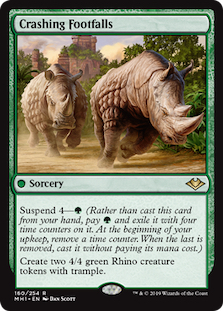
Tier 3 begins with decks posting 7 results. Then we go one standard deviation above average to set the limit of Tier 3 and cutoff for Tier 2. The STdev was 10.82, which means that means Tier 3 runs to 18. Again, it's the starting point to the cutoff, then one above for the next Tier. Therefore Tier 2 starts with 19 results and runs to 30. Subsequently, to make Tier 1, 31 decks are required. Which is exactly the same as it was in August.

The Tier Data

Which might lead on to think that the overall data would be similar to August's. It isn't. Unique decks are down from 80 to 65. Which is on the low end for the year, just above the low point in July. I suspect that where August was about exploration, September was all about refinement. The metagame, specifically the top few decks, were well known enough to actually prepare against. At least, the developments I saw certainly reflect such movements.

The total population was also way down. August reversed a downward trend by spiking to 515 decks. September only managed 426, which is still up from July but well below the yearly norm. And this is with help from non-Wizards tournaments. I found a number of Preliminary-like events on MTGMelee and added them in, which was fortunate. Without them, September would have been below 400 for the first time since I started doing these monthly updates again. There were slightly fewer events in September than August, so I can only guess that the Preliminaries were significantly smaller this month. Consequently, there are only 13 decks in the tier list which is well below average.

Deck NameTotal #Total %
Tier 1
Hammer Time4811.27
UW Control409.39
UR Thresh399.15
Burn388.92
Cascade Crashers317.28
Tier 2
Jund Saga266.10
Elementals214.93
Blue Living End194.46
Tier 3
4-Color Creativity163.76
Yawgmoth133.05
Mill102.35
Mono-Green Tron81.88
Amulet Titan81.88

While number of tiered decks is down significantly, the effect was felt entirely by Tier 3. The total number of decks in Tiers 1-2 are the same. This strongly indicates that the format was just as dynamic and competitive in September as August. The reduction is therefore due to the low population and not due to decks being squeezed out. It would be a different story if one deck was sucking up all the slots as happened with 4-Color Omnath prior to the bans.

Hammer Time is holding onto the top slot by about the same margin as in August. However, everything else has changed. UR Thresh is now in third place under the surging UW Control. Cascade Crashers just made Tier 1 while Blue Living End nearly fell into Tier 3. This is all connected, which is a clear sign of metagame evolution. Decks are adapting to the top decks and those that are more easily targeted are falling off. This indicates that the metagame is in a fairly healthy place. Especially since Burn's back in Tier 1.

Cascade Crashed

The biggest story is that both Cascade decks fell hard in September. Cascade Crashers just barely stayed out of Tier 2 and Living End just kept its head above Tier 3. This is a huge fall in fortune for both decks, which have been on an upward trajectory since June when MH2 brought in Shardless Agent and made both decks viable. This is a bit odd as there's nothing new in the cardpool to answer them, and in fact, players are playing the same answers now as in June. As always with MTGO, it may simply be that pilots got bored and switched decks, but I think there's more going on.
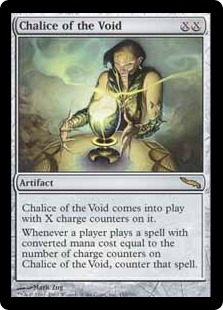
Small Change, Big Payoff

Specifically, the rise of UW Control to Tier 1 status. It was mid-Tier 3 in August after not appearing in the rankings in July, and has since exploded all over MTGO. Some of that definitely is thanks to Yellowhat and Wato0's results as well as LSV extolling the deck. However, the key was that other players were able to match their results. The aforementioned players, being who they are, routinely do well with decks that nobody else can. In fact, I remember it being a joke in the Pro community that only Wafo-Tapa can win with Wafo-Tapa decks. However, this latest iteration is a deck that doesn't require complete mastery to run well while simultaneously being very well positioned.
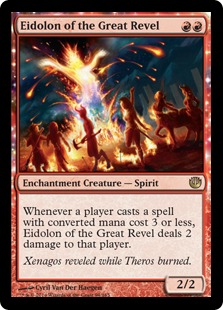
The key is maindeck Chalice of the Void. Sometimes that card just wins games by itself, and it's particularly devastating coupled with Teferi, Time Raveler against the Cascade decks (hence their decline). More importantly, it builds in some forgiveness for less experienced players. Playing control is very hard and requires making a lot of decisions correctly, leaving little room for mistakes. Thus it's an archetype that rewards strong players and punishes weaker ones. Chalice restricts the number of relevant cards, which makes threat assessment much simpler. Suddenly, the question against Cascade is whether to answer the actual threat being played rather than worrying about leaving the door open for the board to be flooded. It's hardly perfect, but making a deck even slightly easier to play while improving its positioning is a great way to attract players, and that's exactly what happened in September.

Burn's Back

I noted two years ago that Prowess and Burn compete in the same space and are better in different metagames. With Prowess completely disappearing, Burn was primed for the return to prominence we're seeing now. The key is the prevalence of removal, and cheap removal is at an all-time high. Burn doesn't care if its creatures die as long as they can bash in any amount of damage. Prowess needs its creatures to stick around, and so the current format is very unwelcoming.
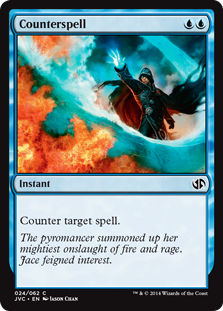
What's interesting is that some players are trying to innovate with Burn, and it isn't working. The vast majority of Burn decks look the same as Burn did in 2019. Some of these decks also run Lurrus of the Dream-Den as a companion, but far from the majority. At the same time, some players are trying to better utilize Lurrus by replacing Skewer the Critics with Dragon's Rage Channeler and shaving Rift Bolt and lands for Mishra's Bauble. In theory, this lets Burn grind better into the long game.

In practice, it isn't working out. The Channeler version does much worse than traditional Burn with or without Lurrus. The key is that DRC and Bauble are support for Lurrus and not the core strategy. Burn doesn't need to go long it needs to go face, and trying to change that isn't beneficial. Sometimes classics are classics for a reason.

Power Rankings

Tracking the metagame in terms of population is standard practice. However, how do results actually factor in? Better decks should also have better results. In an effort to measure this, I use a power ranking system in addition to the prevalence list. By doing so, I measure the relative strengths of each deck within the metagame. The population method gives a decks that consistently just squeaks into Top 32 the same weight as one that Top 8’s. Using a power ranking rewards good results and moves the winningest decks to the top of the pile and better reflects its metagame potential.


Points are awarded based on the population of the event. Preliminaries award points for record (1 for 3 wins, 2 for 4 wins, 3 for 5) and Challenges are scored 3 points for Top 8, 2 for Top 16, 1 for Top 32. If I can find them, non-Wizards events will be awarded points the same as Challenges or Preliminaries are depending on what the event in question reports/behaves like. Super Qualifiers and similar higher-level events get an extra point if they’re over 200 players, and a fifth for over 400 players. There was a single Showcase Qualifier awarding 4 points in September and no events that awarded 5 points.

The Power Tiers

Just like with population, the total points were down in September. This tracks given the population, but the scale of the drop off is astounding. August had 888 total points while September barely managed 707. The events from MTGMelee saved September from being the smallest point total once again. I did look around for other sources, but the most common reporting method is Top 8 only. That doesn't tell me anything about the competitiveness of the tournament so I really can't evaluate them. Which isn't a problem now, but paper events tend to be reported like that which will soon be a problem. I may have to completely redo the system.

The average points were 10.88, which means that 11 points makes Tier 3. It's the same as August, though I was fudging last month. Anyway, the STDev was 17.76, which is fairly average again though on the lower end. Thus add 18 to the starting point and Tier 3 runs to 29 points. Tier 2 starts with 30 points and runs to 48. Tier 1 requires at least 49 points.

Deck NameTotal PointsTotal %
Tier 1
Hammer Time7710.89
Burn679.48
UW Control638.91
UR Thresh618.62
Tier 2
Cascade Crashers486.79
Jund Saga436.08
Blue Living End385.37
Elementals375.23
Tier 3
4-Color Creativity253.54
Yawgmoth233.25
Mill192.69
Mono-Green Tron131.84
Amulet Titan131.84
Lurrus Zoo111.56

The list stayed basically the same this time around. Crashers falling into Tier 2  was the only shift. What is notable is that everything in Tiers 1-2 are comfortably in their tier. Nothing's even borderline. It means that the population figures were a pretty accurate reflection of overall decks strength. Relative strength is a different matter as there's considerable shuffling around within the Tiers. Burn earned the second most points in September to jump 2 slots. As I've always said that population doesn't measure strength as well as it does popularity.

Going to the Zoo

I'd also like to highlight the only deck to make the power rankings but not population. Right after MH2 there was an attempt to revive Domain Zoo which ultimately fizzled out. The deck had some impressive threats but that's just not good enough anymore. It wasn't fast enough to race aggro and couldn't grind or disrupt its way through slower decks or combo. However, September's data sees another attempt to make the archetype work actually make Tier 3 on power.

This new version gives up actually playing five colors of spells and Scion of Draco in order to run Lurrus as a companion. It can nonetheless access five basic types thanks to Triomes, so Tribal Flames is still used, but the core strategy is Jund aggro. And after board it goes 4-Color with either white or blue spells (white is far more common from what I've seen). This is working, but it's also treading very close on Jund Saga's turf. I'll be interested to see if they can coexist.

Average Power Rankings

Finally, we come to the average power rankings. These are found by taking total points earned and dividing it by total decks, which measures points per deck. I use this to measure strength vs. popularity. Measuring deck strength is hard. There is no Wins-Above-Replacement metric for Magic, and I'm not certain that one could be credibly devised. The game is too complex and power is very contextual. Using the power rankings certainly helps, and serves to show how justified a deck’s popularity is. However, more popular decks will still necessarily earn a lot of points. Which tracks, but also means that the top tier doesn't move much between population and power, and obscures whether they really earned their position.

This is where the averaging comes in. Decks that earn a lot of points because they get a lot of results will do worse than decks that win more events, indicating which deck actually performs better. A higher average indicates lots of high finishes, where low averages result from mediocre performances and high population. Lower-tier decks typically do very well here, likely due to their pilots being enthusiasts. So be careful about reading too much into the results.

The Real Story

When considering the average points, the key is to look at how far-off a deck is from the baseline stat (the overall average of points/population). The closer a deck’s performance to the baseline, the more likely it is to be performing close to its “true” potential. A deck that is exactly average would therefore perform exactly as well as expected. The further away the greater the deviation from average, the more a deck under- or over-performs. On the low end, the deck’s placing was mainly due to population rather than power, which suggests it’s overrated. A high-scoring deck is the opposite.

Low tier decks tend to do better than high tier decks in these standings. This is usually because they're piloted by enthusiasts and are taking advantage of a gap in the metagame and/or surprising opponents. That doesn't mean they're not underrated, but it does mean be careful. The question is not whether a given low tier deck does well in a given month but whether or not it can sustain its position.

Deck NameAverage PointsPower Tier
Lurrus Zoo2.203
Blue Living End2.002
Mill1.903
Yawgmoth1.773
Burn1.761
Elementals1.762
Jund Saga1.652
Baseline1.64
Mono-Green Tron1.633
Amulet Titan1.633
Hammer Time1.601
UW Control1.581
UR Thresh1.561
4-Color Creativity1.563
Cascade Crashers1.552

As my earlier disclaimer predicted, it's the lowest ranked deck with the best average. Now we see if Lurrus Zoo can maintain its position or if it was a fluke. Burn gets the trophy for deck of the month as the highest tiered deck above baseline, but it is quite interesting that all the other Tier 1 decks are below baseline by enough to consider it an actual underperformance. It will be interesting to see how this plays out next month.

Until the Next Shakeup

The year of unending spoilers will finally come to an end with Crimson Vow. If it's anything like Midnight Hunt, I'd anticipate no real changes to Modern, but there's no way to see. I just have to collect and process the data and see what happens.

Perhaps Vampires Is a Bit Strong But…

Are you a Quiet Speculation member?

If not, now is a perfect time to join up! Our powerful tools, breaking-news analysis, and exclusive Discord channel will make sure you stay up to date and ahead of the curve.

Recently, I was thinking a lot about the next year or so of upcoming sets. I was trying to foresee possible trends and patterns when a song came on. It was "Perhaps Vampires is a bit strong but..." by the Arctic Monkeys, and it hit me. Vampires. It was so obvious but I overlooked it. After all, with a lineup as compelling as next year's, another Innistrad set this year was more of a footnote in my to-do list. I haven't been excited with Standard releases recently, and next year's lineup seemed so much more interesting. Apparently, I wasn't alone. It took months after the announcement of Innistrad: Midnight Hunt for werewolves to see the attention they deserve, and not until after spoiler season started. Let's go over some mistakes the market seemed to make during the time period before Midnight Hunt, and let's look at some ways to be proactive and avoid that with vampires and Innistrad: Crimson Vow.

How Did Nobody Plan Ahead?

It seems like people didn't have the foresight to realize that the set that was branded as Innistrad: Werewolves, was going to have a heavy werewolf theme. This is demonstrated by the price of the card Huntmaster of the Fells. The price showed no movement whatsoever for months and months, despite the fact that we knew Innistrad: Midnight Hunt was coming. In fact, there was no movement until the day previews started on September 2nd. The case is the same with Mayor of Avabruk.

There was an error retrieving a chart for Huntmaster of the Fells // Ravager of the Fells
There was an error retrieving a chart for Mayor of Avabruck // Howlpack Alpha

It's as if everyone forgot about the set from the moment it was announced until the day spoilers started coming out. A classic "cross that bridge when we get to it" mindset was very much at play. Modern Horizons 2 coming out a good two and a half months earlier may have had something to do with that.

The Liquidity Problem of MH2, and Why Cash Is King

The release of Modern Horizons 2 had a profound effect on game stores and players across the country. With increased prices, stores were dedicating large amounts of resources, and often buying on margin to fill the demand that the set was generating. For a good period of time after its release, stores experienced heavy demand for sealed product, as certain chase cards were scarce, and pretty consistently sold off the shelves as soon as they were opened. I remember dozens of players at my local game store (LGS) alone driving hours and hours just to find a single copy of Ragavan, Nimble Pilferer.

There was an error retrieving a chart for Ragavan, Nimble Pilferer

This constant demand for more and more MH2 left stores without much resources to afford anything else. And this demand lasted several months, leaving both stores and consumers looking for liquidity.

Retail 101: Inventory Turns

For the uninitiated, an LGS sustains itself on the principle of inventory turnover, defined by Google as "the number of times that a retailer sells and replaces its inventory". The LGS makes very minuscule profits on individual items but sustains itself by selling lots of product and having a high turn rate. With each new set that comes out, the LGS has to dedicate a portion of their time and money to stocking that release, and will thus have lower cash reserves to allocate to other things. If the demand for a set is low enough, that money may even end up locked down in a hard to move asset. Usually, for a new set the demand stabilizes out very quickly after release, and one or two restocks is sufficient to satiate consumer demand. With MH2, demand was so high that most stores needed to go all-in on every restock they could get. As those rolled out, for weeks, maybe even two months after release in some places, stores were dedicating a large amount of money, time, and effort to stocking MH2.

Failure to Look Ahead

Because of the major amount of time and energy that was required to take advantage of the interest in Modern Horizons 2, people were not able to look ahead to future opportunities. They were focused on the easy money in front of them and didn't have time to think of the future. Modern Horizons 2 had a massive impact on everything. From metagames, to card prices, to the financial well-being of our beloved local game stores. This affected our mindsets in a way, severely downplaying everything else that was happening, or was to come in our immediate future. It's a major reason why Adventures in the Forgotten Realms was such a failure. People were still getting their minds and their wallets off of MH2, and by the time they looked up, it was already time for previews for the new Innistrad set. Taking time to analyze what we may have missed, even from sets before the release of MH2 is probably a good idea going forward. We seem to have collectively missed a lot of things, and a second look may be revealing.

How You Can Be Ahead of the Curve

The major mistake we all made was not thinking ahead. We had information ahead of time, ample information to make qualified speculations, and did not take advantage when action was necessary. There were a few who made their moves early, but so many of us did not. Before Innistrad: Crimson Vow is here, take advantage of the time and information you have right now. Pick up some specs, move some inventory, plan ahead. Vampire commanders are a good start. Here are some great examples:

There was an error retrieving a chart for Edgar Markov

Edgar Markov is a highly sought-after Commander. if you've got some, hold on. They can always get higher.

There was an error retrieving a chart for Vito, Thorn of the Dusk Rose

Vito, Thorn of the Dusk Rose seems pretty low, and looks like a safe buy.

Tribal Support

Try to look around for any cool interactions, but don't neglect generic tribal support. There are many options for it, including the classic Coat of Arms, or the more recent Vanquisher's Banner. Just don't make the mistake of not thinking about it now.

There was an error retrieving a chart for Vanquisher's Banner
There was an error retrieving a chart for Coat of Arms

Passive Thoughts Equals Passive Action

We live in a world of hustle and bustle. It's hard not to get into the motions and go on autopilot. Every situation requires finesse. We may pay special attention to heavy hitters, but the bread and butter are still just that, the bread and butter. Forgot those and all you are left with is a bunch of ingredients. Passive thoughts about the future mean sub-par results for the future. As Malcolm X said, "Tomorrow belongs to those who prepare for it today."

Want Prices?

Browse thousands of prices with the first and most comprehensive MTG Finance tool around.


Trader Tools lists both buylist and retail prices for every MTG card, going back a decade.

Quiet Speculation