Are you a Quiet Speculation member?
If not, now is a perfect time to join up! Our powerful tools, breaking-news analysis, and exclusive Discord channel will make sure you stay up to date and ahead of the curve.
Today's article is one that's been brewing in my mind for over a month. Back on May 6th, 2021, Dogecoin hit an all-time high of 0.68 per coin. My two co-workers were both invested in it and were extremely bullish on it. All I would hear is that "it's going to the moon" all during its incredible rise that began on May 2nd. For those four days, it seemed like their willingness to hold onto it made them geniuses, as its meteoric rise continued. They kept saying that if it dropped, they would just buy more "into the dip," and then make even more money when it inevitably rose again.
While it certainly has risen a few times from lows it's currently sitting at $0.29 per coin as of me writing this. The days of my starry-eyed co-workers claiming it would hit $1 are gone. One of them sold it when it dropped down to $0.5, but the other is still holding. His buy-in was $0.29, so he is exactly where he started and has made $0 profit. Of course, I told him to sell when it was near $0.7. Doubling your money in less than two weeks was incredible in and of itself, and he should enjoy his profits. Unfortunately, he didn't. This isn't to say I have some supernatural predictive abilities; it's pure luck that I happened to emphasize how rare doubling up is on the same day that an asset hits its all-time high.
Why bring this up you might ask? All too often, I see the same overly optimistic bullish beliefs in the Magic finance world as well. I may be bursting some bubbles with this article, but in the long run, you will thank me.

Supply and Demand
Pretty much every economist agrees that the concept of supply and demand is what drives any business and the economy overall. If you make something nobody wants, then there is no demand. Thus, it doesn't matter how much supply you create if you don't make any money. If there is no supply of raw materials to make your product, it doesn't matter how badly people want it because you can't produce it. The latter is something we are starting to see a lot in the world today, as many businesses struggle to get the resources necessary to produce goods.
You can think of a card's current price as a reflection of both the supply in the marketplace and the demand for the card. If there were more demand for the card, the cheap copies would be purchased and the price would rise. If WotC reprints the card, then there is an increase in supply. We as MTG financiers are always hoping for the former with our cards and fear the latter.
I can tell you firsthand, thanks to the new Secret Lair Phyrexian Praetors: Compleat Edition that the small stack of Elesh Norn, Grand Cenobite's that I've been sitting on as a speculation target will not be bearing any fruit. There are two additional factors to supply and demand that are relatively new to Magic finance, especially given that its oldest possible existence is only 28 years.
Covid-19 Continual Effects
While COVID-19 is starting to get under control and vaccination levels continue to rise; it is still very much affecting demand for physical cardboard. While many local game stores have started hosting events with or without occupancy restrictions, WotC's current policy is not to hold any major events like MagicFests until the 2022-2023 season which is still 6 months away. We are starting to see a lot of movement on Modern staples as players build new decks with all the goodies from Modern Horizons 2. However, part of me strongly believes that without the ability to play those new decks in larger events the excitement will wane.
It's also important to keep in mind that a lot of card price increases over the past 12 months have been tied to stimulus spending. Many people got what they viewed as "free money" and those who were Magic players bought cards they typically might not have. If we get more stimulus money, we may see additional price increases. If we don't, then anyone expecting the overall price trend to keep going up will be sorely disappointed.
Inflation
Another concern that is still flying relatively low under most people's radar, at least here in the US, is general inflation which has reached a high not seen in over a decade. While experts are split on how long it will last, the fact that it's possible to last a while may end up cutting into card demands in the coming months. The price of many goods increases during times of inflation and that includes essential items like food. While Magic is often called "cardboard crack", most would prefer to eat and have a roof over their heads than have a new Modern deck. If tough decisions have to be made, we could easily see staple supply rise and prices drop back down.
Conclusion
For those wondering why I had to title this article "Tempering Expectations Revisited" it's because way back in 2016 I used the same title to go over the same subject. But it's always good to get a refresher every once in a while. A lot has changed since I wrote that article, the woman I went to McAdenville with is now my wife and mother of our child and I've started a new career, but the article still remains true as ever. Were you a very bullish speculator when you began this article? Are you still one now? If so, I'd love to hear your reasoning in the comments below.
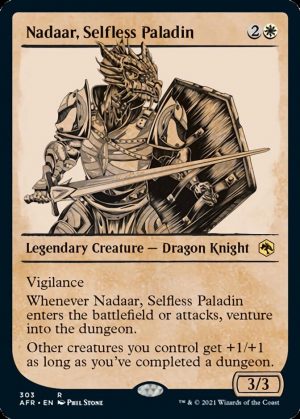
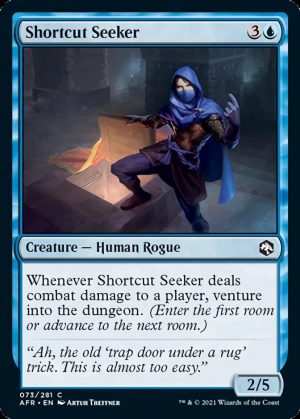
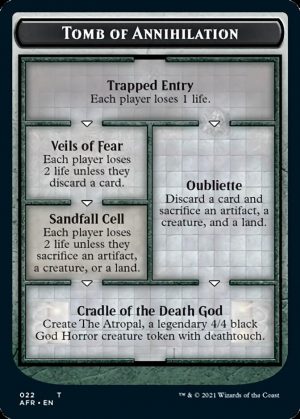
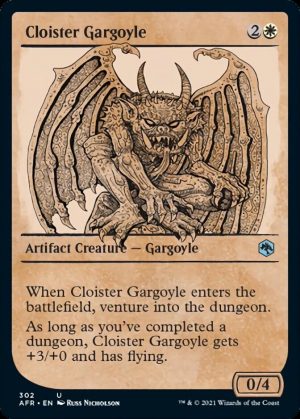
 Currently, we know next to nothing about how venture will play out. A few enablers and one non-dungeon payoff are all that's been spoiled as I'm writing this sentence. However, that hasn't stopped players from
 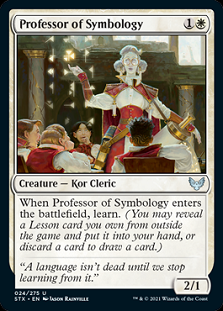 that initially there was
 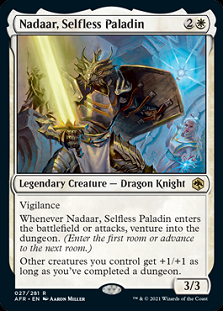 That doesn't mean that dungeons are unplayable. Incremental but building advantage is definitely playable; just look at Search for Azcanta or most planeswalkers. The key question is whether there are venture cards that fit into Modern. Just being a decent venture enabler is not enough; the card needs to be Modern playable in a vacuum. Learn is the
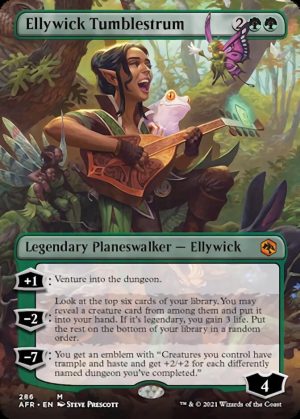
 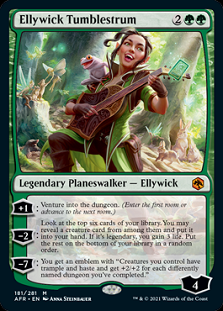 Ellywick Tumblestrum, on the other hand, has potential. And a very silly name. Which D&D bards are
 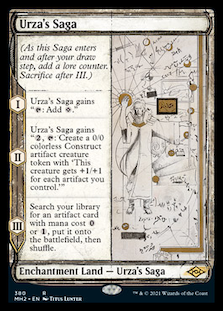 However, that also tracks with the lore. Entering a dungeon on your own is suicide; that's why parties exist. Venture does stack, so if multiple enablers are playable in the same deck, it may be possible to blitz the dungeons. Which begs the question whether it's worthwhile to actually delve any of them.
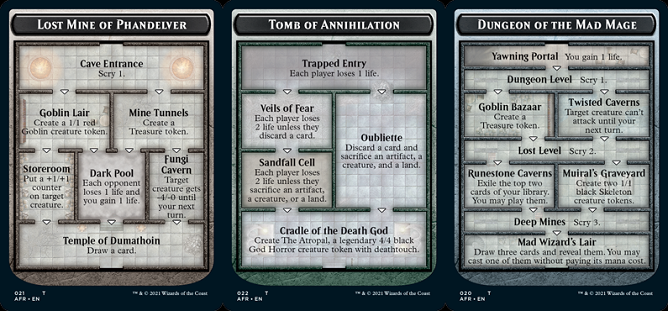
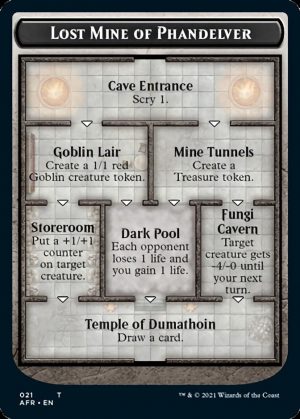
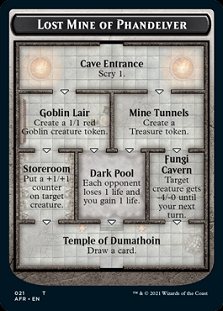 Of the dungeons, the Lost Mine of Phandelver is the best for starting out. Scry 1 is much better more of the time than losing or gaining a single point of life. This indicates that this dungeon is designed with incidental value in mind and that Wizards expects players to stroll rather than barrel through. And for the strolling player, there's some decent value to be had. Scry 1 is decent, though not especially powerful, as shown by Opt. From there the path really depends. The drain in the Dark Pool is a good failsafe condition with the +1/+1 counter option being the most powerful. The main problem is that the big payoff is a cantrip. Not horrible, but it really makes me wonder if this dungeon was worthwhile.
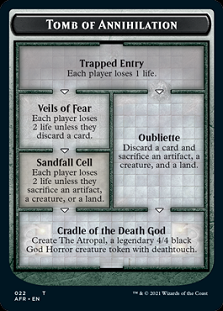 This is the dungeon that I expect most players are going to try and blitz. Which makes perfect sense; it's the
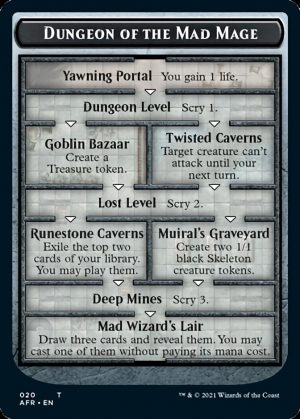
 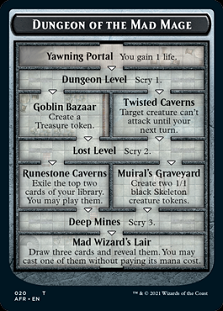 I will be stunned beyond words if it is actually possible to blitz Dungeon of the Mad Mage in normal Modern games. It takes seven venture triggers to get to the end! That would require either a huge number of enablers or one that can be activated multiple times a turn. The former would probably win the game on their own while the latter is likely to be targeted at Commander rather than Modern, but we'll see.


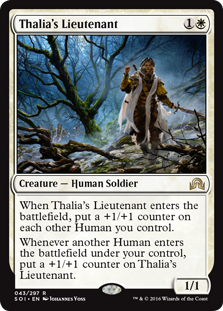 The key to tuning any deck is remembering what the deck wants to do and the cards that make that happen. I realize that this seems obvious, but I've made the mistake of over-tuning my deck before, just like everyone else, so it bears repeating. Every deck has some core of cards that define that deck and are critical to its identity, strategy, and metagame position. Any changes made to that core are risky, though potentially rewarding, as
 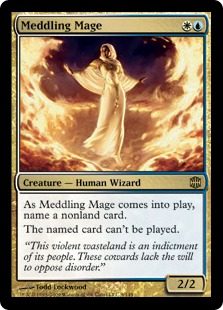 I process a lot of decklists to make the
 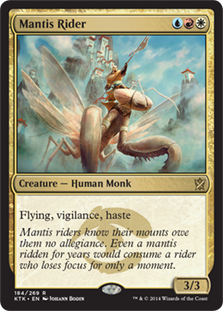 The other key to remember with Humans is that there is a reason that 5-Color Humans has been
 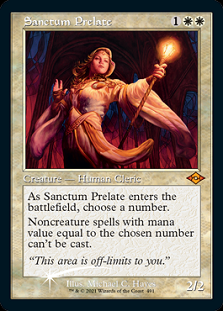 Thus, the first question when dealing with Humans post-Modern Horizons 2 is whether it's even worthwhile to change the deck. The template from 2017 is still quite solid, which is probably why it's the most
 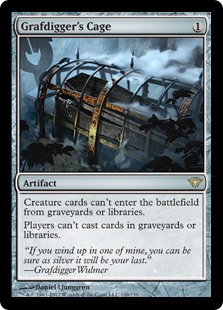 The deck runs as well today as it ever has, so why change everything? I was running Prelate anticipating lots of Prowess, control, and cascade. There was a lot of control present, but I didn't hit any. In fact, I only drew Prelate once against Burn where I was mana screwed. Had I cast Prelate, I probably win that game, but I couldn't and don't. The deck was still solid in the open meta, my sideboard was broad enough to cover the field, and a blistering Humans attack was still very strong. There's no compelling reason for me to change up the formula.
 The Big Strength
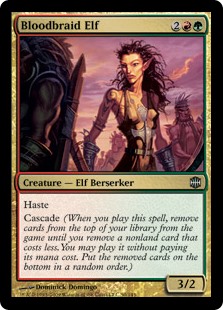 That said, I feel that a lot more work needs to be done to make Shardless Humans a real contender. A lot of the aforementioned problems are more my unreasonable expectations in comparing Agent in Humans to Bloodbraid in Jund. The former will always be weaker than the latter, and it's unreasonable to expect anything else. Shardless is being played because it's a human that can find another human and immediately cast it, netting a huge swing in card advantage and tempo.
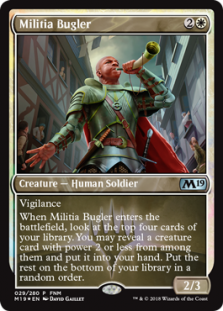 That said, it is definitely worth trying to make Agent work because Humans has forever longed for a card advantage creature in grindy matchups. Militia Bugler
 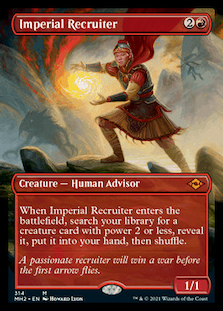 The Big Weakness
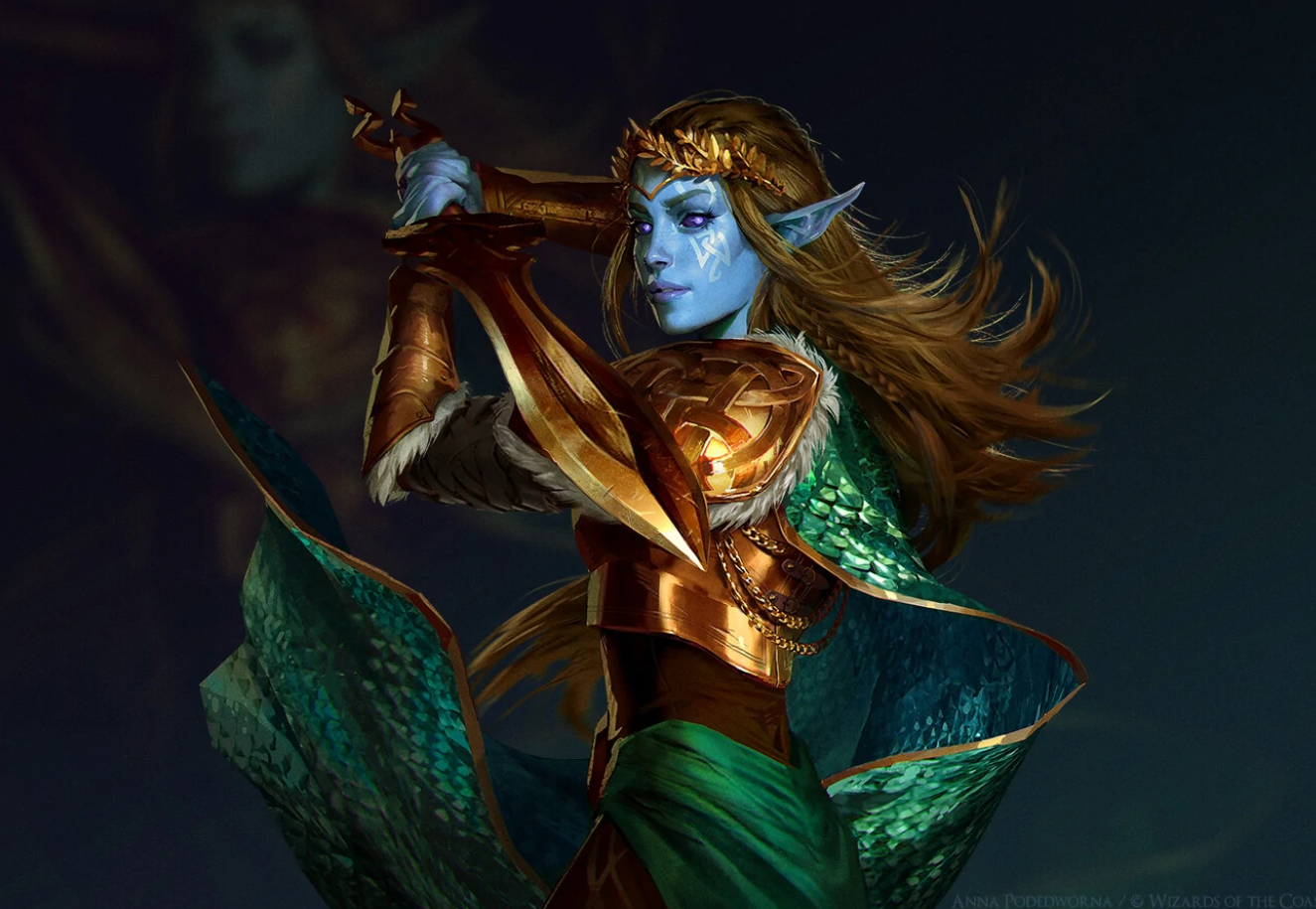
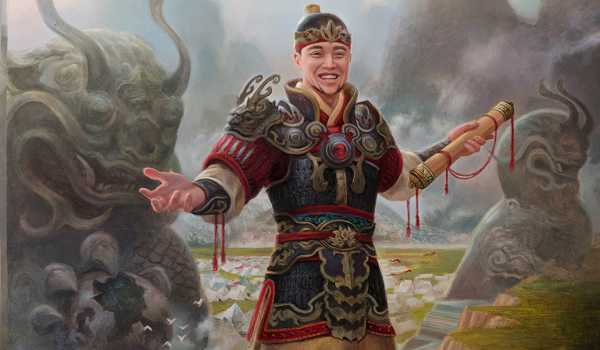
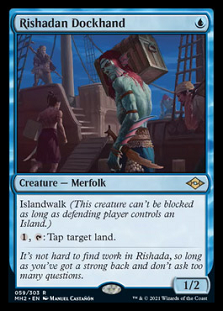 Naturally, I started with Merfolk. It's my
 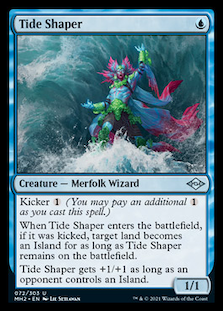 However, Tide Shaper means that I don't have to settle. Shaper is actually the answer to a problem Merfolk's long had, but I never expected would be answered. The problem is that Spreading Seas is necessary, but undesirable. It's very good mana disruption, and more importantly it turns on islandwalk, which is critical against any creature deck. However, Seas doesn't swing, and unless played late is just a huge tempo hole. I usually cut it against any aggro deck as a result. Shaper is just a 1/1 for one, and Merfolk of the Pearl Trident is not playable. However, the option to kick Shaper into a 2/2 Spreading Seas makes that humble creature extremely playable. As such, I've decided against running Dockhand in Merfolk and instead have fitted Shaper as the new one-drop.
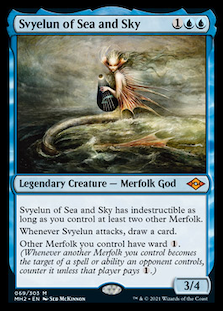 Svyelun has proven to be difficult. Her stats are above average and Curiosity
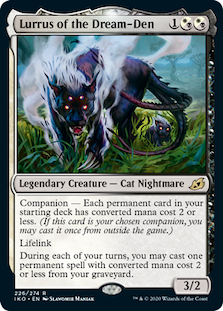
 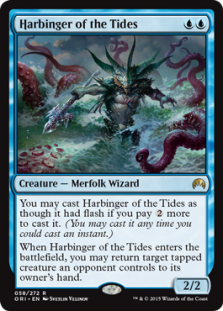 -positive threats, so I maxed out both. Being a cheap deck means that Lurrus is available as a companion, though most of the time I've used it more as a lifegain speedbump than an actual card advantage engine. Unsettled Mariner and the maindeck Chalice of the Void are both targeting Prowess but are quite solid against the control decks I tested.
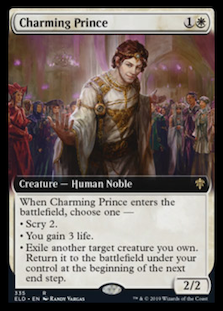 I really liked the deck. Tutoring for Magus of the Moon was relevant a surprising amount of the time, far more than the other maindeck bullets. Prelate is quite good in certain matchups, but this being Modern, she lacks the hard-lock edge she frequently offers in the more one-drop-centric Legacy. The biggest downside is that I can't chain Flickerwisps by flickering Recruiter, a line that is frequently backbreaking for opponents in Legacy with Recruiter of the Guard. It made me want to go lower to the ground with Charming Prince, but Flickerwisp is better enough outside of chaining Recruiter (hits harder and has evasion, mainly) that I didn't go that route.
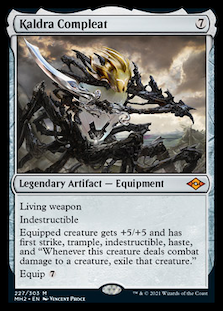 Could that have changed if I'd been running Kaldra Compleat? Short answer: no. Kaldra is an amazing card if it hits play turn 2. It loses to nothing in combat, has haste, and kills in four turns. However, it has two problems. The main one is cost. Kaldra costs seven to cast or equip. That might as well be infinite for anything but Tron. Kaldra's playability is almost entirely tied to untapping with Stoneforge Mystic, and in my experience that doesn't happen often unless Mystic is Vialed in on the end step. This is less true in Stoneblade decks, but for Taxes, Kaldra kept getting stuck uselessly in hand.
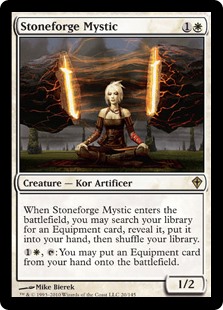 The second is stabilizing. Kaldra is an amazing offensive threat, but is much worse than Batterskull against aggro, and that's what I struggled against. Vigilance and lifelink are far more relevant there than first strike and +1/+1. It was also worse than the evasion granted by Maul of the Skyclaves.
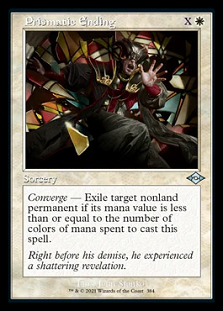 Adding Prismatic Ending has improved things against Wrenn, but Prowess remains a huge problem since Magus and Wildfire are pretty weak in game 1. I also found that getting Magus was important enough when I really needed it that I'm planning on switching a Flickerwisp for a third Magus. In a slow metagame, the twelve land destruction spells are crippling. Just remember to use Field to hit the nonbasics and to follow up with Quarter or Wildfire on the basics. There's a lot of promise here once I fix the aggro matchup. Which might require moving the Wildfires to the sideboard and running Bolt main.
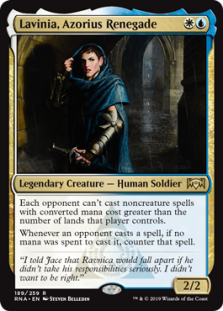 Lavinia doesn't synergize with Thalia; here, the latter was cut so Lavinia could actually counter cascaded spells. Sentinel is still very good here because I'm targeting combo decks that like to cantrip and tap out. It's also good because it digs for counterspells. Dockhand is in a similar position, where it does an excellent job slowing down combo decks and makes it harder for them to pay Sentinel's tax. The current sideboard is meant to hit the cascade decks, but can easily be tuned.

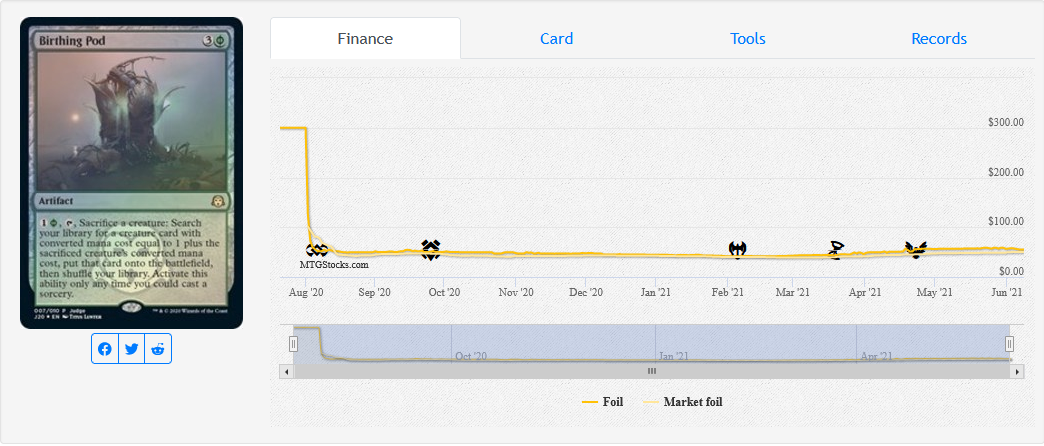
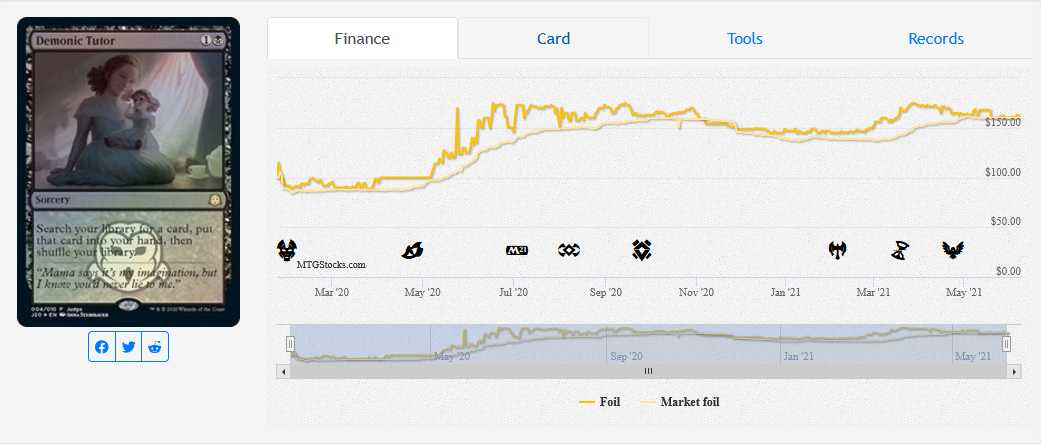

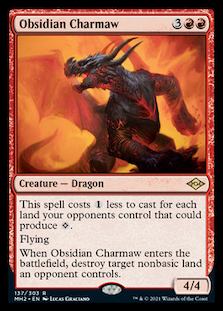 Wizards printed three blunt-force anti-Tron cards and three more which interact favorably with Tron. And by blunt, I mean that Break the Ice, Obsidian Charmaw, and Void Mirror might as well have explicit rules text saying "use this against Tron." Void Mirror is the most obvious, as it counters any spell that was cast without any colored mana. Tron is a deck famous for casting colorless threats. You do the math. Mirror is also effective against all the suspend cards in MH2, almost as if Wizards was providing extra incentive for players to play the card. It is also quite potent against normal Tron's cousin, Eldrazi Tron, as if it wasn't obvious enough.
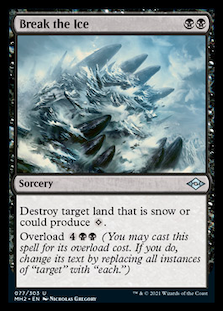 Break and Charmaw are similar in that both are intended to destroy Tron lands. Technically, Charmaw destroys any nonbasic land, which means it is likely a shoo-in for Ponza. However, the cost reduction of Charmaw is targeted at colorless lands, and again, what deck besides Tron uses lots of colorless lands? The fact that it can hit Tron turn three on the play cannot be an accident. Meanwhile, Break costs two specifically to prevent turn three Karn Liberated. Again, it specifically targets lands that make colorless mana. It also hits snow lands, but that hasn't been too relevant since Arcum's Astrolabe was banned. Though it is worth noting that snow-covered basics are not always strictly better than regular basics anymore.
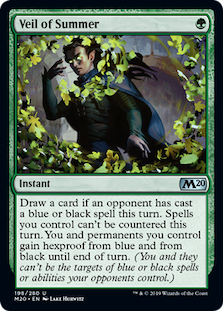
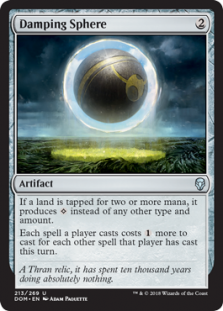 Shame it's going to fail at that, then. I hate to burst any bubbles, but there is very little chance of Tron being uniquely hated out by anything in MH2. It might lose some popularity initially, but Tron will easily recover and continue to fun-police all over midrange and prison. Mainly because the dedicated hate is easier to avoid than it appears. Mirror doesn't counter colorless spells (which actually would be devastating), just spells that weren't cast with colored mana. Thus it's easily defeated so long as Tron has out a Chromatic Star or a forest. It wouldn't surprise me if Tron started running Yavimaya, Cradle of Growth for this very purpose, giving them a way to tap even their colorless lands for G and empty their hand of said Stars for multiple big-mana plays. Break the Ice is black and can be beaten with Veil of Summer. Overloading Break is a win, but at that point, Tron was unlikely to win anyway. And Charmaw is only good disruption on the play.
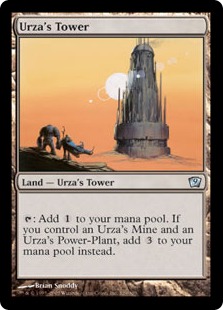
 However, that's not entirely the cards' fault. The answer lies in the mirror. How many players have seen all the new hate, will assume that Tron's going to be hated out and/or dropped, and will cut their Tron hate? Be honest, you've at least thought about it. That's the main reason that Tron
 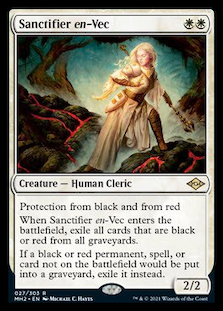 Not so unlike Tron, every time there's a shift in the metagame or a new piece of graveyard hate, Dredge is declared a dead deck. And for
 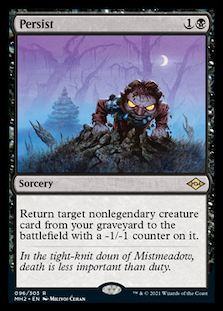 it sees so much play in Legacy where there are
 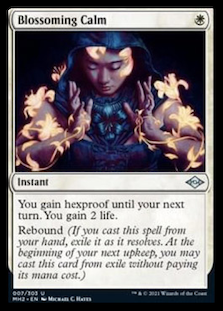 Burn, enough that I expect it to overtake Timely Reinforcements as the sideboard card of choice. Thanks to it granting hexproof without restriction, it's less powerful but more versatile than Veil of Summer, and therefore counters Mill's Glimpses, Hedron Crab triggers, and Archive Traps. Otherwise known as their most damaging spells.
 At Your Peril
 I'd also like to note that all combo decks that don't win via Thassa's Oracle will be hit by Blossoming Calm, Storm being the hardest hit: Gifts Ungiven targets opponents, so Calm both counters the Gifts and protects against Grapeshot for a turn. If Calm is adopted as widely as I think it should be, then Storm and similar decks will have to rebuild. MH2 has provided a number of options for Storm to move into green, though I have no idea if that's ideal. Is Caleb Scherer still around? Somebody ask him.
 Power: 4
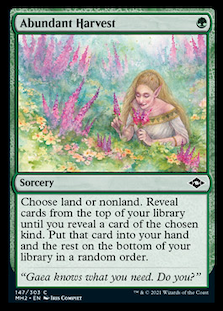
 That's a far cry from Abundant Harvest. A fair bit of the card's power lies in just how easy it is to navigate, a factor that ensures most players will resolve it correctly without spending energy deliberating. Harvest always asks players the same (very easy) question: would you rather this card be a land or a spell? Having 100% control over getting one or the other is so strong that I'd situate this card's impact level somewhere between that of Preordain and Ponder.
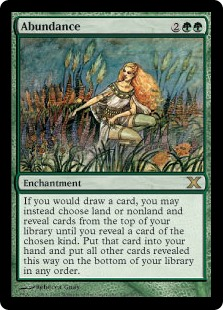 HELLO?!?!! This is so good!! You have 100% control over getting one or the other. Harvest is always the better of the two.
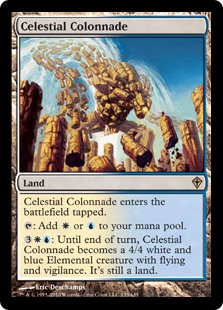 One archetype that doesn't have its early game curve tied up and is known to have tons of mana to throw around during the game is control. Currently, these decks are built with flooding in mind, and pack insurance like Celestial Colonnade. But I can envision a world where control decks want green, and in that world, Harvest presents an alluring alternative to running mana sinks. These control decks will seek to put the game away a bit faster than what we now see out of UW or Esper,
 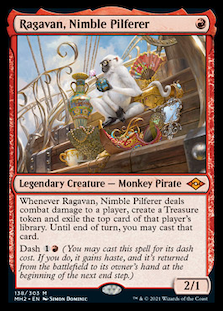 Power: 5
 True, Ragavan doesn't draw a card every turn. Even in the mirror, it will sometimes flip a land. But it draws a card sometimes, and by drawing once, it has already paid for itself in terms of card economy. I'll also argue that in many instances, it has already paid for itself just by generating a treasure. That extra mana means it also ramps into the opponent's payoffs; I've played one game where I was able to cast, from my opponent's library, turn two Teferi, Time Raveler (which met Force of Negation) and then turn four Jace, the Mind Sculptor (which resolved and won me the game).
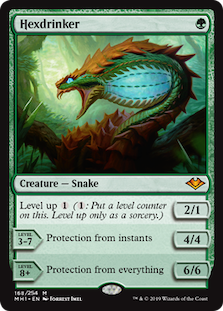 So Ragavan is the best creature ever printed. Will it be banned in Modern? Obviously, it's far too early to tell. It's not like we lack answers to a 2/1. Hexdrinker, too, is a massively pushed aggressive one-drop that
  Decks will splash for this card. They will splash for this card like crazy. By which I mean they will be rebuilt to accommodate Ragavan alongside the best red spells that play to its bottom line (AKA Lightning Bolt). Imagine it out of control sideboards when all your Pushes are in the board. Scaaa-ry! But not every deck, or even every red deck, will want Ragavan.
 Jund Rock: Hexdrinker was good enough for BGx players