
Are you a Quiet Speculation member?
If not, now is a perfect time to join up! Our powerful tools, breaking-news analysis, and exclusive Discord channel will make sure you stay up to date and ahead of the curve.
If you missed last week’s article, I covered the prizes and pitfalls of two Magic sets from the late 1990’s: Portal and Portal: Second Age. Both were designed with beginners in mind, leaving out instants, enchantments, and artifacts and used different verbiage in an attempt to make the game more approachable to newcomers. Because the set wasn’t tournament legal when it was printed, it put a damper on demand.
When Portal sets were made legal, it opened up opportunities. These Portal sets contained functional reprints or near-reprints, meaning increased redundancy for certain effects (e.g. tutoring) in games of Commander. The set suddenly went from being useless with little value, to containing various gems with rising value.
But there’s another Portal set I didn’t cover last week, which I intend to cover this week. It’s the most exciting of the three Portal sets, containing some extremely rare and valuable cards. Of course, I’m talking about none other than Portal: Three Kingdoms.
A Little Background
Before diving into the financial component, I want to touch on a bit of history. According to MTG Wiki, Portal: Three Kingdoms was designed for the Asian market and was not sold in North America and released in May 1999. The set was mostly printed in Japanese, Simplified Chinese, and Traditional Chinese; only a tiny amount of product was printed in English, to be sold in Australia and New Zealand. This makes the English printings of these cards some of the rarest in the entire game!
To make things even more interesting, the set was based in flavor from the Three Kingdoms time period in Chinese history. The real-life references made the set very special, as it was the first one to reference real-life people and places since Legends (and it’s something Wizards hasn’t really done much of since). The artwork for the entire set was produced by Chinese artists to provide a more authentic feel, and the idea really worked well. I personally love the art and flavor of the set.
Taking everything together, you have an older set, initially not legal for tournaments, never released in North America, with unique flavor and feel—this makes for one of the rarest, most collectible, and most valuable sets in the history of Magic!
So Much Value
I don’t think it’s far-fetched to assume that most players in North America prefer English cards, especially in casual circles. Portal: Three Kingdoms would be no exception. Given the fact that the English printing was the smallest, it makes for some very hard-to-find and valuable cards in the set.
Let’s touch on a few examples.
The most valuable card in the set is Imperial Seal, which retails for $1599.99.
This near-functional reprint of Vampiric Tutor has only been reprinted once, as a judge promo, and is extremely hard to find in English. Cheaper copies exist in Chinese and Japanese, but acquiring a playset of English copies of this card years ago would have yielded jaw-dropping returns.
The next most valuable card is far less powerful: Zodiac Dragon.
A nine mana 8/8 is a fairly unimpressive stat, and the card’s rules text isn’t all that impressive. I don’t think being able to play this card again and again after it dies is enough to make it a strong contender. The only thing going for this card is its creature type: it’s a dragon. Any dragon collectors looking to buy one copy of every dragon ever printed will have to pay up for this never-before-reprinted card. As a result, it retails for $999.99!
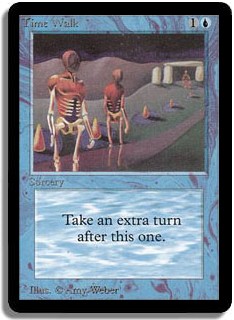
Rounding out the top five most valuable cards in the set, you have Warrior's Oath (a functional reprint of Final Fortune) for $599.99, Ravages of War (functional reprint of Armageddon) for $549.99, and Capture of Jingzhou (functional reprint of Time Warp for $499.99. Warrior's Oath has never been reprinted and the other two have both been judge promos.
Did you notice how many of the valuable cards in the set are functional reprints or near-reprints of other cards? This is a major theme in Portal: Three Kingdoms—there are dozens of functional reprints, ranging from Ambition's Cost (Ancient Craving) to Zodiac Tiger (Heartwood Treefolk).
As I discussed last week, functional reprints of Commander-playable cards can be extremely useful as they offer redundancy in a deck. When you can only play one copy of any card in a deck, having multiple cards with different names that do the same thing can add much-needed consistency. What’s better than playing one Time Warp in a commander deck? Playing two Time Warps! (or, thanks to Portal’s Temporal Manipulation, three!)
A functional reprint doesn’t have to be all-powerful to be valuable, either. Three Visits is a functional reprint of Nature's Lore. The card is useful, for sure, especially because it lets you search up a Dual Land with multiple basic land types. But players want to play a second copy of this card in their deck enough to bolster the functional reprint’s price up to about $40! Did I mention this is a common?! The card would be even more valuable if it wasn’t recently reprinted in Commander Legends, by the way.
All Those Legends
Another value-driving component of Portal: Three Kingdoms is the long list of legendary creatures in the set. I don’t necessarily think many of these are commander all-stars, mind you, but it only takes a handful of players demanding the cards to drive up their prices.
The most valuable legendary creature in the set is Yuan Shao, the Indecisive, which retails for $279.99
I’m not sure how powerful its ability is, but it seems like a commander that comes with a free Familiar Ground is pretty solid. As a bonus, the creature is red so you can play Goblin War Drums in your 99 and make all your creatures unblockable! Not that you need that anyways…Yuan Shao, the Indecisive has horsemanship, which virtually means its unblockable anyway.
While we’re on the subject, let’s talk briefly about horsemanship. The ability is the set’s parallel to flying, in that a creature with horsemanship can only be blocked by other creatures with horsemanship. Flavor-wise, it’s a really cool bit of flavor for this set, when considered in a vacuum. When taken as an ability in the broader game of Magic, however, it virtually means your creature is unblockable. Unless you have a certain local metagame focused around Portal: Three Kingdoms, you won’t be running into many opponents with creatures that have horsemanship.
Many of the legendary creatures in this set have the ability, and it could be an additional factor driving up their prices.
Zhang Fei, Fierce Warrior is a six mana 4/4 with vigilance and horsemanship, for example, and it retails for $229.99 (and Card Kingdom is sold out at that price!). Other examples of expensive legendary creatures with horsemanship include Cao Ren, Wei Commander and Xiahou Dun, the One-Eyed. The list is quite lengthy, and any legendary creature from the set will be worth a pretty decent amount. The cheapest rare of the set is Lu Bu, Master-At-Arms and even that card still retails for $16.99, and I suspect this is the cheapest because it was the set’s prerelease card.
The next cheapest rare, by the way, is Ambition's Cost, a card that has been reprinted a half dozen times, including in Eighth Edition as an uncommon, and the Portal: Three Kingdoms printing still retails for $29.99.
Weighing Upside and Downside Risk
I could go on and on listing the valuable cards of this set. But the reality is, you really need to browse through it yourself to find all the gems—there are just so many! I liken this set to Legends in a way, because they both contain so many unique legendary creatures with a surprising amount of value. But I would be remiss if I didn’t touch upon the upside and downside potential of the set before wrapping up the article.
The upside is pretty obvious. English printings of any and all of the cards in the set have some value, including the basic lands. Any rare is going to be especially valuable, especially if the card hasn’t been reprinted and has utility in a game of commander. As I browse some of the more popular cards in the set on TCGplayer, I’m seeing an extremely small amount of copies in stock—it kind of reminds me of Alpha in how sparse the inventory is.
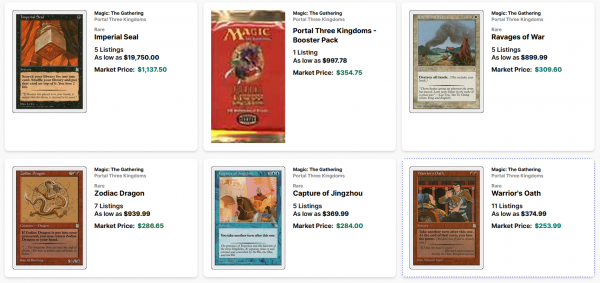
You can see the drastic difference between the lowest listing and the market price—sellers are already anticipating a much higher price on these cards. Either that, or they have no desire to sell until the price is significantly higher.
Card Kingdom prides itself on its large inventory, but even they are out of stock or low in stock of many of the set’s cards. To me, this indicates potential for upside—they will keep increasing their buy prices until they restock the card. But since these cards are so rare, it may take a while before anyone comes forward with copies they’re willing to sell. English copies in particular have very high ceilings because of this.
But there is a trap with these cards that any prospective investor/speculator needs to consider before diving in. None of this set’s cards are on the Reserved List. They are all vulnerable to reprint in a big way. I have a personal experience with this.
About a decade ago, I picked up a nice English copy of Diaochan, Artful Beauty.
Beyond the beautiful artwork, I also thought the card would make an interesting commander from a political standpoint. I don’t remember precisely what the card cost me, but I want to say it was in the $30’s or $40’s. It had a steady, upward trajectory as the card aged, and I liked its upside potential; its buylist price was rapidly climbing, and I remember the temptation of cashing out at around $60 or $70.
Then in 2012 it was reprinted in Commander’s Arsenal. Suddenly there were copies that could be bought for less than $10, and it used the exact same artwork as the original (with updated, easier-to-understand rules text to boot)!
“But Sig, the original printing of the card still maintains its value despite the reprint. We see this all the time.”
That’s a valid point, but misses an important detail: the potential price of the card if it wasn’t reprinted. This is impossible to determine absolutely, but it’s very safe to say that original Portal: Three Kingdoms copies of Diaochan, Artful Beauty would be much more valuable if it hadn’t been reprinted.
Because cards from Portal: Three Kingdoms are so rare, their value is buoyed significantly by their rarity. As a result, they are very vulnerable to significant price declines should they be reprinted. While Wizards of the Coast has been careful with how they reprint cards from this set (often as judge promos with limited distribution), there’s always that risk lingering in the background. As a result, while I think these are brilliant long-term investments, I advocate diversifying and buying only one or two copies of multiple cards rather than going deep on a single one.
Wrapping It Up
I could have gone on for another two thousand words, this set is so fascinating from a flavor and a value standpoint. But I think you get the point. English Portal: Three Kingdoms is one of the rarest sets in the game, contains unique cards with unique abilities, and can offer redundancy in the form of many functional reprints.
This is a recipe for an extremely valuable set.
As such, I highly recommend including a few cards from the set in your Magic collection / investment. Even if money isn’t your primary motivator, the response on your opponents’ faces when you slam a creature with horsemanship on the table is well worth it. Better yet, playing Riding the Dilu Horse on your commander, granting it horsemanship, would be an even greater surprise. Be prepared to ask, “How much commander damage do you have?” over and over again.
Just be careful when buying cards from this set, as they are highly vulnerable to reprints from a value standpoint. These cards derive much of their value from their rarity, and a reprint could have a profound, negative impact on their price. Of course, over the long haul, the original Portal: Three Kingdoms printing will maintain value even in the face of a reprint. But the upside potential can be severely capped should a reprint be too large. Despite this, I am going to do some shopping for a couple Portal: Three Kingdoms cards myself so I can appreciate this rare gem from Magic’s history.
 UR Thresh is Modern's answer to UR Delver,
 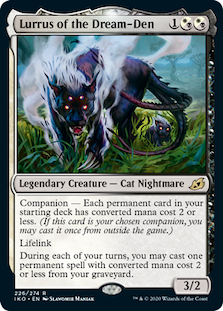 Mono-Red is very handsome on paper if just for its bare-bones creature suite, which now comprises precisely the four most aggressively-costed red one-drops of all time. The above build splashes white for Rip Apart, Kor Firewalker, and of course Lurrus of the Dream-Den, giving it a big boost in mid-game power that aims to make up for the lack of Iteration for the mostly-free price of running some fast and Horizon lands.
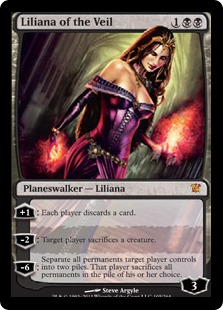 BR Rock (featuring a baby white splash for Prismatic Ending,
 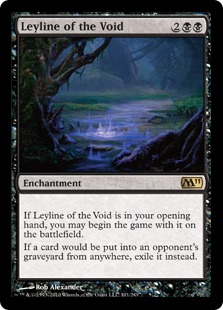 Voidwalker fundamentally alters the way rock plays by giving it access to a dimension previously claimed only by

 that initially there was
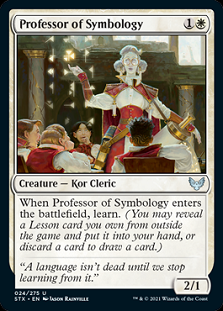
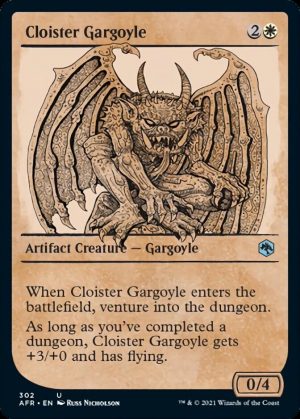
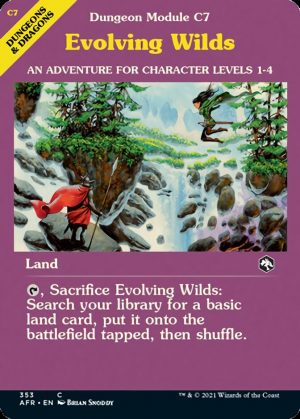
 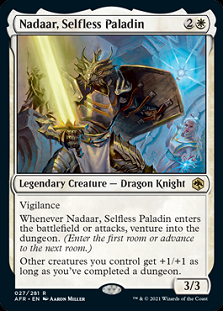 That doesn't mean that dungeons are unplayable. Incremental but building advantage is definitely playable; just look at Search for Azcanta or most planeswalkers. The key question is whether there are venture cards that fit into Modern. Just being a decent venture enabler is not enough; the card needs to be Modern playable in a vacuum. Learn is the
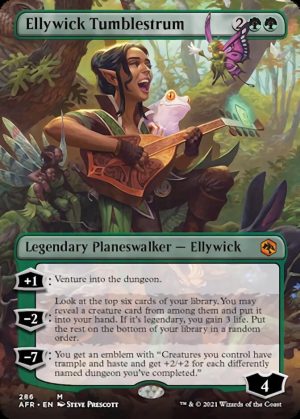
 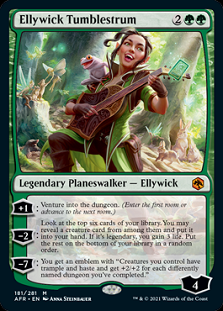 Ellywick Tumblestrum, on the other hand, has potential. And a very silly name. Which D&D bards are
 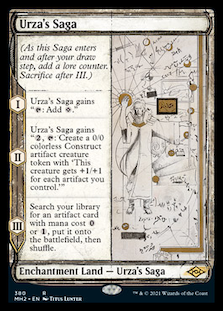 However, that also tracks with the lore. Entering a dungeon on your own is suicide; that's why parties exist. Venture does stack, so if multiple enablers are playable in the same deck, it may be possible to blitz the dungeons. Which begs the question whether it's worthwhile to actually delve any of them.
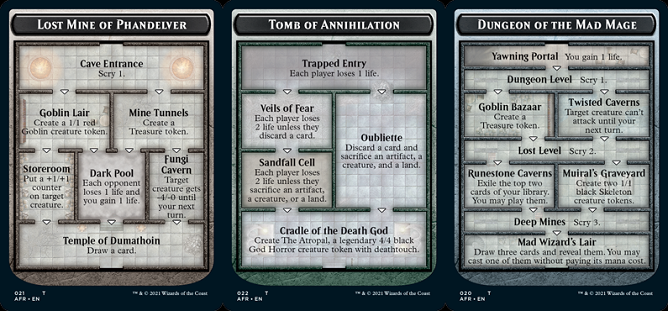
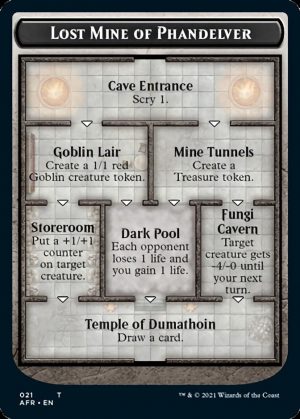
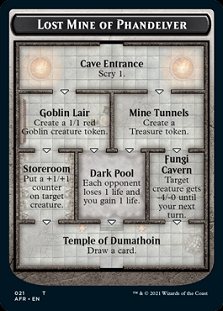 Of the dungeons, the Lost Mine of Phandelver is the best for starting out. Scry 1 is much better more of the time than losing or gaining a single point of life. This indicates that this dungeon is designed with incidental value in mind and that Wizards expects players to stroll rather than barrel through. And for the strolling player, there's some decent value to be had. Scry 1 is decent, though not especially powerful, as shown by Opt. From there the path really depends. The drain in the Dark Pool is a good failsafe condition with the +1/+1 counter option being the most powerful. The main problem is that the big payoff is a cantrip. Not horrible, but it really makes me wonder if this dungeon was worthwhile.
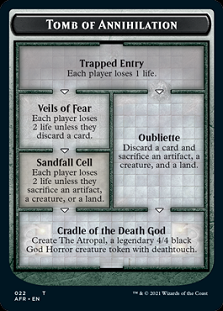 This is the dungeon that I expect most players are going to try and blitz. Which makes perfect sense; it's the
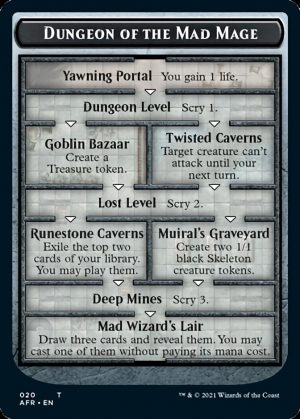
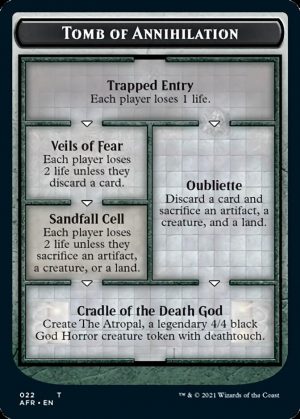
 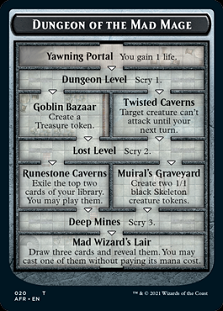 I will be stunned beyond words if it is actually possible to blitz Dungeon of the Mad Mage in normal Modern games. It takes seven venture triggers to get to the end! That would require either a huge number of enablers or one that can be activated multiple times a turn. The former would probably win the game on their own while the latter is likely to be targeted at Commander rather than Modern, but we'll see.
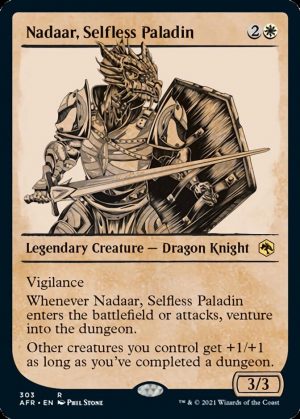
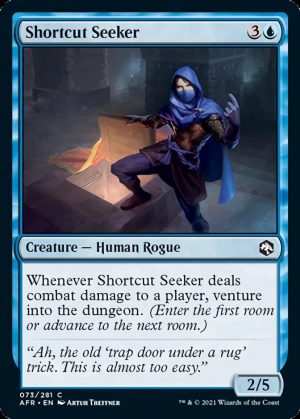

 The key to tuning any deck is remembering what the deck wants to do and the cards that make that happen. I realize that this seems obvious, but I've made the mistake of over-tuning my deck before, just like everyone else, so it bears repeating. Every deck has some core of cards that define that deck and are critical to its identity, strategy, and metagame position. Any changes made to that core are risky, though potentially rewarding, as
  I process a lot of decklists to make the
  The other key to remember with Humans is that there is a reason that 5-Color Humans has been
  Thus, the first question when dealing with Humans post-Modern Horizons 2 is whether it's even worthwhile to change the deck. The template from 2017 is still quite solid, which is probably why it's the most
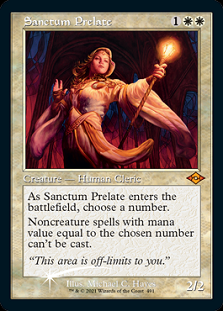
  The deck runs as well today as it ever has, so why change everything? I was running Prelate anticipating lots of Prowess, control, and cascade. There was a lot of control present, but I didn't hit any. In fact, I only drew Prelate once against Burn where I was mana screwed. Had I cast Prelate, I probably win that game, but I couldn't and don't. The deck was still solid in the open meta, my sideboard was broad enough to cover the field, and a blistering Humans attack was still very strong. There's no compelling reason for me to change up the formula.
 The Big Strength
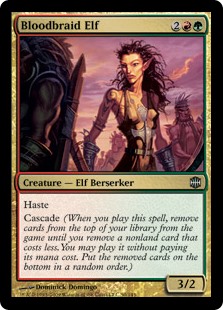 That said, I feel that a lot more work needs to be done to make Shardless Humans a real contender. A lot of the aforementioned problems are more my unreasonable expectations in comparing Agent in Humans to Bloodbraid in Jund. The former will always be weaker than the latter, and it's unreasonable to expect anything else. Shardless is being played because it's a human that can find another human and immediately cast it, netting a huge swing in card advantage and tempo.
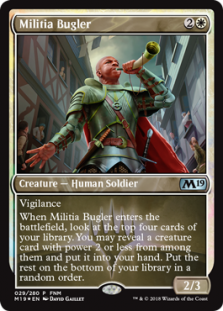 That said, it is definitely worth trying to make Agent work because Humans has forever longed for a card advantage creature in grindy matchups. Militia Bugler
  The Big Weakness

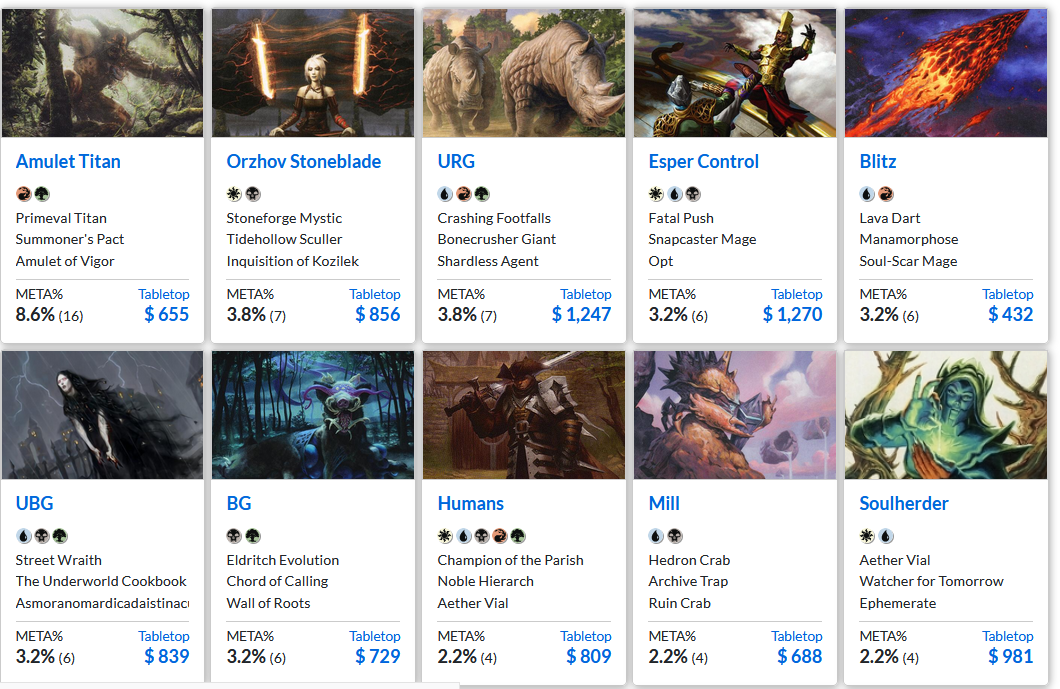

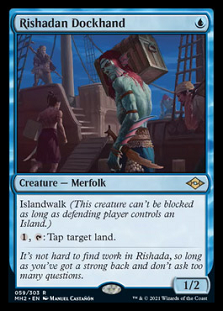 Naturally, I started with Merfolk. It's my
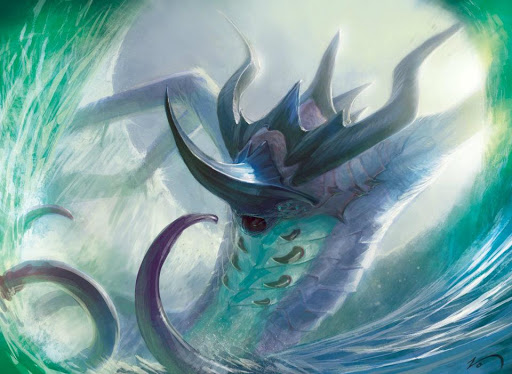
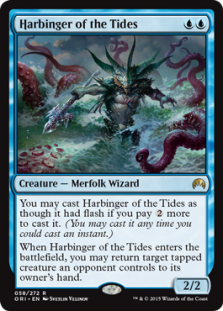
 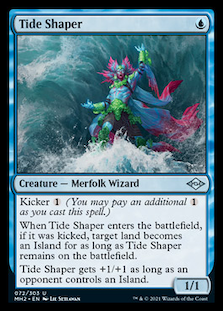 However, Tide Shaper means that I don't have to settle. Shaper is actually the answer to a problem Merfolk's long had, but I never expected would be answered. The problem is that Spreading Seas is necessary, but undesirable. It's very good mana disruption, and more importantly it turns on islandwalk, which is critical against any creature deck. However, Seas doesn't swing, and unless played late is just a huge tempo hole. I usually cut it against any aggro deck as a result. Shaper is just a 1/1 for one, and Merfolk of the Pearl Trident is not playable. However, the option to kick Shaper into a 2/2 Spreading Seas makes that humble creature extremely playable. As such, I've decided against running Dockhand in Merfolk and instead have fitted Shaper as the new one-drop.
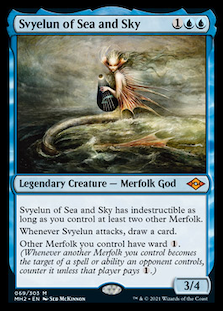 Svyelun has proven to be difficult. Her stats are above average and Curiosity
  -positive threats, so I maxed out both. Being a cheap deck means that Lurrus is available as a companion, though most of the time I've used it more as a lifegain speedbump than an actual card advantage engine. Unsettled Mariner and the maindeck Chalice of the Void are both targeting Prowess but are quite solid against the control decks I tested.
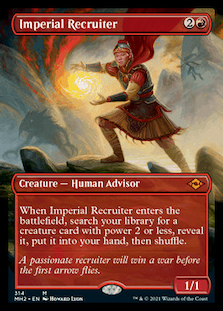
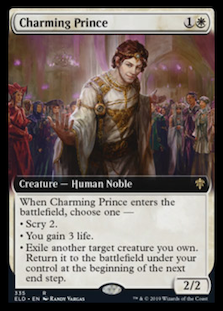 I really liked the deck. Tutoring for Magus of the Moon was relevant a surprising amount of the time, far more than the other maindeck bullets. Prelate is quite good in certain matchups, but this being Modern, she lacks the hard-lock edge she frequently offers in the more one-drop-centric Legacy. The biggest downside is that I can't chain Flickerwisps by flickering Recruiter, a line that is frequently backbreaking for opponents in Legacy with Recruiter of the Guard. It made me want to go lower to the ground with Charming Prince, but Flickerwisp is better enough outside of chaining Recruiter (hits harder and has evasion, mainly) that I didn't go that route.
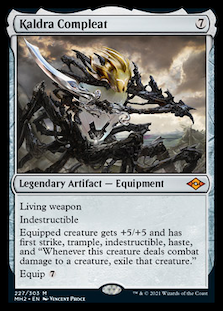 Could that have changed if I'd been running Kaldra Compleat? Short answer: no. Kaldra is an amazing card if it hits play turn 2. It loses to nothing in combat, has haste, and kills in four turns. However, it has two problems. The main one is cost. Kaldra costs seven to cast or equip. That might as well be infinite for anything but Tron. Kaldra's playability is almost entirely tied to untapping with Stoneforge Mystic, and in my experience that doesn't happen often unless Mystic is Vialed in on the end step. This is less true in Stoneblade decks, but for Taxes, Kaldra kept getting stuck uselessly in hand.
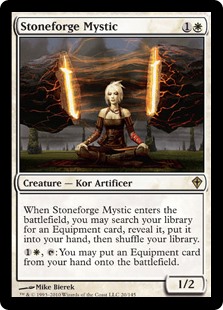 The second is stabilizing. Kaldra is an amazing offensive threat, but is much worse than Batterskull against aggro, and that's what I struggled against. Vigilance and lifelink are far more relevant there than first strike and +1/+1. It was also worse than the evasion granted by Maul of the Skyclaves.
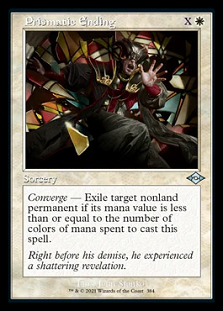 Adding Prismatic Ending has improved things against Wrenn, but Prowess remains a huge problem since Magus and Wildfire are pretty weak in game 1. I also found that getting Magus was important enough when I really needed it that I'm planning on switching a Flickerwisp for a third Magus. In a slow metagame, the twelve land destruction spells are crippling. Just remember to use Field to hit the nonbasics and to follow up with Quarter or Wildfire on the basics. There's a lot of promise here once I fix the aggro matchup. Which might require moving the Wildfires to the sideboard and running Bolt main.
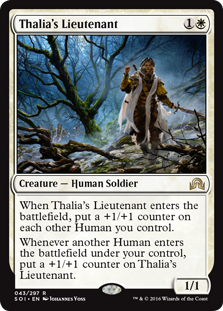
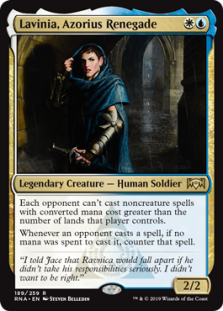 Lavinia doesn't synergize with Thalia; here, the latter was cut so Lavinia could actually counter cascaded spells. Sentinel is still very good here because I'm targeting combo decks that like to cantrip and tap out. It's also good because it digs for counterspells. Dockhand is in a similar position, where it does an excellent job slowing down combo decks and makes it harder for them to pay Sentinel's tax. The current sideboard is meant to hit the cascade decks, but can easily be tuned.