menu

New Phyrexia Prices and Other Goodies

Are you a Quiet Speculation member?

If not, now is a perfect time to join up! Our powerful tools, breaking-news analysis, and exclusive Discord channel will make sure you stay up to date and ahead of the curve.

Howdy everybody, hope you all had a good 2 weeks. Had a bit of a medical emergency last week which kept me from writing, but the past few days I have felt better than I have all year. This week I am going to give the run down on a few of the pricier New Phyrexia cards that were released as well as a few comments on the Legacy prices and the new tournament format announcement.

Legacy Prices

Well, this sure has created a buzz throughout the community whether it be Sean Morgan trying to recite economic theory he heard in his 101 class, to Medina opinioning (Yes, I made that word up) to basically everyone in the world commenting in every forum on the internet. After my last article, which was basically well received, I want to make three points:

1) I no longer think there will be a "bubble burst." I think the Legacy price situation is more like a stomach. Yes, a stomach. It needs fed (everyone playing the format) and keeps getting bigger and bigger. After awhile, it is full, and needs to relax and digest and shrink (people selling cards). Eventually, it will be hungry again, and get bigger again, however, it has stretched and will never get that small again.

Basically, I am saying that the bubble is going to expand and contract, but the contraction will never be to the original prices, but to something between the high current prices and the lower prices from earlier in the year. This has happened the past 2 years and it will continue to do so for the foreseeable future.

2) A lot of Americans are complaining about the high cost of Legacy, but I don't see many Asians or Europeans doing so. I am simply going to copy/paste a response by a very well-respected vendor friend of mine and let this tell the truth:

"Foreigners have paid more for Duals, FoW, Power and every other legacy/vintage staple for years and the market has caught up to the U.S. There were a few vendors who made a killing buying cards from Americans and took tons of 1990s Magic cards to Europe and Japan to beat the currency exchange. Now Americans want these cards back and it's going to cost each and every one of us who want Legacy cards.

Americans meet the Euro. This beat you for years and now it's going to beat you if you want to play Legacy."

3) I have said both "Wizards should do some sort of reprint of certain cards like Force of Will or Wasteland to lower the cost a bit to let people in" as well as "I like cards costing money and if you want to win you need to spend the money or not complain." Yes, both statements contradict itself and I actually just think the whole topic is very messy. I can easily see both sides of the argument and I probably need to sit down and just stare at a wall and think about the topic. I just want as many people playing magic as possible at all times. It's good for making money and it's good for the game.

New Tournament Structure

http://www.wizards.com/Magic/Magazine/Article.aspx?x=mtg/daily/news/041411a

I personally like this change for a few reasons. The first is that it makes my local store's prerelease that much more exciting and relevant. It does suck for my local premier tournament organizer (PTO), PES. I am lucky to have such a quality PTO compared to the horror stories I hear throughout the rest of the country. The truth is, Wizards probably doesn't want to keep being in charge of the Pro Tour and PTQs and all that stuff. This would be in line with them making the WPN Premium announcement (http://www.wizards.com/magic/tcg/Events.aspx?x=mtg/tcg/events/wpn/premium) as well as the this new Tournament Structure annoucement. I can see SCG or some other independent company taking over the task of running the Pro Tour and GP circuit while WoTC keeps a CLOSE eye on everything. It could potentially save them Millions over the year between salaries and marketing and running the events. More GPs and Premium events mean more people playing, which mean more cards to trade for and that means more money for you and me.

New Phyrexia Spoilers

Just going to cover a few interesting cards and give my opinions on them.

~Karn, the Released

Planeswalker - Karn

+4: Target player exiles a card from his or her hand.
-3: Exile target permanent.
-14: Set aside all non-Aura permanent cards exiled with Karn, then restart the game. Then put all cards set aside this way onto the battlefield under your control.

Now, this guy is the hot card in the format and I couldn't be colder on it. $50 for a 7 casting cost Planeswalker? Sorry, I think this format is far too fast for that card to be useful. It might goes as a 1-2 of in Ramp and casual players will love it, but I can see it dropping to around $10-$15 easily. No way this guys stays at $50 for anything past a week or 2 after prerelease.

Phyrexian Obliterator

Creature - Horror
Trample
Whenever a source deals damage to ~, that source's controller sacrifices that many permanents.
5/5

I like this card, but only at the mid-point of the summer. It currently fails the Jace test, however that only matters till October. I would look to avoid until like August, and it should be at a much lower cost point where getting this guy could be profitable just in time for states in October.

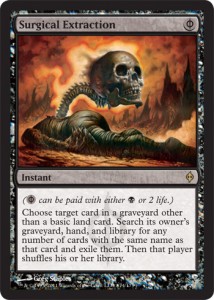
Surgical Extraction

Instant
( can be paid with either or 2 life.)
Choose target card in a graveyard other than a basic land card. Search its owner's graveyard, hand, and library for all cards with the same name as that card and exile them. Then that player shuffles his or her library.

This card is good, however, it won't be a $10 rare. I can see it being closer to $5 like Green Sun's Zenith, which like this card will be, is played in every format back to Legacy. It is also the buy-a-box promo so that should hurt the cost if it a good bit.

That's all I have for this week. Hopefully this next week I will have some sweet spoilers to tell you if you should invest or not as well as hopefully bragging that I won my regionals! Good luck this weekend everyone at your regionals and hope you guys make some killer trades.

Contact
E-mail: tennis_stu_3001@hotmail.com
MOTL/MTGO: stu55
AIM: stoopskoo15
Store: The Vault- Greensburg, PA

The Case for Point Removal in Commander

Are you a Quiet Speculation member?

If not, now is a perfect time to join up! Our powerful tools, breaking-news analysis, and exclusive Discord channel will make sure you stay up to date and ahead of the curve.


[Editor's Note: I'd like to welcome Jules Robins, another new Commander writer for QS! I'll let Jules handle the introduction. Enjoy!]

Hello everyone. I’m Jules Robins, and this is my first article for Quiet Speculation in this shiny new column: Ray of Command. I’m planning to discuss broad strategy considerations in how Commander differs from other forms of Magic (you can assume I’m talking about free-for-all multiplayer Commander unless I explicitly state otherwise) and what makes the format so much fun. Ultimately, this column is about what you want, so if you have other Commander-related topics you’d rather hear about please let me know!

You’re here to read about Commander, right?

Commander strategy has a multitude of interesting facets, both in the inherent implications of the format’s rules, and in the ideas and culture which have grown up around it. One of these developments has been the assertion that players should run board sweepers rather than point removal to deal with creatures, and today I’m here to tell you otherwise.

The reasoning behind this assumption actually stems from a common thread in multiplayer strategy at one of the major points where it diverges from its duel counterpart. In a duel, one-for-one trades like removal and counterspells create card parity, and so when used in conjunction with card advantage generators like Concentrate, they can bury your opponent with card advantage while answering their threats. Multiplayer is a different beast altogether. If you play a lot of one-for-one removal and some card draw in a multiplayer game, instead of staring at an empty board while pulling farther and farther ahead, you’ll be wide open to the threats that your other opponents are laying down, and might even be their prime target because of all of those cards you’re drawing.

In conventional multiplayer, a sweeper is much better than a point removal. Sure it’s slower, but if there’s an aggro deck it probably isn’t focus firing you since its pilot has a lot of people to deal with. Instead of putting you behind with each casting, sweepers have the opportunity to put you ahead while simultaneously eliminating each opponent’s threats. But Commander isn’t quite like other multiplayer formats. The most obvious change to the need for creature removal is the life total difference: with 40 starting life early attacks aren’t usually much of a concern. Moreover, with the singleton nature of the format there isn’t much risk of consistent aggressive starts or combos involving creatures which need answered promptly. Thus, one might assume that what is true in the sweeper vs. spot removal question for regular multiplayer would be truer here. This thinking fails to take into account how people play the format differently, which is usually more important than what should be true.

Because the format is inherently so much slower, very few players are trying to come out of the gates aggressively and instead most games escalate to slugfests of enormous bombs. With the combination of a lot of players, and the extra time provided to them by higher life totals, only the biggest threats will usually matter. Sure, on occasion random beats from a Flametongue Kavu will get there, but more often than not, it will get knocked out by a sweeper intended to deal with a real threat.

While everyone else is playing a bunch of sweepers, it opens you up to not having to. Once we don’t need to worry about the small fries, we can consider the big tradeoff that comes with running sweepers: castability. With the exceptions of Rout and a couple of blue gems, board sweepers are expensive sorceries, whereas a fair number of pinpoint removal spells come in cheap instant form (just like ramen). If we’re only aiming to answer the big threats, the vast majority of the time the ability to interfere with our opponents’ machinations will outweigh the card disadvantage that comes with one-for-one removal spells. In fact, the concept of card advantage doesn’t bear much on Commander because the threats are powerful enough to win unsupported.

“But wait!” you cry, “Point removal may be more effective, but isn’t the point of the format to do big splashy things? Surely you aren’t going to try to convince me that Doom Blade is cooler than Martial Coup!” No, no I’m not. Instead, I’m going to contend that what we’re really looking for in Commander are the very biggest and splashiest moments and interactions; we aren’t just jamming in the biggest version of each individual effect.

As I see it, there’s a threshold of awesomeness: while a card like Martial Coup isn’t something you would label as ‘uninteresting,’ casting it for anything less than 1,000 mana isn’t really memorable. Moments that are memorable, like Forking a Living Death with a bunch of [card Eternal Witness]1[/card][card Karmic Guide]8[/card][card Bogardan Hellkite]7[/card] creatures (now 603.6a creatures, but did you really want to know that?) on the board and in the bin, are usually proactive, and can happen with a lot of unexciting cards in the mix. Removal isn’t the part of our decks that needs to be splashy, so we don’t need to favor splashy answers over effective ones.

Before we go on I should clarify that I’m not arguing against playing sweepers. The mentality which a lot of the Commander community has gotten into, that there is no reason to run spot removal, is flawed, and that because of this mentality you may be able to eschew board wipes from your own lists. Obviously, a deck full of Mortifys without a Damnation in sight is going to have a tough time beating a table of token decks, so choosing to run no sweepers would require a playgroup that had really gone hog-wild. But I think many Commander decks could benefit from replacing a couple of their [card Wrath of God]Wraths[/card] with [card Path to Exile]Paths[/card].

In order to successfully replace sweepers with point removal, you’ll have to do more than open yourself up to being swarmed: you’ll have to be patient. With the ability to remove fewer creatures over the course of the game, you’ll need to use your removal sparingly. Don’t just sling Doom Blades at every threat you see, instead hold your answers for the cards that will really make a difference, the Consecrated Sphinx, Primeval Titan, Memnarch, or what have you. This approach will probably lead to you getting hit by utility creatures a bit more often, but that’s not as bad as leaving Consecrated Sphinx for a whole turn cycle of draw phases, or Primeval Titan for everyone and their sister to Threaten. By being conservative with your point removalyou can stop shenanigans like these from occurring, and with enough removal spells and enough patience you might never get blown out by one.

That’s not what we want. Magic isn’t a whole lot of fun when you feel like you can’t get anywhere because your opponent has all of the answers. Sure you might win by packing answers to every major threat, and you wouldn’t even have to explicitly violate the format’s social contract; you don’t need land destruction or combo kills to stay in control (this is a dangerous word, but that’s a topic for a future article). While a hand full of counterspells and card draw isn’t as oppressive in multiplayer Magic as in a duel, you will nonetheless put a damper on the table’s fun with too many answers.

At the same time, we don’t want Commander to degenerate into ‘whoever drops a bomb first wins,’ so we need to carefully balance the number of answers we have to give us a reasonable number of outs while still leaving the people we’re playing with license to do some awesome stuff. In my experience, I’ve found this sweet spot to be right around twelve slots, but the number depends upon the answers themselves as well as the density of such cards in the rest of your playgroup’s decks. Give it a try: remove what you care about, and let the community’s infatuation with board wipes cover the rest.

I hope you enjoyed my first article here, and I’d love to hear your thoughts (positive or negative) in the comments, on Twitter, or over email. Did you find this article interesting or helpful? What could have improved it in your mind? Let me know, and I look forward to seeing you again next week!

Jules Robins
julesdrobins@gmail.com
@JulesRobins on Twitter
toahaomin on Magic Online

Winners and Losers (and a banning?) from Dallas

Are you a Quiet Speculation member?

If not, now is a perfect time to join up! Our powerful tools, breaking-news analysis, and exclusive Discord channel will make sure you stay up to date and ahead of the curve.

Last weekend was the Grand Prix, and it was quite a trip. I’ll have a tournament report in the next few days talking about my tournament (and deck choice), but today we have results to analyze
 or at least we would, if there was anything of note to happen. Instead, we had 15 of the Top 16 decks running Jace, and I think we can all agree that PV basically willed Boros to the top tables more than anything else.

With that said, there are a few things to dig into from the weekend. Let’s start with what will be the weekend’s biggest gainer, Inferno Titan.

I’ve been suggesting picking up the card for the last month or so, and it proved this weekend why it’s been steadily climbing. It’s showing up in more and more decks, from its traditional home in RUG, to appearing in Valakut, Big Red (control), Naya and even some Boros lists. Until New Phyrexia (hopefully) shakes up the format, Big Red Titan is going to trade heavily, and you should be in a great position to profit.

Staying with Red, it’s worth noting that Koth of the Hammer is at the lowest he’s ever been. Koth has held an interesting position in the metagame, at times being very strong, but at other times being completely hated out. It seems that more and more Kor Firewalkers are making their way into decks, and RDW has fallen out of favor. The Channel Fireball crew was rocking four Koths in their Boros lists, and now seems like a good time to try to pick up your Koths.

If he doesn’t rise in the short-term, we can look ahead to the rotation when Firewalker leaves, which, combined with the rotation of a smaller format, should leave Koth in a strong position.

From the Dallas floor

If you were following the coverage last weekend, you know I was on site and following the top tables for QS. I was really hoping there would be more innovation, and therefore financial information, to report on, but that didn’t pan out quite as we all hoped. But that doesn’t mean there weren’t some interesting decks floating around the room.

Given the run on Inquisition of Kozilek on Friday, I expected the room to be full of DarkBlade (UWB Caw), but the deck just did not perform. It appears that, for the time being, sticking to straight UW is the strongest choice for Caw players. Inquisition and Creeping Tar Pit are still going to command some solid prices, however, because not everyone is off of DarkBlade and there are still UB Tezzeret or Infect decks running around. But I would move the card now while you can still command a $5-6 price tag on it.

The next surprise from the weekend was the resurgence of Elves. My team included four players on Primetime Elves, and while none of us Day 2’ed, we didn’t have anyone finish worse than X-3 on the day (I just missed Day 2 at 6-2-1). With a better sideboard plan to combat a Turn 2 Lotus Cobra, I probably would have made Day 2, since my only losses on the day were to said Cobra-into-ridiculous Turn 3 and 4 plays.

There were two more traditional Elves lists floating around the top 10 tables late into Day 2, and one player sporting the deck almost snuck into the Top 8 before losing to professional fish Alex Bertoncini in the last round to fall into 17th place. The reason why the little Green men made such a strong run? A strong Caw-Blade matchup. I went 6-1 in games against the Bird Menace, with my only game loss coming in the match to the guy with maindeck Mirran Crusaders that he played on Turn 3 like clockwork in every game of our match.

While the deck is pretty under-the-radar right now (and rightfully so), look out for it if a better list is found that can handle Cobras while maintaining its strong Caw matchup.

Conley Woods and Zaiem Beg came sporting UB Control. As did the Japanese. Nothing too out-of-place about their lists, but be aware there were Abyssal Persecutors seen flying around.

Next up is Mono-Red control from the group of guys who designed it and piloted it to a ninth-place finish at the last tournament in Dallas. I’m not sure if any of them ended up making Day 2, but they were in the running up until the last round of Day 1.

Finally, I want to touch on Aggro Valakut, a very saucy list that retains the monster late game of Valakut and Titans while leaning on cards like Hero of Oxid Ridge and Bestial Menace to push an aggressive strategy. The combination put five of its six players into Day 2, and it marks a really interesting direction for a deck that not very long ago ran very few creatures.

There you have it. Four decks that aren’t RUG or Cawblade that had very reasonable showings, despite what the Top 16 would seem to suggest. While I wish there was something to knock off the two clear-cut best decks, the format is, in fact, a little more open than the #BanJace crowd would lead you to believe. Speaking of that
.

#BanJace

The trending Twitter topic of the week, there have been numerous calls for the Big Bad’s banning after it showed up as a 4-of in every Top 8 deck. I’m not going to get into whether or not I think he should be banned, since that’s of very little financial value, but I am pretty certain of a few pertinent things.

1. Jace is NOT going to be emergency banned.

Wizards has not banned cards in Standard since the last time we were on Mirrodin, and I don’t expect it to happen now. While it sucks to see Jace in every deck, the fact is they are different decks. The last time such a banning happened there was exactly one deck dominating the field.

2. The next round of bans doesn’t happen for months.

Bannings occur four times a year. The next one isn’t scheduled until after New Phyrexia arrives with Hex Parasite (hereafter known as Jace Eater) and whatever else it brings to shake up the metagame. Having a colorless Jace Eater that every deck has access to is going to reduce his overall power. If it doesn’t turn out that way, we’ll be just a few months out from the rotation, and there is little to no chance Wizards is going to want to take the public relations backlash over a card’s last three months in Standard.

3. Is Preordain going too? What about Valakut?

What many people are missing in all this #BanJace talk is that there were also 32 Preordains in the Top 8 of the GP. Is that on its way out too? Does the fact Jace costs approximately a billion times more than Preordain make it a better target for banning? I’ve also heard that if Jace goes, then Valakut goes unchecked, and that would be even worse for the metagame. Then do we ban Valakut? Or is Primeval Titan the problem? You see what I’m getting at with this. It’s just too much of a slippery slope and too much risk for too little reward if the DCI decides to start banning cards.

Financially, this means you don’t have to worry about your Jaces losing their value overnight. That said, as many writers on here have advocated, you should have unloaded your Jaces by now. It seems to have peaked about three weeks ago, and it isn’t going to get any more popular or expensive as the Standard season goes on. Pitch them while you can still get full value out of them and set the money back to buy them on the cheap after they rotate.

That’s all the room I’ve got for this week. While the GP was a disappointment as far as shifting the format is concerned, there was some innovation making its way around the tournament, and I hope New Phyrexia shakes up the metagame.

If you didn’t catch my coverage on MTGCast.com, you should definitely check it out. I got in some good podcasting with Robert Martin (@TheBeme), and interviewed a few players throughout the tournament. When I did my first podcast, a guest role on Mana Screwed, I had no idea I would enjoy it so much or get further into it, but that’s exactly what I’ve been doing. The podcasting community is great, and I encourage you to listen to a few if you don’t already.

Next week I’m considering providing a detailed history, complete with links, to the Legacy crisis we find ourselves in the middle of. Let me know if this is something you are interested in, or if you are just tired of the whole thing and want me to focus my attention elsewhere.

Until then,

Corbin Hosler

@Chosler88 on Twitter

Legacy Reanimator

Are you a Quiet Speculation member?

If not, now is a perfect time to join up! Our powerful tools, breaking-news analysis, and exclusive Discord channel will make sure you stay up to date and ahead of the curve.

Hello, my name is Kyle Kloster, and I'd like to discuss Legacy Reanimator. I'll talk a bit about my experiences working on the deck since the banning of Mystical Tutor and look at some of the problems (and my solutions) with the deck in the current format.

The deck's popularity has been declining since the banning of Mystical Tutor last summer. The 12 appearances it has made at the SCG legacy opens of 2011 have racked up a depressing ~35% win percentage and only one top 16 (Here). Right now, the deck appears to be terrible.

Despite this, I think Reanimator remains a solid choice, and some pretty good players seem to agree with me. Among others, Ari Lax suggested a month ago that Reanimator could be one of the best decks out there, (Here) and Patrick Chapin discussed it recently (Here). Gerry Thompson has also been trying to break the archetype (Here). And the opinions of better players than I aside, the deck is just powerful.

I mean seriously, let's talk about power level. Get your scouter on and have a look-see. Consider these excerpts from a few of my games at the SCG opens in Indy and Memphis in the last 2 months (the list that Ari Lax gives in the article I link to above is a slightly modified version of the list I took to Indy).
Against Ad Nauseum Tendrils I reanimated Iona, Shield of Emeria (naming Black) on turn 2 and on turn 3 in two different games to win the match. Mono Blue Merfolk caved to a Blazing Archon on turn 2 both games. Against Goblins, Stormtide Leviathan hit the table on turn 3 game one and swung for lethal in 2 turns alongside a Putrid Imp with flying. In game two I fell to 1 life before raising Blazing Archon from the dead to put the Goblins player on top-deck mode for a Gempalm Incinerator and enough Goblins to make it lethal, or just a Warren Weirding. Having the most racist lady in all Emeria say “Black” the next turn sealed the deal. Finally, a turn 2 Inkwell Leviathan against Counter-Top made irrelevant the Control player's own turn 1 Sensei's Divining Top, turn 2 Counterbalance.

Notice the things that these games have in common, as well as the things they don't have in common. They all involve reanimating a beast on turn 2 or 3 and winning, true (and being stripped of their important contextual details, for brevity's sake). But they are also all games against vastly different opponents---and Reanimator could still clean up. The deck is versatile. It's also worth noting that the particular creature I reanimated in each game happened to (1) completely shut down the strategy of the opponent and (2) put the opponent on a 3 turn clock.

You are probably thinking, “Yes, if you're lucky enough to get the right creature out on turn 2, you'll win a lot.” But that's the whole point here: these aren't the fringe games, this happens almost every game. One of the biggest advantages Reanimator has is its consistency in attempting to “go off” on turn 2 or 3, frequently under an umbrella of light disruption (Force of Will, Daze, and sometimes Spell Pierce, in my build. Others go for FoW, Daze, and Thoughtseize).

And if you do succeed in creating your own super-powered Frankenstein, look at your odds. You have a boat load of auto-wins and near auto-wins versus traditional builds of these archetypes:

Blazing Archon vs Dredge, Merfolk, Elves, Goblins (though you're dangerously close to losing to uncounterable Gempalm Incinerator), and it can even shut down many Show and Tell and Sneack Attack decks.

Iona, Shield of Emeria vs Storm Combo, Elf Combo, High Tide, even Goblins and Merfolk if it's early enough, and, my favorite, against Painter's Servant combo if the opponent drops a Painter's Servant intending to win the next turn, not realizing you are Reanimator.

Inkwell Leviathan vs 43 Lands, any slow Control deck (many Counter-Top variants).

Stormtide Leviathan vs Goblins, Dredge, and Elves.

The archetype certainly can be a powerhouse. Also, its scarcity in the field makes it a stronger choice, as people have been skimping on graveyard hate and a lot of players are just unprepared to play against the deck. (Note: I had written this prior to the most recent SCG open, where 4 top 16 appearances of Dredge and 1 top 8 of Cephalid Breakfast make me believe people will not be skimping on graveyard hate as much). Few people test against it these days, and it's been a while since they have. Metagame aside, I think the deck remains a contender because of its potentially insane ability to impact the board completely and immediately. And so I have been tinkering since I got back into magic to find the right list. Which brings me to my current build:

Untitled Deck

Spells

4 Brainstorm
4 Careful Study
4 Putrid Imp
4 Entomb
4 Daze
4 Force of Will

Fatties

2 Iona, Shield of Emeria
1 Blazing Archon
1 Emperial Archangel
1 Stormtide Leviathan
1 Sphinx of the Steel Wind
1 Terastodon
1 Inkwell Leviathan

Reanimation

4 Reanimate
3 Animate Dead
4 Exhume

Lands

3 Island
3 Swamp
1 Misty Rainforest
1 Bloodstained Mire
1 Verdant Catacombs
4 Polluted Delta
4 Underground Sea

Sideboard

1 Iona, Shield of Emeria
1 Platinum Emperion
4 Spell Pierce
2 Echoing Truth
3 Chain of Vapor
4 Pithing Needle

When Mystical Tutor got the axe I set out to repair the wounded deck. For the Reanimator to work it has to be able to get a reanimation spell, get a reanimation target, make sure that target is the right one to win this game, and protect it all. It also has to do this consistently and quickly to be any good. A tall order.

Now I don't think my build is optimal yet, but I think I've managed to meet a few of these criteria. First, I have aimed for consistency and speed. Since the banning last summer, some have suggested replacing Mystical Tutor with a combination of Buried Alive, Intuition, Personal Tutor, and Strategic Planning as tutor effects. I try not to dismiss cards completely, but I don't think that these are the right cards for Reanimator (or at least not my build) as they are all too slow. With 17 or 18 land in a format full of Wastelands and Rishadan Ports, a 3-casting cost spell either won't get cast, it will get cast too late, or it will get cast on time via a Dark Ritual or Lotus Petal. But after testing them, I found that adding ritual effects sacrifices too much consistency. Perhaps a Reanimator build with City of Traitors and Ancient Tomb with a Buried Alive, Necrotic Ooze combo finish could work, but I haven't tested it at all yet.

Anyway, my solution to losing the Blue tutor was adding redundancy to the deck. I figured, sure, I can't tutor for Exhume, Careful Study, or Entomb any more, but with 11 reanimation spells I shouldn't have to. And adding more reanimation targets and Putrid Imps/Hapless Researchers essentially makes the Entomb effect redundant: you don't need to Entomb if you've got the target in your hand and an Imp in play. That was the initial reasoning behind the card choices, at least.

And after testing, I found that not only does it work, but frequently it is more consistent and faster than when the deck had Mystical Tutor. You don't have to spend turn 1 or 2 casting MT and then waiting to draw the thing you tutored for - with this list you just already have the card. In your hand. Right now. Go win with it.

Another couple bonuses of having redundant reanimation spells and extra reanimation targets is this increases the likelihood of being able to reanimate multiple targets, and it's also built in protection against disruption, to boot. You often have another reanimation spell to cast if one gets countered or Thoughtseized, and you can topdeck into business spells more frequently.

Simply adding redundant effects made the deck as consistent as before, and perhaps a little faster. However, we do lose the very important aspect of choosing which creature we get. Sometimes you don't get the Blazing Archon you want because you have Careful Study and Sphinx of the Steel Wind in hand, but no Entomb. Redundancy doesn't solve this problem as well as it solves the “how do I get a reanimation spell in my hand?” problem because there is a trade off between running extra copies of one creature to ensure you can get it when you need it versus running a greater variety of reanimation targets to make sure you are prepared for whatever situation comes up.

I think the two biggest areas where my version of the deck needs tuning are the creature package and the disruption package, and this happens to be the area where I differ from the aforementioned big name players who have been advocating the deck. Gerry Thompson and Patrick Chapin both include 4 Thoughtseize, and other lists tend to favor Hapless Researchers over Putrid Imp.

Having tinkered with both Imps and Researchers, I think the correct choice depends on the metagame pretty heavily in that Putrid Imp helps battle aggressive decks and graveyard hate whereas Hapless Researchers helps more against control and combo decks. This is because Hapless Researchers are extra blue fodder for Force of Will (and every extra Blue card really does help) and they are rarely dead draws as you can play and sacrifice them to “cycle” them, provided you have an extra card to throw away.

Putrid Imps, on the other hand, are almost always dead draws after turn 3. But they are such excellent turn 1 plays, especially against graveyard hate. The Imps help against aggro when you need a good clock because they are secretly unblockable 2/2s for 1 black mana. I have had a Putrid Imp turn my Stormtide Leviathan 3 turn clock into a 2 turn clock to win the game on multiple occasions. The Imp really does get you there. And now that graveyard hate will be in vogue again, Putrid Imps aid you excellently in play around graveyard hate. If you cast Exhume, forcing the opponent to use their Tormod's Crypt etc, you can just discard another of the 8 different reanimation targets you're running, specifically for this purpose. As a last note, the Imps serve as edict-effect protection in a way that Researchers can't always (which seems relevant against only Goblins these days, but since Goblins doesn't seem to be around much right now, this is less of a bonus).

When I went to Memphis, I had 2 maindeck Researchers and 1 maindeck Imp because I was expecting lots of control in reaction to the recent outbreak of combo (as well as lots of combo), so I wanted to be sure I had a blue card to pitch to Force of Will. Now that graveyard hate will be, I think, rampant, the Imps are the better choice.

Probably the most controversial choice in my list is the lack of Thoughtseize. I've got to be honest and admit that I've never tested it because when I first built the deck I believed the life loss was too much AND because spending one of your first turns Thoughtseizing slows you down by an entire turn, which you don't always have. After building it, I almost never felt like I wanted Thoughtseize in a game, so I just never tried it out. Besides, it isn't a Blue card, and you really start to struggle to have enough Blue to power FoW. I have found that 4 FoW, 4 Daze, and some mixture of Spell Pierce and Dispel do better.

I am serious about the loss of life being too much: I have won plenty of games at 1 or 2 life with Reanimator. I would rather the opponent expend their resources to cast a card and have it be countered. While I feel comfortable with my list, it certainly does merit testing according to the metagame you expect.

The last choice that I want to talk about regarding disruption is Dispel vs Spell Pierce vs Daze. I haven't tested Dispel enough, but I'm beginning to want to split it as 3 Dispel, 2 Spell Pierce, 3 Daze. Frequently I have found myself on turn 4 or 5 holding a Pierce or Daze and looking at my opponent's 4 or 5 land. Swords to Plowshares, Path to Exile, Snuff Out, Ghastly Demise, Go for the Throat, and various bounce spells are too prevalent and too cheap for Pierce and Daze to provide enough of an umbrella, especially if you can't reanimate a target with shroud or if Iona can't catch all of the removal with one color.

Besides, the only things I have found myself countering with Spell Pierce have been counterspells (including Counterbalance, which I haven't encountered very much this year), exactly the instant removals I listed above, Warren Weirding, and graveyard hate artifacts. Graveyard hate and a possible pending resurgence in Counterbalance might justify including more Spell Pierces in the sideboard, in addition to the Pithing Needles which fight both.

The last thing I'll talk about is the creature package. Again, this is heavily dependent on the metagame, but the idea is to be prepared for as many different opponents as possible. For example, I took 3 maindeck Iona to Memphis because she destroys combo decks and many control decks. She is much less of a winner, however, against control decks running 3 or more colors. She is also a big risk against Knight of the Reliquary decks because of Karakas, and BWG Junk seems to be a popular choice to counter combo decks, so I have brought the Iona count back down to 2. Given that I expect a big upswing in control decks, I might even up the count of targets with shroud, perhaps to 2 Imperial Archangel. She can fly over a Tarmogoyf for the win while he beats into her fruitlessly turn after turn, and her being blue fodder for FoW is a sweet bonus. Plus, when you've got lethal on the table but you just need to stay alive one more turn, she serves as an excellent fog.

I would consider cutting the Stormtide Leviathan and possibly Sphinx of the Steel Wind, as they are best against Zoo and Goblins, both of which are seeing less play right now. Perhaps a Platinum Emperion could replace one (which can be brought back into play with Reanimate without life loss) and possibly Hellkite Overlord, as I have frequently wanted a finisher target that could close a game for me in which I have only one turn left to win. Right now the fastest “clock” is Terastodon nuking your own lands, which I can't stand doing because you become so vulnerable.

Then again, I feel like Team America and Junk are very popular right now, and they both have too much removal to be able to risk anything that doesn't have shroud or protection from Black and or White.

Speaking of shroud... it has come to the point where I almost feel like reanimation targets are too vulnerable for Reanimator to be viable as a strategy without some radical change. So I have been working on an Enlightened Tutor based Reanimator in which E-Tutor can find Animate Dead, or one of the artifact targets: Platinum Emperion, Sphinx of the Steel Wind, and Inkwell Leviathan. In a sense this is faster than when Mystical Tutor searched for Entomb which then searched for a reanimation target. Now you need pay only 1 mana and play one spell, although the trade off is having to wait a turn for your target. Without the Blue for counter magic, 1 or 2 copies of Lightning Greaves feels necessary as protection but doubles as a clock enhancer. Sphinx of the Steel Wind becomes incredible with haste and shroud. As a last note, Enlightened Tutor finds our sideboard anti-graveyard hate cards like Pithing Needle and potentially Serenity or Seal of Cleansing.

There is now plenty of room for discard effects like Thoughtseize as well as potentially Silence, Orim's Chant, or even the excellent graveyard-hate hoser Abeyance (although Abeyance is almost definitely too expensive for us to be able to cast Animate Dead that same turn, unfortunately). I haven't tested any of these choices enough, but my instinct is that Orim's Chant has an excellent dual purpose as a fog effect and would be the best.

The last thing I'll mention is a couple alternative strategies for reanimation packages, mostly for fun, but partly because I am curious and don't like to rule things out until I've given them at least a sniff of play testing.

I goldfished a few times with a BU version running 4 Sharuum the Hegemon and 4 Magister Sphinx with the plan of getting 1 of each in my graveyard, animating Sharuum which in turn animates Magister Sphinx, and then swinging for the win on my next turn in the air. Having 2 creatures in play is a bonus as it is harder to get rid of both, but their being merely 5/5 artifacts with no real protection is a big downside. Then again, because all 8 targets are both Blue and Black, we can run both Force of Will and Unmask realistically, because we don't want extra copies of either creature in hand. The deck is explosive, but suffers from insane card disadvantage.

My last idea is completely different from every other version of Reanimator I have seen or made. It tries to abuse the instant-ness and haste-granting ability of Shallow Grave, Goryo's Vengeance, and Corpse Dance to get a free Emrakul, the Aeons Torn attack OR a swing with Nicol Bolas. Either one is completely devastating, but one *huge* problem is that you have no clock once your glorious swing is over. I have accomplished a turn 1 attack with Nicol Bolas off of a Dark Ritual only to lose because I had no other plays for 4 turns. I plan on, but have not gotten around to adding Oona's Prowlers in addition to the Putrid Imps as discard outlets that double as clocks. Just all of the other Reanimator ideas that I've mentioned, this suffers from severe card disadvantage, assuming you don't connect with Emrakul or Bolas, and does have the same resilience that my “real” version of Reanimator has, but who can say no to attempting the turn 1 Nicol Bolas or turn 3 or 4 Emrakul? Who would want to say no to that? Then again, as my friend Tim Jansen tells me, maybe I just try too hard to be fancy.

I hope you've enjoyed some of my ideas. Feel free to e-mail me if you have some comments, I'd love to hear what you think!

I'd like to thanks those who have helped me play test, especially Tim Jansen, Scott Muir, and Bryan Crist. Sitting through countless matches against Reanimator must have been taxing.

Kyle Kloster

Precon Buyer’s Guide: eBay

Are you a Quiet Speculation member?

If not, now is a perfect time to join up! Our powerful tools, breaking-news analysis, and exclusive Discord channel will make sure you stay up to date and ahead of the curve.

Unless you happen to live next to a local gaming store that has a massive preconstructed deck inventory at very reasonable prices (which, as we'll see next week, doesn't exist - at least not online, anyway), chances are your quest to assemble a collection will include more than a few stops over at eBay. The devil's deal of eBay is a simple one: you can get what you're looking for at a steal, but seldom when you actually want it.

As a neophyte collector, with only a few decks to my name, that suited me fine; I was often finding deals for all sorts of decks, and I didn't care which ones they were so long as I didn't already possess them. I decided that I would be willing to pay $5 per deck, including shipping, right off the bat. Although I'd later increase it, it was surprising how much fell within that limit.

I quickly discovered that there are two kinds of people who sell goods on eBay: those who run things as a business, and those who use it to get rid of things. Those of the first camp set higher prices, happy to relist things that didn't sell (while rarely dropping the price). With few bargains to be had I did very little business with the merchants. The other camp, however, not only tended to price things lower, they also usually didn't have the patience to space out auctions. Sometimes they'd even list multiple auctions for copies of the same deck, which split the bidding and could often keep the final damage low. My first real coup that showed me what was possible with a little patience came when I purchased 15 sealed theme decks for just under $60 (including shipping), all from one seller, all closing on one day.

I'm going to make the assumption that those reading this are familiar at least in general with eBay and how it works. For those eBay masters out there, you might find precious little here today that you don't already know (such is the wealth of experience). By the same token, though, there may yet be some things still left to learn. Given the ease with which one can assemble a solid collection through this marketplace, it bears some exploration all its own. The remainder of this article will be a summary of the lessons and tactics I have learned along the way. As always, your mileage may vary.

1. "Sniping" Works

"Sniping" is the disparaging term used for the practice of submitting your bid right as the auction is about to close, rather than "fairly" submitting it when you come across the auction and letting the market determine your success or failure. There has long been some controversy amongst the eBay member community as to the fairness and ethics of this practice, and indeed innovations in online auction methodology have been implemented with the aim of counteracting this practice (see: "popcorn auctions," where any new high bid automatically lengthens the duration of the auction).

I'll leave the question of fairness to each person's individual conscience. If you find the practice objectionable, skip to the next header below. For those like me who see this as simply using the software in a manner it enables, away we go!

The advantage sniping offers is simply that it keeps your competitors in the dark about your interest, and lessens the chance of sparking a bidding war. Say you find an auction for a brand-new Duel Decks: Jace vs Chandra with two days left to bid and a current high bid of $22.00. Since these can ordinarily reach triple that price at the close, this is a good place to start. But bidding now tells the current high bidder that they have competition. Chances are they'll get an email alert telling them that they've been outbid, and may well circle back to up their bid. In other words, it's on. They outbid you, you outbid them, somebody else jumps in and bids and by the time the auction's done it's up to $75. You might have won it, but at that price you sure don't feel like a winner.

Instead, make note of the auction's closing time, and schedule time to bid right as it closes. Remember, to cut it close as you only get one shot. Make sure you bid the highest that you're willing to pay for the item. If the high bid is less than what you're bidding, chances are they're not going to have time to try and reclaim the lead.

2. Be Thorough in Hunting

This is one that often goes overlooked, but if you're willing to trade in a little time and effort, you can save yourself a good amount of money. Most sellers of Magic cards have a pretty good idea of what they're doing. They title their auction descriptively, including keywords like "MTG" and "Magic" so that it comes up in most searches. Often they'll have the item in the right category, to ensure visibility in category-based window shopping. In short, they do what's needed to ensure maximum traffic and exposure, and they are rewarded for it.

Occasionally, though, you get someone who doesn't bother to go through these steps and list something sloppily. Perhaps they'll simply title it with the deck's name, like "Judgment Painflow Deck" without any added tags like "MTG" to put some wind in its sails. If all you ever searched for was "Judgment theme decks," you'd pass this potential bargain right on by. If you're keen to get the maximum value you can, leave no stone unturned.

Make sure as well that you also search for full sets of theme decks. Oftentimes you can find a cheaper price on buying all four or five of a set's decks at once rather than assembling the sets piecemeal; as a bonus you're almost certain to save on shipping. A search for something like "MTG Ravnica theme" or "MTG Zendikar intro" are good places to start (but as above, aren't the only searches you'll want to run).

3. Find Creative Solutions

This tactic is one for those who don't mind typing up a little capital, and are keen to get a deal one some of the older decks. As I mentioned in last week's article:

Here’s an important observation: you can buy most precons for between $5.00 and $8.00

Of course, that doesn't always apply to some of the older decks, particularly from Tempest and Urza blocks, does it? While you can on occasionally find one of these at a deep discount, in general this is going to mean playing the long wait... or finding a creative solution.

Here's one example. Let's say you find a theme deck box from the set of your choice on eBay for $150. This gives you a dozen theme decks- three of each one. Opening the box, you put a set aside for yourself, then turn around and post the remaining eight on eBay for an attractive price, say $14.95. Sell them all and you've made about $120, which means you paid around $7.50 apiece for your own: a full set at less than half of the typical $20.00 per deck pricetag. This is the simplified version of things; shipping costs, eBay fees, payment methods, and other such also are factors of time and money that can vary, but are generally minor.

Thanks for tuning in this week as we build out the Preconstructed Deck Buyer's Guide. No such guide can claim to be comprehensive without a section on eBay, but for those who are already very familiar with the best tactics to a successful eBay experience, take heart: next week we'll be jumping into the retail section of things, starting with the Modern Era.

Jay Kirkman

@ErtaisLament

www.ErtaisLament.com

Jay Kirkman

Jay Kirkman started playing Magic: the Gathering during Alpha, and despite some significant pauses his love for the game is as strong as ever. His area of focus is in the preconstructed products, and he runs the review weblog Ertai's Lament. He favours Grixis, is addicted to discard, and lives in Frankfort, Kentucky with his wife, stepkids and brand new son (and future Pro Tour stalwart) Liam.

View More By Jay Kirkman

Posted in Feature, Free, TimmyTagged 8 Comments on Precon Buyer’s Guide: eBay

Have you joined the Quiet Speculation Discord?

If you haven't, you're leaving value on the table! Join our community of experts, enthusiasts, entertainers, and educators and enjoy exclusive podcasts, questions asked and answered, trades, sales, and everything else Discord has to offer.

Want to create content with Quiet Speculation?

All you need to succeed is a passion for Magic: The Gathering, and the ability to write coherently. Share your knowledge of MTG and how you leverage it to win games, get value from your cards – or even turn a profit.

GIANT SHARK | CommanderCast S2E9

Are you a Quiet Speculation member?

If not, now is a perfect time to join up! Our powerful tools, breaking-news analysis, and exclusive Discord channel will make sure you stay up to date and ahead of the curve.

CommanderCast is a podcast dedicated to the popular Commander variant of Magic: The Gathering. Produced weekly in seasons of 13 episodes, each episode is broken into a Community, Strategy, and Technology segment, with a variety of topics covered in every podcast. CommanderCast is hosted and produced by Andy Chapman from his crapshack apartment in Toronto, Ontario. For more material including articles, videos, and contests, check out http://commandercast.blogspot.com/.

Season 2 Episode 9: GIANT SHARK

This week Andy, Adam, and Donovan are joined by one of the Elder Statesmen of casual Magic, Bennie Smith. Brace yourselves as they take a wild, consciousness-expanding journey though an almost two-hour episode of CommanderCast. This episode has 100% real talk from start to finish on things like Sideboards, "That Guy" status, the Season 2 Contest, an Entourage for [card Chisei, Heart of Oceans]Chisei[/card], and [card Giant Shark]GIANT SHARK[/card].

You can also download and listen to it directly!

(See the full show notes, and leave feedback for the casters, over here: http://commandercast.blogspot.com/2011/04/commandercast-s2e9-giant-shark.html)

Editor's Request: Did you like this? Would you want to see more like it? Looking for something a little different? Sound off in the comments and share what you think!

Naya Changed My Life

Are you a Quiet Speculation member?

If not, now is a perfect time to join up! Our powerful tools, breaking-news analysis, and exclusive Discord channel will make sure you stay up to date and ahead of the curve.

That seemingly innocent three color combination single handedly changed my life forever.

When Shards of Alara was set to be released I was ecstatic. I love the flavor of Shards, I love the interesting and unique aspects of each shard. They all have their cool parts and different players are drawn to different shards. For me it was always Naya. The sweet cat people roaming the forested regions filled with gigantic behemoths looming around every corner. Naya is like a fantasy novel come to life in a game that I love to play. Wild Nacatl is the embodiment of this shard in my opinion, not five power matter. It was my favorite card from that set for so long and I played it every moment I could until it rotated out of Standard.

Naya has been a deck in my eyes since the first tournament it was legal, States 2008. Back then I was battling in the top 8 with my Wild Nacatls, Figure of Destiny and Rip-Clan Shamans. I fought Five Color Control and Red Deck Wins with Sarkhan Vol into Siege-Gang Commander or Ranger of Eos. I played versions of the deck with almost a dozen planeswalkers, and ones with almost none.

When Standard rotated I ported the deck over. Early on I did not have the configuration right and had a tough time defeating the evil empire of Jund. Once Worldwake was released the rest of the magic community finally embraced Naya as a real deck in the form of Boss Naya. Though we did not have the same list, my team and I were only a couple cards off from that breakout deck list. I was among the first to top 8 with Boss Naya playing the Cunning Sparkmage package main deck.

Even though its namesake was no longer legal, still I worked on it when Shards of Alara rotated out of Standard. In this new format dominated early by Valakut and UB Control, Naya fell over and over again until I was forced to lie in wait for the right time to strike again. That time is now my friends. Gather, my fellow Naya supporters! Now is the time!

Finally with CawBlade, and all its versions, dominating every tournament, it is now time for the Naya resurgence. CawBlade has a tough time dealing with the basic strategy of playing Fauna Shaman and tutoring for Vengevines. The Red version has an okay time with their Lightning Bolts, if they can cast them, but it is basically not played anymore. The Black version has a better shot with Inquisition of Kozilek and maybe a few removal spells but Naya still is not a deck they want to be facing down all day. Some players think that Fauna Shaman is too slow right now, but that is simply not the case. Certainly if you try to play the deck the same way as when we all had access to Bloodbraid Elf, you may run into some problems with it being too slow but different versions of decks require you to play differently. In Standard today Fauna Shaman's primary goal is not to pitch Vengevines, it is to search for them! Hardcasting Vengevines is the way to go for fighting just about every deck in Standard right now.

Where’s the decklist already? Well, I’m not going to show you a decklist. I am going to show you two.

Star City Games 5k Top 8 Decklist:

Untitled Deck

Creatures

4 Birds of Paradise
4 Fauna Shaman
4 Stoneforge Mystic
4 Squadron Hawk
1 Sylvan Ranger
2 Cunning Sparkmage
4 Vengevine
1 Hero of Oxid Ridge
3 Acidic Slime
1 Precursor Golem
1 Inferno Titan
1 Sunblast Angel

Spells

1 Green Suns Zenith
1 Basilisk Collar
2 Sword of Feast and Famine

Lands

2 Forest
2 Mountain
3 Plains
4 Arid Mesa
4 Copperline Gorge
4 Razorverge Thicket
4 Raging Ravine
2 Rootbound Crag
1 Sunpetal Grove

My Version:

Untitled Deck

Creatures

4 Birds of Paradise
4 Fauna Shaman
4 Stoneforge Mystic
4 Squadron Hawk
1 Sylvan Ranger
2 Cunning Sparkmage
4 Vengevine
3 Acidic Slime
1 Baneslayer Angel
1 Inferno Titan
1 Sunblast Angel

Spells

1 Basilisk Collar
1 Sword of Feast and Famine
4 Lightning Bolt

Lands

2 Forest
2 Mountain
3 Plains
4 Arid Mesa
4 Copperline Gorge
4 Razorverge Thicket
4 Raging Ravine
1 Rootbound Crag
1 Sunpetal Grove

So what makes the version I’ve been working on different? Well, before what made it different was the main deck Acidic Slimes but those have been pretty much universally adopted by now. They are sweet against all the equipment and artifacts running around, they happen to wreck Pyromancer Ascension if by chance you are the one that has to play that guy at the tournament, and blowing up lands right now is really good too. The actual difference though is my Lightning Bolts. We all know how amazing Bolt is but sometimes we forget how necessary it is. It helps your early game against other aggressive decks and it kills guys in response to equipping. That can be such a blowout. If nothing else, when you kill a guy in response to the equip, you are basically giving yourself a Time Walk and a huge advantage in the game. Bolt also helps give even more reach to finish games and helps deal with Planeswalkers better as well. In case you didn’t know it, Lightning Bolt does a heck of a lot in a game of Magic.

Of course we all know how awesome Lightning Bolt is but the real question is, why then does the list that has been doing so well not play it? The reason is that they hope to go over the top with threats in that also count as sweet removal in the form of Sunblast Angel and Inferno Titan. The thing that I am not sure players realize is that there are threats that need answers immediately that can’t wait that long like Lotus Cobra.

The other differences are in the singletons that I play over the ones they played. I am a big fan of Baneslayer Angel in Standard right now. She is great in many of the matchups and I think worthy of a spot in the main deck as well as an additional spot in the side board. Many of the singletons that other players include like the Precursor Golem and Hero of Oxid Ridge I never had in my list. Sure I can see their value initially but those are cards that are much better when your opponent does not know you have them. Now that players are familiar with this list, those two cards in particular have less value in my opinion.

What about matchups?

Well basically any version has a decent matchup against the mass of CawBlade players. Remember to save those Squadron Hawks for the late game to recur the Vengevines you hardcast. You have access to the Acidic Slimes to blow up their equipment so when they tap out for their Planeswalker make sure you take advantage of the opportunity. The straight UW version has kind of a hard time dealing with Cunning Sparkmage. I usually save them until after they play their first Day of Judgment unless I need them to force through damage. I have debated whether the right number of to be playing is two or three, so that is something to keep in mind.

All the other aggressive decks are basically fought the same way. Use your Lightning Bolts early to kill their guys and block a lot until they run out of resources and you can play a big threat like Baneslayer, Titan, or Sunblast. You have so much card advantage that it’s pretty easy to make it to the late game and just take it over. They basically have to kill you early to have a shot. Blocking with Fauna Shaman is even ok if you are trading with a guy, so don’t be afraid to do that.

The ramp decks are the hardest for Naya to deal with. They do to you what you do to the aggro decks. They just get their mana so quickly and start casting huge threats that are hard to deal with. The goal here is to play all three Acidic Slimes as quickly as possible while attacking them as fast as you can. Sword of Feast and Famine helps a lot now and so do the Bolts. The real advantage in these matchups though is the sideboard. My team and I discovered something while we were testing GW Quest. Silence. No not you silly, the card. There were a few players that had Silence in the side boards of their Quest decks. In addition to the fourth Acidic Slime, if you bring in your set of Silences, they let you progress your game while not letting your opponent do anything. It depends on the game but usually it is correct to start playing your Silences on their turn four. If they miss a land drop though, you can punish them by not being able to catch up with their ramp spells.

Overall I have been quite impressed with the resurgence of Naya in the metagame. It is quite good and even the bad ramp matchups have now become quite manageable. As with any deck, you should make some changes to suite your play style, but both of those lists are quite solid. Naya is certainly should be a consideration for Regionals (National Qualifier).

Next week, I will be talking about another Standard deck you should consider if you want to qualify for Nationals. Personally, I love the Naya deck. Also, I am confident that if you can enjoy playing Naya half as much as I do, it will be one of your favorite decks of all time.

Until next week, remember to unleash your force on Standard!

Mike Lanigan

Twitter: MtgJedi
Email: Jedicouncilman23@gmail.com

Of GP’s and Birds

Are you a Quiet Speculation member?

If not, now is a perfect time to join up! Our powerful tools, breaking-news analysis, and exclusive Discord channel will make sure you stay up to date and ahead of the curve.

Wow, what an exciting and widely diverse top 8!

Yeah, that was what I was hoping to write for my intro, but when you gt 4 UW caw-blade decks and 4 RUG decks, you just want to wonder if its really come down to this. By "this" I mean 32 copies of Jace in a top 8, and 3 copies of Guideon in each caw blade deck. I'm half surprised the commentators didn't fall asleep during the matches, because it was painfully obvious just how boring those matches were.

It's not just that this was an overall boring GP, it was a boring time for us investors. The biggest news of the weekend? Inquisition of Kozilek was thought to be popular, and there were 10 copies of Precursor Golem in the top 8, a card pretty much regarded as terrible, so at least it will see a small yet temporary upswing in price.

So what did the GP mean? In all reality, nothing. Jace continues to be the powerhouse player, cawblade continues to put players into the top 8 of events, and RUG is still undergoing evolution and is in a decent position to fight almost anything. This is what you would call a slow week in the financial world, so I'm going to focus my attention on another area for this week; the current cries on twitter of #banjace.

Almost every notable magic personality and an uncountable number of other magic related twitter people have all weighed in on the situations. We've heard every argument for and against the issue, ranging from people asking when the last time every deck played found copies of Bitterblossom and Bloodbraid Elf to Skullclamp, and it even got the "compared to Survival of the fittest argument. So here's my opinion on the subject.

Stop. Just stop with all of the "end of the world" cries over Jace, stop with the torch and pitch form burn the witch attitude.

Jace is a powerful card, there is no doubt about it, but it doesn't win the game on its own. It must be protected over a number of turns, and in this environment its very possible to just have your opponent play one of their own and kill it. With the other cards mentioned above there could be multiple in play at the same time. Jace has answers, start playing them. He won't be banned, and people will learn to adapt and play decks that beat him, or they will jump on the band wagon themselves. Now that that is out of the way, lets look at some possible investments.

Phyrexian mana symbols making it so you can pay life points instead of colored mana makes things very interesting. There are a number of cards that may not seem that great and may be brushed aside at first.

The first card that I know is going to be popular is Surgical Extraction. For 2 life or 1 black mana at instant speed you can choose target card in a graveyard other than a basic land. Search it's owners graveyard, hand, and library for any number of cards with the same name as that card and exile them. Then that player shuffles his or her library.

Want an answer to Jace? Here you are. Turn 1 duress, take Jace, pay 2 life, remove them all at instant speed. Star city currently has them listed at $12.49, which I think is about right. It may be worth more since you can put it in any deck that's willing to pay 2 life to cast it. Aggro decks with access to an instant speed card like this? Sounds good to me. Kill the first Jace and stop the rest? Personally I love this card and wouldn't be surprised at all to see it go higher as soon as people stop seeing it as a black card, and as the colorless powerhouse it is.

Price projection: $15+

Reason: Besides the reasons above, this has all of the qualifications of a card that will be used in legacy. Stoneforge Mystic continues to climb, and what deck wouldn't love to pull out every force of will from an opponents deck after they use the first/discard the first.

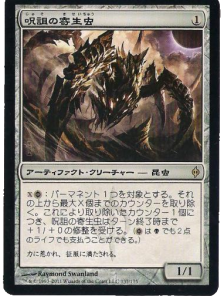
The next card I want to look at is Hex Parasite. A simple 1/1 artifact creature for 1 colorless, you may pay X and black or 2 life (I really love phyrexian mana) and Target a permanent. Remove up to X counters from that permanent. Hex Parasite gains +1/+0 until end of turn for each counter removed this way.

Where as surgical extraction is a graveyard based solve-all, this is a planeswalker targeted killing machine. Even if you get one use out of it, will be very worth it. Currently you're looking at $5 on SCG to buy one. I would consider getting your set at that price, if only because not only does it take out planeswalkers, but it could easily be used in legacy as an answer to a turn 1 aether vial. It also has the makings of a Legacy inclusion, and I know decks like the goblin welder deck we told you about not long ago will find use for this.

Price Projection: 8+

Reason: Initial demand from the #banjace people will make this a high demand card. You can probably trade it off for $12 the first few weeks if you spin its use as a jace killer correctly. To the right people, that's worth $12+. It's possible use in legacy also helps, and is another rare from the set to keep watch of.

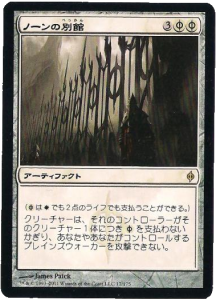
To wrap up this week I want to look at Norn's Annex. This is a seemingly simple card, but the ability to pay 3 and 4 life to prevent creatures from attacking you or planeswalkers you control unless they are willing to pay 2 life or 1 white per attacker shouldn't be underestimated. While this is nothing new, as cards like propaganda and ghostly prison have been around for a while, I believe this card has the possibility to be put to some use in the following months. I wouldn't pick up many of them, and I would try to get them as throw-in's on other trades, but it's worth having a few of them just in case.

That's about it for this week, hopefully next week gives us an Open worth talking about or some undervalued card I can suggest you go buy before it explodes.

Till next week,

Stephen Moss

@MTGstephenmoss on twitter

MTGstephenmoss@gmail.com

A Stoneforge Mistake? Pyromancer Ascension in GP Dallas

Are you a Quiet Speculation member?

If not, now is a perfect time to join up! Our powerful tools, breaking-news analysis, and exclusive Discord channel will make sure you stay up to date and ahead of the curve.

You can read Part 1 of my Trip Report here: A Most Magical of Weekends.

Welcome back to The Brewery! It's certainly been a while since I've written for Quiet Speculation, and it sure feels good to write again. 🙂

This past weekend was a busy one with Grand Prix Dallas marking my first Grand Prix since Atlanta in 2004 and my first major live event since Pro Tour Columbus in 2005.

I woke up with just enough time to make my way to the convention center and find the last few cards I needed to borrow (thanks Corbin!). A quick vender exchange for Darksteel Axe, Combust, and Jace's Ingenuity brought a couple of odd comments from the other guys in line, but I knew it would be pretty sick.

I suppose it's time for the decklist!

Pyromancer Anew

Untitled Deck

Spells

4 Lightning Bolt
4 Burst Lightning
4 Arc Trail
4 Pyromancer Ascension
4 Preordain
4 See Beyond
3 Jace Beleren
4 Mana Leak
4 Into the Roil
2 Jaces Ingenuity

Lands

4 Halimar Depths
4 Scalding Tarn
8 Island
7 Mountain

Sideboard

3 Combust
4 Spell Pierce
3 Trinket Mage
1 Darksteel Axe
3 Shape Anew
1 Blightsteel Colossus

For reference, here is my posting on the deck from the day before the Grand Prix and here are Chad Havas' posts on the deck.

Round 2, Lance Liberto, U/W Control

Game 1 was never even close. My opponent was playing a U/W Control deck with no Squadron Hawks or Stoneforge Mystics, instead playing Tumble Magnets, Wall of Omens, and Sea Gate Oracle. Basically, the best game 1 matchup I could have possibly found in this entire room full of people. Arc Trail and Burst Lightning each did 8 damage to him this game.

Game 2 was a long battle, and I thought I drew into the win on my final turn. Two times two minus one. And again. And three times two minus one.

“You're at 11?”

“Yup.”

Two times two minus one. Three. Again. Three more. Three times two minus one. Five. Three plus three plus five. Eleven. And my opponent, who spent his last turn exploding and tapping out for Sun Titan, would be helpless to stop me. Kor Firewalker had done a number on me this game, but I was going to win this game.

“Burst Lightning, targetting you. Pyromancer Ascension triggers.”

“I'll gain two life.”


Fuck.

How did I miss that? The answer is I didn't. Kor Firewalker only triggers off of playing a Red spell, not from copies. I should have known this, and I think on some level I did. I completely melted down, sending a Bolt and its clone to the Sun Titan (I was at 6 life), and a doubled Burst Lightning to take out his Sea Gate Oracle. My tapped out opponent was at 11, and I just sent 14 burn damage to kill of his team. Punt.

To make matters worse, I misplayed a critical turn the midgame. My opponent had a Kor Firewalker and a Sea Gate Oracle to go along with an animated Celestial Colonnade. I had an active Pyromancer Ascension and a Burst Lightning in hand and 15 life. I kicked the Burst Lightning at the Colonnade, but instead of hitting the Oracle for the other half and cutting my opponent's clock from 5 turns to 8, I got greedy and sent 4 at his face (combining with Kor Firewalker to deal just 2 damage*). Lesson learned and applied the rest of the day.

After losing game 2, there were just minutes left on the clock. I boarded in the Shape Anew package, assuming it would be my only way to get a win and that it would be unlikely to cost me the game. I shuffled up faster than I knew I could, presented, and waited in agony as my opponent shuffled calmly and relaxed. Time was called three turns into the game, and Lance offered the draw assuming we were both drawing dead. I declined. The board was mostly empty, with 3 lands each. I would have the first extra turn, and I already had a Shape Anew in my hand.

I had to draw naturally into Darksteel Axe + land in that order on Turn 1 and Turn 3, resolving Shape Anew on Turn 3, and drawing Into the Roil on Turn 5 for his 1/2 [card Squire]blocker[/card].

Turns out drawing three running outs is hard to do. After this game, I was pretty steaming though. Valeri talked me off the ledge between rounds.

*Yeah, I know. Sigh.

1-0-1

Round 3, Mikaela Mielke, Darkblade

Game 1 I got hit with a Sword of Feast and Famine once, and her life total went from 19 to 15 to 9 to 3 to dead. Pyromancer Ascension again made for an easy game 1 against Blue-based Control.

Game 2 she boarded in Flashfreeze which I somehow let snag a Pyromancer Ascension, but Combust was huge in this game and let me stick around. After a few turns of Draw, Go, we each had about thirty lands in play. I drew into Jace's Ingenuity into nothing, and she had Sun Titan (I think. I played against four different Stoneforge Mystic decks and a U/W Control, and they all started blurring together.) In either case, I lost.

Game 3 ended with me at 6 and her at 18. She said she punted the win, and I think she may have been right. Round 2's draw felt really wrong, but this one felt like a bit of a blessing. Still, starting out 1-0-2 isn't much better than 1-2.

1-0-2

Round 4, Gale Carter-Jeffrey, Boros

Game 1 got closer than I would have liked, since my opponent ended the game with two clearly telegraphed Lightning Bolts sitting in hand. I was at 8 life. Arc Trail was huge here, killing two creatures on turn 3 and dealing him 8 damage later on (as well as killing multiple creatures each time!).

Game 2 was never close. I boarded in the Blightsteel Colossus, and my opponent bemoaned his dead sideboard cards to his buddy after getting hit for 11 poison counters.

2-0-2

Round 5, Jeff Zandi, Mono White Mystic Control

Game 1, he surprised me with a maindeck Kor Sanctifiers to blow up a Pyromancer Ascension. Knowing his deck had zero reach, I fell to 5 before blowing him out with Pyromancer Ascension from 14 life. Sun Titan (retrieving Pilgrim's Eye) hit the board multiple times, and Into the Roil kept me out of true danger. Emeria, the Sky Ruin was his turn 1 land but he ended the game with six Plains.

Game 2

Blightsteeled.

Most of my opponents were pretty awesome to play against, but I think Jeff may have been the best. He was clearly having a good time and it showed. It turns out his deck was probably the MWC deck from GP Barcelona.

3-0-2

Round 6, Ron?, U/W CawBlade

If I could pick any round to replay on video, it would be this one. Multiple times in game 1 I thought I would have the win, but Gideon + two Swords made quick work of me in two attacks. Into the Roil kept me alive for a couple of extra turns, but I couldn't deal with the 6/6-turned-10/10. I'm not sure how tight I played this round. I mulliganed to 5 in game 1, and the 5 I kept wasn't stellar against his deck.

Game 2 was brutal and not very close. His sideboard plan, as I saw after the game, was pretty strong against me. It looked like he brought in 3 Leyline of Sanctity, 2 Celestial Purge, and 2 Revoke Existence. Midway through the game I realized he didn't play any Counterspells, but by then it had been too late to take advantage of. Ron was also the only opponent all day to aggressively go after my lands with his Tectonic Edges. Kudos to you, I hope you did well!

3-1-2

Round 7: Sara Tucker, U/B Tezzeret Forgemaster

This is the first deck I played against all day long that played neither Squadron Hawk or Stoneforge Mystic (in retrospect, Round 2 had neither as well). Game 1 went long, with her Tezzeret getting up to 9 Loyalty before I bounced it the first time. Two Kuldotha Forgemasters, Blightsteel Colossus, Wurmcoil Engine, and a Mindslaver all hit the board for her before I won with a flurry of copied spells.

For game 2, I audibled into a slightly different sideboard plan than I would have anticipated the night before. She had so few creatures but a ton of spells, and I didn't see Jace, the Mind Sculptor or Into the Roil in game 1, so I brought in Spell Pierces and the Blightsteel package for Arc Trails, Burst Lightnings, and Pyromancer Ascension.

It turns out she had Jace, the Mind Sculptor, but I was able to use Jace Beleren as a pseudo-shroud for Blightsteel and she had no answer.

Highlight of the round: Game 2 Memoricide naming Pyromancer Ascension. Good luck finding any. 🙂

4-1-2

Round 8: Genesis Garcia, Eldrazi Green

I was in a position to win out and make day two, and I won an easy game 1 against Eldrazi Green. His life total went from 20-17-8-0, and I didn't drop below 19.

Flashback three days ago. I'm playing one of my only test matches with the deck on MTGO, and this time it's in the 2-man queues against Eldrazi Green. Game 2, I boarded in Blightsteel Colossus and won the turn before his Mystifying Maze became active. Hmm. That card makes Blightsteel pretty bad, doesn't it?

So of course, I board in Blightsteel for game 2 (a quick affair when Terastodon takes out 2 of my 3 lands on his turn 4) and don't notice the error until he played his Maze naturally in game 3. At this point, I'm pretty sure I was drawing almost dead to a win. Keeping sketchy one-landers in games 2 and 3 didn't help, either.

4-2-2-drop

I dropped from round 9 to spend some extra time with Valeri. It was 8:15, and stores in Dallas apparently stop selling beer at 9:00PM, so we booked it over to Wal Mart and picked up a couple of 12-packs for our hotel room. Wal Mart was run like a well-oiled machine, and it took us 10 minutes to get in and out as if by incompetent boobs and it took us almost an hour to buy our beers. Valeri and I started pregaming while we waited for the Grand Prix to finish, and it wasn't until we were 11 beers deep into the first 12-pack that people starting coming back to the hotel room. At some point between then and when we all left the room, the seven of us finished off the remaining 13 beers and set off to stroll down Commerce St. in downtown Fort Worth.

Now, at this point Valeri and I are both extremely drunk. I had been subsisting on snack foods all day, and a fairly scant amount of them at that, so the beer was hitting me quite hard. She insisted she was fine, but we were both stumbling down the street as we walked.

“You! You guys! You have to try this burger. I am from Switzerland, and this is the best burger I have ever had in America.”

Huh.

Sitting outside of a restaurant/bar on what would have been a patio if it wasn't the sidewalk was a group of two or thee Europeans finishing off a meal. Well, at this point, everyone is at least a little tipsy if not full-on drunk, so what could be better than a hamburger and some beer?

Just to be sure, I accepted this kind Swiss man's offer to try his food. The french fry was quite delicious. At some point, he said something about cutting up his burger into quarters, but I'm not really sure what he was referring to. Maybe it's some strange Swiss way to honor your food.

We all ordered some food and a beer (if you're counting, I'm 8 beers in at this point), and I feasted. It was probably pretty dirty to watch.

I have no idea how I managed to walk all the way back to the hotel room. Shortly thereafter, Valeri ran out of batteries on one of the beds, and I joined her a few minutes later. I woke up the next morning still tipsy, and the hangover lasted until midway through the 4-hour drive back home! It was worth every second. 🙂

On Jace Beleren:

This card was insane. All day long. In 7 rounds, I had one killed in combat and one Legend ruled by Jace, the Mind Sculptor (Ban! Ban! LOL). Every single other Jace Beleren I cast resolved and drew me at least 3 cards (or won me the game first). Twice on the day, I use Jace Beleren to draw three cards and then play another Jace Beleren immediately.

On Arc Trail:

This card was also insane. At times, it reminded me of a much more versatile Searing Blaze. The most common use of it for me was to kill an x/1 or x/2 and sending the other half to my opponent's face. The ability to 2-for-1 just makes it even sweeter. The full compliment of Arc Trail is part of the reason why Jace Beleren was so easy to play and abuse.

On Into the Roil:

Perhaps the most useful 4-of in the deck outside of Pyromancer Ascension. Rarely was I disappointed to see this card, and often I was drawing to it as an out. It dealt with Gideon Jura, Sword of Feast and Famine, Mindslaver, Blightsteel Colossus, Jace, the Mind Sculptor, Wurmcoil Engine... I likened this card to Time Warp months ago on The Brewery, and now that CawBlade has taken over, its resumed its role as a Pyromancer Ascension SuperCard.

I lost a two games at the Grand Prix where I had an active Pyromancer Ascension. I never lost a single game where I cast a copied Into the Roil.

Insanity Roil
2UU – Instant
Return up two target nonland permanents to their owner's hands. Draw a card for each permanent returned.

That would never, ever, ever see print.

Good thing it doesn't have to. 🙂

On Jace's Ingenuity:

This card was obviously powerful every time I resolved it. I believe I cast it four times on the day, winning two of the games, losing one, and running it into a Mana Leak in the fourth (before later winning). Instant speed was relevant when compared to Foresee, but the extra mana cost was also relevant. I'll be testing Foresee again in this slot, but Jace's Ingenuity may prove to be correct.

On the Blightsteel Colossus plan:

Aside from round 1 where I boarded in Blightsteel for round time considerations, I boarded it in for game 2 against Boros, Mono White Stoneforge, and UB Tezzeret, winning each game easily. For a deck that already may have the best game 1 win % in the format, having such a strong sideboard misdirection plan is not gimmicky in the least.

I saw opponents bringing in Celestial Purge, Flashfreeze, Memoricide, Kor Sanctifiers... The one card more than any other that is scary is Revoke Existence. There are not many cards in Standard that can deal with both a resolved Pyromancer Ascension and a resolved Blightsteel Colossus, but Revoke Existence is one of them.

I misboarded the Shape Anew package against Eldrazi Green and lost both games 2 and 3 of that match.

Thanks again to Chad Havas for the original decklist. In fact, he took the deck in the complete opposite direction that I had been (less burn, more card draw, more counterspell effects), and it appears to work quite well.

Not-So-Random Stat:

I won game 1 in 6 out of 7 tries.

Thank you to everyone who helped to make this weekend so amazing. 🙂 Ryan, Corbin, and everyone from OK who roomed with us. It was nice to meet you all! And of course, to Valeri for being more supportive than anything I could imagine. <3 I had a blast, and I'm already planning my trip to GP: Providence. I hope to see some of you there! Dylan Lerch @dtlerch on Twitter

An Exercise in Patience

Are you a Quiet Speculation member?

If not, now is a perfect time to join up! Our powerful tools, breaking-news analysis, and exclusive Discord channel will make sure you stay up to date and ahead of the curve.

Welcome to week 5 of our little masterclass in altering cards. If you've been following along since week 1 you should feel fairly comfortable doing basic alterations with your cards. Last week we covered some of the more advanced theory behind painting, and this week we are going to put it all together on our first mythic alter. Last week I mentioned that there is money to be made in painting Commanders, so enter Uril, the Miststalker.

This is a surprisingly tricky project, so feel free to view this as your “Color Theory Boss Battle”. We will be working primarily with a mixture that includes 4 different colors and even using different shades of that. Creating these values can be time consuming, disheartening and very tedious. You will find yourself constantly remixing colors just to touch up an area you thought was done. This project, especially the beginning, will try your patience like never before. As with any other project though, once you gain an understanding of the particular hue in question, things will become easier. You can achieve this by experimenting with your paints. The more you experiment, the more you will learn about how your paints work together. If, though, you find yourself becoming increasingly frustrated by this project, do not be afraid to walk away for a while. The paint and card will both still be there when you calm down. That being said, let's dive in!

Patience, discipline...

To begin with, take your Titanium White and Mars Black and mix up a light gray. Add to this an amount of Ultramarine Blue to make a slate(ish) color. This will make a decent undercoat color to lay down on our borders. From here you'll want to add Naphthol Crimson to your mixture. You should come up with a sort of grayish purple often associated with pocket lint. From here you can add blue and black to darken your color, or white and red to lighten it to match the mountains and mists surrounding our hero. As usual, I cant tell you exactly how much of either, as different print runs will produce different colors on the card, this is where the earlier mentioned experimenting will pay off. Use this color to match up with the mountains. Be sure that you are matching the mountains and not the mist that surrounds them. While this is drying, this may be a great time to take a break from color matching and just paint the bottom border black.

The fun thing about this card is that every thing can be painted using different values of the same color. So as we move on to the sky, you can take your mixture and add varying amounts of white and red (using blue every now and then to balance it) to match the gradient of the mists above and around the name box. You will also find that some of the same colors can be used to create the mists around Uril's legs. I've found that by using a dry brush, and moving from a darker color to a lighter, a convincing mist can be painted in a matter of minutes. The tricky part is, once again, matching the original color of the mist. Luckily, there is a secret to that with a very technical name. Fudging it occurs when instead of matching the color exactly, blend the original color with a similar one of your own creation. As long as the two colors are very close in appearance, the general effect of this can be very convincing.

Really? That's it?

By now your card should look roughly like the second example. From here you have touch up work left to do. By playing with your mixture you can always find a “better match” to the colors. There are always details that can be added or improved as well. Perhaps you want to add more mist around that peak on the left. Maybe you want to drag the mist further down the text box. Unless you have been commissioned to work on this card, than this is your artwork. Take this opportunity to own it. Who knows, one could possibly even see the mist creeping over the text box for added flair.

Now that you have started to master the basic concepts of color, we can move on to some of the more exciting types of alters. Before we do though, I'd like to invite you all to join in a little competition. All of you have 3 weeks to alter a card, best alter wins! Details follow:

Rules:

–                    You may use any Magic:the Gathering card you wish.

–                    You may not paint over the entire text box, if you plan on using the text box in someway, please keep at least 70% of it visible.

–                    The original name, mana cost and power / toughness (if applicable) must be visible, though their text boxes need not be.

–                    The original artwork must be visible and un-altered (save for “Fudging it” along the borders)

–                    Keep submissions family friendly.

–                    The Judge (me) has the final say on the legality of all submissions.

You will be judged on:

1 - Color Matching

2 - Professionalism (clean borders, neat presentation etc.)

3 - Creativity (What you do with the space around the original picture)

Criteria listed will be weighted in that order. In this way, technical skill comes to the forefront of the contest, with creative flair used as a tie breaker.

Submissions:

-                      Due no later than May 2, 2011 at 11:59pm

-                      Please submit an image of your card while still on your art board with some notation of your screen name (post-it note, masking tape etc.) to prevent fraud.

–                    Submission may be sent to me via email, please use “Art Contest” in the subject line.

–                    The winner(s) will be contacted via email for contact information to receive their prize.

Prizes will include a Foil Mirran Crusader for 1st prize.

Conditions:

-Contest must include at least 4 submissions by 4 different people.

Additional prizes will be added depending on the number of submissions. (probably booster packs)

-All (serious) artwork will be posted in this article series unless otherwise noted by the artist. The winner WILL be posted.
Questions, comments, concerns may be sent to me via email or left in the comments section. Use what you have learned from this series and really apply yourself. I cant wait to see what you guys come up with! Good Luck!

Until next time!

-The Painters Servant

Twitter: PaintersServant

Email: Mbajorek02@gmail.com

Removal in Standard

Are you a Quiet Speculation member?

If not, now is a perfect time to join up! Our powerful tools, breaking-news analysis, and exclusive Discord channel will make sure you stay up to date and ahead of the curve.

Being able to interact with an opponent's creatures in a meaningful way is essential to success in today's metagame.  Once upon a time, when most of the creatures were awful and took a long time to win, a player could get away with just putting four Lightning Bolts or a playset of Swords to Plowshares in their deck and call it a day, but that has changed with Wizards' push toward the combat phase in recent years.  Not only do we lack a universal removal spell like Swords to Plowshares or its most recent approximation, Path to Exile, we are also faced with a wide variety of threats that demand different types of removal in order to gain value.

All removal today needs to be evaluated through four different lenses: CawBlade and its [card Sword of Feast and Famine]Swords[/card], early threats such as Lotus Cobra and Fauna Shaman that can dominate a game without attacking from decks like Jumanji and RUG, the swarms of early attackers from Boros or Elves!, and the Titans of Valakut.  Each of these requires a different set of removal spells to effectively engage because they attack from different angles.  Due to the incredible power level of creatures these days, having the wrong removal spell can easily result in a game loss.

Against CawBlade's Squadron Hawks and Sword of Feast and Famines sweepers are less than stellar.  CawBlade can provide a steady stream of attackers due to the Hawks and can force an opponent to trade one for one with removal due to their Swords, putting sorcery speed sweepers in a bad position.  CawBlade also has either Creeping Tar Pit or Celestial Colonnade, in addition to Gideon Jura, both of which can carry a Sword without fear of cards like Slagstorm or Day of Judgment.

Against CawBlade instant speed removal is best, as it can deal with equipped creatures, activated manlands, or Gideon. Tumble Magnet is also quite good against the Swords.

The second way to evaluate removal is to look at its effectiveness against Fauna Shaman and Lotus Cobra.  Both of these creatures are incredibly powerful and can run away with a game if they come out early and are not answered.  The Shaman can search up a surge of [card Vengevine]hasty plants[/card] that make most removal spells lose a large portion of their value, while the Cobra can accelerate out threats such as Jace, the Mind Sculptor or Inferno Titan before the other player is ready to deal with them.  Both of these can do significant damage before sweepers come online, and tapping out on turn four to deal with a two-drop is a poor deal.

Instant speed removal is the best option for fighting against these threats.

Quick decks like Boros and Elves! are both vulnerable to targeted removal, but sweepers are your best option.  Killing a Steppe Lynx pumped by two landfall triggers or an Elvish Archdruid in response to attackers is a great feeling and can be a significant boost in the game, but these decks are resilient and have a large number of threats.  Buying a turn with a targeted removal spell is certainly good, but you are going to need to use that time to cast an important, game altering spell, or you can still be run over.

Sweepers are what I want to see more than anything else against these decks.  Targeted removal is also good, but it is mostly useful for buying time to resolve something else important, like a Titan or a sweeper, rather than an end unto itself.

The last way I examine removal is by thinking about its value against Valakut.  Valakut seems to be more nebulous at the moment than any of the other popular decks.  It can feature Lotus Cobra and Overgrown Battlement for ramp, or be more traditional and spell based.  Every build will feature four Primeval Titans, but their additional fatties can vary widely.  Inferno Titan is the current choice for many players, but Avenger of Zendikar is still favored by some, and I have seen Precursor Golem and Wurmcoil Engine generate some discussion as well.

Targeted removal such as Go for the Throat is quite good here, as it can deal with early mana producers to slow down the Valakut player, or later it can handle a larger threat.  Damage-based sweepers are not particularly exciting, as they can clear out a Lotus Cobra or the tokens from a Avenger of Zendikar if the Valakut player was not playing around them, but they do not address Primeval Titan or an Avenger if the Valakut player plays around the sweeper.  Additionally, because sweepers are all sorcery speed, they leave you open to an end-of-turn Summoning Trap.

White

Oust

VS CawBlade: Oust is not a winner.  It trades one for one with a deck that gains significant amount of card advantage, particularly from its creatures.  Bouncing a Stoneforge Mystic is a miserable proposition, even if it was an instant.  If larger creatures such as Baneslayer Angel start to see more play in CawBlade it could become more effective, but as long as the only creatures being played are Squadron Hawks and Stoneforge Mystics Oust will be less than amazing.

VS Fauna Shaman/Lotus Cobra: This is where Oust shines.  Oust can effectively answer these threats before they do any damage, even if you are on the draw.  They will be back later on, but by then you will have had more time to mount your defenses.  Even if they go unanswered the second time around they are significantly less scary on turn four than turn two.  A turn two Cobra threatens a turn three Inferno Titan, while a turn four Cobra only threatens a turn five Titan-which is the same as an Explore.  A turn two Fauna Shaman can lead to two Vengevines attacking as early as turn four, but a turn four Shaman means turn five or six Vengevines, which means you have had time to deploy some blockers or a Gideon Jura for defense.

VS Swarms (Boros/Elves!):  Oust is quite good here as well.  Against Elves! you can slow their mana production long enough to make it a fair game, and in the later game it is a removal spell even if they have an Eldrazi Monument out.  The difference between a turn two and a turn three Elvish Archdruid is hard to overstate and Ousting a turn one Llanowar Elf or the like is a play I am quite happy with.

Boros has several creatures with Haste that make the sorcery speed Oust a little worse, but it is still good.  I would usually prefer to Oust a Plated Geopede or Steppe Lynx than Goblin Guide, and their only other Haste creature is [card]Hero of Oxid Ridge[card].  The Hero is often the most threatening creature that Boros can play, but stemming the bleeding early can reduce his effectiveness quite a bit.  The possibility of a Hero landing on the other side of the board is much more worrying when you are at eight than sixteen, because it is unlikely he will threaten lethal at that point.

VS Valakut: Oust is good against the creature-based ramp builds of Valakut that are playing with Overgrown Battlement and Lotus Cobra, but not nearly as impressive against those that prefer Harrow and friends.  It is never bad, as dealing with a Titan, whether [card Primeval Titan]Primeval[/card] or [card Inferno Titan]Inferno[/card] for two turns can be enough time for you to find a more permanent answer, kill them, or mill away the offender with a Sword of Body and Mind.  The only time it is just awful is if they are playing with a Avenger of Zendikar and have played a land before you get a chance to play your Oust.

Journey to Nowhere

VS CawBlade: As with Oust, one-for-one-ing a creature that has gained value upon resolution with a sorcery speed card is fairly unexciting.  It is much better against cards like Baneslayer Angel, Sun Titan, or Hero of Bladehold.  There has a been a recent trend towards going large in CawBlade to beat the mirror, and if this continues the Journey could be an excellent choice in limited numbers to deal with opposing Titans and their ilk.

VS Fauna Shaman/Lotus Cobra:  I have been playing with two copies of Journey in my UW CawBlade specifically to deal with these two problems.  Barring an exceptionally poor draw with only lands that enter the battlefield tapped, Journey to Nowhere should be able to answer these questions before they have a chance to wreak any havoc, even if you are on the draw.  In the later game it can also deal with a Vengevine, which is sure to be present in any Fauna Shaman deck.

VS Swarms: Similar to Oust.  It is good to have a cheap early removal spell before sweepers come online, but the sorcery speed aspect is a problem.  Getting rid of a Plated Geopede or similar could be worth it, however.  I would not sideboard the Journey against these decks, but if it was already in the sideboard to handle other problems there is a good chance it would come in here.

VS Valakut: I like the Journey here quite a bit, more than Oust.  It is equally effective in the early game against their mana producers, but it can answer a later game Titan more effectively because you do not need another answer in order to avoid seeing the same Titan again.  It fails against Avenger of Zendikar, as does all spot removal, but Journey to Nowhere also has a vulnerability to Acidic Slime.  Given that most Valakut players are moving from Avenger of Zendikar to Inferno Titan these days, this is not such a worry as to make it unplayable.

Condemn

VS CawBlade: Condemn is the best spot removal available to white when fighting against CawBlade.  It can stop a Sword of Feast and Famine from connecting, allowing for a significant swing in tempo, particularly if the opponent tapped out for a spell in their first main phase and was counting on being unable to untap later in their turn.  It is still a loss of card advantage if it is dealing with a Squadron Hawk or Stoneforge Mystic, but it is still better than letting the Sword connect because then you would be out a card anyway.  It is also the only spell that White has that can handle either an animated Gideon Jura or Creeping Tar Pit/Celestial Colonnade.

VS Fauna Shaman/Lotus Cobra: Condemn is miserable here because neither of these needs to attack to do its damage.  It is possible to catch a Lotus Cobra off guard, but not likely, and certainly not against the best players.  Condemn can answer a Vengevine better than most removal spells, but if the Shaman remains unscathed it will be back in a matter of time.

VS Swarm: Condemn is quite good against any aggressive deck.  It deals with early Goblin Guides, gets rid of Elf lords even if an Eldrazi Monument is in play, and can "destroy" a Bloodghast quite well without even triggering a Kalastria Highborn.

VS Valakut: As with Shamans and Cobras, Condemn is quite poor against creatures that don't attack.  It can not answer any of the problem mana producers in the early game, and while it can get rid of a Titan it will not be until it has gotten at least two copies of its enters-the-battlefield/attacks benefit, making this a losing proposition.

Day of Judgment

VS CawBlade: Judged, and found wanting.  Day does not answer Gideon Jura or creaturelands and is losing card advantage against any of the Squadron Hawks or Stoneforge Mystics.

VS Fauna Shaman/Lotus Cobra:  By the time this hits Shaman and Cobra already have had the chance to deal significant damage.  I would prefer other options against these two.

VS Swarm: Unsurprisingly, Day shines against decks that plan to attack with many creatures at once.  This is where you want to rip your DoJs.  It is possible for Boros to recover with Squadron Hawks and or Koth of the Hammer, Elves! can have an Eldrazi Monument in play by the time you get to Day of Judgment mana, and Vampires can fireball you with a Kalastria Highborn, but barring the perfect circumstances for them they will be in a world of hurt.

VS Valakut: While too slow to effectively answer early mana producing creatures, the Day can clear away Titans without letting them get in more than one trigger.  This makes it slightly worse than Journey to Nowhere, except that Day of Judgment is the only good answer to a resolved Avenger of Zendikar if they are still playing that.

Black

Doom Blade

VS CawBlade: Doom Blade is quite good against CawBlade in some ways, and lacking in others.  It can kill any creature other than Creeping Tar Pit in response to it being equipped by Sword of Feast and Famine, including Gideon Jura, which makes it quite useful.  If it is drawn after a creature is equipped by the Sword, however, it is next to useless.  The ability to make a CawBlade player twice the mana they were expecting to equip their creature with a Sword can be quite a tempo boost and removing an opposing Gideon Jura can easily turn a game, but I remain skeptical of running Black removal against a deck that features a Protection from Black Sword so prominently in its plans.

VS Fauna Shaman/Lotus Cobra: Here Doom Blade is everything you could ask for, and some cookies.  Its instant speed status lets it remove either the Shaman or Cobra at the end of the turn, before they have a chance to do any damage, if you are on the play.  If you are on the draw you can still interact with either two-drop before they become active, you will just be tapped out on the opponent's third turn.

VS Swarm: Again, Doom Blade shines.  None of the most widely played aggressive decks are Black, which makes Doom Blade's drawback negligible.  Being able to kill any creature, large or small, at instant speed is a huge plus against any aggressive deck.  It can answer Boros' most threatening creature, Hero of Oxid Ridge before it can do any damage by stopping it before it is ever declared as an attacker, or kill a Mountain animated by Koth of the Hammer.

VS Valakut: Doom Blade is also good against Valakut.  It can take out any mana producers in the early game, or a Titan in the late game before it can attack to gain its second ETB trigger.

Go for the Throat

Same as above, with a few footnotes.  It is better against CawBlade because it can kill a Creeping Tar Pit while Doom Blade can not.  If anyone playing the Black splash in CawBlade has decided to go big with Grave Titan, Geth, Lord of the Vault, or another option, Go for the Throat will again shine.  It is worse against RUG if they are playing with Precursor Golem, or the mono Blue Grand Architect deck in the late game, but Doom Blade-ing a Wurmcoil Engine is hardly a great deal anyway.

Disfigure

VS CawBlade: Disfigure can take out any of the eight common creatures at instant speed for less mana than any other option, which is a plus.  It has the same vulnerabilities against Sword of Feast and Famine as any other black removal spell, but can not deal with a Celestial Colonnade or Gideon Jura.  It can, however, kill an animated Creeping Tar Pit.  In total, Disfigure may not be dead against CawBlade, but it is not likely to be sideboarded in against it unless you are playing an aggressive deck that intends to win quickly - before the weakness to [card Gideon Jura]Gideon[/card] can come into play.

VS Fauna Shaman/Lotus Cobra: Even better than Doom Blade.  The one mana saved frequently won't matter, but it can't hurt.

VS Swarm: Disfigure is a large enough effect to kill Plated Geopede or Steppe Lynx if they have only one landfall trigger on the stack, or if you play it as a sorcery, but if they play a fetchland like Arid Mesa you will not be able to kill their creature unless they are exceedingly bad at stacking their triggers.  It is still useful against other creatures, however.  Disfigure can kill a Goblin Guide or Hero of Oxid Ridge before they can connect, as well as Stoneforge Mystic or Spikeshot Elder.

-2/-2 is large enough to hurt against any of the other aggressive decks, killing off Elves as long as there is only one Lord in play, any frequently played Vampire, and Signal Pest.

VS Valakut: Here Disfigure is next to dead.  The only thing it can kill is Lotus Cobra, which not every list is playing.

Disfigure is a good sideboard card because of its cheap mana cost and ability to answer a number of problems, but its weakness against Valakut and CawBlade mean it probably doesn't belong in the maindeck.

Red

Arc Trail

VS CawBlade: Arc Trail will almost always be able to kill of two creatures against CawBlade which makes it a useful tool for gaining some card advantage.  The ability to split damage between a creature and a Planeswalker is also useful.

VS Fauna Shaman/Lotus Cobra: Two-for-ones are good. Sorcery speed is unfortunate, but the ability to kill off the target and a Birds of Paradise, Llanowar Elf, or some other threat is a significant plus.

VS Swarm: Again, the ability to kill of two threats at once is huge. Arc Trail is one of the best possible cards against creature decks if you plan on having creatures of your own in play, which could make sweepers like Pyroclasm awkward. In a deck like Vampires or Boros Arc Trail is a better sideboard card against swarm decks, but if you are planning on playing control then a sweeper is almost always going to be a better pick.

VS Valakut: Arc Trail is close to dead here. The best possible scenario is doming them two and hitting Lotus Cobra for one, but as the Cobra falls from favor Arc Trail is more and more likely to just deal two to the player for two mana a sorcery speed - hardly a bargain.

Lightning Bolt

VS CawBlade: Three damage is enough to kill of any of the commonly played creatures in response to being equipped, as well as enough to kill of a Squadron Hawk after it has been equipped by a Sword of Feast and Famine. Depriving a CawBlade player of an untap they were expecting to get can be quite a nasty surprise, and killing off a Jace, the Mind Sculptor can also be game-breaking.

VS Fauna Shaman/Lotus Cobra: Only one mana, and instant speed. Thumbs up.

VS Swarm: Three damage is the key number, as it can kill a Steppe Lynx or Plated Geopede even after a landfall trigger. If they play a regular land you can kill the creature when they attack, and if they play a fetchland you can kill it in response to the sacrifice.

VS Valakut: As with the other burn spells, it is close to dead against Valakut unless you have enough together to make doming their face a viable plan.

Slagstorm

VS CawBlade: A sweeper that deals three is quite good against the 'Blade. It can take down most of their creatures, including any birds with equipment. The fact that it can also deal significant damage to a Jace, the Mind Sculptor or Gideon Jura is also a plus. It is not a strong enough effect to be worth sideboarding in but it is certainly worth considering in the maindeck.

VS Fauna Shaman/Lotus Cobra: Slagstorm will be too slow to stop either of these from doing any damage unless you are on the play, but a single turn with Shaman active will not be gamebreaking, as it can only search up a single Vengevine. A single turn with Lotus Cobra active, however, is quite another story. Even if they don't have a fetchland they can drop a Jace, the Mind Sculptor and Brainstorm with it, making you choose between killing the Jace and the Cobra with your Slagstorm. If they have a fetchland they get to five mana, which is in range of Acidic Slime, and if they have the nut draw of Explore into two fetchlands they can have a turn three Inferno Titan to make your Slagstorm just look silly. This dichotomy makes Slagstorm a much more appealing option against Fauna Shaman than Cobra decks, as it can also take down any Vengevines if they hit play before you get a chance to play/draw your Slagstorm. I would probably sideboard out Slagstorm against Cobra decks and bring it in against Shaman decks.

VS Swarm: A good sweeper, and cheaper to cast than Day of Judgment. It is a good anti-aggro maindeck card, but the difference between two and three damage matters infrequently enough I would prefer Pyroclasm in the board.

VS Valakut: Dead.

Pyroclasm

VS CawBlade: Two damage can kill off some of the riff-raff, but it isn't enough damage to kill anything that is wearing a Sword, which is what matters most.

VS Fauna Shaman/Lotus Cobra: Similar to Arc Trail. It taps you out because it is a sorcery, but it kills them before any damage is done even if you are on the draw. Thumbs up.

VS Swarm: Two damage is enough to kill off almost every aggressive creature seeing play at the moment. If you need an anti-aggro card in your Red deck this should be the first place you look.

VS Valakut: The only thing this will kill is an early Lotus Cobra (which I've already mentioned is falling from favor) or the plant tokens from an Avenger of Zendikar if you're lucky.

Blue

Volition Reins

VS CawBlade: Volition Reins can be quite powerful against CawBlade if you haven't already lost by the time you have enough mana to cast it. Taking a Jace, the Mind Sculptor or Gideon Jura can be gamebreaking. Even taking a Sword of Feast and Famine can have a huge impact on the game. The fact that many people have been advocating going big for the mirror makes Volition Reins even better in game two, which is probably the first time you would want to see it because it is so bad against aggressive decks it probably isn't maindeckable. It is entirely possible to just be dead by the time Reins starts being relevant which means it can not be the only piece of your plan to beat CawBlade, but it can be an important piece of the late game plan.

VS Fauna Shaman/Lotus Cobra: Dead.

VS Swarm: Dead

VS Valakut: I wouldn't want to sideboard a Volition Reins specifically for Valakut, but if it was in my sideboard for CawBlade I could easily imagine it being better than something else in the maindeck and sideboarding it in against them. Taking a Titan of any color is quite powerful as it answers the threat without demanding a board sweeper which allows you to continue applying pressure.

Into the Roil

VS CawBlade: Into the Roil has started picking up some support recently due to its quality against the 'Blade. Bouncing a Planeswalker of any kind at the end of turn can provide a powerful tempo swing, getting rid of a Sword for a turn can buy you time to play out your defenses, hitting a Tumble Magnet can allow you to push an attack through... it is hard to think of anything to target other than a two drop creature that would be bad.

VS Fauna Shaman/Lotus Cobra: While not optimal, it will buy you a turn.

VS Swarm: Fogging to save yourself from death is fine, but not what you're looking for. I would never sideboard Into the Roil in against Boros type decks if I had any other options, and I would not be displeased about cutting it from the main for something else.

VS Valakut: Bouncing a Khalni Heart Expedition in response to it going active can interfere with the Valakut player's plans significantly, and it can also slow down a Titan for a turn by stopping a Overgrown Battlement/Lotus Cobra for a turn if they are going that route. Certainly not optimal, but it can serve in a disaster.

Honorary Mention
Guard Gomazoa

VS CawBlade: Many players are following GerryT's lead toward two Sword of Feast and Famines and no Sword of Body and Mind. With fewer pro-Blue creatures running around the Gomazoa looks like a reasonable option for fighting the Caw. It can block whatever creature is bearing the Sword and live to tell about it, or if they have no Swords it can hold a whole fleet of Squadron Hawks at bay.

VS Fauna Shaman/Lotus Cobra: Useless.

VS Swarm: A blocker that never dies is never a bad thing against aggressive decks, and the one power can be relevant. Against Boros it may just eat a Lightning Bolt, but they aren't always going to have it, and if they do that is still a Bolt that can't go to your face later in the game.

VS Valakut: Dead. Primeval Titan has Trample and can get Valakut, the Molten Pinnacles and Mountains to kill of the Gomazoa before blockers are declared if it wants to, Inferno Titan can kill it off before blockers with its Arc Lightning, and Avenger of Zendikar has multiple bodies that need dealing with. This is irrelevant against every one of Valakut's threats.

Thanks for reading,
Brook Gardner-Durbin
@BGardnerDurbin on Twitter

Magic Achievements

Are you a Quiet Speculation member?

If not, now is a perfect time to join up! Our powerful tools, breaking-news analysis, and exclusive Discord channel will make sure you stay up to date and ahead of the curve.

I am now also writing a series on TCGPlayer.com. For those of you who enjoyed my Standard metagame analyses, those will be living on that site now, and done regularly through the various Standard seasons on Magic Online. I've agreed to do this series for them because they are already collecting the data and are providing it to me, so I don't have to collect it myself.

As for SCG Atlanta, I managed to go 0-2 drop in Standard, 2-2 (with a bye) in Legacy, and what might just be the least-deserved 2-1 in the history of Draft. With that in mind, I'm not unhappy with my play in Standard or Legacy - I made only one minor error in Standard, and just lost to bad matchups in Legacy.

In Standard, I played U/W Caw-Blade, got paired against RUG twice, and got owned by a seemingly endless stream of Precursor Golems and Inferno Titans.

In Legacy, my first round saw me facing Devin Koepke once again, who was running MUD much like he was in Memphis. Fortunately, I was running Zoo so his turn one Chalice of the Void (for 0 this time) wasn't nearly as scary as it was when I was running Tendrils. However, his turn 2 Trinisphere and turn 4 Wurmcoil Engine were enough to shut me out of game 1.

Game 2 I brought in Null Rods among other things, and got a terrible 1-lander which I mulliganed into a hand of a dual land, a pair of Null Rods, a couple of creatures, and a burn spell. I thought for some time, then devised the following game plan: keep the hand, hope to draw a fetchland or a basic off the top, then play the dual on turn 3. So I kept the hand and passed the turn. My topdeck? Another dual land, which promptly got hit by a Wasteland as expected. I didn't get a second land right away, so he got a Trinisphere down. I drew the second land after that, but couldn't Rod him out of the game. He laid Wurmcoil, I got the third land, and promptly Rodded him. He sent me to 13, I landed a creature. He sent me to 7, I landed another creature and double-blocked, losing both my creatures. Having made it to 6 mana, I traded a Wild Nacatl with one token and used a removal spell for the other. He never got another creature down, and I got plenty.

Game 3 he went Ancient Tomb, Grim Monolith, Trinisphere followed by Metalworker. I didn't do anything of relevance.

Round 2 I got the odd player bye. Shame I wasted it.

Round 3 I got paired against Painter-Stone Affinity, which seems worse than regular Affinity. I won game 1 because Grindstone can't wear a Cranial Plating, lost game 2 because he topdecked Painter's Servant after I killed all his creatures and was set up to go kill him, and won game 3 because I landed turn 2 Null Rod. He made an effort for a bit with Memnites, Frogmites, and Myr Enforcer, but it wasn't going to work out and he conceded.

Round 4 I was paired against Stoneforge Mystic/Vengevine Green-White, which is a terrible matchup for me. Game 1 he just got more big creatures than I did. Game 2 I got more Qasali Pridemages than he did equipment. Game 3 he got multple Stoneforges, Vengevine and a re-buy, and Thrun, the Last Troll. While I got him down to 5, he kept gaining life off Umezawa's Jitte to keep himself out of the danger zone.

Untitled Deck

creatures

4 Goblin Guide
4 Wild Nacatl
4 Tarmogoyf
4 Knight of the Reliquary
3 Loam Lion
2 Gaddock Teeg
3 Grim Lavamancer
3 Qasali Pridemage

spells

4 Chain Lightning
4 Lightning Bolt
3 Price of Progress
1 Sylvan Library

lands

1 Forest
1 Mountain
1 Plains
1 Horizon Canopy
2 Savannah
2 Plateau
3 Taiga
2 Windswept Heath
4 Arid Mesa
4 Wooded Foothills

sideboard

2 Ethersworn Canonist
2 Lightning Helix
2 Null Rod
2 Pyroblast
2 Path to Exile
3 Relic of Progenitus
1 Umezawas Jitte
1 Qasali Pridemage

The deck is solid, but I would really like to find a way to fit 2 Stoneforge Mystic and 1 Umezawa's Jitte in there. My current idea is -1 Sylvan Library, -1 Knight of the Reliquary, and -1 Price of Progress to put them in the maindeck, then cut the Lightning Helixes and Umezawa's Jitte from the board for +1 Price of Progress, +1 Null Rod, and +1 Pyroblast or Path to Exile. I haven't fully worked out all the implications of this, though.

In the Draft Open, I got a reasonable but somewhat slow RW deck with no real aerial presence, and got owned by a fast WR skies deck. My Oxidda Scrapmelter, 2 Shatter, 2 Revoke Existence deck was able to keep him from beating me with 2 Myr Galvanizers and Myr Turbine, but they were useless against a team of Leonin Skyhunter, Kemba's Skyguard, and Glint Hawk. I punted the next game while in a losing board position, so that knocked me out of top 8 contention unless something really strange happened.

The Draft Open was Swiss, but my round 2 opponent didn't get the memo so I got a freebie.

Round 3 my opponent had lost in round 2 and didn't realize he was still in the event but checked when he saw someone in his pod sitting across from an empty chair. He got a game 1 loss for tardiness, and in game 2 I topdecked Sword of Body and Mind to put on my 2-power creature against his Cystbearer when he had finally stabilized at 4 life.

Moving on from recounting my inability to win in Atlanta to the real meat of the article.

When attending all these tournaments, you have to ask yourself:

What is your goal in playing this game? Are you trying to turn a profit off cardboard? Make a living? Or are you simply grinding tournaments and trades aimlessly because you've got nothing better to do?

I've got a solution. Achievements.

Tournament Play

- Play in a tournament
- Top 8 a tournament
- Win a tournament
- Win money at a cash tournament
- Win at a tournament which gives out a trophy

Rating

- Hit 1700
- Hit 1800
- Current Total rating above 1850 (threshold for one bye at a Grand Prix)
- Hit 1900
- Current Total rating above 1950 (threshold for two byes at a Grand Prix)
- Hit 2000
- Current Total rating above 2050 (threshold for three byes at a Grand Prix)
- Hit 2100
- Hit 2200
- Be the current highest-rated player

Third Party Series

- Qualify for a SCG Invitational
- Money a SCG Invitational
- Top 8 a SCG Invitational
- Win a SCG Invitational

- Qualify for a TCGPlayer Championship Tournament
- Money a TCGPlayer Championship Tournament
- Top 8 a TCGPlayer Championship Tournament
- Win a TCGPlayer Championship Tournament

Pro Play

- Top 8 a PTQ
- Qualify for the Pro Tour

- Day 2 a Pro Tour
- Money a Pro Tour
- Top 8 a Pro Tour
- Win a Pro Tour

- Qualify for Nationals (where applicable)
- Top 8 Nationals
- Win Nationals

- Qualify for Worlds
- Money at Worlds
- Top 8 Worlds
- Win Worlds
- Win Player of the Year

Digital Gaming

- Maintain a current Standard deck
- Maintain a current PTQ Season deck (block or extended)
- Maintain a current Legacy deck
- Maintain a current Vintage deck
- Qualify for a MOCS
- Win a MOCS
- Qualify for the Magic Online Championship
- Be the Magic Online Player of the Year

Running Things

- Become a Rules Advisor

- Become a Judge
-- Level 2
-- Level 3
-- Level 4
-- Level 5

-- Judge 100 Tournaments
-- Judge 1000 Tournaments
-- Judge 10,000 Tournaments

- Become a Tournament Organizer
-- Organize 100 Tournaments
-- Organize 1000 Tournaments
-- Organize 10,000 Tournaments

-- Hold a 50-player tournament
-- Hold a 100-player tournament
-- Hold a 250-player tournament
-- Hold a 500-player tournament
-- Hold a 1000-player tournament

- Run a store
-- Keep it running for 5 years
-- Keep it running for 10 years
- Run a digital store
-- Keep it running for 5 years
-- Keep it running for 10 years

Collection

- Maintain a current Standard deck
- Maintain a current PTQ Season deck (block or extended)
- Maintain a current Legacy deck
- Maintain a current Vintage deck

- Acquire a complete set
- Acquire a complete playset

- Acquire 4 of every card in Standard
- Acquire 4 of every card in Extended

- Fetchlands: 4x10
- Dual Lands: 4x10
- Black-bordered Dual Lands: 4x10

- Acquire a Piece of Power
-- Timetwister
-- Time Vault
-- Mox Pearl
-- Mox Sapphire
-- Mox Jet
-- Mox Ruby
-- Mox Emerald
-- Ancestral Recall
-- Time Walk
-- Black Lotus
- Complete set Power Nine: Classic Variation (Timetwister)
- Complete set Power Nine: Modern Variation (Time Vault)

- Acquire a Beta Piece of Power
- Complete set Beta Power Nine: Classic Variation
- Complete set Beta Power Nine: Modern Variation
- Acquire an Alpha Piece of Power
- Complete set Alpha Power Nine: Classic Variation
- Complete set Alpha Power Nine: Modern Variation

- Complete set of Homelands
- Complete set of Revised
- Complete set of Arabian Nights
- Complete set of Legends
- Complete set of Antiquities
- Complete set of Beta
- Complete set of Alpha

- Collect 1 of every tournament-legal card ever printed
- Collect 1 of every card ever printed

- Ultimate Tournament Playset: 1 of each Restricted card and 4 of every card legal in other formats.
-- Wacky Bonus: 4 of each Unglued and Unhinged card

- Ultimate Collector's Achievement: 4 of every card, in every version. Strictly impossible due to 1996 World Champion and Shichifukujin Dragon, as well as the likely impossibility of getting 4 copies of Proposal.
-- Theoretical Maximum Collector: 4 of every card in a regular printing, both regular and foil (where possible). 4 of every promo that was printed enough to be acquirable.

- Guru Land Addendum: 20 of each Guru Basic Land
- APAC Land Addendum: 20 of each APAC Basic Land
- Euro Land Addendum: 20 of each Euro Basic Land
- Unglued Land Addendum: 20 of each Unglued Basic Land
- Unhinged Land Addendum: 20 of each Unhinged Basic Land
-- Foil bonus

- Oversized Card Addendum: 1 of each
- Big Game Player: 4 of each oversized card and 20 of each oversized Basic Land

- One of each Vanguard card

Community

- Get published
- Write 100 articles
- Write 1000 articles
- Write 10,000 articles

- Introduce someone to the game
- Introduce a dozen people to the game
- Introduce 100 people to the game

Miscellaneous

- Get a card signed in person
- Own an original artwork
- Get a job working on Magic

Joshua Justice

@JoshJMTG on Twitter

The Ups, The Downs

Are you a Quiet Speculation member?

If not, now is a perfect time to join up! Our powerful tools, breaking-news analysis, and exclusive Discord channel will make sure you stay up to date and ahead of the curve.

This article comes per request from Twitter a few weeks back, and as always I am happy to indulge any reasonable request; these articles are, after all, for you: the reader. Most people reading this article already know how to trade, and whether you consider yourself new to the game or a seasoned veteran matters little. This article will cover the art of up trading and down trading. Some of you may already know what this means and how to execute these types of trades, and for those of you that don’t this will be a great lesson to get you started.

The Ups

Up trading is the concept of taking your small to midrange cards and turning them into high end cards such as Duals and Power. The idea of up trading can be a grueling and long tedious process if not performed correctly. The thing to remember is that the person with the expensive loot is usually leading the trade, and for good reason. This does not mean you have to let them walk all over you to get the deal done, but it does command respect and understanding. Turning 20 five dollar rares into a Force of Will may seem like a loss at first glance but when you look deeper into the trade you realize there are positives to both sides.

The Attitude

Respect the other player’s opinions and decisions. If there is one sure way to make a deal go south, it is to push too hard. The second key is to never use the word "need." Once this bomb has been dropped it is unlikely you will come out of the trade ahead or even, there is no surer way to guarantee a loss. With these two key ideals in mind, you will be in fine shape to approach this type of trade.

The first obvious step in starting this trade is to let the other person know you would be interested in whatever expensive card it may be. If they are willing to part with said card for a large number of smaller rares (typically a Legacy/Vintage staple may be traded for a multitude of Standard rares), you then allow them to pull out cards at will as long as their Power card is valued correctly. Remember these trades don’t solely have to be for the Power card; if they manage to find more than what their piece is worth, adding some bulk on as well can be ideal. The best trade advice I can give in these scenarios is to make sure the other trader gets what they want. Value your cards fairly, as there is no need to value trade unless the opportunity is presented. Gaining the Power cards is value enough. Overvaluing your cards or debating too heavily can turn out to be a waste of both players’ time, and believe me nothing is worse than having to put a pile of rares back after a sour trade. Remembering these key points can turn your binder full of bulk and general rares into a binder of gold which can then later allow you the same opportunity.

This weekend at Grand Prix: Dallas/Fort Worth I participated in many up trades, and although they usually command a great deal of time, they can be invaluable to keep your binder’s value on the rise. A great example of an up trade involved a gentleman with an English Mana Drain which he valued at 110 (a very fair price for the condition). He was seeking Standard commons, uncommons, and rares to restock himself for the remainder of the weekend, and I was happy to oblige. Like I mentioned earlier, do not push the trade along. Allow them to take their time and search for all the gems they seek. After about thirty minutes of searching he had found a nice stack of cards all of which I had picked up in trade for 50-70% of what I was putting them at.

- playset of Jace Beleran (35-40 in value)
- three playsets of Brainstorm (12-15 in value)
- playset of Swords to Plowshares (12 in value)
- Koth of the Hammer (20-22 in value)
- two Elspeth Tirel (28-30 in value)

So in total we had 107-119 in cards for his Mana Drain which we again valued at 110. This trade does not at first look like it leaves me much value, but what you have to realize is when you come out even in these trades you come out far ahead on the flip side which we will cover next. So far our total is between +3 to -9, and that is right about where I wanted to be: breaking even or slightly under. After thanking the gentleman for the trade I sleeved and bindered my new prize and moved on to do a few more trades before the day concluded.

On a side note, I must say Dallas/Fort Worth is a beautiful city with what seems to be a great night life. I had the pleasure of rooming with a great group of people which made the trip more enjoyable, including Quiet Speculation’s own writer Corbin Holser and editor Dylan Lerch. As always with major events Dallas was a great opportunity to not only get some amazing trading in, but also to meet new contacts and friends that will remain throughout the years. Some of the best stories I can regale are from events such as this, and I encourage anyone who has the opportunity to make one to do so, whether to play trade or even just walk around. The experience is not something you will soon forget.

The Downs

This is where your true value lies and where the fun begins. Relax, the hard part is over and now you are in the driver’s seat. As I am sure you can piece together at this point, down trading is the art of acquiring a multitude of cards for your expensive staple. This does not come without rules however, many of which I have already covered. First and foremost you are in control of the trade; this is always a boon because nothing in their binder is out of reach. The traders you ideally want to find are the ones who use that unfortunate need word. If someone needs what you have, the power is totally yours and the price is yours to command.

If someone is in need of a card you will likely find them dropping their prices and valuing yours slightly higher in order to acquire the goods. This obviously favors you if you broke even or even took a slight loss on the ups. Now to make sure the downs treat you well, you need to have a good understanding of the market. Unlike staple cards that typically follow a slight trend upward and are typically easy to predict future value (obviously there are exceptions, case and point SCG’s latest venture), when down trading you are investing in a predictive market with a sure bet. This can be dangerous, though not as much as it may sound, as since you will be so far ahead in initial value it is very difficult to lose money even if a few of the cards you pick up do not retain value.

As you're looking through the other player’s binder, don’t pull cards out right away. Instead, keep track of their prices and use this knowledge to piece together a puzzle in your head of a solid combination of cards that can get you a good deal of value but at the same time doesn’t break the other person’s need for your goods. Even a person with needs typically isn’t going to give you 50% on their cards, nor do you need them to in order make a great deal of profit.

With that Mana Drain I acquired earlier in the weekend I had finally found a fish who took the hook, and now all I needed to do was sink it and drag him in. I let him pull it out and check the condition, being sure to mention the flaws as a minor offset for the fact that it was a Mana Drain, and boy did he need it. This particular gentleman needed this last Drain to complete his collection and I was happy to oblige at a value of 120. Adding the 10 dollars helps pad your numbers and doesn’t create an unreasonable price that may scare away potential traders. Thus far we are now between +13 to +1 in value, so we are already on the up (which is always ideal going into a trade!). So I began running through his binder asking prices to gauge the waters. He knew most of his prices spot on and even some a little high, but as you will find, everyone who doesn’t do this for a living slips up somewhere and that was this gentleman’s case as well. Blinded by the fact that he needed this Drain so bad, I started on some of the cards that had recently spiked to see how up to date he was, and sure enough I found the first catch.

2 Japanese City of Traitors (NM condition and SP condition.)

He valued them at 20 each. Bingo! If these had been English he would have been slightly low but given the usual Japanese bump he undervalued by about 10 and 15 respectively given condition. So thus far we are 40 into the value of the trade and at realistic value of +38 to +26. With a happy number already making this trade worth my time I continued on through his binder to our next stop, a playset of Gideon Jura. These I was certainly interested in due solely to the fact that many people were undervaluing them this weekend and I had already had a multitude of people asking for them meaning the demand was high.

4 Gideon Jura (NM condition)

When I asked his number I was shocked to hear between 18-20 each! Now as some of you have already been thinking “where do you find these people?” the truth is nearly everyone misjudges something in their binder and with the current dilemma in Legacy people forget to watch their Standard prices as well. Granted, prices at the event were inflated on many Standard staples including Gideon, however I knew I could make a great deal of profit even if I had to hold the Gideons until I got home. Given the usual price on Gideon of 25-30 my numbers were looking good, but since I expected to move them before the end of the weekend they were looking great. Vendors had the big man at 35 and wouldn’t budge so that’s where I put my number for both trading and tracking purposes. This brings our total net on each Gideon to 15 each leaving us at 112-120 in trade value and a whopping +106 to +86. At this point there was also something small he wanted from me and I wanted a playset of Doomsday, and these items came out to be about a wash so I will not include them in the numbers. Funny enough I also had another Mana Drain later that day that moved for two more Japanese City of Traitors and three more Gideons but unlike the last one he did not need the Drain so I ended up only slightly ahead as I had to add in Engineed Explosives Foil to finish that deal.

So to conclude, it is important to learn and remember when making these trades that in order to come out ahead, you don’t need to make value on all of your trades. Instead, trading for future value can be just as beneficial and in some cases such as the example about you can nearly double your initial investment.

So at the end of the day with approximately an hour of time I turned:

- playset of Jace Beleran (35-40 in value)
- three playsets of Brainstorm (12-15 in value)
- playset of Swords to Plowshares (12 in value)
- Koth of the Hammer (20-22 in value)
- two Elspeth Tirel (28-30 in value)

All of which I probably paid half in cash on or 70% in trade, so assuming cash on the high end it comes to 60 dollars for:

-2 Japanese City of Traitors (60-70 in value)
-4 Gideon Jura (120-140 in value)

Assuming these at half value as well we end up with a Grand total of 105 in fluid cash returns. An increase of 45 dollars or 43% for an hour’s work, not bad for any business if I do say so myself.

Well that does it for this week, join me next week when I will cover the idea of cash ins and cash outs on particular cards and how to look at the trends for each. This will be a continuation of this article in some ways as I will follow this same trade transaction and how I got the biggest bang for my buck with the least amount of time investment. Let me know what you guys think and any stories of possible up and down trades you can recall, as always I am looking for future article ideas and comments to make sure my writing stays along the lines of what you want to read.

Until next week, keep it on the ups (and downs).

Ryan Bushard

@CryppleCommand on Twitter

Want Prices?

Browse thousands of prices with the first and most comprehensive MTG Finance tool around.


Trader Tools lists both buylist and retail prices for every MTG card, going back a decade.

Quiet Speculation