
menu

Insider: Ikoria Might Be the Most Important Set Since Alpha

Are you a Quiet Speculation member?

If not, now is a perfect time to join up! Our powerful tools, breaking-news analysis, and exclusive Discord channel will make sure you stay up to date and ahead of the curve.

Ikoria: Lair of Behemoths is one of the most powerful sets ever printed - and has drawn comparisons to sets like Urza’s Saga and Alpha itself. It will go down in history for its Companions, which have re-written the rules of the game and are now defining every format, from Standard all the way back to Vintage.

They are on track to warp the market just as much as metagames and are driving big price changes on Magic Online. The paper market is following behind with some clear Companion-driven price increases this week, and likely many more to come - with a week of online play now in the books, things have only just begun.

Standard rotation is coming this fall, and with paper events currently shut down, I wouldn’t bet too heavily on the format in the short-term. I’d stay far away rotating away that isn’t an Eternal staple, which may be as good as useless at this point. Instead, I’d focus my Standard plays on more recent cards and looking at the fall after rotation when these cards tend to increase.  A good example would be Thassa, Deep-Dwelling - it’s used with Gyruda, Doom of Depths in its deck that is all over Standard, and has potential in a blink-based deck around Yorion, Sky Nomad.

There was an error retrieving a chart for Dreadhorde Arcanist

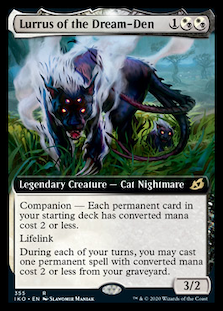
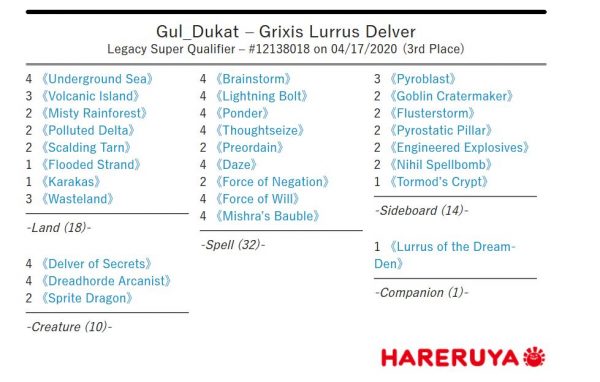
A prime target is Dreadhorde Arcanist, which has spiked from under 15 tickets to 23 in the past week, on the back of heavy Legacy play. It goes hand-in-hand with Lurrus, of the Dream-Den, which has increased the relative value of 2-drop creatures it can play from the graveyard. Already a staple Delver of Secrets decks, it’s now a  4-of in the variations archetype that have embraced Lurrus and risen to the top of the metagame. 

At under $3, it’s easy to see the potential of the multi-format Eternal staple - it ‘s also used in Pioneer’s Boros Heroic deck, which has broken out with the addition of Lurrus.

Lurrus and Dreadhorde Arcanist are used in Grixis Delver, but have also brought about a revival of an old Delver wedge - Jeskai. It has been incredibly successful this week, winning both the Legacy Challenge and the following Legacy Super Players Tour Qualifier, and part of it is due to the addition of Meddling Mage - another great two-drop to cast with Lurrus.

There was an error retrieving a chart for Meddling Mage

It’s also great against Lurrus, and all of the companions, by stopping the opponent's ability to play it. It doesn’t require good guesswork or a Peek effect to know they have it, so it’s a great tool to stop a card that gets around things like Thoughtseize, which might explain why this deck has outpaced Grixis.

It’s also used in Humans, which won a Modern Super Qualifier with three of Ikoria’s General Kudro of Drannith, and could see a rise in popularity.

It’s not really used in Humans, although maybe it could in a new black-heavy version with the general, but Dark Confidant has seen a rise due to being a good two-drop that shares a color with Lurrus. Its price has been falling for months, but it has just seen a big spike in MTGO, and some clear paper growth of a few dollars over the past few weeks makes me think it will continue to grow for the foreseeable future. 

There was an error retrieving a chart for Dark Confidant

Lurrus has been especially good to Pioneer’s Sram Auras deck, where it’s easy to cast and full of great things to cast with it, as well as being an extra body to enchant. The deck has already become one of the most popular in Pioneer, and looks to be here to stay as one of its new defining archetypes. Sram, Senior Edificer spiked to over $6 in February after its breakout but fell to under $5. Now it looks to have stabilized with some growth, and I expect it will head higher - on MTGO it peaked over 7 tickets. 

There was an error retrieving a chart for Sram, Senior Edificer

Back from the Dead

Watch out for Arclight Phoenix, an old staple that has fallen on very hard times, from $20 to $6 over the past 4 months. But now it’s starting to grow on MTGO, from under 5 tix to 7 now, because it received a big gift from Ikoria’s Sprite Dragon. This creature has emerged as an Eternal staple in Legacy and Vintage, it’s being used with Arclight Phoenix in Pioneer and Modern, and could potentially bring it back into real contention.

There was an error retrieving a chart for Arclight Phoenix

The G-Factor

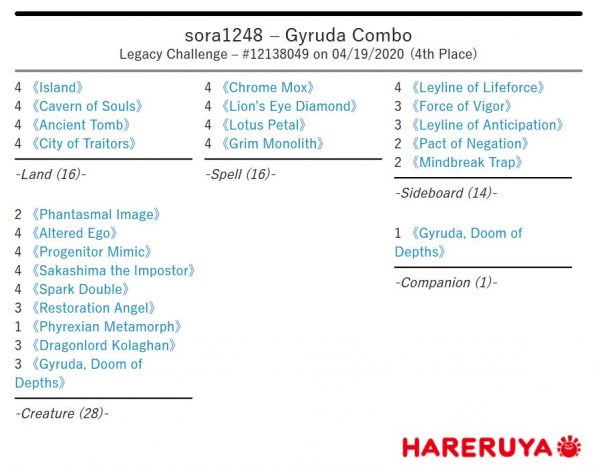
The X-factor in every format is Gyruda, Doom of Depths, which started off very strong and brought some massive MTGO price spikes before being banned due to a programming bug, but is now back in play. It works with Clone effects, the most important in all formats being Spark Double that ignores the legend rule. Its MTGO spike has carried over to paper, where it approximately doubled to around $6.50.

There was an error retrieving a chart for Clever Impersonator

One of the most drastic MTGO spikes was Clever Impersonator, used in the Pioneer version, so I like its two paper printings under $2.  Other targets that have risen on MTGO include Sakashima the Impostor, which is similar to Spark Double for Modern and Legacy versions, and the powerful Progenitor Mimic.  

There was an error retrieving a chart for Progenitor Mimic

Helping the deck actually kill the opponent in all of these formats is Dragonlord Kolaghan for haste, so some paper growth could follow its MTGO spike, from around half a ticket last week to nearly 5!

There was an error retrieving a chart for Dragonlord Kolaghan

A potential penny-spec that could theoretically offer the same sort of returns is the Wispweaver Angel, had for about a dime, which is being used in the Pioneer version. It can be repeatedly copied by clones to get around the legend rule while blinking Gyruda to keep the triggers going.

There was an error retrieving a chart for Wispweaver Angel

Uncertain Associates: The Companion Problem

Are you a Quiet Speculation member?

If not, now is a perfect time to join up! Our powerful tools, breaking-news analysis, and exclusive Discord channel will make sure you stay up to date and ahead of the curve.

With the new set fully available online, players can finally verify if all the speculation was correct. It's one thing to assess cards in a vacuum than in reality, after all. Usually, assessments are too far-off, and a consensus quickly develops around the new cards in every format. This opinion is then developed and refined into reality and the viable cards find their homes.

Clearly, something else is happening regarding Ikoria, Lair of Behemoths. The companions are proving polarizing, and the more I look into them, the muddier the picture becomes. There's no hard evidence yet, and the circumstantial evidence is contradictory. This requires a deep look at the phenomenon in question.

We've been down this road before. When Hogaak first emerged, I was skeptical of the deck while the greater Magic community was apoplectic. The available data didn't back up the claims. I explained this discrepancy as the result of Hogaak's variance skewing experimental data. As the deck became more refined and consistent, the data caught up to the claims, and justified them. Previously, similar claims had been made about Izzet Phoenix, and were ultimately unjustified.

Something similar is happening right now. Players are operating on very little experimental data, having very different results, and are forming conclusions on that basis. The truth of the matter will take time to develop, but for now, I will look into the claims and relate my own experience.

Accessory to Rage

That companion is controversial shouldn't be controversial. You can't really look at anything Magic related without some discussion of how overpowered/bad for Magic/ill-conceived the ten companions are. And there may be a point there. Companion is functionally an eighth card in the starting hand, and not a random one, either. Drawing extra cards is powerful, and so is tutoring, so on-face, the mechanic itself is bonkers. Some have effectively no drawback, and are therefore free value. This naturally is driving the community into a froth, though some of that is certainly just echo chamber effect.

Normally, the solution to this problem is to fall back on the data. However, the data is very thin. All we have to work with are online results, which Wizards is not great about publishing.
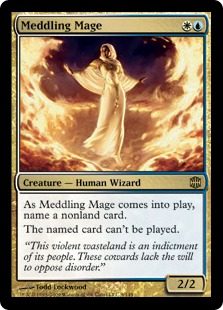
The recent League data showed 29/78 (~37%) decks running companions. That doesn't mean anything, as any deck can win a League, and the data is curated and therefore not a valid sample. The few Preliminaries and the Challenge that Wizards has posted at time of writing don't give me much to go on, either. For some reason, Ikoria cards were really scarce on MTGO until about April 20, so I don't want to draw conclusions from anything before then. The most recent data had a lot of normal decks with a value companion just because. There's no way to draw conclusions from such a small data set.

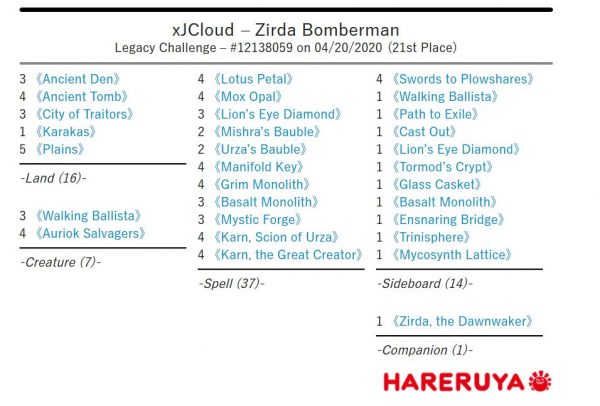
To make matters worse, what data there is suggests that some companions are actually busted in certain formats. Gyruda, Doom of Depths turns Lion's Eye Diamond into Black Lotus; fill the deck with Clone effects and mill the opponent out on turn one. Pioneer and Standard may lack Legacy's acceleration and clone density, but Gyruda is still tearing it up with absurd combo turns. Lurrus of the Dream Den is "free" with Black Lotus in Vintage. There, players are panic-inserting companions into decks just to stay competitive. Even if the data doesn't agree, the perception is firmly that companions are overpowered and necessary. I don't agree.

My Experience

I have played more MTGO in the past month than I had in the previous four years. Having the option to play Modern in paper 3+ times a week obviated any desire to play online. Which means for once I'm reviewing the same data sources as the doomsayers. And I'm not seeing the same problems they are; in Modern, anyway, as Pioneer and Legacy are separate matters, and I'm more on-board with that kerfuffle. Gyruda is not reasonable alongside Legacy's fast mana or Pioneer's poor answers. But Modern seems fine. There's a lot of upheaval from Ikoria, and I haven't seen it actually be good, to the point I'm struggling to justify running Ikoria cards in my 75.

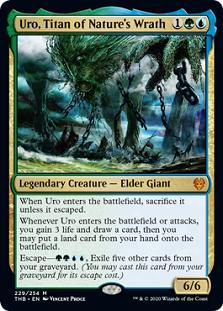
Part of this may simply be that I am me, and I default to skepticism. I require very clear evidence and tend to focus on the opportunity costs and other hurdles to playability rather than the upside to a card. This is why I didn't leap onto Ox of Agonas in Dredge and remain skeptical of Uro, Titan of Nature's Wrath. They're both cards that can be easily answered by hate players should all be playing. I see their success as a failure to adapt rather than any inherent power issue.
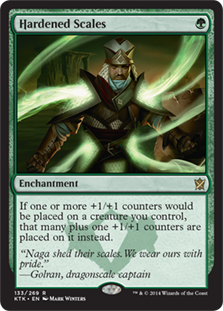
Another part is my deck. I've been grinding Leagues with Humans for weeks. I already had the deck, and don't like putting money into digital cards. Prior to Ikoria, I was finishing between 2-3 and 4-1, and I still am. In aggregate, nothing has changed for me. I haven't hit decks with companions any more often than any other type of deck, nor have those seemed better or worse than the previous versions of those decks. For reference, this is the version of Humans that I played in the last League before writing this article, to a 3-2 record.

Humans, League Deck

Creatures

4 Noble Hierarch
4 Champion of the Parish
4 Kitesail Freebooter
4 Meddling Mage
4 Thalia's Lieutenant
3 Thalia, Guardian of Thraben
3 Phantasmal Image
2 Drannith Magistrate
4 Mantis Rider
4 Reflector Mage
1 General Kudro of Drannith

Artifacts

4 Aether Vial

Lands

4 Cavern of Souls
4 Unclaimed Territory
4 Ancient Ziggurat
4 Horizon Canopy
1 Snow-Covered Island
1 Snow-Covered Plains
1 Waterlogged Grove

Sideboard

2 Grafdigger's Cage
3 Auriok Champion
2 Collector Ouphe
2 Militia Bugler
2 Dismember
2 Magus of the Moon
2 Plague Engineer

I've been trying out the new Humans, and they've been pretty underwhelming. General Kudro is fine as a lord and a beater, but he doesn't excite. I've never been in a situation where throwing two Humans at a monster would have improved my position, although I can visualize it happening. Meanwhile, the graveyard hate is very good in relevant matchups, but I haven't hit many of them.

I was expecting a lot from Drannith Magistrate. Again, I thought that companions, being the hyped and the Hot New Thing, would be everywhere. I also expected combo to see a boost with players trying to dodge companion fights. Combined with Uro's already observed prevalence, I thought that Magistrate would really stand out and surprise me. And it did, but not in the good way. I've played against decks where Magistrate did something about ~25% of the time, and most of those times, it was the same job Kudro would have done. I'm seriously thinking of cutting Magistrate altogether, because each time I've been against a companion, the match was decided without the companion mattering. Except for times where I punted into my face.

Looking at Lurrus

This disillusionment has been largely a product of matches against Lurrus decks. Most of the terror and wailing over Modern's fate was directed at Lurrus, which almost certainly colors my opinion. I just haven't seen Lurrus live up to the hype. It's a fine card, and there is a definite advantage to having an 8th card in hand. However, Lurrus itself and decks built around Lurrus in general, haven't performed uniquely well in my eyes. In fact, in many ways, they've performed worse than their traditional alternatives.

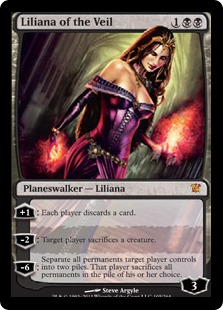
I think this can be demonstrated by my experience against Lurrus Jund. I've heard players claim that it is an enormous improvement over classic Jund. From my perspective, it's worse. Jund is not a good matchup for Humans. Jund's a pile of removal and value, while Humans is a deck of small, synergistic creatures. The Lurrus version plays out similarly, but it lacks Liliana of the Veil. Instead, it's looking to rebuy Kroxa, Titan of Death's Hunger each turn. This is better for Humans, as Liliana's downtick is very strong. Three damage from Kroxa per turn is less worrying than another removal spell, since my hand is usually empty by that point anyway and I need threats. Plus, Lurrus Jund can't run Plague Engineer. It's still not a good matchup, but it feels improved. Plus, I've won matches because my opponent spent so much time durdling with Lurrus they timed out. From Humans's perspective, Lurrus has harmed Jund.

More generally, decks built around Lurrus haven't worked because making the fit is artificial, contrived, and inefficient... or the underlying deck was just bad. The exception has been Hardened Scales. Lurrus recasting Walking Ballista or Hangerback Walker is indeed backbreaking. And that's not considering comboing with The Ozolith or Hardened Scales. The catch is that I have repeatedly punted into my face against this deck. I've done it all, from ruining turns mistapping mana to misclicks and just bad decisions. I don't know what's up, but I just can't play well against this deck. I wouldn't necessarily have won every game if I'd played well, but I could have neutralized Lurrus each time.
Yeeting Yorion

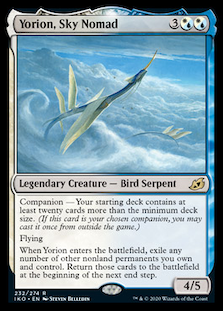
My problem with Yorion, Sky Nomad is not the card itself. Blinking permanents for value is incredibly powerful, and doing so en masse is absurd. Just ask Bant Ephemerate. The problem is the companion restriction.
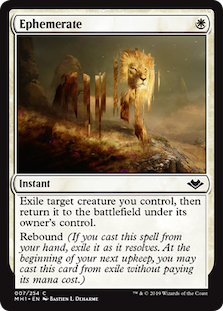
All the companions require sacrifice, but only Yorion requires making the deck mathematically worse. Jamie Wakefield's acolytes aside, there is a very good reason that for the past 21 years the correct choice has been to play the minimum required deck size. The math on this matter is very clear. If you want an optimized deck, it needs to see its best cards reliably, and as the number of cards approaches infinity, the odds of seeing any card approach zero.

My experience playing against Bant Yorion decks falls in line with the mathematical predictions. I can remember ten matches against the deck, and I've lost none. I've dropped individual games, but not to Yorion specifically. In those games, I lost to Ice-Fang Coatl and Reflector Mage being repeatedly blinked and/or rebought with Eternal Witness. Yorion just closed the door. In other words, when Yorion Ephemerate plays like Bant Ephemerate, I lose as hard as I usually did to Bant Ephemerate.

Of course, that doesn't happen consistently. Most of the time, Yorion has to keep a hand with a payoff or two and some acceleration into Yorion. Humans can spread the board and push through a single instance of value gain. Or worse (for them), I can just name Yorion with Meddling Mage and the deck becomes a literal pile. Humans just does better when I know what to name, and the companions are huge telegraphs. Which will be coming up again down the page.
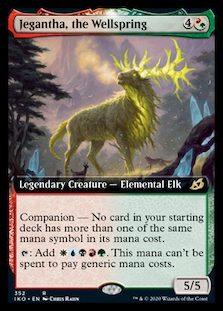
Other Companions

I've seen a number of decks, from Tron to Humans, running Jegantha, the Wellspring. Not because it does anything special for them, but simply because they could. I asked. The fact that they had access to Jegantha didn't matter at all. Generating mana is nice, but all the players who responded flatly told me that it's just a 5/5 for five.  And the Humans player was cold on Jegantha, since he couldn't run Auriok Champion. One Tron player said casting Jegantha is a desperation move in attrition matchups.
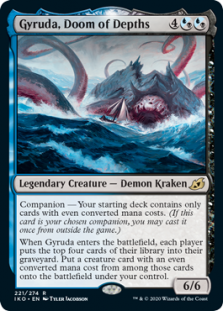
For Humans to lose to a mostly vanilla 5/5, I'd have to be doomed anyway. The one time that it would have mattered was against Niv-to-Light where I'd just landed Magus of the Moon. It didn't, because I just needed to delay my opponent by one turn to win. And I already had, so I did.

As for Gyruda, I haven't seen the deck actually work in Modern. I've only actually seen it in action three times, but I also haven't heard anyone talking about the deck. Which may be why I can't find a decklist to link. In Legacy, Gyruda is a turn-one combo with Lion's Eye Diamond. Pioneer and Standard are slow enough to permit casting a six mana card normally or by ramping and then gaining value even if it doesn't go off, which is overwhelming in removal poor formats.
Modern has neither conditions, and Gyruda may be fine here. It's slow by combo deck standards, and clunky by graveyard deck standards. The only way it beats just playing Dredge is when it goes off and mills out the opponent. It's also only better than Tron as a ramp deck if it goes off completely; otherwise, a 6/6 and change isn't very threatening. I've played seven games against Gyruda, and it managed to successfully combo me out once. Once it could have, but was shut down by Grafdigger's Cage. Another time, it fizzled. The other four games, I just blew past them and/or Meddling Maged them out of the game.

What Does it Mean?

My personal experience and the overall narrative regarding the companions are not compatible. One of these observations is wrong, and likely an outlier. Echo chamber, doomsaying, and reviews gives the busted camp a leg up on me and others taking more moderate approaches. The truth will only become clear with more data. At minimum, Modern appears to be handling Gyruda better than the other formats. We'll see if that lasts.

Insider: Speculating on Nethroi, Apex of Death

Are you a Quiet Speculation member?

If not, now is a perfect time to join up! Our powerful tools, breaking-news analysis, and exclusive Discord channel will make sure you stay up to date and ahead of the curve.

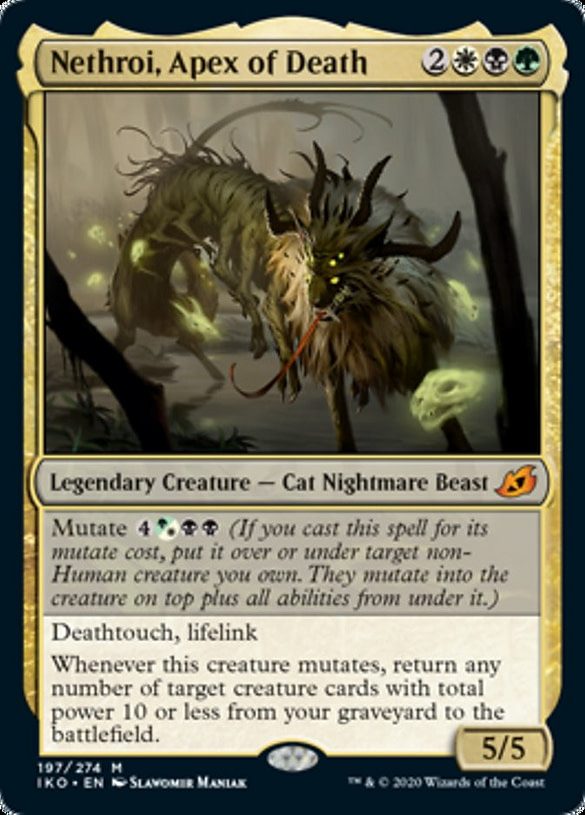
Today, I will continue my current trend of focusing on speculation targets for upcoming legendary creatures. In this case, we are veering off of Commander 2020 and to Ikoria: Lair of Behemoths.

While Nethroi, Apex of Death has very reasonable stats, the key to this card is obviously the Mutate trigger. While the Commander format has long been one with a lot of graveyard based strategies, rarely do we get such a nice tri-colored commander with a mass reanimate ability. Now, it is important to keep in mind that the Commander tax DOES apply to the Mutate cost, so using it repeatedly will get more expensive. So the final question: what is the ideal collection of creatures to get back with power 10 or less in total and how do you best get them in the yard?

Filling the Graveyard

There was an error retrieving a chart for Morality Shift

I have been big on Morality Shift ever since Syr Conrad, the Grimm was spoiled and it's amazing in this deck as well, essentially acting as a mass tutor setting up a perfect Nethroi, Apex of Death. When I first mentioned it Morality Shift was a bulk rare which has since quadrupled in price to a little over $2 each. This is a very unique card with only the single printing in Judgment, so it's price ceiling remains relatively high. I think most Nethroi, Apex of Death decks will want to run this card.

There was an error retrieving a chart for Buried Alive

Thanks to the recent reprint in Ultimate Masters, Buried Alive lost around 50% of its value. While I don't know if it will ever recover, as it would likely take avoiding a reprint for 3 or 4 years to gain back that ground, there are a lot of options with this card. There were two foil copies included in the Graveborn premium deck, but it appears that all copies save the Weatherlight version have the newer Odyssey artwork, so if I were going to pick up copies of this card I'd go with the Weatherlight version. The upside is obviously pretty limited though. If you can get copies at buylist prices, it's probably a good call to get an extra playset or two.

Highlights of the 99

There was an error retrieving a chart for Triskelion
There was an error retrieving a chart for Mikaeus, the Unhallowed

The most obvious combo is the Mike and Trike combo we typically see in a lot of B/X Reanimator Commander decks. The Ultimate Masters reprint of Mikaeus, the Unhallowed dropped his value by 33%. The price has been slowly gaining, which shows good solid long term demand, and as both his printings have been at mythic rare, there aren't nearly as many of them out there as one might think. Interestingly enough Triskelion was also recently reprinted in the mystery booster boxes and is sitting at almost bulk rare status. I think the price ceiling on Triskelion isn't all that high thanks in part to so many printings, but there is minimal risk in acquiring them at their current price.

That one isn't anything new and when I saw Nethroi, Apex of Death my mind immediately jumped to Protean Hulk combos, but there is one major difference. Hulk cares about converted mana cost, which pretty much every creature has; whereas, Nethroi cares about the creature's power. There are numerous creatures whose power is 0 in the graveyard which means they are all freebies as 10+0+0+0=10. This means that if you play a lot of these types of creatures you can actually use Nethroi, Apex of Death as a repeatable mass reanimation spell for value over and over. So lets look at a few good choices for nice 0/0 creatures that enter with counters.

There was an error retrieving a chart for Realm Seekers

I'm honestly amazed that this is a bulk rare. It's only printings have been in Conspiracy and in Commander 2016. It often enters the battlefield bigger than a 15/15 and it can search for any land in your deck. Foil versions, of which your only option is Conspiracy, are sitting at around $3, which also makes for a good speculation target. The biggest risk I see with this one is that it's green, so it has to dodge not only the upcoming "green Commander" supplemental product printing but also the draft able Commander product and it's only mass printing was in a set designed around drafting, still the buy-in is so cheap that your risk is minimal. Realm Seekers also happens to be good in a lot of other Commander decks so demand won't be limited to Nethroi decks.

There was an error retrieving a chart for Ghave, Guru of Spores

Ghave, Guru of Spores managed to hold a $6 price tag for over 2 years until the Commander 2016 reprint and Commander Anthology Volume II reprint dropped his price to $2 or less. I bring all this up because his abilities can be very relevant in this style of deck and he can combo with persist and undying creatures and Ashnod's Altar which is a staple in most reanimation based combo decks. Ghave used to be a very popular commander on his own, which means the price floor is somewhat elevated compared to other cards.

There was an error retrieving a chart for Golgari Grave-Troll

As you are likely not going to be able to reanimate all the creatures in your yard with Nethroi, having a 10/10 or bigger Golgari Grave-Troll that can easily regenerate a few times (with it still being one of the biggest creatures on the battlefield) seems like a good include. While I doubt it will find it's way back off the banned list, as it warped the Modern format around it during its tenure, it would obviously spike again were it was uncaged.

There was an error retrieving a chart for Reyhan, Last of the Abzan

Since Commander 2016, we have seen WoTC try a different variant of the partner mechanic, with Commander 2016 partners proving that the original version may have been a bit too powerful. Because of that, I doubt we will see this card reprinted in anything besides Commander Anthology printings, which likely limits the supply. Reyhan, Last of the Abzan plays extremely well in a deck that plays a lot of 0/0 creatures that enter with counters, as there are many creatures like Fertilid that one can remove +1/+1 counters from to gain an advantage.

Honorable Mentions

There was an error retrieving a chart for Spike Weaver

One of my pet cards, Spike Weaver is a fantastic repeatable fog that can make it's way back to the graveyard on it's own or combo with previously mentioned cards that move +1/+1 counters around to lock down decks that require attacking to win. It also helps that it only has 2 printings, Exodus and Battle Royale; both of which are more than 20 years old.

There was an error retrieving a chart for Somberwald Sage

Somberwald Sage is a fantastic mana-dork in creature heavy decks. It allows you to jump up from 3 to 6 mana on turn 4 even if you don't hit a land drop. It has a single printing in Avacyn Restored and while not truly a bulk rare, it's a sub $3 rare so the buy-in is low.

There was an error retrieving a chart for Xantid Swarm

This legacy storm sideboard card used to be a little under $4 prior to it's Eternal Masters reprint that tanked the price to near bulk. While its ability only affects one player, it is often a great repeatable Silence against the player most likely to disrupt you if your planning to combo off, all you have to do is attack with it and wait until after combat to go off.

April ’20 Brew Report, Pt. 1: Mag-Safe

Are you a Quiet Speculation member?

If not, now is a perfect time to join up! Our powerful tools, breaking-news analysis, and exclusive Discord channel will make sure you stay up to date and ahead of the curve.

"I don't know what this world is coming to," once hollered The Soul Children. Indeed, society as we once knew it is becoming increasingly unrecognizable. Is the solution to succumb to our basest animal instincts, or to put mind over matter in a true triumph of human spirit?

Today's brew report encapsulates that struggle, as many Modern players have happily lumbered back into the jungle while others see this time as a moment to reflect on what sets them apart from other species. Either way, all seem united under the looming Moon of an existential threat.

Living in a Zoo

Fast aggro is no stranger to Modern, and we've been seeing plenty of Crash Through decks over the last few months. Now, the blitz tide is turning to favor creatures over spells.

Bushwhacker, TW33TY (5-0, MODERN PRELIMINARY #12117293)

Creatures

4 Reckless Bushwhacker
4 Narnam Renegade
4 Wild Nacatl
4 Goblin Guide
4 Burning-Tree Emissary
4 Hidden Herbalists
3 Gallia of the Endless Dance
2 Tarmogoyf
2 Ghor-Clan Rampager
1 Klothys, God of Destiny

Instants

4 Atarka's Command
4 Lightning Bolt
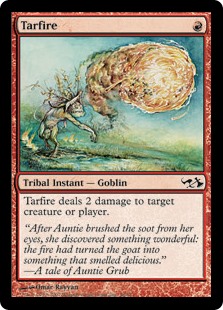
1 Tarfire

Lands

2 Arid Mesa
1 Dryad Arbor
1 Forest
1 Mountain
1 Sacred Foundry
1 Stomping Ground
1 Temple Garden
3 Verdant Catacombs
4 Windswept Heath
4 Wooded Foothills

Sideboard

4 Dragon's Claw
2 Magus of the Moon
3 Path to Exile
2 Thalia, Guardian of Thraben
4 Tormod's Crypt

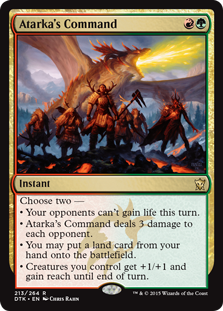
Bushwhacker has exploded onto the Modern scene, seating three copies at the top tables of this Modern Preliminary alone and winning plenty more tournaments over the course of the month. It provides a more creature-centric alternative to the extremely popular (and successful) spell-based Mono-Red Prowess, recruiting instants only for the most efficient sources of damage: Atarka's Command and Lightning Bolt.

The pivot has two major strategic advantages. For one, it challenges the metagame to react with different kinds of hate; Chalice of the Void on one and Thalia, Guardian of Thraben won't be putting many dents in this shell (other than physically, via first strike, but even then the method only works against a handful of creatures and is blown out by Atarka's Command). Second, it seeks to overload the removal equilibrium reached by interactive decks that lets them effectively weather Mono-Red Prowess's creature assault. Since Prowess only plays around 12 creatures, flooding on removal can be a death sentence; Bushwhacker, however, rewards opponents for keeping full grips of it.

Almost every Bushwhacker build plays 1 Tarfire, an all-but-guaranteed way to grow Tarmogoyf an extra point. Almost no opponents will have tribal cards in their decks, after all! But I'm still surprised the tech is so universally accepted; there are just two Goyfs in the mainboard, and some builds seem to omit the other two even from the sideboard.
Tarmogoyf sitting at just two copies is emblematic of the shift in role the creature has undergone post-Fatal Push, when it became less of a plan splashed by literally everyone and more of a role-player in specific shells. Here, Goyf's role is to follow a shot-down one-drop, effectively doubling the removed power to make up for a lost turn of attacks. It's far less impressive against opponents that don't interact, which is when the shell plays as aggressively as possible; Tarfire helps breathe life into the creature for those games.

While significantly less relevant, the Goblin-centric 8-Whack still exists in some capacity and posted one result this month.

Zoo, QBTURTLE15 (4-1, Modern Preliminary #12124703)

Creatures

4 Wild Nacatl
4 Kird Ape
4 Goblin Guide
4 Tarmogoyf
4 Eidolon of the Great Revel
1 Ghor-Clan Rampager

Instants

4 Lightning Bolt
4 Atarka's Command
3 Lightning Helix
1 Char
1 Tarfire

Sorceries

3 Rift Bolt
3 Skewer the Critics

Lands

4 Arid Mesa
1 Forest
1 Mountain
2 Sacred Foundry
2 Stomping Ground
1 Sunbaked Canyon
1 Temple Garden
4 Windswept Heath
4 Wooded Foothills

Sideboard

2 Choke
2 Destructive Revelry
1 Flame Slash
2 Grafdigger's Cage
4 Kor Firewalker
2 Molten Rain
2 Tormod's Crypt

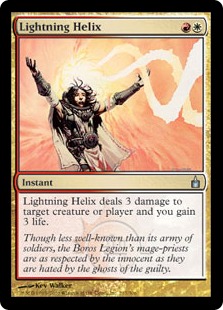
On the more interactive side of things, Zoo also seeks to ramp up aggression with creatures. The difference is that much of Bushwhacker's lightning-fast synergy is traded in for stand-alone beaters that operate just fine against removal-heavy opponents. Adopting Lightning Helix, Rift Bolt, Skewer the Critics, and even Char makes the deck heavily favored against Bushwhacker and gives it extra reach should opponents find a way to take over the board, either through removal or with their own Goyfs.
We haven't seen Zoo in Modern for quite some time, but the addition of Skewer certainly helps its case. The deck has long wanted additional Lightning Bolt analogues, as much of its strength is derived from the classic Bolt-Goyf paring that gives it so much flexibility in a range of matchups. Additionally, running both Goyf and Eidolon provides Zoo with ample options given an opponent's reaction time. Creature dies? Slam Goyf. Creature lives? Slam Eidolon, and lock in even more damage.

We're Only Human

Creature-based aggro? What about Humans, the format's premier creature-based aggro strategy? That deck is still alive and well, and new tweaks on the strategy are starting to rear their heads to deal with the crazy critters cropping up.

Boros Humans, WORDY333 (3-2, Modern Preliminary #12124684)

Creatures

4 Avalanche Riders
4 Champion of the Parish
4 Charming Prince
4 Magus of the Moon
4 Ranger-Captain of Eos
4 Thalia, Guardian of Thraben
4 Thalia's Lieutenant
4 Thraben Inspector

Artifacts

4 Aether Vial

Instants

4 Ephemerate

Lands

4 Arid Mesa
4 Cavern of Souls
1 Flooded Strand
1 Marsh Flats
1 Mountain
3 Plains
2 Sacred Foundry
3 Sunbaked Canyon
1 Windswept Heath

Sideboard

3 Auriok Champion
2 Blood Moon
1 Burrenton Forge-Tender
1 Giant Killer
1 Path to Exile
3 Rest in Peace
3 Stony Silence
1 Winds of Abandon

Boros Humans differs from the classical rainbow build in its employment of Ephemerate, which serves a few purposes here. For one, the creature suite warps itself around the card, featuring more enters-the-battlefield effects than ever.

That means maxing on Charming Prince, Thalia's Lieutenant, and Ranger-Captain of Eos, as well as for the first time hiring Avalanche Riders to give the deck a more solid mana-denial plan. The plan is bolstered by Magus of the Moon, who makes the cut at four copies.

It's not all synergy, though. Ephemerate has a far more obvious use in blanking enemy removal spells, which should make Magus particularly troublesome for those decks that do value their nonbasics, as well as keep the hits comin'. The same goes for velocity-dependent decks like Storm, which only feature so many ways to get Thalia, Guardian of Thraben off the table.

Death & Taxes, MUCKMUCK_DC5 (5-0)

Creatures

4 Hanged Executioner
2 Aven Mindcensor
2 Charming Prince
2 Flickerwisp
4 Giver of Runes
4 Leonin Arbiter
2 Serra Avenger
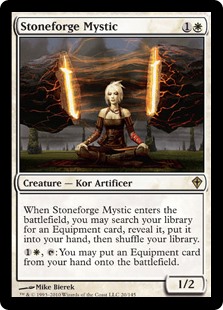
4 Stoneforge Mystic
3 Thalia, Guardian of Thraben

Artifacts

4 Aether Vial

Instants

4 Path to Exile
1 Batterskull
1 Sword of Feast and Famine
1 Sword of Fire and Ice

Lands

4 Field of Ruin
4 Ghost Quarter
2 Horizon Canopy
2 Silent Clearing
10 Snow-Covered Plains

Sideboard

2 Auriok Champion
2 Burrenton Forge-Tender
2 Eidolon of Rhetoric
2 Hushbringer
2 Leonin Relic-Warder
2 On Thin Ice
1 Phyrexian Revoker
2 Rest in Peace

Death & Taxes also gets a significant update this month, not only with its universal adoption of Stoneforge Mystic, but its recent discovering of Hanged Executioner.

The Spirit acts as a Lingering Souls of sorts, providing a pair of flying bodies right away for 2W and some added utility down the road. For Lingering, that means two more bodies at a discount; for Executioner, it means tributing one of the fliers for an instant-speed exile effect. In a world full of 6/6 Titans, and especially given that this is an aggro deck with plenty of grounded attackers, I can see the latter being preferable.

As Red as Blood

The month's biggest story, though, is the rise of Magus of the Moon, exemplified by the resounding success of mana-denial strategies anchored by the Arbor Elf-Utopia Sprawl interaction.

Magus Ponza, BERSERKER_BOB (4-1, Modern Preliminary #12124703)

Creatures

4 Magus of the Moon
4 Arbor Elf
4 Bloodbraid Elf
2 Bonecrusher Giant
4 Glorybringer
3 Klothys, God of Destiny
2 Scavenging Ooze
4 Seasoned Pyromancer

Planeswalkers

2 Chandra, Torch of Defiance

Enchantments

4 Utopia Sprawl

Instants

4 Lightning Bolt

Sorceries

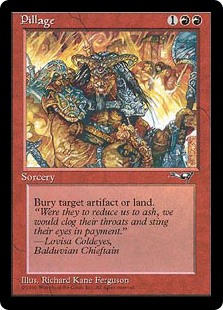
3 Pillage

Lands

6 Forest
2 Mountain
4 Stomping Ground
4 Windswept Heath
4 Wooded Foothills
60 Cards

Sideboard

2 Anger of the Gods
2 Choke
2 Cindervines
2 Collector Ouphe
1 Grafdigger's Cage
3 Obstinate Baloth
2 Relic of Progenitus
1 Weather the Storm

Remember when Ponza was about sticking Blood Moon and casting Stone Rain?  Magus Ponza lets us know those days are far behind us, with Magus of the Moon antiquating the enchantment and the versatile Pillage doing the same for Rain. Okay, so some builds still sport Moon mainboard, but never at more copies than Magus, which edges it out of the 75 entirely in most cases.
Why the sudden switch? Magus has long been thought of as less resilient than Moon on account of its dying to Lightning Bolt. But Bolts are finding themselves in shorter and shorter supply these days as midrange transitions to UGx configurations such as Bant and Sultai. And with fair decks overwhelmingly riding Arcum's Astrolabe, Moon effects exist primarily to nail the still-kicking Dryad of the Ilysian Grove decks. You know, the decks that run 4 Pact of Negation and Reclamation Sage, and 0 Lightning Bolt.

All that makes Magus uniquely positioned to wreak havoc in Modern, which is exactly what it's doing for many Tier 2-or-lower decks, some explored in this very article. Go ahead and search "Magus of the Moon!" Even Mono-Red Prowess has got its hands on the Wizard.

Naya Beatdown, MILKK (3-2, Modern Preliminary #12124703)

Creatures

3 Glorybringer
4 Arbor Elf
2 Birds of Paradise
4 Bloodbraid Elf
2 Bonecrusher Giant
1 Klothys, God of Destiny
4 Magus of the Moon
4 Seasoned Pyromancer
4 Stoneforge Mystic

Planeswalkers

1 Chandra, Torch of Defiance

Artifacts

1 Batterskull
1 Embercleave
1 Sword of Feast and Famine

Enchantments

4 Utopia Sprawl

Instants

4 Lightning Bolt

Lands

2 Arid Mesa
1 Sacred Foundry
4 Snow-Covered Forest
1 Snow-Covered Mountain
1 Snow-Covered Plains
2 Stomping Ground
1 Temple Garden
4 Windswept Heath
4 Wooded Foothills

Sideboard

1 Boil
1 Chandra, Awakened Inferno
3 Choke
3 Knight of Autumn
1 Obstinate Baloth
3 Pillage
3 Rest in Peace

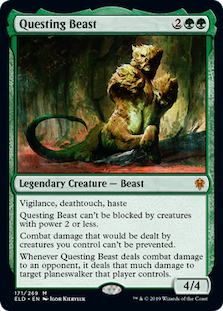
With less of an emphasis on land destruction, but plenty appetite for the mana generated by Arbor-Sprawl, Naya Beatdown is also making a name for itself in the metagame. Take this Preliminary, which features multiple Naya Beatdown placings and even variations: Stoneforge Mystic, Bonecrusher Giant, and Questing Beast all seem to be viable options for filling out the list. Still, Glorybringer reigns as the preferred top-end threat, while Pillage remains an attractive plan from the sideboard.
Total Eclipse of the Brew

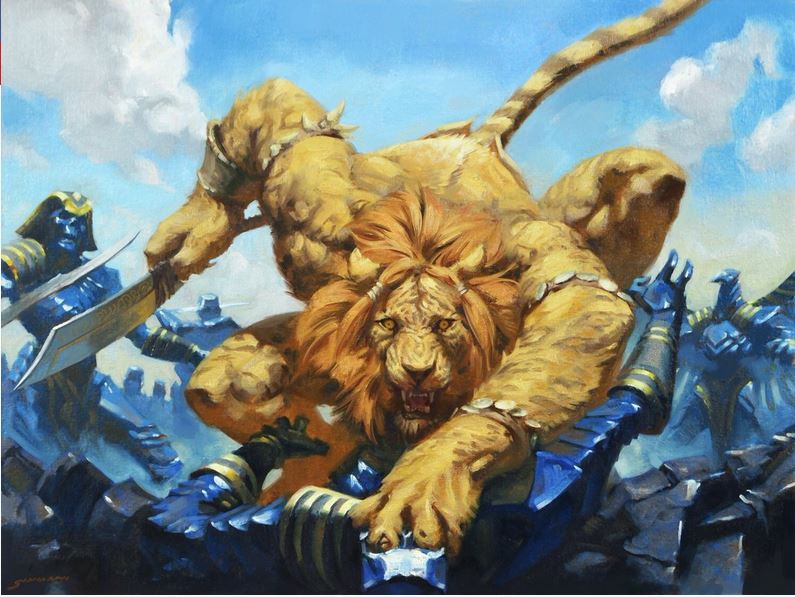
All this harping on Magus of the Moon has cast a pale shadow over the other strokes of innovation Modern is experiencing online. Join me next week for a foray into what else April had to offer!

Sig’s Arena Value Plays (and Misplays)

Are you a Quiet Speculation member?

If not, now is a perfect time to join up! Our powerful tools, breaking-news analysis, and exclusive Discord channel will make sure you stay up to date and ahead of the curve.

The last time I played Standard, my control deck leveraged Consecrated Sphinx as its win condition. Needless to say, it has been a while.

There was an error retrieving a chart for Consecrated Sphinx

However, I’m suddenly finding myself battle in Standard all over again, this time using Magic’s Arena platform. In a stay-at-home world, Arena is one easy way to keep engaged with my favorite hobby. It also has one very attractive feature that paper Magic cannot match: it’s free to play.

Of course, the free-to-play model isn’t always sunshine and roses, and resisting a commitment of real US dollars to such a game comes with some downsides. Namely, it’s much slower and grindier to build up a collection and construct a competitive deck. However, it’s not impossible. I’ve been pleased with the progress I’ve made these last couple weeks.

Completely deviating from my standard article topics, this week I want to share my observations during on onboarding into Magic Arena, some watch-outs, and key takeaways that may help another newcomer make the most of their resources and time.

Magic Arena, First Things First

When you install Arena and create a new account, you have to endure the lengthy tutorial. The duration is probably appropriate for brand new players, but for seasoned Magic veterans, it can be tedious. At least it gets you comfortable with the mechanics of online play, which took some getting used to.

Despite the tedious ramp-up, the tutorial is worth completing as it gets you on a glide path towards your first stockpile of gold. In completing the five color challenges, you should net nearly enough gold for a draft—all just for learning the ropes!

Once you’ve finished the color challenges, the next thing I’d recommend is purchasing the most value-conscious package within the game: the intro bundle.

When I first visited the Arena store, I was overwhelmed by all the options. You could spend gems or dollars to acquire all sorts of digital Magic goodies. A close friend of mine sagely recommended I make only one purchase: for $4.99 you obtain 2500 gems and 5 boosters. The boosters are a nice bonus, but the gems are the true value here. Outside of this one-time purchase, the best rate you can acquire gems at is 20,000 for $99.99, or 200 gems per dollar. The intro bundle nets you 500 gems per buck, 2.5x the rate of their best rate.

This is a one-time purchase so once you take advantage of the introductory offer, it’s gone. But it’s worthwhile as it helps fuel entry into multiple drafts or other events. No other bundles offer this much value; for this reason, I have not spent another dime on the platform.

Freebies and Daily Challenges

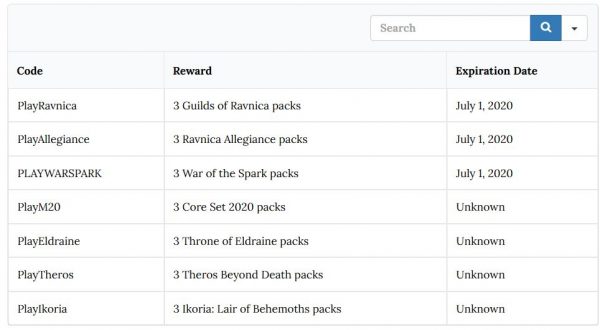
Perhaps the second thing a new player should consider after purchasing the intro bundle is claiming all the freebies! What freebies, you ask? With every new set, there’s a code that unlocks three boosters of that set.

While some of the older boosters may be less exciting, it’s important to note that every booster opening gets you one step closer to unlocking a rare or mythic rare wild card—these are necessary to craft your first competitive deck! You may also get lucky and open a wild card as your rare in a booster, netting you more ammunition to craft.

After redeeming and opening all your free boosters, the next step to grinding value is the time-consuming one. You’ll want to complete the daily challenges to earn 500-750 gold at a time. The easiest way to do this is to play casual games with preconstructed decks that match the colors of your quest. However, this can be a bit boring as the preconstructed decks aren’t the most streamlined or the most interesting to play.

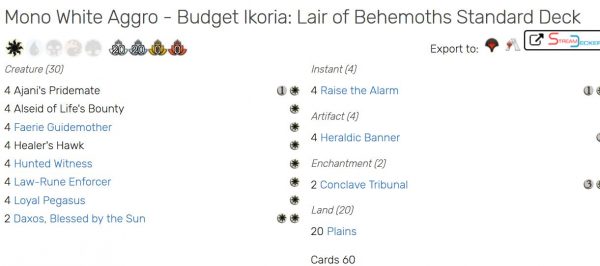
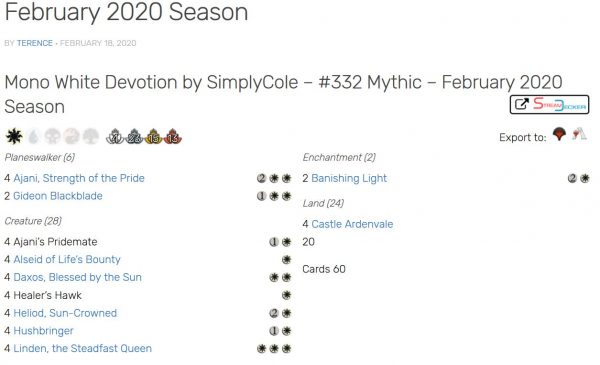
What I did was I looked up a budget deck I could use to ride my way up in the ranks. The deck I chose was Mono White aggro—it’s easy to pick up and packs a surprisingly strong punch. The inspiration came from MTG Arena Zone, where there are likely other budget options if Mono White doesn’t strike your fancy.

Once I cobbled this list together, I started winning! Winning in ranked play can unlock more gold and booster pack prizes. Playing a mono-colored deck made it trickier to complete daily quest—fortunately, you’re allowed to swap out a quest once a day. Any time I have a quest that requires that I play 20 non-white spells, I swap in an attempt to find a quest where white is the key color.

While a budget deck won’t get you to Mythic ranked, it will be sufficient to earn you some daily gold in a streamlined fashion. The gold adds up and can fund other aspects of the game without requiring spending of any more cash.

The Fork in the Road: My Misplay

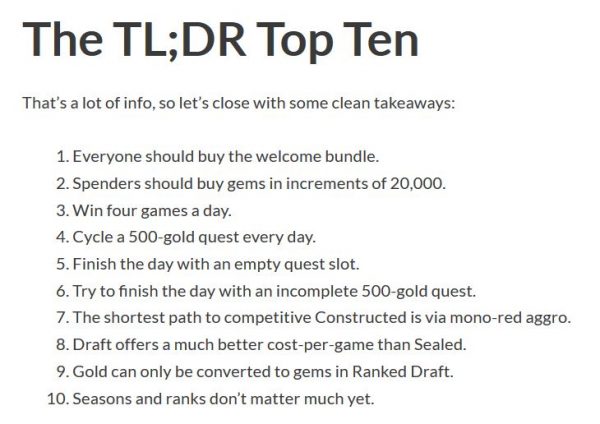
Much of the information I presented above can be found online. There are numerous write-ups describing the best ways to value-grind in Magic Arena. I found this nice Top Ten list from Channel Fireball, which sums it up nicely:

There is one more decision tree that I want to discuss—one that impacted me personally. Because of my ignorance about the Standard metagame, I made some suboptimal deck-building choices that resulted in a lower ceiling for my ranked play. Allow me to explain


I started with a budget Mono White aggro deck. It was capable enough to get me through Bronze tiers and well into silver. Meanwhile, I used some of my purchased gems to enjoy a few drafts to variable success. Through drafting, pack freebies, and daily prizes I started accumulating rare and mythic rare wild cards.

Now, I read in the Mono White aggro article about a few simple upgrades I could make to improve my deck. Enthralled by promises of gold ranks and beyond, I began the upgrade process. Without spending another dime, I crafted a streamlined, optimized Mono White devotion build, much like the one showcased on MTG Arena Zone:

To me, the elegance of the above list was in its simplicity. With my sights on higher ranking, I began crafting. While my list doesn’t match the one above completely, I used it as inspiration to craft a more competitive deck.

Now I’ve reached Gold 1 and I’m striving for Platinum ranks, and I’m realizing something. My deck is far from tier 1. In fact, it’s probably not even tier 2 even with all these mythics and rares. I log into Arena and enter a ranked Standard game, and I’m faced with impossibly powerful decks running Hydroid Krasis, Teferi, Time Raveler, and Uro, Titan of Nature's Wrath.

There was an error retrieving a chart for Uro, Titan of Nature's Wrath

Keep in mind, I'm experiencing Standard for the first time here so I did not know what to expect. Now no matter what I try, I can’t seem to beat this and other Tier 1 decks. From this vantage point, I realized my deck may be hitting its ceiling far short of my modest Standard constructed aspirations.

Now what do I do? Do I pivot to another list and start from scratch, now with virtually no rare or mythic rare wild cards remaining? I would need to grind out another half-dozen mythic rares. The top decks consist of 50% rares, much of it involved in the mana base. I suppose I could start budget by using guildgates instead of shock lands and temples, but the suboptimal build doesn’t entice me.

Because I was unfamiliar with Standard, I didn’t know what deck to build towards on day one. I picked one that looked fun and easy to learn, but to the detriment of my long-term ceiling. If you’re new to Arena, I encourage you to learn from my mistake: do your research, find a competitive deck you want to work towards, and stay focused on that path.

I suppose Standard will rotate eventually and everyone will have to start over again, anyways. My goal now is to grind out wild cards through daily play and drafts so that when Standard rotates, I’ll already be on my way to building a tier 1 list.

Wrapping It Up

It’s been a long time since I paid any attention to Standard. The last Standard I was comfortable with involved Geist of Saint Traft and Moorland Haunt—quite a few years ago now!

There was an error retrieving a chart for Moorland Haunt

Unfortunately, my ignorance of the Standard metagame led to some suboptimal decisions when getting started in Magic Arena. Information on how to maximize value on Arena is plentiful; however, I’m not sure if my experiences with suboptimal deck-building choices are as commonly published. For this reason, I wanted to share so that others can learn from my decisions.

If you focus on a target decklist and grind value maximally, you’ll be well-positioned to play competitive Arena in just a few weeks—even faster if you have more time to play. This is one final takeaway—it’s true for Hearthstone and it’s true for Magic Arena—you are incentivized and rewarded to play more. The more you play, the more you win and the more you unlock in value. Perhaps this is the most important detail to internalize. If you can accept the time commitment required to grind value from Magic Arena, you’ll be set up for success
eventually!


Sigbits

  • Dual Lands are making a comeback on Card Kingdom’s hotlist. They’ve had Underground Sea on there all along ($250), but now you’ll also find Volcanic Island ($220), Bayou ($140), Badlands ($120), Taiga ($85), Scrubland ($75), and Plateau ($75) on the list. That’s over half of them!
  • A couple other Old School cards are making a slight comeback on Card Kingdom’s hotlist, including Power Artifact and Transmute Artifact. These are perennial hotlist cards, which come and go almost monthly. Right now they are buylisting for $80 and $85, respectively.
  • One of Power Artifact’s favorite friends, Grim Monolith, is also back on Card Kingdom’s hotlist again. Right now it’s sporting a buy price of $85.

Here Be Questions: Ikoria Spoilers, Week 2

Are you a Quiet Speculation member?

If not, now is a perfect time to join up! Our powerful tools, breaking-news analysis, and exclusive Discord channel will make sure you stay up to date and ahead of the curve.

Well, that was fast. Normally we have three full weeks of spoilers, but Wizards has really rushed out Ikoria. I'm guessing the quarantine is a factor here and they're in a bit of a scramble. In any case, the entire set is now out. And it's a little mediocre, Modern-wise. As I mentioned last week, this set is not really meant for us, and that's okay. Not getting format-changing cards every set is a good thing. We've had enough of that over the past year. There are a number of playable cards in Ikoria, Lair of Behemoths, but their impact is going to be more subtle.

To start off, the overarching thread of this article is that nothing's completely free. Even if there's no up-front cost to something, there will be an opportunity cost. It's why in economics, we teach that there's no such thing as a free lunch. Just because you didn't have to pay for lunch doesn't mean there wasn't some cost attached. In a college context, to get that free pizza, you have to hear a presentation or lecture. Maybe it means paying with a favor down the line. Or getting the free lunch meant giving up another, arguably better, dining option. When a choice is made, it eliminates alternative choices, and the next best option is the opportunity cost. In Magic, every card in your deck has an opportunity cost attached, since it is being chosen over something else. The question is whether the benefit justifies the cost.

Triassic Park

On that note, Ikoria offers manabases a boost with a significant downside. Stand aside, dual lands; Magic has tri lands now. Tricycle, as I think about it, in the same vein as the Amonket bicycle lands. For the first time ever, there are fetchable three-color lands for each Tarkir shard. Which always come into play tapped, and cycle for three. The only bicycler that has really seen play is Sheltered Thicket thanks to Scapeshift. Given that Modern's manabase has always been built around dual lands which can enter untapped, the bicyclers weren't needed. The tricycles are another story. There's never been a way to fetchably fix three-color mana.

The cost of coming into play tapped is a steep one, but mostly in the mid-game. Control decks don't often do anything turn one, so fetching a tapped land is common. Late-game, the mana is likely to be unnecessary, so the cycling option comes into play. It's in the mid-game when control is being established that tapped lands and tempo matter. Thus, I don't think any tricyclers are going to be four-ofs, but as a one- or two-of, they're extremely potent. For a Tarkir-shard midrange or control deck, their tricycle land is the best first land available.

Brittle Crust

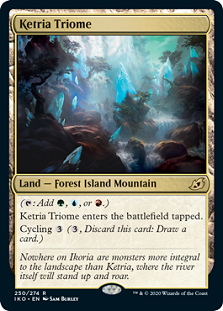
Which is rather timely, considering that UGx midrange is kind of a big deal at the moment. There are many flavors, but for this discussion, the only relevant ones are Sultai and Temur Snow. Both get a tricycler, and so get the boost. Sultai snow has never really been a deck, while Temur variants are everywhere, which would suggest that Ketria Triome will see a lot of play. I don't think that will actually happen. The play patterns of the snow decks don't play to the Triome's strength. Snow decks tend to fetch basics early to play Arcum's Astrolabe and turn on Ice-Fang Coatl. I don't think it's optimal or necessary to break up this pattern for Ketria's sake, which pushes it towards the mid-game, where it's at its worst.
Instead, we need to look at those shards that haven't been doing well. Specifically, I've been thinking about Jeskai and Raugrin Triome. Jeskai isn't in the best spot at the moment, having been displaced by straight UW Control, then UGx Uro. The value of its burn spells has fallen, so the deck is losing out to card advantage powerhouses. However, I think that with some adjustment, Jeskai may be the solution to UGx.

Breaking Through

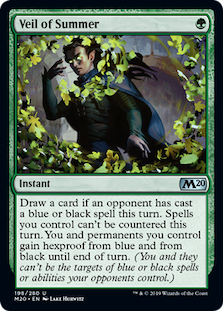
The trick is to look at how UGx beats other midrange decks. It is true, but very simplistic, to say that UGx wins via velocity. Drawing cards with value is a great way to grind, after all. However, going deeper, all the UGx decks are very well set up to win a midrange fight. Their primary threat is recursive and benefits from attrition, they've got a lot of counters for opposing answers, and they certainly don't lack card advantage. It's hard to gain advantage maindeck, and then it gets worse after sideboard, when UGx brings in additional counters and Veil of Summer to defeat the typical anti-control strategy of discard and counters.
Jeskai sidesteps this problem by running cheap red and white answers. In a sense, Jeskai's running a maindeck counterboard strategy against UGx. It gets deeper when options like Teferi, Time Raveler and Spell Queller are in the mix. As a plus, Lightning Bolt is good at trading for the Coatls, Snapcaster Mages, and Emrys that fill out UGx decks. The problem has been actually wielding that advantage.

Jeskai Ascending?

I've tried a number of different decks and so far, and going for a counter-light, board-control-focused tempo deck has worked best against UGx. It's easier to dodge the typical sideboard cards and spread their relevant answers when all the answers are one-mana. Also, UGx assumes that their overpowered threats will hide their lack of hard answers beside counters, which gives Jeskai's cheap answers an opening. I would not recommend this decklist for a tournament, but as a proof of concept, it has worked beautifully.

Jeskai Tempo, Test Deck

Creatures

4 Snapcaster Mage
4 Spell Queller
3 Stoneforge Mystic

Planeswalkers

4 Teferi, Time Raveler

Artifacts

1 Batterskull
1 Sword of Feast and Famine

Instants

4 Lightning Bolt
4 Path to Exile
4 Opt
3 Lightning Helix
2 Electrolyze

Sorceries

2 Winds of Abandon

Land

4 Flooded Strand
4 Scalding Tarn
2 Arid Mesa
2 Hallowed Fountain
2 Steam Vents
2 Raugrin Triome
1 Sacred Foundry
4 Snow-Covered Island
2 Snow-Covered Plains
1 Snow-Covered Mountain

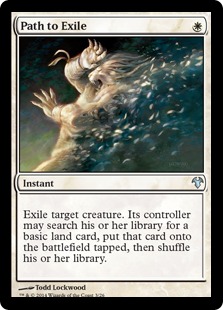
Testing has borne out my initial suspicions. First, the Triomes are as good as anticipated and are a fine replacement for Celestial Colonnade. Secondly, the matchup has worked as I expected. UGx midrange decks struggle against the more mana-efficient answers from Jeskai and their sideboards are poorly prepared for the fight. Resolving Path to Exile on Uro, Titan of Nature's Wrath is surprisingly backbreaking, while riding a Teferi is less-surprisingly backbreaking.

The issue has been making it all come together consistently. Jeskai can't make up for any missteps or inefficiencies with cantrips like UGx, making the margins tighter than a metagame deck should have. The principle works and there's margin to be gained here, but I'm not there yet.

The Dreamers

The other big talking point are the companions. As Jordan covered in detail Tuesday, they read as an attempt to bring Commander gameplay to Modern. A copy in your sideboard can be declared as a companion and played from outside the game once. Which really just means bringing it into the game, similar to a wish. Thus, companions are extra cards in exchange for a sideboard slot and deckbuilding restrictions. The cost/benefit of giving up a sideboard slot is hard to evaluate. Players have asked for more sideboard slots before, so slots are valuable. I don't know how to evaluate if they're more valuable than an extra card functionally in hand.

While some had been spoiled when I was writing last week, I dismissed them. Keruga, the Macrosage could only see play as a win-more card in Living End, while Lutri, the Spellchaser makes decks inefficient. The idea was interesting, but didn't seem playable.

Then, Lurrus of the Dream-Den was spoiled. Suddenly, this mechanic looked actually playable. Kaheera, the Orphanguard was spoiled at about the same time, but I'm not concerned. While Elementals is already a deck, it's not very good, and adding a semi-tutorable lord isn't changing things. Lurrus on the other hand looked potentially busted. Modern mana costs tend to be low-to-the-ground as is, and so it seemed like Lurrus would just go everywhere. Having more cards is always going to be better than fewer, and thus Lurrus would spread throughout the format.

Abrupt Awakening

Or at least, that's what I thought. Then I actually starting looking through decklists and trying to make Lurrus happen. As it turns out, Lurrus is a much harder fit than expected. As in, it didn't really fit anywhere without a lot of work. Work that was increasingly hard to justify.

Most Modern decks rely on 3 CMC or greater permanents, from planeswalkers to value engines and combo pieces. To the point that they're not easily replaced, and even when it's possible, it isn't necessarily desirable. My initial thought was that Lurrus fit into Collected Company combo quite competently. Devoted Company was already just mana dorks and two-drops, I thought. It should house Lurrus without any problems and I could write a nice, easy section about giving the fragile combo deck a grinding plan.
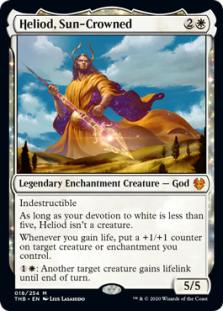
However, upon bothering to actually check Company decklists, I was reminded that the most popular version requires Heliod, Sun-Crowned. Which was very annoying, as I'd discussed this deck recently and should have known better. They're also leaning heavily on Ranger-Captain of Eos. Thinking that I was confusing Heliod Company with an earlier iteration, I did a deck search.

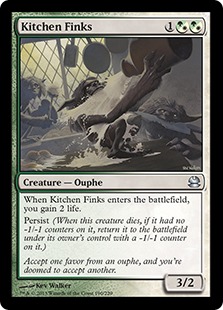
It turned out there had never actually been a time when Company's combos or value creature plan was all two-drops or cheaper. Early Devoted Company decks were close, but they always had at least a few Eternal Witnesses or Shalai, Voice of All, and later versions often had Kitchen Finks.
This means that for Lurrus to be Company's companion would require a deck redesign. Frankly, I don't think anyone will be taking apart Heliod Company for Lurrus. The combo potential and tutoring of Ranger-Captain is too good to cut, even for an eighth card in hand. Straight Devoted Company from past years could do it more easily, but over their lifetimes, those decks started moving up the curve. Finks and Witness are really good cards, apparently. It turns out that Lurrus's opportunity cost of companionship is not just a sideboard slot, but multiple maindeck ones, as well. As a result, I don't think Lurrus will see play in Company decks because lowering the curve is not desirable.

Fleeting Dreams

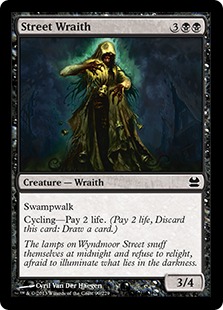
So, where does Lurrus belong? After an exhaustive look through upper tier decks, I conclude: nowhere. There are low-tier Zoo-type decks that can absolutely run Lurrus right now, but the top decks are filled with three cost creatures and/or planeswalkers. I was on the same wavelength as Jordan and next went to Traverse Shadow, also thinking that it just entailed replacing Liliana of the Veil with Kroxa, Titan of Death's Hunger. Then I had another awkward duh moment seeing Street Wraith. Which, despite being used as such, is not actually a Phyrexian mana cantrip but a five-mana creature. And is rather integral to the strategy. Which means Lurrus was out and it was time to move on.

However, after several hours combing databases, the only decks that consistently met the companion requirement were Burn and Infect. It turns out that 3-drop permanents are surprisingly common. Infect was right out since almost every decklist I saw was straight Simic. The white splash is being dropped, and Lurrus isn't a strong enough reason to start stretching again. Meanwhile, Burn could run Lurrus, but why would it want to? It's expensive by Burn standards, and doesn't have haste. Also, white is more of a splash, which can make double white tricky. And Burn's version of grinding is throwing fire to the face. Thus, Lurrus is not a natural fit in Burn. It could happen if Burn really needs the extra card. But again, does Burn really want it?

Reframing the Dream

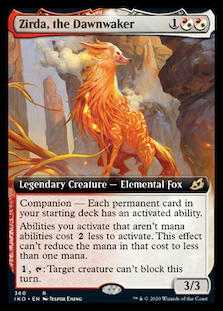
However, that may not be it for companions. As Jordan noted, Zirda, the Dawnwalker has a relevant static ability and fits into decks already. The catch is that, again, there's not much reason to do so outside of having a companion. Temur Urza decks draw enough cards that I don't think an eighth is really necessary. It will only hurt if the value of another threat is lower than the missing sideboard card, which I can't really evaluate.

As for actually building with Zirda, Company decks aren't making it easy. On the one hand, Zirda doesn't fit in Company any better than Lurrus. Again, a lot of the combos need creatures without activated abilities. These range from Vizier of Remedies to Kitchen Finks. The only combo which is only activated abilities is Heliod and Walking Ballista. Company could pare down to that combo, but that's not what Company players have signed on for, so probably not happening. Company also ruined any chance of making a deck that actually wanted Zirda by being more efficient. Every permanent based combo or even value deck I tried was just a worse version of Company.

Ultimately, I have to conclude that the only real appeal of the companion cards is the opportunity to have a guaranteed extra card every game. However, actually building decks that make it happen is harder than I thought. Decks could be built around them, but if these decks weren't good enough on their own before the companions, I'm skeptical they would be now. Subsequently, and in defiance of Zvi Moshowitz and Sam Black, I'm doubtful that they'll see much play in Modern.

Tread Quietly

There's still a lot of work to be done on the new cards, and its possible there's something I missed or that dedicated shells will make the companions shine. Which Ikoria cards have you the most excited? Have our readers experienced any luck brewing around the companions? Let us know in the comments!

A Look at Online MagicFest Expected Value

Are you a Quiet Speculation member?

If not, now is a perfect time to join up! Our powerful tools, breaking-news analysis, and exclusive Discord channel will make sure you stay up to date and ahead of the curve.

One of the biggest Magic related bummers caused by the current pandemic, for tournament grinders and trade binder combers alike, is no more in-person MagicFests. As someone who could ever only afford to go to a few choice Grand Prixs in a year, if that, I had to pay close attention to the anticipated expected value of playing in the tournaments (especially since I have yet to make a day 2) and make sure that I could still leave a GP with as much value as possible. If you include the experiences I got to have with my friends, vendor table grinding, and the different products you get playing in events, I always made out okay.

There was an error retrieving a chart for Noggle Bandit

But now, with no paper Magic events at all for the foreseeable future, ChannelFireball has started offering Online MagicFest Qualifiers in their place. What about their EV? Is it possible to come out ahead in the new digital age of the MagicFest? I played in one on the 14th to find out for myself!

First, let’s take a look at what you would get if you bought a main event package for an in-person MagicFest. I’ll be looking at the currently listed numbers for MagicFest San Jose, which is currently scheduled to take place near the end of July, which is advertised as having a $50,000 prize pool.

If you sign up for just the constructed GP for $69.99 you get:

  • entry into the event (only get tangible cash value if you do well)
  • a ChannelFireball Deck Box (we’ll say this is worth about $1)
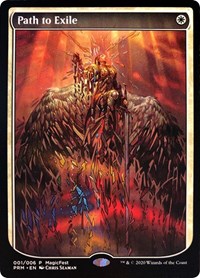
  • a MagicFest Foil Path to Exile Promo (currently valued at about $25)
  • for an additional $14.99 you can add on the event playmat (the art hasn’t been announced yet.) Depending on the art, these mats can sometimes fetch between $10-$20 from vendors, or resell for a decent price. We’ll value them at $10 for our purposes though.
Imagine this, but very shiny.

So, your minimum EV right now if you don’t win (not counting whatever you value the tournament experience at) would be spending $70 and get $26 worth of product. Or, spend $85 and get about $36 worth of product back. Now, I know no one enters these events just for the product value, but what’s the EV if you’re a decent player and place in the money? According to the CFB Knowledge Pool, if you can make 110th place, you walk away with $250 in prize money. First place nets you $7000, which for most of us is probably living in Magical Christmas land. If all you’re doing is going to play in the event, you’re likely not coming out of a GP with a net positive of cash.

Again, that’s not why most of us go to these things, but I think it’s helpful to look at the numbers and know what kind of bang for your buck the package is giving you. If you have fun with your friends, grind the vendor tables and trade binders, and get to play some Magic a GP has a lot more intangible value to it. Plus, there are several other packages for people who aren't playing in the main event who just want to grind side events that might have the potential for a much higher EV.

There was an error retrieving a chart for Elvish House Party

But what about the digital MagicFest? These don’t come with quite the same list of intangibles that the normal, in-person ones come with, and the structure is understandably quite different!

First, ChannelFireball is running Daily Qualifiers that run all week, several times a day, at a cost of $25 per entry. If you enter one of these, you get to play in the qualifier and you get a voucher for one free Booster Draft at a live MagicFest (up to $20) value. So, assuming you’re planning on going to a live MagicFest whenever those are allowed to happen again and you like drafting, that’s a pretty decent value! You could look at it as a $5 qualifier entry with the chance to qualify for a bigger tournament, plus a $20 Booster Draft entry at a MagicFest (which depending on the set and your skill level will have varying EVs.)

If you manage to get 5-1 in your qualifier or 10 wins total across a week’s worth of multiple qualifiers, you earn an invite to play in the 25k Weekend Championship, which is a 2-day long event with a prize pool of $25,000 and prizes starting at $100 for 128th place and going up to a top prize of $1000. Getting 32nd place and above scores the winner an invite to the Season Finals, which has a prize pool of $50,000 and prizes from $200 to $1000 starting at 130th place.

So if you’ve got a decent collection on Magic Arena and the combination of luck and skill it takes to advance, these events have a pretty decent EV (assuming you’re planning on going to a live MagicFest and like drafting.)

There was an error retrieving a chart for Updraft

While there aren’t the same kinds of intangible bonuses as an in-person MagicFest, such as getting to hang out with your friends or see your favorite Magic personalities, these online events still come with their own, less easy-to-quantify perks as well – especially if you’re a streamer. ChannelFireball is running constant coverage of these events, where they’ll have their analysts commentating the match over one of the participants’ Twitch stream, so if you’re a regular streamer this could conceivably be a way to grow your channel’s audience!

As I mentioned at the beginning of the article, I tried playing in one of the qualifiers on my stream on the evening of the 14th. How did it go? Well, I lost hard. I ended up with a 1-5 record, which is the worst I’ve ever done in a competitive MagicFest type event, but I’m still glad I did it! On the less tangible side of EV, I ended up on CFB’s stream several times (looking like a complete goof as I flooded out, I’m sure), got to play against one of my favorite Arena players (shoutout to Bloody!), and I made some new friends and followers on Twitch while getting to hang out with my regular chat participants. Plus, I have a voucher to play in a draft if the world ever returns to normal and we get to go to MagicFests again!

I know looking at the EV for competitive events can seem a bit fruitless, because if you’re not a competitively skilled player, it’s likely you aren’t making it out of there with a net positive on the money front, but as I said earlier, I think it’s still good for average players like me to take a look at every event’s EV when we’re planning how to spend our money, even if it’s hard to put a tangible dollar price on fun!

I hope you are all managing the pandemic okay. Know that I’m sending you all the positive vibes I can muster! Thanks to a very generous tip from one of my Twitch followers (shoutout 8wookie1). I’ll be playing in at least one more MagicFest qualifier next week after the Ikoria release, and hopefully, I’ll have a much better record! Maybe I’ll see some of your usernames across the Arena battlefield? Either way, I’ll be back here next week with another piece! Take care, friends!

Insider: Speculating on Zaxara, the Exemplary

Are you a Quiet Speculation member?

If not, now is a perfect time to join up! Our powerful tools, breaking-news analysis, and exclusive Discord channel will make sure you stay up to date and ahead of the curve.

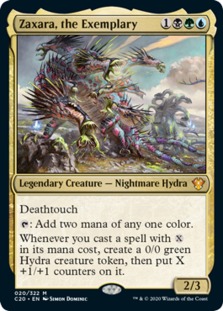
I am really liking the new Commander 2020 products and similar to my previous article on Gavi, Nest Warden I will continue to focus on one of the new commanders. This week it is Zaxara the Exemplary.

Warning Commander 2020 Spoilers ahead!

....................................................................

....................................................................

....................................................................

....................................................................

....................................................................

....................................................................

....................................................................

We have already seen two price spikes because of this new commander.

There was an error retrieving a chart for Pemmin's Aura
There was an error retrieving a chart for Unbound Flourishing

While both spikes occurred because of Zaxara, they likely occurred from different groups.

Pemmin's Aura allows Zaxara to generate infinite mana AND it also can protect Zaxara from spells and abilities. This is the type of auto-include in any competitive build of Zaxara. Our first speculation target would go in the same type of deck.

There was an error retrieving a chart for Freed from the Real

This is another enchantment that allows Zaxara to generate infinite mana. While Pemmin's Aura is an uncommon with a single printing back in 2003. Freed from the Real was originally printed as a common back in 2005 and had a single reprint in Masters 25 as an uncommon. This would imply that the price ceiling for this spec is certainly lower than that of Pemmin's Aura, but thanks to the singleton aspect of Commander, "worse" versions of cards are still desirable.

Pemmin's Aura is sitting at around $10 as of me typing this up, so it's fair to imagine that a card like Freed from the Real could easily be a $3-$5 card thanks to being a "worse" version and having more copies in the supply.

Currently, copies are sitting at around $1.50 and we are down to less than 12 pages of sellers on TCGPlayer, which thanks to COVID-19 is one of the few marketplaces people still have available to purchase cards from. This seems like a pretty easy "double-up" type of card. Full disclosure I did buy 13 more copies of this card after Zaxara was spoiled.

A search of the gatherer doesn't appear to have any other similar effects in Sultai colors that can be used repeatedly and for less than 2 mana.

There are a lot more options if you're willing to go to 3 cards for infinite mana. If you have something that increases the mana production of Zaxara in play like Mana Reflection or Nyxbloom Ancient, then you can use cards like;

There was an error retrieving a chart for Sword of the Paruns

and

There was an error retrieving a chart for Crab Umbra

Sword of the Paruns is nice because it provides a buff to your other creatures as well as an infinite mana engine. Crab Umbra gives your commander a totem armor so it can survive a wrath or targeted kill spell. I do view these types of options much lower than Freed from the Real and Pemmin's Aura because 3 card combos are a lot more effort to pull off than 2 card combos.

Now let's look at the other half of Zaxara, the part that caused the Unbound Flourishing spike.

Hydras seem to occupy an interesting niche market in the Magic community. We can look at a card like Khalni Hydra which was $4 or less during it's time in Standard and is now sitting at $12+ dollars despite not being in any competitive format decks and listed in only 893 decks on EDHRec.

There was an error retrieving a chart for Khalni Hydra

Casual players just love Hydras and they are an important group in the MTG finance realm. So let's look at some interesting specs that players who want to focus on the bottom half of Zaxara would likely want in their decks.

There was an error retrieving a chart for Genesis Wave

Genesis Wave is actually a card that would likely be included in either Zaxara build thanks to it being extremely powerful game over card when you get infinite mana, but also playing really well with Zaxara's second ability too. There have only been 2 printings, the original Scars of Mirrodin and an Iconic Masters printing. Scars is old enough that we have seen significant growth in the playerbase since the set's printing and masters sets tend to add less into the supply than many actually think.

TCGPlayer has only 3 pages if you set it to 50 sellers per page and many on page 3 are foil copies. It also helps that this card occasionally breaks out in janky modern decks. It's current $4 price tag could easily double to $8 should Zaxara prove a desirable commander, which I think it will.

There was an error retrieving a chart for Steelbane Hydra

So normally I avoid standard legal cards when looking at Commander specs, however, Steelbane Hydra is an interesting option because it doesn't come from standard Throne of Eldraine packs. It was included in the Wild Bounty Brawl deck and I believe can be found in collectors edition packs, so there are likely fewer copies floating around, again setting sellers to 50 per page nets 3 pages of total sellers on TCGPlayer. Copies are in the sub $2 category so the buy-in is pretty low.

There was an error retrieving a chart for Lifeblood Hydra

This is actually a card I spec'd on back in 2016 when I looked at Conspiracy: Take the Crown potential specs. Back then it was a $1.5 card. Now it was reprinted in Commander Anthology, but honestly that adds very little to the supply. The card is already sitting in the $4+ range and is another card that could easily hit $7+ should it be high on the "auto-include" list for Zaxara.

There was an error retrieving a chart for Green Sun's Zenith

A card so powerful it's still banned in Modern, when it was first released it helped create the Maverick archetype in Legacy, by providing incredible consistency. Not surprisingly, Commander is another format that likes consistency and repeatable tutors are quite valuable. Now this one has a buy-in that is honestly higher than I typically prefer for non-reserved list specs with most copies in the $7-$9 range. I have to think this is an easy auto-include in any version of Zaxara because like Green Sun's Zenith it plays well with both Zaxara's abilities.

Conclusion

One important thing to keep in mind with speculating on any of the cards on this list, especially the green ones, is that 2020 is not only the year the world falls apart, but also the year of Commander according to WoTC. I could easily see some of these green specs being potential inclusions in the specialty green-based Commander supplemental product and/or could be included in the draftable Commander product. To me that's the biggest risk for any of them, I feel like any cards on this list that do dodge both those products will likely see solid growth in the coming year.

Compelling Companions: Five New Friends

Are you a Quiet Speculation member?

If not, now is a perfect time to join up! Our powerful tools, breaking-news analysis, and exclusive Discord channel will make sure you stay up to date and ahead of the curve.

A major cycle in Ikoria is that of companions, which are essentially opt-in Commanders for sanctioned constructed formats like our own. If a certain deckbuilding condition is met, companions may be cast once from outside the game. Except there's no Commander Zone in Modern, meaning they'll have to take up a sideboard slot unless they are somehow exiled from the mainboard.

Many of the companions seem to have some niche, owing in large part to the mechanic's novelty—being pre-tutored as well as letting players functionally start each game with an extra card are enormous benefits that will almost always outweigh the lost sideboard card, and every once in a while justify the imposted deckbuilding restriction. I imagine at least five companions will see some degree of play in Modern, even if some seem more destined for the fringe.

Companions: Cost-Benefit Analysis
The creatures themselves aren't that jaw-dropping. Rather, I think they'll prove popular because of the strength of companion itself. To understand the gravity of introducing a commander element into other constructed formats, it has helped me to think about the mechanic's costs and benefits.
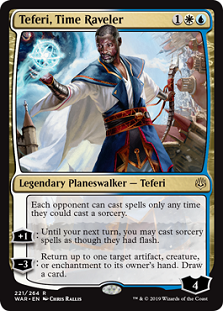
Costs

  • One sideboard slot. This cost is quite marginal.
  • Building around the stated requirement. This one is tougher to dismiss.

Some Modern decks will want unlimited access to a companion's effect bad enough that they warp their construction to fulfill its requirement. But for the most part, I think Modern decks will run companions simply because they already fulfill those requirements, and it's tough to pass on the benefits.

Benefits

  • Locked-in tutoring. The companion is cast-able as of the game's outset; there's no need to find it.
  • Locked-in card advantage. Not only do players start with a certain card, they start with an extra card at all.

Companions allow Modern players to start every game with an extra card. Since the card never changes, consistency is also added. Have you ever played a friendly game and mulled to five, only to have your buddy allow you to draw back up to seven, only to draw two more blanks and have to mulligan anyway? With companion, the extra card is always the same one, easing requirements of openers in a way we haven't seen since... well, Once Upon a Time.
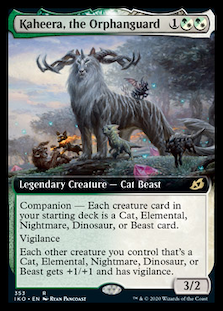
Companions cost three or more mana, meaning most of them provide value plans or bursts in the mid-game. In this regard, they're a lot like cheap planeswalkers. Having those plans guaranteed, rather than needing to draw into them at the right time (and not at the wrong time, such as in the first couple turns of a game), is absolutely game-altering.

Meet the Meat
With the preamble out of the way, let's introduce five companions I think are sure to see tabletop action in Modern.

Jegantha, the Wellspring

First up is Jegantha, the Wellspring, which already has an obvious home: 5-Color Niv Mizzet. These decks aim to keep opponents at bay with splashy spells until they can resolve their namesake dragon, draw plenty of cards, and leverage their newfound card advantage into a win. Jegantha looks like it will be very comfortable in the sideboard, from where it provides an attractive Plan B in lieu of Niv Mizzet Reborn, or even to bait out countermagic before going for the Dragon.

Once it's in play, Jegantha threatens opponents in a couple of ways. Most obviously, it's 5/5, which is large enough in Modern to have granted Gurmag Angler premier status as a beater. But more importantly, it taps to create up to five mana, a resource the Niv Mizzet decks are quite hungry for. There are, of course, ways to beat the deck once it has resolved the Dragon; pilots can only cast so many of the clunky sorceries, instants, and planeswalkers each turn. But Jegantha stands to double that amount, making it a must-remove creature that conveniently resists most forms of damage-based removal.

Kaheera, the Orphanguard

Next is Kaheera, the Orphanguard. While its condition is easily met in any tribal deck centered around Cats, Elementals, Nightmares, Dinosaurs, or Beasts, none of those tribal decks exist in Modern, and I doubt any are on the precipice of a breakthrough. But Kaheera's most interesting aspect lies in what isn't explicitly stated on the card: a deck without any creatures also fulfills its companion condition. In other words, any creatureless deck so inclined can run a Kaheera in the sideboard and run it out at their leisure.
Of course, what such a deck would want to do with a 3/2 is less clear. Cards like Polymorph do exist, which reward players for playing without creatures but nonetheless necessitate one payoff fatty to eventually flip with the spell; cheating in Morophon, the Boundless isn't exactly a sound course of action such a robust format. Still, we could get some sort of card down the line that exploits Kaheera's incidental versatility, so I'd keep an eye on this one.

Yorion, Sky Nomad

Yorion, Sky Nomad asks a steep price of its players: they are to run 80 or more cards if they want the Bird Serpent as a companion. While many Magic players may balk at the idea, to me, running 80 cards seems like a small price to pay for the effect at hand.

When Yorion enters, it casts Ghostway, a powerful effect that once helmed its own low-tier deck. Ghostway sought to gum up the board with enters-the-battlefield value creatures, and then blink them all to go up on cards, life, or mana. Nowadays, Ghostway-type strategies have all but been supplanted by Eldrazi Displacer mini-synergies and game-ending Collected Company combos. I think a couple major reasons behind the sorcery's never taking off in Modern is that it was unsearchable and took up a precious creature slot in a creatures-matter deck.

Not so with Yorion, which thanks to companion is both is pre-searched and free in terms of card economy. Sure, it's more expensive than Ghostway, but it also leaves behind a 4/5 flying body.

A key break from Ghostway is that Yorion blinks not just creatures, but permanents—including one of Modern's latest breakouts, Arcum's Astrolabe. The artifact, which adds velocity, filters mana, and synergizes with the companion, would be an obvious include, as would similar permanent-grounded cantrips, however rare they may be. Astrolabe even turns on Ice-Fang Coatl, a significant upgrade over the Elvish Reclaimers of Ghostway decks past. Perhaps Oath of Nissa could find a home in such a deck, too.

As for running 80 cards, I don't think the requirement is the end of the world for the kinds of decks Yorion wants to support. These decks enjoy tremendous redundancy in Modern when it comes to the effects they prefer: mana dorks, value creatures, and the like. I do think Charming Prince would have an important role in the deck for helping get to the right pieces for a given matchup, but other than that, the increased deck size may even open precious slots for added utility. I fully expect Yorion to become a mid-tier contender in Modern post-Ikoria.

Lurrus of the Dream-Den

Another companion I think will see immediate play is Lurrus of the Dream-Den. Modern is home to a top-tier deck that almost fulfills its companion requirement: Traverse Shadow. The deck's only permanent exceeding CMC 2 is Liliana of the Veil, generally played as a two-of. So the question becomes: is it worth trimming those two Lilianas to run a Lurrus in the sideboard? Or, put another way, to start every game with access to Lurrus as an additional card in hand?

I think the answer is a definite yes. While Liliana is great in certain matchups, it's dead weight in others, and since companion says "starting deck," the planeswalker can even be brought in from the sideboard where applicable.

Like Liliana, Lurrus comes down for three mana and begins generating value; while it's a tad lower-impact right away, probably just recurring Mishra's Bauble the turn it resolves, in the mid-game or on subsequent turns it starts bringing back Tarmogoyf and Death's Shadow. These recurs put it far above Liliana in terms of instant impact.

Since Lurrus can be cast from the sideboard, though, it already comes with an extra draw attached—that Liliana would have taken up a slot in the opener or as a turn draw. I think this aspect may be overlooked by some players, but Lurrus indeed provides a burst of value by sheer virtue of the companion mechanic. Let's say it comes down for three mana, recurs Mishra's Bauble, and immediately eats a Lightning Bolt. That's a huge exchange for the Shadow player: Lurrus traded for Bolt, and Bauble put the pilot ahead by a card. But since Lurrus came from the sideboard and not the hand, it was also free in terms of card economy, making the play a plus two... like Treasure Cruise!

Finally, Lurrus has applications in other decks, too. Many strategies in Modern meet its requirement. Burn is no stranger to splashing white, and freely recurring Goblin Guide or Grim Lavamancer when the spells start to dwindle is just what the doctor ordered in that deck. Similarly, Bogles tends to run Leyline of Sanctity, but ditching that playset is probably better if it means plucking that Bogle out of the trash after it gets pinched by Inquisition of Kozilek. And Lurrus has lifelink, making it incidental Game 1 protection against faster decks.

Zirda, the Dawnwalker

Last on our list is Zirda, the Dawnwaker. Zirda is a walking Training Grounds, but in different colors. And while Training Grounds was annoying for being tough to find, Zirda is always available thanks to companion!

Its condition isn't so hard to meet, either. For starters, any deck of just instants, sorceries, and lands fits the bill. Planeswalkers are also acceptable. So are creatures like Stoneforge Mystic, and artifacts like equipment. Modern decks already exist that can run and cast Zirda as a companion without making a single change, such as Temur Urza.

Granted, in that Urza build, Zirda doesn't do anything but reduce the activation costs of Urza and Engineered Explosives, which are indeed poor payoffs. But it's still a body, and it still has applications in combat. Either way, I imagine it won't be too tricky to build Modern shells that loosely support Zirda enough to get some mileage out of the Elemental Fox, and am open to hearing your combos in the comments.
Never Alone Again
Companions have arrived, and they aren't going anywhere. I have a feeling Modern in 2020 will feel a lot more like Commander, except minus the big playgroups. Either way, while we may be self-isolating, we apparently needn't worry about having no company!

Continue to Buy and Sell Despite a Soft Market

Are you a Quiet Speculation member?

If not, now is a perfect time to join up! Our powerful tools, breaking-news analysis, and exclusive Discord channel will make sure you stay up to date and ahead of the curve.

Let’s face it: this is a buyer’s market. Outside the occasional buyout or speculation on new cards, prices are awfully soft at the moment. This is especially the case in the market I follow closely: Old School cards. Even though I mostly track cards from Magic’s earliest sets, I suspect pricing is soft across the board.

Despite the reduced liquidity due to a stagnating market, I’m still trying to conduct transactions at least a couple times a week. I’ll admit that some of the stuff I’m selling, I’m letting go for a modest loss, far from all-time highs we saw a year or two ago. But I’m not taking losses for kicks (well, at least not completely for kicks
it is kind of boring being stuck inside all day). There’s actually a method to my madness.

Even though demand is down, I want to share a few reasons why I’m still conducting transactions during this COVID-19 slowdown.

Opportunities Abound

The number one reason I’m selling Magic cards in this market is paradoxical in nature. I’m selling Magic cards because I’m buying Magic cards!

Face it, most of us have a ceiling on the cash flow we’ve allocated to Magic. If my purchases exceed the cash I’ve allowed myself for cards, then I stop buying. Perhaps this just reflects an excessive need to self-moderate, but I find the scarcity mindset helpful as it forces me to make the most value-conscious decisions I can with my money.

If ever there was a time in recent history where I’ve been tempted to scoop up collectible, older Magic cards, it’s right now. I follow the Old School Discord closely and there are amazing deals at lower prices just about daily. Some sellers have even gone as far as to sell via traditional and Dutch auctions in order to fire-sell given cards.

Then there are the folks who are posting Alpha cards for sale by showing only their backs and providing a hint about the card. Yes, this is a thing, and it has been extremely effective. I have not jumped on any such deals yet, but I find myself regretting not buying at least a quarter of them after the mystery Alpha cards are revealed. It seems, despite the market’s softness, Alpha cards still hold some value. Even less-than-playable commons like Death Ward are well above bulk pricing.

There was an error retrieving a chart for Death Ward

In order to have cash on hand to take advantage of such deals, I need to keep some cash on hand. Because I enforce limits on my spending, I sell cards—trying not to lose too much value on what I let go of—in order to purchase other cards at these amazing prices. This practice helps me stay “in the game” of Magic while also refreshing my collection.

ABUGames is Open for Business

I’ve written about the online vendor ABUGames numerous times over the past couple years. When they revamped their website, they suddenly adopted a unique practice whereby they offer 100% trade bonuses on certain cards when store credit is requested. This was especially the case for Old School and Reserved List cards, where it almost seemed like ABUGames was attempting to control the market.

As you can imagine, things have changed since then. At one point last year, I traded about a dozen played, unpopular Beta rares to ABUGames for an embarrassingly high amount of store credit. I was happy to ship them my Beta Web, Righteousness, Farmstead, etc in order to acquire staples across multiple formats. Mana Crypt and Mox Opal were some of my favorites.

There was an error retrieving a chart for Farmstead

Nowadays such a transaction would be very poor form, financially. ABUGames offers a lot less on their played Old School cards, making most trade-ins a loss of value (remember, ABUGames store credit is only worth about 65% when converted to cash).

There is one exception, however. ABUGames is still offering competitive trade credit on Alpha cards. This is especially the case if the Alpha cards you’re trading are in near mint condition. Recently I picked up a near mint Gaea's Liege from the High End Facebook group. The seller’s price was competitive, but I have to imagine the number of people in the market for this particular card is quite small.

There was an error retrieving a chart for Gaea'S Liege

Because it was in near mint condition (TCGPlayer Direct “near mint”), ABUGames granted me a “MINT” grading, netting $600 in-store credit. I also shipped a played Alpha Volcanic Eruption to boot, netting me nearly enough credit to pick up more desirable cards. I wouldn’t ship ABUGames just anything, but if you’re looking to sell/trade some Alpha cards they’re worth a gander.

This isn’t something repeatedly exploitable—it’s not easy finding well-priced Alpha cards these days—but this is one set of transactions I’ve pursued during this slow period.

I also like to ship ABUGames near-bulk cards. They have tons of cards on their buylist for which they offer $0.03 - $0.05 in trade credit. It’s not much, but it can add up. Especially since this includes garbage like Unstable commons and junk from Homelands, such as Trade Caravan. If you’re bored one day due to COVID-19 shutdown, dust off your bulk and see if you can scrape something together. You won’t break the bank, but you may be surprised with how a trade could add up.

There was an error retrieving a chart for Trade Caravan

Scouring EBay

The last bucket of transactions I’m continuing to pursue are my daily scouring of ABUGames and Card Kingdom eBay listings. I’ve discussed this before, but it’s worth mentioning again as a reminder.

Card Kingdom lists “Below Good”—cards they deem too heavily played to sell directly on their website—on eBay. In certain cases, their “Below Good” eBay pricing is attractive, handily beating any other vendor. These can still be sleeve playable, and thus attractive targets for those looking for budget copies of high-end cards.

My favorite, though, is ABUGames’ practice of Dutch-style auctions on eBay. The online vendor lists cards from Alpha, Beta, and other Old School sets at auction with a high starting bid. The auction proceeds without interest, ultimately ending without a bid. Then ABUGames re-lists the card with a roughly 8% drop in starting bid. If there are still no takers, they rinse and repeat.

In this way, ABUGames is essentially using a Dutch-style auction to sell their cards, steadily dropping their price until a buyer is willing to pay the asking price. By the way, if you want one of ABUGames’ eBay auctions, don’t bother bidding. Just submit an offer for the amount of the starting bid, and they’ll accept every time. Asking for below the starting bid will result in a counter-offer (plus a polite note from the store’s owner, Gabe). Gabe is looking to receive at least the starting bid for the auction, so if you’re not interested in paying that much you’re best off waiting for the auction to expire to be relisted at a lower price.

By the way, ABUGames sells non-Old School stuff this way too. I focus on their Alpha and Beta listings, but here are some other recently sold auctions of theirs. What do you think? Did the buyers get a deal? I listed the sale price alongside TCG low pricing by matching condition, for comparison.

HP 6th Edition Enlightened Tutor: $18.31 (TCG low $22.99)
HP Metalworker: $30.00 (TCG low $33.79)
NM Palinchron: $22.59 (TCG low $24.92)
HP Torment Cabal Coffers: $34.57 (TCG low $42.00)
HP Shadowmoor Rhys the Redeemed: $8.39 (TCG low $12.77)
HP Phyrexian Dreadnought: $23.74 (TCG low $21.99)

There was an error retrieving a chart for Phyrexian Dreadnought

They aren’t all amazing steals, but in most cases cards purchased from ABUGames auctions can provide a modest discount relative to the rest of the market.

Wrapping It Up

The COVID-19 pandemic is wreaking havoc on markets across the globe. The Magic market is no exception, and soft demand is reflected in dropping prices. The trend is especially severe in the market I follow most closely: Old School cards.

But just because demand is soft and prices are down doesn’t mean I’m circling the wagons and holding out for better times. I am finding creative ways to continue transacting to maintain liquidity and refresh my inventory. This has manifested itself for me in three ways: selling cards in the Old School Discord at a loss in order to make strategic acquisitions, trading Alpha cards and bulk to ABUGames, and shopping ABUGames and Card Kingdom eBay auctions for deals.

These three strategies have helped me find deals so I can remain involved in the market. The alternative would be to hunker down and do nothing for months. That doesn’t interest me, though, as it would lead to a stagnating collection and lack of engagement in the community. Doing that would feel like I let the coronavirus win, forcing me to stop dead in my tracks.

That’s not my style, and I’d encourage others to find creative ways to continue buying and selling cards as well. Not only does this help with liquidity and maintain interest in the hobby, but it also gives me a small sense of normalcy in a world where things are anything but normal. Getting that MTG mail is a much-needed pick-me-up; as long as the USPS still delivers mail, I’m going to keep buying and selling cards so I have something to look forward to week to week.

After all, I think we could all use something to look forward to right now.


Sigbits

  • Again, buylist pricing at Card Kingdom is a bit soft. But it’s encouraging to see some high-end cards return to their hotlist. The top card on there this weekend is Bazaar of Baghdad, with a $660 buy price.
  • In addition to Unstable and Homelands, I also dug through my War of the Spark bulk and found some worthwhile pulls to ship to ABUGames for trade credit. This included Angrath's Rampage ($0.20), Arboreal Grazer ($0.32), and Cruel Celebrant ($0.06). Each of these cards aren’t present on Card Kingdom’s buylist, so if you’re looking to get rid of bulk in this environment ABUGames may be worth checking out.
  • I’m not sure how competitive these buy prices are, but Card Kingdom has quite a few fancy foils on their hotlist. This includes stuff like Mythic Edition Jace, the Mind Sculptor ($110), Players Reward Wasteland ($100), Expedition Verdant Catacombs ($70), and Judge Foil Demonic Tutor ($85).


Budget Focused: Domri Rade and Planeswalker Potential

Are you a Quiet Speculation member?

If not, now is a perfect time to join up! Our powerful tools, breaking-news analysis, and exclusive Discord channel will make sure you stay up to date and ahead of the curve.

Welcome, everyone to another week, another article, and another card to discuss. Today we talk about a planeswalker that has more than potential to go up in price. That card is Domri Rade, and I feel it has room to grow with Pioneer being around. I did a video on this and four other cards (Selfless Spirit was one) in my “Breaking Pioneer” series, about five plus months ago. I just wanted to circle back to this one, because I feel it’s a deal where it currently sits. Pioneer is not the only reason I have had my eye on this, as it’s a Commander card worth noting. We are going to break down how, why, and where this card can grow.

There was an error retrieving a chart for Domri Rade

Current price and reasonable long-term goals

The first thing to bring up on why this is worth considering is its cost, both CMC and monetary price. It’s currently sitting at (TCG Mid) roughly $3.12 for the Gatecrash copy, and $2.97 for the Modern Masters 2017 copy, which is very cheap for a non-foil mythic. Secondly, it’s mana cost of three should at the least drive some intrigue for speed. If you are playing Pioneer, this can be out for you turn two. Depending your opponent’s deck, you might not want it out turn two, which is worth noting. I bring this up because CMC is one of the many angles I look at when speculating a planeswalker, and this being at three is very good.

There was an error retrieving a chart for Domri Rade

For the Commander players that like to foil out their decks, the foil price is at (TCG Mid) $6.97 for Gatecrash and $6.60 for Modern Masters 2017. For buylisting, I have been finding that the promos are going at a higher rate than normal foils. When it comes to this card though, there is no foil promo. If you have foils or are considering acquiring some, now would be the best time. I’m not suggesting it will skyrocket in price, just its current price is rather low.

A realistic price range long-term for non-foils is $5.00-$10.00, and foils could be around $10.00- $20.00 if it doesn’t see another reprint. It’s not always about the home-run when speculating. Like real stocks, we aren’t putting all our eggs in one basket. You want to see consistent growth in many cards over time.

Commander and Pioneer

Usability is what we are going to be looking at next with this guy. From a Commander standpoint, this card is being featured in (based on my own research) 2532 decks. Being in that many decks is nothing to scoff at. The big draw with this in Commander is the -7 ability. Being that this will be in a creature heavy build, the +1 has a better chance to hit than not. This is one of those ninety-nine cards that isn’t OP but can change the game if you pop it. A shortlist of the commanders it’s used in are as followed.

  1. Klothys, God of Destiny
  2. Ulrich of the Krallenhorde
  3. Xenagos, God of Revels
  4. Karrthus, Tyrant of Jund
  5. Stonebrow, Krosan Hero
  6. Ulasht, the Hate seed
  7. Rosheen Meanderer
  8. Radha, Heir to Keld
  9. Ruric Thar, the Unbowed
  10. Mayael the Anima

Now jumping into Pioneer, Gruul Aggro currently makes up roughly 3% (73 Decks) of the competitive meta. There are plenty of ways we can fit this in, as Gruul needs to keep ramping. Domri is just one of many ways to help in this regard, as we get potential card draw from the +1 ability.

Another thing we can use is the -2 ability for potential creature removal. How many times have you found yourself in a pickle, and you have no response to fliers? This will help you to be able to fight off those pesky fliers you otherwise couldn’t.

There’s another angle I wanted to look at, but I understand is super niche. If our opponent is running a heavy planeswalker build and we are using this in a Jund build, we can sideboard The Elderspell to remove potential walker threats. Getting the extra counters will help with potentially getting to that sweet -7 ability.

Compare and contrast

We are now going to do a little comparison to shed some light on the current price and how it can go up. Looking at another planeswalker with a CMC of three is Kaya, Orzhov Usurper. The current price for non-foils are at $4.33 and $12.11 for foils. Another thing to consider here is Kaya has a promo print and the Mythic Edition in addition to that.

There was an error retrieving a chart for Kaya, Orzhov Usurper

With any card (especially newer sets) we now see how this influences the prices of regular foils and non. We will dive more into this topic at a later date. I just wanted to point out this factor to you all as it is relevant to the conversation. Kaya is being used less in both Pioneer and Modern formats. In Commander, it’s being used in 732 decks currently, which Domri is used 3.45 times more in the format. Kaya is currently being used in a lot of Esper styled control builds in Standard, which is possibly why the price is where it is. Once rotation hits it may quite possibly go down in price.

How it can fit in the Pioneer meta and closing statements

There are concepts in Gruul that are doing well currently in Pioneer, and Domri Rade seems like it would be a good fit in. This is a build that got fifth in Pioneer league (3/19/20) recently, and Domri has a chance to fit in it.

Gruul Deck Wins

Creatures

4 Burning-Tree Emissary
2 Dryad Militant
4 Experiment One
1 Gallia of the Endless Dance
2 Ghor-Clan Rampager
4 Gruul Spellbreaker
4 Pelt Collector
4 Reckless Bushwhacker
4 Voltaic Brawler

Instants and Sorceries

4 Atarka's Command
4 Wild Slash

Planeswalkers

2 Domri Rade

Lands

7 Forest
4 Game Trail
2 Mountain
4 Rootbound Crag
4 Stomping Ground

Sideboard

1 Chandra, Torch of Defiance
2 Damping Sphere
2 Destructive Revelry
3 Goblin Rabblemaster
2 Rekindling Phoenix
3 Roast
2 Scavenging Ooze

Given where the current foil price for Kaya and Domri, I don’t see why Kaya is almost double. I’m not suggesting Kaya isn’t worth the cost, but Domri should be seeing something similar based on usage. Usually, Commander has an influence on foils; with Domri being used more than Kaya, one would think the prices would be similar.

Overall, I feel Domri should be finding a home in Pioneer in the future. Planeswalkers with a lower CMC such as Domri should be contenders as specs going forward. Let me know what you all think in the comments below and thank you for taking the time out to read this take on Domri Rade! If you enjoy these articles check out what I have to offer on YouTube!

Pet Decks and Keeping Current

Are you a Quiet Speculation member?

If not, now is a perfect time to join up! Our powerful tools, breaking-news analysis, and exclusive Discord channel will make sure you stay up to date and ahead of the curve.

Hey friends, I originally wrote this piece as my audition for writing at Quiet Speculation. It was a couple of days before we really realized how bad the COVID-19 pandemic really was. We deemed it to not be quite a serious enough piece to debut with, but now I think everyone could use a little laugh at my expense, so here it is! I've redone it a bit to be more relevant to our current world situation. Be well, take care of each other, and enjoy the piece!

Amazon asked me if I wanted to buy a playset of Once Upon a Time again - a day after they were banned. This made me frustrated for multiple reasons, first being that, no, Amazon Algorithm, I don’t usually need two playsets of a card, and second, THEY GOT BANNED BEFORE I EVEN GOT A CHANCE TO PLAY THEM! (and third, I should probably not be buying singles on Amazon when I’ve been out on the town consuming liquid courage).

Sometimes we love bans, sometimes we hate bans - boom, super obvious opening statement out of the way. They have the chance to both improve the competitive metagame, but also the chance to totally wreck our wallets.

There was an error retrieving a chart for Splinter Twin

This is true for both active players and players like myself who have been on hiatus from playing paper Magic, but still feel like they have to keep their pet decks up to par on the off chance they get a night off of work and can go shuffle some cardboard in public. This is now extra true because ALL players are now stuck at home with very few ways to actually play with their cardboard collections. It's webcam chat or bust for paper players, and many of them will be taking forced extended breaks from paper play to focus on games like Magic Arena or MTGO.

It’s easier for players who are constantly playing and being engaged with the game to keep up with what is going on in the meta, but for those of us like me who ended up on an unexpected hiatus (that's all of us now), it’s pretty easy to slip up and miss a big development in potential banning news.

When I decided to take a break from following and playing competitive Magic obsessively (more on that later) I decided to start a TCGPlayer store and sell off most of my unessential collection. I was working on starting my own business and finishing up school, and as much as I wanted to, I couldn’t keep up at the same level with the game I love so much!

Even though I was offloading a lot of my extra (non-Reserved List) collection, I decided to keep at least one favorite deck for both Modern and Legacy - my two most-played formats - and keep them relatively updated in case I got the itch and decided to jump into a local tournament somewhere. Now, I'm keeping them updated on the off chance I get to go to jump into a local tournament someday instead.

There was an error retrieving a chart for Sling-Gang Lieutenant

Now, with my pet Legacy deck being Goblins, you can imagine I didn’t have much to worry about as far as updates and being wary of bannings. However, my pet deck in Modern has always been Infect, and keeping that updated almost turned into a pretty annoying misstep.

My first questionable (non-ban related) purchase came in the tail-end of my Magic playing before the hiatus. People started playing copies of Teferi, Time Raveler alongside Giver of Runes in what had been a more traditional UG based deck, and I went and snapped up playsets of both right at the height of Teferi madness, paying full price for cards I ended up playing twice before they fell out of favor.

Now, I picked them up from my ex-employer and local LGS which happens to be internet famous for their often strangely high-priced cards, which was a mistake. If I had been paying more attention, I could have offloaded them before both cards’ prices plummeted. I probably paid close to $40 a pop for the Teferis, using trade credit of course, so it wasn’t a huge loss, but still, one I regret even without any surprise bannings yet.

There was an error retrieving a chart for Teferi, Time Raveler

Lucky for me, I dodged one big Elk-sized bullet, but barely. Everyone in the Infect Facebook and Reddit groups was talking about how good this insane card was in the deck, and the little lizard part of my brain insisted I needed to pick a playset up just in case I randomly got a Wednesday off to play some Modern. I wasn’t playing any Magic at all during Oko’s heydey and was barely keeping up with the news, but I managed to quell my urges for a while.

Eventually, I cracked and put a playset in my cart. One of which was foil, because they only had three regular ones in stock. I got together a huge buylist and some cash to go buy them, but something stopped me (probably laziness and weird feelings about my ex-employer.) Oko, Thief of Crowns was banned the next week, and I dodged being out several hundred dollars. Yay me!

There was an error retrieving a chart for Oko, Thief of Crowns

Then, of course, came Once Upon a Time. As you know, having presumably read the beginning of this piece, I made the questionable decision of impulse ordering a playset of Once Upon a Time on Amazon (because my Amazon card still had money on it and at this point in the story I was broke), because I just knew I was going to want to play Modern soon.

Spoiler, I didn’t, and the new card I bought was now worthless. And the Amazon algorithm is going to taunt me about it for the rest of time, apparently.

There was an error retrieving a chart for Once Upon A Time

I know a ton of you are laughing because I only ended up being out about $20 all said and done with that one (nevermind the fact that Infect isn’t even that good of a deck), but imagine all of those people who have their entire beloved deck ripped apart with things like the Mox Opal banning in Modern (after investing in new Urza, Lord High Artificers
 Sorry Ben!)

There was an error retrieving a chart for Mox Opal

I guess I’m lucky that my pet decks aren’t the kind making waves in the meta - but what about players like me that might have to take a break from the game but still want to have decks together just in case? The legions of us who are now quarantined, just counting down the days when we can finally sit down with our best friends at our favorite LGS? What can we do to protect our wallets and still be almost tournament-ready?

Be Realistic

I’ve never known someone to quit Magic forever, but you need to be honest with yourself about what your realistic level of play is going to look like. I went from traveling around the country with a hopeful store team, playing all kinds of events, and weekly grinding (I made top 20 in my small state based on planeswalker points for a few months, which felt super cool to me at the time) to quitting my job assistant managing ABU’s retail store and not playing any more Magic for months.

My brain had a hard time making the transition, and I kept impulse buying cards thinking I might snap back at a moment’s notice. Having a ton of capital tied up in cardboard and continuing to tie up more in potentially unstable cards probably wasn’t the right choice there, especially if I wasn’t following current news.

Now, we're all trapped inside and no one should be playing paper Magic outside of a webcam or with the people quarantined with them. This could be an unprecedented time to be snapping up deals as people decide to liquidate their paper collections out of necessity or boredom, but make sure you're doing your format research and thinking about the likely extended timetable before we'll all be hanging out at a MagicFest again.

Stay Up-to-Date

If you are going to try to keep a deck or two constantly up-to-date, spend at least a few minutes every week catching up on your format of choice. It's well worth it to be aware of big changes that could be on the horizon that would signal either big price jumps on cards you may need, or the ones you already have sleeved up in the deck.

Once this pandemic has finally passed and we can stop social distancing again, you never know when you may find yourself with extra time to sign up for a local tournament on short notice mid-hiatus, and you want to be able to have picked up the right cards at the right prices ahead of time. For now, formats are going to be defined by their online equivalents, and while that doesn't always translate directly to the paper metagame, there is going to be even more online content and tournament results for us to be pouring over in the quest to keep our decks up to date.

Don’t Panic

But - make sure you aren’t making snap purchase decisions based on Reddit threads you read while sitting at the bar and then forget about the whole “staying up to date thing” and regret it later. Think about the card, is it actually good in the deck? Is it a flash in the pan? Am I going to be able to play the deck soon enough for this purchase to matter? If it’s your pet deck, I’m sure you’re familiar enough with it to be a good judge of flash-in-the-pan meta changes. Think it through before whipping out your wallet!

Yeah, this article basically boils down to: “I’m a big dummy, don’t spend money like me.” If you stuck around this long, you have my heartfelt thanks. And good news, it looks like I’m back to playing Magic (at least online, for now) so you can look forward to hearing more from this dummy in the future.

And If all else fails, pick a pet deck that hardly changes, and when it does your wallet won’t get blown out picking up new toys for it, like Legacy Goblins!

There was an error retrieving a chart for Goblin Matron

In retrospect, this was a pretty weirdly timed article for me to write. I'd finally realized my dream of writing about Magic again, which made me want to jump back into paper Magic with a vengeance. Then the pandemic hit and playing in paper became out of the question. Even if stay-at-home orders hadn't been enforced, I live with an immunocompromised individual, and I would never put my love of playing at the LGS over their safety.

Instead, I dove into playing digitally and streaming on Twitch almost every day of the week. Not only has this helped keep my love of the game alive, but getting to interact in the chat with everyone has been a huge help in keeping me feeling connected to the world in general. These are scary times, and we need to look out for each other as best we can. Even in scary times, we can focus on the hobbies we love. Be smart about keeping your pet decks updates during isolation and when the all-clear is given you'll be able to jump back on the tables with a vengeance! I can't wait until I can high-five all of you at a MagicFest again someday, but until then feel free to come say hi in my Twitch chat!

Here be Monsters: Ikoria Spoilers Week 1

Are you a Quiet Speculation member?

If not, now is a perfect time to join up! Our powerful tools, breaking-news analysis, and exclusive Discord channel will make sure you stay up to date and ahead of the curve.

Alright Magic world, it's time to screech to even more of a halt: it's spoiler time again. That means you, Timmy and Tammy! Particularly you, since this set is tailor made to your preferences, they being giant monsters and the making thereof. The pickings are a bit thinner for Spike this time around, but that's fine he's still a bit bloated from everything 2019 gave him. So get over here and dig in!

I'm being totally facetious with this opening. I mean, the set is named Ikoria, Lair of Behemoths. Underlined for emphasis. This set more clearly and obviously aimed at fans of big monsters than even Rise of the Eldrazi. Given that Modern already has Titans of both the Primeval and the Eldrazi persuasions, I have serious doubts that any of the monsters we're getting will be Modern-worthy on their own. And that's fine. It's good to have a set for the fans of big boom-booms once in a while, and frankly, given how overpowered the past few sets have been, I'm fine with fewer Modern-plausible cards. Not that it's going to be a problem. As of when I'm writing this Sunday night, there is one solidly playable cards alongside some context sensitive contenders.

Strange Mutations

The first thing to discuss is Ikoria's headline mechanic. To be honest, I think that mutate is a desperate attempt to make auras more appealing. I'm not sure it worked, as mutate is a wordy mechanic. A creature with mutate can be cast for its mutate cost targeting a non-Human creature. Because this is Godzilla World, not X-Men. If the targeted creature dies before resolution, then the mutate creature isn't countered because it was always a creature, not an aura, and can still resolve to the best of its ability. If the mutation successfully resolves, the card is placed over or beneath the target. The overall creature is the top card plus all the abilities of the bottom cards as well as any counters or actual auras it had before it mutated. It's the same creature, just with new abilities. If it dies, everything attached also dies.

All this sounds like a more elaborate and confusing, though less risky version of auras. And I'm pretty sure that's the point. Thus, it also seems like a good way to make Bogles less of a glass cannon. Rather than mulliganing aggressively for one of the ~12 creatures in the deck, Bogles could just play out its modifier cards instead. Such a deck would have the Bogles primarily as a way to gain hexproof, then focus on making an ability-laden fatty. And if the Bogles don't come, just play the fatties instead.

The Catch

However, there's a very big flaw with this plan. As of this moment, there are no Modern-worthy mutate creatures. Don't get me wrong, there are a number with very attractive mutation ability triggers. However, they all cost three or more to mutate, and at least that to cast normally. A Bogles-style deck really isn't possible. A lot of the multicolored mutators are close to Modern-playable cost-wise. However, to really be worthwhile, they need to successfully mutate, and that could be a tall order. I think that the mana cost to power ratios of the known cards, coupled with the risks of mutation, will keep all but the most aggressive cards out of Modern.

Vadrok, Apex of Thunder could see some play, but if so, it would be because a deck wants a 3/3 flying first strike creature for three. Playing spells from the graveyard for free is powerful, but doing so means paying more and giving up a threat to make an already-resolved one somewhat better. Thus, I would anticipate mutate being an incidental ability played for value sometimes rather than the main selling point. For example, normally extra legendary creatures like Vadrok just sit in hand uselessly. Mutating Vadrok with another Vadrok isn't exactly efficient or ideal, but it's better than doing nothing.

Izzet Good Enough?

However, Vadrok may also find a home alongside the first definitively Modern playable cards in Ikoria. And it's not a typcial kind of monster. Sprite Dragon doesn't start out as much. Sprite is a more fragile Stormchaser Mage, a card that has been fringe playable when Izzet Prowess has been a deck. What separates Sprite is that the prowess buffs are permanent. Thus, it becomes a grow card in addition to the more common prowess creatures we've become accustomed to.

The natural home for Sprite is an Izzet Phoenix style deck. However, Izzet Phoenix itself has basically disappeared since Faithless Looting was banned. Lacking the ability to dump two Arclight Phoenix into the graveyard turn one has been effectively fatal. Still, mono-red Prowess had been doing very well until recently. The problem has been a shift toward midrange, or removal-heavy decks. It's easier to blitz past Amulet Titan than Jund. Adding blue provides the option for more cantrips to help velocity past Jund while growing a big threat, similar to how Legacy Izzet Delver operates.

Alternatively, why not just reinvigorate Izzet Phoenix? Delver of Secrets is not and has never been Tier 1 in Modern because it can't flip reliably. When Izzet colored decks have been good they've been focused on pure card velocity rather than deck manipulation. Pure velocity doesn't help Delver, and it's a poor payoff compared to Thing in the Ice, Young Pyromancer, or Aria of Flame. Sprite fits right into that strategy as its Delver-style threat. Phoenix isn't reliable anymore, but Sprite will always work so long as the cards keep flowing. Spite naturally fits into a decent shell already so I will be very surprised if it doesn't see play.

Combo Potential

While on the subject of Izzet cards, Rielle, the Everwise strikes me as a card with combo potential. The intended fair usage of a high-power threat that makes up for Wizards's insistence that blue can only filter cards, not draw them, is not good enough at three mana. However, for a more combo-oriented deck, she looks like a strong boost of card advantage. It will only work once per turn, so it would need to be a big one to be worthwhile. Resolving Wheel of Fate and drawing 14 cards sounds absurd. However, I have no idea what such a deck would look like, and I'm not sure that any Izzet combo would want a three-mana do-nothing-on-its-own card like Rielle. I am certain, however, that someone will try to make it work. The upside is too high.

Still Dead

Ikoria is a set with cycling. It is a set with creatures that cycle. Large ones. Thus, the Living End stalwarts have emerged from their rocks to proclaim their return to Tier 1 status. And I will admit, the thought of facing down multiples of Titanoth Rex is terrifying. Wizards has never made cycling creatures this massive before. The biggest cycler that sees play as regularly is Desert Cerodon at 6/4, so upgrading to an 11/11 trampler is a big deal. The last time the Enders were this noticeable was when Archfiend of Ifnir was printed.

However, much like Archfiend, the new beasties are not going to make Living End good again. All the currently spoiled monsters that are at least as good as current options are actually worse because their cycling cost is higher. To make the deck good, Living End must cycle multiple creatures a turn, explaining its preference for the one-mana cyclers from Alara block. It matters little how powerful the creatures actually are; the key to the deck is lots of above-averagely sized creatures and drawing through the deck to find the cascade cards. Thus, the cycling cost puts a damper on playability.

More to the point, lack of good threats is not Living End's problem. The format has evolved so it isn't as good a combo as it used to be. Graveyard hate is (and should be even more) widespread now, defeating the combo up front. Worse, with Bant rising, counterspells are everywhere. And then there's Teferi, Time Raveler. Teferi completely defeats the combo and punts away the hard-cast creatures. Until something comes along to help with those problems, Living End will remain an outsider.

Alternative Application

That said, there is one cycling monster that could see play on its own merits. Yidaro, Wandering Monster could prove an Arclight Phoenix-style threat, albeit for a very different deck. I don't think anyone would ever seriously plan to cast Yidaro. Instead, it's a velocity cantrip with upside. Just like Green Sun's Zenith, Yidaro replaces another card in the deck each time it is cycled, making it more likely to find another Yidaro. Once Yidaro has cycled four times, that velocity cantrip suddenly turns into an 8/8 trampling haste creature. And it will continue happening until every Yidaro is dead.

I don't think that a true Izzet Phoenix-style deck would bother with Yidaro. It's an expensive cantrip and doesn't trigger Sprite Dragon. However, it may be a control card. Control decks need to burn through their deck to find answers and hate it when win conditions get stuck in hand. Yidaro alleviates that problem with a cantrip upside. Granted, it does actually have to be in the graveyard for the trigger to happen, which makes it vulnerable to all graveyard hate. However, that may be an acceptable risk for a huge win condition.

Oh, the Humanity

On the thematic flipside, there are Ikoria's humans. Wizards appears to be aware of the tribe's risks, given Modern's 5-Color Humans and has been limiting potential entries to the deck. The only recent contender has been Charming Prince. The spoiled humans are in a similar vein in that they're not obviously better than any currently existing options and don't really fit the disruptive creature aggro mold. That doesn't mean they're not Modern playable, just that they're not in the Humans deck we're acquainted with.

Instead, the Ikoria humans make an argument for an entirely new deck. With the printing of General Kudro of Drannith, I count Humans having two traditional lords, and a third including Thalia's Lieutenant. Mayor of Avabruck has seen Modern play before, but he doesn't fit into the 5-Color Humans attack plan. Kudro, Mayor, and Lieutenant make a compelling case for a more traditional Human tribal beatdown deck. Given Kudro's Reprisal ability, it would make sense to play token makers in such a deck. This points to a midrange value-beatdown deck, which is appropriate given other cards like Dire Tactics.

Drannith in the Rough

There is one expection: Drannith Magistrate could easily find a home in 5-C Humans. Many lists have run Yixlid Jailer against graveyard combo and Dredge before. Magistrate isn't as directly hateful as Jailer, but it has far more applications.

First of all, Magistrate isn't symmetrical, so there's potential he sees play outside of Humans as a graveyard mirror-breaker. Secondly, Magistrate isn't just an anti-graveyard card. It synergizes with Spell Queller, stops Underworld Breach, ruins flashback, cascade, suspend, Uro, and Urza's free spells. Magistrate doesn't do much against Dredge except block Conflagrate, but the far more wide-ranging ability may make up for that weakness. It's certainly something to watch.

It Finally Happened

My final contender is the closest Modern is likely to get to True-Name Nemesis. I was worried that such a card would exist when Modern Horizons was announced, though nothing came to pass. Instead we got Hogaak, Arisen Necropolis. Lucky us. Apparently that's because Wizards was saving the contextually unsolvable creature for Ikoria in the form of Lavabrink Venturer. Protection from an entire swath of mana costs is potentially very strong, though it's also limited enough that I don't think Venturer is as dangerous as True-Name.

The obvious cost to name is "odd," because all Modern's best spot removal is odd. Lightning Bolt, Fatal Push, Path to Exile, Reflector Mage, Deputy of Detention, and Teferi, Time Raveler would all be negated. Death's Shadow dreads this card. Also, Venturer could swing through Uro, Titan of Nature's Wrath, or block it eternally. This safety comes at the cost of never being able to carry a Sword of Fire and Ice.

Choosing "even" protects against Abrupt Decay and Assassin's Trophy as well as Tarmogoyf and Ice-Fang Coatl—not-insignificant upsides in the right matchup. The correct choice is entirely matchup-contextual, which is good for balance and format health. I think the default decision is to name odd, but savvy players will be rewarded for making the actual correct choice.

But does Venturer have a home? Humans would never pick it over Mantis Rider, and the tension with equipment makes Stoneblade questionable. The Abzan Humans deck I theorized may work, but the three-drop slot may be overcrowded. The appeal of protection from opposing interaction is so attractive that I can't image Adventurer doesn't get tried, I just don't know if it survives the brewing process.

Lurking Monsters

This spoiler season is just beginning, though we'll have to wait longer than normal to actually play with the physical cards. Accursed virus. There are still plenty of cards to go, so we'll just have to see what else fits into Modern.

Want Prices?

Browse thousands of prices with the first and most comprehensive MTG Finance tool around.


Trader Tools lists both buylist and retail prices for every MTG card, going back a decade.

Quiet Speculation