menu

Insider: QS Cast #71.5: Insider Only PTHOU Preperation

Are you a Quiet Speculation member?

If not, now is a perfect time to join up! Our powerful tools, breaking-news analysis, and exclusive Discord channel will make sure you stay up to date and ahead of the curve.

Play

The QS Cast returns! Chaz Volpe, Morgan Wentworth, and Tarkan Dospil come together as the new panel - and in this episode they discuss the following:

  • PT Hour of Devastation

Cards we discussed:

Enjoy!

Find us on Twitter: @ChazVMTG @MTGValkyrie @the_tark

Insider: Rare and Mythic Tiny Stocks on MTGO

Are you a Quiet Speculation member?

If not, now is a perfect time to join up! Our powerful tools, breaking-news analysis, and exclusive Discord channel will make sure you stay up to date and ahead of the curve.

Last week, I wrote an in-depth article exploring the dos and don'ts of investing in uncommons on MTGO.  In response to that article, one of my friends on MTGO who is a QS Insider wrote me asking, "So, what about the cheap cards that are rares and mythics?" And being the good friend that I am, I told him to wait until this week's article!

There was an error retrieving a chart for Friendly Fire

All joking aside, his question is actually a timely one given the recent price spikes of Baral's Expertise and Bomat Courier. When we stumble across a rare or mythic rare that we feel is potentially strong yet insanely cheap, how should we evaluate that card as a speculation target? What strategy or strategies should we have when making speculation decisions about these sorts of cards? And how should these strategies differ from those for investing uncommons? There's lots to unpack here, so let's dig in!

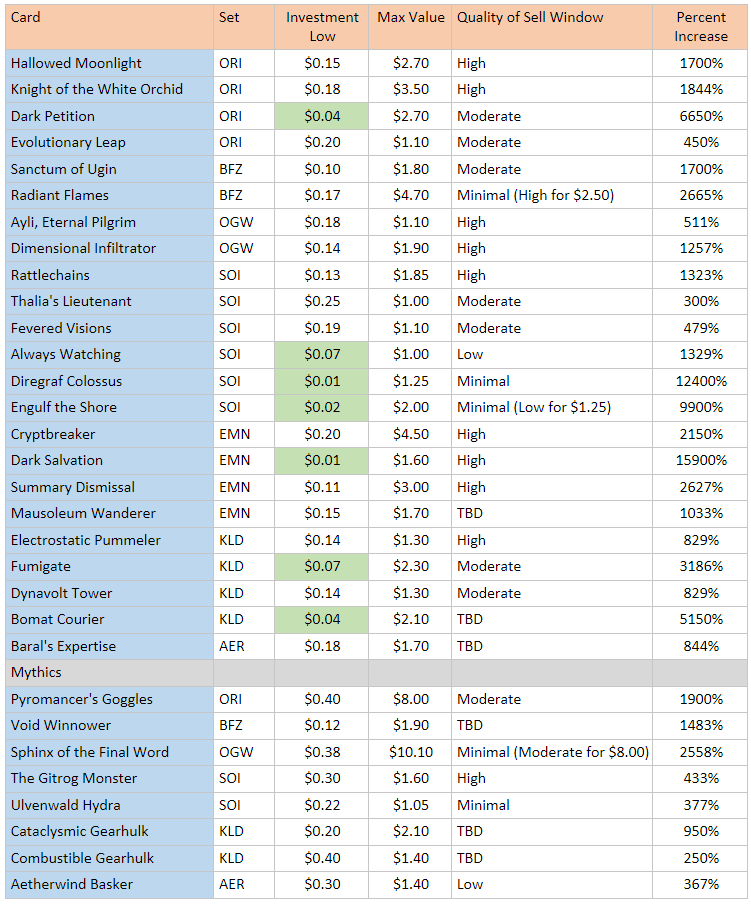
Below is a table of all the tiny-stock rares and mythics (0.20 tix and below) that rose to a sell price above 1.00 tix from the sets Dragons of Tarkir through Aether Revolt. I've arranged this table by set to make it easier to digest.

Like last time, do note that I’ve provided and organized the data most useful to you as an investor. The “Investing Low” listed for each card is the price at which you could buy a significant number of copies of that card (at least 50 copies), with a buy window of at least four weeks. The sell window is a qualitative measurement of how likely you would be to sell your card either at the card’s peak price or near its peak price. Cards with a “low” window indicate that you have to be actively conscious of your investments and utilizing MTGGoldfish price alert updates to have a realistic chance at selling your card for near-peak value. Cards that you could get for below 0.10 tix have been highlighted in green.

July 4 All

One thing that was surprising is that there were a lot more successful tiny-stock rares than I would have guessed. With the exception of Dragons of Tarkir, there were actually at least a few from every set. The returns on all of the ones without a "minimal" sell-window rating would have been very good, and additionally some of these, like Knight of the White Orchid or Radiant Flames, would have been incredible investments.

In general, these cards fall into four camps, and I would avoid investing in a tiny-stock rare or mythic if you can't readily place it into one of these camps. Phrased positively, if you identify a tiny-stock rare that does fit into one of these four camps, you may want to consider investing in it.

I. Archetypal Linchpins

These are cards that you know anchor a potentially powerful strategy, or a strategy that once was competitive but has since fallen out of favor. These cards tend to be cards around which a shell can be built.

Thalia's Lieutenant proved the strength of the White Human shell early on in its Standard life. Cryptbreaker is itself an interesting case and highlights the greater amount of risk involved in these speculations rather than the uncommons we looked at last week. Most would have thought that if Zombies were to become a tier-one strategy, thenCryptbreaker would be a linchpin of the deck. Yet there was no guarantee that the last block to be released before Shadows over Innistrad and Eldritch Moon rotated out of Standard would have provided additional Zombie tribal support to push the archetype to tier-one status for the first time. Sanctum of Ugin is an essential card to any ramp strategy involving Eldrazi and to most Emerge strategies as well. To invest in cards from this archetype, one must acquire a good sense about what specific cards enable certain archetypes to function and feel comfortable taking a risk, investing in the potential for the archetype to come together in the future either once again or for the first time altogether. Having a sense for the relative and absolute strength of an archetype is necessary as well.

II. Late Bloomers

These are cards that are intrinsically powerful but needed cards to rotate in and out to find a home in a tier-one Standard strategy. Dimensional Infiltrator needed the release of Shadows over Innistrad, as Shadows over Innistrad brought enough support for a blue-based flying tempo deck. Knight of the White Orchid didn't see much Standard play until Thalia's Lieutenant  made it an appealing two-drop in an aggressive strategy. Just this week, Combustible Gearhulk shot up in price due to the emergence of a powerful God-Pharaoh's Gift shell.

Unlike the cards from the first group, speculating on cards in this group need to be made more on the basis of their intrinsic power level. Like the cards from above, however, there is a good amount of risk involved.

III. Counters to Future Tier-One Strategies

Cards in this group are ones that look like sideboard cards and need the right metagame to see play. Sphinx of the Final Word is an excellent way to break a control mirror. Hallowed Moonlight became popular to counter Collected Company and Rally the Ancestors. Summary Dismissal was the only way to cleanly counter Emrakul, the Promised End.

What is annoying about some on the cards that made this particular group is that you couldn't invest in them for free. Investing in Hallowed Moonlight for 0.15 tix does incur significant risk, much more than investing in a card that costs 0.05 tix. If you bought 100 Hallowed Moonlights at 0.15 tix each and only managed to get back 0.03 tix for each of them, you would have lost 12 tix. Nevertheless, it is valuable information for you as an investor to know that even some more niche rare cards can make for solid investments in a way that is impossible for tiny stock uncommons.

IV. Undervalued Utility Cards

Cards in this group are powerful utility cards that managed to become significantly undervalued during their life cycles in Standard. Of recent note is Fumigate, a card that managed to dip below 0.10 tix! Remember that rares need to see less play than an uncommon to reach equivalent price points, and so powerful cards that Wizards puts into sets precisely for their Constructed potential and their ability to establish parameters for the Standard metagame are well-worth investing in if they dip too low into tiny-stock territory.

A Word of Caution

The chart above indicates that there is plenty of potential here to make a lot of money. But what is also undoubtedly true is that these require not only a greater financial acumen, but a greater Standard acumen.

I do not recommend investing in any tiny-stock rares and mythics unless you are a player who plays and keeps up with Standard. Identifying the linchpins to powerful archetypes, judging the intrinsic power level of various archetypes and identifying powerful cards that work well in certain matchups (like Sphinx of the Final Word) requires a greater knowledge of Standard than do the tiny-stock uncommons.

Although I did not discuss this particular benefit to the uncommons we looked at last week, we can definitely appreciate it now: two-mana removal spells like Abrade or Harnessed Lightning will always be important for Standard. Cards like Reckless Bushwacker, automatic includes in Red Deck Wins-style strategies, will always make reasonable speculation targets. It is a truly infrequent occurrence when an uncommon like Blessed Alliance comes around that really catches you off-guard. The cards we looked at today, on average, take a greater amount of savvy, Standard knowledge and intrinsic risk than the uncommons we looked at last week.

And one final word: as with uncommons, small sets continue to produce wider, more forgiving sell windows.

Signing Off

I'll make a post on the forums asking what y'all want to see for next week's column. Heretofore, I've covered a wide array of topics, everything from investing advice by card type to looking at the cost of drafting on MTGO. Let me know what you want to see! And as always, I'll answer any questions you have and will do my best to respond to every comment below.

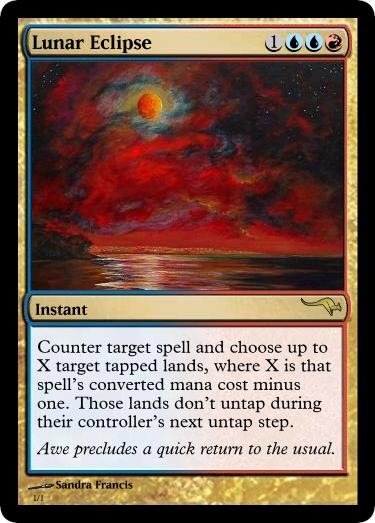
Last week, I gave y'all a taste of the Amonkhet sun, but what if you prefer the moon instead? Here's a lunar card to rival Cryptic Command.

Lunar Eclipse2


Insider: MTGO Market Report for July 26th, 2017

Are you a Quiet Speculation member?

If not, now is a perfect time to join up! Our powerful tools, breaking-news analysis, and exclusive Discord channel will make sure you stay up to date and ahead of the curve.

Welcome to the MTGO Market Report as compiled by Matthew Lewis. The report will cover a range of topics, including a summary of set prices and price changes for redeemable sets, a look at the major trends in various Constructed formats and a "Trade of the Week" section that highlights a particular speculative strategy with an example and accompanying explanation.

As always, speculators should take into account their own budgets, risk tolerances and current portfolios before buying or selling any digital objects. Please send questions via private message or post below in the article comments.

Redemption

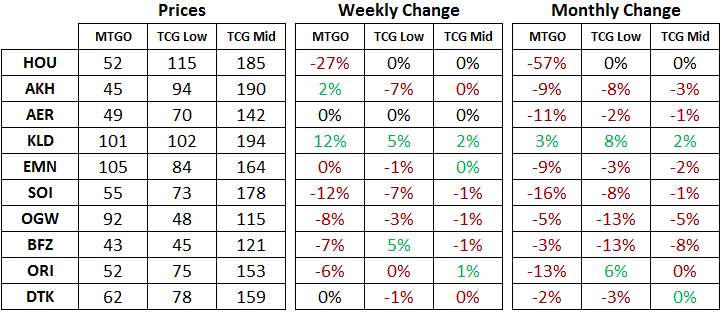
Below are the total set prices for all redeemable sets on MTGO. All prices are current as of July 17, 2017. The TCGplayer low and TCGplayer mid prices are the sum of each set's individual card prices on TCGplayer, either the low price or the mid price respectively.

All MTGO set prices this week are taken from GoatBot's website, and all weekly changes are now calculated relative to GoatBot's "full set" prices from the previous week. All monthly changes are also relative to the previous month's prices, taken from GoatBot's website at that time. Occasionally, full set prices are not available, and so estimated set prices are used instead. Although both Aether Revolt (AER) and Kaladesh (KLD) are no longer available for redemption, their prices will continue to be tracked while they are in Standard.

july24

Standard

This week, Hour of Devastation (HOU) enters the price tracker for the first time, although this is the third week for MTGO price data. Champion of Wits is now the most expensive card in the set at over 8 tix. If this price is any indication of the Standard metagame, look for this blue rare to make an impact this weekend at Pro Tour HOU in Japan.

There was an error retrieving a chart for Champion of Wits

Rising sharply in the last two weeks is Chandra, Torch of Defiance from Kaladesh (KLD), which is closing in on Eldritch Moon (EMN) as the most expensive set in Standard. This card shows up in multiple Standard and Modern archetypes and has a price to match. Players should strongly consider purchasing their playsets if it dips back down into the low 20-tix range. Recent changes to Treasure Chests mean that this card is showing up on the curated card list, but the demand has been so strong that it is vying with Liliana, the Last Hope for most expensive card in Standard.

Speaking of KLD mythic rares, Angel of Invention is another big gainer this week, going from under 2 tix to now over 7 tix. It showed up as a three-of in this deck. It's unclear whether or not this archetype will have any staying power, but a strong finish at Pro Tour HOU will push this card over 10 tix.

From a more general perspective, the four sets rotating out of Standard in the fall will be dropping in price over the coming weeks as the utility of the cards in each set drops substantially. Fortunately, Battle for Zendikar (BFZ), Oath of the Gatewatch (OGW), Shadows Over Innistrad (SOI) and EMN will all still be available for redemption, so there will be a predictable shift of value into the mythic rares of each set. Savvy speculators will look to cards like Wolf of Devil's Breach as a good target at the current price of less than 0.05 tix. Do not overpay for any one card, and be sure to diversify across cards if you are going to pursue a bulk mythic rare strategy.

Modern

As we get closer to Standard rotating in the Fall, it's a good idea to start sizing up the cards from SOI and BFZ blocks that are Modern playable. These cards will go on sale in October and November, so thinking in advance about which ones to target is a good idea.

There was an error retrieving a chart for Spell Queller

Spell Queller has always been an intriguing card that seemed like it had Modern potential. The fact that it was recently one of the most expensive rares in Standard gives it a good pedigree for a future high price based on its possible play in Modern. Well, a deck featuring this card was published this week as one of the decks going 5-0 in the Modern leagues on MTGO. Check it out here.

This deck is quite novel and appears to be able to take opponents unaware. I would not expect this list to put up consistent 5-0 finishes in the league, but the appearance of Oketra's Monument, Reflector Mage and Spell Queller in a deck cannot be discounted. It looks like the deck has enough tempo elements to win slowly but surely off of the mana and board advantage created by Oketra's Monument. Having access to the premium sideboard hosers available to white is also great. I'm sure this is not the last Modern deck we'll see Spell Queller in, but I am doubtful this will be the best deck it shows up in.

There was an error retrieving a chart for Oketra's Monument

Other cards that are Modern playable from these two blocks include Collective Brutality, Gideon, Ally of Zendikar, Tireless Tracker, Cinder Glade, Grim Flayer, Liliana, the Last Hope, Nahiri, the Harbinger, Ulamog, the Ceaseless Hunger, and the Eldrazi from OGW. You won't go wrong targeting these cards in the fall.

Trade of the Week

For a complete look at my recent trades, please check out the portfolio. This week I started selling boosters as a way to build liquidity. My position in AKH boosters was small and the outlook short term in nature, so this is a perfectly natural time to harvest profits on theses, but for KLD and AER boosters, the reasoning is different.

The price on a draft set of KLD block boosters has more or less been moving up since the release of AKH. Two boosters of AER and one of KLD bottomed at below 7 tix back at the end of April, and they now sit at 8.4 tix. Although still shy of my target price of 9 tix, and at least six weeks left of demand from drafters, it's clear that this is not the price peak on these. However, speculating successfully involves more than just timing price fluctuations correctly. There are two very good reasons to sell in advance of a probable price peak.

The first is when you are holding a large position that will take time to unwind. In a low volume market such as non-current Draft sets, selling a large position all at once will cause a drop in the price of the boosters. This type of activity is counterproductive to the goal of profit making, so a measured pace of selling will allow the market to absorb the supply I am introducing into the market. Selling a little bit, piece by piece over a period of weeks, will take patience, but it will also maintain a higher average selling price than dumping the whole position all at once. This is conditional on the the market remaining stable.

The second reason is less strategic but is specific to the portfolio. I'm tix-constrained at the moment, which means that I have few available tix ready to be deployed. It's always best practice to have some tix on hand in case of a short-term opportunity, so selling down this position in order to build up my stock of tix makes sense. We are also clear of the liquidity crunch that resulted from the release of HOU, so selling into a more normal market is fine. For any portfolio that is a little light on tix, it's wise to sell your positions when you can and not when you are forced to.

Back on the PPTQ Grind: Week One

Are you a Quiet Speculation member?

If not, now is a perfect time to join up! Our powerful tools, breaking-news analysis, and exclusive Discord channel will make sure you stay up to date and ahead of the curve.

It's Modern season, time to grind for the Pro Tour! I've spent most of my career on the grind and this year is no different. Therefore I will be documenting my attempt to climb back to the Pro Tour for the rest of the summer. If my past experiences are an indication, this will be like watching me play a roguelike game (constant horrible failure until a miraculous breakthrough occurs that is not my fault).

The plan is that every week there is a PPTQ to attend I will do so. I may hit several if it's a practical option (I'm not going out of state for a mere PPTQ). I will go over the what and why of the deck I play, how I fare, and what lessons I learn for the next one. Doing nothing but match reports will be more boring to write for a month solid than it will be to read them, unless I win. Then I will do a normal report because I'll want to crow, as would anyone. Hopefully you'll learn from my mistakes, misreads, and losses to avoid them yourself. At very least, airing my failures will provide self-motivation to improve.

The Deck

Last Week, I laid out my deck choices and the relative strengths of each in my expected metagame. After additional scouting and practice during the week, I eventually decided on DnT. I'd had good results over the previous month, I knew it well, and it had the best matchups against both Affinity and Tron, which I expected to be everywhere.

My list is fairly standard, since there's really not much reason to deviate from Brian Coval's Invitational maindeck. My unique contributions are from testing since then and some adjustments for the Denver metagame.

Death and Taxes, by David Ernenwein (PPTQ Deck)

Creatures

4 Thraben Inspector
4 Thalia, Guardian of Thraben
4 Leonin Arbiter
2 Serra Avenger
1 Phyrexian Revoker
4 Blade Splicer
4 Flickerwisp
2 Mirran Crusader
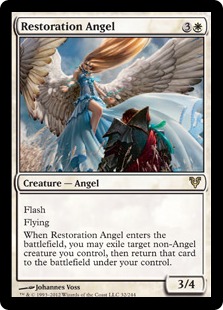
4 Restoration Angel

Artifacts

4 Aether Vial

Instants

4 Path to Exile

Lands

10 Plains
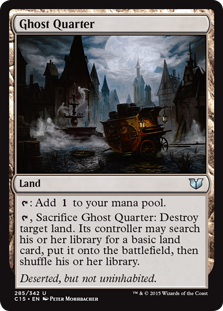
4 Ghost Quarter
4 Tectonic Edge
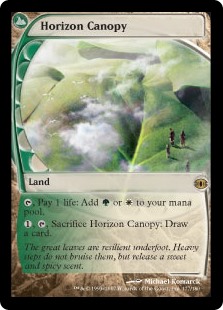
2 Horizon Canopy
2 Kabira Crossroads
1 Cavern of Souls

Sideboard

3 Rest in Peace
2 Stony Silence
2 Gideon, Ally of Zendikar
2 Sunlance
2 Wrath of God
2 Grafdigger's Cage
1 Devout Lightcaster
1 Phyrexian Revoker

I had been playing Weathered Wayfarer, but it rarely did enough to justify keeping it. Meanwhile, I really like Revoker against Affinity, so it took the slot. The other big thing is Kabira Crossroads. There is a lot of Burn in Colorado, particularly in Denver. Kitchen Finks is the best card for that matchup you can maindeck. Finks is otherwise terrible in the meta, so I'm playing a card that lets me build my own Finks. It was a one-of tutor target for Wayfarer, but when she got cut I added an additional Crossroad. I could only get two Horizon Canopy's for the tournament, but I probably wouldn't play more than two anyway. Relying on painlands for mana is dangerous in a Burn-heavy meta. I tested online with four and lost a number of matches to self damage so I wanted to cut them back regardless.

The sideboard has some more spice. Gideon is a very good card in grindy matchups and I did expect control decks to be popular. There's a second Revoker for Affinity and combo decks, as well as Grafdigger's Cage against Company decks and Dredge. While I understand the merits of playing Relic of Progenitus instead of Rest in Peace, I really wanted two Cages. This required cutting a Relic, and as a three-of RiP is better than Relic. Being less likely to draw it early makes me want the more impactful card.

I had been playing Dusk // Dawn, and while it is a very good card against Eldrazi and Shadow, I expected more Affinity and was otherwise good against the top two decks. Wrath is necessary against Affinity's go-wide plan and the random green creature decks that always crop up. Finally, rather than a third Mirran Crusader I have Devout Lightcaster. While worse in a vacuum, it is phenomenal against Shadow decks. With the deck sorted, it was time to actually face the field.

The Tournament

The actual PPTQ was held at one of the smaller stores on my end of town. Based on past experience, I expected this first tournament to be huge while subsequent weeks it would shrink substantially. I wasn't wrong—we had 46 players for six rounds of Swiss. Prize would be based on standings and pay out to X-2 or better while you'd need at least that to make elimination rounds. This was also a packed field, with nearly every grinder in the state present. My gut said it would be a hard gauntlet.

I was right. I dropped at 1-3. I also only hit other grinders, many of whom I hit at weekly tournaments. Not happy, but I also can't be too upset.

What Happened?

The short answer is that Death and Taxes happened. Basically, everything I've said about the deck was validated by this PPTQ. When you hit the matchups you're targeting the deck is amazing. If you don't, you really need to draw the right pieces of your deck at the right time. I had a lot of close games but couldn't quite pull through.

I beat an Esper Death's Shadow deck thanks to its fragile manabase, lost to Grixis Control when I drew the wrong parts of my deck for games two and three, and then lost close races to first Boros Burn then Naya Burn. I'm not exaggerating about the Grixis match—in game two I had the graveyard hate when he had all removal and sweepers, while game three he had the fast-Tasigur-into-Kalitas-with-removal draw, while I was all threats and no interaction. Had I had the game-three draw in game two I probably win, or vise versa.

As annoying as that is, it's the price of playing a deck like DnT. Without deck manipulation you just have to hope that all your disruption is always relevant, and unfortunately it just wasn't this time. I may have lost the Shadow match if my opponent had a basic Plains in their deck. I Ghost Quartered his white sources before he could Lingering Souls me out of the game. Not unwinnable, but I hate fighting that battle.

You could chalk this up to Luck of DCI Reporter but ultimately the field I expected wasn't there. The Affinity and Eldrazi players just didn't show. I counted two Affinity decks, one GR Tron, and a Bant Eldrazi player in total during round three. There were a few Grixis decks, of which I think only one was Shadow, but for the most part UWx Control, Burn, and Chord of Calling decks were in vogue. Given this, Merfolk's faster clock would have been preferable, though my UW Control list was the actual correct choice. Dispel and planeswalkers were very strong against the actual field last weekend.

Lessons Learned

The main lesson from this is not to assume the metagame. I went in on the assumption that the grinders (which I expected would make up the majority of the field) would be playing highly tiered decks. Death's Shadow and Tron were popular choices back at States. Many of those who went to GP Las Vegas took or tested those decks, and the weekly tournaments where we all practice and test were full of Tron and Affinity. It made sense to me that this would continue, and this led me to pick the metagame deck for the tournament.

I could have audibled into Merfolk since I had the deck with me. There was another Merfolk player there and he was at the high tables when I left, so it is possible that my deck choice doomed me. However, that interpretation is disingenuous and counterproductive. I made impactful play mistakes and some ultimately wrong strategic decisions during the tournament, which I will be detailing in the next section. A few of these were wrong because of how they played out on later turns, but in general I played sloppily. I can identify two very bad keeps and three play mistakes that contributed to losses. Whether I could have won those games is irrelevant (my opponents drew very well every match)—I was not playing anywhere close to my best. If I want to get back to the Pro Tour, I need to focus.

Therefore, my focus for the next tournament will be on the best deck choice for me, rather than the expected meta, and on keeping my head on the game.

About the Deck

I feel compelled to mention at this point that DnT is not a bad deck. I could have won all the matches I played, and would have won against Boros Burn if I'd taken the line I'll be talking about below. It wasn't the best positioned for the specific tournament, but it was still a fine choice and had my predictions panned out it would have been the correct choice. Don't just write it off.

Construction Changes

It's very weird to say this, but Restoration Angel was really bad last weekend. My hand was clogged with multiples several games and even when I was jamming Angels it just did not feel impactful. The problem is that a 3/4 flier for four isn't that great anymore (nice work, Fatal Push) and trying to get value off a Blade Splicer was shockingly hard. Older versions of the deck still had Kitchen Finks to find value more reliably. I still want a few copies but I'm leery of continuing with the full set.

I was very happy with Kabira Crossroads. Most of the time it's not much but against Burn I got to build Finks quite a bit. This kept me in game two against Boros Burn, which I should have lost easily. I also got value in that matchup by confusing and tilting the most successful Burn player in the state. Huge upside, and I consider that reason enough to keep it in going forward.

As for the sideboard, Gideon was a fine card but he wasn't spectacular last weekend. That slot needs reevaluation, and I may move him to the maindeck in place of some Angels. Not necessarily for two Restos—Serra Avenger can also be awkward without Vials, but I hate cutting too far on two-drops. I think that either Burrenton Forge-Tender or Selfless Spirit are the call in Gideon's slot. I needed an answer to sweepers against Grixis Control, and while Spirit is better for that, Forge-Tender is also solid against Burn. I'll see where things stand later this week.

Playing the Deck

It hadn't come up in testing or practice for weeks, but Death and Taxes is a slow deck. There's no exponential growth like Merfolk, explosiveness like Affinity, or flurry of Burn to close a game. There's just piling on pressure from disruptive but unimpressive creatures until the opponent caves. You're always trying to go wide with three-drops, and that slows things down. This requires you to be as aggressive as possible against other fast decks. However, most of my experience the past month has been against grindy matchups and Tron, where you focus more on disruption and survival. The clock problem never came up, so I didn't remember it at a critical point.

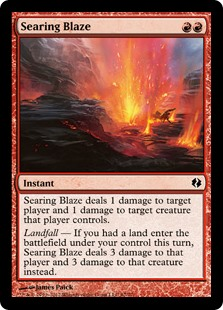
In game three against Boros Burn, I had a Blade Splicer, Flickerwisp, and two Golem tokens at 8 life. I had four mana, facing two cards in my opponent's hand, three lands, 12 life, and two Goblin Guides. I have Resto in hand. I chose to attack with Wisp and hold up Resto in case he has Searing Blaze next turn. He does have Blaze, but doesn't mainphase it or play a land. To have any hope of winning I have to Resto first—he Blazes my Splicer for one, I cannot kill him on the backswing, and die to his remaining burn in hand. If instead I had been more aggressive and attacked with the Golems then I could have played Resto after combat, made another Golem and he couldn't kill me first. I left the door open and he walked through. My experience against non-Burn told me to take the more conservative line and it was the wrong one. Writing it out now it seems obvious, and it should have been. The fact that it wasn't means I deserved to lose.

The big lesson here is to remember your deck's weaknesses and adjust your play accordingly. I've learned this before and I needed this reminder.

Moving Forward

I'm probably not going to run DnT again this week, partially because I think it will be poorly positioned and partially because I don't think I'll have time to answer the questions I raised in the Construction Changes section. What I will run is uncertain. Many grinders from the last PPTQ will be at the next one and they will be reacting to their results. So the meta I saw is unlikely to be indicative of the one I will face, though you can never discount card availability and deck loyalty. I do know that I'd like a deck with more individually powerful cards to simply haymaker my way to victory. It will depend on how testing goes this week. Still, I could definitely see running the deck again if the meta looks favorable, or later in the season.

Grind On

My next PPTQ is Saturday in northern Colorado. This is a problem for metagamers because the Colorado Magic scene is very regionally divided. The Greater Denver metagame accounts for the Denver metro area and Colorado Springs and represents about two-thirds of total Colorado players. Most of the rest come from the north (I've never seen any PPTQs west of Boulder) and they've always done their own thing. Wyoming figures prominently into their equations. This will be interesting.

Keep grinding, and may you get there before I do!

Insider: A Deeper Look at Masterpieces

Are you a Quiet Speculation member?

If not, now is a perfect time to join up! Our powerful tools, breaking-news analysis, and exclusive Discord channel will make sure you stay up to date and ahead of the curve.

Welcome back, readers!

In today's article I will revisit the Masterpiece series from WoTC. We've now had six sets come out with these "ultra rare" chase cards, which means lots of data and comparisons to make.

First I wanted to look at the Masterpiece price when compared to the most recent (non-promotional) printing price. I'm using TCG Market Price because it was easy to gather when I was pulling the data, (which all had to be done manually), and it is supposed to represent the most realistic price.

I then took the TCG Market price for the most recent non-promotional version of each card and compared the price differentials. I specifically went with non-promotional because, for a few older cards, there was a cheap original printing and a much more expensive promotional printing which was the more recent option (mainly Diabolic Edict and Capsize).

Masterpiece TCG Market Price Most Recent Printing TCG Market Price Percentage of Most Recent Price
Ancient Tomb 127.43 32.32 394.28%
Arid Mesa 93.14 24.94 373.46%
Blood Crypt 46.57 8.62 540.26%
Bloodstained Mire 85.19 17.07 499.06%
Breeding Pool 57.44 11.69 491.36%
Canopy Vista 19.94 1.49 1338.26%
Cascade Bluffs 33.58 18.15 185.01%
Cinder Glade 23.78 1.89 1258.20%
Dust Bowl 24.02 9.63 249.43%
Eye of Ugin 45.05 6.02 748.34%
Fetid Heath 36.81 23.58 156.11%
Fire-Lit Thicket 30.17 11.42 264.19%
Flooded Grove 38.37 18.59 206.40%
Flooded Strand 120.48 13.57 887.84%
Forbidden Orchard 29.57 4.88 605.94%
Godless Shrine 65.06 10.67 609.75%
Graven Cairns 26.2 8.6 304.65%
Hallowed Fountain 54.43 6.89 789.99%
Horizon Canopy 108.47 77.87 139.30%
Kor Haven 25.17 7 359.57%
Mana Confluence 45.4 6.29 721.78%
Marsh Flats 81.01 26.12 310.15%
Misty Rainforest 147.82 27.21 543.26%
Mystic Gate 40.69 19.4 209.74%
Overgrown Tomb 64.82 10.02 646.91%
Polluted Delta 164.39 17.08 962.47%
Prairie Stream 24 1.8 1333.33%
Rugged Prairie 32.97 21.21 155.45%
Sacred Foundry 50.5 14.54 347.32%
Scalding Tarn 185.21 49.38 375.07%
Smoldering Marsh 18.34 1.61 1139.13%
Steam Vents 67.74 10.36 653.86%
Stomping Ground 54.42 14.67 370.96%
Strip Mine 58.03 24.81 233.90%
Sunken Hollow 19.68 1.56 1261.54%
Sunken Ruins 35.73 17.77 201.07%
Tectonic Edge 23.37 1.15 2032.17%
Temple Garden 50.63 8.53 593.55%
Twilight Mire 50.79 28.05 181.07%
Verdant Catacombs 144.02 39.33 366.18%
Wasteland 90.19 24.67 365.59%
Watery Grave 59.02 14.12 417.99%
Windswept Heath 85.01 10.82 785.67%
Wooded Bastion 29.73 13 228.69%
Wooded Foothills 76.5 15.16 504.62%
Aether Vial 110.12 41.96 262.44%
Arcbound Ravager 73.62 33.9 217.17%
Black Vise 16.72 3.14 532.48%
Cataclysmic Gearhulk 16.81 0.8 2101.25%
Chalice of the Void 147.27 78.61 187.34%
Champion's Helm 23.4 10.75 217.67%
Chromatic Lantern 66.11 7.76 851.93%
Chrome Mox 43.37 13.43 322.93%
Cloudstone Curio 25.82 9.55 270.37%
Combustible Gearhulk 21.65 1.77 1223.16%
Crucible of Worlds 134.83 64.68 208.46%
Defense Grid 23.05 5.43 424.49%
Duplicant 25.08 3.01 833.22%
Engineered Explosives 104.4 46.84 222.89%
Ensnaring Bridge 81.47 38.07 214.00%
Extraplanar Lens 33.78 14.92 226.41%
Gauntlet of Power 32.79 16.46 199.21%
Grindstone 23.85 9.69 246.13%
Hangarback Walker 39.15 3.72 1052.42%
Lightning Greaves 58.07 4.76 1219.96%
Lotus Petal 82.03 29.65 276.66%
Mana Crypt 144.4 59.94 240.91%
Mana Vault 118.54 15.3 774.77%
Meekstone 23.38 3.7 631.89%
Mind's Eye 21.08 14.55 144.88%
Mox Opal 142.43 55.98 254.43%
Noxious Gearhulk 28.65 2.38 1203.78%
Oblivion Stone 45.94 14.73 311.88%
Ornithopter 54.55 0.15 36366.67%
Painter's Servant 24.04 10.56 227.65%
Paradox Engine 40.4 5.84 691.78%
Pithing Needle 58.49 2.97 1969.36%
Planar Bridge 30.53 1.77 1724.86%
Platinum Angel 47.5 3.79 1253.30%
Rings of Brighthearth 47.47 27.32 173.76%
Scroll Rack 47.87 33.29 143.80%
Sculpting Steel 27.46 7.81 351.60%
Sol Ring 194.86 3.36 5799.40%
Solemn Simulacrum 50.32 4.22 1192.42%
Sphere of Resistance 32.74 17.65 185.50%
Staff of Domination 40.13 20.89 192.10%
Static Orb 24.87 6.31 394.14%
Steel Overseer 69.04 11.63 593.64%
Sundering Titan 23.31 3.76 619.95%
Sword of Body and Mind 42.24 10.52 401.52%
Sword of Feast and Famine 86.67 23.09 375.36%
Sword of Fire and Ice 77.53 42.65 181.78%
Sword of Light and Shadow 67.28 26.19 256.89%
Sword of War and Peace 47.83 14.11 338.98%
Torrential Gearhulk 49.42 18.95 260.79%
Trinisphere 27.16 10.53 257.93%
Vedalken Shackles 26.76 10.42 256.81%
Verdurous Gearhulk 31.16 5.14 606.23%
Wurmcoil Engine 56.97 12.91 441.29%
Aggravated Assault 24.7 12.38 199.52%
Armageddon 29.29 5.01 584.63%
Attrition 19.52 6.92 282.08%
Austere Command 25.83 9.94 259.86%
Avatar of Woe 19.57 1.56 1254.49%
Aven Mindcensor 20.57 0.6 3428.33%
Blood Moon 88.65 15.35 577.52%
Boil 19.28 0.76 2536.84%
Bontu the Glorified 28.63 3 954.33%
Capsize 27.57 1.59 1733.96%
Chain Lightning 22.07 2.73 808.42%
Choke 21.09 2.34 901.28%
Consecrated Sphinx 48.99 21.93 223.39%
Containment Priest 32.79 11.86 276.48%
Counterbalance 20.16 6.96 289.66%
Counterspell 40.64 1.5 2709.33%
Cryptic Command 52.3 29.08 179.85%
Damnation 66.25 16.59 399.34%
Dark Ritual 34.57 2.79 1239.07%
Daze 53.12 1.97 2696.45%
Desolation Angel 23.07 1.2 1922.50%
Diabolic Edict 21.17 1.57 1348.41%
Diabolic Intent 27.36 14.87 183.99%
Divert 13.25 13.22 100.23%
Doomsday 31.49 3.99 789.22%
Entomb 33.69 10.76 313.10%
Forbid 20.73 2.38 871.01%
Force of Will 157.43 72.14 218.23%
Hazoret the Fervent 35.06 5.77 607.63%
Kefnet the Mindful 31.22 3.16 987.97%
Lord of Extinction 28.49 15.34 185.72%
Loyal Retainers 24.12 25.55 94.40%
Maelstrom Pulse 36.99 19.46 190.08%
Mind Twist 24.6 2.7 911.11%
No Mercy 29.61 16.27 181.99%
Oketra the True 26.72 2.83 944.17%
Omniscience 70.07 20.94 334.62%
Opposition 26.22 4.02 652.24%
Pact of Negation 48.13 29.42 163.60%
Rhonas the Indomitable 46.57 10.5 443.52%
Shatterstorm 17.05 2.94 579.93%
Slaughter Pact 25.43 4.91 517.92%
Spell Pierce 30.23 0.34 8891.18%
Stifle 22.54 3.8 593.16%
Sunder 18.85 4.44 424.55%
The Locust God 46.92 8.3 565.30%
The Scarab God 73.94 14.32 516.34%
The Scorpion God 35.79 4.59 779.74%
Thoughtseize 116 20.25 572.84%
Threads of Disloyalty 17.92 5.48 327.01%
Through the Breach 59.72 36.99 161.45%
Vindicate 25.61 4.46 574.22%
Worship 19.55 7.42 263.48%
Wrath of God 41.99 6.3 666.51%

If we are going to speculate on these pieces, then it would be wise to find the ones with the lower percentage difference. This will represent the fact that the most recent regular version is close in price to the Masterpiece. So, continuing to filter down and looking at all the Masterpieces in which the percent difference is under 200%, we are down to:What is really interesting is that many of the cards with the highest percentages are not due to the Masterpiece being extremely valuable, but instead due to the most recent printing being so cheap. If we ignore all Masterpieces in which the most recent printing is under $5, then the average percent difference is around 362%.

  • Horizon Canopy
  • Scroll Rack*
  • Mind's Eye*
  • Rugged Prairie
  • Fetid Heath
  • Through the Breach
  • Pact of Negation*
  • Rings of Brighthearth
  • Cryptic Command*
  • Twilight Mire
  • Sword of Fire and Ice*
  • No Mercy
  • Diabolic Intent
  • Cascade Bluffs
  • Sphere of Resistance
  • Lord of Extinction
  • Chalice of the Void*
  • Maelstrom Pulse*
  • Staff of Domination
  • Gauntlet of Power
  • Aggravated Assault

Of these options, only the ones with the * have more than one other printing besides the Masterpiece itself. The reason I bring this up is that an older card with a single printing is more likely to have a high price based on scarcity than playable demand. This is the same reason many of the Portal: Three Kingdoms cards are extremely valuable despite many seeing little to no play.

I dislike speculating on cards whose price may be heavily influenced on collectibility rather than playability—otherwise you might end up with a graph like Sun Quan, Lord of Wu, which tanked when the FTV: Legends set came out.

There was an error retrieving a chart for Sun Quan, Lord of Wu

Breaking Demand Down by Format

Another factor I want to look at is what format the cards are played in. In Modern, Legacy, or Vintage, players will often need four copies of a card and thus one player creates demand for four copies. Whereas in something like Commander, one player is more likely to create demand for one copy (although obviously they may want certain cards in multiple decks).

Constructed Eternal

So with this in mind, let's focus on the cards that see play in Modern/Legacy/Vintage. That leaves us with the following.

  • Through the Breach
  • Chalice of the Void
  • Horizon Canopy
  • Sphere of Resistance
  • Maelstrom Pulse
  • Twilight Mire
  • Fetid Heath
  • Sword of Fire and Ice
  • Pact of Negation
  • Cryptic Command

Now one big challenge regarding eternal foils is that many players/traders that I've run into prefer the original pack foil when foiling out a deck. So there are likely many "foilers" who won't touch these Masterpieces.

Commander

The other option I want to look at is demand from the Commander crowd. While my co-writer Niels has less confidence in the data behind EDHREC (and I feel his argument definitely has some valid points), it is still the best source of information regarding Commander card demand in my opinion. Thus I will continue to use it for data mining.

In this step we look at the number of decks a given card shows up in on EDHREC. As our focus is on top-level demand as opposed to how many different types of decks make use of the card, we will focus on the "Number of Decks" figure.

Masterpiece # of Decks (on EDHREC)
Loyal Retainers 689
Horizon Canopy 1204
Scroll Rack 6190
Mind's Eye 5926
Rugged Prairie 3183
Fetid Heath 3576
Through the Breach 64
Pact of Negation 6320
Rings of Brighthearth 6785
Cryptic Command 8372
Twilight Mire 3358
Sword of Fire and Ice 5817
No Mercy 2948
Diabolic Intent 3904
Cascade Bluffs 3715
Sphere of Resistance 1222
Lord of Extinction 1829
Chalice of the Void 125
Maelstrom Pulse 3093
Staff of Domination 3057
Gauntlet of Power 6136
Aggravated Assault 3130

By filtering in this regard we can get a "big picture" look at the likelihood we will see a demand increase for any given Masterpiece from the Commander crowd. Again, we want to focus on the cards in the higher end of the spectrum (say 3000+). Which leaves us with a smaller pool from which to speculate from:

  • Mind's Eye
  • Rugged Prairie
  • Fetid Heath*
  • Pact of Negation*
  • Rings of Brighthearth
  • Cryptic Command*
  • Twilight Mire*
  • Sword of Fire and Ice*
  • Diabolic Intent
  • Chalice of the Void
  • Maelstrom Pulse*
  • Staff of Domination
  • Gauntlet of Power
  • Aggravated Assault

What is interesting here is that we do have a few cards that appear on both lists (marked with an * above). So if you wanted to speculate on Masterpieces these might be your best options. To recap, 1) they are the closest in price to the most recent printing, and 2) they see demand from both eternal "playset" formats and Commander.

Now this isn't to say that this is the only way to look at speculating on the Masterpieces. There is one other very important factor with premium foil cards like this, and that is of course the picture on the card itself. While people often prefer original artwork, there are definitely instances in which newer artwork commands a premium.

There was an error retrieving a chart for

With this in mind I will admit I seem to fall into the majority that dislikes most of the Invocations from the Amonkhet block (though to be fair it's not so much the artwork on all of them as it is the text for the card name). As many people I've talked to seem to be in the same boat, I am less willing to speculate on the Invocations. I would prefer to park money into the Zendikar Expeditions or Kaladesh Inventions. Ironically, most of the ones that made the final list are in fact Invocations.

Another way to look at Masterpiece speculation is to remember that they are very rare and prices of many of the cheaper ones don't reflect much on the actual rarity.

I actually considered going down this route myself, and picking up the cheapest ones that at least see marginal Commander play. If I were to do this, I'd probably take a simple basket approach (i.e. invest in a few copies of a bunch of things, and any losses are hopefully offset by larger gains from successful ones).

Conclusion

One thing I hope you draw from this article is the importance of making decisions based on data (though I do know there are some who go by "gut"). I always try to use some sort of data analysis when making any financial decisions, whether it's comparing the prices of laundry detergent across competitors or determining how much I can comfortably spend on a new car based on my current income and current expenses.

By now have a lot of data points (or at least it feels that way when you have to look up every single card manually) to compare the various Masterpieces and get a good idea of where they might be headed. Now that WoTC has backtracked on their "Masterpieces in every set" plan, these may end up being rarer than we expected. There could very well be a price correction in the near future for some of these cards.

I will also admit that because these are meant to "pimp out" decks, the artwork may play a much larger role in determining actual demand. Unfortunately that is a matter of opinion, and thus extremely difficult to quantify with the tools currently on hand.

Video Series with Ryland: Amulet Titan

Are you a Quiet Speculation member?

If not, now is a perfect time to join up! Our powerful tools, breaking-news analysis, and exclusive Discord channel will make sure you stay up to date and ahead of the curve.

Hey, everyone! I'm back with another video series, this time with Amulet Bloom. Amulet has been an absolute blast to play for me this past week and I haven't wanted to put it down, so here we are. I've been playing a lot of UW Control previous to this, and while I will still likely take UW to any competitive event I may find myself attending, the power and consistency of Amulet has greatly impressed me.

Amulet is fast, powerful, and resilient. For the uninitiated, Amulet is a combo deck trying to cast Primeval Titan as quickly as possible. Often, Titan appears on turn three, and while unlikely, there is the potential for a turn-two Titan. The deck largely accomplishes this by abusing the power of its namesake card, Amulet of Vigor, in combination with the bounce lands from Ravnica, such as Simic Growth Chamber.

More than anything else, this deck is fun. The sheer number of lines available to you on every turn is astounding, and you will find yourself constantly tutoring your deck for multiple cards. This deck plays quite differently from every other deck in the format; its angle of attack is unique, and its means to that end even more so. I cannot recommend picking this deck up enough if you are interested in it; it will be well worth your time.

On top of that, the deck has performed better than I had hoped. It was much more resilient to discard than I would have thought, and its sideboard plan of removing the Amulets to become a fair ramp deck is really powerful. If memory serves, I believe I am approximately 39-20 with the deck this past week—nothing to write home about, but certainly respectable. Frankly, I am certain that win-loss ratio would be much better had I played better over the week. I've learned a ton from playing the deck, and have ten tons more to learn. Overall, I've been impressed with the list and will likely continue to play it when presented with the opportunity, largely because of how much of a blast it is.

Enough about how much I enjoy the deck, let's hop into those games! As I said last time, I'm interested to hear what kind of content you'd like to see moving forward, so I can continue to evolve and improve my videos. Please let me know your thoughts, and any improvements you would like to see concerning formatting, presentation, or whatever else strikes your fancy. If you'd like to see similar content, check out my Twitch channel for some more live Modern!

[youtube https://www.youtube.com/playlist?list=PL261kJ_cAQC9nhBzmUnQW3hVMnEh6exy9]

Amulet Titan, by Ryland Taliaferro

Creatures

3 Azusa, Lost but Seeking
4 Primeval Titan
4 Sakura-Tribe Scout
1 Walking Ballista

Artifacts

4 Amulet of Vigor
1 Engineered Explosives
3 Relic of Progenitus

Instants

1 Pact of Negation
4 Summoner's Pact

Sorceries

4 Ancient Stirrings
4 Explore

Lands

1 Boros Garrison
1 Cavern of Souls
2 Forest
4 Gemstone Mine
1 Ghost Quarter
2 Grove of the Burnwillows
3 Gruul Turf
1 Khalni Garden
1 Radiant Fountain
1 Selesnya Sanctuary
4 Simic Growth Chamber
1 Slayers' Stronghold
1 Sunhome, Fortress of the Legion
3 Tolaria West
1 Vesuva

Sideboard

1 Bojuka Bog
1 Chameleon Colossus
2 Dismember
1 Engineered Explosives
1 Firespout
1 Hornet Queen
1 Kozilek's Return
1 Nature's Claim
1 Reclamation Sage
2 Swan Song
1 Thragtusk
2 Tireless Tracker

Insider: Cashing In on Recent Catalysts

Are you a Quiet Speculation member?

If not, now is a perfect time to join up! Our powerful tools, breaking-news analysis, and exclusive Discord channel will make sure you stay up to date and ahead of the curve.

As you can imagine, news from last week has been a huge boon for me as a Magic investor. First we saw the jump in many Alpha, Beta, Unlimited, and Revised cards on Star City Games, including noteworthy price adjustment in dual lands. Then the day after we got the announcement of the decade: the return of the Modern Pro Tour and a team Pro Tour that includes Legacy!

There’s no way I could have predicted the latter, although in hindsight it makes perfect sense given the stale taste of Standard. However I would be remiss not to acknowledge my foresight for the former. While I won’t turn this article into 1500 words of boasting, I do want to at least share some snippets of previous articles where I predicted Star City’s inevitable moves.

On July 10th I mentioned Underground Sea in particular.

July 10th

I also mentioned it in the same place on July 3rd.

July 3rd

But my June 12th article is the most prescient, in my opinion—I gave the following analysis:

Last QS Mention

By the way, did you see my mention of Drop of Honey in the Sigbits section of that article? Just saying.

There was an error retrieving a chart for Drop of Honey

Okay, Enough Bragging Sig

You’re right. These significant moves in Old School and Reserved List cards happen on Star City Games only on occasion, so it’s really exciting when they all come through at once. It feels like my investment strategy of sticking with these classic cards is continuing to work, and it motivates me to be even more focused on this area going forward.

So where do we go from here? Well for starters, the rest of the market is likely to follow Star City Games in pricing. I noticed after SCG bumped their buy price on Underground Sea to $300, Card Kingdom promptly jumped theirs from $235 to $285. I followed this one closely, but I imagine many other cards will follow suit.

There was an error retrieving a chart for Underground Sea

This means we will see migration of dual lands from players back to retailers—it’s truly a seller’s market. If you’ve been looking to unload a few duals, now may be the easiest time to do so. I’ve noticed much of the stock on the High End Facebook group selling rapidly and with ease. It’s likely that after the initial shock from this move, dual prices will stabilize and drift sideways for another 18-24 months. So if you invested in some before, I would not fault you for cashing out here to put capital to work elsewhere for a bit.

Where should you be looking to put this newfound cash to work? I have a few ideas!

Other Older Cards

Of course I like any basket-type assortment of Old School cards, but let’s get specific for a moment. The Locust God has awakened demand for Wheel of Fortune type effects, and the namesake itself is a coiled spring looking to pop.

There was an error retrieving a chart for Wheel of Fortune

While there are other, similar effects that see a higher play rate in the deck (according to EDH REC), Wheel of Fortune is the one of the few on the Reserved List. When I check stock on TCG Player, the numbers are awfully thin. I see 44 sellers of Revised copies and an abysmal eight sellers of Unlimited copies. Star City Games doesn’t have many copies in stock even despite some price adjustments.

Also, did you notice their NM Alpha and Beta prices are $1250 and $800, respectively?! Meanwhile Unlimited is only $150 (and sold out). That’s a huge multiplier from black-bordered printings to Unlimited, so it makes me most enthusiastic about purchasing Unlimited copies. That said, you’d be fine reaching for some Revised copies as well.

Wheel will spike: it's a matter of when, not if. You might want to keep your eye on Time Spiral too, another prominent Wheel effect that's also on the Reserved List.

Next up, I really like Swords to Plowshares for long-term investment, especially Alpha and Beta copies. These both got a hefty bump from Star City Games—which was completely necessary because they have been nearly out of stock for a long time now.

There was an error retrieving a chart for Swords to Plowshares

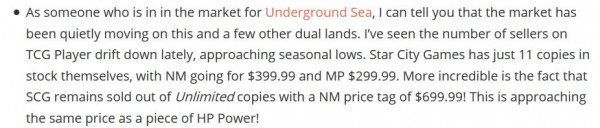
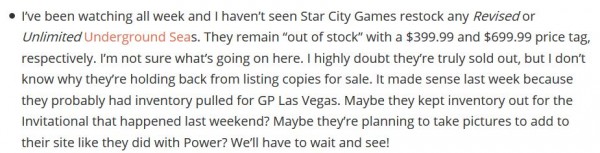
Funnily enough, they are still nearly out of stock on these. They have zero Alpha in stock ($399.99), one Beta that is MP ($149.99 for MP, $299.99 for NM).

Another card I have had my eye one for quite some time now is Khabal Ghoul. This Arabian Nights Reserved List card seems to be bucking the trend of its contemporaries, in that it hasn’t really moved in price much lately. That could be because the card isn’t all that good, but I would argue there are many poor cards from Magic’s earliest sets that have still jumped in price. Therefore, I’m not giving up on this guy.

There was an error retrieving a chart for Khabál Ghoul

Despite TCG Player’s reasonable stock (46 sellers), Card Kingdom has a fairly aggressive buy price of $19.50. That’s not far from TCG Player pricing. Star City Games also has just one SP copy in stock at $29.99 and that’s it. Watch this one closely, and definitely get any copies you want for collecting soon.

Lastly, keep an eye on Pyramids, also a Reserved List card from Arabian Nights. Much like Khabal Ghoul, this card isn’t particularly good. But that hasn’t stopped collectors (and possibly speculators?) from scooping up all the nice copies from the internet.  I only see MP copies or worse remaining on TCG Player, and again Card Kingdom pays very competitively for a card that sees little to no play. A price adjustment upward could happen at any time.

Something Old, Something New…

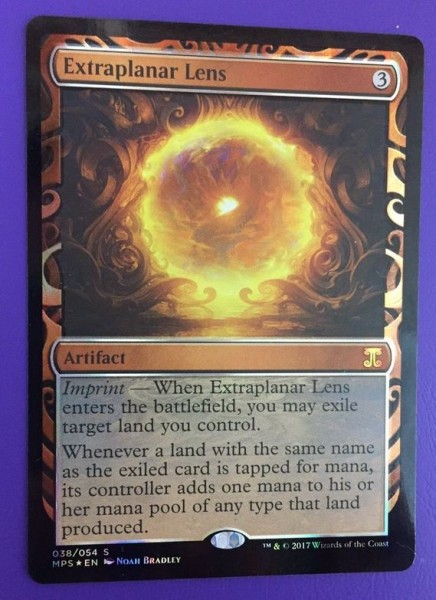
A week and a half ago I was trying to pick up a few copies of some sleeper Reserved List cards, but I couldn’t find any sellers with more than one or two copies. In fact, many of the copies for sale on TCG Player couldn’t even be bought alone because they didn’t meet the $2 minimum. So I ended up buying six each from Hareruya at around $0.50 a copy.

However, spending $5 at Hareruya is far from ideal when paying a few bucks in shipping. So I threw this into my cart to make the purchase a little more worthwhile:

Lens

That ended up being quite the boon because by the time the card arrived, there were pretty much zero left for sale on the internet. This allowed me to set an attractive price, and within eight hours of listing, the card sold.

I keep returning to the Masterpiece well because it keeps working. I don’t think we’re done yet. It appears EDH staples slowly dry out, speculators take notice and buy up a ton, then relist at a higher price. This creates a perception that the card spiked, even though buyers are hesitant to move in at the higher prices. Still, getting in ahead of the speculators gives you the highest likelihood of profit.

Right now my favorite Masterpiece is Rings of Brighthearth. There are just around a dozen sellers on TCG Player, and the entry price of around $50 is quite reasonable when you consider nonfoil copies retail for $35. If that one doesn’t interest you, Wurmcoil Engine Masterpieces may be a reasonable alternative. There are a few more of those in stock so it may take a bit longer to profit on these, but it has been one of the more popular sellers on TCG Player lately.

Other than Masterpieces with low stock, you may do well to pick up some strategic Modern cards. Now that we have a Modern Pro Tour to look forward to, we’re likely to see more significant movement on format staples. Fetch lands may show some life in particular after getting wrecked by their Modern Masters 2017 reprint.

There was an error retrieving a chart for Misty Rainforest

Thoughtseize has recovered nicely from its Theros reprint, but has plenty of potential to rise higher as long as it dodges further reprinting. It may even become more attractive to pick up Modern Masters 2017 booster boxes as cards from the set regain some demand. Snapcaster Mage and Liliana of the Veil, for example, should start to recover once some Modern Pro Tour hype returns. As the EV on the set stabilizes, boxes will slowly dry up.

Of course if there’s a Modern Masters 2019, then this bet is only viable over the mid-term.  You’ll want to be out of the product by late 2018.

Wrapping It Up

Some players have been vocal in claiming Legacy is a dying format. That may happen eventually, but clearly WoTC is interested in keeping the eternal format around for a bit longer. This is evidenced by its reintroduction to the Pro Tour via the scheduled team event. Channel Fireball is also hosting multiple team events, which will give more opportunity for Legacy coverage. All in all I’d say things aren’t nearly so grim for the format.

I could never have predicted this announcement, though it makes me very happy. What I did anticipate was the coincidental move by Star City Games to increase pricing on many older cards. This writing was on the wall, in my opinion, for many months.

Sitting at new all-time highs for dual lands, I still don’t believe these have peaked. It may take some time now for prices to settle, but this kind of move happens on a somewhat regular basis every 18-24 months. Don’t forget there is demand for duals from EDH players and cube builders as well, so copies will continue to dry up little by little. As this happens, prices will have to rebalance yet again and the cycle will continue.

This type of trend can be expected for as long as Magic remains a healthy game. That’s why I am not planning on cashing out in the near future. I believe there’s still plenty of upside in older cards, and I even mentioned a few specific ones I have my eye on. However if you’d prefer to cash out at these new highs to lock in profits, I wouldn’t blame you. I’d recommend looking into a few Masterpieces or some Modern staples as alternative places to park money. Just be aware of potential reprint pitfalls and keep on your toes so you don’t get burnt!

…

Sigbits

  • Have you seen Star City Games’s new prices on Chaos Orb? They’re all significantly higher than they were two years ago—a testament to the popularity of Old School MTG! Prices for NM Alpha, Beta, and Unlimited copies are $1000, $800, and $300, respectively. SCG is also completely sold out of all three, so I wonder if they’re even getting new copies in with their new, higher buy prices!
  • Star City Games also upped their sell prices on Alpha and Beta Icy Manipulator. Remember when I wrote that article about how I picked up a Beta copy when it was restocked and the price remained below market? Those days are long gone, as now SCG has a $200 price tag on Alpha and $100 on Beta. It appears they were thorough in their repricing efforts!
  • On the flip side, it appears SCG is actually a bit overloaded with Library of Alexandria. They increased their pricing, which was appropriate given recent market trends, but now they’re sitting on 14 copies with prices ranging from $550 to $775. While this isn’t a major hang-up on their cash flow, I suspect we won’t see any price adjustments on this one in the near future.

Insider: Stock Watch – Vampire Nocturnus

Are you a Quiet Speculation member?

If not, now is a perfect time to join up! Our powerful tools, breaking-news analysis, and exclusive Discord channel will make sure you stay up to date and ahead of the curve.

Hello, Insiders!

Chaz here, and I’ll be taking over a familiar segment presented formerly by Ryan Overturf. I wanted to bring these updates back on a semi-regular basis and quickly update Insiders about market movement and specific card choices – and explore why!

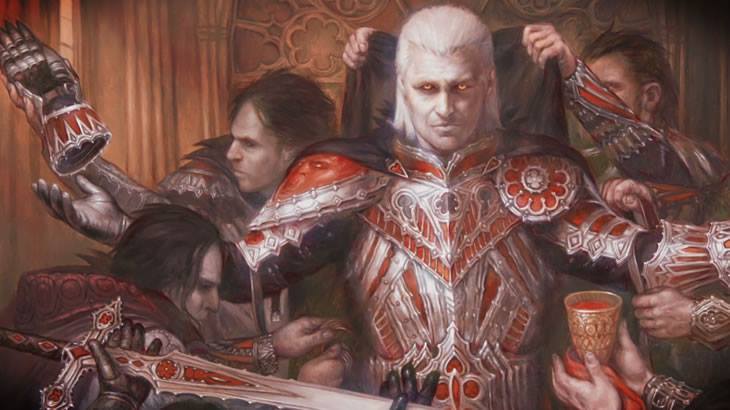
For this update, I’ll be focusing on Vampire Nocturnus. Why would I suddenly highlight this card? Well, earlier today Wizards of the Coast updated their Commander 2017 Product Banner. Featuring this image:

20258410_10154512985386441_7622063703544527489_n

This all but confirms Vampires as one of the tribes, as many players vested in the lore of the game can identify this character is Edgar Markov. This is a fairly popular tribe, while it may be overdone - many players still gravitate to this tribe whenever new cards are presented to support it. Enter Vampire Nocturnus.

This card has always been extremely potent in this tribe, and it's been quite some time since we've had copies of this readily available to us. Pack foil versions being more scarce (even with 2 Core set printings). While there is a Pre-release version, I don't think that should be cause for concern - considering they have different art.

If we use a site like EDHREC to track some Commander data, there's only a few Vampires that have a higher percentage inclusion rate. Vampire Nocturnus sits at 74% of decks, additionally the only other mythic with a higher percentage is Bloodlord of Vaasgoth - which should be considered as well.

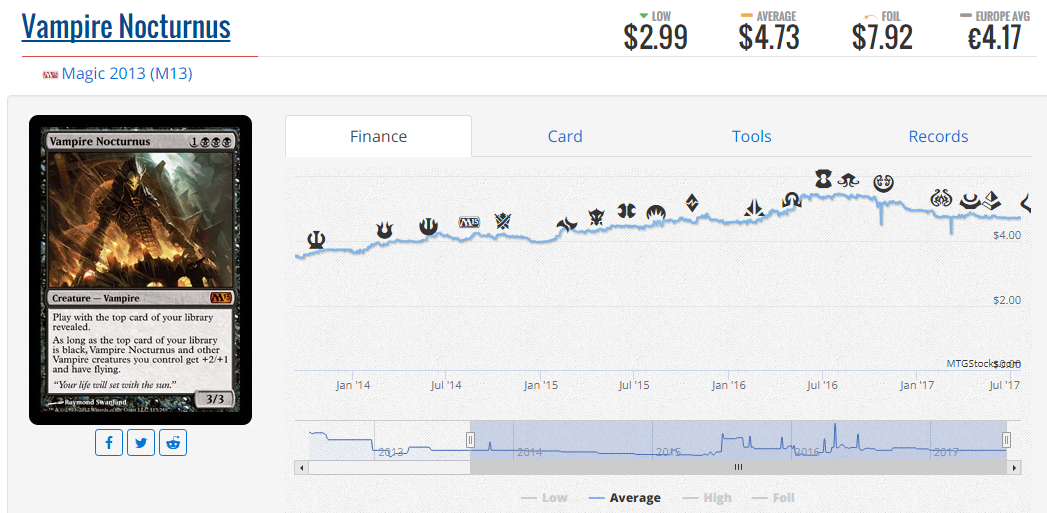
We've seen some excitement and market movement when we received new information about the other Tribal decks in this edition of the Commander Product - and I believe this will be a similar reaction. I also wanted to include the graph to chart the last few years:

NocturnusGraphWhile the card drastically decreased early on - the last few years leave some room to be optimistic. The card is becoming more scarce, specifically foil versions. It has leveled off some, but has shown it can slowly but surely increase over the years. I suspect renewed interest in the tribe may push this card back to the forefront and spark movement. Both printings in a core set as mythic should also be a contributing factor.

Insider: QS Cast #71: The Valkyrie Effect

Are you a Quiet Speculation member?

If not, now is a perfect time to join up! Our powerful tools, breaking-news analysis, and exclusive Discord channel will make sure you stay up to date and ahead of the curve.

Play

The QS Cast returns! Chaz Volpe, Morgan Wentworth, and Tarkan Dospil come together as the new panel - and in this episode they discuss the following:

  • Interests - Morgan and Chaz discuss trends
  • Pro Tour Announcement - Legacy and Modern added back to the PT scene!
  • Unusual Market movement
  • Grandfather clocks, Valkyrie Effect, and more!

Cards we discussed: (foil Time Reversal, Invocation Mind Twist, foil Jace's Archivist, Judge Wheel of Fortune)
-General buy on Legacy/Modern due to Pro Tour implications and already trending market movement.


Enjoy!

Find us on Twitter: @ChazVMTG @MTGValkyrie @the_tark

Grave Musings: BUG Rogues and BURG Shadow

Are you a Quiet Speculation member?

If not, now is a perfect time to join up! Our powerful tools, breaking-news analysis, and exclusive Discord channel will make sure you stay up to date and ahead of the curve.

Rest in Peace wasn't always a Modern staple. For a long time, its status was similar to Blood Moon's: the card was relegated to the sideboards of decks fringe and unreliable for the reason that they themselves lacked powerful graveyard synergies, and kept down by synergy-shredding strategies like Jund Rock. But Modern has changed, and its widespread adoption of graveyard hate deeply affects strategic viability.

This week, we'll take a look at how two of my brews—Sultai Rogues and BURG Shadow—fare in the current metagame, and examine the restrictions on graveyard synergies imposed by today's Modern format.

The Roguest Rogue Deck

Here's my current build of Sultai Rogues.

Sultai Rogues, by Jordan Boisvert

Creatures

4 Fourth Bridge Prowler
4 Faerie Miscreant
4 Tarmogoyf
2 Snapcaster Mage
2 Spellstutter Sprite
2 Faerie Impostor

Artifacts

2 Cloak and Dagger

Instants

4 Fatal Push
4 Thieves' Fortune
1 Abrupt Decay
1 Murderous Cut

Sorceries

4 Traverse the Ulvenwald
4 Serum Visions
2 Collective Brutality

Lands

4 Polluted Delta
4 Misty Rainforest
4 Darkslick Shores
1 Watery Grave
1 Breeding Pool
2 Overgrown Tomb
2 Island
1 Swamp
1 Forest

Sideboard

1 Grafdigger's Cage
1 Pithing Needle
2 Chameleon Colossus
1 Reclamation Sage
1 Thrun, the Last Troll
1 Thragtusk
1 Abrupt Decay
1 Dismember
2 Spell Pierce
2 Ceremonious Rejection
2 Spreading Seas

Other than the sideboard, which has received a complete makeover, this list is almost exactly the one I posted back in February; the biggest change I made between versions was dropping Mutavault for more Darkslick Shores and accommodating a fourth green source to hedge against Spreading Seas and improve the Traverse-for-a-haymaker plan post-board. Vault was tough on our mana and rarely relevant outside of helping close longer games; its purported tribal synergies barely reared their greedy heads.

Positioning

Part of the reason I returned to Sultai Rogues is I like how its threats line up right now. Small fliers that replace themselves are great at overloading heavy-duty removal spells like Fatal Push and Path to Exile, and excel in metagames light on Lightning Bolt. I've tuned the deck to beat up on Death's Shadow (Push, the aforementioned fliers, Chameleon Colossus), Eldrazi Tron (the fliers again, Goyfs, Seas/Rejection), and Affinity (Prowler, fliers). I also like how Sultai Rogues picks up virtual free wins against decks that care about sticking x/1s early thanks to Fourth Bridge Prowler. Steel Overseer, Noble Hierarch—even the rare Dark Confidant or Grim Lavamancer aren't long for this world against us, and the newcomer really ties the deck together just by virtue of being an on-tribe one-drop.
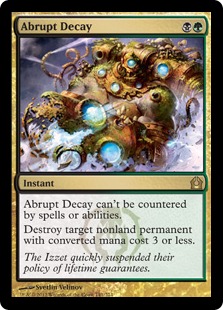
Which brings us to the real reason to play this deck: consistency. Opponents land a Tasigur? Murderous Cut. They land Phyrexian Unlife? Abrupt Decay. They offer us a window to get crazy in the late-game? Traverse for Snap, Snap-Traverse for Imposter, Imposter bounce Snap, Snap-Traverse for Spellstutter Sprite. Our combination of Serum Visions, Traverse the Ulvenwald, and Thieves' Fortune helps us find exactly what we need when we need it.

Negating that engine proves simple enough—opponents just need to shoot our turn-one Rogue with the quickness. In this metagame, though, that's a Push or Path not directed at Tarmogoyf, so we're generally a lock to sculpt a competent gameplan before the 1/1 dies. Often, the card advantage generated by micro-synergies featuring Miscreant, Prowler, Imposter, Snapcaster, and Sprite snowballs to create a game state in which opponents are forced to burn their powerful removal spells on our 1/1s after all, but later than they should have, opening the floodgates for a couple Goyfs to come down and finish up. And of course, should our 1/1s die early, Goyf is a reasonable a follow-up as ever, now forcing opponents to have a second Push handy.

Some Good Fortune

My first experiments with Thieves' Fortune proved relatively fruitless, as I ended up concocting a worse Splinter Twin. To quote myself in "Prowl Service: Brewing Temur Rogues," "I built a deck around Thieves’ Fortune that ran better without Thieves’ Fortune." Simply put, the card wasn't worth brewing around. Sultai Rogues does not suffer from this issue.

Thieves' Fortune is in fact the reason to play the deck at all, and with eight one-drop Rogues (neither Faerie Miscreant nor Fourth Bridge Prowler existed when I took this project up over a year ago), the card becomes very reliable. So much so that I'd play eight copies if I could, signaling to me that this build at last takes advantage of the card properly.

Besides ensuring things run smoothly, Fortune makes Sultai Rogues highly adaptable. Sideboard bullets like Thrun, Colossus, Thragtusk, and Pithing Needle are laughably easy to find. The consistency afforded by Theives' Fortune (which, incidentally, practically turns on delirium by itself) gives us a reasonable plan against any deck that struggles against a certain hate piece in our colors.

The Rogue Problem

Post-Prowler, the Rogue problem isn't any longer the literal problem of lacking playable Rogues. Rather, it's the polarizing effect Death's Shadow has had on the format. Just as blazing-fast aggro-combo decks ruined Gitaxian Probe for the rest of us, Jund Shadow's presence has ramped up Modern's graveyard hate, which weakens Traverse and Goyf and lowers the payoff of casting Thieves' Fortune.

Testing with this deck, and with Shadow decks of my own, has shown me that if I want to play a delirium strategy competitively, there's in fact little incentive not to just play Shadow. But is Traverse the Ulvenwald itself even worth building around anymore?

Clam // Fame Shadow

A few weeks ago, Claim // Fame had me excited as a potential include in a four-color Death's Shadow deck. I've put in some reps with the deck and made some changes.

BURG Shadow, by Jordan Boisvert

Creatures

4 Death's Shadow
4 Tarmogoyf
3 Snapcaster Mage
4 Street Wraith

Artifacts

3 Mishra's Bauble

Instants

3 Fatal Push
3 Thought Scour
2 Stubborn Denial
1 Temur Battle Rage
1 Abrupt Decay
1 Dismember
1 Murderous Cut

Sorceries

4 Serum Visions
4 Thoughtseize
2 Inquisition of Kozilek
2 Claim // Fame

Lands

4 Polluted Delta
4 Misty Rainforest
3 Verdant Catacombs
1 Overgrown Tomb
1 Watery Grave
1 Breeding Pool
1 Blood Crypt
1 Steam Vents
1 Swamp
1 Island

Sideboard

1 Claim // Fame
1 Maelstrom Pulse
2 Liliana, the Last Hope
1 Nihil Spellbomb
1 Fatal Push
1 Kozilek's Return
1 Surgical Extraction
2 Ceremonious Rejection
2 Ancient Grudge
1 Stubborn Denial
2 Collective Brutality

Notably, Traverse the Ulvenwald is now gone from this list! Hang on—isn't this the deck I'd play to abuse Traverse in the first place? Well, yes and no.

Claim Chowder

This build of Four-Color Shadow takes the Grixis Shadow core and sacrifices delve threats for Goyf and Claim // Fame. What we end up with is a Shadow deck better suited to combat midrange strategies than Grixis, able to apply pressure more quickly via Goyf, and close games out of nowhere with a powerful Battle Rage. In other words, BURG Shadow attacks opponents from more dimensions than Grixis does. The Scour-plus-Snap-plus-bullets package also contributes to this goal.

BURG doesn't gain these angles of attack for free, though. Relying on Goyf over delve threats makes the deck softer to Fatal Push, if better against Path to Exile. And running Claim // Fame further weakens the deck to grave hate.
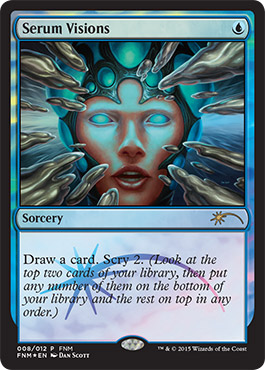
That's actually the reason Traverse finally got the axe in favor of Serum Visions—delirium is just too easy to disrupt. Interactive (read: black) decks don't even need to run symmetrical hosers like Rest in Peace or Relic of Progenitus to disrupt delirium effectively. Leyline of the Void has seen some play in and out of Dredge sideboards, but the real culprit here is Nihil Spellbomb. Since the rise of Jund Shadow, Spellbomb has quietly stormed the Modern scene and made sculpting a gameplan around delirium a huge liability.

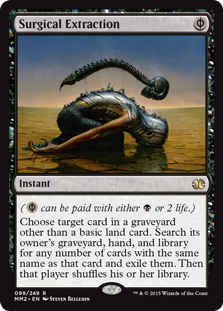
Another card to watch out for is Surgical Extraction. While Extraction can be hit-or-miss against Shadow decks, depending on the in-game context, it's insane against Claim // Fame. Extraction can disrupt a Traverse or mess up the scry from Serum Visions, but its strongest use here is blowing out a Claim or a Snapcaster Mage target. Countering an opposing spell for zero mana, gaining information, and taking out all of an opponent's copies of Fatal Push/Death's Shadow/etc. at the same time gives the card an incredible ceiling. It doesn't help that Surgical sees play virtually everywhere these days, making it an even surer shot to run into than Nihil Spellbomb. We can beat Spellbomb by trading in Traverse for Visions, but there's no easy fix for the Surgical problem. On paper, Claim // Fame should be an absolute bomb in the Shadow mirror; in practice, Spellbomb and Surgical make the mirror close if not unfavorable.

The Delirium Effect

So, what's the solution? The conclusion I've arrived at—that I don't much like, mind you—is that Grixis Shadow is still a better deck. Utilizing the graveyard is powerful enough in Modern to be practically necessary for many strategies. Grixis does a great job of walking the line, using the graveyard as much as it can without totally biting the dust in the face of hate. Fewer delve cards or Snapcasters and the deck would lose out on its oomph and grind game; more graveyard synergies and the deck will likelier fold to a single Rest in Peace. The reason this revelation troubles me is that it bodes ill for lower-tier decks, and especially for brews.

Over the last couple of weeks, we've seen dedicated graveyard strategies like Storm, Dredge, and Jund Shadow dive in representation percentages, and decks that otherwise seem well-positioned, like Esper Gifts and Knightfall, have all but dropped off anyone's radar. Modern's exemplar grave hate has finally clawed its way to the format's forefront, and has brought with it what seems like a net diversity loss. That's a strike against Shadow omitted in last week's piece, which tallied the deck's positive and negative effects on the format; mostly, though, it's a strike against Traverse the Ulvenwald, which forms the backbone of the most effective Death's Shadow deck in the absence of grave hate.
Either way, it's bitterly funny to me that Dredge isn't the deck that inspired so much grave hate. Rather, Dredge appears to have been incidentally hated out of the format by virtue of everyone packing Rest in Peace, Surgical Extraction, and Nihil Spellbomb to fight Shadow, just as Affinity was more easily incidentally hated out while Lightning Bolt remained a major player in Modern. With Bolt absent from the spotlight, that deck has maintained an impressive top-tier share, despite its own supposed softness to targeted hate.

This dark cloud does have a silver lining. Barring perhaps UW Control, whose own inconsistency and durdliness keep it from Modern's throne, the format's top decks are all easily disruptable. Do you badly want to beat Affinity? Ancient Grudge, Kozilek's Return, and Stony Silence happen to still be cards. Shadow? There are plenty of splashable grave hate options, as mentioned above; an abundance of removal also does a number on this deck, as do narrower options like Chalice of the Void and Runed Halo. Titan Shift? The long-forgotten Blood Moon would like a word.

It seems the trick, and what I anticipate to become a deciding factor in competent brewing this season, is to find a way to accommodate these hate cards into shells proactive enough to dismantle UW and Eldrazi Tron but not overly soft to hate cards themselves. Easier said than done, I know. But the decks that succeed on this metric, assuming they're out there, stand to inspire Modern's next big permutation.

Back to the Darwin Board

All good things must come to an end. I have badly wanted Traverse the Ulvenwald to work in Modern since it was first spoiled, and my wish was granted—at the cost of making the card unplayable once more. But Modern is constantly evolving, and the format's cyclical nature gives me hope that I'll be able to tutor up haymakers again some day. That said, I hold that just about anything works at the local level, and you'd better believe I'll be slamming consecutive Chameleons against Grixis Shadow again tonight.


Insider: The Locust God and The Scarab God Commander Spikes

Are you a Quiet Speculation member?

If not, now is a perfect time to join up! Our powerful tools, breaking-news analysis, and exclusive Discord channel will make sure you stay up to date and ahead of the curve.

Commander enthusiasts have become a big part of Magic’s player base, as is evidenced by the massive demand exhibited in the high prices of cards only good in this format. Wizards of the Coast has taken notice, and has responded by cashing in on the format by releasing annual preconstructed Commander decks. There is a trend of it supporting the format further in each new expansion by releasing relevant Commander cards, specifically the commanders themselves. New commanders are capable of spawning brand new deck archetypes, and as seen in Amonkhet with Hapatra, Vizier of Poisons, this can causes a surge in demand for the staples of a popular new deck.

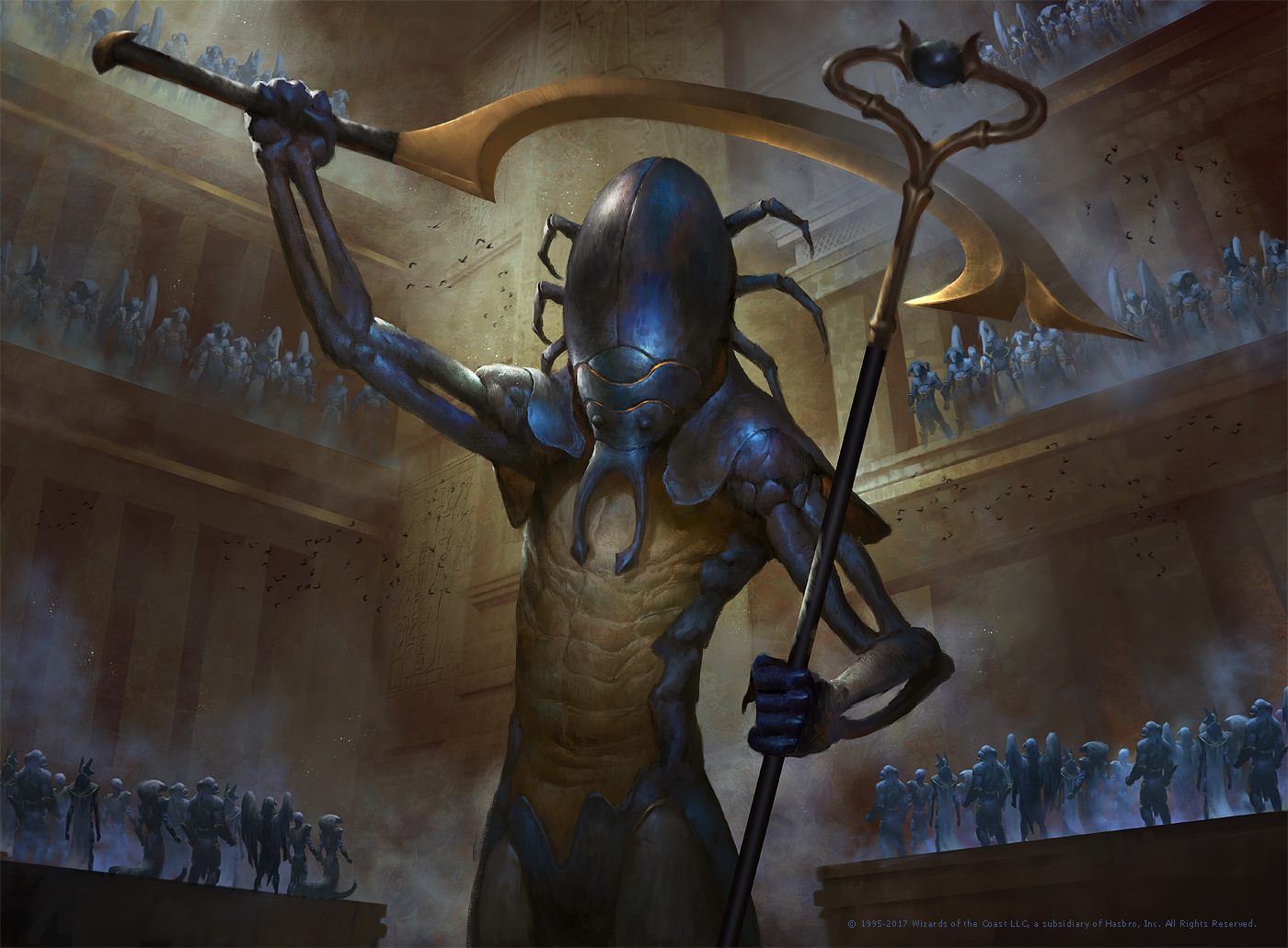
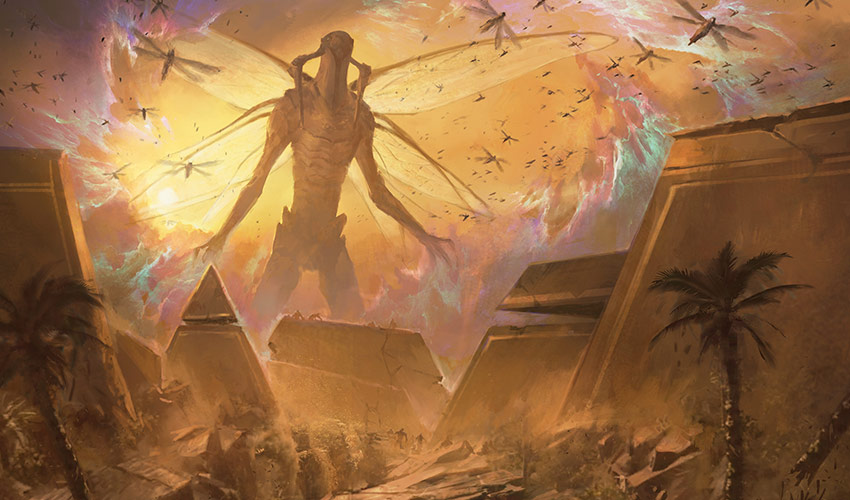
Hour of Devastation has been particularly kind to Commander with its new multiplayer gods. They are splashy cards for Limited play, and players are working to make them effective in Standard, but these cards are clearly designed for Commander. They offer potent passive abilities that are perfect for building a deck around, along with a useful mana sink that unlocks even more synergies. The Scorpion God has potential, but what has really driven demand are the two blue Gods, The Locust God and The Scarab God. The market has responded to these cards in a big way, and there have been price increases across the board on cards related to the likely strategies these Gods will support. In the past week here have been a few spikes, and a ton of cards that have seen modest gains and are still trending upwards.

There was an error retrieving a chart for Training Grounds

Training Grounds is excellent with the both of the blue Gods by reducing the cost of their activated abilities, which has explained its price tripling on MTGO from 0.20 to 0.60 tix, the paper price growing from $8 to $12, and its foil price spiking from $14 to over $30.

The Locust God Spikes

The Locust God’s passive ability converts every extra card drawn into a free 1/1 flying token, so it has increased demand for cards that abuse this ability by drawing many cards at once, specifically Wheel of Fortune-type effects that discard the hand to draw a new one.

There was an error retrieving a chart for Wheel of Fortune
There was an error retrieving a chart for Winds of Change

Winds of Change from Legends had been growing in price since before The Locust God, likely on some Old School/93-94 speculation or play, but because it’s the cheapest Wheel effect to abuse with this commander, it almost doubled in price to over $13 immediately after the card was spoiled. Now the reprinted versions have followed suit, with both the Fourth Edition and Fifth Edition printings more than doubling in price over the past week, up to $6 and $7 respectively.

There was an error retrieving a chart for Magus of the Wheel

Magus of the Wheel creates a Wheel effect on demand at instant speed, and being in relatively low supply its price has grown from $5 to $8.

Here's a few more Wheel effects worth taking a look at. It's worth remembering that there is a lot of overlap with Nekusar, the Mindrazer playability, and many of these cards' prices were established at the time of Nekusar's printing.

There was an error retrieving a chart for Reforge the Soul
There was an error retrieving a chart for Wheel of Fate
There was an error retrieving a chart for Teferi's Puzzle Box
There was an error retrieving a chart for Consecrated Sphinx

Consecrated Sphinx is good at drawing cards and is thus good with The Locust God, but it truly excels when combined with the Wheel effects that force the opponent to draw and trigger its draw two ability to effectively triple the impact of the draw effect. Its price has seen around a 10-percent gain to $22, and its Invocation printing has risen around eight percent to $55 in the past week.

There was an error retrieving a chart for Alhammarret's Archive

Alhammarret's Archive is very effective with The Locust God because it doubles the number of extra cards drawn, so it supercharges any of the Wheel effects and God activations.

There was an error retrieving a chart for Slate of Ancestry

Slate of Ancestry combines very well with The Locust God to effectively double the number of Insect tokens in play with each activation.

There was an error retrieving a chart for Tolarian Winds

Tolarian Winds is the cheapest blue way way to abuse this God, and its foil copies have seen the biggest related spike, growing from $7.50 to $45 dollars.

There was an error retrieving a chart for Mindmoil

Mindmoil creates a steady stream of Wheel effects, so its foil price has spiked from $6 to over $14.

The Scarab God Spikes

The Scarab God’s upkeep trigger scales upwards with the number of Zombies in play, so it’s the perfect centerpiece for a Zombie tribal deck. There have already been Blue-Black Zombie tribal decks in the format, so demand for its key cards aren’t anything new, but the new commander has created significant buzz for the tribe, which had already been strongly trending upwards since it was heavily supported in Amonkhet.

Here are a few examples of the kind of Zombie tribal cards that could really make a card like The Scarab God shine:

There was an error retrieving a chart for Grave Titan
There was an error retrieving a chart for Dakmor Ghoul
There was an error retrieving a chart for Lich Lord of Unx
There was an error retrieving a chart for Gravespawn Sovereign
There was an error retrieving a chart for Lord of the Undead

The Foil-Only Section

There is also increased demand and price for foil versions of some non-rares and less important rares:

There was an error retrieving a chart for Shepherd of Rot

There was an error retrieving a chart for Vengeful Dead

There was an error retrieving a chart for Rotlung Reanimator

I expect the Gods will continue to attract attention as commanders, so demand will only increase and prices on their staple cards should continue to grow. The cards I shared today have been growing, but there are plenty more cards in the decks that have the potential for growth in the future. Dig into decklists online to see what sort of cards people are playing with the commanders and determine if anything looks ripe for growth.

Are there any cards you’re targeting because of these new Gods?

–Adam

Insider: Hour of Devastation Box Report

Are you a Quiet Speculation member?

If not, now is a perfect time to join up! Our powerful tools, breaking-news analysis, and exclusive Discord channel will make sure you stay up to date and ahead of the curve.

Normally, I’m all about opening boxes and profiting from the results. When I started kicking up my game in Magic finance, I used store credit from selling cards to start a chain of buying boxes and building my collection back up from when had I sold it in the past.

Once in a while, though, a set comes along that doesn’t provide significant power leveling and therefore becomes a money sink when you crack packs. I thought we were past the Saviors of Kamigawa and Alara Reborns of Magic history, but then we got Hour of Devastation.

Now normally, I open a case of each set and break down the value per box so you guys get a sense of exactly what can lie behind the plastic packaging of the the box and wrappers. Let’s just start out with my best box and then go from there.

Hour of Devastation Box Report

Box 1

Mythics

Rares

2 Fraying Sanity

Foils

Uncommons

Valuable Cards of Note

  • Nicol Bolas, God-Pharaoh $19
  • The Scorpion God $5
  • Uncage the Menagerie $2
  • Solemnity $5
  • 2 Fraying Sanity $4
  • Nimble Obstructionist $2
  • Ammit Eternal $2
  • Torrent of Hailfire $2
  • Hour of Devastation $7
  • Rhonas's Last Stand $1
  • Mirage Mirror $3
  • Foil Ramunap Hydra $2.50
  • Supreme Will $1
  • Abrade $1
  • Claim // Fame $1.50

Box Total: $58

A total of $58 doesn’t even cover a dealer's cost for the box. With this being the best box I opened, I’m not confident in this set just yet. As it stands right now, without opening a Masterpiece, it seems unlikely you’ll cover the price of your box. Don’t get me wrong, when your box does have one of these extremely rare cards, you’re in for some amazing profits, but the majority of boxes won’t have one of these unique-art cards waiting for you.

So where does that leave us?

Well, unlike the previous sets that have bombed, I think Hour will have its time to shine. That time is not just yet, but the allure of Masterpieces plus the interesting flavors of cards contained within should turn things around. There are many cards that are waiting for their breakout moment as well as a bunch, like the gods, that have high casual appeal.

Depending on what happens at the Pro Tour, this set could immediately turn around as well. For now, let’s take a look at the cards already making an impact from the set.

Four-Color Control

Creatures

1 Linvala, the Preserver
1 Torrential Gearhulk

Planeswalkers

2 Dovin Baan
1 Jace, Unraveler of Secrets
1 Nahiri, the Harbinger
1 Nicol Bolas, God-Pharaoh

Spells

2 Magma Spray
2 Abrade
2 Essence Scatter
2 Negate
2 Harnessed Lightning
1 Blessed Alliance
2 Censor
1 Radiant Flames
3 Supreme Will
2 Cast Out
4 Glimmer of Genius
2 Fumigate
1 Pull from Tomorrow

Lands

4 Inspiring Vantage
4 Irrigated Farmland
1 Fetid Pools
3 Wandering Fumarole
4 Aether Hub
2 Port Town
2 Spirebluff Canal
2 Mountain
3 Plains
2 Island

Sideboard

1 Chandra's Defeat
1 Confiscation Coup
1 Dispel
1 Essence Scatter
1 Forsake the Worldly
2 Gideon, Ally of Zendikar
3 Glorybringer
1 Jace's Defeat
1 Radiant Flames
3 Spell Queller

First up, we have the most exciting part. Nicol Bolas in a winning deck list! This is every control players dream come true. The deck may be named Four-Color Control but it’s basically UR Control splashing for Nicol Bolas and a couple white cards. I’ve seen other versions of this strategy playing as many as three copies of Nicol Bolas! That’s exactly what we need to happen for his price to increase in the coming weeks.

Additionally, the uncommons from Hour made a strong showing at SCG Cincy. Abrade was one of the most-played cards at the event. Even with a full-art printing, this versatile removal spell should have some value. The other card I’m excited about is Supreme Will. I wrote about how amazing a counter/card selection spell would be, and it’s already seeing play here. I expect its play time to increase as well once the pros get a hold of it.

Four-Color Control had the most new cards, and though some of the other decks had new cards as well, minimal changes were made to existing strategies. This is to be expected any time a new set comes out. That said, here are a few cards I observed picked from the top eight deck lists on MTGGoldfish.

The great thing about these new cards is that their prices are super low. That means they have great potential to grow in price once other players adopt the changes into their own builds. Check out what I found:

There was an error retrieving a chart for Champion of Wits

Both Four-Color Emerge and Temur Energy both included the new Careful Study with legs, Champion of Wits. Last week, I was uncertain whether this card was positioned well enough in Standard to see play. As it turns out, the answer is yes. I think now that we’ve seen this card be successful, we could also see it adopted in other archetypes as well. So far, the price is trending up just a little, but for the most part it’s sticking around the mid-$2 mark. With more play, especially in multiple archetypes, this could jump up a couple bucks any time. Keep an eye on this one at the Pro Tour for sure.

There was an error retrieving a chart for Dreamstealer

Unexpectedly, the overcosted 1/2 for three mana, Dreamstealer, made an appearance in GB Energy this weekend. The effect is great, but with few removal spells available to get it through, I’m surprised it was included in this build. However, if Four-Color Control takes hold of the format as the premier control strategy, Dreamstealer could be a great counter. I remember back in the day, I destroyed control players with Headhunter. Dreamstealer is like a lower-power version of Hypnotic Specter, but all these cards fill the same role. This creature is currently bulk and is a great pickup because it can’t get lower than that.

There was an error retrieving a chart for Earthshaker Kenhenra

Lastly, Mono Red saw a lot of camera time at this event, and the fun new card from Hour this deck picked up was Earthshaker Kenhenra. This efficient threat is also a bulk rare, but I suspect that won’t be for long either. Honestly, I’m surprised none of these cards I’m discussing have risen in value yet.

In addition, after the Pro Tour, I’ll be revisiting this box report topic to see how the overall prices of the set are doing with the innovations the pros bring to the format. I’ll of course have the sweet blend of competitive and financial reviews from that event as always.

Until next time,
Unleash the Force!

Mike Lanigan
MtgJedi on Twitter
MtgJedi on YouTube

Insider: Speccing Around The Locust God

Are you a Quiet Speculation member?

If not, now is a perfect time to join up! Our powerful tools, breaking-news analysis, and exclusive Discord channel will make sure you stay up to date and ahead of the curve.

Welcome back, readers!

Last weekend I managed to play in one prerelease event for Hour of Devastation. I went BWg thanks to Pride Sovereign, Ramunap Hydra, and Grind // Dust (though in all fairness the card that won most games was my promo God-Pharaoh's Gift). But the card in my pool that caught my eye was one I didn't even play: The Locust God.

I started thinking about how I don't have any blue-red Commander decks and realized that The Locust God could be a lot of fun. What I really like about him is that he provides a win condition based on something you want to do already, which is draw a lot of cards. The Locust God is one of the few Commanders who can do this (the other obvious one being Niv-Mizzet, the Firemind).

We've already seen several legendary creatures from a new set create spikes in older cards, especially when the new creature is unique. We saw it with Omnath, Locus of Rage, The Gitrog Monster, and most recently Hapatra, Vizier of Poisons. I think The Locust God will likely follow suit.

In fact, a card with many of the same synergies was the catalyst of some Commander spikes a few years back: Nekusar, the Mindrazer. The Locust God pairs with a slightly different set of cards (it triggers off of your draws, whereas Nekusar triggered off of the opponent's)—but clearly there's a precedent for interest in this type of card in the Commander community.

A lot of players are excited about The Scarab God because it plays well with a blue-black Zombies deck and its second ability can be very powerful against the right decks. However, we already have a lot of great blue-black Zombie generals, so most auto-includes in those types of decks are already valuable. That second ability can also be underwhelming against creature-light decks (like Mizzix of the Izmagnus).

But back to The Locust God. Reviewing EDHREC, there are some very strong auto-includes for the deck. The signature cards (as of 7/14) are:

  1. Skullclamp
  2. Purphoros, God of the Forge
  3. Bident of Thassa
  4. Ashnod's Altar
  5. Arjun, the Shifting Flame
  6. Impact Tremors
  7. Coastal Piracy
  8. Whirlpool Warrior
  9. Windfall
  10. Mindmoil
  11. Alhammarret's Archive
  12. Teferi's Puzzle Box
  13. Jace's Archivist
  14. Winds of Change

Some other cards, while not considered "signature card" yet in the archetype, have a good chance of becoming auto-includes if it takes off. In my opinion, that includes the following:

  1. Wheel of Fortune
  2. Blue Sun's Zenith (top card, but not a signature card)
  3. Reforge the Soul (top card, but not a signature card)
  4. Time Reversal (top card, but not a signature card)
  5. Pull from Tomorrow
  6. Kozilek, Butcher of Truth
  7. Molten Psyche
  8. Stroke of Genius
  9. Time Spiral

Combined that's a pretty sizeable list of cards. However, many of these are already very expensive, so the potential for massive gains on them is pretty limited (if a card is $40 and gains $5 then your gain is only 12.5%, etc.). Luckily, that's not the case for all of them.

As I've mentioned in previous articles, when I spec on Commander cards I tend to put an emphasis on 1) How long ago was the last printing? 2) Does it have any reprints? and 3) What rarity was it printed at?

There was an error retrieving a chart for Time Reversal

Time Reversal is my top pick for spec targets for The Locust God; it has two printings, both of which were at mythic in core sets (which tend to sell worse than block sets). It was last printed in M12.

Regular copies can be had for under $1, nearly bulk status for mythics. More importantly, foils are sitting in the $5-ish range (and they are absolutely stunning). I looked to pick up some extra copies and found most websites were sold out and there were only three on TCG Player (for both printings combined). I bought 13 copies from Cardkingdom while writing this article.

There was an error retrieving a chart for Arjun, the Shifting Flame

While there aren't any foil versions of Arjun, the Shifting Flame, it has a single printing in the Mizzix Commander deck back in 2015. The ability is extremely powerful, especially when your win condition is based off of card drawing, so the fact that you lose what was left in your hand isn't as detrimental (though it can lead to awkward or difficult decisions).

This card is currently sitting around $1 as well, so the investment cost is low. It is important to note that WoTC did state that the new Iconic Masters set will include Sphinxs (and this card is a Sphinx) so there is some reprint risk.

There was an error retrieving a chart for Mindmoil

As I missed the original Ravnica block when it came out (I was on an MTG hiatus during college) I didn't even know this one existed. It's currently a bulk rare, so the buy-in is extremely low. Unlike Arjun above, it has the benefit of being an enchantment, which tends to be harder to get rid of than creatures.

Interestingly enough, while the regular version is a bulk rare, foils have recently spiked. They now have a 10x multiplier and are sitting in the $5-ish range, with just four copies on TCGPlayer. This indicates that demand for the card is on the rise; regular copies could easily be soon to follow suit.

There was an error retrieving a chart for Molten Psyche

Here we have another bulk rare that could show some very solid gains. it currently only has a single printing from Scars of Mirrodin (which came out almost seven years ago). Foils are currently sitting in the $2 range.

This one is interesting because it can also serve as a win condition (given the propensity of wheel effects in this archetype). I did find that getting the necessary number of artifacts to turn on metalcraft was a bit more difficult than I expected (my version plays mostly instants and sorceries), though I plan on making tweaks to my version in the upcoming week.

There was an error retrieving a chart for Whirlpool Warrior

Yet another bulk rare (they can be purchased for under $0.5 each). This card has three printings, but two of those are Planechase and Planechase Anthology (neither of which were particularly large print runs). The original print run was all the way back in Apocalypse, which released in 2001 (16 years ago).

Foils have about a 10x multiplier (and are sitting in the $5 range), which shows that there is definitely strong demand for the foil versions. However, if The Locust God takes off and this remains a "signature card" showing up in over 50% of the decklists published online, the foil could easily double or triple up from its current price.

I actually like the idea of the regular version as a nice "penny stock" given it could easily double or triple up. Unloading large quantities of penny-stock picks is often difficult, but picking up a few at their current value to trade later isn't a bad decision.

There was an error retrieving a chart for Jace's Archivist

So I know I'm beating the same drum here, but I'm a big fan of bulk-rare picks because the investment cost for a decent size position is low, and there's a lot of upside and a relatively low floor (especially if you're trading other bulk rares for them).

This card has three printings. Two of them are Commander printings (in 2013 and 2015) and there is only one foil printing (Magic 2012) which was five years ago and again in a core set. Foils are sitting around $3 or so, so the multiplier is in the 4-5x range; but it's popular in other decks as well (like Nekusar, the Mindrazer and Mizzix of the Izmagnus).

There was an error retrieving a chart for Stroke of Genius

Stroke of Genius used to sit in the $5 range and has slowly slid down to the sub-$2 range (thanks to reprints in Commander 2014 and 2015), but my pick here is actually the judge foil version. It's the only foil option and retains the original artwork, which is somewhat iconic thanks to the Tolarian Academy decks of old.

This is actually one of the original judge foils from back in 1998, in the same series as Gaea's Cradle and Lightning Bolt. So the argument is that the number of judges back in 1998 who received this card is likely a lot fewer than the number of judges who receive promos nowadays.

I honestly didn't realize this card was a judge foil (as I hadn't seen anyone play it), but it's definitely a great Commander card. It can act as both a source of major card advantage or a kill card (with enough mana), and has obvious synergy with The Locust God.

Conclusion

There we have some of my favorite picks for The Locust God Commander speculation targets. There are likely a lot more (as Magic has a very long history of card-draw spells), but these are the ones that came most readily to mind for me. Got any other good picks? Let me know in the comments below.

Want Prices?

Browse thousands of prices with the first and most comprehensive MTG Finance tool around.


Trader Tools lists both buylist and retail prices for every MTG card, going back a decade.

Quiet Speculation